In Praise of the Corn-Pone Opinion

Years of thought and debate have gone into this monumental question and yet it’s still to be answered: Is there a difference between corn-pone and corn bread? And is corn-pone cooked in a skillet or baked? Should it have sugar, milk, or eggs? Should it have baking soda? Is corn-pone one word or two? There are no such difficulties, however, when it comes to distinguishing corn-pone, whatever that is, from Trinidad’s “pone.”

Trinidad pone is a delicious delectable dessert, a confection crafted from cassava, coconut, sugar, and spice. It’s sold everywhere: to hoity-toity hipsters in uppity farmers’ markets, and to starving bachelors at no-frill vegetable stalls, to momzillas in bakeries on the main street, and to old tanties in parlors on the corner, to blue-collar workers shopping in supermarket chains, and to smiling-faced children in tiny school cafes. I’ve had “gourmet” pone, from a restaurant that specialises in “deconstructed local classics.” I’ve had pone from a tired lady selling snacks to raise funds for her sick son. I’ve had pone warm, lightly drizzled with a caramel sauce. I’ve eaten it cold, as if it were some kind of iced treat, on the warm sands of the northern coast.

Pone is made of cassava but if you’re not a purist (and want to be wrong) there’s leeway as to what you can put in it. Some people use pumpkin to add excitement to their life by raising the color of the dish, which tends to fall somewhere along a spectrum between pale brown to golden. The texture of pone, however, is consistently the same: gelatinous Turkish delight cocooned in a crisp cassava coconut skin. Connoisseurs of taste add loads of spice: cinnamon, nutmeg, ginger, clove, ground spice. The raucous and more adventurous throw in raisins, but this is universally accepted to be a gratuitous touch. 

Some dictionaries say a corn-pone is a simple-minded person.

Trinidad pone isn’t to be confused with Jamaican pone, which is, unfortunately, made from sweet potato, milk, sugar, and rum. Incidentally, the overbearingly lumpy Jamaican pone is at times made from cornmeal and is as ostentatious as a dancehall queen. The Jamaican use of cornmeal makes the theory that the Caribbean pone is the sweeter, better-looking brother to the American pone seem plausible. 

Yet, for all these nuances, Trinidadians feel no need for precision. A Trinidadian will call cassava pone simply “pone,” removing the adjective in the assumption that what constitutes pone here must also be pone everywhere. In fact, had I not encountered Mark Twain’s famous essay “Corn-pone Opinions,” I might never have questioned what a pone is and how it differs from a bread. Nor would I have pondered the fact that some dictionaries say a corn-pone is a simple-minded person, a meaning which might have something to do with the argument in Twain’s essay. 


Twain isn’t concerned with the complexities of pone aesthetics. He takes for granted that when he opens his essay with a slave saying, “You tell me whar a man gits his corn pone, en I’ll tell you what his ’pinions is,” we’ll know what corn pone is and, what’s more, that we’ll understand its place in 1901 society. Admittedly, he didn’t publish the essay in his lifetime—it was published posthumously in 1923. But Twain being dead hasn’t stopped him from publishing acclaimed work. His essay opens the 2001 Best American Essays of the Century, edited by Joyce Carol Oates. 

Instead of dessert, Twain has his sights on making a mundane point about the way people think, or rather, don’t. He believes his friend, the slave, is saying man is not independent and cannot afford views that might interfere with his bread and butter (to mix up the pone metaphor a bit). He also feels his friend is saying that in order to prosper we must all line up with the majority, must think and feel what everybody else thinks and feels, or else suffer the consequences. 

“He must restrict himself to corn-pone opinions,” Twain paraphrases. “He must get his opinions from other people; he must reason out none for himself; he must have no first-hand views.”

Twain doesn’t fully agree with this. He thinks the situation is more dire. Whereas his friend feels people cherry-pick their opinions strategically, Twain believes this exceeds their capabilities. Whereas his friend assumes it’s possible to formulate original positions, Twain casts doubt on the existence of free thought. He says: “I am persuaded that a coldly-thought-out and independent verdict upon a fashion in clothes, or manners, or literature, or politics, or religion, or any other matter that is projected into the field of our notice and interest, is a most rare thing—if it has ever existed.” To wit, the only way people could like hideous hoop skirts was because everyone else did.


When I was a wee little child, I was a well-behaved Trinidadian boy. I listened to my parents. I went to church. I tried to become an acolyte (though they threw me out after suspecting I was more into the pretty, flowing gowns than the Holy Ghost). I paid attention in school. Back then, the Belmont Boys Roman Catholic School was yet to develop a reputation for bad boys and ruffians. I studied hard. 

By Standard Five, however, this good behavior started to get me into trouble. As everyone knows, there is only so much good behavior that little boys can take. The other boys grumbled, softly at first, then openly, that I had never made a mark in the world, had never distinguished myself through any form of truancy, had neglected to uphold the long-held tradition of boys being in fights. Such was my appalling decency and civic-mindness, that the elder boys were incensed. I became a pariah, a figure of censure, persona non grata. 

To address this misconduct, it behooved me to take action. I arranged, with another similarly-circumstanced do-gooder, to orchestrate a skirmish. We discussed our plan prior, and scheduled an appropriate day for the momentous duel. Naivety got the better of us: we believed it necessary to come up with a background story to justify our war. A jumbled narrative, involving the theft of marbles and a lunch kit in which a precious piece of pone had been stolen, was formulated and tantalisingly teased out. There was enough withholding of key details to fan the flames of speculation and conjecture. Then, the Friday of our chosen appointment arrived. We wanted tales of our exploits to spread over the weekend.

The school bell rang like a death knell. I immediately pushed Kwesi around for a while, he grabbed the neck of my shirt, I ripped off a button or two of his, as we groaned and grunted strenuously as a mark of our manly exertions. The fight needed to have an epic scale so we prolonged it for as long as possible until, both of us having run out of moves, it came to a natural end. It was determined—universally I think—that the fight was a good one, that we both had “won” since there was little to distinguish us, though maybe Kwesi had a few more scratches on his arm than I did.

So when Mark Twain alludes to the ridiculous lengths people will endure in order to conform, I fully understand. 

Entire careers have been built on work that is unlikeable but has nonetheless found favor with people, or at least been said to have found favor with people.

And I think it’s safe to say everyone has had that moment when there’s a new emperor and he’s not wearing clothes but you have to pretend he is and not only do you have to pretend he is but you also have to compliment him on just how fabulous the clothes are even if you’re seeing nothing but you do it anyway because everyone else is complimenting him and if you don’t people will think you are dumb or blind or just plain mean. The Emperor’s New Clothes explains the success of many films, books, plays, and art exhibitions. Entire careers have been built on work that is, even within the subjective realm of the humanities, unlikeable but which has nonetheless found favor with people, or at least been said to have found favor with people, the snowball growing bigger and bigger, threatening to squash anyone who will not yield. Twain was on to something. 

Social media has magnified this. It’s given us tools by which we can empirically gauge just how admired something is, how many views it has received, the quantum of votes it has drawn or comments it has acquired. Some of us, seeing only that other people have liked something, sheepishly click the like button without reading the full post, or listening to the full podcast, or watching the full 20-minute video. 


But when Twain’s nameless slave, whom we will call Uncle Jake, says “You tell me whar a man gits his corn pone, en I’ll tell you what his ’pinions is,” what Uncle Jake truly means is not what Twain hears. What Uncle Jake was alluding to was the unabashed fact that people are generally self-serving. We all have vested interests, hidden agendas, values that fall to the wayside if there is a need to ensure self-preservation. People do not consider deontological values, as a philosopher might say, nor do they care about the greater utilitarian good; we do not have such luxuries when living from day to day, meal to meal, paycheck to paycheck. This does assume the capacity for independent thinking. But the premise is not the conclusion. 

Nor is it worthwhile attacking that premise. For assertion of self-preservation is selfish, sovereign thinking. What is more independent than that?

Is Twain really skeptical of free thinking? If there is no independent thought in the world, this would render his corn-pone opinions automatic. We would live in a world of determinism. There would be no choices on the menu. What would be the point of saying someone has an opinion? We would all have a passion for hoop skirts come hell or high water.

Even if Twain’s interpretation is substantially correct, I have reservations about his argument.

“We are creatures of outside influences,” he argues, “as a rule we do not think, we only imitate.” However, even when we copy others, we mentally formulate our positions. We decide, consciously or even subconsciously, whether we will follow the status quo. Twain underestimates how much we intuit


All this cogitation on corn-pone opinions makes one have a hankering for corn-pone itself. But what exactly does it taste like? As Tom Sawyer did before me, I steal into the kitchen. Call it research. Call it art. Call it hunger. Why shouldn’t I indulge my taste buds? I devise a plan. I assess the stocks in my pantry, pull out my smartphone, and scour the internet for recipes. This throws up the first challenge. The search yields a million results.  

Corn-pone is so popular there must be a reason. It’s clearly been around for a long time. The internet tells me it’s a Native American dish, corn being primarily a Native American invention. (Interestingly, Trinidad’s pone, made from cassava, has also been linked to our indigenous peoples.)

My chosen recipe calls for just five things: cornmeal, water, milk, salt, and baking powder. I’m not sure about the baking powder, though. Wouldn’t the more authentic corn-pone be flat and unleavened? Did people always have baking powder to hand when roving through the forest, pitching tents, lighting fires and whatnot?

I halve the recipe. Don’t really need four corn-pones for this experiment when two will suffice. Listed are precise measurements to follow, but I’ve got a deft hand so I go with the flow, eyeing the amounts I put it. Cooking is a science but it’s also an art. You use what’s to hand, you do what feels right, drawing from experience.

We do not always think things through, yes, but at the same time we feel. We intuit and, therefore, we reason.

Just as meals are fashioned in this intuitive way, so too do we formulate viewpoints. We are not machines. We do not always think things through, yes, but at the same time we feel. We intuit and, therefore, we reason. 

The corn meal is a light dusty yellow, but when I add my liquid ingredients the color gets deeper: more saffron than butternut, more turmeric than lemon. It comes together in a dough that’s similar to the dough we use in Trinidad to make Christmas pastelles, a kind of stuffed polenta; a steamed empanada. As I knead the dough, which feels like the plasticine children used to amuse themselves with, feels as real as thoughts made material, I think about how easy it is to forget the past, forget the names the of all the tribes and peoples that might have done the same thing. Yet we are still tied to them. A simple thing like a meal can be a commemoration.   

Our very nature is to feel. Feeling allows us to sense whether we think something is moral. Our emotions guide us. This is a kind of reason. Without having a principle clearly formulated in our mind, we know something is bad by just the way we feel. Stealing. Killing. Lying. We talk of conscience. Even if something is the bees’ knees, we first have to decide if it tickles our fancy. Hoop skirts only became the rage because they pleased us on a level we may not have been able to articulate. 

Sometimes the results of this process are dangerous: the wrong emotions dominate. So it is fear that accounts for the rise of the Nazis, the racism of Twain’s America, the xenophobia of Britain. The Brexit vote and the rise of Donald Trump have emboldened certain people to come out and follow suit. The cause: fear. People are afraid of that most reliable of Boogeymen, The Other. The counter to such fear is to draw upon opposite and equally powerful emotions: compassion, love, kindness. Understanding that we are all human. For things to change, these purer feelings must be admitted into the equation.

My pones are surprisingly satisfying. I try them with butter. I try them with maple syrup. I try cheese. They are like arepas. They can match whatever you put on them, meet flavors halfway. 


But let’s say Twain is right and all we do is conform. Can’t conforming still be a form of resistance? Can’t it trigger rebellion? Be its own sign of an independent assertion of values?

When Rosa Parks got onto the bus in Montgomery, Alabama, on December 1, 1955, she didn’t disobey any rules. She conformed to them. The prevailing laws divided the bus into white and black sections. Parks sat in the black section. When the white section filled up, the bus driver attempted to expand the section for whites only. The law called for “equal but separate accommodations”; it didn’t permit this practice of shifting the goalpost, a practice that had apparently developed over time. Parks stayed in the section designated for her under the law. She said: “When that white driver stepped back toward us, when he waved his hand and ordered us up and out of our seats, I felt a determination cover my body like a quilt on a winter night.” It was by conforming to a racist law that she asserted her individuality. It was through this conforming that she defied everything. If individuals could find freedom through compliance, so too could entire nations.     

Can’t conforming still be a form of resistance? Can’t it trigger rebellion?

In the late 20th century, a wave swept through the Caribbean. Territories of the British Empire sought what Rosa Parks achieved. They flirted with, lobbied for, then gained independence. Jamaica and Trinidad and Tobago in 1962, Barbados and Guyana in 1966, Bahamas in 1973, Grenada in 1974, Suriname in 1975, Dominica in 1978, St. Lucia in 1979, St. Vincent in 1979, Belize and Antigua and Barbuda in 1981, St. Kitts and Nevis in 1983. One by one, they attained access to the comity of nations. 

Was this wave merely a case of following fashion? Or was swimming with the tide a way of swimming against it? By emulating each other’s example, these countries cultivated the sense of a shared destiny. This made the fate of the islands irresistible. In this way, independence was achieved not through bloody rebellion, but through collective power. There was strength in numbers. As swimmers in the Caribbean will tell you sometimes, to survive a deadly current, you must let it take you then slowly make your way to the shore.


“Power is everywhere,” wrote Michel Foucault, “not because it embraces everything, but because it comes from everywhere.” We see power in action when individuals protest peacefully. We see it when nations come together to raise a fist. We also see it when artists, painters, musicians, writers, and poets adopt forms that on the surface seem like imitations but, in truth, are signals of resistance.  

St. Lucian poet Derek Walcott and gay poet Thom Gunn did this. They sometimes put on a costume, paraded in it, then took it off in order to move on to the next poem, or sequence or book. In their verse, these poets set out to show they too could write in the traditional forms that have dominated English letters for centuries. Walcott took on the idea of the epic, its rhythms, tones and textures. He co-opted the theatre, emulating Shakespeare, and produced dramas in verse. He applied these forms not to white, European subjects, but to the Caribbean. His mimicking was not appeasement. It was an assertion of a black man’s inherent and equal claim to words. “The English language is nobody’s special property,” he said. 

Like Walcott, Gunn was a poet with a penchant for the metres of a long tradition. His poems followed a regimented pulse. Sonnets, elegies, syllabic verse, couplets. Yet, using these forms Gunn addressed the queer, even when carefully wrapped and tied with a metaphorical bow. The poem ‘The Allegory of the Wolf Boy’ is about life as a gay adolescent. Like Walcott, he too was laying down the gauntlet on behalf of a disenfranchised class. “Rebellion,” Gunn wrote, “comes dressed in conformity”. 

These poets know what Twain forgets.  Twain underestimates how following can be leading. It can be the ultimate inside job. 

Corn-pone opinions reflecting the general consensus might appear shallow, simplistic, half-baked. But that alone should not stop us from taking a second good bite.   
I’m Reading About My Mother’s Addiction Because I Don’t Know How to Write About It

For a decade now I’ve written personal essays describing hidden bottles of cheap Chardonnay and the whine of ambulances and how the lip of the bumper of a 1999 Toyota Camry curls when it brushes a tree. The essays were meandering and hemorrhagic, overly personal in a pointless way. I wasn’t interrogating anything or exploring a greater concept; I was trying to make sense of one of the greater confusions of my life. I was trying to write about my mother.

Anne Lamott famously says, “You own everything that happened to you. Tell your stories. If people wanted you to write warmly about them, they should have behaved better.” In the spirit of pure artistry, I tried to abide by that ethos, representing what happened truthfully, without pulling punches or softening the edges. But still, I always added a nice scene from my childhood that showed her at her best — patient and generous and funny. I wanted to tell the truth, that she was a good mother, a good person, and, also, an addict.

Even though the essays weren’t publishable, they still had utility. When my mom snuck away to chug wine from the open bar at my graduate school reception, a classmate found me so I could intervene. She knew it was my mother because of what I’d written, she said, and because we have the same face. I write about this here because I have to show you what I mean when I say, “My mother is an alcoholic.” I need you to take me seriously in a world where you can buy a wine glass that has “Mom Juice” etched on it. 

Each time, there is a scene but no greater context. The structure unravels and the end is helpless.

I’ve tried to write essays about transitioning to the authoritative role in a parent-child relationship, about loving someone who lies to you all the time, about how to exist when you’re constantly waiting for the other shoe to drop. Sometimes making sense of addiction feels impossible in the same way that any disease is difficult to rationalize. Each time, there is a scene but no greater context. The structure unravels and the end is helpless. The general themes can be summarized as, “Addiction is painful for everyone it touches. I am scared all the time.” With every clunky paragraph, I wanted to ask the reader, Is it clear that I love her? 

Last year, instead of writing I started reading about addiction in pursuit of understanding. I hadn’t talked to my mom in eight weeks. The last time I’d been home I hid her car keys and she picked the kind of fight you pick when you’d rather be left alone than win. I’d tried everything I could think of to help her: radical honesty, earnest emails, gentle emotional blackmail. Distance was a last resort. Her health was waffling, her bones brittle and snapping, her hummingbird heart telling her nervous system there is always something wrong. The stakes felt like they were increasing every day, every new affliction evidence that alcoholism is a chronic, progressive disease with one seemingly-inevitable destination. 

I started my reading with the Diagnostic and Statistical Manual of Mental Disorders (DSM)—alcoholism is called “alcohol use disorder”—written with a cool medical detachment where the body and the brain do not seem like they comprise a person. A bender is “chronic exposure.” The difference between want and need is a “neuroplastic change.” When I am angry or hurt, the distancing language helps. It introduces a sense of control, of cause and effect. But, the DSM felt like an objective approach to a subjective experience. Though clinical language can reframe addiction as an impersonal disease, the resulting behaviors—the criteria for diagnosis, questions like does your drinking affect your relationships, your ability to take care of your family, your interest in things that were important to you—are inherently personal. The behaviors of addiction obscure the person and blur the boundaries of illness. 

I wanted clarity, answers to questions she wouldn’t or couldn’t give me, answers I couldn’t find from studies on rodents. Addiction is in many ways a dual life shrouded in half-truths and omissions. I wanted to ask her outright about her experiences, why she started and how it felt. When she was in an abusive phase, I wouldn’t get a straight answer. When she was in a period of relative sobriety, I didn’t want to hurt her by showing her how she’d hurt me. Still, I wanted to know some version of her story, in detail. I wanted to know my mother’s story to know where to put mine, but more urgently, I was scavenging for help, stories I could run my hands over like a topographical map to find a safe path out of the woods, words that could heal. 

I wanted to know my mother’s story to know where to put mine, but more urgently, I was scavenging for help.

Addiction memoirs are so prevalent that they have their own genre: quit lit. “They’re all the same and they’re all correct,” Grace Lavery writes about addiction memoirs in an essay about sugar and recovery that proves the rule. My mom’s candy of choice is stale Twizzlers. I find solace in a package on the counter with the corner snipped. 

I picked three memoirs by contemporary women—their ages somewhere between mine and my mother’s—writing specifically about alcohol: Mary Karr’s Lit, Caroline Knapp’s Drinking: A Love Story, and Leslie Jamison’s The Recovering. Each memoir follows a predictable pattern I learned was standard for recovery narratives. The first few chapters sketched out where it all started, or at least the author’s best estimate, trying to nail down the mix of genetics and experience, the cocktail of nature and nurture that got them to the same place. But what it comes down to is summed up by Jamison as, “The whole world stood accused: You never told me it felt this good.” The middle was the sordid stuff, the hard drinking and deceit, whisky taped behind desks and lost cars. This section I knew well, the singular focus on drinking above all else at all costs. That was where the pain was for partners, sisters, children, me. I’d been close enough that, even as the details changed, I knew how that part of the story went. The end was sobriety, how it happened and how it stuck, the hedging that life wasn’t perfect but it was better than when they were drinking. 

Knapp says alcohol offers:

protection from the pain of self discovery, a wonderful, cocooning protection that’s enormously insidious because it’s utterly false but it feels so real, so real and necessary. And then, tragically, the protection stops working… You drink long and hard enough and your life gets messy… Discomfort + Drink = No Discomfort ceases to suffice… So after a while, you alter the equation, make it stronger and more complete: Pain + Drink = Self-obliteration.

None of the behaviors themselves surprised me. Alcoholism, to me, seemed like an intentional removal of oneself from the world. Pillars of addiction include secrecy and isolation, which I always took to mean an abdication of responsibilities and relationships. I tried to attribute intentionality so I could have something concrete to blame, but it wasn’t there. For instance, Karr’s love for her son is never diluted by her drinking. No matter how much she drank, she never lost sight of her role as wife, mother, and writer, though it often manifested as shame. She can’t look at her husband without “hearing some muffled verdict pounded out by [her] own heartbeat—“guilty guilty guilty.” 

Anything positive—book deals and teaching jobs and solid men and well-loved children—became enmeshed in shame. Jamison’s partner writes her a poem as a confirmation that he will always love her, no matter what, but she trips on a line that mentions her drinking and sees the poem as an indictment. Shame could be teased out of gestures of love, no matter what was offered. 

Recovery isn’t a simple choice between self-obliteration and death-by-drinking. If Pain + Drink = Self-obliteration, then Pain = Self-obliteration – Drinking. The math isn’t perfect, but the pain and problems remain after the drinking is gone. Karr describes in detail the difficulties of her sobriety, checking herself into a hospital after writing a suicide note. Jamison writes about her own relapse, the rationalization and subsequent spiral reading like the point in a horror movie when you know something bad is about to happen but your screams are powerless to stop it. For our family, the worst relapses came after a period of calm. They hit like a suckerpunch, half the pain from the surprise: How did we let this happen again

Well-meaning people in my life keep stressing to me that alcoholism is a disease, and that relapse is statistically a nearly-certain symptom. “You wouldn’t get mad at someone if they had cancer,” they say. But it’s hard to know where to put my own very real pain of loving someone with addiction, the constant buzzy undercurrent of fear, the hurt of knowing your presence is something they want to escape, and most excruciatingly, the futility of feeling like there’s nothing you can do about it. 

In these memoirs, relapses are absorbed in the rhythm of the story. Personal history is arranged into a structure of how things got to where they were, their undoing similarly templatized. The narratives follow identical trajectories, a characteristic that gets them panned in critical reviews but celebrated in the comment section on Goodreads and Amazon. “It feels like this book was written about me,” readers say. The drama of addiction becomes mundane, the same moment again and again. What feels acute and personal is neither. It’s just part of it, a story every addict has. 

The Recovering spends chapters grappling with the value of these stories, in the repetition itself, and the community they build in sobriety. Jamison writes about the utility of stories in recovery, “Your story is only useful because others have lived it and will live it again.” I have a reflexive resistance to stories as service. A story with a message seems didactic or self-righteous, moralizing like the author knows best. But that resistance ignores the history of human communication, that we told stories because we learned a way to survive and we didn’t know that it was the right or wrong way but it was a way. It was the one we had, so we shared it.

Addiction is just one part of a life story, even if sometimes it seems to obscure everything else. There are parts of my mother that are so full of joy it’s hard to fathom her as someone who struggles with anything. No matter where she is, she’ll sit down on the ground to get to know a dog face-to-face. She spends too much money on just-because gifts for other people. She cries at beautiful things, wears too much black but loves color. She buys tulips and carnations because they’re the happiest flowers. Is it clear that I love her?

I’ve wanted her to get sober for a long time, but the reasons have been a slow slide down the hierarchy of needs. I’ve always wanted her to be the person she is, to travel and explore and learn new things. I want her to feel good about herself at her core, to believe all of the wonderful things people constantly tell me about her. I want her to be secure financially and to know that she will always have what she needs to live. But more than anything, I want her to not die. 

I was searching for the words to save her. The books did not give me those things. They couldn’t.

I wanted the memoirs to give me the right way to frame my own experiences as someone who loves an addict. I was searching for the words to save her. The books did not give me those things. They couldn’t. I was hoping that by understanding the mind of an addict, I could find an argument that made sense. The stories were ripe with the cyclical reasoning of addiction, a system of thought that promises control, logic they held onto as it failed them time and time again. The most obvious answer is the true one: There is no logic. There is no control. Anything I do is trying to impose order on a system that abides by its own code. The internal consistency of addict behavior armors it against outside influence. It’s playing by different rules. I am telling you that I learned that, but I don’t think I’ll ever be able to stop searching or trying.  

Even without a panacea, the rhythm in the memoirs gives me hope that my family’s stories, too, could be like Jamison’s or Karr’s or Knapp’s, told from a distance, removed by time. The comfort in these memoirs is in the repetitive story, a model that can be duplicated. Knowing they made it out alive. They had enough space from their drinking years to mold a narrative arc from entropy, finding meaning, or at least a story that was useful to someone who had been through the same thing. Addiction narratives are full of people who did die, but also people who lived, who told their stories and helped others through their own. There is suffering, but there is also healing. I feel like we’ve been stuck in the middle chapters of a drinking life like a skipping record. This part of the story is simultaneously melodramatic and routine, a slow and dangerous sink. The memoirs are tangible examples of how the story can go on.

For the first time in a long time, hope doesn’t feel dangerous. People can get better, and do, not always but sometimes. Right now, there is just pain, but after the coda of recovery, pain can be retrofitted to have meaning. The clawing desperation to fix her, the senselessness of dramatic falls, the sadness of drinking in a closet over the holidays can have value, even if it doesn’t have it in the moment. There is hope that once things get better, this moment that I’m living in now will actually have been something useful instead of just pain. And that possibility feels like a gift. 

This Graphic Memoir About Adoption Isn’t Interested in Comfortable Answers

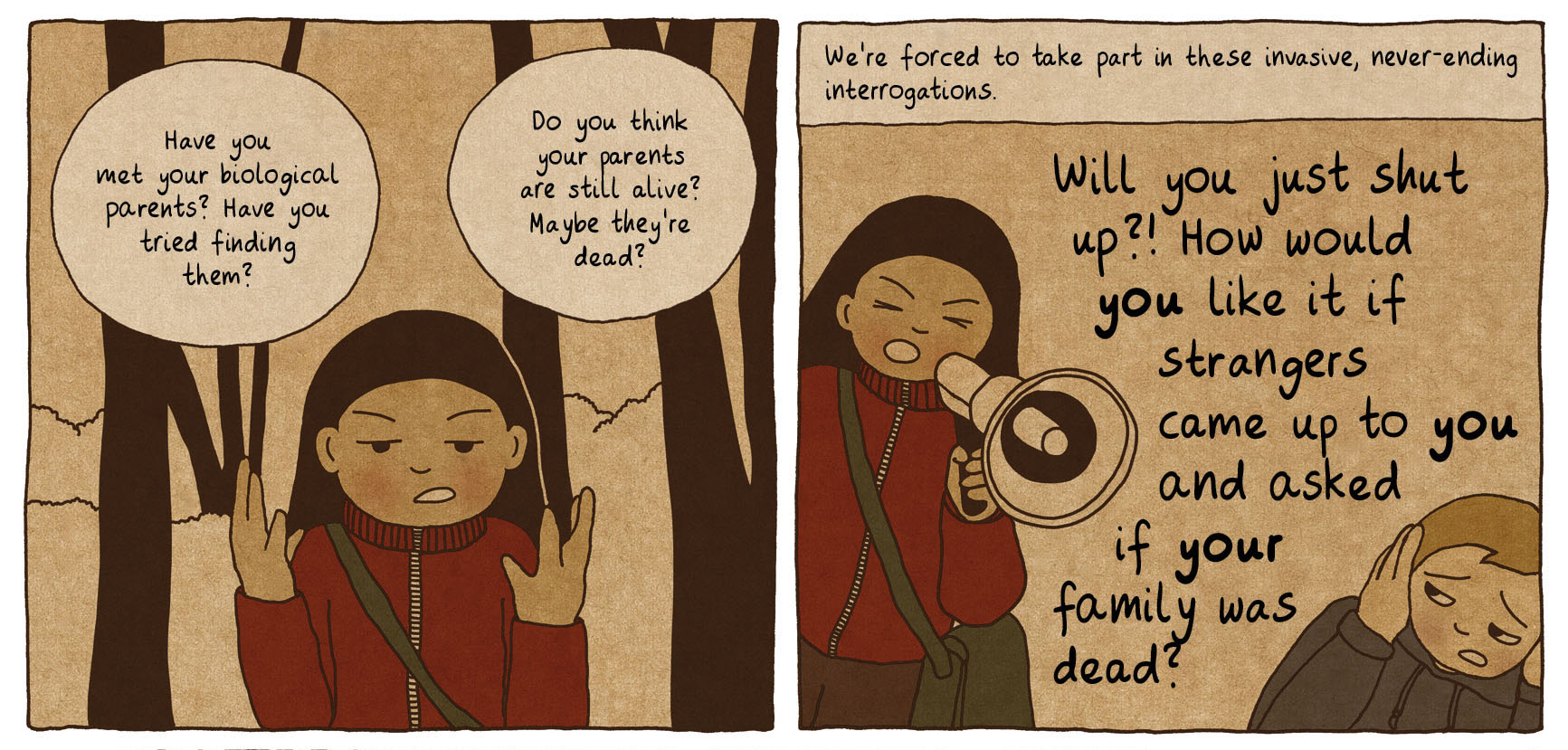
Cartoonist Lisa Wool-Rim Sjöblom begins her graphic memoir, Palimpsest: Documents from a Korean Adoption, with the following dedication:

This album is dedicated to all adoptees

—living and dead—

whose voices have been silenced

What follows is the story of how Sjöblom, adopted and raised by a family in Sweden, discovers a document that unravels everything she had been told to believe about her own history as an orphan. She recounts every difficult aspect of the investigation on the path to uncover the complicated truth about who really owns the story of adoption.

My interview with Sjöblom over video chat ranged far and wide, from her signature art-style to Sweden’s adoption lobby, from the female adoptee body to misconceptions about reunions, mental health, and first mothers. 


Marci Cancio-Bello: Would you be able to talk about showing your reunion with your birth mother?

Lisa Wool-Rim Sjöblom: Yes. It was very difficult to write. We have a television program in Sweden called Without a Trace. It’s an entertainment show for the general audience to watch painful reunions between adoptees and their first parents and siblings. The narrative always, always ends with the adoptee, alone again, on her way home or something, saying, “Now I feel whole, now I feel like this part of me has been found, and I can be a normal person again.” There is this sense of catharsis and relief, and that everything is fine. This is what the program wants it to be, and what the Swedish audience needs to hear as well—that reunions are considered a finale, the closing of a chapter.

I have known hardly any adoptees who have said that about their reunions. Reunions are the beginning of something. Maybe a new relationship. But so many adoptees are really, really frustrated because they feel that the initial meeting may have been wonderful, but then it becomes another relationship full of trauma and questions. It’s not easy, and it’s definitely not as it’s depicted on television and film. 

I wanted to show that this is a different ending, that this is not what you think this book is going to be. It’s not the happy ending where I found the final piece of the puzzle. From the reunion comes more pain and more questions, and the reunion isn’t over. My Korean mother and I didn’t really reunite, either. We met, but we didn’t talk that much. I didn’t find out that much, so I still feel like I’m just waiting to find her, still, in a way. But as a person, not as a physical person.

When we think about a reunion, before they ever happen, it’s about the physicality of the reunion, holding, seeing, wondering where you got your features from and all that, but then after that, it becomes about the person behind the face, who are they, why did they do this, why did this happen, and it’s also about the relatives around them, why did my grandmother decide to force my mother to give me up, blah blah blah. All these questions. So I left a lot out, but I still wanted to communicate that reunions are really, really difficult for everyone involved. I didn’t want anyone to feel comfortable at the end. 

MCB: Can you talk about why, toward the end of the book, you dedicated a few panels to showing how you spent your last few days in Korea, going to parks, spending time with your host family?

LWRS: I had a lot of fears when I made this book, and they kept changing when I was working on it, and of course I also had this fear that people would judge Korea, because I am very tough on Korea as the sending country. There’s a lot of prejudice about East Asian families, because one of the common images is that they are really ruthless, and the mothers are heartless and only want their children to succeed, and they push them to their limits, and they beat the children and all those things.

I wanted to show that Koreans are just like anybody else, that they are all different. We have these horrible Koreans in the agency and in City Hall, and then we have the wonderful, warm police officer who was helping me as much as she could, and then we have Min-Jeong, my translator and friend, whose whole family took us in. Her parents sort of became my children’s grandparents, so these final panels were to show that there are more sides to Korean families than just my mother’s. I also wanted to show that my trip to Korea wasn’t just painful, that there were a lot of happy, lovely memories from that too, and that we got something of a family, even if it wasn’t my biological family.

MCB: I hope this is not an inappropriate question, but do you regret having gone through the process, or are you glad you did it? 

LWRS: I’m really glad I did it. Maybe not so much on a personal level, but more as an activist. I think that a lot of people who identify with my struggles in the book and see that a lot of the things that I struggled with growing up was about trying not to be Asian, not to be an adoptee, trying to be white, trying desperately to fit into something that I could never fit into. I think that my search made me also come to terms with and deal with a lot of other things about being adopted that weren’t so much about where I come from, but rather who I am now. 

Birth mothers tend to be reduced to selfless angels or broken bad people. They are never seen as whole people.

It took me over 30 years to just accept the fact that I’m Asian. I finally feel comfortable with that. I don’t feel disappointed when I see myself in a mirror, or I feel disappointed, but on my own terms. But I don’t feel anymore that I wish I was blond, or that I wish I had blue eyes. I can acknowledge a lot of things that I had just been pushing down in my desperate need to fit into all these narratives about what I’m supposed to be as an adoptee. 

I thought the search was just about the search. But coming to terms with being Asian has been a major thing that also made me a better activist. I think it made me a better person as well. And I think I can be a better mother to my children, because if I’m proud of being Asian, I’m not going to make them feel bad about having inherited their looks from me. So there’s so much else to it than just the search. So yeah, I’m very happy with it, even though it brought about a lot of pain, but the pain hasn’t changed. 

I don’t think there is any: “You have to do this, or you have to do that.” It can be difficult enough to know what you want. If you don’t feel comfortable searching, then wait. There is only one thing you have to do, which is to try to listen to yourself.

MCB: Could you talk about your artistic process and art style? It’s so striking.

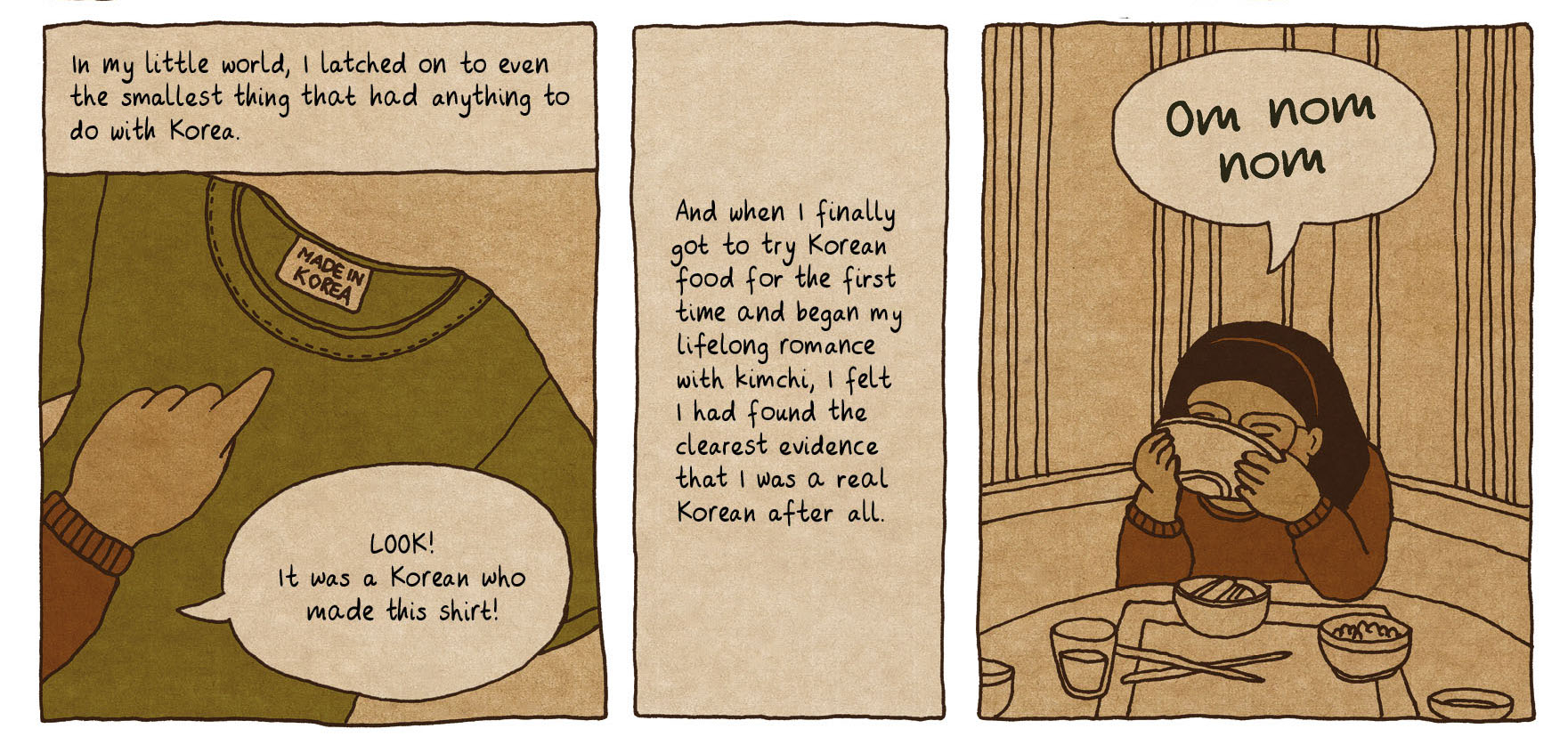
LWRS: The color scheme itself is something I’ve worked with for a long time. It has become a bit of a signum for me. Before I drew this book, I drew comics for children using the same color palette. I’m really into nature palettes with lots of browns and mossy greens. I knew that I didn’t want it to be black and white, even though it would have taken me a lot less time to not have to color in every panel. The term “palimpsest” came to me very early, long before the actual story fell into place. And since “palimpsest” refers to old parchment, I wanted to communicate that sense of fading, old paper. 

MCB: You also include a lot of text, since you’re working with so much documentation of research and correspondence, but it doesn’t visually bog down the narrative. It’s fluid and well-balanced.

LWRS: I think that my work as an illustrator comes through, because some panels are more like illustrations than comic panels, and I think it works quite well because sometimes you need a break when you’re reading a comic book. The story itself has been compared to a detective story. I think that is what makes it possible to have that much text. There is so much to tell, and certain things are impossible to communicate with images. Like the emails, for example; they’re important because there’s so much frustration—and lies—in the emails that I couldn’t leave them out without compromising what I wanted to do and say. Even with the factual bits of information about the adoption industry, it’s not so much about my own adoption but about the things I discovered that are important. Where the panels are more like illustrations, as a reader you might be able to pause a bit and realize, “Oh gosh, this is huge; it’s not just her story.” 

MCB: It allows you to control the pacing so readers can’t just skim through the emotionality and historicity. These pauses made me read the book carefully. 

LWRS: When I found out about my paperwork, I did exactly what I show in the book. I started Googling people, and this massive thing happened: I discovered that there is this term, “paper orphan,” to begin with, and that there is massive corruption in adoption, so my search was interrupted by this other insight.

We adoptees are the ones who are punished by society for not being as ‘good’ as we were expected to be.

On the one hand, I was being very self-centered and thinking about my own story, and then learning about all these other broken families, other adoptees who were searching in vain and discovering that they had been stolen. So it felt like I had to deal with discoveries about my own story, and then all these other people’s stories as well, and I didn’t want to leave them behind. 

MCB: I loved the motifs of the umbilical cord, the family tree, and the cover art depicting the Korean peninsula as a womb. As a female adoptee whose body holds the possibility to carry a child, it felt important to able to read about someone who has concerns about becoming a mother and creating literal blood ties. People don’t really talk about that sort of thing with adoptees. 

LWRS: Absolutely. I think it came from different places, but I remember when I got pregnant, I felt ashamed and guilty for having thought that my mother had made an easy choice just because that’s what I’d been told. I know that’s impossible, it wasn’t my own fault, but I felt very deceived by other people who would say, “They gave you up because they loved you so much.” And then you think, “Okay, well that’s nice,” and then they can move on. Like the letter from the adoption agency that opens the book, which says that hopefully my Korean mother has a husband and new children and a good life. I had reduced her story very much to “She had me, and then she couldn’t take care of me, and was given a solution through adoption.” 

When I got pregnant, this storm of emotions just hit me, physically and mentally. It’s not just about adoption, because all my friends who have been pregnant have said the same thing: how you go through the pains of birth, and how connected you are to the kid. I felt so ashamed for having reduced pregnancy and birth to something extremely simple. Of course, you can never understand those things until you’ve gone through it yourself. 

We take for granted that the female body can do this, and we see this in the surrogacy industry too. It’s reduced to something that is almost not even part of yourself—that’s why you can rent a womb today, and it’s not part of the body, it’s not essential; it’s just a function of the body, like going to the toilet or something. 

So I think those bits in the book are a way for me to apologize. It’s massive, becoming a mother, even if you can’t keep your child, or don’t want to keep your child. It’s massive for the baby, too. It’s quite a thing to be ripped apart from the only person you know. That’s also something that is being reduced to being meaningless. 

MCB: When I read about how you had such anxiety during your pregnancy, I was reminded that this is not something women have space to talk about, especially adopted women who must struggle with particular anxieties about motherhood. 

LWRS: We are reminded by maternity care. In one of the first pages, my midwife tells me to talk to my mother about my birth, because we inherit from our mothers. For them, it’s just something they say because it’s a good recommendation, but for me, a whole trauma was being unraveled in that one little detail. I can’t talk to my mother. I don’t know who she is. We also can’t talk to our adopted mothers about it, not just because they may not have experienced childbirth, but also because there can be jealousy, and guilt as well.

I struggled with trying not to be Asian, not to be an adoptee, trying to be white, to be something that I could never fit into.

You have to fill in all this paperwork about degenerative diseases, and you have no information, there’s so much going on inside and out, and when people who don’t know they’re talking to an adoptee, they don’t understand that these questions can feel very blunt, and you can be emotionally unprepared to deal with that. 

In Sweden, if you have been through sexual violence, or if your parents have died, you’re offered special help when you get pregnant; but they don’t have it for adoptees. I’m advocating for a lot more support for adoptees. So many adopted mothers in Sweden contacted me after the book was written, and said, “I know exactly what you’re talking about. It was awful, it was difficult, and I could have dealt with this much more if anyone had told me that I should be prepared as an adoptee for all the trauma that can come back to me when I get pregnant.” 

MCB: And yet you didn’t do as many people tend to do, which is to demonize the birth mother. You saw and acknowledged your own birth mother as a complex person, even before you began your search. 

LWRS: In Sweden, first mothers tend to be reduced to children, or selfless angels, or broken drug-addict alcoholics who couldn’t mother because they were bad people. They are never whole people, and they’re simplified a lot. 

I wanted my book to show respect for the first mothers, and to give them the complexity that they are never given in Sweden. Adoptive parents and adoption organizations have been talking for adoptees and reducing us to very simplified beings. I didn’t want to make the same mistake with the first mothers, so I didn’t want to make any assumptions other than asking questions in the book: “How did it feel for you? Were you lonely? Was it difficult for you?” and not saying, “It must have been difficult, it must have been [____],” but asking open questions in the panels to my mother. 

There are things that I have left out in the story because I didn’t want any reader to demonize her or to think, “Look at this woman; be glad you didn’t have to grow up with her.” It was a difficult reunion, but with all that trauma, could it have been an easier reunion? I don’t want to put that responsibility on my mother, no matter how hurt I was, to communicate something that would paint her in a bad light. 

MCB: I also appreciate how transparent you were about struggling with depression and mental health as a young person. I don’t know about Sweden, but America often shies away from anything that has to do with mental health.

LWRS: Yes, the same in Sweden, at least when it comes to adoptees. The adoption issue in Sweden is so connected to the adoption lobby that anything negative is automatically seen as political and anti-adoption. One of the first questions I get, not just about the book, but about my search or anything, is, “How did your adoptive parents react?” Everybody is so concerned about how they feel, and not: “What did it feel like for you to find your parents?” Always the first question is about my adoptive parents. 

And that is a bit how it is in general for Sweden. If we voice our concerns as adoptees about our health, and we don’t get the proper care that we need, people say this must be so hard for our parents. We are the ones who are dying. We are the ones who are committing suicide, and we are the ones who are punished by society for not being as “good” as we were expected to be, and yet everybody is concerned about the adoptive parents, because they did everything they could, and now we are ungrateful because we’re not healthy enough or whatever. It’s absolutely insane. 

When other Swedes commit suicide, we see it as a huge health problem that needs to be dealt with, but adoptees are not included. We have this group called Suicide Zero which works to inform about suicide factors, where you can get help. They’ve listed high-risk groups on their webpage, such as LGBTQ people, refugees, and so on, but adoptees are not mentioned, even though we are the group with the highest suicide rates in society. There’s quite a lot of research done in several countries that match the numbers that we found in Sweden. The numbers are alarming, and yet if you try to talk about these things, people actually say, even in adoption organizations, “Yeah, but this is good, because it means that so many adoptees actually survive.”

We are overrepresented when it comes to foster care, crimes, suicide, attempted suicide, psychiatric care, we do worse at school, we don’t marry as much as the non-adopted population, we don’t have kids at the same rate, and all of this is dismissed, because we are told to look first at the adoptees who succeed, we should look at those who didn’t get adopted in their own countries, and be grateful for what we got. 

MCB: Does Sweden have citizenship issues in the adoptee communities? Adoptees are not included or acknowledged in conversations about citizenship and immigration.

LWRS: No, we don’t have that, so that’s one of the few good things. Several of us who are activists are working to make people understand that we are migrants. I don’t know if in the U.S. adoptees are included in the term “migrants.” They may be in numbers and statistics and academic environments, but not in the general conversation. We are separated from other immigrants. So we say adoptees and immigrants. But we are trying to say that we are also migrants in this country, which is important to understand for several reasons. It doesn’t make any sense at all, but it’s because the term “immigrant” has become loaded with a lot of other things. 

The adoption lobby also wants to cover up that it is an immigration issue. They want adoption to be seen solely as a bi-political thing, and it’s all about forming families, especially for childless couples to be able to have children. That’s where they want the focus to be, and not on the fact that we are forced migrants from a different country, because then the conversation would look very different. We have political parties with racist policies that want to limit the migrations, but they want to support more foreign adoptions, separating the issue that you have this kind of immigration that is welcome, and then you have the other migration that you want to stop, but they don’t realize that it’s all the same. 

The whole difference is that adoptees are wanted by wealthy Swedes, and we come without our parents, whereas other migrants might come over with their families, which they want to stop. An effective way for them to distinguish between us is to not acknowledge that we are all migrants, and to just talk about us in different terms so that it’s not obvious that they are completely hypocritical about migration issues. 

The Day My Students Grew Wings

The following story was selected by National Book Award winner Susan Choi as the winner of The Academy for Teachers “Stories Out of School” 2020 flash fiction contest. Choi calls the work “a cut-gem marvel of a story, every facet glittering with beauty and sly humor.”

Field Trip

It had just started snowing when Hiba first noticed the small white feathers growing out of Stella’s shoulders. We weren’t sure what to do so we agreed to table it and revisit the situation in the next class. I considered assigning a response journal on the topic, but decided they had enough to do.

Strange things had been happening since Mia had found the one-eyed grey kitten on her way to school one day. She had smuggled it into the building in her backpack and we fed it bits of beef empanada from the cafeteria and poured cafeteria milk into a bowl I’d bought in Chinatown with a picture of a carp at the bottom. By the end of the day we had named it Dervish and agreed that no matter who took him home, they would bring him back each Friday and we would have Dervish parties. We had been throwing these parties now for three months and he was becoming quite used to being the center of attention. The feathers on Stella’s shoulders seemed to augur a new era, however. Between that and the snow it really was a festive day.

Before Dervish’s arrival we had been reading Marx. What would it take to convince a whole population to live cooperatively? Was this whole school system we were trapped in a consequence of the commodification of education and a demand for constantly higher forms of production, monetized as future college credits and career points to satisfy clamoring parents and superintendents? We all certainly felt exhausted and alienated, we agreed. But maybe it was just midterms that were bringing us down.

Then we were reading Nietzsche and that really brought out the debates. What’s wrong with this so-called slave mentality? Michael asked. Lying and manipulating are legitimate forms of resistance when faced with illegitimate authority based on brute force. But it’s better to retain a noble mindset and look at one’s enemies with pity and mercy, rather than hatred and fear, countered Lucy. Is it better to be lion or lamb? Predator or prey? Does it matter as long as you love that life, no matter the form that it takes? The students tussled for days. In the end, however, we decided that one thing we could agree on was that we all preferred to be yes-sayers. And so when Mia arrived with the kitten, we all said Yes immediately.

Since then, Julia’s teeth seemed to have grown a little sharper. Erica’s hair had taken on a wooly feel, and Michael had these new gray tufts behind his ears and a strange glint in his eyes. I could have sworn Nicola’s skin was taking on a golden, scaly quality. But then again, my eyes were always bleary now from grading ninth grade essays.

Finally it was June and we were reading Virginia Woolf. I had given the students an assignment to try to capture in art or writing the truth about someone or something’s beauty. Then we decided that to honor Mrs. Ramsay, we would throw a party. A friend of mine offered his house upstate; so many of these students never got out of the city. Neither had I since I started this job seven years ago. The towers of new glassy condo buildings that had grown up around the school like silver birches under a witch’s curse were hemming us in, mind and body. The students loved the idea. We’d leave early, take the train up the Hudson, and be back by 5 pm, all within the parameters of the official school trip plan. And since the trip would fall on a Friday, of course we would bring Dervish as well. 

When we arrived at the house, the students were thrilled. A meadow stretched out back, ringed by fir trees on three sides and a river on the fourth. All they wanted to do was play. Can we stay here forever? they pleaded. Do we really have to go back and face final exams, another round of dreary reports? Well, how could I say no? At three o’clock, as we were supposed to head back to the train, Dervish licked his right paw and ran straight into the forest. And yelping and singing with delight, the students unfurled their wings and preened their fur and bolted after him. What could I do but shake out my tail and follow?


Teachers have one of the most fascinating, difficult, and important jobs on the planet, and their work days are filled with stories. Yet teachers seldom appear in fiction. This annual contest was created by The Academy for Teachers, which seeks to raise respect for the teaching profession. There were two criteria for submissions: that the story’s protagonist or its narrator be a teacher, and that the story be between 6 and 749 words long.

How White Writers Profit from Mexican Pain

I made $1800 for my first book. 

After researching, writing, fact checking, editing, securing blurbs and endorsements, that comes out to under a dollar per hour. I clearly didn’t do it for the money, or the recognition: hate mail from strangers decrying my free luxury housing or “c*nty crooked nose”. (Actually, I lived in a moldy basement apartment—the government never returned my calls for free money or a nose job).

I did it knowing full well what I was signing up for. I did it because people impacted by our violent immigration regime should be the ones to tell our stories. 

That American Dirt, a non-Mexican reading of Mexican pain, received a seven-figure advance wasn’t surprising. It’s part of a proud literary tradition of repackaging white violence, and finding redemption in the wreckage.

My sister and I have been inseparable since either of us could stumble towards the other. Late nights whispering furtively about boys, clumsily adorning ourselves with makeup to impress no one, sneaking into the kitchen for midnight snacks. But there’s been one ever-present point of contention, one constant wound that won’t heal. 

She was born on the other side of the border. 

When I write, I don’t want to write solely of grief. We have so many more stories to tell. 

It’s meant that first dates, breakups, good days, weird anecdotes, bad dreams, and all the rest are mediated over Skype. It’s meant bad connections, missed opportunities, and a sharp, needling longing that never leaves my side. It meant not knowing if she’d make it to my wedding until two days before—lest a customs officer find her entry “suspicious” and turn her back. A 120-mile stretch of land has determined our fate. 

When I write, I don’t want to write solely of grief. I want to write of young girls whose laughter can’t be silenced, who have no patience for an arbitrary man-made line in the dirt. We have so many more stories to tell. 

Latinx writers are often told there’s just no budget for our stories. But somehow, the money emerges time and time again for those with access. For those willing to tell a story that Americans want to hear. For American Dirt, a woeful migrant tale written by a white woman with a Puerto Rican grandmother, the budget extended not only to that seven-figure advance but to a lavish book party with barbed-wire-wrapped walls as centerpieces. 

American Dirt follows the story of a young mother and her son as they flee a drug cartel, seeking safety in America. Cliches and misreadings abound, assumptions only someone writing from the outside, an onlooker gazing at a spectacle could make; it’s a book not about Mexicans but of the fantasies Americans craft around us. Grief abounds, but always at a comfortable distance—the book is not concerned with interrogating power, or challenging it. The New York Times called it “determinedly apolitical,” saying the quiet part out loud: U.S. readers are eager to engage with migrant pain. A fix to their problems? Less so. 

What should we make of such a voracious appetite for stories of traumatized immigrants, but so little space for narratives not told through the white gaze? For narratives that challenge imperialism, capitalism, and the ways these drive migration in the first place?

How is it that these seven-figure advances never end up in our communities?

What does it mean that our pain is fit for mass consumption, our grief a performance space for wealthy authors to play in? How is it that these seven-figure advances never end up in our communities, where we bail out our brothers and sisters from immigrant detention with the pennies we can scrounge? 

Why are we palatable when we’re convenient, when we call Trump a racist but not when we point out Bill Clinton helped build the wall? Why do the accolades stop when we remember Obama bragging about putting “more boots on the ground along the border” than at any point in U.S. history?

There’s no shortage of Latinx writers with stories to tell. But when we try, we’re pushed and prodded for details, for a thorough exposition of our deepest griefs. As a vehicle for white pathos, we have value; the moment we start asking questions about why things are the way they are, how quickly we become the aggressors. 

We may not be welcome in your barbed-wired reception halls, but we will never stop sharing our stories. 

What Should Classic Books Smell Like?

People often wax poetic about the smell of books—the scent of old ink and paper is so eternally popular and beloved that you can even get it in perfume form. But Adam Levin’s upcoming novel Bubblegum is trying something a little different—the dust jacket of this book smells like bubblegum. This, of course, raises the question: what if all books were scented to reflect their contents? Kind of like smell-o-vision, but for reading. This could be the next big trend in literature, so here are some classics reimagined with smells.

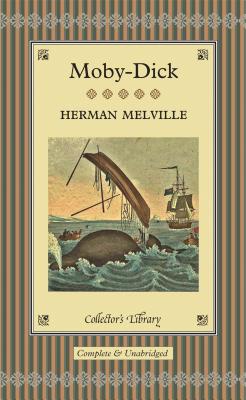
Moby-Dick

Smells like the sea, but a very specific, terrible sea scent: low tide. A cross between a dying animal left out in the sun, plus salt, plus farts. The stench of man’s hubris and man’s homoeroticism (plus farts). Apparently it’s a great read if you can get past the smell, but many people can’t.

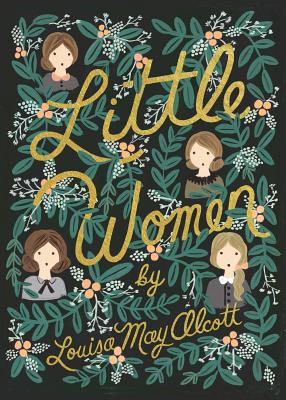
Little Women

Only the warmest and most nostalgic smells: gingerbread, pine trees, fresh snow. The scent of a warm fireplace and drying flowers and wind floating through an open window. Smells that make you feel emo about your picturesque childhood in 1800s Massachusetts with your three talented sisters and⁠—oh that wasn’t actually your childhood? Bummer for you.

Mrs. Dalloway

Right away, you catch the scent of flowers but it’s suddenly obscured by… gasoline? Or gunpowder? Or maybe an obscure smell from your youth that you barely recognize but brings strong emotions? The smell is hard to put your finger on because it keeps changing, and every time you think you’ve got it, it becomes something else.

1984

Smells like rats!

The Picture of Dorian Gray

This book is wearing a whole bottle of perfume, so much that it makes your eyes water (but it still smells kind of good). However, underneath all the perfume you can make out the smell of decay, something sweet and gross. Carry this book with you for a day and you’ll be smelling like expensive perfume (and a constant reminder of your own mortality) for a week.

Wuthering Heights

Ah, the crisp scent of the moors. Smells like dirt and heather and the air before snowfall. The kind of smells that really get you amped, like just completely full of unstoppable chaotic energy, energy that most people will rightly fear. Some people love this smell, but others think it’s confusing and a little much. Both are valid.

Les Misérables

Smells like bread you can never have, which is to say it smells like particularly delicious bread. Bread you’d be tempted to ruin your life over. Also, a hearty dose of the mid-1800s French sewer system. You might wish there was a little less of the French sewer system, but Victor Hugo would strongly disagree. In fact, he’d probably argue there could be a little more sewer. 

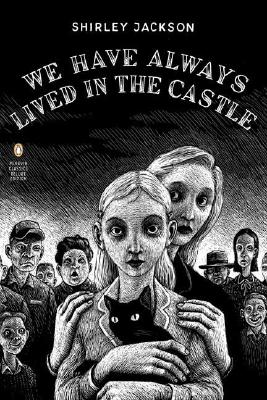
We Have Always Lived in the Castle

A delicious home-cooked meal. Roasted spring lamb, mint jelly, potatoes, peas, and salad fresh from the garden. And for dessert? Blackberries sprinkled with sugar. What could be more pleasant than that? Actually, I’m feeling a bit odd now. Everything is going dark. I’m starting to lose consciousness, I’m⁠—.

A Daughter Returns to Her Homeland to Search For Truth

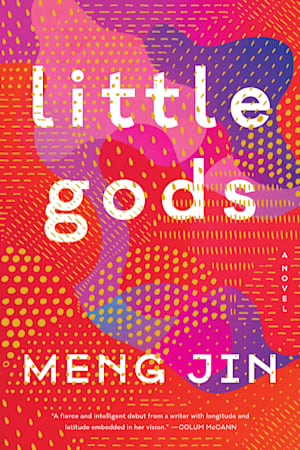
In Meng Jin’s debut novel, Little Gods, a baby girl is born on June 4, 1989, the night the Chinese government massacred pro-democracy protestors in Tiananmen Square. The girl Liya grows up displaced in America with her mysterious mother, Su Lan, a physicist on the run from her past and the “mind’s arrow of time.” 

Image result for little gods meng jin"

Upon Su Lan’s death, it falls on her daughter Liya to fill the gaping absences. Liya takes Su Lan’s ashes to China and begins her journey back in time. By weaving of Liya’s story, along with the trajectories of Su Lan, Yongzong, Zhu Wen, as well as that of the nurse in the maternity ward in which Liya was born, and Zhang Bo, a college friend of Su Lan, with the Tiananmen uprising, Meng Jin offers an intimate, fractured family story on the epic canvasses of China’s recent history and endless psychic back-and-forths of immigration to America. 

The novel’s frame is physics, and theories of time and relativity, which Su Lan works on throughout most of her life. Meng Jin renders this with ease that certainly intrigued (rather than intimidated) me. I spoke to her about revolution PoVs, inspirations for a cad, and the possibilities of running from time.


JR Ramakrishnan: In the first pages, I was intensely startled by the nurse’s revelation (so casual, so very brutal) that she’d stoned a teacher to death in her youth. The nurse is part of your novel’s origin moment. She encounters a distraught Su Lan briefly on the night of Liya’s birth, which is also the night the Chinese government put down the Tiananmen protests. Why did you decide to start the novel with this character? 

Meng Jin: I wanted to start the novel with Liya’s birth on the night of June 4th, and I’d tried writing some version of that scene many times to no success. There exists so much in the popular imagination already about June 4th, and I didn’t want to replicate the tone or content of anything that was already out there. I also wanted to start the novel quietly (believe it or not), which is hard when what’s happening in terms of plot is so loud and dramatic. Not to mention that birth is such an inherently dramatic event. So I started looking away from my central characters for a more stealthy entry into the story, and that was when I found the nurse.

The first pages of a novel should teach the reader how to read the rest. I’d already envisioned the central character, Su Lan, as an intentional absence in the book, so starting with this omniscient eye that circled and circled until it landed on a minor figure standing (walking, actually) at the periphery made instinctual sense. So too with her casual, brutal revelation. I actually remember bringing this to workshop and being told that I couldn’t just drop a bombshell like that in passing, that it had to be a story in itself. But it was one thing I refused to change through many subsequent drafts. I thought of it as an early signpost to the reader of how I would treat History with a capital H in the rest of the novel, as filtered first and foremost through an individual’s consciousness, rather than some larger, more significant story to which the individual was subservient.  

JRR: The nurse also lays out the title and her thoughts about revolution: “What did it boil down to but children, giddy with breaking the rules!” This sense of political disenchantment extends to Su Lan, who you tell us later via Yongzong, distrusts collectivity, and ignores the whole Tiananmen uprising. Would you talk a little bit about the nurse’s perspective? It was interesting to consider her take on youth and revolution in light of the protests in Hong Kong last year.

I wanted to explore how a story that looks morally clear on the surface gets ambiguous when you start looking at individual human beings.

MJ: The nurse’s perspective of the 1989 democracy movement is deeply inflected by her own experience in the Cultural Revolution. She looks at the protesters and sees herself—her own past, her own mistakes—more than what is actually going on. There is a moment later in the scene, when she’s looking directly into the faces of the wounded, when her sight snaps and she realizes her perception may not be perfectly true. As for a person like Su Lan (and the nurse, and also Zhu Wen), she’s distrustful of notions of collectivity because she’s never felt welcome in a group: it’s a distrust that stems from deep insecurity. It makes sense that someone like Yongzong, who has always assumed his position in the center of a community or discourse, who has never doubted that the world had a place for him (the question only is where that place is), would take more enthusiastically to such collective movements.

As a fiction writer, I was interested in portraying these varying political attitudes—attitudes that perhaps are not the ones that seem most immediately obvious or germane in a sociopolitical context—because I wanted to explore how a story that may look quite morally clear on the surface gets ambiguous very quickly when you start looking at individual human beings. I think this is true for anything that appears morally clear—a sad fact that national and international current events, unfortunately, reminds us of every day.

JRR: Why multiple PoVs and why these ones in particular? From the nurse, you go to Zhu Wen, who was the nanny to baby Liya, addressing the adult Liya and then on to the character of Yongzong, her disappeared father, and the grown-up Liya in first person in China with her mother. Su Lan’s ashes. Was Zhang Bo considered? He witnesses a lot of Su Lan life and intellect, no? 

MJ: The true answer to this question is it just shook out that way. Writing a novel is a long, mysterious, and (for me) very difficult process, and sometimes you just do the thing that feels right, that makes the story you want to tell click into place. I never considered Zhang Bo, perhaps because he appeared later in the writing process. But even now when I consider what his perspective might add, I don’t think it would enrich the story. In narrating Su Lan through the eyes of others, I was really interested in eyes that would offer a distortion or filter, that the telling would illuminate the narrator as much as the object of narration. Zhang Bo’s vision of Su Lan might be boring precisely because he loves her and knows her so wholesomely. Also, as you may have noticed, I’m quite brutal to my characters, and Zhang Bo is such a good guy – I liked him too much to subject him to my eye. Leave him alone, was probably what my subconscious said. 

JRR: I thought you made the character of Liya’s father and Su Lan’s husband, Yongzong such a perfect and terrible cad. Such an incredible job in crafting the mystery of him (and the force of the novel’s movement) in the book! What or who was the inspiration for this character?

MJ: “A perfect and terrible cad”—I love that and am stealing it for all future descriptions of this character! He was his own inspiration, really. I started writing him after I already knew what he had done, which, not to spoil anything, was quite damning. The challenge was to write a terrible guy who was very invested in believing that he was a good guy, and in telling himself a story in which this self-image doesn’t totally disintegrate. I think that’s where the mystery comes from: he doesn’t know himself—he refuses to know himself—and by the end, the reader surpasses him in knowledge of who he is. 

There were certainly other literary voices knocking around in the back of my head as I wrote his section, however. Specifically, tonally: the blinkered, eerily calm narrators of Chang Rae Lee’s A Gesture Life and Kazuo Ishiguro’s The Remains of the Day. But also, more generally, all the tortured male narrators in the canon of literature who treat women terribly for the sake of their own self-realization (though often the point of those stories was not to expose their myopia, I always read them as such). Yongzong’s section was easy to write. There are a lot of examples of terrible cads in our beloved literature. 

JRR: So much to ask about time in the novel! Su Lan is a physicist who worked on her theory of time. I appreciated Zhu Wen’s rendition of it: “Light could travel only through space, she said, not time, and if we could travel as fast as light, time would cease to exist for us too.” You seem to have translated and distilled the physics with such clarity for lay people throughout the novel. How did you consider the science (as well as the history of science, as Su Lan mentions Einstein’s personal life in her letters) for the thematic frame of the book? How much research was involved? 

MJ: The physics research was pretty organic. I was reading popular physics books for pleasure, and I found some of the concepts so beautiful and moving that I wanted to write about them myself. I’m a lay person too—90% of the content of these books went over my head—so the process of writing about them was also a way to distill and explain them to myself. In general, I’m a big fan of simplicity, and I think my greatest pitfall as a writer is a tendency to overcomplicate, in language and form and content. I dream of making something so simple, so elegant, you barely notice it was made. 

I dream of making something so simple, so elegant, you barely notice it was made.

As for the frame of the book: I always knew that Su Lan was a woman scientist of some sort, because I wanted to write about a woman scientist, and also because it made sense for her immigration timeline. Once I tried making her a physicist, I realized that the metaphoric possibilities opened by her scientific interests seemed to lock hands with and amplify the other themes I wanted to explore in the book: loss, longing, the passage of time.

JRR: Although not a physicist himself (but a doctor who later becomes a literary translator) Yongzong expresses similar sentiments around time when he goes to his hometown without going to see his parents: “Perhaps this was the first time I realized how simple it was to act as if certain parts of the past did not exist.”  Those first few words are chilling in light of what happens in the novel–I won’t spoil the surprise for future readers but I was certainly floored by your twist. It seems to me that Yongzong is the only person in the book who escapes the past. Would you say this is true, and perhaps discuss this shared escapism of Su Lan and Yongzong?  

MJ: Yes! That is exactly right, and that ability to successfully escape the past is exactly what attracts Su Lan to Yongzong. She wants to be as ruthless as he is, she wants to be able to shrug off everything but her own vision of her future. But partly because of the conditions of her life (conditions that Yongzong will cement with his ruthlessness), partly because of who she is, she cannot. 

In a later scene, when Yongzong takes Su Lan to meet his parents, he begins to invent a story about the two of them, and she goes along with it, nonplussed. In that scene I imagine Su Lan feeling exhilarated, almost ecstatic—he’s sharing his ease with her—but at the same time, she is very viscerally disgusted. She finds the ease of his total self-concern repulsive—and yet she envies it. 

JRR: Liya’s parents are very far from being exemplary as parents. Have your own parents read the novel, and what do they think of it? 

MJ: Well, maybe Liya’s parents aren’t exemplary by certain contemporary standards. But what is the measure of good parenting? Liya turns out okay, doesn’t she? 

My father has read the book: he was surprised. Like many readers who aren’t writers, he’d assumed that the book would be largely autobiographical and was surprised at how much I had made up.

Why Aren’t Writing Retreats More Disability-Friendly?

Once a year, I fill out an online application for Hedgebrook, a writer’s retreat in Washington State. I attach a writing sample and send it off into the ether. Seven or eight months later, I get an email with a denial. In the past, this hasn’t been too upsetting; Hedgebrook is incredibly competitive. When I began applying to residencies a few years ago, I thought that if I didn’t get into Hedgebrook, I’d just go somewhere else. Unfortunately, as a writer with a disability, I’ve learned that there aren’t a lot of “somewhere else”s. 

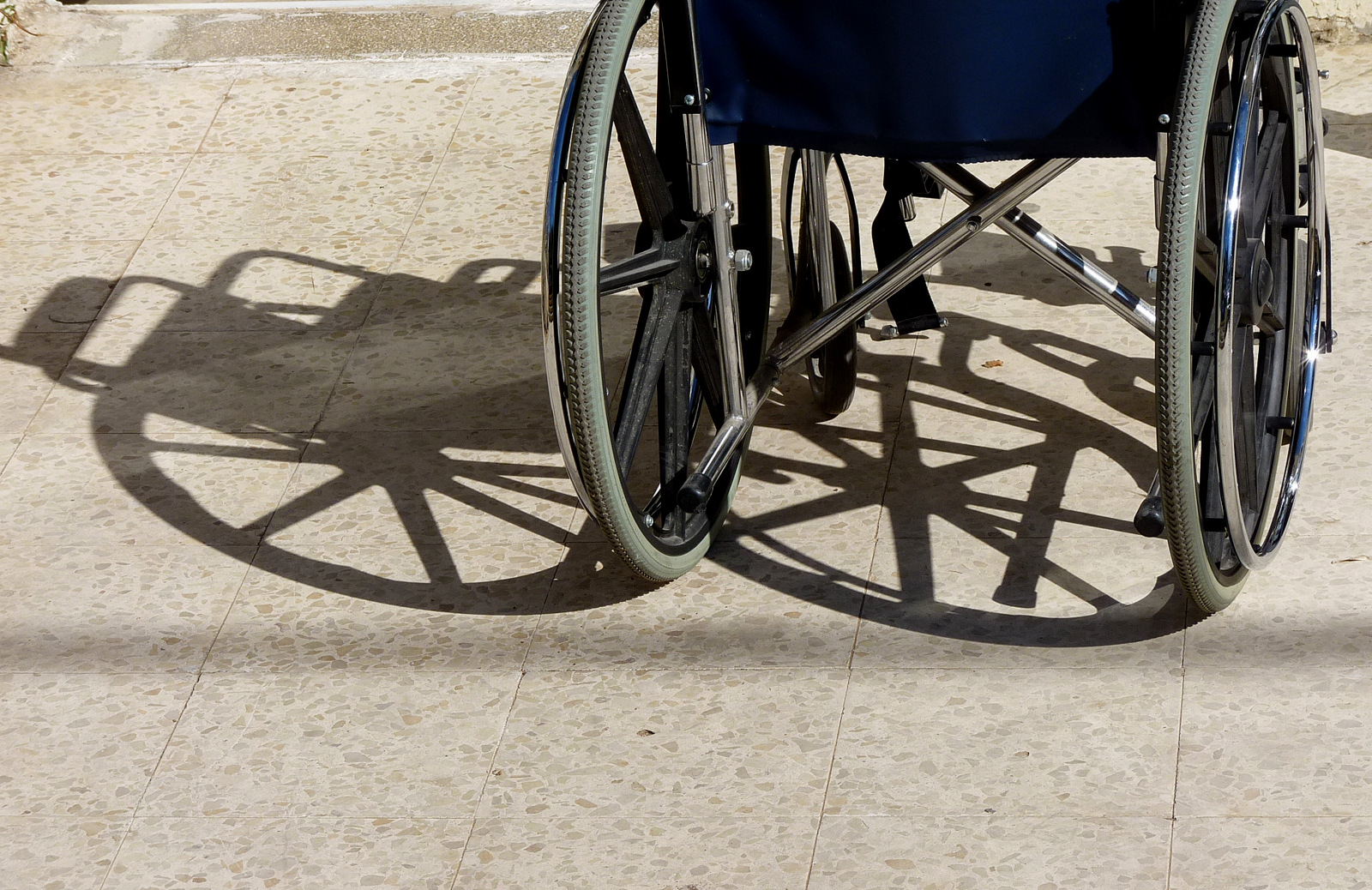
This year, my friend Elsa Sjunneson-Henry also applied to Hedgebrook and was also not accepted. This year, we were both crushed. Unlike many other writers, we don’t get to just apply to a bunch of retreats and go wherever we’re accepted. Elsa is deaf and blind and uses a guide dog, and I’m chronically ill, have multiple food sensitivities, and am a wheelchair user. Hedgebrook is one of the few writing retreats that could have accommodated us—and even then, probably only one of us at a time. 

I find myself competing with my disabled friends and colleagues, a hidden competition within the competition.

Many writing retreats are far from accessible, and even retreats that claim to be accessible according to the Americans with Disability Act often have only one cabin or workspace per residency that is designated for the use of disabled participants. Not only does this mean that it’s nearly impossible that Elsa and I would be able to attend the retreat together, it also means we’re pitted against each other—not only for the available spots, but for the one spot that’s assigned for our use. As in so many other areas of a disabled person’s life, we are given the message, albeit unintentionally, that we should only take up so much room: the room we are allotted. I find myself competing with my disabled friends and colleagues, a hidden competition within the competition. 

Sandra Beasley, a poet and nonfiction writer who has multiple severe food allergies, points out there currently aren’t any residences that are fully accessible. “I can’t identify a single residency that uses universal design throughout the entirety of its space, furnishes safe and nourishing food options for everyone, implements accommodations at the outset for those who are blind or visually impaired and provides ongoing interpretation and access services for those who are D/deaf and hard of hearing,” she told me. This is not an easy problem to solve. Accessibility is far from cookie-cutter, and what is accessible for one person, such as a location that allows emotional support animals, might then become inaccessible for someone with allergies. True accessibility requires both knowledge of the Americans with Disabilities Act and the tenets of Universal Design, and the flexibility to make changes if needed. It takes resources and effort—but writing residencies should be making it a priority, and not simply paying lip service to the idea of diversity while excluding participants with disabilities.

For me to attend a residency, it would need to be wheelchair-accessible. I would need a single room since I sleep poorly and don’t want to disturb a roommate. I’d need a bathtub or a shower with rails and a shower chair. Due to the unpredictability of my disabilities, I need a program that is loosely structured; I can’t commit to showing up to lead workshops or teach, and I can’t cook and clean for myself or others if I also want to have the energy to be able to write. I need air conditioning during the warmer months. I need lighting that is bright but not fluorescent, or I’ll get migraines, and I need to maintain a strict diet due to food sensitivities. In the future, I’ll also travel with a service dog. Even listing these makes my stress level rise. I’m a disability rights activist, and I fight against ableism, including the ableism I’ve internalized. But scrolling through residency after residency that wouldn’t be able to welcome me, I begin to feel worthless, and a burden, all over again. I’m too much trouble, I think. This is just too much. 

Some disabled writers avoid applying for residencies at all. Kimball Anderson, who writes comics and fiction, hasn’t gotten very far into the process of applying for retreats: “[I] found them enticing, looked into them, and came to the conclusion that while they seem lovely I probably couldn’t do them.” They said it comes down to “spoons,” or energy levels. Kimball has concerns about not being able to do the same activities as others at the retreat: “What is a relaxing, creative experience for others just would not be that way for me.” 

Megan Giller, a food and lifestyle writer based in New York, thought she’d found the perfect opportunity. She applied and was accepted to a residency in New England. When she was filling out the application, there wasn’t a space to write about how she travels with an emotional support dog. Once she was accepted she was sent a form that asked her to list medical or personal info that she would want an emergency provider to know. Megan filled out the form and added the information about her emotional support animal. She received a response that stated she would not be allowed to bring her ESA. After a few emails back and forth, the residency revoked the fellowship.

Sandra Beasley told me that in her experience, “there’s not a lot of opportunity to discuss or acknowledge one’s disability during the application process. That can be frustrating for a potential applicant not sure whether it’s worth their time, effort and money that it takes to apply.” 

Hedgebrook, the residency I apply to every year, is one of the few organizations that has made accessibility a priority. Cathy Bruemmer, Operations Manager at Hedgebrook, told me that in 2001 they hired consultants to improve accessibility. They added a paved path to the garden and converted the caretaker’s house into a residency house that has a first-floor bedroom, bathroom and kitchen/living room with a loft bedroom that could accommodate a personal assistant. The residency house is used when a person has a guide or service dog, which keeps the cottages as allergy-free as possible. An additional cottage has a ramp entrance and a larger bathroom to accommodate a wheelchair. They also have a personal mobility scooter available, and address food needs when the participants welcome packets are sent out, rather than when the participants arrive. The staff continues to address accessibility issues as they come up.

Elsa Sjunneson-Henry and I sometimes brainstorm about the accessibility options we’d love a retreat to have. A bathtub rather than a shower, for soaking angry joints and tired bodies. There would be labeled, healthy food that I could eat, even with my food sensitivities. There would be private cabins, “with lots of light so that low vision folks can see their work with ease,” Elsa says. “In my perfect world, there would be a dog run.” 

I think sometimes about the art that’s stifled because of ableism and discrimination.

Roughly 20% of the population is disabled. I’m not sure how many disabled writers apply to retreats and aren’t accepted because of their disability but from my personal experience I know it’s more than a few. I think sometimes about the art that’s stifled because of ableism and discrimination. I think about my book that’s on hold, and all the projects that my disabled friends aren’t able to work on. I think about us, sitting at home, combing through applications with a fine-tooth comb, searching for clues about accessibility. I spend an inordinate amount of time on the applications, trying to find some way to distinguish myself from the other wheelchair-using writers, because they’re my competition. I wonder who will get the accessible cabin, or the sole single-occupancy bedroom, and how many other disabled people applied. How many disabled writers are turned away due to lack of accessibility, their earned spots instead given to an able-bodied writer because they’re easier to accommodate? How many of us just give up due to frustration, lack of information and fear of judgment and so don’t apply at all? I added up all the application fees I’ve spent the last few years, and realized that I don’t even know if the judges stopped reading the applications when they read that I’m disabled. I have no idea if those fees were wasted, or if I was denied on my merits. I think about my friends who have traveled to a retreat, spent their own time, money and energy, only to find that it’s not accessible to them. They find they can’t do the work they wanted to do. They find that they are made to feel like a burden. 

So, what can a writer’s retreat to do improve its accessibility? First, consult with an attorney versed in ADA law. At the very minimum, the organization needs to ensure they are meeting the requirements of the law. Next, I’d recommend they hire a disability consultant like Hedgebrook did, who can go through the application, property, activities, food, and any other issues related to attending the retreat. Websites need to have full info about accommodations. The organization should have a point person in charge of accessibility, who has the ability to make changes without having to go through the board. There are simple, easy changes too, like installing non-fluorescent lighting and automatic door openers, and switching to fragrance-free cleaning and laundry products. 

My hope is that this essay can encourage much-needed dialogue between disabled writers and writing retreats. I hope that in the future, disabled writers will not be made to feel like a burden, but that instead we will be fully welcomed into the communities that do so much good for so many writers. Maybe one day I’ll get the chance to write my book after all. 

Who Are the Real Villains in “The Majesties”?

The opening of Tiffany Tsao’s The Majesties does not let you get away with murder: “When your sister murders three hundred people, you can’t help but wonder why – especially if you were one of the intended victims.” Dying in a hospital bed, Gwendolyn Sulinado recounts how her sister Estella enters the hotel kitchen in her gorgeous cheongsam to poison their whole family. One can imagine mystery and a femme fatale with a chignon, but the novel, despite being a page-turner and longlisted for the Australian Ned Kelly Award for Crime Fiction, transcends the boundaries of genre (“crime”/ “thriller”) or category (“Asian family drama”).

The Majesties

First published in Australia as Under Your Wings, The Majesties is a journey to unearth past events that led to Estrella’s monstrous act, a haunted world filled with secrets, deceits, destruction, and family bonds thicker than blood, prompting us to question: Who are the real monsters? As we track the sisters’ footprints from California to Melbourne, we uncover more layers, including a tale of two sisters and gender expectations in a morbid family web as well as the complex position of the Chinese elites within Indonesia’s violent history.

Born in San Diego and raised in Jakarta and Singapore, Sydney-based writer and literary translator Tiffany Tsao brings reflections on her cosmopolitan background and Indonesian heritage into the dark, rich story of the Sulinado family. The theme of in-between-ness was explored in her previous The Oddfits novels, a fantasy series set in Singapore about a boy who does not fit in. In the international sphere of global publishing and literary translation, Tsao is known as a staunch supporter of underrepresented voices in literature. When I first met her in Sydney in 2016, she was the Indonesia-Editor-at-Large at Asymptote, actively seeking and promoting writers from Indonesia, a country that is relatively marginal at the global literary stage and a home she has been increasingly attached to. Since then she has been involved in various translation and curatorial projects, including A World with a Thousand Doors, an Asymptote Translation Tuesday series showcasing Indonesian writing, and Intersastra Unrepressed series, which presents translations of works that are often sidelined or suppressed. Her translation of Norman Erikson Pasaribu’s poetry collection, Sergius Seeks Bacchus was the winner of the English PEN Presents and English PEN Translates awards.

Prior to the publication of The Majesties in the U.S., we conversed about the themes of family secrets, monstrosity, and history, why she chose to portray the wealthy Chinese Indonesian family as villains instead of victims of anti-Chinese prejudice, the problems of the Anglophone literary standards and what we can do to disrupt power structures.


Intan Paramaditha: The Majesties is a gothic family drama, a thrilling page turner, and a cultural and political critique. Tell me a little bit where the idea came from. 

Tiffany Tsao: Wow, where do I start? My first book, The Oddfits, was set in Singapore, where I spent a lot of my childhood. But for my second novel, I wanted to draw on the Chinese Indonesian side of my identity, which I really only began to recognize and connect with quite late in life, in my early twenties.

Interestingly enough, in the very initial stages of writing, I intended to use wealthy Chinese Indonesian society simply as a backdrop. My desire was to focus mainly on the issue of familial secrecy—whether keeping unpleasant facts hidden might in fact be kinder than exposing everything and everyone for what they really are. But as I began fleshing out the novel’s thematic concerns and narrative structure, I rapidly realized that it was impossible to ignore the social and political issues influencing the characters I wanted to write. After all, the domestic sphere is an extension of the political and social and economic realm—what happens outside the home directly affects what happens inside it.

So while the novel is certainly about a family’s dark secrets, it is also about how this particular family’s dark deeds are partly an outgrowth of the darkness that surrounds them—corruption, anti-Chinese prejudice, and conditions that have given rise to an immense divide between society’s richest and the poorest. 

The Indonesian historian Ong Hok Ham once observed that the anti-Chinese policies of the Dutch colonizers and New Order government were responsible for molding the ethnic Chinese into “economic animals.” To draw a parallel example from fiction, Frankenstein’s monster becomes monstrous because of the monstrous conditions he is subjected to. Similarly, the rich characters of The Majesties end up conforming to the most monstrous stereotypes of the ethnic Chinese in Indonesia—insular, money-minded, suspicious of pribumi (“native”) Indonesians—partly because of the measures they take to ensure their wellbeing in the face of discrimination. 

IP: Some of the most important discourse about contemporary Indonesian history is about the traumatic racial violence against the ethnic Chinese minority in May 1998. Since the ‘98 political reform, Indonesian artists and activists have tried to address this history of violence through books, films, or performing arts. How do you see your work in dialogue with this discourse?

TT: I’m glad you asked this question because while writing the novel I found myself asking: To what extent is it even possible for a work about anti-Chinese hostility in Indonesia not to focus on the events of May 1998? After all, there are extremely good reasons why May 1998 has been so critical to discussions of prejudice against the Chinese: the targeted attacks on the ethnic Chinese were utterly horrific, and it has taken years and years of hard work from activists, artists, and courageous survivors to get any acknowledgement from the government and general public that these attacks were in fact organized—and that the military itself was involved.

Rather than being about ethnic Chinese suffering, The Majesties is about what it takes to avoid such suffering.

Nevertheless, I personally didn’t feel comfortable with making May 1998 the focal point of this work. I was one of the fortunate and moneyed individuals who boarded a plane and left the country on the morning the violence broke out. My mother, siblings, and I watched the events reported live on CNN and BBC from Singapore, much like the Sulinado and Angsono families do in the novel. (Although my father remained in Jakarta, as did my paternal grandparents who lived near Glodok, where most of the violence occurred.) I feel an immense guilt about this—about having been able to leave when so many people simply couldn’t. How could I write in any meaningful way about May 1998 when my privileged circumstances enabled me to avoid it all together? 

And so rather than being about ethnic Chinese suffering, The Majesties is about what it takes to avoid such suffering. Or to put it another way, instead of foregrounding Chinese Indonesian characters who are the victims of anti-Chinese prejudice, the novel is about a Chinese Indonesian family that accrues wealth and takes drastic measures so they do not have to be victims—with the result that they turn villain instead. So even as the novel is a critique of the dysfunction that accompanies wealth, it is by extent a critique of the racism that encourages individuals to ruthlessly accumulate wealth in order to ensure safety for themselves and their own.

IP: Since the May ‘98 riots, there has been a tendency to romanticize the Chinese heritage in Indonesian popular culture, which ironically co-exists with ongoing prejudice and discrimination. How does your writing about a wealthy Chinese Indonesian family respond to this? 

TT: I do understand the logic behind this romanticization: what more obvious way to counter negative stereotypes and encourage the inclusion of the ethnic Chinese in Indonesian society than to affirm Chinese culture as worth celebrating? And I think it’s easy for both Chinese and non-Chinese people pushing for more inclusivity for Chinese Indonesians to fall into this trap. But in my opinion, romanticization only encourages a very superficial acceptance of Chinese culture—or what people end up thinking constitutes “Chinese culture.” Furthermore, I worry it bolsters perceptions of the Chinese population as a monolithic mass whose members all operate in standard and static “Chinese” ways. 

The Sulinado family in the novel, as well as the Angsono family, offer examples of how it’s possible to identify and be identified as ethnic Chinese, yet practically speaking not be very “Chinese” at all. To quote an early chapter, the affinity they feel for their “ancestral land” is marked by “both solidarity and distance,” and at one point the narrator makes a snide remark about how the notion that the family is 100% pure ethnic Chinese is simply delusional—“as if no drop of native pribumi blood coursed through our own veins.” The family is also fairly Westernized in many respects: the goods they consume as members of high society include luxury goods from Paris, college degrees from Australia, holiday homes in California, aristocrat husbands from Europe, and the globalized charismatic Christian subculture that originated in the US.

IP: The Australian title of The Majesties is Under Your Wings, which is a biblical allusion. To what extent does the novel respond to the concepts and rhetoric of Christianity?

TT: To quite a large extent. The novel’s Australian title comes from the novel’s epigraph, which is a passage from Psalm 17, where the poet pleads to God, “Keep me as the apple of your eye; hide me in the shadow of your wings.” I am by nature a very frank person, but as I’ve gotten older, I’ve come to see that there is a mercy and kindness in not subjecting people to certain truths, to keeping them in the shadows, so to speak. (I suppose there’s a similar message in the Lulu Wang film The Farewell.) I think you find traces of this here and there in the Bible: divine mercy depicted as refuge from the sun alongside the more common associations of divinity with sunlight, with revelation and the exposure of truth. If you think about it, Jesus dying in the place of sinful humankind is a merciful deception—a switcheroo on a cosmic scale. 

I want us all to shed our preconceived notions of what books from country X or Y should look like.

Apart from drawing on my own personal theological ponderings to write The Majesties, I desired no less for the novel to offer insight into the sociocultural phenomenon of Christianity within the Chinese Indonesian community. Due to various historical reasons (including the Suharto regime’s discouragement of “Chinese” cultural, and by extension, religious practices), a significant percentage of Chinese Indonesians now identify as Christian. And particular strains of charismatic Christianity (think megachurches, televangelists, and prosperity theology) have become immensely popular. Many members of my own family became “born-again” Christians following the events of 1998—like many of the characters in the novel.

Even as The Majesties is deeply skeptical of the mass religious revival and conversion that swept through the Chinese Indonesian community in the late 1990s and 2000s, I didn’t mean it to be wholly condemnatory either. Characters like Nikki, even Leonard, are genuinely, desperately searching for something genuinely good and true to dedicate themselves to in the midst of the superficiality and decadence of the society into which they’ve been born.

IP: The Majesties also calls into question the expectations and stereotypes of Asians in the Western world. How was this critique shaped by your own cosmopolitan background as someone born and educated in the U.S. and currently living in Australia? What kind of intervention do you wish to make in conversations around Chinese cosmopolitanism and diaspora?

TT: My experiences moving around have definitely prompted me to think about the differences between being Asian in a Western context and being Asian in Asia. More specifically, I’ve had cause to think a lot about the different expectations and subcultures surrounding Chineseness in a Western context, versus in Singapore, versus in Indonesia.

I was born in the U.S., so I have a U.S. passport, which technically made me Chinese American, even though my family moved back to Southeast Asia when I was 3. In fact, my mother would often tell friends that I was ABC—“American-Born Chinese”—and so until my early teens, I assumed that I was Chinese American. But then I began reading books by Chinese American authors like Lawrence Yep and Amy Tan, and interacting with actual Chinese Americans, and I realized there was a whole sub-culture associated with Chinese Americannness that actually didn’t apply to my own experiences: certain tropes, jokes, cultural signifiers. Moving to the US for college cemented it: I was Chinese American on paper and my accent was more or less American-sounding (thanks to my attending international schools), but that was about it. 

And it’s not just about being ethnic Chinese in a Western context versus in an Asian context either. In Singapore, if you’re Chinese, you’re in the majority, you’re in power, which isn’t the case in Indonesia. And in Singapore, whether you’re Chinese Singaporean or recently emigrated from mainland China matters too—there’s discrimination against the latter. And in Indonesia, whether your family is peranakan or totok—less or more culturally Chinese—can play a factor as well. And of course, class matters a lot, needless to say. Growing up in a wealthy family meant that I was insulated from racism’s effects—money buys you sanctuary from a lot of bad things.

I’m not sure I expect The Majesties to make any groundbreaking interventions, but I hope it continues to nudge conversations in the direction of more sensitivity to context. Asian American notions of what is “Asian” and Chinese American notions of what is “Chinese” aren’t necessarily universal.

IP: As a writer and translator, you are deeply engaged in cultural activism. You have written articles on the problems of Anglophone standards in literature and national/ global literary gatekeeping that promote certain works while rendering others invisible. Why do these issues matter to you? What changes do you wish to see?

TT: I think these issues matter to me because I am so disillusioned now. Five years ago, back when I didn’t know what I know now about the publishing industry, when I had barely dipped a toe into the lake that is literary translation, I naively believed in the soundness of these standards. I believed that when books in different languages did get translated, did get glowing reviews, did get stocked in major bookstores, it meant that those books were “the best” in some way. 

But as I gained more experience in the literary translation industry, and saw more of what was happening on the Indonesian literary translation scene, I realized that which works were considered “appealing” enough to present to publishers for their consideration, or to eventually publish and support publicity-wise, was contingent not only on whether a work was sufficiently “Indonesian” enough in content, but whether it conformed to certain “literary” aesthetic standards that could actually be quite culturally subjective. For example, a poem that is praised for being moving and tender might be dismissed as “cheesy” or “melodramatic.” Or a story that isn’t set in Indonesia or overtly (exotically) “Indonesian” in content might receive a lot less interest from publishers. 

In short, I see now just how broken The System is—that no, the cream won’t always rise to the top because the Anglophone world has very specific ideas about what kind of foreign cream it likes to consume. Therefore, more than ever before, I think it’s important to challenge The System’s standards. To at least get people to realize that what should be the most open-minded branch of the publishing industry—literature in translation—can actually be very close-minded as well.

What changes do I wish to see? I want us all to shed our preconceived notions of what books from country X or Y should look like. I want publishers to challenge their own reading tastes and that of their readers. I want Anglophone publishers’ lists to be overwhelmingly international, so that works in translation won’t have to compete with each other for a meager few slots. I also want a griffin. But griffins aren’t real, so grant me my other wishes, please!

IP: As a former Indonesia-at-large editor for Asymptote, you have played an important role in introducing Indonesian literature to the wider public. For instance, with Norman Erikson Pasaribu, you co-curated the Translation Tuesday series showcasing Indonesian writing, and most of the authors featured were women. Curating, editing, and programming are, of course, exercises of power. How do we develop curatorial strategies that challenge power structures?

TT: Phew. Big question. I think a good general “rule of thumb” might be to aim for maximum redistribution of power. So, perhaps, we should try, perpetually, to think beyond obvious or easy choices when it comes to choosing which authors to select for publications or awards, and which people we ask to act as curators and judges.

Also, maybe the fame that certain writers possess could be deployed to make space for still more writers—I know this was partly the rationale behind Norman’s and my decision to kick off the Translation Tuesday series with two female authors who are very well-known in Indonesia. We hoped that harnessing their “star power” would heighten visibility for the series as a whole, so that the following writers would benefit from a bigger readership. (If you want to read the series, you can start here and work your way backward via the links.) I do think that once you become more well-known as an author, you should think about how you might use the attention to shed more light on authors who deserve more recognition.

IP: It is exciting to see The Majesties travel the world and the novel is currently being translated into Indonesian. Is it even important for international readers to know Indonesian literature? Which literary works and initiatives should be heard? 

TT: You have no idea how happy I am that Norman is translating The Majesties into Indonesian. It’s been an absolute pleasure and honor to translate Norman’s work, and I’m pleased and honored that he is translating mine.

And that first question—what a question! Of course it’s important for international audiences to know Indonesian literature! And that second question—also, what a question! Especially since we’ve just spoken about subjective standards and gatekeeping. To avoid this clever trap you’ve laid for me, I’m going to follow the example you’ve set with your own stellar list for Lit Hub and observe first that this tiny list reflects my own biases and politics, not to mention ignorance. 

A few months ago, I read Ruhaeni Intan’s novella Arapaima and it made me super excited. Its depiction of life as a young working-class woman is powerfully bleak and dark, and I’m looking forward to reading more from her. I hope to see her work translated some day. I’d also like to see the novel Api Awan Asap by the late Benuaq Dayak writer Korrie Layun Rampan in English as well. When it comes to ethnic minority and First-Nations literary representation within Indonesia, Korrie Layun Rampan was a pioneer.

In terms of what is available in English: one of my favorite “classic” works is Ronggeng Dukuh Paruk by Ahmad Tohari, which is set in a Javanese village before and during the anti-Communist purges of 1965. It’s about a woman who is, essentially, destroyed by the patriarchy. It’s been published in English as The Dancer. People know about Pramoedya Ananta Toer’s Buru Quartet, but my favorite work of his is Bukan Pasar Malam (It’s Not An All Night Fair). And with all my heart, Intan, let me recommend your spine-tingling feminist short-story collection Apple and Knife, as well as your upcoming novel The Wandering, which is groundbreaking and rich and sly. 

Some Indonesian authors write in English or self-translate their works. Poetry by Madina Malahayati Chumaera and Khairani Barokka spring to mind, as well as Eliza Vitri Handayani’s novel, From Now On Everything Will be Different. I read Theodora Sarah Abigail’s essay collection In the Hands of a Mischievous God last year, and it was raw and blue and made me very melancholy for a while.

It’s my happy duty to endorse the authors I translate: Dee Lestari’s Paper Boats and Laksmi Pamuntjak’s The Birdwoman’s Palate were the first two books I translated, and I enjoyed the process of rendering them into English. I solemnly swear that Norman Erikson Pasaribu’s heartbreaking and heartening poetry collection Sergius Seeks Bacchus will change your life. Also, stay tuned for my translations-in-progress, which are still in search of a publisher: Norman’s queer and fantastic Happy Stories, Mostly (that’s the working title); Budi Darma’s wickedly humorous and strange collection, The People of Bloomington; and Dee Lestari’s awesome fantasy novel about scent, ambition, and a power-hungry plant, Aroma Karsa

Regarding initiatives: I encourage everyone to support the Indonesian arts organization, InterSastra. I’m the translation editor for their most recent literature series, Unrepressed. The series’ purpose is to highlight literary works that tackle controversial topics, and also to provide publishing and training opportunities for emerging writers and translators. Another very cool recent initiative, spearheaded by Khairani Barokka for Modern Poetry in Translation, is this digital pamphlet My Body Is Stone, My House Is the Moon. It was produced in conjunction with Lakoat.Kujawas—a social enterprise and community organization based in Mollo, Timor and founded by the Indonesian writer Dicky Senda. I’d also love for Dalang Publishing to receive more recognition than it has so far. They’re a small California-based press dedicated to publishing Indonesian writers in English. 

I’m Supposed to Talk to You About Death for Homework

“Bubbly and Nugget” from Everywhere You Don’t Belong
by Gabriel Bump

Ms. Bev asked if our parents loved us. She was crying again. We always said yes when she cried. When the divorce started she brought three lunches to class, eating them throughout the day.

“That’s good,” she said. “Love is good.”

She put her head on the table and bid us to leave. We were nine. We didn’t have anywhere to go. There was a foot of snow outside.

Bubbly leaned over and whispered to me. “I think she’s going to kill herself.”

“How do you kill yourself?” I asked. I loved Bubbly.

She stuck a finger up her nose and ate what she found.

“My parents think she’s going to kill herself,” she said.

Nugget smiled, showed us an eraser in his mouth.

“She’s just sad,” Nugget said over the eraser, spit coming down his chin. “Haven’t you guys ever been sad?”

Bubbly raised a fist at Nugget. Fear confused Nugget. Back then, he couldn’t tell fear from sadness. When he got older he found out. He jumped out of a plane. His parachute didn’t open. It was on the news.

He took the eraser out of his mouth and rolled it between his palms.

“Nugget,” Bubbly said, “you smell like bologna.”

“Thank you,” he said, and turned around. Nugget loved bologna.

“You’re nice,” I said to Bubbly.

I was going to ask Bubbly to marry me, but Principal Big Ass walked in. His real name was Gene Longley IV.

“Mrs. Beverley,” Principal Big Ass said. “May I speak with you in the hall?”

“It’s Ms. Bev,” Nugget said.

“What was that, Jeffrey?” Principal Big Ass asked.

I didn’t want a nickname; Nugget and Bubbly didn’t like their normal selves.

“It’s Nugget,” Bubbly said.

“What, Tiffany?” he asked.

“It’s Bubbly,” I said.

“Claude?” His face turned purple.

“Yeah, that’s right,” Nugget said. Everybody laughed. Nugget put the eraser back in his mouth.

I didn’t want a nickname; Nugget and Bubbly didn’t like their normal selves. Once, earlier in the year, I spilled an apple juice carton on Ms. Bev’s rug, underneath the upside-down world map, with Africa and South America twice as large as America and Europe. After that, Nugget and Bubbly wanted to call me Nigerian Juiceman. That name was too long to catch on. And it wasn’t me.

Ms. Bev followed Principal Big Ass into the hall. She looked at us over her shoulder before closing the door.

“See, Nugget,” Bubbly said. “That’s fear.”

“I think I’m always afraid,” Nugget said.

“I know, Nugget.” Bubbly patted his back. “I know.”


Grandma thought Ms. Bev should go down the river.

“For a swim?” I asked.

“The river, Claude,” she said. “Listen.”

I was listening. She sat on the faded White Sox carpet next to my bed and rubbed my feet.

“You never listen, Claude,” she said again. I always listened. Paul leaned against my doorjamb, arms and legs crossed. I thought about pushing him over.

“He does listen,” Paul said.

“She really shouldn’t put you kids through her shit,” she said. Grandma covered her mouth, apologized through her fingers. She wasn’t supposed to swear around me. Through her fingers, she swore again.

I called Bubbly my bitch one day at recess. Principal Big Ass heard and called Grandma. Grandma wanted to know what the context was. Principal Big Ass told her. She was ambivalent about it. He wasn’t. We had to change: no more swearing.

Paul told me to call Bubbly my sunshine.

“You kids aren’t learning anything.” She brought my foot up to her lips. Her lipstick felt like chalk. She had a date.

“Nugget loves bologna,” I said.

“Nugget is an idiot,” Paul said.

“Nugget’s my friend,” I said.

“And that Tiffany,” Grandma said, picking at my big toenail. “That Tiffany is fast.”

I shouldn’t have told Grandma that Bubbly and I kissed. She called Bubbly a skank.

“I’m going to marry her,” I said.

“Let’s pick out a ring tonight,” Paul said.

“Then you’re going to marry a fast woman that will break your heart,” she said. I pulled my knees to my chest.

“You’re fast,” I said.

Paul whistled and left. Grandma palmed my face. She left too. Her long purple dress got caught in my door. I heard a rip, her running down the steps, the front door slam. That was 8:00 p.m.


Later, Paul opened my door with an empty beer in hand.

“Let’s go get that ring,” he said.

Paul didn’t shovel our walk, even when the snow got deep. He carried me to the salted sidewalk by my armpits. Rainbow Bar was three blocks away. Wind tossed me around. Paul dragged me along. I slipped on ice. He said sorry. The Temptations were playing over the speaker when we arrived. We both nodded at the bartender and went to the back room.

“I love babysitting,” Paul said.

“Why does love always start with the moon?” Teeth asked.

Teeth was there, waiting, patient.

“I hear you want to fuck someone, Claude.” Teeth stood up and kissed Paul.

“We’re not swearing anymore,” Paul said, an arm around Teeth’s waist.

“Is that what Claude wants to do?” Teeth asked. “Do you want to fuck someone?”

“No,” I said. “I just want to marry her.”

“What are you going to do when you’re married?” Teeth asked me.

“Go on adventures,” I said.

“What are we going to do when we get married?” Teeth asked Paul.

“Go to the moon,” Paul said.

“Yeah,” I said. “I’d go to the moon with Bubbly.”

“Why does love always start with the moon?” Teeth asked.

“Bubbly is my sunshine,” I said.

Teeth crouched in front of me.

Paul didn’t speak about Teeth much at home. Grandma didn’t approve. She thought Teeth was a bad influence and a layabout. Grandma wanted Paul to date a nice man, for once; someone out and proud and successful. What I first knew about true love and happy relationships, I learned from Teeth and Paul in Rainbow Bar’s backroom.

“What will you do for your sunshine?” Teeth asked. “Will you protect your sunshine from this cruel world? Will you guide your sunshine through any perils? Will you pay the bills? Will you walk the dogs? Will you take out the trash? Will you hold your sunshine when there’s thunder outside? Will you rock the baby to sleep? Will you drive the kids to school? Will you bury your sunshine in the most expensive coffin?”

What will you do for your sunshine?” Teeth asked. “Will you protect your sunshine from this cruel world? Will you guide your sunshine through any perils?

“Yes,” I said. “Of course.”

“Leave him alone,” Paul said to Teeth.

“Is that what you do for Paul?” I asked Teeth.

“For Paul,” Teeth said, “I do anything.”

Teeth’s sister was in our class also. She sat three rows behind Nugget. Teeth refused to understand the law. Paul and Teeth had dated for six months. It was our secret. Most people knew. Still—Teeth was twenty years younger than Paul. He used to play professional tennis. He was tall and had a spider tattooed on his cheek.

Teeth picked me up.

Teeth spent five years in Cook County for repeated and aggressive gun possession.

Teeth put me down. Paul pushed me toward a foldout chair facing a wall. I sat like I always did and pretended not to listen.

“If you love me, Timothy,” Paul said, “you’ll move away.”

“I can’t right now,” Teeth said.

“Then when?” Paul asked.

“Why do we have to leave?” Teeth asked.

“This place isn’t good for us,” Paul said.

This place isn’t good for anybody,” Teeth said.

“Let’s go to Italy,” Paul said.

“I can’t,” Teeth said.

“Why not?” Paul asked.

“I just can’t,” Teeth said. “Do you understand? I just can’t leave this place. What am I going to do? What place would take me? There’s nothing I can do.”

“We can love each other,” Paul said.

“We can love each other anywhere,” Teeth said. “I’ll love you always.”

“We can love each other in Florida,” Paul said.

“I’ll love you between heaven and hell,” Teeth said. “I’ll love you into other dimensions, into other lives.”

They went on about love and leaving and staying and possibilities. Real love, I learned that night, is compromise. Teeth agreed to consider a life in Florida. Paul agreed to give Teeth some time to think about it. Teeth kissed Paul goodbye.

Teeth crouched in front of me. “When you have your sunshine,” Teeth said, “don’t let your sunshine take you to Florida.”

Teeth stood up and kissed Paul one more time. We left him standing at the bar.

Snow started falling when we left Rainbow Bar.


Paul got a call in the morning. Teeth. Metra tracks. Flattened. A fatal accident. According to news reports, Teeth shot himself before falling down.

Paul sat at the edge of my bed until Grandma called for breakfast. He filled his glass with white wine and told me it was juice.

“Life isn’t like this,” Grandma said, with her hand on Paul’s. “Everybody doesn’t leave you.”

Paul took his pancakes and wine up to his room.


Grandma pulled me to school, through the snow, in her slim wake.

Ms. Bev told us Teeth’s little sister was taking time off from school. She told us to take out our math notebooks. We worked on fractions while Ms. Bev ate chicken marsala.

“Did you hear what happened?” I asked Bubbly.

“Yeah,” she said. “I heard the sirens. My parents had to go to work.”

Bubbly’s parents wrote for the Defender.

“What happened?” Nugget turned around.

“Don’t you live next to the Metra, Nugget?” Bubbly asked.

“Something bad, Nugget,” I said.

“I’m a heavy sleeper,” Nugget said. “My mom has to shake me in the morning.”

We told him. His eraser dropped out of his mouth. It bounced off the tile.

“That’s going to give me nightmares,” he said. “I’m sad.”

“You’re scared,” I told him.

“Thanks.” He turned around and forgot his eraser.

I asked Bubbly if she wanted to marry me.

“I want to bury you?’” she asked.

My hands got slick with sweat. “No,” I said. “Marry me.”

Principal Big Ass walked in.

“Claude,” he said. “That’s enough.”

He stood at the front of the room. His ass blocked Ms. Bev.

I asked Bubbly if she wanted to marry me.
“I want to bury you?’” she asked.

“I’m sure Mrs. Beverley told you about what happened to Tanya’s older brother,” he said.

“It’s Ms. Bev,” Nugget said. “He exploded on the train tracks.”

“Jeffrey,” he said. “Do you want to spend lunch in my office?”

Nugget put his head on his desk.

“I know a lot of you are close with Tanya,” Principal Big Ass continued. “We arranged for the city to send a counselor. He’ll be here tomorrow. I want you to go home, talk with your parents, and come prepared to discuss. That’s your homework.”

“My parents think a police officer tied him to the tracks because Teeth wouldn’t fuck him.”

“Tiffany,” Principal Big Ass said, in his disappointed voice. “My office. Now.”

Bubbly packed her backpack and stomped out the door without saying goodbye. I wanted to tie Principal Big Ass to the tracks.

“Fuck, shit, fuck, shit,” I said.

“Very funny, Claude,” he said. “Mr. Funny is getting close to detention.”

He left before I could close the deal. Nugget moved to Bubbly’s desk so I could help him find common denominators.


Grandma had a date in the Gold Coast with some professor; I zipped up her midnight blue dress.

“What happened to Grandpa?” I asked.

“Bad moonshine,” Grandma said.

“What’s moonshine?” I asked.

“Like Proud Mary in a draught,” Grandma said.

“What?” I asked.

“Wildfire,” Grandma said.

Paul, when he got sad, hid under Grandma’s bed. From down there, he laughed.

“Where did you meet Paul?” I asked.

“Paul was an accident,” Grandma said. She reached under the bed and rubbed Paul’s head.

“We met in New York,” she said. “After your Grandpa died.”

“And fell in love?” I asked.

“No,” she said. “He stole fifty dollars from me.”

“Seventy,” Paul said.

“Seventy,” Grandma said. “He promised me seventy dollars for a photo shoot and didn’t pay me.”

“Grandma was hot,” Paul said.

“Grandma’s still hot, baby.” Grandma patted her backside, patted my head, patted wrinkles around her mouth, patted her gray hair.

“I had your mom and needed a place to stay,” Grandma said. “Paul let me stay at his place.”

“Then Grandma made a movie and took me along for the ride.” Paul slid his head back under the bed. I saw the movie once. It was horrible, black and white without direction. Grandma was beautiful; she played a queen.

“Now we’re here,” Grandma said. “In Chicago. Surrounded by fast little harlots.”

“You’re fast,” I said.

She put her knee in my back and left.

I sat on her faded orange carpet and looked at the top of Paul’s head. He was staring at the bottom of Grandma’s box spring.

“I’m supposed to talk to you about death,” I said. “For homework.”

He tilted his head back and looked at me upside down.

“We should’ve sent you to private school,” he said.

“Principal Big Ass said we have to talk about death,” I said.

“Principal Big Ass likes women to pour hot wax on his nipples and call him kitty cat.” Paul crawled out and stood above me.

“What?” I asked.

“Your parents abandoned you, right?” He headed for the door.

“Right,” I said.

“One day Grandma and I are going to abandon you also.” He had his back turned to me. “And Tiffany.” 

“Bubbly,” I said.

“Bubbly and Nugget,” he said. “And you’re going to be alone.”

He told me to go to sleep as he walked down the stairs. I stared at my ceiling until Grandma came home. I listened to them through my floor. Paul couldn’t stop crying.


Ms. Bev introduced the person from the city. He looked like he came straight from a funeral. Principal Big Ass sat behind Ms. Bev.

“Class,” Ms. Bev said over her pizza. “This is Mr. Something.”

“Mr. Smithing,” he said.

“Mr. Smith.” She picked up her pizza and left the room.

“I am Mr. Smithing,” he said again, “but you can call me Chuck.”

“I’m Nugget,” Nugget said.

“That’s nice,” Mr. Smithing said.

Bubbly wasn’t there.

“Do you guys know why I’m here?” Mr. Smithing asked.

“Because death,” someone shouted from the back row.

“Do you guys know why I’m here?” Mr. Smithing asked.
“Because death,” someone shouted from the back row.

“Because we’re too young to die,” another voice said.

“My mom says people like you get off on violence and despair.”

“I’m here to help you,” Mr. Smithing said. “Let’s play a game.”

Mr. Smithing handed out notecards and colored pens and asked us to describe our greatest fear. After five minutes, he clapped his hands.

“Let’s start here.” Mr. Smithing pointed at Nugget. “What’s your biggest fear?”

“I’m afraid I’ll wake up and no one will be there,” Nugget said.

“That does sound scary,” Mr. Smithing said. “What about that scares you?”

“My mom says I have too much love in my heart,” Nugget said. “She says I cry when I’m alone because my heart is too big for one person.”

“Do you think your heart is too big?” Mr. Smithing asked.

“I think my heart is just the right size,” Nugget said.

“I think so too,” Mr. Smithing said.

Mr. Smithing focused on me.

“What are you afraid of?” Mr. Smithing asked me.

“The person I love dying,” I said.

“That is scary,” Mr. Smithing said.

“I know,” I said.

“What is scary about that?” Mr. Smithing asked.

“I don’t want to stay up all night crying,” I said.

“Are you staying up all night now?” Mr. Smithing asked.

“Paul is,” I said.

“Who’s Paul?” Mr. Smithing asked.

“Paul was fucking Teeth,” I said.

“Claude McKay Love,” Principal Big Ass said. “Do you want me to call your grandmother?”

“They were in love,” I said.

“They were fucking,” Nugget said.

“I’m calling both of your parents,” Principal Big Ass said. “My office.”

We packed our bags and stomped out. Nugget rubbed his too-large heart.


Nugget played with his bologna sandwich. He ripped at the crust, took it apart, smeared the mustard, licked his lips, inhaled deep. Principal Big Ass sat in his office and tried to call our families. Every couple minutes, he’d appear to let us know that he was trying again, and we were in a lot of trouble.

“Why did you swear?” I asked Nugget.

“I didn’t want you to get in trouble alone,” he said.

“Thanks,” I said.

“Where’s Bubbly?” He sucked on a bologna slice rolled into a cigar.

“I don’t know,” I said.

“I want to marry her,” he said.

Grandma came in wearing a bathrobe and knee-high boots. She drove a knuckle into my skull. She grabbed my neck and pulled me into Principal Big Ass’s office. Nugget seemed not to notice. He smiled, lips stained with mustard.

“Ms. Trueheart.” Principal Big Ass tried not to stare. “Please have a seat.”

“Was he swearing again?” She forced me into a chair. “We haven’t been swearing.”

“Yes,” he said. “But I’m afraid it’s much worse than that.” Grandma wasn’t wearing makeup. The bags under her eyes throbbed.

“Was he kissing that little girl?” She twisted my kneecap.

“Ms. Trueheart,” Principal Big Ass said, in his caring voice, “I think Claude’s depressed.”

Grandma’s grip relaxed. Her wrinkles and bags loosened.

“Didn’t his parents leave in winter? Wasn’t it snowing?”

“No, fall,” Grandma said, “and I should kick your fucking ass. Making me think my grandson is acting like some delinquent.”

“Well, he is,” Principal Big Ass said. “But that’s not the point.”

Principal Big Ass thought the point was loneliness and isolation. He thought I shouldn’t talk with Nugget; on that count, Grandma agreed. Principal Big Ass thought Bubbly was a bad influence; on that count, Grandma agreed. He thought if things didn’t change for me—he’s seen countless kids like me fall through the cracks and end up dead like Teeth.

“There isn’t a crack big enough to swallow him,” Grandma said. “My grandson will spend his life conquering people like you.”

She dragged me out. I waved at Nugget. He didn’t notice. He was licking his fingers and wiping mustard off his nose.

We passed Ms. Bev outside. I waved at her. She was taking big gulps out of her soup thermos. She looked at me but didn’t wave. She crammed a fistful of oyster crackers in her mouth and took another gulp.

A barrier of tightly packed, black, crystallized snow blocked us from the street. It was a bad winter. I tried to keep up with Grandma. We reached our house. She cupped my armpits and carried me to the front door. Paul nursed a hangover in the living room. He asked what was up? Grandma spanked me to my room. I sat alone on my carpet. I listened to them argue about my direction.


I spent the rest of the week helping Paul build a Lego castle. Grandma found a man she could spend more than one night with. He worked in insurance, or bail bonds. Paul stopped leaving the house. Snow mountains narrowed the sidewalks. Grandma was a part-time secretary downtown. Paul freelanced for local newspapers, photographed parades and graduations. Most times, neither worked.

After that year, Bubbly’s parents decided to homeschool her, and Grandma and Paul sent me to a Catholic school across the tracks.

I had to wear a mud-brown shirt and coffee-beige pants to school. The white nuns shook their heads, sucked their teeth at my wrong answers. On a Wednesday, in the bathroom, between classes, the other boys threw liquid soap at me, said my shoes were busted, said they’d kick my ass if I used the bathroom again. In the stalls, they puffed cheap weed from lunchroom apples. I was a pointless new kid: bad at sports, no jokes, no rich parents, no excellent homework to steal and copy. Grandma and Paul walked with me in the morning, tried to hold my hand, tried to kiss my cheeks, waved goodbye for too long, called my name when I didn’t wave back. They did this in pajamas, hair all crazy. A few months in, one sad-eyed classmate pulled me aside at lunch. He knew how it was, having parents like that, looking messed up, smoking dope in the house, forgetting to buy groceries, forgetting to shower, smoking dope in the street. Tears filled his sad eyes. He patted my shoulder, went back to eat with his friends, left me alone, didn’t speak with me again. I didn’t have a chance to correct him.

I’d pass Bubbly’s house on the walk back home. I’d look up at the sky if I saw her on the porch with her mother. I’d wave if she was on the porch by herself. Sometimes she’d wave back. Sometimes she’d look away and wouldn’t see me. I’d try again on the walk back.

She was playing catch with her dad the last time I saw her. There was a moving truck in her driveway. I waved. Her dad looked at me, whispered something to Bubbly, and went inside. Bubbly picked up the football and bounced over.

“We’re moving to Oak Park,” Bubbly said. “Mom and dad got new jobs.”

“I want to marry you,” I said.

“I know,” Bubbly said. “But your breath stinks.”

“They bully me at school,” I said, “because they think Paul and Grandma are scary.”

“They are,” Bubbly said. “And you’re a baby.”

I tried to kick the football but slipped and fell on the grass. Bubbly stood over me.

“My dad said Ms. Bev swam out into Lake Michigan,” she said. “He said she sank to the bottom. That’s why they can’t find her.”

Ms. Bev didn’t deserve that, if that’s what happened. I haven’t searched for the true story. I like to imagine her on a white beach somewhere hot, drinking iced drinks, eating fresh fruit, lounging with a tanned younger man with a large heart, sleeping through the night.

I tried to stand, slipped again.

Bubbly laughed. Her dad called from the screen door. And that was it. I sat there for a moment. I got to school late. The nun made me stand facing the wall. The kids laughed at my wet butt.


A few months later, Grandma and the nuns had it out. Grandma thought abstinence was a pipe dream; the nuns thought Grandma was immoral, maybe evil. The nuns thought the students were too young for such improper thoughts and temptations. Grandma told the nuns to shove it.

I transferred to Crispus Attucks Middle School. Nugget went to a magnet school up north, one of those schools with a middle school and high school in a big building with big windows. He graduated valedictorian. He went to Northwestern for history, Yale for law. He moved to New York. He blogged about urban decline and America’s moral decay. He organized rallies whenever the police shot an unarmed black kid. He flew back to Chicago for civil rights summits, conversations about violence and economic development. There are pictures of him online laughing with Obama. His parachute didn’t open on his fortieth birthday. I went to his funeral. I couldn’t find a seat.

When Nugget crosses my mind, he’s blurred and brilliant, busted and smiling. I see him sucking on an eraser; I see him scared, confused. There’s a lesson floating, I think, somewhere inside Nugget’s everlasting spirit. When I see him, sometimes, in my dreams, it makes sense. I see him ecstatic. I see him lathering mustard on bologna. I see him small, like we remained young.

That’s Nugget.

There’s Nugget.

Bubbly married an accountant.

Ms. Bev is still missing.