Independent magazines are notorious outsiders. Generally made with lots of passion and not much cash, they’re gloriously uncommercial artefacts of our current age of creative independence, in which virtually anyone with an internet connection and an Adobe Creative Cloud license can publish their own professional quality print magazine. Of course the fact that pretty much anyone can now be their own editor-in-chief and creative director means that lots of the work committed to print isn’t all that good, but there are some extraordinary gems out there waiting to be found, and that’s what we spend our days doing.
Stack searches out the best independent magazines and delivers them to thousands of readers around the world every month—you never know what you’re going to get next, but you do know it will be a beautiful, intelligent print magazine you probably wouldn’t otherwise have come across. We pride ourselves on delivering a wide range of magazines covering all sorts of subjects, but for the following list we’ve focused on the literary magazines we’re currently enjoying the most.
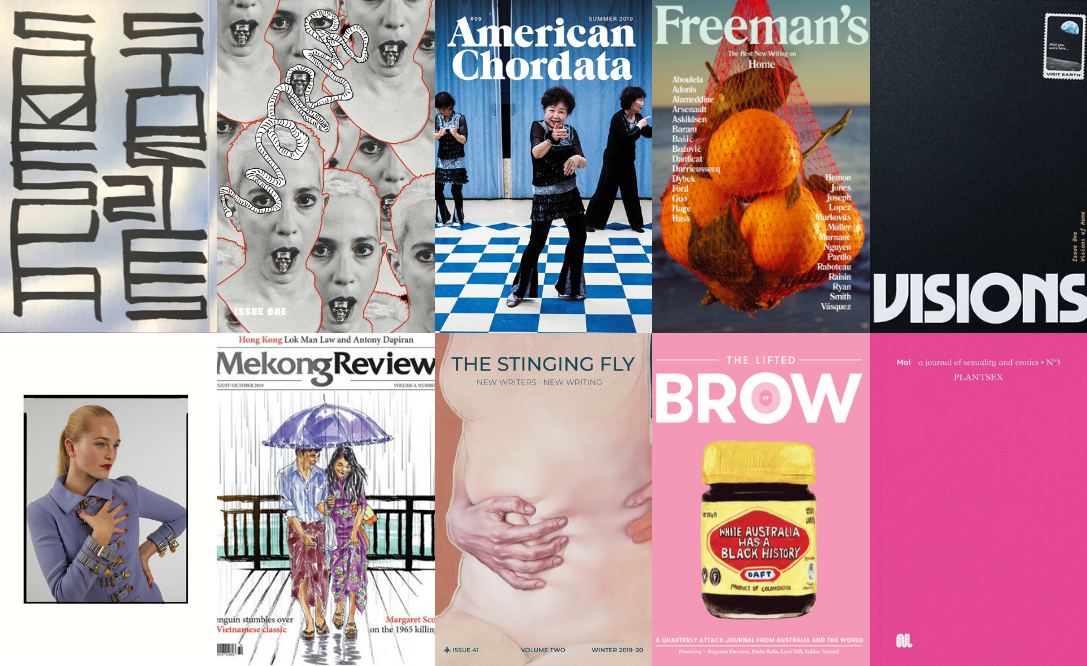
One of London’s most revered independent literary magazines, The White Review mixes outstanding fiction, essays and poetry with beautiful art and photography all wrapped up in a lovely, thick print edition. Launched in 2011, its founding aim was to provide “a space for a new generation to express itself unconstrained by form, subject or genre”, and today it publishes in monthly online editions, but it’s the roughly triannual print version that we love. The current issue looks at first glance like a sort of bookish fashion magazine, with its cover featuring a photograph by artist Elad Lassry, but the content inside ranges far and wide, covering subjects including migration and asylum, LGBTQ+ spaces, race and disability. Essential and important, but with a fantastic lightness of touch, a new issue of The White Review is always eagerly anticipated in the Stack office.
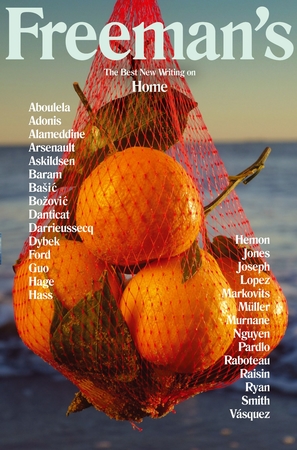
Freeman’s looks like a book but it self-defines as a magazine. “I think a magazine is tracking and engaging with culture,” explains editor John Freeman, who used to head up Granta. “It has an ongoingness, whereas an anthology freezes a moment, perhaps, and puts it in two covers.” The fifth issue is about power: it’s topical, but in a pleasurably sideways way. One of the most beautiful things here is a poem by Julia Alvarez that reimagines Penelope, happy alone, disappointed when Odysseus finally comes home: “He’s back, disguised as an old man/ to test my virtue… I would be rid of him.”
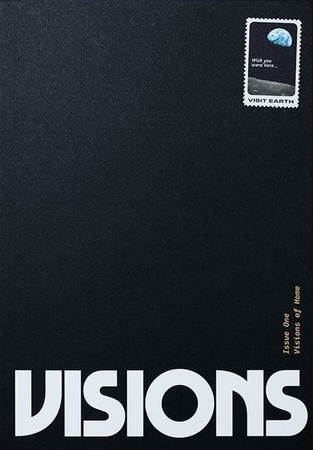
The plaything of one extraordinary tinkerer, science-fiction magazine Visions is a testament to the power of passion. Creative technologist and sci-fi fan Mathieu Triay began the project by making Marvin Visions, the typeface that he uses for titles throughout the magazine and its website. Licensing the typeface online generated enough money to pay for printing the first issue, and he uses the magazine as a platform for both new and established science-fiction writers. In the latest issue, for example, multi-award winning author Robert Silverberg’s story “Caliban” is set in an alarmingly lithe, glistening future, as seen through the eyes of a man who has become the only relic of our messy, hairy times. Silverberg locates his smooth sexualization a hundred-odd years into the future, but in “Hyperbeauty,” the non-fiction essay that follows it, master’s student Raquel Hollman seems to respond to Silverberg by showing how our world is already uncomfortably sexualized and dominated by ideals of “perfect beauty.”
One of the defining characteristics of New York-based American Chordata is that it looks really good. Mixing short stories and poetry with photography, the pictures aren’t specially commissioned. Instead, art director Bobby Doherty mines the internet for art all year long, and then sets his favorites next to the text in a strange, non-illustrative way, almost like collage. In the most recent issue—AC’s ninth—Tatu Gustafsson’s grainy CCTV images of a lonely figure standing by the sides of roads are dropped throughout Angela Woodward’s disturbing short story “Decoy Animals,” the writing and images each intensifying the other. [Editor’s note: Erin Bartnett, associate editor at Recommended Reading, is also the fiction editor at American Chordata.]
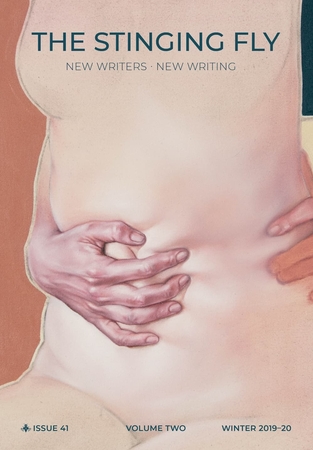
An Irish literary magazine of new writing, The Stinging Fly has excellent pedigree—Sally Rooney is a contributing editor, and on these pages there’s an echo of her attention to the minute detail of how we see ourselves and are seen by others. The current issue is fronted by a brilliantly fleshy artwork by Irish Japanese painter Shane Berkery, which sets the tone for the intimate and personal reflections that run through the fiction and poetry inside.
Founded by Francis Ford Coppola in 1997, Zoetrope was originally conceived as a way to inspire independent movie-making, by providing a space for writers to publish their short fiction and plays. The magazine’s role-call of contributors is ludicrously star-spangled—the rotating guest-designer spot has been filled by Bowie and Lynch, to name only Davids. But what makes this magazine remarkable is how lightly it wears its famous names. Virtually unknown here in the U.K., and boasting just a thousand or so Instagram followers, you get the feeling the only thing its editors really care about is the quality of the fiction.
This London-based journal of sexuality and erotics was started in 2018 by the Feeld dating app, and it’s run today by editor Maria Dimitrova, who works with editorial independence to assemble an inventive series of poems and short stories that explore the frontiers of sexual life. Of course any literary magazine stands or falls on the strength of its writing, and Mal brings together some exceptional talent: the latest issue includes an original piece by cult author Chris Kraus and a short story by Luke Brown that was commended in the Best Original Fiction category at this year’s Stack Awards.
Worms is a literary magazine about style: writing style, but also sartorial. We are all worms, Clem Macleod explains in her editor’s letter, and “in the end, we’re going to be eaten by them. As a Worm, you will fertilise your mind with glorious words.” Using clothes as a way of worming your way into a writer’s work is a contentious business. Traditionally understood to be something frivolous women like, clothes are depicted here to be so much more interesting. Author Natasha Stagg is interviewed, and the first question she is asked is whether everyday dressing is a sort of curation of self. This idea—that dressing up can be a way of slipping out of your identity and trying on another—is most fully realized in a feature towards the middle, where Clem goes to visit a box of the late punk writer Kathy Acker’s clothes, and tries some on. Acker is the cover star, and the whole issue is a homage to her. The clothes are “unwashed, crumpled” and “musky”; a mass of Vivienne Westwood, Commes Des Garcons and Betsey Johnson. Trying on your dead hero’s outfits is thrillingly intimate. As readers, we feel that we should like to do this intimate thing, too.
“A quarterly attack journal from Australia and the world,” The Lifted Brow is based in Melbourne and sets out to showcase the most inventive and accomplished experimental storytelling. The result includes fiction and non-fiction, poetry and comics, and frequently gives a voice to groups that aren’t commonly heard. Last year’s 40th edition, for example, was re-branded Blak Brow, and was created entirely by Aboriginal and Torres Strait Islander women, born out of the conviction that “blak” women’s writing can “transcend off the pages and topple the patriarchy.”
The fourth issue of this U.K. literary journal is themed “redemption,” a word editor Suze Olbrich defines as borderline archaic. But the idea of absolution still sticks its pins into us. In a largely secular world, we share what Olbrich calls a “gnarly yearning for liberation from guilt; for forgiveness—for salvation.” It’s a great theme, and while the stories on these pages are uneven, when they’re good, they’re very very good. Like Luke Turner’s beautiful, ambivalent essay on cruising, looking back on encounters he is now old enough to recognize as abusive. And Kieran Yates’ fan fiction about women of color in popular culture; from Padma Patil, to Ursula from The Little Mermaid.
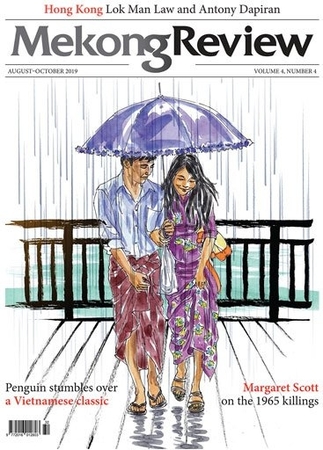
Launched in 2015 at the Kampot Writers and Readers Festival in Cambodia, the Mekong Review was created as a platform for the literary scene in Southeast Asia. Over the years its influence has spread, and today it publishes essays, interviews, poetry and fiction drawn from across Asia and Australasia. It’s proud to claim no political allegiance, and the current issue includes thoughtful and critical reviews and essays inspired by the protests in Hong Kong, as well as politically-inflected commentary from Thailand, Malaysia, China, Myanmar and beyond.
This year marks the 50th anniversary of Martin Luther King, Jr.’s assassination. Today we celebrate his life. Born on this day in 1929, King’s words ushered in a new era of racial equality and progress in America. Change did not come easily, and for many, including King, it came with the cost of their lives. His legacy is the dream he pursued and the revolution he began, one which continues today.
In celebration of that dream and the vision he gave so many of us, we’ve put together a reading list of voices whose words keep King’s spirit and mission alive in our hearts and minds.
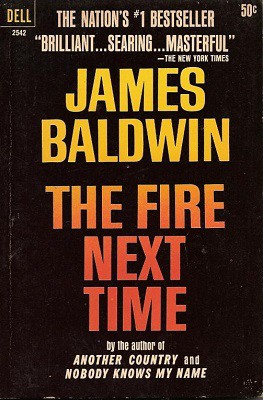
In James Baldwin’s 1963 bestseller, he writes, “Everything now, we must assume is in our hands; we have no right to assume otherwise… we may be able, handful that we are, to end the racial nightmare, and achieve our country, and change the history of the world.” When Baldwin penned these words, the shock of the assassination of Martin Luther King Jr. had yet to break the hearts of civil rights activists and their fellow Americans. Baldwin — fueled by the pain, frustration, and anger that comes with living in a white supremacist nation — gave countless generations of readers an impassioned call to arms. Baldwin’s and King’s messages speak to one another. They reveal how intricately racism is woven into the fabric of our nation and why change and the eradication of racism is necessary to our survival.
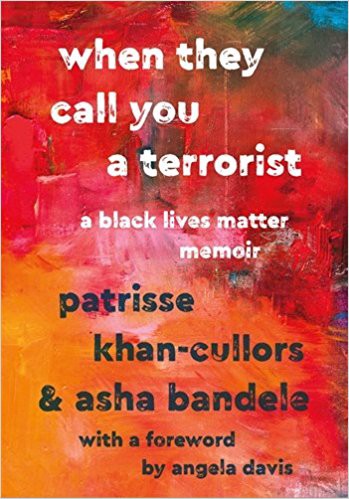
In a way, the Black Lives Matter movement is a successor of the Civil Rights Movement. Continuing the legacy of Dr. King and those who organized, marched, and fought alongside him, Black Lives Matter has shaken Americans out of their complacency. When They Call You a Terrorist tells the story of Patrisse Cullors, one of founders of the movement, and her experience of being a Black woman in a nation whose very origin is rooted in white supremacy, racism, and misogyny. Honest in a gut-wrenching yet necessary way, this memoir will light a fire in your heart, force you to open your eyes, and inspire you to challenge the injustices that surround us all.
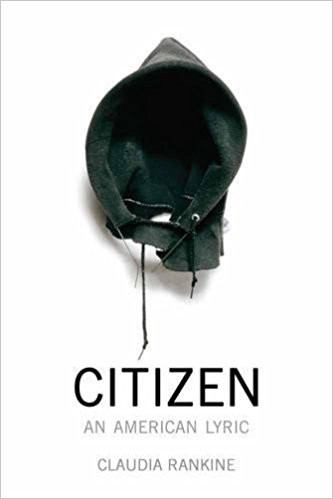
Claudia Rankine’s Citizen reads almost more poignantly today than it did when published in 2014. Grappling with the many ways in which racism stains a nation, in retrospect Rankine’s lyric feels like a wakeup call, a warning that many failed to heed. Now, in the wake of the 2016 election and an equally trying 2017, Rankine’s words have become a salve for those of us who know what it means to be Black in a nation that fails to right its historic wrongs. Like Dr. King’s, Rankine’s message is one of tempered hope. Rather than sheer optimism, her poetics don’t just reveal the cancer of racism, but document it and pay homage to the lives its legacy shapes. Her words urge us to resist.
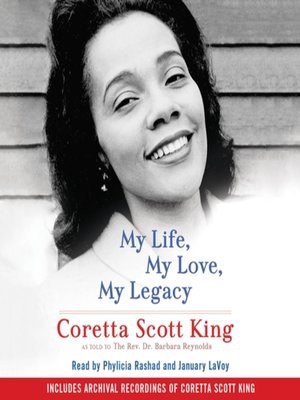
In My Life, My Love, My Legacy, Coretta Scott King, the wife of Martin Luther King, Jr., reflects on a lifetime defined by social justice. Through her words, readers gain a deeper understanding of why she and her husband and their colleagues dedicated their lives to fighting for progress. An intimate glimpse into the life of one of our nation’s most legendary figures, the memoir allows readers to fully see the woman whose patience, strength, and compassion helped Dr. King continuously forge ahead, even when the horizon was dark.
Urgency permeates the pages of Why We Can’t Wait. Recounting Dr. King’s experiences in Birmingham and the necessity of the civil rights movement, each sentence in the collected essays and letters — including the acclaimed “Letter from Birmingham Jail” — sounds an alarm to the reader. Perhaps less frequently cited than King’s iconic “I Have A Dream” speech, Why We Can’t Wait is a testament to the wisdom, hope, and passion of a social justice warrior and an American patriot in the truest sense. If you consider yourself an activist, this book is required reading.
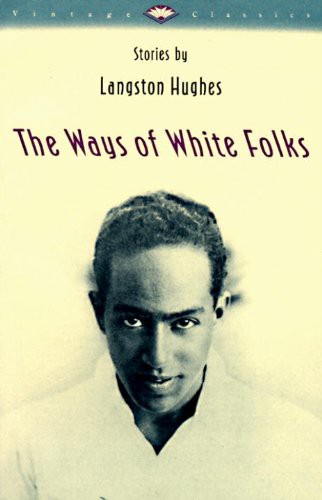
In this collection, Langston Hughes crafts heartbreakingly recognizable portraits of Black life that transcend time and highlight why King’s memorable dream was so vital. Each of his protagonists is conjured with heart and wit, offering contemporary readers moments that will make them laugh, cry, and say amen. Through stories like “Slave on the Block,” “Home,” and “Father and Son,” Hughes explores the ways of whiteness and its impact on the American psyche. This book is an under-celebrated classic that will change the way you think about race and Hughes.
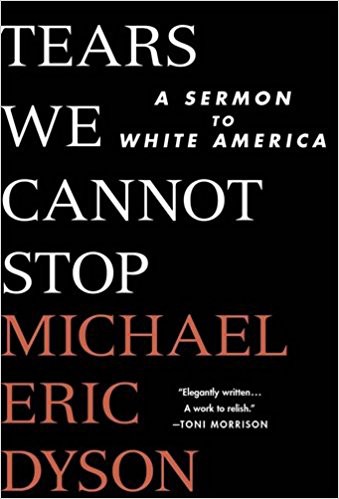
In Tears We Cannot Stop, Michael Eric Dyson channels the impassioned rallying calls of Dr. King and James Baldwin in his compelling plea for social change. In the opening pages, he writes “The time is at hand for reckoning with the past, recognizing the truth of the present, and moving together to redeem the nation for our future. If we don’t act now, if you don’t address now, there very well may be no future.” Dyson’s perceptiveness makes it difficult for anyone to cling to the myth of a post-racial America. His words insist that white Americans, like all Americans, have a lot of work to do. As infused with as much hope as urgency, Tears We Cannot Stop is an antidote to indifference.
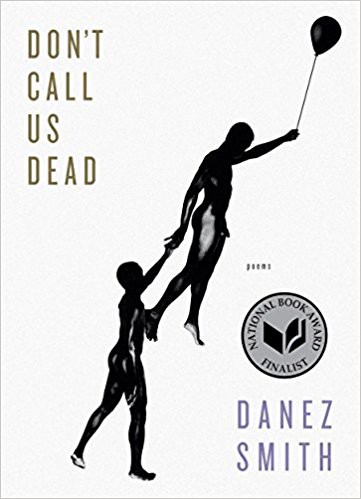
The poems of Danez Smith will leave you altered. Don’t Call Us Dead leaves readers with a deeper, more dimensional understanding of what motivated Dr. King and what motivates his successors to fight for what’s right. With lines like this one (from “Summer, Somewhere”),“we asked for nothing but our names / in a mouth we’ve known / for decades,” each stanza of these poems insists that we look directly at the injustice that’s become synonymous with our nation’s name, reminds us that “our decades betrayed us.”
In her poem “On Asking My Grandmother About Santeria,” Aja Monet writes: “there’s no such thing / as good or bad / there is only justice. / no justice / no peace.” This poem at its center embodies the ethos of Dr. King’s mission and his legacy. The collection, Monet’s debut, is an invigorating and jubilant battle cry for the daughters, granddaughters, and great granddaughters of every freedom fighter who paved the way for a brighter future. Her stanzas are a celebration and a remembrance. Her words insist that we, too, must fight.
Editor’s note: “9 Books that Celebrate the Legacy of Martin Luther King, Jr.” was originally published Jan 15, 2018.
The carnage of climate change has been a daily top story lately, but rarely do we take the time to understand the impact of losing nature on our experience of being human. How do we grieve a natural world we always thought would be ours? How does such grief on a mass scale mirror the little griefs we’ve always known? Crissy Van Meter tackles these questions and more in her debut novel, Creatures, an atmospheric, literary tale with elements of magic realism. The story follows Evie, a young California woman, as she waits for her fiancé on the eve of their wedding. Just beyond her window, the rotting carcass of a whale fills the beach, prompting disgust, heartbreak, flashback and introspection, giving Evie a canvas to relive her tumultuous childhood even as the present events unfold.
Although climate change and the devastation it brings are heavy topics, brimming over with existential dread, my conversation with Van Meter about her book wasn’t always so serious. Van Meter, who is the managing editor for Nouvella Books and who teaches creative writing at Sarah Lawrence, brought a sense of humor to our discussion that might be difficult to see without hearing our voices. Especially when we were talking about writing climate change, Van Meter spoke with a bleak humor so relatable to me I felt as though I’d found a kindred spirit. That is one of the themes of Creatures, I think: Though the world is falling apart, human understanding remains magnetic.
Rebecca Renner: Creatures has its own unique architecture. I’m not sure I know of any other novel shaped quite like it. Can you tell me a little more about your construction process?
Crissy Van Meter: When I’m starting out with anything, I ask a lot of questions. With this book, I was thinking about grief. What does it mean to grieve, and how does that affect one’s entire life? I knew I was interested in writing about an entire life. I wasn’t exactly sure what that meant. At the same time, I started studying whales and tides. I would go to the beach and watch the tide literally coming in and going out. I started thinking about how grief is this constant ebb and flow, up and down, both all at once. When I was constructing [the novel], I was interested in the reader actually feeling those things: being pulled out of a feeling, jumping ahead in time, or going back. This mimics how, at least for me, grief really feels.
When I was assembling the story, I was looking at a lot of tide books. Growing up as someone who’s always in the water, that’s something I would always have in my back pocket for fishing or surfing or sailing or whatever. I was thinking about how there’s this chart that really maps out your day. The features when I started assembling it—actually, if you turn the table of contents on its side, if you connect all the dots, it mirrors a tide chart. I was thinking in terms of the cycles of life, so I knew I didn’t want to tell it exactly chronologically. To me, that’s not how memory works.
If you turn the table of contents on its side, if you connect all the dots, it mirrors a tide chart.
RR: I’m glad you mentioned the table of contents, because I hadn’t paid attention to it. A lot of people skip them.
CVM: You’re totally right. The reason I put it in—one of the reasons—is that there are so many changes in time. I wanted to alert the reader up front: you’re not going to be sitting through a chronological sort of story. For me, the table of contents is very poetic and important, but I agree. You just want to get to the stuff, so you kind of skip to it.
RR: But I think that’s an interesting choice. And I’m glad we brought it up. Sense of place plays a huge, important part and the novel almost to the point where Winter Island is its own character. Are there other novels that you look to as inspiration or model for that technique?
CVM: I do love books with a strong sense of place, and I love books about California. Specifically, I was actually just reading Joy Luck Club again. I looked to that book a lot for structure guidance. I also love William Faulkner specifically for structure, like in As I Lay Dying. But I do love the sense of the South there. I also think Stephen King is one, with Maine. The whole world he creates up there is a character itself. And, of course, Steinbeck does this, too. All the Cannery Row stuff, his settings always feel like a character to me as well.
With Creatures I was thinking a lot about structure more than place, but I am really glad that place came through.
RR: It’s not a real place, right? Winter Island is fictional.
CVM: It’s not real. No. But it’s inspired by real places. I grew up in Orange County, California. I’m a fourth-generation Southern Californian. I spent a lot of time with my dad on the Balboa Peninsula, which is Newport Beach. It very much felt like an island, because there’s one way in and one way out. So the actual setting is based on the Balboa Peninsula, and then, of course, from the beach here in L.A. you see all the channel islands out there, and you see Catalina and things like that. But no, Winter Island is definitely made up. We don’t have a volcano here or snow or hurricanes. It’s just really a wild version of L.A. beaches.
RR: It seemed to me very much like the Keys—minus the volcano. Because I know people who are very much like the people in your book, and they all live in the Keys.
CVM: I’ve actually never been there, but I have a feeling I would fit in. I would like to visit there someday.
RR: I think so. It has all of these interesting elements, and it’s very literary. So, sort of piggybacking on sense of place, which is so tied to ecology—not a lot of novels speak so directly to ecology and climate change. More are starting to. Why did you decide to tackle these ideas so directly in fiction?
It always feels so extreme, seeing all of these things happen, seeing species die off.
CVM: Well, it’s something I think about. And I think growing up, like you’re saying in Florida, if you grow up in a place where you’re constantly surrounded by nature, and in my case, also this massive city, suburbs and sprawl, and you see the housing crisis and capitalism crumbling, and all of these things, it’s really hard not to really see climate change’s effects on a daily basis. For example, growing up, just watching the fires every year, how they change and shift and get worse over time; to me at least, it always feels so extreme, seeing all of these things happen, seeing species die off. And for me, also, thinking about grief and love and all those things—it felt so similar. There was this constant parallel, at least personally, especially with grief, of everything feeling so extreme and feeling completely out of control. I couldn’t write about my experience without writing about climate change. In Creatures, it’s sort of extreme and over-the-top. Obviously, there are no snow-capped volcanoes here. But it does sometimes feel so extreme in Los Angeles in those ways. We’re running out of water, and everything’s on fire. Mountains are sliding off. I really think witnessing climate change was just part of my daily life living in Southern California.
RR: Can you recommend other books that speak to the same notions or use nature in the same way?
CVM: There’s a book I just re-read that I loved. I think I first tread it when I was in junior high and I finally came back to it. It’s The Legacy of Luna by Julia Butterfly Hill, and it’s a little more political because it’s about saving a redwood. She lived in a tree to stop them from cutting it down. But it’s so interesting, because the book is 20 years old, and it’s her observations about how the landscape is constantly changing.
RR: So, you were influenced by where you grew up. But what do you think of the concept of autofiction? Is any part of this autofiction?
CVM: The dreaded autofiction question. I mean, no. This is a work of fiction. I think there’s a lot of emotional truth for me in here, and growing up in some way similarly and having parents who are somewhat similar feels real in a lot of ways, and certainly having a dad who had a lot of the same issues as the father in this book—but, for me, it’s more emotionally true. To make it work as a novel, I really kind of push the limits there. I think that’s why the setting is so wacky and wild, and not rooted in exact reality. But, I mean, you’re a writer. Isn’t all fiction autofiction in a way?
RR: I think in the way you said, with the emotional resonance. But sometimes it seems like readers always assume, especially with women writers, that what’s on the page is your life, and you couldn’t have made it up no matter how extreme and wacky some of the elements are.
CVM: I think you’re right. People have definitely asked me this before. I think part of it, too, is, for all artists—of course we’re emotionally connected to the work we make. That’s why we do it. It’s almost a really selfish act. We’re doing it—creating, writing—for ourselves in a lot of ways. There are certainly things that feel very real to me in Creatures, that feel very close to my heart and my life.
One interesting parallel is that my parents got divorced when I was four. I lived with my mother my whole life. She raised me as a single mother. Then, whenever I could, I spent a lot of time with my dad—on weekends, or in the summer, or whenever he wasn’t on a bender, things like that. Obviously, [Creatures] is about a girl living with just her father. So, I think in terms of autofiction, this might be imagining for myself what it might have been like if I was with him all the time.
RR: The familial relationships in Creatures were so complex. Craft-wise, how did you manage to get that on the page? What was your thought process for rendering family relationships?
CVM: Certain characters and relationships were easier. I wrote the father’s sections first. Those came naturally. Again, those are closest to my emotional truth. So, in the first sort of draft or idea of this novel, I had just a relationship with a father and a daughter. It was much longer than the version [readers] have. As I was developing that, I thought, again, about grief and love, thinking, How do we experience these things? I didn’t feel like it was a linear, straight-forward, flashback kind of story. So I started thinking about how a relationship with a father like that would affect this girl and affect her as a woman. Then I started building other pieces. I would ask, How does this affect a mother or a mother figure or her friendships? Most importantly, How does this affect her in love and partnership? Those are the things that it started building faster. Once the foundation of this traumatic childhood was in place, I started building around those ideas and thinking about who she was going to be after that kind of life.
RR: Here’s a philosophical question with no right answer. Do you think it’s harder to forgive our parents or to forgive ourselves?
CVM: Oh god. I think it’s hard to forgive in general. I guess I would say that if you come from that background, it’s just so obvious that you’re going to blame yourself, right? But personally, for me, I absolutely have had to forgive my parents over and over again, and I don’t think I could have kept going if I hadn’t done that.
After Nell set Johnny’s house on fire, I became a self-appointed only child. She’d be in prison for the rest of her life, but I’d cure cancer. People would soon forget that we were sisters.
I discontinued wearing her old shoes. Would change my last name as soon as I came of age.
Dad too had a thing for dangerous heat. Especially in Hawaii, where the sun plays an unsavoury character in every scene. Dad never wore sunscreen, and he died from a melanoma after a decade of construction gigs in Maui.
“You burn your skin to a crisp like your father did, baking like a cookie in the sun every day of your adult life, you get what’s coming,” Mom said. She wore Daddy’s slippers as if her feet missed his.
Daddy’s mole had resembled a little black dot one day. The next week it looked like a dog, with a long pokey nose. “Nell, Maria, take a look at this spec here,” Daddy said. We gathered around his forearm. “Which of our old dogs does this cool-looking mole resemble?”
Back then, Nell and I laughed about the idea of a family like ours, caring about the wrong things, our father avoiding something as silly and simple as a medical appointment. Making a game of life’s weirdness.
That was right about when Nell lost her virginity to Johnny. He had been her math tutor but she told me in private that he was teaching her some unusual calculations. I wished he was teaching me too. She was carrying his fractions, she said, but had lost her calculator.
After she burnt down his house wearing Daddy’s shoes, using his cigarette lighter, Mom started drinking. She’d come home from her second job, selling opera season tickets over the phone. “Ripping off nice old people,” she said. She would sometimes bring home a cancerous-looking man to sit in our living room and smile at us awkwardly. Each one looked too tan, more at-risk.
And now Mom was wearing Nell’s old shoes, the sexy ones with rhinestone straps that I used to borrow. Mom and I were the only ones left standing, but our feet were in confusion, our borders redefined.
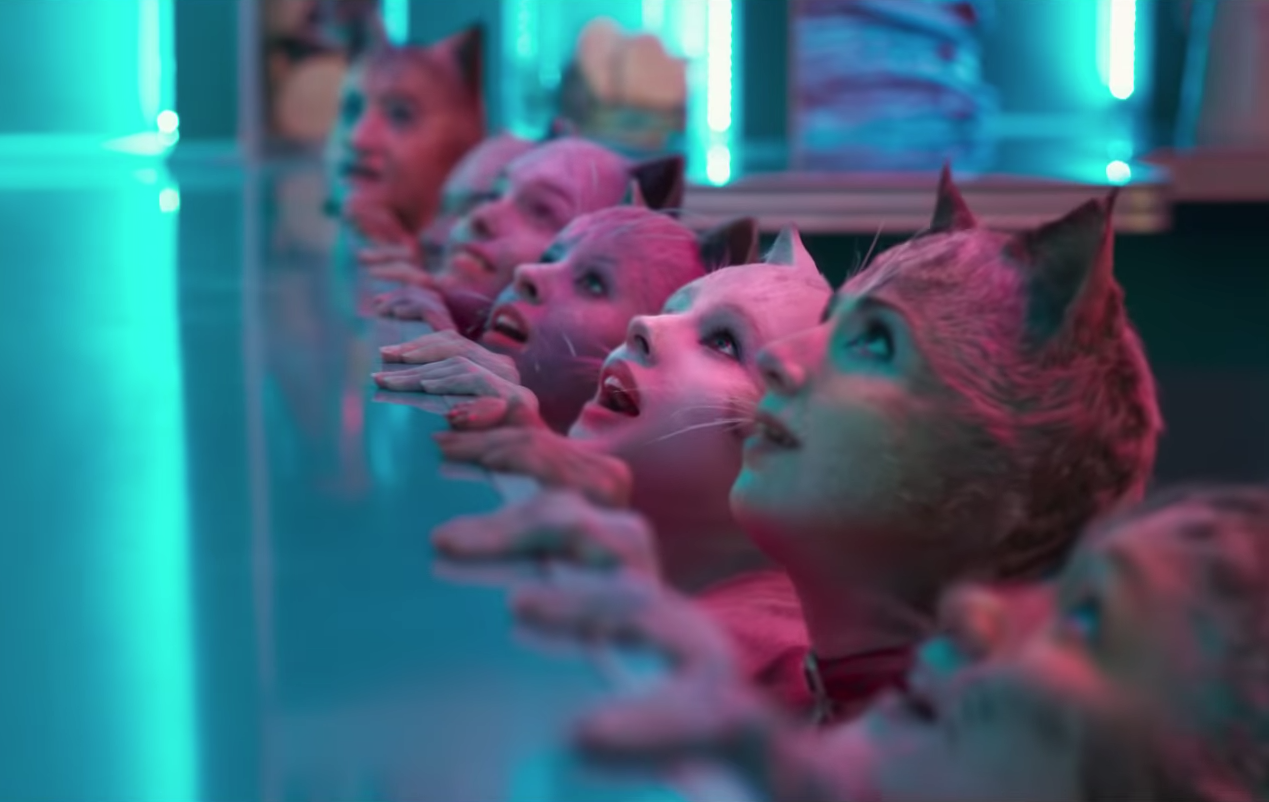
I am not the first person to say that the experience of watching Cats (2019) is like being on drugs, or maybe like having your brain directly stimulated with an electrode. I spent the whole time either laughing hysterically with no proximal cause, or staring as if rapt—but I wasn’t rapt, I was simply unable to metabolize what I was seeing. You’ve probably heard about the Rebel Wilson cat unzipping her skin and then eating a human-faced cockroach, but believe me when I say that is the least of it. That’s an indignity that can be expressed in a sentence, with words. Most of Cats—which, to be clear, I loved—is best expressed by flailing.
But humans are not meant to live this way, cheek by jowl with the truly uncanny. This is what drives Lovecraft’s protagonists to madness when they’re faced with eldritch geometries. This is, arguably, the engine behind all human innovation, every move we’ve made as a species: the fact that we cannot sit comfortably with the unknown and unknowable. And so, as soon as I left the theater—walking, on my way, past a woman sitting on the floor outside the ladies’ room wailing “I don’t know how to go home and face my cat”—I started to formulate a unifying backstory, something that would make the maniacal chaos of Cats congeal into…well, if not something that makes sense, then at least something interpretable by the human mind. I tweeted about it a bit, and since then, have been patiently answering everyone’s frantic post-Cats questions by explaining it again. For easy reference, then, here is the information you need to process Cats.
Humans are not meant to live this way, cheek by jowl with the truly uncanny. This is what drives Lovecraft’s protagonists to madness.
This backstory is not approved by Tom Hooper, Andrew Lloyd Webber, or T.S. Eliot. Nevertheless, it is correct and definitive.
The year is… doesn’t matter. Maybe it’s even the present day—in most of the world. But sometime in the early 20th century, a gene-altering virus started to spread through England, turning people into monstrous half-cats and cats into monstrous half-people. The virus is slow-moving and non-deadly, but permanently alters your DNA; former people and former cats can now interbreed, eventually resulting in a generation of cat-people who retain some human instincts and passed-down habits but also many of the effects of centuries of feline domestication. Because Great Britain is an island, even a slow-moving virus affected a large proportion of the population, but the disease is not as widespread outside of England and Scotland. Accordingly, Great Britain has become a combination prison/quarantine for the afflicted. If you catch the Cat Plague elsewhere, they put you in a sack and ship you over.
I said it doesn’t matter what year it is, but that’s not quite true. In England, it will always be the 1910s; the people-cats have ineffectual little hands, and their technology has basically stagnated. Most of their cultural references, too, are weirdly frozen in the post-Victorian, pre-war era. (Maybe, in this world, we had the Cat Plague instead of the first world war.) The culture that has developed since The Change has been of a more apocalyptic kind: death cults, strange rituals, the compulsive creation and maintenance of in-groups and out-groups in order to survive. Whatever year it is in the outside world, it’s been long enough—probably three cat generations at least—for these twisted belief systems to develop and take firm hold. Hence: the Jellicles, the mythologized victims of what I’ve just now decided was called the JLCL virus. Hence: the Ball.
I will now proceed to show how this explanation answers all the most frequently-asked questions about Cats (2019):
Why does the ballerina cat sit patiently through a song explaining how cats get their names, which as a cat she would presumably already know?
The ballerina cat is newly-infected and has just been dropped off in quarantine. She knows little about the culture or experience of these third(?)-generation cats.
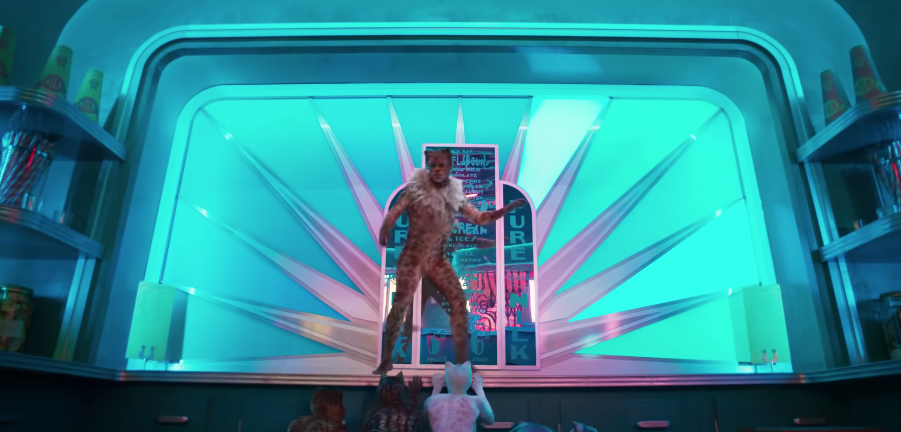
Why are the buildings clearly sized for humans but intended for cats, e.g. the Milk Bar?
The cats are not equipped to build new structures, so they have instead adapted existing structures for their use.
Why do they keep using expressions like “cat got your tongue” which would make no sense for a cat to say?
The feline victims of JLCL had no spoken language to pass down to their descendants. Cat communication therefore happens fully in English and, as with all languages, retains some idioms that have over time become nonsensical. Cat-based idioms were actually more likely to survive, because they felt newly relevant.
Why are the mice and cockroaches also humanoid?
Protective coloration, which does not work.
Why are some, but only some, of the cats wearing clothes?
Just as some humans are more instinctively connected with the instinctual tendencies of our primate and early hominid ancestors (running around all day, eating a paleo diet, facing danger, being uncomfortable, etc.), some of the post-human cats still feel the pull to be dressed. They’re the cat equivalent of people who go on survival reality shows. They have no trouble making the clothes, as the virus has spared their thumbs, unless you saw the patched version of the movie I guess.
What does being sent to the Heaviside Layer mean, exactly?
Oh, I think you know. You just don’t want to admit it to yourself.
So you’re saying the cats engage in cultish human-cat sacrifice once a year?
Actually, because one human year equals about four cat years, they engage in cultish human-cat sacrifice once every thirteen weeks.
Whose kitchen is Jennyanydots living in and why does she say she can’t leave?
That is obviously a former human family’s kitchen, though the humans are now long-fled or turned. Due to the genetic effects of domestication, and of their home-owning ancestors, many of the human cats are instinctively more comfortable holing up in these abandoned residences instead of skulking around on the streets. (Some, like Mungojerrie and Rumpleteazer, the spelling of which I’m embarrassed to say I did not have to look up due to reading Old Possum’s Book of Practical Catsa LOT as a very cool preteen, do both, compulsively replaying their personal drama of rejecting and then plundering the comfortable life. Mungojerrie and Rumpleteazer, who are clearly siblings and you guys are perverts, obviously descend from housecats who went feral.)
Why are these cultural references so dated?
Again, because development in England shut down in the 1910s, and not because Andrew Lloyd Webber for some inexplicable reason thought it was unnecessary to do any lyrical updates on source material like “ho hi, oh, my eye” and “in all of St. James’s, the smartest of names is the name of this Brummel of cats.”
Why does magic work, if this is supposedly a sci-fi story and not fantasy?
In the dark years after the plague began, humanoid cats sought out and perfected strong hallucinogenic drugs that they call “catnip,” for obvious reasons. This is what Bombalurina is shown distributing; it is not the relatively innocuous feline loco-weed you’re thinking of. She and the rest of the cat-person Dark Web are basically doing that all the time; there’s just a thin rime of “catnip” on everything.
Alternately, cats are just stupid.
How big are these fucking cats? How come they sometimes seem bigger and sometimes smaller?
This is England, so they are being filmed through raindrops, which have a refractive effect.
Why are Judi Dench’s feet so small?
Judi Dench’s feet are of normal size for a cat-person. Old Deuteronomy is simply a very large and furry cat, so the feet look small in proportion. It is normal and fine.
There are no Old Humans within the confines of the former Britain. That said, yes, the cats would eat them if there were.
Why does the Taylor Swift cat have boobs, and why is she singing in a fake British accent, as if out of everything in this absolutely deranged movie the one thing we wouldn’t be able to suspend disbelief for is an American-sounding cat?
While the Chronicles of Narnia series might be a little polarizing—for some it’s a beloved childhood classic, for others it’s a cheesy Jesus-fest—I think we can all come to agreement on who is the worst Pevensie: Edmund. Another thing we can agree on is viciously pitting nostalgic pieces of media against each other to see who comes out on top. After vigorous research that involved both Wikipedia and Sparknotes I have compiled a definitive ranking of all of the books starting from worst to best.
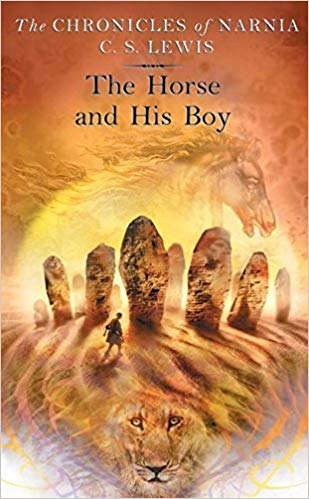
This is the weakest link of the Narnia Chronicles. You know it, I know it, C.S. Lewis probably knew it while he was writing it. Not only are the Pevensies barely in it, but neither are any other recognizable characters. Instead, it follows a random boy named Shasta and his talking horse as they flee a life of servitude in Calormen, Narnia’s not-even-that-obliquely-racist neighbor. There’s a reveal of Shasta being a long-lost prince of a city we never hear of again, then an epic battle takes place between Archenland and Calormen. Lucy and Edmund cameo to send in reinforcements. Shasta becomes a prince and marries this girl he picked up along the way. The end.
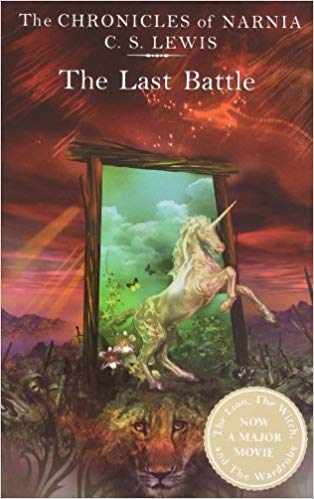
Am I ranking the books I recall the least lowest? Possibly. But in my defense, if it was good then I would’ve remembered it. Everyone knows the it-was-all-a-dream trope. This book is its far worse cousin: everyone-was-dead-the-whole-time. Yes, the Pevensies—minus Susan for misogyny reasons we won’t get into—all die on a train, which is revealed at the end after yet another big battle. All you need to know is that a false God is masquerading as Aslan until he’s exposed and Narnia ceases to exist for the doubters while the true believers get to go to the “real” Narnia. What a way to end a series.
I care slightly more about characters I’ve seen before—although only half of the heroes of this book fit these criteria—so The Silver Chair ekes out a spot just above its predecessors. We open up with Eustace (from Dawn Treader, see below because it’s good) saving his classmate Jill Pole from getting picked on by some schoolyard bullies. They escape into Narnia with the help of Aslan, who immediately sends them on a quest to find King Caspian’s lost son, Rilian. They head north where Rilian was last seen looking for the green snake that killed his mother. Kid-eating giants, a marsh-wiggle, and an underground city of gnomes are some highlights of their adventure. There’s also a Lady in the Green Kirtle who is revealed to 1) be a giant snake and 2) have been keeping Prince Rilian under an enchantment. She is quickly slain by the ragtag bunch and everyone heads home to business as usual.
Since I read The Magician’s Nephew first it’ll always hold a mid-tier spot in my heart, even if it’s a cleverly marketed prequel written second-to-last. Here we get explanations—that don’t make any sense—for the important part of the series, which is the Pevensies and Narnia. Neighbors Digory and Polly are playing when they meet Digory’s weird Uncle Andrew, who tricks Polly into putting on a ring that causes her to disappear. She has been transported to a forest where every puddle is another universe. One puddle holds the White Witch, who follows them to London, but is then sent back and attempts to stop Aslan from creating Narnia. Polly and Digory set things right, then get sent home with an apple. The apple core sprouts into a tree which is then used for the wardrobe and Digory grows up to be the professor the Pevensies stay with.
Although my fond memories of Prince Caspian mostly surround my childhood crush on Caspian’s actor in the movie, it still holds up in comparison to what follows. The Pevensies are whisked away from a train station after a year in their time back to Narnia to aid Prince Caspian in his fight for the throne. Since they left Narnia, a thousand years have passed and the tyrannical Telmarines have taken over. Prince Caspian is the only hope to restore Narnia to its old glory, but he has been forced into hiding by his power-hungry uncle. Good eventually triumphs over evil, Narnia is restored. There’s a lot of boring war talks and fighting that ultimately make it deserving only of third place.
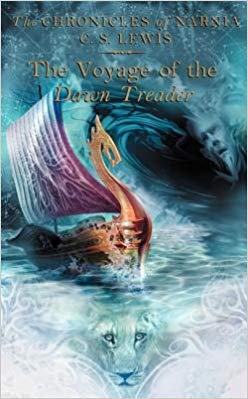
When I asked around for people’s personal favorites this one came up the most and I’d have to agree—even if Eustace is objectively The Worst™. This book has all of the fun of discovering new worlds and new characters in Narnia without nobody protagonists the drudgery of planning a war. While Peter and Susan are off being teenagers, Edmund and Lucy are still in the throes of that sweet, sweet youth Aslan loves so much, along with the annoying cousin Eustace they’re staying with. The trio fall into a painting of a boat and set on a seafaring adventure with King Caspian to search for seven lost lords. On their journey, Eustace communes with dragons to become a better person. They almost fall victim to a pool of water that turns things into gold and sail to the edge of the world, all along with a sword-wielding mouse called Reepicheep. Puss in Boots who?
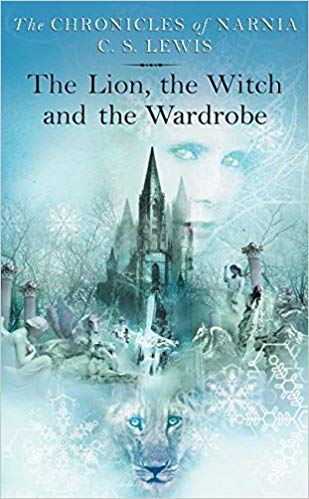
Most of us are familiar with the first book, especially the part where Edmund sells out his family for subpar dessert. But this is the book where it all begins, the one that’s made the biggest mark, and we couldn’t possibly put anything else first. You already know the plot but if for some reason you don’t: four British siblings are sent away to the countryside during WWII. The youngest, Lucy, goes through a magical wardrobe to find Narnia, which is suffering an eternal winter cast by the White Witch. Lucy’s siblings soon follow her in, whereupon they meet Jesus’s fursona, Aslan, and rally an army to defeat the Witch. They rule Narnia for about fifteen years before falling back through the wardrobe and into their child bodies, forced to relive puberty a second time. Also freaking Santa Claus appears because apparently the White Witch banned Christmas, too. Everyone forgets that so we’re politely ignoring it and still putting this one first.
BONUS ROUND:
If you’re not tired of all this Narnia talk here are two fanfics that weren’t included in the official tally because they aren’t technically Narnia books and also they’d both end up at the top. If the most famous Narnia book is too obvious of a top choice for you, perhaps you’d like to read about Anthony Bourdain sampling the regional dishes of Narnia with his camera crew. Or follow Susan after her entire family dies and the kingdom she once ruled is inaccessible to her because she’s only interested in “nylons and lipstick and invitations.”
An upbringing in a religiously robust household acquainted me very early on in life with the idea of cataclysm. Environmental destruction on an imperial, sometimes planetary, scale suggests that perhaps the only true corrective to human misbehavior is expeditious climate change. A flood to cleanse the canvas and prepare it for repainting. The forecast for those cities on the plain cloudy skies with a high chance of fire and brimstone. Nile-based food sources poisoned by riverwater turned to blood. True, the Bible tends to frontload a lot of catastrophe, but perhaps the writers were simply building up to that season-ending eschaton in The Book of Revelations. In Arabic, cataclysm, al-Nakba, refers to the 1948 exodus of more than 700,000 Palestinian Arabs from what would become the State of Israel.
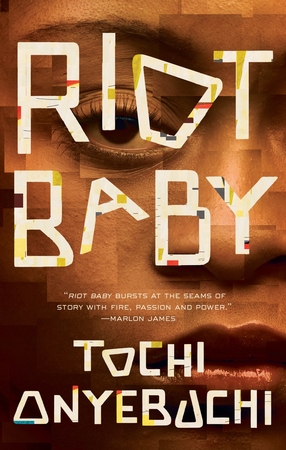
My book Riot Babyisthe story of two siblings—whose lives are bookended by macrocosmic episodes of Sturm und Drang—trying to make a way for themselves in a world of institutional racism, police violence, and mass incarceration, all while Ella, the older of the two, begins to develop powers that promise to turn their world—the world—on its head. These powers promise deliverance. And they threaten cataclysm.
In many ways, political convulsions and their ecological counterparts share DNA. They are larger than any one person, macrocosmic. But it’s the person who must walk through the firestorm. The works below speak to that duality, the emotional paroxysms inside characters that find their cause, sometimes their twin, in events that can seem almost cosmic in nature and temperament.
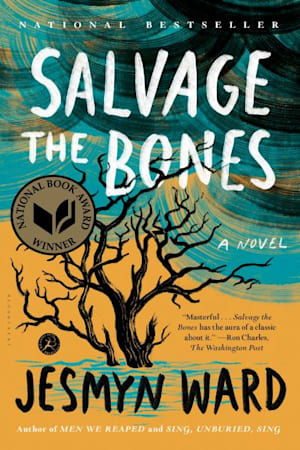
“If one of Daddy’s drinking buddies had asked what he’s doing tonight, he would’ve told them he’s fixing up for the hurricane.” Ward’s tale of pregnant, teenage Esch and her rural family in Bois Sauvage, Mississippi on the eve of and during the actuality of Hurricane Katrina begins with an omen. One of Esch’s pit bulls has “turned on herself.” The lyricism that colors this book that won the 2011 National Book Award paints the story in dark mythical colors that nonetheless give this family’s struggle to hold together through natural disaster a terrifying terrestriality. I was a freshman in college when Hurricane Katrina hit, but I wouldn’t find Jesmyn Ward’s gorgeous, heart-rending, heart-filling book until well after graduation. It is a portrait that humanized the desperation I saw on the TV news all those years ago. The flattened black Americans judged and castigated by newscasters had been rendered in flesh and blood and soul.
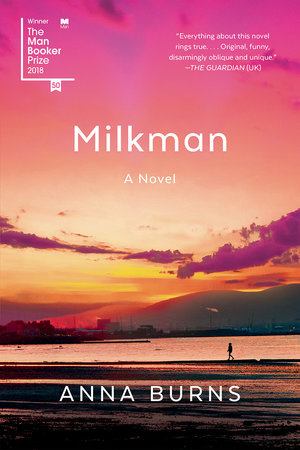
“The day Somebody McSomebody put a gun to my breast and called me a cat and threatened to shoot me was the same day the milkman died.” No one and no place has a name in Anna Burns’s Booker Award-winning novel about a girl, “middle sister,” trying to be as indistinguishable and unnoticed as possible in a 1970s Northern Ireland ravaged by The Troubles. It’s an ecosystem of paramilitary executions, bomb scares, curfews, and patriarchal violence. But it also contains gossip, the social pressures that attend being an 18-year-old girl, and the demands of family. The IRA is here but not named. Belfast is here but not named. To name them would be to draw attention, to become interesting. And in the midst of cataclysm, the last thing you want to do is draw the attention of its architects.
Jail, prison, and police often come together to resemble cosmic forces, morphing from individual gears in a machine ostensibly oriented towards justice into a meteorological event: a flood or typhoon that devastates communities, destabilizes families, and leaves those left behind barely enough time to repair what can be repaired before the next storm strikes. For too many, mass incarceration less resembles a series of choices and consequences and more resembles a natural disaster, a mini-apocalypse. The consequence in An American Marriage by Tayari Jones is the destruction of a married, middle-class African American couple. Roy is wrongfully convicted of a rape he did not commit, leaving behind his wife, Celestial. Their tough, stunning, all-too-real story spins out from there. As pervasive as America’s carceral system is in society, I’ve come across precious few novels that delve deeply into the consequences of this almost Biblical plague on those people affected, certainly few that do so with the power and pathos of Jones’s novel.
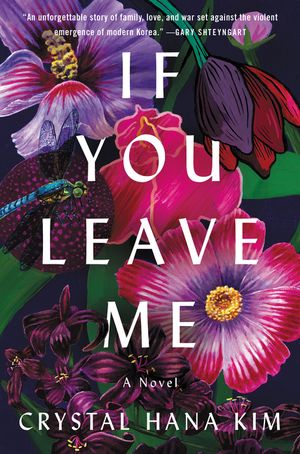
The cataclysm in Crystal Hana Kim’s debut is the civil war between North and South Korea—a war that, to this day, has not yet formally ended. Sixteen-year-old Haemi Lee, her widowed mother, and her ailing brother flee their village after North Korean forces invade and end up at a refugee camp along the coast in Busan. Haemi finds her own refuge of sorts in the company of her childhood friend Kyunghwan. Their friendship morphs into one vector of a love triangle when Kyunghwan’s cousin, Jisoo, vies for Haemi’s attentions, offering security and deliverance from the privations of refugee life for Haemi and her family. Inspired by stories Kim’s grandmother told her about life as a refugee during the war, Kim’s novel expands into a polyphonic multigenerational saga about the inner lives of women suffering through and overcoming their own personal cataclysms as survivors of war, human beings containing multitudes.
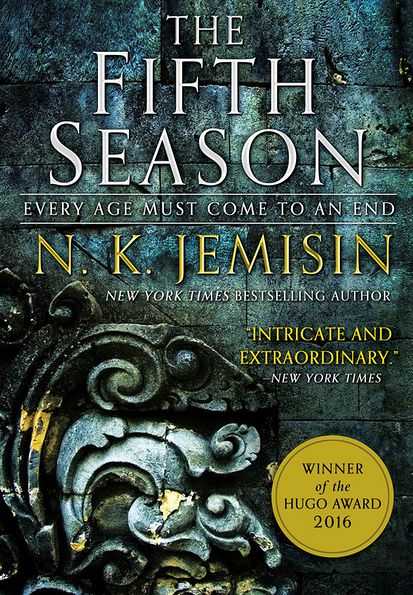
In a place where the End of the World is quite literally a seasonal occurrence, Jemisin’s mind-bursting, heart-shattering novel begins with an unthinkable loss. Essun, a woman with the ability to manipulate earth and stone, lives in hiding with her husband and two children. But when one child is violently murdered and the other kidnapped, her world is quite literally riven. Her quest to reclaim her daughter propels this ambitious and ambitiously structured book, as well as the rest of this astounding, accomplished, much-feted trilogy. Catastrophic climate change and racial oppression co-exist here in this novel that dares to ask the question: what good is a monstrous world to those trapped in its maw? Then, more daringly, what if we burned it all down?
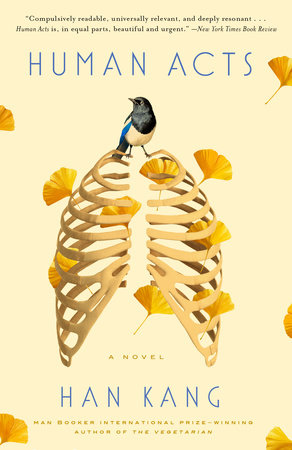
Few books that I’ve read capture cataclysm as violent political reckoning better than Human Acts by Han Kang, her fictionalization of the massacre of students in 1980 by South Korean troops during what would become known as the Gwangju Uprising. At the center of Han’s novel is the murder of a boy. Spiraling out of that is a series of interlocking chapters from the perspectives of people touched or affected by the boy’s life and death. Through the eyes of the boy’s best friend, his worried then grieving mother, a factory worker, an editor, and others, Kang leads the reader on a journey through violence and agency, gruesome, unsparing, and tender in equal measure.
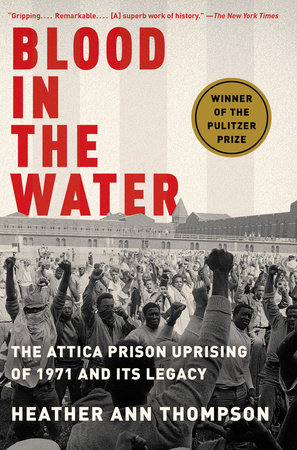
So much of our society—any society—can be explained by the treatment of its incarcerated. Their presence, their condition, their arrival, their departure, their return. The incarcerated and their jailors take center stage in Heather Ann Thompson’s recounting of those nights in 1971 when prisoners at Attica Correctional Facility took over their prison and initiated what she once called one of the most remarkable civil rights moments in American history. The American police state sometimes feels like a cosmogonal entity, a Titan whose enormity is ultimately unknowable, as pervasive as air and as arbitrarily menacing as any member of the Greek pantheon. As the forces of state and federal government are arrayed to suppress the prison rebellion, Attica is turned into one of those cities on the plain, subjected to the same exacting fire and brimstone that once rained down on Sodom and Gomorrah. Incredibly researched and utterly engrossing, Professor Thompson takes us through the buildup, the uprising itself, and its long, poignant, tragic aftermath. The American underclass dared to assert their human rights and cataclysm was the result. But out of the fire, Professor Thompson has pulled stories—real stories—that attest to the ways in which humanity can transcend upheaval and persist in the face of Armageddon.
Until I was 19 years old, I thought I was white. Friends, strangers, and teachers always sensed that I was different, asking never-ending questions: “Where are you from? Are you Indian? Latina? Why don’t you speak Spanish?” My parents told me to ignore them, but that didn’t shake away the uneasiness and frustration that these interactions left me with. It made me angry that people would question my identity, when I was raised to be so proudly Italian. Kids would often laugh, thinking I was joking or lying, and each time my heart would clench hard at the rejection. It never occurred to me that they could be right. My family was white, and I was a member of my family, so what else could I be?
But I wasn’t white. I was adopted, and my parents had never told me. Thanks to a DNA test, I was later able to discover that white was barely a chunk of my genetic makeup. Italian was less than one percent, and Indigenous, and some African, made up more than half of my biological makeup. When I further dug into my birth records I was able to confirm that I was indeed a mestiza, an identity that countered the 100% European ancestry I had been told my entire life. It had taken a few years after the discovery to get access to them, as my parents had hid them.
At the time, my parents’ actions weren’t that unusual. Prospective parents had few resources for learning about the experience of transracial adoption, and what it’s really like for a child to grow up with a family of another race. Back then, the literature available was not as easily found as it is today. Parents were relying on books like 1993’s The Primal Wound, by adoptive parent Nancy Verrier, which imagines adoptees as fundamentally traumatized by being removed from their first mothers. This book is still widely used in the adoption community, because better resources are few and far between. Books on adoption even today are typically written by mostly adoptive parents and only sometimes birth mothers. Few are written and published, especially traditionally published, by adoptees. Even books specifically on transracial adoption, which are finally becoming more common, still focus on teaching adoptive parents how to make it through adoption processes, ignoring the adoptee’s experience.
This is why Nicole Chung’s adoption memoir All You Can Ever Know made such an impact on me. It wasn’t just a book. It was a real story of someone who experienced similar things to me, and thousands of other adoptees, who are told to be grateful on an almost daily basis by family, friends, and society. It reflected the real pains of my childhood, not the ones imagined by people like Verrier—and I think it could have helped avoid them, too.
I wish my parents had been able to read All You Can Ever Know. I think every prospective adoptive parent should.
To be honest, Chung’s memoir was painful for me to read. It took me several months to get through a few chapters of the ebook, paperback, and then audiobook that I borrowed from my library. By the time I would muster up the emotional energy to move forward, my library loan was returned and I had to wait several weeks before it was my turn in line. Still, I couldn’t finish. This was strange for me. As an avid bookworm, I would digest whole novels in a few hours, at the most a few days. At first, I thought that I would be able to read it quickly as I did every other ebook I downloaded on my phone. I realized that wouldn’t be easy, when tears kept flowing out almost against my will. I tried an audiobook version next, partially because my library loan auto-returned my ebook and it was the next thing available, but also because it seemed like it may be easier to listen to while I tinkered around my house. But no matter the version I struggled to turn the pages.
Her story took me to a place in my mind where the wounds I thought I had gotten from my adoption had healed. But by reading her honest prose of her experience, I realized that I had just gotten started. When I entered Chung’s world over a year ago I could relate to her feelings of isolation and confusion, but by the time I had finally finished her memoir, I had received an unexpected surprise: I had half sisters, just like her.
I had opened my email one morning to see a letter from a woman several states away, and quickly learned more information about my birth mother than I was ready to handle. I had multiple siblings, and a birth mother who wasn’t the young scared pregnant woman that I was told about. Our story was full of pain and heartache, and not as simple as the one my parents were told from the adoption agency. The information was overwhelming.
And yet, fortified by reading about Chung’s experience, I didn’t feel like this was more than I could handle. I felt supported and happy that I wasn’t alone.
The simple beauty in holding a vessel of words, emotions, and information about a subject that had been taboo was a step towards healing that I wasn’t able to take before. That wasn’t available for me before—and it wasn’t available for my parents, to show them why I might need more support.
Chung’s memoir would have made my parents aware of the nuances of adoption—the good, the bad, the ugly, and even the beautiful.
I think my parents had good intentions when they decided to hide my race and origin story, but they were unprepared for the complexities that come with becoming a multiracial family. Chung’s memoir would have made them aware of the nuances of adoption—the good, the bad, the ugly, and even the beautiful. She discusses topics that prospective parents need to understand when considering adopting a child of another race, and most importantly, she, the adoptee, is in charge of the narrative.
When Chung was very little, the story her parents told her was always the same: “Your birth parents thought they wouldn’t be able to give you the life you deserved.” She was told this so often, and at such a young age, that it was the first tale she could recall. This is important because it normalized her adoption, and cemented her place in her family. She knew the answer (“because I’m adopted”) before she was even able to formulate the question (“why am I different?”). Adoption was the norm in her family.
Until a few years ago, there wasn’t much research on when children should be told they were adopted. Nobody even raised the question to my parents; instead, they were flooded with information about adoption fees, laws on international adoption, and travel information. So when it came down to a discussion about sharing my adoption story with me, it wasn’t seen as important—love, a home, and resources were what they were supposed to provide to me as their child. They wanted to believe that by adopting me, they were saving me from a bad life, and that was all that was important. I wouldn’t remember my birth family, so why did the truth matter?
We see how the world perceives and treats us differently, even if it is not talked about at home.
Now, parents and professionals advocate for telling the adopted child their story of origin as soon as possible. By telling adopted children their stories early on, and their stories as honestly as possible, parents can help children feel more stability, love, and confidence in who they are. Transracial adoptees notice our race or ethnicity from a young age. We see how the world perceives and treats us differently, even if it is not talked about at home. My questions were answered with lies: “Oh, your great-great-grandparents had dark skin.” This created a lot of identity issues and shame—especially because I’d been repeating these falsehoods, which meant that I had accidentally been lying all my life. A book like this, in which an adoptee encourages honesty about adoption, might have helped prevent that.
This is not to say that adoptees themselves should shoulder the full burden of telling prospective parents what to do. Chung later shares a story of a time in college where her friends talked to her about her personal experience as an adoptee and her opinion on adoption in general, peppering her with questions like “Do you ever feel like your adoptive parents aren’t your “real” parents?” and “Did you ever mind not being white?”
It’s an uncomfortable moment; we are not all the spokespeople for every adoptee, and all of our opinions may differ, especially at different points in our lives. Plus, adoptees are often met with anger, resentment, and even attacks when they try to explain about the potential complications that arise within a transracial adoption. But this is another reason why we need more memoirs from the perspective of adoptees. If my parents had been able to delve into Chung’s book (and the other adoption memoirs that will hopefully follow), they would have known that while yes, she sometimes “minds” not being white, it’s also deeply important to her to be able to engage with her Korean heritage.
The ties I have made with my birth culture hold such an important part of my heart. They bring joy, when my toddlers speak in Spanish, and reads along to my childhood favorites in the language I had heard the entire time I was in my mother’s womb. Children remember. Somewhere in the backs of our minds, our first experiences with language may help us when we attempt to learn the language as we grow older, better than non-adopted persons with no exposure to the language.
Chung writes, “No one ever so much as hinted to my parents that adopting across racial lines might prove a unique challenge, one they needed to prepare for specifically.” Unfortunately, this is still the case in many transracial adoptions. Often I hear the narrative from prospective adoptive parents that “love makes a family,” or just like Chung and many other adoptees, I have heard a variation of “you’re one of us, it doesn’t matter.” All too often adoptive parents decide to go into their new family with a colorblind view because the focus in adoption is on the “miracle” and not what comes after. Frequently the professionals involved in adoption will gloss over and spend such a minute amount of time on the importance of incorporating the child’s birth culture throughout their lives.
When I discussed the adoption process with my parents I was told about the recommendation letters they needed, finance and employment verifications, and the few times a social worker checked their home in order to get clearance to adopt. When it came to my birth culture, my parents were vaguely encouraged to take my brother and me to a summer camp for Colombian adoptees that the orphanage had ties to. The camp was expensive, far away from our suburban home, and by the time I had started to form memories, they had decided that my ethnicity didn’t matter. I was their child, and after the first year or so no one followed up on us.
An adoptive parent’s love does not eliminate the struggle of existing in the middle of two cultures.
An adoptive parent’s love does not eliminate the struggle of existing in the middle of two cultures, being too much of one, and yet not quite enough of the other in the same breath. Chung illustrates the struggle of how an adoptive family can be loving, nurturing, supportive and yet how she still struggled with being one of the few people of color she saw in her town. She had grown up in a place where most of the faces did not look like hers, and often wished she looked like her parents, particularly when strangers would ask questions about her origin.
“I was not their Korean child, I was their child, their chosen gift from God,” she writes. She goes on to explain that there wasn’t room for her to tell them that she didn’t feel like she’d belong. Like other adoptees, she did not want to betray her parents. Even I, after finding out about my parents secrets, hated breaking it to them that all of my life I felt different, I was treated differently. I had known deep down that I didn’t fit in with their family. I always stood our, especially after puberty when I looked more and more Latina. My cousins fit into low-waisted skinny jeans in size 00, and when I looked at my curves, I hated them. Every Christmas the clothes that were left under the Christmas tree were too small for my thicker thighs and shirts could not go over my breasts that seemed to pop up overnight. Tears often flooded my eyes as my parents suggested I gained too much weight, when I could not exercise my shape away.
Prospective parents of adoptees need a book like this to help open their eyes fully, to the experiences that many adoptees face. Love is an amazing thing, but it does not erase the differences between people. Our skin color, the shape of our eyes, what we see in a mirror, or in the reflection of the diversity of the town we grew up in will shape our experiences as people of color. It will affect our self-esteem, confidence, and resilience to the good, the bad, and the ugly of being different from the people in our family.
This book, which was such a joy for me to discover as an adoptee, might be hard for adoptive parents and prospective parents to read. No parent wants their child to experience any type of trauma. As adoptive parents it is your responsibility to learn about the experiences, and help your children, and in order to do that you need to be ready to accept that the world can be an uncomfortable place for people of color, but it can be so beautiful too. Chung writes about being brought to the Chinatown International District during a visit to Seattle, and being for the first time exposed to faces that looked like hers. She lit up, because she was amazed by the sights, smells, and sounds of other Asians like her. If adoptive parents learn how to incorporate experiences like that, and how to navigate the difficult ones as well, then maybe they are ready for a transracial adoption.
Books like Chung’s can be life-changing for adoptees who read them—but they can also be life-changing for the next generation of adoptees.
Books like Chung’s can obviously be life-changing for adoptees who read them—but I think they can also be life-changing for the next generation of adoptees. If you are considering adopting a child of color, this book will help you on your journey. It will help you prepare for situations that you may never have thought about before. It will help you address your views on racism, microaggressions, and how you will navigate a child of color through those experiences when you are from a place of privilege. It will open your eyes to an adoptee’s experience that is fair, honest, and raw. And above all, it will place the voice of a transracial adoptee in the spotlight. Adult adoptees will be honest, raw, and passionate about their adoption stories and these are the perspectives that are often missing. Chung’s memoir helps break that barrier and can help potential adoptive parents on their path to learn what they need before they adopt, and even after. To help decide if this is the right course for them, AND the child. Because the child should come first.
It was Dani’s idea to download the Goblin. We were in the dressing room at H&M and she kept sending me out for different sizes. I passed her multiple pairs of the same jeans through the curtain as the attendant disapproved from behind a rack of unwanted clothes.
“None of my clothes fit,” Dani said, as she pulled me into her room. “I found this incredible dress to wear to Michelle and Ben’s wedding, but I don’t feel good in it. You know what I mean?”
“Mm,” I said, stumbling over a pile of skinny high rises.
“I need to lose five pounds,” she said. “Will you do it with me? I do better with a partner. I heard it’s super easy. You just download the app and you get a Goblin.”
“Is it tech or magic?”
She shrugged.
Some people are good at saying no. Toddlers are good at saying no. Virgins are good at saying no. God is good at saying no. I am not good at saying no.
Some people are good at saying no. Toddlers are good at saying no. Virgins are good at saying no. God is good at saying no. I am not good at saying no.
She said we’d start on Monday. Poor Monday, I thought, it’s the Ringo of days.
I reconsidered my decision later that night, letting the shower run hot so the bathroom filled with steam and diluted the light, making it kinder to my body. I used to shower in the dark, but then I got into the habit of feeling myself with my hands and mis-imagining my proportions. Are my thighs really that wide? My hips? Eventually, I relented and turned the lights back on. I couldn’t go on cutting myself shaving. My shins looked like butcher block.
I counted the little pink scars as I sat on the edge of the tub, wrapped in a towel, my toes swirling the soap suds roving toward the drain. I thought about calling Dani and politely backing out of the diet. The only problem was I wouldn’t know how to answer if she asked me why.
Well. Not the only problem. My plucky past self had committed to going to this wedding. Stuffed the RSVP in the mail with the stunning arrogance of a white-collar criminal. Four months ago, I had been certain this wedding was the perfect opportunity to prove to myself that I was finally over him. To be in the same room and for once not feel like an unwanted puppy, like a sad footnote in someone else’s love story.
A few weeks out, I wasn’t feeling so confident. But it was too late now. I’d committed. Chosen salmon over chicken. What would they think if I didn’t show?
On Sunday night I spent two hours debating whether or not I should order Chinese food before ordering Chinese food. The weeks ahead of me loomed in the image of a giant, undressed salad. Of course I caved. Sesame chicken with brown and white rice, pork lo mein, won ton soup, an egg roll. They threw in those flavorless crunchy noodles, and I ate them mindlessly, dunking them in duck sauce. There were two fortune cookies, which meant they assumed there would be two people eating the food.
My first fortune said, “Joys are often the shadows cast by sorrows.”
I was too traumatized to open the second.
I ate until it was painful, until I had to lie on my side to stop from feeling like I was going to burst. I messaged Dani. “Last supper?”
“Bottle of Rosé. To. My. Face.”
“Naughty.”
“You?”
I eyed the catastrophe strewn about my coffee table. The empty container of chicken, the stray noodles drooping over the side of the grease-stained takeout box, used napkins and leaky sauce packets oozing soy onto the ripped paper bag it all came in. A few crumbs of crunchy noodles powdered the wreckage.
I replied, “Noodles.”
“Nice.”
I threw everything away. Took out the garbage. Cleaned the coffee table with a Lysol wipe, lit a candle to mask the smell.
I’ll make it up tomorrow, I told myself, washing my hands like Lady Macbeth. Gym and juice cleanse. Tomorrow.
Dani came over after work to download the app. We planned to start the diet first thing but decided to wait to get the app until we were together. We were too afraid to do it alone. I had only seen what the Goblin looked like in ads. Cute and animated. Smurf-esque. “Gotta-get-a Goblin!”
I resisted Googling to avoid the opinions of hangry strangers. Dieters aren’t reliable, always quick to jump on bandwagons only to abandon them twice as fast. Atkins. South Beach. Master cleanse. Gluten free. Paleo. Whole30. Until the studies find you should really base your diet on your blood type. Until other studies find that’s bullshit.
Dani showed up in head-to-toe Adidas, a smoothie in each hand. All I’d eaten that day was oatmeal and cucumber slices. I was grateful for the smoothie but also wanted to smack it out of her hand.
We sat at my kitchen table holding our phones. We opened the app store. It was the second most popular Goblin app, coming in after “Goblin Quest.”
“Ready?”
“It’s $4.99?”
“Meg.”
“Okay, okay.”
We pressed our thumbs and waited.
Two tiny green Goblins appeared, each about six inches tall. Dani’s was wearing a nightcap and glittery shoes with little bells. It twirled, shook its hips side to side and gave her the thumbs up. Dani giggled with delight. “Cute!” she said.
I felt my face fall. My Goblin was stocky. He wore an unbuttoned vest and brown, clunky boots. His head was shiny and bald except for three thick, curly black hairs spiraling up like springs. His ears were the size of quarters, paler than the rest of him and pointy. The worst part about him was his mouth. He had fangs. Two sharp canines poking out of his flat, grey lips. His arms were crossed over his chest.
“Mine looks angry,” I said.
“Aw, no! He’s just serious. Means business.” Dani rested her chin on the table, “Hello little ones.”
“What now?” I asked, but before the words were out the Goblins were gone.
“They’ll come back when we need them.”
“Like when?”
“Like when we’re about to make a bad choice,” she said. “Like order Chinese.”
She lifted my fortune off the counter. I thought I’d thrown it out.
“Last supper,” I said. “Noodles. I told you.”
“I know,” she said, her voice pitched high like she’d just inhaled helium. “I wasn’t shaming.”
I picked at a chip in my manicure, pretended I wasn’t bothered.
“Want to watch a movie or something?” she asked.
In the movie we watched, the actress was very thin.
I woke up to panic. There was commotion in my apartment. Crash. Bang. Slam. I might die right where I am, I thought, standing in my bedroom in mismatched flannel pajamas and slippers shaped like narwhals. I always think I’d be good in a crisis until I’m in a crisis, then I remember the truth about myself.
Something glowed in my periphery. There was a message illuminating the belly of my phone. The message said, “Hi Gorgeous! Your Goblin is visiting doing some Goblin good!”
I stepped cautiously out of my bedroom. The light was on in the kitchen. I paused in the doorway, a force field of equal parts shock and fear stopped me from going in.
There it was, ripping through my cabinets. It poured out a box of reduced fat Cheez-Its and started stomping, crushing them into orange dust.
“Hey!” I yelled from the doorway.
It looked up at me, its small, dark eyes narrowing. Then it went back to its destruction. It hopped over to the fridge, pulled the door open and climbed inside. Before I fully understood what I was doing I slammed the refrigerator door shut.
From inside I heard a horrible, guttural grunting, then a distinct POP!
The Goblin was on the floor by my right foot. It glowered at my slipper for a moment, then drew its arm back and slapped my slipper across its adorable narwhal face. The Goblin wiped its hands on its vest, walked over to the fridge, opened it, and continued its work. Stunned, I sat myself down at the table with a glass of water.
I watched as it marched across the floor with a chocolate bar lifted over its head. It tossed it into the garbage, along with a bag of frozen chicken fingers, a half-empty jar of alfredo sauce, ranch dip, and a carton of chocolate soy milk.
The Goblin vanished after it finished clearing out the fridge. I shuffled back to bed but couldn’t calm myself enough to sleep. I tried all my usual tricks. Breathing exercises. Naming state capitals and all of the kids in my kindergarten class. Selecting a memory and recreating the scene in my mind in great detail. My fifth birthday party with a clown called Annie who wore an orange wig and a felt dress, who made popcorn in her hat.
It was no use. My mind insisted on going back to the one thing, the one person, I was trying not to think about.
I wondered if he looked the same as he did back in college, his hair long, fuzz on his face, a little over his lip and a little under. I wondered if he was as skinny as he used to be, if he wore the same clothes. Baggy t-shirts he bought already ripped, black jeans, scuffed-up combat boots with the laces loose. I remember the distinct thud his boots made when they hit my dorm room floor. Conjuring the sound still got me excited.
His mouth was always cold for some reason, and when he kissed me, I would get the chills. He thought he was turning me on, and he was, but mostly I was cold. I’d pull him onto me for body heat.
One time he told me he loved me. He didn’t mean to. I woke up in his room on a brutal February morning after promising myself I’d never go there again, but there I was, staring at the tapestry he had tacked to his ceiling. Stars twirling around the signs of the Zodiac. He’s a Capricorn, I should have known. My high school boyfriend was a Capricorn. He took my virginity and treated me like garbage. Told me I should get a tan. The worst part about it was I did. I went tanning. If I get skin cancer someday, I’ll scream.
“Hey, be back soon. Love you.”
Right away, he realized what he’d done. I saw it on his face.
“Okay,” I said, pulling the covers over my shoulder, pretending I was still mostly asleep. I stayed in his bed a while longer, trying to remember everything I’d learned in psychology class about Freudian slips.
He’s the only one I ever told about my treatment. I figured he’d understand because he had two sisters, and because I knew it wouldn’t make a difference if I told him or not. He wouldn’t want me either way.
“It’s something I still struggle with,” I said.
“I’m sorry,” he said, holding my head to his chest, kissing my forehead. He smelled like tobacco and Axe. “You’re beautiful.”
I thought, that’s it?
For me, the hunger was nostalgia. It was like visiting an old friend, a friend I’d forgotten how much I hated.
For me, the hunger was nostalgia. It was like visiting an old friend, a friend I’d forgotten how much I hated.
But I had overcome hunger before. I knew I was capable. I knew I could starve.
It spawned in my gut around eight-thirty every morning that first week. By noon my vision spotted and shoulders wilted. My lunch was three plain rice cakes, grapes and peach nonfat yogurt. By the time I left work I wanted to strangle everything that moved. I stampeded through my apartment door and heated some sodium-light tomato soup on the stovetop, ate it with spelt toast. Every night, every night I burnt my tongue on that godforsaken soup. I couldn’t wait for it to cool.
I had apple slices with cinnamon for dessert.
I was highly motivated. I wanted to look good for Ben. There was the backless dress I’d ordered for the wedding, the picture of Emily Ratajkowski I’d taped to my fridge.
Really, I just didn’t want the Goblin to come back.
I weighed myself at the gym, breaking a dusty old promise I’d made to myself, my parents, various therapists. The numbers were mean.
My stomach bloated in protest. I pressed my fingers down on it and made my skin pale. I went to bed early.
On Sunday I went to McDonald’s. Fast and dirty. I stood in line salivating at the smell of salt and crackling hot oil. I had to wipe the corners of my mouth with my sleeve. I ordered a ten-piece chicken nugget and ate them out of my jacket pockets on the walk home. I was on my third when the Goblin appeared. He slapped the nugget out of my hand.
“Hey!” I said.
“Hey!” he said. His voice was gruff and ugly.
He reached into my jacket and began throwing the nuggets onto the ground one by one. I managed to save two and shove them into my mouth. He glared at me with his beady black eyes, climbed up my arm, stood on my shoulder and tried to pry open my mouth. He dug his fingernails into my lip.
“Ow!” The chicken mush came spilling out, landing mostly on my chin.
I shook the Goblin off. I expected him to go flying but he landed on the sidewalk before me on both feet, his hands on his hips.
I wiped away the half-chewed nuggets with the back of my hand.
“Jerk.”
“Bitch.”
He began to kick the dirty ground nuggets into a nearby sewer grate, muttering to himself. When the last nugget was gone, he disappeared.
I called Dani.
She was out of breath. “I’m on the elliptical. What’s up?”
“My Goblin called me a bitch!”
She laughed.
“I’m serious!”
“They can’t talk.”
“I swear to God it just called me a bitch.”
“Mine doesn’t say anything.”
“Lucky you.”
“Maybe you get the Goblin that suits you,” she panted. “You respond better to tough love.”
“No I don’t.”
“You always date mean men.”
“Who was mean?”
“Kurt. Milo. Ben. Your high school boyfriend.”
“Ben wasn’t mean,” I said. “I was in love with him and he was in love with someone else. That’s different.”
“Sure. I have to go. I’ll call you later.”
We hung up and I moped home. I found my workout clothes laid out for me on my bed, my sneakers on my pillows. There was a package torn open on the floor, and the dress I’d bought for the wedding was hanging on the door to my closet, slinky and beautiful and small. It fluttered in the breeze from the open window. It looked like it was dancing.
I wanted to be angry, but I could feel the grease lingering on my chin and was disgusted with myself. I began to undress when I saw the Goblin out of the corner of my eye, a smear of green disappearing. I turned to see where it went, but instead I saw myself. In the full length mirror I bought from Ikea to make my bedroom look bigger, in the yellowy hue from the ceiling fixture, I saw my body as it was. No filters. No generous angles. Just the brutal truth of it.
My eyes traversed the flawed landscape, until I was too hysterical to keep them open, until my fat, syrupy tears relieved me of the sight.
I collected compliments in a shoebox under my bed. It started after a strange overnight held by my church when I was fifteen, attendance was mandatory in order to make confirmation. I wasn’t particularly religious but figured I owed it to my parents. We were allowed sleeping bags but not sleep. We were kept up all night with prayer and team building exercises and store-brand snacks. At midnight we received brown paper bags with our names written across the front in swirly dark Sharpie. We were told to write everyone kind messages, memories we shared together or traits we admired, and put them into their bag. We were encouraged to sign our names, but it wasn’t required so no one did. We weren’t supposed to read our notes until we got home.
I started in the car, despite being deliriously tired and overwhelmed by all the Bible talk. I finished reading them on my bed, knees tucked under my chin, the scraps of paper all around me like snow flurries.
Some were nothing. Fluff. “You’re really nice.” “You’re smart.” Others surprised me, telling me I was witty and had a great smile. I decided to save them so I could re-read whenever I was feeling bad about myself. I put them in a shoebox. Eventually I started adding, writing down sweet things people said to me. Friends. Boyfriends. Professors. Catcallers. I put in pictures, too. Ones where I thought I actually looked pretty or thin. Ticket stubs from movies I liked. Birthday cards from my grandparents. A post-it with a quote from my therapist about my body being my home, and I should treat it well because it’s where I live.
I thought about that quote while on the treadmill, the Goblin turning up the speed from 6 to 6.5. It didn’t seem profound anymore. It didn’t make me feel good. It felt like a prison sentence.
I decided when I got home, I would pull out the box, read through it.
But when I went to look, I couldn’t find it. It wasn’t there.
Dani and I decided to meet up to celebrate a month of our Goblin-ing. We went to a popular salad place for lunch, where everyone was content to wait half an hour for a salad and unsweetened ginger lemonade. It seemed like lunacy, but the truth is a good salad is hard to find.
We ate our salads on a bench in a nearby park. I picked at my spinach, hunting for tiny bits of chicken or tomatoes.
“You didn’t get dressing on it?” Dani asked me. “That’s commitment. You look amazing, by the way. Glowy.”
I forked my dry salad. “Has your Goblin stolen anything from you?”
“What? No. Why?”
I shook my head. “Never mind.”
“I don’t think they’re programmed to steal. That’d be, like, crazy.”
“I probably just lost it.”
“Lost what?”
“Doesn’t matter,” I said. “Do you have shoes for the wedding yet?”
Someone told me he cut his hair. By someone I mean Facebook. I needed another dose of motivation, so I started looking through his pictures, all the way back to the ones with me. Us sitting on a stoop blowing cigarette smoke at the camera. Us in a basement breaking beer bottles against the wall because we were young and delinquent and didn’t have to clean it up. Us at a party, sitting on a stranger’s bed, my legs over his legs, my head on his shoulder, his hands in my hair. Us playing air hockey at a random dive, his arms up in victory and me making a sad baby face.
I couldn’t blame myself. He was beautiful.
The spinach was rough coming up. It was the stems. They got caught.
After, I made myself chamomile tea. It’s what I used to do. The smell made me sleepy.
The group text could not be escaped. An invitation to dinner and drinks from Kelly. Allison couldn’t make it Thursday. Friday? I could do Friday, I said. Everyone could do Friday.
What time? Seven? Eight? Nine? Nine was too late for dinner, it was decided. Dani called us grandmas. Is that supposed to be offensive? I asked. I like my grandma very much, Allison said. Same here, Kelly said. Dani said, ha-ha, I guess seven-thirty.
Then came the choosing of the restaurant. Mexican? Sushi? Mexican. Price range? Dos Caminos? Prickly pear margaritas? What about that Latin bistro with the empanadas?
The guava and goat cheese empanadas are the best thing Kelly’s ever tasted. Do they take reservations?
I wasn’t going. I was never going. Going would mean a guaranteed appearance of the Goblin, and at least 2,000 calories. It was one week to the wedding. I was almost out of time.
I bailed an hour before, citing a migraine. I made soup instead.
Kale and chickpea soup.
I was hungry again in twenty minutes. I decided to make toast. Whole wheat.
I left it in the toaster too long and it was dry.
Jam, I thought. A little sugar-free raspberry jam. But I didn’t have any jam.
I did have organic coconut spread.
I took it out and started with a thin layer over the toast, burnt crumbs flaking off as I ran the knife over. I took a loud bite. It was terrible.
More spread. I was able to taste the coconut. My mom always said there are two kinds of people in the world, people who like coconut and people who are wrong.
I dipped the knife back into the container.
The Goblin knocked it out of my hand before I could spread it. It hit the floor with a clink-clank-clank.
When I leaned down to pick it up, I heard him say, “Cow.”
With that he was gone.
The knife went into the sink and the toast went into the garbage. I sat on my bedroom floor with my laptop balanced on my knees, searching the Internet for the best juice cleanse. Edited it to, “best juice cleanse for weight loss.” Organic, cold-pressed. Unpasteurized. Six-day cleanse delivered to my door. Six juices a day. $375 plus shipping and handling.
I thought if I missed chewing, I could have some celery.
I visualized the way I wanted my body to look, how I wanted other people to see me. How I wanted Ben to see me, or anyone who’d ever overlooked me. To really see me and know that I was beautiful and desirable and that I mattered.
I saw a future where I didn’t spend my days obsessing or feeling bad about myself. In that future, I was someone else. Someone who looked nothing like me.
When I was sixteen a few girls caught me in the bathroom at school and went to the guidance counselor, who turned around and told my parents, along with all of my teachers and my soccer coach. It was a violation of some kind, I was sure, but I was young and meek. It bothered me that everyone knew. It made me feel raw, unsafe.
At the same time, I didn’t understand how it was a surprise to anyone. I was a bone. Part of me was hurt that they hadn’t said anything sooner, that they hadn’t shown concern.
My mom cried that night, it carried through the walls.
“How could we let this happen?” she asked my dad.
How was he supposed to know what was normal for a teenage girl? He thought I was losing my baby fat. He thought I’d gotten taller. I would never get any taller. Those pencil markings on the wall in the laundry room, there would never be any more. I did damage. I deprived myself.
The vitamin shakes they gave me were foul. I had to pinch my nose to get them down, and as I did, I imagined what they’d look like coming up. Probably the same.
The day of the wedding, Dani and I sat in traffic eating mushy grapes out of a plastic bag. I skinned each grape with my teeth and then sucked on it to make it last as long as possible. Dani made a playlist of songs we used to listen to in college, and we sang along loudly until all of the songs had played multiple times and the nostalgia wore off.
“Is this going to be weird for you?” she asked me as she searched for replacement tunes.
“God, no,” I said, laughing. “Ben and I were together for, like, five minutes.”
“Yeah,” she said. “Still.”
“Ben was always in love with Michelle. It’s not like I didn’t know. We all knew. I was a placeholder,” I said. “I’m glad they ended up together. I’m happy for them.”
Dani snorted. “You’re either a great liar or a much better person than I am.”
I rolled the window down, draped my elbow out of the side of the car, adopting a casual posture. “I’m surprised they invited me.”
“You’re part of the group. It would have been super shady to single you out.”
“I guess.”
“Well, you look amazing,” she said. “I give up. You pick the music.”
I put on a podcast about murder.
There were violins. There was a sign that read, “Pick a seat, not a side.” There was the added pressure caused by that sign when deciding where to sit, wondering what that seat location could possibly be interpreted to mean. There were the fickle straps of my dress that kept falling, the backless bra that dug into my skin, the shapewear cutting off my circulation.
There was Ben, standing at the end of the aisle in an ill-fitting suit. He was too far away for me to get a good look at his face. From where I sat, he could have been anyone. Generic groom.
There was Michelle in her mermaid gown, cathedral veil, a collection of pretty bridesmaids in not quite matching dresses, hair half-up half-down.
The ceremony was quick. There were mosquitos and people crying. There were vows. She promised to be his teammate, but to never keep score. To challenge him, to be patient, even when he gets sick, because he’s such a baby when he’s sick. That got a laugh. He promised to love her always, to put her first, and to never ask her why she needs so many shoes. There was more, but I was too busy willing my stomach to stop howling to pay close attention.
At the cocktail hour, there were drinks named after the couple’s cats—Fig and Olive. I sipped tequila slowly, avoided trays of hors d’oeuvres. Bacon-wrapped shrimp and mini quiche and deep-fried mac’n’cheese balls.
There were old friends. Todd, Ben’s sophomore-year roommate who used to call me Megatron, and apparently still did. There was Whitney, a notorious kleptomaniac who once stole Dani’s heirloom earrings and then wore them to Dani’s birthday party. Now she was a life coach. There was Jenna, who complimented my dress and showed me pictures of her kids. She used to sell weed and shrooms out of a retro lunchbox.
There was extended family and an excess of decorative moss and mason jars and tealight candles and a taco bar and pizza station.
There were table assignments attached with twine to tiny keys.
“What do you think this unlocks?” I asked Dani, holding up my key.
“Probably nothing,” she said, not understanding.
There was a highly choreographed entrance of the wedding party featuring props such as fake mustaches and feather boas, followed by the couple’s first dance.
That’s Ben, I told myself. That’s him. But he looked so different, clean-shaven, his hair short. And he was having his first dance to “The Scientist” by Coldplay. The Ben I knew would have punctured his eardrums before listening to Coldplay.
“Isn’t this a breakup song?” Dani whispered to me.
“Not if you completely ignore the lyrics,” I said.
We watched Ben and Michelle sway back and forth leaning against each other, necks and shoulders limp with exhaustive happiness. The burden of joy.
A series of audio malfunctions disrupted the speeches. We could barely hear. I said a quick prayer of thanks to the God of faulty microphones. I downed my champagne.
Salad arrived on gold and mint art deco china. Chunks of watermelon and feta and ripe, shiny tomatoes nestled in a bed of romaine. I unfolded my napkin across my lap and reached for my silverware. It was then I noticed my hands were shaking, my fingers spasming, palms sweating.
I was woozy. The only solid food I’d eaten in days were the grapes earlier that morning. I sucked on the lime wedge from my tequila soda but wasn’t sure if that counted.
I eventually managed to close a fist around my fork and stab at a piece of watermelon. I deposited it between my lips and let it rest on my tongue. Let it melt there.
“Look who it is.”
There was a hand on my shoulder. I didn’t need to turn around to know who it belonged to.
I stood up too fast. For a moment, the room went fuzzy and the floor bounced beneath me. I had to put my hand on my chair to steady myself.
“It’s good to see you,” Ben said, opening his arms to me.
He wasn’t as tall as I remembered.
“Good to see you, too,” I said. “Congratulations.”
“Thanks,” he said. “We’re, uh, making the rounds.”
“Yep,” I said.
“Hey, Dani,” he said. “You guys look really good.”
“Thank you,” Dani said. “We know.”
“All right. Michelle went that way, so let me go find my bride,” he said. “See you on the dance floor?”
“You know it,” Dani said.
“See you on the dance floor?” I said to Dani.I slid back down into my chair and stared at my salad, anticipating the deep over-analysis of the interaction. I prodded at my emotions with a long stick, as if they were something dead in the woods. I interrogated myself. Are you sad? Are you angry? Are you disappointed? Heartbroken?
I prodded at my emotions with a long stick, as if they were something dead in the woods. I interrogated myself.
The truth was, all I felt was hunger.
I skewered a tomato. It was only a tomato. Harmless.
But then the next bite, I scooped up a little feta.
I had forgotten the simple pleasure of flavor. I ate the entire thing, fast and frenzied. And my entrée when it arrived. A slab of salmon pink as a sunset resting on top of a fluffy cloud of mashed potatoes, fenced in by soft stalks of asparagus. A golden pool of butter gathered on one side of the plate. I sopped it up with a dinner roll.
“You want mine?” Dani asked, offering me her roll. “I don’t want it.”
That’s when I realized what I’d done. The shame came swift. A searing, all-consuming embarrassment.
I couldn’t look at her.
“I’m deleting my Goblin,” she said. “I’m over it. I’m just not gonna eat bread.”
As soon as she said it, as soon as I heard Goblin, the pain registered. My leg. Ankle. It had bitten me. I looked down and saw it there, fangs dripping blood.
“I have to go,” I said. I grabbed my bag and bee-lined for the bathroom.
It was all marble and neutral pink. Flowers. Baskets of assorted products. Too many mirrors.
I caught a glimpse of myself.
My skin was sallow, my hair damp with sweat. My carefully applied eyeliner was now smudged and uneven. There was a small clump of mashed potato cradled in the silky cowl of my dress. I recoiled in horror.
When I stepped back, I realized it was still there, clamped on me, its tiny jaw hinged around my ankle. I couldn’t feel it anymore, I couldn’t feel anything, but I could hear it gnawing. I could see the small puncture wounds, the thin streams of blood.
I began to flail, kick my leg, try to buck it off me, but it was clamped on so tightly it wouldn’t budge.
“Stop!” I screamed. “Please!”
It occurred to me then that someone could walk in at any moment. I retreated into a stall.
I was panting. All that food. I ate so much food, and it set in my stomach like cement. My dress felt tight, my shapewear suffocating.
I reached down for the Goblin, but it was on the toilet lifting the seat.
“Do it,” it said, in that gravelly voice.
When I was done, it flushed for me. Then it stood on the back of the toilet with its arms crossed, looking smug and mean.
“Go away!” I said, wiping my mouth. I was completely exhausted. I sat there on the bathroom floor crying about how tired I was.
“Again,” the Goblin said.
I got to my knees, my bare skin cold against the tile. As I made sure that my dress was shielded from splatter and that my hair was out of the way, I had an image of myself in a wedding dress shuffling around the stall, gathering up an avalanche of white fabric, layer upon layer of lace, and I knew. Even if my life were different, even if it was my wedding day, I would still be alone in the bathroom, hunched over a toilet.
Even if my life were different, even if it was my wedding day, I would still be alone in the bathroom, hunched over a toilet.
“I can’t do this anymore,” I said. “I’m done. I’m deleting you.”
It snickered. “You can’t, stupid. You need me.”
“No,” I said. “I don’t.”
I stood up. Slid open the latch on the door. As I stepped out of the stall, I heard it growl.
I turned to see it lunging toward me. I leaned back, narrowly avoiding it. It face-planted on the floor.
I sprang forward, smashing my foot down.
I hit the thing. I half expected it to have disappeared, but there it was, stunned, its little legs snapped in different directions, one eye dangling free of its socket. It was hideous.
I crouched down. It made a low moaning noise and for a moment I felt sorry for it. Then I saw it smile. A cruel, mocking grin. With both its broken hands it was flipping me off.
I grabbed it. To hold it was a funny thing, it felt kind of rubbery. It weighed a pound or two. When I squeezed, it had give. Flesh. A pulse. My grip tightened to stop it from thrashing around. A fang scraped the meaty part of my hand.
I always imagined rage to be a red, chaotic state. But it’s quiet and translucent and euphoric. A sister to freedom.
I always imagined rage to be a red, chaotic state. But it’s quiet and translucent and euphoric. A sister to freedom.
I ate the legs first. They were chewy. Once I finished the legs it stopped screaming. The middle required paper towels. I saved an ear for last. And as I swallowed it down, I realized I quite liked the taste.
Garth Greenwell’s second novel Cleanness returns to some of the characters and places visited in his stunning debut novel What Belongs to You, not as a sequel or prequel, but as a revelatory variation on a theme. In Greenwell’s signature elegant, reflective prose, Cleanness is an ode to the erotic experience, both in and out of the novel’s central romantic relationship, between an American English teacher and a Portuguese student living in post-Communist Bulgaria. The book also examines the precarious state of queer Bulgarians and contemporary politics in a country still struggling to deal with the after-effects of decades under totalitarian rule. I’ve never read—and I doubt I ever will—a book quite like Cleanness, which feels both bracing for its clarity and frankness yet stunningly operatic in its lyrical poetic voice.
Aaron Hamburger: Where exactly do you think are we in the LGBTQ writing world? And where do you think we’re headed? On one hand, two of the most recent successful novels from mainstream publishers about gay men, A Little Lifeby Hanya Yanagihara andThe Great Believers by Rebecca Makkai, were written by cisgender heterosexual women. At the same time, two of the most recent successful novels from mainstream publishers about gay men, your What Belongs to You and Ocean Vuong’s On Earth We’re Briefly Gorgeous, were written by gay men.
Garth Greenwell: I’ll start by saying that I admire both Rebecca Makkai and Hanya Yanagihara, and I think we can—I think we must—both insist on ever greater “own voices” representation in publishing and reject a defensive, territorial posture that would lock us all in the cages of an “identity” conceived along retrogressively essentialist lines. The continuing story of AIDS is too big for possessiveness, and the pain of the epidemic cuts across all demographics. Yanagihara’s book, in the profundity of its exploration of gay male interiority, is proof, for me, of literature’s ability to imagine across difference.
I think it’s an incredibly exciting moment in queer literature, and I think sales figures and review attention are never reliable guides to what’s exciting in art. I refuse to accept them as measures of art’s vitality. I feel such luck to be a reader and a writer in a moment when Andrea Lawlor, Akwaeke Emezi, Danez Smith, TC Tolbert, T Fleischman, Jordy Rosenberg, Brandon Taylor, among many others, are making exhilarating art, with presses large and small. I hope we’ve put to rest the idea that queer books necessarily have limited audiences—an assertion that was always a lie. I’m grateful that Alexander Chee and Maggie Nelson are finding big audiences. I’m grateful that Hilton Als and Frank Bidart are winning Pulitzer Prizes. And I’m also grateful for writers who are experimenting with form or engaging with taboo or shocking subject matter in ways that make gaining a large audience unlikely and winning a big prize almost inconceivable. I hope we can work to create a sustainable literary ecosystem that can nurture all of these artists.
AH: When I first read What Belongs to You, which I was fortunate to review for the New York Times Book Review, I felt both bowled over by its beauty and worried that it would be overlooked because of its frank approach to depicting a gay man’s life. This wasn’t a book about “teaching” straight people what it’s like to be gay, nor was it a “niche” book aimed at gay readers, who I believe are still hungry to see their lives reflected in stories. What surprised you about the book’s reception? Do you feel like its success has moved the needle in any way in terms of the general readers’ willingness to read queer stories?
GG: The biggest shock for everybody about What Belongs to You was that there was any reception at all. It wasn’t positioned as a big book, whatever that means. For my part, my whole orientation to art-making is inward-facing. One gift of having been a poet for twenty years before writing my first novel is that I never had any expectations of a large audience. That the book has reached as many people as it has is a strange, de-stabilizing surprise.
As I’ve traveled to talk about the book and meet readers, I’ve been surprised by how often the book has been read in an overtly political context, and how frequently I’ve been asked to speak not so much as an artist but as an activist. Activism has been central to my life since I was a teenager—since I discovered art, more or less—and I don’t have any illusions about art existing in a depoliticized or ahistorical space. But art and activism do feel to me like very different pursuits; it feels important to me to insist on their difference. People have often asked me about whether I had various kinds of political intentions as I wrote. But I don’t write from that kind of intention. When I write, I want to make something beautiful, and I want to make something true. Those desires are not apolitical or ahistorical. But they are not the kind of intentions from which one acts as an activist or a citizen.
Who is this ‘general reader’? Do we assume that the general reader is straight? White? Male? Midwestern?
Concepts like “general reader” make me uncomfortable. Who is this “general reader“? What is this “willingness” we’re supposed to care about? Do we assume that the general reader is straight? White? Male? Midwestern? I think it’s pretty impossible to make use of an idea like that without projecting onto it our hopes or our fears—I think it’s impossible to make any use of it that could do us any good. I don’t want any specter of the general reader, or the dominant culture, to shape what I write—whether I’m attempting to appease that specter or to spurn it. I don’t have any idea if What Belongs to You moved any needles—and I guess that doesn’t feel like a very meaningful metric to me. What does feel meaningful is hearing from queer artists that the book affirmed something for them, that it made it easier for them to do their work. (And also non-queer artists—one surprise for me has been the number of straight writers, men and especially women, who have said that something about the book helped them address desire in their own work.)
The important thing is this: to imagine a “general reader” and their response, and to allow that response to have any claim at all on our work, whether we reject it or try to flatter it—that’s a trap. I think we have to make our art, the art we want to make, and we have to believe that if we make it ferocious enough and gorgeous enough and true enough it will be unignorable. I don’t think this is actually true; I think that all sorts of things—the brute fact of structural inequity, the random noise of chance—determine the reception of art. The idea that art can make itself unignorable through excellence is a fiction—but it’s a fiction that makes it possible for me to work. Fuck the “general reader“ and their “willingness” I’m supposed to court.
AH: Yes, I agree on so many counts, especially your ringing call to both expand representation while reserving the right of artists to write what they need to write. I also agree that “fuck the general reader” must be the way to go when creating art. And yet in terms of public reception, something feels off. It seems like when our non-queer colleagues write queer stories, they’re congratulated for their courage and empathy. When queer writers tell the same stories, we’re perceived as parochial or lacking in imagination. Worse, many of us struggle even to get work out there. Somehow the success of a work like Aciman’sCall Me By Your Name, for example, has not created space for a flood or even trickle of similar stories by gay writers. And I don’t know what else to do or say about this contradiction except to mark it—and to be grateful that we have your two beautiful novels in the world.
This brings me to one of the many things that impressed and astounded me about your new novel Cleanness, which is its precise, perceptive rendering of erotic experience, the way you capture the many fascinating places the body and mind travels during the sexual act, and how that so beautifully illuminates character. Can you talk a bit about how as a writer you navigate zigzagging between frank descriptions of the sexual act and diving into your main character’s self-reflections? What strategies did you use to accomplish this?
GG: I don’t think any element of my work was so criticized in workshop as this—my feeling that one of the things that’s most interesting about sex is the way it puts us so intensely in both our bodies and our minds. “Nobody thinks this much when they’re having sex,” someone said to me once. Or years ago—in a poetry workshop, actually, before I was writing fiction—someone said to me, “You can’t have a thinking S&M.” It seems truer to me to say that you can’t have any other kind! Sex makes us philosophical, I think—and not just philosophical, devotional. I suspect that all of our ideas of transcendence come from this experience of embodiedness.
When I write, I want to make something beautiful, and I want to make something true.
I don’t know how much I can talk about strategy—writing so often feels to me like finding your way slowly through the dark. Strategy can’t be systematized; it’s whatever lets you stay upright. But I know that any representation of sexual experience that leaves out consciousness feels falsifying to me. And I know that any representation of consciousness that leaves out the body feels hollow. There’s a weird way in which the representation of inwardness on the page depends on attending to the exterior. Writing sex, I always want to be attentive to bodies in space, to how these physical beings are relating to each other in their bodies. But also I want to represent sex as communicative of affect, as productive of subjectivity, as a way of thinking about absolute questions. I think the strategy for finding the right counterpoint between those things is the strategy for all writing: to pay attention as carefully, as intensely, as finely as you can to the situation a character is in, to the various currents of communication occurring in any scene.
AH: It’s striking to me that in literary fiction, writers often shy away from writing about eroticism, as if it’s not a worthy or appropriate subject. Or, worse, sometimes when writers do “go there,” the results, even from some of our most respected literary writers, can sound like a bad imitation of D. H. Lawrence at his worst—and that’s pretty bad. The critic Caleb Crain has said not too terribly long ago that he sees this as a unique problem for authors who write explicitly about male-on-male sex, arguing that if they do, it creates “an unspoken sense among the arbiters of taste that, no matter how talented, such a writer is necessarily minor.” Do you think we’re still in that same place? Why were we ever there? Are we just a bunch of Puritans or prudes?
GG: I wish I understood this bizarre resistance to addressing sex in English-language literature—especially given the extraordinary openness to sex in our earliest great writers, Chaucer and Shakespeare. It amazes me any time a writer says that sex can’t be written well. How bizarre to think that this huge territory of human feeling and experience should be walled off from literary art. It’s just an insane idea. And I think we should try to complicate literary histories that leave that idea untroubled. How is it that hardly anybody talks about Gordon Merrick anymore? (The great Alexander Chee is the great exception.) The Lord Won’t Mind trilogy, published in the 1970s, is extraordinarily explicit—and spent months on the bestseller lists. James Baldwin wrote explicit sex between men—not in Giovanni’s Room, but in later books. Do we consider him minor? What about European writers who found success in English, like Gide or Genet? And what about poetry? I don’t want to pretend that there weren’t impediments to exploring queer sexuality in literature, or that those impediments don’t persist—but nothing helpful can come from making the history seem less complicated than it is.
It amazes me any time a writer says that sex can’t be written well.
The great statement of the argument you’re talking about is, of course, Updike’s dismissal of Hollinghurst in the 1999 New Yorker review of The Spell. That article makes clear how utterly vacuous the argument is. It’s nothing but bigotry, and we shouldn’t treat it seriously. I’m grateful that all my literary training was in poetry, and that my teachers included Frank Bidart and Carl Phillips, great writers of the queer sexual body. Anyone who has read Catullus, or Sandro Penna, or Cavafy or Whitman or Ginsberg, knows that gay sex is the stuff of great literature. I had the great luxury of simply never absorbing the lessons my friends received in fiction workshops—that writing about gay lives means your books won’t sell, that writing about gay sex means you’ll be considered minor. Though really the great luxury of spending decades as a poet was the conviction it gave me that that value of literature has nothing to do with the size of readership, or with any response at all. The kind of artistic ambition that interests me has different aims.
AH: Here’s another literary taboo: writing in a non-ironic way about romantic love. The central section of the book describes the beautiful romantic relationship between the narrator and R. I’ve also rarely seen literary writers explore love in the way you do. How the hell did you pull that off? What are the challenges of writing in a serious and nuanced way about romantic love?
GG: The first chapter of Cleanness is called “Mentor,” and it largely consists of a monologue spoken by a high school senior who has just experienced a queer rite of passage: realizing that he’s fallen in love with his straight best friend, and having his heart broken by the rupture of friendship that results from his desire. It feels like the end of the world to him; he feels a kind of despair that makes it impossible for him to imagine a future. The narrator, his teacher, lived through a similar experience ( and part of him feels exasperated by the student’s lack of perspective, by the way he seems to have made a story for himself that makes suffering inevitable.
More than once, in the seven years I spent teaching high school, I would hear a teacher dismiss students’ suffering, in a way that I think is pretty common: “Oh, they’ll get over it.” You hope that’s true, but I wanted to write something about the seriousness of those feelings as they’re experienced—I wanted to try to take seriously the gravity of first love. It is a character-setting event; the joys and griefs of our first intimacies shape the people we become. The narrator, in that first chapter, finds himself increasingly destabilized as his student’s story takes hold of him, as he feels himself drawn into the student’s experience. For a moment, he feels himself judged by that experience–instead of dismissing the student’s feelings as exorbitant, out-of-scale, he see himself by their measure: diminished, reduced in significance, compromised.
The relationship between the narrator and R. forms the heart of Cleanness, and in that relationship, the narrator finds himself again feeling something out-of-scale. His experience of it isn’t the same as the student’s: he has been in love before; he knows it’s possible to fall out of love, and he’s cynical about the idea of lastingness; and for a variety of very mundane reasons he knows his relationship with R. is provisional, that it’s unlikely to survive very long. And yet he decides to make a commitment to it, to allow himself to feel as fully as he can. That was interesting to me-—setting aside one’s realism, making a space for a kind of feeling that can seem extravagant, out-size, beyond the proper scale.
I’m drawn to art that can accommodate feeling on a large scale. That kind of art can show us truths about ourselves that understated or ironic art–art that is always stepping to the side of its own feeling—can’t reach. (I don’t mean to set up a hierarchy here: any work of art reveals some aspects of ourselves and occludes others.) I wanted to take feeling seriously in this book, to write earnestly about love and desire—even when the experience of love and desire can come to seem foolish to us once we’re on the other side of it. Which perspective is the truer one: the perspective of the intoxicated lover, or that of disenchantment? How can we know? Is there a way to write experience that can lay claim to both, that doesn’t set up a hierarchy of values between them?
AH: I love how Cleanness brings to light Bulgaria and the political and cultural context of the book’s characters. I’m thinking specifically of the jubilant political protest scenes, and the contrastingly haunting description of the local queer activists who get bashed. As we’re conversing, the U.S. and the globe feel incredibly fraught politically. Earlier you mentioned the idea of keeping art and activism separate. Yet with each new indignity in the news, I find the temptation to mix art and politics becomes greater, as it does for many of my friends who are creative people. I’ve seen writers offering manuscript consultations in exchange for donations to progressive candidates or political causes. An article in the New York Times featured a poet Camonghne Felix working on messaging for Elizabeth Warren’s campaign. What’s your opinion of the role of the artist during this extraordinary time? How should we as artists respond to current events both in our work and in our lives?
GG: The central belief of my life as an artist is that there is no “should,” and certainly that there is no “should” we can apply to others. Or there’s only one, which is that artists should make the art they feel compelled to make, always, in whatever political climate. I reject the idea that an artist has a responsibility to respond to a particular moment in any particular way; an assertion of that kind of responsibility is deadly, I think, to the possibility of transformative art, of art that helps us live our lives. I think we need a much more capacious, a much less coercive, notion of what constitutes “relevance” in art; we need to acknowledge that the usefulness of art is mysterious and can’t be engineered.
No poem can save the Republic; an army of poets knocking on doors for the Democratic nominee just might.
Art is made in response to inner compulsion and urge, which we often can’t articulate or understand, and therefore which can’t be governed by the usual canons of responsibility; activism is governed by conscious intention, and it needs to be responsible in various ways. Art is the realm in which we can fully indulge those humane virtues of uncertainty, ambiguity, and doubt, and benefit from the kind of thinking that results. (The benefits of that thinking can often inform, often need to inform, our work as citizens.) As activists, I think we speak with a kind of certainty I’m not sure I ever really feel about anything. I say all of this to articulate what seems true to me, for my own practice; other artists feel differently, and I don’t think there’s any question of “right” or “wrong.” I don’t get to tell anyone what they should make, or how they should think about making; I claim the same sovereignty for myself.
I should say that all my intuitions about intentionality and ideology and their essential foreignness to art-making are challenged when I stand in front of Picasso’s Guernica, with its undeniable greatness and indisputable ideology, or when I read Zola’s Germinal, a very great book that was intended as a kind of political intervention. But I worry about what seems like a blurring of art and activism—a sense that a poem has a responsibility to respond to a political situation in a way that’s immediately legible, that says the responsible thing. That’s deadly for art. And I also think there is sometimes a sense that in making art one is discharging one’s obligations as a citizen. That’s deadly for democracy. Writing a poem doesn’t exempt you from the work of citizenship.
But all of that is about making. The other things you mention—using manuscript consultations to generate money for a political cause, or a poet having a day job (though I imagine it’s a day-and-night job at the moment, strength to her) as a political consultant: I don’t think those are problematic situations at all. They’re acts of citizenship, intentional acts we can direct toward surviving a moment of crisis. No poem can save the Republic; an army of poets knocking on doors for the Democratic nominee just might.
DON’T MISS OUT
Sign up for our newsletter to get submission announcements and stay on top of our best work.
YOUR INBOX IS LIT
Enjoy strange, diverting work from The Commuter on Mondays, absorbing fiction from Recommended Reading on Wednesdays, and a roundup of our best work of the week on Fridays. Personalize your subscription preferences here.