For reasons we will not get into here, I once attended clown school. We had to do an exercise where we walked around the room in circles at our normal pace. Then we did the exercise walking at “the speed of fun.” “The speed of fun,” explained the instructor, as people started bumping into one another, “is when you’re going too fast to hear your inner critic.”
I’ve never met a writer who doesn’t have an internal naysayer second-guessing all she does. The problem is so common, some psychologists advise giving your self-critic a name and an identity: mindfulness blogger Wendy de Jong refers to hers as “Perf,” and in a Psychology Today article on the same subject, an anonymous client calls hers a “hungry wolf.”
Perfectionism can be a good trait in a writer: it drives you to deliver work that is spell-checked, fact-checked, and free of glitchy formatting, while also including such essentials as nice sentences and plot. To this end, your editors will appreciate your perfectionism because it saves them time.
But perfectionism can hold you back. So many people are afraid of writing badly, when the truth is that bad writing is the only way you’re going to start writing well. “I’m unable to write that really shitty first draft,” says the writer Hallie Goodman, who admits to being stunted by her “perfectionist bullshit.” “I’m unable to suspend judgment, I line edit as I’m writing. For me, it’s a scarcity-of-time issue. I feel like nothing can be wasted. I’m afraid of wasting time.”
Hallie has been able to indulge this fear because she does lack time. In addition to writing and freelancing for magazines, she also runs a successful reading and workshop series called Volume, which keeps her in constant contact with authors and their publicists, students, and local commerce owners, troubleshooting and event managing to keep everything on track. But recently, Hallie was awarded a monthlong fellowship at the MacDowell Colony, and her excuses didn’t hold water anymore. “All of a sudden, I couldn’t tell myself I didn’t have time to write,” she says, “because time was all I had.”
One thing that comforted Hallie, and ultimately got her writing, was realizing that so many other writers had the exact same problem. She met people who had affirmations tacked up all over their studios, writers who forced themselves to write two thousand words a day without a single concern for quality—the idea was just to write.
“I had to do all these infantilizing tricks,” Hallie admits. “I put up notes like, ‘There is no bypass. You must write that shitty first draft.’ And god, I made myself a star chart,” she laughs, recounting how she walked to CVS to get herself some puffy glitter star stickers that she would put up when she allowed herself to write atrociously.
The truth is that bad writing is the only way you’re going to start writing well.
Perfectionism can negatively affect not just how you write, but what you write, as well. Author Amy Brill spent fifteen years working on her first novel about a female astronomer in 1845 Nantucket, and her perfectionist drive to incorporate all her research nearly derailed the book. “I was so sure I had to adhere to every minute fact, every turn of phrase, every one-hundred-sixty-year-old date,” Amy admits, “that I ended up with hundreds of pages of deadly boring epistolary junk. Its verisimilitude was admirable, but as a novel, not so much.”
When Amy lost an entire crop of research in a backpack she misplaced, what at first felt like a tragedy turned into a liberation. “The original questions—what would make a teenaged girl spend the entire night on her roof, in every season, searching for something in the night sky that would change her life—had been engulfed by thee and thou and other things that barely belong in a novel, much less on every page. I had to start over, and I did. The next version kept some of the facts about the inspiration for my character, but dispensed with most of them. If I wanted to tell the story of that girl on the roof, I had to make it up. That’s the book that became my first published novel, The Movement of Stars.”
If you’re into disassociation, hire your inner critic to be your copy editor. But do not let her write. And take heed if you’re paralyzed by the idea of a bad draft: a good book usually takes about seven shitty versions, not one.
Before you go: Electric Literature is campaigning to reach 1,000 members by 2020, and you can help us meet that goal. Having 1,000 members would allow Electric Literature to always pay writers on time (without worrying about overdrafting our bank accounts), improve benefits for staff members, pay off credit card debt, and stop relying on Amazon affiliate links. Members also get store discounts and year-round submissions. If we are going to survive long-term, we need to think long-term. Please support the future of Electric Literature by joining as a member today!
Some years ago I spent a hot and mostly miserable summer in an ugly yellow hotel on the steep and thickly wooded, rocky coast of northern Yugoslavia, not far from the island of Rab. I was with a man whom I entirely, wildly loved, and he, Paul, loved me, too, but together we suffered the most excruciating romantic agonies, along with the more ordinary daily discomforts of bad food, an uncomfortable, poorly ventilated room with a hard, unyielding bed, and not enough money to get away. Or enough strength: Paul’s health was bad. Morosely we stared out over the lovely clear, cool blue water, from our pine forest, to enticing islands that were purplish-gray in the distance. Or else I swam and Paul looked out after me.
Paul’s problem was a congenital heart condition, now correctable by surgery, but not so then; he hurt a lot, and the smallest walks could cause pain. Even love, I came to realize, was for Paul a form of torture, although we kept at it—for him suicidally, I guess—during those endless sultry yellow afternoons, on our awful bed, between our harsh, coarse sheets.
I wanted us to marry. I was very young, and very healthy, and my crazy, unreal idea of marriage seemed to include a sort of transfer of strength. I was not quite so silly as to consciously think that marrying me would “cure” Paul, nor did I imagine a lifelong nurse role for myself. It was, rather, a magic belief that if we did a normal thing, something other people did all the time, like getting married, Paul’s heart would become normal, too, like other, ordinary hearts.
It was, rather, a magic belief that if we did a normal thing, something other people did all the time, like getting married, Paul’s heart would become normal, too, like other, ordinary hearts.
Paul believed that he would die young, and, nobly, he felt that our marriage would be unfair to me. He also pointed out that whereas he had enough money from a small inheritance for one person, himself, to live on very sparingly, there was really not enough for two, and I would do well to go back to America and to the years of graduate study to which my professor mother wanted to stake me. At that time, largely because of Paul, who was a poet, I thought of studying literature; instead, after he died I turned to history, contemporary American. By now I have written several books; my particular interest is in the Trotskyite movement: its rich history of lonely, occasionally brilliant, contentious voices, its legacy of schisms—an odd choice, perhaps, but the books have been surprisingly popular. You might say, and I hope Paul would, that I have done very well professionally. In any case you could say that Paul won our argument. That fall I went back to graduate school, at Georgetown, and Paul died young, as he said he would, in a hospital in Trieste.
I have said that Paul loved me, and so he did, intensely— he loved me more, it has come to seem to me, than anyone since, although I have had my share, I guess. But Paul loved me with a meticulous attention that included every aspect. Not only my person: at that time I was just a skinny tall young girl with heavy dark hair that was fated to early gray, as my mother’s had been. With an old-fashioned name—Emma. Paul loved my hair and my name and whatever I said to him, any odd old memory, or half-formed ambition; he took all my perceptions seriously. He laughed at all my jokes, although his were much funnier. He was even interested in my dreams, which I would sometimes wake and tell him, that summer, in the breathless pre-dawn cool, in the ugly hotel.
And so it is surprising that there was one particular dream that I did not tell him, especially since this dream was so painful and troubling that I remember it still. Much later I even arranged to reenact the dream, an expurgatory ritual of sorts—but that is to get far ahead of my story.
In the dream, then, that I dreamed as I slept with Paul, all those years ago in Yugoslavia, it was very hot, and I was walking down a long, intensely familiar hill, beside a winding white concrete highway. In the valley below was the rambling white house where (long before Yugoslavia) my parents and I had lived for almost five years, in a small Southern town called Hilton. I did not get as far as the house, in the dream; it was so hot, and I was burdened with the most terrific, heavy pain in my chest, a pain that must have come from Paul’s actual pain, as the heat in the dream would have come from the actual heat of that summer.
“Oh, I had such an awful dream!” I cried out to Paul, as I burrowed against his sharp back, his fine damp skin.
“What about?” He kissed my hair.
“Oh, I don’t know,” I said. “I was in Hilton. You know, just before my parents’ divorce. Where I had such a good time and my mother hated everything.”
Against my hair he murmured, “Your poor mother.”
“Yes, but she brings it on herself. She’s so difficult. No wonder my father . . . really. And I don’t want to go to graduate school.”
And so I did not tell Paul my dream, in which I had painfully walked that downhill mile toward the scene of our family’s dissolution, and the heady start of my own adolescence. Instead, in a familiar way, Paul and I argued about my future, and as usual I took a few stray shots at my mother.
And Paul died, and I did after all go to graduate school, and then my mother died— quite young, it now seems to me, and long before our war was in any way resolved.
A very wise woman who is considerably older than I am once told me that in her view relationships with people to whom we have been very close can continue to change even after the deaths of those people, and for me I think this has been quite true, with my mother, and in quite another way with Paul.
I am now going back to a very early time, long before my summer with Paul, in Yugoslavia. Before anyone had died. I am going back to Hilton.
When we arrived in Hilton I was eleven, and both my parents were in their early forties, and almost everything that went so darkly and irretrievably wrong among the three of us was implicit in our ages. Nearly adolescent, I was eager for initiation into romantic, sensual mysteries of which I had dim intimations from books. For my mother, the five years from forty-two or forty- three onward were a desolate march into middle age. My father, about ten months younger than my mother—and looking, always, ten years younger—saw his early forties as prime time; he had never felt better in his life. Like me, he found Hilton both romantic and exciting— he had a marvelous time there, as I did, mostly.
Almost everything that went so darkly and irretrievably wrong among the three of us was implicit in our ages.
My first overtly sensual experience took place one April night on that very stretch of road, the graveled walk up above the highway that wound down to our house, that I dreamed of in Yugoslavia. I must have been twelve, and a boy who was “walking me home” reached for and took and held my hand, and I felt an overwhelming hot excitement. Holding hands.
About hands:
These days, like most of my friends, I am involved in a marriage, my second, which seems problematical—even more problematical than most of the marriages I see—but then maybe everyone views his or her marriage in this way. Andreas is Greek, by way of Berkeley, to which his parents immigrated in the thirties and opened a student restaurant, becoming successful enough to send their promising son to college there, and later on to medical school. Andreas and I seem to go from friendliness or even love to rage, with a speed that leaves me dizzy, and scared. However, ambivalent as in many ways I am about Andreas, I do very much like— in fact, I love— his hands. They are just plain male hands, rather square in shape, usually callused and very competent. Warm. A doctor, he specializes in kidneys, unromantically enough, but his hands are more like a workman’s, a carpenter’s. And sometimes even now an accidental meeting of our hands can recall me to affection; his hands remind me of love.
And sometimes even now an accidental meeting of our hands can recall me to affection; his hands remind me of love.
I liked Paul’s hands, too, and I remember them still. They were very smooth, and cool.
Back in Hilton, when I was twelve, my mother violently disapproved of my being out at night with boys. Probably sensing just how exciting I found those April nights that smelled of privet and lilacs, and those lean, tall, sweet-talking Southern boys, she wept and raged, despairing and helpless as she recognized the beginning of my life as a sensual woman, coinciding as it probably did with the end of her own.
My feckless father took my side, of course. “Things are different down here, my dear,” he told her. “It’s a scientific fact that girls, uh, mature much earlier in the South. And when in Rome, you know. I see no harm in Emma’s going to a movie with some nice boy, if she promises to be home at a reasonable hour. Ten-thirty?”
“But Emma isn’t Southern. She has got to be home by ten!”
My mother filled me with a searing discomfort, a longing to be away from her. Having no idea how much I pitied her, I believed that I hated her.
My father was not only younger than my mother, he was at least a full inch shorter—a small man, compactly built, and handsome. “Has anyone ever told you that you took like that writer fellow, that Scott Fitzgerald?” asked one of the local Hilton ladies, a small brunette, improbably named Popsie Hooker. “Why no, I don’t believe anyone ever has,” my father lied; he had been told at least a dozen times of that resemblance. “But of course I’m flattered to be compared to such a famous man. Rather a devil, though, I think I’ve heard,” he said, with a wink at Popsie Hooker.
“Popsie Hooker, how remarkably redundant,” hopelessly observed my academic mother, to my bored and restless father. They had chosen Hilton rather desperately, as a probably cheap place to live on my father’s dwindling Midwestern inheritance; he was never exactly cut out for work, and after divorcing my mother he resolved his problems, or some of them, in a succession of marriages to very rich women.
Popsie Hooker, who was later to play a curious, strong role in my life, at that time interested me not at all; if I had a view of her, it was closer to my mother’s than I would have admitted, and for not dissimilar reasons. She was ludicrous, so small and silly, and just a little cheap, with those girlish clothes, all ribbons and bows, and that tinny little laugh. And that accent: Popsie out-Southerned everyone around.
“It’s rather like a speech defect,” my mother observed, before she stopped mentioning Popsie altogether. Aside from her smallness and blue-eyed prettiness, Popsie’s local claim to fame was her lively correspondence with “famous people,” to whom she wrote what were presumably letters of adulation, the puzzle being that these people so often wrote back to her. Popsie was fond of showing off her collection. She had a charming note from Mr. Fitzgerald, and letters from Eleanor Roosevelt, Norma Shearer, Willa Cather, Clare Boothe Luce. No one, least of all my mother, could understand why such people would write to dopey Popsie, nor could I, until many years later, when she began to write to me.
However, I was too busy at that time to pay much attention to my parents or their friends, their many parties at which everyone drank too much; my own burgeoning new life was much more absorbing.
My walks at night with various boys up and down that stretch of highway sometimes came to include a chaste but passionate kiss; this would take place, if at all, on the small secluded dirt road that led down from the highway to our house.
One winter, our fourth year in Hilton, when I was fifteen, in January we had an exceptionally heavy fall of snow, deep and shadowed in the valley where our house was, ladening boughs of pine and fir and entirely covering the privet and quince and boxwood that edged the highway. For several days most of the highway itself lay under snow. Cars labored up and down the hill, singly, at long intervals, wearing unaccustomed chains.
Those nights of snow were marvelous: so cold, the black sky broken with stars as white as snow. My friends and I went sledding; that winter I was strongly taken with a dark boy who looked rather like Paul, now that I try to see him: a thin, bony face, a certain Paul-like intensity. On a dare we sledded down the highway, so perilously exciting! We lay on the sled, I stretched along his back.
We went hurtling down past the back road to my house, past everything. At last on a level area we stopped; on either side of us fields of white seemed to billow and spread off into the shadows, in the cold. Standing there we kissed— and then we began the long slow ascent of the highway, toward my house. He was pulling the sled, and we stopped several times to kiss, to press our upright bodies warmly together.
As we neared and then reached the back road to my house, we saw a car stopped, its headlights on. Guiltily we dropped hands. Dazzled by the light, only as we were almost upon it could I recognize our family car, the only wood-paneled Chrysler in town. In it was my father, kissing someone; their bodies were blotted into one silhouette.
If he saw and recognized us, there was no sign. He could easily not have seen us, or, knowing my father, who was nothing if not observant, I would guess it’s more likely he did see us but pretended to himself that he did not, as he pretended not to see that my mother was miserably unhappy, and that I was growing up given to emotional extremes, and to loneliness.
“Stricken” probably comes closest to how I felt: burning rage, a painful, seething shame—emotions that I took to be hatred. “I hate him” is what I thought. Oblivious of the tall boy at my side, I began to walk as fast as I could, clumping heavily through the snow; at the door of my house I muttered what must have been a puzzlingly abrupt good night. Without kissing.
By the time we left Hilton, the summer that I was sixteen, my parents were entirely fed up with Hilton, and with each other. My father thought he could get a job in the Pentagon, in Washington— he knew someone there; and my mother had decided on New York, on graduate school at Columbia; I would go to Barnard.
I was less upset about my parents’ separation than I was about leaving Hilton, which was by now to me a magic, enchanted place. In the spring and summer just preceding our departure there were amazing white bursts of dogwood, incredible wisteria and roses.
I wept for my friends, whom I would always love and miss, I thought.
I hated New York. The city seemed violent and confusing, ugly and dirty, loud. Voices in the streets or on subways and buses grated against my ears; everyone spoke so stridently, so harshly. Until I met Paul I was lonely and miserable, and frightened.
I would not have told him of my unease right away, even though Paul and I began as friends. But he must have sensed some rural longings just beneath my New York veneer. He would have; almost from the start Paul felt whatever I felt—he came to inhabit my skin.
In any case, our friendship and then our love affair had a series of outdoor settings. Paul, melancholy and romantic, and even then not well, especially liked the sea, and he liked to look out to islands—which led us, eventually, to Yugoslavia, our desolate summer there.
Not having had an actual lover before, only boys who kissed me, who did not talk much, I was unprepared for the richness of love with Paul—or, rather, I assumed that that was how love was between true intimates. Paul’s sensuality was acutely sensitive, and intense; with him I felt both beautiful and loved—indescribably so. You could say that Paul spoiled me for other men, and in a way that is true—he did. But on the other hand Paul knew that he was dying, gradually, and that knowledge must have made him profligate with love. We talked and talked, we read poetry; Paul read Wallace Stevens and Eliot aloud to me, and his own poems, which I thought remarkable. We made jokes, we laughed, we made love. Since Hilton was only twelve hours from New York by train, and we both liked travel, and trains, in a way it is odd that Paul and I did not go down to Hilton. I know he would have said yes had I suggested a trip. His curiosity about me was infinite; he would have wanted to see a place that I cared so much about. I suppose we would have stayed at the inn, as I was to do later on, when finally I did go back to Hilton. We could have taken a taxi out to what had been my house.
However, for whatever reasons, Paul and I did not go to Hilton. We went to upstate New York and to Connecticut, and out to Long Island.
And, eventually, to Yugoslavia.
Our unhappiness there in the ugly yellow hotel on the beautiful rockbound coast was due not only to Paul’s declining health and my unreal but urgent wish to marry. Other problems lay in the sad old truth, well known to most adults but not at that time to us, that conducting a love affair while living apart is quite unlike taking up residence together, even for a summer. In domestic ways we were both quite impossible then—and of course Paul did not get time to change.
I could not cook, and our arrangement with the hotel included the use of a communal kitchen, an allotted space in the refrigerator and time at the stove; my cooking was supposed to save us money, which my burned disasters failed to do. Neither could I sew or iron. I even somehow failed at washing socks. None of this bothered Paul at all; his expectations of me did not run along such lines, but mine, which must have been plucked from the general culture rather than from my own freethinking mother, were strong, and tormenting.
Paul had terrible troubles with the car, a Peugeot that we had picked up in Paris, on our way, and that had functioned perfectly well all across the Italian Alps, until we got to Trieste, where it began to make inexplicable noises, and sometimes not to start. Paul was utterly incapable of dealing with these crises; he would shout and rant, even clutch melodramatically at his thin black hair. I dimly sensed that he was reacting to the car’s infirmities instead of to his own, which of course I did not say; but I also felt that men were supposed to deal with cars, an insupportable view, I knew even then, and derived from my father, who possessed remarkable mechanical skills.
We were there in Yugoslavia for almost three months in all, from June to September. It was probably in August, near the end of our stay, that I had my dream of going back to Hilton, and walking down the highway to our house—in the heat, with the pain in my heart that must have been Paul’s pain. The dream that I did not tell Paul.
And in the fall I went back to America, to Washington, D.C., to study at Georgetown.
And Paul moved up to Trieste, where shortly after Christmas he went into a hospital and died.
Sheer disbelief was my strongest reaction to the news of Paul’s death, which came in the form of a garbled cablegram. I could not believe that such an acute and lively intelligence could simply be snuffed out. In a conventional way I wept and mourned his loss: I played music that he had liked—the Hummel trumpet concerto, of which he was especially fond—and I reread “Sunday Morning” and “Four Quartets.” But at the same time I never believed that he was entirely gone (I still do not).
Two years after Paul’s death, most unexpectedly my mother died, in a senseless automobile accident; she was driving to see friends in Connecticut and swerved on a wet highway to avoid an oncoming truck. I was more horrified, more devastated, really, than I could have believed possible. I went to an analyst. “I haven’t even written her for a month!” I cried out, during one dark fifty-minute hour. “How many letters does it take to keep a mother alive?” was the gentle and at least mildly helpful answer. Still, I wrestled with my guilt and with the sheer irresolution of our connection for many, many years.
In my late twenties I married one of my former professors: Lewis—a large, blond, emphatically healthy, outgoing man, as much unlike Paul as anyone I could have found; this occurred to me at the time as an ironic twist that only Paul himself could have appreciated. We lived in New York, where we both now taught. To sum up very complicated events in a short and simple way: my work prospered, while my marriage did not—and I present these as simultaneous conditions, not causally linked. A happier first marriage could have made for even better work on my part, I sometimes think.
To sum up very complicated events in a short and simple way: my work prospered, while my marriage did not—and I present these as simultaneous conditions, not causally linked.
During those years, I thought of my mother with increasing sympathy. This is another simplification, but that is what it came to. She did her best under very difficult, sometimes painful circumstances is one way of putting it.
And I thought of Paul. It was his good-friend aspect that I most missed, I found, in the loneliness of my marriage. I felt, too, always, the most vast regret for what seemed the waste of a life.
And Hilton was very much in my mind.
Sometimes I tried to imagine what my life would have been like if I had never left: I could have studied at the university there, and married one of those lean and sexy sweet-talking boys. And often that seemed a preferable way to have taken.
I divorced Lewis, and I had various “relationships.” I wrote and published articles, several books— and I began getting letters from Popsie Hooker. Long, quite enthralling letters. They were often about her childhood, which had been spent on a farm in Illinois— southern Illinois, to be sure, but, still, I thought how my mother would have laughed to hear that Popsie, the near- professional Southerner, was really from Illinois. Popsie wrote to me often, and I answered, being compulsive in that way, and also because I so much enjoyed hearing from her.
Some of her letters were very funny, as when she wrote about the new “rest home” in Hilton, in which certain former enemies were housed in adjacent rooms: “Mary Lou and Henrietta haven’t spoken for years and years, and there they are. Going over there to visit is like reading a novel, a real long one,” Popsie wrote, and she added, “They couldn’t get me into one of those places if they carried me there on a stretcher.” I gathered that Popsie was fairly rich; several husbands had come and gone, all leaving her well endowed.
We wrote back and forth, Popsie and I, she writing more often than I did, often telling me how much my letters meant to her. Her letters meant a great deal to me, too. I was especially moved when she talked about the seasons down there in Hilton—the weather and what was in bloom; I could remember all of it, so vividly. And I was grateful that she never mentioned my parents, and her own somewhat ambiguous connection with them.
During some of those years, I began an affair with Andreas, the doctor whom I eventually married: a turbulent, difficult, and sometimes rewarding marriage. Andreas is an exceptionally skilled doctor; he is also arrogant, quick-tempered, and inconsiderate, especially of other people’s time—like all doctors, I have sometimes thought. Our conflicts often have to do with schedules: his conference in Boston versus mine in Chicago; his need for a vacation in February versus mine for time to finish a book, just then. And more ordinary arguments: my dislike of being kept waiting, his wish that I do more cooking. Sometimes even now his hot, heavy body next to mine in bed seems alien, unknown, and I wonder what he is doing there, really. At other times, as I have said, I am deeply stirred by an accidental touching of our hands.
At some of our worst moments I think of leaving Andreas; this would be after an especially ugly quarrel, probably fueled by too much wine, or simply after several weeks of non-communication.
In one such fantasy I do go back to Hilton, and I take up the rest of my life there as a single woman. I no longer teach, I only do research in the library, which is excellent. And I write more books. I imagine that I see a lot of Popsie Hooker; I might even become the sort of “good daughter” to her that I was so far from being to my own mother. And sometimes in this fantasy I buy the house that we used to live in, the rambling house down the highway, in the valley. I have imagined it as neglected, needing paint, new gutters, perhaps even falling apart, everything around it overgrown and gone to seed.
Last June, when I had agreed to give a series of lectures at Georgetown, Andreas and I made reservations in a small hotel where we had stayed before, not far from the university. We both like Washington; we looked forward to revisiting favorite galleries and restaurants. It was one of the many times when we needed a vacation together, and so, as I might have known would happen, this became impossible: two sick patients got sicker, and although I argued, citing the brilliance and the exceptional competence of his partners (an argument that did not go over very well), Andreas said no, he had to stay in New York, with the kidneys of Mrs. Howell and old Mr. Rosenthal.
I went to Georgetown and to our hotel alone. I called several times, and Andreas and I “made up” what had been a too familiar argument.
In Georgetown, the second day, as I walked alone past those elegantly maintained houses, as I glanced into seductively cloistered, luxuriantly ferned and flowered gardens, some stray scent of privet or a glimpse of a yellow rosebush in full bloom—something reminded me strongly, compellingly of Hilton, and I thought, Well, why not? I could take the train and just stay for a couple of days. That much more time away from Andreas might be to the good, just now. I could stay at the Hilton Inn. I could visit Popsie. I could walk down the highway to our house.
And that is what I did, in more or less that order, except that I saved the visit to Popsie for the last, which turned out to be just as well. But right away I stopped at a travel agency on Wisconsin Avenue, and I bought a ticket to Raleigh, treating myself to a roomette for the five-hour trip; I felt that both ceremony and privacy were required.
I had thought that on the train I would be struck by the deep familiarity of the landscape; at last, that particular soil, that special growth. But actually it was novelty that held me to my window: the wide flat brown shining rivers that we crossed, with their tacky little marinas, small boats, small boys on the banks. Flooded swamps, overgrown with kudzu vines and honeysuckle. I had the curious illusion that one sometimes gets on trains, of traversing an exotic, hitherto untraveled land. I felt myself to be an explorer.
That night I had an unmemorable dinner alone at the inn— which, having been redone, was all unfamiliar to me. I went to bed early, slept well.
Sometime in the night, though, I did wake up with the strange and slightly scary thought that in a few years I would be as old as my mother was when she died, and I wondered what, if anything, that fact had to do with my coming back to Hilton, after all these years.
The next morning’s early air was light and delicate. Dew still shone on the heavy, dark-green shrubbery around the inn, on silver cobwebs, as I set out for my walk—at last! The sky was soft and pale, an eggshell blue. Walking along the still graveled sidewalk, beside the tarred road that led from the inn out to the highway, I recognized houses; I knew who used to live in almost all of them, and I said those names to myself as I walked along: Hudson, Phipps, Zimmerman, Rogerson, Pittman. I noticed that the old Pittman place was now a fraternity house, with an added sun porch and bright new paint, bright gold Greek letters over the door. In fact, the look of all those houses was one of improvement, upgrading, with their trim lawns, abundant boxwood, their lavish flower beds.
I reached the highway, still on the graveled walk, and I began the long descent toward my house. The air was still light, and barely warm, although the day to come would be hot. I thought of my dream in Yugoslavia, of this walk, and I smiled, inexplicably happy at just that moment—with no heat, no pain in my heart.
I recognized more houses, and said more names, and I observed that these houses, too, were in splendid shape, all bright and visibly cared for. There was much more green growth than I remembered, the trees were immense, and I thought, Well, of course; they’ve had time to grow.
No one seeing me as I walked there could know or guess that that was where I used to live, I thought. They would see— a tall thin woman, graying, in early middle age, in a striped gray cotton skirt, gray shirt. A woman looking intently at everything, and smiling to herself.
And then, there before me was our house. But not our house. It, too, had been repainted—all smartened up with bright white paint and long black louvred shutters, now closed against the coming heat and light. Four recent- model sports cars, all imported, were parked in the driveway, giving the place a recreational, non- familiar air. A group of students, I thought; perhaps some club? The surrounding trees were huge; what had been a small and murmurous pine grove at one side of the house now towered over it, thickly green and rustling slightly in a just-arisen morning breeze. No one came out while I stood there, for not very long, but I was sure that there was not a family inside but some cluster of transients—young people, probably, who liked each other and liked the house, but without any deep or permanent attachment.
I continued on my walk, a circle of back roads on which I was pleased to find that I still knew my way, which led at last back to the highway, and up the hill, to the inn.
I had called Popsie Hooker from Washington, and again from the inn, when I got there. She arose from her nap about four in the afternoon, she said, and if I could come out to her house along about then she would be thrilled, just simply thrilled.
By midafternoon it was too hot for another walk, and so I took a taxi out to Popsie’s house, in the direction opposite to mine. I arrived about four- thirty, which I assumed to be along about four in Southernese.
Popsie’s house, the fruit of one of her later marriages, was by far the most splendid I had yet seen in town: a Georgian house, of ancient soft red brick smartly trimmed in black, with frequent accents of highly polished brass. Magnificent lawns, magnolias, rhododendrons. By the time I got to the door I half expected to be greeted by an array of uniformed retainers—all black, of course.
But it was Popsie herself who opened the door to me—a Popsie barely recognizable, so shrunken and wizened had she become: a small woman withered down to dwarf size, in a black silk dress with grosgrain at her throat, a cameo brooch. She smelled violently of gardenia perfume and of something else that at first I could not place.
“Emma! Emma!” she breathed up into my face, the old blue eyes filming over, and she caught at both my arms and held them in her weak tight grasp. I recognized the second scent, which was sherry.
“You’re late,” she next accused me. “Here I’ve been expecting you this whole long afternoon.
I murmured apologies, and together we proceeded down the hallway and into a small parlor, Popsie still clutching my arm, her small fierce weight almost tugging me over sideways.
We sat down. The surfaces in that room were all so cluttered with silver and ivory pieces, inlay, old glass, that it could have been an antique shop, or the parlor of a medium. I told Popsie how happy I was to be there, how wonderful Hilton looked.
“Well, you know, it’s become a very fancy place to live. Very expensive. Lots of Yankees retiring down here, and fixing up the old houses.”
“Uh, where do the poor people live?”
She laughed, a tiny rasp. “Oh, there you go, talking liberal, and you just got here. Well, the poor folks, what’s left of them, have moved out to Robertsville.”
Robertsville was the adjacent town, once predominantly black, and so I next asked, “What about the Negroes?”
“Well, I guess they’ve just sort of drifted back into the countryside, where they came from. But did you notice all the fancy new stores on Main Street? All the restaurants, and the clothes?”
We talked for a while about the new splendors of Hilton, and the rudeness of the new Yankees, who did not even go to church— as I thought, This could not be the woman who has been writing to me. Although of course she was— the same Popsie, half tipsy in the afternoon; she probably spent her sober mornings writing letters. This woman was more like the Popsie of my early years in Hilton, that silly little person, my mother’s natural enemy.
Possibly to recall the Popsie of the wonderful letters, I asked about the local rest home. How were things out there?
“Well, I have to tell you. What gripes me the most about that place is that they don’t pay any taxes” was Popsie’s quick, unhelpful response. “Tax-free, and you would not believe the taxes I have to pay on this old place.”
“But this place is so beautiful.” I did not add, And you have so much money.
“Well, it is right pretty,” she acknowledged, dipping her head. “But why must I go on and on paying for it? It’s not fair.”
Our small chairs were close together in that crowded, stuffy room, so that when Popsie leaned closer yet to me, her bleary eyes peering up into mine, the sherry fumes that came my way were very strong indeed. And Popsie said, “You know, I’ve always thought you were so beautiful, even if no one else ever thought you were.” She peered again. “Where did you get that beauty, do you think? Your mother never was even one bit pretty.”
More stiffly than I had meant to, I spoke the truth. “Actually I look quite a lot like my mother,” I told her. And I am not beautiful.
Catching a little of my anger, which probably pleased her, Popsie raised her chin. “Well, one thing certain, you surely don’t favor your daddy.”
“No, I don’t. I don’t favor him at all.” My father had recently moved to La Jolla, California, with another heiress, this one younger than I am, which would have seemed cruel news to give to Popsie.
After a pause, during which I suppose we both could have been said to be marshaling our forces, Popsie and I continued our conversation, very politely, until I felt that I could decently leave.
I told her how much I liked her letters, and she said how she liked mine, and we both promised to write again, very soon— and I wondered if we would.
On the plane to New York, a smooth, clear, easy flight, I was aware of an unusual sense of well-being, which out of habit I questioned. I noted the sort of satisfaction that I might have been expected to feel on finishing a book, except that at the end of books I usually feel drained, exhausted. But now I simply felt well, at peace, and ready for whatever should come next.
I was aware of an unusual sense of well-being, which out of habit I questioned
Then Paul returned from nowhere to my mind, more strongly than for some time. In an affectionate way I remembered how impossible he was, in terms of daily life, and how much I had loved him—and how he had loved me.
Actually he and Andreas were even more unlike than he and Lewis were, I next thought, and a little wearily I noted my own tendency to extremes, and contrasts. Andreas likes to fix and mend things, including kidneys, of course. He is good with cars. “I come from strong Greek peasant stock” is a thing that he likes to say, and it is true; clearly he does, with his powerful black hair, his arrogant nose. His good strong heart.
We were planning a trip to Greece the following fall. Andreas had gone back as a boy to visit relatives, and later with both his first and second wives. And he and I had meant to go, and now we would.
We planned to fly to Rome, maybe spend a few days there; we both like Rome. But now another route suggested itself: we could fly to Vienna, where we have never been, and then take the train to Trieste, where we could pick up a car and drive down to Greece by way of Yugoslavia. We would drive past the ferry to the island of Rab, and past the road that led to our yellow hotel. I did not imagine driving down to see it; Andreas would be in a hurry, and my past does not interest him much. He would see no need to stop on such an errand.
Nor do I. And besides, that particular ugly, poorly built structure has probably been torn down. Still, I very much like the idea of just being in its vicinity.
In Wake, Siren: Ovid Resung, Nina MacLaughlin spins anew the tapestry of tales that makes up Ovid’s Metamorphoses. Her retelling gives voice to more than 30 Ovidian women silenced by metamorphosis—often in the aftermath of the epic’s many scenes of sexual violence and rape. In MacLaughlin’s hands, their stories reverberate across the millennia with messages that ring as true today as they did in Ovid’s Rome. These tales are at once strange and heartbreakingly familiar.
There is Daphne, who describes how she transformed into a laurel tree to escape being raped by the god Apollo. There is Procne, who tells us how her husband raped her young sister, then brutally cut out her tongue. There is Hecuba, whose grief and rage at the loss of her children in martial violence is total and self-annihilating. There are lovers and hunters and mothers and growers and artists and sisters and friends, and they demand to be heard.
The book compels us to face head-on how the violence of myth still runs rampant in our own world. And although transformation can be dehumanizing and silencing, it can also—if we listen to these women and others like them—be the force that delivers us from our brutal history.
Stephanie McCarter: At the start of your “Philomela and Procne,” Procne—who now in bird form leads tours of the scene of her sister’s rape—says:
Some of what you’ll hear will be challenging….Some people have complained…that I should have warned them, and that if they’d known how awful it was going to be, they never would’ve signed up.
Nina MacLaughlin: Certainly, when I was writing, that was not conscious. I was aware of the idea that a lot of this stuff is easier not to know. It’s awful and it’s hard and it’s ugly, and it’s gross, and it’s easier just to let it wash over us and ignore it. But I wasn’t thinking of it in the trigger warning sense.
But certainly, people have been talking about that since the book has come out. And as I’ve been doing readings, one I’ve been doing is Callisto, and there’s a violent rape in it. I’ve been giving a heads-up in advance that this is a violent one, playing into this idea of a trigger warning.
Procne’s is the toughest one. It’s right in the center of the book. It’s the longest story in the book. It’s the most gruesome and graphically violent. And like a lot of these stories, it’s just easier not to know. So it wasn’t just about a trigger warning or #MeToo. It isn’t just this moment. It’s the same story repeating itself for 2,000 years—the powerful men, the violence, all the stuff we’re seeing right now. There’s nothing new about this moment.
SM: You and I had a brief Twitter exchange, in which I mentioned I didn’t sleep for two days after reading your Procne and Philomela. I have to ask you about the refrain you introduce into the story. Procne urges us about twenty times to “imagine” or “please imagine” the horrors she’s describing. Why did you want to engage our mind’s eye so vividly in this of all stories?
NM: It’s the idea, again, that if you’re going to look, you have to look. It becomes inescapable. Please imagine this. Put this in your mind. I was doing it in a way that was as clear as I could possibly be. These are the simple facts of what happened. You see this damp rocky floor? Imagine this, imagine. If you want to know, you’ve got to see it. And you’re on this tour—you’ve asked to know. It was my way of laying out the brutality in the clearest and most forceful way I could think of.
SM: The epic’s sexual violence has so often been glossed over, and that “please imagine” does not let us get away with that. It reminds me of Arachne, who weaves the tapestry with gods raping women on it, and you have to look at it.
NM: I think that’s the thing—let us show you because it’s easy when you’re reading through the Metamorphoses for your eyes to glaze over. Oh, another nymph gets chased, she’s gonna get raped and then she’s turned into a rock or stream or whatever. The stories are similar over and over again. So stepping into it, being specific—what does this feel like?—you can’t glaze over it.
SM: I want to turn to the theme of power. The book has a kind-of thesis that characters restate in various ways. Daphne, for instance, says, “When men feel small they are dangerous.” And Procne: “A man whose fear has made him angry is one of the most dangerous kinds of men.” How did this idea develop?
NM: The poet Mary Ruefle in her lecture “On Secrets” says, “Anger is an emotion that is produced by fear. There are no exceptions.” I really believe this. Thinking about these men and what they might lose—whether it’s a reputation or the woman they desire—this fear gets translated into anger and into violence a lot of the time.
SM: Is that experience of fear and anger and violence unique to men or do your female characters also feel it?
NM: Totally not unique to men. It’s human, that fear—and that fear getting distorted and twisted up and sort of outleted in ways we have limited control over. A lot of the time when we are afraid, these defense mechanisms take over. And instead of accessing the fear, there’s protective rage, violence, running away.
With the women, there’s tons of fear—how could there not be? In a lot of these stories, these women were looking backwards, reflecting. In some of these experiences, the raw reaction is total fear because they’re in great physical danger. And then it’s digested and over time becomes anger. Whereas for men, the fear that they’re not going to get what they want in the moment gets translated to anger.
SM: Yes, Ovid even says that Tereus, before he cuts out Philomela’s tongue, is angry but also afraid. And I like how this explains Juno, for example, in terms that aren’t misogynistic—as though she’s just a jealous wife. It’s a larger human nexus of emotion and fear driving her that leads to violence.
NM: It was interesting writing Juno because she is responsible for a lot of acts of revenge and a lot of these transformations. And I was initially kind of thinking, “Man, what a jerk!” And it wasn’t until writing from her perspective that I got this real tenderness for her, this real sympathy, saying, “Yeah, that would be terrible. How do you outlet the anger?”
SM: I’m curious about the order of the tales. You say in the author’s note that you didn’t follow Ovid’s order because you had your own “conversation” you wanted to establish between the stories. What were you trying to achieve with this conversation?
It’s the same story repeating itself for 2,000 years—the powerful men, the violence.
NM: With the order, I was thinking about a lot of different things. I was thinking about length. There are some that are the way you and I would speak and there are some in more of a mythic register—kind of an epic, atemporal register. I wanted to keep those balanced.
There are a few that play off of each other, which was fun to tease out. Semele comes up in the Echo story that Juno tells, and then is in a much more experimental mode later on.
One of the most thrilling moments for me was realizing that the Myrrha character, who is the one who seduces her dad and is in psychoanalysis in the book, is the granddaughter of Pygmalion. There’s a tiny little reference in the Myrrha piece and if you miss it, it’s fine. But if you see it, little strings light up between the stories.
I’m not a musician, but I think about it as the way you would organize an album, balancing the really violent with less so, with tone, length, all of that.
SM: I was thinking about that when the Baucis followed Philomela and Procne. You had to have that or you couldn’t go on.
NM: Completely. The story of Baucis and Philemon makes me cry in the Metamorphoses. It makes me cry every time—I just think it’s so beautiful. That’s the tenderest, most loving piece that there is. You do need that after the Procne and Philomela story.
SM: In the Metamorphoses, women’s stories are usually told by other people. Your characters get to tell their own stories but there are some exceptions: Syrinx, Echo, Agave, the Ivory Girl. Why do other women tell some stories?
NM: Some of those are written from a “we” perspective. Those often felt the most powerful to write. It felt like there’s this kind of team and we’re telling the story and we’re all together. There was this feeling of power and allegiance. With Syrinx, for example, there’s a sadness that her voice gets taken away–she now has this kind of reed voice blowing through the wind. She doesn’t like that voice, so we’ll tell it for her.
A lot of these decisions weren’t exactly conscious. I was reading through the poem, and then I would just kind of listen, and different voices would present themselves to me. It definitely wasn’t a conscious “Okay, with Syrinx I’m going to have it be like a team of women, and they’re going to tell it this way.” It just kind of rose up in me.
SM: It really produces some beautiful effects. I’m thinking of the “Ivory Girl,” the statue woman made by Pygmalion who comes to life. That’s a “we” story. In the end, you write: “We teased her, but only because we wanted to make her know.” They were teasing her about her stretch marks—but it’s very friendly. I appreciated that because her whole manufacture is due to Pygmalion’s hatred of women, as you point out. Then, the last thing you see is her in this group of women—it’s wonderful.
NM: Exactly. There’s something loving and like, “We’re all around her.” She’s becoming realer and realer and we love her more and more.
SM: One of Ovid’s key themes is that power silences its victims. Your book builds on this theme—and corrects Ovid—in striking ways. For you, silencing is not a result of literal metamorphosis in the way it is for Ovid, but arises from our failure to listen to women’s voices correctly. When Jupiter ignores her refusal of him, Io says, “My words had no power.” The Sirens’ voices, on the other hand, are misconstrued:
The men in ships they heard us sing and they could not resist the sound. And so they called us dangerous. When it’s they who lack control.
This made me think more broadly about what it means to listen to women without mansplaining and the like.
When you hear something told a certain way from a certain perspective enough times, you start to believe it.
NM: It’s about the validity of a story and the validity of a perspective. When you hear something told a certain way from a certain perspective enough times, you start to believe it. Even if your experience is different, you think, “Oh, maybe”—I don’t want to be reductive but I think women do this more—“maybe I’m understanding this wrong. Maybe I’m taking this too seriously. Maybe it wasn’t as bad as I thought. Am I wrong here?”—that sort of second guessing. I think that’s what happens when your story is not heard. Giving validity to these voices feels in itself like a powerful act, to say these perspectives are as valid as the gods’, as anyone else’s, and need to be heard.
The words for what happened next are not ‘seized and rifled.’ Not ‘deflowered.’ And not ‘attained her love.’ The word is force…..Rape. Rape. Rape. Rape. Rape. Let’s say what it was.
These are all actual published translations—by men—for what Ovid clearly describes as rape (vitiasse). How were you thinking through this issue of “translation” more broadly?
NM: It was so interesting for me to think about. I was working with the Allen Mandelbaum translation, which does now and then use the word “rape.” For me, “attained her love” was always just like—are you joking?! Come on! Again, to go back to this idea—if you hear a thing a certain amount of times, you absorb it in a different way.
Emily Wilson was talking about translating the Sirens in the Odyssey and quoted this line, “their song poured forth like honey from their lips.” Over and over all the translations by all these men have “lips” “lips” “lips.” In fact, in the Greek, it’s “mouth,” a much less sexy word.
I really do believe that, even on a word level, it impacts how we experience these figures, how we experience these events, these violations, these transformations.
SM: And this makes such a big difference in Medusa’s story because after Neptune rapes her, Minerva punishes her. To understand the full cruelty of what happens to her, you have to understand that she was raped.
The epic gets a lot of attention for its sexual violence, but it’s not an epic about sexual violence—it’s about change. In the end, I think you’re optimistic about change. It’s not a despairing book. That’s not what I left with at all.
NM: I’m so glad to hear that. It’s dark and heavy material, but I feel like there’s also a lot of joy behind it. And there’s a sense that change is ongoing. Whatever you are in right now, that’s not how it’s always going to be—whether it’s horror or the best ever. You are always changing. And there’s something really beautiful and terrifying and thrilling to me about that.
Before you go: Electric Literature is campaigning to reach 1,000 members by 2020, and you can help us meet that goal. Having 1,000 members would allow Electric Literature to always pay writers on time (without worrying about overdrafting our bank accounts), improve benefits for staff members, pay off credit card debt, and stop relying on Amazon affiliate links. Members also get store discounts and year-round submissions. If we are going to survive long-term, we need to think long-term. Please support the future of Electric Literature by joining as a member today!
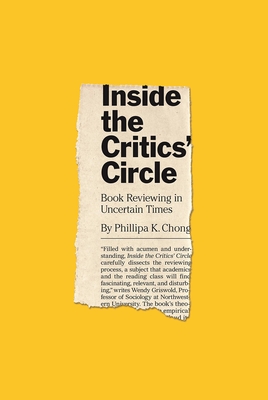
Many critics love reading mean book reviews, even if they don’t like to write them. This was a finding from my book Inside the Critics’ Circle wherein I interviewed critics about what it was like to write reviews in the current state of book culture.
While critics admit reading really negative reviews can be entertaining, some worry about the human being at the other end of the review. But this doesn’t mean there isn’t a way to be critical without being cruel.
Let’s turn the tables and review some book reviewers according to the abSURD scale, which refers to Author of Book’s Subjective Units of Review Distress. This for-entertainment-purposes-only metric expresses how upset an author can expect to be based on how professionally the criticism is offered based on what reviewers told me. The scale runs from 1 (it sucks to get a critical review, but the review has professional merit) to 10 (ugh, here’s your axe back).
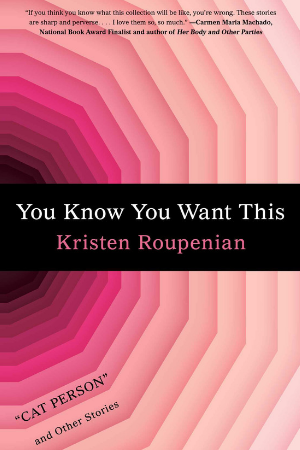
“[P]edophilia, necrophilia, child abduction, child murder, mass murder… And for what? This is a dull, needy book.” Ouch. Seghal also suggests the viral success of Kristen Roupenian’s “Cat Person” approximates a one-hit-wonder.
The review bites, but it’s fair and well-reasoned, as it focuses on the content and writing style—even if it’s unflattering. Someone in Roupenian’s shoes would likely find this review upsetting, but my interviews with book critics tell me it’s fair game.
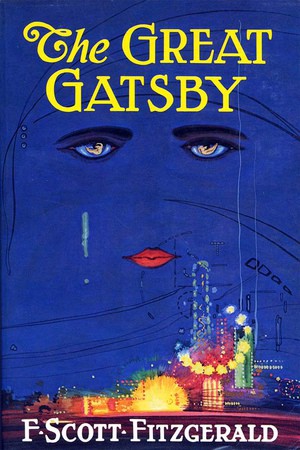
#TBT to a 1925 review of The Great Gatsby. Mencken calls the story “obviously unimportant,” the characters “mere marionettes—often astonishingly lifelike, but nevertheless not quite alive.” Critics I interviewed stressed that language, deep underlying themes, and characters that come alive are key elements of a good read. That Mencken finds The Great Gatsby, the classic hailed in its time, is perhaps surprising but fair.
Yet Mencken devotes a good amount of space lamenting the tendency of a type of early-success-writer who is “too proud to learn new tricks.” Fitzgerald is absolved of this sin, Mencken describes his earlier writing “extraordinarily slipshod—at times almost illiterate” but observes improvement in Gatsby. Still, the extended reflection on early-success might raise some eyebrows by today’s standards.
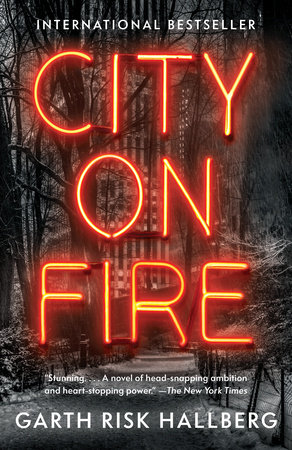
Critics buzzed about City on Fire—it was Hallberg’s debut novel, and, per Newman’s opening line, earned a “whopping $2 [million]” advance. The critics I interviewed generally felt that things like the size of an advance, whether a book was optioned for film or TV, etc. have no place in a book review. It sets up an external standard: the book was okay, but was it worth $2 million?
Newman calls the book bloated, arguing that it could have been cut by 200 pages. She describes passages as slow, “stonily inert,” and full of “soul-searching” that interrupts action. It’s clear that Newman is skilled at identifying the book’s problems with plot and character, and those are fair critiques. However, her focus is problematic: “The book is certainly impressive … but I can’t explain the adulation that has been accorded this one.” It’s good, but not $2 million good.
Steven Pinker scrutinizes Malcolm Gladwell’s star power: “Gladwell has become a brand. He is the author of the mega-best sellers.” But it’s not enough to convince him that Gladwell is more than “a minor genius who unwittingly demonstrates the hazards of statistical reasoning and who occasionally blunders into spectacular failures.”
This feels like an anti-Gladwell essay—it’s a bit personal, with Pinker challenging Gladwell’s intellect and integrity. There’s an informal norm among critics: it’s okay to punch up, but not down. To write a takedown of someone lower on the status ladder is frowned upon. But Pinker, himself a famous psychologist and writer, “punches across.” That keeps it solidly in the middle of this abSURD list.
“Donna Tartt isn’t one to ditch a winning formula.” Tartt’s candidacy for punching up is immediately established with her “phenomenally successful” debut novel identified in the first line. A few reasoned digs about Tartt’s originality, plotting, and writing style and unavoidable puns are offered: “No amount of straining for high-flown uplift can disguise the fact that The Goldfinch is a turkey.” But then Kemp goes on to make a dig at “awed Tartt admirers and devotees of websites such as the Donna Tartt Shrine.” Why drag her followers, if not to critique her large, devoted following? The swipe at Tartt fans is unnecessary. Kemp is not just reviewing the book, but Tartt’s celebrity writer status. That makes it very abSURD.
Hill comes out swinging, half-joking that Simon May’s “baffling” book must be “a sneaking yet sparkling satire on what a university education will get you (£50,000 of debt and the authority to pronounce a penguin cuter than a mermaid).”
Hill is clearly unconvinced by the book, if not annoyed by the “unpindownability” of its topic (what exactly is “cute”?). And no one is owed a good review. However, what makes this review unique in the group is how much Hill inserts herself into the review: “The self-deprecator in me wants to tell you I’m too stupid to understand a word of [the book]”; one chapter “may be a compelling idea to flaunt at dinner parties (I wouldn’t know – no one ever invites me).” Yet, it’s unclear how much of the review is a representation of the book’s content rather than a reflection of Hill’s energetic annoyance with the book. The former crucial for helping the average reader determine whether or not they might like to look up a book for themselves.
Because of the intrusiveness of the reviewer and the lack of providing a book’s gestalt, this breaks the rules governing good, if savage, reviews.
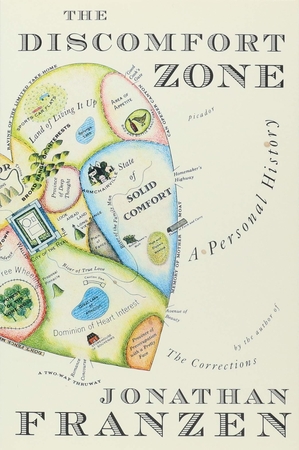
Michiko Kakutani famously criticized Jonathan Franzen in this review, and in many ways, it follows all the rules we’ve outlined thus far. First, it’s a very critical review of a very famous, bestselling author—and, it’s okay to punch up or across. Second, it’s a review by a famous (read: notoriously tough) critic, so she’s a professional and her critiques land. But, while people remember it as a character assassination, it also has merit. Hear me out!
The oft-quoted line, “Mr. Franzen turns his unforgiving eye on himself and succeeds in giving us an odious self-portrait of the artist as a young jackass: petulant, pompous, obsessive, selfish and overwhelmingly self-absorbed,” undoubtedly hurts. But is Kakutani out for Franzen the author, or Franzen the subject? It’s unclear, and this ambiguity makes the review seem particularly cutting.
But look at the rules again: she’s not attacking him, but his work. She paints Franzen as self-absorbed, but the implication isn’t that he’s a bad person; he’s a bad writer whose memoir makes for a disappointing read. The narrative is narrow, and the characters are flat. This is a critical error in any piece of writing. At the same time, she tips her hat to sections in the book that are incisive. Overall, while pointing out its failings, Kakutani also provides a good gestalt of the book’s content so that the average reader can make an informed decision on whether or not to read it.
So, it’s not really character assassination if Kakutani is quoting Franzen’s own words. But, because it’s not always clear if she’s attacking the real Jonathan Franzen, or his literary counterpart, this review toes the line. Depending on your perspective, it’s either a professional critique, or a savage personal attack. Either way, it was a selling review.
Before you go: Electric Literature is campaigning to reach 1,000 members by 2020, and you can help us meet that goal. Having 1,000 members would allow Electric Literature to always pay writers on time (without worrying about overdrafting our bank accounts), improve benefits for staff members, pay off credit card debt, and stop relying on Amazon affiliate links. Members also get store discounts and year-round submissions. If we are going to survive long-term, we need to think long-term. Please support the future of Electric Literature by joining as a member today!
The Blunt Instrument is an advice column for writers, written by Elisa Gabbert (specializing in nonfiction), John Cotter (specializing in fiction), and Ruoxi Chen (specializing in publishing). If you need tough advice for a writing problem, send your question to blunt@electricliterature.com.
Dear Blunt Instrument,
Why is sentimentality in writing frowned upon? What makes it work?
– Todd Dillard
Dear Todd,
Since I think of you as a friend of the Blunt Instrument, I hope you won’t mind if I expose you a bit. I had a feeling we had talked about sentimentality before, so I searched Twitter, and found this exchange from a couple years ago:
From your comment, I’m guessing you might think “Don’t be sentimental” is cliché advice that deserves to be dismantled. Bad news, Todd! I happen to think it’s good advice, so instead of deconstructing it, I’m going to tell you why sentimentality should be frowned upon.
But first, let’s clear up what we mean by “sentimental.” It’s very tiresome to witness people in a philosophical or aesthetic argument over whether X is good or bad or exists or doesn’t exist when they haven’t first agreed on what X even is, and it’s clear they’re defining it differently. So let’s define the term, because I think this is where some confusion arises. The primary definition of “sentimental” in most dictionaries is not inherently pejorative (that is to say, negative). Merriam-Webster has it as “marked or governed by feeling, sensibility, or emotional idealism; resulting from feeling rather than reason or thought.” And Google’s dictionary, however that works, defines it thus: “of or prompted by feelings of tenderness, sadness, or nostalgia.” This is the usage implied in a phrase like “a sentimental melody,” or “feeling sentimental over you” (though “feeling sentimental” is nearly redundant).
It’s not sentiment or emotion itself that’s bad, it’s misused or overused emotion.
So, writing governed by feeling, especially poignant feelings—that doesn’t seem so bad, right? Right! Because that’s not the definition people are using when they describe writing as sentimental! What they’re using is the second definition of the word, which applies in different contexts. Per Merriam-Webster: “having an excess of sentiment or sensibility.” And, per Google, perhaps more helpfully: “(of a work of literature, music, or art) dealing with feelings of tenderness, sadness, or nostalgia, typically in an exaggerated and self-indulgent way” (italics mine). Safe to say that if someone is dishing out “Don’t be sentimental” as writing advice, or using “sentimental” to describe a piece of writing in a derogatory way, the connotations of excessive, exaggerated, and self-indulgent are baked in. It’s not sentiment or emotion itself that’s bad, it’s misused or overused emotion, and this is what writers, maybe especially poets, need to watch out for: unearned sentiment that feels mawkish, cloying, or cheap. In other words, laying it on too thick, or using emotional tropes to trick the reader into thinking they’re feeling something, when actually they’re just recognizing the outlines of a familiar emotion.
Of course, writers and critics may disagree over what counts as excessive or self-indulgent, just as we may disagree over what’s good or terrible. But this is my column (partial ownership anyway), so I’ll try to illustrate the point with some examples of what I would judge to be good sentiment and over-the-top sentiment. Let’s start with the bad, and I’m going to use an example by a man, because some people will want to say that sentimental writing is only frowned upon because it’s associated with women. (I would contest that assumption; I don’t believe well-read people think of sentimentality as gendered.) Billy Collins has been called “the most popular poet in America”—surely he’s not anymore, but still, he can withstand being used as an example here. He is also textbook secondary-definition-sentimental. Take the poem “Aimless Love,” which begins:
This morning as I walked along the lake shore, I fell in love with a wren and later in the day with a mouse the cat had dropped under the dining room table.
In the shadows of an autumn evening, I fell for a seamstress still at her machine in the tailor’s window, and later for a bowl of broth, steam rising like smoke from a naval battle.
This is the best kind of love, I thought, without recompense, without gifts, or unkind words, without suspicion, or silence on the telephone.
Look, I get that this can be read as a humorous, tongue-in-cheek poem—he’s not really falling in love with a dead mouse or, by the end of the poem, a bar of soap. But, on the other hand, it’s not actually funny, or at least I wouldn’t trust anyone who laughed at it. And I’d argue that by the end of the poem he’s really trying to make you feel something, something serious. He’s leading you there all the while, cat-and-mouse style. At first the idea of love in the poem seems ironic (wren, dead rodent); but by the second stanza the object of affection is much more plausible (pretty girl in a window), so already we’re forced to question if the speaker is partly serious—what they used to call “kidding on the square.” Joking, but not really. Because the serious theme of the poem is not bestiality or necrophilia (one hopes, one hopes!); the serious theme is the difficulty of real love. (Real love, which involves compromise—conflict—silence!) This is what makes the poem unforgivably sentimental, in my view—the way Collins uses cutesy, Disney-esque images (a mouse in a brown suit!), faux-disarming constructions (“I found myself standing”), smarmy emotion-triggering words like “heart” and “home”—to manipulate you into feeling something serious about a serious theme. But the occasion is ridiculous! It’s a bar of lavender soap! (I hate especially that it ends on the word stone, the poemiest word of all time. Has a poet never simply kicked a rock?)
You can’t define an adjective like ‘hokey’ or ‘corny’ by any clear objective standard.
Exaggeration that is actually funny, of course, is good. Also, I like to feel things! You can’t define an adjective like “hokey” or “corny” (both of which, by the way, mean “mawkishly sentimental”) by any clear objective standard, but some number of people are going to read it and make the puke face. If this is something you care about, whether people like me are going to make the puke face when we read your poem, all you can do is read a lot and figure out where you judge the boundaries to be—reading a lot is key, because that’s the only way you’re going to recognize clichés.
Let’s end with a short poem I find to be successfully emotional, not cheap or manipulative, but rather genuinely and mysteriously sad, though in some ways it’s exaggerated and ridiculous. It’s one of my favorite poems, also by a man (a very probably racist man, but those sensibilities at least do not show in this poem). It’s “Depression Before Spring,” by Wallace Stevens:
The cock crows But no queen rises.
The hair of my blonde Is dazzling,
As the spittle of cows Threading the wind.
Ho! Ho!
But ki-ki-ri-ki Brings no rou-cou, No rou-cou-cou.
But no queen comes In slipper green.
This is a poem I can read again and again and never paraphrase, because I never really understand. Sentimentality is feeling that’s too sure of being understood.
Before you go: Electric Literature is campaigning to reach 1,000 members by 2020, and you can help us meet that goal. Having 1,000 members would allow Electric Literature to always pay writers on time (without worrying about overdrafting our bank accounts), improve benefits for staff members, pay off credit card debt, and stop relying on Amazon affiliate links. Members also get store discounts and year-round submissions. If we are going to survive long-term, we need to think long-term. Please support the future of Electric Literature by joining as a member today!
A man in an empty parking lot took pictures of our train as it passed. He made use of a tripod. Its shadow and his were a vanishing math on the pavement below. For a second I might have known anything at all about what it was like to live in his life. Then it was not that way. I saw vertical brick. I saw letters of words.
2. HIDE
The man in off-white, painted in oil, hung in a room in that library. His name was engraved in a plate on the frame, along with his period of life. Certain kids felt that reading the plate would give them the power to study the man and laugh at his candid gravity. These kids were lost. We knew to avoid the man, and his room, and that building entirely.
3. APPOINTMENT
I met with the meaning consultant for twenty minutes, which I could afford. I said she should probably charge more for her service, so people would enter less doubtful. “What’s the problem with doubt?” she asked. “Really?” I said. She studied me for a time. “Let me ask you this,” she said. But asked nothing. It began to get harder for me to act like the earth was not flying around, and with it our chairs, the floral arrangement, the paintings, the Tiffany lamp.
4. TENDER
The ghost of Hollywood Boulevard forgets who she’s supposed to be. She elongates, spins. Maybe she was an athlete in life, a dancer, canting her way through the crowds without touching, like she was a child, like it was a game she could play in her mind. Maybe she hustled tourist groups, like this kid in the sagging Spider-Man clothes, crouching to smooth the cloth of the pocketed dollars he has acquired.
5. HARD
Bikers in leather appeared and filled the street with roar and glare. I asked my elderly mother if she wanted to wait it out. “All I do is wait,” she replied. I narrowed my eyes at this information. I wheeled her back into the day. “Afternoon, ma’am,” one biker said. They parted for her, Bible-style. “I paint horses on cigarette boxes,” another explained, handing her one. My elderly mother leaned toward the man, who bent so he could hear. She vouched for the toasted tuna melt at the café we had just been to.
6. WARN
You can’t tell people what they don’t want to hear. Try and they’ll make it all about you. They’ll say (without saying, because silence is power), Why do you care so much, anyway? What do you need me to think about you? I don’t care, I’ll say then. I’m not even here. Look through me. Look through everything. S.I.P., you know what I mean? No? That’s shop in peace.
7. INTERLUDE
Many years ago, I got lost in north Lake Tahoe. In the pines. Which pointed every way at once, without investment. This way. This. A particle light in the reach of the needles. This way here. Like it was some game. But I could not play, knowing neither the object nor the rules.
8. CRAMP
You don’t need to be that good at math to see how storing all of the off-shoot realities would become a problem. There was not enough space. Even though there was much more space than anyone could comprehend. It affected the program. Our ignorance was compromised. We had visions: something like a hand, and something like a kill switch.
9. SPEAK
I took a seat next to a talkative man, a tenor who put out architectures of grammar like it was his job. I wanted to pay him. The sound of his voice in my head was this endless fucked-up audio book I could populate with my own dreams, of—I don’t know, phantoms, and airborne contortionists, monkeys hanging out on clouds, throwing down pennies and seeds.
At the end of 2019, I’ve been thinking a lot about gratitude. I am grateful for the things that sustained me. This year especially, I held poetry close to my chest, needing the warmth and understanding that comes from a poet’s clarity and wisdom. Poetry, more than any other artistic medium, helps me feel connected with others. The more I read, the more I realize we’re all asking the same questions, we all wanting the same recognition from each other.
So, dear poets: we are grateful for you. Thank you for your work, your vulnerability with audiences. Thank you for the many hours you spend submitting poems to journals, traveling the country, connecting with editors, and hustling to get your words to us. We appreciate your thoughtfulness, all of the new ways you’ve found to express your anger, your joy, your loneliness, your desire. Thank you, in particular, for these 14 books.
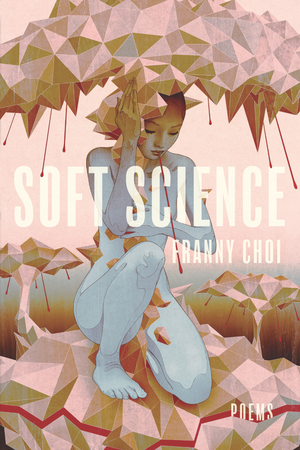
What does it mean to be human, to be real, especially in a world with increasing dependency on artificial intelligence and web presence? How do we still reach out to each other? Through our relationship to technology — using the Turing Test as a touchstone, but also drawing from programming languages, television, and the internet — Choi examines the nature of consciousness and human connection. These are poems about the selfhood we seek, the desire to be wanted, seen, acknowledged as real, and all of the mistakes made along that path to recognition. Soft Science is an earnest collection, written with dazzling expertise.
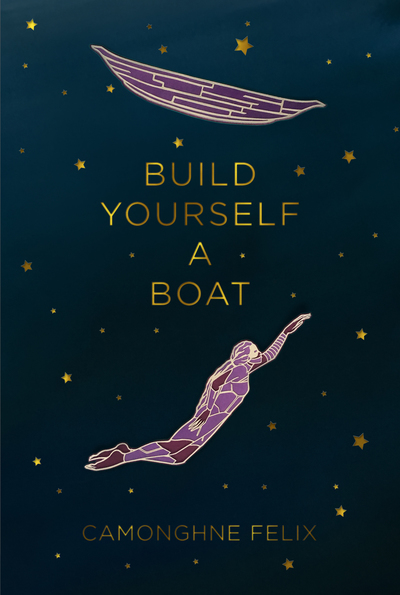
Camonghne Felix has written a collection of poems that seep into your consciousness and continue to unfold long after you’ve turned the page. These are stories about where we come from and how that shapes us, about the brightness and darkness of family, about womanhood and Black womanhood and death and survival. These are emotionally dynamic poems by a woman who has continued to live a full life and succeed despite all of the things that might have held her back. I think it’s probably cliché to call poems about trauma and hardship “brave” but I do think Felix is brave, and her careful approach to poetry is a feat to be admired.
This is a collection of very specific memories and moments: a familiar sound playing out of an open car window as it rolls down the street, the smell of something cooking, the laugh of a friend. Among these things there are ghosts, sirens, dark clouds rolling in. Abdurraqib plays with nostalgia and history, both personal and cultural, and through that find commonality. He asserts: “& lord knows I have been called by what I look like/more than what I actually am” — and proceeds to share the blossoming garden of what he actually is. I get Fall Out Boy stuck in my head every time I see this book on my shelf, which is one of my life’s little joys.
Sometimes I wonder if we deserve Shira Erlichman and her beautiful mind. If there’s one thing this collection shows us, it is that there is joy and grace in this life, even alongside pain.Erlichman writes each moment with such skill and precision every poem is full of resilience and thoughtfulness. Ode to Lithium is exactly what it says on the tin: an exploration of the ups and downs of mental illness, and all of the struggles that come along with taking care of oneself. The voice in these poems deals with shitty doctors, family, friends and lovers, Bjork, cockroaches, and so much more. But more than anything, this collection is about living, finding ways to live and doing it on purpose.
Rivera starts their collection with a proclamation: the number 4,645 bold across the page. This is the number of people dead as a result of Hurricane Maria due to the storm and governmental negligence afterward. This is an angry, grief-stricken, confrontational book that uses space to it’s advantage: at the top, English; below, Spanish as a footnote, echoing the voices of those who are an afterthought, if they are thought of at all. Rivera confronts readers with ugly truths. As a non-Spanish reader, I am confronted with my privilege. As a person with Puerto Rican ancestry, I am confronted with the distance between myself and my homeland. This is not so much a book but a slap across the face, a tear, a hug.
Eve L. Ewing’s second book is a preservation project. Ewing writes of Chicago in 1919, a time of Black migration to the north in search of work, and a race riot that shook the Black community to its core. The poems draw on history and Black cultural traditions to give voice to Chicagoans who became involved in and affected by the riot, who were buried by history and white supremacy. Exploring issues of race, class, and privilege, Ewing contrasts of graceful words and horrific realities to make 1919 a collection that soars.
It is an incredible gift for a writer to be able to place their reader so vividly in a location, amongst a people, within nuanced emotions. Sarah Borjas accomplishes all three in this collection with poems that echo into a long stretch of desert night. Balancing the deep love a person can have for their hometown with the wisdom from having moved on, Borjas illuminates Chicanx culture and family, heartbreak and loneliness, trauma and struggle. These poems ask, how do we fill the holes that have been left in us, the holes that have been punched through? How do we continue to bloom?
Reading this collection felt much like reading Oceanic by Aimee Nezhukumatathil. It’s about the Earth, yes, but more particularly about those who inhabit it and the space they take up, simultaneously encompassing a grand, aerial view of life and a simple, close, tender one at that. In a collection full of distinctive characters, the landscape is a character in itself, rendering a sweet slice of rural, rustic queer life. Bendorf’s collection is a testament to wild queerness, a collection that howls at the moon, demanding to be seen.
Lewis depicts a world of gentle, quiet observations and wonderment. Reading Space Struck made me want to see the world through the narrator’s eyes, to watch birds gather on a tree outside a kitchen window and think of joy, family, comfort. In these poems a person tries to find their place in nature, in the universe, by asking what is fair and what is good. Lewis’s poems balance the anxiety of being human with the excitement of knowing there could be more to life than what we know.
Coal. Beer. Boys. Gasoline. Smoke. Desire. Shattered glass. Discarded jeans. The world of Jake Skeet’s poems is both haunting and sweet, full of dirt and kisses so vivid you can taste them against your mouth. It’s a world that will hurt you, break your heart, but also reach for your hand and ask to be held. This collection examines all the shades of masculinity and manhood through the lens of someone young, queer, and Native. These poems hold pain and tenderness together in one hand to observe all the ways they interact. Thorn. Mouth.
In Liew’s first full-length collection, politics and pleasure are at play. These poems examine the intersection of race and sexuality, the roots of trauma and desire, and what it means to inhabit a politicized body. Liew’s sequential poems are ripe with bruises, both accidental and intentional. What stands out in these poems is the juxtaposition of fierceness and softness—the language is both vulnerable and assertive, which feels like an undeniably feminine experience. What does it mean to be a woman who wants? What does it mean to want, to be wanted? What does it taste like?
In one fell swoop, Malcolm Tariq has joined the ranks of Danez Smith and Jericho Brown with this essential collection of poems on the queer Black experience. Heed the Hollow is about what it means to be a man, how to deal with wanting what you’re told you shouldn’t want, how to love your religion and family and home while reconciling with history and culture. These poems interrogate racism in the South, the politics of sex and pleasure, the politics forced on Black bodies, while also balancing care, reverence, and self-love. Tariq’s empathic voice truly owns its space in the world.
It may be strange to call a collection about gender violence and emotional labor beautiful, but it is, in the same way that women’s capability of finding something to hold on to even when everything seems built to destroy them is beautiful. Scenters-Zapico’s poems are both sour and savory, sweet and sticky. Exploring the nature of machismo in Latinx culture, relationships and sexuality, femininity and domesticity, Scenters-Zapico has crafted a book that speaks to anyone who has jumped through hoops to please someone else. But there is an assertion of selfhood here too, and above all else, the truth of a survivor.
Alison C. Rollins does Simone Biles-level gymnastics with language, effortlessly backflipping and twisting over inquisitive and introspective lines on love and loss, on Blackness and womanhood, on tragedy and discovery. With a delicate mix of history, surrealism, and library reference numbers, the poems in this collection are in command of their subject matter, coming at us so fiercely and swiftly. We don’t know what hit us until the damage is already done. “Dear Dewey Decimal System, / How will I organize all the bodies? / The professor said that in judging / women’s bodies by their covers / we have a system for returning / things back to where they belong.” Library of Small Catastrophes secures Rollins’ place alongside a long lineage of poets at the top of their game.
Before you go: Electric Literature is campaigning to reach 1,000 members by 2020, and you can help us meet that goal. Having 1,000 members would allow Electric Literature to always pay writers on time (without worrying about overdrafting our bank accounts), improve benefits for staff members, pay off credit card debt, and stop relying on Amazon affiliate links. Members also get store discounts and year-round submissions. If we are going to survive long-term, we need to think long-term. Please support the future of Electric Literature by joining as a member today!
When I read the reviews of Ali Wong’s memoir Dear Girls: Intimate Tales, Untold Secrets, & Advice For Living Your Best Life, I was at first thrilled—the responses were glowing—and then perplexed. I fundamentally agreed with what they said: that the book is a more intimate and poignant (yet still hilarious and incisive) extension of her Netflix specials. The reviews talked about her raunchiness and her vulnerability, the thoughtful ways she delves into her various roles—as mother, as a comedian, as a woman of Vietnamese and Chinese descent. And yet for all their gushing, all the reviewers I read overlooked the part of Dear Girls that I, as an Asian American woman and writer, found the most revelatory: that it was written to me.
Well, not to me exactly. The book is presented as a collection of letters to her two young daughters, providing life advice for when they grow up. Yet the memoir’s conceit is a remarkable sleight of hand. When Wong addresses the book to her daughters—a narrow, fixed audience—we immediately understand that framing is a literary device, and her advice is meant to be read universally. Yet at the same time, the device allows her to speak directly to Asian American women—a demographic that in media is often spoken about, or spoken down to, but rarely spoken to, peer to peer. In Dear Girls, Ali Wong both describes (through her loving depiction of her family and environment) and inscribes (through her specific audience choice) the ways Asian American-centered creative community can provide support and nourishment.
Such examples are sorely needed in a literary and media landscape where we are reduced to the alien. In an NPR interview shortly after the book was published, All Things Considered host Michel Martin told Wong that her family’s history is “quite extraordinary… I mean, your dad is Chinese American. Your mom is Vietnamese American. And when you read their backstories… it just kind of takes your breath away.” I was struck by the phrase “takes your breath away,” because it aligns with the reception I’ve received to much of my writing on my grandfather’s time in the Japanese American incarceration camps, or on my grandmother’s history in Taiwan. People say things like: astonishing, astounding. What they mean is that my family’s story is foreign, inexplicable, a narrative of the unknown.
Because that is the white narrative of Asian Americans: we are benign, and we are unknowable. Even in works by Asian American writers, the literature that gets the most attention still tends to be tied to tales of immigration. The narratives are ones of boundary-crossing: of one foot grounded in the old world and one in the new, stories of pain and exile and belonging. Yet many Asian Americans have lived in the United States for generations, for nearly a century or longer—and these works are harder to parse. Not an immigrant narrative, but not the narrative of a white American.
That is the white narrative of Asian Americans: we are benign, and we are unknowable.
I’ve struggled with these expectations when writing about my family in various writing workshops and classes, where I am usually the only Asian American (and sometimes the only person of color). In writing spaces, my peers critique the content of my work to the best of their ability—but lack cultural context. Workshops often devolve into questions about cultural references, instead of structure, style, character development. I don’t expect my readers to understand my history—even other Asian American readers won’t always know it—but I become frustrated with the attempts to pigeonhole our stories into easily-read shapes and old tropes. A professor suggested I drop a section about Japanese colonialism in Taiwan because it was “too confusing.” When I write about my ethnic identity, it’s not about search for assimilation, but about trying to hold onto roots of cultures and countries I am increasingly distant from, of holding onto traditions that are dying away with our great-grandparents and grandparents. I thought about this while reading the first chapter of Dear Girls, where Wong touts the benefits of being with another Asian American. “You don’t have to constantly explain everything or act like a tour guide for Asian American culture,” she says.
That’s why Dear Girls takes my breath away for a different reason—not for how surprising it is, but how familiar and familial. As I read her list of good and bad signs in Chinese restaurants (Good signs: “There’s a tank full of live fish in front,” “It takes an hour to get a glass of water”; bad signs: “The dim sum is being served on trays,” “The waitstaff ask you ‘How’s everything going?’”) I thought, yes, yes, then took a photo of the page and sent it to my family. In Ali Wong’s comedy, we are inside the in-jokes, jokes that stem from understanding our community and acknowledging the ludicrous aspects of our lives. It’s not the kind of “humor” we’ve been subjected to for as long as we’ve been in America: from Fu Manchu in the 1930s to Shane Gillis today, ones that depend on communal disgust at us—where the comedy relies on the shared understanding between the comic and the white audience. In Wong’s work, we are the people that make up the contextual fabric; the relationship exists between the comic and the Asian American audience.
In Ali Wong’s comedy, we are inside the in-jokes.
I often struggle with negotiating the role of my audience. I want to write without having to provide layers of explanation for every allusion, every cultural reference. And yet I want to reach a wide readership—code for “white people” in American publishing—and have been trained to see writing to other Asian Americans as either too niche or as unnecessary. In the United States, East Asians occupy a peculiar position where we’re usually seen as being white-adjacent enough not to need to be spoken to separately. I am not Black or brown, but I am not white, either. My skin color results in microaggressions, not bodily harm or death. We have assimilated—by necessity—and then we assimilated further.
While Black and brown artists and writers have long inhabited—and flourished—in their own spaces, Asian American creatives do not have as wide or as deeply rooted communities in most parts of the country. Part of this, I imagine, has to do with white America’s vision of East Asians as the “model minority.” We are not white, but are accepted by whiteness inasmuch as we are benign and useful as a wedge and tool for anti-Blackness. We are given crumbs of access. This, of course, is a sort of privilege; it has also prevented us from staking out our own space.
So when I read Wong’s description of the Asian American creative community she comes from, I was envious. The examples of Asian American support—from her parents, her brothers, her friends, her Bay Area community—showed me the necessity of collaborators who share your cultural context. It made me want to develop a stronger network with other Asian American writers and artists.
We are not white, but are accepted by whiteness. We are given crumbs of access.
On the face, this seems antithetical to Wong’s position in her book. In the chapter most frequently discussed in reviews, “My Least Favorite Question,” she expresses frustration that Asian Americans always want to know about what it’s like being an Asian American in Hollywood, a question she finds reductive and ancillary to more critical questions of craft, work ethic, and failure. She tells up-and-coming Asian American entertainers to expand their circles beyond just other Asian Americans. In many reviews, this seems to be the point that critics take away: that to define yourself as Asian American is to pigeonhole yourself.
I’d argue that this expansive chapter is much more nuanced than that. Right after Wong gives advice to go beyond your community, she dedicates pages to discussing the importance of being friends with Asian Americans in entertainment. She talks at length about specific Asian American people who have supported her. That chapter concludes, “This brother- and sisterhood with other Asian American people in entertainment—how they treat me and take care of me and demand other people respect me—has given me my community that keeps me protected. So I’m saying you need both—your community and what lies out of it.”
For people who, like Wong, grew up in spaces rich with Asian Americans, the latter part of advice—get outside your community—is pointed. For the rest of us, the former part—get inside your community—is the part that hits home.
Wong recognizes the gift of such community when describes a Asian American actress who felt envious and excluded after not being cast in Crazy Rich Asians. “For her,” Wong explains, “that was the truthful but ugly answer to the question, ‘What’s it like to be an Asian American in Hollywood?’ Don’t miss the one spot every ten years.” I identified with this immediately. Wong was naming the frisson of anxiety I feel when seeing a book by another Asian American writer whose content overlaps even slightly with mine: that there is only one space, and now that they have captured it, there is no room for me.
But Wong feels differently, which surprises the slightly older actress—a difference that Wong credits to age and upbringing. “I also grew up feeling special because I was Asian, but for the opposite reason,” she says. “Not because I was different from the people around me, but because I was the same, which filled me with pride.”
After reading this, I wondered what it would look like if I always imagined an Asian American audience for my writing—an audience with a similar context and history. Not that my pieces would not apply to other people—we, too, are people; our experiences, too, can be read universally—but to envision my community as my ideal readers.
I wondered what it would look like if I always imagined an Asian American audience for my writing.
Recently, a friend started up a group for young Japanese American creatives. We meet monthly to discuss our work and create together. Though our content varies widely (we work in a variety of artistic media), we have shared context. Most of us have at least one grandparent who was incarcerated in the American internment camps during World War II; though we are a few generations removed, this history comes up over and over again as we discuss our work. I also participate in Asian American creative communities online—though we may lack a quorum in whatever town we live in, we can gather in full force on the web. I can’t ignore the issue of audience, but it reminds me that creating is a process, and who you walk with along the way is as important as who consumes it at the end.
These communities can also bring up tension that is difficult but necessary; we can push back on each other in a way that white readers can’t and don’t. When we exist only in relation to the dominant white society, Asian Americans are brought together. When we speak to each other, Asian to Asian, we have to reckon with our own complicity, both historical and contemporary—colonialism, by intra-Asian racism, South and Southeast Asian erasure. (South and Southeast Asians have rightfully pointed out that while we East Asians–what Ali Wong refers to as the “fancy Asians”—are out here fighting for visibility and representation, many of them are literally fighting for basic human rights.)
These dialogues can be painful, especially when we’re unused to reckoning with own power and privilege. Wong mentions a Japanese American student who asked Native Hawaiian activist Haunani-Kay Trask how her family, who had lived in Hawaii for generations, could support Native Hawaiians. Wong remembers, “Trask simply responded, ‘Get out.’” As a Japanese American whose family has lived in Hawaii since the early 1900s, I felt a deep—and necessary—pang.
If we exist as the sole Asian American in our communities, if we only try to write for white audiences, these dialogues get sublimated. (While reading Ali Wong’s interviews, I thought about the discussions that might have happened if her interviewers were Asian Americans or people of color. I wished somebody would have pushed her on her statement that the Asian American women who ask her about identity “view being an Asian-American woman [as a] weakness. If you see it as a weakness, it will be a weakness.”)
But Wong grew up in an “Asian American Wakanda” where we were seen as individuals, where we were not the minority—and explicitly acknowledges how this has framed her identity and understanding. Although not all of us were able to experience that, through this book she allows us to imagine that space. Dear Girls is a window into a world where Asian American creativity and identity is not dependent on adherence to whiteness, but on creating space for and collaborating with each other. On laughing with, not at, our own community.
Before you go: Electric Literature is campaigning to reach 1,000 members by 2020, and you can help us meet that goal. Having 1,000 members would allow Electric Literature to always pay writers on time (without worrying about overdrafting our bank accounts), improve benefits for staff members, pay off credit card debt, and stop relying on Amazon affiliate links. Members also get store discounts and year-round submissions. If we are going to survive long-term, we need to think long-term. Please support the future of Electric Literature by joining as a member today!
Electric Lit got a whole new look this year (and a new store! And a new membership platform!). But let nobody say we’re all style and no substance. We also published over 750 essays, stories, interviews, lists, humor pieces, and other great writing. Here are our 15 most popular articles from 2019.
Is the Irish phenom a literary powerhouse or a chick lit writer? The media can’t seem to decide, writes Mullins: “So maybe this is what breaking out of the ‘women’s fiction’ ghetto looks like: a commercially successful book that is praised by Camila Morrone, Leonardo DiCaprio’s Instagram model girlfriend, and also by Anne Enright, winner of the Booker Prize.”
Why did the literary world get so up in arms when Marie Kondo gently suggested clearing out your book stash? It’s not just because people are kinda weirdly racist about Marie Kondo; it’s also because we have a complicated societal relationship with owning books and book accessories. McGregor looks at the “long, classed history of book consumption as social posturing.”
Reading books whose protagonists are different from you is great for increasing empathy—but it’s not just character-building. Boys are also perfectly happy reading books that focus on girls and their everyday lives. They just don’t usually get those books as gifts, or assigned at school. Akabas explains why we should be making books about girls more available to everyone, not just girls themselves.
Were you today years old when you found out that Go Ask Alice, the iconic anonymous diary of a girl sliding into drug addiction in the 1970s, was actually a work of propagandist fiction? You’re not alone. Sloane Tanen takes us through the effect Go Ask Alice had on her life as an anxious teen, and how she felt when she discovered she’d been played.
This year, a folk opera retelling of the myth of Orpheus and Eurydice garnered almost as many Tonys as the record-holding hip-hop retelling of the life of Alexander Hamilton. In other words: there’s a formula for award-winning musicals, and it works. And you can get your own, using only your initials.
Before Carmen Maria Machado’s stunning memoir—our pick for best nonfiction book of the year—made everyone reckon with abuse in relationships between women, Jedediah Berry wrote about his experience of emotional abuse from a female partner, a writer who wanted to exert toxic control over their story.
Small bookstores agree to embargoes for highly-anticipated books like the sequel to The Handmaid’s Tale, promising that they won’t make it available for sale until a certain day. Amazon is subject to embargoes too—but if you’re Amazon, you can afford to break the rules. Lexi Beach lays out why that’s bad for indie bookstore owners like her.
The Sealey Challenge, set by poet Nicole Sealey, encourages you to read one full book of poetry per day in August. Christina Orlando talked to 31 poets (including Sealey) about the can’t-miss books you should add to your pile for August or any time of year.
Kwon’s yearly list of upcoming books by women of color is reliably one of our most popular posts. This year, she offered more highly-anticipated books than ever before, and expanded to include nonbinary authors.
Talking about sex with your friends: the most normal of interactions, and also the most fraught. In Sarah Gerard’s short story, four friends on a writing retreat—one of whom just left a bad marriage—navigate questions about art, love, relationships, and desire.
Someone already did a Handmaid’s Tale–themed wedding, but don’t worry: if you’re determined to celebrate your commitment in a way that also celebrates your mild confusion about literature, we have plenty of other ideas for you!
Cookbooks tend to reflect the cultural moment—but Joy of Cooking is timeless. Abigail Weil lays out the history of this family project, which has changed just enough with the times to stay relevant ever since its first edition in 1931.
The Twitter feed Men Write Women collects the most eye-popping examples of writers confused about women’s experiences, emotions, and especially bodies. We round up some of the worst anatomical offenses, and the resulting image is… unfortunate.
Nothing at all is weird about Theodore McCombs’s interview with Carmen Maria Machado about the new edition of J. Sheridan LeFanu’s vampire novel Carmilla! Nothing weird happens at all.
We have a cultural horror of women’s hunger—and what better way to examine it than by looking at how hungry women are portrayed in horror films? “Beneath the resistance and suppression of appetite is something wild, something terrifying,” writes Maw in an essay that bridges the critical and the personal.
Before you go: Electric Literature is campaigning to reach 1,000 members by 2020, and you can help us meet that goal. Having 1,000 members would allow Electric Literature to always pay writers on time (without worrying about overdrafting our bank accounts), improve benefits for staff members, pay off credit card debt, and stop relying on Amazon affiliate links. Members also get store discounts and year-round submissions. If we are going to survive long-term, we need to think long-term. Please support the future of Electric Literature by joining as a member today!
We know what you’re thinking: “Is there a way to make Dungeons and Dragons even nerdier?” It’s your lucky day, dear reader, because the answer is yes! We’ve assembled the D&D characters we imagine some of our favorite authors playing as, complete with backstory and stats. You can also use this as a guide to play as your favorite author, which will probably be a lot of fun for both you and your DM who wanted this to be a serious fantasy campaign. Get your dice ready, because it’s time to roll for authorship.
Edgar Allan Poe
Race: Gnome Class: Warlock Alignment: Chaotic neutral Highest stat: Intelligence Abilities: Arcana, Medicine Special equipment: Mysterious bag of bricks and brick-laying tools
A small goth who mistakenly became a warlock when he pledged his allegiance to the god of Getting Murdered. He was forced out of his village over allegations that he was a drunk, but really he was just trying to rid himself of the dark god hiding in his floorboards.
Haruki Murakami
Race: Half-Elf Class: Paladin Alignment: Lawful Neutral Higheststat:Intelligence Abilities: Investigation, Persuasion Special equipment: A hot younger woman with whom he has a non-sexual relationship
A paladin professor who seeks to educate young paladins in the ways of celibacy and morality. He travels around the coast, respecting women and spreading his surrealist philosophies.
Stephen King
Race: Dragonborn Class: Sorcerer Alignment: Neutral Evil Highest stat: Charisma Abilities: Survival, Stealth Special equipment: A new idea for a novel that he’ll have finished in two weeks
A dragonborn who became a sorcerer after a childhood brush with a demonic clown. He spends his time wandering around semataries, casting frightening spells and illusions that leave passersby chilled to the bone.
Margaret Atwood
Race: Gnome Class: Wizard Alignment: Chaotic Good Highest stat: Constitution Abilities: Survival, Insight Special equipment: A great theme for one of Kylie Jenner’s parties
She was raised in a noble house but kicked out for prophesying that her wealthy, patriarchal family would bring about a dystopian turn in society. Now she’s trying to convince others that her visions are true so she can stop her family.
Oscar Wilde
Race: Elf Class: Bard Alignment: Chaotic Neutral Highest stat: Charisma Abilities: Performance, Perception, Persuasion Special equipment: Painting of himself but older
His wealthy parents planned to disown him for his lack of direction in life, but they died under mysterious circumstances before anything could be made official and he inherited a fortune. He enjoys throwing elaborate parties where he convinces his most important guests to divulge their secrets to him.
Carmen Maria Machado
Race: Tiefling Class: Warlock Alignment: Chaotic Good Highest stat: Dexterity Abilities: Sleight of Hand, Insight, Arcana Special equipment: Green velvet ribbon (do not touch!)
She grew up alone in a haunted mansion, with only spirits for company. Eventually these ghosts became her closest confidants, and they introduced her to a god of Dark Magic who granted her spellcasting abilities. Spirits still tend to follow her around, asking for favors and demanding their deaths be avenged.
Alison Bechdel
Race: Human Class: Sorcerer Alignment: Neutral Good Highest stat: Wisdom Abilities: History, Insight Special equipment: Raincoat of love
In every mirror, she sees herself as she was in the past. She can even visit certain memories by enchanting large mirrors. An encounter with Death gave her these abilities and more, and she must fight to stay present when the past is so accessible.
She looks like a sweet young woman carrying a strawberry shortcake, but in reality she’s a devourer of bodies and souls. All the creatures she consumes leave their stories inside of her, and she enjoys sitting in her garden, running through films of their lives in her mind.
Walt Whitman
Race: Half-Elf Class: Druid Alignment: Neutral Good Highest stat: Wisdom Abilities: Animal Handling, Nature, Insight Special equipment: Barbaric yawp
Never fully accepted in either human or elf society, he made his way into the woods and never left. He’s become more tree than creature, with a beard of lichen and mushrooms growing from all his knuckles. His gray beard points in the direction of oncoming threats, so he can defend his forest home from danger.
Marlon James
Race: Halfling Class: Fighter Alignment: Lawful Good Highest stat: Wisdom Abilities: Insight, History Special equipment: National Book Critics Circle Award finalist for The Book of Night Women Dayton Literary Peace Prize (Fiction) for The Book of Night Women Minnesota Book Award (Novel & Short Story) for The Book of Night Women Silver Musgrave Medal from the Institute of Jamaica National Book Critics Circle Award finalist for A Brief History of Seven Killings Anisfield-Wolf Book Award for Fiction for A Brief History of Seven Killings OCM Bocas Prize for Caribbean Literature (Fiction category winner), for A Brief History of Seven Killings Man Booker Prize for Fiction for A Brief History of Seven Killings Green Carnation Prize for A Brief History of Seven Killings National Book Award for Fiction finalist for Black Leopard, Red Wolf
A prize-winning halfling fighter who’s become famous in throughout the world. Unfortunately, his dream isn’t to fight, but to learn to shapeshift. He’s now partially retired and spending his fortune searching for someone who will grant him the magic he needs to become a shapeshifter.
Shirley Jackson
Race: Gnome Class: Rogue Alignment: Chaotic Neutral Highest stat: Intelligence Abilities: Arcana, Stealth, Intimidation Special equipment: The death-cup mushroom
Her parents died when she was young, and she was raised by her older sister in half-destroyed mansion. As an adult, she left home to track down any men who hurt women and enact justice on them. Often referred to as The Ghost because of her haunting looks and her ability to remain unseen by those she wishes to harm—although she wishes people would call her The Werewolf.
Ernest Hemingway
Race: Human Class: Ranger Alignment: Lawful Evil Highest stat: Constitution Abilities: Animal Handling, Intimidation, Performance Special equipment: Fishing rod that he claims he used to catch an enormous fish (no evidence of said fish)
After the war, he began tracking down the rarest animals in the world in order to capture them or their magic. He runs a black-market animal trade and has become successful from that venture, but secretly he hopes to leave the business and search for his true love.
Before you go: Electric Literature is campaigning to reach 1,000 members by 2020, and you can help us meet that goal. Having 1,000 members would allow Electric Literature to always pay writers on time (without worrying about overdrafting our bank accounts), improve benefits for staff members, pay off credit card debt, and stop relying on Amazon affiliate links. Members also get store discounts and year-round submissions. If we are going to survive long-term, we need to think long-term. Please support the future of Electric Literature by joining as a member today!
DON’T MISS OUT
Sign up for our newsletter to get submission announcements and stay on top of our best work.
YOUR INBOX IS LIT
Enjoy strange, diverting work from The Commuter on Mondays, absorbing fiction from Recommended Reading on Wednesdays, and a roundup of our best work of the week on Fridays. Personalize your subscription preferences here.