Would you rather have been nominated for the Pulitzer the year they withheld the prize, or for the Nobel the year they gave it to Dylan?
Would you rather be excoriated in reviews for your treatment of the social justice issue closest to your heart, or for your tone-deaf prose?
Would you rather your best friend avoid all mention of the manuscript you sent for their thoughts, or your mentor?
Would you rather bring your most beloved relative back from the dead, or Toni Morrison?
Would you rather publish your first poem early, but write for the rest of your life and never publish again, or publish only your last poem after persevering through 73 years of rejection?
Would you rather have your work compared to L. Ron Hubbard, or Snooki?
Would you rather teach a 5/5 load of first-year comp as an adjunct on three campuses, or work full-time as a copywriter for a prison supply company?
Would you rather be subtweeted by Benjamin Dreyer, or the Merriam-Webster account?
Would you rather be rejected by every agent you contact based on your query, first chapter, or full manuscript?
Would you rather have a movie adaptation mangle and pervert your story into infamy, or default on your student loans?
Would you rather be on a panel with a favorite writer and listen to them dance around the fact they haven’t read your book, or hear them damn it with faint praise?
Would you rather your status on Submittable remain forever “received,” or “in-progress”?
Would you rather a personal essay be accepted only because the editor knows and pities you, or have it rejected by an acquaintance who tells all your friends how awful your writing is?
Would you rather learn you’re the subject of Ronan Farrow’s next piece, or that you’re Roxane Gay’s nemesis?
Would you rather have the meaning of your most famous work be misconstrued by a century of schoolchildren, or die unread?
Would you rather that asshole from workshop get a million dollar book deal, or that asshole?
Would you rather, the first time you open your book in a store, find a typo in the first sentence, or the last?
Before you go: Electric Literature is campaigning to reach 1,000 members by 2020, and you can help us meet that goal. Having 1,000 members would allow Electric Literature to always pay writers on time (without worrying about overdrafting our bank accounts), improve benefits for staff members, pay off credit card debt, and stop relying on Amazon affiliate links. Members also get store discounts and year-round submissions. If we are going to survive long-term, we need to think long-term. Please support the future of Electric Literature by joining as a member today!
Tiffany Midge is the author of several books including the recent memoir Bury My Heart at Chuck E. Cheese’s, a collection of prose that blends humor with social commentary and meditations on love and loss. Her poetry collection The Woman Who Married a Bear won Kenyon Review’s Earthworks Prize for Indigenous Poetry and a Western Heritage Award. She received a 2018 Pushcart Prize for her McSweeney’s Internet Tendency piece “An Open Letter to White Women Concerning The Handmaid’s Tale and America’s Historical Amnesia.” Midge is a citizen of the Standing Rock Sioux tribe who was raised in the Pacific Northwest. She is a former humor columnist for Indian Country Today and teaches multi-genre humor writing that elevates awareness of social justice issues.
Julie Vick: How did you get started writing humor?
Tiffany Midge: When I was little, around ten or eleven, I would spend hours in my room recording little skits on my tape recorder; it was clear that my inner anarchist was trying to hatch because one of my skits was a radio station DJ for F.U.C.K. Radio, don’t switch that dial! I think I always understood humor as a means of resistance. My mother was raised on the rez, so she had a built-in affinity for comedy, a survivalist strategy, and a way to make sense out of pain and struggle, that’s one side to it, but also Natives are a storytelling culture, the oral tradition and all that. My father brought me up on Monty Python marathons, live theater, and National Lampoon magazines. So, between the two of them I had a perfect storm for cultivating humor.
JV: In your book, you blend humor with serious topics like grief and racism. What advice do you have for writers who want to use humor when writing about more serious subjects?
TM: I’d like to say that no subject is taboo, or no topic is too profane to joke about. But of course, that’s not true. It can be a thin line. Writing humorously on topics like grief or loss come very naturally for me—the humor is where I always end up, it’s a way to cope, distract myself, and to process. And sometimes responding in ways that are inappropriate becomes the joke in and of itself. People will laugh about how uncomfortable they are, how awful such and such a situation or joke is. The situation or joke is funny because it shocks or surprises. It occurs to me that I use a lot of funereal humor, probably because I’ve been to so many funerals. I must have been unconsciously inspired by that Mary Tyler Moore episode where Mary and company goes to a funeral for Chuckles the Clown and Mary struggled to stifle her laughing during the eulogy.
JV: What role do you see satire and humor playing in the literary world?
TM: To provide a deeper and more intimate connection to characters—which cultivates empathy and understanding. Vine Deloria, the Lakota author and scholar, wrote that one of the best ways to understand a people is to know what makes them laugh. I’d love to see Indigenous writers receive more credit for being hilarious. Very often Native literature is promoted as very somber narratives about trauma, but even within such books, there’s usually quite a lot of humor. But are they billed that way? Not often. Tragedy sells. I have this joke: Two things always present in classic Western literature are death and tragedy. And by that logic there should be thousands of great Native American novels.
JV: The pieces in your book take different forms, including essays, multiple-choice problems, and letters. How do you decide what form a piece will take? Do you sometimes try out different forms or does the format tend to come to you when you start a piece?
TM: A particular form, concept, or conceit will occur to me and I’ll use it as inspiration, as a writing prompt. Often the form is my jumping off place. Forms provide so much material, they’re such an abundant mine to tap into. I’ve seen some poets utilize actual forms, like government forms, IRS forms, formal questionnaires, in their work. The Lakota poet Layli Long Soldier used legislation and documents of legality as inspiration for her book Whereas.
Two things always present in classic Western literature are death and tragedy. And by that logic there should be thousands of great Native American novels.
JV: You also write poetry—do you find that some of the same craft techniques apply to writing both poetry and prose or do the two forms feel pretty separated for you?
TM: The thing about writing humor is that it trains a writer to communicate a very specific idea in a very particular way. No other writing does that, except maybe technical writing. The premise, concept, and joke has to land, an audience has to be in on it in order to get that laugh. So, the writing must be concise. If it takes too long to get to the punchline, or payoff, it won’t be funny.
I also hold true that the craft of writing poetry will help a humor writer exceedingly. Because with both, one needs to use as few of words as possible to reach the intended result. Both crafts rely on tension and tension-building and then the release of tension. And as in poetry, humor comprises of joke upon joke, and depends upon a rhythmic structure: set up, set up, punch, set up, set up, punch. Surprise is another element for both a poem and a humor piece. A good poem surprises and delights in its premise, word choice, etc. If a poem describes a raccoon as cunning, or dexterous, that’s not a news flash. Just as an old standard joke isn’t funny, it might be familiar and inspire a sense of nostalgia, but it won’t inspire genuine amusement.
I assess poems using the same criteria as a humor piece: word choice, rhythm, tension, sense of surprise, and punchline/closing image. (Also, things like tone, voice, and persona, but I’ll save that for another day.)
JV: What are you working on next?
TM: I have a new full collection of poetry coming out from Scablands Books this winter. Its title is “HORNS,” and it’s funny and strange, and speculative. This last spring, I received a Simons Public Humanities Fellowship by the Hall Center for the Humanities at the University of Kansas. The fellowship offered time and space for the writing of two speculative fiction books. So that was an exciting two months I spent in Lawrence, Kansas—my first tornado!
For a few years I’ve been making this joke about how I’m writing a Lakota instructional handbook for Indigenous writing called Bead by Bead. A play on one of the best writing instruction books ever written, Bird by Bird by Anne Lamott. An acquisitions editor emailed me and asked if I might be interested in their publishing it. I had to think seriously about that, it sounds like a cool thing to actually write.
Over the past few years, I’ve been noticing how this phrase has crept into common use: not only in workspaces, but as a wish we frequently send each other. Where earlier we may have said “a good day” or perhaps a softer “lovely day,” today it seems likethe best thing we can hope for each other – and for ourselves – is productivity.
But writer and artist Jenny Odell asks: “Productivity that produces what?”
It often appears that we don’t care. Optimization has always been at the heart of capitalism—the word productivity literally means the rate of output per unit – but now it’s become an ethos woven deeply into the fabric of our lives. So much so that the question of what (if anything) we’re producing is besides the point.
How To Do Nothing: Resisting the Attention Economy asks us to pause and look again. Odell’s debut book is a rich and expansive work born from her “interest in using art to influence and widen attention.” Spanning music, literature, art, philosophy, and a deep awareness of how the attention economy is disassembling our selves, How To Do Nothing is both perfectly of this moment and a text that takes a remarkably long view.
This isn’t a book about meditation, digital detox or turning away from the world. Instead, as Odell writes: “I am less interested in a mass exodus from Facebook and Twitter than I am in a mass movement of attention: what happens when people regain control over their attention and begin to direct it again, together.”
What does happen? I reckon we’ll have to stop being so relentlessly productive to find out.
I spoke to Odell about the gig economy, filter bubbles, context, and the pressure to get shit done.
Richa Kaul Padte: Can we start by talking about productivity? There was this slogan everywhere a few years ago: “get shit done.” Laptop stickers, co-working spaces, t-shirts: it felt like a call to action, but less “workers of the world unite” and more “workers of the world keep…working.” And what’s especially incredible to me is that this phrase felt, and sometimes still feels, empowering. How do we, as you put it, “survive usefulness”—and why should we? After all, shit isn’t going to do itself, right?
Things like maintenance (of an individual, of a community) aren’t seen as ‘getting shit done,’ although they require as much work and are just as important.
Jenny Odell: I think my main problem with the usual language around productivity and usefulness is that it’s somehow both too narrow and too broad. It’s too narrow in the sense that things like maintenance (both of an individual and a community) aren’t necessarily seen as “getting shit done,” although they require just as much work and are just as important. It also privileges things that can be seen—sort of like the idea of “deliverables.” For example, I consider sleep hugely “productive” in the sense that I need it in order to live, and all kinds of important mental and physical processes happen while I’m asleep. But because I can’t point to and measure that value in an obvious way, it gets left out of what we consider useful.
This conception of usefulness is also too broad in that it can frame working itself as the source of value, rather than what you’re working toward. There’s so much to say about where this mentality comes from; personally, I find it interesting to trace it all the way back to the Protestant work ethic, in which wasting time is seen as immoral. But the idea of spending or wasting time is bound up with the idea that time is money. If you can (even just temporarily) give up on that idea, you can maybe apply your energies where you need to, or where you can, without feeling like you should always be “getting shit done.”
RKP:I live with chronic illness, and this year I fell sick with a whole new set of symptoms. I spent a terrible few months lying around in a haze of pain and fear, feeling so adrift in my private spirals—and that’s when I read How To Do Nothing. You write: “This is real. Your eyes reading the text, your hands, your breath, the time of day…I’m real too. I’m not an avatar, a set of preferences, or some smooth cognitive force; I’m lumpy and porous, I’m an animal, I hurt sometimes, and I’m different one day to the next.”
Jenny, your book has been such a lifeline for me: a reminder that I am not the sum of my Google symptom searches, but also that I am here and now, inhabiting a physical reality that I share with others. Given our tendency to try and escape embodied reality when it gets uncomfortable, why does a return to this same reality feel so restorative?
JO: There are probably a lot of reasons, but for me it always feels a bit like grabbing hold of something. To be put back into your body is also to be put back in the place where your body is, whereas a lot of my time spent (over)working, especially online, makes me feel comparatively small and adrift. So it’s not just that you’re reconnecting with yourself (and all of the forms of intelligence that reside between the body and the mind), but you’re also reconnecting with (and expanding into) the things and beings around you—grabbing hold and being reminded of the ways in which you are actually situated.
RKP:There’s this great moment where you take us through your Twitter timeline: an advertisement for t-shirts right next to an article about Rohingya Muslims pressed up against photos of Yogi Bear nestling beside promotion for an anarchist book. You write: “The information I encounter [here] lacks context both spatially and temporally…the sum total is nonsense, and it produces not understanding but a dull and stupefying dread.”
This makes me think about an idea many of us hold closely: information is power. But online, it seems like the power arising from all this information belongs to internet companies, not to those of us accessing it. In light of this, is there simply no purpose to “staying informed”?
Attention is like breathing: it’s always going to be directed somewhere, but you can direct it intentionally.
JO: In terms of staying informed, I don’t think it’s so much a question of “either/or” as much as “how.” Both as an artist and a writer, I have made so much use of information online, and I’ve learned about things from people I’m connected to at a great distance. I just think it’s important to pay attention to where you seek information and why, because the platforms where many people encounter it are designed in a way that removes a lot of agency. For me, this goes beyond the sort of “conscientious consumption” model applied to information (e.g. the common wisdom that you should double-check the source of an article shared on Facebook). I think ideally you would remove yourself long enough to decide what matters to you, what communities you feel responsible to, and where you find traction—and then use that as a starting point for seeking information in an intentional way. For example, some of the time I might otherwise spend on national news, I spend on forums dealing with local environmental issues—where I feel that my being informed actually makes a difference.
RKP:I used to be one of those people who said they “live online,” but these days I’m not sure if that means anything at all. You describe context as something that ties our experiences “to this place and not that place, this time and not that time” – which is very much what we’re missing today.
For example, many of us say that we can work from “anywhere”—but at what cost? Places like Bali have become freelancing havens, building the “anywhere” of gig economy workers right over the “somewheres” of local populations—both human and nonhuman. Goa, the Indian state where I live, is going a similar way, being stripped of its context in favor of people like me who “live online.” But when everything from work to community seems to exist digitally, it feels almost impossible to imagine something different. How can we begin to try?
JO: I think that physical and digital communities can actually overlap in some interesting and useful ways. For example, I regularly attend the (in-person) gatherings of Living Room Light Exchange, a new media salon that started in the Bay Area. At some point, it spawned separate salons in New York and a few other cities. When someone is visiting from New York, they might come to a Bay Area LRLX, and vice versa. And the whole thing is connected through a sort of online network of artists and writers. I realized how important this was when, in the rose garden (that I mention in the book), I met a few disabled artists, one of whom was in a wheelchair. They told me about how being online was so important for them to be able to participate in an artistic community. So I think there are ways in which online and physical community-building can have a symbiotic relationship.
I also think there are opportunities for anyone who moves to or is living in a place to try to just look around at the communities and histories of that place. Conferences are usually an example of people rolling into town, talking about something totally unrelated to the place, and then leaving. But I’ve been really inspired the past few years at XOXO, a conference for people who are largely making things in or for an online context. The first time I went, the conference was in a civic center typical of the 1960s-era redevelopment and “slum clearance” that happened in many American cities. The program began with a local speaker addressing that difficult history in the context of race and class, something I have never seen at any other conference. This last year the conference was kicked off by a nonprofit that donates books to the sizeable unhoused population in Portland. They’re small gestures, but I think things like this can invite an acknowledgment of the place in which you find yourself – so that you might feel more responsible, and less like you’re just floating on top of it.
RKP: I rarely tweet on polarizing topics, but when I do, the replies I receive momentarily shock me out of my filter bubble: the process by which I’m algorithmically served up beliefs and ideas that mirror or confirm my own. You extend this concept to all our experiences, to “not only social media bubbles, but the filters we create with our own perception and non-perception.” How do our offline filters mirror our online ones, and what role can reclaiming our attention play in dismantling them?
Spending or wasting time is bound up in the idea that time is money.
JO: It’s a bit similar to what I mentioned earlier in terms of intentionality in seeking information. I see attention as similar to breathing, in that it’s always going to be directed somewhere, but there are moments in which you can direct it intentionally instead of having it directed for you. I take a lot of inspiration from Rob Walker, who wrote The Art of Noticing. One of the exercises in that book is to pick one thing and look for it all day; his example is security cameras. I did that, and I was amazed at not only the number of security cameras I passed, but at the variety of types. But just as important as the security cameras themselves, there was also the sensation of being knocked out of my habitual ways of looking at a habitual route. In my experience, just loosening your patterns of attention a little bit (through whatever means necessary) – just the reminder that there’s more you’re not seeing – is one big step out of the bubble. The point is that looking and noticing can be part of a decision, and one of the most useful decisions is to look for what you haven’t been seeing.
RKP:I recently read an essay by Alice Walker on the 1985 MOVE massacre, in which Philadelphia police murdered eleven black people, including five children, who had “dropped out” of society. Described as “radical, black, back-to-nature revolutionaries,” complaints against MOVE included wearing their hair in “ropes” (dreadlocks) and refusing to send their children to school. There’s a parallel here to the largely-white commune movements you trace in your book, yet the price exacted from the all-black MOVE household was incomparably and terribly high. This, in a sense, reflects what you call “the margin for refusal,” or how “some can more easily afford to refuse than others.”
Walker writes that the violence against MOVE was so brutal that “what [authorities] were trying to kill had to be more than the human beings involved; it had to be a spirit, an idea.” Are refusals by those with the smallest margins in fact the greatest threats to power? How can we hold these spaces open for each other?
JO: That would certainly make sense, since those with the smallest margins are often the ones who are already (even without having “dropped out”) existing outside the normative constraints of a racist, capitalist society – thus even just their existence is seen as a threat. This difference in the price of refusal is why it’s so important for anyone with any kind of margin to put it to use. As I mention in the book, all kinds of exploitation are bound up in a complicated knot, and there are many points of entry – but I think the point is to contribute whatever time, money and/or attention you can to opening that margin for others. The first step might simply be realizing that you have any margin at all – then thinking about how you can take a risk on behalf of someone else who can’t. I also think it’s important to take the time to look at the work that’s already being done, and has already been done, and see how your support can fit into that.
RKP:I’ve recommended your book to so many people, but I still don’t know what to say it’s “about”! Which I guess is part of the point, right? You say of the self, that “slippery thing”: “Resisting definition…we emerge from moment to moment, just as our relationships do, our communities do, our politics do.” And that is exactly what reading How To Do Nothing feels like: a profoundly wonderful, complex resistance that keeps unfolding in unexpected, surprising ways.
But I’m so curious, Jenny: how do you describe your book to people? Or to put it another way: is it hard to promote a book that refuses to become a brand?
JO: I usually “prefer not to” describe it! But if pressed, I say it’s a book for someone who feels too disassembled to think or act meaningfully.
And yes, it can be difficult to promote a book that refuses to become a brand. I feel that I did some of the work beforehand, just by structuring it in a way that can’t be easily reduced to one subject. I have also been extraordinarily lucky with regards to the patience and understanding of readers, some of whom I’ve heard will recommend the book to friends without trying to describe it (e.g. “just read it”). In my own experience with books I’ve loved, I often ended up valuing something for reasons that were different than the reason I bought it. So even in cases where I’ve had to promote the book in some particular light, I know that ultimately, the reader will take what she needs from it, regardless of what I say.
For reasons we will not get into here, I once attended clown school. We had to do an exercise where we walked around the room in circles at our normal pace. Then we did the exercise walking at “the speed of fun.” “The speed of fun,” explained the instructor, as people started bumping into one another, “is when you’re going too fast to hear your inner critic.”
I’ve never met a writer who doesn’t have an internal naysayer second-guessing all she does. The problem is so common, some psychologists advise giving your self-critic a name and an identity: mindfulness blogger Wendy de Jong refers to hers as “Perf,” and in a Psychology Today article on the same subject, an anonymous client calls hers a “hungry wolf.”
Perfectionism can be a good trait in a writer: it drives you to deliver work that is spell-checked, fact-checked, and free of glitchy formatting, while also including such essentials as nice sentences and plot. To this end, your editors will appreciate your perfectionism because it saves them time.
But perfectionism can hold you back. So many people are afraid of writing badly, when the truth is that bad writing is the only way you’re going to start writing well. “I’m unable to write that really shitty first draft,” says the writer Hallie Goodman, who admits to being stunted by her “perfectionist bullshit.” “I’m unable to suspend judgment, I line edit as I’m writing. For me, it’s a scarcity-of-time issue. I feel like nothing can be wasted. I’m afraid of wasting time.”
Hallie has been able to indulge this fear because she does lack time. In addition to writing and freelancing for magazines, she also runs a successful reading and workshop series called Volume, which keeps her in constant contact with authors and their publicists, students, and local commerce owners, troubleshooting and event managing to keep everything on track. But recently, Hallie was awarded a monthlong fellowship at the MacDowell Colony, and her excuses didn’t hold water anymore. “All of a sudden, I couldn’t tell myself I didn’t have time to write,” she says, “because time was all I had.”
One thing that comforted Hallie, and ultimately got her writing, was realizing that so many other writers had the exact same problem. She met people who had affirmations tacked up all over their studios, writers who forced themselves to write two thousand words a day without a single concern for quality—the idea was just to write.
“I had to do all these infantilizing tricks,” Hallie admits. “I put up notes like, ‘There is no bypass. You must write that shitty first draft.’ And god, I made myself a star chart,” she laughs, recounting how she walked to CVS to get herself some puffy glitter star stickers that she would put up when she allowed herself to write atrociously.
The truth is that bad writing is the only way you’re going to start writing well.
Perfectionism can negatively affect not just how you write, but what you write, as well. Author Amy Brill spent fifteen years working on her first novel about a female astronomer in 1845 Nantucket, and her perfectionist drive to incorporate all her research nearly derailed the book. “I was so sure I had to adhere to every minute fact, every turn of phrase, every one-hundred-sixty-year-old date,” Amy admits, “that I ended up with hundreds of pages of deadly boring epistolary junk. Its verisimilitude was admirable, but as a novel, not so much.”
When Amy lost an entire crop of research in a backpack she misplaced, what at first felt like a tragedy turned into a liberation. “The original questions—what would make a teenaged girl spend the entire night on her roof, in every season, searching for something in the night sky that would change her life—had been engulfed by thee and thou and other things that barely belong in a novel, much less on every page. I had to start over, and I did. The next version kept some of the facts about the inspiration for my character, but dispensed with most of them. If I wanted to tell the story of that girl on the roof, I had to make it up. That’s the book that became my first published novel, The Movement of Stars.”
If you’re into disassociation, hire your inner critic to be your copy editor. But do not let her write. And take heed if you’re paralyzed by the idea of a bad draft: a good book usually takes about seven shitty versions, not one.
Before you go: Electric Literature is campaigning to reach 1,000 members by 2020, and you can help us meet that goal. Having 1,000 members would allow Electric Literature to always pay writers on time (without worrying about overdrafting our bank accounts), improve benefits for staff members, pay off credit card debt, and stop relying on Amazon affiliate links. Members also get store discounts and year-round submissions. If we are going to survive long-term, we need to think long-term. Please support the future of Electric Literature by joining as a member today!
Some years ago I spent a hot and mostly miserable summer in an ugly yellow hotel on the steep and thickly wooded, rocky coast of northern Yugoslavia, not far from the island of Rab. I was with a man whom I entirely, wildly loved, and he, Paul, loved me, too, but together we suffered the most excruciating romantic agonies, along with the more ordinary daily discomforts of bad food, an uncomfortable, poorly ventilated room with a hard, unyielding bed, and not enough money to get away. Or enough strength: Paul’s health was bad. Morosely we stared out over the lovely clear, cool blue water, from our pine forest, to enticing islands that were purplish-gray in the distance. Or else I swam and Paul looked out after me.
Paul’s problem was a congenital heart condition, now correctable by surgery, but not so then; he hurt a lot, and the smallest walks could cause pain. Even love, I came to realize, was for Paul a form of torture, although we kept at it—for him suicidally, I guess—during those endless sultry yellow afternoons, on our awful bed, between our harsh, coarse sheets.
I wanted us to marry. I was very young, and very healthy, and my crazy, unreal idea of marriage seemed to include a sort of transfer of strength. I was not quite so silly as to consciously think that marrying me would “cure” Paul, nor did I imagine a lifelong nurse role for myself. It was, rather, a magic belief that if we did a normal thing, something other people did all the time, like getting married, Paul’s heart would become normal, too, like other, ordinary hearts.
It was, rather, a magic belief that if we did a normal thing, something other people did all the time, like getting married, Paul’s heart would become normal, too, like other, ordinary hearts.
Paul believed that he would die young, and, nobly, he felt that our marriage would be unfair to me. He also pointed out that whereas he had enough money from a small inheritance for one person, himself, to live on very sparingly, there was really not enough for two, and I would do well to go back to America and to the years of graduate study to which my professor mother wanted to stake me. At that time, largely because of Paul, who was a poet, I thought of studying literature; instead, after he died I turned to history, contemporary American. By now I have written several books; my particular interest is in the Trotskyite movement: its rich history of lonely, occasionally brilliant, contentious voices, its legacy of schisms—an odd choice, perhaps, but the books have been surprisingly popular. You might say, and I hope Paul would, that I have done very well professionally. In any case you could say that Paul won our argument. That fall I went back to graduate school, at Georgetown, and Paul died young, as he said he would, in a hospital in Trieste.
I have said that Paul loved me, and so he did, intensely— he loved me more, it has come to seem to me, than anyone since, although I have had my share, I guess. But Paul loved me with a meticulous attention that included every aspect. Not only my person: at that time I was just a skinny tall young girl with heavy dark hair that was fated to early gray, as my mother’s had been. With an old-fashioned name—Emma. Paul loved my hair and my name and whatever I said to him, any odd old memory, or half-formed ambition; he took all my perceptions seriously. He laughed at all my jokes, although his were much funnier. He was even interested in my dreams, which I would sometimes wake and tell him, that summer, in the breathless pre-dawn cool, in the ugly hotel.
And so it is surprising that there was one particular dream that I did not tell him, especially since this dream was so painful and troubling that I remember it still. Much later I even arranged to reenact the dream, an expurgatory ritual of sorts—but that is to get far ahead of my story.
In the dream, then, that I dreamed as I slept with Paul, all those years ago in Yugoslavia, it was very hot, and I was walking down a long, intensely familiar hill, beside a winding white concrete highway. In the valley below was the rambling white house where (long before Yugoslavia) my parents and I had lived for almost five years, in a small Southern town called Hilton. I did not get as far as the house, in the dream; it was so hot, and I was burdened with the most terrific, heavy pain in my chest, a pain that must have come from Paul’s actual pain, as the heat in the dream would have come from the actual heat of that summer.
“Oh, I had such an awful dream!” I cried out to Paul, as I burrowed against his sharp back, his fine damp skin.
“What about?” He kissed my hair.
“Oh, I don’t know,” I said. “I was in Hilton. You know, just before my parents’ divorce. Where I had such a good time and my mother hated everything.”
Against my hair he murmured, “Your poor mother.”
“Yes, but she brings it on herself. She’s so difficult. No wonder my father . . . really. And I don’t want to go to graduate school.”
And so I did not tell Paul my dream, in which I had painfully walked that downhill mile toward the scene of our family’s dissolution, and the heady start of my own adolescence. Instead, in a familiar way, Paul and I argued about my future, and as usual I took a few stray shots at my mother.
And Paul died, and I did after all go to graduate school, and then my mother died— quite young, it now seems to me, and long before our war was in any way resolved.
A very wise woman who is considerably older than I am once told me that in her view relationships with people to whom we have been very close can continue to change even after the deaths of those people, and for me I think this has been quite true, with my mother, and in quite another way with Paul.
I am now going back to a very early time, long before my summer with Paul, in Yugoslavia. Before anyone had died. I am going back to Hilton.
When we arrived in Hilton I was eleven, and both my parents were in their early forties, and almost everything that went so darkly and irretrievably wrong among the three of us was implicit in our ages. Nearly adolescent, I was eager for initiation into romantic, sensual mysteries of which I had dim intimations from books. For my mother, the five years from forty-two or forty- three onward were a desolate march into middle age. My father, about ten months younger than my mother—and looking, always, ten years younger—saw his early forties as prime time; he had never felt better in his life. Like me, he found Hilton both romantic and exciting— he had a marvelous time there, as I did, mostly.
Almost everything that went so darkly and irretrievably wrong among the three of us was implicit in our ages.
My first overtly sensual experience took place one April night on that very stretch of road, the graveled walk up above the highway that wound down to our house, that I dreamed of in Yugoslavia. I must have been twelve, and a boy who was “walking me home” reached for and took and held my hand, and I felt an overwhelming hot excitement. Holding hands.
About hands:
These days, like most of my friends, I am involved in a marriage, my second, which seems problematical—even more problematical than most of the marriages I see—but then maybe everyone views his or her marriage in this way. Andreas is Greek, by way of Berkeley, to which his parents immigrated in the thirties and opened a student restaurant, becoming successful enough to send their promising son to college there, and later on to medical school. Andreas and I seem to go from friendliness or even love to rage, with a speed that leaves me dizzy, and scared. However, ambivalent as in many ways I am about Andreas, I do very much like— in fact, I love— his hands. They are just plain male hands, rather square in shape, usually callused and very competent. Warm. A doctor, he specializes in kidneys, unromantically enough, but his hands are more like a workman’s, a carpenter’s. And sometimes even now an accidental meeting of our hands can recall me to affection; his hands remind me of love.
And sometimes even now an accidental meeting of our hands can recall me to affection; his hands remind me of love.
I liked Paul’s hands, too, and I remember them still. They were very smooth, and cool.
Back in Hilton, when I was twelve, my mother violently disapproved of my being out at night with boys. Probably sensing just how exciting I found those April nights that smelled of privet and lilacs, and those lean, tall, sweet-talking Southern boys, she wept and raged, despairing and helpless as she recognized the beginning of my life as a sensual woman, coinciding as it probably did with the end of her own.
My feckless father took my side, of course. “Things are different down here, my dear,” he told her. “It’s a scientific fact that girls, uh, mature much earlier in the South. And when in Rome, you know. I see no harm in Emma’s going to a movie with some nice boy, if she promises to be home at a reasonable hour. Ten-thirty?”
“But Emma isn’t Southern. She has got to be home by ten!”
My mother filled me with a searing discomfort, a longing to be away from her. Having no idea how much I pitied her, I believed that I hated her.
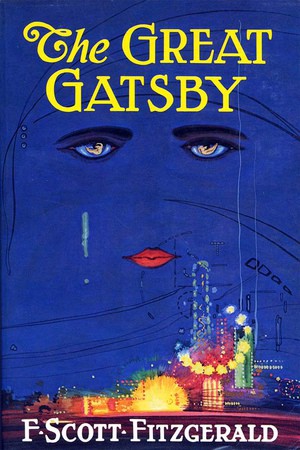
My father was not only younger than my mother, he was at least a full inch shorter—a small man, compactly built, and handsome. “Has anyone ever told you that you took like that writer fellow, that Scott Fitzgerald?” asked one of the local Hilton ladies, a small brunette, improbably named Popsie Hooker. “Why no, I don’t believe anyone ever has,” my father lied; he had been told at least a dozen times of that resemblance. “But of course I’m flattered to be compared to such a famous man. Rather a devil, though, I think I’ve heard,” he said, with a wink at Popsie Hooker.
“Popsie Hooker, how remarkably redundant,” hopelessly observed my academic mother, to my bored and restless father. They had chosen Hilton rather desperately, as a probably cheap place to live on my father’s dwindling Midwestern inheritance; he was never exactly cut out for work, and after divorcing my mother he resolved his problems, or some of them, in a succession of marriages to very rich women.
Popsie Hooker, who was later to play a curious, strong role in my life, at that time interested me not at all; if I had a view of her, it was closer to my mother’s than I would have admitted, and for not dissimilar reasons. She was ludicrous, so small and silly, and just a little cheap, with those girlish clothes, all ribbons and bows, and that tinny little laugh. And that accent: Popsie out-Southerned everyone around.
“It’s rather like a speech defect,” my mother observed, before she stopped mentioning Popsie altogether. Aside from her smallness and blue-eyed prettiness, Popsie’s local claim to fame was her lively correspondence with “famous people,” to whom she wrote what were presumably letters of adulation, the puzzle being that these people so often wrote back to her. Popsie was fond of showing off her collection. She had a charming note from Mr. Fitzgerald, and letters from Eleanor Roosevelt, Norma Shearer, Willa Cather, Clare Boothe Luce. No one, least of all my mother, could understand why such people would write to dopey Popsie, nor could I, until many years later, when she began to write to me.
However, I was too busy at that time to pay much attention to my parents or their friends, their many parties at which everyone drank too much; my own burgeoning new life was much more absorbing.
My walks at night with various boys up and down that stretch of highway sometimes came to include a chaste but passionate kiss; this would take place, if at all, on the small secluded dirt road that led down from the highway to our house.
One winter, our fourth year in Hilton, when I was fifteen, in January we had an exceptionally heavy fall of snow, deep and shadowed in the valley where our house was, ladening boughs of pine and fir and entirely covering the privet and quince and boxwood that edged the highway. For several days most of the highway itself lay under snow. Cars labored up and down the hill, singly, at long intervals, wearing unaccustomed chains.
Those nights of snow were marvelous: so cold, the black sky broken with stars as white as snow. My friends and I went sledding; that winter I was strongly taken with a dark boy who looked rather like Paul, now that I try to see him: a thin, bony face, a certain Paul-like intensity. On a dare we sledded down the highway, so perilously exciting! We lay on the sled, I stretched along his back.
We went hurtling down past the back road to my house, past everything. At last on a level area we stopped; on either side of us fields of white seemed to billow and spread off into the shadows, in the cold. Standing there we kissed— and then we began the long slow ascent of the highway, toward my house. He was pulling the sled, and we stopped several times to kiss, to press our upright bodies warmly together.
As we neared and then reached the back road to my house, we saw a car stopped, its headlights on. Guiltily we dropped hands. Dazzled by the light, only as we were almost upon it could I recognize our family car, the only wood-paneled Chrysler in town. In it was my father, kissing someone; their bodies were blotted into one silhouette.
If he saw and recognized us, there was no sign. He could easily not have seen us, or, knowing my father, who was nothing if not observant, I would guess it’s more likely he did see us but pretended to himself that he did not, as he pretended not to see that my mother was miserably unhappy, and that I was growing up given to emotional extremes, and to loneliness.
“Stricken” probably comes closest to how I felt: burning rage, a painful, seething shame—emotions that I took to be hatred. “I hate him” is what I thought. Oblivious of the tall boy at my side, I began to walk as fast as I could, clumping heavily through the snow; at the door of my house I muttered what must have been a puzzlingly abrupt good night. Without kissing.
By the time we left Hilton, the summer that I was sixteen, my parents were entirely fed up with Hilton, and with each other. My father thought he could get a job in the Pentagon, in Washington— he knew someone there; and my mother had decided on New York, on graduate school at Columbia; I would go to Barnard.
I was less upset about my parents’ separation than I was about leaving Hilton, which was by now to me a magic, enchanted place. In the spring and summer just preceding our departure there were amazing white bursts of dogwood, incredible wisteria and roses.
I wept for my friends, whom I would always love and miss, I thought.
I hated New York. The city seemed violent and confusing, ugly and dirty, loud. Voices in the streets or on subways and buses grated against my ears; everyone spoke so stridently, so harshly. Until I met Paul I was lonely and miserable, and frightened.
I would not have told him of my unease right away, even though Paul and I began as friends. But he must have sensed some rural longings just beneath my New York veneer. He would have; almost from the start Paul felt whatever I felt—he came to inhabit my skin.
In any case, our friendship and then our love affair had a series of outdoor settings. Paul, melancholy and romantic, and even then not well, especially liked the sea, and he liked to look out to islands—which led us, eventually, to Yugoslavia, our desolate summer there.
Not having had an actual lover before, only boys who kissed me, who did not talk much, I was unprepared for the richness of love with Paul—or, rather, I assumed that that was how love was between true intimates. Paul’s sensuality was acutely sensitive, and intense; with him I felt both beautiful and loved—indescribably so. You could say that Paul spoiled me for other men, and in a way that is true—he did. But on the other hand Paul knew that he was dying, gradually, and that knowledge must have made him profligate with love. We talked and talked, we read poetry; Paul read Wallace Stevens and Eliot aloud to me, and his own poems, which I thought remarkable. We made jokes, we laughed, we made love. Since Hilton was only twelve hours from New York by train, and we both liked travel, and trains, in a way it is odd that Paul and I did not go down to Hilton. I know he would have said yes had I suggested a trip. His curiosity about me was infinite; he would have wanted to see a place that I cared so much about. I suppose we would have stayed at the inn, as I was to do later on, when finally I did go back to Hilton. We could have taken a taxi out to what had been my house.
However, for whatever reasons, Paul and I did not go to Hilton. We went to upstate New York and to Connecticut, and out to Long Island.
And, eventually, to Yugoslavia.
Our unhappiness there in the ugly yellow hotel on the beautiful rockbound coast was due not only to Paul’s declining health and my unreal but urgent wish to marry. Other problems lay in the sad old truth, well known to most adults but not at that time to us, that conducting a love affair while living apart is quite unlike taking up residence together, even for a summer. In domestic ways we were both quite impossible then—and of course Paul did not get time to change.
I could not cook, and our arrangement with the hotel included the use of a communal kitchen, an allotted space in the refrigerator and time at the stove; my cooking was supposed to save us money, which my burned disasters failed to do. Neither could I sew or iron. I even somehow failed at washing socks. None of this bothered Paul at all; his expectations of me did not run along such lines, but mine, which must have been plucked from the general culture rather than from my own freethinking mother, were strong, and tormenting.
Paul had terrible troubles with the car, a Peugeot that we had picked up in Paris, on our way, and that had functioned perfectly well all across the Italian Alps, until we got to Trieste, where it began to make inexplicable noises, and sometimes not to start. Paul was utterly incapable of dealing with these crises; he would shout and rant, even clutch melodramatically at his thin black hair. I dimly sensed that he was reacting to the car’s infirmities instead of to his own, which of course I did not say; but I also felt that men were supposed to deal with cars, an insupportable view, I knew even then, and derived from my father, who possessed remarkable mechanical skills.
We were there in Yugoslavia for almost three months in all, from June to September. It was probably in August, near the end of our stay, that I had my dream of going back to Hilton, and walking down the highway to our house—in the heat, with the pain in my heart that must have been Paul’s pain. The dream that I did not tell Paul.
And in the fall I went back to America, to Washington, D.C., to study at Georgetown.
And Paul moved up to Trieste, where shortly after Christmas he went into a hospital and died.
Sheer disbelief was my strongest reaction to the news of Paul’s death, which came in the form of a garbled cablegram. I could not believe that such an acute and lively intelligence could simply be snuffed out. In a conventional way I wept and mourned his loss: I played music that he had liked—the Hummel trumpet concerto, of which he was especially fond—and I reread “Sunday Morning” and “Four Quartets.” But at the same time I never believed that he was entirely gone (I still do not).
Two years after Paul’s death, most unexpectedly my mother died, in a senseless automobile accident; she was driving to see friends in Connecticut and swerved on a wet highway to avoid an oncoming truck. I was more horrified, more devastated, really, than I could have believed possible. I went to an analyst. “I haven’t even written her for a month!” I cried out, during one dark fifty-minute hour. “How many letters does it take to keep a mother alive?” was the gentle and at least mildly helpful answer. Still, I wrestled with my guilt and with the sheer irresolution of our connection for many, many years.
In my late twenties I married one of my former professors: Lewis—a large, blond, emphatically healthy, outgoing man, as much unlike Paul as anyone I could have found; this occurred to me at the time as an ironic twist that only Paul himself could have appreciated. We lived in New York, where we both now taught. To sum up very complicated events in a short and simple way: my work prospered, while my marriage did not—and I present these as simultaneous conditions, not causally linked. A happier first marriage could have made for even better work on my part, I sometimes think.
To sum up very complicated events in a short and simple way: my work prospered, while my marriage did not—and I present these as simultaneous conditions, not causally linked.
During those years, I thought of my mother with increasing sympathy. This is another simplification, but that is what it came to. She did her best under very difficult, sometimes painful circumstances is one way of putting it.
And I thought of Paul. It was his good-friend aspect that I most missed, I found, in the loneliness of my marriage. I felt, too, always, the most vast regret for what seemed the waste of a life.
And Hilton was very much in my mind.
Sometimes I tried to imagine what my life would have been like if I had never left: I could have studied at the university there, and married one of those lean and sexy sweet-talking boys. And often that seemed a preferable way to have taken.
I divorced Lewis, and I had various “relationships.” I wrote and published articles, several books— and I began getting letters from Popsie Hooker. Long, quite enthralling letters. They were often about her childhood, which had been spent on a farm in Illinois— southern Illinois, to be sure, but, still, I thought how my mother would have laughed to hear that Popsie, the near- professional Southerner, was really from Illinois. Popsie wrote to me often, and I answered, being compulsive in that way, and also because I so much enjoyed hearing from her.
Some of her letters were very funny, as when she wrote about the new “rest home” in Hilton, in which certain former enemies were housed in adjacent rooms: “Mary Lou and Henrietta haven’t spoken for years and years, and there they are. Going over there to visit is like reading a novel, a real long one,” Popsie wrote, and she added, “They couldn’t get me into one of those places if they carried me there on a stretcher.” I gathered that Popsie was fairly rich; several husbands had come and gone, all leaving her well endowed.
We wrote back and forth, Popsie and I, she writing more often than I did, often telling me how much my letters meant to her. Her letters meant a great deal to me, too. I was especially moved when she talked about the seasons down there in Hilton—the weather and what was in bloom; I could remember all of it, so vividly. And I was grateful that she never mentioned my parents, and her own somewhat ambiguous connection with them.
During some of those years, I began an affair with Andreas, the doctor whom I eventually married: a turbulent, difficult, and sometimes rewarding marriage. Andreas is an exceptionally skilled doctor; he is also arrogant, quick-tempered, and inconsiderate, especially of other people’s time—like all doctors, I have sometimes thought. Our conflicts often have to do with schedules: his conference in Boston versus mine in Chicago; his need for a vacation in February versus mine for time to finish a book, just then. And more ordinary arguments: my dislike of being kept waiting, his wish that I do more cooking. Sometimes even now his hot, heavy body next to mine in bed seems alien, unknown, and I wonder what he is doing there, really. At other times, as I have said, I am deeply stirred by an accidental touching of our hands.
At some of our worst moments I think of leaving Andreas; this would be after an especially ugly quarrel, probably fueled by too much wine, or simply after several weeks of non-communication.
In one such fantasy I do go back to Hilton, and I take up the rest of my life there as a single woman. I no longer teach, I only do research in the library, which is excellent. And I write more books. I imagine that I see a lot of Popsie Hooker; I might even become the sort of “good daughter” to her that I was so far from being to my own mother. And sometimes in this fantasy I buy the house that we used to live in, the rambling house down the highway, in the valley. I have imagined it as neglected, needing paint, new gutters, perhaps even falling apart, everything around it overgrown and gone to seed.
Last June, when I had agreed to give a series of lectures at Georgetown, Andreas and I made reservations in a small hotel where we had stayed before, not far from the university. We both like Washington; we looked forward to revisiting favorite galleries and restaurants. It was one of the many times when we needed a vacation together, and so, as I might have known would happen, this became impossible: two sick patients got sicker, and although I argued, citing the brilliance and the exceptional competence of his partners (an argument that did not go over very well), Andreas said no, he had to stay in New York, with the kidneys of Mrs. Howell and old Mr. Rosenthal.
I went to Georgetown and to our hotel alone. I called several times, and Andreas and I “made up” what had been a too familiar argument.
In Georgetown, the second day, as I walked alone past those elegantly maintained houses, as I glanced into seductively cloistered, luxuriantly ferned and flowered gardens, some stray scent of privet or a glimpse of a yellow rosebush in full bloom—something reminded me strongly, compellingly of Hilton, and I thought, Well, why not? I could take the train and just stay for a couple of days. That much more time away from Andreas might be to the good, just now. I could stay at the Hilton Inn. I could visit Popsie. I could walk down the highway to our house.
And that is what I did, in more or less that order, except that I saved the visit to Popsie for the last, which turned out to be just as well. But right away I stopped at a travel agency on Wisconsin Avenue, and I bought a ticket to Raleigh, treating myself to a roomette for the five-hour trip; I felt that both ceremony and privacy were required.
I had thought that on the train I would be struck by the deep familiarity of the landscape; at last, that particular soil, that special growth. But actually it was novelty that held me to my window: the wide flat brown shining rivers that we crossed, with their tacky little marinas, small boats, small boys on the banks. Flooded swamps, overgrown with kudzu vines and honeysuckle. I had the curious illusion that one sometimes gets on trains, of traversing an exotic, hitherto untraveled land. I felt myself to be an explorer.
That night I had an unmemorable dinner alone at the inn— which, having been redone, was all unfamiliar to me. I went to bed early, slept well.
Sometime in the night, though, I did wake up with the strange and slightly scary thought that in a few years I would be as old as my mother was when she died, and I wondered what, if anything, that fact had to do with my coming back to Hilton, after all these years.
The next morning’s early air was light and delicate. Dew still shone on the heavy, dark-green shrubbery around the inn, on silver cobwebs, as I set out for my walk—at last! The sky was soft and pale, an eggshell blue. Walking along the still graveled sidewalk, beside the tarred road that led from the inn out to the highway, I recognized houses; I knew who used to live in almost all of them, and I said those names to myself as I walked along: Hudson, Phipps, Zimmerman, Rogerson, Pittman. I noticed that the old Pittman place was now a fraternity house, with an added sun porch and bright new paint, bright gold Greek letters over the door. In fact, the look of all those houses was one of improvement, upgrading, with their trim lawns, abundant boxwood, their lavish flower beds.
I reached the highway, still on the graveled walk, and I began the long descent toward my house. The air was still light, and barely warm, although the day to come would be hot. I thought of my dream in Yugoslavia, of this walk, and I smiled, inexplicably happy at just that moment—with no heat, no pain in my heart.
I recognized more houses, and said more names, and I observed that these houses, too, were in splendid shape, all bright and visibly cared for. There was much more green growth than I remembered, the trees were immense, and I thought, Well, of course; they’ve had time to grow.
No one seeing me as I walked there could know or guess that that was where I used to live, I thought. They would see— a tall thin woman, graying, in early middle age, in a striped gray cotton skirt, gray shirt. A woman looking intently at everything, and smiling to herself.
And then, there before me was our house. But not our house. It, too, had been repainted—all smartened up with bright white paint and long black louvred shutters, now closed against the coming heat and light. Four recent- model sports cars, all imported, were parked in the driveway, giving the place a recreational, non- familiar air. A group of students, I thought; perhaps some club? The surrounding trees were huge; what had been a small and murmurous pine grove at one side of the house now towered over it, thickly green and rustling slightly in a just-arisen morning breeze. No one came out while I stood there, for not very long, but I was sure that there was not a family inside but some cluster of transients—young people, probably, who liked each other and liked the house, but without any deep or permanent attachment.
I continued on my walk, a circle of back roads on which I was pleased to find that I still knew my way, which led at last back to the highway, and up the hill, to the inn.
I had called Popsie Hooker from Washington, and again from the inn, when I got there. She arose from her nap about four in the afternoon, she said, and if I could come out to her house along about then she would be thrilled, just simply thrilled.
By midafternoon it was too hot for another walk, and so I took a taxi out to Popsie’s house, in the direction opposite to mine. I arrived about four- thirty, which I assumed to be along about four in Southernese.
Popsie’s house, the fruit of one of her later marriages, was by far the most splendid I had yet seen in town: a Georgian house, of ancient soft red brick smartly trimmed in black, with frequent accents of highly polished brass. Magnificent lawns, magnolias, rhododendrons. By the time I got to the door I half expected to be greeted by an array of uniformed retainers—all black, of course.
But it was Popsie herself who opened the door to me—a Popsie barely recognizable, so shrunken and wizened had she become: a small woman withered down to dwarf size, in a black silk dress with grosgrain at her throat, a cameo brooch. She smelled violently of gardenia perfume and of something else that at first I could not place.
“Emma! Emma!” she breathed up into my face, the old blue eyes filming over, and she caught at both my arms and held them in her weak tight grasp. I recognized the second scent, which was sherry.
“You’re late,” she next accused me. “Here I’ve been expecting you this whole long afternoon.
I murmured apologies, and together we proceeded down the hallway and into a small parlor, Popsie still clutching my arm, her small fierce weight almost tugging me over sideways.
We sat down. The surfaces in that room were all so cluttered with silver and ivory pieces, inlay, old glass, that it could have been an antique shop, or the parlor of a medium. I told Popsie how happy I was to be there, how wonderful Hilton looked.
“Well, you know, it’s become a very fancy place to live. Very expensive. Lots of Yankees retiring down here, and fixing up the old houses.”
“Uh, where do the poor people live?”
She laughed, a tiny rasp. “Oh, there you go, talking liberal, and you just got here. Well, the poor folks, what’s left of them, have moved out to Robertsville.”
Robertsville was the adjacent town, once predominantly black, and so I next asked, “What about the Negroes?”
“Well, I guess they’ve just sort of drifted back into the countryside, where they came from. But did you notice all the fancy new stores on Main Street? All the restaurants, and the clothes?”
We talked for a while about the new splendors of Hilton, and the rudeness of the new Yankees, who did not even go to church— as I thought, This could not be the woman who has been writing to me. Although of course she was— the same Popsie, half tipsy in the afternoon; she probably spent her sober mornings writing letters. This woman was more like the Popsie of my early years in Hilton, that silly little person, my mother’s natural enemy.
Possibly to recall the Popsie of the wonderful letters, I asked about the local rest home. How were things out there?
“Well, I have to tell you. What gripes me the most about that place is that they don’t pay any taxes” was Popsie’s quick, unhelpful response. “Tax-free, and you would not believe the taxes I have to pay on this old place.”
“But this place is so beautiful.” I did not add, And you have so much money.
“Well, it is right pretty,” she acknowledged, dipping her head. “But why must I go on and on paying for it? It’s not fair.”
Our small chairs were close together in that crowded, stuffy room, so that when Popsie leaned closer yet to me, her bleary eyes peering up into mine, the sherry fumes that came my way were very strong indeed. And Popsie said, “You know, I’ve always thought you were so beautiful, even if no one else ever thought you were.” She peered again. “Where did you get that beauty, do you think? Your mother never was even one bit pretty.”
More stiffly than I had meant to, I spoke the truth. “Actually I look quite a lot like my mother,” I told her. And I am not beautiful.
Catching a little of my anger, which probably pleased her, Popsie raised her chin. “Well, one thing certain, you surely don’t favor your daddy.”
“No, I don’t. I don’t favor him at all.” My father had recently moved to La Jolla, California, with another heiress, this one younger than I am, which would have seemed cruel news to give to Popsie.
After a pause, during which I suppose we both could have been said to be marshaling our forces, Popsie and I continued our conversation, very politely, until I felt that I could decently leave.
I told her how much I liked her letters, and she said how she liked mine, and we both promised to write again, very soon— and I wondered if we would.
On the plane to New York, a smooth, clear, easy flight, I was aware of an unusual sense of well-being, which out of habit I questioned. I noted the sort of satisfaction that I might have been expected to feel on finishing a book, except that at the end of books I usually feel drained, exhausted. But now I simply felt well, at peace, and ready for whatever should come next.
I was aware of an unusual sense of well-being, which out of habit I questioned
Then Paul returned from nowhere to my mind, more strongly than for some time. In an affectionate way I remembered how impossible he was, in terms of daily life, and how much I had loved him—and how he had loved me.
Actually he and Andreas were even more unlike than he and Lewis were, I next thought, and a little wearily I noted my own tendency to extremes, and contrasts. Andreas likes to fix and mend things, including kidneys, of course. He is good with cars. “I come from strong Greek peasant stock” is a thing that he likes to say, and it is true; clearly he does, with his powerful black hair, his arrogant nose. His good strong heart.
We were planning a trip to Greece the following fall. Andreas had gone back as a boy to visit relatives, and later with both his first and second wives. And he and I had meant to go, and now we would.
We planned to fly to Rome, maybe spend a few days there; we both like Rome. But now another route suggested itself: we could fly to Vienna, where we have never been, and then take the train to Trieste, where we could pick up a car and drive down to Greece by way of Yugoslavia. We would drive past the ferry to the island of Rab, and past the road that led to our yellow hotel. I did not imagine driving down to see it; Andreas would be in a hurry, and my past does not interest him much. He would see no need to stop on such an errand.
Nor do I. And besides, that particular ugly, poorly built structure has probably been torn down. Still, I very much like the idea of just being in its vicinity.
In Wake, Siren: Ovid Resung, Nina MacLaughlin spins anew the tapestry of tales that makes up Ovid’s Metamorphoses. Her retelling gives voice to more than 30 Ovidian women silenced by metamorphosis—often in the aftermath of the epic’s many scenes of sexual violence and rape. In MacLaughlin’s hands, their stories reverberate across the millennia with messages that ring as true today as they did in Ovid’s Rome. These tales are at once strange and heartbreakingly familiar.
There is Daphne, who describes how she transformed into a laurel tree to escape being raped by the god Apollo. There is Procne, who tells us how her husband raped her young sister, then brutally cut out her tongue. There is Hecuba, whose grief and rage at the loss of her children in martial violence is total and self-annihilating. There are lovers and hunters and mothers and growers and artists and sisters and friends, and they demand to be heard.
The book compels us to face head-on how the violence of myth still runs rampant in our own world. And although transformation can be dehumanizing and silencing, it can also—if we listen to these women and others like them—be the force that delivers us from our brutal history.
Stephanie McCarter: At the start of your “Philomela and Procne,” Procne—who now in bird form leads tours of the scene of her sister’s rape—says:
Some of what you’ll hear will be challenging….Some people have complained…that I should have warned them, and that if they’d known how awful it was going to be, they never would’ve signed up.
Nina MacLaughlin: Certainly, when I was writing, that was not conscious. I was aware of the idea that a lot of this stuff is easier not to know. It’s awful and it’s hard and it’s ugly, and it’s gross, and it’s easier just to let it wash over us and ignore it. But I wasn’t thinking of it in the trigger warning sense.
But certainly, people have been talking about that since the book has come out. And as I’ve been doing readings, one I’ve been doing is Callisto, and there’s a violent rape in it. I’ve been giving a heads-up in advance that this is a violent one, playing into this idea of a trigger warning.
Procne’s is the toughest one. It’s right in the center of the book. It’s the longest story in the book. It’s the most gruesome and graphically violent. And like a lot of these stories, it’s just easier not to know. So it wasn’t just about a trigger warning or #MeToo. It isn’t just this moment. It’s the same story repeating itself for 2,000 years—the powerful men, the violence, all the stuff we’re seeing right now. There’s nothing new about this moment.
SM: You and I had a brief Twitter exchange, in which I mentioned I didn’t sleep for two days after reading your Procne and Philomela. I have to ask you about the refrain you introduce into the story. Procne urges us about twenty times to “imagine” or “please imagine” the horrors she’s describing. Why did you want to engage our mind’s eye so vividly in this of all stories?
NM: It’s the idea, again, that if you’re going to look, you have to look. It becomes inescapable. Please imagine this. Put this in your mind. I was doing it in a way that was as clear as I could possibly be. These are the simple facts of what happened. You see this damp rocky floor? Imagine this, imagine. If you want to know, you’ve got to see it. And you’re on this tour—you’ve asked to know. It was my way of laying out the brutality in the clearest and most forceful way I could think of.
SM: The epic’s sexual violence has so often been glossed over, and that “please imagine” does not let us get away with that. It reminds me of Arachne, who weaves the tapestry with gods raping women on it, and you have to look at it.
NM: I think that’s the thing—let us show you because it’s easy when you’re reading through the Metamorphoses for your eyes to glaze over. Oh, another nymph gets chased, she’s gonna get raped and then she’s turned into a rock or stream or whatever. The stories are similar over and over again. So stepping into it, being specific—what does this feel like?—you can’t glaze over it.
SM: I want to turn to the theme of power. The book has a kind-of thesis that characters restate in various ways. Daphne, for instance, says, “When men feel small they are dangerous.” And Procne: “A man whose fear has made him angry is one of the most dangerous kinds of men.” How did this idea develop?
NM: The poet Mary Ruefle in her lecture “On Secrets” says, “Anger is an emotion that is produced by fear. There are no exceptions.” I really believe this. Thinking about these men and what they might lose—whether it’s a reputation or the woman they desire—this fear gets translated into anger and into violence a lot of the time.
SM: Is that experience of fear and anger and violence unique to men or do your female characters also feel it?
NM: Totally not unique to men. It’s human, that fear—and that fear getting distorted and twisted up and sort of outleted in ways we have limited control over. A lot of the time when we are afraid, these defense mechanisms take over. And instead of accessing the fear, there’s protective rage, violence, running away.
With the women, there’s tons of fear—how could there not be? In a lot of these stories, these women were looking backwards, reflecting. In some of these experiences, the raw reaction is total fear because they’re in great physical danger. And then it’s digested and over time becomes anger. Whereas for men, the fear that they’re not going to get what they want in the moment gets translated to anger.
SM: Yes, Ovid even says that Tereus, before he cuts out Philomela’s tongue, is angry but also afraid. And I like how this explains Juno, for example, in terms that aren’t misogynistic—as though she’s just a jealous wife. It’s a larger human nexus of emotion and fear driving her that leads to violence.
NM: It was interesting writing Juno because she is responsible for a lot of acts of revenge and a lot of these transformations. And I was initially kind of thinking, “Man, what a jerk!” And it wasn’t until writing from her perspective that I got this real tenderness for her, this real sympathy, saying, “Yeah, that would be terrible. How do you outlet the anger?”
SM: I’m curious about the order of the tales. You say in the author’s note that you didn’t follow Ovid’s order because you had your own “conversation” you wanted to establish between the stories. What were you trying to achieve with this conversation?
It’s the same story repeating itself for 2,000 years—the powerful men, the violence.
NM: With the order, I was thinking about a lot of different things. I was thinking about length. There are some that are the way you and I would speak and there are some in more of a mythic register—kind of an epic, atemporal register. I wanted to keep those balanced.
There are a few that play off of each other, which was fun to tease out. Semele comes up in the Echo story that Juno tells, and then is in a much more experimental mode later on.
One of the most thrilling moments for me was realizing that the Myrrha character, who is the one who seduces her dad and is in psychoanalysis in the book, is the granddaughter of Pygmalion. There’s a tiny little reference in the Myrrha piece and if you miss it, it’s fine. But if you see it, little strings light up between the stories.
I’m not a musician, but I think about it as the way you would organize an album, balancing the really violent with less so, with tone, length, all of that.
SM: I was thinking about that when the Baucis followed Philomela and Procne. You had to have that or you couldn’t go on.
NM: Completely. The story of Baucis and Philemon makes me cry in the Metamorphoses. It makes me cry every time—I just think it’s so beautiful. That’s the tenderest, most loving piece that there is. You do need that after the Procne and Philomela story.
SM: In the Metamorphoses, women’s stories are usually told by other people. Your characters get to tell their own stories but there are some exceptions: Syrinx, Echo, Agave, the Ivory Girl. Why do other women tell some stories?
NM: Some of those are written from a “we” perspective. Those often felt the most powerful to write. It felt like there’s this kind of team and we’re telling the story and we’re all together. There was this feeling of power and allegiance. With Syrinx, for example, there’s a sadness that her voice gets taken away–she now has this kind of reed voice blowing through the wind. She doesn’t like that voice, so we’ll tell it for her.
A lot of these decisions weren’t exactly conscious. I was reading through the poem, and then I would just kind of listen, and different voices would present themselves to me. It definitely wasn’t a conscious “Okay, with Syrinx I’m going to have it be like a team of women, and they’re going to tell it this way.” It just kind of rose up in me.
SM: It really produces some beautiful effects. I’m thinking of the “Ivory Girl,” the statue woman made by Pygmalion who comes to life. That’s a “we” story. In the end, you write: “We teased her, but only because we wanted to make her know.” They were teasing her about her stretch marks—but it’s very friendly. I appreciated that because her whole manufacture is due to Pygmalion’s hatred of women, as you point out. Then, the last thing you see is her in this group of women—it’s wonderful.
NM: Exactly. There’s something loving and like, “We’re all around her.” She’s becoming realer and realer and we love her more and more.
SM: One of Ovid’s key themes is that power silences its victims. Your book builds on this theme—and corrects Ovid—in striking ways. For you, silencing is not a result of literal metamorphosis in the way it is for Ovid, but arises from our failure to listen to women’s voices correctly. When Jupiter ignores her refusal of him, Io says, “My words had no power.” The Sirens’ voices, on the other hand, are misconstrued:
The men in ships they heard us sing and they could not resist the sound. And so they called us dangerous. When it’s they who lack control.
This made me think more broadly about what it means to listen to women without mansplaining and the like.
When you hear something told a certain way from a certain perspective enough times, you start to believe it.
NM: It’s about the validity of a story and the validity of a perspective. When you hear something told a certain way from a certain perspective enough times, you start to believe it. Even if your experience is different, you think, “Oh, maybe”—I don’t want to be reductive but I think women do this more—“maybe I’m understanding this wrong. Maybe I’m taking this too seriously. Maybe it wasn’t as bad as I thought. Am I wrong here?”—that sort of second guessing. I think that’s what happens when your story is not heard. Giving validity to these voices feels in itself like a powerful act, to say these perspectives are as valid as the gods’, as anyone else’s, and need to be heard.
The words for what happened next are not ‘seized and rifled.’ Not ‘deflowered.’ And not ‘attained her love.’ The word is force…..Rape. Rape. Rape. Rape. Rape. Let’s say what it was.
These are all actual published translations—by men—for what Ovid clearly describes as rape (vitiasse). How were you thinking through this issue of “translation” more broadly?
NM: It was so interesting for me to think about. I was working with the Allen Mandelbaum translation, which does now and then use the word “rape.” For me, “attained her love” was always just like—are you joking?! Come on! Again, to go back to this idea—if you hear a thing a certain amount of times, you absorb it in a different way.
Emily Wilson was talking about translating the Sirens in the Odyssey and quoted this line, “their song poured forth like honey from their lips.” Over and over all the translations by all these men have “lips” “lips” “lips.” In fact, in the Greek, it’s “mouth,” a much less sexy word.
I really do believe that, even on a word level, it impacts how we experience these figures, how we experience these events, these violations, these transformations.
SM: And this makes such a big difference in Medusa’s story because after Neptune rapes her, Minerva punishes her. To understand the full cruelty of what happens to her, you have to understand that she was raped.
The epic gets a lot of attention for its sexual violence, but it’s not an epic about sexual violence—it’s about change. In the end, I think you’re optimistic about change. It’s not a despairing book. That’s not what I left with at all.
NM: I’m so glad to hear that. It’s dark and heavy material, but I feel like there’s also a lot of joy behind it. And there’s a sense that change is ongoing. Whatever you are in right now, that’s not how it’s always going to be—whether it’s horror or the best ever. You are always changing. And there’s something really beautiful and terrifying and thrilling to me about that.
Before you go: Electric Literature is campaigning to reach 1,000 members by 2020, and you can help us meet that goal. Having 1,000 members would allow Electric Literature to always pay writers on time (without worrying about overdrafting our bank accounts), improve benefits for staff members, pay off credit card debt, and stop relying on Amazon affiliate links. Members also get store discounts and year-round submissions. If we are going to survive long-term, we need to think long-term. Please support the future of Electric Literature by joining as a member today!
Many critics love reading mean book reviews, even if they don’t like to write them. This was a finding from my book Inside the Critics’ Circle wherein I interviewed critics about what it was like to write reviews in the current state of book culture.
While critics admit reading really negative reviews can be entertaining, some worry about the human being at the other end of the review. But this doesn’t mean there isn’t a way to be critical without being cruel.
Let’s turn the tables and review some book reviewers according to the abSURD scale, which refers to Author of Book’s Subjective Units of Review Distress. This for-entertainment-purposes-only metric expresses how upset an author can expect to be based on how professionally the criticism is offered based on what reviewers told me. The scale runs from 1 (it sucks to get a critical review, but the review has professional merit) to 10 (ugh, here’s your axe back).
“[P]edophilia, necrophilia, child abduction, child murder, mass murder… And for what? This is a dull, needy book.” Ouch. Seghal also suggests the viral success of Kristen Roupenian’s “Cat Person” approximates a one-hit-wonder.
The review bites, but it’s fair and well-reasoned, as it focuses on the content and writing style—even if it’s unflattering. Someone in Roupenian’s shoes would likely find this review upsetting, but my interviews with book critics tell me it’s fair game.
#TBT to a 1925 review of The Great Gatsby. Mencken calls the story “obviously unimportant,” the characters “mere marionettes—often astonishingly lifelike, but nevertheless not quite alive.” Critics I interviewed stressed that language, deep underlying themes, and characters that come alive are key elements of a good read. That Mencken finds The Great Gatsby, the classic hailed in its time, is perhaps surprising but fair.
Yet Mencken devotes a good amount of space lamenting the tendency of a type of early-success-writer who is “too proud to learn new tricks.” Fitzgerald is absolved of this sin, Mencken describes his earlier writing “extraordinarily slipshod—at times almost illiterate” but observes improvement in Gatsby. Still, the extended reflection on early-success might raise some eyebrows by today’s standards.
Critics buzzed about City on Fire—it was Hallberg’s debut novel, and, per Newman’s opening line, earned a “whopping $2 [million]” advance. The critics I interviewed generally felt that things like the size of an advance, whether a book was optioned for film or TV, etc. have no place in a book review. It sets up an external standard: the book was okay, but was it worth $2 million?
Newman calls the book bloated, arguing that it could have been cut by 200 pages. She describes passages as slow, “stonily inert,” and full of “soul-searching” that interrupts action. It’s clear that Newman is skilled at identifying the book’s problems with plot and character, and those are fair critiques. However, her focus is problematic: “The book is certainly impressive … but I can’t explain the adulation that has been accorded this one.” It’s good, but not $2 million good.
Steven Pinker scrutinizes Malcolm Gladwell’s star power: “Gladwell has become a brand. He is the author of the mega-best sellers.” But it’s not enough to convince him that Gladwell is more than “a minor genius who unwittingly demonstrates the hazards of statistical reasoning and who occasionally blunders into spectacular failures.”
This feels like an anti-Gladwell essay—it’s a bit personal, with Pinker challenging Gladwell’s intellect and integrity. There’s an informal norm among critics: it’s okay to punch up, but not down. To write a takedown of someone lower on the status ladder is frowned upon. But Pinker, himself a famous psychologist and writer, “punches across.” That keeps it solidly in the middle of this abSURD list.
“Donna Tartt isn’t one to ditch a winning formula.” Tartt’s candidacy for punching up is immediately established with her “phenomenally successful” debut novel identified in the first line. A few reasoned digs about Tartt’s originality, plotting, and writing style and unavoidable puns are offered: “No amount of straining for high-flown uplift can disguise the fact that The Goldfinch is a turkey.” But then Kemp goes on to make a dig at “awed Tartt admirers and devotees of websites such as the Donna Tartt Shrine.” Why drag her followers, if not to critique her large, devoted following? The swipe at Tartt fans is unnecessary. Kemp is not just reviewing the book, but Tartt’s celebrity writer status. That makes it very abSURD.
Hill comes out swinging, half-joking that Simon May’s “baffling” book must be “a sneaking yet sparkling satire on what a university education will get you (£50,000 of debt and the authority to pronounce a penguin cuter than a mermaid).”
Hill is clearly unconvinced by the book, if not annoyed by the “unpindownability” of its topic (what exactly is “cute”?). And no one is owed a good review. However, what makes this review unique in the group is how much Hill inserts herself into the review: “The self-deprecator in me wants to tell you I’m too stupid to understand a word of [the book]”; one chapter “may be a compelling idea to flaunt at dinner parties (I wouldn’t know – no one ever invites me).” Yet, it’s unclear how much of the review is a representation of the book’s content rather than a reflection of Hill’s energetic annoyance with the book. The former crucial for helping the average reader determine whether or not they might like to look up a book for themselves.
Because of the intrusiveness of the reviewer and the lack of providing a book’s gestalt, this breaks the rules governing good, if savage, reviews.
Michiko Kakutani famously criticized Jonathan Franzen in this review, and in many ways, it follows all the rules we’ve outlined thus far. First, it’s a very critical review of a very famous, bestselling author—and, it’s okay to punch up or across. Second, it’s a review by a famous (read: notoriously tough) critic, so she’s a professional and her critiques land. But, while people remember it as a character assassination, it also has merit. Hear me out!
The oft-quoted line, “Mr. Franzen turns his unforgiving eye on himself and succeeds in giving us an odious self-portrait of the artist as a young jackass: petulant, pompous, obsessive, selfish and overwhelmingly self-absorbed,” undoubtedly hurts. But is Kakutani out for Franzen the author, or Franzen the subject? It’s unclear, and this ambiguity makes the review seem particularly cutting.
But look at the rules again: she’s not attacking him, but his work. She paints Franzen as self-absorbed, but the implication isn’t that he’s a bad person; he’s a bad writer whose memoir makes for a disappointing read. The narrative is narrow, and the characters are flat. This is a critical error in any piece of writing. At the same time, she tips her hat to sections in the book that are incisive. Overall, while pointing out its failings, Kakutani also provides a good gestalt of the book’s content so that the average reader can make an informed decision on whether or not to read it.
So, it’s not really character assassination if Kakutani is quoting Franzen’s own words. But, because it’s not always clear if she’s attacking the real Jonathan Franzen, or his literary counterpart, this review toes the line. Depending on your perspective, it’s either a professional critique, or a savage personal attack. Either way, it was a selling review.
Before you go: Electric Literature is campaigning to reach 1,000 members by 2020, and you can help us meet that goal. Having 1,000 members would allow Electric Literature to always pay writers on time (without worrying about overdrafting our bank accounts), improve benefits for staff members, pay off credit card debt, and stop relying on Amazon affiliate links. Members also get store discounts and year-round submissions. If we are going to survive long-term, we need to think long-term. Please support the future of Electric Literature by joining as a member today!
The Blunt Instrument is an advice column for writers, written by Elisa Gabbert (specializing in nonfiction), John Cotter (specializing in fiction), and Ruoxi Chen (specializing in publishing). If you need tough advice for a writing problem, send your question to blunt@electricliterature.com.
Dear Blunt Instrument,
Why is sentimentality in writing frowned upon? What makes it work?
– Todd Dillard
Dear Todd,
Since I think of you as a friend of the Blunt Instrument, I hope you won’t mind if I expose you a bit. I had a feeling we had talked about sentimentality before, so I searched Twitter, and found this exchange from a couple years ago:
From your comment, I’m guessing you might think “Don’t be sentimental” is cliché advice that deserves to be dismantled. Bad news, Todd! I happen to think it’s good advice, so instead of deconstructing it, I’m going to tell you why sentimentality should be frowned upon.
But first, let’s clear up what we mean by “sentimental.” It’s very tiresome to witness people in a philosophical or aesthetic argument over whether X is good or bad or exists or doesn’t exist when they haven’t first agreed on what X even is, and it’s clear they’re defining it differently. So let’s define the term, because I think this is where some confusion arises. The primary definition of “sentimental” in most dictionaries is not inherently pejorative (that is to say, negative). Merriam-Webster has it as “marked or governed by feeling, sensibility, or emotional idealism; resulting from feeling rather than reason or thought.” And Google’s dictionary, however that works, defines it thus: “of or prompted by feelings of tenderness, sadness, or nostalgia.” This is the usage implied in a phrase like “a sentimental melody,” or “feeling sentimental over you” (though “feeling sentimental” is nearly redundant).
It’s not sentiment or emotion itself that’s bad, it’s misused or overused emotion.
So, writing governed by feeling, especially poignant feelings—that doesn’t seem so bad, right? Right! Because that’s not the definition people are using when they describe writing as sentimental! What they’re using is the second definition of the word, which applies in different contexts. Per Merriam-Webster: “having an excess of sentiment or sensibility.” And, per Google, perhaps more helpfully: “(of a work of literature, music, or art) dealing with feelings of tenderness, sadness, or nostalgia, typically in an exaggerated and self-indulgent way” (italics mine). Safe to say that if someone is dishing out “Don’t be sentimental” as writing advice, or using “sentimental” to describe a piece of writing in a derogatory way, the connotations of excessive, exaggerated, and self-indulgent are baked in. It’s not sentiment or emotion itself that’s bad, it’s misused or overused emotion, and this is what writers, maybe especially poets, need to watch out for: unearned sentiment that feels mawkish, cloying, or cheap. In other words, laying it on too thick, or using emotional tropes to trick the reader into thinking they’re feeling something, when actually they’re just recognizing the outlines of a familiar emotion.
Of course, writers and critics may disagree over what counts as excessive or self-indulgent, just as we may disagree over what’s good or terrible. But this is my column (partial ownership anyway), so I’ll try to illustrate the point with some examples of what I would judge to be good sentiment and over-the-top sentiment. Let’s start with the bad, and I’m going to use an example by a man, because some people will want to say that sentimental writing is only frowned upon because it’s associated with women. (I would contest that assumption; I don’t believe well-read people think of sentimentality as gendered.) Billy Collins has been called “the most popular poet in America”—surely he’s not anymore, but still, he can withstand being used as an example here. He is also textbook secondary-definition-sentimental. Take the poem “Aimless Love,” which begins:
This morning as I walked along the lake shore, I fell in love with a wren and later in the day with a mouse the cat had dropped under the dining room table.
In the shadows of an autumn evening, I fell for a seamstress still at her machine in the tailor’s window, and later for a bowl of broth, steam rising like smoke from a naval battle.
This is the best kind of love, I thought, without recompense, without gifts, or unkind words, without suspicion, or silence on the telephone.
Look, I get that this can be read as a humorous, tongue-in-cheek poem—he’s not really falling in love with a dead mouse or, by the end of the poem, a bar of soap. But, on the other hand, it’s not actually funny, or at least I wouldn’t trust anyone who laughed at it. And I’d argue that by the end of the poem he’s really trying to make you feel something, something serious. He’s leading you there all the while, cat-and-mouse style. At first the idea of love in the poem seems ironic (wren, dead rodent); but by the second stanza the object of affection is much more plausible (pretty girl in a window), so already we’re forced to question if the speaker is partly serious—what they used to call “kidding on the square.” Joking, but not really. Because the serious theme of the poem is not bestiality or necrophilia (one hopes, one hopes!); the serious theme is the difficulty of real love. (Real love, which involves compromise—conflict—silence!) This is what makes the poem unforgivably sentimental, in my view—the way Collins uses cutesy, Disney-esque images (a mouse in a brown suit!), faux-disarming constructions (“I found myself standing”), smarmy emotion-triggering words like “heart” and “home”—to manipulate you into feeling something serious about a serious theme. But the occasion is ridiculous! It’s a bar of lavender soap! (I hate especially that it ends on the word stone, the poemiest word of all time. Has a poet never simply kicked a rock?)
You can’t define an adjective like ‘hokey’ or ‘corny’ by any clear objective standard.
Exaggeration that is actually funny, of course, is good. Also, I like to feel things! You can’t define an adjective like “hokey” or “corny” (both of which, by the way, mean “mawkishly sentimental”) by any clear objective standard, but some number of people are going to read it and make the puke face. If this is something you care about, whether people like me are going to make the puke face when we read your poem, all you can do is read a lot and figure out where you judge the boundaries to be—reading a lot is key, because that’s the only way you’re going to recognize clichés.
Let’s end with a short poem I find to be successfully emotional, not cheap or manipulative, but rather genuinely and mysteriously sad, though in some ways it’s exaggerated and ridiculous. It’s one of my favorite poems, also by a man (a very probably racist man, but those sensibilities at least do not show in this poem). It’s “Depression Before Spring,” by Wallace Stevens:
The cock crows But no queen rises.
The hair of my blonde Is dazzling,
As the spittle of cows Threading the wind.
Ho! Ho!
But ki-ki-ri-ki Brings no rou-cou, No rou-cou-cou.
But no queen comes In slipper green.
This is a poem I can read again and again and never paraphrase, because I never really understand. Sentimentality is feeling that’s too sure of being understood.
Before you go: Electric Literature is campaigning to reach 1,000 members by 2020, and you can help us meet that goal. Having 1,000 members would allow Electric Literature to always pay writers on time (without worrying about overdrafting our bank accounts), improve benefits for staff members, pay off credit card debt, and stop relying on Amazon affiliate links. Members also get store discounts and year-round submissions. If we are going to survive long-term, we need to think long-term. Please support the future of Electric Literature by joining as a member today!
A man in an empty parking lot took pictures of our train as it passed. He made use of a tripod. Its shadow and his were a vanishing math on the pavement below. For a second I might have known anything at all about what it was like to live in his life. Then it was not that way. I saw vertical brick. I saw letters of words.
2. HIDE
The man in off-white, painted in oil, hung in a room in that library. His name was engraved in a plate on the frame, along with his period of life. Certain kids felt that reading the plate would give them the power to study the man and laugh at his candid gravity. These kids were lost. We knew to avoid the man, and his room, and that building entirely.
3. APPOINTMENT
I met with the meaning consultant for twenty minutes, which I could afford. I said she should probably charge more for her service, so people would enter less doubtful. “What’s the problem with doubt?” she asked. “Really?” I said. She studied me for a time. “Let me ask you this,” she said. But asked nothing. It began to get harder for me to act like the earth was not flying around, and with it our chairs, the floral arrangement, the paintings, the Tiffany lamp.
4. TENDER
The ghost of Hollywood Boulevard forgets who she’s supposed to be. She elongates, spins. Maybe she was an athlete in life, a dancer, canting her way through the crowds without touching, like she was a child, like it was a game she could play in her mind. Maybe she hustled tourist groups, like this kid in the sagging Spider-Man clothes, crouching to smooth the cloth of the pocketed dollars he has acquired.
5. HARD
Bikers in leather appeared and filled the street with roar and glare. I asked my elderly mother if she wanted to wait it out. “All I do is wait,” she replied. I narrowed my eyes at this information. I wheeled her back into the day. “Afternoon, ma’am,” one biker said. They parted for her, Bible-style. “I paint horses on cigarette boxes,” another explained, handing her one. My elderly mother leaned toward the man, who bent so he could hear. She vouched for the toasted tuna melt at the café we had just been to.
6. WARN
You can’t tell people what they don’t want to hear. Try and they’ll make it all about you. They’ll say (without saying, because silence is power), Why do you care so much, anyway? What do you need me to think about you? I don’t care, I’ll say then. I’m not even here. Look through me. Look through everything. S.I.P., you know what I mean? No? That’s shop in peace.
7. INTERLUDE
Many years ago, I got lost in north Lake Tahoe. In the pines. Which pointed every way at once, without investment. This way. This. A particle light in the reach of the needles. This way here. Like it was some game. But I could not play, knowing neither the object nor the rules.
8. CRAMP
You don’t need to be that good at math to see how storing all of the off-shoot realities would become a problem. There was not enough space. Even though there was much more space than anyone could comprehend. It affected the program. Our ignorance was compromised. We had visions: something like a hand, and something like a kill switch.
9. SPEAK
I took a seat next to a talkative man, a tenor who put out architectures of grammar like it was his job. I wanted to pay him. The sound of his voice in my head was this endless fucked-up audio book I could populate with my own dreams, of—I don’t know, phantoms, and airborne contortionists, monkeys hanging out on clouds, throwing down pennies and seeds.
At the end of 2019, I’ve been thinking a lot about gratitude. I am grateful for the things that sustained me. This year especially, I held poetry close to my chest, needing the warmth and understanding that comes from a poet’s clarity and wisdom. Poetry, more than any other artistic medium, helps me feel connected with others. The more I read, the more I realize we’re all asking the same questions, we all wanting the same recognition from each other.
So, dear poets: we are grateful for you. Thank you for your work, your vulnerability with audiences. Thank you for the many hours you spend submitting poems to journals, traveling the country, connecting with editors, and hustling to get your words to us. We appreciate your thoughtfulness, all of the new ways you’ve found to express your anger, your joy, your loneliness, your desire. Thank you, in particular, for these 14 books.
What does it mean to be human, to be real, especially in a world with increasing dependency on artificial intelligence and web presence? How do we still reach out to each other? Through our relationship to technology — using the Turing Test as a touchstone, but also drawing from programming languages, television, and the internet — Choi examines the nature of consciousness and human connection. These are poems about the selfhood we seek, the desire to be wanted, seen, acknowledged as real, and all of the mistakes made along that path to recognition. Soft Science is an earnest collection, written with dazzling expertise.
Camonghne Felix has written a collection of poems that seep into your consciousness and continue to unfold long after you’ve turned the page. These are stories about where we come from and how that shapes us, about the brightness and darkness of family, about womanhood and Black womanhood and death and survival. These are emotionally dynamic poems by a woman who has continued to live a full life and succeed despite all of the things that might have held her back. I think it’s probably cliché to call poems about trauma and hardship “brave” but I do think Felix is brave, and her careful approach to poetry is a feat to be admired.
This is a collection of very specific memories and moments: a familiar sound playing out of an open car window as it rolls down the street, the smell of something cooking, the laugh of a friend. Among these things there are ghosts, sirens, dark clouds rolling in. Abdurraqib plays with nostalgia and history, both personal and cultural, and through that find commonality. He asserts: “& lord knows I have been called by what I look like/more than what I actually am” — and proceeds to share the blossoming garden of what he actually is. I get Fall Out Boy stuck in my head every time I see this book on my shelf, which is one of my life’s little joys.
Sometimes I wonder if we deserve Shira Erlichman and her beautiful mind. If there’s one thing this collection shows us, it is that there is joy and grace in this life, even alongside pain.Erlichman writes each moment with such skill and precision every poem is full of resilience and thoughtfulness. Ode to Lithium is exactly what it says on the tin: an exploration of the ups and downs of mental illness, and all of the struggles that come along with taking care of oneself. The voice in these poems deals with shitty doctors, family, friends and lovers, Bjork, cockroaches, and so much more. But more than anything, this collection is about living, finding ways to live and doing it on purpose.
Rivera starts their collection with a proclamation: the number 4,645 bold across the page. This is the number of people dead as a result of Hurricane Maria due to the storm and governmental negligence afterward. This is an angry, grief-stricken, confrontational book that uses space to it’s advantage: at the top, English; below, Spanish as a footnote, echoing the voices of those who are an afterthought, if they are thought of at all. Rivera confronts readers with ugly truths. As a non-Spanish reader, I am confronted with my privilege. As a person with Puerto Rican ancestry, I am confronted with the distance between myself and my homeland. This is not so much a book but a slap across the face, a tear, a hug.
Eve L. Ewing’s second book is a preservation project. Ewing writes of Chicago in 1919, a time of Black migration to the north in search of work, and a race riot that shook the Black community to its core. The poems draw on history and Black cultural traditions to give voice to Chicagoans who became involved in and affected by the riot, who were buried by history and white supremacy. Exploring issues of race, class, and privilege, Ewing contrasts of graceful words and horrific realities to make 1919 a collection that soars.
It is an incredible gift for a writer to be able to place their reader so vividly in a location, amongst a people, within nuanced emotions. Sarah Borjas accomplishes all three in this collection with poems that echo into a long stretch of desert night. Balancing the deep love a person can have for their hometown with the wisdom from having moved on, Borjas illuminates Chicanx culture and family, heartbreak and loneliness, trauma and struggle. These poems ask, how do we fill the holes that have been left in us, the holes that have been punched through? How do we continue to bloom?
Reading this collection felt much like reading Oceanic by Aimee Nezhukumatathil. It’s about the Earth, yes, but more particularly about those who inhabit it and the space they take up, simultaneously encompassing a grand, aerial view of life and a simple, close, tender one at that. In a collection full of distinctive characters, the landscape is a character in itself, rendering a sweet slice of rural, rustic queer life. Bendorf’s collection is a testament to wild queerness, a collection that howls at the moon, demanding to be seen.
Lewis depicts a world of gentle, quiet observations and wonderment. Reading Space Struck made me want to see the world through the narrator’s eyes, to watch birds gather on a tree outside a kitchen window and think of joy, family, comfort. In these poems a person tries to find their place in nature, in the universe, by asking what is fair and what is good. Lewis’s poems balance the anxiety of being human with the excitement of knowing there could be more to life than what we know.
Coal. Beer. Boys. Gasoline. Smoke. Desire. Shattered glass. Discarded jeans. The world of Jake Skeet’s poems is both haunting and sweet, full of dirt and kisses so vivid you can taste them against your mouth. It’s a world that will hurt you, break your heart, but also reach for your hand and ask to be held. This collection examines all the shades of masculinity and manhood through the lens of someone young, queer, and Native. These poems hold pain and tenderness together in one hand to observe all the ways they interact. Thorn. Mouth.
In Liew’s first full-length collection, politics and pleasure are at play. These poems examine the intersection of race and sexuality, the roots of trauma and desire, and what it means to inhabit a politicized body. Liew’s sequential poems are ripe with bruises, both accidental and intentional. What stands out in these poems is the juxtaposition of fierceness and softness—the language is both vulnerable and assertive, which feels like an undeniably feminine experience. What does it mean to be a woman who wants? What does it mean to want, to be wanted? What does it taste like?
In one fell swoop, Malcolm Tariq has joined the ranks of Danez Smith and Jericho Brown with this essential collection of poems on the queer Black experience. Heed the Hollow is about what it means to be a man, how to deal with wanting what you’re told you shouldn’t want, how to love your religion and family and home while reconciling with history and culture. These poems interrogate racism in the South, the politics of sex and pleasure, the politics forced on Black bodies, while also balancing care, reverence, and self-love. Tariq’s empathic voice truly owns its space in the world.
It may be strange to call a collection about gender violence and emotional labor beautiful, but it is, in the same way that women’s capability of finding something to hold on to even when everything seems built to destroy them is beautiful. Scenters-Zapico’s poems are both sour and savory, sweet and sticky. Exploring the nature of machismo in Latinx culture, relationships and sexuality, femininity and domesticity, Scenters-Zapico has crafted a book that speaks to anyone who has jumped through hoops to please someone else. But there is an assertion of selfhood here too, and above all else, the truth of a survivor.
Alison C. Rollins does Simone Biles-level gymnastics with language, effortlessly backflipping and twisting over inquisitive and introspective lines on love and loss, on Blackness and womanhood, on tragedy and discovery. With a delicate mix of history, surrealism, and library reference numbers, the poems in this collection are in command of their subject matter, coming at us so fiercely and swiftly. We don’t know what hit us until the damage is already done. “Dear Dewey Decimal System, / How will I organize all the bodies? / The professor said that in judging / women’s bodies by their covers / we have a system for returning / things back to where they belong.” Library of Small Catastrophes secures Rollins’ place alongside a long lineage of poets at the top of their game.
Before you go: Electric Literature is campaigning to reach 1,000 members by 2020, and you can help us meet that goal. Having 1,000 members would allow Electric Literature to always pay writers on time (without worrying about overdrafting our bank accounts), improve benefits for staff members, pay off credit card debt, and stop relying on Amazon affiliate links. Members also get store discounts and year-round submissions. If we are going to survive long-term, we need to think long-term. Please support the future of Electric Literature by joining as a member today!
DON’T MISS OUT
Sign up for our newsletter to get submission announcements and stay on top of our best work.
YOUR INBOX IS LIT
Enjoy strange, diverting work from The Commuter on Mondays, absorbing fiction from Recommended Reading on Wednesdays, and a roundup of our best work of the week on Fridays. Personalize your subscription preferences here.