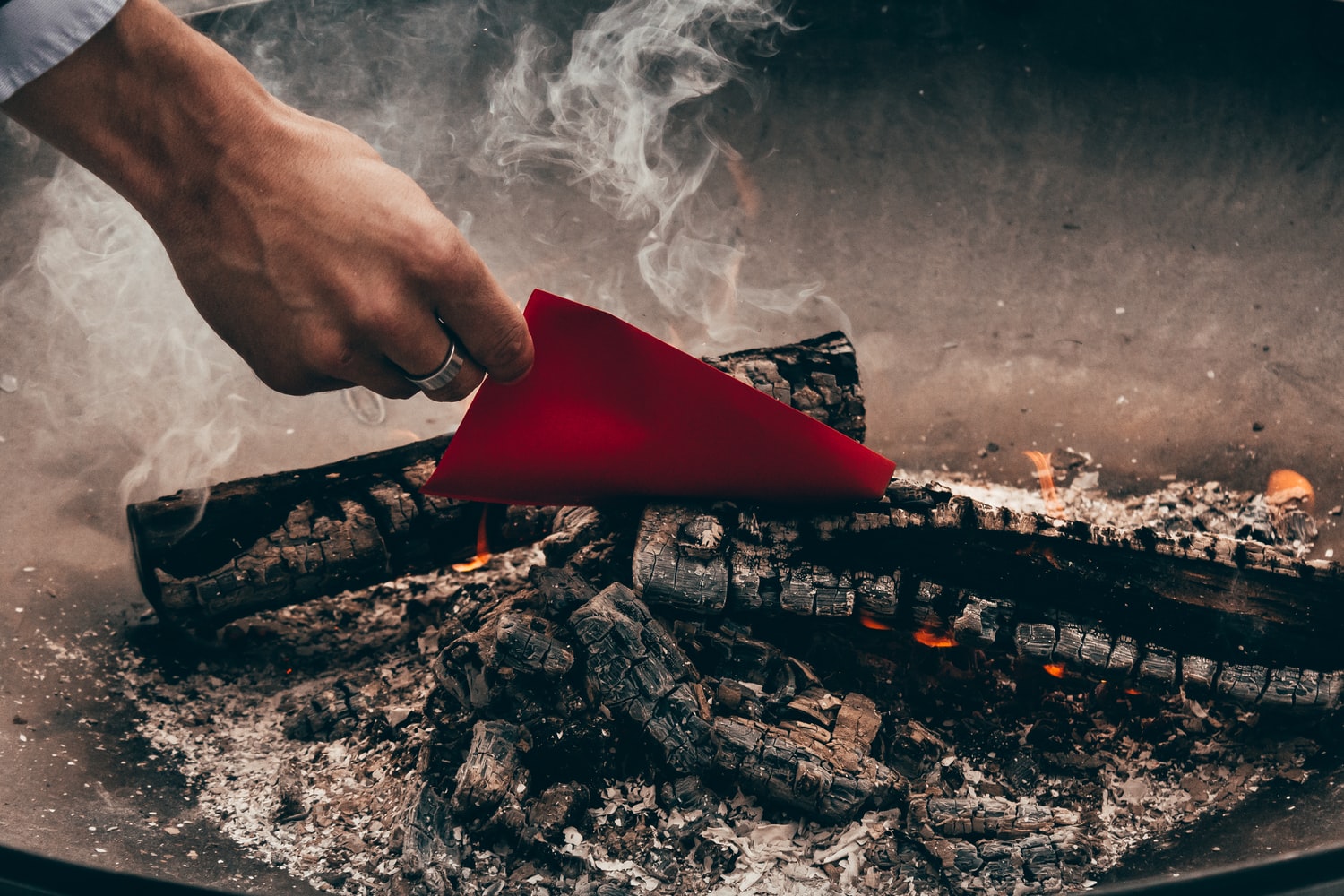
There’s Nothing Scarier Than a Hungry Woman

Rosemary Woodhouse has unwrapped a piece of steak from its waxy brown paper. She cuts it in half and drops it into a hot pan. It sizzles. She flips it. She takes it out after a few seconds and places it on a floral plate. Slicing a corner, she eats quickly, happily. 

When I first watched this scene in Rosemary’s Baby (1968) I had been a vegetarian for two years, but was oddly compelled by it: the yellow kitchen, the rose-red of the meat, the graceful ease with which Mia Farrow plunges into the steak’s fleshy center with a fork. I woke up craving steak the next day: blood pooling against the lip of a plate, the tangy taste of metal against my teeth. I was ravenous and repulsed by my own appetite. 

But maybe what I was feeling was not so much the desire to eat steak, but the desire to be allowed to desire. The desire being met, being recognized, something clearly being given in to. An appetite satiated, without complication.


Horror is a genre of excess, of abundance—and food is the perfect metaphor in its narratives because it holds so many meanings at once. Food, from the grotesque to the delicious, populates the screen: the raw steak crawling across the kitchen counter in Poltergeist (1982); a distracted Drew Barrymore burning her popcorn in the opening scene of Scream (1999); the chocolate bars Charlie routinely snaps with her teeth in Hereditary (2018). Hunger is everywhere in horror: from werewolves to zombies to cannibals, the protagonists we find on screen are either devouring or being devoured. But what I’m interested in is not the readings of food as metaphors for capitalist consumption, the disintegration of the American family unit, or sexual taboos—but simply in the act of eating itself. 

There is something uncomfortable and enthralling about watching a woman devour what she likes with intent.

When I first began watching horror, I was drawn in by the display of appetite—specifically female appetite—in all its forms: not only the way Rosemary slices into her steak, but also the way Ginger Fitzgerald begins eating human flesh in Ginger Snaps (2000), her eyes a disturbing jolt of light; the way Justine tears into uncooked chicken with her teeth in Raw (2016); the way Rose and Iris Parker steadily eat their father’s body at the dining table in We Are What We Are (2013), the remake of the 2010 Mexican film Somos lo que hay.

Food-based metaphor in horror is so often visceral and tacky and overwrought, so why does our delight still stand? As a woman, to say that you have found eating uncomfortable at times is not particularly groundbreaking. The anxiety has become mundane because it is so common for women, but isn’t that in itself noteworthy? Horror invites us to sit with this disgust, this anxiety, to acknowledge our appetite, to refuse to let us suppress it. There is something uncomfortable and enthralling about watching a woman devour what she likes with intent. It was the kind of eating I longed for. I looked on with jealousy, with desire, with newly-found resolve. 


Food is everywhere in Darren Aronofsky’s 2017 film mother!—the kitchen table is covered at different points throughout the film with grapes, cheese, cake, lemonade, tea—and yet the focus is not on Mother’s consumption but the suppression of her appetite. The film follows a couple, played by Jennifer Lawrence and Javier Bardem as two guests arrive unannounced at their house in the country, and Mother finds herself catering to their demands: cooking for them, cleaning up after them, unfailingly accommodating and generous. Mother makes her discomfort at their presence in the house clear, but her husband encourages them to stay. 

On the guests’ first morning in the house, Mother lays the table with food. We watch her guests and her husband pluck grapes, sip tea. She blinks at him in shock when he invites their guests to stay as long as they like. Discomfort spreads across her face. When they leave the room, without thanking her for breakfast, she asks him: why would you do that without asking me? He replies, Do what? She says, Invite them to stay. He seems unfazed. I didn’t think it was a big deal. After he walks away, she is left alone in the kitchen with the dirty plates, cups, cutlery, leftover breakfast—one of many instances in which she finds herself clearing up after other people. Toward the film’s mid-point, her guests are clustered around the table at a wake, eating and drinking, dressed in black. Somebody knocks over a glass of red wine. I got it, Mother says, frantically mopping the table with dishcloths. 

The final instance of food is the elaborate feast she cooks to celebrate her husband’s book publication. She draws a cake from the oven, pokes a cocktail stick into its spongy centre. The table is covered with food she has prepared: cheese boards, fruit, pastries. She has carefully laid the dining table with candles and crockery. When her husband’s guests crowd the porch, she is visibly crushed. He is more compelled by them than he is by her—and no amount of work, of food, of devotion can convince him to respect her. Keep everything warm, he tells her, I’ll be right in. Her effort is for nothing. She waits for him inside the house and does not touch the food. Later, she watches in horror as one of the guests cuts into the cake with a spoon. We overhear one man direct the others: take the fruit and the cheese and the pickles. Her hard is work undone, unraveled, consumed by others while she eats nothing. Throughout the film she has suppressed her own desires—for love, respect, privacy—and it is still not enough. 

On first viewing, I didn’t notice that Mother barely eats, while her husband and guests devour the food she has prepared. Unsurprisingly, my attention was captured by the violent brutality instead. But, on second viewing, I was struck by the abundance of food—and her lack of consumption. It’s clear why critics focused on the film’s other themes—its violence and misogyny garnered most of the attention, and rightly so—but reviews seemed to have missed the central role of food in the film. The feast Mother prepares for her husband is so full—the table overflowing with cheese, cakes, pastries—and yet she doesn’t have a chance to enjoy it. Her appetite goes unsatiated, and it slips under the film’s layers unnoticed. This is, I think, deliberate: her lack of nourishment is designed to be unremarkable. Not something we would look to, but something to look away from.


The denial of appetite is threaded throughout Leslie Jamison’s The Recovering. It is as much about recovery from alcohol dependency as it is other forms of addiction: love, desire, food. “In addition to my calorie-counting notebook,” Jamison writes, “I kept another journal, full of fantasy meals I copied from restaurant menus: pumpkin-ricotta ravioli; vanilla-bean cheesecake with raspberry-mango coulis; goat cheese and Swiss chard tartlets. This journal was the truth of me: I wanted to spend every single moment of my life eating everything. The journal that recorded what I actually ate was just a mask—the impossible person I wanted to be, someone who didn’t need anything at all.” 

I think about Jamison’s phrase—the impossible person I wanted to be, someone who didn’t need anything at all—a lot. Throughout the book we see Jamison’s struggle to allow herself to need, to know when to resist, to know when to give in. So much of her shame circles this question of desire, of appetite: of wanting, of wanting too much, of succumbing to the want when she thinks she should have resisted, and vice versa. This passage—diligently copying elaborate meals from restaurant menus while consuming nothing, desiring to be a person who needs nothing—confronts something I recognize: that beneath the resistance and suppression of appetite is something wild, something demanding, something terrifying. This desperate wanting—and the denial of this wanting—seeps through the book, painful and illuminating. 

Beneath the resistance and suppression of appetite is something wild, something terrifying.

Throughout The Recovering, Jamison grapples with traditional narratives of alcohol addiction, with unexceptional stories of recovery, with avoiding or submitting to cliché. Writing about food as a woman can be subject to the same narrative difficulties: the desire to comb the story for something that separates it from the others. But these stories of recovery do, by definition, follow a similar trajectory: as Jamison listens to one woman describe her experiences in a meeting, she writes that she tells her story “not because it distinguishes her, but because it doesn’t.” I was so reluctant to write about my own discomfort with food because I found myself bristling at the unoriginality of it, how unremarkable it seemed. When I read The Recovering, I began to look at these narratives—disordered eating, addiction, recovery—through a less skeptical lens, one that did not conflate noteworthy with wholly unique. The narrative that I was struggling with—a discomfort with food, shame at the discomfort, shame at expressing it, and then exhaustion with the topic altogether—became remarkable precisely because it was familiar to so many other women.

My reluctance to write about my discomfort with food stemmed, too, from an exhaustion with narratives centered on the same discomfort, similar to the one Jamison articulates in “Grand Unified Theory of Female Pain” in The Empathy Exams. She writes, “I’m tired of female pain, and also tired of people who are tired of it.” The essay speaks to the desire to let two truths exist at once: that a woman can be exhausted by the discourse surrounding women’s pain and also exhausted by attempts to erase that discourse. My own feeling stemmed from a similar place: an exhaustion with narratives that framed women’s hunger as either pitiful failing or epic triumph—as well as with the argument that narratives about women’s hunger were overdone and obsolete. I was uncomfortable with the idea that a woman eating was seen as somehow radical—and I would not make any claims that it is—but the truth was that I was affected by watching women devouring their food on screen.

Like Jamison, I want it to be possible to acknowledge these two truths at once, to make space for a conversation in which the exhaustion with both sides of a narrative might produce something more nuanced. Horror makes this space: it’s a genre designed to engineer our shock and repulsion, as well as our desire and our compulsion to engage—a genre, in other words, uniquely placed to mirror the contradictory ways we might think about food. In horror, women’s hunger so often overrides the moral attributes ascribed to her food. Her hunger is neither inherently good or inherently bad, and her seemingly opposing emotions—both shame and desire—are allowed to sit side by side.


A predictable combination of bullying and teenage angst meant my most important friendships disintegrated at school, and so there was a period of roughly half a year when I found myself alone at lunch. I either skipped food entirely to avoid the embarrassment of eating alone, or ate quickly in the corners of the room, so that nobody could watch me.

If I was eating alone, it was the result of two mortifying facts: because I had nobody to eat with, and because I was hungry.

Eating alone was shameful because it couldn’t be disguised by anything else. I didn’t have company, so the attention couldn’t be diverted from me. If I was eating alone, it was the result of two mortifying facts: because I had nobody to eat with, and because I was hungry. I couldn’t pretend I was eating for the social experience, or because I was keeping somebody else company. I had to claim the desire as my own. It was my appetite—raw, exposed—and nothing else, and soon appetite itself began to carry the shame. 

If I ate alone it was because I had to—it seemed to me to be admitting a need, confronting the fact that something was missing. It made me visible in a way I hated: it highlighted my hunger, not just for food, but for company. I remember the hot panic at eating something I found difficult—something not able to be neatly or quickly eaten, or broken up into small pieces—while other people watched me from all sides of the room. I became so used to other people watching me eat with a look of pity or judgement that I couldn’t shake it loose for years. I found myself ricocheting constantly between two desires I had: the desire to eat, and the desire to hide the fact that I did. On the way home each day, I too composed lists of meals I wanted to eat, imagined working my way through a fantasy menu: chocolate mousse, cheese on toast, ginger snap biscuits.

When I began watching horror regularly, I found its relationship with food satisfying because it often spoke to those dual desires at once: hunger and disgust. It was the same split sensation I had seeing Rosemary plunge into the steak with a fork. I was disgusted, but the disgust arrived with the ignition of my own appetite. The task was to let the hunger override the disgust. To let appetite overwrite the shame. 

Unsurprisingly, considering that it is in many ways the spiritual predecessor of mother!, Rosemary’s Baby is also full of food. There’s Rosemary’s steak, but also: she and Guy eating tuna sandwiches on the floor of their new apartment; the kitchen table covered with prawns, eggs, lemons, chicken for their dinner party; Minnie’s fluffy chocolate mousse with the chalky undertaste that Guy denies; red wine sipped by the fireplace—and, of course, the milky vitamin drink that Minnie brings across the hall in a glass each day.

The most memorable, though, is Rosemary’s craving for meat. From the side of the kitchen counter, Rosemary picks up a piece of chicken heart with her fingers, raises it to her mouth, and begins to chew. It is uncomfortable, nauseous viewing—not least because Farrow was a strict vegetarian at the time of filming. Rosemary is tentative and methodical, nothing driving her but desire—simple and unapologetic. Appetite, and nothing else. She catches sight of herself in the reflective side of the toaster, and, suddenly confronted with the image of what she is doing, she retches into the sink. The shame of being caught desiring, even by herself. Being caught wanting, being caught with an appetite. 

And, really, wasn’t my shame at eating alone about the shame of being witnessed, being caught desiring, too? To be witnessed wanting, and then to witness the capacity of your own appetite.

This journal was the truth of me.


As Grace Lee states in her video essay, From Zombies to Cannibalism: Finding Humanity in Julia Ducournau’s Raw, horror is “a genre that eats itself”—and there are several scenes in Raw that resonate with Rosemary’s shame and shock at the stretches of her own appetite. After eating rabbit kidney as part of a university initiation, Justine—a strict vegetarian—develops a sudden craving for meat, and then for human flesh. Jamison writes I wanted to spend every single moment of my life eating everything; in Raw, that struggle is made literal. 

Eating the kidney sparks Justine’s appetite, and whatever she eats, she devours. But this devouring—or desire to—is also accompanied by the shame of being witnessed. Sitting on a car bonnet in a petrol station, Justine and her classmate Adrien eat meat-filled sandwiches. She holds hers in both hands, raises it to her mouth. She tells him, I can’t if you watch. As if being witnessed satisfying hunger is a source of shame. In another scene, we see Justine’s reluctance to be seen again. She is crouching by the fridge, bathed in neon white light, clutching a packet of raw chicken. Interrupted by Adrien, she hides what she is doing from him. Once he leaves, she holds the chicken to her nose, inhales its smell, closing her eyes to the pleasure. She tears the flesh messily with her teeth, alone and satisfied. 

The first time she tastes human flesh is also reliant on privacy, the pleasure of eating something shameful without an audience. Her sister Alex has accidentally severed her finger with scissors, and Justine is sitting by the fridge, holding it, weighing up a decision, tentative and curious. She lets the blood drip steadily into her cupped palm. She looks over at her sister passed out on the floor, as if to check for surveillance, for witnesses. Then she lifts her palm greedily to her mouth, licking the blood, fast and ravenous, feral with hunger. She stops, suddenly, guilt and panic spreading across her face—not unlike Rosemary watching herself eating liver in her reflection. Slowly, Justine lifts Alex’s finger to her mouth and begins to chew on the skin. She switches deftly between shame and desire, looking over to Alex, and then back at what she is doing, as if she can’t settle on one sensation. Each second she looks ready to change her mind. The scene speaks so well both to the illogical desire-driven forms of hunger, and the anxious guilt of giving into it.

Alex slowly sits up, catches Justine and widens her eyes, a single tear dripping down her cheek. But, as what we realize later, this apparent look of horror is actually one of recognition, of looking her own desire in the eye. In Raw’s final scene, it is revealed that Justine and Alex both inherited their hunger for human flesh from their mother. Alex is horrified, then, not because of what Justine is doing, but because she sees her own capacity for it reflected back at her. “[Justine’s] fear”, Lee tells us in her video essay, “is only of her own desires and urges, of her own body”—but I think this is also true of her sister. What if you allowed yourself to want what you want? What wonderful, terrifying things would happen then? There are dual horrors here: the horror of recognizing your capacity for desire in another person, and where it can drive you—and the horror of being observed in this primal state, unedited and unfiltered, acting on what you want. 


The first time I ate alone in a restaurant was the summer I travelled to Edinburgh. I had watched Raw for the first time earlier that month, and felt desperate to override the shame I recognised in Justine on screen. Her anxiety—of being seen, alone, made feral with her hunger—was the mirror of my own. I sought the source of the shame to try to unravel it, and sat down in the restaurant by the window. I watched the other people there—couples, families, friends—and as they looked up at me I felt my chest knot itself in panic. I plucked at the menu corners with my fingers and ordered anyway: steak frites (a temporary vegetarian break), a glass of port, a ginger cheesecake. I was hungry. When the food arrived, I ate everything. 

Horror offers a place where conversations about appetite might be able to hold both shame and desire at once.

That summer, and the summers after, I spent time eating in front of other people. I ate with friends in restaurants and at their houses. I ate on dates. I ate on my own in public: twirling spaghetti messily around a fork; collecting pastry flakes in the fabric of my jumper; tomato sauce lining my mouth like smudged lipstick; plucking ramen from the bowl with chopsticks. I let my hands shake with nerves, let my chest knot itself. Sometimes I would put the fork down, and wait until the shame felt manageable to begin again. Sometimes the knot still tightened, but it happened less frequently, with a lower intensity. 

I thought I was tired of the narrative that tells us women’s hunger is radical, but what I was really tired of, I think, was the culture that has generated the necessity of these narratives in the first place. It wasn’t my exhaustion with women’s hunger itself, but with the binary way conversations about it are so often framed, as if a woman eating can only be pitiful failing or epic victory. Horror offers a place where conversations about appetite might be more nuanced, able to hold both shame and desire at once, both repulsion and delight. In horror, a woman’s hunger exists caught up in her shame, her curiosity, her anger, her desire, but that hunger falls on neither side of a moral dichotomy—not even in Raw’s gory depiction of cannibalism, which encourages us to view Justine, before anything else, as a young woman grappling with her desires. Women’s hunger in horror is presented as neither failure nor victory, as neither inherently shameful nor a source of pride. It is allowed, instead, to exist in its complexity.

Sitting in the restaurant that afternoon, I thought of Justine bundling the chicken into her mouth. Her desire wrestles with her shame, but she eats anyway—guzzling, greedy, ravenous. 

“Your House Will Pay” Is a Fictional Account of the L.A. Uprising

On March 29, 2017, my wife and I went to the Hammer museum. We attended a talk as part of the Her Dream Deferred series, a program that aims to offer substantive analysis on the status of Black women and girls in the U.S. This particular conversation was between historian Brenda Stevenson and legal scholar Dr. Kimberlé Crenshaw and was centered around Latasha Harlins, a 15-year-old African American girl, who was shot in the head and killed by Soon Ja Du, Korean grocery store owner in L.A. Her death, which happened just 13 days after the Rodney King beating, garnered little attention. 

Buy the book

I share this story because afterward in the signing line, I’d bumped into author Steph Cha and her partner. While we were talking, a woman came up to my wife and said, “See! I told you I would do good things.” My wife is a deputy and at the time she worked at the Central Regional Detention Facility, a women’s jail in Lynwood. The woman who came up to her was a former inmate and she had promised that once she got released she would get involved in her community, do good things. It was a strange moment, because this night could incite rage or perhaps get you into some good trouble. Either way, in that standing small space, you had a Latinx woman and her daughter, (a former inmate), a Cherokee deputy, a Korean American attorney and writer, her white husband, and me, this multi-culti writer person. We must have been in L.A. It was then that Steph Cha mentioned she was writing a book on the topic of the L.A. Uprising and Latasha Harlins. It was then that Steph Cha mentioned, she was writing a book on the topic of the L.A. Uprising and Latasha Harlins. Cha has indeed written a novel that explores the racial tensions of ’90s L.A. by braiding the narratives of two families, linked by a moment of violence that sparked the city on fire. 

I remember thinking what a big topic that is and how in the world would she do this. Having grown up in L.A. in the ’90s, I have been desperate for a novel that captures this moment with the attention and sensitivity that is this compelling and deeply human novel, Your House Will Pay. I’m so grateful to Cha for capturing our city’s complicated history, in such an empathic novel. I can’t wait for you all to read it.


Melissa Chadburn: I first just want to speak to this construct, how you dated the chapters into the recent future, well as I was reading it since I got an ARC I was reading into the future and when it comes out people will be able to read it—as if things were taking place in the recent past. Can you talk a little bit about that choice? 

Steph Cha: I wanted Your House Will Pay to feel as current and entrenched in the real world as possible. When I first started working on the book, I optimistically thought it would both come out and take place in 2017, 25 years after the L.A. Uprising. As it became clear that this was a much harder, more time-consuming project than my previous books, I pushed the timeline to 2019, hoping that I would at least be able to publish by then. Because of how tightly everything is tied to real events in the early ‘90s, I felt strongly that it had to take place within 27 years of 1992. The main reason for this is that Grace Park, one of my protagonists, is pretty sheltered and naive in a way that I decided would get even less cute if I made her 28. This is all kind of arbitrary, of course, but I can get a little obsessive about things, and I’ve never been as obsessive about anything as I’ve been about this damn book.

MC: It really is my experience that you take on THE BIG issues in this novel, and wild how relevant this narrative of my adolescence is so relevant to right now. One thing I’ve grappled with and many of my students grapple with is how to have fellowship with people we don’t agree with. In particular with social media, and the current administration, and people constantly sharing how they’ve chosen to block people, which brings to mind the idea of conflict or our aversion to conflict and I think that this novel really unpacks that moment, what to do when you disagree with the people you love.

People are messy and contradictory, and as much as I wish we could all agree on what is right and moral, the fact is that’s never going to happen.

SC: I think a lot of people have had to deal with this in very direct ways since the last presidential election, but it’s a question that’s been on my mind for a long time, and that informed this book from its beginning stages. I spend a lot of time on the internet, and particularly on social media dominated by young progressives (i.e. woke Twitter), and I’m sometimes taken aback by the unforgiving nature of that space, which seems to dictate that if your grandma is kind of a racist, you can go ahead and put her in the trash. I actually think it’s very human and sympathetic to feel loyalty toward the people you love, to give them the benefit of doubt, to defend them stupidly even when they’re wrong. There’s a point where that becomes hard to do, and one of the things I wanted to explore in this book is where that point is––it’s different for different people, and as Miriam tells Grace, the evil of your loved ones can’t help but infect you, either by making you a bad person or a bad daughter/sister/partner/friend. It’s hard to be pure in your ideals when you live in a society with people you love and can’t control. People are messy and contradictory, and as much as I wish we could all agree on what is right and moral, especially when it’s as clear as, say, children locked in cages, the fact is that’s never going to happen. I tend to be rigid in my convictions and flexible with my friends and family (granted, I’m lucky enough to be surrounded by people who mostly share my values).

MC: This idea too I think is something a lot of people can relate to in their political awakening or choice to abstain from politics. There’s this quote from your novel: “Grace had always believed, without really thinking, that the world was fair and reasonable. There were systems and structures to keep society alive and safely regulated, and it didn’t make sense for her to mistrust them when she understood them so little in the first place.”

SC: I didn’t pay attention to politics until after college, when I went to law school and every one of my friends was smart and engaged in a way that I just wasn’t. My family didn’t talk about politics, or even current events, really, and I grew up in this weird comfortable bubble of home/school/church, where I just had very little understanding of anything I didn’t learn in school or read in a book. I am not an apathetic person––I always cared abstractly about equality and justice––but I think I assumed that things were just running okay and didn’t worry about them too much, largely because I was insulated from harm by a sheltered, privileged upbringing. I wasn’t an idiot, I was always a good student, but I kept busy with school work and didn’t ask any difficult questions. This is more or less where Grace is before the political becomes very personal for her and she’s forced to face things she’d been all too happy to ignore.

MC: This question may be a bit of a doozy. Most days at the core of me I have this fear of being perceived as a class traitor. That I’m betraying my class or sharing all our dirty secrets in my writing. I guess the same can be said for being a second-generation immigrant, do you worry how Korean Americans, particularly Korean Americans in Los Angeles, will receive this novel? Also I suppose that could build its own resentment, simply because Steph Cha the author is Korean to be called to this higher duty.

I write about Korean Americans like the ones I know––a diverse group of people, some of them wonderful, some of them terrible, none of them perfect.

SC: When I started writing this book, my mom requested that I not make Koreans look too bad. I get why she felt the need to say that––Soon Ja Du is one of the most notorious Koreans in Los Angeles––but I never really sweated it. I guess maybe because this is my fourth book, and I’ve written so many Korean American characters, I don’t worry about writing about the bad apples. There aren’t a lot of Korean American Angeleno authors writing about Korean American Los Angeles, so I feel like I’m doing good work for my community just by writing about it in depth over and over again. And you know, I write realist social crime fiction, I’m not doing the Korean mom thing and writing about the great accomplishments of good Koreans boys and girls. I write about Korean Americans like the ones I know––a diverse group of people, some of them wonderful, some of them terrible, none of them perfect.

MC: Can you share a little bit about your writing process? 

SC: I write at home on my couch, usually between two basset hounds. I do best when I’m on deadline; I’ve always done well under pressure, and I actually feel good and happy when I’m producing on a tight schedule. I’m very distraction-prone and have poor self-control, so I try to set strict rules for myself when I need to write. I use the Pomodoro method (Amelia Gray introduced me to this, and it has changed the way I work), which forces me to focus for 25 minutes at a time. I adhere to my rules once I set them because if I don’t, chaos will reign. 

MD: How do you balance between research and writing? 

SC: I’m lazy about research and tend to do it as I go, but I did have to do a good amount of it in the early stages of this book. I was dealing with real history for the first time and wanted to get everything right, and I also wanted to read up on the history of L.A. and learn more about the communities and neighborhoods I was writing about. Some of my research was just talking to people, and I usually enjoy that, especially when drinks are involved. Most of the work for the book, though, was in the writing. This thing was tough to write, and with the tight points of view, I couldn’t even jam in a lot of the stuff I learned in research.

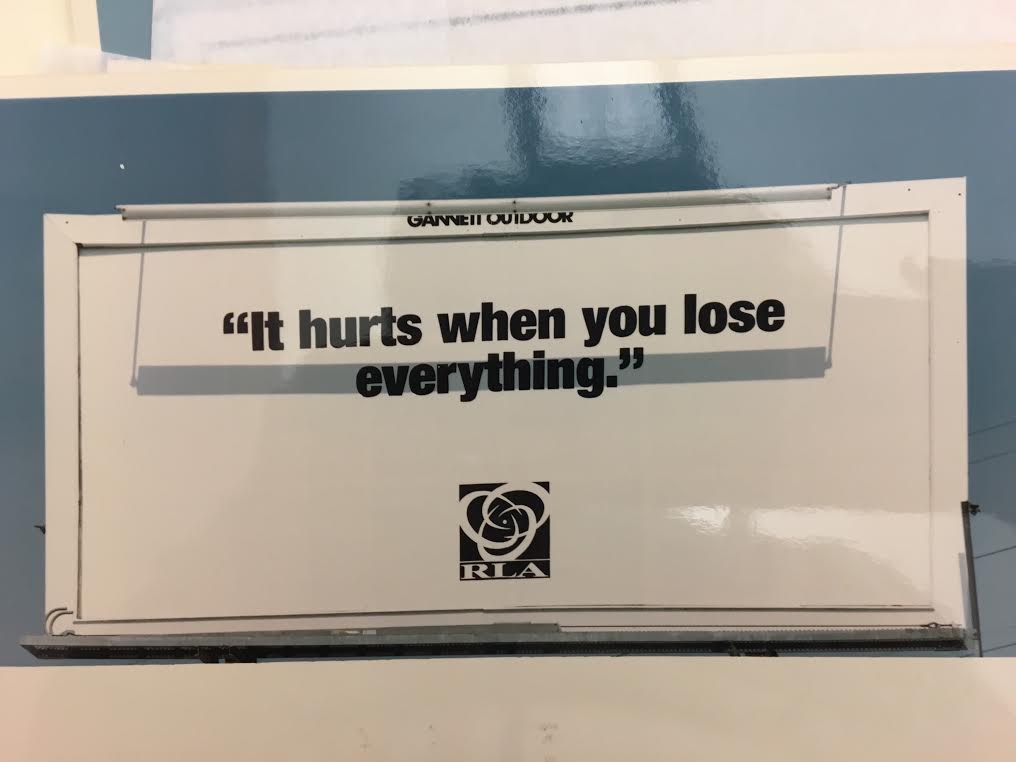
MD: I wanted to close off this interview with another incredible bit of Los Angeles ’90s history. After the L.A. Uprising, there was a nonprofit that was formulated called Rebuild L.A. Their objective was to create jobs for people displaced from work mostly in South L.A. They also posted billboards with inspirational slogans.

But my favorite little factoid is that they purchased a song, to be L.A.’s anthem and on June 6, 1992, one thousand chorus members of South LA churches were bussed into the Hollywood Bowl to perform the anthem: David Cassidy’s “Stand and Be Proud.”

This is our chance

Now we gotta take it

We may never get to pass this way again

We gotta be strong

If we’re gonna make it

Now it’s time to dry the tears.

Through the ashes hope appears

And if we reach out for the sky

We might touch the stars. 

Stand and be proud

Of who we are

We’ve come so close

We’ve come so far

Now and forever

Our light will shine

Shout it out loud

Stand and be proud

The song brands RLA as a beam of hope and poverty as an identity problem and a result of poor life choices, rather than a lack of access or circumstances.

10 Intimate Stories About Love and Loss

“My favorite word is yearning because it suggests the deepest level of desire.”

–Robert Olen Butler

Yearning is at the heart of every story because it’s at the heart of every human—rooted in what we’ve loved and lost, or that which never loved us back. Whether that’s a parent, a child, a lover or a country, what fascinates me is how we’re defined not only by our desires but also by how we choose to negotiate those desires (or not).  

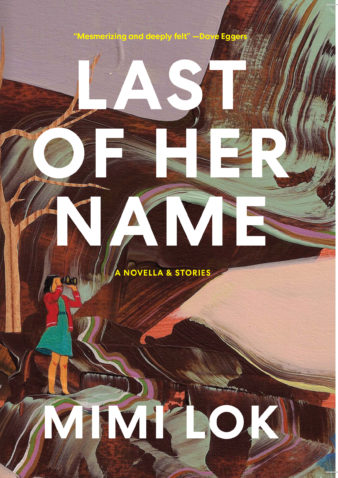
Last of Her Name by Mimi Lok
Buy the book

The stories in my collection Last of Her Name are about the intimate, interconnected lives of diasporic women and the histories they are born into. Set in a wide range of time periods and locales, including ’80s UK suburbia, WWII Hong Kong and urban California, the stories feature an eclectic cast of outsiders: among them, an elderly housebreaker, wounded lovers, and kung-fu fighting teenage girls. What binds them together are deep-seated currents of love, loss, and longing across time and place. 

This is a selection of devastating (and devastatingly beautiful) stories on this theme that have stayed with me long after I’ve read them. Yes, there are novels in here, but what is a novel but a story that takes a few more words to tell? Although they vary in length, from the very short (1 paragraph) to the very long (a 4-part novel), what they have in common is their intensely intimate portrayal of love and loss in a variety of forms, their depiction of the epic in the everyday, and their quiet, unshowy, enduring power.

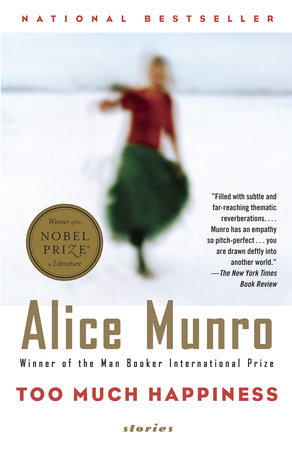
Too Much Happiness by Alice Munro

Dimension” in Too Much Happiness by Alice Munro

This is a story that doesn’t let its reader look away. Doree, a young mother and wife, cannot stop visiting her criminally insane husband in prison after he commits a heinous crime–the horror of which is heightened by Munro’s flat, blank description of the atrocity. This is the kind of act for which any reaction besides wrathful vengeance seems pointless, but then Munro forces us to grapple with Doree’s empathy and desperation. Unsettling, unblinking, uncompromising.

Image result for blind willow sleeping woman

The Kidney-Shaped Stone That Moves Every Day” from Blind Willow, Sleeping Woman by Haruki Murakami

This is one of the best stories I’ve read about the nature of obsession. Haunting, heady, and pacy–like slipping under a spell—and propelled by gnawing questions: Why won’t my lover tell me what she does for a living? Where did that kidney-shaped stone come from, and why does it keep turning up in a different spot each day? The kind of story that makes you feel increasingly, mouth-wateringly irrational the further you read. 

Image result for palm of the hand stories

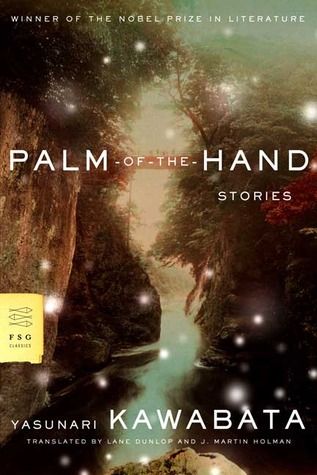
“Goldfish on the Roof” from Palm of the Hand Stories by Yasunari Kawabata

This entire story (that fits in the palm of your hand) is like a manic fever dream. A fable-like tale of Chiyoko, the unloved daughter of a concubine haunted by her heritage and also by the visions of fish invading the mirror above her bed–apparitions of goldfish that her father raises in tanks on the roof. The story, dense, surreal, and knotted with cruelty and violence, unfolds at a breakneck pace and leaves me breathless and slightly nauseated every time.

Image result for Last Car Over the Sagamore Bridge

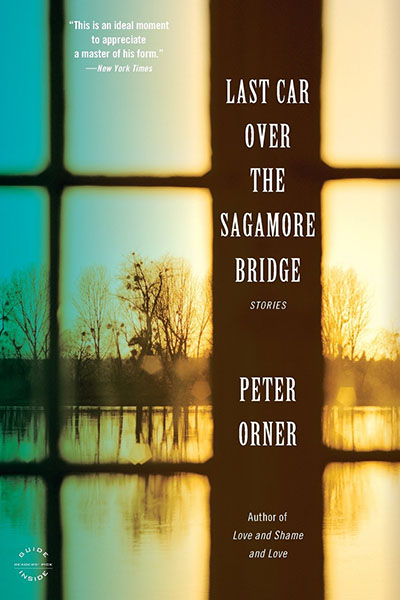
“Lincoln” from Last Car Over the Sagamore Bridge by Peter Orner

Peter Orner is a master of depicting the negative space of heartbreak. It seems the shorter the story, the deeper the cut. I’ve read this very short story countless times, and pretty much each time I return to it I manage to forget what a punch to the gut it is until I’ve reached the end, and by then it’s already too late.

Image result for sour sweet timothy mo

Sour Sweet by Timothy Mo

A Chinese family trying to make a life for themselves in ’60s England. The mother’s secret past, the father’s folly that puts everything at risk. The sinister, looming presence of the crime syndicate. Intimate, comic, and chilling. Also, possibly the best depiction in literature of the drudgery, cacophony, and adrenaline rush of working in a Chinese restaurant. 

Breath, Eyes, Memory by Edwidge Danticat

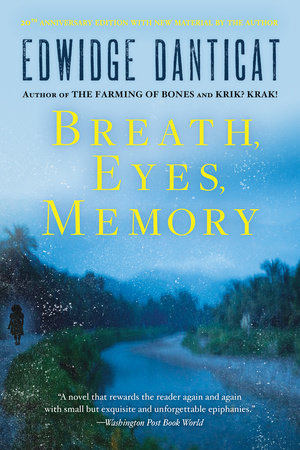
Breath, Eyes, Memory by Edwidge Danticat

An emotionally vivid tale of diasporic mothers and daughters, generational trauma, and female resilience. There are many excellently drawn characters and heartbreaking moments throughout, but it’s the evolution of Tante Atie—the aunt who lovingly raises narrator Sophie in her native Haiti before having to release her to her mother in New York—that left the most indelible mark on me.

Image result for bonnie chau all roads lead to blood

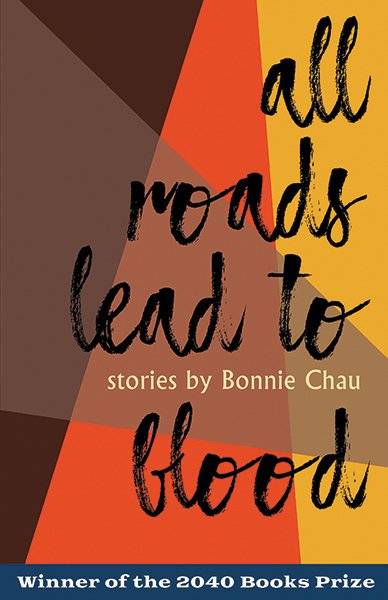
Medusa Jellyfish” in All Roads Lead to Blood by Bonnie Chau

Steeped in a just-out-of-reach sense of place and time, this story captures a unique kind of nostalgia: how you can miss someone, in this case an ex-lover, not because you’re out of each others’ lives—they’ve since become friends living in the same city who share cigarettes and gossip—but because you know you’ll never be the same people together again. 

The End of the Affair by Graham Greene

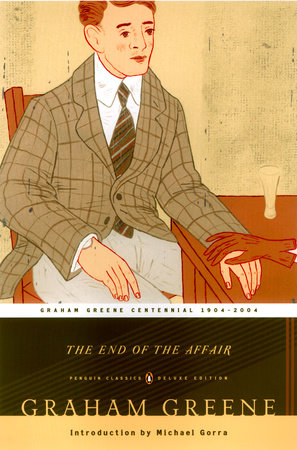
The End of the Affair by Graham Greene

The affair is between Sarah Miles and Maurice Bendrix, until God, rather than Sarah’s husband Henry, gets in the way. A triple hankie story of jealousy, obsession, and humility. 

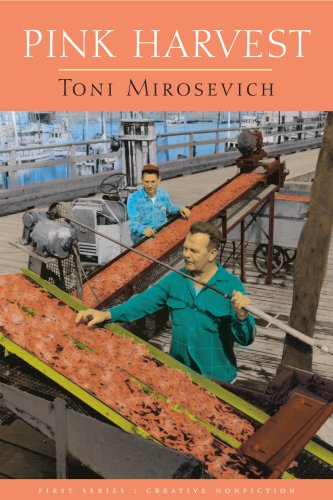
The Raft” from Pink Harvest: Tales of Happenstance by Toni Mirosevich

The short story as existential theater. Life and death and liberation. A reckoning with the things that matter and the things that don’t. Moving, wrenching, and utterly, gorgeously life-affirming.

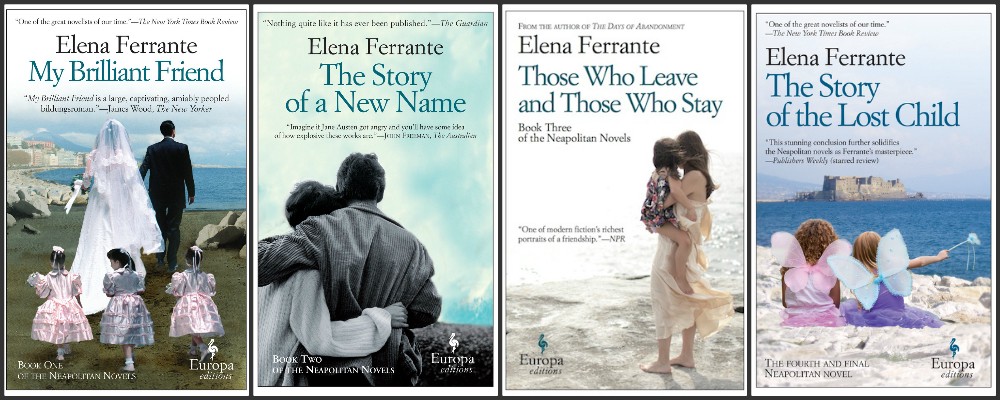
The Neopolitan Quartet by Elena Ferrante

I’ve rarely mourned a fictional relationship as deeply as I’ve mourned the friendship between Elena and Lila. There’s something incredibly infuriating, compelling, tragic, anxiety-inducing, and inevitable about how the two keep circling each other, wrenched together in great intimacy and trust one moment and then repelling and hurting each other the next, entwined over decades in waves of destruction, renewal, and fragile truces. 

My Step-Sister Is a Wolf Named Helen

“Formerly Feral”
by Julia Armfield

When the woman who lived across the street from us adopted a wolf and brought it to live with her, people were not as surprised as you might imagine. People had been doing stranger things in our neighborhood for years. My father, the novelist, took great pleasure in telling stories about the neighbors—how Ms. Brenninkmeijer lived with a man fifty years her junior who had only knocked on her door in the first place to deliver a parcel, how Mr. Wintergarten was widely suspected of poisoning local dogs and leaving them, taxidermied, on doorsteps for their owners to find. My father said a town was only as interesting as its bad apples and only as safe as its lunatics. When my sister and I were younger, he would point to all the houses on our street, counting on his fingers and explaining that by the law of averages, at least two of our neighbors were likely to commit murder. Had perhaps already done so, he would add when our reactions were not satisfactorily extreme. In the divorce, my mother cited the impossibility of living with a man whose approach to life was so ineradicably ghoulish. In return, my father cited my mother’s treatment of life as though it were someone unpleasant she was stuck sitting next to on the bus. 

In the divorce, my mother cited the impossibility of living with a man whose approach to life was so ineradicably ghoulish. In return, my father cited my mother’s treatment of life as though it were someone unpleasant she was stuck sitting next to on the bus. 

When our parents divorced, my sister went to live with my mother—a hard cleaving that I, aged twelve, felt far more acutely than the divorce itself. In the months directly following her departure, my sister sent me letters on my mother’s headed paper, brand new and with the maiden name loudly reinstated—From the desk of Allison WeylandAllison Stromare no more! My sister wrote in postcard couplets (Sun is shining—wish you were here), offering negligible detail beyond the doodles of herself she always included; little thumbsmudged cartoon sisters generally engaged in some strenuous activity—putting together a bookcase, walking a dog, performing jumping jacks. I kept these letters bulldog-clipped together in the space between my bed and the wall and reorganized them frequently, trying to create a coherent flipbook out of all the little figures in the corners of pages, throwing balls in the air and hula-hooping and dancing and building model trains. 

My father’s house was a strange place once partially deserted; yawn of space, hand held insufficiently over the mouth. My father took to writing in the kitchen where before he had retreated to his study, started leaving his shoes wherever he removed them and cooking heavy dishes which disregarded my allergies. I developed a habit of eating on my own to avoid his bloody meats and creole jambalayas. I smuggled sleeves of water crackers to my room and ate them smeared with peanut butter, stole dates and bits of cake from the untended larder, and siphoned inches of cognac into mugs which I stacked on the floor and allowed to grow rancid with fruit flies. Occasionally, my father would ask me how school was going, how I intended to spend the weekend, but for the most part we coexisted in a kind of conciliatory silence. Without my mother, I became negligent with washing, wore my shirts untucked. I experimented with the makeup she had left behind in bottom drawers of her dressing table—daubed my eyelids the color of tangerines. 

About six weeks after the divorce was finalized, the woman who lived across the street came around to express her condolences, bringing on one arm a fruit basket, which would later turn out to contain only pomegranates, and on the other arm the wolf. My father invited them in for coffee, and ten months later he and the woman from across the road were married. She and the wolf came to live with us, putting her house up for sale. 


It took ten thousand years of selective breeding to get dogs to do what we want. Wolves have spent the same amount of time living wild. You do the maths.

Advice on keeping wolves as pets can be found in publications put forth by various animal-rights organizations—the tone is seldom wholly encouraging. In The Ethical Pet Owner’s Handbook, it is noted that wolves require far more exercise than dogs, are more liable to develop territorial and pack behaviors, and can seldom be trusted to behave gently around children and smaller animals. The Conservationist’s Guide to Wolves and Wolf Behaviours states, rather more baldly, that keeping wolves as pets or working animals is effectively asking for trouble: Captive wolves retain the instincts of their ancestors and will only display these tendencies more openly as they approach sexual maturity. It took ten thousand years of selective breeding to get dogs to do what we want. Wolves have spent the same amount of time living wild. You do the maths. (The Conservationist’s Guide is admittedly more upfront with its agenda than The Ethical Pet Owner.) 

Of course, my father’s new wife was not keeping her wolf as a pet or a working animal, but rather as a daughter, which rendered much of the reading I did around the time of the wedding unnecessary. The day they moved in, she dressed the wolf in a blue pinafore dress she described as its special occasions outfit and presented me with a copy, in my size, which my father suggested I change into before helping with the unpacking. 


The wolf was named Helen, having been named after both Helen of Troy and Saint Helen of Constantinople, who reputedly discovered the true cross in Golgotha in a.d. 337. She was dust-colored, slavered more or less constantly, which wasn’t attractive, and had the other unfortunate habits of defecating in the corner of the kitchen and gnawing on table legs. In the early days of his second marriage, my father took great pleasure in citing all of the literary precedents for her presence in our lives, although he owned that from Romulus and Remus to Mowgli, the more usual setup involved wolves adopting humans, not the other way around. 

My father’s marriage upset the equilibrium—loosened the surety of my grip. My stepmother, as I was requested to address her, unlocked windows, plugged mouse holes with wire mesh and foam insulation. The house opened around her the way you crack a chest cavity, the ribs of it, the unnatural gape. My father and I had rarely felt the need to disturb things, but my stepmother moved in a sort of permanent sweep, gathering up my father’s shoes and papers and the glasses in my bedroom and scuttling them safely away. She was industrious, as I wrote to my sister: she keeps things in the air. She fed Helen three times a day with the kind of bottle you would give to a two-year-old child and read to her from history books she had brought with her from across the street. Sounds exoticbest of luck, my sister wrote, accompanied by a sketch of herself flying a kite with a tail of plaited ribbons. An inked-in sky, a navy afternoon. 

My stepmother took over the washing of my clothes, which I found I resented and combated by leaving dirty garments in places she couldn’t reach, like the top of the wardrobe or draped across the ceiling fan. I re-wore clothes until they came to smell like skin and itched unpleasantly, let my wrists and fingernails grow dark. What little dominion I had I maintained by making as much mess as possible. I balled up paper and threw it about without first having written on it, stacked up poltergeist towers of books. I stamped down the bin in my room until it burst with cotton wool, plucked hairs, and soiled tissues, hung crusty skirts and blouses on the backs of chairs like sails. Every afternoon at three, my stepmother came around with a brush and hoover to blast away this overflow, collecting and dispersing great menageries of garbage: dead violets, blunted lipsticks, forks and plastic beakers, nail clippings, earrings, half-eaten tins of peaches left to rot in my bed. That she did this with alarmingly good grace did not escape my notice, though my response to this was only to try harder, smearing jam from strawberry doughnuts on my bedroom windowpanes. Little savage, my father said, in a tone that implied only anthropological interest, making a neat note in one of the books in which he stored ideas for future novels. Admittedly, I really ought to have outgrown this kind of behavior. In a letter written lengthways on yellow legal paper, my sister wished me happy thirteenth birthday: you’re a grown girl nowfor god’s sake try to behave

In a letter written lengthways on yellow legal paper, my sister wished me happy thirteenth birthday: you’re a grown girl nowfor god’s sake try to behave


The wolf was a novelty at first. On Saturdays, my stepmother washed her in a large green basin which she kept beneath the sink in the kitchen and brought out with great ceremony, filling it first with hot water, then with cold water, then with a drop of vanilla essence and heavy lilac cream. I liked to watch this ritual sitting up at the kitchen table, peeling apples whose cores I would later spirit away and bury in my bedroom carpet until it smelled like sweat and stale sugar. My stepmother washed Helen with a brush and pumice stone, mumbling Judy Collins lyrics and tutting whenever the wolf slipped out of her grasp and bit her. The biting was a frequent occurrence—the wolf was, after all, a wolf. By the time she had finished her scrubbing, my stepmother would usually be bleeding gently into the bathwater and berating Helen for her attitude. 

I had read in The Conservationist’s Guide that the enforcement of unnatural doglike behaviors in domesticated wolves can cause distress and even trauma: pet wolves, or what you might call wolfdogs, are liable to develop depressive and antisocial patterns when forced into systems of subservience that run counter to their instincts. Of course, Helen was not treated like a dog, and her behavior seemed roughly to correspond with her perceived status in the household. Petted, rather than pet, I wrote to my sister, referring to the way the wolf was strapped into a booster seat at mealtimes and fed applesauce and gravy before my food was served. Her wardrobe was extensive and varied—my stepmother had a particular fondness for dressing her in Tenniel bibs and dresses, piecrust collars, yellow hats, and lacy cotton boots. Her attitude was in some regards august, toothsome, more graceful than my own. She bit and scratched with impunity but seldom seemed unsettled or much inclined to escape. 

One afternoon, as my stepmother was just coming to the end of her bathing ritual, the telephone rang in the hallway. She had bound the wolf up in a towel the way she usually did and now passed this bundle to me without first asking, hurrying out of the kitchen before I had a chance to object. I dropped the apple I had been coring, its streamer of peel uncoiling as it span away across the kitchen floor and disappeared beneath the fridge. Momentarily thrown, I adjusted the unexpected weight in my arms, abruptly aware of a smell which I had come to consider a general fact of the kitchen but which was, in fact, the wolf herself. The smell was fierce, a stifling of something thick and fleshy, dark meat beneath a slop of bluebell soap. Feral smell, I thought, before adjusting my vocabulary— formerly feral. My nostrils stung and I tipped my head away, squinting slightly as the trussed-up wolf wriggled up to face me, thick strings of dark saliva at her chin. For a moment, we blinked at each other—damp fur, a smell more like a temperature, straight slant of eyes unlike my own. She leant toward me, sniffed, and briefly licked my teeth. In the hallway, I could hear my stepmother talking loudly on the telephone. The wolf seemed to note this too, flicked her tail beneath the towel as though impatient, and fastened lazy jaws around my chin. 

The smell was fierce, a stifling of something thick and fleshy, dark meat beneath a slop of bluebell soap. Feral smell, I thought, before adjusting my vocabulary— formerly feral.

The apple moldered seven weeks before my stepmother found it, soft and hollowed out by ants which spilled from the dustpan she had thrust beneath the fridge in exploration, running up her wrists and biting at the skin beneath her sleeves. 


At school, I told people my stepmother had a daughter and no one questioned me because, for the most part, no one listened. I wasn’t easy at school, grime beneath my collar. Even before the divorce I had been a poor scholar, slow with mental maths and too sloppy to be trusted with a fountain pen. Classmates picked apart my walk, my ugly tennis shoes, the fact my father wrote purportedly “dirty books.” Boys with names like Callum and Jeremy made boorish jokes about my smelly clothing and the knots in my hair that resembled fists. Pull her head back, dirty girls like it that way. I spent a lot of time getting into fights, skinning my knuckles, the backs of my legs. Girls put chewing gum on my chair, pinched my sides when we clustered in the gym for assembly, sitting cross-legged and knee to knee. My sister, before she left, had been better with situations like this, had happily turned her nose up at people who laughed at her, never getting into fights. Try harder, she wrote, a dark dribble of words around a stick figure sitting upright at a cartoon desk, don’t be such a beast

I was fourteen when the wolf began to escape the house, walking the ten minutes between home and school to wait across the road from the netball courts until I emerged at four o’clock. The first time it happened, I only realized she was there because of the small crowd that had formed around her. A boy from the class below me had apparently tried to pet her and had immediately dissolved into hysterics when she bit him on the arm. By the time I arrived, his mother had already broken up the tussle, leaping from the front seat of a stone-colored Volvo to drag him away, still in tears and with a wad of tissues held to his wrist. Helen, apparently deaf to the uproar, perked up when she caught sight of me. She was clothed only simply, a small black cap and aproned pinafore that made her resemble nothing so much as a waitress at a casual restaurant. I held one hand out toward her and she pushed her snout between my fingers, licking at my dirty nails. The crowd around me pulsed—a mumbled curiosity. It was a Friday, a long time since her Saturday bath. I pressed my face into the protruding bones of her back and breathed her in. A smell like offal, like bone marrow beneath her dress. I elbowed my way through the crowd and she came with me, calm and slavering only lightly. We walked home together and I told her inconsequential things about my day. 

After that, I found she came for me often, waiting patiently outside the school the way parents did, sometimes settling down with her chin on her paws, swatting her tail at horseflies. My stepmother, after her initial panic the first time she had found Helen missing, was surprisingly cheerful about the whole thing. Nice to see you girls getting along, she said, whilst my father noted vaguely that it was preferable to letting me walk home alone.


We became friendly, if not to say filial. I took to brushing her fur until she bit me, fed her white rolls and anchovies until her stomach distended and she threw up on the dining-room floor. My stepmother showed me how to bathe her on Saturday mornings, how to pumice the dead skin from the pads of her feet. There’s a girl was my stepmother’s most common refrain and one I found myself mimicking, soothing the wolf’s irritation when filing down her claws. 

I became familiar with the hunch of her body—the heavy ridge of spine and the way the fur became coarser toward the middle. Sometimes, sitting reading in the kitchen, I found she would clamber up beside me and turn pages at random with her tufted snout. Her smell varied, depending on the day of the week—fleshy, sharp, strangely vegetal. By degrees, I came to take an odd pleasure in mirroring her gestures, raising and lowering one shoulder, swallowing things without first chewing, drawing back my lips to expose the teeth. 

She took to catching bats, at nights in the midge-infested garden, bringing them in at peculiar hours and laying them at my feet. They were gory little offerings, dank-furred and often still twitching. My stepmother disapproved and wouldn’t let me keep them, scooping them up with her dustpan and depositing them on my father’s compost heap. It wasn’t ladylike behavior, she said, though it wasn’t clear whether her problem was with Helen catching the bats or my accepting them. I managed to rescue one, just once, sneaking out in an earthworm-scented dawn before my stepmother woke and fishing the bat from beneath a pile of garden waste. I tried to dry it out beneath hardbacked books, the way my sister had taught me to do with flowers, and kept it the way I kept my letters, pushed down between the wall and the bed, until it came to smell so badly that my stepmother found it and threw it away. 

Sometimes, when the weather was cold, I slept with Helen in the room my stepmother had set up for her, across the corridor from my own. She slept beneath a twin bed which my stepmother made up neatly every morning, despite the fact the sheets were never slept in and the covers undisturbed. The smell beneath the bed was thick—body smell. I pressed my face each night into Helen’s shoulders. She slept a jittery, doglike sleep, whined softly, snapped at nothing. I often imagined her dreams—subterranean, worm casts, a greenish undergrowth. 


 Whenever we had guests over, my father would display Helen in her party dress—his exotic stepdaughter, her interesting table manners. His friends were poets and visual artists, they asked my stepmother serious questions about the urge to Motherhood. Old as the earth, a man who had once exhibited a series of photographs of undecorated driftwood informed her, swilling Côte du Rhone, the maternal desire, the natural order of things

My feral girls, my father would say if Helen and I appeared together, pulling the wolf onto his lap and suggesting I sat at his feet—a broad artistic joke. I was older, taller than I had been. The middle and fourth fingers on both my hands had grown to the same length and my eyebrows met in the middle, which caused me less embarrassment than a certain sort of shifty release. The hair grew too fast to pluck and so I let it go and let my legs and armpits perform a similar trick. At school, a girl who typically sat beside me in French class complained that I smelled and asked to be moved across the room. I continued to get into fights, although now when I did the teachers seemed less inclined to see my side of things. 

At my father’s dinners, my stepmother typically sat at his right and fed Helen with her serving spoon, leaning sideways to pass me pieces of meat from her plate. My father served his guests a lot of salted beef, ox tongue, duck breasts still bloody in their jus. I liked his cooking more than I had in previous years, a fact which I owed both to the maturation of my palate and to the fact that meat, stolen away and buried in my bedclothes, settled down in time to a hard iron smell that I found I enjoyed very much. I had started my period on the evening of my fifteenth birthday and had eaten the steak my father served, near-raw, in a fit of jubilation. There’s a girl, my father had said, tipping the leftover juice from the grill pan onto my plate. Helen, who by this time was nearly out of adolescence, had sat by me through dinner in a muted splendor with a party hat cocked around her ears. It was at this dinner party, held in my honor, that a guest of my father’s—a renowned poet and radio philosopher—had caused a scene by knocking over the salt cellar and, in his haste to retrieve it, brushing his hand over Helen’s flank. As she had with the boy outside my school, Helen had immediately locked her fangs around his wrist— not unpleasantly, but still enough to make him shout. My father had laughed at this and reminded his guest not to upset his daughters, wiping his mouth with the back of his hand. 


At the age of sixteen, I became of unexpected interest to a boy in my class named Peter who told various people he was in love with me and took to following me home at a distance of about a hundred yards when I left school for the day. The kind of boy who grows too fast and too abruptly over the summer and returns to school war-torn and alien, Peter was largely solitary; a characteristic which perhaps encouraged the misguided view that I had anything to offer him. The fact that, most afternoons, I had a wolf beside me during my walk home rendered Peter’s omnipresence only nominally unsettling, though occasionally when I stopped, to tie a shoelace or to readjust my bag, he would stop too and only start again when I did. That’s boys for you, my sister wrote on a postcard showing Raphael’s Annunciation, always on the horizon. We hadn’t spoken in a while and the cartoon in the corner of her message showed a girl rather taller than the ones she had previously drawn. It was standing with its hands behind its back, its hair demurely plaited down one side.

Helen was fully grown by this point and had long since lost her baby teeth. The process of losing them had been fractious, uneasy, a season of waking in the night to her dragging her jaw along the floorboards beside me until her teeth came away at the root. Her adult teeth were sharper, vampiric in a way my stepmother regarded with concern, if not outward anxiety. Now and then, she presented Helen with tough things on which she was encouraged to gnaw—coconut shell and softened slabs of pumice, all the better to blunt her harsh new mouthful. Over time, Helen would grow bored of these objects and nudge them over to me. I would pick them up to make her happy, fit my teeth to the sides of a coconut shell, and bite. 

The Conservationist’s Guide noted that wolves, at the point of sexual maturity, are liable to develop more alienating, predatory behaviors, and that domesticated wolves have a tendency either to draw away from their human companions or to become markedly more territorial around them. It was difficult to tell, at the time, whether either of these situations was particularly the case. By the time she had lost her baby teeth, Helen was not behaving notably differently to the way she had behaved before, although she did become more selective with the clothes in which she allowed my stepmother to dress her and grew oddly snappish on the rare occasion I received a letter from my sister. 


My father published a new novel, dedicating it to me and to Helen, describing us as my twin girls. My mother rang him up to berate him for leaving my sister out of the dedication. It was a Saturday, Helen’s bathing day, and I listened to my father’s side of the argument from my seat on the kitchen floor. It was your decision, he said more than once, you chose one and not the other. So did she. Moving the pumice stone idly over the base of Helen’s left forepaw, I thought about the evening my sister had packed her belongings, the expression like the cartoon girls she was so fond of sketching—flat and colorless, still-mouthed. What do you expect, my father said repeatedly, what do either of you expect

The phone call ended abruptly and my father banged into the kitchen, pausing in what seemed like a high temper to observe the bathing ritual. Sitting patiently with her forepaws on the tub’s edge, Helen cocked her head to one side and then the other, her ears today encased in a miniature yellow bathing cab which seemed to amuse my father. He shook his head, moving across the room to a place on the counter where he kept family photographs and removing a snap of me and my sister at the ages of seven and eight from its frame. This he looked at for several moments before dropping it into Helen’s bathwater as unconcernedly as one might stub out a cigarette. The photograph warped quickly in the soapy water and Helen dabbed at it unconcernedly, making no particular effort to rescue it before it sank. My father moved out to the front of the house for some air, returning a half hour later to relate in his novelist’s voice that Mr. Wintergarten had now moved on to kidnapping and stuffing neighborhood cats, if the commotion from next door was anything to go by. 


Walking home one afternoon, followed as usual by Peter, Helen took it into her head to butt at the backs of my knees until I understood her intention to change our usual route. I complied almost unthinkingly, crossing roads as she willed me and circling through unfamiliar streets, although at several points when I looked back, Peter was still following us and by the time we reached home, Helen was ill-tempered and flat about the ears. 

At school, it occurred to me to confront him about following us, though when I did he only grinned and told me I should expect a certain level of interest if I would wander around with a wolf in tow. It was shortly after this that he started stealing pencils from my desk when he passed me to take his seat in the mornings, picking them up as casually as if he’d left them there for safekeeping. The third or fourth time this happened, I jumped up and snatched the offending item back before he could retreat to his desk. I opened my mouth to demand an explanation but found as I did so that the disparity between our heights made him somehow difficult to argue with, a shadow too long to entirely avoid. 


The nights seemed larger by the age of sixteen, a curious sense that the strangulated skies of my childhood had suddenly been granted room to rage about. At full moon, Helen would go out into the garden and howl, the way that wolves are wont to do in movies, and she encouraged me to join her, dragging on my trouser legs until I accompanied her onto the lawn. Full-mooned nights brought with them a very particular ozone smell, a nitrous, liquid atmosphere that turned my hair to greasy curlicues. When she had howled her fill, Helen would prowl the garden in a strange, custodial circle, snapping at fireflies. Did you girls have fun, my stepmother would ask us afterward, sitting up at odd hours in the kitchen with her cup of orange tea. 

You never write enough, my sister said—a cartoon of a girl, somewhat anachronistically, waiting by the telephone—I feel like you’re forgetting about me. I wondered for a long time how to respond to this or to communicate the purge of her image that my father had recently undertaken in all corners of the house. In the end, I filed the letter away like the others, pushing Helen’s snout aside when she slunk up as if to read over my shoulder.


A month or so before my seventeenth birthday, I got into a fight at school. A group of boys with names like Callum and Jeremy had broken into my locker some time before the lunchtime bell and had swiped the box of tampons I kept hidden beneath a towel. The situation was a desperate one, an ooze and panic, dark smear along the back of my school skirt. I lined my underwear with thin school toilet paper, folded seven times, but the moment was torrential, hot fright between my legs, a spreading stain. At the end of the day, I sought out those I suspected, pushed Callum or Jeremy between the shoulder blades—stumble against the chain-link fence. We fought the way dogs do, open-mouthed, heads back and rearing. I smashed the heels of my fists upward without looking, felt one connect—something wet and hard and quite like bone. Someone caught me in the side of the face with the corner of a schoolbag, an explosion like a hand driven into soft fruit, my vision sent marbling across the tarmac. I’m not sure how the fight ended, only that the crowd that had formed around us had dispersed by the time Helen found me and that I was alone when she did. She nosed into my side, licked one side of my face where something that had formerly felt solid now felt shaken loose. I found myself thinking of my sister’s letter: try harder, don’t be such a beast

Someone caught me in the side of the face with the corner of a schoolbag, an explosion like a hand driven into soft fruit, my vision sent marbling across the tarmac

I had to fist my hands in Helen’s fur to pull myself up, though she made no obvious objection. I caught something of my own smell mingled with hers, the dirt in my knees and the fact that between my legs I was still bleeding unchecked, a terrible falling away. We walked home together, a little laboriously, only stopping once when Helen tipped her head over her shoulder and I, following her gaze, saw that Peter was following us at his usual hundred-yard remove. I remember Helen lifted her head toward him, only a minor curl of her lip but enough to reveal the teeth, and he seemed to falter, before appearing to decide that this pause was invitation to move closer. He was, I saw as he approached, bearing the box of tampons that had gone missing from my locker, the ones I had assumed had been taken by the other boys. He raised his chin a little defiantly as he held them out toward me. It was a just meant to be a joke, he said, his tone seeming to follow the set of his chin, though his words were nominally apologetic, badly judged, had no idea. I didn’t mean for it to get so out of hand. Then a blur of action that was hard to follow—his hand passing over Helen’s head in the way that she hated, the curl of her upper lip. Several weeks later, when he had been off from school long enough to make people curious, we heard that his hand had gone septic and that surgeons had ultimately had to remove the whole thing at the wrist. 


In the aftermath of the incident with Peter, I went into my bedroom and found that Helen had ripped up all of my sister’s letters and was sitting amongst the wreckage gently nosing her way through the shreds of cartoon girls, some stretching or skipping or bowling or rowing boats. I said nothing to this, only reached to stroke the hard, high ridge of her back, the familiar smell rising from her fur as I did so. Since the evening of the fight, when we had both returned home bloodied, my stepmother had developed a habit of bathing me in the tub usually reserved for Helen and the scent of it— hot, bodily beneath bluebells—now seemed indivisible from the one I recognized as my own. Apparently satisfied, Helen turned to grate her jaw along the floorboards; a gesture like a sharpening—serrated knife against a block. The moon, I felt, was not yet full enough to excuse this kind of behavior, but by degrees I nonetheless sat down beside my feral sister and joined her in dragging my teeth across the floor. 

Oscar Wilde’s Gay Socialist Vision

In 1884, George Bernard Shaw joined the newly formed Fabian Society, which was dedicated to advancing democratic socialism in Great Britain, primarily through the gradual dissemination of socialist ideas. Some time later, Shaw spoke at a meeting of the Society in London, with an unexpected attendee: Oscar Wilde. Wilde was so taken by the subject that he produced his own views on it in an essay entitled, “The Soul of Man Under Socialism.” In Oscar Wilde: A Certain Genius, biographer Barbara Belford recounts how Shaw reacted to the essay, saying, “It was very witty and entertaining, but had nothing whatever to do with socialism.”

It’s true that Wilde’s views departed radically from Shaw’s and those of the Fabian Society. But although Wilde is most often remembered as an aristocratic dandy (a “snob to the marrow of his being,” according to Shaw), the politics that he espoused were indeed a form of socialism — namely, libertarian socialism.

Although Wilde is remembered as an aristocratic dandy, the politics that he espoused were indeed a form of socialism.

Considering his upbringing in mid-19th century Dublin, it’s not surprising that Wilde felt an affinity for socialism. His mother Jane was an outspoken supporter of Irish nationalism, which had a strong socialist current, in contrast with English imperial capitalism. (James Connolly, who would be one of the leaders of the Easter Rising, first founded the Irish Socialist Republican Party.) While less overtly political, Wilde’s father William also passed up the prosperous career of a private physician to found a charitable hospital. The couple raised Wilde — born October 16, 1854 — in middle-class comfort, but would not have been able to send him to Trinity College, and then to Oxford, had he not won successive scholarships. In fact, the family was nearly bankrupt upon William’s death, when Wilde was just 21 years old.

Wilde made a name for himself as a dandy in his early adult life, but that was deceptively a period of financial precarity and desperate work. Spending the last of his inheritance, he affected a decadent air, attending the opening nights of London theaters in a velvet coat, silk stockings, and flowing tie — while also doggedly, though unsuccessfully, attempting a career a playwright and poet. His first break came in 1882, when he undertook a tour of the United States, partly as a lecturer on aestheticism, partly as an aesthete attraction. Wilde loved to play the sloth (“Ambition is the last refuge of the failure,” he wrote in “Phrases and Philosophies for the Use of the Young”), but as his grandson Merlin Holland describes in his introduction to Complete Works of Oscar Wilde, the tour was extremely demanding:

The programme, originally planned to last four months, stretched to nearly a year and it was far from being just a sedate lecture tour for the self-appointed ‘Professor of Aesthetics’ …. He faced a punishing schedule of 140 lectures in 260 days from the East to the West coast and up into Canada without the help of air travel and fast trains.

Without any other stable source of income, Wilde continued touring in England. Forced to spend months away from his wife Constance and young sons Cyril and Vyvyan, he was finally offered the opportunity to settle in London with the editorship of a women’s magazine from 1887 to 1889. During this period, he published The Happy Prince and Other Tales and worked on The Picture of Dorian Gray, which first appeared in magazine form in 1890. When “The Soul of Man Under Socialism” was published the following year, Wilde was finally beginning to see some success as an author, rather than a character.

While the Fabian Society represented the most mainstream current of socialism in Great Britain — it would help found the United Kingdom’s Labour Party in 1900 — Wilde’s essay presents an enticing alternative. Shaw and the Society promoted electoral means to political reform that would gradually improve the condition of the working class, such as the introduction of a minimum wage. (The Society takes its name from Fabius, the Roman general who fought Hannibal with attrition, rather than open conflict.) In contrast, Wilde argues that such “remedies do not cure the disease: they merely prolong it.” Rather than attempting to set the existing system of power toward incremental improvements, he advocates a much more revolutionary approach: abolition of both private property and government, which would simultaneously solve the problems of poverty and crime. Wilde illustrates his reasoning with an understanding of automation that should put many technologists to shame:

Up to the present, man has been, to a certain extent, the slave of machinery, and there is something tragic in the fact that as soon as man had invented a machine to do his work he began to starve. This, however, is, of course, the result of our property system and our system of competition. One man owns a machine which does the work of five hundred men. Five hundred men are, in consequence, thrown out of employment, and, having no work to do, become hungry and take to thieving.

Wilde not only argues that freeing wealth from the hoarding of private property would reduce poverty, but insists that, with the corresponding reduction in crime, the state would no longer need to govern — that is, to forcefully control individuals. Instead, the state could focus on developing automated systems to equitably provide the necessities of life, while individuals thus freed from want and work could dedicate themselves to producing the beauties of life through art or other forms of self-actualization. In this way, he reasons that “Socialism itself will be of value simply because it will lead to Individualism.” In the wake of the USSR, it’s understandable that Belford, writing in 2000, describes Wilde as “more an anarchist than a socialist,” especially as he had the foresight to condemn “Authoritarian Socialism.” But the two impulses — of common good and of individual freedom — could otherwise be reconciled as “libertarian socialism,” an anti-authoritarian, anti-capitalist political philosophy with roots that predate Marxism.

In libertarian socialism, Wilde not only saw the potential for his realization as an artist, but his liberation as a gay man.

Wilde had his reasons to rail against both the economic system and government that he was subjected to. As mentioned, capitalism was doing him no favors; it would continue plaguing him up to his death on November 30, 1900, in Paris, where he had been trying to eke out three years of exile in utter debt. And of course it was the British government which had exiled him, as well as precipitated his demise: Convicted of “gross indecency” for his homosexuality in 1895, Wilde served two years of hard labor and suffered an ear injury in prison, which eventually lead to a fatal case of cerebral meningitis, taking his life at just 46 years old. 

In libertarian socialism, Wilde not only saw the potential for his realization as an artist, but his liberation as a gay man. Belford writes that Wilde had realized his homosexuality, with his literary-executor-to-be Robert Baldwin Ross, shortly before penning “The Soul of Man Under Socialism.” The law that Wilde would be prosecuted under had just been passed in 1885, so he was not at liberty to discuss the subject openly in his essay, but the suggestion is there in lines like, “[Socialism-cum-Individualism] converts the abolition of legal restraint into a form of freedom that will help the full development of personality, and make the love of man and woman more wonderful, more beautiful, and more ennobling.” Shaw and the Fabian Society could claim a shallow victory for their “prolonged remedies” (as Holland notes, homosexuality was decriminalized in the United Kingdom in 1967), but Wilde understood that, for some, there is no time to wait.

It is worth wondering, though, just how much more radical Wilde’s political vision would have been if he had lived longer — just long enough, perhaps, to seriously consider humanity’s ascent beyond the boundaries of this planet. After all, he was already so close to fully automated luxury gay space communism.

Rion Amilcar Scott’s Fictional Town is Fantastical, Satirical, and Utterly Real

Ever since I met up with Rion Amilcar Scott for lunch one Friday midday, an exchange we had has been running over and over in my mind. I mentioned that I had been playing detective while reading his new collection, The World Doesn’t Require You, looking for clues as to where Cross River could be in the state of Maryland, where we both reside. Rion interrupted me before I finished my question and said, “I guess I want to flip that around to you and ask why does it matter?” Slightly embarrassed—okay, I’ll keep it real, more than slightly embarrassed—I immediately responded, “it doesn’t,” and came up with an excuse as to why I was so set on finding out where this fictional town exists in real life. 

Later during the following week, as our conversation kept playing in my mind, I realized that it’s been a long time since I’ve read fiction like Scott’s. In a literary landscape that is embracing more and more the concept of autofiction and genre hybridity, when a piece of true imagination that does what fiction is supposed to do—which is to create a world and make you believe in its truth and existence—absolutely captures you and deposits you in another world that still feels so much like your own, you cannot fathom that it’s completely made up or at least did not originate from some already known landscape. The World Doesn’t Require You is a masterpiece of true imagination, art that reminds me of the work it takes to make a meal from scratch, straight from the farmer’s market, in a literary fiction world of Blue Apron subscription boxes. Rion’s Cross River is made of magic, of haunting, of music, of just enough strange, and just enough real, and the perfect amount of Blackness that it made me say, “This has to be based on something,” or maybe I just really wanted it to be. 

The World Doesn't Require You

The World Doesn’t Require You is Scott’s second story collection set in Cross River, Maryland. In eleven short stories and one novella, Scott brings to us a cast of characters who are the actual sons of God, who create their own music, who are gangsters lured by beautiful women into watery deaths, and who play games, long and short ones, to the detriment of themselves and others, and much more. As Michael Schaub of NPR wrote, “The book is less a collection of short stories than it is an ethereal atlas of a world that’s both wholly original and disturbingly familiar.”

Rion’s debut story collection, Insurrections, received the 2017 PEN/Bingham Prize for Debut Fiction. He has published with The Kenyon Review, Crab Orchard Review, and The Rumpus, among others. He has received fellowships from Bread Loaf Writing Conference, Kimbilio and the Colgate Writing Conference as well as a 2019 Maryland Individual Artist Award. Currently, he teaches Creative Writing at the University of Maryland.

Rion and I enjoyed a beautiful Maryland day and chatted about his writing origin story, writing from a Black perspective, and the concerns of using the “n word.”


Tyrese L. Coleman: We have had conversations before but I feel like we haven’t sat down and talked talked. I’ve heard you speak about how you came to writing and how your mom was your first fan. But, what led you here to this moment?

Rion Amilcar Scott: I had an idea for a poem one day. When I was a kid, I used to love reading poetry. But, I kind of stopped. I never really took it seriously but after I got the idea, I just had to keep going. I majored in journalism when I was in undergrad [at Howard University]. I wanted to do something practical with it. I was a journalist for a couple of years and it just didn’t work for me. 

TLC: Why didn’t you like journalism?

RAS: I describe it like marrying the person who is standing next to the woman you love. I like to play with language and journalism is not really about that at all. I love and respect journalism but its not really about writing per se. It’s about conversations, getting information, the reporting aspect of it. Which is cool. Which is great. I did it for three years. You know how people put in their time in the military. That was my service. And then I moved on.

TLC: You won the Bingham prize. What happened after you won the award? How did your career change, if it changed? What did that do in terms of leading you to The World Doesn’t Require You?

RAS: Two good things about prizes is that they extend the life of the book. A few more people picked [Insurrections] up, a few more people were interested in it, a few more interviews. 

Secondly, the most important thing was that it allowed me time to write. I wouldn’t have gotten to this point if I didn’t win the prize because I was able to take that summer after winning and I didn’t have to teach, and I lived off the prize money for that summer. Usually, I take a summer class: very low pay that doesn’t even cover the summer. And I just wrote. And the bulk of the novella was written in that summer and the rest of the book. A lot of the book was already written but I went back and fixed up whatever needed to be fixed. And I sent it off to my agent, I think that December.

TLC: So you had already had this book halfway written?

RAS: Yeah, halfway written. I think I had started the novella at one point, but yeah I was really able to accelerate the writing of it. 

TLC: So why did you choose not to include some of the pieces in Insurrections? Or were they not ready?

RAS: Well some of them, they just were not ready. Like “Rolling in my Six-Fo’” I just could not get it to that point. The “Nigger Knockers”—they just weren’t ready, they just didn’t feel right. And there were a couple that were good but they just didn’t fit into Insurrections for space or whatever reason. They fit much better in this book. “A Rare and Powerful Employee” is old and was complete for a long time.

TLC: Since some of the pieces were done when you did your first book, how do you envision that these two books “conversate” with one another?

RAS: I feel like they’re twins. Insurrections is mostly realism, like a dreamy sort of realism. But The World Doesn’t Require You is not. There’s that dreamy realism to some pieces, but for the most part, it tips over. Even like the dreamy realism within “Nigger Knockers” is. That wouldn’t happen in real life. I feel like I was showcasing the more fantastical parts of the town.

TLC: As you know, I had a theory that Cross River was Southern Maryland. The way that Cross River is described, it reminded me of that area

RAS: I guess I want to flip that around to you and ask why does it matter?

TLC: It doesn’t matter. But, that’s a good question though.

RAS: Early on, I didn’t want to specify where it was, it didn’t really have a place. And then in a couple of workshops people were like “that’s not going to fly” so I put it in Maryland. Like I’ve said before in previous interviews, the Simpson’s Springfield is one of my influences. So, I don’t really want to specify. To me, the answer doesn’t matter. But at the same time it’s important that its in Maryland. Even though I was reluctant to place it in Maryland. You know Maryland has this weird history where we pretend we’re not part of the south, but those Prince George’s county accents, really, you’re going to pretend you’re not from the South?

Many people have died over the centuries because of stereotypes. And I’m concerned about whether or not I am reinforcing it.

TLC: Insurrections was published with a university press and now The World Doesn’t Require You is with Norton. What is different about the publishing process between the both books?

RAS: Norton feels like a small press or an independent press but it has the resources. The level of support that I got from this book makes me happy. Both places, I had great editors that really made the book more of itself rather than twisting and turning it. I was very concerned with this book because it’s abnormal, that people would want it to be something else, something that it’s not. I didn’t face that at all.

TLC: I think that’s a huge fear with Black writers in general

RAS: You hear horror stories.

TLC: You do. You had talked on social media about how Toni Morrison created this idea that we could write apologetically about and for Black people—

RAS: You know, I don’t think she created it, but she was probably the best spokesperson for it. I think before her or concurrently with her, there were a lot of children’s authors like Mildred Taylor and Virginia Hamilton who were doing that. But within children’s literature.

TLC: And I was reading the article in Literary Hub with you and Danielle Evans and you were talking about rejection. As a Black writer, it’s a weird space where you want to do what you want to do but then there’s also that fear of being rejected because you’re doing what you want to do. How do you navigate that gray space?

RAS: There’s just so many different ways. Blackness is so vast. Like I love your book, but that’s just not my experience, but that is what I love about it. You know, it’s different. I would say that we have to keep pushing. Right now, it’s beautiful. There’s so many of us. Especially in the short story. We’re killing it. Like I think of Jamel Brinkley’s book. I was reading it and I was like, these are people that I know but I’ve never seen them in fiction before.

TLC: I feel kind of lucky in a way. Not saying that there would not have been an opportunity years ago for these books to come out, but I feel like there is something different happening right now. 

RAS: I’m definitely happy for it. People are realizing that there is a multiplicity and different narratives that can be told.

TLC: Have you read the Gone Dead by Chenelle Benz? The tone and feel of The World Doesn’t Require You reminded me of her book. I think there’s a ghost tale kind of quality or spiritualness that comes from stories that relate in some way to slavery. Cross River was the only town to ever have a successful slave revolt. I felt that haunting in both of your books. 

RAS: A lot of the whole Cross River project is about how the past haunts us. I like that idea about slavery. That’s the idea Toni Morrison had with Beloved, right? Making it explicit, dramatizing it, and turning the idea. I do sort of feel that. To me, it’s sort of like how we sort of ignore these ideas that animate us. We ignore them, we don’t question them, we don’t interrogate them for the most part. Or when people try to interrogate them, we get this huge pushback. The whole 1619 Project. You know when it came out with these ridiculous criticisms. So yeah, I like the idea of being haunted by the past.

TLC: Have you ever had any apprehension or felt some kind of way about using the word “nigger” in your stories?

It’s a crazy trick to spend 200 years forcing Black people to work for them and then call them lazy.

RAS: Not neccesarily the word nigger. But more so playing with the stereotypes that I do. Because those things are serious, stereotypes are serious things. Many people have died over the centuries because of those stereotypes. And I’m concerned about whether or not I am reinforcing it. Because a lot of white people think, “oh it’s just name calling and people feel hurt feelings.” I get concerns about readers feeling like that, “Oh its okay for us to just play with these things.” And I try to take real care, you know? Play with them to make a point when I’m playing with them. So, yeah, that’s a lot of my big concerns. I think of “The Electric Joy of Service” or “Rolling in my Six-Fo’.” Those stories can be misinterpreted. I might end up like Dave Chapelle, quitting and going to Africa. 

TLC: I always wonder if white people read the word “nigger” in their head or do they read “n word.” [mutual laughter] 

But, I guess you have to be prepared for whatever happens.

RAS: I think no matter what, when you are doing satire, you have to prepare for it to be misinterpreted. That’s the reality of it. It’s an inevitability of it. It will be misread and misunderstood. And hopefully, it will not be used in horrible ways. 

TLC: As like an opening toward making some type of interpretation that reinforces what you already think?

RAS: Right. The whole idea is to tear it down, to mock it, to laugh in the face of racism. “The inherent laziness of Black people.” That’s a ridiculous idea. I know lazy Black people, but as a whole, as a people, you cannot really say that about Black people. It’s a crazy trick to spend 200 years forcing Black people to work for them [and then] call them lazy. That’s a crazy trick. 

TLC: Do you think you’ll do more Cross River stories?

RAS: Oh, of course, yeah. The thing about Cross River is it leaves a lot to explore. That’s my project, to really explore it, from beginning to end. 

TLC: So you probably don’t know everything there is to know about Cross River?

RAS: No, but when I do, that’s it. [mutual laughter].

Literary Lists Are Records of Female Desire

I love lists. As a little girl, I built their slim towers in countless lined notebooks. I tallied toys I wanted, books I read or would read, friends I had, places I longed to visit. In essence, things I desired or already loved. In a recent essay, I remarked on the etymology of the word list, recollected in Miriam Toews’ Women Talking; as her narrator reminds us, one of the archaic definitions of list is “to like, wish, choose,” a cognate to the German gelüsten, “to desire or lust.” And why not? Except in the case of some self-help exercises, we usually make lists about what we want to have or do. Lists are lusts itemized.

The history of the literary list is a history of female desire.

Recently, I read Umberto Eco’s The Infinity of Lists, a gorgeous, erudite hardcover that celebrates the list in art and literature from antiquity to the present day. But something was off: Amidst dozens of examples by male authors and artists, a single slot was occupied by a woman. That it was incisive Polish poet Wisława Szymborska consoled slightly, but the imbalance was striking. To be fair, Eco admits his list is not comprehensive. Still, I was shocked because to me it seems obvious that the history of literary lists is in no small part a history of female desire.

Truth be told, literary lists catalog desire in all forms. One of the most famous examples is Casanova’s The Story of My Life, a compendium of conquests strained through the male gaze. In such a text, lists can amount to a fragmentation of the (usually female) body of the beloved— an additional, twisted conquest to complement the one made off the page.

Yet one of the cornerstones of the genre was written by a woman, Japanese court lady Sei Shōnagon, over a thousand years ago. Since then, there has always been an implicit connection between literary lists and female subjectivity in the Japanese literary tradition. I see hints of this idea in a scene in Yasunari Kawabata’s Snow Country, in which the male protagonist, Shimamura, belittles a geisha’s habit of listing all of the novels and short stories she reads. When she admits that she doesn’t offer any criticisms or notes on the works, Shimamura declares it “a waste of effort.” But her list could be viewed as an ever-growing, private space she is carving out in a life that otherwise belongs to her customers.

Are women’s literary lists intrinsically different from men’s? It’s tempting to see them as a part of a larger effort by female authors over the centuries to claim agency through fragments like diary entries or letters. Unlike a collection, which subsumes parts in a whole, a list yearns with each entry, honoring its disparate items. In the case of many female lit listers, their catalogs desire to transform both author and readers through that longing.

Here is my list of some favorites:

Sei Shōnagon, The Pillow Book

When memories and feelings overwhelmed her, Shōnagon broke them up into bite sizes.

In the author’s 11th-century Pillow Book, an exemplar of zuihitsu—a genre of personal reflections and other miscellany—her 164 lists are the most striking feature. They comprise a snobby-chic overview of Heian-era erotic and aesthetic tastes, sporting such titles as “Embarrassing Things” and “Things That Have Lost Their Power.” On her list of “Things That Make One’s Heart Beat Faster,” for example, she places “To see a gentleman stop his carriage before one’s gate and instruct his attendants to announce his arrival,” while “last year’s paper fan” is filed under “Things That Arouse a Fond Memory of the Past.” Sei Shōnagon and others who dwelt in the world of the Japanese court, where beauty was carefully ordered and arranged, used aesthetics as a way of boxing in the emotions. When memories and feelings overwhelmed her, Sei Shōnagon broke them up into tolerable bite sizes with such lists.  

French erotica

Some of the entries in The Pillow Book detail encounters between lovers, and over the centuries, the dialogue between erotica and lists only intensified. When I was a teenager, the film Henry & June was the most fantastically naughty thing I could imagine, and it led me to Anaïs Nin’s diary and her erotica collection, Delta of Venus, with its French bordello fantasies. Her diary is, if not a vertical list as we tend to picture it, a listing, as all diaries are, of one’s self-defenses, grievances, triumphs, and grace notes. As prodigious with seduction as Casanova, sexual conquistador Nin felled everyone from Henry Miller to her own father, making her diaries more transgressive than her erotic fiction.

Erotica always involves articulation and enumeration of sexual acts. Explicit, recent French books like Catherine Millet’s The Sexual Life of Catherine M dive further into such lists. The very first section of her memoir is titled “Numbers,” and in it, Millet observes,

I, therefore, have particularly vivid memories of the thoughts that steered me into scrupulous counting exercises every evening before I went to sleep . . . I could never get to sleep until I had visualized these numerical problems one after the other. One of the problems related to the question of having several husbands.

The book, of course, goes on to enumerate many, many lovers, including copious instances of group sex. Soon Millet writes, “In fact, I had given up counting.” The irony is that her depictions of them are matter-of-fact, clinical and crystalline—exactly what Nin objected to in the erotica she was paid to write decades earlier. By the early 2000s, then, reducing the act to pure numbers, an unfolding list of unapologetic desires, was for a woman its own sensual pleasure. 

Wisława Szymborska

Eco selected two poems by Nobel-prize-winning Szymborska, “Possibilities” and “Birthday,” for inclusion in The Infinity of Lists, but many of her works would have served. Often, the poet uses a list of objects to spark familiarity before shifting into a more ironic, mysterious tone. In “Identification,” for instance, she references an outside inventory—a passenger list—before moving on to the poem’s own list of personal effects:

 It’s good you came—she says. 
 You heard a plane crashed on Thursday? 
 Well so they came to see me 
 about it. 
 The story is he was on the passenger list. 
 So what, he might have changed his mind. 
 They gave me some pills so I wouldn’t fall apart. 
 Then they showed me I don’t know who. 
 All black, burned except one hand. 
 A scrap of shirt, a watch, a wedding ring. 

This poem about denial in the face of death is emblematic of Szymborska’s body of work, which catalogs human frailty with gentle humor and economy. To a writer coming of age under Communism, the power to document and classify reality in this way was its own subversion.

Jeanette Winterson, Written on the Body

Winterson’s Written on the Body, in which the gender of the speaker is never made explicit, makes me question the difference between a list and a catalog. Eco sees them as the same, but I would suggest that we picture a list as vertical, whereas a catalog is an inventory spread out over many pages, like the descriptions of the inamorata’s body in this novel. And just as Luce Irigaray called the female “the sex which is not one,” I would suggest that there is a particular type of feminine catalog, which is much more than the sum of its parts. It is a symphony of multiplicity.

In Written on the Body, the lover’s body becomes such a symphonic, anatomized catalog, its bleakest details the most adoring, especially when the narrator’s girlfriend is stricken with leukemia: “Will your skin discolour, its brightness blurring? Will your neck and spleen distend? Will the rigorous contours of your stomach swell under an infertile load?” In Winterson’s hands, listing the beloved’s body parts is not an act of dismemberment or dehumanization, but dignity.

Maggie Nelson, Bluets

A love song to fragments, Nelson’s Bluets is, like her brilliant memoir of queer family-making, The Argonauts, an oblique exploration of a period in her life through critical theory, fired to poetry in her pages. Consisting of 240 prose poems, Bluets is the more list-like. In the first entry, Nelson introduces her colorful heartbreak as supposition and synesthesia: “Suppose I were to begin by saying that I had fallen in love with a color.” The very project of Bluets, she confesses, begot new lists:

I have enjoyed telling people that I am writing a book about blue without actually doing it. Mostly what happens in such cases is that people give you stories or leads or gifts, and then you can play with these things instead of with words. Over the past decade I have been given blue inks, paintings, postcards, dyes, bracelets, rocks, precious stones, watercolors, pigments, paperweights, goblets, and candies. I have been introduced to a man who had one of his front teeth replaced with lapis lazuli, solely because he loved the stone, and to another who worships blue so devoutly that he refuses to eat blue food and grows only blue and white flowers in his garden, which surrounds the blue ex-cathedral in which he lives.

Bluets references both Sei Shōnagon and Catherine Millet as it blurs memoir, lyric essay, poetry, and philosophy and shows how collage—which one could argue is a primary mode of perception in our time, given outlets like Instagram and Pinterest—can be sublime. The parts exceed their sum if you are willing to learn, along with the author, how to assemble them.

Zadie Smith, NW

In her work, Smith uses various types of lists to highlight her characters’ postmodern construction of meaning. NW is the novel that’s dizziest with lists and other piecemeal constructions, mimicking northwest London’s patchwork of ethnicities, races, and neighborhoods. In addition to more traditional scenes, the novel contains digressions like directions between places with estimated travel times, accounts of sensory attractions along those routes, and gravestone epitaphs. “Host,” the book’s longest section, consists of 185 short, numbered entries, whose titles often draw on literary and pop culture references (“That obscure object of desire,” “Rabbit, run”). The novel’s main characters stumble through these entries, lost in a constellation of urban life, adulthood, and internet ads for sex. #170, a list-within-a-list titled “In drag,” clues readers into how performative the characters—or author—feel identity to be:

Daughter drag. Sister drag. Mother drag. Court drag. Rich drag. Poor drag. British drag. Jamaican drag. Each required a different wardrobe. But when considering these various attitudes she struggled to think what would be the most authentic, or perhaps the least inauthentic.

To me, NW suggests that the jarring juxtapositions of such a disparate list may be the best path out of identity trouble and toward personal and erotic liberation.

Daša Drndić, EEG

The final novel from Croatian master Drndić, who died last year, EEG is a searing, experimental probe of personal and historical memory. Her tangents as nimble as Proust’s, Drndić incorporates into the narrative seemingly random lists that abruptly shift into laments of atrocity. For example, an extensive list of chess players who died by suicide segues into something much darker:

Lists, particularly when they are read aloud, become salvos, each name a shot, the air trembles and shakes with the gunfire. Lists of the dead—the murdered—are direct and threatening. They beat out a staccato rhythm like a march, out of them speak the dead, saying Look at us. They offer us their short lives, their faces, their passions and fears, the rooms in which they loved, their clothes, their books, their medical records. But, we have our own dreams and our own faintheartedness and a new age, we don’t have time to concern ourselves with the dead/murdered. Chess, a game of liquidation, chess-playing liquidators, what irony.

EEG’s destabilizing lists and digressions bear witness and sanctify the act of remembering, as haphazard as it is.

Alicia Elliott, A Mind Spread Out on the Ground

Some lists are a call to action. Their desire is not for personal or sensual satisfaction but for change on a large scale. In her recent book of powerful essays, A Mind Spread Out on the Ground, Alicia Elliott uses lists to accost readers about their biases and complacencies. Elliott, who is a Tuscarora writer from Six Nations of the Grand River, Canada’s largest First Nations reserve, explores how her own and her family’s experiences intersect with public policy, mental and physical health issues, the criminal-justice system, photography, and many other fields.

The collection culminates with a devastating “participatory essay” called “Extraction Mentalities.” It includes dozens of penetrating questions like “Has dealing with the criminal justice system helped anyone you know? If so, how?” and “Have you ever hurt people you love?” Each of these queries about abuse and its reckoning is followed by a space for answers that reads like both accusation and reconciliation. Near the end of the essay, Elliott includes a list of the ways in which Canada has abused minorities, including Japanese-Canadians during World War II, the disabled, and trans people. Under her auspices, lists are weaponized.

Lists do not end, as Eco points out; even though each list is finite, the reader has the sense that it could go on forever. Even during eras in which when women’s history had to be read between the lines, female authors used literary lists to reach toward the future, enumerating their own radical wishes for it. But in Elliott’s book, she doesn’t use lists to wish something for herself in the future tense. She uses them to wish something for all of us.

A City Can’t Live Without Artists and the Working Class

The language of poet Kevin Coval is melded with illustrations by Langston Allston in his eighth book Everything Must Go: The Life and Death of An American Neighborhood.

Image result for poster

As his second collaboration with artist Allston (following 2018’s Milwaukee Avenue), the illustrated collection of poems serves as a tribute to Coval’s beloved home of Wicker Park in Chicago during the 90’s, but also chronicles the neighborhood’s growing gentrification that is displacing the community that Coval once knew.

Everything Must Go isn’t just a reclamation of Chicago, but a documentation of societal reinvention that stretches globally. Coval’s memory captures his environment with great detail, through rich sketches of nostalgic characters and a hope that the neighborhood’s essence isn’t entirely lost. I spoke with Kevin Coval about the basis and intention of Everything Must Go, the book’s timeliness in 2019 and how Wicker Park molded his artistic path.


Jaelani Turner-Williams: For Everything Must Go, you collaborated with New Orleans-based artist, Langston Allston. Since his hometown is states away from Illinois, how did you impart details for each drawing? Were these based on memory or abstraction?

Everything Must Go: The Life and Death of An American Neighborhood by Kevin Coral and Langston Allston

Kevin Coval: It was a little of both. Langston and I spent time [in Wicker Park] walking around and seeing some of the spots that I mentioned. Also [Langston was] researching the book and going down my own memories, I ended up sharing with him some old photographs and some old videos at that time. I think Langston also brought his really unique perspective to the book and although it’s about Chicago, he was also thinking about rapid gentrification in New Orleans, particularly post-Katrina and what he’s seen on a regular basis. He was very much sympathizing [with] his own experience through my own, which is very powerful.

JTW: Did you know Langston previously?

KC: We met a few years ago when he did a show in Chicago in an abandoned storefront gallery space and I was immediately struck by what I think is a shared aesthetic, which I think about as a realist working-class portraiture. Langston was reflecting on a changing neighborhood in Chicago, Humboldt Park, and I was just working on the book at that time. I knew I wanted to tap an illustrator to work with me, because I was inspired by and influenced by the graphic novel and wanted to do something similar. The minute I saw Langston’s work, I thought, “this is that guy.”

JTW: What were the beginning stages of the book, or was gentrification a topic that you wanted to expand on for a while? What made 2019 the best time to release Everything Must Go

For a working person, a person of color, the increased police presence makes the block a lot more dangerous than having to navigate street organizations.

KC: I’ve been reflecting on gentrification since I first came to be aware of the term, and also when I was living in Wicker Park in the 90’s, I saw it change pretty aggressively around me. I knew at some point I wanted to look back on that time because it was a special time for me, but it was also very odd time for the city and for that neighborhood. As I’ve been traveling because of the work, I get to see cities across the country [and] across the world who are going through pretty similar things. It wasn’t lost on me that you know that although I was writing about Wicker Park in the 90’s in Chicago, I’m also reflecting on systemic issues that are hurting working communities [and] communities of color on a daily basis.

When I was in Detroit, I wanted to write this book. When I was in certain sections of Miami, in Oakland, parts of Memphis, Nashville, Louisville, I started to think about this book as addressing socioeconomic, post-industrial global phenomenon that is not unique to Chicago, but I wanted to tell the story through that specific lens. It’s about the erasure of working people, gentrification is indeed about that process, and it’s nothing new to this moment, either. We’ve been doing that in this country since colonizers came and pushed away and created genocide for Indigenous people here. There is something about the maintenance of this process, I think particularly with an American white cultural amnesia where we don’t want to remember the past because it is painful for us to look at and so that’s part of the reason why we repeated that most.

JTW: You weren’t afraid to touch on having white privilege on “White on the Block.” Do you at times feel like you were idle to the gentrification in your neighborhood? What have been your methods of protesting against these changes?

KC: Gentrification is a complex issue and it’s not just about one person. Upon reflection, I realized that not only myself but the community of artists that I was a part of that time were essentially in a much larger strategy to help transform the city. Ways to resist the erasure of working people, ways to resist the escalation of costs that it takes to remain in the city is to really invest in the local communities, both in terms of the schools and also the local businesses. We need those things as viable factors to remain vibrant and to service our needs in the city. We need access to affordable wages and jobs, and those jobs that kept people in the neighborhood left. So many jobs fled the city and it begs the question, what kind of future are we imagining in this city when all the people are pushed away?

JTW: Some may deem gentrification as being improved from what the neighborhood was before. Do you find this to be a misconception?

KC: Recently, I was talking with a graffiti writer from Chicago who has been pushed out of the neighborhood that he was born in, and he was talking about how actually in the day, the neighborhood was a lot safer than it is now. For him, a working person [and] a person of color, the increased police presence makes the block a lot more dangerous than having to navigate street organizations. There were so many moments on his block back in the day that it would just be, you know, communities coming together for a block party and now you need to register and go through all this bureaucratic tape. To me, what makes the block safe or what improves the community is when you have people accounting for you, when you know the names of your neighbors, [when] they are looking out for you, your family and your overall community. When we disperse that community, that’s when the neighborhood begins to dwindle.

JTW: A focal part of Everything Must Go isn’t just the neighborhood, but the characters that called Wicker Park home. One of these characters was Sharkula in “Thigamahjiggee”, who was homeless, more or less. Why was it important to focus on a homeless character, when they’re often disregarded in their community. Do they uphold the community to some degree?

If we get rid of artists, if we get rid of the workers, what kind of city are we gonna have?

KC: For me, some of the folks who were experiencing housing instability were my first community members. They were the ones who I would see every day when I would be walking the block, and they were some of the first people in the community to know my name, and remember my name. So when I see someone on the streets like Sharkula or like Oba Maja [from “Oba”], who I mentioned as the poet laureate of Wicker Park, these were the folks who first accounted for me. I would see them and I would feel like I’m starting to have a place here. All [the] folks who I wrote about in the book began to give me a sense of home in place in that community.

JTW: You even shared your temporary displacement in “The Time I was Homeless”. What was the cause of this turning point and how were you able to return to Wicker Park? Can you pinpoint anyone in the community that was an aid to you?

KC: It was at a time when rent began to be increasingly and probably illegally raised too great of a percentage and I just wasn’t able to afford where we were living. I thought I had a place, then I didn’t have a place and I was in-between jobs, so I just ended up like a lot of working people when you’re living check-to-check. You are in that moment when you can’t rely on that particular type of income or that income is all over the place and you end up in a housing crisis situation where you don’t have a spot. Thankfully, I had people who all also looked out for me, I definitely lived in my car for a while but I had homies and different folks who would give me a couch for a little bit here and there and that made a lot of difference in the course of that year and change.

JTW: Are there any safe spaces remaining for those who’ve resided in Wicker Park before recent gentrification?

What makes cities special is the local flair and flavor, but if [we] begin to whitewash them, it all looks the same.

KC: Part of the reason why I wanted to write the book is because I’m one of the only people who I knew from the day who still even work in the neighborhood, and it’s because the youth arts organization that I’m the artistic director at, Young Chicago Authors, is still in Wicker Park. Part of it is that we just have a really good landlord who is [part] of the people’s law office and these are lawyers who will [make] sure the police force [is accountable] for egregious behavior and police brutality. They take care of us because they see us as a tenant and the work that we do is an important part of the neighborhood. So, they want us to stay there as they’ve stayed there. YCA is one of those spaces, but here and there you’ll definitely see a music venue that still has the longest-running open mic maybe in the country every Tuesday night at Subterranean, called 606 [Open Mic Hip Hop].

There’s street artists and folks in the neighborhood who remind me of [pre-gentrified] Wicker, but we can’t go back in time, either. This book is me going down memory lane, but it’s trying to raise a larger question about what is the future of cities and what is the future of the neighborhoods that makes those cities vibrant, but if we get rid of artists, if we get rid of the workers, what kind of city are we gonna have?

JTW: I noticed that in a few of your poems, you touch on memories of being in a setting and end with it transforming into another business. For example, “Ode to the Old Barbers”, when the barbershop became a massage spa. Is there a certain loss of culture when these spaces are forced out?

KC: One of the things I fear about gentrification is the homogenization of urban life and urban space, because for me if homogeny leads to imagined purity [and] cleanliness, it’s facism, really. For me, I love the details, I love the specificity, the particularity of a place and something like the barbershop, you can’t recreate. It’s about who was there, both the barbers and the clientele. Any place has a local flair and flavor, that’s what makes these cities so special, but if [we] begin to whitewash them, if we have that corporatization of urban culture space, it all looks the same. Not only is that a grotesque aesthetic, but I think it has much more sinister implications about the kind of culture and life we’ll be living.

JTW: Even if there aren’t ways to reassemble Wicker Park to how it once was, how has the community attempted to revive its original spirit?

KC: Working people will make culture wherever they’re at and so I think that you know the spirit of Wicker Park is really about the spirit of working people. Working people have moved in and around the city and have created very localized communities continuously. There will be a forever process of people desiring to find one another in community to have those communities be contested and for that friction to exist between the 99 and the 1 percent. Until we begin to have greater solidarity amongst working people, those communities will continually be moved, but there’s a possibility of solidarity and resistance of that force.

8 Explosive Books About Whistleblowers

It’s not always easy to tell the truth, and it’s especially difficult when telling the truth means exposing major corruption and abuse from important political figures. In these books, we see the ways that misused power affects everyone, but we also see that everyone has the ability to expose corruption. They say the truth will set you free, and it might even ruin some exploitative bastards in the process. 

Image result for white tiger aravind adiga

The White Tiger by Aravind Adiga

Balram Halwai grew up in a small village in India, without much to guide him besides his own wits. But when the richest man in the village hires Balram as his driver, Balram’s life is suddenly overhauled. Working among India’s elite changes how Balram sees the world—corruption, greed, and bribery are integral to his employers’ dealings. Over the course of seven days, we see Balram morph from a young entrepreneur to a murderer against the backdrop of India’s Rooster Coop in this vibrant satire. 

The Boat Rocker by Ha Jin

The Boat Rocker by Ha Jin

Chinese expat Feng Danlin enjoys his job as an investigative journalist at a Chinese news agency in New York. Until, that is, he gets an assignment to investigate his ex-wife, the renowned novelist Yan Haili. But the deeper Danlin digs, and the more he writes about Haili, the more enemies he uncovers. Surrounded by uncertainty and lies, Danlin can use nothing but his pen to save himself. 

Image result for house

Waterloo by Karen Olsson

In Austin, Texas, Nick Lasseter is struggling to stay interested in his job as a reporter for the newly-corporate Waterloo Weekly. However, when he’s assigned to write a piece about an up-and-coming female Republican candidate, Lasseter falls headlong into an uncertain world of politics, where legacy overshadows reality and party lines are blurred. 

Image result for obedient father by akhil sharma

An Obedient Father by Akhil Sharma

Ram Karan works as a bribe-collector and extortionist for a low-level government employee in Delhi. When his boss’s political career begins to take off, Karan’s past shame is laid bare after a drunken mistake that threatens both his life and his already-tumultuous relationship with his children. The further Karan gets into the world of political blackmail, the more we learn about his complicated and tragic life. 

Red Birds by Mohammed Hanif

When Ellie, an American fighter pilot, crash-lands somewhere in the Middle East while trying to bomb an enemy compound, he isn’t expecting that compound to be a refugee camp for victims of war. He’s also not expecting to get swept up in a rescue mission to find one refugee’s brother, a boy who used to work as an informant for the US military and has now mysteriously disappeared. Told from the alternating perspectives of Ellie, the refugee Momo, and Momo’s dog, this sharp satire of American militarism is both funny and biting.

The Year of the Gadfly

The Year of the Gadfly by Jennifer Miller

Although Mariana Academy is hailed as an outstanding school with strict morals, budding reporter Iris Dupont knows better. So does her best friend, the ghost of Edward R. Murrow. An underground society at Mariana has begun attacking students and teachers alike with blackmail and rumors, and Iris is determined to unravel Mariana’s dark history—even if it means getting swept up in the darkness herself.

Image result for The Sympathizer

The Sympathizer by Viet Thanh Nguyen

At the fall of Saigon in 1975, a South-Vietnamese general is airlifted to Los Angeles with a few of his most trusted men. What the general doesn’t know is that his captain is a spy tasked with observing the general’s movements and reporting them back to the Viet Cong. When the general and his men land in LA to begin their new, American life among other Vietnamese exiles, the captain is unaware that even as he watches others, he is being watched himself.

I’ll Be Gone in the Dark by Michelle McNamara

Michelle McNamara, a true-crime journalist, was the first to use the term “Golden State Killer” to refer to a serial killer who had been known by many other names—although none of them as memorable as GSK. In her book, McNamara describes her obsessive hunt for the identity of the Golden State Killer, sifting through the internet for police reports, victim’s statements, and communities of amateur forensic detectives. Although McNamara died before the killer could be unmasked, her book portrays a woman with unflinching devotion to unearthing the truth about a dangerous murderer.

If Great Women From History Had Emails

 But Her Emails: A Ghazal

 My mother needed to sleep—but her emails,
 those prayers for anything but her emails.
  
 Marie Curie, with her husband’s electrometer, 
 the x-ray machines that showed what? Her emails.
  
 And the pastor in Detroit, who shot Keanna 
 just because she wanted to strut her emails. 
  
 I know why the sky ate Amelia’s plane—
 before take-off, she neglected to jut her emails.
  
 When Broadway applause came for Lorraine,
 the FBI started to watch her, tried to smut her emails.
  
 Monica, those bangs and red matte pout, collared
 shirts pouring over with baby fat. Slut! HER emails!
  
 In Puerto Rico, Luisa was first to go out in pants,
 but was jailed cuz a lady should shut her emails.
  
 She had to go to the stake, you see. I mean Joan. Nuts.
 Raided her computer and they were nuts, her emails.
  
 Sojourner is a woman without my saying it, but after
 her speech a white lady still wanted to gut her emails.
  
 A new Genesis: after she’s slashed from Adam’s rib, 
 Eve takes God’s scissors to cut her emails.
  
 That Lindsay, can’t she write some happy shit?
 Read this and you’ll want to tut-tut her emails.
  
  
 Precious Blood Fire
  
 On the Feast of Corpus Christi, May 27th, 1875, Precious Blood church in Holyoke, Massachusetts 
 burned down. Seventy-eight people died, 55 of them women and girls.
  
 Those logs we carved and stacked into worship became 
 fire and smoke as they birthed their bark backwards. 
 We know this now: woman is not the flame
 that breathed deeper than our corseted lungs could. 
 And if you drift like ash over your shoulder—
 past the hose spray, the scorch of skin, the human 
 pile near the door we couldn’t shoulder—
 you’ll hear us sing of wheat among the ruins. 
 You’ll see us turn to the Blessed Virgin bust
 and gasp when a breeze lifts through the window, 
 kicks up the lace around her head. One gust
 will flit the veil into a candle’s billow.
 You’ll see us grasp for prayers to recite.
 You’ll see how fast a woman’s prayer ignites.