Is the China Dream Really an Orwellian Nightmare?

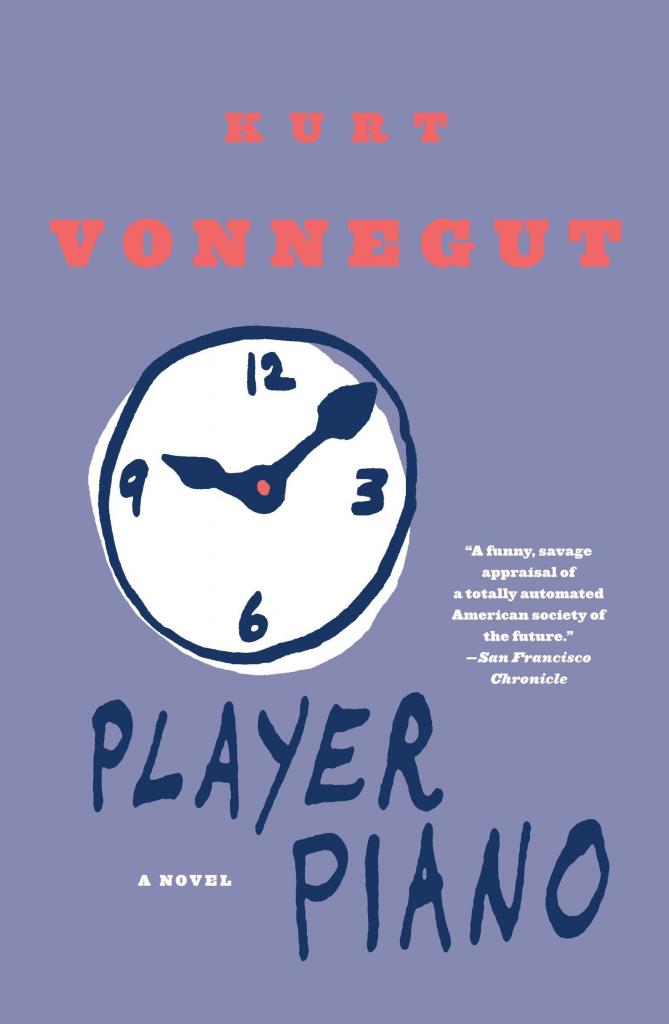
On June 4th, which marked the 30th anniversary of the Tiananmen Square Massacre, I was reading a dark political satire called China Dream. The tenth novel by Chinese dissident Ma Jian follows the mental breakdown of a buffoonish, corrupt local official, Ma Daode. Ma’s bureau is developing a neural implant which will erase the memories of the Chinese people, replacing them with “the China Dream”—that is, with President Xi Jinping’s national propaganda campaign.

Director Ma desperately wants the neural implant for himself. He is plagued by memories of the Cultural Revolution which surface inconveniently in the midst of meetings and speeches. He often finds himself confusing the violence enacted today in the name of Xi Jinping with that enacted half a century ago in the name of Chairman Mao. And yet, when he contemplates erasing his memories of his parents, who committed suicide after Ma himself denounced them to Mao’s Red Guards, he falters. He is not sure if he could live without their memories, however painful they are to carry. 

Image result for china dream ma jian

As I read China Dream, I found myself struggling to gauge the distance between Ma Jian’s dystopian fiction and the dystopian reality he seeks to lay bare. Ma Daode repeatedly encounters frightening instances of cultural amnesia, which I read as satirical exaggeration. “The ‘culture rebellion’, or whatever you call it—we know nothing about that,” a young farmer tells Ma in the village of Yaobang. His daughter texts him about a British protest of “the so-called Tiananmen Square Massacre” which is “full of lies, of course, cooked up by foreign reactionaries seeking to hamper China’s rise.” Surely, I thought, young people are not so easily brainwashed. In fact, Ma Jian insisted when we spoke, “the brainwashing has for the most part succeeded.”  

There are still, of course, those who carry personal memories, but the Chinese Communist Party (CCP) ensured that the Tiananmen Square anniversary passed silently in China. For months prior, Chinese activists were detained, forced into disappearance, questioned, or put under house arrest by government authorities, according to Amnesty International and Chinese Human Rights Defenders. The New York Times reported that censors were more vigorous than usual, quickly removing WeChat posts that mentioned or even cryptically evoked the anniversary, and that many mainland residents had difficulty connecting to virtual private networks, which are often used to access sites and apps that are blocked in China. Police security checkpoints at the entrances to Tiananmen Square made tourists and visitors wait up to an hour in line. 

The CCP’s diligence at suppressing the historic record of the massacre is so effective that, despite the work of local activists, historians, and international human rights groups, the number of deaths and people detained on June 4th of 1989, when the military opened fire on the peaceful, student-led, pro-democracy protests in Beijing and across China, remain unknown. Certainly hundreds were killed in the streets, but many estimate that it was thousands. 

We can attribute my confusion over the line between reality and dystopian satire, in part, to my ignorance; I have never been to China, and I do not know what it is like to live under an authoritarian regime (despite the authoritarian tendencies in the current U.S. administration…!) But the experience of disorientation in China Dream, Ma Jian assures me, is also intentional: “The aim is to show how easy it is for a society to slip into madness, for reality to become absurd. I want the reader to constantly ask themselves what is real and what is fake, then ask the more important moral question of what is good and what is evil.” 

Ma Jian has based himself outside of China—first in Hong Kong and now in London—since he published his first novel, Stick Out Your Tongue, in 1987. The novel cut a stark portrait of Tibet under Chinese occupation, and was immediately denounced by the CCP as “spiritual pollution.” All copies on the mainland were destroyed, and a blanket ban was placed on Ma’s future writing. Ma kept a home in China and often went back to live there until 2011, when the government banned him from returning. “Exile is a cruel punishment,” he writes in the introduction to China Dream, “but living in the West allows me to see through the fog of lies that shrouds my homeland.” Despite the fact that his novels cannot be read in Mainland China, despite the CCP’s recent turn towards its most severely authoritarian rule in decades, “despite everything,” he refuses to surrender to pessimism: “I still believe that truth and beauty are transcendental forces that will outlive man-made tyrannies.” 

I spoke with Ma Jian over email, via his partner and longtime translator, Flora Drew.


Alison Lewis: What was the seed of this novel for you? 

Ma Jian: It was a visit Xi Jinping made to an exhibition on modern China in Beijing’s National Museum [in November of 2012, shortly before being appointed President]. He wandered through the vast halls with his fellow Politburo members—a throng of blank-faced apparatchiks with dyed-black hair. The exhibition charted China’s modern history from the humiliation of the Opium War to the “spectacular rise” under Communist rule, but there was no mention of the catastrophes inflicted by Chairman Mao and his successors—the Great Famine, for example, the Cultural Revolution, the Tiananmen Massacre. After viewing this whitewashing of the past, Xi Jinping announced his vision of the future: the “China Dream of national rejuvenation.” He promised that continued rule by the Communist Party would lead the country to even greater prosperity and restore it to its former central place in the world. This vision struck me as another beautiful lie dreamed up by the CCP in order to remove dark memories from Chinese brains and replace them with a false utopia. 

Orwell’s predictions have come true. Big Brother, Doublethink, Newspeak, the erasure of the past—this is the reality of China today.

Since then, the China Dream has become the leitmotif of President Xi’s rule. The slogan is everywhere, inescapable. I wanted to write about the truth behind this beautiful lie—the totalitarian drive to control not just the past and the future, but every aspect of human life, including the most intimate regions of the human mind. Orwell was of course a deep inspiration. 1984 is his warning to the world. He was saying: this is what happens if tyranny is given free rein. In China Dream, I wanted to show that Orwell’s predictions have come true. His dystopian script is being played out right now in China: Big Brother, Doublethink, Newspeak, the erasure of the past—this is the reality of China today. And with the rise of fake news, surveillance and official lies in the West, truth has become under threat everywhere. Orwell’s warnings went unheeded, and now all of us are paying the price. 

AL: Ma Daode is a despicably self-serving protagonist in a position of relative power—but he is also a character who suffered enormously throughout the Cultural Revolution, and still suffers from his memories. As you say in your introduction, “in evil dictatorships, most people are both oppressor and oppressed.” But I’m curious to know what it felt like to spend so long inside Ma Daode’s head? Were you often angry with him? Were the contradictions in his character a source of solace or of frustration? 

MJ: I see each novel as a chance to become someone I could never be in real life. In The Dark Road, I became a pregnant woman on the run from China’s family planning police. I sympathized with her plight and admired her courage, humor and grit. In Beijing Coma, I inhabited the body of a Tiananmen Democracy protester, who lies in a coma for ten years after being shot in the head by a soldier. He is an “everyman” who, in his coma, becomes a seer, a prophet. 

For China Dream, though, I had to become a person I despised: a corrupt, womanizing Party leader. It’s true that in China, everyone is a victim of the regime. From the top leader to the lowliest vagabond, everyone is both oppressor and oppressed. Disconnected from their past, they have had to learn to survive in a country where there is no security, no humanity, no morals. Xi Jinping himself, despite his absolute power, lives in constant fear that some enemy or other will one day stab him in the back. 

As a writer, I spend my days reflecting on the past, analyzing my every thought and action, so at night I sleep relatively easily. After living inside Ma Daode’s head for a year, I at least understood him. He has to repress his traumatic past while peddling the Party’s promises of a happy future. The contradictions become too much for him to bear. His mind explodes into fragments, like the tree on the cover of the book. But his breakdown leads to insight. He is forced to confront his past crimes, and is able, eventually, to feel shame. 

AL: Ma Daode’s memories from the Cultural Revolution are almost unspeakable in their horror—hundreds of swollen corpses rotting in the Fenshui River; we see the deaths of friends, lovers, neighbors, parents from violence, starvation, suicide. On a craft level, how did you approach depicting violence on such a vast scale—so many deaths piled up on one another? 

MJ: My approach in China Dream was: economy, concision. You’ll notice it’s a short book! Only about 170 pages. I wanted, as succinctly as possible and with the light-hearted tone of a fable, to capture the last seven decades of Communist rule and show the thread that runs through them, from Mao to Xi Jinping. That thread is what Orwell described as “a boot stamping on the human face—forever.” It is autocracy’s crushing of truth, memory and human dignity. 

My humor is often described as black, but I see it as blood-red: the red of Communist oppression, of China’s blood-drenched history. 

When it came to the death of Ma Daode’s parents, my mind filled with all the artists and writers throughout Chinese history who have been driven to take their lives in the same way. For a few days, I felt paralyzed and didn’t know where to begin. In the end, I kept the scene very simple: just an image of the mother and father lying dead, side by side, on the attic floor, their two hands clutched tightly together, the mother’s hand stained purple from the lotion she had used to clean the father’s wounds. I wanted that purple hand, the tight grip that doesn’t loosen even in death, to stand as a symbol for the pain and suffering of all of China’s persecuted intellectuals. 

AL: This history could be played for straight horror, but you approach it with satire and dark humor as well. Is humor necessary in the face of such devastation of minds and bodies? 

MJ: The only way I could write about such trauma was to approach the material from an angle. Satire gives a writer some distance from the horror, a sense of perspective. I’ve always admired the satire of Swift, Gogol, Bulgakov, Pynchon. Humor allows readers to enter places that would otherwise repel them. My type of humor is often described as black, but I see it as blood-red: the red of Communist oppression, of China’s blood-drenched history. 

AL: I was shocked to go back to the introduction and read that Red Guard-themed nightclubs actually exist; I thought you’d invented them. In the novel, the nightclub seems to fetishize the revolutionary fervor the period, but strip it of all its specific details and context, including the mass violence. I wondered if—and how—you think sexuality played into Mao’s mobilization of the Red Guards, and if and how sexuality plays into the cultural memory of this history? 

MJ: Yes, these nightclubs exist. When Mao incited young Red Guards to cause “chaos under heaven,” he brought out the worst aspects of human nature: a lust for power and violence. It crippled the psyches of a generation. Sex was taboo, real love became impossible. Today, these former Red Guards have reached middle age. Ma Daode, and leaders like him, must remain loyal to the Party, but are free to acquire as much money and as many mistresses as they want. Women are reduced to commodities; relationships become artificial powerplays. So, China Dream, among other things, is about the impossibility of authentic human emotions in a morally warped, repressive state. 

AL: The chapter set in Yaobang Village is truly stunning and horrifying. When the government seizes and demolishes the village to build an industrial park, the scene gets mixed up, in Director Ma’s mind, with the mass violence he saw (and participated in) in the same village during the Cultural Revolution, in a clash between two factions, the Million Bold Warriors and East is Red. I wondered if you could explain the context in which history is repeating itself in this chapter?  

MJ: The saddest aspect for me is that the young villagers in the book who are fighting the authorities have no knowledge of the ferocious battles that took place on their land just fifty years before. No lessons are learned, so history repeats itself. Just as in the Cultural Revolution, two members of opposing factions would try to kill each other while both shouting “Long live Chairman Mao,” now villagers and government officials attack each other, both swearing allegiance to Xi Jinping. The Chinese people fail to understand that the real enemy is not the opposing faction or gang of corrupt local officials, but the Communist Party itself, the tyrants who rule from Beijing. 

AL: Another element that we see historically repeated here is local culture being overrun by the state. The people of Yaobang protest that the location of their city, next to the river, enables their livelihood, but even more crucially, that they want to protect their heritage and ancestral graves—to which Director Ma cries “Don’t cling to your petty clanship dreams! Embrace the China Dream, then the Global Dream, and the world will be your oyster.” Could you comment on that clash between “clanship” and nationalism, even globalism, as an obliterating force? 

In China, everyone is a victim of the regime. Everyone is both oppressor and oppressed.

MJ: Dictators demand absolute devotion. Loyalty to clans, family, religion, ethnic groups, are viewed as a threat. When Mao came to power, he broke up families and villages and turned them into communes. Today, the government is continuing to destroy ancient communities, selling the land to corrupt developers, then rebuilding a few of the most beautiful villages to become theme parks for paying tourists. The authorities are terrified of authenticity. They hate what they can’t control: that’s why they’ve crushed Tibet and Xinjiang, and are trying to crush Hong Kong. The Party has always sought to homogenize and globalize. Under Mao, it wanted to liberate the oppressed workers of the world. Under Xi, it wants to export its brand of capitalist authoritarianism, so that every leader, every citizen of the world, becomes as terrified of contesting its rule as the people of China. 

AL: This isn’t addressed in the novel explicitly, but given these themes, do you feel comfortable commenting on the CCP’s internment of Uighurs, Kazakhs, and other Turkic Muslims in Xinjiang? 

MJ: Not only do I feel no discomfort commenting on CCP’s internment of Muslims in Xinjiang, I feel an urgency to denounce it at every possible opportunity. What is happening in Xinjiang now is an atrocious, horrific crime against humanity. Over a million Muslims have been arbitrarily imprisoned purely because of their ethnic identity. The authorities are imprisoning them, not because of “subversive” thoughts they have expressed, but because of ones they have yet to form. And the corridors of these camps are plastered with posters urging inmates to embrace Xi Jinping’s China Dream. This truly is an Orwellian nightmare. The CCP is carrying out cultural genocide. It is trying to erase an entire people’s culture, language, beliefs. It is deeply shameful that the West hasn’t learned the lessons of history, and is turning a blind eye to these internment camps, out of fear of losing trade deals with China. 

AL: Are there protestors, writers, or public intellectuals resisting the physical and intellectual oppression of the CCP today who give you hope? Or is there any room for hope? 

MJ: Most public intellectuals and writers enjoy their privileges too much, and have become apologists for the regime. They say things like: democracy would bring chaos to China, or censorship is good for creativity. But still a few brave individuals continue to resist, even though they risk imprisonment or exile. I have profound respect for the journalists, academics, lawyers, human rights activists in China who fight for freedom of expression and civil liberties, especially the ones who forgo the privileges of Party membership and refuse to couch their criticisms in euphemisms. They face great dangers and deserve the support of the international community. 

AL: With apologies to readers for the spoiler… the novel ends with Ma Daode’s suicide, freeing himself from his memories once and for all. It’s a glorious scene, as he jumps from the water tower “and soars upward and onward, towards a beautiful and radiant future.” But it’s a horrifying scene too, of course; it would seem to suggest that the only escape from the trauma of China’s history, and present, is death. Did you intend for it to be understood so grimly? 

MJ: Every day, there is news of a corrupt Chinese leader jumping off the top of a building. So it seemed natural that Ma Daode would meet the same end. In 1984, Winston Smith is executed. But in China Dream, Ma Daode chooses to end his life. He soars into the beautiful lie of Xi Jinping’s fictitious utopia. I hope the reader sees that his flight transcends physical suicide. It is the disappearance of the self. Because in my view, a person whose memories have been erased is dead, whether they jump off a building or not. Ma Daode’s flight represents not just the voluntary dissolution of an individual, but the spiritual suicide of an entire nation. 

AL: Where do you find the energy or courage to continue to criticize the regime—even as your works are banned in China, even as change feels so far off? Do you ever feel the impulse, like Ma Daode, to forget? 

The ‘China Dream’ is another beautiful lie dreamed up to remove dark memories from Chinese brains and replace them with a false utopia.

MJ: I don’t see myself as courageous. It’s the writer’s job to tell the truth. With every bone of my body, I despise efforts to crush independent thought and free expression. I write in order to nail down outlawed memories so that I, at least, will never forget. When the Chinese government condemned my first novel in 1987 and placed a permanent ban on my books, it made me more determined than ever to continue writing.

Sometimes, it is a struggle, though. Hong Kong publishers are now too afraid to publish my books in Chinese, so for my voice to be heard, I have to rely solely on foreign translations. [Writer’s note: Underground copies of Ma’s previous novels do circulate in China, but outside of Taiwan, no Chinese edition of China Dream exists; it was the first of Ma’s novels to be turned down by publishers in Hong Kong. One publisher said that no Hong Kong bookstore would dare to sell it—likely evidence of the CCP’s strengthening grip over the region.]  Foreign publishers have their own commercial, and perhaps political, agendas. My former US publisher, Penguin Press, dumped me when I submitted China Dream. They said they didn’t “get” the irony. It was a huge blow, and for several months I lost heart. But whether I am published or not, I will never stop writing, or attempting to tell the truth as I see it. I will keep my eyes fixed on the times that I live in, searching for the characters of my next book. 

AL: In your introduction, you write that you “continue to take refuge in the beauty of the Chinese language, and use it to drag memories out from the fog of state-imposed amnesia…” I’d like to ask Flora: what were the greatest challenges in translating this novel into English, a remarkably different language—not to mention cultural and historical context—from the Chinese? 

Flora Drew: I have translated Ma Jian’s books for many years. I agonize over each word, and how one sentence flows into the next. Of course, there are matters of cultural and historical context that sometimes need subtle clarification. But the biggest difficulty is finding a rhythm that corresponds with the Chinese, so that the words can come alive. And there is something else just as important, which is tone, the seamless shifts from the poetic to the darkly humourous, the tragic to the surreal. Ma Jian hates sentimentality, but with minimal strokes, he creates scenes that are deeply moving. Even after examining them in fine detail, I often can’t work out how he does it. But if I manage to replicate the voice, the underlying emotions and meaning seem to find their way onto the page. The parents’ suicide in China Dream, for example, is particularly poignant. I’ve read the passage hundreds of times, but when I reread it recently in translation, I was still moved – not by my English words, but by the spirit of the original text. That’s always the challenge: to capture that elusive spirit, so that readers have the same emotional response to the book as I do when I read it in Chinese. 

What Does It Mean to Be “Black Enough”?

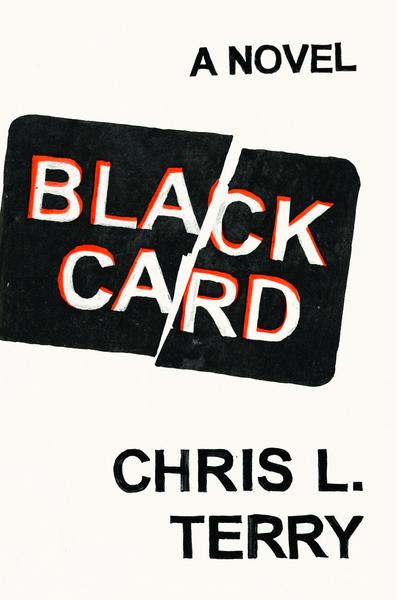
Chris L. Terry’s Black Card is a fascinating meditation on race, with a head-nodding soundtrack that moves from funk LPs to punk CDs, Guns N’ Roses to Outkast. The novel follows an unnamed protagonist, a college drop-out who works as a barista in Richmond, Virginia, and plays bass in a punk band. His bandmates are white, along with the majority of the punks he encounters at house parties and shows, but he’s mixed-race, with a white mother and Black father.

All his life he’s been unsure of his Black identity due to his light skin tone and red hair, attributes that read to white people as “racially ambiguous.” His father tells him not to doubt his Blackness, yet this confirmation comes off more as a warning not to get too comfortable around white people, and, like most kids when receiving advice from a parent, he doesn’t really take it to heart.

Black Card: A Novel by Chris L. Terry
Buy the book

Enter his Black friend and guru in Blackness, Lucius. As the novel opens, Lucius provides the narrator with a “black card,” proving that he is, without a doubt, a Black man. And still the narrator doubts his bona fides. When confronted by racism, in acts both micro and extreme, he finds himself unsure of what to say or do. But when an incident has the police suspecting him of a crime he didn’t commit, the protagonist is forced to grapple with his Blackness, especially in the eyes of white men in positions of authority. 

Terry’s novel explores what Blackness means to someone who feels both a part of and alienated from community, and in so doing it confronts whiteness as it attempts to erase or dictate Black identity. Terry lives in Los Angeles, where in addition to writing he works freelance and is raising a son. I had the pleasure of talking with him about the challenges in writing Black Card, the inspiration behind it, and how he captures the many small ways in which whiteness attempts to assert supremacy.


Brian Gresko: When discussing your previous book, Zero Fade, you said that you deliberately made the main character 100 percent Black instead of biracial, so as to avoid having to write about some of your own identity issues as the son of a Black father and Irish-American mother. This was so interesting to hear, because from the first page, Black Card is all about identity and race. Process-wise, was it different writing Black Card than Zero Fade? And what about emotionally?

Chris L. Terry: I worried that I’d never finish a book if I tried to tackle my identity issues while also writing a novel for the first time, so I wrote a book about something else. Kinda spells it out, huh? It’s easier to write an entire novel than deal with your own baggage.

If your whole life is potential fodder, which parts do you use for a particular narrative?

While I was working on Zero Fade, I was also writing nonfiction pieces about mixed-race Black identity, and they helped get me to a place where I felt ready to address race in Black Card. Since Black Card is more autobiographical than Zero Fade, I had a harder time finding the story. If your whole life is potential fodder, which parts do you use for a particular narrative? Lucius ended up being the character who helped me form the story. Without him, there’s no beginning or end.

A lot of the insecurities around creativity are the same from book to book. I went from, “What if I don’t ever write a book?” to “What if I don’t ever write another one?” I’m working on my third now and that worry won’t go away.

BG: Lucius is a fascinating character, especially as the novel progresses and the narrator’s relationship to him becomes more complex. How did he come about?

CT: I wrote a fast and sloppy first draft and realized that my narrator was spending a lot of time thinking about race while alone. He needed someone to talk to, so I added Lucius.

I hope that Lucius and Mona show different layers of a Black person’s relationship to Blackness—the tension of being an individual, who is part of a group of individuals, that is seen as a monolith by the world at large. When the narrator asks Mona invasive questions about her Blackness on their date and when the police seem dismissive of her assault because she’s a Black woman, Mona is forced to represent her entire race. Lucius moves in the opposite direction. When Lucius decides if the narrator’s actions are Black enough, he’s the narrator’s conscience as a member of the Black race, giving him the burden of being an individual in an oppressed group. In this book, I wanted to expand the definition of “magical negro” to include the times when Black people represent Blackness to other Black people.

BG: What other sources helped bring you to these revelations? Either writers, filmmakers, or musicians who make similar inquiries in their work that played a part in how you represented these questions in the story?

CT: Danzy Senna and Mat Johnson are both mixed-race Black authors who are making vital work now. Reading their books when I was first getting serious about writing gave me permission to tell stories about an identity like mine. Before that, I just knew Harlem Renaissance Passing Narratives, nothing new.

Paul Beatty’s work reminds me that absolutely nothing is sacred, and that you have to love something if you want to do a good job of making fun of it.

Queer coming-out stories really move me, as well. I just listened to the audiobook of Bob Mould’s memoir See a Little Light. There’s a section where he talks about getting to know himself as a gay man when he was in his late 30s. He starts hanging out at a cafe in the West Village in New York, just being around other gay men, and learning their stories, and the neighborhood’s history — from Stonewall, through the initial AIDS epidemic, and forward. He’s giving himself a context that he never felt allowed to have before. It’s touching. I know it’s different, but I see some parallels between Mould’s story and my own experiences with racial identity. I had a similar feeling when a couple of my friends came out as transgender. It’s beautiful to watch someone become who they want to be, and move forward.

BG: I recently had the chance to talk with Kiese Laymon about his memoir Heavy, and he spoke about the role readership plays in his process, how he thinks about writing to and for a Black audience. Did you imagine a readership for this book when writing it? Does that idea help or hinder or have any value to your process?

CT: Black Card is a story about identifying the feeling of being a non-white person in a white supremacist country. I hope Black people and other non-white people will read it, relate, and have a few laughs at the narrator’s expense—”It took him this long to figure it out? Come on!”

Don’t get me wrong, white people should feel guilty for every bit of privilege that they’ve had, but I want to see that guilt turned into something constructive.

I hope that white people will read it and gain a greater understanding of the ways that their actions and attitudes can hurt the people of color who they claim to have accepted.

I’ve also noticed that white liberals like poking fun at the superficial aspects of their own whiteness, like that Stuff White People Like blog from 2008. I hope I can appeal to that same masochistic urge in white people, but dig in deeper, past the jokes about NPR tote bags and running marathons, and chip away at the underlying privilege.

I find that in-joke style of white guilt to be off-putting because I don’t see enough action behind it. Don’t get me wrong, white people should feel guilty for every bit of privilege that they’ve had, but I want to see that guilt turned into something constructive. Don’t just joke about how you’re “so white” for dropping $200 at Whole Foods. Talk to your peers about what can be done to help other, less-privileged people access organic food. Stop wringing your hands and put them to work.

BG: You’ve done an amazing job illustrating how the white supremacist culture so often dictates, or tries to define and thereby limit, what Blackness is in America. One moment this came across was when the word “wigger” comes up, when the main character is in high school. I attended an almost entirely white Catholic middle school in the suburbs of Pennsylvania, and we used that word to describe the rapper Vanilla Ice. In Black Card, the main character feels like “wigger” describes him, to which his white friend says, “You don’t act Black,” essentially wrapping his racism in a perceived compliment. This led me to reflect on that shameful part of my past, a time when I was breathing in white supremacy and had no space to imagine a more enlightened and diverse environment.

CT: I’m glad that you’re thinking critically about these memories. A big part of what I’m trying to show is the way that these minor bits of racism combine to create an oppressive atmosphere. Those microaggressions are a death by a thousand cuts. 

Racism isn’t just a guy in a KKK hood calling someone the n-word. It’s more insidious than that. It’s calling Vanilla Ice a wigger (which made me chuckle), or the way one of the white guys at my old job would slip into a blaccent when talking to his Black coworkers. Those are both subtle ways of othering Black people. They enforce white supremacy, and that should not be sugar coated.  

Your Vanilla Ice memory reminds me of the skepticism I faced as a hip-hop fan, living in an affluent white area in the late 1980s. Other kids would ask, “Ew, why do you like that music?” I liked rap music because it was exciting art and because it gave me more of an idea of myself as a Black person, but I was way too young to explain that. At the same time, experiencing this resistance to Black culture made me feel like I did not belong in that supposedly desirable suburb—a place with highly rated schools and a low crime rate. Everyone deserves safety and quality education, but I was indirectly made to feel like I did not.

BG: How did the decision to never name the narrator come about? This choice encouraged reading the story as autobiographical, since some of the details you include in your bio align with the character’s life in the novel.

Racism isn’t just a guy in a KKK hood calling someone the n-word. It’s more insidious than that.

CT: Ah, crap, I was going for the opposite. While the book obviously has some autobiographical elements (I was a punk rock barista in early 2000s Richmond), it’s definitely fiction. The street names and feelings are real but, that’s about it.

Also, the unnamed narrator is a nod to Ralph Ellison’s Invisible Man. At one point, I wanted to write a mixed-race Invisible Man, but in writing Black Card, I realized that the invisibility the narrator feels when people see their prejudices before they see him isn’t just a mixed-race thing, it’s a Black thing. My narrator is sorting through those forms of alienation, figuring out their sources.

BG: Has fatherhood changed your writing in any way? Either in terms of what you write, or how you get your writing done?

CT: When my wife was pregnant, I was worried that I’d never write again when our baby was born, but that has not been the case. Sometimes I miss those childless weekends when I had all day to write. Then I remember that I spent most of those days jogging and fooling around on the internet and only really wrote for an hour or two anyway. I can still write for a couple hours after my kid goes to bed. I just try to write a little bit on a regular basis so the ideas stay fresh in my head—build brick-by-brick and soon enough, you’ve got a house.

I’ve matured a lot since becoming a parent (I swear!) and I worry that it makes younger mindsets harder to access in writing. But that could also just be because my youth was officially a long time ago.

Aimee Bender Recommends “Guts” by Kimberly King Parsons

When I start dating Tim, an almost-doctor, all the sick, broken people in the world begin to glow. Light pours from careful limpers in the streets, from the wheezers and wet coughers who stop right in front of me to twist out their lungs. People I once found gross or contagious are radiant, gleaming with need. The newborn on my bus shines like swaddled halogen—harnessed to his tired mother’s chest, he turns his jaundiced little face toward me, no matter where I sit. I’ve always been a noticer, but this tug from the hearts and minds and ailing bodies of strangers—this is all Tim’s fault.

“How can you stand it?” I say to him.

We’re at the movies, in the very back row, the theater—I swear—full of hidden rashes and shriveled limbs. I tell Tim that even the Jesus screamer—the guy who paws through my garbage and sometimes shits on my front stoop—he is now incandescent, his eyes drippy with hope.

“It’s too much,” I say. “Beautiful, shattered people everywhere. Is this what it’s like to be you?”

We’re too early, as usual. Trivia and local business ads flash on the big screen. The movie Tim has chosen is a comedy, a mistaken-identity caper with a pug dog in a supporting role.

“Nah,” Tim says, and yawns. One of his eyes closes. “I turn it on and off.”

Tim is a week into his internal medicine rotation, and I have so many questions. I’d rather be sitting across from him at the Chinese place, dumplings on the way, listening to him talk about patient histories and lab data, about how best to deliver bad news. I want to absorb it all—the lining of every wrinkle in his brain. But Tim is too tired to eat, exhausted from being on call. He picks movie dates because when the house bulbs dim he can drift off. He thinks he’s got me fooled.

People I once found gross or contagious are radiant, gleaming with need.

“They’re all so fragile,” I say. I mean the strange heads in front of us, other people waiting for the lights to go out. “Well, yeah,” Tim says. His device vibrates in his pocket.

He takes it out and taps on it. “But unless I’m looking at somebody’s chart I don’t really think of them that way.”

Tim’s device flashes. He taps and taps. “Goddamn it,” he says. “Give me a second.” He steps into the aisle to call somebody important.

I’m wearing control-top tights over control-top underwear. With Tim occupied, I breathe a little deeper, take a break from sucking in.

An old woman enters the theater, staggers up the steps. She’s a bright spot in a lank dress, one arm bandaged at the bend. Loud blood beats in my ears. She’s every frail grandma, every elderly aunt I never visit, every maternal figure who has loved me in spite of my selfishness. I use my mind to help her safely up the steps, all the way to Tim, who has finished his call. Authority teems from him, even without a stethoscope around his neck. The woman leans in close and asks him something, where is she, is this the right place? Tim gestures directions, waves her away. She starts down, afraid to push off from the handrail. She shimmers, the type of woman who makes you heart food from scratch, recites the recipe while you eat.

Tim comes back to his seat and sighs hard. “That lady’s dumb nose touched my glasses,” he says. He holds them out, shows me a smudge on the lens.

He’s tired, a little cranky, maybe. I get back to the heads. “Is it like being a hairdresser?” I say. “Like you have to separate yourself or you’d be tortured by people’s bad choices? Awful perms?”

“Maybe,” Tim says. He uses his device to search for reviews of the film we are about to see. He reads them aloud. Tim has a voice that sounds like everything will be okay. It’s a tone they must teach in med school.

“Rip-roaring,” he says. “Hysterical but with heart.” Tim starts breathing slow during the previews. He’s snoring a little by the opening credits. I lean into him, pose his hot arm around my shoulder. I put my hand into our bucket of slippery popcorn. I don’t tell Tim that I find movies in the theater confusing. The giant stars and their giant mouths are unsettling—the background actors unconvincing, living life with too much zeal.  But I like going to the movies. I like plush seats and frigid air, all the dark snacking.

When I lose track of the plot, I lean away from sleeping Tim and reach into my huge, floppy purse. I feel around for contraband, one of the secret tallboys I picked up at the gas station. Onscreen, a bank teller insults the leading man while the dog pisses on a potted plant. I look at the descending theater heads and some of them start to flicker. I see a tiny black tunnel spiraling through one guy, his brain tissue eaten away and peppery in places. I guzzle the tallboy through a car chase and a madcap karate fight. I watch the sick, sparkly heads and hope these people can make peace with what’s happening to them. I know there’s nothing to be afraid of—death is just a countdown to the calm—but I’m doing that thing where I can’t pull the oxygen from the air, where everything I look at gets smeary at the edges. I drink and drink and focus on the threads coming together onscreen. The leading man is vindicated. The pug wears sunglasses and drives a car, its little paws on the steering wheel. I pop tallboy two. Tim’s mouth falls open.


Tim moves through his rotations and I move along behind him, picking up shards of knowledge, trying to make sense of them. When he isn’t exhausted, he entertains my questions.

“Pretend I’m a first-year,” I say. “Leave nothing out.”

I want to know about lumbar punctures, so Tim touches my spine while I brush my teeth. He uses his finger to dig into my lower back.

“This is the spot,” he says. “Between L4 and L5. You draw a line from the iliac crest.”

I’ve seen the crest he’s talking about, that scooped bowl of bone on the hips of supermodels and centerfolds, but I’ve never seen mine. Tim is already dressed, a silver pen clipped to the pocket of his lab coat. He talks to my lumpy, naked reflection, raps his hard knuckle between my vertebrae.

“I’m amazed you can find a bone anywhere on me,” I say.

I spit white foam into the sink. Tim says spinal taps are easier to perform on infants because their bones are still soft.

“Like a needle into butter,” he says.

I shudder and ask if he’s afraid of paralyzing a baby. “Those itty-bitty bones!” I say. “Their wittle tiny backs! What if you mess it up?”

Tim tells me again he’s the best in his class—there were no white blood cells in his last spinal.

“They call it a champagne tap,” he says. “The chief resident buys you a bottle to celebrate.”

He looks at his hand on my back and frowns. “May I?” he says.

He pushes until his knuckles find the buried grooves in my spine. He works his fist up the column of bone, straightening me out as he goes. He rests his palm on the back of my neck, then braces his other forearm across my chest.

“What’s this, the Heimlich?” I say. It’s a rough kindness, this unexpected attention, and it flusters me.

Tim concentrates on shifting everything about me inward and upward. Once he’s satisfied, he holds me in place, backs slowly away. My reflection looms in the foreground. He has made the difference in our heights obvious. I’m so much wider than Tim and now I’m taller, too. He assesses his work, finishes with an upward tilt of his head, which I mimic.

“Better,” he says. “So much.”

“I know, I know,” I say, holding the pose.

“Don’t shrink yourself,” he says, serious. “Take up your space.”

“Oh, that’s no problem,” I say. “That, I’m great at.”

“Stop it,” he scolds. “Don’t put yourself down.”

He steps in front of me and turns off the water, uses one of his monogrammed hand towels to dry the basin.

“Look at you!” he says. “I like it.” Then, quietly, he says, “I like your size.” And suddenly it’s there, my size, this third person in the room with us.

Then, quietly, he says, “I like your size.” And suddenly it’s there, my size, this third person in the room with us.

Tim looks at himself in the mirror and shows his teeth. The steam from the running shower fogs up his glasses. He takes them off and uses his lab coat to rub the lenses. I start to slouch.

“Quit holding your breath,” he says. “Don’t lock your knees.”

“There’s no way this is how real people stand,” I tell him. “It’s exhausting.”

“Good posture takes muscle memory and mental effort, both,” Tim says. “Use your brain until your body gets it.” Tim moves through the world like a human clipboard.

He goes to make the coffee, and I rush to take a shower. He says it’s better if we leave at the same time. “That way we can enjoy each other’s company in the car,” he says. I don’t have a key to his place.

Tim moves through the world like a human clipboard.

In the car Tim plays the classic rock station. He slurps coffee from his thermos and steers with his knees. He floats through traffic, catching every green light. It’s still dark when he drops me at my office. He parks head out in a handicap space and leans over me to open my door.

“Have a productive day, babe,” he says, and taps my nose.

“You, too,” I say. “Good luck with all the guts.”

The car rises when I get out. Tim turns up the radio and powers down the windows. I use my big purse to hide my ass as I walk away.

I don’t have a key to the office, either, so I go across the street to sit on the benches in the park. I eat a few bites of the toast Tim packed for me. He uses a plant sterol called Take Control! instead of butter. He says it’s scientifically proven to lower cholesterol in rats. It tastes like ChapStick
melted down. Eventually, I give up and throw hunks of bread at some birds. I peg one square in the chest, and it stands there, stunned.

Your size.

Tim is on a program of radical truth telling, and he says it’s setting him free.

Nobody else is around—no moms with babies, no joggers jogging—so I tie my hair back and take out my one-hitter. It’s another secret from Tim.

“Drinking is one thing,” he tells me. “But pot keeps people from reaching their potential.”

Tim is on a program of radical truth telling, and he says it’s setting him free.

I get a little bit high, watch the world wake up.

There’s a lit window at the Arby’s where a cute cashier once mocked me for my big lunch order, ruining the place forever. I wonder if it’s the same kid opening shop, if he’s the one up early, cleaning grease traps, pushing a mop around. So many places have been wrecked for me. One mortifying moment triggers all the rest. It starts with fast food and radiates outward, a map of shame. Usually these thoughts make me feel like I’m being pushed to the ground, somebody’s knee on my chest, but now I’m detached, each embarrassment an object resting in front of me, something to be picked up and weighed in my hand. That’s the weed working.

There’s the skating rink where a boy with fluorescent braces broke my teenage heart. There’s the jagged sidewalk where I rolled my ankle and some asshole called out, “Timber!” as I fell. There’s the public pool where I misinterpreted a friend’s intense stare, his fingers grazing my bare shoulder.

“It was a mosquito!” he squawked, my hand already on his underwater dick.

I keep reloading the one-hitter. It’s still so early. The weed I have is threaded through with little hairs. Colors start, everything gets pretty and crisp, exaggerated. There’s something about how pot releases pressure in your eyeballs. Tim would know. Warm light slides around for a while. I blow smoke, and pink clouds stream across the sky.

After a while the birds get beady-eyed and silent, suddenly judgmental, cocking their heads to see me from different angles. The sunlit trees are too leafy, overwhelming. Crickets get rowdy in the bushes, and for a second I think the hood of my jacket is a person looming behind me.

“People respect the truth,” Tim always says. I contemplate taping a note to the office door that says: Got high. Got too high. Had to go home. The birds finish my toast and then fly up and swarm with their friends, all of them swirling and looping into one big-ass bird.

When the coffee shop opens, I take a table by the window, lick lavender glaze off a doughnut. It’s sublime. I flip through free circulars and wait for nine o’clock.


Irene drags one of the lobby chairs up to my desk. I keep an eye out for Mr. Beezer, who doesn’t like chitchat.

“Are vitamins a waste of money?” Irene asks. She uses one of her business cards to pick her teeth. “Because I heard you just pee them out.”

She pulls a glob of plaque off the card, rolls it between her fingers.

“What about homeopathy?” she asks. “What does that even mean?”

I shouldn’t have bragged to Irene about Tim, how he’s a white-hot star being singled out for greatness in life.

“I don’t know,” I say. “I’ll ask him.”

Irene puts her business card back in the acrylic holder on my desk. Irene’s cards are displayed behind Mr. Beezer’s. Irene is Mr. Beezer’s assistant. When I’m not answering phones or greeting visitors or making coffee, I am Irene’s assistant.

The lobby is empty. A man’s overcoat is draped across one of the couches.

Mr. Beezer’s office door is closed and he’s turned his line to “unavailable.” Irene’s door is open. A steady stream of AM talk drifts from the plastic radio on her desk. I trace the outline of my hand on company stationery.

“Ear candling’s a joke, probably,” Irene says, and scrapes at her fingernail polish with my letter opener. She makes a pile of red flakes by my stapler.

Irene’s radio says, “Prices are slashed! Slashed! Slashed!” She bites at a hangnail. “Ask him about gargling with salt water, too,” she says. “I heard that’s a scam. I heard the salt people made that up.”

My pen is out of ink. I trace manic invisible circles on the message pad, the top of my desk, the back of my hand. The phone rings, and I recite the greeting script. Mr. Beezer says the person on the other end can hear a smile, so I smile. Irene keeps looking at her nails, but she mouths along and smiles, too, toothy and deranged.

“It’s for you,” I say, and transfer the call to her office. She stands up and breaks into an awkward gallop. It’s possible that Irene is slightly fatter than I am. She’s shorter, and though my thighs are definitely smaller, my waist is maybe bigger. Tim says the eye prefers a 0.7 waist-to-hip ratio—there have been studies.

“I could care less,” he’d said. “Or I couldn’t care less, whichever. I mean ratios don’t matter to me, obviously. It’s just a fun fact.”

Obviously.

It’s possible the eye prefers Irene, even if she’s bigger overall.

When Irene’s door closes I use one of Mr. Beezer’s cards to rake the red slivers of nail polish into the wastebasket. I move the chair back into place and make my pass through the lobby, situating a disrupted nesting table and hanging the overcoat on a brass hook. I pluck fuzz off an ottoman.

Mr. Beezer wants the lobby to feel like a living room,  a place indicative of the homes he sells. Every morning, I float fresh rose petals in cut crystal bowls. I fluff throw pillows and spritz the room with cookie-scented air freshener. Unfortunately for Mr. Beezer, an office is still an office. The fluorescent light is harsh on the paisley wingbacks and brocade window treatments. The ceiling tiles are institutional. A copy machine dominates the north wall, its yellow extension cord trailing under the Oriental rug. My desk is the biggest giveaway, though I keep my wastebasket out of sight and hide my Kleenex box under a floral printed cover. It’s too bad the clients don’t see the room from behind my desk, where the perspective is slightly more convincing.

In the break room I rinse out coffee mugs in the sink.

Irene comes in with one of Mr. Beezer’s files.

“This wasn’t in the right place,” she says. “Not even close.”

“Oh, no,” I say. I turn off the water and dry my hands on my skirt. “I’m so sorry.”

Tim keeps telling me to stop being so sorry for everything all the time.

“I don’t apologize for anything, ever,” he says. And it’s true, he doesn’t.

Irene moves in so close the space between us is now charged, tight enough to be slapping space or hugging space. I can’t think of any recourse, so I brace myself for something unwelcome, whatever it is. All Irene does is cup her mouth and stage-whisper, “This caused us a lot of embarrassment. We looked extremely unprofessional.”

“Okay,” I say. “I didn’t realize.”

Irene shifts her weight and stares at me. Bright peach gloss congeals in the corners of her mouth.

“Look,” she says. “Your job isn’t only phones. Reception is more than that.”

I know what my job is. Irene knows I know what my job is.

“I see what you mean,” I say. There are only so many things you can say when you should be saying you’re sorry.

Irene puts the file on the countertop.

“Beezer is so far up my ass,” she says. She closes her eyes and squeezes the bridge of her nose. She sidesteps me and pours herself a cup of coffee, dumps in an avalanche of powdered cream.

“Just use your brain, please?” she says. She’s Irene again, aggressively friendly, helping me to be better.

“The first rule of filing,” she says, “is nothing comes before something. You should know that.”

“You’re right,” I say. “I should.”


Tim calls at lunch. I’m eating at my desk, a cheeseburger and fries in the open top drawer, stacks of Mr. Beezer’s files all around. I shoulder the phone, correct mistakes as I go along. “Meyer Realty Group” before “Myerson, Elliott” and “Park Vista Condominiums” before “Parker Estates.” Tim tells me the first-year anatomy students couldn’t find a cadaver with a uterus. He says four out of five women who donate their bodies to science have had hysterectomies.

“They have what’s called a blind-ending pouch,” Tim says. “It’s exactly what it sounds like.”

He tells me the first-years will have to complete their studies on female pigs. I lose my place in the alphabet.

“You’re kidding,” I say.

A stray piece of paper floats out of the file cabinet and onto the floor.

“No, it’s true,” Tim says.

The paper slips all the way under my desk, where I will have to crawl and smoosh myself around to get to it. Fuck filing. Just like that I’m done with administrative duties for the day. I merge the contents of two unrelated accounts and cram them into the cabinet. I drop the empty folder into the trash. I’ll shred everything later, leave no evidence.

“I mean, I could understand a monkey, maybe,” I say. “But this is ridiculous.”

Tim is quiet, and I can hear the hospital loudspeaker fizzing on his end.

“I’m just saying there are, like, implications.”

“Pig anatomy is really very close to ours,” Tim says. He sounds tired. “Nearly all major structures are the same.”

“But not exactly,” I say. “They aren’t exactly the same.” I shove thick stacks of files into the space at the back of the alphabet.

“Of course not,” he says. “But they have to take what they can get. Everyone is disappointed.”

We hang up, and I finish my food. I fish out every last fry from the warm, greasy bag.

Irene stands at the copy machine, backlit by a periodic flash. I’ve got a food buzz—my vision is gauzy.

I stare into the fluorescence of the lobby and imagine Tim among the first-year students. I picture him lifting sheet after sheet with growing disappointment. He catalogs the women by sight, moving between their open bodies.

I picture him lifting sheet after sheet with growing disappointment. He catalogs the women by sight, moving between their open bodies.


Mr. Beezer leaves early. I leave when Irene leaves. She takes the fat ring of keys from her purse and locks up while I wait behind her.

“Give me some room,” she says, elbows jutting.

“Have a great night,” I say when she heads to her car.

She puts both thumbs up and keeps walking.

I smoke on my way to the bus stop, past the spoiled Arby’s and Mr. Beezer’s dry cleaner, past Pegasus Plaza and a gross motel Tim calls the Sexual Asphyxiation Inn, where people are always throwing bottles of piss out the windows and setting each other on fire.

There’s a crust punk by the entrance, leaning against bulletproof glass. I pass him all the time, but now I notice he has a cast on one leg. His toes poke out, wrinkled and covered in some kind of dark gunk. His eyes are milky. He shakes an amber bottle of pills at me, hisses a price. I fight the urge to give him everything in my wallet, to drop to my knees and sign my name on the plaster, dot my “i” with a little heart. He’s dazzling under the streetlights—so pitiful and pretty he may as well be wrapped in tinsel.


My bus runs in a loop—the population swells downtown. I’m killing time, waiting for Tim’s shift to end.

The aisles are filled with commuters holding leather straps. The turns are wide and everyone sways together. No one tries to sit on the sliver of seat next to me. “Keep it moving,” the driver says to the swarming rush-hour bodies.

A woman in a hairnet scratches her neck. A red patch slinks under her shirt collar, disappears at her ear, reappears on her cheek. Her skin is dry and coarse but not peeling. Eczema? Psoriasis? Tim would know. He would warn her against starch, against detergent and perfume. He would snap on a pair of latex gloves, spread her thick with antibiotic cream.

At Greenville Avenue, a delivery boy replaces the itchy woman. He looks through his orders and chooses a Styrofoam container, throws strands of some poor customer’s lo mein into his mouth. There is a faint mark, a white star, in the hollow at the boy’s throat. It’s a trach scar. If Tim had to, if things got desperate, he would use my Beezer Homes pen to reopen the star, save the boy from choking to death. All the bus people would applaud, insist on celebration. The driver would detour and double-park, hazards flashing. The crowd would carry their hero to the nearest bar.

The bus stops again, empties out. The delivery boy and I watch Tim’s parade from the window. With everyone gone, there is only the sound of new air, wet and frantic, rushing through the boy’s throat.


I’ve missed happy hour by a long shot—everyone is drunk and in various states of collapse. It’s a dive, a last resort. The ceiling is tiled with license plates, and the bar taps are gear-shifts. A bald woman licks salt out of her palm and takes a shot of tequila, smiles at me through a wedge of lime.

I sit next to her and watch the reflection of her curved skull behind rows of liquor. She’s painted golden eyebrows onto her forehead. I wonder if there’s a wig in her purse.

The jukebox starts playing a song everybody knows, one that has its own dance.

“Come on,” the bald woman says, and pokes me in the arm. “Shake your shit.” She dances in place on the barstool, her little hands up in the air.

“Give me cheap,” I tell the bartender.

I shoot quick doubles, gin poured from the plastic bottle. I think of icebreakers, pleasantries, but the words fall away. The bald woman and I don’t talk, but we are sharing space now, getting to where we’re going. She lights little books of bar matches, burns them down, and shakes them out. My ass is aching—there is no barstool suitable for it— but the drinks are helping, like when your eyes adjust to a dim room.

“What kind of cancer do you have?” I ask.

“Excuse me?” she says, and looks behind her, like I’m talking to somebody else.

“I mean, obviously, right?” I say to her.

“What a fucking question,” she says. She talks around the matchbook in her teeth.

“It’s not lung, is it?” I ask. “Can I see your fingernails? Have they overrun your cuticles?” I glance at the woman’s hands on the bar top. She draws them into little fists. “Are they spreading around the edges and meeting on the other side? Is your urine gray?”

“Ha,” the woman says. “No.”

She shakes her head and fumbles with the matches. She strikes one and lets the whole book go up. Her face is terrible in the flash.

“I’m interested because I’m a doctor,” I tell her. “I’m a medical doctor, so these things interest me.”

“Well, shit,” the bald woman says. “A doctor.”

“I’m a heart doctor,” I explain. “But I treat cancer patients, too. There’s a lot of overlap.”

“Cardiologist,” the bald woman says. “You’re a cardiologist.” She laughs.

“Yeah,” I say. “Yep. What about you?”

“I’m on disability,” she says. “I do what I want.”

“Amazing,” I say. “Enjoy it.”

Down the bar a man is slumped over, sleeping.

“Surgery, surgical procedures,” I tell the woman. “I’m a doctor.”

“Right,” she says.

“It’s really rewarding,” I say. “It’s a rewarding career.”

“I don’t think I’d have the stomach for it, personally,” she says. “For cutting people open.”

“Part of the job,” I say. “Gets to be routine. Like a doorman opening a door.”

“Sounds like you’ve got every little thing figured out,” she says.

She flashes fingers at the bartender. Her wrists are delicate things. A neon sign casts her fine collarbones in blue light. If it weren’t for the woman’s head, she could be a model. I asked Tim once if there were any hot cadavers, any beautiful bodies who donated themselves to science.

“That’s sick,” he’d said. “You’re sick.” But he had laughed a little. “Don’t tell me you’re jealous of dead people now, too.”

The bartender pours our round slow and loose—runoff pools on the bar. Carpal tunnel, maybe.

“Bone cancer,” the woman says when the bartender is out of earshot. “But it started in my pussy.”

“Oh, bone?” I say. “That’s no problem.”

The woman slaps both her palms on the bar top, shaking caddies and highballs, scattering salt into her lap.

“Is that so?” she says, and hoots. The sound comes from behind her head, from somewhere else. She brings up her drink in a toast. “In your opinion, bone cancer’s no big deal?”

“That’s right,” I say, and clink the lip of the woman’s glass. “In my professional opinion, you’re going to be just fine.”


Tim tells me doctors make the best lovers. “It’s anatomy,” he says. “It’s just knowing where things are.”

He tells me this during my breast exam. He wears his little white lab coat. I’m high and naked, and Tim is thorough, slow, his glasses off.

“Let’s see what else we have,” he says, and gets down on his knees. His face is so small next to my body.

He inspects me an inch at a time with his hands, his mouth. He moves up my thighs.

“You’ve got a lot of ground to cover,” I say.

“Don’t start,” he says.

He spreads me apart and points out markers. He says, “This is the labium majus . . . and the minus.”

He describes me in words I’ve never heard before— some that sound good and some that sound horrible, like poetry or caught phlegm, depending. It’s the hairy weed that’s freaking me out, making everything sinister.

He describes me in words I’ve never heard before— some that sound good and some that sound horrible, like poetry or caught phlegm, depending.

Tim touches my cervix with his finger. I know it’s my cervix he touches because he gets excited and tells me, “This is your cervix, Sheila.”

“Okay,” I say. “Enough.”

But he doesn’t stop. He continues to chart me, pushes upward until I feel something in a strange place, a place that hasn’t been or shouldn’t be touched. It’s impossible, what he does with his hand. He says the word “vault” and then, softer, the word “vestibule.” I think of the space between two closed doors.

When he’s finished with me, Tim goes to the sink. There are twenty-eight planes of the hand, and Tim washes all of them. He’s told me over and again what the parts are, but I can never remember—the four sides of each finger, the tops of them. The palm is divided into three sections, maybe. There are dorsals, flexors; the words tumble out too quickly. “It’s rote at this point,” Tim says. “I don’t even think about it.”

I stand at the sink behind him, as straight as I can manage. “I like watching you do it.”

“It’s just how we scrub in,” he explains.

When I wash my hands, I count, too. I get to twenty-four, maybe twenty-six planes. I’ll never figure it out. This is how you make someone love you—you teach them something memorable about something boring, something they must do every day for the rest of their life.

“When you leave me,” I tell Tim, “I’ll be stuck with wet hands, counting forever, getting it all wrong.”


A man pukes blood in the lobby. It doesn’t look like blood, but blood doesn’t look like blood when it’s in puke. Blood looks gritty, like coffee grounds. I don’t tell the man this when I bring the box of tissues over from my desk. This is my chance to be a calming presence.

The man’s wife holds my wastebasket under his dripping chin. They are newly married and building their first home. The wife says it’s possible nerves are to blame.

When black liquid begins to come out fast, the man stands up and spins around, trying to outrun the problem. He covers his mouth with his hands, but instead of stopping the flow, he pressurizes it. Irene, who is sweetly correcting herself for something in Mr. Beezer’s office, steps out in time to see the pukey projection, the distance. She stops in the doorway, her hands in her hair.

“Oh my God,” she says.

I should love my body more. It carries my soul around, lets me taste food and get high and come, and it never pulls shit like this.

I should love my body more. It carries my soul around, lets me taste food and get high and come.

The man and his wife will have to reschedule. The wife apologizes before pushing her husband through the double doors. His crumpled black tissues trail through the lobby.

“Sheila,” Irene says from the doorway, “something has to be done about this.”

“I know,” I say, and watch the black circles seeping into the throw pillows, ruining the rehearsal home.

The lobby is an extension of me, and I am an extension of Mr. Beezer. There isn’t really a way to prepare for something like this, to clean up something that belongs inside someone else. I am composed, collected, handling the situation.


Tim tells me he wants to spend the night alone.

“Can I put my panties on before you kick me out?” I say.

“Funny,” he says. He kisses me, but it’s perfunctory. He yawns. “It’s been such a long day.”

“It’s so early,” I say.

He tells me a patient his group has been following was lost forever under deep anesthesia.

“Jesus, that’s awful,” I say. “Do you want to talk about it?” I touch his hand, turn toward him in bed.

“It was a fluke,” Tim says. “Nobody’s fault.” He says he learned a lot: how to pronounce time of death, how to fill out morgue forms.

“The paperwork is insane,” he says. He fluffs his pillow, flips the blankets down on my side to let me out.

A sad sigh comes out of me before I can stop it. “Babe,” he says. “Everything’s fine. But I need to recharge.”

“Can’t I help you relax?” I say. I hate the desperate catch in my voice, the frantic feeling I get when he needs space. “No talking, I swear. I’ll read over here.”

I pick up one of his textbooks, flip to a full-color spread of warts on a foot. I sit at his desk, switch on the reading lamp.

“You don’t want to read my derm book, babe,” he says. “Trust me.”

“You really want me to go?” I say. I stand up and put my dress on slowly, dramatically buttoning each button to give him a chance to reconsider. He doesn’t. I wad my tights into a ball and shove them into my purse.

“I guess I’ll go out drinking,” I say. I’m picking a fight.

“Drink if you want, read if you want,” Tim says flatly. “Just not here, okay?”

I ask again why he’s even with me.

“Because you’re so independent,” he deadpans. I feel my face fall. He gets out of bed, wraps his arms around the biggest part of me. He’s sorry, in his way.

“You’re funny, for one thing,” he says. “Funny equals smart.”

“I’m no M.D.,” I say. I let myself sink into him, try to store this feeling for later. “I’m no R.N. or EMT. I’ve got none of the letters.”

“There are lots of different types of intelligence, babe,” he murmurs into my hair.

“That’s something smart people say to dumb people,” I say.


The world tilts and all is gray and churning, silvery bile. The bartender is stern, mad at me for something. I move through the bar like a sow on roller skates, people part the way. A pretty girl with a lazy eye holds open the bathroom door for me, and I duck under her arm, grateful.

I shutter myself in a stall and slam down on the toilet. Something cracks in the tank behind me, and there is a sound like water spraying somewhere inside the wall. Oh, well. Even when I’m sober, I don’t have the quads for hovering.

The spins don’t feel circular to me—there’s a kind of visual stutter, a section of the bathroom stall that keeps rewinding. It’s more interesting than nauseating, but I have to grab on to the sanitary receptacle box to steady myself. The box is cold metal, jutting out into the stall. Some wrongheaded curiosity compels me to lift the lid and look inside. It’s soaked tampons and pads, exactly what I expected, all the way down to the smell.

The door swings open and music rushes in. Clicking heels and water running in the sink, women talking about a man. Then one of them is pushing on my stall, the door creaking open. Even shit-faced, I raise my leg automatically, foot out quick to snap the stall door closed.

“I’m in here!” I say.

The woman says, “Sorry, honey!” and backs away.

My bar reflexes are supreme, something to behold. Atta girl, I think.


I’m not sure if it’s the crack of my beer tab or the scattered laughter that stirs Tim awake. This is a makeup date, Tim’s treat. It’s a gross-out comedy, guys who slap each other’s dicks and lose a suitcase full of money. There’s a subplot where a teenager tries to get laid, has diarrhea. I’m good and drunk in the dark theater.

It’s crowded, a sold-out show. There are tumors growing in almost everyone, too many to count. If it isn’t cancer, it’s some cardiovascular mishap in the works: there’s yellowy gunk building up in one guy, a cholesterol boat ready to sail into his bloodstream. But I’m looking past the glow, letting giant idiots entertain me. I know that for each head that twinkles there is one waiting to light up. Months or years from now some spark will catch and flare. It’s too much to keep track of.

Tim’s eyes fly open. He takes one look at an overflowing toilet onscreen and titters along with the rest of the audience. There’s a jump cut to an angry woman in lingerie, trapped in the trunk of a car. People crack up, slap their thighs. Tim has zero context but busts out laughing anyway. He leans over, elbows me a little, makes sure I’ve caught the joke. And I want to believe him, I do. That he knows exactly what’s happening, that he’s been right here with me the entire time.


I take the bus in circles, pass Tim’s stop over and over. Each time the bus driver could break the pattern, leave the loop and go somewhere else, but he never does.

“We’re not on a track,” I shout. “We’re free to move about the city.”

A lady across the aisle from me takes her baby and moves to a seat in the back. I close my eyes and let the side of my face smash against the window. Elm Street, Malcolm X, Fair Park. The bus stops and stops.

I see the hospital. “My friend has bone cancer,” I yell to the driver. “Let me out.”

The bus door opens and sidewalk rushes up. I sit on concrete for a while, wait for my second wind.

The revolving door is a bitch. The elevator buttons make no sense.

“This is a pressing matter,” I tell the skinny nurse behind the counter. I put my palm on the open book in front of her. “Pressing.”

The nurse says Tim’s name over the loudspeaker. When he comes to the front, she shrugs. He walks toward me, sees what the fear is doing to my face.

“She can’t be here,” the nurse says.

“I’ve got it,” Tim says to her.

The nurse says, “She gotta go. You want me to get the doctor? She gotta leave.”

 “Donna,” Tim snaps, “relax.” The nurse puts her hands on her hips, walks back behind the counter.

Tim steers me down the hall. He takes me to the call room and closes the door behind us.

He says, “What are you doing here?”

In a panic, I ask him to find my liver. “It may be enlarged,” I say.

“Did you take something?” Tim says. “What did you take?”

“Crust punk pill,” I say.

“What?” Tim says. “What did you say?”

“This is your bed?” I collapse on the bottom bunk. “It’s like camp,” I say. “Camp Cut-You-Up.”

“You’re drunk,” Tim says.

“I’m lots of things,” I say.

“You can’t be here,” Tim says.

“Do other people sleep here with you?” I ask. “Female people?”

“What are you talking about?” Tim says.

I say, “There’s something wrong with me, you know. Internally.

Tim sighs and lifts my blouse. He pushes on my gut. “You’re fine. No abnormalities.”

He looks straight ahead and palpates, does that thumping thing doctors do. He tells me he can’t feel anything.

“You’re sure,” I say. “You don’t feel anything . . . off?” I’m getting belligerent. My voice is so loud.

“Sheila, stop,” Tim says. “Here.”

He puts his hand over mine and moves it along my body.

He pushes me into myself. “Your bladder,” he says, “no lumps, no masses.” He moves my hands around behind. “These are your kidneys,” he says. He presses my fingers in, makes sure I can feel the edges of what he describes. “Okay?” he says. “Okay?”

“Please,” I say. “Only you can help me feel better.”

Tim stands up and looks at me. He locks the door. He takes off his glasses, rests them on a little table. He pushes me back on the bed, pulls my blouse open. I let myself be posed, positioned. He tugs my skirt off, my tights, frees me from my enormous bra. He crouches with a knee on either side of me.

“Here,” he says. He puts his face deep into my cleavage, pushes my tits up and around his ears.

“Yes,” I say, “yes.”

At the same time, his fingers are moving inside me, his hand.

“Your ovaries,” he says. He presses his little ear flat against my chest. He listens.

“Your heart,” he says.

“Find more,” I say.

A Woman and Her Imaginary Friend Disappear into the Wilderness

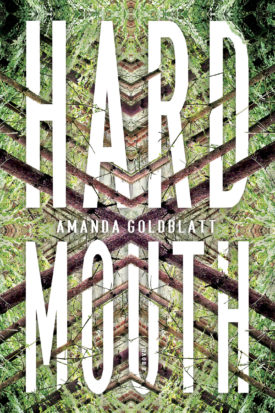
Imagine that the charming, audience-addressing protagonist of Phoebe Waller-Bridge’s runaway-hit TV show Fleabag was—instead of a jumpsuit-wearing café owner in London—a reclusive lab tech in the suburbs of Washington, DC. Imagine that character addressing readers with Fleabag’s charm and humor, but, rather than talking about the hot priest she’s in love with, she’s talking about her plan to disappear to a wholly isolated cabin somewhere in the remote East Coast woods. That’s Denny, the protagonist of Amanda Goldblatt’s stellar debut, Hard Mouth. Denny, like Fleabag, is an inveterate fourth-wall-breaker, narrating her own behavior with perfect control even as she struggles to control herself. 

Image result for unnatural 37 (digitally manipulated
Buy the book

Denny has her reasons for disappearing. Her father has been battling cancer since Denny was a teenager, and the trauma of his repeated brushes with death has made Denny highly detached and self-protective. When he receives yet another cancer diagnosis, he decides not to fight it, and Denny can’t tolerate her own grief. Instead, she disappears into the wilderness, accompanied only by her imaginary friend, an old-Hollywood blowhard named Gene who speaks in clichés and disturbing anecdotes and, though Denny begs him for comfort, never seems to have much to offer. 

I interviewed Amanda Goldblatt by email about Denny’s time in the woods and in the Maryland suburbs, her struggles to control her life and fate, and, of course, her relationship with Gene—who, for the record, is the realest-seeming imaginary friend I’ve encountered since my own exited my life 20 years ago. I’ve missed him periodically, but, now that I’ve met Gene, I’m less sorry that my imaginary friend is gone.


Lily Meyer: Why was it important to put Denny-the-narrator (rather than Denny-the-character) in “the position of making my story,” as she puts it?

Amanda Goldblatt: Any first-person work is a presentation or performance. This is particularly true for Denny, I think, who is set on presenting her experience of herself and this part of her life in a controlled manner. She subordinated herself, or let her circumstances subordinate her, throughout most of her youth. The novel encompasses the moment where she, at last, dominates her own life, and Denny is proud of that; she is talking to herself, telling herself, as much as she is offering the story to anyone else.

LM: At what point in the writing did you begin having Denny break the fourth wall and start addressing the reader directly? Does her relationship with Gene enable her to do that more easily than other narrators might?

Her transgression to the mountain is not only social and emotional but physical, corporeal.

AG: Early in the drafting, Denny was telling the story to a specific person. In later revisions, this dropped away simply because it wasn’t needed, though the direct address remained. This is in part because I see all first-person narrative as a conscious act of storytelling—one that is mimetic to the practice of writing itself. Denny’s impulse to directly address the reader (or audience) follows. She is a conscious and self-conscious narrator. She might as well be talking to a mirror. 

Denny’s also used to seeing herself as partly dislocated or fractured; you so rightly make the connection here to Gene. Another interviewer, Anne Yoder at The Millions, recently commented on her tendency toward compartmentalization—Denny reserves her own apartment, and later, hopes to reserve the mountain, for her own solitude. Her direct addresses signify a performative willingness to puncture this compartmentalization, but only while she’s in her role of narrator. It’s not a conversation; it’s a performance. 

LM: What imaginary friends in books or movies, if any, did you use as models for Gene and Denny’s relationship? Did you have an imaginary friend growing up?

AG: I wrote Gene, basically, as a real person who happened not to entirely share Denny’s reality. That was important to me—his insistence on independent selfhood is integral to how he operates, and how I think imaginary friends operate in general. 

Recently I watched the trailer for Drop Dead Fred, a 1991 movie about an adult woman whose childhood imaginary friend returns to destabilize her life through comedic and inappropriate chaos. I did not think about this when I wrote the relationship between Denny and Gene, though I did watch the movie somewhat obsessively in the fifth and sixth grades, and I wouldn’t be shocked if those viewings situated my understanding of imaginary friends in a very particular way.

I was raised as an only child and was very jealous of my friends who had siblings, particularly ones that were one or two or three years older or younger. A friend of mine who is raising an only child always asks for assurance, that being an only child isn’t torture, and it wasn’t, but was sometimes quite lonely. As an only child I had a tendency to dramatize this, perhaps as a way to amuse myself. I do remember thinking that an imaginary friend would be handy. But I was practical too: imaginary friends seemed to have to be naturally occurring, and though I waited, none ever showed. 

LM: What kind of wilderness or survivalist research did you have to do to write the section of the book that takes place in the woods?

AG: I was careful to do about the same amount of research that Denny did. As I cite in the acknowledgements, the two wilderness books that Denny uses are the ones I used too. One of those books I found in a thrift store in Michigan. Another I found on a clearance table at a bookstore. A kind of gonzo or method-acting procurement in these, maybe. I spent a fair amount of time on survivalist discussion forums, most of which were fairly old in internet terms, (updated around 2009 at the latest, just slightly later than when the book takes place). Besides that, I went out to the woods (in different places) a lot and took notes and put language to the woods. Also: I shot a gun, which I had never done before. By my 30th birthday, it became clear that Denny was going to shoot a gun. On my birthday, my partner and I went to an outdoor shooting range outside Louisville. It was loud and informative.

LM: How did you arrive at the proper suburbs-woods balance? Why does it take Denny half the novel to leave Maryland?

AG: Previous to the novel I had spent my writing life avoiding the suburbs. I left the suburbs at seventeen, basically, and have lived in small towns or large cities ever since. But in 2010 I was asked if I wanted to teach a suburb-themed fiction workshop. We read, of course, Cheever’s “The Swimmer,” and other dominant-narrative suburban stories, but I also spent a lot of time with newer fiction and extra-disciplinary texts about big box stores and ethnoburbs and HOA rules and it was an opportunity to re-approach where exactly I’d grown up. (I spent a lot of time looking at the catalog for the Walker Art Center’s 2008 “Worlds Away: New Suburban Landscapes.”) Some of these documents better reflected the suburbs I experienced; a lot of the 20th-century cultural narratives of the suburbs, from Revolutionary Road to The Virgin Suicides, rely on an idea of their normalcy or uniformity in order to talk about human desperation. But in these other texts, I saw the suburbs as a more dynamic space, one that was much more about individualized patterns than normalcy, and one that seemed more reflective of my experience. Talking about normalcy is talking about established social expectation, but talking about patterns remembers more keenly physicality and intersection and solitude.  

Anything that promotes disease or decay—junk food, alcohol, bad posture, the passage of time—is in some way suicidal. 

In the book, I was interested in establishing Denny’s suburban patterns—in living, in driving—as she moves through the same or similar spaces, from private to public space, across highways and past churches and schools and strip malls. Her transgression to the mountain is not only social and emotional but physical, corporeal. A pattern has to be well established, if anyone is going to care about its disruption. 

In a classic adventure novel, it’s all survival and action in unfamiliar places. But for me, this book is about the impossibility of survival in any context. Survival of the physical self, and also a more philosophical, existential survival. Allowing Denny a character to reckon with that (or not) at home, and also on the mountain, allowed for a more expansive exploration. 

LM: Does Denny go to the woods to kill herself? Or to “live deliberately,” per Thoreau? Or both?

AG: I think she decides to leave her life. She makes that one decision. And, reasonably, she understands that she may die, that she may be hastening the end of her life. And she’s okay with that. She understands, in the impending death of her father, that everything human is finite. That she is no special thing. She is not a survivalist, and maybe that’s suicidal. In that very human logic, anything that promotes disease or decay—junk food, alcohol, bad posture, the passage of time—is in some way suicidal. 

How Kurt Vonnegut Predicted the Automation Crisis

On August 17, 1952, The New York Times published a review of Kurt Vonnegut’s debut novel, Player Piano. A tale of the near-future United States where most workers have been driven into unemployment by automated manufacturing and service systems, the book was praised as “skillful,” “lively,” and “fun” — though otherwise considered unserious, as much of speculative fiction was regarded at the time. The review concludes, in a somewhat belittling fashion, “Whether he is a trustworthy prophet or not, Mr. Vonnegut is a sharp-eyed satirist.” The vision of Player Piano was, in 1952, thought to be mere fun and games.

Fast-forward to 2019 and The New York Times is now writing, with all seriousness, “They’ll never admit it in public, but many of your bosses want machines to replace you as soon as possible.” The newspaper reports that, according to some predictions, 40 percent of jobs around the world will be eliminated by automation within the next decade and a half. In other words: Our present circumstances seem to be bearing out the fact that “Mr. Vonnegut” was a trustworthy prophet after all.

Kurt Vonnegut, Player Piano, book cover

Player Piano may have been written 67 years ago, but its prescience is uncanny — though not inexplicable. It is a product not only of Vonnegut’s extraordinary imagination, but his years of experience working directly with engineers, whose mentality the novel reflects in reaching its logical conclusion. If today we find ourselves becoming increasingly trapped within that conclusion — between automation-driven mass unemployment on one side and the supposed panacea of universal basic income on the other — Player Piano also offers us hope for how we might yet break free.

Beginning in 1947, Vonnegut spent three years working in public relations for General Electric in Schenectady, New York. The job entailed “hanging around scientists all the time, listening to their bright plans for improving the future,” according to a 1973 interview with the author published in Playboy. “It seemed to him that scientists in those days wanted to mechanize everything and take care of everybody.” But because Vonnegut was Vonnegut — that is, a man who had already experienced the Allied “victory” of World War II from the ashes of Dresden — he didn’t just take the scientists at their word. He extrapolated their words into an entire world.

Vonnegut resigned from GE in 1950 to work on Player Piano. According to his foreword to the novel, it takes place a generation or more in the future, when the vast majority of human labor has been replaced by machinery. Automation had become a necessity during the course of World War III, when most workers were diverted to the frontlines for combat and machines were needed to fill the gaps in production, but it remained a fact even after everyone returned home. The now-unemployed citizenry revolted, rioting in the streets and sabotaging their mechanical replacements, but by then the government had also changed. The demands of the war had prioritized production, concentrating power into the hands of the National Industrial, Commercial, Communications, Foodstuffs, and Resource Director — “a position approached in importance only by the presidency of the United States,” as Vonnegut puts it. The government quelled the rebellion, increased security around the production plants, and continued on its path to ever greater efficiency through automation. To keep its idle citizenry busy, the government also concocted the Reconstruction and Reclamation Corps, a WPA-style initiative setting unnecessarily large numbers of the otherwise unemployed to repair basic infrastructure, like roads and bridges.

Our present circumstances seem to be bearing out the fact that Vonnegut was a trustworthy prophet after all.

Player Piano specifically focuses on Paul Proteus, manager of the Ilium Works production plant. As a well-educated engineer, Proteus is set to climb the ranks of society, but for a nagging feeling of dissatisfaction with his life. Instead of pursuing a promotion to manager of the Pittsburgh Works, he becomes involved with the Ghost Shirt Society, a band of seditious ex-workers who intend on fomenting an anti-machine revolution. Due to Proteus’ former prominence, he’s made the figurehead of the rebel movement, leading a mob to destroy the Ilium Works. But they are all soon surrounded by the military, and the novel concludes with Proteus’s surrender.

In 300-odd pages published in 1952, Vonnegut illustrates dynamics that we are only just beginning to address in earnest — namely, that automation will create unemployment; unemployment will erode democracy; and the erosion of democracy will inspire revolution. In 2018, the Brookings Institution, a well-respected centrist think-tank, published an article surveying the research around automation. It cites studies estimating that 14 to 54 percent of jobs are at risk of being automated and predicts that even if the average, 34 percent, comes to pass, “Western democracies likely could resort to authoritarianism as happened in some countries during the Great Depression of the 1930s in order to keep their restive populations in check.” What’s more, the article acknowledges that even “relatively small increases in unemployment or underemployment have an outsized political impact.” It points to the Great Recession spawning the Tea Party, and subsequently Donald Trump’s presidency, but the fallout of the global financial crisis also inspired the more revolutionary Occupy movement.

As Player Piano captures the broad strokes, the novel can also offer us some guidance on the particulars, especially when it comes to proposed solutions to automation-driven mass unemployment. Tech companies like Uber and Amazon will undoubtedly be leading automation through the displacement of drivers and cashiers — two of the most common occupations in the United States, according to the U.S. Bureau of Labor Statistics — though Silicon Valley is also presenting us with a quick fix: universal basic income. In practice, UBI can be applied in a variety of different methods, each with their own benefits and drawbacks, but as critic Douglas Rushkoff argues, Silicon Valley views it simplistically as a scheme for maintaining consumer spending in the face of rising unemployment. If people have no jobs, just give them money, the logic goes. UBI cuts out the middleman that Vonnegut envisions in Player Piano, the Reconstruction and Reclamation Corps, but the failing remains the same. In his interview with Playboy, Vonnegut described the real consequence of automation: “It was too bad for the human beings who got their dignity from their jobs.” UBI, like the Reconstruction and Reclamation Corps, will keep people alive — but what will they be living for?

Vonnegut didn’t just take scientists at their word. He extrapolated their words into an entire world.

Unlike Silicon Valley, Vonnegut offers us no simple solution to the problems of automation. He does imply that doubling down on automation while trying to bandage the wounds it creates with superficial social programs would be unsustainable, as evinced by the seething resentment that coalesces into the Ghost Shirt Society. But the Luddite revolt of the Ghost Shirt Society is similarly a deadend, as evinced by their defeat. If not forward into a brave new world nor back to the good ol’ days, then the solution must lie on another axis: a course aiming for human dignity, rather than technological progress or misguided atavism. Unfortunately Vonnegut’s interest or inspiration did not extend far enough to draw that road map for us.

But Player Piano offers us crumbs to follow. As with so many masterful novels, the book opens with a bit of foreshadowing. In the first chapter, Proteus brings a cat that he’s found into the Ilium Works to act as a mouser, safeguarding the machinery from troublesome rats gnawing through the cables. But the cat, terrified by a mechanical sweeper, is soon driven from the plant, dashing for safety up one of the surrounding fences. It reaches the top before Proteus can catch it — and is instantly electrocuted to death.

If in Player Piano, Proteus is the cat, then in our current circumstances, we are too. And from that perspective, the goal is simple: We just need to make it over the fence.

The Real-Life “Nickel Boys” Speak Out About Their Abuse

The white house out back where boys were taken to be beaten. The industrial fan that whirred loudly whenever a beating was taking place. The term the boys used, “the ice cream factory,” to describe that white house where the beatings took place, because the limping students who left the place bloodied and bruised, with new shades blooming across their bodies.

The Nickel Boys by Colson Whitehead

Those details color The Nickel Boys, the new work of fiction by Colson Whitehead, the Pulitzer-Prize winning author of The Underground Railroad. The story centers around a Florida reform school where boys were routinely abused. 

Those same details also endure in the memories of the survivors of the Arthur G. Dozier School for Boys in Marianna, Florida, the real place that inspired Whitehead’s fiction. Decades after their abuse, these men have come together to form a support group of sorts. They call themselves the White House Boys.

On the National Public Radio program 1A, Colson Whitehead spoke alongside one of those White House Boys, Charlie Fudge, who shared how he and his former peers feel about the book based off their stories. 

“They appreciate very much that Mr. Whitehead wrote this book to open this story up and let the world know what took place,” Fudge said.

Fudge was one of many White House Boys who shared their stories with 1A. 

I am a White House Boy. That is the building where I was supposed to be taught right from wrong. They were supposed to fix me and only broke me worse. Thank god they didn’t teach me more about being a good boy.

Charlie Fudge

Claude Robins was a student at Dozier from 1953–54. He is the author of two books about his time there, The Ice Cream Factory AKA The White House and After the White House.

Back in the 1940s I was abandoned by my mom. I spent the next several years in orphan homes or on the streets of Jacksonville, Florida. I was picked up many times by police for sleeping in abandoned cars and parks. I finally was chained and charged with being wayward and sent to the school near Marianna.  

The school was ruled by terror, fear, and abuse and knowing you could do nothing right. I was beat in the White House three different times. Twice for low grades and once for attempted escape. 

When I went down for attempted escape I thought they were gonna beat me to death. Maybe it was close, but I survived. 

The last time I was beat was with Tommy Wiggins and he was ahead of me on the cot. They made us lay on the bed and hold the bars, bite into a nasty bloody pukey pillow and then the beating started. If you protested the beating started over. Tommy kept trying to raise up and he would say why are you doing this to me? I didn’t do anything. 

Some may ask why don’t I just man up and forgot the school? I don’t know why. Sometimes a sound, a voice, a fan suddenly turning on brings it all back. And I have dreams like I am still a child in the school and always I am getting beat or getting ready to get beat. I am still an abused child in my dreams.

Claude Robins

Jim still has night terrors and sweats. He dreams he is a young boy running for his life. Then they catch him and beat him to death.

Karen Blount

Karen Blount wrote to 1A about her husband, Jim Blount, who was a student at the Dozier School in 1951 and 1952.

At that time the races were separated by State law. Jim’s job in the kitchen gave him a unique view of the “Ice Cream Plant” a.k.a. The White House. He saw black boys come out of the White House bloodied from beatings. The school called them spankings but they were more than that. At that time the two races couldn’t even speak to each other at the school. When the black boy came to help Jim load the kitchen slop for the hogs, they knew they’d go to the White House if they spoke to each other. 

The beaters were trained. It reminds you of the Roman floggers. Trained for the most pain without crippling or killing. 

Jim served coffee when they gathered in the dining room to go “boy hunting,” as they called it, when one of the boys tried to run. They carried rifles and pistols to go after unarmed young boys. They were jovial like it was a great sport. They’d drink whiskey even thought it was early morning.

Karen Blount

Roy is an alternate Sergeant of arms for the White House Boys.

I went to the White House once for getting some extra pancakes that I didn’t ask for and didn’t eat. I gave them to the other guys at the table. That afternoon they took me to the White House and beat me.

When I got there I worked in the infirmary. There was a boy they brought in who cut his wrists to keep from being taken to the White House to be beaten. They sewed him up, took him back to the White House, and they beat him anyway, and they brought him back to the infirmary where I had to take care of him for a couple weeks. His upper legs and his butt were split from being beat so hard and he was black from his knees to the center of his back.

Roy

The Nickel Boys and the White House Boys share similar stories—though the former exist in the world of fiction, and the latter in reality. 

Can The Nickel Boys help the White House Boys gain justice, or future abuse from happening? 

Whitehead said he’s doubtful. 

“The kind of abuse that we’re talking about speaks to a great flaw in human character, and that’s not going away,” Whitehead said. “I think the people who actually are in charge of things aren’t big readers of novels. I don’t think they’ll pick up The Nickel Boys and extract any lessons from history. 

“I don’t think that people who need to read a book like this, will read a book like this.”

In Her Family Memoir, Sarah M. Broom Expands the Map of New Orleans

Sarah M. Broom’s nonfiction debut, The Yellow House, meticulously maps out the story of her family and the city of New Orleans—both built with their own levees. Written with a four-movement form, a structure mirroring a symphony, hurricane phases and steps in map making, Broom searches, digs and looks for the unknown and the unexpected: “My book begins with the house, but it expands to be about the city of New Orleans and, ultimately, America.”

Buy the book

At ten, the youngest of twelve siblings, Sarah acquired the nickname “Tape Recorder” because she listened in on adult conversations and played them back almost verbatim. Tape Recorder, then and now, pushes against a native New Orleans’s black woman’s narrative whose story doesn’t matter and won’t be valued.

The Yellow House compiles facts about her family, the history of an iconic city, and memories that Broom carves into a larger and complex universal story.

Using email and social media conduits, Sarah and I talked about existing beyond a map’s edges, rediscovering family lore, and growing up in a matriarchal world.


Yvonne Conza: At ten, eyeglasses improved your vision to 20/20 and you wrote: “Sometimes, when I want the world to go blurry again, I remove my glasses when passing by these [unpleasant] scenes. In this way, I learn to see and to go blind at will.” Did you wrestle with emotions and truths about family, home and place within a vortex of blurriness versus clarity?

Sarah M. Broom: You hit on what was, in essence, the work of making this book. To write it and certainly, to finish, I had to first give myself the kind of permission often not allowed me. Permission to write obviously, but also to overcome a slew of perceived transgressions, including being the baby of the family telling its history. John Berger wrote “to look is an act of choice.” That’s a mighty idea in me. Writing this book was an exercise in turning toward, not away, from the experiences that compose me. “Me” of course is a black woman in America and all of the innate nuance and complexity born to that. I could feel myself, in the course of the work, writing against the narrative that my story does not matter, would not be valued, but then I remembered how I grew up in a matriarchal world underneath Lolo, Ivory Mae and Elaine—not to mention all of my amazing sisters—and knew (soul-wise) how untrue this was. Pressed on.

To write my book, I had to first give myself the kind of permission often not allowed me.

It is human nature when facing the most difficult things to want to turn away. Just note which things in our culture are deemed hard to watch: Precisely the things we must look straight at, eyes uncovered.  

Family lore is often hazy. I had a few key stories from several members of my family. Pure raw sketches. Like: your dad died when you were six months. You were a responsible baby. Grandma never knew her Mom.

My job was to fill those stories in, to dig down, unearth the granular detail which is where, as a writer, I love to live. Having found and confirmed the evidence, I could sort through myth and fact—often intertwined. These were the moments when I felt most clear. Clarity is also about language for me. Because obfuscation often transmits through language, I challenged myself to write with as much precision as possible, to forego the dog and pony show of words. Much of that clarity came in revisions as my understanding of the story’s heart deepened. I was constantly readjusting, reexamining what I thought I saw – often, what I thought I knew clearly was not so precise after all.

YC: New Orleans East, where you were raised, an area fifty times the size of the French Quarter, is cut off from the Avis Rent A Car map, illustrating how a place and its history, is left as blank space through erasure. While this book is specific to New Orleans, it’s a thunderous nod to other places in America. Talk to me about maps and the territory that exists beyond a map’s edges.

SMB: Maps are made—designed—things. To exist beyond a map’s edges is not the excluded person’s choice, but it was someone’s. That decision does not in any way forfeit the lives of those beyond the map’s edges. My work suggests that if we want the whole, full and true story we need to go far off the official map, force ourselves to look up-close, close the distance. Maps and cartography are about power. Peter Turchi said, “To learn to read any map is to be indoctrinated into that mapmaker’s culture.” The history of mapping is fraught to begin with — redlining, the erasure of Native American lands on early maps, gerrymandering, to name a few.

Writing this book, I thought about all of the ways disappeared houses affected me personally. I was always wondering: what used to be in that spot where that house once stood and what stories might that house tell? What might we learn if only we knew? I thought about Detroit and about photographer Latoya Ruby Frazier’s work in her hometown of Braddock, Pennsylvania. I imagined those people whose houses were lost to fire in Paradise, California and in parts of India after flooding. I’m interested in the underbellies of things-the soft, raw side that never gets to see the light of day, the story beyond the news cycle, the ways in which people make place, make houses and worlds even when where they are building is unsteady, sinking ground.

YC: How did the terrain of your own life shift after understanding the cost of defining oneself by the place you are from?

SMB: I began first to unravel—in the research and eventually the writing—the ways in which I had come to define myself by the house I grew up in. I’m using “house” metaphorically and literally here. The house that I belonged to—whether or not I wanted to claim it—did not represent who I thought myself to be, which created an inescapable agitation. That same thing happened when it came to New Orleans and my family and the mayor’s office and America. The story was, in essence, a great concentric circle-the story of the house led to the family who lived in the house and the street that the house was on, the city the house was in, etc.

If we too closely align ourselves with these oft-mythologized, unexplored identities, we become tethered to the fear of “telling on” these places and things that we think of as composing us and we stay silent. I learned — through the telling of this story or maybe in it — a kind of detachment. Which took courage and is also my definition of adulthood. If we define ourselves by where we are from we take all of the built in systemic injustices as our own failing. We stay shamed.

YC: A line you wrote spoke to me in a myriad of wonderful ways: That was the fact, but facts are not the story. What was your experience in examining researched material in relationship to being factual? And, how did your researched material and family interviews collaborate with your memories to develop a story?

SMB: Many times the literal evidence I found in archives and research conflicted with the story I had been told, or more often, the story I had been telling myself. Very specifically, I will never forget the moment when I sat down to interview my sister Deborah about “The Yellow House” and she said “What Yellow House? The house I knew was green.” That shifted, at least in mind, the trajectory of the work for me. Made clear that my siblings each had individual stories vastly different in certain ways than my own. Her response forced me to ask even simpler questions about detail that I assumed to be true. I could make no assumptions.

Maps are made—designed—things. To exist beyond a map’s edges is not the excluded person’s choice, but it was someone’s.

The story, carved from a sea of facts, is a made thing, framed and composed. The trick with this book was to allow myself to stay open when another person’s version of a story or the evidence itself collided with my long-established narrative. Often, I could fact check memory in the archives. For instance, I remembered my childhood friend Alvin’s death as a shifting moment. But I did not remember exactly where he had died—that he crashed on Chef Menteur Highway was vital to the story because it was connected to my overall sense of that highway as a kind of emotional boogeyman and demarcation line. But without the actual obituary I might not have made that connection. And, too, I remembered clearly that Alvin had a headstone, but he did not. I learned that by going back and reporting, asking his siblings, calling the graveyard, finding the plot, seeing it for myself. If I had written only from memory I would have perhaps gotten the essence of Alvin’s loss right, but stopped short of the larger discoveries. The latter is more of a challenge to the self and one has to be ready for that.

YC: Does it feel fitting to launch your book on the 14th anniversary of Hurricane Katrina?  

SMB: I don’t think of this as a “Katrina book” whatever that means. I started taking notes on something called Yellow House when I was 17 and had left New Orleans for college. Back then I was writing about the ways in which the house did not physically contain me. After 2006 when the house was demolished, I was now writing about absence and loss, an entirely different matter altogether. The narrative changed. Became more about my father, about displacement and inheritance. I see Katrina as one in a long line of chaotic and often systemic forces that change the course of history for my family and many others. I just read that New Orleans has the same 39% child poverty rate now as it did in 1999, pre-Katrina. This is why understanding Katrina in context matters so much to me. The book’s timing is pure accident, the matter of how long it took for me to get the story right. Fourteen years, you’re reminding me, is a very long time. As a writer, I want to tell the full, nuanced and layered story, which is not only about New Orleans, but America at large.

YC: Your book has changed how I think about maps, the stories left off them, and the importance of reclaiming those voices.

SMB: My intention, actually, was to redraw the map to include me and my siblings and my mother and my father and my nieces and nephews, to reinstate our centrality to the narrative. In this book, I saw myself as a cartographer (and perhaps still do!)- redrawing the map, which required context vis-a-vis history. Those things feel like love and respect to me.

I am drawn to those places in the world that often do not make it onto the map. When I lived in Hong Kong, I first lived in a neighborhood called Causeway Bay, which was not where the expats lived. I wanted to know what life was really like. My time there proved very hard and lonely, which is perhaps the same idea, but I learned the texture of Hong Kong in a way I never would living elsewhere.

As for the voices: they did not need reclaiming, per se. I hear and am in conversation with them daily. But craft is an act of framing; I shifted the frame.

YC: Why did you decide to use “water” instead of Hurricane Katrina? Did “water” give the story its own narrative arc removed from media bias and keep it proportionate so it wouldn’t flood the larger story—as if word choices were their own levees?

I want to tell the full, nuanced and layered story, which is not only about New Orleans, but America at large.

SMB: Water is the more accurate word. But let me back up. For one, I grew up in a watery world. The ground where we played hide-and-go-seek was soft and wet. Murky. When it rained, water pooled for days. Our house was surrounded by water. I am in awe and more than a little fearful of it — slightly less now because I recently learned to swim like a baby. Water is a monumental force for me in all of its myriad forms, which is why it’s personified in the book, a character, alive, not unlike the Yellow House.

Reason two is critically important. Hurricane Katrina at landfall was a Category 3 storm. Much of the subsequent damage and destruction and death had to do with engineering flaws in the levee system and the unwillingness of officials to act — official negligence. So the use of “Water” makes a crucial distinction between the hurricane itself and the human-induced neglect that led to much of the still-ongoing tragedy. “Water” as a device and idea throughout the book encapsulates the grandeur, the layeredness of it all.  And it is not always capitalized, by the way. When I, for instance, talk about water in a tub, it is not the idea of “Water” as you see it elsewhere. This distinction — the high and low — matters to me as a writer and thinker.

YC: How much did your mother influence the weave and narrative flow of the pages? How is her sense of place different from yours?

SMB: I spent a year in New Orleans interviewing my family members for this book. Most of those hours were spent with my mother, Ivory Mae, in intimate and probing conversations, which I transcribed and organized afterward by theme: Mom on childhood or Mom on religion or Mom on family, etc. I always knew that within the book, my mother needed to interrupt the narrative and speak for herself. That device, her voice inside the narrative, contextualized, and at times added heft to my own narrative. I also love her voice. The way she says things is surprising. Her voice became part of the structure. If a book is, structurally speaking, a house — with architecture — my mother was the framing. There was a technical issue, too. In the first movement, “The World Before Me,” I was not yet born even though I am of course writing the story. My mother tells the large majority of that story, in a way. There is only one time in the book when someone else takes the place of my mother’s voice in italics and that is when my brother Carl narrates his story during Katrina. It is as if during her displacement, someone else had access to her seminal position.

I wanted the chorus of voices in this book to coalesce to tell a story about place. New Orleans is a ritualized place; music and sound helps make that so. But I am attached to physical houses in a way my mother is not. She was attached to the Yellow House, of course, but more to the idea: it was her inheritance, what she owned, signifying adulthood and having “made it.” Her relationship to the house on Roman Street where she spent much of her growing up is more akin to how I feel about the Yellow House-imbued with that childlike wonder and innocence.

7 All-American High School Stories Centered Around Students of Color

When I was a teenager in the mid-2000s, I loved books and television about American teenagers navigating high school. From the Gossip Girl series to class-assigned texts like A Separate Peace and The Catcher in the Rye to blockbuster movies like Mean Girls, these representations of blond, ruddy, and fair-skinned characters made up a sizeable chunk of the culture I consumed.

Buy the book

I don’t even think I was bothered that none of the characters in these series and books looked anything like me. As a Latina, I knew I was an anomaly in my all-white prep school, and perhaps I never imagined that stories set in schools like mine could be told from my perspective. Gossip Girl, Cady Heron, and Holden Caulfield were certainly outsiders at their schools, but they weren’t racial outsiders, and their whiteness allowed them a sense of ownership of those places that I—a non-white scholarship student whose place was contingent on good grades—felt I had simply no authority to critique.

I wrote my book They Could Have Named Her Anything in part out of my love for teen dramas, but also in defiance of the erasure of students of color in pop culture. When students of color are portrayed in mainstream narratives, they are often situated in gritty, underfunded public schools, like in the 2007 movie Freedom Writers where white teachers are contextualized as benevolent saviors. But students of color do enroll and graduate from elite majority-white schools, despite the many obstacles to their success. (You can’t miss them—they’re usually overrepresented in websites and brochures.) What can we learn from hearing their stories?

Below are seven books in which the token minority or immigrant student goes from tertiary character to storyteller, becoming a powerful voice that calls into question to whom these institutions belong and to whom they must be accountable.

Make Your Home Among Strangers by Jennine Capó Crucet

Jennine Capó Crucet’s debut novel was the first book I’d ever read that spoke so candidly about the myriad obstacles that students of color face in higher education, revealing specifically how academia is designed to benefit its most privileged students. In the book, Cuban American Lizet struggles to care about her classes at her elite private college in New York as her mother becomes increasingly involved in activism in Miami: “I felt in those weeks that school was a job: finish my courses with the highest grades possible and get back home.” And yet Lizet’s realization is tinged with resignation, with recognition that the academy often pushes students of color out of their doors, sometimes before even graduating: “It brought me a sense of calm, to recognize my place, to admit I could only rise so far above where I’d come from and only for so long.”

Image result for margot sanchez

The Education of Margot Sanchez by Lilliam Rivera

Margot Sanchez is a complicated and delightful character whose intense desire to fit in with her white, wealthy peers leads her to do unconscionable things—like steal her parents’ credit card. And yet Margot’s bad behavior is not frivolous teenage self-centeredness, but a much deeper-rooted desire to make her hard-working parents proud, a responsibility that she feels alone in having to shoulder: “My parents have no idea who I have to compete with Somerset Prep… If I was going to be the great brown hope for my family by attending this super-expensive high school, I knew I needed to make friends with the right girls.”

Image result for born confused

Born Confused by Tanuja Desai Hidier

In 2002, Tanuja Desai Hidier published this beautifully-rendered debut that is now regarded as the first South Asian Young Adult novel. Dimple Lala is a seventeen-year-old Indian American student at a suburban New Jersey high school. She is also a budding photographer whose tendency to hide behind her camera becomes a metaphor for her ability to notice much more than what her predominantly white classmates can see: “Fortunately I have this gift for invisibility, which comes in handy when you’re trying to take sneak peeks at other peoples’ lives.”

Speak No Evil by Uzodinma Iweala

Niru is the queer Nigerian American protagonist of Speak No Evil. He knows what it’s like to be treated as an object at his elite private school,  and have the school fail to intervene: “The white kids used to touch me all the time when I was younger, like they owned me… I let them play around because there were always more of them than me.” As he grows into adulthood and into his sexual identity, Niru finds that he is not immune from his peers’ aggression despite his relative wealth in his D.C. suburb: “Then there was the time one of the girls came up to me after school and asked if she could look down my pants, just a peek, you know, to settle a debate they had after sex ed. I pretended not to hear, but I walked around the rest of the day staring at the floor with my fists clenched.”

Image result for anyas ghost

Anya’s Ghost by Vera Brosgol

In this gorgeous and wholly original graphic novel, the desire to assimilate becomes fatal as Russian protagonist Anya befriends a deceitful ghost who is more than willing to help Anya become more like the all-American classmates that Anya has little luck emulating. Anya’s longing for romantic attention in a place where being skinny and blond is equated with sexual desirability becomes the first way in which she starts to disidentify with her family, rejecting her mother’s cooking and asking for “low-fat” Poptarts instead. “Back in Russia, being fat meant you were a rich man!” Anya’s mother says, to which Anya snarkily replies, “I don’t think American boys really go for girls that look like rich men.”

This Will Be My Undoing by Morgan Jerkins

In the very first essay of the collection, Morgan Jerkins describes how the “blinding” whiteness of her high school manifested into a form of self-hatred: “If I could not be a white girl, then I could mimic one until anyone who saw me would think that my skin was a costume. I thought myself very ugly.” An early experience of racism at her suburban school led Jerkins to a framework for understanding her marginalized position in white America. When a Filipina classmate called her a racial slur for trying out for the mostly white cheerleading team, she writes, “I didn’t make the team, and therefore, she knew that I was inferior… I should’ve known my place.”

La Hija de Changó” in Love War Stories by Ivelisse Rodriguez

This moving collection of short stories sheds light on the Latinx experience. In one story, “La Hija de Changó”, the protagonist describes what it’s like to go to the Whitney School where even though most of the students are white, the differences between “the rich kids” and “the poor kids” aren’t just based on race. “Tania, who is a Park Avenue girl all the way, is making the trek uptown with us today to the botánica. Even though she’s Puerto Rican, I know she’s never been to East Harlem before and I’m sure that she’ll sit here tomorrow during fifth period lunch and regale them with stories of the big bad ghetto.” Rodriguez writes in Kweli Journal that the story is reflective of the need for majority-white schools to do more to cultivate their students of color rather than isolate them from their communities and “how education can separate us from all that we previously knew.”

After All These Months My Hair Is Still in Your Drain

Slough

White detritus flakes from me to live its other lives. I scrape it with my strong nails then methodically push it out from underneath all ten. At the blue eighties-era pool surrounded by cedars I leave little bits of myself, which dissolve in chlorinated puddles or get picked up by a sliver of breeze. By the pool’s ladder a girl’s mother fits her with a purple-scaled mermaid tail. She silently drops backwards and glides away, then flaps the tail. A megaphone request is put forth to cease the slapping of noodles. The noodles cease their slapping for two minutes at most.

This weekend, before you nearly left me, I attended a baby shower. The couple sat on makeshift thrones beneath a plastic-vine-draped arch. They received nursing scarves and pacifiers. My old friend glowed with the knowledge of her doubling. I guessed the number of baby toys in the jar but left before they announced the answer.

Right now I’m guessing how many parts of me are floating through the world, caught up in a bit of pine needles or a modicum of dust. Hangnails, dry forehead skin, whatever I’ve scraped from my scalp. Strands of hair beneath couches and hung from branches. I’m honored to leave myself in the Uffizi Gallery, the state capitol, beneath a popular statue. I visit my ex-boyfriend and find he hasn’t washed his bathroom in months, my wavy hair strands still between the toilet seat and the tank amongst the flotsam. I shake someone’s hand and lose a couple tiny particles. In exchange I get a few of theirs.

Spooky Action at a Distance

Our bodies take measured breaths and move our legs and fingers and blink our eyes and we don’t even notice. A whole factory running smoothly until the manager remembers it’s there. Soon the workers are so nervous being watched they make odd ratios of two small breaths to one big breath, and the breaths get run through the grinder and come out all ragged and ruined.

Try watching that video of the x-ray tongue moving in the act of speech — rapid slug thing leaping out and in as if for more and more food.

And for example a man in Andalusia, Alabama, makes small talk with his grocery-store cashier and you are not there. A woman feeds a bird in Juneau, Alaska, and you are not there. A man has a heart attack in a bedroom where you once lived, and you take a weird breath and look behind you to see who, at this hour, could be there.

“Well, in speaking the word sigh,” you told me, trying to comfort, “in speaking the word sigh, there is a deep hollow at the center of the tongue.”

The Stories in “Black Light” Capture the Heady Obsession Between Teen Girls

Kimberly King Parsons’ fiction has been around the lit journal world for a little while, appearing in No Tokens, Black Warrior Review, Kenyon Review, and Joyland among others, and has been nominated for and won several awards. In her forthcoming debut short story collection, Black Light, the characters are all longing for something they can’t quite touch or even see. Children at camp and boarding school and in a bug-filled house; teenage girls who ache for each other; women and men who are driving away or drinking or disappearing into eating disorders or relationships or their child’s blanket fort—all of them are vividly rendered in a Texas setting that bursts off the page like Fourth of July fireworks. Black Light demands the attention of all the reader’s senses.

Perhaps the greatest strength of this collection lies in its weird, eerie, and sublimely beautiful details of setting and character. A short story that plunges the reader into its world from the first few words, and doesn’t dislodge until long after it’s finished, can be an incredibly satisfying reading experience. It seems that with recent collections like Nafissa Thompson-Spires’ Heads of the Colored People, Lauren Groff’s Florida, and Kali Fajardo-Anstine’s Sabrina & Corina (to name just a few), the short story form is being done a service by contemporary writers. Black Light is no exception to this emerging canon of exceptional stories.

I sat down with Parsons to discuss Black Light, perspective and voice, longing and obsession, naming characters, manic pixie dream girls, queerness, and more.


Sarah Neilson: Something that stood out across all the stories in Black Light is the concept of elsewhere. It’s a word the protagonists of “Glow Hunter” actually use and return to, but all of the stories have a strong element of longing to be elsewhere and the ways in which the characters pursue that desire. They take place in in-between places, elsewheres like schools, camp, a halfway house, a car, a blanket fort, a hotel room. How does the idea of being elsewhere inform your writing?

Kimberly King Parsons: I love that question. I think all of the characters in this collection are united by this idea that there’s some other life they long for that they’re not quite living. Whether that’s something they can reach through game playing, like in the case of kids, or through drugs or sex or all of the different things that these characters are doing to try to step outside of their real life—that’s definitely something that comes up for me a lot in my fiction. It wasn’t necessarily that I said, “Oh I want this story collection to be about that.” But it is; you kind of keep returning to your same desires.

I wrote these stories over a period of time from 2005 until 2017. I didn’t necessarily know that I was working at the same kind of ideas through some of them. But you’re still yourself whether you’re writing in 2005 or in 2017, and a lot of the things that I was interested in then I’m still interested in. That comes through the characters. And for me, some of it comes from growing up in a place that I kind of wanted to escape from, and having this feeling that there’s something different, there’s a different possibility that I am not able to access. So I think a lot of these characters have either stepped out of life on purpose or they’ve been, in the case of the girls at the boarding school in “Into the Fold,” essentially shipped off, pushed out of life. 

All of the characters believe that there’s something beyond what’s simple. There’s something else. Whether that means you have to get it by sneaking off to a hotel room or building a blanket fort, somehow there’s a way to try to get to another life that’s underneath this one.

SN: Most of the first-person narrators are never named and a lot of the secondary characters are never named either. Can you talk about the decision to name or not name your characters? What goes into that?

KKP: Sometimes I will find a place where you can drop in a name and it doesn’t feel forced. I don’t want information to be deposited by the writer because that feels authorial to me in a way that I feel jerks me out of the story when I come across it. I don’t think of myself as my name, nor do I think of my loved ones or the people in my life by their names. I think of them either by some sort of term of endearment or I just think of them as my brother or something. I guess I have a certain commitment to realism, but it’s also just a personal preference as to how information is transmitted to the reader in a way that doesn’t, to me, feel writerly.

I also had a mentor who forbade us from ever naming characters, which was amazing and very helpful. But there are plenty of times where you will need to have a character name. If you’re trying to write a novel, you don’t necessarily have to name your protagonist, because you can be so in their head, but it can get confusing. My mentor’s idea was that everyone should serve as an archetype to a voice. So it should be the postman or the mother or the father or whatever, and I do tend to like that a little bit. He also said things like, “A name is a void on the page, because it could literally be anything and it doesn’t change anything.” And so I kept that. Some of his rules were a little bit wacky, but that was one of the ones that, to me, made a lot of sense.

I also love the feeling of being dropped into a world without having a lot of things explained to me. You can weave in details through the craft, but I don’t like deposits of information. I try to avoid them if I can.

SN: You play with objectification in this collection in a lot of the stories. For example, in “Glow Hunter,” Bo is kind of a manic pixie dream girl, but it’s clear that the manic-pixie-dream-girl-ness is in the eye of the beholder. It makes sense that the narrator would see Bo as this fairy-like figure, given her age and budding sexuality. Can you talk a little about the genesis of “Glow Hunter,” and how you developed the character of Bo, who the reader sees only through the prism of the narrator’s infatuation with her?

KKP: It was important to me that Bo was a Manic Pixie Dream Girl in some ways. There’s a part of me that resists that trope, but it’s also very clear to me that she’s filtered through the imagination and perception of the narrator. But even the narrator starts to see the cracks and say, “Okay, she’s telling a lie and she’s actually really fake and she’s really needy and kind of awful, but so am I.” They’re both just being a teenagers trying on different identities, which is something else that I touch on in the title story quite a bit. 

The character of Bo starts off sort of magical, because it feels magical when you’re in the presence of charisma. It’s unexplainable. Everyone wants to look at her. Everyone wants to see her, but it’s not a traditional beauty. Her hand is bleeding and she’s barefoot but she has a pull and the narrator of course feels like she just wants to get close to it. Does she want her? Does she want to be her? Probably both. 

I could have been and/or was 90% of these characters in my life. These are people that I’ve met and known and been, and with Bo, I think most people have that person in high school who is just that focus that you can’t explain but can’t deny. It’s that first dramatic fixation and obsession that comes at such a crucial time when you’re coming up with your own identity. 

SN: A lot of the stories in Black Light feature women who have this borderline obsessive desire for, or fixation on, another woman. You capture the murky love between teenage girls so perfectly. It’s kind of the blur between friendship and romantic love and the deep intimacy that is also so precarious because it exists on this razor thin edge of overwhelm that kind of defines adolescence. Can you talk about the portrayal of female desire in the collection, and/or the portrayal of queerness?

KKP: Sure. I love women, and when I’m writing into these characters who are existing in that overwhelm, I’m writing my experience of the world. It’s being in a small town growing up and feeling very outside of things. A lot of the narrators’ experiences are not far off from my own personal experience. I don’t want to say I’ve just pulled things from my own life because there’s a lot of craft that goes into it and these stories are fiction, but these are still Own Voices stories. 

There’s also something about a high school where you’re not allowed to be queer because it’s not something that is an option; you have to find ways around it. I think for some of these girls, when they develop intense friendships they question where the lines are. “Am I imagining this? Is this crazy? Did that happen? Will it happen again?” It’s so fraught, I think because of the fact that it’s happening with someone in a way that’s taboo or unaccepted, especially in these little Texas towns. 

SN: Finally, I know this is an over-asked question, but I really love hearing about what writers are reading. So, what are you reading right now, and/or who are some of your literary inspirations, contemporary or not?

KKP: I have a huge love for T Kira Madden. Her book Long Live the Tribe of Fatherless Girls is beautiful and she’s a wonderful person and friend. I read drafts of that book for a very long time, and even through reading the ARC and then the final edition, I keep going back to it over and over again because the sentences are so devastatingly beautiful. I keep picking it up. 

I am a huge Amy Hempel fan and there’s some stories in Sing To It that bring me back to that exact same place and feeling I had when I read some of her stories in Reasons to Live a long time ago. Elizabeth Hardwick’s Sleepless Nights is another one I return to over and over again as a book that challenges the idea of what a novel can be. Because I’m working on a novel right now, and it’s terrifying, Sleepless Nights and Renata Adler’s Speedboat are where I go to get through it. They help me imagine how novels might be different, or that there’s some kind of form that hasn’t even been written yet. 

Right now there’s also some things that I’m excited about that aren’t out yet. Justin Taylor has a new memoir coming out next year called Riding With The Ghosts. I’m excited about that. It’s about his complex relationship with his father.

Michael Ondaatje’s Coming Through Slaughter, which is based on a real historical person, is another one I love. It’s strange — the first page of Coming Through Slaughter is an ultrasound of a whale sound. It’s bizarre. There’s photos, there’s weird separate texts. It’s very poetic.

I like things that mess with form and things that are not afraid to be really voicey and really experimental. But at the same time, I love just having something that’s a comfort. I feel like with T Kira Madden’s book, there’s just this comforting voice that makes it so you can pick it up and open it and it feels like someone’s speaking to you; you feel chosen when you read it and it’s such a gift.