As award-winning horror writer Stephen Graham Jones writes, there are two types of haunted houses in fiction: Stay Away Houses and Hungry Houses. That is to say, houses that don’t want visitors or occupants and houses that very much do. In either case, the best haunted houses are not merely locales for the supernatural to occur—they themselves are characters, subtly animate, with their own fears and desires.
Buy the book
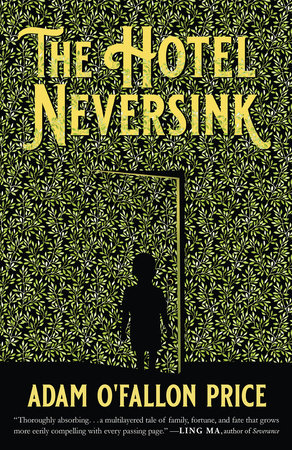
The titular house in my new novel The Hotel Neversink is something of a hybrid, a Stay Away/Hungry. Loosely based on the real Winchester House in San Jose, California, in my novel the Neversink is conceived and constructed by an eccentric turn-of-the-century tycoon, George Foley, who wants a vast space to house his huge imagined future family. Despite that family never materializing, he continues building until his death, and the rambling mansion becomes locally famous as “Foley’s Folly.” In this sense, the mansion is a Stay Away House. It never wanted to be filled, and the terms of its haunting are set when the building is repurposed as the Hotel Neversink and filled with unwelcome visitors.
But it is also a Hungry House. As it grows in fame as the preeminent Catskills resort, families bring children prone to disappearing within its depths. A labyrinth of hallways and secret passages, the hotel is irresistible to curious kids, partly due to their having read some of the same ghost stories that provided its inspiration in real life. Here then, are some of its predecessors, notable haunted houses, taxonomized as Hungry or Stay Away:
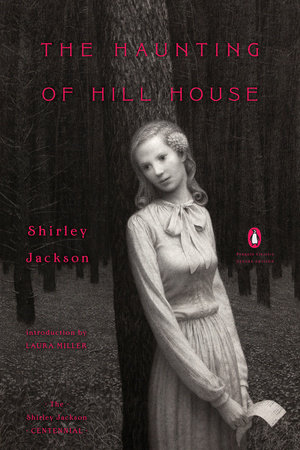
Hill House is the modern horror genre’s original Hungry House. When a paranormal researcher invites a group of people with supernatural experiences come to Hill House, it quickly becomes evident that the house is indeed haunted and bent on possessing Eleanor, an unstable young woman. The intertwining of deteriorating character psychology with place in The Haunting of Hill House is masterful and iconic.
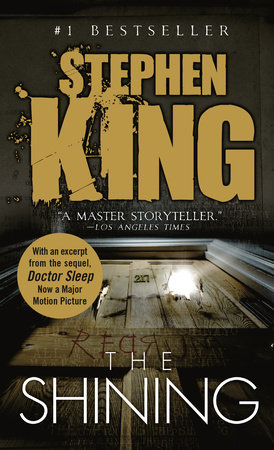
Building on Jackson’s model, King’s Overlook is the Hungry House par excellence. Jack Torrance and his family are lured there by economic need, but the hotel does the rest, driving him insane and eventually killing him. The hotel’s controlling hunger is relatively muted in the film, changing the book’s ending in which the Overlook causes Jack to destroy his own face, battering himself into servile unrecognizability.
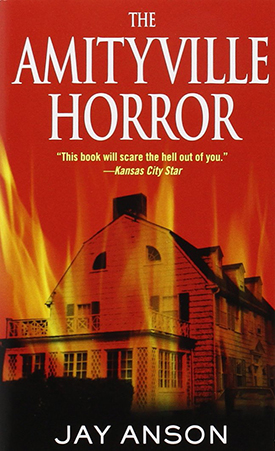
Allegedly based on a true story, The Amityville Horror is perhaps the archetypal Stay Away house. The Lutz family buys a large Dutch Colonial in the Long Island town of Amityville for a song, after the previous tenants, the DeFeos, were murdered by son Ronald DeFeo. The Lutzes think they’re getting a bargain, but they don’t bargain for the supernatural hostility they’re about to encounter. It turns out the house has the good sense they lack, as voices from beyond entreat them during a blessing to “Get out!”
Burnt Offerings features a foreword from Stephen Graham Jones and is frequently cited as an influence on Stephen King’s The Shining. The Rolfes, a young Brooklyn couple, jump at the chance to escape the miserable city summer, when they find a country home to rent for a measly nine hundred bucks. The only catch: they have to prepare meals for the elderly Mrs. Allardyce, and also that the house itself is very hungry.
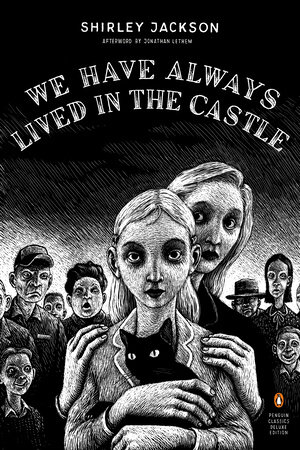
Another entry from the estimable Ms. Jackson. The Blackwoods’ house, while not strictly a haunted house in the traditional sense, is the site of a great family tragedy that has resulted in the ostracization of the remaining Blackwoods—Merricat, Constance, and Julian—from the village. The power of trauma, social disapprobation, and secrets comingle to create a de facto Hungry House, the titular castle that the girls cannot—and do not want to—escape, and that seems will keep them forever in the end.
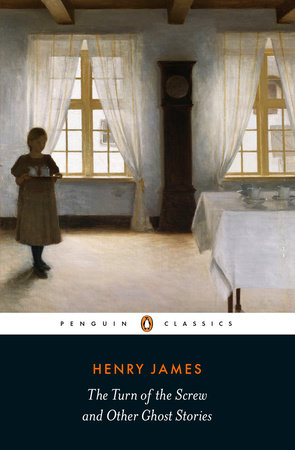
When a governess takes a job at an English country manor, she finds herself in a house with a dark history, and two charges, Miles and Flora, who may secretly be communing with ghosts. This one is a Stay Away House—a job the governess should never have taken at a place she should have left the second she saw that strange figure atop the house’s tower.
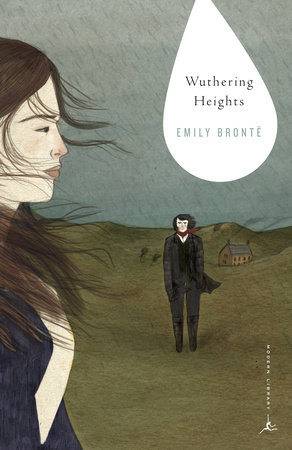
This is perhaps an odd entry, but Wuthering Heights occupies dual status as a literary and gothic classic, and its titular manor is both figuratively and literally haunted by the intensity of Heathcliff and Catherine’s doomed love. Though its appetite might be borrowed from Heathcliff, Wuthering Heights is hungry, drawing Catherine’s daughter Cathy over and over until in a ghoulish echo of the past, she is forcibly wed to Heathcliff’s son, Linton.
Saint-Nazaire is another composite Stay Away/Hungry. In the first book, Never Mind, which takes place in the late 1960s, the Melrose family’s French chateau, animated by the evil of David Melrose, is a Stay Away house of horrors, the locus of both child abuse and the world’s worst dinner party. Thirty years later, Saint-Nazaire has become a kind of Hungry House—representing both a lost innocence and a lost inheritance—that the grown Patrick Melrose finds almost impossible to escape.
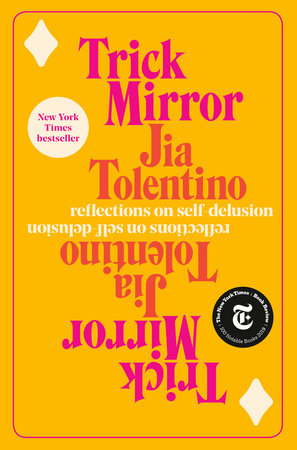
Jia Tolentino’s essays are that rare thing: they maintain the clarity of critical distance while discussing the world in which the writer is immersed. The pieces in her new collection, Trick Mirror: Reflections on Self-Delusion, were written during a period when, as she says in the introduction, “American identity, culture, technology, politics, and discourse seemed to coalesce into an unbearable supernova of perpetually escalating conflict.”
Buy the book
The essays place the disciples of Lululemon in the same frame as heroines from Greek mythology. They consider the internet’s refraction of selfhood: the self as “the last natural resource of capitalism,” as something to be weaponized, as a state of constant performance. They retrace the falsified Rolling Stone story of a rape at UVA, Tolentino’s alma mater, and they revisit the author’s stint on a reality TV show as a teenager. They talk about drugs and religion and music and scamming. In short, they take the chaotic blaze that is the current era and disperse it into something illuminating.
Trick Mirror is Tolentino’s first book, but many will know her work from The Hairpin, where she got her start while still pursuing an MFA, or from Jezebel, or from the New Yorker, where she is a staff writer. All of these essays are new, though, and the writing is the kind to which you will look, and look again. On a WiFi call across an ocean and a five-hour time difference, Tolentino and I spoke about what the internet has done to writing, to identity, and to feminism.
Lucie Shelly: Before we dig into individual essays, I thought we could talk about the collection as a whole. To me, it read concentric. I felt it started with this heartbeat essay, “The I in Internet.” That brought so many of the major themes: selfhood, self-delusion versus self-actualization, and feminism—all framed by the internet era. The other essays and ideas seemed to ripple out from there. How did you conceive the arrangement?
Jia Tolentino: I tried two different arrangements. There were certain considerations, like I didn’t want all of the essays that were about women to be together. I didn’t want all the essays that are like here are all the different ways that all of these things are horrible and unbearable—the internet essay, the scams one, and the one about the UVA rape story, for instance—I didn’t want those to be too close together. It started to make sense to put the internet essay first because it introduces the central contradiction that I thought would carry through the book. The internet is the one idea that would be relevant to basically anyone reading the book. I think that the internet has become the governing structure through which you come to know yourself, but that also dilutes what you know about yourself.
LS: That makes sense. After that first piece, I started noticing so much language around identification, reflection, self-delusion. In the introduction, you announce this triangulated function of writing: for you, it’s a way to shed your self-delusions, it’s a, well, I’m going to use the word “compulsion”—
JT: I’d use the word compulsion.
LS: Okay, so there’s this idea that writing brings you away from your self-delusions, that there’s a compulsive need to get away from them. The internet is a fertile place for self-delusions, though. How do you reconcile writing to define yourself, and writing for the internet?
Men get to live on a plane of human existence and women are confined to live in this domestic world.
JT: Well, I think that there are two different ways of defining yourself—the two ways that come up in the book. The first one I talk about in the internet essay, about how the internet magnifies opposition and encourages you to define yourself and engage with a sort of designated opposition in an unhealthy way. The sort of thing we see with Bari Weiss: everyone was dunking on her on Twitter and that is making her career—the same way that me writing about her is doing the same thing. Right?
LS: Right. But I wonder how that refracts through an idea you bring up in “Pure Heroines”: entrustment. In that essay, you explain that entrustment is a principle, or rather, a mental framework of principles of the Milan Women’s Bookstore Collective. Reading from your text, the women “recognized that the differences between their stories were central to their identities, and in doing this, they also created these identities and affirmed this difference as strength.”
JT: So I think that that’s a way of defining yourself against something or someone in a way that strengthens those things. The Milan Women’s Bookstore Collective, their framework of entrustment—it’s not defining yourself through opposition, it’s defining yourself through difference. Opposition hardly enters into it. That’s the crucial difference. I quote from a meeting where someone says, “We’re not all equal here.” That scene, in a way, is the beginning of whatever freedom anyone is able to obtain. It’s complicated, but it’s very important to me. I knew as soon as I read that book of theirs. I was like, “This is the framework I’ve been waiting for my whole life.” Something that always, always for them leads towards freedom and self-definition.
LS: I’m so glad you mentioned freedom. I’m Irish but I was born in the U.S. and lived there a long time. I find that with identity, the American mentality finds it very difficult to acknowledge difference without making it a problem.
JT: Right. It’s this language of performative tolerance rather than an idea that tolerance should be a precondition.
LS: Exactly, so it was such a relief when I was reading your piece on this—that difference was a freedom to these women.
Once you’re at a certain privilege level, it’s a luxury to be off the internet. The real thing is to be able to be off the internet with no adverse consequences.
JT: Yeah it’s tricky because there are plenty of cases in which your difference from someone has already been framed as a problem. I think it makes sense that identity politics in America are like this. America’s entire national identity is structured around the narrative in which we welcome difference—and the reality in which we often punish deviation from the richwhite American. There are so many people for whom their difference has been made a real structural problem, but I also think that there’s a way in which—as I talked about it in the internet essay—there’s a way in which acknowledging difference has become the endpoint, rather than the beginning. And there’s a way in which there are more freedoms available to us that enter the discourse.
LS: To move direction a little, I feel like in the internet era, the contemporary essay often descends into navel-gazing even though we have so much access to so much more, if that makes sense. The self exploration that happens is entirely inward looking. Your essays, to me, did a lot of self exploration, but remained outward looking. They had such a scope of history, of literature, of feminist movements. You talk about blogging in its earliest days, and you began your career at The Hairpin and Jezebel, two venerated homes for essays on the internet. I’m curious about your thoughts on the essay in this day and age, specifically the feminist essay.
JT: I think that, in general, the climate for writing is not great. From the purely economic standpoint, the constraints are severe and so publications have a hard time breaking even and making money. Conditions are not conducive to the type of writing that people want to do or the type of writing that people want to read. When I started writing, there were a lot of places that a person who had never written anything before could try something and it would get edited pretty well and it would get read by a decent amount of people and I don’t think that there are a lot of places like that anymore.
LS: Yeah, there aren’t many. (This very website is a rare gem!) And if they do exist, survival is tricky.
JT: Before, in the days of like xoJane, you would feel like there was this glut of essay writing, especially personal essay writing—especially personal essay writing by women. But it’s not like that anymore and I think that’s kind of a pity. I wrote a piece a while back called “The Personal Essay Boom Is Over” and it got interpreted as me saying the personal essay itself is over. I was like, No. I started out writing personal essays. I still write them. I edited them nonstop for four years. I love them. But there are ways in which economic incentives complicate things. Like the fact that publications were mostly publishing women who would get paid $150 to write something really personal. That wasn’t great, but it was a system that I partook in and that I love and now there’s a lot less of it and it’s kind of sad. What I always say about essay writing on the internet is that the biggest trap is when people start and finish an essay on the same thought. That’s a thing that a writer should try to avoid. The whole point of an essay is to push yourself a little bit further than where you were when you started.
LS: I’m sure you’re doing a lot of talking about your very personal essays at the moment. Do you think that that will have an effect on how you approach your writing going forward?
JT: I don’t think so. This book is new and people who read it will know a lot about me is in here. But I have always written like this—it’s the way my personality is. The fact of being an open book is just a fact of how I live in general, so writing like that is a pre-existing tendency. That being said, that Houston essay is incredibly personal and incredibly intimate and at the same time, there is so much about that time and there’s still a lot that’s hidden. You could write really intensely about five percent of your life and it will create the illusion that you have shown 100 percent of it, but actually there’s still a lot that’s hidden and I’m conscious of trying to take advantage of that. If I’m going to write about something in my life, I’m really going to get into it. But there’s a lot that’s off-limits and always will be. Or maybe not a lot, but there are things that are never going to show up in my writing.
LS: I’m thinking of that reference you make to Rebecca Solnit about her response to the question of how to be a good woman. She says it’s not so much about how to be a good woman, but how we deal with that question, how we refuse to answer it. I wonder if there is something to be gleaned from that for writers. Like you have to be a good gatekeeper of yourself if you want to be a good essay writer. Otherwise, it can lead to over-exposure or preachy writing. You let yourself be subsumed by your reader.
Self-presentation is not limited to the internet. We’re doing it anytime we enact any form in real life.
JT: Right. And related to the question of essay writing on the internet is just how to be on the internet in general. “Being on the internet” implies a huge waste of time. It sort of asks people to constantly be operating on a framework of “Am I good or am I bad?” and “How good am I?” and “How bad am I?” That’s a question that you can sometimes feel people answering in their writing, but where it’s like, you don’t have to—nobody cares. I don’t need you to be good. I don’t need you to be bad. This shows up in criticism too. People are like, “Okay, just tell me is this thing good or is this bad?” That’s rarely the most interesting question and that is not a question I allow as a first principle.
LS: Right, right. I happened to be reading your collection in tandem with this book by Marguerite Duras, The Lover, and in the context of your work, this line jumped out at me: “When you’re being looked at, you can’t look. To look is to feel curious, to be interested, to lower yourself. No one you look at is worth it. Looking is always demeaning.” And I don’t really know how I feel about that, but on the internet, we’re so conscious of being looked at, of the need to self-curate, but it’s so easy to forget that everyone is curating themselves as heavily.
JT: I never forget that. People are always saying, “You gotta remember that Instagram’s not real life.” Like, obviously not. Are you kidding me? That’s never been a struggle that I’ve had, needing to remember that the internet’s not real life. It’s always been quite clear to me. At the same time, I think that I’m almost exactly the same online as I am in real life. The reason the internet is so interesting is because you can watch people. You get to watch people in this much narrower purview than in real life where it’s three-dimensional. Self-presentation is not limited to the internet. We’re doing it anytime we enact any form in real life, anytime. But on the internet, you watch people do it in these really prescribed spaces and it’s interesting. You get to watch people diluting themselves in real-time. It’s kind of amazing.
LS: I’m thinking now of your essay “Reality TV Me” about being on a reality TV show—that great line you have that when everything is framed as performance, it’s impossible to perform.
JT: Yea, yea, yea. So that’s why I like the internet—because it’s so artificial that it’s actually easier to be yourself. Like being on reality TV. I was always worried in real life in high school thinking, “Oh, why am I acting different around her than I am around him?” Then I grasped that the self is a product of the circumstances we put it in. I reference what Erving Goffman says in the internet essay—the self is an effect that comes off, it’s not this essential, fixed thing. I think that the internet is a structure that shows that over and over and over.
LS: In that same essay, you mention that your partner is one of these people that makes a real effort to exist outside of the scaffolding of the internet, thinking about #TBT as something completely wrong.
JT: Truth be told! It was so funny. He’s like an 80-year-old man, it’s incredible.
LS: So we know that we live within the system. As you write, we have these platforms that are difficult to regulate even if we try not to live on them, but what is the price of really not participating in that world? Is there a price that he feels, perhaps?
You could write really intensely about 5% of your life and it will create the illusion that you have shown 100%, but actually there’s still a lot that’s hidden.
JT: Oh, not at all. He doesn’t feel a price at all. I do think that, obviously, participation in the internet depends on who you are. For example, if he were in the gig economy, which he’s not, he would need to participate in the internet. He might need to maintain an Instagram profile to show potential employers that he’s normal, or he might need to be constantly available via some internet platform, no matter what that is. There are a lot of people who do pay a price for not being comfortable with technology. The internet is the primary thing that connects to financial stability, or to the possibility of employment.
I think we’re going to see this great wave of digital detox as wellness. The real privilege will be to turn off your phone for a week. I don’t think the people who do that pay any price. Once you’re at a certain privilege level, it’s a luxury to be off the internet. The real thing is to be able to be off the internet with no adverse consequences. He’s still on his phone, he still has to be on his phone for work, but I think it’s working out great for him.
LS: It will definitely become a luxury to be off the internet. Brian Appleyard had a piece recently about how most of the bigwigs in Silicon Valley send their kids to these device-free schools.
JT: Exactly! The people who invented these devices—it’s sort of how like Juuling is banned in San Francisco where the company’s based.
LS: Can you describe how you start, how you move from idea to page? How do you know when something is finished?
JT: I research things for as long as I can get away with, and then I start when there are no more good excuses to not start. It helps to remember that the first sentence you write, the first paragraph, probably the first day’s worth of writing at a bare minimum (at least on an essay of the sort of length I was doing for the book) will almost always be discarded—it’s just there to get you closer to what will actually stick, and you can’t get there any other way. And I think I know something is finished when I’m no longer uncovering anything new at all.
LS: Maybe I’m reaching here, but in “Pure Heroines,” your essay about portrayals of female protagonists in literature, you reference De Beauvoir’s comparison of transcendence and immanence. In literature, the female protagonist is portrayed as “the long-suffering, selfless, socially embedded heroine, being moved in many directions.” Male protagonists are portrayed as “autonomous, ego-enhancing hero[s] single-handedly and single-heartedly progressing towards a goal.” I think the same could be said of women and men in relation to the internet, or certainly new media. It seems like the imminent way of living is to live within the systems of the internet.
JT: Yea, maybe. Men get to live on a plane of human existence and women are confined to live in this domestic world.
A college professor of mine put it bluntly: “Marx lost, Freud won” in the implicit race to be the 20th century’s seminal influencer of cultural thought. In particular, texts like Three Essays on the Theory of Sexuality, The Interpretation of Dreams, “Mourning and Melancholia,” and “Beyond the Pleasure Principle”have inspired countless authors and scholars of literature, spawning an entire field of literary theory. This symbiotic relationship between psychoanalysis and literature is echoed in Freud’s own narrative style. He once observed of his career, “Like other neuropathologists, I was trained to employ local diagnoses and electro-prognosis, and it still strikes me as strange that the case histories I write should read like short stories and that, as one might say, they lack the serious stamp of science.” With these case histories, full of twist endings and inappropriate touching, he pioneered a new literary subgenre, guilty of as much self-delusion, fabulism, and autoeroticism as any patient’s monologue.
Every author can be given a psychoanalytic reading, but for decades, famous writers from all corners of the globe have acknowledged an affinity for and debt to Sigmund Freud. But today, a number of female authors are refracting Freudian concepts and power dynamics through their own work in a way that feels new. Contemporary writers like Lidia Yuknavitch, Carmen Maria Machado, Olga Tokarczuk, Siri Hustvedt, Leslie Jamison, and Esmè Weijun Wang have cheered me more than a dose of Cymbalta. These authors have embraced or rejected Freudian hijinks, sometimes doing both within the same book. In their novels, short stories, and memoirs, I divine a rupturing of the male-dominated culture that has persisted since the early days of psychoanalysis, when women’s stories were swapped among male doctors like trading cards and shared at public conferences, where the audience received them with laughter, titillation, or jeers.
Female authors are refracting Freudian concepts and power dynamics through their own work in a way that feels new.
I root them on in part because I dreamed of wrangling power from my own psychiatrists for years. Involuntarily committed several times as a child for anorexia and suicide attempts, I was subjected to clumsy cognitive behavioral techniques in the benighted 1980s, as were my fellow inmates. (One of my roommates was hospitalized for “gender confusion”; I almost don’t want to know what the doctors thought they meant by that diagnosis thirty years ago.) In one psych ward, the psychiatrist who led my treatment team ordered me, like he did all of his patients, to put my life story on paper, and then scolded me in group therapy because I only turned in two pages. Never mind that I was eleven years old. At that tender age, I was already being shown that my words while committed were performances for and the property of others. Just as it was during Freud’s era, psychiatric treatment is still a process of narrative appropriation. In that context, I would have given anything to stash books by these women under my regulation pillow.
The one I would have cherished most would have been Dora: A Headcase by Lidia Yuknavitch. It was high time someone turned the tables on the troubling gender dynamics of Freud’s case histories, and no one was more suited to the job than glorious disruptor Yuknavitch. There’s no way around it: Some of Herr Doktor’s behavior toward female patients was downright icky. He routinely stroked and hypnotized ladies like Dora, Frau Emma, and Fraulein Elisabeth as he tried to decode their stories. In Dora, Yuknavitch retells the story of Freud’s most famous analysand from the young woman’s point of view. That point of view is raunchy, honest, and pained. As the protagonist Ida/Dora puts it, “Seventeen is no place to be. You want to get out, you want to shake off a self like old dead skin . . .I’m not sick. I. Just. Need. Out.” Yuknavitch’s women are never passive, never patient—even when they are patients.
Ida appropriates Freudian discourse for her own ends in sessions with “Siggy” at the same time that Yuknavitch updates her character’s language to the present. After relaying a dream, Ida observes,
He thinks it’s remarkable. He rubs his hands together. He’s way into it. God. I can see him revving up his interpretation jazzy jizz. And yep, just like I think he will, he goes straight for the jewel case. And just like I knew he would, he says it’s a vag.
But Ida isn’t solely a teenage cynic. She’s an artist, secretly recording Siggy for an experimental film. The intersection of art, violence, and radical healing is a preoccupation of Yuknavitch’s work, and in this novel, the tropes of psychoanalysis serve to underscore it. In a scene in Dora, Ida and her friends spy on Siggy’s engorged penis in an ER, and one character remarks that the view through the camera “looks like we’re looking through a vag.” For Yuknavitch, a cigar, or any phallic object, isn’t just a cigar, nor is a jewel case just a vagina. They’re all catalysts for art, and art offers more potential for healing than any talking cure.
No less interested in carnal pleasures, Carmen Maria Machado doesn’t explicitly mention Freud in her short story collection, Her Body and Other Parties, but the book could be read as a reinterpretation of the female id and uncanny. In the bravura story, “The Husband Stitch,” which opens the collection and previews its concerns and consternations, desire itself is uncanny, that thing both familiar and utterly taboo, and dangerous enough to get a woman locked up. The narrator confesses,
I once heard a story about a girl who requested something so vile from her paramour that he told her family and they hauled her off to a sanatorium. I don’t know what deviant pleasure she asked for, though I desperately wish I did. What magical thing could you want so badly they take you away from the known world for wanting it?
The danger, the wording suggests, lies not just in what the woman wanted but how much she wanted it. But Machado’s characters, while walking the tightrope that divides surrender from violation, aren’t drawn to analysis or other forms of self-help. Instead, they want the world to expand to encompass their id. What they too often find, though, is that the world is filled with millions of ids in the form of sexual predators and other aggressions.
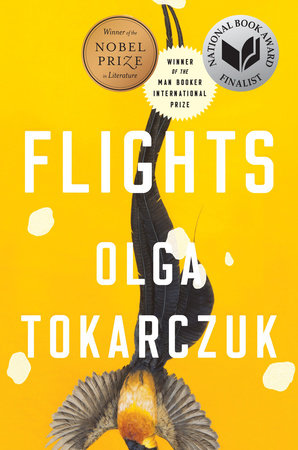
Some contemporary female authors bring Freud into their own work in a more experimental, playful way. One of the most intriguing is Olga Tokarczuk, the sui generis Polish writer, who reinterprets Freud’s theories as narrative possibilities. Tokarczuk has said in interviews that reading “Beyond the Pleasure Principle”was for her “the first step to becoming a writer.” In her hybrid book Flights, whose English translation was published last year to much-deserved acclaim, the opaqueness of Freud’s most challenging text is reborn as a chorus of dream voices, with each disparate story reifying both the human and the narrative subconscious. Characters disappear and materialize, go mad, and lose parts of themselves figuratively and literally, just as we do in our dreams.
The men and women in Flights are haunted by the past and cycle compulsively through the present, similar to both Freud’s idea of repetition compulsion in “Beyond the Pleasure Principle” and how he described the unproductive response of melancholia to loss in his 1917 essay, “Mourning and Melancholia.” One character, a wife and mother named Annushka, runs away from home to ride the subway on endless loops through Moscow, perhaps in the hope of epiphany or release:
She shuts her eyes. When she opens them again the world has skipped from place to place. Right at dusk, revisiting the same place once again, she sees just for a moment, just for a few instants, the low sun break through from behind the white-blooming clouds to illuminate the apartment buildings with a red glow, but just their tips, the highest floors, and it looks like giant torches being set alight.
If those two essays of Freud’s were reinterpreted as a ballet, the cast of Flights, fleet creatures of obsessions, repetition, and pleasure, would dance right through it. The Polish title of the book, Bieguni, evokes travel by foot, and specifically, that of a peripatetic Russian mystical sect. But the English title gives us a hint about Freud’s impact on the author; for Tokarczuk, his words are not constraint, but dizzying flight.
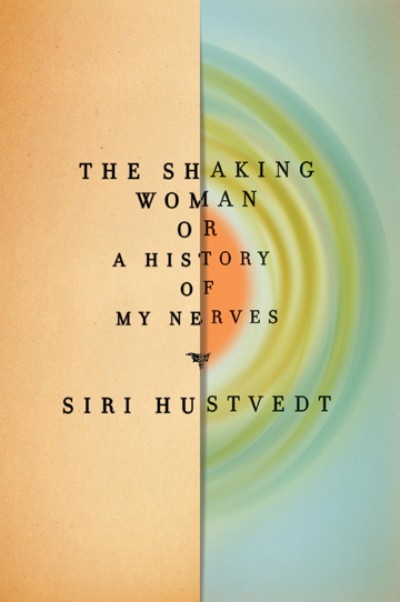
Finally, while Freud may not be a wellspring for the stream of powerful memoirs about mental illness, addiction, and neurological disorders published in the past decade or so, he is undoubtedly an influence on them in some ways. Siri Hustvedt is one such memoirist and novelist who is thoughtful when it comes to his work. She takes from him what she needs and discards what she doesn’t. Since her doctoral dissertation on Charles Dickens, Hustvedt has incorporated Freud’s ideas into both her fiction and nonfiction. Trauma and the unconscious are key players, and the main character of her novel, The Sorrows of an American, is a psychiatrist. In The Shaking Woman or A History of My Nerves, Hustvedt analyzes her own seizure disorder. Midway through the memoir, she comments on Freud’s description of the psychic wound implicit to melancholia in “Mourning and Melancholia”:
Reading the essay again made me say to myself, Yes, there is something here. And yet I don’t suffer from the feelings of worthlessness Freud attributes to melancholics who berate themselves fiercely and seem utterly joyless. I am not depressed. There is, however, in my mourning a blur of betweenness or a partial possession by a beloved other that is ambivalent, complex, and heavily weighted with emotions I can’t really articulate.
One of the things I enjoy about her work is this equitable assessment of psychoanalytic touchstones. Writers like Hustvedt remind us that Freud had some truly groundbreaking ideas, including the one I believe to be his most insightful: that our inner lives are narratives, and those narratives can either help or hurt us.
However, female memoirists are also helping to push the field of psychiatry, and especially our culture’s understanding of it, beyond what Freud could have imagined in his times. For example, Leslie Jamison’s The Recovering: Intoxication and Its Aftermathand Esmé Weijun Wang’s The Collected Schizophrenias might have shocked him with their fresh insights. In these memoirs, Jamison and Wang do not shrink from chronicling their own experiences with alcoholism and schizoaffective disorder, respectively, nor from critiquing gender bias, racism in treatment of drug addiction, and other constructs that Freud had never considered. Yet one could argue that there might be no mental illness memoirs nor even A.A. meetings without Freud’s talking cure and the resultant normalization of speaking publicly about psychological trauma.
In the final analysis, Freud was perhaps less a doctor than an influencer.
In fact, I wonder if today’s cultural moment would exist in its most brazen form without him. In the final analysis, Freud was perhaps less a doctor than an influencer. He grandfathered a culture of sharing our most private thoughts and deepest desires with strangers that underpins social media today. Were he alive in 2019, he’d likely make the most of it to spread his theories, cigar in mouth, and connect with like-minded souls. At the same time, he would possibly be taken aback by the ingenuity and wisdom with which Yuknavitch, Machado, Tokarczuk, Hustvedt, Jamison, and Wang have responded to his framework and seized their own cures. We’re entering a new era in which women make art out of both their diagnoses and their healing.
As much as they are demonstrations of the power imbalance of Freudian psychoanalysis, these diverse projects are also proof of authoring’s strange alchemy. That is, when you tell your story to a psychiatrist, he often claims it as his. But when you share your story with the world, it becomes all the more yours.
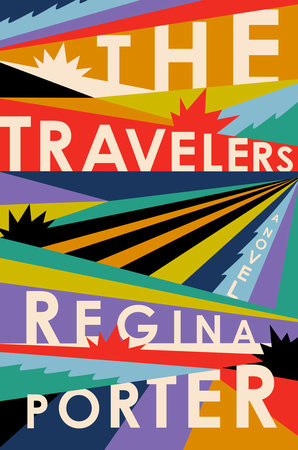
Regina Porter’s debut novel The Travelersincludes short chapters, photos, and a compendium of voices—a full cast is listed in the front matter. This includes the Vincents, with patriarch “the man James” and his son Rufus; the Christies, headed by Eddie and Agnes with their daughters Claudia (Rufus’s wife) and Beverly playing a substantial part; and the Camphors, whose link to these families is revealed to Hank Camphor at a funeral.
Buy the book
As a whole this book is reminiscent of a photo album, steering readers through the nonlinear, emotional growth of several families, Black and white, connecting them in 2010 through secrets, death, and regrets. Characters weave in and out of each other’s lives, sometimes by choice or by force, which is reminiscent of reality. Repercussions from war, segregation, and past abuse allows readers to see how much, in Porter’s words, “trauma travels” over time and regions. Each story is at once secular from “the man James” to Beverly’s daughter Minerva to Eloise Delaney—childhood friend of Agnes—and also compellingly tied to the narrative as a whole.
Though Travelers is Porter’s debut, she is not new to the writing scene, having been recognized for her playwriting. When it came to her novel Porter and I talked a lot about history, its importance in linked narratives such as this, the necessity of hearing a more inclusive and representative record, and how history may not be as much a part of the past as we think it is.
Jennifer Baker: You’ve been a playwright?
Regina Porter: Yes.
JB: Is that something you’re still doing?
RP: Not right now. Playwriting is very interesting. I always joke: with playwriting you need both ears. And when you have children, at least for me in my experience, one ear was always listening to what the children were doing and one ear was always listening for dialogue. And so I started to transition to writing fiction.
JB: So was fiction kind of a sharp turn for you? Or it’s always been part of your writing career?
I think we’re more integrated and segregated than we’re often comfortable admitting.
RP: I think I used to say even when I was writing plays I wanted to write ones that were like a novel. I think because I was terrified to write a novel. So I want the layers that a novel has in a play. And by layers I think exactly what I did with the number of characters and that sort of movement of the characters in their lives in The Travelers. Sometimes in this world we meet someone once or twice and we never meet them again. Or we meet them once and they’re in a very different place the second time we meet them. And that’s life and I wanted to write something that captured that. I felt fiction was the way to do it. That sort of movement.
JB: Was that also something you found attributed to your playwriting process?
RP: I think it’s similar, but I think it’s also different because the mediums are so different. Sometimes with a play you can talk your way to the next stage with dialogue. I didn’t think you can always do that with the novel. So when you’re stalled, sometimes with a novel, it can be frustrating in a very different way. But that’s a good question though because now you’re making me wonder. I listened to music. And so music like “Love Child” or whatever that’s language right. That’s dialogue in a way. So that’s filling the void of dialogue in a play. So the volume of music I listened to and the lyrics and stuff might’ve been functioning the way that dialogue in a play functions for me.
JB: Kia Corthron, a well-known playwright, her first novel came out a few years ago, The Castle Cross the Magnet Carter. I love that book. It’s 800 pages quite literally. It’s funny that you both kind of go with these similar themes since you’re both playwrights. You both work on historical novels that look at Black and white families and how they intersect with one another over time to now. Kia also mentioned that she was very interested in how history plays out over time and how it repeats itself. I feel like it also plays such a role in marginalized narratives because the past speaks to the present.
RP: I think for me I used to say I don’t like history.
JB: Really?
RP: What I discovered was it was not that I didn’t like history. It was that I did not like the history as it was told to me as a child. And I knew, but I could not always articulate that it wasn’t a complete history, that facts were missing. Facts that pertained to me and my people.
JB: You could sense that?
What I discovered was it was not that I didn’t like history. It was that I did not like the history as it was told to me as a child.
RP: Yes. I think one of the pleasures of going and writing this book is a chance to rediscover history. For example, the history my daughter is taught at school is vastly different from the history I was taught.
JB: And how old is she?
RP: She is eleven. It’s vastly different.
JB: Different as in—
RP: Good different, yes. Writing The Travelers was a wonderful opportunity to sort of revisit history. And I include people in history who sometimes are, as you said, marginalized. And talk about someone being biased in a lot of different ways. There’s a way we’re oftentimes more comfortable with someone being, let’s say, an overt racist than a subtle racist. But that’s what happens more often than not, sometimes there is subtle bias on a daily basis. And so complex how we are when we deal with class and race. And I think now of [the characters] Charles Camphor or The Man James saying at one point “Oh I didn’t know” and really meaning that. I guess what I’m trying to say is I always suspect the history I was being taught was far more complicated because of some of the things that were omitted.
JB: Looking at the elements of history woven throughout The Travelers, it’s so critical to building timeline and space. It feels very specific in that way. Historically, New York City was a farming space and it doesn’t seem like that at all nowadays. Now gentrification, segregation are consistently happening, white flight, all this stuff is very much detailed within this book. I’m always intrigued with people’s process when it comes to embedding the historical into a narrative because it’s not an easy thing to actually thread through, especially when you’re going back and forth.
RP: One question that I get a lot is: Why this story now? And I think the questions of the present are embedded in the questions of the past. And we see it politically, we’re still grappling with our inability to discuss race and class. So I think going back and just looking at the character, I had to stop at one point and think “Well how is this character moving through history? And is this character even aware of how history is affecting him or her?” Sometimes the characters weren’t and sometimes the characters were. But as I wrote them sometimes I would pause and I would say “So how much was a bottle of milk in 1966?” And what else was else was happening in 1966 and I would look that up. And then think about and integrate that into that character’s life. And so I think that helped anchor in me in place as did music. So for like a character like Jebediah, well Jeb I would listen to Marvin Gaye’s “What’s Going On?” I think that would be a song he would love. And say for The Man James particularly his father, “It Was a Very Good Year” by Frank Sinatra. And these songs anchored in place. I mean music is a fabulous to anchor one in history and also to allow you to access POV of the character. So I would write the character and then I would pause and look up and say, “Well, what’s going on here with this character’s life and the historical backdrop?” But I never wanted a character’s life to be overshadowed by the historical elements of the story. Often we don’t make sense of history while it’s happening, it’s in retrospect.
JB: That points to something else I wanted to discuss: the effects of war. The expectation of fighting for your country. Your patriotism is reliant on celebrating even the worst parts of your country, rather than being able to critique. And it feels like this is a book that really looks at military life in a different way. Not in that kind of Apocalypse Now one we’re conditioned to. Especially through characters like Eddie and Eloise.
I think the questions of the present are embedded in the questions of the past.
RP: We don’t usually see that with African Americans either. And for me that was very important. It was very important to show how African American military men had to deal with post-traumatic stress syndrome. I think Eddie’s struggle was very moving to me because he knew in some ways he was broken and he wanted to be whole in his choice of how both he and Jeb ultimately come through—and also the circumstances of joining the military. Most soldiers are not prepared for war. It’s a hard thing to prepare a soldier for war, it really is. Male or female.
JB: Another recurring element to me was the need to hide. When we have the older generation growing up and the new generation trying to understand each other. Take Claudia and her mother, Agnes, near the end. Claudia’s trying to figure out her marriage and her mother says “Why do you need to know everything about each other?” Agnes didn’t want to share her own secrets and that seemed to be the norm. Like it’s fine you don’t need to know everything, but this is a different generation to Claudia, she wants to feel safe, she wants to know things are okay. There’s so much being hidden in the older generation, and in the current/younger generation there’s so much they want to know. Did you think about that or did you just sort of see it unravel? Sometimes that’s an unfair question to ask writers, but it seems very pertinent and very evident.
RP: I didn’t think about when I was writing. Certainly not the first draft. But once I had a whole draft I thought, Oh it’s there. It’s there! I made certain connections. In the initial writing. I made discoveries in the same way that you would make discoveries as a reader. So there were moments when I would go “Oh! I see, I had no idea this character had this… Oh so that’s why this has been happening.”
What I do know as fact is that my parents’ generation certainly did not like to talk about the past very much. We talk the past in some ways, our generation, a lot. I think they hide certain facts about their lives in order to keep going. And I find that especially interesting as a southerner and as a Black southerner because sometimes I think Black southerners are perceived as a little, I don’t know if I’d say docile, but it’s not the case. There’s a grace. There’s a quiet subversiveness. There’s a piercing wit. Survival mechanism. They don’t say certain things to protect their children, but I believe in genetic memory and I believe the children pick it up anyway. So for me I did think about how trauma moved. That’s what happened after I read the first draft. I said “Oh, I see trauma moving here.” The parents didn’t really deal with things and the children take it, and not even knowing what it is, may deal with it in their interpersonal relationships because it may prevent them from being intimate in a way. As much as they would be if secrets weren’t kept.
JB: Do you think they know that? Do you think Claudia kind of recognized that? As a teenager Minerva seems to be touching on that a little bit.
RP: Well, Minerva is from that younger generation. It would be very difficult for Claudia and Beverly to ask their parents some of their questions and say some of the things Minerva does. There’s a generational gap. I think Beverly and Claudia know something happened, but I don’t think they explore it. I think there’s enough of a wall up that it would be very difficult to come down. In a different story, I think.
JB: Is there also a reason you decided to connect a white and a Black family in this way? Because you have plenty of material to just look at [Black] characters like Agnes and Eloise and Eddie.
RP: But it’s the world I know and we are connected. And as much as the book seems to be about race, it’s about class. Class oftentimes trumps everything and race becomes what people use as a distraction, but I think we are a country obsessed with class. So it seems right in this time. I think we also we live very segregated lives, but we also live very integrated lives and coming from the south, well, Savannah where I’m from and New Orleans had the largest, at least used to, Irish Catholic population in the south. At one point there was a good deal of race-mixing or interracial relationships. I don’t know, it wouldn’t have been a part of my worldview to just write a story about one family. Because I think we’re more integrated and segregated than we’re often comfortable admitting.
Outer space inspires. It overwhelms. It confounds. We can’t look up without realizing the smallness of our place within the cosmos. Except we can’t fully realize it because the scale exceeds human comprehension. Even the most practical history of spaceflight comes up against this sense of wonder, the questions we must ask in the face of the infinite. There’s a reason cosmonauts and astronauts are heroes. Piercing the heavens is downright biblical.
Buy the book
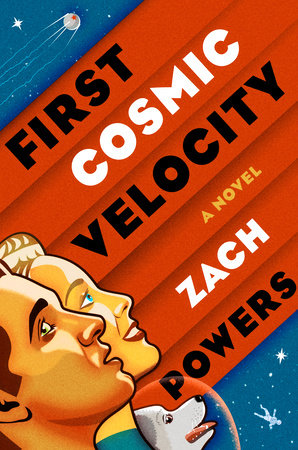
While I was working on my novel First Cosmic Velocity, set in a fictionalized version of the Soviet space program, I fought against this sense of wonder. If I think too much about the depths of space, I can’t help but realize anything I say amounts to zero. When I feel this way, though, I turn to the people who look up and don’t flinch. The people who believe, maybe we can go there.
I want to revere these heroes, but I also want to have them humanized. I want to know the mysteries of the universe, but I also look for metaphors that examine these mysteries on a scale my puny human brain can understand. Space exploration is a subject for poets as much as historians, comic books as much astrophysics texts. And, of course, science fiction, which deals in all these genres at once.
Here are nine books that address space exploration in some way, but maybe not in the way a reader would expect.
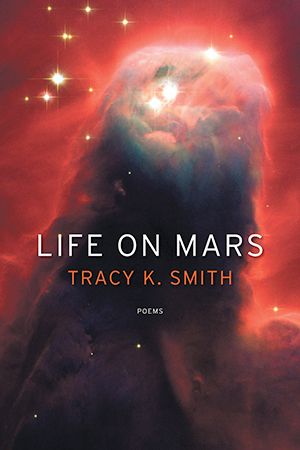
Jodi Foster said in Contact they should have sent a poet, but space makes poets of us all. Tracy K. Smith, a poet whose father who worked on the Hubble Space Telescope, won the Pulitzer in part because she understands the point of looking up: “They live wondering / If they are the only ones, knowing only the wish to know, / And the great black distance they—we—flicker in.”
Siddiqi wrote this first comprehensive, English-language history of the Soviet space program after secret documents became available after the fall of the USSR. My copy of the book is full of tabs and highlights and notes, making this the most essential text I consulted when writing my novel. There are two broad takeaways: First, the Soviets were always as close to failure as they were success, and they only succeeded due to sheer hard-headedness. Second, launching something into space will always push humanity to the limits of our capabilities.
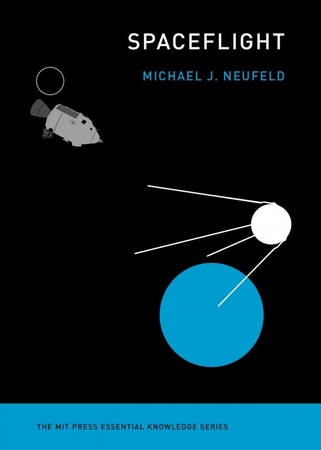
Part of The MIT Press Essential Knowledge Series, Spaceflight condenses the whole history of its title subject down to a lithe 200 pages. Neufeld, a Senior Curator at the National Air and Space Museum, uses his considerable expertise to craft a concise narrative, importantly including practical satellite infrastructure often overlooked in favor of more famous accomplishments. This is the Cliff’s Notes version of everything we’ve tried to launch into space and our most notable failures and successes.
I’ve often imagined Laika, the little space dog, inside Sputnik II, both sorrowful for her fate and envious of the view. I think it was cruel folly to launch her and the other space dogs (so many more were lost than most people know). The sacrifice was too great. But I also love Laika so deeply because of her role. I’d never have known her if she hadn’t flown. Caswell’s book is part chronicle and part reflection, and it insightfully captures the duality of the first living being to orbit the Earth, spaceflight’s first tragic hero.
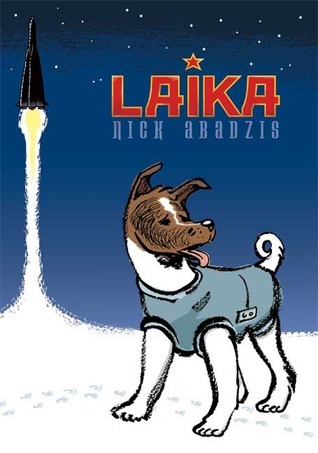
Historical accounts depict Laika as a sweet, unbelievably patient dog. This comic book imagines her origin story and takes the reader behind the scenes of her training, blending fact with fiction. One true story that’s included in the book: before her launch, which the engineers, trainers, and technicians knew would be a one-way trip, Dr. Vladimir Yazdovsky took her home to spend time with his family. I don’t know if I feel better or worse knowing that the people behind Laika’s launch were often as conflicted about it as I am now.
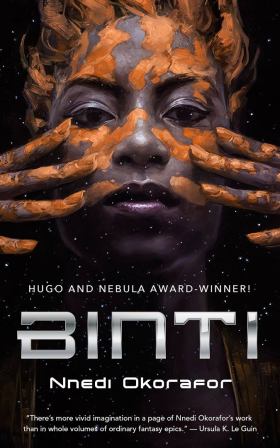
My own imaginary journey to space began with science fiction, and I still think that’s the best place to look for people thinking deeply and revolutionarily about our future. Okorafor’s novella (and two sequels) takes readers to a far-future where humans are but one of many spacefaring races, imagining where an Earth girl from a desert village might find a place among the stars. The speculative elements of the story allow Okorafor to examine familiar human (and alien) biases in a new light. My favorite sci-fi stories are the ones that distance me from myself, giving me perspective to reconsider everyday things I take for granted.
Morena’s uncategorizable book consists of a series of vignettes about or inspired by the Voyager missions. Sometimes Morena presents the straight facts of the missions. Sometimes he reflects on his own life. Sometimes he imagines the different aliens that might discover Voyager’s golden record, and their almost universal inability to make anything of it at all. Throughout all these variations, Morena grapples with one key idea: we are specks that want so badly to be understood.
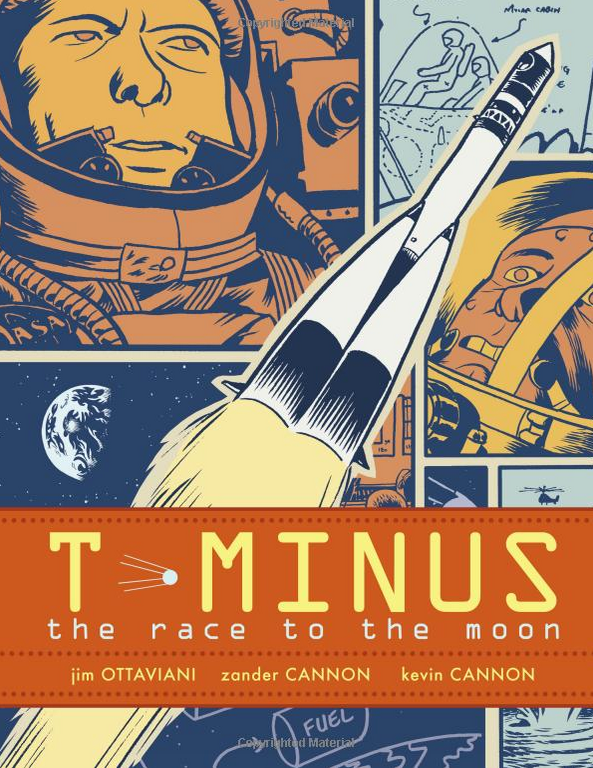
This comic book presents a slightly fictionalized account of both the Soviet and American space programs, counting down from the beginning of the Space Race to the Moon landing. The creators don’t try to be comprehensive, and they do a good job of picking the right moments to dive into the narrative, especially when they choose a scene that’s related to, but isn’t itself one of the big events.
Orelinger presents a study of print advertisements from the first five years of the space race, including an amazing collection of high-quality reproductions. The book shows how much the myth of space affected the American consciousness, and how pervasive visions of the future were, even a decade before NASA put a person on the Moon.
I highly recommend this blender and came here to say so. Since people buy for their homes on Amazon now, I thought I should leave my review where the most shoppers will see it. I have the original version—Oster have rereleased it this year in their “Classics Collection,” but I’m sure the new one is just as good.
My husband and I received this blender for a wedding present in 1975, in a color called Harvest Gold, though it’s really more chartreuse than gold. My mother-in-law ordered it from the Sears catalog with a 10-year warranty—she told me, I think, to make sure I knew just how much she’d spent on it, how much she could afford to spend on it. But I can assure you we never needed that warranty (and the joke’s on her in the end, since the Osterizer has far outlived her).
A lot of things in our kitchen at that time—all around our home for that matter—were second-hand, so the blender was quite a novelty. But with my husband and I both working full-time I can’t pretend it got a lot of use. Mostly we used it to crush ice for drinks, to be sipped while dinner was in the oven. Everyone was drinking Harvey Wallbangers at that time, OJ and vodka with Galliano floating on top. Crushed ice made them seem fancier, and in the early days of a marriage it can be important to pretend things are a little better than they really are, even to each other.
I wasn’t much of a cook, but when our old college friends came over I’d try to make something really special so it didn’t feel like we were just playing at being adults. I learned to make fondue—blending cottage cheese, cheddar, and heavy cream—from the Standard Osterizer Recipes cookbook.
It was the ’70s—we could’ve been doing a lot worse than chipping ice for our mixed drinks. But we were still young in our own quiet way: we read poetry aloud in the den, Frank O’Hara and John Ashbery, and sang Beatles covers around an acoustic guitar. Surrounded by friends, everyone swaying into the couch cushions—I always felt so pleased with us in those moments. Later when the house was quiet, arms full of cups and ashtrays, I’d tell my husband what a nice night it had been, and he’d say that every night with me was a nice night.
It seems like I was always chipping ice for one thing or another. Snow cones were a lifesaver. Our twins always wanted a big birthday party, all their friends and a scavenger hunt around the house and our little yard. Since I’d stopped working by then, I could make my own fruit juice syrup instead of buying so much ice cream, and crush the ice fine as dust in the Osterizer. Almost a decade of birthday photos show the girls stained nose to chin with wine-colored juice—faces turned up to the camera lens, both arms twisted around each other’s shoulders.
As they got older, I found more time to cook. I applied myself to the Osterizer and its recipe book, and it rewarded me with quick breads, soups, salsa, even pancakes for slow Saturday mornings. Our kitchen was modest, and each year the new Sears catalog tempted me with shiny steel Oster appliances we couldn’t afford. But eventually I did save up for just one: a toaster that fit eight slices at once—perfect for the four of us. I’ve heard people say that you should always eat dinner “as a family,” but in my house breakfast was our time. At the table, before the frantic dash for books and bagged lunches, I soaked up their company. It was something to inhale, like a breath kept swelled inside until they returned from work and school and sports.
The year we both turned 60 my husband and I decided to start eating healthy and walking more, so only frozen fruit and leafy greens went into the blender. But his health seemed to get worse, not better. It was hard to find something to cook that didn’t bother his digestion. Then, the same week my daughters brought the grandkids for a visit, a doctor diagnosed him with stomach cancer. It was triggered by a very common bacterial stomach infection, a very treatable thing had we known it was there.
The details are not important for the purposes of this review, but I will say that the Osterizer is very good for pureeing foods. Anyone who has ever taken care of a loved one at home knows that there’s a time when swallowing becomes difficult, and from then on neither liquids or solid foods are advisable. And there’s a time too when blending food to mush is the only thing you can do for someone, and so you do it with fierce concentration as if it were the most challenging recipe you’d ever prepared. There’s even a time, though it seems impossible, when you will miss this unappetizing task, and all the other tasks, and long to do them again.
I hope this review will urge some newlyweds to buy this blender, or put it on their wedding registry. I have been to a fair number of weddings in my life, and I always gift the couple an Osterizer if I can find one. I suppose it’s my way of setting them up for all of it, the best way I know how. My daughter, I remember, playfully rolled her eyes at us when she unwrapped hers, but the next week invited us over for margaritas straight from the blender. We brought over old records to play on the new turntable, another gift. It was a perfect night, and I told my husband so as we brushed our teeth before bed. Every night is a perfect night with you, he told me.
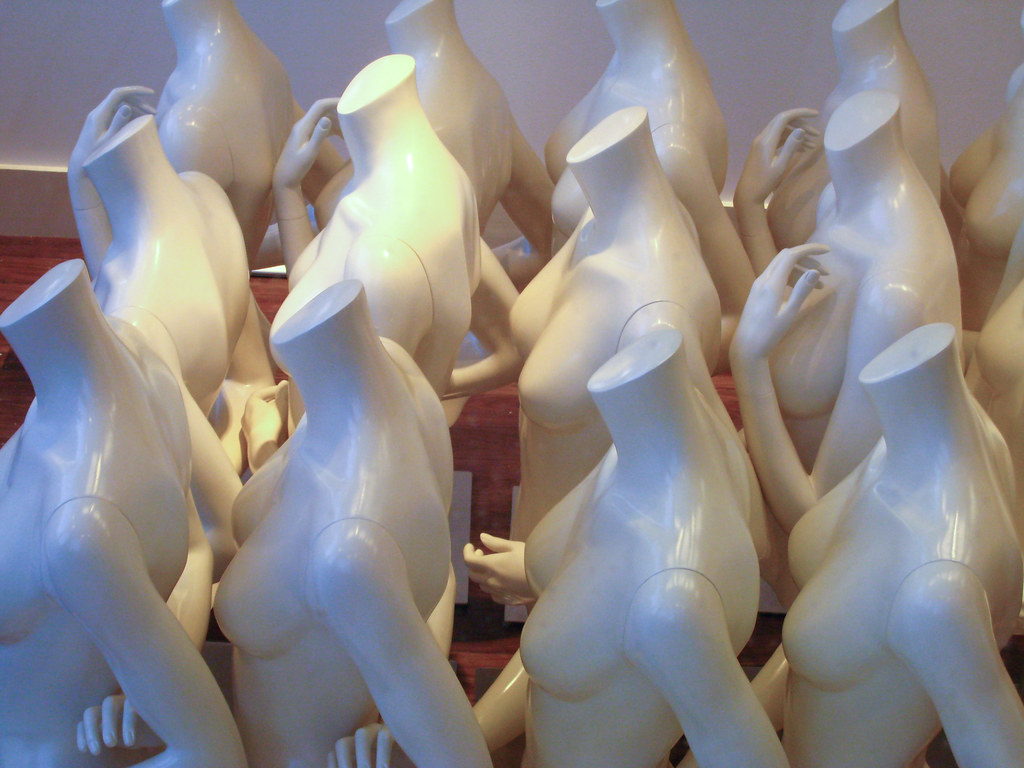
Last year we all had a good time describing ourselves like a male author would (sample text: “I had big honking teeters, and I thought about them constantly”) and even created a handy chart for generating your own prurient prose. But honestly, male authors never needed our help, and they carried on regardless of mockery. Since May, the Twitter feed Men Write Women has been collecting the most egregious examples of the real deal: testosterone-fueled metaphor, icky plot points, and narrators who don’t appear to have actually talked to a woman for fifteen minutes, let alone lived as one.
You can learn a lot from spending some time with this Twitter feed, not least that you might be a better writer than you think. (“These are published authors,” the Men Write Women curator hastened to emphasize via email. “Someone wrote that and thought, ‘hmmm you know what? This sounds like a Very Real Description of a woman.'”) In particular, though, you can gain a lot of insight into female anatomy. Here’s what we now know about women, thanks to male authors:
Their breasts point directly upward…
“Small breasts pointing skyward like surface-to-air missiles”
Taking all of this into account, I have compiled the following sketch of A Woman, According to Male Authors:
Listen, we don’t like this any better than you do, but until male authors get their acts together, this is the artistic vision of women we’re stuck with. Fellas, we beg you: read an anatomy book. Preferably not one you wrote.
Writers, solitary creatures that we are, can have trouble connecting to other humans in casual social situations. These six new editions of classic board games, targeted to writers for the first time, provide the structure awkward writers need to interact.
These games can also inject new energy into your tired “I read half of it” book club, or your petty “I feel like this isn’t really a story?” writing group. So chose your piece, roll the dice, and may the most competitive writer win.
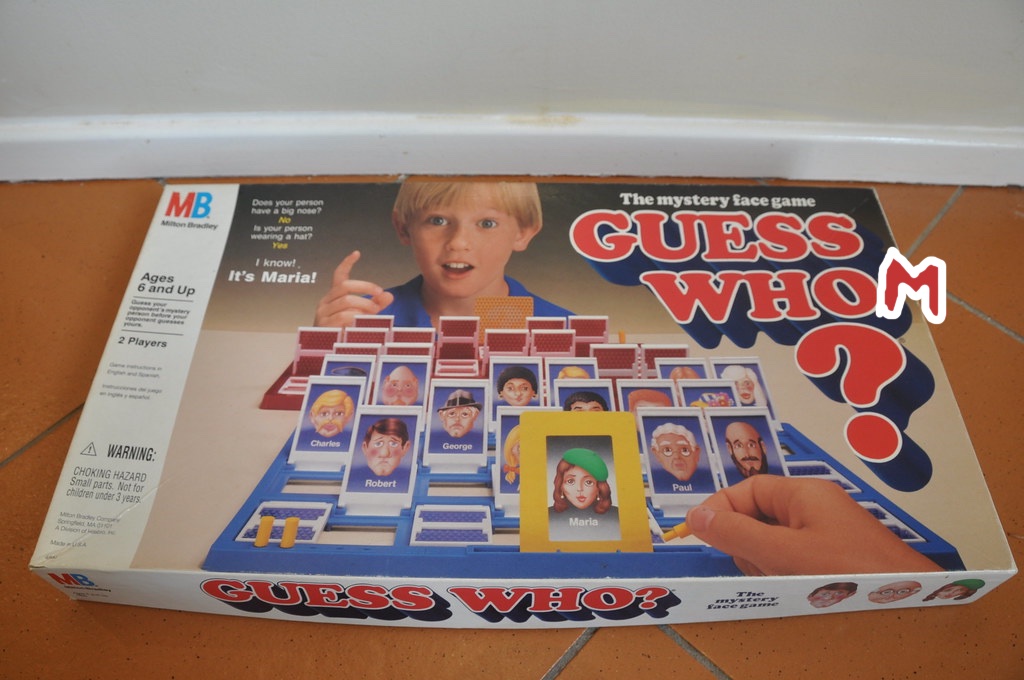
This grammatically correct guessing game asks players to identify authors by asking increasingly specific questions. “Did the writer offer scathing opinions of Joycean modernism?” “Is the author a post-structuralist working in the mode of Roland Barthes?”
Original photo by William Warby
Publishing Monopoly
First there were six, then there were five. Your mission is to reduce the corporate publishers to one conglomerate by buying up properties around the New York City board. The owner of SimonHachetteCollinsMacmillanPenguinHouse wins!
Original photo by Ian Hughes
The Game of Lifetime Copyright
The career of a writer is checked with many failures and few successes. Roll the dice to determine your path. Will you sell your first book in a “major deal” or be forced to self-publish? Will your contract grant you favorable royalty rates, or will you accidentally give away your masterpiece’s copyright? The winner’s best-selling novel gets turned into a prestige television show produced by Reese Witherspoon, the loser toils in obscurity and dies of scurvy.
This one’s subtle, sorry. (Original photo by Ashish Joy)
Sorry! I Stole Your Idea
Better to apologize instead of asking permission; that’s the motto of a true writer. Roll the dice to steal personal details, great and small, from your opponents’ lives. That clever remark they made over coffee? Fair game. The exact way your best friend’s mother died in that car accident? Use it. It’s all fine in the name of art, as long as you shout “Sorry!” as you barrel past.
On the one hand, write what you know. On the other hand, you grew up in a boring suburb and have never experienced adversity of any kind. In this board game, writers achieve world domination by appropriating cultures around the globe for the purposes of their own financial gain.
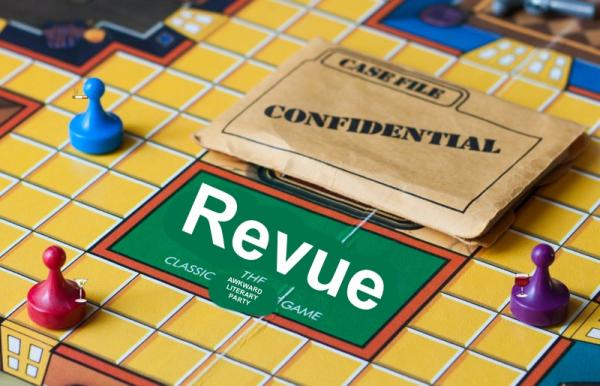
Revue
In this classic party game, players use context clues to pretend they’ve read canonical works and buzzy novels. Once a player feels they have collected sufficient evidence, they announce their opinion of a work they have not read to the group. The first player to formulate a plausible opinion wins.
Back in the summer 2017 Nicole Sealey started to feel like she wasn’t doing as much reading as she normally did. This was understandable, seeing as she was serving Executive Director of Cave Canem—an organization dedicated to Black poets and poetry—and promoting her debut collection, Ordinary Beast, at the same time. And so she set herself a challenge: read an entire book of poetry every day during the month of August. Thirty-one days, 31 books.
“The Sealey Challenge was, initially, just a conscious effort to return to the habit of reading poetry,” says Sealey, who has since stepped down as ED of Cave Canem. “I posted across social media to ask if anyone wanted to join me in reading a book a day in August. Folks did, and the challenge caught on. Now, it’s in its third year. Now it’s tradition.” Sealey is no stranger to building community—Cave Canem’s programming is all about creating a legacy of Black poetry through workshops, mentorship, readings, and support. So it’s no wonder the challenge has caught on like wildfire. Both poets and poetry readers alike use the hashtag #TheSealeyChallenge and post photos of the books they’re reading during the month, creating a storm of poetry on social media.
But reading one book every day isn’t easy. Are they meant to be read individually, so readers allow them to sink in, or do we go through a poetry collection as we would a novel? Sealey recommends that “Poems should be consumed as individual readers see fit. As a poet myself, I read for pleasure and/or to better my craft. During the Sealey Challenge, however, I read for enjoyment. There’s no hard and fast rule. Really, I’m thrilled that folks are reading more books of poetry, many of which are chapbooks, and doing so together.”
She adds that the books she selects are ones she’s been meaning to read for a while, but hasn’t yet. She has some suggestions to help those participating in the challenge:
DO select collections that can be read in one day (I’m a slow reader, so I tend to select books with no more than 100 pages).
DO use your time wisely (read on the train, during lunch, before bed, et cetera).
DO take your time—poetry is deserving of our full attention (if reading a selection carries over to the next day or the day after that, so be it).
DO read chapbooks—for every full-length, read a chapbook (chapbooks need audiences too and this will help us keep pace).
Lastly, DO return to and study these books between September 1st and the next year’s #TheSealeyChallenge.
We can DO it!
If you’re new to the poetry world, though, finding chapbooks and short poetry collections may be a challenge in itself. There is a lot of great work out there, and poetry doesn’t often get publicized as widely as other writing does. To help you along, I asked (read: straight up slid into their DMs) 31 poets to recommend just one book of poetry they’ve loved. Thirty-one poets, 31 collections. Maybe you’ll find your new favorite amongst these.
Damn, just one, eh. Pardon My Heart by Ohioan poet Marcus Jackson. —Nicole Sealey, author of Ordinary Beast
I’d recommend Harmony Holiday’s A Jazz Funeral For Uncle Tom, for how it blends lyric, imagery, and history to formulate a clear and striking narrative. —Hanif Abdurraqib, author of A Fortune For Your Disaster (September 2019)
Sarah Gambito’s Loves You is a remarkable folksong and jubilee of the heart—and stomach. The connections of food, love, and landscape bubble and froth together here in a stunningly and dazzlingly original compilation. —Aimee Nezhukumatathil, author of Oceanic
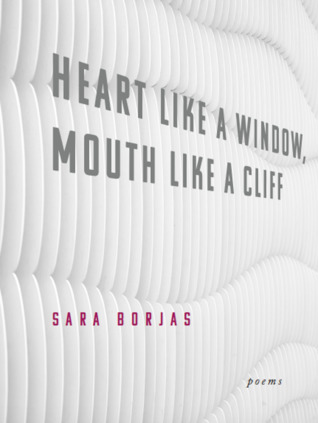
Sara Borjas’ Heart Like a Window, Mouth Like a Cliff. —Denice Frohman, co-organizer of #PoetsforPuertoRico
Eduardo C. Corral’s Slow Lightning. That book uses restlessness, in form, lexicons, languages, and styles to define a new way of living and thinking in otherness that is both homage to literary precursors as well as a treatise for healing and futurity for writers of color. —Ocean Vuong, author of Night Sky With Exit Wounds
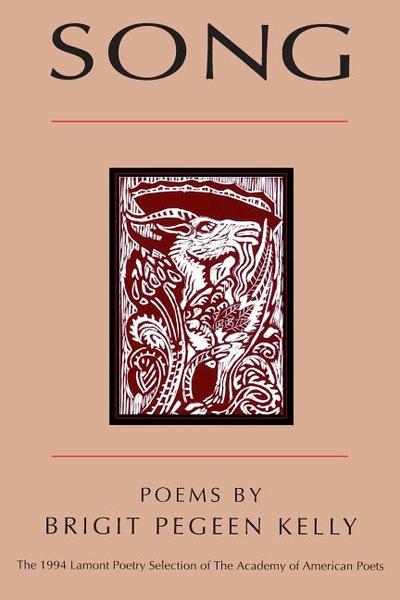
I love Brigit Pegeen Kelly’s Song. There’s so much beauty in that book. There’s also quiet in the book. You can hear the quiet between the lines. There’s also so much pain in that book. But the beauty overpowers all. It’s one of my favorite books of all time. —Victoria Chang, author of Barbie Chang
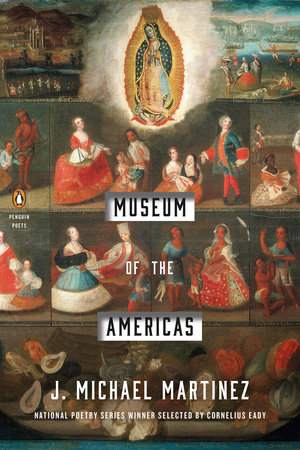
If you haven’t read J. Michael Martinez’s Museum of the Americas, you are missing out; this is one of my favorite collections of recent years for its lyrical inquiry into Mexican heritage and imperialism, and the Latinx body that emerges from that history of oppression and consumption. —Rosebud Ben-Oni, author of turn around, BRXGHT XYXS (forthcoming)
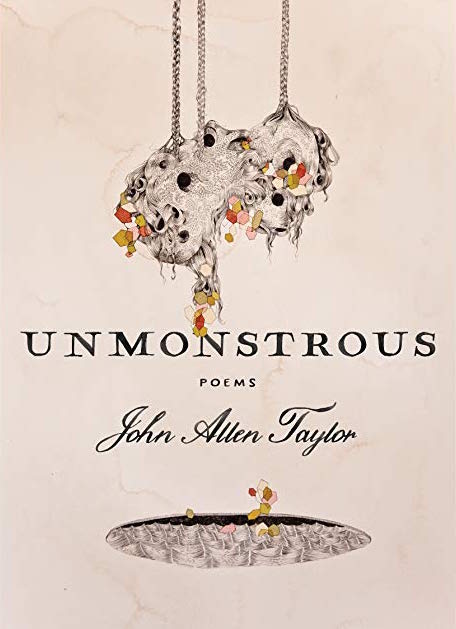
I would recommend John Allen Taylor’s chapbook Unmonstrous (YesYes Books). It is heart-wrenching and elegant, quiet and loud, recounting trespass, healing, and the beauty we find along the way. —Diannely Antigua, author of Ugly Music
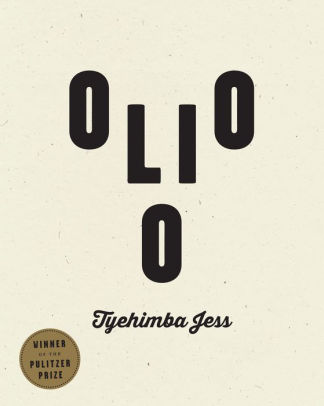
Olio by Tyehimba Jess. Olio makes me wonder about the future of poetry and consider how it could thrive both on and off of the page. The theatrical way in which the poems of Olio and the physical text itself are presented–resist institution and convince me that contemporary poetry is on the verge of yet another exciting renaissance! —Faylita Hicks, author of Hoodwitch (October 2019)
Ordinary Beast by Nicole Sealey. An incredible experiment in quietness and solicitude. —Camonghne Felix, author of Build Yourself A Boat
The last book of poetry I read with deep interest was Jay Bernard’s Surge, which reckons not just with history but also literary tradition to call attention to the recursivity of social violence/ anti-black racism in the U.K. In Bernard’s hands, form and narrative are melded to produce a truly political poetry (in every sense of the political)! —Billy-Ray Belcort, author of This Wound is a World
Raquel Salas Rivera’s while they sleep (under the bed is another country) sees and distills centuries. As the aftereffects of the U.S.’s violent response to Puerto Rico, in the wake of Hurricane Maria, grow, this book, its nuanced analysis and use of language, is a tool for surviving the future. —Andrés Cerpa, author of Bicycle in a Ransacked City: An Elegy
Franny Choi’s Soft Science. This book reads like a cross between an lyric erotic memoir and a Isaac Asimov story. In these formally inventive poems, Choi explores the complicated mess that is the human psyche and find us all (America and beyond) both monstrous and beautiful. You should really read this book. —Jeffrey Thomson, author of Half/Life: New & Selected Poems (October 2019)
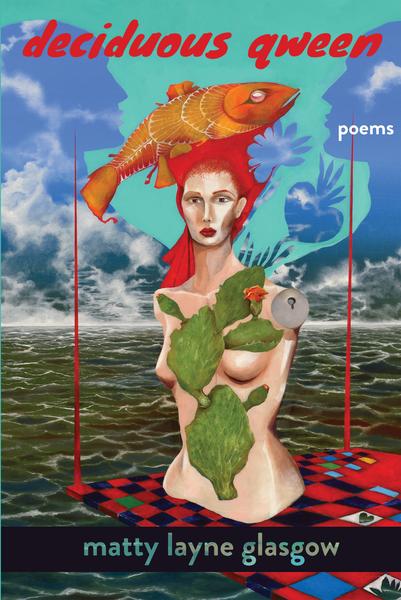
Joe Jiménez’s Rattlesnake Allegory: The lyric echoes & queer longing of Joe Jiménez’s Rattlesnake Allegory deftly deconstruct the space between the body & the environment it navigates. For Jiménez, the body itself takes form as “a nest braided in hush,” & desire a snake that coils within, & stays. —Matty Layne Glasgow, author of Deciduous Qween
I recommend everyone read Teeth by Aracelis Girmay. Girmay’s first book of poems is full of balms and rallying cries. It is a book to carry with you at all times. If you can read the poem, FOR ESTEFANI LORA, THIRD GRADE, WHO MADE ME A CARD, and not giggle to yourself with joy, then you might want to check your pulse. —José Olivarez, author of Citizen Illegal
I recommend Mend (The University Press of Kentucky) by Kwoya Fagin Maples. There are so many things to love and study here, namely how Maples beautifully uses both personal and persona poems to investigate what it means for black women to have (literally) made history but not be apart of it. —Malcolm Tariq, author of Heed the Hollow
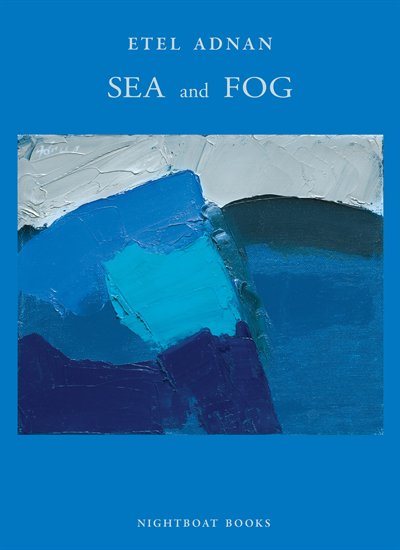
Etel Adnan’s Sea and Fog: A quote from the book: “The forest is shaking terribly. Waves howl and break in jets of water. What beauty, this fury! Sea: It is because she is that we are, and when she disappears we’ll cease to be. It’s only in relation to her that we find some worth to our existence.” —Grace Shuyi Liew, author of Careen
Gabriel Ojeda-Sague’s Jazzercise is a Language: A friend thrust this book into my arms knowing what it would do to me and now I thrust it into yours. This book thinks, it sweats, it offers sweat-drenched leotards and leitmotifs of being doused in seltzer, it counts to a beat (one two one two, bodies impacting a floor) and inhabits/blows up the confounding — racialized, gendered, wild — language of FITNESS DANCE and its celebrities/practitioners/instructors — “when you’re smiling I know you’re breathing.” This is a fucking great book. Skip that cruel Richard SImmons podcast and read this instead. —Hannah Ensor, author of Love Dream with Television
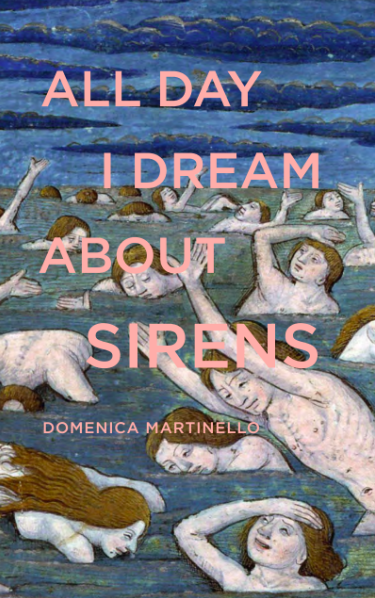
Domenica Martinello’s All Day I Dream About Sirens (Coach House Books, 2019): All Day I Dream About Sirens by Domenica Martinello is an intoxicating debut. She braids diction from mythology and late stage capitalism into language that’s vibrant and slippery. The varying linguistic registers and tone shifts both critique and enact our age of flickering attention spans. Her poems are dazzling, exhilarating. —Eduardo C. Corral, author of Slow Lightning
Alberto Rios makes use of magical realism in order to infuse our world—which is full of such codified notions as nationality and gender—with the often-unacknowledged mysteries of our own shifting and mutable identities. Every one of his books is a lesson in sorcery, but The Smallest Muscle in the Human Body is slaying me these days: “What I could not have, / That’s what I was / Inside, an ache / Coming as I stood / Too many places.” —Keetje Kuipers, author of All Its Charms
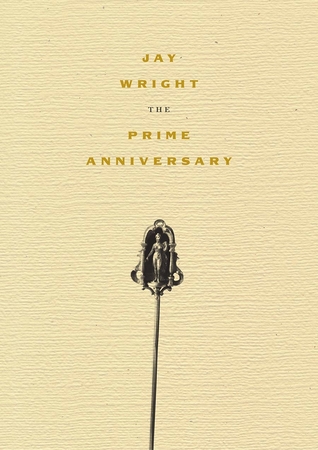
Jay Wright’s The Prime Anniversary (Flood Editions, 2019): With incomparable poetic vision, Jay Wright again reminds us of our sonic birthright. At the meeting place of Góngora and Ogotemmêli, his lines thoroughly reconfigure the perception of time and geography. With astounding lyrical precision—a music composed of fractions, infinity, proper names—The Prime Anniversary makes it desirable to inhabit the immensity beyond “this countable, nameable thing we call an individual.” Wright’s example allows us to rejoice in the justice that prevails in the present tense of what numbers know: “Nothing overcomes the radiant iambic; / no one forgets the geometry of lyric.” —Roberto Tejada, author of Still Nowhere in an Empty Vastness
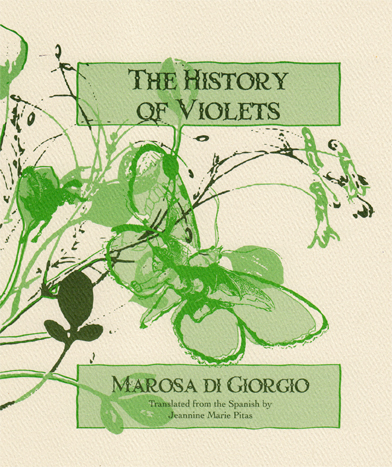
I recommend anything by Marosa di Giorgio (Ugly Duckling’s issuing of The History of Violets was my first introduction). Di Giorgio’s prose poetry locates and then often identifies with the perilous beauty of the natural world as it applies to selfhood, longing, ancestry, and eros. In her voice, I feel the coiled-up burgeoning of a lily caged because of its murder history, even as she praises its perfume. —Justin Wymer, author of Deed
Deciduous Qween by Matty Layne Glasgow: The poems of Deciduous Qween excavate the body and talk about it fearlessly, with exact attention. They rustle with honest statements that fall as they become part of a greater nature. They exist in a desert where loss and restlessness have come to play and be. You will find yourself attached to these funny, pensive and tender poems. They will follow you around helping you name what you were actually feeling, not what you think you should feel because others have said so. Read this when you want to feel free. —Analicia Sotelo, author of Virgin
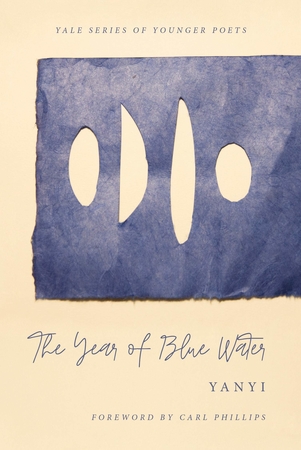
The Year of Blue Water by Yanyi—I keep returning to this book and it keeps returning me to myself, in all these gorgeously unexpected ways. Within these pages, memory, dream, friendship, and the everyday are sites of rigorous meditation and imaginative reconfiguring. —Chen Chen, author of When I Grow Up I Want To Be A List of Further Possibilities
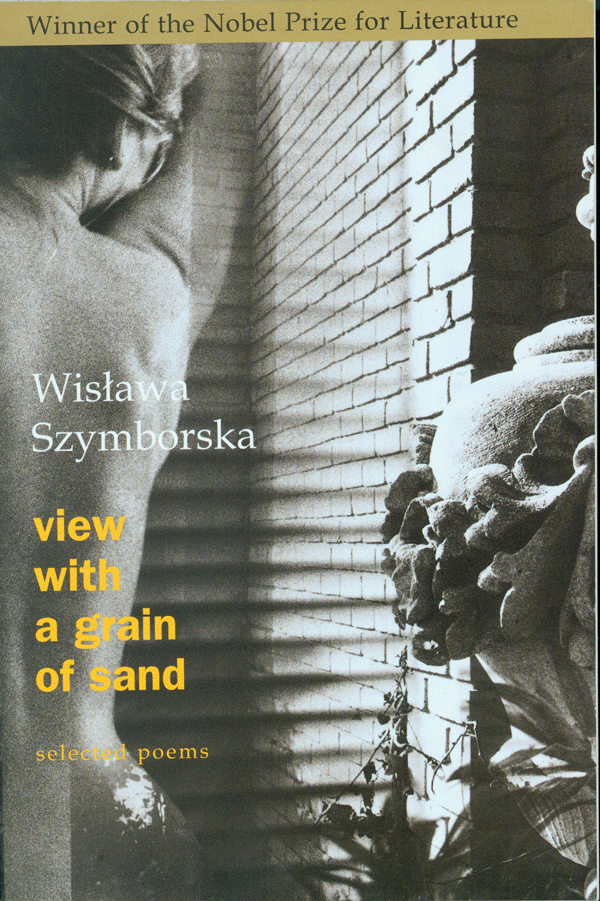
View With a Grain of Sand: Selected Poems by Wislawa Szymborska—Nobel Prize winner, hotel soap stealer, beloved scientist-poet-philosopher, and Patron Saint of Perpetual Noticing, Szymborska illuminates the paradox and wonder of being alive like no one else. She’s funny as hell too. —Shira Erlichman, author of Odes to Lithium
Catalog of Unabashed Gratitude, Ross Gay (2015): One of the healthiest books I’ve ever read, Ross Gay’s Catalog of Unabashed Gratitude has recharged my own commitments to studying/exploring the radical observations and critical challenges of joy. —Geffrey Davis, author of Night Angler
Although listed as an essay collection, Lily Hoang’s genre-defying book, A Bestiary, is an absolutely groundbreaking tour de force that took my breath away and compelled me to read it in one sitting late into the night, and then many times since. With its objects, statements, poems, movements, gestures, essays, recollections, fairy tails or however you want to define them, one thing is certain: I don’t think I will ever be the same writer after having read this beautiful book. —Marcelo Hernandez Castillo, author of Cenzontle
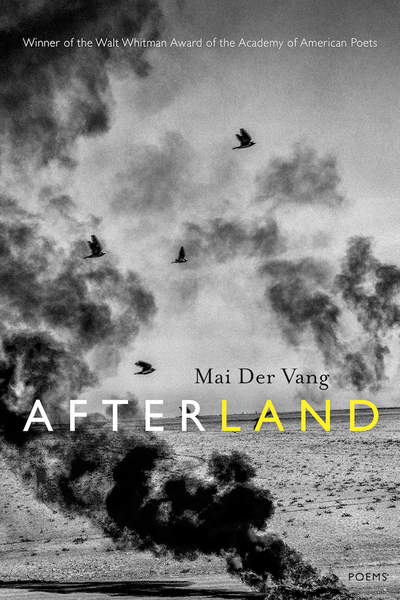
Of Mrs. Dalloway, Michael Cunningham says it’s the “first novel to split the atom.” Mai Der Vang’s Afterland continues in that nuclear spirit: stretching line breaks, imagery, and syntax to ambitious extremes. These poems are testaments to memory, war, exile, and trauma; they never forget to remind us why poetry is a powerful vehicle for survival. —Roy Guzmán, 2017 Ruth Lilly and Dorothy Sargent Rosenberg Poetry Fellow
It’s August, and your poetry should be as fierce as a NYC subway platform in a heat wave, so I recommend Beshrew (Dusie, 2019) by Danielle Pafunda. This snapshot-sized (4×6) feral book-length poem epigraphed with Shakespeare’s Sonnet 133 is love as crime-scene, duende, pleasure, and catastrophe. We are all on fire and these couplets roar through the ways in which we try to inhabit one another—the litany and ecstasy. —Erika Meitner, author of Holy Moly Carry Me
Natalie Shapero’s Hard Child (Copper Canyon, 2017) is brash and poignant and hilarious and upsetting. As a new parent and a misanthrope, I had never felt so seen by a poetry collection. Reading it was like hearing someone say the inappropriate thing that you’ve always known to be true but haven’t been able to articulate and you’re like OOOOOOH YEAH SAY IT LOUDER. My copy is dog-eared and the margins are thickly be-hearted. Next to the lines “It’s/ awful, to be a person” I have written “hi, yes.” You can too. —Claire Wahmanholm, author of Wilder
I would like to recommend Zaina Alsous’ A Theory of Birds. It’s a deeply rebellious, wild book that, like Dionne Brand’s work, attempts to map a radical vision of the world onto a girl’s body, give an Arab girl back her power to name the creatures, avenge those gone extinct, time travel. I’m thrilled by the formal experimentation and the referential nature of the work, using citation as a spiritual act to account for all the radical thinkers that made this debut possible. —Vanessa Angélica Villarreal, author of Beast Meridian
It’s difficult to imagine a time when defining yourself by an obsession with a movie, TV show, or celebrity wasn’t a natural part of life, like picking a favorite color as a child. In a time when the internet supplies a constant stream of celebrity news, takedowns, and an outlet for stanning, Old Hollywood seems impossibly mysterious and alluring. Even aesthetically it’s easy to romanticize—the meticulous hairstyling, tailored outfits, even black and white film, though plainly inferior to today’s technology, can be enough to beckon one in for a closer look.
What took place as Hollywood was being built from the ground up, both as a city and an industry, shapes so much of the way we interact with media today. These books present a nuanced portrait of show business as it was taking shape, reminding us of the people who had to combat the repugnant cultural attitudes of the time, the scandals that dramatically altered lives, and of course, the endless glamour.
Spurred by a real photo of three film figures—gender-bending performer Marlene Dietrich, Chinese American actress Anna May Wong, and Nazi propaganda director Leni Riefenstahl, Amanda Lee Koe’s Delayed Rays of a Star is a study of how the time we live in shapes who we are and how we live. It could be simple for a historical novel populated and led by real-life figures to coast on the novelty, or become so concerned with sticking to the facts that it remains superficial, but Lee Koe does neither. With great nuance, the novel documents the compromises necessary to reach one’s ambitions.
In Shawn Levy’s book about Los Angeles’s most mythologized hotel, Chateau Marmont serves as a portal to how much Hollywood has changed since the building was first erected, yet how precisely the structures (literally, in the case of the building) have remained intact. Levy turns his eye on the hordes of stars who’ve occupied the hotel and the infamous tales of what has occurred on its premises, but also less expectedly on the peculiarities of the building. Levy offers insight into West Hollywood in the 20s, and how exactly a site that is an emblem of sophistication managed to live through the 30s and a World War, while leaving its air of worldliness intact nearly 100 years later.
Scandals of Classic Hollywood by Anne Helen Petersen
It’s disorienting to read a book about a time before celebrity news and gossip became many Americans’ primary cultural engagement. Anne Helen Petersen adeptly tells the tales of how the lives of 16 different stars of Old Hollywood were consumed by the public. It’s sad to see the personal lives of others ravaged for all to see, but it’s especially disturbing to read about the cases documented in Scandals. These pioneers of the silver screen didn’t know quite they were headed toward, the moral salve of thinking “they knew what they were signing up for” no longer relevant. Petersen writes about the stars of the time in a way accessible to both the classic film obsessive and those of us who know about the bare minimum by carefully linking the celebrity culture of yore to its current-day counterpart.
Authored by Darcy O’Brien, the son of two actors, this semi-autobiographical novel presents a view of stardom we don’t often come across: that from the eyes of a celebrity’s child. With a wry sense of humor, O’Brien writes mercilessly of a boy’s childhood and teenage years made unstable by the narcissism of his parents. While this isn’t exactly an experience exclusive to the celebrity set, that context allows a little more humor—it’s more enjoyable to watch as a child is left to their own devices if it leads him to move in with a famous director, the father of a friend, who immediately opens him a checking account for his allowance. A Way of Life Like Any Other is both a peek into the ridiculous lavish lifestyle of the rich and famous and the melancholy of trying to return to one’s prime.
Though many of the key players in early movie-making were Eastern European Jews, few non-fiction books dive into the complex entanglement of the infancy of Hollywood movie-making and World War II like Salka Viertel’s memoir. In The Kindness of Strangers, Viertel recounts the experience of this intersection through the story of her own life. What we would now call a multi-hyphenate, Viertel took up post as an actress in her home country, a screenwriter, and a reviewer, among others.
Edgar Rice Burroughs is widely known as the creator of Tarzan, the book series he wrote between the 1910s and the 1940s, and this legacy lives on through Tarzana, the San Fernando Valley plot of land he bought and proudly named. Along with his countless sci-fi and adventure novels, he has a handful of books set in “the real world.” Recently reissued by the LA Review of Books is The Girl From Hollywood, a novel set in a town with physical descriptions that match Tarzana as it was at the time. The book follows Shannon, the titular girl, as she attempts to make her way in Prohibition Hollywood. The novel brings us to a period in time when the desire to work in film and become famous was less than popular—something that feels about as distant as Burroughs’s sci-fi when compared to our current day in age. As you might expect, there’s plenty of paternalism and moralizing as Shannon encounters the reality of the outside world.
The Battle for Beverly Hills is just as much a look at the physical making of the city as it is about the people who took part in its making. In the same way that it’s easy to take the structures of stardom for granted, it’s only natural to forget how townships, and in particular Beverly Hills smack in the middle of Los Angeles, come to be. The book captures the ridiculous capitalist attitudes that ran rampant at the time, most notably in how the town came to be, when its owners bought the plot of land that had already unsuccessfully been mined for oil with the hope that some would turn up the second time around. The Battle for Beverly Hills is a surprisingly dense history that marks one of the first instances of stars using their fame to lend attention to a political issue.
DON’T MISS OUT
Sign up for our newsletter to get submission announcements and stay on top of our best work.
YOUR INBOX IS LIT
Enjoy strange, diverting work from The Commuter on Mondays, absorbing fiction from Recommended Reading on Wednesdays, and a roundup of our best work of the week on Fridays. Personalize your subscription preferences here.