Tochi Onyebuchi’s young adult books, the duology Beasts Made of Nightand Crown of Thunder, are fantasy novels with a Nigeria-influenced setting. His upcoming War Girlsis set in a post-nuclear, post-climate change Nigeria of 2172. Riot Baby,his first novel for adults (also forthcoming), is a dystopian story about supernatural powers and American racism. Suffice to say, Onyebuchi knows a thing or two about envisioning alternate pasts, presents, and futures of the African and Black American experience. So we can’t wait to read his picks of Afrofuturist novels that aren’t written by men.
Read More Women is Electric Literature’s series, presented in collaboration with MCD Books, in which we feature prominent authors, of any gender, recommending their favorite books by women and non-binary writers. Twice a month, you’ll hear about the five non-male authors who most delight, inspire, and influence your favorite writers.
I first learned of the term “Africanfuturism” from Nnedi Okorafor. In the wake of Black Panther’s mammoth success and new cultural near-ubiquity, the term “Afrofuturism,” of American origin, would come to be slapped onto every speculative imagining that happened to prominently feature black characters. An attempt to stuff Tomi Adeyemi’s Children of Blood and Bone into the same cupboard as N.K. Jemisin’s Broken Earth trilogy and the musical stylings of Janelle Monaé with little regard for whether the work in question even fell along the traditional divides of fantasy or science-fiction. American publishing had turned a specific American-born artistic and literary tradition into a distended buzzword. Yet with as much as the term seemed to contain, it left out one rather important piece: Africa itself.
A trip to Lagos for the Aké Arts and Books Festival revealed to me a thriving, longstanding ocean of literary work by continental and diasporic Africans, one that didn’t necessarily have a culturally hybridized pan-African future as its goal. Nor did it seem to grow out of or in response to the cataclysmic dislocation caused by the transatlantic slave trade. Instead, it sprang from highly localized realities, traditions, and mythos. And imagined simultaneously scopic and specific, genre-bending futures.
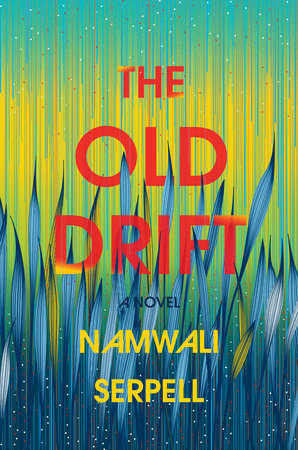
An Electric Literature interview with the author put this multigenerational epic on my radar. The novel follows three families—one black, one brown, and one Indian—as their futures intertwine over the course of Zambia’s story. Simultaneously a historical narrative with fantastical elements and a science fiction novel, it begins in the nation’s pre-colonial past and extends into a near-future with solar-powered drones and smartphones that live in our hands. It contains so much. Colonialism, independence, revolution, the Zambian Space Program. And it does that wondrous thing of seeing from both the bird’s and the worm’s eyes, all without my ever having felt lost during the telling.
The setting is Jo’burg. Our protagonist: a recovering journalist and former addict named Zinzi December. Who is bonded to a sloth. Who she believes carries the spirit of her dead brother, Thando. You see, in this version of Johannesburg, someone who is culpable in a murder is automatically “animalled,” or psychically attached to an animal familiar. Stray too far from your animal, and you’ll catch panic attacks and nausea and debilitating withdrawal symptoms. And if your animal dies, you will be torn to shreds by a mysterious dark cloud. Now say you’re bound to a crime syndicate that’s paying off your debt to your dealer. And say, to escape your debt to the crime syndicate, you take a job from a music producer to track down the missing half of a teen-pop duo. The magic in this version of Johannesburg’s Hillbrow suburb carries the kind of grit that sticks between your teeth, the narrative voice coated in such hard-boiled rasp that you’ll find yourself constantly reaching for a glass of water.
I may be cheating including Emezi’s stunning autofiction debut on this list, but hear me out. This book defies categorization. It obliterates boundaries. It is, quite simply, mind-blowing, and I will take every opportunity I get to recommend it. Emezi’s protagonist is a young girl named Ada, born in southern Nigeria as a response to prayer, and plagued throughout her life by ọgbanje, a malevolent spirit that deliberately torments the possessed with misfortune. Interestingly enough, the term has sometimes been translated to changeling, and if you read the book with that in mind, that provides a rather interesting layer of resonance to Ada’s tale. Someone’s fantastika is another person’s reality; someone’s I, another person’s we. Freshwater is a daring story of how we occupy our bodies, about being and fashioning oneself out of many selves. It has, quite rightly, been dubbed a masterpiece. And Emezi accomplishes something on page 37 I had not thought possible in a book.
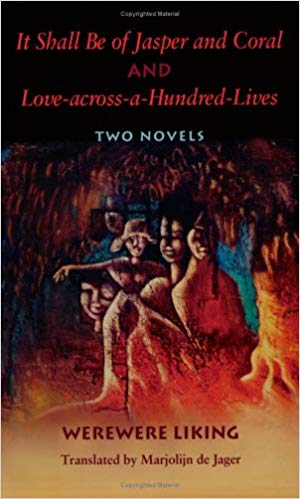
Elle sera de jaspe et de corail by Werewere Liking (English title: It Shall Be of Jasper and Coral, translated by Marjolijn de Jager)
One theme that has arisen so far in this list is the meaninglessness of borders, the futility of categorization. It Shall Be of Jasper and Coral is both song and novel consisting of nine journal entries on themes from art criticism to how to raise children. Interspersed throughout, and contributing to the novel’s polyphony, are dialogues between the comic relief, Babou and Grozi. Our journalist: a misovire from a future where there is no gender differentiation, a being who heralds the creation of a whole new race. Of Cameroonian origin, Liking—painter, playwright, artistic director, novelist—is an artist with unparalleled vision, for whom the novel as form is like putty in her hands.
Fellow Naijamerican Okorafor won the World Fantasy Award for this book that follows Onyesonwu, a child born of horrific violence, across a postapocalyptic simulacrum of Sudan scarred by genocide. From a young age, Onye manifests immense powers and when she discovers that a powerful being is chasing her, intent on her death, she must embark on a profound quest for revenge that will reverberate throughout all of society. This novel ripped me open and, somehow, both my brain and my heart were bigger for the experience. Transmuting local realities and issues into scopic, heartrending, hopeful futures, this is speculative fiction at its finest. The book has since been optioned for TV by HBO with none other than George R.R. Martin serving as an executive producer. This is an important and devastating book. If you won’t take my work for it, take his.
Deep, deep down and far away it lies, waiting, dormant, lazily latent and still waiting, confined, measuring the time, conditions and touching circumstances; imprisoned, but marking life and time with its own violent beats against suppressing strictures and rectitudes, and estimating the chances of being reborn.
Sometimes, in the night, it is expectant and therefore eager to be out. It has slept too long and is restless, fighting the force that keeps it patient. Years of internal slumber have drugged it, but not decisively, so that, once slightly touched, it starts and quivers and attempts to announce itself so strongly that, occasionally, a man’s mind will wake in his bed and ask itself: “Who is there?”
Why do they always fail me, Dennis ?” he said.
“I’m sure I don’t know,” I said.
“They never pay me back; but they always want to borrow again.”
“You’re too generous, Alfred,” I said. “Save your money.”
“Sometimes they won’t even speak to me on the street.
And when I try to speak to them they get mad.”
“That proves they’re not your friends,” I said. “Don’t lend them anything else.”
Alfred looked at me across the table. He spread his bony fingers flat on the plastic surface of the table and looked me full in the face. “You wouldn’t fail me, would you, Dennis?”
I looked again under the dress of a careless girl, at another table across the room, who had now noticed me and was pumping her knees up and down under the table, telling me to forget about the fellow who sat too intellectual and confident across from her.
“Of course not, Alfred,” I said.
“Thank you,” Alfred said.
He was a coffee-shop fag, to use a local expression, who was getting older and desperate so that his teeth were not wet when he smiled, as is their custom, because his mouth was so dry from his daily decreasing expectations. He was also losing most of the hair from the top of his head and his eyes were soft and scared, like a trapped animal who does not know how to fight. Doubtless he had been in that place before and had some unpleasant experience, because he kept looking over at the counterman, a rednecked fellow who picked at his chin, as if he expected to be thumbed out at any moment for some past sin against the establishment. He smiled very little, in fact, and leaned too far across the table when talking so that the entire clientele of the café, if they cared enough to look, could easily surmise what we were about. I had come into that place for coffee.
“Do you know Rudy Smith?” he breathed across the table almost passionately.
I recalled Rudy Smith, sometime stud, dope-pusher, and freelance hip black who wore a great head of natural hair and an African costume in order to work part-time as a shill in one of the mod shops. “No,” I said.
“You should. Everybody knows Rudy.”
“It’s a common name.”
“Well, he’s a friend of mine.” He paused to allow me to become sufficiently impressed. “He owes me money, too.”
“You must have lots of money to lend it out so freely.”
“I have a trust fund,” he said quickly. Then he added, somewhat more casually: “I’m really a poet.”
“Published?”
“I’ve a book almost finished. It’s on Melville’s poetry.”
“Did he write poetry?”
“Very little. It’s a small book. I’m trying to put all his poems in chronological order by tracing the deterioration of his handwriting in the original manuscripts. I had to take a course in handwriting analysis just to do that,” he said very proudly. “And I guess I have to do something scholarly to justify my own self as a poet.”
“Why?”
“People have this impression that poets just go around sniffing little girls’ bicycle seats.” He laughed. “It’s my private Holy Crusade.”
“Of course,” I said, looking at the bobbing knees again.
The intellectual friend was now explaining some very fine point to her. I heard him mention Nietzsche as he made little progressive motions on the table with his hand, and I knew that he was lost. He did not notice her smiling at me, he was so enraptured with his ideas.
“Are we going to be friends, Dennis?” Alfred Bowles was asking.
“Sure,” I said, not looking at him.
“You do like me?”
“Of course.” The friend had finally noticed her smiling and was now talking faster and making the motions on the table with both his hands.
“She’s got the clap,” said Alfred. He had been watching me all along.
I looked back at him. “How do you know?”
He looked pleased. “Rudy Smith told me when we were here last. She hangs out here all the time.”
“I guess he would know,” I said.
“I thought you didn’t know him?”
“I don’t. But I guess he would know all right.”
“Rudy gets around,” Alfred said. He considered for a moment and then said very carefully: “Let’s have a drink.”
Our coffee was cold by this time. “All the bars are closed now,” I said.
“I’ve got scotch at my place?” he offered.
“Not tonight,” I said. “I have something to do.”
“Please have just one. I don’t live far from here.” He leaned closer and said more intimately: “We could have some grass if you want.”
Bobbing Knees was looking hard at her watch and making sure that I saw her. “I’ve got to go,” I told Alfred.
“You’ll get clap,” he warned me.
“Maybe not.”
“What about him?”
“She knows what to do. Besides, we’re not after the same thing. He wants to impress her with his mind.”
“And you?”
“There’re too many good minds here to bother with exercises,” I said. “I can impress her with my lack of one.” I picked up my check very conspicuously. The girl pushed her watch close to the intellectual’s face. He looked at her watch and then at his own, and then he threw up his hands in what might have been exasperation or an over-dramatized apology. She got up quickly, motioned for him to stay and paused while he wrote something in his note- book. Then she left him and walked past us and toward the door.
“Goodbye,” I said to Alfred Bowles. “I really enjoyed the talk.”
“At least take my card,” he said. He handed me a homemade, handwritten quarter of a lined index card. “Everything’s on there,” he said. I glimpsed a wad of similar cards in his wallet before he put it back into his pocket. “Please call,” he said in a voice that made me look at him, really, for what was probably the first time in the whole hour we had spent at the table. The tone was sad and lacking optimism, as if he did not expect me to call but, deep inside himself, pleadingly wished that I would.
“I will,” I told him.
He gave me that last-hope look directly in the eyes and said: “Please don’t fail me, Dennis. Don’t be like all the others.”
We’ll talk, that’s all. We’ll be friends, that’s all.
“Look,” I said, trying to be sincere and trying not to be hard all in the same voice, “we’ll have a drink or something. That’s all. We’ll talk, that’s all. We’ll be friends, that’s all.”
“Good,” he said, somewhat slowly. “But do call.”
“I will,” I assured him. “I promise to call.”
I left him there looking over the brim of his empty coffee cup, holding it up to his face with both hands as if he were hiding, possibly searching the room for others who had not yet found their bobbing knees. I met mine out- side on the street, cigarette in mouth, being patient and selective about who she would ask for a match. I gave her a light and then walked away. She had only been for the benefit of Alfred, a convenient and manly excuse for get- ting out of that shop without having to give an aging fairy specific reasons why I would not have a scotch with him. Also, there was a certain affirmation of something, a certain pride, a sense of some small and sensual accomplishment in it for me.
II
For those who choose to live their lives as animals, life is really very simple. In the human jungle there are only the hunters and the hunted. The idea of social classes is a mythical invention, I suspect, manufactured like religion by successful hunters who have found their prey and who want to maintain what they have already won from other hunters. And successful hunters are a higher order; for once their prey is secure in their caves, other, less fortunate hunters begin to sniff around and smell them out and they then become the hunted. We all begin as hunters, uncertain and fumbling until we gain sufficient confidence in our weapons and equipment so that we can afford to rest, and let others seek us out. Sometimes, like the lion, we fight to keep other hunters away; and sometimes we share, out of generosity or kindness but most often out of unconcern and sated appetites, a small part of our prey. And this sharing also serves as a declaration, in the jungle of things, that one has passed the hunter stage and recognizes his coming into the ranks of the very select few who are hunted. A man is my friend and seeks me out either because he wants something I have acquired or he hopes to get closer to something to which I alone have the necessary access. Unsuccessful hunters are weaker than the hunted because they declare, by their searching, their inability to be self-sufficient; they have nothing to guard from others, they are always seeking, they have very little to lose. In nature, the stronger animals are not really the hunters; they are called so merely because they have the ability to fend for themselves. Those who follow the lion for the scraps he may leave, and not the lion himself, are the real hunters. The lion is all-confident and certain that he will always be able to bring down his meat, and allows jackals to follow him, at a safe distance, to see that he can very well survive on his own and needs them only to feed his own ego. Sometimes I want to be a lion because I have many friends who have grown strong that way.
We all begin as hunters, uncertain and fumbling until we gain sufficient confidence in our weapons and equipment so that we can afford to rest, and let others seek us out.
On the subway in the early-morning going-to-work hours I met Alfred again. His eyes were not the same as they had been that first night: they were very bright and open, and only his mouth, when he talked and occasionally wet his lips might have suggested to the straphangers around us in the jostling car who he really was. We talked of politics, poetry, our jobs, and certain other things. He was a teacher by day, he told me; poetry was only his nighttime thing. He was professionally cool and detached from me, his card, and anything of that night now more than two weeks old. “We might have lunch downtown some noon,” he said to me just before his station.
“That would be fine,” I said.
“I’d really like to know you,” he said sincerely, his eyes not looking at mine. “Truthfully, I really like talking to you.”
I gave him my number and address, knowing the risk of midnight desperation and sudden drop-ins, because he looked so changed and different from that night.
“I’ll make it a point to call you someday for lunch,” he said.
“Please do,” I told him.
He went away with the crowd and was one of them in an instant. I wondered how many others like him went that same way to work each morning without disclosing by their movements or eyes the secret thoughts or interludes of the night before.
I wondered how many others like him went that same way to work each morning without disclosing by their movements or eyes the secret thoughts or interludes of the night before.
III
He knocked on my door very late at night when I had been expecting a girl. Opening the door and seeing him there, nervous and sweating and a little funny because he was relieved and afraid at the same time, irritated me.
“Oh God!” he said. “Please can I talk to you!”
“Come in,” I said, resigned to tolerate him for the little time until the girl came. He moved into the room and sat on the sofa with the timidity of a child carefully exercising properly taught manners for the first time.
“Have a cup of coffee, Alfred,” I said.
He accepted and I heated water while he sat on the sofa, his face in his hands. “Oh my God! Oh my God!” he kept repeating.
“What’s wrong?” I asked from the kitchen when I knew he was waiting for me to respond.
“Nothing. Everything. I haven’t a friend in the world. Are you my friend, Dennis? Are you really?”
“Of course,” I said. “You know I am.”
“Do you like me?”
“Of course.”
“I like you. I love you.”
Not knowing how to respond, I handed him the cup of hot water and the jar of instant coffee. His hands shook as he put them on the coffee table and continued to stare at me.
“What happened?” I finally asked.
“It’s Rudy,” he said. “He won’t pay me. I went over to his place to talk about it—just to talk about the money— and he called me all kinds of names. Now, that wasn’t right. You know it wasn’t right.”
“No, it wasn’t,” I said.
“And he had a bitch there, and they both laughed at me. A bleached-blonde bitch, and she laughed at me! ”
“It wasn’t right,” I said again.
“Now I love your people,” he said. “I think they’re all beautiful. I think it’s a dirty shame the way they treat you people down South.”
“I’ve never been South,” I lied, drinking my own coffee busily.
“But Rudy owes me money and he and that bitch laughed at me.”
“I’m sorry about it,” I said. I looked at my watch. “Just don’t lend him any more money.”
He made a great effort to look deep into my eyes. I looked into his. They were his nighttime eyes now; the hurt there was that of a wounded animal, almost tearful and brightly moist and desperate for a life that was fast leaving him.
“I love your people,” he declared again. Then he paused and continued to look directly at me. And then he held out both his arms. “Dennis,” he said, “Dennis, Dennis, Dennis. Oh come to me.”
I looked at him, not quite in amazement. I had been expecting it all along, but I was disgusted by his lack of finesse or tact.
“You’re such a beautiful man, Dennis. You’re all so beautiful. Oh, God! You’re so beautiful!”
I got up from the chair and began to walk about the room and away from him. “Now look,” I said, with all the manhood in my voice I could muster. “I understand your position but you’ve got to see mine. I’m straight. I can’t do what Rudy does.”
“Come to me,” he said again, his arms still raised in a Christly pose.
“You have to go,” I said decisively.
“Please, Dennis, oh please, please, don’t leave me alone.”
“Finish your coffee and just cut it out.”
He mixed his coffee, which was now cold and undrinkable, and kept his eyes moving over my face, my legs, my body, all the while he was stirring. He drank it in gulps, glancing up at me as if I were holding a gun on him or had some great reward to be given as soon as the coffee was finished. It was a terrible power to have; and having it weakened me, made me want to give him reasons for not doing the thing he wanted. I hated Rudy Smith for having this power, I hated him for using it the way he had; and I hated and pitied Alfred, both at the same time, for forcing me to fall victim to his own inability to cope with himself and for forcing an invasion of his dignity onto me.
“Isn’t there some bar you could go to?” I asked.
“No. The vice squad men all know me and I’d have to pay them money.”
“Would it help if we just talked some—about your poems?”
He had that dying look again. “Please, Dennis, oh please help me!” he moaned, again with his head in his hands.
“I’m sorry, Alfred. I really am,” I said.
He kept his head pressed into his spread palms and commenced to sob. He sounded like a rooting pig, smothering great sniffles and coughs in his two hands. I could not touch him, although I wanted to; I dared not touch him, although he needed just the slightest touch, the merest sign at that moment more than anything else in the world. But my rooms were not the world, and his world was surely not there, in that room. And so I opened the door for him and stood outside it, and waited for him to come out because I had, all at once, the greatest fear of having him behind me. “Come and talk whenever you want,” I told him. He still sat on the sofa, his eyes red, his face blotched with very red and very white areas; sniffing, he sat there. I stepped out further into the hall. “I want you to know that you can come back to talk—to talk—whenever you want.”
I dared not touch him, although he needed just the slightest touch, the merest sign at that moment more than anything else in the world. But my rooms were not the world, and his world was surely not there, in that room
He rose meekly from the sofa and came out the door, toward me. I backed away. He looked hurt, even more, and I was sorry.
“I’m all right now, Dennis,” he said. He looked awfully tired. He looked at me a long moment longer, as if daring himself to say something more, and then he turned and went away down the hall.
I lay on my bed after I had made sure that he was not standing around in the hall and waiting before he knocked again. I lay on the bed and wondered at how close I had come to touching him. I thought about Betty and how late she was getting there and how I needed to ask her to spend the night, for company and for something else. I hated to have Betty in my bed in the morning: it was a small bed and she did not know what to do with her legs. Besides, she was a huge feeder and it disgusted me to have to eat with her and watch her eat breakfast. Still, I needed to have her there and I could endure anything as long as I had a girl there—for other things.
I thought about those other things.
Jeffrey is the only boy in our high-school class who has already got a moustache. We all envy him.
Sometimes he lets us touch it. Sometimes he lets me buy lunch for him. Then we hang around together after school. When I make Jeffrey laugh he slaps me on the back very hard. I like it. I try to make him laugh all the time. At graduation time he lets me autograph his yearbook. I use a whole page for a poem I write on friendship. Then the other kids come to autograph the book and see the poem and begin to look at me. I see them talking and laughing in the corners and Jeffrey is embarrassed and laughs too. The teacher knows about it and comes over to me and says, “Never mind, that’s a good poem,” but it does not help. I do not have anything to say to him. That last week of school I begin to find written on my desk the kind of words they put above the toilets in men’s rooms of bus stations.
“What happened to you ?” I asked Betty over the telephone. It was 2:00 a.m.
“I got tied up,” she said.
“Can you still come?”
“It’s too late.”
“You could have called.”
“I know,” she said. “I guess I’m no good for you.”
I could not lose her tonight and was prepared to lie relentlessly just to have her there that one night. “You’re too good for me. Come on over.”
“Look,” she said. “It’s late. We can have a drink some other time. Let’s both just get some sleep.”
“We could do that together.”
“I’m tired. And I’m sorry that I didn’t call or come but I just didn’t. Can’t you accept that?”
“Goodbye,” I said and pushed down the button.
It is very hard to push down a button that way when that little, little expenditure of strength cuts off forever the source of what has kept me from touching Alfred Bowles or from being on the streets like him, a hunter, with different, desperate eyes, reserved for the night, looking into back alleys and risking every degradation to solicit strangers in search of an affirmation of what he thought was himself. I lay back on my bed and thought of him, where he was now, whether he was still crying and to whom, or on what hard ear his pleas were falling. I thought of what must be his deep determination to get whatever it was he wanted, his desperate acceptance of whatever a hustler demanded for his company, his endur- ance of blows and laughs and insinuations, all for what? I had the feeling that I might have gone into Alfred’s arms earlier and that would have been all he really wanted, even though he might have tried to do something else, perhaps for no other reason than because he was expected to.
I took out my wallet and found his card, wondering how many other of these crude, homemade, handwritten offerings of himself were moving through the city, forgot- ten in wallets, left on the floors of men’s rooms or coffee shops or taverns or dormitories, or even libraries. I looked at the writing for the first time. It read: Alfred Bowles: 17 Brewster Street, Apartment Number 21, Telephone Number: 351–5210, Poet. Nothing was abbreviated; nothing that might misdirect the holder of the card was left to chance. It was a sad summation of himself, a crudely pleading invitation to invade a privacy he did not want. The card was a limited, almost secret, declaration of himself, cut and set and written, not by his own hands, but by the subtler, more powerful hands of men who had discovered girls very early in life in closets and school play areas, and who had learned, as he had not, that a man’s place in life must necessarily be that of the hunted and he must hurry through the hunter stages before something stops him from becoming a lion.
IV
My friend Gerald is one of the hunted. His specialty is girls. Although his reputation is firmly established as one of those to be sought out, he modestly prefers to call himself a cock-hound; and when in private company, but especially in the company of girls, he takes great pleasure in getting down on his knees and crawling around on the floor and declaring: “I am a cock-hound, gimme-some, gimme-some” in a voice very much like a bark. He is not crude, because he drinks good scotch and only does his dog thing in the company of honest girls who, he is always confident, will laugh immediately and not later, when they are alone. He has a keen eye for these girls, a virtue with which I was never blessed. He is a lion and is quite successful. Like me, he is a bachelor; unlike me, he knows how to live by his wits. He is my source. Whenever I do not have a girl, it is only necessary to call Gerald and he will arrange for me to meet one, usually the rare ones who do not laugh at his cock-hound bits.
“I need one,” I told Gerald that Thursday in our favorite barroom. “I need a date bad.”
He looked at me, thinking. Gerald is the kind of person who believes in the credit-debit system of life. He does not give anything away.
“I drove you to the airport last week,” I reminded him.
“Yeah,” he said from his carefully trimmed moustache.
“You did. Well, all I have for you is a dog.”
“Your kind?” I asked.
He laughed. “No, a real dog. I already had it. She’s a real bitch. A real community chest. Do you want it?”
“Sure,” I said, knowing that Gerald dislikes immensely anyone with tastes different from his own. “How do I play it?”
“Just be cool,” he said. “She’s such a dog your natural reaction to the way she looks will make you look cool. But don’t say anything intelligent; she’s also a dummy and can’t stand intelligence.”
“That’s all you got?”
“That’s it,” he said. “But it’s a sure thing. Take it or go horny all week.”
“It’s not the pussy, Gerald,” I said.
“Like hell,” said Gerald. “You can’t bullshit me. You just like to talk a lot before you get into it just to make yourself suffer.”
“You’re a real Freud,” I said.
“Like hell,” he said. “Freud knew the shit and went horny. I know it and don’t.”
“But it’s really not the pussy that matters.”
Gerald looked at his watch. “Do you want the dog or don’t you?” he said.
I thought about the weekend and some other things. “O.K.,” I said. “I’ll take the dog.”
Gerald smiled, and for a second his eyes and big teeth behind his moustache were laughing at me in the worst way. “Her name is Gloria,” he said. “I’m screwing her roommate Friday night so I’ll take you over when I go to pick her up.”
“Shouldn’t I call her myself?”
“Hell no,” said Gerald. “I told you she’s not that kind of girl. Look,” he said, eyeing me seriously for a moment, “this girl is a shortcoat. If you go over there longcoating you’ll fuck up and not get anything. Play it my way. Play it cool.”
“O.K.,” I said. “I’ll play it shortcoat.”
“Now you’re being hip,” said Gerald.
Certain people I do not know always speak to me on the street. They are very neat boys in tight pants and impeccable shirts; they are men who walk in fast, sometimes nervous steps, men with suggestive, sensitive mouths. They seem to recognize me or nod or stare, and know me; but I do not know them, although their eyes, passing over my face, say that I do. I make a point of not speaking to them, but I cannot help looking back whenever they recognize me. And whenever I do, I see that their eyes are frightened, always frightened, and I know that my own are. But I do not know why. Once, drinking beer in a bar with a friend, one of them comes over to our booth and ignores my friend and looks directly at me, and says: “What happened to you? They’re all waiting for you at the party.” I wink at my friend and he winks back and I begin to put the fellow on. “I stepped out for a while for a beer,” I say. “Tell them I’ll be back in an hour.”
“Take your time,” he says. “It’s been going on for days, it’ll last awhile longer.”
“Why did you leave?” I ask him.
“I’ll tell you later,” he says, noticing my friend for the first time. “But do hurry back. They’ll miss us both.”
“I’ll be there,” I say.
He walks back to the bar.
“Who was that?” my friend Norris asks.
“I don’t know,” I say honestly. “I was just putting him on.”
“He probably mistook you for somebody else,” says Norris.
“Yeah,” I say. “This is a crazy bar.”
“Wasn’t he gay?” asks Norris.
I think a minute. “He probably was,” I say at last. “There’re more fairies here than in the Brothers Grimm.”
Norris laughs and drinks his beer. I look at mine on the table and see how round and big my face looks reflected in the brown liquid. All at once I do not feel like drinking.
She was a real dog. I really expected her to bark, but she only held out her hand and looked very unhappy to see me. Gerald, of course, was very pleased to introduce us. His date was pretty, with smooth, dark brown skin and a genuine smile, and I could see that Gloria hated him, per- haps not so much for screwing her and then taking out her roommate, as for insinuating in his wide, toothy smiles and sly asides to me, that he was passing her body on to someone who had need of it for a night.
“Watch out for the curves, if you can find them,” Gerald said to me in his most obvious aside. Gloria was watching us as we stood by the door. I knew that she hated both of us.
“God help the dogs,” I said to Gerald, trying, in my own way, to be hip.
He laughed heartily.
“What’s funny?” said Gloria.
“You are,” Gerald said. “You are one funny chick.” “You know what I think of you,” she said.
“Yeah,” said Gerald. “And you know that I don’t give a good goddamn.”
The odd thing was that they were both smiling, which gave me the feeling that they had long ago arrived at some silent agreement, of which this scene was merely the verbal part.
The roommate came out of her room. She was very pretty, especially when she stood next to Gloria. She was wearing a white miniskirt, which complemented her skin. Out of the corner of my eye, I could see Gerald watching me watching her and laughing, and knew that he would not introduce me to her.
“Stay cool,” he said, still smiling and taking the roommate out the door. And then the dog and I were alone.
We talked. She was from the South and was ashamed of it. “I left when I was real young,” she said.
We drank. Scotch. Because, she said, that was all she ever drank. “It doesn’t get me drunk,” she said, watching me.
“What sort of music do you like?”
“I like Maggie and the Vaudevilles,” she said. “I like all their stuff. I like the Impressions a lot too.”
“That’s all you like?”
“Yeah,” she said defensively. “What about it?”
“Nothing. I like them too.”
We were both silent. “What do you think of Gerald?” I said just to hear myself speak.
“He’s a real son-of-a-bitch,” she said. “He’s a no-good bastard, if you ask me.”
“Oh,” I said.
“I’ll tell you something about Gerald. He uses people. He don’t give a damn about anybody but hisself.”
“Oh,” I said.
I had been sitting all this time in a cushioned chair, allowing her to sit by herself on the sofa, her thick legs open, her long girdle showing far below the hemline of her dress. I had been waiting all this time for her to become attractive; because everyone, even the worst dog or most colorless person, can become attractive almost immediately if they are touched in the right place. Even a round, hard face like hers can, almost magically, become interesting if the mind gives the eyes sufficient reason to come alive. Her magic spot was her utter helplessness and her dull inability to defend herself against it. She had been used, probably, all her life by people like Gerald and I suspected that she did not know or could never accept any other way to live. I pitied her for this. And because I pitied her, I remained in the chair while she shifted her legs on the sofa in a pathetic effort to be seductive, a grotesque display of all she had in the world to make her interesting. I did not want to play dumb in order to impress her because I did not want her. I wanted to brush her short, wiry hair with my hands and hold her hands and tell her that she would always be used and passed from body to body by men like Gerald and myself, and cry with her for all of us.
“What’s wrong with you?” she said.
“Nothing.”
“Why are you looking at me that way?” She was smiling, expecting a momentary movement over to where she sat on the sofa.
“I am looking at you this way, Gloria, because I do not know any other way to look.”
“You’re funny,” she said.
“I might as well be,” I said. “You want to dance?”
She put on one of the records, a slow one, and I got to touch her hair the way I wanted and then she laid her head on my shoulder and waited for me to execute the thing high-school boys do in the dark to girls at chaperoned dances. I could not bring myself that close to her.
She looked up at me, her small eyes uncertain, cloudy, questioning, her face big and hanging below me on the brink of something. “You’re queer,” she said.
I looked down at that face and felt something go far away from me. “I might as well be,” was all that I could say.
V
She was sitting on the sofa and I was back in my cushioned chair when Gerald and his date came in, early. We had not spoken to each other for almost twenty minutes when they came. Gerald called me out into the kitchen. “Man, I got fucked up tonight,” he said.
“What happened?”
“This is her night to be a bitch. She won’t do anything.”
“I thought you were going to a movie?”
Gerald looked at me, disgusted. “I never take a bitch out until afterwards. First we go to my apartment. That way if she won’t go, I save my money.” He looked as if I should have known that. And I should have, since I know him.
“How did you make out?”
“O.K.,” I said.
“Did you get over?”
I considered my reputation and esteem in Gerald’s eyes. “No,” I finally said.
“You weak cat! ” he said. “I told you that chick belongs to everybody. A real community chest. I told you, play it cool. Don’t pull that longcoat shit on her.”
“I know,” I said.
“And you just blew it?”
“Yeah.”
“You know your trouble?” Gerald said. “You’re trying to be a martyr.”
“That’s me,” I said. “A martyr.”
He thought for a minute. “Look man,” he said, “do you want it or not?”
“No,” I said flatly.
“Do you mind if I take it?”
“How can you when she hates you?”
“That bitch? She isn’t smart enough to hate anybody.”
“What about the other girl?”
“I’ll take Gloria out when she goes to bed. Don’t worry about it.”
I just looked at him.
“Now watch this,” he said. He went to the refrigerator and searched the bottom drawers until he found a large, thick cucumber. “Come on,” he told me, slamming the refrigerator door. He led me back into the living room. Both girls were now sitting on the sofa and the proximity was making Gloria a dog again. Gerald sat in my chair directly in front of them and I stood against the wall and watched. Gloria made a point of not looking at me.
Gerald put the big cucumber in his lap and commenced to tell his penis jokes. I knew them all from drinking beer with him. In a few minutes both girls were laughing with Gerald. I looked at Gloria. She was laughing much harder than the other girl or even harder than Gerald, who always laughs loudest at his own jokes. And even when the other girl said, “Oh come on, Jerry, that joke’s as old as the hills,” Gloria was so convulsed with laughter that she could not stop herself or stop the tears which were flowing from her eyes.
VI
There are certain green areas in every city given to the citizens for recreational purposes. Of course there are rapes and muggings and homeless men sleeping in them on summer nights, but for the daring, for the care-less, for those who want to be alone, these are very good places to walk, or recreate, or think. At certain times, very well into the night, a smell comes up from the grass that is worth any dangers present in these free areas. And there is a certain cleanliness, hard to distinguish, but just present, and there. There are also birds walking in these places in the late night, pecking in the ground for things only they can see, absolutely free of the popcorn bribes of children and well-meaning daytime bench-sitters. These animals are themselves at night and seem to unlearn all the day-time tricks they use to lure their daily doles of popcorn and bits of bread from some office girl’s lunchbag: they do not wander near the benches; they do not flutter up into the air and down again to tantalize a potential crumb- thrower; they do not coo gratefully when they swallow whatever it is they pull from the dark green, wet earth. They have earned it themselves, and they swallow without a sound. And continue to peck, again in silence, for more.
Certainly the most important thing I wanted to ask him was why certain people recognize me on the street and speak to me in bars when I am positive that in all my life I have never seen them before.
I called Alfred Bowles from a telephone booth at the far end of the park. Of course he was not in: it was only 2:00 a.m. and Alfred was, of necessity, a night hunter. If he had been in, I would have restated, over the telephone, my position, and would have required him to restate his. Of course it would not have mattered, being over the telephone, but we might have laid some ground rules for our talk and our drink that night. After the drink, I might have asked him about the crusade for Melville’s poetry, as if the man needed it, and his own crusade for himself as a poet and whatever else he wanted to be. I might even have let him touch me, in some inconsequential place. Certainly the most important thing I wanted to ask him was why certain people recognize me on the street and speak to me in bars when I am positive that in all my life I have never seen them before. Perhaps he might know.
At 3:00 a.m. I sat in the same coffee shop, at the same table, and recognized some of the same faces. Alfred was not there. Behind the counter, the rednecked waiter, it seemed, gave me the same look he had given Alfred that night. I did not care. At the next table sat an intellectual, pandering his readings late into the night to a girl whose legs I could not see. That did not matter either. My readings will always be safe with me, never pandered, never used without a legitimate purpose. That is the way I am. But sitting there, at that table, with the eyes of the counterman occasionally checking the direction of my own eyes, I began to wonder about the way I am.
We were mixing papier mache in art class. It was seventh grade. I was twelve. I liked that muddy mix, liked how it felt on my hands, liked spreading it on the balloon that had been distributed to me so that I could make a mask. I began to sing under my breath. I sang a ballad I particularly liked, a Botany Bay song where the prisoner escapes at the end and comes back to get revenge on the prison guards. It was one that my family, dedicated folk revivalists, sang at home. I knew the words to hundreds of traditional British Isles songs, and when it was my turn to do the dishes, I’d stand at the sink singing and replaying this fantasy in my head: I would be at an all-school assembly, and for some reason I would be asked to get up and sing my favorite sea chantey in front of everyone. At first, of course, my classmates would be confused. What was this new, yet ancient and stirring sound? Very quickly however, they would be enchanted, entirely compelled by the raw unvarnished beauty of my singing, so unlike the top 40 radio hits which were the only music any of us admitted to knowing about or liking. When I finished, they would cry, Another! Sing us another! Mindful of my idol, Pete Seeger, I would step to the microphone and say, Songs were meant to be sung together. Sing out! Sing out! Thus, the Fernwood Middle School student body would lift our voices and sing together about hauling in an anchor or about being raised honestly in Whidbey Town until becoming a sporting lad, or about being a female ramblin’ sailor. End fantasy.
Back to reality: I mixed papier mache and sang under my breath until I gradually became aware that all noise around me had ceased. My classmates were staring at me, but not with admiration. And then they did in fact begin to sing together, but only to make fun of me. And to help me realize I’d unconsciously been doing a fake English accent.
Of course, this story is only one of many stories like it from those years. The cool, older girl who asked me if my favorite outfit was some kind of Halloween costume, the boy who followed me down the hall asking if I was male or female, the one who called me a bitch because I told him my friend didn’t want him to hug her. On the one hand, I liked to be at odds with the ordinary. I had some impulse to stand up for myself and for other people. I had a hard time keeping my mouth shut. I had a hard time doing what was expected of me. But I also wanted to fit in, or at least to feel I had control over when and how I stood out, not to be constantly surprised and bewildered by how my peers responded to me. That day in seventh grade art class, my hands deep in the mud I’d made, it was all there: the difference between my private inside self and the public self I was desperately trying to polish up and present to the world.
The elves looked fierce. They looked angry. They looked happy.
Middle school is a place where immaturity and the smack-down of the adult world exist side by side, where I was wondering if I’d ever kiss someone at the same time I was trying to figure out what to do about my friend getting groped by a man as old as her father, where I didn’t have my period yet but had lost a classmate to gun violence, where I hadn’t worn a bra but could buy LSD from an eighth grader behind the dugout. That this process was painful and confusing is as unsurprising to me now as it was lost on me then. I knew things didn’t seem right. I don’t know if I could have said why.
Into this mess of adolescence, one weekend, strode my cousin Henry, himself deep in the same mess. Pigeon-toed and nearsighted, Henry knew what I knew. Our parents made music together, dads on fiddle and guitar, moms on pennywhistle and harmonies. They had a history of busking. Soon, Henry would pierce his eyebrow with a safety pin. I would shave my head. But the classic nerd move of encasing one’s self in the trappings of punk had not yet occurred to either of us. Instead, we spent a lot of time in the basements of community centers. We drew on our shoes with permanent markers. We avoided athletics. We turned in homework late or not at all. We did not join in. We liked stories. Henry walked into my room and frisbeed ElfQuestBook 1, the full color graphic novel, onto my bed. On the cover, a pack of wolves with elves on their backs bounded towards me. The head elf, caught mid war-cry, wielded a dagger. The elves looked fierce. They looked angry. They looked happy.
“Have you read ElfQuest?” he asked me. Real casual and cool, like maybe he didn’t even care.
I didn’t answer, just stared at the cover. Those elves looked like they’d never been made fun of in their lives.
“I thought not,” Henry said.
I picked the book up.
Raymond Carver describes influence as something far more holistic and far less controlled than simple literary emulation. “I don’t know about literary influences,” he writes. “The influences I know something about have pressed on me in ways that were often mysterious at first glance, sometimes stopping just short of the miraculous. These influences were (and they still are) relentless.” ElfQuest—independent, proto-feminist, character-driven, adventurous—came into my life at just the right time, at an age where there were no boundaries between what might influence me as a writer (which I was only beginning to suspect I was) and as a person. Mostly, ElfQuest was the story that helped, when little else did.
For the uninitiated, ElfQuest is a comic book series created by Wendy and Richard Pini (but mostly Wendy) that follows the story of the Wolfriders, a band of elves who are bonded with wolves—in other words, a little more feral than the standard Tolkien-style elf aristocrats. The comics are full of adventure, but are also highly focused on family, friendship, romance, sexuality, and community. There are lifemates, lovemates, soulmates. Non-monogamy abounds. There are children and wolf pups. They howl together. The elves can “send” with their minds, so they don’t have to talk unless they want to. They’re really good at climbing, leaping, fighting, hunting, healing, shaping trees. Wendy Pini’s art, lush and expressive, emphasizes the fluid emotion on her characters’ faces, rather than the constant action prized by mainstream comics companies.
I wanted to give him something that would make him feel like himself no matter where he was or who he was with. I gave him ElfQuest.
All of this influenced me, surely, but this isn’t the relentless and mysterious kind of influence that Carver’s talking about. Real influence, to me, is that frisbeeing motion, Henry’s flick of the wrist, the way he spun that book onto my bed with a nonchalance that could only mean significance. Henry shared his comics with me as an act of true friendship. Twenty-six years later, when I shared ElfQuest with Perley, the child narrator of my first novel, it was also an act of love. Perley’s character is far more guileless, more undefended and vulnerable, less able to hide himself than I ever was. I wanted to give him something that would protect him, something of his own that would make him feel like himself no matter where he was or who he was with. I gave him ElfQuest. In the novel, when Perley makes a friend, he shares the comics in the very same way that Henry shared them with me, with a flick of the wrist to solidify the shared project of remembering who you are in the face of crushing normativity.
ElfQuest helped. It was a fantasy but it felt more real to me than my life. If felt real because of its attention to each character’s individuality, oddity, ethical and emotional dilemmas, commitment to the collective, and personal power. The Wolfriders see each other. They recognize each other. They expect a lot from each other, and they give a lot too. Fitting in comes from a sense of belonging, a sense of being known and understood, of being necessary and responsible to your community. In other words, ElfQuest was completely the opposite of middle school.
If, as I do, you like to ask people what they carry around with them, you’ll know the variety of answers: A sliver of wood. Goggles with no lenses. A mix tape. A handkerchief. A pez dispenser. A titanium spork. A ballpoint pen with seven colors. A magnet. A knife. A pebble. Sometimes, these talismans are books—Their Eyes Were Watching God, The Last Unicorn, Cruddy, Housekeeping, The Dispossessed. When they function this way, as personal touchstones, these books become more object than text. When I wasn’t reading ElfQuest, I liked simply having it with me. On a particularly hard day at school, I liked being able to reach into my backpack and touch it.
When I wrote ElfQuest into my novel, it had been years since I’d read it. When I dug out my old books and opened them again, I found that, for someone who had cultivated such a single-minded obsession with this world, I remembered very little about it. For example, I didn’t remember that there were humans in ElfQuest. But there are humans, and as I read, my heart sank. Humans in the series are cast as “primitive” and ugly, their religion described as “superstitious.” There are rattling bones, animal skins, “high pitched” singing and “taut drumbeats.” Into the middle of this, in the story’s prehistory, a glowing palace descends from outer space, and blonde-haired, blue-eyed elves step out, wearing clothes fit for European royalty. Flowing filmy skirts. Puffy sleeves. Ruffled collars. (It later comes out that they had intended to appear human enough to look familiar to the planet’s inhabitants, but had miscalculated their attire by several centuries. Still, they’d also chosen to look Nordic, and the contrast between them and the “primitive” humans is no accident.)
These particular elves are not the series protagonists. The elves we are meant to identify with and love are the Wolfriders, the descendants of these Euro-elves. The Wolfriders are themselves depicted as tribal. But this too, follows a typical trope, subsuming into an indistinct mush the cultural specificity of different Native cultures for use by settlers. As Max Sisco remarks on the pop culture website Adventures in Poor Taste, “It’s a bit weird that the series is heavily based on tribal societies, but most of the characters as well as the creators are white…I get the feeling the Pinis didn’t do a whole lot of research on tribal societies before initially writing the series.”
Granted, this is fantasy. It doesn’t even take place on Earth, but on a planet called The World of Two Moons. Yet it relies on the familiar Western myth of “higher” beings (who just happen to be white aristocratic types) coming from elsewhere to bring refinement, order, light to the darkness, a worldview that even now fuels colonialism, racism, and yes, the climate crisis. Generations of Native writers and thinkers have worked to correct and expose such cosmologies as inaccurate and harmful. When Vine Deloria Jr. points out that “so-called primitive people do not cringe in superstition before nature and they are not fearful of natural processes,” he may as well be directly rebuking one of the backstories of ElfQuest, in which tribal humans bring devastation to elf and human alike when they set fire to the forest to appease an angry god. In the comics world, work by Native artists, like Arigon Starr’s Super Indian series, or DeerWoman: An Anthology edited by Elizabeth LaPensée and Weshoyot Alvitre, or the recent graphic novel, Surviving The City by Tasha Spillett and Natasha Donovan claim self-determined space for real indigenous storytelling.
This is one way that the social order maintains itself, with careful cultural instructions tucked inside a child’s mind.
The disappointment I felt when rereading ElfQuest is the way that I feel revisiting many books that I loved as a child. This is not the part of the story I remember, I want to protest. But of course, somewhere deep, I do remember it. I must. This is one way that the social order maintains itself, with careful cultural instructions tucked inside a child’s mind, just below conscious memory. I was a white kid who opened books expecting to see other white faces steering the action. The same stories that in one way helped me to resist dominant culture, in another way reinforced my place in it. This, too, is relentless influence.
There are other parts of ElfQuest I’d rather claim, of course. There is the frame where Dewshine, a teenage girl elf, takes the lead in a hunting party, and when another character tells her “it’s not a maiden’s place”, she retorts, “What? Why not?” as if she’s never heard anything so ridiculous in her life. But honestly, as an adult reader, coming across that scene was as surprising to me as rediscovering the floating palace. I had no memory of it at all. The clearest recollection I have of ElfQuest is a panel in issue #4. The elves are gathered at “The Holt,” their home in the woods. Some of them are astride their wolves, others are practicing archery, or laughing together. One is climbing a vine. Another is perched in a tree. Nothing much is happening. They are just hanging out. “Most of the time at school I’m just staring out the window like, Wolfriders, come take me away,” Henry’s younger sister Elspeth told me during those years when we’d linger in the comics section of the local bookstore until we missed our bus home. I knew exactly what she meant.
Last summer, I spent a very short time in jail after working with a coalition of people to blockade an ICE facility in Ohio. Each woman on my cell block had one or two books stacked next to her bed. Many of these books were missing covers. They were thrillers or sci-fi, true crime, romance, Harry Potter. In the common room I found The Fellowship of the Ring. I hadn’t read it since I was a kid, but I finished it in two days. I’m usually not much interested in Tolkien, but in this context my objections fell away; instead, I was more in tune to how liberating it felt to be reclaiming any amount of time and space in that cell block, to be reading at all.
My friends Caty and Sarah organize the Books to Prisoners chapter in Athens, Ohio, near where I live. They told me how difficult it is to get books into the hands of incarcerated people. Prisons create arbitrary and ever-changing rules about books. “The majority of restrictions are less about the topics of the books and more things that just make it difficult to get books in at all,” Caty said. Sarah told me, “Prisons want to dehumanize people as much as possible. They want people dull and quiet and submissive and thoughtless. Books help people to stay human. Books help people learn and grow. Books help people stay alive.”
When we are lost, vulnerable, alienated and in need, the stories that we find are most often simply the stories that are available. Availability is influence too, and it’s likely to be about whims of marketing and distribution, the gamble of a curbside free box, a table in front of a used bookstore, a library book sale, or the donations pile of the local Books to Prisoners chapter. We may not choose what is available to us, but once these stories come into our hands, we are responsible for what they become. In my novel, the characters who grow up with ElfQuest are like most of us: making do with the stories they have, while on their way to making stories of their own.
We may not choose what is available to us, but once these stories come into our hands, we are responsible for what they become.
ElfQuest directed me past itself, set me on a path not of escapism but of deeper engagement with the world I live in, the societal problems I’m not simply a victim of but am a participant in. Our own experiences of vulnerability, our own secret and disallowed selves should lead us to tend to and recognize the vulnerabilities of others, to help us do as my three year old’s well-worn copy of A Rule is to Break: A Child’s Guide to Anarchy instructs us: “Listen to the tiniest voice.” One reason why rampant racism and sexism within nerd and comic book culture is so dismaying is because it misses this opportunity. It represents alienation turning in on itself, becoming defended territory instead of open ground.
My pre-teen years were the awkward beginning of my quest to hone my oppositional sensibility, to develop my empathy, my critical thinking, to build my defenses, my fighting skills, and my compassion. Later, there would be riotgrrrl mix tapes (if you choose to fight then/ remember that the places to hit are/ eyes, knees, groin, throat), there would be Ani DiFranco, Sleater-Kinney. Later, I would carry in my backpack Listen Up: Voices from the Next Feminist Generation. I would read Audre Lorde, Lynda Barry, Ursula LeGuin, Octavia Butler. But before that, I had ElfQuest.
My adolescence wasn’t an especially difficult one, really. Compared to many people I love, it was easy. But for a while there, when I was twelve, I was grateful that my elven fantasy felt more real than what I faced every day, the daily lessons in how to look right and smell right and know the right TV shows, how to be a girl, how to be an American. If could just grab hold of something, the back of a wolf for example, pull myself up, draw my dagger, I knew I could make it through.
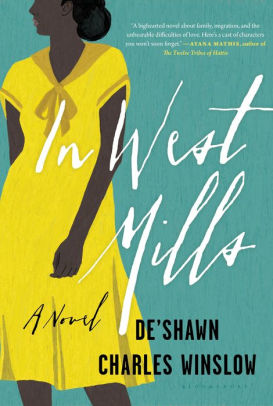
De’Shawn Charles Winslow’s debut novel, In West Mills, is a story full of love. No, it’s not a typical romance-focused love story; instead, it’s something greater. Winslow’s novel offers proof that love exists all around us—not only in our families, but also in our towns and communities.
Buy the book
In West Mills’ loveable heart belongs to the occasionally foul-mouthed and bad-tempered Azalea “Knot” Centre, a character who’s as prone to enjoy a bit too much alcohol and men as she is to want to read a 19th century novel. She and her dear friend and neighbor, Otis Lee, work together to navigate the trials of life in rural North Carolina from the 1940s through the 1980s.
It was my pleasure to be able to ask De’Shawn Charles Winslow via email a few questions about the characters who inhabit West Mills, the inescapable grip of the past, and the personality of the small communities of today.
Bradley Sides: I have to tell you that I think In West Mills is bursting with such wonderfully-written voices, and Azalea “Knot” Centre is, undoubtedly, one of the most memorable characters I’ve met this year. Do you mind talking about how she came to you?
De’Shawn Charles Winslow: Thank you, Bradley. When I was a child, I knew a woman whose nickname was Knot. She was my great-uncle’s girlfriend and very much a part of the family. Though she passed away when I was just 10 years old, I’ve never forgotten her and her uniqueness. The “Knot” in the novel was born of what little I remember I have of the Knot I knew as a boy.
BS: Knot is often obstinate and brash, but this general hardness is met with just as much vulnerability. This line about Knot near the beginning spoke to me: “Knowing she wasn’t ready [for motherhood] didn’t mean she liked not being ready. But it felt safe to her—the only kind of safe Knot felt all right with. Safe by not having to worry about hurting a child’s feelings, the way her mother had hurt hers. Safe by not becoming someone’s wife just to figure out, years later, that she didn’t want him. Safe to get a bit of joy from the moonshine—something that couldn’t hurt her or be hurt by her.”
Does she present herself as being so tough because she feels like she has to? Or is there another reason—something maybe more personal for her?
The strong sense of community is what brings people back to West Mills.
DCW: Knot’s mother was so critical of her—never seeming to be proud of anything she or her sisters did. Knot was hardened by that. Even though she had her father’s love, she didn’t really have his protection. So, the tough exterior is her attempt at avoiding further abandonment or rejection.
BS: One aspect of Knot’s character that I find interesting is her fascination with the work of Charles Dickens. What is it about Dickens’ writing that attracts Knot?
DCW: Knot loves Dickens mostly because it reminds her of good times with her father. Dickens was the first author she’s introduced to by him, and it sticks. Also, all the drama in his novels is a diversion for her.
BS: I really like that—“all the drama in his novels is a diversion for her.” Knot certainly has her own share of drama (and a lot of it), and the person who helps her deal with most of that is Otis Lee.
He’s a character I think many readers will root for. He’s kind and caring. All around, he just seems like a good guy. However, he has his flaws, especially when it comes to sometimes protecting Knot a little too much and, consequently, not focusing on his own family enough. I’m curious to know what you think of Otis Lee.
DCW: Otis Lee is a very nurturing person, but he’s also naive. With Knot, he’s so blinded by his obsession to atone for what he feels was a failed attempt at saving Essie from danger, that he doesn’t see that Knot’s decision have some merit. He’s naive because he doesn’t make room for the possibility that everything Ma Noni’s story version of the story about Essie wasn’t completely true.
BS: I was talking about In West Mills to someone a couple of days ago, and I called it a love story. I mean, it’s certainly a novel that is full of love—and so much of that love comes from Otis Lee. I’ve been going back and forth, though, in my description. Do you consider it a love story?
DCW: At first, I didn’t think of it as a love story because Knot and Otis Lee have no romantic interest in each other. They’re almost like siblings, in fact. But I do feel there is a special, patient type of love that the people of West Mills—Antioch Lane, specifically—show each other. Very few of the characters stay mad with another forever.
BS: We’ve talked about some of the characters, but one we haven’t mentioned yet is West Mills. The town is a main character, too, right?
DCW: It certainly is. People come and go from West Mills. There’s something about it that won’t quite let them go. In my mind—and I hope it made it onto the page—the strong sense of community is what brings people back there, even when it had once been a place that caused sadness for them. West Mills offers the characters a safety of sorts.
BS: Thematically, this novel has some interesting commentary on time. Near the end, when Pratt returns to town, he says, “Ain’t much changed at all, is it?” Otis Lee’s reply is perfect. He says, “You in West Mills.” Their exchange made me think of that popular Faulkner line: “The past is never dead. It’s not even past.” The past haunts all of us in such interesting ways, doesn’t it? It’s within our person and our communities–always.
DCW: Absolutely! When I’m in my hometown, or in the neighboring town where my mother was raised, I see things that bring back memories of childhood and teen years. Sometimes it’s just seeing a yard where a family member’s house used to stand, or an old car that was in operation 20 years ago. A flood of memories—good and bad—come to me. And I’m almost certain they affect the way I move through the world today. I wholeheartedly agree with Faulkner’s line: “It’s not even the past.”
BS: Staying with time for a moment, I want to turn to how the role of communities has changed in these few decades. In West Mills is set in the 1940s up through most of the 1980s in rural North Carolina. While it’s certainly true that Knot’s community causes her a lot (maybe even a whole lot) of grief, her community also supports her. Without Valley, Otis Lee, Pep, and, well, West Mills, she would have lived a very lonely and likely very sad life.
Do you think today’s small communities provide that same kind of support they historically have? Or do you think we’ve lost a lot of that—and the Knots of the world have kind of fallen away because we’ve forgotten about them?
We can learn a lot from those who have been cast aside just because they don’t fall in line with what everyone else is doing.
DCW: I believe we’ve lost a lot of that. I remember when people waved at complete strangers while at stop lights. I don’t see that anymore when I visit my hometown of Elizabeth City. I also remember when people helped their neighbors raise their children. It wasn’t all that long ago. I’m only 40. But that sort of community interaction is almost forbidden nowadays. We live in a “look out for yourself” world now, in my opinion. And I definitely don’t think most people nowadays would want to be bothered with a “Knot” type of person, which saddens me. We can learn a lot from those who have been cast aside just because they don’t fall in line with what everyone else is doing.
BS: As the creator of this novel and these brilliant voices, what did you learn about yourself while writing In West Mills that you might not have uncovered if the book stayed inside you?
DCW: I learned way more about myself than imagined. The most striking realization is that, at heart, I’m a small-town person. The only problem is that I also really love a vibrant, busy-city life! What to do, what to do!
The first piece of information you learn about someone is usually their name; it feels like a step towards learning who they are, even though it often doesn’t reveal much about them. In real life, names are typically appointed to people who are much too young to get a say, and apart from funny nicknames they often tell you more about a person’s parents than their personality.
Fictional character names, on the other hand, are consciously constructed, and often tell you something about this person and their place in the world: consider Oliver Twist and Mr. Pickwick. In fiction, as in fairy tales, names have power. So what about books where the main character has no name?
These anonymous narrators seem to possess more authority over their stories, controlling how much information they give to the reader. Names are important when you want to become acquainted with someone, so these nameless strangers seemingly possess a flare of mystery. To be able to witness their firsthand accounts feels like prying, but nameless narrators invite us to pry: they are people recording the worlds they belong and don’t belong to. By the endings of these books, you will know where each narrator lives, who their friends and families are, what they want out of life, but you won’t be able to address them properly.
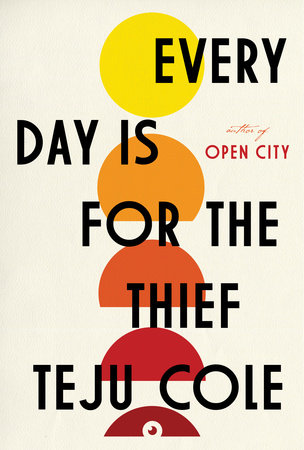
An immigrant feels detached from his home country when he returns after fifteen years of living in the U.S. in Every Day Is for the Thief. Wandering the internet cafes, museums, and the buses of Lagos, a New York-based psychiatry student befriends strangers and reconnects with people from his past. Cole’s debut, first published in Nigeria, is one of the first texts I read that articulated the diasporic experience for me, especially with the meticulous prose.
Everyone except the protagonist’s fiancé, Eric, is without a name in Wang’s debut. A fed-up, Chinese-American Ph.D. student shocks herself, her friends, and her family, when she leaves her rigorous program at an unidentified university in Boston. One of the most celebrated books of 2017 and currently being adapted as a film for Amazon, Chemistry is a meditation on the sacrifices she makes for science and love.
Set in Dublin and told over the course of a day, Irish novelist Deirdre Madden’s ninth book follows famous actress Molly Fox’s best friend who’s housesitting and working on a new play. What the narrator discovers in Molly Fox’s possessions forever changes her perspective on friendship, success, and betrayal.
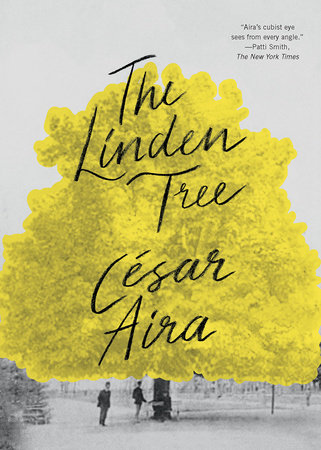
The Linden Tree is a reflection of a childhood and middle class family affected by Juan Perón’s presidency, written by one of the most prominent Argentinian contemporary literature writers and translators. Aira, an author writing in multiple genres, captures the sensory experience of Coronel Pringles, the small city in which he grew up, in this translation by Chris Andrews.
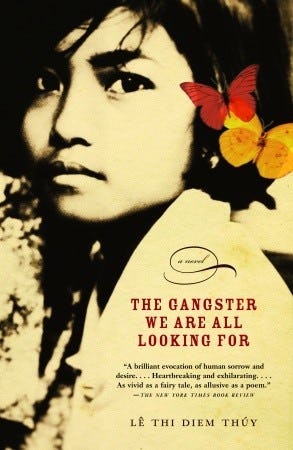
The memories, often fragmented, of a Vietnamese-American girl are recorded in lê thi diem thúy’s first novel, published six years after a shorter version appeared in The Best American Essays of 1997. Often shifting between the past and present and Vietnam and the US, this untraditional history of a refugee family is an investigation of how trauma affects a family that’s been separated and reunited. thúy’s unnamed narrator, a girl we follow from the ages of six to 26, allows us into this intimate world.
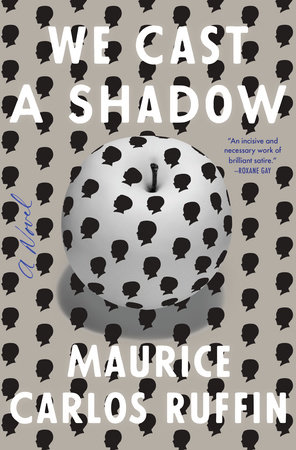
In a recent conversation with De’Shawn Charles Winslow, Ruffin said that to him, “character is plot. The person makes the choices, and the choices drive the story.” A man ruminates on his role as a father and son in this dystopian novel about how capitalism deeply affects the lives of black people at the workplace and home. New Orleans writer Ruffin sets the story in a dystopian future, when this all unfolds in an unnamed American city in the South.
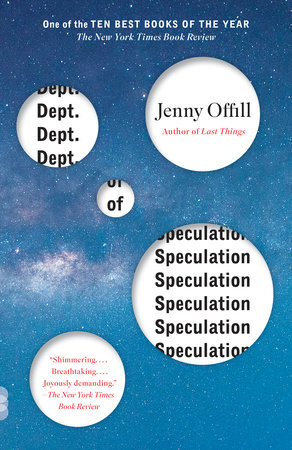
Offill’s follow-up to Last Things is not your typical midlife crisis story. Self-referred to as “The Wife,” the narrator reckons with a marriage, motherhood, and an affair, while giving few details of her own background. This series of vignettes is a collection of the narrator being blindsided by memories when understanding each of her relationships. All the characters, including her husband and child, are nameless in this humorous, referential, and tender novel.
“I had on a New Orleans Mardi Gras t-shirt that I’d found in one of the rooms and a pair of Yankees shorts. Imitation leather slippers from Taiwan left treads on the top of my feet where the straps crisscrossed.” This is the 12-year-old protagonist of Waylaid, a son of Taiwanese and Chinese immigrants who is determined to lose his virginity. Taking place mostly in his parents’ seedy hotel on the Jersey Shore, this novel reminds us of the often overlooked, working class immigrant family through the perspective of a young boy in unconventional circumstances.
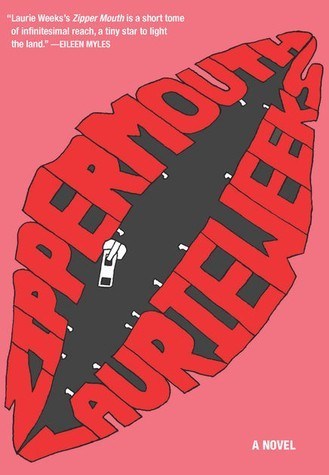
Unrequited love is equally funny and heartbreaking in Laurie Weeks’s anonymous narrator’s account that moves between the past and present. A woman in love with her very straight friend, Jane, juggles this one-sided relationship with tragedy and addiction, both of which run rampant in her life; Weeks, however, manages to lighten up this poignant story with the protagonist’s amusing obsessions with Vivien Leigh, Sylvia Plath, and Judy Davis.
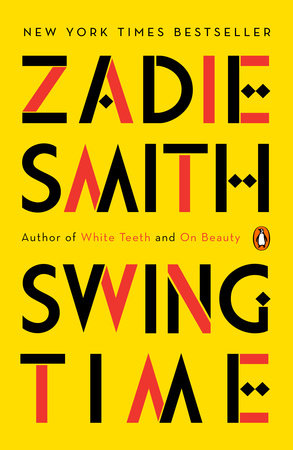
A diasporic tale about two, young, mixed-race dancers is told from a wallflower’s account of the competitive relationship between her and her close friend, Tracey. Smith’s novel moves between London and an unnamed West African country and follows the two from their childhood to young adulthood, when both women’s dreams of becoming dancers are compromised. Throughout their lives, their identities are constantly questioned as they chase after success.
Lately, I can’t stop thinking about Danny Tanner turning 30. This is strange for a number of reasons. Danny Tanner, a fictional character played by Bob Saget on Full House, turned 30 on December 11, 1987, a little over two years before I was born. I haven’t watched the episode since the late ’90s when the sitcom seemed to be the one constant, dependable fact of life— while you were eating breakfast, doing your homework after school, walking up sick in the middle of the night. In short, everywhere you looked.
I only remember snippets of the episode titled “The Big Three-O.” The Tanner patriarch is unsettled by the milestone, his anxiety portrayed the way all ’90s sitcom characters were allowed to show existential dread: cartoonishly, as if they could see stressed-out animated birds circling their head. I vaguely remember a beloved car from his adolescence being destroyed and replaced, to mark a new chapter of his life. But despite the fuzziness of my memory, the knowledge that in less than a year I will be the same age as Danny Tanner is sharper and more terrifying to me than any real-world marker of my own mortality, including the accomplishments of actual 30-year-olds not created in a late ‘80s writers room. Yes, my fertility may be about to drop off a cliff. Yes, many of my former high school classmates have bought homes while I continue to consider how much I could save on rent if I could just convince a few friends a studio could be a three bedroom with enough of those room-divider legos. But knowing there will be a full ten episodes of Full House where the dad is younger than me? That’s not something I’m ready to face.
Knowing there will be a full ten episodes of Full House where the dad is younger than me? That’s not something I’m ready to face.
Using fictional characters’ ages as guideposts for my own life (or shortcomings) isn’t a new obsession of mine. I clearly remember thinking “I am so behind” when, at nine, I read that Matilda Wormwood had checked Great Expectations, Jane Eyre, and The Sound and the Fury off her literary bucket list by the time she was five. It didn’t matter that Matilda was described in the novel as a genius, with so much brain power it spilled over past the normal bounds of human ability until she was telekinetic. If a kid, even fictional, could tackle the classics before first grade, what kind of aspiring English teacher was I to be still reading Judy Blume in fourth? And much more importantly, if I was this far behind at nine, who might I be lagging behind at fifteen or 20?
A Wrinkle in Time’s Meg Murry let me relax, for a minute. At thirteen she hadn’t really figured out her academic or extracurricular niche, her clique, or how to do her hair. By the time I read A Wind in the Door, a novel that opens on a 23-year-old married, pregnant Meg, I thought the decade between seventh grade and one-year post-college was more than enough to figure my life out. When I revisited the series a few years ago, I still lacked any of the stability I was sure at thirteen, based on Meg’s trajectory, I should have found years ago. It felt like a rebuke.
Even when my life circumstances were nothing like the characters in question, it never stopped me from holding up my life to theirs. When Pride and Prejudice’s Charlotte Lucas tells her Lizzie that as an unmarried 27-year-old she’s terrified of her certain fate as a spinster, 28-year-old me felt a twin pit in my stomach. Charlotte had found a husband to save her from such a fate, but I had failed! The fact that living in 21st century America meant I could spend my whole life as an independent woman and was actually quite happy with that set-up didn’t matter. The mile marker had been set, and I was coming up on it at a painfully slow pace.
Social media should have made my anxiety around the achievements of my fictional contemporaries redundant. If I needed inspiration, or emotional masochism, in the form of other people’s lives to compare to my own, I don’t need to look to fiction; just scrolling through Instagram or Facebook provides more than enough engagements, promotions, and even brunches to measure against my own, from people I actually know (or at least knew for three months in the summer of ‘13). Looking through Facebook profiles it’s super easy to see if I have time, age wise, to acquire a similarly lit life, or if my lack of backyard and matching dishes should send me spiraling. But the ages of real life people and their corresponding milestones have never felt as pressure-inducing as the ones I read about or see on screen.
Maybe it’s because I see the characters’ struggles much more intimately than those of my online acquaintances. I read all their inner doubts, and still see their accomplishments. In a curated Facebook album, or even a self-deprecating feed, it can look like that guy I worked with at TJ Maxx jumped from perfect BBQ to prestigious new job to his honeymoon, no strife involved. I know what Matilda had to go through to get through that book list. It’s easy to rationalize the success of the airbrushed—look how easy it was for them. I can’t tell myself that particular lie after watching a literal montage of strife leading to a moment of triumph.
Frozen in time, they highlight my own march towards death in a starker light than my naturally aging peers ever could.
More than that, the looming shadow of these characters’ ages might be so dark because they’re so constant. Frozen in time, they highlight my own march towards death in a starker light than my naturally aging peers ever could. Danny Tanner was an inescapable adult presence throughout my childhood. And during those childhood years I learned, from characters like him, what you should have acquired by 30—a stable career, a house, a family. Maybe it’s easier to focus on the laundry list of things I could do to catch up than face the fact I crossed the line separating young adult from Adult years ago, with little fanfare.
There’s a viral text post that comes up on my Facebook feed every few months, that reminds me that Harrison Ford was still working as a carpenter in his early 30s, waiting for his big acting break, and that Vera Wang didn’t open her first boutique until she was 40. These bits of biography are meant to remind me that career changes, accomplishments, and even becoming who the world will see you as can happen later in life. But their late-bloomer life stories, though made almost mythic by their celebrity, are still too steeped in reality to comfort me. Instead, I’ve curated my own list, based on the fictional characters whose accomplishments always hit me so hard. Thor was over 1,000 years old before he got his life together. Scrooge became a beloved, charitable man only after he turned 60. Marilla Cuthbert was over 50 before she adopted Anne Shirley. Reading that list, I remember the fictional worlds I’ve immersed myself in do, on occasion, convince me I still have time.
Mary Miller has an extraordinary knack for getting into her characters’ minds. Reading her prose feels like stepping out of your own head and into someone else’s. She demonstrates this talent in her new novel, Biloxi, by meticulously portraying the thoughts, desires, and displeasures of a disagreeable middle-aged man in Biloxi, Mississippi.
Buy the book
In the throes of a messy divorce, Louis spent most of his time watching television and eating his ex-brother-in-law’s meager leftovers. But, during the course of the novel, we watch as this Deep South homebody leaves behind his stagnant life for a journey that neither he nor the reader could have expected, beginning with an impulsive decision to turn into a driveway boasting a “Free Dogs” sign and return home with a new pup. As a young woman from Vermont, I am the opposite in almost every way to Louis, but while reading Miller’s empathetic characterization of a seemingly unlikeable man, I grew unexpectedly and irrevocably attached to him.
I talked to Mary Miller about Mississippi and writing about the minutiae of life.
Frances Yackel: What was the origin of your novel?
Mary Miller: I was living on the Mississippi Gulf Coast when I started working on the book, and I didn’t have much of a community there. It was just before the 2016 election, and I was consumed by the politics of those around me, as the Coast is one of the reddest areas of this red state. Writing from the perspective of a conservative white man who has found himself alone during his “twilight years” doesn’t seem like the best way to process what I was going through, and yet it comforted me.
FY: I spent a lot of my time reading the book bewildered by the way he treats and talks about women. Why did you choose to write your novel from the perspective of an unpleasant, anti-social (and chauvinistic) old man?
Louis thinks about women in negative ways, because he doesn’t know how to interact with them, because he feels inferior to them.
MM: I didn’t intend to write from the perspective of a man, particularly such an unpleasant one. The narrator, Louis, just showed up and took over. I thought he was really funny, too—an ass, but funny. And though he talks and thinks about women in negative ways, it’s mostly because he doesn’t know how to interact with them, because he feels inferior to them. Toward the end of the novel, he has a revelation in this regard: “I was afraid of women. I had been afraid of them my whole life. If I’d been a bully, if I’d mistreated or ignored them, judged them by their looks or weight, it had always and only been because of this.”
FY: Reading Biloxi was like being transported into the mind and body of Louis McDonald Jr. I know everything that he thinks and does, including when he picks his nose and when he makes a promise to himself that he probably won’t keep. Most of your writing takes this form of the unfiltered first person. What is your process for getting into the mind of your characters? Did you find any difficulties getting into the mind of an unpleasant, anti-social retired man?
MM: I loved being in his head, honestly, and going about his days with him. I saw Louis as a complicated person who has suffered and been disappointed, whose life hasn’t gone as planned. I find him charming—cantankerous but charming. At the time, I also had too many hours in my day and not enough to fill them (except when I was writing about him), so I related to him on that level.
The nose-picking, yeah…. In the Booklist review of Biloxi, Annie Bostrom calls me “an absolute master of minutiae,” which is my jam, I guess. I’m always reporting on my character’s bathroom habits and food obsessions, the things most writers ignore. But people spend most of their lives eating and sleeping, going to the bathroom and grooming themselves, and it seems odd that writers often don’t mention them. I’m like, “that girl has got to be hungry!” I get really distracted by this sort of thing in movies and TV shows, too, particularly those that are supposed to be happening in real time. You never see anyone pee and one time they ate a Snickers bar so they’re fine.
FY: While writing a novel from the eyes of one person, do you spend any time in the minds of the characters that populate his life? Do you know when Sasha or Frank eat or drink or pick their noses?
MM: Ha! I don’t know about the nose-picking. Sasha and Frank only mattered to me when Louis was observing them. Like Louis, though, I did wonder about Frank after Layla goes after him: is he the mild and imperturbable man Louis has always assumed or is he hiding something? Both Sasha and Frank are mysteries to me, as they are to him. As most people are in our lives.
I’ve never written a book, or even a short story, from multiple perspectives. I’m impressed with writers who can shift seamlessly between characters and tell each of their stories, but it just seems… really hard and easy to mess up. It’s also not what I’m most interested in. Telling a story from differing points of view feels akin to getting at the truth, or attempting to, and I’m not much interested in truth in fiction.
FY: In a previous interview with Electric Lit, you mentioned that you don’t care as much about the life changing events as you do about the preceding events. This is clear in the way Biloxi is written; the intricacies and hypocrisies of Louis’ mind are a fascinating part of the story. However, the book does begin with a life-changing event when he picks up Layla. Many of the proceeding events are directly affected by that rash decision. Do you think something life-changing had to happen in order for Louis’ story to be told?
MM: That’s a great point—Louis’s life is changed within the first few pages. When I started working on this book, having no idea what it would be, I began with the image of some sleepy balloons tied to a mailbox and a sign that said FREE DOGS. I’m assuming this is something I saw while cruising around—I did a lot of cruising during my time on the Coast—but I don’t recall now. While it’s true that I’m not typically looking for a life-changing event, all stories present themselves in different ways and I try to take them as they come. Louis kept doing and saying things, kept surprising me, and I indulged his whims.
FY: Louis is a very surprising character! I was so excited to see what he would do next because he was so unpredictable, but this seems to be a new characteristic of his. In fact, it seems as though he may be very different from the man he was before he picked up the dog. And yet, as a reader, I feel like I know both sides of him (pre- and post-dog) very well. Do you have a method for developing your characters and their dispositions predating the first page of your stories?
People spend most of their lives eating and sleeping, going to the bathroom, and it seems odd that writers often don’t mention them.
MM: Now I’m thinking about that: do I know pre-dog Louis? I do and yet there’s not much to tell before he meets Layla. He was hiding out from the world and trying to get through his days, watching Naked and Afraid from his favorite chair.
Some writers make lists and do exercises to find out more about their characters at different points in their lives, their likes and dislikes, etc., but I’ve never done this. If the narrator is present, he or she lets you know who they are, so these things are unnecessary. And if the narrator isn’t present, no number of lists will make a difference. You can’t write a story that doesn’t want to be written. Or you can, of course, but it will be painful and unsuccessful and hard on everybody.
FY: Towards the end of the book, Louis and his acquaintances almost begin a conversation about politics. Louis clearly doesn’t want the conversation to progress any further than the general consensus that, yes, everyone will vote on Tuesday. Is there a reasoning behind keeping politics so limited?
MM: Fox News is on pretty early (Chapter Two), so it’s clear where Louis’s political inclinations lie. I didn’t want to write overtly about Trump or the election, though; this book allowed me to focus on something else at that time, kept me occupied and distracted from reading the news constantly, from fretting and feeling hopeless. Louis isn’t all that interested in politics, anyhow. He’s the type of person who feels he’ll be screwed no matter who’s in charge. He votes because he’s always voted, because it’s his duty as a citizen.
As far as that particular scene,he figured he was in mixed political company and knows the ensuing conversation would have been unpleasant, like every conversation I’ve ever had with people who are politically opposite from me. It hasn’t ever ended with one of us saying, ‘You know what, you’ve made some really good points and I’m going to consider them seriously. Would you send me further materials to read?’
FY: Absolutely, I’ve had my fair share of conversations just like that. If you were to meet Louis and happened upon the subject, do you have further reading that you would recommend to him?
MM: It’d depend on the particular rabbit hole we were going down, but one of the conversations we have a lot is about the flag—Mississippi is the only state that still has the Confederate battle flag on it—and the removal of Confederate monuments from town squares and universities.
We haven’t had a vote on the flag since 2001—when something like 64% of voters chose to keep it—but I hope we’ll get another chance soon. There are plenty of alternatives, like the Stennis Flag, or literally anything else.
Biloxi, like many towns in Mississippi, is a closed society in a lot of ways. Things change more slowly in places like this.
In general, these defenders of the past argue “heritage not hate,” and that Mississippi seceded because of “states’ rights.” I’ll usually start by pulling up the Mississippi Declaration of Secession, and read them the first few paragraphs: “Our position is thoroughly identified with the institution of slavery—the greatest material interest of the world. Its labor supplies the product which constitutes by far the largest and most important portions of commerce of the earth.” There’s also a good NPR article that has a graph so you can see when Confederate statues and monuments were erected; there are great spikes in times of extreme racial tension.
If facts don’t sway them, I go this route: don’t we want people to feel welcome in the hospitality state? Don’t we want new businesses to locate here? Mississippi is last (or second-to-last) on all of the “bad lists,” from obesity to illiteracy to children in poverty, and holding onto these vestiges of the past ensures we stay there.
FY: You’ve said to Electric Lit, in the same interview mentioned above: “I’m a Southern writer because I’ve always lived in the South. I don’t even know what it means, really, or how it’s “different,” because I’ve always lived here.” Do you think this story could have been setanywhere else? Or is Louis’ hometown integral to the person that he has become and the story he has to tell?
MM: Biloxi, like many towns in Mississippi, is a closed society in a lot of ways with families going back generations. Things change more slowly in places like this. So yes, it’s central to who Louis is, to his beliefs and perspective.
There are a few other places where this novel might be set outside of the Mississippi Gulf Coast: various locales along the Florida Panhandle, perhaps Galveston, Texas (though it’s been a long time since I’ve been to Galveston so I can’t say for sure). It is quite a particular place, though, with the annual fall muster at Beauvoir and the brown water of the Mississippi Sound, Hurricane Katrina tree sculptures scattered along Highway 90. There are plenty of places to swim and eat fresh seafood, sit on porches as the breeze rolls in. A nice word for this sort of place is colorful; it’s quite colorful. And if you ever do find yourself in this part of the world, get yourself to Gulf Islands National Seashore pronto. It’s my favorite park even though I once received an exorbitant ticket for having my dog off-leash.
FY: Another interesting aspect of the setting is the tourism industry that allows for an ephemeral aspect to enter into Louis’ life despite the fact that he’s from a place where families can go back generations. I think that contrast between movement and stagnation is mirrored in Louis’ life. Though he lives a very monotonous life, his story and your novel are full of twists and turns. You mentioned earlier that you were living on the Mississippi Gulf Coast while writing the novel. Could you speak more to this mixture of tourism with deep-rooted local life?
MM: The Coast is demographically different from the rest of the state. The people who live there are either transient—military, casino workers, tourists—or those who’ve been there forever and hardly leave the Coast (though they may go to other coastal communities along the Gulf to vacation). You find these “established” folks at the yacht clubs, partying on each other’s back porches, and at restaurants like Mary Mahoney’s and White Cap. In other parts of Mississippi, you don’t get many outsiders, or the outsiders are just people from other parts of the state who’ve moved to bigger ones. It’s a pretty small world down here, I guess.
The mechanic coughed and spat out a gob of phlegm.
“My lungs are shot,” he said, wiping his mouth with his hand and bending down again under the open hood.
The owner of the car mopped his brow with a handkerchief and bent down too so their heads were side by side. He adjusted his wire-rimmed spectacles and contemplated the jumble of hot metal parts. Then he looked at the mechanic inquiringly.
“Can you fix it?”
“I reckon so.”
“How long will it take?”
The mechanic straightened up—he was almost a foot taller—and looked at the sky. It was getting on for midday.
“End of the afternoon, I reckon.”
“We’ll have to wait here.”
“If you like. It’s all pretty basic here, as you can see.”
“We’d rather wait. Maybe you’ll be done early, with God’s help.” The mechanic shrugged and took a pack of cigarettes from his shirt pocket. He offered one to the car’s owner.
“No, no, I quit years ago, thank God. If you don’t mind me saying so, you should too . . .”
“The soda machine isn’t working, but there should be some cans in the fridge, if you’re thirsty.”
“Thanks.”
“Tell the young lady to get out of the car. She’s going to roast in there.”
“What was your name?”
“Brauer. El Gringo Brauer. And that’s Tapioca, my assistant.”
“I’m Reverend Pearson.”
They shook hands.
“I’ve got a few things to do before I can start work on your car.”
“Go ahead, please. Don’t mind us. God bless you.”
The Reverend went around to the back of the car where his daughter, Leni, was sulking in the tiny space left by the boxes full of Bibles and the piles of magazines on the seats and the floor. He tapped on the window. Leni looked at him through the dusty glass. He tried the handle, but she had locked the door. He gestured to tell her to wind the window down. She lowered it an inch or two.
“It’s going to take a while to fix. Get out, Leni. We’ll have a cool drink.”
“I’m fine here.”
“It’s very hot, sweetheart. You’re going to get heatstroke.”
Leni wound up the window again.
The Reverend opened the passenger door, reached in to unlock the back door, and pulled it open.
“Elena, get out.”
He held on to the door until she obeyed. And as soon as she was out of the way, he slammed it shut.
The girl rearranged her skirt, which was sticky with sweat, and looked at the mechanic, who acknowledged her with a nod. A boy who must have been about her age, sixteen, was watching them, wide-eyed.
Her father introduced the older man as Mr. Brauer. He was very tall, with a red mustache like a horseshoe that came down almost to his chin; he was wearing a pair of oily jeans and a shirt that was open, exposing his chest, but tucked in. He would have been over fifty, but there was something youthful about him; it must have been the mustache and the long hair, hanging down to his collar. The boy was wearing old jeans too, patched but clean, and a faded T-shirt and sandals. His straight, jet-black hair had been neatly cut, and he looked like he hadn’t started shaving. Both of them were thin, but they had the sinewy bodies of those accustomed to the use of brute force.
Fifty yards away stood the makeshift building that served as gas station, garage, and home: a single room of bare bricks beyond the old pump, with one door and one window. In front of it, at an angle, a kind of porch, with an awning made of branches and reeds, which shaded a small table, a stack of plastic chairs, and the soda machine. A dog was sleeping in the dirt under the table. When it heard them approach, it opened one yellow eye and swished its tail on the ground without getting up.
“Give them something to drink,” said Brauer to the boy, who took two chairs from the stack and wiped them with a rag so that they could sit down.
“What do you want, sweetheart?”
“A Coke.”
“A glass of water’s fine for me. The biggest one you have, son,” said the Reverend as he sat down.
The boy stepped through the curtain of plastic strips and disappeared inside.
“The car will be ready by the end of the afternoon, God willing,” said the Reverend, mopping his brow again.
“And if he’s not willing?” Leni replied, putting on the earphones of the Walkman that was permanently attached to her belt. She hit Play, and her head filled with music.
A big heap of scrap reared beside the house, extending almost to the shoulder of the road: panels, bits of agricultural machinery, wheel rims, piles of tires; a real cemetery of chassis, axles, and twisted bits of metal, immobilized forever under the scorching sun.
The car had broken down as they were leaving Gato Colorado. Leni was amused by the name, and especially by the two cement cats, painted bright red, sitting on two pillars at the entrance to the town, which was on the border between the provinces of Santa Fe and Chaco.
The bad noises had begun much earlier, as they were coming in to Tostado, where they had spent the night in a small hotel. Leni said they should get it checked before setting off again, but the Reverend paid no attention.
“The car won’t let us down. The good Lord wouldn’t allow it.”
Leni, who had been driving since she was ten and took turns at the wheel with her father, knew when a noise was just a noise and when it was a warning signal.
“We better get a mechanic to take a look before we leave,” she insisted as they drank coffee early that morning in a bar. “We could ask here if they know someone who’s good and doesn’t charge too much.”
“If we take it to a garage, they’ll make us wait the whole day.We have to have faith. When has this car ever broken down, eh?”
Leni kept quiet. They always ended up doing what her father wanted, or, as he saw it, what God expected of them.
When they’d been on the road for two hours, the car gave one last snort and stopped. The Reverend tried to start it again, but it was no use. Leni looked through the bug-spotted windshield at the road stretching away and said, without turning, but in a clear and firm voice:
“I told you so, Father.”
Pearson got out of the car, took off his jacket, and put it on the back of the seat. He shut the door, rolled up his sleeves, went around to the front, and opened the hood. A jet of smoke made him cough.
All Leni could see now was the hood with its chrome plating and smoke or steam coming out the sides. Then her father walked past; she heard him open the trunk and shift the suitcases.Two big, battered suitcases, secured with leather straps, which held all their belongings. In his: six shirts, three suits, an overcoat, undershirts, socks, underwear, another pair of shoes. In hers: three shirts, three skirts, two dresses, a coat, underwear, another pair of shoes. The Reverend slammed the trunk shut again.
Leni got out. The sun was scorching, and it was only nine in the morning. She undid the top two buttons of her shirt, walked around the car, and found her father putting down the triangles.She looked at the triangles and the deserted road. Between Tostado and where they were, they hadn’t seen a single car.
“Any moment now a Good Samaritan will come along,” said the Reverend, with his hands on his hips and a smile on his face, oozing faith.
She looked at him.
“The good Lord won’t leave us stranded here,” he said, rubbing his lower back, ruined by all those years of driving.
Leni thought that if one fine day the good Lord actually came down from the Kingdom of Heaven to attend to the Reverend’s mechanical mishaps, her father would be more stunned than anyone. He’d fall on his ass. And piss himself too.
She took a few steps on the road, which was full of cracks and potholes. Her heels clicked on the concrete.
It was a place that seemed to have been completely forsaken by humans. Her gaze ranged over the stunted, dry, twisted trees and the bristly grass in the fields. From the very first day ofCreation, God too had forsaken that place. But she was used to it. She’d spent her whole life in places like that.
“Don’t go far,” her father called out.
Leni lifted an arm to indicate that she had heard him.
“And get off the road; if someone comes, there could be an accident.”
Leni laughed to herself. Yeah, or a hare might run her down.
She turned her Walkman on and tried to find a station. Nothing. Only aimless static on the air. Steady white noise. After a while she came back and leaned on the trunk, beside her father.
“Get in the car. This sun is fierce,” said the Reverend.
“I’m fine.”
She glanced across at him. He looked a bit downhearted. “Someone will come, Father.”
“Yes, of course. We must have faith. It’s not a very busy road.”
“I don’t know. I saw a pair of guinea pigs up there. They went flying over the asphalt so they wouldn’t burn their paws.” Leni laughed, and so did the Reverend.
“Ah, my girl. Jesus has blessed me,” he said, and tapped her on the cheek.
This meant that he was very glad to have her with him, thought Leni, but he could never say it like that, straight out: he always had to get Jesus in there, between them. At another moment, that display of diluted affection would have irritated her; but her father seemed vulnerable now, and she felt a little sorry for him. She knew that although he wouldn’t admit it, he was ashamed of having ignored her advice. He was like a child who has messed up.
“How did it go again, that little verse about the Devil at siesta time?”
“What? A Bible verse?”
“No, just a verse, a little poem. What was it? Wait. It was funny.”
“Elena, you shouldn’t speak lightly of the Devil.”
“Shhh. Wait, it’s on the tip of my tongue. Okay, here we go. ‘Setting his traps / he’s gonna catch you / casting his line / he’s gonna hook you / loading his gun / he’s gonna hunt you / it’s Satan, it’s Satan, it’s Satan.’” Leni burst out laughing. “There’s more, but I forget.”
“Elena, you turn everything into a joke. But the Devil is no laughing matter.”
“It’s just a song.”
“Not one I know.”
“But I used to sing it all the time when I was little.”
“That’s enough, Elena. You’ll make up anything to torment me.”
Leni shook her head. She wasn’t making it up. That song existed. Of course it did. Then, suddenly, she remembered: she was sitting in the back seat of the car with her mother, in the parking lot of a service station; they were reciting the song and tapping their palms together like playmates, having some fun while the Reverend was in the bathroom.
“Look. There. Praise be to God,” cried the Reverend and took two strides to the middle of the road, where he stood waving his arms at the bright, glinting point approaching quickly through the heat haze rising off the boiling asphalt.
The truck braked and pulled up sharply beside the Reverend. It was red, with a chrome bumper and tinted windows. The driver lowered the window on the passenger side and the sound of the cassette player burst out like an explosion; the shock wave of a cumbia forced the Reverend to take a step back.
The man leaned out and smiled and said something they couldn’t hear. He disappeared back into the cool cabin, hit a button, and the music stopped. Then he reappeared. He was wearing reflective sunglasses; his skin was tanned, and he hadn’t shaved for a few days.
“What’s up, bud?”
The Reverend rested his hands on the window and leaned in to reply, still dazed by the music.
“Our car broke down.”
The man got out the other side. The work clothes he was wearing contrasted with the sparkling, brand-new vehicle. He approached the car and had a look under the hood, which was still propped open.
“If you like, I can tow you to the Gringo’s place.”
“We’re not from around here.”
“Gringo Brauer has a garage a few miles away. He’ll be able to fix it for sure. I’d take you into town, but on a Saturday, with this heat, it’d be hard to find anyone who could help you. They’ve all gone to Paso de la Patria or the Bermejito to cool off a bit. Me too: I’m going home to get my reel, pick up a few pals, and good luck to anyone who wants me before Monday.” The man laughed.
“Well, if you don’t mind.”
“Of course not, bud. I’m not going to leave you out here in the middle of nowhere, on foot. Not even the spirits are out in this heat.” He climbed back into his truck and drove it to the front of the car. Then he got out, took a steel cable from the back, and attached the car’s bumper to his tow bar.
“Let’s go, bud. In you get; it’s good and cool with the air-con.”
The Reverend sat in the middle; Leni sat next to the door. Everything smelled of leather and those little perfumed pine trees.
“Passing through?” asked the driver.
“We’re going to see an old friend,” said the Reverend.
“Well, then, welcome to hell.”
About the Translator
Chris Andrews was born in Newcastle, Australia, in 1962. He has translated books by Roberto Bolaño and César Aira, among others. He teaches at the University of Western Sydney, where he is a member of the Writing and Society Research Center.
The first time I heard the term “quarter-life crisis,” I questioned its validity. I had heard of the mid-life crisis, seen it played out ridiculously, sometimes salaciously, on TV or in novels. It was usually people in their 40s and 50s reassessing the direction of their lives—empty nesters scrambling after their children have left, parents questioning their child-rearing methods, people buying motorcycles, having affairs, or turning to religion. I understood why people approaching their 40s felt the need to question their place. They’ve experienced so much more of life than someone in their mid-20s. Their questions and concerns seemed rooted in a truth one could only gain access to with age.
But quarter-life crisis? I didn’t quite understand the idea of it. Then I graduated college. The communities that I had surrounded myself with, the friends who could coax from me the most honest representation of myself were not as easily accessible. The pressure was on to find not only a fulfilling, stable career but also create a consistent, meaningful life. If you’re in your 20s and experiencing of bouts of existential dread, these 10 books might be for you.
After the death of her mother, Cheryl Strayed’s life fell apart—she filed for divorce and began using drugs. Strayed continued on this downward spiral for four years until she came across a book about the Pacific Crest Trail. Unprepared but determined, she set off to hike the PCT where, bruised and bloodied by the rough terrain, she would rediscover a sense of wonder and awe.
Caught in the middle of her neglectful parents’ messy divorce and their dysfunctional new relationships, fourteen-year-old Evie Boyd craves attention, community, and a way to cope with her growing interest in girls. Enter the answer to Evie’s prayers, Suzanne. Suzanne is five years older, pretty, confident, and a member of a Charles Manson-esque cult. As her attraction to her new friend grows so does the devotion she feels to this dangerous community. Told by a now much older Evie, this debut novel asks whether the bland life she would ultimately lead was the right choice.
Mona is 24-years-old and cleans houses for a living. Desperately searching for emotional connection in a community of rich homeowners, she falls in love with a heroin addict she nicknames Mr. Disgusting. When the very unlikely romance ends badly, Mona moves to New Mexico to start afresh. She cleans houses for an eccentric cast of characters including a New Age couple, a man with a mysterious secret, and a psychic who might actually be psychic. With each new encounter, Mona learns unexpected lessons that allow here to confront the past traumas that have barred her from the belonging she craves.
Anorexic and bulimic since the age of 28, Hannah loses her job at a Boston art museum after passing out one too many times at work. Adrift and unmoored, she moves to Florence, Italy hoping to find refuge. Engrossed in the country’s history, culture, and the tentative friendships she amasses, Hannah’s arguably impulsive decision works until she becomes obsessed with her research about female saints who find transcendence and ecstasy in self-denial and self-harm.
In Margaret Atwood’s first novel, Marian McAlpin is newly engaged to the serious Peter. Surrounded by varying versions of happiness—one friend who is perpetually pregnant but seemingly miserable and another friend dreams of bearing a fatherless child—she confronts the cracks in her relationship. As her wedding day approaches, her doubts graduate to a loss of appetite. Cutting out meat, eggs, cheese, even carrots from her daily diet, Marian is soon surviving on salads and the growing concern that marrying Peter might be a mistake.
Lucy has been writing her dissertation for over a decade. Already disillusioned by her lack of academic success, Lucy falls into an even deeper depression when her ex-boyfriend starts dating another woman. Hoping to mend her broken, affection-hungry heart, she moves into her half-sister’s Venice Beach home. After a slew of failed group therapy sessions and lackluster Tinder hookups, she meets the perfect man—one who showers her with attention, satisfies her sexually, but has a fish tail. Well, every relationship has its issues, right?
Narrated by the now thirty-something-year-old Ifemelu, Americanah flashbacks to its protagonist at the age of fifteen. Ifemelu has just accepted a scholarship to attend college in America, leaving behind her native Nigeria and high school sweetheart Obinze. The novel recounts not only a long distance love but also self-discovery as Ifemelu, “conditioned from birth to look somewhere else,” struggles with her identity as a displaced African immigrant.
When Phoebe, a child piano prodigy, and Will, a once-religious “evangelical kid,” meet at Edwards University, the latter falls head over heels for the former. After her mother’s death, Phoebe—guilt-ridden and seeking comfort—joins Jejah, a cult founded by Edwards University dropout John Leal. After members of Jejah perpetrate a deadly act of violence, Phoebe disappears leaving a concerned Will to untangle John’s web of deceit. At the root of Kwon’s debut novel is a story of three young people desperately searching for something to believe in.
Keiko Furukura has worked at the Hiiromachi Station Smile Mart for 18 years—outlasting managers, co-workers, and customers. Keiko is happy with her life and finds purpose in her routine as a convenience store employee. However, the same cannot be said of her friends and family who desire a more “normal” life for her (normal as in a husband and 1.5 children). Convenience Store Woman is a darkly humorous novella about the patriarchal expectations placed on women.
Ottessa Moshfegh’s unnamed narrator is perpetually apathetic, newly unemployed, and so done with life. Orphaned at 24 after the death of her parents—a cancer-ridden father and an alcohol-addicted mother—the already opiate-obsessed narrator decides to enter a year-long, pill-induced coma. Accompanied by a young art student who agrees to document her experiment, the narrator puts herself to sleep hoping to emerge transformed.
“This book, I will warn you: I can’t read it in public because I will cry.”
That was one of the initial messages my editor sent me about Someone Who Will Love You in All Your Damaged Glory, Raphael Bob-Waksberg’s hilarious, heartbreaking debut short story collection. If you recognize Bob-Waksberg’s name, it could be because he’s the creator and show-runner behind BoJack Horseman, the animated Netflix series about a depressed, self-sabotaging, alcoholic, washed-up horse actor. It could also be because back in 2013, you read a long, fictional, and eventually viral post that someone had written and posted in the Missed Connections section of Craigslist. That was Bob-Waksberg, too. (A version of that original Craigslist post, “Missed Connection – m4w,” is included in this collection).
Buy the book
Someone Who Will Love You in All Your Damaged Glory is a masterful tightrope walk between abject sorrow and genuine hilarity, a book that Bob-Waksberg describes as “an argument with itself.” As a writer, I am struggling to describe it, because I want so badly to avoid the cliche “This book made me laugh AND made me cry!” description.
Maybe it would be better to say that shortly after I started reading the book, I sent my editor a photo of one of the pages with a single line highlighted. The line read: “I would try to tell her, Things will get better, but it came out as: Nothing didn’t get worse.”
Or maybe it would be better to explain how a day later, I sent her a photo of the final page from a story called “Move Across the Country”; how I was crying on my front porch while I sent it; how all I said to accompany the photo was “motherfucker”; and how all she said back was, “OMG I KNOW.”
Or maybe instead, I will just say … this collection of stories caused me to guffaw AND also … occasioned me … into sobs?
Or maybe sometimes cliches are okay.
This book will make you laugh and make you cry.
I spoke with Raphael Bob-Waksberg about Someone Who Will Love You in All Your Damaged Glory on the phone, and of course, we started out by talking about what it means to be funny-sad.
Riane Konc: I feel like you pull off the balance between humor and sadness really, really well, in a way that I envied even before I read the book. I feel like when I’ve tried to sell BoJack to people who haven’t seen it before, what I tend to say is some long speech about how I generally don’t really care for adult cartoons (or just a certain genre of dark comedies), just because I feel like for a lot of them, the quote “comedy” is coming from the idea that: look, these are awful people and they’re miserable, and isn’t that so funny that we put that on TV? And I never feel like with this book, and I don’t feel like that with BoJack. You pull off this balance where awful, horrible, sad things are happening, and that’s not the joke—that’s just things that are happening. But at the same time, super absurd, specific, funny things are happening … because you can’t excise one of those from the others.
So I’m curious, with BoJack, with the book, just how you handle balancing “I am both of these things, how do I put that into a piece of work?” Is that one of those things you do consciously, trying to draw the humor from the right places and the sadness from the right places, or is that just something that through writing a lot and working a lot, that’s just your style and how it comes out?
Raphael Bob-Waksberg: I think it kind of comes naturally. I think it comes from the work I have done to be the writer that I am. I think that for me, it’s always about who is the character and what does the character want, and what is the hole in the character’s soul—and trying to find that vulnerability and that desire. I think there’s a term in the world of television that a lot of writers don’t like to hear or talk about, which is “likability,” which is sort of a cliche where the studio execs want your characters to be more “likable,” and I actually don’t have a problem with that. I think we do want our characters to be likable, and we want characters that we want to engage with or root for, or we want to root for, or see on television, or read in stories. But I think likability isn’t the same as “good.” We don’t have to like a character who is decent or kind. Sometimes, there are a lot of ways to make a character likable. Sometimes I think it comes more from understanding what that character wants.
I think we do want our characters to be likable, but I think likability isn’t the same as ‘good.’
RK: That makes a lot of sense.
RB-W: That’s something that audiences or readers can relate to. So trying to find that vulnerability, or help the audience understand what the character wants. Then that helps make the character feel grounded and real and someone that we can root for, despite their flaws.
RK: Yeah, like, you’re an idiot, and you’re making the wrong choices, and I just don’t trust you to make the next right choice, but I want you to, and I think there’s a world where you might! You probably won’t, but you could, and I really hope that you will. And it’s going to break my heart when you don’t.
RB-W: Right. And I also understand why you’re making the bad choice. You’re not just making them to heighten the drama in the scene, although perhaps the scene behind the scene behind the scene shows exactly why you’re doing it. But in the scene itself, it’s explained to me in a way that I understand what you’re doing, and it makes sense. It doesn’t feel manipulative.
RK: There’s obviously quite a range in the book: it’s not a book where you’re just delivering story after story about like, “love wins, and hope is great, and it always will be fine”; but it’s also not like, “ever trusting or loving someone is the stupidest thing you could ever do and it will never work well and it will never even feel temporarily good.” There’s quite a spectrum in there.
RB-W: I think the book is kind of an argument with itself. I think that’s something I didn’t realize until I was done writing it. I feel like the through-line of the book, if there is one, is this idea is that love is a challenge, and love is difficult, and love is scary, and the question that the book posits is, “Is it worth it?” And I think there are parts of the book that are strongly pro, and parts of the book that argue strongly con. And I think if the book is working, then you make your own decision when you get to the end of it, which is how do you feel? And I actually think it’s more about you and where you are in your life and your experiences than the book. But I think the book will hopefully help you perhaps articulate your own argument to yourself, or reflect on experiences you’ve had or how you feel about things
The through-line of the book, if there is one, is this idea is that love is a challenge, and love is difficult, and love is scary.
RK: I feel like often have the experience of … I stumble upon realizing what I think about something or what I believe about something through the act of writing about it. It’ll be finished and I’ll be like, “Oh gosh, I didn’t know that was actually kind of what I believed, but … I guess it is.” Did you have that experience with this book?
RB-W: You know, even that succinct summary of what the book is kind of came to me in the last few weeks as I’ve been doing interviews and going on my book tour and talking about the book. Only then have I really been able to articulate what the book is. So it wasn’t really until it was in front of me, as I was writing, that I kind of found that. You know, as I was writing, I would feel like some of these stories make sense for this book, other stories are not quite right for this book. And I didn’t really know why until I got to the end and realized, “Oh, this is what I was doing.” Or even the ordering of the stories and how they juxtapose against each other: you know, stuff like that was more by feel than by anything else. But now looking back, I kind of understand what it was I was building.
RK: Yeah, I was thinking about the way that you organized the stories. One thing I really appreciated about the experience of reading it was, I would—because a lot of them, you don’t necessarily know if this is going to be a happy one or a sad one at the beginning, but some of them you can tell, there’s a different tone. But even when I was near done with one that, by all indications, was a hopeful one, and I should have been feeling vaguely hopeful the whole time, I was still kind of off-kilter from the last story I read, where my heart was just broken. So I was like, “Should I trust that this story is going to give me the ending I anticipate?” But I just couldn’t accept it until it happened, and then it happened, and it was a lovely experience. Like, oh thank God, that’s what I thought was going to happen, but I couldn’t accept that. That sort of felt purposeful.
RB-W: Well, what a great metaphor for love itself!
RK: Exactly. It felt like that.
RB-W: When you’re starting a new relationship, you don’t know what it’s going to be, and it might feel hopeful, but there’s something in the back of your head going “Well, it’s felt hopeful before, and I was destroyed, so we’ll see how this one goes.”
RK: With pieces like “The Serial Monogamist’s Guide to Important New York City Landmarks,” and there were a couple of others, they felt to me like in a different context or written by a different person, it could be a piece that you’d see in Shouts & Murmurs, where it’s more just conceptual and funny. It feels like you took that base and then put more of a narrative in it. Did you have any pieces that kind of started as “This is just a concept, and I’m riffing on it, and now I’m going to go back and give it a narrative”?
RB-W: You know, it’s funny you say that, because “Rules for Taboo” I actually submitted to Shouts & Murmurs.
RK: But despite its evident merit …
RB-W: Yeah, they disagreed with your assessment. They felt very strongly that this was not Shouts & Murmurs material. Which I certainly understand. I think maybe that what you said earlier: that perhaps there was a little too much narrative sadness in there. You know, it wasn’t quite as light and fun as a Shouts & Murmurs should be. I couldn’t help myself! I couldn’t write the Shouts & Murmurs version, I had to write the melancholy, prickly version.
RK: I love that. Because I read Shouts & Murmurs-esque pieces and write them all day long, which is fun. But I loved seeing what feels like that base structure of you “take this concept, this familiar thing, and riff on it,” but you rarely get to see it with a sad narrative pushing it along.
RB-W: Right, apparently the editors of Shouts & Murmurs don’t like that.
RK: They just don’t want stories! They don’t want to be sad! That’s not what they need right now.
RB-W: Right, they say, “You can murmur this one, but don’t shout it.”
RK: I was reading in the acknowledgements, in the back where you said something about meeting your wife. You said something about how if you lined up all of these stories chronologically, that you’d be able to pinpoint the moment that you two fell in love. Is there an actual story you were kind of working on around that time? Does that piece actually exist?
RB-W: No, I don’t think so.
RK: Just more the idea of it.
I think you can see the gradual shift in my writing where I become a little less cynical, a little more hopeful about the idea of love.
RB-W: I think you would be able to see the gradual shift in my writing where I become a little less cynical, a little more hopeful about the idea of love. I think the later stories that I wrote—not necessarily the later ones in the collection, but the later ones chronologically—I think are a little more hopeful than the ones that I wrote in my 20s when I was very cynical about love and what it meant to be a part of a couple. Or, you know, not.
RK: After that shift, when you were then an In Love Person and not an angry, cynical 20-something-year-old person, did you feel like, “Oh, this batch of stories that I have, these don’t work anymore. I don’t actually believe these,” or was it more like, “I’m not in this place, but these are still true at some point in time”?
RB-W: I’d say the latter, exactly. I felt like, “Oh, I don’t know if I can write some of these stories the way i’ve written them then. But I like that they exist.” And in re-reading them, I think they are compelling and interesting, and again, I kind of like the ping-pong match that’s kind of set up. I don’t want to overstate the idea that these are two different guys who wrote these stories, because they’re definitely not. Some of the later ones are more melancholy or cynical as well; it’s just not quite in the same way, or coming from the same place.
RK: It doesn’t feel like I’m reading a Jekyll-Hyde situation, or even a Will Grayson, Will Grayson situation. Like, one person has written this book, and I don’t think it feels dichotomous.
RB-W: Even at my most cynical, I was a little sentimental, and even at my most sentimental, I’m still a little cynical.
RK: I think that’s why the sad stories and the hopeful ones resonate really well, because they don’t feel like … I am just reading a story by someone who is just tunnel visioned either in hope and love or despondency. I feel like it makes the sadness and the hopefulness—when it comes through—I buy it a lot more.
RB-W: It’s kind of a crapshoot every time.
RK: I notice, when I’m writing, especially with humor pieces, I start because I have the punchline or I have the final image or the final sentence, and I have to work my way backwards to create the rest of the story to come up to it. And sometimes I just write from the beginning like a forward-facing person. Do you tend towards one method or the other? Are there any of these stories where you had a joke or a line or an image, and were like, “Oh, I have to create a story to get to this place”?
RB-W: Rarely. I kind of jump around all over the place, but usually my first way in is kind of the gimmick or the world or the voice of the story. So I’ll be like walking my dog, and I’ll be thinking, “What is this guy thinking right now?” and I’ll start putting sentences together in my head. Or I’ll come up with the format of “What if a party game’s instructional booklet could tell a little story, and was passive aggressive about it?” So I’ll kind of come up with a format first, or the gag of the bit, and then the next task is “Okay, what is this story really about?”
I like to think that every story I write has kind of two hooks to it. The first hook is kind of like, the fun realization … this is a game. “This woman is doing an impression of a play.” And then the second hook is kind of what is the emotional grounding, what is the thing that makes you go, “Oh, this is about people, this is about a relationship, this is about something.” And so I usually find that first hook first, and then I have to figure out what’s the second hook that justifies this format that I’ve chosen.
RK: I think that’s really highlighting the difference with the format-first structure of doing things. For what I do, I get to cut off what I’m doing really quickly at the joke. It’s like, “Alright, we got the structure, you guys are going to figure out the game, this is super fun.” But then you take it to the next level, like, “Okay, who here died of a drug overdose?” That’s the second game. I feel like that’s difficult. To make it believable, to be able to make jokes shitting on theater people that are super funny, and also real life that’s happening at the same time. Because no matter who in your life has died, or dumped you, or whatever horrible thing has happened … theater people are still easy to make fun of. I feel like that’s important.
RB-W: Right. And sometimes the pain of your grief will make you lash out even more.
RK: Yes. At deserving crowds.
RB-W: They know what they did.
RK: Last thing: is there anything you’ve been wanting to say about this book, but you haven’t had the chance? Or is there any question that you wish someone would have asked? You can do both sides of the job for this last question.
RB-W: I feel like everything has come up! But I will say: this book is very good. And people don’t always ask me that.
RK: I’m glad you said that. I agree with you!
RB-W: If anyone reading this interview has made it this far, and you’re on the fence about whether or not to buy this book, I would say … do it.
RK: Wow.
RB-W: I think you should buy it.
RK: That’s really insightful.
RB-W: It makes a great gift. It makes a good, great vacation read. It’s great on airplanes. The audiobook is fantastic. Really, you can’t go wrong. I don’t know that I get to talk about that enough.
I can see this book being useful on a boat. I can see it being read in a car. I can see it on land.
RK: Yeah, and just to piggyback off of that: I can see this book being useful on a boat. I can see it being read in a car. I can see it on land. I can just see it in a lot of travel and non-travel situations.
RB-W: Absolutely. You can read it in bed, you can read it on your couch, you can read it on your roof.
RK: If you’re single, you can read it. If you’re happy, you can read it.
RB-W: Just read it! Read it to a friend, read it to an enemy, mail it to a lost love. Get it out there. Get the word out.
RK: Type it line by line to someone you hate. I think that there’s a lot of things you could do with this book.
RB-W: Yeah, Tweet it. Do what you gotta do.
DON’T MISS OUT
Sign up for our newsletter to get submission announcements and stay on top of our best work.
YOUR INBOX IS LIT
Enjoy strange, diverting work from The Commuter on Mondays, absorbing fiction from Recommended Reading on Wednesdays, and a roundup of our best work of the week on Fridays. Personalize your subscription preferences here.