I’m Older than Everyone in Books and on TV and I Am Not Okay

Lately, I can’t stop thinking about Danny Tanner turning 30.  This is strange for a number of reasons. Danny Tanner, a fictional character played by Bob Saget on Full House, turned 30 on December 11, 1987, a little over two years before I was born. I haven’t watched the episode since the late ’90s when the sitcom seemed to be the one constant, dependable fact of life— while you were eating breakfast, doing your homework after school, walking up sick in the middle of the night. In short, everywhere you looked. 

I only remember snippets of the episode titled “The Big Three-O.” The Tanner patriarch is unsettled by the milestone, his anxiety portrayed the way all ’90s sitcom characters were allowed to show existential dread: cartoonishly, as if they could see stressed-out animated birds circling their head. I vaguely remember a beloved car from his adolescence being destroyed and replaced, to mark a new chapter of his life. But despite the fuzziness of my memory, the knowledge that in less than a year I will be the same age as Danny Tanner is sharper and more terrifying to me than any real-world marker of my own mortality, including the accomplishments of actual 30-year-olds not created in a late ‘80s writers room. Yes, my fertility may be about to drop off a cliff. Yes, many of my former high school classmates have bought homes while I continue to consider how much I could save on rent if I could just convince a few friends a studio could be a three bedroom with enough of those room-divider legos. But knowing there will be a full ten episodes of Full House where the dad is younger than me? That’s not something I’m ready to face.

Knowing there will be a full ten episodes of Full House where the dad is younger than me? That’s not something I’m ready to face.

Using fictional characters’ ages as guideposts for my own life (or shortcomings) isn’t a new obsession of mine. I clearly remember thinking “I am so behind” when, at nine, I read that Matilda Wormwood had checked Great Expectations, Jane Eyre, and The Sound and the Fury off her literary bucket list by the time she was five. It didn’t matter that Matilda was described in the novel as a genius, with so much brain power it spilled over past the normal bounds of human ability until she was telekinetic. If a kid, even fictional, could tackle the classics before first grade, what kind of aspiring English teacher was I to be still reading Judy Blume in fourth? And much more importantly, if I was this far behind at nine, who might I be lagging behind at fifteen or 20?

A Wrinkle in Time’s Meg Murry let me relax, for a minute. At thirteen she hadn’t really figured out her academic or extracurricular niche, her clique, or how to do her hair. By the time I read A Wind in the Door, a novel that opens on a 23-year-old married, pregnant Meg, I thought the decade between seventh grade and one-year post-college was more than enough to figure my life out. When I revisited the series a few years ago, I still lacked any of the stability I was sure at thirteen, based on Meg’s trajectory, I should have found years ago. It felt like a rebuke.

Even when my life circumstances were nothing like the characters in question, it never stopped me from holding up my life to theirs. When Pride and Prejudice’s Charlotte Lucas tells her Lizzie that as an unmarried 27-year-old she’s terrified of her certain fate as a spinster, 28-year-old me felt a twin pit in my stomach. Charlotte had found a husband to save her from such a fate, but I had failed! The fact that living in 21st century America meant I could spend my whole life as an independent woman and was actually quite happy with that set-up didn’t matter. The mile marker had been set, and I was coming up on it at a painfully slow pace.

Social media should have made my anxiety around the achievements of my fictional contemporaries redundant. If I needed inspiration, or emotional masochism, in the form of other people’s lives to compare to my own, I don’t need to look to fiction; just scrolling through Instagram or Facebook provides more than enough engagements, promotions, and even brunches to measure against my own, from people I actually know (or at least knew for three months in the summer of ‘13). Looking through Facebook profiles it’s super easy to see if I have time, age wise, to acquire a similarly lit life, or if my lack of backyard and matching dishes should send me spiraling. But the ages of real life people and their corresponding milestones have never felt as pressure-inducing as the ones I read about or see on screen.

Maybe it’s because I see the characters’ struggles much more intimately than those of my online acquaintances. I read all their inner doubts, and still see their accomplishments. In a curated Facebook album, or even a self-deprecating feed, it can look like that guy I worked with at TJ Maxx jumped from perfect BBQ to prestigious new job to his honeymoon, no strife involved. I know what Matilda had to go through to get through that book list. It’s easy to rationalize the success of the airbrushed—look how easy it was for them. I can’t tell myself that particular lie after watching a literal montage of strife leading to a moment of triumph.

Frozen in time, they highlight my own march towards death in a starker light than my naturally aging peers ever could.

More than that, the looming shadow of these characters’ ages might be so dark because they’re so constant. Frozen in time, they highlight my own march towards death in a starker light than my naturally aging peers ever could. Danny Tanner was an inescapable adult presence throughout my childhood. And during those childhood years I learned, from characters like him, what you should have acquired by 30—a stable career, a house, a family. Maybe it’s easier to focus on the laundry list of things I could do to catch up than face the fact I crossed the line separating young adult from Adult years ago, with little fanfare. 

There’s a viral text post that comes up on my Facebook feed every few months, that reminds me that Harrison Ford was still working as a carpenter in his early 30s, waiting for his big acting break, and that Vera Wang didn’t open her first boutique until she was 40. These bits of biography are meant to remind me that career changes, accomplishments, and even becoming who the world will see you as can happen later in life. But their late-bloomer life stories, though made almost mythic by their celebrity, are still too steeped in reality to comfort me. Instead, I’ve curated my own list, based on the fictional characters whose accomplishments always hit me so hard. Thor was over 1,000 years old before he got his life together. Scrooge became a beloved, charitable man only after he turned 60. Marilla Cuthbert was over 50 before she adopted Anne Shirley. Reading that list, I remember the fictional worlds I’ve immersed myself in do, on occasion, convince me I still have time.


In “Biloxi,” A Grumpy Old Man Finds Redemption in a Dog

Mary Miller has an extraordinary knack for getting into her characters’ minds. Reading her prose feels like stepping out of your own head and into someone else’s. She demonstrates this talent in her new novel, Biloxi, by meticulously portraying the thoughts, desires, and displeasures of a disagreeable middle-aged man in Biloxi, Mississippi.

Image result for biloxi mary miller
Buy the book

In the throes of a messy divorce, Louis spent most of his time watching television and eating his ex-brother-in-law’s meager leftovers. But, during the course of the novel, we watch as this Deep South homebody leaves behind his stagnant life for a journey that neither he nor the reader could have expected, beginning with an impulsive decision to turn into a driveway boasting a “Free Dogs” sign and return home with a new pup. As a young woman from Vermont, I am the opposite in almost every way to Louis, but while reading Miller’s empathetic characterization of a seemingly unlikeable man, I grew unexpectedly and irrevocably attached to him. 

I talked to Mary Miller about Mississippi and writing about the minutiae of life.


Frances Yackel: What was the origin of your novel?

Mary Miller: I was living on the Mississippi Gulf Coast when I started working on the book, and I didn’t have much of a community there. It was just before the 2016 election, and I was consumed by the politics of those around me, as the Coast is one of the reddest areas of this red state. Writing from the perspective of a conservative white man who has found himself alone during his “twilight years” doesn’t seem like the best way to process what I was going through, and yet it comforted me.

FY: I spent a lot of my time reading the book bewildered by the way he treats and talks about women. Why did you choose to write your novel from the perspective of an unpleasant, anti-social (and chauvinistic) old man?  

Louis thinks about women in negative ways, because he doesn’t know how to interact with them, because he feels inferior to them.

MM: I didn’t intend to write from the perspective of a man, particularly such an unpleasant one. The narrator, Louis, just showed up and took over. I thought he was really funny, too—an ass, but funny. And though he talks and thinks about women in negative ways, it’s mostly because he doesn’t know how to interact with them, because he feels inferior to them. Toward the end of the novel, he has a revelation in this regard: “I was afraid of women. I had been afraid of them my whole life. If I’d been a bully, if I’d mistreated or ignored them, judged them by their looks or weight, it had always and only been because of this.”

FY: Reading Biloxi was like being transported into the mind and body of Louis McDonald Jr. I know everything that he thinks and does, including when he picks his nose and when he makes a promise to himself that he probably won’t keep. Most of your writing takes this form of the unfiltered first person. What is your process for getting into the mind of your characters? Did you find any difficulties getting into the mind of an unpleasant, anti-social retired man?

MM: I loved being in his head, honestly, and going about his days with him. I saw Louis as a complicated person who has suffered and been disappointed, whose life hasn’t gone as planned. I find him charming—cantankerous but charming. At the time, I also had too many hours in my day and not enough to fill them (except when I was writing about him), so I related to him on that level.

The nose-picking, yeah…. In the Booklist review of Biloxi, Annie Bostrom calls me “an absolute master of minutiae,” which is my jam, I guess. I’m always reporting on my character’s bathroom habits and food obsessions, the things most writers ignore. But people spend most of their lives eating and sleeping, going to the bathroom and grooming themselves, and it seems odd that writers often don’t mention them. I’m like, “that girl has got to be hungry!” I get really distracted by this sort of thing in movies and TV shows, too, particularly those that are supposed to be happening in real time. You never see anyone pee and one time they ate a Snickers bar so they’re fine.

FY: While writing a novel from the eyes of one person, do you spend any time in the minds of the characters that populate his life? Do you know when Sasha or Frank eat or drink or pick their noses? 

MM: Ha! I don’t know about the nose-picking. Sasha and Frank only mattered to me when Louis was observing them. Like Louis, though, I did wonder about Frank after Layla goes after him: is he the mild and imperturbable man Louis has always assumed or is he hiding something? Both Sasha and Frank are mysteries to me, as they are to him. As most people are in our lives.  

I’ve never written a book, or even a short story, from multiple perspectives. I’m impressed with writers who can shift seamlessly between characters and tell each of their stories, but it just seems… really hard and easy to mess up. It’s also not what I’m most interested in. Telling a story from differing points of view feels akin to getting at the truth, or attempting to, and I’m not much interested in truth in fiction.

FY: In a previous interview with Electric Lit, you mentioned that you don’t care as much about the life changing events as you do about the preceding events. This is clear in the way Biloxi is written; the intricacies and hypocrisies of Louis’ mind are a fascinating part of the story. However, the book does begin with a life-changing event when he picks up Layla. Many of the proceeding events are directly affected by that rash decision. Do you think something life-changing had to happen in order for Louis’ story to be told?

MM: That’s a great point—Louis’s life is changed within the first few pages. When I started working on this book, having no idea what it would be, I began with the image of some sleepy balloons tied to a mailbox and a sign that said FREE DOGS. I’m assuming this is something I saw while cruising around—I did a lot of cruising during my time on the Coast—but I don’t recall now. While it’s true that I’m not typically looking for a life-changing event, all stories present themselves in different ways and I try to take them as they come. Louis kept doing and saying things, kept surprising me, and I indulged his whims. 

FY: Louis is a very surprising character! I was so excited to see what he would do next because he was so unpredictable, but this seems to be a new characteristic of his. In fact, it seems as though he may be very different from the man he was before he picked up the dog. And yet, as a reader, I feel like I know both sides of him (pre- and post-dog) very well. Do you have a method for developing your characters and their dispositions predating the first page of your stories?

People spend most of their lives eating and sleeping, going to the bathroom, and it seems odd that writers often don’t mention them.

MM: Now I’m thinking about that: do I know pre-dog Louis? I do and yet there’s not much to tell before he meets Layla. He was hiding out from the world and trying to get through his days, watching Naked and Afraid from his favorite chair.

Some writers make lists and do exercises to find out more about their characters at different points in their lives, their likes and dislikes, etc., but I’ve never done this. If the narrator is present, he or she lets you know who they are, so these things are unnecessary. And if the narrator isn’t present, no number of lists will make a difference. You can’t write a story that doesn’t want to be written. Or you can, of course, but it will be painful and unsuccessful and hard on everybody.

FY: Towards the end of the book, Louis and his acquaintances almost begin a conversation about politics. Louis clearly doesn’t want the conversation to progress any further than the general consensus that, yes, everyone will vote on Tuesday. Is there a reasoning behind keeping politics so limited?

MM: Fox News is on pretty early (Chapter Two), so it’s clear where Louis’s political inclinations lie. I didn’t want to write overtly about Trump or the election, though; this book allowed me to focus on something else at that time, kept me occupied and distracted from reading the news constantly, from fretting and feeling hopeless. Louis isn’t all that interested in politics, anyhow. He’s the type of person who feels he’ll be screwed no matter who’s in charge. He votes because he’s always voted, because it’s his duty as a citizen.

As far as that particular scene, he figured he was in mixed political company and knows the ensuing conversation would have been unpleasant, like every conversation I’ve ever had with people who are politically opposite from me. It hasn’t ever ended with one of us saying, ‘You know what, you’ve made some really good points and I’m going to consider them seriously. Would you send me further materials to read?’

FY: Absolutely, I’ve had my fair share of conversations just like that. If you were to meet Louis and happened upon the subject, do you have further reading that you would recommend to him?

MM: It’d depend on the particular rabbit hole we were going down, but one of the conversations we have a lot is about the flag—Mississippi is the only state that still has the Confederate battle flag on it—and the removal of Confederate monuments from town squares and universities.

We haven’t had a vote on the flag since 2001—when something like 64% of voters chose to keep it—but I hope we’ll get another chance soon. There are plenty of alternatives, like the Stennis Flag, or literally anything else.

Biloxi, like many towns in Mississippi, is a closed society in a lot of ways. Things change more slowly in places like this.

In general, these defenders of the past argue “heritage not hate,” and that Mississippi seceded because of “states’ rights.” I’ll usually start by pulling up the Mississippi Declaration of Secession, and read them the first few paragraphs: “Our position is thoroughly identified with the institution of slavery—the greatest material interest of the world. Its labor supplies the product which constitutes by far the largest and most important portions of commerce of the earth.” There’s also a good NPR article that has a graph so you can see when Confederate statues and monuments were erected; there are great spikes in times of extreme racial tension.

If facts don’t sway them, I go this route: don’t we want people to feel welcome in the hospitality state? Don’t we want new businesses to locate here? Mississippi is last (or second-to-last) on all of the “bad lists,” from obesity to illiteracy to children in poverty, and holding onto these vestiges of the past ensures we stay there.  

FY: You’ve said to Electric Lit, in the same interview mentioned above: “I’m a Southern writer because I’ve always lived in the South. I don’t even know what it means, really, or how it’s “different,” because I’ve always lived here.” Do you think this story could have been set anywhere else? Or is Louis’ hometown integral to the person that he has become and the story he has to tell?

MM: Biloxi, like many towns in Mississippi, is a closed society in a lot of ways with families going back generations. Things change more slowly in places like this. So yes, it’s central to who Louis is, to his beliefs and perspective.

There are a few other places where this novel might be set outside of the Mississippi Gulf Coast: various locales along the Florida Panhandle, perhaps Galveston, Texas (though it’s been a long time since I’ve been to Galveston so I can’t say for sure). It is quite a particular place, though, with the annual fall muster at Beauvoir and the brown water of the Mississippi Sound, Hurricane Katrina tree sculptures scattered along Highway 90. There are plenty of places to swim and eat fresh seafood, sit on porches as the breeze rolls in. A nice word for this sort of place is colorful; it’s quite colorful. And if you ever do find yourself in this part of the world, get yourself to Gulf Islands National Seashore pronto. It’s my favorite park even though I once received an exorbitant ticket for having my dog off-leash.

FY: Another interesting aspect of the setting is the tourism industry that allows for an ephemeral aspect to enter into Louis’ life despite the fact that he’s from a place where families can go back generations. I think that contrast between movement and stagnation is mirrored in Louis’ life. Though he lives a very monotonous life, his story and your novel are full of twists and turns. You mentioned earlier that you were living on the Mississippi Gulf Coast while writing the novel. Could you speak more to this mixture of tourism with deep-rooted local life?

MM: The Coast is demographically different from the rest of the state. The people who live there are either transient—military, casino workers, tourists—or those who’ve been there forever and hardly leave the Coast (though they may go to other coastal communities along the Gulf to vacation). You find these “established” folks at the yacht clubs, partying on each other’s back porches, and at restaurants like Mary Mahoney’s and White Cap. In other parts of Mississippi, you don’t get many outsiders, or the outsiders are just people from other parts of the state who’ve moved to bigger ones. It’s a pretty small world down here, I guess. 

Broke Down in the Desert with a Box of Bibles

The Wind That Lays Waste

The mechanic coughed and spat out a gob of phlegm.

“My lungs are shot,” he said, wiping his mouth with his hand and bending down again under the open hood.

The owner of the car mopped his brow with a handkerchief and bent down too so their heads were side by side. He adjusted his wire-rimmed spectacles and contemplated the jumble of hot metal parts. Then he looked at the mechanic inquiringly.

“Can you fix it?”

“I reckon so.”

“How long will it take?”

The mechanic straightened up—he was almost a foot taller—and looked at the sky. It was getting on for midday.

“End of the afternoon, I reckon.”

“We’ll have to wait here.”

“If you like. It’s all pretty basic here, as you can see.”

“We’d rather wait. Maybe you’ll be done early, with God’s help.” The mechanic shrugged and took a pack of cigarettes from his shirt pocket. He offered one to the car’s owner.

“No, no, I quit years ago, thank God. If you don’t mind me saying so, you should too . . .”

“The soda machine isn’t working, but there should be some cans in the fridge, if you’re thirsty.”

“Thanks.”

“Tell the young lady to get out of the car. She’s going to roast in there.”

“What was your name?”

“Brauer. El Gringo Brauer. And that’s Tapioca, my assistant.”

“I’m Reverend Pearson.”

They shook hands.

“I’ve got a few things to do before I can start work on your car.”

“Go ahead, please. Don’t mind us. God bless you.”

The Reverend went around to the back of the car where his daughter, Leni, was sulking in the tiny space left by the boxes full of Bibles and the piles of magazines on the seats and the floor. He tapped on the window. Leni looked at him through the dusty glass. He tried the handle, but she had locked the door. He gestured to tell her to wind the window down. She lowered it an inch or two.

“It’s going to take a while to fix. Get out, Leni. We’ll have a cool drink.”

“I’m fine here.”

“It’s very hot, sweetheart. You’re going to get heatstroke.”

Leni wound up the window again.

The Reverend opened the passenger door, reached in to unlock the back door, and pulled it open.

“Elena, get out.”

He held on to the door until she obeyed. And as soon as she was out of the way, he slammed it shut.

The girl rearranged her skirt, which was sticky with sweat, and looked at the mechanic, who acknowledged her with a nod. A boy who must have been about her age, sixteen, was watching them, wide-eyed.

Her father introduced the older man as Mr. Brauer. He was very tall, with a red mustache like a horseshoe that came down almost to his chin; he was wearing a pair of oily jeans and a shirt that was open, exposing his chest, but tucked in. He would have been over fifty, but there was something youthful about him; it must have been the mustache and the long hair, hanging down to his collar. The boy was wearing old jeans too, patched but clean, and a faded T-shirt and sandals. His straight, jet-black hair had been neatly cut, and he looked like he hadn’t started shaving. Both of them were thin, but they had the sinewy bodies of those accustomed to the use of brute force.

Fifty yards away stood the makeshift building that served as gas station, garage, and home: a single room of bare bricks beyond the old pump, with one door and one window. In front of it, at an angle, a kind of porch, with an awning made of branches and reeds, which shaded a small table, a stack of plastic chairs, and the soda machine. A dog was sleeping in the dirt under the table. When it heard them approach, it opened one yellow eye and swished its tail on the ground without getting up.

“Give them something to drink,” said Brauer to the boy, who took two chairs from the stack and wiped them with a rag so that they could sit down.

“What do you want, sweetheart?”

“A Coke.”

“A glass of water’s fine for me. The biggest one you have, son,” said the Reverend as he sat down.

The boy stepped through the curtain of plastic strips and disappeared inside.

“The car will be ready by the end of the afternoon, God willing,” said the Reverend, mopping his brow again.

“And if he’s not willing?” Leni replied, putting on the earphones of the Walkman that was permanently attached to her belt. She hit Play, and her head filled with music.

A big heap of scrap reared beside the house, extending almost to the shoulder of the road: panels, bits of agricultural machinery, wheel rims, piles of tires; a real cemetery of chassis, axles, and twisted bits of metal, immobilized forever under the scorching sun.


The car had broken down as they were leaving Gato Colorado. Leni was amused by the name, and especially by the two cement cats, painted bright red, sitting on two pillars at the entrance to the town, which was on the border between the provinces of Santa Fe and Chaco.

The bad noises had begun much earlier, as they were coming in to Tostado, where they had spent the night in a small hotel. Leni said they should get it checked before setting off again, but the Reverend paid no attention.

“The car won’t let us down. The good Lord wouldn’t allow it.”

Leni, who had been driving since she was ten and took turns at the wheel with her father, knew when a noise was just a noise and when it was a warning signal.

“We better get a mechanic to take a look before we leave,” she insisted as they drank coffee early that morning in a bar. “We could ask here if they know someone who’s good and doesn’t charge too much.”

“If we take it to a garage, they’ll make us wait the whole day.We have to have faith. When has this car ever broken down, eh?”

Leni kept quiet. They always ended up doing what her father wanted, or, as he saw it, what God expected of them.

When they’d been on the road for two hours, the car gave one last snort and stopped. The Reverend tried to start it again, but it was no use. Leni looked through the bug-spotted windshield at the road stretching away and said, without turning, but in a clear and firm voice:

“I told you so, Father.”

Pearson got out of the car, took off his jacket, and put it on the back of the seat. He shut the door, rolled up his sleeves, went around to the front, and opened the hood. A jet of smoke made him cough.

All Leni could see now was the hood with its chrome plating and smoke or steam coming out the sides. Then her father walked past; she heard him open the trunk and shift the suitcases.Two big, battered suitcases, secured with leather straps, which held all their belongings. In his: six shirts, three suits, an overcoat, undershirts, socks, underwear, another pair of shoes. In hers: three shirts, three skirts, two dresses, a coat, underwear, another pair of shoes. The Reverend slammed the trunk shut again.

Leni got out. The sun was scorching, and it was only nine in the morning. She undid the top two buttons of her shirt, walked around the car, and found her father putting down the triangles.She looked at the triangles and the deserted road. Between Tostado and where they were, they hadn’t seen a single car.

“Any moment now a Good Samaritan will come along,” said the Reverend, with his hands on his hips and a smile on his face, oozing faith.

She looked at him.

“The good Lord won’t leave us stranded here,” he said, rubbing his lower back, ruined by all those years of driving.

Leni thought that if one fine day the good Lord actually came down from the Kingdom of Heaven to attend to the Reverend’s mechanical mishaps, her father would be more stunned than anyone. He’d fall on his ass. And piss himself too.

She took a few steps on the road, which was full of cracks and potholes. Her heels clicked on the concrete.

It was a place that seemed to have been completely forsaken by humans. Her gaze ranged over the stunted, dry, twisted trees and the bristly grass in the fields. From the very first day ofCreation, God too had forsaken that place. But she was used to it. She’d spent her whole life in places like that.

“Don’t go far,” her father called out.

Leni lifted an arm to indicate that she had heard him.

“And get off the road; if someone comes, there could be an accident.”

Leni laughed to herself. Yeah, or a hare might run her down.

She turned her Walkman on and tried to find a station. Nothing. Only aimless static on the air. Steady white noise. After a while she came back and leaned on the trunk, beside her father.

“Get in the car. This sun is fierce,” said the Reverend.

“I’m fine.”

She glanced across at him. He looked a bit downhearted. “Someone will come, Father.”

“Yes, of course. We must have faith. It’s not a very busy road.”

“I don’t know. I saw a pair of guinea pigs up there. They went flying over the asphalt so they wouldn’t burn their paws.” Leni laughed, and so did the Reverend.

“Ah, my girl. Jesus has blessed me,” he said, and tapped her on the cheek.

This meant that he was very glad to have her with him, thought Leni, but he could never say it like that, straight out: he always had to get Jesus in there, between them. At another moment, that display of diluted affection would have irritated her; but her father seemed vulnerable now, and she felt a little sorry for him. She knew that although he wouldn’t admit it, he was ashamed of having ignored her advice. He was like a child who has messed up.

“How did it go again, that little verse about the Devil at siesta time?”

“What? A Bible verse?”

“No, just a verse, a little poem. What was it? Wait. It was funny.”

“Elena, you shouldn’t speak lightly of the Devil.”

“Shhh. Wait, it’s on the tip of my tongue. Okay, here we go. ‘Setting his traps / he’s gonna catch you / casting his line / he’s gonna hook you / loading his gun / he’s gonna hunt you / it’s Satan, it’s Satan, it’s Satan.’” Leni burst out laughing. “There’s more, but I forget.”

“Elena, you turn everything into a joke. But the Devil is no laughing matter.”

“It’s just a song.”

“Not one I know.”

“But I used to sing it all the time when I was little.”

“That’s enough, Elena. You’ll make up anything to torment me.”

Leni shook her head. She wasn’t making it up. That song existed. Of course it did. Then, suddenly, she remembered: she was sitting in the back seat of the car with her mother, in the parking lot of a service station; they were reciting the song and tapping their palms together like playmates, having some fun while the Reverend was in the bathroom.

“Look. There. Praise be to God,” cried the Reverend and took two strides to the middle of the road, where he stood waving his arms at the bright, glinting point approaching quickly through the heat haze rising off the boiling asphalt.

The truck braked and pulled up sharply beside the Reverend. It was red, with a chrome bumper and tinted windows. The driver lowered the window on the passenger side and the sound of the cassette player burst out like an explosion; the shock wave of a cumbia forced the Reverend to take a step back.

The man leaned out and smiled and said something they couldn’t hear. He disappeared back into the cool cabin, hit a button, and the music stopped. Then he reappeared. He was wearing reflective sunglasses; his skin was tanned, and he hadn’t shaved for a few days.

“What’s up, bud?”

The Reverend rested his hands on the window and leaned in to reply, still dazed by the music.

“Our car broke down.”

The man got out the other side. The work clothes he was wearing contrasted with the sparkling, brand-new vehicle. He approached the car and had a look under the hood, which was still propped open.

“If you like, I can tow you to the Gringo’s place.”

“We’re not from around here.”

“Gringo Brauer has a garage a few miles away. He’ll be able to fix it for sure. I’d take you into town, but on a Saturday, with this heat, it’d be hard to find anyone who could help you. They’ve all gone to Paso de la Patria or the Bermejito to cool off a bit. Me too: I’m going home to get my reel, pick up a few pals, and good luck to anyone who wants me before Monday.” The man laughed.

“Well, if you don’t mind.”

“Of course not, bud. I’m not going to leave you out here in the middle of nowhere, on foot. Not even the spirits are out in this heat.” He climbed back into his truck and drove it to the front of the car. Then he got out, took a steel cable from the back, and attached the car’s bumper to his tow bar.

“Let’s go, bud. In you get; it’s good and cool with the air-con.”

The Reverend sat in the middle; Leni sat next to the door. Everything smelled of leather and those little perfumed pine trees.

“Passing through?” asked the driver.

“We’re going to see an old friend,” said the Reverend.

“Well, then, welcome to hell.”


About the Translator

Chris Andrews was born in Newcastle, Australia, in 1962. He has translated books by Roberto Bolaño and César Aira, among others. He teaches at the University of Western Sydney, where he is a member of the Writing and Society Research Center.

What to Read When You’re Having a Quarter Life Crisis

The first time I heard the term “quarter-life crisis,” I questioned its validity. I had heard of the mid-life crisis, seen it played out ridiculously, sometimes salaciously, on TV or in novels. It was usually people in their 40s and 50s reassessing the direction of their lives—empty nesters scrambling after their children have left, parents questioning their child-rearing methods, people buying motorcycles, having affairs, or turning to religion. I understood why people approaching their 40s felt the need to question their place. They’ve experienced so much more of life than someone in their mid-20s. Their questions and concerns seemed rooted in a truth one could only gain access to with age. 

But quarter-life crisis? I didn’t quite understand the idea of it. Then I graduated college. The communities that I had surrounded myself with, the friends who could coax from me the most honest representation of myself were not as easily accessible. The pressure was on to find not only a fulfilling, stable career but also create a consistent, meaningful life. If you’re in your 20s and experiencing of bouts of existential dread, these 10 books might be for you. 

Image result for wild cheryl strayed book cover

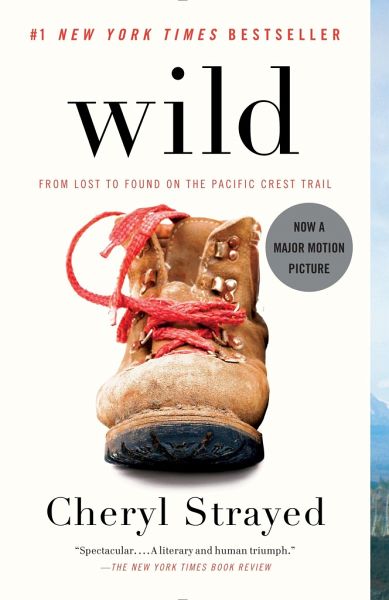
Wild: From Lost to Found on the Pacific Crest Trail by Cheryl Strayed

After the death of her mother, Cheryl Strayed’s life fell apart—she filed for divorce and began using drugs. Strayed continued on this downward spiral for four years until she came across a book about the Pacific Crest Trail. Unprepared but determined, she set off to hike the PCT where, bruised and bloodied by the rough terrain, she would rediscover a sense of wonder and awe. 

The Girls by Emma Cline

The Girls by Emma Cline

Caught in the middle of her neglectful parents’ messy divorce and their dysfunctional new relationships,  fourteen-year-old Evie Boyd craves attention, community, and a way to cope with her growing interest in girls. Enter the answer to Evie’s prayers, Suzanne. Suzanne is five years older, pretty, confident, and a member of a Charles Manson-esque cult. As her attraction to her new friend grows so does the devotion she feels to this dangerous community. Told by a now much older Evie, this debut novel asks whether the bland life she would ultimately lead was the right choice. 

Image result for pretend im dead

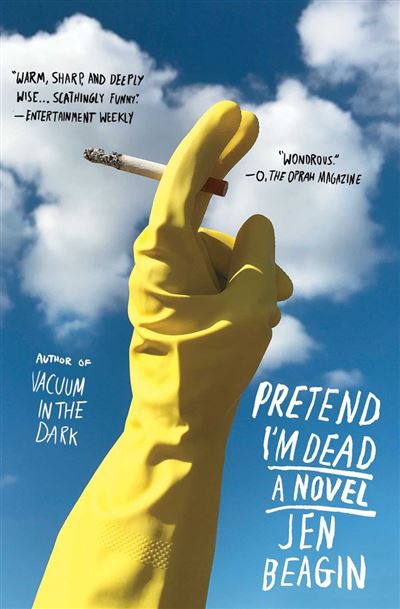
Pretend I’m Dead by Jen Beagin

Mona is 24-years-old and cleans houses for a living. Desperately searching for emotional connection in a community of rich homeowners, she falls in love with a heroin addict she nicknames Mr. Disgusting. When the very unlikely romance ends badly, Mona moves to New Mexico to start afresh. She cleans houses for an eccentric cast of characters including a New Age couple, a man with a mysterious secret, and a psychic who might actually be psychic. With each new encounter, Mona learns unexpected lessons that allow here to confront the past traumas that have barred her from the belonging she craves. 

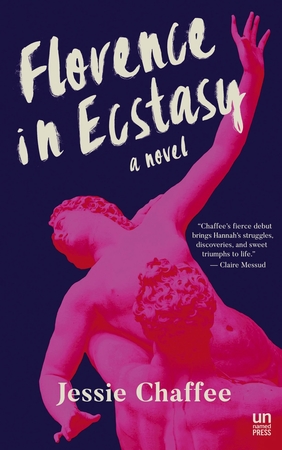
Florence in Ecstasy by Jessie Chaffee 

Anorexic and bulimic since the age of 28, Hannah loses her job at a Boston art museum after passing out one too many times at work. Adrift and unmoored, she moves to Florence, Italy hoping to find refuge. Engrossed in the country’s history, culture, and the tentative friendships she amasses, Hannah’s arguably impulsive decision works until she becomes obsessed with her research about female saints who find transcendence and ecstasy in self-denial and self-harm.

Image result for margaret atwood edible woman

The Edible Woman by Margaret Atwood 

In Margaret Atwood’s first novel, Marian McAlpin is newly engaged to the serious Peter. Surrounded by varying versions of happiness—one friend who is perpetually pregnant but seemingly miserable and another friend dreams of bearing a fatherless child—she confronts the cracks in her relationship. As her wedding day approaches, her doubts graduate to a loss of appetite. Cutting out meat, eggs, cheese, even carrots from her daily diet, Marian is soon surviving on salads and the growing concern that marrying Peter might be a mistake.  

The Pisces by Melissa Broder

The Pisces by Melissa Broder

Lucy has been writing her dissertation for over a decade. Already disillusioned by her lack of academic success, Lucy falls into an even deeper depression when her ex-boyfriend starts dating another woman. Hoping to mend her broken, affection-hungry heart, she moves into her half-sister’s Venice Beach home. After a slew of failed group therapy sessions and lackluster Tinder hookups, she meets the perfect man—one who showers her with attention, satisfies her sexually, but has a fish tail. Well, every relationship has its issues, right? 

Americanah by Chimamanda Ngozi Adichie

Americanah by Chimamanda Ngozi Adichie

Narrated by the now thirty-something-year-old Ifemelu, Americanah flashbacks to its protagonist at the age of fifteen. Ifemelu has just accepted a scholarship to attend college in America, leaving behind her native Nigeria and high school sweetheart Obinze. The novel recounts not only a long distance love but also self-discovery as Ifemelu, “conditioned from birth to look somewhere else,” struggles with her identity as a displaced African immigrant. 

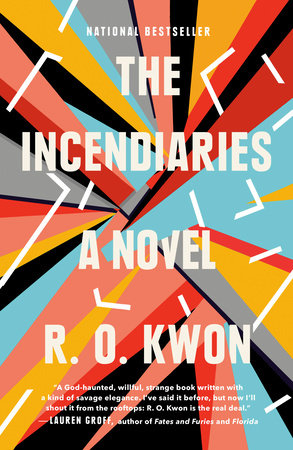
The Incendiaries by R. O. Kwon

The Incendiaries by R. O. Kwon

When Phoebe, a child piano prodigy, and Will, a once-religious “evangelical kid,” meet at Edwards University, the latter falls head over heels for the former. After her mother’s death, Phoebe—guilt-ridden and seeking comfort—joins Jejah, a cult founded by Edwards University dropout John Leal. After members of Jejah perpetrate a deadly act of violence, Phoebe disappears leaving a concerned Will to untangle John’s web of deceit. At the root of Kwon’s debut novel is a story of three young people desperately searching for something to believe in.

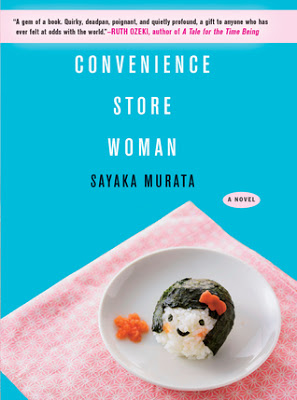
Image result for convenience store woman book

Convenience Store Woman by Sayaka Murata, translated by Ginny Tapley Takemori

Keiko Furukura has worked at the Hiiromachi Station Smile Mart for 18 years—outlasting managers, co-workers, and customers. Keiko is happy with her life and finds purpose in her routine as a convenience store employee. However, the same cannot be said of her friends and family who desire a more “normal” life for her (normal as in a husband and 1.5 children). Convenience Store Woman is a darkly humorous novella about the patriarchal expectations placed on women.

My Year of Rest and Relaxation by Ottessa Moshfegh

My Year of Rest and Relaxation by Ottessa Moshfegh 

Ottessa Moshfegh’s unnamed narrator is perpetually apathetic, newly unemployed, and so done with life. Orphaned at 24 after the death of her parents—a cancer-ridden father and an alcohol-addicted mother—the already opiate-obsessed narrator decides to enter a year-long, pill-induced coma. Accompanied by a young art student who agrees to document her experiment, the narrator puts herself to sleep hoping to emerge transformed.  

The Creator of “BoJack Horseman” Has a New Way to Break Your Heart

“This book, I will warn you: I can’t read it in public because I will cry.”

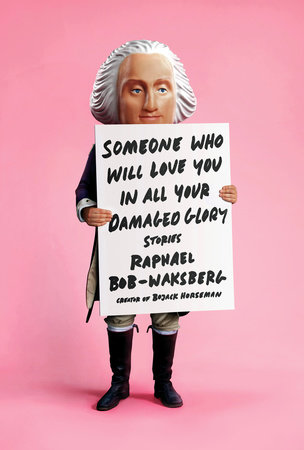
That was one of the initial messages my editor sent me about Someone Who Will Love You in All Your Damaged Glory, Raphael Bob-Waksberg’s hilarious, heartbreaking debut short story collection. If you recognize Bob-Waksberg’s name, it could be because he’s the creator and show-runner behind BoJack Horseman, the animated Netflix series about a depressed, self-sabotaging, alcoholic, washed-up horse actor. It could also be because back in 2013, you read a long, fictional, and eventually viral post that someone had written and posted in the Missed Connections section of Craigslist. That was Bob-Waksberg, too. (A version of that original Craigslist post, “Missed Connection – m4w,” is included in this collection).

Image result for someone who will love you in all your damaged glory
Buy the book

Someone Who Will Love You in All Your Damaged Glory is a masterful tightrope walk between abject sorrow and genuine hilarity, a book that Bob-Waksberg describes as “an argument with itself.” As a writer, I am struggling to describe it, because I want so badly to avoid the cliche “This book made me laugh AND made me cry!” description.

Maybe it would be better to say that shortly after I started reading the book, I sent my editor a photo of one of the pages with a single line highlighted. The line read: “I would try to tell her, Things will get better, but it came out as: Nothing didn’t get worse.” 

Or maybe it would be better to explain how a day later, I sent her a photo of the final page from a story called “Move Across the Country”; how I was crying on my front porch while I sent it; how all I said to accompany the photo was “motherfucker”; and how all she said back was, “OMG I KNOW.”

Or maybe instead, I will just say … this collection of stories caused me to guffaw AND also … occasioned me … into sobs? 

Or maybe sometimes cliches are okay.

This book will make you laugh and make you cry.

I spoke with Raphael Bob-Waksberg about Someone Who Will Love You in All Your Damaged Glory on the phone, and of course, we started out by talking about what it means to be funny-sad. 


Riane Konc: I feel like you pull off the balance between humor and sadness really, really well, in a way that I envied even before I read the book. I feel like when I’ve tried to sell BoJack to people who haven’t seen it before, what I tend to say is some long speech about how I generally don’t really care for adult cartoons (or just a certain genre of dark comedies), just because I feel like for a lot of them, the quote “comedy” is coming from the idea that: look, these are awful people and they’re miserable, and isn’t that so funny that we put that on TV? And I never feel like with this book, and I don’t feel like that with BoJack. You pull off this balance where awful, horrible, sad things are happening, and that’s not the joke—that’s just things that are happening. But at the same time, super absurd, specific, funny things are happening … because you can’t excise one of those from the others. 

So I’m curious, with BoJack, with the book, just how you handle balancing “I am both of these things, how do I put that into a piece of work?” Is that one of those things you do consciously, trying to draw the humor from the right places and the sadness from the right places, or is that just something that through writing a lot and working a lot, that’s just your style and how it comes out?

Raphael Bob-Waksberg: I think it kind of comes naturally. I think it comes from the work I have done to be the writer that I am. I think that for me, it’s always about who is the character and what does the character want, and what is the hole in the character’s soul—and trying to find that vulnerability and that desire. I think there’s a term in the world of television that a lot of writers don’t like to hear or talk about, which is “likability,” which is sort of a cliche where the studio execs want your characters to be more “likable,” and I actually don’t have a problem with that. I think we do want our characters to be likable, and we want characters that we want to engage with or root for, or we want to root for, or see on television, or read in stories. But I think likability isn’t the same as “good.” We don’t have to like a character who is decent or kind. Sometimes, there are a lot of ways to make a character likable. Sometimes I think it comes more from understanding what that character wants.

I think we do want our characters to be likable, but I think likability isn’t the same as ‘good.’

RK: That makes a lot of sense.

RB-W: That’s something that audiences or readers can relate to. So trying to find that vulnerability, or help the audience understand what the character wants. Then that helps make the character feel grounded and real and someone that we can root for, despite their flaws.

RK: Yeah, like, you’re an idiot, and you’re making the wrong choices, and I just don’t trust you to make the next right choice, but I want you to, and I think there’s a world where you might! You probably won’t, but you could, and I really hope that you will. And it’s going to break my heart when you don’t.

RB-W: Right. And I also understand why you’re making the bad choice. You’re not just making them to heighten the drama in the scene, although perhaps the scene behind the scene behind the scene shows exactly why you’re doing it. But in the scene itself, it’s explained to me in a way that I understand what you’re doing, and it makes sense. It doesn’t feel manipulative.

RK: There’s obviously quite a range in the book: it’s not a book where you’re just delivering story after story about like, “love wins, and hope is great, and it always will be fine”; but it’s also not like, “ever trusting or loving someone is the stupidest thing you could ever do and it will never work well and it will never even feel temporarily good.” There’s quite a spectrum in there.

RB-W: I think the book is kind of an argument with itself. I think that’s something I didn’t realize until I was done writing it. I feel like the through-line of the book, if there is one, is this idea is that love is a challenge, and love is difficult, and love is scary, and the question that the book posits is, “Is it worth it?” And I think there are parts of the book that are strongly pro, and parts of the book that argue strongly con. And I think if the book is working, then you make your own decision when you get to the end of it, which is how do you feel? And I actually think it’s more about you and where you are in your life and your experiences than the book. But I think the book will hopefully help you perhaps articulate your own argument to yourself, or reflect on experiences you’ve had or how you feel about things

The through-line of the book, if there is one, is this idea is that love is a challenge, and love is difficult, and love is scary.

RK: I feel like often have the experience of … I stumble upon realizing what I think about something or what I believe about something through the act of writing about it. It’ll be finished and I’ll be like, “Oh gosh, I didn’t know that was actually kind of what I believed, but … I guess it is.” Did you have that experience with this book?

RB-W: You know, even that succinct summary of what the book is kind of came to me in the last few weeks as I’ve been doing interviews and going on my book tour and talking about the book. Only then have I really been able to articulate what the book is. So it wasn’t really until it was in front of me, as I was writing, that I kind of found that. You know, as I was writing, I would feel like some of these stories make sense for this book, other stories are not quite right for this book. And I didn’t really know why until I got to the end and realized, “Oh, this is what I was doing.” Or even the ordering of the stories and how they juxtapose against each other: you know, stuff like that was more by feel than by anything else. But now looking back, I kind of understand what it was I was building.

RK: Yeah, I was thinking about the way that you organized the stories. One thing I really appreciated about the experience of reading it was, I would—because a lot of them, you don’t necessarily know if this is going to be a happy one or a sad one at the beginning, but some of them you can tell, there’s a different tone. But even when I was near done with one that, by all indications, was a hopeful one, and I should have been feeling vaguely hopeful the whole time, I was still kind of off-kilter from the last story I read, where my heart was just broken. So I was like, “Should I trust that this story is going to give me the ending I anticipate?” But I just couldn’t accept it until it happened, and then it happened, and it was a lovely experience. Like, oh thank God, that’s what I thought was going to happen, but I couldn’t accept that. That sort of felt purposeful.

RB-W: Well, what a great metaphor for love itself!

RK: Exactly. It felt like that.

RB-W: When you’re starting a new relationship, you don’t know what it’s going to be, and it might feel hopeful, but there’s something in the back of your head going “Well, it’s felt hopeful before, and I was destroyed, so we’ll see how this one goes.”

RK: With pieces like “The Serial Monogamist’s Guide to Important New York City Landmarks,” and there were a couple of others, they felt to me like in a different context or written by a different person, it could be a piece that you’d see in Shouts & Murmurs, where it’s more just conceptual and funny. It feels like you took that base and then put more of a narrative in it. Did you have any pieces that kind of started as “This is just a concept, and I’m riffing on it, and now I’m going to go back and give it a narrative”?

RB-W: You know, it’s funny you say that, because “Rules for Taboo” I actually submitted to Shouts & Murmurs. 

RK: But despite its evident merit …

RB-W: Yeah, they disagreed with your assessment. They felt very strongly that this was not Shouts & Murmurs material. Which I certainly understand. I think maybe that what you said earlier: that perhaps there was a little too much narrative sadness in there. You know, it wasn’t quite as light and fun as a Shouts & Murmurs should be. I couldn’t help myself! I couldn’t write the Shouts & Murmurs version, I had to write the melancholy, prickly version.

RK: I love that. Because I read Shouts & Murmurs-esque pieces and write them all day long, which is fun. But I loved seeing what feels like that base structure of you “take this concept, this familiar thing, and riff on it,” but you rarely get to see it with a sad narrative pushing it along. 

RB-W: Right, apparently the editors of Shouts & Murmurs don’t like that.

RK: They just don’t want stories! They don’t want to be sad! That’s not what they need right now.

RB-W: Right, they say, “You can murmur this one, but don’t shout it.”

RK: I was reading in the acknowledgements, in the back where you said something about meeting your wife. You said something about how if you lined up all of these stories chronologically, that you’d be able to pinpoint the moment that you two fell in love. Is there an actual story you were kind of working on around that time? Does that piece actually exist?

RB-W: No, I don’t think so.

RK: Just more the idea of it.

I think you can see the gradual shift in my writing where I become a little less cynical, a little more hopeful about the idea of love.

RB-W: I think you would be able to see the gradual shift in my writing where I become a little less cynical, a little more hopeful about the idea of love. I think the later stories that I wrote—not necessarily the later ones in the collection, but the later ones chronologically—I think are a little more hopeful than the ones that I wrote in my 20s when I was very cynical about love and what it meant to be a part of a couple. Or, you know, not.

RK: After that shift, when you were then an In Love Person and not an angry, cynical 20-something-year-old person, did you feel like, “Oh, this batch of stories that I have, these don’t work anymore. I don’t actually believe these,” or was it more like, “I’m not in this place, but these are still true at some point in time”?

RB-W: I’d say the latter, exactly. I felt like, “Oh, I don’t know if I can write some of these stories the way i’ve written them then. But I like that they exist.” And in re-reading them, I think they are compelling and interesting, and again, I kind of like the ping-pong match that’s kind of set up. I don’t want to overstate the idea that these are two different guys who wrote these stories, because they’re definitely not. Some of the later ones are more melancholy or cynical as well; it’s just not quite in the same way, or coming from the same place.

RK: It doesn’t feel like I’m reading a Jekyll-Hyde situation, or even a Will Grayson, Will Grayson situation. Like, one person has written this book, and I don’t think it feels dichotomous.

RB-W: Even at my most cynical, I was a little sentimental, and even at my most sentimental, I’m still a little cynical.

RK: I think that’s why the sad stories and the hopeful ones resonate really well, because they don’t feel like … I am just reading a story by someone who is just tunnel visioned either in hope and love or despondency. I feel like it makes the sadness and the hopefulness—when it comes through—I buy it a lot more.

RB-W: It’s kind of a crapshoot every time.

RK: I notice, when I’m writing, especially with humor pieces, I start because I have the punchline or I have the final image or the final sentence, and I have to work my way backwards to create the rest of the story to come up to it. And sometimes I just write from the beginning like a forward-facing person. Do you tend towards one method or the other? Are there any of these stories where you had a joke or a line or an image, and were like, “Oh, I have to create a story to get to this place”?

RB-W: Rarely. I kind of jump around all over the place, but usually my first way in is kind of the gimmick or the world or the voice of the story. So I’ll be like walking my dog, and I’ll be thinking, “What is this guy thinking right now?” and I’ll start putting sentences together in my head. Or I’ll come up with the format of “What if a party game’s instructional booklet could tell a little story, and was passive aggressive about it?” So I’ll kind of come up with a format first, or the gag of the bit, and then the next task is “Okay, what is this story really about?” 

I like to think that every story I write has kind of two hooks to it. The first hook is kind of like, the fun realization … this is a game. “This woman is doing an impression of a play.” And then the second hook is kind of what is the emotional grounding, what is the thing that makes you go, “Oh, this is about people, this is about a relationship, this is about something.” And so I usually find that first hook first, and then I have to figure out what’s the second hook that justifies this format that I’ve chosen.

RK: I think that’s really highlighting the difference with the format-first structure of doing things. For what I do, I get to cut off what I’m doing really quickly at the joke. It’s like, “Alright, we got the structure, you guys are going to figure out the game, this is super fun.” But then you take it to the next level, like, “Okay, who here died of a drug overdose?” That’s the second game. I feel like that’s difficult. To make it believable, to be able to make jokes shitting on theater people that are super funny, and also real life that’s happening at the same time. Because no matter who in your life has died, or dumped you, or whatever horrible thing has happened … theater people are still easy to make fun of. I feel like that’s important.

RB-W: Right. And sometimes the pain of your grief will make you lash out even more. 

RK: Yes. At deserving crowds.

RB-W: They know what they did.

RK: Last thing: is there anything you’ve been wanting to say about this book, but you haven’t had the chance? Or is there any question that you wish someone would have asked? You can do both sides of the job for this last question.

RB-W: I feel like everything has come up! But I will say: this book is very good. And people don’t always ask me that.

RK: I’m glad you said that. I agree with you!

RB-W: If anyone reading this interview has made it this far, and you’re on the fence about whether or not to buy this book, I would say … do it. 

RK: Wow.

RB-W: I think you should buy it.

RK: That’s really insightful.

RB-W: It makes a great gift. It makes a good, great vacation read. It’s great on airplanes. The audiobook is fantastic. Really, you can’t go wrong. I don’t know that I get to talk about that enough.

I can see this book being useful on a boat. I can see it being read in a car. I can see it on land.

RK: Yeah, and just to piggyback off of that: I can see this book being useful on a boat. I can see it being read in a car. I can see it on land. I can just see it in a lot of travel and non-travel situations.

RB-W: Absolutely. You can read it in bed, you can read it on your couch, you can read it on your roof.

RK: If you’re single, you can read it. If you’re happy, you can read it.

RB-W: Just read it! Read it to a friend, read it to an enemy, mail it to a lost love. Get it out there. Get the word out.

RK: Type it line by line to someone you hate. I think that there’s a lot of things you could do with this book.

RB-W:  Yeah, Tweet it. Do what you gotta do.

16 Book Covers as Rihanna Outfits

There’s little doubt in my mind that we are approaching a singularity in which Rihanna is an essential part of all cultural consumption. She’s dominated music, beauty, and now fashion, so it seemed only natural to me that her clout should extend to literature, too. She has the range. I collected some evidence of Rihanna’s uncanny ability to match even the most ambitious and current of book covers, to the extent that I’m wondering if the publishing industry has just been incepted by RiRi’s inexorable influence. I started cataloguing these on Twitter, but I’ve added some never-before-seen evidence too—all in all, it’s too much to be a coincidence. The book industry is going full RiRi, and I for one couldn’t be happier.

Jacqueline Woodson's "Red at the Bone," featuring a silhouette of a girl against a patchwork of pink, green, and brown, and a Rihanna dress in a patchwork of red, green, and brown sequins
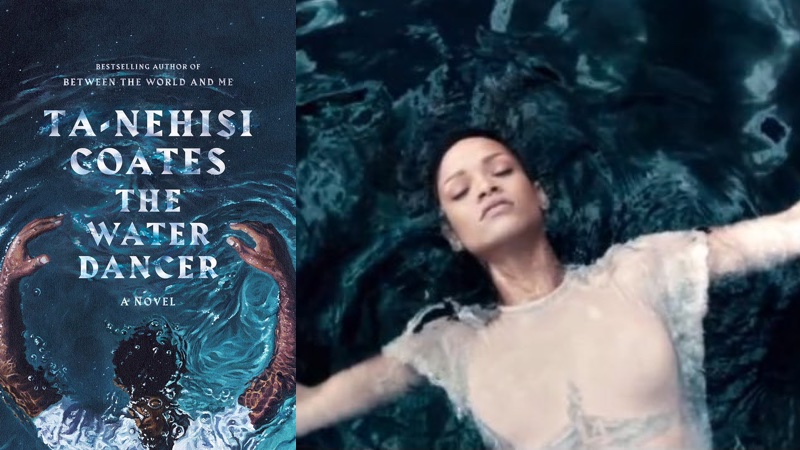
Ta-Nehisi Coates's "The Water Dancer," showing a man floating in water, and a picture of Rihanna floating in water
Daniel Jose Older's "The Book of Lost Saints," with yellow text on a tropical turquoise and pink background, and Rihanna wearing a skirt and head scarf in aqua with yellow print
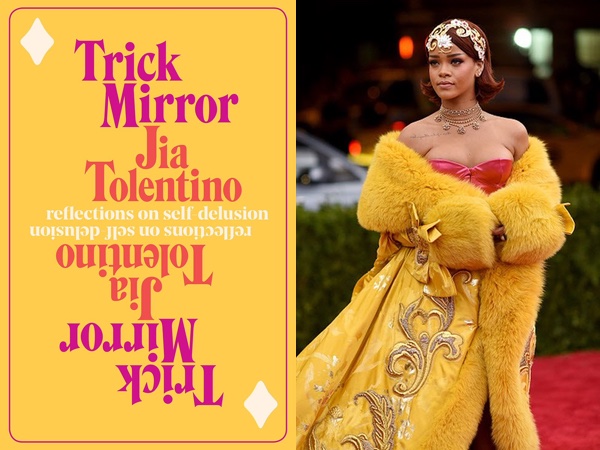
Jia Tolentino's "Trick Mirror," with pink and red text on a yellow background with diamonds in the corners, and Rihanna wearing an ornate yellow wrap over a red bustier
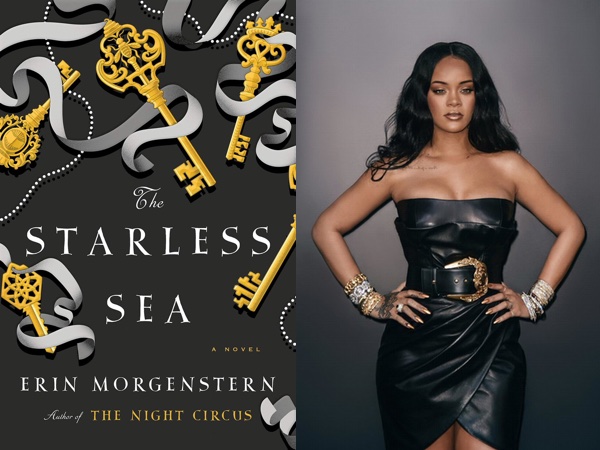
Erin Morgenstern's "The Starless Sea," with gold keys and silver ribbons on a black background, and Rihanna wearing a black leather dress with gold and silver hardware
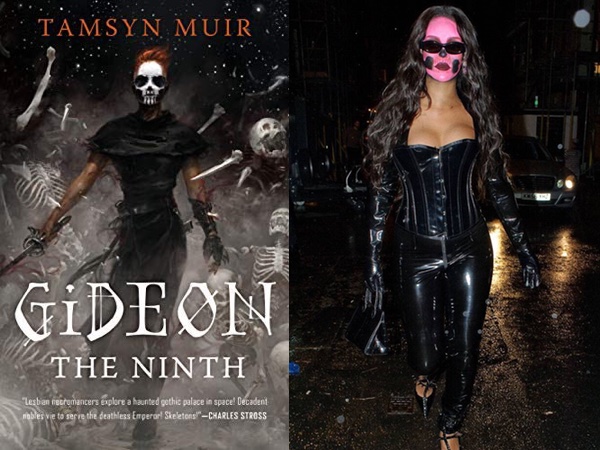
Tamsyn Muir's "Gideon the Ninth," featuring a woman in black with skull face paint, and Rihanna in black with skull face paint
Kiley Reid's "Such a Fun Age," with pink text on a black and blue print background and Rihanna in a pink ruffled skirt on a black and blue background
Akwaeke Emezi's "Pet," with a young woman in pajamas and slippers on a pink cityscape, and Rihanna in pink pajamas and slippers
Kacen Callender's "Queen of the Conquered," with a profile of a woman in a white head wrap with pink flowers and a black snake, and Rihanna in a pink ruffled dress with black gloves and flowers around her head
Erin Somers's "Stay Up with Hugo Best,' with an inflatable swan, and Rihanna on an inflatable swan
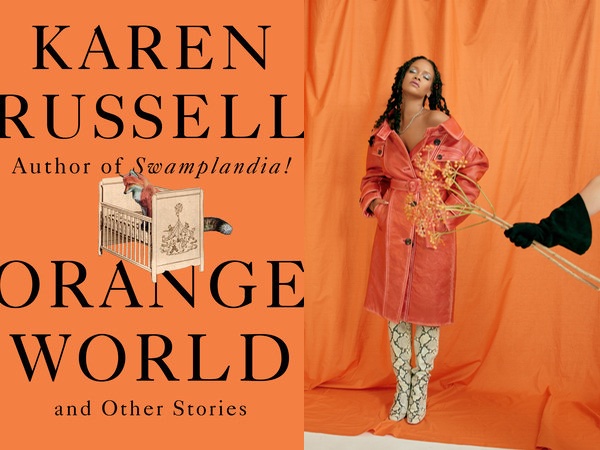
Karen Russell's "Orange World," a solid orange cover with black text and a small image of a fox in a cream-colored crib, and Rihanna in an orange coat and cream-and-black snake boots on an orange background
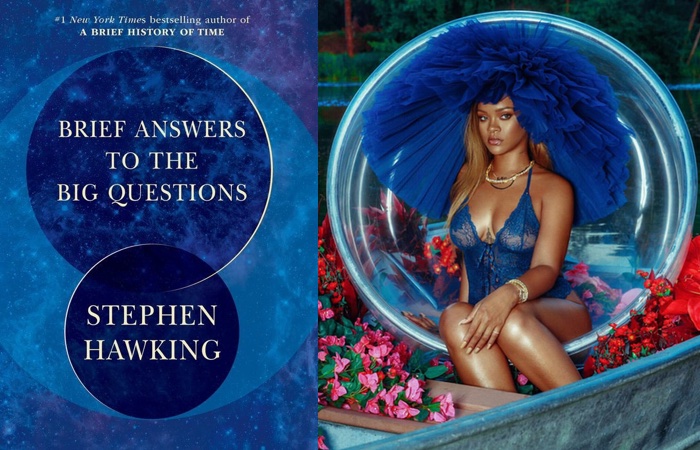
Stephen Hawking's "Brief Answers to the Big Questions," with two interlocking blue circles, and Rihanna in blue with a large round tulle headdress seated in a bubble
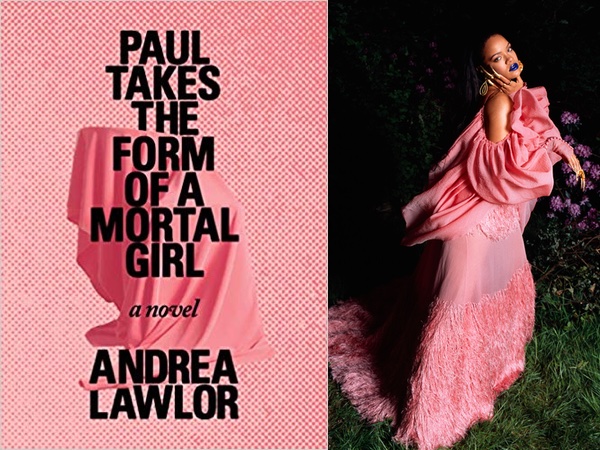
Andrea Lawlor's "Paul Takes the Form of a Mortal Girl," with a pink draped figure on a pink background, and Rihanna in a pink draped gown
Rebecca Makkai's "The Great Believers," with a pattern of orange and red and pink stripes, and a selfie of Rihanna in an orange and red and pink striped top
Samanta Schweblin's "Mouthful of Birds," with a background of jewel-toned butterfly wings, and Rihanna in lingerie on a tropical background in similar colors
Juliet Escoria's "Juliet the Maniac," with black and white text on a millennial pink background, and Rihanna in a white getup reminiscent of a medical back brace

18 Free or Cheap Literary Reading Series in NYC

New York City is a mecca of creative power, housing together individuals with the same passion and literary conviction toward forming and sustaining active community. With events happening every night, it can feel intimidating to even know where to begin. Don’t worry; we’ve taken the first step for you. This is by no means a complete list of all the readings occurring in the city, but it is a good start if you are seeking to join the literary scene or wanting to hear incredibly talented writers, familiar and new, who command the stage. With so much available, why not take advantage? Cheers to the great city of words! Cheers to New York!


F-Bomb Flash Fiction Reading Series

F-Bomb Flash Fiction, originally founded in Denver by writer Nancy Stohlman, highlights stellar flash fiction and connects the flash community together in themed readings. This series is for those who believe good things come in small packages and are unafraid to drop some F(lash)bombs. 

Where: KGB Bar & Lit Mag (85 E 4th St, New York, NY 10003)

When: First Friday of every month

Cost: No cover charge; two drink minimum

https://www.instagram.com/p/Bld7oTLguJJ/

Tables of Contents 

Tables of Contents pairs literature with snacks inspired by the text at a farm-to-table restaurant in Williamsburg. Featuring three readers and a Q+A, each ticket includes admission, small bites, and one complimentary drink.

Where: Egg (109a North 3rd St, Brooklyn, NY 11249)

When: Varies

Cost: $15

Guerrilla Lit Reading Series

Curators Lee Matthew Goldberg, Camellia Phillips, and Marco Rafalá, the Guerrilla Lit Reading Series showcases amazing works from emerging and established writers. Past readers have included Paul Cohen, Nancy Hightower, and Melissa Rivero.

Where: Dixon Place (161A Chrystie St, New York, NY 10002) 

When: Varies

Cost: Free

Miss Manhattan Nonfiction Reading

For nonfiction fans, Miss Manhattan is a series that hosts four writers in every reading to give light to nonfiction in New York’s literary scene. Curated by Elyssa Maxx, or Miss M, this reading has included writers like Marie Myung-Ok Lee, Paula Mejía, and Jeanne McCulloch.

Where: Niagara Bar (112 Avenue A, New York, NY 10009)

When: First Monday of every month

Cost: Free

Experiments & Disorders

Experiments & Disorders is a well-established Dixon Place series that supports experimentation and cross-genre work. Established by Christen Clifford and Tom Cole, this series is open to fiction, nonfiction, poetry, and performance writing. Previous participants have included Lynne Tillman and Phillip Lopate. 

Where: Dixon Place (161A Chrystie St, New York, NY 10002)

When: Varies

Cost: Free

Franklin Park Reading Series

Franklin Park Reading Series, curated by Penina Roth, features new and prominent writers. Audience members have the opportunity to win a free-to-enter raffle. Prior readers have included Tayari Jones, Colson Whitehead, Alexander Chee, and Karen Russell. 

Where: Franklin Park Bar and Beer Garden (618 St Johns Pl, Brooklyn, NY 11238)

When: Second Monday of each month

Cost: Free

FPP Reading Series

First Person Plural illuminates creativity in the Harlem community through writing from a first person plural point of view. Since 2011, this reading series has been interested in the collective that can be shown with the “we” perspective, showing writers and artists like Jericho Brown, Nicole Dennis-Benn, and Tyehimba Jess.

Where: Silvana (300 W 116th St, New York, NY 10026)

When: Varies

Cost: Free

Pigeon Pages NYC Reading Series

Hosted by Alisson Wood, Pigeon Pages NYC seeks to provide spaces for a wide diversity of up-and-coming authors in addition to local writers across the city. This series has hosted writers like Rakesh Satyal, Melissa Febos, and Susan Choi.

Where: Varies

When: Monthly

Cost: Free

Ditmas Lit Reading Series

Ditmas Lit Reading Series curated by Rachel Lyon blends a diverse and prolific array of emerging and established writers from every genre to share writing in Ditmas Park. Past readings have included literary icons like Alice Sola Kim, Leslie Jamison, and Tommy Pico. 

Where: Hinterlands Bar (739 Church Avenue, Brooklyn, New York 11218)

When: Third Wednesday of every month

Cost: Free

Pete’s Candy Store Reading Series 

Pete’s Candy Store Reading Series features notable literary writers, such as Sam Lipsyte, Jennifer Egan, and Lan Samantha Chang, as well as with up-and-coming stars. Curated by Jillian Capewell and Brian Gresko, Pete’s Candy Store has demonstrated fantastic readings for 15 years and counting. 

Where: Pete’s Candy Store (709 Lorimer St, Brooklyn, NY 11211)

When: Every other Thursday

Cost: Free

826NYC Reading Series 

As a nonprofit, 826NYC is dedicated to helping students with their writing and inspiring a new generation of writers with unlimited potential. During its reading series, established writers, like Yahdon Israel and Lilian Mehrel, read from student works, along with their own.

Where: Pete’s Candy Store (709 Lorimer St, Brooklyn, NY 11211)

When: Second Monday of every month

Cost: Free

Franklin Electric Reading Series

A Crown Heights reading series, Franklin Electric connects new and established poetry, fiction, and nonfiction writers whose works converse with one another. Past performances have included Chen Chen, Monica Ferrell, and Hafizah Geter.

Where: Work Heights (650 Franklin Ave, Brooklyn, NY 11238)

When: Monthly

Cost: Free

La Pluma y La Tinta New Voices Reading Series

La Pluma y La Tinta, hosted by Raquel Penzo, gives a platform to help, promote, and inspire marginalized voices and diverse writers of color in New York. Past readings have featured readers like Astrid Ferguson, Gia Shakur, and Steven Alvarez.

Where: Cafe con Libros (724 Prospect Pl, Brooklyn, NY 11216)

When: Varies

Cost: Free

Memoir Monday Reading Series

Memoir Monday is a collaborative series between Narratively, Catapult, Tin House, The Rumpus, Granta, Guernica, and Longreads focusing on first-person memoir. Previous writers have been Lacy M. Johnson, Alexander Chee, and Nuar Alsadir.  

Where: powerHouse Arena (28 Adams St., Brooklyn, NY 11201)

When: Third Monday of every month

Cost: Free

Us&Them Reading Series

Us&Them provides literary translators an opportunity to demonstrate their writing and translation skills in one setting. Twenty-eight translators, including Kimi Traube and Taije Silverman, are handed the mic each year to read works from all around the world. This reading is full of international gems. 

Where: Molasses Books (770 Hart St, Brooklyn, NY 11237)

When: Varies

Cost: Free

The Freya Project 

The Freya Project is a fundraising reading series that celebrates and amplifies the voices of women and non-binary writers. The ticket sales goes towards various non-profits and small organizations that promote social justice. Founded by Natalka Burian and Nonie Brzyski after the 2016 election, past readings have included writers like Lilliam Rivera and T Kira Madden. 

Where: Elsa (136 Atlantic Avenue, Brooklyn, NY 11201)

When: Varies

Cost: Varies

https://www.instagram.com/p/BtrzNBYHOh

LIC Reading Series

LIC Reading Series created by Catherine La Sota features readings by writers from Queens and beyond. Past readers have included Kathleen Alcott, Porochista Khakpour and Victor LaValle. The reading features three writers reading from their work, followed by a panel discussion and a giveaway of gift certificates donated by local Queens businesses.

Where: L.I.C. Bar (45-58 Vernon Boulevard, Long Island City, NY 11101)

When: Second Tuesday of every month

Cost: Free

Queens Writers Resist

Created in response to the 2016 election, Queens Writers Resist is multidisciplinary—celebrating democracy and resistance in all forms of writing, music, and art, while even allowing the audience to brainstorm themselves from a given prompt. In this series, everyone is inspired together. Past readers have included Jennifer Baker and Yael Horowitz. 

Where: Terraza 7 (4019 Gleane St, Elmhurst, Queens, NY 11373)

When: Varies

Cost: Free

Motherhood Has Always Been Political—Now, Books About It Are, Too

America is a country that claims to love mothers and thinks they’re doing the most important job in the world, but also kind of wants mothers to just shut up about it. The effectiveness of “mom” (or, better yet, “mommy”) as a prefix for anything you’d like to label frivolous shows how little we think of actual mothers: mommy blog, mom lit, mom hair. You can buy a mug to put your “mom fuel” in at Target and carry it to school dropoff while you wear a #momlife t shirt, if you’d like to treat motherhood as personal brand or take it up as a theme in your decor. But if you start asking just why these mothers are all so exhausted, and suggest they might need help beyond coffee or wine (excuse me, “mommy juice”), you’re likely to be asked why you’re always making it political. 

But what if we assumed that mothering already is political? 

Dani McClain’s excellent We Live for the We begins with just this argument: “motherhood is deeply political.” This book, which interweaves McClain’s own experience as a journalist and mother with reporting and interviews with activist mothers of color, begins with chapters on birth, home, and family, and moves into the larger world with investigations of belonging, school, body, spirit, and power. Throughout, McClain identifies the political undercurrent in her mothering, such as when she asserts that the time she spends with her child is “a form of reparations,” a way of “claiming for myself and my child time that was historically denied black women and children who wanted and needed to bond.” McClain’s book, through its use of memoir alongside reporting, examines the political and cultural context of motherhood in a depth that even the very best motherhood memoirs of recent years can’t quite do.

Why, in a country obsessed with mothers and ‘family values,’ is motherhood just so hard?

McClain’s work feels particularly vital in our current political moment, in which the public and political consequences of motherhood have again taken center stage. At the same time as several Democratic presidential candidates are arguing for policies like improved maternal care and paid parental leave that would make family life easier, state legislatures around the country are gleefully passing the most restrictive anti-abortion laws we’ve seen since Roe. Following all this produces a familiar whiplash: the politicians who speak in the most simpering tones about the idea of mothers and babies and the imperative to protect fetuses also roundly reject policy and legislation that would make a difference in the lives of actual women and children. These politicians, advocates of “traditional family values,” seem to think that once the baby is born, the mother should figure it all out on her own, without any of the support from the state or from an employer that Democratic plans might offer, or that nearly every other country in the world provides. 

In recent months, I’ve found myself hungering for the kind of deep analysis of mothering and motherhood that the first-person account of a memoir is hard-pressed to provide. What does it mean to be a “good mother” and where do those ideas come from? How have women in the past thought about how many children to have and when—and how have they practiced family planning? How do women around the world manage work and family, and what can we learn from places where the balance isn’t quite so hard? How might mothering spur political engagement? And why, in the United States—a country obsessed with mothers and “family values”—is motherhood just so hard?  

For insight into these questions, I turned to a group of new nonfiction books about motherhood, including McClain’s We Live for the We, Kim Brooks’s Small Animals, Sarah Knott’s Mother is a Verb, Amy Westervelt’s Forget “Having it All,” and Caitlyn Collins’s Making Motherhood Work. These books merge first-person accounts of mothering with research into the historical and cultural conditions, as well as the economic and governmental policies, that have shaped the landscape of motherhood in this country. Together, these books make the powerful argument that the particular impossibilities of motherhood in America today are not the inevitable product of mothers’ biology or psychology, nor are they the fault of women wanting selfishly to “have it all.” Instead, they show, the challenges of mothering in America are socially and historically produced, the product of an American ethos of rugged individualism, which has shifted the responsibility for children to the nuclear family and especially to mothers, alongside our high level of comfort with policing women’s choices around their bodies and their families.

These books capture the wide gulf between the intensive parenting practiced by white middle-class parents and the other-mothering that’s sustained black and brown communities. Intensive mothering, first described in sociologist Sharon Hays’s 1998 book The Cultural Contradictions of Motherhood, has three core tenets: children require a mother as their primary, full-time caregiver; motherhood is more important than paid work or the mother’s career; good mothers will devote all their time, energy, and resources to the benefit of their own children. It’s a deeply individualistic, competitive, and consumerist approach to raising children, and it’s linked to the opportunity-hoarding well-documented among white middle class and upper-middle class families. Wealthy white parents’ willingness to extend their resources advocating for only their own children has been shown to reinforce educational inequality and contribute to the resegregation of public schools

The particular impossibilities of motherhood in America today are are socially and historically produced.

Kim Brooks’s Small Animals effectively documents how this practice of intensive mothering, which she calls “conspicuous child-rearing,” harms both children and parents. Brooks’s book follows the unfolding of an extraordinary event from her own life: a stranger called the police when she left her (perfectly safe and happy!) four year old briefly in a locked car in a Target parking lot, thereby triggering a years-long interaction with the criminal justice system after she’s charged with “contributing to the delinquency of a minor.” Much of the power of Brooks’s book stems from the research that supplements her own experience, as she interviews “free-range parenting” advocates as well as historians, psychologists, and other academics who argue that giving children less freedom actually makes them psychologically frailer. Brooks considers as well the cases of women like Debra Harrell, who was arresting for letting her 9-year-old play in a park unattended. Ultimately, she argues that our culture’s insistence on unbroken supervision, coupled with the absence of accessible, affordable childcare, effectively criminalizes the parenting practices of all but the wealthiest white families. 

The cultural pressures of intensive mothering combine with America’s individualist ethos and the lack of support for children and families to make working motherhood especially difficult in America. “Let’s face it: it’s harder to be a working mother in the United States than in any other country in the developed world” is the blunt opening sentence of Making Motherhood Work, sociologist Caitlyn Collins’s cross-national study of working mothers in Sweden, Germany, Italy, and the U.S. Not only are American mothers far more stressed and overwhelmed than any of the other groups Collins interviews, but American mothers also blame themselves for their difficulties balancing work and motherhood. (Italian women are similarly stressed, but they tend to blame their government for not providing more support.) The definition of the ideal mother as one who stays at home is also a peculiarly American ideal, Collins finds, with the Swedish women she interviews seeming baffled about why a grown woman wouldn’t want to work as well as raise children. (The availability in Sweden of cheap, high-quality childcare, plus decent-paying jobs with flexible hours makes combining work and motherhood much more possible.) 

The idealization of the stay at home mother—a woman alone inside the house with her children—is also relatively new, historian Sarah Knott shows in Mother is a Verb; it’s only since the industrial revolution and paid work outside the house that women were expected to take on primary responsibility for childrearing, and that childcare was seen as distinct from other forms of work.  Sociologist Dawn Dow’s work—cited widely across these books—also shows that this ideal of the “good mother” is not a universal; for black mothers, for example, working outside the home to provide for the family is seen as an essential trait. It’s helpful, in a time when it’s often assumed that a “good mother” must be single-mindedly devoted to her children, to remember that, while June Cleaver, with her pearls and apron and after-school cookies for her children, may be a site of nostalgia, she’s also a historical anomaly; a blip in the record, not a longstanding tradition. Understand the nuances and darknesses and twists of our history feels especially important right now, particularly given the conservative longing to return to a greatness that never really existed, or at least was never truly available to anyone not white. Using letters, oral histories, dictionaries, and other sources, Knott’s Mother is a Verb recovers the traces of the lived experience of pregnancy, birth, and motherhood from eighteenth-century North America and Great Britain to the present day. She discusses the mothering experiences of white settlers alongside native women, wealthy colonists in Philadelphia alongside enslaved women in South Carolina, and in doing so, creates a complex and layered history of motherhood.

While June Cleaver may be a site of nostalgia, she’s also a historical anomaly.

The “other-mothering” described in McClain’s We Live for the We provides a powerful counterpoint to the anxiety and competition that’s often the byproduct of intensive mothering. McClain describes the efforts of activist mothers of color to improve not only their own children’s lives, but the lives of all the children in their communities. This approach to mothering is rooted in what sociologist Patricia Hill Collins calls “other-mothering,” which McClain defines as “a system of care through which [women] are accountable to and work on behalf of all children in a particular community.” These other-mothers are not necessarily biological mothers; McClain, following Alexis Pauline Gumbs, China Martens, and Mai’a Williams, coeditors of Revolutionary Mothering,  uses the verb “to mother” rather than the noun “motherhood” to show that “mothering is an action done by a range of people, including grandmothers, aunts, and queer and gender non-conforming people.” For the other-mothers in McClain’s book, this practice of care for the children of a community often becomes “a launch pad for public service”; many of these mothers use their skills in political activism to successfully argue for policy changes in schools, and some create their own schools when they believe the available options won’t serve their children. McClain points as well to women whose activism as other-mothers draws them explicitly into political life, as in the case of women like Lucy McBath, who successfully ran for Congress in Georgia after her son Jordan Davis was killed by an older white man at a gas station. McClain’s rigorous reporting and the tenderness of her relationship with her daughter are both on display here, and merging political and historical analysis with her daily life with her daughter, McClain shows that mothering can be both political and also intensely joyful. 

Considering the history of motherhood reveals that much of what’s most contentious or seemingly unsolvable in our public debates around motherhood is actually the product of a specific sequence of events (often the outsized political power of a few white men), rather than the necessary order of things. Amy Westervelt’s Forget “Having it All” combines history with analysis of contemporary issues and a series of proposed cultural and policy fixes, and her book effectively unsettles many of our assumptions about motherhood as an institution. Given the current assault on reproductive rights, the historical context for reproductive choice and family planning provided by Westervelt and Knott feels particularly urgent. Early abortion was widely practiced and perfectly legal up until the early nineteenth century, Westervelt shows, with a wide range of abortifacient products sold as “menstrual regulators.” Knott documents the relationship between declining birth rates, women’s bodily autonomy, and women’s overall happiness and well-being, observing that as family size declined “women gained in health and in control over their bodies and their time.” 

Westervelt’s book also highlights several moments where America was on the cusp of providing universal subsidized childcare, something that’s frequently characterized now as a pipe dream. (Though, like so many other essential problems in American life, Elizabeth Warren has a plan for that; her Universal Child Care and Early Learning Act would ensure that no family spends more than 7% of its annual income on childcare while also improving pay for childcare providers.) Westervelt describes the childcare centers provided by the Lanham Act to women working in the war effort in World War II, which were wildly popular and served 130,000 children at 3,000 sites at their peak. Despite a strong public outcry to retain those centers after the war, they were quickly closed because the Federal Works Administration determined that the best service mothers could provide to their nation was to stay home with their kids. Congress considered the issue again in the early ‘70s and passed a bipartisan Comprehensive Child Development Act in 1971 that would have created a network of child care centers, similar to what’s available in Germany and Sweden; in a section titled “There’s Always a Pat Buchanan,” Westervelt describes how a childless Buchanan persuaded Nixon to veto the bill by suggesting that accessible, affordable childcare would put America on the slippery slope to communism. 

These books uncover the forces that have shaped the political landscape of mothering today. They also point the way toward something new. 

For a long time, the phrase “the personal is political” felt to me like cliché, but recent assaults on women’s bodily autonomy seem to have returned vitality to the phrase. When we elect politicians who seem to not believe that women (or trans or queer folk, or anyone otherwise not like them) are really people, when public officials are willing to jail women who seek abortions and also willing to jail families who seek to protect their children by crossing the border to seek asylum, when black women are three to four more times likely to die from pregnancy-related causes than white women, of course the personal is political. Of course motherhood is political. When I’m feeling optimistic, I think we might be in a moment where public figures are willing to take the public stakes of motherhood seriously, whether that’s honoring women’s bodily autonomy and the access to contraception and abortion that allows women to choose when and how to become mothers at all, or developing support structures that make combining work and mothering easier. Motherhood has probably always been hard, but our present difficulties are exceptional, and they’re crushing for women, children, and families. The way it is is not the way it has to be. These books uncover the historical and cultural forces that have shaped the political landscape of mothering today. They also point the way toward something new. 

Reading these books, I found myself thinking of Autumn Brown’s essay, “Scarcity and Abundance,” in Revolutionary Mothering: Love on the Front Lines. Brown’s description of “scarcity thinking”—“there will never be enough of anything—love, food, energy, or power—so we must horde, or conditionally offer and withdraw, what we have”—aligns to the competitive, capitalist intensive mothering practices that cause the American women in Brooks’s and Collins’s books so much heartache. In contrast, “Abundance thinking says that together, we have enough of what we need, that there is enough for all of us if we recognize our essential interdependence.” “Abundance ignites the imagination,” Brown argues. We could all use a little more abundance, a little more imagination.

A Death Reverberates Through Two Marriages in “Late in the Day”

Tessa Hadley is a writer who knows how to elevate the universal hunger for belonging — to ourselves and to each other — into something sacred. To belong is to love and be beloved, but belonging is also vulnerable to loss. In her latest novel, Late in the Day, Hadley writes about what happens to four friends who uniquely belong to one another. Lydia and Christine, Alex and Zach have been friends through many lives. Lydia and Christine have been friends since school, and Alex and Zach have, too. 

Image result for Late in the Day
Buy the book

Desire changes things for the better, it seems. Lydia marries Zach and Alex marries Christine and the four have what could easily be considered a dream situation. They all remain best friends, they raise their children beside one another. They belong to each other. It’s beautiful, it’s symmetrical. In sculpting out the immediate, interior personalities of Zach, Christine, Alex, and Lydia, Tessa Hadley is somehow also able to sketch in broader strokes what it means to live in a long marriage, what it means to be an artist, what it means to be a parent, what it means to be on one’s own.

All too quickly — for us, within the first few pages of the novel — death changes things for the worse, it seems. When Zachary dies suddenly, the lines of belonging slowly spin apart. The world is uneven after Zach leaves it: who belongs to whom now?

Tessa Hadley and I corresponded over email about what it means to be a woman holding the pen and why we need fiction. 


Erin Bartnett: I wanted to start off by talking about time. The title of the book, Late in the Day gestures to a specific time, and the book structurally goes back and forth between the past, when Zach was alive, and the present, when Lydia, Alex, and Christine are mourning him. 

Can you talk about how you came up with this structure? Did you know the book would begin with Zach’s end? Why was it important to have the past and present coexist in the narrative time of the novel?

Tessa Hadley: When I first conceived of the novel, its two long marriages twining around each other, I imagined it unfolding in simple time, chronologically. But as soon as I thought that the strongest thing I could do to my quartet of characters was to have one of them die, reduce the four to three, I felt it wasn’t possibly to merely have that occur in chronological time. It would have come about two thirds of the way through the book, let’s say. That would have seemed somehow malevolent towards the reader, like a mean trick I was holding up my sleeve the whole time, not letting on. If I was going to do something so cruel to the four characters, then it had to be the entrance into the book, it had to be there right at the beginning, the reader had to share the writer’s privilege to some extent, watching young Zachary and all of them young and heedless, and knowing what’s in store, all the readers’ perceptions changed by this as the protagonists’ can’t be.

The rest of the structure flowed from that. I think this is part of the great metaphysical potential of the novel form, that it puts the reader in a relation to time and experience which isn’t practicable or possible in ordinary life. It opens up for us a dizzying thought experiment with past and present, confronts the imagination with juxtapositions which aren’t actually available within the real flow of time.
EB: Marriage, to my mind, is a relationship that has a very intense relationship to time, and the ways we each experience time are different. Christine, reflecting on her marriage to Alex, muses: “Since that beginning, they had both changed their skins so often. Marriage simply meant that you hung on to each other through the succession of metamorphosis. Or failed to.” I wondered, what drew you to the subject of marriage, and what did you learn about it in writing this book?

TH: It’s such an old subject, and such a perennial one. We still do such a lot of it — and in fact this phenomenon of long, long marriages is new, just because we’re living so much longer. Even second and third marriages these days can last thirty or forty years or more! 

A marriage is a perfect subject for a novel, because it fastens together two individuals   inside a tightly constraining form.

A marriage is a perfect subject for a novel, because it fastens together two individuals — whose personalities may well be flying off in quite different directions, especially as time passes — inside a tightly constraining form. Tension works well to support a story: the flying-off energy, pushing against the force of the containment. Adultery by itself isn’t the great subject that it was in the 20th century, because less is at stake, it’s no longer tragic. And courtship too, because marriage isn’t irrevocable, isn’t interesting in quite the same way it was in so much art of the past. But marriage, with all its difficulty and comedy and cruelty and at best tenderness, still makes such a good shape for fiction.

In the case of heterosexual marriage, it’s interesting too to press men and women up against each other inside marriage’s tight circle, watch what they do, find out what they are and what they want, wonder why they seem so different. There ought to be good novels about long same-sex marriages or partnerships, but I can’t immediately think of any.

A marriage is a perfect subject for a novel, because it fastens together two individuals — whose personalities may well be flying off in quite different directions, especially as time passes — inside a tightly constraining form.

EB: Christine, Alex, and Lydia all mourn Zach’s death in different ways. But I was struck by the way the form of the novel could perform some of the unfathomable but very real ways I’ve experienced the feelings of mourning. We get the news that Zach is dead within the first few pages, but then we grow to know him, through flashes of the past and the people that knew him, and even though we know he’s dead, he comes to life in our heads. It was beautiful and also so sad! What was it like, writing a book about mourning? Did you feel yourself experiencing mourning in some ways, too?

TH: I was anxious, that the book would be too glum — and yet I also felt it was imperative, having chosen this story, to do real justice to the awfulness of what has happened, to their mourning. So I shuttled back and forth between those worries — not being too gloomy, but not scanting the sadness either. To use again the word that came to me in answering the previous question, I suppose it’s a kind of impersonation — you have to act out in words what you think that character would feel, how the death would smite them, knock them down. So it’s a funny mixture of quite ruthless imitation of life, working in a business-like way to get the truth on the page; and on the other hand “miming” in oneself all the wash of feelings of sadness and loss that the protagonists experience. So writing it is not at all like real mourning. But it’s not devoid of sincerity and empathy, either.

EB: As an extension of that, maybe, Christine has a creeping experience of creative block with her painting — so much so that she actually locks the door to her studio and hides the key. For Christine, her block happens simultaneously with her mourning, but the two experiences are not, I thought, expressed as one in the same. But they do inform one another. And both, in some way, liberate her. What is the relationship between creativity and mourning, do you think?
If you don’t relinquish yourself to naivety, give permission to the free flow of dream-invention, then you’ll never write anything alive.

TH: That’s difficult, and interesting, to answer. I suppose a death is the supreme test, really, of the whole relation between creativity and life. There’s always perhaps something shaming in the practice of art, in relation to the real. Painting — or writing, or film (music seems to be different) — usually attempts at least in some way to imitate the real, or to be “about it.” This work of representation has been fundamental to art from its beginning — in the cave paintings, say. But there’s always a kind of shame, when you look back from your drawing of a bull to the real bull. Not enough, the artist sees. Not whole, not the whole truth. Perhaps Zachary’s death has something like this effect on Christine. Her efforts to make work which represents life are made shaming by the intrusion of this worst possible reality. She loses her trust in herself, that what she has to show is adequate to this life, this death. She’s made inadequate by it. That’s one of the ways that mourning might be disabling. At least for a long time.

EB: Christine, Alex, Zach, and Lydia all have individual relationships with art that inform their relationships with one another, at times enhancing their relationships and at other times making them impossible. It isn’t easy. Why do you think it is so challenging to have both — to create art and a “live a life” with another human being?

TH: Another difficult question! Is it because in making art we’re reaching to transcend the limits of what we are? We seize authority, we assert, in paint or in words or on film, that we are more than our partial limited imperfect selves, we enact something bigger than ourselves. But of course in our daily lives we are only our partial imperfect limited selves, as our friends and family know well! So there’s always a slight disconnect, a bit awkward and humiliating, between the aspiring dream of art and its necessary hubris, and the stumbling earthbound reality of the rest of our lives.

EB: There was a line from Zach about the way time and creativity are experienced differently for men and women. Right after Alex admits to Zach that he’s afraid he can’t write because everything important has already happened and been written about, Zach asks: “Do you think it’s a male thing?…Because the pen has been in the male hand and all that, for so long. Now that women have picked up the pen — for writing, for painting, for everything — they may feel all kinds of doubt but not that one. Because they’re not belated. As women, they’re still near the beginning.” 

What was it like writing (or typing) those lines out, as a woman holding the pen? Do you think women and men are on a different timeline, creatively speaking? Why or why not?

TH: I loved typing out those lines. I’m quoting a little from Jane Austen (or Zachary is), when in a marvelous scene in Persuasion Anne Elliot is talking with Captain Benwick about whether men or women are the most constant lovers. He says that poetry shows it’s men who are most faithful, but then adds thoughtfully that of course Anne won’t accept that, will she? Because the poets have mostly been men, the pen has been in their hands… I love Austen’s subtlety, by the way, that she gives this good point to the man. So deliciously un-smug.

It is a thought I’ve had about fiction sometimes, about the mid-20th century in particular, that when so many men were declaring the end of the illusionistic novel with its imitation of life — implying it was a form fit for credulous women and children, creating a lot of angst among novelists over the validity of what they were doing — certain women writers carried doggedly on trying new things with the old form. I mean for instance Elizabeth Bowen and Elizabeth Taylor, Rumer Godden, favorites of mine. They had too much to say to give up the illusionistic novel form to intellectual despair. Of course women had been writing novels in English from the beginning. But still, women were so new in art. They had such stories to tell, from their perspective. No wonder the men, after all those millennia of creativity, were exhausted and disenchanted, had seen through all the tricks. But it was all relatively new to the women, they weren’t ready to give it up yet!

I may just be fanciful in imagining this version of literary history. Anyway, I gave my fanciful thought to Zachary, only translated into the field of the visual arts.

EB: Another kind of creative block happens for Alex, meanwhile, who admits to Zach: “I’ve always felt that was my task: to be vigilant against liking the wrong things. But it’s a mistake, perhaps. I suppose it’s what stopped me writing….The heavy hand of the critical law on the scribbler’s hunched shoulder. Thou shalt not!” In your own writing, as I understand it, you wrote four novels which, you mention in an interview with The Guardian, were “no good,” but you continued to write. How did you keep the “heavy hand of the critical law” from paralyzing you in your work early on? And now?

Our present will soon pour into oblivion along with all the other infinitude of presents that have gone before it.

TH: One’s relation to that critical hand is so ambivalent. I think I felt it on my shoulder very heavily and inhibitingly, writing those bad books. I thought I had to write the books somebody else high-minded would approve of. In order to write better I had to get out from underneath that hand and take the risk of being foolish. There’s some profound naivety built into the foundations of fiction, which is make-believe. If you don’t relinquish yourself to that naivety, give permission to the free flow of dream-invention, then you’ll never write anything alive. I think Alex couldn’t allow himself to write naively.

And yet — one doesn’t want to write like a dreamy idiot either. So “Thou shalt not!” is inhibiting and also teaches you how to do the thing properly. Thou shalt not be banal. Thou shalt not say the same thing twice. Thou shalt not be overblown or unclear… It’s a dodgem course, dodging between doubt and hope with each sentence you write.

EB: In that same interview, you mention the anxiety you feel writing novels in this current moment: “What am I doing wasting my time on this, when the world is going to hell in a handcart?” How do you get over that feeling?

TH: Probably you simply shouldn’t get over it. You should balance somehow in your head all the time you write that what you’re doing is so tiny and irrelevant — and yet concede that it may also be the best thing you can do, or the only thing. The only justification I can think of for writing novels about — let’s say, in Late in the Day — a small group of educated fortunate middle-class Londoners and their emotions and experiences, which might seem not “relevant” at all to the world’s great crises, brings us back again to where we began, with time.

The present feels so substantial and self-evident when it’s all around us. But it’s rushing away like a fast silent river in the dark, falling over the invisible waterfall some little distance ahead of where we are. Our present will soon pour into oblivion along with all the other infinitude of presents that have gone before it. I suppose I want to dip my sieve into that rushing river of present moments and hold back some flotsam and jetsam of detail, almost like an anthropologist — just to make a picture, for as long as this present lasts, of what it feels like and what it means for these kind of people to live, just here and just now.

8 Books That Show What Life Was Really Like for Women in Victorian Times

Maybe you like a good bodice-ripper. It’s okay if you do—own it. But it nags at you: how hard is it really, to rip a garment lined with whalebone? 

Maybe you like the cozy mysteries of Kate Morton and Philippa Gregory… but you can’t stop calculating the real mystery of how, while preparing a soiree, the heroine found time to slip out and walk two miles in pointy wood-soled shoes to hide that key.  

Or maybe you love the classics, written by the women who actually lived in that ruffed and repressed time. In which case it’s just indiscreet to keep wondering how Jane Eyre ever got used to letting a maidservant carry her bowel movements around Rochester’s dark mansion.

Ungovernable
Buy the book

In my books, I answer these sorts of questions, because I believe historical details in fiction bridge the gap between you and the woman whose life you’re temporarily inhabiting. They strip the artifice from these women and replace it with honest beauty. Your heroine becomes stronger when you realize she was restricted in dress, mobility, privacy, and every other freedom modern women may take for granted. 

The books below all do an above-average job presenting some of the uncomfortable, smelly, sweaty truths behind our cultural image of  the corseted and tea-tippling (mostly) British and American women of the Victorian era.

345396

The Awakening Land by Conrad Richter 

The Awakening Land is actually a series of three books, The Trees, The Fields, and (Pulitzer Prize–winning) The Town, each taking the reader through the development not only of our pioneer heroine but the creation and settlement of her America. It’s a motion-capture journey that follows a teenage girl, Sayward, stranded with unreliable parents in the life-snuffing early 1800’s Ohio wilderness, through a life of staggering sacrifice, danger, and strength. Richter’s mid-century prose is, like his heroine Sayward, firm and honest. His patient examination of this woman’s life reveals how our grandmothers didn’t just need to adapt to a new life, but simultaneously bend the laws of man and nature to adapt to them. And Sayward is a heroine for the ages; if she weren’t so sensible and reliable, she’d have long found her place with Scout, Scarlett, and Celie as one of the great women of literature. What do you do when you’re miserable-poor, and your boy has one chance to impress folks enough to send him to school, but all his clothes are so shabby they humiliate him? If you’re Sayward, you don’t say a word. But you spend the next 24 hours creating a perfectly tailored fashionable wool suit. And you start by shearing the sheep. 

Iola Leroy by Frances Ellen Watkins Harper

Iola Leroy by Frances Ellen Watkins Harper

Iola Leroy deserves top credit for providing an accurate depiction of what it was like to be a black woman in the 19th century, because it was written by a black woman in the 19th century. So, even if it uses some of the stock characters and plot lines common to romantic fiction of the time, it still provides realism beyond  what any amount of research could offer. Iola is a black young woman, but in no way downtrodden. Her light-skinned mother was her white father’s slave, until he freed and married her, pre-Civil War. Iola is subsequently brought up educated and ladylike in the North, until her father dies. Without his protection, she is sold into slavery. Therein starts her torrid adventures of escaping deviant men and abuses while looking for her lost family. Harper’s themes, woven into a readable, sentimental story, are not obsolete. In fact they are one of the first, freshest takes on racism, black pride (Iola is light skinned enough to pass for white but refuses to do it despite the ease it would create), and sexism. Iola Leroy shows us the front end of social misery so big that perhaps few people alive today, over a century later, will live to see the back end. Books like this one, however, provide unique viewpoints to help move things along.   

6622793

Slammerkin by Emma Donoghue

Slammerkin is set in the 18th century, not the 19th, but Emma Donoghue is one of the most lush history writers alive, so it’s worth wiggling the rules a little for her. More importantly, the particulars of the life of her character, teenage Mary Saunders, would not have been very different 100 years on.  Mary Saunders was a real girl, and the rough facts of her death (not a spoiler, no one makes it out of good literature alive) were enough for Donoghue to transport you to the deadly cold of London streets, and give you the hunger pains of both stomach and soul. Mary is no one’s hero, not even her own, nor is she required to be. Donoghue puts us in a world where survival, tinged with any tiny pleasure you can scrape up, is what life is. Through Mary we learn that being “bad” can offer so much more freedom than virtuously starving—until it doesn’t anymore. Virtue provides so much safety, until the people you depend on stop treating you with care. And it’s easy to be a “good woman” until temptations and desperation overtake you, no matter what century you live in. 

Image result for these is my words

These is My Words by Nancy E. Turner

Nancy Turner’s book is probably the most accessible and fanciful on my list. Meaning it’s the most fun you’re ever gonna have reading about floods, rape, hostile natives, fire, dead children, bad marriage, crazy mothers, banditos, snakes, scarlet fever, and stuck-up neighbors. You’re guided through all of it by the most spitfired, kick-ass plain talkin’ pioneer woman ever to tread frontier Arizona’s miserable dust. Sarah is the technicolor version of what our foremothers went through to survive inhospitable territory. She has the spunk of the modern woman, not the silence and wiles of a 19th-century woman. She is not quiet, she does not know her place, and she always chooses virtue. A bit glossy, but a great introduction to the rough brave lives of the women of frontier America. 

Image result for pushing the bear

Pushing the Bear by Diane Glancy

Before the grandmothers of white women were able to begin their harrowing journeys toward settling American land, something awful had to happen. The grandmothers of brown women, Native Americans of innumerable tribes, had to be forcibly removed from that selfsame land. 

Pushing the Bear places the reader in the grit and sorrow of the Indian Removal Act, what we more commonly call the “The Trail of Tears.” Glancy uses many voices to tell the story of the long and deadly march, though most is seen through the eyes of Maritole, a Cherokee woman. The history is deftly researched, and Glancy knows that Maritole, the representative woman of the story, can’t tell her story without including the stories, anger, and fear of the people, particularly the men, around her, both Native and white. In a culture where gender roles deeply matter, emasculation by a foreign military changes more than just a society; in the case of Maritole and others displaced like her, it can change what it means to be a woman.

The Old Wives' Tale by Arnold Bennett

The Old Wives’ Tale by Arnold Bennett

The Old Wives’ Tale is, as Victorian books will be, long, detail-heavy, and slow-paced—but somehow it’s still quite readable. It is the story of two sisters, teens when we meet them in 1860s England, and the choices each make that will guide the rest of their lives. What Bennett makes clear, though, is that they had almost no choices. They must both be wives, of course, but one is rebellious and foolhardy, one solid and perfunctory. Bennett quite outrageously shows that it doesn’t matter which road is taken; neither woman was meant to thrive, not even the proper and virtuous one. He deftly illustrates their lack of agency and the weaknesses they cultivate in response to their powerlessness. Bennett might not have known he was a feminist, but he expertly shows how Victorian society was a well-laid trap for most of its female participants.

Image result for crimson petal and the white michel faber

The Crimson Petal and the White by Michel Faber

Probably the most thorough and intriguing exploration of Victorian women’s lives, replete with transporting detail and dialog and a story you can’t put down. You’re mostly going to be accompanying Sugar in this brilliant book by multi-faceted writer Michel Faber. Sugar is one of the most sought-after young prostitutes of 1870s London. Her ability to hide her rage toward her clients doesn’t quell it, however, and she spends near all her free time writing tortuous fantasies of harming those who use her.  But she is shrewd, capable, and she will find her way up and out. 

But you’re also going to meet Agnes. She’s a Wealthy Respectable Woman, but so delicate, so babied, that she cannot function in society; even though her lot is the luckiest a woman of her time could draw. Or is it? Sugar never had a childhood; Agnes isn’t allowed to leave hers. 

Faber doesn’t give us the simple contrast of high and low, cunning and ignorant. He has other flowers to make this bouquet sweet and thorny. The unflappable Emmeline Fox, plowing through Victorian decorum to save the fallen woman of the world, women like Caroline, “a sweet soul” who truly prefers the relatively simple work of prostitution to the “donkey work” of the virtuous poor. The women of Faber’s Victorian Age stride, stagger, dance and skulk through their distinct but intertwining worlds. Their power is limited, but they are in motion, and every tornado starts with a breeze. 

Image result for long song andrea levy

The Long Song by Andrea Levy

Eighty-something Miss July will tell you her story, as her son is urging her to do. But she’s not going to tell it the way you usually like to hear your ex-slave stories. She’s not even going to tell it the way her son Thomas wants her to. He’s pretty pushy for someone she abandoned on a doorstep when he was a baby. Yes, she was a slave on a British sugarcane plantation in Jamaica, and yes, she was set “free” in the Baptist War of 1831, but that’s all beside the point of the story she wants to tell. If you want some noble savage or magical negro, look somewhere else. Besides, she would say, she’s mulatto, not black, and you better know the difference. 

Frankly, you might not think she’s a that pleasant of a person. Actually, there might be no one in her story who you find yourself particularly rooting for. That’s not her problem, though it does beleaguer her son a bit. 

Levy is a funny writer, and she dares to bring humor to this very sensitive subject. Allowing these imperfect, mercurial, and disappointing characters to tell their own story makes The Long Song one of the most authentic depictions of 19th century women you’ll ever find.