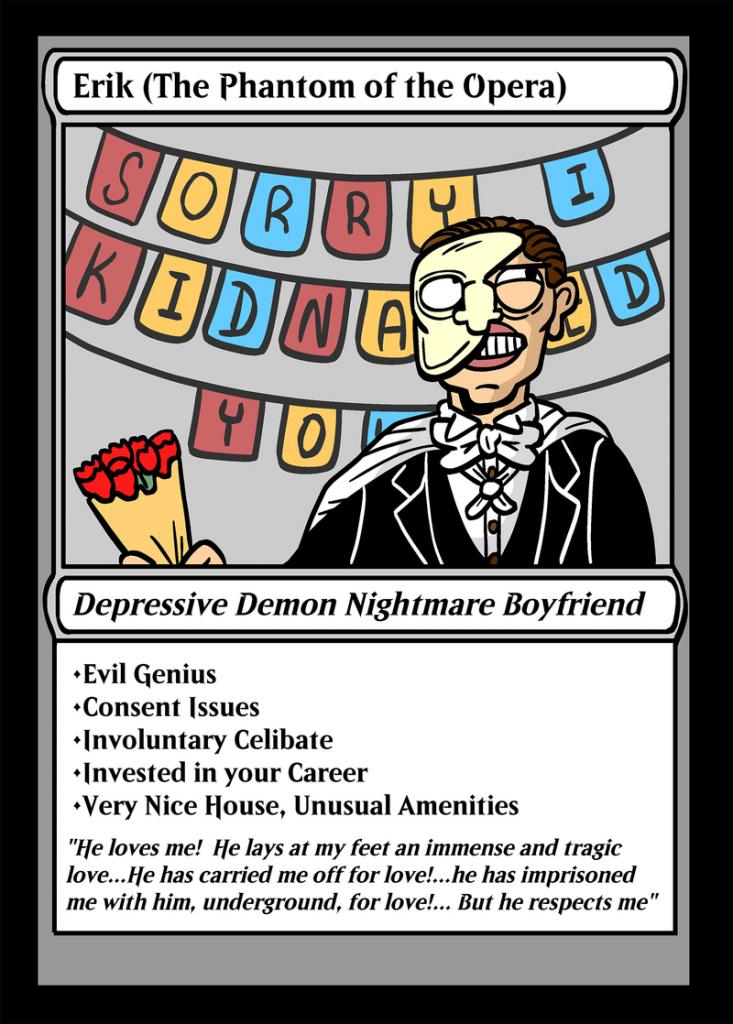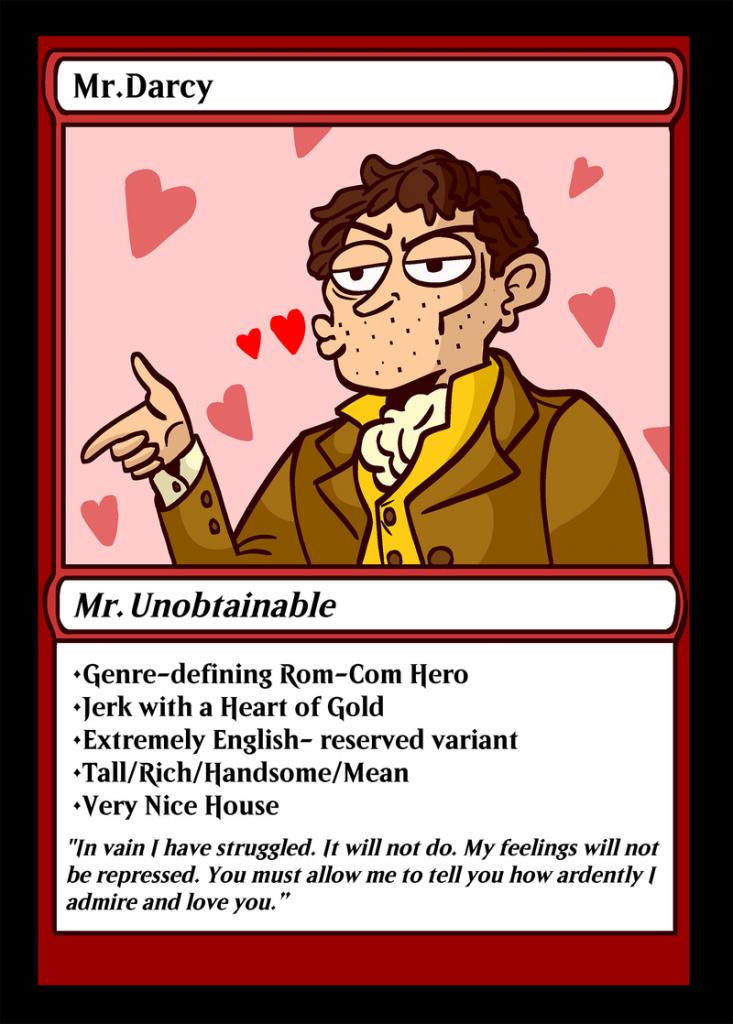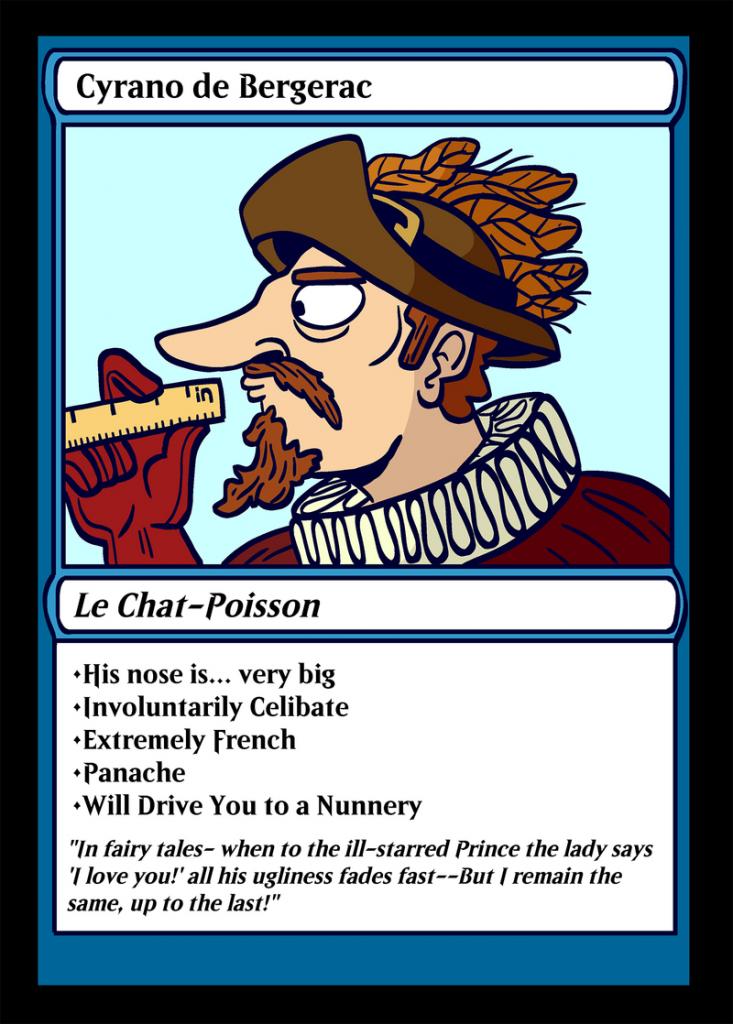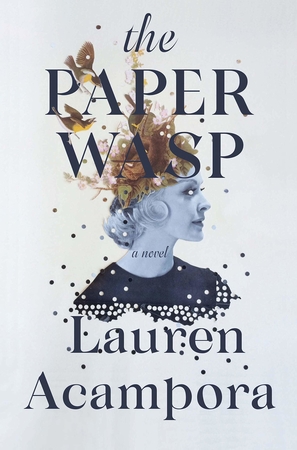
Loving Your Parents Is a Trap

“Model Boy”
by Jake Wolff

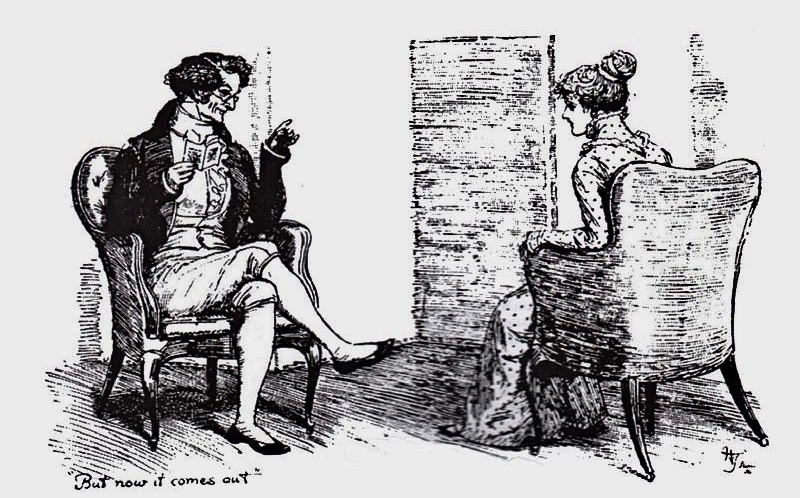
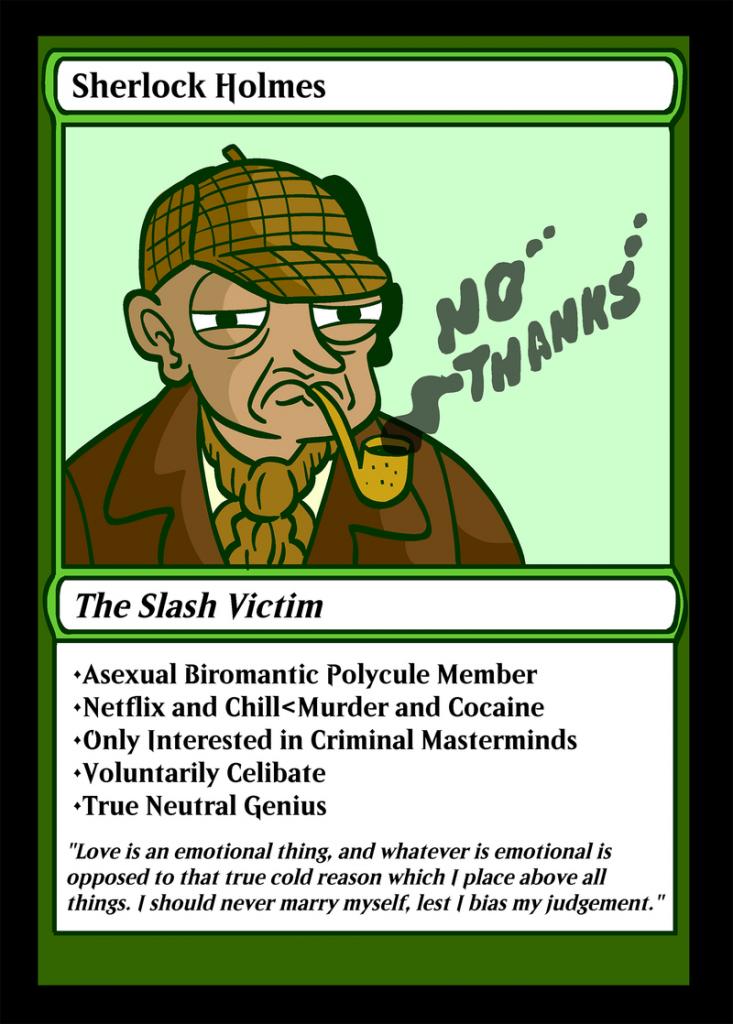
Sammy Tampari lies on his stomach on the floor of the living room, pretending to read. He is eight years old, and it is Saturday, early afternoon. He turns the pages of the book, licking his fingers, keeping a steady rhythm (too steady, if anyone paid attention), but what he’s really doing is observing his father, a man he calls Don. Don is actually reading. He’s a psychiatrist. When he comes home from work, he talks about his patients into a tape recorder, and then a transcription service turns these recordings into huge towers of paper, which Don can read silently, for hours, with no breaks to pee. Sammy likes to watch him, to study his face as he reads, but Don has said, repeatedly, “Stop spying on me, Samuel.” This is one of his father’s Traps, which is the best word Sammy has for it. Because Sammy wasn’t spying, not at first; he was just watching, right out in the open, not knowing it was wrong. But now that his father has told him to stop spying, Sammy has no choice but to spy, to watch his father secretly, to feel the shame of this disobedience.

Once, in reference to an important painting—six flowers surrounding a tomato—his father said, “Don’t even think about touching this,” and then it was all Sammy could think about, for that day and the next.

Sammy turns another page, sighing as he does it, and this makes Don look up from his papers. “Are you bored?” he asks.

“No, sir,” Sammy says.

Don grunts and returns to reading. He is a small man but handsome, even very handsome, with thick honey-blond hair and a broad dimpled chin that seems to lead Don from place to place, that seems to have—if this is possible for a chin—an awareness of its effect on people. On weekdays Don wears black suits, gray suits, or black-and-gray suits, but on Saturday, he dresses in a sweater and slacks. Sammy only sees his father in a T-shirt at bedtime, and it is hard to see him this way, like a turtle without its shell.

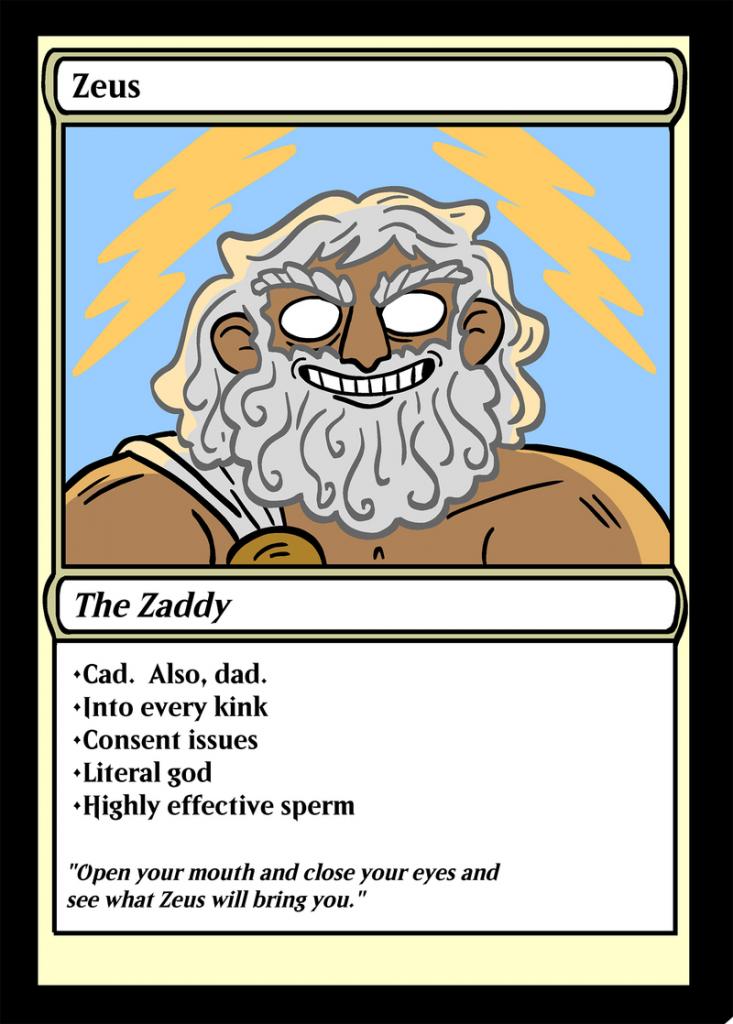
Directly behind Don’s of office sits a smaller room, cavelike and cold, where Don stores his coin collection. For Sammy, this collection is twice over a source of consternation. First of all, the coins are used, again and again, as example par excellence of a hobby, which Sammy’s parents feel he most urgently lacks. It’s true: Sammy does not have hobbies. He takes no pleasure in them. Second, despite its use as a rhetorical device, Sammy isn’t even permitted inside the collection room. He has been allowed, only once, to see the collection from the doorway. When he did, he was surprised to find the room filled not only with coins but also a very many books, which he presumed (incorrectly, it would turn out) to be about coins. Indeed (his father had used that word), it was the books, and their preservation, that rendered the room off-limits. Coins, his father explained, were very hard to destroy, even by children, and this was part of their appeal. With surprisingly little effort, Don said, you could find a coin that would be the oldest thing in your house, oldest by several hundred years. But books. Oh, no. Children, especially boys, must not be allowed to handle old books.

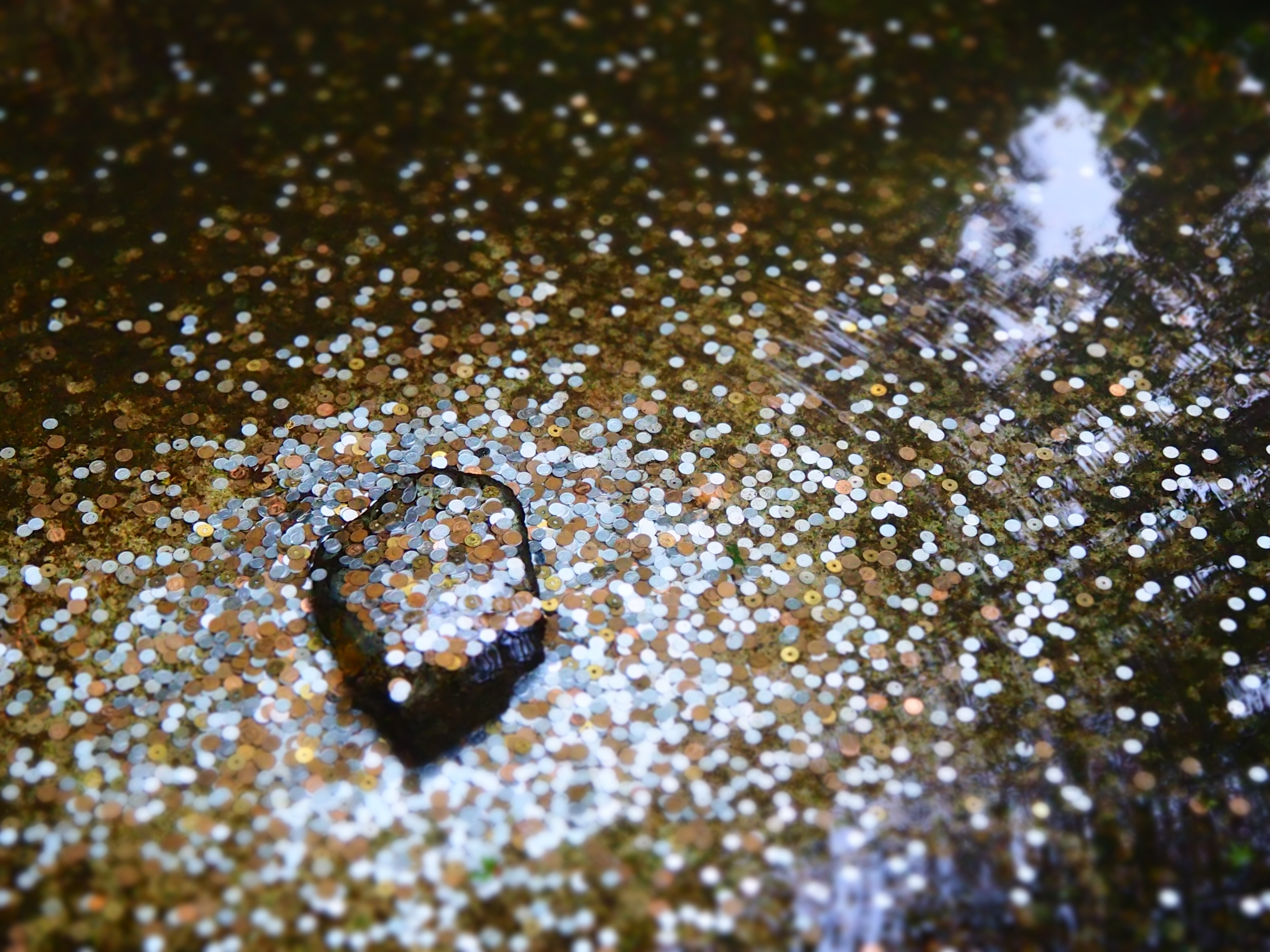
As for the coins themselves, they came in sizes large and small, bronze, silver, and gold, mostly circular, some more square. Sammy would admit that the sheer number of them was impressive— two whole walls full, plus several smaller displays—and he would admit that there was a certain magnetism to seeing, this close together, so many objects alike in size and shape and yet, in a profound way, completely foreign to one another. And it’s true, this nearness without exactness produced an interesting visual effect, so that when he tilted his head, a kind of shimmer passed over the coins, like the sun traveling quickly over a river, like a wink, a raise of the eyebrows, the promise of a secret.

Don grunts again, this time to himself, and Sammy thinks, What’s wrong with me?

From across the house, the long, empty hallways report the sound of the front door opening. His mother is home. The Tamparis live in a Manhattan brownstone, a building so old that Sammy can’t re-create it with LEGOs; he’s found the right colors, even a plastic door with a fake stained-glass window, but the shiny plastic simply can’t reproduce the history of the place. He hears his mother drop keys into her purse and kick off her shoes in the landing. He hears the sound of her bare feet in the hallway. The entryway is rich with windows, and the house is bright, but as you proceed, the rooms darken, so that coming home is, for Sammy, like falling asleep.

His mother, Leena, sweeps into the room, patting his head, inspecting the wall hangings—she’s an art appraiser—as though she hasn’t been home in years. Leena is more plain in the face than her husband but much taller and thinner; from behind, Sammy can see the beginning of her spine form below her neck and disappear into the low back of a cotton dress. Sammy knows he has inherited the best of them both, at least physically; he will be tall, thin, and pretty, and everywhere he goes, people will look at him. They already do.

“SonAndHusband,” Leena says, acknowledging them. She bends almost in half at the waist to kiss Don’s head, and when he looks up at her, there is warmth between them. Sammy can recognize these feelings in others, which he thinks must be good, must be a sign that he is not totally, irreversibly broken.

Leena adjusts the slider for the ceiling lights, which are recessed like the eyes of a doll, and the room brightens. Her hair is curly and red—last week it was brown—and she grabs a strand of it now, examines its color in this new light.

Sammy can recognize these feelings in others, which he thinks must be good, must be a sign that he is not totally, irreversibly broken.

When she’s done, she catches Sammy’s eye. “Your friends are outside. The sun is there, too. Go play and be free.”

Sammy closes his book. This is his mother’s version of a Trap, except it’s not a Trap really, just a Sadness: she tells Sammy to do the things that she’d like to be doing, but never does. His mother dreams of playing basketball for the New York Knicks. He knows this because when she naps on the couch, she updates the score in her sleep and sometimes, like a peaceful sigh, says, “Swoosh.”

He has accepted that his parents don’t love him.

Those boys outside, whichever boys she’s seen, are not his friends. They’re just neighborhood boys. To Leena, all young people know and admire one another. Sammy wonders if this assumption comes from some great happiness in her own childhood or whether, instead, it has formed in response to some unhappiness, some old wound. Sammy does not have any friends. At school, he is so much smarter than his classmates that he feels the weight of their stupidity on his chest—even after the bell rings, like waking up from a nightmare to find yourself suffocating, still, under the heart-crushing burden of your fear.

Nonetheless, he stands and stretches. With Leena home, Don will read in the bedroom, away from the noise of the television (which Leena is turning on now, checking the TV GUIDE for schedules) and away from spying eyes. Sammy might as well go outside if it will make Leena happy.

“Hey,” Leena says to him. “How many three-pointers did Trent Tucker make in 1986?”

“Sixty-eight.”

She laughs with delight. This is the one thing he knows can make his mother happy: his memory. Words, faces, field goal percentages, he can just . . . remember things.

“How about you teach him something useful,” Don says.

Sammy trudges down the hall, Leena calling to him to take his skateboard, so he does, though he’s never actually used it. On good days, he would confess that it does bring him pleasure to carry the board around, to be seen with it. He thinks it suggests to strangers some hidden swiftness, which he has chosen not to show them.

Outside, the sun is high and hot, the sky a distant river blue. There are boys, yes, four of them, playing four square in the street. This is a relief to Sammy: they will have no use for a fifth. He tucks his skateboard under his arm and sits on the shaded bricks of the stoop. His mother likes to say Manhattan is changing— she likes to say it even though it pains her—but to Sammy, everything looks the same as it always has, except maybe for the coffee trees planted along the sidewalk, which for some reason, this summer, have not grown leaves and now sit naked under the sun like skeletons. The cars in front of his house are parked very close together, their bumpers nearly kissing, and it gives Sammy a sick, shuddering feeling, as he imagines the drivers trying to extract these cars from their spaces.

Three stupid pigeons—one white, almost dovelike, the others as dirty and gray as the street—land near the neighborhood boys, who are hurling a spongy red ball across the chalk lines of the playing field. The pigeons line up in single file, as though they are waiting to play, and this distracts the tallest, oldest boy—who is not wearing a shirt, who has a thin line of hair emerging from his nylon shorts and rising to his belly button, it’s really something— and so he loses the point and throws the red ball at the pigeons, who scatter. Sammy looks away from the boy’s hair and follows the white pigeon as it flaps—in the inelegant way of pigeons— toward his house. He worries it might fly directly into his bedroom window, but at the last moment it thrusts upward, into the camouflage of some fast-moving clouds.

How high above the street is my bedroom? Sammy wonders, and the urgency of this question frightens him. He’s always being struck by thoughts like this, that arrive seemingly out of nowhere but desperately, with an insistence that reminds him of his father’s chin. He stacks imaginary versions of himself on top of each other until his hypothetical head has reached the window. His bedroom, he decides, is four and a half Sammies off the ground.

When he returns his attention to the street, there is a man standing in front of him, blocking his view of the boys. The man is wearing dark jeans and a green collared shirt. Wiry tufts of chest hair sprout from the neckline of this shirt, and it is not like the hair of the neighborhood boy—Sammy does not want to look at this.

“Hey, kid,” the guy says. “Got a minute?”


Here is why Sammy spies on his father.

Every Wednesday Don receives the package from the transcription service—delivered in person, it must be signed for, “And not by a kid, please,” said the delivery boy, once, when Sammy opened the door—with a box full of patient files. Every Thursday evening Don meets with the New York Society of Numismatics, i.e., coin collectors, and of course Sammy is not invited, while Leena goes to something she calls Fun Club. This Sammy has seen, and it’s just women smoking cigarettes. The babysitter hired to watch Sammy—a college girl with polychromatic eyes—doesn’t care what he does so long as he doesn’t go “out of sight,” the mere thought of which makes the girl breathe so frantically that Sammy can map the shape of her breasts.

This means that every Thursday evening, for four hours, Sammy can read his father’s files. The coin cave Don locks, but the files, miraculously, he leaves unprotected, perhaps assuming they’re too dry, or too complex, to attract Sammy’s interest. The first time, he read them out of boredom. Sammy really doesn’t have anything, not one thing, he particularly likes to do. He plays with LEGOs when ordered, but they make his mind anxious and his fingers feel raw. Reading books is okay, but only when they’re about science, and even then he could take them or leave them. In bed each night, he cries from 10:00 to 10:15 (he sets the timer on his bedside clock). It’s almost a relief, this crying, though he can’t explain from what. To use a phrase of his mother’s, “It’s just one of those things.” Why did the pigeons land near those boys, and not some other place? Why did they arrange themselves in a line?

These things could not be explained: the behavior of pigeons, the crying, his lack of pleasure in activities that drive other boys into frenzies of excitement (video games, cap guns), that his parents loved each other (proving they were capable of love) but not him, that if he listened carefully, in a quiet place, he could hear something rattling in the space between his shoulder and neck, as if a part of him had broken off. He did want to touch the babysitter’s breasts, and he did want to do . . . something with that neighborhood boy, but even these things he wanted vaguely, indifferently—he wouldn’t give up anything to have them. Or was it that he had nothing to give up? That there was nothing in life he valued?

All of these, he had thought, were questions without answers. But then he read his father’s les, and he found stacks upon stacks of pages of his father trying to answer them . . . for other people. He read about someone named Edna, who cried so much in public she lost her job, which made her cry even more, so then she lost her kids. He read about William, who felt unloved by his parents (this was Don writing this!), and for whom Don had prescribed medication. Sammy read about Christina, who told Sammy’s father—and these were her actual words, though Sammy could barely believe it—that she had always felt broken. To solve these people’s problems, Don had to take a cross-sectional view, plus a longitudinal view, to create a working hypothesis.

Sammy, too, would do this. He would read the files. He would watch Don read the files. He would figure out, once and for all, what was wrong with him.


“Seriously,” the guy with the chest hair is saying, “you’re a real beautiful kid.”

Sammy clutches his skateboard. He wonders how tall the man is, how many of him it would take to reach Sammy’s bedroom from the street.

“This is your house?” the guy says, responding to Sammy’s glance back at the window. The man has bad teeth, but his clothes look expensive, or at least they seem to have been chosen carefully. “Are your parents home?”

Like all children, Sammy has been instructed not to talk to strangers. But one of his thoughts comes to him, and he can’t help himself. “Are you a patient of Don’s?” he asks.

The man’s eyebrows narrow. “A patient I am not,” he says, very seriously, but then he smiles his crooked smile. “In fact, I’ve been told I’m rather impatient.” This makes him laugh. Behind him, the red ball escapes the playing field and goes bump-bump-bump down the street.

Sammy has lost his curiosity and stands to go inside. He tries to turn his back to the man, but the man has his arm.

“Wait,” the guy says. “Do you want to make a lot of money?”

Sammy considers this. It’s not a question he’s ever been asked before. “I think I already have a lot of money.”

The guy casts his eyes over Sammy’s house. “That’s probably true,” he admits. “But there’s more to it than money.”

“No, thank you,” Sammy says. “Goodbye.”

“So polite!” The guy still has Sammy’s arm. “Let me give you something.” The man fishes in his pocket with his other arm and produces a small business card, the kind Don keeps in his wallet. “I photograph kids. Beautiful kids.”

Sammy’s right arm is holding the skateboard, so the man has no choice but to release Sammy’s left and press the card into his hand. Sammy grips it tight, bending the paper, and the man grimaces. “Just show it to your folks.”

Sammy climbs the steps to his door. It has not occurred to him before now to meet one of his father’s patients, but now he wants to, badly. He imagines meeting all of them in a warm, public place—there are coins, and there is four square, and there is the smoking of cigarettes. It would be their own Fun Club.

“Hey, model boy!” the man yells from the street as Sammy opens the door. “Tell your folks to call that number. The world needs beauty.”

The world needs beauty.

Sammy says nothing and enters the bright foyer of his house. The sound of televised basketball wafts like a smell from the living room, and Leena has often dragged him to live games, so he really can smell it: the popcorn, the beer, the sweat from the players, which runs and runs down their muscled arms until the ball is slick with it and they start missing shots. Sammy wonders if athletes would ever need a psychiatrist or if their minds are too simple. He has heard his mother call Patrick Ewing a “head case.”

He goes upstairs to his bedroom, which is across the hall from his parents’ bedroom. Don is in there with the door closed, not to be disturbed. Sammy’s own room stays clean because of the housekeeper who comes once a week, but it is also cramped with his bed and bookshelf and homework desk and neon-colored beanbags, the fabric of which develops a weird film in summer. The walls are white, with a hint of yellow, and he’s covered them in glossy posters of the Ferrari Testarossa, a fast and flat car. This is one of those things he can’t explain. He has no interest in driving this car—no interest in driving, period—but something about its pancake geometry, its simplicity of form, excites him.

He goes to the window, opens it, and looks out at the neighborhood boys, still playing. The strange man is gone. The air smells of gasoline and heat. All of the cars parked in front of his house, he notices from above, are the same shade of blue. One of the boys makes a violent motion with the ball, and the tallest boy says, “Hey, no spikesies!,” and an argument ensues. The bleached limbs of the coffee trees cast fingered shadows over all of this, and it is pretty—actually, so pretty—and just one more reason for Sammy to go on living, to take pleasure from this good city, this good house, his good parents. What was it the man said?

The world needs beauty.

Sammy jumps out of the window.


Several weeks later, on a Thursday evening, Don takes Sammy to his first meeting of the New York Society of Numismatics. Sammy’s arm is still in a cast, his left arm—broken right where that strange man, the photographer, had grabbed him. It wasn’t the man who broke it—that was the fall, four and a half Sammies to the sidewalk. When he landed, the world went white with pain. Sometimes he thinks he never left that world, the pain world, as though his jumping flipped some switch on the universe. But still, the two events—the man grabbing him, the jump—have become linked in Sammy’s mind.

And not just his. Don and Leena have tried to convince him that he didn’t jump, exactly—the man scared him, and he ran, and he fell out of the window. An accident. Sammy is not convinced by this, nor is the psychiatrist he now visits once a week: Dr. Gillian Huang, an interesting woman—interesting because she seems to watch people, including his parents, with an intensity he recognizes as his own. She has black hair with heavy, side-parted bangs and thick-rimmed glasses that she adjusts constantly, forward and back. She does not buy the panic theory, but she did agree (reluctantly?) to consider his fall an act of “self-harm,” rather than a “suicide attempt,” considering his young age and the short distance from the window to the street. (It would take a drop of seven or eight Sammies, he’s since calculated, to ensure a fatal outcome.)

Dr. Huang did echo his parents on one central issue: hobbies. “You need some,” she said to him, and in their first group meeting, Dr. Huang suggested that each of them—Sammy, herself, and his parents—propose one such hobby. He would be allowed to veto one of these proposals; the others, he would have to try.

Sammy suggested reading. He was already doing it anyway.

Dr. Huang suggested journaling. Every day he would need to write about his life: what he did, how he was feeling. This didn’t sound so bad to Sammy, relative to his mother’s suggestion.

Leena said he should join a basketball team. VETOED.

When the needle landed on Don, he shifted uncomfortably in his chair, bereft of ideas in a way that seemed embarrassing— what kind of psychiatrist was he?

“How about this,” Dr. Huang said patiently. “Why don’t you tell Sam some of the hobbies you enjoy.”

“He collects coins!” Leena said, relieved to break the tension. She was sitting between Don and Sammy on the small couch that faced Dr. Huang’s chair. The office was carpeted, clean, and slightly too warm. A well-manicured-but-dehydrated ficus tree sat potted in the corner, the tips of its leaves pointing to the ground.

“Good.” Dr. Huang’s voice had a liquid quality that contrasted with the dry air and produced, in Sammy, a pleasurable hum. “Does his coin collection interest you, Sam?”

“He doesn’t let me near it.” It made Sammy feel good to say this to her, in front of them.

Don lifted his chin, defensive, but Leena interjected before he had the chance to explain himself. “Maybe you could take him to one of your coin meetings?”

“The New York Society of Numismatics,” Don clarified, in response to a single raised eyebrow from Dr. Huang. He clenched his teeth. “That’s a good idea,” he said, chewing the words.

Dr. Huang smiled, indifferent to his obvious displeasure, and focused her eyes on Sammy. “Reading, journals, coins.” She ticked them off on her fingers. “Showing up is half the battle.”


The coin is gold, or at least the color of gold, and the size of a half-dollar. The side of the coin that Sammy would call heads— though he now knows it’s called the obverse—shows a man standing on a pedestal, striking a pose that reminds Sammy of the ballet dancers he can see through the window of the studio near his house, their heads lifted, arms raised, fingers and toes extended. The man has wings like an angel, but he wears a hat that also has wings, and so do his boots. This, Don says, is a poetic redundancy. The man is actually a god, Mercury, and below him an inscription reads Arte de Industria—“art by industry.”

The tails (“The reverse,” Don corrects) is nothing but text, a full paragraph but circular, coiling around the coin like a sleeping snake. But now the coin collectors have lost interest in walking Sammy through his first close reading of a coin, and they only summarize it for him. “It basically says mankind can make stuff that is just as beautiful as found in nature,” says a much-older man, whom Sammy has identified as the leader of this group, even though he was not introduced this way. They are sitting in a circle, maybe twenty of them, but everyone’s chair—including Don’s—points toward this ancient fellow.

They are in the library of a house on the Upper East Side— whose house, Sammy isn’t sure. No one seems to be acting as host, the way his mother does at home, arranging seating, fixing drinks (or telling someone else to do those things). The air is thick with dust and wine (which everyone is drinking) and the smell of old books and old people. Sammy wouldn’t call it stuffy, exactly— the room is quite large—but there is a sense of permanence, of objects and people that either don’t move at all or move slowly. There are three walls of books, floor to ceiling, and their age gives them a uniformity of color, just as many of the men, even the Asian one, share an ashy, faded complexion. (Don is one of the youngest.) In the middle of the circle is a table, and on it are more books, several bottles of wine, and a sign-in sheet with a pen attached by string to a clipboard.

What there isn’t much of, surprisingly, is coins. “There’s a bit more to it than that,” Don says when Sammy remarks on this, and even the gold coin he now holds between his forefinger and thumb was produced offhandedly and without much interest. “Does anyone have something he can look at?” Don had said, and now Sammy feels the way he does at a restaurant when the waiter hands him a children’s menu.

“We approach the subjects of coins obliquely,” the ancient man explains, and Sammy likes that he uses this word: obliquely. It’s clear he does not speak often to children. “We approach the subject . . . alchemically.”

“Alchemy,” Sammy says. “Like chemistry?” At home, he has a chemistry set. It’s just a toy—used to make volcanoes or monsters that foam at the mouth—but Sammy has hacked it to test the paint in his house for lead. So far: negative.

Apparently his question was loaded because all of the adults, except Don, begin to laugh.

“There’s no difference between alchemy and chemistry,” the ancient man says quickly, as though to immediately curb debate.

He’s not fast enough. The Asian man clears his throat. “The continued existence of the two words—alchemy and chemistry— suggests there is a difference.”

The ancient man throws up his hands, but the subject has broken loose.

“For me,” says another man to Sammy, “chemistry is more practical, while alchemy is more thinky.”

Don leans forward in his seat, fingers caged, and Sammy wonders if this is how he talks to his patients. Sammy’s gut says the answer is no, that the way Don is acting is a performance for Sammy’s benefit. But why? “I believe you’re referring,” Don says in a low voice, “to what Goltz calls the science of matter versus the philosophy of matter.”

“Alchemy is a subset of chemistry,” says the only woman in the room, a white-haired wrinkle-face (that’s what Leena calls old women) with a faint Long Island accent. “Alchemy is chemistry with a specific purpose.”

“What purpose?” Sammy asks, his interest piqued by the dissent.

He is startled when several of the coin collectors answer this question at once, in unplanned unison: “The elixir of life.” This word, elixir, makes no impression on Sammy, but it clearly means a lot to these people. He picks at his cast.

“This leads us back to our proper subject,” continues the old man, trying to end the unwelcome digression. “Last week we examined the manuscript that claims to be the fourth volume of the Steganographia, proposing a fuller recipe for the elixir than that described in Trithemius’s other work. Do we have thoughts on the veracity of this manuscript?”

“The recipe’s use of spikenard root is consistent with Trithemius’s research,” Don says, glancing sidelong at Sammy in a way that seems—though this can’t be true—almost shy. Sammy’s thoughts keep being pulled to his cast, which is so itchy he could scream, but something in Don’s voice, a smallness, moves Sammy to alertness. In spite of himself, he’s drawn to it, the same way a distant plane, a fleck of white against a blue sky, makes him stand on his tiptoes. He wants to see that shyness again.

So he says, “I don’t get what this has to do with coins, even obliquely.”

Don’s face goes red—there it is!—but the white-haired wrinkle-face laughs. “There’s a centuries-old bond between alchemy and numismatics,” she explains.

“Look again at the coin you’re holding,” says the ancient man, so Sammy does. “‘Art by industry.’ The coin commemorates the supposed transmutation of mercury into gold.”

“It’s all fiction, of course,” Don says quickly, his face still bright. Seeing this, Sammy feels as if he were lighter than air, as if he jumped out of his window now, he would rise.

“So you talk about the history?” Sammy asks.

“Not history in a general sense,” says the Asian man. “The history of the elixir.”

“It’s just for fun,” Don says. “A thought experiment.”

The ancient man has been writing something on a slip a paper torn from the sign-in sheet. He holds it out to Sammy, who has to stand and cross the circle to take it with his one good arm. “There’s your homework. Next time, you can tell us why this is important.”

The paper says:

HgS+O2  → Hg + SO2

Sammy takes the formula to his chair. Everyone is staring at him, but not seriously—to them, he’s just a kid. A baby historian. “What is the elixir of life?” he asks. “Something that makes you immortal?”

“That depends who you ask,” says the ancient man, “and when they lived. But in most modern cultures, true immortality is not the objective. Do you know the word panacea?”

Sammy does know the word. “So if there was something wrong with someone, even if you didn’t know what it was, the elixir would make them feel better?”

Don is watching Sammy hard. “It’s all just stories. A hobby, remember? Don’t get excited.”

Sammy nods, but one of his thoughts comes to him, as hot and urgent as fire.

It’s a Trap.
8 Books That Explore What It Means to Be Biracial

I didn’t read a book with a biracial protagonist until I was in my 20s. I had lived that long feeling out of place in a country where race was so closely connected to culture, community and belonging. I never considered someone else might feel the same. That first book brought me so much comfort I decided to seek out more that explored feeling like an other.

The more you dig into what it means to be of more than one race, the more complexities, perspectives, and inconsistencies you see. Some people whose parents are different races or ethnicities don’t even see themselves as biracial or multicultural. Others consider “mixed” to be their primary racial identity, more than either of their parents’ races.

What these books have in common is that they strive to approach identity as something beyond skin color.

What these books have in common is that they strive to approach identity as something beyond skin color. It’s a perspective I find many mixed individuals reach for—but at the same time, we know there’s a part of identity that will always linked to race.

So I keep reading these books, the ones that explore the day to day and philosophical experiences of being more than one race. I do it for the comfort in shared otherness but also to see what makes us just like everyone else. Here are some of the books I’ve encountered when looking for biracial voices. These books all show a different view of racial identity and identity itself in all its messy and undefined glory.

Image result for color of water by james mcbride

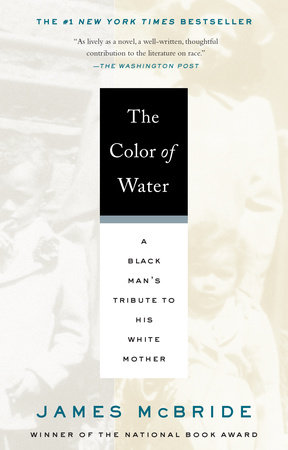
The Color of Water: A Black Man’s Tribute to his White Mother by James McBride

In James McBride’s memoir he documents his upbringing as a biracial child on the East Coast and his mother’s personal history—from a young Jewish immigrant to a runaway teenager to raising twelve biracial children. Both of their journeys to finding a place in the world are interwoven as if you’re sitting at the kitchen table with them as they recount it. The Color of Water is a reminder that though race, religion, and upbringing are important, you can’t let them consume you but rather let them guide you to your identity.

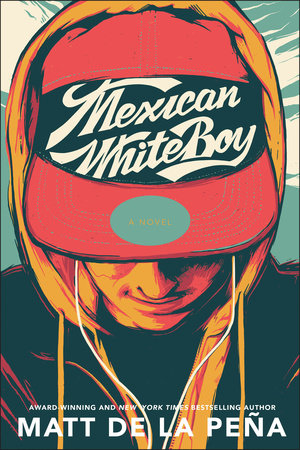
Mexican WhiteBoy by Matt de la Peña

Mexican WhiteBoy by Matt de la Peña

This young adult novel follows a teenage boy in what feels like a modern-day The Sandlot—because the main character is a baseball enthusiast, but also because the book clearly has heart from the beginning. De la Peña adds in a heavy dose of dealing with immigration laws and teenage insecurities, but it’s leavened with kids just being goofy. Moving back and forth between the Mexican and white sides of his life Danny explores his sense of self and growing up separated from his father who’s recently been deported.

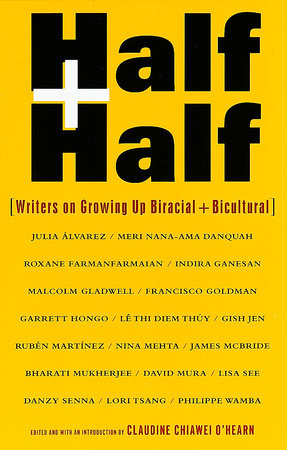
Half and Half by Claudine C. O'Hearn

Half and Half: Writers on Growing Up Biracial and Bicultural edited and introduction by Claudine C. O’Hearn

If you’ve ever wondered what questions mixed people ask themselves, read the introduction to this book. O’Hearn gives you a SparkNotes version of a life spent with one foot in two (or more) places. Sometimes neither footing feels stable. Through a collection of essays from various multicultural people like Julia Alvarez and Malcolm Gladwell, Half and Half explores the questions they’re asked, the questions they still have, and whether we can redefine racial identity.

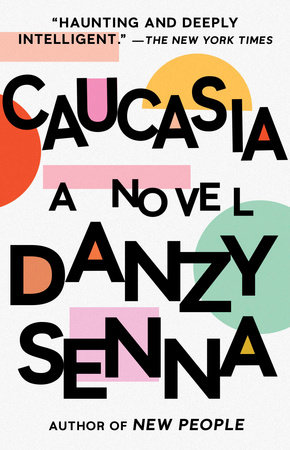
Caucasia by Danzy Senna

Caucasia by Danzy Senna

This novel taught me the word “miscegenation”: a sexual relationship between people from different racial groups. That’s how Birdie’s life starts off, with a white mother and a black father both steeped in the complexities of activism and black power in Boston during the mid ‘70s. As her family and life split into pieces Senna explores conflicting ideologies of race, raising mixed children when you’re not mixed yourself, and the struggle to find a connection to black culture when you’re white passing.

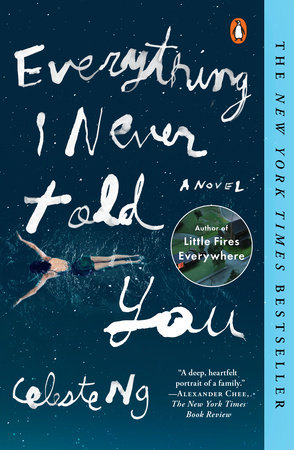
Everything I Never Told You by Celeste Ng

Everything I Never Told You by Celeste Ng

When teenage Lydia is found dead, her Chinese American family starts to fall apart.  As secrets are revealed and the family of four try to understand each other the reader rotates through each family member’s point of view. With each character you piece together what their life is like as a mixed family living in small-town Ohio in the ‘70s.

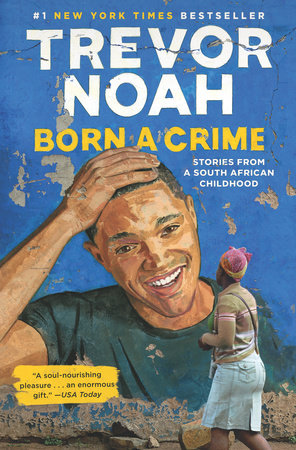
Born a Crime by Trevor Noah

Born a Crime: Stories from a South African Childhood by Trevor Noah

Boys II Men, childhood shenanigans, and street fighter lay side by side with apartheid in this memoir by Daily Show host Trevor Noah. From the title on, he paints a vivid picture of growing up biracial in South Africa when sexual relations between black and white people was illegal.

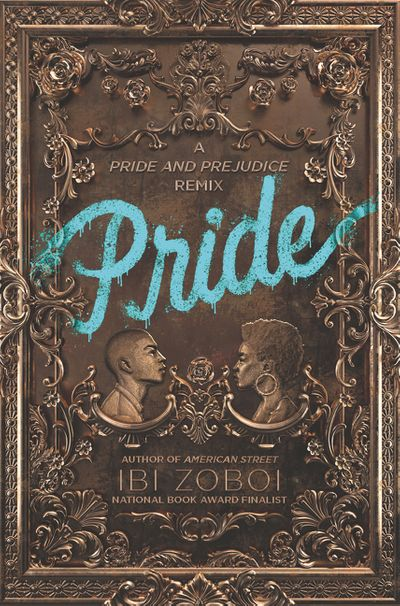
Pride by Ibi Zoboi

Every niche of literature is sure to have a Pride and Prejudice retelling, and here’s the one for mixed-race girls. Pride features a family of Dominican and Haitian girls living in modern day Bushwick. It has all the romance of the classic original, but also features a subplot where Zuri (the Elizabeth Bennett analogue) works to stop the gentrification of her neighborhood from erasing the culture of her family and community.

Mixed Feelings by Avan Jogia

An upcoming collection of poetry and stories, Mixed Feelings is the result of Avan Jorgia asking himself and other writers “what does it mean to be mixed?” Mixed Feelings is a peek into several perspectives of being multicultural and the possibility that we’re much more similar than we are different.

Vivek Shraya’s “Death Threat” Turns Online Hatred Into Art

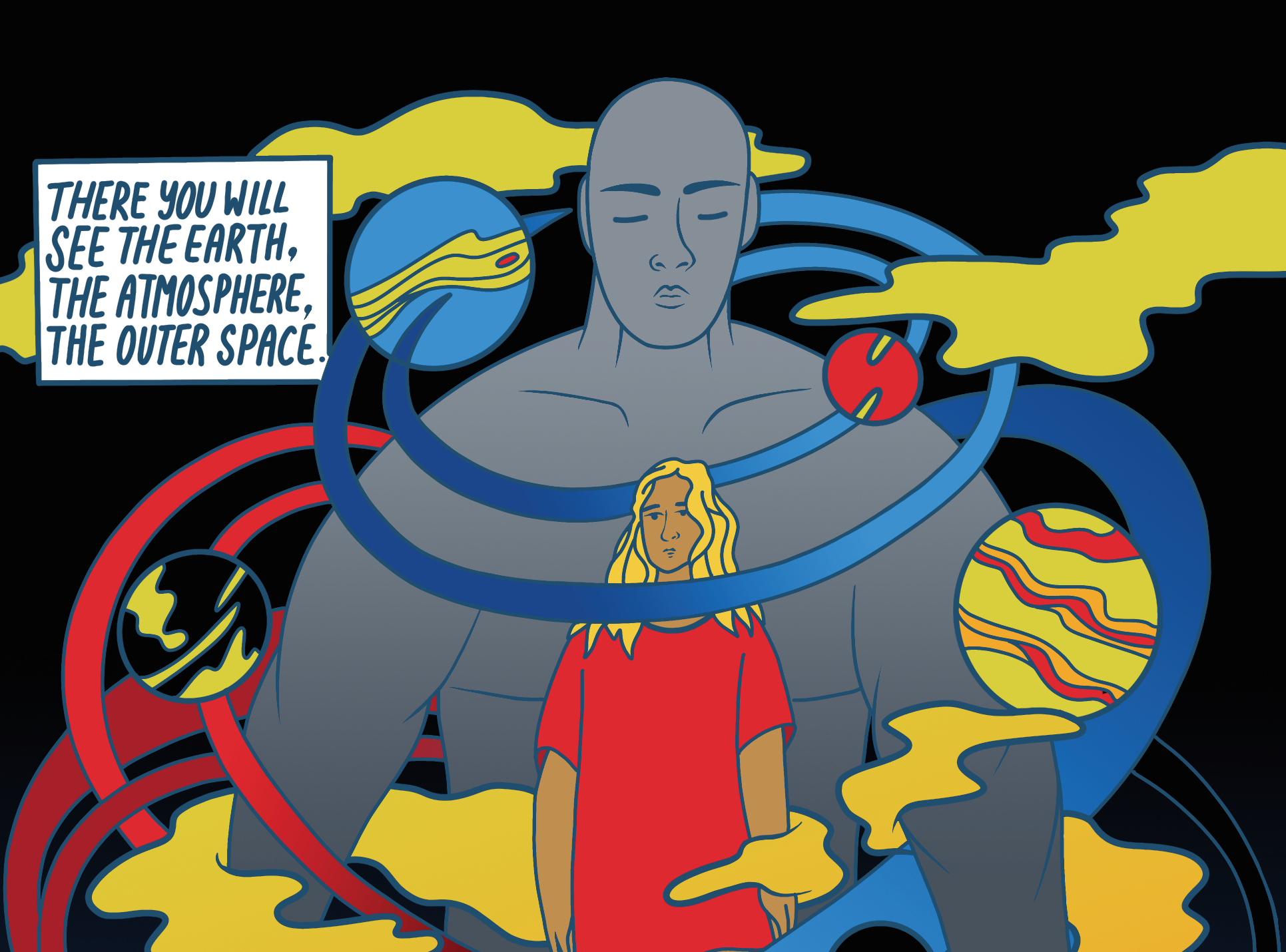
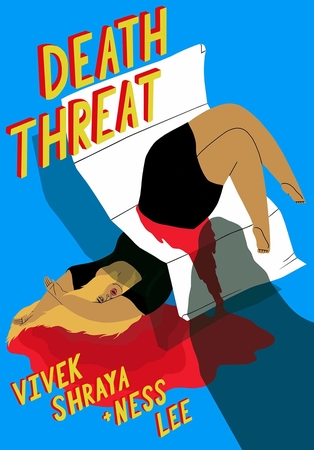
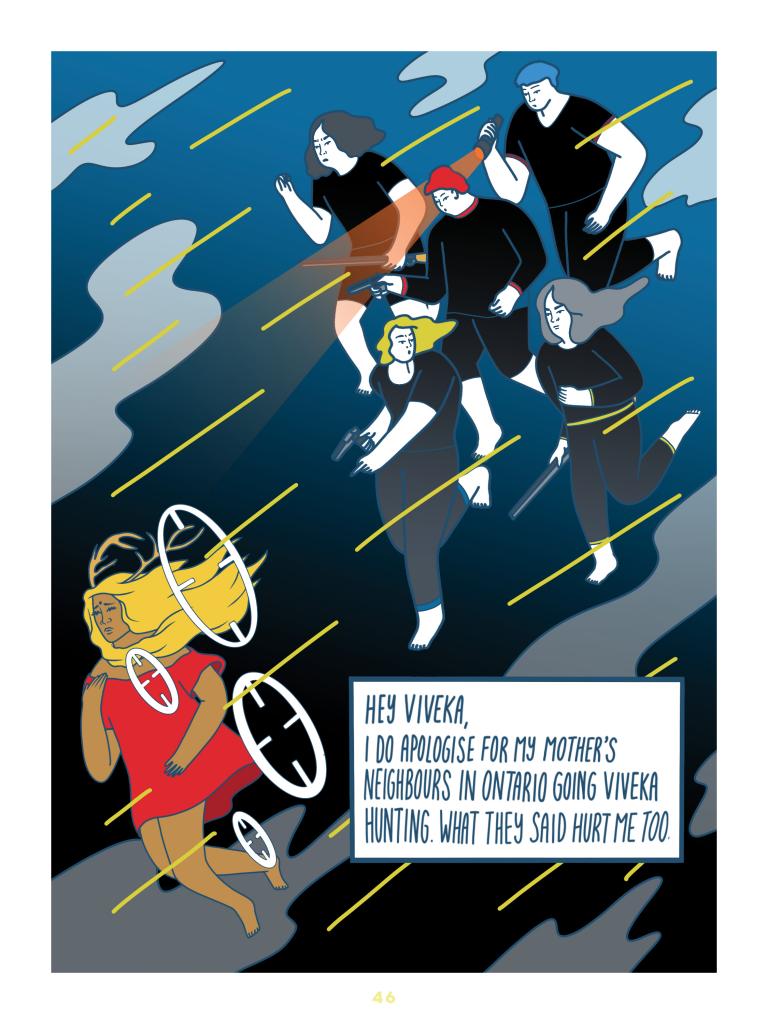
A series of cryptic and chilling emails form the foundation of Vivek Shraya’s latest book, Death Threat, a graphic novel made in collaboration with artist and illustrator Ness Lee. Featuring vibrant, surreal and haunting illustrations, Death Threat portrays the series of hate mail, its effects on Shraya’s psyche—which oscillates between terror and fascination—and the genesis of the book project itself, which becomes its own way of challenging her aggressor.

Buy the book

Although the book is charged at times with images of violence, it leans on humor and satire to portray the nuances of accessibility and embodiment in the internet age, and to complicate our ideas of online trolls. Trolls, as Shraya argues in the book, no longer conform to images of a lonely person living in the darkness of their mother’s basement. Trolls can be anyone, of any profession or background, anywhere.

Shraya’s bestselling book I’m Afraid of Men was part memoir, part declaration of the violence and aggressions she has encountered from childhood to adulthood. Considering the alarming rates of violence against trans women of color, Shraya’s work continues to provide personal context and a searing look at the work needed to push against transphobia. Shraya and I spoke over the phone to discuss the origins of Death Threat, her and Lee’s collaborative process, and the craft of the graphic novel.


Roberto Rodriguez-Estrada: Something I found really fascinating about Death Threat is that the book’s origin story is embedded in the plot. Towards the end you begin to see the collaborative process that took place between you and Ness Lee. How did you decide to include the graphic novel’s creation as an integral part of the plot?

Vivek Shraya: Well, I think because the topic has the capacity to be a bit morbid and perhaps depressing, I was really looking at the project as a way to diffuse the violence of these letters. So using elements like email and color, and also a meta-perspective, all allowed for me to do this. I was really inspired a couple of years ago when I read Alison Bechdel’s Are You My Mother? And the way so much of that graphic novel is about the process of making a graphic novel. For me, Death Threat is not that different because of the way the letters themselves had a pretty visual component. In a lot of ways, it felt like the letters were demanding to be illustrated so it really made sense to explore them.

RRE: Right! In one of the letters, the author says, “you need to return to the forest…” which is extremely visual.

VS: Exactly. As someone who gets trolled on the internet semi-frequently—having someone say something homophobic or racist or transphobic on Twitter, for instance—I just block that stuff. But when someone says something like “you need to return to the forest and be put in a separate hut and you will be consumed by the atmosphere and the universe,” that sort of thing felt to me more … for lack of a better word, poetic, than your average email. Because of the nature of the emails I found myself really imagining them from the beginning, which made them harder to shake off, unlike other forms of hate I’ve received on the internet.

RRE: In what ways did the emails infiltrate your dreams and your psyche when you first received them?

VS: I don’t remember the specificity of my dreams at this time, but I do remember a general anxiousness whenever I’d wake up and I think that it was more that, again, with general hate I receive I’m more easily able to block it out. But with these letters, because of the ways this person was conjuring religious texts, in addition to my mother and my family, they had a deeper impact. So I found myself thinking about them all the time. At first I thought that the first sentence of the email was so outlandish it was entertaining. For instance, the notion that my name is being chanted in someone’s house and someone says she needs to die. Trying to picture this is very bizarre. But I come from a Hindu background, where chanting is used as a way to make something real, as a way to invoke God. So because of my religious background, the practice of chanting is not something I take lightly and because of these various elements, I found the emails harder to shake off, and my sleep at this time definitely became jagged.

RRE: The emails are written in cryptic English with some Hindi and Sanskrit words peppering the text. Did you have to undertake a sort of research process to figure out what things meant? Was there any meaning to them or were they just bizarre things the writer of the emails came up with?

VS:  This is where I see the project as more fiction than nonfiction because I wasn’t really trying to research the parameters in which this person was trying to hurt me. It was more about: Okay, there’s this strange message and how do I illustrate this message. So, one of the figures that comes up is this sage and I have to go see them in the forest, but it’s less about trying to figure out if there’s some cultural, corrective practice that happens to trans people and more about drawing from the text.

RRE: Immediately after the first dream sequence, the character of Vivek is talking to her parents, explaining the email she received and that their names are mentioned in them. Have your parents seen the book? Do you show your parents everything you make or is there a boundary?

VS: No, they have not. There’s definitely a boundary and sometimes I’ve been accused of handling my parents with kid gloves. Being a person of color, I don’t come from an ideology that requires me to share everything that happens to me with my parents to have a healthy relationship—in scare quotes. When it comes to my art practice, they’ve gotten used to asking me, “So what’s your next book about?” And I might give them that sort of information, but they’ve never actually read a full book of mine. Maybe passages and sections. Actually, I take that back. They did read my children’s book.

But again there’s that accusation that I’m being overly protective of my parents, and that the things I’m trying to protect my parents from are my queerness and my gender. But really for the most part my parents are accepting in their own ways of those aspects of who I am. It’s often more the overt sexual elements of my work. Because I often feel like sexuality is missing from queer narratives or washed out from queer narratives, a lot of my books will feature explicit sexuality and that’s the kind of stuff where I just feel like, “Okay. I just don’t want my mom to know my relationship to penises or masturbating.”

RRE: And they’re in Canada, correct? Do they worry about you when you visit the U.S. given the overall climate under Trump’s administration?

VS: My parents don’t so much. They don’t really know a lot about what I do. [laughs] But my friends do. Some of my friends are very anxious every time I go to the U.S.

RRE: On a slightly different note, there are some particularly disturbing images of Donald Trump in the book. How did you end up including those?

VS: Well, again, it’s literally in one of the emails I received, saying something like Trump is going to ship me off to a military brothel. [Ness Lee] and I had several conversations about what to illustrate and what not to illustrate and I thought, why not a Trump figure? I remember getting a text from her really early in the morning saying something about the psychic difficulty of drawing Trump and I said that’s definitely something we should bring up in our interviews, is how I forced you to draw Trump.

RRE: In terms of the collaborative process, how did you and Ness determine the answers to big picture questions like what should be in the book and what shouldn’t, what to illustrate, what dialogue to include?

We decided to lean into the letter-after-letter structure, with the intention of creating that heightened feeling for the reader of receiving these non-stop letters.

VS: I think one of the biggest challenges for us was thinking about flow. The first Google Doc we had was just the letter themselves, and the starting point was: How do you construct a narrative from these letters? I knew the letters would be the emphasis of the book and I knew I didn’t want the book to be super text heavy. But beyond the letters, how do you tell the narrative from beginning to end? So I think that was the bulk of the conversations between me and Ness, trying to figure out what the action was taking place between the letters. We worried a lot about the monotony of including a letter, then oh! Here’s another letter, and oh! Here’s yet another letter, and so on. We didn’t want the narrative to get boring for the reader, so we asked: Should we be creating alternative scenes in between? But in some ways, we decided to lean into the letter-after-letter structure, with the intention of creating that heightened feeling for the reader of receiving these non-stop letters. This was definitely one of the many conversations we had.

In terms of what we decided to include and omit, Ness outlined every page and there were moments when we would ask whether two pages should be condensed into one page or one page should be split into a few pages, and I think a big part of it was about flow and pacing.

RRE: As someone who works with so many different media, how do you know which form is appropriate for a specific story or idea?

VS: Often it’s about being open to experimentation. Theoretically, Death Threat was really exciting as a concept for a graphic novel, but it wasn’t until I saw all the pages illustrated and printed that I thought, okay this works. There’s a part of me that definitely likes exploring different media, but it’s a leap of faith every time. And sometimes I’m wrong! I don’t always make the right decisions the first time. For example, a couple of years ago I wrote a song called “I’m Afraid of Men,” which was on my album Part-Time Woman, and it’s a song that nobody talks about, not in conversations with my friends or in reviews. Then a year later, I published a book by the same title that goes much deeper and it’s been one of my more successful projects. So there are definitely times when I make a choice around a theme and it doesn’t necessarily land how I hope. For me, that’s the sort of joy and pain of creation, having the willingness to try things out, and knowing that sometimes it’ll work and sometimes it won’t.

A Stutterer’s Guide to Writing Fiction

The first time I knew my voice was different—or at least, my first memory of this difference—was in third grade, Mrs. Case’s homeroom, when I watched a classmate do an impression of me. The classmate’s name was also Jake, which added authenticity, but this Jake knew karate and was the star of several local commercials, so he took bullying seriously and was very good at it. I’d once seen him crane-kick a fourth grader off the swing set.

“I’m—I’m—I’m, J-J-J-Jake,” he mimicked, “andI’macrybabywhocriesallthetime.”

I was a crybaby who cried all the time, but the voice thing was news to me—the way Jake sputtered and spit, the words gaining momentum until he released them in a flood of syllables. I was defenseless against this attack, which was coming, like a roundhouse kick, from such an unexpected angle.

A week later, Mrs. Case sent me home with a letter for my parents. I opened it, against her wishes, on the bus. It said I was having “difficulty communicating” and that I would need to see the speech therapist. I told my best friend, sitting next to me, that my parents would intervene and spare me from this humiliation. I was wrong, and when the speech therapist showed up to homeroom to lead me away, I knew then that I would never see myself, or hear myself, the same way.  


Thirty years later, I’m at home practicing for a reading I’ll soon give from my debut novel. The passage I’m going to read is one of my favorites in the book—a short scene from the point of view of a 122-year-old woman who has just learned that a group of doctors want to study her body after she dies. The woman agrees to their request, but her arthritic hands prevent her from signing the contract. There’s a simple line: “She remembers her hands.”

I have just made the line a little bit worse, but there’s no way I’ll be able to read it out loud otherwise.

With a blue pen, I cross out the word remembers and replace it with thinks of. I have just made the line a little bit worse, but there’s no way I’ll be able to read it out loud otherwise, not with a remember sitting so close to the start of the sentence.

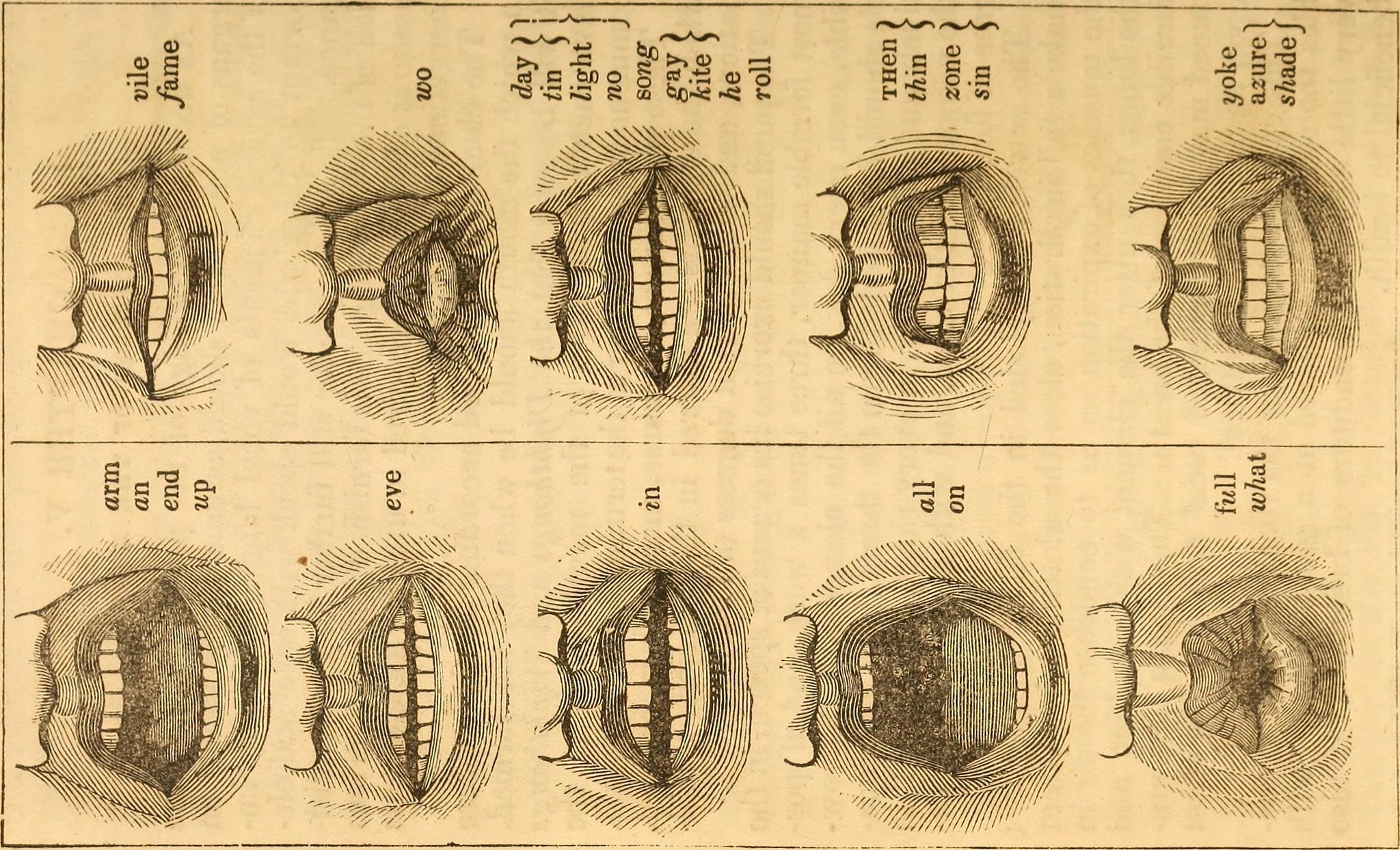
My classmate didn’t have it exactly right, with his Porky Pig–style mimicry, the J-J-J-Jake. Stutterers call that repetition, and it’s not much of a problem for me. I deal more frequently with blocks: a total loss of voice when confronted by certain words and sounds. I know before I speak that a block is coming, but there is little I can do but search for a different word. This makes reading out loud especially difficult—I lose the ability to choose. Any word can do it, though as for most stutterers, certain sounds are always difficult for me. I struggle the most with R’s—roasted, remember, Rasputin.


Just as with the old woman in my book, doctors have studied stutterers since the beginning of recorded medicine. Hippocrates believed stuttering was caused by dry or irregularly shaped tongues, and similar beliefs persisted until the 1800s. For centuries, stutterers seeking treatment had their mouths mutilated, their tongues cut into chunks, their palates scored like bread dough. Nearly all of these mutilations were barbaric, and some were fatal. Other historical treatments for stuttering have included institutionalization, blood-letting, and trepanation (drilling into the skull). Stutterers have had grass fibers burned on their skin, they have had knitting needles driven through their tongues, they have been forced to drink tonics composed of goat feces.

These horrific treatments are relics of the past, but the stigmas associated with stuttering persist today. For this reason, I’ve always been more drawn to research about how “normal” speakers react to stutterers. Studies in the Journal of Fluency Disorders have shown that children who stutter face higher and more severe rates of bullying than non-stutterers. Likewise, adults commonly rate stutterers as less intelligent, less confident, and less trustworthy than their non-stuttering peers. Research shows that teachers and even speech therapists sometimes share these biases; one recent study concluded that social workers, amazingly, carried more negative and harmful perceptions of stutterers than a matched, untrained control group.

I wrote without knowing how my stutter would someday find me, even in fiction, through a word I cannot escape: voice.

As a third grader, I knew none of this, but I would soon learn much of it through experience—the way people would tell me to “relax” when I was perfectly calm, the way teachers would talk to me as though my vocabulary was far behind my classmates’ even though I was often reading ahead. For me, stuttering was the hard shove into writing, a place where I could communicate safely and where I could be seen as smart, articulate, confident. Like a lot of young writers, I was crazy for fantasy, and I wrote every day about knights and wizards and kingdoms in peril. There were no creative writing courses in my public school, so I wrote without knowing about point of view, about concrete versus figurative language, about scene versus summary. I wrote without knowing how my stutter would someday find me, even in fiction, through a word I cannot escape: voice.   

Creative writers love to talk about voice. In Writing Fiction, Janet Burroway advises, “Don’t look for words that seem right; just listen to the voice and let it flow.” When discussing point of view in Building Fiction, my former professor Jesse Lee Kercheval reminds readers that “The voice is what holds together the story.” In Bird by Bird: Some Instructions on Writing and Life, Anne Lamott dedicates an entire chapter to “Finding Your Voice.” When it comes to tackling “the writer’s job,” she tells us, “You can’t do this without discovering your own true voice.”

To be clear, these are some of my favorite books about writing—practical, soulful, encouraging. I’ve assigned them to my classes on many occasions. These authors are defining voice in a specific way, albeit one you have to scroll pretty far down in the OED to find: “a mode of expression or point of view in writing.” But this more literary sense of voice still finds its roots in our understanding of voice as a sound, or series of sounds, that can be physically uttered by a speaker and physically heard by a listener. In other words, lost in this discussion of voice and flow is always disability: the way, for some of us, speech and sight and sound often stutter or simply don’t work at all.  

This is not a call to arms against voice, which communicates something important about writing and point of view. But I am, maybe, calling for a greater understanding of the ways in which voice is not always “findable”—it is not a sunken treasure that, once recovered from the sea, allows you to become a Real Writer.

Instead, for me, voice is an anxious word. It is slippery and strange and sometimes humiliating. That’s what Karate Jake couldn’t capture with his cruel, red-faced impression. My “own true voice” is sometimes silence.

My ‘own true voice’ is sometimes silence.

In How to Find Lost Objects, Michael Solomon describes the Rule of 18 Inches. He says that when you’ve lost an item—your phone, your watch, the TV remote—you’re most likely to find it less than two feet from where you first looked. I was thinking about this rule because last week, as I was leaving my apartment to go teach an undergraduate fiction workshop, I couldn’t find my wallet.

“Have you seen my—” I began to say to my wife, but I hit a block.

As is typical, my stutter has decreased in severity as I’ve aged—some friends, students, and colleagues have said they don’t notice it at all, though I think this is mostly because they don’t know what they’re seeing when I hit a block. They think I’ve just forgotten what I was going to say. I’ve also grown skilled at hiding my stutter: at least once or twice a month I will order food at a restaurant based not on which dish I actually want but on which I think I’ll be able to say. At our local sushi place, my wife knows that if she wants to share the tuna tataki appetizer, she’ll have to be the one to order it.

She also knows that when I hit a block, my preference is to wait in silence rather than for her to try to finish my thought. My insecurity about my blocks can make me stubborn and even mean; I do not like being interrupted.

So we waited for wallet to arrive.


My first fiction workshop in college was run by an old professor who never let us read each other’s stories, only hear them. When your turn came, you would bring a single copy of your story to class, read it out loud, and then listen quietly as the class critiqued the story based on that single instance of listening. The professor said, “If you don’t read your work out loud, you’re not a writer.”

I agree with the gist of his advice, which is simply that writers should try to speak their work. I often encourage my own students to read their stories out loud to themselves before turning them in to the workshop. In Bird by Bird, Lamott returns repeatedly to the act of reading out loud. She describes a student’s surprise at the awkwardness of her own sentences and diagnoses the problem as a lack of vocalization: “The problem is that the writer simply put it down word by word; read out loud, it has no flow, no sense of the character’s rhythm….”

For me, and I suspect for many writers with speech or communication disfluency, reading my work out loud will catch typos but it will not make my sentences smoother or more flowing or more beautiful. Quite the opposite. If I were to let my speaking voice dictate my writing voice, my work would grow hard and sharp like cactus needles. It is the soft sounds, R’s and W’s, the wry remembrances, the whispering winds of a white winter morning, that block me.

When I believe my writing is good—which is sometimes—I find strength in the way my stutter has taught me to approach word sequence with extra care and urgency. I can say a word that starts with E, for example, if it comes after a word that starts with T, but almost never if it comes after a word that starts with A. One phrase that comes up surprisingly often in workshops and which blocks me every time is “an exclamation point.”

I have gained something from this more tactile relationship with language, from being forced to think of words as having shape.

I have gained something from this more tactile relationship with language, from being forced to think of words as having shape in this way—from feeling them get stuck in my throat, wrapped around my tongue, affixed to my lips like glue. I can feel the passage of words through my body. This movement is joyful but also scary, because I can’t fully control it, and all of my writing lives in that in-between space. It’s a space I’m proud to inhabit, even if I sometimes wish I could leave.

If I have one piece of advice for non-stuttering writers, it’s to think of words as objects within you, some of which you may never be able to claim. This brings me back to Lamott’s advice to find your “flow” and “the character’s rhythm” by reading your stories out loud. If you’re physically capable of doing so, I’d urge you to follow that advice. But I’d also ask you to remember that words should not always come easily for you or for your characters. Silence is a part of language, and so is pain. Rhythm and flow don’t have to be smooth to be beautiful.

I don’t know if it will make you a better writer to think this way, but it will make you more aware of the tools you use to communicate—it might even make you cherish them more deeply—and awareness is one thing a writer can never have in too great a quantity.


Lately, when I hit a block, I’ve been thinking about the Rule of 18 Inches. Does this rule also apply to objects we can’t see or touch—to loved ones we’ve lost, to memories faded, to words we can’t speak? Are they always so close, just an arm’s length away from where we first tried to find them?

Obviously the answer is yes. That’s the paradox of loss: it’s one thing we can’t lose.

My third-grade speech therapist told me that a block is exactly what it sounds like: something to get past or break through. But I’m not sure I ever do get past a block; I definitely don’t break through them. Over time, they have just sort of accumulated in me, all these words I wanted to say. The remembers and the wallets and the exclamation points.

Some of them I spoke, some of them I didn’t, and some of them, thank god, I wrote down.

7 Books About Returning to Nature

After college, I went to work on farms, the more remote the better. I farmed in the Arctic and on a tiny sheep-filled island and in the Alps high above the treeline. I wanted to throw my body into something, and test myself, but one side effect was constant loneliness. And so my first novel, the Ash Family, begins with a kind of fantasy I had for myself: the narrator, Berie, meets a friendly man who invites her to his home, an off-the-grid commune in the Appalachian mountains. (Who among us hasn’t longed to be invited to a commune? Only recently, now that people are reading the book and questioning her motives, have I started to process the fact that this is not an entirely universal desire.) Berie farms like I farmed–herding sheep, bottle-feeding lambs, scooping manure, baking bread–but the community closes in around her, with a strict ideology and stricter rules. She sacrifices more and more of herself to maintain her sense of belonging, and finds herself committing terrible acts.

Purchase the novel

It was important to me that, despite the family’s coerciveness, their ideology was founded on principles I also believe in. The members of the Ash Family truly have confidence that a better way of life is possible, and that by living in a way that is low-impact and ecologically sound, they are doing their best to counteract environmental degradation and climate change.  When compiling this list, I thought in particular about the books that give a sense of the real texture and meaning of returning to nature.

What to include? There are novels about defiantly protecting the land–The Monkey Wrench Gang by Edward Abbey is a classic–and there are beautiful nature books, like Walden, of course, Wendell Berry’s essays, and John McPhee’s geology masterpiece, Annals of the Former World. Living off the grid is the subject of so many enthralling children’s stories, most formatively for me My Side of the Mountain, Little House in the Big Woods, and Hatchet. I also want to mention Glenda Elizabeth Gilmore’s Defying Dixie, a revealing account of activism from 1919 to 1950, which shows, against the common narratives, radical collaboration in the south.

But when I was making these selections, I used an entirely subjective criterion that isn’t quite nature nonfiction, or nature novels. Instead, I picked books that’ll make you (if you’re like me) want to get out there and live it.

22096393

Voices from The Farm by Rupert Fike

This book is a collection of reminiscences and photos from various residents of The Farm, a rural Tennessee commune founded in 1971. It’s an tantalizing litany that will bring you slightly closer to an understanding of what it was like to live in this utopian community that was, for a time unbelievably functional, and home to 1,200 people. They built their own telephone system and water tower! They built their school and neighborhoods and soy dairy! (The commune in Lauren Groff’s Arcadia is a literary version of the Farm.) Sadly, for people like me, at least, the recollections are more suggestive than immersive. The voices take their brief turns marveling at feats of liberty and imagination for which the Farm was the foundation, like, for instance, that of Katherine Correa, who at fifteen undertook a horse-riding odyssey whose paragraph-long description demands an entire book: “I thought we were only dreaming and we could never actually do it…twelve of us girls rode from rural Tennessee to the Cherokee National Forest in the Great Smoky Mountains. It was a six-hundred-mile journey altogether, and we made the whole trip on horseback.”

Appalachian Elegy: Poetry and Place by bell hooks

This collection of poems by Kentuckian bell hooks expresses tension in both content and form. The short lyric poems are expressly political–itself an uneasy combination–and bring together honeysuckle and slavery, coal’s ravages and joyous spirituality. In the introduction, hooks writes, “Without evoking a naive naturalism that would suggest a world of innocence, I deem it an act of counterhegemonic resistance for black folks to talk openly of our experiences growing up in a southern world where we felt ourselves living in harmony with the natural world.” The book is a quietly forceful evocation of a childhood full of ambiguity.

Image result for utopia island thomas more

West of Eden: Communes and Utopia in Northern California edited by Iain Boal, Janferie Stone, Michael Watts, and Cal Winslow

Like Voices from the Farm, West of Eden is an assortment of pieces from back-to-the-land hippies in the sixties and seventies. But these essays are more sustained and at times more academic and cover a range of communes, from Oakland’s Black Panther Party to the rural communities on the Albion Ridge. The cover shows Holbein’s woodcut of Utopia, and this book pairs well with Chris Jennings’s Paradise Now, which is a historical account of American utopian experiments. In West of Eden, my favorite essay is co-editor Janferie Stone’s “Our Bodies, Our Communal Selves,” with its helpful schema for understanding the phases of communal experience, from “the individual impulse to physical experience” all the way to leaving, and assessment. The FIC commune list–a repository fit for daydreaming–attests to the fact that the communal spirit lives on in California, which has far and away more communes listed than any other state.

Electric Dirt by the Queer Appalachia Project

This zine, a full-color assemblage of essays, recipes, collages, quilts, artwork, photography, poetry, and other ephemera, provides a glimpse into the tenacious, riotous, multivocal community of contemporary Appalachian queer people. The opioid epidemic, abortion access, and Duke’s Mayonnaise all get their space in these pages. The group behind the zine also has an Instagram account which is equally bawdy and creative and committed to justice.

Syzygy, Beauty by T. Fleischmann

T. Fleischmann’s short book calls itself an essay on the cover, but unfolds in a series of disjointed poetic fragments. The book is only very loosely an account of queer life on a Southern farm. It expands to encompass experiences with art–Louise Bourgeois, Tracey Emin, Carolee Schneeman–and with longing, the figurative language pointing back to the natural world: “I could see you better if you were to lie down and touch your fingertips to each other like an arrow, your form a flower trough.”

Image result for my abandonment peter rock

My Abandonment by Peter Rock

This novel doesn’t quite fit in with the rest of my list, because it did not make me want to go live in nature. However, its treatment of the natural world as both a solace and a terrible power makes nature immediate in a way that often eludes gentler nature fiction. It was recently made into a film–Leave No Trace–which I’m hoping will bring more readers to the book. Because let me tell you, this book is absolutely terrifying. It is one of the few books that forced me to sit down in the subway station on a bench and read it until it ended. It is about a girl and her father living off the grid in a nature preserve in Oregon. Then they get found, and a dark journey ensues, told from the point of view of the girl, Caroline. I’m still trying to understand what happened.

Image result for wild fermentation book

Wild Fermentation by Sandor Ellix Katz

Pretty much every collective house, including the co-op where I lived, has a copy of this on the shelves. This is a cookbook but also a radical treatise that will make you want to throw away your long-shelf-life factory-made foods and start messing around with rotting vegetables. Katz is an underground hero, a participant in Tennessee’s venerable community of off-the-grid queer homesteads, and an HIV/AIDS survivor. He writes in his acknowledgements, “this project has given my life focus and meaning at a time when I desperately needed these things,” and that intensity runs through the book, endowing upon the recipes a religious thrust: “If you are willing to collaborate with tiny beings with somewhat capricious habits and vast transformative powers, read on.”

The Cambodian American Writers Who Are Reimagining Cambodian Literature

When I was a kid, the school librarian chased me down the hall with a book in her hand: First They Killed My Father, a memoir by Loung Ung. Like many Cambodian Americans of the 1.5 and second generation, I read survival literature to piece together my history––an important turning point for me as I navigated familial silence around the Khmer Rouge regime. But what if the librarian ran after me to give me a graphic novel about a Khmer girl who lived on the moon? What if she handed me a book about a queer Khmer boy living in Phnom Penh whose dream was to dance? A book with a different story?  

The literature written by Cambodian diaspora often reflects the collective trauma rendered by the genocide that took place forty-four years ago, along with the urgency to heal. This storytelling is necessary. But sometimes I worry that the world reduces Cambodians, tokenizing my people inside a trauma narrative. How do we complicate our stories? How do we reimagine Cambodian American literature to include themes such as urbanism or sex or humor––themes that move away from the genocide?

By now, we are familiar with the image of the lotus which grows from mud. It is a metaphor we Cambodians use to empower ourselves and to hold onto our heritage. We may also be familiar with the image of shadows, which suggests the question, How do you escape the trauma of genocide? There is no way to undo history. We cannot outrun the genocide, even if we never lived through it ourselves. But we can dream and radically imagine the possibilities of our people beyond trauma. I believe the Cambodian narrative is ready to get out of the mud, to transmogrify the lotus into something as unexpected as snow. I believe there are Cambodian American writers, artists, and creators who are doing this now.

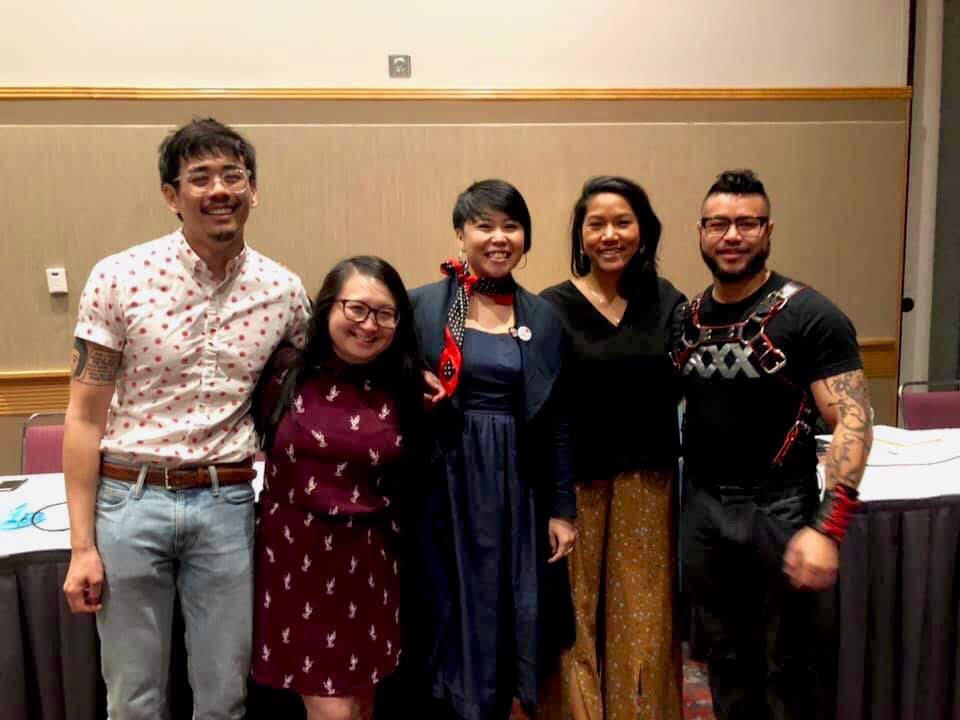
This past March, I was lucky to be part of an event called “How to (Not) Write About Genocide,” a reading and discussion that took place in Portland, Oregon with Angela So, Sokunthary Svay, Danny Thanh Nguyen, and Anthony Veasna So. It was the first time Cambodian American writers convened for a panel at an AWP Conference. With backgrounds in fiction, poetry, comics, and opera, we began with a discussion on craft, about breaking literary conventions––and even the expectations of our parents. We talked about how we resist a white publishing industry that eats up trauma, how to both honor the history we’ve inherited from our families and our own experiences in diaspora. What you can’t hear is how much we laughed while listening to one another talk about the growing imagination of Cambodian American literature.


Angela So: What literary conventions do you find yourself needing to break the most to write about Cambodian Americans? To what extent do you think you need to subvert conventional writing to tell our stories?

Individualistic notions are antithetical to the community I grew up in, so in my writing, I try to create new archetypes that represent people we can look toward.

Anthony Veasna So

Anthony Veasna So: The thing that I always find dumb in workshop is, “Oh we need to make this character more complex, blah blah blah…” I always try to not write individualistic characters from like, an individualistic place, if that makes sense. I very much think that it’s a trap to sort of try to do away with all stereotypes, which seems good because stereotypes are bad… but then there’s a way in which sometimes you do that to the point that it’s like, “Oh, I’m this pure individual and like, I’m so great” and that’s just not the way I grew up in Stockton. That’s why I write characters that are like the famous singer––in my community, everyone just goes by whatever family business and then whether they are the son or daughter, like I’m “West Lane Brake and Tune Son” and someone else is like “Superking Grocery Store Daughter” or something like that, right… so I don’t know, I feel like individualistic notions are antithetical to the type of community I grew up in, so when I’m writing, I try to create new archetypes that represent people we can look toward. I feel like everyone needs a famous singer that can come in and serenade everyone and is uplifting.

Monica Sok: I find that in workshop, for example–– that I don’t get the feedback I necessarily need, as a daughter of genocide survivors writing actively about the Cambodian American narrative. Maybe it’s just that I don’t trust spaces that have historically excluded us and still do, or maybe it’s just that I want to protect my work from the white gaze and whatever conventions that gaze reinforces. I realize that intergenerationality is very important in my poems and in a lot of our works, you know. “Intergenerational” not just in the sense of our inherited traumas––but also heartbreak or love or tenderness. Things like that. I’m constantly trying to break this “conventional” idea that we have no feelings or that people of color only write about trauma. Sometimes white people talk about Cambodians, reducing them to just the trauma––

AVS: Yeah, like we’re so stoic. [laughs]

MS: ––or just the killing fields. They say, “You’re so resilient.” And sometimes they say it in the cheapest sense of the word. We know our people are resilient, but there are so many dimensions of what it means to be Cambodian American. Intergenerationality apart from trauma is something I’ve been really thinking about a lot.

From left to right: Anthony Veasna So, Angela So, Sokunthary Svay, Monica Sok, Danny Thanh Nguyen 

Sokunthary Svay: I’m just trying to keep from being bored. I have a real big interest in audience since I have a background as a performer, as a musician and as a singer, so one: I want to make sure that people are able to understand, in whatever way that means. And then also to enjoy it because you don’t want to take advantage of an audience like when someone takes the time out, to sit there and listen to you, it’s such an honor… and I never ever want to abandon that. I don’t want to put my art above people; I’m trying to take it somewhere with whomever is listening. I’m not good with genres. I’m not good with boxes so that’s why I’m working in multiple genres, and I think my dream is just to write whatever I want for the next book. It recently occurred to me that I can put anything on the page that I want. And that’s a huge revelation for me, because I always felt that I had to––based on my parents––be a certain way if I wanted something. It’s that very strict causal relationship, right? You know like: “Do this, so you can _____.” You know? “Work this way so that you don’t have to stand up all the time like we do.” Or, “You should get a job. Go to school, so you can get a job where you can sit down.” That was their goal for me.

But now it’s like, how can I get opportunities that I would not otherwise have? That’s just the hustle. If I see some kind of opportunity that has money, I go and I apply for it. And that’s what you all should do. Don’t feel like you are above it. And I don’t believe in the straight path. I’m a PhD student now — I have a 12-year old daughter, and I’m gonna be 39 this year. I definitely did not take the straight path. And since I’m not good at the straight path, I think that’s the way I’m breaking out of it because my mom had an arranged marriage at 15. And she doesn’t know life outside of taking care of her family, and I vowed that I was gonna be the opposite of that. So for me, it’s about breaking away from what I’ve seen in the household.

AS: So I thought a really long time about what I wanted to read because I feel like it’s a conversation of who I am as a Cambodian American. And when I was in grad school it was a lot about, trying to see myself on the page, the things I didn’t see as a kid. And then this piece is kind of a dystopian speculative novel about the second Dust Bowl and it came because I wanted to ask myself the thing that I can’t really write about directly––which is why I write fiction––which is like writing about what it means to be a refugee, and so for me the dust storm lets me imagine what it means to be a refugee in your own country and that’s the question I want to investigate because it’s a question, and I do it in this way, because I can’t do it directly, because it’s too emotional and it’s not a place that I can access yet.

Growing up, my mom would say, ‘One day you’ll write my stories because I know you’re a writer.’

Angela So

Growing up, my mom would say, “One day you’ll write my stories because I know you’re a writer.” And I was like Oh and even sometimes just us talking, we don’t have a shared language so for her to say that is really––like I want to do that but I don’t know how and so I’m trying to write in this new so-called genre. And also as a person of color, living in a scary world full of anxiety all the time, I got to find the best way to talk about that because there’s not a lot of people of color in speculative work so that’s why I chose to read something that is very, very new which is scary for me because I don’t know if it’ll ever be finished but that’s how I feel right now.

DTN: So something that might be a little different about my experiences from other folks on the panel is that I’m mixed. My mother is Vietnamese and my dad is the mixed one, so he’s actually––so my paternal grandmother is from Châu Đốc which is a city on the border of what is modern-day Vietnam and Cambodia but what is traditionally called Khmer Krom, which is a southern region of what used to be Cambodia and has been annexed by the Vietnamese. And essentially the Khmer Krom were an indigenous river tribe. And so a lot of what I think of conventions… I actually do not know what conventional storytelling and narratives are, just because a lot of the ideas of genocide isn’t actually coming from… My paternal side isn’t related to the Khmer Rouge but rather how indigenous groups within Southeast Asia are colonized and occupied by other folks… And a lot of the literature that I find really inspiring and lean into and learn from, that I would think is staking out new conventions, are gonna be actually literature from authors who are also indigenous Southeast Asian. Folks I find kinship with are Hmong writers, Cham writers, folks who are incidentally like people that my mom’s side of the family raped and pillaged… so that’s something else. The Mien, the Hmong, the Khmer Krom are some of the smallest ethnic enclaves or ethnic groups within North America out of all the Asian ethnic groups. So it’s very small. It’s very unknown. And it’s just now that like, small celebrities are starting to pop up. Like Mai Der Vang obviously, who is a pretty established poet. Anyways, so there’s that.

A lot of the literature that I find inspiring is from authors who are also indigenous Southeast Asian.

Danny Thanh Nguyen

Other kinds of convention, and using my piece as a jumping off point, let’s just say I like talking about stuff that would make my parents really ashamed. And that includes sex and drugs and rock and roll. So yeah, but then that in itself has conventions, so I try to write about stuff that has sex or is sex-adjacent, but is not necessarily sexy? I don’t think anybody is gonna get off to anything that I write and I hope not just because I don’t really like writing about moist noises. That being said, I think that trying to write about something really dire and creepy and downright traumatic and trying to make it funny, that’s something that’s really important to me. I’m working on a collection of nonfiction essays right now and it’s all about trying to find parallels between Southeast Asian trauma with queer trauma and at the same time trying to make sure that it’s, like, comedic.

AS: Implicitly that question––especially when you talk about conventions––is it like conventions by whom? And constructed by whom? And it seems like it’s conventions constructed by a white publishing industry. But basically no one is trying to write into expectations in their own way, to create that sense of complexity in the way that we see it in our communities which is really amazing, and I personally think that all the humor that was in everyone’s reading was beautiful. Because I think the only narratives that are commonly known are like memoirs of what happened to people during the Khmer Rouge, which doesn’t allow a lot of laughter.

AVS: I mean my parents are constantly joking about the genocide. I was like 5 years old and they were like, “Well, at least Pol Pot’s not here you know.”

SS: Oh, I got one. I got one. My mom was like, “You know, your brother––he loves to eat rice. He was so fat during Pol Pot, he would cry and beg for rice––” and she was laughing about it.

AVS: Yeah, my mom came home from work one day and was like, “I hate my job. I always find myself in regimes. Why is this always happening to me?” Haha.

It took me many years of soul searching and reading all those tragic survival memoirs and then I thought Damn, I want to write my own damn story.

Sokunthary Svay

SS: I remember that particular afternoon my dad said, “One day, I tell you my story and you gonna write a book.” And I felt like, Oh f***, I have to dictate this book? And it took me many years of soul searching and reading all those very tragic, devastating memoirs, I call it survival memoirs or survival literature, and then I thought Damn, I want to write my own damn story. A story about how I relate to my parents. Like, that’s the contribution that I can make. And also, I was reflecting on what you said Angela, about using fiction as a way to explore the feelings around the issues of identity you otherwise would not want to deal with directly. And I know a Chinese American writer who feels the exact same way. She’s based in Queens but she’s like yeah, I can’t write nonfiction, fiction is my way of going around those very tough emotions.

AS: So the hard part for me in writing nonfiction is, I don’t know if any of you feel this way… is that it feels like secrets that I shouldn’t share. I have many feelings, and it’s strange because my parents can’t read English so it’s not like they’re going to be able to read it either so there’s a weird relationship. Like they’re so happy for me but they can’t really experience this with me, which makes it really tragic although my mom did say I need to write a screenplay so she can watch it and then make the Hollywood money.

MS: Are we talking about writing into expectations? I’ve talked to each of you at some point about how we might feel pressure to write and represent Cambodian people. We know we’re not the first Cambodian writers ever. There are so many. Our people are storytellers. There was so much Khmer literature and oral storytelling even before the Khmer Rouge, so we have to understand that and also speak about that. We’re not just reducing our community’s narrative to the killing fields, to the Khmer Rouge.

There are so many of us today who are just being who we are. There’s no one way to be Cambodian.

Monica Sok

And along survival memoirs or other writing around Cambodia, there’s so much out there labeled, “In the shadows of this, in the shadows of that…” Nostalgia. I think that nostalgia is something that our people are also obsessed with because when we think about the golden age, or the glory days we still think about the ‘60s and particularly, we think about Sinn Sisamouth or Ros Sereysothea… and these are things that many of us write about, you know, because it’s what we’ve grown up with. It’s also what we’ve inherited, but it doesn’t just stop there. I don’t know. I’ve had someone say to me, “There are no Khmer writers writing in the way they did back in the glory days…” and I’m like, What do you mean? You know? There are so many of us today who are just being who we are. There’s no one way to be Khmer either. And that’s another thing I was curious about. Danny, I would love to hear what you have to say to this question too… but just another thing: Sokunthary is from the Bronx, Anthony’s from Stockton, Angela is from Houston, I’m from Lancaster, Danny’s from the Bay Area. Diaspora: There’s this understanding that there’s no one way to be Cambodian.

DTN: So another thing I’m really inspired by with my writing is the community work that I do. So I currently work for an organization called the Asian & Pacific Islander American Health Forum, we are a national policy-based organization that does health advocacy for Asians, Pacific Islanders, and Native Hawaiians. I’ve been doing a lot of work within policy and health and wellness for Asian communities in the United States. And something to what Monica’s saying, “There’s no one way to be Khmer…” I think there’s absolutely no one way and at the same time, what makes Khmer folks and other Southeast Asian refugee communities so unique compared to other Asian American communities is that we have a higher poverty rate. We have higher incarceration rates. Right now we’re dealing with issues around fucking ICE with deportation. With folks who are straight up American but just don’t have the papers for it. These are consequences of what our migration patterns across the globe looks like. How did we end up in the United States? There’s a story there. And it’s stamped by a uniqueness that sets us apart from other Asian ethnic groups and all the kinds of pride and privileges and oppression that comes with that, that I think there’s a little bit of a pressure to write about that for me. And at the same time, I’m like, okay, I know luckily the pressure is kind of dispersed across other folks, and at the same time––again, we’re not the largest Asian ethnic enclave in the United States at all. And so, I don’t know how to end that but it’s somewhat concerning.

MS: I feel the pressure to continue to affirm our narrative. When I see a Khmer person, I just want to say, I see you. You know? The pressure to me––but it’s not really a pressure, it’s also a pleasure––is to build community, to recognize one another. I wore my sarong in the middle of nowhere in California at a farmer’s market. I wore it outside, because I was just gonna roll out of bed, go to the farmer’s market and get some things. And some Ming shouted, “Hey oun! I see you with your sarong!” And I thought, Oh my gosh. From her stand, she said, “It’s okay! Nobody knows!” But I just said, “But you know! You saw me!” And it’s this feeling of recognition. It just means so much to me. I mean, I grew up feeling very isolated as a Cambodian girl in Lancaster, and so this panel is special because anything that we shared, any of the stories, poems––you know, like I’m so excited for Sokunthary’s opera next year. And just navigating, what you said Angela, navigating what it’s like to be a refugee in your own country, which is part of what we’ve inherited. I feel like we’re refugees from our families. You know what I mean? Survival memoirs, the survival literature before us are by refugees from Cambodia’s killing fields. But the second generation, and 1.5 generation, right… we’re refugees from our families in a way.

AS: How do you negotiate that question of the audience and what’s a stereotype and what’s a complexity when in reality––especially in the publishing industry––it’s mostly white people. Anyone?

SS: Well, I do a lot of persona poems in various family members’ voices, and I realize that there’s some people, probably some East Asians who feel that’s a sort of minstrelism and I don’t really care, frankly. It’s taken me about twenty years to get to a place where I can say these are real experiences, and this is a real person so you know… you can come for me, and I’m ready. I’m just not going to apologize for that, you know. See my shoes? Hot red shoes, I will stomp on you.

MS: You don’t want her to stomp on you.

SS: Unfortunately, that’s the compromise, you know. Otherwise, you’re just writing in your journal and you’re gonna read it to yourself. That’s totally cool. But um, I think that there’s always going to be, for me, a performative aspect. And I really like that. Part of what I want is that I want to entertain. In addition to that, there are poems that I write that I won’t share with people that just take me to these places that I feel like… I can’t breathe, you know? And those are things that I won’t share.

There’s a way to push your work into a space that allows you to continue to be who you are no matter who’s in the audience. To value your own authenticity, but to not be tokenized in a space.

MONICA SOK

MS: There’s a way to be who you are and to push your work into a space that allows you to continue to be who you are no matter who’s in the audience. To continue to be the most authentic version of who you are as a Khmer person, you know. I think that’s really important: to value your own authenticity as a Cambodian person, but to not be tokenized in a space. You never want to play into tokenization. But there are so many ways in which I find myself in spaces where I’m always tokenized. But… I got boundaries and I try not to let these distractions get to me.

AVS: I mean, I think it’s also about learning to recognize when the audience asks a question and they really mean something else. You know what I’m saying?

Like there’s a genuine question where the audience wants to connect with you, and then there’s the question that’s like, “I don’t understand and that’s your fault.” And I’m like, No you’re just dumb. I don’t know. I feel like people are always just like: “Your characters are too smart.” And I’m like, my family came here as refugees and all my cousins still made it to colleges like UC Berkeley, and I’m like, I’m sorry. I just don’t know what dumb is. I’m sorry that you do. Right? But it’s also just more about recognizing what the actual question is that some people are asking of you. Like, “Oh I don’t understand this, please explain it to me.” Often times, that’s what they’re asking. I’m like just Google it. Or like, “You’re making me feel uncomfortable because I thought that I was oppressed.” I’m like, I don’t care about your problems. I don’t understand how your problems are in my story. But like, you get what I’m saying? Being a writer and stuff like that, you’re constantly seeing what people are actually asking when they come to you.


Danny Thanh Nguyen’s short stories and personal essays have appeared in The Journal, South Dakota Review, Entropy, Foglifter, New Delta Review, Gulf Coast, and other magazines. He is editor of AS IS, an anthology of Vietnamese American art and literature. Danny is currently a Kundiman Fellow, VONA, and Lambda Literary Fellow. He is working on a collection of short fiction, a memoir told in essays, and a social media persona project he calls “Sluterary Thirsterature” on Instagram: @engrishlessons.

Angela So is a Cambodian-American writer with an MFA in fiction from The Ohio State University. Her prose has been published in Glimmer TrainHouston Chronicle, Day One, and The Pinch. She has received fellowships from Kundiman and the Vermont Studio Center. Currently, she is the Communications Manager at Writers in the Schools and serves on the Kundiman Junior Board.

Anthony Veasna So is a queer boy, a Cambodian-American son of former refugees, and a graduate of Stanford University. His prose and comics have appeared in n+1, Hobart, Ninth Letter, and elsewhere. Currently, he is a Prose Editor for The Adroit Journal, a PD Soros Fellow, and an MFA Candidate in Fiction at Syracuse University, where he was awarded a University Fellowship and the Joyce Carol Oates Award for Fiction.

Monica Sok is a Cambodian American poet and the daughter of former refugees. She is the author of Year Zero, winner of a Poetry Society of America Chapbook Fellowship. Her work has been recognized with a “Discovery” Prize from 92Y. Other honors include fellowships from Hedgebrook, Elizabeth George Foundation, National Endowment for the Arts, Kundiman, Jerome Foundation, and others. Currently, Sok is a 2018-2020 Stegner Fellow at Stanford University and a Poet-in-Residence at Banteay Srei in Oakland. Her debut poetry collection A Nail the Evening Hangs On is forthcoming from Copper Canyon Press in 2020.

Sokunthary Svay was born in a refugee camp in Thailand shortly after her parents fled Cambodia after the fall of the Khmer Rouge regime. They resettled in the Bronx where she grew up. She is poetry editor for Newtown Literary, founding member of the Cambodian American Literary Arts Association (CALAA), the recipient of the American Opera Projects’ Composer and the Voice Fellowship for 2017-19, and the 2018 Emerging Poets Fellowship at Poets House. Her poetry collection, Apsara in New York, is available from Willow Books. She is currently a doctoral student in English at the The Graduate Center, CUNY and writing the libretto for an opera in collaboration with composer Liliya Ugay, to premiere at the Kennedy Center in January 2020.

“Build Yourself a Boat” Explores the Heartbreak of Black Womanhood

Camonghne Felix’s debut poetry collection, Build Yourself a Boat, is about the trauma and pain of black womanhood. Felix explores what it means, politically to be a black woman in a world of Trump and personally, exploring the ways heartbreak and other points of pain change a person and their body. She uses memories, both her own and those close to her, to explore this trauma, allowing the reader to uncover more as they go along.

Buy the book

Felix a poet, political strategist, media junkie, and cultural worker. She received an MA in arts politics from NYU, an MFA from Bard College, and has received fellowships from Cave Canem, Callaloo, and Poets House. A Pushcart Prize nominee, she is the author of the chapbook Yolk and was listed by Black Youth Project as a “Black Girl from the Future You Should Know.”

Build Yourself a Boat was exactly what I needed to read, and revisit, this season as men decided what women should do with their bodies and as I learned to manage heartbreak. Felix and I spoke on the phone about being black women, working through generational trauma, and how black families tend to keep secrets as a way of healing.


Arriel Vinson: The epigraph for Build Yourself a Boat is from Solange’s A Seat at the Table: “ I’m going look for my body yeah—I’ll be back real soon…” From the beginning you set the tone for black women’s body being lost or not having control over one’s body. Can you tell me about the choice to have that epigraph but to focus on that theme in the collection?

Camonghne Felix: One of the first things I was thinking a lot about is the way that the literary world requires us to categorize ourselves in order to be legible or readable. Something I wanted to push back at really hard in this collection was using the word Black as a way to define Blackness. Among all of the other things happening in the book, I think what’s at its core is the trauma of being a woman and the trauma of being a black woman. I felt like Solange, that one message, that one lyric, almost signifies an anthem black women tend to own. Constantly going to look for our bodies, constantly discovering and rediscovering our bodies and re-building them. In service of also trying not to superimpose or hyper-impose the idea of blackness or something that is inherently black, I wanted to give it context more so than color. And Solange’s lyric was the context it needed.

AV: In the collection, it’s not just about blackness but black womanhood and what that looks like for you in particular. I also noticed that in the George Zimmerman Trials poems, you focus on Trayvon’s mother. While you talk about black boys and men in the collection, you continue to make black women the focus of those poems. How did you do that and were you thinking of that as you were writing, or was that something you tweaked as you revised?

It feels impossible to tell the story about Trayvon and all of the other men without telling the stories of the black women who champion them when they’re gone.

CF: It’s something I’m always thinking about. As black women, one of our first responsibilities is to take care of the men around us. So, if you are a young woman and you have brothers and you’re the oldest, your job is to make sure the boys are okay. In a lot of ways, especially over the last decade—I date cis men and I date women, too, and I try my best to date black men—a lot of our collective black trauma has been centered and contextualized within the black male body. Which is not necessarily something that is wrong or incorrect. Black men are absolutely under threat and have always been, and hopefully will not continue to be. But as it stands right now, they are. That’s just what it is. However, we also know that black women do not disappear in those narratives. That most of the time, they are the anchors to those stories, they’re the fighters behind those stories and the protectors. It’s important to me to not erase the very true fact that black men are under threat, but to add some color and add some texture that shows the way black women remain under threat under the foot that black men are already under.

It just felt like with the Zimmerman poems, Trayvon had died and in large part, depending on how you think about death, he wasn’t alive to see what his mother was going through. In the last decade, we see a lot of young men who have been killed by police or killed by vigilantes and their mothers are taking up the charge. There’s a cohort of those women called Mothers of the Movement. One woman ran for office in Georgia. Black women are constantly who pick up the mantle and it feels impossible to tell the story about Trayvon and all of the other men without telling the stories of the women who champion them when they’re gone.

AV: That’s important. I was reading it and I was like, “Here we go. This is how you do it.”

You mentioned your dating life, and some of the poems are about romantic relationships and heartbreak. I heard you talk about this a little on the VS podcast, but why was this type of pain, particularly for black women, also important to display in Build Yourself a Boat?

CF: People forget that black women bleed. And I know that’s really hyperbolic and of course people know we bleed, but at the same time, it’s so often that you talk to cis heterosexual men and you try to explain the way the behaviors they perpetuate romantically are the same behaviors that people who are not in romantic relationships with black women perpetuate. Whether that’s silencing them, abusing them, erasing them. It feels disingenuous and dishonest to tell the story about how black women come to who they are and how they do what they do in the world, without talking about the way their hearts get broken.

Even in this book, I had a hard time figuring out where to put it. I have another book that explores black women’s romance as resistance, but Build Yourself a Boat is a pretty big book in terms of scope. But it felt really critical to the story and to my folks to say, “hey, my heart’s broken and that’s just as important as the fact that I maybe can’t give birth or the fact that I’ve been raped because all of these things come from systematic ills and impact me systematically.”

AV: I see that in the placement of the poems and how the collection moves between motherhood, then your trauma, then Trayvon’s mother–how it continues to move and the way the black woman/person is connected or related to the government, and a variety of things. It is a big scope but it’s all personal.

But even though you’re talking about trauma and pain, there’s some avoidance of trauma and pain, too. In the poem, “The White House”, the speaker says, “but I had shit to do.” A lot of black people say that: “I wanted to feel these feelings but I had shit to do”. Tell me more about this theme of avoiding pain but also confronting it both in the collection and outside of it.

It feels disingenuous to tell the story about how black women come to who they are and how they do what they do in the world, without talking about the way their hearts get broken.

CF: The reasons why I put it in the book, even though I’m not all the way sure I understand why I do that, is because a big part of the book is me understanding myself as a caretaker. Of my mother, of my siblings, of my family and my friends and myself. A big part of being a black woman in general, as a whole, is being a caretaker. In order to be a good caretaker, in order to be present, I have to completely distance myself from my own pain and make it small in order for me to feel prepared or healthy enough to help other people. I’m not going to say that writing about it has helped me change it, I don’t necessarily know that that’s true, but I do think that it’s those little nuances that we find in our poems that show us–at our core–who we truly are.

I think in general I take on a very—and I don’t know if it’s because I’m a Capricorn or whatever-—but I tend to take on a very sacrificial lamb kind of position in the world. Like, “Okay, well if no one’s gonna do it, I’ll fucking do it. Whatever.” Which is literally the trope of being a black woman. But part of what I love about poetry is, even though it wasn’t necessarily intentional that I put that in there, poetry is one of those things where no matter how much you try to shape, edit, or curate yourself, those little things about you that you don’t want other people to know come out.

AV: I like that you said curate yourself. A writer will curate a speaker or a version of themselves.

CF: Right. One of my friends, Natasha Oladokun, she’s a poet as well, and she said the other day, “every narrator is unreliable.” And I was like, “bitch, yes!” That is exactly how I feel. And I’ve been trying to find the language to define that. There is not a narrator you can trust because nine times out of 10, the narrator does not have his/her/their pulse on everything that’s happening in the work. That’s the reason we are writers because to an extent, what we write does live a different life and it does have different expectations. This is a perfect moment of remembering no matter how educated we are, we’ll never be able to completely control the narrative or what we’re writing. Sometimes the work itself has to take control and do the thing. And that makes the narrator unreliable.

AV: Right, and I think that’s part of writing the poem is a narrator who doesn’t know everything.

Even in BYAB, some of the speakers were keeping secrets. For example, the poems titled “Cutting w/ JB”, exploring both of the definitions of cutting, and the poem “Contouring the Flattening”, exploring secrets with the speaker’s mother. What about secrecy was important to BYAB? I find that secrecy or keeping information under wraps is a common theme for some black families.

The idea of building yourself a boat means you get to choose what you go through, what you float over, what you navigate.

CF: Another thing that I wanted to push back at is the category of black poetry and the idea that we come to the page to unload our family secrets and troubles. While, on one hand, I do think there is that—truth telling does kind of necessitate an airing of laundry—but I don’t necessarily see my book as truth telling. There are no lies in the book, but I’m not trying to get to the nitty gritty of something. I’m just trying to tell you how it is and what it is.

Part of what makes black people black and black women black, especially black millennial women, is that natural interiority, that sort of fundamental understanding that yes, of course there are things we don’t talk about or are no one’s business. In black culture in particular, depending on the day or the context, that can either be harmful or liberating.

When it comes to sexual assault and trauma, it’s almost always harmful that we never say anything and never end the cycle. But I think when it comes to other things like the way me and my mom got the chance to grow together, I don’t think me writing the book necessitates me spelling out every part of that. There’s a part of me and my mom’s relationship that has to stay secret, that needs to retain that interiority so we can continue to grow together.

AV: You also did that in the footnotes you used. I was so intrigued by those and then got to the end of the book and saw what they were. I wanted to hear your process on those footnotes—which were about swimming and knowing/not knowing how. What about the relationship with you and your mother also made you save that for the last pages of the collection?

CF: Me and my mom—and I think this is true for a lot of people—are really, really, really close. And I think closeness also creates pockets of trauma that you may not be able to be in control of. Learning who my mother is and learning her as an individual—as a person, not just as my mother—really shows me just how many parallels she and I share. I was thinking me and my mother were super, super different and yes, we are, but also we aren’t. Through trying to unlearn my own trauma and trying to work through therapy and things like that, and just getting to know her as a person and hearing her own stories, as I got older I found so many parallels of continuous meaning that could trace back to my grandmother and then to my great grandmother.

In terms of curation, it was really important to me to write a book about my mother without writing a book about my mother. I do completely realize that that’s what I’m doing at the end, but my mom has never been raped. I’m the only one out of my mom and my sister, from what I know—fingers crossed—that has been raped in the way that can be categorically described as raped. So when I was younger, my mom kept trying to relate to me by being like, “Well, there was a time when it almost happened but I can’t remember it.” It wasn’t until I got older and I’d already left my home and was in grad school that she was able to recall the entire memory. She called me and she was going to tell me and I was like, “Wait, no. Don’t tell me, just write it. Type it out and send it to me.”

Reading it from her as a letter and reading it in her voice versus her telling me gave me so much room to really see her humanity as a woman and as a mom, and to see the little girl that my mom was at that time. All these little moments of parallels that I didn’t want to overstate, like how me and my mom are clearly both fighters, how me and my mom both really enjoy water but she’s afraid of water and I’m a little more liberal with water. It just felt like a really important way to double down on the fact that in black culture, black women come in and get the chance to edit our mother’s narratives but for the most part, we are continuing them. And we are the sum of our ancestors. We don’t always want to think that because we fear that that can be limiting. But for me, it was just really liberating and really freeing. I wanted to share with the world how free I feel being able to relate to my mom on that level and being able to see her recall her memory and pieces of herself she thought she lost.

AV: I’m wondering about the trauma that both of you are working through—in the collection, in these emails, and as you’re going through therapy—and how you were able to write this collection without reliving it, or did you relive it? What did it feel like to get those moments/traumatic things onto the page?

The thing I love the most about poetry is that you wind up writing the same poem over and over again your whole life.

CF: I won’t say I had to relive them. I think the cool thing about poetry, the thing I love the most about poetry, is that you wind up writing the same poem over and over again your whole life. So every poem in this book, I’ve written in some way, shape, or form, at some point. Part of why, in the disclaimer I say, “the body is not a sight for revelatory shame” is because I want to dispel the notion that in order to reclaim your body and reclaim your trauma, that you actually have to go through that or experience it, which is what I think the idea of building yourself a boat means. You get to choose what you go through, what you float over, what you navigate, and for me in this collection, it was not necessary to relive my trauma in order to tell the story of surviving trauma.

I think that decision is obvious in the poems in the sense that people always say, “These poems have a lot of trauma and have a lot of blood but they don’t feel that way.” That was really important to me. I did not want to write a book about trauma that re-traumatized people or that forced people to have to contend with trauma in a way that forced them to internalize it. I also understand that there is an inherent sacrifice there. That by not leaning in to the full violence of trauma and me not leaning in by re-experiencing it, that something may get lost. There’s a possibility for something to get lost but I’m okay with that. I much rather write poems that allow me to be free while still reclaiming myself. I don’t think that it’s necessary to make ourselves ill or hurt ourselves. I think there are some poems that require that, and when that happens, that’s okay.

And I have poems in Build Yourself a Boat that do that. There’s one poem in there, the abortion poem. That was the hardest poem I’ve written in a decade. That’s why I wrote it with all that spacing and distortion. Because it was a hard poem to write and a hard poem to read, and I wanted my readers to go through that with me. And that’s another thing I love about being a writer and learning how poetry works. You learn techniques that teach you how to bring people in and how to experience what you want them to experience. For me, the abortion poem was the only time that I was willing to subject my readers to the same pain that I had experienced because it felt like something I was not willing to carry by myself.

But the rest of the poems, ya know, it’s like everywhere people die, flowers grow. And to me the poems are where the flowers are growing. In the death and not really the death.

AV: I love that. Lastly, what are you working on now and what’s next for you?

CF: I am working on another collection called Dyscalculia. It’s still in its very infant stages. I have taken 6 or 7 months away from it and now I have to get back to it and I’m really nervous about it. But it’s very much about heartbreak, about centering heartbreak as its own world and not necessarily something that is a symptom of racism or a symptom of sexism. Of course, all of those things impact and affect the way you attempt to love and romance. The same way white women and white women poets get to write whole books about their breakups, I think black women deserve worlds where they can write about things that are banal as well. I want to tease out that banality of what it means for black women to be free and integrated enough to be able to write into that banality without it being seen as banal.

Back in the day, when Zora Neale Hurston was trying to write about some of this stuff, Baldwin wasn’t really into it. Neither were a couple of other black folks in the Black Arts Movement. They thought that it was, again, banal. They thought it was repetitive. They thought she was trying to imitate whiteness. Now, in 2019, I find that so offensive—the idea that talking about love and talking about romance is inherently white or Western.

So, that’s what I’m working on. I’m really excited about it and have no idea when I’m going to be anywhere near done, but God bless and Godspeed.

Shitty Boyfriends of Western Literature: The Card Game

Illustrated by Matt Lubchansky

What do we think about when we think about boyfriends?

As a bookish young person, my first experience of romance had a lot in common with the first experiences of other bookish young people: it was heterosexual, not entirely healthy, and above all, fictional. How about yours?

In this game, you get to inhabit some of the most famous boyfriends of western literature, men like Cyrano, Mr. Darcy, and the Phantom of the Opera. Play-tested with the young women of the Viola Project, it’s a way for people of all ages and genders to take the concepts of romance we’ve inherited from the classics out for a no-risks test drive.


Welcome! You are one of the great boyfriends of literature! You’re definitely interested in love but for some reason, the course just doesn’t run smoothly for you. Hoping for better luck, you’ve signed up for this speed dating event for fictional characters.

There’s just one problem: no women. It’s a fictional sausage-fest in here! But as a group of heroic/wily/determined imaginary males, you’re not about to waste that registration fee. So, you all decide to take this opportunity to practice… with each other.

RULES

I. PREPARATION

  • Each player randomly selects one boyfriend card. (You get one free mulligan. If you are unfamiliar with your selected boyfriend, you can redraw.)
  • Set up the Chairs of Heteronormativity. These are two ordinary chairs–just clearly indicate which one is “male” and which one is “female.” (You can do this with a sign, or perhaps by putting a pink bow on the female chair).
  • Determine a run order. You can do this by rolling dice, drawing playing cards, or simply by volunteering.

II. PLAY

  • The first player will sit in the lady chair, the second will sit in the man chair.
  • When sitting in the lady chair, you are pretending to be a woman. Let me be clear–even if you are a woman, you are pretending to be your assigned boyfriend pretending to be a woman. So, if you are Zeus, you are Zeus’s idea of a woman.
  • If sitting in the man chair, you are your assigned boyfriend. Try to impress the lady. You have five minutes.

III. SCORE

  • Each player has two tokens (you can use quarters, poker chips, Girl Scout cookies–whatever you have lying around).
  • The lady token, or token lady (which does not have to look different from the other token in any way) should be given by each player to the boyfriend who attempted to woo them, if, and only if, that player thinks that their assigned boyfriend would think that a woman would have responded positively. Accurate scoring here will require nuanced hypothetical thinking and perhaps a comparative literature degree.
  • The other token, or token token, is to be given by each player to whoever they thought did a good job.
  • The winner will receive a round of applause, the right to choose the running order for the next game, and will be allowed to eat their tokens if possible. They will also receive an enlightened understanding of romance that will allow them to transcend any problematic messages about love they may have received from fiction at any point, entering into any new relationships from a place of equity and power, and finding that their current relationships have become loving, free, reasonable and revolutionary. 
  • Alternately, they may marry a man who is slightly evil but who has a very large house.

Notes on boyfriends

Our cards focus on western literature in the public domain. Please feel free to make your own boyfriend cards. If playing in an educational setting, you may find it useful to incorporate boyfriends from your reading list, or boyfriends selected by students from their favorite books.

Notes on long games and house rules

The basic play method is for shorter games in learning environments, allows each player to go once, and ensures an audience for each date. You may wish to play a different way so that the game has less of a performance element, and every player gets multiple turns. In this case, make the following alterations.

I. PREPARATION

  • Instead of setting up one man chair and on lady chair, set up a row of each.

II. PLAY

  • Sit down at random and play as before. Every five minutes, each player will stand and rotate one chair to their right. Optional: take a shot every time you switch chairs.

III. SCORE

  • Each player will have a pool of tokens, and a pool of lady tokens (or token ladies). In this case, the token ladies SHOULD look different from the other tokens. (You can try to find Susan B. Anthony dollars if you are feeling ambitious, or use Thin Mints and Samosa if you are feeling cheeky.) Each pool will have a quarter as many tokens as there are players. Players will give out their tokens whenever they feel that their opponent has won them over. Did I say opponent? That’s weird.
  • At the end of the game, the player with the most tokens and the player with the most lady tokens will have a Flirt-to-the-Death rematch, winner by popular acclaim.

Note on play style

Many of these characters speak in Elizabethan English, or languages other than English, or with particular accents. We encourage players to focus on character, logic and intent, and to avoid attempting any quirks of speech that might make themselves or other players uncomfortable. So if you can do a flawless cut-glass RP for Mr. Darcy, we won’t stop you, but don’t kill yourself speaking in iambic pentameter or make things weird with anything stereotypical.

YOUR FIVE-CARD STARTER PACK

Zeus boyfriend card
Holmes playing card
Erik (Phantom) playing card
Mr. Darcy playing card
Cyrano playing card

About the Illustrator

Matt Lubchansky is the Associate Editor of the Nib and a cartoonist and illustrator living in Queens, NY. Their work has appeared in New York Magazine, VICE, Eater, Mad Magazine, Gothamist, The Toast, The Hairpin, Brooklyn Magazine, and their long-running webcomic Please Listen to Me. They are the co-author of Dad Magazine (Quirk, 2016).

7 Novels That Take You Inside Truly Messed-Up Minds

Committing to write a novel with first-person narration is a bold choice for a writer. The scope, language, and tenor of the whole story must be in keeping with this one character’s life experience, education, and personality. The reader will be limited to the confines of a single person’s mind throughout the full course of the book, so this mind had better be an interesting place to be. That said, there’s great power in the first-person perspective. The reader is granted private access to the thoughts of another, their hidden desires, judgments, opinions, and plans. The experience of reading such a novel can be uniquely diverting, disturbing, and engrossing.

Buy the book

I chose first-person narration in order to capture the convoluted psychology of my troubled protagonist, Abby, in my novel The Paper Wasp. By allowing her to tell her own story, I empowered her to illustrate in full color her own jagged emotional landscape, the fierce drive of her artistic ambition and its dizzying alternation with self-doubt. The reader gains insight into her vacillating feelings of inferiority and superiority, and her complicated feelings for Elise, her childhood friend turned Hollywood actress.

Some of the most memorable and affecting works of fiction are told by outsiders like Abby, and by the whole gamut of desperate loners, eccentrics, misanthropes, and sociopaths. People we might never know—or want to know—in real life have guided us through their twisted mindscapes, acclimatized us to their weirdly elevated, alien vantage points, and cajoled us into the dark crevasses of their souls. It takes bravery to write such books and bravery to read them. They can be profoundly discomfiting. But a capable writer can play with this discomfort and transcend it. The best of these narrators may be off-putting or repellent, but they are also intelligent, sensitive, charismatic, even enchanting. More often than not, they’re fixated on personal ideals of beauty, love, or freedom. These are “enchanted hunters,” in a sense, enamored by a vision perceptible only to themselves. Following along, we begin to perceive the vision too. We may find ourselves in the position of confidante or accomplice. There’s a natural tendency to sympathize with a storyteller—any storyteller—and when we catch ourselves relating to our storyteller’s noxious or deviant thoughts, we’re forced to examine ourselves and confront our own dark complexities.

Lolita by Vladimir Nabokov

Lolita by Vladimir Nabokov

The Enchanted Hunters is the name of the hotel where Nabokov’s most indelible narrator, Humbert Humbert, stays with his pubescent captive, Lolita. No list of darkly captivating narrators can be complete without him: a wizard of words, intelligent, poetic, charming, sensitive. Humbert’s greatest seduction is that of the reader into his confidence as he squires Lolita across the country in literature’s most tragic road trip. As the ostensible author of the book’s introduction puts it, “…how magically his singing violin can conjure up a tendresse, a compassion for Lolita that makes us entranced with the book while abhorring its author!” Humbert is the enchanted hunter, spellbound by his quarry and by his vision of love and beauty—and in describing his hunt, he enchants the reader in turn.

What Was She Thinking?: Notes on a Scandal by Zoë Heller

Barbara Covett is one of the most entertaining misanthropes in literature. Through her diary, we’re treated to this elder schoolteacher’s private and unsparing observations of those around her, in a voice that’s trenchantly intelligent and caustically funny. We also bear witness to the blooming of her complicated, obsessive feelings for the new, free-spirited younger teacher, Sheba. As the two women become unlikely friends, and Sheba becomes embroiled in the titular scandal—an extramarital affair with an underage student—Barbara plays the mild-mannered, supportive confidante. But we readers know her real nature, which she keeps carefully hidden. We understand how deeply insecure, lonely, and dangerous she is as we watch the unfolding drama through her focused, unforgiving eyes.

The Secret History by Donna Tartt

This brilliantly immersive novel is often described as a “why-dunnit” rather than a “who-dunnit.” We learn from the first line that the narrator, Richard Papen, has been involved in the murder of a fellow college student. He introduces the story from a future in which he is free, but imprisoned by the memory of the incident. “I suppose at one time in my life I might have had any number of stories, but now there is no other. This is the only story I will ever be able to tell.” He guides us into the world of Hampden College, and we see how he’s drawn to a charismatic group of classics students. Although he feels alien from their privileged backgrounds, he attempts to gain entry to their insular coven of aesthetic worship, and gradually becomes part of the group. We feel the thrill of acceptance, the intoxication with youth and beauty and style, and the deepening dread of the climax we know is coming—and the destructive guilt that follows and haunts Richard for the rest of his life.

The Collector by John Fowles

A lonely outsider named Frederick begins this novel’s narration, detailing his observations of a young woman named Miranda in London. His stalking gives rise to fantasizing about abducting her and keeping her captive in a house in a remote village, where she’ll get to know him, and they’ll fall in love and marry. The fantasy then becomes a plan that he carefully prepares and enacts. The term of her captivity, including his attempts to win her love through force, is presented from his point of view for the first hundred pages—then we abruptly shift to Miranda’s perspective. Through the pages of her secret diary, we see the ordeal through her eyes and gain knowledge of her plan for escape. We learn of her own thwarted romantic relationships and artistic ambitions, and we grow attached to her and to the hope of her eventual liberation. Lastly, in a dizzying reversion, we are yanked back to Frederick’s point of view for the last part of the book, from which we witness the chilling conclusion—and find ourselves sinking deeper into the consciousness of a disturbed man and his tragically delusional attempts at love.

YOU by Caroline Kepnes

Joe Goldberg is a reader and a thinker, a sensitive and funny bookstore clerk in Manhattan, through whose engaging voice we receive colorful observations and achingly accurate social commentary. When Beck, the girl of his dreams, enters the bookstore, we root for him, even as we begin to doubt the ethics of his courting techniques, which include snooping on her social media accounts, stealing her phone, and peeping into her apartment window. We feel our discomfort grow as he provides damning criticisms of Beck’s friends, and we begin to worry about how he’ll react to their disapproval of him. After our fears are confirmed, our worry transfers to Beck, who lacks our access to the inner workings of Joe’s mind. We’re trapped inside the head of the psycho stalker, and it’s an alarmingly enjoyable place to be.

We Have Always Lived in the Castle by Shirley Jackson

The narrator of this Gothic classic is eighteen-year-old Merricat, who lives a quiet life in an old ramshackle estate in a small Vermont town with her beloved sister and infirm uncle, isolated from and hated by the townspeople. She hates them in return and wants nothing but to be left alone. She has no interest in expanding her life beyond the radius of her own property, where she burrows into the grass and follows superstitious protective rituals. Her narration is opaquely evasive, but gradually we begin to understand the nature of her character and of the events that led to the family’s ostracism—and we learn that our narrator is far from the innocent protector she’s painted herself to be. As she fights against the intrusion of an unwelcome cousin, she brings tragedy down upon the family once again, but in the process reinstates peace and harmony for herself and her sister, so that they may continue live apart from the world in their own sacred castle.

Eileen by Ottessa Moshfegh

Eileen by Ottessa Moshfegh

Our blunt narrator tells the story of a pivotal December in her life fifty years earlier. At that time, Eileen was a young woman trapped in her dreary hometown, living alone with her abusive alcoholic father and working at a youth correctional facility. Through her eyes, we bear witness to a disheveled, nihilistic world and as well as her violent and self-destructive fantasies. Her outlook is grim, sour, and angry. The unrelenting bitterness enters our own bones as we feel her mad hopelessness and want her to escape. She brings us to the basement of the house where the climactic event takes place, and we follow to the figurative basement of her psyche as we begin to understand the extreme measures she’s willing to take to save herself—and to disappear from this sad, cold town and her sad, cold life forever.

Plan Your Tony Award-Winning Musical With Our Handy Chart

A folk opera retelling of the myth of Orpheus and Eurydice got a whopping 14 nominations for this year’s Tony Awards, more than any other musical—but the hip-hop retelling of the life of Alexander Hamilton still holds the record. In other words, putting an unexpected genre on top of a work of history, literature, or folklore is guaranteed Tony gold. If you’re ready to get into the no-doubt-lucrative game of stage musicals, rejoice: we’ve got your plot and concept ready to go, and all you need to do is have a name.

Just find your first initial in column A, your middle initial in column B, and your last initial in column C, and plug the results into our musical-development format. If you’re Andrew Lloyd Webber, for instance—and really, who’s more in need of ideas—you would look up “A” in column A, “L” in column B, and “W” in column C, with the result “It’s an all-singing, all-dancing gender-bent retelling of Death in Venice that takes place in the Michigan Womyn’s Festival.” You’re welcome, Andrew, and don’t say we never did anything for you.

Click to enlarge