In “The Unpassing,” a Taiwanese Family Grieves in the Harsh Wilderness of Rural Alaska

Why do we leave home and country? If all unhappy families are unhappy in their own ways, then there might be just as many reasons for emigration. Some leave because they have to. I became an immigrant to the United States somewhere along the spectrum between chance and choice. Reading Chia-Chia Lin’s The Unpassing brought back with force all the self-doubt, second-guessing, and dithering that has been part of my own long process, by no means over, of leaving home. After more than a decade away, the lure of undoing the journey still beckons, even as I understand rationally that no true return can be possible.

Purchase the novel

In Lin’s novel, a family of five emigrates from Taiwan to Alaska because of the father’s ambitions. There, they are shortly joined by a sixth, the baby of the family. But tragedy strikes, and the youngest of them passes away just as the space shuttle Challenger disaster shakes America. What follows is narrated by Gavin, the middle child, himself fresh from a narrow brush with death. Lin’s evocative passages and brilliantly observed details place the reader in a landscape rendered at turns foreboding or desolate by the family’s calamities. There is much to savor in her deft ability to conjure atmosphere. Garth Greenwell raves: “Maybe once or twice a year, I read a book that’s so good I want to proselytize about it. […] When I finished it I felt like I couldn’t breathe.”

I talked to Chia-Chia Lin about her debut novel, exploration, and child narrators.


YZ Chin: I really admire the title. “Unpassing” is a word that can’t be found in Merriam Webster, but feels familiar enough that readers would have some idea of what they think it means, only to second-guess themselves. It perfectly captures the instability and precariousness that permeates the novel. Is there a story behind the title?

Chia-Chia Lin: I’d always thought titles might be the one eureka moment novelists get to look forward to — since, you know, writing a novel isn’t exactly a process overflowing with confidence and certainties. As it turned out, “The Unpassing” came to me about halfway into the first draft, but I kept fidgeting with it and trying out other titles. The previous title, which I’d held on to for over a year, gestured at scale — both small and large — because in that version of the novel, the narrator was obsessed with the infinitesimal while his father was gazing upward and outward, at the stars. But I became preoccupied by other explorations, and the title no longer fit. I do think there is something about the “un” in “unpassing” that made me eventually settle on it. It evokes instability, as you said. It also suggests a haunting. It’s not the same as a negation — there’s still a ghostly imprint left. Like the word “unspeak.” It’s not the same as not having spoken at all, and in fact it highlights the impossibility of undoing speech, of rewinding an action or taking it back.

YZC: How would you feel about sharing that previous title? Its ghostly imprint?

CCL: I would feel embarrassed, now that I’ve talked it up.

YZC: Another way “The Unpassing” intrigues me as a title is how it ties in to Gavin traveling to Taiwan near the end of the novel. It’s like he’s trying to undo the journey he was brought on by his father, an “unpassing.” How did you settle on Alaska as a counterpoint of sorts to Taiwan?

CCL: The first pages I wrote were set in the woods of Pennsylvania, where I spent a lot of my childhood, but they were missing a certain energy in the landscape — something I’ve realized I need, in all of my writing, in order to proceed. Plus, since the novel’s family had immigrated from Taiwan, as mine had, there were just too many similarities, and the story kept collapsing into nonfiction, which for me spells death.

Many years ago, I published a story set in Alaska (but in the interior, where it is wilder), and I’d grown dissatisfied with it. I’d lived in Anchorage for a short but meaningful time, about 15 years ago, and I wanted to explore what it was that kept the city so alive in my mind. So I changed the woods to a white spruce forest on the outskirts of Anchorage, taking a bit of license and creating a fictional community there, and as soon as I did that, resonances started to appear: Immigrating is a venture into the unknown, and so is pioneering. The mother grew up in a seaside village, and now she was walking a vastly different, but also strangely familiar, coast. When she dug for clams on the Kenai Peninsula, she was surprisingly in her element. And so on.

Immigrating is a venture into the unknown, and so is pioneering.

YZC: I wanted to talk to you about that, the mother character. In the novel, everyone else in the family has close calls with death (illness, falling tree, mudflats etc.). The mother seems to be the only one relatively unvisited by danger. She fishes, gets firewood, keeps everyone alive. She’s also the only one who actively tries to cultivate ties to their home country, making phone calls and telling stories about Taiwan. Would you say that’s her source of strength, given she doesn’t want to be in Alaska?

CCL: It might not be an overstatement to say I wrote the entire book trying to understand the mother. I wouldn’t say that her strength comes from her ties to her home country, but it may be true that this is what she thinks. In the beginning of the story, the narrator observes that she’s shy around strangers, especially when speaking in English, despite the fact that she’s a huge, dominating personality at home. As the novel progresses and the pressures on the family increase, I began to realize that the mother, regardless of what she herself might claim, is actually the character most well suited to the environment. There are times when she even thrives. Although she’s the one harping on a return to Taiwan, when she’s finally given the chance, she doesn’t take it. There’s a note of irony when you compare the father — the one who wanted to be a pioneer — and the mother.

YZC: Along the same vein, we see Taiwanese Hokkien quoted in original only in conversation between the narrator Gavin and his mother. As someone who understands some of the language, I read those scenes as Gavin using it to distance himself from her, which I found heartbreaking. When he’s rude to her in Taiwanese Hokkien, she almost praises him. But when he talks back in English, she says “Don’t talk to me like that.” Do you think we are potentially different people when speaking different languages? How does that affect the characters’ abilities to connect with each other?

CCL: When we grow up hearing a mixture of languages, we learn at a young age to distinguish which circumstances are appropriate for which language. We come to associate particular emotions with a language. In my own life, Taiwanese Hokkien has been associated with safety and familiarity (since I spoke it only when I was very young), but it was also what was used for the kind of fighting you would unleash only within closed doors. For me, Mandarin Chinese is sometimes spoken at a greater distance; it’s what I used when I traveled to mainland China for work, or to speak with my in-laws, and it’s a language I’ve studied formally.

Almost certainly when we speak in a particular language, we are falling back on unconscious patterns and associations. I think the result is that expressing ourselves in a different way using that tongue requires greater effort. It requires us to take down some walls. In my novel, the characters often do not do this, which I think is realistic and also fascinating, in the way that missed connections are fascinating.

YZC: That resonates with me, the habits enforced by languages. How would you describe Gavin’s relationship with English? On one hand, he comes up against the legalese of lawsuits and eviction notices, and on the other, he’s experiencing kindness from his Alaskan neighbors.

CCL: I think the impenetrability of the legalese has to do more with Gavin’s age than any issue of language. He thinks in English, so it’s a private as well as a public language for him.

YZC: The ten-year-old narrator’s vulnerability really lent itself to the atmospheric passages of the novel, and for me his vulnerability comes not from the simple naiveté of a child but a kind of suggestibility. Why did you decide to tell the story through Gavin? Does it have anything to do with him being a middle child and thus (as the stereotype goes) more overlooked, more unpredictable?

CCL: The middle child positioning is part of it. I wanted him to feel some responsibility — for his younger brother, for example — but I also wanted him to be a child rather than a teenager, to be an age when he was still relying wholly on others: his older sister, his mother, his father. I think his age is important. He’s ten in the novel. To me, this is an age that allows for full complexity of thought, but retains a world view that still feels separate from adulthood. I was wary, though, of presenting him in a way that would get him tagged as precocious. I love novels narrated by children, but I usually don’t love those types of novels.

Family migration is often spurred by one person’s choices that have huge ramifications for every other family member.

YZC: What are some of those novels narrated by children that you love? What did they accomplish that wouldn’t be possible with an adult narrator?

CCL: Family Life by Akhil Sharma; The Gangster We Are All Looking For by lê thi diem thúy; The Dream Room, by Marcel Möring (especially the first chapter — it’s only four chapters long; the last chapter is slightly baffling). These are wildly different books, I might add. But they examine family difficulties at a slant that makes everything seem new. It’s not wonderment — I hate that word. It’s more like how when you lie down on the floor, you notice different things about a room. The novels don’t sacrifice nuance simply because a child is doing the looking.

YZC: You said earlier you wrote the book to understand the mother. I love the idea of writers exploring what confounds them through writing. Were there any unexpected realizations from finishing the book?

CCL: I had a lot of insights into the characters that surprised me. I’ve had similar experiences while writing short stories, but nowhere at this level of magnitude. I think it’s simply the amount of time spent with the characters, the quantity of pages written and thrown away — you begin to see congruences and contradictions everywhere.

YZC: A cheeky question, but do you have a response ready for when people inevitably ask: How autobiographical is your novel?

CCL: No, I don’t have a response ready! Most of the facts are not autobiographical (by intention), but many of the emotional situations are. Was that obfuscating? I hope so.

YZC: Good for you! I think sometimes there’s this expectation that immigration novels feature a tussle, especially for second-generation characters, between the “old culture” and the “new culture,” with some kind of resolution at the end that’s a compromise between the two. The Unpassing is a departure from this arc. Was it at all your intention to write a different kind of immigrant novel?

CCL: Haha, I would never set out with an intention to write a different kind of anything, mostly because it would incapacitate me. But I do think I’m interested in an aspect of migration that I haven’t seen explored in depth in fiction (though if you told me it already exists I wouldn’t necessarily be surprised either). What I’m interested in is how family migration — when it’s a decision rather than an absolute necessity — is often spurred by one person, and how one person’s desires or choices have huge ramifications for every other family member. For children, who have no agency in the matter, migration thrusts them into a place where they may feel they don’t belong, and yet they may not have any other place of belonging, since they were often young when they left their country of origin. They’re lacking the memories and the history. And this leaves them floating, in a way. Searching.

17 Books by Queer Asian American Writers

To be queer and Asian is both a singular and collective experience. Our bodies become a reclamation in reconciling self-identity with communities that can, oftentimes, feel like they are against us. It’s a liminal space between celebration and danger; inside, we question the multiplicity of our consciousness. How do we exist? How do we generate love?

In a moment where the Supreme Court issued that it would oversee three court cases on LGBTQ+ protections, these questions seem more and more pertinent. There are no simple answers to understanding the self, but there are definitive actions that help the process and give greater access to these dialogues: Having the openness to listen. Being an ally. Creating and sustaining pro-queer rights in and out of the home. Being generous and kind to yourself. For me, creating this reading list.

With the existence of queer Asian American narratives, we are visible. These books represent the space each voice had to forge within their own cultural histories and normative society. They say we’re here, we’re with you. To write anything with a queer Asian identity is an assertion—in this long-term battle to gain community and safety and acceptance—that we will remain unafraid, even in difficult times. This is a fight we’ll win.

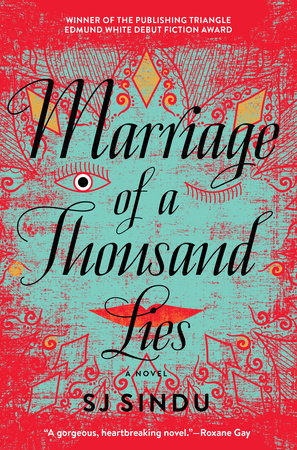
Marriage of a Thousand Lies by SJ Sindu

Marriage of a Thousand Lies by S.J. Sindu

Marriage of a Thousand Lies follows Lucky and her husband, Krishna, both of whom are gay and lying to their Sri Lankan families about it.  When circumstances cause Lucky to return back to her childhood home, Lucky asks herself what she is willing to walk away from when she rekindles love for her first friend.

The Collected Schizophrenias by Esmé Weijun Wang

Starting with her diagnosis of schizoaffective disorder, Esmé Weijun Wang provides a powerful look into what it’s like to have mental and chronic illness in this essay collection. The book examines everything, from institutionalization to the medical community, and comes back to the self.

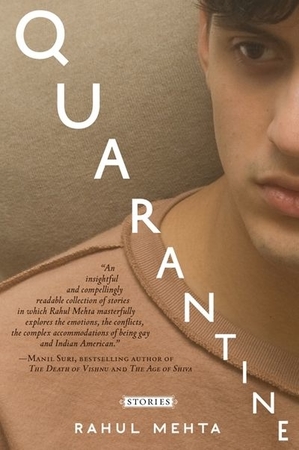
Quarantine by Rahul Mehta

With humor and tenderness, Rahul Mehta’s short story collection moves through the lives of queer Indian American men, reconciling identity with cultural tradition in the larger scape of societal separation.

This Way to the Sugar by Hieu Minh Nguyen

Hieu Minh Nguyen’s debut poetry collection captures what it is like to be a queer Vietnamese American in the Midwest. The book manifests as written slam poetry, speaking truth to trauma, desire, sexuality, and identity.

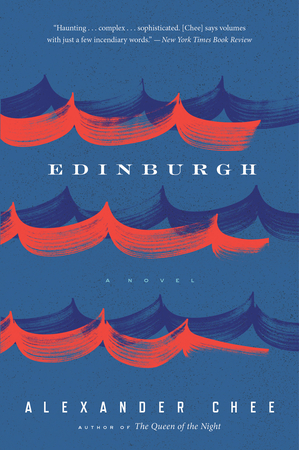
Edinburgh by Alexander Chee

Edinburgh portrays twelve-year-old Fee, a Korean American soprano in the local boys’ choir. When he learns about how the director sexually abuses the choir’s section leaders, Fee must contend with his hurt, his silence, and what it means to forgive oneself after his friend’s death.

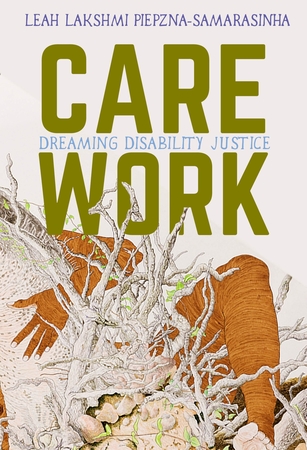
Care Work: Dreaming Disability Justice by Leah Lakshmi Piepzna-Samarasinha

In this collection of essays, Leah Lakshmi Piepzna-Samarasinha examines the politics of disability justice. This book is a celebration to sick or disabled queer people of color, and a call to arms toward giving greater access to the community.

Gutted by Justin Chin

In this book of poetry, Justin Chin renders his experiences with mental and physical health and looming death as he returns to Southeast Asia to care for his father, who was diagnosed with cancer, while dealing with his own illness. Chin passed away at the age of 46 from a stroke.

The Exilesby Ghalib Shiraz Dhalla

The Exiles, otherwise known as The Two Krishnas, evokes love and loss when a woman, Pooja Kapoor, discovers her husband has fallen in love with another man. The novel takes Hindu mythology and Sufi poetry to ask what it means to know someone.

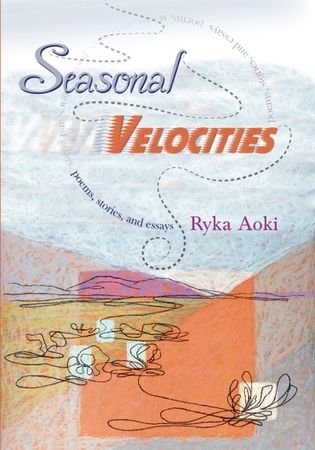
Seasonal Velocities by Ryka Aoki

Ryka Aoki creates an intimate multi-genre collection of poems, stories, and essays with Seasonal Velocities. The book journeys through love and abuse in the trans experience—and more importantly, what it is to be human.

The Year of Blue Water by Yanyi

The Year of Blue Water is a book of poetry that moves through lyric and prose to explore the self. These poems converse with what it means to have multiple identities in this meditative search for self-knowledge.

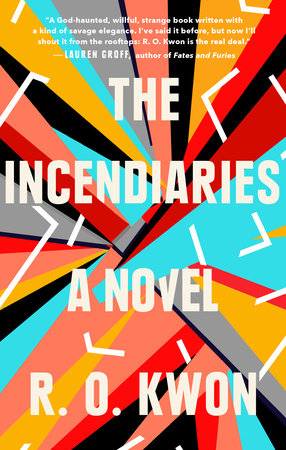
The Incendiaries by R. O. Kwon

The Incendiaries by R.O. Kwon

The Incendiaries follows Phoebe, a university student who gets further and further drawn into a cult whose leader has North Korean ties, and Will, the guy who loves her. Love, violence, and danger are collapsed in this powerful novel.

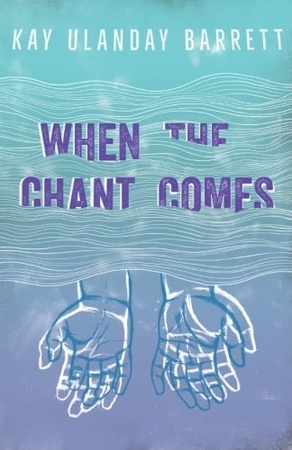
When the Chant Comes by Kay Ulanday Barrett

Kay Ulanday Barrett speaks to their experience with gender, race, disability, sickness, and politics in this poetry collection. These poems are unapologetic, embodying love for the body and spirit.

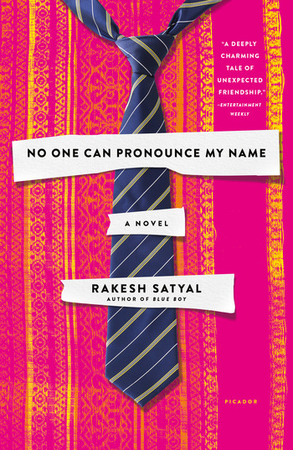
No One Can Pronounce My Name by Rakesh Satyal

No One Can Pronounce My Name is a generational novel set in an Indian American community outside of Cleveland. The book explores what it means to be an outsider and find one’s place, through the lives of two people: Harit, a man who dresses in a sari at night to keep himself sane after his sister’s death, and Ranjana, a woman who has sent her child off to college and worries about her marriage.

Soft Science by Franny Choi

In this series of Turing Test–inspired poetry, Soft Science looks at queer, Asian American femininity. These poems move from cyborgs to slugs, erasure and agency, to explore the tangle of identity and consciousness.

After by Fatimah Asghar

After winds magic realism with the experience of living as a Pakistani, Kashmiri, Muslim woman in America. This book of poetry dips into the strange and disjointed, as it frames life through a body that has felt unbelonging.

recombinant by Ching-In Chen

recombinant is a hybrid collection of prose and poetry that experiments with how poetry can be used to examine erasure and the reconstruction of community and lineage. Set in a speculative future, this book gives space to communal memory.

Long Live the Tribe of Fatherless Girls by T Kira Madden

T Kira Madden’s debut memoir chronicles her coming-of-age life as a queer, mixed-race teenager in Boca Raton, Florida, to the present-day mourning over her father’s death. This novel is an unflinching, loving journey of a young woman.

It’s All Porn and Cat Videos

“Horribilis”

by Amanda Marbais

One evening, I ran over a cat. Upon impact, its flat eyes reproached me, like it hadn’t known pain before. I got out of the car, stood in the headlights, and cried. It had a crushed skull and its bloody ID read “Sparkle-Motion, 5502 Ashland Ave.” I delivered it to an angry mother and a six-year-old, wearing Dark Knight pajamas, who gave me the devil’s look. I’m a vegetarian!—I wanted to say. He wouldn’t buy my sincerity. It was horrible. His reproach appeared in every human expression. My insomnia returned, and I went to my shrink.

My shrink was into alternative medicine. She had posters of people standing on cliffs, their arms raised in a V. Tuning forks lay on squares of bright orange cloth. Lamps were buried in large amber rocks. She wore blouses with choir-cloak sleeves and full-rimmed hipster glasses.

She had once been on Broadway, but never gave details about her roles. She assured me she was never hired for a lead, and eventually she grew tired of being poor. Her colleague had been a massage therapist for Kiss. This explained their lively office punctuated by flighty laughter. My shrink was laid back, and this appealed to me.

“You hit a cat. How horrible. I would be so upset.” She was never one to deny validation. She adjusted her glasses. “OK so how is your anxiety level?” She lit some incense.

“Terrible.”

Phobias are the most common mental illness, yet I had an uncommon number. They can be broadly classified as anxiety disorders, and this was my diagnosis.

“So which fears are bothering you?” she said.

“All. All the fears,” I said.

“Uh-huh,” she said. She broke out the tuning fork.


In my household, my shrink gained celebrity status the summer she helped my husband Eli through a job change. She was often called upon to assist in minor issues.

“So, do you want to go?” I said.

“Yes,” said Eli. “If you don’t mind.”

The need for a session arose from our enjoyment of a certain kind of pornography. It was about jellyfish and people getting stung during sex. These productions involved Magnum PI-type settings, bad acting, and then frantic jellyfish stinging. We had stumbled on to it, and while appalled at first, we just continued watching and were eventually turned on. We’d been watching it for weeks, doing it when the jellyfish stopped.

Yet there was a drawback to discussing sex. My shrink was like my mother.

I met Eli post-shrink, years after accepting a bad childhood. By even the most lax standards, my parents were not the Keatons, unless there’s an alternate universe where Steven and Elyse engage in all types of abuse: physical and emotional. My parents were absent any type of moral compass, even say a Jim Jones one.


When we arrived at the office, Eli took in the new posters, the aromatherapy candles, and the wish box, but said nothing. He and my shrink immediately caught up with banter.
Hitting the cat sent me into agrizoophobia, with a special fear about bears. We lived in the city but vacationed in national parks. Agrizoophobia rode my established neurosis like a pilot fish. While fixated on an object of fear, I’d repeat “motherfucker” like Samuel L. Jackson whenever I saw a cat, bear, or someone who looked like Lou Reed.

“Do you feel anxious all the time, or just uneasy in general?” She was opening a package of eagle feathers.

“It’s a real phobia this time—swear to god.”

Most people harbored a crumb of phobia regarding something—the roar of cars, fireworks, wormholes, sweating crowds at county fairs, spider webs, giant squid, etc. Once I had a phobia about manholes, a splinter of Cacohydrophobia.

My therapist specialized in anxiety treatments. Long ago, she’d studied with Francine Shapiro who had developed EMDR, a therapy utilizing REM. My shrink’s office was an anti-anxiety-lair equipped with gear—giant headphones and moon-shaped glasses, like those worn by Geordi La Forge. Patients chanted pleasant tropes while watching a sea green balloon float away.

She was hinky, but interesting. However, on my walks through Ravenswood to the train, I wondered if people could ever really know each other. Because, if anything, she knew me better than my mom. Of course, there wasn’t actual equality or shared experience. So, of course, we didn’t really know each other, which seemed surprising after sitting in her chair for six years.

Ailurophobia soon became an issue, and purring became a total detonator for me. We couldn’t visit our best friend, Michelle, because she had two cats. One was a Maine Coon the size of a bobcat, a motherfucker of twenty-eight pounds with a five-inch bat-tail. When it jumped, it shook the floor, and its meow resembled a drunk guy mocking a meow.

I developed a fear of true crimes shows, the ones deeply imbedded with the message “It really could happen to you.” I feared everything from an owl attack to a man waiting in the closet. I feared the kidnapping from the street, only to lose your cell phone before being thrown into an Oldsmobile trunk. I feared dismemberment.


On my way home, I saw a terrifying cat and swerved before going into hyperventilation. To have a cat phobia is to not be able to use the Internet. Eli looked up from his computer when I said this.

“It’s all porn and cat videos,” I said.

“Don’t I know it,” said Eli.

Someone posted a cat meme on Facebook, and I had become transfixed. “It’s horrible,” I said.“Horrible.”

He looked over my shoulder. “That’s because the cat is Photoshopped to look like Nicholas Cage. That’s both amazing and terrifying.” He closed my computer for me. “Who would do that?”

“I feel like I’m entering crazyland,” I said.

Eli and I shared one phobia. We went camping and because of the mild winter were beset by ticks. One gave Eli Rocky Mountain spotted fever. “It sounds more like a craft beer than a disease,” he said to the doctor.

He began taking antibiotics. The next morning as Eli held our dog, a motherfucker dropped to the floor with a wettish thud. It looked like a rock with legs, or what I imagined could be a polyp on a dying man. We found another twenty-six and disposed of seven at a time with tweezers and a jam jar. We both grew phobic about ticks but sharing made the fear surmountable.

But after six years of therapy, ultimately my fears grew worse. I made a catalogue: spoons, fireworks, dresses that don’t fit, bank lines, viruses, manholes, ink spots, trains, apple-picking, golf courses, Mary Lou Retton, bowling, Super-Soakers, lampshades, firearms, glass tables, etc.


On my next visit, my shrink shocked me by not asking about Eli. She had left our last appointment behind—one more proof she had a life. She stood below her “Hydration is the key to life” sign and filled her water bottle from her new pink cooler. She wore a knee-length smock embroidered with ferns. She quaffed her water bottle. “What about doing some inner child work?”

“Oh. Jesus. No,” I said. I stared at the hand puppets of Jung, Maslow, and Freud, the Tibetan singing bowl, and her reed diffuser. I wouldn’t look at her.

Really she was suggesting soul-retrieval. Good thing Eli wouldn’t be weirded out, because I would definitely tell him later. It would be more fun to laugh with him about it than to do it. Everything seemed a drag. “So we’re contacting the four-foot-tall cunt-bag?” I said finally.

My shrink lit some incense. “Now cunt-bag, that’s a name.”

Under full meditation, I focused on the memory of the woods. Its young trees and dry leaves obscured the ranch houses. The inner child jumped down from a low branch and bit my neck, and though spoon-like in bluntness, her baby incisors broke skin. “Motherfucker,” I said, but my eyes were closed.

“What’s happening?”

“She bit me.”

“She must be frightened.”

“Or she’s a bitch!” I looked at my shrink like she was crazy.

“Tell her it’s OK, that she can’t bite.”

“Don’t bite, bitch!” I said.

“I don’t think talking to her that way is going to help. Maybe you should ask her what’s wrong.” She waved more incense at me and smudged it with a feather.

“Bitch, what’s wrong!?” I shouted.

My shrink snickered. “Sorry,” she said. “Tell her if she comes out of the woods, you’ll give her something she wants, like a pony or something.”

“Really, is that good therapy? I can’t give her a pony.” Yet, secretly, I wanted a pony.

“It’s in your imagination. You can give her anything you want.”

We coaxed her past the neighbor’s house. There’s nothing worse than having to tell a kid, “You’re screwed. Whichever direction you go, you’ll be exploited. That’s your destiny, and you’ll hate it.”

“Now all we have to do is retrieve your soul,” said my shrink. Her embroidered smock made her dyed hair unusually red.

“Should we whistle for it?”

“It does sound funny doesn’t it?” She laughed.

“OK.” I told Inner Me the truth in a laconic, controlled way. But it was the pony that lured her to ride like She-Ra across an Indiana suburb, vaulting over the community pool.

“Do you feel better?”

“Somewhat.”

My inner child was supposed to settle into my apartment with an imaginary room, and the pony, in an imaginary stable. I’ve done this a good fifteen times. Soul-retrieval is the New Age-y name for it—I err on the side of Carlos Castaneda in his somewhat grounded anthropological days.

“Well, don’t be surprised if you feel a little more anxious this week.” She gave me an awkward hug.


On the drive to meet Eli at Michelle’s, I actively forgot everything.

“Just touch the cat,” said Michelle. She had the Maine Coon on a table, as if she were grooming it. “Seriously. Just touch it,” she said. It turned and growled.

“It’s fucking growling at me.”

“It’s just scared,” said Eli.

“OK. I don’t want to force you,” said Michelle. “I feel bad.”

“Yeah,” I said. “Sorry.”

On the way to the party, our failed immersion therapy left me hyper-vigilant. I didn’t mention this week my fear was polio, which could explain my fever, stiff limbs, and back pain. It didn’t seem irrational. I considered it in aggregate of an hour per day: in the bath, on the train, walking to work. Polio. I knew I would die, so was I above deadly diseases?


On Monday, I became obsessed with shooters. My office building contained a catacomb of government branches. Last year, a man brought his seven-year-old to the Social Security office. He waved a gun and demanded Arnold’s Spare Ribs, a Barq’s, and seven hundred dollars in back Medicaid costs. The elevators were cordoned off and bomb dogs sniffed the bathrooms. My fear was not totally irrational. The guy was owed seven hundred dollars, because Social Security was wrong. But for days I pictured my office door bursting open and someone blasting my face.

I did not tell Eli as I slid into bed. It was raining. He had gotten us diner food and lit a candle in our kitchen nook, which overlooked the Oak Park street and a backdrop of Victorian houses.

He researched backpacks for a trip to Montana. He had gotten a raise and found a deal on flights. “We can camp up there, backcountry, then stay in this railroad chalet.”

“There’s more chance of bear attack in backcountry. You watched Night of the Grizzlies with me,” I said.

“You have more chance of being struck by lightning. I’m not giving you a hard time though,” he said.

My fear could be traced to obsessively watching Grizzly Man, a documentary about Timothy Treadwell, whose celebrity was derived from the infamy of his bear-related death.

“Well, we don’t have to,” said Eli. On the nightstand beside him were his pocket knife and the remnants of the strap he tried to repair.

On an alpine ledge, the chalet offered a view of archaically named natural phenomena—Gunsight Mountain, Lake Ellen Wilson, Bad Marriage Mountain, and Beaver Chief Falls. This place seemed appropriate for rail men, 1920s moguls on wooden skis hiding flasks of gin, and hikers. Eli clicked through the Flickr.

“I don’t want to be resistant to things because of fear,” I said.

“Maybe we need to go someplace where there are no natural predators,” said Eli.

“I can do it,” I said. But I couldn’t do it. There was no way. Months of therapy would have to prepare me.


I have a phobia about the world ending. I imagine a visit to my favorite news outlet will yield a slide show in which the world’s end is a horrifying photo available for five seconds. Thousands of birds will have fallen from the sky and bats will have lost their nocturnal radar and slammed into buildings. Magnetic fields will have disappeared, and an asteroid will be headed for North America. It will release thermal radiation. Everyone’s fingernails will fall off. Weather patterns will change. The water will be contaminated. It’s going to be in a streaming slideshow of death.

“How have you been feeling?” said my shrink.

“I’ve been thinking about the end of the world.”

“That’s dark.”

“Well,” I said.

“No one really wants to die alone. That’s probably your fear,” she said. “OK. More to the point, is she home safe?”

“Yeah,” I said.

I left feeling light-headed, and quickly walked to a bakery to buy a peanut butter Twinkie. Already I had forgotten my shrink, the event evaporating in the street. I resented having to deal with it. I resented her.


We planned our vacation to Sperry Chalet in backcountry. We flew to Kalispell and stayed one civilized night in a railcar, a restored caboose in which we took long showers, and then we lay out flat on the clean bed and watched the Amtrak pull up and the people get out with their packs and trekking poles in the extended dusk. Rested, strapped with backpacks, we hiked Gunsight Trail, tracing the cirque of remaining glaciers. The rivers became creeks below the mountainside. A John Ford movie landscape, boulders were the size of cars, cliffs exceeded skyscrapers, and meadows diminished us to ant proportions, as if we simply crossed a city park.

In a pine forest, we climbed through bear grass, monkey flowers, fireweed. We crossed a fast-rushing river where it grew narrow. In many spots, the river gushed, an open hydrant thickening to a waterfall cascading the hill. Eli talked loudly to scare off bears, then switched to whistling show tunes. I realized Singin’ in the Rain seemed utterly appropriate for scaring bears.

I knew the origin of this technique. Other than people with exotic pets, lone hikers were most susceptible to animal attack. A ranger warned us of silence, claimed running while listening to earbuds could lead to death.

We camped on flat terrain near the rushing river. Even black bears have attacked campers at night, ripping their tents and dragging them by the rib cage. “It’s rare,” said Eli. He patted my arm. I didn’t sleep well for the first hour, but with a Valium I was out.


Bears’ chiefly vegetarian diets comforted me. They were only violent if desperate, freaked out, or if they were just an asshole bear. They mapped their habitats, knowing every stone and every tree. They could walk a hundred miles from home in search of food and were still tough enough to return to their den in just a handful of days.

“Where did you hear all that?” said Eli as he climbed a hill in front of me.

“Animal Planet.”

“God. You’re cute,” he said.

“I am kind of embarrassed by my sources.” Still I went on. “They’re unpredictable though. And they’re smart. They know we’re not to be trusted. Did you know they can run up to thirty miles an hour?”

“We’re not going to see a bear.” He cupped his hands, shouted, “No bears.”

Cresting the hill, he turned and smiled, beautiful though damp with sweat.

Still I imagined wide-set eyes, elongated snouts, longer claws, and humped backs. But their specificity was sacrosanct. They could be all gradations of brown and black and above all elusive.

When we did see the bear, it was rust-colored. It vaulted the trail’s width, like a tumbling ball, disappearing in the brush as if chased. It filled me with joy and exhilaration, as I stared at the undulating brush.

The second one moved slowly, an explorer pushing aside branches as if peering—angry at the hubbub of people. When he moved into the trail, his head lulled, heavy with chuffing.  He filled the trail. He bobbed a “no” and then charged. My limbs floated. Everything slowed. I collapsed in the bear grass. Eli already lay in repose like a child, his face damp. Most of my life had been a string of phobias, and now I could think of nothing but bear grass. As I heard the bear gallop toward the hillside and dive through the brush, I thanked no one, but gazed at Eli in the silence.

Is Life Better in the West?

Before Jennifer Nansubuga Makumbi’s first novel, Kintu, was published to sustained acclaim, the book had multiple rejections from British publishers who dismissed it as “too African” for their taste. The publishers feared the difficult-to-pronounce names of characters and places would jar the jaws of Western readers. What counts as African or “authentically African” is yet to hit the ground, but whatever it lands out to be will likely have no input from British publishers.

Buy the book

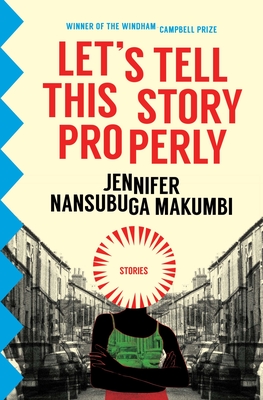
Makumbi’s writing is largely inspired by the oral tradition of Ugandan storytelling. Her latest work, Let’s Tell This Story Properly, spins characters with stories that trek from Uganda to the United Kingdom and back. Revolving around Ugandans living in Britain, the twelve stories question the assumptions of better life that many immigrants associate with the West. To serve the book’s truths properly, Makumbi relies on humor, which is a vital element of Ugandan oral storytelling.

A lecturer of Creative Writing at Lancaster University, Jennifer Makumbi won the 2014 Commonwealth Short Story Prize for her short story “Let’s Tell This Story Properly,” and the 2018 Windham-Campbell Prize for Fiction.

I spoke to Jennifer Nansubuga Makumbi about the perceptions and misperceptions of life in the West, finding inspiration in the street dogs of Kampala, and why she doesn’t write for a Western audience.


Kenechi Uzor: I’d like to begin with my favorite story in the collection, “Memoirs of a Namaaso.” I don’t think we can discuss this book properly without this story, without talking about Stow, the dog from whose perspective the story is told. It is still an immigrant story, but this time an immigrant story of a dog moving from Uganda to the UK, moving from being a pariah to a pet. Could you talk about the thoughts and intentions you had while crafting the story?

Jennifer Nansubuga Makumbi: Kenechi, you have no idea how happy I am that “Memoirs of a Namaaso” is your favorite story, that it works. I enjoyed writing it most. I was just laughing all the way. I did not worry about political correctness or offending any dogs! It was all from imagination. When I came to Britain and saw how the British love and pamper their dogs, I thought about the street dogs in Kampala; how would it feel if one of them came and it was treated like this? The possibilities were too enormous, too crazy to pass up on. I decided on a proud pariah, used to roaming the city at will, arriving in Britain and becoming a pet, limited to the house space, being neutered.

It is a fun story, it is not tasked by issues of what is the story doing, what is it trying to achieve? I made certain that anyone interpreting it does so at their own peril. The streets dogs in Kampala are unfortunately classified as pests by the city council. Often, they poison them to cull them off. However, Kampala street dogs are like the hyacinth weed on Lake Victoria: you kill these today and tomorrow new ones appear.

KU: Can you talk about the origins of the book? Where did this book begin for you creatively? Generally, what’s your process to create and write?

We Ugandans have had so much pain as a nation that we learnt to find humor in anything.

JNM: The obvious origin of the collection is my coming to Britain and settling in Manchester. But the major origin is the innate desire to write home and say, You people. I am out here but you have no idea of the reality. It comes from the knowledge of how Ugandans perceive Europe vs the reality. This is why I included an author’s note, to speak directly to people back home, to say that this is a letter and I have enclosed my pictures, like we used to do before email and mobile phones. The other origin is in a writing group I joined in 2013 that asked for a new short story every month. Creatively, I started with “Malik’s Door,” then “Our Allies the Colonies.”

In terms of process, I tend to create in my head first. I start with a character and her problem and let the story grow in my head for some time. When I cannot put it off any longer, I write. It took me a very long time to get the short story form worked out. I found it very difficult to pin down; it is rather slippery. I still cannot write micro fiction. One story took me four years to get right, another took me six months.

KU: Some of the stories in the collection deal with this real or imagined differences in blackness and the complicated relationship blacks have with other blacks, especially when they meet abroad. Zadie Smith’s novel, On Beauty, also touches on this uneasy tension among, for instance, black Africans versus African Americans versus Caribbean blacks versus Africans of mixed parenthood, etc. This tension exists even between newly immigrated blacks and blacks who’ve been immigrants for decades. What are your thoughts on this? How has this been in your experience?

JNM: It is a very complicated relationship. At the center of it is culture. While we’re all black we are culturally diverse. However, when we meet in the white world, we Africans tend to forget the cultural differences and imagine that we would all gel, just like that, in our blackness. It is worse with Africans who are born in the West but have similar names to ours. We see them as “acting” British or American at us until we realize that culturally they are not African.

KU: Franz Fanon wrote about the psychological trauma that many blacks suffer when they first come in contact with whites, a condition of profound distress that lead many blacks to wrestle and sometimes reject their Africanness. Katassi’s existential shock in “Manchester Happened” typifies this condition. Is it possible for an African to move to Europe/the West and not be changed, either like Katassi or like the intellectual types who, according to Nambassa in the same story, “turn aggressively African… in your face African”?

JNM: What can I say, Kenechi? I don’t know. Maybe if one has not been subjected to the colonial lies about the nature of whiteness and their world. Then there is the internalization of our apparent “ineptness”. But things are changing. With the internet, Africans are beginning to see things.

In 2017, my sister came to Britain on holiday and I took her on a bus ride. When we alighted, she was silent for a long time, then she burst out, How can you stay here, Jennifer? I said, why? She said, They don’t like us! They looked at me with disgust! I said what we say to every new arrival, Nooo, you misunderstood them! In my experience it is one, two, three people out of ten –  especially in the cities – who do that. Most British people try to compensate for that by smiling and being nice. But then it takes one disgusted look to make you chew yourself for the rest of the day.

KU: You’ve won some major literary awards. You mentioned somewhere that winning the Windham-Campbell Prize for you “is like having been working without pay for a long time and then someone comes along and says, ‘Will a salary for the past ten years do?’ Then you’re left speechless.” Can I assume you hold a favorable view of literary awards and the role they can play in a writer’s career? How has the award affected your writing?

In Africa, you are bombarded with images of a perfect life in the West, life of waste and no want. They never talk about their poverty.

JNM: I know of the ability of literary prizes to transform a career, especially for literary writers like me who, without a prize would sell only a few copies. But I am not unaware of the problems prizes create, especially when authors start to chase them. Often, choices made by judges don’t make sense, especially when we see a book we consider “more worthy” of highlighting being left out. It would also help if Africa had its own prizes with a global reach.

But as I have said before, winning a prize is someone saying, I like what you do, let me help you along the way. That does not mean you are the best writer in the world. A writer that takes themselves seriously after winning a prize does so at their own peril. Prizes have not affected my writing process. I still have many insecurities as an author. In fact, now that I have won some prizes, I am so worried about the reception of the collection and the second novel (if it comes out). With Kintu, my first book, I did not worry so much.

KU: I find it also interesting how the collection alluded to the often-neglected fact that many in Africa are not exactly poor and lead better lives in Africa than many people overseas.

JNM: Isn’t that the irony! A lot of middle-class Africans do not realize that they are far better off in Africa. But of course, it does not matter how much you tell them, no one will believe you. Same with people in the West; don’t bother talking about middle class issues in Africa or anything that indicates that you were well off in Africa – they’ll look at you sadly, like, why lie like a child? And so middle-class Africans keep coming to the West and find out too late they should have remained in Africa.

And of course, we who are out here don’t help matters when we go home and flash borrowed money and perpetuate the lie. And then in the West images of skeletal, fly-infested babies or skinny children drinking dirty water are flashed on screens by charity organizations. In Africa, you are bombarded with images of a perfect life in the West, life of waste and no want. Because the West is in control of the media, they never talk about their poverty.

KU: The stories are humorous. I found many of the book’s characters hilarious. What are your thoughts on humor in literature and how did you think about humor as a vehicle in terms of this collection?

JNM: I think of humor as something I inherited culturally. Ugandan stories, the way we tell them to each other, tend to be humorous, even when talking about death or suffering. I think we have had so much pain as a nation that we learnt to find humor in anything. The stories are critical of both the Ugandan and British societies. Criticism is best dispensed with humor and irony. lt is a tool that helps us talk about difficult subjects.

KU: There are very concrete details in the stories. I am thinking now about “Something Inside So Strong,” wondering how much research went into crafting Poonah the Aviation Security Officer, and all that vivid enactments of airport security drama.

JNM: Oh, I worked as an Aviation Security officer for a long time. And let me tell you, I have not written the outrageous things that happened on the search area; they read unbelievable. But Poonah is not me and Namuli is a figment of my imagination. What is not fiction is the fact that there are stories of middle-class Ugandans who have arrived in Britain, got jobs in a supermarket or cleaning, only to find their former maid, shamba boy, working as their team leader. Picture it right there! In fact, that is what the story was about in the beginning and it was called “Britain the Leveler” but in the end I shied away from it in case it had happened to someone I know.

KU: I noticed how, throughout the collection, Ugandan phrases and words aren’t italicized and certain cultural practices like the traditional marriage of Nnaava in “My brother, Bwemage” and Masaaba’s, circumcision in “Love Made in Manchester” aren’t overly explained. I know some authors face this dilemma of explaining or not explaining stuff to foreign readers. What do you think about this? Did you get any pushback from non-Ugandan first readers or editors about this?

I write for a Ugandan audience.

JNM: In Kintu I did not explain things a lot and relied on context. I did not worry about it in this collection. If readers understood Kintu, this collection is even easier. There is always google. The problem is that nothing kills the rhythm and the flow of the story like explanations. Once Africans see them, they presume you write for the West, especially as the West never explains its fiction to us. Besides, most readers find pleasure in working things out for themselves.

I did not italicize this time because of a discussion that happened a while ago. Personally, to italicize is to highlight. I would like my language to stand out on the page, but if most readers I write for are suspicious of it, so be it. Editors and proofreaders did not push back about my none use of italics. My collection was read by a British African editor who is gifted with “double-vision” so to speak. She would say, I am thinking of non-Bantu, non-African readers here; how do they understand this? This was a major process of this collection. And I could only afford this editor because of the Windham-Campbell prize. After her edits, I was able to push back to other editors.

KU: In terms of the book and also generally, how do you think about audience in your writing?

JNM: I write for a Ugandan audience. However, Uganda is diverse. We have over forty languages and such diverse cultures that if I can reach those diverse Ugandans, then I have covered the whole of Africa. This is not about marketing – I sell more books outside Uganda – this is about form. Writing for a Ugandan audience helps me focus, it determines the tone, the subject matter, the attitude, the diction, events I include and what I leave out.

The second story, “Our Allies the Colonies” was first written for a British audience. I rewrote it for a Ugandan audience and even gave it a new title. The difference between the two stories is staggering and shows the effects an anticipated audience can have on a story. Authors from the West never think about African readers, whether we would understand them, they write for themselves, but we still do. I am just doing the same.

The problem is that Western readers have been spoilt by glossaries, by certain aesthetics and have learnt to demand for them. But we can change that. And from my experience, most readers are up for the challenge. They would rather not be patronized.  I suspect that if I wrote for the world, my writing would be all over the place, disorganized. And how can I please the whole world? Best to focus on the Ugandan readers who I know and understand. Then I can speak to the world like a Ugandan.

KU: It’s not uncommon for the same book published in the UK to sometimes have a different title in its US edition. Your collection will be known in the UK as Manchester Happened and as Let’s Tell This Story Properly in the US, what informed this choice?

Western authors never think about African readers. They write for themselves, I am just doing the same.

JNM: That was down to publishers. I wrote the book under “Love Made in Manchester” the final story. The American publisher preferred Let’s Tell This Story Properly and that made sense because it is a title that says something about the Ugandan immigration experience being told properly because we perform success when we go home. However, that particular story is old in Africa. As a title it does not promise anything new to the readers back home. Manchester Happened is not only new but it highlights Manchester, my adopted city, as a character.

KU: What challenges have you faced with this book both in terms of the writing and getting it published?

JNM: I started writing it back in 2009 when I was so broke and had given up the possibility of being published. I was prepared for a life of a failed author and so I wrote what I enjoyed, and writing kept me sane too. I also hoped to get a few of them published in magazines and journals to create a literary footprint. But as soon as Kintu was published in Kenya, I started to work on it as a collection. When Kintu found an American publisher, they took the collection too. Same happened with the British publisher. Basically, the collection did not face the kind of rejection that Kintu and my first novel were subjected to. The major problems happened towards the end. Some of the stories were rejected and I had to consult with a few readers and editors about this. I was reassured that the stories were fine. And then, towards the end, with the intense scrutiny of editing, each story started to read like a novel. It was as if I was editing 12 novels. It was so exhausting I swore never to write a collection again.

KU: What about the joys?

JNM: Putting the dog story aside, it was a joy to create so many characters, especially the women. I fell in love with Nnakazaana and Nnalongo, I begun to understand Heather within history. I enjoyed discovering first Irish migration, then black people into Manchester. How the Irish and Africans came together under English prejudice and racism. It began to make sense why back then, Africans tended to marry Irish women. How Africans came to settle in Manchester after WWI. But I also suffered the anxiety of the two boys, Luzinda and Bakka, in “Christmas is Coming” and how claustrophobic their home was. I derived a twisted pleasure in taking Kayla the Scottish wife of a Ugandan to Mbale in Uganda and subjecting her son to adult circumcision in public.

How to Write a Fiction Podcast

There are things that audio drama—scripted fiction with no visual element, usually distributed via podcast—can do that no other medium can. Sound creates a unique bond with an audience, a sense of intimacy. There’s a specific rhythm to it. Characters’ journeys become sharper, horror becomes more terrifying, otherworldly vistas can be created in the mind’s eye. Writing for sound allows me to tell stories that wouldn’t work as a film or novel. And if you’re used to writing solely for text, you might want to try it.

I say this as someone who, a long long time ago, had a secret, kind of sad dream of becoming the next Ursula K. Le Guin. (This dream isn’t completely dead, just dormant as hell.) But listening to old episodes of Orson Welles’ Mercury Theater on the Air, as well as the then-just-starting Welcome to Night Vale, demonstrated that sound could be a uniquely captivating way to tell stories. And there’s a whole bunch of exciting stories being told in audio fiction. Podcasts like The Bright Sessions and The Truth are doing some really cool things. And outside of the unique power of audio drama, they’re can be a good fit logistically. An fiction podcast can find an audience more easily than a short story or novel, and can be less complicated to produce than a TV show or web series.

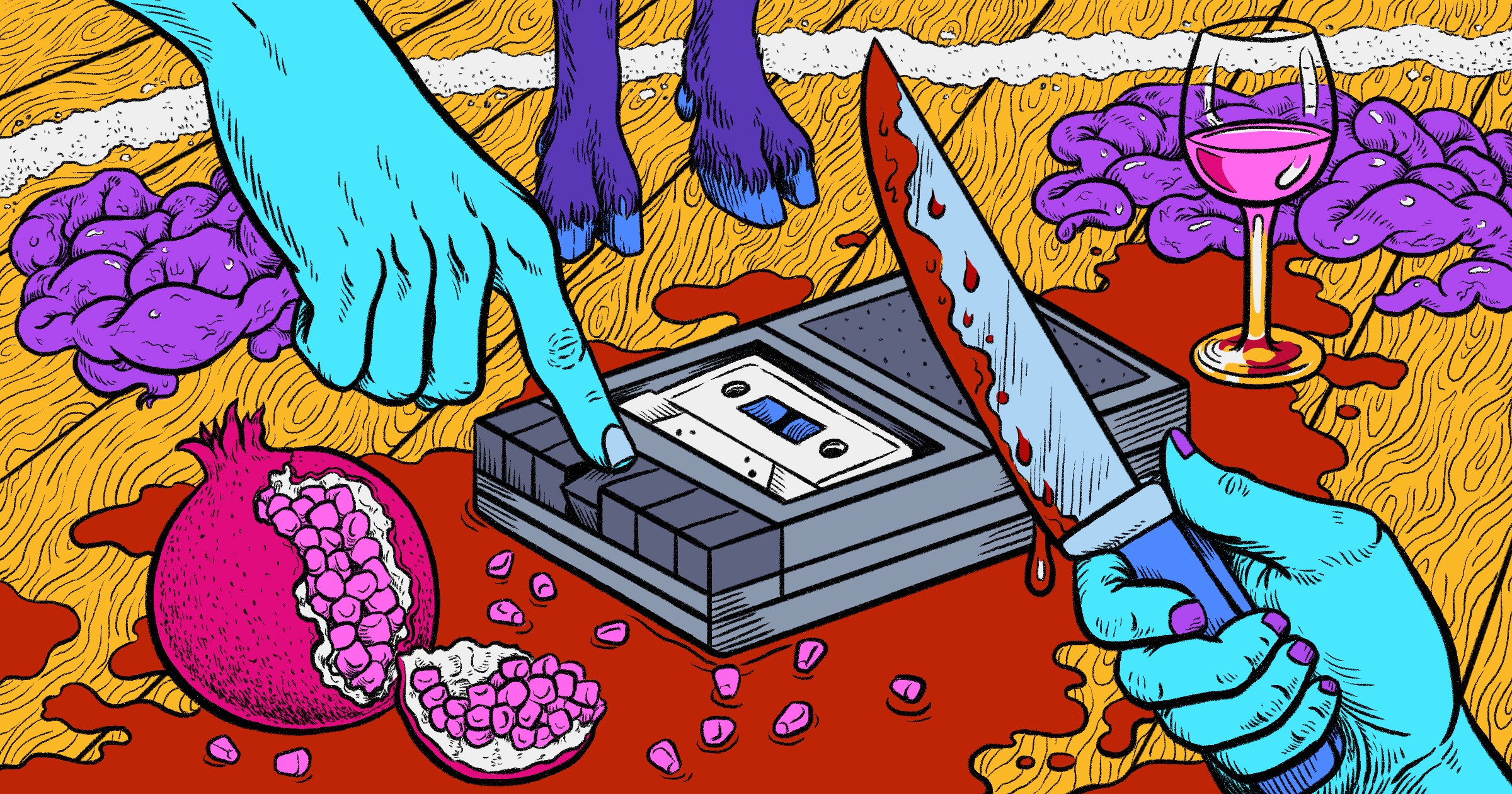
Logo for new Archive 81 miniseries, Left of the Dial
This illustration by ANOBELISK, lead illustration by Lauren Kolesinskas, both used with permission

Have you been sold on writing an audio drama? Great. Congratulations. Welcome to the not-that-wide world of aspiring sound titans. Now for the bad part. Actually writing for audio drama can be really really difficult. And I’d know, as the co-creator of, and writer behind, Archive 81, a fiction podcast about horror, loneliness, family, and creepy tapes. Every time I brainstorm a new season with my lovely and talented producing partner Daniel Powell, every time I start a script for a new episode, every time I try and think of something engaging for a character to say… I still struggle to make the best possible use of the audio medium. It requires a different mindset, a different toolbox.

So here are some tips and tricks and stray flotsam I’ve picked up from writing a whole bunch of fiction podcasts. They’re not a roadmap or a bible, just things I think you might want to consider if you’re moving from writing prose or film to writing audio drama. Because writing audio drama might be uniquely challenging, but it’s also uniquely rewarding. Remember how I wrote at length about the power of audio drama? Yeah, I didn’t lie. Anyway, before I get too gushy, here are the tips and tricks.

Before anything else, think of SOUND.

This is the big one, the mountain spring which every one of these dumb tips flows. An easy way to think about audio drama is as television without pictures, but just writing a television script and expecting it to make a good fiction podcast is a terrible plan. The audience won’t know what the heck is going on and the whole thing will sound boring and lifeless. This is a super obvious point, but it bears pointing out: TV and film are visual mediums, audio drama is a sonic medium. So when you brainstorm your cool new fiction podcast… think of how it’s going to sound.

Just writing a television script and expecting it to make a good fiction podcast is a terrible plan.

Now, what does this mean in practice? It means making your characters, your setting, and your plot sonically interesting. Maybe you want to tell a story about a daring team of interstellar archaeolgists who gradually uncover the disturbing secrets of a long dead (or are they???) alien race. Cool! But it’s probably not going to be that cool if the archaeologists are trying to decipher an alien script. Consider instead having the aliens be a sightless species, perhaps leaving “singing” crystals that the very attractive archaeologists, accompanied by their silent robot pal, have to decode. Fun! And it gives you the opportunity to wow the listener with interesting, engaging sounds. That’s exactly what you want to do when you’re thinking of the overall plot of your audio drama.

Before you start writing, think of sounds that interest you, and let those shape the arc of your audio drama. When I was writing short stories, I often thought of a phrase or sentence that stuck in my mind, and I’d write my stories to get to those sentences. A screenwriter might think of a monumental image that they’d like to get to, and construct the plot to highlight that image. You can do the same with audio. Whether it’s a father coldly describing arcane rituals into a tape recorder, or eerie banjo music playing over a car’s stereo, I’ve found that thinking of interesting sounds, interesting sonic textures, and altering the plot to get to them, is a useful way to write.

Earlier, I gave the archaeologists a silent robot pal. But having the robot be silent probably isn’t the best idea in an audio medium. Instead, let’s give the robot a static-y voice, dripping with disdain. Or (if you’re not scared of being sued by Disney) let them respond to various situations with beeps and whirrs that all the other characters can inexplicably understand. Point is, give each of your characters unique, distinctive voices. When writing, think of what each of your characters sounds like, what separates them sonically from the other characters. This doesn’t just apply to archaeologist robots, this applies even if you’re doing a realist drama set in a coworking space in Gowanus. With no visual or textual context, it can sometimes be tough for an audience to distinguish between two characters when they sound similar. So… don’t let your characters sound that similar. This is about dialogue, but it’s also about natural voices: a more diverse cast (in gender, age, accent, etc.) will automatically sound more distinct from one another. That also has the added benefit of making sure your script isn’t filled with boring twenty-somethings with the exact same background. Also, when in doubt, write robot characters. They always sound cool.

Even when your characters all sound different, though, it usually isn’t a good idea to have more than four separate voices in a scene. Visually it’s easy to keep track of multiple characters. Textually it’s easy to keep track of multiple characters. Sonically… it’s tougher. I made this mistake a lot in Season 2 of Archive 81, and it made that entire season a lot more difficult for the audience to follow.

Once you’ve thought of ways to make your plot sonically interesting and your characters vocally distinct, it’s time to make your settings sound-rich. A lot of an audio drama’s sense of place, its worldbuilding, comes from the background atmosphere of a scene. The clatter of a 18th-century tavern, the cold beeps of an alien starship, the background radio and tire squeals of a long road trip. These are the things that make audio fiction come alive in a listener’s mind. So don’t just set your scenes in bog-standard living rooms; set them in places with background noise, places that feel alive. When the listener hears two characters talking, they should also hear the world surrounding them, so think about these sonic textures in the writing process. And give your audience an immediate sense of where they are—either through dialogue (“gosh, this diner sure is crowded”) or better yet, through sound design (SFX: the ceramic scraping and background chatter of a crowded diner).

Before I actually get down to writing, there’s a rule I like to consider: have something that sounds fascinating in each and every scene. However engaging the scene is on a plot and character level, don’t forget to have something going on that uses the potential of the audio medium. A kid walking by with a blasting boombox, the unearthly static of an alien device, the resonant hum of a record player that’s being turned on… the specifics don’t matter. It’s a useful challenge that helps me prioritize sound when I write scenes.

Let your audience’s imagination do the work for you.

Have I mentioned that audio drama is a sonic medium? For some reason, I feel like I’ve mentioned that before. Anyway, because audio drama is a sonic medium, your audience can’t see the weird monster, or 50’s bar, or elegant funeral that you want to convey. Thus, the temptation is to over-describe things visually, either in narration or dialogue. Don’t do that. Your characters shouldn’t spend a minute describing every glistening curve of the monster that’s attacking them or comment on every flying buttress of the church they’re sheltering in. Not only is this cruddy, unrealistic dialogue, it makes for poor visuals. Give your audience just enough information for them to paint a picture in their minds. Have the monster drip viscera onto a tiled floor and cause the scientist to mutter: “teeth, there’s too many teeth,” and your audience will create a monster far more terrifying than you could describe with a thousand words. Yes, different people are going to have different mental images of the monster or sexy interstellar archaeologist or coworking space in Gowanus… but that’s fine! There’s nothing wrong with that.

Read the dialogue out loud to yourself.

This is probably just good advice for whatever medium you’re writing in, but it’s especially vital in audio drama, where most of the information is conveyed in dialogue. If you’re moving from writing short stories and novels to writing audio drama, it’s important to make sure that the dialogue works spoken, not just on text.

Realize that some things just sound SUPER gross.

Next time you kiss your partner, close your eyes and really listen to the sounds. You’re going to be icked out.

Kissing looks romantic and can be described in super romantic ways. However, the audio of people kissing is… kind of off-putting and weird. (Next time you kiss your partner, close your eyes and really listen to the sounds. You’re going to be icked out, as evidenced by this truly harrowing piece of footage.) That doesn’t mean that you can’t write a good romance audio drama, it’s just something to be aware of before you write a climactic make out sesh. Sounds like vomiting, chewing, kissing, etc. will make your audience uncomfortable. This is great if you want to make your audience uncomfortable (I can proudly say that there was a metric shitton of vomiting in Season 3 of Archive 81), but once again, something to be aware of.

I could go on for much longer with all my audio drama advice and hang ups. (I’m leaving out a whole diatribe about narration in fiction podcasting and how to properly write action scenes) The main thing to remember, other than the fact that I most certainly don’t have all the answers and everything I write should be taken with a grain of salt, is to think deeply about sound when you write. To use the specific strengths of the medium to tell your story. Because there are a lot of audio drama stories that can be told, and you should most certainly get started.

How Can Our Mothers Ever Live Up to Our Expectations?

I remember first reading Michele Filgate’s essay “What My Mother and I Don’t Talk About” on Longreads. It was a year and a half ago, October 2017. In the wake of sexual abuse accusations against Harvey Weinstein, the hashtag #MeToo had just begun to blow up. I remember being shocked and thrilled by that first raw blush of widespread openness from all kinds of women, famous and otherwise, who chose to share their stories. Against that backdrop I remember being struck—immediately, from the very first line—“Our mothers are our first homes”—by the thoughtfulness and honesty of Filgate’s piece, which was about her abusive stepfather, but focused on her relationship with her mother. By looking at the problem through a wide-angle lens, describing the environment and interconnected relationships that enabled her stepfather’s behavior, Filgate had written a #MeToo story that nevertheless transcended the genre. I remember thinking, This could be a book—and, pages later, This should be a book. So I was not the least surprised when I discovered, months later, that it would be.

With What My Mother and I Don’t Talk About the book, Michele Filgate, a longtime pillar of the Brooklyn literary community, has created an anthology of personal essays. Although it is named for her original Longreads piece, it is not limited by her subject matter. The roster of contributing writers is impressive. The range of subjects and styles is remarkable. It was a pleasure to speak to Filgate about the project.


Rachel Lyon: All of these essays are stunning, they all merit much more time and space than I can give them here, and this book cannot be easily summed up. That said, I think Lynn Steger Strong comes closest to getting at the heart of this collection when she writes:

“There is a gaping hole perhaps for all of us, where our mother does not match up with mother as we believe it’s meant to mean and all it’s meant to give us. What I cannot tell her is all that I would tell her if I could find a way to not still be sad and angry about that.”

Tell me a bit about the process of creating the book. The idea for it began with your own piece, right? How did that piece come to be, and what happened after you published it?

Buy the book

Michele Filgate: I started writing the title essay many years ago when I was an undergraduate at the University of New Hampshire. Sometimes you need a lot of perspective in order to write about traumatic or painful events, and that was certainly the case for me. In the first draft, I focused on my stepfather. There was anger and resentment on the page. The core truth of this essay took a long time to show itself. What I needed to write about was how toxic silence can be. Silence can come in a lot of forms, but one of the worst versions of silence is denial. What I ended up writing about, in the end, is the fracture the abuse caused in my relationship with my mother. My essay is full of longing because I’m attempting to communicate with her, to set everything on the page that we can’t have a real conversation about. Originally my editor at Longreads (Sari Botton) scheduled the essay to come out around Thanksgiving. But once the Weinstein story broke, she moved it up and published it right away. I think the timing helped the essay go viral. I heard from many strangers who had similar stories to share.

RL: At the risk of getting caught up in semantics right out of the gate, I’m curious about the “don’t” in your title. When I worked as a copywriter at a marketing agency we called this the knowledge gap: with the word “don’t,” an outline is drawn; quite naturally, the reader expects it to be filled in by some kind of secret, or confession. But the book is not called, “What My Mother and I Can’t Talk About.” It’s not “What We Won’t Talk About.”

“Don’t” leaves a lot of room for a range of relationships and intentions—we could just have happened never to discuss it, or we could be intentionally avoiding the topic—and the essays in the collection reflect that range, I think. They are not necessarily confessional at all. Some, like Dylan Landis’s and Leslie Jamison’s, are investigative. Some, like Cathi Hanauer’s and Sari Botton’s, are humorous. Some, like Nayomi Munaweera’s and Brandon Taylor’s, are almost elegiac. Kiese Laymon writes, “I still desperately want to believe that a haphazard collection or cataloguing of cherry-picked confessions is what makes art last. I know it doesn’t.” Knowing from personal experience how hard it is to arrive at a title you love, I’m curious: how did you arrive at “What My Mother and I Don’t Talk About?” And how is the confessional essay, as concept and genre, both embraced and resisted throughout the book?

What goes unsaid is often where the heart of the story is.

MF: Oh, this is a great story. My original title for the essay was “Lacuna” because a lacuna means “an unfilled space or interval; a gap.” I felt like that was the perfect word to express the longing I have for a better relationship with my mom. But Sari Botton pointed out that no one would ever click on this headline. I needed to think of something that would intrigue people and get at the core of the piece. So I came up with the current title. It resonates with so many people. Almost everyone I’ve talked to responds with a version of “I have my own story to tell.” I’ve also used it as a writing prompt with my students, and it turns out that a lot of people have something they can’t discuss with their mom. What goes unsaid is often where the heart of the story is. Why is it that we can’t discuss certain things, and what does the shame and weight of that do to us? What would happen if we made ourselves more vulnerable? How would this change our relationships?

As far as confessional essay, I really hate that phrase because it’s often used in a gendered or negative way. I brought this up during one of my Red Ink panels, and Lidia Yuknavitch said:

“Historically, we took on the word “confessional” to talk about women’s writing, in particular, and the moment that that word got pressed upon writers of color and women and LGBT writers, it robbed us of our own agency as people who make art…when women or anyone from those communities is writing about their bodies and emotive states and physical realities, they are being precise. Intellectually precise. And the historic tradition I use as a touchstone started with Whitman. So maybe interrupt the idea that women’s writing is confessional. That’s a market-driven label that has been pressed upon women writers that have been writing our hearts forever, and the only way to make it go away or change it is to simply begin to reject it and admit that women are participating in intellectual tradition and not off to the side, crying and weak.”

So I don’t think of these essays as confessional. I think of them as searing, powerful narratives that need to be told. The fourteen writers in this anthology all have different reasons for writing about their moms, but there’s a thread that runs throughout: an urgency that can’t be denied.

RL: There is such a beautiful variety of writers represented here. Every family has its own very particular microculture, and those microcultures grow up in the context of much larger macrocultures. Bernice L. McFadden writes about her mother’s time in a women’s detention facility in 1958. In what I felt was one of the most devastating pieces in the book, Nayomi Munaweera explores her mother’s struggle with borderline personality disorder as a Sri Lankan immigrant in Nigeria and the US. Kiese Laymon and Brandon Taylor both write about their mothers in the context of sexual assault in the African American community—though both of their essays are, I should say, about much more than sexual violence.

So the author’s relationship with their mother is not just subject matter here; it becomes a lens through which they can see, or a door through which they can enter into, other, broader subjects. Were you, as the editor, as stunned as I was by the variety and power of these writers’ responses to your prompt? Did any of them enable you look at your own work in a new light? Tell me how these pieces hit you.

Home doesn’t always represent a nurturing and safe environment. Home can mean a place you need to leave in order to save yourself.

MF: Absolutely! I’m glad you brought this up, because one of my main goals with this anthology was to include a wide range of essays about the mother/child relationship. The end result is more than I even hoped for. Read collectively as a book, all of the pieces speak to each other and form a kaleidoscopic picture of different experiences. And while the overall topic of this book is universal, there’s an intimacy and unique voice in every single essay. Editing this book (along with my superb editor at Simon & Schuster, Karyn Marcus) gave me permission to go deeper in my own work. I no longer want to shy away from hard truths. I want to examine everything with the precision of a poet.  

RL: I’m interested in the age differences here, as well as the cultural ones. Broadly speaking—and there are exceptions to this, for sure—I sensed a shift in the way the writers talked about their mothers, which seemed consistent with their age: the older writers seemed to have more of an arm’s-length, almost biographical interest in their subjects, while many of the younger writers seemed still to be grappling for perspective.

Cathi Hanauer, for instance, demonstrates a remarkable degree of acceptance of her own turmoil. And of all the mothers in the book, the mother who’s treated with the most perspective and objectivity is, I think, André Aciman’s. She’s a deaf Jewish Egyptian emigré born in 1924. Aciman approaches his mother with the compassion and curiosity of a biographer. Perhaps because of his mother’s disability, he had to reckon early with his frustrations with her: “Those of us who have lived with the deaf stop feeling sorry for them,” he writes. “Instead, one jumps quickly from pity to cruelty, like a pebble skittering on shallow water.” We all tend, sometimes, to “jump from pity to cruelty” when it comes to our mothers, I think, and some of the younger writers here seem still to be mid-jump. Carmen Maria Machado writes from a place of active anger at the mother from whom she is estranged. Brandon Taylor admits that, at first, “the thing that kept me from writing about [my mother], about grief… was that I lacked… empathy for her. I was so interested in my own feelings about her that I couldn’t leave room for her feelings or for what she wanted out of life. I couldn’t leave a space for her to be a person.” All these approaches are fascinating and moving, in their own right, on the page, but at 35 years old, myself, I felt like I’d made a real discovery: solid writerly proof of the idea that, with time, we might all gain perspective on our mothers. Did you feel that, too? Did you see any other patterns emerging as you assembled the book?

MF: Can I just say that you ask the best questions? Thank you for reading this book with such care and attention. I do think it’s possible to understand our mothers as we get older, but I also think it’s true that we might never really know the full version of them. Can we ever understand another person without living in their shoes for a day? But writing allows a person to try those shoes on, perhaps. Writing about our mothers can give us empathy for them, as was the case with Brandon Taylor. It can also lead us to articulate things we couldn’t necessarily say to their face. But good God, I hope that we all can gain perspective as we age. That’s what living is all about, right? We’re lifelong learners. As far as any patterns I noticed, I’d say that the main one is an attempt to reckon with mothers as three-dimensional characters. Who are our moms, and why are they that way? Can we ever really see them as they want to be seen?

RL: Striving for a certain degree of objectivity in the mother-child relationship seems to be a kind of theme that comes up here in different ways. Dylan Landis and Leslie Jamison both mine the idea of the mother-that-might-have-been by researching romantic relationships their mothers had with men other than their fathers before they were born.

In her masterful essay “I Met Fear on the Hill,” Jamison writes, “My mother before she was a mother has always lived in my mind as a collection of myths—half-invented, barely possible.” But elsewhere, she writes, “Perhaps it’s a way back into the womb, past the womb—seeking these stories of [my mother], from before I was born.” To continue this tangent, you yourself say, “Our mothers are our first homes,” and there is a recurring theme throughout the book of mother-as-home. Of the first night she spent without her mother after her parents’ separation, Melissa Febos writes, “I hadn’t known that she was my home.” Like Jamison, she weaves myth into her work (and defines it, beautifully: “A myth is the memory of a story passed through time”).

That tension in our relationship with our mothers, between a distance as faraway as myth, on one hand, and a proximity as safe as home on the other, feels to me like the essential tension of this book. Is that tension part of what drew you in to this subject?

We mythologize our mothers but we look to them for comfort and a good dose of reality, too.

MF: Yes! We mythologize our mothers but we look to them for comfort and a good dose of reality, too. And as I get at in the introduction to the book, how can our mothers ever really live up to all that we want them to be? I wanted to deconstruct the stories we tell about our moms while also allowing for space to honor them, too. And for some of the writers in the anthology (including myself), the stories about our mothers can contain so much pain that it’s almost too much to deal with. Home doesn’t always represent a nurturing and safe environment. Home can mean a place you need to leave in order to save yourself. But just because we leave doesn’t mean we won’t always think about it. I will write my way toward my mother for the rest of my life and hope that the meaning of home can change. Wouldn’t it be lovely if the mother as home had a good connotation for all of us?

RL: I want to return to the idea of not talking—but writing—about the most difficult things in our relationships. Many of the writers here grapple openly with the task and craft of memoir. Melissa Febos beautifully describes the memoirist’s tension between talking and writing:

I had made a choice to tell the world the things I couldn’t talk about. In doing so, I had forced myself to talk about them, though I still barely could with [my mother]. My choice revealed those things to her and simultaneously forced her to have a conversation with the world.

As primarily a fiction writer myself, I often find myself astounded by the magic tricks of memoir. It is so impossible to render the absolute truth in words: impossible to remember anything accurately, impossible to describe with as much vividness as one wants to, impossible to give enough context that the reader will understand as well as you do what you mean. On not remembering, Alexander Chee admits, “I could tell you I remember… but I’d be lying. …The borders around this conversation are like something hot was set down on the rest of the memory and it burned.” Bernice L. McFadden writes, “The mind is as wonderful as it is wicked; it can choose to save us from our memories or bludgeon us with them.” Julianna Baggott calls storytelling “a fight against forgetting, against loss and even mortality. Every time a story is told about someone who’s dead,” she says, “it’s a resurrection. Every time a story is told about the past, we’re doubly alive.” Brandon Taylor reckons perhaps most frankly of all your writers with the form:

I find it difficult to wrangle facts. I find it difficult to know what to do with them, how to organize them so they make sense and tell some sort of narrative. Truth is the thing that emerges from the careful arrangement of details. Fact is the word we use to describe a detail that has some particular relationship with the truth. But any group of details can be arranged so they seem to cohere into a truth—and when we have discerned that truth, we call those details facts, even if they previously were untrue. I had a difficult time with essays because facts always felt so slippery to me.

Is it even possible to tell a true story? How do you personally reckon with the relationship between truth and memory in your work?

MF: Essayists and memoirists can write the subjective truth. If you were to survey a bunch of people who were in the same room when something happened, I guarantee that something about each recollection would be different. Small details. Someone might remember that a person was wearing a blue coat, for instance, when it was in fact green. Truth in creative nonfiction goes deeper than recounting the facts–although it’s important to be as accurate as possible and aim for emotional truth.

Cheryl Strayed once said in an interview in The New York Times: “Memoir is the art of subjective truth, and while I feel a strong obligation to the truth piece of that, I also firmly plant that truth within the context of my own subjectivity. I didn’t write anything that didn’t happen the way I remember it happening, and yet I’m fairly certain there are things that others would remember slightly differently.” Truth is why I write in the first place. Even when I write short stories as I’m doing now at NYU, I’m aiming for the deepest understanding of the world and the people in it.

7 Honest Books About Hoaxes

I’ve long wondered what makes a person believe something improbable — either really believe, or convince themselves to err on the side of a questionable opinion, even if on some level they suspect they’re being taken for a ride. There are people who believe deeply in the sides they take in a political discussion, in their acts of religious faith, and in apple cider vinegar as a digestive aid. Why does a friend insist that John Fogerty was singing “There’s a bathroom on the right?” when he clearly was not? (Except that now sometimes he does.)

What, in other words, is real, and what are our reasons for needing to believe?

Buy the book

My novel The Magnetic Girl imagines the stage career of a real 19th century vaudeville performer named Lulu Hurst, who “lifted” men in their chairs and “threw” them across the stage with the touch of a walking cane. Her audience was willing to believe what they were told; that she transmitted the then-mysterious science of electricity through her touch. She and her father, who was for a time her interlocutor, named these gestures “tests” in the interest of sounding scientific.

In the last years of the 19th century, electricity, magnetism, hypnotism, and Spiritualism flowed together in a current of rumor and fascination. Hurst’s autobiography was published in 1897, more than a decade after she left the stage. In it, she gently chides her audience for their gullibility. Their belief in her ability to conduct magnetic force, she explained, was a lack of reason that “possessed their minds.”

And yet, people want to believe. In 1884, watching a young girl perform logic-defying feats of strength offered an evening’s thrill. No matter the era, falling for a hoax means a willingness to believe in the beauty of the impossible, if only for a short while. Here are seven books that peel back the curtain on why we believe, even when we know better.

Bunk: The Rise of Hoaxes, Humbug, Plagiarists, Phonies, Post-Facts, and Fake News by Kevin Young

Poet and scholar Kevin Young draws a direct line from P.T. Barnum’s “Feejee Mermaid” — a monkey’s torso stitched to a fish’s tail, first exhibited in the 1840s — to the paranoia and fascination with “fake news” in contemporary America. I began the book as if it were a scorecard for my awareness of historical humbug; check mark for knowing the story of Joice Heth, the elderly Black woman Barnum exhibited as having been George Washington’s nurse (she was not), another check mark for knowing that JT Leroy was never a real person. I quickly recognized my participation in a culture where too much is taken at face value. “The hoax without a witness is not a hoax, but an idea,” Young writes.

Beyond Black by Hilary Mantel

What if a work-a-day clairvoyant had a no-nonsense assistant, a repellent spirit guide, a struggling business, and a troubled past? That’s the premise of Hilary Mantel’s funny, wonderfully grotesque novel. Alison “Al” Hart is a professional “sensitive” who works with the knowledge that “the dead won’t be coaxed and they won’t be coerced. But the public has paid its money and it wants results.”

The Blithedale Romance by Nathaniel Hawthorne

The Blithedale Romance by Nathaniel Hawthorne

Yes, that Nathaniel Hawthorne, of The Scarlet Letter fame. My copy, bought used, is littered with earnest marginalia. “Spiritualism!” a previous reader has written beside the phrase “…tables upset by invisible agencies, bells self-tolled at funerals, and ghostly music performed on jewsharps”. Hawthorne based the novel on his brief time in the Utopian experimental community of Brook Farm. There’s a sickly child, a mysterious old man, a supposed clairvoyant called The Veiled Lady, differences of opinion about how a Utopian community should function, and of course, a death.

The Wonder by Emma Donoghue

The Wonder is a contemporary novel about an age-old conundrum. In the Irish midlands in the middle of the 19th century, nurse Lib Wright is hired to tend to a young girl and verify that she is not a liar. Is young Anna O’Donnell a “living wonder,” subsisting for months without eating, or is she the victim of someone’s  need to convince the community of a miracle? Inspired by almost fifty cases of “so-called Fasting Girls,” some of whom died, others who claimed to live for decades without food.

Image result for mr splitfoot samantha hunt

Mr. Splitfoot by Samantha Hunt

I love any book that cradles the legend of the Fox sisters within its pages. Mr. Splitfoot is the name given the Devil by the three girls in Hydesville, New York, in 1848, sisters who convinced their neighbors that they received messages from the dead via knocks and taps in the woodwork. The girls eventually confessed their hoax. Other than the title Samantha Hunt has given her third novel, and setting the story in the wilderness of New York state, the Fox sisters make no real appearance. But they’re here in a nod, in this narrative of child con artists skilled at seances escaping a Dickensian children’s home, twinned with the story of a mute aunt guiding her niece on a treacherous journey on foot in search of an answer to a question that the aunt cannot voice.

Other Powers: The Age of Suffrage, Spiritualism, and the Scandalous Victoria Woodhull by Barbara Goldsmith.

This exhilarating history rings with the voices of a group of forgotten and nearly-forgotten women who made their voices heard, sometimes through convincing the powerful that they were speaking with voices from the beyond.

Edison's Eve by Gaby Wood

Edison’s Eve by Gaby Wood

Subtitled, “A Magical History of the Quest for Mechanical Life,” this is an elegant book about exquisite things. As self-driving cars and robots that care for our elderly ease into the mainstream, it’s a stunning revelation to read about automata from the 1730s, when Jacques de Vaucanson built a mechanized flute-playing man. He also made a gold-plated mechanical duck that ate, digested, excreted, and baffled those who attended it. Not long after, Wolfgang von Kempelen developed a chess-playing machine, which some viewers believed was “manned by some demon.” And what of Edison’s “Talking Doll,” the foremother of my own 1960s “talking Barbie.” Mechanical life, Wood writes, treads a “fine line along … borders of perception.”

Worshipping at Jerry Springer’s Daytime Altar

“Girls don’t play baseball,” Will said. He kicked a footful of the playground’s pea gravel at me when I tried to join the boys for a game.

I was less mad about Will––he’d always been a bully, so it was unsurprising. I was mad at Andrew, Will’s friend, who everyone knew had let me play baseball with them last week when Will was out sick because I was the fastest girl in our class. Even if I could only bunt, I could sprint to third base before anyone had even figured out where the ball went.

So I looked at Andrew and called it like I saw it. “You son of a bitch,” I hollered, eyes flicking to Will so he’d know I meant him too.

“Oooooh, I’m telling!” Will said before running off to the teacher’s bench.

I came to kindergarten with an extensive vocabulary for a little kid. One that allowed me to use inconspicuous and approximately correctly in a sentence. One that also allowed me to use shit fire, damnit, son of a bitch, and stupid-ass cocksucking motherfucker correctly in a sentence.

“Where’d you learn to talk like that?” my teacher, Mrs. England, asked, concern creasing her brow.

Accustomed to being praised for my vocabulary, I answered proudly: “My great-grandmother! We watch Jerry Springer in the afternoons when I get home from school. I learn new words every day!”


Nona was 72 years my senior––and I mean 72 years to the day. She was fond of telling everyone, especially the cloyingly sweet cashiers at the Piggly Wiggly who asked “And who’s this darling little girl?” “That’s my great-grandbaby. Borned on my birthday!”

She’d hold her head high, her straight white bob with the ends curled under coming loose from behind her ears as she nodded proudly. Then she’d pat my arm and her pink tourmaline and opal rings––our birthstones––would spin around the bony part of her finger between the knuckles. 

We were enough alike in spirit that we might have been born 72 years apart right down to the hour.

Though I never lived in her house, Nona raised me. She was the only adult in my life who gave me plenty of attention. Everyone else seemed like they were too busy, tricking me into playing by myself so they could nap or do housework. Or better yet, tricking me into playing a game whereby I laid in bed with my eyes closed and tried to see how long I could be quiet, in an attempt to make me fall asleep so they could do something else.

Nona was the only one who never tired of me. Her house an island unto itself and her wrinkled, sagging arms wrapped around me as we sat in front of the TV, a refuge.

Nona saw no reason to give up watching Jerry in the afternoons just because I might get some creative ideas about the world.

She lifted the veil of her adult world and welcomed me in. Rather than shutting me out of the things she liked, she introduced them to me without shame. I was her ingénue. We ate banana pudding, listened to the AM station that played Cajun music at night and danced polka. She taught me to gamble with her friends. We danced along to The Lawrence Welk Show and shook our fists at the cheating men on Divorce Court. And my favorite: cursing all hell and creation while watching Jerry Springer.

The first episode of The Jerry Springer Show aired in 1991, less than a year after I was born, so to say I grew up watching is no exaggeration. Nona was retired by the time I came along, so she was my daily childcare after school. Something about the show riveted her and by the time I got old enough to recognize some of the words and know adults fighting was wrong, she’d been hooked for years. Even with the title card at the top of each episode warning that the content may not be suitable for children, Nona saw no reason to give up watching Jerry in the afternoons just because I might get some, ahem, creative ideas about the world.


I don’t remember my first episode of Jerry Springer, but I remember my last.

A few months ago I discovered full-length episodes on YouTube. Missing my Nona, I watched them in her memory. The stories were what I’d remembered: a woman cheating on her boyfriend, who loved her oh-so-much and wanted to marry her, with his best friend. A man cheating on his new wife with his coworker who’s gay. People who can’t decide between multiple partners and cry onstage while all the jealous partners, who just found out about each other, attempt to duke it out around the guards.

And that was just one episode.

While this happens, Jerry stands off to the side, observing the action and only occasionally stepping in to comment or ask a question. Somehow, amid the chaos, Jerry’s quiet demeanor demands attention––the fighting halts abruptly and all eyes, including those filled with fury only moments before, calm under Jerry’s spell. Jerry seldom takes sides, preferring instead to ask clarifying questions to make these enraged, heartbroken people see the flawed logic that caused their misery.

“You busted out the headlights to his car? Why?”

“So you had sex with a pregnant stripper. Then what happened?”

“I understand you’re angry and you have reason to be angry, but are you saying you’ve decided that you don’t want to marry her?”

“Now she’s saying she doesn’t want someone who only wants to have slow sex. She’s saying she wants you to pull her hair. What do you think about that?”

“But you’re still not sure that she stole the money, right? Because who told you that?”

“He’s outside the studio now, but why don’t we bring him in and you can tell him?”

In his mysterious way, Jerry gently leads them to see the error of their ways and guides them toward a more righteous path. To these people who don’t respect anyone––not their partners, not their parents or friends, and least of all themselves––Jerry Springer commands respect.

Jerry reigns over his guests, a god on his mount.

The Jerry Springer Show is oddly egalitarian. The stereotype of the people who take its stage is that they’re all trashy, poor, and ignorant. Otherwise, why seek help on national TV, airing the intimacies of their miseries for the nation to consume? But within the perceived trashy/poor/ignorant umbrella, you find people of all ages, all colors, all religions, and all political leanings.

And Jerry reigns over them, a god on his mount. He’s an embodiment of the Christian god of judgment; the coyote trickster god of Native Americans; Hermes, the Greek god of sport; and Anansi, the West African god of story. A god of many faces for his many subjects––a form of equity in itself.

I’d like to think Jerry started the show as a way to help people or at least give them a marginally safer outlet to share their grievances. Who can say but the former episode stars with their 15 minutes of fame in tow? 

The theatrics are enacted in front of a crowd of people who are there to gawk and ridicule the pain of those onstage. While some audience members have followed Jerry’s lead and asked thoughtful fquestions, the audience is known to shout for women to lift up their shirts to expose their breasts, as well as challenging men to fistfights.

Nona cheered the fighters, picking the ones she thought were justified in winning or, if they were both atrocious, wanting them to knock each other out. But she almost always shook her head in disapproval at the boob-flashing women, perhaps sensing the exploitative and unfair nature of the demand. After all, men were not asked to flash their penises (though some chose to moon the camera). Each case functioned as a measurement of masculinity or femininity. The “real men” could hold their own in a fight and the “real women” had conventionally attractive breasts. Meaning, ones that weren’t deemed too small to be worth showing, else they would be booed by the audience.

At least the women, whether applauded or not, were rewarded with shiny plastic Jerry beads––a pittance if you asked Nona.

“Don’t you never go pullin’ your shirt up like that,” she told me, shaking a knobby finger in my face. “Just ‘cause mens ask don’t mean it’s worth it.”

I nodded, though at the time when my breasts were still a few years off, I couldn’t imagine anyone wanting to see anything I had.

Jerry is the ringleader in the circus tent of his domain, though he often chooses to stand by as a neutral third party, relinquishing his power to the guest who creates the most spectacle. He makes people think they’re running the show when it’s him pulling the strings.

At the end of the day, Jerry’s loyalty isn’t to the people onstage, the live audience, or the people watching on the other side of their TV screens––it’s to the story.

At the end of the day, Jerry’s loyalty isn’t to the people onstage, the live audience, or the people watching on the other side of their TV screens––it’s to the story. He channels Anansi, prying information out of the show’s guests, even when he knows the revelations will hurt the people affected by them. Because it’s information, especially when its release is timed to hold the audience’s interest, that spins the tale.

The audience will chant Jerry’s name, pounding their fists into the air: Jer-ry, Jer-ry, Jer-ry––a prayer to their deity. And perhaps––after managing the emotions of fifteen or twenty adults who, in theory, should know how to behave––he does deserve an affirming cheer.

Jerry is an angry god looking down on the world’s destruction from his position on high and doing nothing. Only putting the histrionics on display and judging them for it.


Born in 1918 in Alabama’s Bible Belt, Nona could hardly conceive of a world without religion. Her family went to church, her friends went to church, and the boys she wanted to date, among them the man she would marry, went to church. The sanctuary held the social fabric of her society together––until, in her old age, widowed, and friends frail if not dead, she stopped attending. She never liked it anyway.

It was around that time she found daytime television, specifically the curly haired ash blonde former mayor of Cincinnati with his modest smile and wire rim glasses. Better than any televangelist, he held Nona enraptured––not with promises of eternal life, but eternal entertainment. For some, that’s just as good.

During Jerry’s Final Thoughts, Nona would nod along, giving claps of approval, and yelling “preach!” and “amen!” She worshipped at Jerry’s altar: her TV stand his pulpit, her recliner a private pew, his ending incitement to “take care of yourselves and each other” a commanding dismissal not unlike being called to share the good news.


Jerry has seen it all. If you watch enough episodes, you will too.

You’ll learn just how many different kinds of stories and people there are. Even without the nuance and subtlety that skillful writing requires, you’ll see the bare bones and master how to erect the scaffolding of story. That’s the kind of thing they don’t always teach you in elementary school. The kind of thing a kindergartner, with the blessing of her great-grandmother, might learn from Jerry Springer.

Even without the nuance and subtlety that skillful writing requires, you’ll see how to erect the scaffolding of story.

When asked about the success of the show, Jerry told People, “If I had to guess, for so many of our guests, no one ever asks them a question. They live their whole lives—they don’t have kids who ask them their opinion, they don’t have parents who ask them their opinion, they’re not in a job where their opinion is valued… For one day in their life, people are really paying attention. They’re talking about something that is important to them. We take it for granted.”

To tell a story is to detail conflict. There is no perfect, harmonious story; there’s no story without strife. Legends are not born of happiness. Myths are not made of contentment. The cruelest gods make the best bards.

I can’t say whether the people who appear on the show feel better afterward or whether their lives tangibly improve. Many, I’m sure, go back to the middle class lives they abandoned for the day. In interviews, Jerry has mentioned how he started the show to cover serious discussion topics and give people a voice who might not otherwise have one, but eventually, in a grab for ratings, the show morphed into what we know it as today.

I want to believe Jerry doesn’t intentionally exacerbate the suffering of the people who entrust him with their dramas, though the show is long rumored to be fake and a ploy for ratings. There was a rumor that Jerry would recruit people from the audience to play a part. You, you’re going to be the pregnant stripper. You’re going to be the Klan member. And you, you’re going to play the cheating boyfriend. (Is that not the job of a god? To assign people arbitrarily to the conditions of their lives?)

Admittedly, the thought of the show being fake never occurred to me until adulthood. Nona swore the family that lived around the corner from her had been on the show––something about a cheating husband making illegitimate children all over Jefferson County. They were real. I saw the fiercely muumuu-ed and red-faced matriarch of the family getting her mail and taking their poorly shaved poodle out when I went to Nona’s house. The woman gave my mother a fur coat once––too hot for the mild Alabama winters and, broke as she was, rumored to have been bought with money she got from being on The Jerry Springer Show.

The writer Scott McClanahan said, “I never look at a painting and ask, ‘Is this painting fictional or non-fictional?’ It’s just a painting.”

Jerry Springer is just a show. Nona said it was real and I believed her. That was all I cared about.

Though the viewer never wants to imagine someone like them––us! YOU!––darkening that stage door, in the nearly 4,000 episodes in its 27 seasons, the likelihood is that there is someone just like you who’s either been confronted or doing the confronting under Jerry’s tutelage.

The show parades in front of the rest of the country the painful truths it would prefer to ignore. It feeds on the need of the privileged to point at those they deem beneath them and say “at least I’m not as bad as that.” Whatever their problems, the privileged can deal with them quietly. Whatever their problems, they’ll be handled away from morbid curiosity and prying eyes. Whatever their problems, they can rest easy knowing they will never appear on the mirror of humanity that is The Jerry Springer Show.

This is how I believe Nona understood the show too. No matter our family’s dysfunctions––and we had dysfunctions a-plenty––we had the good sense to deal with it in-house, never alerting the outside world. Unconsciously, this is how I understood the show too. Between my own family and the backwoods Alabama community I was raised in, it didn’t seem far-fetched that I might grow up to become like the people on the show, perhaps even gracing its stage myself. My family insisted on keeping its problems quiet mostly by pretending they didn’t exist, and I fantasized about calling Jerry to confront them all and, for once, forcing them to listen to me and acknowledge their failures.

If the fantasy of me confronting my family onstage (everyone except Nona, of course) were to come true, I didn’t know back then what I’d have even said. I imagined myself being struck dumb, unable to think or speak, then spending a lifetime thinking of what I should have said.

The Jerry Springer Show works best for drama where there’s a clear right and wrong, or where both parties are wrong. With only 43 minutes of airtime to each episode and each episode being divided up into three or four segments, the show doesn’t have the time or space for nuance. The show has no room for subtlety––no grievances for emotional or psychological abuse, only tangible things like cheating, physical violence, or just plain getting tired of somebody.

The most intriguing part of the show is perhaps not the dramas played out onstage, but rather the last two minutes of the episode in which Jerry shares his “Final Thoughts.” Offstage, removed from the action, Jerry comments on what the viewers at home just watched. He blames people for not knowing what they want, not communicating well, having too many partners, being unreasonable in their desires, or any number of things he sees as moral and societal failings. Often he makes comments about social responsibility respectability politics like, “You can’t always trust someone who says they love you,” and “You have to be responsible for your actions,” and “If you keep repeating this pattern, you’re going to get hurt again.” It’s a modern-day Aesop’s Fables; an easy ending to a surprisingly complex show.            

Jerry also taught me how not to tell a story; to avoid the cowardice of silence at the most crucial moments.

As Nona watched Jerry religiously, so too did I when I went over to her house after school. When I got too big to sit in her lap, I’d sit at her feet. And when she deemed my fine motor skills developed enough, she’d ask me to pluck her chin hairs during the commercial breaks or empty her spit can. If I was lucky, there’d be an alcoholic on the show and Nona would rant and rave about her late husband, my great-grandfather who died before I was born, making it sound like his litany of offenses had happened just yesterday.

Jerry also taught me how not to tell a story, to avoid the cowardice of silence at the most crucial moments and to make myself uncomfortable by confronting the people and situations I need to face, rather than hiding behind a stage door after the action has played out. All the while, Jerry Springer taught me how to hold people captive with story. To know when to insert myself in the action and when to take a more distant look.

Nowadays when I watch clips of the show on YouTube, trying to evoke Nona’s memory, I find myself cringing. I’m unable to un-see and un-know what eluded me when I was a kid. Rather than being able to appreciate the storytelling aspect, I find myself speculating. Don’t they know they’re going to have to go back to their normal lives where the fact that they were on Jerry Springer will be prefaced before anything else about them from now on? I knew this from Nona, who in her old age, riddled with dementia, had forgotten her neighbor’s name, but continued to refer to her as “you know, the one who was on Jerry Springer.”

The raw melodrama, the unashamedly confessional nature of it all makes me fidget in my seat––not with shock, but with people’s ready willingness to do something that much of the world would find humiliating. And yet, do I lay out my traumas (and occasionally that of other people) on the page for the benefit of others’ morbid curiosity? I dare you to show me a storyteller who doesn’t.

As the bar for what’s appropriate gets lower, conversely, so does the ability of the show to shock its viewers. They’ve seen these horrors before. How many ways of suffering can one extract from the human condition? It seems appropriate that after 27 years on air, the show would end during the Trump era, when the very shock factor Jerry thrives on is all too abundant.

In the end, The Jerry Springer Show is a tribunal and Jerry is the judge presiding over the people’s court. The cases brought before him are those you can rarely sue over in a court of law, yet the need for justice remains.

This likening of Jerry to judge is not lost on his network, NBC Universal, which recently announced that Judge Jerry, a courtroom drama starring Jerry where he’ll draw from his J.D. degree and experience working in law firms pre-politics and TV, is set to air in fall 2019.

And who are judges if not the gods of the earth.

I’ll be watching Judge Jerry on my lunch break, in my own recliner, thankful for the ability to work from home, and wishing Nona was still here to see Jerry in his final iteration come full circle: the Christian god of judgment. I may even watch as religiously as we used to and imagine her smiling down at me, happy she converted me after all.

Help Us Raise Writer Payments and Double Your Gift

UPDATE, May 13: We did it! Thanks to the support of nearly 200 readers, we managed to raise $10,628 in two weeks! With Nicole Cliffe’s matching contribution, that’s $25,000 toward raising our payments to writers, plus a little left over to cover Paypal fees. Thank you to everyone who donated!

UPDATE, May 9: We have just $1,000 left to raise before midnight on Monday, May 13! We are incredibly grateful to each of the 150 people who have donated thus far. Whether is $5 or $500, your gift makes a significant difference to our writers. If just 40 more people give $25 each, we will make our goal. Please donate now!

UPDATE, May 1: Thanks to the support of just under 100 readers, we reached our $5,000 fundraising goal in only three days! With Nicole Cliffe’s 2:1 match, that means a $15,000 gift toward raising writer payments. Thank you so much to everyone who gave!

It’s gratifying and humbling how quickly our readers stepped up to help meet our goal—and it’s equally important that we keep going. Nicole Cliffe has extended her gift with a $5,000 1:1 matching challenge.
That means any donation made before 11:59PM EST on Monday, May 13, 2019 will be doubled.

It only took 100 of the 3 million people who read our website for free in 2018 to make a significant impact. If that number were 200, or 500, Electric Literature could enjoy the kind of peace of mind rarely afforded to our dying breed of indie non-profit publishers—and eventually meet our goal of paying market rate for the work of our writers. Please stand with our writers by becoming supporter number 101.


At Electric Literature, we make everything we publish available for free to our readers and pay all of our writers—but, if we’re being honest, we can’t pay them what they’re worth. And we do want to be honest. We see being transparent about our finances as part of our mission to make literature more inclusive. Being upfront about what we are able to pay—and what we want to pay—will hopefully encourage other publications to do the same. It also levels the playing field for writers to know what their peers earn. Though we have continued to raise our writer fees over the years, we still pay our writers less than we would like. Our standard 2018 rates were $40 for interviews, $50 for lists, and $60 for essays.

We see being transparent about our finances as part of our mission to make literature more inclusive.

As our 2019 resolution, we decided to raise the minimum payment to $100 for essays and $75 for interviews and lists. These are modest goals, but they represent a large expense to our small non-profit. A longer term goal is to pay $300 for longform essays, which, because of earmarked grant support, is what are able pay for original fiction. We’ve wanted to do this for a while, but there is always some expense that is more urgent, or some small crisis that unexpectedly diverts funds. But we’re sick of putting it off! So we’re just going to do it. No matter what. Even it if means publishing less, we believe in paying our writers more.

With your help, we see a path to raising writer payments while still publishing the same amount—three pieces per weekday.

Our board member Nicole Cliffe has generously agreed to match contributions 2:1, up to $10,000. That means if you give $25, your gift will be worth $75. We’re setting a goal to raise $5,000 from our readers by 11:59PM on Monday, May 13, 2019, which will mean a total gift of $15,000 to Electric Literature with Nicole’s contribution.

All of those funds will go towards increasing writer payments. Can you pay for a $75 writer payment by contributing $25 right now?

or donate another amount here.

If there’s one thing we know about Electric Literature readers, it’s that you understand that writing has value. That value is more than monetary, of course, but it’s monetary too; writing shouldn’t have to be a labor of love alone. If we could, we’d pay our writers and interviewers the best rates in town. With your help, we can take this tiny step towards giving them what they deserve.

Electric Lit, Inc. is a 501c3 nonprofit and all contributions are tax-deductible to the extent permitted by law.

It’s Not Goodbye Without a Little Blood

Back When

I do miss the house, I’ll say. I miss how I could feel my way to the bathroom in total darkness. That certainty. That’s love, right? I remember love.

I was chopping the vegetables for dinner. So it goes with beginnings. Stir fry with tofu. Sesame baked how you like. That marinade takes a minimum four hours, do you know? Enough time for a load and three fourths of laundry. Enough time for nine or so sitcom episodes I can watch half-hearted, chuckle up a ghost here and there, though I’m certain I laughed in full once.

Your laundry finished first. I folded it at the kitchen table so I could watch the vegetables sigh and numb up. I pressed the sleeves of your favorite button down together, smoothed the wrinkles, pictured tucking the buttons together right under your chin. Kissing the plaque from your teeth. Morning bliss. How domestic, yes, me, a homemaker in dull. Prod the veggies, fold the shirts, scoop the lint from the dryer. What a dream I was.

It wasn’t raining or nighttime but could pass for both if you asked me. I was patient. Had been. Still am, maybe. That all depends. Your laundry finished first, after all. The rice cooker you insisted on clicked off right as your tires hit the driveway. Headlights shining cinematic over the plastic house siding and me in the spotted apron, a gift from your mother. A nice touch. I’m never trying to forget the past. When you walked in, I still kissed you slow and sweet. I still let your hand creep under. I still let you remember what had passed.

There were even candles on the table. I really went for it, I really wanted to give you everything. Hard to imagine now. How did I know I had changed? You moaned around the first bite, and nothing stirred. I imagined you drawing that sound out of another.

Those soy-stained plates shattered everywhere. Impossible range, I know it surprised you. Something whole, then not. Something whole, then, a slip. That’s what I called it. That’s what you called it. Does it matter either way? What did those plates really carry? Or the house? Or our bed?

And then the shard, of course. In my hand, smooth as baby’s skin. And your neck, angled perfect and away. Once savored. You didn’t mean to, so you said. What did that matter? I didn’t mean for the ceramics to carve up my palm, so be it.

Let me tell the story all over the linoleum. Never mind the counter space, we’ll spread out. The green cutting board is for organic meats, bled with ultimate care. I stopped eating meat after our first anniversary. Anything for you, anything.


Portrait of a World Where My Mom Never Works Again

In retirement, my mom becomes the sailor she always has been. She has every right. To my brothers, she leaves the trailer, the two living rooms, the bargain furniture that would never survive the water. To the debt collectors, she bakes three coffee cakes and leaves no crumb behind.

With all the time in the world, my mom is a sailor. Not by trade but by heart. She uses what she knows—cuts the sail out of thrift store curtains, fills the tears with coconut oil, flosses with fishing line. She builds herself a boat from the long-forgotten backyard table and nail-files it of its faults. Proud of her sweat drip and muscle strain. I haven’t been home in years but can imagine the swing of her braided hair with certainty.

That first dawn on the water, she nearly backs out of it all. Never mind all that effort, all those perfectly good intentions. Here is a precipice asking to shake hands. A body of water can never be known. My mom doesn’t shy away from wide open spaces—she loves like the horizon with no end in sight. Take my dad, he was the emptiest of fields and she ran straight through the tall weeds. Even her mistakes are made in perfect stride. The second her boat touches shoreline, she knows there’s no going back.

I’m told our small town turns her legend. Lady of the lake. The local kids wave to her on their way into school, her toes dipping between the calm blue-green. She yells over good morning, and even though her voice doesn’t carry, they always say it back. The shape of her carries. Before long, summer seaweed gets plucked to make-believe her hair. Mothers pray to her before dunking their babies for the first time.

Mom tells me she’s not like those other sailors. She knows no ocean. Her dreams are not so grand. A born lake-sweller, with waves like kitten licks and cold as fathers’ love—that’s the home she sails for. Even so, the pocket lake in our town can only hold her for so long. I remind her to send me postcards. The bed of her Ford pick-up cradles the boat gentler than any current as she glides up the state. In each new town, she takes a wildflower from the roadside so she never forgets where she’s come from. I tell her how to press them between the pages of her favorite books. In each picture, her smile grows wider, dark circles long forgotten.

She puts on weight from sheer happiness, fresh crab legs slick with butter, chocolate mousse, fried pineapples. Never once does shame cross her mind or her lips. The time for that has gone. There is at least one lake every six miles in the state of Michigan, and every one of them calms their wake to meet her.

I don’t think of it as losing her. I think of her as freedom. Not having it, but being it. How many people get to become their own dreams? We haven’t seen each other in a long time, but I picture her laugh every time the trees shake with the wind. I send a blue jar and ask her to catch some for me, to remember me back to her side.

When she gets to the top of Lake Michigan, the autumn chill begins to set. Against the shore rocks, she wraps herself in the blanket I wouldn’t let her leave behind. Even at a distance, we never stop caretaking each other. With all the time in the world, she takes out a legal pad and writes—shopping lists for my brothers, self-affirmations, prayers, daily love for me, everything—for as long as the pain in her hands evades. It never seems to come, or it does so quietly. Here, timeless in the dimming light of day, she becomes herself. The suns fall into the horizon, and my mom sends the wind home to me.