Kali Fajardo-Anstine’s Latinx Vision of the American West

Kali Fajardo-Anstine’s short story collection Sabrina & Corina summons a world we hardly recognize, but should. Do you know the origin story of the Navajo? Would you recognize Doña Sebastiana in her cadaverous form, armed with a bow and arrow, custodian of the path to the afterlife? What can be said of the Latinx peoples of isolated Southern Colorado of antiquity, or the Denver of modernity? Fajardo-Anstine reveals all this through acts of social and cultural justice in literary form. She does not tread lightly upon truth, instead she brushes away layers of dirt and deception.   
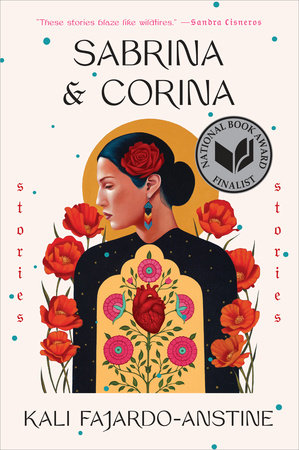
Sabrina & Corina by Kali Fajardo-Anstine
Buy the book

She can make a story smell of sickness. She can make legend of malediction. Conjuring the Sangre de Cristo Mountains, and unfurling the Denver skyline, there is no limit to what Fajardo-Anstine can manifest on paper and, subsequently, in our dreams. Yet, what is most admirable is the courage of her hand. She’s unafraid to delve into areas of race, feminism, queerness, and class. She interrogates whiteness, and its associations like passing and colorism, prodding unapologetically.

Fajardo-Anstine and I spoke about craft, music, and writing through inherited trauma, and she drops gems for us to pick up all along the way.


Maria V. Luna: In your collection, what do characters like the Cordova family represent when it comes to contributing to the portraiture of Latinx communities?

Kali Fajardo-Anstine: I was trying to portray a community that, often times, is invisible in the greater Latinx narrative. Southern Colorado, Northern New Mexico, mixed Latinx communities here in Denver—I was trying to create characters that were very individualistic, very human, in a way that I haven’t seen rendered before.

MVL: The term primas hermanas, or cousin sisters, refers to female cousins who are brought up so close they transcend Western nuclear kinship structures and are considered sisters. Sabrina and Corina, characters from the titular narrative, are primas hermanas, and as so often cousin sisters do, they become character foils. Can you talk a bit about Corina’s seeming stoicism in the face of her responsibilities to Sabrina? Corina applies makeup on Sabrina’s lacerated corpse, and she carries out this act with an alarming lack of emotional response.

KFA: I love that you call Corina stoic because that’s definitely a word reserved for men, in particular white men.

Those are comments I got early on in workshops—that my women characters were unfeeling, cold, and emotionless. That’s just part of my aesthetic. That’s the way I write, and that’s the tone I write in. I recently saw a lecture with the writer Jay Parini, and he said that tone is an author’s attitude toward his or her subject matter. I think that unfeelingness, or coldness is related to my worldview. I came out of a lot of violence in my childhood, and maybe that’s one of the ways I coped with it, which was to develop this hardened shell. How do I compartmentalize the violence that I am experiencing and still live my life in an organized and rational manner?

MVL: That is absolutely evident in the Sabrina & Corina narrative. How is this coping mechanism deployed in other stories within the collection?   

KFA: Excellent question. The first character that comes to mind is eighth grader Sierra from Sugar Babies who has been tasked with raising a bag of sugar, as if it were a real baby, with her class partner, Robbie. Sometimes, when I give readings and revisit that story, I am shocked at how funny and wise Sierra can be, but I am also surprised at how very closed off she is to those around her. She can be downright mean to Robbie, but I never got the sense while writing her that Sierra didn’t care for him. Sierra often feels connection to those around her while actively brushing aside any form of affection. At one point in the story, Sierra’s mother asks her if she can feel the landscape wrapped around her so tight it’s like being in a rattlesnake’s mouth. Sierra lies to her mother. She tells her that she feels nothing at all. Whenever I read that passage, I am surprised by Sierra in that moment, but also sad for her. It’s almost as if by showing love, we make ourselves more vulnerable to pain.

MVL: To go back to your workshop experience, how did you respond to comments about “unfeeling” characters? Do you think there was a gendered slant to those comments?

I wonder if readers expect a greater level of sentimentality from women writers and this influences the way fiction is read.

KFA: Once during a workshop, a classmate, after reading the first draft of my story Remedies, told me that she would never treat her children in such an awful way—that no woman would. But I disagree. People do hurtful, vicious things to each other every day. I think my characters are often misread as unemotional, numb, and even cruel. I’ve wondered if readers expect a greater level of sentimentality from women writers and this somehow influences the way fiction is read. The ways to hurt another human being are innumerable, and for reasons I can’t quite know, mapping those crimes feels valuable.

MVL: “Sisters” is a devastating narrative. There is so much going on in this piece, and you handle topics of abuse, racism, classism, and lesbianism with subtly and then a sucker punch. All this is happening in the 1950s. What was the impetus for this story?

KFA: This piece is based on a family story, inherited trauma that was passed down from generations. I remember being in my apartment in Wyoming and I could hear the character Doty speaking to me, and I knew I had to write this story. It’s one of the most difficult things I’ve ever written, and it made me sick to my stomach to have to write it, but I knew this haunting was never going away.

You were asking about racism, classism, and lesbianism. Queerness was something that was common in my family. I had an aunt who was in Dykes on Bikes, and an uncle who, in the 1940s, was trans. My godfather, who is also my cousin, died of AIDS in the early 90s. This is part of my reality and I wanted to show that people have inhabited these spaces for a very long time. It was important to me that queerness wasn’t solely portrayed as contemporary.

MVL: Landscapes are rendered masterfully in this collection. What is intriguing about these narratives is that soundscapes are important as well. Can you talk about how the music of Neil Young, Patsy Cline, Steely Dan, and Bob Dylan works within these stories?

KFA: When I write, I usually create a playlist, and I repeat a song over and over again while I work on one story. It helps create continuity between the characters’ consciousness and my authorial consciousness. You can’t write a short story in a day, and when I play a song back, I am able to re-enter that space fluidly—something that became very important during the editorial process. Some of these stories I first wrote nearly a decade ago, and I needed to find a shortcut back into the world of the story. Music created that.

There is another layer of why music is so important in my work. To me, ordering a short story collection is a lot like choosing song order on an album. When it came time to put my stories in order for Sabrina & Corina, I asked friends what are some of the greatest ordered albums they could think of. People were throwing out album examples from Stevie Wonder to Kendrick Lamar to Bob Dylan. That made a lot of sense, because I devoured Dylan albums as a teenager. I discovered his music through my father when I was 15 years old. I think a lot of Dylan’s lyrical styling found its way into my prose style.

Patsy Cline’s music, too, was important to me throughout the writing of Sabrina & Corina. As a little girl, I spent time with my great grandmother and the rest of the women in my family who would play Patsy Cline’s songs as we cooked and cleaned house together. These were not white women, but they adore Patsy Cline because I think they were able to identify with the sadness and the violence she had experienced in her life—all the hardship she had gone through. You can hear that in her songs.

MVL: Can you talk about the allure of spaces the characters inhabit like Benny’s Dancehall, the town of Saguarita, and Cheesman Park?

KFA: I am a big fan of Edward P. Jones’s work, especially Lost in the City. That collection of short stories inspired me to authentically showcase the place in which I live, and where my people have lived for generations. My characters and my people have been in the Colorado/New Mexico region for as far back as history can trace. I wanted to show this with as much humanity and detail as I could. Jones’ work taught me to be as specific as possible about my characters and their place.

As for Benny’s, when I was a child, my great grandmother Esther and her sister Lucy would talk about these grand dance in Denver. They would go to these dances to see their friends and socialize with their community, a community of color. My great grandfather Alfonso was from the Philippines and it was at these dances where he met my great grandmother. Dance halls like Benny’s were spaces reserved for people of color in the West. But when I started researching these types of dance halls, I wasn’t able to uncover much in archives, which I believe has to do with who is doing the collecting and who is telling what stories. In my work, I wanted to bring Benny’s back to life.

Cheesman Park was a cemetery and in the later part of the 1890s real estate developers decided to build on it. They didn’t remove all the bodies. Now, whenever there is new development in the area, bones are found in the ground to this day. As a teenager, my friends and I used to hold seances in Cheesman, surely inspired by the Craft or another 90s movie. Living with that kind of knowledge, that kind of folklore, and not having it presented in any official history breeds a disconnect between the place where you’re from and the place you feel instinctually beneath your feet.

With Saguarita—I became fascinated with fictional towns in literature. You know, Faulkner has his fictional Yoknapatawpha County. My family emigrated up to Denver from Southern Colorado, and in my novel I call this place the Lost Territory, and that is where Saguarita is. I have the landscape of the Lost Territory in my mind, but because my family left that place, I thought it would be more respectful to render it as a fictional space. Denver is a specific place in my imagination while Saguarita is a more magical realm.

MVL: On examination of Colorado demographics, I noticed there are two ways the White population is considered: White and White non-Hispanic. This binary manifests physically in a few characters throughout the collection as being Hispanic and White. Can you unpick the duality of this embodiment?

If you can take a people, erase their history and who they are, they don’t have access to their power anymore.

KFA: I have a white father. I grew up with a lot of people who looked like me, or have last names like I have, and they would say that they are Spanish. They didn’t know about their indigenous or their Mexican background. I think this was a way to protect earlier generations from deep-seated racism in Denver. There was a forced cultural assimilation that happened here. It’s a form of cultural killing. If you can take a people, erase their history and who they are, they don’t have access to their power anymore.

Sabrina, from the story “Sabrina & Corina,” has an absent white father, and there are a lot of Chicanos in the Southwest who are white passing. So you may have a Spanish name, and you may come from this culture, but you don’t resemble the stereotype or dominant idea of what a Latinx person looks like. Sabrina is double alienated. The family thinks she’s gorgeous, and they put all their hopes and dreams into her, but that doesn’t elevate her, and it distances her further from her family. There is a scene where Sabrina asks Corina if she even looks like one of their family members. Colorism is a real thing in my family—some of us are light, and some of us are dark, and some have black hair and some have red hair. When you are mixed, these kinds of unpredictable physical traits appear and I really wanted to talk about that.

MVL: Staying on the topic of whiteness for a moment, there is an emphasis on white transgression throughout the collection. White fathers abandon their Hispanic children. White husbands and boyfriends provide opportunities for social ascension, yet they exoticize Hispanic women in exchange. Were you at all worried about alienating White readers?

KFA: That’s an interesting question because I never envision having readers—ever. I was just creating art, and it came out of a place of urgency and a deep truth. I don’t worry about centering White readers because the books I love don’t necessarily center White readers. I mentioned Lost in the City, I think you could give those stories to some White readers and maybe they will feel alienated. But alienated is how I felt when I was reading supposedly canonical literature throughout my education that only featured White characters. I felt alienated by the books that didn’t show me, and I hope my work helps start a conversation about who gets to be centered as a reader. My upcoming novel is historical fiction, and it examines the emphasis on the unattainable ideal of becoming White. Whiteness becomes so valued that it creates violence in these communities. It’s something I think about and I think about it often.

MVL: Your upcoming novel is about Depression-era Denver. Tell me about that.

KFA: I started working on this novel before I wrote the short stories. The novel explores the migration of the Lopez family, from Southern Colorado (the Lost Territory), to Denver in the 1930s. This is the genesis generation of all my characters, even those in Sabrina & Corina. They are a mixed people, Spanish and Pueblo Native Americans, working in a Wild West show before fleeing north to Denver after racial violence incites. During this time, Denver saw shifting demographics—the Ku Klux Klan had been in power up until the 1920s and the novel looks at institutional racism in Colorado during that time. It’s also a love story. The world of my novel is almost epic, and I’m excited for readers to be able to see as story from me this large.

MVL: In terms of Chicano literature, can you say whether writers like Gloria Anzaldúa, Pat Mora, or Cherríe Moraga were inspirational to you?

KFA: Gloria Anzaldúa is definitely an inspiration. I remember reading Borderlands/La Frontera in college—I was a Chicana/o Studies minor. Some of the concepts Anzaldúa writes about made me feel recognized on the page for the first time. In particular, she highlights this idea of a sixth sense, “la facultad,” or an instant knowing, a deep form of intuition that serves as a survival tactic for those who have experienced oppression. It was the first time I’d seen that concept articulated. La facultad runs throughout my whole book.

Sandra Cisneros has been an enormous influence, too, and the Chicano writer Arturo Islas, author of The Rain God—his work is set in El Paso with robust characters, queer characters, and gorgeous prose. I was first exposed to his work in college and I hadn’t seen anything like that from the literary canon before. I love his books.
Going from Cocaine to Novels, with the Help of “Novel with Cocaine”

Novel Gazing is Electric Literature’s personal essay series about the way reading shapes our lives. This time, we asked: What’s a book that changed your mind?

Novel with Cocaine, or, according to a different translation from the original Russian, Cocaine Romance, is a book of mysterious provenance. The pseudonymous writer, M. Ageyev, was likely an émigré to Istanbul in the late 1930s. For me, Ageyev’s lack of an origin story—or ending, though some hypothesize he returned to Stalin’s Russia and faced execution in a death camp—was an appealing enough reason to read this book. Under the current U.S. administration, with its frightening immigration policies, and in light of possible Russian meddling in the 2016 presidential election, as well as the powerful historical role of literature in Russian politics, Ageyev’s novel might seem more relevant than ever.

However, that’s not why I chose to read the 1998 English translation published by Northwestern University Press. I picked up Novel With Cocaine to get inside the head of an adolescent with addiction; I saw it as possible inspiration for the coming-of-age novel I’m writing. But when I read it, I ended up reckoning with my own past substance abuse problems.

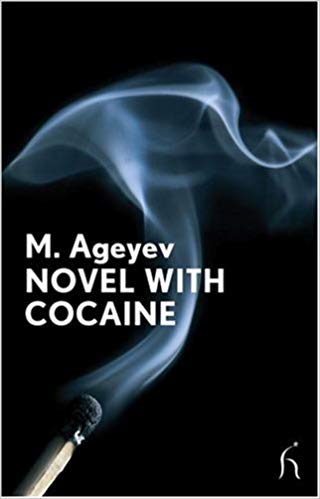
Novel with Cocaine by M. Ageyev

When my MFA professor recommended the book, he warned me that the narrator, Vadim Maslennikov, is not nice to women. He wasn’t wrong. Vadim is a brilliant but impulsive and indulgent 17-year-old who competes academically with his classmates and friends, beds numerous women, and becomes hopelessly addicted to cocaine after a breakup. While in the early stages of recovery from an unnamed venereal disease, Vadim has sex with a woman he has just met. Later, the protagonist derides women who receive sexual satisfaction from their romantic encounters, referring to them as harlots. To round out his charm, Vadim steals from his mother and shames her for addressing him in public.

Still, I have thick skin. I assumed my instructor knew of my feminist proclivities but didn’t know about my party girl past. One Tuesday morning, freshly 21 years old, I woke to find my neck blossomed with two hickeys. They matched my wine-stained tongue, and I reeled, recalling a make-out session with a stranger in the middle of a boisterous booty dance I’d done atop a bar the night before. We’d briefly discussed our shared journalism majors and literary pursuits before his tongue swirled around in my mouth like an aggressive snake, reaching for my postnasal drip numbed tonsils. The weeknight partying ended when I left undergrad, but my “work hard, play harder” duality intensified.

The author frequently depicts how Vadim is at one moment the philosopher and the next an adolescent with impulse control issues. Now, the innocent teenager and now, the addict. These character dualities create tension in the book as Vadim lapses into philosophical and psychological musings, contrasted with his boorish behavior. In the first section of the novel, Vadim is a bright schoolboy with an admiration for the intellect and politics of his classmate Burkewitz. The book abruptly shifts into the next section, “Sonya,” implying that, despite Vadim’s deep admiration for his friend, a beguiling woman is able to distract him from school and camaraderie with the blink of an eye. Ah, adolescence.

In the third and fourth sections, “Cocaine” and “Reflections,” Vadim puts as much effort forth trying to understand the effects of cocaine on his psyche as he did attempting to understand Burkewitz’s non-conformist philosophies and Sonya’s cuckolding love. He is on one page the ingénue and on the next an out-of-control, petty thief.

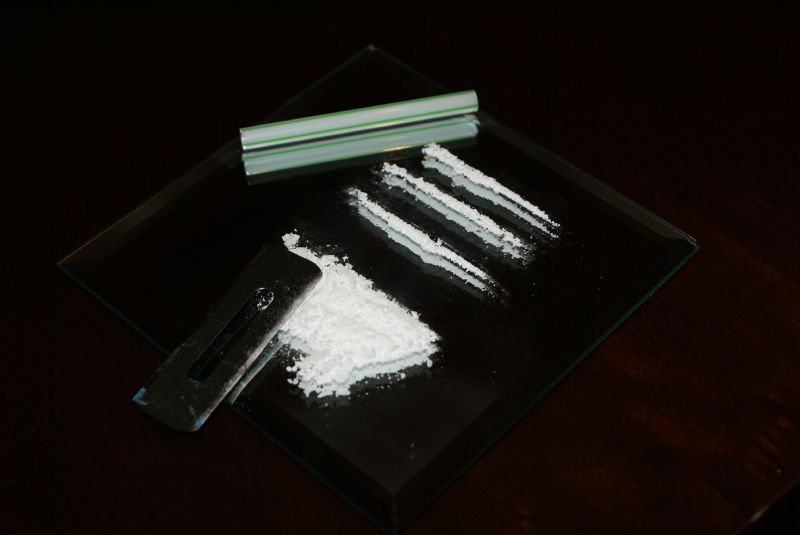
Vadim’s dualities toward cocaine mirror mine. In fifth grade, I won a D.A.R.E. essay contest warning against the dangers of illicit drugs. My brief speech spouted this sobering truth: cocaine is among the most addictive street drugs. Ten years later, I snorted my first line off a marble countertop in a gilded Manhattan bathroom at an after-hours open bar event I got invited to through my magazine internship. I was curious, and the woman offering the bump coalesced everything I wanted to be—slim, power-suited, hair perfectly blown out, makeup smudge-free despite what had to have been a 60-hour work week at a high-powered PR firm. I felt chic, quick-witted, and, most memorably, rich. Only rich people did cocaine, I reasoned. It’s got to be a classy drug.

In fifth grade, I won an essay contest warning against the dangers of illicit drugs. Ten years later, I snorted my first line off a marble countertop.

Having grown up lower class, scratching and scraping for educational and career opportunities, I embraced the same aspirational consumerism that leads Vadim to become a cocaine user. I also shared his simultaneous disdain for the belle époque, with its obvious, unfair chasm between the rich and poor.

However, cocaine’s addictive properties worried me, and after that open-bar event I didn’t try it again during my underpaid New York sojourn. Things changed when, a few years later, I found myself, as so many recent graduates do, embedded in the restaurant industry in my college town, Madison. I had struggled and failed to find a job in my field, so I got by on a grape harvesting gig and a cocktail server job. I supplemented paltry wages with shift drinks and medicinal bumps, before and after endless shifts. I earned the fun, I would tell myself, tasting the bitter drip in my throat, after hours on my feet, heaving open a leaden patio door to deliver saccharine pineapple booze and almond-crusted shrimp to regulars. I lost twenty pounds snorting cocaine that summer.

Later the same year, I escaped the restaurant industry and its nocturnal lifestyle. But I was dogged by the expensive habit. After a night of doing lines, I would stumble onto a city bus to go to work at my management-level office job. Mouth twitching and eyes wide, I wore a flared floral mini dress from the night before all day at work. Nobody said a thing.


“How to explain the absolute and constant recurrence of a phenomenon that could not but lead me to believe that my most humane sentiments were inextricably bound to my most bestial sentiments and that once I began straining the limits of one set of feelings I would necessarily call forth the other. It was an hourglass situation: as one vessel emptied, the other necessarily filled.”

Vadim concludes in this passage that ethical pendulums must remain in some sort of cosmic balance and swing as hard the other way when pushed—whether from darkness into light, goodness into evil, or mental wellness into depression. The cocaine and Vadim’s subsequent addiction to it only exacerbates the swinging of this moral pendulum, and yet he remains lucid in his analysis, as seen in the striking metaphor that ends the passage above. The parallel structure of the vessels and the calming rhythm of the words “emptied” and “filled” lend credibility to an increasingly irrational, unstable, and unreliable narrator.

An unreliable narrator—or, an educated young person on the cusp of adulthood. Me. As a cocaine user, I was young and stupid, but youthful and smart. I held multiple journalism and corporate jobs requiring high levels of analysis, patience, and ability to multitask. Like Vadim, I was credible and irresponsible, corruptible and corrupted.

I quit cocaine for good after that morning on the city bus, loathing the up-all-night effects of the drug and the mild but persistent depression I’d plunge into for nearly two weeks after one night of fun.

Vadim’s death at the end of the novel, through his intentional ingestion of a huge amount of cocaine dissolved in water, both jolted and inspired me.


In August 2018, in Fond du Lac, the small Wisconsin city near where I live, nearly twenty people were arrested for distributing one hundred twenty-seven pounds of cocaine. This drug dusts every hard-partied surface in every town. It seems to follow me around.

I go on a cleanse after reading Novel with Cocaine, trying to rid my body of past sins.

My husband and I discuss the possibility of having children, now that our lives are relatively stable and the idea of refraining from alcohol for a few months doesn’t seem like an insurmountable obstacle. I imagine going to a bar and leaning against a spot reserved for after-work bumps, the cocaine coating my forearms and seeping into my pores, my heart, brain, intestines, kidneys. Into my uterus, lying in wait for the first breath of pregnancy to inflict birth defects on a future unborn child.

Of course, I know this paranoia is ridiculous. I’ve quit partying, I tell myself. Cocaine clears the average adult human’s system in something like three days. It’s not accumulating in my organs. But it’s true a smidge of cocaine causes birth defects at the earliest weeks of gestation. Vadim cannot escape his vice, and I see his character’s life as a cautionary tale. I go on a cleanse after reading Novel with Cocaine, trying to rid my body of past sins. I avoid bars entirely.


This brilliant, compact novel is not only a commentary on adolescent drug use. It depicts the universal dualities of adolescence itself—wrenched back and forth between childhood and adulthood, young people act out, trying to find their places in the world. The protagonist is a doomed Holden Caulfield. Vadim’s drug habit and vile behavior can be seen as symbolic critiques of Russian politics—as he spirals into addiction in late 1917, severing all his positive, close relationships, the country rages into civil war.

Vadim’s death is the anti-Communist author’s symbolic escape from an oppressive dictatorship. As the late Michael Henry Heim, the translator of Ageyev’s work, wrote of the protagonist in his introduction to Novel with Cocaine:

“For cocaine allows him to believe he has grown up—believe that his wildest dreams of success have come true—without the slightest effort on his part.”

The irony here cannot go unaddressed. In the “Cocaine” part of the book, Section 4, the protagonist takes his first snorts of cocaine and relishes his supposed profundity:

“And all the while I feel better and better. I feel new joy welling up within me, feel it tucking its tender head into my throat and tickling it. Before long (I am having a little trouble breathing) I can’t contain myself for joy, I feel it running over, I have a burning desire to tell these poor little people a story.”

In his coke-addled mind, Vadim falls under the delusion he is an adult, and a clever, condescending one at that—a storyteller, a yarn weaver, despite his high school dropout status. My and Vadim’s similarities were never clearer to me than when I read his character’s most coked-out scenes. I, however, have had to elicit much effort to grow up after kicking the recreational habit. The pattern I was in seemed sustainable for a lifetime—secure a job, pump out “work,” and party weekends away.

I believed I was so clever, walking into bar after bar on those partying nights to dominate with sheer cocaine confidence. For days after the comedown, I would berate myself for spending time on uselessness—the meaningless of the bar scene so clear in the daylight, reality foisted upon me by ravaged serotonin levels. I guilted myself over the human rights atrocities cocaine causes, the drug trade and its accompanying violent horrors, the trafficking routes, the gangs, and the child refugees attempting to escape that life. After the all-nighter and self-loathing day at the office, teeth still grinding, I knew I needed to stop living for the weekend, acknowledge my complicity in a worldwide bloody hellscape, and accomplish real work, namely telling my stories to all “these poor little people.”

If this addicted boy genius valued his story to such comical heights, surely mine is worthy of sharing with the world.

What an asshat, I thought, as I read another scene, “Reflections,” Section 1, which depicts Vadim addressing the reader; the implication is that the novel I read is a memoir the protagonist leaves behind after his self-imposed overdose death. If this little fool, this addicted boy genius, valued his story to such comical heights, I determined, surely mine is worthy of sharing with the world. Vadim never gets to see his written account make it into publication, but I will, I vowed as I read its last pages.


Despite my professor’s warnings, I found it difficult to reconcile Vadim’s horrifying treatment of women. He steals from his mother but often lapses into sentimentality when describing her, which indicates he tells his story from a regretful point of view. Vadim appears to believe his mother and Sonya can save him from an inevitable and painful end, as seen in several cocaine hallucinations depicting Vadim’s dream wedding to Sonya and his mother dying by hanging as a sacrifice to fund his existence. The protagonist recognizes the repulsion his behavior must induce in the reader, seemingly comparing his left-behind memoir with a play starring a sympathetic hero who stabs a cruel villain to death. The audience rejoices in the nobility of the hero but in doing so, Vadim explains, also praises murder and amoral endings: “… do they not, for all that, point directly to the fearsome, murky nature of our souls?”

Vadim taunts his future readers, critiquing both them and his basest urges. How can you like me? he seems to say. I’m so awful. You must be terrible, too.

It’s true. By rooting for Vadim’s wellbeing, hoping he gets away with stealing his mother’s most-prized possessions, and willing him to live, readers are complicit in his awfulness.  I wanted the protagonist to survive, even though, when a doctor asked why Vadim kept returning to cocaine, Vadim compares his addiction to the acclaimed Russian writer Gogol’s creative process. Both Vadim and Gogol try to quit their respective “drugs”—cocaine and creative writing. But the depressive effects of the comedown—the cocaine hangover and a lack of “the euphoria, the combustion of creation,” respectively, lure each back to “continue to succumb to his obsession even though it promised him nothing but despair.”

The cleanse gave me newfound energy, and I relish a life full of eight-hour nights of sleep, green smoothies, and less alcohol. Shunning acquaintances who party hard, I tell myself a 30-something professional woman doesn’t need to give into social pressures anymore. Instead, I throw myself into writing the coming of age novel I’ve always wanted to craft, and I buckle down in my MFA program to focus on it. I read voraciously. Be more like Gogol, I tell myself—the writing obsession is much healthier to succumb to, even if it results in despair.

This book, of the many books I’ve read in my MFA program, serves as a locus for creativity, the overlap between my life and Vadim’s pregnant with parallels—from the lack of a present biological father to financial straits to our substance abuse. My protagonist does not have a male lover or a biological dad to save her from an expensive coke habit, though, and neither did I.

Women have spent too much time trying and failing to save men in narratives like Novel with Cocaine.

My irritation at the protagonist aside, Novel with Cocaine is a brilliant, dark version of the hero’s arc, and literature needs more messy and unlikable protagonists like Vadim. But female.

Women have spent too much time trying and failing to save men in narratives like Novel with Cocaine. So, I write the female, semi-autobiographical protagonist in my novel into a messy, drug-laced, bad path from which she emerges, a little broken but victorious, and extraordinarily humbled. She does not dream of marriage to save her from the messiness of casual drug use or an empty checking account. Her parents are absent.

Her journey, like Vadim’s, is a raw and accurate illustration of adolescence. The trajectory of her character arc, like mine, is one of mistakes and redemption, a cycle of growth and pain that hurts but allows her to grow—and survive. Novel with Cocaine changed my view of partying, now that I’m in my thirties. It also taught me how my protagonist could save herself.

7 Books About Women Searching For Home

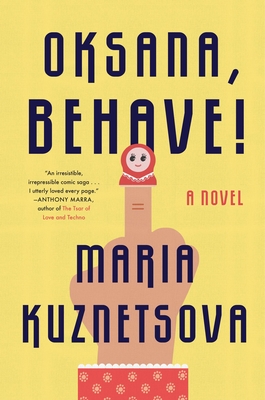
When I was growing up, the only constant in my life was change. Like Oksana’s family in my novel, Oksana, Behave!, my family left Kiev, Ukraine, when I was a child—by the time I was eleven years old, I had already gone to five elementary schools in several different states, and I don’t think I would have become a writer if my family hadn’t moved around so much. Moving constantly while also trying to figure out what the hell it meant to “be American” made me pay careful attention to the people around me, learn to adapt quickly, and to also spend a lot of time alone trying to figure out where I fit in.

Buy the book

Each chapter of my novel is a love song to the different places where I have lived—no matter how hard a time I had in any of those places, there was always something about them I missed when I left, whether it was the torrential downpours of Florida, crayfish hunting in Ohio, late-night trips to 24-hour diners in New Jersey, or the lush hills of the Bay Area. Naturally, many of my favorite books were about bold, rootless women.

Here are seven books that explore the lives of women who search for home all over the world, the country, or even within the same city.

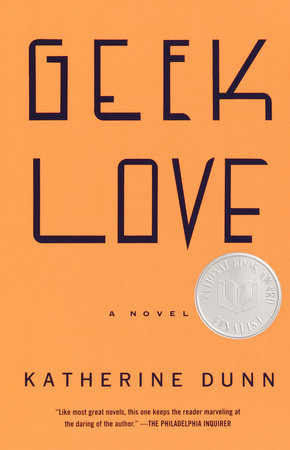
Geek Love by Katherine Dunn

This wonderfully bizarre novel is told by an albino hunchback named Oly whose parents genetically modified her and her siblings through insane drug use in utero, allowing them to travel the backwaters of the U.S. to show off their brood at various carnivals. The family had no physical home other than the van the father drove all over the place, but this was more than enough for them to feel rooted, however odd their circumstances. Oly begins her story by declaring, “Nights on the road this would be, between shows and towns in some campground or pull-off, with the other trucks and trailers of Binewski’s Fabulon ranged upon us, safe in our portable village.”

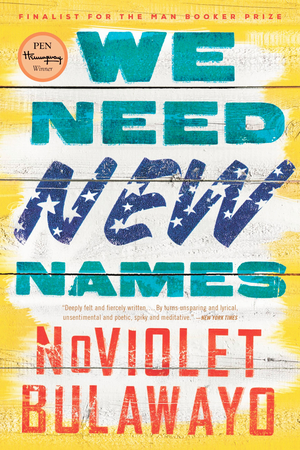
We Need New Names by NoViolet Bulawayo

Darling leaves an unnamed African country that resembles Zimbabwe after political upheaval as a child and finds herself in a place she calls “Destroyedmichygen” – an American state that could not feel further from home. By watching her Aunt Fostalina’s failed attempts to order from a Victoria’s Secret catalogue due to her accent, having calls with her hometown friends that leave her feeling even more lonely, and exploring pornography with her new school friends, Darling navigates her dual identities and finds something resembling peace. “Lot’s wife turned back just like you’re doing and turned to salt,” a character named Mother of Bones warns Darling, early on, and her words take on a secondary meaning after she leaves her native land.

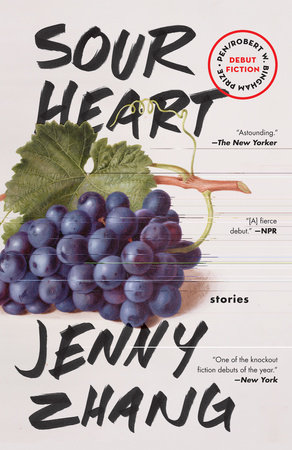
Sour Heart by Jenny Zhang

Sour Heart by Jenny Zhang

Nothing feels permanent for Christina after her family leaves China, moving all over New York City in search of more space and cheaper rent. “Let’s ask the gods for help,” her father suggests after they find an apartment that brings some comfort. Christina says, “We stomped our feet and shouted, ‘Let us stay, let us stay, let us stay,’ until our voices grew hoarse and the next day mine was squeaky and my mom’s was sultry and my dad liked the way she sounded and I saw them holding hands and my mom fixing my dad’s shirt collar in the morning and I felt like this was the reason why I never wanted to get older, because why move forward when it was so brilliant to just remain as we were?” By the book’s end, Christina’s family finds some stability while her much-younger-college-graduated sister lives in “a glorified closet” in Williamsburg, yet there’s a sense that Christina misses her childhood upheaval.

You Don’t Have to Live Here by Natasha Radojcic

Fourteen-year-old Sasha runs away from home in Yugoslavia, leading her mother to move her to Cuba, then Greece, and at last, New York—but no matter where she goes, she can’t seem to stay out of trouble. From falling in love with a series of questionable men, to stealing and doing drugs, she can’t find stability in any of the places where she lives, though she does try. When she first runs away, the police officer who finds her asks, “Why aren’t you in school, where are your books, your parents, and where on earth do you live?” The last question haunts her throughout her gritty, dark, and wonderfully electric journey all over the world.

Saint Mazie by Jami Attenberg

Mazie Phillips was born at the turn of the 20th century and is a big-hearted, hard-drinking woman with a temperamental sister who makes her family move around New York just when any place begins to feel secure. When her family leaves the city for Coney Island after she suffers a pregnancy loss, Mazie says, “Rosie said living by the ocean would heal us all. But what does she know about getting well?” It’s understandable that Mazie is drawn to helping the homeless and feels more rooted in New York City itself instead of whatever cramped space she and her family inhabit.

Brooklyn by Colm Tóibín

Eilis Lacey isn’t exactly thrilled to be leaving her family in Ireland in order to support her family in America. She’s devastated to leave her mother and ailing sister, but wants to make a good final impression: “What she would need to do in the days before she left and on the morning of her departure was smile, so that they would remember her smiling.” In America, things get complicated when she falls for a baseball-loving Italian, and she feels even more torn between two homelands when she feels a spark with a hometown friend when she returns to Ireland for her sister’s funeral. She finds herself at a loss, deciding not only between two men, but between two countries.

Girl at War by Sara Nović

Ana’s story begins when war breaks out in her native city of Zagreb, Croatia, which tragically leads her to move to America, where she is adopted by an American family. As a college student with an American boyfriend, she is still haunted by her home country and the fate that befell her parents in the bloody war. She returns to home for the first time, meets an old flame, and hopes to find closure when they try to track down her family’s former vacation home. “I hope it’s still there,” she says as their car careens past a deserted beach.

9 Fashionable Books That Make Clothes a Main Character

If you love both fashion and literature, many books are outfitted with special delights. The vivid description of a dress, a shoe, or even a shade of lipstick can thrill. Yet there’s always a subtext to an emphasis on sartorial style in creative narratives. A T-strap heel in an author’s hands can be political or sexual, foreshadowing or world-building, a commentary on class or a synecdoche for the indulgences of an era.

Here are nine of my favorite fashionable fictions, listed in the order they were published, from earliest to most recent.

The Tale of Genji by Murasaki Shikibu

The Tale of Genji, Murasaki Shikibu

The originator of the novel is also the doyenne of stylish lit. If you’ve ever wondered how to coordinate twelve layers of robes in impeccable but original color combinations, then this doorstopper is for you. Written by a Japanese woman of the Heian court around a thousand years ago, The Tale of Genji is, in the minds of many scholars, both the world’s first novel and its first psychological novel. The story of an aristocratic playboy is lacquered with descriptions like these: “Six young page girls sat next to the stands, each wearing a ceremonial outer robe of white with red lining and layered robes of scarlet and wisteria underneath” and “This girl, who was tall and statuesque, wore a woven, patterned robe of pale violet lined with blue over a short, dark purple singlet and a diaphanous outer robe of pale russet.” But Genji’s influence goes beyond fashion: one of its biggest achievements was making the Japanese language itself fashionable, at a time when male writers were still clinging to classical Chinese.

Dream of the Red Chamber by Cao Xueqin

Dream of the Red Chamber, Cáo Xuěqín

One of the four (or six, depending on the list) classic Chinese novels, Dream of the Red Chamber is another encyclopedia of vestiary delights from long ago. As its English title suggests, it’s drenched in reds of all hues, blushing crimson and flushing scarlet. When the reader first encounters the male protagonist, he is “wearing a narrow-sleeved, full-skirted robe of dark red material with a pattern of flowers and butterflies in two shades of gold . . .Over the upper part of his robe he wore a jacket of slate-blue Japanese silk damask with a raised pattern of eight large medallions on the front and with tasseled borders.” The jewelry, décor, and architecture are described just as meticulously. You can see why this book, an epic family saga written and set in the eighteenth-century, runs long—2500 pages in the English translation. It is a world unto itself, with even a name for its devotees: “redologists.” Yet its vivid colors in the early pages also remind the reader that the brightest lives and families eventually fade, hinting at the decline in fortunes to follow.

Nana by Emile Zola

Nana, Émile Zola

Until the syphilitic corpse of the eponymous character putrefies the final scene, Zola’s novel is a feast of Second Empire chic. For instance, when Nana makes her entrance at the Grand Prix, she steps forth “in a remarkable outfit. This consisted of a little blue silk bodice and tunic, which fitted closely to her body and bulged out enormously over the small of her back, outlining her thighs in a very bold fashion for this period of ballooning skirts. Then there was a white satin dress with white satin sleeves, and a white satin sash worn crosswise, the whole decorated with silver point-lace which shone in the sun. In addition to this, in order to be still more like a jockey, she had jauntily stuck a blue toque with a white feather on her chignon.” Zola’s fashion details are part of his overall indictment; fripperies and frills symbolize the society’s decadence and excessive corruption.

Orlando by Virginia Woolf

Orlando, Virginia Woolf

A satire of English literary history and biological determinism, as well as a love letter to her beloved Vita Sackville-West, Woolf’s novel asks serious questions about gender and sexual orientation. Naturally, fashion plays a key role as the heroine metamorphoses from male to female and adventures through the centuries. We’re told several times at the start of the novel that the fashions of the time—the opening chapters take place in the Elizabethan era—tended to disguise one’s sex, which will prove thematically important. Once her transformation is achieved, Orlando cannily adopts the dress of a noblewoman, if not quite her mores. In one extraordinary scene, she lights the silver sconces around her mirror and regards her new self: “Then since pearls do not show to advantage against a morning gown of sprigged cotton, she changed to a dove grey taffeta; thence to one of peach bloom; thence to a wine coloured brocade . . .she was like a fire, a burning bush, and the candle flames about her head were silver leaves; or again, the glass was green water, and she a mermaid.” In Orlando, dress dissembles.

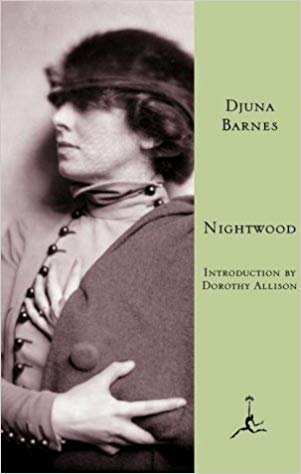
Nightwood by Djuna Barnes

Nightwood, Djuna Barnes

This 1936 novel—one of the first to openly celebrate lesbian love—is simultaneously modernist, gothic, and a nod to the Decadent movement. Fitting, then, that its female protagonist’s signature style is off-key, with one slipper in the mode of another time: “Her clothes were of a period that he could not quite place. She wore feathers of the kind his mother had worn, flattened sharply to the face. Her skirts were moulded to her hips and fell downward and out, wider and longer than those of other women, heavy silks that made her seem newly ancient.” That final oxymoron encapsulates the book, which is perfumed with the same thing as a great runway show: the feral scent of the past reinvented.

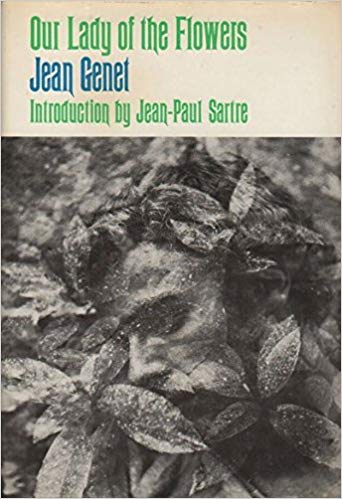
Our Lady of the Flowers by Jean Genet

Our Lady of the Flowers, Jean Genet

Written in prison, Genet’s first novel immortalizes the drag queens and other denizens of the Parisian underworld, consecrating their every costume and gesture in voluptuous prose. Introducing the pimp Darling Daintyfoot, Genet writes, “I shall say that he had lace fingers, that, each time he awoke, his outstretched arms, open to receive the World, made him look like the Christ Child in his manger—with the heel of one foot on the instep of the other—that his eager face offered itself, as it bent backward facing heaven, that, when standing, he would tend to make the basket movement we see Nijinsky making in the old photos where he is dressed in shredded roses. His wrist, fluid as a violinist’s, hangs down, graceful and loose-jointed.” By insisting that the body’s poses may constitute their own high style, this novel anticipates the voguing that would be immortalized forty-seven years later in Paris is Burning.

Gigi by Colette

Gigi, Colette

With her tartan skirt and slate-blue eyes, fifteen-year-old Gilberte (Gigi) is Lolita’s older sister. In Colette’s novella, as in all her writing, wit, wisdom, and warmth gambol with each other. For example, Gigi proudly models her grown-up dress in one scene: “The full sleeves and wide flounced skirt of blue and white striped silk rustled deliciously, and Gilberte delighted at picking at the sleeves, to puff them out just below the shoulders.” But her primping is swiftly undercut when future husband Gaston remarks, “You remind me of a performing monkey . . .I liked you much better in your old tartan dress.” Throughout the story, Colette reminds the reader that as much as a rite of passage and a tool of seduction, clothes are traps for women.

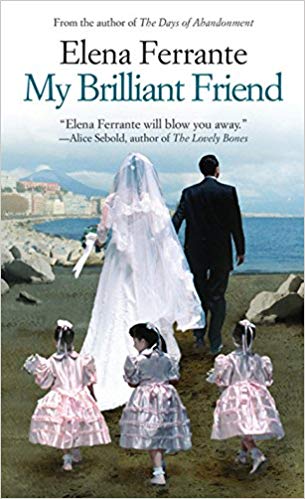
My Brilliant Friend by Elena Ferrante

The Neapolitan Novels, Elena Ferrante

In My Brilliant Friend, the first of the four novels, irascible Lila Cerullo channels her prodigious creative gifts, which have been frustrated by her having to quit school at a young age, into designing men’s shoes in the back of her father’s store. Durable, original, and beautiful to look at, the shoes are what Lila grows up to be. They go on to function as the purloined letter of this long story, changing hands, breaking hearts, and signifying the power dynamics of an entire Neapolitan neighborhood, symbolizing both her boundless potential and the crushing limitations of her social milieu.  

The Collected Schizophrenias by Esme Weijun Wang

The Collected Schizophrenias, Esmé Weijun Wang

Fashion is all about a harmony of sense and surprise, and few things could have been more surprising than the colorful splashes of designer clothes amidst Wang’s stark, searing essay collection about living with schizophrenia. Her musings on Marc Jacobs, Alexander McQueen, and high fashion as camouflage for the mentally ill are striking but make sense. Weaponized glamour, as she calls it, is all about subverting expectations and seizing respect.

In novels that have a passion for fashion, too, the glamour is always weaponized, deployed to dress up characters, settings, and themes. Textual couture is, like its wearable counterpart, painstakingly assembled and dazzling to behold.

“The Weight of Our Sky” Uses Fiction to Reckon with Malaysia’s Unspoken History

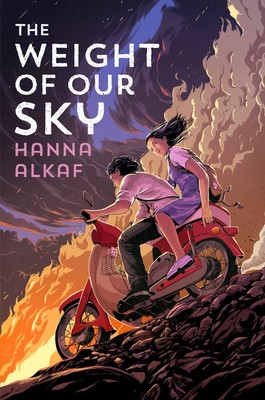
In The Weight of Our Sky, Malaysian author Hanna Alkaf places her protagonist Melati, a Beatles-loving teenager afflicted with obsessive compulsive disorder, alone and directly in the line of the country’s 1969 race riots. In May of that year, Chinese-led opposition parties made electoral gains in Kuala Lumpur, the Malaysian capital. The gains unnerved the dominant Malay Muslim community, who feared losing political power to the Malaysian Chinese community. These tensions simmering since the country’s colonial period, when the British pursued the colonial ethnic management policy of divide-and-rule, exploded on May 13 after two political rallies by competing groups. Amid this extremely volatile setting, Hanna writes to the humane by having the Malay Muslim Melati’s life saved by a Christian Chinese family, who are in themselves divided in how they view the riots.

Buy the book

In Malaysia, the incident has historically been only minimally discussed, usually as a cautionary tale and an excuse for silencing dissent over preferential economic policies to favor Malay Muslims over others put in place in its aftermath. In 2019, the shadow cast by May 13 and its legacy remains over the country.

For Malaysian readers, many of whom have family memories of the riots, the novel offers a dramatization of that moment in ways never seen before on the page. As a minority with generations-deep roots in the capital, I found Hanna’s depiction to be respectfully complex and deeply emotional. The close rendering of Melati’s OCD episodes aided by a djinn figure further escalates the book’s turmoil and realism. For readers unfamiliar with the complexities of The Weight of Our Sky’s historical landscape, the novel is a rollicking, imaginative ride.

I spoke to Hanna Alkaf over email about digging up and honoring the past, mental wrestling with djinns, and being seen.


J.R. Ramakrishnan: Your disclaimer at the start of the novel is pretty intense. You tell readers that if they are not ready for the violence, OCD, racism, and other triggers, to not proceed. Melati’s story was pretty harrowing for me—even as (or maybe because of it) an adult aware of the history. How did this story begin for you?

Hanna Alkaf: I had been thinking about writing the May 13th riots into a story for a long time; it had sort of sat in the recesses of my mind waiting for me to decide what form it wanted to take. Part of that comes from how little we’re actually taught about the incident in school, and how rarely people are willing to even talk about it. It’s held over our heads as a specter, a threat to make us fall in line—“Don’t do this, or there might be another May 13th” our politicians warn us—but so much of the narrative is obscured or missing, and I always wanted to know why. What was it that we weren’t being told?

As for the OCD component, I’d just finished working on a nonfiction book that explores the landscape of mental illness in Malaysia, and was still very much in that headspace—so when I decided I wanted to begin working on my first novel, it became a way of marrying two topics very close to my heart.

JRR: When you started writing, who was the reader you had in mind? Did you consider writing an adult novel at all?

Our young people deserved a story about their own history, a story that explains the collective scars we carry.

HA: I wrote this story for young Malaysians. I never considered making it an adult novel. People—adults, mostly—ask me this question of “Why YA?” a fair bit, and my response is always: Why not? The implication seems to be that heavy, complex stories are beyond the scope of YA literature, and honestly, that just isn’t true. Teens and young adults want all sorts of stories, and they deserve stories that challenge them, make them think, reflect their experiences, stories that are written for them and not just about them, stories that speak to them and not at them. Our young people deserved a story about their own history, a story that explains the collective scars we carry. And they deserved to see themselves reflected in the pages of a book.

JRR: Outside of a brief introductory note, you don’t explain too much to readers unfamiliar with the May 13 riots, one of the defining events of modern Malaysia. You also leave a lot untranslated—to cite just two examples, cibai and kapcai (a slang curse word and the nickname for a commonly used motorbike, which are derived from Hokkien and Cantonese respectively but widely used by all in Malaysia). While writing (or in the editing process), were you concerned about readers “getting it”?

HA: Not particularly. Like many of us outside of the Western world who read in English growing up, I very quickly grew comfortable and familiar with entire worlds and vocabularies that weren’t mine. I could read tales of tea and crumpets, bluebells and midnight feasts, brownies and pixies, fairy circles and trolls under bridges, and bat not one eye. Is it too much to ask that non-Malaysian readers do the same? If you can read books that tell you to accept Elvish as a language, then surely a sprinkling of Malay is doable?

JRR: Tell us about your title and why you decided to use it. You have the words (in Malay) come out of the mouths of the non-Malay characters of the book–Auntie Bee and later, Vincent.

If you can read books that tell you to accept Elvish as a language, then surely a sprinkling of Malay is doable?

HA: I am always hugely gratified when people tell me they love the title of the book, because I am quite honestly terrible at titles, usually. TERRIBLE. But I was writing a particular scene, and trying to think of a peribahasa (a saying) that would fit the situation best, and when I settled on “di mana bumi dipijak, di situ langit dijunjung” (where you plant your feet is where you must hold up the sky, meaning that you have to follow the rules and customs of wherever you decide to put down roots), I knew it was perfect. And after that scene was written, I knew that I wanted the title to call back to it somehow. It’s such an intimate, quiet scene in the middle of all this chaos, but it means so much.

JRR: You don’t avert our eyes from the racism of that moment, and you depict racial slurs towards all parties. You also remind us of Malaysia’s deep Hindu and Chinese roots. Did you have concerns about taking on this “sensitive”  (in the context of politics in Malaysia) era as a subject matter?

HA: I wasn’t concerned that I was going to get into trouble—which is not to say I won’t, I just wasn’t particularly concerned about it. What I was concerned about was getting it right. I was, and I still am, if I’m completely honest, extremely anxious about letting down my fellow Malaysians, about telling our story in a way that’s harmful or disrespectful or lacking in nuance. I know what it means to see yourself on the page; I would hate to do it in a way that is hurtful.

JRR: I attempted to read your novel as if I didn’t know the historical background or the geography of the city. Obviously, it was impossible. I feel like May 13 was mostly an episode, at least on personal level, that was not meant to be discussed—or there was no way of discussing it without being inflammatory.

In your research, you interviewed many people who lived through these times. How did the interviews go? How did you get them to tell their stories?

HA: I tried to seek out as many people as I could to interview, and from as diverse a range of ethnicities, backgrounds, and ages that I could. Some were willing to talk to me almost immediately; some needed some coaxing; all preferred not to be explicitly named in my acknowledgements. Their reasons were varied: Some were worried that the things they were talking about might hurt friends or family; some were worried that their stories portrayed them in a bad light; many were worried about the repercussions of speaking about “sensitive” topics.

I can’t say with any certainty why they were willing to talk to me. I was frank and honest about my intentions and the story I wanted to write, and I did not push them for details they might not have wanted to talk about. Mining those memories was painful for many, and I was acutely aware of the need to be as sensitive and respectful as possible, and to show that I had a genuine interest in them and their stories—not just as fodder for fiction. They put so much faith and trust in me, and I took that trust very, very seriously.

JRR: How have young Malaysian readers responded to the book’s history especially since the present seems to be increasingly contentious? What have been the conversations you’ve been having with young people at your readings and events?

HA: There are a few different layers to the reactions that I get. The first is usually from people who are incredibly excited at just seeing themselves, their families, their communities, their culture, in a mainstream, traditionally-published, internationally-available book. For some, it goes even deeper. They get to see a protagonist who looks like them wrestling with mental illness, as so many of us do. Then they hit the history aspect, and for many, this is where things get emotional. I get disbelief at first; people asking me if I made up incidents, especially some of the more violent ones. Nobody wants to believe those parts are true, even though they are. There is a lot of sadness, and a lot of anger. But there is also a strong undercurrent of hope.

I get asked a lot if I learned anything that surprised me in the course of writing this book, and I always say that I was surprised by both the violent, crazed inhumanity of it—and the humanity that shone through as well. There were so many acts of heroism, big and small, that carried people through those dark times, and I love that this is what people cling to when reading this.

JRR: There is still so much stigma around mental illness. The last time I was discussing a work position in Kuala Lumpur, I was asked to sign a declaration to affirm that I hadn’t suffered any mental illness ever. It was for a media company—I am sure you know from your experience of the industry, everyone is 100% sane all time!

In the book, you don’t shy away from the anguish Melati suffers. This line especially affected me: “It feels as if the Djinn’s sharp teeth are gnawing away at my frayed nerves.” I was wondering if you could talk about your past writing on mental illness, how it came to influence Melati’s creation, and maybe a little bit about the Djinn’s role in it.

I wanted to create a story where both religion and mental illness were part of the hero’s identity, but neither of them defined her.

HA: As I said earlier, before I started writing The Weight of Our Sky, I’d just completed a nonfiction book, published locally, that explores the landscape of mental illness in Malaysia, and I really wanted to work with this intersection of mental illness and faith that seemed to come up in every conversation, because it seemed to me to be such a uniquely Malaysian condition.

In Malaysia, you can’t escape faith; you’re constantly surrounded by it even if you don’t practice it yourself. The streets are lined with places of worship; chances are your own family has at least one religious person in it—and every person I spoke to in the course of writing that nonfiction book operated within this very specific context. They turned to faith to find solace and relief; they visited spiritual healers, whether willingly or unwillingly; one was made to go through an exorcism.

For my Malay Muslim character, it made sense to blame a condition she didn’t understand on djinn possession. As Muslims, we believe in the existence of djinn, and even today, it’s not unheard of to blame what some may recognize as symptoms of mental illness on spiritual weakness. The bottom line is that I wanted to create a story where both religion and mental illness were part of the hero’s identity, but neither of them defined her.

JRR: How have Malaysian audiences responded to your depiction of Melati’s OCD struggles?

HA: I’ve seen some people confused as to whether the djinn in the story was actually real, as the term “OCD” is never specifically used within the text, it being a term Melati wouldn’t have been familiar with at all. I’ve seen people talk about how repetitive and tedious and painful it can be to read as Melati goes through her OCD flare-ups, and I do have to say that yes, that’s the point, that’s what OCD is: It is all of those things. But the reactions that mean the most to me are from people—teen readers especially—who send me heartfelt emails and messages to tell me how Melati made them feel seen. This writing business can feel long and lonely and exhausting, but if I can make even one person feel that way, it’s all worth it.

New Literary Festivals Lead the Way by Celebrating Diversity

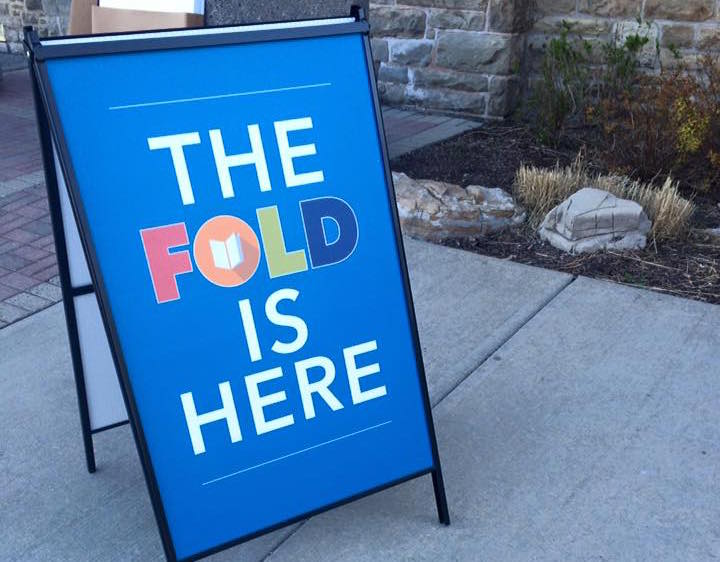
Much like writing itself, the planning of a literary festival may start with a question. At least this is what the Festival of Literary Diversity (FOLD) founder, Jael Richardson, says about her conference each year. Before planning truly begins, Richardson and the organizers of FOLD ask themselves: Who have we not seen or heard from? She says, “That’s where we start our programming.”

This question—what viewpoints and voices are absent from the larger celebrations of literature?—is inspiring a new batch of literary festivals, focused on increasing and highlighting inclusion as well as expanding the conversation on how to see change. Alongside FOLD, this spring will see the inaugural Antiracist Book Festival, the first of its kind in the United States, founded by National Book Award winner Dr. Ibram Kendi and managing director Dr. Christine Platt. The Antiracist Research & Policy Center (ARPC) Kendi heads was launched in 2017 and earlier this year Kendi co-edited an Antiracism and America series for The Guardian. During this time a book festival was a kernel of an idea that grew into a reality. Per Kendi, this gathering was meant to be “a celebratory and thought-provoking and inspiring space for writers and readers of books on racism, books that are striving for racial justice.”

With this dedicated focus on both ends, the organizers of the Antiracist Book Festival—taking place in Washington, D.C. on April 27th—and FOLD—happening on May 2nd in the city of Brampton, Ontario, Canada—have created their own paths. These events establish an imperative space, not only to showcase books by marginalized people, but to center marginalized people in the literary discourse.

Organizers ask themselves, ‘Who have we not seen or heard from?’

This year marks the fourth annual FOLD, which Richardson initially called a “social experiment.” Having already established herself as an author and an advocate for diversity and inclusion in Canada’s literary scene, she created an event that has grown and been absorbed by the larger community because it allows them to see the range of underrepresented authors and illustrators within Canada and beyond. Providing a stage to creators publishing representative and respectful stories isn’t simply a goal, it is a clearly written mission on the FOLD’s website. FOLD doesn’t solely feature underrepresented artists, the day-long event highlights artists whose work “inspires acceptance, empathy, and equality.” In other words, it’s not enough to simply have the representation; inclusion needs to be evident in the ways characters and spaces are depicted.

The Antiracist Book Festival’s mission is also clear in its programming, which is split into author panels and editorial workshops. With discussions on topics like using lyricism to explore time, religion and sexuality and race, democracy in public record, writing a book proposal, and Race 101, the focus on and around racial justice is never lost. How racism is discussed, dissected, and described is not separate from the craft of writing. As Kendi says, “what makes this group of authors unique, and uniquely antiracist, is their books chart paths forward to healing ourselves and our country of racism.”

How racism is discussed, dissected, and described is not separate from the craft of writing.

Aspects and participants of the Antiracist Book Festival were introduced through the Antiracist Research & Policy Center’s FD200, which honored 200 Americans whom the Center felt best represented the legacy of a leader in the abolitionist movement, Frederick Douglass. This celebration took place in Washington, D.C. earlier this year, and several honorees, like Jason Reynolds, Carol Anderson, and Jacqueline Woodson, will be in attendance at this year’s festival.

Kendi emphasized the importance of the community built as part of this festival and what the festival offers attendees in scope and dialogue as well as inspiration. “We are bringing together some of the most important authors of our time, who are literally writing for racial justice, for a world where the bodies of people can be as free and lively as their pens.”

For Richardson the breadth of community in not only the attendees but the speakers and organizers is what makes FOLD unique because it shows what people have been missing due to lack of awareness or even lack of support by publishers and other entities. An issue that arises with festivals and book-related events, Richardson says, is complicity. Exclusion occurs because many groups were never considered in the first place and so the same narrow ways of thinking and planning continue. Richardson mentioned one white attendant who was excited about the new authors she was introduced to thanks to FOLD, but also upset: as a regular patron of bookstores and libraries, she didn’t understand why she hadn’t been aware of the authors she’d just encountered at the festival in Brampton. Richardson hopes attendees will carry that new awareness with them after the festival. “I want people to feel a difference at the FOLD that makes them long for more diversity in the reading they do beyond FOLD,” she says. And she’s leading by example, expanding planning to be more inclusive of disabled guests in order to broaden access to FOLD.

Who isn’t represented here? What isn’t being spoken about but should? These are the questions that FOLD and the Antiracist Book Festival seek to answer through literature and fellowship. These should be the questions all literary festivals should be asking themselves every year.

Tickets can be purchased for the Antiracist Book Festival at American University’s Washington College of Law on eventbrite. You can register to attend the upcoming FOLD in Brampton via their website.

A Poetry Lover’s Guide to Re-Watching “Felicity”

In honor of National Poetry Month, I’m watching a lot of TV. Classic ‘90s teen TV, to be precise. Felicity, starring Keri Russell, is not just an ode to bookish girls with curly Marie Howe hair. It’s not just a love letter to college life in NYC, and of course, the tangly love triangle. It’s not just the show that single-handedly convinced me to consider enveloping myself in a wardrobe composed solely of sweaters. Felicity is also, though I didn’t realize it at the time, the show that made me a poet.

Well, maybe. I don’t remember Felicity turning me towards poetry, but here are the facts: Felicity is one of my favorite TV shows of all time, and when I started recently re-watching it, I was shocked to discover that the first season prominently features classic poetry. It’s remarkable (and a little heartbreaking) that I forgot, because—and here’s the final piece of evidence—I ended up becoming a poet, who wrote a heartbroken book.

For those of you who missed Felicity, here’s the gist: on the day of her graduation, our Stanford-bound protagonist musters up the courage to ask her high school crush to sign her yearbook. Here’s what he writes: “I’ve watched you for four years. Always wondered what you were like. What was going on in your mind…I should’ve just asked you, but I never asked you. So now, four years later, I don’t even know you, but I admire you.”

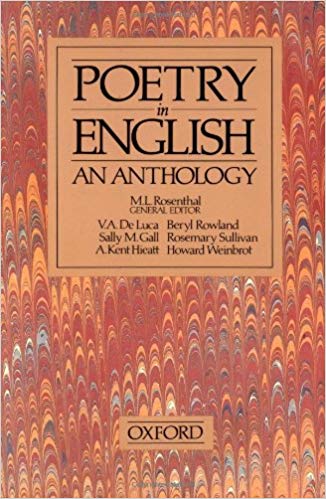
Poetry in English: An Anthology, ed. M.L. Rosenthal
Buy the book

After reading this bombshell, the stuff of every invisible girl’s fantasies, Felicity makes the first impulsive decision of her completely mapped-out life. She drops out of Stanford, and follows the boy of her dreams to college in the Big Apple. So in the spirit of our heroine’s semi-delusional attempt to stalk her high school crush, who is essentially a stranger, from coast to coast—and in defense of the retrospective ways that unliterary endeavors, like TV-watching, can unknowingly influence your future—I’ve obsessively combed through all 22 episodes of season one to pick out the six most poetry-heavy scenes and pair them with these iconic college moments.

For those reading along, the poetry textbook used by Felicity, Ben, and Julie, as seen in several episodes throughout season one, is the first edition of Poetry in English: An Anthology by M. L. Rosenthal.

When You’re Fully Crying in Your First Class of College…Read Emerson.

Smack in the middle of getting that awkward photo taken for her freshman ID card, Felicity runs into Ben (played perfectly by Scott Speedman) for the first time. Not only is he with another girl, whom he smooches right on the spot, Ben doesn’t really remember Felicity. The flash of the camera snaps. Cue the realization that you just moved across the country and shifted your entire life’s trajectory for a boy who doesn’t even know your dang name. Felicity mulls over this humiliation while she sits in her first class of her university career—fittingly, an introduction to poetry class. Her professor, Mr. Rogalsky, is bespeckled, bowtied, and sporting a checkered three-piece suit. He opens the class with the best reference to an 18th century Neoclassical poet that you will ever come across in the history of teen television: “When we get through with him, Alexander Pope will have become your favorite diminutive, Catholic, English hunchback poet in the entire world.” Tears pool in Felicity’s eyes as she mulls over the recklessness of her questionable life choices, and the camera pans across Emerson’s “Experience,” a poem that precedes the essay with the same title. This work grapples with the state of confusion that we often live in, and how to gain perspective and comfort in these moments. The poem is written in all caps in chalk on an old-school blackboard:

“Experience” by Ralph Waldo Emerson

The lords of life, the lords of life,—
I saw them pass,
In their own guise,
Like and unlike

Read the rest here.  

When the Hot Boy Who Never Noticed You in High School Needs You to Help Him with Homework (and His Chin Dimple Is Inescapable)…Read Dickinson.

Ben and Felicity end up in the same poetry class, and shocker—he needs help with his assignments. It’s every wordy girl’s nerdiest dream: reciting poetry with your burning crush on the floor of your cozy dorm. Is there a more romantically literary way to bust out of the friend zone than explicating Emily Dickinson? As Ben reads the first line of the poem out loud to Felicity, and earnestly tries to decipher its meaning with an adorable amount of misguided effort, he suddenly looks down and asks: “How come you never went to any parties in high school?” It’s that quintessential adolescent moment, when the popular guy unknowingly admits that he has been quietly cataloguing the quiet girl all along. Who better than Emily Dickinson, the Queen of Unrequitedness and Longing, to capture the intimate-sweetness of this scene, with a poem on the impossibility of love.

“I cannot live with You” by Emily Dickinson

I cannot live with You—
It would be Life—
And Life is over there—
Behind the Shelf

Read the rest here.

Or for more analysis, read this close reading.

When You’ve Royally Effed Up Your Love Life & Have Become the Unreliable Narrator of Your Own Story…Read Browning.

As Ben and Felicity grow closer, and a sliver of hope appears like a delusive moon that this shipping might come to fruition, Felicity blows it—big time. While working on their respective poetry papers on Robert Browning, Felicity offers to run Ben’s essay through her spell-checker (using a floppy disk! I heart the ‘90s!). Instead of simply correcting Ben’s there, they’re, and theirs, Felicity can’t help herself. In one of the most dramatic plot points of the season, she rewrites Ben’s paper, without telling him. When Professor Rogalsky accuses Ben of plagiarizing, Ben is furious with Felicity, but stubbornly refuses to let her confess to her crime. Instead, Ben must come before a makeshift English Department tribunal to get grilled on his paper. He almost pulls it off, surprisingly triumphing over interrogations on dramatic irony and a quote on William Bosworth. But when asked to compare and contrast Browning’s “My Last Duchess” with “Count Gismond,” Ben finally faces his literary limitations, and admits he didn’t write the paper. Felicity is standing outside the classroom the entire time, until she bursts through the door to admit her guilt, in order to save the innocent boy, who is too prideful to be saved. “My Last Duchess” is Browning’s most anthologized poem, and like “Count Gismond,” employs unreliable narrators. Art imitates art imitating life, as “Count Gismond” can also be read as vindication of innocence.

“My Last Duchess” by Robert Browning

That’s my last Duchess painted on the wall,
Looking as if she were alive. I call
That piece a wonder, now; Fra Pandolf’s hands
Worked busily a day, and there she stands.

Read the rest here.

“Count Gismond” by Robert Browning

Christ God who savest man, save most
Of men Count Gismond who saved me!
Count Gauthier, when he chose his post,
Chose time and place and company

Read the rest here.

After You’ve Broken Your Dream Boy’s Trust, Ruined Any Romantic Chances With Him, and Oh Yeah, Almost Got Him Expelled…Read Auden.

After the fallout of the cheating scandal, Ben is, rightfully, Icy AF with Felicity and will hardly speak to her. So she ambushes him as he emerges from the subway and tries to apologize to him for the umpteenth time. It’s a heartbreaking scene, and a tribute to Keri Russell’s incredible acting, as her voice breaks to hold back from crying, when she says: “The last thing I ever wanted to do was to make you feel less than amazing.” Felicity is absolutely dejected, and as one of the main storytelling devices used in the series, she records audio-letters (on a cassette tape recorder!) that she sends to her former French tutor, Sally (fun factoid: if the voice sounds familiar, it’s Janeane Garofalo). These voice-overs are prominently featured with Sarah McLachlan-eque musical accompaniment at the end of many episodes to hype up the emotional crescendos. When Sally “writes” back, she tells Felicity that her situation reminds her of a poem with this central question: “Is it harder to count on someone, or to know you’re the one being counted on?” Sally quotes the famous line of one of the most famous Auden poems: “If equal affection cannot be, let the more loving one be me.” It’s the perfectly prescribed poem for anyone in need of consolation from the desperation of one-way love.

“The More Loving One” by W.H. Auden

Looking up at the stars, I know quite well
That, for all they care, I can go to hell,
But on earth indifference is the least
We have to dread from man or beast.

Read the rest here.

(Or, listen to astrophysicist Janna Levin read it here.)

When It’s Finals Time and You Can’t Help But Succumb to the Sexy Magic of Library Vibes….Read Keats.

It’s exam week at the fictional University of NY (fun factoid: NYU denied the WB-turned-CW permission to use its name) and this episode is very heavy on Keats, with shoutouts to “Ode on a Grecian Urn,” “Ode to a Nightingale,” “Ode to Psyche,” and “The Eve of St. Agnes.” At this point in the season, Ben has warmed back up to Felicity, partially because he needs her help to pass the class. It’s exactly 12:28:53 pm in the Library Lounge, and there are 31 hours and 32 minutes until finals. “Was it a vision, or a waking dream? Fled is that music:— Do I wake or sleep?” Felicity reads the last couplet out loud, and explains to Ben that the poem is about contradictions; how fantasy and dreams can distract you from painful realities. “And you get all this from just reading it, you don’t even have to figure it out?” Ben smiles his Ben-smile. Then, he and Felicity engage in an epic intellectual debate of what constitutes greatness:

“Poetry is the greatest,” says Felicity.

“Well…pizza is the greatest,” counters Ben, without skipping a beat.

Touché, Ben. Touché.

Hours later, in the Silent Reading Room, it’s 3:17:48 AM. This time, it’s Ben, whispering Keats out loud to Felicity, the poem blooms in closed-caption on the screen: “The coming musk-rose, full of dewy wine, / The murmurous haunt of flies on summer eves. / Darkling I listen; and, for many a time / I have been half in love with easeful Death…” As Keats becomes intoxicated by summer flowers in the dark, Felicity is also catching The Feels for Ben again. He is so close to her, she can practically count his eyelashes.

Ode to a Nightingale by John Keats

My heart aches, and a drowsy numbness pains
My sense, as though of hemlock I had drunk,
Or emptied some dull opiate to the drains
One minute past, and Lethe-wards had sunk

Read the rest here.

When Your Best Friend Nabs the Boy of Your Dream…Read Whitman.

Plot twist: just as Ben and Felicity’s love prospects are looking up again, Ben gets with Felicity’s best friend, Julie. Avalanching more salt into Felicity’s heart, Julie also becomes Ben’s go-to Poetry Study Buddy. “I stop somewhere waiting for you.” Ben is uncharacteristically animated, reciting this line to Julie in her dorm room, “Walt Whitman rocks,” he says. “I thought you hated poetry?” Julie asks. “Yeah, that’s because I never understand it, but Walt here, actually wrote some stuff that I get. Listen.” At this point, he is on the bed with Julie, reading the opening stanza out loud, with one desk light glowing in the background. Julie is rendered totally helpless under Ben’s spell—as are the viewers, though we’re not always sure why. My favorite TV critic, The New Yorker’s Emily Nussbaum, said it best in a tweet: “I’m not even into guys like Ben. Except for Ben.” So what is it about him? Besides the annoying-yet-effective combo of good looks and unavailability, why is Ben Covington so compelling? Here’s a theory: it’s not just the chin dimple or squinty eyes or even his mumbly-magnetism. Maybe it’s the poetry? There’s a hidden literary storyline here as Ben undergoes his own arc, not just as a love interest—but a smitten reader. He’s a bona fide lover of poetry in his own right. All it took was a little Whitman.
Song of Myself by Walt Whitman

1
I celebrate myself, and sing myself,
And what I assume you shall assume,
For every atom belonging to me as good belongs to you.

Read the rest here.

20 Years After Columbine, America Is Still Letting Its Kids Die

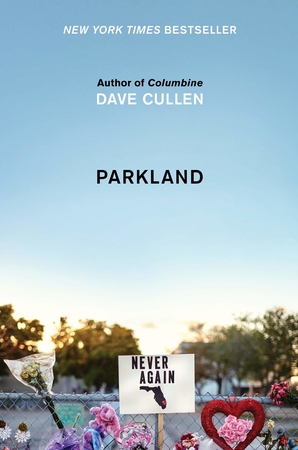
O n April 20, 1999, a failed bombing planned by two high school seniors at Columbine High School and turned into a shooting with assault rifles changed the way we talked about school safety and guns in America. Dave Cullen was a journalist who was one of the first to arrive at the tragedy that took the lives of 13 individuals and injured 24 more.

Cullen dove into the minds of the killers and followed the survivors’ stories beyond that day to write Columbine over the next decade. During that time, Cullen became the mass shooting expert that media called after every tragedy. 

Buy the book

On Valentine’s Day 2018, another school shooting happened in Parkland, Florida at Stoneman Douglas High School where 17 were murdered and another 17 were injured by a former student armed with a semi-automatic assault rifle.

Once again, Cullen was called by media outlets to be a talking head on television or an expert quoted in newspapers. What happened in the days and weeks after lit a spark in him. The students who were bravely standing up the Congress had an important story America needed to hear. Over the course of the year that followed, Cullen wrote Parkland. This time, the book wouldn’t be about the shooting itself, but about the gun reform movement the survivors inspired.


I had two phone calls with Dave Cullen over the course of two days less than a week prior to the anniversary of the tragic shooting in Parkland. During those calls, he opened up about his post-traumatic stress disorder and how following the students from Stoneman Douglas High School as they became advocates for gun safety helped heal him after two decades of covering school shootings.


Adam Vitcavage: How has the Columbine shooting on April 20, 1999 reshaped your life?

Dave Cullen: It basically rerouted my life. I remember driving out to a school I had never heard of. I didn’t know I would become “the mass murder guy” who [the media would] call after these tragedies.

I do feel a responsibility when these tragedies happen to go on television. Or sometimes editors would call me asking for advice. It feels good to be able to contribute with help. I do feel that obligation because I’ve become an expert on it after spending twenty years writing about it.

AV: When you got down to Florida for this book and met the Parkland survivors, what was your initial reaction? I know you said they were pissed off and ready to make a change, but what else about them stood out?

DC: I first got down there during the organizational meeting for their trip to the state capitol in Tallahassee. [Laughs] I’m laughing because they told me I wouldn’t want to come because it was going to be boring. They said it was going to be signing permission slips and what sort of clothes to wear and basic things like where they were going to be sleeping. That was exactly what I wanted to see. I wanted to see them being kids. I didn’t want to be the reporter who shows up where they were just giving speeches and meeting the governor. I wanted to see how it happened. I wanted to see moms and dads signing the permission slips.

A lot of them were very dressed up when I met them. I asked why and they told me they had just come from a funeral of one of their classmates. I was amazed by the fact they were just doing it. They didn’t look like shellshocked kids. They were very matter-of-fact about everything. It was five days after the shooting, but they didn’t look like five-day-old victims and survivors. They had a purpose.

AV: I feel a lot of America has become numb to these tragedies and the public moves on. We forget about the victims and survivors, but we also forget about those secondary to the event. We forget about the first responders, the journalists on the scene watching it unfold. You spent a decade staying immersed in the Columbine tragedy. What was that like for you?

What the hell do we need assault weapons for?

DV: It was terrible. The Dave Sanders bleeding to death sequence was the hardest for me to write. I wrote the after story of Columbine in order and I watched out for the events I knew would be hard. Dave Sanders was hard to revisit. I didn’t foresee the second hardest part to write and took me completely by surprise was Dylan Klebold’s funeral. It completely undid me. I wrote that a week or two after Dave Sanders.

While writing that there was another situation at a school in Colorado at Platte Canyon High School. I watched it unfold for three hours. When I told my shrink that, she offered that maybe three hours was a bit excessive. I told her it was my job and she just looked directly at me and asked if it had to be. If every bit had to be my job.

There was another event that didn’t have to do with a school shooting. There was a disgusting video of men who filmed homeless men fighting for money and they uploaded it. Thinking there was a market for that shattered me. It shattered my faith in humanity. I could no longer believe the good outweighed the bad in the world. For about a month I would get out of bed at three in the afternoon and not get any work done. It took about a month for me to realize what was wrong and I got serious help.

AV: But you still kept working on Columbine.

DC: During year eight or nine of writing it, I was driving to my therapy appointment and I was late. I was crying uncontrollably and couldn’t calm down. She asked me how long it happened. I told her three or four times a week and she gasped. It was the first time she reacted like that. Normally she hid her reactions. I knew it was a lot then. It became so much of my normal life that I forgot that wasn’t normal.

I was fine once I finished though. Once I turned in and signed the letter to my editor that I had no more changes to make, I felt a huge sense of relief. I didn’t realize how much it was affecting me. Later, I realized I wasn’t crying uncontrollably anymore.

I hadn’t cried three times a week since. What I didn’t realize was there was some vestigial part of me that was down in me until I didn’t really get until this past Thanksgiving when I was interviewing Alfonso [Calderon]. We talked about his situation and how he was doing. He realized he wasn’t doing as well as he thought he was and I talked about my situation. As I was telling him, I realized it was these kids that really healed me.

Going into writing Parkland, I knew it could wreck me. It was quite the opposite. I am happier now than I was last Valentine’s day. It almost sounds sick to say, but ten months with them really healed me.

I think that happened to a lot of people in America. There are so many people still afraid and I think the Parkland kids helped heal all of us. They gave us all hope again. They gave me hope in humanity again.

AV: The future does seem full of hope but right now I feel like buying and selling a car is more difficult than doing the same for a gun, which is absurd. Whenever I talk about guns, people will say I can’t take their guns. I don’t want to take guns, I want to make sure we know who has a gun, where it is, and what it’s being used for.

The Parkland kids helped heal all of us. They gave me hope in humanity again.

DC: I think it was The Daily Show that pointed out that Switzerland is just as big of gun fanatics as we are and that their model of gun control is way better. We’re not the only country on the planet who likes guns. We should take a look at a few other countries.

AV: What do you hope is in store for gun legislation in the future?

DC: We have active judges who are lobbied to look at the Second Amendment in a way it was never intended. We need to realize we are a different country now. The Second Amendment was for a well-regulated militia. That’s the National Guard now and not an individual person. I don’t know all of the particulars, but we need to do what Australia did and do a gun buy back. It’s not okay for everyone to have one all of the time. Especially anyone who wants one. That may make me an enemy of some people, but we need to look at what we are doing.

Assault weapons: what the hell do we need those for? I was an infantry soldier. I had one. I used it to kill people and to attack objectives. That’s what assault weapons were made for. No one uses them for hunting. Maybe it’s for collecting and having them to show off. There were signs out there at events during the past year that said it much better than I will, but they said that your hobby does not supersede my right to live.

AV: 20 years ago, I’m not sure anyone, let alone the survivors at Columbine, knew how to react to the massacre. Now, these students have led a political movement. What other ways has America shifted in the two decades since Columbine?

We as a country have failed to solve this gun problem. America is letting its kids die.

DC: You nailed it. With Columbine, the massacre was out of left field. It was out of their frame of reference. It was like a kid realizing there really are monsters hiding under their bed. The community was just shocked. The students really had PTSD.

I mean, look at lockdown drills. Every kid in high school now has fire drills and lockdown drills. Both of these are expected things. If a fire ever happened, it would be frightening and any deaths would leave people distraught. It wouldn’t be surprising because we know fires happen. There are fire departments and fire trucks. Now we react the same with school shootings. We expect them now.

The Parkland kids were horrified, but they have mentioned they knew a shooting could happen at their school. With the Columbine kids, it was almost like as if they didn’t know fires existed.

I think maybe your generation that sort of grew up with lockdown drills, but you didn’t start kindergarten with them. You were probably in junior high school when lockdown drills started nationwide and had a frame of reference why they started. Now you talk to kids and they don’t even know a life without lockdown drills.

When I go to schools to do talks, kids are shocked when I tell them lockdown drills, wearing IDs, and check-in places for visitors started after April 20, 1999. Students look at me like they don’t believe me. Now it’s just normal life.

Now there is an undercurrent of anger. Kids are angry for having to grow up this way. They don’t get why grown-ups are letting kids die. I don’t know if your generation felt like that.

AV: I remember being in high school having to wear my student ID and being annoyed. It wasn’t until I was about to graduate high school when the shooting at Virginia Tech happened that I was angry mass shootings were still happening. And they’re still happening!

DC: We as a country have failed to solve this gun problem. We tried after Columbine and failed. We tried after Virginia Tech and failed. We failed again and again. It’s been two goddamn decades and sometimes it feels like we went backward. It is a disgrace. I feel like when David Hogg stood up on CNN and he basically told America they were letting their kids down. That America was letting its kids die. That struck a chord because the truth hurts. I feel like even gun owners and Second Amendment warriors even heard that and realized that we are letting our kids die.

A Perfectly Normal Interview with Carmen Maria Machado Where Everything Is Fine

Carmilla, by the Irish Gothic writer J. Sheridan LeFanu, first appeared serialized in the London magazine The Dark Blue over 1871–72, a quarter-century before Dracula. In willowy, lucid chapters, the narrator, Laura, recounts how the mysterious, alluring Carmilla came to stay at her father’s estate, and how their extreme affective bond coincided with an onset of illness, dreams, and terrifying apparitions. In short order, Carmilla is exposed as a vampire, captured, and executed gruesomely. Typical of Gothic stories, the novella is presented as a “found text”: an account by Laura, told to LeFanu’s recurring occult detective character, Dr. Hesselius.

Buy the book

The newest reprint of Carmilla, by Lanternfish Press, is edited and introduced by Carmen Maria Machado, whose 2017 collection, Her Body and Other Parties, has quickly established her as one of the freshest voices in dark fantasy and horror. The New York Times named the collection part of “the New Vanguard,” one of “15 remarkable books by women that are shaping the way we read and write fiction in the 21st century.”

Consistent with that fearless literary persona, Machado’s introduction tackles a controversy around Carmilla so fraught, it’s hardly discussed aloud among LeFanu scholars: a modern literary mystery, centered on the real-life seduction trial of Marcia Marén, and Marén’s subsequent execution for “morbid harlotry.” The claim, first put forward by Professor Leight in 1973, is that Marén and her lover, the English-Hungarian Veronika Hausle, are the originals of Carmilla and Laura, and much of LeFanu’s text is drawn exactly from letters from Hausle to a Dr. Peter (Pierre) Fontenot describing the affair. Yet before Machado’s introduction, not one Carmilla edition has explicitly addressed Prof. Leight’s work, or dropped even a footnote on the Marén-Hausle affair.

CARMEN MARIA MACHADO
Carmen Maria Machado

Machado and I find ourselves, appropriately enough, in a refitted Victorian in Cheyenne, Wyoming. First built as a cattle baron’s folly, then converted to a boarding house for unmarried women, it’s now run as an opulent but gloomy bed and breakfast. We’re in a sitting room in a princess tower overlooking the thick, obliterating snow; this tower room, Machado tells me, is where the women boarders were able to lounge uncorseted in each other’s company, outside the scrutiny of men. I make a joke about intruding on their ghosts déshabillé; this earns me an abrupt, chilly laugh, which could be described only generously as half-hearted. Machado is bundled in a heavy wrap that furs everything but her face and makes her look like a black cat sitting on top of her paws. In the following conversation, which has been edited for clarity, we discuss Carmilla’s place in queer literature, the controversy over its origins, and Gothic fiction’s power to make the voiceless irresistibly heard.


Theodore McCombs: What about Carmilla first attracted you to this project? What do you hope 2019’s readers will find in this 1872 vampire tale?

Carmen Maria Machado: The connection between narratives of vampires and narratives of women—especially queer women—are almost laughably obvious. Even without Carmilla, they would be linked. The hunger for blood, the presence of monthly blood, the influence and effects of the moon, the moon as a feminine celestial body, the moon as a source of madness, the mad woman, the mad lesbian—it goes on and on. It is somewhat surprising to me that we have ever imagined male vampires at all. But of course, that’s because we think of Dracula as the ur-text, the progenitor of the vampire in literature. Carmilla simply isn’t as well-known; I was as surprised as anyone to learn about it. But despite the fact that it’s a somewhat obscure text, its influence can be keenly felt. So I wanted modern readers to understand both Carmilla and Carmilla’s importance.

TM: Carmilla is also a seminal text in queer literature, and from a modern vantage it’s hard not to read Laura and Carmilla’s intense mutual attraction as erotic interest. It brings to mind Joanna Russ’s professor who dismissed Jane Eyre as “just a lot of female erotic fantasies.” Do you think there’s something about the Gothic genre that makes room for women-centered eroticism, even in a period that treats the subject as taboo?

CMM: Well, the Gothic can be conducive to suppressed voices emerging, like in a haunted house. At its core, the Gothic drama is fundamentally about voiceless things—the dead, the past, the marginalized—gaining voices that cannot be ignored.

TM: Queer readings of Carmilla often zero in on speeches by the vampire that read, today, almost as vindication of lesbian desire: “Do not think me cruel because I obey the irresistible law of my strength and weakness,” or “All things proceed from Nature—don’t they? All things in the heaven, in the earth, and under the earth, act and live as Nature ordains?” What is going on here? How do we separate any vindication from Carmilla’s predatory behavior? Can we?

CMM: For a long time, there was something of an obsession with the idea of queerness as an inherent trait, one based in genetics. This was quite tightly bound up in the fight for queer rights: “I was born this way, I deserve the same treatment as you. It’s not a choice.” In her essay “On Liking Women,” trans lesbian critic Andrea Long Chu completely dismembers this idea, and asks: what if it doesn’t matter? What if queerness or transness is about moving towards desire, and not affirming some inherent trait? Why is the lack-of-choice narrative necessary? This is obviously a very controversial idea, but I find it bracing, exciting, even moving: the idea that one might choose what gives them pleasure no matter their instincts or body or social constructs, and no one should have anything to say about that. I’m not saying all queerness is chosen, but rather that we should be open to that possibility.

Anyway, this complicates the queer reading of your quotes. Because instead of affirming the “born this way” narrative—of Carmilla’s sexuality and her predation as her Nature, and thus inextricably linked together—isn’t it better, more interesting, if we think of them as some combination of nature and choice? Or as choice entirely?

TM: Your introduction to Carmilla builds off studies positing the Veronika Hausle–Marcia Marén affair as not just inspiration for LeFanu’s novella, but as its original text. According to this theory, LeFanu distorted Veronika’s letters about Marcia into a story of supernatural monsters preying on a pure-hearted victim. Why do you suppose LeFanu would work this kind of transformation? Is there a sense in which LeFanu needs a monster to tell a story about sexual desire between women?

LeFanu needed a monster; he could not imagine lesbian desire otherwise.

CMM: Sorry, Leight’s work is hardly a theory. I think it’s kind of fucked-up to call it that? It’s scholarly research. She isn’t positing a possible reading, she’s restoring previously concealed primary documents. It is an act of wholeness, of repair. She is making things right. And certainly LeFanu needed a monster; he could not imagine lesbian desire otherwise. What are invert women if not monsters, shunning the attention of men?

TM: Do you see this as wholly an act of bad faith? Is there any way in which LeFanu is using the outright lie of fiction to tell another sort of truth?

CMM: Look, LeFanu made his choice. He is long dead—impossible to “cancel,” to use the parlance—but his decision had untold ramifications. The concealment of queer sex, desire, and relationships has rippled outward with disastrous results. For my memoir, In the Dream House, which is coming out this fall, I wrote about how this cultural and conversational dampening has aided, among other things, queer domestic abuse, much in the same way that it’s hindered people’s ability to understand themselves.

I’m not saying that LeFanu committed a particularly heinous act of narrative violence, but of course, he didn’t have to. You don’t have to be a flash flood to wipe an entire identity’s sense of self away; you only need to be a drop of water, a hardened fleck of earth. To quote Joanna Russ, “At the level of high culture… active bigotry is probably fairly rare. It is also hardly ever necessary, since the social context is so far from neutral.”

TM: Why do you think no other Carmilla editions but yours touch on this research? Do you see that as a critical failure or as a scholarly consensus?

CMM: I’ve sent several sharply-worded letters to various writers, editors, and publishers asking this very same question, but I have yet to receive a satisfactory answer. I think people are made uncomfortable by the complexity of Veronika and Marcia’s relationship—it was difficult and complicated and quite fucked-up—and they are afraid to ding a male writer’s reputation “without proof,” even a writer as long-dead as LeFanu. And certainly, the rumors about Dr. Leight didn’t help matters.

In any case, even after the hidden letters surfaced, the academic community made sure to come to a consensus about the Leight research. And once consensus was reached, the cultural gaslighting commenced. And it continues, unabated.

TM: In 1974, many LeFanu scholars dismissed Dr. Leight’s find as suspect; others accused her of overreading Veronika and Marcia’s relationship—especially later, when her own affairs with women became known—

CMM: Scholars say a lot of things.

TM: Hold on, I didn’t finish my question. Are queer readings of texts like Carmilla or Veronika’s letters necessary? Are they in any way wishful thinking, in one sense or another?

CMM: A graduate school classmate of mine once repeated something a teacher of great repute told him, which is that she loathed when people read into texts in this particular way, impressing queerness where (she believed) there was none. This admission was so shocking, and repeated so effortlessly, it diminished me slightly, and I have never recovered.

TM: Do you have Veronika’s letters still with you? What else do they tell us about the enigmatic Marcia?

CMM: Do your own research.

TM: She looks a bit like you, doesn’t she? Marcia Marén, I mean, in the one photo we have of her. There’s a likeness.

CMM: I hadn’t noticed.

TM: Due to the significantly longer exposure times of that era, the authorities had to hold her head in place during the photograph. Still, you see how the eyes have blurred away where she fluttered her lids. You see how her black hair has fallen over their fingertips in one angry cloud. If you lean close— Do you mind if I come over there?

CMM: I’d rather you not.

TM: No, no, it’s OK, I’ll crouch here, right here. You see it? Am I too close? You see the likeness? You’re not even looking, Carmen Maria Machado.

CMM: I do not care to.

TM: Do you need water? I don’t have any water.

CMM: I need no water.

TM: You chose not to publish Veronika’s original letters alongside LeFanu’s novella; you explain in your introduction, “I wish the reader to come to the text with a complete understanding of its inadequacy.” How do paratexts like an introduction, or LeFanu’s prologue for that matter, function to broaden or narrow the main text?

CMM: They create space where there was none, like a tick burrowing into skin. They create space where there was none, like a tick burrowing into skin.

TM: Did you bring Veronika Hausle’s letters with you? Are they downstairs in your room? Are they in your suitcase, for example? Are they in the front flap of your red, rolling suitcase, for example?

CMM: I have not seen the original letters with my own eyes. How do you know the color of my suitcase?

TM: The last time we spoke, you mentioned how queer readings of classic texts, even Gothic texts like Carmilla, meet resistance in part because they destabilize not just conventions of sex and sexuality in eras like the Victorian, but even conventions of reading. Do you want to elaborate?

CMM: That’s not what I said. I didn’t say that.

TM: You did say that, though. I remember it clearly.

I looked at my hands, and they were not my hands; they were someone else’s hands.

CMM: I did not, but I did have a dream last night: I was outside this very door, listening at the gap in the lock to voices from inside this room, including mine. I could see our shadows beneath the crack in the door, puddles of darkness in the flickering firelight. And then I looked at my hands, and they were not my hands; they were someone else’s hands. And then I looked up and saw you. But you were not you. You were a middle-aged Irishman with mutton chops and eyes like the northern lights. And I was myself and a nameless woman both.

TM: Who were you talking with on the other side of the door? I had the same dream of the door to this room and us both straining to hear through it. I heard your voice inside, talking about Carmilla, but I couldn’t hear the other voice, not the other voice, no matter how closely I pressed to the door. There was another woman’s voice inside, deep, haughty; and it seemed to come from this very spot in the room. I thought it was you also, but it wasn’t, was it? That would be too many doubles. You have to tell me.

CMM: No. Not in the least.

TM: [unable to vocalize]

CMM: Much better.

TM: [unable to vocalize]

CMM: Fine. Speak.

TM: Certain vague and strange sensations visited me in my sleep. The prevailing one was of that pleasant, peculiar cold thrill we feel while bathing, when we move against the current of a river. This was soon accompanied by dreams that seemed interminable and were so vague that I could never recollect their scenery and persons. But they left an awful impression and a sense of exhaustion, as if I had passed through a long period of great mental exertion and danger.

CMM: When I was a girl, I had a vision that beneath my bed existed a set of stairs. In my imagination, if I descended the stairs, I might be able to see everything I had ever wanted to see: every fantasy, every truth. But I knew—I understood, as clearly as you understand what is happening, now—that were I to descend those stairs, and then look up, I would see what was above me as divers do: through a medium dense and rippling, but transparent. I would be under, and lost.

TM: After all these dreams, there remained on waking a remembrance of having been in a place very nearly dark, and of having spoken to people whom I could not see. And, especially, of one clear voice, a woman’s, very deep, that spoke as if at a distance, producing always the same sensation of indescribable solemnity and fear. Sometimes there came a sensation as if a hand was drawn softly along my cheek and neck. Sometimes it was as if warm lips kissed me, longer and longer and more lovingly as they reached my throat, and there the caress fixed itself.

CMM: She’s coming. Can’t you see? She’s here.