7 Books About Women Doing Dirty Jobs

When I went on submission with what would become Wildfire Days, a memoir of my time fighting wildfires in California, a message I received more than once was: “Sorry, books about women in ‘military-like’ professions just don’t sell. People don’t want to read about that.” The implication seemed to be that women’s books should stay more “girlish” to have wide appeal. I am determined to prove that stories about women doing the most technical, filthy, physically arduous, dangerous, and male-dominated jobs are exactly what we should be reading. In a time of backsliding progressive policy, when Roe v. Wade has been repealed and women’s rights and bodies are under attack, it’s more urgent than ever to uplift stories about female diversity and strength. 

Perhaps readers and literary gatekeepers fear such stories will become little more than a litany of woes, the feral moan of the oppressed woman-among-monsters. To be sure, a number of the books on this list detail harassment, exclusion, and even rape. It’s vital that these stories be shared and discussed, because women (and nonbinary and trans people) continue to be subjected to misogyny and mistreatment in many, if not most, male-dominated spaces.

But the dark side of these professions isn’t the whole story. These are books about women finding joy, coming into their prowess, and discovering their place in the world through the toughest jobs. In hard labor, they reclaim their animal selves and find satisfaction, camaraderie, and belonging—even within male dominated groups. Often, the protagonists also grapple with a changing world as global warming, economic instability, and ever-widening inequities make low-paying, weather-dependent jobs increasingly precarious.

These women’s stories, then, are beautifully complex. They’re about ladies who work hard in mysterious, misunderstood industries. They suffer and struggle and can’t find anywhere to pee. Sometimes they’re victimized. And yet, in each of these stories, the women grow stronger than they ever imagined. Their books are about finding strength, resilience, joy, belonging, and so much more in the grittiest, most “masculine” workplaces. 

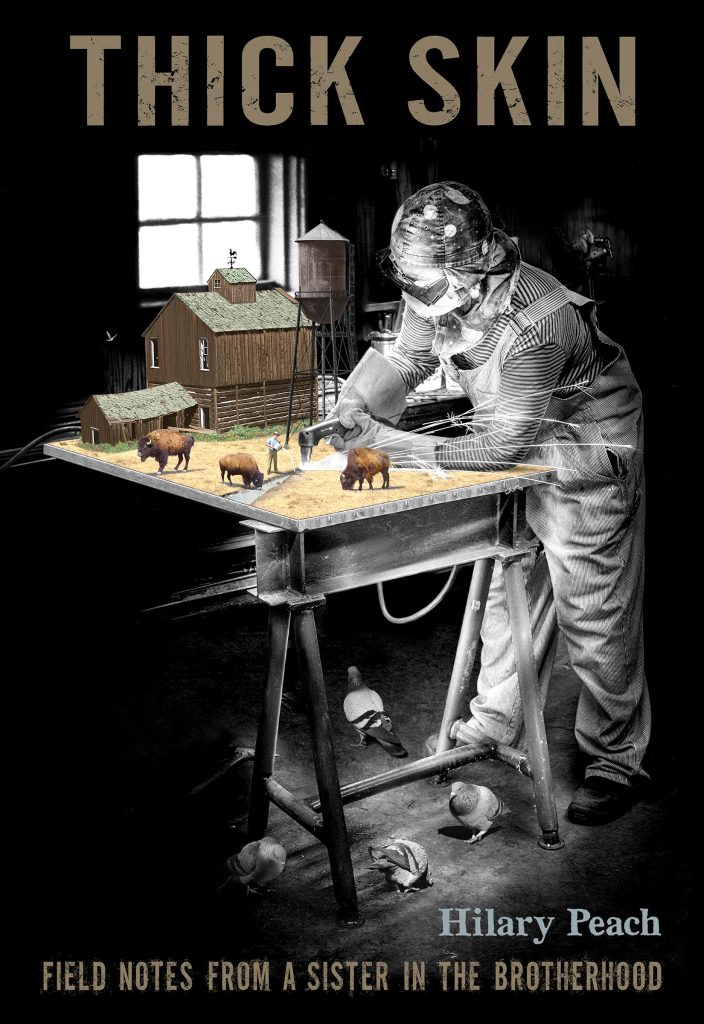
Thick Skin: Field Notes from a Sister in the Brotherhood by Hilary Peach

I have to admit straightaway that, before reading Thick Skin, I didn’t know exactly what a boilermaker was, but I knew it sounded tough as hell. A boilermaker is a construction welder, which, as Peach’s book humbly demonstrates, is an entirely badass and rather terrifying job (picture being lowered in a basket with a crane to weld a plate onto the side of a massive cruise ship). In this memoir of episodic stories, Peach tracks her many assignments and the progression of her skills as a welder in Canada—where she was based—and on assignment in the U.S. While misogyny is rampant in the male-dominated field of boilermaking, Peach’s approach is even-handed: she shows villains who tell her to “go home” alongside lovable mentors, allowing her male colleagues to be as human as herself. Peach, also a poet, writes beautifully (and humorously too!). I love this one and it deserves more attention than it has thus far received.

Hotshot: A Life on Fire by River Selby

This is the story of Selby’s years as a wildland firefighter on elite hotshot crews throughout the American West. While Selby now identifies as nonbinary, they identified as a woman and were treated as such during their time firefighting, suffering discrimination, sexual harassment, and outright bullying (trigger warnings abound, but it’s important that writers like Selby tell their stories in full). This is far more than a tale of female struggle against adversity; Selby also weaves in a deeply-researched account of fire history, indigenous ecological knowledge, land management and beautiful, affecting scenes that follow their relationship with a cruel, unstable mother. The combination of firefighting action, personal memoir, and rich scientific context makes this a powerful read.

The Dirty Life: A Memoir of Farming, Food, and Love by Kristin Kimball

This is the tale of a woman who leaves her quintessential Manhattan writer’s life (Lower East Side apartment, heels, and at least four casual non-boyfriends) to start a farm with a man she’s fallen in love with. This book diverges from the others in that Kimball didn’t exactly enter a male-dominated profession; rather, she entered a partnership. But in every other way, Kimball and her beau face the fight of their lives, trying to feed not just themselves but a community of 100 people–members of a subscription program who pick up weekly farm-share boxes year-round. Struggles abound, from endless labor to blizzards to rat infestations. Food itself plays a central role, and Kimball’s descriptions of her meals made my mouth water. The writing is deft and lovely, not a word out of place. I couldn’t put this one down.

Welcome to the Goddamn Ice Cube: Chasing Fear and Finding Home in the Great White North by Blair Braverman

I had heard of Braverman in the ambient way that anyone into outdoor adventure will know about the token “women in the wild” books. I was prompted to grab a copy because I loved Braverman’s social media presence, in which she chronicles the antics of her sled dogs. The book’s tone is different, less playful, the narrative voice sometimes as severe as the landscapes she inhabits. Braverman returns to Norway—where she studied abroad as a teenager—to run sled dogs and search for herself, “trying to answer private questions about violence and belonging and cold.” Her story is full of danger, action, dogs, and ice, but it’s primarily a tale about the vulnerability of living in a female body, being constantly scrutinized and threatened by men, and living in mostly-male communities. Braverman’s true battle is to feel safe in her own skin.

Shoot Like a Girl: One Woman’s Dramatic Fight in Afghanistan and on the Home Front by Mary Jennings Hegar

“Many don’t think that there are women serving in combat roles. Others think that the women who do serve in combat shrink in fear when the bullets fly. I know differently, and I wanted you to know, too.” Hegar could be writing a manifesto on behalf of all the women on this list. Her memoir tracks heroism on two fronts: first, as an Air Force pilot who, despite sustaining an injury during a medevac mission, saves the lives of her patients and crew; second, as an activist in the battle to end a policy that excluded women from ground combat. I love all the little moments I can identify with, like when Hegar wonders how she’ll pee while flying a helicopter, noting that the men around her can pee in a bottle anytime. But more than that, I love that she puts a name to the invisibility of women in male-dominated fields and the rampant underestimation of their strengths.

My Fishing Life: A Story of the Sea by Ashley Mullenger with Lynne Barrett-Lee

A memoir from one of the few female commercial “fishermen” in the UK, this book follows Mullenger’s struggle to learn the trade under the tutelage of her benevolent skipper, Nigel. I knew fishing was filthy, smelly work because I almost married into an oyster farming family, but I hadn’t considered just how dangerous the profession could be. Mullenger illustrates how a line of pots dragged off the end of the boat can snag your ankle, pull you into the ocean, and drown you—not to mention weather, underwater hazards, and all the other ways the sea can take a life. Her story is full of action, helpful explication of the mechanics of the work, vivid landscapes (waterscapes?), and endearing characters. My fellow Yanks may be as charmed as I was by the Britishness of the prose, complete with crab bait that’s “a bit whiffy” and a town named Wells-next-the-Sea. Color me fascinated and inspired. I mean, sorry, colour.

Dirty Work: Essential Jobs and the Hidden Toll of Inequality in America by Eyal Press

Press is our honorary man here; I decided I would allow about as many men on this list, percentage-wise, as there are women on the average wildland firefighting crew. But with any luck, we won’t make Press feel tokenized. His book is a smart, deeply-reported study of “essential” jobs in America, so many of which fall to women, people of color, undocumented immigrants, and other marginalized groups. Press defines “dirty work” in terms of morally-ambiguous, underappreciated tasks like animal slaughter. The financial precarity and physical toll of such jobs can leave scars seen and unseen, including PTSD and the invisible “moral injury” of having done something, out of necessity, that doesn’t align with one’s ethics. 

Girls Who Journal Have Always Been Radical

When I was nine, I wanted to be Harriet the Spy. I stalked my neighbors with the same misplaced confidence Harriet brought to her rounds on the Upper East Side, clutching a Mead composition book and scribbling down whether Mrs. Pine smoked in the house (she did) and if the mailman liked cats (he didn’t). I told myself I was practicing observation and discipline, preparing myself for the writer’s life, or whatever my understanding was of it at the time.

I didn’t yet understand that this was the central act of writing, especially for girls. That the journal—often dismissed as “just a diary”—wasn’t merely a space for confessional wallowing, but a scaffolding for becoming, a place to contain a life in progress. I didn’t know that this habit I began in childhood—one that I’ve continued through adolescence, motherhood, grief, addiction, and recovery—was part of a lineage. To journal is to claim authority over your own interiority. It is to say: I saw and felt these things. I was here.

To journal is to claim authority over your own interiority. It is to say: I saw and felt these things. I was here.


Lately, it feels like the world has finally caught up to the journal girl. There’s a resurgence of interest in diaries and notebooks as both literary practice and cultural force, particularly among women, queer writers, and others who’ve long been dismissed as “too personal.” There is also a distinct shift from the oversharing of the early-2010s blogosphere toward something more distilled: emotional depth endures, but it’s no longer being performed. It arrives gently, having been lived through first.

Originally launched as a pandemic-era online project, “The Isolation Journals” is one such example. It began as a daily journaling initiative created by Suleika Jaouad to help people find meaning through writing during uncertain times and has since grown into a creative community of more than a quarter of a million people. In the spring of 2025, the project expanded into print with The Book of Alchemy, a hybrid of memoir and creative prompts that weaves together Jaouad’s reflections on journaling and creativity with contributions from the vibrant community she helped cultivate.

Journals offer different portraits of the creative self depending on how (and why) they’re made public. Some, like Jaouad’s, emerge accidentally or posthumously, revealing a rawness the writer never intended to share.

Joan Didion’s Notes to John, published posthumously, is of the latter variety. The book pulls from her private notebooks where she recorded detailed conversations with her psychiatrist. It gives us a Didion voice stripped of its signature detachment—unguarded, repetitive, almost childlike in its grief as she describes difficulties with her daughter and struggles around her work.

In yet another iteration, Kelly McMasters’ Substack series, Show Me Your Diary, creates a living, intentional conversation about the role of diaries in creative life. Each installment invites a writer to reflect on their personal journaling habits and history through a set of thoughtful questions, paired with photographs of their actual notebooks. The series showcases journals as windows into the mess and method of each writer’s mind, revealing an unfiltered backdrop to their creative world.

Even pop culture has caught the scent. Chappell Roan, following both her VMA and Grammy wins, read her acceptance speeches from her diary, indicating that she’d written them ahead of time—just in case. It felt historic to watch her place her Grammy on the floor so she could hold her butter-yellow notebook with both hands. It’s a perfect encapsulation of the journal girl ethos: hope, ambition, and an almost ceremonial belief in the power of the page.

This sensibility is reverberating in music as well, where intimacy and raw vulnerability are making a quieter, more interior return. Take Sophie Hunter—a rising artist whose lo-fi, lyrically driven pop evokes the texture of diary entries. Her songs ache with lines that feel written first for herself, only later offered to an audience.

What’s remarkable about this moment is not just that people are journaling, but the journal is moving beyond its traditional role as a warm-up for “real” writing or a quirky affectation. It’s finally getting the spotlight as a site of art and inquiry unto itself. Notebooks are being published with less polish, less shame. Readers seem hungry for texture, and for the granular mess of a consciousness unfolding in real time.

This shift didn’t happen in a vacuum. It comes at a time when self-expression has been flattened into brand. On social media, every caption, image, and story carries the pressure to be aesthetic, monetized, and shareable. We’re encouraged to perform authenticity rather than live it. Amidst all this algorithmic overexposure, the journal offers something quietly subversive: privacy. And paradoxically, that privacy is what makes it feel more honest—and more valuable—when shared.


Amidst all this algorithmic overexposure, the journal offers something quietly subversive: privacy.

I recently participated in a journaling workshop led by Amy Shearn through the Writing Co-Lab. Each week as a group we read excerpts of the diaries of other writers, not for their prose, but for their patterns. We delved into selections from the notebooks of Virginia Woolf, Annie Ernaux, Clarice Lispector, Susan Sontag, and Octavia Butler. We read them not as drafts but as documents of self-construction. Woolf tracked her daily rhythms with obsessive precision, toggling between household minutiae and metaphysical despair. Ernaux wrote in bursts, urgently trying to pin time to the page. Butler filled her notebooks with affirmations and imperatives: “I write bestselling novels. My books will be read by millions of people! So be it! See to it!”

The magic isn’t in the polish of these writers’ journaling, but in the persistence. Each writer, in her way, was narrating herself into being.

Of course, there is a long tradition of belittling this kind of narration. The journal girl has always been culturally suspect. She’s been framed as too sensitive, too self-absorbed, too inconsistent. Her subject—herself—considered too boring, too indulgent, too much. We’ve long internalized the idea that the personal is frivolous unless made universal, and even then, only if filtered through irony or male detachment. But what happens when we refuse to filter? What if we take the journal girl seriously?

Didion wrote with surgical detachment in her famously reserved essays. But in the 46 diary entries that comprise Notes to John, each of which are addressed to her husband after his sudden death, her voice frays. “I sat down and immediately began to cry,” she writes. “‘What’s on your mind,’ Dr. MacKinnon asked. I said I didn’t know. I rarely cried. In fact I never cried in crises. I just found it very difficult to sit down facing somebody and talk.” This is not just recording. It’s raw admittance. The journal, here, is not a mere routine, it’s a refuge.


When my daughter was diagnosed with leukemia, I didn’t begin processing the trauma by writing an essay. In the early days of her treatment, I wrote in my journal. I catalogued medications, smells, beeping machines, nurses I liked, nurses I suspected were judging me. I wrote about how my daughter’s face changed shape during pulses of steroids, and about the baby in the room next door whose parents I never saw. I wasn’t trying to be profound—my notebook was a place to pour out what I didn’t know how to speak aloud. It was a place without an audience, without polish, and most importantly, without the pressure to be fine.

As I’ve been working on a book about our cancer years, I’ve gone back and read those early entries spread across physical journals and, as we spent more time in the hospital, my phone’s notes app. The writings are disjointed, repetitive, ugly in places—fragmented lists, pages blotched with tears—but they hold a feral truth I couldn’t fake. They don’t just remind me of what happened—they reveal what I didn’t then understand. I can trace the path of my thinking during that crisis, peek through the window into that past version of myself. That’s the other function of the journal: it doesn’t just record your thoughts; it gives them room to form.

Of course, there’s risk in opening that private space to others. Publishing a journal, or even quoting from one, means forfeiting some of its power. Vulnerability becomes commodity. You’re no longer writing in the dark, you’re curating. McMasters touches on this through her interview series. By asking writers to share their diaries, she is also asking them to decide what gets left in and what gets cut in the curation of their most private thoughts. These are especially sharp questions for women, who’ve long been expected to share their pain (and just as often punished for it.) We valorize the brave confessor until her honesty becomes inconvenient.

There’s power, too, in reclaiming the journal as literature—not as spectacle, but as form. In a 2021 interview with NPR, Suleika Jaouad shared, “Journaling became the place that I was able to find a sense of narrative control at a time when I had to cede so much control to others. It became the place where I began to interrogate my predicament and to try to excavate some meaning from it.” What would it mean to believe in the journal as the work, and by extension, to value a woman’s private record as much as her polished prose?


What would it mean to value a woman’s private record as much as her polished prose?

Substack has become a sort of public diary, a digital throwback to the messy vitality of LiveJournal and Tumblr. Writers post dispatches that read like letters, lists, fragments. There’s an appetite for first-person writing that doesn’t pretend to have all the answers, something between the tweet and the essay—something more raw and alive.

At the same time, younger creators are rejecting the pressure for constant polish. On TikTok and YouTube, lo-fi video diaries abound. You’ll find soft-spoken narrations, overhead shots of annotated pages, and girls whispering aloud lines they’ve just written. A new visual grammar of the diary is forming—one that prizes immediacy over perfection. The journal girl, once derided, is now an aesthetic. You can buy pre-distressed notebooks and faux-vintage pens. There are entire YouTube channels dedicated to bullet journaling, “aesthetic routines,” and stationery hauls. This commodification is both frustrating and fascinating. On the one hand, it risks flattening something deeply personal into a lifestyle accessory. On the other, it’s a sign that something about the journal girl—her mess, her earnestness—has struck a nerve.

Maybe it’s because she offers an alternative to the endless performance of the internet. Maybe it’s because she reminds us that we’re allowed to write things we’ll never publish. Maybe it’s because she believes, so radically, that her life is worth documenting.

I see this in my own daughter, now 13. She keeps a blue-covered journal in the drawer of her nightstand, the metal spiral of its binding stretched and unraveling. When I go into her room to say goodnight, I often find her propped against her headboard, her face a mask of concentration. I feel the ache of recognition, and I wonder what she’s discovering in those pages—what truths she’s unearthing about herself, what small wounds she’s tending. I imagine she’s building a map of her inner world, one line at a time. In a world that will expect her to perform or edit herself into palatability, I hope her journal is a place where she can be whole.

When I look back at the journals I kept as a girl, I’m struck by how little I held back. There’s something embarrassing about the openness, but also enviable. I hadn’t yet learned to second-guess every sentence. I wrote because I wanted to understand something, not because I wanted to be understood. That’s what I see in the journals of Didion, Woolf, Butler. Their journals are not just the seeds of books to come, but whole selves in process: the page as confidante, as experiment, and as mirror.

In the end, the journal isn’t a practice in narcissism, but a practice in attention. To keep a diary is to say: I am paying attention to my life, and I believe that it matters. That might be the most radical act of all.

15 Small Press Books You Should Be Reading This Summer

Readers, we are living in unprecedented times. Funding for the arts and education is being slashed, ICE agents infiltrate our communities, and our rights are constantly under attack. It is a dark time in America, but literature has always been a beacon of hope: Even in telling tragic stories, writers resist. We resist the impulse of complacency. We resist the idea that our stories don’t matter. 

In the following fifteen books from small press, resistance is a theme, whether against capitalism, toxic family structures, being overtaken by grief, or repressive regimes. Some of these books carry a lightness, and some are tragic. Each one reminds us of why it matters to create. 

Running Wild Press: Fallout by Jordan Rosenfeld

Zoe Rasmussen is the wife of a powerful energy executive, and even though she has misgivings about what her husband does for a living, she stays with him for the economic stability he provides to her and their daughter. Her friend Justine is a journalist who has suffered the terrible loss of her own daughter, and the women also bond over their feelings about climate justice. When Justine is ensnared by Project Nemesis, an all-female group of eco-terrorists, she and Zoe are exposed to a violent, high stakes world where homemade bombs and targeted kidnappings are part of the norm. As Rasmussen Energy seeks to break ground on a nuclear power plant, and the Nemesis collective ramps up, both women collide with elements of their past that haunt them. A powerful page-turner.

Hub City Press: Plum by Andy Anderegg

J and her older brother M grow up together in an abusive household, and they are bonded by the betrayal of their parents. They make plans to leave as soon as M gets his driver’s license, but nothing goes to plan, and J is left on her own. She was a child who had grown-up responsibilities like making dinner, a tween who learned to play along to fit in at school, a teenager who became an influencer with her own money, and as she enters young-adulthood, gains control over her destiny. Yet, J does not forget her brother, and works through complicated feelings about their separation. Plum is an intimate novel that speaks to generational trauma, the way children are failed by adults, and the power of a girl who dares to survive.

Autumn House Press: I Have Not Considered Consequences by Sherrie Flick

A bear holds its heart in its paws, offering it to a hiker; a bear takes vitamin D supplements that messes with its sleep; a third-grade classroom sees a bear outside their window and they, including the teacher, solemnly do not breathe a word out of their collective fear and awe; a woman admits she is, actually, something of the bear: it is her heart she is trying to give. In this collection of short, flash, and micro-fictions, the world turns on both the small pedestrian and large absurd moments, and the people—whether children or lovers or a woman who just wanted a kitten but is instead pregnant and soaking in the bathtub—are all infused with a sense of longing. Flick’s characters know they need something, but aren’t always sure what it is. A case study of the emotional impact possible in the short form.

New Door Books: The Blue Door by Janice Deal

Flo is a social worker by training who now works in an upscale grocery store in the American southwest. Her daughter, Teddy, was sentenced to a juvenile detention facility for a violent crime when they were living in northern Illinois; slowly, they are mending the rift that opened between them. Flo feels parental guilt. Teddy is distant. In the meantime, Flo’s dog has escaped her apartment, and she is on a day-long journey to find him. As she walks, she is flooded by memory of Teddy as a child, retells (and amends) the fairy-tale her own mother used to tell to her, and tries to reckon with the recent death of a dear friend who was one of the only people who supported them when Teddy was convicted. Written with emotional depth, The Blue Door is infused with empathy.

West Virginia University Press: north by north/west by Chris Campanioni

The seminal 1959 Hitchcock film North by Northwest centers on a case of mistaken identity; Campanioni’s hybrid work of the same name (with different punctuation) also focuses on identity, though Campanioni’s is not mistaken: he is seeking to understand. At the core of this hybrid non-fiction work is the concept of exile; as the son of exiles from Cuba and Poland, his very life is shaped by the impacts of the Cold War. Here is a book where discourse around Wittgenstein, selfies, and Google Maps can appear on the same page and track perfectly; here is a book that can dive into historical events, with dates and documentation, and still feel very personal. In north by north/west, Campanioni offers readers a new kind of origin story.

Tin House Books: Foreign Fruit by Katie Goh

In Foreign Fruit, Katie Goh maps her personal history alongside that of the orange. Originating in Asia, which is also Goh’s ancestral homeland, the orange fruit has a complex history of cultivation, migration, and multi-cultural significance. Goh’s deep research into the citrus that traces back to the Himalayan foothills works in tandem with her inquiry into her own Chinese and Malaysian heritage—and her own family tree is just as branched. Goh’s prose is lyrical and deft as she draws parallels from the plagues carried along the Silk Roads to the Covid pandemic, and as she links the oranges we have in supermarkets today with her own story. As a text, Foreign Fruit is smart and satisfying. As a memoir, it is breathtaking. 

SFWP: After Pearl by Stephen G. Eoannou

Nicholas Bishop is a private detective living out of a hotel, and his success is deeply hampered by his alcoholism. As Nazism sweeps across Europe, and in the wake of the bombing of Pearl Harbor, anti-Semitism surfaces in Buffalo, New York. The office of one of Bishop’s associates—a Jewish attorney—is repeatedly vandalized. All the while, local nightclub singer Pearl DeGaye has gone missing, and Bishop is a suspect. He is also struggling desperately with the need to drink, and is only holding it together with the help of his assistant, Gia. Packed with made men, corrupt politicians, and philandering husbands with socialite wives, After Pearl is a throw-back noir with a literary twist. While Eoannou’s Bishop is a deeply flawed man, we root for him anyway.  

Buckrider Books: Drinking the Ocean by Saad Omar Khan

Murad and Sofi are university students when they meet, and both are trying to figure out who they will be in the world. Sofi is haunted by the death of her brother, and Murad is beginning to wrestle with what Islam means to him. While Murad has romantic feelings toward Sofi, she does not reciprocate, and they take a break. Drinking the Ocean follows their stories, both before and after their split, including a chance encounter in Toronto, as their paths run both parallel and diverge, and they both must understand what it means, personally, to be Muslim in modern London and Toronto. An artfully meditative novel, Khan captures highly personal matters of faith, complex relationship dynamics, and a deep sense of longing in this beautifully written debut. 

Dzanc Books: Unfinished Acts of Wild Creation by Sarah Yahm

When Louise is diagnosed with the same terminal neurological disease her mother died from, she is determined to spare her immediate family from watching a slow decline. Louise has built a life with her husband of twenty years, Leon, and has a close relationship with their daughter Lydia. In an attempt to protect them both from the pain Louise experienced as her own mother was physically ravaged by disease, she moves to a kibbutz in Israel where she has kin. Yet, instead of saving her husband and daughter, who is just a teen when Louise leaves, from the trauma of extended illness and caregiving, she creates a gaping emotional hole. This novel explores the complicated choices we make when trying to protect the people we love—and ourselves. 

Betty Books: The Boat Not Taken by Joanna Choi Kalbus

Part of the land-owning gentry, the Choi family fled Korea as it was partitioned between north and south, a 1945 Cold War borderline drawn under the influence of the United States and the Soviet Union—and they had already fled once before, to China, when Korea was under Japanese occupation. Caught in the aftermaths of multiple wars, Kalbus lived in tenuous housing and refugee camps, until she and her mother made their way to Los Angeles. This memoir details both the struggles and the joys Kalbus and her mother experience in LA, and how they make their way. At times disarmingly funny, there remains the fact that as someone from what is now North Korea, even decades later, she cannot go home. With notes of unspoken violence and a chorus of resilience, The Boat Not Taken shines with Kalbus’s voice. 

Regal House: Duet for One by Martha Anne Toll

When Adele Pearl—half of the renowned piano duet Pearl and Pearl—dies from cancer, her son Adam is left dealing with the loss as he watches his father—the other half of the duet—keening with the absence of both a wife and professional collaborator. As Adam works through his grief, he examines both his relationship with his mother and the romantic relationships with other women in his life, all of which are suffused with a kind of emptiness. A talented violin player in his own right, Adam starts to question how the musical ambitions of his parents impacted him. When a woman he used to care deeply for resurfaces in his life, his feelings are further complicated. A thoughtfully crafted and deftly layered novel that offers a nuanced look at encores, and at love.

Rejection Letters Press: Freelance by Kevin M. Kearney

After Simon barely graduates from his elite private school in Philadelphia, he starts driving for HYPR, a ride-sharing app. Because his most meaningful romantic relationship to date is with a cam girl, he already knows how the internet infiltrates real-life. And, already, the HYPR app seems to know too much about him. Yet, as his roommates, other drivers, and a city council-person begin agitating against HYPR’s labor practices, Simon doubles down. He takes a financial incentive and drives even more to keep up with the terms of his payout—even when it’s starting to become clear that certain passenger matches are absolutely not coincidences. A novel that grapples with the ramifications of the gig economy in late-stage capitalism and the ever-growing tension between a life lived and a life lived via a screen, Freelance is an astute cautionary tale. 

Book*hug Press: Iris and the Dead by Miranda Schreiber

Somewhere in Toronto, a high school counselor has a new job, having fled her last posting in Colorado, after having left her home state of California. The counselor, Iris, takes a special interest in the speaker of this hybrid novel, who is technically an adult at eighteen, but also clearly a child in terms of power dynamics. The speaker believes she is in love, and the novel unfolds in fragments of longing, confusion, and journal entries. In addressing questions of consent and abuse, Schreiber unpacks the very complicated experiences of a young woman’s sexuality in the wake of a mental health crisis deeply exacerbated by being groomed. Iris and the Dead is uncomfortable in the way it feels so true, and perfect in the way its speaker finds her own voice.

Autofocus: Out There in the Dark by Katharine Coldiron

In this collection of braided essays that employ classic films like Apocalypse Now and The Sound of Music as a foundation, Katharine Coldiron looks at her own life with a cinematic scope. She works on a horse farm with a difficult but loveable steed named Borges, she undergoes complex dental work because of a childhood illness, she wonders what her father is not telling her about his time in Vietnam. All the while, Last Tango in Paris plays in the background, and the image of an older Marlon Brando is juxtaposed against him as a young man in A Streetcar Named Desire. Neither a memoir nor a book of film criticism, Coldiron succeeds in pulling together the moments that make our own life feel as if we are in a movie—and in this case, it’s an exceptionally interesting one. 

Columbia University Press: The Red Wind Howls by Tsering Döndrup, translated by Christopher Peacock

In 1950s Tibet, Alak Drong is the reincarnate lama, and even he is not above informing on other inmates in the labor camp. Such is the culture of fear, surveillance, and violence imposed by the Chinese occupation. The novel details the horrors of the camps many Tibetans were sent to after a failed uprising in 1958, and it also shows that in the face of so much cultural, familial, and environmental destruction, life outside the camps was often not much better. The Red Wind Howls excavates a period of particular cruelty in the Mao regime—Tibetans sentenced to hard labor, ethnic Chinese experiencing famine. It is so desperate, even holy Alak Drong is fallible. Banned in China, The Red Wind Howls was long only available on the black market. Tsering Döndrup deserves to be read.

A Miscarriage Is a Labyrinth with a Monster at Its Heart

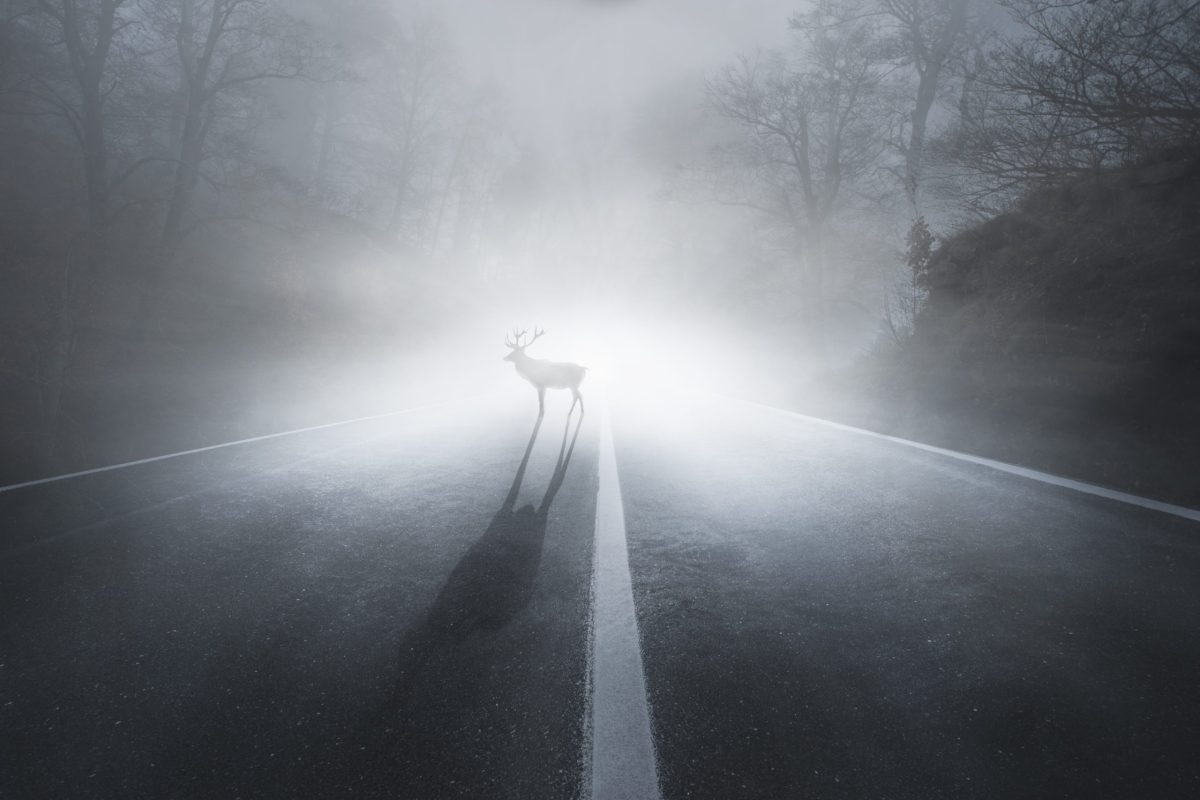
The Deer by Nandi Rose

We make the slow crawl up the Taconic. It’s a late December evening at the tail end of 2021, and a fog has rolled in, wet and white. Z grips the wheel and steers us through it with grace, the skin pulled taut over the broken bones that never set properly in his right hand. Inside the car, the hot air blasts my feet. Some comedian is talking on a podcast, but I’m only half-listening, the jokes landing like snow, immediately dissolving inside the warmth we’ve made.

We are alone on the road, and then we are not.

I see him first. From the wooded median between the lanes comes a floating chandelier, a deer lighting the world with his antlers. He emerges from the fog like a myth. The comedian is laughing and the animal is running and all I can say is Z’s name—one short syllable—before he sees the deer too. He turns the wheel, but it’s unavoidable. We collide, bumper on bone. The impact—dull and furred and sudden—is what I will remember the most.

The collision happens on our way home from Christmas in New Jersey. Sitting in the passenger seat, I can feel that I’m still bleeding. It’s been three weeks since the miscarriage. A mauve-brown pulp, menacing as a hex, looms up at me each time I check my underwear. Fittingly, the weather has been strange all month, prone to sudden belches of pea soup fog, swirling like a cauldron with something foul. Sometimes the sun’s rays try to push out from behind so the fog seems lit from within. Like it has some spirit trapped inside, struggling to be released.

As it turns out, holidays don’t stop happening when you’re grieving. The festive cheer carries on. The bright lights mock and twinkle. I spent Christmas on the couch sipping champagne cocktails I didn’t want to be sipping, talking to anyone who would listen about my grief. I always seem to want to share my underworld, to ferry others there—not because I’m morbid but because I find it is the most honest place we can meet. It’s as if we all assume our actual forms when flattened by loss, and there is a sense of relief when we can finally recognize each other’s true faces. 


The deer appears everywhere in mythology and fantasy, from the Greek myth of Actaeon—transformed into a stag as punishment by the goddess Artemis—to Miyazaki’s Deer God in Princess Mononoke. It is often a symbol of both reverential beauty and extreme vulnerability, susceptible to violence: Actaeon torn to shreds by his own hounds, the Deer God shot by a power-hungry politician. In many of these stories, the deer shows up like a divine missive, capable of bestowing blessings and ushering in extraordinary transformations. To kill it, then, is not only a grave transgression but an act of self-sabotage.

I have felt drawn to deer all my life. Wide-eyed, fragile, unwittingly struck by their fate, they feel like kin. All of us just passing through, hoping not to get hit. Once in college, I dressed as a stag for Halloween, with a fringed leather vest and elaborate pipe-cleaner antlers that kept getting tangled in the dorm’s string lights. Later, once I’d moved to New York and started marking my life on my limbs, I nearly inked a stag head on my bicep. I kept reapplying a fake tattoo from a book of deer silhouettes, testing out the impact. Part of me thinks that even though I never got it permanently done, the image imprinted somehow, shadowing my skin.

These days, there’s one family of deer that grazes our backyard year-round. They paw at fallen birdseed in spring and snap at the citrus of hemlock needles come winter. Of course, I can’t be sure it’s the same family each time, but I like to think they return, that our home is theirs too. They come down from the train tracks, clacking at the rocks with cloven hooves, or up the slope from the river.

But tonight there is only one stag, and he runs toward us with a force I cannot stop. I am just a passenger in the drive toward his death.


I am just a passenger in the drive toward his death.

My body has always been more than my body. As a singer, my body is my instrument. Air funnels up from the diaphragm, ripples across the vocal chords like the wind that rakes the salt flats, and out pours a new form: sound, tone, melody. 

It requires attention and fine-tuning. It requires a sensitivity that sometimes drives me crazy—the sprays and lozenges and warm-up exercises, the steams, teas, and trills. And still, far too often, I’ve gotten sick right before a show. 

At least you can still play the drums when you have a head cold, I’ve often said sullenly to Z. He and I have been playing music together for years. It’s how we met, the summer after college, playing in an indie rock band. I had just graduated with a major in music, specializing in classical singing, but decided not to go the choral route like some of my classmates. I craved the hot lights of a rock club, the spit and fire of a microphone grate shoved right against my mouth. So instead, I spent that first sweaty summer practicing in a New Jersey basement with the band, empty cans of Natty Ice rattling with the resonance of every snare hit, before we moved to Brooklyn to try to make it big.

Z broke his hand once just before the start of a tour and still managed to perform, dazzling audiences of young punks with his one-handed maneuvers. And yet, as a singer, a single cold could flatten me. Every time my body buckles just before a big moment, it feels like a betrayal.

But never have I felt so betrayed by my own body as when it was tricked by death.


Sometimes it just happens: the chromosomes don’t line up, the hormones don’t rise. You get an infection, you get high blood pressure, you get unlucky. This can happen a few weeks into gestation or five months or nine. The tiniest misalignment means the life is not viable. It means pulling out the weft of the dream you’ve been weaving, watching it drain from your body in dark threads. It is miraculous, then, that any of us are here. The word “miracle” shares a root with the word “mirror”—the Latin mirari, meaning to wonder or admire—conjuring up that astonishing feeling of seeing yourself reflected back at you and thinking, face, self, alive. 

In the Buddhist Lotus Sutra, there is a poignant allegory for the miracle of human conception. The story goes, a one-eyed turtle lives deep in the ocean and only comes up for air once every one hundred years. Floating on the surface of the water, tossed by the waves, is a piece of driftwood with a hole in it. The sutra asks, what is the likelihood that the half-blind turtle, in its infrequent surfacing, in all that ocean, will emerge inside the hole? The answer: even likelier than the possibility of being born in this human form.


One spring morning a couple of years ago, a doe and her fawn entered the yard. I was sitting on the patio in my pajamas drinking coffee. There were clumps of stinging nettles coming up at the edge of our property line, a lone daffodil beside the compost. The deer stepped around them, moving unhurriedly through the grass, their bodies soft with a sense of privacy. They didn’t know I was there. But the second I reached for my mug, awareness poured into their forms like cement. They tensed, grew rigid as statues. Instinctively, I put a hand to my heart and bowed my head. You are safe, I thought. I will do you no harm.

After a moment, the mother seemed to understand, relaxed, and went back to her snack of mulch. But the fawn became curious. She took a step toward me and bowed her head in response. I held her black gaze, barely breathing, and bowed back. Again, she lowered her head and shortened the distance between us. 

Step, bow. 

Step, bow. 

It went on like this until the fawn was mere feet from me. My fingers began to tremble, imagining stroking the silk between her eyes—but just then, a truck roared past, and the spell was broken. The baby spooked. White tails wagging like the heart of a flame, the two deer jumped in tandem into the brush and were gone.


When we talk about miracles, what we’re really talking about is chance. Through some serendipitous conjunction of elements, we are here, and we could so easily not have been. Chance hums in the background like a live wire, full of potential charge. 

Death, like life, also deals in chance. It was chance that led us to cross paths with the stag in the moment he veered out from the median. It felt like a miracle we didn’t die. What wild odds, that it was us who hit that one wild animal, that it was that one animal that was meant to die on the hood of our car.

This is what I try to remember when I find it unbearable, in the aftermath of the miscarriage, to get through another day. I remind myself how extraordinary and precious life is, how I should just be grateful to be here, living in this miraculous moment. But there are times in my grief when the moment is like a house on fire. Or like a black door, shut. It’s hard to live in it when the moment is so inhospitable.

There are times in my grief when the moment is like a house on fire.

Just after we started trying for a baby, I went out with friends one night. It was a mild autumn evening, the hours still long, streaks of lemon light persisting in the darkening sky. I knew it wasn’t likely I was pregnant that cycle—I had only just gotten off birth control and was told the hormones needed time to resettle—so I had a few drinks, then a few more. Later, I sat crying in the bathroom, worried about what I’d done on the off chance that I was carrying the barest beginnings of a child. Please don’t come yet, I begged the unborn soul, imagining them circling, looking for a way in. I’m not hospitable.

There was no child that month, but the next month there was. Two months after that, there was nothing at all but fistfuls of thread, leaving me, leaving me.

Later, I learn that Hades, Greek god of the Underworld, was known as The Hospitable One. When the dead arrived at his gates, he welcomed them and made them feel at home. An immaculate host, a loving caretaker, preparing the eternal resting place for their lost souls.


Two weeks into lockdown, in March 2020, I released an album called The Caretaker under my artist name, Half Waif. To celebrate, Z and I decorated our living room with blinking string lights and battery-powered candles, mounted an external USB camera, and invited the world into our home for a live-streamed set. Z played the drums, and I sang and hammered away on the baby grand piano that sat in the corner like a fat black widow.

Despite the fact that for months, we had watched the virus spread on the news, overtaking countries across Asia and Europe, it felt like everything unraveled so fast. One minute, we were rehearsing in a Brooklyn basement for a big release show in New York, and the next we were fleeing the city, driving fast up the Taconic, pausing only to hit the 24-hour Price Chopper at 11pm, where the shelves of toilet paper had already been ransacked. We were scared and numb, and like so many others, we were out of a job. The tours we’d booked in the US and Europe were canceled. Everything was shut down. 

But there was a part of me that wasn’t sad about it. It was a time of tangled emotions that took on a complexity of flavor: notes of disappointment sat on the tongue alongside the saffron-sharp taste of relief. I’d always had a lot of anxiety about touring, and the older I got, the less sustainable it felt. Z and I often said that it wasn’t the shows we got paid for when we went on tour—it was the other 23 hours of every day, when we’d haul heavy gear in and out of the back of the van, Tetrising the shapes to fit, and wolf down meals of sad vegetarian sandwiches or gut-bomb burritos during pit stops. Waking on the scratchy, hair-ridden sheets of cheap motels and not remembering where we were. Killing time in random towns, another coffeeshop, another bookstore. Driving and driving and driving through all hours, all weather conditions, all states, passing days in cramped, crumb-filled seats, lonely as an island.

Late one night after a show in Denver, we were winding through the icy outer reaches of the Rocky Mountains, trying to make some progress on the long drive to Salt Lake City. I was sitting in the backseat scrolling on my phone when suddenly, I felt the 15-passenger van swerve so hard, I swear it went up on two wheels. Coming around a bend, our headlights had illuminated a struck elk lying in the middle of the road, still alive and heaving with labored breath.

We weren’t the first to encounter the elk on that dark road. We missed it by inches, a hair’s breadth from death.


Has this come to punish me, or has it come to awaken me? 

The question rises in my mind like an echo in the seconds after Z and I collide with the flying chandelier, extinguishing its light. I had asked the same one three weeks earlier while I lay on a towel, bleeding out like an animal.

I knew our chances. One in four pregnancies end in miscarriage. My own mother had two before she had me, and Z’s mother had one before him. It is tragically common, people are quick to tell you. But what struck me the night it happened to me—the tang of blood souring the air—was how horrific it was. How gory. How could something so common be so brutal? 

“Miscarriage” is too clinical a term for it. It’s a closed-door, a private ward of a word. I wanted a word for Z’s red basketball shorts that I wore over a thick maxi pad that night, the red on red when the blood soaked through. I wanted a word for the feeling of his body against mine in the minutes after we understood what was happening, a word for my need as I fell into the solidity of him, disbelieving, dissolving, destroyed. I wanted a word for the false cheer in the texts we sent out to everyone we’d told: we’re so grateful we got to be this soul’s parents, even for a brief time! “Miscarriage” is a single-room word, finite, enclosed. The reality was a labyrinth with a monster at its heart.


How could something so common be so brutal?

Like so many others, Z and I got into birdwatching during lockdown. We put up feeders and downloaded Cornell’s Merlin app to identify the visitors to our yard. When we learned to recognize and name all those, we started venturing out in search of new birds. We were addicted to finding these “lifers,” the term given to a bird when you see it for the first time in your life.

One day, we came up with a silly phrase while looking for lifers on our walk. A woodcock, perhaps, doing its spiral spring mating dance, or one of the many outrageous migrating warblers—the Blackburnian with its punk-rock streaks of orange and black, the banana-bright Magnolia with its drizzle of dark neck feathers. You gotta squeeze the juice out of chance, we’d say, training our binoculars on the trees. What we meant was, we might not see any life at all, but still it’s worth a shot. As if chance was a lemon. As if we could make something out of it even if we never got what we wanted.


When you’re trying to make it as a musician, you become familiar with chance. You understand that not everyone will break through. You receive the requisite advice from the adults around you to “get a real job.” You roll the dice. You move to Brooklyn after graduation. You work random jobs—a bookkeeper, a cheesemonger, a Park Slope nanny. You eat lettuce for dinner, eat peanut butter for dinner, cry when the father of the girl you nanny forgets to hand you forty dollars when he comes home, because you were planning to use it to buy a real meal. You play shows in fire hazard basements, in flower shops, in coffee shops, in skate parks, in bars, in any town that will have you: Watertown, Muncie, Bar Harbor, Kalamazoo. You pay your dues. You cut your teeth. And like the first baby teeth cutting through the gums, it is a painful process of becoming. Teeth for chewing, teeth for baring, teeth for sharpening and tearing into the heart of the world. You want it so much. You watch other bands around the city excel and get signed, you wonder if it will ever be your turn. You keep playing the slots: another show, another album, another song. Will this be the one? Your number does not get called. You crank the handle again. You want it so much. Will this be the one? You crank the handle again. Another show. Another song. A lemon, a lemon, a heart.


We leave the stag dying on the side of the road and drive on in silence. I worry that somehow the deer family that visits us will know what we’ve done, that they’ll sense the shift in our allegiance and we’ll no longer be a safe clearing in which to graze. I wonder if the fawn will ever draw near me with her liquid eyes again.

When we get home, Z examines the damage to the car while I go inside, the thud still echoing in my ears. In the mirror, I catch sight of my tired eyes, my graying hair. There’s a clarity there, the skin blanched as parchment, all of it rendered brightly in grief’s neat penmanship. Face, self, alive.

The next morning, we wake to snow. It has fallen heavy overnight. The fog is gone, leaving the sun free to reflect off the snow in a blinding blaze. I open the curtains at the back door as I do every morning, wondering who and what I’ll see. The yard is empty, but just beyond the glass—so close I could reach out and touch it—is a set of small yet unmistakable hoof prints.

Sarah Chihaya’s Relationship With Books Is Complicated

When I think about reading, I think about a kind of hunger that only exists in my memory. As a child, I did not think about time or food or my physical body or even where I was, really, while reading. I devoured books in a way that now seems almost mythical, with a fullness of attention I find difficult to summon for anything these days. 

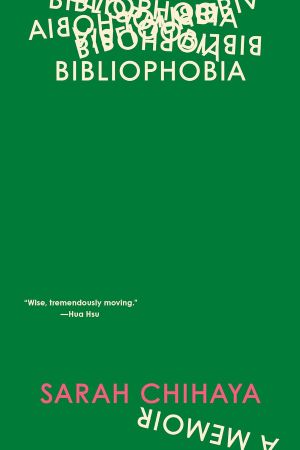
I used to think of this hunger as love––until I read Sarah Chihaya’s memoir Bibliophobia, in which she describes the titular condition as occurring “when someone has, crudely stated, loved books to a dangerous degree.” In her memoir, Chihaya artfully unpacks the different ways our consumption of books can nourish or poison us, offer a refuge, a mirror, or fundamentally change who we are. Some books even ask us to revise the narratives of ourselves and our lives with an intensity that can feel almost like violence. 

Chihaya pairs moments of deep personal upheaval, like a nervous breakdown that leaves her unable to read for a time, with an examination of books that she terms “Life Ruiners,” demonstrating the ways that books are inextricably linked to her life, self-perception, and the ways she learns to read others. In incisive and lively prose, Chihaya makes space to ask questions about the ways that reading can provoke questions about the wider world: Where is the line between loving something and losing yourself in it? What separates creation from destruction, and is there really ever a way to disentangle the two? What nourishes and what poisons? And what happens when we are drawn to consume a text that nurtures and harms us at the same time?

I had the opportunity to speak with Sarah Chihaya about the relationship between reading and academia, the way disruptive forces can lead to creation, and how she sees herself as a reader now. 


Jacqueline Alnes: In addition to all the reasons we love books, I love how you write about the way they can be a disruptive force and encourage us to hold a mirror up to ourselves. Books can be something we avoid, at times, because there is something in them we don’t want to engage with. What was it like to unpack these different ways that books are in our lives?

Sarah Chihaya: Books are not always black or white––they are always in a grey zone, and that is something we should celebrate about them. If we knew what they were supposed to tell us or how we were supposed to unpack them, it would be a dull enterprise to read. Getting into that middle, that in-between space, was very hard. It’s still hard to think back on childhood reading, this magical experience of encountering books, and separate that from this more complicated feeling. I thought a lot about teaching while I was writing this book because so much of teaching is helping students put words to that feeling of not knowing how to respond to a book. 

The books that stay with me the longest are the ones that have made me the most uncomfortable. It’s not just discomfort, it’s this kind of excitement. It’s being uncomfortable with that fact of confrontation, of having to look at the thing and ask yourself why this makes me unsettled or stressed or whatever it does to you. It’s being uncomfortable with yourself. It’s both the thing itself and the act of looking that is hard. My hope for this book is that it encourages  readers to do this on their own and come away interrogating their own reading habits and thinking about why certain books stay with them, why they are troubled by certain books, and why they can’t finish certain books. 

JA: The way you bring up the relationship between academia and reading, the way that it feels like a double-edged sword, is interesting. At first, in your memoir, reading is a space where you find confidence and validation. Later, it becomes a stressor, a pressure to participate in a way that no longer feels like that ravenous, childhood form of reading—it’s more of a “Where is your conference paper?” then “Where is your chapter?” form of engagement. I wondered if you could talk about that relationship. 

SC: I think every academic has some version of this, where there is a sense that there was a real kind of reading you did that grows less and less accessible and grows less and less rewarded by the academy. There is a line in A.S. Byatt’s Possession where the two main characters talk about why they study what they study—they say something about how it’s what survived their education. I’ve thought about that a lot. It’s kind of a funny line, to think you go back to the things that survived this process of being formed, but it’s also very sad. There is something tragic about education being this war that you have to survive in order to come out the other end and work on something and be productive. 

I reached this point where I did not read novels any more because I thought, if I read this, I’ll have to write about it.

When I was a scholar, I worked on Contemporary Literature and I reached this point where I just did not read novels any more because I thought, if I read this, I’ll have to write about it. That feeling of dread that you would be responsible is an unfair burden to put on the text because you are saying if I read you, book, you have to do something for me because it will be professionally expedient. It’s a pressure on yourself to make something. You can’t just let a book be itself. You are always privileging the self over the book because you have to make something that will contribute to your career. So often, in the academy, we are told who you are is what you make and productivity equals your personality. Even if it’s a book you love, a book you have really felt passionately about, you still feel the need to make it your own, in a way. It was hard to disentangle from that mode of reading and I’m still working on it. It’s a work in process, but I’ve found it very rewarding to try to be less productive, if that makes sense.

JA: Your book made me think about that moment when my students come into class just excited to talk about a reading. It made me wonder: Do you think our relationship to reading necessarily has to evolve because we all get older and become part of, as you say in your memoir, a world where microplastics are in everything and many of us are part of different insidious systems? Do you feel like it’s possible to retain that initial pleasure while reading or is it something we are just bound to look back at with some level of nostalgia? 

SC: That’s a good question. I taught fiction and the first question I always asked was, “Did you like it? How did you feel about it?” Before we start talking about it, how do you feel? They are always shocked. We are not asked in academia, how do you feel, but we are asked if something was interesting. What interests you about it? What makes you think you should write about it or talk about it? I think reading changes for those of us who go to grad school. You have to report something. There is also some of that for everyone else. Maybe you’re right, that “takeaway” mentality does sort of seep into us, especially the way things are now. 

Books have to be useful, in some way. They are asked to be useful politically or personally. We like to champion books that tell us how to do things. The books that tell us how to do things are often wrong and so often, oversimplified because they think they have all the answers. We should be championing books that don’t have answers and that make us question and make us uncertain. Now, of all times, it would be helpful to put the emphasis back on books that don’t claim to have an agenda or claim to be able to tell us what is the correct thing to do. We’ve all been convinced that we should have a takeaway or an answer from every book. It’s a productivity mindset that extends far beyond academia. We are all guilty of it, or it’s imposed on all of us, this need to demonstrate why something is worth our time. I think that we could all take a step back and learn how to sit in uncertainty and not know for sure why something is politically expedient or personally helpful or financially gainful. 

To take it back to students, part of the reason that they feel that excitement on the first day is that they are not yet writing papers. They don’t have to make anything yet. They can just come in and say, I felt this. They don’t yet have to say what the point was. They can just respond very immediately. That moment of response is one we are not asked to take very often. We are asked to skip ahead to identifying what is valuable about this thing.

JA: I try to teach my students (and remind myself) that you don’t have to come away from a book knowing it. You can come away just knowing you experienced it and have permission not to be an expert. I was reminded of this in your memoir, when you write about how the first reading of a book can be so different than later encounters, and how being asked to know a book—and yourself—on a first read is a really big ask. 

There is a lot of pressure to be able to account for whatever we encounter—whether reading or viewing or the news—to be able to give what is essentially a book report.

SC: Totally. I think there is a lot of pressure to be able to account for whatever we encounter—whether reading or viewing or the news—to be able to give what is essentially a book report. I have comprehended this event or I can account for this thing that I’ve read. But actually, education should be for the sort of not-knowing and figuring out what you do think about things, instead of being pushed into a major or a thesis or an explanation of a thing. 

I’m trying very hard, as you can tell from the end of the book, to sit with uncertainty and not knowing. There will always be a thing that you can explain or think you understand, and there will always be things that are incomprehensible or too hard to look at. That process of trying to render them encounterable is a work in progress. I’m trying to be more open to that sense of ongoing revision.

JA: I love the line in your book: “The word was not the world and it never had been.” Your book made me think about the relationship between our history as readers, our lives as writers, our lives reading other people, our lives trying to figure out our own lives, revising the truths of our childhoods depending on our own healing. 

SC: Until now, my life has been this series of four-year increments of college and grad school and being a junior faculty member and writing this book. I’m always waiting for a decision that’s deferred until a later date, like waiting for the reviews to come in for the book and after that’s done I’ll be waiting to see how my next project is received and what my agent thinks. The error that I have made, that I am probably still making, is thinking that all will be done someday. 

In the academy, I thought when I got tenure, I would be done. Number one, that didn’t happen, but also, all the senior people I talked to were like, you’re never done. Now that I’m out, I never have to be done which means I can let go of the idea that completion would be imminent, if I was good enough. I don’t even know what it would mean to be done now. My career is different. I no longer have this very concrete goal. That might be a good thing.

JA: You write about a mental health crisis and hospital stay that prompted a break in reading. What did that interruption in regard to reading or to life mean to you?

SC: When it happened, it felt like the end of everything. I could not conceive of what was next. But now, years after, and having written this book and having left the professional stuff, I do feel like it was necessary. I think it’s too positive to say it was an awakening, but it was a jarring moment, an abandonment, as though I had been abandoned by all the things that had carried me along until that point, whether they were the pressure from my family or from my university or from myself. 

I had suspicions that I was headed for a crisis, but I just thought if I could make it through…You know, a lot of people collapse after tenure or after all these things have happened. I was kind of always betting against that and hoping I would wait until after to have my collapse. But it came when it had to; it wasn’t up to me. In a weird way, I’m glad it happened then, before rather than after. If I continued writing the academic book and I continued with this career I was unhappy with and life I was unhappy with, I might have produced more or produced the thing I was supposed to produce, or I might not have. 

I have to stop thinking about things in regard to success and failure, but I might have failed to do the thing undramatically, without ever having had this chance to reevaluate. I might have just not done it and been like well, why didn’t I do it? I might have failed without having a chance to learn from it. I am grateful to the collapse now for having shocked me into looking at myself and all the things I was hoping to sweep under the rug for long enough. It’s hard to say it was good or bad, but it was a necessary thing.

JA: Who do you see yourself as a reader right now? 

I’m trying to reclaim some of the feeling we see in students, a sense of surprise.

SC: I’m trying to not be an expert anymore. I was just thinking last night about why it’s been an ongoing struggle for me to read. I read in fits and starts. I think it’s because I’m always trying to remind myself that I am only accountable to myself right now, when reading, except for when I’m accountable to someone for work. Because my work is being a book critic now, there still is some of that, that you owe things about a certain topic by a certain deadline. But, it’s a different kind of owing. 

The only thing I owe right now is my opinion. It’s very different from being accountable as a scholar writing something peer-reviewed, where you sit down and ask, “Have I read every scholarly source about this? Have I read everything this author has written and have I read everything that everyone else has written about this author?” I will have a momentary impulse where I think that I can’t read something until I read everything that has ever been said about it.

I’m trying to reclaim some of the feeling we see in students, a sense of surprise. It’s work to undo the things that we have spent so long learning. It’s very privileged to say that I’m trying to enjoy reading—it is a privilege. I remember people outside the academy saying, “You’re so lucky, you must love just reading all day, teaching your favorite books,” and I was like no, I’m always working, always trying to make something. I felt very reluctant to admit how much fun it should be to teach and do all that we are allowed to do in the profession. It should be really fun. Those people should be right. I’m trying to embrace that it is a different kind of privilege to just have my own thoughts. I’m working on reading for only one person, for myself, rather than for everyone. 

This Coworking Space Runs on Sisterhood and Toxic Conformity

The Parlor

Every cell of the building’s interior oozes with pink. Shades of bubblegum. Rouge. Peach so ripe, you can feel its sun-beamed juice roll sloppily down your cheek. Millennial reminiscent of every Y2K-style skirt in your hometown H&M that you couldn’t afford to buy in high school.

You enter the lobby. Scents of jasmine, honeysuckle, and white generational wealth gust towards you in a perfumed bubble. Your Doc Martens make a muted thump as you traipse across the marble floors. You know they’re itching for the clacks of pumps and heeled booties and are sighing disappointedly at your rubber soles.

“May I help you?” A young woman greets you with a confused smile. Her badge reads “Ashleigh.”

“I would like to learn about your coworking membership.”

She looks even more confused.

“Here’s our pamphlet.” A crisp booklet skids across the counter. She retracts her fingers with such speed, you almost miss them completely.

The sharp folds of the pamphlet prick your skin. Your first thought is teeth. Teeth are everywhere. On smiling women reading. Smiling women lecturing. Smiling women cheersing, their manicured nails clutching champagne flutes. The background fades away, and you are left with teeth glowing in the dark.

“Excuse me? The rates aren’t listed.”

The woman no longer looks confused. “The prices are listed on the back.” So they are. In letters almost too small to see. Prices so obscene that your eyes can’t help but bulge. You remind yourself that the few friends you’ve made have all moved away, and you don’t really know anyone in this city.

“I’d like to become a member.”

The woman’s face shifts into a toothless smile. “You can’t just become a member. You need to do an intake. And then we review your application.”

“Fine,” you say, your jaw set.

She sighs and turns her back to you, walking behind the flamingo pink curtains. Your fingers drum intricate patterns on the counter. 

Finally, she returns with a stack of papers, unwieldy and as high as her shoulders. “Just a bit of paperwork.” She drops it onto the counter with a loud thud and places a pastel pink pen on top with, “The Parlor” displayed in white cursive. She gestures to a seating area in the center of the room.

You make your way back across the marble. You place the papers on the pearly white coffee table and settle into a chair patterned with bows and sailboats. You are displeased to discover that it’s comfortable. Really comfortable.

The pages are as thin as tissue-paper, so you lick your fingers to pluck the one on top. It’s a questionnaire.

First Name

Last Name

Pronouns

Email Address

Phone Number

Emergency Contact

What is your profession?

Your pen scratches gently across the paper until it settles on the next question.

What is your net worth?

Your pen freezes. You look up from the paper. The woman is gone. You look back down.

What is your deepest insecurity?

What is your clothing size?

What is your body mass index?

How old are you? Explain.

How long have you been a member of Equinox?

What did you do the evening of the 2016 election?

“Excuse me?” You rise out of your chair, striding across the floor to the empty counter. You ring the bell on the desk.

A different woman, who looks eerily like the first one, appears. Her badge reads “Baileigh.” 

“May I help you?”

“Uh, yeah, I was filling out this intake form and noticed these questions.”

“Yes?”

“I don’t believe I’ve ever been asked about my net worth, BMI, and political affiliation in an intake form before.”

“They’re our standard questions. I suppose if you want to leave a few answers blank, that’s fine, but it will impact your final score.”

“Score?”

“Yes, your compatibility score.” She also looks visibly annoyed. “We screen and only admit the finest women. Perhaps you would be more comfortable with the WeWork across the street?”

You grumble something about WeWork’s cold brew and find your seat again. The next pages have multiple choice questions.

You work in an office. A coworker brings her son’s leftover birthday cake and leaves it in the kitchen. She messages the staff that it is available. Do you . . . 

  1. Bolt into the kitchen. You are disgusting and have no self-control.
  2. Say no. It doesn’t fit into your calorie tracker app.
  3. Sneak in there at 3pm, and while “cleaning the coffee maker,” you stuff a piece into your big, dumb mouth.
  4. Transfer to the Wichita office at the first chance you get.

Your mouth hangs open.

You and your Parlor sisters are having a friendly game night competition. What weapon do you use?

  1. Words and insults, duh. They’re always the sharpest knives.
  2. Broken shards of your sisters’ sauv blanc bottles. It’s their fault they brought the wine.
  3. You yell, “That cheese is regular fat, Tina!” over and over until Tina crumples into a ball on the floor.
  4. You transfer to the Wichita office.

You’re back at the counter. You ring the bell once, and then a second and third and fourth time. “Hello? Hello?!”

A third woman finally appears, eerily similar to the first two women. Her badge reads “Kaileigh.”

“I can’t fill out this form. I’m sorry, but this place just isn’t for me.” You start to retreat, your feet resolute in their decision.

“Are you sure? You’ve reached the final part of your intake.”

“I have?”

“Yes, the mental and physical exam.”

You hesitate. You just can’t stomach one more glass of sticky wine at a speed dating event, another debt-inducing pottery class, or god help you, a pickleball match. “What does the exam entail?” 

“The first challenge is called Human Rolodex. Please list everyone you have ever met in your life in chronological order.”

Your mouth dries. Your mind goes blank.

“Um, I believe I have a mother—”

“Name?” Kaileigh looks up expectantly, her hand poised with a pen over what looks like an oversized guest book.

“Elizabeth.” She writes.

“Title?”

“Associate Professor of English.” She crosses out the name. 

“Next.”

You rattle off every single person you can think of from your small town. Your father, your sister, your childhood best friend who moved away in the third grade, your rabbi (can you tell them you had a rabbi?), your first crush, your favorite history teacher, your math teacher who gave you a complex about your math abilities throughout high school. With every name, Kaileigh’s eyebrows lift ever so slightly, but then fall as she crosses the name off the list.

You’re trying to recollect all your previous specialists and dental hygienists when Kaileigh’s pen halts.

“Dr. Porter is a high-level donor for women in STEM.”

Your breath quickens. “Huh, I didn’t know.”

“We’ve been trying to get her to speak at our center for quite some time. Shall you invite her for a space tour?”

“I think I have an appointment with her on the 28th—”

“Perfect.” She places a smooth hand on top of yours and gives it a squeeze. Your throat warms. “Please ask her if she has any dietary restrictions for egg salad sandwiches.” She removes her hand. “Now, we move onto part two.”

Kaileigh exits behind the curtains. She returns with a plate piled high with miniature frosted cakes and French pastries, and a glass of champagne between her chrome nails. She places them in your hands.

“For this next challenge, we will be sourcing volunteers from some of our most valued members. For the Buffet Social, please speak with each sister for exactly four minutes, and tell them about yourself. You may not offer support, connection, or mentorship to any of them. Similarly, you are prohibited to accept any help, no matter how sincere they may sound. Do you understand?”

Your mouth moves before you realize. “Yes.”

“Come on out, girls!”

The ballet slipper pink wall next to the reception desk rolls open to reveal smiling women standing with their hands pressed together. Their mouths are open wide, their teeth starch-white. Their eyes are the only part of their faces not smiling. They stare at you expectantly, their jet-black pupils taking you in as your Doc Martens inch closer and closer.

Harris Lahti on Ripping From the Headlines of His Life

Foreclosure Gothic, Harris Lahti’s debut novel, is a chilling, absorbing, searingly memorable work of gothic fiction. Portents loom around every corner—vultures, scythes, unattributable screams—and nature is a “witch’s brew of mistrust” where hulking garbagemen roam alongside necrophiliac raccoons. While such spooky surrealism may occasionally skew the picture, don’t be fooled—Foreclosure Gothic is a deeply human, and deeply personal, story about intergenerational cycles and the financial reality of creative ambition. Read it once for the sinewy poetry and evocative imagery. Read it twice to unveil the sly plotting and subtly intricate architecture. Like a foreclosed property, there is a “house behind the house.” Lahti’s debut rewards repeat readings.

The novel centers on Vic Greener, an aspiring actor who abandons Hollywood with zero film credits to his name—just a guest spot as a coke-addicted doctor on a daytime soap. He follows the enchanting Heather, pregnant with their child, to her hometown in New York’s Hudson Valley, a few highway exits from where Vic’s own father continues to make his living restoring foreclosed homes. Vic always believed himself fated to follow his father’s career path, and the birth of Junior Greener expedites the process: Hollywood dreams don’t pay bills, especially when LA’s a few thousand miles away. Decades later, in this simultaneously sweeping and compact family saga, Junior may be sucked up by the Greener fate as well.

Harris Lahti is an editor at Fence, a co-founder of the indie press Cash 4 Gold Books, a prolific short story writer, and a painter/house renovator. I spoke with him over Zoom about his haunting debut. In this wide-ranging conversation, we touch on gothic fiction, alternative literature, and some of the real stories behind his fictional creations.


Michael Knapp: Parts of your novel appeared previously as short stories. Did you always have a larger project in mind for the Greener characters, or did you stumble into a novel?

Harris Lahti: I stumbled into a novel. The undertaking of a novel is so immense that sometimes you have to trick yourself into writing one. I wrote “Sugar Bath,” one of the earlier chapters, and then I wrote “House Ceremony,” one of the later chapters, and then I space docked them together. It’s an interesting way to write, because once you have those two elements you can synthesize them. You’re using raw materials that exist instead of constantly inventing.

Those two sections generated a lot of curiosity for me, and it proliferated until the book felt fully formed. There are more chapters I wish I could write now; the book’s characters live on in their own way. But once I started adding pictures I knew it was done.

MK: Foreclosure Gothic spans 50 years and three generations of Greener men. It’s a compact book with a sprawling scope—a new chapter might mean another decade gone. What were the challenges with scaffolding such an expansive novel?

HL: I initially wrote each chapter outside of time, then I inserted little timestamps about, say, Venice Beach in the eighties to ground it on a timeline. But to tell you the truth, what I really focused on was sentence level tension. Readers will give you slack if you’re entertaining them—they’ll glance past questions the idle mind might ponder.

I wrote a third person novel, but I think of it as first because the psychic distance is about as close as you can get, and then it’s also written in present tense. It’s all working to hold the reader’s attention; it insulates itself from the problems of tackling such a vast swath of time.

The undertaking of a novel is so immense that sometimes you have to trick yourself into writing one.

MK: I appreciate the timestamps—whether it’s a cell phone or the financial crisis. But I also like how you respect the reader’s ability to catch up to the present without bogging things down in exposition.

HL: People are a lot more intelligent than we give them credit for. I think big publishers often condescend to the reader. Anytime you’re supplying space for the reader to mull something over you’re engaging them; you’re allowing the words to fall away, and the reader enters the dream of fiction. It’s something I’m very aware of with both the fiction I publish and the fiction I write.

MK: As the title suggests, your novel belongs somewhere in the gothic tradition. It’s filled with haunted homes, necrophiliac raccoons, gargantuan garbagemen. That said, it never slips fully into genre, and I think protagonist Vic would endorse the novel’s real-world grounding: he turns “his nose up at genre,” believing the real world to be “strange enough.” Are you consciously playing with, or against, horror tropes? Do you agree with Vic’s thoughts on genre?

HL: I find portents much more interesting than horror itself—it’s a “why show the shark” kind of thinking. The horror I’m more interested in is grounded in the uncanny, in a Lynchian or Bolaño-esque sense. It’s a feeling of uncertainty—a psychological fear charged by ambiguity.

I have my father-in-law’s HBO Max account, and I’ll watch the first twenty minutes of horror movies endlessly. I always wonder what he thinks I’m doing: “Why are you watching the first twenty minutes of Microwave Massacre and Blood Hook on repeat?” I love the beginnings of horror movies—they’re ripe with portents. Once the horror starts to reveal itself, it’s rarely as interesting, because you have to fall back on tropes.

I like the metaphor of deer after a thunderstorm. They come out into the meadow and dance, because the storm has put something inside of them. Each chapter in my novel is trying to do something similar: I’m getting right up to the point where the horror will be introduced, and then, by taking an unexpected exit, it continues to accrete.

MK: A lot of the horror is also alleviated by a jump in time, which feels true to life. In the moment you might feel tortured by some terrifying, life-altering force. Then ten years later you don’t remember it.

HL: A hundred percent. That’s how memory works. It’s a big deal in the moment, and then you move along. You’re eating brunch somewhere and you’re not thinking about the seven-foot-tall garbage man; the next new horror you’ll live through approaches.

MK: I actually am still thinking about the seven-foot-tall garbageman. But in addition to gothic fiction, your novel might belong to a more contemporary tradition: alternative literature (alt-lit). You’ve published in a lot of the movement’s preeminent journals—New York Tyrant, X-R-A-Y, Hobart, Forever—and you edit fiction at Fence, another alt-lit stalwart. I know this kind of question dominates literary discourse these days, but what does alt-lit represent to you? Do you consider your work—Foreclosure Gothic in particular—part of it?

HL: I think Foreclosure Gothic is more stylized, but I do often file myself in the alt-lit world. I like that it’s scrappier, and there’s less gatekeeping than at larger college-run journals.

The best thing about alt-lit is that it’s run by tyrants, like Giancarlo [DiTrapano], Tao [Lin], Madeline [Cash] and Anika [Levy], Derek White, Elizabeth Ellen. They’re tastemakers; they put the work out there and say, “This is what I like.” I think the auteur theory of directing applies to editing here; these people have their own vision.

I’m a skateboarder, and everybody who does it or watches it gets along and encourages each other. Why isn’t writing like that?

MK: Speaking of editorial vision, you and Jon Lindsey just co-founded an indie press: Cash for Gold Books (C4G). You released your first two books last year: Sillyboy by Peter Vack and The Champ is Here by Nathan Dragon. What are your goals for the press, beyond “finding the freaks,” which I’ve seen you talk about in other interviews? What’s C4G up to now?

HL: I said that? I like that.

We just had the launch party for Elizabeth Hall’s Season of the Rat. The crowd was so good—it was getting a lot of support. Then we have another book coming, a collection of short stories by David Ryan.

Basically, we’re putting out books that need to be put out. The path to publication is so difficult, and people who deserve books often don’t get the opportunity. Like, I’m a skateboarder, and everybody who does it or watches it gets along and encourages each other. Nobody’s trying to get anything out of skating except the enjoyment of the act. Why isn’t writing like that?

Jon and Nathan and I want to make the scene better; we want to improve the culture. Our way of doing that is to not take ourselves too seriously, but to take the work deathly seriously. We want to make it fun and interesting and flip the finger at those people that said no to the writers we’re publishing. Maybe we’ll change some hearts and minds along the way.

MK: I notice a kind of editorial sensibility in your novel, in terms of both the events you choose to include and, more so, the ones you choose not to include. The intentionality of your choices clarifies as the novel progresses, but why, for example, feature a farmer’s market and skip the birth of a child?

HL: You have to be curious about what you’re writing, and a lot of conventional stuff just didn’t interest me. If you’re not creating narrative friction that is uncanny or unexpected just do away with it. Don’t bother. That’s why it’s exciting to write a compact novel that’s so expansive. I can pick and choose my points. Otherwise, you get bogged down in the furniture moving of narrative fiction.

I’ve been an editor for a long time, and I’ve always felt the mark of a mature writer is what they choose to leave out more than what they put in.

MK: In the book, Junior himself is a writer. His father, Vic, is an actor, and Heather’s a serial storyteller. Later in their marriage, Vic feels the well of conversation running dry. He worries they’ve run out of stories to share. A lot of these characters try to make a living as storytellers, but I’m interested in how storytelling is so integral to these characters even divorced from moneymaking. What is it about stories that’s so important to them?

HL: My knee-jerk impulse is to relate it to evolution, and how we build myths around ourselves to maintain a sense of self. In a way, it’s counterintuitive. We construct imaginary worlds to help understand reality. That’s what I think religion is, and that’s what literature has become for me.

I was talking to a writer working on a historical novel. He said he needs to do all this research because people will kick the tires on the real thing he’s fictionalizing. I want nothing to do with that; I’m more interested in the world that’s strained through fiction because, in a weird way, the more you understand about the reality of the world, the more confusing it becomes.

For me personally, my father was an actor. He walked away from it after he had kids because it wasn’t paying the bills. Now I’m a writer, and I’m trying to justify it. Not many make the cut solely as a writer. I’m always thinking about that and working through it, and writing these stories is me trying to understand that. It’s something I struggled with subconsciously, and I didn’t fully understand it until showing my dad the novel.

You’re making sense of uncertainty through fiction. I think you do it more truthfully with a novel as opposed to something like a memoir.

MK: A young Junior wants to be a novelist, and he contemplates a disconnect between his writing and the work his dad does restoring homes: “Creativity is the residue of rest,” he says. Later on, his attitude changes: he works “piece by piece, sentence by sentence”; an “idle itchiness” descends if he’s “not painting a house or working on a novel.” You yourself renovate houses, and I wonder what you make of this connection between physical work and a writing practice?

HL: Writing is work. You have to show up and make it happen. There is this other element where you have to live in order to write, but then at some point you need to step outside the world of the living and make space to create.

One feeds the other, and it’s why I’ll never run out of stories. Every house I do, I meet new people; I see new things. Just the other day I was on a roof, and this guy starts talking to me. He’s wobbling, I can tell he’s drunk, and when I come down this dog wanders up the road. When it gets closer, I see it’s hairless, and it’s blue. It’s a blue dog, only it doesn’t really look like a dog. Not exactly. Then I see a pointy nose and come to realize it’s a mangy fox. Possibly rabid. The drunk guy starts walking up to it, clapping his hands, saying, “Here, doggy doggy! Here, doggy doggy!”

It’s the kind of moment that’s endlessly interesting to me, and I try to understand it and contextualize it with fiction. Whether you work in a kitchen or a school, the stories propagate through your experiences. 

But maybe most aren’t as strange as that.

MK: The opening chapter’s titled “This Only Ends One Way,” and there’s a feeling of preordainment pervading the book; The Greeners’ past pulls them forward into an eerily familiar, and seemingly inevitable, future, restoring foreclosed homes in the Hudson Valley. Did you ever envision Foreclosure Gothic wandering off in a different direction? Can these characters—can anyone—escape their past?

HL: Especially if you’re doing what your parents do, it’s hard to extricate yourself. I could get some shitty job, but this is the way I make money, and when you have two kids and a wife you can’t really justify something other than the best option. Or maybe I’m not inventive enough to think of another path forward.

I think we’re all stuck. Free will is a funny thing. Maybe this is too lofty, but…

MK: Let’s get lofty.

HL: Let’s do it. Personally, I never really surprise myself. It’s hard to free yourself from patterns. Those neural pathways get ground down and you become complacent.

I’ve always respected people who burn their lives down and start again. A lot of us try to make that leap, and then we keep adjusting our expectations until we’re right back where in our heart of hearts we thought we’d end up all along.

MK: This feeling of predestination is amplified by a sense of foreboding: vultures portend doom, janky ceiling fans evoke our cyclical lives, and the scythe Junior wields to trim overgrown grass speaks to foreclosure as the grim reaper—financial death for one family, and the endless chain of renovations linking the Greeners to their end. How deliberate are the various symbols here—do they connote something specific? Or are they more ornamentation?

HL: Both, I guess, but to tell you the truth, so much is ripped from the headlines of my life. My earliest memories are playing in old houses that really freaked me out.

The scythe, for example. That’s something that happened. I was taming an unruly lawn full of shotgun shells and beer cans, and the lawnmower broke. What do you do? You go into one of the barns and, lo and behold, there’s a scythe.

It’s true and it’s real. And there were vultures, and the house was full of belongings from a family that seemed to have disappeared, and I couldn’t figure out why that would happen to a family. I was sixteen; I grew up in a loving home—a nice house, a big property—and it was confusing to me. Where’d they go?

So your mind jumps to death. The vultures are there suggesting what vultures suggest, and you have a scythe in your hand. It all coheres in a way that seems intentional, but I’m not inventing it.

MK: To close, I’m curious about creative influences. You mentioned Bolaño, David Lynch, and the first twenty minutes of horror movies; who or what else has influenced your work?

HL: The first 20 minutes of all horror movies. That’s definitely up there.

There’s also Fleur Jaeggy—her clipped sentences and sinister tone. I would put Elfriede Jelinek in that category. The Piano Teacher was a big novel for me when I was writing Foreclosure Gothic. I think the filmmaker Lars Von Trier struggles with his subject matter in very personal ways I’ve tried to adopt. Then I love the collected works of Breece D’J Pancake. Cormac McCarthy is a big one. I’ve read everything he’s written a bunch of times. Oh and William Gay wrote this fucked up story called “The Paperhanger” that I reread about a thousand times. If you’ve never read it you have to read it. It’s completely insane. Graves will be robbed.

7 New Sci-Fi Comedies You Don’t Want to Miss

Science fiction has always been a genre of escape, one that especially speaks to those of us eagerly waiting to be abducted by aliens or dreaming of robot armies battling on undiscovered planets. We want adventure, some intrigue, and the novelty of the never before seen.

While some readers may prefer a more dignified or even meticulous sci-fi, I tend to enjoy stories that have just as much a sense of humor as they do a sense of adventure. Comedy and science fiction go hand in hand—just ask Douglas Adams or William Shatner—because the absurd loves a partner in crime. The excitement of imagining aliens fits right in with the silliness of those aliens reciting bad poetry or being incredibly and conveniently attractive. Lucky for me, 2025 is a great year for novels that can offer some genuine laughs while planet hopping or robot building. Below are 7 new and upcoming sci-fi novels with particularly comedic twists to help you giggle your way through the rest of the year. 

Blob: A Love Story by Maggie Su

In classic rom-com fashion our female protagonist is a bit of a mess, a bit lonely, and could use a bit of adventure—except she wasn’t expecting the adventure to be with a sentient glob of hair gel. We meet the titular blob right away, tucked between dumpsters on a sidewalk in the rain, while our protagonist Vi suffers through having drinks with friends she doesn’t like. Things get sticky quickly when she takes the blob home where it begins blinking, smiling, and growing limbs. Su delivers exactly what readers and Vi need in a plot full of character development ups and downs, decisions good and bad, and figuring out what it means to be alive but only technically living. A silly, romantic plot involving a disturbingly relatable fail-ennial (aka a millennial who is a failure, like all of us millennials), Blob checks all the boxes of a rom-com and asks questions only safely answered in your diary or with a therapist.

I Got Abducted by Aliens and Now I’m Trapped in a Rom-Com by Kimberly Lemming 

Lemming gained notoriety for their fantasy series, Mead Mishaps, but their latest spin on wet and wild science fiction will leave readers begging for more. In this book we meet Dory, a PhD student who dies by lion attack a split second before she is abducted by aliens (they heal her up, don’t worry), who then escapes her captures alongside her killer-turned-side-kick lion named Toto. From there the plot only escalates further, involving two horned aliens with surprisingly sexy tails, a bureaucracy involved in alien science experiments the size of planets, and more abducted women to be saved. As is on brand for Lemmings’ protagonists, Dory doesn’t want to deal with any of this and provides a lot of wit, trope awareness, and impatience with the absurdity of it all. The sex scenes may surprise newcomers to the romance and erotica genre, but are pleasantly as expected for dedicated Lemmings fans. 

When the Moon Hits Your Eye by John Scalzi

Scalzi is well known to sci-fi readers. He has a deep back catalog and his own brand of absurd humor, but his latest stand alone is funnier than meets the eye. When the moon suddenly turns to cheese, things on earth get funky fast: NASA has a lot of explaining to do, Reddit has a lot of questions, and the rest of us humans have a lot of problems that don’t feel very important anymore. To physics fans and Scalzi fans alike, the moon turning to cheese creates a cascade of problems to be dealt with, like: What about the other celestial bodies bumping around in space? What about the planned moon landings? Or worse yet, what about the billionaires with something to prove and access to spaceships? In polyphonic prose, we jump from the old guys at the diner planning the end of the world to NASA astronauts trying to answer questions in press conferences and interviews, though they can’t answer the one thing everyone is wondering: How did this happen and what kind of cheese is it exactly? Balancing the kind of existential crises the end of the world brings on, Scalzi does a fun job anticipating readers’ questions and answering them upside down and inside out while absolutely reeking of the cheesiest plot I’ve read in a long time.

The Potency of Ungovernable Impulses by Malka Older

For a cozier read, Malka Older’s The Investigations of Mossa and Pleiti series is a delight of creative science fiction world building and Sherlockian detective work. In this latest installment, our two sapphic neurodivergent protagonists are split up: Plieti is the one going on a mission to help a friend in the midst of some academic espionage, and Mossa is stuck at home with a serious case of the blues. In this post-earth society, they live on space platforms and wear atmoscarves to breathe, and Plieti’s friend may have developed the most impressive breathing device this society has ever seen. The only problem is they have to defend their dissertation with a saboteur on the loose. Someone keeps disturbing their lab, spreading rumors of plagiarism, and possibly threatening their life. Readers will enjoy the science references and relatable academia woes, especially the profound impulse to make a good impression on your friends’ friends, making this overall an extremely relatable and beautiful breeze to read.

Metallic Realms by Lincoln Michel

The only thing worse than watching someone else live your dreams might be watching them also make friends, get a girlfriend, and just be cool along the way. Our poor protagonist Michael is stuck watching his amazing, brilliant, awe-inspiring best friend Taras struggle through a science-fiction writing group Michael is obsessed with; and now Michael must watch as the group falls apart before their big break. An exceptional version of the classic “it’s a story about the story within the story”, Michel does a good job of not getting lost within the meta-plot. Instead, he helps readers focus on what’s important: This guy sucks. The writing group, Orb 4, may be onto something with a genre bending joy ride inspired by 1950s scientific fiction pulp classics, but their friend Michael isn’t doing them any favors by making fake fan accounts, harassing the indie publisher he’s an intern for, and hiding microphones in a plant under the guise of ‘archiving’ on their behalf . This one will leave you cringing, asking your friends if you’re the Annoying One, and laughing out loud at the outrageously bad life decisions only a guy with rich parents would ever make. 

Automatic Noodle by Annalee Newitz

I first fell in love with Newitz brand of comedic character building by falling for a flying talking moose, and am thrilled to see their latest take on the topic du jour: robots and artificial intelligence. In a brisk 163 pages, Newitz creates a gang of five robots who come to accept the rest of the world has left them behind. Even though technically speaking robots can’t own businesses, through some clever chatting with a sentient lease agreement, they come to own and operate a noodle shop. There’s Hands, the robot chef who is a stump with arms and no legs, adores biang biang noodles, and like all aspiring culinary geniuses is deeply worried about the freshness of the ingredients and 1 star reviews; Sweetie, a gorgeous femme on her top half with only a skeletal metal spider figure for her bottom half; Staybehind, the signature “I’m not interested but I’m tagging along anyway” friend; Cayenne, their ideas-bot; and Robels, their token human. With a cozy and savory plot, the store slowly opens, the noodles boil, and the fragrant hot oil fills the pages with comfort and questions on sentience: Can robots feel pride in their work even if they can’t taste the fruits of their labor? Can the fruits of our labor be the love, camaraderie, and community we created along the way? 

Lucky Day by Chuck Tingle

On a beautiful day, we follow Vera, a buttoned up math-loving bisexual as she has the worst day of her life: things get awkward quick when she comes out to her mom—and then a bunch of fish fall from the sky, logic goes out the window, and her mom dies a gruesome death before her very eyes. After some time of unfathomable grief, a man barges into Vera’s home. He’s part of an elite and exclusive wing of the military: the Low Probability Event Task Force. Readers will get swept up by the adrenaline of it all, the endearing but guarded agent Agent Layne, and the unavoidable question at the center of all this nonsense: If the universe is just random and nothing matters, what’s the point in any of it? Having one bad day lead you down a path of questioning every life decision you’ve ever made is unfortunately extremely relatable, even if finding tears in the fabric of space time floating in an abandoned suburb isn’t. Tingle doesn’t hold anything back: The horror is horrifying, the comedy is side splitting and the heartfelt ending is earned. 

Maris Kreizman Finds Hope in Radicalization

We are past the point of overwhelm. The knot in my stomach has achieved bodily tenure. Every day arrives as a fresh hell before the last one’s even had time to ripen. And yet, somehow, we’re all still clocking in, sorting our recycling, and trying to drink eight glasses of water a day—as if hydration alone might shield us from the collapse of every institution intended to keep society from unraveling.

It’s easy to get paralyzed by fear, but culture critic Maris Kreizman channels that fear into a reckoning that begins with herself. In I Want to Burn This Place Down, she revisits the myth of individual grit—the idea that determination and hard work alone guarantee success—only to realize that hard work was never compatible with a system rigged like an obstacle course. Now, with healthcare collapsing, the climate in peril, and capitalism devouring itself, getting more conservative with age isn’t just unlikely for her—it’s unthinkable. 

From living with chronic illness to watching workers continue to demand basic fairness and confronting the selective protections of power, Kreizman grows more radical. Conservatism, she argues, serves no one—not even those who embrace it. It’s a luxury we can’t afford. In that radicalization, she finds hope—and reminds us that no one is coming to save us. 

It’s not deliverance that ensures survival, but solidarity. 


Greg Mania: What was the match that sparked the idea for this book?

Maris Kreizman: Over and over I’d see the media pushing this narrative that all of us grow increasingly conservative as we age. I wanted to speak for the rest of us who’ve moved further to the left than ever, and are dreaming bigger now than we did when we were younger. I’ve been so thoroughly disappointed by many of the ideals and institutions I once strove for, and I want to illustrate how that happened. And I want to see better aims and goalposts emerge in their place.

GM: It feels like you’re writing both to other disillusioned progressives and to a past version of yourself—someone who still believed in certain systems or ideals. What was it like holding those two readers in mind?

MK: When I think of that past version of myself, my first impulse is to want to shake her. And then I try to give her some grace—not too much, but some. I think so much of the ideology of that past self had been informed by the information I was given before the internet allowed us to seek out information for ourselves. I was nearly devoid of critical thinking skills as a kid. I trusted whatever was in the newspapers and on TV and assigned at school. We hear a lot about how the internet has radicalized people on the right, but I earnestly believe that Twitter, at least back in the day, was a place where I learned to think more broadly and to question received wisdom. 

No one is coming to save us; we have to save ourselves.

GM: Was there a particular moment or piece of information that felt like a turning point for you?

MK: It really hit home when I realized, back in 2017 or 2018, that Type 1 diabetics in the United States were dying because insulin costs were too high. The patent for insulin was sold 100 years ago for a dollar, but between 1999 and 2019, the price of insulin increased more than 1000 percent. Managing diabetes is hard enough under the best of circumstances; I could not imagine what it’s like to wonder if you’re gonna have enough insulin to make it through the week on top of everything else. I always thought we’d be working for a cure, not trying to save people because pharmaceutical companies got too greedy.

GM: The world has never been designed to accommodate disability, visible or invisible. And, like you, I have more faith in mutual aid than government support. Do you feel hopeful that community efforts can lead the way in making life more livable for those of us with chronic illness?


MK: I think I have to have hope in community efforts because I can’t envision a time in this country when our government will have the tools or the wherewithal to make sure those of us with disabilities are adequately cared for. Especially when Democratic leadership seems more likely to tweet about the things they supposedly value rather than acting and fighting for them. No one is coming to save us; we have to save ourselves. 

GM: I have fibromyalgia, so much of what you wrote really hit home—especially how our crumbling, unsustainable systems keep failing us. Over the last decade, with extreme weather and economic instability, has writing about these challenges shifted how you think about your body and your needs within the current political landscape?

MK: One of the main reasons I wanted to write this book is because I know exactly how lucky I am. When I saw a few years ago that GoFundMe was filled with other Type 1 diabetics who were desperate for money because they could not afford the insulin that all of us need to survive each and every day, I began to save insulin in my fridge even long past its expiration date. I started donating it to people in need, via a mutual aid organization. I wanted to do something more. I was hoping that writing about my own body—remember, I’m the lucky one!—in relation to all of this instability might shine a light on how other less fortunate people might be struggling.

GM: In what ways do you hope this book will keep the conversations you’re having going even further?

MK: I hope other people will read the book and maybe see themselves in it. And maybe that glimpse of recognition will make them feel compelled to act as a result. 

There are plenty of people out there who are dissatisfied with the status quo and who want to envision a future that’s more equitable.

GM: For the sake of our delicate mental health, let’s get a bit unserious: You mention that most people get more conservative as they age, but you’re going the other way politically. That said, are there any parts of life where you are becoming more conservative? (For me, it’s developing strong opinions on grocery store layouts.)

MK: I am so deeply ashamed to admit this, but it’s true: I see photos of the food served at Mar-a-Lago and every person I know with good taste is like, “That’s so gross, imagine being filthy rich and wanting to eat that,” but the steak, no matter how well-done, and the potatoes, look pretty tasty to me. I would eat it, and happily. How will I ever live this down?

GM: The feeling of wanting to ‘burn it all down’ has become more common, especially in these troubled times. I sometimes wrestle with that impulse—wanting change but also worrying about what comes after. I also understand that fear can hold people back from invoking change. Still, I’m not sure destruction should be the goal without a clear vision for rebuilding. How do you imagine a world beyond this current hellscape?

MK: I’m not a policy expert. I don’t know what the post-hellscape world looks like, exactly. I just know that there are plenty of people out there who are dissatisfied with the status quo and who want to envision a future that’s more equitable, a future in which caring about the welfare of other people is a primary concern. There are other writers who’ve really envisioned what a better world might look like, like Mariame Kaba and adrienne marie brown and Naomi Klein, to name a few. I include a list of recommended reading at the end of the book both because I love to recommend a book, but also because there are so many better thinkers than I am when it comes to envisioning a more just world. 

Learning to accept help might be a new lifelong goal.

GM: These are all such powerful writers—but you also wrote this book, which is doing its own visionary work. Was there a moment while writing when you surprised yourself with a hope or possibility you didn’t know you believed in?

MK: I think it was when I realized that I had changed my goals for myself. I was gonna make peace with being neither a parent nor a careerist and yet still consider myself to have a happy, full life. I was going to give up on fantasizing about that one day when diabetes would ultimately be cured and instead stick to making sure other diabetics have access to drugs and testing tools.  And maybe most importantly, I was going to stop trying to control every single aspect of my life and instead learn to accept help. Learning to accept help might be a new lifelong goal. 

My Obscenity Deserves to Be Seen

“The Cat Sitter” by Genevieve Plunkett

The couple showed up behind my apartment building on the hottest day of summer. I hadn’t heard their truck drive onto the lawn, hadn’t seen the blue and red of their tent going up outside my first-floor window. I never felt a sense of intrusion combing the back of my neck. 

They were just there, and they seemed perfectly unembarrassed and casual, like people sitting around a yard sale with Diet Cokes. Squatters was the first word that came to mind but, as unsettling as they would become, the word squatter never held any bitterness for me. In fact, I appreciated the drama that it implied. 

My brunch friends, I knew, would be appalled. They never truly believed me when I said I was broke, even though they’d all, at some point, hired me to pet-sit, and saw firsthand how much I made per gig. They thought that I declined dinners out and wore their hand-me-downs because I was cheap, or worse: self-pitying. But if I told them that there were squatters in my yard, that the wife’s stretched-out bras were hanging on a line from the truck’s side-view mirror, that the husband had laid out a set of hand tools and three repotted begonia cuttings on the sidewalk with a SALE sign, then my brunch girlies might finally understand that my situation was different than theirs. Not that I was looking for sympathy from a bunch of Disney-obsessed adults on their third MLM. But a little validation can go a long way. 

There was one problem: this month’s gossip at the brunch table was absurd to such an unusual degree that it would have absolutely overshadowed my squatter situation. I decided that I would have to wait to share the news, so that we could all properly revel in the shock value of each separate incident. It was a gift, really—this abundance of drama—because my brunch ladies didn’t have a lot of excitement in their lives, besides weaponized-incompetent husbands and labradoodles that sometimes faced bowel obstructions.

Chelsea had brought the gossip to the table. She was the wrong person for it but she gave it her best shot, including halting innuendos and an endearing hand gesture that would have been effective if she had fully committed to it. Thankfully, Robyn jumped in with her own, more forceful hand gesture, and made sure that none of the information was lost on us. 

“What Chelsea is trying to say is that Mr. Lloyd was arrested last week for vigorously masturbating in public.”

There were grimaces.

“How public?” Cilla wanted to know. She was our helicopter mom, her mind a ready lather for this kind of stuff. She could probably spot a pedophile from a mile away and had one of those spring-loaded jaws that I could see biting off a pervy wiener. She’d once hired me to feed her kids’ guinea pigs while she and the family were out of town, and she had texted me the minute I walked through the door. Hi Becky! Thanks again for feeding us! Love, Squeakers and Cookie Dough. I couldn’t decide whether I was more creeped out by the rodent impersonation, or the fact that she’d been watching me.

Chelsea reclaimed her story: “Well, no one actually saw it, except for the one person who happened to be driving by when it happened.”

Elmer Lloyd was a man that we all knew for different reasons, although to me and Cilla, he’d always be our dorky JV field hockey coach from ninth grade. Plastic whistle around his neck. Socks pulled up high. Sunblock never quite rubbed in. Chelsea knew him from the library, where he had volunteered for a spat, and where she used to work part-time before the birth of her second child. Robyn sat on the school board with Mrs. Lloyd, and knew the couple through church. 

Recently, I had done some cat sitting for the Lloyds. I was just at his house! I almost said to the group, wanting to ride the wave of notoriety. But there was really nothing more to it, nothing about the house that had indicated or forewarned of Mr. Lloyd’s level of perversion. Inside, it was heavily curtained with low ceilings and high pile carpeting. I felt sedated whenever I was there, like a child under a mother’s skirt. 

It had been Mr. Lloyd who showed me the correct way of mixing Fancy Feast into dry kibble, and how to mold a scrap of foil over the open can to refrigerate the leftovers. The water bowl was not a bowl at all, but a pint glass filled to the brim. It was how the cat “liked things done.” These small acts of his felt confessional to me. Mr. Lloyd, once an impenetrable stereotype of a hockey coach, was now, in his home, a softened old man, yielding to the demands of a cat named Prune. It embarrassed me, and not for what it was (devoted pet ownership), but for what it wasn’t: a choice to share. Mr. Lloyd had no choice but to include me in these things, because otherwise he could not go on vacation with his wife. 

I followed him to the bathroom, where they kept the litter box, and he showed me, with some meekness, how he scooped the cat poop directly into the toilet. He looked up at me, dirty scooper in one hand, the other grasping the toilet lid.

“I close it before flushing,” he whispered conspiratorially, and I felt an understanding pass between us, as if we both knew that there was no way of dealing with cat feces that wasn’t somehow problematic or embarrassing. I wanted to say to him: Don’t worry, I’m a full-time cat sitter. I see this all the time. I wanted to comfort him in this matter, but didn’t dare, because whatever vulnerability I was picking up on didn’t have a name. It was probably all in my head. 

“Maybe there was some misunderstanding,” Cilla said, cooling her jets now that no children had been present. “Maybe he was sleepwalking and thought he was in the bathroom.”

“He was completely naked,” Robyn said. “And it was three o’clock in the afternoon.”

I imagined Mr. Lloyd standing on the side of the road, his sixty-five-year-old body caught between decline and stubborn virility, his face turned upward into the sun. I had so many questions. Like: had Mr. Lloyd kept his eyes open, or were they closed? And, when Robyn had said “vigorously masturbating,” did she know that for a fact? Was vigorous in the police report? And if so, who was to judge when uninspired masturbation turned vigorous? But I didn’t ask, because I did not know how to mask my sudden curiosity, to temper my voice so that it matched the others’. They sounded horrified, as if discussing a spontaneous combustion, and not just a guy with his hand around his dick.


There was talk around my building about who the squatters might be. Who they “belonged to,” was how most of us were framing it, as in, which resident’s weird extended family had overflowed so unbecomingly onto the lawn? 

Marion and I talked about it by the mailboxes, choosing our words carefully, calling the squatters “guests” or “the situation,” all the while raising our eyebrows to convey our intolerance, because the fact that we had a shared skepticism and impatience for the subdivided Victorian’s many quirks meant that we were on the same team. Marion didn’t need to know that I was also on the same team as Patty and Fronia, and that I sometimes joined Vincent behind the maintenance shed for a cigarette, even though he had pink mouth spittle and kept his TV on too loud. Keeping up with the neighbors, and making sure that everyone knew that I was not in any way responsible for our new visitors, seemed to take precedence over actually figuring out who these people were. 

It was only after I walked in on the husband squatter in the laundry room that I realized how young he was. Younger than me. He had been waist-deep in the dryer and shot upright when he heard the door open, his body language not so much guilty as nervous, like a servant. Coy hands sliding into his jean pockets. A polite nod. Still, my first thought was that he had snuck into the laundry room to root through the clothes and steal my dirty underwear. This was a ridiculous and purely intrusive notion because my dirty underwear wasn’t in the dryer, it was in the basket in my hands.

“Hi,” he said to me. “That fro-yo lady wanted me to check out the sounds in the dryer.” 

“You mean Fronia?” I said, bewildered. I was still thinking about the underwear scenario, wondering why I felt a little disappointed that it wasn’t real.

“That swamp woman, yeah,” he said, seriously.

I laughed in sheer surprise; at his ease and audacity, and at the accuracy of his depiction of Fronia. She wore long black skirts with about twenty hand-sewn pockets on the outside, and I’d once seen her smoking a Gandalf pipe. She was incredibly bog witch.

I said, “It’s always sounded like that—’like there are bones inside.’” A direct Fronia quote. At this, the husband squatter’s eyes widened in a show of pretend fear that seemed for my sake entirely. We stood for a moment in silence. I was overcome with the uneasiness of having no idea what was happening, as well as the realization that I would probably ask everyone except the guy in front of me, who had the answers.

“That’s kind of a joke,” I said, and then turned to dump my clothes into the washing machine, to escape the awkwardness that I wasn’t even responsible for. As I was doing this, I had an impulse, one that I’ve never had before. I reached into the now-full washer and plucked out the black cotton thong that I’d worn yesterday in the eighty-five degree heat—and balled it into my pocket.

“Nice to meet you,” I said to the husband squatter, like he hadn’t just watched me do the thing with the underwear. Like he wasn’t a stranger living outside my window, which could have been kindness or avoidance on my part. Honestly, I’ve never known the difference. 


Saturday was beer night, so I drove to the bar to meet my boyfriend Daryl. I enjoyed beer night, because it was predictable; the bar we frequented attracted people that we knew, but didn’t particularly like, and somehow this dynamic was extremely relaxing. 

Not tonight. I could already feel that tonight would be different. I had the sweaty underwear in my hand, clutched against the steering wheel, my foot heavy on the pedal. I was in a rage, an anticipatory rage, even though Daryl and I weren’t currently fighting. 

We’d been together for two years. I was the only brunch girlie who wasn’t married or mid-divorce. The only one who had always lived alone. My excuse was that neither Daryl nor I were in a position to break our leases, but the truth was that my lease was up in September and I had already made up my mind to cruise aimlessly through, committing to another year of single-income solitude. The arrival of the squatters had done nothing to alter this plan, which probably meant that I really didn’t want to move in with Daryl. 

Daryl was at our usual table, looking at his phone, which was good because I was so wound up, I was almost smiling—the twitchy, involuntary smile of a woman who was about to cause a scene and could not help it. I put the underwear on the table next to his beer and watched his eyes slide away from the screen. They narrowed in mild confusion then flicked back so he could swipe up from whatever he was doing. It was most likely that exasperating, yet stubbornly wholesome, text thread with his buddies in which they expressed all their feelings through memes about Taco Bell diarrhea, or small dignified outbursts of Love you, man.

“Hey, babe,” he said, and brushed his hand against my hip, looking at me expectantly. What I wanted to do was sit across from him and have a normal conversation that did not reveal what I was feeling. I wanted to listen to him talk about the weekend’s wiffle ball tournament, or that one client who never tipped. Daryl’s side hustles were arguably more respectable than mine. He was a fly fishing guide who made up the difference repairing houses and doing minor construction projects. Last year, Chelsea and her husband had hired him to fix a rotting porch step. Everyone loved Daryl. But I couldn’t stomach the small talk tonight. It seemed that our validity as a couple was suddenly and inexplicably on trial. I sat. 

“I brought you a pair of my sweaty underwear,” I said. I could tell that he could tell that I was acting differently, and I was not going to allow him any time to raise his guard. “Do you want to sniff them?”

“What, here?” He did that head in a spiderweb shake, hoping to make light of whatever this was going to be. He didn’t touch the underwear. 

“I asked if you wanted to sniff them,” I said. “Like, if I left them with you, would you go home and—I dunno—rub your nose in them?” I made a gesture with my hand against my face, like a rooting pig. I was being unhinged without warning. Had this question been inside me all along, like a spitball on the ceiling waiting to fall? 

Daryl made an “eh” face. “It’s not my particular fetish,” he said, and slid the underwear back toward me. I was momentarily horrified to see that they left a slug trail of moisture, but it turned out to be the condensation from Daryl’s pint glass. I grabbed them.  

“Your fetish?” My voice was too loud. “That’s not what I was asking.”

“What then? Wait—are you actually mad about this?” He picked up his phone, thumbed it three times and then put it face down, like he couldn’t even focus on the fight that I was trying to have. People liked Daryl because he was level-headed, reliable—the kind of guy you’d pay to go fishing with—but sometimes it drove me insane. I left the bar burning. 


It was dusk when I got home. I could see a figure in the tent, shifting around its light source. I stood on the lawn watching, wondering if the couple’s houselessness meant that they were any less deserving of privacy. Of course it didn’t, but that didn’t make it easier to look away. The shadow inside the tent dilated and shrunk, like a moth in a paper lamp. There were footsteps behind me—not really footsteps, but rather the sense of weight compressing the ground—and I turned and saw the squatter husband coming toward me from the direction of the building. He pulled a cigarette from behind his ear and put it between his lips. Your wife is living in a tent, I thought, and you are spending money on cigarettes? But he might have bummed it off Vincent, and if so, he was no worse than I was. I wondered if he cared that I had been so obviously spying on his wife’s tent shadow. 

“You were gone a while, so I put your clothes in the dryer for you,” he said. I did not like his air of ingratiating deference. It seemed exhausting, like trying to keep up a fake accent would be exhausting. He cupped his lighter and I watched his eyes linger on my left hand, tight around the dirty thong.

“What you got there?” he asked, which no one would ever ask, except for maybe someone like him. In my mind, I handed him the warm bunch of fabric, pressed it into his palm and asked, “Would you know what to do with these?”

Instead I said: “Just trash from my car.”


I woke up the next morning sweltering under my top sheet, dreams dissolving. No memory of them, except for a kind of mental brine. I—and the brine—needed coffee. Daryl had beaten me to an apology but, even over text message, I could sense his bewilderment. 

I’m sorry if I didn’t handle that right. Let me know yr ok 

Daryl wasn’t terrible, he was just stunted, lacking a certain dank bottom floor to his imagination. He wouldn’t do the weird things, would never surprise me with whims, animalistic or otherwise. 

No I’m sorry, I texted back with a single tear emoji. Let me make it up to you. I didn’t hint at how I would make it up, which might have been a little underhanded of me; let his interpretation speak for itself.

I put the water on for coffee and went to the window to look for signs of life. My impulse to check on the squatters’ camp was like the desire to inspect an ant farm: I didn’t know what I wanted to see, except for the satisfaction of seeing that something—anything—had continued through the night. I got more than that: the husband was asleep just beyond my first-story window, starfished on the lawn, like a child who had fallen out of bed without waking. Could he have spent the whole night like that? Practically next to me? My kettle began to whistle and I hurried to remove it from the burner, afraid of disturbing the sleeping husband, as if I were the intruder in his life and not the other way around. It was a trait of mine, to give my space away at the slightest discomfort, ready to deny my own basic needs before they were even under review.

When I went back to the window later, the squatter husband was gone. There was no indent from his sleeping body. The tent was also empty (I could just tell) and the truck was missing. Maybe they had gone to the rec center for a shower, or maybe the library was open and they were using the computers, enjoying the AC. 

I wondered if I was supposed to complain to the landlady and have them kicked off the property. Marion told me that no one else dared to say anything because they were all guilty of something they didn’t want to draw attention to. Fronia had her weed plants. Jesse, in apartment five, was a hoarder, and lately he had taken to collecting rainwater in big, mosquito-breeding barrels around the building. Marion herself had already asked for two rent extensions, and she had an illicit cat. Patty was just plain volatile. That left me, and what was I hiding, besides my body apparently not making my boyfriend hungry enough? I found my phone where I’d left it on the windowsill, and unlocked it. If I was going to call the landlady, it was going to take me at least a full day to build up the nerve, a ritual of picking up my phone and putting it down again, until I annoyed myself into taking action. 

I fought the urge to call Daryl, ask him something like, “If you could shrink and ride around in any part of my body, which part would you choose?” Or: “How come you wash your face immediately after it has been between my legs?” If I could grow a beard and eat pussy, I’d rub the evidence in like conditioner. 

I undressed, right there in the kitchen. As an experiment, I held my hot coffee cup to my bare stomach to see if I could make myself flinch, then pushed it further in, pretending that I was branding myself. I’ve always been privately overdramatic. 

In the shower, I wondered if I would break up with Daryl if he jerked off on the side of a public highway. I found that the act itself—that is, a man masturbating while standing—was appealing. It would require a certain tightening of the buttocks, a squaring of the legs. Tendons in the neck would show up unannounced. There would be an overall stance that I found wildly intriguing. However, the question was not whether I had discovered a new sick fantasy. The question was, would I be pissed? 

Yes.

“But why would I be pissed?” I asked the shower curtain earwig. It didn’t know, so I explained to it that I would be pissed because Daryl had never stood in front of me, naked and uninhibited, with various tendons flexing. 

I was about to exit the shower. The curtain was open, the water still running. I caught my reflection in the patch of the mirror where the fog never sticks, the swift cutout of my torso dancing in and out of frame as I tried to examine it. 

“What’s the highway got that I don’t got?” I asked the mirror. As if in answer, the mirror began to shake. My bathroom shared a wall with the laundry room, which had once been an elegant foyer with a black and white tile floor, and was now grimy with lint. Whenever someone used the coin-operated dryer, the force of it rattled the light fixtures above my bathroom sink so badly their swan necks swung upside down. I had to tighten the screws every few weeks. The laundry room’s great cherrywood door opened to an ornate front porch, which would have been a lovely addition to our lives if it hadn’t been crowded railing-to-railing with yard equipment and the overflow of Jesse’s hoard. If I didn’t keep my bathroom window covered, I’d be staring at a nest of rusted mattress springs and splintered scrap wood every time I sat on the toilet. In theory, if I didn’t keep the window covered, anyone on the porch who wanted to brave the fortress of junk could peer directly into my life. 

I turned off the shower and stepped out, then went naked to the window. I brushed aside the curtain. With my finger, I made a vertical line down the fogged pane, then another and another, imagining that I was exposing myself to the outside world tally by tally. 


It was Sunday and I had my shopping to do. I was on a store-brand fig newton kick and I needed half-and-half because I had stopped trusting the carton I already had. This was another reason why I couldn’t move in with Daryl: I lived like a child. I opened cereal boxes from the bottom. I owned one pan. My response to finding mouse turds in a bottom cabinet was to duct tape it shut.

I was in the breakfast aisle looking at the wall of cereals and feeling depressed (because honestly, who asked for any of this?), when I was struck by an unexpected wave of guilt. I thought, there are real people living outside my apartment, and here I am bitterly disappointed by Fruity Pebbles. I wondered if I should buy the squatters food or toiletries and, if so, would it be kinder to offer them something practical or something fun? Practical implied that I knew what was best for them. Fun implied that I had no clue whatsoever what it meant to be in need. I was so engrossed in this dilemma that I did not see the woman wheeling her cart toward me. It would have been fine if I’d had a half-second to compose myself, but there she was—Mrs. Lloyd herself—and I gasped.

“Oh, hi, Becky,” she said and I could see that, were it not for my look of horror, we might have politely avoided the silent exchange that was now occurring between us: she was realizing that I knew about her husband. That I had heard everything. What’s more, I felt that my position as cat sitter put me in a strangely intimate, yet detached, category, one that was possibly more humiliating for her than if I had been a close friend or a distant relative. I was a mistress of sorts. To the cat.

“How’s Prune?” I asked.

“Prune is Prune,” she said and I thought that would be it, but Mrs. Lloyd was self-possessed to a fault. “How has your summer been?” she asked me. I watched the corners of her mouth set, as if by invisible push pins. It struck me that some faces were more defined than others, by markers far more interesting than nose shape or eyebrow thickness. The thing about the squatter husband’s face was that it always looked as wiped clean as a plate. Eyes straight, jaw relaxed and earnest. He was friendly, like any new neighbor would be. 

“I have people living in my yard,” I said. “Strangers.”

It was Mrs. Lloyd’s turn to look horror-struck. It made me wonder: if this was her response to my squatters, then where was she stowing her feelings about her husband’s actions? Had she, before she left that morning, asked Mr. Lloyd what brand of toothpaste he wanted from the store? Did she still fold his socks? Did the image of his flexing tendons play out in her mind? 

“Oh, how sad,” she said. “Tell them to come by the church this afternoon for a hot meal.” 

I wanted to tell her that it wasn’t as sad as it sounded. The husband squatter was young and handy. The wife took naps in the truck bed and wore her hair in pigtails. They were just a nuisance that no one knew how to deal with. 

“I caught the man spying on me,” I said in a low voice. “He was peeking through my bathroom window when I was getting out of the shower.” It wasn’t true, of course, although technically it was possible, junk heap notwithstanding. For all I knew, the squatter husband had been walking across the lawn and caught me drawing my stupid fog lines, which would have been a hundred times more humiliating than if he’d just spotted me naked. Still, I don’t know why I said it, only that I wanted information from Mrs. Lloyd that I knew I would never get otherwise. And for an instant, I saw it flash across her face: disgust and a sense of inevitability, as if we should have known that this would happen, eventually. That it was the way of men. I felt sure now that she would stay with her husband forever, slowly folding his wrongdoings into herself until they became her own.


Later, I texted Robyn.

Any more info about Mr. Roadside Attraction? 

I was afraid to type his name into Google, as if that would somehow expose my interest in him (maybe no one would know, but the ether would know). Asking Robyn directly seemed safer, more casual, like I was just making conversation. Plus, I knew that Google wouldn’t answer my most burning questions. 

It was evening and I hadn’t told the squatters about Mrs. Lloyd’s hot meal. The husband had been picking around under the truck’s hood all afternoon, his movements like someone shifting food around with chopsticks. Was he just trying to look busy? And for whose sake? Bringing up a church dinner felt obscene to me. As if, as long as we never addressed the obvious, we could exist in a limbo of polite denial. My phone buzzed on the counter. Robyn had texted back.

What’s this about a man peeking through your window??

This was not good. I hadn’t considered the possibility that Mrs. Lloyd would talk to Robyn about me. But they were at the church dinner together and maybe the church dinner had gotten boring. Maybe Mrs. Lloyd was trying to throw the scent off her husband by spreading rumors about me. Could it be that I had underestimated her cunningness? How many people had she told? 

I backed away from the phone and looked out the window, as if to make sure that the husband was still under the hood, suddenly terrified that he would find out what I had fabricated about him. I imagined Daryl catching wind of it, driving his car onto the lawn, stumbling out swinging his fists. Not that Daryl was that kind of guy, only that it felt good to catastrophize, like pouring ice water over my head. No, Daryl was more likely to interrogate me: why hadn’t I told him about it? Was my silence cowardice or proof of something more deviant. You liked it, didn’t you? the imagined Daryl sneered at me. Although this was also unlikely. So why did I feel as though I’d already been called out, persecuted, publicly shamed? 

It was getting dark and the husband squatter wasn’t under the hood anymore. From my window, I could see the glow of the tent, the small licks of light reflected off the parked cars. And then I was seeing something that at first did not strike me as odd. Maybe it was the hazy weather, the feeling that everything was separated by heat and curtains of gnats and pollen, that reality was swollen into a fever dream. Whatever the reason, I felt as though I was hidden behind a fourth wall, watching a scene from a movie. I felt lucky, in fact, to have spotted them, that same sense of ant farm interest taking over. 

Through the open window of the truck, I could see the wife squatter at the wheel, gripping it and leaning forward, while her husband sat in the driver’s seat behind her. He was doing all the work of thrusting, holding onto her and working so hard, it looked like she was some obstruction that had fallen onto him, and he was trying with all his might to push her off. Like her flesh was this beautiful and frightening problem presented to him and he was going to meet it with every drop of vigor he had. There were many things going through my mind in that moment: the shame of having lied to Mrs. Lloyd; the fascination with what I was witnessing; and between those two emotions, a dark impulse emerging, like a strong weed growing through two stones.


When I was a little girl, my mother and father brought me to a county fair in upstate New York.  We spent hours walking through the agricultural exhibits, the 4H craft tables, the stiff cakes and pies pinned with blue and red ribbons. This was a world that I could not comprehend: where children cared enough to bake competitively or to raise a prize-winning calf then slaughter it. Caring maybe wasn’t the right word. Seeing themselves as functioning members of society is probably closer to what I mean. These kids knew how to follow a recipe. They had a completely businesslike approach to matters of reproduction—semen was something that could be purchased from a catalogue. It was delivered in vials. These peers of mine seemed to come out of the womb understanding that A led to B. 

When the sun set, the fairgrounds became more crowded. People were walking noisily, as if they had somewhere to be. The carnival part of the fair had come to life, flashing and barking with a kind of devilish promise. My father suggested that we all go on a ride that looked like a carousel adorned with a hundred swings. You were strapped into the swing and then spun around so fast, your body was thrown parallel to the ground. I rode the thing with a delayed sense of horror, and when my swing was vertical again, I staggered away to reconnect with my parents. We did not talk about the experience of being on the swings, and I wondered if that was because I had felt the surge of gravity inside my vagina, and so had everyone else, in their respective areas, and perhaps it was an unspoken rule of the fair to not acknowledge this. 

My father did however have much to say about the ride operators. He said that many of them did not have trailers to sleep in but camped beneath the rides at night—rides like the carousel, the fun house, and even the great vagina stirring mechanism that we had just been on. This concept fascinated me. It gave me the same feeling of invention as when I used to turn my Little Tykes pedal car on its side, nestle into the hole that the window made, and stare out across the backyard, the sensation that the world, too, had been flipped. It irritated my mother that I never used my toys in the way that they were intended. My art easel was flattened into a sled in the winter or became the central tower of a fort. Barbie heads were popped off and used to hold beads, coins, and Nerd candies. 

This, I believe, is why part of me envied the squatters: they were out on the lawn, living reality askew, like me in my upended pedal car, while the rest of us drove around upright, if not quite convinced of anything.


In bed, I touched myself under the blankets and thought about the husband squatter. I imagined that he had looked up from his thrusting, caught me watching from my window, and then finished explosively without breaking eye contact. It was a promising start, but something was missing, a main ingredient to the whole thing. I kicked the covers away and tore off my pajamas, so I was lying naked on my back. I tried again, and again I got nowhere. The water stain above me was not impressed. I’ve seen it all, it said to me. Its face was bulbous and layered, like the cross-section of a cabbage. A bored cabbage. 

Often, if I wanted to finish when Daryl was going down on me, I’d have to think about Val. Val was a guy who I’d made up, a carnival ride operator who slept every night beneath the merry-go-round alongside his crew. It had been a long summer for Val. He was tired, and sunburnt, and horny. In my fantasy, Val tries to rub himself sneakily through his pants but knows already that it’s not going to work. So, he lets out his cock and, turning on his side, beats it into the dirt, not caring in the end who hears him.

I guess you can say Val was my tried and true, my sexual equivalent of pulling the fire alarm when the meeting had gone on for too long. But Val had been around for years and he was losing his edge. Lately, he’d emerged from beneath the carousel like a fish that had grown legs, to perform godforsaken acts in the freak show tent. It was time for him to retire. It was probably time for me to reel it in with the weird fantasies, get a vibrator like everyone else I knew. 

The water stain leered at me, like it knew that this plan would never work. I squirmed. I pulled the sheet over myself and then kicked it away. I shut my eyes so tightly, I saw Pop Rocks in my brain. And when I opened them again, I felt very much alone. Terribly alone. Even with the muffled racket of Vincent’s television above me. It was as if what I’d thought was loneliness my whole life was in fact just a rolling die, and that die had finally landed. “Fine,” I said to the stain. I got up and wrapped the sheet around me like a towel. “I’ll go somewhere where I’m appreciated.”


The night still had that fourth wall feel to it, and the inside of my car was snug and warm, like clothes just out of the dryer. When I turned the key, my headlights eyeballed the squatters’ tent. The husband and wife had since left the truck and gone to bed, and I imagined them flinching in their sleep at the lights and the engine sound. I still felt awkward for living my life noisily in front of them. It didn’t matter that I paid rent, or that I had been there first. 

The sheet—I was still wrapped in it—fell away from my shoulders, and I wondered if it was going to be painful to drive a car without clothes on. Would my boobs bounce? Would the air blowing in through the windows sting my nipples? There was only one way to find out. 

Did he finish? I had texted Robyn, ignoring her earlier question. Robyn’s husband was a cop. Cops knew about the details that didn’t make it into the paper. They saw the bruises and the messy bedrooms. They heard the slurred voices and the insults, smelled odors that most people don’t have to think about. But they didn’t seem to have the heart for them—details in general, I mean. While a poet might obsess over one drop of blood, a stray inflection, the dark shifting of guilty eyes, I had only ever heard cops speak of these things with weariness. Robyn tagged my text with a question mark. 

Mr. Lloyd, I wrote. 

Another question mark. 

So I texted, in all caps: DID MR LLOYD CUM YES OR NO? 


As I drove away, my phone on the passenger seat flashed a text banner: Ew Becky, followed by two barfing emojis. Robyn probably wasn’t the type of woman who asked her cop husband about the details of his job. I wondered if she even said the word cum around him, if it was a thing that she thought about when she wasn’t trying to get pregnant. Daryl only said the word as a polite warning, but I preferred to interpret it as more of a sports commentary. Oh, what I would do for a good play-by-play these days! For a man to tell me he’s about to cum, like it’s the most important thing he’s ever accomplished.

The night feels different when you’re in it sideways, the car like an animal ready to buck you through the windshield. My nipples were two raspberries on a bush, assaulted by the wind. My labia stuck to the seat like wet leaves on a dock. I drove through familiar intersections, traffic lights seeping into the haze, like markers pressed onto paper too hard. I drove past the bar where, just nights ago, I’d picked a fight with Daryl over a problem that I’d created. That problem now felt like a pebble tossed high into the air: maybe it would hit me when it fell back to earth, but who cared? I had a bigger, better problem to chase. 


What none of my brunchies want to say out loud is that I had been an afterthought. A sub-in. I wasn’t supposed to be part of the original group. Originally, they wanted it to be a weekly mommy club, but it turned out that no one could commit to meeting that frequently, plus Robyn was having fertility issues. The consensus was that they needed one more childless member, so that it didn’t seem like they were waiting for her to catch up. Someone who was never going to have a baby. Someone fucked up enough that she would never catch up to them in any category. I had been suspicious from the start, wondering when they were going to start pummeling me with sales pitches for Tupperware or sex toys, but they gained my trust, tamed me like a lanky backyard deer.

“Becky, how do you stay so thin?” Cilla asked me one day, as I was destroying a brown sugar cinnamon Pop Tart. 

“Visualization,” I said, and they all leaned in, ready to learn about some new-agey diet hack. “I imagine that I’m a toddler and, whenever I get the urge to snack, I lick a doorknob instead.” They laughed. And just like that, I became the comic relief. Suddenly, they all had memories of me saying hilarious things in high school, as if we could so easily trade my own version of the past for theirs. And there was gratification in maintaining this act, although I don’t know why. It felt safe, I suppose, to be the rumpled outcast, wide-eyed in the face of their husbands’ 401(k)s, the fancy preschool waitlists. I was never going to impress them anyway.


I turned into a development of little sloped lawns and freshly tarred driveways. I knew the road well but I was still worried that I would miss the house and have to turn around, and by then my courage would have fizzled out. If you can call any of this courage. 

The house was marked by a lamppost and a kidney-shaped flowerbed. I knew that if I were to keep driving past it, the road would end in a cul-de-sac. But I also knew that there was a footpath just beyond the cul-de-sac that led into the woods, that followed a deep creek bed, then turned sharply, narrowing to nothing more than a bicycle skid in the dirt. From there it shot steeply upwards, where it ended at a weedy guardrail at the edge of a state highway. If one wanted to be naked by the time they reached the highway, they would have plenty of time to shed their clothes along the way. 

I wondered if he had been erect the whole time he was walking, or if he’d had to pump it up when he arrived at his destination. If I were a cop, I would make sure to know all the details. If I were a man, I would make sure that I was always erect. Not just for the obvious reasons, but for the whole world. I would be hard for the sunlight and the winding creek bed, and for the dense sticky weeds. I would be hard for the look of determination on the squatter husband’s smooth face, for his frantic thrusting, like someone pinned under a felled tree. I’d be so hard, my tendons would explode out of my neck, and the whites of my eyes would cloud with red. I would be hard for Jesus. I would stroke it for God. I would flay the air with seven to eight inches of throbbing devoutness. 

I pulled the car over, parallel to the kidney-shaped flower bed, and got out. Around me, houses flickered with late-night TV. Cars were sealed in their ports. Garden hoses were reeled in. Everything was tight and gleaming darkly. I pulled the sheet around myself and stepped barefoot onto the lawn, then walked up to the door. 

The bricks of the front stoop were still warm from the hot day. There was a rectangular button with a half-glowing light shining inside it. I held the sheet together at my collarbone with one hand and pressed the button with the other and heard, as if inside the skull of the house itself, a faint chiming. I waited, the night breeze blowing up through my sheet. A tremor growing in my legs. 

I had left my phone on the passenger seat, Robyn’s text banners washing the screen with worry: Becky, are you okay?? The brunchies seemed to think concern was the best response to anything that they didn’t understand. Anything that anger couldn’t cover. I once told them about the time I accidentally drank bleach solution that I’d left overnight in a water bottle, and how the doctors at the emergency room wouldn’t let me leave, because they thought I was suicidal. Because who would be stupid enough to drink bleach? I’d told the story as a funny anecdote. But Cilla had looked distraught, putting her hand on my knee.

“I’m so sorry that happened to you,” she said. She looked as though she’d rather not have heard the story. I couldn’t relate. I always wanted to know everything. 

A light switched on inside, illuminating the perfectly flat top to a hedge below the window. I could see the funny outline of a man, distorted through the decorative glass of the door. Shuffling. Tightening his robe.

There was the sound of a June bug in a dark lamp. Then the clunking of a latch. His familiar gravelly voice.

“Who’s there?” 

He stood in the doorway, unable, it seemed, to make sense of what he was seeing. I watched the alarm on his face turn to confusion, confusion to recognition. He tilted his head, as if that would shift it all into place. 

Here was his cat sitter, in the middle of the night, clutching a sheet around her like a toga. His cat sitter throwing open the sheet and standing naked on his doorstep, her body pinched tight from the shock of the night air. When I spoke the first time, he couldn’t hear me. His eyes widening, he stepped across the threshold. He looked like a man about to be crushed by a train.  

“Please,” I said. “Teach me how.”