Hanif Abdurraqib and Anthony Thomas Lombardi on the Importance of Artistic Community

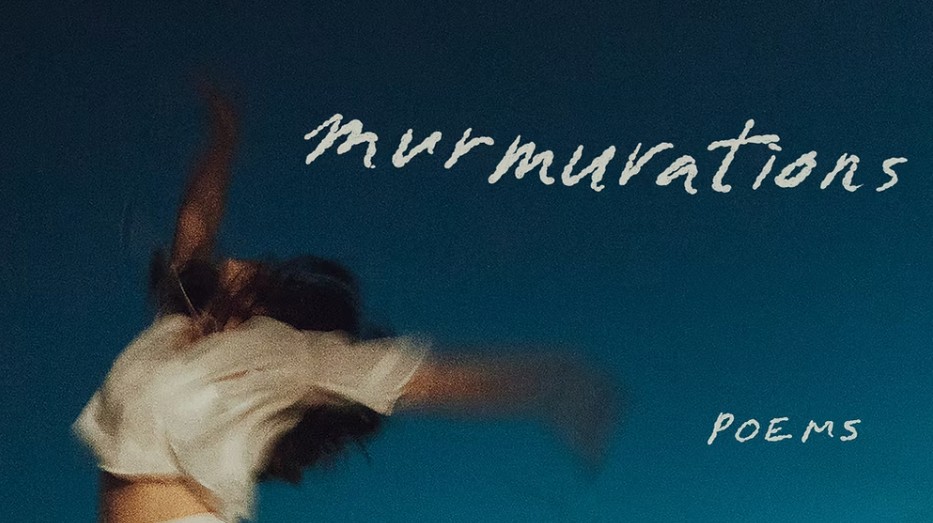
I was thrilled to get some time to talk to Anthony Thomas Lombardi about murmurations, mostly because I see things in this book that I’m so incredibly drawn to within my own work. Namely, there’s a comfort with obsession, a comfort with staying in one place and not seeking answers, or seeking a way out. I felt like I was both looking into a sort of warped mirror of my own excitements and obsessions and also still learning from what the reflection was telling me. 

It was exciting for me to sit and pick the brain of this writer who, like me, has working class origins, who came up in a way that many would call, quote, “untraditional,” but I think that’s foolish. The tradition that we both came up in is one of self-made community, a tradition of open mics and poetry slams, and passing printouts of poems across a room to someone who liked them. And I think that tradition is more useful than any. 

I love this book, too, for how richly it is populated. It’s bursting not only with brilliance, and formal inventiveness, but also with a real sense of care for everyone who has a voice, or a body in the work. To write in this way suggests a real tender relationship with a world that often does not deserve it, and I think that is worth learning from, too.


Hanif Abdurraqib: It’s been so long since I put out my first book, I’m wondering what the process has been like and what it’s felt like and how long you feel like you’ve been working on the book. 

Anthony Thomas Lombardi: I feel like I’ve been working on the book my entire life. I consider when I got sober, ten years ago, as the true embryonic stage of the book. I wouldn’t have been able to write the book if I wasn’t processing all of that. I remember telling my analyst, who I’ve been working with for a decade now, I’m ready to tell my story!  Before that, I was white knuckling life. I was working in a bar the day after I got out of detox, I was in an abusive relationship. But writing isn’t only putting fingers to the keyboard or pen to paper. We’re always writing—we’re writing right now.  

The first poem I wrote for the book was the closing “self-portrait as murmuration” in 2019. At that point, I was being taken under the wing of Hala Alyan. Pretty much this whole book was written in her backyard at Kan Yama Kan’s open mics, her reading series, alongside my generation of poets, my community, [where] we’re all reading at these open mics and cutting our teeth and writing our poems. Now we all have books out or coming out, and they’re books that we all wrote at that open mic, in Hala’s backyard. 

I got my book deal with YesYes in 2023, and it’s been such a drawn out process. KMA Sullivan is such a loving, tender editor, and first round draft edits took six months—they refer to my book as “the brick” there, it’s such a big book. I’m navigating all of this now as a debut author at the age of thirty-six.

HA: It’s funny, I was maybe thirty-two. Everyone has all these platitudes about writers who began their careers “late” and that’s meant to placate folks, but sometimes you’re there already and the work’s just arriving to you. My first book came much later [than other people’s], and I spent a lot of time in poetry slams not really wanting to write a book. I think it’s interesting to live that long and know when you have a book or know when it’s ready. 

You say the work of the book began when you got sober. I’m wondering if there’s any part in the book where you see a line of demarcation between the themes that you were interested in or excited about. Maybe not now, but in the drafting process was there a point where you were like, oh, I’m approaching the work differently or my interests or segments have changed

Some of my favorite poems in the world are poems that people just emailed to me because I heard them in a slam.

ATL: All these musicians in the book who are no longer with us, they’re that throughline. Most of them are jazz musicians, which is a headspace I find myself in often, for whatever reason. They became this chorus of dead folks that I love and revere. How could they not come out in my work? From the beginning, it all feels like it was such a storm, I had all these poems and didn’t know what to do with them. All I had was the rough idea of the stepwork poems, structurally, but that was it. In 2021, I won a fellowship with the Poetry Project based on a sample of my manuscript and Celina Su was my mentor. She came up with ideas about what poems go where, which poems go with which step. It was Celina who pushed me to put together the steps as more of an emotional compass in recovery, the messiness of it all. That was the big breakthrough. I give all credit to her for that. After that, it didn’t really change much.

How did you come around to writing a book of poetry if you didn’t wanna write a book?

HA: I got asked to submit some poems to Button Poetry’s chapbook competition in 2014, and I had maybe twelve poems that were orbiting a theme. I think Button saw something in [them] and asked if I’d be interested in making a full length book out of it. 

One thing that’s a shame is that there aren’t a lot of ways for young poets specifically to stumble into books in that same way. I talk to young poets often who want to get their books in front of people, but they can’t do it without paying exorbitant fees for multiple contests or sending poems out and waiting for them to reach someone. One thing about the immediacy of slam that I really loved was that your work was getting heard, and if it moved someone, they would ask you for more of it. Some of my favorite poems in the world are poems that people just emailed to me because I heard them in a slam and wanted to see the poem on the page.

ATL: Some of my closest friendships started that way. Like, will you email that poem to me? I need it.  My friend, Malik Crumpler, I met him in Paris at an open mic he was MCing. His energy was intoxicating, so I decided to read. One of the poems I read was “self-portrait as murmuration” and Malik slipped me a tiny piece of paper that said, I want them poems. He’s an editor on top of everything else he does, and although the poems were already getting published, it opened that door. We just started talking like maniacs, you couldn’t pry us apart. He was really interested in what I was doing, we knew all the same people, we’re both vocal in our work about being sober. These kinds of relationships start with the poems but go past them.

That’s the kind of communal thing I think is not happening, or happening less. After quarantines and the messes that we’ve dealt with all over the place, whether it’s the George Floyd uprisings or the Palestinian resistance against genocide, people are tired. It’s a deliberate outcome of deliberate measures by the state. And it’s working. It breaks my heart because those kinds of connections are life-saving. They’ve saved my life. I’m sure they’ve saved yours. Malik, in a lot of ways, helped and continues to help me get through so many hard periods in my life, and that never would have happened if he didn’t slip me that piece of paper.

HA: I think about this in my organizing work often. Community is being built through radical resistance, that’s always been the case, but I think it’s even more so in the past five years. People are building artistic community in a reactionary way, in response to the harms of the state, and there’s a point that that’s necessary, but it also does not feel entirely sustainable to me because state violence endures and shifts. Those of us who make art need to make art in response to those shifts while also building space for art-making practices that welcome in and invite people across the spectrum.

I work with a lot of young writers who are politically active but might not be as tapped into everything that I’m tapped into. Art is kind of a bridge we build. If I bring in a June Jordan poem, if I bring in a poem about police violence, we can talk about police abolition more effectively, and that’s actually letting art guide the way instead of allowing responses to state violence to guide the way, or even having a conversation about how our art can be informed by recalculating our position as artists in the core—at the core—of empire working, but also benefiting from all of empire’s violences. That’s a big June Jordan thing: I paid these taxes and these taxes are going to kill others, and yet I am here.

ATL: Using art as a bridge, that’s in everything I try to do, not just in the classroom but on the subway or at a crosswalk waiting for the light to change. I’ve taught editorial apprenticeship programs with students and, in our one-on-ones, we end up talking about folks like June Jordan or Angela Davis or Fannie Lou Hamer. I ended up like, We’ve talked enough about your editorial assignments, what do you want to discuss? What interests you? At that age especially, they’re so eager, so hungry to learn more.

It’s part of redirecting our own resources to those who are young enough to make an impact within their own generations and communities, our future, and underserved and targeted communities.  I teach a workshop at Brooklyn Poets entirely based on June Jordan essays. June was a target her whole life. Her essay, “Waking Up in the Middle of Some American Dreams,” changed my world, sharpened my way of thinking, gave me avenues to travel and pursue that kind of redirectorial justice. So much of this was going on while I was writing the book, the community of the birds throughout, the dead musicians, the hunted—it’s all very much a storm of someone coming into themselves, with all this knowledge, guidance, inspiration, all at once. The dead people that I know, or knew, were forming a murmuration. That came from June Jordan, almost single-handedly. There’s real hope in art, even when everything feels devastating because you’re connecting with another human being. Nothing is more important.

HA: There’s a real rage in June’s work too, a vessel of care and tenderness. It’s very much an understanding of the world as unsettling and unsatisfying, but how much better could we love people in it if we did not have to place ourselves into the gears of empire to some degree. Anyone of conscience right now, I hope, questions the rumbling underneath: how much better and more effective a person who loves the world could I be if I did not have to love the world not only bearing witness to a genocide, but trying to put ourselves between empire and the furthering of the genocide.

Using art as a bridge, that’s in everything I try to do.

The book is so richly populated with musicians and pop culture artifacts. It can be hard to know what the tipping point is in any book when you come to, I’ve maybe written too many people into this or I’ve maybe built too many worlds. How did you edit your way to a tipping point that felt manageable?

ATL: At the time, I was living alone in a studio apartment, and I would go weeks without hearing another human being’s voice directed at me. I just listened to records every day—Miles Davis, Sonny Rollins, Dexter Gordon—that Gordon album, Our Man in Paris? There’s such warmth to those records and we’re always writing and engaging with the things that we love or that we’re probing or exploring, but it wasn’t just records—I would watch documentaries about these people constantly. Music is one thing, but I needed to hear a human being’s voice talking to another human being—docs about Nina Simone, Eric Dolphy, Jaco Pastorius, Lisa “Left Eye” Lopes, they’re all in the book. They made me cry so hard. I feel like I needed them to tap my tenderness, to let out that kind of grief, and then those kinds of things started orbiting the Amy Winehouse poems. I wrote the poems in the book five years ago, and I recently wrote something like thirteen new poems [that are] all really lucid, fairly long. I’m never going to stop writing Amy poems.  I’m learning I might go years without writing them, but I’m always going to come back to them. 

I started writing them because I had a dream that I was quarantining with her, during early COVID lockdowns, and I wrote a persona poem about it. I took it into a workshop I was taking with Shira Ehrlichman, and we kinda butted heads about who we’re able to give voice to, when it’s uplifting, when it isn’t, and me being a male and Amy obviously not. She was also like, this doesn’t sound like her, this sounds like you, and she was absolutely right, so I rewrote it in second person, which is what shows up in so much of the book. 

HA: I love that Dexter Gordon record. One of my favorite players in history, Bud Powell, plays keys on it. It ends with “Night in Tunisia,” and I think about the closure of that record all the time, which feels like they’ve wrung everything they can out of it. There’s a category of done that exists in your book which feels that way too, but we’re not quite done. Keeping people engaged in a poem where it feels like you’re trying to work out some things with yourself, that’s a real skill, because so often it does feel like we are in our own brains, but people have to come along and bear with us through that. You do an incredible job of that in this book. I’m wondering if there’s some jazz influence in that process of having to listen to people fight to keep something going.

ATL: I always think of that James Baldwin quote—how he helplessly models himself after jazz musicians, trying to write the way they sound. Jazz is my bread and butter. Part of it is that excitability. That’s what jazz is to me, no matter how balladic it gets. 

You were the one who taught me that not everything needs to go in one poem. That was such an important piece of advice for me. Now I always listen for the severance on the page, the seams, and as I’m writing new poems, different rhythms emerge. Jazz is slithery, in a way, and supple, you can’t get your hands all the way around it. That’s how I used syntax in murmurations, or at least I can hear myself trying to on the page. 

I started listening to jazz when I was pretty young, but I was listening to rap even before that. Where I grew up, you would hang out your window and hear the new Jay-Z single or deep cuts from the new Nas. I cannot say this enough: Illmatic by Nas taught me how to write, almost single-handedly. I worship Frank O’Hara, Rimbaud, Sylvia Plath, Anne Sexton, Louise Glück—but they didn’t teach me how to write. It was Nas. Nas’s flow was the flow that I wrote to when I was younger, that I’ve come back to recently. I bounce around different records and types of music as I’m writing, but there will always be those I return to.

HA: I can hear that. You learned to write from Nas, but have you found that your writing style has changed or become more adventurous depending on what artist you’re setting your ears on? I’m always interested in how the rhythms of my writing shift depending on how I’m hearing the world, which is why I think I seek out new music so vigorously. Do you feel like your writing style is locked into what it was when you first heard the thing that made you wanna write, or does it evolve alongside your constant listening?

ATL: That’s a good question. I like to think I’m aware of where my writing is going, but you can never look back, not directly. For the last year or so, I’ve been writing extremely detailed and lucid narrative poems. There’s not a lot of linear narrative in murmurations. It’s mostly surreal, dreamscapes, whereas these poems that I’m writing now are visceral, concrete, and rooted in the present. 

I’m always interested and excited to be like, I wonder what comes after this? I went from here to there. What next? That question has ruled not only my music and writing, it’s run my life—relationships, where I live, jobs. It’s one thing—you hear one line, and you just start writing. I do that every day.

HA: Yeah, the thing with a debut book is that you spend your whole lifetime up to that point writing it, and the second one ends up coming out so much differently. How are you finding your abilities to maybe write or be a writer, or make the things you wanna make, as you are also trying to bring this book into the world well?

I cannot say this enough: Illmatic by Nas taught me how to write, almost single-handedly.

ATL: I often take on too much and run myself into the ground. I’m always working on a lot of different projects, and I get excited about a lot of different stuff. Even the memoir that you helped me get started back in late 2023? I hadn’t even started it yet, but once I did, in a month and a half, I wrote 130,000 words. I fixate, and it’s a blessing and a curse. I was like, oh, I think I’m done with poetry! and my friends were just like, uh huh, okay Toney, you couldn’t be done with poetry if you tried. And they were right. I need other things to break it all up, or else I’m just gonna run my tank down to fumes. My whole life I’ve said that I have a novel in me but had sort of given up that idea. Then recently I had a breakthrough, out in Montauk, on the beach on a rainy day, and somewhere in that mist and cold I just said, I’m gonna write a novel. It was so cliche I found myself cackling. I have enough for two new poetry books, over 600 pages of a memoir, and now I’m scoping out a novel. I need to be doing all those things.

But I don’t think about where it’s going to go. I just have to trust that it’s gonna get somewhere, right?

HA: Yeah. I do the same thing.

ATL: Right, we just trust that it’s gonna work out. I’m running around, doing all this work for this book right now, and I’m tired, man, but I trust that when it comes out and I’m able to share it with my community, that it’s gonna work out, it’s going to get into the right hands. I’ve had so many folks in recovery tell me they need my work, that they teach my work to addicts, and folks at AWP telling me they needed this book, that our whole community needs it. One of them put a broadside of “relapse dream” on her wall and said it kept her from relapsing. That, right there, is it. That’s everything. Nothing else matters.

HA: That’s the real thing, you know, how you can only take the work so far on your own. If you believe that you’re someone who is writing alongside your ancestors, then you have to keep the faith that they’ll keep being able to find them and find you.

ATL: People who are new to spaces ask me all the time, especially at Brooklyn Poets, about how to find community, and I’m just like, look around you. Lift your head. When people want to force something or put their nose to the grind, they don’t look at what’s right in front of their faces. They don’t see what’s beautiful between me and you.

The 10 Most Extreme Experiments Known to Literature

Experimental fiction is more popular than you might expect. An impressive 37.6% of Americans prefer it to more traditional forms—that’s nearly 100 million people if you scale it to the current adult population. And of those who prefer their fiction to be formally adventurous, the experiments they most enjoy are abstract language and nonlinear plots. They do not want encyclopedic novels or prose that, like this introduction, comments on the art of writing.

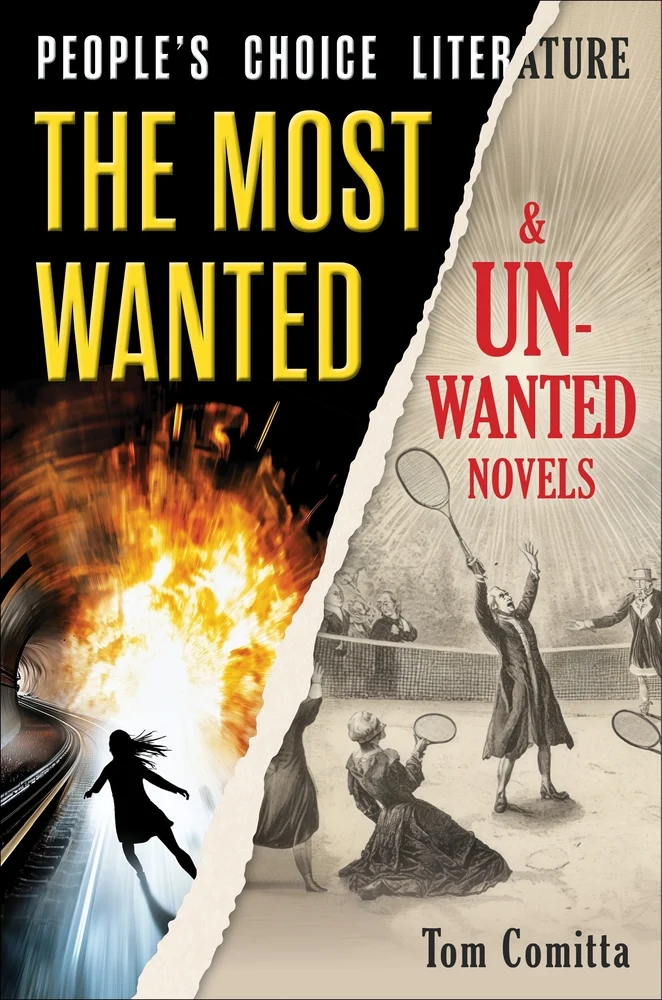
I know this because a few years ago I conducted a national literary public opinion poll with a Johns Hopkins survey design expert—a poll that also measured everything from preferred genre to setting to verb tense. After surveying a representative sample of the U.S. population and studying the data, I took the poll results and wrote two very different stories: one with everything Americans prefer, The Most Wanted Novel (a James Patterson-esque technothriller), and another with everything that no one in their right mind would enjoy, The Most Unwanted Novel (an experimental blend of romance, horror, historical fiction, and classic literature set on a billionaire-colonized 22nd century Mars). Amazingly, most early readers prefer the latter.

Despite the above data, very few works of experimental fiction are published in the U.S. each year—especially by the five conglomerate publishers, often called “The Big Five,” who are responsible for 80% of all new books. Experimental literature—truly weird and formally inventive fiction—is much more likely to appear as a work in translation published by a small, independent press.

This is not by accident. Dan Sinykin’s groundbreaking book, Big Fiction, showed how a hundred years of publishing consolidation has honed readerly taste and writerly style in this country. Sinykin found one of the greatest culprits to be “comp titles,” or the list of 3-5 similar books that an agent sends to editors to try to convince them to publish a new novel. On top of contorting literature into the equivalent of real estate (this is how houses are sold—by comparing a property to the homes around it), this trend ensures the books that get published do not veer far from what has already been proven in the market. There is little room for surprise and adventure; in this climate, these things are simply “risk.”

What if the publishers are wrong? What if this poll data is right—or even close to right—and there are leagues of readers eager for new forms, stories, politics, and imaginative worlds? The below list collects “extreme fiction,” or novels that push at the limits of what we often see as possible in literature. It’s not exhaustive, rather it’s a personal collection of books I’ve enjoyed and that have changed my view of storytelling. These are also brilliant works of art that, if written today, would struggle to find homes in the current comp-title regime.

Extreme Form:

Blood and Guts in High School by Kathy Acker

When I started out as a fiction writer, this was the first novel that blew my mind. The book follows Janey Smith from Mexico City to an autofictional-yet-cartoonish portrait of Acker’s own life in New York City and beyond. But it’s how it’s told that sets Blood and Guts apart: What begins as a story in the form of a film script soon morphs into dream maps drawn from Acker’s real life before dropping into a fairy tale pastiche of Aesop and the Brothers Grimm. The more you get into it, the more you’re not sure where one genre or narrative thread ends and the other begins. Blood and Guts is lewd and offensive. It’s a collage and a beautiful, broken mess. 

Extreme Language Play:

The Mundus by N. H. Pritchard

Most fiction that plays with language incorporates puns or palindromes or invents new dialects, but Pritchard’s The Mundus goes far beyond the usual line-based games. His visual novel explodes the traditional paragraph—and even the sentence—into constellations of words, syllables and letters, creating a verbi-voco-visual language of his own. Inspired by Pritchard’s theosophical inquiries, The Mundus is composed of shifting voices and naturalistic imagery that resist clear, cohesive storytelling. Words and text-sound-images slip into one another and make reading—and meaning itself—a puzzle to be pieced together by each reader upon each reading. Once you’ve experienced The Mundus, you’ll never see novels—or language—or the world—quite the same.

Extreme Horror:

Off Season by Jack Ketchum

Our poll found that horror was the second-least-wanted genre after romance, so The Most Unwanted Novel contains an unabridged 100-page collection of horror stories. While writing this collection, I was curious what others thought the most extreme horror could be, and several websites pointed me to Off Season. Ketchum’s infamous debut follows the ill-fated travails of six city slickers vacationing in coastal Maine. In typical 80s horror-flick fashion, one-by-one they find themselves overwhelmed by a band of cannibals that locals thought were only a legend… To a scholar of extremes, it did not disappoint: this is doubtless the most gut-churning horror story I’ve ever read. Reader discretion is highly advised. 

Extreme Surrealism:

What To Do by Pablo Katchajian, translated by Pricilla Posada

This novel completely destabilized me when I first read it. Sparked by a giant’s koanic question about the nature of philosophy, the narrative follows a nameless narrator and his friend Alberto through a series of rapidly changing scenes and situations, from a lecture hall to a plaza to a nightclub restroom—and this is only in the first page. From chapter to chapter, location, perspective, logic, physics, everything keeps slipping away. Nothing is solid. Everything moves. After finishing it, I was reminded of parts of Dambudzo Marechera’s House of Hunger, which similarly contorted my brain, heart, and soul. Read these books and say bye bye to “reality” as you know it.

Extreme Braininess:

Glyph by Percival Everett

Glyph is a postmodern heist thriller told from the perspective of a mute baby genius named Ralph. We follow the polymath infant through a series of increasingly absurd kidnappings—from a psychiatrist seeking to exploit Ralph’s smarts to G-men recruiting him for espionage. Glyph pairs these pulpy scenes with a generous helping of Wittgensteinian meditations on poststructuralist language theory that will twist your brain into five-dimensional pretzels (no one will be surprised to learn that Everett started out as a philosopher). If you read Glyph—and you must—you’ll also want to check out Dr. No, its James Bond-esque sequel that shows, when placed beside Everett’s dozens of other books (see the westerns, the detective novels, the historical fictions), that his stylistic range is unparalleled in American literature.

Extreme Humor:

Castle Faggot by Derek McCormack

Extreme humor requires laugh-out-loud laughter and real cringe. Castle Faggot delivers both and more: it’s a scatological tour of a demented, Disneyland-esque theme park, run by Count Choc-o-log and his demented children’s cereal mascot friends. We move from the Arse de Triumphe to the Rue de Doo, meeting the disco-dancing Franken-Fudge and Boo-Brownie along the way—even Bataille shows up as a vampire bat. The language is bouncy and harsh and yet somehow addictive, its comedy laced with a stinging subtext of despair—there’s the slur of course, and the constant reappearance of death and suicide. At times the story reads like a visual poem, complete with empty line drawings, and a final chapter shaped like an inverted castle. This is a text that breaks and rebuilds you before breaking you again, all while wrapping you up in its tender, drippy Choc-o-log-ic embrace.

Extreme Prolificness:

Conversations by César Aira (and the rest of his oeuvre)

César Aira is in a class of his own, having published over 100 novels, each of them about 100 pages long. He does this through a process he calls the “flight forward” method, wherein he writes without editing, launching out from the first page with a general idea of where he might go and improvising all the way until the end. Conversations is his most flamboyant—and fun—use of this method, turning the idea of a frame narrative into a hall of mirrors. The rambling thoughts of a sleeping dreamer slip into a conversation the dreamer had the previous day about a continuity error in a Hollywood movie, which telegraphs into actual scenes of this movie, featuring mutant algae, flying goats, and feral beauty queens. And that’s just the start because once you’ve finished Conversations, the rest of Aira’s ever-expanding literary universe will be beckoning you forth.

Extreme Constraint:

The Sphinx by Anne Garréta, translated by Emma Ramadan

The Sphinx is a love story that follows a nameless narrator, a DJ, and their lover, A***, a dancer, through the Parisian underground nightclub scene. The story is genderless. Or rather, the gender of the protagonist and the lover are absent throughout. This is a hard feat in English and an even harder one in the original French, a language ruled by gendered nouns, articles, and verbs. As a member of Oulipo, the Paris-based avant garde group who put literary constraint on the map, Garéta’s book channels George Perec, who similarly went to extreme lengths in La Disparation by writing a novel without the most common letter in French (or English): “e.” Here Garétta queers the often-male-dominated work of Oulipo, contorting the confines of gendered language and our desire for easy and fixed identities.

Extreme Minimalism:

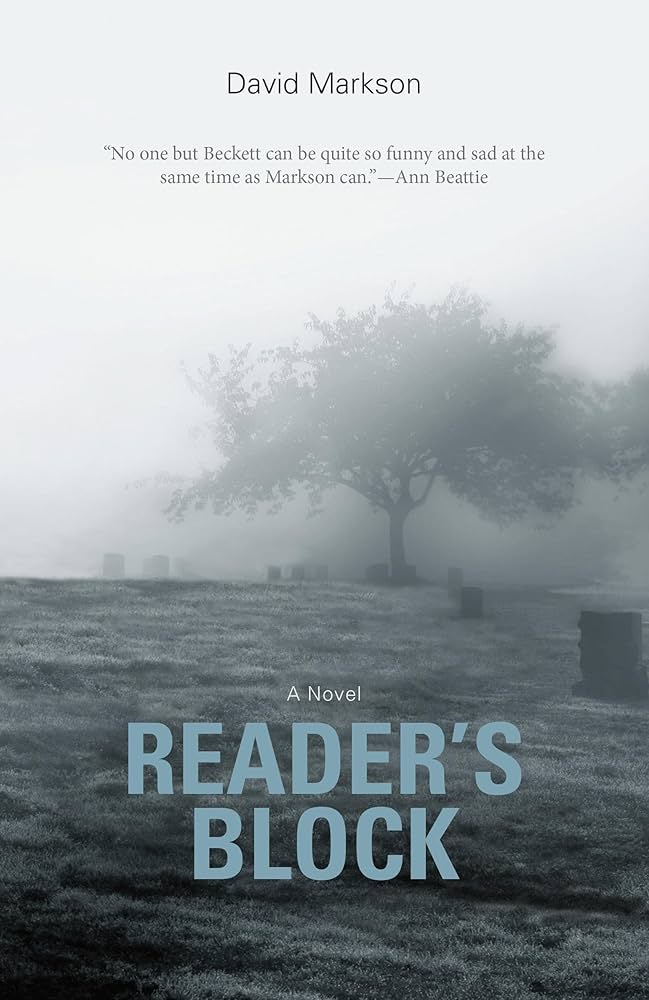
Reader’s Block by David Markson

When I first read what’s commonly called “minimalist fiction,” i.e. Ernest Hemingway, I was confused. Why so many words? Why so little repetition? Prior to Markson publishing his spare, final quartet of novels, it seems to me Gertrude Stein, Samuel Beckett, and a handful of others were the only prose writers to truly realize what literary minimalism can be. Markson joins them with his late novels that combine simple stories with thousands of interspersed facts about the lives and deaths of canonical writers and artists. In Reader’s Block, we follow the nonlinear, almost ambient internal monologue of an aging writer struggling to write a novel—supposedly the very one we are reading. Malcolm Gladwell says that good writing includes “candy,” or scrumptious little factoids that a reader can chew on and even share at dinner parties. If most books offer a generous helping of sweets, Reader’s Block gives you the whole candy factory.

Extreme Improvisation:

TOAF: To After That by Renee Gladman

I haven’t taught creative writing in years, but the next time I do, Renee Gladman’s TOAF: To After That is the first book we’ll read. To my mind, there is no more honest text about the writing process and the writer’s life. TOAF is an homage to Gladman’s—in her own words—failed novel called After That, a book she loved and whose problems she mourned enough to do the seemingly impossible task of turning its “failure” into an original work about said failure. Part memoir, part philosophical mediation on the incomplete book and the cities and spaces that shaped it, TOAF is also a “report,” as Gladman calls it, preserving the only fragments of After That we’ll ever get to see. It’s one of the most beautiful books on writing you’ll find and an extraordinary literary improvisation in the face of creative struggle. 

“Sour Cherry” Reinvents a Classic Tale to Interrogate Cycles of Abuse

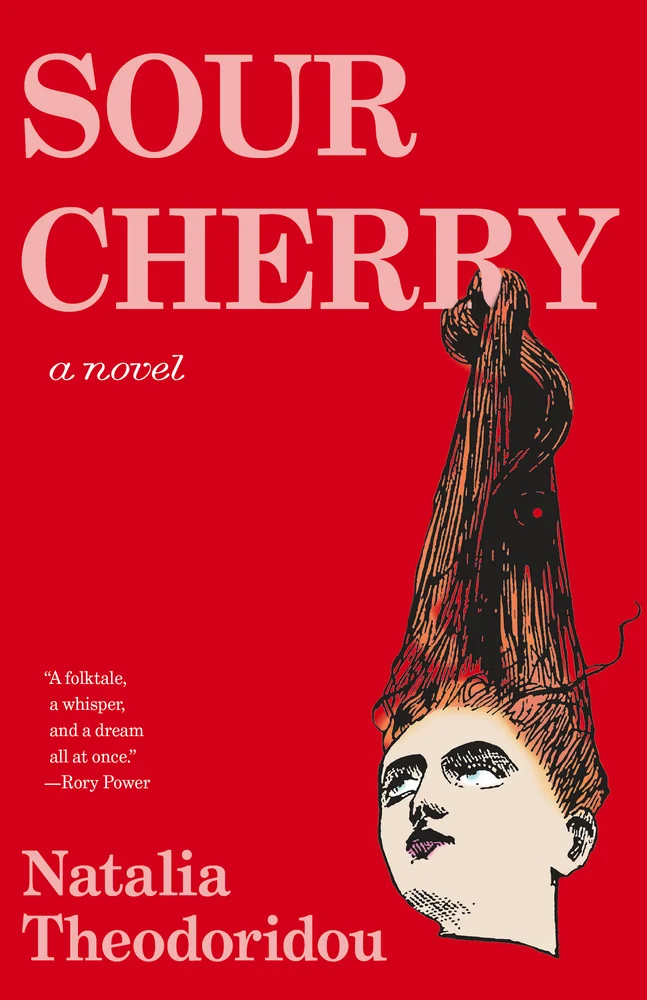
Sour Cherry, the debut novel from Natalia Theodoridou, is an immersive reinvention of Bluebeard, the French fairytale wherein a repugnant aristocrat murders his wives, one after another. In Sour Cherry, the chronology of a man’s life is narrated to the reader, from motherless childhood through blighted adulthood. Theodoridou explores the Bluebeard figure’s lethal touch through the kaleidoscopic experiences of those caught in his orbit, including his wet nurse-cum-cook, wives, lovers, and children, revealing how harm envelopes both its perpetrators and victims. With every step, the man leads with destruction, leaving behind him a trail of tragedy: entire towns run dry, livestock poisoned from within, vegetation turned black, children and women left dead. 

Throughout Sour Cherry, Theodoridou seamlessly shifts focus from the man to his wives to his children and back to build a gothic fairytale that speaks to the innateness of evil under a system of patriarchal capitalism and the power we have—as individuals and a collective—to excuse it, and what it takes to intervene against it. Part fairytale, part ghost story, Sour Cherry is a classic tale with a modern infusion. Theodoridou writes not so much across time and place, but in spite of it, showing that abuse of power is a forgone conclusion within the systems that create it. In doing so, he offers a future evolved beyond these cycles and systems, one characterized by understanding, empathy, and accountability.

Following the release of Sour Cherry, I connected with Theodoridou via email to discuss fairytales’ capacity to shed light on modern life, the humanity of survivors and those who harm(ed) them, and capturing the specificity of abusive dynamics and the systems that enable them.


Christ: The idea of “belief” is woven through the novel’s various themes and genres such as abuse, ghost stories, and fairytales. Can you talk about how the power of believing shades the stories being told in Sour Cherry?

Natalia Theodoridou: That’s such an interesting and unexpected question. Unexpected because I don’t tend to think in terms of belief, and I find people who have faith (religious or otherwise) deeply fascinating. Belief, faith, and conviction all translate as the same word (or words that are very closely related etymologically) in Greek. You are right that “belief” is woven through the novel’s themes; masculinity is not toxic inherently but as a result of people’s beliefs (and stories) about it. In a way, the patriarchy is a kind of religion. 

I was recently describing the novel to someone and they asked if I believe in ghosts. I don’t. The question caught me by surprise because it had never crossed my mind that my belief in the existence of ghosts had anything to do with the centrality of their role in the novel. I believe victims (believe in victims?); victims and victimization are what haunts me. That’s how “belief” is important in Sour Cherry

C: At its core, Sour Cherry is about power and masculinity. How do you see those themes intersecting with class, environment and community throughout the story?

NT: Sour Cherry is built around the themes of toxic masculinity, domestic violence, and cycles of abuse, and the Bluebeard tale was particularly well suited to talk about them not only because of the main plot of the story but also because of the supernatural element that is never explained: the man is not simply a serial killer; he also has an inexplicable blue beard. What is that about? It went straight to the core of my questions about violence and violent people: is it natural? Is it unnatural? Is it a choice? Can they escape it? Can Bluebeard be anything other than a guy with a blue beard? 

Victims and victimization are what haunts me.

In Sour Cherry, he is literally toxic, he rots the world around him and makes people sick. Can he help it? Does he have agency? That’s the crux of the story for me, and it’s what allowed me to ask further, more complex questions: Whose fault is it—is it just him? How culpable are the rest of us, the society that enables him, the patriarchy that affords him his power, the class system that created him? The class aspect is crucial; it’s not an accident that Bluebeard is someone who controls wealth. He drains resources because that’s what his class does; he feels entitled to the land and the houses and the people that inhabit them because that entitlement is built into the virus that is capitalism, destroying one place and then moving on to the next to destroy that, too. The rot is structural; the ghosts turning that rot—slowly and deliberately decaying the furniture, peeling the wallpaper, dulling the spoons—into a means of storytelling, of speaking their truth, is a kind of class warfare. That is what makes them a community. 

C: How does initially obfuscating the narrator’s identity speak to the novel’s themes?

NT: I’m curious which part you see as obfuscating the narrator’s identity: her insertion into the fairytale as Cherry Girl or her revealing herself as his latest victim in the contemporary narrative? 

In a sense, her taking on a role in the fairytale narrative functions as both obfuscation and revelation. The speculative element allows her a degree of separation from the story she’s telling. It protects both the narrator and her addressee by introducing a level of unbelievability. This is a choice I make myself every time I write a story that is rooted in reality but also strange or magical in some way; I feel it allows me to speak more freely and, paradoxically, more directly about things that would otherwise be very hard, and possibly even cruel, to articulate. Saying “a true thing by a false name,” as the narrator says at one point. That obfuscation is the mercy of the fairytale. 

C: There are multiple instances in Sour Cherry where the past comes up to and spills into the present in ways that were both thrilling and satisfying for the reader. What opportunities does the collapsing and subsequent revelation of time offer stories of abuse? 

NT: This is the thing I love the most about ghosts: They are the present past. They force us to confront what happened, to measure ourselves against the consequences of our actions, the legacies of our natural and unnatural disasters. Cherry Girl at some point says that, with stories of abuse, “the people are us, the time is always.” The flattening of time in this way enables us to speak to the commonalities in stories of abuse without erasing the singularity of each one. Isn’t this what allows us to see ourselves in stories in general? I’ll probably never see myself reflected in a story exactly, but with enough commonality, and if I squint a little, the right kind of spillage can happen that will allow me to say, “I’ve felt this, too.” I have found comfort this way, and maybe the darkness wasn’t exactly lightened, but at least I knew I wasn’t alone. If I can do that for even one other person with this story, my work is done. 

C: In multiple instances, Sour Cherry emphasizes the impossibility of knowing another person entirely, in its narration, the character study of the central male figure, and in partnership. In doing so, the book does a razor sharp job of making observations without judgements of its characters. What’s to be found when people are positioned in this grey area between “good” and “bad”? 

NT: I don’t think people are “good” or “bad.” I think the same person can do good things and bad things in different circumstances (and let’s not even get started on how the same action can be good or bad relative to different value systems—let’s just assume we’re talking about something as black and white as killing your wife, a very bad thing). What I’m interested in is understanding what motivates people to behave in the ways they do: what leads someone to act in ways that are harmful, to be complicit in the harming of others or themselves, to not be able to even see that there are different ways they could behave, or to see all the other options available to them and still choose pain and destruction. 

What would be the point of judgement? Maybe in court, but in a book? It wouldn’t make it easier for anyone to spot or understand abuse; worse, I think the easy judgements lead to uncomplicated stories that misrepresent the power dynamics that make escaping abuse so difficult. Monstrous, simply bad characters are easy to condemn, punish, and escape. Any good person in their right mind would just leave. Right? 

C: How did the forest become so inextricable in the formation of the man in the story? Is it a coincidence that he is seen at his happiest in the city, removed from it?

NT: I love that question; I had not considered the man’s happiness in the city in these terms, but of course you’re right. It’s not a coincidence. The forest is this man’s fairytale setting; the storytelling tradition that endows him with his mythical power, the harmfulness he fails to escape. The story doesn’t really allow him much, and the little it does he finds too difficult to embrace, so in the end he accepts the forest as an aspect of himself. He’s not just a man who is meant to do bad things in the forest; he is the forest. He is evil itself. That’s what the story tells him.  

Removed from this fairytale setting, it’s the first time he glimpses a different existence for himself, freed from the shackles of his story (his narrative-inherited villainy). I think Cherry Girl taking that from him is the cruelest thing she can do, and the thing closest to punishment (albeit ineffective) that the man experiences in the story. She forces him to face up to who he’s always been, not because the story left him no choice, but because he never found it in himself to choose otherwise. 

C: Can you speak on the feminine loss of identity in the forest of toxic masculinity as represented by the narrator, the ghost wives and Agnes/Cook?

NT: Many of the characters remain unnamed or start off with names and eventually shed that part of them. Agnes and Eunice have names and later lose them. They are the only ones who know the man as a boy, before he abandons the realm of names entirely and everyone in his life becomes a means to an end. It’s not just women, either. The Shopkeeper is a function, as is Cook; these people have taken on the roles assigned to them by the primary force of this fairytale. However, it’s not the absence of a name that seals that power dynamic. Kate Bernheimer in her essay “Fairy Tale Is Form, Form Is Fairy Tale” argued that the “flatness” of characters in fairytales “functions beautifully; it allows depth of response in the reader.” I think the absence of names functions in a similar way. So I think the loss of identity is not specific to feminine characters. In fact, the Bluebeard man doesn’t have one either. In letting go of proper names and retaining only their functions, the people in this story do two things: one, they expose the utilitarian way in which Bluebeard relates to them. And two, they relate in a less context-bound way. This is precisely what the fairytale style of naming (a King, a Hunter, a Woodcutter) does, and it is part of what makes fairytales resonant in a wider variety of contexts. This story could be anywhere, any time. 

I don’t think people are ‘good’ or ‘bad.’ I think the same person can do good things and bad things in different circumstances.

Is there something uniquely feminine about the loss of identity in this story though? I think so. But I also wonder if there’s an aspect of freedom to it, too, something gained, not only something lost. The loss of a name or an identity can create a vacuum to be filled by something new, and anything at all; perhaps it can be the beginning of radical self-determination. The characters in this story don’t quite get there. The ghosts use their identity emptiness to make their demands; the narrator goes as far as fantasizing about becoming a King of her own making—I think that’s the closest I came to a trans/gender feels moment in this book. I guess loss of identity can either make you a non-person or more yourself, which is no loss at all.

C: I loved how the beats of the story were so shaped by its surroundings. How do experiences and stories of isolation, blight and abuse shift when it moves between city and country settings?

NT: What a beautiful way to ask this question. It takes me to lyrical places: loneliness in the forest is texturally different to isolation in the city, isn’t it? Not least because are we ever truly alone in the country where so much is alive around us? Unless, of course, the land is blighted; unless our very existence is the thing that blots out life and renders the forest a bleak, decaying place. Isolation feels to me different in the city because it seems so much easier to be lost in it, be one among many, lose name and identity in the preoccupied crowd, the grey anonymity. Abuse in the rural settings of the novel happens under cover of darkness and distance and a culture of silence and deference to power; in the city it simply fades from view because it’s so common, red on red or grey on grey, it just doesn’t stand out. 

C: The phrase “If you leave you die. But if you die, you stay” comes up multiple times throughout the story. What does that mean to you beyond the context of this particular story? 

NT: I wanted to capture how abuse can feel like an inescapable trap. It’s a fact that in domestic violence and abuse, the victim is most at risk of being killed when they try to leave the abuser. So, “if you leave, you die” can be literally true. And if you die, well, you haven’t left, have you? 

But beyond that, I think this sense of being trapped, the “damned if you do, damned if you don’t”-ness of it is what makes a lot of experiences of power imbalance both unbearable and difficult to describe in a way that will be intelligible to someone who hasn’t had that experience, or who is structurally unlikely to have it because their identity shields them. It just sounds so implausible, you know? 

C: In many stories, accepting ourselves or others as we/they are is contextualized to be positive. In Sour Cherry, it appears as resignation. Is there a version of this story where the baby could grow up to become a different kind of man? 

NT: I think there’s a difference between accepting ourselves as we are, with all our flaws and shortcomings, and absolving ourselves of responsibility for the harm we cause to ourselves and others as a result of how we respond to these flaws and shortcomings. Self-acceptance and self-love, extending ourselves empathy and understanding, are definitely positive things because they allow us, theoretically, to own our choices and take responsibility for our actions. This is incredibly hard to do. And, unfortunately, in my experience, what most people call self-acceptance is actually resignation; an attitude of “well, this is who I am,” and an acceptance of the impossibility of change. This is certainly what the Bluebeard figure in Sour Cherry is guilty of. People tried to show him how to be vulnerable, how to allow himself to be loved; the Shopkeeper even modeled for him a masculinity that is both tender and strong. He chose not to listen; chose what was familiar. He embodied the myths he had been handed and that he had a hand in shaping. I understand why he chose the way he did, and I find it sad; but that doesn’t mean he’s not responsible for making that choice. So yes, of course the baby could grow up to be a different kind of man. People do it all the time! People with much harder starts in life than him, even, and in much more challenging circumstances. 

C: In ways that are compelling, confounding and frustrating, Sour Cherry’s characters and their choices and stories defy a completely discrete victim/villain dichotomy that is at times fatalistic from its characters’ perspectives. What is to be made of a world where pain is everywhere and accountability is rarely seen? 

NT: I think you are right to spot the fatalism in the characters’ perspectives, but I see that fatalism not as a position (certainly not my position, or my belief, to come full circle in this conversation) but as a symptom, a reaction to a wound, a trauma response; I understand why a victim might find it less painful to resign and accept their “fate.” It’s not unusual for traumatized people (and animals) to prefer the familiarity of the trauma to the terror of the unknown because it’s easy to mistake what is familiar for what is safe. Being treated differently is unthinkable. It can even be a sense of optimism, hoping to do things differently next time, hoping the abusive other will change, or that they’ll finally get to have a reparative experience if they persevere long enough.    

Unfortunately, what most people call self-acceptance is actually resignation.

I hope that what’s to be made is a greater understanding of how cycles of abuse are perpetuated; more compassion for survivors; a greater willingness to hold people accountable without losing sight of their humanity; and, maybe, because we understand things in context and not just in isolation, tackling the larger structures that enable harm: the forest that the man in the novel is. 

In a way the book has two distinct addressees: the people who’ve been there, on the receiving end of this kind of harm, and the people who haven’t. To the first it says: I know. I get it. There’s no judgement here for you; only solidarity. To the rest it says: This is what it’s like for some of us. Now what will you do?

Being a Writer Shouldn’t Require Me to Exist Without My Children

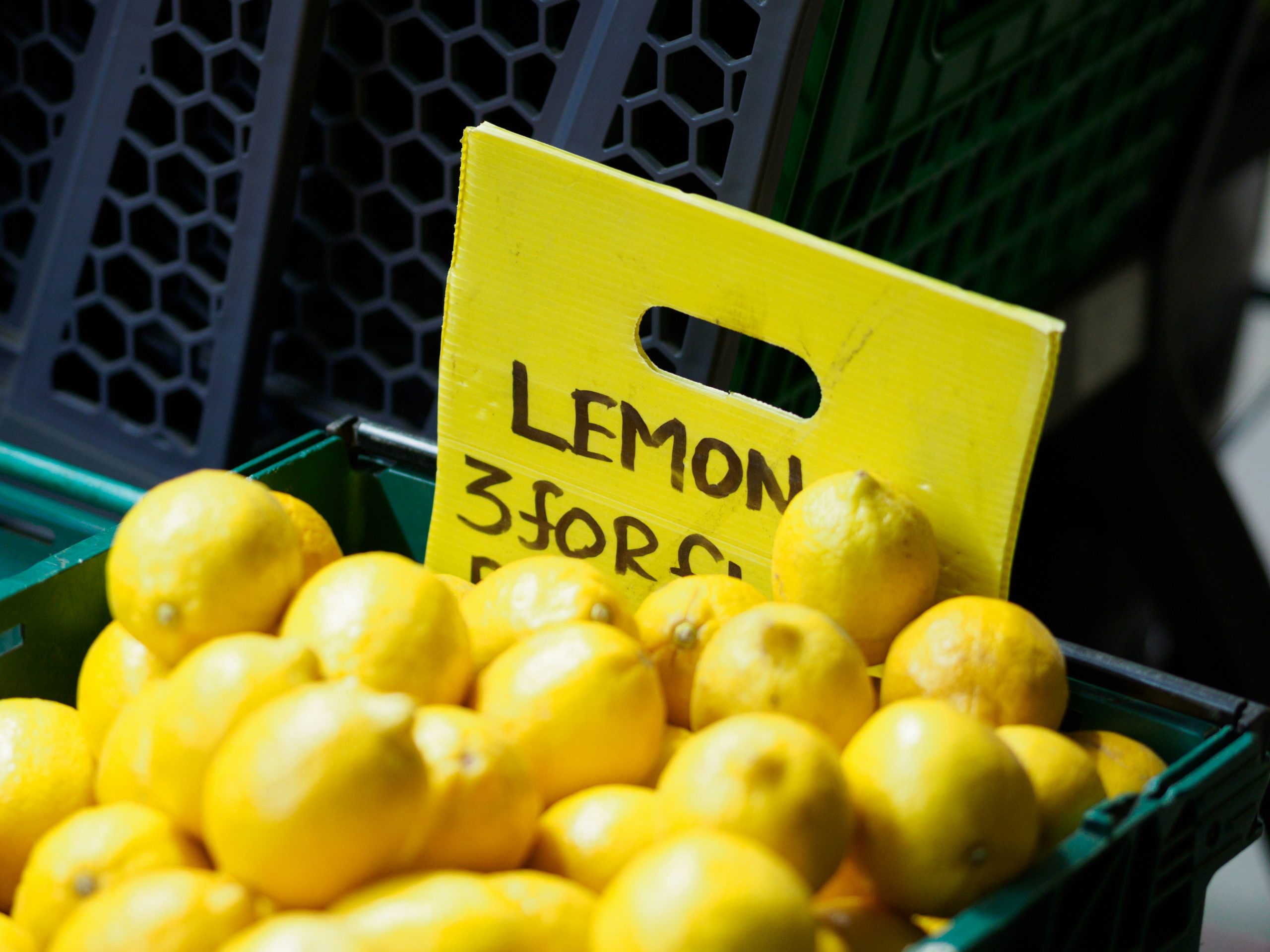
Seven Words About Lemons by Megan Leonard

Girl.

The day my daughter decides to make a lemonade stand with her friends, her best friend announces loudly, casually, in the grocery store in front of the one-pound bags of sugar, that the tooth fairy isn’t real. She knows it’s just her mom. My daughter is nine. Her listening younger brothers are six, four, and one. The four-year-old has never even lost a tooth, never yet had the joy and thrill of finding the cool coin, flat and waiting under the pillow. My daughter does not speak for a moment. She has just told her best friend that the tooth fairy corresponds with her, in tiny little letters. I am hosting the friends for the day, trying to be a good mom, trying to make space for my daughter to have friends over even though the house feels chaotic with four kids as it is. The girls spent the morning making a list: Lemons. Sugar. Poster materials. Quarters to make change. When we go to the bank to get the quarters, I ask for $15 in ones and quarters. There is only $9.14 in my account. This is the account we pay the mortgage out of; this is the only account with any money in it. I settle for $9 in quarters. It feels wrong to take the $0.14 too. 

The day my daughter decides to make a lemonade stand with her friends, I am supposed to be doing a self-paced writing retreat from home. It is summer, and my four young children are also home, every day, all day. Summer childcare for four children is a financial absurdity that was never even on the table for consideration. I also work for pay from home. And I also maintain my writing life, including this self-paced writing retreat. 

Twice a year I try to do this, this self-paced writing retreat at home, with children, while also working for an income. The entire month of April, poetry month, I try to do this. Random days when my writer friends without children say do you want to write a poem a day with me, I always say yes. When I gave birth to my daughter I promised myself motherhood would not scrape away at my writing life. Like many writer-mothers before me, I write books in the dark while my children sleep. I am sure if I say yes to every invitation to write I will keep my writing life full, flourishing, not-scraped. Even if some of those invitations feel absurd. 

This time the self-paced writing retreat from home is with other mothers—other mothers who are far away, not physically with me, also writing in their own homes while their babies nap. We are encouraging each other by text, by email, sometimes by voicemail message. I think to myself, I will write some poems today while the baby naps

Back at home with their supplies, my daughter and her friends work hard on their lemonade stand. Nothing more is said about the tooth fairy. When the girls cut the lemons, boldly using the real knives, the sharp knives, the long knives, the glorious sharp tart smell of lemons fills the kitchen. I cannot remember the last time I sliced a real lemon. They scream a girl-shriek scream when the knife slips against a wet peel, shooting a round, yellow lemon across the counter. They laugh. They pick it up off the floor. 


Glow.

I remember the moment my mother brought me to summer camp for the first time with such clarity, like a single, sun-filled globe in my mind’s eye: the smell of sunbaked pine needles, the swept wood of the cabin floors, the way she shook a sheet into the air like a golden scarf that billowed down, perfectly tucked and clean, a tuck and clean I would never again achieve in the remaining two weeks of my stay. Then it was time to change into my swimsuit and say goodbye and go take a deep-water swim test. There was no changing room—it was just a cabin full of bunks. The earnest, conscientious counselor sweetly stepped outside so I could change in privacy. All the girls are just going to be changing in the cabin, my mother said as she helped me struggle into my swimsuit as swiftly and as discreetly as possible. You’ll have to get used to it. 

My own daughter still sometimes runs around the house stark naked just to be silly. She’ll have a conversation with her younger brother with her clothes half on. My own daughter is going to summer camp, the same sleepaway camp I went to, at the end of the summer. She will not think twice about changing in a cabin with other people, other girls—she is eager for the girlness, the girlhood, the freedom of being together in that we’re all girls here kind of way. She craves that from the universe that gave her three little brothers. I wonder how long that sense of freedom and delight will last, how long that comfort in her body will last. I have not yet told my daughter her life will always be valued less in the world than her brothers’ lives, and she is young enough that she doesn’t know it yet. 

When I gave birth to my daughter I promised myself motherhood would not scrape away at my writing life.

The day my daughter makes a lemonade stand with her friends, I do not write poems when the baby naps. The girls are running in and out of the screen door, calling out We need to refill the pitcher! and We need more cookies! They taste their own creation and pucker their faces in disgust. They need more sugar, more water, more ice. I teach them that the acid will dissolve the sugar if they mix the sugar directly into the lemon juice before adding water. They slop lemonade on my kitchen floor, they drop ice, they shriek when the little brothers steal another cup, another cookie. They stand at the end of my driveway and shout, their voices loud enough to carry to the houses in the far part of the neighborhood. When the neighbors come with their quarters, the girls run into the house again to tell me: We got another sale! They gave us two whole dollars!


Sour.

To pay for those two weeks of summer camp, we apply for scholarships. We apply for scholarships through the state and through the camp’s financial aid office. We ask my parents for help. We set aside a whole pandemic stimulus check, though the setting-aside hurts, though I have to say to my husband, eat at work, I don’t have anything to feed you for dinner. Though I stop eating dinner altogether. 

When women say to me that they are better mothers because of childcare, it makes my heart pucker, my throat pucker. I think I know what they mean: they mean that having help, having someone else watch their kids, allows them to have a more self-fulfilled life, a life with room for career or exercise or maintaining a beautiful home or engaging in friendships or any of the myriad other pursuits of joy and authenticity that we all took for granted before having a mewling baby who needs constant holding. I know that part of what they mean is that as a woman, as a mother, it is hard for them to not feel guilty taking time for something other than directly caring for their children. 

But I hate it because to my ears it sounds like a door slamming. That option of being a “better mother” feels like a choice that isn’t mine. I tell myself other choices were choices I made that made that door slam: having four children, being a writer and not something more lucrative, marrying for love and not money. Choices I wouldn’t change even if I could. Then there were other choices that weren’t choices: illness, medical costs, disability, pandemic unemployment. I tell myself that we are extremely privileged and it is absurd to get upset about what other people say about what makes a mother “better,” that the people who say this to me don’t know how it sounds to someone who can’t afford childcare. As a woman who cannot afford childcare and who cannot afford to not work for pay, I work opposite my husband’s regular weekday shift; I work at night, while the children sleep. On weekends. In the early morning hours before they wake up. And often, in desperation, I work while I watch my children: a baby strapped in a carrier on my chest, a toddler watching Daniel Tiger, me trying to hold on to the continuity of thought while pausing to wipe a bottom and pour a drink and mop a spill and redirect a squabble. In the pandemic, a whole chorus of parents sing a siren song decrying what has always been our household’s necessary normal—watching one’s own children full-time and also working is deemed impossible, soul-crushing, rage-inducing. I wonder if I am crushed. I wonder if I seem enraged.

At night, after my children are asleep, I send off a beautifully edited manuscript to one of my clients. She is also a mother. I’ve taken a pile of her poems, written haphazardly across years, and pulled the threads to make them sing a story together. I’ve helped my client let her best lines rise and shown her how to let the parts that were just spinning gears fall away. I am so goddamn good at what I do. I know I am not supposed to say that out loud. As I close my computer and brush my teeth, my husband asleep hours ago, my children breathing the peaceful sounds of deep sleep, I feel fulfilled and powerful and happy: satisfied with work, satisfied with what I put out into the world as my offering. I tell myself that that feeling is all the other mothers really mean when they say paying for childcare makes them “better mothers.” I try to tell myself it doesn’t matter, it doesn’t bother me, when friends with grandparents who watch their children for free or whose incomes are very different from ours say I don’t know how you do it, I need my sleep. As if I do not also need sleep.

I also hate it when writers, mothers, say they need time alone to write. I also need time alone to write. If I admit I need time alone to write, I might then be forced to admit I can’t write, because I am hardly ever alone—certainly not in the long, deep silence, room-for-leisurely-concentration sort of way. If I let myself entertain these thoughts, if I let myself believe that writers need time and mothers need time, I will despair. Instead, I tell myself I can live a both/and existence, one in which a “self-paced writing residency at home” while working for pay and caring for four children (and their friends) while supervising a lemonade stand makes sense. 

When mothers say they need time alone to write I know what they mean is that even mothers deserve some space, some physical and mental space, to themselves. That what every non-mother creative person takes as their artistic right should be allowed for us, too. Before I gave birth to my daughter, I told myself I will go away one weekend a month to write—an inexpensive hotel, a cute little AirB&B, I told myself I will leave the baby with my husband for 24 or 48 or 72 hours and write for all of those hours. My husband nodded, solemnly, when I told him this plan. But then, the reality: with four babies spaced two years apart each, someone was always nursing, or I was always pregnant. There was always a newborn, there was always a surprise medical bill, there was always a prescription that wasn’t covered. There were always preschool fees we didn’t know would be so expensive, prenatal yoga or toddler music class that seemed more important, a heating bill or a new winter coat that was a more necessary or urgent use of the money. Instead of saving for a writing retreat, we claw pennies out of the grocery budget for a full year to save for two weeks of sleepaway summer camp. I don’t want to feel like my children are automatically at odds with my writing; I don’t want to believe I must have space or time away from them to feel fully like myself. I don’t want to believe I get to be part of the conversation—a citizen of the world of writing—only if I have the ability to temporarily exist as a woman without children. Lucille Clifton had six children, I tell myself, propping my laptop on a cereal box next to the stove while I stir the sauce for dinner. She kept her typewriter on the middle of the kitchen counter. I want, for my children, the favorite parts of my own childhood, and this often feels like a sharp piece of shale stuck in my shoe. The wanting flints against other needs, at night especially, when the baby wakes to nurse and I can’t get back to sleep. 

When women say to me that they are better mothers because of childcare, it makes my heart pucker.

People love the idea of mothers writing a whole novel in fifteen-minute increments during their lunch breaks, or a whole collection of poems pecked into the notes on their smartphone while they simultaneously rub backs and rock babies and sing lullabies. It’s so sweet. It’s so non-disruptive. No one must be bothered by the woman’s writing this way. No one must do without her care for 24 or 48 or 72 hours. No one must do without a winter coat or a music class, no one has to say no to summer camp. There doesn’t have to be a pause, a choice, a loss, an absence. 


Pour.

All I want to do is write to my daughter. A week after the day she made a lemonade stand with her friends, we finally bring her to the long-awaited sleepaway camp drop off. I am not allowed to make her bed for her. These are the post-covid protocol rules. We say goodbye outside the cabin, standing under the pine trees. I was worried my daughter would be cold at night, so I packed her the wool blanket off my and my husband’s bed, but I worry she will not know how to fold it twice over her twin bunk. I am not sad, not until nighttime, when, back home again, I do not get to kiss her goodnight. I buy special stationery for these two weeks. I buy stamps. I pay for the stationery and the stamps out of the money set aside for her little brother’s preschool in the fall, and I worry about how I will put it back again before school starts. 

I want desperately to fill pages and pages and pages of letters to my daughter. I do not want to edit poems for other people. I do not want to help a friend revise her resume. I do not want to call my health insurance for the fifth time this week to try to get my life-necessary medication covered, I do not want to modulate my patience and my voice to the cheerful pharmacist who chirps that I always have the option of paying for the $660 medication out of pocket. I just want to write to my daughter. I just want to ask my daughter how her swim test went—she was so nervous about it, so worried she would be terrible, after practicing hard in her lessons all summer. Her body is long, like a bolt of lightning, like a fawn, like a teenager. She is not a teenager. She is nine. She has the muscle control and limb control and strength of a nine-year-old, but she has to wield that strength in a body that is already taller than some of my fully-grown adult friends. Was she able to windmill her way twenty-five feet through the lake water without touching a toe to the sandy bottom? I ache to know what swim class she is in. I don’t actually care what swim class she is in. I don’t even know what the swim levels are. But I know she cares, and it crushes me to know there is something in the world she cares about and she can’t talk to me about it. Instead, she is talking to friends or counselors about it, or maybe she is not talking about it at all. It is a swim class. I tell myself over and over again. It’s just a swim class.

When my daughter was a baby, I resented everything that took my attention away from her. I hated my work. I did not want to think about anything except whether or not she liked the black and white book about the cat, or did she maybe seem stronger already, and was that a real smile? It was physically painful if someone else held her, even for just a few minutes. I only wanted to talk about her. I dreaded talking to friends because I had to pretend to care about things other than my baby: their breakups and new relationships, their work, their arguments with their mothers, their trips. All I wanted to say was Her toes are so peely and I don’t know why, or In the morning, she is happiest. She loves to be on her changing table and coo at me. Or, The baby massage I learned in prenatal yoga is perfect, she especially likes it when I touch her face as if I am smoothing the pages of a book. I did not care about any part of the universe that wasn’t her.

And the universe came in anyway, of course it would. It could never be just her and me forever in our own orbit, I know that, I knew that, I know it is good for her to have a swim test and not tell me anything about it. I know it is good for her to eat dinner with her cabinmates and talk to them and chatter away with her counselors and for me to not even know if she ate her fruit or if she wanted extra milk or if she didn’t like the pudding. The morning we bring our daughter to camp, my husband buys a jar of Country Time Lemonade powdered mix. It would have been so much easier to make that for the lemonade stand instead of making the lemonade fresh. It would have been cheaper, too, even if we did buy the lemons in bulk from Aldi, just slightly overripe, making them even better for juicing. On the morning of camp drop-off, my husband stirs himself a huge glass of the sweet, powdered drink before we carry the trunk to the car, the spoon tinkling the glass and the ice, his big, satisfied slurp annoying me. 

When she is at camp, I can’t speak to my daughter for two weeks. I write her a letter every day and in my letters I ask her if they serve lemonade at lunch, remembering the big vats of it from my own girlhood. It is not what I want to ask—but I cannot put this chasm into words and I wouldn’t want to, because it is not for childhood. It is her job to miss me a little bit at bedtime, and it is my job to ache. I feel annoyed when her brothers interrupt my letter-writing. Her dear, sweet little brothers, who are right here with me, talking to me, sharing every tiny thought with me, and instead of holding their faces in my hands and drinking up every utterance, I am aching for my daughter’s absent voice. It is the first time there will be whole days, whole thoughts, whole adventures, whole worries she will sort through herself, which I will never even hear about. 


Pucker.

The night of the day my daughter decides to make a lemonade stand with her friends, I tuck all my kids in bed late. The excitement, the cleanup, the sugar from the lemonade and cookies means the sun has already set by the time everyone is dreaming deeply. I am supposed to work. This time after bedtime is my paid work time. I am too tired to work. I text one of the other moms doing the at-home self-paced writing retreat. I didn’t write anything, I text. Not even one poem

It’s ok, she writes back. 

I am already lying down in my bed with my head on my pillow. I open the notes on my phone. The light from my phone makes the baby stir next to me, makes him roll into a little ball, bum in the air. Maybe I will write one poem before I close my eyes, I write.

I don’t want to feel like my children are automatically at odds with my writing.

Yes! the other mother texts. It’s rolling with what is and sipping things and carving out even the tiniest slices. 

Maybe I will just try to type ten words about lemons, I write. 

Then: No. Maybe seven. 


Pitcher.

On the day of the lemonade stand, my daughter’s friends fight. I come outside after changing the baby’s diaper, barefoot to the driveway, and my daughter is alone sitting behind the table. They’re disappointed we’re not making that much money, she says. It’s all my fault. I let them down. They said it’s not enough. The friends and my daughter made all the signs themselves. They debated about their prices, settled on $0.50 for a cup of lemonade, $0.25 for a cookie. Whenever a customer shows up, they run around like the playing cards in Alice in Wonderland, all pouring from pitchers and placing cookies on napkins and taking money and making change all at the same time. I have no idea if they are making the right change or not. The baby cries all afternoon, an angry, ragged wail every time I try to put him down. My boys keep stealing cookies. I was supposed to try to write a poem today. I am not sure if I am doing a fantastic job of letting the girls have their independence, or if I am being negligent. 

I want to say something to my daughter that will help her through this small moment with her friends. Behind me, her friends pass in shadow behind the screen door, talking to each other and not her. I tell myself, be a good listener, but I don’t really know if that’s what I’m supposed to do in this moment. My daughter crouches her shoulders, and her yellow hair drops in front of her face when she puts her head down, yellow from July sunshine, yellow from all the days in full sun at the beach and the pool, in swim lessons, in open swim. My daughter has never had an allowance; we’ve never had enough extra every week to commit to one. Any money at all to her is a treasure, a delight, something to be proud of. She saves her tooth fairy coins, the coins she finds on sidewalks, all delightful, all magic. I don’t know how to explain the idea of “not enough” to her. I don’t want her to take on the mantle of her friends’ disappointment, I want her to be proud of the clink of her earned quarters. My daughter and her friends make $8.00 each from the lemonade stand. An undreamed of sum to my child, money of her very own.

Later in the week I will have to borrow my daughter’s share so I can take my kids to the municipal pool, which is free for kids but charges a small fee for adults. I promise my daughter it’s still her $8.00, and when I pay her back, I will pay her in paper bills, not the quarters she earned it in. It’s ok mom, she says. You can keep it. I insist, insist that I will not keep it. 


Sun.

On the day of the lemonade stand, I don’t find anything wonderfully wise or smart or just right to say to my daughter when she sits alone, believing she is responsible for her friends’ disappointment. But the girls somehow make things right even without my wisdom—something is said, or perhaps nothing is said, and suddenly the friends pour out of the house again, my daughter sits up, they yell, just a little less vivaciously now, GET YOUR FRESH LEMONADE! I stand in the driveway with the toddler on my hip while the big kids and little kids draw huge chalk letters declaring FRESH LEMONADE together. The maple tree that grows over the driveway throws a dappled sunlight, and the red and white checked tablecloth looks perfect under a huge, antique glass urn filled with the lemonade the girls squeezed and measured and stirred themselves. I am struck by how perfect this moment looks, how happy and beautiful everything looks at this one single moment. The girls laugh when someone lifts the painted rock holding down the paper napkins and the napkins blow across the street. They chase them, catching every single one, faster than I could catch them; they run faster than I could these days, it seems like. The girls show the younger brothers how to make big bubble letters in bright colors. 

I know there will be whole stories I will not get to hear. It is right, of course, for my daughter to have a whole life, all her own stories, all her own experiences and adventures, and I am not entitled to them. I think of all the things I never told my mother—not deep, dark secrets, just angles of myself, stories, anecdotes, points of view. My whole life, the rest of my whole life, might be craving my daughter. After she was born, I thought, what if I want something different now, for the rest of my entire life? As if wanting made me who I am, as if wanting something different from what I wanted before made me unrecognizable to myself.

When I was a girl I cried every time on the last day of camp, my arms thrown over the shoulders of the girls I had only known for two weeks. We sat on our trunks—the trunks our mothers packed for us to go, but we packed ourselves to return—and promised to write to each other, promised to never forget, swore loyalty and love and allegiance, and cried that we would miss each other more than anything. I tell myself I will have to remember to let my daughter have her time when I pick her up: her time in the arms of the girls she has befriended, when what I will want to do is run right at her, drink her up, squeeze her, hold her all for myself again. I can’t remember what my mother looked like when I was young. I just remember her waiting, peripherally, while my friends and I sobbed on our trunks. 

Now it is my turn to be someone’s periphery. While my daughter is gone, we sleep with all the windows open. I imagine her in her bunk—I imagine her tucked under our blanket every night, the lake making peaceful sounds when she wakes in the morning. I imagine the loons waking her at dawn with their haunting calls, and I wake early too, with the dawn light pouring in the open window like lake water, the damp morning chill curling over my skin where the wool blanket would normally be. When we go to pick her up, we will drive half the morning down rural highways and dirt roads under the dome of deep summer, the sunlight infusing every green leaf in the thick canopy stretching over the road, light like a glowing globe, like an ocean, and I will want to drink it all in one luscious gulp. 

I will tell myself not to even try to think about poems, I will tell myself I will think only of seeing her again, I will only worry about the sandwiches for her little brothers and the snacks and the water bottles—but words about summer and sunlight and wanting and love will steep my thoughts anyway as we drive, and I will have lines or images to murmur to myself, to peck into my phone while the road curves, gets closer and closer to her. Each word will taste like a sundrop. When we arrive at her cabin, I will tell myself to wait, I will remember to be the periphery. I will take the wool blanket, stuck all over with pine needles, from a heap on top of her trunk and fold it quietly in my arms while she hugs her new friends. I will wait at the edges of their joy and sorrow. 

How foolish I’ve been. Of course we can never go back. I cannot go back to wanting something different, to wanting less, to being more contained. I cannot catch every fluttering napkin taken by the wind, every shadow or dappled moment, or every word. Instead I stand at the periphery, and I spread like light or liquid spilled. Like a memory of the sun, I run toward it. I run toward all of it.

Exclusive Cover Reveal of “The Valley of Vengeful Ghosts” by Kim Fu

Electric Literature is pleased to reveal the cover of The Valley of Vengeful Ghosts by Kim Fu, which will be published on March 3, 2026 by Tin House in the US and HarperCollins in Canada. You can pre-order your copy here.

From the critically acclaimed and award-winning author of Lesser Known Monsters of the 21st Century comes The Valley of Vengeful Ghosts—an eerie, spellbinding novel of grief and guilt, with a razor-sharp eye for the absurdity and melancholy of the internet age. 

In the aftermath of her mother’s death, Eleanor is unmoored. For years, her mother orchestrated every detail of her life—from meals, to laundry, to finances—so that Eleanor could focus on her career as a therapist. Left to navigate the world on her own, Eleanor clings to her mother’s final directive: use her inheritance to buy a house. 

Desperate to obey her mother one last time, but finding few options she can afford, Eleanor impulsively buys a model home in a valley-turned-construction site, a picturesque development steeped in a shadowy history. It feels like a fresh start, until the rain comes—an endless, torrential downpour. As water seeps in through the house’s cracks, the line between what is real and what is not begins to blur. Haunted by the stories of her patients, a stream of workmen and bureaucrats she can’t trust, and visions of ghosts from her past and present, Eleanor’s reality unravels, and she is forced to reckon with the secrets she’s buried and the desperate choices she’s made.   


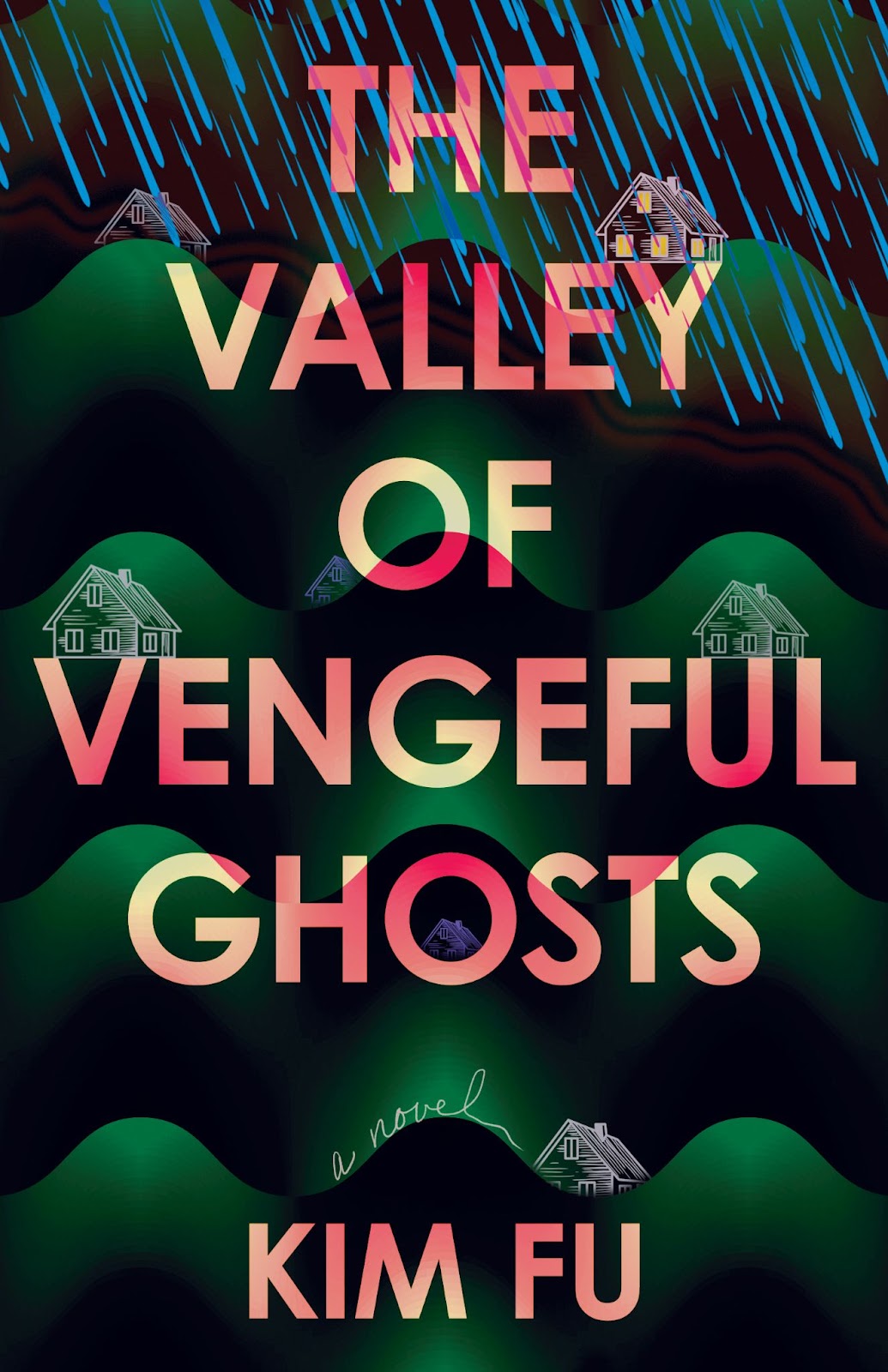
Here’s the cover, designed by Beth Steidle:

Kim Fu: While writing and editing, I often try to think about how a first-time reader would experience the words that are actually on the page, rather than how well I have realized any preexisting vision or intention. When I first received this cover, after a gut positive reaction, I tried to assess it the same way. As opposed to “is this the cover I expected?” I tried to think, “if I were a reader walking through a bookstore, and I came across this book knowing nothing of its contents, how would I react?”

There’s something immediately attractive about this cover; the intense colors and loud typeface would call to me from a shelf, beckoning, hard to ignore. The title sounds like horror, but the design suggests unease, an off-kilter, ironic edge, rather than gore or grit. The pale peach of the text is at first a pretty, gentle hue, evocative of sunset, but as the semantic meaning sinks in—vengeful—the letters instead begin to look burnt or marked or injured by the reds and pinks. The repeating, translucent houses are ghostly but also impish, resting upon the lettering, peeking out from within the O, the lit windows in the rain beaming out from the cover like eyes. The graphic, unreal quality of the bright blue rain and bright green, perfectly even rolling hills, the archetypical house shape—a child’s conception of rain, hills, houses—suggest that the book has a fable-like quality: the house is not a specific house, but the idea of a house; the rain isn’t the clear water that falls from the sky, but a mythic force, rain as it appears in dreams, fantasies, parables. Despite all the bold color, black dominates the background, shadows overtaking the hills and seeping through the text. The cover is subtly in conversation with the cover of my last book, Lesser Known Monsters of the 21st Century—they would look beautiful side by side—while also wholly new and distinct.

It’s perfect, I thought.

Early on, I’d talked with my editor at Tin House, Masie Cochran, about a couple specific images from the book as potential covers: a chandelier dripping with water, an impossibly large deer buck standing in a kitchen. The novel was also inspired, in part, by a recurring nightmare I had about a house made of sugar dissolving in the rain. In addition to being spoilers (and a little too on-the-nose), what these images have in common is a sense of corroding beauty, disillusion, a slow-burning realization that things aren’t quite right. We agreed that a “dark” cover was the obvious choice, but what if, Masie suggested, it was almost painfully bright instead? I liked these ideas, but I had no idea how they would come together. 

Beth nailed it. Already this cover is inextricably tangled with my conception of the story, with Eleanor’s fears and inventions and the unfolding of her life. I can feel Beth’s ghost houses watching me in the dark. 

Beth Steidle: I was so struck by Kim’s novel and the way that profound loss—loss of parent, partner, job, and home—is explored through an almost mythic landscape: the skeleton of a housing development, an abandoned valley, shifting mountains, all plagued by a relentless, torrential downpour. Because the narrative is deeply personal and inhabited by morally complex, often frustrating characters, I first thought that the cover should feature one or more distorted figures. But ultimately, it felt more fitting to portray the setting, as this place embodies the magnitude of the book’s events and the inner turmoil of the protagonist. The wavy green pattern is meant to invoke hills but also to feel undulating, like the flood that is coming from the strangely bright rain just beginning to pour down. The houses are ghostly and almost fleeting, while the singular house with its lights on hints at a lonely human presence, someone trying to survive in a dark and surreal place.

A Comparison of Canine and Human Existential Dread

Dog Anxiety Series

On the intersectionality of dog anxiety and owner anxiety

With a dog and owner pair, there are 4 possible states of anxiety. 1. Dog anxious, owner not anxious. Involves everyday objects/situations that are fearful to the dog but not the owner. Rain for instance, or pigeons or balloons. 2. Dog not anxious, owner anxious. Involves everyday objects/situations that are fearful to the owner but not the dog. The dog does not read and has not studied economics. But the dog does see the owner habitually and fearfully stare at paper (bills, jury summons, tax audits), and then set the paper in piles, all around the house. The dog has tried to destroy one pile. The dog was scolded. Yet this state of owner unhappiness is why the dog was brought in—bring in the cavalry, to alleviate the stress of sad, dangerous paper, that to the dog, is generated by a metal gizmo (mailbox), that the dog barks at whenever they meet. 3. Dog anxious, owner anxious. The anxiety here is usually causal. When the dog is in distress, like real medical distress, like has swallowed a large red ball belonging to someone else’s human child, a ball that will not pass through the dog’s colon, the owner must use all possible resources to pay a professional to extract said ball and to buy the human child a new ball. 4. Dog not anxious, owner not anxious. The ideal state for the bond. The bond’s core, impetus, engine and raison d’etre. Happens on walks, hikes, early off leash hours at the beach. Happens when each party least expects it. Like after leaving the dog in the car to pump gas, the owner returns to find the dog in the driver’s seat, with a paw on the wheel. The owner laughs, a laugh the dog knows the full texture of and could identify, blindfolded, from a row of other owners, without a dog’s hair of doubt.


On why the dog fears rain

The dog was not afraid of rain until he was 5, which in dog years is 36. At 36, a person has answered many of their logistical questions. Where to live and who to live with. How to behave (or not) in public. The dog has a forever home and is walked thrice a day. But at 36, regardless of how well one thinks one’s life is going, an internal fork is reached—to carry on or to pursue change. Such changes include but are not limited to a new job, a new spouse, a new country, a new child, a new dog, or a self-given sabbatical, say to the top Instagram-able places of the world, as recommended by Instagram, that concludes with a month-long baking class in Paris. The dog was not about to do that, so fear of rain is his way to cope with mid-life. Rain with thunder and lightning is no worse for him than rain itself. Once the first drop hits, he cowers in a corner and shakes. In response, the owners must swaddle him, that is wrap four human arms around him, while one owner feeds him a popsicle. When all else fails the dog retreats to the unlit bathroom and sits behind the door, panting at his human lunatics.


On why the dog barks at pigeons

The dog barks only at pigeons, no other bird species. The amount of discussion the owners have given this topic could constitute a peer reviewed paper. Pigeons have strange red, rimmed orange eyes. They move their necks weirdly and travel in flocks that seem to have no limit in size. Once the owners walked past a huge flock of maybe thirty pigeons, and they braced for the dog to lose his mind. But he sulked far and away from the flock, tail down, head down, and while the birds stared at him, the owners realized that there is a critical mass to his barking, after which there was only fear. Fear or anxiety? The owners debated this too. Fear is the response to a perceived threat whereas anxiety is the response to a threat that has not yet occurred. The owners wish the dog could differentiate for them and guide them through how he evaluates threats. This would be most helpful to their research. 


On why the dog barks at balloons

Much like with pigeons, the balloon colony must reach critical mass. One balloon and the dog barks with vigor, two, four, even six are within limit. More than six, and the dog goes sullen. The owners wonder if it is the discrete number of balloons or the cumulative volume of trapped helium that so offends the canine, and to test this question, one owner bikes to the nearest Party City and buys as many balloons as he believes he can bike with, which is way more than he can actually bike with and way, way more than the other owner expects or they had discussed. Anyway, the owners perform multiple trials. Six small balloons versus six large ones. The dog barks at both. But the addition of a seventh, regardless of size, silences him. Hence, the owners conclude that the dog must know how to count but not how to calculate spherical volume, \frac{4}{3}\pi r^3. A bottle of wine later, the owners also conclude that the dog must object to the phrase “in seventh heaven” which denotes a state of extreme bliss. Seven refers to the seven celestial spheres that once were believed to surround the Earth. So, the owners conclude that the dog is agnostic and a skeptic of all levels of heaven, especially the seventh. In short, the dog distrusts extreme bliss, and is, hereafter, deemed “wise” by the owners. Solidarity of the household then to all believe that bliss of the highest level is a delusion and should you attain it, or think you have, you have lost your grip on reality and are possibly dead.

On why the dog barks at leaf blowers

Leaf blowers never used to cause the owners anxiety but after living with a dog that barks at them, leaf blowers now exist in the dog anxious, owner anxious quadrant (alongside large red balls belonging to human children). In the month of October, in New York, leaf blowers are more active than sirens. Every street features one, wielded by an accountable building super who is just doing their job. The owners appreciate that this job must be done. The owners live in one such building with one such super. But here’s the disagreement. Owner A believes that the dog barks at leaf blowers because they are loud. Hence owner A renames leaf blowers, Loud Tubes. Owner B believes that the dog barks at leaf blowers because they blow wind. The dog barks at hair dryers, so owner B renames leaf blowers, Wind Sticks. Over nomenclature, the owners have argued. Like argued-argued, to the semantic death, as if there is something real at stake. And there is. The sounds of leaf blowers are the sounds of their childhood. Boring, suburban, a childhood they escaped and, by design, will never return to. They will never own a Loud Tube/Wind Stick, as their parents did. They will never own a car or a house with a shed out back. They will never complain about the ‘normal’ things like yard work, snow shoveling, mortgage, or that stupid shed out back. They are in this city forever and sometimes that feels exclusive as the city has a lot to offer and people are always coming to see them (to see the city). Other times, they feel trapped in their rent stabilized apartment that still costs astronomically more than apartments in any other city, with a dog who barks at lots of things but would be thrilled to live anywhere with the owners, really anywhere, even a tiny cardboard box, at the edge of the world.

A Bisexual Chicana Finds Her Voice in “Like Happiness”

Published during the illustrious Year of the Bisexual, Ursula Villarreal-Moura’s thoughtful debut novel Like Happiness popped up on Best of 2024 reading lists wherever you turned, from NPR and the San Francisco Chronicle to ELLE and Them. The two timelines in this novel trace a young woman’s complicated and troubling relationship with an older male writer she admires, as well as her reaction years later when the writer is accused of sexual misconduct. 

With the paperback release of Like Happiness this year, the literary novel is now reaching a new audience. Through Tatum, the bisexual Chicana protagonist, readers enter the cerebral world created by Villarreal-Moura. Tatum evolves from a lonely college student at a majority white school in the Northeast, who is enraptured by M. Domínguez’s novel, into a more confident and fulfilled woman living on her own terms and working abroad in Chile. 

Villarreal-Moura’s deft writing and characterization of Tatum gives readers an exceptional portrayal of how literature shapes our identities, how we see and interpret the world, and how we connect with other people.


Liz DeGregorio: At the start of the novel, Tatum says, “I never fell out of love with reading, or more specifically, with other people’s imaginations.” Do you see Like Happiness as being a love letter to literature?

Ursula Villarreal-Moura: Absolutely. The most enduring relationship in Like Happiness is Tatum’s tie to books and reading. She has few acquaintanceships in college and a longstanding situationship with M. Domínguez, but she feels most secure inside of books. It’s her only true relationship. It started when she was a child, and it has carried over into her young adulthood and into womanhood. At least in New York, books are her biggest life preserver. In Chile, it’s Vera.

I love that Books About Books is a genre, too. Not surprisingly, I love so many novels and works of nonfiction that fit into this category. My most recent favorite is Bibliophobia by Sarah Chihaya. Anyhow, this is all to say that I hope readers delight in all the book allusions, the Easter eggs, I’ve buried in the novel.  

LD: Your novel tenderly explores Tatum’s big city coming-of-age story. Is this a genre that has stood out to you in the past?

UVM: I’ve thought about my answer for a bit now. Initially, I was going to say that yes, I love this genre of story, but the truth might be that society is obsessed with youth. As such, the coming-of-age novel is thrust upon us as one of the most compelling types of stories. Who doesn’t like witnessing a young person make sense of their one wild and precious life? I do, for sure. Like Happiness makes the most sense as a coming-of-age story, particularly because I wanted to show Tatum’s growth. Behavior she accepts from others in her twenties becomes unacceptable in her thirties, so I needed a young protagonist to show that development. I think if the novel succeeds, it’s because we get a bit of a juxtaposition in her character as she matures. 

I wanted to show Tatum’s growth. Behavior she accepts from others in her twenties becomes unacceptable in her thirties.

That said, if I step back and look at the larger societal picture, I am certainly guilty of placing youth on a pedestal, too. I’ve bought what society has sold me. My next books aren’t going to be centered on young protagonists. I might publish some shorter pieces about youth, but I’ve definitely become fascinated with narratives about older characters. Olga Tokarczuk’s novel Drive Your Plow Over the Bones of the Dead changed my life when I read it in 2021. I’m aiming to write older woman characters with as much verve and tenacity as Tokarczuk does. 

LD: Tatum’s realization that she’s bisexual in Like Happiness felt very natural, especially since it’s normalized as being an important part of her life, but not her defining characteristic. How do you feel about the changing representation of bisexuality in not just literature but pop culture as well?

UVM: Oh, I love it. I was born in the final years of the Gen X era, so I had no language for what I was experiencing as a queer teenager. The only terms that were being used in the early ‘90s that I was familiar with in Texas were androgynous and gay. I knew, like you mention in your excellent essay at Electric Literature, that something about Fried Green Tomatoes spoke to me very deeply as a youth. Back in the ‘80s and ‘90s, queerness was coded, but now it’s commonplace. 

Personally, I feel honored to contribute to the history of bi narratives. I love that bi erasure and biphobia are being examined more in literature and pop culture. Melissa Broder’s Milk Fed is one of my favorite bi novels, and I adore the YA series Heartstopper, which explores just about every letter in the LGBTQIA acronym.  

Wasn’t 2024 hailed The Year of the Bisexual? [Editor’s Note: Yes, it was!] I feel like I read that online in the fall. Certainly, when word got out that Luigi Mangione was rumored to be bi, his star grew even brighter, and I was definitely loving it. 

LD: Upon rereading Like Happiness, I noticed how skillfully subtle foreshadowing was layered into the story. Was M. Domínguez’s specific betrayal something you always had in mind? Or did it come to you later in the writing process?

UVM: The turning point, the betrayal, came to me later in the writing process. In fact, it came to me years into the writing. I kept wondering how this dynamic would end, what would be the final straw. For years, Tatum has no red line with M. Domínguez, so I had to live deeply in their world to figure it out. 

I knew the turning point had to be organic, believable for the characters as well as for the reader. When it came to me, it felt inevitable, like, “Oh yes, of course.”

LD: At a certain point, a male journalist who is reporting on M. Domínguez’s patterns of abuse makes a condescending comment to Tatum. Why did you put this moment in the story?

UVM: I think about that choice a lot. I don’t want to divulge too much about that dynamic, but I wanted the reader to trust [the journalist] Jamal, or want to trust Jamal, because Tatum needs him to be a good guy. 

In a way, Tatum talking with Jamal turns out to be thorny. They’re not friends, but they are in an exchange that has the potential to change both their lives. Tatum initially believes she has the opportunity to tell her side of the story by collaborating with this journalist, but reality is a lot more complicated. Jamal can’t be the ventriloquist and Tatum his dummy. It won’t work. 

LD: Did you always plan on having Tatum relocate to Chile? Similarly, did you decide to have her live in Chile before or after deciding on the Alejandro Zambra quote that opens Like Happiness?

UVM: Oh, the Zambra epigraph [“Why would you want to be with someone if they didn’t change your life?… Life only made sense if you found someone who would change it, who would destroy your life as you knew it.”]  came late in the progress. I think it was during second-pass pages right before it went to print. The epigraph encapsulates the explosive nature of Tatum and M. Domínguez’s relationship quite well. 

The decision for Tatum to live in Chile came early in the drafting. We’re all familiar with the notion that a geographical change can’t solve a person’s problems. I wanted to interrogate that idea, or at least turn it, if not upside down, on its side. For Tatum, living in Chile is an improvement, and she’s forced to spread her wings there in a way she was never forced to in New York. She must figure out who she is, not in relationship to others, but as her own island with wants and needs. 

LD: I loved the moments where you drop in Tatum’s cultural interests – she listens to Cat Power on repeat during a breakup, she longs to see a Marina Abramović performance, she has Jean-Michel Basquiat prints hanging in her college dorm. How did you decide what kind of art she would gravitate to? 

UVM: It was my aim to show how her taste, at the beginning of the novel, is still fairly dominated by white culture. She’s trying to wade through Virginia Woolf and D.H. Lawrence for her degree, but then she even gives herself these types of assignments outside of class. Yes, she admires Basquiat and reads Sandra Cisneros, but until she falls in love with M. Domínguez’s novel Happiness, it’s as if she doesn’t understand those works can take center stage. They don’t have to be minor satellites.

It was my aim to show how her taste, at the beginning of the novel, is still fairly dominated by white culture.

While she does listen to a bit of music in Spanish, her life in New York could be read as an attempt to find a home in a somewhat white heteronormative life. But despite her best efforts, it just doesn’t pan out. All the things she tries to make fit will never be her keys to success: a relationship with a (famous) man, speaking English, even working an assistant teacher is an approximate fit for her. Her destiny is queerer, browner, and thankfully freer. 

LD: Did you ever contemplate an ending where there was another interaction between Tatum and M. Domínguez?

UVM: This is a funny question because the final version has one additional last interaction between Tatum and M. Domínguez. Originally the scene at the school didn’t exist, but my agent suggested I write beyond what I thought was the ending.  The classroom chapter is actually my favorite part of the entire book now. 

I’d argue the book doesn’t need more scenes between Tatum and M. Domínguez. I know some readers wanted M. Domínguez’s side of the story, which *woman face-palming emoji* goes to show how ingrained misogyny is if a woman’s account isn’t enough and needs to be validated by a man’s account. 

LD: For much of the novel, M. Domínguez’s book Happiness is Tatum’s literary touchstone – or “lifeline,” as she tells him. Was there a book (or books) that you felt similarly about?

UVM: I most definitely had a literary roster of touchstone books as a young person. Like Tatum, as a child, I was obsessed with Say Goodnight, Gracie by Julie Reece Deaver. In my twenties, I reread Sylvia Plath’s The Bell Jar and J.D. Salinger’s Franny and Zooey every October; it’s how I welcomed autumn. 

Since then, my rereads of Muriel Spark’s novella The Driver’s Seat and of Roberto Bolaño’s story collection Last Evenings on Earth have taken over. The short story “Gómez Palacio” is out-of-this-world brilliant. If I were on a desert island, I honestly think I could reread those two books for the rest of my life and feel satisfied. 

My goal this year is to reread Minor Feelings by Cathy Park Hong. Although I’ve only read it once, I think about it all the time. I sense it’s going to join my literary pantheon. 

11 Books With Feral Queer Protagonists

When I was a child, the only way I could identify pre-sexual queer characters in fiction—such as in works by Harper Lee, Dorothy Allison, and Carson McCullers—was by their feral nature. I saw myself in these kids’ dirty clothes and boyish swagger, the way they made startling comments that no one else appreciated. I longed for more characters like these, both more children and also adult characters who showed me a future, who did whatever they wanted, who messed up again and again, who did shitty things, who acted in ugly ways, who were fierce and aggressive and sexy and bold and even sometimes mean. I love difficult people, on the page and off, and I get grief for it all the time. But part of why I love fiction is because I can challenge myself to feel sympathy for people who act wildly and badly.  

My first novel, Songs of No Provenance, was initially inspired by my fascination with the idea of a protagonist, Joan Vole, an art monster who says difficult things and disappears into her crappy Coney Island apartment for weeks on end on a songwriting tear. Joan doesn’t bother with meals, pees in public, picks up random strangers from bars, and throws her whole body into music. I was curious about what would happen if such a character tipped into toxicity and went too far, harming people and causing real damage. The book opens with a horrible act that Joan commits on stage, which she’s pushed to by her jealousy of her mentee and best friend. Joan must then face the unrolling consequences of her actions, while sifting through her past in a seedy underground music scene for where her life went wrong. 

Queerness goes hand in hand with wildness. Growing up queer and trans in a time when it was not okay to be out, I was so outside the norm that I had a certain freedom. I could wear shirts with giant owls on them and have messy hair and ask probing questions and say shocking things, and people would expect it. That’s why I love the 11 novels below, each of which feature protagonists who are allowed to stretch themselves into their wild nature. 

A Sharp Endless Need by Marisa Crane

This compelling, propulsive novel tells the story of one of the most feral breeds of queer: the sportsbian. Mack is a high school basketball star who develops feelings for the only other Division 1 hopeful on her team, Liv. Mack and Liv touch all the time on the court and have beautiful communication, moving like one organism, creatures ruled by instinct. But when they are alone, they are awkward and unsure, can only access intimacy by role playing or joking around. The book moves toward breathless sex scenes, where the bodies of the characters take over with a different flavor of wildness. This book is aching and gorgeous, the fast-paced lists and moments of reverie mimicking the energy of the game, and the writing about basketball is full of speed alongside these two young people who have wild hearts and a fierce nature both on the court and off.

To the Moon and Back by Eliana Ramage

The story of a young queer Cherokee girl who is bound and determined to become an astronaut, Steph is one of the most compelling characters in recent memory. She is completely bold and badass, single-minded in her ambition, unafraid to snap back at her mother and betray her sister. She barfs when her mother and sister share a sentimental moment and goes so far as to frame and prominently display the acceptance letter to a school her mother wouldn’t let her attend. The book covers three decades and multiple continents, detailing Steph’s ambition, her romantic relationships and journey of sexuality, and her family dynamics. Steph is so loveable in her wildness that I rooted for her to get whatever she wanted. 

The Pervert by Remy Boydell and Michelle Perez 

This graphic novel tells the story of a transgirl named Felina who navigates Seattle as a sex worker. Every character in the book is depicted as a human/animal hybrid and everyone acts freely, a little outside the norms of “conventional” humanity. Felina is not afraid to say what she feels like saying, poised to react with violence when she needs to. She has sex with her friends and it doesn’t have to mean anything. She works hard at the factory and cleans deer and wanders where she wants at night. She’s a badass up against a shitty transphobic world. The art is beautiful and expressive and the story is moving and deeply real. 

Nevada by Imogen Binnie

A voicey novel about a trans woman who does what everyone has wanted to do at some point: escapes her life. Maria draws in the reader with a conversational, intimate voice that’s absorbing and authentic, like a friend confiding in you on the couch. She sweet talks you through her adventures taking drugs, letting a relationship die, stealing her ex-girlfriend’s car, and making friends with strangers as she dashes across the country. A testament to the freedom that can come beyond romantic love, and because of it, if you just let yourself do what you want. 

Open Throat by Henry Hoke

This is the only book on the list where the protagonist is literally feral, because they are a mountain lion. This book follows a queer mountain lion as they struggle to survive in an LA landscape destroyed by humanity, surrounded by drought and wildfires and tepid attempts at talk therapy. Hoke’s lion is loveable even when they are apparently menacing children or considering eating a human. They bring home the very personal consequences of the climate crisis more than any book I’ve ever read. 

My Lesbian Experience with Loneliness by Nagata Kabi

This manga memoir tells the story of a twenty-eight-year-old woman who has never had a sexual experience and sleeps with a female escort. When the story opens, Nagata is living a life outside the norm: doesn’t want kids, never washes her clothes, has no friends, no romance, her hair is always messy. She blurts out her feelings to strangers and tears out her hair. In my favorite moment, she eats unboiled cakes of ramen that are so hard they speckle with her blood. Her encounter with the sex worker is utterly honest and moving, and brought to mind for me the experience of squaring your neurodivergence with the way you are “supposed to” act in situations that it seems everyone else can master.

Stag Dance by Torrey Peters

This book is full of a smorgasbord of feral queer protagonists, from a hulking lumberjack boldly exploring gender identity in a hostile clique of other lumberjacks to a boarding school boy driven to commit horrific violence because of his unsorted desire for his ex-roommate. This book is full of wild desire, high-concept trans storytelling, and characters who are unafraid to follow their instincts. 

Stop Me If You’ve Heard This One by Kristen Arnett

The protagonist of Arnett’s hilarious and absorbing new book is a MILF-obsessed, financially irresponsible, lesbian clown. The book opens with Cherry jumping out a window after sleeping with a married woman at the woman’s child’s birthday party. Cherry attends punk shows in backroads, DIY queer venues, steals, runs her bank account down to nothing on impulse, and is so guileless and open and full of id that you have to love her. 

You Exist Too Much by Zaina Arafat

This story of a bisexual Palestinian American woman living in Brooklyn and dealing with sex and love addiction bounces between her various relationships and her travels to Kentucky, the Midwest, Jordan, Lebanon, and Palestine as she follows her desires, seeking answers through love, sex, recovery, and writing. The protagonist is not afraid to follow any lead for pleasure, entanglement, or enlightenment that presents itself, and it’s refreshing to watch a character say whatever comes to mind. 

Valencia by Michelle Tea

In this auto-fiction novel, Michelle runs wild in the queer subculture of San Francisco, jumping between liaisons with various feral lesbians, a knife-wielder and a boyish runaway, and more, delighting in an urgent realm of imaginative sex. Michelle is a delightful, loveable scamp, free and easy in a city that used to be a queer paradise. 

We Play Ourselves by Jen Silverman 

This immersive novel is feral in tone as well as in the behavior of the characters. Cass, a young playwright, flees New York after having been cancelled for a strange and brutal act of violence. Cass is a whirlwind spiraling out of one of the more famously staid art forms, and it’s inspiring and thrilling to witness her unbound nature among quiet audiences of old-heads. In Los Angeles Cass ends up meeting a pack of reckless teenage girls who rival her own feral self. 

“In the Rhododendrons” Creates Space for Imagination in the Real World

In 2011, Heather Christle was about to release her second poetry book, The Trees The Trees. I saw online that she was doing a “Dial-A-Poem” promotion where people could call a Google voice number and Heather would answer and read to them.

This coincided, conveniently, with a period where I was waiting tables at a now-folded posh brunch spot in central Indianapolis. We had dinner service a few nights a week and as I helped set up the front of the house before open, I called Heather’s Dial-A-Poem number and, as it rang, plugged my phone into the restaurant’s speakers. My fellow waiters smirked at me. Mostly they weren’t regular readers of poetry, but I think my excitement charmed—or at least amused—them.

Heather answered. I told her my name, that I loved her work, and that she was talking to seven or eight of us in a restaurant as we polished silverware and made table settings. Would she please read some poems for fifteen minutes while we worked? She laughed and happily obliged. I was 23. I loved poetry with a monomaniacal fervor that sometimes literally made me dizzy, made me forget to breathe. One of my favorite poets was reading to me and my friends! I spent my whole shift hovering an inch off the ground.

Since then, Christle has remained among the small handful of authors whose books I reflexively, half-consciously reach toward whenever I need inspiration, consolation, delight. Nobody thinks like her, nobody sees the tiny hooks that attach words to words as clearly, or as imaginatively. Her new book, In the Rhododendrons: A Memoir with Appearances by Virginia Woolf, is as elegant, searching a book of prose as I’ve read in years. I still don’t really know how to describe it: an ecstatic whirl around a central radical axis of motherhood (or perhaps memory? obsession? grace?). Like other titans of the ferociously granular observation— Nicholson Baker, Terrance Hayes, Anne Carson leap to mind—Christle has the chops to render flinting eccentric curiosity in delicious, propulsive prose. There’s almost no praise I wouldn’t extend to In the Rhododendrons. It was my luck to talk to her about it for Electric Lit.


Kaveh Akbar: There’s a moment in the book’s epilogue when you’re speaking to the nurse who is helping you undress after a surgery and you’re trying to explain to her that you’re working on this book and what it’s about, and you’re like, I have trouble talking about that even without even a single IV in my arm. So how do you describe the book now that you’ve had a few more tries?

Heather Christle: The easiest way to talk about it is how I did when I first spoke to my editor about it long, long ago. She asked, so what do you think this book is really about? And I lied and said, well, I think it’s really about three women. It’s about Virginia Woolf, my mother, and me. It looks at our relationships as well as our relationships with England: the land, the nation, its histories. I pretty quickly realized that that wasn’t me just making something up for the sake of making the book make sense to her. It was actually true. Although, because I can’t help but take my mind and body in eighteen different directions as I move through life, the book covers a lot of other material as well. But on the whole, everything is coming back to those people and relationships.

Some things I’ve learned about the book only very recently, only since publishing it, despite having worked on it since 2018. So for instance, in much of the third part of the book, I’m longing to move outside of language, feeling that somehow if I could get outside language into a wordless place, I would be able to resolve these experiences and memories, I would be able to experience a kind of cathartic release and forgiveness. And then getting towards the very end of the book, the character of me starts to realize that language is what I’ve got, and that whatever change is going to happen in me is going to begin in language. That’s just the nature of the work. Were I working in some other medium, it would be different, but I’m a writer. It’s all words all the way down.

Whatever change is going to happen in me is going to begin in language.

KA: You just referred to “the character of myself,” which is a way of saying, here are the dolls that I’m making talk. Even though it is you, right?

HC: It is, but/and my imagination is also an enormous part of me, so that’s on the page too. I have been thinking about this in relationship to narrative demands that are placed on people who have experienced sexual assault. There’s this relentless push to tell the precise truth, the factual truth, and if you deviate from that in any degree, it calls your whole story into question, your whole idea of yourself into question. And I think that it was really important for me in writing In the Rhododendrons to make the book be a real place where things could happen that maybe would not be able to be directly reported by other people inhabiting the physical world. Imagination matters, and everyone deserves space for imagination regardless of what demands the world might want to place on them around how they tell their story.

KA: And we see you, the character, struggling with that in the book too, trying to reconcile your own memories with other people’s recollections as they perhaps diverge. There’s the beat in the end where you’re talking about Scott, the character Scott and whether or not your mom told him of the specific need to take care of you when she sent you to stay with him. And Scott said, I would’ve remembered her saying that. And you’re like, I bet I could imagine a way where they’re both telling the truth, where the language was soft enough that they’re both telling the truth. That kind of impulse towards allowing all characters grace is deeply compelling to me. A different kind of writer who had created a different kind of environment might’ve said they both failed me. You’re documenting not the arrival at a point where you have decided that they were both telling the truth, but documenting your consideration of the possibility. 

HC: Yes, and it is an environment that I’m trying to build in the book, but also I think in the world. I don’t want to inhabit a world where to tell a story like this is to mean that I’m seeking some kind of punishment or carceral solution to violence against young women. That’s just not the world that I want. But I do want a world where we can tell our stories and be heard. Where maybe the story gets to change. I would love, oh God, I would so love to be part of making a world where these stories change.

I do want a world where we can tell our stories and be heard. Where maybe the story gets to change.

KA: This book is going to find its way into the hands of people who you’ll never meet and you’ll never hear from who recognize the possibility that it affords in stepping towards the horizon of such a world. They might not even clock it as possibility-expanding until a decade later or more or whatever. But that kind of quiet, slow, horizon-clarifying work of literature feels like a profound privilege to get to be a part of. 

HC: Oh, completely. There were so many moments in researching this book where I was finding these little examples of something like that occurring. I’m thinking back to learning about these seeds that were extracted from China during an 18th century diplomatic expedition. They were put into an envelope and brought to George III, and he stuffed them in a book in his library, and then his collection formed the base of the British Museum’s library. And then 150 years went by and the museum was bombed by the Nazis, and firefighters put out the flames. When people went back to find what could be saved from the wreckage, they saw that these seeds—who had spent over a century in the dark—had responded to the devastation of the fire and the rescue of the water with germination. They decided, Hey, now we’re going to grow.

KA: The thrill of reading the book is feeling the centripetal momentum, the angular velocity of these kinds of sparking, effervescent curiosities to which you attend. It’s like those rides at the carnival where you’re fastened into the wall and you’re spinning around and then the floor drops out and you’re held up only by the force of your own spinning.

HC: I completely loved that ride. I have such a strong memory of that ride and just being like, I can’t believe this is really happening and possible, which is a feeling that I had very frequently when writing as well. 

KA: You’re also curating those stories…a favorite is Dante Gabriel Rosetti changing his mind about the poems that he had buried with Elizabeth Siddal, and deciding to exhume her so that he could retrieve his poems, which is simultaneously horrifying and just the most relatable poet gesture. Unfortunately, I find myself relating to that impulse, exhuming your love to get back some old drafts you buried with her, in a way that is utterly unconscionable.

HC: No, I love that. I also had so much fun writing that part because I got to talk about this legend of Elizabeth Siddal’s hair continuing to grow, as if she understood how important her hair was to Rosetti. And so when he dug her up to retrieve the poems, he was also like, oh, thank you so much for continuing to grow your hair. Good job. Your hair was important to me.

KA: And these sort of magpie bits of curious history or consciousness or experience are a way of calibrating the angular velocity in the book so as to keep a reader in it. But you also speak about watching an eclipse through a pinhole viewer so the sun doesn’t burn your eyes. And in your Lit Hub essay [“The Body Made Metaphoric”] you quote a sentence from a poem by Tony Tost: “I don’t know how to talk about my biological father, so I’m going to describe the lake.”

HC: Yes, I quoted that in The Crying Book too. It’s a line that I find incredibly useful.

KA: And that’s how this book often feels, here’s a glance of that, and now I’m going to catch my breath. It’s an advance / retreat, which feels like real intimacy. That’s how intimacy, when you’re sitting across from a person at a funeral, a beloved of the deceased, they’re not like, here’re all my big feelings about the deceased, presented for inspection in a tidy array. It’s an advance in intimacy, vulnerability, then a retreat, this whole choreography.

HC: Oh, I’m so glad that it has that effect. I want In the Rhododendrons to feel quite intimate. There’s some things that I write and think this wants to meet a crowd—and of course I would love for this book to meet a whole bunch of people—I just think that it probably wants to meet them one at a time. But to come back to what you were saying, the trick of writing when you are employing both disclosure and avoidance is to ensure that the avoidance is not only a looking away from the sun that could burn your eyes, but it also toward some other dimension with the work of the book. It matters which pinhole you choose.

KA: Well, and that’s the endless calibration of metaphor too, you want to get the tenor and vehicle as far apart as possible without it becoming utter non sequitur. Right? We’ve spoken about the Kuleshov Effect before. Lev Kuleshov made all these studies about how the first image that you see influences the way that you read the next image. 

I think in both poetry and in a book like this, each image that you show us, like of Rosetti digging up Elizabeth Siddal, forms a sort of aura around that image as it moves into the next thing. And now the next thing, the images are sort of superimposed on each other in your superimposition way. And so we suddenly have, I don’t know, a blue and a yellow making a green sound instead of just the constituent components of blue and yellow. Does this make sense?

HC: Yes, and the book is super interested in, well, in superimposition, like you said. I’m fascinated by how placing a yellow image and a blue image next to one another in this case might not make green. It might make some green, but then it also might instigate that phenomenon of binocular rivalry where the left eye is looking at yellow, the right eye is looking at blue. And what happens in your consciousness is not that you see green, but that you see a kind of patchwork image that is yellow in some places and blue in others. When you’re actually looking through a stereoscope (which is something that I do a lot in the book) at two different images, it’s not just a static patchwork of yellow and blue. It’s dynamic. And so as you look, a patch that once was yellow will become blue and a patch that once was blue will become yellow, and then perhaps there is some green in there. 

That’s another way that I want to think about looking at history. This book is very interested in looking at history in a way that allows it to continue to be dynamic. It is our job to continue to look to it and see what emerges, what surfaces that we might desperately need. 

This book is very interested in looking at history in a way that allows it to continue to be dynamic.

KA: What do you want to say about the life of the book in the world, both in your micro world, in the family members who have encountered it? Because in The Crying Book, you were writing predominantly about yourself with little appearances of [your husband and child] Chris and Hattie, whereas this one is much more peopled with real people with real names.

HC: So specifically, In the Rhododendrons covers the difficulties of my early adolescence, which involved intense psychological distress, suicidal ideation, and sexual assault. Those stories are from my own life, but they are also social. In order to tell them, it requires bringing in these other people. You can’t write about them in a vacuum, even though that would be easier to manage in one’s present life. The pages that tell those stories are probably the hardest I’ve ever written.

But I was talking with my dad yesterday about the recognition of my parents’ mortality. I am really thankful to have had the incredibly difficult conversations that this book required before my parents died. I don’t know what it will be like to lose my mom. I think it’s going to hurt a lot. And I know that it hurt also to have these conversations. But I hope that the overall hurt of everything is lessened by the fact that we’ve talked these things through together. I think that we understand each other more truly and deeply than we did before. And I’m just incredibly grateful for her courage in that.

KA: How do you conceive of this book living, or how do you hope for this book to live?

HC: It always brings me great joy when another writer reads something that I’ve written and says, well, I had to put it down. I wanted to go write. I love it when that happens, but I think that it just so happens that I talk with a lot of writers, and so that’s the response that I hear. My actual hope for it is not that it necessarily causes people to go write, but that when they put the book down they might have an impulse towards perception and imagination and regard for the past that makes space for seeing something new, and to allow that to shape the present and perhaps future differently, whether personally or collectively. And that could be through art, that could be through friendship and or a difficult conversation. That could be through direct action, that could be through…it could be through so many modes! I hope that they’re all available.

KA: It models a posture of grace towards oneself and the people for whom grace might be required to continue to be in relation with.

HC: Including oneself.

KA: Including oneself. Yeah, absolutely. And when I say grace, I mean something that can’t be earned and something that isn’t beholden to ideas of commerce or deserve or owe. I mean grace that is contingent only on recognition of another person’s vital and complex interiority.

HC: There’s so many forces that are working right now to prevent us from seeing that in one another or within certain groups of people. I know that so much more is required, but I believe that recognition is required too.

KA: Absolutely. Just the irrevocability of the condition of humanity from anyone, you know what I mean? The idea that there is nothing that a person can be, say, or do that will forfeit their claim to humanity. 

HC: I’m always so thankful for you Kaveh, to know that you are there on the other side of the page sometimes. It really is a joy.

This Unplanned Pregnancy Is Going Exactly According to Plan

“Television for Women” by Danit Brown

The whole mess started when Owen was fired at the end of summer term. Estie had been right at thirty-six weeks and two days when he came home and announced that his position as an English professor at Norton College had been terminated. “Financial exigency,” he said, his eyes puffy. It was a good hour-and-fifteen-minute drive from Norton to Briarwood, where he and Estie lived, and Estie guessed he’d cried all the way home.

He spent the next thirty minutes hauling in boxes of books from his car and stacking them neatly in the closet of what was going to be the baby’s room, and the ten minutes after that cleaning up cat vomit. The cat, Herbert, disapproved of strong emotions.

“So what happens now?” Estie asked. “Do you look for another position?”

“I don’t know,” Owen said. “No. Not yet. They don’t post English jobs until October.”

Estie felt her stomach clench, or maybe that was just Braxton Hicks. It was the end of July, and the baby was due in late August. “What are we going to do?”

“I don’t know,” Owen said again. “It just happened. I need time to think.”

Estie nodded, ignoring the baby’s kicks of protest against her ribs. The truth was, she’d been waiting for something like this to happen ever since she’d gotten pregnant, possibly even before. Estie knew she’d been lucky so far: the major disasters of her life up to this point—her parents’ divorce, the not-quite-breakup with her college boyfriend, Dan—had been relatively minor. But if reports of tornadoes and school shootings had taught her anything, it was that luck was fleeting and complacency dangerous: the other shoe was out there, dangling, ready to drop, and it was important not to be caught off guard. Except that Estie had been caught off guard. Owen losing his job felt like a failure of imagination on her part: it had never occurred to her that a tenured professor could be laid off. How had she not considered this possibility? Why had she not made any backup plans?

Then again, it wasn’t as if much had been going according to plan lately. Take, for instance, the pregnancy itself. Yes, Estie was glad she was pregnant—she was; she was really—but she’d always imagined that she would be the one setting the schedule, the one who would some day find herself weeping in the diaper aisle at Target, triggered by a passing stroller or the photo of some celebrity’s sleeping baby, and then rush home and declare it was time. Instead, it was Owen who had made the decision back in January, after they’d gone to one of Estie’s coworkers’ baby shower. The coworker, Jillian, was the receptionist at Big Earth, the artisan tile factory where Estie worked as a glazer, and she was the kind of person who emailed everyone photos of her positive pregnancy test, then separately cornered each of her coworkers and forced them to place a hand on her small mound of belly while, flushed with pride, she asked, “Can you feel the peanut kick? Now? And now?” When it had been Estie’s turn to feel the baby move, Jillian had guided her hand so far down along her abdomen that Estie’s fingers had brushed against the waistband of Jillian’s underwear. “Okay, I feel it, I feel it,” she’d said, even though the only thing she’d felt was Jillian’s hot skin. “She could’ve at least bought me dinner first,” Estie complained to her best friend, Alice, and Alice, who worked at a start-up in Chicago that was developing a tartar-detecting smart toothbrush, had laughed: “At least there’s only one of her,” she’d said. There were four pregnant women in Alice’s unit alone.

Jillian’s shower had been held at Precious Insights, a converted movie theater that specialized in big-screen 4D gender-determination ultrasounds that you watched from “luxurious stadium seating” while sipping mocktails from a sippy cup. According to Jillian, vanity ultrasounds were all the rage and women-only baby showers were passé, but then again, Jillian also liked wearing maternity tees that said things like “Don’t eat watermelon seeds” and “You’re kicking me, smalls.” Still, there were going to be cupcakes, so Estie had figured that she and Owen would spend a pleasant afternoon rolling their eyes at each other and feeling superior. And the afternoon had certainly started out that way, with Owen grimacing at the Precious Insights slogan, which was painted on the wall in a precious, impossible-to-miss script: “The Largest of Blessing’s Are Those That Are Small.” Nothing set Owen off like apostrophe errors in corporate logos. “See,” he said, pointing to the same error in the program the hostess handed them. “If you’re not careful, these mistakes just perpetuate themselves.”

They’d found seats in the right corner of the theater, near the emergency exit because you never knew, and looked on as Jillian hoisted herself up on the cot in the center of the room and hitched up her maternity blouse without hesitation. The ultrasound tech, a woman in blue scrubs and lots of blue eye shadow, smeared jelly on Jillian’s abdomen, which, unsheathed, looked plastic and fake, crisscrossed by pale stretch marks and so taut with baby that her belly button appeared to be turned inside out, like one of those pop-up timers people used to cook turkeys. Then the lights dimmed, Jillian and her husband clasped hands, and the Dolby Surround Sound speakers began blasting the whooshing of the baby’s heart into the observation area. A few seconds later, the large screen behind Jillian flickered to life and there was the baby in all its yellow three-dimensional glory. Next to Estie, Owen exhaled loudly, as if he were the one who was nervous.

“Here is Baby’s foot,” the ultrasound tech said, pointing. “Here are Baby’s little toes.” She moved the wand a little, then announced, voice bursting with pride, “And here’s Baby’s little boy part,” as if she’d just attached the penis to the baby herself.

Estie had expected Owen to make some sort of crack about the solemnity of it all, but all he did was lean closer and squeeze her knee. The tech slid the wand over a little more, and on the monitor, the baby’s blurry yellow face filled the screen, shifting in and out of focus as if he were pressing himself against a fleshy yellow wall, a tiny Han Solo trapped in carbonite. You’d make out the orbs of his eyes and his flat little baby nose, and then they would recede and melt into the background, or worse, transform into dark hollows as if the baby were all skull, as if he’d forgotten to grow muscle and skin. “It looks like an alien,” Estie started to say, but just then the baby yawned and rubbed his eyes with a small fist, looking as aggrieved as any human interrupted in the middle of a deep sleep.

“Wow,” Owen had whispered, his voice reverent. “I mean, wow.” And just like that, getting pregnant became yet another milestone in a long list of milestones that refused to unfold as seen on TV—a first kiss full of spit and onion rings, a first high school party without beer or weed, first-time sex without soft lighting or simultaneous orgasms. Instead of swelling violin music and a gentle baby wakeup call, what Estie had gotten was Owen shuffling her off to the bedroom the moment they got home, then undressing her from top to bottom, all business, no kissing. “Sheesh,” Estie had said, “what’s your hurry?” Her fingers were still sticky from the cupcakes, and there was a smudge of blue frosting at one corner of Owen’s mouth, but his urgency had made her feel irresistible—he was usually so calm, so measured in everything he did—and so she’d helped him with the clasp of her bra, with her zipper, with her socks, with his, and tried not to feel self-conscious and fat when he lifted her onto the bed and climbed on top of her.

“Feel my heart,” Owen had said once he was inside her, and Estie could feel it, beating rapidly against her own chest. She waited for Owen to pull out and put on a condom, and when he didn’t, she’d said, “Wait.” Owen paused, resting his full weight against her so that she was pinned. “I really really love you,” he told her. “We’re adults. It’s time.”

She didn’t know what she wanted, just what she ought to want.

“Be serious,” Estie said, squirming.

“Come on,” Owen whispered, still on top of her, his lips against her ear. “I want you. I want you and me and a baby of our own.”

Estie swallowed hard, suddenly aware of Owen’s bony ribs against her chest, his jutting hips against her inner thighs. She could have told him to stop, but doing so felt pointless—she didn’t know what she wanted, just what she ought to want. She was thirty-two. She was married and gainfully employed. She’d always figured she’d have a baby someday. She closed her eyes and tried to relax. Of course she wanted a baby. Of course she did. “Okay,” she told Owen. “Okay. Let’s do it.”


Even though only high school girls got pregnant the first time they had unprotected sex, Estie had gotten pregnant right away. “That’s some good sperm,” Owen said proudly when she showed him the first positive pregnancy test, and then the second and the third, because what if the first and second tests were defective? They waited until they had the doctor’s confirmation before telling Estie’s mother, who for months had been campaigning vigorously for Estie to have a baby before her eggs shriveled up and her uterus rotted, never mind that Estie’s brother, Sammy, had already provided her mother with two perfectly good grandchildren. “Nobody wants a perimenopausal mom,” Estie’s mother had pointed out helpfully time and again, although now that Estie was finally pregnant, instead of shrieking in delight or bursting into tears of joy, her mother contented herself with eyeing Estie’s waistline and saying, “I thought as much.” Then, after some further consideration, she added, “You’ll have to get rid of the cat. Cats suck the breath out of babies.”

“That’s ridiculous,” Estie said, or maybe even snapped, although later that evening, while Herbert was using the litter box, she surreptitiously asked Google, “Do cats suffocate babies?” and Google answered ominously, “Not purposely,” which wasn’t as comforting as it could have been.

But even though her mother’s reaction to the pregnancy had been disappointing, it had still been far better than Alice’s response, which had been a pause so pregnant it put Estie’s actual pregnancy to shame. Estie knew what the pause meant: Alice was trying to think of something nice to say. She’d done something similar back when Estie told her she was marrying Owen, but that had been because Alice had impossibly high standards for marriage, and so that silence had been easy to dismiss. Alice’s hesitation about the pregnancy, though, rattled Estie. She cleared her throat. “You’re not happy about the baby?”

“That isn’t it,” Alice said. “I just didn’t know you were trying.”

“We weren’t,” Estie said, “and then we were.”

“Huh,” Alice said. “That’s the biological imperative to reproduce for you. You couldn’t help it.”

“No, I could have,” Estie said. “It’s not like that.” She put a hand on her belly, which felt, at four weeks, no different than it ever had—soft and paunchy—and for a moment she wondered if maybe she was mistaken and she wasn’t pregnant after all. Please, she caught herself thinking, please. She didn’t let herself finish the thought, but after she hung up, she found herself taking the final pregnancy test in the four-pack she’d purchased, blushing in embarrassment when the second blue line showed almost immediately. She was still pregnant. There was no reason to think otherwise. The whole thing, she reminded herself, was going exactly according to plan.


After he finished stacking the boxes of books from his office in the nursery closet, an exhausted Owen told Estie, “I don’t think I can go to childbirth class. Not tonight. Tell them I’m sick?” Then he lay down on the couch, head down, arms and legs drawn inward, and fell asleep almost immediately, Herbert curled up behind his knees.

“Okay,” Estie said, mainly to herself. She considered staying home too, but that night’s topic was diaper changes, and those seemed important. Plus, she needed time to think, or to not think, or to do or not do something that would soothe the panic rising in her throat. Maybe a class full of pregnant women led by an instructor who kept reminding them to trust their Inner Wisdom was exactly what she needed.

Except that it apparently wasn’t. Class was held in a yoga studio with mirrors on two walls, which meant that the instructor, Rita, with her flowing skirts and jangly bracelets, spent most of class addressing her own reflection while the parents-to-be sat in a semicircle in front of her, bobbing up and down on giant inflatable balls. While Rita lectured about the evils of absorbent gel beads—“I’m not against Pampers or Huggies per se,” she explained—Estie tried to convince herself that Owen getting laid off was a good thing, a kind of parental leave that would enable him to be fully present for the birth and the first couple months of the baby’s life. This was not, she told herself, the beginning of a downward spiral that would have them living out of their car by Christmas. Her mom still lived in town. Her brother worked for Google. Nobody would let them starve. She forced herself to focus on Rita, who was passing out baby dolls to everyone. The doll she handed Estie was naked except for a diaper and made of yellowing plastic that made her appear jaundiced. Her hair was blond and matted, and her eyes didn’t shut properly, as if she instinctively understood that Estie wasn’t to be trusted.

Rita returned to the front of the classroom and clapped her hands sharply, then announced, “Rule number one: If there’s no changing table, place your baby on the floor. Babies can’t roll off the floor.”

Obediently, Estie heaved herself off her yoga ball and began the arduous process of getting down on her knees.

“Now remember—” Rita began, and that was when it happened: Estie, still making her way down to the floor, lost her balance and tipped forward—stupid shifting center of gravity—her knee landing squarely on the doll baby’s sternum. The doll baby crumpled with a high-pitched squeak, and the pressure of the escaping air launched her head across the room. The other parents-to-be gasped, then watched in horror as the head rolled to a stop at Rita’s feet. Estie watched in horror too, too mortified to laugh when Rita picked up the head and quipped, “Okay, start over. The actual first rule of parenting is: do not crush your baby.” She walked over to Estie and pried her trembling fingers off the doll’s torso so she could shove the baby’s head back onto her little stump of a neck. Then she straightened up and checked her reflection in one of the mirrors. “Reattaching limbs,” she cautioned, tucking a wayward curl behind her ear, “isn’t nearly this easy in real life.”

Estie knew that, and she also knew that a head wasn’t a limb, but she was too busy blushing and sweating to say anything. And that was pretty much how she spent the remainder of class: cringing and sweating and using a wet wipe to clean up the yellow mustard Rita had thoughtfully squeezed into each doll’s diaper in what she called “a touch of realism,” then cringing and sweating some more. When class finally—at long last—ended, Estie was the first one out the door, the first one screeching out of the yoga studio’s parking lot: she was going to have to find another childbirth class in another town.

Apparently having your husband get laid off and accidentally crushing a doll baby wasn’t portentous enough for one day.

AC blasting, she drove around in circles until she felt calm enough to go home, or at least calm enough to stop at the Creamery for some ice cream—two scoops of chocolate chip for her, a mint Oreo shake for Owen. She parked, then hoisted herself out of her car, and, because apparently having your husband get laid off and accidentally crushing a doll baby wasn’t portentous enough for one day, she spotted Penny Smilovitz standing three people ahead of her in line. Estie hadn’t seen Penny since their freshman year in college, but she still recognized her immediately in much the same way that she recognized her own foreshortened reflection in the funhouse at the annual Kiwanis Fair. The acne was gone, thank goodness, but Penny still had those liquid brown eyes and the nose that, during puberty, had broadened and lengthened at an alarming rate but had now finally settled into the right size for her face.

“Oh my God,” Estie said. “Penny.” Almost immediately, she wished she’d kept quiet. She wasn’t proud of the way she’d handled her friendship with Penny, a friendship she’d resisted for the first two months of ninth grade, put off by Penny’s frizzy hair, her braces, her giant grown-woman boobs. You had to dress for the job you wanted, not the job you had, and the job teenage Estie had wanted—being popular—didn’t allow for (and here the grown-up Estie had to wince, because there was no good way to put it) ugly friends. Then again, at fourteen Estie had been no prize herself—sallow and plain, with greasy bangs and cold sores that showed up like clockwork two days before her period—and it didn’t take her long to understand that high school was much easier to navigate with a partner at the ready for science lab, for gym class, for group projects, a partner who didn’t reek of sweat and cigarettes or spend most of class drawing lightning bolts on the soles of their shoes. And so she and Penny had settled into a friendship of sorts, an arrangement of convenience, maybe, which was fine. More than fine, actually, because going over to Penny’s to do things like bake cookies or thumb through the dirty parts of Penny’s mom’s romance novels turned out to be kind of fun, even if it hadn’t been the right kind of fun. And even that didn’t matter because, as Estie kept reminding herself, nobody actually wanted high school to be the best years of their life, not when there were a good sixty years to get through afterward. And so her arrangement with Penny had lasted right up until they’d graduated and gone to different colleges and “drifted apart”—which was how Estie liked to think of it—and the last Estie had heard, Penny had moved to California.

Except now Penny was back and standing in line for ice cream. “Oh my God, Estie,” she said, dropping back to stand beside her. “Look at you!” She gestured at Estie’s ginormous belly. “Do you know what you’re having?”

Estie did know. “A boy, thank God.”

Penny patted her own flat stomach. “I just hit twelve weeks, so we don’t know yet.”

“I swear,” said the ponytailed man who was eavesdropping behind them, “you pregnant women are everywhere.” He winked at Penny. “If only there were some kind of pill . . .”

“Har har,” Estie said, and Penny gave him a withering look, and apparently the shared bond of being pregnant among idiots trumped twelve years of silence. “It’s so weird to see you,” Penny said after the server handed them their ice cream, “and also not weird at all. We only moved back, like, two weeks ago.”

“That’s so great!” Estie said, although she wasn’t sure if it really was all that great. Standing next to Penny after all these years was making her feel dowdy and fat. Had she always been shorter than Penny? Had Penny always looked better in jeans? And then there was the matter of the square-jawed and massively-forearmed man who was saving Penny a seat at one of the few shady tables outside.

“Wow,” Estie said when Penny introduced the man as her husband, Jack, “you’re huge.”

“I know,” Penny said. “I thought it was cute, but now I’m going to have to push out his giant baby.” She pretended to shudder, and Jack rolled his eyes.

They spent the next few minutes exchanging headlines—Jack was an accountant, Penny worked at Briarwood Speech and Language out by the mall, and they’d just bought a house on the Old West Side, a neighborhood full of stately Victorians with gingerbread trim. “I’m at Big Earth,” Estie said when it was her turn. “And Owen is a professor at Norton. Or he was. He just got laid off.” She thought it was a good sign that she managed to say this last part without her voice cracking, although she did have to blink a few times when Penny said, “Oh no. Poor him. And poor you.”

“Oh, we’re fine,” Estie said, careful to keep her voice light. “He’ll find something else—there are, like, a million colleges between here and Detroit.” Then, as if suddenly remembering, she added, “Speaking of Owen, his ice cream is melting. So great to run into you. I’ll see you around?”

Penny nodded, and that would have been the end of it, but Jack had apparently never heard of Michigan invites and how everyone knew they were only for show, and so, just as Estie turned to leave, he pulled a pen and a crumpled receipt out of his pants pocket. “Wait a second,” he said, tearing the receipt in half. “You two should exchange phone numbers.”


Back in the duplex, Owen was still asleep, so Estie slid his shake into the freezer, then worked herself up into a state of righteous indignation on his behalf—because anger had to be better than panic—before calling Alice to fill her in. “All those weekends of grading,” she said, “and for what?”

“But I thought he had tenure,” Alice said.

“I know!” Estie said. “Can you believe it?”

She waited for Alice to say something else, something equivalent to Penny’s “Poor you,” or “I’m sorry,” or “Those assholes.” But instead, what Alice said was, “I didn’t think colleges worked like that.”

“Well, they do,” Estie told her. “They can lay you off if they run out of money.” She felt incandescent with rage, so much so that even the warm purring weight of Herbert on her chest was doing nothing to settle her down.

“Did they have to lay off a lot of people?” Alice asked.

“I don’t know. Probably? I didn’t think to ask.” Even Estie could hear the whine in her own voice. She loved Alice, her logic, her ability to advise Estie through flight delays and corrupted Word documents, but this—Owen losing his job—was different. There was no logic to it, at least no logic that didn’t involve moving numbers from one budget line to another. “I mean, we just found out.”

Alice was quiet for a few seconds. “I’m sorry. Is there anything I can do?”

By then, it was too little, too late—everyone knew that a sorry you had to solicit didn’t really count—so Estie just said, “Thank you. I don’t think so.” And then, because she didn’t want Alice to hang up mad, she said, “At least Herbert is having a good day.” Alice was the one who had given her Herbert, the one who had driven all the way from Chicago to Briarwood with kitten Herbert in a soft-sided carrier after Dan, Estie’s college boyfriend, had ghosted Estie. Up until then, Estie hadn’t even known she’d wanted a cat, but after that first night of Herbert sleeping between her knees like a small, thrumming hot-water bottle, there had been no question she was keeping him. “How’d you know?” she’d asked Alice over breakfast, and Alice had shrugged: “I just did.”

Now, Estie held the phone to Herbert’s neck so that Alice could hear him purr, and maybe that in itself was enough, because by the time they’d hung up, Estie felt calmer. It wasn’t as if the world was ending. Somehow, she and Owen would be fine.