The Tennessee Williams The World Never Sees

As fiction continues to push itself in terms of story and structure, some of the best novels look back in history for a way to understand where we are as a society and where we are headed. Christopher Castellani has a knack for finding what he calls cracks in history that allows him to find new stories to tell about underrepresented historical characters.
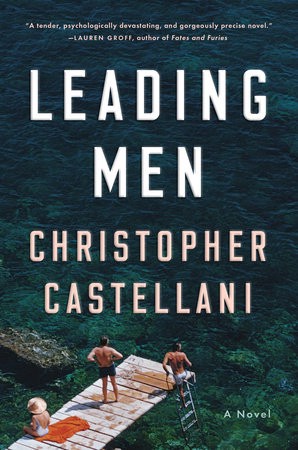
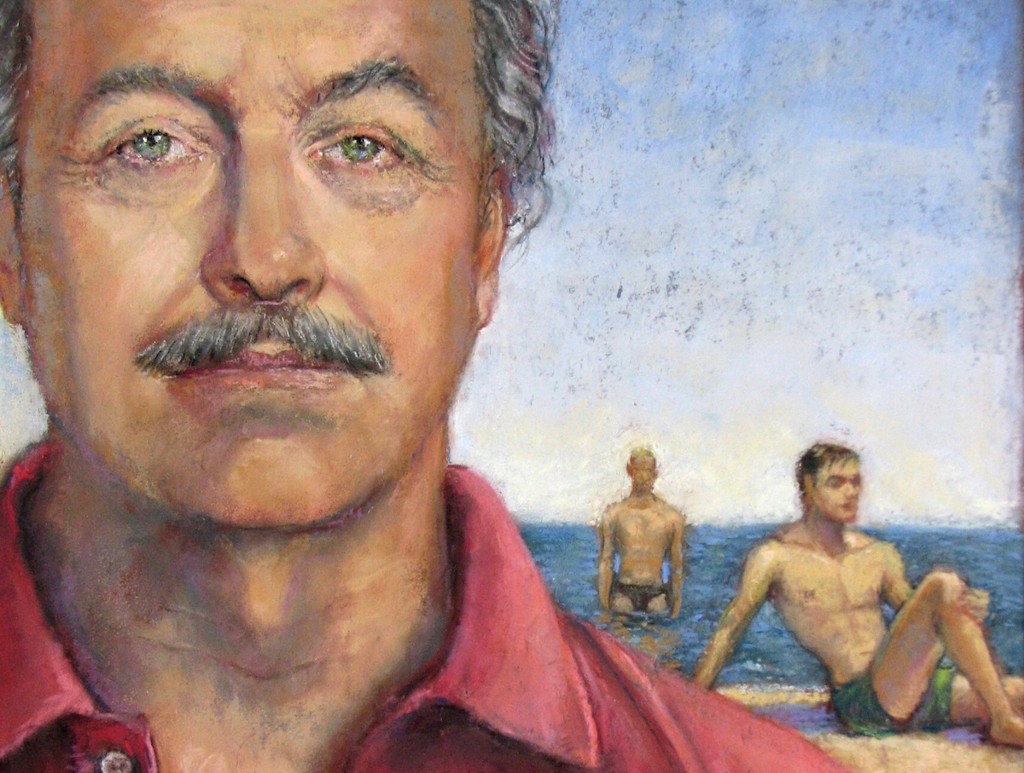
In his latest novel, Leading Men, the author envisions a “missing week” he discovered in the journal of Tennessee Williams. It was during his time in Italy with his partner Frank Merlo. While many authors lives have been fictionally retold over the years, Tennessee Williams’s life has remained largely untouched. Castellani explores the playwright’s romance with a working-class man and questions what keeps people together and what tears them apart.

Throughout the novel, which takes place in 1953 Italy as well as a decade later while Frank Merlo is dying, readers get an insight into Tennessee Williams that expands the lens on the works he wrote and who inspired them.

I spoke with Christopher Castellani about reimagining the lives of historical figures, writing a gay romance just like any straight romance, and why certain stories are passed on by the film and publishing industry.


Adam Vitcavage: What about Tennessee Williams made him interesting as a character for you?

Christopher Castellani: I really like a tell-all memoir. I came across one in the late ’90s by Dotson Rader called Cry of the Heart. I knew who Tennessee Williams was from high school. I wasn’t a huge fan necessarily but I remember liking his sensibility. I read the memoir of the great American playwright in the 20th century who had this working class Italian partner from Jersey. I was a working class Italian dude from Delaware. I wanted to know how those two ended up together.

Frank Merlo was his partner during Tennessee Williams’s most successful years. When Merlo was dying, Williams wouldn’t visit him. After Merlo had died, Williams never had another commercially successful play.

I read all of that and became obsessed with those two men and what about their relationship made Tennessee Williams so successful. As much as I love Tennessee Williams, it really became about Frank Merlo for me.

When Merlo was dying, Williams wouldn’t visit him. After Merlo had died, Williams never had another commercially successful play.

AV: You’ve written a few books now and most of them are set in a historical context. What entices you to go back in time to write?

CC: It’s funny, with all of my novels, I never made a conscious choice to write historical fiction. I didn’t have any goals of wanting to see how that time period was or how history was repeating itself. I was more drawn to characters who happen to exist in those times. The question is why those characters thrill me more than contemporary characters.

I have four novels and three of them are set during World War II or the 1950s. One thing I love about historical fiction is that in the research process you come across such rich material. It makes you feel grounded in the time and gives constraints of what you can and can’t do. I need those constraints to focus on what I really want to focus on.

With this novel, I had so much material about Tennessee Williams, Frank Merlo, and Italy in the 1950s. I didn’t want to write anything about these real people that couldn’t have happened to them. I wanted to write in the cracks of what we knew and might have happened. Having those constraints of what actually happened allowed me to find the fictional cracks.

In Williams’s journal, which was very meticulous in certain ways, there is a week in July of 1953 where there are no entries. It was during a very contentious and eventual summer. There was the crack. I took everything I knew about him, Merlo, and Italy, and tried to figure out what happened during that missing week.

AV: After you learned about Frank Merlo, did you see any of him in Tennessee Williams’s plays?

CC: What was interesting is that Williams said Merlo was what tied him down to Earth. Merlo was more a part of his process than his product. There are certain examples of when Merlo shows up in plays. There is a play called The Rose Tattoo which is the only play with a character based on Frank Merlo that Williams wrote that was wildly successful. The character Alvaro Mangiacavallo was, by Williams’s own account, was very much inspired by Merlo. It was set in Sicily, it has a broodish, handsome, working-class guy in the middle of it. He represented love and passion. That was the Merlo that inspired Williams’s work in terms of the product.

In terms of the process, he tied him to Earth. Merlo arranged all of their travel, he took care of their clothes, he took care of Williams’s medication, he talked him down. He did all of the things a partner of a writer does when the writer can’t do it. Williams had a hard time managing the ins and outs of daily life. Dealing with his own failures and insecurities, his terrible hypochondria, and how neurotic he was. Merlo was the opposite. He was perceived as happy-go-lucky. He was very engaging, very social, and very warm.

AV: As I was reading Leading Men, I realized I know absolutely nothing about Tennessee Williams other than the plays he wrote. I find that interesting because he is taught in high school and revered as this important literary figure. He seems ripe for fictionalization though. Were there other stories or plays about him? Like Phillip Seymour Hoffman won an Oscar for Capote. Where is the Hollywood Tennessee Williams story?

CC: There are some plays about him. There is an adaptation of part of the memoir I mentioned, Cry of the Heart, that tried to get to Broadway. It may be coming though. It starred Al Pacino and started out in California. They were trying to retool it. It is called God Looked Away.

There have been plays that have taken on Williams as a character. I saw one a few months ago in New York that imagined his life around the time of The Glass Menagerie. It imagines his relationship between him and another playwright. There are a few plays like that that are two or three man plays. There aren’t any novels though. There aren’t any major books other than biographies.

Both Truman Capote and Tennessee Williams had the same trajectory. They were famous and revered for their art, but then both fell apart and succumbed to drugs and alcohol.

AV: That’s so baffling to me because what I have learned through your novel and talking to you is that he is ripe for sensationalizing and fictionalizing. I’m sure there isn’t some grand conspiracy against Tennessee Williams, but is there?

CC: It’s very interesting. I think Truman Capote was the more glamorous figure of the two and you already mentioned Capote, but there was even another movie that came out at the same time called Infamous. Both Capote and Williams had the same trajectory. They were famous and revered for their art, but then both fell apart and succumbed to drugs and alcohol. They became shadows of themselves. Perhaps Hollywood feels they have already seen that story.

Even though Williams traveled in glamorous circles, he worked. He worked every day. In the twenty years after Merlo died, he wrote every single day. He was a part of hundreds and hundreds of productions of his work. Despite his addictions and anxieties, he was still involved. Maybe that isn’t as exciting of a story.

I am frankly surprised no one has fictionalized on his life. It’s so compelling. I was going to say maybe it is that gay thing because there isn’t a glamorous female lead in the story. Even Capote had Harper Lee as a character.

AV: You tapped into something though. Capote came out and Hollywood feels the general public got their fix. They gave the gay writer story. Hollywood feels we only need one. Yet there are dozens of movies about a middle-class white guy in their thirties overcoming a childhood trauma of falling off their bike. I joke, but if you pay attention to Hollywood production news, you’ll see how a black director or writer saying a studio passed on their project because the studio felt they already checked off that box for the year.

Minorities, whether it’s race, ethnic, sexual orientation, are still having their projects passed on.

CC: That’s exactly right. It happens with publishers all of the time. A writer will pass on their work and an editor will say very frankly that they already have the Indian novel, or the gay novel, or the black novel.

A writer will pass on their work and an editor will say very frankly that they already have the Indian novel, or the gay novel, or the black novel.

AV: Then there are stories like yours. I feel it unlocked a lot of history that isn’t taught or talked about enough. There has been a recent trend of using historical characters to explore themes.

CC: There is a long history of it. Some people call it real name fiction, some call it alternative fiction, counterfactual history fiction. We take real people as characters. It started with political roots. People wrote these alternative histories as a way to indite the current moment to show a previous moment in history to comment on the current moment. Books like Phillip Roth’s The Plot Against America that had a very political angle are what I am talking about.

Maybe in the past twenty years, there have been these books that take public figures as central characters. Some of those books I used as a model for my own: The Master by Colm Tóibín about Henry James and The Hours by Michael Cunningham which featured Virginia Woolf. Then there was The Book of Salt by Monique Truong. What’s really cool about that book is the author found a scrap that was a throwaway line where Gertrude Stein makes reference to their Vietnamese cook. Monique Truong wrote an entire book about Stein from the perspective of the cook. She imagined a whole history.

Those types of creative endeavors are what interests me. They give a new perspective on a writer whose work can speak for itself but having another lens on how they conceived their work and lived their lives amplifies their work. It gives readers a new way into a writer’s work.

AV: It all goes back to finding those cracks to explore stories that are compelling.

CC: Exactly. Biographies provide a certain way of amplifying a writer’s life. Fiction in which a character lives and breathes, in which they hurt or are hurt by other characters, gives different light to the character. There is a greater intimacy than a biography. Or at least the illusion of it.

You’re imagining a writer who spent their life imagining other people.

There are no stories of Tennessee Williams and Frank Merlo being harassed or bashed for being gay in this novel.

AV: Through your time imagining and writing about Tennessee Williams and Frank Merlo, what did you learn about our current time in history?

CC: We are in an interesting moment. If this book is political, it’s political in the sense of how it depicts this relationship. It was an open relationship. It was a relationship that didn’t have any models in terms of marriage other than heterosexual marriage. They were figuring out what it meant to be in terms of partners, though they never used that term, of course. They were figuring out what fidelity meant. They were in a sense defining what a relationship was in a way that they could.

Now we are in the marriage equality era. I am seeing how many people I know in same-sex relationships are still defining and redefining what it means to be a same-sex partner even though marriage is the law of the land. Same-sex marriage didn’t eliminate the need for same-sex couples to figure out what their relationship is and defining their roles with one another.

You can argue that everything has changed and nothing has changed in terms of same-sex relationships. It’s potentially more confusing now because we have a model of traditional heterosexual marriage that doesn’t actually work in most cases for same-sex couples.

Tennessee and Frank weren’t hiding among their friends. Everyone knew he was gay and had a partner. As time went on in the 1960s, 1970s, and then the AIDS epidemic, celebrities went into the closet. Tennessee and Frank lived in an easier time because their sexuality was less visible. There are no stories of them being harassed or bashed for being gay in this novel.

AV: Which is important for queer literature. Not every story needs to be about harassment and overcoming adversity. There can just be a gay romance just like any straight romance that has been written about.

CC: Exactly. I mean, Frank Merlo’s story is tragic. He died young of lung cancer. The tragedy had nothing to do with his sexuality.
Czech Dissident Writers Can Teach Us How to Protect Language from Lies

In 1959, a week before his debut short story collection was slated to be published, the Czech writer Bohumil Hrabal was informed that the entire print run was bound instead for the pulping mill. Just a few years prior, under intense pressure from the USSR, the Communist Party of Czechoslovakia had ousted and executed its own general secretary, Rudolph Slánský, after he confessed to paranoiac charges of aiding a Western capitalist conspiracy in a speech spoon-fed to him by interrogators. The heady melody of revolution that would crescendo in 1968 with the Prague Spring was still no more than a faint whisper, and artists were expected to hew strictly to socialist realism, a style that espoused formal conservatism and didactic content of a kind often derided as “boy meets tractor” tales. Those pushing against these state-prescribed aesthetics did so at immense risk to their careers, their livelihoods, and the well-being of themselves and their families. A little over a decade later, censors once more dashed Hrabal’s dreams for publication in dramatic fashion, this time twice over in one year: distribution of Home Work was blocked, and all copies of Buds were ordered to be set ablaze.

In light of his biography, it’s difficult not to see something deeply personal in Hrabal’s later Too Loud a Solitude,which appeared in a samizdat — underground self-publishing — version in 1976 but wasn’t given an official print run until the collapse of communist rule in Czechoslovakia in 1989. Too Loud a Solitude centers around a protagonist who makes his living crushing books at a waste paper mill, indiscriminately shoveling volumes of Kant and crumpled-up newsprint into the belly of the compactor. Yet Hrabal’s novel was not only a reaction to his own experience of censorship; it also spoke to a thematic concern shared by many Czech authors of his generation. Writing at a time when the expectation that public speech should toe the Party line had resulted in the uncoupling of speech and thought — and when the disjuncture between government proclamation and lived reality was readily visible but politically dangerous to voice — these writers frequently explored the theme of language’s decay and collapse. With the current global rise of the far right, when phrases like “post-truth” and “fake news” are uttered by pundits and plutocrats alike without so much as the bat of an eyelash, the literary investigations of writers from the Eastern Bloc can take on an eerie second life, like Cassandra’s prophecies recollected as Troy burns.


Too Loud a Solitude is a paean to the many-splendored beauties of the written word: Han’ta, the paper-compacting narrator, is paradoxically an avowed admirer of the texts he is charged with destroying, tenderly arranging them in bales and occasionally fishing out something to be saved. Strains of Han’ta’s salvaged readings thread themselves through the novel, giving texture and rhythm to his often breathlessly long sentences. Yet the novel also revels in its descriptions of books’ physical breakdown: in the basement room where Han’ta works, volumes of Goethe and Lao Tzu rub shoulders with discarded playbills and blood-soaked butcher shop wrappers, and “the wastepaper, piled to the ceiling, wet and moldy, ferments in a way that makes manure seem sweet, a swamp decomposing in the depths of my cellar, with bubbles rising to the surface like will-o’-the-wisps from a stump rotting in the mire.” Here, Hrabal captures the moral repugnance of the state’s suppression of ideas via a scene that is viscerally repulsive, twinning the literal rot of pages bound for the compactor with the spiritual rot of the government power that consigned them to such a fate. The metaphor continues elsewhere in the novel when Han’ta introduces readers to the Czech underground in quite a literal sense: writers, philosophers, and professors who have run afoul of Party orthodoxy and been forced to do drudgework in the reeking municipal sewers.

Other works of Hrabal’s take aim at official speech directly. In 1965’s Closely Watched Trains (also translated as Closely Observed Trains), a story of Czech railway workers who variously collaborate with and fight against the German occupation during WWII, the seditious stationmaster appropriates bureaucratic rubber stamps for use in sexual games, undermining the governmental gravitas the stamps’ words embody and suggesting the moral poverty of the authority with which they are invested. But Hrabal was hardly alone in observing the decay of meaning under totalitarian rule; dogged by state suppression, many of Hrabal’s contemporaries likewise addressed the theme of language’s breakdown in their work. The Memorandum (1965) — whose author, Václav Havel, would go from jailed playwright to prime minister after the fall of communist rule — concerns a business’s attempt to create an emotionless and unambiguous language, as well as the bureaucratic violence that ensues when workers object to such a project. In their quest for linguistic control, the firm’s leadership succeeds only in rendering meaningful communication impossible. A rule mandating that all words be as dissimilar as possible to avoid confusion results in a language composed of consonant-encrusted nonsense words that can reach hundreds of letters in length — and an office full of workers completely unable to wrap their heads around it. The name for Havel’s invented language, Ptydepe, has since become a Czech byword for incomprehensible officialese.

Dogged by state suppression, many of Hrabal’s contemporaries addressed the theme of language’s breakdown in their work.

One writer who took a less allegorical route in his institutional critique is Milan Kundera; the plot of his debut novel The Joke (1967) is set in motion when university officials refuse to interpret a student’s sarcastically pro-Trotsky postcard any way but literally, upending the young man’s life in the process. The apparatchiks who summon the student in question, Ludvik, for an explanation of his actions refuse to believe that what he wrote did not express his true feelings: “Whether you wrote it quickly or slowly, in your lap or at a desk, you could only have written what was inside you. That and nothing else,” they insist. The officials’ condemnation of Ludvik — and his real-life equivalents — relies on a contradiction: the assertion of two-facedness when confronted with protestations of innocence on the part of the accused, but also the firm denial that subversive content could be anything other than sincere. The university functionaries who ultimately expel Ludvik reduce speech to its flattest, most rudimentary form, presenting a hollowed-out version of language without nuance, without subtext — without substance at all.

The circumscription and breakdown of language as exemplified by official euphemism and state language policing, these works suggest, is corrosive to the public — but not because, as Orwell argued in “Politics on the English Language” (1946), it effectively prevents citizens from accurately perceiving the world around them. Everyone can see, for instance, that Ptydepe is a failure and that the policies attendant upon it are a snare of contradictions. The gap between reality and verbal depiction is readily apparent — but the inability to describe this, the need to constantly keep up public pretense, and the sight of everyone around you doing the same, is both exhausting and intellectually humiliating. Language control, then, works not because it successfully binds people together in one unifying belief, but because it atomizes, preventing the trust in honest communication that is necessary to building collective action.


I first read Too Loud a Solitude in December of 2016, on the winter solstice, the longest night of the year. It was that eerie uncertain twilight between Trump’s election and his confirmation, and in the time since it has frequently struck me that the themes treated by Hrabal and his contemporaries have found belated resonance in the current political moment. Recent reports that the Department of Health and Human Services is considering redefining gender as a binary and unchangeable concept determined solely by one’s genitals and genome — a move that would strip over a million trans Americans of legal recognition — are indicative of just the kind of top-down manipulation of language that Havel took aim at in Memorandum. So too is the fact that Department of Agriculture officials have warned staff members not to use the term “climate change”; such an attempt to find-replace global warming out of existence takes on new and despair-inducing urgency in light of the bombshell report unveiled by the IPCC last October. And in a climate where brazen falsities may be presented by poker-faced officials and their supporters as “alternative facts,” it is sometimes difficult not to feel that language itself is rotting just like the mouldering paper in the lightless cellar of Too Loud a Solitude.

Yet if Czechoslovakia’s dissident writers often offered grim predictions about the ease with which language could be appropriated and corroded by those in power, their work also embodied a mode of resistance to that very phenomenon. At one point in Too Loud a Solitude, Han’ta sympathetically describes the social structure of Roma who “light a ritual fire wherever they work, a nomads’ fire crackling only for the joy of it, a blaze of rough-hewn wood like a child’s laugh, a symbol of the eternity that preceded human thought, a free fire, a gift from heaven, a living sign of the elements unnoticed by the world-weary pedestrian, a fire…warming the wanderer’s eye and soul.” Han’ta’s description of a free society coextensive but distinct from the mainstream echoes dissident thinker Václav Benda’s calls for the creation of a “parallel polis,” a system of independent social institutions built by and meant to sustain the underground. At a time when the idea of a parallel polis is coming back into vogue among those seeking to actively resist the rise of the far right, dissident writers like Hrabal and his ilk can help point the way forward for how language and literature can be reclaimed as weapons.

Fourteen Women Playing One Guitar

It is the year I own a bed again. The year I return to D.C. to work in an elementary school, tired and overextended, resentful and broke. The year all of my belongings do not fit into a suitcase or the corner of someone’s room or one shelf in their closet.

It is the year I do not live near ocean or mountains. The year a boyfriend from a decade earlier develops a brain tumor and I don’t know what to say, so I say nothing. It is the year I forget to make resolutions. It is the year I categorize things oddly — my books by thickness, my shirts how Marie Kondo says to, every photo I own in a box under my bed with a suitcase I do not use.

During a snowstorm that shuts down the city streets and businesses and government for a week, I meet a man. On our first date there are still two cars stuck in the snow at the end of my one-way street and one car stuck at the end of his, so we go for a walk and bring a bag of birdseed my mother gave me as a Christmas present. She said it would bring me good luck if I spread it on New Year’s morning and I’d forgotten to do it. I’ve heard birds were the animals everyone forgot about during winter storms and making food available for them could save their lives. I’m a week late on luck, but maybe I can help the birds. I want to walk and leave seeds in a few different places, but my date takes the bag from my hands and dumps all of it under a tarp by the apartment building next to mine. “There!” he says, carelessly, like he’s just pulled a stray hair from my sweater. Next, he steers us five blocks away to an apartment where he used to live. I am shivering by then, but we stand in the snow as he points out all of the ways it is different than before. I don’t tell him I can’t feel my toes. I don’t tell him that I have not lived anywhere for more than 12 months in the last 11 years.

It is the year I say what I feel as little as possible in hopes of feeling nothing.

One month later, I can watch him disappear in front of me. His shining hazel eyes turn black through some magic trick I cannot replicate. By February I do not know what to expect when my passenger side door opens and he gets in. The days he is happy to see me are good. The days he is indifferent — quiet and impatient when I ask simple things, like how his day was — embarrass me, like someone has invited me to their home, but hopes I will not accept the invitation. I always accept.

I tell him these things only once, when he sits across from me in an armchair in March and asks, “How are you feeling about this? You and I?” He is the one who needs to talk about feelings. I say this and catch him off guard. It is the only time I can remember surprising him. He had; he has become accustomed to my predictability. I am medicated and in therapy three times a week. I am committed to us fucking other people. I am not trying to be good. I am not trying to be anything.

I am not trying to be good. I am not trying to be anything.

Later, a mutual friend will tell me how he told her he could not date anyone who was nice to him. Another mutual friend will call him Aladdin: the man who shows you the world and then pushes you off the carpet.

When I say I am going home to cry he says “Please don’t” and pulls me into his lap. I tell him he is a good man, what with all this honesty. I tell myself how sincere he must be, to care that I would cry. This is my magic trick.


In early October, I go with a friend to see Icelandic performance and visual artist Ragnar Kjartansson speak at the opening of his exhibition at the Smithsonian Hirshhorn Museum. He walks the floors of the museum first and I take a photo of him from behind, surrounded by fans and walls covered from floor to ceiling in his paintings. In a basement auditorium he speaks about his creative process, his thoughts on the Icelandic art scene as its developed over the last three decades, and his relationship to his mother, whom he films spitting on him once every five years for a video installation in the exhibition called Me and My Mother. At the end of the evening I have jotted a single note into my phone, attributed to Kjartansson: The defiant act of suffering without dying. My friend took something else from the artist. As we are leaving, she tells me that she is done dating, is going to focus on herself and whatever she wants.

I remind her that I stopped dating, for years at a time, before I picked up my life and moved across the continent and up into a new country for a man. “Look how well that ended for me,” I tell her, laughing.

“Wasn’t it good to live that life, though?” she asks.

It is the year I insert my pain in odd places, annoying myself most of all with the audacity of it.

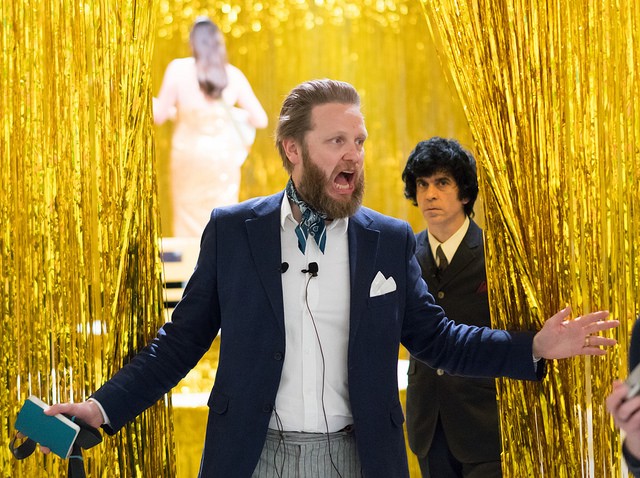
Artist Ragnar Kjartansson, a bearded white man, surrounded by gold tinsel, looking like he's shouting. He's wearing a navy suit jacket with a kerchief around his neck.
Ragnar Kjartansson. (Photo by Victoria Pickering)

In Ragnar Kjartansson’s performance piece Women In E, a woman in a floor-length gold sequined dress holds a guitar and stands on a revolving stage with an amplifier. The space around her is a circle of thin gold streamers hanging from the ceiling. The woman strikes an E chord, over and over, for two and a half hours at a time. When you ride the elevator up to the exhibition on the second floor, it is the only thing you can hear; a single, drawn-out chord. Closer, the woman’s arm moves in a slow oval, striking every fifteen or twenty seconds and letting the noise fill the room before she aims again. The women choose how long, exactly, between the chords, but it is never fast. It is slow and echoes. When one woman’s time is up, it is a new woman’s turn to go on the pedestal. The transition is so seamless that there is only ever one missing E chord between them. The friend who is done dating is a curatorial assistant at the museum and helps the women transition between shifts. She tells me they share one small dressing room they’ve built into the walls of the museum. The space will be destroyed when the exhibition closes, so they leave notes and write quotes for each other on the white plastered walls. They become close, these fourteen women. You can’t see the door unless you know to look for it.

I visit the exhibition multiple times and always stop at Women in E. Sometimes I sit just outside of the gold ring on a bench to watch people unsure of whether they can go inside to see the performer. I visit and enter the ring to see if any of the women will look at me.

In November, I let a man I like hold my face hard and say “Look at me when I’m fucking you” and it feels good. It feels good to be told what to do. It feels good to be able to do something so easily. He is honest about who he is and what he wants and I tell myself I am listening. I count bruises on my ass and my thighs and my breasts as proof that someone wants me.

He says he has waited a long time for this, but he has not.

I tell myself this is a kind of pedestal.


On Christmas, the new girlfriend of the boyfriend I moved across the country for posts a photo and calls him her soulmate. This is something I never dared to name him during the four years we loved each other. She did it within a few months. He is hers now and seems happy. They like the same things, do the same things, are from the same country. She looks easy. She looks nice.

I am not easy. I am not necessarily nice. I like books more than exercise or other people. I am the person on his couch when he comes home and the person who does not get out of bed at all some days. I imagine the conversations he must have now — how it never quite fit with me, how he almost gave up cycling on my behalf, how often I asked him to travel. How it feels right with her. How easy it is after me.

At a Christmas party we went to two years into our relationship his married friend talked about meeting his wife and said, “When you know, you know. Right?” and looked at him for validation. Looked at us together. Nicholas said nothing. Could not even nod his head. I sat on a wooden stool surrounded by mostly strangers and wondered if it might somehow tip over so I could look as embarrassed as I felt and have the room understand without feeling so sorry for me.

I am not easy. I am not necessarily nice. I imagine the conversations he must have now — how easy it is after me.

I went to every one of his cycling races while I lived with him; he rarely read my writing. I considered these our “things.” His cycling, my writing. Once, when I asked if I could read my writing out loud, he said it sounded like I was casting a spell. I kept a death-grip on that sentence for months, repeating it over and over, refusing to release the idea that I had bewitched him, finally. That my words could do something for us.

Our relationship ended over many months and planes and ferry rides. It was only ever me on the airplanes and ferries; he metaphorically and literally refused to leave the Canadian island we lived on. Finally, just as the Pacific Northwest was beginning to become warm again, I took a final ferry and plane away, back to the East Coast. I traveled as often as I could to distract myself, desperate to reclaim some part of what I used to love. It became unbearably painful to look at glacial water in Montana and European cobblestone in Lisbon and hulking mountains in Colorado and have everyone tell me how lucky I am to be seeing all this when all it feels like is a reminder of the person I loved so much more.

I move back in with my parents for three months, just before moving on to D.C. I write obituaries for a Canadian newsgroup out of a Buffalo, New York office. My boss instructs me that, should anyone ask where in Canada we are located, I must respond, “Near Toronto.” Sometimes people from Vancouver Island call and I tell them I used to live up-island in Nanaimo. Eventually people from Vancouver Island start to ask for me specifically. The crematorium workers and funeral home directors like me. I add “hey?” to the end of my sentences and know how to pronounce all of the small island towns. During bathroom breaks I sit on the toilet and quietly recite the names of places Nicholas and I had been together, afraid I will forget them, then wash my hands like they are tiny, fragile things. It is the year I stop speaking to him.

It is the year I find out I have developed an irregular heartbeat — shocking my childhood pediatrician who generously offers to see me without insurance. “You never had this before and it’s not in any of the medical records you had forwarded here,” he tells me.

It is the year I learn my heart has actually broken.

The doctor gives me a prescription for antidepressants and tells me I am far too pretty to be alone. It’s really a shame, he says.

If I had been a boy my name would have been Peter. Peter is derived from the Greek word petros, meaning “stone” or “rock.” If I had been a boy, my mother would have had three sons and they would have stopped trying to have more children. My mother tells me how much she wanted me to be a girl.

With age, I want to know what it might means to be male. To live Peter’s life. Hard and steady and rock-like.

My name means “worthy of love.”


A white woman with long brown hair and bangs wearing a gold dress and holding a guitar, surrounded by gold tinsel, part of the "Woman in E" performance piece.
Photo by Victoria Pickering

In the last few days of Kjartansson’s exhibition, just before the new year, I go to the Hirshhorn to watch all 64 minutes of Visitors. In the installation, the artist and seven other musicians play a gospel dirge inside a decaying mansion. They are each in their own room of the house and each projected onto one of eight screens. A ninth screen shows the outside of the mansion and an old man sitting on the porch cleaning a canon. Halfway through the piece, he lights it and it explodes, the sound carrying through each screen at different volumes depending on where the musicians are in the house.

The lights are dim. The piece makes the room vibrate with sound, makes the museum space feel like an organ. Depending on which screen you are in front of, you hear the voice and instrument of one musician more than all the others.

I sit on the floor of the museum between a screen showing Ragnar playing guitar in a bathtub and a screen with a woman playing the cello. I sit between the legs of the man I am fucking. I want to lean against his chest and I do not. I want to cry and I do not. Throughout the piece, in between crescendos of chorus, they repeat the same line: Once again I fall into my feminine ways.

It is the year I can control my emotions almost completely.

Throughout the piece, in between crescendos of chorus, they repeat the same line: Once again I fall into my feminine ways.

Before we leave, we go to see Women In E together. There is a woman I haven’t seen perform yet. As she turns, she stares at me until the pedestal spins her too far around to maintain eye contact. I wonder if I imagine it, but when I ask hours later, the man I am with tells me, “I saw that. She did.”

I do not visit again.

A few weeks pass and this man tells me we cannot sleep together anymore. There are many reasons and, to him, it is important to maintain the friendship that started this. I have stopped respecting his privacy and started stealing his time, he tells me. I picture a robber in all black with a sack full of clocks and laugh before I hang up on him.

He has a tattoo of a lock behind his right ear and there is no key anywhere on his body. He has a tattoo behind his left ear that says FIX ME and I understand the joke finally.

It is the year I do not have to be told and told again when someone does not want me.

Visitors ends with all of the artists abandoning their instruments and exiting their rooms, one by one. Ragnar has been sitting, naked, in a bubble bath with a guitar and all of the bubbles are gone now. He rises, grabs a towel. They meet in the entryway of the mansion and open beers and light cigars. They keep singing and walk toward an open field, repeating “Once again I fall into my feminine ways.” They sing in chorus until they are out of earshot and, finally, out of view entirely.

Kjartansson’s ex-wife, Ásdís Sif Gunnarsdóttir, wrote the song about their divorce. He performs it without her.

The man I met during the snowstorm moves to the West Coast to be with another woman.

The man I was sleeping with moves to the West Coast to be with another woman, too.

The exhibit closes just after the new year. My friend who works at the museum can finally divulge one of its secrets: the stage turns on with a remote control they kept hidden inside of the amplifier. The piece is reliant on the flick of a switch.

It is the year I depend on art more than people to heal me.

It is the year I think I want to be put on a pedestal.


Months later, I meet one of the Women in E performers at a party. When I ask about any discomfort from playing the same note for hours at a time she tells me that what she found most unpleasant was when people viewing her performance spoke about her like she couldn’t hear them. That sometimes people stood close and sang to her. That she could hear one of Ragnar’s other pieces while she played and it haunted her.

I know the piece she means — it is the one I stayed in the room for less than two minutes to listen to — and we deliver the single line it repeats to each other: Sorrow conquers happiness.

Do We Still Need the Nobel Prize in Literature?

Rape, infighting, secrets, financial malpractice; the scandal surrounding the Nobel Prize in Literature began in November 2017 when Swedish newspaper Dagens Nyheter published allegations by eighteen women that they had been sexually assaulted by Jean-Claude Arnault, a 71-year-old Swedish-French photographer. Arnault was married to Katarina Frostenson, a member of the Swedish Academy, and over the following months the man who boasted to be the “19th member of the committee” was accused of 20 years of sexual assaults, including incidents at properties owned by the Academy—not to mention other illegal activities, such as leaking the names of soon-to-be laureates, which are subject to heavy betting. By this past October, when the Stockholm district court unanimously sentenced Arnault to two years in prison for rape, seven of the academy’s eighteen members had already quit in protest, and no prize was awarded for 2018. As permanent secretary Anders Olsson stated, “We find it necessary to commit time to recovering public confidence … before the next laureate can be announced. This is out of respect for previous and future literature laureates, the Nobel Foundation and the general public.”

The hiatus is over; this week the Nobel Foundation announced that it will award two prizes for literature in 2019. It is also taking steps to address some of the issues raised by the Arnault scandal, like appointing five external members to help select the Nobel laureates, considering a time limit on membership, and reviewing how to handle resignations and expulsions. For the first time, it will eject any members who are subject to conflict of interest or criminal investigations.

No conflict of interest, no criminals. These are certainly steps in the right direction, yet they’re so obvious and overdue that you have to wonder what exactly we’ve been so impressed by all these years. It feels a bit like getting to Oz only to realize the Wizard is a tiny man hiding behind a green curtain, shouting “look away!”—though in this case the Wizard is an exclusive group of Academy members who serve for life and who have kept the Nobel prize process a closely guarded secret. The group is so small that when seven members resigned last year, it caused a crisis and left less than the minimum twelve-person quorum to pick a winner. We know that the Academy reviews around 200 nominations in February, then announces a shortlist in May, and a final five in the summer, but the full explanation of why a winner was chosen is sealed in the Nobel archives, only to be released 50 years later. During the scandal the Nobel Foundation itself criticized the Academy for how it has “cultivated a closed culture over a long period of time.”

The Nobel Prize has been awarded in five categories since 1895, and over that time it has gained a serious amount of cultural cachet. You probably respect a Nobel laureate even if you don’t know much, if anything, about the actual criteria considered for the prize. Nobel stipulated that the prize for literature should honor the person who produced “the most outstanding work in an ideal direction.” It’s a vague directive, and one that has caused many issues of interpretation. Sara Danius, who was the Permanent Secretary of the Academy until she resigned last year, once told an audience at Duke, her alma matter, “What does it take to win the Nobel Prize in Literature? What do I know? I don’t know. All I know is that the criteria are simple, but tough. You get awarded not for a single work, but for a life’s work. You are expected to come up with something new in terms of content or form or both. And that is how you win the Nobel Prize in Literature.” In short, it’s an easily manipulated set of standards, and we just have to accept that the Academy knows what it’s doing. The problem is, that’s no longer obvious.

We just have to accept that the Academy knows what it’s doing. The problem is, that’s no longer obvious.

So is it time to get rid of the Nobel prize in literature? At minimum, after 124 years it’s worth reconsidering what it’s adding to the cultural landscape. Take, for example, how in the same year that the Nobel went without a literature prize, the National Book Foundation reinstated the National Book Award for Translated Literature. That prize was last given in 1983, which isn’t surprising given America’s disinterest in translated literature; less than 3% of books published here are in translation, which hugely lags behind the rest of the world. Reinstating the prize was a practical, positive way to boost interest in translated works. As Lisa Lucas, the executive director of the Foundation who oversaw the addition, said, “The National Book Foundation is an organization that is about the celebration of the best books in America and about expanding the audience for them, so if we believe strongly that translated work should be read and we believe strongly in the expansion of the American audience for books, how in the world could we ignore that?” The Nobel prize in literature, by contrast, often seems to exist for its own sake. Its closed circuitry represents much of what is wrong with publishing: a small group of privileged people get to decide what constitutes great literature. They have the power to shape the literary landscape, but they keep the reasons for their choices secret, which allows for bias and discrimination. There are also times, notably when Bob Dylan won the 2017 award, when it feels like their decisions have less to do with promoting literature, and more to do with seeking attention.

Another counterexample to the Nobel’s way of operating is the Women’s prize for fiction, which recently included a non-binary transgender author on its longlist for the first time in the prize’s history. This isn’t tokenism; recognizing writers who aren’t cisgendered, white, English-speaking men is crucial for any literary body that wants to be legitimate today. There are too many great writers who exist outside those criteria for the public to accept their exclusion without wondering how an awarding body is defining excellence. Only fourteen of 100 recipients of the Nobel Prize for literature have been women, few are writers of color, and English has more than double the number of prizes than the next most awarded language, French.

The Nobel Prize in literature must become more transparent, more inclusive, and more positive, or it risks being nothing at all. This would damage writers, because while the Nobel comes with a generous amount of prize money (the amount varies each year; in 2017, Kazuo Ishiguro won 9 million Swedish Krona, or about $968,805 US dollars), the general prestige (not to mention boost in book sales and speaking engagements) comes from gaining the title “Nobel laureate,” the worth of which grows or diminishes with the integrity of the Academy. It won’t be an easy task. The Arnault scandal exposed the bullshit that underpins so many organizations; the cattiness, the pomp, the self-reverence, the misuse of influence. After the many #metoo era revelations, the public is sick of powerful people who use their social status like a blunt force object to cow others or worse, and they are growing skeptical of institutions that conflate secrecy with prestige. The Academy doesn’t need to publicize the minutes of every meeting it holds, but it should be more transparent about the criteria behind choosing laureates. Its members have countless years of experience evaluating literature, so why not share their thought process with the public? Let the public into the joy of creating literary heroes, and honor those heroes from all corners of the globe.

Liv Strömquist Wants to Change the Way We Talk about Vaginas

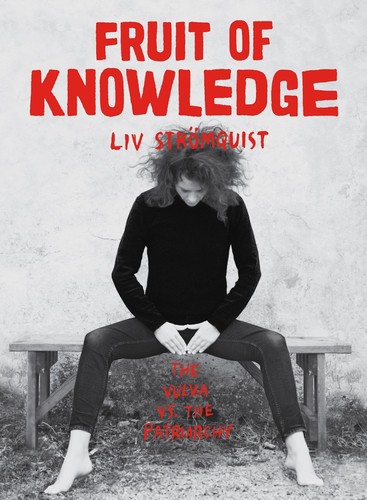
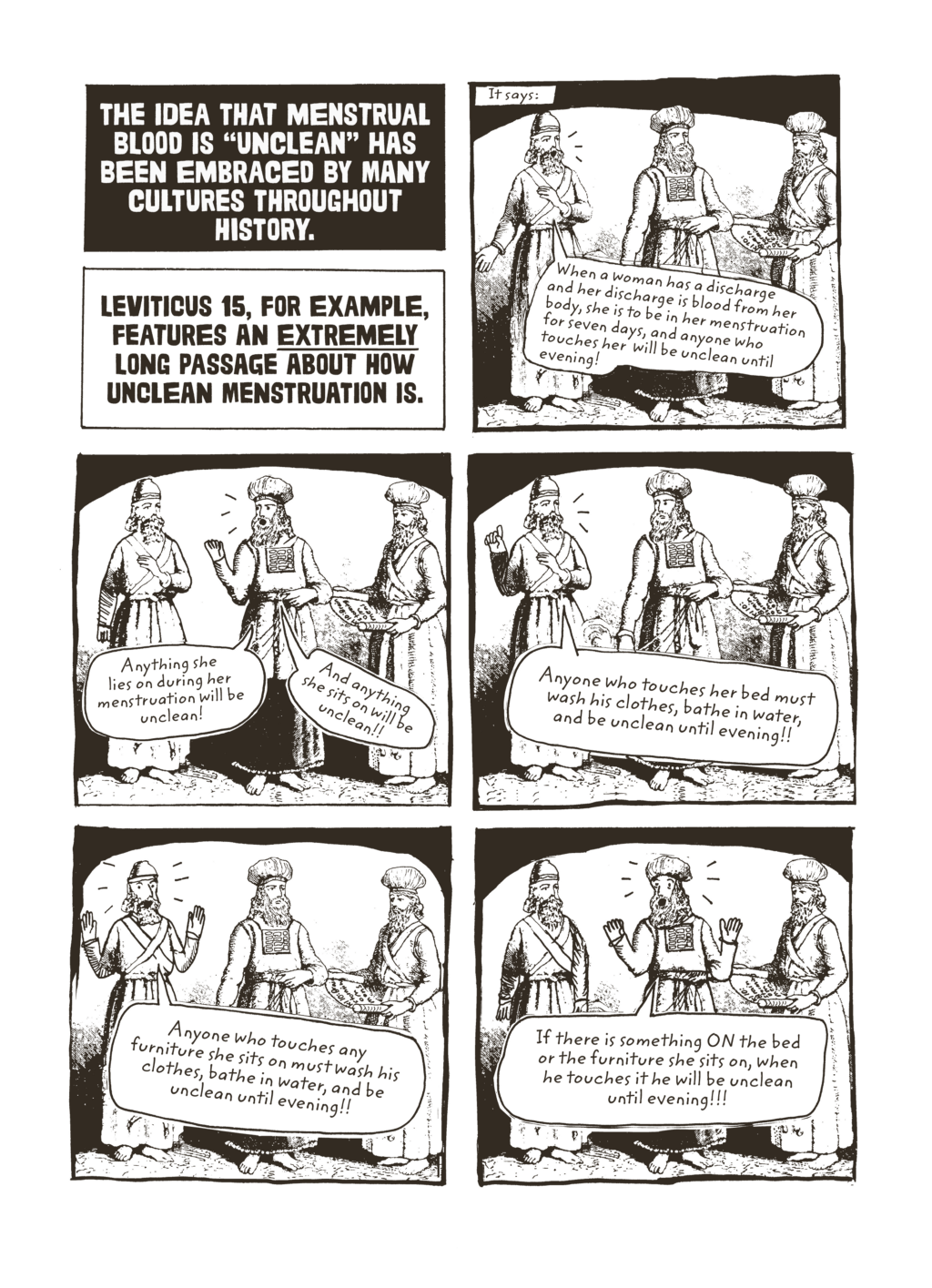
Liv Strömquist is a Swedish comic artist, radio presenter, and podcast host. Her left-leaning comics have been published in zines and magazines worldwide, but none has provoked reactions as strong as Fruit of Knowledge: The Vulva vs. The Patriarchy. A witty 21st-century history of Western taboos against discussing the vulva, Fruit of Knowledge was such a smash hit in Sweden that the Stockholm transit authority put panels from Strömquist’s menstruation chapter on the subway walls.

Fruit of Knowledge covers a wide array of topics, from menstruation — not such a big deal! — to how exactly men convinced themselves the female orgasm was an “optional” part of sex. Her drawings are blocky and energetic, filled with historical footnotes and characters cracking jokes in the margins. Strömquist invokes women’s personal experiences to generate solidarity, science to banish squeamishness, and history to explain where that squeamishness came from, and she succeeds with all three.

Fruit of Knowledge is by turns angry, funny, and moving, and in all three modes, it’s highly informative. Parents of pre-teens take note: there’s more helpful content in one panel of Fruit of Knowledge than in my entire 1999 copy of American Girls’ The Care and Keeping of You: The Body Book for Girls.Of course, Fruit of Knowledge isn’t all about bodies, or all about girls. It’s a cultural history of the female sexual organ for every audience.

I spoke to Liv Strömquist via Skype about readers’ responses to her work, how she did her research, and why Fruit of Knowledge was as necessary to her as it is to the rest of us.


Lily Meyer: Were there any parts of the book that felt especially crucial to write?

Liv Strömquist: The reason I wanted to write the book was remembering how much shame I felt around my body as a teenager. I was constantly embarrassed, especially about menstruation. I remember once when I was in school and had terrible menstrual cramps, so bad I thought I was going to faint, but I was too embarrassed to go to the nurse for painkillers — and then when I stood up from my desk, I fainted.

When this memory came back to me, I thought, “How could I possibly have been so extremely embarrassed? Why?” Remembering those feelings of shame was my starting point. I know psychologists would like to explain it from an individual angle, but I was interested in how society and culture constructed those feelings. Embarrassment like mine happens to a lot of women. Most women have very strong memories of being embarrassed in relation to menstruation, or fearing someone will expose the fact that she’s menstruating. I wanted to understand where that embarrassment came from in our culture, and once I understood it better, I felt liberated. Reading women’s history in general is very empowering, I think. Certainly when I finished this book, I felt a lot better about myself.

LM: I love your use of red in the menstruation chapter, which is otherwise black and white. The book is mainly black and white, besides that chapter and the full-color Eve chapter, in which a variety of women tell their stories. How did you arrive at those uses of color?

The reason I wanted to write the book was remembering how much shame I felt around my body as a teenager.

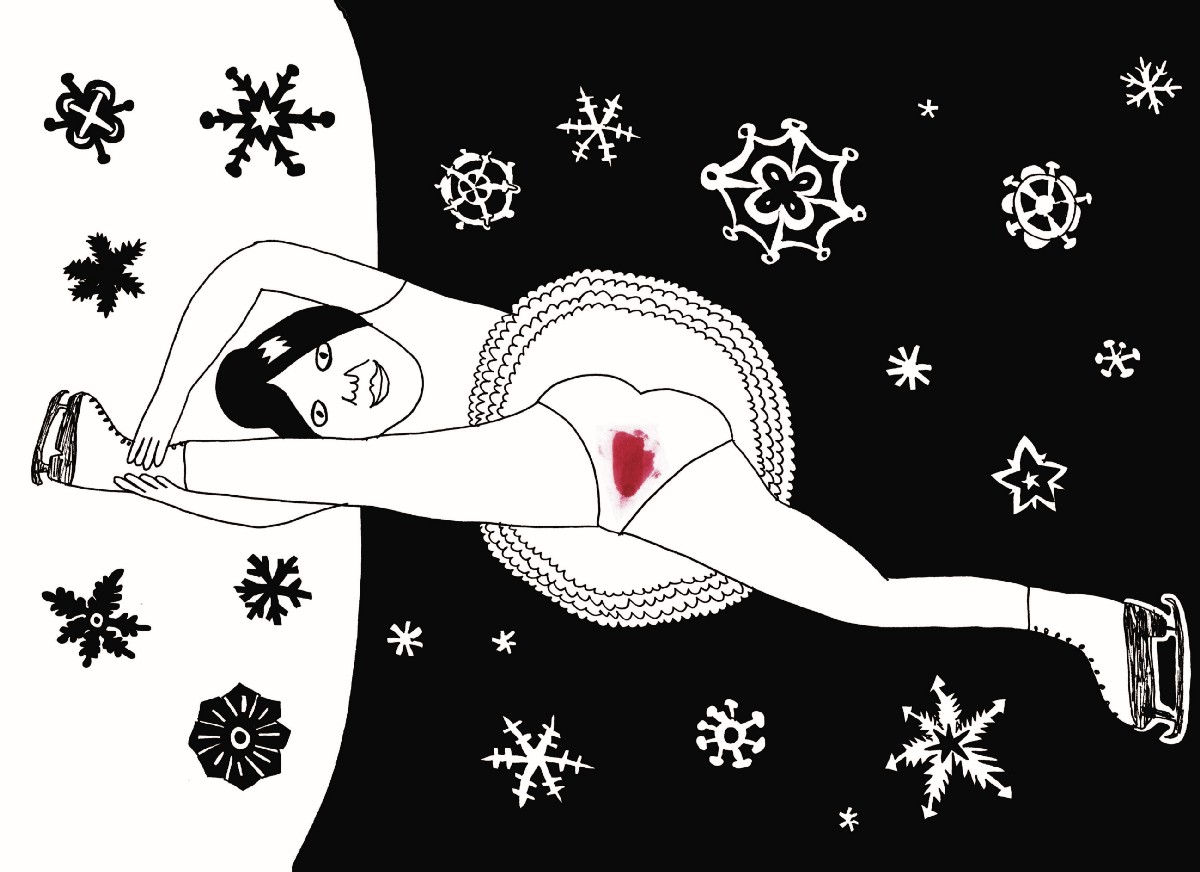
LS: I don’t know! This is my fifth book, and I’ve made some in full color, some in black and white. In the menstruation chapter, it was nice to be able to use the color red because you never see that. When I saw tampon and pad commercials on TV when I was younger, the fluid was always blue, not red. There were very strong reactions to that color in the book, and now that the pictures from the menstruation chapter are displayed in the subway in Stockholm, there have been a lot of complaints. There have been attacks on the pictures, and a political debate over them. A right-wing populist party made a whole thing about how can our tax money go to this period art. They made all this political propaganda about it.

LM: What has it been like for you to have your work at the center of this controversy?

LS: Fortunately, I don’t live in Stockholm. I live in a much smaller town, so I’m not exposed to the controversy directly. I don’t like conflict or debate — you might think I do, because I write about things that people get provoked by, but in private life, I really don’t like conflict. I don’t like to piss people off. I don’t feel comfortable doing that, but I also don’t think it’s the role of the artist to comment on reactions to your art. The art is there, and people can react how they want. If they want to throw paint at it, I don’t get to judge. They threw black paint on one, and actually, I thought it looked good. Some reactions, though, I don’t understand. One lady wrote on the Metro’s Facebook page to complain that she went to the subway with her granddaughter, and the granddaughter asked why the woman in the painting had blood on her crotch, and how was she supposed to answer? The lady thought it was horrible that she had been put in this situation, where she had to discuss menstruation with her granddaughter. To me, that’s a great opportunity to explain periods to her granddaughter, to say, “This will happen to you, it’s very normal, and this is how the species survives.”

LM: Your cultural references are often quite international, and always contemporary. I’m thinking especially of the bit where Pope Innocent is speaking about women, and a small figure in the corner of the panel invites him to appear on Fox & Friends. It’s a great example of you using present-day humor to make history work. Why did you choose that strategy?

LS: I’ve always been very interested in history, but I’ve always been interested in contemporary culture and gossip as well. I love reading gossip online, and I love reading art history, sociological criticism — all these fields. I employ them all in my comics. I don’t see any reason why I shouldn’t mix pop culture with history, for example. I think it’s a fun thing to do, and I hope my own references work for others. Besides, it’s nice to joke when you’re angry. Humor is a very productive use of anger.

LM: Beyond your personal experiences, what were your most important sources? Were there any you had to leave out?

LS: There were many. There’s so much to say. Fruit of Knowledge focuses on the cultural construction of the outer part of the female sexual organ, and there’s so much to say only about that. There’s so much more to say about childbirth, or female circumcision, or topics like this. There should be many more books about the female sexual organ, but I decided to focus on a few different topics: the orgasm, menstruation, the inner labia, a few others.

LM: How did you put the topics in order?

The problem is the men who have a weird obsession with the vulva.

LS: I didn’t think about the order intellectually. I tried to make the book flow, but that was about feeling. I thought more about language. In schools, for example, you always get the same approach and the language. My goal was to avoid the typical, clichéd ways of talking about it. It’s always a pep talk: You should be really proud of your pussy! There’s nothing to be ashamed of! It’s like talking to a child, and I’ve always found that disturbing. I find it creepy when somebody tries to give me a pep talk about my vulva or vagina. This discourse says something about female oppression, because when you’re talking about the liver, for example, or any other organ, you never have to have a pep talk. No one ever says, “Oh, what an amazing organ! Have you thought about how much the liver can do?” So I didn’t want that language, and I didn’t want to get into the discourse of lack of words. I thought it was better to start the book in the opposite place, saying, “We talk too much about the vulva! The problem is the men who have a weird obsession with it.” That seemed more chill.

LM: How has working on this book informed the language you use with your children when discussing bodies and sexuality?

LS: Working on the book made me better informed. The research was cathartic, too. I felt better about all the issues I studied, and so the book made it easier to talk to my children when they had questions.

LM: This book strikes me as an amazing tool for opening dialogue, especially with kids and teenagers. Have you had any strong positive reactions from students?

LS: Yes, I have. It makes me very happy. I get a lot of reactions from elderly women, too. There were elderly women approaching me at book fairs, sharing memories about how difficult it had been to get their periods without knowing what menstruation was. They had to find out for themselves, and it was frightening. Those life experiences were very interesting. Also, it’s been interesting to understand more fully what our taboos are, and who pays the highest price for those taboos. Women, not men, pay the price for taboos surrounding our genital organs. We can’t talk about issues we have, or aren’t educated — there are tons and tons of negative effects. Shame, insecurity, bad health. So I’m very happy when I hear that this book has helped people feel less shame.

Women, not men, pay the price for taboos surrounding our genital organs.

LM: I love that you use the origin of the word taboo to bring in non-Western faith and culture. How did you put that part of the book together?

LS: Taboos against the female sexual organ are strongly linked to Christian colonization of the world. It was interesting to learn about that, and to learn more about the Christian taboos. For example, I found out much more about clitoridectomies in the Western, Christian world. I found that fascinating, and I use myself as the barometer — it was interesting to me, so it went in the book.

LM: Why did you use the figure of Eve to give voice to so many women’s experiences?

LS: One of my first ideas was to make a book about shame more broadly. When I thought about my own experience of shame, I started thinking about menstrual cramps, and then I read some kind of self-help book that explained the difference between shame and guilt. It claimed guilt is what you feel about something that you’ve done, and shame is something that you feel about who you are. You can’t relate shame to any action. That was when I truly connected shame to sexual organs, and that shame begins in the Bible, with Adam and Eve. I wanted a way to get into these very old feelings of shame connected to the female body and reproductive organs, and Eve was that way.

What Happened to the “Female Byron”?

L.E.L.: The Lost Life and Scandalous Death of Letitia Elizabeth Landon, the Celebrated “Female Byron” by Lucasta Miller is a sirenic, ultramodern biography. Miller’s sleuth-scholar storytelling engages an inventive tone to unravel hidden, seismic-secrets of the nineteenth-century London literary landscape. The finessed feat accomplished by Miller is a restoration of Letitia Elizabeth Landon’s prolific oeuvre.

Confession: Fearful of immersing myself into a stodgy classic read written by a London literary critic, I considered passing on this interview. Drained by the holidays and having just published a personal essay, my mind was processing thoughts on the literary marketplace and its thorniness towards trauma’s complexity and content currency. Miller’s response as to why L.E.L.’s story remains relevant changed my mind:

“The commodification of the private self is endemic in our Instagram culture, having been democratized at a cost. The idea that you have to market yourself to survive is something Letitia Landon — who thought “society is a marketplace” — would have recognized. What makes her special is the way in which her work surreptitiously registers the conflicts and traumas that entailed, especially for a woman.”

L.E.L. broke ground for ambitious women writers. Her mastery of linguistic and narrative ambiguity popularized her work and opened it up to interpretation while also turning her into a transatlantic celebrity. Landon wrote in many genres: poetry, novels, reviews, annuals and, had she lived in the 21st century, would have gathered to gab with Lady Gaga, George Saunders and Saeed Jones.

The author and I attempted to talk over the phone but our bad connection prompted Miller to remark in a pristine British accent, “You sound as if you’re talking through a wet towel.” We spoke over email about slut shaming, the risk of female ambition, and the parallels between Taylor Swift and Letitia Elizabeth Landon.


Yvonne Conza: Is there a particular conversation that you hope emerges from your book?

Lucasta Miller: I hope that the book will contribute to the conversation about the complex cultural and gendered reasons why women writers have so often disappeared and failed to make it into the canon.

I desire readers to come away with a clearer picture of the “strange pause” between the Romantics and the Victorians, that odd, underexplored gap in the history of English literature that L.E.L. inhabits. In her story you can see before your eyes how the world of Regency rakes and Romantic rebels transitioned into that of Victorian values.

I would also love for readers to see L.E.L. as a contemporary figure in some respects: the woman who wrote “I lived only in others’ breath” and would have understood the social media era. Her story resonates with the #MeToo generation, not just in terms of the sexual politics of workplace affairs or the so-called “casting couch”, but in terms of the slut-shaming to which she was subjected by male peers in the industry. L.E.L.’s story speaks to the ambiguities as much as to the clarities of that debate as she was not a simple victim but a woman trying to pursue her ambition who found that the system she tried to game was more powerful than she was. Above all, I want readers to come away understanding that L.E.L. is an irreducibly ambiguous and slippery figure and to be OK with that.

I hope that the book will contribute to the conversation about the complex cultural and gendered reasons why women writers have so often disappeared and failed to make it into the canon.

YC: Did it concern you that L.E.L. might be seen only as a victim or as ambitious seductress?

LM: Actually, when I first started working on L.E.L., #MeToo had not yet taken off, but I was always aware that her story was going to foreground issues to do with gender, not just in terms of social and economic equality but in terms of the cultural construction of “femininity”. I was always concerned to keep in play her complexity and not to reduce her to a single paradigm, though she herself brilliantly manipulated all her culture’s clichés of femininity, from tragic victim to sassy seductress.

YC: What does your book tell us about the double standards between men and women writers?

LM: There are so many issues here: what women/men write, what women/men read, how gender is treated in the media. Is ambition the desire for success or the fear of failure? When the latter becomes too dominant it can be self-defeating.

There’s certainly less of a double standard in many respects, especially sexually. Gone are the days when a man can sire as many illegitimate offspring as he likes but single mothers are pariahs. (Contextual note: William Jerdan, editor of the Literary Gazette was not only L.E.L.’s mentor, publisher and promoter, but he sired three illegitimate children with her, leaving her vulnerable to press exposure and scandal.)

But as for the literary industry, when I was working as deputy literary editor at a British national newspaper in the 1990s, I used to have to make a conscious effort to make sure we had at least one or two women reviewers on our pages every week (my boss, the literary editor, was a man). In terms of the literary marketplace, it would be interesting to do some research into whether there’s a gender pay gap today — not at the apex in what has increasingly become a winner takes all marketplace (I’m not talking about J.K. Rowling) but at the ordinary level of people making their livings in journalism and publishing both online and in print.

YC: Taylor Swift’s genius as an artist and a savvy marketer shares a platform that reminded me of L.E.L. — in today’s world and back then, talent is not enough. In her desire to achieve success, is an ambitious woman more likely to risk her reputation?

LM: Yes, you can see the parallels quite easily. However, the difference with L.E.L. is that the split between what we now call “high” and “popular” culture had not yet happened so she regarded Keats, Shelley and Byron, who are today enshrined as canonical greats, as her male avatars — with all the complexities that brought for her as a woman, given that the male Romantics, though politically liberal, were far from feminist.

For L.E.L., ambition was a minefield. The constant vein of self-destruction found in her work, symbolized by Sappho’s story, reflects the paradox of her situation: to assert herself in public was to risk her own destruction.

L.E.L.’s subjective experience at the hands of the printed and oral gossip of her day was probably not dissimilar. Because of the nature of culture then and now, a woman’s desire to be noticed and succeeded remains more problematic than it is for men.

YC: How do you explain L.E.L.’s ability to understand, and succeed in, the literary market place of the 19th century?

LM: She was educated in the Regency culture of feminine accomplishments which emphasized people-pleasing, though at the same time she was also a childhood rebel who identified with lone wolf male protagonists such as Robinson Crusoe. In the competitive literary market of the 1820s, in which marketing and audience manipulation were at a premium, feminine wiles arguably worked better than simple male assertions of authority.

L.E.L’s story resonates with the #MeToo generation, not just in terms of the sexual politics of workplace affairs or the so-called “casting couch”, but in terms of the slut-shaming to which she was subjected by male peers in the industry

YC: Is there a writer today that you see as comparable to Letitia Elizabeth Landon? Anne Sexton?

LM: Your comparison with Anne Sexton is interesting. I think ambiguity has often been the space available to women writers who have felt their voices compromised in a male-dominated culture. L.E.L.’s confessionalism is rather different because she is always playing a public role and often speaking through a fictionalized double. When one thinks of L.E.L. one mustn’t just think of her as a poet but as a sort of performer. For her the role of poetess was not dissimilar to that of the actress or diva. Perhaps we should look to modern examples of performers rather than poets to find a comparison. The famous singer dying of a drug overdose — Judy Garland for example — is a feature of modern celebrity culture.

YC: Who are the writers that benefited most from the groundwork laid down by L.E.L. with respect to first person female voice?

LM: Elizabeth Barrett Browning was always fascinated by L.E.L. Her Aurora Leigh (1856) is a narrative poem — a sort of novel in verse — written in the first person voice of a fictionalized female writer. As such it picks up on L.E.L.’s works, for example Erinna, but it also tangentially references aspects of L.E.L.’s life, such as the attic “room of one’s own” and the demands of writing for the market. However, it completely desexualizes the heroine and saves her from the need to write commercially by marrying her off at the end.

On the whole, the female first person voice was not the chosen mode for the best Victorian women writers who came after L.E.L., from Elizabeth Gaskell and George Eliot to Mary Braddon. When Charlotte Brontë used it in Jane Eyre (1847), in combination with a passionate love story, her morals were called into question.

YC: Did you need to become completely obsessed with L.E.L. to understand her? And, did that ever become an obstacle as you were developing the book? Or, was it the fuel that drove the story?

LM: During the project, I often felt trapped in a hall of mirrors or entangled in a web. The fact that her first biographer slit his throat in 1845 was not a very consoling thought! I was determined to keep going because I wanted to make sense of the so-called “ mystery of L.E.L.” in a way that would satisfy me. So much was covered up after she died — especially to do with her affair with William Jerdan and her secret illegitimate children. The problems, from a research viewpoint, were manifold, including the sheer volume of material. Reading the sources, it often turned out that the absences spoke more loudly than the words. There was almost no line in L.E.L.’s work or her contemporaries’ accounts, which could be fully made sense of “straight” i.e. in a vacuum. Everything required contextualization, because she was so completely of her moment and so embraced being “modern” in Baudelaire’s sense of “the transitory, the fleeting, the contingent”.

All the sources had to be collated and cross-referenced. But even once the basic facts have been established, L.E.L. will always remain slippery. She is so labile that you have to let go of the traditional biographer’s unspoken assumption that the subject has a fixed and consistent core to their personality. Having worked on The Brontë Myth, which charts the sisters’ biographical image through time, I was geared up to take a questioning attitude to the art of biography, and to listen to Virginia Woolf who said “a biography is considered complete if it merely accounts for six or seven selves, when a person may have as many thousand”. When that person — L.E.L. — staked her career on role-play and masquerade you have to question all the more searchingly.

YC: Is there anything comparable today to the Literary Gazette where L.E.L. first published and became a major contributor via her reviews and work as an editor?

LM: The magazine market was different in the 1820s, so there isn’t a direct comparison, partly because the market was not yet segmented into “high” and “popular”/ “commercial” culture in the same way as today. However, in some respects, the boom in print culture of L.E.L.’s era, fueled by technological advances in printing and by a growing consumer base of literate people with disposable income but little experience of being literary consumers, prompted some of the same worries as are now hitting the Facebook generation. In the “puffery” era of the 1820s, publishing was in some respects a cowboy culture, and readers were implicitly regarded by some in the industry as a gullible source of revenue. Today, the issue is data-harvesting for sophisticated “invisible” target marketing. But the notion of the reader/consumer manipulation is nothing new.

L.E.L brilliantly manipulated all her culture’s clichés of femininity, from tragic victim to sassy seductress.

YC: What went into your decision to go to Cape Coast Castle in Ghana where she died? As you mentioned to me: “I couldn’t let L.E.L. go without seeing the place where she died.

LM: I think I went there to find some feeling of closure. I’d been entangled in L.E.L.’s web for so long. The extraordinary thing about her is that her story touches on so many wider historical currents such as the history of the slave trade and colonialism. At every level she’s like a person without boundaries, open to every current, a live wire through whom all the complexities of her era flow.

YC: In the book you wrote about visiting Cape Coast Castle: “Only when the guide takes us into the slave dungeons below ground level is its traumatic history made visible.” Then you continue:

In none of her letters home does Letitia mention the dungeons or the castle’s history as a slave fort. The perpetual swoosh of the ocean waves — pleasant enough for the hour or two I spend there, but inescapable — seems to echo the constant low-level interference of the suppressed. Letitia lived her entire adult life with the stress of the unspoken: “none among us dares to say/What none will choose to hear.

Would you clarify the meaning or symbolism of: “none among us dares to say/What none will choose to hear.”

LM: L.E.L. made damn sure her readers could never fully clarify her meaning! That’s how she tried to hook them and kept them reading. There’s something almost postmodern about her writing in her refusal to ‘own’ her own authorial intention, though it also reflects her lack of agency within the literary marketplace and as a woman and a mistress. She’s a skeptic and a relativist (“No one sees things exactly as they are, but as varied and modified by their own method of viewing”) but there’s also a deep vein of nihilism in her work which, I believe, is related to her life experiences and the culture she inhabited.

That said, these particular lines clearly refer to the human need for denial and, more specifically, to the endemic hypocrisy of the society in which she lived. Their private significance could only have been guessed at by the cognoscenti at the time who were apprised of the rumors about her private life. The biographical point to make is that the lines were written in the year she gave birth to her third and last baby Laura, who, like the other two, was given up and could not be openly acknowledged. As a “fallen woman”, she was to some extent “hiding in plain sight”, which is what this quotation is about. The same could be said of the shady businessman Matthew Forster, who introduced her to her husband, in his contraventions of the slave trade laws.

YC: Are there any projects that you are working on now?

LM: At the moment I’m teaching creative writing to women refugees. I’m also doing a short book on Keats and have plans to put together the libretto for a song cycle based on Wuthering Heights for my singer husband to perform. (It suddenly occurs to me that being married to a performer might have unconsciously helped me in my efforts to understand L.E.L…)

YC: Labels attached to you have included: “literary critic,” “biographical deconstructionist,” and “scholar” — what descriptive words would you assign to yourself for this book?

LM: I would love to think I could be all those things and at the same time be a storyteller.

About the Author

Lucasta Miller is a British literary critic who has worked for The Independent and The Guardian, and contributed to The Economist, The Times (London), The New Statesman, and the BBC. She was the founding editorial director of Notting Hill Editions and has been a visiting scholar at Wolfson College, Oxford, and a visiting fellow at Lady Margaret Hall, Oxford. She lives in London with her husband, the tenor Ian Bostridge, and their two children.

If You Don’t Have a Novel In You, Maybe You Have a Memoir

I n our series “Can Writing Be Taught?” we partner with Catapult to ask their course instructors all our burning questions about the process of teaching writing. This time, we’re talking to Ryan Britt, who’s teaching an online class about writing essays geared towards literary magazines and digital publications (like Electric Lit!). His essay collection Luke Skywalker Can’t Read is a work of pop cultural criticism ranging from Dracula to Doctor Who. The current run of Ryan’s class is sold out, but you can sign up to be notified when it returns this summer.

What’s the best thing you’ve ever gotten out of a writing class or workshop as a student?

In a workshop called Sirenland, Dani Shapiro directly told me that certain turns of phrase simply did not belong with the kind of writing I was doing. The idea that my voice on the page needed to be focused — and not a hodgepodge of tones — was an important moment for me. I think before that, I really thought I could get away with all sorts of different voices at once.

What’s the worst thing you’ve ever gotten out of a writing class or workshop as a student?

I once had someone recommend that I give a person in a nonfiction essay an accent they did not have. It was a sure sign the person did not understand the ethics of writing nonfiction, nor did they understand why employing various accents or dialects for no reason is inherently offensive.

What is the lesson or piece of writing advice you return to most as an instructor?

The idea that writing is re-writing is perhaps the most important thing anyone can ever learn. It’s very hard to accept when you’re first starting out, and sometimes just as hard when you’ve been writing for years and years.

The idea that writing is re-writing is perhaps the most important thing anyone can ever learn.

Does everyone “have a novel in them”?

No! Sometimes someone has an essay collection! Or a memoir!

Would you ever encourage a student to give up writing? Under what circumstances?

Probably not. But, I have encouraged people to take a break. Sometimes with nonfiction, I see students who are too close to tender material they’re writing about. In those cases, I’ve encouraged them to take a break and write about something else.

What’s more valuable in a workshop, praise or criticism?

Neither. A workshop should be a place where a writer can be given a new strategy for dealing with a problem they suspect they already have. The most valuable thing a writer can get in a workshop is a kind of map or tactic for tackling a difficult edit.

Should students write with publication in mind? Why or why not?

Sometimes. When it comes to writing essays, limitations can be useful. So, word counts, thematic suggestions, and other guidelines set by an existing publication can help a writer focus. The piece might not end up in that publication, but having a professional goal for the piece in mind isn’t always a bad thing. Would you want to read this piece in a magazine or on a website you love? Answering that questions honestly can help writers work thru hard revisions, and sometimes let go of biases they have about their own work.

Crystal Hana Kim Thinks Worrying About Publication Kills Creativity

In one or two sentences, what’s your opinion of these writing maxims?

  • Kill your darlings: This is creepy. I think it should be rewritten as “Don’t be so proud of yourself all the time.”
  • Show don’t tell: In non-fiction, you often have to tell quite a lot. I like to tell my classes “Show AND Tell.”
  • Write what you know: If you know very little, this is a bummer. If you know about a lot, or are curious to know new things, then this is great.
  • Character is plot: Sherlock Holmes exists in 56 short stories and four novels. All of those plots are very different. I mean, I suppose saying “character is story” is fine. A story is not a plot. Then again, George Lucas supposedly borrowed all sorts of archetypal characters from antiquity, but I’d argue the story he made with those characters is pretty different from the source material. I think intent matters more than anything.

What’s the best hobby for writers?

Reading. Anything but bad TV. I don’t know. I dislike the word “hobby,” to be honest. I’ve never had a hobby. I’ve had a lot of interests, though.

What’s the best workshop snack?

Something that doesn’t make noise and that no one even knows you’ve eaten.

What’s a Book That Changed Your Mind?

One of the things I’m proudest of, as a writer, is that I have personally broken up at least two marriages.

Not on purpose! I barely knew these people at the time. But I wrote an essay about my own divorce, and apparently it has tipped a few people over the line from “I’m not happy” to “I’m not happy and it’s okay to treat that as significant.” I have nothing against marriage, but I do want people to feel empowered to change—and beyond that, I take some pride in being able to help them change, just through words on a screen. It feels like a testament to the idea that writing is important, that reading the right thing at the right time can shift your whole story.

It’s hard for writers to feel they’re making a material difference in people’s lives. It’s hard for anyone to feel that way. The experience of consuming and engaging with media at our particular time in history can often feel like a lot of pointless yelling—yelling at imaginary opponents, getting yelled at by people who you know are wrong, yelling to people who already agree with you about how stupid people who don’t agree with you are. Everyone is very loud and opinionated and nobody is ever convinced. But every so often, something—a book, a movie, a song—gets through, and something clicks, and everything is different.

For this round of Novel Gazing, Electric Lit’s personal essay series about the way stories shape our lives, tell us about a book (or movie, or show, or other narrative media) that shifted your opinion. This could be a huge change—the book that convinced you God existed, or didn’t; the play that altered your political perspective; the movie that convinced you to have kids—or a small one. Tell us about the stories that revolutionized your outlook on your family, on your career, on your own creative output. Tell us about the opinions you thought were unshakeable, until you encountered the story that turned everything upside down.

You may want to read some earlier Novel Gazing essays to get a feel for the series. Some recent favorites include essays about moving on from grief with the help of an AIDS memoir, about learning the wrong lessons from 200-year-old erotica, and about realizing that the romances of young adult literature aren’t written for you.

Essays should not be longer than 4,000 words or shorter than 800, and payment is $100 per piece. Submissions will remain open until 11:59 p.m. on March 24.

“Scenes of Passion and Despair” by Joyce Carol Oates

“Scenes of Passion and Despair”

by Joyce Carol Oates

1

Walking quickly. The path become mud. She walked in the weeds at the edge of the path — then, her good luck, some planks had been put down in the mud, for cattle to walk on. She walked on the planks.

A hill leading down to the river, bumpy and desolate. Ragged weeds, bushes, piles of debris. No DUMPING ALLOWED. The Hudson River: she stared at the wild gray water and its shapelessness. Familiar sight. She’d been seeing it from this path, hurrying along this path, for weeks. Weeks? It was only the end of June and it seemed to her the summer had lasted years already. How to survive the summer?

The planks wobbled in the mud. Her legs straining to go faster, faster. Down on the river bank were old bedsprings and mattresses, broken chairs, washing machines. . . If one of these planks slipped she might tumble down there herself.

Her hands up to her face, warding off the stinging branches. Almost running. Sometimes she slipped off the cow plank and into the mud, her shoes splattered, damp; she felt with disgust her wet toes inside the gauze of her stockings. Heart thudding impatiently. The eerie light of this June morning, still half an hour before dawn: would it turn into an ordinary day later on? Could this gray still air turn into ordinary air, riddled with sunlight and the songs of June birds? Up at so early an hour, alone on the river bank, alone hurrying along the path, she felt her cunning and yet could not keep down a rising sense of panic — was this visit going to be a mistake? Did he want her? Why this particular June morning, before dawn? Why this particular dress of hers, a blue and white flowered dress, cotton, with a dipping white collar with machine-made lace, why this, why its looseness as if she’d lost weight, why the light splattering of mud and dew across her thighs? And why did she take the cowpath, why not dare the road?

Now she cut up from the path, up through a meager clump of trees. Legs aching from the climb. The house came into view suddenly: an old farmhouse, fixed up a little, the chimney restored. A car in the driveway, mud puddles stretching out long, narrow, glimmering around it, the water crystalline at this hour and at this distance, as if it meant something. Rehearsing her words: I had to come — I had to see you — Panting. Brushing strands of hair out of her face. Tried to imagine the exact appearance of her face — her face was very important — her face — her face and his face, confronting each other again —

She ran to the front door, up on the rickety porch. Uncut grass. A real farmhouse in the country. Near the Hudson. She did not knock, but opened the door, which was unlocked — You don’t even have to lock your doors — went inside. Heart pounding desperately. She called his name, ran to his bedroom at the back of the house — in the air the smell of his tobacco, the smell of food from last night — the slight staleness of a body in these close, cluttered rooms — he was waking up, his hair matted from sleep — staring at her in amazement —

She ran to him. I had to see you — He interrupted her, they embraced, a feverish embrace. The blank startled love in his face: she saw it and could not speak. Had to see you —

Wonder. His voice, his surprise. Hips jammed together, bodies cool and yet slippery as if with the predawn dew, the start of the birds singing outside, ordinary singing for June, the rocky tumult of the run along the path, the planks, the mud puddles, the banks of the river, her mind flitting back to the house she had run from, running out in her blue and white cotton dress, no scarf on her head, shivering, reckless, calculating the amount of time she had before her husband — who had left for the airport at 5:30 — might get to New York, might telephone her to check on her loneliness —

So long, you bastard.

2

Hips jammed together in languid violence. A need. A demand. Do the leaves glisten outside in the lead-gray air? Are they strong enough to last all summer? Only June, the flesh of her face is not firm enough to last. Her lover’s hands, chest, stomach, his face, his soft kindly mouth, sucking at her mouth, the force of him jerking the bed out inches from the wall, the heaving of covers — she sees how grimy the khaki-colored blanket has become — her lover’s parts are firm enough to last all summer, to last forever, even if she wears out.

How many times had they loved like this, exactly?

Lost count.

He is saying something: “. . . is he like now?”

“What is he like? . . .”

“With this, with us . . . doesn’t he know, doesn’t he sense it . . . what is he like now with you? Can’t he guess?”

“I don’t know. I don’t think about it.”

“Does he drink a lot?”

“No more than before.”

“Can he sleep?”

“No more than before. He’s always had insomnia. . . .

“Do you sleep beside him, then, can you fall asleep while he’s awake? .. .”

Wants to know if that other man, my husband, still makes love to me.

“I don’t know. I don’t know him at all.”

3

The cow planks sigh in the oozing mud, she runs holding her side, panting, her bowels feel like rocks this morning, poison, poisoned; she hates the man she is running from — eleven years invested in him — and she hates the man she is running toward, asleep in that room with the bedraggled wallpaper, and no telephone in his authentic rented farmhouse on the Hudson River, so he brags to his friends; she must run to him shivering, her face splotched from the slaps of branches, saliva gathering sourly in her mouth as if forcing her to spit — Can’t stop running. Her heart pounds. Can’t look down at the river because it is so brutal, a mass that would not support her weight if she suddenly slipped down the bank; imagine the shrieking, the lonely complexities of thought, the electric shocks of terror as she drowns, having a lot of time to reconsider her life — And then they would fish her body out of the river a hundred miles downstream. So long, my love.

The cow planks sigh and bounce. She runs up the hill to the farm he has rented, her flesh aches to be embraced, she scrambles up the hill in her muddy ruined shoes, panting, and she dreams suddenly of an ice pick — wide-awake, she dreams of an ice pick — remembers her mother with an ice pick twenty years ago, raising it to jam it down into a piece of ice — dreams of an ice pick raised in her two trembling hands and brought down hard into whose chest? — his chest? — but what about the wispy light-brown hairs of his chest, which she supposedly loves?

4

Hips grinding, jammed together. You might imagine music in the background, the grinding is so fierce. An ancient bed: brass bedstead. It came with the house. A semi-furnished old farmhouse with a restored chimney! The one time her lover ventured into her own home, her husband’s handsome white Cape Cod, he clowned around and peeked into drawers nervously, joking about hidden tape recorders and other ingenious spying devices he’d just read about in a national newsmagazine, and then, serious with a sudden manly frown, he told her he had to leave, he couldn’t make love to her there, in her husband’s bed, that magical marriage bed with the satin bedspread.

Why not?

A manly code, a masculine code she couldn’t appreciate, maybe?

Now she lies with him in his own rented bed, an old farmhouse bed with a brass headboard, and she sees at the back of his skull a shadowy area like a fatal shadow in an x-ray. Secret from her. Their toes tickle one another. Twenty toes together at the foot of the bed, under the khaki cover! Such loving toes! But the shadow inside his head isn’t loving; she fears it growing bigger, darker; she shuts her eyes hard to keep it from oozing into her own skull, because she has always tried to be optimistic about life.

5

Ducks on the river. Mallards. Male and female in pairs and in loose busy groups, Canadian geese bouncing on the waves, going one way in a large confederation of birds, then turning unaccountably and going the other way, back and forth across the choppy waves, back and forth, their calls strident and dismal as she runs, her brow furrowed with some strange stray memory of her mother and an ice pick —

He, the husband, took the Volkswagen to the airport and left her the Buick. I’ll call you from New York, he said. Darkness at the back of his skull. If his drinking got too bad and he really got sick, she would abandon her lover and nurse him. If he killed himself she would abandon her lover and wear black. Years of mourning. Guilt. Sin. If he found out about her lover and ran over and killed him, shot him right in that bed, she would wear black, she would not give evidence against him, she would come haggard to court, a faithful wife once again.

The husband will not get sick, will not kill himself, will not kill the lover or even find out about him; he will only grow old.

She will not need to wear black or to be faithful. She will grow old.

The lover will not even grow old: he will explode into molecules as into a mythology.

6

I don’t know him at all.

A stormy river, small cataclysms. Quakes, spouts, whirlpools a few yards deep. She doesn’t dare to look at the water because her mind might suddenly go into a spin.

You take things too seriously before dawn.

Climbs up the path to his house, up the back way to his meager one-acre farm, Feet already wet from a lifetime of puddles that must be glimpsed far ahead of time in order to be avoided, and suddenly there is a blow against the back of her neck, she pitches forward, a man’s feet stumble with her feet, she cries out at the sight of large muddy boots — The blow is so hard that her teeth seem shaken loose. She is thrown forward and would fall except he has caught hold of her.

Jerks her around to face him.

Small panicked screams. She hears someone screaming feebly — hears the sounds of toil, struggle — the man, whose face she can’t see, trips her neatly with one ankle behind hers, she falls on her right side, on her hip and thigh and shoulder, already she is scrambling to get away — trying to slide sideways, backward in the mud — but the man has gripped her by the shoulders and lifts her and slams her back against the ground again, up, and then down again, as if trying to break her into pieces, and she sees a swirl of eyes, yellow-rimmed, the small hard dots of black at the center of each eye somehow familiar and eternal, even the dried mucus at the inside corner of each eye absolutely familiar, eternal —

A body jammed against hers. A bent knee, the strain of his thigh muscles communicated to her body, his wheezing, panting, his small cries overpowering hers, his grasping, nudging, glowering face, his leathery skin jammed against her skin; I don’t know him at all, the bridge of his nose suddenly very important, lowered to her face again and again. Tufts of pale hair in his ears, swollen veins in his throat, his eager grunts, his groveling above her, the stale fury of his breath, his hands, his straining bent knees, the cold mud, the lead-gray patch of sky overhead; inch by inch she is being driven up the hill by his love for her, his thudding against her in a rapid series of blows that jar her entire body and seem to have loosened the teeth in her head —

7

Once by chance but not really by chance she had met her lover in the general store in town, where he had a post-office box to insure his anonymity (exaggerating the world’s interest in him, he imagined a crowd of curious friends sailing up the Hudson to claim him). That rushed exchange of hellos, that eager snatching of eyes, smiles, The anxiety: Am I still loved? Adultery makes people nervous. She saw that he hadn’t shaved and was disappointed. They whispered between shelves of soup cans and cereal boxes and jars of instant coffee, the brand names and their heraldic colors and designs so familiar that she felt uneasy, as if spied upon by old friends. Her husband was at the lumberyard to buy a few things and would only be a few minutes, she had no time to waste; backing away, she put out her hands prettily as if to ward off her eager lover, and he, unshaven, dressed in a red-and-black checked wool jacket, took a step toward her, grinning, Why are you so skittish? Between the towering shelves of fading, souring food he lunged at her with his face, kissed her lips, more of a joke than a true kiss, and she felt a drop of his saliva on her lips and, involuntarily, she licked it off, and the drop was swept along by the powerful tiny muscles of her tongue, to the back of her throat, and down in a sudden pulsation of secret muscles to her insides, where it entered her bloodstream before she had even laughed nervously and backed away, paid for her jar of Maxwell House instant coffee and a leaky carton of milk, hurried outside without glancing back, walked over to the lumberyard where her husband was standing in a brightly lit little office made of concrete blocks talking with a fat man in a red-and-black checked wool jacket; by now the drop of saliva was soaring along her bloodstream, minute and bright and stable as a tiny balloon, rushing through the veins to the right ventricle — I don’t know you at all — and faster and faster into the pulmonary artery, and into the secret left side of the heart, where it inflated itself suddenly, proudly, and caused her heart to pound —

Did you get the things you wanted? her husband asked.

8

Late winter. Freezing air. A car parked on the river bank, by the edge of the big park — barbecue fireplaces with tiny soiled drifts of snow on their grills, you have to imagine people at the picnic tables, you have to imagine a transistor radio squealing, and the smell of burning charcoal; but you can still see the re- mains of Sunday comics blown into the bushes.

She turns, twists herself eagerly in his arms. His mouth rubs against hers damply, the lips seem soft but they are also hard, or maybe it is the hardness of his youthful teeth behind them. Desperation. Struggle. The toiling of their breaths. On the radio is wxs1’s “Sunday Scene,” a thumping tumult of voices and their echoes, yes, everything is wonderful — everything is desperate — he begins his frantic nudging, they are both eighteen, she discovers herself lying in the same position again, making the same writhing sharp twists with her body, as if fending him off and inviting him closer, she moves in time with the music, and then they are sitting up again and he is smoking a cigarette like someone in a movie. Small fixed uneasy smiles. They will marry, obviously.

9

Early spring. Freezing air. The heater in his car won’t work right. State Police find lovers dead in an embrace. They kiss each other wetly, hotly, eagerly on the lips, they slide their bodies out of their clothes, snakelike, eager and urgent, the man’s breath is like a hiss, the woman’s breath is shallow and seems to go no farther than the back of her throat, he lifts her legs up onto the front seat again, onto the scratchy plastic seat cover; such a difficult trick; after all, they are a lot older than eighteen.

10

A woman in a long blue dress. Her stockings white cotton; her shoes handmade. The man in a waistcoat, holding her hand, slipping down the incline to the river bank, They turn to each other eagerly and embrace. So friendly! So helpful! They kneel in the grass, whispering words that can’t be heard by the children who are hiding in the bushes. The lovers undress each other. The woman is shy and efficient, the man keeps laughing in small nervous embarrassed delighted spurts, and the children in the bushes have to stand up to see more clearly what is happening —

11

In his bed, before dawn, she notices the grimy blanket that she will think about with shame, hours later, and as he kneels above her she senses something fraudulent about him, no, yes, but it is too late; she grips his back and his legs though she is exhausted, and her constricted throat gives out small, gentle, fading, souring sounds of love, but she feels the toughness of his skin, like hide, and the leathery cracks of his skin, and down at his buttocks the cold little grainy pimples, like coarse sandpaper, and one hand darts in terror to his head as if she wanted to grip the hair and pull his head away from hers, and she feels his loosening hair — Ah, clumps of his thick brown hair come away in her hand! I love you, he is muttering, but she seems to recognize the pitch and rhythm of his voice, she has heard this before, in a movie perhaps, and now, as they kiss so urgently, she tries not to notice the way his facial structure sags, dear God, the entire face can be moved from one side to the other, should she mention it? And he didn’t bother shaving again. He could have shaved before going to bed, guessing, hoping she might come this morning, before dawn. . . The eyeballs can be pushed backward . . . and then they move slowly forward again, springing slowly forward, in slow motion, not the way you would expect eyeballs to spring forward. . .

12

God, her body aches. There is an itchiness too, probably an infection. That tiny bubble in the blood, exploding into splashes of excited colorless water, probably infected. His swarming germs, seed. The stain on her clothes.

At home, upstairs in the white Cape Cod, she cleans herself of him outside and inside.

No, she is not cleaning herself of him, but preparing herself for him: a shower the night before, the glimpse of her flushed face in the steamy mirror, the sorrow of those little pinched lines about her breasts, the urgent, slightly protruding bone of her forehead, wanting to push ahead to the next morning and through the impending sleepless night beside her husband. She has caught insomnia from him during the eleven years of their marriage.

No, she is not preparing herself for anyone. She is simply standing in the bathroom staring at herself. The bathtub with the bluebells on the shower curtain. Put the shower curtain on the outside of the tub when you take a bath, on the inside when you take a shower, her mother has explained for the hundredth time. Why are you always in a daze? What are you daydreaming about, may I ask? No, not daydreaming. She is just staring in the mirror at her small hard breasts, at the disappointing pallor of her chest, at her stomach where the faint brown hairs seem to grow in a circle, in a pale circle around her belly button. She is fourteen years old. She is just staring in the mirror, reluctant to leave the bathroom; she is not preparing herself for anyone, she is just standing on the fluffy blue rug from Woolworth’s, she is not thinking about anything at all, she is reluctant to think.

13

Eight years old, the man finds himself again at a kitchen table, he glances up in surprise to see that it is the kitchen of his parents’ house, and he is reduced in size — no more than eight years old! It’s a rainy day and from the sound of the house (his father in the cellar) it must be a Saturday. He’s fooling around with his clay kit. He has made four snakes by rolling clay between his hands; now he twists the snakes into circles, heads mashed against tails, and makes a pot, but it doesn’t look right — too small. The clock is whirring above the stove: a yellow-backed General Electric clock. He is alone in the kitchen. His father is sawing something in the cellar and his mother is probably out shopping. He mashes all the clay together again and makes a column, about six inches high, and he molds the column into a body. With a pencil he pricks holes for the eyes and fashions a smiling mouth, pinches a little nose out, on the chest he pinches out two breasts, makes them very large and pointed, and between the legs he pokes a hole, Sits staring at this for a few minutes, He is aware of his father in the cellar, aware of the clock whirring, the rain outside, and suddenly a raw, sick sensation begins in him, in his bowels, and he is transfixed with dread. . . . He picks up a tiny piece of clay and makes a small wormlike thing and tries to press it against the figure, between her legs. It falls off. Perspiring, he presses it into place again and manages to make it stick. It is a small grub-sized thing but it makes sense. He stares at it and his panic subsides, slowly. He feels slightly sick the rest of the day.

14

He crouches above her, she notices his narrowed, squinting eyes, the hard dark iris, the tension of his mouth, and he buries his face against her shoulder and throat as if to hide himself from her, oh, she loves him, oh, she is dying for him, no one but him. Their stomachs rub and twist hotly together and she feels herself gathered up in his arms, is surprised at how small her body is, how good it is to be small, gathered in a man’s strong arms, and she thinks that the two of them might be lying anywhere, making love anywhere, the walls of this farmhouse might fall away to show them on a river bank, in the sunshine, or in a car, at the edge of a large state park with Dixie cups blowing hollowly about them as they love, and small white plastic spoons in the grass. . . .

Suddenly exhausted, her hands stop their caressing of his back as if a thought had occurred to them, she instructs herself to caress him again but her fingers seem to have lost interest, grown stiff as if with arthritis, what is wrong? At the back of her throat she feels a ticklish sensation as if she is going to cough, but instead of coughing she whispers I love you, involuntarily, and they are toiling upstream on the cold river, ducks and geese around them sadly, morosely; the lead-gray sky and the lead-gray water are enough to convince them that this act is utterly useless, but who can stop? On the grass a few feet away is her wide-brimmed straw hat, a hat for Sunday in the country, and he has not had time to take off his waistcoat, and his whiskers scratch her soft skin; but when he whispers Am I hurting you? she answers at once No, no, you never hurt me. Someone calls out to them, A mocking scream. A shout. They freeze together, wondering if they heard correctly — what was that? Someone is shouting.

It isn’t in their imaginations, it isn’t the cry of geese on the river, no, someone is really shouting at them — has her husband followed her here after all? — but no, it is a stranger who seems to know them. He stomps right over to them and they fall apart, dazed and embarrassed, they are so awkward together, being strangers themselves. The glaring lights make them squint. This stranger eyes them cynically. He squats, a more experienced lover, and arranges and rearranges arms, legs, the proper bending of the knee; with the palm of his practiced hand he urges the man’s head down, down, just a few inches more, yes, hold it like that; he spreads the woman’s hair in a fan around her head, a shimmering chestnut-brown fan, newly washed, and with his thumb he flecks something off her painted forehead — a drop of saliva, or a small leaf, or sweat from her lover’s toiling face — yes, all right, hold this — now he backs away and the glare of the lights surrounds them again. Behind the lights is a crowd, in fact crowds of people, an audience, jostling one another and standing on tiptoe, elbowing one another aside, muttering and impatient. Bring that camera in close! In close! The itching raw reddened flesh between the woman’s thighs, the moisture and the patch of hair, so forlorn with dampness, a monotonous detail; the camera itself slows with exhaustion and lingers too long upon this close-up, lacking the wit to draw back swiftly and dramatically. The woman with the hair fanned out around her head wonders if her make-up is smeared again, or if that slimy sensation is her skin coming loose. Someday, she knows, her skin must come loose and detach itself from her skull. So tired! She must not yawn. Must not. Must not even. swallow her yawn because the tendons of her throat will move and her lover will notice and be hurt. Or angered. His whiskers rub against her face, her mouth and nose. She hates his whiskers. It is sickening how hair grows out of men’s faces, constantly, pushing itself out… . There are tiny bits of hair on her lips. Here is marriage. Permanent marriage, she thinks. And he is whispering to her — Am I hurting you? and her pain fades as she realizes that she does love him and that though he hurts her, constantly and permanently, she must always whisper no, numb and smiling into his face, their bodies now comradely, soldierly in this grappling, their mouths hardened so that they are mainly teeth — the flesh seems to have rotted away — and she whispers no, you’re not hurting me, no, you have never hurt me.

Celebrating Brooklyn’s Queer History

For many years I wrote with a black and white photo taped above my desk. The picture was a photocopy from Lillian Faderman’s Odd Girls and Twilight Lovers, and the caption of which shared that it was a “private lesbian party” somewhere in San Francisco circa 1944. The reason I loved the picture and had it on my wall for so long, was the spark of excitement I felt to see photos of queer people existing, thriving, before I was born. I ached to know more about these queer women, their stories, their heartache, their triumphs. When we talk about queer representation, we often focus on representation in current examples of art & culture. I didn’t know how much I craved to see myself represented in history until I came upon this photo, these women, and the idea that queer lives were lead for decades and centuries before my own.

Hugh Ryan’s carefully researched and beautifully rendered study of Brooklyn’s queer history, When Brooklyn Was Queer, is an absolute gift. For those of us who love Brooklyn, Ryan unveils a cast of unforgettable queer lives from Brooklyn Heights to Coney Island, through the lens of intersectionality and the nuance Brooklyn’s complex story requires. There’s E. Trundell, a transgender man whose arrest in Brooklyn made national headlines. There’s Florence Hines, a successful Black drag king who performed widely. There’s Loop-the-Loop, a young white trans woman who named herself after a roller coaster on Coney Island. And there’s Mabel Hampton, a Black lesbian who worked as a dancer on Coney Island in the 1920s. When Hampton’s photo appears in the pages of Ryan’s book, it’s a breathtaking moment, to see her as she lived, her chin tilted upward, her hat on an angle, an expression of smoldering confidence on her face. Ryan creates a layered story that shows, against a backdrop of rapid change, how queer Brooklyn became a “canary in the coal mine,” as white flight, the loss of the waterfront economy, and other factors would influence these queer enclaves.

Ryan began writing this book as a labor of love, with no training as a historian, and has thus written something that is imbued with heart, curiosity, responsibility and wit. I want to shout from the rooftops about this queer Brooklyn history we are all entitled to love and know. It makes the great and complicated borough all the greater.


Courtney Gillette: When Brooklyn Was Queer is such an incredible book. There was so much in here that I didn’t know. My partner also wants to read it, but was joking that she’s basically read it because I kept being like, “Listen to this!” Can you talk about the moment you knew you wanted to delve into Brooklyn’s queer history?

HR: It’s actually kind of funny. I was living in Brooklyn and I started this organization called the Pop-Up Museum of Queer History. We did these locally sourced, community art exhibitions about queer history in different places. The first one we did was in Brooklyn, in my apartment, actually right over by the Myrtle stop. And it was wonderful and fantastic and 300 people showed up and we got shut down by the cops at midnight.

So all of that happened, and we were doing other ones, and one day I was like, we should do another one in Brooklyn but feature it around Brooklyn. A lot of people don’t know about Brooklyn’s history, so the first thing [we decided] was I’ll go get a book. And there was no book.

It had never occurred to me that there wouldn’t be something [recorded]. I thought there would at least be like one book, an academic book, something Alyson [Books] put out in 1996. I thought it would exist. There was Gay New York, there was The Gay Metropolis — great books. There was Joan Nestle. But none of them were a specific look at Brooklyn and Brooklyn’s queer history. Let me look for websites, let me look for a documentary, and I realized like there was literally nothing.

There was Gay New York, there was The Gay Metropolis — great books. But none of them were a specific look at Brooklyn and Brooklyn’s queer history.

I was like working as a freelance writer, and I was like, well, anytime I interview someone — I was writing a lot of gay shit — I’ll just ask. So I was doing that for a couple years. And somewhere around 2015/2014, I realized there really was quite a bit of information, and there was an arc to it, and it had to do with the waterfront. I got a grant from the New York Public Library, and the first thing they said to me was “When this grant period is over, you should have your book proposal done.” And I was like, “Oh! I am writing a book, then.”

CG: So thinking about structure and going back to this narrative arc. I think a lot of people, when they think of queer history, they think of Stonewall. And what’s beautiful is that this is everything that happened before Stonewall. Can you talk about the choice to end this book before Stonewall even occurred?

HR: It actually wasn’t originally a choice. When I started off, I didn’t know what I was getting into. What I very quickly realized was there’s this moment in the 1950s when everything just sort of truncates. Everything disappears. And by the time you get to Stonewall, what’s left is this scattered remnant of something.

As I figured out that the something was very large and had kind of a cohesive structure — once I could see the arc of it — it started to make sense: Stonewall and everything that happened in the Village is in part happening because all of these other spaces, in Brooklyn where things were more diffuse, had to contract inward.

One of the things I really talk a lot about is the racial dynamics of Brooklyn and the changing history and so the way that it worked out — I was really shocked. I had no idea Brooklyn was so white in its history. When I discovered that, I was just gobsmacked. When I realized that the arc of this story really ends with white flight and the suburbs and the disillusion, it took me a long moment to process that and think: Is this a moment I feel comfortable ending a story?

CG: You can’t really write or talk about Brooklyn without talking about gentrification. So I’m wondering if you can explain how the displacement of communities of color influenced queer history?

HR: It starts as far back as you can go. The first neighborhood of color that I could historically find in Brooklyn was Weeksville. The fact that there is so much that we know that we’ve lost about Weeksville — the newspapers, the history, [some of] the houses were moved. But finding that history, and being able to connect that to Alice Dunbar Nelson, who I knew had a queer history, working in institutions like this, it opened up a lot of space for suggestion.

But then when I found out quickly Weeksville, after the LIRR opened up in the neighborhood — I think within ten years, the neighborhood becomes 50% White, mostly Scandinavian, and it gentrifies. It becomes this suburban neighborhood of Crown Heights and the history is erased. It’s just knocked out. And it’s not until the 1960s that people really rediscovered Weeksville.

I saw that cycle of gentrification over and over again. When I understood that the waterfront was what made queer lives really possible in Brooklyn in a certain way, or at least the growth and explosion of them, then when I started tracking what happened at the waterfront, it became so clear. As soon as the waterfront falls apart, the bottom goes out on everything. Robert Moses rips Brooklyn in two.

CG: That was the most heartbreaking chapter, because I knew about his destruction, but I’d never stopped to think of it and how it would affect queer communities.

HR: It wasn’t until I was doing the end chapters on Coney Island, that I was like, what happened? Coney Island changes so quickly. It was Robert Moses again and again. When I looked at the highways and saw that they cut off the entire coastline in Brooklyn, that’s it. And it was all to gentrify the suburbs.

CG: I think the most delightful and refreshing part of the book was how intersectional it is. There’s been a lot of times when I read something that’s marked as LGBTQ or queer and it focuses on white, gay, cis men. This book has the stories of so many lesbians, trans people, people of color, and bisexuals. Was it harder to find those narratives?

HR: Some of them. Absolutely. I spent a long time looking into the allusion of transmasculine identities and, it wasn’t just that they were hard to find, but the concepts of gender around people who were assigned female at birth — they’re just so radically different over time. Fitting those in a sort of way that showed how people had a very different concept of gender. And people who did have a concept of gender that’s much closer to our current ideas of transmasculine gender identity.

Trundell was a real breakthrough. Finding that story [of Trundell’s arrest], was exactly what I was looking for. It showed me this moment where everything was changing. Often that’s what I spent my time looking for. I wanted to find the examples that sort of showed something in transition.

CG: So what was rewarding in this process?

HR: When I followed the story of Josiah Marvel [co-founder of the Civil Rehabilitation Committee of the Quaker Emergency Service, for servicemen discharged for homosexuality] — I thought, this dude’s gay. I just knew it. Maybe not gay, but he couldn’t have been doing all this work for no reason. And that’s one of thing that drove me crazy, when it’s closeted celebrities who do great things for gay causes, but then never come out?

The concepts of gender around people who were assigned female at birth — they’re just so radically different over time.

CG: Yes!

HR: So this guy, Josiah Marvel, I thought, No, no, he’s gay. He’s not just doing this. But there was nothing I could prove. And then I was in the Library of Congress, looking at Frederick Wortham’s papers. There was a little scrap that was Joe Marvel’s arrest. Frederick getting the phone call and writing down that Joe Marvel was arrested for soliciting in a toilet in Manhattan, and then the letter he wrote to the judge: This is a good man. Everything gets retracted, but within three or four weeks, the whole Quaker Emergency Service closes.

I knew it closed suddenly and I couldn’t figure out why, but finding that tiny scrap of paper… I almost didn’t go to Frederick Wortham’s archives because he’s not gay and not the most important person, but I was going to DC anyway, and then it was like, Yes!

CG: Going back to that one image of Florence Hines,I know some of my queer history has come from Instagram accounts like H_e_r_s_t_o_r_y or LGBT History. Can you talk about how it felt to come across photos in your research? When you actually found images of these stories you were discovering?

HR: That was super exciting. There were a couple moments where that happened really unexpectedly. I was working on the project and I went to have lunch with this older gay man who was very nice, and was very helpful. And he said, have you looked at this book called GI Hustlers of World War II?

It was a small press, not even a small press. It was one of those places where you send a PDF and they print it. And it was this guy in New York. He had images in there that I’ve never seen anywhere else, and they’re a little confusing. And he said, I was just kind of grabbing them off the internet, but one collection is actually a guy I knew. And they’re photos of all these gay men at beaches in New York City in the ’50s, but I don’t know if any of them are at Coney island.

So the Center had them, but they didn’t know who had made them. I was able to tell them, and identify them: “These ones are Coney Island, these are Riis Beach, these are Central Park.” I found photos from one of the gay bath houses, with guys on the roof! It’s in the book. I never thought I’d be able to find photos of those bath houses.

CG: There’s so much affirmation in this book. I’ve heard of things, but sometimes it felt like that’s all I’m entitled to, with queer history? I’ll go on hearsay, I’ll never actually see documentation. So that was really affirming to read that all these people were real.

HR: And particularly for me — I sent a lot of emails that don’t get answered, for years. Before I started researching Florence Hines, I was researching this woman Alberta Williams. And one of the researchers I had contacted reached out to me a year later and sent me this angry email, like, how dare I say these women lead such complicated lives and that I would put my modern categories upon them.

I wrote her back that I was just doing the research to find out. I did not include her in my book, because, as you say, she was not queer in any way that I can find. But then, finding that newspaper article about Florence Hines and Marie Roberts was one of those moments where I was like, yes!

CG: What is your greatest hope for readers of this book?

HR: I tried to make really clear that I started from a place of ignorance and to show as much as my process as I could because I don’t have a history degree. This was a labor of love. But it was also just a matter of asking questions over and over again, sometimes for years on end.

I really want people to look around and say, “Hey, I don’t need to wait for someone else. I can do some of this work on my own.”

I think it’s important because this is this weird moment for queer history where we’re entering the school system, we’re becoming a canon in a way that we haven’t before. So what is available now will determine what becomes this thread to everyone is expected to know.

Entering the national consciousness isn’t necessarily a paring down. I think that is excruciating, especially for those of us who lived through the pre-period, but I at least want the most options. I don’t want a situation where queer history is Walt Whitman, Eleanor Roosevelt, Stonewall, and then…Buffy. That’s problematic within itself but it kind of has to happen.

This was a labor of love. But it was also just a matter of asking questions over and over again, sometimes for years on end.

CG: Another thing I really loved was reading about the accounts of early queer lives where they were living without shame, because straight institutions hadn’t yet discovered or named queerness. What was it like to realize there were queer lives being lived before shame could be introduced?

HR: One of the things I think about all the time is homosociality. It wasn’t until I was writing the book that you can’t understand the emergence of homosexuality without understanding the death of homosociality that existed in the Victorian era.

For a long time it was expected that men spent a lot of time with men and women spent a lot of time with women — maybe they even sleep in the same bed, maybe they spend their whole lives together. And that that is a kind of love and a kind of queerness that we can’t recognize, that we don’t have the lens to view it, or to talk about it, because there is no shame, because we don’t know if they were having sex. It’s like, I don’t care if they were having sex . They lived their entire lives together — it’s pretty queer.