I n 1831, a bloody battle erupted in the small French village of Labrousse. The issue at stake was whether or not village leaders should ring the town’s bell tower during thunderstorms. Half the town argued that they should, believing the noise would frighten off the storms. The other half thought it would entice the storms and that ringing the bell was therefore a terrible idea. They came to blows, and the village prefect sided with the former camp, issuing a ban on the tolling of bells during storms. Incredulous, their opponents charged the tower during a subsequent storm and rang the bell with all their might, not realizing that they had flocked to what amounted to a massive lightening rod. Historians don’t know whether anyone was struck that day. They do know that in the midst of the conflict, no one noticed that both camps agreed on the salient point: that ringing a bell could influence the weather.
Purchase the novel
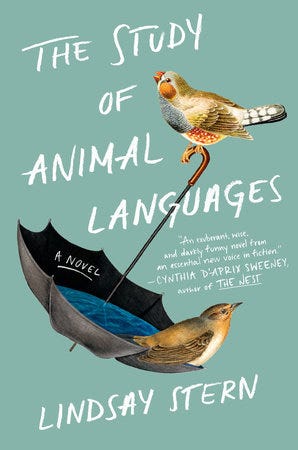
To me, that episode — recounted in Alain Corbin’s book Village Bells — doubles as an allegory for human communication at large. Why do our attempts to express ourselves so often backfire? Why do we attack each other precisely when we need each other most? I explore these questions in my first novel, The Study of Animal Languages, narrated by a philosopher whose training in epistemology does not prevent him from drastically misreading the needs of his loved ones and himself. What follows are seven books that — like the battle at Labrousse — stage the perils of (mis)communication. In dazzling and distinctive ways, each navigates the fraught margin between what we mean and what we say.
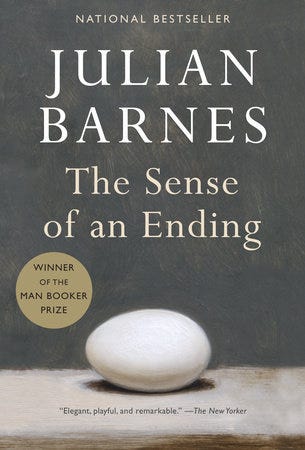
“The past is a foreign country; they do things differently there.” These lines open L. P. Hartley’s The Go-Between, but they pertain with equal force and subtlety to Barnes’ novel. In it, a middle-aged man confronts the fictions he has woven about his life in the form of a letter he does not remember writing.
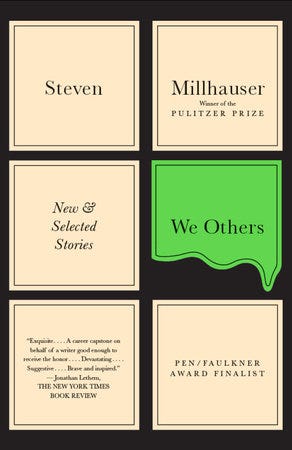
In “The History of a Disturbance,” a husband resolves to stop speaking. His perceptions transform. So does his marriage. The story contains, among others, this gem about supermarkets: “It excites me to walk down those big American avenues piled high with the world’s goods, as if the spoils of six continents are being offered to me in the aftermath of a triumphant war.”
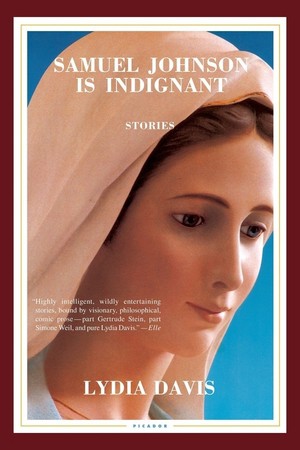
“At a certain point in her life,” Davis writes, in what represents the entirety of her story “A Double Negative,” “she realizes it is not so much that she wants to have a child as that she does not want not to have a child, or not to have had a child.” Davis is renowned for her deceptively succinct, koan-like stories, some of which unfold in the space of one sentence. But it is the fault lines between ideas and words that most interests her. In this collection she pays fearless attention to these gaps and the earthquakes they portend.
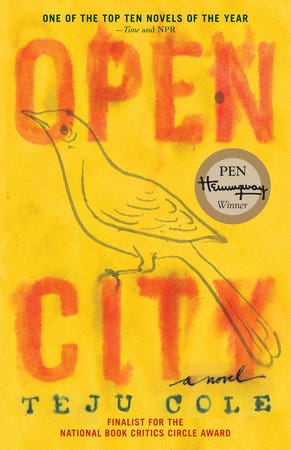
Julius, a young psychiatrist, walks the streets of New York City, thinking. He reflects on class, history, and his own relationships. Until the book’s final pages, the novel seems like a triumph of essayistic fiction. Yet its real achievement is to show us, with ruthless calm, what Julius’ internal monologue has prevented him from seeing.
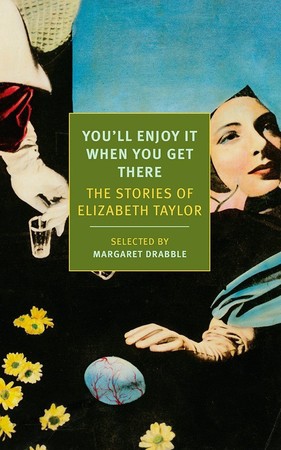
“She stood before an alarming crisis, one that she had hoped to avoid for as long as ever she lived — the crisis of meeting for the first time the person whom she knew best in the world.” These lines open Taylor’s exquisite story “The Letter Writers,” about an encounter between two people who have shared an intense correspondence for ten years but have never met in person.
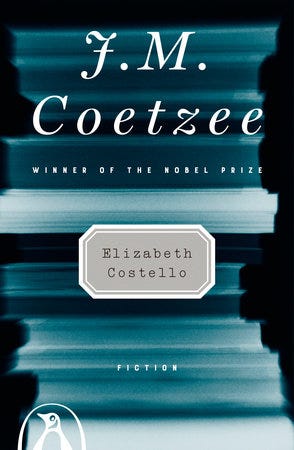
In this incandescent character study, a novelist delivers a series of speeches to audiences that do not catch her meaning. Coetzee’s exploration doubles as a critique of the academy and of the conventions of realist fiction.
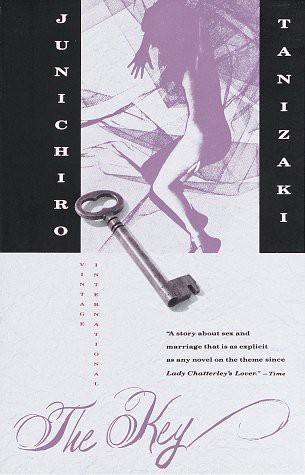
Tanizaki’s exquisitely spare novel takes the form of parallel diary entries written by a husband and wife. It soon becomes clear that the two spouses are spying on one another, that each know this, and that the diaries represent an unlikely mode of communication. This ingenious exploration of the silences between lovers doubles as a fable about desire.
Before Leila Slimani became internationally famous for her bone-freezing literary thriller The Perfect Nanny, she wrote a novel whose darkness is much more mundane. In Dans le jardin de l’ogre (In the Garden of the Ogre), recently released in English as Adèle, Slimani explores the life of a Parisian journalist with a husband, a young child, and an all-consuming sex addiction. Adèle is a modern-day Madame Bovary, bored to tears by her life but unable to determine what, exactly, would make it better. Instead, she vanishes into a spiral of compulsive sex, alienation, and lies.
Slimani never tries to explain her heroine. She observes her with cool precision, cataloging her small victories and greater defeats: the loss of her one friend, the slow decay of her professional life, and, most dramatically, the moment in which she’s forced to confront her own addiction. In doing so, Slimani creates a nuanced, respectful portrait of a woman who has lost all respect for herself.
Last month, I spoke to Slimani about sexuality, addiction, and loneliness. She was in town for a reading, and we met in the bar at her hotel. As we talked, I frequently noticed other customers eavesdropping, trying to figure out what scandalous story we were telling, but our conversation — like Adèle, in the end — was not scandalous at all.
Lily Meyer: How did writing Adèle impact your views on sex?
Leila Slimani: Writing Adèle made me conscious of how intimately related violence and sexuality are for me. I remembered becoming a teenager, and my parents telling me to be careful. I came to understand that being a woman was dangerous, and then that there were predators: men who wanted me, and would force me to do things. So for me, discovering sexuality was also discovering violence, and discovering my vulnerability as a woman. It meant discovering that men saw me as weak and fragile, and might want to protect me or to be violent toward me.
That experience influenced Adèle, and afterwards, I was influenced by traveling to Morocco with the book. Women there told me that they, too, saw this link between sex and violence. They also told me that like Adèle, they were lying all the time. It was impossible for them to tell the truth about their sexuality, their intimacies, their true desires. I became very interested in how society — every society, not only Morocco — forces women to lie or to stay silent about their intimate lives.
LM: If you had to choose the book’s dominant theme or idea, what would it be?
LS: Loneliness. It’s about being a stranger in the world, having the feeling that you don’t belong and no one can understand you. It’s about silence, too. Adèle can’t speak out, express herself, or ask for help. Many women in the world feel that. We are so afraid that we’ll be judged or marginalized that we can’t say, “Help me,” or, “I have a problem.” Adèle wants so badly to belong, to be respected. She wears the mask of the perfect bourgeois woman and good mother. So it’s about appearances, too, and how we need to offer the world an image of perfection even when we’re destroyed inside.
For me, discovering sexuality was also discovering violence, and discovering my vulnerability as a woman.
LM: Adèle has no female friends, and feels compelled to alienate the women in her life. Do you think that comes from her loneliness, or is it a secondary feature of her existing loneliness?
LS: She absolutely has a problem with women. I don’t know where it comes from, but she wants women to like her. She’s like a little girl at school, waiting to be invited to play. She doesn’t want women to see her as a predator. There’s a chapter when she says she never wants to be the most beautiful woman; she’s too afraid of other women’s jealousy. She’s not scared of men, but she’s scared of women. She has the intuition that women will know who she is, and she doesn’t want to share this intimacy with anyone. I think her problem is that she feels more threatened by women than men because women will ask her intimate questions about herself.
LM: Adèle never wants to be the most beautiful woman in the room, and yet you write early in the novel that her only ambition is to be looked at. Does that ambition ever turn into true sexual desire?
LS: No, never. It’s a very abstract ambition, too. She could decide to be a muse, a model, to do something with this ambition, but it remains passive. She wants to be an object. She wants men to put her somewhere to be looked at, but this is the ambition of a non-ambition. It’s the ambition to not be ambitious.
LM: Not long after, you refer to her as the “mistress of the present tense,” but, of course, if you live only in the present tense, you’re the mistress of nothing. You’re entirely out of control. What was it like for you to write a character who can exert no control over her past or her future?
LS: It was very exciting to try to understand this woman who is so afraid of living, and who feels that the world is so boring, and trivial, and sad. She must have had a very idealistic vision of life when she was a teenager: Everything was going to be big! She was going to feel passion! Now, the past feels very heavy to her. It makes her feel guilty, and she doesn’t want to think about it. And of course, addicts don’t want to think about the future. For people who are addicts, only the present exists. Only the moment when you take a drink, not yesterday when you were drunk or tomorrow when you’ll be drunk again.
We are so afraid that we’ll be judged or marginalized that we can’t ask for help.
LM: Did you research addiction to write Adèle?
LS: I interviewed lots of psychiatrists and specialists in sex addiction. I asked one psychiatrist for a definition of addiction, and he said, “For me, it’s when you lose your freedom to say no.” I think that’s a perfect description of Adèle. She’s a woman who has lost the freedom to say no. When you think about it, losing that freedom is terrible, especially for a woman in her sex life. It’s so hard for women to learn to say no, and for men to learn how to hear it. Very often, women persuade ourselves that we have to have sex with a man because we spent two hours having a drink with him, or whatever it is. We come under such pressure in the realm of sexuality. I think it’s very important to have that freedom to say no.
LM: To what extent is Adèle modeled after Emma Bovary?
LS: Very much. In classic literature, this is an archetypal character: the married woman who is bored. I asked myself what this classical woman would do today, or who Madame Bovary would be today. That’s why Adèle marries a doctor, and why they move to Normandy, near where Madame Bovary is set.
LM: How important was her husband, Richard, to you? Did you spend a lot of time constructing his character, or could he have been anybody?
LS: In the beginning, he was a secondary character. He was just important for the narrative, so that somebody would discover she’s a liar. But then when he made that discovery, I got attached to him. I connected to his suffering. I asked myself, “How would you react if you loved somebody very, very much and then you realized that he had a secret life? That he was lying to you? That he was unhappy in his secret life, and something had gone very wrong?” After that, I wanted to explore Richard’s personality, and to understand which one of them is crazier. When you marry a woman like Adèle, you must know that something isn’t right. You can’t marry somebody like her without understanding the presence of darkness and strangeness, so he must be a bit crazy too. I wanted to explore that. I love Richard very much, and I loved writing about him: his relationship with sexuality, his relationship with his wife, an insistence that she’s sick and he can find a cure for her. He wants to rationalize everything.
I loved my son so much — but the day he was born, I looked in the mirror and thought, ‘Something in me is dead.’
LM: Is it fair to say that Richard and Adèle are total opposites, then?
LS: Absolutely. I think that’s why they are so attracted to each other, even if the attraction is weird. She needs rationality and security; he needs darkness. They are a very strange couple, but I do think their opposition is the reason they’re attracted to each other. But she’s not able to love. Love is the only way you can abandon yourself completely, and Adèle can’t do that. She can’t even do it as a mother. She has no idea how to touch her son, feed him, take him for a walk. Everything for her is difficult, tedious, complicated.
LM: How did writing about Adèle’s inability to fully love her son impact your writing about motherhood in The Perfect Nanny?
LS: When I wrote The Perfect Nanny, I never thought about Adèle, but now that both books are out in the United States, I’ve become conscious of how dark and weird motherhood is in Adèle. I wrote it just after I had my son, and I was struggling with the discovery that yes, I was happy to be a mother, I loved my son so much — but the day he was born, I looked in the mirror and thought, “Something in me is dead. There is a Leila who is dead forever and will never come back again.” I had to grieve, in a way. I think Adèle feels that. So many times, also, I felt like I didn’t know how to act with my son. Everyone tells you how natural motherhood will be, and when it doesn’t feel natural, you feel guilty. I tried to describe that guilt in Adèle, but to turn it into a problem.
LM: I wonder if the same goes for Adèle and sex. Women are often told that once we meet our husbands, our sex lives will be perfect, effortless, all that. Is Adèle struggling with disappointment over that message, too?
LS: Yes! She is disappointed by sex as she is disappointed by motherhood. The sex scenes in movies and TV shows are always so beautiful, you know? So much tenderness, so much passion. In real life, sex is much more trivial. There’s the sound of zippers, the smell of the socks you take off. You can’t get that smell into a movie, but it’s part of the reality of sex. I think so many women are disappointed by sex, especially after the first time. I think Adèle is like a teenager who desperately wants to find the transcendent sexual experience that everyone told her about, but that probably doesn’t exist.
LM: You’ve said that your editor once steered you away from writing thoughts, and toward writing action instead. How do you use action to create and access your characters?
LS: Writing through action is mostly about my relationship with my reader. When you accept the idea that you will only describe actions, you must accept that your reader is clever. He doesn’t need to know everything that’s happening in the mind of the character in order to figure out why she’s acting in a certain way. Also, I think Simone de Beauvoir and Jean-Paul Sartre are totally right when they say that a person is defined by her actions. Not what she thinks; not what she claims or proclaims; what she does. We speak a lot about ethnicity, religion, gender, all of that, but I don’t actually think those factors determine our identity. Our actions are our identity.
We speak a lot about ethnicity, religion, gender but I don’t actually think those factors determine our identity. Our actions are our identity.
LM: Is sex Adèle’s entire identity?
LS: I think Adèle has no identity. She doesn’t know who she is. That’s why she’s so aimless and lost. She knows nothing about herself. She has no idea what to fight for, what her values are, what social class she belongs to.
LM: Do you think of Adèle as a novel about social class?
LS: I wouldn’t say it’s about social class, but in all my books, I’m interested in the bourgeoisie. I’m interested in showing that even though the dominant culture claims the bourgeoisie is calm, polite, and moral, that claim is a lie. There’s horror and violence within the bourgeoisie, and I’m very interested in exposing that.
When I first read Virginia Woolf’s dictum that “A woman must have money and a room of her own if she is to write fiction,” I was homeless.
It wasn’t what most people picture when they think of homelessness. I wasn’t sleeping in the street but on couches and floors. I sometimes also shared a bed with a man when I didn’t want to. There were times I was stuck in the rain with two suitcases and no money, not knowing where I would sleep, with a bad cold, feeling like the gum on someone’s shoe. For a while, I kept all my belongings in a locker at the train station like a character in a ’70s movie. One night I couldn’t find a place to stay, so I just walked around the station all night and waited for dawn to come. Another time, the toiletries and change of clothes I always carried in a shopping bag were stolen, and when I asked about it at the station’s lost and found, I was treated with such contempt I started to cry. I stumbled off, sobbing about my lost soap and underpants, worthless junk the thief must have thrown away, but which I could not afford to replace. Most of all, I remember it as a time of walking in the cold, not having enough money to go into a cafe and order a coffee; looking at the outsides of buildings, the windows of restaurants, the warm life I couldn’t afford. I also remember my bitterness that I was expected to beg for a job I found pointless or wrong, just so I could exist in space, and the begging wasn’t even made easy; to do it, I needed a telephone number and decent clothes — things I couldn’t imagine ever being able to have again.
I’ve still almost never had a room of my own with a door that locks, as Woolf says I must have to write. Until I was 40, I never earned the minimum amount Woolf tells me I must earn — £500 a year, or roughly $40,000 in 2019 dollars. In some years, I don’t earn that now. I still think of anyone with no realistic fear of homelessness as rich.
But I’ve written eight books.
Before I go on, I feel I have to make it clear that this essay is not about “grit” — or any other imaginary virtue poor people need before they’re allowed to make art. I’ve never had grit. I’m an emotional mess. One of the reasons I was poor so long is that, no matter how I tried to be tough, I had chronic anxiety and cried over anything and never lasted long at a terrible job.
This essay is not about ‘grit.’ I’ve never had grit. I’m an emotional mess.
This is also not an essay about how becoming a writer raised me out of poverty. My childhood was middle class, and my dedication to writing was one of the things that made me fall into poverty in the first place. And mine is not such an unusual case. Being a novelist requires a huge initial investment of unpaid labor. Writing a first novel typically takes two years. After that, few first novels sell, and when they do, the average advance is in the region of $10,000.
Nonetheless, many writers keep their heads above water, even if they don’t have early success. Some manage to split themselves in two and pursue another profession while writing in their spare time. Some find an undemanding day job that pays enough to give them security. Some marry people with money.
But there are plenty like me who are perennially broke, always ending up on someone’s couch, always letting someone else pick up the check. I know half a dozen published authors who’ve had to rely on food stamps. The seedy poverty of the author has been a cliché for centuries. We find the figure of the poor writer already in the medieval era, in the form of poet-clerics called “goliards,” who begged and sang ribald songs in taverns as they wandered from monastery to monastery. Hundreds of years later, in the Beat Generation, the type survived with no essential change. Now a new generation of writers are confronting ever lower and less reliable payment for articles, stingier advances for books, fewer jobs, and smaller royalty checks. A host of new threats to writers’ livelihoods, from internet piracy to the slow-motion collapse of the academic job market, means ever fewer writers are making a middle-class wage.
Yet the public presentation of the profession remains stubbornly bourgeois. The acknowledgements pages of books tend toward lists of prestigious grants, residencies, and thanks given for the gracious loan of someone’s house in the Florida Keys; I’ve never seen anyone acknowledge the SNAP program or Medicaid, although they’ve almost certainly funded far more writers than the NEA. Even when a novel is marketed as a depiction of the working poor by a working-class writer, the press around the book usually suggests that the author, by becoming an author, has now escaped that underworld. Of course this isn’t always true — the author may not have “escaped” and doesn’t necessarily think it’s an underworld — but that narrative tends to creep into every crack. I’ve even seen an interviewer suggest a writer had left his problems behind when the writer was still living in a federal prison.
This construct also affects the kinds of books commercial publishers buy and promote. Memoirs about poverty — especially those pushed as potential bestsellers — are usually about the author’s childhood. There’s also a trend toward child narrators in novels about poverty, even those set in historical periods, and by the end of the book it’s remarkably common for the protagonist to “make good.” Commercial publishing shrinks from the idea that any worthy person — any relatable person — is still poor now.
I’ve never seen anyone acknowledge the SNAP program or Medicaid, although they’ve almost certainly funded far more writers than the NEA.
The first story I ever published was written in a derelict house with heat only in one room and fields of green and black mold on the visibly crumbling walls. I wrote sitting on the floor because our only furniture was a mattress. My boyfriend was there in the room all the time; his only other option was to stand in the freezing kitchen.
I began my first published novel at a temp job, disguising the text as a bulleted list so it resembled the reports I was supposed to be typing. I worked on that novel at four different jobs and in eight different apartments — I was always moving, sometimes because I couldn’t make rent; sometimes because a relationship fell apart, as they easily do when everyone’s broke; and sometimes because an apartment was just too awful to bear. One place had bare light bulbs that hung from the ceiling and when it rained, the ceiling leaked so badly that water dripped down from the bulbs. Another was on the ground floor and every night teens gathered outside my windows to smoke weed and have fights until dawn. Also, somehow none of these places was exactly mine; it was a boyfriend’s place or a place where I was cat sitting or a one-month sublet. I was always buying time to write by squeezing myself into less and less space, outstaying my welcome, fitting into the cracks of other people’s lives.
When I did the final edits on that novel, I was homeless again, sleeping on the dining room floor of a friend. I still remember figuring out one last crucial fix: standing over my computer at the dining table, already late for another temp job, exhausted because my inflatable mattress kept deflating in the middle of the night, breakfast noise from the kitchen coming through the doorway where there was no door, typing in an ecstasy, as happy as I’ve ever been in my life.
In interviews about that novel, I told the story of the bulleted lists, but never mentioned the homelessness, never mind the humiliation each time I had to ask for help. Most writers I know who’ve been really poor practice similar forms of self-censorship. Sometimes the reasons are obvious even to someone who’s never had money problems. One writer I know went through a patch where he had to report to a subway cleaning crew to keep getting his welfare checks. He talked about this openly to friends, but went through extreme contortions to hide it from a publisher who was considering hiring him. When I was first profiled for a women’s magazine, I had their photographer come to my apartment, only to have her look around and instantly suggest we go out to a park. After that, I had photographers meet me at a richer person’s apartment to save everyone time and embarrassment.
But often the decisions are less clear-cut. Social media, for instance, can be the ideal forum for openly discussing social class — but it’s also notoriously a place where going too far can damage your career. Most of us filter what we say. This affects how we talk about being broke. A post about student debt is safe, but one about living in your car risks losing face and professional standing. It can even come across as a passive-aggressive jab at more affluent people. One writer friend of mine commented: “On Twitter, we make jokes about being poor. We don’t talk about the fucking dread eating through us because we’ll never be stable. We don’t talk about what it means, that we’re on Twitter because we can’t afford therapy or social lives.”
A post about student debt is safe, but one about living in your car risks losing face and professional standing.
This same kind of filter is involved when writers present themselves to the public. I’ve written a memoir that dealt with my worst periods of destitution, but I’ve never told any interviewer my real feelings around getting a book published: the abject terror that the book won’t sell and I’ll end up poor again, homeless again, in the street in the rain with whatever I can carry, with a cold, looking at the windows of restaurants and homes, at all the warm life I can’t afford.
When my money problems are in the ordinary range, I feel it’s more useful to see Woolf’s “room of one’s own” as metaphorical. After all, her insistence on a physical room was predicated on the fact that women were given no public space for their intellect. Outside the room, they would be jeered at, dismissed, erased. The world still feels like this to many writers. Just being a writer is called a “bad choice”; we’re told to give it up and learn to code. If we expect to be paid, it’s greedy. If we write without pay, it’s narcissistic. As Woolf says, the world “does not ask people to write poems and novels and histories; it does not need them. It does not care whether Flaubert finds the right word or whether Carlyle scrupulously verifies this or that fact.” She is right that this indifference is hard on writers and harder on writers who are poor.
Many people become writers in the first place because we feel we have no place in the world. Writing can be an attempt to make a room where you can fully live, even if that room is imaginary, invisible to anyone who doesn’t bother to read your work. In fiction, you can create worlds where every possibility is open to you — for adventure, for love, for power. Writing can also be a way to transpose a hostile society into a realm where you can safely observe it and comment on it without being dismissed, where your judgment is godlike and final. This is especially valuable for female writers, poor writers, black writers, disabled writers, LGBT writers — all writers who have to first call into existence a world in which their voice makes a sound, then say what they have to say in the moments before that world evaporates.
Writing can be an attempt to make a room where you can fully live, even if that room is imaginary.
I can still get uncomfortable, though, when I remember that Woolf didn’t just doubt the possibility of writing without economic security; she doubted the possibility of writing well without it. She says fiction produced like that “must wither at nightfall; it cannot grow in the minds of others.” Even with so many historical examples of perpetually broke writers who produced great books, I can’t help feeling a pang of doubt. My more recent novels really are better, I think, than the ones I wrote in poverty. I assume that’s mainly because I’m more mature as a writer — but surely the stability I’ve had in recent years, the ability to think uninterrupted, is part of it too. I can’t help worrying that my writing might fall apart if my fortunes changed.
But when I look at other people’s work, I feel no such uncertainty. First of all, it’s clear to me we need poor writers more, not less, than writers with $40K a year. We can’t understand poverty if we never hear about it in the first person and the present tense; if we’re never reminded that, for poor people, poverty is happening to me, right now. And the recent viral success of first-person accounts of working-class life by writers like Linda Tirado and Lauren Hough attests to our collective hunger for writing about this experience. Finally, whatever poor writers lose from working in difficult circumstances they gain from the urgency of what they have to say; much of the greatest writing we have was produced in insecurity and squalor. This is the lesson of writers like Jean Rhys, Stephen Crane, Zora Neale Hurston, Fyodor Dostoevsky — and the list goes on and on and on.
So I want to end with a message to struggling writers everywhere. If you don’t have money or a room, write wherever you are, write however you can. Write on a park bench, in your car, at McDonald’s, in the waiting room at the ER. Eat spaghetti with ketchup and live on your parents’ sofa and speak truth to power. Don’t feel bad if you have to inhabit other people’s space like a ghost, like a mouse, waiting for the people to leave so you can come out of hiding. Write until you make room for yourself. Write until you make them listen.
My Stardew Valley avatar looks just like me — brown hair, bangs, blue eyes, dark t-shirt and jeans. I decided to try this video game to help me relax and cure my recent writing burnout after a semester in my nonfiction MFA program, where I struggled to write a single satisfying ending to anything I produced. I pick up the game one lazy weekend morning, playing my boyfriend’s copy on his Switch while he made us breakfast. Unlike writing, this farming simulator game has a discrete, understandable set of goals. So it makes sense that the character I’m piloting through this world, harvesting crops and catching fish, is meant to look just like me.
My writer’s block manifests this way: I start essays with no sense of how they should end. I am convinced I have so much to say, when in truth my work constantly comes to a screeching halt with no conclusion. Perhaps this could be blamed on a lack of confidence in my own essays. Or it could be that so much of writing, especially personal essays, depends on themes, ideas, or stories that have really happened to me converging into something profound and meaningful. Of course, not everything in life ends with the sort of poignant and emotionally satisfying ending that befits a personal essay. Or maybe I didn’t have the sort of perspective needed to finish these essays.
I am convinced I have so much to say, when in truth my work constantly comes to a screeching halt with no conclusion.
The opening sequence of Stardew Valley shows my avatar’s grandfather on his deathbed: he hands me an envelope, which I don’t open immediately. It cuts to my avatar working in a large, drab corporate office. My avatar takes Grandpa’s envelope out from a desk drawer and opens it to discover that he has left me the deed to a farm property, for when I need to escape the doldrums of everyday life. My avatar hops on a bus to a rural town to start a new life. I’d also lost two grandparents in the past year. They hadn’t left me property, but I was intrigued that the game began with a loss and the feeling of being stagnant at an office job. One life ending, another life beginning. I too, had left the doldrums of a corporate job to return to school to become a better writer, though that sense of renewal was in some ways true and in some ways false.
In the game, two characters from town “escort” me to the farm where I am left to fend for myself. I run around to check out the virtual property, overgrown with weeds and rocks and trees, which I cut down or bust open with tiny pixelated tools in order to clear enough dirt to plant the six parsnip seeds the game starts you off with.
“Is there something wrong with the food?” my boyfriend asks.
I didn’t notice he had left a full plate of scrambled eggs and toast for me. He had apparently left me a mug of coffee at some point, but I didn’t notice that either. I say nothing and keep going. Lifting my head from the screen was like coming up for air after diving deep underwater. I ate quietly, then bent my head back down to the screen again. He laughed. “I’m just glad you like the game.”
Ending an essay, or finishing any piece of art, is a challenge because it is an exercise not only in control and mastery of a story, but control of the reader as well. To end a work is to know what I as the writer want the reader to take away from the story. In nonfiction, it can be hard to know (a) when something truly ended or could be considered over, and (b) how best to express that to the reader in a way that is believable. My life hasn’t ended, and much of what I write about — my body, my anxiety, my perfectionism, my insecurity — are ongoing struggles. How can I end what may never end for me? How can I possibly conclude my essays effectively when life itself is nothing but an ongoing narrative?
Writing an ending entails not only drawing conclusions, but trying to weave and connect themes and ideas in ways that don’t feel forced. As a writer, I have to maintain a lot of creative control. There’s a need to know a sense of the structure necessary to support an ending, and even a sense of forward momentum that must be built into every sentence towards said ending. But without knowing where the essay will lead, it’s impossible to know how to execute structure, syntax, or narrative arc. While this level of creative control feels natural when I begin an essay, maintaining that control can feel taxing by the end of the work, or worst of all, irrelevant. I worry that what I have to say in the end isn’t all that compelling.
Writing an ending entails not only drawing conclusions, but trying to weave and connect themes and ideas in ways that don’t feel forced.
In an attempt to figure out what kinds of endings I like in nonfiction, I immediately thought of Aristotle’s line from Poetics, that the best endings are “surprising, yet inevitable.” The writer must build the narrative to a near-fated conclusion that still, somehow, startles the reader in a satisfactory way.
Stardew Valley dodges all of these questions. The gameplay is continuous. Many gamer YouTubers plug programmer “mod” alterations into the game’s code to see how far in time their avatars can live. What they have discovered is that there’s no end to time in Stardew Valley. This means I can keep playing, keep planting, keep talking up villagers, attend the same holiday gatherings complete with the same dialogue and activities year in and year out. Aside from a cut scene in a player’s third “year” of farming where the grandfather’s ghost “evaluates” your progress, there is no ultimate achievement or goal to work towards. Some players consider this the “end,” but from what I can tell from forums online, many continue playing far past this point.
Stardew Valley is a farm game, but farming is not the only way in which I can interact with this virtual world. There’s a larger narrative happening within the town that I, as a player, can take part in. In addition to the farming component, the farm is located within a town full of 28 characters I can interact with. Each character has their own storyline and interests. Players can raise livestock, virtual immortal animals, forever producing eggs and milk and wool. The animals never die and so my attachment to them is infinite. The game feels like writing a fictional story that never has to end, whose characters I never have to say goodbye to. If I’m unhappy with how something is progressing, or the way something was done, I can merely restart.
Eric Barone, the game’s creator, adds new character storylines, new items, new quests, and it doesn’t seem likely that he will stop any time soon. My avatar won’t age in the game and neither will any other character. All mistakes can be fixed or smoothed over. This is a life you can tune into at will and stay for as long as you want. Perfectly controlled and controllable. Unlike any other kind of content I create or consume, I can stay in this forever. For a time, this idea provides a balm to my writing woes. Rather than stay stuck in my frustration all I have to do is restart the game and, presto, I can start over again without compromising the rest of my progress, without sacrificing the game as a whole. Here, I am in control of my non-endings.
Perhaps my fascination with Stardew Valley and its lack of a conclusion can be traced to the amount of creative ambition and control needed to build a world that supports itself for that long. Not only does it invite the player in, but it also allows the player to enter into the game for however long they desire. There is no need for themes and ideas to converge, no need for a poignant end that will stay with the reader after they finish the work. Call it envy, or call it laziness, but my obsession with this game might be related to my resentment of the fact that writing has to end. That I can’t just write so well I can invite the reader into my life permanently, so they can see for themselves how it plays out. Let them draw their own conclusions.
There is no need for themes and ideas to converge, no need for a poignant end that will stay with the reader after they finish the work.
Nonfiction endings require a sort of closure, even if the issue is not, or cannot be, resolved. How many of us can say they have closure in all areas of their life? By never writing endings, I never have to sum up the parts of me I may be afraid to examine or admit to. I never have to find a structure to hold my own uncertainty.
I stop writing when I play Stardew. If the game is on, I tell myself that I am making a new story, albeit within the confines of the Stardew Valley universe. The real-life physical and emotional tension I have been feeling when I write dissipates. My clenched stomach relaxes. I can even feel my breathing slow down. My dreams are more creative, and I am more likely to write them down.
Perhaps my issue writing endings is the fact that many of the typical ways to write one doesn’t seem to work for me. No matter how I look at my work, I can’t figure out what I want the reader to take away at first. The essays I’ve been most proud of were often exploratory: here’s an important moment in my life that I want to delve into, and here’s where it began. But how to know where it ends? And what if I feel differently about this time in my life a year from now, or 10 years from now? Stardew Valley never asks these questions of me. It merely allows me to keep trying things, keep exploring, for as long as I want. The game’s creator continues to add to the game after receiving feedback from players. Writers rarely get the chance to go back to a work and rewrite it with new perspective once a work is published.
The essays I’ve been most proud of were often exploratory: here’s an important moment in my life that I want to delve into, and here’s where it began. But how to know where it ends?
I could make the endings of my essays loop all the way back to the beginning, but this feels too neat. Not all things in life loop as perfectly as the day-to-day world within Stardew Valley, and even when they do, it can feel unsettlingly neat as a reader. Surprise endings feel like cheating, withholding information from the reader for a cheap trick, betraying their trust in me as a writer. A cliffhanger merely seems pointless. If I know how something ends, I ought to just share that ending, or even the smallest closure, with my reader. This all leads me to fold in on myself and on my work, so tangled up that I stop my own writing process before it begins. The few times I do attempt to write instead of playing Stardew, I sit at my desk and tense up as I approach what I think will be the conclusion of an essay or a revision, doubting every choice I make as to how to leave this creative project and call it “done.”
After a few weeks of intensively playing Stardew after work, the game begins to make itself apparent in my body. I primarily play on my laptop, and the muscles in my left palm begin to fatigue quickly. There’s an ache in my wrist that radiates from leaning on my keyboard with too much intensity. I massage it softly with my right hand, my fingers exploring the soft tissue and tendons so unused to this level of work. Finger muscles also grow stiff, cramped. A pain builds at the back of my neck, grows roots down into my shoulders. These small, corporeal reminders of it stick with me even after I quit the game and eat a meal, take a shower, go to work, go to the gym, go to sleep.
How should I interpret this? As evidence I have internalized the game? I have never played a game so much that it has manifested itself bodily. My anxiety about writing has gone down, but my body has now latched on to new symptoms, new aches and pains, different from the ones before I began playing Stardew.
The game is now, in fact, becoming stressful. At some point I realize that even the most ongoing narratives must end. Even Stardew Valley.
Writing calls me. It always has. Like all indulgences I take part in, the game is calmative until it is overdone, and then it loses its luster, becomes yet another source of anxiety. After all, an escape is only an escape when there is a normalcy to return to. Everything must end because we, as human beings, crave closure.
The game needs to end for me. At least for now. After work one day, I go to the library and take out a book to read on the subway ride home. The print is nice on my eyes, the pages soft on my hands. Reading feels exciting again. The act makes me want to delve back into my own writing. Though I feel an urge to open my laptop and play the game as soon as I get home, I resist that urge.
I begin writing again slowly, revisiting old work and reading revisions from peers. Instead of seeing my essays as unresolved messes, I begin to see them anew: as beginnings, first stages in the lengthy writing process. Suddenly revising and rewriting feels like an opportunity to visit familiar stories I haven’t encountered in a while. Their endings feel more obvious, or at least more accessible, with the gift of distance. And unlike Stardew, sometimes the structure my personal essays take, and the conclusions they eventually reach, are surprising even to me.
Instead of seeing my essays as unresolved messes, I begin to see them anew: as beginnings, first stages in the lengthy writing process.
I revise my work in small bursts to the best of my ability for the rest of the summer. The periods of time I spend writing gradually grow longer. I sink myself into a flow state, not unlike what I’d done while playing Stardew Valley. New ideas for work begin to pop into my head naturally, as if they’d never stopped. I had no need to revisit the game because my own creativity was flowing naturally again, slowly but surely.
Getting back into writing after a long break is always terrifying. But like any essential skills, the words return. My fingers still know the place of every letter on the keyboard. It is easier now to know when to end my essays, and less intimidating to rip them apart in order to find a structure to support the shapes my work must take to reach a satisfying end. I continually remind myself that, even when one essay ends, the flow of one’s writing can remain an infinite force, one I can tap into whenever I am ready.
Since childhood, I have been drawn to the various iterations of the Sleeping Beauty/Briar Rose tale. Part of my fascination is aesthetic: I love the stained-glass splendor of Disney’s 1959 film and the ambrosial score and choreography of the Tchaikovsky/Petipa ballet. But there is for me — and, I suspect, for many others — a more psychically resonant appeal to the trope of the sleeping beauty. Perfect and asleep, she embodies the mystery of our subconscious desires. We don’t know what she’s dreaming about; might she be dreaming of us? At the same time, and unlike us half-awake mortals, hers is a mystery that seems capable of being unlocked. She is an enigma if enigmas were perpetually in submission, a “bottom” within an oneiric D/s relationship.
Perfect and asleep, she embodies the mystery of our subconscious desires. Might she be dreaming of us?
Still, I have never been proud of what amounts to a fascination with prone, helpless women and a disturbing narrative. In the story, enchantment turns ugly. The original tales by Charles Perrault and Giambattista Basile relate the maiden’s ravishment by the man who finds her and her persecution by her eventual mother-in-law or the man’s first wife. They arrive at happily-ever-after only after harrowing violations and betrayals. And there’s no getting past the fact that Sleeping Beauty is an infantilized figure rather than a strong woman. It’s not for nothing that in Anne Sexton’s poem, “Briar Rose,” she wakes up crying for her daddy. Anne Rice decided to just run wild with all this wrongness in her series of pornographic novels. What else can you do with this story?
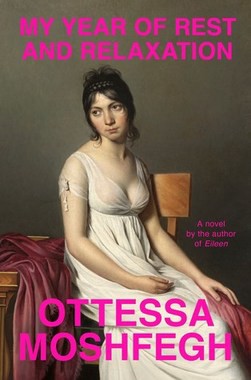
Luckily, Ottessa Moshfegh’s My Year of Rest and Relaxationbreaks the spell. Her novel offers a revisionist narrative of the sleeping beauty, in which she refuses to be objectified and rages with agency. Reading it, I couldn’t help but think of two earlier novellas about lovely girls asleep, Yasunari Kawabata’s House of the Sleeping Beauties and Memories of My Melancholy Whores by Gabriel García Márquez. In these three fictions, the sleeping beauties seesaw between accessible and inviolable, but only in Moshfegh’s does the slumbering heroine leap to life.
García Márquez quotes the first lines of Kawabata’s 1961 novella in the epigraph of Memories of My Melancholy Whores: “He was not to do anything in bad taste, the woman of the inn warned old Eguchi. He was not to put his finger into the mouth of the sleeping girl, or try anything of that sort.” (Those who’ve read a lot of Kawabata will know he had a thing for women’s fingers, hands, and arms.) A more direct translation of the Japanese title, Nemureru bijou, would be “Sleeping Beauties”; the English rendering shifts the focus from the comatose girls to the uncanny bordello and the experience of visiting it.
Kawabata was in his 60s when he wrote House of the Sleeping Beauties, which stylistically recalls the sidereal montages of Snow Country, the novel with which English readers are most familiar, more than the energy and cheekiness of early works like The Scarlet Gang of Asakusa. The story may be about the ecstasy old men feel when they pay to sleep next to teenage girls, but it’s unlikely to give you sweet dreams. The unease is established in the opening scene, when Eguchi greets the madam and becomes fascinated by the bird on her kimono sash: “It was not that the bird was disquieting in itself, only that the design was bad; but if disquiet was to be tied to the woman’s back, it was there in the bird.” If Memoriesof My Melancholy Whores will elegize and even celebrate elderly love and living, Houseof the Sleeping Beauties exposes the horrors: “Had he not come to this house seeking the ultimate in the ugliness of old age?”
The girls are drugged before he arrives and don’t wake until he has left them, so they have no memory of the nights spent with Eguchi or the other men.
The cold that will turn fatal is stressed from the start. The room in which the clients sleep with Beauty is draped in crimson velvet, a nightmarish hibernaculum. Eguchi smells phantom scents, including a baby’s milk. Soon he is dreaming of deformed infants, which he attributes to his having sought out a “misshapen” pleasure. The girls are drugged before he arrives and don’t wake until he has left them, so they have no memory of the nights spent with Eguchi or the other men. Yet these blank-slate girls have the curious power to usher in memories for their clients. Soon Eguchi is recalling long-lost lovers, his mother’s death from tuberculosis, and his favorite daughter’s marriage, which she rushed into after being deflowered by another man. In between these flashbacks, Eguchi ogles and prods the naked girls passed out beside him. He fantasizes about defiling and killing them. He also imagines them as incarnations of Buddha.
As a former bar hostess in Japan, I’ve long been familiar with the staggering variety of fetishistic options for men seeking company and entertainment in that country. It’s a niche market; I was once offered, based on my Polish heritage, a job at a hostess club that catered solely to men seeking Eastern Europeans, and the pleasures at other clubs I knew of were far weirder than strong cheekbones and bumpy noses. As such, House of the Sleeping Beauties has never struck me as that far-fetched in its particulars. What has always shocked me is the coldness with which the women in the novella are treated. In his final visit, Eguchi sleeps beside two young women, and one — the dark-skinned girl whom he suspects may be a foreigner — dies in her sleep after he turns off her electric blanket in the dead of winter. “Go back to sleep. There is the other girl,” the procuress soothes him. He thinks, “There was of course the fair-skinned girl still asleep in the next room.” The xenophobic and racist implications always jolt me awake at the story’s end.
The aged male characters in both stories feed vampirically on their sleeping beauties, using them to recall the dream of youth.
In many senses, House of the Sleeping Beauties and Memories of My Melancholy Whores arecomplementary. Kawabata’s procuress thinks of Eguchi as a guest who can be trusted (i.e., she believes he’s impotent), but the madam in García Márquez’s novella scolds the unnamed protagonist when, despite his famed virility, he doesn’t ravish his dormant girl. Kawabata’s tale unfolds in a primeval land of winter, while Memories of My Melancholy Whores languishes in the tropics. The latter has a happy ending. Still, the aged male characters in both stories feed vampirically on their sleeping beauties, using them to recall the dream of youth.
García Márquez’s protagonist is meant to breathe Romantic blasphemy, but look too closely and it becomes hard to indulge him.
Like Kawabata, García Márquez was in his twilight years when he penned the 2004 novella. It opens with a frank confession: “The year I turned ninety, I wanted to give myself the gift of a night of wild love with an adolescent virgin.” His desire is a solipsism; the girl is only the substance of the gift to himself, her personhood incidental. I think García Márquez’s protagonist is meant to breathe Romantic blasphemy, but look too closely and it becomes hard to indulge him. At one point he recounts how, decades back, he raped his maid and upped her salary to account for sodomizing her once a month. He refuses to let the madam tell him the true name of his drugged beloved and christens her “Delgadina.” When the madam announces that Delgadina’s birthday is December 5th, he remarks, “It troubled me that she was real enough to have birthdays.” In other words, for all of García Márquez’s gifts as a writer, this is a book unlikely to be embraced in the era of #MeToo.
After his first night with the fourteen-year-old factory worker who has been procured for him, the narrator casts her as a virgin martyr: “When I returned to the bedroom, refreshed and dressed, the girl was asleep on her back in the conciliatory light of dawn, lying sideways across the bed with her arms opened in a cross, absolute mistress of her virginity.” Indeed, we never see their consummation, nor do we readers interact with Delgadina while she’s awake.
House of the Sleeping Beauties closes with death, Memories of My Melancholy Whores with euphoria. The madam assures the narrator that Delgadina is madly in love with him, and even his lost Angora cat returns. The book refuses to awaken from its own dream.
Eguchi repeatedly casts the other old men who come to the house — the ones who, unlike him, can no longer function sexually — as sad, whereas to García Márquez, it is the women themselves who are melancholy. But the unnamed heroine of My Year of Rest and Relaxation is less sad than furious.
If I’m honest with myself, one of the draws of the sleeping beauty myth for me is that the young woman at its center is faultless. Even if violated while asleep, she cannot be blamed for it. Real life, for most women, is far more complex, with culpability always crouching in the shadow of the bed. But Moshfegh refuses to portray her sleeping girl as a victim to be used or a flawless woman destined to suffer stoically. (Indeed, a sleeping beauty is usually the most stoic victim of all.) Her narrator is arrogant, selfish, manipulative, sometimes mean. She doesn’t shrink from telling lies to get her shrink to dispense as many pills as possible. She’s a drug and sleep addict who doesn’t even bother to shift blame. While she likes sex, she is firmly positioned as a narco- rather than a nymphomaniac.
One of the draws of the sleeping beauty myth is that the young woman at its center is faultless. Even if violated while asleep, she cannot be blamed for it.
What’s subversive in Moshfegh’s novel is that the dream girl refuses to be the blank beauty onto which others project their fantasies. In fact, it is when she starts her obsessive-compulsive sleeping that she stops worrying about her appearance. Before she had looked “like an off-duty model.” Now she shuffles to the bodega in disarray: “‘You have something,’ the man behind the counter said one morning, gesturing to his chin with long brown fingers. I just waved my hand. There was toothpaste crusted all over my face, I discovered later.”
The narrator’s beauty serves a purpose. My Year of Rest and Relaxation questions who is allowed to feel emotional pain. The main character of the novel is ridiculously privileged: Because of an inheritance from her late parents, she doesn’t have to work and owns a stylish apartment on the Upper East Side. She has a degree from Columbia gathering dust in her closet. Her fantastic looks are stressed so often that it reads like a running joke; in the course of the novel, she’s said to resemble Faye Dunaway, Kim Basinger, and supermodel Amber Valetta and is “better than Sharon Stone.” Yet she’s utterly miserable despite all of this good fortune. While others may interpret her plight and its depiction differently — for example, as an indictment of the empty glitter at the turn of the millennium — I believe that Moshfegh went to great lengths to prove that depression and chronic feelings of emptiness can transcend objectively good circumstances. Given the surprise with which the suicides of celebrities like Anthony Bourdain and Kate Spade are greeted, we could use this reminder that mental illness and strife cut across all demographics and pay little heed to worldly success or advantages.
In the other two books, men’s narcissism leads them to fixate on sleeping women; in this book, the sleeping woman fixates on sleep as a way of rewriting societal expectations.
In light of the narcissism of the male protagonists in House of the Sleeping Beauties and Memories of My Melancholy Whores, that of the female narrator in My Year of Rest and Relaxation could also be seen as a clever inversion of gender norms. Sure, it’s a self-defeating mechanism, or at least it would be if the heroine didn’t seem to be growing out of it by the end of the book. But it also means she’s claiming a right to self-absorption that men within and outside of novels have long assumed they possessed. In the other two books, men’s narcissism leads them to fixate on sleeping women; in this book, the sleeping woman fixates on sleep as a way of rewriting societal expectations.
The novellas by García Márquez and Kawabata could certainly be given psychoanalytic readings, but only Moshfegh’s satirizes psychiatry and prescription drug therapy. The narrator chooses her grotesquely incompetent shrink from a phone book; indeed, she is looking for the kind of incompetence that will result in a major drug score. The dreams she shares with this Dr. Tuttle are fabrications maxed out with Freudian currency. In one of them, she puts someone else’s diaphragm in her mouth and performs oral sex on her doorman. But she hoards to herself her true dreams, which process the trauma of her parents’ early deaths. She insists on remaining opaque in the power struggle of psychiatric treatment and uses the doctor for her own purposes, fully availing herself of the vast pharmacopoeia available to anyone who can afford visits with such a doctor.
Despite her abuse of the doctor-patient relationship, she seems to honestly, tragicomically, expect her prolonged period of sleep to rejuvenate her. As she puts it, “My hibernation was self-preservational.” At face value, this belief sort of makes sense. After all, isn’t sleep supposed to heal us? In this way, My Year of Rest and Relaxation intersects not just with the sleeping beauty myth but with the oppressive rest cure of “The Yellow Wallpaper” — except in this case, it is the narrator directing the cure.
Narrative logic would seem to demand that the sleeping girl be the object, not the subject, of the story. Moshfegh’s novel manages to make the sleeper the subject.
However misguided such actions may be, it’s notable that they are actions. Narrative logic would seem to demand that the sleeping girl be the object, not the subject, of the story. One of the intriguing things about Moshfegh’s novel is that she manages to make the sleeper the subject. In House of the Sleeping Beauties, by contrast, Kawabata frequently uses the causative-passive form to describe the girls’ state; in English, this construction is rendered as “had been put to sleep.” The causative-passive form in Japanese is often used to connote a sense of victimization, of something bad being done to a person who lacks agency. Moshfegh’s narrator, on the other hand, goes to tremendous lengths to put herself to sleep with soporifics, again and again. She’s causative-active.
Near the end of the book, she does briefly become an object as she poses, while heavily drugged, for a video series by a repellant and pretentious artist-of-the-moment. One review of the piece describes her as “a bloated nymph.” But her ability to dismiss the objectification and return to the outside world once her hibernation is over makes it clear that she feels empowered and, now, very much awake. The protagonists of House of the Sleeping Beauties and Memories of My Melancholy Whores were both at the end of their lives, but Moshfegh’s is poised for the future on her Louboutin stilettos.
Kawabata’s tale is set in snow and Garcia Marquez’s steams with heat, but Moshfegh’s story spans four seasons. Like House of the Sleeping Beauties, My Year of Rest and Relaxation ends with a death. Chekhov’s gun takes the form of an open window in this book. When the narrator settles down for her four-month-long sleep, she vows that if she doesn’t feel better by the end of it, she will commit suicide by jumping out her window. However, the character who leaps through an open one in the last scene is her toxic best friend Reva, and not by choice. A novel set in Manhattan that begins in summer 2000 and specifies a year’s time frame can only have one ending: something to do with 9/11. (In this sense, the one thing that lacks agency in this novel may be, to a small extent, the narrative itself.) The woman falling from the tower — a terrible inversion of another fairy tale trope, of maidens who must be rescued from high rooms — might as well be one of the sleeping beauties depicted in earlier tales, who needs to be shaken awake at all costs.
One thing’s for sure, though. We haven’t heard the last of the sleeping beauty. She (or perhaps a beauty of another gender) will keep speaking through contemporary literature even as she struggles to free herself from sexual predation and other bad dreams.
Here it comes again, heather sea
that surges the shore of my vision
each time the nurse fits my vein
with needle and pump, or
at the bone-click of cervix
clamped open. Brain’s signal
lost to the heart, vert.
unbound from horiz., I make
my own static, a broken
focus promise. The display —
my father’s hope-blue irises,
some distant Irish uncle’s flush –
goes colorless. The nurse offers
water, crackers, sour-apple candy,
but this is the way the animal
I keep in the cage of my bones
rehearses its death, this is its day
of atonement. Or day of geologic
remembrance. Slow fade to before
the earth knew of invasion,
before the body was something
to measure and prick. Flashback
to the world without seams
or borders, to the woman who,
walking a rutted path, first felt
my future cells stir. Flashback
to the ocean first seeing itself
in the sky. To the river I cross
every morning, which looks back
at me like a child who knows
I am lying; knows the window
that divides me from water, flecked
with the memory of hard rain, is easy
to break. Floaters, the doctor says,
are the jelly of the eye trying
as it imitates the shape of each
object’s wish to be seen. Emulsion of fear
and desire, water clouded with starch.
What else could be left of the world
after passing through the body? I come to
in the waiting room, holding a plastic cup
of my breath. Plastic the receiver, the rememberer:
on your colorless veil I’ll write my life. Lymph
makes its rounds again, makes a fist
of refuse. The nurse stands watch until
my vessels fill again with my heart’s
constant broadcast, until my body
takes the shape of its container.
For the body
Alan Turing, age 16
is a machine, sharing its eyes with the horse and the cinemascope,
blood with the gas engine, fountain pen. What have I in common
with other living things? The moment a dinosaur’s jaw cracked
in two — one half snapping birdlike, the other ground to powder. We have
that. We have the objects in this room where a billion years have come
and laid down on the tile, seeping out the screen door and down the garden
drain. This parlor: dresser scarf — ashtray — good light for reading — easy chairs
with ribbing. Moonstone bust of a mother, a child rising out of her, mountain
from slip-strike. Although it hurts me, out of a living line, out of stone or meat, I choose
myself again, again that is one of me, here where my carriage grew vertical, where my fists
forgot the heavy ground. But your body, wedge, remembered. Cartridge leaking color.
On the year’s white page, parting black from un-black. I don’t feel much
like writing more today.
About the Author
Leah Falk’s poems and essays have appeared in The Kenyon Review, FIELD, Best New Poets, Poetry Daily, Los Angeles Review of Books, and elsewhere. She’s received support for her writing from the Yiddish Book Center, the Vermont Studio Center, and Asylum Arts. She lives in Philadelphia and runs programming at the Writers House at Rutgers University-Camden.
As fiction continues to push itself in terms of story and structure, some of the best novels look back in history for a way to understand where we are as a society and where we are headed. Christopher Castellani has a knack for finding what he calls cracks in history that allows him to find new stories to tell about underrepresented historical characters.
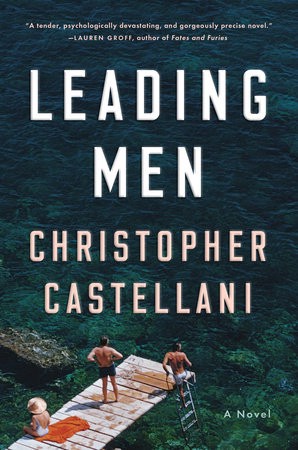
In his latest novel, Leading Men, the author envisions a “missing week” he discovered in the journal of Tennessee Williams. It was during his time in Italy with his partner Frank Merlo. While many authors lives have been fictionally retold over the years, Tennessee Williams’s life has remained largely untouched. Castellani explores the playwright’s romance with a working-class man and questions what keeps people together and what tears them apart.
Throughout the novel, which takes place in 1953 Italy as well as a decade later while Frank Merlo is dying, readers get an insight into Tennessee Williams that expands the lens on the works he wrote and who inspired them.
I spoke with Christopher Castellani about reimagining the lives of historical figures, writing a gay romance just like any straight romance, and why certain stories are passed on by the film and publishing industry.
Adam Vitcavage: What about Tennessee Williams made him interesting as a character for you?
Christopher Castellani: I really like a tell-all memoir. I came across one in the late ’90s by Dotson Rader called Cry of the Heart. I knew who Tennessee Williams was from high school. I wasn’t a huge fan necessarily but I remember liking his sensibility. I read the memoir of the great American playwright in the 20th century who had this working class Italian partner from Jersey. I was a working class Italian dude from Delaware. I wanted to know how those two ended up together.
Frank Merlo was his partner during Tennessee Williams’s most successful years. When Merlo was dying, Williams wouldn’t visit him. After Merlo had died, Williams never had another commercially successful play.
I read all of that and became obsessed with those two men and what about their relationship made Tennessee Williams so successful. As much as I love Tennessee Williams, it really became about Frank Merlo for me.
When Merlo was dying, Williams wouldn’t visit him. After Merlo had died, Williams never had another commercially successful play.
AV: You’ve written a few books now and most of them are set in a historical context. What entices you to go back in time to write?
CC: It’s funny, with all of my novels, I never made a conscious choice to write historical fiction. I didn’t have any goals of wanting to see how that time period was or how history was repeating itself. I was more drawn to characters who happen to exist in those times. The question is why those characters thrill me more than contemporary characters.
I have four novels and three of them are set during World War II or the 1950s. One thing I love about historical fiction is that in the research process you come across such rich material. It makes you feel grounded in the time and gives constraints of what you can and can’t do. I need those constraints to focus on what I really want to focus on.
With this novel, I had so much material about Tennessee Williams, Frank Merlo, and Italy in the 1950s. I didn’t want to write anything about these real people that couldn’t have happened to them. I wanted to write in the cracks of what we knew and might have happened. Having those constraints of what actually happened allowed me to find the fictional cracks.
In Williams’s journal, which was very meticulous in certain ways, there is a week in July of 1953 where there are no entries. It was during a very contentious and eventual summer. There was the crack. I took everything I knew about him, Merlo, and Italy, and tried to figure out what happened during that missing week.
AV: After you learned about Frank Merlo, did you see any of him in Tennessee Williams’s plays?
CC: What was interesting is that Williams said Merlo was what tied him down to Earth. Merlo was more a part of his process than his product. There are certain examples of when Merlo shows up in plays. There is a play called The Rose Tattoo which is the only play with a character based on Frank Merlo that Williams wrote that was wildly successful. The character Alvaro Mangiacavallo was, by Williams’s own account, was very much inspired by Merlo. It was set in Sicily, it has a broodish, handsome, working-class guy in the middle of it. He represented love and passion. That was the Merlo that inspired Williams’s work in terms of the product.
In terms of the process, he tied him to Earth. Merlo arranged all of their travel, he took care of their clothes, he took care of Williams’s medication, he talked him down. He did all of the things a partner of a writer does when the writer can’t do it. Williams had a hard time managing the ins and outs of daily life. Dealing with his own failures and insecurities, his terrible hypochondria, and how neurotic he was. Merlo was the opposite. He was perceived as happy-go-lucky. He was very engaging, very social, and very warm.
AV: As I was reading Leading Men, I realized I know absolutely nothing about Tennessee Williams other than the plays he wrote. I find that interesting because he is taught in high school and revered as this important literary figure. He seems ripe for fictionalization though. Were there other stories or plays about him? Like Phillip Seymour Hoffman won an Oscar for Capote. Where is the Hollywood Tennessee Williams story?
CC: There are some plays about him. There is an adaptation of part of the memoir I mentioned, Cry of the Heart, that tried to get to Broadway. It may be coming though. It starred Al Pacino and started out in California. They were trying to retool it. It is called God Looked Away.
There have been plays that have taken on Williams as a character. I saw one a few months ago in New York that imagined his life around the time of The Glass Menagerie. It imagines his relationship between him and another playwright. There are a few plays like that that are two or three man plays. There aren’t any novels though. There aren’t any major books other than biographies.
Both Truman Capote and Tennessee Williams had the same trajectory. They were famous and revered for their art, but then both fell apart and succumbed to drugs and alcohol.
AV: That’s so baffling to me because what I have learned through your novel and talking to you is that he is ripe for sensationalizing and fictionalizing. I’m sure there isn’t some grand conspiracy against Tennessee Williams, but is there?
CC: It’s very interesting. I think Truman Capote was the more glamorous figure of the two and you already mentioned Capote, but there was even another movie that came out at the same time called Infamous. Both Capote and Williams had the same trajectory. They were famous and revered for their art, but then both fell apart and succumbed to drugs and alcohol. They became shadows of themselves. Perhaps Hollywood feels they have already seen that story.
Even though Williams traveled in glamorous circles, he worked. He worked every day. In the twenty years after Merlo died, he wrote every single day. He was a part of hundreds and hundreds of productions of his work. Despite his addictions and anxieties, he was still involved. Maybe that isn’t as exciting of a story.
I am frankly surprised no one has fictionalized on his life. It’s so compelling. I was going to say maybe it is that gay thing because there isn’t a glamorous female lead in the story. Even Capote had Harper Lee as a character.
AV: You tapped into something though. Capote came out and Hollywood feels the general public got their fix. They gave the gay writer story. Hollywood feels we only need one. Yet there are dozens of movies about a middle-class white guy in their thirties overcoming a childhood trauma of falling off their bike. I joke, but if you pay attention to Hollywood production news, you’ll see how a black director or writer saying a studio passed on their project because the studio felt they already checked off that box for the year.
Minorities, whether it’s race, ethnic, sexual orientation, are still having their projects passed on.
CC: That’s exactly right. It happens with publishers all of the time. A writer will pass on their work and an editor will say very frankly that they already have the Indian novel, or the gay novel, or the black novel.
A writer will pass on their work and an editor will say very frankly that they already have the Indian novel, or the gay novel, or the black novel.
AV: Then there are stories like yours. I feel it unlocked a lot of history that isn’t taught or talked about enough. There has been a recent trend of using historical characters to explore themes.
CC: There is a long history of it. Some people call it real name fiction, some call it alternative fiction, counterfactual history fiction. We take real people as characters. It started with political roots. People wrote these alternative histories as a way to indite the current moment to show a previous moment in history to comment on the current moment. Books like Phillip Roth’s The Plot Against America that had a very political angle are what I am talking about.
Maybe in the past twenty years, there have been these books that take public figures as central characters. Some of those books I used as a model for my own: The Master by Colm Tóibín about Henry James and The Hours by Michael Cunningham which featured Virginia Woolf. Then there was The Book of Salt by Monique Truong. What’s really cool about that book is the author found a scrap that was a throwaway line where Gertrude Stein makes reference to their Vietnamese cook. Monique Truong wrote an entire book about Stein from the perspective of the cook. She imagined a whole history.
Those types of creative endeavors are what interests me. They give a new perspective on a writer whose work can speak for itself but having another lens on how they conceived their work and lived their lives amplifies their work. It gives readers a new way into a writer’s work.
AV: It all goes back to finding those cracks to explore stories that are compelling.
CC: Exactly. Biographies provide a certain way of amplifying a writer’s life. Fiction in which a character lives and breathes, in which they hurt or are hurt by other characters, gives different light to the character. There is a greater intimacy than a biography. Or at least the illusion of it.
You’re imagining a writer who spent their life imagining other people.
There are no stories of Tennessee Williams and Frank Merlo being harassed or bashed for being gay in this novel.
AV: Through your time imagining and writing about Tennessee Williams and Frank Merlo, what did you learn about our current time in history?
CC: We are in an interesting moment. If this book is political, it’s political in the sense of how it depicts this relationship. It was an open relationship. It was a relationship that didn’t have any models in terms of marriage other than heterosexual marriage. They were figuring out what it meant to be in terms of partners, though they never used that term, of course. They were figuring out what fidelity meant. They were in a sense defining what a relationship was in a way that they could.
Now we are in the marriage equality era. I am seeing how many people I know in same-sex relationships are still defining and redefining what it means to be a same-sex partner even though marriage is the law of the land. Same-sex marriage didn’t eliminate the need for same-sex couples to figure out what their relationship is and defining their roles with one another.
You can argue that everything has changed and nothing has changed in terms of same-sex relationships. It’s potentially more confusing now because we have a model of traditional heterosexual marriage that doesn’t actually work in most cases for same-sex couples.
Tennessee and Frank weren’t hiding among their friends. Everyone knew he was gay and had a partner. As time went on in the 1960s, 1970s, and then the AIDS epidemic, celebrities went into the closet. Tennessee and Frank lived in an easier time because their sexuality was less visible. There are no stories of them being harassed or bashed for being gay in this novel.
AV: Which is important for queer literature. Not every story needs to be about harassment and overcoming adversity. There can just be a gay romance just like any straight romance that has been written about.
CC: Exactly. I mean, Frank Merlo’s story is tragic. He died young of lung cancer. The tragedy had nothing to do with his sexuality.
In 1959, a week before his debut short story collection was slated to be published, the Czech writer Bohumil Hrabal was informed that the entire print run was bound instead for the pulping mill. Just a few years prior, under intense pressure from the USSR, the Communist Party of Czechoslovakia had ousted and executed its own general secretary, Rudolph Slánský, after he confessed to paranoiac charges of aiding a Western capitalist conspiracy in a speech spoon-fed to him by interrogators. The heady melody of revolution that would crescendo in 1968 with the Prague Spring was still no more than a faint whisper, and artists were expected to hew strictly to socialist realism, a style that espoused formal conservatism and didactic content of a kind often derided as “boy meets tractor” tales. Those pushing against these state-prescribed aesthetics did so at immense risk to their careers, their livelihoods, and the well-being of themselves and their families. A little over a decade later, censors once more dashed Hrabal’s dreams for publication in dramatic fashion, this time twice over in one year: distribution of Home Work was blocked, and all copies of Buds were ordered to be set ablaze.
In light of his biography, it’s difficult not to see something deeply personal in Hrabal’s later Too Loud a Solitude,which appeared in a samizdat — underground self-publishing — version in 1976 but wasn’t given an official print run until the collapse of communist rule in Czechoslovakia in 1989. Too Loud a Solitude centers around a protagonist who makes his living crushing books at a waste paper mill, indiscriminately shoveling volumes of Kant and crumpled-up newsprint into the belly of the compactor. Yet Hrabal’s novel was not only a reaction to his own experience of censorship; it also spoke to a thematic concern shared by many Czech authors of his generation. Writing at a time when the expectation that public speech should toe the Party line had resulted in the uncoupling of speech and thought — and when the disjuncture between government proclamation and lived reality was readily visible but politically dangerous to voice — these writers frequently explored the theme of language’s decay and collapse. With the current global rise of the far right, when phrases like “post-truth” and “fake news” are uttered by pundits and plutocrats alike without so much as the bat of an eyelash, the literary investigations of writers from the Eastern Bloc can take on an eerie second life, like Cassandra’s prophecies recollected as Troy burns.
Too Loud a Solitude is a paean to the many-splendored beauties of the written word: Han’ta, the paper-compacting narrator, is paradoxically an avowed admirer of the texts he is charged with destroying, tenderly arranging them in bales and occasionally fishing out something to be saved. Strains of Han’ta’s salvaged readings thread themselves through the novel, giving texture and rhythm to his often breathlessly long sentences. Yet the novel also revels in its descriptions of books’ physical breakdown: in the basement room where Han’ta works, volumes of Goethe and Lao Tzu rub shoulders with discarded playbills and blood-soaked butcher shop wrappers, and “the wastepaper, piled to the ceiling, wet and moldy, ferments in a way that makes manure seem sweet, a swamp decomposing in the depths of my cellar, with bubbles rising to the surface like will-o’-the-wisps from a stump rotting in the mire.” Here, Hrabal captures the moral repugnance of the state’s suppression of ideas via a scene that is viscerally repulsive, twinning the literal rot of pages bound for the compactor with the spiritual rot of the government power that consigned them to such a fate. The metaphor continues elsewhere in the novel when Han’ta introduces readers to the Czech underground in quite a literal sense: writers, philosophers, and professors who have run afoul of Party orthodoxy and been forced to do drudgework in the reeking municipal sewers.
Other works of Hrabal’s take aim at official speech directly. In 1965’s Closely Watched Trains (also translated as Closely Observed Trains), a story of Czech railway workers who variously collaborate with and fight against the German occupation during WWII, the seditious stationmaster appropriates bureaucratic rubber stamps for use in sexual games, undermining the governmental gravitas the stamps’ words embody and suggesting the moral poverty of the authority with which they are invested. But Hrabal was hardly alone in observing the decay of meaning under totalitarian rule; dogged by state suppression, many of Hrabal’s contemporaries likewise addressed the theme of language’s breakdown in their work. The Memorandum (1965) — whose author, Václav Havel, would go from jailed playwright to prime minister after the fall of communist rule — concerns a business’s attempt to create an emotionless and unambiguous language, as well as the bureaucratic violence that ensues when workers object to such a project. In their quest for linguistic control, the firm’s leadership succeeds only in rendering meaningful communication impossible. A rule mandating that all words be as dissimilar as possible to avoid confusion results in a language composed of consonant-encrusted nonsense words that can reach hundreds of letters in length — and an office full of workers completely unable to wrap their heads around it. The name for Havel’s invented language, Ptydepe, has since become a Czech byword for incomprehensible officialese.
Dogged by state suppression, many of Hrabal’s contemporaries addressed the theme of language’s breakdown in their work.
One writer who took a less allegorical route in his institutional critique is Milan Kundera; the plot of his debut novel The Joke (1967) is set in motion when university officials refuse to interpret a student’s sarcastically pro-Trotsky postcard any way but literally, upending the young man’s life in the process. The apparatchiks who summon the student in question, Ludvik, for an explanation of his actions refuse to believe that what he wrote did not express his true feelings: “Whether you wrote it quickly or slowly, in your lap or at a desk, you could only have written what was inside you. That and nothing else,” they insist. The officials’ condemnation of Ludvik — and his real-life equivalents — relies on a contradiction: the assertion of two-facedness when confronted with protestations of innocence on the part of the accused, but also the firm denial that subversive content could be anything other than sincere. The university functionaries who ultimately expel Ludvik reduce speech to its flattest, most rudimentary form, presenting a hollowed-out version of language without nuance, without subtext — without substance at all.
The circumscription and breakdown of language as exemplified by official euphemism and state language policing, these works suggest, is corrosive to the public — but not because, as Orwell argued in “Politics on the English Language” (1946), it effectively prevents citizens from accurately perceiving the world around them. Everyone can see, for instance, that Ptydepe is a failure and that the policies attendant upon it are a snare of contradictions. The gap between reality and verbal depiction is readily apparent — but the inability to describe this, the need to constantly keep up public pretense, and the sight of everyone around you doing the same, is both exhausting and intellectually humiliating. Language control, then, works not because it successfully binds people together in one unifying belief, but because it atomizes, preventing the trust in honest communication that is necessary to building collective action.
I first read Too Loud a Solitude in December of 2016, on the winter solstice, the longest night of the year. It was that eerie uncertain twilight between Trump’s election and his confirmation, and in the time since it has frequently struck me that the themes treated by Hrabal and his contemporaries have found belated resonance in the current political moment. Recent reports that the Department of Health and Human Services is considering redefining gender as a binary and unchangeable concept determined solely by one’s genitals and genome — a move that would strip over a million trans Americans of legal recognition — are indicative of just the kind of top-down manipulation of language that Havel took aim at in Memorandum. So too is the fact that Department of Agriculture officials have warned staff members not to use the term “climate change”; such an attempt to find-replace global warming out of existence takes on new and despair-inducing urgency in light of the bombshell report unveiled by the IPCC last October. And in a climate where brazen falsities may be presented by poker-faced officials and their supporters as “alternative facts,” it is sometimes difficult not to feel that language itself is rotting just like the mouldering paper in the lightless cellar of Too Loud a Solitude.
Yet if Czechoslovakia’s dissident writers often offered grim predictions about the ease with which language could be appropriated and corroded by those in power, their work also embodied a mode of resistance to that very phenomenon. At one point in Too Loud a Solitude, Han’ta sympathetically describes the social structure of Roma who “light a ritual fire wherever they work, a nomads’ fire crackling only for the joy of it, a blaze of rough-hewn wood like a child’s laugh, a symbol of the eternity that preceded human thought, a free fire, a gift from heaven, a living sign of the elements unnoticed by the world-weary pedestrian, a fire…warming the wanderer’s eye and soul.” Han’ta’s description of a free society coextensive but distinct from the mainstream echoes dissident thinker Václav Benda’s calls for the creation of a “parallel polis,” a system of independent social institutions built by and meant to sustain the underground. At a time when the idea of a parallel polis is coming back into vogue among those seeking to actively resist the rise of the far right, dissident writers like Hrabal and his ilk can help point the way forward for how language and literature can be reclaimed as weapons.
It is the year I own a bed again. The year I return to D.C. to work in an elementary school, tired and overextended, resentful and broke. The year all of my belongings do not fit into a suitcase or the corner of someone’s room or one shelf in their closet.
It is the year I do not live near ocean or mountains. The year a boyfriend from a decade earlier develops a brain tumor and I don’t know what to say, so I say nothing. It is the year I forget to make resolutions. It is the year I categorize things oddly — my books by thickness, my shirts how Marie Kondo says to, every photo I own in a box under my bed with a suitcase I do not use.
During a snowstorm that shuts down the city streets and businesses and government for a week, I meet a man. On our first date there are still two cars stuck in the snow at the end of my one-way street and one car stuck at the end of his, so we go for a walk and bring a bag of birdseed my mother gave me as a Christmas present. She said it would bring me good luck if I spread it on New Year’s morning and I’d forgotten to do it. I’ve heard birds were the animals everyone forgot about during winter storms and making food available for them could save their lives. I’m a week late on luck, but maybe I can help the birds. I want to walk and leave seeds in a few different places, but my date takes the bag from my hands and dumps all of it under a tarp by the apartment building next to mine. “There!” he says, carelessly, like he’s just pulled a stray hair from my sweater. Next, he steers us five blocks away to an apartment where he used to live. I am shivering by then, but we stand in the snow as he points out all of the ways it is different than before. I don’t tell him I can’t feel my toes. I don’t tell him that I have not lived anywhere for more than 12 months in the last 11 years.
It is the year I say what I feel as little as possible in hopes of feeling nothing.
One month later, I can watch him disappear in front of me. His shining hazel eyes turn black through some magic trick I cannot replicate. By February I do not know what to expect when my passenger side door opens and he gets in. The days he is happy to see me are good. The days he is indifferent — quiet and impatient when I ask simple things, like how his day was — embarrass me, like someone has invited me to their home, but hopes I will not accept the invitation. I always accept.
I tell him these things only once, when he sits across from me in an armchair in March and asks, “How are you feeling about this? You and I?” He is the one who needs to talk about feelings. I say this and catch him off guard. It is the only time I can remember surprising him. He had; he has become accustomed to my predictability. I am medicated and in therapy three times a week. I am committed to us fucking other people. I am not trying to be good. I am not trying to be anything.
I am not trying to be good. I am not trying to be anything.
Later, a mutual friend will tell me how he told her he could not date anyone who was nice to him. Another mutual friend will call him Aladdin: the man who shows you the world and then pushes you off the carpet.
When I say I am going home to cry he says “Please don’t” and pulls me into his lap. I tell him he is a good man, what with all this honesty. I tell myself how sincere he must be, to care that I would cry. This is my magic trick.
In early October, I go with a friend to see Icelandic performance and visual artist Ragnar Kjartansson speak at the opening of his exhibition at the Smithsonian Hirshhorn Museum. He walks the floors of the museum first and I take a photo of him from behind, surrounded by fans and walls covered from floor to ceiling in his paintings. In a basement auditorium he speaks about his creative process, his thoughts on the Icelandic art scene as its developed over the last three decades, and his relationship to his mother, whom he films spitting on him once every five years for a video installation in the exhibition called Me and My Mother. At the end of the evening I have jotted a single note into my phone, attributed to Kjartansson: The defiant act of suffering without dying. My friend took something else from the artist. As we are leaving, she tells me that she is done dating, is going to focus on herself and whatever she wants.
I remind her that I stopped dating, for years at a time, before I picked up my life and moved across the continent and up into a new country for a man. “Look how well that ended for me,” I tell her, laughing.
“Wasn’t it good to live that life, though?” she asks.
It is the year I insert my pain in odd places, annoying myself most of all with the audacity of it.
In Ragnar Kjartansson’s performance piece Women In E, a woman in a floor-length gold sequined dress holds a guitar and stands on a revolving stage with an amplifier. The space around her is a circle of thin gold streamers hanging from the ceiling. The woman strikes an E chord, over and over, for two and a half hours at a time. When you ride the elevator up to the exhibition on the second floor, it is the only thing you can hear; a single, drawn-out chord. Closer, the woman’s arm moves in a slow oval, striking every fifteen or twenty seconds and letting the noise fill the room before she aims again. The women choose how long, exactly, between the chords, but it is never fast. It is slow and echoes. When one woman’s time is up, it is a new woman’s turn to go on the pedestal. The transition is so seamless that there is only ever one missing E chord between them. The friend who is done dating is a curatorial assistant at the museum and helps the women transition between shifts. She tells me they share one small dressing room they’ve built into the walls of the museum. The space will be destroyed when the exhibition closes, so they leave notes and write quotes for each other on the white plastered walls. They become close, these fourteen women. You can’t see the door unless you know to look for it.
I visit the exhibition multiple times and always stop at Women in E. Sometimes I sit just outside of the gold ring on a bench to watch people unsure of whether they can go inside to see the performer. I visit and enter the ring to see if any of the women will look at me.
In November, I let a man I like hold my face hard and say “Look at me when I’m fucking you” and it feels good. It feels good to be told what to do. It feels good to be able to do something so easily. He is honest about who he is and what he wants and I tell myself I am listening. I count bruises on my ass and my thighs and my breasts as proof that someone wants me.
He says he has waited a long time for this, but he has not.
I tell myself this is a kind of pedestal.
On Christmas, the new girlfriend of the boyfriend I moved across the country for posts a photo and calls him her soulmate. This is something I never dared to name him during the four years we loved each other. She did it within a few months. He is hers now and seems happy. They like the same things, do the same things, are from the same country. She looks easy. She looks nice.
I am not easy. I am not necessarily nice. I like books more than exercise or other people. I am the person on his couch when he comes home and the person who does not get out of bed at all some days. I imagine the conversations he must have now — how it never quite fit with me, how he almost gave up cycling on my behalf, how often I asked him to travel. How it feels right with her. How easy it is after me.
At a Christmas party we went to two years into our relationship his married friend talked about meeting his wife and said, “When you know, you know. Right?” and looked at him for validation. Looked at us together. Nicholas said nothing. Could not even nod his head. I sat on a wooden stool surrounded by mostly strangers and wondered if it might somehow tip over so I could look as embarrassed as I felt and have the room understand without feeling so sorry for me.
I am not easy. I am not necessarily nice. I imagine the conversations he must have now — how easy it is after me.
I went to every one of his cycling races while I lived with him; he rarely read my writing. I considered these our “things.” His cycling, my writing. Once, when I asked if I could read my writing out loud, he said it sounded like I was casting a spell. I kept a death-grip on that sentence for months, repeating it over and over, refusing to release the idea that I had bewitched him, finally. That my words could do something for us.
Our relationship ended over many months and planes and ferry rides. It was only ever me on the airplanes and ferries; he metaphorically and literally refused to leave the Canadian island we lived on. Finally, just as the Pacific Northwest was beginning to become warm again, I took a final ferry and plane away, back to the East Coast. I traveled as often as I could to distract myself, desperate to reclaim some part of what I used to love. It became unbearably painful to look at glacial water in Montana and European cobblestone in Lisbon and hulking mountains in Colorado and have everyone tell me how lucky I am to be seeing all this when all it feels like is a reminder of the person I loved so much more.
I move back in with my parents for three months, just before moving on to D.C. I write obituaries for a Canadian newsgroup out of a Buffalo, New York office. My boss instructs me that, should anyone ask where in Canada we are located, I must respond, “Near Toronto.” Sometimes people from Vancouver Island call and I tell them I used to live up-island in Nanaimo. Eventually people from Vancouver Island start to ask for me specifically. The crematorium workers and funeral home directors like me. I add “hey?” to the end of my sentences and know how to pronounce all of the small island towns. During bathroom breaks I sit on the toilet and quietly recite the names of places Nicholas and I had been together, afraid I will forget them, then wash my hands like they are tiny, fragile things. It is the year I stop speaking to him.
It is the year I find out I have developed an irregular heartbeat — shocking my childhood pediatrician who generously offers to see me without insurance. “You never had this before and it’s not in any of the medical records you had forwarded here,” he tells me.
It is the year I learn my heart has actually broken.
The doctor gives me a prescription for antidepressants and tells me I am far too pretty to be alone. It’s really a shame, he says.
If I had been a boy my name would have been Peter. Peter is derived from the Greek word petros, meaning “stone” or “rock.” If I had been a boy, my mother would have had three sons and they would have stopped trying to have more children. My mother tells me how much she wanted me to be a girl.
With age, I want to know what it might means to be male. To live Peter’s life. Hard and steady and rock-like.
In the last few days of Kjartansson’s exhibition, just before the new year, I go to the Hirshhorn to watch all 64 minutes of Visitors. In the installation, the artist and seven other musicians play a gospel dirge inside a decaying mansion. They are each in their own room of the house and each projected onto one of eight screens. A ninth screen shows the outside of the mansion and an old man sitting on the porch cleaning a canon. Halfway through the piece, he lights it and it explodes, the sound carrying through each screen at different volumes depending on where the musicians are in the house.
The lights are dim. The piece makes the room vibrate with sound, makes the museum space feel like an organ. Depending on which screen you are in front of, you hear the voice and instrument of one musician more than all the others.
I sit on the floor of the museum between a screen showing Ragnar playing guitar in a bathtub and a screen with a woman playing the cello. I sit between the legs of the man I am fucking. I want to lean against his chest and I do not. I want to cry and I do not. Throughout the piece, in between crescendos of chorus, they repeat the same line: Once again I fall into my feminine ways.
It is the year I can control my emotions almost completely.
Throughout the piece, in between crescendos of chorus, they repeat the same line: Once again I fall into my feminine ways.
Before we leave, we go to see Women In E together. There is a woman I haven’t seen perform yet. As she turns, she stares at me until the pedestal spins her too far around to maintain eye contact. I wonder if I imagine it, but when I ask hours later, the man I am with tells me, “I saw that. She did.”
I do not visit again.
A few weeks pass and this man tells me we cannot sleep together anymore. There are many reasons and, to him, it is important to maintain the friendship that started this. I have stopped respecting his privacy and started stealing his time, he tells me. I picture a robber in all black with a sack full of clocks and laugh before I hang up on him.
He has a tattoo of a lock behind his right ear and there is no key anywhere on his body. He has a tattoo behind his left ear that says FIX ME and I understand the joke finally.
It is the year I do not have to be told and told again when someone does not want me.
Visitors ends with all of the artists abandoning their instruments and exiting their rooms, one by one. Ragnar has been sitting, naked, in a bubble bath with a guitar and all of the bubbles are gone now. He rises, grabs a towel. They meet in the entryway of the mansion and open beers and light cigars. They keep singing and walk toward an open field, repeating “Once again I fall into my feminine ways.” They sing in chorus until they are out of earshot and, finally, out of view entirely.
Kjartansson’s ex-wife, Ásdís Sif Gunnarsdóttir, wrote the song about their divorce. He performs it without her.
The man I met during the snowstorm moves to the West Coast to be with another woman.
The man I was sleeping with moves to the West Coast to be with another woman, too.
The exhibit closes just after the new year. My friend who works at the museum can finally divulge one of its secrets: the stage turns on with a remote control they kept hidden inside of the amplifier. The piece is reliant on the flick of a switch.
It is the year I depend on art more than people to heal me.
It is the year I think I want to be put on a pedestal.
Months later, I meet one of the Women in E performers at a party. When I ask about any discomfort from playing the same note for hours at a time she tells me that what she found most unpleasant was when people viewing her performance spoke about her like she couldn’t hear them. That sometimes people stood close and sang to her. That she could hear one of Ragnar’s other pieces while she played and it haunted her.
I know the piece she means — it is the one I stayed in the room for less than two minutes to listen to — and we deliver the single line it repeats to each other: Sorrow conquers happiness.
Rape, infighting, secrets, financial malpractice; the scandal surrounding the Nobel Prize in Literature began in November 2017 when Swedish newspaper Dagens Nyheter published allegations by eighteen women that they had been sexually assaulted by Jean-Claude Arnault, a 71-year-old Swedish-French photographer. Arnault was married to Katarina Frostenson, a member of the Swedish Academy, and over the following months the man who boasted to be the “19th member of the committee” was accused of 20 years of sexual assaults, including incidents at properties owned by the Academy—not to mention other illegal activities, such as leaking the names of soon-to-be laureates, which are subject to heavy betting. By this past October, when the Stockholm district court unanimously sentenced Arnault to two years in prison for rape, seven of the academy’s eighteen members had already quit in protest, and no prize was awarded for 2018. As permanent secretary Anders Olsson stated, “We find it necessary to commit time to recovering public confidence … before the next laureate can be announced. This is out of respect for previous and future literature laureates, the Nobel Foundation and the general public.”
The hiatus is over; this week the Nobel Foundation announced that it will award two prizes for literature in 2019. It is also taking steps to address some of the issues raised by the Arnault scandal, like appointing five external members to help select the Nobel laureates, considering a time limit on membership, and reviewing how to handle resignations and expulsions. For the first time, it will eject any members who are subject to conflict of interest or criminal investigations.
No conflict of interest, no criminals. These are certainly steps in the right direction, yet they’re so obvious and overdue that you have to wonder what exactly we’ve been so impressed by all these years. It feels a bit like getting to Oz only to realize the Wizard is a tiny man hiding behind a green curtain, shouting “look away!”—though in this case the Wizard is an exclusive group of Academy members who serve for life and who have kept the Nobel prize process a closely guarded secret. The group is so small that when seven members resigned last year, it caused a crisis and left less than the minimum twelve-person quorum to pick a winner. We know that the Academy reviews around 200 nominations in February, then announces a shortlist in May, and a final five in the summer, but the full explanation of why a winner was chosen is sealed in the Nobel archives, only to be released 50 years later. During the scandal the Nobel Foundation itself criticized the Academy for how it has “cultivated a closed culture over a long period of time.”
The Nobel Prize has been awarded in five categories since 1895, and over that time it has gained a serious amount of cultural cachet. You probably respect a Nobel laureate even if you don’t know much, if anything, about the actual criteria considered for the prize. Nobel stipulated that the prize for literature should honor the person who produced “the most outstanding work in an ideal direction.” It’s a vague directive, and one that has caused many issues of interpretation. Sara Danius, who was the Permanent Secretary of the Academy until she resigned last year, once told an audience at Duke, her alma matter, “What does it take to win the Nobel Prize in Literature? What do I know? I don’t know. All I know is that the criteria are simple, but tough. You get awarded not for a single work, but for a life’s work. You are expected to come up with something new in terms of content or form or both. And that is how you win the Nobel Prize in Literature.” In short, it’s an easily manipulated set of standards, and we just have to accept that the Academy knows what it’s doing. The problem is, that’s no longer obvious.
We just have to accept that the Academy knows what it’s doing. The problem is, that’s no longer obvious.
So is it time to get rid of the Nobel prize in literature? At minimum, after 124 years it’s worth reconsidering what it’s adding to the cultural landscape. Take, for example, how in the same year that the Nobel went without a literature prize, the National Book Foundation reinstated the National Book Award for Translated Literature. That prize was last given in 1983, which isn’t surprising given America’s disinterest in translated literature; less than 3% of books published here are in translation, which hugely lags behind the rest of the world. Reinstating the prize was a practical, positive way to boost interest in translated works. As Lisa Lucas, the executive director of the Foundation who oversaw the addition, said, “The National Book Foundation is an organization that is about the celebration of the best books in America and about expanding the audience for them, so if we believe strongly that translated work should be read and we believe strongly in the expansion of the American audience for books, how in the world could we ignore that?” The Nobel prize in literature, by contrast, often seems to exist for its own sake. Its closed circuitry represents much of what is wrong with publishing: a small group of privileged people get to decide what constitutes great literature. They have the power to shape the literary landscape, but they keep the reasons for their choices secret, which allows for bias and discrimination. There are also times, notably when Bob Dylan won the 2017 award, when it feels like their decisions have less to do with promoting literature, and more to do with seeking attention.
Another counterexample to the Nobel’s way of operating is the Women’s prize for fiction, which recently included a non-binary transgender author on its longlist for the first time in the prize’s history. This isn’t tokenism; recognizing writers who aren’t cisgendered, white, English-speaking men is crucial for any literary body that wants to be legitimate today. There are too many great writers who exist outside those criteria for the public to accept their exclusion without wondering how an awarding body is defining excellence. Only fourteen of 100 recipients of the Nobel Prize for literature have been women, few are writers of color, and English has more than double the number of prizes than the next most awarded language, French.
The Nobel Prize in literature must become more transparent, more inclusive, and more positive, or it risks being nothing at all. This would damage writers, because while the Nobel comes with a generous amount of prize money (the amount varies each year; in 2017, Kazuo Ishiguro won 9 million Swedish Krona, or about $968,805 US dollars), the general prestige (not to mention boost in book sales and speaking engagements) comes from gaining the title “Nobel laureate,” the worth of which grows or diminishes with the integrity of the Academy. It won’t be an easy task. The Arnault scandal exposed the bullshit that underpins so many organizations; the cattiness, the pomp, the self-reverence, the misuse of influence. After the many #metoo era revelations, the public is sick of powerful people who use their social status like a blunt force object to cow others or worse, and they are growing skeptical of institutions that conflate secrecy with prestige. The Academy doesn’t need to publicize the minutes of every meeting it holds, but it should be more transparent about the criteria behind choosing laureates. Its members have countless years of experience evaluating literature, so why not share their thought process with the public? Let the public into the joy of creating literary heroes, and honor those heroes from all corners of the globe.
DON’T MISS OUT
Sign up for our newsletter to get submission announcements and stay on top of our best work.
YOUR INBOX IS LIT
Enjoy strange, diverting work from The Commuter on Mondays, absorbing fiction from Recommended Reading on Wednesdays, and a roundup of our best work of the week on Fridays. Personalize your subscription preferences here.