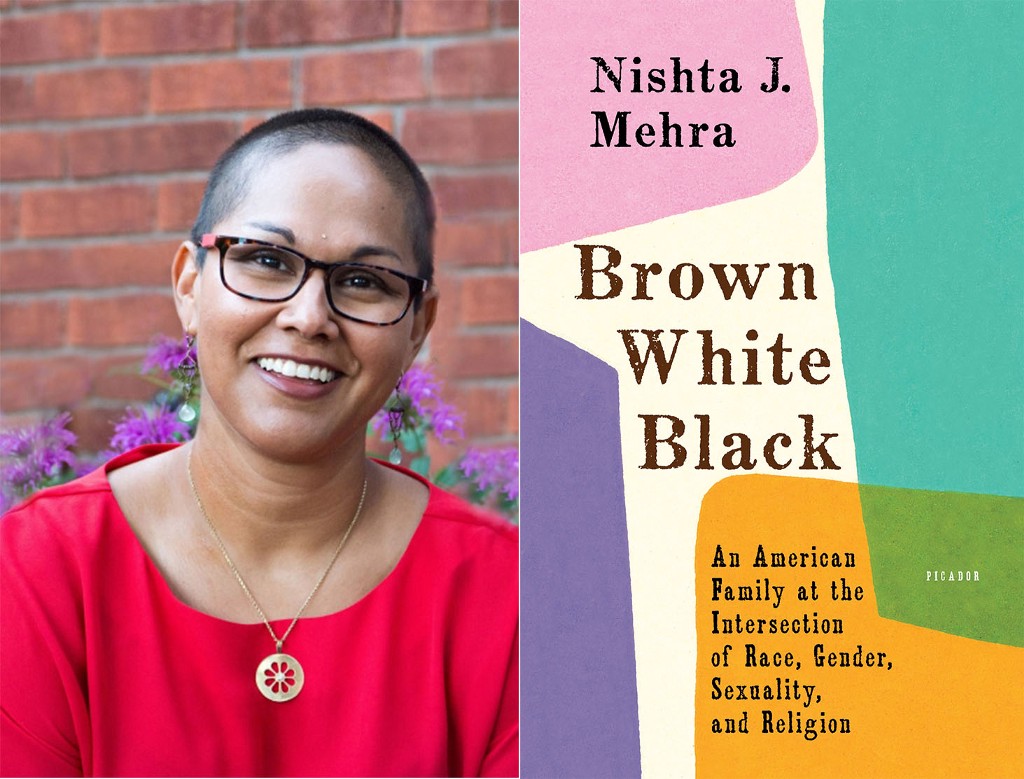
“Brown White Black” Is A Love Story About Family and Identity

It’s rare to come across an essay collection that is unequivocal in addressing the systemic norms that impact identity while also being compelling and incisive about the relationships that form us. Nishta J. Mehra’s memoir Brown White Black: An American Family at the Intersection of Race, Gender, Sexuality, and Religion achieves this by recounting her experience as a queer woman, and as a child of Indian immigrants in a segregated Southern town, and in addressing her own internalized biases while being transparent about the challenges of raising a Black child in America.
Through frank, clear prose Mehra explores what it means to be a part of a family that the world does not often recognize. Her book is a meditation on lived experience and how one comes to be, but it’s also a love story one that emphasizes the intersecting identities of Mehra, her wife, and her daughter. Mehra and I chatted on the phone about her complicated relationship with her hometown, what she hopes her daughter will garner from her childhood experiences, and how her identity has evolved since becoming a mother.


Genelle Levy: Brown White Black focuses on intimate, emotional moments surrounding your family and personal lived experiences, what was your writing and meditative process like?

Nishta Mehra: A lot of what my process looks like is paying attention in my daily movements through the world. I’ll jot things down as they happen. It’s a process of turning things over in my head and trying to make connections between the things I see in my classroom, in my personal life, and in parenting my child and drawing those lines between them. Most of the drawing together happens on the page for me. I think that’s true for most writers. We figure out what we think by writing. It often looks really messy until I start to figure things out. Then things start to take shape on the page. Then I realize what I’m trying to talk about. I often don’t really know going into it. I just know I have questions and I’m trying to figure out why something bothers me, or why I’m interested in something or why something felt a certain way when it happened.

GL: Childhood is a main theme in Brown, White, Black. You wrote about your childhood and your daughter Shiv’s childhood. Since becoming a mom what has surprised you in terms of what it means to come-of-age as a person of color in America?

NM: I think it’s both exciting and frustrating to watch and see what Shiv has access to. The exciting part in particular is with Shiv’s gender-fluidity and her interest in things that are not typically permissible for someone born into a male body. It’s been exciting to watch and see the space that she has to explore and that other kids have 30 years later. It’s certainly a polarized conversation, but it has been encouraging for me to talk and think about gender in a way that wasn’t possible when I was Shiv’s age. In terms of race, I think I’m a little less encouraged. It’s really important that we can find books and TV shows that don’t just have a token character of color. Those are real and they impact our everyday life. But there’s still so much work left to do in that area. You still have to really seek out that material.

It often looks really messy until I start to figure things out. Then things start to take shape on the page.

GL: That’s interesting because you referenced a children’s storybook that you like to read to Shiv about two penguins that is a queer love story. I’m disappointed years later to hear that there’s still a lack of children of color in children’s books.

NM: I think one of the things that strikes me is that we still have to actively seek out books with characters of color, and we have the resources to do that. We live in a city with a great library system that’s conscious of the population that it’s serving. But diverse children’s books are not in the bookstores. For folks who don’t have access to those things or don’t have the resources, the means, the time or the money these are systemic problems. It’s not just about an individual personal family frustration. It’s that there’s a wide-reaching impact related to a lack of representation. It’s more than just a nice moment. It’s a lifeline for certain kids.

GL: So, you’re a Southern woman having grown up in Tennessee. How has your experience as a queer minority woman been impacted by the Southern culture around you?

NM: I think one of the things that Southern people will often joke about is that at least here you know where the discrimination is and you can see it. There’s a certain amount of ownership around the issues and history of racism and discrimination in the South, that’s not to say that it doesn’t exist in other places. It’s frustrating, this idea that the old systems of discrimination exist only in the American South. It’s become pretty clear recently that that’s not the case. This kind of discrimination can look different in other parts of the country, but it doesn’t mean that it’s not there.

GL: Memphis is such a complicated place for you because, although you had some negative experiences there, it was also such a key part of your childhood and it’s still home for you.

NM: A lot of us have that feeling about our hometown no matter where it is. It’s a push and pull. You love it, but you’re frustrated by it. It’s complicated because my dad also died there. So there’s lots of layers to that. My wife is not from Memphis so she doesn’t have the attachment to it that I do. It’s not on our list of places that we would consider living. It’s complicated when we visit Memphis because we’re more visible as a family in terms of our identity than when we are in other parts of the country that are more integrated. It’s something Shiv has noticed. The community that I had in Memphis is comprised of mostly Indian and White people. So, that’s a different experience for Shiv to be in spaces that are majority White. I don’t want that to be her experience. I don’t want that to be the norm for her. I have a set of unresolved feelings about Memphis. I do love it very much, and I have a lot of people that I love there. I’m proud of the work that has happened on the ground in terms of activism in Memphis. People are trying to push conversations and make change happen. There’s a draw to want to be a part of that, but then there’s also a sort of fear that the cost would be too high in terms of what Shiv’s experience would be like.

GL: In “Working the Trap” you wrote about what versions of queerness are accepted by mainstream society. Acceptable queerness has mostly been attributed to cis, white gay men that conform to traditional ideas of masculinity. It seems that queer women, especially queer women of color are still othered within the LGBTQ community.

NM: I think I really struggle with the ways in which queer identity is softened to be more palatable in mainstream culture. Most mainstream representations depict queer women of color with long hair and in feminine outfits with white partners. It’s rare that we see two women of color together as a romantic couple in gender non-conforming fashion or more unconventional style choices that exist outside of gay white mainstream culture.

GL: Within the queer community there was some division in terms of embracing gay marriage, and you write about this when discussing your own wedding. Some people within the queer community had ambivalence about embracing heteronormative conventions such as traditional marriage, but there were also others who wanted to have the ability to legalize their love and benefit from the civil freedoms that marriage grants. Can you elaborate on how your feelings changed regarding that issue?

NM: I have several different perspectives. I can completely respect people who choose to forgo marriage. Even the idea of monogamy as being superior to other forms of relationships is very heteronormative, and tied to a sense of morality. One thing that the queer community has done, and doesn’t get a lot of credit for, is pushing and challenging notions of what love, companionship, and family look like. But I’ve also had the personal experience of feeling very excited about getting to marry the person I love. Jill and my decision was very pragmatic, but if we weren’t parents we might’ve been having a different conversation. That was a big motivator for us especially being adoptive parents, and having to navigate challenging legal dynamics. We wanted that piece of paper.

The queer community is pushing and challenging notions of what love, companionship, and family look like.

GL: You also wrote about some of the negative stereotypes you had internalized about other minority groups as a result of living in a segregated city and about the challenges of the inter-minority racism you encountered in the South Asian community. Could you elaborate on that?

NM: I think it’s a very urgent and important conversation to have. I can only speak for the demographic I’m a part of. Asian Americans are labeled as being the model minority and that’s definitely a factor. I did not grow up inside of a community that had any sort of awareness or conversation about what social justice might look like. I’m not saying this doesn’t occur in Asian American communities, I know that it does, but that wasn’t part of the conversation when I was growing up. Now it’s starting to happen in pockets and some of it is generational. I was really moved when there was a viral letter about Black Lives Matter that got translated into a bunch of Asian and South Asian languages through a social media crowdsourcing effort. People were volunteering to translate this statement so that young people could talk to their parents about why it’s important that Asian Americans and minorities stand in solidarity with the Black Lives Matter movement. It made me feel less alone and to see the desire amongst young people to really engage their parents was very moving.

GL: You didn’t waver when it came to addressing your own privileges and biases. What would you suggest in terms of how people can meditate about their privilege(s) and biases, especially for those who aren’t writers and can’t just work that out on the page?

NM: I try to consume media that offers a different perspective from my own, whether that’s visiting a particular website or subscribing to a certain newsletter. That can sometimes push buttons. Then you have to ask yourself: Why is this rubbing me the wrong way, why am I feeling defensive right now, why am I getting prickly? It takes practice. It’s human to get defensive, but I think it’s a muscle we can exercise. I’m lucky to have lots of people in my life who challenge me, and are willing to engage in those hard conversations with me. I think the more we cultivate those kinds of relationships is the more that we can practice the kind of work we need to do. But I think the desire has to come first. I think with the desire is the acceptance that there is no endpoint. Some people have pushed back against this idea of “wokeness.” There’s no specific arrival point. It’s a becoming. It’s a posture you adopt, and you can’t put it down. The second that you stop doing that work, you’re back to not being woke anymore.

How Could a Mother Leave Her Child?

Growing up with an alcoholic mother is a full-time job — the tending, the fretting, the terror. A somatic nightmare. But once my mother left me, I was not off the clock. At nine years old, I had retired from nothing. Instead I was bathed in an uncategorized grief, though I would not have known to call it grief for a very long time.

The trouble was that my mother was not dead when she abandoned me and did not return. She was breathing and living, going through the motions of a life just as I was. I wondered if she cried when she was alone like I did nearly every evening, looking up at the clean ceiling of my grandparent’s house, my new home.

Death was simpler to imagine. Easier to explain. I wanted a death when she left me because it felt a death. I wanted life to match itself but it did not.

There are plenty of dead mothers to be found in mainstream narratives, or mothers who return by story’s end, but those aren’t the same thing as the loss of a living mother — a mother still in the world, just not the same world as her child. So when I read the memoir Mother Winter by Sophia Shalmiyev, it was like looking in the mirror and seeing myself, all blood and pulp and bruises, my body split down the middle by my motherloss; it lapped the salt of that wound.

Mother Winter chronicles Shalmiyev’s childhood separation from her alcoholic mother, Elena, and how she tries to find her mother later as an adult. She so perfectly conjures life as a child of an alcoholic though poem-like prose, describing a scene where she turns on a light and sees her mother limp, two men possibly raping her. I would have to learn about Elena by reading an instructional manual that didn’t exist. She describes her mother’s dark lined eyes and lacquered lips, the blue veins on her breasts and the desperate way she drank hairspray, men’s cologne. My mother, too, could get by on chemicals if needed: vanilla extract, Listerine, the bottles circled by her fuchsia lipstick.

Mother is a circle, Shalmiyev writes. A complete and perfect hole.

Elena is the ghost trailing Shalmiyev’s existence, and while many women grace the vignettes of Mother Winter, the book is indisputably about her: the search for her, and the failure to find a satisfying answer to the burning question I have also carried my whole life — how can a mother leave her child?

Shalmiyev’s father did not leave the cord intact for her mother to be found, letting Elena fade from view as he and Shalmiyev flew over the ocean from communist Russia to the United States for a new life where she would work for a feminist high school newspaper, Riot Grrl her mantra. Her stepmother Luda mused that she should feel grateful — why miss your whore mother when you are better off without her?

The book is about the failure to find a satisfying answer to the burning question I have also carried my whole life — how can a mother leave her child?

“Why miss your mother” was a question I heard too, and it shamed me. People probably thought it comforted me to hear that I was better off without my mother, but it did not. Telling a child their mother is scum, no matter how horrible she may be, is telling the child she is scum. You cannot separate the two.

Shalmiyev’s mother, like mine, was not dead, but an alcoholic. Shalmiyev writes her mother poems, imagines her. Every night for a long time I imagined my mother coming screeching around the corner into my grandparents cul de sac to take me in the night. I wanted something crazy to happen. But the fantasy stopped there. There was no new life waiting. There was only the life I’d always known, alcohol at the helm. My mother knew all the recovery lingo; she had been in and out of programs since she was a teenager. King Alcohol, she called it, before she knelt to worship.

It is one of life’s supreme gifts to find a book that seems to tell your story — not just the emotion of something familiar, but what feels like your exact heart. I’ve only felt this once before in my life, while reading White Oleander by Janet Fitch. In this sprawling novel, the young narrator is accounting for a maddening loss when her poet mother goes to prison for murdering an ex lover. Her mother is not dead, but taken. Shalmiyev says early in Mother Winter that she was stolen from her mother (though she rationalizes that her mother left her years before when she chose the bottle). I, too, felt that perhaps I had been stolen from my mother, that the courts were determined to keep us apart, setting up impossible tests and barriers that my mother would never be able to accomplish. She had to go to rehab, they said, she had to get a job, she had to show she could keep up a safe living situation for us, she had to she had to she had to. But how was this woman, who for a time could not even leave her bedroom, could not even make me one meal or take me to school, possibly do all of those things? Stolen. When I talked to her on the phone for our limited phone calls after she left, after she never showed up for her court date, we would muse how unfair everything was in life, how unfair it had all been to her. She would cry into the phone and I would comfort my mother for the loss of her daughter.

Shalmiyev says when she saw her mother and the men, she became the mother and her mother was the baby. I have felt I have been a mother most of my life, but only in the last four years have I become a mother to my own children. Only then have I felt the deepest need I’ve ever felt for my mother, but also the widest expanse away, the most disdain for her.

She would cry into the phone and I would comfort my mother for the loss of her daughter.

I can’t get her buttermilk smell off my mouth, Shalmiyev writes. She does not worship Elena, but she can’t shake her. I read Mother Winter to be a love letter in many ways to Elena but also to the other mothers Shalmiyev auditions: Feminists, writers, activists, painters, ballbusters, killjoys, sex workers, gay men. In this way, Mother Winter became a mother to me. I will turn to it again and again for truth, the electricity of the writing, the way Shalmiyev is unapologetically a human woman, motherless and brazen, holding her tampon in with one finger while she takes a shit and her children go wild around her.

Motherhood is not romanticized in this book, except in its undoing. It is the most romantic thing I can imagine, similar to the way Cheryl Strayed proclaims her mother as the love of her life. I know I will chase my mother’s love until the ends of the earth and when I arrive there not having found it, I will chase it some more. I will hold my own babies and feel the sensation of being an elder woman to someone and want the physical pressure above me, the actual press of another’s body shielding me, my own mother, the one who is supposed to offer these things to me, these guiding lines and animal knowledge, and I will feel only open air on my skin. I will watch my friends be mothered by their own mothers and bite my lips until they bleed in my mouth. I’ll smile, I’ll be the things she was not to me, but I’ll also be her. Like her, I won’t be able to tolerate alcohol in any amount, and like her, I’ll expose a sensitive skin to the knife of the world, and I’ll feel the way her body has been assaulted and taken from her time and again in my own body, how can I not? I came from her, her cells forming my own, and I’ll be her but I will also be myself, no numbing elixir at the ready besides my book companions, and occasionally, the weight of my daughter in my arms.

After the birth of my son I knew I was finished having children. My body told me I was done and I listened. I laid on the table of Tami Lynn Kent, the Ted Talk “Vagina Whisperer,” while she did a myofascial massage on my “bowl,” her gloved fingers inside me reading my vaginal aura with pristine accuracy. She found the motherloss in my body immediately. She found the places I held that pain and had for so long. She prompted me to close my eyes and go to a happy place and visualize release. I have done meditation before. I have released my mother many times. This time I saw a black star sky, my spirit floating like a glowing outline. I was on my way to healing, soaring alone. But then something happened. My outline stopped and turned back, grabbed the hand of another outline, my mother, and carried her along for the healing. This was new. I felt peace. Shalmiyev writes, I could buy the ticket, take the ride, but never arrive at my body, clean and fed. Not until I cleaned and fed children of my own. Perhaps I had arrived back at myself, clean and fed, so clean and fresh and full that I was finally able to hand some of that to my mother’s hollowed spirit and ask nothing in return. It will be only this, I thought. Giving away this love will be the only consolation I will ever find.
I know I will chase my mother’s love until the ends of the earth and when I arrive there not having found it, I will chase it some more.
Shalmiyev writes, Elena. Mother. Mama. You. I choose You. Says she would like to wear the equivalent of a medical alert bracelet: I lost my mother and I cannot find her — née Danilova. Yes, I thought. A bracelet would do nicely. I’d like one too.

When I was 25 and riddled with tension headaches and migraines, my motherloss still unsolved, my acupuncturist told me I was stimulating my umbilical region with the belly button ring I had gotten as a teenager. The piercing was triggering the mother zone, literally the physical place I had been connected to her, nourished by her body. That night I took the ring out in the shower, giddy at having perhaps found the culprit of my pain. A belly ring all along was slowing me down.

Why can’t anything ever be easy?

When I turned eighteen I knew time was up. Time was up on my childhood and the space in which my mother could have screeched up that driveway and reclaimed some life with me. I was going to community college. I was legally an adult and no one had custody over me. I felt astonished that my worst fear had happened — my mother never came back — and yet I was still standing. She missed it all. I missed it all. Life went on anyhow. I ate and smoked and breathed and fucked and walked and cried and drank I drank I drank and I tried to find her up my nose and in a bottle but those things were never really for me and offered only the ugliest pleasure. By 20 I was done with all that. I’ve stayed done.

My mother is still not dead. She has never met my children. She saw me once before I graduated high school and we sat in my broke-down Chevy Malibu and smoked cigs with the windows up in an Applebees parking lot on the edge of town where she snuck me drinks that I paid for, and then had me take her to a liquor store so we could streamline our drunkenness, get down to some frugal and serious drinking. The photo albums I had brought to show her waited in the backseat for the right moment. I meticulously chronicled my own life the way I imagined a mother would for her children — I made my own baby books — but the books stayed in the backseat as I watched her throat move in the most desperate way drinking from a bottle of vodka as if it refreshed her, as if it were water, and I drank too and I knew I was drunk but would have to drive her back to the hotel she was staying in with the man who took her from me, stolen, and it was a pain to understand that my mother didn’t mind if I drove drunk, didn’t mind at all. She liked me this way. She played with my long hair. The photos remained unseen.

I felt astonished that my worst fear had happened — my mother never came back — and yet I was still standing.

But still I choose her, no matter how many years pass. I cried in my therapist’s office weeks before having my son because I was ready to reveal my truth. That despite everything I still wanted my mother. I still somehow chose her and I always had. My mother probably thought me stoic, all my boundaries, all my self protection, but under all that, I wasn’t cold for her. My secret she would never know: For her I maintained a warm fire in case she ever wanted to come in from the cold.

Recently my mother tells me on the phone that maybe things all worked out for the best. I got to live in a nicer house with my grandparents than she could have ever provided me. I got to have birthday parties. Her voice trails off. My voice booms. “I never cared about birthday parties. I wanted you,” I said.

I chose you. Mother Mama Mary. I choose you.

The differences between my mother and Shalmiyev’s are probably plenty, though admittedly I conjoined them into one mother in my reading. But the main difference remains: My mother is found. I have her address. I ship her soft sweaters because I know she cannot walk anymore and will not leave her apartment and most certainly cannot stroll into her local Gap and try on a soft sweater, so I send them to her. I could fly there right now if I wanted. I could show up and make her look at me. I did it once with my boyfriend at the time. We planned a total ambush of detox and AA. Shalmiyev flew to Russia to find her mother with her at the time boyfriend, too, but they had no address. She packs a bag of American things her mother might like, carefully chosen gifts. The heart to do that is so big. Perhaps both of our journeys were fruitless. Perhaps they were not.

Shalmiyev has a son and daughter, as do I. She says of her daughter, watching her baby body stretch across the writing desk turned changing table, I think about how I want to be her so badly. I too would like to be my daughter, so safe snuggling or dancing, or even when she is mad and slamming doors around the house, her anger meaningless to my love. The more I love her the more my heart fills in. The more I love her, the more I ache for that same love but cannot find it.

Shalmiyev cringes when she finds that her small son has crumpled the photograph she has of her mother, one of the few talismans she treasures. His palm has crushed it and the photo flakes. I wonder if when Shalmiyev looks at photographs of her mother she sees the same immense beauty I see when I look at photographs of my mother. I see her frozen there, the most beautiful woman in the world. Perhaps more beautiful than she would have ever been to me had she fed and clothed me, had her love been there every day like a rug under my feet. The possibility of the love and the failure to deliver has cut her features striking to me, unknowable. My daughter will always see my familiar face and not think of untouchable beauty, but of home.

I see her frozen there, the most beautiful woman in the world. Perhaps more beautiful than she would have ever been to me had she fed and clothed me.

As I read I imagined myself and Shalmiyev conjoined motherless women. Holding our own children and feeling the weight of the aloneness, but also feeling the gratitude for somehow making it out alive enough to hold children at all. We wear the motherloss now invisibly. No one can look at us and know. Perhaps she, like me, holds the loss like a rock in her pocket, something to reach in and feel the rough edges of while walking in bitter cold air alone, imagining our mothers watching us somehow, as if life could be that magical, as if we might find them at the corner store, clear eyed and ready, and it’s all been a big mistake.

So how can a mother leave her child?

Shalmiyev knows, and so do I, and so do many others before us. She writes of Gertrude Stein whispering in her ear: But dead foremothers speak.“There ain’t no answer. There ain’t gonna be any answer. There never has been an answer. That’s the answer.”

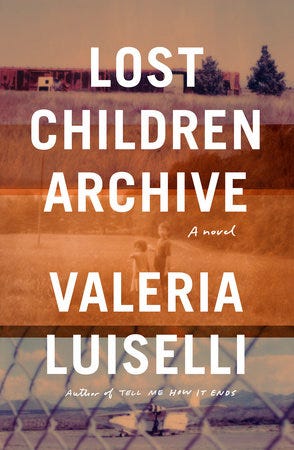
Valeria Luiselli’s ‘Lost Children Archive’ is a Road Trip Novel about the Border and Its Ghosts

When friends ask me what Valeria Luiselli’s new novel, Lost Children Archive, is “about,” I say it’s about many things. The big theme that stands out for me is immigration — in particular, the “crisis at the border,” and more specifically, how we talk about and deal with children. The novel brilliantly reflects the pervasiveness of these issues by keeping the current crisis as background noise; Luiselli never lets it enter the main stage. Yet, immigration is only one of many themes in the book. Lost Children Archive can also be read as a critique of technology, what it means to return to radio, cassette tapes, maps, polaroids, and what this return to these older/lesser technologies tell us about our current “American experience.” Another major thread is empathy: can we really love someone else’s children as much as we care about our own biological children? Part of empathy is also listening. The novel essentially is about listening to everything around us in order to better understand the world we’re walking on.

Purchase the book

From her work as an immigration translator that was well captured in Tell Me How It Ends, we arrive at a work of fiction that is not about immigration but fiction with immigration — a distinction I hope writers and readers think about in a time when our media, politicians, and own interests seem to be making immigration into an obsession. I have not stopped thinking about this book, the world it builds. In the best way, Lost Children Archive has stayed with me, making me look at my own immigration story in a different way.


Javier Zamora: Your novel brilliantly captures the current immigration moment; by that I mean it addresses invisibility and hypervisibility of immigration. Could you talk about this?

Valeria Luiselli: It’s definitely not a novel about immigration, but it’s a novel with immigration. It’s a story that looks at immigration’s course and it looks at the way we can talk about political violence more generally. So one of the things that I believe as a writer is right there in the novel to a degree, or more than what I believe, it’s one of the questions that I have been asking myself now for many years. The question is this: how do you write about crisis? And in particular, about a particularly vulnerable population without doing more harm to said population?

For example — on a very basic level — does writing about undocumented children bring them into a kind of unsolicited visibility? Or does it make them more likely to become prone to become a target of political violence? So does writing about undocumented children make them more vulnerable in the context of an administration that will surely target them this way? But then not writing about them — if we all shut up and not even look — then the vulnerability is perhaps of another kind, right? Then perhaps political violence can go unseen, unreported, ignored, and ultimately with impunity, right?

I debate myself constantly between those two poles. I think that the novel is different from my essays in that it doesn’t explicitly reveal a political stance. It quests more than advocating any kind of answer.

Does writing about undocumented children bring them into a kind of unsolicited visibility?

JZ: Regarding searching or questing, I think what I got from your book, and maybe because it was published so close to Tell Me How it Ends, I learned a lot about what I expected from a book through reading your novel. Could you talk about how you relate to expectations, both what you expect from yourself as a writer and what your readers expect from you?

VL: To be very very blunt and honest with you, I don’t think about expectation when I’m writing. Really on the day to day basis, I’m thinking about sentence structure, form, architecture, and rhythm. What I do think about when I step a little bit away — from the moment of engaging with the language and with my work — is whether the form and the vehicle which I’m using is the exactly correct one for what I’m trying to say.

What happened to me is that at some point I was writing the novel — I started writing it in the summer of 2014 — and at some point, I started to use it as a vehicle for my political rage and for my political stances and I started writing more directly about the immigration crisis within the novel.

After a while, I started to realize that I was really messing the novel up. I wasn’t really doing justice to the novel, I was kind of suffocating the prose. And I wasn’t doing justice to the issue. So I stopped writing it and I wrote Tell Me How it Ends. And it was so clear that that was the form I wanted to say had to be an essay, had to be more straightforward, had to disclose a more clear political stance as well as a positionality of where I’m writing from. I’m a member of the Hispanic community but also I am a member that came here to study a PhD but didn’t come here undocumented. So all that I could leave very clear in a very straightforward approach to the issue right? And only then was I able — when I finished Tell Me How it Ends — to go back to the novel and have a different kind of narrative distance which was just what I wanted to do in the novel.

JZ: At some point, did the political rage — some of which you say turned into Tell Me How It Ends — become the Elegies for Lost Children? Because, to me, the Elegies act as this weird, dark undercurrent. Reading them, I thought it was an actual book, as you claim, and was surprised to later learn it is your own fabrication — which is brilliant. And why the choice of creating these made-up Elegies from other literary references? Why do that? Instead of incorporating actual events, like news, in other words, a very non-fiction approach?

VL: First of all, I don’t appreciate fiction that kind of just reproduces the violence of reality or the violence that we read about. I find it a little bit parasitic and also sometimes sensationalist. There were all these novels in Mexico when the narco wars broke out and the drug wars started, I found it suffocating.

I never really wrote anything in fiction about the drug wars in Mexico. I guess Tell Me How It Ends is my best approach to it. But until time passed and writers had been finally able to take a kind of pause and a breath and a narrative distance, and then other much more interesting books about violence emerged. Like Yuri Herrera’s books, particularly one book I forgot the title right now, La transmigración de los cuerpos (The Transmigration of Bodies) I think. That’s to say, I had never really appreciated a certain kind of fiction in its approach to political violence.

I also had decided while writing Tell Me How it Ends that I didn’t want to use testimony as such — kind of just use the voice of someone who had told me their lives and reproduce it to a minor detail is also just a little bit transgressive. So Tell Me How it Ends takes bits and pieces of a person’s life — different people’s lives — but never a full testimony, and their stories somehow always visibly intertwine with my interaction with them. That same thing in the novel became pure to me.

I didn’t want to transgress. I didn’t want to appropriate. I didn’t want to reproduce, as things are reproduced in the media. So I had to find another way in. And that’s exactly what fiction is about right? Finding different ways in. The way that happened was, as things are, a little bit by coincidence and a little bit by generating the conditions for coincidences to happen, and those conditions had to do with just reading other people’s takes on different historical instances of children in situations of virtual abandonment or forced migration. And among the many many books I read, there was this book by Jerzy Andrzejewski, The Gates of Paradise, that narrated the children’s crusade in the 13th century. In a way not such a different story in its brutality to the one of children fleeing now. That gave me a way in, like a rhythm, a way of stepping one step back and again finding a narrative distance.

And I really like that you say that it is like a dark undercurrent. That is exactly how it felt writing it.

I started to use writing as a vehicle for my political rage and for my political stances.

JZ: Speaking of ways into a narrative, the cataloging, archiving, documenting, reenacting, incorporated into the text do a great job to tell the story. As a reader, I found myself going back and re-reading the elegies, going forward to see the polaroids, analyzing the “boxes” between chapters, etc. … In other words, the “form” the book takes, propels the story forward. Where did that come from and how did the “form” come together?

VL: How? Very slowly. The thing is where to start? On one hand I have always been interested in the question of how the archive that you work with or even just the materials that you work with and the space that you work in leave a print — like a fingerprint or footprint — in the work that you are producing. I mean there are many types of writers and I guess there are writers who sit in a room and are completely oblivious to every material around them and are completely into fiction. I write very different, I write with a lot of material companions, so like books and cutouts and pictures. If I work in a library, I’m constantly standing up and getting books. I think that in my book, in my work, the fingerprints of the archive always somehow show up.

In this novel I was interested in meditating about storytelling, about how we compose stories with the pieces of things we have, and how there are many ways of composing stories but we ultimately decide to arrange them and to somehow build a narrative and to mediate our relationship to the world in that narrative. Because I was interested in that question I integrated the archive of the novel very visibly.

I think that the way that you said you read is really very fortunate and gives me great joy to hear that. Because I think that is exactly how I would like to read. Because you can see this book that’s mentioned here has this echo here, and how would I as a reader recompose that? And I think that laying that archive there for others to move along also maybe creates a more active interaction between the mind of the reader and the text; because it’s read in more ways, you can shift, you doubt, you can reckon.

JZ: And the personal experience too. I also followed along with the sounds. I’m a reader that likes to listen to music while reading and I was listening to the albums mentioned in between chapters. The boxes act as the sounds that you should listen to, a sound bibliography of sorts. And regarding that, I had never listened to “Metamorphosis,” by Philip Glass, I had no idea –

VL: It’s such a beautiful piece right?

JZ: It’s absolutely beautiful. It sort of mimics, or acts, like the novel. I find “Metamorphosis,” very ironic because it ends and begins almost the same way. It’s very circular.

VL: It is, it has like a very minimalist circularity.

JZ: And that’s a huge theme, or a key, that unlocks your work. There are echoes, there are birdsongs, there are trains. Even Apacheria comes off as circular. There’s a revisionist impulse in all of this.

There are many ways of composing stories but we ultimately decide to arrange them to build a narrative and to mediate our relationship to the world in that narrative.

VL: Definitely. It’s about how we tell history, right? And therefore, how we make past as presence, so yeah there is something revisionist. A stance on a political and aesthetic. Like a very intimate stance with respect to basically how we make sense of stories in time. Reenactment has to do with it. Reenacting is on one hand a very desired cultural practice where an event, a historical event, is reproduced ad nauseam for consumption and entertainment. But in another sentiment, in another more intimate sense, it’s also a way of playing out history and maybe bringing that which is far away historically and peoples who are faraway and circumstances unreachable and bringing it intimately close. And maybe being able to experience a deeper kind of understanding and empathy through that ledge.

JZ: And speaking of very personal, the polaroids at the end, you’re probably going to get this question a lot, are those your children?

VL: So there’s one kid in the pictures right?

JZ: Yes

VL: Yeah that’s my daughter.

JZ: Was having a family, being a mother, help with the part of the book that is told via a child speaker? I ask because I’ve seen terrible examples of attempts of trying to convey childhood, myself included, and it comes off as trite. But your writing is genuine, there’s never a point in which I know an adult is writing…

VL: I think that since I became a mother like 10 years ago, I have always intimately written about childhood and children. Maybe before I did as well but differently. I spend a lot of time around children. I teach creative writing workshops in the detention center for undocumented kids. For a while I did interviews and translations in courts with kids.

I have many nephews. I only have one daughter. And I have two step-sons from my ex-partner, but they grew up with me too. So I always find myself around children. And I sense that my only way of making more sense of adulthood has had a lot to do with reconnecting to childhood, not severing the person we were — when we looked at the world the way we did when we were little — from the person that we are now. I am always trying to translate those two worlds back and forth.

JZ: Now I’m gonna ask a question that annoys me when others ask it, but will ask nonetheless. From my understanding you wrote this novel and Tell Me How it Ends first in English right?

VL: Yeah, I did.

JZ: So this is the second book that you begin in English if I’m not mistaken?

VL: Yeah, it is. I mean I have written many other things in English and many bits and pieces of my previous books were first in English because the notes that I think in are always bilingual. And I’m not sure if you’re fluent in Spanish, are you?

JZ: Sí.

VL: So you’ve experienced the empezamos la frase con un idioma and then you finish it in the other? Our brains, I think especially if you’re Hispanic in the US

JZ: Or everywhere…

VL: Wherever, everywhere, it’s not only that, I mean, we are a humongous community here, so it’s not like we’re on an isolated language like in Norway or something. There are at least 60 million cabrones who speak Spanish here, right? Second largest Spanish-speaking country in the world! I mean it doesn’t consider itself a Spanish speaking country for some bizarre reason, but [America] is a Hispanic country too.

Within this, I find really interesting how my brain here, even though I have maybe been bilingual since I was 5 years old — I went to American schools in Korea when I was 5 and I learned how to read and write in English before I did so in Spanish. So I haven’t been bilingual since I was born, but since I was five — but my brain never connected the two languages as absolutely as it has here in the U.S. It’s like here we have a third language here which is this confluence of both Spanish and English.

JZ: Did that help?

VL: I think it helps writing because if you are bilingual or trilingual — if you are at least bilingual, you know that certain things can feel better or more accurate in one language and not in another. So when you are forced to say it in only one of them, there’s always like this need to be more precise because that language is maybe not doing justice to what you’re trying to say exactly. So then I think that forces you to be incredibly rigorous and think things once and twice and three times and eleven thousand times until you find the exact way, which is usually, I mean there’s something very fertile in that. You’re not taking the direct route to anything, you’re always kind of meandering on until you find where you wanted to go in terms of finding meaning.

JZ: Along those lines, I really appreciate that you don’t really make that big of a deal around ethnicity or immigration status of the novel’s protagonists. It’s very subtle. There’s this almost-fear but it’s not an overwhelming fear, and it’s not this overly flat or reductive depiction of a migrant’s story in this country like how most media outlets depict immigration. I commend you for that.

And I don’t know if you know, but I immigrated and I crossed the border along the desert, and I’m just completely tired of all the narratives that are going around regarding this topic, and I’m tired of the sensationalist coverage in the media (from all political views). And I just thought your novel does a brilliant job balancing all of these things, in the background of the novel. A sort of background noise.

VL: Oh wow what an honor. Don’t say that, you’re gonna make me cry.

8 Stories About How Your Family Can Mess You Up

Every December, I gather up the holiday cards people have sent us and staple them to a long piece of ribbon draped over the kitchen window. I know paper cards are an environmental no-no, but I get an absurd amount of enjoyment out of looking at all those family pictures. They seem to me like a garland of human love and happiness; pictorial proof that everything will be all right. I try not to remember what I actually know about family: that it is there, in the smallest, most intense social unit we have, that some of our most destructive behaviors play out.

Purchase the book

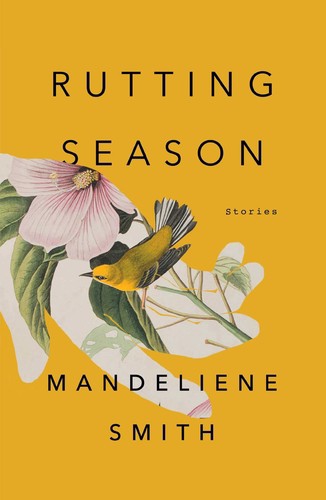
I’ve never wanted to write about my family; I prided myself on not writing about it. But now that my short story collection, Rutting Season, is finally out, I see that all the stories in it are products of that family world, or of my efforts to transcend it. Maybe this is inevitable. The reality that our parents create for us is seared into our hearts and minds: it is heaven and earth and everything between, the map by which we navigate. We grow up, of course; we escape that world, or appear to, but it never truly leaves us. It’s always there underneath, shaping our thoughts and decisions, a tectonic force made invisible by its deep familiarity.

In Elizabeth Strout’s novel, My Name is Lucy Barton, the narrator unexpectedly comes across a sculpture that captures the darkness of her childhood. But she can only feel that shock of recognition when she looks at the sculpture obliquely. If she stares straight at it, the feeling eludes her. This is the challenge, I think, of trying to show the dominion family has over us: to capture its power: you must mimic the form it takes, simultaneously visible and hidden, defied and obeyed. The following stories and novels do this, I believe, hauntingly well.

“Barn Burning” by William Faulkner

In this perfect jewel of a story, Faulkner distills his obsession with the crippling legacy of family to its essence: a boy’s bone-deep loyalty to his father and his dawning awareness that his father’s actions are unforgivably wrong. Here is the boy waiting in the country store to be questioned by the authorities about his father’s latest barn burning, a crime about which he knows his father expects him to lie:

This, the cheese which he knew he smelled and the hermetic meat which his intestines believed he smelled coming in intermittent gusts momentary and brief between the other constant one, the smell and sense just a little of fear because mostly of despair and grief, the old fierce pull of blood.

There is no escaping the brutal choice the boy must make, or the terrible cost it will exact.

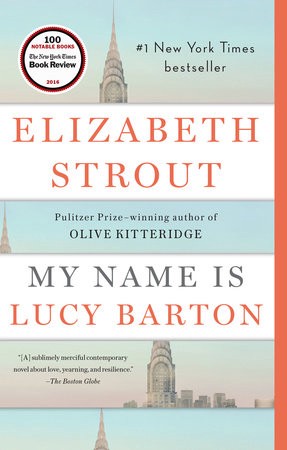
My Name is Lucy Barton by Elizabeth Strout

This extraordinary book starts out quietly with what seems a straightforward account of a mother visiting her daughter in the hospital. What could be more normal? But soon we sense an enormous emotional pressure under the surface. “She wiggled her fingers,” the narrator says of her mother, “and I knew that there was too much emotion for us.” As the visit unfolds, Strout delves below the characters’ ordinary-seeming conversation to reveal the powerful undertow of the family trauma that lives underneath. “It was not that bad,” the narrator says of her childhood. But then, in that flicker where the unseen suddenly manifests: “But there are times . . . when I am suddenly filled with the knowledge of a darkness so deep that a sound might escape my mouth.”

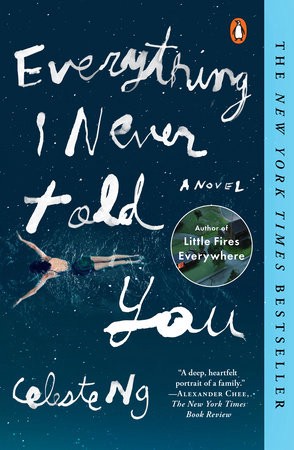
Everything I Never Told You by Celeste Ng

With breathtaking precision, Ng’s first novel chronicles the ways in which that most cherished parental hope — that one’s children will get to have what one didn’t — can do grievous harm. Sixteen-year-old Lydia Lee, the middle child in a mixed-race family, is supposed to become the doctor her mother never got to be. “She absorbed her parents’ dreams, quieting the reluctance that bubbled up within,” Ng writes. When Lydia is found drowned in a lake, an apparent suicide, her shattered parents must reckon with the devastating cost exacted by their unfulfilled hopes.

The Water Cure by Sophie Mackintosh

In this eerie, fairytale-like novel, family literally is the world. Three sisters live with their parents on what they believe to be an island, protected from the toxins of the mainland and the damage that men, they are told, cannot help but do to them. The mini-society their parents have created is bizarre and sadistic (one ritual involves what we would call waterboarding), but who else is there to ask? Even when the father disappears and three strangers bring a glimpse of an alternate perspective, the parents’ ingrained teachings are hard to escape. This deftly narrated novel sucked me so deep into its warped logic that for several days I cringed every time I tried to assert myself as a parent. All the normal parental roles — guiding, protecting, disciplining — had suddenly become suspect.

In “The Water Cure,” Toxic Masculinity Is Making Women Physically Ill

What We Owe by Golnaz Hashemzadeh Bonde

This blistering book gives us the other side of the family equation: the point of view of the parent who cannot stop hurting her child. Nahid, an Iranian refugee living in Sweden, has just learned that she has terminal cancer. The news plunges Nahid back into the layers of grief and guilt created by the events that forced her to flee Iran decades earlier. With devastating and yet somehow loving precision, Bonde shows how Nahid tries to escape her suffering by lashing out at the person she loves best. That the novel ends in a moment of grace is miraculously as believable as it is unexpected.

Housekeeping by Marilynne Robinson

The sheer beauty and daring of the language in this novel is reason enough to read it, but there are many other pleasures, too: vivid, lovingly-rendered characters; a sly and surprising humor; and also, I would argue, one of the best portrayals of childhood grief ever written. After their mother commits suicide in the nearby lake, sisters Ruthie and Lucille are abandoned to a rotating cast of relations. Their loss is rarely spoken of; instead, it seems to permeate everything like the smell and sound of the vast lake itself. “. . . here she was,” Ruthie says of her mother, “wherever my eyes fell, and behind my eyes, whole and in fragments, a thousand images of one gesture, never dispelled but rising always, inevitably . . .” By the end, the sense of loss Ruthie carries seems not so much her own particular inheritance as the unacknowledged state of all humankind.

Sing, Unburied, Sing by Jesmyn Ward

This haunting, haunted book begins up close, in the mind of Jojo, a thirteen-year-old boy who is trying to figure out how to become a man. Worries press: Jojo’s grandmother is near death, his father is in jail, his mother cannot stay away from drugs, and he lives in a world that doesn’t value black boys like him — his own uncle was killed as a teenager in a racially tinged “accident.” And yet Jojo keeps trying, and we can’t help but love him for it. When a family trip takes Jojo back to a dark chapter in his grandfather’s past, it becomes clear that the legacy of pain he carries is not just that of his own family, but of an entire people. In spare, tender prose, Ward’s story illuminates the ways in which the invisible grip of the past shapes our lives, and asks, what do we owe the dead? And how do we pay that debt without sacrificing our own chance at living?

How Jesmyn Ward Brings Writing to Life

“Deep-Holes” by Alice Munro

Munro is a master of the hidden-in-plain-sight and one of her specialties is tracing the fault-lines within families. In this story, a geologist and his family visit a geological site where trapped water has eaten out cavernous holes in the surface rock. The oldest son falls in one of the holes; the father rescues him. All’s well that ends well — or, maybe not. It turns out, as the years go on, that the truly dangerous hole is the one created by the father’s deep disdain for his eldest son. Munro sketches this with the lightest possible touch — a disapproving look, a stray comment — and yet, when the damage finally shows, we realize we’ve seen it coming all along. The mother, on the other hand, never understands, making “Deep-Holes” a devastating portrayal of the inadvertent harm we can do to our own children.

What to Read When You’re Infatuated

I n the first flush of infatuation, reading feels like an impossibility. Your attention is oh-so-scattered. Your soul throbs with nothing but a desire to think about this potential beau. Besides, as a genre, literary fiction presents the opposite of encouragement for your freshly-thrilled heart. In literature, love is fucked-up dysfunction, one that is beautiful only in prose and more so in death — like, say, Anna Karenina, which is perhaps one of the greatest tales of a stunning infatuation gone awry. Reading seems like at best a distraction from your feelings, at worst a denigration.

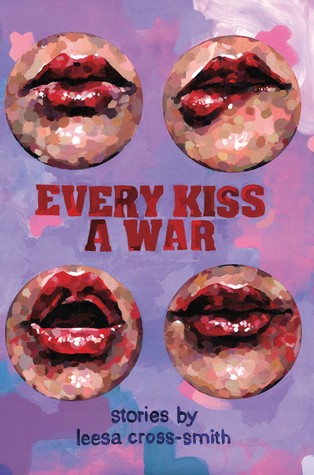
And yet, reading is possibly the best thing you can do after having a meet-cute with that someone that’s got you consumed. Obsession, another literary fiction preoccupation, only leads to excessive social media stalking and other kinds of indelicate and potentially ruinous behaviour: overtexting, trying to engineer chance encounters, and deep research into their exes. Books, as they do in life in general, will keep you chill in the heated early blush of fancying someone. To still your beating heart — just ever so slightly — I suggest Leesa Cross-Smith’s Every Kiss A War.

The collection comprises 27 stories mostly set in Kentucky and its environs, and features cowboys, veterans, and hippie chicks grappling with love. With libertine helpings of whiskey, coffee, and cigarettes throughout, the stories taste of sweet, sultry, and sometimes bitter trysts. Because there is nothing like a crush-induced episode of Attention Deficit Disorder, Cross-Smith’s stories offer a delicious remedy for your distracted focus. They are mostly tiny, some flash-length, some interlinked, and others spun a little further. You’re unlikely to waver from the page — even as your mind is intoxicated with dopamine from your last encounter.

Clearly possessing dreamy, tactile powers of sensory conjuring, Cross-Smith moves smoothly between each story so a one-sitting read is entirely possible. You enjoy a sense of accomplishment. If you’ve paid scant attention to work and life obligations because you’ve been daydreaming excessively, this might be an excellent thing. Cross-Smith’s prose, sultry and so sensual, will send you down the rabbit hole of fantasy. For example, these swirls of phrase from “Absolutely:” “His mouth tasted like thousand page-Russian novels I’d never read. When he kissed me I could hear the ocean and when he was gone I heard the sound of a flagpole chain in the wind, clinking against hollow metal.” All the feels of a new maybe-boo, in two sentences.

In Every Kiss A War, love rears up unexpectedly. Sometimes, like life, it’s complicated. In “And It Can Never Be Too Dark or Too Bright,” a woman is torn between two men, whom she christens “Tennessee” and “Kentucky.” West, the male lead of “The Wild Hunt,” becomes enamored with Zipporah even though he has a partner, Carla, who he can’t imagine marrying (amongst other reasons: he “always pictured my wife being taller”). Cross-Smith’s meanderings through these less-than-ideal situations remind that infatuation often arrives inconveniently — and might well screw up your life, or someone else’s, for better and worse. But still, it’s fun.

Until maybe it’s not. In “Un Jour Comme Un Autre,” Sam, a homesick American expat in Paris, falls in love with a French woman. Of their first coffee date, he recalls: “After coffee, dinner. After dinner, sitting and drinking red wine on her lush rug in front of the fire at her place. Later, more red wine, drunk and still drinking, talking for hours when he noticed the sky changing. Darker, lighter, light. He only touched her once that night. The small of her back as they walked into the restaurant. After that he never considered leaving France. Not until now.”

In the present he speaks of, Sam witnesses his now-wife falling in love with another man and decides move the family to New York. His wife falls in love twice and then a dreadful tragedy ensues. In the final moment of the story, he tells his daughter: “So Ona we need to pray for people, even when they hurt other people. Whether they mean to or not. His throat is thick. His voice, a small fire.” I turned this ending, much like the others in the book, around in my head for long after I read it. Even in the terrible frustration of his desire, Sam’s love for his wife and his little daughter feels so pure, allowing for resilience even when things go so very off. Thankfully, Cross-Smith gives him a second act in a subsequent story.

Every Kiss a War’s endings recalled for me W.B. Yeats’ poem “Her Anxiety.” Yeats was no stranger to infatuation, having held a flame for the revolutionary Maud Gonne for most of his life.

All true love must die,
Alter at the best
Into some lesser thing.
Prove that I lie.

While Cross-Smith can’t quite prove that love doesn’t hurtle inevitably towards death, her stories present love’s possibilities — and that precious glimmer that even in endings, new thrills may come. Even if your infatuation doesn’t work out, there will be more to savor, even if it takes a while. This is true in life — and literature. In “Whiskey and Ribbons,” Evangeline mourns her dead husband while his adopted brother moves in with her. Cross-Smith went on to spin their sticky, steamy interactions into a novel by the same name, which was one of 2018’s most praised. Your crush may or may not turn into the love of your life. While you sit in absorbing suspension of all the possibilities of your as-yet-untested union, Every Kiss a War is a delightful and maybe more satisfactory diversion than speculative reveries. Regardless of the result, books are still probably the happiest of endings.

Alternatives

A Transatlantic Love Affair: Letters to Nelson Algren by Simone de Beauvoir

We fall in love — and certainly crush hard — in the negative space of our time with someone. How can you be desperate to be with someone if you’re not away from them? French intellectual Simone de Beauvoir, though with yoked Jean-Paul Sartre, fell for the Chicago writer Nelson Algren during a trip to his hometown. Their negative space was the entire Atlantic — in a time before Whatsapp or CheapoAir — so they wrote and wrote and wrote each other. They met in February of 1947, and by May that year, she wrote him: “I am your wife forever.” Her missives are full of her Parisian life and her longings for him, the latter of which if you are in the midst of a crush, might be extremely relatable. Hopefully, there is no ocean or overwhelming political commitments to overcome for you — but even if there is, surely things are more manageable and less dramatic than this. De Beauvoir wrote in September 1947:

I should give up travels and all kinds of entertainments, I should give up friends and the sweetness of Paris to be able to remain forever with you; but I could not live just for happiness and love, I could not give up writing and working in the only place where my writing and work may have a meaning… My love, this does not make any discrepancy between us; on the contrary, I feel very near you in this attempt to struggle for what I feel true and good, just as you do yourself. But, knowing it is all right, I cannot help nevertheless to cry madly this evening because I was so happy with you, I loved you so much, and you are far away.

The letters continued till 1964, that is for 17 years and through multiple books, transAtlantic sojourns, affairs, Algren’s marriage, and divorce. A doorstopper of a book, it’s often hilarious and should keep you occupied until you get your own romantic life worked out.

Dept. of Speculation by Jenny Offill

Offill’s protagonist returns to the first bloom of her relationship with her husband. In meditative fragments, she observes the early thrill of getting closer to a new love interest: “You wanted to walk around the city, come rain come snow come sleet, recording things. I bought a warmer coat with many ingenious pockets. You put your hands in all of them.” And then later, when they have a child, the ardor transfers: “We dance with the baby every night now, spinning her round and round the kitchen. Dizzying, this happiness.” Inspirational but also very realistic if you have long-range plans with your current person of interest — especially since the story arc includes lice, bed bugs, and neglect.

How to Write an Autobiographical Novel by Alexander Chee

Infatuation doesn’t last forever; even if it morphs into full-blown love, normalcy awaits down the road. Bibliophilia is more easily indulged, pursued, and refreshed. Literature — reading it, attempting to write, and thinking about it — can be as satisfying as ruminating endlessly about a crush. Plus, in the aftermath of a crush not panning out or worse, ending bitterly, you might want to write all about it. (Ed. note: Electric Lit has a tote for that!) For craft wisdom alone, Alexander Chee’s collection of essays, which offers wisdom on things like writing, money, and roses, is supremely easy to get obsessed with. In “Inheritance,” an especially gorgeous journey through pain, cash, class, and family, I adored the trickster young Chee who finds a way to acquire chocolate even though he’s been barred from leaving his family’s compound in Seoul.

Maryse Meijer Thinks You Should Track Down These Books by Women

Wandering into a used bookstore with no particular agenda, just to browse the shelves and piles, is one of the most romantic pastimes in existence. But you know what’s more satisfying? Wandering into a used bookstore with an agenda, and succeeding: laying your hands on a copy of the long-out-of-print book you’ve been trying to track down.

For this edition of Read More Women, Maryse Meijer—author of Rag, a short story collection that Kirkus called “rich, beautiful, and utterly terrifying” and compared to Carmen Maria Machado—digs up five books by women that have faded into obscurity, or at least from publication. Your mission, should you choose to accept it: find and read.

Read More Women is Electric Literature’s series, presented in collaboration with MCD Books, in which we feature prominent authors, of any gender, recommending their favorite books by women and non-binary writers. Twice a month, you’ll hear about the five non-male authors who most delight, inspire, and influence your favorite writers.


Marriage and Other Infidelities, Joyce Carol Oates

I know you don’t think Oates is “cool.” You think she writes too many books and she’s old and wears truly enormous glasses. You think someone who publishes 2–3 books per year couldn’t possibly be writing good books, because you’re supposed to spend 10 years wringing your life’s blood into a 10,000-word speculative fiction novella that you publish on handmade paper bound with dried sinew ripped from your own forearm. But guess what, book snob? You’re wrong. Yes, Oates has produced, in her haste to write all of us to death, a few mediocre novels and collections, and the occasional truly execrable poem. But even if only 20% of her oeuvre is outstanding, she’s still managed to write 20+ absolutely brilliant books…much more than anyone has any right to produce. And Marriages and Other Infidelities is just one of a series of spectacular collections she produced, back to back, in the ’60s and ’70s, stories as edgy, experimental, strange, and beautiful as anything the cool kids are writing now. Honestly, it’s bizarre that I never hear writers of my generation cite Oates as an influence; and yet, if you look at this early work, written before many of us was even born, you’ll see that she kind of already did everything we’re trying to do. Her obsession with the intersections of sex and violence and desire is the grandmother of our obsessions; her excavations of the creepy-crawlies swarming beneath the rocks of American culture is as fresh and incisive and brutal as anything you’ll read now. Respect your elders: read some Oates.

8 Groundbreaking Experimental Novels That Are More than 100 Years Old

Offside, Gisela Elsner

This German gem from the ’80s is a bit like Didion’s Play It as it Lays; a surgical, tragi-comic examination of a woman’s despair. Marriage, motherhood, and work prove to be unfulfilling for Lilo Besslein; she takes refuge in an affair, shopping sprees, and a decidedly unhealthy relationship to tranquilizers, but nothing can dispel her unhappiness. To me, it’s a book about the shame of not knowing how to feel better; Lilo should be able to make her life work, but she can’t, and her humiliation is buried beneath an increasingly insatiable appetite for self-destruction. If, like me, you have a soft spot for books about society’s “losers,” this won’t disappoint.

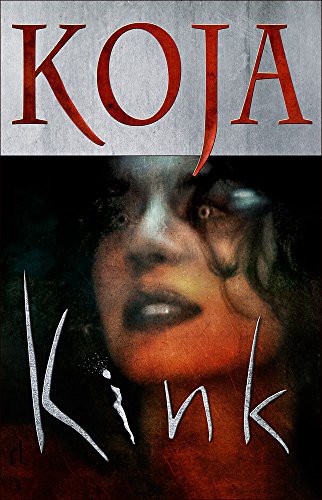
Kink, Kathe Koja

Jess loves Sophie. Sophie loves Jess. Then they meet Lena. While it’s not surprising that this threesome, like most in literature, eventually unravels, what is surprising is that the unraveling isn’t blamed on the usual suspects: i.e., a selfish jerk’s desire to have two women, or the illusions of a messed-up couple mistakenly seeking to fix their relationship problems by inviting a third into their bed, or a the stupidity of two people who dare to believe that happiness could be found outside of monogamy, etc. Rather, the book presents the threesome as a potentially viable, satisfying, rather beautiful (and, frankly, extremely desirable) way to construct a romance, if the people involved aren’t, you know, sociopaths. It’s a story that delights in shredding you emotionally, as you root for Jess and Sophie to figure their shit out, groaning as they fall for all Lena’s cold-hearted manipulations, but at the same time it denies the cynicism of it’s third character, ending — uncharacteristically for Koja — on an almost happy note. An erotic, engrossing, fast-paced, and perceptive novel about the courage required to survive the dissolution of a romantic ideal.

Home by Maryse Meijer

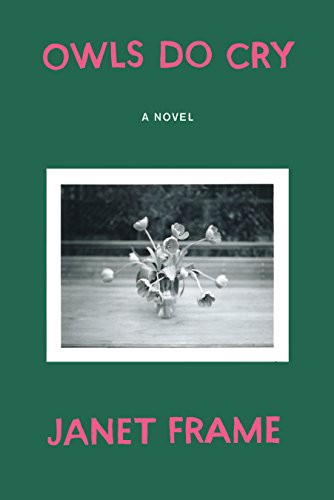
Owls Do Cry, Janet Frame

This is one of my all time favorite novels by one of my all-time favorite writers. An excruciatingly accurate story of an impoverished childhood, told from the perspective of pre-pubescent siblings in a small New Zealand town, Owls Do Cry is a book that speaks so richly and completely to the reader that it feels more like an iteration of one’s own memory than a work of fiction. Much has been made of Frame’s struggles with schizophrenia, and the influence of her mental illness on her writing style, but I think that her dreamy, startlingly inventive modernist prose is perfect for capturing what it really feels like to be and think and feel as a child. It’s telling that our conception of young minds — as always inferior to the adult brain, stuck in various stages of developmental insanity — that Frame’s depiction of childhood is so often likened to depictions of madness. In any case, the result is a wholly original and authentic evocation of life for two young people struggling to make sense of a difficult, beautiful, cruel world.

309 East & A Night of Levitation, Bianca VanOrden

I came across this pair of novellas at Shakespeare & Co. in Paris, crammed shoulder-to-shoulder with my fellow tourists, desperate to find something special to take home as a souvenir of the city. Lo and behold, there was this unassuming lady spine-out on the shelf, so faded that her title was illegible; an obscure, slim hardcover adrift in a sea of glossy paperbacks. Both of the novellas in this collection are exquisite, but A Night of Levitation demands special recommendation. A 16-year-old girl, sent off to stay with family on an island on the East Coast in order to forget her obsession with a married astronomy professor, finds more trouble in the form of another older man. What strikes me most about the story is how seriously VanOrden takes her protagonist’s desire; there is no cynical winking at an older and wiser audience as the author exposes Allegra’s affections as child’s play, immature and misguided — instead, the story is given the most profoundly respectful attention, an insight and intensity of feeling I found almost unbearable as I read. It’s a very beautiful, very sad story, maybe even a perfect one, and it resonates as deeply with me now in 2019 as I hope it did with readers in 1957.

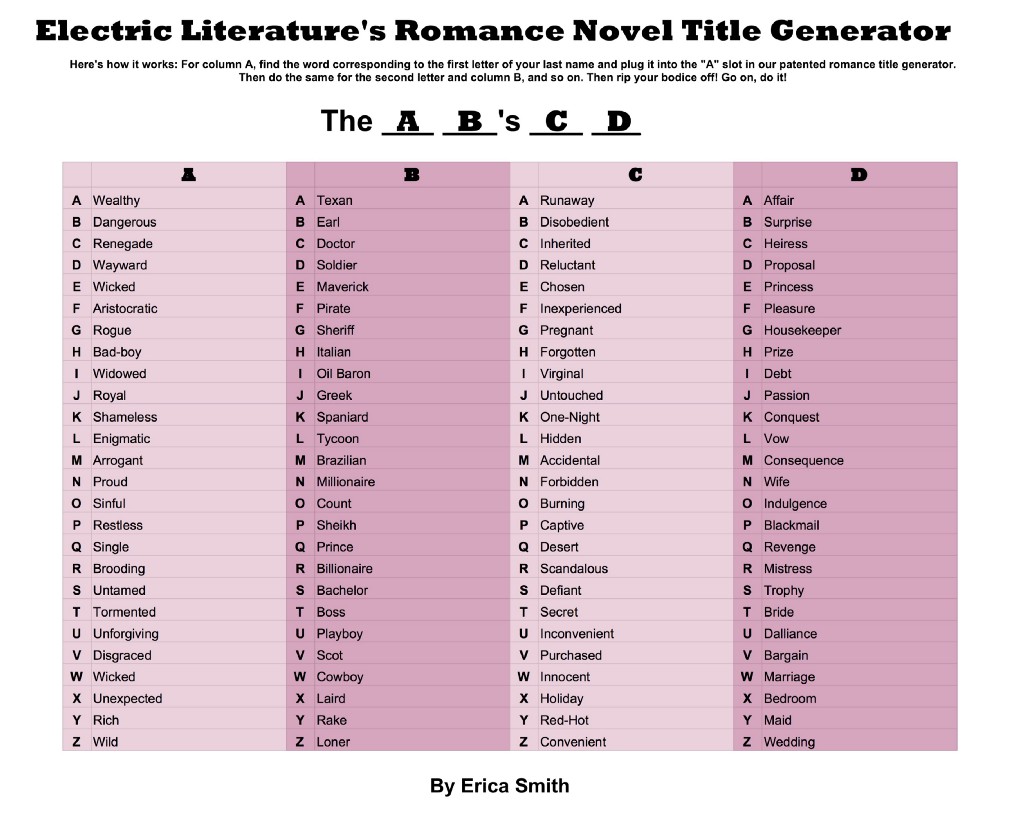
Find Out Your Romance Novel Title With This Handy Chart

Unlucky in extremely straight love? Looking for a little nudge to guide you towards the most heteronormative relationship possible, probably with someone who’s either royalty, a billionaire, or perhaps some manner of ranch hand? Hoping to give up all possible agency in the name of escapist fantasy? Look no further than the Romance Novel Title Generator!

Get ready to become pregnant/property/a domestic servant as you get fall into a relationship with someone who treats you like a child/calls you an Italian nickname/kidnaps you! To figure out just who you belong to and what circumstances will force you to marry him, use this handy chart and the first four letters of your last name — which you will, of course, be changing. Think of this as a last hurrah. (If your last name has fewer than four letters, use as many letters of your first name as you need.) For example, if your last name is (was!) Bennett, choose “B” from the first column, “E” from the second, “N” for the third, and “N” for the fourth, so you end up with The Dangerous Maverick’s Forbidden Wife. Congratulations, and be careful; he sounds like quite the rake!

Click to expand

Garth Greenwell Recommends “Sea Monsters” by Chloe Aridjis

Sea Monsters, Chapter 1 Excerpt

by Chloe Aridjis

Imprisoned on this island, I would say, imprisoned on this island. And yet I was no prisoner and this was no island.

During the day I’d roam the shore, aimlessly, purposefully, and in search of digressions. The dogs. A hut. Boulders. Nude tourists. Scantily clad ones. Palm trees. Palapas. Sand sifting umber and adrenaline. The waves’ upward grasp. A boat in the distance, its throat flashing in the sun. The ancient Greeks created stories out of a simple juxtaposition of natural features, my father once told me, investing rocks and caves with meaning, but there in Zipolite I did not expect any myths to be born.

Zipolite. People said the name meant “Beach of the Dead,” though the reason for this was debated — was it because of the number of visitors who met their end in the treacherous currents, or because the native Zapotecs would bring their dead from afar to bury in its sands? Beach of the Dead: it had an ancient ring, ancestral, commanding both dread and respect, and after hearing about the unfortunate souls who each year got caught in the riptide I decided I would never go in beyond where I could stand. Others said Zipolite meant “Lugar de Caracoles,” place of seashells, an attractive thought since spirals are such neat arrangements of space and time, and what are beaches if not a conversation between the elements, a constant movement inward and outward. My favorite explanation, which only one person put forward, was that Zipolite was a corruption of the word zopilote, and that every night a black vulture would envelop the beach in its dark wings and feed on whatever the waves tossed up. It’s easier to reconcile yourself with sunny places if you can imagine their nocturnal counterpart.

Once dusk had fallen I would head to the bar and spend hours under its thatched universe, a large palapa on the shores of the Pacific decked with stools, tables, and miniature palm trees. It was where all boats came to dock and refuel, syrup added to cocktails for maximum effect, and I’d imagine that everything was as artificial as the electric-blue drink; that the miniature palm trees grew fake after dusk, the chlorophyll struggling and the life force gone from the green, that the wooden stools had turned to laminate. Sometimes the hanging lamps would be dimmed and the music amplified, a cue for the drunks and half-drunks to clamber onto the tables and start dancing. The shore-line ran through every face, destroying some, enhancing others, and at moments when I’d had enough reminders of humanity I would look around for the dogs, who like everyone else at the beach came and went according to mood. A curious snout or a pair of gleaming eyes would appear on the fringes of the palapa, take in the scene, and then, most often, finding nothing of interest, retire once more into darkness.

Before long, it became apparent that the bar in Zipolite was a meeting place for fabulists, and everyone seemed to concoct a tale as the night wore on. One girl, a painter with cartoon lips and squinty eyes, said her boyfriend had suffered a heart attack on his yacht and been forced to drop her off at the nearest port since his wife was about to be helicoptered in with a doctor. In more collected tones, a tall German explained to everyone that he was a representative of the German Society for Protection Against Superstition, or Deutsche Gesellschaft Schutz vor Aberglauben — he wrote the name in tiny German script on a sheet of rolling paper for us to read — and had been sent to Mexico after a stint in Italy. An actress from Zacatecas no one had heard of insisted she was so famous that a theater, a planet, and a crater on Venus had been named after her.

And you, one of them would ask, noticing how intently I listened, what brought you here?

I had run away, I told them, I’d run away from home. Are your parents evil?

No, not at all . . .

. . . I had run away with someone. And where was this someone?

Good question.

And who was this someone? An even better question.

But that was only half the story. I had also come because of the dwarfs. However fantastical it now seemed, I was here with Tomás, a boy I hardly knew, in search of a troupe of Ukrainian dwarfs. I say boy, though he was nineteen to my seventeen, and I say dwarfs, though I had yet to see them with my own eyes. In any case, if I stopped to think about it for more than a few seconds, the situation was almost entirely my fault. Calming thoughts were hard to come by, no calm, only numbness, as if stuck halfway through a dream, yet the realization didn’t trouble me.

The palapa held out the promise of one thing while the animated conversation and gaudy cocktails delivered another, and once I’d had enough I would return to my hammock through the sifting black of the beach and watch shadows advance and recede, never certain as to who or what they were. Sometimes I would see Tomás walk past, his shadow easy to pluck out from the rest, and although he kept a certain distance I recognized him instantly, tall and slender with a jaunty gait, like a puppet of wood and cloth slipped over a giant hand.

At some point I would have to explain to myself and to any witnesses how it was that I had ended up in Zipolite with him.

He had started out as a snag, a snag in the composition; from one moment to the next, there was no other way of putting it, he had begun to appear in my life back in the city. And since all appearances are ultimately disturbances, this disturbance needed investigating.

I didn’t even particularly like him at first; intrigued would be a better word. He was a sliver of black slicing through the so-called calm of the morning. I still remember most details, the pinkish light that spread over the street, painting the tips of trees and the uppermost windows, the shops closed, as well as the curtains on houses, and the only person I’d encountered within this stillness was the elderly organ grinder in his khaki uniform, seated on the edge of the fountain below the looming statue of David, polishing his barrel organ with a red rag before heading to the Centro. harmonipan frati & co. schönhauser allee 73 berlin, read the gold letters down the side, but the organ grinder himself lived in La Romita, the poorer section of La Roma, though he always came to the plaza near my house to polish his instrument, preparing it for a social day outside the cathedral. None of his kind had ever been to Europe but they carried Europe in their instrument, their uniform, and their nostalgic, old-fashioned manner.

And it was as he sat there on the bench beginning his day that I saw another figure appear: a young man in black, tall and slender with a pale face and hair shooting out in twenty directions, who walked up to the organillero and held out a coin — I assumed it was a coin, all I saw was the glint of a small object transferred between hands — and continued on his way. The elderly man nodded in surprised gratitude; he was probably used to receiving alms when music was produced, not silence, and here, out of nowhere, first thing in the morning, had come this offering.

Despite having to catch the school bus at 7:24 I followed the new person as he hurried down streets parallel to the ones I normally took, past mozos sweeping the streets before their employers awoke and tramps curled up in the porticos of grand houses beginning to uncurl. But once he turned off into Puebla my inner map cried out and I swerved around and retraced my steps in a hurry, arriving just in time to board my bus at the junction where Monterrey meets Álvaro Obregón. The quiet of the streets vanished the moment I stepped onto this traveling ship of the wide awake, wide awake thanks to the gang of new wave Swedes at the back. There were four of them, three boys and a girl — sister to one — and they colonized the last row with their blondness and asymmetrical haircuts, always one tuft eclipsing an eye, and trousers rolled up just enough to reveal their pointy lace-up shoes, but above all they colonized the bus with their portable stereo, for they asserted themselves, communicated almost entirely, through their music — Yazoo, Depeche Mode, the Human League, Soft Cell, and Blancmange — and it was in this way, after the first glimpse of Tomás, that I was launched into the day.

In Zipolite the sun seared the sand, and the heat particles, free to roam where they pleased, dissipated in the air. Yet our Mexico City was situated in a valley circled by mountains. High-pressure weather systems, weakened air flows, rampaging ozone and sulfur dioxide levels, basin geography: a perfect convergence of factors, said the experts, for thermal inversion. Ours was a world of refraction, where light curved, producing mirages, and sound curved too, amplifying the roar of airplanes near the ground. And each time an event in Mexico challenged the natural order of things, often enough for it to become part of the natural order, my parents and I called it thermal inversion.

Thermal inversion whenever a politician stole millions and the government covered it up, thermal inversion when an infamous drug trafficker escaped from a high-security prison, thermal inversion when the director of a zoo turned out to be a dealer in wild animal skins and two lion cubs went missing. But the real thing existed too, and on some days the air pollution was so fierce I’d return from school with burning eyes, and everyone from taxi drivers to news presenters complained about the esmog but the government did nothing. The clouds over our city were of an immovable slate, granite, and lead, and only the year before, migratory birds had dropped dead from the sky — exhaustion, the officials had said, they died of exhaustion, but everyone knew the poisoned air had cut their journeys short, lead in the form of dispersed molecules rather than compacted into a bullet.

At first I thought thermal inversion was only possible in the city, and then I thought it possible in Zipolite only in the form of the Swiss biker in black leather — his movements constricted by his tight leather shorts and leather vest, he spent all day drinking beer on the sand, his black leather cap surely a magnet for heat, and never entered the water. Yet I soon began dreaming of other forms of inversion, for instance if I could replace Tomás with Julián, my current best friend. Yes, if Julián were there instead, I might have more perspective, somehow, on the given situation, or at the very least a proper interlocutor, be it in silence or conversation.

But Julián was back in the city. He was back in the city, on the top floor of the Covadonga, that was his address, the old Spanish restaurant near the corner of Puebla and Orizaba. The waiters at Covadonga would have cut funny figures in Zipolite, like penguins at the beach in their black waistcoats and bow ties, and the imperturbable expression of those who’d seen a great deal over the decades; the place had been around since the 1940s and some of them, according to my father, had worked there since their youth. On the ground floor was a large spread of tables where old men played dominoes, on the first floor a restaurant, on the second floor a dance salon. Julián lived on the third, used for storage and visiting musicians. He’d become friends with Eduardo, one of the waiters, and, having nowhere to go after deferring university and falling out with his boyfriend, brother, and father, was offered the space on the condition that he vacate whenever the owner, who lived in Spain, came to Mexico, and for any trios or duos or solo musicians who happened to pass through.

The top rooms contained an assembly of half-living objects: fold-out chairs and tables, some in stacks against the wall, a gas canister hooked up to a four-burner stove, its stark metal frame like a vertebra, and a red cooler with the letters cerveza corona in blue. The back room had a cot, where Julián slept under a pile of tablecloths, surrounded by boxes of folded linen and fluorescent tubes. A defunct disco ball, missing most of its square mirrors, hung from the ceiling; the only light was the one that glowed through the windows shaped like portholes. In these rooms I’d spend many an hour with Julián and his stereo, a General Electric that guzzled size D batteries. In one corner was parked a guitar with Camel insignia, for which his mother had smoked her way through two hundred cartons of cigarettes; with the coupons and a bit of cash she had bought it for her son one Christmas. He seldom played it, however, since he felt she had died for that guitar.

The Corona cooler was kept well stocked, usually with Sol or Negra Modelo, and we’d sit back in the fold-out chairs and paint the future, the details changing each time, as we wandered side by side through a landscape of perhapses. Perhaps he would become a sculptor or a rock musician. Perhaps I would become an astronomer or an archaeologist. Perhaps he would partner up with the owner of the Covadonga and one day inherit the place and its four floors. Several days a week I would walk over after school, especially when my parents weren’t home, and sensed at moments that this was the closest I would ever come to having a sibling. Sometimes we’d carry two chairs out to the narrow balcony, from which there was a view of the spire and rose window of the Sagrada Familia, our neighborhood church, though like many city views ours was bisected at different heights by a tangle of telephone and electricity lines. If the day was rainy or overly polluted we’d bring the chairs back inside and listen to the radio. One station played songs from England and Julián kept the dial there, though every now and then he’d swivel it over to a pirate station that offered unofficial news, a quick reality check before we returned to our fantasies, and other times he’d slip in a cassette and we’d listen to the same track over and over, usually Visage’s “Fade to Grey” or the Cure’s “Charlotte Sometimes,” and we’d stop talking and just listen, letting all that had sunken well up inside.

Hanif Abdurraqib Knows the World Is on Fire, but Music Can Still Offer Us a Way Out

I’ve spent most of my days lately oscillating between rage and abject terror. So when midnight turned one year to the next last month, I couldn’t help but feel grateful that we’d finally made it. Where exactly, I wasn’t sure. But I had been sure that there was a finish line that if only we could cross we’d reach the year we could breathe again. I was wrong (like very, very wrong), but I’m holding out for March being the month it all turns around. Because in spite of my wiser self, there’s hope in me yet.

I’ve said all of that to say this: When I first read Hanif Abdurraqib’s essay collection, They Can’t Kill Us Until They Kill Us, last year, I felt like I was watching someone who had overheard me and my best friends over the past decade in the moments we’d wept and celebrated and raged to the soundtrack of our favorite bands turn those moments into (beautiful and heartbreaking and celebratory) prose. I saw an urgency, a love—and perhaps most importantly—a quiet sense of hopefulness on the page that made me think, maybe, Abdurraqib might just be seeing me right back.

So if Go Ahead In the Rain is the book about the Midwest, hip-hop and what can be made possible if only we find our people and hold tight to them that I never knew I was missing but I always needed, then Hanif Abdurraqib is the writer every one of us could probably use right now.


Leah Johnson: This book has been described as a “love letter” and a “fan’s narrative” but much less frequently as a biography, though that is, in large part, what is happening throughout. How did you approach the writing in a way that you believe made it diverge from the traditional biography style?

Hanif Abdurraqib: I think a traditional biography requires a lot of access — to people, to history, to archives. But beyond that, it also requires a type of confidence that comes with expertise, or a desire to consider oneself an expert. I could have gotten the former, but felt pretty far away from the latter, fairly early on in the process. I realized that what I was searching for wasn’t exactly the ability to call myself an expert on this group, or this music, or this sound. I was searching, instead, for meaning — or an unpacking of what it is to have this love for people you will never meet.

I was searching for meaning — or an unpacking of what it is to have this love for people you will never meet.

Tribe were very much big homies for me when I was young. The way I listened to them and the way that listening afforded me to see the world was singular. It was like someone older throwing an arm around my shoulders and leading me through the treachery of youth. How can I have this impossible connection to these people and live a whole life where we’ve never met? I’ve got nothing but their sound and the paths that sound opened up. I wanted to allow myself some room to be wrong. I wanted to say sure, I am perhaps clouded by my love, and so I don’t want to talk to this group and have them tell me it wasn’t all as special as I imagined it. Give me my memories and nothing else.

LJ: During so much of They Can’t Kill Us, I read along like, “No one else would think to put Johnny Cash in conversation with The Migos like this!” Since this book was your direct follow up, did it feel like a radical gear shift, craft-wise, to narrow in on one genre and one artist like this?

HA: A bit, or at least it was difficult at first. The thing about They Can’t Kill Us is I could depart from an idea, and not feel obligated to return to it. Here, as far as I wanted to steer away from the central star guiding the book, I always had to return. There were some parts cut because I went too far away from it all. I had to be really honest with myself, on some shit like “does anyone really care how I can make a thread from Natalie Maines to Q-Tip?” and in the empty living room of my own apartment, I could say “hell yeah people need to read this,” but things like that pulled so far out of the book’s context. And this is a book that is already demanding a lot out of a reader. I’m asking readers to trust me, no matter how far it seems like I’m pulling them away from the road, I’m promising them that I’m always going to come back. I’m promising that we won’t always end up in the same spot on the road, but that the road will at least keep leading us to the same place. I take that trust seriously, and so writing this book was working through some very honest things with myself.

LJ: With both Go Ahead in the Rain and They Can’t Kill Us, music and memory are inextricably linked. What does your research look like when the history of an artist is so closely tied to your own personal history?

HA: In the most unspectacular of ways, my research is mostly watching or listening to things that trigger memory. I have so many times where I find myself wondering if I actually experienced something, or if it was all a dream. Particularly moments from my childhood that revolve around music. Did I actually stay up all night watching tapes of Yo! MTV Raps on the nights my parents weren’t home, or am I remembering several nights and just forcing them together for the sake of my own romantics? There was that thing in the book about Chi-Ali, and his freestyle on Yo! MTV Raps, and I knew I remembered it. I knew I had watched it with my older brother and I knew I had listened to the tape of his debut album after it. I could close my eyes and remember the floor I was sitting on when I watched it, and I could remember exactly what Chi-Ali was wearing. But I needed to see it again, nonetheless. I had to look it up on YouTube to confirm what my memory was trying to tell me. I think so much of my research is convincing myself that I’ve actually lived the things I’m trying to recall. And a lot of it is the frivolous watching of videos or spinning of samples or whatever. But that isn’t the answer anyone came here for.

LJ: The fact that the book is called “notes to” instead of “notes on” struck me when I realized you spent the book switching back and forth between speaking to us as readers and then directly to the group. How did you think about the mode of address when you set out to write this book?

Music is at our fingertips now, it’s so easy to listen to songs, but it has gotten harder to track down stories that make the songs special.

HA: Well, I wanted it to be a conversation with both the readers and the entire legacy of this group. And I wanted it to feel like we were all in a room or around a table. The direct address to the group members and then the direct address to you, reader, populates the space a bit differently. I am so opposed to creating more distance with my work. There is already a built-in distance that comes with the reading of a book by a person you don’t know or see or talk to, and I’m comfortable with that. But in terms of how a book is addressed, or what the speaker is asking, I’m trying to build the room that our real lives might never afford us: a room where, over our shared loves or passions or curiosities, we can kick some questions around.

LJ: I’ve been reading the book on the train for the past few days, and every time I pull it out someone stops me to talk about it. New Yorkers aren’t stereotypically affable people, but something about A Tribe Called Quest has brought out some of the best conversations with strangers I’ve had in my time living here. Thinking about this in terms of community, but also coastal beef, what do you think it is about our regional relationship to these artists that manages to produce such instant, visceral connections for us?

HA: I can’t speak for New York, and even if I could, I’m sure no one would hear me over the shockingly consistent hum of sirens and horns the city produces. But, I also think all of the time about what it is to be from a place, and how much shame and pride that can offer to someone, sometimes in equal measure. And to have a group that came out of Queens and is not only beloved, but vital to the architecture of American music feels like a burst of pride that can cut through whatever regional shame might exist. So much of my writing of this book was also writing about how I grew up in the Midwest, longing to touch the cities being rapped about in the songs I most listened to. And so I hope there are people from New York who look at the book and simply want to point at it and say they lived some small part of what made Tribe special. Also, sorry for the bad joke about horns and sirens.

I think, ultimately, it means that there are some revolving universal markers in the music many of us love that begin geographical, but then branch out.

LJ: I feel like there are so many artists that you have a wealth of knowledge on and could have crafted a book around. Why did you choose to chronicle A Tribe Called Quest?

The work of my music writing is to shape a world outside the current one, and I’m trying to make it slightly better.

HA: I have been especially worried about legacy, and the transfer of information from one generation to the next. Generations younger than ours know A Tribe Called Quest, surely. But I realized that there were many people who, in 2016, didn’t have a grasp on their impact and how that impact had echoed throughout decades, in rap music and beyond. People who didn’t understand how the production ambitions of Q-Tip fueled an entire sound and scope of ideas. And so I didn’t want that to get lost in translation of whatever gets passed down and down and down. Music is at our fingertips now, it’s so easy to listen to songs, but it has gotten harder to track down stories that make the songs special. I wanted to offer the best I could.

LJ: You wrote about the group’s SNL performance and final album in 2016 shortly after both the election and Phife’s death where you said: “Writing about music today feels even more small and trivial than it usually does. The times are urgent, and I know nothing but going back to what I love, but music still feels tiny and disposable.” Now, years away from that release and from the election that continues to do what we feared it would, what (if anything) has changed for you in terms of approaching music writing and/or listening?

HA: I think it still feels small and trivial — at least the act of it. But not the way it sits in the world, and what it is capable of articulating as far as unraveling the violence, or rage, or anxiety of not only this moment, but of so many of our living moments. I turn to songs not for healing or not even to make sense of the world. I turn to songs as a window into a different world entirely. And so the work of my writing is to try and give language to the world I see through the lens of a song I dig or an artist or album. What I’m trying to do is shape a world outside the current one, and I’m trying to make it slightly better. But, it’s hard to do that while also reminding people of how many fires there are everywhere.

LJ: When it’s time for someone to write a fan’s narrative of Future (I’m feeling like it could be called Turn On The Lights or Blood On The Money maybe?), what do you think has to be at the heart of that story?

HA: I think any narrative on Future has to include something at the heart of it on masculinity and self-destruction. The band Stars has this album called Your Ex-Lover Is Dead and it starts out with a recording of the lead singer’s father saying “when there is nothing left to burn, you have to set yourself on fire.” And ain’t that the whole thing.

7 Novels About Love Triangles

It’s ubiquitous, this love thing. It’s the fundamental emotion writers employ to illuminate our human condition. But here’s the deal: love is otiose without conflict. In fact, love can only be defined by it. Without conflict, love is reduced to a passive state of being.

“So Bob met Sonia in 2005, they fell right in love, boy did they. Then they got married, had a kid. Now they throw dinner parties every second Saturday of the month.”

Yeah, scintillating, eh?

Love is a power tool for us writers. It layers plot, demands emotional investment, and allows readers to be triggered by their own memories. Love is always defined by the drama. The loss. The risk. The impossibility and even the inevitability.

Buy the book

I had only one prayer in my writerly soul when I started writing The Body Myth. I wanted to attempt to give my readers that inexplicable experience I had when I’d read books and watched movies that held me captive to love. All kinds of love: Fluid love. Stupid love. Hopeful love. Unsanctioned love. Unholy love. Love-for-the-sake-of-suffering love. Psycho love.

I also wanted to embrace a new kind of Indian story. One that was relevant to the life I lived. I wanted to keep the buzz of modern urban India alive, acknowledge it unabashedly, but bring an insularity that could potentially make the setting irrelevant. This aim was established only because I had felt great joy in reading books that could have me invested in every moment of the plot while also allowing me to imagine and learn about places far away from my lived experiences. In my novel, Mira, a young widow and teacher in urban India, falls in love with a chronically ill woman, and her husband simultaneously in very different ways. It’s a very modern iteration of the love triangle, one defined through multiple conflicts: from pushing social boundaries to questioning psychological wellness. Mira facilitates conflict in new ways as she gets closer to the root of her obsession with them, to understand what love means to her.

And that’s the beauty of this theme, the love triangle, or rather the conflict that defines love. It’s a melody that you can find in a million tunes and that can be produced in as many unexpected ways. I bring you seven books that offer up the classic “love triangle” in some of those lesser expected ways.

My Sister, the Serial Killer by Oyinkan Braithwaite

This slim novel will kidnap you for the better part of a weekend. Set in current day urban Nigeria, the book introduces Korede, a young nurse who “should have” been married and “settled” by now. But then there’s Korade’s younger sister Ayoola who is mythically beautiful, irresponsible, self-indulgent, and possibly a boyfriend killer on the regular. Korade is guilty of being an enabler. She cleans up her sister’s messes which are literally bloody and battles her own sense of inadequacy, often repressing her own needs so that Ayoola can be Ayoola. The love triangle here? There is a doctor who Korade works with everyday, Korade secretly fantasizing about a happily-ever-after with him. But the doctor soon falls for Ayoola. Does Korade love him enough to keep him alive? And what about the bond of blood? This book is semi-satire, semi-thriller, and altogether genre-bending.

Temper by Layne Fargo

Temper is set in Chicago where we get a peek into the city’s theatre scene. Kira has just been offered the role of a lifetime. The bad news is that it means working with the intense and mercurial director Malcolm. There is an added complication for Kira. She has to work with Joanna, the co-founder of the theatre company, who has a bruised ego and a possessive streak when it comes to Malcolm. Joanna has been in unrequited love with Mal for years, and he’s taken advantage of it by manipulating her into doing all the work at their theater company. As rehearsals progress, Kira and Mal develop a thick sexual tension, but Kira hates herself for it. Mal essentially “triangulates” Kira and Joanna against each other, keeping them at odds so they don’t catch on to all the awful things he’s doing. This book keeps feminism central to the plot and promises evil twists as both these women embrace their ambition and individual path.

Dept. of Speculation by Jenny Offill

This one was was quite the rage when it was first published a few years ago. I only read it in late 2018 and was compelled by its narrative play: a literal documentation of a long-term marriage via letters between the wife and husband. The author seamlessly brought in historical and literary references that dovetailed beautifully with the static domesticity and loneliness that only a long-term relationship can birth. From the first rush of love to motherhood and trying to find firm identity, this novel’s triangle is offered as the inevitability of life. The loss we gain from time.

Seahorse by Janice Pariat

Seahorse was spectacular for me because it managed to create a mythical aura around a very urban context. The book features New Delhi where Nem, a student, falls in love with his professor from London, Nicholas. The professor abruptly leaves back to London leaving Nem crushed and confused. Years later, Nem is an art critic in New Delhi and finds a work opportunity to get himself to London. That’s when he starts to trace his first love Nicholas, who does a good job avoiding him. The narrative then steers us to Myra, Nicholas’s former lover who seems to have mysterious answers that can possibly give closure to Nem. The odd friendship struck between Nem and Myra eventually sparks a flame, despite (or perhaps because of) the specter of Nicholas in both their lives. This layered book has a dreamy quality, one that will make you question the authenticity of your own memory and what it has to do with reality.

A Child’s Story About a Love Triangle

Neon Noon by Tanuj Solanki

Neon Noon won’t have been heard of in the West, but Solanki has been doing some incredible work in English fiction in India. His first novel is inventive, sharp, and allows you empathize with the giant amounts of self-loathing the main character of this book exhibits. Ann Marie is the French ex-girlfriend who has left the protagonist in shambles, alone in his Mumbai flat. In an attempt to rid himself of the painful memories, he goes to Pattaya, Thailand, and in this tourist hotspot, he finds Noon, a sex worker who befriends him. While the indulgences of a broken-hearted man might seem like a trope, this book is raw and unabashed in its telling. A reminder of the stark emptiness that resides in the pockets of overcrowded cities.

The Museum of Innocence by Orhan Pamuk

This is my favorite of the novels by Pamuk. A novel that reminds me I was once a more patient reader, one who was able to read longer books and enjoy powerful but at times meandering prose. The Museum of Innocence follows Kemel in Istanbul in the 70s. He’s engaged to be married but has recently met Fusun, who happens to be a distant relative of his. They both fall in love in only that melancholic, beautiful way you do when you know you can’t really have it. It’s the secrecy that fuels this love and although Kemal marries his fiancée, he and Fusun continue to be in contact. Separations come, but Kemal is reunited a year later with a now married Fusun. Kemal looks back on the decade of their relationship, as the happiest time of his life, one that he could not fully appreciate at the time. His love is reborn in the form of an obsessive behavior: collecting and documenting places and things that held memory to their love.

Maps for Lost Lovers by Nadeem Aslam

I was asking a couple friends for their recommendations on love and conflict, when one of my most reliable bookworms told me about Maps for Lost Lovers. When I looked it up, it got me thinking about race and culture playing the role of conflict in love. The novel focuses on Pakistani immigrants in a lonely English town. Two lovers (Jugnu and Chanda) have been killed by Jugnu’s brothers for the sin of living together. The third corner of this triangle is especially sharp: it defines the cultural boundaries of love in a country that stays cold and foreign to its characters, despite the passage of time. The Guardian described it as being “filled with stories of cruelty, injustice, bigotry and ignorance, love never steps out of the picture — it gleams at the edges of even the deepest wounds. Perhaps this is why the novel never gets weighed down by all the sorrows it carries: there is such shimmering joy within it, too. Here are characters hemmed in on one side by racism and on the other side by religious obscurantism, and yet they each carry remarkable possibilities within them.”