We Deserve More Black Stories with Happy Endings

Slavery was legally abolished in 1865.

The segregation of blacks and whites was made illegal in 1954.

I have relatives who have had parents, grandparents, and great-grandparents, that were no stranger to those times. These relatives are alive and well today. Like me, they are Mississippians.

Lately, I’ve been thinking a lot about how close I am to that time of segregation, to slavery. How close I am to that time, particularly, because I am a Mississippian, and I know all too well how stubborn this state is. How resistant it can be to adopt and enforce the laws needed to create a better, fuller, and more whole way of living for those who are outside of whiteness.

I have been thinking about this a lot lately, because as a writer, and as an idealistic person in general, I crave to write the happy endings for black characters, in black settings, in America — even though I am so close to those times. I am an infant, existing in the aftermath of America’s atrocities. I am new to this. I am the stranger. I am the test with no study guide, hoping that all goes well.

I am an infant, existing in the aftermath of America’s atrocities.

I crave the happy ending, though I still have relatives who teach, and who have taught me, the importance of never fully trusting a white person (lest they betray you). “They are snakes. They are devils,” they say with good intentions, as they recount past experiences at the hands of hate.

I crave the happy ending, though I am still self-conscious of being the only black person in an ultra-white setting. In restaurants. In stores. At school.

I crave it, though the presence of black lives is still thought of as problematic by those who find it so easy to take our lives. They are taken by people who shout, “Make America Great Again.” By people who burn and discard anything designed to challenge their way of thinking. By people who support idiotic leaders in order to hold on to their need for power and control.

I crave it, though the idea of freedom, and togetherness, and acceptance in America is still so very new.

The years that separate me from my ancestors who experienced slavery, segregation, and the worst period of American history, are so small, so short, that its proximity horrifies me. Did they ever dream of a happy ending? Was there ever any time to do so?

Yes, I want to write the happy endings despite all of the obstacles, and I am aware that happy endings for black people exist, but in many ways, they are simply conditional.

Conditional, until we are pulled over by the wrong kind of cop.

Conditional, until we walk into the wrong kind of restaurant.

Conditional, until happy endings that we have worked our ass off to obtain, are challenged by the despicable thoughts of others — “That house is too nice for a ________, I should call the cops.” or “There is no way this BLACK woman could be a doctor.”

Our happy endings are conditional until we say one wrong word, or do one wrong thing that could be deemed as rebellious or anti-American.

I want to write the happy black endings that exist fully without tragedy. Happy endings like the countless books that I have read by white authors, featuring white characters. But I want them to be written because they exist outside of fantasy. I want them to exist because they reflect reality.

I am asking. I am wondering. I am hoping for a day when that happy ending will be.

I want to write the happy black endings that exist fully without tragedy. Happy endings like the countless books that I have read featuring white characters.

When will it be accepted with full trust, and not thrust away like something alien, like some sinister distraction created to make us believe in a false testimony that will equate to our inevitable end? An inevitable end that occurred because we trusted that happiness too much instead of conditionally like we’ve all been taught to.

In my research, I am attempting to approach blackness as if I have not lived a fully-black life in Mississippi. I am learning how to do this at the hands of my treasured teachers — Zora Neale Hurston, Anne Moody, W.E.B. Du Bois, Lawrence Otis Graham, and Michelle Wallace. There are many other teachers on my list, and Richard Wright is my latest one.

Native Son was a story that I was slow to accept. It took me four weeks to finish, twice as long as I anticipated, and that is because its end was already secured after the first few pages. I was not ready to go on and confirm what I already knew, that this black man would die. That this story would not be one that ended happily.

Richard Wright’s Native Son is a novel set during 1930’s Chicago. Its main protagonist is Bigger Thomas, a young African American man who receives the job of working for a very wealthy, and prominent white family as a chauffeur. Yes, there is violence, and yes there is death, but at its heart, it is a story about what happens to the dreamer, and the dream, when it becomes distorted by reality and seized by madness.

Richard Wright’s Bigger Thomas represented everything that my other teachers had warned me, either directly or indirectly, about. He was dark. Wildly masculine. Angry. Reckless. And too smart for his black and bleak circumstances.

Not only was I reluctant, but I was also angry with Bigger Thomas. Angry for his stupid crimes. Angry because I knew there would be no surprise ending, no deus ex machina to save the day.

There is something about books like this that get under my skin. That make me mumble words that are not of my character with each passing page and escalating conflict. If only he had learned to smother his frustrations, I think, if only he had learned to be an unhappy black man in happy white surroundings.

I wanted to distance myself from Bigger Thomas because he was an irrevocable black fuck-up who was beyond saving. But I knew that I needed to embrace his story. For research. To Learn. To help.

By the end of the novel, I was left with emptiness, and tears. This fictional black man had died, and non-fictional black men, women, and children were dying unnatural deaths in a non-fictional, American world. There seemed to be no escape, acceptance, or reprieve for blackness. Not in fictional settings, and especially not in non-fictional settings.

There seemed to be no escape, acceptance, or reprieve for blackness. Not in fictional settings, and especially not in non-fictional settings.

Bigger Thomas was not a hero. He was not an admirable or a good man, and even knowing how it would end, and even learning who Bigger Thomas was, there were small parts of me that rooted for him.

In my research, I am learning that blackness often consists of encouraging it, and its need to thrive, under almost any circumstance. It is accepting every character, the hero and the villain, simply because it contributes to the pool of our suppressed population.

I am learning that blackness is love.

It is the continued cheering of all our champions, chosen ones, monsters, and meddlers because in doing so, we ensure our existence, as opposed to the much more frightening option, our nothingness.

In the midst of our love for one another, there can also exist pain. Without escape, that pain only grows, becoming something bitter that takes away our breathes, and obliterates whatever peace that we have entirely.

Escape is what we, black people, dream of. Escape is what I often cling too when I read fictional works or watch fantastical movies. Escape is what made Jordan Peele’s movie Get Out so delightfully entertaining. But even Peele knew that in some way, the ending that he had provided, the one that would go on to make it to the big screen, would be questionable.

A man who is black wins. He burns down a home that is not his. He survives a setting that has been put into place to ensure his failure. He kills more than one of the characters who, at every step, have tried to physically and mentally invaded him like some unwelcome explorer. A black man wins through all of this.

Absurd.

In response to that absurdity, an alternate ending was issued. It is an alternate ending that reflects the true reality of blackness in America when forced to survive, and defend its basic right to live.

Of course, we lose.

In my research, I am learning that the way to survive blackness is to distance yourself from all characteristics that are deemed too black for their own good. If I want to live, I must remove myself from skin that is too dark. From hair that is too nappy.

If I want to live, I must eliminate and shun all traces of my unknown, untraceable African origins.

In my research, I am learning that is best to do all of these survival tactics, and more, but if is often not a guarantee of a happy ending to come. I am discovering that I can read all of the books, obtain all of the degrees, and speak and act in the most pleasant, professional way, but there will still be a probability of bullets finding their way into my body, obliterating the very last of my blackness like something that I could not see. Some bit of blackness that I had forgotten or overlooked, and like a favor, is wiped away by my white neighbor.

I can read all of the books, obtain all of the degrees, and speak and act in the most pleasant, professional way, but there will still be a probability of bullets finding their way into my body.

I. Am. Not. White. No matter how close I am able to obtain its aesthetic, and culture.

I feel like I am asking for impossible things for this time that I live in. I am too close to the time of segregation. Too close to the time of slavery. Too close to an era where hate for the other still exists. But I ask these things in order to remember, and keep in my heart, what I can do, and what can be done, to make the happy black endings an unconditional reality.

Inside, the emptiness that I was left with after reading Native Son, had shifted. I am a happy, bubbly, too-damn-idealistic-for-my-own-good black girl, I cannot deny it, and it is often hard for me to stay upset. Like Bigger Thomas, there is some subconscious understanding of myself, an ending that I can clearly see. As hope begins to thrive again, I decide that I will write the happy black endings, despite what reality says. I have made up my mind that if I am going to die anyway, by natural causes or otherwise, I will create what I truly want to. I decide that I will offer no alternate, more plausible ending for myself or my audience.

This idealistic, and happy ending of mine won’t exist for my reality, possibly, for my time, possibly, but it will exist for my children, and my children’s children.

When I am old, and my life is nearly at an end, they will ask me how I knew to dream for more, how I dared to write the worlds that demanded the best from humanity despite all the opposing evidence that it would not come into fruition. In response, I will say that I was psychic. I will say that I saw the future, and it was bigger.

Cat Puke Is the Wellspring of Creative Life


About the Author

Julia Wertz is a professional cartoonist, amateur historian, and part time urban explorer. Her books include Tenements, Towers, & Trash, Drinking at the Movies, The Infinite Wait, and the Fart Party. She is a regular contributor to the New Yorker. See her work at Juliawertz.com, her photography of abandoned places at Adventure Bible School, follow her on instagram, and read her diary comics on Patreon.

“Cat Puke Is the Wellspring of Creative Life: four comics” is published here by permission of the author, Julia Wertz. Copyright © Julia Wertz 2019. All rights reserved.

Mary Oliver Was My Teacher—Here’s What I Learned From Her

When I arrived at Bennington College as an undergraduate in 1996, I had almost no expectations for the type of education I was about to receive. What had drawn me there, to the other side of the country, was the promise that Bennington offered: that on this tiny campus that looked and felt more like a boarding school than a college, I would be surrounded by people who were passionate about something.

Personally, I was passionate about lots of things: about fashion history, folk dancing, choral music and hip-hop. But mostly, I was passionate about language. For as long as I could remember, I had been filling notebooks and diaries with words: scrawled stories, poems and journal entries that, when re-read, show someone tasting and testing and trying out language as I read and discovered new influences.

I was hoping that, at Bennington, someone would show me the right words to use — or tell me that my words were the right ones. I hoped someone would help me unlock the keys to my own greatness, and tell me that I was doing it right.

I hoped someone would help me unlock the keys to my own greatness, and tell me that I was doing it right.

My ignorance was as vast as my enthusiasm. When I signed up to take a poetry class with Mary Oliver, I was completely ignorant of the fact that I was signing up to do thoughtful, insightful, personal work with a Pulitzer Prize-winning poet whom Renee Loth called a “living wonder” and whom Alicia Ostriker ranked as “among our finest poets.”

And perhaps it was better — for me, for her, for all of us who were her students — that I and so many of us entered her classroom in blissful ignorance, ready to show off, having been praised enough by our high school English teachers that we were assured of ourselves as something at least a little bit special.

We called her Mary, as if she were our friend, but we were not always friendly to her. Her task was to teach us to write poetry with meter, and with form, but for some reason — even though this was what we all signed up for — some of us fought her, angrily, stubbornly, turning in work that in no way resembled the assignments she had patiently given us.

She tried teach us about meter and rhyme — to convince this roomful of proud 19-year-olds that it was worth the effort to push our breathless ideas into these ancient vessels to discover what new shape they would take. We tried to resist.

She was, of course, right. She was Mary Oliver.

What a Little-Known Ursula K. Le Guin Essay Taught Me About Being a Woman

I remember the sight of her: slight, serious, soft-spoken, taking up what seemed to be very little space at the end of a long, polished wooden table in an upstairs classroom in the Barn, Bennington’s main building for literature and history courses. I took all my classes in the Barn, cycling between just one or two rooms for almost my entire undergraduate career, but it was always a wonder to me how each of my teachers could transform the space into something new. In Mary Oliver’s classroom, we struggled. We struggled against the things she asked us to do; we struggled to grasp the structures of sonnets and the dictates of scansion. It felt hard, awkward, old-fashioned, strange to write long Shakespearean lines of iambic pentameter, or short, stumbling trochaic lines.

She gave us Shakespeare poems to scan, and although it felt clunky at first, I also slowly fell in love with the act of dividing each line into feet, my marks on the paper revealing a secret skeleton like an X-ray film.

Mary’s notes on my homework are written in soft red pencil, punctuated with urgent underlinings, dashes, check marks and arrows that, like her poetry, command the attention while somehow remaining quiet and calm.

“This is the marvelous thing about language,” Oliver told Stephen Ratiner in 1992 in an interview for the Christian Science Monitor. “It can always be done better. But I begin to see what works and what doesn’t work. I begin to rely more on style, which is, as I say, apparatus or method, than on luck, prayers, or long hours of work.”

In Mary Oliver’s classroom, we struggled. We struggled against the things she asked us to do; we struggled to grasp the structures of sonnets and the dictates of scansion.

The poems I wrote in Mary Oliver’s class largely make me cringe today (there is one titled “Passive Aggression” that I think I will go burn so that no one must ever read it), and they were painful to write at the time. I felt as awkward writing in trochaic couplets as I did in my French 101 seminar. My ideas came out like lumpen wrecks, lacking in sophistication or verve. I was sure that I was a failure at writing poetry.

Mary Oliver famously gave few interviews, but as sparing as she may have been with her words publicly, she was astonishingly generous with us, her undergraduate students. She did not baby or pamper us. What she did do was treat us as her intellectual equals: capable of understanding what she understood. Nothing she said or did ever suggested that there was a meaningful difference between us, her students, and her, the decorated poet.

She was almost unfailingly patient, even in the face of near-mutiny, as she calmly tried to convince the most stubborn of us that we had something to gain by crafting these lumpen wrecks of poems. And through her patience and her insistence, I finally began to understand that the struggle we were experiencing was not a problem, or a hurdle to be overcome, or a deficiency on my part.

The struggle was the point.

Through her patience and her insistence, I finally began to understand that the struggle we were experiencing was not a problem. The struggle was the point.

I had come to Bennington hoping to be given a key — or, if I was honest with myself, hoping to be given someone’s blessing. I wanted someone with more degrees and more prestige than my high school English teacher to tell me, “Yes, you’re good. You’re doing it right.”

Mary Oliver was generous with her praise. I will take to the grave with me a poem on which she wrote “Excellent” (and underlined it!) because it gives me a singular thrill every time I look at it. But it is not her praise I remember when I think about that class. It is the struggle. It is the thought of her, calmly, patiently helping us see that here was no point in doing the things that came easily to us — the things that were comfortable, or familiar.

“It’s a matter of trying everything you can try, just to see what will work for you,” Oliver told Stephen Ratimer.

What Mary Oliver did worked beautifully for her — and for so many of us who have cherished her words. She taught me what it actually meant to learn about writing — that it wasn’t simply a matter of this word or that one, finding the right adjective, or getting the line to break in just the right place. That I didn’t need her blessing, or anyone’s, on the work I had done, but that what I needed to do was to keep working.

How Reading Poetry Helps Us Ask for a Better World

She showed me that learning to write is about being uncomfortable, being vulnerable and pushing, hard, into unfamiliar places, because that’s where the good stuff is.

As we remember Oliver’s life and work, I am incredibly grateful to have had the chance to learn this most valuable lesson at the feet of an amazing writer — one whose generosity has enriched us all.

Spend Two Weeks in Banff with Electric Literature

Are you a writer of memoir or autofiction? Do you think staring at an incredibly beautiful mountain would help your work? Well, then you’re in luck, because Electric Literature and the Banff Centre for Arts and Creativity have put together a program on autobiography and fiction. For two weeks this August, participants will have a chance to hone their craft with guest writers and Electric Lit editors—and perhaps more importantly, work on their manuscripts while looking at scenes like the above.

The program runs from August 12 to August 24 in Banff, Alberta, Canada. With guest faculty—Pulitzer and PEN/Faulkner finalist Susan Choi and Meredith Talusan, executive editor of them.—participants will discuss fiction, memoir, places where the two overlap, and how to decide which is which. How much of your story are you obligated to tell in a memoir—and is there anything you’re obligated to withhold? How can you incorporate aspects of your life into fiction, and what are the ethical implications of writing fiction inspired by people you know? When does craft—or impact—take precedence over accuracy, and vice versa?

In addition to group and individual discussions led by the faculty, there will be two reading nights for participating students to share their works in progress, and a guest speaker event with award-winning Canadian writer Dionne Brand. Electric Lit editors Halimah Marcus and Jess Zimmerman will be on hand for manuscript consultation, and will lead a seminar on strategies for getting published. There’s also a gym, swimming pool, meals, and DID WE MENTION THE MOUNTAINS. (Please scroll up.)

Both emerging and established writers are encouraged to apply until March 27. There’s also financial aid available, for up to half the program cost. There’s also BEARS. Come join us, and then with the skills you’ve gained, expertly incorporate the experience into your novel about a brilliant writer riding a bear down a mountain!

Give Your Money to These 13 Feminist Bookstores

I t’s no secret that women authors have been historically overlooked. If you read the New York Times’ column Overlooked, you’ll find an embarrassing number of very successful female authors who were not given obituaries in the newspaper because the editors (men) decided they weren’t important enough — Sylvia Plath and Charlotte Brontë to name a few. Many women have gone by male pen names so their novels would be taken seriously. Simone de Beauvoir probably wrote most of Jean Paul Sartre’s Being and Nothingness, but he’s the one lauded as the voice of the existentialists.

Feminist bookstores create a safe space for the literary community to convene, where women readers and writers are seen and heard. Here are 13 bookstores dedicated to championing the literary works of women and non-binary authors.

The Second Shelf in London, U.K.

A.N. Devers is an author and rare book dealer who decided to open her own rare books store after she discovered the price discrepancy between male-authored and female-authored books. She told the Guardian in an interview, “I pulled two books of the shelf and gaped at the prices. The woman’s book was $25. The book by the man was hundreds.” Devers’ store specializes in rare books, modern first editions, manuscripts, and rediscovered works by women writers.

The Unraveling

Persephone Books in London, U.K.

Persephone Books reprints literature by women from the 20th century that has been overlooked or forgotten. The proprietors find titles that have gone out of print and bring them back to life with an elegant jacket and a preface by a contemporary author. The most important criteria for the Persephone Books team is that they only publish books that they completely, utterly love. In addition to their unique publishing house, they have a shop located on Lamb’s Conduit Street in London.

Bluestockings Bookstore in Manhattan, New York

Located in the Lower East Side, Bluestockings is a collectively-owned, volunteer-powered activist bookstore with topics ranging from queer studies to dismantling oppression. It’s also devoted to maintaining a safe space for customers. In 2017, the store peacefully dealt with a group of alt-right provocateurs who attempted to plant their shelves with white supremacist books. Advertised on its website as 98% radical and 2% glitter, Bluestockings has a lot to offer including 6,000 book titles, zines, journals, menstrual products, and a cafe with “darn good coffee brimming with zapatismo.”

Cafe con Libros in Brooklyn, New York

Cafe Con Libros is a cozy little bookstore cafe owned by Kalima DeSuze, an Afro-Latinx woman veteran. Located in Crown Heights near Prospect Park, the bookstore “is a space explicitly dedicated to the stories of womyn and girls of all identities and, where lovers of said stories can come together to build community.”

Violet Valley Bookstore in Water Valley, Mississippi

Wedged between two large brick buildings, this bright, narrow store with an eggshell blue awning and a proudly displayed rainbow flag is a little oasis of feminist and LGBTQ+ books, both new and used.

A Room of One’s Own in Madison, Wisconsin

A Room of One’s Own is an independent bookstore with a wide variety of genres and a focus on women’s studies and LGBTQ+ fiction. The space is often used as a meeting place for community events and small discussion groups.

Women and Children First in Chicago, Illinois

Ann Christophersen and Linda Bubon were studying literature in university and had trouble finding women authors in their local bookstores and libraries. They decided to take things into their own hands and opened Women and Children First in 1979. This feminist bookstore has since become a staple in the literary community of Chicago, hosting incredible voices such as Gloria Steinem, Maya Angelou, Alison Bechdel, Eve Ensler, Hillary Clinton, Margaret Atwood, and more.

The Women’s Bookshop in Auckland, New Zealand

Auckland, New Zealand’s largest city, houses a literary refuge for women at The Women’s Bookshop. In addition to its extensive collection of feminist literature, it has become the country’s go-to bookshop for therapy and counseling books.

Womencrafts in Provincetown, Massachusetts

Womencrafts provides its customers with a “welcoming space that lends itself to partners embracing and kissing, intimate stories being shared, and staff often crying and reaching for tissues.” Although the books in stock are largely LGBTQ+ focused, the genres range a wide selection of carefully curated titles all written by women.

Antigone Books in Tucson, Arizona

Antigone is the daughter of Oedipus in Sophocles’ plays, a resilient and virtuous character who maintains her values in the face of adversity. This bookstore was named after the ancient Greek character and fashioned its mission after its eponym. The store enriches the community with a variety of workshops and book groups, and a devoted staff that frequently shares advice on what to read next with their recommended reading lists.

Librairie L’Euguelionne in Montreal, Canada

Montreal’s féministe bookstore, called L’Euguelionne, is difficult to pronounce but thankfully offers a helpful mnemonic device on its website: “ler-gay-lee-onn — you can think of a gay lion, even though it’s not what it means.” L’Euguelionne offers feminist literature in all forms, from magazines and art books to essays and textbooks, with an emphasis on celebrating diverse authors.

Charis Books & More in Atlanta, Georgia

The South’s oldest independent feminist bookstore offers an array of specialized sections on important topics that seem to have slipped through the cracks of the more corporate bookstores. Subsections cover topics from coming out to domestic violence, and political reading lists include “Understanding and Dismantling White Supremacy.” And if you think it can’t get better than that, think again; the store hosts a weekly yoga class.

Sister’s Uptown Bookstore & Cultural Center in Manhattan, New York

In 2000, two sisters, Janifer and Kori Wilson, opened Sister’s Uptown Bookstore in Harlem, which has since expanded into the cultural center that it is today. This Black-owned indie bookstore provides “resources for members of the community to nurture their minds, hearts and souls with present and past works of gifted African American authors and other great authors and intellectuals including masters of spoken word.”

Corporate Censorship Is a Serious, and Mostly Invisible, Threat to Publishing

With some 687 million books sold in the U.S. in 2017, book-selling has been on the rise since taking a dive following the 2008 recession. Still, there’s the odd politician, religious group, or police institution eager to advance an agenda by labeling a particular book persona non grata — or, since it’s a book, “liber non grata.” In recent months, South Carolina’s Charleston County Fraternal Order of Police vowed to “put a stop” to the sentiment behind Angie Thomas’s young adult novel The Hate U Give, urging the book’s banning from a summer reading list; the story follows a black teenage girl who takes up activism after a white police officer pulls over the car she rides in and brutally murders her childhood friend in front of her. In November 2017 the Stephen Wise Free Synagogue in New York City demanded that an independent bookstore chain “publicly rescind their support for P Is for Palestine,” an alphabet children’s book highlighting Palestinian culture and liberation under Israeli occupation. Earlier that year Arkansas Rep. Ken Hendren proposed an ultimately defeated state legislature bill banning all writings by radical historian Howard Zinn’s published between 1959–2010.

Invariably civil libertarians jump to the fray to condemn such measures, rightly, as censorship, like when the New Jersey ACLU challenged the state’s prison system on its decision to restrict Michelle Alexander’s The New Jim Crow from reaching prisoners’ hands, leading to the ban’s reversal in January 2018. Ironically in many cases, the censor’s intended goal has the opposite effect, because book sales often increase under the threat of a ban, as happened in the Zinn-Hendren case and others throughout history. Mark Twain, always his own shrewd publicist, was thrilled when the Concord Public Library banned The Adventures of Huckleberry Finn weeks after publication, thanking them for the “generous action” that “doubled its sale” and swelled readership.

When state or civil authorities blacklist books, the act is correctly labeled censorship. But what is the word when parent corporations act out political or ideological dissatisfaction by ordering their subsidiaries to snuff out information in the form of books, magazines, newspapers, radio, television, movies? There isn’t a word or phrase that fully captures this form of censorship, at least not a negative phrase.

When state or civil authorities blacklist books, the act is correctly labeled censorship. But what is the word when corporations order their subsidiaries to snuff out information?

On the other hand, it’s not hard to call to mind examples of civil or government censorship, all perceived nefariously. Like me, you might think first of all the states that notoriously organized public book burnings — from Nazi Germany to South Africa. Next are the states throughout the world that continually ban books to try and stop offensive ideas from taking root in people’s minds. In the U.S., this type of censorship is closer to home. For example, the Tucson, Arizona public school district tried to terminate its astonishingly successful Mexican American studies program, which looked at history and art through the viewpoint of Mexican American contributions, on the basis that it encouraged “ethnic solidarity.” (This is the actual phrase written into state law Arizona Revised Statutes 15–112 — “Prohibited courses and classes,” under the subcategory of “enforcement.”) I’ve written elsewhere about how the “cultural genocide” committed by Arizona’s statewide ban on a partly Maya-based Mexican American studies (also Nahuatl-based) in high schools relates to the U.S.-backed physical “acts of genocide,” as defined by the U.N., against Mayan groups in Guatemala in the early 1980s. These state-directed book bannings and burnings are thankfully near universally condemned, with some exception such as when the same Tucson district successfully banned Middle East Studies in 1983 under false anti-Israel bias allegations. In January 2018, a federal judge issued a permanent injunction against the Arizona law that banned Mexican American Studies from ever being enforced again.

But many times book censorship still succeeds without a whimper. This kind of censorship is largely disregarded and often tacitly tolerated and self-induced among editors: corporate censorship. On the surface, there’s a logic in corporate censorship that may seem at least arguable. When corporate executives at, say, Netflix cancel your favorite shoot-em-up action show or a boy-meets-boy love story, seemingly without cause, there’s a knee-jerk feeling of dissatisfaction that eventually gives way to complacency. Just as corporate executives giveth us the stories we like, so can corporate executives taketh them away. They can do what they want; it’s their property.

But not so fast.

Is it — or should it be — a universal right for corporations to censor their so-called property in all cases, under all circumstances? One case from the 1970s may command some second thoughts on a corporate safe zone cordoned off by copyright laws and cultural misconceptions, one that calls into question the entire endeavor of corporate censorship.

Writing Behind My Country’s Back

Two social critics and media analysts, Noam Chomsky and Edward S. Herman, wrote several books together. Their first book about U.S. state and media representation of global massacres, Counter-Revolutionary Violence: Bloodbaths in Fact & Propaganda, was, in 1973, set to publish by an academic publisher, Warner Modular Publications, then a subsidiary of Warner Communications (now WarnerMedia). Former Washington Post managing editor Ben Bagdikian’s 1983 book The Media Monopoly covers the scandalous affair that ensued from Warner Modular’s attempted publication of the Chomsky-Herman book that brought about the publisher’s fatal downfall. An enterprising journalist, Bagdikian was the messenger of the 1971 Pentagon Papers leak by former military analyst Daniel Ellsberg that spurred public outrage over the secret, expanded war effort in Southeast Asia as well as the fact that the government had known for years that the war was unwinnable while costing thousands of U.S. soldier deaths alongside millions of Vietnamese, Laotians, Cambodians, and others.

The literary conflagration began to smolder in August 1973 when a Warner executive, the company’s chief of book operations William Sarnoff, glanced at an advance mock-up advertisement for the Chomsky-Herman book set to splash across the Nation, the New Republic, New York Times, New York Review of Books, and Saturday Review. Alarm bells went off in Sarnoff’s mind as he imagined more government leaks that would embarrass President Nixon and, by association, the Warner parent company. Given that Warner’s corporate officers had contributed to Nixon’s 1972 presidential bid and the aptly acronymed Committee to Re-Elect the President (CREEP), Sarnoff was surely on edge about anything that could trigger more political incendiary under Nixon, then under intense media, congressional, and legal scrutiny over the Watergate corruption scandal. In May, the Nixon administration had lost its aggressive pursuit of Ellsberg, the Pentagon Papers leaker, whom Nixon’s national security advisor Henry Kissinger called “the most dangerous man in America.” Now, the Chomsky-Herman book’s provocative title and marketing was enough to spur Sarnoff’s fears of another government leak that could embarrass the company.

Sarnoff phoned the publisher of Warner Modular in Andover, Massachusetts, Claude McCaleb, demanding an explanation. McCaleb tried to assuage his boss’s concern by clarifying that the book was not at all a document leak. The title merely carried critical analysis by two academic professionals — from the Wharton School of Finance and the Massachusetts Institute of Technology — of publicly available material. Two hours later, Sarnoff called again, ordering McCaleb to New York immediately to hand-deliver him copy of the book to his Rockefeller Plaza office. McCaleb dropped off a copy of the book in the morning and headed to an academic convention where more advance copies of the book were to arrive. At the convention booth, he received word from Sarnoff: “Report at once.” McCaleb could only wonder what was in store for him once he arrived, which nineteen years in academic publishing didn’t prepare him for.

Macmillan to President: No, You Actually Can’t Suppress Books You Don’t Like

Bagdikian, who died in 2016, boldly took on corporate censorship first-hand from his experiences working in the belly of the beast of corporate monopolists; he named the cabal, collectively, the “new Private Ministry of Information and Culture,” a riff on George Orwell’s sci-fi dystopian novel 1984. “A corporation dependent on public opinion and government policy,” Bagdikian writes, “can call upon its media subsidiaries to help in what the media are clearly able to do — influence public opinion and government policy.” And while it’s not always necessary or possible for media subsidiaries to benefit their parent company’s public image, they can at least refrain from publicly criticizing them, which is the line of orthodoxy that guided William Sarnoff in his quest against the publication of Counter-Revolutionary Violence.

It didn’t matter to Sarnoff that, not 20 years prior, co-author Noam Chomsky’s theory of Universal Grammar turned 2,000 years of scientific understanding about human language on its head. Or that Chomsky would go on to rank on the Arts & Humanities Citation Index as the highest-cited (living) source on earth next to Shakespeare, the Bible, Freud, Karl Marx, Cicero, and others. Such accomplishments are no match for a corporation’s public image perceived to be at stake.

As soon as McCaleb stepped into Sarnoff’s corporate office after being summoned from the convention hall, Sarnoff flew into a rage. McCaleb patiently reminded Sarnoff of the agreement they made when he and his staff were hired: Warner Modular enjoys discretion to publish the titles they choose, and their sales would reflect their success or failure. It’s unclear whether Sarnoff read the copy of Counter-Revolutionary Violence that McCaleb delivered when he berated the book as “a pack of lies, a scurrilous attack on respected Americans” and an “undocumented” book “unworthy of a serious publisher.” Despite the defamation charges Sarnoff levied, he agreed with McCaleb that the book was not libelous. Sarnoff veered to other complaints that Warner Modular published too many left-wing writers. McCaleb pointed out that his catalog included right-wing writers like Milton Friedman and Friedrich Hayek.

Sarnoff responded to McCaleb’s overall line of reasoning not with concessions or further discussion of possible compromise but, instead, by canceling all the ads for the book and the entire first print run, which had already begun coming off the press.

But destroying the book wasn’t enough. Sarnoff shut down Warner Modular completely, annihilating the publisher as an institution and all the books in its catalog, in order to prevent this one book from being published.

Sarnoff annihilated the publisher as an institution and all the books in its catalog, in order to prevent this one book from being published.

And the fate of the books themselves, the 10,000-volume print run that had started? The books were all “pulped” — literally liquidated by tossing the books into “the hogger” that swallows and digests books whole, turning them into a milky cellulose substance that is remolded into clean paper. In a way, pulping books is more effective than burning them, since books are like bricks and require a lot of overhead to destroy them completely.

Ideas, by their nature, do not seem containable. But in the curious Warner Modular case of corporate censorship, they were. Imagining the demise into liquid pulp matter, I think of the ending scenes of James Cameron’s action classic Terminator 2: Judgement Day when the fearsome T-1000’s seemingly unbreakable poly-alloy body dies screaming and thrashing in an industrial melting pot of liquid fire before disintegrating quietly into a bright, burning saffron eternity. To this day, Counter-Revolutionary Violence is out of print and largely unknown.

This past October I met Chomsky in his cozy, well-lit University of Arizona office at the end of a long, dim, narrow hallway with exposed piping running along the ceiling. All these years later, Chomsky looks at the Warner Modular episode with a fresh sense of derision — as if it was just yesterday that Sarnoff secured the publisher’s undoing with one fell slam of his phone. “It was interesting that virtually no civil libertarian thought there was any problem with [destroying Warner Modular to stop the book from being published] because it’s not state censorship,” Chomsky said. “It’s just corporate censorship.”

The fate of Counter-Revolutionary Violence is not an exceptional statistical error but the reigning rule of thumb among owning-class corporations. Filmmaker Michael Moore, while at work on his celebrated 1989 documentary, Roger & Me, about General Motors’ destruction of Flint, Michigan, reviewed several cases of corporate censorship, each as outrageous as the Warner Modular affair. The examples describe the bitter ruination that follows when books, as paper-bound bundles of ideas, conflict with business interests and get sent to the hogger under all the crushing weight that corporate executives, and the culture that precedes them, can apply.

When the first edition of The Media Monopoly hit bookstores in 1983, some 50 corporations dominated the scene, and the biggest merger at that time was $340 million. Bagdikian put the social math this way: “The 50 men and women who head these corporations would fit in a large room.” Yet by each book edition that followed every few years, the number shrank nimbly as corporations merged and concentrated themselves among few owner hands but stretched their power and influence across an ever-expanding blob of subsidiary companies. By 1990, in time for Bagdikian’s third edition of the book, 23 companies reigned over the industry. Today, all of six firms control the media scene where the biggest merger to date, AOL Time Warner, was $350 billion — 1000 percent higher than what media owners in 1983 could manage to do.

This isn’t to suggest a media conspiracy among corporate parents and subsidiaries all headed by the William Sarnoffs of the world that control, by force if necessary, every editor’s move. “Instead,” Bagdikian writes, “there is something more insidious: a system of shared values within contemporary American corporate culture and corporations’ power to extend that culture to the American people, inappropriate as it may be.” That culture creates a system that is at least as effectively governed as the rule of force, or even of official censorship, if not more canny.

Bagdikian eloquently describes what’s at stake here. “Americans, like most people, get images of the world from their newspapers, magazines, radio, television, books, and movies. The mass media become the authority at any given moment for what is true and what is false, what is reality and what is fantasy, what is important and what is trivial. There is no greater force in shaping the public mind; even brute force triumphs only by creating an accepting attitude toward the brutes.”

For Bagdikian, who feared more than corporate profits and domination, “the gravest loss is in the self-serving censorship of political and social ideas.” In truth, the occasions of official censorship by executives like Sarnoff are rare and “most of the screening is subtle, some not even occurring at a conscious level,” Bagdikian writes, “as when subordinates learn by habit to conform to owners’ ideas.” Taking one area of media, he cites an American Society of Newspaper Editors survey, which found that 33 percent of editors admitted they wouldn’t publish criticism of their parent company.

In an American Society of Newspaper Editors survey, 33 percent of editors admitted they wouldn’t publish criticism of their parent company.

The phenomenon is also not unique to the United States. When George Orwell’s fancifully satirical novel Animal Farm was set to be published in England in 1946, his preface titled “The Freedom of the Press” discussed what drove his invention of the book, observing that the “sinister fact” about censorship in England “is that it is largely voluntary,” and adding: “Unpopular ideas can be silenced, and inconvenient facts kept dark, without the need for any official ban.” In the case of corporate censorship, “voluntary” almost seems a vulgarly mild, if not outlandishly inaccurate, term to describe the act of killing a book’s publication, not to speak of its entire publisher. Although Orwell’s main point regards the way self-censorship functions as “intellectual cowardice,” which is “the worst enemy a writer or journalist has to face,” later in the preface Orwell touches closer to the structural business interests that also governed one end of the publishing world in his country: “The British press is extremely centralized, and most of it is owned by wealthy men who have every motive to be dishonest on certain topics.”

In a twist of original “Orwellian” irony, Orwell’s preface itself remained suppressed for decades, down the “memory hole” he coined in 1984, until it was discovered posthumously among his papers, and proved his argument by ensuring that his ideas about reality, which served the basis for his fiction, wouldn’t be read by the public.

A woeful effect of the monopolist system and its free-censorship culture firmly in place is that official acts of corporate censorship are hard to track, and the prevalent cases of self-censorship are perhaps impossible to identify or prevent. And, to top it off, the encompassing shield of copyright law ultimately protects the censors as the legally untouchable owners and operators of censorship — so much so that the word itself appears as Orwellian “doublethink” where, thanks to effective indoctrination, two contrary beliefs are accepted at the same time. In other words, censorship clearly is at play when executives like Sarnoff blackout their McCaleb editor underlings before they might criticize the parent company, until the McCalebs learn to censor themselves so the Sarnoffs don’t have to. But simultaneously, none of it is really censorship in the end because all the conflicts occur within the corporate dominion that legally owns it. This at a time when corporations already enjoy far greater liberties than individuals. As Chomsky has pointed out elsewhere, so-called “free trade” agreements are really “investor rights agreements” because they can sue governments for loss of profits and move freely, unregulated, across borders, causing economic crisis for small farmers and workers in Mexico and Central America, when border industrial surveillance regimes are heavily built up to staunch people’s mobility.

Meanwhile, the more familiar cases of censorship by states and civil institutions are easier to grasp, so we focus on them. The result: an almost imperceptible politics of censorship emerges that blurs — indeed divides and separates — the lines between what we may call “worthy” and “unworthy” kinds of censorship. In a way, corporations wield the censorship that dares not say its name.

In a way, corporations wield the censorship that dares not say its name.

Media mergers and conglomeration accelerated under Reagan, and continued apace under Clinton through the present day. As corporate conglomeration has skyrocketed, the means and scope of corporate censorship have grown more powerful. Bagdikian foresaw the danger early on: “If a small number of publishers, all with the same special outlook, dominate the marketplace of public ideas, something vital is lost to an open society. In countries like the Soviet Union a state publishing house imposes a political test on what will be printed. If the same kind of control over public ideas is exercised by a private entrepreneur, the effect of a corporate line is not different from that of a party line.”

As media mergers have grown very rapidly over a single generation’s time, the power of Bagdikian’s observation has reached its direst point of caution today. Disregarding this history legitimizes the delusion that things have always been that way. Too often there is a one-sided conversation going on where corporate censorship subordinates state censorship as a kind of scapegoat or red herring while the business end of ideological control proceeds as usual, unchallenged. Until the same gut rejection of state censorship broadens to include its powerful corporate counterpart, the conversation on censorship remains limited, and ultimately unfinished.

An Iranian Family Saga That Reads Like a Movie

Rabeah Ghaffari has had an exceptional career. She’s an actor, documentarian, and film editor who has worked with Shirin Neshat and Tony Kushner, and, most recently, written a screenplay for Sex and the City costumer Patricia Field. She’s told many stories in many forms — but when she began thinking about a retired judge and his wife in pre-Revolution Iran, holding their family together from the center of an ancient orchard, she knew this story was different. Ghaffari began writing a screenplay, which morphed into her debut novel, To Keep the Sun Alive.

To Keep the Sun Alive is an old-school family saga, lush and many-voiced. Her characters argue about Iran’s religious history, its government corruption, and what path the nation should take forward, but Ghaffari keeps her own focus squarely within the family. She’s interested in how Ghamar, a prickly mother approaching middle age, interacts with her teenage daughter Nasreen; how Nasreen and her secret lover Madjid teach each other both love and idealism; and how two brothers, a judge and a cleric, become intellectually distant as they age.

I spoke to Ghaffari about translating film experience to the page, turning ideas into characters, and the delights of writing a novel, which she described as a joyful experience. Reading To Keep the Sun Alive is equally joyful. Even at the novel’s saddest moments, it’s a delight.


Lily Meyer: Reading To Keep the Sun Alive made me constantly hungry. Your writing about food is so wonderful, and you keep it at the novel’s heart. Did you intend to build your story around meals?

Rabeah Ghaffari: I’ve heard that from so many readers! Writing about food wasn’t conscious on my part, but food is such a big part of culture. Wherever you go, you engage first with food. But I didn’t think about it. It came naturally to talk about what the family in To Keep the Sun Alive eats — the rice, the tahdig, all the dishes at their first big lunch.

LM: Did you watch the episode of Salt, Fat, Acid, Heat where Samin Nosrat and her mother make tahdig? What did you think?

RG: She did such an extraordinary job. Every episode was incredible. My mother lives in Mérida, where the second half of the Mexico episode takes place, and I loved watching it. Mexican cuisine is so complex, and she did such a beautiful job. There was something so earthy and empathetic and beautiful about that documentary. All the artisans and practitioners she engaged, all the people for whom cooking is a tradition — I found so beautiful and moving. And the tahdig at the end! I’m sure every Iranian watched that and was like, “I can make a better tahdig than that.”

LM: I’d love to hear about your own work as a documentarian and a film editor. To Keep the Sun Alive is such a visual book. How did you use your experience in film to create visual detail on the page?

RG: The book was originally a screenplay that I wrote in 2006, after returning to Iran for the first time. I was working in film then: making documentaries, cutting films, working at a production company. I trained as an actor, too, so I was doing theater and acting in films. A screenplay was the logical thing for me to write, though I didn’t consider myself a writer, only a reader. The screenplay got me to the Sundance Lab and the Berlin Festival, and that gave me confidence in my writing. But trying to get a film made is a Herculean task. It requires an immense amount of capital, and so I started turning the story into a novel because I could. I could finish a novel without a production staff. So that was how it became a book.

I started turning the story into a novel because I could finish a novel without a production staff.

Having worked as [a video] editor helped me immensely once I began writing. When you edit documentaries, you get hours and hours of footage. You have to cut those hours into a story. That experience taught me to create a structure. It taught me how to enter scenes, and what moments to juxtapose. Having trained as an actor helped, too. It helped me develop characters, helped me write dialogue, helped me observe what happened when characters interact. You know, writing a novel is the same as making a film, in some ways. A novel and a film have the same elements, but novelists do it all. You’re the actor, the director, the set designer, and you’re doing it alone in your head.

LM: Was working alone liberating for you? Or lonely?

RG: I loved it. Writing this book was a joyful experience. I want to do it again and again — to keep writing novels as long as I can. Maybe I loved it because I had no structure. Nobody expected me to write a novel. I had no school, no support, no expectations, which was exhilarating. Plus, to get a scene or chapter or paragraph right is exhilarating. While I was working on the book, it gave me a certain sense of meaning. I had this constant feeling of accomplishment, which was funny, because if you tell someone, “I wrote a great paragraph today, and I was so happy because I got it right,” they don’t understand. But it felt great. Incredibly difficult, though. I have a lot of blind spots. I had to rewrite the book, dismantle it, put it back together over and over. Still, it was a joyful experience.

LM: Could you talk more about those blind spots?

Nobody expected me to write a novel. I had no school, no support, no expectations, which was exhilarating.

RG: Some were simple: I’d over-write, or under-write. I had no idea how to bring a person into the room. I never knew how much to explain. Or there were flat characters, ones who needed color. There was so much re-working. It took me a while to get comfortable writing badly, too, because I have this intense desire to have the first try be perfect. I had to get comfortable with showing people drafts that were a mess, which, Lord have mercy. That was really hard.

LM: And yet you emerged with a beautifully structured book. To Keep the Sun Alive cycles between present-day Paris and Iran right before the Revolution in a way that feels formally perfect. How did you create that structure?

RG: I wrote the main story chronologically, then added the Paris sections, but I knew the story’s structure from the beginning. I wanted to compress time by bookending the novel in one day, starting in the morning and ending at night. It’s a cinematic structure, almost. It helped that I was never concerned about suspense. The novel opens with Shazdehpoor alone in Paris in 2012, and three pages later, you meet his whole family in Iran. After that, you have to wonder: What happened? Where is everybody? I hope that alone creates a sense of dread.

Another structural component are the three stories within the story, each of which take you to past historical moments. I included those because I wanted to evoke history that might foreshadow, or explain, the revolution that is to come — but I didn’t want to give the reader a history lesson. I didn’t want footnotes. I had footnotes, actually, and when I began working with my editor, she told me to take them all out. I was thrilled. The book shouldn’t need footnotes or explanations. It should pull readers into a place and time that are distant from their own, and it should make that distance not matter. Those are the reading experiences I love most. Like when I was reading Pevear and Volokhonsky’s Anna Karenina! I’d bounce into bed at the end of the day, needing to know what happened next.

Fatima Farheen Mirza on Having Sarah Jessica Parker as an Editor

LM: The story’s biggest event is the Revolution, which you convey through a short sequence of letters from the novel’s protagonist, Madjid, to his family. How did you decide to write the Revolution through letters rather than dramatizing it?

RG: There were two factors at play in that decision. One was that I wasn’t there. I left Iran with my parents several months before. I talked to family members who were there, I read, and I looked at documentary footage, but I wasn’t there. The other factor was that I didn’t want to make the Revolution the novel’s central point. I wanted to keep it almost in the background. I think books should talk about the Iranian Revolution, and I hope more people write about it, but not me. I wanted to look at it from a bird’s eye view. I wanted to show, in a short span of time, the euphoria — those utopian six months — that so quickly gave way to dread.

LM: Though Madjid is the novel’s protagonist, I was struck by how many female archetypes you include in the novel, and then complicate. How did you pull that off?

RG: I made Madjid the protagonist naturally. Like most of the characters in To Keep the Sun Alive, he’s based on someone I’d heard of: a young man who was married to my aunt and was killed in the Revolution. I never met him, but the story of his death always stayed with me. It broke my heart to think about how much he trusted the system that took his life. Thinking about that led to thinking about Madjid.

The female archetypes weren’t intentional at all. I only saw them later, once I’d developed the female characters’ relationships with each other, with men, and with society. I wanted to watch women with diverse experiences and backgrounds — and women of different ages, like Ghamar and her daughter Nasreen — interact. I’m very interested in how people relate to each other, and I’m particularly interested in the antagonistic relationships between women. Also, I have a sense that when people outside Iran think about Iranian life, they take a monolithic view. In no way do I want to diminish the issues Iranian society has, or that individual Iranians have with the state, but it’s a complex society like any other. You can’t only say that men are aggressors and women are victims, and I think the family is a perfect place to dramatize that. Families are like their own little states. The power struggles within families are, I think, universal. Certainly the family is a perfect place to explore these archetypes of gender, and to ask fundamental questions about how we relate.

Min Jin Lee Recommends 5 Books By Women

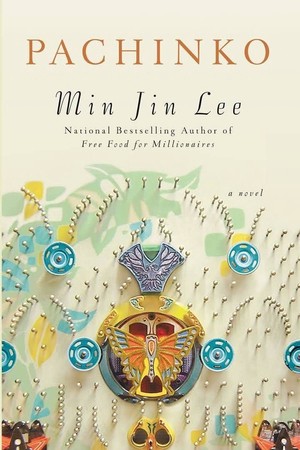
Like many of the best generational novels (sorry, Gabriel García Márquez), Min Jin Lee’s Pachinko has women at its center. And Lee is a celebrated woman author herself: the recipient of a Guggenheim fellowship, a New York Times bestselling author, and a finalist for the National Book Award. So it’s fitting that she is joining our Read More Women series, recommending five books that aren’t by men. (That was a joke up there, by the way; we love One Hundred Years of Solitude, please don’t email. We just also love Pachinko.)

Read More Women is Electric Literature’s series, presented in collaboration with MCD Books, in which we feature prominent authors, of any gender, recommending their favorite books by women and non-binary writers. Twice a month, you’ll hear about the five non-male authors who most delight your favorite writers.

Eve L. Ewing, Ghosts in the Schoolyard: Racism and School Closings on Chicago’s South Side

Ewing is a phenomenal writer who has researched and written about modern problems in education in light of history. As far as I’m concerned, fixing education inequities is right up there with securing clean water, defending free press, and protecting air quality. She is also a terrific poet and critic, and what is evident in her book, is the vastness of her imagination applied to the very difficult problems we have today in public education. Ewing tackles racism, inequality, statistics, social policies, and uses her great mind for the good of children, our American children, and this book is a great tool for the urgent changes we need to make.

Roxane Gay, Hunger

I read Gay’s memoir in two days, and I stopped everything to read it, because her story meant so much to me. I’d had a very bad eating disorder in college, and her story made so much sense intellectually. Gay is one of America’s great writers, and I was astonished and grateful to learn how our bodies hold our histories and how our minds have the power to release them. This book is important and beautiful.

Robin Marantz Henig, The Monk in the Garden: The Lost and Found Genius of Gregor Mendel

Henig is a knock-out writer, who has published numerous books and articles that are nothing short of master-class. I’ll read whatever she writes because she is brave and badass smart. My favorite book of hers is The Monk in the Garden, a biography of Gregor Mendel, a monk who studied pea plants and is known as the father of genetics. Mendel never got his due while he was alive, but Henig fixes that for the record with a stirring and vivid biography in her trademark clear-eyed prose.

Ann Patchett, This Is the Story of a Happy Marriage

Patchett writes amazing fiction. Very amazing fiction. She also writes supremely amazing essays, which make me weep. When I think of the fine essayists Didion, Woolf, and Baldwin, I also think of Patchett. You’re going to cry when you read this collection; however, my eye doctor says crying is good for your eyes.

Erica Wagner, Chief Engineer: Washington Roebling, The Man Who Built the Brooklyn Bridge

I love biographies, and this one of Washington Roebling is one of my very favorites. Wagner, a native New Yorker who lives in England, writes excellent fiction and non-fiction, as well as criticism. She wrote one of my most beloved short story collections of all time, Gravity, and the reason why this biography is so top-notch is because Wagner tells a terrific story of the birth of a bridge, as well as a gripping story of a son who had a difficult father and a gifted wife — all with the grace and deft hand of a very fine fiction writer.

The Forgotten Works of Frederick Langley

The Lost Notebook, an excerpt

Alana catches the train from Boston to Cincinnati, snagging a window seat. Deborah sits next to her and strikes up a conversation about fur coats. It’s as good a topic as any. War. Peace. Life. Death. Fur coats. When Deborah exits the train, Eleanor takes her place. Eleanor’s topic is animal cruelty. After Eleanor, Francine talks pet insurance, and Georgina talks vegetarianism. Alana politely plays her part, never acknowledging the alphabetical chain or thematic connections, which, anyway, never amount to anything. Not only is there no climax, there is no sense of building, of anything wagered or gained. Each conversation, each story, is as meaningless and effervescent as the last. If there’s any point at all it’s to show my hand.

Sergeant Davis calls his troops together. Vietnam. They need a volunteer for a perilous mission. “I’ll do it, sir,” says Private Johnny Johnson. Sergeant Davis describes what Private Johnson has to do in extreme detail, every step of the way, to retrieve medical supplies accidentally dropped behind enemy lines. This will go on for pages and pages until the reader feels bored stiff and absolutely despises me. Private Johnson salutes his superior in a patriotic fervor. He sets out. Before he can complete step one he trips over a branch right onto a mine and gets blown up. Guts everywhere.

Strange to say Vietnam was nothing to me. Five years younger, it would have been everything. I was just old enough not to have to really care, in life or in writing. A lucky year for boys: 1938. What would the Chinese call it? Year of the…some animal just the right size to hide in a burrow while the predators get their fill.

I was fourteen, skipping rocks at Walden Pond. Veronica Lancet was there with her family but she managed to get away from them. In a quiet moment she kissed me. It was my first kiss. I remember her tongue felt like wet fruit. I remember, when I looked at her the next day, feeling like an ice cube coming apart in hot tea. Extremities tingling. Heartburn-like sensation around the…heart.

Veronica Lancet was not my first kiss. Moira Christiansen, the busty Norwegian, was my first kiss, a few months earlier in her backyard. A warm spring day. Smelled of lilac and salt. Thomas was there, watching us. I half remember him mocking me afterward with the extreme cruelty that only a big brother could muster. Did Moira’s tongue feel like wet fruit, or did Veronica’s? Wet fruit is a little imprecise and I must remember to choose my words more carefully. I mean papaya. There was no ice-cube-in-hot-tea effect with Moira, which must be why she slipped my mind.

Frank Luce writes a successful debut novel that’s turned into a blockbuster film. He makes so much money, just gobs and gobs of it, he knows he will never need to work again. But he’s embarrassed to let on that he intends to spend the rest of his life doing nothing. So he pretends he’s suffering from writer’s block.

Luce understands that the desire to do nothing is shocking to Americans. In surveys, most people call themselves “middle class,” and for all the political rhetoric about rewarding wealth, Americans find the notion of someone rich enough not to lift a finger not only repulsive but also confusing. It seems wrong. Morally hand-on-the-Bible wrong. It seems European. God forbid anyone with means takes a rest before turning sixty-five. Those with money must either make more money or assist those without. There are no other options.

I mean North Americans. Brazilians are different.

Using writer’s block as a beard, Luce makes his avocation (leisure) his vocation (leisure). Edmund Bergler coined the term writer’s block in 1947. (So says my handy Britannica. Well, not mine; Helen’s.) Bergler said writer’s block could be total or partial and that it grew out of “feelings of insecurity.” He traced these feelings to “oral masochism” and a “superego-driven need for punishment.”

I barely understand what that goddamn fool means.

Bergler thought writers starved themselves creatively because their mothers had starved them of milk during breastfeeding. Pardon me? Hilarious. At dinner parties, Luce complains loudly that his mother never breast-fed him. Too much? She’d tear her nipple away from precious little Franky and he’d cry and cry.

A world in which your parents die the instant you successfully reproduce. They’ve outlived their utility in a Darwinian sense, so why should they go on living at all? We must all choose between our children and our parents. So this lifelong bachelor believes. This lifelong bachelor whose mother took her exit long before his children, her grandchildren, were a biological possibility. I was four. Didn’t even lose my virginity for another decade. Mother left only the haziest impression. Mostly I remember absence and howling, unfulfilled want. Come to think of it, I doubt she breastfed me. Thomas might know.

Thomas said he does not know. Thomas said to ask Dad if I want to give him a stroke. There’s an idea. Two down and no need to create life to take it. Thomas said to occupy my mind with more wholesome questions. He seems to find me beneath conversation. Monosyllables and reprimands are good enough for his little brother.

Tomato salad is the best salad, followed by Waldorf, potato, egg, and green. If it contains fish, it is not a salad, it is a mash or a scramble. If menus called it scrambled tuna with carrots, celery, and whipped egg yolks, no one would order it and the world would be a better place. When I explained this to Edith, she laughed. “It’s not a joke,” I said. “I’m serious.” The next day she made me a tuna salad on rye for lunch. I washed it down with six beers.

Another fight with Thomas. When I came home from Europe he embraced me like the prodigal son and assumed I was ready to change, to reform myself. I don’t know where he got that idea. Finally he’s beginning to understand that I never had and never will have, not in a million years or more–, I can wait until the sun explodes–, any interest in his narrow sort of wife-and-child-and-job life.

That meddlesome man in Paris asked me why once. Why was my career shaped like a cliff? Or why not, more like. Why not just keep going? David or Dennis. Last name like a sea creature. What a strange question, as if the most natural thing once you’ve started is to never stop.

The lecture Dad most liked to give was on the parable of the talents, which he preferred to the parable of the prodigal son, aka the parable of the loving father — ha. It made no sense to him that a father would reward a screw-up offspring. The parable of the talents was easier for him to accept. A hard God for a hard man. Dad was a hard man, adamantine and steel. Everyone in Concord revered him. He ran a tight ship, they said, at the school and at home too. Our neighbors assumed he thought up that “business-parenting” system of paying us pennies for every completed chore, which I hated and which so many of them adopted as a way to teach the value of work and money to their spoiled, post-Depression children. Nothing was ever done for its own sake. Everything had its reward, or its punishment. Actually, Dad got the idea from John D. Rockefeller.

For it will be like a man going on a journey, who called his servants and entrusted to them his property. To one he gave five talents, to another two, to another one, to each according to his ability. Then he went away. He who had received the five talents went at once and traded with them, and he made five talents more. So also he who had the two talents made two talents more. But he who had received the one talent went and dug in the ground and hid his master’s money.

Now after a long time the master of those servants came and settled accounts with them. And he who had received the five talents came forward, bringing five talents more, saying, “Master, you delivered to me five talents; here I have made five talents more.”

His master said to him, “Well done, good and faithful servant. You have been faithful over a little; I will set you over much. Enter into the joy of your master.”

And he also who had the two talents came forward, saying, “Master, you delivered to me two talents; here I have made two talents more.”

His master said to him, “Well done, good and faithful servant. You have been faithful over a little; I will set you over much. Enter into the joy of your master.”

He also who had received the one talent came forward, saying, “Master, I knew you to be a hard man, reaping where you did not sow, and gathering where you scattered no seed, so I was afraid, and I went and hid your talent in the ground. Here you have what is yours.”

But his master answered him, “You wicked and slothful servant! You knew that I reap where I have not sown and gather where I scattered no seed? Then you ought to have invested my money with the bankers, and at my coming I should have received what was my own with interest. So take the talent from him and give it to him who has the ten talents. For to everyone who has will more be given, and he will have an abundance. But from the one who has not, even what he has will be taken away. And cast the worthless servant into the outer darkness. In that place there will be weeping and gnashing of teeth.”

“What’s a sticking place?” Helen asked. She was reading Macbeth.

MACBETH: If we should fail?

LADY MACBETH: We fail!

But screw your courage to the sticking-place, and we’ll not fail.

I said: “I don’t think it means anything specific. If I’d written that instead of the greatest literary genius of all time, everyone would’ve said it was a bad description. Too general. What comes to mind when you read sticking-place? Nothing. You get no visual. At best, the spot on the underside of your school desk where you stow your gum.”

Jeez, this kid takes sloppy notes. Doodles, mostly, and just one gem. The editors of the First Folio said of Shakespeare: “His mind and hand went together: And what he thought he uttered with that easiness that we have scarce received from him a blot in his papers.” I was like that, at first. Yes, not now, but at first. I won’t say I achieved even sticking-place-level prose. But I was like that. All the struggle happened before the words ever hit the page.

A story in which every single sentence contains at least one cliché. If not absolutely every sentence, then as often as possible.

“I’m nervous as a cat on a hot tin roof,” said Dick.

“Screw your courage to the sticking-place,” Jane replied.

“Leave it to my better half to add salt to the wound.”

“What doesn’t kill you makes you stronger.”

What’s the difference between a cliché and a saying? Richard would know. Scratch that nonsense. He would pretend to know and make something up. He did not know how to say, “I don’t know.” Just could not get those words out of his mouth. A critic once slammed a passage in “Look Over There” in which I used the word inveigle when, he said, I must have wanted finagle. The critic was right. Richard tried to comfort me: “There is nothing worse than a young critic.” (How did he know the critic’s age?) I said: “Isn’t it your job to catch things like that?” He said: “I thought it was intentional.” (Impossible.) He was as ignorant as I of the true meaning of those words. The other possibility was that he had never even bothered to read “Look Over There.” Which was worse, ignorance or apathy? Richard did not love “Lifetime Warranty” but I know I’ll never write anything so good again, it was my peak, my high point, my crowning achievement. All the critics, including the young critic, agreed.

Helen said her allowance was too small. I said yup, I can believe that. I said: “Your father is a stingy fella. Sorry to break it to ya.” I didn’t have any cash handy so I signed and inscribed a first printing of Brutality and Delicacy and told her to sell it. Anyway, it’s not the only copy around here. After some back-and-forth she agreed. She reported that the buyer at the used-book store looked like Statler the Muppet, smelled like brussels sprouts, and gave her $175. Not bad! Helen offered to split her winnings but I told her not to worry. “Tomorrow in the shopping mall think on me,” I said. She did not get the joke. She is not a good student.

I should tell Helen about the slothful servant. From the one who has not, even what she has will be taken away. It shouldn’t be that way. But it is. Idle! Hands! Helen! Americans would not empathize with the third servant. No, not at all. Reap what you sow is the ethos of this great land stretching from sea to shining sea. Milton made the obvious leap from talent as coin to talent as natural ability.

When I consider how my light is spent,

Ere half my days, in this dark world and wide,

And that one talent which is death to hide

Lodged with me useless, though my soul more bent

“Love is patient. Love is kind. Love does not envy,” said the new throw pillow. “Have faith,” replied the usurped throw pillow, decrepit from use, destined for an odorous afterlife in the dingy doghouse.

“Good morning, sunshine,” Dick said.

“It’s raining cats and dogs,” Jane replied. “And when it rains, it pours.”

“Look at the bright side, will you, dearest?”

“I am not one to see the glass half full, Dick, you know that.”

Dad was at his most dramatic when he went into his idle-hands riff. Up at the lectern, eyebrows arched, he’d show the students his hands, look at the students, look at his hands as if they were foreign objects rising before him through some otherworldly power. “Idle! Hands! Are! The devil’s! Workshop! Workshops! Keep! Away! The devil!” I was never sure whether he really believed in God or not. Bbut, my, did he like all the accoutrements. The Protestant work-ethic aesthetic. It was all so long ago, so many decades. I’m old now, ought to just get over it. But childhood stays with you. Living with Thomas makes it fresh again.

A woman wakes up in the morning and turns off her alarm clock. Still in bed, Katherine Smith plans out what she will wear and what she will eat for breakfast. She thinks about how she will commute to work, who she will see, what she will say to them, how she will feel about what she says and does, how other people will feel about what she says and does. Finally Katherine considers what she will eat for dinner and whether she will allow herself dessert and imagines what she will read before sleep. At the end of the story she tells herself that she really should get out of bed already, what a lazybones.

For Lord knows what he does that I dont know and Im to be slooching around down in the kitchen to get his lordship his breakfast while hes rolled up like a mummy will I indeed did you ever see me running Id just like to see myself at it show them attention and they treat you like dirt I dont care what anybody says itd be much better for the world to be governed by the women in it

Someone had marked up Joyce’s famous riff. Above slooching, he wrote slouching? And he underlined governed by the women in it. Maybe not he. Edith? Helen? Such a funny habit, underlining. The point is to mark territory: Remember this place! Later, you come back to the underlined passage and twist it in support of an argument. Reading as a means to an end: an essay. Underliners beget essay-writers. Essay-writers take an author’s words and put them to work, turning their potential into kinetic energy.

Scott is born with a silver spoon in his mouth and he trades it in for gold. He takes his substantial inheritance and invests it in the stock market. His fortune grows and grows. Scott’s daddy is very proud, very proud, 5 percent prouder with every 5 percent gain. What does it matter that dear Scott’s successful because he’s ruthlessly amoral? Ruthlessly immoral? Because he backs companies that produce missiles and machine guns? Because he encourages these companies to sell weapons to South American psychopaths? Daddy’s so proud he gives Scott even more money than he promised. The origin of these funds? Money set aside for Scott’s siblings, who aren’t quite so driven.

He was so very unhappy when I stopped. He wasn’t happy when I chose what I chose but he accepted it eventually because he saw the royalty checks, saw the reviews, and liked to tell his friends in Concord, That’s my boy. I hated his approval as much as his disapproval. Having come around to writing, he could never come around to the end of it. He could not understand it. He could not accept it. No amount of time could make a difference. Now he’s an old man. Now he’s a sick man. One day I will have to speak at his funeral. Revenge is a dish best served in front of a cold body. Should I mention the time I asked for a kite for Christmas, a red kite for Christmas, and he bought one, and he showed it to me, and then he gave it to Thomas because Thomas cleaned out the gutters while I slept in?

Thomas caught me at the back door throwing rocks and asked me to pick up a gallon of milk from the supermarket. I said no. We fought. I said I would but I didn’t have any money. We fought. He gave me five dollars and told me to bring back three dollars and thirty-eight cents. When I arrived there was a crowd blocking the entrance. A labor dispute. The protesters adhered rigorously to the classic demonstration aesthetic, from their handmade signs to their faded jeans to the sincerity with which they called out slogans. Just looking at them exhausted me. I bought milk as requested, paid like a model citizen, strolled peacefully outside, whistled, launched the milk carton at the protesters, and ran. Got away clean. Gave Edith the three dollars and thirty-eight cents and told her to buy herself something special before sneaking upstairs.

“You look as fresh as a rose today, dear.”

“I bet you say that to all the girls.”

“Jane, you are my one and only.”

“Are you trying to butter me up, Dick?”

“No need for butter, you are the crème de la crème.”

Dear Diary, writes sixteen-year-old Amanda, no one will ever read these words but I. What purity! What grace in a girl so young! Amanda shares everything with diary dearest — her first kiss, her first lay, her first cigarette. The twist: She leaves the diary where she knows her younger sister, Patricia, will find it. Every phrase is a boast or an insult meant for a very particular audience. Dear Diary, I wish Patricia wouldn’t wear those headbands. They make her look fat.

Dad said stop writing in that diary and do something. Journal. As a boy I called it a journal not a diary; diaries were for girls. Idle! Hands! Not idle at all, holding a pen, I said. Worse than empty, he said.

Dearly beloved, we are gathered here today. (Or is that for weddings? Is it possible that’s for weddings and funerals both?) Dearly beloved, we are gathered here today to celebrate or grieve, depending on your point of view, the passing of Robert Langley, a strict man, hard-hearted, shaped if not scarred by the Depression — but not in the traditional sense. It wasn’t poverty that made him. It wasn’t knowledge of hunger, cold, shame. No, no, dearly beloved gathered here today, it was the opposite: well-being.

The day of the stock-market crash he was a young man, eighteen years old, newly enrolled in college. His family had already paid the tuition in full. So while others lost their jobs, he studied. Soon he met Elizabeth, the daughter of a Presbyterian minister who ran a school in Concord and who was looking for a successor. So while others waited in breadlines, he waited for his father-in-law to die.

Others might have attributed such smoothness in rough times to luck. Others might have felt guilty. Not Robert Langley, no. Oh no. Robert Langley figured — no, oh no, knew that his strength of character was the source of his good fortune. If he had a good job and good money it was because he deserved it. If everyone else didn’t, it was because they did not deserve it. If he gained while others lost, that was quite right.

Robert Langley’s outlook did not align with eye-of-the-needle Christianity, which was a bit of a problem, beloveds, seeing as he was headmaster at a Presbyterian school. But he rationalized his beliefs by putting special emphasis on John, chapter 3, verse 2, which read: “Beloved, I wish above all things that thou mayest prosper and be in health, even as thy soul prospereth.” There was nothing particularly Christian about penury. As John revealed, God was only too happy to reward His faithful followers with prosperity. All that said, one couldn’t simply expect God to peer into one’s soul and, assuming He liked what He saw, rain down money. That was absurd. One had to work, and work hard, to prove one’s worth. Malachi, chapter 3, verse 10: “Bring to the storehouse a full tenth of what you earn so there will be food in My house. Test Me in this,” says the Lord. “I will open the windows of heaven for you and pour out all the blessings you need.” The blessings you need — but earn and bring to the storehouse.

Every year on the first day of school and on the last, the same message. The parable of the talents. John, chapter 3, verse 2. Malachi, chapter 3, verse 10. Idle! Hands! Didn’t the other teachers notice? Forget the way he strained to make the words say what he wanted them to say, twisting and straining, didn’t they notice how repetitive he was?

In parenting, Robert Langley expressed his tortured if practical theology by drawing a straight line from work to reward and from idleness to punishment. He had a system. Thomas and Freddy had various chores around the house and for these they were paid cold hard cash. Or at least cold hard coins. They each had a plot in the family vegetable garden and were paid to pull weeds. Ten for a penny. Well, well do I remember that feeling, the moment when the soil released the roots. Like popping a pimple or ejaculating. But excuse me, I digress. If they didn’t pull enough weeds they’d have to pay their father instead of vice versa. But it was never “they” who failed; it was always Freddy, not Thomas. Picture this recurring scene: Robert finds Freddy daydreaming in the garden while his older brother sweats. Robert demands Freddy’s pocket change, which he then gives, ceremoniously, to Thomas.

Dearly beloved, there was just one thing Freddy did better than Thomas, and everyone knew it, though Robert didn’t care, didn’t think it mattered, didn’t think it was serious, didn’t really think it was work at all. He was onto something. What was sitting around for hours and hours and hours waiting for inspiration if not nothing? It wasn’t something. It wasn’t work. Especially not if it came so easily. A refuge from profit and loss. He ruined that too. When the critics discovered me — like Columbus discovering America, I was already there! — he decided it was worthy after all. So it wasn’t. He ruined that too.

This Memoir Will Make You Rethink All the Times You’ve Judged “Bad” Mothers

After reading Maid, Stephanie Land’s memoir of being a professional cleaner, I examined my home like someone hired to clean it. The underside of my shower shelves hosted a fine layer of scum, pink and speckled. I hadn’t vacuumed under my sofa cushions for months. The unscrubbed counter behind my kitchen sink collected a layer of gray grime. I couldn’t stop seeing the dirt in my life.

But Land’s memoir didn’t just make me reckon with the literal mess in my house. It also made me face up to something much grimier: my willingness to judge other women, especially other mothers, and how much those judgments hinge on my financial privilege. Her book dares you to look down on her, and then shows you who you are when you do.

Land’s descriptions of the aftermath of daily life remind me of the combination of horror and satisfaction many people find watching Dr. Pimplepopper videos. Describing the cleaning of one client’s trailer, Land writes there were “pools of crystalized piss around the base of the toilet.” But she’s not just judging his cleanliness — she’s putting it in context. She writes, “I felt disrespected by that toilet, by the man who’d left it in that condition, by the company that paid me minimum wage.” Land’s memoir forces readers to examine their implicit judgments about what we mean by the value of hard work in America and societal expectations of motherhood.

Maid tracks Land’s life as she leaves an abusive relationship, gives birth, and navigates the complex system of governmental support seemingly keeping her down while also keeping her alive. She works for a cleaning service, lives in a string of unsustainable housing situations, and raises her daughter, Mia, as a single parent. Writing about her jobs under nicknames like “The Sad House” or “The Porn House,” she imagines the life of her absent clients. She passes unobserved in her work at most of her places of employment. She uses the term “ghost” to describe herself five times in the book and makes it painfully clear how little people “see” the labor of minimum wage employees. What people notice, she says, are the almost invisible trails she leaves in the carpet each week — almost invisible, but not quite, unlike the ghost who leaves them. When a client treats her as a human being, offering her fresh lobsters to cook for her dinner, the act of kindness brings tears to her eyes. What a wonder it was, she says, to be treated “like a guest, not a ghost.”

Other times, this invisibility falls away. What sets this memoir apart is the tone, so self-aware at how she has been viewed. As a domestic abuse survivor, Land makes it all too obvious that she has heard a twisted version of herself spouted back in arguments. About the custody case with her ex, Land writes, “Somehow, it reflected badly on me that I’d removed Mia from a place where I was punished and brutalized until I was curled up on the floor… they only saw that I’d taken her out of what they considered a financially stable home.” She confronts past judgments by her father, that she “made up stories for attention.” She defended her choices when applying for governmental assistance that made too much money, too little, lived in the wrong place. A nurse at a hospital told her she needed to “try harder” for her daughter.

Land’s memoir forces readers to examine their implicit judgments about what we mean by the value of hard work in America and societal expectations of motherhood.

Before I became a mother, I didn’t realize how much of my time would be spent observing other mothers. The act of watching created mental tally marks: I wish I did that, I won’t do that, I can’t believe she did this. Without meaning to, one can get easily sucked into the mommy-wars cliché. I made a conscious effort to stop: it made me miserable, self-conscious, and envious at the same time. I have three young children and know I am not perfect. I have moments in my parenting that others have witnessed and which I am sure they judged. For instance, I cut my daughter’s hair for the first time while freaking out about a lice infestation. She ended up with an angular, accidental bob that took months to grow out. The longer I’ve been a parent, and the more I’ve found myself unhappy with some parenting decisions I make, the less I try to judge — and the more I congratulate myself for not judging, for being a good feminist and supporting other women. Reading Land’s memoir forced me to examine how far I’d really come.

The driving force of Land’s choices center on Mia’s well-being, and those choices sometimes reject cultural norms in parenting. For instance, when Mia is sick, Land doses her with Tylenol and sends her to daycare. I put down the book when I first read this. The social contract of daycare centers is: first, spread no evil. Twenty toddlers licking random objects — because they are toddlers — will foment enough disease without knowingly adding germs. I felt bad for Mia, but also for the other children and their parents. Not a paragraph after declaring she brought Mia to daycare, however, Land reminds me that my parental mathematics is incomplete. I am only seeing the limited calculations of the middle-class variables in my parenting. Beyond the inconvenience and concern experienced by most parents of sick kids, Land describes the horrible paradox she faced with every illness: “I needed her to be there so I could work, even though I sacrificed her well-being.” Land shows the reader in no uncertain terms that many Americans have no concept of truly being three hours of paid work away from destitution.

Land’s memoir offers no solutions to poverty. That is not its purpose. Instead, her purpose is to show how little many of us understand the working poor. She remarks that even she didn’t understand that reality before she lived it. As a child, she remembers picking out an ornament with a list of gifts on it and buying them for a family in need. When she and her family dropped the gifts off at the family’s home, she remembers being disappointed that she wasn’t allowed to watch the children open their presents, that the man at the door didn’t thank them quite enough for dropping them off. I try to foster a sense of giving, thankfulness, and service in my children, and I admit that I sent them to pick just these such ornaments this year. We strolled the aisles of Walmart looking for the listed items: a small box of chocolates, colored pencils. I mentally checked the box of “remind kids of true meaning of Christmas!” in my head as they brought them to the church. Land shows the inadequacies of this kind of band-aid solution, at least on its own. Looking back, she says acts like this made “poor people into caricatures — anonymous paper angels on a tree.” Not that she looks down on giving, but the tokens represent an impulse for the giver to feel better, not the receiver’s life to change. “There wasn’t any way to put ‘health care’ or ‘child care’ on a list,” she writes.

Land’s memoir offers no solutions to poverty. That is not its purpose. Instead, her purpose is to show how little many of us understand the working poor.

Land’s memoir demonstrates that mothers always face impossible choices, but privilege softens the impact of each choice. Each possible tally mark of guilt is erased by things like steady income and insurance, having a supportive partner or family nearby, being in the majority in ability, race, or gender identity. Land makes an example of herself, calling out her own privilege as a white person when receiving government benefits. She “passes” in social situations where people complain about food stamps recipients, writing that “they don’t envision someone like me: someone plain-faced and white. Someone like the girl they’d known in high school…Someone like a neighbor. Someone like them.”

Just like being unable to recognize the soap scum in my shower, I rarely am forced to confront my privilege in parenting because the busyness of life makes it hard to see through that lens without squinting. Yes, I work and miss my kids during the day, but I trust and love my child care provider. Yes, my children get sick, but I have a partner to relieve me, even just for a ten minute nap. Yes, I have to take my kid to the doctor, but I know my insurance will cover their visit. While we stroll the aisles of Walmart for the gifts on a paper ornament, while we bring in that can for the food drive, larger societal issues stare us down: parental leave, the continuation and improvement of governmental assistance, and the removal of barriers — like unannounced inspections of governmental housing — that can make low-income people feel like inmates. Land calls me out for my restive optimism, for my feminism that says “to each her own,” without understanding what that “own” might really be like.

Land refuses to be a ghost, either in her work or her motherhood. Her memoir strives beyond tokenism: the viewing of Land and her daughter as paper angel stand-ins for all single-parent families or all people on governmental assistance. Land walks a careful path: making visible the invisible life of a house cleaner on one hand, and even more visible the implicit bias that society has against the inner life and striving of the poor. She makes us see our dirt, in all forms, and it isn’t her job to clean it up alone.