Like many of the best generational novels (sorry, Gabriel García Márquez), Min Jin Lee’s Pachinko has women at its center. And Lee is a celebrated woman author herself: the recipient of a Guggenheim fellowship, a New York Times bestselling author, and a finalist for the National Book Award. So it’s fitting that she is joining our Read More Women series, recommending five books that aren’t by men. (That was a joke up there, by the way; we love One Hundred Years of Solitude, please don’t email. We just also love Pachinko.)
Read More Women is Electric Literature’s series, presented in collaboration with MCD Books, in which we feature prominent authors, of any gender, recommending their favorite books by women and non-binary writers. Twice a month, you’ll hear about the five non-male authors who most delight your favorite writers.
Ewing is a phenomenal writer who has researched and written about modern problems in education in light of history. As far as I’m concerned, fixing education inequities is right up there with securing clean water, defending free press, and protecting air quality. She is also a terrific poet and critic, and what is evident in her book, is the vastness of her imagination applied to the very difficult problems we have today in public education. Ewing tackles racism, inequality, statistics, social policies, and uses her great mind for the good of children, our American children, and this book is a great tool for the urgent changes we need to make.
I read Gay’s memoir in two days, and I stopped everything to read it, because her story meant so much to me. I’d had a very bad eating disorder in college, and her story made so much sense intellectually. Gay is one of America’s great writers, and I was astonished and grateful to learn how our bodies hold our histories and how our minds have the power to release them. This book is important and beautiful.
Henig is a knock-out writer, who has published numerous books and articles that are nothing short of master-class. I’ll read whatever she writes because she is brave and badass smart. My favorite book of hers is The Monk in the Garden, a biography of Gregor Mendel, a monk who studied pea plants and is known as the father of genetics. Mendel never got his due while he was alive, but Henig fixes that for the record with a stirring and vivid biography in her trademark clear-eyed prose.
Patchett writes amazing fiction. Very amazing fiction. She also writes supremely amazing essays, which make me weep. When I think of the fine essayists Didion, Woolf, and Baldwin, I also think of Patchett. You’re going to cry when you read this collection; however, my eye doctor says crying is good for your eyes.
I love biographies, and this one of Washington Roebling is one of my very favorites. Wagner, a native New Yorker who lives in England, writes excellent fiction and non-fiction, as well as criticism. She wrote one of my most beloved short story collections of all time, Gravity, and the reason why this biography is so top-notch is because Wagner tells a terrific story of the birth of a bridge, as well as a gripping story of a son who had a difficult father and a gifted wife — all with the grace and deft hand of a very fine fiction writer.
Alana catches the train from Boston to Cincinnati, snagging a window seat. Deborah sits next to her and strikes up a conversation about fur coats. It’s as good a topic as any. War. Peace. Life. Death. Fur coats. When Deborah exits the train, Eleanor takes her place. Eleanor’s topic is animal cruelty. After Eleanor, Francine talks pet insurance, and Georgina talks vegetarianism. Alana politely plays her part, never acknowledging the alphabetical chain or thematic connections, which, anyway, never amount to anything. Not only is there no climax, there is no sense of building, of anything wagered or gained. Each conversation, each story, is as meaningless and effervescent as the last. If there’s any point at all it’s to show my hand.
Sergeant Davis calls his troops together. Vietnam. They need a volunteer for a perilous mission. “I’ll do it, sir,” says Private Johnny Johnson. Sergeant Davis describes what Private Johnson has to do in extreme detail, every step of the way, to retrieve medical supplies accidentally dropped behind enemy lines. This will go on for pages and pages until the reader feels bored stiff and absolutely despises me. Private Johnson salutes his superior in a patriotic fervor. He sets out. Before he can complete step one he trips over a branch right onto a mine and gets blown up. Guts everywhere.
Strange to say Vietnam was nothing to me. Five years younger, it would have been everything. I was just old enough not to have to really care, in life or in writing. A lucky year for boys: 1938. What would the Chinese call it? Year of the…some animal just the right size to hide in a burrow while the predators get their fill.
I was fourteen, skipping rocks at Walden Pond. Veronica Lancet was there with her family but she managed to get away from them. In a quiet moment she kissed me. It was my first kiss. I remember her tongue felt like wet fruit. I remember, when I looked at her the next day, feeling like an ice cube coming apart in hot tea. Extremities tingling. Heartburn-like sensation around the…heart.
Veronica Lancet was not my first kiss. Moira Christiansen, the busty Norwegian, was my first kiss, a few months earlier in her backyard. A warm spring day. Smelled of lilac and salt. Thomas was there, watching us. I half remember him mocking me afterward with the extreme cruelty that only a big brother could muster. Did Moira’s tongue feel like wet fruit, or did Veronica’s? Wet fruit is a little imprecise and I must remember to choose my words more carefully. I mean papaya. There was no ice-cube-in-hot-tea effect with Moira, which must be why she slipped my mind.
Frank Luce writes a successful debut novel that’s turned into a blockbuster film. He makes so much money, just gobs and gobs of it, he knows he will never need to work again. But he’s embarrassed to let on that he intends to spend the rest of his life doing nothing. So he pretends he’s suffering from writer’s block.
Luce understands that the desire to do nothing is shocking to Americans. In surveys, most people call themselves “middle class,” and for all the political rhetoric about rewarding wealth, Americans find the notion of someone rich enough not to lift a finger not only repulsive but also confusing. It seems wrong. Morally hand-on-the-Bible wrong. It seems European. God forbid anyone with means takes a rest before turning sixty-five. Those with money must either make more money or assist those without. There are no other options.
I mean North Americans. Brazilians are different.
Using writer’s block as a beard, Luce makes his avocation (leisure) his vocation (leisure). Edmund Bergler coined the term writer’s block in 1947. (So says my handy Britannica. Well, not mine; Helen’s.) Bergler said writer’s block could be total or partial and that it grew out of “feelings of insecurity.” He traced these feelings to “oral masochism” and a “superego-driven need for punishment.”
I barely understand what that goddamn fool means.
Bergler thought writers starved themselves creatively because their mothers had starved them of milk during breastfeeding. Pardon me? Hilarious. At dinner parties, Luce complains loudly that his mother never breast-fed him. Too much? She’d tear her nipple away from precious little Franky and he’d cry and cry.
A world in which your parents die the instant you successfully reproduce. They’ve outlived their utility in a Darwinian sense, so why should they go on living at all? We must all choose between our children and our parents. So this lifelong bachelor believes. This lifelong bachelor whose mother took her exit long before his children, her grandchildren, were a biological possibility. I was four. Didn’t even lose my virginity for another decade. Mother left only the haziest impression. Mostly I remember absence and howling, unfulfilled want. Come to think of it, I doubt she breastfed me. Thomas might know.
Thomas said he does not know. Thomas said to ask Dad if I want to give him a stroke. There’s an idea. Two down and no need to create life to take it. Thomas said to occupy my mind with more wholesome questions. He seems to find me beneath conversation. Monosyllables and reprimands are good enough for his little brother.
Tomato salad is the best salad, followed by Waldorf, potato, egg, and green. If it contains fish, it is not a salad, it is a mash or a scramble. If menus called it scrambled tuna with carrots, celery, and whipped egg yolks, no one would order it and the world would be a better place. When I explained this to Edith, she laughed. “It’s not a joke,” I said. “I’m serious.” The next day she made me a tuna salad on rye for lunch. I washed it down with six beers.
Another fight with Thomas. When I came home from Europe he embraced me like the prodigal son and assumed I was ready to change, to reform myself. I don’t know where he got that idea. Finally he’s beginning to understand that I never had and never will have, not in a million years or more–, I can wait until the sun explodes–, any interest in his narrow sort of wife-and-child-and-job life.
That meddlesome man in Paris asked me why once. Why was my career shaped like a cliff? Or why not, more like. Why not just keep going? David or Dennis. Last name like a sea creature. What a strange question, as if the most natural thing once you’ve started is to never stop.
The lecture Dad most liked to give was on the parable of the talents, which he preferred to the parable of the prodigal son, aka the parable of the loving father — ha. It made no sense to him that a father would reward a screw-up offspring. The parable of the talents was easier for him to accept. A hard God for a hard man. Dad was a hard man, adamantine and steel. Everyone in Concord revered him. He ran a tight ship, they said, at the school and at home too. Our neighbors assumed he thought up that “business-parenting” system of paying us pennies for every completed chore, which I hated and which so many of them adopted as a way to teach the value of work and money to their spoiled, post-Depression children. Nothing was ever done for its own sake. Everything had its reward, or its punishment. Actually, Dad got the idea from John D. Rockefeller.
For it will be like a man going on a journey, who called his servants and entrusted to them his property. To one he gave five talents, to another two, to another one, to each according to his ability. Then he went away. He who had received the five talents went at once and traded with them, and he made five talents more. So also he who had the two talents made two talents more. But he who had received the one talent went and dug in the ground and hid his master’s money.
Now after a long time the master of those servants came and settled accounts with them. And he who had received the five talents came forward, bringing five talents more, saying, “Master, you delivered to me five talents; here I have made five talents more.”
His master said to him, “Well done, good and faithful servant. You have been faithful over a little; I will set you over much. Enter into the joy of your master.”
And he also who had the two talents came forward, saying, “Master, you delivered to me two talents; here I have made two talents more.”
His master said to him, “Well done, good and faithful servant. You have been faithful over a little; I will set you over much. Enter into the joy of your master.”
He also who had received the one talent came forward, saying, “Master, I knew you to be a hard man, reaping where you did not sow, and gathering where you scattered no seed, so I was afraid, and I went and hid your talent in the ground. Here you have what is yours.”
But his master answered him, “You wicked and slothful servant! You knew that I reap where I have not sown and gather where I scattered no seed? Then you ought to have invested my money with the bankers, and at my coming I should have received what was my own with interest. So take the talent from him and give it to him who has the ten talents. For to everyone who has will more be given, and he will have an abundance. But from the one who has not, even what he has will be taken away. And cast the worthless servant into the outer darkness. In that place there will be weeping and gnashing of teeth.”
“What’s a sticking place?” Helen asked. She was reading Macbeth.
MACBETH: If we should fail?
LADY MACBETH: We fail!
But screw your courage to the sticking-place, and we’ll not fail.
I said: “I don’t think it means anything specific. If I’d written that instead of the greatest literary genius of all time, everyone would’ve said it was a bad description. Too general. What comes to mind when you read sticking-place? Nothing. You get no visual. At best, the spot on the underside of your school desk where you stow your gum.”
Jeez, this kid takes sloppy notes. Doodles, mostly, and just one gem. The editors of the First Folio said of Shakespeare: “His mind and hand went together: And what he thought he uttered with that easiness that we have scarce received from him a blot in his papers.” I was like that, at first. Yes, not now, but at first. I won’t say I achieved even sticking-place-level prose. But I was like that. All the struggle happened before the words ever hit the page.
A story in which every single sentence contains at least one cliché. If not absolutely every sentence, then as often as possible.
“I’m nervous as a cat on a hot tin roof,” said Dick.
“Screw your courage to the sticking-place,” Jane replied.
“Leave it to my better half to add salt to the wound.”
“What doesn’t kill you makes you stronger.”
What’s the difference between a cliché and a saying? Richard would know. Scratch that nonsense. He would pretend to know and make something up. He did not know how to say, “I don’t know.” Just could not get those words out of his mouth. A critic once slammed a passage in “Look Over There” in which I used the word inveigle when, he said, I must have wanted finagle. The critic was right. Richard tried to comfort me: “There is nothing worse than a young critic.” (How did he know the critic’s age?) I said: “Isn’t it your job to catch things like that?” He said: “I thought it was intentional.” (Impossible.) He was as ignorant as I of the true meaning of those words. The other possibility was that he had never even bothered to read “Look Over There.” Which was worse, ignorance or apathy? Richard did not love “Lifetime Warranty” but I know I’ll never write anything so good again, it was my peak, my high point, my crowning achievement. All the critics, including the young critic, agreed.
Helen said her allowance was too small. I said yup, I can believe that. I said: “Your father is a stingy fella. Sorry to break it to ya.” I didn’t have any cash handy so I signed and inscribed a first printing of Brutality and Delicacy and told her to sell it. Anyway, it’s not the only copy around here. After some back-and-forth she agreed. She reported that the buyer at the used-book store looked like Statler the Muppet, smelled like brussels sprouts, and gave her $175. Not bad! Helen offered to split her winnings but I told her not to worry. “Tomorrow in the shopping mall think on me,” I said. She did not get the joke. She is not a good student.
I should tell Helen about the slothful servant. From the one who has not, even what she has will be taken away. It shouldn’t be that way. But it is. Idle! Hands! Helen! Americans would not empathize with the third servant. No, not at all. Reap what you sow is the ethos of this great land stretching from sea to shining sea. Milton made the obvious leap from talent as coin to talent as natural ability.
When I consider how my light is spent,
Ere half my days, in this dark world and wide,
And that one talent which is death to hide
Lodged with me useless, though my soul more bent
“Love is patient. Love is kind. Love does not envy,” said the new throw pillow. “Have faith,” replied the usurped throw pillow, decrepit from use, destined for an odorous afterlife in the dingy doghouse.
“Good morning, sunshine,” Dick said.
“It’s raining cats and dogs,” Jane replied. “And when it rains, it pours.”
“Look at the bright side, will you, dearest?”
“I am not one to see the glass half full, Dick, you know that.”
Dad was at his most dramatic when he went into his idle-hands riff. Up at the lectern, eyebrows arched, he’d show the students his hands, look at the students, look at his hands as if they were foreign objects rising before him through some otherworldly power. “Idle! Hands! Are! The devil’s! Workshop! Workshops! Keep! Away! The devil!” I was never sure whether he really believed in God or not. Bbut, my, did he like all the accoutrements. The Protestant work-ethic aesthetic. It was all so long ago, so many decades. I’m old now, ought to just get over it. But childhood stays with you. Living with Thomas makes it fresh again.
A woman wakes up in the morning and turns off her alarm clock. Still in bed, Katherine Smith plans out what she will wear and what she will eat for breakfast. She thinks about how she will commute to work, who she will see, what she will say to them, how she will feel about what she says and does, how other people will feel about what she says and does. Finally Katherine considers what she will eat for dinner and whether she will allow herself dessert and imagines what she will read before sleep. At the end of the story she tells herself that she really should get out of bed already, what a lazybones.
For Lord knows what he does that I dont know and Im to be slooching around down in the kitchen to get his lordship his breakfast while hes rolled up like a mummy will I indeed did you ever see me running Id just like to see myself at it show them attention and they treat you like dirt I dont care what anybody says itd be much better for the world to be governed by the women in it
Someone had marked up Joyce’s famous riff. Above slooching, he wrote slouching? And he underlined governed by the women in it. Maybe not he. Edith? Helen? Such a funny habit, underlining. The point is to mark territory: Remember this place! Later, you come back to the underlined passage and twist it in support of an argument. Reading as a means to an end: an essay. Underliners beget essay-writers. Essay-writers take an author’s words and put them to work, turning their potential into kinetic energy.
Scott is born with a silver spoon in his mouth and he trades it in for gold. He takes his substantial inheritance and invests it in the stock market. His fortune grows and grows. Scott’s daddy is very proud, very proud, 5 percent prouder with every 5 percent gain. What does it matter that dear Scott’s successful because he’s ruthlessly amoral? Ruthlessly immoral? Because he backs companies that produce missiles and machine guns? Because he encourages these companies to sell weapons to South American psychopaths? Daddy’s so proud he gives Scott even more money than he promised. The origin of these funds? Money set aside for Scott’s siblings, who aren’t quite so driven.
He was so very unhappy when I stopped. He wasn’t happy when I chose what I chose but he accepted it eventually because he saw the royalty checks, saw the reviews, and liked to tell his friends in Concord, That’s my boy. I hated his approval as much as his disapproval. Having come around to writing, he could never come around to the end of it. He could not understand it. He could not accept it. No amount of time could make a difference. Now he’s an old man. Now he’s a sick man. One day I will have to speak at his funeral. Revenge is a dish best served in front of a cold body. Should I mention the time I asked for a kite for Christmas, a red kite for Christmas, and he bought one, and he showed it to me, and then he gave it to Thomas because Thomas cleaned out the gutters while I slept in?
Thomas caught me at the back door throwing rocks and asked me to pick up a gallon of milk from the supermarket. I said no. We fought. I said I would but I didn’t have any money. We fought. He gave me five dollars and told me to bring back three dollars and thirty-eight cents. When I arrived there was a crowd blocking the entrance. A labor dispute. The protesters adhered rigorously to the classic demonstration aesthetic, from their handmade signs to their faded jeans to the sincerity with which they called out slogans. Just looking at them exhausted me. I bought milk as requested, paid like a model citizen, strolled peacefully outside, whistled, launched the milk carton at the protesters, and ran. Got away clean. Gave Edith the three dollars and thirty-eight cents and told her to buy herself something special before sneaking upstairs.
“You look as fresh as a rose today, dear.”
“I bet you say that to all the girls.”
“Jane, you are my one and only.”
“Are you trying to butter me up, Dick?”
“No need for butter, you are the crème de la crème.”
Dear Diary, writes sixteen-year-old Amanda, no one will ever read these words but I. What purity! What grace in a girl so young! Amanda shares everything with diary dearest — her first kiss, her first lay, her first cigarette. The twist: She leaves the diary where she knows her younger sister, Patricia, will find it. Every phrase is a boast or an insult meant for a very particular audience. Dear Diary, I wish Patricia wouldn’t wear those headbands. They make her look fat.
Dad said stop writing in that diary and do something. Journal. As a boy I called it a journal not a diary; diaries were for girls. Idle! Hands! Not idle at all, holding a pen, I said. Worse than empty, he said.
Dearly beloved, we are gathered here today. (Or is that for weddings? Is it possible that’s for weddings and funerals both?) Dearly beloved, we are gathered here today to celebrate or grieve, depending on your point of view, the passing of Robert Langley, a strict man, hard-hearted, shaped if not scarred by the Depression — but not in the traditional sense. It wasn’t poverty that made him. It wasn’t knowledge of hunger, cold, shame. No, no, dearly beloved gathered here today, it was the opposite: well-being.
The day of the stock-market crash he was a young man, eighteen years old, newly enrolled in college. His family had already paid the tuition in full. So while others lost their jobs, he studied. Soon he met Elizabeth, the daughter of a Presbyterian minister who ran a school in Concord and who was looking for a successor. So while others waited in breadlines, he waited for his father-in-law to die.
Others might have attributed such smoothness in rough times to luck. Others might have felt guilty. Not Robert Langley, no. Oh no. Robert Langley figured — no, oh no, knew that his strength of character was the source of his good fortune. If he had a good job and good money it was because he deserved it. If everyone else didn’t, it was because they did not deserve it. If he gained while others lost, that was quite right.
Robert Langley’s outlook did not align with eye-of-the-needle Christianity, which was a bit of a problem, beloveds, seeing as he was headmaster at a Presbyterian school. But he rationalized his beliefs by putting special emphasis on John, chapter 3, verse 2, which read: “Beloved, I wish above all things that thou mayest prosper and be in health, even as thy soul prospereth.” There was nothing particularly Christian about penury. As John revealed, God was only too happy to reward His faithful followers with prosperity. All that said, one couldn’t simply expect God to peer into one’s soul and, assuming He liked what He saw, rain down money. That was absurd. One had to work, and work hard, to prove one’s worth. Malachi, chapter 3, verse 10: “Bring to the storehouse a full tenth of what you earn so there will be food in My house. Test Me in this,” says the Lord. “I will open the windows of heaven for you and pour out all the blessings you need.” The blessings you need — but earn and bring to the storehouse.
Every year on the first day of school and on the last, the same message. The parable of the talents. John, chapter 3, verse 2. Malachi, chapter 3, verse 10. Idle! Hands! Didn’t the other teachers notice? Forget the way he strained to make the words say what he wanted them to say, twisting and straining, didn’t they notice how repetitive he was?
In parenting, Robert Langley expressed his tortured if practical theology by drawing a straight line from work to reward and from idleness to punishment. He had a system. Thomas and Freddy had various chores around the house and for these they were paid cold hard cash. Or at least cold hard coins. They each had a plot in the family vegetable garden and were paid to pull weeds. Ten for a penny. Well, well do I remember that feeling, the moment when the soil released the roots. Like popping a pimple or ejaculating. But excuse me, I digress. If they didn’t pull enough weeds they’d have to pay their father instead of vice versa. But it was never “they” who failed; it was always Freddy, not Thomas. Picture this recurring scene: Robert finds Freddy daydreaming in the garden while his older brother sweats. Robert demands Freddy’s pocket change, which he then gives, ceremoniously, to Thomas.
Dearly beloved, there was just one thing Freddy did better than Thomas, and everyone knew it, though Robert didn’t care, didn’t think it mattered, didn’t think it was serious, didn’t really think it was work at all. He was onto something. What was sitting around for hours and hours and hours waiting for inspiration if not nothing? It wasn’t something. It wasn’t work. Especially not if it came so easily. A refuge from profit and loss. He ruined that too. When the critics discovered me — like Columbus discovering America, I was already there! — he decided it was worthy after all. So it wasn’t. He ruined that too.
After reading Maid, Stephanie Land’s memoir of being a professional cleaner, I examined my home like someone hired to clean it. The underside of my shower shelves hosted a fine layer of scum, pink and speckled. I hadn’t vacuumed under my sofa cushions for months. The unscrubbed counter behind my kitchen sink collected a layer of gray grime. I couldn’t stop seeing the dirt in my life.
But Land’s memoir didn’t just make me reckon with the literal mess in my house. It also made me face up to something much grimier: my willingness to judge other women, especially other mothers, and how much those judgments hinge on my financial privilege. Her book dares you to look down on her, and then shows you who you are when you do.
Land’s descriptions of the aftermath of daily life remind me of the combination of horror and satisfaction many people find watching Dr. Pimplepopper videos. Describing the cleaning of one client’s trailer, Land writes there were “pools of crystalized piss around the base of the toilet.” But she’s not just judging his cleanliness — she’s putting it in context. She writes, “I felt disrespected by that toilet, by the man who’d left it in that condition, by the company that paid me minimum wage.” Land’s memoir forces readers to examine their implicit judgments about what we mean by the value of hard work in America and societal expectations of motherhood.
Maid tracks Land’s life as she leaves an abusive relationship, gives birth, and navigates the complex system of governmental support seemingly keeping her down while also keeping her alive. She works for a cleaning service, lives in a string of unsustainable housing situations, and raises her daughter, Mia, as a single parent. Writing about her jobs under nicknames like “The Sad House” or “The Porn House,” she imagines the life of her absent clients. She passes unobserved in her work at most of her places of employment. She uses the term “ghost” to describe herself five times in the book and makes it painfully clear how little people “see” the labor of minimum wage employees. What people notice, she says, are the almost invisible trails she leaves in the carpet each week — almost invisible, but not quite, unlike the ghost who leaves them. When a client treats her as a human being, offering her fresh lobsters to cook for her dinner, the act of kindness brings tears to her eyes. What a wonder it was, she says, to be treated “like a guest, not a ghost.”
Other times, this invisibility falls away. What sets this memoir apart is the tone, so self-aware at how she has been viewed. As a domestic abuse survivor, Land makes it all too obvious that she has heard a twisted version of herself spouted back in arguments. About the custody case with her ex, Land writes, “Somehow, it reflected badly on me that I’d removed Mia from a place where I was punished and brutalized until I was curled up on the floor… they only saw that I’d taken her out of what they considered a financially stable home.” She confronts past judgments by her father, that she “made up stories for attention.” She defended her choices when applying for governmental assistance that made too much money, too little, lived in the wrong place. A nurse at a hospital told her she needed to “try harder” for her daughter.
Land’s memoir forces readers to examine their implicit judgments about what we mean by the value of hard work in America and societal expectations of motherhood.
Before I became a mother, I didn’t realize how much of my time would be spent observing other mothers. The act of watching created mental tally marks: I wish I did that, I won’t do that, I can’t believe she did this. Without meaning to, one can get easily sucked into the mommy-wars cliché. I made a conscious effort to stop: it made me miserable, self-conscious, and envious at the same time. I have three young children and know I am not perfect. I have moments in my parenting that others have witnessed and which I am sure they judged. For instance, I cut my daughter’s hair for the first time while freaking out about a lice infestation. She ended up with an angular, accidental bob that took months to grow out. The longer I’ve been a parent, and the more I’ve found myself unhappy with some parenting decisions I make, the less I try to judge — and the more I congratulate myself for not judging, for being a good feminist and supporting other women. Reading Land’s memoir forced me to examine how far I’d really come.
The driving force of Land’s choices center on Mia’s well-being, and those choices sometimes reject cultural norms in parenting. For instance, when Mia is sick, Land doses her with Tylenol and sends her to daycare. I put down the book when I first read this. The social contract of daycare centers is: first, spread no evil. Twenty toddlers licking random objects — because they are toddlers — will foment enough disease without knowingly adding germs. I felt bad for Mia, but also for the other children and their parents. Not a paragraph after declaring she brought Mia to daycare, however, Land reminds me that my parental mathematics is incomplete. I am only seeing the limited calculations of the middle-class variables in my parenting. Beyond the inconvenience and concern experienced by most parents of sick kids, Land describes the horrible paradox she faced with every illness: “I needed her to be there so I could work, even though I sacrificed her well-being.” Land shows the reader in no uncertain terms that many Americans have no concept of truly being three hours of paid work away from destitution.
Land’s memoir offers no solutions to poverty. That is not its purpose. Instead, her purpose is to show how little many of us understand the working poor. She remarks that even she didn’t understand that reality before she lived it. As a child, she remembers picking out an ornament with a list of gifts on it and buying them for a family in need. When she and her family dropped the gifts off at the family’s home, she remembers being disappointed that she wasn’t allowed to watch the children open their presents, that the man at the door didn’t thank them quite enough for dropping them off. I try to foster a sense of giving, thankfulness, and service in my children, and I admit that I sent them to pick just these such ornaments this year. We strolled the aisles of Walmart looking for the listed items: a small box of chocolates, colored pencils. I mentally checked the box of “remind kids of true meaning of Christmas!” in my head as they brought them to the church. Land shows the inadequacies of this kind of band-aid solution, at least on its own. Looking back, she says acts like this made “poor people into caricatures — anonymous paper angels on a tree.” Not that she looks down on giving, but the tokens represent an impulse for the giver to feel better, not the receiver’s life to change. “There wasn’t any way to put ‘health care’ or ‘child care’ on a list,” she writes.
Land’s memoir offers no solutions to poverty. That is not its purpose. Instead, her purpose is to show how little many of us understand the working poor.
Land’s memoir demonstrates that mothers always face impossible choices, but privilege softens the impact of each choice. Each possible tally mark of guilt is erased by things like steady income and insurance, having a supportive partner or family nearby, being in the majority in ability, race, or gender identity. Land makes an example of herself, calling out her own privilege as a white person when receiving government benefits. She “passes” in social situations where people complain about food stamps recipients, writing that “they don’t envision someone like me: someone plain-faced and white. Someone like the girl they’d known in high school…Someone like a neighbor. Someone like them.”
Just like being unable to recognize the soap scum in my shower, I rarely am forced to confront my privilege in parenting because the busyness of life makes it hard to see through that lens without squinting. Yes, I work and miss my kids during the day, but I trust and love my child care provider. Yes, my children get sick, but I have a partner to relieve me, even just for a ten minute nap. Yes, I have to take my kid to the doctor, but I know my insurance will cover their visit. While we stroll the aisles of Walmart for the gifts on a paper ornament, while we bring in that can for the food drive, larger societal issues stare us down: parental leave, the continuation and improvement of governmental assistance, and the removal of barriers — like unannounced inspections of governmental housing — that can make low-income people feel like inmates. Land calls me out for my restive optimism, for my feminism that says “to each her own,” without understanding what that “own” might really be like.
Land refuses to be a ghost, either in her work or her motherhood. Her memoir strives beyond tokenism: the viewing of Land and her daughter as paper angel stand-ins for all single-parent families or all people on governmental assistance. Land walks a careful path: making visible the invisible life of a house cleaner on one hand, and even more visible the implicit bias that society has against the inner life and striving of the poor. She makes us see our dirt, in all forms, and it isn’t her job to clean it up alone.
Writers, editors, and publishers alike speak fearfully of the Curse of the Second Novel. Since short stories get shafted in terms of literary respect — made secondary to the Novel in general — “how to follow up a great short story” hasn’t really been a talked-about issue. As a topic of conversation, this is yet another thing we can add to the list of things Kristen Roupenian’s “Cat Person” changed after its publication in The New Yorker in December 2017.
You’ve probably read all the stats about the story and heard about the figures for the subsequent book deal. Those numbers are exciting in their way because they might force some philistines to finally give the short story the credit it deserves. But I would encourage you to go back to the source because Roupenian’s new collection, You Know You Want This, makes for far, far more dynamic reading. The 12-story collection includes “Cat Person,” but the better headline about the book would include “sex slave” or “killing your dad’s new girlfriend by fusing her into a multi-bodied monster made of other hateful people.”
Obviously the second idea is a bit tricky, so we will be forgiving towards people who use Roupenian’s stratospherically successful short story as a means of cluing in readers. In the following conversation, however, we didn’t talk too much about it. We talked about how she crafted her spare prose to explore villous and nebulous social territory. We talked about the way horror and fabulism can be used to do such exploration. And then, looking to the future beyond this story and this collection, we talked about what she believes fiction, at large, is capable of.
Lucie Shelly: Can you talk a little about the genesis of the collection? A lot of people will know your name from “Cat Person,” but I believe many of these stories were written before that piece went viral. Had you conceived the collection before then?
Kristen Roupenian: Yes. When “Cat Person” went viral, I had already begun putting the collection together: I had a title and a set of organizing themes, and I’d chosen the first and last story, (“Bad Boy” and “Biter.”) You Know You Want This includes stories written over the period of about five years. I wrote the first draft of the first story, “The Night Runner,” in 2013. I wrote “Death Wish” in the spring of 2018, after the collection had sold. After the book sold, with the help of my editor, I added two stories, and continued editing the individual stories, moving them around, and refining the themes.
LS: How has your writing been affected since the explosion of “Cat Person”?
KR: It’s been up and down. I’ve finished two stories I’m proud of — “The Good Guy” and “Death Wish” — and I’ve written a lot of nonfiction, but I’m still trying to figure out how to find the time and mental space to finish a novel given everything else I have going on. Talking and thinking too explicitly about what I’m doing in my work has a somewhat paralyzing effect on me, and a certain amount of that is necessary when you’re editing and promoting a book. Overall, though, I’m optimistic — I’m committed to doing the work that’s necessary to usher You Know You Want This into the world, but I’m excited to move on to other writing projects once that’s finished.
LS: As a single body of work, I felt the book could be read as very concept-driven. Stories seemed to take specific labels and stereotypes that are graphed onto women, and examine the effects of those entrapments. The hysterical woman, the sad single mother, the wild and beautiful young girl: it was as if these tropes were narrativized (perhaps horror-ized?). Was that an intentional construction and device? Or are these questions always and generally informing the way you observe the world?
KR: Yes, it is intentional, to a certain degree. I don’t usually write with an explicit device in mind, but I certainly have particular interests (gender, sex, power) that I return to again and again. When I was putting together You Know You Want This I was drawing from a larger pool of stories I’d written over a period of years, so I was able to choose ones that circled even more narrowly around a cohesive set of themes. The focus on teenage girls and young womanhood, in particular, seems like an artifact of the stage of life I was in — and emerging from — during the period that I was writing these stories, but it wasn’t something I was conscious of at the time.
LS: “Sardines” and “The Boy in the Pool” feature friend groups of girls. (As does “Look At Your Game, Girl” I suppose, but tangentially.) Friend groups are such a heady space to be in as a teenager. What kind of work did you do, mentally and emotionally, to put yourself back there?
KR: And so does “The Night Runner”! That was definitely one of the themes that didn’t become fully apparent to me until after the collection had been assembled. I don’t know that I did work to get myself there, exactly — it’s probably more the opposite; that the work of writing involved distancing myself enough from those very intense experiences that I could see them with some measure of clarity.
If I read and loved Stephen King when I was an eleven year old girl who’d never seen a monster, why shouldn’t some theoretical crotchety old man be able to enjoy a book about monstrous teenage girls?
LS: I guess it’s also a testament to how that age and stage is such fecund territory for fiction. What are your thoughts on translating this period into a universal story, one that doesn’t feel the confines of gender (“male/female” fiction), age (YA versus adult), or genre (also YA versus “literary” for the narrow-minded people who are still making that distinction…)?
KR: I tend to think that “universality” is in the mind of the reader rather than the writer; it takes practice to learn how to read across these divisions, and whether people are willing to do that for you depends on their own motivations and values, as well as the way that the book is marketed and sold. There’s probably not much I can do to market myself to a crotchety old guy who sniffs at stories about women, or “genre” stories or YA (I didn’t realize until just now that I’d hit that trifecta!) but once it’s in his hands, the methods I use to captivate and engage him are the same as the ones I use on anyone else. I think growing up with free range in the library and with the license to steal from my parents’ bookshelves made me skeptical of those divisions: if I read and loved Stephen King when I was an eleven year old girl who’d never seen a monster, why shouldn’t some theoretical crotchety old man be able to enjoy a book about monstrous teenage girls?
LS:Fair question! And I think the issues your stories consider reach across all kinds of divisions. In fact, I found that a lot of the pieces would have these striking lines or passages that distilled the story’s “issue,” so to speak. For instance, in “The Matchbox Sign,” you write, “Only then does he realize the full impact of what he’s done: in trying to help, he’s exposed all her weaknesses without asking her permission; used her secrets to prove to an outsider that her pain is all in her head.” When crafting a story, would you ever begin with this kind of kernel, something reduced down to a sentence, and expand outwards? Or do you feel you write towards the feeling, if that makes sense?
KR: It does make sense, and I’d say that my stories usually start with an ill-defined feeling (the claustrophobia of a close, caring relationship; the sickening feeling that arrives in the aftermath of a bad sexual encounter) and then writing the story consists in a large part of figuring out how to articulate the feeling… with the added twist that I usually write fairly introspective and self-conscious characters, so they’re always catching up to the feeling, analyzing it, and then experiencing the feelings that arrive in the aftermath of that analysis. In “The Matchbox Sign,” for example, David has that moment of self-awareness you described above, and yet it doesn’t magically solve anything; he has to keep muddling through. The limits of self-analysis, or self-understanding — where we go after we achieve those moments of “insight” — are very interesting to me.
My stories usually start with an ill-defined feeling and then writing the story consists in a large part of figuring out how to articulate the feeling.
LS: I’m curious about your influences as a writer. In the last few years, surrealism, horror, and fabulism have had a moment in mainstream literature, often as a way of examining the treatment of marginalized peoples. Carmen Maria Machado is a good contemporary touchstone, but Joyce Carol Oates was an early fabulist and feminist, particularly in her stories from the 1960s. In one of your stories, “Look At Your Game, Girl,” the protagonist Jessica is enticed by an older man in a similar way to Connie in Oates’s “Where Are You Going, Where Have You Been?” The moment when the man points his thumb and finger at Jessica and fires, it made my skin crawl in the same way! Was Oates an influence? Who are other writers you always carry with you?
KR: I’m a huge fan of Carmen Maria Machado, and her story, “The Husband Stitch” was transformational for me, I think in part for generational reasons: for the first time, I saw a writer at the height of her powers drawing from the same pool of urban legends and scary stories that I was shaped by as a kid. It blew me away, and expanded my sense of what was possible in short fiction. But you’re absolutely spot-on with the Joyce Carol Oates comparison, to a kind of uncanny degree — I was 100% thinking of “Where Are You Going, Where Have You Been?” when I wrote “Look at Your Game, Girl,” and in fact, in earlier drafts, the story was dedicated to her! Other writers I “carry with me” (great phrase) include Shirley Jackson, Ursula K. Le Guin, Ray Bradbury, and Stephen King.
LS: Looking at her canon, it’s clear how much Joyce Carol Oates did for female writers, and giving a narrative to the subtle, amorphous struggles women face. Do you hope your fiction will serve a similar purpose? Do you think there’s space for fiction and literature to inform the political discussions of today?
KR: I hope it can. At the same time, I think it does a disservice to fiction to try and shoehorn it too quickly, and too neatly, into contemporary political discussions. It can take time to experience a piece of fiction, to live in it, to let it settle in you, and to let it shape you. If you feel obligated to immediately form an opinion about everything you’ve read, and to draft it into serving as evidence for an argument, that can have a flattening effect on your reading experience. Of course, sometimes fiction can prompt a flash of insight or inspire you to act in the world, but it shouldn’t have to, and certainly not right away — so many times, I’ve read stories that have been meaningful to me, but I didn’t see how they shaped my understanding or behavior until years later.
LS: One of the stories in this collection that left me most unsettled was the very first, “Bad Boy.” A story about a three-way friendship (between a couple and a despairing single man who essentially becomes their sex slave), is a powerful narrative of relationship entropy. Your story does incredible work to parse the lines between friendship and lust, and sex and power. Sex and power in particular often seem impossible to disentangle. But, just as you did in “Cat Person,” you managed to spool a deft exploration out of something ambiguous. Can you talk a little about how that story came to be?
KR: “Bad Boy” started the way most of my stories start — I caught myself doing something that took me aback and slightly revolted me; in this case, forming strong opinions about my single friend’s failed relationships while I was part of a couple, and acting like kind of a bully about it. It’s hard to explain how that moment of unsettling self-insight led to the extremity of what happens in “Bad Boy,” but I guess that once I’d seen that flash of ugliness, I wrote a story that pushed it to its limits as a way of exorcising it: or to borrow an image from “Matchbox Sign” — it’s like I scratched at that itch until I was able to drag the parasite out from under my skin.
I’m excited for people who read ‘Cat Person’ to revisit it again in the context of the collection — in many ways, it’s a very different story.
LS: Lastly, I didn’t really get into “Cat Person” because I felt enough had been written and analyzed about that story. But was there anything that you felt was missed in what was said about it, or anything you felt got too much or too little attention?
KR: Oh man, I don’t know; it seems hard to add anything to such a massive conversation. But I will say that I’m excited for people who read “Cat Person” to revisit it again in the context of the collection — in many ways, it’s a very different story.
I grew up a Jewish girl in Jersey with an eye on New York City. As soon as I graduated high school, I made my move. In many ways, I was primed to love it. There were these films I would watch as an adolescent about a city that had all the virtues I was hell bent on acquiring: toughness and intelligence and the ability to take anything. I’m still unlearning the lessons I took for truth from these films, like that ethical quandaries can’t be seen clearly through so much grey, or that the heart is entitled to want what it wants, or that glittering conversation is a fine substitute for care, or that I was very mature for my age and only a certain type of man would understand me. I never identified with their director-protagonist, but I did like the world he created for me, or groomed me for.
And yet, as with so many of my lousy exes, I did not find it difficult to stop loving these films once I found out their creator was an accused child molester, because I finally saw how they manipulative they were in getting me to shrug off questionable behavior as being merely complicated. If you still need to work through your attachment to Allen’s oeuvre, here is critic A.O. Scott’s reevaluation. But if any shame still lingers that you were ever susceptible to the charm of these movies, I promise that whatever you once saw in them, as with all our lousy exes, can be found elsewhere. And better.
Rom-Com, Jewish
Anything you need from Allen’s most famous films, you can get from When Harry Met Sally, or Nora Ephron’s work in general: dialogue that still surprises you after 50 rewatches, references to Bogart, women in menswear, New York not as a character but as the condition of possibility for love itself, and Jewish delis.
A less obvious choice: Kissing Jessica Stein, because highly strung women can talk to each other while walking around New York City. They can also fuck.
Rom-Com, Demi-Jewish
Orson Welles once remarked that he loathed the director in question because of his combination of “arrogance and timidity.” I imagine James Gandolfini would have been more his type of man. Enough Said is an antidote to the particularly disingenuous form of masculinity that passes as nebbish when it is really snobbish. Director Nicole Holofcener also got her start working on some of the films in question, but unlike those films, Enough Said looks at class differences with tenderness and shows that being cerebral doesn’t belong to the bourgeoisie.
Rom-Com, WASPerational
The Last Days of Disco. The wit you want and the moral exposé of male dishonesty you crave. Also, I once saw Chloe Sevigny at Yonah Schimmel’s.
Rom-Com, Non-Jewish
LA Story. If you absolutely must have a romance with an age difference in your rom-com, make it one with the of-age, consenting, and breezily nonmonogamous SanDeE*. LA Story also offers an age-appropriate love interest who is quirky yet competent and has her own choices to make. She even gets to enjoy the fantastic elements of the story along with the zany star comedian. Plus, the opening montage lovingly makes fun of a city that couldn’t care less about its high potential for satire.
Chewy Moral Dilemmas
One of Allen’s films that I never much cared for asks its audience whether it was wrong to commit a crime if you knew you could get away with it. May I suggest, instead, a film that asks whether it is wrong to kill men, like Under the Skin? After watching Scarlett Johansson contemplate the ethics of her own consumption and the limits of female interiority, I thought she might be a good actress, after all (which was not made clear to me by her appearance in the director’s other movies).
Existential Dread, General
On an obvious level, everything this director ever made is indebted to Ingmar Bergman, including his employment and abuse of brilliant actresses. But did you know that women also think about death? I recommend Agnes Varda’s Cleo From 5 to 7, which follows a woman in wait of a cancer diagnosis as anxious signs of her own mortality follow her around all day.
Cinema as Form of Dreaming
The Oscars will likely have some form of “Salute to Cinema,” à la Jack Donaghy’s “Salute to Fireworks,” that tells us movies are important because they allow us to dream. But if your dreams are more about feeling than plot, are more collaborative than the work of a singular genius, cycle back to the same moment but always seem a bit different, never feel fully finished, or are in black and white, watch Maya Deren’s short film, The Meshes of the Afternoon.
An Actress who is ACTING
Carol, because Cate Blanchett should have won her Oscar for this one instead of for her Blanche DuBois impression. And if there’s a certain dreaminess you desire, you can’t do better than her delivery of the line, “My angel…flung out of space.”
Speaking of Carol, you could also go with Hester Street, staring Carol Kane, who bore the brunt of the director-protagonist’s internalized anti-Semitism in one of his more beloved films. It’s also very Jewish, in case what you are really looking for is —
Something Very Jewish
Just watch anything by Mel Brooks. Mel Brooks is a mensch. Mel Brooks told off Elia Kazan at a Director’s Guild of America meeting for not wanting to enforce hiring quotas that would help more women get employed in Hollywood — and he compared the move to Kazan’s naming names before HUAAC. Start with Madeline Kahn singing “I’m Tired” from Blazing Saddles and follow up with whatever’s clever. My dad likes to say that he went to see High Anxiety when it was in theaters and was the only person laughing the whole time. If you, too, would like to feel exceptional, you could start here instead.
Swooning over New York City
There’s a reason why the director in question has moved his filming locations to fantasy versions of Europe. It’s easy to romanticize a city in the decades when it was left for dead. So much of New York has been homogenized by gentrification that whatever grit or resilience endures in its residents depends on our putting up with unlivable infrastructure, not some ineffable New Yorkness. That said, I do think Man on Wire pulls of the difficult stunt of portraying what is, after all, still romantic about the city: setting your sights on it from afar, and, at great risk to life, and for just a moment, taking a bow as you turn the impossible into the miraculous.
From Cinderella to James Bond, via Moll Flanders and Tom Sawyer, there is something about an orphan that appeals to storytellers regardless of era, culture or genre. Perhaps this is because an orphan engages our sympathies before the story even begins: we just have to root for a character (especially a child) who has suffered the loss of their mother and father. But there are other factors too. From a writer’s — and a reader’s — point of view, there is something highly attractive about a character who is self-explanatory and self-fashioning (no need to plough through the biographies of all her forebears in order to make sense of her…). There is also the in-built “quest” aspect — whether this involves a literal search for long-lost parents or a subtler search for self-knowledge and identity. Above all, there is the mystery inherent in someone who sets out on life alone, without the familial structures that keep most of us feeling safe and/or confined.
Purchase the book
As The Orphan of Salt Winds began to take shape in my mind — and well before I had the title for the book — I knew that my main character, Virginia, would need to draw on this tradition. Virginia begins the novel as a ten-year-old orphan, alone in a puzzling and difficult adult world. Having grown up in a children’s institution, without the safety-buffer of familial love, she is unable to take anything for granted. She sees her newly adopted home, Salt Winds, with a vision that is both anxiously perceptive and childishly skewed: a wonderfully sympathetic point of view from which to write.
The more I wrote about Virginia, the more I found myself looking out for books that made use of an orphan’s perspective. Here are a few of my favorites.
Shortly after Jun Do’s birth in a North Korean orphanage, his mother is carted off to Pyongyang, never to be seen again. His father (the eponymous orphan master) is unable or unwilling to show favoritism, so Jun Do is punished, starved and over-worked along with the other orphans. This is a dark, satirical novel about what happens when love is forbidden and a totalitarian regime attempts to take the place of family.
A memoir, Red Dust Road follows Jackie Kay’s search for her birth parents. Given that both are still alive (the book begins memorably in Abuja, Nigeria, with Jackie meeting her father for the first time; she meets her Scottish mother later in the book), you might argue that this is not, strictly-speaking, an orphan story. I think it’s close enough, as it deals with all the issues that arise from the best orphan stories: Who am I, and what does identity even mean? Where do I belong and why? Who or what can be said to define me?
The main characters in this novel — Kathy, Tommy and Ruth — are clones, brought into being by the state for its own utilitarian purposes. The three meet at Hailsham, a sinister English boarding school, where they are watched over and protected by mysterious “guardians.” The story follows them into early adulthood as they slowly discover who, what and why they are. It’s a heartbreaker of a book, beautifully written and chillingly realized, about a society in which the parent-child relationship is neither needed nor valued.
Nobody did heart-rending orphan stories quite like the Victorians, and Charles Dickens was surely master of them all. David is already fatherless when the story begins, but he experiences a few years of childhood bliss before his mother’s catastrophic decision to remarry. David’s sadistic stepfather has to be one of the most loathsome characters in literature. You and I know exactly whose side we are on, though, and perhaps that’s the point. When David is happy with his mother, we can enjoy his story in a relatively detached way. When he is alone and vulnerable, face to face with Mr. Murdstone, our protective instincts leap into action. At that wonderful moment when he turns on his abuser and bites him, we all shout “Yes!” because it’s a victory for our hero, albeit a small and dangerous one.
Like David Copperfield, Jane Eyre is orphaned into an unjust adult world. Her treatment at the hands of Aunt Reed, Mr. Brocklehurst, et al makes her — and us — burn with indignation. It also makes her strong and self-reliant, which is just as well, because these are qualities she will need to draw on, time and again, throughout her story. Jane Eyre, who manages to begin her life anew not once but several times throughout the novel, inspires us. “I am no bird; and no net ensnares me,” Jane famously, and remarkably, declares. Who, in real life, can honestly say the same? Only an orphan (or perhaps only a literary orphan) can lay claim to that degree of autonomy.
Anne of Green Gables is a joyous children’s classic. Like its close relations — The Ugly Duckling, Cinderella,Ballet Shoes, The Secret Garden, A Little Princess,James and the Giant Peach — it is a story about rebirth and blossoming. Anne’s arrival in Avonlea is the start of something good, for herself and for everyone around her. There’s no such thing as normal in the eyes of a newly adopted eleven year old, and that’s an ideal point of view from which to tell a story.
I re-read Anne of Green Gables last week, for the first time since I was little. The color and character of the story had remained with me over the years, although the details had faded. I had no idea, for example, how strangely and darkly my own novel echoed Montgomery’s opening chapters. In both books, an orphaned girl is adopted by a childless couple, and her new father brings her home. She bonds with him immediately, but relations with her new mother are strained. She doesn’t quite fit in; isn’t quite what the neighborhood expects. What will become of her? What will become of them all?
The childlike and the sinister work well together. There’s nothing creepier than a creepy child (doll/ clown/ nursery-rhyme/empty swing); the innocent and the malevolent meeting like notes in a deliciously jarring chord. A literary orphan is especially well placed to play the creepy child role, because he or she is inherently mysterious. Where did she come from? What has she inherited, and when will that inheritance come to light? What does she remember? What does she know, that we don’t know? Who is she? I love Florence (how could anyone fail to love that voice?) but I’m scared of her too. Every reader’s instinct is to love a lonely little orphan like Florence, but Florence does not belong in the box marked “sweetness and light.” She is a human being: complex, strange, enchanting, cruel and — in the end — unknowable.
“This is not really a book. This is a building in the shape of a book… a maze.” —From the directions to Maze, by Christopher Manson
I first read Maze as a child, on a bus. I don’t remember where the bus was going (I’m not even sure it was a bus — maybe it was a van?) because I was thoroughly and instantly inside the book. From the first page, I felt stifled and scared, full of an obsessive drive that I otherwise only associate with moments of sexual awakening. The words of the directions functioned like a spell. The book told me that it was a building, and then it was. And I was trapped inside.
Maze, published in 1985 with the tagline “Solve the World’s Most Challenging Puzzle,” was part of a mini trend of picture puzzle books with real cash prizes, patterned after 1979’s Masquerade. But where Masquerade was dreamy, off kilter, alarming — it seemed to open up somehow to the possibilities of a world of mystery — Maze made me feel like I was sneaking off to read porn. It was like disappearing into a hole.
The rules are simple. Each page, numbered 1 through 45, is a room in the Maze. Each room has numbered doors that lead to other rooms. To go through a door, you turn to the indicated page, where you will be faced with another room full of doors and mysterious objects, depicted in Manson’s architectural black and white engravings. Your aim is to reach the center (room 45), and then escape back out to room one, in no more than sixteen steps.
The Great Hall of Many Doors. (Image by Christopher Manson, from Into the Abyss)
When I started work on this article, I was reluctant to pick up the book again, even though I’d remembered it with intense emotion for decades. But Maze was memorable because it was unpleasant, like a drug that shows you the places where your brain can break. I’d spent what felt like days at a time dissecting its images and mapping its paths, getting stuck in its loops and traps, wanting to quit but unable to put the book down until I opened one more door, tried one more path. Rooms leading into rooms, a secret that you are trying to uncover, a chase. A sense of fascination that makes it difficult to lift your eyes or leave your house.
The truth is, I feel the way Maze made me feel all the time now. The big difference between reading it and wandering through the endless rooms of the internet is that with Maze, we are assured that there is a solution. There is an escape. There is even — if we are especially clever and worthy — a meaning.
Because the maze doesn’t just have a solution—it also has an answer. There is a riddle hidden in room 45, with the answer concealed somewhere along the shortest path. And this answer was valuable, not just because of how well it was guarded, but in the grossest commercial terms. Like the riddle of the Sphinx, it had multiple rewards. A publicity campaign offered a ten thousand dollar prize to the first person who could provide all three parts of the solution, but by the time I got my hands on the book, the campaign had concluded.
A fair amount has been written on the toxic appeal of clicker games. I try to stay away from them. As a child, I had to ban myself from Tetris because I had stopped doing my homework, and started having geometric, multi-colored dreams. I have never been diagnosed with any kind of obsessive compulsive condition, and I have no reason to believe that I have one. Games do this to me because they are designed to do this to me. The whole point of Tetris is to get you to dream about Tetris, to rewire your brain the way a fetus rewires a pregnant woman’s blood vessels, just so it can live.
Maze was the first work of art that I’d seen turn this nasty impulse into storytelling. There are others — especially now, in this era when the Maze extends everywhere. The ones that stick in my head are digital but low tech, achieving their effects with text and the most minimal of graphics. They also (mercifully) have specific end points.
The astonishing Universal Paperclips uses the perversity of clicking, cannily, to force its player to inhabit the role of a monomaniacal AI, first compulsively generating paperclip after paperclip, but eventually — as the paperclips start to pile up — going on to dismantle the world and conquer the universe. Universal Paperclips has no secret solution, just an objective that you can (must) achieve. But like Maze, it uses the human capacity for obsessive repetition as the engine for its story.
Porpentine’s classic Twine game Howling Dogs takes this feeling of being trapped in a game as a subject. It is also (spoiler) an escape maze; using hyperlinks instead of pages, it spins you in repetitive, exhausting loops full of illusory choices and overwhelming information. And, just as in Maze, there is one simple trick that will let you break the loop and access the center.
What makes this kind of puzzle so devilish is that obsession blunts your ability to shift your perception.
For the history of the puzzle, and its solutions, I turned to Into the Abyss, a website created around 2013. With its comment sections, minute focus, and esoteric design, it feels like a part of the net that is lost, that we are already mourning. Presented in an impish cosplay version of Maze’s goth masonic style, it was maintained by its founder, who went by the pseudonym White Raven, for precisely 45 months after its inception. (Forty-five months, 45 rooms. White Raven vanished, presumably, for numerological rather than sinister reasons.)
But the Abyss is not abandoned. There is a dwindling online Maze community, composed of people who, as one commenter put it, “remember how much this book creeped them out when they were ten.” There are recent comments — including several from today. Many are from the same poster, whose handle appears to be his full, real name. He has an impressive history of essay-length comments on the possible symbols and connections between each room. Clicking through the pages and seeing his name again and again, it is impossible to avoid imagining him as one of the maze’s victims, permanently trapped in a loop.
Browsing Into the Abyss makes you acutely aware of the passage of time, of just how much has happened while you’ve been opening doors and hunting down clues.
I put off writing this article because I wanted to make a good faith effort at solving the central riddle of Maze. This was arrogant on my part. With ten thousand dollars on the line, it wouldn’t be easy. As it turns out, it was even harder than that. Because no one had defeated the Guide in time, the publishers had to extend the deadline and release a set of hints — twice. Finally, they released the exact solution and gave the prize, split into even thousands, to the ten people who got closest. It has the rare glamour of a puzzle that has, technically, never been solved.
One of my philosophies about storytelling is based on the idea of a labyrinth. The harder it is to get through your labyrinth, the more your reader will like it, and the more they will value what they find at its center. It’s a trick used both in twisty genre fiction and impossible and esoteric books like Ulysses — make ’em sweat, make ’em feel smart, and they’ll remember what you have to say.
Designing a narrative is exactly like designing a puzzle — a riddle, say, or an escape room. Balance is important. You want to challenge your guests to the very limit of their ability. You want them to get it in the nick of time. And yet, you have to be fair.
I still remember the actual chill I felt the first time the Guide deposited me in the inescapable darkness of page 24, the room with no doors. “You are here with the rest of us now…” says a voice in the dark, as the Guide, laughing, abandons you.
Room 24 was terrifying. And yet, it was also a release. There were no more doors to open, no more secrets to chase. There was no more reason to try. Perhaps the sensible thing to do, when you reach Room 24, is to admit defeat and lie down in the darkness.
Sometimes, I think it was a mistake to go back to the beginning, a mistake to try again. Because (as you know if you, like the rest of us, have trouble even leaving your house on certain days) when you actually try to escape the maze, the sense of being trapped only gets more overwhelming. This house is not only made of stone and mortar, wood and paint; it is made of time and mystery, hope and fear.
This was the difficulty in returning to the Maze. I live there all the time now. I don’t know if I ever got out.
ROOM 4
In 2018, I worked, briefly, in an escape room, one of those real-life immersion puzzles that have mushroomed up across America in the past few years. This idea must have seemed like a fond and childish dream to the founder of Maze fansite Into the Abyss, who wrote in 2013 that “This type of ‘puzzle in the shape of a location’ is a mainstay of fantasy literature and film but, as far as I know, one has never been constructed.” (They seemed more bullish on the possibility of game locations existing in virtual reality.) I was a keyholder, sole ruler of the little eight-room kingdom, which mean that I did everything from book appointments to wipe baseboards.
My favorite duty was giving hints. My escape room was a chintzy mall chain establishment; the rooms were basic, and the puzzles cheap, but there was a kind of delight in the way boredom and frustration gave way to sudden breakthroughs. I had to phrase my hints carefully so as not to rob the customers of that feeling. For whatever reason, I found it easiest to strike that balance using a sadistic, teasing tone. It was delightful to watch people struggle, and even more delightful to watch them figure things out — a perversity that I connect with in the mysterious guide.
Manson’s guide is at minimum aesthetically treacherous — an unreliable narrator who keeps winking at you about his plans. There is, throughout your journey through the book, a definite sense that he is trying to fuck you. He is definitely trying to fuck the rest of the group. You can see inside his head, and he’s always getting anxious that they might notice something, or privately crowing at their stupidity. He is sinister from page one, when he says “They think I will lead them to the center of the maze. Perhaps I will…”
There are no drawings of the guide, but in those ellipses you can almost see him steepling his fingers like Jafar.
Manson had wanted to call his book Labyrinth, but the publishers were anxious about the (then upcoming) David Bowie film, which is, like The Phantom of the Opera, another story in which a sadistic and mysterious man holds sway over a treacherous but expansive piece of real estate. This has always been a good way to get my attention.
There is a particular person in the group of nebulous characters traversing the Maze — gendered as female and described as smarter than the rest — whom I quite clearly identified with, whose story I longed to see elaborated on. At one point, she looks the guide in the eye and asks if he has picked flowers for her. “I had to tell her the truth,” he says, but we never get to know what the truth is.
These unexplored stories, this sense of personality, is part of what makes the book feel bigger than its pages.
Manson’s drawing and writing are of a piece: creepy, mannered, austere, but also gothically compelling. The book has the same kind of removed Masonic stiffness that makes the Rider-Waite tarot decks so fascinating. You have no idea what’s going on, but it’s a lot, and it all seems packed with hidden meanings. As the directions tell you: “Anything in this book might be a clue. Not all clues are necessarily trustworthy.”
Within the 45 rooms, the variety is endless. You step into high wind-swept places and fall down slides into dark caves. You rest in comfortable drawing rooms, take in puppet shows, hear music, dig beneath forbidding statues, and sometimes find yourself shrunk to the size of a mouse. The weather is always changing, and everywhere you go, you are meant to be looking for clues.
Room number 30. (Image by Christopher Manson, from Into the Abyss)
In just one (relatively sparse) room, there are: two giant carved letters, a fake apple tree, a giant watch with letters for numbers with the hour hand pointing at F and the second hand pointing at door 15 (which is open) and a sign saying “IF NO EVE” with an arrow pointing at door five. All of the doors are identical except number 34, which is unusually elaborate, and only one of them is the right choice.
Elsewhere, the bottom half of a painting appears to depict the feet of two monsters, one standing still, the other creeping up behind the first. Other pictures depict a wide assortment of human faces, in an assortment of styles, with an assortment of unsettling expressions. Umbrellas appear everywhere, along with variations on the same white bird (full grown, baby, toy). Also there are hats — a whole vocabulary of hats making long incomprehensible sentences, along with lots of signs and symbols that just plain don’t make any sense. These oddities are sometimes referred to darkly in the text, sometimes ignored, and sometimes cackled at by the guide, who is constantly alluding to his parents, his violent past, and the irrevocable doom of his guests.
In fact, it is impossible for everything in the maze to have meaning. It is a crush of meaning. It’s overwhelming.
The fastest way to get to the center is brute force. Ignore the guide, ignore every clue, try every door, make a catalogue and write a map.
Once you do that, you’ll see that getting to the center is impossible.
And that, in the end, is the key to getting to the center of the Maze, if not the key to solving the riddle. You take one simple, physical, real-world action and then… like magic… it appears. A hidden door that takes you to the center.
There’s something in Maze that I’ve learned to resent a little — the idea that there is a key. That a single trick will let you into the heart of the maze. This idea bothers me. I’m opposed to it, philosophically.
But perhaps I’m being unfair. The trick is only the first step. It doesn’t let you escape. It doesn’t answer anything.
The answer to the riddle, hidden along the path is, in fact, another riddle. And the answer to THAT riddle, hidden in plain sight the whole time, is “the world.” The world’s most challenging puzzle. Get it? It’s a house we all live in, a place we can never escape.
A poster on fan site Into the Abyss notes that the Maze has no exit. After you get to the center, you take the shortest path back to room one, where there is a visible, sunlit archway that should lead back outside. It seems to be the other side of the archway from the prologue, which is marked “THE NEXT PAGE,” but it has no number. It has no title or instruction. According to the rules of the Maze, there is no way to pass through it, no way back out after you enter, even if you avoid the trap, and attain the center, and answer the riddle and identify the guide…. you are still trapped here, in the world. The monstrous walls rise up and run away as far as the human eye can see, circling and dividing. Which half is the Maze? Under these circumstances it is good to remember that this is not a building, it is a book. Close it.
A girl kisses a boy and takes his earliest memory. She sees him when he was three, all baby fat and washed-out blue eyes, scrunched in a car seat, his mother and father arguing up front about where they would celebrate Thanksgiving, the leaves on the autumn trees bursting into the color of cranberries and satsumas. When the girl pulls back, the boy feels a vacuum in his brain, like someone has yanked something out with an ice cream scoop and snipped it with garden shears. They are both teary-eyed, she from the sound of “Au Clair de la Lune” burbling from the car stereo, him from the booming gap where he knows something belongs but he can’t remember what. When she brushes her hand against his neck, he takes her pinkie finger.
A dental hygienist, flossing her patient’s teeth, takes first his deviated septum and then his eidetic memory. The dentist will forever remember each fleck of plaque she scrapes, each cavity she prods, every gum she makes bleed.
Other things go: a woman’s stomach, taken by her husband when he pinches her cheek. A pop star’s singing voice when her security guy hooks a hand around her arm. Couples making love trade all kinds of things: sense of hearing, corpus collosums, an appendix, ability to play the flute. Fingernails are ripped from nailbeds, veins rope away from cardiovascular systems. One man’s recently digested meal ends up in his new business partner when they shake hands.
People stop kissing, they stop fucking. Fighting comes to a halt when stabbings come along with unintended consequences, victims’ wounds leaping onto their attackers. Most of the taking is random, but one wife beater inherits his wife’s detached retina. She starts to kick him in the crotch and she takes his contused testicles. They flail on the floor together, knees and elbows and ankles clocking against one another. They trade hair, body fat, knuckle bones. She takes knowledge of his extramarital affair, he the number of her emergency bank account.
Presidents and kings and prime ministers are sequestered so they do not lose nuclear launch codes. Spies are wired messages to get themselves into safe houses. Jostling crowds lose so much people crumble and die within seconds. At baseball stadiums, high-fiving fans lose their fierce loyalty and then, purposely, trade hats and foam fingers. A breastfeeding mother takes her newborn’s entire skeleton and is left with a saggy bag of flesh and blood vessels attached to her chest. She cannot cry out because her child takes her voice. His teeth crowd her mouth, and she screams a noiseless echo, vocal cords strapped into his drooping throat.
One philosopher goes on talk news and argues that this is the outward expression of our lack of identity. Pundits wonder if the end of days has come. “The Rapture,” they say. They quote the Book of Revelation. Thousands die each day, but no one floats to the heavens. No robe-clad horsemen come thundering from the clouds or out of fissures and fault lines.
A movement emerges for those who are willing to risk death to change everything about themselves. They gather in parks, smashing together, giving and taking limbs and internal organs and senses of smell and burned-off taste buds and memories of abuse and grief and rage. Addictions futz from one body to another. Everyone leaves new, fresh but often freaky, too many limbs or too few attached to lopsided torsos. One woman walks away with three hearts beating in syncopation. Every third person lies dead on the ground, mouths twisted into grins (that is, if their lips are still there — one man takes four pairs).
Sex is over for all but the most desperate. Masturbation sleeve and vibrator sales skyrocket. Cammers are booked solid for weeks, showing off their unchanged genitals for salivating voyeurs. Money pours in for research on extrauterine incubation; doctors won’t inseminate by hand because one false move and bye bye middle fingers or ulnas or memorized Dewey Decimal Systems or how to calculate factorials.
“What does it feel like?” ask those who remain whole. “When it happens?”
“Like a light piercing you and slurping on your skin.”
“Like being chewed up from the inside out.”
“Like someone has let a hive of bees free in your bones.”
“Like sinking into a swamp.”
“Like hearing someone else’s voice in your head for the rest of your life.”
Those who have not been touched nod and stare into space, wondering what it would be like to have someone else’s eyes, or a different ear canal, the wrong type of blood. They watch those who have been changed as they limp or laugh the wrong kind of laugh or breathe with only one lung. They want to reach out, brush their fingers against foreign flesh, know what it is to become something else. But they stop, hesitate just long enough that their bones remain their own. The changed look at them and sigh.
About the Author
Joe Baumann’s fiction and essays have appeared in Electric Spec, On Spec,Barrelhouse, Zone 3, Hawai’i Review, Eleven Eleven, and many others. He is the author of Ivory Children, published in 2013 by Red Bird Chapbooks. He possesses a PhD in English from the University of Louisiana-Lafayette and teaches composition, creative writing, and literature at St. Charles Community College in Cottleville, Missouri. He he has been nominated for three Pushcart Prizes and was nominated for inclusion in Best American Short Stories 2016.
There’s something magical about stepping into a bookstore and finding a cat lounging on a well-worn arm chair surrounded by rows and rows of books. After all, cats make the coziest reading companions. I spent the day scouring social media for the most photogenic feline booksellers so you know which indie bookstore to visit next. Here are the twenty most adorable literary cats on Instagram:
Princess Reya is living her #bestlife outdoors in the California sunshine. #Blessed #PrayerEmoji #WokeUpLikeThis
Tiny the Usurper from Community Bookstore
Tiny the Usurper is the feline co-owner of an indie bookstore in Brooklyn where he rules over his minions (a.k.a human booksellers) with an iron paw.
Walter Dean from Wild Rumpus Books for Young Readers
Where’s Walter?
Otis from Loganberry Books
Otis wants you to know that he has zero tolerance for canines (even emotional support dogs).
https://www.instagram.com/p/B8zGK5IF9E3/
Isabelle from Crescent City Books
Isabelle accepts payment of knitwear.
Samuel Beckett from Atlanta Vintage Books
Store closed for catnaps.
Pico and Lemon from BooksActually
During the day, Singaporean booksellers Pico and Lemon man the desk of a bookstore in Tiong Bahru. At night, they’re hunters on the prowl for chilli crab in Geylang.
There is a scene in the film Moulin Rouge in which a crowd of top hat-wearing men belt out the Nirvana song “Smells Like Teen Spirit” as they riotously descend upon the famous French hall of can-can dancers. “Here we are now! Entertain us!” the suited patrons roar as they greedily reach out for the amusements around them. It’s a high-energy, campy scene that director Baz Luhrmann overlays with a sinister message about the power discrepancy between entertainers and the men who pay them. This scene has been on my mind lately, both in the wake of the #MeToo movement and the horrific stories we’ve heard from actresses and other women in the entertainment industry, and again on Monday, when the Authors Guild published its 2018 Author Income Survey.
This was the largest survey ever conducted of writing-related earnings by American authors. It tallied the responses of 5,067 authors, including those who are traditionally, hybrid, and self-published, and found that the median income from writing has dropped 42% from 2009, landing at a paltry $6,080. The other findings are similarly bleak: revenue from books has dropped an additional 21%, to $3,100, meaning it’s impossible to make a living from writing books alone. Most writers are cobbling together various sources of income like teaching or speaking engagements, yet the median income for full-time authors for all writing-related activities still only reached $20,300, which is well below the American poverty line for a family of three. Writers of literary fiction felt the greatest decline in book earnings, down 43% since 2013.
Most writers are cobbling together various sources of income like teaching or speaking engagements, yet the median income for full-time authors still only reached $20,300.
The Authors Guild has a pretty clear idea of what’s behind this disturbing trend, namely the rise of Amazon, which severely cuts publishers’ margins on book sales. Authors ultimately shoulder the cost because publishers offset their losses by giving out smaller author advances and royalties. The platform’s resale market also means that, within months of publication, books are being resold as “like new” or “lightly used,” a scenario in which no new money goes to the actual author of the book. The Authors Guild acknowledges that Amazon isn’t the only place where authors are losing out, but the culprits are of a kind: electronic platforms like Google Books and Open Library claim fair use rights in order to offer classrooms products without paying authors royalties. This is problematic because those royalties, a kind of pay-to-play model of compensation, are how artists have made their money ever since it went out of fashion to have a patron who could support your entire career.
This year’s Authors Guild Survey is right to focus on the harm Amazon does to working writers; personally, I’ve made my 2019 resolution to put my money where my mouth is and buy all my books at local, independent bookstores. But the survey results made me wonder if that would be enough—if it’s possible, in the age of the Internet, to reverse the belief that content should mostly be free. By content I do mean to encompass all ends of the artistic spectrum, that ill-defined mass of high and low entertainment and art and news that rubs up against each other on the web in a way that makes it more difficult to separate out, and perhaps less meaningful to do so. Basically, people are insatiable for this panoply of words and images; they want mass input. If you do a Google search for “apple pie recipe,” for example, the top results include both Pillsbury’s website and the personal blog of a home cook. The point isn’t that there is anything wrong with the latter, it’s that discernment has taken a backseat to access; we want all the apple pie recipes, all the videos and photographs and articles and books. We are here now. Entertain us.
Like the charging patrons of Moulin Rouge, we see the entertainment around us and we want it now. Worse, we feel entitled to it. That we feel entitled to be entertained is, I think, symptomatic of how our attitude towards art and literature has shifted. Those things used to be much more difficult to obtain; you couldn’t flip through Monets or read some Robert Frost poems while standing in line at the grocery store, and as a result we did what we do with many rare things — we intellectualized them and tried to ascribe them meaning. This had its own flaws, of course. In her 1966 essay “Against Interpretation,” Susan Sontag argued that modern critics were so focused on examining the content and extrapolating the meaning of a piece of art that we were overlooking the thing itself. Our issue now isn’t that we’re overanalyzing art; it’s that it’s all so familiar that, instead of looking for its meaning, we are encouraged to “connect” with it, which is to say, to see ourselves in the work. But if the hallmark of a great work is that we can inhabit it and make it our own, what does that say about how we view the work’s relationship with its creator?
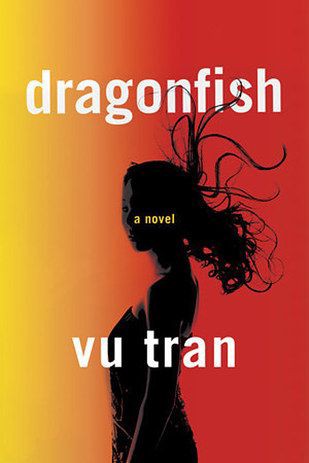
People have always felt a sort of ownership over art, and that’s actually good. It’s why you keep a book on your shelf and return to it, it’s why you hang a picture on your wall that speaks to you. But when this gets out of hand and you mistake access or a personal connection with your rights, as happens so often in our Internet age, it leads to a dangerous sense of entitlement. That’s why readers feel empowered to complain, directly to the creator, that a book or show doesn’t have absolutely everything they want: the romantic pairing they’d hoped for, the language they find most friendly, the ending they desired. And it’s also why, for instance, the last Harry Potter book leaked on the internet before it was officially published: fans saw the book as something they were owed, not the product of labor that deserved compensation. Not that J.K. Rowling needs more money—but she, and all authors, deserve to have their work recognized as work.
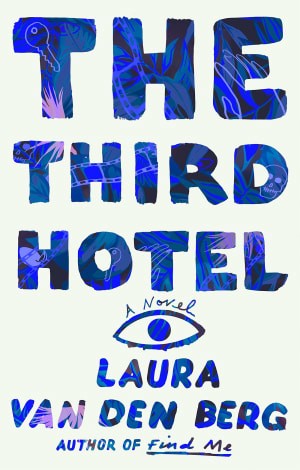
Our issue now isn’t that we’re overanalyzing art; it’s that it’s all so familiar that, instead of looking for its meaning, we are encouraged to “connect” with it, which is to say, to see ourselves in the work.
Consumers hold a pernicious power, so this trend towards free content won’t reverse itself unless we want it to. This is a sad thing, and we will all be much worse off if we can only hear stories from people who can afford to write. Nicholas Weinstock, a Guild Council member, said: “Reducing the monetary incentive for potential book authors even to enter the field means that there will be less for future generations to read: fewer voices, fewer stories, less representation of the kind of human expression than runs deeper and requires and rewards more brain power than the nearest bingeable series on Netflix or Amazon or GIF on your phone.” Maybe we will all get what we think we’re entitled to — free art — but what kind of art will that be?
DON’T MISS OUT
Sign up for our newsletter to get submission announcements and stay on top of our best work.
YOUR INBOX IS LIT
Enjoy strange, diverting work from The Commuter on Mondays, absorbing fiction from Recommended Reading on Wednesdays, and a roundup of our best work of the week on Fridays. Personalize your subscription preferences here.