Harry Potter. Sherlock Holmes. Willy Wonka. The best character names will worm their way into the apple of your memory — but that doesn’t mean they grow on trees. An iconic name might sound simple (James Bond) or simply outlandish (Katniss Everdeen), but whether it came from a name book or from a seemingly random collection of syllables, chances are your favorite character’s moniker wasn’t just picked from a hat.
So, to paraphrase Juliet, what is in a name? Well, that’s a hard question to answer. Dracula, for instance, has its etymology rooted in Romanian history, while Harry Potter was just a combination of a first name that J.K. Rowling liked and the surname of her childhood neighbors. And A.A. Milne named Christopher Robin’s beloved donkey Eeyore, because what does a donkey say? “Hee Haw.” Classic onomatopoeia.
No matter how the most famous characters got their appellations, there are certain types of names that are guaranteed to stick in your readers’ minds. Here are a few of the best ones — as well as tips on how to come up with some unforgettable names yourself.
Those that roll trippingly off the tongue
Shakespeare sure had a lot to say about words, words, words, didn’t he? Fitting, given his own contributions to the English language. And indeed, Hamlet has some choice words for a band of traveling actors, as he urges them to deliver speeches “trippingly on the tongue.” This advice remains among the Bard’s best, as a surefire way for creating a turn of phrase (or in this case, a name) that gets stuck in your head like a pop song.
Huckleberry Finn
The trick to creating a “catchy” name is in the pronunciation. Anna Karenina’s Stepan Arkadyevich Oblonsky might sound good in Russia, but in English, Arkadyevich is just a tough word to say. Huckleberry Finn, on the other hand, pours off the tongue like Mississippi molasses.
If it doesn’t sound good out loud, it probably won’t sound good in your reader’s head either. So say your character names out loud before you decide on one. And if it sounds good in the air, trust that it’ll be good on the page, too.
If it doesn’t sound good out loud, it probably won’t sound good in your reader’s head either.
Victor Frankenstein
Creative uses of consonance can also carry a name. Get it? Repeating consonants (or at least the sounds they signify, like Vic and Frank) is one effective way to forge a memorable turn of phrase.
But consonants can also call to mind certain associations in a way that vowels don’t. In the words of Dwight Schrute, “‘R’ is among the most menacing of sounds. That’s why they call it murder, not mukduk.” The hard T’s and R’s in “Victor Frankenstein” give it an unmistakably menacing sound — perfect for the protagonist of a gothic horror novel.
Atticus Finch
Finally, when it comes to giving your character a name, pay attention to syllables. Like Huckleberry Finn, To Kill A Mockingbird’s Atticus Finch has a multisyllabic first name and a monosyllabic last name. This way, there’s almost a rhythm to saying it. And nothing’s more catchy than rhythm.
Those that look good on the page
Character names that sound interesting are all well and good… but this is Electric Literature, not Electric Longform Spoken Content. Books are first and foremost a visual medium, so some of the best names in literature are the ones that look good on the page, too.
Bilbo Baggins
J.R.R. Tolkien’s eponymous Hobbit is a perfectly notable character all by his lonesome, but would his name be equally notable if it wasn’t for the back-to-back B’s? As you probably know, alliteration — repeating the first letter across multiple words — is a classic tool in the writer’s kit, and repeating the first letter across a first and last name should be, too.
Humbert Humbert
Or you could simply opt to repeat the first name itself. Repetition is another widespread literary device that is underutilized when it comes to character names. Take this example from Lolita, where Nabokov uses repetition to double down on the humiliation of his villain protagonist Humbert Humbert. Not to mention, seeing double makes it that much easier to pick the name out on the page.
Dickens wrote one of the greatest novels of the 19th century and then gave the protagonist a three-letter name. Let’s just call that what it is: a power move. But it works, because Pip just looks good on the page. Why?
Well, for one thing, it’s a palindrome (albeit a very short one), and it’s one letter off from being onomatopoeic, too (for peep). But at the end of the day, when it comes to naming your character, sometimes shorter is just better.
Granted, Pip isn’t a classic character just because his name looks good on the page. The moniker Pip is also fitting of someone small and seemingly insignificant who can grow to become enormous and stately. A character with great expectations, in other words.
But, despite being a prolific creator of fun names (Martin Chuzzlewit, Mr. Pumblechook, Betsy Trotwood… the list goes on and on) Dickens is far from the only author to use names to convey something about characteristics. We’ll look at some more examples of this next.
Those that evoke characteristics
Consonants have connotations, but sometimes a name can be even blunter than that in conveying meaning. Here are some examples of names that tell you everything you need to know about a character.
Hannibal Lecter
Thomas Harris’s Lecter is the most noted cannibal in literature. Is it a coincidence that his first name is Hannibal?
It’s not like you should always rhyme your character’s name with their primary characteristic — that’s probably a slippery slope that could result in you creating Mr. Mostman the Postman, or Abigail Dressler, the wrestler. But when done with sufficient nuance, the payoff can be huge.
Don’t always rhyme your character’s name with their primary characteristic — that’s probably a slippery slope that could result in you creating Mr. Mostman the Postman, or Abigail Dressler, the wrestler.
Holly Golightly
The protagonist of Truman Capote’s Breakfast at Tiffany’s, made famous by Audrey Hepburn in the film of the same name, bears the name Golightly — a common surname, but also suggestive of her airy disposition and reluctance to take things too seriously. This is a neat trick on Capote’s part: hecreates a realistic sounding name that nevertheless conveys something about the character.
Veruca Salt
The resident narcissist of Charlie and the Chocolate Factory, Veruca Salt simply sounds like a spoiled brat. That might seem accidental until you consider that Salt derives from the same root as “salary,” carrying connotations of wealth, while a verruca is a kind of foot wart that will send chills down the spine of anyone who’s ever used communal showers. So on a deeper level, Veruca Salt roughly translates to “rich wart.” And on the surface, the idea of pouring salt on a foot wart is just gross.
That’s why considering a name’s etymology isn’t just about leaving an Easter egg for the reader. It can be used to produce a reaction from them, even if they aren’t quite sure why.
Those that have made it into the modern lexicon
Penetrating pop culture is a fickle thing: who would’ve ever guessed that a name like Inigo Montoya would catch on in the way that it did? (R.I.P. William Goldman.) But sure enough, character names have been working their way into the modern lexicon since we started calling loverboys “Romeo” — and there are lessons to be learned from each of them.
Character names have been working their way into the modern lexicon since we started calling loverboys “Romeo.”
Scrooge
Dickens’ cold-hearted Scrooge, the Christmas-hating miser from A Christmas Carol, has become synonymous with those who hate the giving season and keep their money to themselves.
No one knows for sure how he got the name or why it caught on, but it’s suggested that Dickens saw the name Ebenezer Scroggie on a gravestone inscribed “a meal man” and misread it as “a mean man.” Whether this story is true or not, it’s a prime example of why, sometimes, the best character names come from real life.
Grinch
Dr. Seuss’ small-hearted Grinch, the Christmas-hating green monster has become synonymous with those who… well, you get the picture. And who knows how Theodore Geisel came up with this one? His most normal character name, The Cat in the Hat, was picked from a list of words that first graders can read, so all bets are off.
The fact is, it’s impossible to fully predict what names will stick in popular culture. Sometimes, the best approach might be to just pick one at random. But no matter what, with these tricks up your sleeves, you should never have to fall back on “Mary Sue” again.
About the Author
Emmanuel Nataf is the CEO of Reedsy, a marketplace that connects authors and publishers with the world’s best editors, designers and marketers. Over 5,000 books have been produced via Reedsy since 2015.
I was lying in my bunk bed at sleepaway camp when I realized I was going to die.
It was the summer of 2002, and my third summer at a girls’ camp on Lake Champlain. I was twelve years old, staring out at the starry sky outside my screen window, through the gauze of mosquito netting that somehow still let long-legged spiders inside, unable to fall asleep, trying to wrap my mind around the impossible idea of forever — when it struck me: forever was a really, really long time. And life, it occurred to me, was comparatively very short. And once you were dead, you were dead…forever.
The rest of my cabinmates were asleep, so there was no one to allay my fears. Beginning the very next day, everything from the prayer we sang before each meal to the few lines I sang in that summer’s production of Into the Woods as Cinderella’s Mother (who, by the way, is dead as of the time of her singing) took on a morbid tone.
I spent the rest of my time that summer grappling with the notion of inevitable, never-ending death and, in light of that, the limited plausibility of an afterlife. Even with what little I knew about science and the body and the history of the universe, heaven just didn’t hold water.
Even with what little I knew about science and the body and the history of the universe, heaven just didn’t hold water.
When I got home, I threw my fear and questions at my mom. “What happens when we die?” I asked. “What’s heaven like?” “How many sins can you do before you burn in hell?”
My mother’s answers varied, and none were satisfactory. Her idea of heaven: “I picture a sandy beach, with waves lapping at the shore, and everything is calm, and there’s soft music,” she said, which sounded horrifying, if for no other reason than for its dullness.
“But what kind of music?” “What if not everyone likes beaches?” “We’re just supposed to enjoy that forever?” The summer continued in this fashion, every night, and on through fall, into winter.
Last summer, I saw my father perform in a play in the small town where he and my mother have lived since 2008. He didn’t intend to get involved, but the play’s producer cornered him at the post office. “We’re short an undertaker,” she said. My dad, neither one to turn down a cry for help nor disappoint enthusiastic egging-on from my mom, accepted, which is how he came to play Joe Stoddard in the August 2017 production of Our Town in Tyringham, Massachusetts.
I’d read Our Town just once before, in a hurried, obligatory way. It’s one of those things you wind up reading at some point or another, I knew; one of those things collectively considered worth reading. When I told friends that my dad was going to perform in it, I heard story after story about friends’ first encounters with Our Town: how one woman returns to it every year, when she’s feeling sentimental about her son’s — and her own — aging. How one man got to act in it at several different points of time through his life, playing older and older characters each time. How another can’t read it at all anymore. “It’s too sad,” he said to me.
“Because everyone in the play dies?” I asked.
He shook his head. “Because everyone dies.”
In that first winter of my crisis of faith, my family took a road trip and we listened, on the way, to Les Misérables. In a song aptly named “Fantine’s Death,” Fantine, the unwed single mother who meets misfortune at every turn (though, much to its credit, the musical version of the book graciously omits the part where she sells her teeth), finally dies. In a weak delirium, she sings to her absent daughter:
Come to me, Cosette, the light is fading Don’t you see the evening star appearing? Come to me, and rest against my shoulder How fast the minutes fly away, and every minute colder
Something about Fantine’s willfully blithe words to her daughter in plain sight of her death made me anxious and afraid in the same way that contemplating forever did. How could Fantine face her death so calmly? How could she make promises to her daughter that she knew she couldn’t keep?
My parents were alarmed when I started to cry — a generous reaction, given that the occurrence of my crying wasn’t exactly rare. In their attempts to reassure me, they insisted on the existence, if not of God, then of something after death, of not-nothingness. I’d heard this from my parents before, but that night, I turned to my sister beside me in the backseat.
“Do you believe that?” I asked her. She said yes. She had faith in God, and that’s what faith was: she chose to believe. That answer scared me more than the song had.
That weekend, I had no choice but to pack my fears away. But I watched everyone closely the whole time, wondering whether they were pretending to not be worried about all this, or whether they genuinely weren’t. Neither prospect relieved my discomfort. All I knew was that there was no way everyone else was going through their whole lives feeling the way I was feeling. No way. Or, if they were, then how come all they were doing was going about the mundane business of living?
If other people felt this way, then how come all they were doing was going about the mundane business of living?
I continued to pray at night, the way I’d been taught: first a short rhyming prayer (“Now I lay me down to sleep / I pray the Lord my soul to keep…”) and then what I liked to think of as the improv set: asking God to please bless my friends and family, especially Grammy and Granddaddy and Grams, and thank you for x, y, z… But I prayed suspiciously, which was probably worse than not praying at all.
I bring a good friend — one of my oldest, from high school — with me to Massachusetts the weekend my dad is in Our Town. I’d hardly finished pitching the idea to her before she said, “Are you kidding? Of course I’m coming to see Mr. Bradley act. Let’s go.”
I forget, when I’m not in Tyringham, how much time my parents have been here now, and how well people know them. I’m reminded today by the fact that when I set up my folding chair on the lawn of the town church, the people near me look at me and smile, not just with Tyringham’s characteristic small-town friendliness but with a look of recognition. I look like my mother, I remind myself. I can’t always see it, but everyone tells me so.
When I’m here in Tyringham, I always fall back into the same easy rhythm. I come inside, drop my bags near the door, take off my shoes, and greet my parents. Unless it’s very late, there is always a pot of coffee on, and even before the current pot runs out, one of us is already making another one.
I say “one of us,” but it’s almost always my dad. My mom will offload the duty onto me, and I’ll offload it on my dad. “I don’t make it as well as you do,” I say, which is part of it. “I always make it too weak or too strong and I ruin it.” “Bullshit,” he says. But he’ll make it for me anyway.
I’ve known how both my parents take their coffee since I was six or seven because growing up, every Christmas, my sister and I would spring out of bed at the crack of dawn and try to get our parents up. At first Dad would get up, put on the coffee, and make Mom’s for us to take to her — just a splash of milk, no sugar. But once we were tall enough to reach the cabinet where Dad kept his Sweet’n’Low, we got up and made the coffee ourselves and took it to both of them. That was the deal: they’d wake up at whatever insane hour we designated to open gifts and get the day going, as long as we brought them their coffee.
It still works now. If my mom is sleeping in later than we know she’d want to, my dad or I will try to wake her up. “Okay,” she’ll say, “five minutes.” Twenty minutes later, when she still hasn’t made an appearance, one of us will bring up a mug and place it on her bedside table. The smell alone is enough to open her eyes, and just like that, she’s up.
The play begins. The stage manager, who is essentially a narrator — played in this production by two older women and a man, who alternate scenes — speaks directly to the audience.
STAGE MANAGER:
This play is called “Our Town.” It was written by Thornton Wilder; produced and directed by A…. In it you will see Miss C….; Miss D….; Miss E….; and Mr. F….; Mr. G….; Mr. H….; and many others.
The Stage Manager takes questions at one point, and members of the audience pipe up: they’re actors planted among us, asking just the right questions to unlock rich and quirky answers about the town.
PROFESSOR WILLARD: Let me see…Grover’s Corners lies on the old Pleistocene granite of the Appalachian range. I may say it’s some of the oldest land in the world. We’re very proud of that. A shelf of Devonian basalt crosses it with vestiges of Mesozoic shale, and some sandstone outcroppings; but that’s all more recent: two hundred, three hundred million years old….
At the intermission after the first act, I say to my friend, “The guy playing Howie Newsome looks like a cross between John Goodman and the guy who plays Walter in The Big Lebowski.”
“That’s also John Goodman,” she says. We watch Howie help a young member of the cast make a costume change, affixing his bow-tie to his collared shirt. The young actors in the play keep grinning and squirming, full of nerves. The adults are unflappable. They all know every single person in the audience — have grown up with most of them, been neighbors for decades, see each other every day, in their same routines.
For the final act of the play, we take our chairs and trundle up the hill behind the church to the graveyard. The place is a beautiful kind of mismatched, all large grey stones of differently pleasing shapes, each with plenty of space around it, some with small American flags planted in their soil.
When I spent summers here working, I used to walk around taking pictures of things in town: the tiny post office, the fire station, this graveyard. Cemetery is the less morbid term, I guess, but it never occurred to me that a graveyard was so bleak. Counterintuitively, the notion of dead bodies has never bothered me — the thing that scares me has already passed through them.
The third act is a funeral scene: that of Emily Webb, one of the characters we’ve followed throughout the play. She has died in childbirth, bearing a son to her husband, George Gibbs, whom we saw her marry in the second act. We see George and her family mourn, and then we watch Emily pass into a ghostly afterlife, interacting with people she knew from Grover’s Corners who died before her.
We watch her fight back against death, then accept the death-gift, in a sense, of being able to relive a lovely, mundane day from her life, an early birthday in her childhood home: her mother comes downstairs to make breakfast, and her father arrives back home from a trip out of state. She watches the neighbors talk in the street in their same routines, feels the familiarity of all she’s ever known rush past her, go by too fast for her to bear.
And then we see her take up the white umbrella that symbolizes her death, sit down, and fall silent, like all the other dead souls.
I knew this part was coming, but still I felt a sort of numb shock. Emily not only dies young, but is compelled — even after she sings the praises of everything in life that has been ripped from her — to come to peace with it? It fucking sucks. And it sucks most of all because we see a terrifying version of an afterlife where all there is to do is sit in silence and wait for…what? The second coming? Judgment day?
Wilder leaves the question unanswered, and ends his play.
EMILY: I never realized before how troubled and how…how in the dark live persons are. …From morning till night, that’s all they are—troubled.
It does no good for you to reason with me that once I’m dead, I won’t even know it. That’s the part that terrifies me most of all — terrifies the living me, right now, which, as far as I’m concerned, is the only me that matters.
EMILY: Live people don’t understand, do they?
MRS. GIBBS: No, dear—not very much.
EMILY: They’re sort of shut up in little boxes, aren’t they? I feel as though I knew them last a thousand years ago…
At some point, long after that first sleepless night at camp, but a long time ago from where I am now, I stopped praying. And I stopped thinking actively and obsessively about death, to the point where I was fairly certain I came across as someone who was not deeply distressed by it all the time.
But sometimes at night, before I fall asleep, or on planes, or when I’m especially worried about something, I find myself still going through the motions: hands together, fingers interlaced, the voice of my mind preparing to beseech someone: Dear someone, please this, please that — please, please, please…
SIMON STINSON: Yes, now you know. Now you know! That’s what it was to be alive. To move about in a cloud of ignorance; to go up and down trampling on the feelings of those about you. To spend and waste time as though you had a million years. To be always at the mercy of one self-centered passion, or another. Now you know—that’s the happy existence you wanted to go back to. Ignorance and blindness.
After the play, when I come home to Brooklyn from home in Massachusetts, I log back online to find the president making wild and thoughtless threats to every country with the power to bite back, and I can’t log off.
I try to parse how dire people think the situation is. On Twitter, gallows humor has been supplanted by nuclear humor, and it’s tough to discern whether beneath the wit there is real worry, or just increasing boredom with the escalating antics.
I leave my computer and crawl into bed with my boyfriend.
You find enough people and things to love while you’re living, so that no matter what you lose, you’re never quite alone.
“How serious is this, really?” I ask. “I don’t know what to do when people are joking about it. Like, when are we packing our bags to go spend the end times with our loved ones?
In response, on his iPad he pulls up maps, articles, irrefutable information that helps quell my alarm. This is something he’s very good at: countering my wild, flailing fear with facts and critical analysis. As I lie in the crook of his shoulder, I realize that in every prior instance in my life where I’ve sought reassurance about the life and/or death of myself and/or my loved ones and/or the world, I’ve sought it from my parents.
It’s strange, for the source of my existential comfort to have shifted so quietly, almost overnight. It’s a testament to the fact that I trust my partner, but more saliently, that I have found a new anchor on this earth, to love me and keep me, whom I’ll have even when I — when we both — lose the other people we love.. Maybe that’s the point: you find enough people and things to love while you’re living, so that no matter what you lose, you’re never quite alone.
MR. WEBB: I’m giving away my daughter, George. Do you think you can take care of her?
GEORGE: Mr. Webb, I want to…I want to try, Emily, I’m going to do my best. I love you, Emily. I need you.
EMILY: Well, if you love me, help me. All I want is someone to love me.
GEORGE: I will, Emily. Emily, I’ll try.
I don’t remember exactly when I stopped being so afraid of death, but I do remember when I started sleeping through the night again after that night at summer camp. That fall, we adopted a beagle who — though she grew up to be the world’s best dog (this has been fact-checked) — shaved a number of years off our lives the first two years of hers. If she wasn’t in the room with us howling herself hoarse, she was guaranteed to be in another room destroying something expensive.
One afternoon my mother was sitting in the kitchen at the island countertop when I wandered in, almost idly at this point, to pester her with more big questions. I settled that day on some variant of, “But how do you know there’s anything after we die?”
“I don’t!” she said, and for the first time, her exasperation came through loud and clear. I blinked.
“I don’t know,” she said, “and I’ll never know, and no one else will ever know, until we die, and maybe not even then. And until then, there’s nothing we can do about it. But what I do know is that somewhere in this house, Phoebe is chewing up another one of my shoes. And that I can do something about.”
I couldn’t help it. I laughed. And for the first time in months, it occurred to me that maybe that was exactly the thing about knowing you’re going to die: in the meantime, you might as well live. If absolutely nothing else, it’s a wonderful distraction.
EMILY: Good-by, Good-by, world. Good-by, Grover’s Corners…Mama and Papa. Good-by to clocks ticking…and Mama’s sunflowers. And food and coffee. And new-ironed dresses and hot baths…and sleeping and waking up. Oh, earth, you’re too wonderful for anybody to realize you.
At the end of the play, in the graveyard, when my friend and I went to congratulate my dad, I was surprised to find my eyes filling. I bent to fiddle with my folding chair, emotional and embarrassed. My mother dove for tissues, and, as she always does, found some.
My dad put a hand to my shoulder. “I find myself focusing on a different line every time we run through the show and getting emotional about something new,” he said. “This time, I started tearing up thinking about how, when I die, I’m really going to miss coffee.”
EMILY: I can’t bear it. They’re so young and beautiful. Why did they ever have to get old? …I love you all, everything.—I can’t look at everything hard enough.
My mom doesn’t take milk in her coffee now. She claims that she never did — that I must have been confused in insisting that we always brought her coffee with a splash of milk on Christmas morning.
It doesn’t really matter. As long as I can keep making her coffee and waking her up, I’ll do anything.
I meet a friend for coffee the week after the play, following our president’s brazen threats. For some reason, throughout the course of our conversation, I mention my parents’ age, and the fact that they’re aging, several times. I call it out self-consciously, tentatively.
“Yeah, you have mentioned that a few times,” says my friend. “Why do you think that is?”
“Probably just my crippling fear of my loved ones being hurt or dying,” I say, and even as I say it, and the darkness that that fear carries washes over me, I feel a sense of relief: relief that I’m not just afraid of dying myself, but am as afraid — if not more so — of other people dying, because what’s a world if you live in it alone?
I don’t want any of us to stop feeling these things. I love these things and I hope that everyone else loves them enough to want to fight to keep them.
Maybe it’s still selfish, the fear of having to live on earth without the people I love. But just as much, I feel for the people who, along with me, will be ripped from their places on this earth, from their warm beds and their cups of coffee in the morning, from their sunny streets and their snowy ones. I don’t want anyone to have to lose, any earlier than they must, their ability to learn to speak another language or swim, the chance to taste new foods and old favorites, the simple blessing of scrolling Twitter and finding, in a time of fear, jokes that make them laugh and feel a little bit less alone.
I don’t want anyone to have to stop showing the people they love their love, however they so choose: through small compromises or through lifelong commitment; through shared food or shared homes; through a rambling email or through the click and flush of a red heart on a dumb website. I don’t want any of us to stop feeling these things. I love these things and I hope that everyone else loves them enough to want to fight to keep them.
STAGE MANAGER: There are the stars—doing their old, old crisscross journeys in the sky. Scholars haven’t settled the matter yet, but they seem to think there are no living beings up there. Just chalk…or fire. Only this one is straining away, straining away all the time to make something of itself. The strain’s so bad that every sixteen hours everybody lies down and gets a rest.
I drink coffee despite the fact that it doesn’t seem to work for me the way it should. I can take a nap fifteen minutes or two hours post-coffee and sleep like the dead. I drink it anyway. It’s the smell of it, and the feel of enclosing a warm mug with my hands, as though it’s something I hold incredibly dear. And I do. I love it. It’s possibly the simplest, least fraught part of life that I love. Fuck God; I want to make of every little shred of deteriorating, un-sacred life a ritual, a rite. And I want it to last forever. I want to scroll my Twitter feed forever and I want a never-ending cup of coffee in my hands.
Now, that, I could pray to.
EMILY:
Do any human beings ever realize life while they live it?—every, every minute?
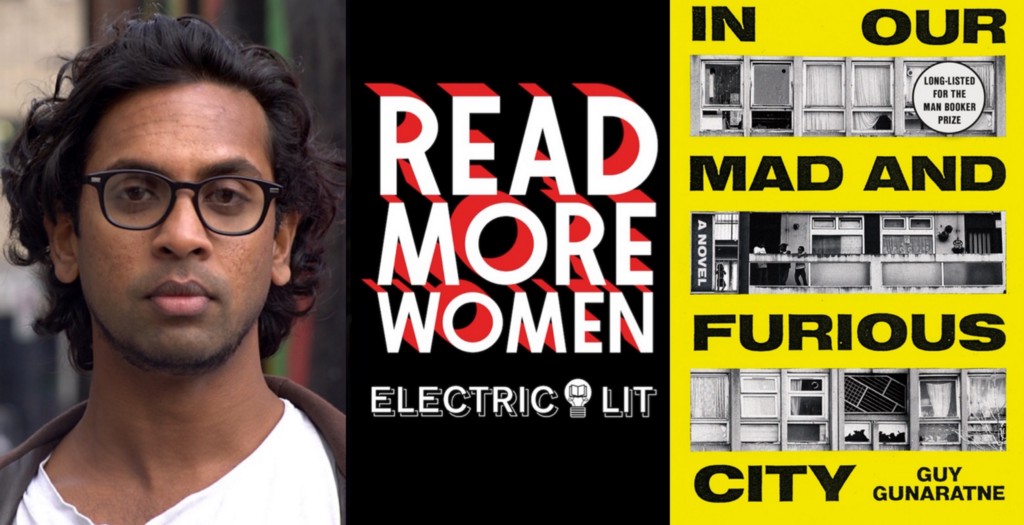
A lot of people write about London, but nobody writes about London the way Guy Gunaratne writes about London. His book In Our Mad and Furious City, longlisted for the 2018 Man Booker Prize, is an energetic and affecting portrayal of young immigrant London, right down to the grime music and the slang. Most of his main characters are men, but like any truly well-rounded author, Gunaratne both writes and reads women—and he reads women across genres. His five recommendations include not only novels but poetry, memoir, and plays.
Read More Women is Electric Literature’s series, presented in collaboration with MCD Books, in which we feature prominent authors, of any gender, recommending their favorite books by women and non-binary writers. Twice a month, you’ll hear about the five non-male authors who most delight your favorite writers.
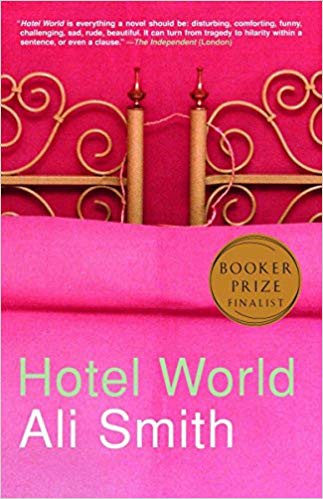
The first line reads: “Woooooooo-hooooooo what a fall what a soar what a plummet what a dash into dark into light.” And that’s what it’s like to read this great rush of a novel. Rarely have I ever fallen in love with a book so deeply. The thing was singing to me, it was dancing around. Ali Smith is a marvel to me, honest to God. I’d like everyone, everywhere to read everything she has ever written. Not only because you’d be reading one of the planet’s consistently brilliant writers — but because you’d also have ball with every book. Start with Hotel World, then read her first novel Like, and then work your way chronologically. Or start wherever. Up to you.
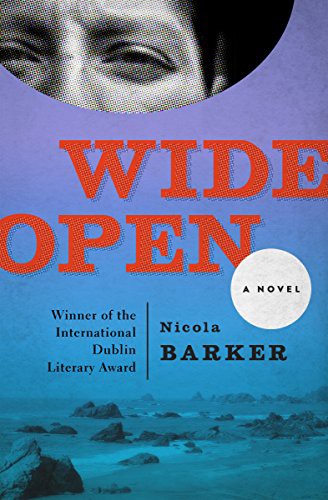
I can see here, now I’ve picked my copy off the shelf, that there is a scene in this novel about a birth of a boar, which I seem to have underlined and made notes about. That passage (and if you’ve read it, you’ll know the one I mean) has stayed with me long after reading. The book creeps under your skin, into your nerves. I shiver just holding it — a feeling close to awe. A lot of the books I tend to love are impossible to describe. I could try with this one, but I really don’t think I should. What could I say: it’s about some odd people on the Isle of Sheppey? Imagine. Anyway, read it. It’s phenomenal.
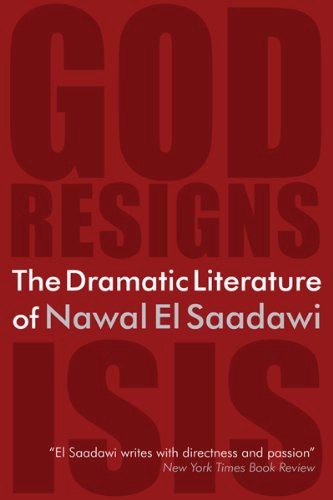
This one is a play. It’s about a meeting on a mountain where the prophets and the great women of history come to request God’s help. Jesus, Muhammad, Moses and Satan all makes an appearance, as do Bill Clinton and Benjamin Netanyahu. My favorite character has got to be Bint Allah, the daughter of God, an eighteen year old who is said to resemble Eve except that her hair is very short and she wears a pair of dancing shoes. “Her dress is cut above the knee.” This is a play about democracy, and the participation of women in the history of dissident acts. Essential, beyond question.
Maggie Nelson writes like nobody else. The meditative attention she pays to her subject matter, in everything I’ve read from her, has left me for long periods of spaced out days convinced I’m changed forever. And it lasts, that feeling. Few writers possess the power to reconfigure how you see the world. She changes how you see and hear it. Makes you re-think the language you use to understand yourself. The Art of Cruelty is the other I’d recommend from her.
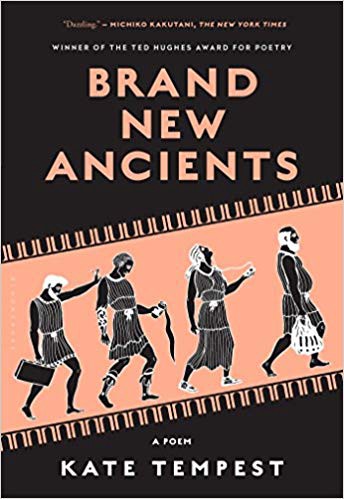
Kate Tempest is among an array of British poets that I’m particularly excited about. A blistering, kick-you-in-the-face, book. It’s very thin, and once it’s over it’s like a little anarchist has run into your head and has stuck up squatters rights. Years from now, this poem — and this poet — will be spoken about as having influenced a generation. For me, reading Brand New Ancients, at a time when my first novel had only just begun teething, it gave me all the permission I needed to push on.
This July, I hit a low. A how-do-we-keep-fighting-one-more-day low, a scream-silently-into-the-mirror low, a twilight-of-democracy low. Not my first, not my last. I tried to distract myself by retreating to the bubble of literary Twitter, where I started a thread listing some of my favorite overlooked fiction. Others added, until the list was heartbreakingly long. (All these masterpieces, neglected!) Soon, though, someone jumped in with a bit of scolding: “We’re 100 days out from an election,” she wrote. “That’s what we should all be thinking about.”
My self-righteous response was easy like-bait: “I refuse to live in a world where an oppressive regime prevents us from advocating for art,” I wrote, and added some feel-good words about fighting despotism through empathy. Soon, the woman apologized — a writer herself, she’d been despondent lately, she said — and I hold no ill will toward her. She might just as easily, as many have done before her and many continue to do, ask how one could post about books on a day when there’d been a mass shooting, a day when babies were in cages, a day when toddlers were gassed, a day when… well, any other day, really. Her question wasn’t new to me, in part because it’s something I ask myself on a daily basis. Is it really okay to talk about art right now? To leave the real and broken world behind and talk about fictional ones?
Is it really okay to talk about art right now? To leave the real and broken world behind and talk about fictional ones?
It’s a crisis many of us face not only when we promote our work, or someone else’s, but when we sit down to make that work itself. Anyone engaged in thoughtful reading and writing is also engaged in, and likely consumed by, national politics right now. No one I know is unaware that this is a particularly weird time to make art, rather than to spend every moment calling your senators.
But art has always had to exist alongside history. The notion that this, in particular, is suddenly the moment to drop all else feels like the epitome of too-late straight white awakening. There has never been a moment in which it was the most direct course of action for Americans of color to write or paint or make movies instead of protesting. There has never been a time when it was politically expeditious for LGBTQ+ artists to put down their banners and pick up their pens. And yet you’d be hard pressed to argue that James Baldwin’s talents would have been better used registering 20 more people to vote than writing The Fire Next Time.
The idea that art is born of leisure, during times of peace, is a simplistic romance, a non-artist’s daydream. (Wouldn’t it be nice to just be creative all day? In a cabin? With the tea and whatnot?) Someone recently asked if I need to be in a meditative state in order to write. Jesus, no. I write best angry. Don’t you? I write best desperate, I write best heartbroken, I write best with my pulse throbbing in my neck. Even in the best times, many of us read and write to confront the world and its failings, not to escape the same.
You’d be hard pressed to argue that James Baldwin’s talents would have been better used registering 20 more people to vote.
Listen: Ngūgiī Wa Thiong’o wrote an entire novel on toilet paper in his prison cell. Before her death at Auschwitz, Irene Nemerov wrote Suite Française in microscopic handwriting in a single notebook. Anna Akhmatova’s apartment was bugged and her books pulped, but she’d write her poems out for visitors on small slips of paper, wait till they’d memorized them, then burn the papers in the stove. And no, it’s not always political art we fight for. H. A. and Margaret Rey fled Paris in 1940 on bicycles they’d made themselves, carrying with them the manuscript of Curious George.
My new novel, which I’ve been out on the road promoting (yes, instead of canvassing, instead of marching) since the midpoint of this surreal year, largely chronicles the AIDS epidemic in 1980s Chicago. One of the lessons hammered in by my research was how both art and humor sustained a group weary from a lifetime of fighting, and the fight of a lifetime. And, more — how effective that art and that humor were, as both shields and weapons of attack. These people fought a plague and an indifferent government with wit (“Your gloves don’t match your shoes,” they chanted at the police who donned latex to assault them, “you’ll see it on the news!”); with creativity (they wrapped Jess Helms’s house in a giant condom); with theater and poetry and performance art and painting and music.
Of course, it’s one thing to believe in Angels in America, to believe in Picasso’s Guernica, and another to believe in your own sloppy first draft, or in a picture book about a monkey. One thing to fight for the first amendment, and another to retweet an invite for your friend’s poetry reading. It’s hard to feel you’re helping the world by announcing your Pushcart nomination.
But the exercise of freedom is a de facto defense of that same freedom. Freely making art, and freely talking about the art you made, is valuable in and of itself when free expression is being eroded. If anyone’s still taking that freedom for granted, it’s time to wake up and smell the history.
Write while you can. Paint while you can. Spread your art through the world. Not everyone is so lucky. Publish books and read books and teach books while you can. Take the art you love and blast it from your trumpet. Shout into the wind the names of the things you love.
Art is a radical act. Joy is a radical act.
This is how we keep fighting. This is how we survive.
I was sleepwalking down in the parking lot when I met the boy whose arm had been bitten off. This was in June of 1995, at a condo complex in Gulf Shores, Alabama. I was dreaming about the beach, about walking around on it, trying to sell umbrellas for twenty dollars a pop. They were on my back like a quiver of arrows.
Oh, the nights of my life. I have suffered through them. I take drugs for it now, I try not to drink too much. But back then my parents had to lock me in my room, jam a chair against the door.
The boy whose arm had been bitten off jumped out of a Ford Ranger that didn’t have any paint on the body. It had only one headlight. Even as he was coming towards me the truck continued to roll, edging up like a cat. There were two people inside, a man and woman in darkness.
“The fuck,” the boy whose arm had been bitten off said. “Are you crazy?”
“I don’t know,” I said.
Lagoon Run was a wooden place across the street from the beach, a few miles west of The Hangout and the Pink Pony Pub and all the nicer, newer hotels. Like all the buildings that far down the strip, it was weather-beaten and gray, elevated on splintery stilts. It looked like a dirty pelican crouching over a bunch of broken shells.
We went there once a year. My mother was from Foley. We came from Houston in our station wagon to visit her brother and her mother. But that year her mother was dead, and Uncle Kenneth was only free on weekdays. On weekends, he had to be in jail.
Uncle Kenneth was a fisherman. The Proud Maria, his boat, didn’t belong to him. It belonged to a guy on a ventilator in Orange Beach named Darius. Uncle Kenneth drove lawyers from Mobile around in it until they’d had their fill of mullet and redfish and then he parked it back at the marina. On Thursday night he’d hitch out to the condo with a Styrofoam cooler of Coors and a trash bag full of shrimp. My mother would boil the shrimp inside while my father commandeered one of the grills out by the lagoon. Uncle Kenneth and I would pull up other people’s crab traps on the pier, taking whatever we found. After a couple of beers Uncle Kenneth was friendly and childlike. He barked at passing dogs and howled in the general direction of the moon. He told dirty jokes and slept on the pull-out sofa.
On Fridays we’d drive back up to Foley, my father behind the wheel, my mother in the front, Uncle Kenneth and me in the backward seat. Uncle Kenneth drank whatever beers were left in his cooler, crinkling the cans and putting them back in the shrimpy water. At the second red light in Foley he’d tip his trucker hat to my mother and pop the hatch, jump out in one motion. We’d turn right and he’d turn left, a short guy in denim cutoffs and white sneakers, his skin the same color as the red clay peeking through the grass. Sometimes the hatch was still open when we started to move.
When I asked my mother where he was going she always said he was going to Pizza Hut. I didn’t find out about weekend jail until years later. It was for the relatively minor offenses of working people: petty theft, public drunkenness. You checked in on Friday and you checked out on Sunday. You could even bring a change of clothes.
Kenneth had been busted that summer for breaking into his ex-girlfriend’s trailer in Orange Beach, making off with all the pictures of the two of them together, all the condoms he’d left there, and a baggy full of pills that he said belonged to him. Someone told me at his funeral.
But I was talking about the boy whose arm had been bitten off. I almost didn’t recognize him the next day at the pool. Things looked different in the light. I’d woken up tired, thinking I’d dreamed everything, that I’d never left my bed. But there was tar on the soles of my feet and a cut on my big toe where a shard of glass had sliced into me. And there was the boy, sitting on the end of the diving board, his chin in his palm, staring down at the greenish water.
His arm was something you noticed right away. From the elbow down, it was a different color than the rest of his body, darker and grayer, like wet sand after a wave. It seemed heavier than the rest of him. It hung from his shoulder like he didn’t quite have control over it. There was a ragged scar going all the way around his bicep, just above the elbow. It looked like the barbed wire tattoos that were so popular then, around the muscled arms of older boys at the beach.
“You awake?” he said, before I’d even closed the swinging gate to the pool.
I nodded and he scratched his leg. “Alright,” he said. “Let’s go.”
He said it like we’d agreed to it the night before. Maybe we had. I didn’t ask questions. When I followed him out to the road, I thought we were headed for the beach. But we turned left and started walking east, towards town. Neither of us was wearing shoes, and the pavement was hot, so we kept to the parts of the shoulder that were covered in sand. We didn’t talk at first. I felt a kind of pride being with him. I was a lonely child, prone to friendlessness. The boy whose arm had been bitten off had long legs with hair on them. I was always a few steps behind, but I was still close enough to examine the weird, bruised-fruit color of his arm. When he caught me looking he sighed and said, “You want to know what happened?”
I nodded.
“A shark bit me,” he said, squinting into the sun. “Two years ago. I was swimming — ” he pointed in a general way to the ocean, across the road and beyond the dunes. “And then it felt like… BAM! Like something ran into me, and I tried to start running but I was stuck. And then I woke up and it was like this.”
He stopped and held his arm up almost level, right near my face. He smelled like cumin and sunscreen. He told me that his father had seen the attack from shore and had run in to save him. He’d tied a tourniquet, called an ambulance, and then ran back into the water to find his son’s arm. He’d found the shark instead, an elbow in its mouth.
What did he do then, I asked. We were walking over the pass, a twenty-foot wide channel where the lagoon emptied out into the ocean. Fish were fifteen feet below us.
The boy whose arm had been bitten off shrugged. “He punched it in the fucking face,” he said.
Sounds implausible, doesn’t it? But it was and is true. I asked my parents. Uncle Kenneth had sent my mother a clipping in the paper about it. “They sewed his arm right back on,” she told me, swirling the ice around in her glass. “In Mobile. A miracle.”
The boy whose arm had been bitten off didn’t seem to think so, though. He had some sense. I think he knew that if he acted like the whole thing was unimpressive, it would make him mighty. His father, too. He’d gone back in the water, then brought his son back to the same beach two years later. And now the boy was with me, shoplifting hermit crabs and keychains from Souvenir City, a stucco tower where, going in and coming out, you had to walk through doors made to look like a shark’s open mouth.
For obvious reasons the boy whose arm had been bitten off did not much care for the ocean. We stuck to other water. We’d loiter at the pool, take any kayak that wasn’t tied down. The water out in the lagoon was silty and warm, and if you went out far enough sometimes you’d see fish jumping. One time we went all the way out to the pass, saw the confused mackerel hopping from the waves as they were pushed out to sea. I wanted to follow them, but the boy whose arm had been bitten off turned his boat around.
It didn’t feel like fear. It felt like experience. In the pool, the boy whose arm had been bitten off could do the breaststroke from one side to the other without once coming up for air.
His father was big, an ex-marine, sunburned and gone a little fat. His mother was pretty, with black hair that went down to her waist and a slot between her two front teeth wide enough to stick a nickel through. We never saw them. The boy whose arm had been bitten off said his parents mostly came down to the Gulf to sit in the air conditioning. They didn’t seem to really care where he was as long as he took the empty bottles out to the dumpster. They locked the door behind him every morning. It was like his father had used up all his parental worrying on the shark and now was taking a vacation from his son. I don’t know about his mother. They had problems.
The boy whose arm had been bitten off started eating with us, peanut butter and jellies at the Formica table in front of the television, hot dogs on the grills at night. I think my parents were relieved that I had a friend. I had no cousins my age and I was shy. The boy whose arm had been bitten off was a year older than me, the quarterback of his seventh-grade football team, a solid B-student. Stick-thin-girls in ambitious two-pieces chattered around him like gulls. I, too, was too easy to impress. But who cared? I slept better. There were fewer nights when I woke up in the wrong room of the condo, or outside in a deck chair, or walking up and down the same stretch of hallway. I had mostly pleasant dreams. In one of them, the boy whose arm had been bitten off pointed at his scar and told me to kiss it. I did.
One day after lunch we walked on the road as far east as you could go, past the souvenir cities and the Pink Pony Pub and the high-rise condo complexes with names like ‘Waves II’ and ‘Pelican’s Secret,’ all the way to where the national seashore started and the navy had a base. From the road you could see a pine pole obstacle course and the occasional helicopter skimming low over the dunes. The boy whose arm had been bitten off pointed to the shirtless cadets climbing up the obstacle course wall and said that it was his dream to do the same. He told me he and his father did a hundred push-ups and two hundred sit-ups every night while watching the Howard Stern show. He told me he’d gotten a blowjob in his backyard from a girl in his social studies class the month before, and that she was waiting for him to come back to Dallas so that she could do it again. Watching the cadets, he rubbed the front of his boardshorts, and when he saw me watching him he said, “What the fuck are you at looking at?”
Uncle Kenneth came out for my mother’s birthday. Nothing special: a couple of redfish on the grill, crabs in a pot, Uncle Kenneth fresh out of the Madison County Jail. He brought his new girlfriend with him, still in her Piggly Wiggly uniform, with a nametag that said Lynette. “Nice woman,” said my father, sounding surprised, when she went inside to change. But Kenneth had a good sense of humor. He just laughed and lit up another Winston.
The boy whose arm had been bitten off had been told to invite his parents, but they waited until dark to make their entrance. At 8:30, just after sunset, they descended the stairs, a box of white zinfandel under the father’s arm, a bag of Tostito’s under the mother’s. The boy whose arm had been bitten off wasn’t with them. I could barely see their faces, but later my mother would say that the mother had a black eye under her bangs.
Kenneth introduced himself and handed both of them beers. The father put the box of wine in the center of the picnic table, like a bouquet of flowers.
“I guess our boys have been hanging out,” my father said.
The father of the boy whose arm had been bitten off didn’t really say anything. He stared at the fish Kenneth had just finished filleting, which was awaiting salt and lemon on a sheet of tin foil. Kenneth was still trying to get the charcoal hot.
“Who gutted that fish?”
Kenneth looked up, the bottle of lighter fluid in hand. “Caught today,” he said.
The father of the boy whose arm had been bitten off nodded but looked at the fish suspiciously. “Like to see the man who caught the fish gut it.”
“Jimmy doesn’t trust nothing out of the sea,” the mother of the boy whose arm had been bitten off said, laughing. She’d already drunk half her High Life.
“Who the hell asked you?” her husband said, fixing her with a look I could imagine him giving the ocean, when he charged back into it for his son’s arm.
“You just excuse him,” the mother of the boy whose arm had been bitten off said to my mother after a few seconds. Her voice was quieter, politer. “He doesn’t know how to act.”
That’s when I left, walking down to the end of the pier like I needed to check on the crab traps. I had the feeling that something bad was going to happen, that two areas of my life that had been separate were going to mix in a way not altogether friendly to me. All the traps were empty, even the bait gone. I lay on the slats of the pier, looking over the edge and into the water. I could hear the mosquito hum of a speedboat, and somewhere down the shoreline a stereo playing country music. I didn’t know why I was scared to look back to the shore, but I was. For about ten minutes I lay there thinking about nothing much in particular. But when I got up and turned around there was nothing to see. Just my mother and father, and Kenneth and Lynette, laughing and drinking from the box of wine, which they poured straight into their empty beer bottles. The boy’s parents were gone, and the grill was finally hot.
“That was the man that punched out the shark,” I informed Kenneth when I got there.
“Miserable dude,” he said.
That night we got locked out of the condo, and my parents were drunk enough to let Kenneth break into the place for them. He used a paper clip and then a straightened-out fishing hook, thin as a girl’s earring, and he showed me how to move it in the lock — first up, then to the right twice, and down in a sweeping clockwise motion that sometimes took a minute to catch. That satisfying click was what he liked. When he got it he stood up and laughed. Then he went inside, locked the door again, and made me try.
When I opened the door and walked in he and Lynette were there to welcome me. They clapped their hands. It was like I had walked into a different family.
The boy whose arm had been bitten off found a tall girl with braces who spelled her name with a K: Kortni. It was the first thing she said to you, and about the last thing she said to me. He told me that she had perfect B-cups, which he’d felt through her swimsuit under a beach umbrella while her family was just yards away, in the beach house they were renting. I half-believed him. I completely believed that whenever he wasn’t with me, he was with her, getting his braces caught in hers. I think that’s what made me do what I did.
I straightened out a fishing hook and a couple of paper clips and one day, as we were walking down the beach, eating snow cones that we’d paid for with a five-dollar bill he’d stolen from his mother’s purse, I told the boy whose arm had been bitten off that I’d learned how to pick locks. He didn’t look at me, just squinted out at the ocean. But I could tell he was interested. “Prove it,” he said, and then he pointed to Kortni’s beach house, a powder blue two-story set back about fifty yards from the beach.
I hesitated, and then he punched my shoulder. “You scared or what?”
I shook my head. I’d expected this, it was what I wanted. I wanted to become a sacrifice, crouching in the doorstep of Kortni’s beach house when her mother came out and caught me, the boy whose arm had been bitten off back in the dunes.
That’s not what happened, though. He did hide, and I did go up alone. But no one came out. I bent over the lock with my tools — up, then to the right twice, and clockwise down — and felt for the click. Once I knew the door would open, I paused for a moment. I could feel him waiting, watching me. I wanted that feeling to last.
When I finally opened the door and stepped inside, the boy whose arm had been bitten off was right behind me. No one was home. We crept through the beautifully appointed rooms.
Later that afternoon the boy whose arm had been bitten off had the bottoms of Kortni’s swimsuit and I had a new Walkman, an older brother’s Kill Em All inside. We repaired to the pier and with great ceremony the boy whose arm had been bitten off turned the bikini bottoms inside out and pressed them to his nose. “Yes,” he said, “oh yes.” I did the same but they just smelled like detergent to me. I didn’t like the tape, either.
We broke into three more condos that afternoon. Two of them were empty. The first one hadn’t had anyone in it since I could remember. The inside was dusty, decorated like all the others — cheap ocean-related crap on the walls, glass bowls full of sand dollars everywhere. The sheets were turned down like they were expecting somebody.
The second condo was where the two old queers had stayed. That’s what the boy whose arm had been bitten off called them, anyway, meaning the two old men we’d seen sometimes at the pool, their bellies expanding smooth and tan from opened shirts. One of them had helped me bait a hook, my first day on the pier, when I was having trouble.
This apartment was decorated like the other one, but there were homey touches that showed that it was usually occupied by its owners. Pictures of the two men were framed and arranged on a glass table in the living room. There was a record player in the bedroom and, deep in a bedside table drawer, a cigar box filled with neatly-rolled joints. The boy whose arm had been bitten off pocketed these, and on second thought took the box, too. I took a pair of green-glass Ray-Bans that were folded on the dresser.
We lit the joint with some kitchen matches and wandered around the condo like we owned it. I had the odd feeling that I’d been there before, and once I took the first hit off the joint it only got worse. I’d never smoked anything and it made me cough. The room felt hot and close, and my toes seemed rooted in the thick carpet, green as seaweed beneath my feet. I felt like I was sleepwalking as I followed the boy whose arm had been bitten off back to the bedroom, where he un-velcroed his swimsuit and, primly turning so I couldn’t see anything, pissed on the bed.
I looked up the boy whose arm had been bitten off last year, on a whim when I couldn’t sleep. He isn’t on Facebook. The first stories to come up on Google were the old ones: Boy loses arm to shark, Father gets it back; Surgeons re-attach arm to sharkbit boy.” Etcetera, etcetera, etcetera, then nothing. Death records for people with his first or last name, but never both. A chain of car dealerships in Topeka.
I wonder what it’s like to survive your defining event at age 10, and never have the world know anything else about you. To get hurt and for everybody to know it, and for that to be all they know.
The third condo we broke into was Room 213, where the boy whose arm had been bitten off was staying. It wasn’t my idea. After we locked the door to the old mens’ apartment, he just led me there. He didn’t even say anything beforehand. We floated there on feet that were inches above the ground. I felt nauseous, nervous. I’d felt that way all afternoon.
When we got to the door the boy whose arm had been bitten off dropped to his knees and asked for the paper clip and hook. I handed them over, and he gave me his loot — the bikini bottoms, the cigar box. It took him a few tries. But within a minute or so he’d gotten the hang of it, and the lock clicked. He took his hand off the doorknob and looked up at me. He told me to open it. It was like he wanted to show me something.
Twenty years later, I went to a peepshow in New Orleans. The second my quarters went in the slot I saw it all again: the dark room, his mother naked and bent over the stove, her face inches from the red-hot coil. His father naked too, behind her. Everything moving too slowly, then way too fast.
I’d already closed the door when his father started yelling. The boy whose arm had been bitten off was halfway down the stairs. I ran after him, dropping everything behind me — the Walkman, the bikini bottoms, the cigar box. I didn’t look back until I was about a quarter mile away, following as he sprinted down the shoulder of the road towards town. He didn’t stop until he’d reached the pass.
When I caught up to him, the boy whose arm had been bitten off was standing at the guard rail, looking down at the water. The tide was going out, the channel flowing into the ocean. A kayaker was making his leisurely way out from the lagoon, and dozens of skates, spotted like leopards, were swimming against the current, eating whatever came down to them. There was a fisherman on the rocks, casting into the water with a Mickey Mouse reel. He yelled up to us. “Y’all gonna jump, or what?”
I’d done it once, egged on by Uncle Kenneth. I shook my head, out of breath and looking behind me. No one was coming, but the boy whose arm had been bitten off climbed over the railing anyway, his bare feet finding the concrete lip on the other side. It was technically illegal, but it was only about a ten-foot drop. Kids did it all the time.
As a pre-teen, I devoured books written in diary format. From the Royal Diaries series, which featured juicy details from the lives of famous nobles like Cleopatra and Marie Antoinette, to the wildly age-inappropriate Bridget Jones’s Diary, as long as each chapter started with “dear diary” and dangled the promise of outrageous oversharing, I was in.
Today, I’m a 20-something living in Brooklyn, and I’ve moved on to what I now view as the holy grail of first-person narrative: online diary columns. A sampling of my favorites include The Grub Street Diet, which gives readers a glimpse into the daily routines of gustatory greats; The Cut’s anonymous Sex Diaries, showcasing the sexually ravenous and the sexually chaste; Refinery29’s Money Diaries, which explores how people spend their hard-earned dollars; and The New York Times’ Sunday Routine, chronicling how “newsworthy New Yorkers” try — or, more often, fail — to unwind on the weekends. As a former anthropology major, I justify my habit as voyeurism lite, porn for those of us who wish we were Harriet the Spy, a non-creepy way for generally rule-following humans to satisfy our nosiness. I’ll see your Rear Window and raise you a Sex Diary.
The conceit of many diary-style books, including the Royal Diaries series, is that the authors use their journals as a much-needed respite from their examined lives. As Princess Victoria writes in Victoria: May Blossom of Britannia, England, 1829 by Anna Kirwan, “The reason I hide this ledger is that I do not wish anyone to know that it exists. Really, I must have a place to pour out my curious thoughts privately and sort through them. I never get to be truly alone.” Back when these books were published, in the late ’90s through early aughts, we thought that having access to someone was knowing them. Today, we have the exact opposite problem: despite our unlimited sharing via social media, we aren’t able to obtain an “authentic” glimpse into anyone’s life because we live too self-consciously for it to exist.
Back when these books were published, we thought that having access to someone was knowing them. Today, we have the exact opposite problem.
There is nowhere this is more apparent than in the land of online diaries: the diarists know their accounts are being read. The question is not what they do when nobody is watching but what they choose to do when they are aware that everyone is watching. In his Grub Street Diet, comedian John Early makes no secret of the fact that his dining habits are influenced by the assignment itself. He chronicles the low-grade hysteria he feels on his first day: “My daily cold-brew-induced panic begins, and I find myself immediately paralyzed by the performative nature of the whole endeavor. Will I accurately represent myself as the passionate eater that I know myself to be? Will I bring attention to the restaurants and small businesses that truly need it? Is it braggy to talk about my boyfriend? It feels so transparent to include him (‘I, too, am loved!’), but dishonest to leave him out!”
If the idea of the pre-internet diaries was to transmit a snapshot of a famous person’s actions, the internet diaries offer an outline of a famous person’s neuroses; readers witness them fret over everything from the quality of their writing to the quantity of food they consume. Alan Yang, co-creator of Master of None, prefaces his Grub Street Diet with this disclaimer: “What you’re about to read is a description of one of the craziest series of meals I’ve ever had…I love to eat good food, but this is not normal.” For his first feast, Yang orders: “three cheeses and blood-orange marmalade; salumi misti; a green salad with anchovies; roasted beets with whipped ricotta; burrata; white-bean soup; seared octopus with ramps; tonnarelli cacio e pepe; bucatini all’amatriciana; fettuccine alla carbonara; pappardelle alla Bolognese; malfatti with braised suckling pig; cavatelli with pork sausage; chitarra with charred ramps; chicken cutlet; poached trout; roasted carrots; and charred asparagus.” As can be seen by both Early and Yang’s anxious preambles, there is something incredibly meta about the whole ordeal: a week lived a certain way because the author is using it to market himself, curating a facade that he knows will leave an impact on his reputation and career as soon as the following day.
While it’s easy to think that perhaps the diarists are overly self-conscious, all one has to do is scroll to the bottom of each article to witness its immediate impact IRL. Here, the comments sections function like the Wild West of yore, except the cowboys are internet trolls and their shootouts are executed with loaded words. The tenor of each showdown varies by site. Readers of The Grub Street Diet tend to be mean, declaring female diarists anorexic and each of their male counterparts more of a pretentious asshole than the last. Chronicling a trip to Los Angeles in his 2016 Grub Street Diet, the late Anthony Bourdain writes: “For dinner, I got a double-double, Animal-style, and a chocolate shake at the drive-through at the In-N-Out Burger on Sunset, and took it back to my hotel. I ate the fuck out of that thing.” Below, sport7 comments, “It’s amazing how fame has made him insufferable,” and EdsRevenge agrees: “Poor Anthony. It must be absolutely exhausting to work so relentlessly at trying to seem cool.” Lvlvlv is less forgiving: “WTF else would you do with your DINNER, Captain obvious…is he contractually obligated to tack on an obscene comment to everything he says?”
If judgmental reactions stem from the feeling that the celebrity in question is trying too hard, it follows that the attitude on sites featuring anonymous diaries is the opposite. On Refinery29’s Money Diaries, pseudonymous millennials compare meditation apps, empathize over grueling spin classes, and generally affirm each other. A commercial analyst in Houston, TX recounts a conversation with her girlfriend, “She tells me she thinks one of her friends is a Trump supporter — I tell her to get new friends.” Below, HOTWINE cheers her on with a: “yasss qween!” Similarly, the unnamed authors of The Cut’s Sex Diaries detail their most salacious sexual acts without fear of blowback. “The Man Planning a Thanksgiving Threesome” describes an extremely active week of his polyamorous sex life and Harveywallbanger voices appreciation: “I love the combo of hard core sex and participation in small business Saturday.” Nearby, dc10001 pipes up with a constructive editorial suggestion: “Lacks detail on the T-day menu. Was there stuffing?” It turns out WASPyJewess is similarly preoccupied: “No way he brined his turkey for 3 days!!! Now I don’t know WHAT to believe!!!”
What drew me to read about the daily practices of Marie Antoinette is the same thing that pushes me to skim an article about an intern sexting with her boss.
The majority of my online diary-reading takes place in the liminal state of post-3 a.m. insomnia, when I let the information wash over me as a sort of anaesthetic. Despite each narrator’s careful curation of the most envy-inducing events of their week, it’s often the mundane details that lodge themselves in my brain; a behavioral health counselor in Anchorage eats Starbucks’ eggs sous-vide for breakfast every morning; Neil Blumenthal of Warby Parker fame is “constantly chatting with peers” and does early morning push-ups with his daughter on his back; “The Interior Designer Cheating on Her Husband With an Actor” once masturbated under the table in a Tribeca café. While the lattermost is a morning ritual I don’t plan on adopting, the others intrigue me. Maybe I would be a more balanced person if I started my days with slow-cooked eggs. I can’t found Warby Parker but I do have peers — if I dedicated more time to chatting with them, would I come up with an idea that would lead entrepreneurs worldwide to revere me as an industry disruptor? Perhaps I could convince the toddlers who live in the apartment above mine to sit on my back while I do push-ups.
I make these tendrils of plans idly, telling myself I’ll start tomorrow. But by the time I scroll to the end of the page I’ve already forgotten, their novelty melting away like the wax on Icarus’ wings. Call them routines or addictions; the truth is that if we were so easily swayed from our patterns these diaries wouldn’t exist at all. What originally drew me to read about the daily practices of Marie Antoinette is the same thing that pushes me to skim an article about The Intern Sexting With Her Boss: we all pursue specific pleasures in order to quell our universal human needs. Like any recovering anthropology major, I’m fascinated by how people knowingly expose themselves to the world in order to gain favor. What do their “inner monologues” sound like when they’re aware that cyberspace is listening? How do choose to portray themselves? What will they cop to? Who sits on you while you do your push-ups?
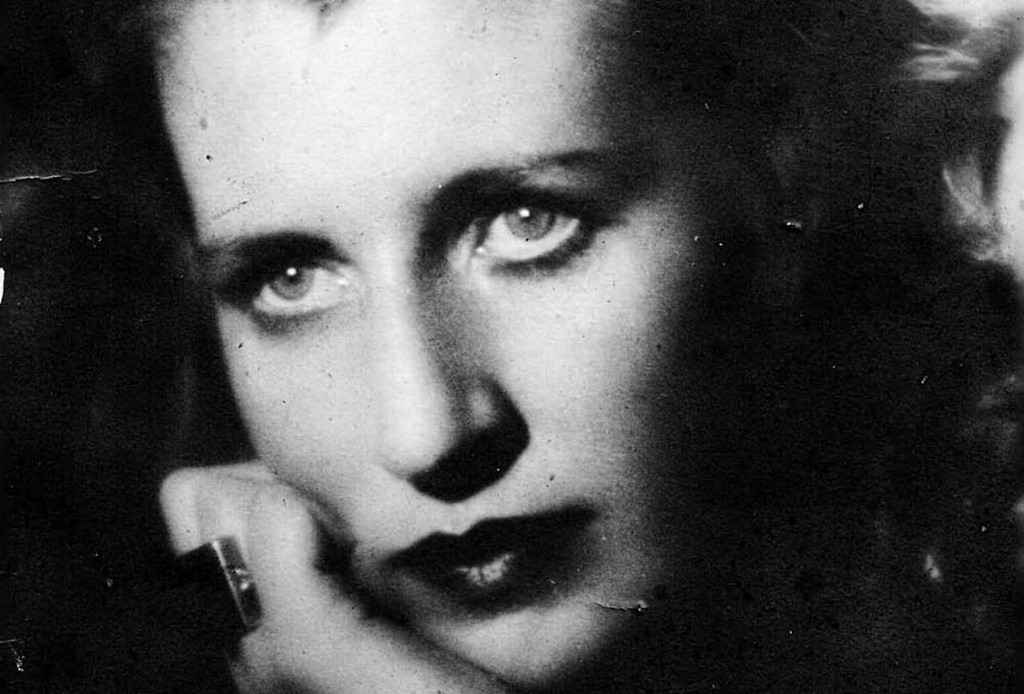
First published in 1950, Norah Lange’s People in the Room (Personas en la sala) is an intimate, intricate experimental novel that, despite Lange’s place at the center of the avant-garde literary scene in Buenos Aires at the time, was largely overlooked for more than half a century. Well, maybe not “despite.” As Leonor Silvestri observed when the second volume of her complete works was published in Argentina in 2006, Lange was a striking redhead known first and foremost as a muse and wife, whose “visibility as a character inhibited the legibility of her writing.” This writing, nonetheless, was extensive and profoundly innovative, sometimes pushing the bounds of propriety (as in her 1933 novel 45 Days and 30 Sailors, about a young woman who makes a transatlantic crossing alone on a ship full of men — an apt metaphor for the literary landscape at the time), sometimes adopting themes deemed “suitable” for female writers of her day (namely, anything having to do with the domestic sphere) and adapting them to disrupt those same norms. In his introduction to People in the Room, César Aira describes Lange’s novels as “strange meteorites unlike anything else that was being written at the time.”
Purchase the book
I met Charlotte Whittle almost three years ago when we were introduced by a mutual friend who thought we might have a lot in common — since, you know, we both translate from Spanish. They had no idea how right they were: at the first of our many two-person translation symposia (i.e. book nerdery over beverages), she mentioned that she was pitching a novel by Norah Lange, who was married to Oliverio Girondo, the poet I’d been translating on and off for ten years. That made us literary half-sisters! Or was it sisters-in-law? Cousins? I don’t know, but I do know this: the novel she was talking about is the haunting, enigmatic masterpiece People in the Room, which she brought into English with spellbinding grace and precision.
Heather Cleary: Tell me about People in the Room, and Norah Lange, and how you came to translate the book.
Charlotte Whittle: I first read Norah Lange when I was doing graduate work in Hispanic Studies. I had a friend called Nora Lange who’d just moved into an apartment with some upstairs neighbors from Argentina, who asked her if she was familiar with the work of the Argentine writer, Norah Lange. Nora Lange, an American writer of fiction, was captivated by the idea that there was a writer in the Southern Hemisphere from whom she was separated by only an ‘h.’
So Nora Lange asked me if I knew anything about Norah Lange: that was the first time I’d heard of her. I soon learned that Lange was associated with some key moments in Argentine literary history, that she’d participated in the founding of the influential avant-garde journal Martín Fierro, and that her childhood home was the site of some of the most legendary bohemian intellectual gatherings in 1920’s Buenos Aires. She began her literary life as a poet; her early work was influenced by Borges’s ultraísmo (and her first book was introduced by him), and she went on to write beguiling, poetic memoirs, and some incredibly striking novels. Despite all this, when I asked my academic advisor at the time — a major scholar of Latin American literature — about Lange, his reply was that she’d been “completely forgotten.” Needless to say, that really piqued my interest.
I was mesmerized by Cuadernos de infancia (Notes from Childhood), Lange’s only book to have remained consistently in print since it was first published. I remember thinking at the time, I want to translate this, I want to carry this gorgeous prose into English, but I wasn’t yet on the path to translation. Still, the seed had been planted.
It was on a trip to Buenos Aires that I was able to track down the complete works (which were finally published in 2005–6, but still weren’t very easy to find), and was really seduced by the haunting language and unique authorial gaze of Lange’s later work. The voice of the narrator of People in the Room captivated me, that sense of probing around in the dark, having only a partial view. I began translating it not because I had a particular plan, but out of a need to know how it would sound. I worked on it in my spare time while I was teaching, then proposed it to And Other Stories at the point when I realized I wanted to be a translator.
The voice of the narrator of People in the Room captivated me, that sense of probing around in the dark, having only a partial view.
HC: The novel is enjoying a fantastic reception right now, but it’s taken about 75 years for Lange to get any kind of mainstream attention. Why do you think people were so slow to catch on to her work — not just in English, but in Spanish, as well?
CW: I think the answer to that has several layers. The question of Lange’s reception in Argentina is quite vexing, because it’s not like she was unknown — she came of age surrounded by key figures in the Buenos Aires literary scene, and she did enjoy some recognition among her peers during her lifetime. But one gets a strong sense that she’s now known more as a character in literary mythology, as Girondo’s wife, or as this flame-haired Scandinavian bombshell who supposedly broke Borges’s heart. Even now, her outsized reputation as a figure in literary life tends to overshadow her work. K.M. Sibbald writes that Lange was “a victim of her own legendary literary status,” and I think that captures part of what happened. The reception of her work was often filtered through statements by the men around her, beginning with Borges’s prologue to her first book of poems, and her later books were sometimes described by male critics in extremely gendered language. And, of course, she was overshadowed by the male writers she associated with, simply because of the gender prejudices of the time, which meant that male genius tended to be revered, often to the exclusion of other voices.
Sylvia Molloy suggests that Cuadernos de infancia, Lange’s most widely read book, was successful and enduring not only because of its ground-breaking prose, but because it allowed readers to identify the unconventional Lange with the traditionally feminine subjects of domesticity and childhood. Lange was an eccentric, and some readers weren’t sure where to place her until then — writing about her journey to Norway by boat with 30 sailors, for example, was deemed inappropriate material for a young woman. Perhaps that’s also part of why she felt she needed to “unwrite” Cuadernos with the more opaque, avant-garde memoir Antes que mueran (Before They Die) — to undo the easy classification to which she’d been subjected.
Lange’s circumstances are obviously particular, but the same question could be asked about so many women writers only now appearing in English translation — some of whom, like Lispector, were canonical in their own countries, and others, like Amparo Dávila, whose work is now being reassessed in Mexico ((and whose searingly strange stories have just been published in English by New Directions). To answer it, we’d have to look more broadly at how the canon is formed in these writers’ countries, and in our own. Which works are chosen to be studied in universities, enshrined as classics, and considered “essential”? Which ones are kept in print beyond a first or second run? These are all contributing factors, and gender bias is present in all of them. People like Meytal Radzinski, Margaret Carson, and Alta Price have done a lot to draw attention to the gender imbalance when it comes to who gets translated. I also can’t resist mentioning A.N. Devers’s work with The Second Shelf, which approaches gender imbalance in the literary canon from the angle of collecting. There is so much work to be done, but projects like these, and the positive reception of People in the Room demonstrate that there’s a thirst for work by writers like Lange who might previously have been overlooked.
HC: What would you say to a reader unfamiliar with Lange — and the avant-garde literary scene in Buenos Aires at the time she was writing — who is interested in picking up this book?
CW: One of my favorite images of Lange is from a party celebrating her early novel, 45 días y 30 marineros (45 Days and 30 Sailors). Norah lies horizontally, dressed in a mermaid costume, holding a wine glass the size of a goldfish bowl. She’s surrounded by men dressed as sailors, among them Pablo Neruda and Oliverio Girondo. Norah’s friend García Lorca was also there that day. Norah was an unconventional woman who lived her life in a way that paralleled her work: she was a performer, known for the spirited speeches she gave about her fellow writers. Though she explored the limitations and the possibilities of domestic space, she herself didn’t spend her life hiding in the drawing room. The picture of her surrounded by men may accurately represent her situation as a woman writer, but she knew how to negotiate her objectification as a muse, and while she was working tirelessly on serious literary projects, she was also often having a lot of fun.
HC: Excellent. So, what is People in the Room about?
CW: The scenario is that a seventeen-year-old girl — the novel’s narrator — lives in a well-to-do suburb of Buenos Aires, and spends hours spying on three mysterious women, whom she assumes to be spinsters, and who live in the house opposite her own. One night, she is struck by the arresting image of their three faces arranged in the form of a “pale clover.” Lange said in an interview that the image came to her after she saw the famous portrait of the three pale-faced Brontë sisters by their brother Branwell, who erased himself, but whose ghostly outline can still be seen in the painting.
After several nights of gazing at the women through their window, spying them behind their gauzy curtains, the narrator sees them sending a telegram at the post office, decides to intercept the reply, and delivers it to them as a way of contriving to visit their house. The telegram alerts the women that a man will visit them, a man about whom the reader learns nothing. But the narrator’s plot to enter the house is successful, and she spends many evenings sitting with the women, hearing them utter enigmatic phrases, and imagining the stories they might be hiding. A sighting of a spider, a conversation about a blue dress, and a telephone call in which no one speaks all qualify as major events.
It should be clear from this summary that this is not a novel to be read for plot (Aira writes, somewhat provocatively, that it’s “not a novel to be read for pleasure”), but one to be read for language, atmosphere, and states of being. It’s hallucinatory and death-anxious, and contains shards of the gothic and of the 19th century novel, rearranged into something uncanny and wholly modernist. You could say it’s a book about voyeurism, or about domestic entrapment and female isolation during the early twentieth century, and it is about all of those things, but I think one of its many strengths, what for me makes it so compelling, is that it allows you to slip in between all these readings; each rereading generates new layers of meaning. I’ve also come to see it more and more as a novel about literary creation, with a narrator who replaces reading with voyeurism, and is herself a novelist in search of a story that continually eludes her.
HC: What challenges did the translation present? Is there a particular passage you could cite as an example of how you worked through some of these?
CW: Of course, Spanish can accommodate very long sentences, much more so than English, and often when translating from Spanish the tendency is to shorten them, to make them less unwieldy. I recently heard John Freeman talk about editing a series of young Latin American writers in translation and thinking, wait, why do they all write like Henry James? That may be an exaggeration, but there’s a kernel of truth to it. It’s a characteristic of Spanish. But with Lange, I felt that those long, meandering, and yes, Jamesian sentences were really part of her project, and needed to be preserved. But they had to be preserved in such a way that the reader in English didn’t feel completely untethered and adrift. That’s a risk because there are certain grammatical markers in Spanish — gender and adjective agreement, for example — that can function as signposts in the text and make those long sentences more navigable, and which get lost in English.
Another, related thing that was really interesting about this translation was Lange’s use of punctuation. We could say loosely that the narrator moves between two modes. One of them is controlled and precise, and another is almost unmoored. In this latter mode, Lange uses less punctuation. Take the beginning of Chapter 12, when the narrator hears of the fire. This is the first chapter where we have an inkling that the narrator’s obsession is making her unwell. We see the commas become less frequent as the narrator’s conscience is bombarded with simultaneous details.
It was so important, not just to make the punctuation work as English punctuation, but to listen for how it’s used to create the pauses and breathlessness that contribute to the narrator’s very particular voice. Maybe that was the greatest challenge of all — finding the voice. Balancing the complexity of the language and the intimacy and almost conversational tone, the atmosphere of suspense. The narrator is young, and as I mentioned, I thought of her as a reader and writer. The Brontë portrait was often on my mind, and the fact that Lange seems to be tracing this path between the nineteenth century and what we think of as Modernism. There are certain period markers in the novel — horses and carts, the novelty of the telephone. It’s a period of change, and the voice reflects that moment of transition. Certain choices I made were informed by that connection to the nineteenth-century novel. That’s why, for example, the narrator is so often “vexed” rather than “irritated” or “annoyed” — use of that word peaked in the mid-nineteenth century and often crops up in the Brontës and Jane Austen. At the same time, Lange’s language is innovative and daring, full of unexpected combinations. I wanted to resist the temptation to to tame it, and let her striking modernity come through in full relief.
Lange’s language is innovative and daring, full of unexpected combinations.
HC: Translation is a unique form of creative work, but it also draws on a wide range of skills. What is the most surprising job or activity from your past that has influenced your approach to translation?
CW: Once upon a time, when I was about 14, I spent a summer taking apart a nineteenth century log-cabin in Southern Idaho: strip off the siding, tear out the nails, develop a complex labeling system to mark each join in the logs, deconstruct, load onto a truck so the logs could be transported 500 miles, and the house rebuilt in a different setting. If we understand each novel as a house with its own particular architecture, that process of getting inside the log cabin’s structure, understanding how it was put together, then taking it apart, carrying it a great distance, and reassembling it in a different place, maybe with different tools, but with respect for the intentions of those who built the original, seems like an apt metaphor for what we do as translators. It’s translation made physical. I often feel like I was translating before I knew it.
HC: And what are you working on now?
CW: I’m working on Jorge Comensal’s The Mutations, a tragicomic novel about cancer and silence. There are some wonderful characters — a macho lawyer deprived of the power of speech, an oncologist obsessed with Bach, a psychoanalyst with a sideline in medical marijuana, a germaphobe, and a foul-mouthed parrot. In some ways it’s like Ivan Illich transplanted to 21st century Mexico City (with a hint of Flaubert, too — cue parrot), but it’s very much its own creature — witty and erudite, with an extraordinary balance of emotional wisdom and irony. It’s been a joy to work with a living author, someone with whom I can discuss the voices of the novel, the subtleties of Mexican slang. Is the parrot squawking “motherfucker,” or is it more of a “son of a bitch”? I haven’t decided yet, but right now my notes are very colorful.
I’ll also be working on more Norah Lange in the coming year, so watch this space.
About the Translator
Charlotte Whittle’s translation of Norah Lange’s People in the Room is published by And Other Stories. Her work has appeared in The Literary Review, The Los Angeles Times, Guernica, Electric Literature, BOMB, Words Without Borders, and elsewhere. Her translation of The Mutations by Jorge Comensal is forthcoming from FSG. She is also an editor at Cardboard House Press, a bilingual publisher of Spanish and Latin American poetry.
I approached early motherhood like a research project. When I was trying to get pregnant, I read Nina Planck’s Real Food for Mother and Baby and stocked up on salmon, leafy greens, and whole milk. When the baby wouldn’t sleep, I googled relentlessly and read every baby sleep book I could find. Reading Pamela Druckerman’s Bringing Up Bébé, I was taken in by the ease with which the naturally maternal French women get their babies to sleep through the night (faire ses nuits, as her Parisian neighbors say) by two months old. When I tried, as French mothers apparently do instinctually, to observe my baby’s signs so that I might let him learn to sleep on his own, I saw that he was always screaming, nursing, or (occasionally) sleeping, so it was unclear what part of this might be instructive.
I googled and read and researched because I believed that the baby was a fixable problem. Each book, website, and expert promised that if I did the right thing, motherhood would be easy. The more I tried to follow their guidance, the more exhausted and downtrodden I felt. The baby refused all the experts’ advice, all their regimens and strategies, and all of it felt impossible. I had a beautiful, healthy baby, albeit one with strong lungs and a penchant for nighttime wailing. And I was convinced I was a bad mother.
A new crop of motherhood memoirs speaks back to this experience of motherhood as something that one can either fail or master. Against the confident advice-giving of a previous generation of parenting books, these new books — what Parul Sehgal, writing in The New York Times, called “a raft of new books on motherhood” — present a wide range of individual experiences of motherhood. Their approaches and stories vary quite a bit: Molly Caro May’s Body Full of Stars describes a serious birth injury and its aftermath, while Jessica Friedmann’s Things That Helped is a harrowing account of postpartum depression so severe she fantasized about walking to the river near the house where her infant slept and drowning herself. Laura Jean Baker’s The Motherhood Affidavits, in contrast, characterizes the postpartum period as a source of addictive calm, as, while nursing, “I lulled my babies, and they lulled me,” the oxytocin released by early motherhood counteracting lifelong depression. After spending her twenties trekking across the globe, Sarah Menkedick embarks on the new adventure of settling in one place with a husband and a baby on her family’s Ohio farm, and tells the story in her book Homing Instincts: Early Motherhood on a Midwestern Farm. Many of these books also reflect on the new mother’s relationship with her own mother, as in Laura June’s Now My Heart is Full, which follows the birth of June’s daughter and also June’s relationship to her mother, an alcoholic. Meaghan O’Connell’s And Now We Have Everything describes the challenges of an unexpected pregnancy and early motherhood in a manner so engaging and warm and disconcertingly honest that I felt both like I wanted to take her out for post-bedtime cocktails and also like I already had.
What these books have in common is their commitment to capturing the joys and challenges of life with small children in an unvarnished and unglamorous manner. None of these mothers presumes to tell her readers what they should do — how to have an easy pregnancy and birth, how to soothe a child to sleep, how to feed the right foods to ensure early genius. In fact, read together, they seem to reject the entire idea of expertise. Babies are crazy, they seem to be saying. Not one of us knows what we’re doing. Whether the story is somber, as in Friedmann, or occasionally madcap, as in Baker’s recounting of how she, overwhelmed by four, then five children, basically gave up on car seats, telling her children they were “now free to roam about the cabin” as she drove their minivan around their small Wisconsin town, the overall effect is a disavowal of expertise. Together they reassure their reader, likely a fellow anxious new mother: no one really knows how to do this, but we’re doing our best, and we’re muddling through somehow.
Read together, these books seem to reject the entire idea of expertise. ‘Babies are crazy,’ they seem to be saying. ‘Not one of us knows what we’re doing.’
These books make an invaluable contribution to the literature on motherhood. The more women are able to speak about the significant challenges of new motherhood, particularly in a country with so little material, medical, social, and emotional support for new mothers (not to mention the shameful lack of parental leave, rampant pregnancy discrimination, and an administration determined to strip maternity care out of health care coverage), the more likely women are to actually get the support that makes early motherhood survivable. Further, these books present a serious challenge to the (still-pervasive, amazingly) idea that motherhood is all saccharine joy, the stuff of Hallmark cards, or beneath the notice of serious writers. They crack open space for women to speak frankly about the rigors of early motherhood, to say both I love my baby and I’m really struggling or maybe I wasn’t cut out for this. If I had read them as a new mother, they would have helped me to feel less like a failure, and less alone. They do that for me now, years after my sons’ infancies.
And yet: every time boundaries are broken, new ones are inscribed.
I perceive these books as radical and brave. I see myself — my struggles and my failures and my wonder at my babies and my new mother-self — in these books. I feel seen. This is in no small part because I, like these writers, am white, straight, married, middle class.
(In case it seems like I’ve cherry picked the books that speak most easily to me, I’ll note that the motherhood books getting the most attention in the press have nearly all been written by white women. All of the memoirs listed in Parul Sehgal’s New York Timesreview are written by white women, though her list of novels is more diverse. Similarly, the “new canon” of books on motherhood listed in Lauren Elkin’s essay “Why All the Books About Motherhood?” on The Paris Review blog is exceptionally white. Angela Garbes discusses the overwhelming whiteness of this conversation in her recent essay, aptly titled “Why Are We Only Talking About ‘Mom Books’ by White Women?” That essay points toward many excellent books about motherhood by writers of color, and Garbes’s own book, Like a Mother: A Feminist Journey into the Science and Culture of Pregnancy is essential reading.)
Motherhood’s in the literary zeitgeist for the moment, and these books — along with the reviewers who discuss them as a group — are shaping the contours of a new genre. And currently it’s a genre steeped in largely unexamined whiteness. (I’m using white as a bit of a catch-all here for the normative experience of motherhood captured in these books, all written by women who are white, straight, partnered, middle class, college-educated.)
These books are shaping the contours of a new genre. And currently it’s a genre steeped in largely unexamined whiteness.
The two books that might have the clearest occasion for examining the insulating privilege of whiteness and middle class status — Menkedick’s Homing Instincts and Baker’s The Motherhood Affidavits — largely fail to do so. Menkedick spent most of her twenties living abroad and ultimately married a Mexican man. And yet she seems not to have thought a lot about her own white body moving through those spaces in the kind of casual bohemian poverty that’s possible when one’s family of origin can provide a landing space. When, newly pregnant, she and her husband make a trip back to her husband’s family’s village, she finds herself repulsed by her mother in law’s having raised her seven children in poverty, having continued to have children when she couldn’t adequately care for the ones she already had. (I probably don’t need to note for you that the structural forces that allowed Menkedick to live a life so rich in choices and travel — education, access to birth control and abortion, if necessary — were, of course, not equally dispersed to her mother in law during her own girlhood in rural Mexico several decades before.) Baker’s book is built around the conceit that at the same time as she finds motherhood addictive, her husband’s work as a public defender in a small town beset by drugs and the other ills of middle America regularly brings actual addicts and other criminals into their lives. And yet Baker never considers herself against the women — often mothers, sometimes also parents at her children’s school — her husband represents. She leaves largely unexplored the way her own “addiction” leaves her children sometimes vulnerable as, for example, a moment of inattention leads to a trip to the ER. The accident doesn’t make her a bad mother (although I find her admission that she doesn’t use car seats shocking), but black and brown mothers and poor mothers have had their children swept up into protective services for smaller infractions.
It’s striking, really, that not only are these books so white, but that their whiteness has gotten so little attention in what has otherwise been a really rich conversation about these new motherhood memoirs. (Garbes’s essay in The Cut highlights the whiteness of the books that have gotten most of the recent attention, as well as the fact that basically no one’s been talking about that whiteness. But her purpose is primarily to call our attention to books equally deserving of that spotlight, rather than to examine whiteness itself.) The most compelling discussion of whiteness takes place across two reviews of Ariel Levy’s The Rules Do Not Apply, a memoir of a harrowing year in which Levy lost a son, her marriage, and (as one reviewer somewhat mockingly notes) her home on Shelter Island during her divorce. Writing in The New Republic, Charlotte Shane makes a powerful critique of Levy as an exemplar of white feminism, as her book “buys into and therefore reinforces the corrosive lie that feminism was, is, or should be a promise made to each woman that whatever she wants, she can have.” Levy’s shock at her own misfortune is, Shane asserts, linked to her understanding of feminism as a force not for the collective but for the opportunity and happiness of individual (white) women. Judith Levine, writing for Boston Review, critiques the “we” Levy uses to invoke a universal of contemporary womanhood (“We were to use birth control and go to college and if we somehow got pregnant too soon or with the wrong guy, we were to abort,” Levy writes on the expectations for her generation of women), which is of course really a “we” made up primarily of privileged white women. Of course, Levy’s book isn’t precisely a motherhood memoir, and I think her reputation as a serious cultural critic is part of what earned her the additional scrutiny of these reviews. To flip that, the motherhood memoir may have escaped this kind of careful attention from critics because it’s not taken seriously enough as a genre.
Beyond missed opportunities for additional complexity in individual books, the more grievous problem here is the way these books together create a new dominant narrative about motherhood. The very pose — there are no experts here — that I found so appealing is one that’s likely inaccessible to women without the privilege that sustains these writers. The new dominant narrative of motherhood — women feeling like they are allowed to say about motherhood this is hard and sometimes I’m bad at it and sometimes I don’t like it — is inextricably intertwined with race and class. This freedom — to declare one’s self a “bad mommy,” as Ayelet Waldman famously did, following the Modern Love column in which she proclaimed that she loved her husband more than her children, or to admit to having not been ready, as Meaghan O’Connell does in the subtitle to her book — is harder for women without the insulating privileges of whiteness, husbands, middle class status to take up.
The new dominant narrative of motherhood is inextricably intertwined with race and class.
Whiteness means that Waldman can call herself a bad mommy and, though she received plenty of internet censure for it, not actually risk having her children taken away from her. Women of color can’t expect the same response. Protective services, including the removal of children and court-mandated parenting classes, acts as a form of surveillance for black and brown mothers, giving rise to the nickname Jane Crow. Women crossing the border seeking asylum have been forcibly separated from their children, and blamed for their own victimization because they put their children in danger. If a woman of color declares herself a bad mother, there’s a very real risk that the state might just believe her.
When women of color face shocking disparities in prenatal care and maternal and infant mortality, as documented in Pro Publica’s excellent series Lost Mothers, which argues that hospitals are failing black mothers; when the trauma of racism itself is linked to higher incidences of maternal and infant mortality; when even Serena Williams is saved from dying after childbirth only because she was able to repeatedly direct her doctor in how to correctly treat the blood clots that settled in her lungs — it’s no wonder women of color aren’t rushing to join a genre in which writers downplay or even reject their own maternal authority.
If we’re building, as Elkins suggests, a “new canon” of books on motherhood, let’s consciously build a bigger canon. Camille Dungy’s excellent Guidebook to Relative Strangers: Journeys into Race, Motherhood, and History and Garbes’s Like a Mother both deserve a space alongside the motherhood memoirs discussed in The New York Times and elsewhere. Neither book fits quite so neatly into the motherhood memoir genre occupied by writers like O’Connell, Friedmann, and June — Dungy’s book engages, as its subtitle indicates, motherhood in the context of history, place, and race, while Garbes’s is as much reporting and research as memoir — but both make rich contributions to our understanding of motherhood. Both also take up notably different postures with respect to mothering. Dungy’s book recounts her work supporting her family through teaching and giving lectures, flying around the country nearly every week to visit campuses with her daughter — at least until she is two and can no longer fly for free — in tow. Dungy’s posture as a mother — calm and authoritative, as insistent on finding a way to navigate the pressures of writing, academia, and motherhood as she is on navigating the urban and natural spaces she travels, both alone and with her daughter — is starkly different from the personae created by the white women writing motherhood, who are often flustered, weepy, at loose ends. Dungy admits to being exhausted by motherhood, particularly by her rigorous schedule of teaching and travel with a small child. But she does not seem burdened by it. She does not seem to have been unprepared.
If we’re building a ‘new canon’ of books on motherhood, let’s consciously build a bigger canon.
Garbes’s book is remarkable both for its incredible depth of reporting and for her insistence on seeing pregnant women and mothers as people in their own right, rather than simply vessels for babies. She ranges from the history of prohibitions on alcohol for pregnant women to the science of how a breastfeeding mother’s body adjusts the contents of the milk in response to the baby’s changing needs. I’ve given birth twice, and I had no idea quite how remarkable the placenta was until I read this book. Further, Garbes recounts her postpartum refusal to see her C-section as a failure, arguing that “hating my body remains a waste of my time.” While many of the motherhood memoirs describe the new mother’s profound disconnect from their partner during the baby’s infancy, Garbes’s description of her strong partnership with her husband is one of the most memorable portions of the book. Against the isolation that is a hallmark of many of the motherhood memoirs, Garbes is connected to a web of friends, and she pays tribute to the many women whose texts, visits, and emails helped her navigate the early days of motherhood. Any woman who’s trying to make sense of the complex transformations of pregnancy and early motherhood should read this book.
Other books push against the normative experience of motherhood that’s begun to coalesce in the motherhood memoir genre. Emma Brockes’s An Excellent Choice: Panic and Joy on My Solo Path to Motherhood describes a somewhat unconventional household setup, as Brockes decides to have a child on her own and raise the baby in an apartment adjacent to her female partner, who is also raising a child on her own. Heather Kirn Lanier, whose Vela essay last year about raising a daughter with a rare genetic syndrome garnered so much attention, has a book under contract with Penguin. (It’s a sign of just how narrow the boundaries of the motherhood memoir as a genre are that these books, both written by white women, feel like they’re pushing against them.)
Looking beyond the genre of the motherhood memoir also reveals a more diverse set of writing mothers. There are really excellent essays being written by a much broader range of women, and The Rumpus’s Mothering Beyond the Margins feature this past May is proof of this. See, for example, Rona Fernandez’s harrowing story of losing her daughter to SIDS, or Serena W. Lim’s meditation on the complexities of wanting a child as a queer woman of color. (The whole series is worth reading.) It’s notable, of course, that The Rumpus’s series arose from a call specifically for stories of motherhood outside the boundaries of the stories we’re already hearing. I hope that we’ll see more of these essays expanded into full-length memoirs. Poets are also telling a much bigger and more complicated story about motherhood, and we’re hearing from a more diverse range of poets. Carmen Giménez Smith’s Bring Down the Little Birds: On Mothering, Art, Work, and Everything Else is a lyric memoir that recounts the challenge of pregnancy and parenting when also engaged in artmaking; it feels to me like the unacknowledged foremother of many of the books getting so much attention now. Aimee Nezhukumatathil’s Oceanic (and her other books) includes poems describing the wonder and joy of motherhood, while Rachel McKibbens’s blud is a stark and unrelenting look at parenting amidst intergenerational trauma and mental illness. Brenda Shaughnessy’s Our Andromeda presents a moving and raw view of parenting a disabled child.
The motherhood memoir is an important reemerging genre. For it to adequately represent and serve the mothers who are ostensibly its audience, I believe we need to see both white writers considering the role of whiteness in their mothering more explicitly, and we should also carefully look beyond the parameters of the genre that reviewers and essayists have begun to establish. I agree with Meaghan O’Connell when she argues in a recent Nylon interview that “personal stories create complexity.” What we need now is even more complexity, through a wider range of personal stories.
Meaningful roles dry up in Hollywood for women over 30, but for those over 80 it’s a wasteland. At best there is one of two grandmas: kindly or batshit. The same double-bind could be said for older women in literature, who arguably represent one of the most underwritten aspects of female experience. Even when they do manage to get into a book, they almost exclusively face sexism for being “unlikeable.”
Purchase the book
After the image of a 92-year-old woman, vital, working, came into my head, I began seeking out an old-lady canon. When the image of the woman didn’t go away, I wrote a novel around her. It wasn’t female aging that fascinated me as much as I wanted to swing into the viewpoint of a woman who had lived a long complicated life, deeply occupied by her work. I began to think of my book as a coming-of-death novel. The Germans, I thought, must have a word for this (as it turns out, they do: reifungsroman, literally, “ripening novel”).
Weirdly, the closer I delved into the closed-in days of looming death, the more I learned about living. Still, there is such a fear of female power in our culture that older women are ignored or infantilized, as though they are somehow less complex than us even though they are us, plus time. As Rachel Cusk put it, “I don’t feel I am getting older, I feel I am getting closer.” Late works in literature and art are often more radical, mysterious and profound, given that the creator, finally free of conformity, is brushing up against their own mortality. Now more than ever, we need to engage with these women, evolution’s wild ones, who not only survived, but managed to make world-altering work while they were at it. They might not need us, but we need them. Here are eight books unafraid to take on the full measure of a woman’s life.
Growing up in Canada, there were two famous Margarets, Atwood and Laurence. The latter’s 1964 self-proclaimed “old-lady” novel about stubborn, full-of-rage 90-year-old Hagar Shipley, completely indifferent to people’s feelings, was required reading in grade school. Shipley was the first truly great difficult woman I’d ever read and she fascinated me. Blinded by her own anger, she is incapable of accessing her emotions despite having a tidal wave of them inside. Her fight against being sent to a nursing home with the son she’d never let come close blows open the past where her stubbornness and pride grows into the rancor that animates her still. Near the end of the novel, a jarring incident opens up to a Flannery O’Connor-like moment of grace.
Being committed to a “home for senile females” writes Carrington — an artist and writer of extraordinary intellect and imagination — is the catalyst for more than one nonagenarian narrative (see above). But in this eco-feminist tale told by 92-year-old Marian Leatherby, with her dry unsentimental wit and “gallant” beard, conveys, the most fantastical story, hovering between surrealist fantasy and insightful social commentary, while celebrating the mythic power of women. “Most of us, I hope, ” Carrington wrote at the time of its publication in 1976, “are now aware that a woman should not have to demand Rights. The Rights were there from the beginning, they must be Taken Back Again, including the Mysteries, which were ours and which were violated, stolen or destroyed, leaving us with the thankless hope of pleasing a male animal, probably of one’s own species.”
Another “not nice” female protagonist, the brusque, coastal-town Maine math teacher at the center of this book, belches, swears, is mostly angry and largely inaccessible, causing those around her to flinch with fear, and at times, disgust. A series of linked stories, they turn on bewildering shifts of emotion, including betrayal and grief, and offer a sustained exploration into the grand messiness of life, along with the revelation of self-knowledge. Strout perfectly undercuts darkness with bleak humor, like the moment Kitteridge deadpans to a stranger, “I’m waiting for the dog to die so I can shoot myself.”
O’Brien, at 85, wrote this astonishingly gripping novel that moves far from the familiar territory she mined 56 years earlier in Country Girl. What begins as light and pastoral, quickly turns into a dark, harrowing tale about a Bosnian Serb war criminal who, posing as a sex therapist, descends on a tiny Irish town, and begins an affair with the young, beautiful, married Fidelma. When he is discovered (someone writes in front of his clinic “where wolves fuck”), the results are disastrous for Fidelma, now pregnant with his child. The story continuously changes shape and tone, with the narrative shifting from third to first person effortlessly, sometimes within the same chapter. O’Brien’s writing is urgent, lyrical, and precise, and every single word matters.
“I’ve gone,” 82-year-old Etta writes to her husband Otto, heading out on foot from the Canadian prairies to find the ocean, which she has never seen, rifle over shoulder. Eventually James, a talking coyote, joins her. As Etta slowly loses her memory, we get in striking contrast, glittering flashes of her past. Like many women who navigated war, she is resourceful, whip smart, full of empathy, yet unsentimental. With spare, precise prose, the story, like Etta, contains a powerful life-force. It reads part fairytale, part elegy to a former time and place, and to a generation almost gone.
Stet, Latin for “let it stand,” is what Athill, a legendary British book editor who worked with such luminaries as Jean Rhys (“kept her manuscript in shopping bags under her bed”) and V.S. Naipaul (“easily the most difficult writer I ever worked with”) titles her brilliant memoir. “This book is an attempt to ‘stet’ some part of my experience in its original form. It is the story of one old ex-editor who imagines that she will feel a little less dead if a few people read it,” though, truly, no one could be more alive than Athill, now 101. She writes with humor, in crisp and insightful prose about egos, libidos, and literature, with an unusually frank tone, especially when it comes to the details of her own life (living with a Malcolm X disciple, and then a Jamaican playwright who, when she found he was having an affair with a much younger woman, invited her to live with them). Frustratingly, reviewers of this book often noted how hard it was to believe an 80-year-old had written it.
We’ve seen the giant spiders and phalluses created by Bourgeois who died at 98, impossibly born in 1911 on Paris’ left bank. She figured out her own trajectory in an art world that “belonged to men.” Haunted and enchanted by her past in Paris as her philandering father’s favorite child, Bourgeois’ writing takes us through decades of radical work and self-invention. Her writing is full of hilarious and biting statements both pithy and enigmatic and often feels like a mantra for our times. “A woman has no place as an artist until she proves over and over that she won’t be eliminated.”
I packed this book in my suitcase when I lived nomadically for nine months in Europe with my husband and baby, carrying it everywhere with me like a totem. I was grossly underslept and unsure of who I was, and the general effect of her near-mystical perfection in thinking was like enforced meditation. Much like her paintings, her writing is lucid and uncompromising and almost forcibly demands an experience for the reader. The only concession Martin made to old age was to reduce the size of her paintings so that she could continue to move them herself given she never had an assistant. “We have been strenuously conditioned against solitude,” Martin observes, articulating what it means to be an artist alone in a room making something out of nothing.
This was the year of the dead girl. Or, at least, it was the year that the phenomenon of the Dead Girl became the subject of cultural analysis, primarily in thanks to Alice Bolin’s book of essays of the same name.
Dead (usually murdered, usually white) girls have long been an American obsession as a pop cultural avatar for women’s oppression. “The Dead Girl Show’s most notable themes are its two odd, contradictory messages for women,” Bolin writes. “The first is to cast girls as wild, vulnerable creatures who need to be protected from the power of their own sexualities.” From Twin Peaks to True Detective (Bolin’s 2014 essay about which was the catalyst for her book) to Law & Order: SVU and seemingly lighter, frivolous fare, such as Veronica Mars and Pretty Little Liars, the dead girl serves as a cautionary tale: be hyper-aware of your surroundings, and know that at any time you could become a victim of harassment, assault or, indeed, murder.
But 2018 was also the year that the dead girl began to fight back.
The HBO series Sharp Objects, based on Gillian Flynn’s novel, is perhaps the clearest example of how the passive “dead girl” has been converted into a story of murderous vengeance. (This piece contains spoilers for Sharp Objects, as well as for the movie A Simple Favor and the novel Give Me Your Hand.) Reporter Camille Preaker (Amy Adams) returns to her sleepy, racist Southern hometown to cover the murder of two young women. Through Camille’s shoddy, unprofessional reporting, we discover that her alcoholism and self-harm are outward responses to being raised by her withholding and abusive mother, Adora (Patricia Clarkson), who in turn was abused by her own mother, and poisons Camille and her adolescent sisters Amma (Eliza Scanlen) and Marian (Lulu Wilson), the latter of whom died during Camille’s youth as a result of Adora’s Munchausen’s syndrome by proxy. It is implied that by making her daughters sick Adora makes them need her, highlighting the connection between society’s maternal expectations of women, especially in small towns where there are seldom other roles, and the lack of understanding and release of the sadness and rage when they break down. Amma’s climactic homicidal tendencies, too, demonstrate the inner turmoil that results from abuse and how it manifests when girls lack emotional support from others.
The big screen has also offered up an interrogation of how the abuse and trauma of girls can manifest as murder. This year’s film adaptation of Darcey Bell’s 2017 novel A Simple Favor stars Blake Lively as the enigmatic and mysterious Emily, who goes missing after asking a fellow mom, Anna Kendrick’s tightly-wound Stephanie, to collect her son from school. Through a series of dark comedic errors, we find out that Emily and her twin sister, Faith (also played by Lively), killed their abusive father in a house fire when they were teens and have been on the run ever since. Emily, whose birth name was Hope, remade her life as a fashionable, high-powered and high-functioning alcoholic PR woman, while Faith descended into addiction and only resurfaces to blackmail Emily/Hope for money. Emily, seeing no way out, kills her twin and uses Faith’s identical body to fake her own death, cash in her life insurance policy that she convinced her struggling novelist husband (Henry Golding) to take out on her, and attempt to disappear into obscurity While A Simple Favor is severely overlooked and underrated, a more sophisticated film (or series, which there was enough material for) would have explored further how Emily’s abusive childhood related to her adolescent and adult propensity for manipulation and murder. It could also be surmised that Emily’s pain, trauma and psychological issues have been dismissed because of her looks, her sexuality, and her success, leaving her to foist them on others.
Girls who might have ended up dead in a different era turn instead into fatal women.
A recent murder mystery novel, Megan Abbott’s Give Me Your Hand, is more successful at showing how girls who might have ended up dead in a different era or under a different set of circumstances turn instead into fatal women. Abbott sets her examination of female rage and murderousness in a laboratory where two prodigious young female scientists, Kit and Diane, under the tutelage of an equally brilliant woman professor, Dr. Lena Severin, are studying premenstrual dysphoric disorder, a debilitating form of premenstrual tension. In Give Me Your Hand, Abbott manages to present menstruation — inextricable from motherhood in the cissexist, heteronormative, and breeding-obsessed culture in which these pieces of pop culture reside — as inextricable from murder. Though it’s Diane who, after submitting herself to a hysterectomy to stem her lethal urges to no avail, commits the murders in the book, both Kit and Dr. Severin empathize with her plight. “Don’t we all feel we have something banked down deep inside just waiting for its moment, the slow gathering of hot blood?” Kit muses.
This calls to mind the misogynist taunts Donald Trump hurled at Megyn Kelly, in particular (“There was blood coming out of her eyes, blood coming out of her wherever”). Soraya Chemaly writes about it similarly in her new book, Rage Becomes Her: The Power of Women’s Anger. “There are some who believe that women’s humanity is actually not in question but rather that it is women’s humanity, taken seriously, that is the problem because it reminds us of birth, death and decay. Our physicality — the leaking, bleeding, lactating bodies that we manage — provoke terror, and the response, a defensive one, is to figuratively turn us into objects.” In the case of the dead girl, the defensive response turns her into an object literally: from a live body to a dead one. But while the dead girl is an object, the angry woman is a subject, acting and fighting back with the violence that is so often enacted upon us.
Rage Becomes Her is heavy on data mined from these experiences. Chemaly writes about how social norms for how girls and young women should behave under the male gaze — be polite, be quiet, don’t be aggressive, don’t be too ambitious, don’t wear that, don’t ask for it — have a direct correlation to how we suppress anger later in life. The murderous women above are direct, if extreme, examples of rebellion against these norms.
While the dead girl is an object, the angry woman is a subject, acting and fighting back.
Towards the end of Rage Becomes Her, Chemaly offers ways for readers to manage their anger, lest they turn into the murderous women illustrated in these fictions. But violent fictional female characters are a safe way of expressing our anger, not a cautionary tale. (It’s not unlike the way that shows like Law & Order: SVU have become a vehicle for real-life sexual assault survivors to work through their trauma; these stories give catharsis, either via justice or via retribution.)
Because look what happens when we do try to stem our rage: “The ability to… control oneself in situations that often generate a sense of risk or threat is a skill that sometimes results in women being described as ‘manipulative’ or ‘deceptive,’” Chemaly writes. I seem to remember a certain Democratic candidate for president doing exactly the same thing two years ago (and, let’s be real, for the last thirty) and having these words, along with “nasty woman,” leveled at her. And look at the vitriol faced by Serena Williams for deigning to challenge a referee’s decision about her game at the U.S. Open earlier this year.
This brings us to the current apex of women and girls’ anger, as expressed through the Women’s March, Black Lives Matter, #MeToo and gun reform. Note that many of the angry women leading the charge are women of color, and black women specifically. Women of color have been facing injustice and backlash for expressing their anger at it for a sustained period of time, not just because it’s “trendy,” as some have argued.
While depictions of white women’s anger are currently at the forefront of culture — both pop and otherwise — girls and women of color’s anger seldom is, even though the throughline between dead girls and angry women is pulled much tighter. For example, black women and girls represent 7% of the U.S.’s population but make up 35% of all missing persons but they rarely get the “missing white woman syndrome” treatment at work in Sharp Objects and A Simple Favor. If the dead girl is being reborn as an avenging angel, she has more evolutions still to go.
“There can be no redemption for the Dead Girl” archetype as Bolin sees it. But maybe there can be for the angry woman.
DON’T MISS OUT
Sign up for our newsletter to get submission announcements and stay on top of our best work.
YOUR INBOX IS LIT
Enjoy strange, diverting work from The Commuter on Mondays, absorbing fiction from Recommended Reading on Wednesdays, and a roundup of our best work of the week on Fridays. Personalize your subscription preferences here.