The Chilling Worlds of Booker Finalist Daisy Johnson

I n Daisy Johnson’s fiction language and nature come alive, humans experience uncanny metamorphoses, and our biggest fears may take the shape of creatures living in the water.

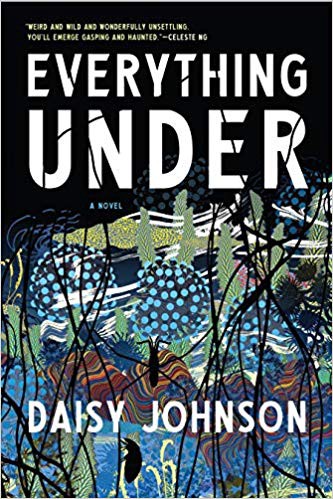
Johnson proved to be a fearless writer in her collection of feminist tales, Fen. These stories are as daring and unsettling as her writing, which features innovative uses of diction and sentence structure, in addition to sensuous description. Her novel, Everything Under, is equally — if not more — ambitious. In Everything Under, Gretel — a lexicographer — has devoted her life to words. She grew up on the canals of Oxfordshire with her mother, Sarah, and the two lived a wild, reckless life, inventing a language of their own. Abandoned in foster care as a teen, she has neither seen nor heard from her mother in sixteen years, calling hospitals and mortuaries for any sign of her existence. A cryptic phone call sets Gretel on a hunt for Sarah; to find her, she will need to recover long buried memories of their final winter on the river. She recalls their private vocabulary, a runaway boy who lived with them for that brief time and the water creature they had spent years watching out for: the Bonak. In this extraordinary debut, Johnson explodes the myth of Oedipus and, from the remains, creates a singular and powerful story that burrows in the psyche and refuses to leave.

Discovering Johnson’s writing felt like meeting a literary kin. Considering the bounty of material, I was eager to I speak to Johnson about language, nightmares, the horror genre, and the role of animals in her fiction.

Roberto Rodriguez-Estrada: One of the reasons I fell in love with your stories is the poetic texture of the language you use. Have you always written in multiple genres?

Daisy Johnson: When I first started studying writing I wrote poetry and loved its sparseness. I think poetry is a good thing for any writer to try their hand at because it really teaches you how to edit, how to make every single word work as hard as it can. Sadly, once I started living off my writing I found it hard to go back to poetry. Writing is not simply the process of sitting down and producing words it also calls for an immersion in the craft, for reading everything related to your work that you possibly can. Though I still read poetry I do not feel the immersion that I think I would need to feel to write some.

This sounds like both fear and an excuse. At the moment my brain and my hands feel so filled with fiction there is almost not the space for anything else. Perhaps this is something about the type of person I am. I hope to one day go back to all of these things but it would be a wrench to do so because I think it would mean taking a break from fiction.

I think poetry is a good thing for any writer to try their hand at because it really teaches you how to edit, how to make every single word work as hard as it can.

RRE: Language is as thematically significant to your writing as it is stylistically. There are certain phrases that caused my heart to leap or that crept beneath my skin and stayed there. Somehow, there’s a balance of innovative word-choice and syntax, and fantastic storytelling. When drafting and revising your stories, do you tend to follow the story on its course, returning later to edit for style? Or is the story, for you, inextricable from the way it’s told, all of it unfolding at once?

DJ: The language comes first for me. The way a character might speak — or think — the way a landscape might describe itself to someone. The story is only the way it is because of the language used to tell it and the language — the syntax and sentence structure — is only laid out in such a way because of the story it is telling. If I used language in a different way the stories I tell would be different, of that I have no doubt. And with each new story — each new project — there is the slow exploration of how the language should be, of how this story needs to be told.

But also, interestingly, the language and sentence structure is often there from the beginning and what needs to be edited in later drafts is the plot and character. I am not a tidy writer. My first drafts are enormously messy. So there is also something in the process of editing which is entirely necessary both to find the language — although the language is there sooner — and to find what the language is trying to tell. And it is only through endless drafts that this becomes clear. The idea which is there at the beginning needs time to compost and clarify.
RRE: In your story “A Bruise the Shape and Size of a Door Handle,” you bring the character of the house to life, endowing it with the ability to love. It does not, however, love how a human would, and it grows a sort of menacing jealousy from the beginning. How do you build tension on a sentence level?

DJ: I think writers can learn so much from horror fiction but not least the elements of structure and tension.

Stephen King does something very interesting in his fiction using brackets and italics to suggest the thoughts of the character which, I think, make the reader feel almost as if there is an intruder in the fiction. Helen Oyeyemi’s White is for Witching does something similar with the layout on the page wherein the word from an above line will link to a new sentence; this suggests to the reader that they are not in control of what they are reading. Again this is done to great effect in You Should Have Left by Daniel Khelmann where the first person narrative begins to be infiltrated by another voice.

I think horror calls for small moments which build and build, almost unnoticeably, to a great fear. This can be done in a sentence by using unexpected words which can flag to the reader that there is something ahead. Horror is often about past trauma and here there is the question of how we can make our sentences feel as if they are both present and slowly swiveling to regard the past. Perhaps through use of tense or the changing of the tense? I think also use of punctuation is important. Horror is about postponing for as long as possible until the postponing becomes unbearable to a reader. If we postpone the full stop then the reader may feel this sense of an end (and with it the relief of an ending) being held away from them. However, if we use short sentences with little punctuation besides the full stop then there is a suddenness to the reading, a sense of dread which comes with lots of endings flooding around us.

Horror Lives in the Body

RRE: Wow, this is incredibly insightful! I think there is so much, too, to glean from film: sound and music, like rhythm and tone in horror fiction, both play an incredibly significant task in every horror film I can think of. Especially Hereditary (2018), which uses sound so powerfully to ratchet up the tension. What are some of your favorite horror films?

DJ: I am a huge horror film fan. When other people watch rubbish television to relax I watch scary films. I feel very happy to be living in a time when I think the horror genre is really stretching its muscles and trying exciting new things. I am particularly enjoying the feminist horrors that started emerging. Films like It Follows, The Babadook, Under the Shadow, and Girl Walks Home Alone are really superb in the way they use the genre to talk about things that are happening in our society. I’ve had an incredibly busy few weeks and have spent any down time I could watching the Netflix series The Haunting of Hill House which really scared me and made me very excited to write some horror. I also love the classics. I grew up on The Exorcist, Don’t Look Now, The Shining and The Omen and they will always have a place in my heart.

RRE: I recently had a terrifying dream that was so similar to Everything Under; it was just before I got my copy of it, actually, but I somehow dreamt of living on a boat with one of my uncles and a group of men I don’t at all know. We were at the sea, and they kept talking about a creature that lived out there, in the water. At some point, I vividly recall the walls turning into scales, the boat being part-creature all along, its mouth gaping over the roof. What are some of the myths or folktales or stories that continue to haunt your dreams?

DJ: I love that you dreamt Everything Under before it came to you. I’m not sure a writer can ask more than that.

My night terrors are always about there being something horribly wrong. These are often instinctual feelings rather than a certainty about what the wrongness is but sometimes it is that the walls are moving or that the person in my bed (my poor partner) is not who they should be. Thinking about it now this sense of wrongness (whether in the wrong place or at the wrong time) is something that often runs through fairy tales and folktales. I was thinking about Hansel and Gretel as I was writing Everything Under and certainly that idea of leaving breadcrumbs for yourself which you then can’t find it always the way it feels when I wake up and I know something is wrong but not what. Myth and fairytales are always somehow at a tilt. They are our world but at an angle. The grandma is not a grandma, she is a wolf. The swan is not a swan, it is a god. I think this, at least for me, is the way my bad dreams feel; they are the world I live in but at a strange slant.

Myth and fairytales are always somehow at a tilt. They are our world but at an angle.

RRE: The characters in Everything Under return time and again to certain ideas that, for many, are dubious. The character of Margot is certain of the idea of fate, that “life is a straight line.” As for Gretel, she ponders repeatedly on the idea that “our thoughts and actions are determined by the language that lives in our minds.” To what extent do you believe these ideas yourself? Or are they convictions specific to your characters?

DJ: I am not my characters, thank goodness. I don’t believe in fate because I am not Margot. She believes strongly — partly because of who she is and partly because of the ideas she is introduced to as a child — that life is laid out ahead of us. My parents are quite determined atheists, as I suppose am I; I have never believed in fate. But I am interested in characters who do and what that belief does to the way a person lives their life.

I am really interested by the idea that language determines our lives. Interested and a little alarmed, of course. At times I find myself looking at my weird, ungrammatical language and trying to work out what it has done to me. I have a bad memory; has that come from being awful at spelling? I am easily angered; is that a product of the first words my parents taught me? I am early to everything, have a great fear of being late; is this something you could read in the way I speak and write?

The idea that language determines our nature is an old one and rather out of fashion but it is compelling to me.

I have never believed in fate. But I am interested in characters who do and what that belief does to the way a person lives their life.

RRE: Everything Under updates the Oedipus myth, a story that served as a sort of backbone for modern psychology. The title itself acknowledges what lies buried within the psyche: those traumatic memories our minds — or at least in Gretel’s case — trick us into forgetting. When did you first encounter the myth and what motivated you to revisit such a disturbing tale?

DJ: I recently found my school drama copy of Oedipus Rex which was covered in notes a teenage me had made. At university we looked at Freud — mostly dismissively — in Literary Theory and Oedipus was, as you say, there again. So the myth had been there for a while and I like to think that it had been waiting for the right moment to come out and offer itself up to me for literary salvage.

I came back to it, I think, because of its darkness, its weirdness and animalistic nature. Children are left on the mountainside for wolves, prophecy is believed to devastating effect; there is blinding. I love the momentum the myth has, the sense that we are rolling and rolling towards an inevitable — and awful event — and the lure of trying to do something similar in fiction was exciting.

I think undertaking a retelling is a challenge a writer sets themselves and I certainly felt this way when I started writing. I wanted to know if I could do it, how I might go about it.

‘Circe’ Shows Us How Storytelling Is Power—And How That Power Can Be Seized

RRE: I’m glad you mention the animalistic. Animals show up everywhere in your stories. Especially in places where they shouldn’t. In Fen, a girl falls in love with a fish, and another girl becomes one. There’s a particular line in Everything Under that made my heart miss a beat, which was when — explaining her transgender identity to Margot — Fiona says: “like a fish still alive in the belly of a heron.” What draws you to writing so inventively about animals? Where do you think our anxieties towards the animalistic come from?

DJ: I think what draws me to writing about them is the idea of nature in some way answering back in my fiction. The animals I write about are often somehow strange in the stories, turned nasty or clever. There is an ecological slant, I think, which I never expected to come up but which has. The animals in the work are never quite what they seem.

The animalistic is in us, I suppose that is where the anxiety comes from. We are animals but we hold civilization, decorum and politeness up as important and the animalistic goes against all of this. Perhaps this is another reason why I write about animals. They are both foils and metaphors to place against the humans who, in the end, act like animals themselves.

7 British Books that Celebrate Weird Women

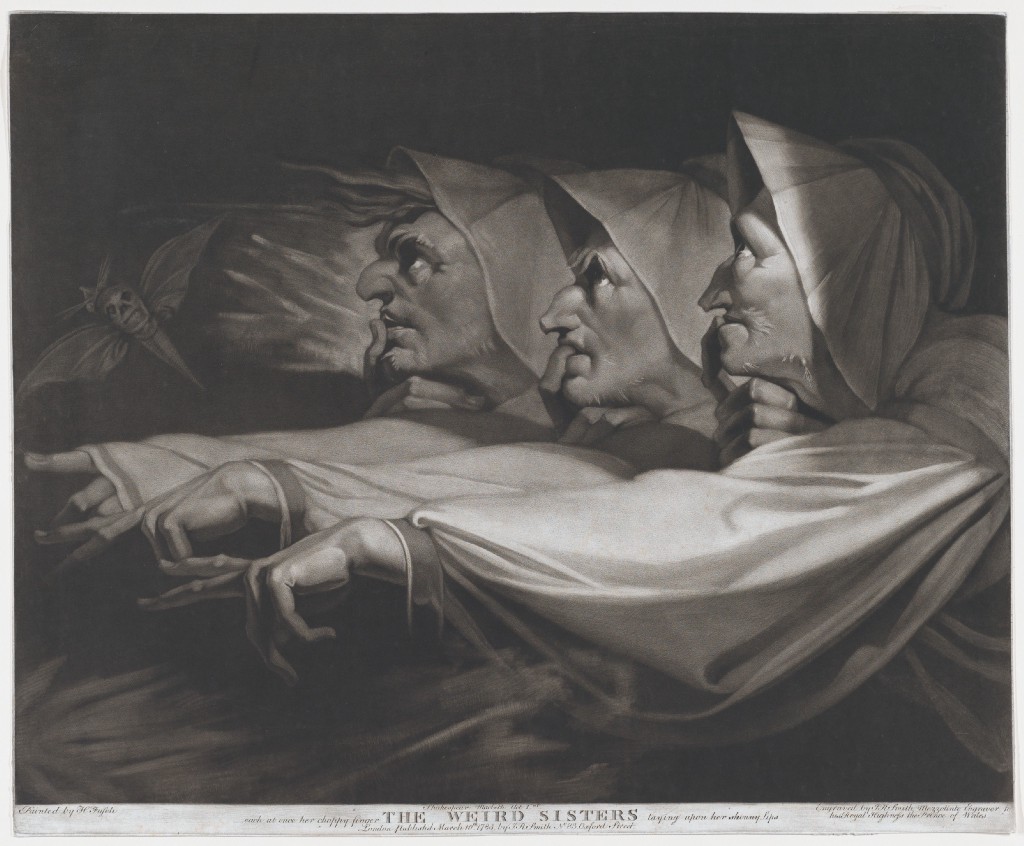
Originally, weird came from the Old English wyrd, meaning fate. Wyrd went out of use in English until Shakespeare brought it back to describe his weird sister witches in Macbeth, perhaps also referencing the three mythological goddesses, the fates, who control destiny. Thus, we arrive at the five W’s — Weird — Witch — Women — Writing that’s Wrong. In Joanna Russ’ satiric guide to How to Suppress Women’s Writing, number eight is “anomalousness: assert that the woman in question is eccentric or atypical.”

I think it’s time to embrace the anomalousness, insist on its strength. I like the idea of a weird sisterhood with powers to see beyond the ordinary. Weird sisters stirring a pot of who knows what. Weird books are my favorite kind of books, anyway: books that are unclassifiable, books that value surprise, the tangent, books about women and girls who refuse to conform to societal norms. I’m talking about weirding gender roles and the domestic space. Books that are non-judgmental, irreverent, about women and girls who are a little amoral; a book where laughter sits so close to grief and horror that it makes them uncomfortable. A book that exposes the essential weirdness of existence.

I know the U.K. has lately gotten all Brexit-y with the rise of populism, but the U.K. in my head is populated by witchy women in unravelling sweaters, putting kettles on to boil and spreading marmite on toast, mumbling wyrd prophecies. (This could be because my father is a retired British butler with long white hair who likes to stroll around his property wrapped in a bear skin, his overfed pug by his side. He is definitely a weird sister.)

Here are a list of British authors that celebrate weird women. As Shakespeare’s witches said, “Come sisters…show the best of our delights.”

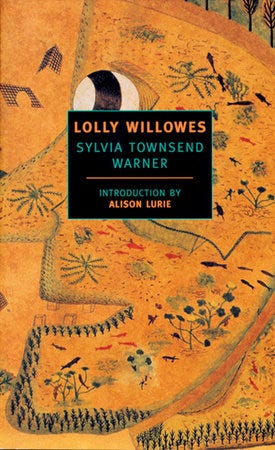
Lolly Willowes by Sylvia Townsend Warner

Published in 1926, Lolly Willowes starts out with a classic Jane Austen Sense and Sensibility-like set up — a single young lady is kicked off the family estate when her father dies and must move in with her brother’s family, where she’s treated as a drudge. At first, Lolly does not seem weird at all. The novel clips along in a realistic vein until one day, the now middle-aged Lolly is in a shop and, without warning, she has an ecstatic vision,“she felt as if she had woken unchanged from a twenty-year slumber.” Suddenly, Lolly becomes completely unmanageable. The novel goes off its realistic rails. Magic happens. Witches. After escaping her domestic captivity, Lolly decides, “it is best as one grows older to strip oneself of possessions, to shed oneself downward like a tree, to be almost wholly earth before one dies.” Sylvia Townsend Warner, who was also a painter, refused to stay in her genre lane: she also wrote, amongst others, The Corner that Held Them, a novel about a twelfth century convent and a series of interlocking tales about fairies, Kingdoms of Elfin.

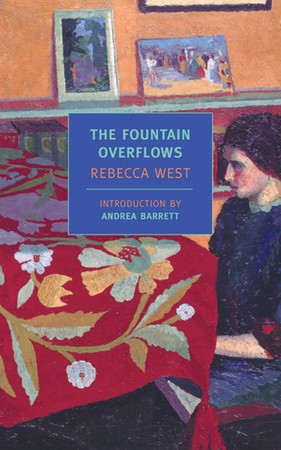
The Fountain Overflows by Rebecca West

Andrea Barrett writes in her introduction to The Fountain Overflows, first published in 1956, “I have loved this novel for over a decade without being able to explain exactly why.” That is the definition of the weird. The Fountain Overflows is about an artistic family of women dependent on an undependable father. The book has a smooth surface, but all the women, especially the mother, Mrs. Aubrey, say the oddest and most profound things. Perhaps because, as it turns out, they can read minds. Of Mrs. Aubrey we learn, “she understood children, and knew that they were adults handicapped by a humiliating disguise and had their adult qualities within them.” Cousin Rosamund is tormented by a poltergeist. There is something about the tension between the intimacy and alienation in this family of unexpected women that undoes me, that reveals the great longing to be together along with the great longing to escape at the strange heart of every family.

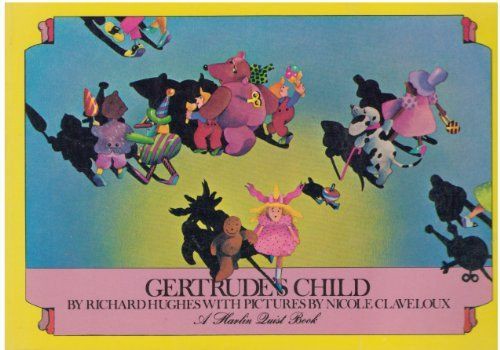
Gertrude’s Child by Richard Hughes

I first encountered the Welsh writer Richard Hughes when I read Gertrude’s Child as a kid. Gertrude is an exasperated wooden doll who marches stiffly away from her owner, buys herself a little girl, and then leaves her out in the rain while she takes tea with some random stuffed animals. It’s the height of weird, the gloriously hard heart of the independent doll, the pathetic child without enough sense to come in out of the rain. I adored it.

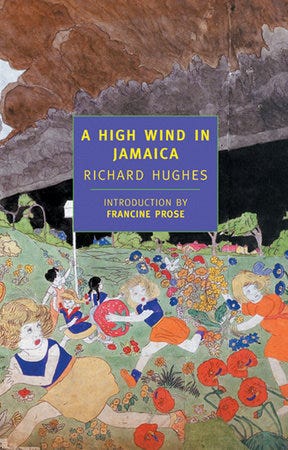
A High Wind in Jamaica by Richard Hughes

In A High Wind in Jamaica, published in 1929, some rich kids are captured by pirates, but in a similar inversion to Gertrude’s Child, the kids turn out to be more terrifying than the pirates, especially murderous little Emily. A High Wind in Jamaica pretends to be a child’s adventure story, but it’s really a book for adults about the nature of little girls, or perhaps all our natures, in the vein of Lord of The Flies, but more charming, funnier, and, of course, weirder.

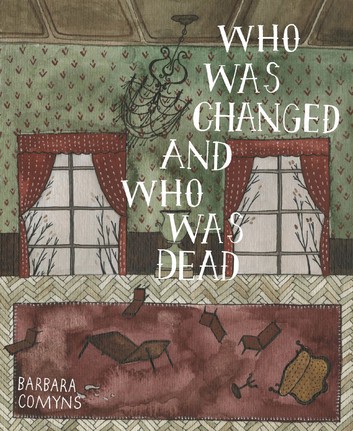
Who Was Changed and Who Was Dead by Barbara Comyns

The fabulously quirky Dorothy Project republished this 1956 novel about a quaint English village ravaged by flood and a mysterious disease. It begins the morning after the flood: Eben Willoweed jauntily “rowed his daughters around the submerged garden” amongst drowned animals. Comyns continually creates odd juxtapositions and undercuts her characters at every turn. “Grandmother Willoweed had raved and moaned and torn her hair, although she was already rather short of it.” When one of the characters finally escapes the disaster-ridden village and her absurd family to become “completely civilized,” I felt relieved for her but also regretful that she’d become an ordinary woman. Barbara Comyns was a true eccentric herself, an artist who bred poodles and fixed pianos for a living, and who had relationships with first an artist, then a criminal and finally a civil servant. Spoiler alert: her novel The Vet’s Daughter involves revenge by levitation.

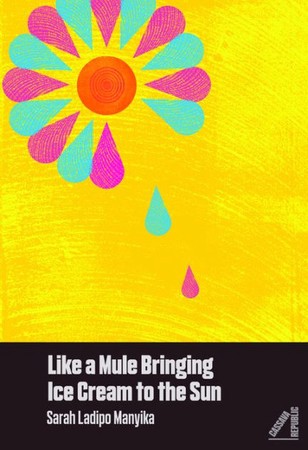
Like a Mule Bringing Ice Cream to the Sun by Sarah Ladipo Manyika

Sarah Ladipo Manyika created an unconventional heroine and gave her book the weirdest title ever. Her novel, first published by Cassava Republic Press in London and Nigeria, was shortlisted for the 2016 Goldsmiths Prize for fiction that “breaks the mould.” The book is about a seventy-five-year old Nigerian American woman in San Francisco, “a city where people take their kids to school in their pajamas.” Dr. Morayo Da Silva, lover of books, the kind of woman who spontaneously buys two bouquets of tulips instead of one, flirtatious, wise, indomitable, is at the heart of this surprising, pleasure-driven novel that quietly subverts literary conventions about whose lives are worthy of literature.

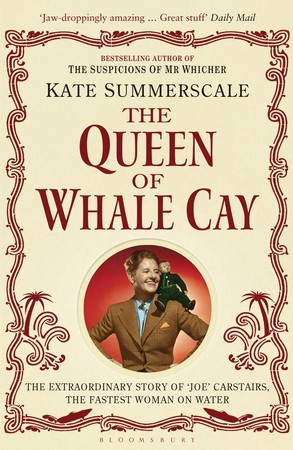
The Queen of Whale Cay by Kate Summerscale

Summerscale is best known for her book The Suspicions of Mr Whicher, an addictive mixture of true crime and social history that was made into a BBC series. The Queen of Whale Cay is a biography of the truly extraordinarily eccentric life of Marion “Joe” Carstairs. Cartstairs raced speed boats in the 20’s, cross-dressed, smoked cigars, had affairs with Marlene Deitrich and Oscar Wilde’s niece, and then in the ‘30s bought an island in the Bahamas and became its mostly benevolent “Queen.” Oh, and she also spent her life obsessed with a leather doll she named Lord Todd Wadley. Summerscale is a brilliant researcher and writer, with an eye for the weird and telling detail. I won’t soon forget the image of Queen Joe riding around her island on her motorcycle with her doll strapped behind her.

Leif Enger Thinks We’re All Unreliable Narrators

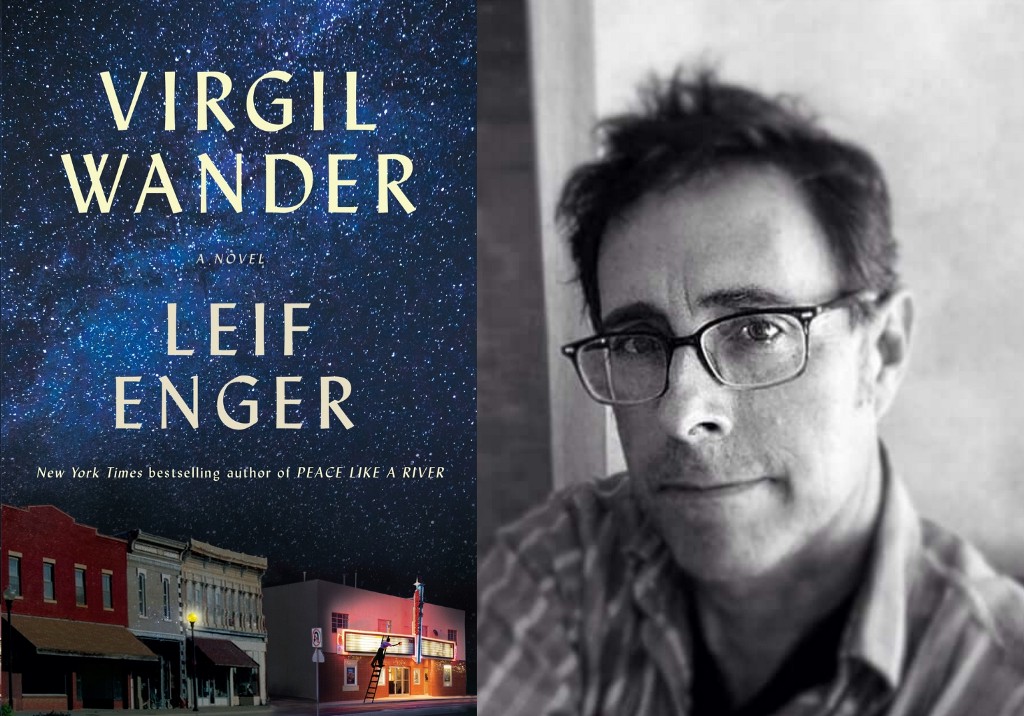
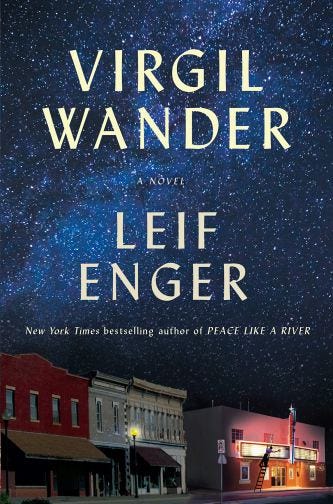
Virgil Wander is the sort of novel you read to remember why you love reading. It’s populated by playful sentences of startling wisdom and unabashed joy. The word “merry” appears multiple times. The cast of characters is expansive and memorable. Visiting and revisiting the fictional northern Minnesota town of Greenstone, I felt like a tourist in some Tim Burtonesque town, part Big Fish, part Scissorhands, a playland for grown-ups where the town clerk, who moonlights as a film projectionist and carries a driftwood staff, screens Old Hollywood classics for locals after hours. Where an elderly stranger with twinkling eyes flies kites of his own outrageous design. Where a scrappy boy fisherman is determined to enact revenge on a massive killer sturgeon. Where the romantic lead is a beautiful neon sign-maker whose irreverent ballplayer husband long ago tragically disappeared.

Purchase the book

But if all that sounds too twee for your taste, there is also darkness here. Not all the characters are Burtonesque sweethearts. The washed up bad boy filmmaker Adam Leer and his wildeyed handyman Jerry Fandeen might have wandered in from another genre altogether.

Our hero, such that he is, has recently suffered some significant brain damage after driving his car into Lake Superior, and he’s having trouble remembering things: adjectives; tasks; why he drove off the cliff in the first place; how he used to be. Virgil is haunted by post-traumatic underwater memories, by visions of himself as a dead man, and by a strange figure he sees now and then standing on the water, seemingly waiting for him to return to the lake.

Rachel Lyon: One of the turns of phrase I love best in this book is the way Virgil refers to himself, pre-accident, as “the previous tenant.” He is confounded, when he returns from the hospital, by relics of his former life — for instance, his shoes. Then there is Jerry Fandeen, who, you write several times, “forgot himself.” While Virgil seems baffled but relatively unconcerned by the changes in his own personality, Jerry’s “forgetting” is the beginning of his undoing.

It seems to me that part of what you are getting at, in this novel, is the slipperiness of selfhood, maybe particularly for a certain type of man (emotionally isolated, Midwestern, middle-aged). Was that part of the project here? Could you talk a bit about it?

Leif Enger: Well, the culture asks men to be a certain way. Out on the cartoon fringe idealized in the in-flight magazines, we’re to be self-made, triumphant, abiding in a place beyond self-doubt, joyfully hammering our professional adversaries by day and enjoying nightly groundbreaking sex while maintaining our abs into our seventies. It’s hilarious. It’s as if the concept of humility has been discarded without a thought.

What made Virgil so engaging to me was that his mind — his actual mind — abruptly changes. It’s a literal shakeup after which he can’t think of himself as he once did. The pieces are scrambled or missing. The interesting question to me is whether — if indeed he’s lost himself — whether the loss is necessarily for the worse. For example, Virgil’s brain injury leaves him less verbally capable, which frustrates him and yet makes him pay a kind of attention to people he hadn’t been paying before. It makes him a careful listener, less apt to judge others, and therefore strangely effective in ways not previously imagined. He’s less polite, but more honest; less prone to defend himself, and therefore less needy of defense. To your question, the big themes of selfhood didn’t occur to me while writing — I was just staying with the flow of the story, trying to go where it went. But those questions (what am I holding onto, exactly? what am I trying to maintain?) definitely inform Virgil’s personality as he rebuilds his life, and bleed into those in his orbit as well.

RL: There are multiple stories at work in these pages. Adam Leer, prodigal son, returns to Greenstone after his career on the outskirts of Hollywood fizzles. Rune Eliassen comes to Greenstone to search for his long-lost son. Those are just two of the main character arcs, however. As a novelist myself I was delighted to find that no character, however minor, appears in this book without going through some major development. My favorite is Ellen Tripp, a fifteen-year-old tertiary character who doesn’t do much, plot-wise, but appears on the page complete with a whirlwind of backstory, front story, and everything in between:

Just a kid of fifteen… got pregnant last year and had an abortion, lost all her friends and her folks kicked her out, although she was back with them now. Ellen was working things through. One week she’d show up plain as a hymnal, eyes cast down and her hair yanked back; the next she arrived in glitter and paint, short and bright as a puffin. Regardless of dress her most piercing weapon was a smile that burst out when least expected, as though too much to contain. Inside of five minutes we all adored her.

I’m curious about the form you chose for this novel, given the fact that there are so many characters, each with his or her own arc. Were you ever tempted to write a novel-in-stories? Or a collection of tales about the town of Greenstone?

LE: Recently when reading the wonderful Olive Kitteridge [by Elizabeth Strout] it struck me that Greenstone’s story could’ve been told in a similar way. In fact I did write an early draft using third-person and shifting viewpoints, but the story didn’t hold together that way, it left me restless and annoyed, there was no satisfaction in it and I had to pitch the book and start again in first-person. Once locked into Virgil’s voice I wanted to simply stay with it and see where it went. John Gardner used to describe the successful novel as a “vivid, continuous dream,” and for me that continuity came through a firsthand narrative and ongoing threads of recovery and engagement. As for Greenstone, it turned out to have such a rich vein of characters I may not be done with it yet. Many of those characters feel to me as though their lives continue beyond the pages, and I’m playing around with ways to use some of them in another project.

Culture asks men to be a certain way: we’re to be self-made, triumphant, abiding in a place beyond self-doubt, joyfully hammering our professional adversaries by day and enjoying nightly groundbreaking sex while maintaining our abs into our seventies.

RL: Given that you did end up writing a standalone novel, I’m curious about your choice of hero. In some ways Virgil makes an unlikely protagonist. He is aphasic. As he recuperates, he is necessarily passive. He describes himself as “foolish” several times. He is not particularly ambitious. He’s unreliable. He sees things that might not be there. In other ways, however, he’s the perfect hub for the rest of the characters to revolve around. He’s the proprietor of The Empress, a tumbledown cinema that still shows reel-to-reel films, where the rest of the characters congregate for the odd illegal screening of a pilfered classic. And he’s nosy. He’s curious about the lives of his neighbors. So tell me about the process of choosing a character to be the reader’s guide — beyond the guide-appropriate name, I mean. What was the process of crafting him like?

LE: A foolish or unreliable narrator is a lovely old tradition and lets a story go where it likes. Memory itself is so mutable that most of us are probably unreliable narrators, no matter how certain we are of our facts.

Virgil only came to life when, in my second attempt at the book, he suffered a brain injury and could no longer trust his eyes, language, or judgment. Then he got interesting. Then I could invest. The aphasia was especially delightful to work with because it allowed for a little presentation whenever Virgil remembered an appropriate word at the proper time. It put me squarely on his side. I’m the kind of selfish writer who wants to love and root for his characters, which means they are underdogs. They’re acquainted with failure and disappointment. World beaters make terrible protagonists except when they lose everything; the same holds for narrators who are smarter than everyone around them and so become contemptuous of their neighbors. For me to write Virgil fairly he had to be in a state of vulnerability — uncertain of himself but trusting enough to tell you his story, like someone you’d listen to in a bus depot, and maybe find yourself confiding in as well.

Memory itself is so mutable that most of us are probably unreliable narrators, no matter how certain we are of our facts.

RL: Speaking of names, this is a novel where words matter. Virgil’s aphasia plays a fun role in the narrative: as language slips in and out of his grasp, so does his sense of himself. And his own “audacious surname” becomes a sort of fortune. As we read, the title of the book becomes not just a name but a challenge, even a command: Virgil, Wander! As another character puts it:

“Wander — what a name. It’s almost a calling. You’ve had some adventures, with a name like that.”

“Not yet really,” I confessed.

“No? Well, watch out then,” she said, looking lightly up and around, as though a whole sky full of escapades were imminent and would soon gush down in a cloudburst of destiny….

The essence of the novel, as an art form, is a version of reality constructed only with words. To an extent, for full immersion in the novel, the reader has to see through the words on the page, and experience only their meaning. But you don’t let us do that. The surface here is just as important as the depths. What are you saying about the relationship between our experience of language and our experience of life?

LE: What an interesting question! Maybe it connects to the old idea that to name something — an enemy, a fear, a resource, gives you power over it. You can enjoy breakfast without applying any language to it, but that slice of toast is so much richer if you also describe the butter melting into its surface, the shingle of white sharp cheddar, the slab of heavy dark tomato on top with its speckling of pepper, and maybe also how your grandfather used ever increasing black pepper on his tomatoes as his age increased and his sense of taste diminished. Language is an opportunity for delight, or for whatever else you want to magnify or intensify in the story you’re telling. As a reader I’m happiest when the writer uses language transparently but also with a sense of play. Maybe all our best work is done for pleasure.

RL: It struck me as I read this that at least some of your language seems to be written in poetic meter. The last four sentences in particular stuck in my mind like a song. Are you a musical person? Do you hear what you write as you write it?

LE: Dad was a lifelong musician, and Mom read to us aloud — both stories and poetry — so I grew up around meter and rhyme. Many books also feel like songs, they have a lyrical quality, a comforting tempo. In all my stories there are times when rhythm comes forward and wants to be part of what’s happening, help set a mood. Remember the old Stevenson poem?

Whenever the moon and stars are set, whenever the wind is high,
All night long in the dark and wet, a man goes riding by –
Late in the night when the fires are out, why does he gallop and gallop about?

This still raises the hair on my arms. So rhythm — and more rarely rhyme, as in the last four sentences you mention — is something I pay attention to.

Throw Off Your Saints and Come Ride With Me

Billy Graham Elegy

Nobody much mentions the floor of the Sistine Chapel
that’s touched so many more than the docents or the ceiling
or the premonitions on the wall. Come papal loafer
and heathen sneaker, come Ked and Ecco mingling dog
shit off the viale e strada on this scuffed stone nobody
mentions much while the tourist kids keep calling it
the Sixteen Chapel as if it’s one middling outlet
in a protracted franchise, which it must be, which must be
why the Lord doesn’t appear here much more than elsewhere,
retired as he must be to Ostia as is custom among Romans,
and after all one can’t be messiah forever. Eventually,
the ball club needs a fresh message, a fresher messenger,
a fella in a silk suit maybe, maybe a Carolina drawl,
another mother appointed Head of the Pietà,
but I don’t think much of home among the Alfa
Romeos of the military police here where I’m unafraid
anyone will shoot me, and Rome feels comprehensible
for once, I know how to say, Vorrei due coronetti,
or, Mia moglie é incinta, or, Dove il Bancomat?
Ho troppo moneta for once in my life so the cab drivers
of evening say, Your Italian is so good, where are you from?
but the cab drivers of morning say, Your Italian is so bad,
di dove sei?
and I don’t tell either I’m from the outcome,
a new world and last result, that all this artistry ends
in half a nation mourning a holy mogul in a circus tent,
and mercifully nobody there comes back from the dead.

Station

On a sunny day, you understand why people say, “If Heaven isn’t what it’s cracked up to be, send me back to Gimmelwald.”

— Rick Steves, “Switzerland’s Jungfrau Region: Best of the Alps,” Rick Steves’ Europe

Send me back, Heaven, send me back
to alphorn, wiener, unknowing,
and schnitzel. Send me back
to dopplebock, uncertainty,
the mountains, and the Mountain
Hostel. I miss the rumpled earth.
I miss the 90s. Send me back,
send me back to Gimmelwald,
to my pack and flask, my abandon,
map, and Eurail pass, to sweating
the too little left in my earthly
accounts and the sky blue
box of Camels I smoked
unrepentant on a sunny day
awaiting a train to Interlaken
to Prague to a profound lust
or a petty love maybe and flaming
absinthes in the lung-cut
of Slavic winter. Un-punch
my loyalty card and, Heaven,
release me from the quid pro quo
of devotion, my humility exchanged
for your cache of dead pets and relatives
chitchatting at an unrelenting buffet,
my chastity for your answer key,
and expel me into the dizzy of morning,
1999, the fidget of waiting for a train,
what wonders in the goddamned
Gimmelwald of my good brain.

About the Author

Jaswinder Bolina’s new collection of poems The 44th of July is forthcoming from Omnidawn on April 1, 2019. He is author of two previous books, Phantom Camera (2013) and Carrier Wave (2007), and of the digital chapbook The Tallest Building in America (2014). He teaches on the faculty of the MFA Program in Creative Writing at the University of Miami.

“Billy Graham Elegy” and “Station” are published here by permission of the author, Jaswinder Bolina. Copyright © Jaswinder Bolina 2018. All rights reserved.

The 2018 National Book Awards Were Full of Firsts—But Also Seconds and Thirds

One would hope that, at this point in human history, most of the obvious firsts would be behind us. Yet in the States and abroad we continue to witness (and celebrate) necessary firsts made day after day: the youngest woman to join Congress (Alexandria Ocasio-Cortez), the first Native women to win seats in Congress (Sharice Davids & Deb Haaland), the first Black woman to receive an honorary Oscar (Cicely Tyson), the first transgender woman to write and direct an episode for television (Janet Mock), the first Black woman CEO of a Fortune 500 company (Ursula Burns), the first Black person to win an Emmy for writing (Lena Waithe). And so it goes.

This year’s National Book Awards also had a night of firsts: the introduction of the translated literature category honoring both translated writer and translator; Isabel Allende as the first Spanish-language writer to be recognized for Distinguished Contribution to American Letters; Sigrid Nunez the first woman of Latinx descent to win for fiction, and a sweep of PoC winners including: Elizabeth Acevedo (young people’s literature), Yoko Tawada and Margaret Mitsutani (translated literature), Justin Phillip Reed (poetry), Jeffrey C. Stewart (nonfiction), and Sigrid Nunez (fiction). The firsts have continued for the National Book Foundation, and by extension their awards, with the arrival of the first woman of color executive director, Lisa Lucas. Last year saw firsts as well: the first time that four of the five finalists for fiction were women (and women of color at that). Ultimately Jesmyn Ward would take her second award in this category (another first for a woman of color).

Jesmyn Ward’s Story of Rejection and Perseverance is Familiar to Black Writers

When someone crosses the threshold to become “the first,” or when a moment is captured as “the first,” there can be the overzealous headlines proclaiming this a “win for diversity.” As if this first reflects the steady dispelling of seemingly “old” thought and abandoned oppression. This time next year, given a new circumstance, a new slot of art, a new group of gatekeepers, we may see a shift that “seems” to go backward rather than forward after experiencing such a “first.” This is why the firsts are important to recognize but so are the seconds, thirds, and so on. Each moment is etched in our minds. When we recognize this as being not one of the only, but one of many, it may not be termed so much a universal “win” as much as a step in a direction that further acknowledges the accomplishments of those who “happen to be marginalized” without erasing their identities nor centering it as the sole reason for their success.

When we recognize this as being not one of the only, but one of many, it may not be termed so much a universal “win” as much as a step in a direction.

As we see progress we also celebrate the Stephanie Wilsons and Joan Higginbothams, not the first Black women to travel to space yet part of a history of few recorded to do so. We mark the Colson Whiteheads — the fourth Black person to win a Pulitzer in fiction —and politicians like Senegal Prime Minister Mame Madior and former president of the Philippines Gloria Macapagal Arroyo. After this year’s winners and this year’s firsts, who will come after? Who will be the next or achieve their own first in the art world and outside it? Who will be next not to create the path but to extend it? If this year’s National Book Awards are any example, we’ll be witnesses to more firsts, to more writers extending a hand and showing the world and those who look like them, identify with them, were held by their work, that they’re following greatness by being just who they are.

A Brand New Interview with David Foster Wallace

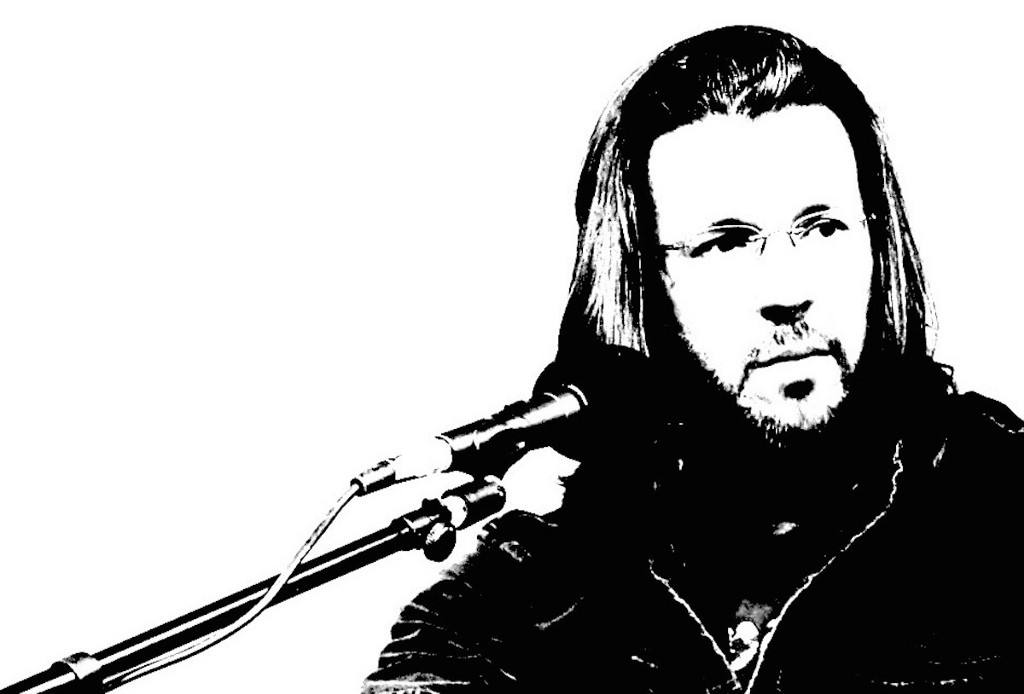
Eighteen years ago, writer and translator Eduardo Lago sat down with David Foster Wallace for a discussion that ranged from pedagogy to tennis to the influence of the internet on literature. The interview remained unpublished until Lago, an award-winning Spanish novelist, critic, and translator who teaches at Sarah Lawrence College, included it in his new book Walt Whitman ya no vive aquí, ten years after Wallace’s death. It has never been published before in English. The conversation has been lightly edited for readability.


Eduardo Lago: I know you’re not teaching right now, but can you talk a little bit about the reading lists of your courses?

David Foster Wallace: Most of what I teach is writing classes where we’re concentrating more on the student’s own writing. When I teach literature classes, I’ve taught everything from freshman literature, where the department will buy an anthology and I will teach them John Updike’s “A & P,” and John Cheever’s “The Five-Forty-Eight,” and Ursula le Guin’s “The Ones Who Walked Away From Omelas,” “The Lottery” by Shirley Jackson, a lot of very what I consider to be very standard stories that are in all the anthologies. I’ve tried teaching more ambitious or strange or difficult fiction, but with freshmen and sophomores their preparation isn’t very good and it doesn’t work well. Graduate literature courses are usually themed courses, so what the reading lists are depends a certain amount on how I design the course, as I’m sure you know. I’ve taught a fair amount of Cormac McCarthy, who’s a writer I admire a great deal, and Don DeLillo and William Gaddis. I’ve taught quite a bit of William Gass, but usually his earlier books, and I teach poetry … I’m not a professional poet but I’m an avid reader of poetry, so I teach most of the contemporary poetry that’s available in book form.

EL: Do you consider yourself an accessible writer, and do you know what kind of people read your books?

DFW: That’s a very good question. I think the sort of work I do falls into an area of American fiction that, yes, that is accessible, but that is designed for people who really like to read and understand reading to be a discipline and to require a certain amount of work. As I’m sure you know, most of the money in American publishing gets made in books — some of which I think are very good — that don’t require much work. They’re almost more like motion pictures, and people read them on airplanes and at beaches. I don’t do stuff like that. But of the American writers I know who do some of the more demanding fiction, I think I’m one of the more accessible ones, simply because when I’m working, I’m trying to make it as simple as possible rather than trying to make it as complicated as possible. There’s some fiction that’s very good that I think is trying to be difficult by putting the reader through certain sorts of exercises. I’m not one of those, so within the camp people usually talk about me being one of the more accessible ones, but that camp itself is not regarded as very accessible and I think it tends to be read by people who have had quite a bit of education or a native love of books and for whom reading is important as an activity and not just something to do to pass the time or entertain themselves.

I think I’m one of the more accessible ones simply because I’m trying to make it as simple as possible rather than trying to make it as complicated as possible.

EL: I’ve read in a number of places that you intended Infinite Jest to be a sad book. Can you talk specifically about that aspect of the novel and what else were you intending to do when you started writing it?

DFW: I think what I meant by that was that there are some facts about American culture, particularly for younger people, that seem to me to be far clearer to people who live in Europe than to Americans themselves, which is that in many ways America is a wonderful place to live from a material standpoint, and its economy is very strong and there’s a great deal of material plenty, and yet — let’s see, when I started that book I was about 30, sort of upper middle class, white, had never suffered discrimination or any poverty that I myself had not caused, and most of my friends were the same way, and yet there was a sadness and a disconnection or alienation among I would say people under 40 or 45 in this country, that — and this is probably a cliche — you could say dates from Watergate, or from Vietnam or any number of causes. The book itself is attempting to talk about the phenomenon of addiction, whether it’s addiction to narcotics or whether it’s addiction in its original meaning in English which has to do with devotion, almost a religious devotion, and trying to understand a kind of innate capitalist sadness in terms of the phenomenon of addiction and what addiction means. Usually I would tell people I meant to do it a sad book because when I did a lot of interviews about Infinite Jest all people would seem to want to talk about was that the book was very funny and they wanted to know why the book was so funny and how it was supposed to be so funny, and I was honestly puzzled and disappointed because I had seen it as a very sad book, and that was my attempt to explain to you the sadness that I’m talking about.

EL: How would you define your literary generation?

DFW: Boy.

EL: If you believe in that.

DFW: Can you explain the question a little bit, say who are the writers of the generation?

EL: Perhaps I mean that you belong in a certain age group that has inherited a literary tradition that you are trying to transform somehow. In other words, what are young American writers today like yourself — in a certain type of fiction because there are many different approaches to literature — doing. Do you think you belong in a group where your original work plays a role, or something like that?

DFW: Well, I don’t know. See, when people would ask me that question before it was because I was very young and I was in the youngest generation, and I think there’s probably a whole new generation now. A generation in American fiction is probably every five or seven years. Usually when people talk to me about my work, the other younger writers they lump it in with are William T. Vollman and Richard Powers, Joanna Scott, A. M. Homes, Jonathan Franzen, Mark Leyner. Those are all — I think Powers and Scott are in their early 40s, I’m 38, I think it’s all sort of writers now in their later 30s and early 40s and I think we all started publishing books at about the same time. And that group of younger writers, as I’m sure you know, we’re only a small percentage of the younger writers who are out there. There are plenty of active, productive young writers who do what I think is called Realism with a capital R: the sort of traditional, third person limited omniscient, central character, central conflict, classically structured kind of fiction. I know a couple of the other writers I get lumped in with, whom I just mentioned to you, and if there seems to be something in common, it seems to be that we all, particularly in college, were exposed to a great deal of first of all literary theory and continental theory, and second of all, classic American postmodern fiction, which means Nabokov and DeLillo and Pynchon and Barth and Gaddis and Gass and all these guys. And both of those exposures, it seems, make it constitutionally more difficult to do traditional stuff, because some of the best classic postmodern fiction really, at least for me, exploded or destroyed the credibility of a lot of the sort of conventions and devices that classic realism uses. Nevertheless, I think that what gets called classic American postmodernism — which would be, you know, metafiction or really high surrealistic fiction — has a very limited utility. Its essential task appears to me to be to be destructive — to clear away, to explode a lot of hypocrisies and conventions — but it gets rather tiresome rather quickly. Now that’s being kind of general. I myself personally find John Barth’s first few books interesting and then it seems to me that all he’s done since is work out certain techniques and certain obsessions over and over and over and over and over and over again. I don’t think any of the writers that I’ve mentioned, myself included, are comfortable with the idea of simply doing more of that kind of fiction. On the other hand we’ve all been influenced by it a great deal and I think for a whole lot of different reasons don’t see and understand the world in the way that classic realist fiction tries to capture or mirror.

I think that what gets called classic American postmodernism  has a very limited utility.

So I think what I’m trying to say, in a long-winded way, is [that] probably the group I get lumped in with has been heavily influenced by American postmodernism, and of course by European postmodernism too — I mean Calvino — or Latin American writers like Borges and Marquez and Puig. But nevertheless we are also uncomfortable with some of the self-consciousness, and for me in particular some of the intellectualism, of standard postmodernism, and are interested in trying to do fiction that doesn’t seem to be formulaic or “traditional” but nevertheless has an emotional quality to it; is not meant simply to be about language or certain cognitive paradoxes, but is supposed to be about the human experience, what it is to be particularly an American and yet not be a John Updike or John Cheever traditional story.

EL: Just for a brief answer, why does tennis occupy such a space in your writings?

DFW: The biggest reason isn’t very interesting at all: It’s the one sport that I in particular know about. I grew up playing competitive tennis and just know a great deal more about it and follow it more avidly than any other sport. I think aside from one or two essays and Infinite Jest I don’t know that I’ve written anything else about tennis. There are reasons why so much of Infinite Jest has to do with tennis but those aren’t really autobiographical, it just has to do with the structure of the book.

EL: And how is that?

DFW: [groans] I set myself up for that one, didn’t I. You know, a very simple answer would have to do with the idea of constant movement but within a rigidly defined set of constraints and also with the idea of two and twoness and things moving back and forth between two sides in such a way that a pattern is created.

EL: What is the relationship between television and fiction, and have things changed much in the years following the publication of your essay?

DFW: That essay was actually written in 1990 and it didn’t come out until 1993. To be perfectly honest with you, I haven’t owned a television now for probably ten years. I sometimes watch television at friends’ houses and I just don’t know that much about American television anymore. I know that the purpose of that essay was largely to articulate some of the concerns and agendas of myself and some of the other younger American writers I mentioned to you. I don’t know that I could sum up the relationship between television and fiction now in the year 2000 in one or two sentences. I think the interesting answer is that serious literary fiction in America is in a very complicated love-hate relationship and dialogue with commercial entertainment in this culture, which probably is of no surprise to Europeans. It’s not just economic, it’s also aesthetic, and it also has to do with us both trying to produce things and sometimes entertain people but also to be ourselves, a generation who grew up watching television and understanding ourselves as part of an audience. So except from saying that I’m sure they’re still probably fairly closely connected — although now there’s such an explosion in internet technology and the idea of “interactive entertainment” that the relationship is probably vastly more complicated now than it was ten years ago when I wrote that piece.

The internet is almost the perfect distillation of the American capitalist ethos, a flood of seductive choices with no really effective engines for choosing.

EL: That was going to be my next question: how do you think the internet is affecting the art of fiction?

DFW: I think that’s a terrific question. Most of the journalism I read in America right now is interested in how the internet is going to affect the business of publishing. I personally think that the internet represents simply an enormous flood of available information and entertainment and sensations with very little assistance to the consumer in terms of choosing, finding, discerning between those choices and this sort of rabid, capitalist fervor with which the internet is being not just developed but invested in. I don’t have to tell you about the .com stock market explosion and all that. It seems to me, as just a layman and an amateur, that the internet is almost the perfect distillation of the American capitalist ethos, a flood of seductive choices. It’s completely laissez-faire, with no really effective engines for choosing or searching and everybody being much more interested in the economic and material aspects of it than some of the aesthetic and ethical and moral and political questions attached to it. I can’t think of a better summing up of what America’s strengths and weaknesses are right now, and I’m sure that there are writers who are interested in in the internet as a tool in fiction. As far as I can think it’s really only Richard Powers in Galatea 2.2 and he’s got a new book out called Plowing the Dark, which is partially about virtual reality. Powers, who is himself kind of a cyber-scientist, is really the only one who I think found really effective ways to use the web and the internet as an as an actual tool in fiction. I think most of the rest of us are kind of just standing around with our mouths open, amazed that everybody’s so excited about a phenomenon that really is nothing more than an exaggeration of what we’ve had up ’til now.

EL: Do you find any significant parallels between your aesthetics as a writer and the aesthetics of David Lynch as a filmmaker?

DFW: That’s a really good question. I don’t know. I did an article about David Lynch during which I discovered for myself some stuff about him. I think I pretty much decided he was almost a classical expressionist. I think Lynch and art movies in general are working off an almost classically surrealist aesthetic whereby they are going much more sort of by dream associations and literally unconscious stuff than for instance I would be. I think modern postmodern or avant garde fiction or whatever is quite a bit more deliberate and self conscious and claustrophobic than modern American art film. I do know that watching Lynch at his best is exciting for me both as somebody who loves movies and as a writer. I think he’s probably a Great Artist in the capital-G capital-A way. I don’t know that I understand either his or my own aesthetic enough to know. Blue Velvet, that was his big movie for me, came out in grad school and I know there’s a part of that article that talks about how it affected us but I think that it was more about the emotional effect than the aesthetic effect.

EL: Do you consider Infinite Jest your best book?

DFW: I don’t think in terms of best and worst.

EL: Are you working on a novel right now or do you intend to do so in the more or less near future?

DFW: You would have to explain what you mean by “work on.” I tend to work on several things at the same time and most of them fail at some point. I don’t know what the next thing I finish will be.

EL: The direction of my question was if your readers can expect a big book like Infinite Jest, big in all the meanings of the word.

DFW: It is a superstition with me that I do not talk about work that is not finished yet.

I tend to work on several things at the same time and most of them fail at some point. I don’t know what the next thing I finish will be.

EL: Very good. I’m fascinated by your use of footnotes in Infinite Jest and other books. On the one hand one could see them perhaps as a trademark of “academic writing”; on the other, it is a highly original form of innovation a way of restructuring plots, a fragmentary form of storytelling. Do you have a poetics of the footnote, and what would that poetics be like?

DFW: Not really. I started using them for Infinite Jest as a way to create one more sense of doubleness. One of the things that seems to me to be artificial about most fiction is that it pretends as if experience and thought and perception are linear and singular and that we’re thinking and feeling only one way at a certain point in time. You know, some of that is the constraint of the page, and I think to an extent the footnotes are to suggest at least a kind of doubling that I think is a little more realistic. I should point out though that Manuel Puig’s Kiss of the Spider Woman is just one example I can think of [that also uses footnotes], I believe John Updike’s A Month of Sundays as well. I certainly did not invent this. I leaned on it very heavily in Infinite Jest and I think got in a sort of habit of thinking and writing that caused me to lean on it some more. The last couple things I’ve done don’t have any footnotes in them. They’re certainly not a trademark, at least I hope they’re not. I think they just sort of became a compulsion for a little while.

EL: Another very interesting aspect of your work is the use of fictional interviews in Brief Interviews with Hideous Men. Can you talk about the genesis of that idea?

DFW: Oh boy. There was a great deal of the first draft of Infinite Jest that took place in interviews and I think most of that got cut out. I think I like the idea of interviews because I like the idea of a transcript; it reduces everything to voice in a plausible way. There’s some fictions that just have voices talking to you but that always seems kind of mannered to me. This is a plausibly realistic way to represent nothing but somebody speaking and allowing the reader to know and feel about that character entirely through her voice. In a book of short stories that just came out, it’s a little different, because you get only one side of the interview and so one of the things the answers are doing is, hopefully, helping the reader to guess what the questions were and over time to develop an idea of the character and ideology of the of the interrogator, of the questioner. So I don’t know that I have an aesthetic of it; I find it an interesting style. It’s also not one that I invented. I know DeLillo has written at least a couple of short stories that consist entirely of interviews or transcripts, you know, Browning’s “My Last Duchess,” any sort of dramatic monologue has the implication of a sort of conversation of which you’re only hearing part or one side.

EL: I have not not been able to read Signifying Rappers: Rap and Race in the Urban Present which I understand you co-wrote with Mark Costello. Could you talk briefly about that book?

DFW: Um, sure! That was a book that was written in the late ’80s which was the time in America when rap music, particularly something called gangsta rap, which is very violent and materialistic and misogynistic, became very popular and also popular with white listeners, and the book is really just a long essay on what it’s like to be white in America and to listen to this music and also to like this music and why white listeners might find something to identify with or or feel strongly about in the music. That’s really all, it was a very small book.

EL: In my interviews with North American writers, I sometimes find that many of them remain very endogamic, they almost exclusively read other American writers and talk about North American literature. Is that the case with you? Are you aware of developments in Europe or in other continents?

DFW: The strange thing, Eduardo, is there’s stuff I have to read for school, there’s stuff I have to read for work and my own work, and there’s stuff I read for fun. I read less contemporary American fiction than I do anything else. Part of it is it’s not helpful in my work, because I don’t want my work to have anything to do with what other people are doing. I don’t find it much fun because I think I read it more critically than I read other stuff I end up reading. I’m not terrifically conversant with developments in European and Latin and Asian fiction but I read probably about as much of it as any other American does. I’m not terrifically comfortable with translations, although Suzanne Jill Levine and [Gregory] Rabassa seem to me to be good enough that I don’t feel too guilty reading Spanish language fiction, although most of the Spanish language fiction I read comes from Latin America.

EL: The book that has just been published in in Spain is Girl with Curious Hair. Do you feel very removed from that book, aesthetically, and the first novel too?

DFW: I didn’t even know that any of my stuff had been published in Spain. I feel pretty removed from anything that’s in translation, because I think that when you’re reading the translation of a book, and I mean absolutely no offense, if [someone is reading] your translation of The Sot-Weed Factor then the readers are really enjoying Eduardo Lago’s book. I think most of this is formed for me as a reader of poetry: if you’re not reading something in the original you’re not reading anything remotely like what the author wrote. There are stories in Girl with Curious Hair that I think are very very good. It also seems to me to be a book written by a very very young man.

EL: Which are the ones you like the best?

DFW: The very first story in there, which is about a game show that I don’t know if people in Spain will have heard of called Jeopardy, is a very very good story, and there’s a story about Lyndon Johnson that I think works very well. There’s a story about somebody having a heart attack in a parking garage that I think must have been hard to translate because it’s mostly one long sentence. I don’t know whether anybody will like it, but that’s more or less a perfect story, I think. And the very last piece in there which is partly about John Barth, I really liked when I did it and then for a few years I didn’t like it at all and was tired of talking about it and I re-read it about a year ago and actually now think it’s very good again. [laughs]

EL: What you did with John Barth, was it some kind of literary exorcism in the sense of what you were saying before: that enough was enough with…

DFW: I think that in some ways that story, or I guess it’s really even a novella, I’m not sure, is meant to carry certain axioms of classic American postmodernism to their logical conclusion. But also to talk about a tremendous sadness and emotion that I think is implicit in really good kind of classic postmodernism that I don’t get the sense that the authors are aware of. So… There was kind of a love-hate thing with Barth there, I had just finished a graduate writing program at Arizona and had sort of very complicated feelings about the idea of MFA programs and “schools” for learning to write fiction. I think if anything that piece for me was more of an exorcism of academic fiction than it was of John Barth in particular. Barth’s Lost in the Funhouse, in America it’s this sort of sacred text, kind of Eliot’s “Waste Land” of postmodernism, and it was just probably the easiest thing to write about.

EL: I’m going back briefly to some things that you were saying before. You partially answered the question I was going to ask you, which has to do with your relationship with so-called classical postmodernism in America. You seem to indicate a type of writing which incorporates a good dose of experimentalism but which results in a radically new form of realism somehow, not the typical tradition of realism. What would that realism be like, or is realism even a good term?

DFW: It’s a good question. I feel as if I’m almost the last person who would answer it, though, because, I’m sure you can understand this, working on fiction for me — I mean I think of myself mostly as a fiction writer, but it’s very hard and very scary for me and for the most part I go by whether what I’m working on feels alive to me or not. I don’t even know if can explain that; sometimes it feels alive and real and I feel as if I’m in a conversation with the characters and parts of myself and the reader and it’s just very exciting, and other times it feels false and arch and postured and formulaic. Now, that’s talking about my own work; as a reader I think I get the same sort of sense. The stuff that I really like tends for me to be essentially about emotion and spirituality for people living in America at the Millennium, and yet it’s not stupid or trite or sentimental. It’s emotion and spirituality that has to be earned through tremendous amounts of cognitive processing [laughs] and certainly a great deal of political — boy, see, I’m not answering this well. My real answer to that is that what you just told me would be a good description of the fiction that I like to read. When it’s experimental-looking, I never get the sense that it’s experimental because it’s trying to be experimental or trying to make some sort of coy point about structure. It seems that it’s experimental because that was the one and only inevitable way that the author could convey the dimensions of experience and emotion and cognition that was the story’s world. And what I’m trying to do is describe the fact that there are examples of both classic realism and classic sort of avant garde experimentalism that I truly truly love, and mostly as a reader I try to articulate what it is I love about them. And I think as a writer, that’s certainly what I want in in my own work, but as you’re well aware it’s not a matter of sitting there writing something saying “okay, now what I’m doing is I’m going to go for a certain kind of experimentalism but I want it to seem realistic too.” It’s more how it kind of tastes in my mouth or feels in my stomach as I’m doing it.

The fiction I like to read is experimental because that was the one and only way that the author could convey the dimensions of experience that was the story’s world.

EL: Are you aware of the fact that they are going to publish Infinite Jest in Spanish?

DFW: No, my agent and I have made a deal where I am not told about translations, because if they’re in a language that I can read, I interfere in the translation, and if they’re in a language I cannot read it just drives me crazy and I lie awake at night worrying about that [laughs]. So I just don’t get told.

I wish the translator a lot of luck because I don’t think Infinite Jest is translatable. I think the English is too idiomatic. It’s obviously flattering to have your work translated, but it’s also very scary. Because readers are going to think it’s you.

This Hawaiian Storytelling Chant Is Great Literature Without the Written Word

When I was much younger, every autumn I would join my mother and other healers from the Hawaiian cultural tradition to celebrate Makahiki, commonly known as the Hawaiian New Year. We collected at the ruins of an ancient fishing village on the Big Island. The once-thriving settlement is outlined by walls of lava rocks, tattered grasses, and maʻo, Hawaiian cotton trees. At each turn of the New Year, we would gather for a few days, to close the work of the last year, and open the work of the year ahead. We would prepare special meals, sing old melodies, build grass-roofed huts, and pray to welcome the coming year. Such a ceremony has been held there for centuries.

During the opening ceremonies, everyone gathered at the shoreline to the call of the pu or conch shell. We prayed, we sang songs, to honor the place and the coming year. At one point, my mother would walk to the water’s edge, standing on a raised gravel platform, the paepae. From her abdomen, deep vibrations rumbled, and were carried up into the wind: a chant, the oli. The chant is to acknowledge the presence of the elements, living things past and present, to give thanks and to gather strength for the year ahead. It is to mark the place of threshold where we stand.

The oli is an indigenous Hawaiian chant. It’s usually performed alone, unaccompanied by musical instruments or dance. Rhythm begins and ends with the chanter, who controls her voice through balance, repetition, and metaphor.

The purpose behind an oli varies. Sometimes, it’s an invitation. Sometimes, a story about bygone times, to honor chiefs or a special place. Other times, an announcement. The oli is usually chanted at a time or place of threshold, such as when entering a new location, or a rite of passage like a wedding.

It is a way to honor the listeners, to give respect, but also to deliver your emotion, your purpose. This is who I am, this is what I intend. When travelers enter a new space, they chant for permission, declaring their identity and their intentions there. In old days, before Captain Cook’s arrived to Hawaiian shores, as voyagers would arrive at a distant island by canoe, they would chant an oli to introduce themselves. A second chanter would traditionally be on the land, to receive them with an oli in response.

The oli is a way to honor the listeners, to give respect, but also to deliver your emotion, your purpose. This is who I am, this is what I intend.

My uncle and aunt live on a small beach on the west coast of the Big Island. Between the white coral sidewalks and broken pavement, it is a challenge to navigate; our car often pulled askew. So my mother and I walk along the coral-strewn shoreline. Stray dogs whine from behind screened doors. At the border between Kahauloa and Keei, we suddenly stop. My mother’s voice lifts, carried by the wind from her abdomen, up to the sky, and down again. Months would have passed since our last visit, and the chant was necessary to gain permission to enter. There is no one we can see who can hear us, yet we know the place listens.

“Experience — personal, familial, national — is the natural source of orature,” writes Haunani-Kay Trask in her article “Decolonizing Hawaiian Literature.” “The immediate experience shared by creator and listener but also the collective experience of the poʻe, the lahui, the nation.”

How the oli is delivered largely depends on its intended purpose. The rapidity, drama, pitch, and vibration are all elements that fluctuate by circumstance. Often, each prolonged phrase will be chanted in one breath. There are many variations on style. Lengthy chants, such as prayers, are usually delivered in rapid, rhythmic kepakepa style without sustained pitch. Olioli uses sustained pitch, with a touch of ʻiʻi, a trill-like vibrato tapering the end of each phrase, whereas the hoʻāeae style is very melodic, with short drawn-out vowels and heavy use of ʻiʻi vibrato phrases. Then there are the laments, ho‘ouwēuwē, which uses a heavy voice with protracted vowels, and the genealogical chants, koihonua, which employs distinctly pronounced words. Because anyone can potentially compose a chant, they vary between regions, schools, and individuals.

The rapidity, drama, pitch, and vibration are all elements that fluctuate by circumstance.

I have never heard as powerful a voice as my aunt’s. I remember her chanting oli at weddings, at funerals, at Makahiki. She would stand draped in kikepa, a traditional wrap cloth covering one shoulder, decorated with inked designs made with ohe, bamboo stamps she had carved herself. When she began a chant, it was as if the Earth itself shook inside her abdomen. Her voice said strength, love, connection. It was a gift. Everyone who heard it was united by the sound, as if vibrations linked us all together. I would close my eyes, and hear the waves undulating, and it was as if all the Earth felt this one emotion.

When you’ve been away from home for a while, as I have, sometimes the only memories that have any color or reality come from your childhood.

I remember my grandfather’s funeral as if it were only a few months ago. When he passed away, his four children came together to write a family chant of our own. It was a way to honor him, his memory. To assure him (and ourselves) that the wisdom of our clan would carry on through generations. At his funeral, his children and grandchildren lifted their voices in his honor. Here we are, and we will continue. Our voices reverberated in the church halls and every face on my relatives sitting in the pews was painted in joy.

Written language didn’t come to the Hawaiian Islands until the 1820s. Before then, our oral-based storytelling tradition was almost the only way Hawaiians could stay connected to our history, genealogy, folklore. These oli were passed from generation to generation. There was even a class of professionals known as haku mele, skilled in the art of ‘apo: the ability to receive the spoken word, memorize it verbatim, and recite it word for word. Oli could communicate important events, or express stories of places, of romance, of powerful chiefs. It was a way to keep track of births, deaths, losses and triumphs. “Hawaiians are a profoundly oral people,” writes Trask, “whose major transmission of feeling and thought occurs not through the isolated practice of writing but through the instant act of living speech, chant, and song. The form of this kind of communication is thus inseparable from its meaning.” The traditional dirge, for instance, is all about feeling the sounds of loss that resonate in the grieving chanter. It is a performance of emotion, a gift to all that hear.

Before the 1820s, our oral-based storytelling tradition was the way Hawaiians could stay connected to our history, genealogy, folklore.

Hawaiians believe that words have a sort of power. An old proverb says: “I ka ʻolelo ke ola, i ka ʻolelo ka make” — in the word is life, in the word is death. In Hawaiian culture, words and their underlying kaona (hidden meaning) have power — the ability to heal as well as hurt. The language is rich in wordplay, metaphors and hidden meanings. The power of the oli lies in the multiple meanings in each turn of phrase, meaning that a single oli might have three, four, or even five different interpretations within each listener.

In “A Legendary Tradition of Kamapua’a: The Hawaiian Pig-God,” Lilikalā Kameʻeleihiwa writes that kaona are a necessary element of any Hawaiian prose. “There is the [Kamapua’a] tale at its face value; boy meets girl, falls in love, falls out of love, and so on. An additional level is introduced by innumerable allusions to ancient events, myths, Gods and chiefs that have become metaphors in their own right. This includes the use of place names and the symbolism attached to the names of winds, rains, plants and rocks, evoking a certain emotional quality on many levels.” There may even be a deeper hidden meaning, known only to the raconteur and the intended listener.

Kameʻeleihiwa gives an example of an oli chanted by the pig god himself, as he calls out to his sweetheart, Anianimakani. Anianimakani o lalo o Kahiki e… Pāheahea mai ana kona leo ioʻu nei…” (“O Anianimakani below there at Kahiki… Her voice calls out invitingly to me here”). The name Anianimakani means “refreshing wind,” and also is used metaphorically as “gently and quickly moving,” and also, at times, “to travel swiftly.” She is both a woman and a breeze, always welcome on the hot shores of Kona.

The most well-known chant in Hawaii is the Kumulipo, the cosmogonic myth. Though nobody knows when it was created or by whom, it was passed down through centuries by oral storytellers. In old times, elders would always recite the Kumulipo at the Makahiki. “At the time when the earth became hot, when the heavens turned inside out when the light of the sun was weakened causing the moon to shine, the time of the rise of the Pleiades, the time of night darkness, the realm of Gods, the time of Po…” First there was nothing but darkness, then the first life: seaweed, sea urchins, fish, all types of flying creatures, creepy crawly creatures, mammals from the rat to the dog to the human. Then light and reason come to pass, and the world of humans explode. In 1779, when Captain James Cook sailed into Kealakekua Bay for the first time, the elders chanted the Kumulipo to greet the ship.

When Christian missionaries arrived from the Americas in 1820 to convert Hawaiians, they sought to suppress cultural activities like music, dance, and oli. As a result, the practice of oli dwindled, but has experienced a revival in recent decades, thanks in part to the Hawaiian cultural revival that began in the 1960s. Growing up on the Big Island, I remember oli were most often recited during rites of passage like weddings or the New Year.

In the summertime, I would visit my aunt’s house to learn traditional skills. How to dye cloth with turmeric or tree bark. How to weave baskets from palm trees. How to plant bananas. Hawaiian names of the fruits, the ferns, the sun, the night. I remember sitting at sunset on the grassy beach, singing the Hawaiian alphabet in time with the waves. It was one wave per syllable: A e i o u… ka ke ki ko ku… la le li lo lu… with the last “u” syllable tapering off into a deep, low note. That is how I learned that waves come in patterns.

When Christian missionaries arrived from the Americas in 1820, they sought to suppress cultural activities like oli.

I left Hawaii 13 years ago, and have only been back once. For me, the islands represent my childhood, a time and place I’m at once a part of and separate. But I never learned how to do an oli. And somewhere along the line, between aunts and mothers chanting for ceremonies, I began to associate singing oli with “Hawaiianness.” I remember listening to my little 9-year-old cousin chant an oli once. I marveled at the strength she demonstrated, even through her slight body, and I felt envious. I remember thinking: despite my lineage, I’ll never be as Hawaiian as she.

I wish I could tell you I’m fluent in Hawaiian. I wish I could tell you I don’t get mistaken for a tourist when shopping at Ala Moana Center. I wish I could say I know all the meanings of the words I sung to my grandfather on his death bed.

The truth is, Hawaii to me is both familiar and foreign. I only spent half of my childhood there, and none of my adulthood. As a result, there are only so many ways I can feel connected to the islands — one of which is through my family. Thanks to these memories, oli, like woven baskets or the nurturing of a fern tree, is one way for me to feel a sense of belonging.

Why Stan Lee’s Death Is a Loss for Literature

Stan Lee, the founder of Marvel comics, died this week at the age of 95. This is, of course, a huge loss to comics; many of Marvel’s most popular and enduring characters were Lee’s creations: Spider-Man, Iron Man, Thor, the X-Men, the Hulk. But it’s also a loss to literature — because Lee helped pave the way for literature and comics to enrich each other.

Lee’s success didn’t come from making the obvious choices. At a time when comics were championed by strapping, steadfast white men, Lee took a revolutionary approach to heroes, daring to give us nerdy, angsty Spider Man and the emotionally turbulent Bruce Banner-Hulk. Over the years he made Professor X vanquish villains from a wheelchair and co-created the Black Panther, the first mainstream superhero of African descent. Lee’s unusual, brainy, flawed superheroes urged kids to see the potential for greatness in their own imperfect bodies and minds, and he taught them that no one, not even Spider-Man, wins all the time.

Lee’s unusual, brainy, flawed superheroes urged kids to see the potential for greatness in their own imperfect bodies and minds.

It’s hard to overstate how important it is for kids to see diverse heroes, so it’s not surprising that this facet of Lee’s work has dominated the tributes after his death. Lee was hugely successful in the business of comics, and the business of culture. But more than that, he was successful in seeing that comics and culture were one and the same. He let readers see themselves in comics, because he rejected the idea that comics fans could only be one thing.

The cultural image of the typical comic book fan is often downright anti-intellectual: nerdy tweens, obsessives who never read outside their chosen fandom, people who hide in the dark playing video games and watching superhero movies. Yet the head of Marvel clearly thought of his audience as readers in the broadest sense. In 1976, he launched Marvel Classics Comics, which printed adaptations of literary classics such as The Iliad, The Hunchback of Notre Dame, and The Last of the Mohicans. Though Marvel Classics only printed twelve issues before closing two years later, Lee didn’t give up on the idea, reviving the imprint again in 2007 as Marvel Illustrated, starting with a 64-page adaptation of The Jungle Book. The other books selected for adaptation included Moby Dick and The Picture of Dorian Gray, hardly material meant for the book-adverse.

14 Diverse Graphic Novels About Coming of Age

Marvel strengthened its ties to the literary world in 2015 when it tapped National Book Award-winner Ta-Nehisi Coates to write a new addition to the Black Panther series. Bestselling author Roxane Gay and respected poet Yona Harvey were brought on to co-write World of Wakanda the following year. Some journalists reported the news like it was a fun crossover episode out of one of Marvel’s own comics, a rare event where writers from the literary world popped up in the comic-sphere. The truth, which Stan Lee must have been aware of, is that many novelists are comic book fans, from Michael Chabon to Margaret Atwood, who has written her own series of graphic novels. Likewise, comics have always had novelistic qualities — just ask Harvard, which has taught a class on comics as literature. But then, this was always Lee’s advantage: he understood that no one is immune to good stories.

Lee’s death is a loss to this expansive idea of who qualifies as a reader, and by extension to readers themselves. His inclusive vision was at odds with our culture, which constantly asks us to define, and thus limit, our interests, our tribe, ourselves. Stan Lee knew that people who read books would read his comics, and those who read his comics could appreciate complex characters and language. Hopefully Marvel’s success will allow Lee’s message to survive: The Readers are out there, disguised as ordinary people.

A Post-Apocalyptic Fantasy for the Post-Truth Era

Post-apocalyptic adventures play on modern anxieties over the complexity and fragility of our resources. If your urban existence is comfortable, it depends on an economy of supply networks and utilities beyond your control — well-stocked supermarkets, medical care, currency. The post-apocalyptic story works out how swiftly, easily, and dreadfully these will evaporate, often in lurid detail, and then what’ll that fancy degree get you? In The Book of M (2018), Peng Shepherd takes the form a step further: what if that precious social good we lose isn’t electricity or fresh food, but a simple agreement on reality?

The Book of M by Peng Shepherd

The Book of M’s apocalypse is eerily absurdist. Worldwide, people start losing their shadows, and with their shadows, their memories gradually disappear. Not just personal memories, but also their understanding of how the world is — how to eat, what a gun does. This would be bad enough, but sometimes, when the shadowless forget, the world changes to match their subjective misunderstanding. The book opens with Ory, who has holed up with his wife, Max, in an abandoned hotel in the Northern Virginia woods; Max has just lost her shadow, and as Ory hunts, he discovers Max must have forgotten what a deer’s antlers are, and her imagination has imperfectly filled in the gap:

It had seemed like a deer, but now he could see that it was not. Almost, but not quite. Where its bony, branchlike antlers should have been, instead a pair of small brown wings sprouted from its forehead, mottled feathers spread in the same way horns might curve.

Once she loses her shadow, Max flees Ory so she won’t erase or misremember him into an abomination. Ory pursues her in the wild hope of resisting the curse, or at least, being faithful to the end. In nearby Washington, D.C., where crowds of shadowless have reconfigured reality, the result is a surreal chaos. A raging ogre called the Red King — “a living mountain,” with “a scarlet cloak of a hundred layers” and “armor made from whole, bent steel doors” — commands hordes of red-painted shadowless from out of the public library, while shadowed survivors barter desperately to save the books inside.

What if the precious social good we lose isn’t electricity or fresh food, but a simple agreement on reality?

Fantastical (and convoluted) as “the Forgetting” is, this all starts to feel uncannily familiar after a few pages. As New York Times critic Michiko Kakutani recently observed in The Death of Truth (2018), “ ‘surreal’ and ‘chaos’ have become two of those words invoked hourly by journalists trying to describe daily reality in America.” In today’s climate of “alternative facts” and political gaslighting, she writes, “a shared sense of reality is becoming elusive.”


Significant blocs of American society disagree on whether the planet is warming; whether the crime rate is historically low or high; and whether Hillary Clinton won the 2016 presidential election’s popular vote. (It is; it’s low; and she did.) Unlike religious beliefs or political ideologies, these matters feel like “facts,” in that they make claim to an objective truth that should be more or less verifiable. “One of the biggest challenges we have to our democracy,” President Obama has warned, “is the degree to which we do not share a common baseline of facts,” and instead “operate in completely different information universes.”

The Death of Truth by Michiko Kakutani

Kakutani’s book The Death of Truth: Notes on Falsehood in the Age of Trump sets out the dire state of truthful, rational discourse in today’s political climate, dominated as it is by Donald J. Trump, Vladimir Putin, and coordinated disinformation. (The quotation by Obama is one of many alarming “notes” that she collects and synthesizes.) Kakutani attributes this demise of objective truth to entertainment news, postmodernist theorists, and unscrupulous demagogues, among many other culture shifts.

But the Internet, she asserts, has given disinformation peddlers an unprecedented power to shape popular knowledge. With the Internet’s “democratized information,” false claims can spread widely, and incorrect opinions find support online; with recommendation engines in Google, Facebook, or YouTube that tailor content to users’ browsing history, people also tend to encounter the information, true or false, that matches their preconceptions. This means two web users — one liberal, one conservative — might, when they google “proof of climate change,” see diametrically opposite results that tend to reinforce their own views. “We are long past merely partisan filter bubbles,” Kakutani quotes Renée DiResta, “and well into the realm of siloed communities that experience their own reality, and operate with their own facts.”

The Book of M makes that proposition literal: reality itself gets democratized. During a supermarket panic, when one woman forgets what money is, everyone in the store finds their bills blank; when a Pune man forgets the local spice market, the whole market — its stalls, its shoppers, everything — vanishes. Ursula K. Le Guin’s 1971 novel The Lathe of Heaven imagined the chaos of one person’s power to revise reality, but The Book of M extrapolates to a world shredded by millions of overpowered imaginations.

The terror of M’s epidemic is not your standard post-apocalyptic depravity (cannibals, marauding gangs), but of being involuntarily subject to another person’s bad calls. Of knowing that you’re right, but it won’t make any difference. That’s an anxiety I feel daily.

The terror of M’s epidemic is not your standard post-apocalyptic depravity, but of being involuntarily subject to another person’s bad calls.

In The Book of M, when one survivor, Naz, reaches New York City, she discovers the Statue of Liberty has grown three sizes, come to life, and leveled most of the city like a 1950s kaiju. Whose bad dream was that? We never find out, but it’s easy to see how a handful of shadowless could mis-imagine Lady Liberty into something to be afraid of, with each mistake compounding the last. And it’s hard not to read in this a poetic echo of Trump’s engineered immigration paranoia. How many immigrant families, asylum-seekers, and citizens will be terrorized because of demonstrably false fears about the “migrant caravan”? How many women who watched Justice Kavanaugh’s confirmation hearings internalized the lesson that multiple witnesses’ evidence can’t overcome one man’s stubborn amnesia?

“It’s almost kind of beautiful,” Naz remarks of the monstrous Statue of Liberty. “Horrible, but beautiful.” Shepherd does extract an uncanny beauty from the chaos, reminiscent of Murakami’s absurdism or Garcia Márquez’s magical realism, like the wing-antlered deer that opens the novel, or a shotgun that fires a literal lightning-storm into a man’s chest. The beauty of these reality-revisions is important: we’re witnessing human imaginations overcoming nature, and it’s part of the danger that this is something we’ve always wanted to do. There’s an alluring order to manmade falsehoods, over the inhuman orderliness of truth. Kakutani quotes Borges, comparing the neat ideologies of Nazism and Marxism to a detailed fantasy world: “it is a labyrinth plotted by men, a labyrinth destined to be deciphered by men.” Lying is agency; so is believing, while knowing better. And even an awful agency, at an awful cost, is more attractive than powerlessness.


Truth isn’t as easy as it sounds. How do we figure out, or even define, “objective reality,” if we can only ever be a bunch of fallible subjective brains? According to American pragmatic philosopher John Dewey, “the best definition of truth is that by [Charles] Peirce: The opinion which is fated to be ultimately agreed to by all who investigate.” (Commentators usually add an implicit, but important restriction: by all who investigate rationally and in good faith.) This “convergence” theory echoes the optimism of American democracy; it can sound annoyingly quaint. What happens when the truth converges into multiple, conflicting endpoints?

How do we figure out, or even define, ‘objective reality,’ if we can only ever be a bunch of fallible subjective brains?

There’s an obvious possibility: that one of these endpoints is objectively right, and all others are wrong. (As Stephen Colbert put it, “Reality has a well-known liberal bias.”) The other side must not be investigating, or not rationally, or not in good faith. And Kakutani persuasively identifies a Legion of Doom of truth-villains who have willfully, gleefully corrupted rational inquiry: Lenin, Goebbels, Russian-sponsored troll farms, Trump. The super-liars are lying and the people who believe them are objectively wrong. That’s one possibility.

But doesn’t this feel dissatisfying? Yes, it’s possible that the 66 million people who voted with me are right, and the 63 million who didn’t are liars, suckers, or cynics. But… what are the chances? Doesn’t that worldview sound like the very echo chamber that Kakutani decries?

And if we’re all right, and they’re all wrong, what’s the solution? Only a grim one: a showdown. The Nazis had to be defeated, tried, and hanged; Lenin and Stalin, outlived. Trump supporters have to be out-voted, and the climate deniers out-maneuvered or out-spent. And in fact, I believe all of these things are true. At the same time, as The Death of Truth presents one historical precedent after another — Paul de Man, Vladimir Lenin, P.T. Barnum, Goya’s “Truth Has Died” — it seems like truth dies an awful lot. Truth must reemerge at some vague point, only to die again in the sequel.

There may be another possibility. The Book of M’s climax does include a showdown, between those seeking to exploit the shadowless’s power and those defending a community of survivors. But this showdown is only part of M’s larger story of Max, Ory, and their struggles with an impossible hope of the world returning to normal.

Spoiler: It doesn’t. The Book of M suggests that new things might grow out of the death of truth, instead. Some are terrible, some beautiful; some are good but still painful to behold because of what’s lost. M is a hopeful novel, but one that recognizes an irreversible loss of unshakeable truth. Its compassion, grief, and generosity — its faith that there is still something human after such a loss — mark out a good place to start.

The Book of M is a hopeful novel, but one that recognizes an irreversible loss of unshakeable truth.

Maybe there’s a way forward where reality-consensus isn’t life or death. Where we beat the unscrupulous super-liars, but where we also don’t have to be right to recognize each other as human. Where we recognize “the habit of testing everything by reason” is at best an incomplete goal — sometimes impossible. Bloody wars and public discriminations were carried out over the doctrine of transubstantiation; Catholics and Protestants didn’t “test it by reason” until one side convinced the other, we just learned it wasn’t a question to kill each other over.

It’s hard to imagine, isn’t it? We can’t afford to stop defending the legitimacy of science, empirical data, and accuracy in public discourse; but we also can’t afford to write off half the population. The work of science fiction and fantasy, often enough, is to imagine the other ways of being into being. “We’ll be wanting the voices of writers who can see alternatives to how we live now,” Le Guin observed, in her 2014 National Book Award speech, “and even imagine real grounds for hope.” It’s good to add Peng Shepherd’s imagination to that project.

Ten Questions About Teaching Writing with Colin Winnette

I n our monthly series “Can Writing Be Taught?” we partner with Catapult to ask their course instructors all our burning questions about the process of teaching writing. This month we talked to Colin Winnette, author of The Job of the Wasp, a creepy gothic coming-of-age mystery (yes, it’s all those things, and Winnette pulls it off). He’ll be teaching a six-week advanced fiction workshop starting on November 28. It’s an online class, so if you’ve always wanted to take a Catapult course but you’re not based in New York, now’s your chance; submit a writing sample to claim a spot.

What’s the best thing you’ve ever gotten out of a writing class or workshop as a student?

The opportunity to be taken seriously when there was no real cause for anyone to do so.

What’s the worst thing you’ve ever gotten out of a writing class or workshop as a student?

A sense of self-importance.

What is the lesson or piece of writing advice you return to most as an instructor?

That I would never be rid of self-doubt, but I could get it to sit in the backseat, rather than let it drive the car.

Does everyone “have a novel in them”?

That feels like asking if everyone is capable of murder. The answer is probably yes, but some people are much closer to performing the act than others, and the fact that we have it in us does not a murderer make.

Does everyone “have a novel in them”? That feels like asking if everyone is capable of murder.

Would you ever encourage a student to give up writing? Under what circumstances?

If they really wanted to stop, I’d support it. But if it’s something you want, you never should.

What’s more valuable in a workshop, praise or criticism?

I’m more interested in what caused a reaction and why, rather than if the reaction was positive or negative.

Should students write with publication in mind? Why or why not?

If they intend to publish, it’s something worth thinking about. They’re different things, to write and to write something that’s meant to be read.

Crystal Hana Kim Thinks Worrying About Publication Kills Creativity

In one or two sentences, what’s your opinion of these writing maxims?

  • Kill your darlings: Very Practical Magic, and we saw how that worked out!
  • Show don’t tell: Why can’t you follow your own advice, maxim!
  • Write what you know: I guess it’s better than guessing.
  • Character is plot: Then what’s the point in defining either?

What’s the best hobby for writers?

Writing.

What’s the best workshop snack?

Hunger.