Jonathan Franzen’s Scorn for Social Media Keeps Him From Making a Difference

I used to think Jonathan Franzen had the potential to change the world.

I found Freedom on a shelf in a hostel in Croatia. I read it on dark night buses through the countryside as I traveled Southward, and across a hemisphere, finishing it in a powerless hostel in Manila during typhoon Hiyan. I was at a low point in my psyche and with the world, the most emotionally isolated I’d felt in five years. The book alternately sent me into panic spirals, questioning the entire foundation of my relationships, and clarified beliefs about the larger world that had been obscured by years at an isolated college in the desert. I was shaken to my core, but I came out of the experience with a sharp focus on how I wanted to build relationships and relate to society.

For years, I defended Jonathan Franzen from his crew of dedicated haters on the basis of this experience. I knew he was an avowed hater of social media, a thing that I, despite many arguments to the contrary, loved. I believed there was a compromise — that one could roll their eyes at his curmudgeonly tendencies while appreciating his work on behalf of the environment, and I thought that his work could encourage people to engage seriously with the threat of climate change.

This month, Franzen publishes his first book since Purity, a collection of essays: The End of the End of the Earth. It’s a title that fits with Franzen’s grim outlook, which, unfortunately, is probably a correct one: without major and unlikely changes, the earth that we know will soon be unlivable by our current standards. Franzen’s obsessive climate knowledge combined with his sizable platform theoretically puts him in an excellent position to communicate the alarming facts of climate change. But from the beginning of The End of the End of the Earth, it’s clear that Franzen’s disdain for the modern world kneecaps his ability to respond to a collapsing society and a dying planet.

Franzen begins the book with an essay-on-essays, “The Essay in Dark Times.” We’re treated to a new iteration of the old “Webster’s dictionary defines…” trick, in which Franzen breaks down the etymology of “essay”:“something essayed — something hazarded, not definitive, not authoritative; something ventured on the basis of the author’s personal experience and subjectivity — we might seem to be living in an essayistic golden age.”

But Franzen does not, actually, believe we are living in an essayistic golden age. Rather, this is his segue into one of his favorite topics: his distrust of social media.

Franzen’s disdain for the modern world kneecaps his ability to respond to a collapsing society and a dying planet.

“The presumption of social media is that even the tiniest subjective micro narrative is worthy not only of private notation, as in a diary, but of sharing with other people. The U.S. president now operates on this presumption. Traditionally hard news reporting, in places like The New York Times, has softened up to allow the I, with its voice and opinions and impressions, to take the front page spotlight, and book reviewers feel less and less constrained to to discuss books with any kind of objectivity.”

I’ll put aside the fact that this is a book written in the first person. Franzen makes accurate points about how Twitter and Facebook have affected policy and privacy, but his ideas about how they’ve affected the average human narrative (in a word, badly) are not particularly well argued. His defense of the essay over the tweet is that the essay’s roots are in literature.

When I read this, I thought: “Okay. Is that it?” That is indeed his entire defense, at least as outlined in that particular essay.

He implies that sharing thoughts on social media is useless without considering its positive alternatives: that social media carries its own narrative about our time, that the collective consciousness can understand things that a person wrestling with a problem solely in their head cannot. I’m not suggesting that tweets are better than essays or books, only that ignoring them altogether can disable a person from understanding the full spectrum of human communication and collective understanding in the year of our lord 2018.

This is a peril of being so cut off from the general population — Franzen has stated in the past that social media is the thing that separates people from each other, that he loves to watch people argue on the street because it means they’re experiencing a real emotion. But cutting yourself off from social media might have a worse effect — if you have no idea how your peers outside of your intellectual group of friends are thinking, how can you hope to reach them through your art?

What if Twitter and blog posts are not meant to eradicate essays and books, but are rather an alternate way of communication? There’s value in the person micronarrative, in its immediacy and accessibility. Not everyone has the resources to read an essay every day, let alone write one or publish it in a venue that will reach an audience. Few people have the time and resources to write a book. Far more people have access and time to tweet, and this allows them to participate in a cultural conversation that would have previously been inaccessible.

The time it takes to write a book, and the nature of the publishing cycle once the book is completed, means that we don’t have many books yet that were written during this abject political nightmare.

What if Twitter and blog posts are not meant to eradicate essays and books, but are rather an alternate way of communication?

One of the first, written in a frenzied three months, is Olivia Laing’s Crudo. It chronicles the late summer and early fall of the first year of the Trump presidency, when the instability was both fresh and high key. Crudo engages with social media in all its variety — and in doing so, highlights the ways in which Franzen falls short.

As Laing’s narrator, a loose version of a still-alive Kathy Acker, gets married late in her life, in the year 2017, she runs into constant ephemera of the Internet:

“The priest gave a sermon in Italian in which the word WhatsApp was frequently discernible.”

“[She was] examining the world by way of her scrying glass, Twitter.”

In some ways, Laing’s narrator is just as distant from the average person’s life as Franzen is: she’s an intellectual honeymooning in Europe, eating porchetta and lavender yoghurt creme and picci with pork ragu. The difference is, she chooses to engage with the discourse that Franzen disdains as background noise. Whether or not you think the flurry of chatter around politics is a useful tool, it’s hard to deny that most people are involved in the presence of politics on social media. Laing’s decision to have her narrator engage with it thus makes her a more accessible point of relation to the average reader.

With pithy aphorisms describing the strange phenomena of living through the first year of the Trump presidency, Laing captures a year that we’ll look back on with a surreal gaze: now we’re somewhat attuned to this news cycle, for better or worse, but Crudo serves as a record of the strange transition into this reality.

“Everyone talked about politics all the time but no one knew what was happening.”

That’s what last year was like, wasn’t it? She tracks the events as they happen: Kathy walks down 1st Avenue when Comey is fired, and a friend texts her: “Twitter is ABLAZE.” “We’ll remember what we were doing at the moment years from now, but we’ll know how it all panned out,” the characters say to each other over foie gras. We know now that there have been so many micro-moments of insanity that the specifics of the Comey firing are lost in the fog, but that only underscores the value of the book: a portrait of an exact moment, ways of encountering the influx of news that we may have already forgotten. Between the aphorisms and her reality effects, we have a portrait of what it was to be alive in this moment, a time capsule. Kathy puts a voice to our collective confusion on how to appropriately respond to chaos: “None of it was funny, or maybe it all was.”

To me this captures what it feels like to be alive now more than any single Franzen line.

Though The End of the End of the Earth ostensibly takes climate change as its main subject, the lens is narrow: climate change through the vantage point of Franzen’s favorite topic (say it with me: birds) and reviews, essays, and miscellany culled from the prestigious publications to which Franzen periodically contributes. His goal is obvious: he wants to elevate the public consciousness about climate change. But doing so through the discussion of one of his pet interests is less effective than using techniques that are proven to connect with today’s readers. Franzen makes hating social media part of his “brand” (and I’m sure he would bristle at my use of the word brand), but this blanket refusal to engage has blinded him to the potential uses of the various tools of social media.

At one point, somewhat facetiously, Franzen recalls how in his youth he wanted to overthrow capitalism through the application of literary theory. He appreciates the absurdity of his younger self, and ideally even the most Franzen-hating reader can laugh at this moment of self-reflection. It does serve a purpose other than humor at our idealistic youths: Franzen has always been civic-minded, with a desire to write towards change. But it seems within this volume that either he never learned how to do it effectively, or he’s demonstrating a form of writing that isn’t the ideal form for social change.

I have a friend who likes to poke mild fun at the literary community by saying, “When has a book ever changed the world?” It’s not really a question I can answer. I know books can change individual lives, and Franzen’s Freedom changed mine, but this book didn’t, and I don’t think it’s likely to for others. I think Franzen wants to change the world — it’s why I’ve loved his work — but maybe he’s gone too far from the average person’s life to retain the ability to respond to the rapidly disintegrating social order. Or perhaps he’s too jaded. You can’t really change people if you’re expressing derision for them, and for the tools they use to engage with progressivism.

I think Franzen wants to change the world — it’s why I’ve loved his work — but he’s gone too far from the average person’s life.

I want Franzen’s climate change writing to be able to change public perception, but I don’t know if that’s possible. He deeply understands how the American political system stymies all efforts to react to climate change, and that is information that the average reader needs to know — but he’s unwilling to adapt himself to communicating that information effectively. I think he could retain his pessimism, because it’s an accurate, realistic pessimism, while working harder to connect, breaking away from tradition and working to connect with the reader rather than rote dismissiveness.

“The reason the American political system can’t deliver action isn’t simply that fossil-fuel corporations sponsor denialists and buy elections, as many progressives suppose. Even for people who accept the fact of global warming, the problem can be framed in many different ways — a crisis in global governance, a market failure, a technological challenge, a matter of social justice, and so on — each of which argues for a different expensive solution.”

He goes on to suggest that democracy perhaps is the problem — a democracy is designed to respond to the needs of its citizens, and citizens benefit from cheap gas and global trade. These long explanations are absolutely necessary, but they’re lost in a space between an academic writing style and the ability to appeal to the wider public.

When Laing confronts climate change, it’s with the same immediacy of the rest of the book: what’s happening today, in the world.

“An iceberg the size of Delaware broke off the Larsen C ice shelf and floated away. The gulf of Mexico was full of dead fish, there was a trash heap circulating in the ocean that would take a week to walk across. She tried to limit her husband’s addiction to the tumble dryer, she never flew to anywhere more than eight hours away, but even here lying on her back she was probably despoiling something. What a waste, what a crime, to wreck a world so abundantly full of different kinds of flowers. Kathy hated it, living at the end of the world, but then she couldn’t help but find it interesting, watching people herself included compulsively foul their nest.”

Perhaps books like these work together best in tandem: one to record, one to work towards change. Franzen has made change with his writing before, though distinctly in the realm of his favored birds. One of the essays, about birds in Italy, did help enact a ban on bird hunting.

In the context of a conversation with an editor, he implies that he wants to change the climate of environmental understanding over time, rather than the weather. I agree that this is a worthwhile and noble cause, but I’m not sold on the idea of him completing it. I think to do that, he’d need to get closer to the present, to real people, to their desires and modes of communication, and to quit his rote dismissiveness of social media.

Hidden within one of this longer paragraphs is this quote:

“My only hope is that we can accept the reality in time to prepare for it humanely, and my only faith is that facing it honestly, however painful this may be, is better than denying it.”

That sentence is a practical and to my knowledge accurate proclamation on how we’ll relate to the future and climate change, but it gets lost within the essay, which gets lost within the book. Dare I say, it might have reached a wider audience as a tweet.

Franzen believes that efforts towards progressivism have failed. Laing makes no pronunciation at all. Which of these is the role of art in the face of catastrophe? Though we can’t know for sure yet which path towards a responsive literature will resonate as the world barrels towards an unknown future, I believe it is one that that understands how new modes of communication can reflect upon a changing world.
How to Properly Eulogize a Left-Behind Body Part

“The Ghost of the Leg” by Billy Fatzinger

We were eating hoagies at Pap’s, which is a place I like. Teddie had been screwing up her courage all afternoon to say something. At long last, as we were finishing the chips and pickles and wadded shreds of iceberg lettuce, she sighed a little self-effacing sigh and asked me if I believed in ghosts.

“Well,” I said, “I used to be into what they call ‘ghost spots’ or ‘ghost encounters.’ Places where you can see the headlights of a ghost car running you off the road or hear the sounds of Civil War soldiers shrieking from across the ages and what have you.”

I went on to tell Teddie about this restaurant on High Street in downtown Braynard — great food, real reasonable — it’s called Daddy’s Place. Back in the 1800s, Daddy’s Place was a bordello called the Kit and Caboodle where a prostitute named Sissy Friedenstahl hanged herself in the closet under the stairs. Supposedly, the construction crew renovating Daddy’s Place experienced all kinds of off-the-wall ghost activity. They found their tools dumped out and arranged in strange occult patterns. They found, in the middle of summer, in the center of the floor, a freshly packed snowball. One worker felt the wet jet of some ghostly presence gleeking on his neck.

As a youngster, I was really into this story. So, late one night, I broke into Daddy’s Place in hopes of encountering the ghost of Sissy Friedenstahl. I set off a silent alarm and, long story short and I’m not proud of this, but I’ve got a restraining order against me from Daddy’s Place. It was in the local paper and they made fun of me on the morning zoo radio show.

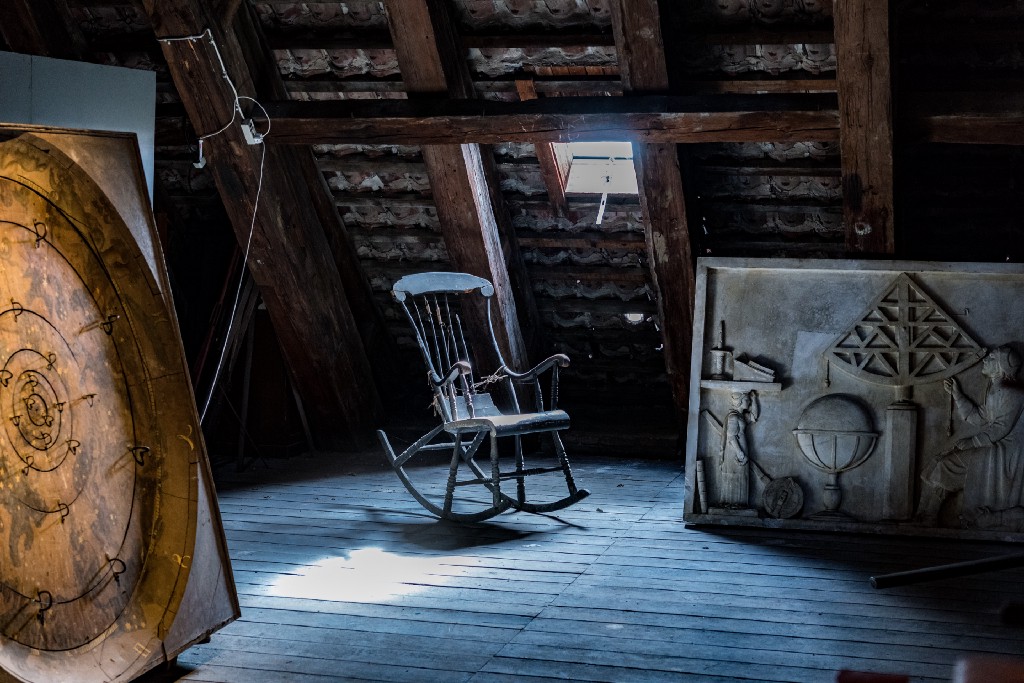
Teddie and I polished off our food and returned to Teddie’s house, where she pulled a string on a hatch in the ceiling and we both climbed into the attic. She kept saying she wanted to show me something but wouldn’t tell me what. Then she handed me something heavy wrapped in a beach towel. It turned out to be a prosthetic wooden leg.

“That is the leg,” she said.

“Well, yeah,” I said, bending the knee-joint back and forth like a herky-jerky marionette.

“It moves at night,” she said. “I can hear it up here trying to walk.”

Everyone knew about the previous owner of Teddie’s house. Fred Ossemer was his name and he did, kind of famously, have one leg. This leg, I thought, must be his. Something the estate sale people couldn’t sell and they probably felt weird just throwing it away. So, they wrapped it in a beach towel and stowed it in the attic. At least that was the theory I developed on the fly, standing there holding the creepy thing.

How Fred Ossemer died was, he got strangled by a mechanized contraption of ropes and pulleys he’d designed to get himself in and out of bed. He was not a real popular guy, so nobody noticed him dead for quite a while. He was eventually discovered by a burglar. The burglar was so freaked out at the sight of the corpse in the contraption that, without thinking, he called the police. So that guy got arrested for being a burglar.

In the burglar’s defense, it was a pretty horrific sight. Ossemer’s poodle, Mickey, had partially eaten the corpse, which is something a dog will do.

“It only happens at night,” said Teddie, “I can hear the leg, you know, hob-nobbing around up here.”

I asked what she expected me to do about it. We agreed I’d help her bury the leg.

We brought the leg to the baseball diamond behind the old bank and I dug a hole. It was by then very dark outside with a weird fog rolling in. Teddie suggested I shoot the leg for good measure. I told her I didn’t carry a gun.

“What!” she said, “You kiddin’ me? A guy like you!”

Teddie, as it turned out, had a snub nose .38 strapped to her ankle all this time.

“You do the honors,” she said.

I really didn’t want to, but she was very persuasive, pressing the gun into my hand and nodding vigorously and saying, “Yup, you got this, it’s all you, blast that ghost to kingdom come.”

I probably fired five or six rounds into the leg — however many bullets come in a gun. Then we decided to say a few words.

“You go first,” said Teddie, who was, by then, again holding the gun.

I stared at the leg in the hole. I thought about the life of the leg. How to properly eulogize it. An immense pointlessness washed over me. To this leg, we were strangers. And this is what galls me at a funeral: Strangers trying to be nice. When my stepdad Buzzy was killed, the pastor they got didn’t know a thing about him. He read aloud from a book called Bible Quotes for Funerals and talked about what a sweet guy he bet Buzzy was. Later, he pursed his face into a sympathy smile, shook my hand, and said simply, “No problem.” I was too wobbly to say anything.

“Listen,” I said to Teddie, “I don’t go to a lot of funerals. It’s not that I don’t know dead people. My people drop like flies — ”

“Be free, leg!” said Teddie, “I hope you find what you’re looking for out there in space.”

I pictured in fast-forward the leg sitting in the hole until eventually they turned the baseball diamond into some stores. Teddie saw the look on my face. She touched my hand. I followed her eyes to the sky over centerfield where a little bat flitted and dove, hunting some prey in the grass.

About the Author

William Fatzinger Jr. grew up in Pennsylvania. He now lives in Austin, TX. Twitter: @billyfatzinger.

“The Ghost of the Leg” is published here by permission of the author, William Fatzinger Jr. Copyright © William Fatzinger Jr. 2018. All rights reserved.

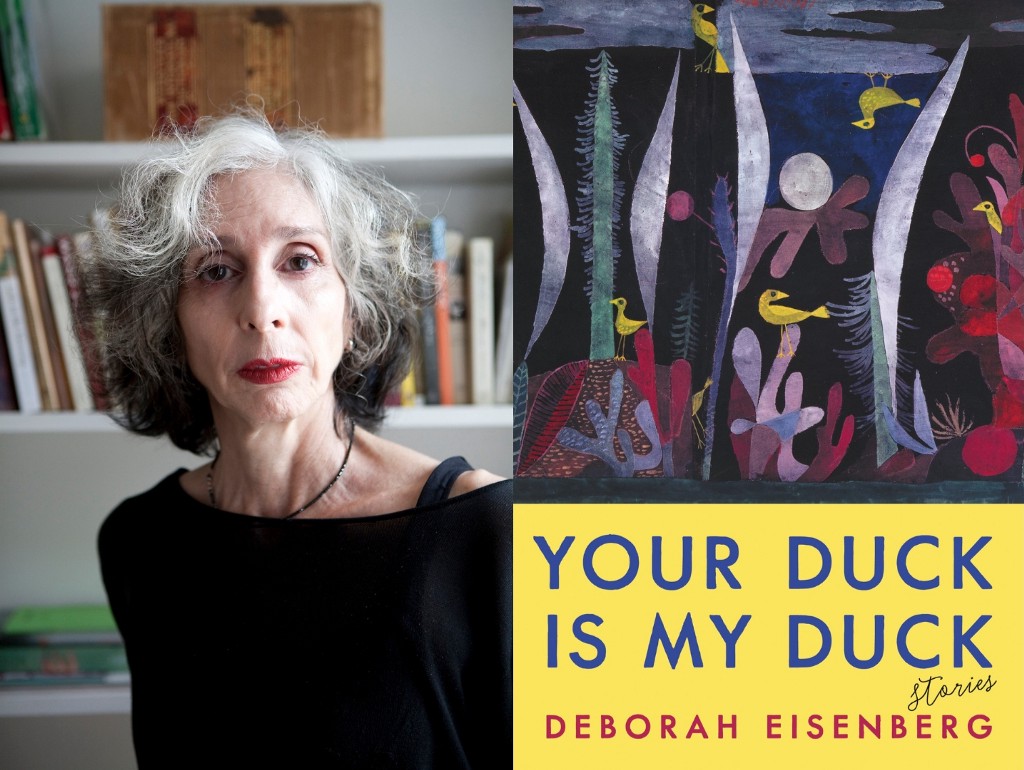
Deborah Eisenberg on the Best Way to Read a Short Story Collection

Read a short story collection, and you can defy time. There are several beginnings, several middles, several endings, but no singular beginning, middle, and end. You don’t have to read the book from linear cover to cover. In Deborah Eisenberg’s short story collection Your Duck is My Duck, her characters deal with the problem that life does not work like a short story collection, although many wish it would. They cannot skip around; time marches on. But memory makes moving through time from the “cover to cover”of life more difficult. Because memory works more like a short story collection than a novel. Memory skips, it repeats, it collects into moments, into stories. In the eponymous short story “Your Duck is My Duck,” a painter is “hurtling through time, strapped to an explosive device, [her] life.” In “Taj Mahal” an aging actor reflects on the gilded days of his youth in Hollywood, asking a friend “Can you believe that all that turned out to be then? At the time I somehow thought that it was now. Did it occur to you that it was going to be then?”

Purchase the book

What Eisenberg shows us is that while time marches on, life is made up of the clots of memories we cling to, and how they hold together when we offer them to someone else with their very own collection of memories. We mess up each other’s ideas of one another in ways that are sometimes good, sometimes hurtful, but always vital. The characters in Your Duck is My Duck can’t help but circle back to a “then,” cannot resist imagining what will be “later.” Eisenberg’s stories which manage to be both rich in substance and economic in execution, give us time to look at how all of our “then’s” and “later’s” clatter into one another to see that it’s okay to take our time trying to make sense of life because no one’s got the story straight. Maybe they never will. And in the hands of someone like Deborah Eisenberg, maybe it’s better that way.

Eisenberg and I spoke over the phone about why you shouldn’t read stories in order, the piece of writing advice no one wants to hear, and how to confront how terribly long it takes to write anything worth reading.

Erin Bartnett: After putting together five collections of short stories now, I was wondering if there’s something new that came to you. On the level of the collection, was there anything new about putting this collection together?

Deborah Eisenberg: Well it was really just like putting all the others together. I don’t think in terms of collections at all. I just do one thing and then I do the next thing and then I do the next thing and then somebody says to me, “well that’s a collection.”

EB: So it’s more of an external assignment? I often wonder what it’s like writing one story and then saying okay this story now lives next to this story and behind that story, and so on…

DE: Well yes, I don’t do that, but I think one’s mind does it. I mean one goes from one thought to the thought that is born of the previous thought. Or the concern that is born of the previous concern, and I have never set the order of the stories in my collections. I’ve left that to my editor, and so what you see in a book is not a chronological compilation.

EB: So perhaps in the same way you write the stories that become a collection, do you think when someone is reading a short story collection, there’s a chronological way to go about reading it? Or do you think it’s more fruitful to let your curiosity lead you “out of order?”

DE: I would recommend that. Because it’s not — a collection of stories is not a novel — it’s different expressions of the same mind within a circumscribed period of time. I certainly would recommend against sitting down and reading any collection of stories in its entirety at once. I think probably the “best” way to go about reading a collection is to pick it up when you feel like it and let your mood dictate what title speaks to you at the moment.

The “best” way to go about reading a collection is to pick it up when you feel like it and let your mood dictate what title speaks to you at the moment.

EB: That is often how I read short story collections, and yet I also feel this urge to “finish” reading a collection in the same way I would a novel. Like I’ve gotten to “know” an author when I’ve read an entire collection. Which of course, isn’t possible just through reading one collection, as your stories in Your Duck is My Duck reminded me.

So many characters in this book experience the discrepancy between the story that they’ve held onto about a person they love, and the entirely different life that their beloved actually lived. A lot of these characters also happen to be tangentially famous — like Adam in “Recalculating” who is the nephew of a famous scholar, or Emma the daughter of a Hollywood icon in “Taj Mahal.” Adam and Emma each experience a third kind of betrayal — they read some new thing that some stranger has written about a person they love. Can you talk more about these relationships in your stories? How did these relationships shape the way you began to understand these characters, and write them?

DE: That is such an interesting question, and I have absolutely no answer for it. [Laughs.] You know I don’t really think analytically in that way as I’m beginning to write. I don’t think “well, here is a Question, or here is a Situation, how do I best address it?”

EB: So how do you start?

DE: I start by sitting down and just seeing what my hand does, really, on a piece of paper. One’s needs to tell a certain thing, to communicate a certain thing, surface despite one’s inhibitions against it. So the best thing — well for me — the best way to proceed is not to think about controlling what I intend to do, but just to do and then see where it is I’m going.

EB: And how do you know when you’ve arrived at the “end” of a story?

DE: You know it’s so amazing to me that people are always — young writers, specifically — are very anxious about that question. “How do you know that you’ve finished?” I would say there’s absolutely no uncertainty in my mind when I finish something. I just know it’s finished. I once heard Mavis Gallant say something that is instructive possibly: “You’re finished when anything you do makes it worse instead of better.” That’s not an exact quote but it’s something like that. But I feel that really most of the time I take to write something — and I do take a lot of time — is spent trying to understand what it is that I’m actually interested in. And I’ll tell you a story about the story called “Recalculating” that you referred to earlier. I mean it’s been true very frequently that I’ve thought I finished something, and then I can’t think of a title, and that is instruction to me, that I don’t really know what I’m doing. So I think I finished the last draft. And yet, if I don’t know what to call it, I surely haven’t finished it. So I had just finished writing the story that is called “Recalculating” and I was being driven somewhere and I was trying, I was desperate to think of the title for this story, and I was sort of using the drive to try to think of the title. And you probably don’t remember the GPS that would take a wrong turn and they say “recalculating, recalculating recalculating — “

EB: Oh yeah — we had a Garmin.

DB: Yes! So I was sitting there in the car, thinking to the GPS “be quiet! I’m trying to think!” And the GPS kept saying “recalculating. recalculating. recalculating.” And I kept thinking “be quiet! be quiet! be quiet! I’m trying to think of something important.” “Recalculating.” And I thought, “Oh, I see. Now I understand.” And I understood the story! And I rewrote it then. I mean I didn’t have to change much but I had to sort of clarify what it was about, and you know I just was able to make it that much more coherent and sharper and that was exactly, I mean that word meant to me exactly what I was doing in the sense that the GPS uses it. So often the search for the title tells me what I’m missing. And then I have to look.

EB: I love that story, knowing that the last line of “Recalculating” is “Don’t Move.”

DE: Yes.

Your Duck is My Duck

EB: What are you reading right now?

DE: Right now I’m just reading my students’ work, and work for a seminar that I’m teaching. My reading habits are just awful. It’s terrible. When I’m teaching I really can’t read aside from what I need to read for school. I’m an extremely slow reader, and when I’m writing it’s very hard to read. So I have periods when I’m doing neither and then I can read, which is very pleasurable.

EB: Coping with the academic reading schedule is so hard. When I was teaching, I knew I needed to read something other than student essays, but didn’t have much time, so I promised myself I would read poetry — just one poem each night. It helped.

DE: That is a great idea, just to reach for the poetry, and circumscribe one’s ambitions to say “I’m going to read one poem and just be utterly refreshed.” How wonderful!

I think for almost all writers, it takes much more time and much more patience than is almost possible to believe.

EB: In your role as a teacher, what do you think is the advice that young writers need, but don’t hear, or even don’t want to hear?

DE: I think that it is that it takes a tremendous amount of time. Now I know almost every writer writes more quickly than I do, so maybe it’s inapplicable to most people but I think for almost all writers, it takes much more time and much more patience than is almost possible to believe. And also it is extremely embarrassing not only because one reveals to oneself one’s deep interests, which might not be the deep interests one would most like to present to the world or to oneself, but also because one does it so badly at first. And it really takes time to make something good. When you sit down you write, I don’t know a page or whatever you write, two pages, a paragraph, and you think “Ah! Isn’t that marvelous. I’ve expressed myself so utterly and beautifully.” And then you look at it the next day and you can’t believe what an idiot you were! I mean you just can’t believe it! It’s so mortifying. But I think it’s very very important to develop the confidence through experience that you can make things almost infinitely better than they start out being. If you keep working on it, it’s going to get good. And the fact that it’s bad at first doesn’t mean that you’re ill-suited to do it, it just means that it takes time.

If you keep working on it, it’s going to get good. And the fact that it’s bad at first doesn’t mean that you’re ill-suited to do it, it just means that it takes time.

EB: I’m so glad to hear you talk about that. It’s refreshing to hear it takes time and that’s okay.

DE: Oh it’s absolutely okay and you have to be able to sustain the humiliation of seeing what it is that you do at first. And the humiliation of the time it takes. Because I think one of the things that we hope for when we get something down on a page when it’s finally satisfactory is that it looks like it took no effort at all. And that takes a tremendous amount of time and effort. And the embarrassment of seeing how clumsily one writes.

EB: Do you think that’s a “new” feeling? That humiliation of the time it takes? Do you think we’re in a moment where we’re particularly proud of how quick and efficient and zippy we can be? Or do you think that’s just kind of something that writers have had to deal with always?

DE: Well, I wonder, actually. I was thinking about something of that sort the other day. I mean I think it is something that people have always had to deal with, but it’s such a privileged position to be able to write, that probably most of the people who’ve done it until recently were very very privileged, had a lot of time, had phenomenally polished educations, did find it easier to put a sentence together, and were tremendously driven. Now there’s so much pressure for everybody to write and everybody thinks ‘Oh I’m a writer,’ or ‘I should be able to be a writer’ or something of that sort. I’m betting that you are right that there is more pressure — you’re supposed to do things fast, you’re supposed to do things well, and people just aren’t prepared for what it really is. And they don’t know. And it isn’t much spoken of.

7 Books on the Joys of Doing Nothing

Sometimes, the world gets to be too much and you just want to check out—but reader types often have trouble shutting off our brains. Thankfully, we can always look to literature for solace in the stories of idlers, sleepers, and ponderers. In these books, you’ll find inspiration from characters who prefer sleep or idleness over action, and essays on how to use the act of doing nothing in order to find comfort or relief from the inundation of bad news in the headlines.

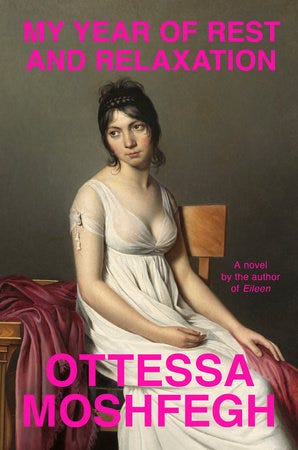
My Year of Rest and Relaxation by Ottessa Moshfegh

In her most recent novel, Moshfegh depicts the story of a woman who believes sleep to be an antidote to the physiological effects of current affairs and personal misery. Though set in the unsettling years leading up to September 11, Moshfegh uses the intensely observational style that she’s become known for in her previous books, such as Homesick for Another World and Eileen, to encapsulate a feeling that many people may share today; the desire to sleep. Or, more specifically, the desire to go right back to sleep after waking up in the morning to an onslaught of notifications from various news outlets about the natural, and not-so-natural, disasters happening around the world. In My Year of Rest and Relaxation, Moshfegh protagonist turns to sleep-inducing prescription medication in order to fulfill her aspiration to do nothing.

A Novel About Sleeping Through the '90s, Designed to Wake You Up in 2018

A Field Guide to Getting Lost by Rebecca Solnit

If sleeping isn’t the right antidote for you, another one you could try is to get lost. As in her other essay collections, such as Men Explain Things to Me and Call Them by Their True Names, Solnit brings her skill for expert and persuasive writing to discuss the topic of getting lost. In this collection, Solnit explores the question: “How will you go about finding that thing the nature of which is unknown to you?” Disguised as essays about doing nothing, this field guide brings the reader through seemingly unrelated thoughts and anecdotes, arriving at answers that are be obscure to the person that seeks them out with intent.

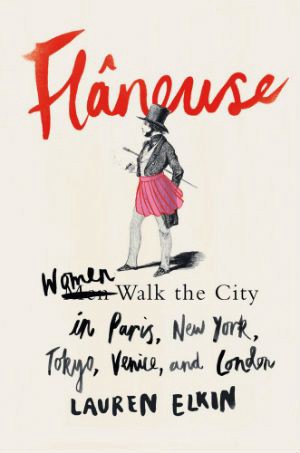
Flâneuse: Women Walk the City in Paris, New York, Tokyo, Venice, and London by Lauren Elkin

20th century poets and authors popularized the term flâneuse when writing about the modern urban experience — for men. It denotes a man who takes to wandering the streets aimlessly; a man taking advantage of his privilege by walking around, doing nothing, in metropolitan locations without the worry of being harrassed. Lauren Elkin’s memoir takes the same concept — of aimless wandering — and applies it to the female experience. Drawing on her own practice of meandering the streets of modern cities, Elkin writes about the history of the female flâneuse.

Visiting Sephora with Walter Benjamin

The Lunatic, the Lover, and the Poet by Myrlin Hermes

In the Shakespeare canon, Hamlet is the archetype of a non-doer. His uncle kills his father, his mother marries his uncle, his love life goes up in flames, and yet, rather than exacting revenge on the man that incited it all, he chooses to read books and speak in soliloquy. Myrlin Hermes’ novel takes the form of a prequel to the play, offering the reader a look into Hamlet’s university life before the notorious tragedy strikes. Using the same characters that live and suffer in Shakespeare’s world, Hermes reimagines that world in a modern novel imbued with Shakespearean references and plot devices — such as mistaken identities and love-triangles.

Pond by Claire-Louise Bennett

Bennet’s debut novel suggests a life of contemplation in lieu of action. The narrator lives by herself and shares her inner monologue with the reader about the daily routine of living in solitude, and the ordinary events that surround her cottage on the west coast of Ireland. With a perceptive focus on atmosphere instead of plot, Bennett’s style pushes the boundaries of what we consider short stories, prose poetry or even essays. In doing nothing much but contemplating, the narrator of Pond brings us outside our own egocentric world to consider the world around us.

Morning, 1908

Persuasion by Jane Austen

Persuasion, Austen’s final work, explores the typical themes in her canon — culture, society and marriage in 19th century England. Whether or not the characters in her books are doing anything actually productive, at the very least they’re doing something. However, this particular novel showcases a character with an expertise for doing nothing; Mary Musgrove. Repeatedly, she feigns illness in order to get out of responsibilities and, rather than taking full advantage of the free time, she does nothing instead. Then again, maybe that is exactly how one should be spending their free time.

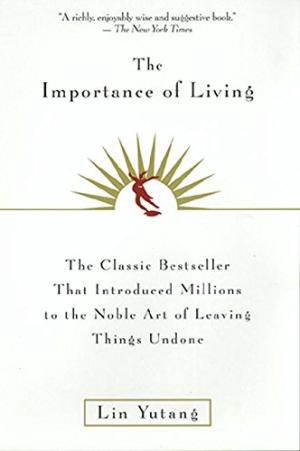
The Importance of Living by Lin Yutang

Lin Yutang uses philosophy and wit to enlighten his readers about the way to lead a simple life; valuing idleness over wearing oneself out. He draws from Eastern ethics, such as Taoism, which entails letting go of impossible expectations and unattainable goals in order to live a life akin to a river — going along with the unplanned and unstructured way life takes you. Though written in the mid-1900s, this book of guidelines for a peaceful life is as timely as ever in navigating this chaotic modern world.

That Guy in Your MFA’s 10 Rules for Novelists

I f you’ve ever taken a creative writing class, then you know who I am: I’m the guy who showed up 10 minutes late, with a chiseled jawline covered in half a week of stubble, unwashed hair under a beanie. When ever anyone makes a point, I roll my eyes and offer a contrarian opinion. I mean, if you read David Foster Wallace, you’d realize that the point you’re trying to make is completely obtuse. I’m working on the next Great American Novel in my Moleskine notebook, gazing contemplatively out the window every few lines so everyone looking at me knows how deep I am. That’s who I am. Jonathan Franzen is the guy who thinks winning one National Book Award a 15 years ago means he’s entitled to making rules for writers. Well, Jon, I read The Corrections. And let’s just say I would have made a few.

Course Catalog from the Jonathan Franzen Night School

I, on the other hand, have placed a short story in a very prominent literary journal that may or may not actually exist. And so, as a public service, here are my rules for writers.

1: Anyone who ever rejects your work is wrong. The same goes for anyone who gives you notes. They just don’t understand you. I mean, really: punctuation? It’s like they’ve never even read Cormac McCarthy.

2: If you write for money, you’re a capitalist sell-out hack. Real writing is done in one’s notebook and read only after one’s death, probably from starvation. Or just do what I do and live off your trust fund.

3: Writing in the first person is played out. Same with writing in the third person. If you really want to be an original voice in the foction landscape, try writing in the second person plural future tense. “The group of you all will go in the crumbling Victorian manor.”

4: If you introduce a female character, be sure to describe (in detail) the size and shape of her breasts.

If You’re Not Sure How a Male Author Would Describe You, Use Our Handy Chart

5: Real writers don’t need headboards. The mattress on your floor is a perfect conduit for creative expression.

6: You have to have darlings before you kill them. That’s a quote from Faulkner. I’ve read Faulkner

7: Female characters are hard for readers to relate to. Try making your protagonist a man.

8: Trains are a metaphor for: (1) time (2) escape (3) fascism (4) the unstoppable speed of technological advancement (5) trains

9: If The New Yorker still hasn’t responded to the unsolicited fiction submission you sent them in the mail, follow up for the eighth time.

10: Write drunk, edit never.

Alexander Chee Recommends 5 Books that Aren’t By Men

You already know that women writers love Alexander Chee—earlier this year, we published a conversation among four Asian American writers, three of them women, about how inspiring they’ve found him. What you may not yet know is that the feeling is mutual. Here, the award-winning and bestselling author of The Queen of the Night and How to Write an Autobiographical Novel introduces some of the five books by non-men that he finds most inspiring.

Chee is involved in the writing world as an editor and an educator—he’s a contributing editor at The New Republic, an editor at large at VQR, and a professor of English and creative writing at Dartmouth—which means he gets a chance to be influential in promoting women and non-binary writers. And he is, of course, a celebrated author in his own right; his essays and stories have appeared in The New York Times Book Review, T Magazine, Tin House, Slate, Guernica, and Best American Essays 2016, and he is winner of a 2003 Whiting Award, a 2004 NEA Fellowship in prose and a 2010 MCCA Fellowship.

Read More Women is Electric Literature’s series, presented in collaboration with MCD Books, in which we feature prominent authors, of any gender, recommending their favorite books by women and non-binary writers. Twice a month, you’ll hear about the five non-male authors who most delight your favorite writers.

City of Angels, or, The Overcoat of Dr. Freud by Christa Wolf

This was one of the most consummate aesthetic and political experiences I’ve had while reading in years. Wolf’s last novel is based on a character like her, arriving to the U.S. from Germany after the fall of the Wall, on her way to a residency in California. There’s a Weimar Under the Palms feeling to it, as the East German writer wanders the California landscape in conversations with her fellow fellows, and herself, and engaging in a project based on the correspondence she’s found between two women during the East German regime. Highlights include being astonished at the homeless problem, amazement at a former CIA Director winning the presidency, and listening to a young Californian explain to her, an East German, the idea of Basic Income. The novel seems to be the way she undertook writing about the scandal that rocked her career — the discovery that she had been an informant after the release of her Stasi files. It is an investigation of self deception, at the personal and the national level, and with time I love it more and more.

An Autobiography by Janet Frame

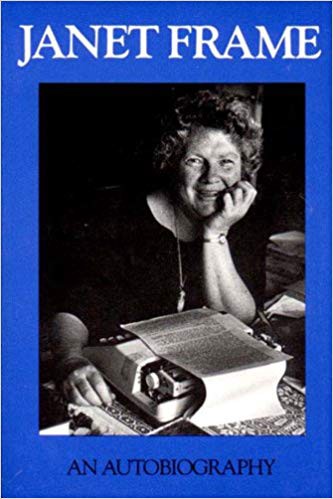
Only the wonderful bright spirit that was the late Janet Frame would choose the simple title, An Autobiography, for this three volume wonder, collecting To the Is-Land, Angel At My Table, and The Envoy From Mirror City. It is an arresting, experimental journey into the life of New Zealand’s greatest writer, beginning with her working class family upbringing, her false diagnosis with schizophrenia, her struggle to be treated with respect as a woman writer, and how she made her way in this world. You may know of this from the masterpiece of a film made by Jane Campion, adapted from this book, but the book itself has so much wise and insightful writing advice that did not make it onto the screen.

Silver Sparrow by Tayari Jones

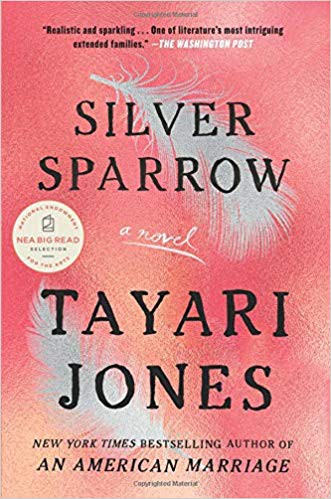
Jones has a piece of writing advice I love — “When there’s two sides to the story and both sides are right, you have a novel.” This novel embodies this, powerfully, in the story of two sisters, each sharing their side of growing up in 1980s Atlanta with a shared father, a bigamist, and how they were each shaped in part by how and when they learned of each other, and became, for a time, something like antagonists. I came to love them both and root for them both, which is part of the novel’s magic trick. For readers new to her looking for more of what they loved in her current bestselling novel, An American Marriage, they should easily turn here next — I also think this is a great place to begin reading her.

Tayari Jones’s Favorite Books By Women

I’ll Be Right There by Kyung-Sook Shin

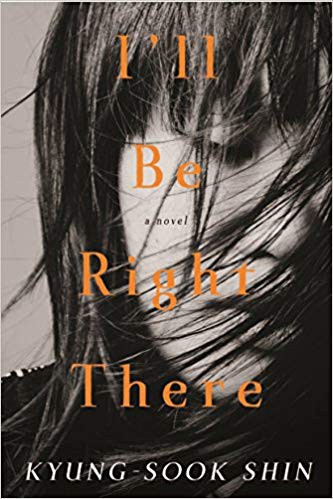
A young woman receives a phone call from an ex-boyfriend eight years after they last saw each other, telling her that their former professor is near death though he is not receiving visitors. She is drawn into memories of how he kept her and their friends inspired as they navigated the tumultuous period of student protests and state violence in South Korea during the 1980s authoritarian rule of South Korean President Chun Doo-hwan, in part through the study of European literature. It is both a portrait of their friendships and relationships, their desire to escape the world they are in, and their desire to transform it. “Literature and art are not simply what will carry you; they are also what you must lay down your life for,” the professor tells his students, and the novel is the story of how they try.

Saint Joan of Arc by Vita Sackville-West

A biography by the woman writer who inspired Woolf’s Orlando, about the famous French Saint. It has been accused of being a little fictionalized, but you may not care. I didn’t. The result is a drama about gender, power, the church, French culture, and the question of whether it is a heresy punishable by being burned at the stake to say a saint can console you in jail by holding you. It is also a powerful and poignant meditation on patriotism, heroism, and martyrdom — and a myth that is a tentpole of Western culture.

7 International Novels for Food Lovers

With the holidays upon us, tables across America and the world will be heaving with delights. Your Thanksgiving banquet and company might hit the commercially-sanctioned “happy” mark. However, if you’re less than enthusiastic about the season of forced gratitude and have all kinds of feelings about its settler colonialism origins, we have suggest (naturally!) literary escape. Here’s a list of yummy prose with generous sides of dysfunction and lavish sprinklings of hilarity to get you through the season. With zero sugar, gluten, cholesterol, and no animals hurt in its making (we hope), this reading list should easily and seriously indulge your literary appetite.

Gourmet Rhapsody by Muriel Barbery

“I am the greatest food critic. It is I who has taken this minor art and raised it to a rank of utmost prestige,” claims Gourmet Rhapsody’s dying protagonist. In his final hours, he is trying to recall a taste that is the “final and ultimate truth of my entire life and that holds the key to the heart that I have since silenced.” Barbery’s novel explores the food critic’s quest through his upper bourgeoisie Parisian eyes and via those with the less savory perspectives of him, in some seriously delectable prose. Of his first memory of Japanese food, he writes: “Yes, it is like a fabric: sashimi is velvet dust, verging on silk, or a bit of both, and the extraordinary alchemy of its gossamer essence allows it to preserve a milky density unknown even by clouds.” His take on a side is something you might find at your holiday dinner table: “A few green asparagus stems, plum and tender enough to make you swoon.”

The Birdwoman’s Palate by Laksmi Pamuntjak

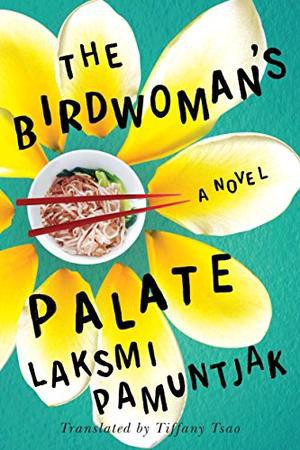
A dreamy — each chapter begins with the main character’s sleep time adventures — offering from Indonesian author Laksmi Pamuntjak, this novel trails an epidemiologist Aruna who’s tackling bird flu. Of the original outbreak, Pamuntjak writes: “It is worth noting that there was at this time a conspicuous upsurge in the production of homemade abon ayam — dry-fried shredded chicken. Simply to die for when sprinkled over rice or toast.” Pamuntjak charms with Aruna’s chattiness and the unlikely pairing of a bird flu investigation and a foodie road trip across the Indonesian archipelago. The Birdwoman’s Palate is a buffet of diverse delicacies with some regional politics thrown in the wok.

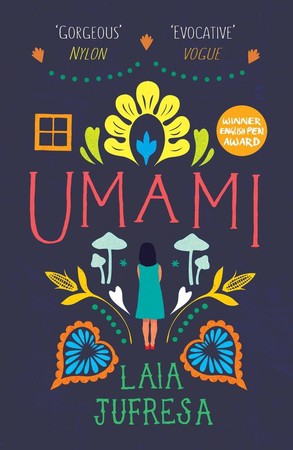
Umami by Laia Jufresa

In the Mexico City of Umami, a building layout mimics the map of the human tongue — Bitter, Sour, Sweet, Salty, and Umami — while its residents grapple with grief and loss. No major banquets here but instead, there’s an urban milpa (the varied, cultivated fields of the Mesoamericans), the pseudo-cereal amaranth, MSG, and meditations on tastes via Alf, the building’s owner who’s written a book on Umami, the fifth undefinable sensation of deliciousness. A taster of Alf’s thoughts on the matter: “Umami starts in the mouth, in the middle of the tongue, activating salivation. Your molars wake up and feel the urge to bite, beg to move. Not that different in fact, albeit less powerful, from the instinct that drives your hips to move almost of their own accord during sex. In that moment, you only know how to obey your body.” And then: “If we delve back to the beginning, perhaps umami doesn’t start in the mouth at all, but rather as a craving, at first sight.”

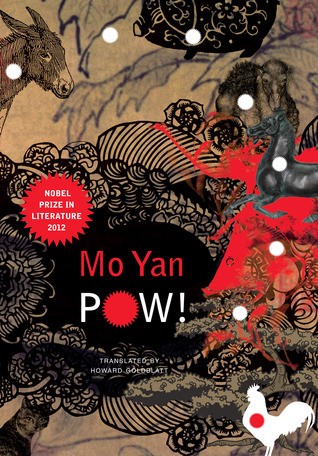
Pow! by Mo Yan

Meat, the pumped-up industrial animal kind and the fleshy, desirous human sort, are fixations of Nobel Laureate Mo Yan’s 2010 novel, Pow! Lustful and lavish, the narrative charts the changing times in an archetypal Chinese village through a tale told by a young novice to an older monk. Depending on your persuasion, the book will either cause indigestion or remedy it with its hilarious and ever-hallucinatory turns. Vegetarians and the squeamish, however, might want to pass.

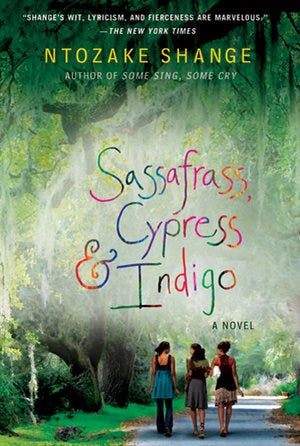
Sassafrass, Cypress & Indigo by Ntozake Shange

Poet, playwright, and novelist, Ntozake Shange was most known for her choreopoem for colored girls who have considered suicide / when the rainbow is enuf. In this novel, Shange follows three eponymous South Carolina sisters as they navigate womanhood and make their way in their worlds as artists. Interspersed are darling letters written to them from their mother. Beginning with the baby Indigo and “a moon falling from her mouth,” Shange in her delectable, incantatory prose peppers the novel with recipes such as “Cypress’ Sweetbread: The Goodness” and “My Mama & Her Mama ‘Fore Her: Codfish Cakes,” plus an epic Christmas breakfast menu. For later reading, pick up Shange’s culinary memoir of African diaspora food traditions, If I Can Cook/You Know God Can, which features recipes from her travels in Cuba, Nicaragua, and elsewhere.

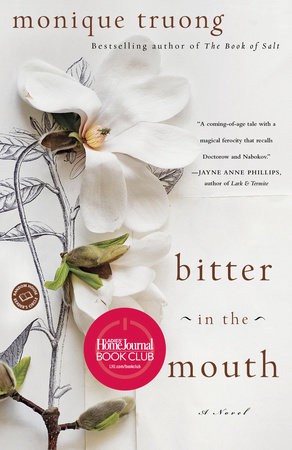
Bitter in the Mouth by Monique Truong

Monique Truong’s tale of Linda, a Vietnamese adoptee’s life in North Carolina, is stuffed with traditional American fare, as well as its attendant 1980s fusion attempts. She writes of her white mother’s cooking ventures: “when DeAnne was experimenting with ‘exotic’ flavors, her weekly menu also included a three-layer taco casserole (one of the layers was the contents of a small bag of corn chips) and a chow mein surprise casserole (the surprise was several hot dogs cut up into matchstick-size strips, which when cooked, would curl up into little pink rubber bands). No matter the recipe, a can of condensed cream of mushroom soup, the All-American binding agent of disparate foodstuff, was mixed in. The Great Assimilator, as I call it now, was responsible for the uniform taste of all of DeAnne’s casserole.” Throughout the novel, Truong serves up sensorially-layered turns of prose, stirring Linda’s word-tasting synesthesia quirk, such as “Nograpejelly desert for selfishcornonthecob.”

The Passionate Epicure by Marcel Rouff

The chef of exacting gastronome Dodin-Bouffant dies and he has to find a replacement. Since he’s a very thorough gourmand, this is no easy task but he succeeds — only to gain a rival for his chef Adèle’s culinary charms. Also, Dodin-Bouffant prefers to eat alone to properly enjoy the epic gastronomy. Whether you wish you were alone this holidays or are alone but wish you weren’t, this slender novel should satisfy, and will certainly, educate with its erotica of French cuisine, including the humble (but apparently elevated in Adèle’s pan) pot-au-feu, or beef stew.

Alexandra Kleeman recommends “The Lonesome Bodybuilder” by Yukiko Motoya

“The Lonesome Bodybuilder”

by Yukiko Motoya, Translated by Asa Yoneda

When I got home from the supermarket, my husband was watching a boxing match on TV.

“I didn’t know you watched this kind of thing. I never would have guessed,” I said, putting down the bags of groceries on the living room table.

He made a noncommittal noise from the sofa. He seemed to be really engrossed.

“Who’s winning? The big one or the little one?”

I sat on the sofa next to him and took off my scarf. I’d planned on starting dinner right away, but the gears on my bicycle hadn’t been working, and I was a little tired. Just a short break. Fifteen minutes.

Eyes still glued to the TV, my husband explained that the little one was looking stronger so far. They seemed to have reached the end of a round, and the gong was clanging loudly. Both fighters were covered in blood, I guessed from getting cuts on their faces from their opponent’s punches, and as soon as they sat down on the chairs in their corners, their seconds threw water over their heads.

“It’s like animals bathing. So wild.”

I’d tried to make sure the “wild” didn’t sound too reproachful, but my husband picked up on it.

“That’s the kind of man you really want, isn’t it?”

“What? What are you talking about?”

“Don’t pretend. I know. I know you secretly want a brute to have his way with you.”

“You know I prefer intellectual men. I don’t want an insensitive jock.”

He put the remote he’d been clutching back on the table, then pulled up his sweater sleeve and wrapped his fingers around his wrist, as if taking his own pulse. His wrist was far thinner than the boxers’, it was true.

“It’s like you might be some kind of artist,” I teased. He hated being pitied more than anything, so I was careful to make it sound like a joke.

“Are you saying you wouldn’t go along with it, if a guy like that came on to you?”

Say something, anything, to build his confidence back up, I thought, but my attention had been stolen again by the men on the TV. My blood pumped, and I could feel my body getting hot. “Of course I wouldn’t go along with it! Anyway, it’s not like that would ever happen.” Fighters are so beautiful. Incredible bodies, both of them. Taut bone and flesh, nothing wasted.

My husband spoke again. “What do you think of my body?”

“I like it. Your skin’s so fair, and soft.” Why had I never watched this kind of thing before? Boxing, pro wrestling, mixed martial arts — I’d assumed they weren’t for me. How wrong I was. I always do that. I decide who I am, and never consider other possibilities. I’ve been like that since middle school. The time I went to the amusement park with my friends and decided that a quiet girl like me wouldn’t like roller coasters, I was the only one who didn’t get on the ride. Someone like me would obviously sign up for one of the cultural activities at school. Would feel at home in the crafts club. Would find a job locally. But what really would have happened if I’d gotten on the roller coaster that day? I have the feeling I would have met a version of myself I don’t know now. Lived a completely different life.

The gong sounded, and the men stood up. I’d assumed that throwing out punches was all there was to it, but the boxers guarded against every blow, observing each other’s movements with eagle eyes. That must be what they call dynamic vision. If only I had some dynamic vision too, I might not have missed out on so many things. The match was over, and they sounded the biggest gong yet.

The very next day, I started training to become a bodybuilder. I thought at first that I could aim to be a pro boxer, but I realized that I didn’t have a trace of fighting spirit in me. No desire to beat anyone up. It was the bodies of the two boxers I’d seen on TV the previous night that seemed to be seared into my brain, even while I was at my job, working the register at a natural health and beauty shop.

They turned in all directions, showing off their bodies to me. Even while I described various products to customers. This is a moisturizing cream with pomegranate traditionally used in herbal medicine. How do firm limbs feel? This hair oil is made from rare organic concentrated plant extracts. What is it like when a strong body throbs?

Was I looking for an affair? Of course not. I loved my husband. He could be bumbling and juvenile, but he was just working too hard, that was all. I only needed to hang on until he was done with this busy period, and then he’d start initiating again. It wasn’t that I wanted to touch any other man. I just wanted to luxuriate in some taut muscle. I hadn’t felt so giddy in a long time. I’d swing by the pharmacy on my way home from work and get some protein powder.

I liked the taste of the protein powder when I tried it, and decided to join a gym. I felt a little worried about fitting it into the household budget, but I found a small, independent fitness club two train stops away, whose website advertised “100 Free Sessions Until You See the Results You Want!” Having never done any serious exercise before, I had no idea what kind of progress I’d be able to make in a hundred sessions.

On the first day of my private sessions, I confided to the trainer — a boy in his early twenties — that I wanted to become a bodybuilder. He stopped writing on his clipboard and looked at me with surprise.

“Bodybuilding? Not weight loss.”

“Yes. Your website said you have a training program.”

“We do, but this is pretty unusual. Women in their thirties usually come looking to lose weight, so I assumed . . .”

“Is it very difficult?”

“Not really. But with bodybuilding, you won’t get anywhere with weight training alone. Nutrition is key. Could you handle consuming, say, four thousand calories a day? That’s double the daily amount for an average adult male.”

“I can spread it out over the day.” “What about protein powder?” “I’ve already started.”

“Do you have a specific goal in mind? Do you want to compete?”

“No. I don’t need to show anyone. Just some muscles for myself.”

“That’s pretty unusual,” said the polo-shirted youngster again, and then tapped the tip of his ballpoint pen on his clipboard a few times. I started to worry that he would turn me down, but then he surprised me by saying, “Okay. Let’s see about coming up with a training program for you.”

I found out that he’d been an athlete since childhood. He’d played rugby at university, and seriously considered becoming a dolphin trainer, but thanks to some connections he had, he ended up joining this gym as an instructor. He was a cute kid, with a boyish face. A snaggletooth. Twelve years younger than I was. He probably dressed a little dorkily when he wasn’t in sportswear. That’s the impression I got from his haircut. Makes sense, if he’d spent all his time playing rugby. He looked like he’d be into young women around his own age. My husband and I were the same age. We’d met in college.

The trainer, in his bright red polo shirt, looked at me soberly as these frivolous thoughts ran through my head. He said, “You need to be aware that public acceptance for bodybuilding is extremely limited. Be prepared. Also, you’ll definitely need your family members to be on board.”

In spite of this advice, I never did tell my husband. We’d been married seven years, and this was the first time I’d kept a big secret from him. Lately, though, he’d been spending all his time at home either buried in his work files or on his computer, and only ever talked to me when he needed me to reinflate his confidence. Marital affection was pretty much nonexistent.

I explained the change in my eating habits by saying I’d started a protein powder diet on the recommendation of one of the customers at the store. I’d tried out a lot of fad diets before, so my husband seemed not to find anything amiss. I religiously followed the training plan that I’d developed with my young coach. Hidden from my husband, who’d be holed up in the study, I did push-ups, sit-ups, squats. My basic strength began to improve, so I started to go to the gym four times a week, where I did pull-ups, dumbbell presses, narrow-grip bench presses. Reverse crunches, to add muscle definition. Ball crunches. T-bar rows. Rack pulls. Plus protein powder every few hours, and double the daily calorie intake of the average adult male.

Sculpting beautiful bundles of muscle took a lot more commitment than I’d thought. You had to reach what felt like your absolute limit, and then keep going — another two, three steps. Alone, I might have given up, but I had my coach for a hundred free sessions. Bodybuilding workouts required a partner: if you overreached on lifting a dumbbell and dropped it on your neck, you could end up dead. Coach was always by my side, making sure that didn’t happen. “One last rep! You’re doing great. Yes!”

By the end of a workout, I was always foaming at the mouth from breathing hard through clenched jaws. But even that felt like an exciting new discovery. When I had first gotten married, I had a hard time managing the housekeeping accounts. My husband, who brought work home even on Sundays, saw the way I let receipts pile up without dealing with them, and said, “You just have no willpower.” He often berated me: “Have you ever in your life actually accomplished anything?”

The thickness of my neck was unmistakable. At the store, we demonstrate the moisturizing soaps to customers by lathering up a sample onto the backs of our hands, like whipped cream. But now all the customers were riveted by how my wrist was double the size of theirs, with well-defined tendons and veins. They pretended to pay attention to my description of jojoba oil while they looked at my neck, which was nearly as wide as my face. I could see in their eyes that they were trying to picture what they would find under my apron. It was like being stark naked.

Eventually, I got summoned by the owner of the store. “You seem a little different lately,” she said. “Is something going on, dear?”

“Yes, well.”

“I mean, haven’t you gotten bigger, a lot bigger, than you used to be? At first I thought you might be pregnant, but . . . perhaps you’re taking some kind of medication that doesn’t agree with you? Something for the menopause. Are you experiencing side effects?”

“I’m not.”

“But it’s clear your hormones are completely out of kilter!”

I confided in the owner about my training. At first she only nodded, looking doubtful, but when I told her that I’d never felt this committed to anything before, she looked at me and said she could see it in my eyes. She was a very self-assured woman who’d raised three children on her own and managed a chain of stores. She became wholeheartedly supportive, and — knowing the old, unremarkable, unassertive me — said she much preferred the way I was now.

My coworkers at the store said that they’d help me with my fresh start too. The next day, someone brought in a yoga mat they didn’t use anymore so that I could train as much as I liked behind the hair care products shelf while there were no customers around. No one batted an eyelid at me drinking raw eggs from a beer glass during breaks. Occasionally some kids would graffiti things like WARNING smiling muscle woman will strangle you to death on the wall of the parking lot, but almost all the customers responded positively, once they got used to it. A lot of single mothers, and women busy with careers or raising children, said they felt encouraged by my progress. I made sure I never let my smile slip, no matter how hard things got, because as a bodybuilder, I was cultivating muscle in pursuit of an ideal of beauty.

Only my husband seemed not to notice anything, even though my chest felt so solid it was as though there was a metal plate under my skin, my arms looked huge enough to snap a log in half, my waist sported a six-pack, and from a distance I looked like a big inverted triangle on legs. When I asked my coworkers for advice, they commiserated: “That’s just what men are like,” and “Mine doesn’t even notice when I get my hair cut.”

My hair was the one thing I hadn’t touched, because my husband preferred it long. I tanned as dark as I could and got my teeth whitened inexpensively by a dentist a customer had introduced me to, but my hair was the same as it had been before I became a bodybuilder.

Around the time that we’d completed eighty of my four-a-week sessions, my coach encouraged me to start doing some posing. “I know it feels good to be getting bigger, but you should compete and get some people to see you. It’ll be something to aim for,” he said.

The first few times he suggested it, I politely refused, saying big occasions like that weren’t my style, but my coach kept at it. “I really think we need to do something about your deep-seated lack of self-belief.”

“Lack of self-belief? Mine?”

“Yes. Maybe you don’t see it, but you’re always mumbling ‘anyway’ after everything you say, or talking about ‘the kind of person you are.’ I don’t know where that comes from, but I think you need to get your confidence back.”

I knew the reason. Living with my perfectionist husband had made me think that I was a person with no redeeming qualities. It hadn’t been like that before we were married, but gradually, as I constantly tried to compensate for his lack of confidence by listing all my own faults, I’d acquired the habit of dismissing myself.

“I can’t promise that I’ll compete,” I said, striking a pose for the first time in my life in front of the gym’s mirror. This was what being a bodybuilder was all about. Nervously I brought my arms up beside my face and held myself at the angle that made them look the most impressive.

“Make it look easy!” said my coach, so I lifted up the corners of my mouth and kept trying my best to flaunt my muscles.

My smile was still a little unsure. I dropped the pose without having been able to look my mirror self in the eye.

“There’s no rush. We’ll work on it together,” my coach said, and draped a towel over my shoulders.

One day, while I was giving out samples of jojoba oil near the store entrance, a fight broke out just outside between two of our customers’ dogs. The Yorkie’s collar broke off from its leash, and the little dog approached the much bigger dog, yapping loudly, which made the big dog pick him up by the neck. The big dog was a timid dog, the kind that would normally look around at a loss rather than get angry when another dog approached it sniffing and growling. The Yorkie’s owner tried to rescue her pet and, in desperation, hit the big dog with the Yorkie’s leash, which made the big dog even more confused and agitated, and it shook its head from side to side, still holding the little dog in its jaws. The York- ie’s yapping got quieter and quieter, and by the time the big dog opened its jaws and unhooked its fangs, the unfortunate puppy had already breathed its last breath.

No one said a thing, but I knew what they were thinking: Why hadn’t I — who’d been the nearest to the scene — pulled the two dogs apart, using my log-like arms? Why should they continue to lend support to muscles that were useless when they were really needed?

A bodybuilder’s muscles are different from an athlete’s. They exist purely for aesthetic value. A proud bodybuilder never puts their power to practical use. Because I’d bought into these beliefs, it hadn’t even crossed my mind to stop the dogs from fighting. None of this needed to have happened if I’d stepped in and broken them up. The Yorkie had been a friendly, energetic puppy, popular at the store, and I’d held him in my arms a few times too.

“I’ll stop training at the store from now on.” I told the owner this before I headed home for the day, and she nodded, saying maybe that was for the best. In the staff room, no one spoke to me. The atmosphere was strained. I said, “See you tomorrow,” and everyone replied, “Take care,” but as I passed the back of the store, I saw the yoga mat thrown out in the trash.

After dinner, just as my husband was about to go back to the study, I said to him, “There was an incident at work today.” Witnessing the death of that Yorkie had shaken me more than I’d realized. I told him my worries, wondering whether I’d be able to keep working at the store, but he responded as usual with “Hmm” and “Right,” and then stood up to go.

I noticed myself feeling incredibly angry. Picking the bread- crumbs off the table and gathering the dishes, I said, “I went to the salon today.” Before I knew it, I was holding up a strand of hair and saying, “I got it cut pretty short.” I hadn’t been to the salon in months.

My husband paused in the middle of pushing his chair back to the table, and looked me over. I couldn’t remember the last time he’d looked at me like that. He had a few more wrinkles on his face, but other than that, he’d hardly changed since college. Just the same as when we met at nineteen. After a moment, he said, “Looks good.”

“Really? I thought you liked my hair long.”

“This isn’t bad either.”

“How much do you think I got cut?”

“Hmm. Around eight inches?” He scratched the side of his nose. Then, perhaps noticing my strained expression, he smiled, as though to placate me. This was the smile I’d once found so appealing that I’d given in to his earnest invitations to go out with him, despite having been interested in someone else at the time. Surprised at the tears that fell one after the other down my cheeks, my husband said, “What’s wrong?”

I went to wipe my eyes, but because of the tanning oil I’d slathered on earlier, the tears traveled smoothly down my arm.

“It’s nothing.”

“But you’re crying. Did you have a bad day at work?”

He’d completely forgotten that I’d been telling him all about it until just a minute ago. When I shook my head, he moved around the table to my side and awkwardly stroked my shoulder. But my deltoid muscles were beautifully filled in from doing rack pulls, and it felt less like him comforting me and more like me letting him touch my physique. No. I couldn’t do this anymore.

I took his little hand and said, “You only care about yourself. The longer I’m with you, the more unsure I become of myself. Am I really that uninteresting?”

My husband didn’t seem to understand why I was so upset. I pursed my lips to stop the flow of tears, and took off my knit top and skirt, right in front of his eyes. Seeing the micro bikini I’d worn for practicing my posing, my husband said tentatively, “What’s that? Lingerie?”

I left the house. There was still time before the gym closed.

Coach. Coach, Coach!

Even though I arrived breathless and in my bikini, Coach let me into the gym with a smile.

“I want to train.”

“But overtraining has real risks. You’ve got to rest up on your rest days.”

“Just three sets of bench presses. They make me feel relaxed.”

I kept pleading with him, so Coach said, “Very well,” and let me get on the bench.

As I lifted and lowered the barbell in the deserted gym, the tears spilled from my eyes. “He just doesn’t understand.”

“Your partner?”

“Yes. He doesn’t understand anything.”

“Have you tried talking to him?”

“I can’t. My husband’s not interested in me.”

“You still have to talk. Bodybuilding’s lonely at the best of times.”

Lonely. Coach’s word caught in my chest. “I don’t know how to get through to him.”

I let go of the barbell, covered my face with my hands, and let slip something that should never have been said. “I wish you were my partner, Coach.”

Coach took my comment in silence. I knew he valued me as a client, so I didn’t say anything more. But how many times had I thought, while training, that he was much more of a partner to me than my husband? He helped me achieve things beyond my own limits, and was even more passionate than I was about my progress.

After a while, Coach said, “Better now?”

Thanks to him tactfully implying I hadn’t really meant what I said, I was able to nod and take hold of the barbell again.

“Of all athletes, I most respect bodybuilders, because there’s no one more solitary. They hide their deep loneliness, and give everyone a smile. Showing their teeth, all the time, as if they have no other feelings. It’s an expression of how hard life is, and their determination to keep going anyway.”

“But,” I said, to Coach’s quiet words, “if you’re always smiling like that, don’t you lose sight of your true feelings? Is it right to smile when really you’re so lonely you could cry? I . . . I wish now I could have shown my husband all my different faces. There’s so much inside me he doesn’t know.”

I guess I won’t come here to train anymore, I thought. I’ll divorce my husband, go back to being an average, boring woman, and spend an eternity slowly dying while I wonder whether things would have been different if I’d gotten on that roller coaster when I was in middle school.

Thump thump thump. At the dull noise, Coach went toward the big glass window. I sat up on the bench too. My husband was on the other side of the glass, striking it desperately with his fists.

“Is that your husband?” Coach asked, and I said, “Yes,” in a slight daze.

How had he gotten here? He didn’t know about my gym. I’d never seen him so visibly upset before.

Coach said, “I’ll let him in by the back entrance,” and left the training room, and once he was gone I didn’t know what to do. My husband had caught me alone with my young personal trainer. He was so worked up. Was he going to shout at me? But part of me was ready for it. When I understood that this was the moment everything would finally become clear, the waiting seemed to take forever. My husband was still hitting the glass.

I stood up and went to the window, and nervously struck a pose at him. Both arms up and bent by my head, chest out, emphasizing my V-taper. My husband looked incredulous as I posed in my bikini. When I put my fists by my hips, striking another pose, he shook his head, looking pained, as if to say, Please, no more. I knew he’d never wanted to see his wife like this. But this was the real me. Still holding my pose, I showed him all the expressions I’d never shown him before. My lonely face, my sad face, my indifferent face. My face when I thought his technique was lacking. This is me, I tried to tell him. I’m not a boring housewife. I’m not the kind of wife her husband would ignore.

Coach must have called to him, because my husband went off toward the back door. My strength evaporated, and I sat down. I couldn’t think about anything until Coach knocked on the training room door.

“I’ve brought your husband. The two of you need to talk. You’re so much alike . . .”

As I wondered what Coach meant by that, my husband appeared from behind him. Instinctively, I was on my guard, but he wasn’t angry. He wasn’t crying either. He looked at me with a worried, uncertain expression and walked toward me until he was by my side.

“I didn’t notice, until I found your gym membership card . . . that you’d gotten so big.”

He held me tight and stroked my hair, over and over.

I still work out, and on sunny days I sometimes put on some tanning lotion and head to the park with my husband. We gaze at the dog park and eat chicken sandwiches, and even sometimes hold hands as we walk over fallen leaves. His hands are still as slender as an artist’s, and my arms are chunky like a wild beast’s, thanks to my training. Passersby always do a double take at the contrast between our physiques, but we don’t give it a second thought.

Coach says my posing has really improved. “I get the sense you’ve had some kind of breakthrough.”

The store owner has smoothed over my relationship with my coworkers too. They say I should enter a bodybuilding competition, but I don’t know yet whether I will or not. They say that if I do, they’ll form a fan club and get me a fancy banner. At lunch break today, someone said, “I guess we should take your wishes into account. What would you like for it to say?”

I said, “How about: You can now fling any roller coaster with your bare hands! 

I want to increase my barbell lifts by another thirty pounds before spring. And I want to get a dog, an adorable Yorkie.

Junot Díaz Is Back on the Pulitzer Board Because We Can’t Quit Powerful Men

This past May, award-winning author Junot Díaz stepped down as chairman of the Pulitzer Prize Board after facing allegations of sexual misconduct. Author Zinzi Clemmons confronted Díaz at the Sydney Writers’ Festival and then on Twitter, describing an incident in which she claims he cornered and forcibly kissed her while she was a graduate student. Shortly afterwards, multiple other women, including the writer Carmen Maria Machado, came forward about experiences in which Díaz was verbally aggressive, misogynistic, or demeaning. The Pulitzer Prize Board hired the Washington D.C. law firm Williams & Connolly to carry out an independent investigation into Díaz’s conduct, promising to “follow the facts, wherever they may lead.” On Friday, the Board announced that they “did not find evidence warranting” Díaz’s removal, and they are “welcoming” Díaz to fulfill his term, which expires in April.

Seeing this news I am disappointed, but not surprised. As we’ve seen demonstrated again and again recently, we are loath to unseat the powerful, even if they’re known abusers. In America, as in much of the world, the harder a job is to get, the harder it is to lose.

There was no recorded evidence to back up Clemmons’ story—all we have is her word to go on—and institutions often refuse to stand up for victims under the guise of lack of evidence, even though victims hardly ever have anything to gain from speaking out (though they risk much; ask Christine Ford, who has moved four times and is still receiving death threats). The statistics — only 2–10% of rape accusations are false, and the accusers usually fit a profile, specifically teenage girls or their parents lying to get out of trouble) — speak for themselves, but many people choose not to hear them.

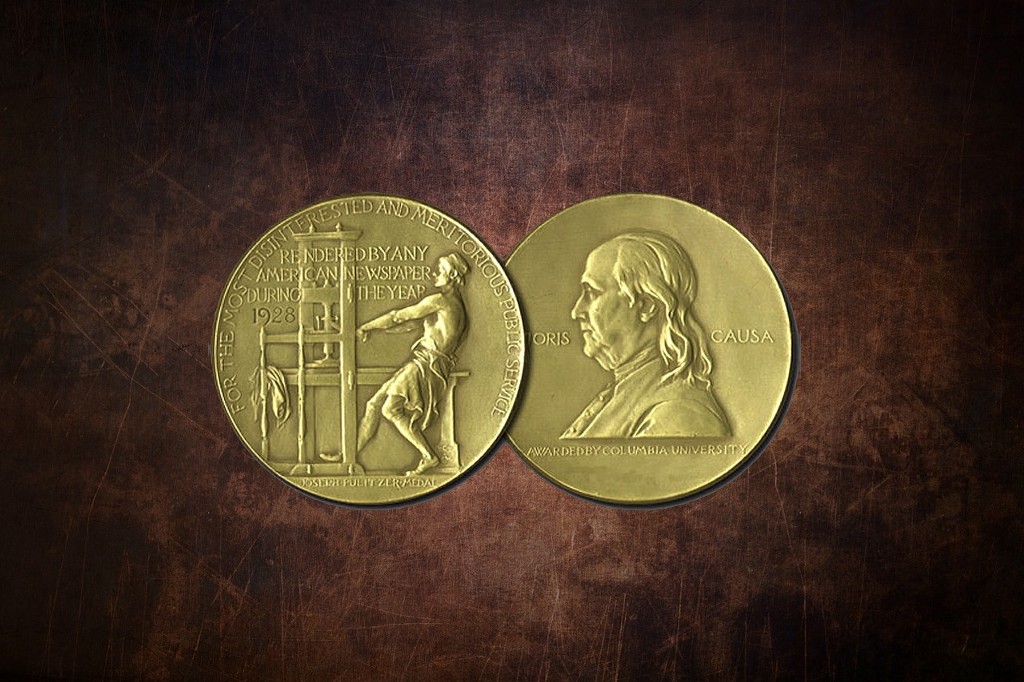
Díaz’s behavior matters because the Pulitzer Prize matters.

Even if the Pulitzer Board is comfortable dismissing Clemmons’ story, there are corroborations of Díaz’s verbally aggressive and dismissive behavior from other women. Though he now says he wishes he could take it back, Díaz himself acknowledged his poor behavior in the New York Times, saying, “I take responsibility for my past. That is the reason I made the decision to tell the truth of my rape and its damaging aftermath. This conversation is important and must continue. I am listening to and learning from women’s stories in this essential and overdue cultural movement. We must continue to teach all men about consent and boundaries.” So, unwanted advances aside, we’re left with a man who, by his own admission, has a dysfunctional relationship with women.

The fact is that Díaz’s behavior matters because the Pulitzer Prize matters. It’s hard for even the most talented authors to make a living from writing books, and winning prizes sells copies; as Emma Straub, author and co-owner of the Cobble Hill bookstore Books Are Magic, told Vulture at this year’s National Book Award, “Whoever wins, we’ll sell twice as many as we would have. Ten times as many.” Other money-making opportunities, such as teaching and speaking engagements, follow prizes, helping to make a writer’s career sustainable. Winning a major literary prize is a distinction that anyone, except maybe Bob Dylan, would treasure immensely. Given his behavior towards women, can we trust Díaz to fairly understand, access, and judge female writers’ work? If we can’t, we risk both overlooking worthy authors as well as the cultural cachet of the Pulitzer itself.

When Bad Men Define Good Art

The allegations against Díaz came during the initial unfolding of the #metoo movement and have mostly been discussed within a larger conversation we’re having about sexual assault and harassment, how to define them and how to deal with known perpetrators. Díaz’s own history as a victim of sexual assault and his talent as an author have also been considered. Yet the question of his appointment to the Pulitzer Board should be considered separately from any discussion of his work and how we might interact with his texts going forward—because his place on the board has the power to determine how we interact with other people’s texts, too. It comes down to a simple question that’s been hounding me ever since the news was announced: is it so much to ask that a public face and influential member of the Pulitzer Prize Board not be one who is unfriendly to women? American literature is exploding with great work; we’re not suffering from a lack of talent. Why not make the Chairman of the Board of one of our greatest literary honors a writer who hasn’t yelled “rape!” repeatedly in the face of their female dinner companion?

Is it so much to ask that a public face and influential member of the Pulitzer Prize Board not be one who is unfriendly to women?

The answer lies in a crisis that is greater than Junot Díaz and the Pulitzer Prize Board. America is stuck in a cult of personality. We mythologize people in positions of power, transforming regular employees into genius CEOs who can do no wrong, metamorphosing struggling actors into celebrities whose every movement and haircut captivates us. When I see this unsettling pattern of men being exposed for harassment, apologizing, and then continuing on with their careers, I know it comes from the story we’ve created about powerful men, one that imagines bad behavior is some kind of ancillary to talent. I’ve had bosses do and say things for which I would have been fired on the spot when I worked the cash register at a food store. We regularly hold people with the least power to much higher standards than those with the most. It’s not just men — female leaders are also so immune to punishment that they can do things like tank a company and walk away with 236 million dollars. In general, the more powerful your position, the harder people will work to convince themselves that you deserve it, and the harder they’ll work to make sure it’s never taken away.

But having been on the Pulitzer Prize board is not sufficient reason to deserve being on the Pulitzer Prize board. Nor is being a great writer sufficient reason to deserve control over whose writing is recognized. Junot Díaz may be a great writer, but a great writer is only entitled to write great books. He is not entitled to keep a position solely because he won it in the first place.

My Gender Is Nick Cave

My first memory of Nick Cave comes from the climactic scene of the Wim Wenders film Wings of Desire. In it, angels dwell in the skies over Berlin, witnessing the thoughts of the humans below. The angels live in a world of crisp monochromes, while the humans live out their brief, agonizing, joyful lives in color. The angels are uniform, symbolically sexless, and cloaked in identical trench coats. The humans represent all of life’s variety, from a suicidal man who jumps off a ledge to children thinking about milk.

In the story, the angel Damiel, tired of being an ever-compassionate watcher, falls in love with a trapeze artist. To be with her, he decides to become human. After he descends to earth, Damiel goes to meet his trapeze artist at a bar where Nick Cave & the Bad Seeds are playing.

Right away you realize this is not the angel-world anymore: nothing about it is still or cool-toned or lilting. Nick is sitting on a barstool in the middle of the smoky room, lit by hazy lights of orange and blue, brooding as he croons out a slow cacophony: and a murder of crows did circle round / first one, then the others flapping blackly down…

My reluctance to join the world of the humans was because I knew very well the price of admission. To be embodied meant to become gendered.

The angels can hear thoughts, and Damiel’s friend Cassiel is close by. When Nick’s done, he walks up to a mike to sing his last song, thinking, I’m not going to tell you about a girl I’m not going to tell you about a girl

And then, of course, he says: “I’m going to tell you about a girl.”

And he does: he tells a story about stalking the girl who lives in the apartment above his. It’s a story about obsession and about crying and throwing fits in his room: it’s a story about separation, but instead of watching the girl through a pane of sanctifying glass like an angel would, Nick feels her move above him, hears her crying, steals up like a thief and takes her diary. There is no calm, sad repose in this separation as the piano keeps percussing out violence, violence, violence. The story is called “From Her to Eternity.”

Meanwhile the angel-turned-human meets his lover at last, and they have an exquisitely tender moment at the bar as Nick, their shaman, thrashes and yells about his passion for the girl’s footsteps as they pace up and down the floorboards of his ceiling.

It was evening and my roommates weren’t home and I was sitting on the couch with my headphones on as the house darkened down to no light except the light from my laptop. I’d spent the summer watching movies for a research project on emotion in film. Previous to that, I’d spent my adolescence in a suburban tower of isolation; I was homeschooled and had no car, was awkward and agnostic and queer in endless, evangelical Christian suburbia. But I was beginning, after two years of college, to emerge.

Wings of Desire was the apex of that time. Shuttling through so many movies, taking stills, matching them to Paul Eckman’s “six universal emotions,” pondering questions like how narrative implication could be juxtaposed against facial neutrality, I felt I knew what it was to be an angel, to watch and love thousands of lives, to listen to their innermost thoughts.

I brought to the film an obsession with the androgyny of angel iconography and an interest in tracking the use of the angel symbol down through history. The idea of lofty, benevolent watchers appealed to me, but just as appealing was the idea of beautiful sexlessness. Part of my reluctance to join the world of the humans was because I knew very well what society would demand as the price of admission. To be embodied meant to become gendered.

The idea of lofty, benevolent watchers appealed to me, but just as appealing was the idea of beautiful sexlessness.

So needless to say, something in me thrashed along with Nick.

Something thrashed along with Damiel, newly a man.

In the end of the song, Nick decides, as he often does, that there’s nothing for it but to murder her.

“The girl will just have to go,” Nick sings. “Go. Go. Go. Go.”

In the big theater of living, society makes the sets and runs the casting calls: it dictates the boundaries of what’s possible. Most importantly, society typecasts us into roles based on sex, race, class, and appearance. We push back against those roles, we capitulate to them, or we use them to our advantage. If we want to actually be someone, to participate in the theater of living, to be more than a mere audience member or witness, we must negotiate with these typecasts one way or another.

There isn’t a single one among us, I believe, who has not in some precise and intentional way had to negotiate with the demands of gender.

In the years after I first saw Wings of Desire, in my early twenties, the role I found to play was startlingly similar to my life as a watcher. I learned that the lessons of angelhood applied well to learning how to become (as Simone de Beauvoir says) a woman — a fact acknowledged in the movie by the angel-like calm and detachment of Damiel’s beloved trapeze artist, who wears a winged costume as she swings above the circus crowd. The construct of gender I found easiest to assume rewarded aloofness, mysteriousness, remote benevolence. Like Damiel, I fell in love a few times, with men and women — but although I relate to Damiel, my experience was of being found by Damiel. People — men and women — liked to think of themselves as discovering me. They liked to tell me how they watched me at first, scattered and wildly absentminded, listening to music as I walked to class or reading on the campus lawn or spaced-out in the middle of a dorm room party, and wondered what I was thinking about.

The construct of gender I found easiest to assume rewarded aloofness, mysteriousness, remote benevolence.

There are other ways of being a woman, but this was the one that came most naturally to someone with my temperament, my socialization, my history. And this woman-self was not a false self. It was a persona, and like all personas, it both revealed and restricted. Deep down I was a much more tumultuous person than I appeared, and I longed to act on the world, not just watch the action happen, or be acted upon. Particularly when it came to desire, which I felt in mortifying, unruly, damning surges, and was constantly repressing to maintain the persona. I tried to be the desirer a few times, to initiate desire, but the minute I tried to seize the spotlight on the stage of living with my thoughts and feelings, I was ignored. People simply preferred to imply them. I found, as much as women are allowed to have feelings, they aren’t allowed to have the sort of feelings that ricochet through an entire bar, or an entire movie, like loose bullet fire. The way Nick Cave’s do.

How can I convey to you, if you haven’t seen it, what it is like to watch this movie — with its gentle, cantatory atmosphere — explode into Nick Cave? Watch it. See how jarring it is to see that gangly, almost-grotesque figure, this thundercloud of a person, in contrast to the movie: the exact opposite of compassionate, the exact opposite of a watcher, the exact opposite of heavenly. Brutal, performative, daemonic.

A number of years after seeing Wings of Desire, throughout my mid-twenties, I found a community of sympathetic people, gays and straights both (no one cared) who thought gender should be razed. We threw decadent, safe, warm house parties where crossdressing was the norm. “The place where sexual orientation goes to die,” one person christened these parties. This is living, really living, I thought, and developed a mania for throwing parties not only to make up for lost time in the suburban tower, but because it felt as close as I would get to setting the stage of life myself. Through a well-chosen theme and liberal intoxication, you could experiment with various modes of self-expression, and see others self-express. You could broaden your theatrical range, so to speak.

We threw bacchanals (I was Ariadne), masquerades (I was Puck), a starship party (I was a space elf), New Years’ affairs (I was a magician in a top hat). I flipped gender every time. I widened my repertoire of femininity from what came most naturally to me, the angel-like watcher, to maenads and femmes fatales. And I explored male personas, too — sprightly, boyish tricksters, for the most part, androgynous and agile, within grabbing distance from the vantage of my femme typecast. Once we decided to throw a party themed Angels & Demons.

The theme was one of our best: it proved to be so popular that a friend overheard people across the city talking about it at some college coffee shop. We planned out the house: the indoors would be Inferno and decorated with idols and gold bandoleers and The Garden of Earthly Delights; there would be a sequestered room for chilling out and smoking with big pillows and a hookah, called Purgatorio; and the backyard, garlanded with fairy lights, would be Paradiso. Thrilled with the cosmology of the layout, I set to the matter of my costume.

The first question was: angel or demon? I’d done a few angelic costumes, sort of elegant little cherubic pageboys, which I’d been pleased with, but I wanted to be a demon this time. I was torn between two Stars of the Morning: I loved the idea of being the pagan-goddess-gone-demon Inanna, the rash Queen of Heaven who descends down into the underworld. But the more I thought about it the more I wanted to try for a Lucifer. Like Nick Cave, I was a Milton fan, and I listened to “Red Right Hand” as I made sketches, pondering it over.

Even within my genderfucked parties, I had begun to notice that presentation mattered. When the more androgynous people crossdressed, the girls with butch haircuts or the boys with trim waists, they were more lauded. You had to pull it off. A cherubic pageboy was one thing. Lucifer was serious business.

I took the silver-brocade vest I was thinking about using and dressed up in it and assessed myself in front of the mirror. When I compared this girl to the images of Lucifer I had in my head, images from William Blake’s illustrations and statues by Joseph Geefs and Ricardo Bellver, I looked to myself pathetically small and slight and blonde and bookish. I thought about sleek black velvet pants, a playfully disdainful expression, about going glam-rock with it all so that my very femme features would fit a little better. I thought about standing in the middle of the party, ranting about the theological problem of evil, declaring (Milton sounded so delicious in my head) the mind is its own place and can make a heaven of hell and a hell of heaven.

But I couldn’t picture it at all. I simply could not impose any of my ideas on the girl-frame of my body.

I simply could not impose any of my ideas on the girl-frame of my body.

I asked a friend about it. “Of course you can be Lucifer,” she said, as though it were obvious. “You can do anything if you rock it.”

I did not think I could rock it. I did not even know how to picture it. Cherubic pageboy was in my repertoire, was close enough to femme to fit my typecast, but not demon prince.

I dressed up as Inanna, in a long purple skirt and mesh bodysuit and headdress, not too far from the dark-haired lunar women Nick sings about so often, and my most feminine costume in a long time. People told me they loved it.

Any passing acquaintance with Nick Cave’s work will suffice to paint a picture of his particular, idiosyncratic performance of masculinity. He’s not a subtle person. He is the sort of person who stands up in front of crowds and proclaims himself, over and over, to be the Black Crow King, to be the bad motherfucker named Stagger Lee, to be weak with evil and broken by the world. But I will provide a Nick Cave that is meaningful to me.

He’s in a bar. He’s in from stumbling around some biblical wilderness where the horizon is burning. There’s the piquant aroma of tobacco, of desert climes, mixed with stale booze and starching powder. He’s dressed in a black suit with hemlines that have the perfect clip of a good tailor but are frayed at the edges. Depending on where he is on his long gradient of “about to be dumped” or “dumped” — “The Ship Song” to “Lament” to “Brother, My Cup is Empty” — he’s either tipsy and depressed or drunk and raving about those lunar woman to some poor barfly seated next to him who can’t get a word in edgewise: Nick is just too intense, too much bigger than life, too sad and longing and vicious. He alludes to a crime of some sort: he’s committed fratricide (“The Good Son”) or abandoned his child (“Papa Won’t Leave You, Henry”) or stabbed someone at a wedding (“John Finn’s Wife”) or, well, god knows what, I mean Nick is a good Byronic hero and actually rarely gets specific about the crimes he commits, it’s just an excuse for him to act like a maniac with an infernal destiny (“The Hammer Song,” “Your Funeral, My Trial,” etc.). I love this sense of fatalism he has. I relate to it. And I admire the possessed-bull way he bucks against it, even when it’s melodramatic, even when it’s dysfunctional, even when it falls into the male clichés of violence-as-agency, violence-as-desire. I am the captain of my pain, he spits — one of his most satisfying lines to sing alone at night, when you’re on a binge.

Later in the night, when the poor barfly has finally escaped and they’re about to kick him out, he’s just fucking sad and bent over a piano and bawling. The thing about Nick Cave is that he is always, always harping on about love — “love, love, love, that’s all I sing about,” he says in one interview, self-disgusted. The poignancy here, the vulnerability, would weaken his masculine posturing if there weren’t so much power in the expression of vulnerability itself, and to see such a powerful figure so debased and pleading. I don’t believe in an interventionist god, he tells the woman in “Into My Arms,” but I believe in love. In truth, he’s a fatalist about love as he is about everything else. But he finds his most transcendent moments as an artist in his pure, fatalistic expression of love.

The vulnerability would weaken his masculine posturing if there weren’t so much power in the expression of vulnerability itself.

And that’s the crux of it. He may sing as a cursed man, but in the singing, he finds his art.

As eccentric as it is, Nick Cave fits this role. What I mean is, he looks the part. He is tall, long-limbed, strange looking: his black-dyed hair is the only physical artifice he needs to fit the persona he has crafted because his voice, too, is such a dark black hole of a baritone. And of course he is straight. The reason he can say all of these wonderfully and magisterially bombastic things is because he was born, in the physical sense, in the embodied sense, to sing them.

Now, let’s dispense with a brief picture of myself.

In that suburban tower of isolation, surrounded by cloned houses for miles, my only social access dominated by evangelical Christians, I revolted against all of the expectations upon me: the expectation that I should believe in one god, the expectation of heteronormativity, the expectation that I should do as I was told. “I’m not a Christian,” I told my parents, in a fit of temper: I was an impetuous kid, obsessive and intense, and I remember the joy I felt in that declaration, the aftershocks in my poor parents’ heartbroken expressions, the feeling of having done something fucking momentous.

But dispensing with these expectations left me with no options. I was a teenager. I had no resources and no agency of my own, and, in my state of revolt, I had no idea how to act. The society I was in had no scripts for it. So I retreated into the usual routes of escape: books and movies and music, which became more real than real. I devoted myself, like some pillar of passivity, to the lives I saw unfold in art.

When I finally found my script and accepted the demands of gender, I learned that there is a potent agency to be found in expressing yourself as fully as you can even within a confined, feminine role — you can interpret the role, you can subvert it, and given time and the patience to learn a part, you can even assume new ones. It isn’t the same sort of something momentous as upending all the unjust laws of a patriarchal god, but at least you aren’t thrown into the formless void at the end. At least you can act.

There is more to me, though. Just like there is more to all of us. And as much meaning as I’ve found in the story I’ve created, it will never quite be enough to satisfy that part of me that sits in the dark with headphones on and mouths along when Nick sings, I am the fiend hid in her skirt / and it’s as hot as hell in here.

Nick Cave has given a couple of notable answers to the question of Nick, what is it with you and women. And, Nick, what is behind the mystery of your posturing (that is, what is behind all of the decadent, violent masculinity that is not so much “toxic” as “quite nearly radioactive”). One disappointed me. “I’m not a misogynist, so you can dispense with that,” he snapped at an interviewer in 2012, during the Push the Sky Away days, when asked if he was a feminist. He declared that “as far as I’m concerned I’m actually standing up and having a look at what goes in in the minds of men, and I have the authority to talk about it because I’m a man.” He goes on to say that his work is character-driven, and further to say that the characters are “talking about the way men and women are.” So, fair enough: your standard outlet-for-masculinity essentialist claptrap.

That disappointment was tempered later by another interview. Discussing the enduring appeal of his work to women, he says even the “most forceful sexually,” is actually “riddled with anxiety.” And then, remarkably given his previous answer: “If my songs came off as just a male thing, I wouldn’t have any interest in it whatsoever.”

What a curious thing for the Black Crow King to say: that all of his songs, his songs which are full of “male things,” open up some door to universality.

I don’t know how other people who are observed to be female by society relate to Nick Cave’s work, but I do know that at the beginning of a crush on a woman who I only knew in routine passing, the first words that came to mind were from “From Her to Eternity”: You know she lives in room twenty-nine. She worked on the same floor as me, in the bland beige blur of a skyscraper’s hallways; I saw her in passing as we crossed paths in the halls. She edited my work and we didn’t interact otherwise. Like the song, she was melancholic, she seemed agonized for some reason she couldn’t express, and I was made insane by it.

The intensity of it was impossible for me to contain within myself and there were no outlets for it, none, that did not make me feel weird or creepy. Eye contact while passing by her felt humiliating. As though I were wafting some kind of pestilence. I have never felt comfortable with the way I felt desire, even beyond bisexuality, and the gratuitous voyeurism of this crazymaking crush symbolized why. More than desiring the wrong sex, I felt that I desired the wrong way. Something sort of morbid lurked in the holding-fast of my fixation. I found it difficult to justify the depth of the crush. So I did nothing.

More than desiring the wrong sex, I felt that I desired the wrong way.

Much analysis given to the idea that men are not allowed to freely express their emotions, and I feel this is absolutely and damningly true. But artistically, men’s emotions are given much more gravitas than women’s. Female intensity is something different. For instance, in my favorite Nick Cave cover, Chelsea Wolfe’s version of “I Let Love In,” deep-sea currents of distortion make the song more of drowning woman’s lament than the prisoner’s anthem of the original. Even my beloved PJ Harvey — who, I must tell you now, I love every bit as much as Nick Cave, and who is his equal as an artist — can’t express desire in the same reliably straightforward way. The closest I’ve seen to his claustrophobic intensity is in her “Dancer,” but even then, she’s not singing to the person she desires. She’s singing to the fates to bring him back. She still has to beg to be heard.

You would think, since he fits his own typecast so well, that Nick Cave would be full of confidence. But here is what I love about him most. As much power as he is able to thunder down, Nick Cave’s masculine persona ruptures at the points of its most glorious and intense expression. It’s cracked through. The anxiety seeps out of the easy rhymes, the dark and deep voice darkened and deepened further into the paradox of self-caricature and self-seriousness, and is undercut by the lyrics, which always double down on themselves. The mind-breaking wordplay and paradoxical lies in “The Mercy Seat” is the genius example, but it can be found elsewhere, and in explicitly “queer” ways. “The Curse of Milhaven,” for instance, is one of his longest epics, in which our hero goes on and on about the serial rampages of a 15-year-old girl. It’s probably best suited to fans, but I promise you, as a fan, there is nothing quite like hearing Nick — not making one facsimile of an attempt to make his masculine voice less masculine — sing if you think you’ve seen a pair of eyes more green, well you sure haven’t seen ’em around here. The song has more deaths per capita than any other Nick Cave ballad. There is “Henry Lee,” one of his finest songs, where the narrator and his “lilywhite hands” are chucked into a deep well for jilting PJ Harvey. There’s the glorious line in “Stagger Lee” that goes I’m a bad motherfucker, don’t you know? / I’ll crawl over fifty good pussies just to get one fat boy’s asshole: the whole song a postmodern breakdown of toxic masculine one-upsmanship that ends with homoeroticism. And the last, my favorite, are a few stage performances of “Where the Wild Roses” grow where guitarist Blixa Bargeld sings the part of Eliza, and Nick kisses him ardently in the end.

The mask on Nick Cave, the masculine mask, is invisible, but he is deliberately putting it on in every song. The mask causes an anxiety: it’s a show. They (the audience) know it’s a show. How do you convince them of the show? Because no matter how well-suited you look to the role, even if you’re born six foot two and dye your hair black and look like the devil’s scarecrow, the mask of the persona is still a mask.

No matter how well-suited you look to the role, the mask of the persona is still a mask.

Here’s the thing about the mask: the persona watches itself. It’s a different angle from the lofty and compassionate observer, the audience: it’s a narrower view, through the corridor of the mask’s eyeholes. Within that tunnel-vision, the persona feels the weight of the mask resting against the face. The persona knows a mask is a mask.

But the mask gives you a role to play upon the stage, a story to make your own, and, if you’re lucky, the means by which to make a real, beating human life, a story, out of what you’ve been given.

And if the life you’ve been given isn’t enough to express your whole self — well, there is always art.

I was driving into the city at midnight. I was cresting up a highway and staring straight at a supermoon hung full and low in a sulphuric haze among the dim stars. I was listening to “Do You Love Me?” and singing along, as I do when I listen to Nick Cave alone. “I found her on a night of fire and noise,” I sang, and as I did I suddenly caught a snatch of what my voice sounded like: thin and high and airy, absurd against the absurdly gothic, pompous lyrics. For a moment I shut up, silenced by the notion of what it must sound like to someone listening.

But no one was listening. As the song swelled on, I couldn’t resist singing more.

When the chorus kicked in — all of the Bad Seeds singing “do you love me?” with Nick echoing the line — I sang it. And when I listened again, this time not listening as someone else but as myself, to the voice as I hear it in the darkening chambers of my mind, Nick’s baritone overlaid my words and gave them resonance and fire.