Throw Off Your Saints and Come Ride With Me

Billy Graham Elegy

Nobody much mentions the floor of the Sistine Chapel
that’s touched so many more than the docents or the ceiling
or the premonitions on the wall. Come papal loafer
and heathen sneaker, come Ked and Ecco mingling dog
shit off the viale e strada on this scuffed stone nobody
mentions much while the tourist kids keep calling it
the Sixteen Chapel as if it’s one middling outlet
in a protracted franchise, which it must be, which must be
why the Lord doesn’t appear here much more than elsewhere,
retired as he must be to Ostia as is custom among Romans,
and after all one can’t be messiah forever. Eventually,
the ball club needs a fresh message, a fresher messenger,
a fella in a silk suit maybe, maybe a Carolina drawl,
another mother appointed Head of the Pietà,
but I don’t think much of home among the Alfa
Romeos of the military police here where I’m unafraid
anyone will shoot me, and Rome feels comprehensible
for once, I know how to say, Vorrei due coronetti,
or, Mia moglie é incinta, or, Dove il Bancomat?
Ho troppo moneta for once in my life so the cab drivers
of evening say, Your Italian is so good, where are you from?
but the cab drivers of morning say, Your Italian is so bad,
di dove sei?
and I don’t tell either I’m from the outcome,
a new world and last result, that all this artistry ends
in half a nation mourning a holy mogul in a circus tent,
and mercifully nobody there comes back from the dead.

Station

On a sunny day, you understand why people say, “If Heaven isn’t what it’s cracked up to be, send me back to Gimmelwald.”

— Rick Steves, “Switzerland’s Jungfrau Region: Best of the Alps,” Rick Steves’ Europe

Send me back, Heaven, send me back
to alphorn, wiener, unknowing,
and schnitzel. Send me back
to dopplebock, uncertainty,
the mountains, and the Mountain
Hostel. I miss the rumpled earth.
I miss the 90s. Send me back,
send me back to Gimmelwald,
to my pack and flask, my abandon,
map, and Eurail pass, to sweating
the too little left in my earthly
accounts and the sky blue
box of Camels I smoked
unrepentant on a sunny day
awaiting a train to Interlaken
to Prague to a profound lust
or a petty love maybe and flaming
absinthes in the lung-cut
of Slavic winter. Un-punch
my loyalty card and, Heaven,
release me from the quid pro quo
of devotion, my humility exchanged
for your cache of dead pets and relatives
chitchatting at an unrelenting buffet,
my chastity for your answer key,
and expel me into the dizzy of morning,
1999, the fidget of waiting for a train,
what wonders in the goddamned
Gimmelwald of my good brain.

About the Author

Jaswinder Bolina’s new collection of poems The 44th of July is forthcoming from Omnidawn on April 1, 2019. He is author of two previous books, Phantom Camera (2013) and Carrier Wave (2007), and of the digital chapbook The Tallest Building in America (2014). He teaches on the faculty of the MFA Program in Creative Writing at the University of Miami.

“Billy Graham Elegy” and “Station” are published here by permission of the author, Jaswinder Bolina. Copyright © Jaswinder Bolina 2018. All rights reserved.

The 2018 National Book Awards Were Full of Firsts—But Also Seconds and Thirds

One would hope that, at this point in human history, most of the obvious firsts would be behind us. Yet in the States and abroad we continue to witness (and celebrate) necessary firsts made day after day: the youngest woman to join Congress (Alexandria Ocasio-Cortez), the first Native women to win seats in Congress (Sharice Davids & Deb Haaland), the first Black woman to receive an honorary Oscar (Cicely Tyson), the first transgender woman to write and direct an episode for television (Janet Mock), the first Black woman CEO of a Fortune 500 company (Ursula Burns), the first Black person to win an Emmy for writing (Lena Waithe). And so it goes.

This year’s National Book Awards also had a night of firsts: the introduction of the translated literature category honoring both translated writer and translator; Isabel Allende as the first Spanish-language writer to be recognized for Distinguished Contribution to American Letters; Sigrid Nunez the first woman of Latinx descent to win for fiction, and a sweep of PoC winners including: Elizabeth Acevedo (young people’s literature), Yoko Tawada and Margaret Mitsutani (translated literature), Justin Phillip Reed (poetry), Jeffrey C. Stewart (nonfiction), and Sigrid Nunez (fiction). The firsts have continued for the National Book Foundation, and by extension their awards, with the arrival of the first woman of color executive director, Lisa Lucas. Last year saw firsts as well: the first time that four of the five finalists for fiction were women (and women of color at that). Ultimately Jesmyn Ward would take her second award in this category (another first for a woman of color).

Jesmyn Ward’s Story of Rejection and Perseverance is Familiar to Black Writers

When someone crosses the threshold to become “the first,” or when a moment is captured as “the first,” there can be the overzealous headlines proclaiming this a “win for diversity.” As if this first reflects the steady dispelling of seemingly “old” thought and abandoned oppression. This time next year, given a new circumstance, a new slot of art, a new group of gatekeepers, we may see a shift that “seems” to go backward rather than forward after experiencing such a “first.” This is why the firsts are important to recognize but so are the seconds, thirds, and so on. Each moment is etched in our minds. When we recognize this as being not one of the only, but one of many, it may not be termed so much a universal “win” as much as a step in a direction that further acknowledges the accomplishments of those who “happen to be marginalized” without erasing their identities nor centering it as the sole reason for their success.

When we recognize this as being not one of the only, but one of many, it may not be termed so much a universal “win” as much as a step in a direction.

As we see progress we also celebrate the Stephanie Wilsons and Joan Higginbothams, not the first Black women to travel to space yet part of a history of few recorded to do so. We mark the Colson Whiteheads — the fourth Black person to win a Pulitzer in fiction —and politicians like Senegal Prime Minister Mame Madior and former president of the Philippines Gloria Macapagal Arroyo. After this year’s winners and this year’s firsts, who will come after? Who will be the next or achieve their own first in the art world and outside it? Who will be next not to create the path but to extend it? If this year’s National Book Awards are any example, we’ll be witnesses to more firsts, to more writers extending a hand and showing the world and those who look like them, identify with them, were held by their work, that they’re following greatness by being just who they are.

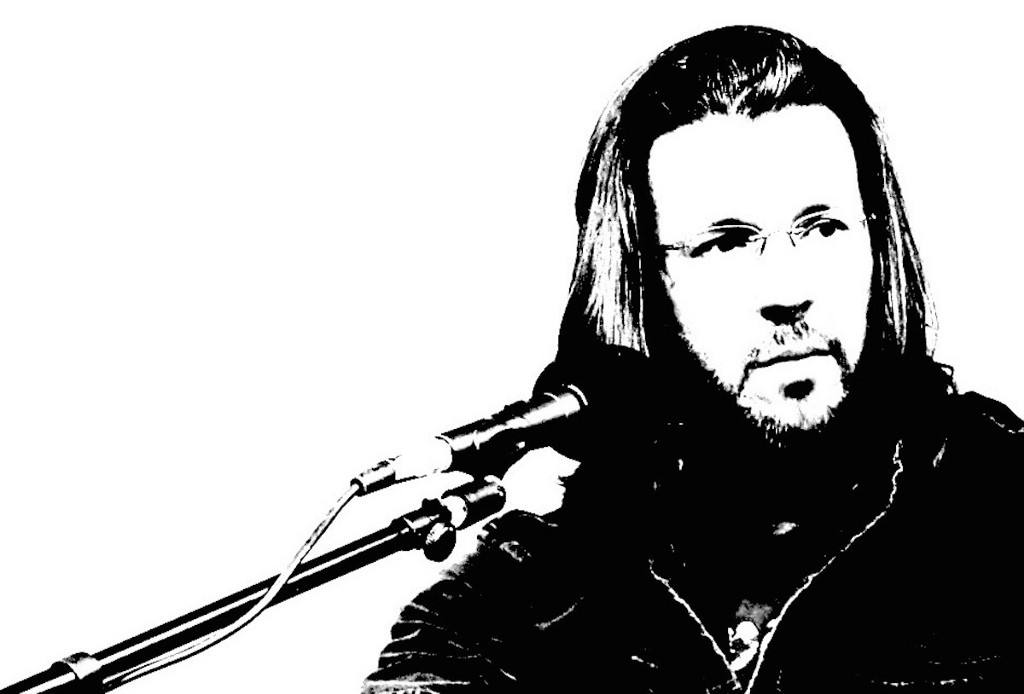
A Brand New Interview with David Foster Wallace

Eighteen years ago, writer and translator Eduardo Lago sat down with David Foster Wallace for a discussion that ranged from pedagogy to tennis to the influence of the internet on literature. The interview remained unpublished until Lago, an award-winning Spanish novelist, critic, and translator who teaches at Sarah Lawrence College, included it in his new book Walt Whitman ya no vive aquí, ten years after Wallace’s death. It has never been published before in English. The conversation has been lightly edited for readability.


Eduardo Lago: I know you’re not teaching right now, but can you talk a little bit about the reading lists of your courses?

David Foster Wallace: Most of what I teach is writing classes where we’re concentrating more on the student’s own writing. When I teach literature classes, I’ve taught everything from freshman literature, where the department will buy an anthology and I will teach them John Updike’s “A & P,” and John Cheever’s “The Five-Forty-Eight,” and Ursula le Guin’s “The Ones Who Walked Away From Omelas,” “The Lottery” by Shirley Jackson, a lot of very what I consider to be very standard stories that are in all the anthologies. I’ve tried teaching more ambitious or strange or difficult fiction, but with freshmen and sophomores their preparation isn’t very good and it doesn’t work well. Graduate literature courses are usually themed courses, so what the reading lists are depends a certain amount on how I design the course, as I’m sure you know. I’ve taught a fair amount of Cormac McCarthy, who’s a writer I admire a great deal, and Don DeLillo and William Gaddis. I’ve taught quite a bit of William Gass, but usually his earlier books, and I teach poetry … I’m not a professional poet but I’m an avid reader of poetry, so I teach most of the contemporary poetry that’s available in book form.

EL: Do you consider yourself an accessible writer, and do you know what kind of people read your books?

DFW: That’s a very good question. I think the sort of work I do falls into an area of American fiction that, yes, that is accessible, but that is designed for people who really like to read and understand reading to be a discipline and to require a certain amount of work. As I’m sure you know, most of the money in American publishing gets made in books — some of which I think are very good — that don’t require much work. They’re almost more like motion pictures, and people read them on airplanes and at beaches. I don’t do stuff like that. But of the American writers I know who do some of the more demanding fiction, I think I’m one of the more accessible ones, simply because when I’m working, I’m trying to make it as simple as possible rather than trying to make it as complicated as possible. There’s some fiction that’s very good that I think is trying to be difficult by putting the reader through certain sorts of exercises. I’m not one of those, so within the camp people usually talk about me being one of the more accessible ones, but that camp itself is not regarded as very accessible and I think it tends to be read by people who have had quite a bit of education or a native love of books and for whom reading is important as an activity and not just something to do to pass the time or entertain themselves.

I think I’m one of the more accessible ones simply because I’m trying to make it as simple as possible rather than trying to make it as complicated as possible.

EL: I’ve read in a number of places that you intended Infinite Jest to be a sad book. Can you talk specifically about that aspect of the novel and what else were you intending to do when you started writing it?

DFW: I think what I meant by that was that there are some facts about American culture, particularly for younger people, that seem to me to be far clearer to people who live in Europe than to Americans themselves, which is that in many ways America is a wonderful place to live from a material standpoint, and its economy is very strong and there’s a great deal of material plenty, and yet — let’s see, when I started that book I was about 30, sort of upper middle class, white, had never suffered discrimination or any poverty that I myself had not caused, and most of my friends were the same way, and yet there was a sadness and a disconnection or alienation among I would say people under 40 or 45 in this country, that — and this is probably a cliche — you could say dates from Watergate, or from Vietnam or any number of causes. The book itself is attempting to talk about the phenomenon of addiction, whether it’s addiction to narcotics or whether it’s addiction in its original meaning in English which has to do with devotion, almost a religious devotion, and trying to understand a kind of innate capitalist sadness in terms of the phenomenon of addiction and what addiction means. Usually I would tell people I meant to do it a sad book because when I did a lot of interviews about Infinite Jest all people would seem to want to talk about was that the book was very funny and they wanted to know why the book was so funny and how it was supposed to be so funny, and I was honestly puzzled and disappointed because I had seen it as a very sad book, and that was my attempt to explain to you the sadness that I’m talking about.

EL: How would you define your literary generation?

DFW: Boy.

EL: If you believe in that.

DFW: Can you explain the question a little bit, say who are the writers of the generation?

EL: Perhaps I mean that you belong in a certain age group that has inherited a literary tradition that you are trying to transform somehow. In other words, what are young American writers today like yourself — in a certain type of fiction because there are many different approaches to literature — doing. Do you think you belong in a group where your original work plays a role, or something like that?

DFW: Well, I don’t know. See, when people would ask me that question before it was because I was very young and I was in the youngest generation, and I think there’s probably a whole new generation now. A generation in American fiction is probably every five or seven years. Usually when people talk to me about my work, the other younger writers they lump it in with are William T. Vollman and Richard Powers, Joanna Scott, A. M. Homes, Jonathan Franzen, Mark Leyner. Those are all — I think Powers and Scott are in their early 40s, I’m 38, I think it’s all sort of writers now in their later 30s and early 40s and I think we all started publishing books at about the same time. And that group of younger writers, as I’m sure you know, we’re only a small percentage of the younger writers who are out there. There are plenty of active, productive young writers who do what I think is called Realism with a capital R: the sort of traditional, third person limited omniscient, central character, central conflict, classically structured kind of fiction. I know a couple of the other writers I get lumped in with, whom I just mentioned to you, and if there seems to be something in common, it seems to be that we all, particularly in college, were exposed to a great deal of first of all literary theory and continental theory, and second of all, classic American postmodern fiction, which means Nabokov and DeLillo and Pynchon and Barth and Gaddis and Gass and all these guys. And both of those exposures, it seems, make it constitutionally more difficult to do traditional stuff, because some of the best classic postmodern fiction really, at least for me, exploded or destroyed the credibility of a lot of the sort of conventions and devices that classic realism uses. Nevertheless, I think that what gets called classic American postmodernism — which would be, you know, metafiction or really high surrealistic fiction — has a very limited utility. Its essential task appears to me to be to be destructive — to clear away, to explode a lot of hypocrisies and conventions — but it gets rather tiresome rather quickly. Now that’s being kind of general. I myself personally find John Barth’s first few books interesting and then it seems to me that all he’s done since is work out certain techniques and certain obsessions over and over and over and over and over and over again. I don’t think any of the writers that I’ve mentioned, myself included, are comfortable with the idea of simply doing more of that kind of fiction. On the other hand we’ve all been influenced by it a great deal and I think for a whole lot of different reasons don’t see and understand the world in the way that classic realist fiction tries to capture or mirror.

I think that what gets called classic American postmodernism  has a very limited utility.

So I think what I’m trying to say, in a long-winded way, is [that] probably the group I get lumped in with has been heavily influenced by American postmodernism, and of course by European postmodernism too — I mean Calvino — or Latin American writers like Borges and Marquez and Puig. But nevertheless we are also uncomfortable with some of the self-consciousness, and for me in particular some of the intellectualism, of standard postmodernism, and are interested in trying to do fiction that doesn’t seem to be formulaic or “traditional” but nevertheless has an emotional quality to it; is not meant simply to be about language or certain cognitive paradoxes, but is supposed to be about the human experience, what it is to be particularly an American and yet not be a John Updike or John Cheever traditional story.

EL: Just for a brief answer, why does tennis occupy such a space in your writings?

DFW: The biggest reason isn’t very interesting at all: It’s the one sport that I in particular know about. I grew up playing competitive tennis and just know a great deal more about it and follow it more avidly than any other sport. I think aside from one or two essays and Infinite Jest I don’t know that I’ve written anything else about tennis. There are reasons why so much of Infinite Jest has to do with tennis but those aren’t really autobiographical, it just has to do with the structure of the book.

EL: And how is that?

DFW: [groans] I set myself up for that one, didn’t I. You know, a very simple answer would have to do with the idea of constant movement but within a rigidly defined set of constraints and also with the idea of two and twoness and things moving back and forth between two sides in such a way that a pattern is created.

EL: What is the relationship between television and fiction, and have things changed much in the years following the publication of your essay?

DFW: That essay was actually written in 1990 and it didn’t come out until 1993. To be perfectly honest with you, I haven’t owned a television now for probably ten years. I sometimes watch television at friends’ houses and I just don’t know that much about American television anymore. I know that the purpose of that essay was largely to articulate some of the concerns and agendas of myself and some of the other younger American writers I mentioned to you. I don’t know that I could sum up the relationship between television and fiction now in the year 2000 in one or two sentences. I think the interesting answer is that serious literary fiction in America is in a very complicated love-hate relationship and dialogue with commercial entertainment in this culture, which probably is of no surprise to Europeans. It’s not just economic, it’s also aesthetic, and it also has to do with us both trying to produce things and sometimes entertain people but also to be ourselves, a generation who grew up watching television and understanding ourselves as part of an audience. So except from saying that I’m sure they’re still probably fairly closely connected — although now there’s such an explosion in internet technology and the idea of “interactive entertainment” that the relationship is probably vastly more complicated now than it was ten years ago when I wrote that piece.

The internet is almost the perfect distillation of the American capitalist ethos, a flood of seductive choices with no really effective engines for choosing.

EL: That was going to be my next question: how do you think the internet is affecting the art of fiction?

DFW: I think that’s a terrific question. Most of the journalism I read in America right now is interested in how the internet is going to affect the business of publishing. I personally think that the internet represents simply an enormous flood of available information and entertainment and sensations with very little assistance to the consumer in terms of choosing, finding, discerning between those choices and this sort of rabid, capitalist fervor with which the internet is being not just developed but invested in. I don’t have to tell you about the .com stock market explosion and all that. It seems to me, as just a layman and an amateur, that the internet is almost the perfect distillation of the American capitalist ethos, a flood of seductive choices. It’s completely laissez-faire, with no really effective engines for choosing or searching and everybody being much more interested in the economic and material aspects of it than some of the aesthetic and ethical and moral and political questions attached to it. I can’t think of a better summing up of what America’s strengths and weaknesses are right now, and I’m sure that there are writers who are interested in in the internet as a tool in fiction. As far as I can think it’s really only Richard Powers in Galatea 2.2 and he’s got a new book out called Plowing the Dark, which is partially about virtual reality. Powers, who is himself kind of a cyber-scientist, is really the only one who I think found really effective ways to use the web and the internet as an as an actual tool in fiction. I think most of the rest of us are kind of just standing around with our mouths open, amazed that everybody’s so excited about a phenomenon that really is nothing more than an exaggeration of what we’ve had up ’til now.

EL: Do you find any significant parallels between your aesthetics as a writer and the aesthetics of David Lynch as a filmmaker?

DFW: That’s a really good question. I don’t know. I did an article about David Lynch during which I discovered for myself some stuff about him. I think I pretty much decided he was almost a classical expressionist. I think Lynch and art movies in general are working off an almost classically surrealist aesthetic whereby they are going much more sort of by dream associations and literally unconscious stuff than for instance I would be. I think modern postmodern or avant garde fiction or whatever is quite a bit more deliberate and self conscious and claustrophobic than modern American art film. I do know that watching Lynch at his best is exciting for me both as somebody who loves movies and as a writer. I think he’s probably a Great Artist in the capital-G capital-A way. I don’t know that I understand either his or my own aesthetic enough to know. Blue Velvet, that was his big movie for me, came out in grad school and I know there’s a part of that article that talks about how it affected us but I think that it was more about the emotional effect than the aesthetic effect.

EL: Do you consider Infinite Jest your best book?

DFW: I don’t think in terms of best and worst.

EL: Are you working on a novel right now or do you intend to do so in the more or less near future?

DFW: You would have to explain what you mean by “work on.” I tend to work on several things at the same time and most of them fail at some point. I don’t know what the next thing I finish will be.

EL: The direction of my question was if your readers can expect a big book like Infinite Jest, big in all the meanings of the word.

DFW: It is a superstition with me that I do not talk about work that is not finished yet.

I tend to work on several things at the same time and most of them fail at some point. I don’t know what the next thing I finish will be.

EL: Very good. I’m fascinated by your use of footnotes in Infinite Jest and other books. On the one hand one could see them perhaps as a trademark of “academic writing”; on the other, it is a highly original form of innovation a way of restructuring plots, a fragmentary form of storytelling. Do you have a poetics of the footnote, and what would that poetics be like?

DFW: Not really. I started using them for Infinite Jest as a way to create one more sense of doubleness. One of the things that seems to me to be artificial about most fiction is that it pretends as if experience and thought and perception are linear and singular and that we’re thinking and feeling only one way at a certain point in time. You know, some of that is the constraint of the page, and I think to an extent the footnotes are to suggest at least a kind of doubling that I think is a little more realistic. I should point out though that Manuel Puig’s Kiss of the Spider Woman is just one example I can think of [that also uses footnotes], I believe John Updike’s A Month of Sundays as well. I certainly did not invent this. I leaned on it very heavily in Infinite Jest and I think got in a sort of habit of thinking and writing that caused me to lean on it some more. The last couple things I’ve done don’t have any footnotes in them. They’re certainly not a trademark, at least I hope they’re not. I think they just sort of became a compulsion for a little while.

EL: Another very interesting aspect of your work is the use of fictional interviews in Brief Interviews with Hideous Men. Can you talk about the genesis of that idea?

DFW: Oh boy. There was a great deal of the first draft of Infinite Jest that took place in interviews and I think most of that got cut out. I think I like the idea of interviews because I like the idea of a transcript; it reduces everything to voice in a plausible way. There’s some fictions that just have voices talking to you but that always seems kind of mannered to me. This is a plausibly realistic way to represent nothing but somebody speaking and allowing the reader to know and feel about that character entirely through her voice. In a book of short stories that just came out, it’s a little different, because you get only one side of the interview and so one of the things the answers are doing is, hopefully, helping the reader to guess what the questions were and over time to develop an idea of the character and ideology of the of the interrogator, of the questioner. So I don’t know that I have an aesthetic of it; I find it an interesting style. It’s also not one that I invented. I know DeLillo has written at least a couple of short stories that consist entirely of interviews or transcripts, you know, Browning’s “My Last Duchess,” any sort of dramatic monologue has the implication of a sort of conversation of which you’re only hearing part or one side.

EL: I have not not been able to read Signifying Rappers: Rap and Race in the Urban Present which I understand you co-wrote with Mark Costello. Could you talk briefly about that book?

DFW: Um, sure! That was a book that was written in the late ’80s which was the time in America when rap music, particularly something called gangsta rap, which is very violent and materialistic and misogynistic, became very popular and also popular with white listeners, and the book is really just a long essay on what it’s like to be white in America and to listen to this music and also to like this music and why white listeners might find something to identify with or or feel strongly about in the music. That’s really all, it was a very small book.

EL: In my interviews with North American writers, I sometimes find that many of them remain very endogamic, they almost exclusively read other American writers and talk about North American literature. Is that the case with you? Are you aware of developments in Europe or in other continents?

DFW: The strange thing, Eduardo, is there’s stuff I have to read for school, there’s stuff I have to read for work and my own work, and there’s stuff I read for fun. I read less contemporary American fiction than I do anything else. Part of it is it’s not helpful in my work, because I don’t want my work to have anything to do with what other people are doing. I don’t find it much fun because I think I read it more critically than I read other stuff I end up reading. I’m not terrifically conversant with developments in European and Latin and Asian fiction but I read probably about as much of it as any other American does. I’m not terrifically comfortable with translations, although Suzanne Jill Levine and [Gregory] Rabassa seem to me to be good enough that I don’t feel too guilty reading Spanish language fiction, although most of the Spanish language fiction I read comes from Latin America.

EL: The book that has just been published in in Spain is Girl with Curious Hair. Do you feel very removed from that book, aesthetically, and the first novel too?

DFW: I didn’t even know that any of my stuff had been published in Spain. I feel pretty removed from anything that’s in translation, because I think that when you’re reading the translation of a book, and I mean absolutely no offense, if [someone is reading] your translation of The Sot-Weed Factor then the readers are really enjoying Eduardo Lago’s book. I think most of this is formed for me as a reader of poetry: if you’re not reading something in the original you’re not reading anything remotely like what the author wrote. There are stories in Girl with Curious Hair that I think are very very good. It also seems to me to be a book written by a very very young man.

EL: Which are the ones you like the best?

DFW: The very first story in there, which is about a game show that I don’t know if people in Spain will have heard of called Jeopardy, is a very very good story, and there’s a story about Lyndon Johnson that I think works very well. There’s a story about somebody having a heart attack in a parking garage that I think must have been hard to translate because it’s mostly one long sentence. I don’t know whether anybody will like it, but that’s more or less a perfect story, I think. And the very last piece in there which is partly about John Barth, I really liked when I did it and then for a few years I didn’t like it at all and was tired of talking about it and I re-read it about a year ago and actually now think it’s very good again. [laughs]

EL: What you did with John Barth, was it some kind of literary exorcism in the sense of what you were saying before: that enough was enough with…

DFW: I think that in some ways that story, or I guess it’s really even a novella, I’m not sure, is meant to carry certain axioms of classic American postmodernism to their logical conclusion. But also to talk about a tremendous sadness and emotion that I think is implicit in really good kind of classic postmodernism that I don’t get the sense that the authors are aware of. So… There was kind of a love-hate thing with Barth there, I had just finished a graduate writing program at Arizona and had sort of very complicated feelings about the idea of MFA programs and “schools” for learning to write fiction. I think if anything that piece for me was more of an exorcism of academic fiction than it was of John Barth in particular. Barth’s Lost in the Funhouse, in America it’s this sort of sacred text, kind of Eliot’s “Waste Land” of postmodernism, and it was just probably the easiest thing to write about.

EL: I’m going back briefly to some things that you were saying before. You partially answered the question I was going to ask you, which has to do with your relationship with so-called classical postmodernism in America. You seem to indicate a type of writing which incorporates a good dose of experimentalism but which results in a radically new form of realism somehow, not the typical tradition of realism. What would that realism be like, or is realism even a good term?

DFW: It’s a good question. I feel as if I’m almost the last person who would answer it, though, because, I’m sure you can understand this, working on fiction for me — I mean I think of myself mostly as a fiction writer, but it’s very hard and very scary for me and for the most part I go by whether what I’m working on feels alive to me or not. I don’t even know if can explain that; sometimes it feels alive and real and I feel as if I’m in a conversation with the characters and parts of myself and the reader and it’s just very exciting, and other times it feels false and arch and postured and formulaic. Now, that’s talking about my own work; as a reader I think I get the same sort of sense. The stuff that I really like tends for me to be essentially about emotion and spirituality for people living in America at the Millennium, and yet it’s not stupid or trite or sentimental. It’s emotion and spirituality that has to be earned through tremendous amounts of cognitive processing [laughs] and certainly a great deal of political — boy, see, I’m not answering this well. My real answer to that is that what you just told me would be a good description of the fiction that I like to read. When it’s experimental-looking, I never get the sense that it’s experimental because it’s trying to be experimental or trying to make some sort of coy point about structure. It seems that it’s experimental because that was the one and only inevitable way that the author could convey the dimensions of experience and emotion and cognition that was the story’s world. And what I’m trying to do is describe the fact that there are examples of both classic realism and classic sort of avant garde experimentalism that I truly truly love, and mostly as a reader I try to articulate what it is I love about them. And I think as a writer, that’s certainly what I want in in my own work, but as you’re well aware it’s not a matter of sitting there writing something saying “okay, now what I’m doing is I’m going to go for a certain kind of experimentalism but I want it to seem realistic too.” It’s more how it kind of tastes in my mouth or feels in my stomach as I’m doing it.

The fiction I like to read is experimental because that was the one and only way that the author could convey the dimensions of experience that was the story’s world.

EL: Are you aware of the fact that they are going to publish Infinite Jest in Spanish?

DFW: No, my agent and I have made a deal where I am not told about translations, because if they’re in a language that I can read, I interfere in the translation, and if they’re in a language I cannot read it just drives me crazy and I lie awake at night worrying about that [laughs]. So I just don’t get told.

I wish the translator a lot of luck because I don’t think Infinite Jest is translatable. I think the English is too idiomatic. It’s obviously flattering to have your work translated, but it’s also very scary. Because readers are going to think it’s you.

This Hawaiian Storytelling Chant Is Great Literature Without the Written Word

When I was much younger, every autumn I would join my mother and other healers from the Hawaiian cultural tradition to celebrate Makahiki, commonly known as the Hawaiian New Year. We collected at the ruins of an ancient fishing village on the Big Island. The once-thriving settlement is outlined by walls of lava rocks, tattered grasses, and maʻo, Hawaiian cotton trees. At each turn of the New Year, we would gather for a few days, to close the work of the last year, and open the work of the year ahead. We would prepare special meals, sing old melodies, build grass-roofed huts, and pray to welcome the coming year. Such a ceremony has been held there for centuries.

During the opening ceremonies, everyone gathered at the shoreline to the call of the pu or conch shell. We prayed, we sang songs, to honor the place and the coming year. At one point, my mother would walk to the water’s edge, standing on a raised gravel platform, the paepae. From her abdomen, deep vibrations rumbled, and were carried up into the wind: a chant, the oli. The chant is to acknowledge the presence of the elements, living things past and present, to give thanks and to gather strength for the year ahead. It is to mark the place of threshold where we stand.

The oli is an indigenous Hawaiian chant. It’s usually performed alone, unaccompanied by musical instruments or dance. Rhythm begins and ends with the chanter, who controls her voice through balance, repetition, and metaphor.

The purpose behind an oli varies. Sometimes, it’s an invitation. Sometimes, a story about bygone times, to honor chiefs or a special place. Other times, an announcement. The oli is usually chanted at a time or place of threshold, such as when entering a new location, or a rite of passage like a wedding.

It is a way to honor the listeners, to give respect, but also to deliver your emotion, your purpose. This is who I am, this is what I intend. When travelers enter a new space, they chant for permission, declaring their identity and their intentions there. In old days, before Captain Cook’s arrived to Hawaiian shores, as voyagers would arrive at a distant island by canoe, they would chant an oli to introduce themselves. A second chanter would traditionally be on the land, to receive them with an oli in response.

The oli is a way to honor the listeners, to give respect, but also to deliver your emotion, your purpose. This is who I am, this is what I intend.

My uncle and aunt live on a small beach on the west coast of the Big Island. Between the white coral sidewalks and broken pavement, it is a challenge to navigate; our car often pulled askew. So my mother and I walk along the coral-strewn shoreline. Stray dogs whine from behind screened doors. At the border between Kahauloa and Keei, we suddenly stop. My mother’s voice lifts, carried by the wind from her abdomen, up to the sky, and down again. Months would have passed since our last visit, and the chant was necessary to gain permission to enter. There is no one we can see who can hear us, yet we know the place listens.

“Experience — personal, familial, national — is the natural source of orature,” writes Haunani-Kay Trask in her article “Decolonizing Hawaiian Literature.” “The immediate experience shared by creator and listener but also the collective experience of the poʻe, the lahui, the nation.”

How the oli is delivered largely depends on its intended purpose. The rapidity, drama, pitch, and vibration are all elements that fluctuate by circumstance. Often, each prolonged phrase will be chanted in one breath. There are many variations on style. Lengthy chants, such as prayers, are usually delivered in rapid, rhythmic kepakepa style without sustained pitch. Olioli uses sustained pitch, with a touch of ʻiʻi, a trill-like vibrato tapering the end of each phrase, whereas the hoʻāeae style is very melodic, with short drawn-out vowels and heavy use of ʻiʻi vibrato phrases. Then there are the laments, ho‘ouwēuwē, which uses a heavy voice with protracted vowels, and the genealogical chants, koihonua, which employs distinctly pronounced words. Because anyone can potentially compose a chant, they vary between regions, schools, and individuals.

The rapidity, drama, pitch, and vibration are all elements that fluctuate by circumstance.

I have never heard as powerful a voice as my aunt’s. I remember her chanting oli at weddings, at funerals, at Makahiki. She would stand draped in kikepa, a traditional wrap cloth covering one shoulder, decorated with inked designs made with ohe, bamboo stamps she had carved herself. When she began a chant, it was as if the Earth itself shook inside her abdomen. Her voice said strength, love, connection. It was a gift. Everyone who heard it was united by the sound, as if vibrations linked us all together. I would close my eyes, and hear the waves undulating, and it was as if all the Earth felt this one emotion.

When you’ve been away from home for a while, as I have, sometimes the only memories that have any color or reality come from your childhood.

I remember my grandfather’s funeral as if it were only a few months ago. When he passed away, his four children came together to write a family chant of our own. It was a way to honor him, his memory. To assure him (and ourselves) that the wisdom of our clan would carry on through generations. At his funeral, his children and grandchildren lifted their voices in his honor. Here we are, and we will continue. Our voices reverberated in the church halls and every face on my relatives sitting in the pews was painted in joy.

Written language didn’t come to the Hawaiian Islands until the 1820s. Before then, our oral-based storytelling tradition was almost the only way Hawaiians could stay connected to our history, genealogy, folklore. These oli were passed from generation to generation. There was even a class of professionals known as haku mele, skilled in the art of ‘apo: the ability to receive the spoken word, memorize it verbatim, and recite it word for word. Oli could communicate important events, or express stories of places, of romance, of powerful chiefs. It was a way to keep track of births, deaths, losses and triumphs. “Hawaiians are a profoundly oral people,” writes Trask, “whose major transmission of feeling and thought occurs not through the isolated practice of writing but through the instant act of living speech, chant, and song. The form of this kind of communication is thus inseparable from its meaning.” The traditional dirge, for instance, is all about feeling the sounds of loss that resonate in the grieving chanter. It is a performance of emotion, a gift to all that hear.

Before the 1820s, our oral-based storytelling tradition was the way Hawaiians could stay connected to our history, genealogy, folklore.

Hawaiians believe that words have a sort of power. An old proverb says: “I ka ʻolelo ke ola, i ka ʻolelo ka make” — in the word is life, in the word is death. In Hawaiian culture, words and their underlying kaona (hidden meaning) have power — the ability to heal as well as hurt. The language is rich in wordplay, metaphors and hidden meanings. The power of the oli lies in the multiple meanings in each turn of phrase, meaning that a single oli might have three, four, or even five different interpretations within each listener.

In “A Legendary Tradition of Kamapua’a: The Hawaiian Pig-God,” Lilikalā Kameʻeleihiwa writes that kaona are a necessary element of any Hawaiian prose. “There is the [Kamapua’a] tale at its face value; boy meets girl, falls in love, falls out of love, and so on. An additional level is introduced by innumerable allusions to ancient events, myths, Gods and chiefs that have become metaphors in their own right. This includes the use of place names and the symbolism attached to the names of winds, rains, plants and rocks, evoking a certain emotional quality on many levels.” There may even be a deeper hidden meaning, known only to the raconteur and the intended listener.

Kameʻeleihiwa gives an example of an oli chanted by the pig god himself, as he calls out to his sweetheart, Anianimakani. Anianimakani o lalo o Kahiki e… Pāheahea mai ana kona leo ioʻu nei…” (“O Anianimakani below there at Kahiki… Her voice calls out invitingly to me here”). The name Anianimakani means “refreshing wind,” and also is used metaphorically as “gently and quickly moving,” and also, at times, “to travel swiftly.” She is both a woman and a breeze, always welcome on the hot shores of Kona.

The most well-known chant in Hawaii is the Kumulipo, the cosmogonic myth. Though nobody knows when it was created or by whom, it was passed down through centuries by oral storytellers. In old times, elders would always recite the Kumulipo at the Makahiki. “At the time when the earth became hot, when the heavens turned inside out when the light of the sun was weakened causing the moon to shine, the time of the rise of the Pleiades, the time of night darkness, the realm of Gods, the time of Po…” First there was nothing but darkness, then the first life: seaweed, sea urchins, fish, all types of flying creatures, creepy crawly creatures, mammals from the rat to the dog to the human. Then light and reason come to pass, and the world of humans explode. In 1779, when Captain James Cook sailed into Kealakekua Bay for the first time, the elders chanted the Kumulipo to greet the ship.

When Christian missionaries arrived from the Americas in 1820 to convert Hawaiians, they sought to suppress cultural activities like music, dance, and oli. As a result, the practice of oli dwindled, but has experienced a revival in recent decades, thanks in part to the Hawaiian cultural revival that began in the 1960s. Growing up on the Big Island, I remember oli were most often recited during rites of passage like weddings or the New Year.

In the summertime, I would visit my aunt’s house to learn traditional skills. How to dye cloth with turmeric or tree bark. How to weave baskets from palm trees. How to plant bananas. Hawaiian names of the fruits, the ferns, the sun, the night. I remember sitting at sunset on the grassy beach, singing the Hawaiian alphabet in time with the waves. It was one wave per syllable: A e i o u… ka ke ki ko ku… la le li lo lu… with the last “u” syllable tapering off into a deep, low note. That is how I learned that waves come in patterns.

When Christian missionaries arrived from the Americas in 1820, they sought to suppress cultural activities like oli.

I left Hawaii 13 years ago, and have only been back once. For me, the islands represent my childhood, a time and place I’m at once a part of and separate. But I never learned how to do an oli. And somewhere along the line, between aunts and mothers chanting for ceremonies, I began to associate singing oli with “Hawaiianness.” I remember listening to my little 9-year-old cousin chant an oli once. I marveled at the strength she demonstrated, even through her slight body, and I felt envious. I remember thinking: despite my lineage, I’ll never be as Hawaiian as she.

I wish I could tell you I’m fluent in Hawaiian. I wish I could tell you I don’t get mistaken for a tourist when shopping at Ala Moana Center. I wish I could say I know all the meanings of the words I sung to my grandfather on his death bed.

The truth is, Hawaii to me is both familiar and foreign. I only spent half of my childhood there, and none of my adulthood. As a result, there are only so many ways I can feel connected to the islands — one of which is through my family. Thanks to these memories, oli, like woven baskets or the nurturing of a fern tree, is one way for me to feel a sense of belonging.

Why Stan Lee’s Death Is a Loss for Literature

Stan Lee, the founder of Marvel comics, died this week at the age of 95. This is, of course, a huge loss to comics; many of Marvel’s most popular and enduring characters were Lee’s creations: Spider-Man, Iron Man, Thor, the X-Men, the Hulk. But it’s also a loss to literature — because Lee helped pave the way for literature and comics to enrich each other.

Lee’s success didn’t come from making the obvious choices. At a time when comics were championed by strapping, steadfast white men, Lee took a revolutionary approach to heroes, daring to give us nerdy, angsty Spider Man and the emotionally turbulent Bruce Banner-Hulk. Over the years he made Professor X vanquish villains from a wheelchair and co-created the Black Panther, the first mainstream superhero of African descent. Lee’s unusual, brainy, flawed superheroes urged kids to see the potential for greatness in their own imperfect bodies and minds, and he taught them that no one, not even Spider-Man, wins all the time.

Lee’s unusual, brainy, flawed superheroes urged kids to see the potential for greatness in their own imperfect bodies and minds.

It’s hard to overstate how important it is for kids to see diverse heroes, so it’s not surprising that this facet of Lee’s work has dominated the tributes after his death. Lee was hugely successful in the business of comics, and the business of culture. But more than that, he was successful in seeing that comics and culture were one and the same. He let readers see themselves in comics, because he rejected the idea that comics fans could only be one thing.

The cultural image of the typical comic book fan is often downright anti-intellectual: nerdy tweens, obsessives who never read outside their chosen fandom, people who hide in the dark playing video games and watching superhero movies. Yet the head of Marvel clearly thought of his audience as readers in the broadest sense. In 1976, he launched Marvel Classics Comics, which printed adaptations of literary classics such as The Iliad, The Hunchback of Notre Dame, and The Last of the Mohicans. Though Marvel Classics only printed twelve issues before closing two years later, Lee didn’t give up on the idea, reviving the imprint again in 2007 as Marvel Illustrated, starting with a 64-page adaptation of The Jungle Book. The other books selected for adaptation included Moby Dick and The Picture of Dorian Gray, hardly material meant for the book-adverse.

14 Diverse Graphic Novels About Coming of Age

Marvel strengthened its ties to the literary world in 2015 when it tapped National Book Award-winner Ta-Nehisi Coates to write a new addition to the Black Panther series. Bestselling author Roxane Gay and respected poet Yona Harvey were brought on to co-write World of Wakanda the following year. Some journalists reported the news like it was a fun crossover episode out of one of Marvel’s own comics, a rare event where writers from the literary world popped up in the comic-sphere. The truth, which Stan Lee must have been aware of, is that many novelists are comic book fans, from Michael Chabon to Margaret Atwood, who has written her own series of graphic novels. Likewise, comics have always had novelistic qualities — just ask Harvard, which has taught a class on comics as literature. But then, this was always Lee’s advantage: he understood that no one is immune to good stories.

Lee’s death is a loss to this expansive idea of who qualifies as a reader, and by extension to readers themselves. His inclusive vision was at odds with our culture, which constantly asks us to define, and thus limit, our interests, our tribe, ourselves. Stan Lee knew that people who read books would read his comics, and those who read his comics could appreciate complex characters and language. Hopefully Marvel’s success will allow Lee’s message to survive: The Readers are out there, disguised as ordinary people.

A Post-Apocalyptic Fantasy for the Post-Truth Era

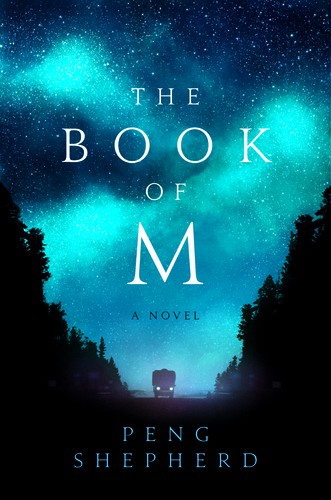
Post-apocalyptic adventures play on modern anxieties over the complexity and fragility of our resources. If your urban existence is comfortable, it depends on an economy of supply networks and utilities beyond your control — well-stocked supermarkets, medical care, currency. The post-apocalyptic story works out how swiftly, easily, and dreadfully these will evaporate, often in lurid detail, and then what’ll that fancy degree get you? In The Book of M (2018), Peng Shepherd takes the form a step further: what if that precious social good we lose isn’t electricity or fresh food, but a simple agreement on reality?

The Book of M by Peng Shepherd

The Book of M’s apocalypse is eerily absurdist. Worldwide, people start losing their shadows, and with their shadows, their memories gradually disappear. Not just personal memories, but also their understanding of how the world is — how to eat, what a gun does. This would be bad enough, but sometimes, when the shadowless forget, the world changes to match their subjective misunderstanding. The book opens with Ory, who has holed up with his wife, Max, in an abandoned hotel in the Northern Virginia woods; Max has just lost her shadow, and as Ory hunts, he discovers Max must have forgotten what a deer’s antlers are, and her imagination has imperfectly filled in the gap:

It had seemed like a deer, but now he could see that it was not. Almost, but not quite. Where its bony, branchlike antlers should have been, instead a pair of small brown wings sprouted from its forehead, mottled feathers spread in the same way horns might curve.

Once she loses her shadow, Max flees Ory so she won’t erase or misremember him into an abomination. Ory pursues her in the wild hope of resisting the curse, or at least, being faithful to the end. In nearby Washington, D.C., where crowds of shadowless have reconfigured reality, the result is a surreal chaos. A raging ogre called the Red King — “a living mountain,” with “a scarlet cloak of a hundred layers” and “armor made from whole, bent steel doors” — commands hordes of red-painted shadowless from out of the public library, while shadowed survivors barter desperately to save the books inside.

What if the precious social good we lose isn’t electricity or fresh food, but a simple agreement on reality?

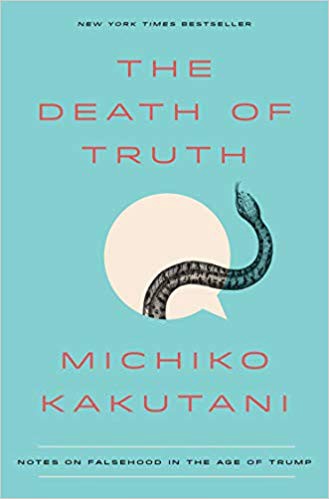
Fantastical (and convoluted) as “the Forgetting” is, this all starts to feel uncannily familiar after a few pages. As New York Times critic Michiko Kakutani recently observed in The Death of Truth (2018), “ ‘surreal’ and ‘chaos’ have become two of those words invoked hourly by journalists trying to describe daily reality in America.” In today’s climate of “alternative facts” and political gaslighting, she writes, “a shared sense of reality is becoming elusive.”


Significant blocs of American society disagree on whether the planet is warming; whether the crime rate is historically low or high; and whether Hillary Clinton won the 2016 presidential election’s popular vote. (It is; it’s low; and she did.) Unlike religious beliefs or political ideologies, these matters feel like “facts,” in that they make claim to an objective truth that should be more or less verifiable. “One of the biggest challenges we have to our democracy,” President Obama has warned, “is the degree to which we do not share a common baseline of facts,” and instead “operate in completely different information universes.”

The Death of Truth by Michiko Kakutani

Kakutani’s book The Death of Truth: Notes on Falsehood in the Age of Trump sets out the dire state of truthful, rational discourse in today’s political climate, dominated as it is by Donald J. Trump, Vladimir Putin, and coordinated disinformation. (The quotation by Obama is one of many alarming “notes” that she collects and synthesizes.) Kakutani attributes this demise of objective truth to entertainment news, postmodernist theorists, and unscrupulous demagogues, among many other culture shifts.

But the Internet, she asserts, has given disinformation peddlers an unprecedented power to shape popular knowledge. With the Internet’s “democratized information,” false claims can spread widely, and incorrect opinions find support online; with recommendation engines in Google, Facebook, or YouTube that tailor content to users’ browsing history, people also tend to encounter the information, true or false, that matches their preconceptions. This means two web users — one liberal, one conservative — might, when they google “proof of climate change,” see diametrically opposite results that tend to reinforce their own views. “We are long past merely partisan filter bubbles,” Kakutani quotes Renée DiResta, “and well into the realm of siloed communities that experience their own reality, and operate with their own facts.”

The Book of M makes that proposition literal: reality itself gets democratized. During a supermarket panic, when one woman forgets what money is, everyone in the store finds their bills blank; when a Pune man forgets the local spice market, the whole market — its stalls, its shoppers, everything — vanishes. Ursula K. Le Guin’s 1971 novel The Lathe of Heaven imagined the chaos of one person’s power to revise reality, but The Book of M extrapolates to a world shredded by millions of overpowered imaginations.

The terror of M’s epidemic is not your standard post-apocalyptic depravity (cannibals, marauding gangs), but of being involuntarily subject to another person’s bad calls. Of knowing that you’re right, but it won’t make any difference. That’s an anxiety I feel daily.

The terror of M’s epidemic is not your standard post-apocalyptic depravity, but of being involuntarily subject to another person’s bad calls.

In The Book of M, when one survivor, Naz, reaches New York City, she discovers the Statue of Liberty has grown three sizes, come to life, and leveled most of the city like a 1950s kaiju. Whose bad dream was that? We never find out, but it’s easy to see how a handful of shadowless could mis-imagine Lady Liberty into something to be afraid of, with each mistake compounding the last. And it’s hard not to read in this a poetic echo of Trump’s engineered immigration paranoia. How many immigrant families, asylum-seekers, and citizens will be terrorized because of demonstrably false fears about the “migrant caravan”? How many women who watched Justice Kavanaugh’s confirmation hearings internalized the lesson that multiple witnesses’ evidence can’t overcome one man’s stubborn amnesia?

“It’s almost kind of beautiful,” Naz remarks of the monstrous Statue of Liberty. “Horrible, but beautiful.” Shepherd does extract an uncanny beauty from the chaos, reminiscent of Murakami’s absurdism or Garcia Márquez’s magical realism, like the wing-antlered deer that opens the novel, or a shotgun that fires a literal lightning-storm into a man’s chest. The beauty of these reality-revisions is important: we’re witnessing human imaginations overcoming nature, and it’s part of the danger that this is something we’ve always wanted to do. There’s an alluring order to manmade falsehoods, over the inhuman orderliness of truth. Kakutani quotes Borges, comparing the neat ideologies of Nazism and Marxism to a detailed fantasy world: “it is a labyrinth plotted by men, a labyrinth destined to be deciphered by men.” Lying is agency; so is believing, while knowing better. And even an awful agency, at an awful cost, is more attractive than powerlessness.


Truth isn’t as easy as it sounds. How do we figure out, or even define, “objective reality,” if we can only ever be a bunch of fallible subjective brains? According to American pragmatic philosopher John Dewey, “the best definition of truth is that by [Charles] Peirce: The opinion which is fated to be ultimately agreed to by all who investigate.” (Commentators usually add an implicit, but important restriction: by all who investigate rationally and in good faith.) This “convergence” theory echoes the optimism of American democracy; it can sound annoyingly quaint. What happens when the truth converges into multiple, conflicting endpoints?

How do we figure out, or even define, ‘objective reality,’ if we can only ever be a bunch of fallible subjective brains?

There’s an obvious possibility: that one of these endpoints is objectively right, and all others are wrong. (As Stephen Colbert put it, “Reality has a well-known liberal bias.”) The other side must not be investigating, or not rationally, or not in good faith. And Kakutani persuasively identifies a Legion of Doom of truth-villains who have willfully, gleefully corrupted rational inquiry: Lenin, Goebbels, Russian-sponsored troll farms, Trump. The super-liars are lying and the people who believe them are objectively wrong. That’s one possibility.

But doesn’t this feel dissatisfying? Yes, it’s possible that the 66 million people who voted with me are right, and the 63 million who didn’t are liars, suckers, or cynics. But… what are the chances? Doesn’t that worldview sound like the very echo chamber that Kakutani decries?

And if we’re all right, and they’re all wrong, what’s the solution? Only a grim one: a showdown. The Nazis had to be defeated, tried, and hanged; Lenin and Stalin, outlived. Trump supporters have to be out-voted, and the climate deniers out-maneuvered or out-spent. And in fact, I believe all of these things are true. At the same time, as The Death of Truth presents one historical precedent after another — Paul de Man, Vladimir Lenin, P.T. Barnum, Goya’s “Truth Has Died” — it seems like truth dies an awful lot. Truth must reemerge at some vague point, only to die again in the sequel.

There may be another possibility. The Book of M’s climax does include a showdown, between those seeking to exploit the shadowless’s power and those defending a community of survivors. But this showdown is only part of M’s larger story of Max, Ory, and their struggles with an impossible hope of the world returning to normal.

Spoiler: It doesn’t. The Book of M suggests that new things might grow out of the death of truth, instead. Some are terrible, some beautiful; some are good but still painful to behold because of what’s lost. M is a hopeful novel, but one that recognizes an irreversible loss of unshakeable truth. Its compassion, grief, and generosity — its faith that there is still something human after such a loss — mark out a good place to start.

The Book of M is a hopeful novel, but one that recognizes an irreversible loss of unshakeable truth.

Maybe there’s a way forward where reality-consensus isn’t life or death. Where we beat the unscrupulous super-liars, but where we also don’t have to be right to recognize each other as human. Where we recognize “the habit of testing everything by reason” is at best an incomplete goal — sometimes impossible. Bloody wars and public discriminations were carried out over the doctrine of transubstantiation; Catholics and Protestants didn’t “test it by reason” until one side convinced the other, we just learned it wasn’t a question to kill each other over.

It’s hard to imagine, isn’t it? We can’t afford to stop defending the legitimacy of science, empirical data, and accuracy in public discourse; but we also can’t afford to write off half the population. The work of science fiction and fantasy, often enough, is to imagine the other ways of being into being. “We’ll be wanting the voices of writers who can see alternatives to how we live now,” Le Guin observed, in her 2014 National Book Award speech, “and even imagine real grounds for hope.” It’s good to add Peng Shepherd’s imagination to that project.

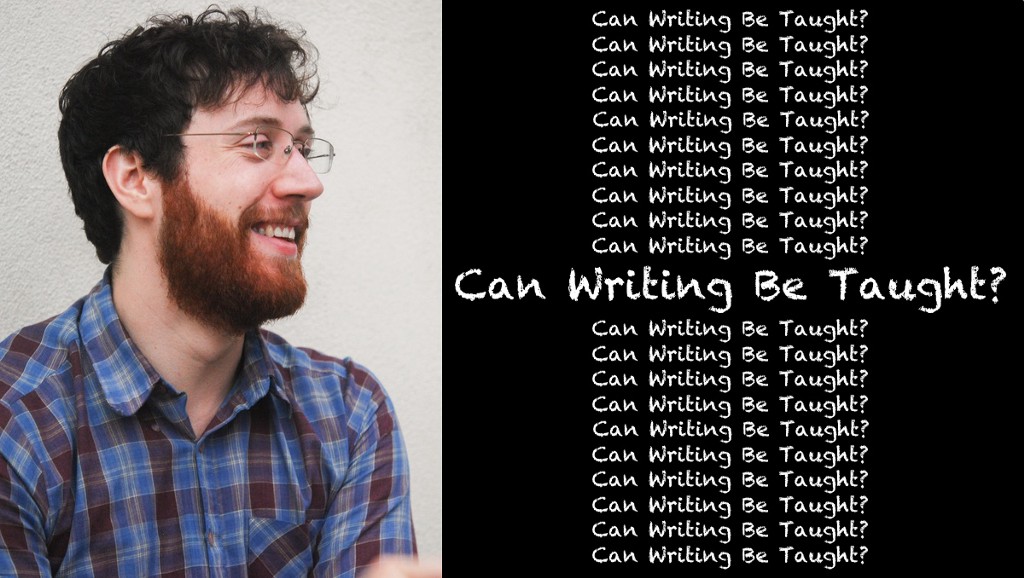
Ten Questions About Teaching Writing with Colin Winnette

I n our monthly series “Can Writing Be Taught?” we partner with Catapult to ask their course instructors all our burning questions about the process of teaching writing. This month we talked to Colin Winnette, author of The Job of the Wasp, a creepy gothic coming-of-age mystery (yes, it’s all those things, and Winnette pulls it off). He’ll be teaching a six-week advanced fiction workshop starting on November 28. It’s an online class, so if you’ve always wanted to take a Catapult course but you’re not based in New York, now’s your chance; submit a writing sample to claim a spot.

What’s the best thing you’ve ever gotten out of a writing class or workshop as a student?

The opportunity to be taken seriously when there was no real cause for anyone to do so.

What’s the worst thing you’ve ever gotten out of a writing class or workshop as a student?

A sense of self-importance.

What is the lesson or piece of writing advice you return to most as an instructor?

That I would never be rid of self-doubt, but I could get it to sit in the backseat, rather than let it drive the car.

Does everyone “have a novel in them”?

That feels like asking if everyone is capable of murder. The answer is probably yes, but some people are much closer to performing the act than others, and the fact that we have it in us does not a murderer make.

Does everyone “have a novel in them”? That feels like asking if everyone is capable of murder.

Would you ever encourage a student to give up writing? Under what circumstances?

If they really wanted to stop, I’d support it. But if it’s something you want, you never should.

What’s more valuable in a workshop, praise or criticism?

I’m more interested in what caused a reaction and why, rather than if the reaction was positive or negative.

Should students write with publication in mind? Why or why not?

If they intend to publish, it’s something worth thinking about. They’re different things, to write and to write something that’s meant to be read.

Crystal Hana Kim Thinks Worrying About Publication Kills Creativity

In one or two sentences, what’s your opinion of these writing maxims?

  • Kill your darlings: Very Practical Magic, and we saw how that worked out!
  • Show don’t tell: Why can’t you follow your own advice, maxim!
  • Write what you know: I guess it’s better than guessing.
  • Character is plot: Then what’s the point in defining either?

What’s the best hobby for writers?

Writing.

What’s the best workshop snack?

Hunger.

How Beating People Up Helped Me Find a Less Toxic Way of Being a Man

Part memoir and part anthropological study, Thomas Page McBee’s Amateur reads like a boxer skillfully deflecting a jab, only to land an stinging uppercut of his own. While the book’s nominal subject is amateur boxing — hence the title — McBee’s attempt to be the first transgender boxer to fight in Madison Square Garden becomes a foil for his investigation of fraught masculinity, both his own and in American society at large.

After Amateur was short-listed for the U.K.’s Baillie Gifford Prize for Non-Fiction, McBee and I caught up over tea in Brooklyn the day after Brett Kavanaugh’s inauguration, an opportune time to mull over the continued perniciousness of toxic masculinity in America, as well as his continued fascination with monsters, fictional or otherwise.

Meredith Talusan: So, I am talking to you the day after Kavanaugh’s confirmation, and I guess, when I read Amateur, I feel like so much of it addresses masculinity with a certain type of empathy and compassion. In the environment that we’re in right now, what is the value and what kind of space for empathizing with masculinity can and should be had?

Thomas Page McBee: I had to trace back in a genuine reported way, to “How did we get here? Why are men behaving like they’re behaving, and why am I feeling, as part of my socialization, an expectation to not show emotion or to not ask for help or to not be vulnerable? Or all these other messages that I’m getting? Where is this even coming from?” And so, it wasn’t that I necessarily set out to be compassionate to men broadly, but in asking that question, I got pretty quickly to boys, and how we socialize boys. And boys don’t have a choice about how they’re socialized because they’re children, so looking at the research, especially the research around development psychologist Niobe Way’s work with adolescent boys, male friendships are disrupted around adolescence by toxic masculinity. Around 14 years old, boys from very close male friendships will suddenly stop talking about their male intimate friends. Around the same age, they’ll start showing those dominant behaviors that are typical of toxic masculinity. And they’ll talk about how heartbroken they are to lose those friendships, but they still stop having that intimacy with boy friends. And they will say that the reason why is that they don’t want to be perceived as girly or gay.

Around 14 years old, boys from very close male friendships will suddenly stop talking about their male intimate friends. And they will say that the reason why is that they don’t want to be perceived as girly or gay.

So they’ll move away from that intimacy and what Niobe Way calls “the things that make us human” in order to act like men. So, for me, learning that, it wasn’t so much that I was looking for a reason to be compassionate, but I felt like, “What a heartbreaking thing that that’s happening to children.” I have empathy for the boys in that situation. I don’t have empathy for men from whom this aspect of masculinity isn’t limiting to them, who aren’t then being accountable or choosing to look at themselves, but I think a lot of the way dominant masculinity works is that you’re always shielded and protected from that truth so that you can keep upholding this system of masculinity and power related to it. It’s a whole toxic system we’re all in, and a lot of ways that men and women and people of all genders are never disrupting it is by never questioning it.

MT: And it seemed like boxing in the book functions as a space for physical confrontation, yes, but also ultimately becomes so much more about camaraderie.

TPM: Yeah. It’s literally that because that’s the cover of violence. The men in the boxing gym, their masculinity is not under threat at all. I think it gave them room to be intimate, vulnerable, physically affectionate. And part of what’s surprised me so much about fighting was that the people I was training with were asking me constantly about my mental state, my spiritual state, my physical body. They were affectionate, physically, in ways I’ve never experienced with men, and it was a time in my life where I had just lost my mom. So, I was having this community of men who were, in some ways, giving me what I needed than the people in my life otherwise because I, in my male body, wasn’t getting touched as much, and I needed that as someone going through grief. But it made me sad that the reason why that was possible was because no one’s masculinity was being questioned because we were fighting.

The men in the boxing gym, their masculinity is not under threat at all. I think it gave them room to be intimate, vulnerable, physically affectionate.

MT: So then coming from that perspective and also being in the unique position of being female-assigned and having these experiences, do you have specific ideas about how we can not just raise boys but also cultivate a more generally compassionate culture in terms of gender relations?

TPM: I wrote the book really trying to think about questions rather than answers, though I think asking the questions actually is part of the concrete solution. I have a few ideas. One is I didn’t realize that genuinely so many people who aren’t trans and aren’t women don’t know that they have a gender. Like, knowing you have a gender is kind of important because — it’s like knowing you have a race. It’s like white people often don’t realize that we have a race, and if you don’t understand that you have a race, then you don’t understand how that operates in the world. And it turns into an intellectual experiment for you to think about race versus realizing race is a structure.

And then, I think, doing the quieter work of asking, “How does masculinity affect me?” and how are you restricted by your own identity. Almost every guy I talked to for my book told me some tragic story about boyhood and a moment where they had to totally change something about themselves in order to fit in, something crucial to who they were, to fit into stereotypes of what a man is supposed to be. And I think a lot of men feel like that trade is just a part of being a person, and in fact, it’s the opposite of being a person.

And so, then, for me, the next step was like, “Well, exactly what is this? What does this mean, and how is this showing up in my life?” So, for example, with sexism at work, some basic things I learned were like, everything that I felt from a feminist place before my transition had been useful was now the opposite of useful. So, I often was very assertive, often bringing my opinion forward and really advocated on my own behalf, in terms of meetings or with superiors or whatever, and actually, that was the opposite of useful for women on my team, for example, when I [did that], in this body, just because people listen to me more. So what was more useful is advocating on behalf of the women on my team or making room for their voices or being quiet or doing emotional labor or all the stuff that [it] makes sense was not in my wheelhouse, because I learned to do the opposite before my transition.

In Praise of Tender Masculinity, the New Non-Toxic Way to Be a Man

MT: I was really interested in those moments in the memoir when you confront your own male socialization. Do you think men have incentive to engage with the way their masculinity is oppressive, when they’re on top of the totem pole? What’s in it for them?

TPM: I think that goes back to your original question about compassion and in a way for me it’s like my own story is the way I can explain this or understand it. I transitioned when I was 30 and I spent those first four years, first of all very aware of the privileges I was experiencing because obviously, just to be clear, I had incurred an incredible work trajectory very quickly. I was very aware in small moments that when I spoke, people would listen or lean in or I could silence rooms with my voice. All of that was true. I walk down the street at night and would not be afraid. Not only not be afraid but women would cross the street to avoid me because I was now a threat. Everything about my life in certain ways, and in really important ways, became a lot easier and not just because I was a man, but because my gender was legible and prior to this I was androgynous, people didn’t know what to make of me. That all was true, but also at the same time I was very aware that almost I was becoming an island. When I was by myself I felt happy in my body but I would leave the house and I felt more and more isolated. The ways I was meant to behave felt very constricting and I was getting that message constantly. It was in so many ways that were small it was hard to totally put my finger on.

For example, I did notice that people stopped touching me except for people I was having sex with. I just felt almost radioactive. If I talked about how I was feeling about something, I could feel the way people would create space rather than have a conversation about anything vulnerable. I felt like I was losing things about myself from before my transition that I actually really liked, things I guess you would call feminine traits though they’re not actually gendered really. They’re what we reward in women and what we don’t reward in men. All of that was happening but is was subtle and it was making me uncomfortable and making me sad but I couldn’t put my finger on it.

I felt like I was losing things about myself from before my transition that I actually really liked, things that we reward in women and we don’t reward in men.

Then after my mom passed away very suddenly, I think being in grief just really threw that in very stark relief because when you’re in grief you need support, you need to be able to express yourself. I think that combines with the fact that this was 2015 now, so this is like four years after I started testosterone, I felt in myself a lot of anger and I felt in the culture a lot of anger. And that was when I got in to a bunch of near street fights with men. I think that was the crossroads for me where I was like I need to figure out what’s going or I’m going to become one of theses angry fucking white dudes. I’m just marching in a direction despite my politics, despite everything else, the way I’m having interact with the world feels like I don’t have any space to be my whole self.

MT: Is it tough for you to be a man right now at a time when women are so embattled, especially as a person who has shifted from being perceived as a woman to being perceived as a man? Is there any kind of loss of community? How are you engaging with the fact that so many people are so angry at white men right now?

TPM: I think part of it is understanding that I’ve lost community and part of why I think I’ve been going through all this is to actually find where my place is within the human family again, because I know it’s not just with cis men who are behaving badly. That’s not where I want to line up my energy. On the other hand I pass as a cis man. So in many ways that means when I look at myself I feel happy because that’s how I wanted to feel. But when I leave my house, again, I feel like all the markers and identity things that made me very visibly queer prior to this don’t translate any more. Nobody knows that I’m trans most of the time. I think understanding that privilege for what it is and seeing the benefits means understanding that maybe I don’t always get to be my whole self in every situation.

Yesterday, I was walking down the street. I took a long walk from Manhattan to my home in Williamsburg and I was crossing Williamsburg bridge and this woman just came, yesterday was a hard day, she came plowing forward. I could tell she was in a mood where she was like “I’m not fucking moving over for any guy. I am not.” I like, fell into the bike lane ‘cause she was just storming ahead. She knocked me off my path. Not that I was storming towards her, I was actually trying to be very “I’m going to move out of every woman’s way today, more than normal.” I felt the anger. I felt being the target of it. I understood why she was angry and I see that I must’ve blown up something that makes women angry and they don’t need to know me or my politics or understand me.

I don’t need to walk around every day and have everyone get that I have this experience. I think a lot of trans people [who] pass, we don’t get to signal that to everyone and that is okay. If I’m a passing trans man and people don’t get that I’m having this rich and nuanced experience and they’re strangers on the street, well, that’s fine. I’m getting a lot of privileges for being a passing trans man. The justice of that is equaling out to me. I think being more clear on what the fuck is going on and actually having more of an engaged relationship to my own gender and getting to find a way to advocate for the things I believe in through this body, it feels like I’ve found a lot of community in a new way through that way of thinking and speaking.

If I’m a passing trans man and people don’t get that I’m having this rich and nuanced experience and they’re strangers on the street, well, that’s fine.

MT: Speaking of being socialized in a gender, I was really affected by the idea in your book that you have to learn how to want to hit somebody, which I had never thought about. I grew up very much with pacifist values. That’s something you really have to get over.

TPM: I’ve been thinking about [that] a lot because even at the time, my coach kept calling it “coming forward.” At the time I thought it had to do with masculinity in some sort of way. You know, like men are taught to be more aggressive and what does that mean, or is it testosterone, which it’s not. But lately I’ve been thinking a lot about how powerful it was to learn to come forward, especially when you’re not socialized to do so, because learning how to fight is really an important part of being human. I think that people who aren’t socialized to fight, learning the way to do it in ways that are helpful and productive or at least consensual, as in this case, is actually really important part of being a person. I also was a pacifist so this is a really strange thing to learn, but now that I know it it actually feels like, wow, women in general need to be taught how to do this, trans people in general, and people of color and all kinds of folks need to, if they don’t have the skill set this is actually really important not just for the physical ability to do it, but for the way it makes you feel about yourself.

MT: Do you think this investigation of masculinity is going to continue? How is your thinking evolving coming out of this book and what are your other current things you are interested in?

TPM: I’m thinking a lot about monsters, especially in relationship to trans people and the media narratives around us. Just how the stories, not just about trans people but all of us, the stories we tell about people are who they become or how we come to see them. We often lack real nuance or ways to understanding people who are marginalized at all in our culture and it becomes very easy to moralize about bodies, and we’ve done this throughout time and monster narratives are great way to look at that.

It’s the 200th anniversary of Frankenstein, which is one of my favorite monster stories. I think I love that story so much in part because Frankenstein is an invention of this guy. Like the guy who invented him was the monster. In fact Frankenstein’s monster is a very empathetic figure if you reread the book. He just wants to be part of the human family and in fact everyone who’s rejecting him is the monster. His monstrous behavior only comes from realizing that he won’t ever be able to part of the world and he’s going to be completely alone and isolated. He’s not monstrous to be evil, he’s just mad and he feels lonely. I’ve been thinking a lot about the way we blame people for natural reactions to being cut off from basic human needs and then the way they behave in response to that.

Then also I’ve been thinking a lot about people who live in rural communities who are not our expectations of who lives in rural communities. It’s all about binaries. When we are committed to a binary understanding of each other, only bad things happen.

When we are committed to a binary understanding of each other, only bad things happen.

Many urban people think only urban people have the right perspective on the U.S. and where the U.S. should go and rural people are X way and they don’t know anything or whatever the story is. Or about the Trump election — West Virginia in particularly was framed as the problem when in fact the don’t facts back that up, the ground zero for Trump voters ended up being pretty standard with the rest of the country in terms of Republican districts. But West Virginia held this shame of everyone. In fact there are plenty of queer people in West Virginia doing amazing work that nobody knows about. I’m just really interested in stories where our notions of what people are or who they are are binary and require no nuance and allow us to prop ourselves up, but actually spending some more time really understanding would give us the tools to be more thoughtful, maybe learn something and talk more and deeply about what’s happening in this culture right now.

Don’t Bring Nightmares To the Breakfast Table

“The Breakfast”

by Amparo Dávila

When Carmen came down to breakfast at the family’s usual hour of seven thirty, she hadn’t dressed yet, but was wrapped in her navy-blue bathrobe with her hair in disarray. This wasn’t all that caught the attention of her parents and her brother, though; it was her haggard face, with hollows around the eyes, like the face of someone who’s had a bad night or is very ill. She said good morning in an automatic way and sat at the table, nearly col- lapsing into her chair.

“What happened to you?” her father asked, studying her carefully.

“What’s the matter, dear, are you sick?” asked her mother in turn, putting an arm around her shoulders.

“She looks like she didn’t get any sleep,” commented her brother.

She sat without responding, as if she hadn’t heard them. Her parents shared a glance out of the corner of their eyes, extremely puzzled by Carmen’s demeanor and appearance. Without daring to pose more questions, they began their breakfast, hoping that at some point she’d come back to herself. “She probably drank too much last night and what the poor girl’s got is a tremendous hangover,” thought her brother. “Those constant diets to maintain her figure must be affecting her,” her mother said to herself as she went to the kitchen for the coffee and scrambled eggs.

“Today I really will go to the barber, before lunch,” said the father.

“You’ve been trying to go for days now,” his wife remarked.

“But it’s such a pain just to think about it.”

“That’s why I never go,” the boy assured them.

“And now you have an impressive mane like an existentialist. I wouldn’t dare go out on the street like that,” said his father.

“You should see what a hit it is!” said the boy.

“What you should both do is go to the barber together,” suggested the mother, while serving their coffee and eggs.

Carmen placed her elbows on the table and rested her face between her hands.

“I had an awful dream,” she said in a small voice.

“A dream?” asked her mother.

“A dream’s no reason to act like that, sweetie,” said her father. “Come on, have breakfast.”

But she didn’t seem to have the slightest intention of doing so, remaining immobile and pensive.

“She woke up in a tragic mood, what can you do?” her brother explained with a grin. “These undiscovered actresses! But come on, don’t get upset, they can give you a part in the school theater…”

“Leave her alone,” said their mother, sounding annoyed. “You’re just going to make her feel worse.”

The boy didn’t press his jokes any further, and started talking about the rally the students had held the night before, which a group of riot police had broken up with tear gas.

“That’s exactly why I get so worried about you,” said their mother; “I’d give anything for you to stop going to those dangerous rallies. You never know how they’re going to end or who’s going to end up hurt, or who’ll get thrown in jail.”

“If it happens to you, nothing you can do about it,” said the boy. “But you’ll understand that a person can’t just sit calmly at home when other people are giving everything they’ve got in the struggle.”

“I don’t agree with the tactics the government is using,” said the father, spreading butter on a slice of toast and pouring himself another cup of coffee. “However, I don’t sympathize with the student rallies, because I think students should apply themselves simply to studying.”

“It would be hard for such a ‘conservative’ person like you to understand this kind of movement,” said the boy ironically.

“I am, and always have been, a supporter of liberty and justice,” his father replied, “but what I don’t agree with…”

“I dreamed that they killed Luciano.”

“What I don’t agree with…” the father repeated — “That they killed who?” he asked suddenly.

“Luciano.”

“But look, dear, to act like that over such a ridiculous dream, it’s as if I dreamed that I embezzled money at the bank and I got sick because of it,” said the father, cleaning his mustache with his napkin. “I’ve also dreamed many times that I won the lottery, and as you can see…”

“We all dream unpleasant things sometimes, and other times lovely things,” said the mother, “but none of them come true. If you want to read your dreams according to the way people interpret them, death or coffins mean long life or a prediction of marriage, and in two months…”

“And what about the time,” Carmen’s brother said to her, “that I dreamed I went on vacation to the mountains with Claudia Cardinale! We were already at the cabin and we were getting to the good part when you woke me up, remember how furious I was?”

“I don’t really remember how it began… But then we were in Luciano’s apartment. There were red carnations in a vase. I took one, the prettiest one, and I went to the mirror,” Carmen began recounting, in a slow, flat voice without inflection. “I started playing with the carnation. Its smell was too strong, I kept on inhaling it. There was music and I wanted to dance. I suddenly felt as happy as when I was a little girl and I would dance with Papá. I started dancing with the carnation in my hand, as if I were a lady from last century. I don’t remember how I was dressed… The music was lovely and I abandoned myself to it. I had never danced like that before. I took my shoes off and threw them out the window. The music went on and on, I started to feel exhausted and wanted to stop and rest. I couldn’t stop moving. The carnation was forcing me to keep dancing…”

“That doesn’t sound like an unpleasant dream to me,” her mother commented.

“Forget your dream already and eat some breakfast,” pleaded her father again.

“You’re not going to have time to get dressed and go to the office,” her mother admonished her.

As Carmen didn’t show the slightest sign of paying attention to what they said, her father made a gesture of discouragement.

“Saturday’s the dinner for don Julián, finally. I’ll have to send my Oxford suit to the dry cleaner, I think it needs a good ironing,” he said to his wife.

“I’ll send it today to make sure it’s ready for Saturday, sometimes they’re so unreliable.”

“Where’s the dinner going to be?” asked their son.

“We haven’t decided yet, but most likely it’ll be on the terrace of the Hotel Alameda.”

“How elegant!” the boy remarked. “You’ll love it,” he assured his mother. “It has a magnificent view.”

“I have no idea what I’m going to wear,” she complained.

“Your black dress looks great on you,” her husband said to her.

“But I always wear the same one, they’re going to think it’s the only one I have.”

“Wear a different one if you like, but that dress really does look good on you.”

“Luciano was happy watching me dance. He took an ivory pipe out of a leather box. Suddenly the music ended, and I couldn’t stop dancing. I tried again and again. I desperately wanted to fling away the carnation that was forcing me to keep dancing. My hand wouldn’t open. Then there was music again. Out of the walls, the roof, the floor, there came flutes, trumpets, clarinets, saxophones. It was a dizzying rhythm. A long rough shout, or a jubilant laugh. I felt dragged along by the beat, getting faster and wilder. I couldn’t stop dancing. The carnation had possessed me. No matter how hard I tried, I couldn’t stop dancing; the carnation had possessed me…”

The three waited a few moments for Carmen to continue; then they traded glances, communicating their puzzlement, and kept on eating breakfast.

“Pass me some more eggs,” the boy asked his mother, and he looked out of the corner of his eye at Carmen, who was sitting absorbed in herself, and thought: “Anyone would say she’s stoned.”

The woman served eggs to her son and picked up a glass of juice that was sitting in front of Carmen.

“Drink this tomato juice, hija, you’ll feel better,” she pleaded.

When she saw the glass her mother held out to her, Carmen’s face distorted completely.

“No, my God, no, no! That’s how his blood was — red, red, thick, sticky! No, no, how cruel, how cruel!” she said, violently spitting out the words. Then she hid her face in her hands and began to sob.

Her mother, distraught, stroked her head. “You’re sick, dear.”

“That’s right!” said her father, exasperated. “She works so much, she stays up every night, if it’s not the theater it’s the movies, dinners, get-togethers, and look, here’s what happens! They want to use it all up at once. You teach them moderation and it’s ‘you don’t know anything about it, when you were young everything was different’ — well, it’s true, there are lots of things you don’t know about, but at least you don’t end up…”

“What are you insinuating?” His wife’s voice was openly aggressive.

“Please,” their son butted in, “this is getting unbearable.”

“Luciano was lying on the green divan. He was smoking and laughing. The smoke veiled his face. All I heard was his laughter. He blew little rings with every mouthful of smoke. They went up, up, and then they burst, they broke into a thousand pieces. They were tiny beings made of glass: little horses, doves, deer, rabbits, owls, cats… The room filled with little glass animals. They settled all around, like a silent audience. Others hung in the air, as if they were on invisible cords. Luciano laughed and laughed when he saw the thousands of little animals he was puffing out with each mouthful of smoke. I kept dancing, unable to stop. I barely had space to move, the little animals were invading the room. The carnation was forcing me to dance, and more and more animals came out, more and more; there were even little glass animals on my head; they nested in my hair, which had become the branches of an enormous tree. Luciano roared with laughter like I’d never seen before. The instruments started to laugh too, the flutes and the trumpets, the clarinets, the saxophones, they all laughed when they saw I didn’t have room to dance, and more and more animals came out, more, more… A moment came when I could hardly move. I was just barely swaying back and forth. Then I couldn’t even do that. They had me completely surrounded. I looked miserably at the carnation that was demanding that I dance. There was no carnation anymore, there was no carnation — it was Luciano’s heart, red, hot, still beating in my hands!”

Her parents and brother looked at each other in confusion, not understanding anything now. Carmen’s disturbance had burst in on them like an intruder breaking the rhythm of their lives and throwing everything into disarray. They sat in abrupt silence, blank, fearful of entertaining an idea they didn’t want to consider.

“The best thing would be for her to lie down for a bit and take something for her nerves, otherwise we’ll all end up crazy,” said her brother finally.

“Yes, that’s what I was thinking,” said her father. “Give her one of those pills you take,” he ordered the mother.

“Come on, dear, go upstairs and lie down for a bit,” said her mother, overwhelmed, trying to help her daughter to her feet, though she herself lacked the strength to do anything. “Take these grapes.”

Carmen lifted her head; her face was a devastated field. In a barely audible murmur she said:

“That’s how Luciano’s eyes were. Static and green like frosted glass. The moon was coming in through the window. The cold light shone on his face. His green eyes were wide open, wide open. They were all gone now, the instruments and the little glass animals. They had all vanished. There wasn’t any more music. Just silence and emptiness. Luciano’s eyes stared at me, stared, as if they wanted to pierce through me. And I was there in the middle of the room with his heart beating in my hands, beating still… beating…”

“Take her upstairs to bed,” said the father to his wife. “I’m going to call the office and tell them she’s not feeling well, and I think I’ll call the doctor too.” And he searched for approval with his gaze.

Mother and son nodded yes while their eyes thanked the old man for carrying out their most immediate desire.

“Come on, dear, let’s go upstairs,” said Carmen’s mother.

But Carmen didn’t move, nor did she seem to hear.

“Leave her, I’ll bring her upstairs,” said her brother. “Make her some hot tea, it’ll do her good.”

The mother walked to the kitchen with heavy steps, as if the weight of many years had suddenly fallen upon her. Carmen’s brother tried to move her, and when she didn’t respond, not wanting to do violence to her, he decided to wait and see if she would react. He lit a cigarette and sat down next to her. Their father finished on the telephone and dropped into an old easy chair, observing Carmen from there. “Now no one’s gone to work today, hopefully it’s nothing serious.” The mother made noise in the kitchen, as though she were stumbling at every turn. The sun came in through the window from the garden, but it lent no warmth or cheer to that room in which everything had come to a standstill. Their thoughts and suspicions lay hidden or veiled by fear. Their anxiety and distress were shielded by a desolate silence.

The boy looked at his watch.

“It’s almost nine,” he said, just to say something.

“The doctor’s on his way; luckily he was still at home,” said the father.

“The Last Time I Saw Paris” began to play when nine o’clock struck on the musical clock they’d given to the mother on her last birthday. She came out of the kitchen with a cup of steaming tea, her eyes red.

“Go on upstairs,” her husband said to her. “We’ll bring her up.”

“Let’s go upstairs, Carmen.”

Father and brother lifted her to her feet. She made no resistance to being led, and slowly began to climb the stairs. She was very distant from herself and from the moment. Her eyes gazed fixedly toward some other place, some other time. She resembled a ghostly figure drifting between rocks. They didn’t make it to the top of the stairs. A pounding on the door to the street halted them. The brother ran downstairs, thinking it was the doctor. He opened the door and the police barged in.

The Annual Book Sorting Competition Is New York’s Nerdiest Sporting Event

On November 9th, at the 6th Annual Book Sorting Contest against Seattle, New York City’s book sorting team gathered together to take back the title of champion sorters in the United States. The race took place on both coasts, beginning with New York’s course at the Library Service Center in Long Island City and then the King County Library System’s course, several hours later, outside Seattle. Each machine would run for exactly one hour, zealously sorting books, getting them out to the numerous libraries in the area and ultimately into the hands of the patrons.

New York had been training all year for this day, the results of which would determine whether New York would receive Seattle’s Best Coffee, a prize worth fighting for. (In the event of a Seattle victory, New York would be required to provide the winning team with New York cheesecakes.) As one of the largest and busiest library systems in the United States, serving over 700,000 cardholders, the King County sorting system may be the only one in the country that holds a candle to that of New York’s. The outcome was nearly impossible to predict, given the comparable stats of all the key players.

The King County Library System’s machine, nicknamed “Tin Man,” serves all 49 libraries in the county. At the last competition, it came in first place with a record of 12,572 items sorted in one hour. Installed in 2005, the “Tin Man” is the first of its kind and has influenced library systems around the globe to imitate its groundbreaking technology, including our very own library system in New York City. The New York sorter reached 12,371 items at the last competition, a reputable performance, though not enough to gain national bragging rights. Installed in 2010, the New York sorter now serves 150 locations in Brooklyn, Manhattan, Bronx and Staten Island, and sorts an average of 620,000 items every month.

Seattle was the first to install a sorter, and since then has updated and upgraded its system, fearing that New York would sneak up from out of the dust to reign over United States’ library systems as the fastest in the country. Having lost the last competition by only 201 books, New York was holding its breath for this race. We had won two competitions to Seattle’s three, meaning this one would bring the two champions to a tie.

At 10 a.m. on November 9th, librarians and book lovers alike gathered around the New York sorter to watch the events unfold. To get to the sorting machine, we were led down to the lower level of the Library Service Center, to the 238-foot conveyor belt that sorts an average of 9,000 items every hour with the help of the sorting staff.

The morning began at 9:45 a.m., just fifteen minutes before the competition was to take place. The team of book sorters huddled around Salvatore Magaddino, the director of BookOps, a technical services collaboration between Brooklyn Public Library and New York Public Library. After introducing the spectators to the event — making the bold claim that every other sorting system “pales in comparison” to that of New York’s — Magaddino began psyching up the team.

Photo courtesy of NYPL

“We’re down 3 to 2,” he said, referring to Seattle’s wins. “We’re better than that, we’ve got a stronger team than that.” The team nodded in agreement. The spectators shuffled around, glancing at the piles upon piles of books, both new and old — Crazy Rich Asians stacked on top of The Great Gatsby.

“Half of the team has never participated in this event before — I was a little worried about it,” Magaddino continued. “But once we started practicing and I’d seen you guys coming together, I saw you guys gel. I am proud to be a part of this team.”

It was 9:55 a.m.; cheers erupted and Kanye’s “Stronger” began blaring through the speakers as the team members made their way to their starting positions — hands hovering over the piles of books, Gatorade within reach. One sorter pulled his hair into a ponytail, another rolled his shoulders and cracked his knuckles. “If your fingers get sore, keep going,” Magaddino had warned them.

At 10:00, the machine sprang to life, the conveyor belt cruised before them, and for the next hour they sorted books amid applause from the spectators and a succession of out-of-date pop songs. At the end of the hour, the belt came to an abrupt stop towards the end of Alicia Keys’ “Empire State of Mind” and the sorters, T-shirts drenched in sweat, made their way back to the coach to hear the results: 12,330 books sorted in one hour, to King County’s 10,007. New York will be getting Seattle’s Best Coffee after all.