A Reading List for Combating Impostor Syndrome

The dark secret of impostor syndrome is the thrill of pulling off the con. I attribute this to an anxiety-fueled increase in craftiness and a proclivity for escapism. The self-perceived impostor — by definition, an overachiever with low self-esteem or inordinate self-doubt, despite external evidence of their accomplishments — is rarely precluded from pursuing their ambitions. On the contrary, those of us with impostor syndrome doggedly pursue our dreams, despite our feelings of unworthiness. We may subconsciously fear that we will be exposed or rejected along the way, but we’re hanging on for the ride as far as it’ll take us.

In my novel Static Flux, 25-year-old Calla, who grew up poor and rural but earned the opportunity to pursue a career as a writer in New York, faces early setbacks and becomes extremely disillusioned. Not only does she suffer impostor syndrome, she suffers the very real conditions of post-Great Recession America, the absurd disparity of wealth in New York, and diminishing opportunities to break into the writing career she’s dreamed of. But from this impostor’s perspective comes wry, self-satirizing observations of her generation (millennials) and. indeed, her own complicity in the system she hates.

Turning to escapism out of desperation and loneliness, Calla impulsively schemes to abandon her life (and her loving boyfriend) and takes off for Los Angeles, where she stays at her best friend’s house and self-medicates with cannabis and LSD. Self-aware yet solipsistic in her self-loathing, she’s oblivious to the impact her actions have on those who love her. Her skewed self-image as a worthless, unlovable impostor becomes a self-fulfilling prophecy.

Before and while I wrote Static Flux, I was inspired by many books by women about alienation, escapism, impostorism — stories that capture the anguish and restlessness of a woman journeying on a path of utter uncertainty.

The Flamethrowers by Rachel Kushner

Adept at observing the world as a curious outsider wherever she goes, always with uncanny awareness of historical context, Kushner is really a luminary to me. We both come from poor backgrounds — as do our protagonists — which can be a huge source of impostor syndrome, but also, a gift. Reno’s impostorism comes through in the unexpected facility with which she moves between worlds, hanging on for the ride at the disorienting velocity with which she’s volleyed off of her motorcycle and into the inner circle of 1970s New York’s art elite and, eventually, a devastating turn in Italy amidst violent political upheaval.

The Sacred Family

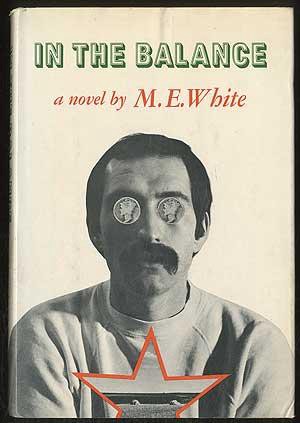
In The Balance by M.E. White

This incredible 1968 novel follows Baylor Irish, a hilarious, cynical, reckless nineteen-year-old college freshman with a “talent for insanity,” up and down the coast of California. She’s an impostor and misfit among her friends and classmates, an alcoholic prone to hallucinations and ingenious acts of mischief; but her caustic observational humor casts the world of abusive men, spoiled brats, and aloof adults in harsh relief. It’s an obscure classic that belongs on all our shelves in 2018. Somebody please reissue it.

Signs Preceding the End of the World by Yuri Herrera, translated by Lisa Dillman

Makina, Yuri Herrera’s shrewd heroine, is actually more of an antidote to impostor syndrome: she moves through worlds she knows she doesn’t belong swiftly, deftly, unapologetically and brutally, in order to get across the U.S.-Mexico border to find her lost brother. From escaping the border guards’ ambush with her coyote, to crossing a desert littered with bloated corpses, to wandering the manicured suburban alternate-universe of the other side of the border, Makina hasn’t the time for self-doubt. She’s an invigorating, galvanizing character. Herrera’s novel is a treasure; Lisa Dillman’s translation, a precious gift.

Adios Cowboy by Olja Savičević

Dada, the narrator-protagonist of this brilliant Croatian novel, has returned to her hometown after several what she calls “lost years” in Zagreb. As a freelance writer, she’s a lot like Static Flux’s narrator Calla in her shameless opportunistic exploitation of her underpaying media employers: a site called “Shit.com” pays her to “write or steal news for their site.” She says her adeptness at plagiarism was “more than they deserved for the pittance they paid me.” Her shrewd depiction of the ugliness and banalities of trashed, shit-strewn town of Split, where “the salt air begins to sweat and everything that moves passes limply through treacle, while the song of a million sounds is transformed into a steady, electric hum that hypnotizes,” is never without an underlying sense of humor and tenderness. She may not fit in anywhere, but she captures delightfully bizarre details with sardonic acuity.

Speedboat by Renata Adler

There’s a fine line between alienation and self-imposed isolation, and Speedboat’s intrepid (albeit heartbroken) reporter likely falls on the side of the latter. Her jaded, wry eye eloquently scrutinizes the subtext, absurdity, and banality of those around her, but these preoccupations become magnified in her distraught mental state as she tries to escape to some remote place and leave her longtime (married) lover. This iconic line resonates with me deeply to this day: “I think when you are truly stuck, when you have stood still in the same spot for too long, you throw a grenade in exactly the spot you were standing in, and jump, and pray.”

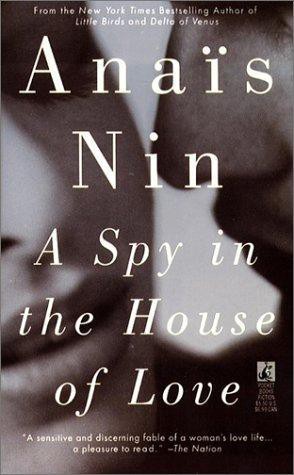
A Spy in the House of Love by Anaïs Nin

I first read this novel as a teenager, and I’ve always admired Nin for how she seemed to be empowered, not paralyzed, by feelings of being an impostor (and even an adulteress). It was her romantic adventurism, after all, that brought her to live her own double-life in Los Angeles, with two husbands and everything. In A Spy in the House of Love, Sabina sashays her way through affair after affair, a female lothario in a cape and exquisite dress. She isn’t shameless, per se, but she is most certainly an impostor who doesn’t let her conscience — or fear of getting caught by her husband — get in the way of her crafty autonomy.

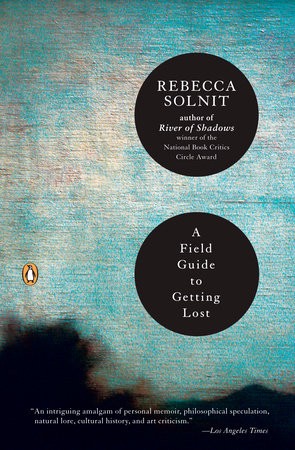
A Field Guide to Getting Lost by Rebecca Solnit

Not a novel like the others, but this book is life-changing for anyone grappling with deep interpersonal insecurities in the face of uncertainty. The year before I started writing Static Flux, I was having dinner with my friend Stephan on St. Mark’s Place in New York when he asked me if I had read this book. I said no. He said I had to read it — as if it was required reading for being a human with too-big questions to handle. After dinner, he walked me to The Strand, found the book, put it in my hands, and although I was as broke as Calla is in the start of my novel, I bought it and devoured it. He was right. My thanks to Stephan.

8 Books about Family Money

I like books about relationships, so I tend to read a lot of novels about families. I also like books with a nice amount of tension, and so I also find in my favorites stack quite a few titles with money as a plot point, either a surplus or a paucity. And when it’s all combined? Well, then that’s the absolute best!

Purchase the book

There are few subjects I like more than a good family drama with some money thrown into the mix — which is how I ended up writing my own novel, Family Trust, about a well to do Asian American family in Silicon Valley struggling with the illness and ultimate bequest of its patriarch

Money is a key theme of the book — when someone’s dying who has made a big deal about how wealthy they are, there inevitably are those secret, nagging questions in everyone’s mind. Add in a second marriage to a younger wife, adult children with expensive lifestyles to maintain, and a grouchy first wife who was the financial mastermind all along, and you know something’s going to explode.

There are a plethora of books about family money out there — of course with those two topics, family and money, almost anything — from Shakespeare to Munro — can qualify. Here are some favorites:

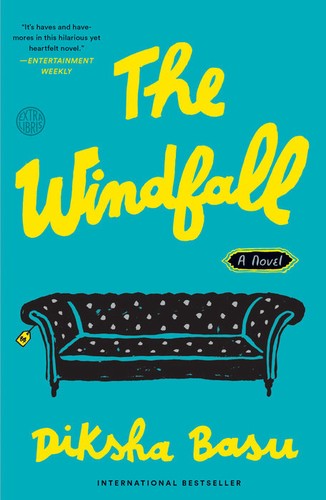
The Windfall by Diksha Basu

Diksha Basu’s comedy of manners about what happens when a family suddenly “makes it big” in modern India. How to best communicate your newfound wealth? Maybe with a big new house? But then how do you impress your new neighbors, who have had money longer than you? Maybe with some upgraded plumbing? And doesn’t the new couch need some Swarovski added to it? Funny, charming, and utterly thoughtful.

The Godfather by Mario Puzo

Don Corleone is a mastermind of the Mafia, quietly amassing a fortune with his criminal empire but he also believes you can’t be a real man if you don’t spend time with your family. The classic saga of family, crime, loyalty, and yes, lots and lots of money.

Crazy Rich Asians by Kevin Kwan

I love Kevin Kwan’s entire trilogy, and one of the things he does so very well is explain the intricacies of the dynamics in these incredibly wealthy families. Who really has the control of all the cash (and property, and jewels, and art)? And who is going to eventually get it all? Crazy Rich Asians came and blew up the sliver of genre that was previously known as “Asian Fiction” and I am forever grateful.

The Bettencourt Affair by Tom Sancton

The Bettencourt Affair features the wealthiest woman in the world; a resentful only daughter; a Jewish son-in-law (who has married into a family with a history of anti-Semitism); and a charismatic artist friend, decades younger, who has been gifted hundreds of millions in cash and art by the matriarch. The best (and worst) part of the book is that every word is true.

The Custom of the Country by Edith Wharton

My favorite Edith Wharton (though I love Lily Bart I simply can’t stand too much of Lawrence Seldon, although The House of Mirth would also surely qualify for this list). The book follows Undine Spragg, the “heroine” of our story, who uses all her family’s funds and connections to craft a ladder for her social ambitions but finds the height lacking; she marries up and then marries again and perhaps will never be satisfied.

How Edith Wharton Changed My Understanding of Marriage

The King of Content: Sumner Redstone’s Battle for Viacom, CBS, and Everlasting Control of His Media Empire by Keach Hagey

A daughter whose relationship with her father veers from warm to all out war (and is still evolving). Multiple mistresses. Tapes, lawsuits, mental capacity, nurses that act as gatekeepers, and of course…billions of dollars and the future of one of the world’s largest media companies at stake. And like with The Bettencourt Affair, every word is true.

A Tree Grows in Brooklyn by Betty Smith

Not all books about families and money are about the excess of it. The Nolans don’t have a lot of money…actually, it’s quite the opposite. In one of the opening scenes of the book, the children are hauling trash to the “junk man,” who will weigh their garbage and give them pennies; it’s such a descriptive scene that sets the tone for the book, about how the Nolan family will struggle to survive and make their way in WWI era Brooklyn.

The Darlings by Cristina Alger

A former lawyer and banker at Goldman Sachs, Cristina Alger knows her stuff when it comes to the world of high finance. Meet Carter Darling, the book’s Bernie Madoff, who presides over a billion dollar empire complete with galas, houses in the Hamptons, trophy wives, and excellent European ski vacations. What happens when it all turns out to have (maybe) been a scam? The Darlings is an examination into how a fantastically rich family deals with their coming implosion of wealth and how each family member copes with a sudden downgrade in their lifestyle.

About the Author

Kathy Wang grew up in Northern California and is a graduate of UC Berkeley and Harvard Business School. Family Trust is her first novel.

Dear Ramekin: Letters to Inanimate Objects

Issue №36

letter from minnie mouse to the orchid in her bathroom

he ate your flowers one by one
I watched it happen
the little fly devastating your petals
who am I but my brother wearing a bow
I saw the holes I owned them
here, reflected in my polka dot dress
major trapping of my gender lawlessness
is it my brother or my sweetheart underneath

letter from a leaf to a ramekin

I am flying back and forth between window and table
do I look as crazy as I feel
obviously flan is delicious
but I make the air breathable
what’s it like to be solid
what’s it like to be sold
what’s it like to be part of an identical set
I am singular on this earth
I’m fucking one-of-a-kind
crafted by nature
not the hands of men
I am newer than you
it affected me less when everyone left
use not being part of my nature, only
now there’s no one here to admire me
not one who can appreciate
my perfect form

letter from an eel to a toaster oven

toaster dear toaster I love you so much
I wish to stroke your cord
feel your electricity
is it wicked that something synthetic
makes me feel this alive?

letter from a yam to a cat toy

I exist I exist I exist
I lend sweetness
not style
vitamin A
your green plumes frighten me
so great is my desire
from the basket
I watch the cat
pace the hallways yowling
with you, clamped in his jaws
how I long for plumes
how I long for jaws
little green bird
I need evidence of being

letter from a bad mood to a picture frame

without a hint of structure
they will grow miserable and insane
rules evaporate
I blow over vast planes
skittering through time
a bramble in driftless space
no thing has more weight than any other
don’t think you can stop it
you are four sticks and a glass panel
affixed to the wall with a handful of nails
you think you delineate art
from not-art
you’re a fence for sticking in
an item on the shopping list
not scaffolding, skeleton,
not possessing of reason, or ordering principle
I know more about what you’re not

About the Author

Helen Hofling is a Baltimore-based writer and collage maker. Her work can be found in Berkeley Poetry Review, The Columbia Review, Hobart, Prelude, and elsewhere. She is a member of the PEN Prison Writing Project’s poetry committee and teaches writing at Loyola University Maryland.

About Recommended Reading and the Commuter

The Commuter publishes here every Monday, and is our home for flash and graphic narrative, and poetry. Recommended Reading is the weekly fiction magazine of Electric Literature, publishing every Wednesday morning. In addition to featuring our own recommendations of original, previously unpublished fiction, we invite established authors, indie presses, and literary magazines to recommend great work from their pages, past and present. For access to year-round submissions, join our membership program on Drip, and follow Recommended Reading on Medium to get every issue straight to your feed. Recommended Reading is supported by the Amazon Literary Partnership, the New York State Council on the Arts, and the National Endowment for the Arts. For other links from Electric Literature, follow us, or sign up for our eNewsletter.

“The invention of anomie, a series of poems” is published here by permission of the author, Helen Hofling. Copyright © Helen Hofling 2018. All rights reserved.

Is Russia a Terrible Country?

I n 2009, I went back to Russia for the first time since emigrating to the US when I was three. I went with my grandparents, and the country we were in barely resembled the country they had left. My grandparents and I blundered through an unrecognizable and impossibly expensive Moscow. Their disorientation was sad and funny, and resulted in some misadventures where I could finally see glints of the old world Soviet order underneath the now polished and Western-seeming façade, culminating in our tour bus catching fire and us being unceremoniously deposited on the side of a highway in the outskirts of Moscow and told to march single file along the shoulder until we eventually got to a distant metro stop.

Purchase the book

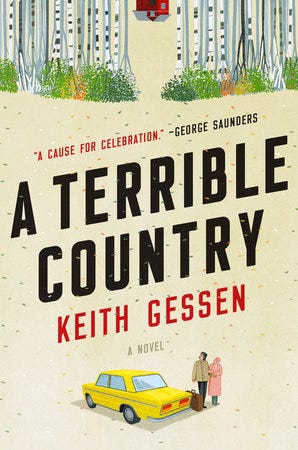
Keith Gessen captures so well in his second novel, A Terrible Country, the befuddlement of a (mostly) American in Moscow trying to orient himself in a town where things seem to operate by entirely different rules than in the US. Set in 2008, around the same time as my trip, I found so much of the book deeply relatable. The novel is funny, yes, but also quite moving. In it, Andrei Kaplan, a Russian immigrant and struggling academic moves back to Moscow to take care of his grandmother, in the hopes that she will provide him with good material for an article about life under Stalinism — an article that he hopes will help land him a tenure-track job. When Andrei gets to Moscow, however, he finds his grandmother’s memory has deteriorated to the point that she often does not recognize him. His days are filled with the same repetitive conversations with her and trying, not very successfully, to inject himself into the stream of life in Moscow. Gessen’s portrait of living with a person who is losing their memory is tender but also frustrating and funny, as life’s tragedies often are, and takes place against the larger backdrop of Andrei’s political awakening in Moscow.

The book shows so well the personal cost of all the reforms and policies that had transformed Russia into a capitalist country, something Gessen has been covering for some time as a journalist. Russia is a “terrible country,” according to Andrei’s grandma, and she doesn’t understand why he would come back.

Keith Gessen and I talked about Russia’s terribleness, the US’s moral gray areas, the immigrant experience, balancing fatherhood and writing, and the construction of a good book excerpt. Gessen patiently answered my questions as he unloaded the dishwasher.

Katya Apekina: What was the original seed for the novel?

Keith Gessen: Two things. There was frustration at my own inability as a journalist to convey what Russia was like, or what my experience of it was like. I felt like I’d never quite captured how similar Moscow is to New York, on the one hand — the way people live, the pace of life — but also how different. How much poorer it is. The way people live with their parents, for example, or don’t actually own their car. And then because of that the sorts of things people have to go through on a day-to-day basis — just how much more difficult life is than in the United States. That experience is hard to capture in part because so much of it is so mundane. So what if it takes you two hours to find, I don’t know, a place with wifi? This isn’t the stuff of grand historical narratives. But it is out of such searches for wifi that life is made, ultimately.

That was the meta-motivation. And then there was the more immediate experience. I lived in Moscow with my grandmother for a year, during the same timeframe as in the novel, taking care of her and helping her out. At the time, I didn’t think of it as material for a novel, but as soon as I got home, I started thinking about it. It was a very powerful experience. I wanted to describe what it was like to live with someone who was losing her memory and to an extent her personality. That was the original seed. From there, it was a long process of figuring out how to work that into a traditional novel with, you know, a plot.

I lived in Moscow with my grandmother for a year, taking care of her and helping her out. [My novel came from wanting] to describe what it was like to live with someone who was losing her memory and to an extent her personality.

KA: Andrei has this political awakening, but he’s maybe not able to be as transformed by it as he would like. Did you have a similar political awakening when you were in Russia?

KG: The political conversion or realization that Andrei goes through in 6 months, took me about 10 years. I went over to Moscow in the mid-90s, when I was in college; it was at the time when Russia was supposedly transitioning toward capitalism. You would read the papers in the U.S. and it was like, “Russia is going through a wonderful transformation toward capitalism! Though it’s a little bumpy at times!” But anyone who went over there could see that it really wasn’t going well. There was a lot of crime and people like my grandmother had lost just about everything — their jobs, their savings, their sense of themselves. Old people were out on the street selling their socks.

But a lot of people thought, and I have to admit that I was one of these people, that this was just part of the painful process of modernization, and eventually, on the other side, the Russians would emerge from it happy and prosperous, like Germany. I held that view for a while. But that experience of seeing Russian capitalism up close in the 90s planted the seed in my mind that maybe capitalism wasn’t the best solution to all situations and that in certain places it led to a great deal of misery and death, actually. It took me a while to kind of come around to the idea that this wasn’t some kind of aberrant capitalism but actually capitalism itself. So, I do share that with Andrei, though as I say he comes to it a little faster.

KA: The ending blew me away — when Andrei is put to the test. I grew up with this idea that a person’s true decency was something that was hidden away and that in polite American society it went untested, but in extreme situations, like in Soviet life, it was forced to the surface. I remember thinking that I didn’t really know what a person was made of, what I myself was made of, unless it was tested. Is this also an idea you grew up with and do you still believe that?

KG: For me, the difference between here and there is that in the US there is a really wide gray area of moral and political behavior. I guess that’s something that money buys: moral ambiguity. Like, sure, I’m a corporate lawyer or an investment banker, but I also do a lot of pro bono and charity work, and also, you know, I’m a Democrat. There are various shades of that, that are more or less convincing, whereas in Russia if you’re working for Gazprom or Rosneft or United Russia, you have literal blood on your hands. Or even just being a college professor, as I now am, in the U.S. It’s a noble profession, in many ways — I spend a lot of time working with students on their writing and reporting and some of their work is really great. At the same time I’m part of this horrible student debt machine. I’m in a gray area. In Russia things are a little more black and white.

KA: Do you think that’s still true about the U.S.?

KG: Well, certainly less so since 2016, because of the political polarization. But it’s one thing to live in a country that’s split in half, as the U.S. now is, so that you’re part of the good half… that’s different from being anti-Putin in Russia, where you’re more like 10 or 15 percent of the population. And then within that 10 percent, being a person who is willing to put your body and freedom at risk.

I grew up with an admiration for the Soviet dissidents. When I was very little, I actually thought that my parents were also dissidents, in the sense that they had all the samizdat books, Solzhenitsyn and Mandelstam and so on, and, having emigrated in the early 80s, had made a pretty dramatic decision to leave the USSR. It was only later that I found out that the number of people who were actual dissidents, who had actually protested the Soviet regime and had actually gone to prison, was minuscule. And then you had this larger group around them who were sympathetic and never joined the Party and secretly hated the regime but didn’t actually go out and protest. That was the group my parents belonged to. I mean, famously, in 1968 when the Soviet Union sent tanks into Prague, there were eight people who went out into Red Square and were then all arrested. That’s a very small number of people.

The Unbitten Elbow

KA: Andrei, as an immigrant, was pretty rootless. As an immigrant myself I related to that aspect — wanting to be part of a cause, but the cause not really being his own. Do you think there’s a limitation to his commitment since it’s not his country?

KG: I don’t know if I believe that. I think it’s a decision for him to make. My parents, even as they never really assimilated to the US — I don’t think they would ever have thought of themselves as rootless. I think if you’d have asked them, they’d have said: I’m an immigrant. I’m an American who is from the Soviet Union. That is, they knew exactly where they were from and they knew exactly where they had arrived. You can look at that situation and think it’s tragic. From a certain perspective, they never really got to have a home. But they didn’t look at it that way.

In the next generation, I think it’s true, we do feel a little more rootless. Are we from the Soviet Union? Is that our identity? On the one hand, yes, but on the other our actual connection to that place is pretty tenuous. We don’t live there. We don’t know the language that well. We don’t know the names of the sports teams. Whatever.

But that just means we have to decide. Andrei does enter into Russian life enough that he is given a choice about where he belongs and where he wants to take a stand. I think that’s true of anyone. I mean, I’ve lived my life this way to a certain extent, too, not just because I wasn’t born in the States, but because I’ve moved around a certain amount, between college and grad school and just moving between neighborhoods in New York, even, and always or sometimes with the thought that, “Well, I’m not really here for the long term. This isn’t really my home.” But at a certain point I think you get an opportunity, if you want it, to say: “This is my home. These are my people. I’m going to fight here.”

So it’s up to him. I don’t think it’s foreordained that he would make the decision that he makes.

Seeing Russian capitalism up close in the 90s planted the seed in my mind that maybe capitalism wasn’t the best solution to all situations and that in certain places it led to a great deal of misery and death, actually.

KA: I came to your book first through the excerpt that was in the New Yorker. I have never read an excerpt before that felt so stand alone powerful on its own and yet it didn’t really give away anything about the book or rob the book of its emotional power. They felt like two distinct things and I loved them both. I was curious about how that excerpt came about.

KG: A young editor named David Wallace at the New Yorker did that. I wouldn’t have known how. He took the grandmother thread and rearranged the chronology a little to cast it more in the form of a story. It was pretty brilliant. The words were the same but it was a different creature, made out of parts of the larger creature. And it put me in this strange position, since David felt like he could cut things, but not really add anything to suture the narrative together. At first I was like, “Am I authorized to go in there? Am I allowed to go in there and add stuff?” And my initial feeling was, “No! I’ll mess it up.” But eventually I came around to, “I made the larger thing to begin with, so I guess if anyone can do it, it should be me.”

It was pretty strange. If you look at it there’s stuff in there from page 1 to about page 300, in the course of 8 pages.

KA: I felt like the emotional punch of it somehow felt different than the emotional punch of the book. In the book his relationship with his grandmother is central, but it’s about other things as well, and somehow when that storyline is taken in isolation like that it feels very different.

KG: Yeah. When we were editing, I went and looked at other novels that I’ve read that were excerpted in the magazine. And they really fall into two categories: The first is that it’s a discrete chapter — I think the excerpt from Franzen’s Purity was like that. You get a sense of the spirit of the book, but not the story. And then others are more like a compression of the best parts. That’s the danger, of course: that they’re taking the best parts and smooshing them together, so the reader is just automatically going to be disappointed by the book-length version.

I don’t know if that’s what happened, but I do feel like the grandmother stuff is the core of the book. It’s what allows the rest of the book to exist. It’s what allowed me to write a book about Russia.

KA: You work in all these different modes (journalism and translation) do you feel like you’re accessing different parts of yourself when you’re writing fiction? Is your process different?

KG: Something I’ve learned about myself as a journalist is that I tend to gravitate toward a particular kind of character. That’s true of most journalists. You plunk them down in some random place and yet they always seem to manage to find the sort of person that they’re going to find. In my case, it’s a sort of thwarted bitter male character who also likes sports. If that makes sense. And it’s also the kind of character I find interesting as a novelist.

Beyond that, as a novelist, or fiction writer, I’m very nervous about making stuff up. In my first book, I was really worried about time. I thought that any changes in chronology or even just compression of time would distort the truth somehow. Like who was I to mess with time? Like, was I God? And I was worried too about class — like, I didn’t want to create social mobility where it didn’t exist, in either direction.

But as I’ve gotten older, I feel like I’ve seen more things. I’ve seen all sorts of people doing all sorts of things. The range of human experience is quite wide, it turns out. And once you realize that, you start feeling like it’s OK to make stuff up, even to make people up, and to move stuff around. This book still hews pretty closely to my own personal experience, but I gave myself more freedom this time, and I think it worked. People have said to me, about some of the characters in the book who are very much made up, “Oh, you must have meant this person that you and I both know!” The Fishman character especially. But I’m very pleased to say that that is a made-up horrible person.

KA: How is writing your second book different from writing your first book?

KG: A lot. Back when I was in grad school and writing my first book, I thought, “Man, if I can just finish this book it will be so much easier to write a second book.” What a joke. It took me 10 years to write a second novel. Part of it I think is that people have certain expectations of what your book is going to be like based on the first book, and you want to, on the one hand, subvert and go against those expectations, but on the other hand, you also want to meet them. And that turned out to be harder than I expected.

KA: And in writing your second book, you had a son, in the middle of the process. How did that affect your writing process?

KG: It changed two things. First, I really needed to sell the book. We had Raffi, and I didn’t have a job, and Emily, my wife, who is also a writer, also didn’t have a job and had just given birth to a little baby, and at that point, I mean, after six years of fiddling with it, I had to finish something that could be presented to a publisher, or else. That was very real.

And then this other thing happened, which was harder to define. My grandmother had died by this point, and Raffi was a pretty difficult baby, and we were really inexperienced parents and we weren’t getting any sleep. We ended up having this pattern where I would take Raffi from about 1am to about 4am. And for the first 30 minutes of that, he would just scream and I would try to get him to the farthest point in the apartment from Emily, so she could sleep. Eventually he would go back down, but there was still this danger that he would start screaming again, so I would keep him in the living room and stay out there with him. And that was the time that I had to write. That was when I got the first third of the book into presentable shape.

And writing it with him sleeping there, I wouldn’t say it changed the book, exactly, but it did make me more aware that I wasn’t, you know, the last generation anymore. The two tragedies in my grandmother’s life had been that she lost her only child, and that it happened twice — first to immigration and then to breast cancer. I didn’t need to have a kid to know that that was a tragedy, but it certainly made me aware of just how horrible that would be. I guess you could say it embedded me more clearly into the stream of my family.

KA: Do you have any advice you would have given yourself when your first book was coming out? Or your second one?

KG: I have so much! Don’t write in the first person! And also, you know, understand that it’s a book you’re publishing. With the first book I really thought it was going to transform my life. Like I would suddenly have this whole new group of friends, which would include, I don’t know, Harvey Keitel, and of course I would still stay in touch with my old friends, but they would understand that things had changed. Something like that. I definitely thought I couldn’t make any plans past my publication date. And I have actually seen that happen to a couple of people. But for the most part it does not happen, and your life goes on as it did before.

Another mistake I made is that I spent too much time worrying about the people who didn’t like the book and not enough time being grateful for the people who did. I still find myself doing some of that. But the fact is, some people are going to like the book, and some people are not. It’s hard to deal with. You want everybody to like the book. But that’s just not possible — at least in my case I have found that it’s not possible. I think you need to find your readers — the people who really respond to what you’re doing and how you’re doing it — that’s really all you can hope for. And it may be a few hundred people or it may be a few thousand people, but it’s not going to be a million people. Still, you have to find as many of your readers as you can. And sometimes in the process of trying to find your readers you’re going to run into some of your non-readers. That’s the price you pay.

And ultimately, what an amazing thing to publish a book! If you had told my younger self that I would someday get to publish a book, and I would get to read it to people at bookstores, I would be so happy. As a grownup unfortunately it feels a more like a series of failures. So if possible you have to recapture that feeling of what your younger self would have thought of it, instead of worrying — is my book selling and are they going to let me write another one?

How to Decorate Your House Like Victor Frankenstein

Name: Victor Frankenstein, widower (Elizabeth was great), member of a distinguished family, and mocker of the stupendous mechanism of the Creator of the world (Genevese by birth)

Location: Ingolstadt, in the Odenwald mountains, Germany

Size: Resembling the imaginative capacity of man

Years lived in: Since a resistless and almost frantic impulse urged him to undertake his home makeover; owned

W e all want to accomplish some great purpose. For seeker-of-knowledge Victor Frankenstein, his home was an excellent place to start. His castle welcomes you with misery and despair, its cold, gray stones suggesting an owner of sometimes violent temper, with passions vehement.

“I am inspired by wonder,” he says. “Homes that are truly marvelous and take an irresistible hold on my imagination. I also like gargoyles. Those crazy little guys.”

The castle was enlarged and modernized in the fifteenth century, but Victor saw the potential for further improvements. He worked for two years to bestow animation on the lifeless matter of his domestic space. As rain pressed dismally against the austere steel windowpanes, he listened to “Puttin’ on the Ritz” and went through fabric swatches and blood-repellent laminate floor options with indefatigable zeal, finally realizing the gratifying consummation of his toils as the moon gazed on his midnight labors.

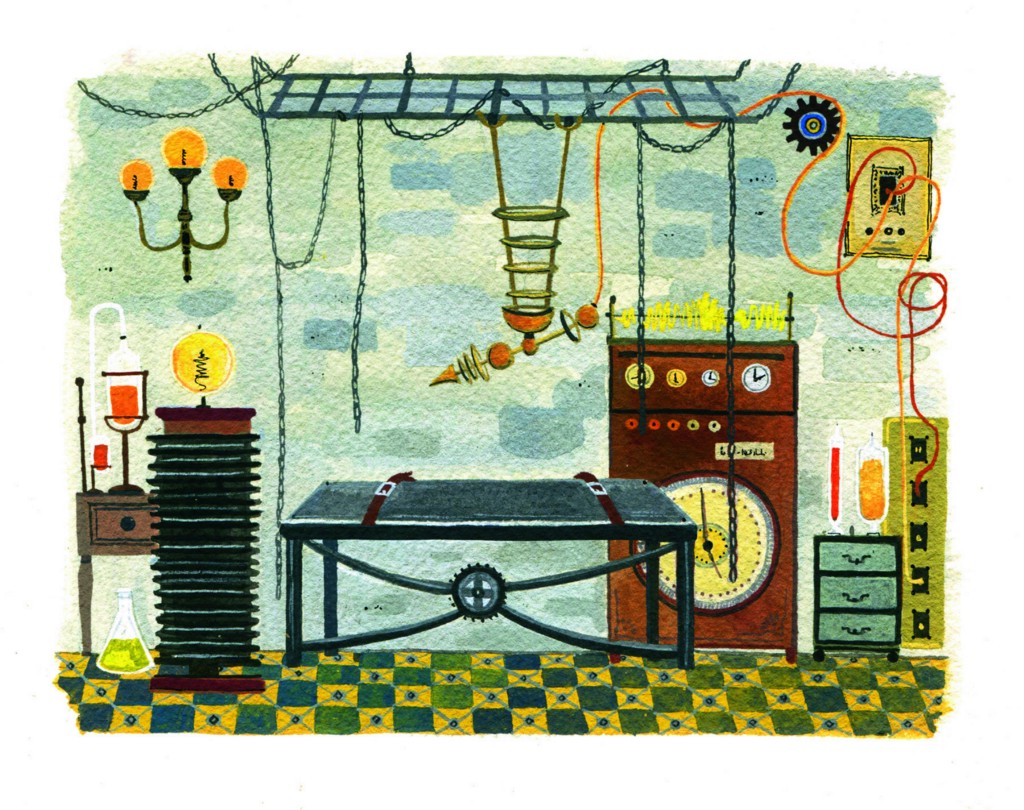
You might say that his laboratory for the study of alchemy and natural philosophy is “where the magic happens.” Here, in a solitary chamber, or rather cell, at the top of the house and separated from all the other apartments by a gallery and staircase, he undertook his work of inconceivable difficulty and labor, which he prefers not to discuss in detail. He will say that he has found a number of treasures in dissecting rooms and slaughterhouses, as well as in vaults and charnel houses, which he describes as “vivid” in style. He found a number of accessories in the Alexander McQueen for Kohl’s line and invested in some art by Damien Hirst.

“The skulls, not the butterflies,” he says.

You might say that his laboratory for the study of alchemy and natural philosophy is “where the magic happens.”

Whenever he struggled with a space, he thought of the bleak sides of woodless mountains, dreary nights, and beakers.

“Who was I? What was I? Whence did I come? What was my destination? These questions are central to both experimental science and personal style,” he says. “I am enchanted by the corpses of executed criminals. The structure of the human frame. All those different parts that make up a whole, like FLOR carpet tiles.”

And he turned to the Container Store’s storage solutions to create an almost clinically organized space.

“Where are my hearts? My eyeballs? My severed hands?” he asks. “I need to be able to find a foot if I need one. Everything has its place.”

He will admit that he had a countenance expressive of a calm, settled grief when he realized that he had to pick up and install the storage system himself — he was outside the delivery zone — but this proved to be a project suited to his meticulous personality.

For Victor, design is a way of creating something beautiful. Or not.

Depending.

“If you don’t have a design plan, you can end up with a startling catastrophe on your hands,” he says. “You want to come out the victor. Oh god, is my name a pun? That is seriously just occurring to me now.”

I need to be able to find a foot if I need one. Everything has its place.

A CHAT WITH VICTOR

HIS STYLE

Textile-wise, I like patterns that gratuitously harass the heart. When I find the right one, a strange multiplicity of sensations seizes me. I love electricity — not light fixtures, you know, but theories of electricity that allow for deformed and abortive creations. I like a majestic aesthetic that recalls the dangerous mysteries of the ocean and snow-capped peaks that are both beautiful and terrifying. Anything that brings to mind the divine glories of heaven and earth. No one can feel more deeply than I the beauties of nature. Except maybe nature. Which I will tame and control like you tame a woman or an unreliable contractor.

HIS INSPIRATION

Certainly ghost stories. I wanted one room that would be perfect for crowding around a blazing wood fire in the evenings and amusing myself with friends, if I decide to make any. I was also inspired by the wildness of Lake Geneva, which is a lovely place to summer, if you know someone with a property there. And if you don’t know someone with a property there, you should do something about that immediately.

IMPORTANT INFLUENCES

I’m influenced by Dante’s sense that everything is the worst. His design scheme for hell is impressive, to say the least! Also Agrippa, Magnus, and Paracelsus. I like a thoughtfully layered home that suggests agony, torment, and isolation. And I knew that I wanted an all-black kitchen — something very Gothic. I put in antique petit granite, which is like normal granite but petit. When using darker shades, you must honor the architecture of the space. Perhaps you want to put in a black concrete apron sink and a matte black faucet. Great. But just be sure to streamline your surfaces and strike a balance: Maybe paint the cabinets a dark black and the walls a darker shade of black. Then you’re ready for accessories — ebony ceramics, black-rimmed baskets, forged steel cutlery, and some good, heavy knives for chopping up the bodies you dig up in the middle of the night.

8 Books that Wouldn’t Exist Without Mary Shelley’s ‘Frankenstein’

BIGGEST INDULGENCE

I wanted to re-upholster some old chairs, and when it came to selecting fabrics, I felt as if my soul was grappling with a palpable enemy. But I found consolation for my toils in the form of some nice swatches from Room & Board. I redid the dining room chairs in “Ancient Mariner,” a delicious deep blue with distinct hints of doom, and “Prometheus,” which is a fierier color. I know that some people would have gone with a simple tan neutral, but I don’t want to think of and dilate upon so very hideous an idea.

UNIQUE FEATURE

My bed is incredible. The bed linens are from Godwin Fabrics, and the bed itself is a custom piece by Jacobin Design. I swear, it’s so comfortable that I have the wildest dreams. I had one the other night where I thought that I saw Elizabeth in the bloom of health, and I embraced her and kissed her on the lips, and she changed into the corpse of my dead mother. So, like I said: a really comfortable bed. With curtains.

BIGGEST CHALLENGE

Sometimes you feel that blank incapability of invention which is the greatest misery of decorating, when dull Nothing replies to your anxious invocations. This happened to me when I was thinking about where to put my operating table in my laboratory. Is it best in the middle of the room to create a sense of flow? Or up against a wall to save space? That was tricky. But these are just the enervating effects of the creative process!

WHAT FRIENDS SAY

I shun my fellow creatures as if I have been guilty of a crime, so I don’t know.

PLANS FOR THE FUTURE

Maybe take a break? Just walk around on some ice?

BEST ADVICE

The labor of men of decorating genius, however erroneously directed, scarcely can ever fail in ultimately turning to the solid advantage of mankind. I think. I hope.

This piece is excerpted from Decorating a Room of One’s Own: Conversations on Interior Design with Miss Havisham, Jane Eyre, Victor Frankenstein, Elizabeth Bennet, Ishmael, and Other Literary Notables.

What to Read When You’re Going Through A Friend Breakup

Endings abound in adult life. Some finales — the end of a love affair or the loss of a job — will elicit much tea and sympathy. There’s an established language to talk about such things; friends and family make time to be supportive, and they know what to say. The break-up of a friendship, however, usually doesn’t get quite the same amount of airtime, love, and comfort. When you are little, wailing to your mother about your BFF not wanting to play with you is acceptable, but once you’re grown, you’re supposed to approach this kind of loss with equanimity. Yet the end of a friendship can cleave the heart as much as the splintering of an intimate relationship. There’s no sex, usually, but you do so much else together. Then you grow apart, or perhaps the toxic rot creeps in. Even when it’s a little bit of a relief to reach the end, though, there’s still a lonely gap in your soul.

In my adult life, I’ve had three friend splits. In two of them, I was the one left, bewildered (though I accepted, in time, my role in these demises). The last, I was the one doing the leaving. It was as lacerating as the first two, especially as she gained custody of our friend group. As therapeutic practitioners who use the ancient curative methods of bibliotherapy and all readers since the beginning of time know, fiction can provide salve — and salvation. Although novels have offered much balm for me, I came belatedly to Elena Ferrante’s My Brilliant Friend and wished I’d had it earlier as medicine.

I came belatedly to Elena Ferrante’s “My Brilliant Friend” and wished I’d had it earlier as medicine.

In deceptively straightforward prose, Ferrante shapes and reshapes of the energy and internalities of friendship. I suspect many people, women and men, have had these all-consuming attachments in childhood and beyond. Ferrante conjures the beauty of such ties, which amid the friend break-up can be soothing and cathartic in a nostalgic way. Lila and Elena are delightful in their daring (Lila’s mostly) and joint adventuring, which offer vicarious thrills and escapist company, both helpful in the aftermath of a friend loss. Then, there’s the complicated world of post-WWII Italy and the peculiarities of Naples to be absorbed and transformed by. But even more analgesic for your sad, mad heart, I feel, is Ferrante’s rendition of the wretched, simmering contest that this sort of closeness can entail.

The frenemy-ship between the very bad and very smart Lila and the more tentative but also brilliant and wicked Elena begins in childhood and stretches through adulthood in Ferrante’s four epics. In My Brilliant Friend, books and a curiosity about the world tie the girls to each other in their working-class Naples neighborhood. One of their planned childhood joint ventures is the co-writing of a novel. Lila ends up completing it by herself, but it’s Elena who becomes the novelist as an adult. Elena gets to go middle school, but dropout Lila learns Greek on her own and tutors Elena. “Would she always do the things I was supposed to do, before and better than me? She eluded me when I followed her and meanwhile stayed close on my heels in order to pass me by?” Elena laments. But Elena is no uncomplicated darling herself. She steals Lila’s idea for an essay and much more for fictional fodder later on in the series.

Life (via Ferrante’s authorial hand) deals the cards unevenly. Lila is brilliant but suffers the locked, provincial minds of her parents, who refuse to let her continue her education. Elena’s intelligence, which perhaps falls short of Lila’s otherworldly genius, is rewarded but even in her youth, she’s aware of her existential hole. As an adult, she goes on to enjoy a more bourgeois existence and success, but she’s remains naggingly empty. Still, she has the literary fame, of which both dreamt. My Brilliant Friend shifted me between Lila’s and Elena’s shoes — and it was hard to be aligned with either one for too long. They are both equally wretched and mildly evil in their own ways. This was both comforting (people are like that sometimes) and disconcerting (if you can’t even trust your BFF, who can you trust?). While I’ve not had a friendship as lengthy and as convoluted as theirs — which lasts through lovers, literary success, and a lost daughter — the dynamic was familiar.

The quiet awfulness of the girls’ platonic, competitive hate/lust riveted me. I revisited my lost friendships, all of which shared the closeness and flame of Lila and Elena’s bond. I’d long accepted closure on them but Ferrante’s characters made me feel lucky for the travels — actual ones to their childhood homes and mine, and places like Tunisia, New York, and Istanbul, and imaginative journeys in art, literature, and music — that I’d had with these ex-friends. But recalling the tiny bits of dysfunction, which were not unlike Lila and Elena’s minor aggressions towards each other, that grew into mountains of angst, I was thrilled these episodes now belonged to the past. The novel serves as a reminder of the massive energy suck of passive-aggressiveness dodged.

Elena’s narration of the friendship also offers a reflective surface, from which to view your own behavior. You don’t have to take the BS, like the competitive intellectual jousting or thieving that passes as friendship between Lila and Elena. Nor do you have to mete it out. Whether you exercised your agency in your current breakup or not, you’re free to do so going forward. Upon finishing the book, which will be a HBO show this fall, the real peace and solace I savored came from the gratitude for these endings — and for the absence of toxicity in my enduring ride-or-die friendships.

Alternatives

Tangerine by Christine Mangan

Mid-century Tangier, rendered as hazy (and, perhaps inevitably, Orientalist), is the backdrop for the reunion of former Bennington roommates, Lucy and Alice. Both characters narrate unreliably in “she said, she said” alternating chapters. Their suspect past and the claustrophobic present unspool in disquieting fashion. It’s Single White Female but abroad, or The Talented Mr. Ripley but with ladies. George Clooney has optioned it and a celluloid take, starring Scarlett Johansson, is forthcoming.

The Secret History by Donna Tartt

A spectacular and truly obsessive novel about Classics, murder, and a nerdy and mostly privileged friend crew. The murder, revealed on page one, will turn out to be the least of the whole drama. The novel charts the fraying of the sometimes cultish group friendship bond, which can crack your heart several times over since multiple, overlapping bonds are in play.

Sir Vidia’s Shadow: A Friendship Across Five Continents by Paul Theroux

Having not been offended by V.S Naipaul’s off-color ways in their three-decade-long friendship, Paul Theroux airs the laundry in this bitchy memoir of a literary romance. Even after calling some of the Nobel Laureate’s work “silly and unreadable” in print, a reconciliation between the two took place before Naipaul’s recent death. If these two can make it back to each other, never say never about any friend breakup.

Fight Bigotry By Reading Trans People in Their Own Words

According to a recent article in The New York Times, the Trump administration is hell-bent on flying in the face of science, culture, and vocabulary by attempting to legally deny the very existence of transgender people.

The best way to fight this outrageously cruel proposal is to throw your money and time at every trans-supporting cause you can think of. But the second best way is to listen to trans people talk about their lives in their own voices. While the administration tries to disenfranchise them based on sixth-grade notions of biology, authors who actually know what they’re talking about are writing literature about their transgender experience. Here are eight celebrated novels and memoirs written by and about people that Trump wants to write out of existence. Buy them, share them, and don’t let them be silenced.

Confessions of the Fox by Jordy Rosenberg

Confessions of the Fox, a genre-bending novel about queer love in 18th-century London, has received high praise as one of the first novels by a trans author released by a major publisher. This novel is worth a read for several reasons, among which is the use of language that would make our POTUS blush. In an interview with Electric Literature, Rosenberg said, “Queers and trans and other gender non-conforming people have these very powerful and deep traditions of resignifying words and our bodies in relation to each other. ‘Pussy’ or ‘cock’ can and does mean anything between two (or however many) people in certain erotic exchanges.”

Jordy Rosenberg on Writing a Queer 18th-Century Love Story

George by Alex Gino

Here’s one that’s written to the president’s reading level. George tells the story a 10-year-old transgender girl and her fight for acceptance. Since its release in 2015, it has garnered numerous accolades, including winner of the Lambda Literary Award and Children’s Choice Book Awards Debut Author. But in 2017 it landed itself on the list of the Top Ten Most Challenged Books for reasons similarly insubstantial to the ones behind Trump’s recent claims.

Yemaya’s Daughters by Lady Dane Figuerao Edidi

One of the first novels written by and about a trans woman, Yemaya’s Daughters is a story of family, spirituality, and humanity. Lady Dane Figuerao Edidi is a prolific artist across several mediums, including acting in New York City, singing jazz in Baltimore, and the numerous books of fiction and poetry she has authored.

If I Was Your Girl by Meredith Russo

If I Was Your Girl, a novel by and about a transgender woman, has made a noticeable splash in the literary world as a Stonewall Book Award Winner, a Goodreads Choice Award Finalist and a Publisher’s Weekly and Kirkus Reviews Best Book of the Year.

Being Jazz: My Life as a (Transgender) Teen by Jazz Jennings

Jazz Jennings has been a leading voice in the transgender community since 2007 when she came out as transgender at the age of 11. Since then, she’s continued to offer her voice through interviews with high-profile figures such as Oprah Winfrey and a reality television show, I Am Jazz, about her experience as a transgender girl.

Afterglow (a dog memoir) by Eileen Myles

Eileen Myles was quoted in The New Yorker as saying, “I’m happy complicating what being a woman, a dyke, is. I’m the gender of Eileen.” In Afterglow, this trailblazing punk poet and writer composes a humorous, though utterly heartfelt and honest, depiction of a relationship between a person and an animal.

Eileen Myles‘ Memoir Is Much More than Just a Dog Book

At The Broken Places: A Mother and Trans Son Pick Up the Pieces by Mary Collins and Donald Collins

Co-authored by a mother and son, this collaborative memoir, praised by The Boston Globe and The Bay Area Reporter, offers an exploration into the minds of two family members as they struggle with their differences. The two points of view offer important insight into acceptance and identity.

Since I Moved In by Trace Peterson

Trace Peterson is a pioneer of trans poetry, founding editor of EOAGH, a Lambda Award winning literary magazine, and coeditor of several poetry anthologies. Peterson’s anthology, Troubling the Line: Trans and Genderqueer Poetry and Poetics, combines the voices of emerging and eminent artists whose identities are being written out of the dictionary by the president. Since I Moved In is her first collection of poems.

Redefining Realness by Janet Mock

As a writer, television personality, and activist, Janet Mock is a leading voice in the movement for transgender rights. Her memoir, Redefining Realness, a New York Times Bestseller and winner of the Stonewall Book Awards, offers her readers insight into an experience as a trans and multiracial person in a largely unwelcoming society.

A 16th-Century Manual on How to Die, and What it Teaches Us About Life

In his three-volume collection of Essays (1580), the French thinker Michel de Montaigne (1533–1592) famously declared that the best way to prepare for death was to think about it constantly. “Let us have nothing so much in minde as death. At the stumbling of a horse, at the fall of a stone, at the least prick with a pinne, let us presently ruminate and say with our selves, what if it were death it selfe?” Montaigne advised that we must contemplate death at every turn and in doing so, we make ourselves ready for it in the most productive way possible. On a more personal note, I managed to achieve this by spending four years writing a Ph.D. thesis on Montaigne’s work, a task which forced me to contemplate death every single day.

Arguably every Ph.D. dissertation carries with it a certain amount of doom and gloom at some point or other, especially during the last few months of writing up. But studying time in Montaigne’s work meant being constantly steeped in his musings and recollections on how ancient philosophers viewed suicide, or the history of funeral practices in Western Europe. By the time I had finished, I was sure Montaigne was wrong, and that in fact I should never think about death again. The stress and anxiety surrounding my submission date meant that the words of a 16th century nobleman concerning the nature of death were low on my list of priorities. And yet on reflection, thanks to Montaigne and his open and honest approach to mortality, thinking about death has actually taught me a lot about how to live.

Thanks to Montaigne and his open and honest approach to mortality, thinking about death has actually taught me a lot about how to live.

Despite what many of us may think in today’s society, talking about death on a regular basis doesn’t have to be scary or morbid. In fact, it can actually make us feel a much deeper connection to the natural world that simultaneously puts the little things into perspective. After all, mortality is a key feature of pretty much everything that exists in Nature, human beings included. The sun, stars, plants and animals — nothing lasts forever, and Montaigne constantly argues in his writing that this is most evident in the mutable physical processes that occur around us: “The world runnes all on wheeles. All things therein moove without intermission.” Winter storms and snows give way to summer sun, flowers wilt and perish. Even the Sun will disappear one day. As humans we fit perfectly into this cycle; we regularly define our lives in terms of birth, aging and death. Montaigne describes his own aging body using seasonal imagery: “I have seene the leaves, the blossomes, and the fruit; and now see the drooping and withering of it [his body].” However, in the natural world, death always gives way to new life. Leaves fall from trees and die before the arrival of new shoots that burst forth in the spring. When human beings die, their bodies decompose and mingle with the Earth, or sail along the breeze as specks of dust, ready to become part of something else.

Thinking about death in this way really helped me to understand that our lives are only one small piece of a much bigger picture — and the bigger picture doesn’t care about how many Twitter followers a person has, or how much money they earn, or where they buy their clothes. It’s easier to put trivial things to one side when we think about how our death actually confirms a meaningful, physical connection to the world around us — we are natural beings who arguably exist for a certain length of time before returning back to the Earth in some form or another. If you’re a fan of The Sopranos, this attitude is perhaps best summed up by the old Ojibwe saying that Tony finds in his hospital room — “Sometimes I go about in pity for myself, and all the while a great wind carries me across the sky.” The end of our life doesn’t mean the end of Nature’s great cycle. As Montaigne remarks, we can find comfort in the fact that our death is merely one part of a much greater plan: “your death is but a peece of the worlds order, and but a parcell of the worlds life.” His tone is so self-assured in the expression of these ideas that his writing becomes living proof of our ability to master any fear we might have about death. Instead we can allow ourselves to return to Nature.

And yet, talking and writing about death constantly is an approach towards our own mortality that often seems completely alien to modern Western cultures. (Eastern cultures are way ahead and can be looked to as an example.) Nowadays it’s relatively rare to engage in an open conversation with friends or family about how we want to be buried, or what happens to the soul after we die. Often these discussions are relegated to funerals or college philosophy tutorials, or they simply don’t happen at all. But Montaigne states time and again that such avoidance is unhealthy and impractical; instead he declares “let us have nothing so much in minde as death” and regularly draws on ancient philosophy to back up his ideas on confronting death head-on. For example, he uses the Stoic philosophy of the Roman emperor Marcus Aurelius (26 AD — 180 AD) to argue that we should relish spending our leisure time in contemplating the meaning of death. Like Montaigne, I believe it is possible to gain a huge degree of contentment from life through attempting to understand death. As well as feeling closer to Nature, death encourages a greater awareness and enjoyment of the present moment. In a strange way, acknowledging that death is certain actually allows us to adopt a more practical attitude towards the time that we do have on Earth. In her book Natural Causes: An Epidemic of Wellness, the Certainty of Dying, and Killing Ourselves to Live Longer, Barbara Ehrenreich encourages us to appreciate life “as a brief opportunity to observe and interact with the living, ever-surprising world around us.” Personally, I’ve found myself feeling extremely grateful during times that I have experienced intense happiness, as well as reaching an understanding during periods of sadness that — like everything else — this too shall pass.

By way of contrast, the death-defying attitude of Silicon Valley in recent years provides an interesting case study in 21st-century conversations about mortality. Rather than acknowledging death, a growing number of tech giants are now actively trying to eradicate it. Social commentators argue that modern society is sometimes guilty of believing in its own immutability, as though certain scientific and technological advances give human beings an absolute right to live on forever. Indeed, the cycle of Nature that I described at the beginning of this essay is currently being overturned in order to make way for advances in 3D organ printing, nanobots that can replicate immune systems and even blood injections that supposedly extend our lives. Peter Thiel, one of the co-founders of PayPal, has admitted that he is ‘against’ the idea of death and aims to fight it rather than accept it. The National Academy of Medicine is currently running a “Grand Challenge in Healthy Longevity” which will award $25,000,000 to anyone who can make a major scientific breakthrough in delaying the aging process. Many of the project’s investors want aging to be stopped completely. Meanwhile, Google’s highly secretive Immortality Project was launched in 2014 and aims to treat aging as a disease that can be cured.

There is a distinct air of confidence surrounding these endeavors; for many tech giants it is not a matter of if immortality can be achieved, it is simply a matter of when. Speaking to Tad Friend of The New Yorker, Arram Sabeti of the food tech start-up ZeroCrater once stated, “The proposition that we can live forever is obvious. It doesn’t violate the laws of physics, so we will achieve it.” The “we” in this context is questionable, since many of these projects are being supported by tech giants and celebrities who will undoubtedly be the only people able to afford an immortality cure if it ever becomes available in the future. These advances are being energetically pursued by people who head up large corporations with arguably little thought or respect for death itself, only the right to continue existing. This isn’t accepting death or preparing for it, this is trying to abolish it in the unhealthiest way possible — surrounded by secrecy, with little thought for the long-term effects on society. Such measures do nothing to cure fear of death, they only try to stop it at all costs, which is really just a form of denial.

What would the author of the Essais have made of these developments? Montaigne was famously suspicious of doctors during a time when modern medicine simply didn’t exist. He often complained that doctors were desecrating the natural duration of the human body and interfering with what he considered to be Nature’s work. Even in an age before painkillers or anesthesia, Montaigne (who famously suffered from excruciating kidney stones) was proud of his ability to withstand illnesses and diseases ‘naturally’: “We are subject to grow aged, to become weake and to fall sicke in spight of all medicine.” Therefore it’s very hard to describe the horror Montaigne would have felt upon being confronted with the idea of death-defying technological advancements such as nanobots and 3D organ printing. Not only are these inventions a human attempt to subvert death by artificial means, they also pose other problems too. For millennia, one of the most positive aspects of death originally proposed by Stoic philosophy (and later adopted by thinkers such as Montaigne) was the idea that death comes for everyone. In other words, it doesn’t care about social class — the rich human being dies just like the poor human being and thus reminds us that deep down we are all equals. Will that be true in the future as well or not? Cryogenic preservation is becoming more and more popular, but it currently costs as much as $200,000 to freeze the entire body. We have to imagine that a drug or injection to cure mortality will be ten times as costly. This means that immortality will most likely be for the few, not the many.

Talking about death, studying philosophy, meditating, and even creating or appreciating art around this theme are all excellent ways to prepare for life’s end.

So what can we as human beings do to respond to death in a practical and healthy manner? Alongside the popular take-up of meditation and mindfulness (which psychologists have already noted can greatly improve our attitude towards death), a younger generation of advocates — most notably Caitlin Doughty — are heading up an increasingly popular “death-positive” movement. This trend encourages an enquiring approach towards death and funerary practices that draws on the type of calm, reasoned manner that Montaigne would have been proud of. Doughty’s website, The Order of the Good Death, states that the death-positive movement believes that “the culture of silence surrounding death should be broken through discussion, gathering art, innovation and scholarship.” This mission resounds with the philosophy of Seneca the Younger (4 BC — 65 AD), a thinker Montaigne turned to repeatedly when he wanted to understand fear of death. Seneca believed that approaching death through contemplation, mindfulness and discussion was one of the key virtues of wisdom; pursuing such an open and honest attitude towards death would eventually allow an individual to patiently wait for death, as one of nature’s operations. Therefore talking about death, studying philosophy, meditating, and even creating or appreciating art around this theme are all excellent ways to prepare for life’s end.

We can also make sure to engage in practical preparations surrounding our funeral arrangements, wills and life insurance. Rather than becoming a depressing chore, instead we can appreciate that it brings peace of mind to family and friends, as well as ourselves. If we’re lucky enough to be dying in a bed somewhere, surrounded by loved ones, at least we can rest assured that these same people have been taken care of. In the Essays Montaigne praises the practical act of constructing your own grave — many of his friends prepared elaborate tombs, sometimes with their own death masks attached. Montaigne says that looking on a replica of your own dead face is an excellent way to prepare for the inevitable reality of the future and also shows you have taken the time to leave the world in an organized way. Incidentally, this is just one example which demonstrates that in the past, Europeans were far more attentive to the idea of preparing for death in a practical manner. Admittedly this may have something to do with the fact that death was far more visible in everyday life thanks to mass graves and public executions, not to mention the high rates of mortality, particularly amongst infants. Thankfully all of these things are in the past, but death still lingers in society, it’s just slightly more hidden away than it used to be. Whilst we can’t all afford a good death mask, it would be comforting to see a resurgence in openly discussing or enacting any kind of practical preparation for death, an attitude which has clearly been written out of European society in the last few hundred years.

In the Essays, death is natural. It forces us to realize our humble place in the great cycle of mutability that constitutes the workings of Nature. In the meantime, talking, writing and thinking about death can radically improve our quality of life by helping us to gain a greater enjoyment out of our time as one of the living, as well as helping those people we will eventually leave behind. I don’t want to start investing in cryogenics or constructing my own coffin just yet, but talking about death from time to time? That’s something we can all start doing right now.

Shirley Barrett Recommends Five Horrifying Books That Aren’t By Men

Shirley Barrett’s The Bus on Thursday starts with breast cancer and only gets more horrifying from there. After cancer and a breakup, her main character Eleanor tries to drop out of her stressful life, running away to a small town in Australia to work as a schoolteacher—but she soon discovers that, like all the best small towns in eerie fiction, Talbingo is not what it seems. It’s part of a grand tradition of weird, dark, kinda creepy fiction—not ghouls-and-gore horror stories, but books that make the hair rise on your neck just the same. A lot of these books are written by women, and for Halloween, Barrett is here to introduce you to the best of them.

Read More Women is Electric Literature’s series, presented in collaboration with MCD Books, in which we feature prominent authors, of any gender, recommending their favorite books by women and non-binary writers. Twice a month, you’ll hear about the five non-male authors who most delight, inspire, and influence your favorite writers.

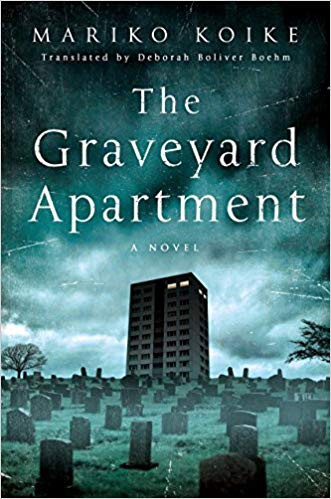
The Graveyard Apartment by Mariko Koike

Perhaps I have endured too many grim rental experiences in my life, for I regularly have nightmares where I find myself living in a dank and dingy hovel, my circumstances having somehow abruptly changed for the worse. The Graveyard Apartment plays upon our anxieties about accommodation, and in particular, the necessity of providing safe shelter for our small dependents, pets included. After years of renting a dark and poky flat, Teppei Kano and his wife Misao are suddenly able to buy their dream apartment: roomy, light and airy, and surprisingly affordable. Why so cheap? The building is surrounded on three sides by a graveyard, that’s why! “When they got up that first morning, the little white finch was dead.” That’s the first sentence and one pet is dead already! Things get worse rapidly, the unreliable elevator and creepy basement featuring largely; other tenants move out, and soon the Kano family find they are the only ones remaining in the building. Although she doesn’t hold back from conjuring up some lurid, visceral horrors, Koike keeps one foot firmly in reality, the horrible plausibility of our family’s situation (But we just bought this place! We can’t afford to move out!) making it all the more anxiety-inducing. So beautifully drawn is our little family (particularly small daughter Tamao) that one finds oneself caring desperately about their plight. Could you live so close to a graveyard, its crematorium constantly belching out plumes of black smoke? The novel finishes with a real estate ad for the now-vacant building, and yes, it does sound quite tempting.

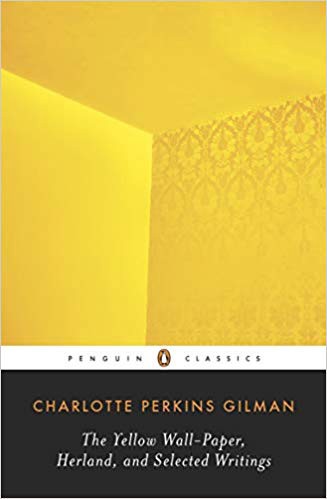
The Yellow Wallpaper” by Charlotte Perkins Gilman

I thought that I had written a very odd book, but this story, written in 1892, is one of the strangest, strangest stories I’ve ever read. “It is very seldom that mere ordinary people like John and myself secure ancestral halls for the summer,” the story begins. “..there is something queer about it. Else why should it be let so cheaply?” Exactly!, this reader wants to scream, especially having just finished The Graveyard Apartment. Get out of there if you know what’s good for you! Our narrator is suffering from an unspecified nervous condition, and her physician husband believes she must rest, installing her in the upstairs nursery where she is immediately struck by the wallpaper: “repellent, almost revolting: a smouldering unclean yellow.” As she spends more and more time confined to her bed, she becomes increasingly obsessed with this wallpaper, describing it in ever-changing detail, spending hours of her days and nights following its weird patterns, only mentioning in passing that she has a baby. “Such a dear baby! And yet I CANNOT be with him, it makes me so nervous.” Soon she begins to detect something beneath the wallpaper, a creeping woman trying to get out. I love this breathless, increasingly unhinged narrator: I love her hysterical use of CAPS, I love this story. It makes you want to read it again and again to try to FIGURE IT OUT, especially the ending.

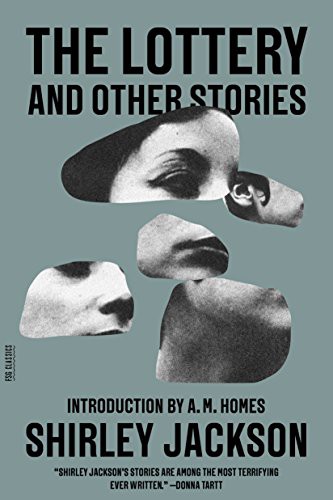
The Lottery” by Shirley Jackson

I’ll never forget the physical sensation of shock I received when I first read this extraordinary short story in an anthology that gave no hint as to what kind of story it was. Told so simply, without any obvious striving for effect, Jackson lulls you into thinking you are reading about a group of jovial, good-natured villagers gathering together for some kind of annual fete. Children play, couples joke with one another, Mrs. Hutchinson is late because she has been doing the dishes and almost forgot that it was Lottery Day. Then as the villagers’ names are drawn from the box, the tension begins to build. Someone mutters that in the neighboring village, there’s talk of giving up the lottery. Old Man Warner will have none of it. “‘Pack of crazy fools,’ he said. ‘…Used to be a saying about “Lottery in June, corn be heavy soon.” First thing you know, we’ll be eating stewed chickweed and acorns.’” Re-reading it a second time recently, I couldn’t remember exactly what the shock was, and thus it packed its wallop all over again. The worst moment? Someone giving little Davy Hutchinson a few pebbles. I’m getting chills down my spine just writing about it. Truly a masterpiece.

Mrs. Caliban by Rachel Ingalls

More a fantastic tale than a scary one, this slow-burning novella nonetheless steadily ratchets up the mounting dread, the sense that this can not possibly end well. How could it? Dorothy has fallen in love with a six-foot-seven-inch sea creature known as Larry, recently escaped from the Jefferson Institute for Oceanographic Research. He suddenly materializes in her kitchen one evening; they find themselves staring at each other. “Her mouth was slightly open — she could feel that — and waves of horripilation fled across her skin. A flash of heat or ice sped up her backbone and neck and over her scalp so that her hair really did seem to lift up.” She offers him celery, he thanks her, a love story ensues. The police are after him; she hides him in the guest bedroom and feeds him bowls of salad and pasta, a secret she keeps from her uncaring husband who only notices enough to complain that she’s buying an awful lot of avocados lately. It’s all preposterous, like a 1950s sci-fi crossed with a Douglas Sirk melodrama! But the story is told so solemnly (and yet with moments of sly comedy), and poor lonely Dorothy so beautifully wrought that the reader accepts it all, turning pages with sinking heart and dry mouth as events build towards the inevitable tragedy. But hang on a minute! you think suddenly, about three days later (I am a little slower than most, admittedly.) What about those strange radio messages that Dorothy kept hearing? Was Larry even real, or has Rachel Ingalls taken me on a wild ride?

Fever Dream by Samanta Schweblin

“I call it the ‘rescue distance’: that’s what I’ve named the variable distance separating me from my daughter, and I spend half the day calculating it, though I always risk more than I should.’ The daughter, Nina, is only small: her mother frets continually about this rescue distance as the horrors mount in this truly disturbing, nightmarish book that, yes, feels exactly like a fever dream if our fever dreams were half as imaginative. Told as a two-hander, a dialogue between the unnamed mother now mysteriously marooned in the emergency clinic and a small boy named David, who is urgently interrogating her. He wants to know the exact moment the worms, “something very much like worms,” have come into being. When she deviates from her account of what has happened, he admonishes her sternly: “None of this is important. We’re wasting time.” It’s apparent that she will die soon, but what has become of Nina? Where is she? The story is set in the muddy landscape of rural Argentina, where they have apparently travelled on some ill-advised holiday, only to find that the stream is polluted, the horses are dead and so are the birds. And something terrible is happening to the children. I read the whole book with a ghastly maternal anxiety gripping my heart — stay closer to Nina, I wanted to cry, don’t let that rescue distance slacken! Suspenseful and dread-filled, this book races along to its remorseless conclusion. Of all the books I’ve volunteered in this piece, this one really got under my (goose-bumped) skin. Extraordinary.

Look at the Woman You Fail to See

“All The Things You’ll Never Do”

by Camille Acker

Bess liked to wear her uniform to Chuck and Billie’s Restaurant and Bar for Long Island Iced Tea Thursdays. She could have changed in those all-automated bathrooms in the airport terminal if she felt like it, so that she wouldn’t have to use the nasty one in the TSA breakroom. She could have just walked in with some tight jeans on and ordered a drink, as if she was just anybody, as if she worked just anywhere.

The lights at C and B’s were turned down so low, people probably could only half see her uniform until somebody opened up the door and let in the early evening light. Nothing like her building at National Airport, with windows that stretched from sidewalk to sun and stone floors shined and buffed to reflect your footsteps.

The woman sitting next to Bess at the bar looked at her badge. “Since 9/11,” Bess told her and leaned in with a smile, “there was almost no more important job.”

“All these attacks now, too? People you wouldn’t believe going out of this city are going through me. And people at the airport can be straight-up nasty. Here they come, complaining about how slow the security line is, wondering why they can’t take their water in with them, asking if they really gotta take off their shoes. And with those full-body scanners? I don’t hear the end of that shit. Go take a bus, I tell them. You know?” New York and Richmond could be reached within four hours. That was far enough.

She signaled to the bartender to set her up another one.

“The other day, I get this bama who can’t find his damn ID. His leg is broken, right, so he’s already taking all his damn time to get to the front of the line. And then, here he is, searching all over, patting down his jacket and shit. Can’t find it though. But, for all that, he’s holding up my line. Inconsiderate, you know? Other people are trying to go places too, see the world and all. He don’t care though.”

Bess took a long sip and set her hand on the scuffed bar. She liked to get her nails done, but she kept them short because no woman who’s going somewhere has nails so long she could scratch somebody just from shaking their damn hand.

“So then I tell him he needs to stand aside, you know, that he’s getting in other people’s way. But he won’t leave. Instead, he starts saying, ‘No, no, I’ve got it, I know I’ve got it.’ Real snooty-like. ‘Just wait,’ he keeps telling me. So, I do, because I’m there to serve people, you know, and he don’t understand that. He thinks I’m there because, you know, it’s like a good time for me on Thursday morning or whatever. But once I decide to go ahead and give him that time, he finally pulls his ID out of you’ll never guess where.”

The woman was still listening, Bess was pretty sure, but she was looking at Bess in the mirror behind the bar. She wasn’t even looking in her face, but this was how people were raised these days, how people thought they could treat you any kind of way. Bess sipped on her drink. She should stop even talking to her, not tell her the punch line. But no, she should hear this story, she should understand just how much life demanded of Bess. This girl probably didn’t know a thing about demands.

“He reaches into his cast, right? His cast. And pulls out this sweaty, bent-up piece of mess. Hands it to me like it ain’t nothing. Proud of himself even. But I got him though, because I wrote on his boarding pass. I got them to search him. I got authority to do that, to make sure people are gonna be safe from sketchiness like that.”

She must not have heard Bess, because she didn’t look as impressed as she should have. Her head did finally start to nod, but real slow, like she couldn’t even understand all the things Bess was talking about, all the things she knew. But then something in her look did change, and Bess sat up straighter in the chair, as straight as she could with those Long Islands starting to weigh her down, and got ready for some respect.

“You go to high school with me?” The woman pushed her bangs to the side and turned toward Bess. She brought her face in close. “Right? Class of ’15?”

And then Bess saw it too: recognition limping into the bar and sitting too damn close, making her uncomfortable.

“Maybe. High school is a long way from the stuff I’m doing now.”

“You was with Rich, right? Didn’t y’all have a baby?” Bess got pregnant their senior year. She didn’t hear the end of her mother’s mouth about it. “Why you go and do that?” she’d asked her over and over.

“Why you working at the airport?” she asked. Now, she wouldn’t stop looking at Bess.

“Where do you work?” Bess asked. She wished for a pen and a boarding pass.

“Human resources for DC government,” she said. Her bangs fell back in her eyes.

“DC government.” Bess let out a laugh.

A lot of the people she graduated high school with were working those same dumb-ass jobs. Just like Rich. Talking about he was going to support them, saying they would get a house. All he was ever going to do was work a DC government job, move up a pay scale, never leave his job, and never have to. No one got fired. Bess didn’t do the exact same shit every day like they did, filling out the same forms, pressing the same damn computer keys in those old-ass buildings. Not her. This girl was hiring other dumb-ass people to work those dumb-ass jobs. Couldn’t waste your life much more than that.

“You get to fly free or something like that?” the girl said. “That’d make working that job worth it. I’d go as many places as I can.”

“I don’t work for the airlines. I work for the federal government. Department of Homeland Security. I don’t just work for some airline.”

“Oh, okay. Well, I guess that’s good.”

“I know it is. I know what I’m doing,” Bess said. She waved for her third Long Island and mean mugged the girl in the mirror behind the bar.

Someone turned the music up and R&B blared out of scratchy-sounding speakers. Bess sang along. She didn’t really know the words, she didn’t even know the name of the song.

She forgot all about her day and all about that girl from high school. Bess didn’t even notice when she left because by then she was slow dragging with the tallest, finest motherfucker in there. She dug the pads of her fingers into the waves he’d probably worn a durag for every chance he got to get them right for the weekend. His back hunched over hers. His slippery smooth words landed on her earlobe. She closed her eyes to catch the tone, not the meaning, and watched the dollar bills suspended from the ceiling sway with the damp heat until the song ended.

Unlike that girl from high school, Bess didn’t work Monday through Friday. But this Friday morning, she wished it was the last day of her week. Her hair was still smoky from cigarettes and her eyes were bleary from all those drinks. Somewhere in the pants pocket of her uniform was her cell phone with the number of the dude she danced with all night. She couldn’t remember his name. She wanted to sleep in and wait for the baby to wake up in another hour. Bess wobbled over to his crib. Her mother said the baby could just sleep in the bed with her, but Bess had wanted to get him something of his own. She hated when people didn’t do right by their kids.

Will was in the Batman pajamas that Bess found in Salvation Army, new with tags still on. He always kicked his blanket off, his dark toes searching for a breeze. It was what his father did, airing just his toes to cool him down. Bess didn’t cover up Rich, he was a man, but she did cover up Will. He, at least, was still her baby. She leaned down and pressed her lips into the pillow of his cheek. The mobile of airplanes suspended from the ceiling turned above him and she gave it an extra push.

One day, she’d have more space: their own apartment, a whole playroom for Will with Batman everything, and a big bedroom so she could keep an ironing board up all the time.

Even on days when she didn’t work, Bess ironed her uniform. She knew to turn the pants inside out because black polyester would get shiny and make you look stupid if you didn’t. She made creases in the legs, spraying the starch on thick and coating not just the pants but the ironing board and her nearby hand. Her mother would buy whatever starch was on sale. Bess didn’t go for that. She bought the expensive starch, one that came in a can with waterfalls and rivers on it. She didn’t know what waterfalls had to do with getting her pants crisp, but that stuff did it every time. Starch went on the shirt too, but she made sure not to put any creases in the sleeves. It made you look corny. Some of the other TSA agents came in looking like that, shirt all crazy with creases and pants halfway wrinkled. They probably didn’t even use the cheap starch. They probably didn’t use starch at all.

You couldn’t be in charge in wrinkled clothes.

“You gonna be late,” her mother said. She leaned on the frame of the doorway. Her hair wrapped and pinned from sleep. She wore the same housedress she had since Bess was a child.

Bess put her finger to her lips and thumbed at the crib. “I’ll be fine,” she said. She went back to ironing the sleeves of her shirt.

“What time you got in?”

“Don’t know, but I needed to relax. When you got authority in a job, you also got stress.”

“Hm.” Her mother pursed her lips like she was about to spit something out. “Been meaning to tell you Rich called, said he could take the baby more, give you time to get used to your new job.”

“He’s not taking Will.”

“Let him be a father.” Time was when her mother hated Rich, said Bess had gotten knocked up by a fool. Now, she acted like Bess was in the wrong.

“He messed that up.” Bess pulled on her pants and zipped them. She put her arms through the still-warm shirtsleeves.

“He got the steadier income. Will could have a room all his own over there.”

“I know what I’m doing.” Bess buttoned her shirt and kissed Will again before she left.

Bess and Vincent got stuck with loading bags in the back for the morning shift. Some people liked being with the checked luggage or behind the scanner, just watching the x-rayed bags roll past. They didn’t want to talk to anyone. Bess wanted to be in the front, checking the boarding passes and IDs. Passengers respected that first person they met more. Some people would look nervous like they were waiting for her to say that they couldn’t go through, or they’d look real close at what she wrote on their boarding pass, worried that she thought they’d done something wrong.

Vincent stopped after picking up the biggest bag so far that morning. He pressed one hand into his over-sized middle-aged belly. He’d been a handler for fifteen years, loading bags, but when the TSA started looking for people willing to take the five-hundred-question government test, he applied. The background checks and running his credit report, they didn’t matter. “An exquisite opportunity,” he told Bess.

She liked that. She hated people who didn’t ever try new shit. Rich never wanted to try anything. Chicken and steak were all he ever ate. He told her he’d had salmon once before, but he’d pronounced it SAL-mon and Bess hadn’t needed much more than that to know she was done. When she left Rich’s place that day, she went to her mother’s house in Northeast. While Will played with his Tonka truck on the kitchen linoleum, Bess took out the TSA information sheet she’d printed at the library and pressed it flat on the table. “I got plans,” she told her mother. “I know it,” her mother said. “But is this plan like the others or is this one going to work?”

Bess wheeled two uprights closer to the large scanning machine and tossed them one by one onto it. Dirty-ass bags. She wiped her hands together, careful to not wipe them on her uniform.

“People just want to complain, talk shit. Like I was telling this know-nothing last night, this lady kept asking me all these questions about the job. You ever get that?” she asked.

“Sure, sometimes. Curiosity is the lust of the mind,” he said.

“Uh-huh. Anyway, I tell this lady last night, bugging me with the questions, if these people trying to fly don’t like it, go take a bus. They don’t check you,” Bess said.

“Buses won’t get you across water,” Vincent said. “And there’s still something about the takeoff of a jet engine, being thirty thousand feet in the air.”

“Yeah?” Bess asked.

“You don’t like flying?”

“Don’t know. Never been on a plane,” Bess said. Vincent got quiet, and Bess felt like she could hear the words like he heard them, and she didn’t think she much liked the sound.

“You want to though? Right?” Vincent stopped loading bags again. “You’ll go to Florida for the new training?”

“Yeah, they paying, I go. And, I mean, I think about flying, you know. I’m not like these people who don’t never want to go anywhere. Went to high school with this girl who hadn’t even been on the Metro. Stayed in her same dumb neighborhood,” Bess said. “That’s not me.” When she’d left Rich and told him his life wasn’t going anywhere, he’d asked where hers was going. And he kept asking while she carried Will and a duffel bag stuffed with their things down five flights of stairs.

“Be careful with those bags,” Vincent said. “Make sure they’re — ”

“I know what I’m doing,” Bess said.

Fridays were the goddamn worst, the business travelers trying to get home for the weekend and the families and couples trying to get away. The afternoons were all the international people, coming for their overnight flights to London and Rome. These women always did it up more than the domestic fliers, more scarves and prettier shoes. Sometimes they wheeled bags Bess had never seen before, not just some plain black roller bags. They had bags in different colors with brand names on them. Or they carried weathered leather bags, big and deep when they reached in for their passports. She knew these women had jobs where someone called them Ms., where someone waited for their approval. Bess marked their papers just like she would mark any of the others. One Ms. stepped up to the stand and gave Bess not one but two pieces of paper. She clicked the pen.

“ID,” Bess said.

“You have it,” she said. Bess thought the accent might be British, or maybe she was supposed to say English. Vincent had given her some history lesson on the difference last week, but he was on break. Bess looked at the papers the woman had. One was the boarding pass and the other was a letter with a crest stamped at the top.

“Ma’am, I need a photo ID. This doesn’t qualify.” Bess held the paper out to Ms.

“My passport was stolen, so I’ve had my embassy declare that I am a citizen and should be allowed on board,” she said. She pulled at the knot in her scarf.

“I don’t think that’s enough to get you on the plane,” Bess said.

“Well, I was told it was.”

Vincent wouldn’t be back from break for another five minutes.

“You can’t just . . . it’s not enough.”

“Do you know that?” she asked. Her nails were short and painted a pale pink. She tapped her fingers on the top of Bess’s stand. Around her wrist was one slim silver bracelet. On her finger was a wedding ring with diamonds all around.

“I know what I’m doing,” Bess said. She gave the woman back her pieces of paper.

“The embassy assured me.”

“I won’t let you through,” Bess said. “You’ll need to move away from the security desk.” She smiled at the next person in line, hoping they would step forward.

“You don’t know what you’re talking about.” “Ma’am, you need to step aside.” Bess motioned for the man at the front of the line, but he still didn’t step up.

Ms. didn’t reply, only draped her other hand over the stand.

“Ma’am, you’re going to have to step aside,” Bess said.

“Sir, come forward.” The man finally neared the stand.

“You’re very disrespectful.”

Ms. moved in front of the man and directly in front of Bess, but Bess leaned away so she could still focus on the man.

“You should be fired for treating someone this way,” Ms. said, her voice just like Bess’s high school teachers when they were trying to embarrass her, trying to let her know that nobody but them was in charge.

“Ma’am.” She tried to reach around to take the documents from the man, to move things along.

“Where is the head TSA person?” the woman asked. “The head TSA person?” Bess asked. She hated people who couldn’t get their sentences together.

“Your supervisor, dear. You don’t know what you’re doing,” Ms. said.

The man who had been waiting behind Ms. lowered his ID, like he wasn’t going to give it to Bess anymore, like she didn’t know how to check him. The people behind him started moving into the other screener lines. One woman shook her head at Bess like she should be ashamed or something. Another looked away when she looked him in the eye, just like that girl from high school being disrespectful, acting like she knew anything about her. She heard someone in line say something about getting a supervisor, just like Ms. wanted.

Ms.’s dark bob swayed with her movements to find someone behind Bess. She removed her hands from the stand and began walking toward one of the scanning lines. On her way, she bumped into Bess’s arm, the sleeve stitched with the Transportation Security Administration patch.

“I haven’t cleared you. You can’t go through there,” Bess said. But the woman didn’t stop, so Bess grabbed at her shoulder.

“Do not do that,” she said, looking over her shoulder only at Bess’s left hand.

Bess didn’t move her hand and the woman tried to keep walking. Her shirt was silk. Bess could tell because she’d gone into one of the shops at National Airport, one where the male business travelers stopped to get their wives something, and fingered a dress in there and the label said “100% silk.” Bess didn’t know if you ironed that with starch. Maybe Ms. always got it dry-cleaned. Maybe she had someone at her house who did those things for her, someone who made her life better and easier because Ms. had already worked so hard and smiled and shaken so many important people’s hands that at the end of the day she couldn’t think about something as small as clothes. Bess hated people who couldn’t do anything for themselves but thought they could do everything. Bess hated people who didn’t know what they were doing.

She grabbed the woman’s other shoulder and began to pull her back. The woman twisted her body and pulled at Bess’s hands, but she would not let go.

“I haven’t cleared you,” Bess said over and over.

Ms. didn’t have the authority that Bess did. She couldn’t just do whatever she wanted. Bess heard the soft rip of the silk and the woman’s shrill “Get off!” right before the commands of two other TSA agents for her to do the same.

Waiting to see someone took hours, but the final meeting with a supervisor so high up Bess hadn’t even seen him yet took only minutes. The woman was important, not just a citizen of the country with the crest emblazoned on their stationary, but a special assistant to the ambassador. It had been the ambassador’s call that ended it for Bess. The TSA didn’t want more bad publicity. The supervisor used words like charges and outraged and disgrace. She hadn’t known the rules at all. He wasn’t sure she’d listened in her training. She should have accepted the paper, and if she wasn’t sure then she should have called a supervisor. When the woman tried to walk through security, Bess should have motioned to the next closest TSA officer to intercept her. Most certainly, she shouldn’t have restrained her as she did. She shouldn’t have torn at her clothes, called her names. Bess hadn’t called her anything, even if she had wanted to. She hated people who lied.

The guards instructed to escort her out asked for the uniform.

“But it’s all I have,” Bess told the men. Still, she loosened the tie and unbuttoned her shirt, the badge weighed down the starched cotton. They stared at her in her black tank top.

Before she walked out, she looked for Vincent. Any evidence of her scuffle with Ms. was gone. The passengers lined up in irritation once again. Vincent checked and scribbled and smiled. She wanted to tell him good-bye, but she didn’t want to yell. She didn’t want to hear her voice amplified over the marble and three-story-high windows. She hated people who didn’t know their place.

It was still early as she drove home, and if she went directly there, her mother would ask if something had happened. If she went and drank some Long Islands without her uniform on, no one at Chuck and Billie’s would know who she was. So, she got out of the 395 tunnel at the first exit and waited at a red light.