A New Short Story by Karen Bender

Issue №337

Jump to story

AN INTRODUCTION BY MOLLY ANTOPOL

I admire Karen Bender’s stories for a number of reasons: their lyrical compression, their humanity, their structural innovations, and the fairness and respect she shows all of her characters. I loved her 2015 story collection, Refund, for the way she wrote so directly about fear, money, and especially anxiety — global and domestic, economic and familial. Her new collection, The New Order, moved me just as deeply.
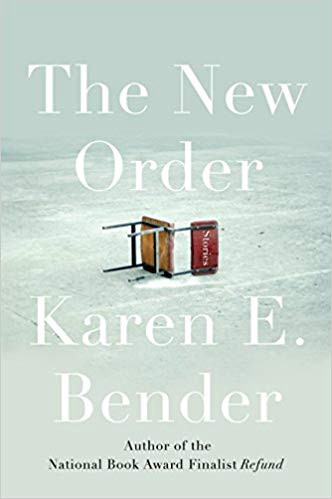
Purchase the collection.

The book shines a penetrating light on our current political moment without a whiff of sanctimony. If I were to describe these stories (always impossible with the best ones), the topics would sound as if lifted from a CNN news ticker: sexual harassment, school shootings, political campaigns, the emotional toll of living under constant threat. And yet, there’s nothing preachy about the writing. Long after I finished the book, I found myself thinking less about the scenarios and more about the characters caught up in them. Bender renders her people with such precision and nuance, such warmth and compassion, that I cared about them as intensely as I do the people in my own life.

In the collection’s superb title story, the unnerving dynamics of teenage rivalry are juxtaposed with the terrifying landscape of gun violence. Take the story’s opening lines:

“We were friends, or we knew each other, and both of us had been in the other room when the attack occurred. This was in the 1970s, when these events didn’t happen at schools. A teacher and a ninth grader were shot in the cafeteria and another teacher was injured so that, from then on, her arm hung down like a broken wing.”

The ninth-grader who was killed had been a talented cellist. Her death changes the order of her school orchestra, hence the story’s title. The narrator, also a cellist, fiercely wants to claim first orchestra seat, and what follows is a sharply observed rivalry between her and another accomplished musician.

Nothing I’ve described here gives anything away because everything that comes after is a complete surprise. A story I initially thought would be about a school shooting becomes a powerful meditation on teen cruelty, and a story about teen cruelty becomes a staggering, incisive examination of female friendship, loneliness, guilt and ambition.

Bender’s elastic use of structure is reminiscent of Deborah Eisenberg and Joan Silber — all three wield a pace that’s unexpected and undulating. They consistently surprise by speeding right past moments that would seem crucial in a more conventional story, only to linger in the quieter, less-explored precincts of a character’s psyche. And like Eisenberg and Silber, Bender’s stories are long — “The New Order” clocks in at 27 pages. Bender luxuriates in the slow moments of her characters’ lives in interesting, experimental ways, conjuring an ending that’s at once shocking and emotionally resonant. There was a moment in “The New Order” when the story seemed to come full-circle. For another writer, this might have been the stopping place, but not Bender. One of the reasons the piece was such a visceral experience was that the story kept going and going, cracking open the narrative to reveal aspects of these characters’ lives that I never could have imagined.

Karen Bender is, hands down, one of our best story writers — and for anyone who hasn’t encountered her fiction, “The New Order” is the perfect place to start.

Molly Antopol
Author of The UnAmericans

All the Keys to All the Doors by Clare Beams

The New Order

by Karen Bender

We were friends, or we knew each other, and both of us had been in the other room when the attack occurred. This was in the 1970s, when these events didn’t happen at schools. A teacher and a ninth grader were shot in the cafeteria and another teacher was injured so that, from then on, her arm hung down like a broken wing. The girl who was killed was a member of the cello section, and she was named Sandra. We were all part of the Intermediate Orchestra of our junior high school, and she had been in the cafeteria, where we were also supposed to be ten minutes after she had left the multipurpose room. The cafeteria was serving fish and chips and Sandra left early because she wanted to be first in line. The man went to the table and shot two teachers and also her, one, two, three, everyone looking on, in disbelief; the man had been one of the fathers at the school.

As part of the process to get us past the incident, which was what they called the attack, after the assemblies, and the short and not fruitful discussions in homeroom telling us to report any suspicious behavior to the vice principal, our orchestra teacher, Mr. Handelman, decided to proceed as usual. In two weeks we were supposed to audition for our chairs in the orchestra. We would each play for one minute and the teacher would rank us on tone, musicality, and pitch, and arrange us in a new order.

Lori and I had become, strangely, better friends after the incident. We didn’t know Sandra very well — mostly we knew her as a good cellist. She had a deep tone that you could hear in your stomach, when she played, that made the air feel like velvet. She usually occupied Seat Three. Lori was Seat Two. She had always been Seat Two. Seat One went to John Schubert, who was adept at pieces that required rapid finger work, whose thumb slid buttery up the strings and who was always, in a way that seemed almost supernatural, on key, but whose tone was sometimes thin, as though revealing some deep unsolved craving within him. We all regarded each other with sharp, interested eyes.

The new order was especially important because the first cello would perform a short, one-minute solo as part of a fall festival performance for the school. In the center of my heart, I wanted to be Seat One someday. I practiced a lot. I was going to audition with my favorite piece, “The Dying Swan,” which felt perhaps problematic, but it was what I was best at playing, and I loved how I felt when I played it — my chest pressing against the wood of the cello, the sense that I was inside the music, which felt like the heart of everything, and, at that age, I wanted to crouch inside the heart of the world.

I tried not to think about Sandra or the teachers when we sat in the cafeteria. We had not been allowed in it for a week as the school administration scrubbed any evidence of the incident from the room, but, unfortunately, there was nowhere else to feed us, so they let us back in. The room was now clean in a stringent, terrifying way, as though it represented all the thoughts we were not supposed to have about our futures. There were rumors about the incident. Everyone wanted to have a theory. Sandra had been wearing a tube top, and the murderous father instructed his daughter, a ninth grader named Jen, not to wear tube tops; he was rumored to find them immodest and harmful in some way no one could explain. Or he shot at Mrs. Simon, an algebra teacher, who had recently turned him down for a date, and Sandra, unfortunately, just got in the way. There was no clarity on anything (as though there could be), but the cloudiness of the incident made everyone eager to contribute to the memorial the school now set up in a corner, a peculiar display with a few bouquets of flowers, some posters with large hearts drawn on them. Everyone was eager to show a capacity for love.

We talked about the other members of the orchestra with an intense desire to categorize them, sort them in ways that were flattering and not. Lori assumed a new mantle of authority following the attack, a new hardness that made it seem she wanted to press herself like a bug into amber, into the air. I looked at Lori and I wanted to fold myself into her, which was an impulse that alarmed me; I didn’t know why I thought I would be safe in her; I wanted her, or someone in the world, to locate me. I wanted this so much I was dizzy. We glanced at the teachers, the other students, wondering who might kill us. It could be anyone, apparently, and it was unclear what could be the armor to stop it.

In this realm of anxiety, we briskly, authoritatively, ranked the others. We agreed that John was overrated in his playing but had a beautiful way of spinning the cello when he was bored, his long legs stretched out, and that Tracy L. in the flute section was a bad player because her high notes never quite hit the right way.

Lori called her mother a loser; her parents divorced, mother always out, or her mother’s girlfriends coming over and all of them drinking vodka shots in the car. My parents were always home, but moved as if the air were made of Jell-O, and they believed the world was always about to break. We sat in that gleaming, scrubbed cafeteria and ate our sugary hamburgers. The world was trembling around us, and it seemed it was going to eat us. We did not talk about the incident. We did not talk about everything we did each day to our classmates in our minds, for the boundary between the violence outside and inside our minds seemed thin and permeable; routinely I would be murdering an unbearable violinist who gave me cold, diminishing looks, or pressing myself naked against the first clarinetist who had delicate, beautiful arms I wanted to wrap around me; I wanted so much, always; the world was spangled and nothing felt quite real.

Lori talked on and on about the mundane, about the Corkys shoes she desired and the way she glared at the boy who once spit at her when she didn’t say hi back and the way the square of chocolate cake the cafeteria served today tasted like metal, which seemed unfortunate and wrong. I wanted her to help me so fiercely my skin burned. I wanted someone to help me.

Now we sat in that cafeteria, our lunches set out on the table, the hamburger and frozen fries and pudding separated into their little compartments, and we pretended we were merely eating, that we were safe. The theater of the two of us continuing convinced me, a little. I believe Lori felt this, too.

We both wanted to be first cello, to perform that solo, to play for a moment in a circle of brightness. We discussed the upcoming auditions for our new chairs carefully, not sharing what music we would audition with. Lori seemed particularly nervous, which was curious to me, for she was a good player, her tone better than anyone’s. She stretched and said, “I’m so bad. I’m going to fuck up,” a groan that was a lie, because she was better than I was, talented in an ineffable, natural way, and I understood that my role was to say to her, “No, you’re not going to,” which felt like opening my mouth too wide. And I was filled with a chilly, unruly fear. For this was the true thing: we both wanted to be first chair and perform that solo. We were both shouldering darkness, in that hot, dirty cafeteria, but what we wanted was a moment in the light, the auditorium filled with people listening to us play the music of composers who created these sounds two hundred years ago. We sat in the cafeteria, the other kids shouting to each other across the room, screaming. We wanted to taste those hamburgers forever; we wanted to live.

We had two weeks to practice. The entire orchestra was practicing. I walked by little practice rooms and heard the muffled sounds of violins, cellos, oboes, flutes, the intent sounds of students. Inside these rooms, everyone sounded angelic and furious. I imagined the students had lost their voices and could now only speak through their instruments, like this. I walked by a room and heard Lori practicing and stood, my heart lacy with panic, by her door.

In those days after the incident, we were different. We were all afraid. There was the way we all jolted up when the alarm system in the school went off, the false alarms that were a guttural, metronome sound. The way we all held our breath. The way the teachers walked down the corridors and could break into a run at any moment. The way it seemed the steel tables could lift off the linoleum floor.

Eating our lunch, we eyed each other like vultures. We were flying over the world, hovering, ready to dive in and grab what we needed. We were talking about our pieces and what we would play and Lori’s arm stretched out on the chair beside her and she was describing I don’t know what, the fact that her bow didn’t take resin well, or that again she thought she would fail during her solo, saying this again, when we both knew it wasn’t true. It felt false in an elaborate, manufactured way, made in a factory of lies, and this made me furious. I was furious at the way the school had not told us exactly why the father had gone on his rampage, or I was furious at the lame directions they gave us, to hit the ground if someone else did this, which I knew wouldn’t help a thing. I was furious at the way my parents or the school told us not to worry. I was furious when Lori claimed she would perform badly when she knew music so naturally and fully she would not. There was a flash of violence outside of me and within me, a massive truck driving over and through my skin.

“You won’t win,” I said. It just came out. There was no reason to say it. I just did.

I paused. Then I continued — “No one thinks you’ll win.” She stared at me. She lifted a trembling hand to brush hair off her face.

“Why not?” she asked, softly.

“People just say. Lots of people. No way.”

This was getting worse by the moment. I looked away. I felt a pressure in my throat, the capacity to say more and more.

“What people?”

“Many. I can’t say.”

This seemed the worst thing, the manufacture of others demeaning her. But I stood by this. I didn’t know how to stop.

“Well,” she said. She was unable to look at me. I felt powerful for the first time since the incident, as though I had become a steel spike, completely hard and sharp; but I also trembled, for I simultaneously felt a plunging sense of loss. It was confusing to experience both of these at once. I realized then how much I admired my friend, even loved her, and that I had damaged something I could not see. Lori didn’t stand up and walk away; she changed the subject to the staleness of the carrot cake on our plates, but it felt as though something finished between us, and that we were now unknowable to one another, separate, an ostrich and a bear.

We auditioned for our seats, all of us, in the room where the orchestra met, and we perched on metal chairs and listened to each other play. It took two hours to go through all of us, our teacher listening with a blank face, his eyelids quivering when he heard music that was startling or good. The violinists went, the flautists, the French horn section, the cellos. We were middle school students, the harshest audience in the world. My playing flew by; I imagined I was housed within the music, and, perhaps, briefly I was. But when I finished, my hand was trembling. I barely heard the music I played.

I sat in the back and listened as the other cellists performed; one by one, each carved their particular song into the air. Lori’s tone swelled dark and lovely into the room, and I was listening, knowing that she had beaten me with that tone, revealing some deep honeyed quality in herself — for the music, when played the right way, seemed to reveal a hidden internal beauty that, previously, no one could see. That was the most glorious feature of the orchestra, the surprising revelations of beauty from people who might be shallow or petty in everyday life. We were just sitting there in that grubby room and it would happen, a floating ribbon of sound. It was better than all of us. Some of the best players knew this and were coy about it. They rushed some golden thing off their violin or flute or trumpet and then gazed into the distance as though they had announced: See. Here.

I clutched my cello, feeling more sick by the moment due to a variety of things: the peculiar fact that, two weeks after the attack, we were continuing this process at all, which felt both cruel and a relief, the fact that I wanted to be first chair so much I could barely breathe, the fact that I wished, beyond anything, that I could play like Lori, and that I had ruined something between us by my spite.

And then there was a squawk of her bow. A bleat.

We all heard it — the inside of her skin had been turned out, and for a moment all of ours had as well. Her face twitched. She continued. It was shocking. Lori never made mistakes.

She did not look at anyone when she had finished, though I watched her, wanting to catch her eye, to be absolved of the awful fact: I made her mess up. It was a fact that was as clear to me as the sky. I had helped her doubt herself so she made this mistake, and suddenly I wanted to comfort her, in some sorry soft part of myself, but she put away her cello, picked up her backpack, and walked out.

They announced the new order the next day. Mr. Handelman tallied everyone’s score and read out where we were. The class was quiet for once. He announced violins, violas.

The order of these sections resembled what it had been before.

Then he announced the order of the cello section. We sat and waited to be called.

He said my name. First.

I looked up. How could this be? He glanced at me, nodded. “You played well,” he said, acknowledging all of our surprise. I could feel shock flicker across the faces of other cellists. I was now Seat One. It felt at the same time wrong and also completely predictable, clicking into a buried hope I held about myself. I felt like I contained a thousand golden coins. After he read the names, we shifted into our new seats. I carried my cello to the first seat and sat down. I looked at the others and they seemed very far away, even though they were all just a few feet beside me, and John Schubert right beside me. The sun had come up in the wrong part of the sky.

After her disastrous audition, Lori now occupied the seventh chair out of eight. We did not know how to look at each other. I had won but I hadn’t. There was now a piece of rotten fruit in the room. I wondered if there was any way to actually win, to ascend to some place of calm and triumph, but perhaps there was not. There was no way to win. This thought scared me so much I tried to think of one word, like “red” or “sneaker,” over and over, because I did not want to be thinking about this at all.

Sometimes Lori’s particular, deep tone rose through the others. I loved her tone. I wanted to inhabit it. I tried to send this message to her in my mind, my admiration of it. Our conversations were different now, and we mostly used the word “fine.” We were speaking another language entirely. Then she dropped out of orchestra and I didn’t see her at all.

I prepared for my solo. I practiced a lot, and our teacher nodded at me in a way that said he thought I could do it. But right before the concert, there was a slight earthquake and the auditorium where we were supposed to perform was damaged. The concert was canceled, forever.

A week later, we auditioned again for a holiday concert. This time, when I auditioned, I slipped down to seventh chair. I sat in the same chair Lori held before she left.

We threw our caps into the sky. We ran into each other on the wide, grassy field where we graduated junior high, filled with hundreds of ninth graders and their parents, the grass trampled by a thousand shoes. Lori’s parents were walking carefully, distant from each other, her mother shouting something to her father. Lori walked in front of them, clutching a bouquet of balloons, her face squinting as though the afternoon light had suddenly become too much. I raised my hand to wave at her, low enough so that if she wanted to ignore me, I could pretend I was scratching my face. She saw me and raised her hand the same way, and for one moment we were looking at each other, with no expression I could categorize — then we kept walking, past each other, and on.

We went to high school. Lori was districted for another school, so she vanished. Whenever I met someone from her school I asked if they knew her and found out various facts — that she was dating a football player, that she crashed her mother’s car, that she was working at Hardee’s. Then I heard nothing. Sometimes I passed Sandra’s older brother in our high school. He was on the basketball team, and walked with a loose, loping pace. Once I saw him pack up his belongings as he left his trigonometry class, and I was impressed by the way he organized his backpack, the tenderness with which he slid each notebook inside.

The teacher whose arm had been injured in the incident was transferred to the high school I attended. She taught and sometimes told stories about the moment she saw the father run into the cafeteria. She kept thinking he wanted to eat the food being served that day. Why else would someone come to the cafeteria? What other reason could there be? She often said that and sighed, and gently touched her wounded arm.

My life unfolded in ways that surprised me and did not. I stopped playing cello in high school, but that time in the orchestra left an echo — this fierce gleam of desire. The desire took various forms. It fell like a pale net over anything I could capture. It fell over people. It fell over a man who loved me for the way I kissed him and then thought I had the wrong taste; the man who admired me as long as I didn’t contribute more sentences to a conversation than he did; the man who loved the least pretty parts of me, loved my feet and legs, who I wanted to crawl inside because he seemed like a shelter, until he was not. We moved with the family to many cities over the years, and the net fell over each city as I tried to find a way to make it a home. It fell over my children, who appeared one way when I dreamed of them and another way when they arrived, who accepted my love but then were affronted by it, who believed I could offer nothing to them and rushed away. It fell over goals for work. I studied in my desired field, I took tests and failed them and took them again; but when I went from interview to interview there was something in my face, something lurking in the way I sat, that made them turn away. It fell over me as I walked down the street, as I walked by men I hoped would look at me and ones I hoped would not, it fell over my body, various days, as I tried to protect it — when that guy who came to fix the washer kept calling and telling me he would show up at any moment, when that boss somehow figured out where I lived and kept following me home, leaving oddly chosen gifts in my mailbox, the pink plush bunny, the Toblerone bar, until the day he whispered to me by the Xerox machine, bitch you didn’t thank me, and I quit the job and moved away.

There were many types of violence in the world, some quieter. I walked down the street and I imagined if the pounding I felt, in different forms each day, existed within me or outside of me. Had I done something? Or was this the way everything was supposed to be? How did you make your way through the world dodging the violence both outside and within? There was, in me, a continual restlessness, a movement, a wondering.

I was forty, then fifty. I never sold my cello, but I never played it either; it was in a closet, packed away. One day, I picked up the cello and played a few notes. It sounded terrible. I could hold my bow, but to pull the bow across the strings felt awkward. I could not move it with the right pressure. I could not believe that I was ever capable of making a sound that was like velvet or honey.

I sometimes thought about Lori, and the way we talked about that audition, the way we had all waited, frozen, for our chance to play, and how we fell, so quickly, into that new order. How the process of making that order once seemed the most significant event in the world, and how I now understood its brevity. How I wanted to be important, and how I wanted to be alive. I thought of the feeling that rose up, sharply, when I told her she wouldn’t win. How I felt like a spike. I was both appalled by and enjoyed that feeling.

During my life, I said things I wished I hadn’t. I stormed out of rooms, I ruined things with others, I acted foolishly and without thinking, I did things I don’t want to admit, actions that filled me with shame, but that moment was somehow the one I remembered.

Then, one day, she called me.

I was in the neighborhood, she said. I looked you up.

It was her voice. It sounded like her regular voice, from forty years ago, but also like it had been put through a strange, bleary horn.

“You may not remember me. I’m Lori Longstreet. From Garfield Junior High?”

Her voice trembled, but I knew it.

“From Advanced Orchestra?”

It still was somehow important, to me, that it was Advanced. “It’s me!”

She sounded delighted to be found. She was passing through the city where I lived, and she wanted to stop by. She was trying to see some old friends.

Old friends — she said it as if we had rollicked through school together. I thought of our sitting in the cafeteria, and wondered if she remembered exactly who I was.

I said I would be delighted to see her. I was. I wondered if she needed a place to stay.

She hesitated. That would be helpful, she said.

I lived alone in a rental then, a small house with blue vinyl siding that somewhat resembled wood. In the back, a deck overlooked a small yard, and during the spring, the azaleas rose, a pink and foamy tide. There was a spare room; my children didn’t visit often. So just like that, Lori was going to come by.

I needed to get the place ready. I wasn’t someone who loved cleaning, but it seemed important to clean the house. I vacuumed, I scrubbed the counters, I wiped smudges off walls. I noticed the crack in the window I never seemed to get fixed, and the peeling paint where the kitchen ceiling leaked. I noticed everything that was wrong. I rarely looked that closely at this place where I slept and ate, but when I did, I found extensive stains, odd smears. I understood that I mostly moved through my life trying not to look at them.

In the bathroom, I peered at myself in the mirror and haplessly rubbed moisturizer into my face. What would she see when she saw me? Would she remember what I had said? I remembered my words, how powerful I felt after they left my mouth, and how sour it became after I said them. The way we sat at the steel tables in the cafeteria, the way we negotiated our confusion and shame at being alive, the way we tried to believe in our claim to this air, these tables, these hamburgers before us, sitting on those hard steel benches, so cold they seemed to be balanced on ice.

She arrived in the afternoon. I saw her get out of a cab slowly. At first, I didn’t think I was looking at Lori at all, but at her mother. Her hair was now cut short and silver, in a bob. She had slipped into the body of her mother like it was a coat. It was always a surprise to experience this in people you hadn’t seen in a long time. But I pretended not to see any shift in her, as I knew she would pretend not to see any in me. I stepped out into the sunlight and waved.

“Hello!” she called. I hurried to the sidewalk to meet her. She hugged me, a firm hug, which was a change — she was not the type who hugged before. Her hair held the smell of a meadow, and I remembered how wildflower shampoo was her favorite many years ago. I felt the solidity of her arms.

We walked up to the house; she dragged a small suitcase behind her. She walked with care. I could see her fourteen-year-old face housed in her middle-aged face, which was the gift that friends from your youth gave you — they could locate the particular beauty in you from decades before, and you could locate it in them.

I wanted her approval. This nervousness surprised me, and I tried not to show it to her.

I opened the door and she stepped inside. I eyed my possessions critically, apprising what was there. A bamboo lamp stand, a porcelain lamp from my grandmother, a turquoise pillow with drawings my children had silk-screened on them, for an elementary school fundraiser. Lori walked in, placing her feet guardedly on the floor, and her expression held the same authority as her younger self, but was now overlaid with something else, a gauze-like film of calm.

“I like your house,” she said. “Look at this.”

She walked around, brushing her fingers against items in the living room — the lamp, the coffee table, a blue glass vase. She talked. She talked a lot about nothing. It seemed to me that she was nervous, but the quality of her talking was not anxious, but simply had the purpose of filling the air. She liked admiring things, in that nervous way people have when they want to establish intimacy quickly. She sat on the couch and stretched out her legs. She admired the potted geraniums, the strawberries I put in a dish as a snack. There was a self-absorbed quality to the admiration, as if she wanted me to approve of her. She had been in contact with many people from our junior high school: a month ago, she ran into John Schubert, the best cellist, by the avocados at Ralph’s supermarket. John told her about his experience as a music major at UCLA, which ended abruptly when he broke his wrist during a softball game; he now managed an instrument store in West Covina.

I remembered the low roar of that multipurpose room, all of us talking as we perched on our fold-out chairs. Mr. Handelman clapped and we picked up our instruments, and looked to him, waiting for him to begin conducting. That building no longer existed; it had been knocked down years ago to make room for a new basketball court.

“What do you think Mr. Handelman is doing now?” I asked. “Is he still teaching?”

Her face stilled.

“Oh,” she said, looking at me. “Don’t you know? Mr. Handelman had a heart attack last year. He was teaching until the last minute, and then, boom, he died.”

My heart jumped in the way it did when I heard bad news.

“Oh,” I said.

She wore the same expression she had when she was fourteen and knew information that I didn’t, as though her knowledge put her on a shelf above me. She had not lost this capacity.

“I thought you knew,” she said.

“I didn’t,” I said.

“Well,” she said. “I’m sorry. Let me tell you some good news, then — remember the trumpet section? Gail and Harold? They got married. And they play for a band in a circus. In Austria! They have an exciting life — ”

I wished there was something I could tell her that she didn’t know. But she sat in my living room, glowing almost, with her expansive knowledge of what everyone else was doing.

She kept talking. She was celebrating her twenty-sixth year of marriage with her husband, Fred, who was her best friend, and she was now an aficionado of French cooking and made excellent soufflés, and on her fiftieth birthday, her children threw a party for her at a restaurant on the Marina, just on their own, without her asking, and on and on. She did not sound like she was bragging, though of course she was, but I heard something else in her tone, what I knew of her from junior high school — the sense that she was asking permission, from me.

I listened. I could see that she was glad I was listening. We had tea, and then I made pasta with broccoli and garlic and Parmesan for dinner. We sat, facing each other at the table, the way we used to in the cafeteria. I wondered if she thought I looked old, my hand placed carefully on my cheek to conceal any weary parts of my face. She thought that everything I prepared was delicious.

“I could eat this forever,” she said. “I want the recipe.”

She even got a little card out of her purse and wrote it down, right then. When she brushed her hair from her face, it was an adult gesture echoing the way she did this as a child.

Her appreciation was nice, but I felt a kind of force behind her comments, a radiation, lifting off an explosion within. It made me want to duck under something. I kept peering at her, waiting for her to do something that would instantly reveal her adolescent self; I longed to see the authority she once had.

My response was to keep feeding her. After the pasta, more strawberries. Then some mint chip ice cream, which had been sitting in the freezer for so long there was a sheen of ice on the top.

Our conversation circled, floated around the room. But the discussion wasn’t answering some important questions. Did she ever play cello anymore? Did she remember playing in the orchestra? What else did she remember?

I wasn’t sure what I wanted her to say, but I wanted the past to be simpler than I remembered.

Her face flickered. “Oh, orchestra,” she said. “I stopped playing right after I dropped out. I just didn’t want to. I didn’t want to touch a cello after, everything.”

She clasped her hands in front of her, firmly, as though she were being interviewed in some legal way.

I felt a sadness settle in me, entwined with guilt.

“But you were so good,” I said, wanting her to know this, “I remember your tone. It was better than anyone’s — ”

“I was okay,” she said, noticing my expression. “I didn’t want to play anymore. Maybe I should have. But I just didn’t.

Something was there in me, I wanted to do something else. I had so much energy. You know? I tried running. I joined the track team. I ran with other girls for six miles until I couldn’t breathe. I wanted to run farther, until I hurt my knee. Then I went through a time when I was sleeping with a lot of different guys. Some I liked, some I didn’t, but I just wanted to feel how they made me feel, in every way possible. I learned a lot during that time. I still wanted things. After that, I started baking cakes. I wanted to make the best cakes, the sweetest. Then I gained forty pounds because I kept eating them. Each cake was more delicious than the other, and I had to finish them all. Then I started going to spin classes, and I dropped twenty pounds.”

She sat back, exhausted.

“In the last year or so,” she said, “I haven’t been well. I won’t go into the boring details, because I’m sick of talking about them, but, well. This stupid body. Now while I can still get around, I wanted to see everyone I knew.”

I looked at Lori, a slight chill inside me. There was nothing that appeared different about her, except for the careful way she walked. I peered at her, trying to figure it out.

“Oh,” I said, saying the things one said when confronted with vague medical information, “I didn’t know. I’m sorry — ”

She waved these words away. She closed her eyes.

“Whatever.”

“What — ” I said. “Do you need anything? Are you — ” “Let me show you pictures of the cakes,” she said.

She held out her phone, showing me photos of cakes she had made when she inhabited that particular expression of longing. The cakes were round, decorated with various types of perfectly formed, bright flowers, and, even if the cakes were iced in yellows and pinks, had the odd feeling of fortresses.

Finally, after talking for several hours, I told her I had to go to sleep; I showed her the room with her bed and her towels. Then I shut the door to my room and thought of her in the other room, and I had a sudden thought that she would open my door, march into the room, and stab me. I imagined the compliments about my pasta were all a front, that she had been waiting all these years, secretly, to do this. I could picture her standing over me, taking clear aim for my heart. I didn’t know why this idea came to me, but the more I thought it the more possible it seemed. I lay in the darkness for some time, listening for movement, but there was none. I locked the door.

In the morning, I woke up and, for a moment, did not get out of bed. I listened to Lori, moving around the house. In the pale, morning light, I did not feel she would stab me, but was comforted by her presence. I wanted her to stay another night, and I also wondered why she was here at all.

When I came out of my room, she was sitting at the kitchen table drinking coffee.

“Hi!” she said. She had to leave at around two — and was heading home.

I brought out some rubbery croissants from Safeway and we sat together, the same way we sat at that cafeteria table forty years ago.

I thought of us then, the way we leaned toward each other needing the fact of our own presence, then the feeling that we were made of fog. I thought of the sound of my voice when I told her she wouldn’t win, and the absolute steeliness of my whole self at that moment, the piercing of love between us, of our friendship. I took a bite of the horrible croissant.

“Lori,” I said. “Have you heard anything about Sandra’s family? What happened to them?”

It was not an honest question because I followed what had happened to them. The mother fell into depression, and they moved to Arizona. The older brother became a reporter on the local news in Phoenix. The father had a stroke a few years after the murder.

She put down her croissant. Her hand was a little shaky.

“I haven’t,” she said.

Then she told me this.

She had been annoyed at Sandra that morning. Sandra came into the orchestra room wearing a yellow tube top, and Lori felt a wilting inside because Sandra looked radiant in it, as though she had, through great will or knowledge, changed a deep force within herself. Sandra walked differently, more lightly when she wore it as well, as if she were balancing on a piece of sky. It was how some girls moved through the world now, with that precise assurance. But we were not those girls. Some were, but we were not. Lori told me that one reason she liked orchestra was not just because she enjoyed playing music but because she felt safe with that cello in front of her. It was like a large and kindly guard.

And here was Sandra in the tube top, her shoulders gleaming, Sandra walking and invisibly throwing glitter into the air. And then Lori felt certain that Sandra was going to crush her in some way she could not explain.

Lori wanted to get rid of her.

“Go,” she told Sandra. “It’s fish and chips day. Don’t you want to be the first in line?”

Fish and chips were Sandra’s favorite lunch. Everyone knew. Lori said that she remembered how Sandra looked at her, trying to figure out if leaving early was a good idea.

“Aren’t you hungry?” Lori had said. “It’ll be a long line.” She was doing her a favor, Lori told herself, telling her to

go first in line. In fact, she was being generous to Sandra, helpful even, ignoring the fact that she was happy when Sandra ran off. Lori was glad, just then, that she didn’t have to look at her. That clear feeling of relief. She didn’t have to watch Sandra walk through the orchestra room and feel that she, herself, was somehow flawed. Lori thought she would follow her to the cafeteria, in ten minutes, but then Sandra would have disappeared into the crowd and Lori then believed that she would not feel diminished.

She remembered, later, how clear her mind was the ten minutes after Sandra left. The worry that had rushed through her was gone.

And then there was the slow unfurling of catastrophe, the shouting and the sound of alarms, and the fact that no one could go to lunch at all. Mr. Handelman shutting the doors and locking them, the news that something was happening in the cafeteria, not just lunch, and that some people had been injured. No, not just injured: killed.

We didn’t hear that Sandra was dead until the next day, and this at first seemed a lie, a rumor, a joke, nothing that could be real.

Lori said that when she found out, she laughed — not because she thought it was funny, but because she had no idea what reaction to have. There was no sense to the statement that Sandra had been killed; nothing felt real at all. In fact, it seemed that her brain had shut down: she could not think. She could not believe this.

Lori spoke quickly and did not look at me as she told me all of this, the words surging with an intensity that made me wonder if this was the first time she was telling this story. And then she put her hand on mine and said,

“I want to thank you.”

Her hand felt too cool, like a ghoul’s.

“For what?”

“You understood,” she said. “You said I wouldn’t win.” She looked at me with an assumption of my innocence

that was so utterly incorrect it felt as though the world was constructed of nothing. I had not understood anything; she was wrong. The absolute wrongness of this made me concerned and suddenly I wanted to eat everything in the world. I took a bite of croissant and chewed it, slowly. I wondered if I should just allow her this misunderstanding of me, for I came out in such a good light.

“I did say that,” I said.

“I felt like my terrible nature was finally seen,” she said. “And you were right. I shouldn’t have been First Chair.”

I picked up our plates and put them in the sink so I wouldn’t have to look at her. Lori’s face shone with certainty about the misguided fact of my goodness.

You didn’t shoot her,” I said, carefully. “You just told her to get lunch. You didn’t know — ”

“So?” she said. Her eyes were bright and troubled. “I somehow helped. If she had not gone to the cafeteria, she would be here.”

“Shut up,” I said, trying to sound a little light, but she jumped. “What are you talking about?” I continued. “It was him. He did it. Not you.”

“But I gave her the idea to go.”

I stared at her. I had to tell her — that she was wrong about me, that the actual reason I told her she would not win was because I wanted to win, I wanted to play in the circle of light.

“But then I heard you play in the auditions,” she said, “and I thought, she will be First Chair, I knew it before he said it, and then you were, and I felt somehow freed. I can’t explain why. But I was glad that you had won, not me.”

Just as I had felt forty years ago, sitting across from one another in that cafeteria, it seemed we were sitting on different continents. I waited for myself to correct her. I waited.

I did not.

On the continent across the table, she put her hands over her face and sighed. “So,” she said. There was a silence between us that felt a thousand years old. She got up and stood, a little lost, in the kitchen. She went into the room where she had slept and wheeled out her suitcase. I followed her, and I felt needy; I wanted to talk to her more. I didn’t want her to leave.

“Do you have a cello?” she asked.

I kept my old cello stored in the back of my closet with other items I didn’t use. I brought it out and unzipped its vinyl bag. I had not played in many years; it made no sense to keep it, but I carried it everywhere I had lived. The strings were limp with disuse. They were soundless when you plucked them. She rubbed her palms on the curved top of the cello, the rounded edges of it.

“Do you ever play?” Lori asked.

“No,” I said. “Never.”

“But you still have it,” she said.

I did. I refused to give it away.

“When was the last time you played?” I asked. She thought. “I don’t know. Thirty years ago?”

“I remember how you played,” I said. I wanted to convince her of something, of the beauty of her sound. “I remember it.” She looked at the cello and rubbed her palm across the

edges.

“May I try?” she asked.

“Yes,” I said.

She tuned the old instrument so that it had some approximation of a cello, and then sat down in the living room and leaned its neck against her shoulder. She settled herself behind the instrument, turned the tuning pegs, plucked the strings and listened to them. I had forgotten what it was to play an instrument, to feel myself creating the clear notes, to feel the fluttering and hum of music against my chest, that gorgeousness rising from my arms, my breath.

I waited to tell her why I had said what I said to her. I waited.

She tightened the bow and drew it across the strings of the cello.

“How do I sound?” she asked.

I felt we had been talking since the beginning of the world. Outside, it was just after noon; soon the sun would start dying. A sparrow called. Somehow I knew that this was the last time I would see her. We sat across from each other, our chairs balanced on the flat, grubby carpet, sitting up, politely, our backs straight, trying to hold down this room with only our own weight. A million years ago, we sat in the cello section of Garfield Junior High’s Advanced Orchestra; a million years ago, we sat on the cafeteria’s cold steel benches, as, around us, our classmates roared. Lori’s thin fingers touched the neck of the cello. She plucked the strings, A, D, G, C. They echoed in the small room. She set the bow on the strings and slowly drew it across them, and the two of us listened, waiting to hear the sound she made.

End

About the Author

KAREN E. BENDER is the author of Refund, a finalist for the National Book Award for Fiction, short-listed for the Frank O’Connor International Short Story Award, and long-listed for the Story Prize. She’s also the author of the novels Like Normal People and A Town of Empty Rooms. She has won grants from the Rona Jaffe Foundation and the NEA. She lives in Virginia with her husband, author Robert Anthony Siegel, and their two children.

About the Recommender

Molly Antopol’s debut story collection, The UnAmericans (W.W. Norton), won the New York Public Library’s Young Lions Fiction Award, a National Book Foundation 5 Under 35 Award, the French-American Prize, the Ribalow Prize and a California Book Award Silver Medal. The book was longlisted for the 2014 National Book Award and was a finalist the PEN/Robert W. Bingham Prize, the Barnes & Noble Discover Award, the National Jewish Book Award and the Sami Rohr Prize, among others. The book appeared on over a dozen “Best of 2014” lists and was published in seven countries. Her writing has appeared widely, including in The New York Times, Wall Street Journal, Granta, One Story, The New Republic and San Francisco Chronicle, and won a 2015 O.Henry Prize. She’s the recent recipient of fellowships from the Radcliffe Institute for Advanced Study at Harvard, the American Academy in Berlin, the American Library in Paris, and Stanford University, where she was a Wallace Stegner Fellow and has taught in their Creative Writing Program since 2008. She’s at work on a novel, which will also be published by Norton.

About Recommended Reading

Recommended Reading is the weekly fiction magazine of Electric Literature, publishing here every Wednesday morning. In addition to featuring our own recommendations of original, previously unpublished fiction, we invite established authors, indie presses, and literary magazines to recommend great work from their pages, past and present. The Recommended Reading Commuter, which publishes every Monday, is our home for flash and graphic narrative, and poetry. For access to year-round submissions, join our membership program on Drip, and follow Recommended Reading on Medium to get every issue straight to your feed. Recommended Reading is supported by the Amazon Literary Partnership, the New York State Council on the Arts, and the National Endowment for the Arts. For other links from Electric Literature, follow us, or sign up for our eNewsletter.
11 Funny Horror Movies to Watch with the Wimp You Love

My boyfriend jokes that we might have a problem: I like scary movies and he likes funny movies. Why, you might ask, is this a problem? Because of a compatibility analysis by the founders of OkCupid (who, not for nothing, are also Harvard-grad mathematicians). This analysis determined that the longevity of a relationship can be determined by your answers to three seemingly innocuous little questions. We’re all good on the first two — one, have you ever traveled alone, and two, would you want to live on a sailboat for a year. (Yes, and yes, for both of us.) But the third question — do you prefer scary movies or funny movies? — apparently spells disaster. He loves comedy. I love horror. According to the data, we’re doomed.

While my boyfriend does not usually trust personality tests, he does trust data (it should be noted he is a software engineer). So this conclusion gave him a nasty knock. Luckily, he’s been willing to look past the numbers and see that we can smooth over our apparent incompatibility through the art of compromise. I’ve come to like our evolving Sunday night ritual, which is to watch the previous night’s Saturday Night Live and see if it’s still good. (The answer is “sometimes.”) And even though he’s a wuss about horror, my boyfriend is willing to surprise me with a trip to the #1 haunted house in the Pine Barrens. We take turns being more than one kind of person for each other. And ultimately, what is love sometimes if not equal parts hilarity and horror?

During the Halloween season, this kind of compromise becomes particularly crucial, both for horror buffs who are desperate for someone to watch Haunting of Hill House with and for wimps who are nervous someone’s going to jump out at them on the SUPPOSEDLY non-haunted hayride. If you’re in a mixed relationship like mine, what the hell do you watch on date night?

The good news is horror movies — like love — can do more than one thing at a time. They can even be funny! I’ve organized this on a scale of compromise depending on where you each fit on the comedy/horror scale. We begin with the funniest and end with the scariest.

Teen Wolf

This one is pretty easy to negotiate for because it’s not that scary (more fantasy than horror) but has all the trappings of Halloween. A young Michael J. Fox stars as Scott Howard, a disappointingly average high school character. He pines after Pamela who won’t notice him, ignores the advances of his best friend, Boof (???), and gets bullied by Mick, a rival high school basketball player who happens to be dating Pamela. When Scott starts to notice some pretty intense forms of puberty (hair everywhere!) he tries to hide it. But when he goes to a party with Boof (STILL NOT OVER THIS) and the two “accidentally” start making out in a closet, he gets too aggressive and claws her on the neck. Scott, horrified with himself, goes home to confront his father who tells him he’s a werewolf. When the secret gets out that he’s an aggressive wolf man, Scott becomes popular overnight (the full moon helps) and a basketball all-star courtesy of his wolf-strength. He’ll have to choose between who he is as a wolf and who he wants to be as a teenage boy.

Zombieland

Bill Murray! Woody Harrelson! While there may be some bits of flesh and gore and zombies in this one, Emma Stone models how to keep it all together and Jesse Eisenberg distracts us by being typically annoying. The film follows Eisenberg, a nerdy college kid who’s just trying to survive the zombie apocalypse. (Aren’t we all?!) In his search for sanctuary, he meets three strangers who join him on the deadliest road trip across the Southwestern United States. Watch this one for a bona fide confessional moment from Bill Murray (playing Bill Murray) regarding the one regret he has in life.

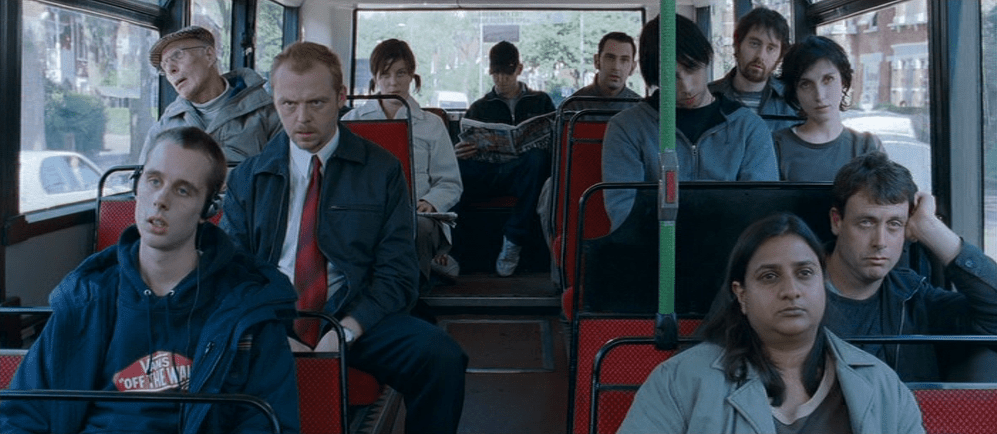
Shaun of the Dead

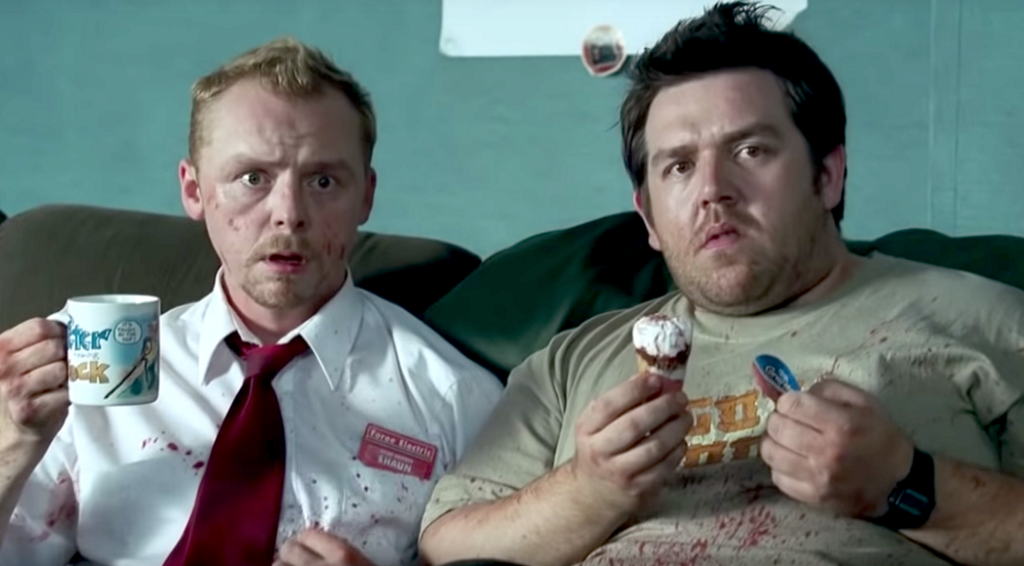
There’s nothing like an existential crisis that takes place in the middle of an apocalypse to spark the fires of love. If you’ve determined that your partner is willing to embrace the zombie genre and might be okay with a little blood and death so long as everyone expires in good spirits, then it might be time for you to graduate to Shaun of the Dead. Shaun has no direction, his friends don’t respect him, and his girlfriend has just dumped him. He’s too caught up in feeling sorry for himself to notice the plethora of zombies crowding in on his spot at the pub until it’s too late. Hilarity, gore, and even romance ensues. You’ll laugh, you’ll cry, you’ll never hear Queen’s “Don’t Stop Me Now” the same way again.

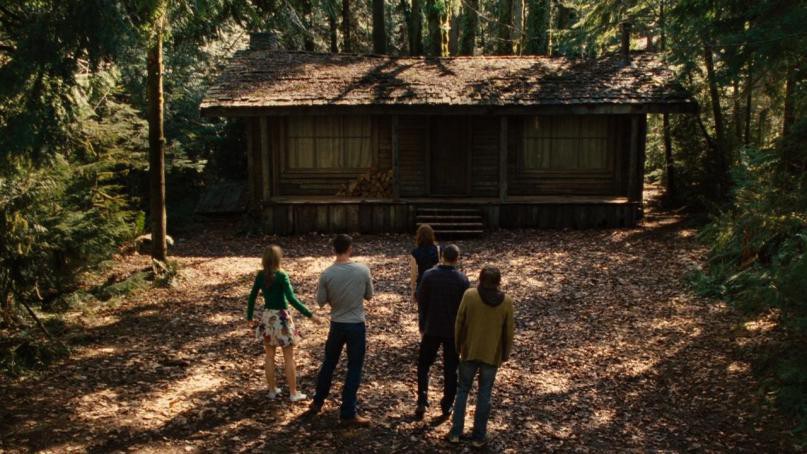
The Cabin in the Woods

An homage to the slasher, this film written by Joss Whedon and David Goddard (who worked together on Buffy the Vampire Slayer). A group of college students takes a trip to an abandoned cabin in the middle of the woods. Meanwhile, two special agents (Richard Jenkins and Bradley Whitford — a supreme duo) in some underground high tech facility are controlling the show. They’ve given all the students mind-altering drugs that will frustrate good decision making and increase libido. Part of an international experiment, the two agents make bets on which one of the students will get killed first, and by which monster. There’s also a blood sacrifice to be made. It’s a satire that still promises lots of slasher gore and jump scares, even when you know they’re coming.

Rocky Horror Picture Show

This one sits in the middle of the list because everyone needs to compromise. Maybe someone doesn’t like musicals. Maybe someone doesn’t like anything with “horror” in the title. Maybe someone has social anxiety or hates walking around in public in their underwear. Now you can all shut up and join the cult by going to a screening of Rocky Horror Picture Show. Bring toast, toilet paper, and a watergun and under no circumstances tell anyone it’s your first time. You’re welcome in advance for the date night advice.

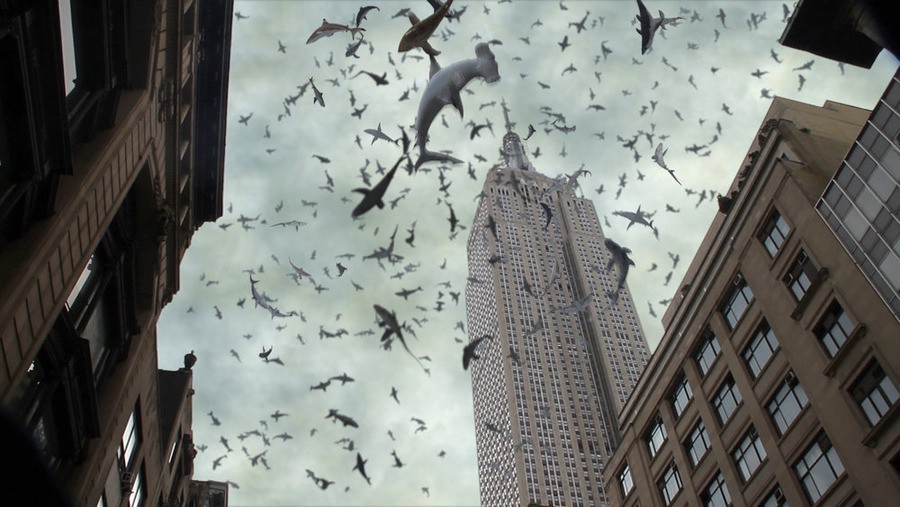
Sharknado

In what might be the best portmanteau ever, this movie is about a tornado made of sharks. A freak cyclone picks up the ~man-eating sharks~ and floods the streets of L.A. with hungry aquatic monsters. Surfer dudes rush out to rescue their damsels. The tagline of the film is “Enough said!” but clearly that’s a lie. There was plenty more to be said in five more films: Sharknado 2: The Second One, Sharknado 3: Oh Hell No!, Sharknado: The 4th Awakens, Sharknado 5: Global Swarming, and finally, The Last Sharknado: It’s About Time. You think we’re making up those titles, but we’re NOT.

Parents

It’s 1954, and Michael is a socially-awkward 10 year-old with an overactive imagination. He and his parents have just moved from one suburbia to another. He has weird dreams that only get weirder after he accidentally sees his parents having sex one night. He believes he sees his parents biting each other, which in short order, leads him to believe his parents are cannibals. Watch this one when you’re trying to get your partner to consider vegetarianism.

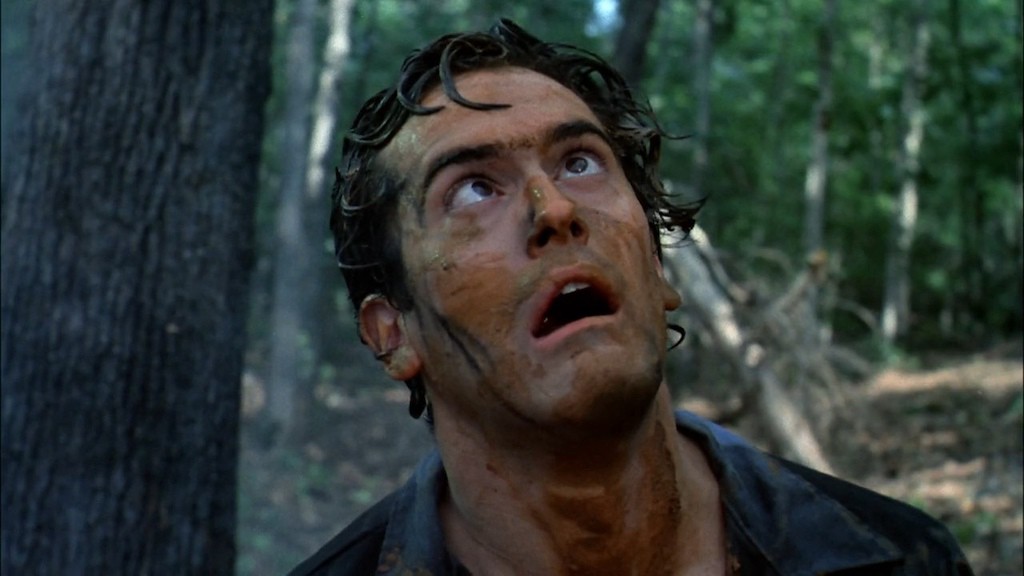
Evil Dead II

This one is very gory but also very funny. A parody sequel to the original Evil Dead, which was funny but not on purpose, the movie opens with Ash and his girlfriend Linda taking a romantic trip to a cabin in the middle of nowhere. (Relationship advice: avoid cabins in the middle of nowhere.) Ash plays a tape of the previous inhabitant of the cabin reading from the Necronomicon (more advice — don’t do that) which inadvertently unleashes a demon that inhabits Linda and turns her into a “deadite,” so Ash has to cut off her head and bury her in the woods. After a overnight stay with Ash, the demon spirit re-inhabits Linda’s dead, severed head which then attacks Ash with a chainsaw. Ash is forced to kill her again. More severed and possessed limbs ensue. This one is really just loads of blood and guts. But they’re funny blood and guts, really! (An example that will appeal to Electric Lit readers: After Ash cuts off his own possessed hand with the chainsaw and traps it under a bucket, he weighs it down with a copy of A Farewell to Arms.) If you’re not quite ready for this level of gore, sequel Army of Darkness could claim a place several notches towards the “funny” end.

Scream

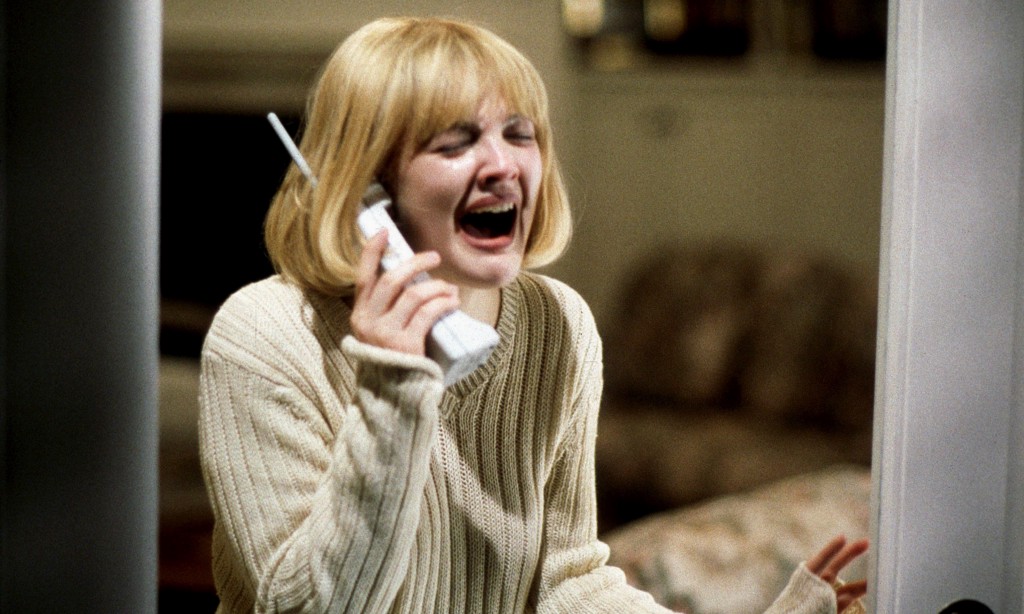
An early adopter of subverting horror for satire, before The Cabin in the Woods was a twinkle in Joss Whedon’s eye, Scream is a film in which all the characters know what happens in horror movies and still make bad choices anyway. A girl gets a call from an unknown stranger who asks her what her favorite scary movie is, and then she ends up dead. With the murderer still on the loose, the film follows Sidney Prescott, the next victim being stalked by the murderer known as Ghostface. It’s the Pumpkin Spice Latte of halloween films (and costumes). Disgusting and too much, it’s a good idea in theory.

Wolf’s Hole

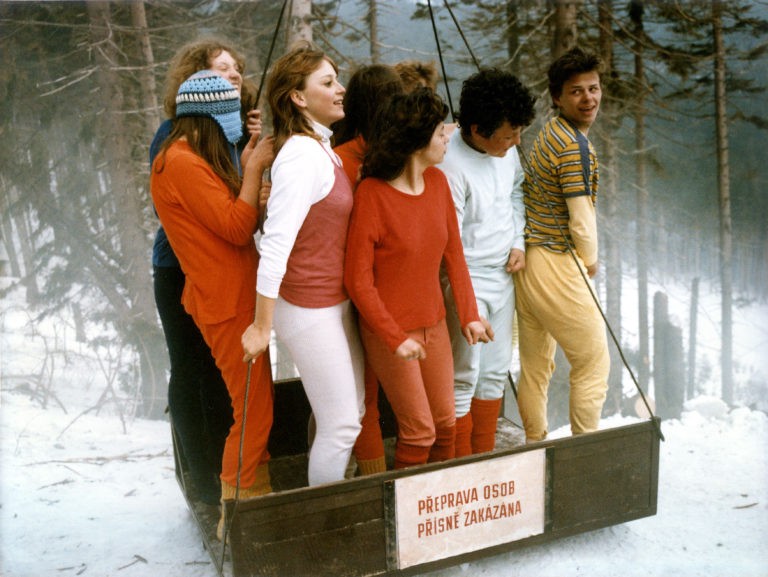
Our editor-in-chief Jess Zimmerman is the wimp in her mixed relationship, and has refused to refer to or even consider this alien impostor film as anything but “the one where the dog skis down the mountain in a pot.” In this 1987 Czech film, a group of teenagers arrive at a cottage in the mountains for a ski trip. They don’t know how or why they were selected. There are eleven teenagers in attendance, but the workshop leaders are adamant that there should only be ten of them. Who is the intruder? There are a few ridiculous moments to leaven the fear; the big hint that the ski camp counselors are Not What They Seem is that they like to undress and thrash around in piles of snow when no one’s watching. But the important part is that the dog survives and at one point gets tossed down a hill in a pot, emerges unscathed, and eats the food left behind by the victims. Consider just contemplating that image and not watching Wolf’s Hole at all.

The Shining

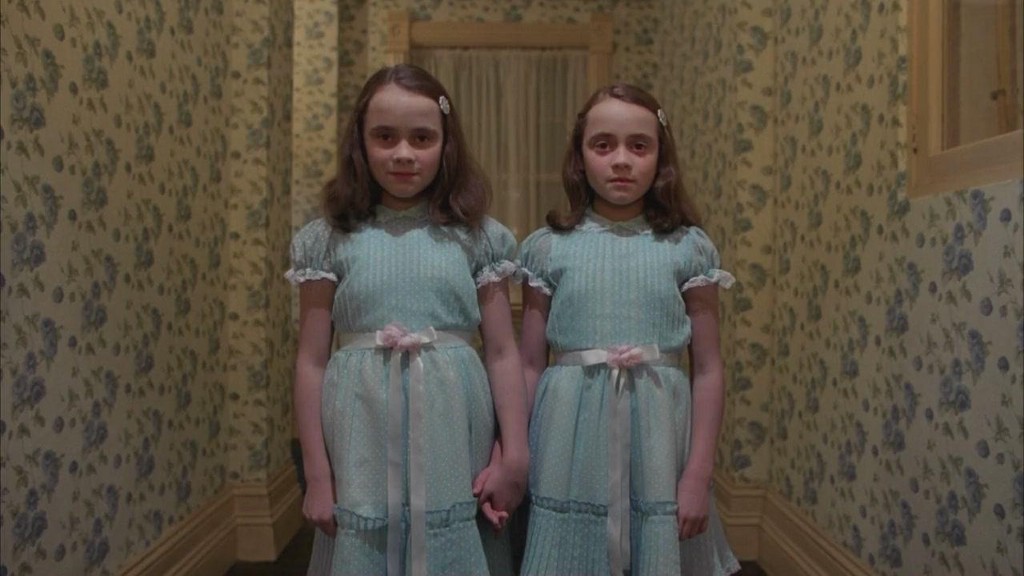
The is the most horrifying end of the comedy-horror spectrum. There are some kind of funny moments that are mired in madness when Jack Torrance (Jack Nicholson), an aspiring writer and recovering alcoholic, chases his wife and child around an empty hotel with an axe. Okay, that didn’t make it sound very funny. But it’s a classic! And if your partner is a fan of data, you can tell them that scientists at King’s College in London proved that The Shining is the perfect scary movie based on its expert usage of suspense, shock value, relative realism, creepy setting, and gore. Just don’t tell them about the data suggesting that horror/comedy relationships are doomed.

Donald Quist Brings the Whole World Into One Short Story Collection

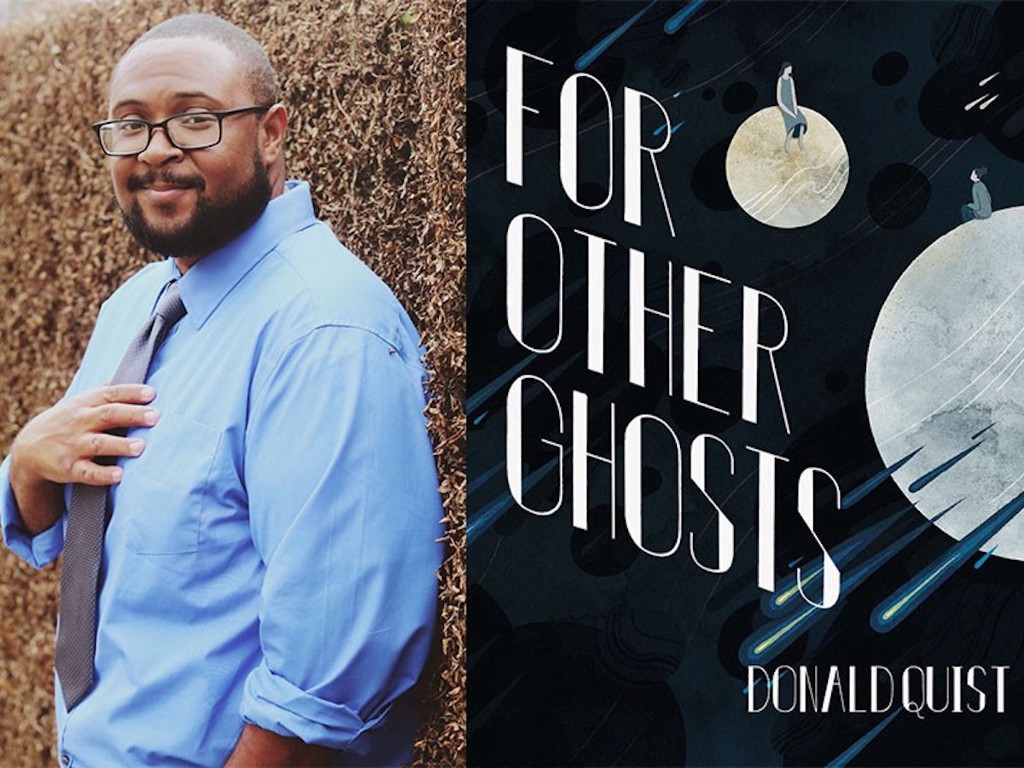
Jamel Brinkley said of Donald Quist’s linked short story collection, For Other Ghosts, “The words gathered into a book of fiction are often said to conjure up a world. Usually this is an exaggeration, but what Donald Quist has accomplished in For Other Ghosts is to truly give us what feels like an entire world’s breadth and depth.” Indeed, reading For Other Ghosts is like stepping inside worlds within worlds, a universe within a universe where characters across a globe interact and appear to be side-by-side despite the “breadth and depth” of our earth. Structurally innovative, For Other Ghosts is twelve stories organized in three sections meant to distance the reader from an internal perspective toward a universal one. For Other Ghosts is not only about the impact of globalization, it is also about legacies, human nature’s true “ghosts,” and the shape of what lingers after politics, after war, after colonization, after misogyny, and after loss.

Donald Quist is author of the the essay collection Harbors, a Foreword INDIES Bronze Winner and International Book Awards Finalist. His writing has appeared in AGNI, North American Review, The Rumpus, and was Notable in Best American Essays 2018. He is creator of the online micro-essay series PAST TEN, and co-host of the Poet in Bangkok podcast.

Donald and I spoke on the phone about our experiences publishing with “small” presses, our responsibilities as storytellers, and how globalization impacts characterization when writing about cultures you do not belong to.

Tyrese L. Coleman: This is your third book published with an independent or “small” press. I really wanted to speak with you about that because I find there isn’t much out there about writers who publish with independent, and in some cases, university presses. What are some of the benefits of working with an independent or university press?

Donald Quist: I feel like independent presses are making the most exciting work right now. They aren’t beholden to trends. They are publishing the most diverse, the bravest stories.

This is not to knock any big publishers, in case they want to publish me, but I do like working with small presses because there is more control over the finished product. It feels more like a team effort, and I don’t feel lost as a writer in a lot of the promotion and the aspects of making a book profitable. The goal with small publishers is to make a book that’s profitable, but that’s sort of second to publishing the work they find the most inventive. They’re more enthusiastic about the work. They’re more enthusiastic about you as an artist. They have a great investment in you. Because they’re a small press and if they choose you and work with you, it’s a huge compliment. I’ve noticed that, for me personally, it kind of brings out the best in my efforts because, again, it’s a team thing. It feels like something bigger than me.

TLC: How does For Other Ghosts speak to your essay collection, Harbors? I felt like they are complementary books. Was that intentional?

DQ: Well it was intentional to me, so that’s good to know and highly validating. Both books were created with the same ethos. This idea of writing in services of others. One of my writing philosophies is that everyone has varying levels of privilege, and with that privilege we owe it to ourselves and others to use whatever skills in our disposal to improve situations and try to limit the disparity of those around us. I was hoping that sort of tone would move throughout both books.

On a craft level, if someone were to read Harbors, stop and then read For Other Ghosts, it would almost feel like the first story of For Other Ghosts continues from Harbors. So, it moves from nonfiction into fiction. That was intentional. In fact, this is part of a three-book set that is going to come from Awst.

One of my writing philosophies is that everyone has varying levels of privilege, and with that privilege we owe it to ourselves and others to use whatever skills in our disposal to improve situations.

TLC: Would you classify some of the stories as autobiographical?

DQ: I would have to. I would say a lot of my fiction is autobiographical, but particularly that first story. It came about while I was traveling through Ghana with my father. I was trying to consolidate some of these ideals I have about Africa and about, specifically, the pan-African movement with sort of the realities of what globalization and colonization and those effects have on modern-day Ghana. It was this conflict between the dream and the reality, and my father’s intention of what made him leave or emigrate from Ghana to America. Sort of what happens when a lot of these ideals intersect or clash and then what to do with them. A lot of times you can get closer to the truth through fiction than through memoir. It became a fictional story and so it felt right to start the collection with that. I have a collection that seems to be about people and populations that don’t get a voice and often feel vanished and disappeared. People who feel like ghosts.

TLC: Have you seen the show Black Mirror? When you first start out watching it, you don’t realize that all of these short stories are happening in the same universe at the same time until you get to the last episode of the latest season. I felt like that when I first started reading For Other Ghosts, but then it felt like each story was about different people in different parts of the world, all scattered throughout, in the same time and universe.

DQ: That’s exactly what I was trying to do. I tried to connect, physically, some of the stories. So, characters show up in some, but they aren’t major characters. I wanted it to work where you could read it out of order, jump around, and each time find something new. There’s one story called “#COOKIEMONSTER” where all the characters from all the stories converge but not in the main storyline. They converge in the comments section [of different online articles] because characters and elements from every other story appear there.

The Poetry of Black Women Shows Us How to Move Forward

TLC: Let’s talk about #COOKIEMONSTER, which is a story about sexual assault, privilege, and the so-called, “he said, she said.” It’s very topical right now, considering the allegations against Supreme Court judge, Brett Kavanaugh, and #metoo.

DQ: I started writing [that story] in 2012 because, from my observation, life as a woman is hard as fuck. And it doesn’t seem to get easier. Life as a woman of color is especially hard as fuck and it also doesn’t appear to be getting any easier. I guess that story just came about over years of me just trying to parse. The best way I could put it together was through the way I found examples: search engine results. What if I wrote an entire story out of search engine results? What if I approach this the way so many people do before completely making their mind up about how a situation occurred and about the character of a person?

It came from frustration and not knowing what to do with seeing people, specifically women who are victims of sexual violence, being literally silenced by the world and then being gaslit about it. The way people would often talk about instances of sexual violence — they are just so confident about who a man could be or who the accused person could be because of their character that it completely erased what a victim is trying to say. And oftentimes people invent narratives as to why this person would do it. This is not to say that there aren’t instances or outliers in which there have been those who have lied about being sexually assaulted or abused. But what does the majority of people who come forward have to gain? What could they get from this?

A lot of the book is about wrestling with the duality of people, acknowledging and accepting that just because a person might’ve done good things or made contributions to the community, does not mean that they couldn’t also have caused irreparable damage. I just hope that the book would enter into a discourse with that.

A lot of the book is about wrestling with the duality of people, acknowledging that just because a person might’ve made contributions to the community, does not mean that they couldn’t also have caused irreparable damage.

TLC: We’ve talked about the global feel of this book. You’ve lived in Thailand, and you’ve been to Ghana, and obviously the U.S. What other countries or cultures that you visited have influenced this book?

DQ: Because I was in Thailand for five years, I spent a lot of time visiting countries around Asia. I spent a lot of time in Cambodia and Vietnam. Those countries had a lot of immigrants who would come to Thailand because China, which is situated above them, would often cut chains to resources. China stripped these Southeastern Asian countries of a lot of their life blood. Specifically, in Laos, you kind of see this. The rivers become a trickle by the time they get down. I wanted to make sure I articulated how international agriculture policy can affect people’s daily lives on a very real level. I spent time in China. Been to Japan. From Japan, I wanted to convey in the final story in the collection a sense of quietness to it.

TLC: A lot of this collection involves characters who come from cultures unlike your own. What are some concerns you had about writing from their perspectives?

DQ: It was important to me to acknowledge that when I am writing about cultures beyond my own that I will most likely get it wrong. That I need to acknowledge the limit of my own perspective and to try to be as respectful as possible. That’s part of the reason why the collection took so long. To me, writing fiction takes a longer time because of the amount of research. I am doing more research for a fiction story than I’m doing for an essay. I don’t like the word “authenticity” because I feel like when we use the word “authenticity” we can marginalize people too, creating monoliths. Nobody talks about the authentic Californian surf shop. We don’t do that. The authentic Maine. We don’t do that. But I try to be as respectful in my portrayal of perspectives and cultures that I do not belong to as much as I can. And accept the fact that if I believe all writers have a right to write about whatever they want, I must acknowledge that all readers have the right to comment, and that’s part of putting the work out there. I need to do more work on my end to figure stuff out and to do research.

You know Brandon Taylor wrote that piece in Literary Hub about how writing about other people is not hard and how a failure of craft is not a moral failing. I read it a few times as I was sending this book out to places. His piece kind of helped a lot and came at the right time. And also, after reading that essay, I looked at the pieces, and I knew that when I started each story, I wanted to start by writing against a monolith of a culture or a monolith of a gender, or a monolith of a sexual identity. I wanted to make characters that were more nuanced and complex and couldn’t be easily classified. And I think that intention helped steer me away from some of the pitfalls.

Because this collection is about globalization and knowing that as I am writing about a Pakistani immigrant that lives in America that there is no mold for that. There are some cultural things I need to be aware of and show respect to, but there is also the freedom of knowing that, because of globalization, an individual is not living as one single representation of what we can picture of a certain identity. Everyone is multifaceted. If I can recognize the diffident identities that I possess then I should be able to recognize or create individual identities within my characters. And that itself hopefully steers me away from making caricatures.

Restricting Books for Prisoners Harms Everyone, Even the Non-Incarcerated

In September, the Pennsylvania Department of Corrections announced that all free book donations to incarcerated people in Pennsylvania state facilities would be banned. This ban was created alongside stringent mail search policies, in a purported effort to prevent drugs from entering prison. The Department of Corrections has argued that book donations are the primary vehicle for drugs entering prison, though there is very little evidence of this phenomenon. In fact it is a pretext for denying books deemed contentious to prisoners and profiting off their desire to read.

This ban has come at a time when the Department of Corrections is pushing new e-book readers on incarcerated people, which cost 150 dollars, a high cost that few incarcerated people can afford (particularly with the current pay rate of between 19 cents and 1 dollar an hour). At 19 cents an hour, it would take an incarcerated person 790 hours of work to purchase an e-book reader themselves, if forgoing all other expenses. The tablets themselves are produced by Global Tel Link, the same for-profit enterprise that provides widely controversial “Inmate Calling Services.” Incarcerated people pay 147 dollars plus taxes and fees to the Commissary, using JPAY, and receive their tablet in 7–10 days. Approximately 8,500 books are available for incarcerated people to purchase, after they have already invested in the e-reader itself. This may seem like a wide range of options, but in actuality it is very limited. While there are 89 available books by V.C. Andrews, as well as the complete works of the Bronte Sisters and Jane Austen, the work of African American writers like James Baldwin, Malcolm X, and Martin Luther King, Jr. are missing from the list. What’s more, prices on books by Charlotte Bronte, for example, range from $5.99 to $20.99, despite the fact that all of her books are in the public domain and available freely online. This policy is designed to exploit for profit incarcerated people’s desire for books and knowledge, as well as severely curtailing available reading material in prisons. The DOC has countered these arguments by noting that books are communally available in prison libraries, though those are at the will (and funding) of the prisons themselves — and are often insufficient. According to letters written by incarcerated people to Books through Bars, an organization based in West Philadelphia, prison libraries often lack such basic resources as dictionaries and vocational manuals, as well as many novels and academic non-fiction that incarcerated people are interested in.

This policy is designed to exploit for profit incarcerated people’s desire for books and knowledge, as well as severely curtailing available reading material in prisons.

The DOC has defended its new policy by claiming that a recent search turned up a Bible shipped directly from a major bookseller that contained strips of suboxone, a drug used to treat withdrawal from opioids. It also claimed that a letter written by an incarcerated person, instructing a family member on how to send books and specifically requesting a dictionary, was actually a coded request for drugs. Even if this were sufficient evidence of drug smuggling through books — and it is not — limiting the availability of literature to all incarcerated people because of a few attempts to bring drugs into the prison is such an overcorrection that it’s clear the intention would be largely punitive.

And make no mistake: Limiting access to books is a punishment. Books represent vocational, educational, cultural, sexual, and philosophical freedom to incarcerated people living in prison. To the DOC, this is more threatening than drugs. According to Books Through Bars, the most requested books are vocational guides, legal dictionaries, urban fiction, reference books, African American history, and radical history. By curbing donations, the DOC uses supposed drug smuggling as a pretext for denying prisoners the pursuit of knowledge, happiness, and personal betterment.

Access to reading material is essential both for lowering recidivism rates and for allowing the growth and development of prison writers and intellectuals.

Though incarcerated people regularly write asking for book donations, their desires for education and entertainment are not the only benefit of allowing books in prison. Access to reading material is essential both for lowering recidivism rates, according to a 2013 Rand Corporation study, and for allowing the growth and development of prison writers and intellectuals. Because reading vocational guides, legal dictionaries, and reference books prepares incarcerated people for further schooling and jobs after release, readers are far less likely to return to prison. And increasing reading and writing skills among the incarcerated makes returning citizens more likely to gain jobs and further their education.

Less tangibly, the restrictions on reading material hamper the development of artists, writers, and intellectuals in prison, while also threatening book donation programs like Books Through Bars as well as educational programming.

The ban on donated reading material does not simply threaten the ability of incarcerated people to read for pleasure and for self study, but threatens the efficacy of programs like the Inside Out Prison Exchange and the Villanova program at Graterford, both of which offer college-level education to incarcerated people in Pennsylvania. With books from traditional donors limited, the scope of this programming is subject to even more scrutiny by the department of corrections.

14 Writers Imprisoned for Their Work

Incarcerated people in Pennsylvania follow in a tradition of prison writers and intellectuals in Pennsylvania itself, as well as across the country. The participants in a writing workshop at S.C.I Graterford published an anthology of writing called Letters to My Younger Self: An Anthology of Writings by Incarcerated Men at S.C.I Graterford. Mumia Abu Jamal, well known for his books including Life From Death Row, has been incarcerated in Pennsylvania since 1982. By limiting access to reading material for incarcerated people, this kind of engaged writing and journalism from those incarcerated would not be possible. These texts are creative, introspective, and theorize incarceration and criminal justice in the United States. They also follow in a tradition of prison intellectualism and writing, particularly important in the black radical tradition in the United States. Writers and intellectuals like Angela Davis, George Jackson, and Assata Shakur benefitted from the availability of books in prison to create their work, work essential to the African American freedom struggle writ large. The nation as a whole will suffer for the loss of beautiful, insightful, and often activist contributions by incarcerated people.

By banning donated books in Pennsylvania, the PA department of corrections risks increasing recidivism rates, weakening educational programs, and preventing the intellectual and creative works of incarcerated people. For the sake of punishing prisoners, DOC is punishing us all.

‘If Beale Street Could Talk’ Makes the Old Cliches About Love Feel New Again

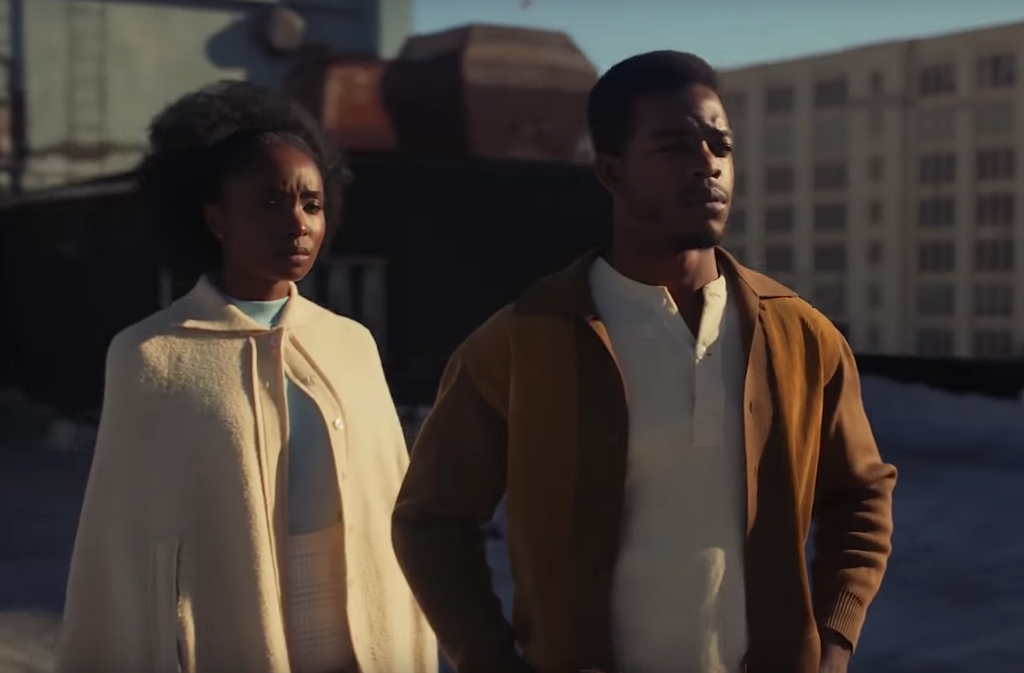
T o say love makes you see the world anew sounds like a lyric to a Celine Dion ballad you cannot bring yourself to hate. It’s a truism we’ve accustomed ourselves to snicker at. But that cliche is itself given new life in the filmed adaptation of James Baldwin’s If Beale Street Could Talk, which lets viewers see the world anew through the eyes of two young lovers. A stroll through a park in Manhattan introduces us to Fonny (Stephan James) and Tish (Kiki Layne), who are smitten with one another. Their loving gazes are replicated in the way Barry Jenkins’ camera shoots them; there’s a warm glow around them that compels you to fall in love with them as they fall in love with each other. Jenkins, whose empathetic lens guided the triptych Moonlight to a surprise Oscar win, understands that one of Baldwin’s greatest skills was in his loving treatment of bodies. This is a sensual adaptation of Baldwin’s novel that puts radical love at the center of its drama, framing rather than merely instigating the political conversations it stages. Jenkins’ film is about the radical embodied possibilities of often hollow sentiments like “love makes you see the world anew” and “all you need is love.”

“It’s astounding the first time you realize that a stranger has a body,” Baldwin writes in his 1974 novel, “the realization that he has a body makes him a stranger. It means that you have a body, too. You will live with this forever, and it will spell out the language of your life.” That’s Tish speaking, reminiscing about the first time she realized her neighbor Fonny, who she used to bathe and play doctor with, has a body now, a body that she used to long for and now cannot help but miss. Fonny is now in prison, having been accused of raping a Puerto Rican woman during a night when he was with Tish and another friend. That alibi, Tish and Fonny have learned, is worthless in the eyes of a corrupt justice system that can only be understood in terms of the violence it can impart — a system that understands black bodies as mere liabilities. It makes sense that to counteract the fear that meets black boys like Fonny, Baldwin would anchor his novel in the love between him and Tish.

But If Beale Street Could Talk also broadens, to borrow the kind of clichéd language I’m loathe to use, what it is we talk about when we talk about love. There’s a moment between Fonny and Tish, for example, that can only be described as tenderlust (admittedly a word I just made up). Having gone back to Fonny’s place on Bank street, a barren basement apartment that doubles as his woodworking workshop, the two inch towards one other, hesitant, hungry. Baldwin’s prose is full of bodily details (“and some men wash their cars, on Sundays, more carefully than they wash their foreskins”) that set up the sensuality that Jenkins brings to bear on his adaptation. And this is nowhere clearer than in the first night Fonny and Tish sleep together. “And now I was open and helpless and I felt him everywhere,” Tish tells us in the novel. “A singing began in me and his body became sacred –his buttocks, as they quivered and rose and fell, and his thighs between my thighs and the weight of his chest on mine and that stiffness of his which stiffened and grew and throbbed and brought me to another place.” Jenkins’ camera takes its cue from Baldwin’s words, finding a sensuality that feels both prurient and titillating.

In long takes that stay close to Tish and Fonny, Jenkins has us feel the lust the two feel for one another. But this is a different kind of lust. The camera doesn’t ogle the two young lovers, though it does let us witness the beauty of Stephan James in just white briefs for long enough to have you gasp for air. There’s a warmth to this scene. It almost begs to be described in groan-worthy terms as “lovemaking.” But I want to stress how much Jenkins manages to blur love and lust to the point where they’re not mutually exclusive, no matter how much of our cultural imagination would like us to think they are.

Jenkins manages to blur love and lust to the point where they’re not mutually exclusive, no matter how much of our cultural imagination would like us to think they are.

Our language for lust (not to mention its place among those pesky deadly sins) associates it with hurried violence. “Lust’s passion will be served,” the Marquis de Sade famously wrote; “it demands, it militates, it tyrannizes.” Especially when pitted against love — of which it can be both outgrowth or antidote — lust appears as a fiery emotion that devours that which surrounds it. Love is supposed to be a warmly-lit fireplace; lust a half-lit matchstick near a gas spill. In Fonny’s bed Jenkins shows us what a slow simmer of loving lust can look like.

That Beale Street continually makes me want to speak in the kind of platitudes that would normally make roll my eyes (“all you need is love,” “lovemaking”) shouldn’t suggest that this adaptation of Baldwin’s novel is in any way naive about the world these characters live in, or that its embrace of love as a concept is uncritical. Arguably one of the greatest dissectors of the American experience, Baldwin wrote Beale Street as a furious indictment of the systemic policing of black bodies in the United States. The story of Fonny being falsely accused of sexual assault (and presumably being framed for it by a vengeful white cop) merely echoed both real-life stories like the 1931 Scottsboro boys’ case and imagined scenarios like those put forth in Birth of a Nation and To Kill a Mockingbird. In the American imagination black men were always already predators. Beale Street merely set this age-old narrative in motion from the point of view of the accused.

The Book James Baldwin Couldn’t Bring Himself to Write

But Jenkins doesn’t let the bleakness of the situation, both particular and systemic, take over the film’s storytelling. Instead, he makes love — radical love — animate the world Fonny and Tish navigate. As Darrell Moore writes in his book No Ashes in the Fire: Coming of Age Black and Free in America, “hope often surfaces as the result of radical love.” As with Baldwin and Jenkins, “radical love” isn’t an abstraction for Moore. “In my mind,” he writes, radical love “looks like my big black family piled up in the tiny house we shared on Broadway in Camden in the 1980s. Always full. Always saturated with love. Always a center of disagreement. Always a place of shelter for those on the edges. Always the place where one could come to make amends and be forgiven. Always a site of imagination where we dreamt of new means of survival in the face of scarcity.”

Jenkins’ If Beale Street Could Talk lives and breathes this vision of radical love. They may live in cramped quarters, but Tish and her parents’ home in Harlem is both a place for loving celebration (her mother brings out a bottle of sherry to toast her pregnancy) and heated confrontation (it’s in their living room where we see Fonny’s mother scold and humiliate Tish about carrying Fonny’s child, only to be slapped by her husband). Love won’t, of course, set Fonny free. But it will sustain him. It will nourish him. It will help him endure. And in a world that wants to destroy black bodies, the power of such tools for survival cannot be underestimated.

A Reading List for Combating Impostor Syndrome

The dark secret of impostor syndrome is the thrill of pulling off the con. I attribute this to an anxiety-fueled increase in craftiness and a proclivity for escapism. The self-perceived impostor — by definition, an overachiever with low self-esteem or inordinate self-doubt, despite external evidence of their accomplishments — is rarely precluded from pursuing their ambitions. On the contrary, those of us with impostor syndrome doggedly pursue our dreams, despite our feelings of unworthiness. We may subconsciously fear that we will be exposed or rejected along the way, but we’re hanging on for the ride as far as it’ll take us.

In my novel Static Flux, 25-year-old Calla, who grew up poor and rural but earned the opportunity to pursue a career as a writer in New York, faces early setbacks and becomes extremely disillusioned. Not only does she suffer impostor syndrome, she suffers the very real conditions of post-Great Recession America, the absurd disparity of wealth in New York, and diminishing opportunities to break into the writing career she’s dreamed of. But from this impostor’s perspective comes wry, self-satirizing observations of her generation (millennials) and. indeed, her own complicity in the system she hates.

Turning to escapism out of desperation and loneliness, Calla impulsively schemes to abandon her life (and her loving boyfriend) and takes off for Los Angeles, where she stays at her best friend’s house and self-medicates with cannabis and LSD. Self-aware yet solipsistic in her self-loathing, she’s oblivious to the impact her actions have on those who love her. Her skewed self-image as a worthless, unlovable impostor becomes a self-fulfilling prophecy.

Before and while I wrote Static Flux, I was inspired by many books by women about alienation, escapism, impostorism — stories that capture the anguish and restlessness of a woman journeying on a path of utter uncertainty.

The Flamethrowers by Rachel Kushner

Adept at observing the world as a curious outsider wherever she goes, always with uncanny awareness of historical context, Kushner is really a luminary to me. We both come from poor backgrounds — as do our protagonists — which can be a huge source of impostor syndrome, but also, a gift. Reno’s impostorism comes through in the unexpected facility with which she moves between worlds, hanging on for the ride at the disorienting velocity with which she’s volleyed off of her motorcycle and into the inner circle of 1970s New York’s art elite and, eventually, a devastating turn in Italy amidst violent political upheaval.

The Sacred Family

In The Balance by M.E. White

This incredible 1968 novel follows Baylor Irish, a hilarious, cynical, reckless nineteen-year-old college freshman with a “talent for insanity,” up and down the coast of California. She’s an impostor and misfit among her friends and classmates, an alcoholic prone to hallucinations and ingenious acts of mischief; but her caustic observational humor casts the world of abusive men, spoiled brats, and aloof adults in harsh relief. It’s an obscure classic that belongs on all our shelves in 2018. Somebody please reissue it.

Signs Preceding the End of the World by Yuri Herrera, translated by Lisa Dillman

Makina, Yuri Herrera’s shrewd heroine, is actually more of an antidote to impostor syndrome: she moves through worlds she knows she doesn’t belong swiftly, deftly, unapologetically and brutally, in order to get across the U.S.-Mexico border to find her lost brother. From escaping the border guards’ ambush with her coyote, to crossing a desert littered with bloated corpses, to wandering the manicured suburban alternate-universe of the other side of the border, Makina hasn’t the time for self-doubt. She’s an invigorating, galvanizing character. Herrera’s novel is a treasure; Lisa Dillman’s translation, a precious gift.

Adios Cowboy by Olja Savičević

Dada, the narrator-protagonist of this brilliant Croatian novel, has returned to her hometown after several what she calls “lost years” in Zagreb. As a freelance writer, she’s a lot like Static Flux’s narrator Calla in her shameless opportunistic exploitation of her underpaying media employers: a site called “Shit.com” pays her to “write or steal news for their site.” She says her adeptness at plagiarism was “more than they deserved for the pittance they paid me.” Her shrewd depiction of the ugliness and banalities of trashed, shit-strewn town of Split, where “the salt air begins to sweat and everything that moves passes limply through treacle, while the song of a million sounds is transformed into a steady, electric hum that hypnotizes,” is never without an underlying sense of humor and tenderness. She may not fit in anywhere, but she captures delightfully bizarre details with sardonic acuity.

Speedboat by Renata Adler

There’s a fine line between alienation and self-imposed isolation, and Speedboat’s intrepid (albeit heartbroken) reporter likely falls on the side of the latter. Her jaded, wry eye eloquently scrutinizes the subtext, absurdity, and banality of those around her, but these preoccupations become magnified in her distraught mental state as she tries to escape to some remote place and leave her longtime (married) lover. This iconic line resonates with me deeply to this day: “I think when you are truly stuck, when you have stood still in the same spot for too long, you throw a grenade in exactly the spot you were standing in, and jump, and pray.”

A Spy in the House of Love by Anaïs Nin

I first read this novel as a teenager, and I’ve always admired Nin for how she seemed to be empowered, not paralyzed, by feelings of being an impostor (and even an adulteress). It was her romantic adventurism, after all, that brought her to live her own double-life in Los Angeles, with two husbands and everything. In A Spy in the House of Love, Sabina sashays her way through affair after affair, a female lothario in a cape and exquisite dress. She isn’t shameless, per se, but she is most certainly an impostor who doesn’t let her conscience — or fear of getting caught by her husband — get in the way of her crafty autonomy.

A Field Guide to Getting Lost by Rebecca Solnit

Not a novel like the others, but this book is life-changing for anyone grappling with deep interpersonal insecurities in the face of uncertainty. The year before I started writing Static Flux, I was having dinner with my friend Stephan on St. Mark’s Place in New York when he asked me if I had read this book. I said no. He said I had to read it — as if it was required reading for being a human with too-big questions to handle. After dinner, he walked me to The Strand, found the book, put it in my hands, and although I was as broke as Calla is in the start of my novel, I bought it and devoured it. He was right. My thanks to Stephan.

8 Books about Family Money

I like books about relationships, so I tend to read a lot of novels about families. I also like books with a nice amount of tension, and so I also find in my favorites stack quite a few titles with money as a plot point, either a surplus or a paucity. And when it’s all combined? Well, then that’s the absolute best!

Purchase the book

There are few subjects I like more than a good family drama with some money thrown into the mix — which is how I ended up writing my own novel, Family Trust, about a well to do Asian American family in Silicon Valley struggling with the illness and ultimate bequest of its patriarch

Money is a key theme of the book — when someone’s dying who has made a big deal about how wealthy they are, there inevitably are those secret, nagging questions in everyone’s mind. Add in a second marriage to a younger wife, adult children with expensive lifestyles to maintain, and a grouchy first wife who was the financial mastermind all along, and you know something’s going to explode.

There are a plethora of books about family money out there — of course with those two topics, family and money, almost anything — from Shakespeare to Munro — can qualify. Here are some favorites:

The Windfall by Diksha Basu

Diksha Basu’s comedy of manners about what happens when a family suddenly “makes it big” in modern India. How to best communicate your newfound wealth? Maybe with a big new house? But then how do you impress your new neighbors, who have had money longer than you? Maybe with some upgraded plumbing? And doesn’t the new couch need some Swarovski added to it? Funny, charming, and utterly thoughtful.

The Godfather by Mario Puzo

Don Corleone is a mastermind of the Mafia, quietly amassing a fortune with his criminal empire but he also believes you can’t be a real man if you don’t spend time with your family. The classic saga of family, crime, loyalty, and yes, lots and lots of money.

Crazy Rich Asians by Kevin Kwan

I love Kevin Kwan’s entire trilogy, and one of the things he does so very well is explain the intricacies of the dynamics in these incredibly wealthy families. Who really has the control of all the cash (and property, and jewels, and art)? And who is going to eventually get it all? Crazy Rich Asians came and blew up the sliver of genre that was previously known as “Asian Fiction” and I am forever grateful.

The Bettencourt Affair by Tom Sancton

The Bettencourt Affair features the wealthiest woman in the world; a resentful only daughter; a Jewish son-in-law (who has married into a family with a history of anti-Semitism); and a charismatic artist friend, decades younger, who has been gifted hundreds of millions in cash and art by the matriarch. The best (and worst) part of the book is that every word is true.

The Custom of the Country by Edith Wharton

My favorite Edith Wharton (though I love Lily Bart I simply can’t stand too much of Lawrence Seldon, although The House of Mirth would also surely qualify for this list). The book follows Undine Spragg, the “heroine” of our story, who uses all her family’s funds and connections to craft a ladder for her social ambitions but finds the height lacking; she marries up and then marries again and perhaps will never be satisfied.

How Edith Wharton Changed My Understanding of Marriage

The King of Content: Sumner Redstone’s Battle for Viacom, CBS, and Everlasting Control of His Media Empire by Keach Hagey

A daughter whose relationship with her father veers from warm to all out war (and is still evolving). Multiple mistresses. Tapes, lawsuits, mental capacity, nurses that act as gatekeepers, and of course…billions of dollars and the future of one of the world’s largest media companies at stake. And like with The Bettencourt Affair, every word is true.

A Tree Grows in Brooklyn by Betty Smith

Not all books about families and money are about the excess of it. The Nolans don’t have a lot of money…actually, it’s quite the opposite. In one of the opening scenes of the book, the children are hauling trash to the “junk man,” who will weigh their garbage and give them pennies; it’s such a descriptive scene that sets the tone for the book, about how the Nolan family will struggle to survive and make their way in WWI era Brooklyn.

The Darlings by Cristina Alger

A former lawyer and banker at Goldman Sachs, Cristina Alger knows her stuff when it comes to the world of high finance. Meet Carter Darling, the book’s Bernie Madoff, who presides over a billion dollar empire complete with galas, houses in the Hamptons, trophy wives, and excellent European ski vacations. What happens when it all turns out to have (maybe) been a scam? The Darlings is an examination into how a fantastically rich family deals with their coming implosion of wealth and how each family member copes with a sudden downgrade in their lifestyle.

About the Author

Kathy Wang grew up in Northern California and is a graduate of UC Berkeley and Harvard Business School. Family Trust is her first novel.

Dear Ramekin: Letters to Inanimate Objects

Issue №36

letter from minnie mouse to the orchid in her bathroom

he ate your flowers one by one
I watched it happen
the little fly devastating your petals
who am I but my brother wearing a bow
I saw the holes I owned them
here, reflected in my polka dot dress
major trapping of my gender lawlessness
is it my brother or my sweetheart underneath

letter from a leaf to a ramekin

I am flying back and forth between window and table
do I look as crazy as I feel
obviously flan is delicious
but I make the air breathable
what’s it like to be solid
what’s it like to be sold
what’s it like to be part of an identical set
I am singular on this earth
I’m fucking one-of-a-kind
crafted by nature
not the hands of men
I am newer than you
it affected me less when everyone left
use not being part of my nature, only
now there’s no one here to admire me
not one who can appreciate
my perfect form

letter from an eel to a toaster oven

toaster dear toaster I love you so much
I wish to stroke your cord
feel your electricity
is it wicked that something synthetic
makes me feel this alive?

letter from a yam to a cat toy

I exist I exist I exist
I lend sweetness
not style
vitamin A
your green plumes frighten me
so great is my desire
from the basket
I watch the cat
pace the hallways yowling
with you, clamped in his jaws
how I long for plumes
how I long for jaws
little green bird
I need evidence of being

letter from a bad mood to a picture frame

without a hint of structure
they will grow miserable and insane
rules evaporate
I blow over vast planes
skittering through time
a bramble in driftless space
no thing has more weight than any other
don’t think you can stop it
you are four sticks and a glass panel
affixed to the wall with a handful of nails
you think you delineate art
from not-art
you’re a fence for sticking in
an item on the shopping list
not scaffolding, skeleton,
not possessing of reason, or ordering principle
I know more about what you’re not

About the Author

Helen Hofling is a Baltimore-based writer and collage maker. Her work can be found in Berkeley Poetry Review, The Columbia Review, Hobart, Prelude, and elsewhere. She is a member of the PEN Prison Writing Project’s poetry committee and teaches writing at Loyola University Maryland.

About Recommended Reading and the Commuter

The Commuter publishes here every Monday, and is our home for flash and graphic narrative, and poetry. Recommended Reading is the weekly fiction magazine of Electric Literature, publishing every Wednesday morning. In addition to featuring our own recommendations of original, previously unpublished fiction, we invite established authors, indie presses, and literary magazines to recommend great work from their pages, past and present. For access to year-round submissions, join our membership program on Drip, and follow Recommended Reading on Medium to get every issue straight to your feed. Recommended Reading is supported by the Amazon Literary Partnership, the New York State Council on the Arts, and the National Endowment for the Arts. For other links from Electric Literature, follow us, or sign up for our eNewsletter.
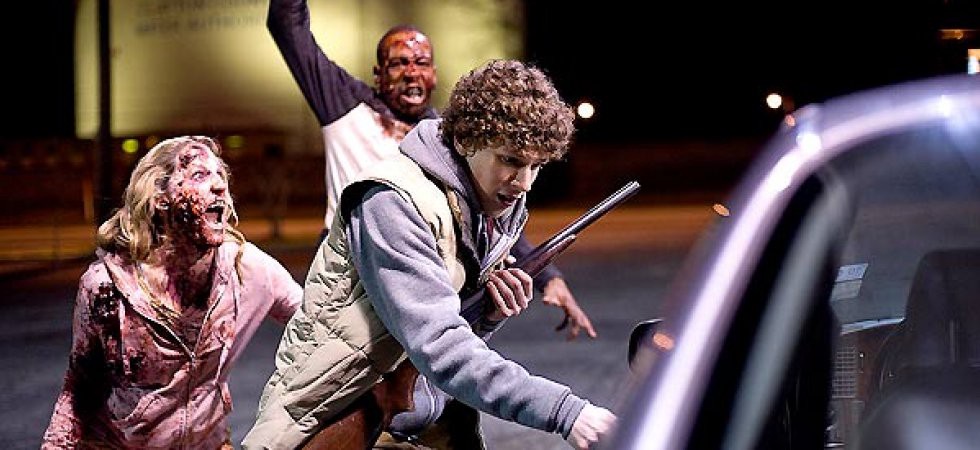
“The invention of anomie, a series of poems” is published here by permission of the author, Helen Hofling. Copyright © Helen Hofling 2018. All rights reserved.

Is Russia a Terrible Country?

I n 2009, I went back to Russia for the first time since emigrating to the US when I was three. I went with my grandparents, and the country we were in barely resembled the country they had left. My grandparents and I blundered through an unrecognizable and impossibly expensive Moscow. Their disorientation was sad and funny, and resulted in some misadventures where I could finally see glints of the old world Soviet order underneath the now polished and Western-seeming façade, culminating in our tour bus catching fire and us being unceremoniously deposited on the side of a highway in the outskirts of Moscow and told to march single file along the shoulder until we eventually got to a distant metro stop.

Purchase the book

Keith Gessen captures so well in his second novel, A Terrible Country, the befuddlement of a (mostly) American in Moscow trying to orient himself in a town where things seem to operate by entirely different rules than in the US. Set in 2008, around the same time as my trip, I found so much of the book deeply relatable. The novel is funny, yes, but also quite moving. In it, Andrei Kaplan, a Russian immigrant and struggling academic moves back to Moscow to take care of his grandmother, in the hopes that she will provide him with good material for an article about life under Stalinism — an article that he hopes will help land him a tenure-track job. When Andrei gets to Moscow, however, he finds his grandmother’s memory has deteriorated to the point that she often does not recognize him. His days are filled with the same repetitive conversations with her and trying, not very successfully, to inject himself into the stream of life in Moscow. Gessen’s portrait of living with a person who is losing their memory is tender but also frustrating and funny, as life’s tragedies often are, and takes place against the larger backdrop of Andrei’s political awakening in Moscow.

The book shows so well the personal cost of all the reforms and policies that had transformed Russia into a capitalist country, something Gessen has been covering for some time as a journalist. Russia is a “terrible country,” according to Andrei’s grandma, and she doesn’t understand why he would come back.

Keith Gessen and I talked about Russia’s terribleness, the US’s moral gray areas, the immigrant experience, balancing fatherhood and writing, and the construction of a good book excerpt. Gessen patiently answered my questions as he unloaded the dishwasher.

Katya Apekina: What was the original seed for the novel?

Keith Gessen: Two things. There was frustration at my own inability as a journalist to convey what Russia was like, or what my experience of it was like. I felt like I’d never quite captured how similar Moscow is to New York, on the one hand — the way people live, the pace of life — but also how different. How much poorer it is. The way people live with their parents, for example, or don’t actually own their car. And then because of that the sorts of things people have to go through on a day-to-day basis — just how much more difficult life is than in the United States. That experience is hard to capture in part because so much of it is so mundane. So what if it takes you two hours to find, I don’t know, a place with wifi? This isn’t the stuff of grand historical narratives. But it is out of such searches for wifi that life is made, ultimately.

That was the meta-motivation. And then there was the more immediate experience. I lived in Moscow with my grandmother for a year, during the same timeframe as in the novel, taking care of her and helping her out. At the time, I didn’t think of it as material for a novel, but as soon as I got home, I started thinking about it. It was a very powerful experience. I wanted to describe what it was like to live with someone who was losing her memory and to an extent her personality. That was the original seed. From there, it was a long process of figuring out how to work that into a traditional novel with, you know, a plot.

I lived in Moscow with my grandmother for a year, taking care of her and helping her out. [My novel came from wanting] to describe what it was like to live with someone who was losing her memory and to an extent her personality.

KA: Andrei has this political awakening, but he’s maybe not able to be as transformed by it as he would like. Did you have a similar political awakening when you were in Russia?

KG: The political conversion or realization that Andrei goes through in 6 months, took me about 10 years. I went over to Moscow in the mid-90s, when I was in college; it was at the time when Russia was supposedly transitioning toward capitalism. You would read the papers in the U.S. and it was like, “Russia is going through a wonderful transformation toward capitalism! Though it’s a little bumpy at times!” But anyone who went over there could see that it really wasn’t going well. There was a lot of crime and people like my grandmother had lost just about everything — their jobs, their savings, their sense of themselves. Old people were out on the street selling their socks.

But a lot of people thought, and I have to admit that I was one of these people, that this was just part of the painful process of modernization, and eventually, on the other side, the Russians would emerge from it happy and prosperous, like Germany. I held that view for a while. But that experience of seeing Russian capitalism up close in the 90s planted the seed in my mind that maybe capitalism wasn’t the best solution to all situations and that in certain places it led to a great deal of misery and death, actually. It took me a while to kind of come around to the idea that this wasn’t some kind of aberrant capitalism but actually capitalism itself. So, I do share that with Andrei, though as I say he comes to it a little faster.
KA: The ending blew me away — when Andrei is put to the test. I grew up with this idea that a person’s true decency was something that was hidden away and that in polite American society it went untested, but in extreme situations, like in Soviet life, it was forced to the surface. I remember thinking that I didn’t really know what a person was made of, what I myself was made of, unless it was tested. Is this also an idea you grew up with and do you still believe that?

KG: For me, the difference between here and there is that in the US there is a really wide gray area of moral and political behavior. I guess that’s something that money buys: moral ambiguity. Like, sure, I’m a corporate lawyer or an investment banker, but I also do a lot of pro bono and charity work, and also, you know, I’m a Democrat. There are various shades of that, that are more or less convincing, whereas in Russia if you’re working for Gazprom or Rosneft or United Russia, you have literal blood on your hands. Or even just being a college professor, as I now am, in the U.S. It’s a noble profession, in many ways — I spend a lot of time working with students on their writing and reporting and some of their work is really great. At the same time I’m part of this horrible student debt machine. I’m in a gray area. In Russia things are a little more black and white.

KA: Do you think that’s still true about the U.S.?

KG: Well, certainly less so since 2016, because of the political polarization. But it’s one thing to live in a country that’s split in half, as the U.S. now is, so that you’re part of the good half… that’s different from being anti-Putin in Russia, where you’re more like 10 or 15 percent of the population. And then within that 10 percent, being a person who is willing to put your body and freedom at risk.

I grew up with an admiration for the Soviet dissidents. When I was very little, I actually thought that my parents were also dissidents, in the sense that they had all the samizdat books, Solzhenitsyn and Mandelstam and so on, and, having emigrated in the early 80s, had made a pretty dramatic decision to leave the USSR. It was only later that I found out that the number of people who were actual dissidents, who had actually protested the Soviet regime and had actually gone to prison, was minuscule. And then you had this larger group around them who were sympathetic and never joined the Party and secretly hated the regime but didn’t actually go out and protest. That was the group my parents belonged to. I mean, famously, in 1968 when the Soviet Union sent tanks into Prague, there were eight people who went out into Red Square and were then all arrested. That’s a very small number of people.

The Unbitten Elbow

KA: Andrei, as an immigrant, was pretty rootless. As an immigrant myself I related to that aspect — wanting to be part of a cause, but the cause not really being his own. Do you think there’s a limitation to his commitment since it’s not his country?

KG: I don’t know if I believe that. I think it’s a decision for him to make. My parents, even as they never really assimilated to the US — I don’t think they would ever have thought of themselves as rootless. I think if you’d have asked them, they’d have said: I’m an immigrant. I’m an American who is from the Soviet Union. That is, they knew exactly where they were from and they knew exactly where they had arrived. You can look at that situation and think it’s tragic. From a certain perspective, they never really got to have a home. But they didn’t look at it that way.

In the next generation, I think it’s true, we do feel a little more rootless. Are we from the Soviet Union? Is that our identity? On the one hand, yes, but on the other our actual connection to that place is pretty tenuous. We don’t live there. We don’t know the language that well. We don’t know the names of the sports teams. Whatever.
But that just means we have to decide. Andrei does enter into Russian life enough that he is given a choice about where he belongs and where he wants to take a stand. I think that’s true of anyone. I mean, I’ve lived my life this way to a certain extent, too, not just because I wasn’t born in the States, but because I’ve moved around a certain amount, between college and grad school and just moving between neighborhoods in New York, even, and always or sometimes with the thought that, “Well, I’m not really here for the long term. This isn’t really my home.” But at a certain point I think you get an opportunity, if you want it, to say: “This is my home. These are my people. I’m going to fight here.”

So it’s up to him. I don’t think it’s foreordained that he would make the decision that he makes.

Seeing Russian capitalism up close in the 90s planted the seed in my mind that maybe capitalism wasn’t the best solution to all situations and that in certain places it led to a great deal of misery and death, actually.

KA: I came to your book first through the excerpt that was in the New Yorker. I have never read an excerpt before that felt so stand alone powerful on its own and yet it didn’t really give away anything about the book or rob the book of its emotional power. They felt like two distinct things and I loved them both. I was curious about how that excerpt came about.
KG: A young editor named David Wallace at the New Yorker did that. I wouldn’t have known how. He took the grandmother thread and rearranged the chronology a little to cast it more in the form of a story. It was pretty brilliant. The words were the same but it was a different creature, made out of parts of the larger creature. And it put me in this strange position, since David felt like he could cut things, but not really add anything to suture the narrative together. At first I was like, “Am I authorized to go in there? Am I allowed to go in there and add stuff?” And my initial feeling was, “No! I’ll mess it up.” But eventually I came around to, “I made the larger thing to begin with, so I guess if anyone can do it, it should be me.”

It was pretty strange. If you look at it there’s stuff in there from page 1 to about page 300, in the course of 8 pages.

KA: I felt like the emotional punch of it somehow felt different than the emotional punch of the book. In the book his relationship with his grandmother is central, but it’s about other things as well, and somehow when that storyline is taken in isolation like that it feels very different.

KG: Yeah. When we were editing, I went and looked at other novels that I’ve read that were excerpted in the magazine. And they really fall into two categories: The first is that it’s a discrete chapter — I think the excerpt from Franzen’s Purity was like that. You get a sense of the spirit of the book, but not the story. And then others are more like a compression of the best parts. That’s the danger, of course: that they’re taking the best parts and smooshing them together, so the reader is just automatically going to be disappointed by the book-length version.

I don’t know if that’s what happened, but I do feel like the grandmother stuff is the core of the book. It’s what allows the rest of the book to exist. It’s what allowed me to write a book about Russia.

KA: You work in all these different modes (journalism and translation) do you feel like you’re accessing different parts of yourself when you’re writing fiction? Is your process different?

KG: Something I’ve learned about myself as a journalist is that I tend to gravitate toward a particular kind of character. That’s true of most journalists. You plunk them down in some random place and yet they always seem to manage to find the sort of person that they’re going to find. In my case, it’s a sort of thwarted bitter male character who also likes sports. If that makes sense. And it’s also the kind of character I find interesting as a novelist.

Beyond that, as a novelist, or fiction writer, I’m very nervous about making stuff up. In my first book, I was really worried about time. I thought that any changes in chronology or even just compression of time would distort the truth somehow. Like who was I to mess with time? Like, was I God? And I was worried too about class — like, I didn’t want to create social mobility where it didn’t exist, in either direction.

But as I’ve gotten older, I feel like I’ve seen more things. I’ve seen all sorts of people doing all sorts of things. The range of human experience is quite wide, it turns out. And once you realize that, you start feeling like it’s OK to make stuff up, even to make people up, and to move stuff around. This book still hews pretty closely to my own personal experience, but I gave myself more freedom this time, and I think it worked. People have said to me, about some of the characters in the book who are very much made up, “Oh, you must have meant this person that you and I both know!” The Fishman character especially. But I’m very pleased to say that that is a made-up horrible person.

KA: How is writing your second book different from writing your first book?

KG: A lot. Back when I was in grad school and writing my first book, I thought, “Man, if I can just finish this book it will be so much easier to write a second book.” What a joke. It took me 10 years to write a second novel. Part of it I think is that people have certain expectations of what your book is going to be like based on the first book, and you want to, on the one hand, subvert and go against those expectations, but on the other hand, you also want to meet them. And that turned out to be harder than I expected.

KA: And in writing your second book, you had a son, in the middle of the process. How did that affect your writing process?

KG: It changed two things. First, I really needed to sell the book. We had Raffi, and I didn’t have a job, and Emily, my wife, who is also a writer, also didn’t have a job and had just given birth to a little baby, and at that point, I mean, after six years of fiddling with it, I had to finish something that could be presented to a publisher, or else. That was very real.

And then this other thing happened, which was harder to define. My grandmother had died by this point, and Raffi was a pretty difficult baby, and we were really inexperienced parents and we weren’t getting any sleep. We ended up having this pattern where I would take Raffi from about 1am to about 4am. And for the first 30 minutes of that, he would just scream and I would try to get him to the farthest point in the apartment from Emily, so she could sleep. Eventually he would go back down, but there was still this danger that he would start screaming again, so I would keep him in the living room and stay out there with him. And that was the time that I had to write. That was when I got the first third of the book into presentable shape.

And writing it with him sleeping there, I wouldn’t say it changed the book, exactly, but it did make me more aware that I wasn’t, you know, the last generation anymore. The two tragedies in my grandmother’s life had been that she lost her only child, and that it happened twice — first to immigration and then to breast cancer. I didn’t need to have a kid to know that that was a tragedy, but it certainly made me aware of just how horrible that would be. I guess you could say it embedded me more clearly into the stream of my family.

KA: Do you have any advice you would have given yourself when your first book was coming out? Or your second one?

KG: I have so much! Don’t write in the first person! And also, you know, understand that it’s a book you’re publishing. With the first book I really thought it was going to transform my life. Like I would suddenly have this whole new group of friends, which would include, I don’t know, Harvey Keitel, and of course I would still stay in touch with my old friends, but they would understand that things had changed. Something like that. I definitely thought I couldn’t make any plans past my publication date. And I have actually seen that happen to a couple of people. But for the most part it does not happen, and your life goes on as it did before.

Another mistake I made is that I spent too much time worrying about the people who didn’t like the book and not enough time being grateful for the people who did. I still find myself doing some of that. But the fact is, some people are going to like the book, and some people are not. It’s hard to deal with. You want everybody to like the book. But that’s just not possible — at least in my case I have found that it’s not possible. I think you need to find your readers — the people who really respond to what you’re doing and how you’re doing it — that’s really all you can hope for. And it may be a few hundred people or it may be a few thousand people, but it’s not going to be a million people. Still, you have to find as many of your readers as you can. And sometimes in the process of trying to find your readers you’re going to run into some of your non-readers. That’s the price you pay.

And ultimately, what an amazing thing to publish a book! If you had told my younger self that I would someday get to publish a book, and I would get to read it to people at bookstores, I would be so happy. As a grownup unfortunately it feels a more like a series of failures. So if possible you have to recapture that feeling of what your younger self would have thought of it, instead of worrying — is my book selling and are they going to let me write another one?

How to Decorate Your House Like Victor Frankenstein

Name: Victor Frankenstein, widower (Elizabeth was great), member of a distinguished family, and mocker of the stupendous mechanism of the Creator of the world (Genevese by birth)

Location: Ingolstadt, in the Odenwald mountains, Germany

Size: Resembling the imaginative capacity of man

Years lived in: Since a resistless and almost frantic impulse urged him to undertake his home makeover; owned

W e all want to accomplish some great purpose. For seeker-of-knowledge Victor Frankenstein, his home was an excellent place to start. His castle welcomes you with misery and despair, its cold, gray stones suggesting an owner of sometimes violent temper, with passions vehement.

“I am inspired by wonder,” he says. “Homes that are truly marvelous and take an irresistible hold on my imagination. I also like gargoyles. Those crazy little guys.”

The castle was enlarged and modernized in the fifteenth century, but Victor saw the potential for further improvements. He worked for two years to bestow animation on the lifeless matter of his domestic space. As rain pressed dismally against the austere steel windowpanes, he listened to “Puttin’ on the Ritz” and went through fabric swatches and blood-repellent laminate floor options with indefatigable zeal, finally realizing the gratifying consummation of his toils as the moon gazed on his midnight labors.

You might say that his laboratory for the study of alchemy and natural philosophy is “where the magic happens.” Here, in a solitary chamber, or rather cell, at the top of the house and separated from all the other apartments by a gallery and staircase, he undertook his work of inconceivable difficulty and labor, which he prefers not to discuss in detail. He will say that he has found a number of treasures in dissecting rooms and slaughterhouses, as well as in vaults and charnel houses, which he describes as “vivid” in style. He found a number of accessories in the Alexander McQueen for Kohl’s line and invested in some art by Damien Hirst.

“The skulls, not the butterflies,” he says.

You might say that his laboratory for the study of alchemy and natural philosophy is “where the magic happens.”

Whenever he struggled with a space, he thought of the bleak sides of woodless mountains, dreary nights, and beakers.

“Who was I? What was I? Whence did I come? What was my destination? These questions are central to both experimental science and personal style,” he says. “I am enchanted by the corpses of executed criminals. The structure of the human frame. All those different parts that make up a whole, like FLOR carpet tiles.”

And he turned to the Container Store’s storage solutions to create an almost clinically organized space.

“Where are my hearts? My eyeballs? My severed hands?” he asks. “I need to be able to find a foot if I need one. Everything has its place.”

He will admit that he had a countenance expressive of a calm, settled grief when he realized that he had to pick up and install the storage system himself — he was outside the delivery zone — but this proved to be a project suited to his meticulous personality.

For Victor, design is a way of creating something beautiful. Or not.

Depending.

“If you don’t have a design plan, you can end up with a startling catastrophe on your hands,” he says. “You want to come out the victor. Oh god, is my name a pun? That is seriously just occurring to me now.”

I need to be able to find a foot if I need one. Everything has its place.

A CHAT WITH VICTOR

HIS STYLE

Textile-wise, I like patterns that gratuitously harass the heart. When I find the right one, a strange multiplicity of sensations seizes me. I love electricity — not light fixtures, you know, but theories of electricity that allow for deformed and abortive creations. I like a majestic aesthetic that recalls the dangerous mysteries of the ocean and snow-capped peaks that are both beautiful and terrifying. Anything that brings to mind the divine glories of heaven and earth. No one can feel more deeply than I the beauties of nature. Except maybe nature. Which I will tame and control like you tame a woman or an unreliable contractor.

HIS INSPIRATION

Certainly ghost stories. I wanted one room that would be perfect for crowding around a blazing wood fire in the evenings and amusing myself with friends, if I decide to make any. I was also inspired by the wildness of Lake Geneva, which is a lovely place to summer, if you know someone with a property there. And if you don’t know someone with a property there, you should do something about that immediately.

IMPORTANT INFLUENCES

I’m influenced by Dante’s sense that everything is the worst. His design scheme for hell is impressive, to say the least! Also Agrippa, Magnus, and Paracelsus. I like a thoughtfully layered home that suggests agony, torment, and isolation. And I knew that I wanted an all-black kitchen — something very Gothic. I put in antique petit granite, which is like normal granite but petit. When using darker shades, you must honor the architecture of the space. Perhaps you want to put in a black concrete apron sink and a matte black faucet. Great. But just be sure to streamline your surfaces and strike a balance: Maybe paint the cabinets a dark black and the walls a darker shade of black. Then you’re ready for accessories — ebony ceramics, black-rimmed baskets, forged steel cutlery, and some good, heavy knives for chopping up the bodies you dig up in the middle of the night.

8 Books that Wouldn’t Exist Without Mary Shelley’s ‘Frankenstein’

BIGGEST INDULGENCE

I wanted to re-upholster some old chairs, and when it came to selecting fabrics, I felt as if my soul was grappling with a palpable enemy. But I found consolation for my toils in the form of some nice swatches from Room & Board. I redid the dining room chairs in “Ancient Mariner,” a delicious deep blue with distinct hints of doom, and “Prometheus,” which is a fierier color. I know that some people would have gone with a simple tan neutral, but I don’t want to think of and dilate upon so very hideous an idea.

UNIQUE FEATURE

My bed is incredible. The bed linens are from Godwin Fabrics, and the bed itself is a custom piece by Jacobin Design. I swear, it’s so comfortable that I have the wildest dreams. I had one the other night where I thought that I saw Elizabeth in the bloom of health, and I embraced her and kissed her on the lips, and she changed into the corpse of my dead mother. So, like I said: a really comfortable bed. With curtains.

BIGGEST CHALLENGE

Sometimes you feel that blank incapability of invention which is the greatest misery of decorating, when dull Nothing replies to your anxious invocations. This happened to me when I was thinking about where to put my operating table in my laboratory. Is it best in the middle of the room to create a sense of flow? Or up against a wall to save space? That was tricky. But these are just the enervating effects of the creative process!

WHAT FRIENDS SAY

I shun my fellow creatures as if I have been guilty of a crime, so I don’t know.

PLANS FOR THE FUTURE

Maybe take a break? Just walk around on some ice?

BEST ADVICE

The labor of men of decorating genius, however erroneously directed, scarcely can ever fail in ultimately turning to the solid advantage of mankind. I think. I hope.

This piece is excerpted from Decorating a Room of One’s Own: Conversations on Interior Design with Miss Havisham, Jane Eyre, Victor Frankenstein, Elizabeth Bennet, Ishmael, and Other Literary Notables.