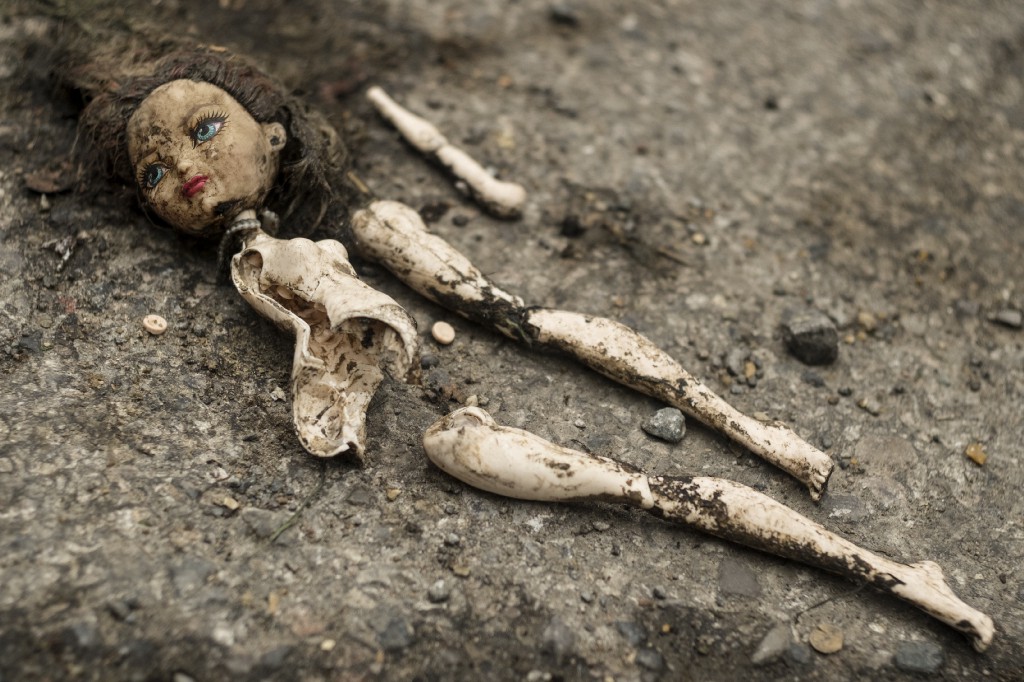
We asked these questions at our event for PEN America’s LitCrawl NYC, and now you can play along at home!
First Round
1. Robert Galbraith is the pen name of which bestselling author?
2. Name the author of this quote: “we all tell ourselves stories in order to live”.
3. Mrs. Dalloway by Virginia Woolf takes places in a course of a ____.
a) a day b) a week c) a month d) a year
4. This test measures the representation of women in movies and literature. The criteria is that it has to have at least two women in it, who talk to each other, about something besides a man. Who invented the test?
5. Crazy Rich Asians is the first Hollywood movie in 25 years with an all Asian cast. What was its literary predecessor and who was the author?
6. What genre is Octavia Butler known for?
7. This quartet spans a lifetime and revolves around two women growing up in post-war Italy. Name the series and the author. Hint: The first book has just been adapted into an HBO series
8. Which novelist co-founded the indie bookstore Books Are Magic in Brooklyn with her husband?
9. What is the world’s first novel? Hint: it was written by a Japanese woman.
10. Pulitzer prize-finalist Michelle Alexander wrote a book calling what the new Jim Crow?
Picture Round
Final Round
1. Fifty Shades of Grey by E. L. James started as fan fiction for which book?
2. Who is the first African American to win the Pulitzer prize?
a) Alice Walker b) Lynn Nottage c) Gwendolyn Brooks d) James Baldwin
3. This short story is set in a small town where every year the village people gather with stones for an annual ritual called “the lottery” where a villager is stoned to death to assure a good harvest. Name the author.
4. Name the book and the author of this first line: “It was a queer, sultry summer, the summer they electrocuted the Rosenbergs, and I didn’t know what I was doing in New York.”
5. Name this poet: “The caged bird sings
with a fearful trill
of things unknown
but longed for still”
6. Name the author and the author that this quote is from: “The four March sisters couldn’t be more different. But with their father away at war, and their mother working to support the family, they have to rely on one another.”
7. The novel Pachinko by Min Jin Lee is set in which two countries?
8. An unnamed college graduate decides to spend a year asleep in her apartment by using a combination of drugs. Name the book and the author.
9. The House of Spirit spans three generations of the Trueba family in an unnamed Latin American country. Who was the author?
10. This author disappeared for 10 days in 1926 and claimed not to remember what happened during that time. Name the author.
Answers
First Round
J. K Rowling
Joan Didion
a) a day
Alison Bechdel
The Joy Luck Club by Amy Tan
Science Fiction
The Neapolitan Quartet by Elena Ferrante
Emma Straub
The Tale of the Genji
Mass incarceration of African Americans
Picture Round
Top row: Margaret Atwood, Toni Morrison, Sandra Cisneros, Jenny Han
Bottom row: Jhumpa Lahiri, Zadie Smith, Clarice Lispector, Donna Tartt
Final Round
Twilight
c) Gwendolyn Brooks
Shirley Jackson
The Bell Jar by Sylvia Plath
Maya Angelou
Little Women by Louisa May Alcott
Korea and Japan
My Year of Rest and Relaxation by Ottessa Moshfegh
Flash fiction is many things: hilariously difficult to categorize; confusingly known as “microfiction,” “short shorts,” “minisagas,” “dribble,” and “drabble”; and sometimes, even dangerous.
But great might not be the first word that springs to mind. Remember, this is a style of writing so short (most cap it at 1,000 words) and so accessible that some have deemed it “Twitterature.” For every half-baked stab at micro-fiction in your Instagram feed, though, there’s a masterful short short story out there that you probably haven’t read yet. The best part? It won’t take more than three minutes to read them.
Here are seven examples of flash fiction (for a total of 21 minutes or less) that are totally worth your time.
“Chapter V,” Ernest Hemingway
“For sale: baby shoes, never worn” is far from Hemingway’s only foray into flash fiction (if it was indeed his story). This story from his collection In Our Time follows the typical arc of great flash fiction by starting with a straightforward but descriptive sentence to set the scene.
They shot the six cabinet ministers at half-past six in the morning against the wall of a hospital. There were pools of water in the courtyard. There were wet dead leaves on the paving of the courtyard. It rained hard. All the shutters of the hospital were nailed shut. One of the ministers was sick with typhoid. Two soldiers carried him downstairs and out into the rain. They tried to hold him up against the wall but he sat down in a puddle of water. The other five stood very quietly against the wall. Finally the officer told the soldiers it was no good trying to make him stand up. When they fired the first volley he was sitting down in the water with his head on his knees.
After his matter-of-fact opening, Hemingway folds back the layers until that first sentence takes on an entirely new meaning by the end. What starts as an impersonal report straight out of a newspaper clipping ends as a vivid portrait of human suffering. Never fear, though: not all short shorts are this depressing… just the good ones.
“Widow’s First Year,” Joyce Carol Oates
Ernest Hemingway’s (apocryphal) six-word story might be more famous — but this four-word story from Joyce Carol Oates has it beaten in the brevity stakes:
I kept myself alive.
Pulled from the anthology Hint Fiction, a collection of works running 25 words or less, this story reveals a key trick of the flash fictionist’s trade: let the title to do the heavy lifting. In isolation, “I kept myself alive” might be construed as a feel-good mantra — but in the context of the title, it provides a morbid twist on the setup-punchline structure of a joke.
“Give It Up!” Franz Kafka
Not all flash fiction needs to be breathlessly blunt like Hemingway’s. In this single paragraph, posthumously published story, Kafka crystalizes the mood and paranoia that defines most of his work:
It was very early in the morning, the streets clean and deserted, I was walking to the station. As I compared the tower clock with my watch I realized that it was already much later than I had thought, I had to hurry, the shock of this discovery made me unsure of the way, I did not yet know my way very well in this town; luckily, a policeman was nearby, I ran up to him and breathlessly asked him the way. He smiled and said: “From me you want to know the way?” “Yes,” I said, “since I cannot find it myself.” “Give it up! Give it up,” he said, and turned away with a sudden jerk, like people who want to be alone with their laughter.
Edgar Allan Poe once described the need for a “unity of effect” in short stories: the act of carrying a single emotion throughout the piece to elicit a particular reaction from the audience. In just 130 words, Kafka is able to suck readers into his world and leave them shaken.
“Sticks,” George Saunders
This excerpt is from a 1995 story that’s become a modern classic of the micro-fiction form. Depicting decades of a man’s life through the prism of a hand-made lawn ornament, these two paragraphs reveal the keen eye for specificity that has since helped writer George Saunders win the Booker Prize.
Every year Thanksgiving night we flocked out behind Dad as he dragged the Santa suit to the road and draped it over a kind of crucifix he’d built out of metal pole in the yard. […] The pole was Dad’s only concession to glee. We were allowed a single Crayola from the box at a time. One Christmas Eve he shrieked at Kimmie for wasting an apple slice. He hovered over us as we poured ketchup saying: good enough good enough good enough. Birthday parties consisted of cupcakes, no ice cream. The first time I brought a date over she said: what’s with your dad and that pole? and I sat there blinking…
It might be a little longer than your average short short, but in two paragraphs, Saunders seamlessly works in an emotional arc that’s more impactful than most novels. Most impressive is how he suggests a fleshed-out backstory through a handful of asides: Rod’s helmet, the father’s old army medals. And, like all great flash fiction, its ending hits stunningly hard and stays with you for a lot longer than three minutes.
Not all great flash fiction is bleaker than bleak! This winner of the 2015 Barthelme Short Prose Prize couldn’t be much farther from the gritty, sober tone of most flash fiction. Written in the oft-controversial second person, Behm-Steinberg’s story imagines a world where Taylor Swift (yes, the singer) is available in abundance to anyone who cares to order one from the internet.
It’s a bizarre story: a meditation on capitalism, fame, and consumer culture. It’s also riotously funny. Here’s an excerpt:
You’re in love; it’s great, you swipe on your phone and order: the next day a Taylor Swift clone shows up at your house. It’s not awkward, it’s everything you want. She knows all her songs, and she sings them just for you. When you put your Taylor Swift to bed (early, you got a big day tomorrow) you peek over the fence into the Rosenblatt’s yard, and the lights are blazing. Your best friend Tina has three Taylor Swifts swimming in her pool. She has a miniature Taylor Swift she keeps on a perch, a Taylor Swift with wings. You’re so jealous. She’s not even paying attention to them, she’s too busy having sex with her other Taylor Swifts, they’re so fucking loud it’s disgusting. You hate Taylor Swift…
This goes to show that flash fiction’s sole purpose isn’t just to depress readers. Instead, its constraints can allow the writer to distill their ideas into just a couple hundred words.
“im sorry, its a girl” said the doctor to the father.
“no, im sorry, youre a sexist” said the girl child to the world.
Taken from writer Adhiraj Singh’s parody collection, Terribly Tatti Tales, this story manages to fun at the poor grammar and heavy-handedness of most “Twitterature,” while simultaneously delivering a hilarious and rousing story in and of itself.
“Gator Butchering for Beginners,” Kristen Arnett
If you’re interested in more stories short enough to read on your commute, Electric Lit’s own Recommended Reading Commuter showcases the best flash, graphic, and experimental narratives out there. Take, for example, this particularly disturbing excerpt from up-and-coming Floridian writer Kristen Arnett on the minutiae of skinning an alligator:
It’s easy enough to slip the skin. Wedge your knife below the bumpy ridge of spine to separate cartilage from fat; loosen tendon from pink, sticky meat. Flay everything open. Pry free the heart. It takes some nerve. What I mean is, it’ll hurt, but you can get at what you crave if you want it badly enough.
Start with the head…
…and to hear where “Gator Butchering” ends, check out the full story. Spoiler: it’s about alligators, but it’s also not about alligators.
When it comes to flash fiction, you can’t be blamed for raising an eyebrow — especially if your only experience has been a badly-written paragraph on your Facebook wall. But hopefully, these stories demonstrate just how exciting it can be to read a story that goes straight to the heart without a single wasted word.
Living alone on a windswept meadow on Martha’s Vineyard, Massachusetts, Nancy Luce has become accustomed to the silence that surrounds her like brightness. But on January 18, 1859, there is a heavy quiet in the air. It is a silence Nancy Luce has never felt before. A Tuesday night snowstorm suffocates all outside sound. Not one tree sways; the snow has weighed them down. The wind hauls flakes downward, muffling her house. Inside the hearth, embers dissolve. At 2 A.M. Luce lies down. Her dress extends over the wood floorboards. She looks at the dying flames and watches the final moments of her sick companion, her eyes consumed by every second as she tends to her friend.
Luce’s chicken, Beauty Linna, is lying in a box by the fire, clearly on the edge of death. The hen is wrapped in wool blankets, and her face looks like a songbird, small and exquisite. Beauty Linna’s neck is partially visible; the dimpled pink, featherless skin could no longer warm the old hen in the harsh winter. As Beauty Linna exhales her last breath, the stillness to Luce seems greater than it has ever been.
When Luce sees her lifeless companion, does she feel like she is looking into her own future? At 45 old, Luce herself has nearly been claimed by her own mysterious illness. As the fireplace’s moss kindling yields to smoke, does she think of her relationships that have also disintegrated? Only she and Beauty Linna are left. Her mother and father passed years before. The hen was the one being that supported Luce during her greatest period of grief.
The hen was the one being that supported Luce during her greatest period of grief.
Beauty Linna needed Luce to survive, but the opposite was also true: the chicken gave Luce purpose in an otherwise dismal reality. They spent every moment together, the small creature registering Luce’s existence in a society that considered her unwell. When the prospect of having a family vanished, Luce raised two chickens: Beauty Linna and Ada Queetie. Ada Queetie died a year before. And now Luce has lost Beauty Linna.
On the night of Beauty Linna’s death, loneliness may have been the sole visitor in Luce’s home. Perhaps her thoughts flash to her cow, Susannah Allen, and her flock that sleeps in the back room. Some are blind, others are ailing or rescued from neglectful neighbors, but they need her to take care of them. Luce knows she has no choice. She confesses in her poem “Sickness”:
A common thing in my sickness, Milk my cow, take care of my hens, In such misery, I felt as if I must fall at every step, But I must do it, I must do it.
July 1859 — Six months after Beauty Linna’s death, Luce drafts a sixteen-page poem dedicated to her two favorite hens titled, “Poor Little Hearts,” which attempts to merge the identities of human and animal. The poem is passionate, confessional, pushing the conventions of writing and living. Luce states how Ada Queetie “was my own heart within me,” and insists, “her heart and mine was united.”
The hours, days, and months after losing a companion are like resetting a broken bone. Microscopically, there will be a hairline fracture, a divided nick of time before and afterward. Luce lamented her chicken companions’ passing as if they were part of her family, and her tribute to them would make her a celebrity beyond Martha’s Vineyard. By the late 1860s, Luce sold enough self-publications of Poor Little Hearts to commission the first of two marble headstones for her chicken companions.
Love can manifest itself in countless ways. It can be privately expressed or publicly flaunted; love can drive a person into the most outlandish regions, and yet it can also teach important lessons. For Luce, her chicken graveyard stood as the ultimate example of love for her hens.
Luce’s story surfaced in the press, including The Chicago Daily Tribune, The Boston Weekly Globe, The Atlantic Monthly, Harper’s Bazaar, The San Francisco Bulletin, and The New York Times. By 1873, hundreds of vacationers visited Luce’s homestead each year. They would meet the poet, view her chicken graveyard, and purchase her chapbooks, photographs, and eggs. These tourists were glimpsing into an individual’s world who rejected 19th-century social norms. Upon her death in 1890, Luce was so well known that her obituary was printed from coast to coast. Yet today she is a folktale.
Love can manifest itself in countless ways. For Luce, her chicken graveyard stood as the ultimate example of love for her hens.
Most assumed Luce was deranged, yet her intellect shined through meticulously handcrafted books, colorful visual art, country-wide correspondences, and detailed accountings. Additionally, Luce’s more experimental poems include lists and fragmented grammar that predate 20th-century Modernists.
When I first heard of Nancy Luce, her name hit me like a quick, snapping strike of a match.
June 2012 — A friend approached me after overhearing a conversation about my poems that were inspired by chickens. She had recently returned from Martha’s Vineyard and told me of Luce’s legend. My friend asserted, “You must find out more about her.” Sometimes a coincidence can redirect one’s life and an unfathomable force compelled me toward Luce. Her last name reminded me of lace: a simple material, yet magnified, the whole is created out of delicate intricacies.
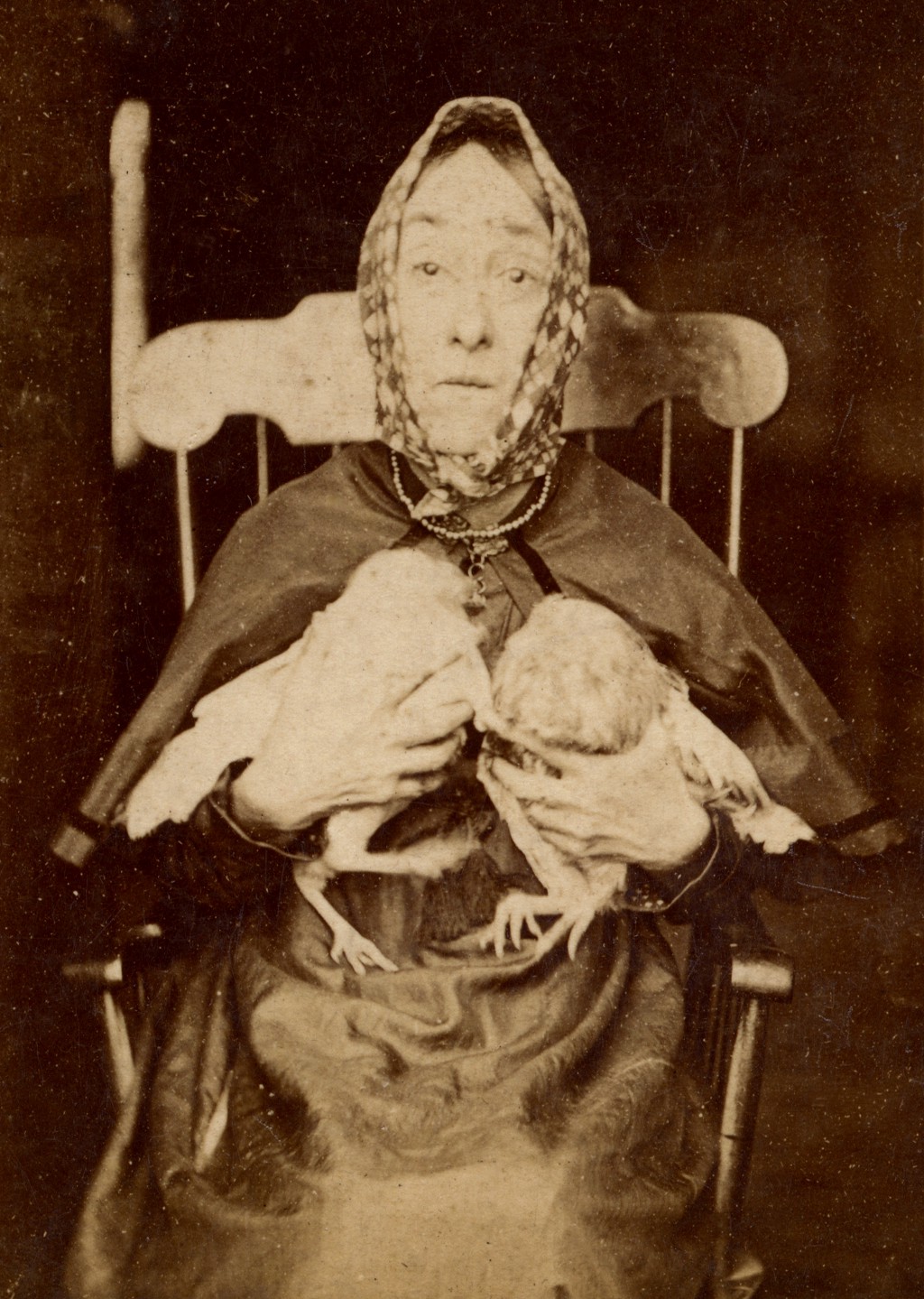
Nancy Luce with her chickens. (Photo courtesy of Carand Burnet)
Over time, I have obtained portraits of Luce with her chickens. One image shows her 40 years old with a checkered handkerchief politely knotted at the base of her chin. The afternoon light blanches the features of her long face and lash-less eyes. Luce’s expression is distant and skirting, as if she is mapping the land her family has owned for generations. Beauty Linna is cradled in her broad, work-worn hand. The chicken’s legs are remarkably petite and pale as they dangle like wind chimes.
I imagine the details of Luce’s face and hands erased by this photographic overexposure. I try to peer into the other side of its varnish. Her face is tinged with uncertainty, the way her lips slightly turn with eyes ocean-wide, consuming sadness.
Contemporary readers who hear Nancy Luce’s story may ask the same question posed by some of the original visitors to Luce’s home: Why choose chickens over people? Contemporary Emily Dickinson commented that “the Soul selects her own Society.” But chickens? Most consider poultry a nameless commodity, let alone a sentient being. Luce’s early adulthood was overshadowed by untimely events including her illness and her parents’ deaths. Perhaps this led her to opt for animal companionship when traversing life’s uncertain roads.
My fondness for birds is what made me so intrigued by Luce and her friendship with chickens. I understood how a pet could comfort a person in strenuous circumstances. My chicken Babette guided me through a bewildering adolescence. Later in adulthood, my pet dove Snow comforted me when I confronted a rare health disorder. Luce sought refuge with her “poor little hearts” after her traumas.
At its heart, the care that you feel for another eludes reason, its meaning shifting and translucent like a feather tossed in the breeze. Sometimes love chooses you. It sets you apart, assigned to a changed perspective. Love can also be demanding; Luce occasionally starved so she could buy food for her chickens. When one is taken with love, one will do anything to continue caring.
Luce’s contemporary Emily Dickinson commented that ‘the Soul selects her own Society.’ But chickens?
Along the road to the Massachusetts seaboard, the stunted trees thicken with underbrush as the road narrows and curls. I decided to travel to Martha’s Vineyard and assemble the fragments of Luce’s biography that is veiled behind local folktale. Little did I know then that the more I continued to research Luce, a deeper connection would develop. We would become corresponding lives, separated by almost two centuries, enigmatically woven together.
I reach the Steamship Authority dock ready to board the ferry that navigates to Martha’s Vineyard. I receive my ticket and join one of the seven rows of parked cars. The gulls slide around in the slab of slate sky. In the distance, I hear the deep, rumbling thunder-hum of the ferry as it approaches.
The ferry opens its wide belly. Rattling chains metallically thud against the salt-brined pier and car engines start in unison. Several cargo trucks wait too, filled with goods that sustain this island community. The eight-mile stretch through the Vineyard Sound secludes the island from the state. Following the crew’s hand gestures, I park inside the ferry’s bottom. My feet waver with the shuddering floor, and I ascend the stairs to see the outside, panoramic view.
As I ride the ferry, crossing Woods Hole to Vineyard Haven, MA, I feel the cool May wind. I listen to the ferry’s engine as it churns and rhythmically pulses onward. Soon the infiltrating sun zips through the scudding clouds. The brightness prompts me to reflect over Luce’s faded portrait with Beauty Linna, and I wonder what remnants of her life remain. I survey the miles of teal, purling waves once punctuated with the nodding of ships. The Vineyard Sound is a reminder of physical and intangible barriers that isolated Luce. During her 75-year-long life, Luce never walked onto the mainland. Yet her story carried much further.
Born in 1814, an only child of aging parents, Luce’s early adulthood was burdened with caregiving. Her father, Philip, owned meadowland and produced hay used as sheep fodder. Around the time she completed public schooling, Luce became her family’s income earner due to her father’s declining health. She made money by transporting goods on horseback from her village of New Town (now called West Tisbury) and the whaling port of Edgartown. Luce wrote that she tolerated this demanding work partly because she enjoyed the freedom that horseback riding provided.
At age 26, her 12 years of “freedom” as an equestrienne ended when she became sick around the time she “met with the first heart-rendering (sic) death.” While the subject in the 1840 death remains unknown, the loss of this individual or animal caused Luce to retreat into a private wilderness. She left her courier job, stayed confined at home, and while ill herself, cared for her parents. Never again would she recover or reconnect with the outer world. Neighbors, townsfolk, and tourists ridiculed her; some unsuccessfully tried to have her committed. Luce not only withstood a debilitating ailment, poverty, and isolation from most of her community, but she then undertook the formidable pursuit of being a writer and artist who earned money through her creative works. From moments of fame to times of hardship, Luce turned to her animals for consolation. Only her hens could truly comfort her.
On a humid July night in 2004, my mother drives my sister and me to our family’s summer home in Edisto Island, South Carolina. The car creeps down Toogoodoo Road, which feels like the most desolate road on the eastern seaboard. Low-hanging Spanish moss dangles over the windshield. Even with the windows open, air clings to our faces like a cotton rag in need of wringing. My sister and I rock our legs back and forth to dislodge from the sticky seats; we are careful, though, because we each have a pet chicken resting on our laps. Red and Babette are too old to be left alone at our house in upper state South Carolina. My mother, a former veterinary assistant, decides it will be best if the hens join us for the weekend.
Is it by choice that the two hens died together, because they could not exist apart?
Red sleeps on my lap. The blue dashboard screen illuminates her face; her auburn feathers blend into the darkness. She has experienced a week of illness, despite treatment. Babette sits in the rear seat. Babette is twice the size of Luce’s Beauty Linna, with blondish feathers. I admire her exquisite face — her orange eyes like paperweights, her ear-muff tufted plumage, her tiny pea comb that peaks from her flat head. Babette keeps a keen calmness when she returns my gaze. I feel her raw regard for me.
When we arrive in Edisto, something is amiss with our hens. Neither would wake from their deep sleep; they both silently, painlessly passed away during our drive. Is it by choice that the two hens died together, because they could not exist apart? Beauty Linna also passed away less than a year after she lost Ada Queetie. That night the heaviness in the air is palpable. It is thick with a warning. Giant roaches scatter over the porch. Their wings click against the glass sliding doors, frenzied in the dark. I lie awake and think of Babette until the morning relives, blushing into another kind of existence.
Riding on Martha’s Vineyard’s transit bus, I retrace a similar route that Luce traveled on her eight-mile horseback journeys. The blurring partition of trees dissipate into stoic houses once owned by whaling captains when I reach Edgartown. The Martha’s Vineyard Museum abuts a corner and is home to The Gale Huntington Library, which owns a handwritten version of “Poor Little Hearts.” Despite the benevolent afternoon, my nervousness peaks. What will I find when I read Luce’s papers? Will I be disappointed or in awe of her voice?
I imagine the unbridled moments Luce shared with her fist-sized bantam hens. Her hens lived beside her; they followed her boots as she scuffled over the vast floorboards. Her hens sat on her yellow bureau, jumped onto her shoulders, clucked, and conversed with her. Each time I read “Poor Little Hearts,” I contemplate my childhood companion, Babette. We would recline in the sunburnt grass and listen to the cicadas roar. I would stroke her feathers in the blowdryer breeze. Sometimes I would carry her into the air-conditioned house. It felt like dipping into a pond. We’d watch a bit of television till she would act restless: the outdoors calling for her return.
Her hens lived beside her; they followed her boots as she scuffled over the vast floorboards.
Inside the library, a hunter green file box labeled RU-410 sits on a plastic table. I cautiously overturn the flap, and the box reveals a thicket of manila folders that contains Luce’s handmade books, self-publications, correspondences, articles, and photographs. I select the folder that holds Luce’s manuscripts. As I undo an archival cover, I’m faced with the finalized draft of “Poor Little Hearts.” It is as if I had just unlocked a book to find a dried, diaphanous flower. The manuscript is so thin, speckled and slightly see-through, it resembles a tanned animal hide. The stained chestnut brown ink glows against the sterile white covering. Luce’s words are nudged awake after sleeping for decades.
“Poor Little Hearts” possesses a remarkable sensitivity. Approximately four by six inches in size, the poem is carefully bound into a pamphlet. Each word is drawn with pencil and strenuously delineated in permanent ink. Minuscule diamonds and ovals embed inside each capital letter, while phrases are evenly spaced. The manuscript concludes, “I did this Book in misery in both body and mind, in July and August, 1859. Nancy Luce.” These words dissolve as the writing reduces to a ghostly penciled outline. It is as if the sentence was too emotionally difficult for Luce to complete.
Leaving West Tisbury, I travel to Beauty Linna’s and Ada Queetie’s birthplace. My bike carves a route to Chilmark. The coastal air has warmed enough to smell fragrances of cut grass and gasoline. Stunted, scrub oaks shadow my path. The road undulates; my tires bear into a hill, until it crests into a lofty pasture view.
I continue to the western edge of Martha’s Vineyard, where the Gay Head Cliffs of Aquinnah stand as a landmark and a sacred land of the Wampanoag tribe. I park my bike and walk toward the sandy bluff, pushing against the insistent wind. On the overlook, I view the Gay Head Lighthouse. The structure peers dangerously over cliffs that erode almost two feet per year. The cliffs’ repeating tan, terra cotta, and ivory clay bands remind me of the recurrent phrases in “Poor Little Hearts.” Luce demonstrates physical and mental wear through repetition, much like the rampant elements that constantly abrade over a hundred million years of exposed strata. Luce declares:
No one never can replace my poor little dears live and well,
No one never can be company for me again, No one never can I have such a heart aching feeling for again,
No one never can I set so much by again, as I did by them.
The last line is abstracted and threadbare, overwhelmed by the finality of succession, as the phrase recurs like a crashing Atlantic wave.
Luce’s rhythmic vernacular is likely inspired by dialogue with her hens. Using a concise cadence, Luce interprets how Ada Queetie, “…always used to want to get in my lap/ And squeeze me up close/ And talk pretty talk.” Luce observes how the chickens mold sound into feeling as they “tip up their little face on one side/ And look at me with one eye, and laugh and speak to me.” Her keen observations of her pets made her language distinct.
It is difficult for me to imagine a pitch range as broad as a hen’s. I think of Babette’s vibrant, sundry conservations. Her beak would release air in tapping spurts like a boiling kettle, as her sound grated against pebbles in her craw. She would prate like a creaking door hinge when I would bring her a piece of clover. Pupils would hone in on the leaves, and I’d listen to her voice navigate the space around her. She would follow me and grumble like an old man when I locked the fence. Her chatter brilliantly colored the shivering pines, the nearby power plant’s plumelike cloud, the many vicinities of soundlessness.
While studying the Luce documents, I examine a tiny photograph taken during the 1870’s. Luce’s portrait with her most beloved chicken, T. T. Pinky, is imbued with a darker quality when compared to her portrait with Beauty Linna. The hen illuminates against the nighttime backdrop of Luce’s dress. Luce’s eyes resolutely aim outward. At 56, her swollen face and eyebrows drag with age, damaged from the struggle for self-sufficiency, infirmity, and by her faithfulness to creativity. Nevertheless, her lips seem more pursed and softened.
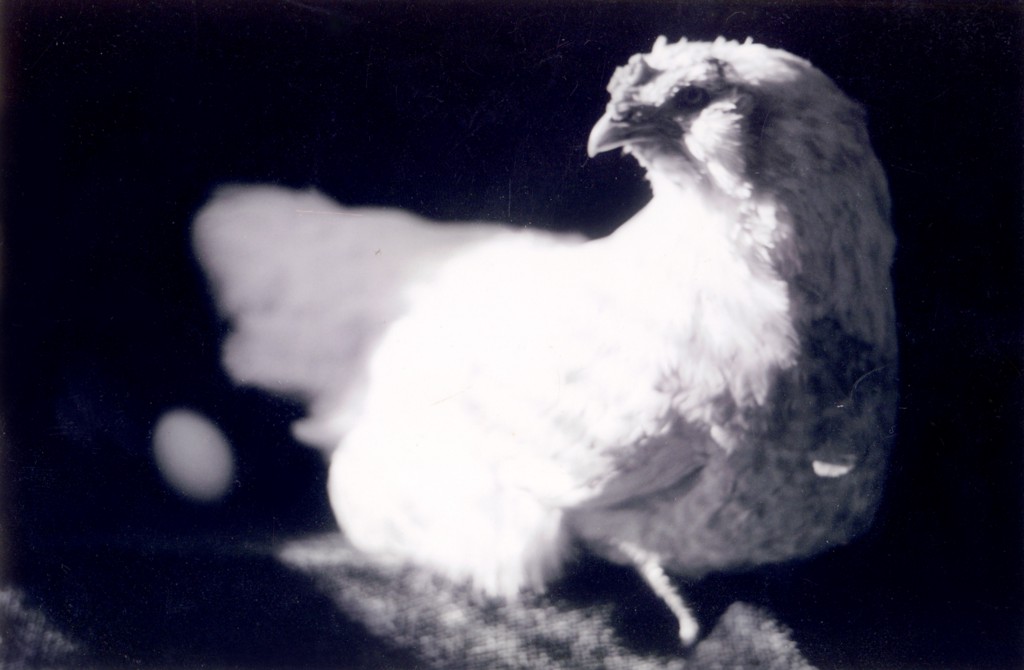
In my photo of Babette, she faces a window, and the light accents her handsome profile. Her furrowed brows resemble more of a bird of preys than a hen’s. An egg tilts behind her. Absent in the monochromatic image is the egg’s seafoam blue and Babette’s wheaten feathers. The hues remind me of Edisto’s surf. Like every portrait of Luce with her chickens, the color is lost except in memory.
Babette. (Photo courtesy of Carand Burnet)
The sky is reflective as a mirror the moment I enter the Northeastern town of Oak Bluffs. Sun-glare hits a red, triangular barn that stands between the store-lined street edging the Nantucket Sound. An art nouveau font reading “Flying Horses” is emblazoned on a building. The carousel is a landmark linked to Luce’s era. I approach the corner and hear the carousel’s steady murmuring pulse. The serpentine leather belt clomps before the music commences.
The Flying Horses are lacquered, lean, and trim alongside their chariots. They range from a palomino to an espresso hue, and each bench is brilliantly painted. Their saddles are sky blue, yellow, emerald green, and bright red, embellished in scrollwork similar to the curve of Luce’s signature. As the carousel strides with hoisted horses and thrust legs, the scene evokes Luce’s poem “No Comfort” — “I have had horses to run with me,/ So that the ground looked/ All in black and white streaks…” Their oxide eyes glow as the carousel pivots. As the motor clicks a canter and pumps a melody, there is the same charging, passionate rhythm of “Poor Little Hearts.”
I listen to the blissful song and consider how horses shaped Luce’s individuality. Even before her illness altered her, animals influenced her life. Her equestrienne talents were admired and made her well-liked. At this time, she accomplished demands that she would never again achieve: caregiving, running a farm, shuttling goods, knitting items to sell, all while managing a store inside her home. The horse signified deliverance from illness and shunning neighbors. When she rode on horseback, Luce was as optimistic as the radiant Flying Horses.
In the published version of Poor Little Hearts, Luce revises the poem to mark the margin between life and death, the threshold that her hens have now crossed:
O my dear beloved little friends, they are gone, Sweetly asleep in their coffins under ground, No more to wake, no more to speak, no more to love, No more to have feeling for me, And I am left here in trouble, broken hearted, Them that knew me once, Know — me — no — more.
She examines absence while acknowledging the transformation of the living. Like the hyphens hinging the final line, Luce’s prior life is shattered, notching another mark in her identity. The offerings of a former world — when her hens placed a foot in her hand upon command, when they cackled with fret, when they happily dined together — is indelible. But Luce endured, restarting from herself, misplaced by a devotion once again gone.
Two years after T. T. Pinky’s death, a newspaper printed the following information: “The proprietors of The New England Marble Works… have nearly completed a gravestone for Nancy Luce… to be erected in the honor of the hen whose life and death are portrayed in the book of poetry issued some time ago by that eccentric woman.” Luce purchased two headstones for her poor little hearts and erected a gravesite outside her bedroom window. Her graveyard affixed her into the news, causing controversy even outside the island. The tombstones struck at the public’s opinion about the validity of animals. Luce’s actions ask: do animals have souls? Are they sentient, experiencing feelings and memories? Do animals deserve funerary rights and an afterlife?
Luce’s actions ask: do animals have souls? Do animals deserve funerary rights and an afterlife?
I leave the archives and walk toward the two headstones now displayed in the museum. They are a sun-washed, oyster-shell color, around three feet high. Clean-cut typeface reads Ada Queetie and Beauty Linna, along with the time of death, age, and a stanza of poetry. Luce likely wanted both hens on a single headstone because they shared their lives together as one family. The second headstone, commissioned a decade later, is for Luce’s most cherished chicken partner, T. T. Pinky. The monuments were Luce’s final attempt to personify her hens, labeling their death with one of the most recognizably human hallmarks. Despite her efforts, Luce would not join her chickens in the afterlife.
The West Tisbury Village Cemetery sits off an abruptly curved road. As I enter the path, I follow a line of blossoming trees covered in the subtle mess of moss. I avoid walking on yellow flowers carpeting the grass. Weaving through headstones accented with a sour green fungus, I view Luce’s gravesite. Her resting place is covered with chicken decorations left by admiring strangers. The chickens are a glossy plastic, yard ornament cement, shiny ceramic. Some are life-size and others are small as a pebble. They congregate like a flock of hens. The poor little hearts surround Luce’s headstone in unity, gathered in quiet understanding.
Listening to the silence around Luce’s gravesite, I wonder what her voice would have sounded like reading “Poor Little Hearts.” Would it be like the falsetto of a hen laying an egg, or would it be hoarse from breathing the salt-tinged wind, or a determined voice shaped from a life with animals?
After viewing photographs of Luce with her significant others, my gaze catches onto one hen of Luce’s that resembles Babette. Babette and I shared a corresponding affection to the one between Luce and her hen. We stroked feathers drummed warm by sunshine while their eyes squinted in pleasure. We cupped our hands with corn and watched as they neatly devoured each kernel. We peered into their untranslatable, pooling stare yet sensed candidness. We talked to them as they indecipherably replied. We revealed in the bright mystery, that feeling of connection, between us and our pets.
I once read that Babette is a French term that refers to a beautiful stranger. As I study the portrait of Luce with T. T. Pinky, I realize the vanished details, but I also recognize the beautiful strangers — Nancy Luce herself, her poor little hearts, and the beautiful strangers I will meet along my way.
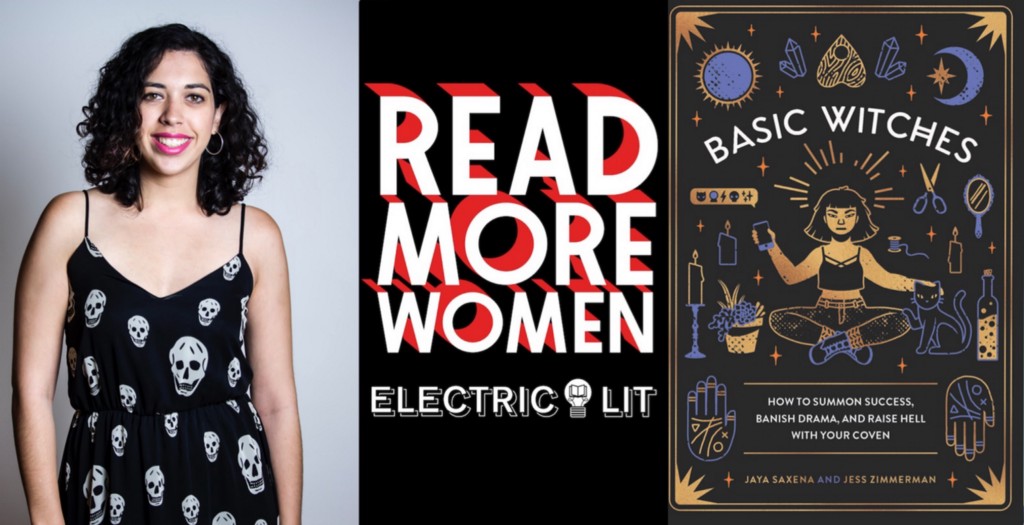
The witch, in Jaya Saxena and Jess Zimmerman’s Basic Witches, is an unruly woman, a woman who refuses to fall in line. (Full disclosure: Jess Zimmerman, the coauthor of Basic Witches, is also the editor-in-chief of Electric Lit.) October is a time to celebrate witches of all stripes, and this year in particular, that includes any woman who is refusing to be disenfranchised. For this edition of Read More Women, Saxena, a freelance writer and former staff writer for The Toast, has selected books by women, but also books about witchcraft—which sometimes means magically changing the world, and sometimes means simply refusing to back down.
Read More Women is Electric Literature’s series (presented in partnership with MCD Books) featuring prominent authors, of any gender, recommending their favorite books by women and non-binary writers. Twice a month, you’ll hear about the five non-male authors who most delight, inspire, and influence your favorite writers. Books by men get plenty of attention in reviews, reporting, and academic syllabi, and have for hundreds of years. It’s time to read more women—and it’s time to read more witches.
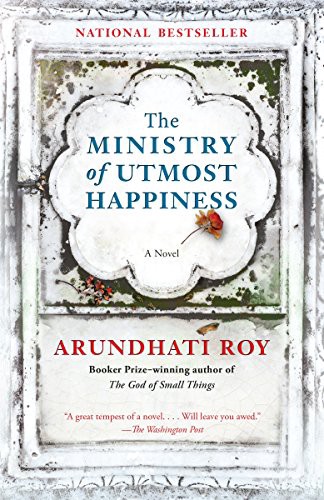
Roy’s first novel since her Man Booker Prize focuses on an India that is going through similar political turmoil to the U.S.: a right-wing, religious nationalist leader is in charge, giving the worst sorts of people a voice of power. This is a book about the people not in power, living in the face of that marginalization, connecting and finding strength and home with each other. It’s not as cheesy as I’m making it sound. Roy is such a generous writer, incredibly kind with her characters, and utterly unforgiving of the systems that keep them down. It inspires a gentle, thoughtful rage.
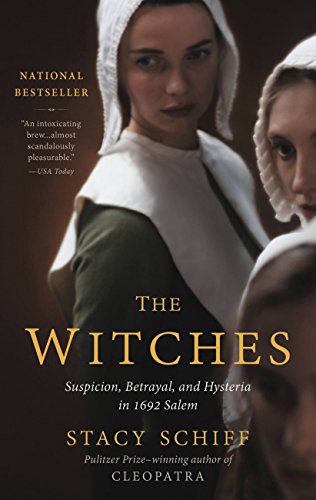
If we’re talking about spooky, witchy things this month then we need a true story about the scariest people of all — white male Puritans who have it out for teen girls and women of color. This history gives life to the women who were accused of witchcraft in Salem, analyzing who they were and why they were deemed suspicious, all within the context of how Puritan society got to be so rigid and paranoid. It all sounds distressingly familiar! But if you’re mad that The Crucible centers a man’s experience in this part of American history, this is the balm for it.
Many witches consider the dreaming world a realm in which incredibly powerful magic can take place. I’m not sure Le Guin was explicitly inspired by witchcraft, but she runs with the concept, exploring a world in which one man (at least) has the power to change reality with his dreams, and another attempts to use that power to play God. It’s the best type of speculative fiction, a work that first makes you see the villain’s worst impulses as perfectly logical, and then reminds you how easy it is to become the monster. Le Guin is better known for her more explicitly science-fictional work, but she’s rarely more incisive than she is here.
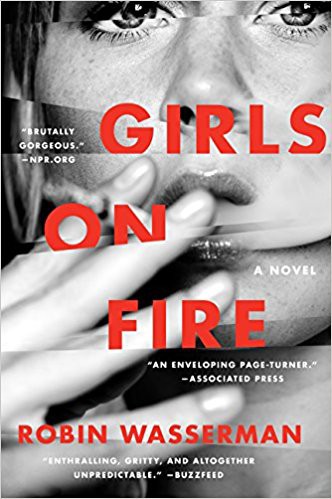
The Satanic Panic of the ‘80s and ‘90s was utter nonsense, fueled (as were the Salem Witch Trials) largely by the fear that teenage girls might be trying to live free, sexual lives. Wasserman’s novel focuses on three of those girls, the thrilling, terrible crimes that tie them together, and the generations of cruelty against women that are driving them, whether they know it or not. The writing is breathless, centered around the uncomfortable question of, well, what if the girls are just as bad as they’re being made out to be? And if they are, whose fault is that?
This book is fucking terrifying. As a woman lays dying in a hospital (is she really there?) the ghost of a young boy (is he?) prompts her to remember what happened (did it really happen?) to land her there. It’s a swirling, racing work about family, fear, magic, and the ways we try, and fail, to protect the people we love. Read it if you want to scare yourself into staying up all night, but also call your mother.
As if we didn’t have enough kick-in-the-teeth bad news hitting our screens this week, the beloved McNally Jackson Bookstore in Soho is reportedly leaving its home at 52 Prince Street. The news, which hit Wednesday, engendered a collective gasp that shuddered its way through all five boroughs of New York City. Though McNally Jackson promises that they are “definitely staying in the neighborhood,” they are moving shop because the rent prices are too damn high.
We don’t have an exact count on the number of bookstores we have left in New York right now, but as of 2015, according to this report by Gothamist, there were 106 bookstores in Manhattan, compared to the 386 bookstores in the borough in 1950. These numbers don’t reflect the number of independent bookstores opening in Brooklyn, Queens, the Bronx or Staten Island, but I remain pretty confident that we’re still below that original number.
While it may be easy to slip into a kind of dangerous daydream of the better days of yesteryear — “when people still bought books” — you shouldn’t do that. Because while buying books is important, that “call to action” distracts us from the real problem. Capitalism is not good for small, low return-on-investment businesses that we need in our community. So what are we going to do about that?
Commercial real estate norms are killing your darlings.
Luckily, we have bookstore proprietors like Lexi Beach, the co-owner of Astoria Bookshop in Queens, New York. In a tweet thread on Tuesday, Beach declared: “At a certain point, buying books from the store you love is not going to be enough to keep it open.” She went on to explain that the bigger problem lies in the relationship between capitalism, the commercial real estate market, and the toxic marriage between the two for low-margin businesses like bookstores.
Ok, bookstore loving friends, here is the truth: At a certain point, buying books from the store you love is not going to be enough to keep it open.
I promise you, there is no volume of business that McJ could have feasibly been doing such that, when the initial sweet deal of a 15-yr lease expired, they'd magically be able to pay market rent in that neighborhood.
The problem is not the sustainability of bookstores. It's the immoral capitalist (is that redundant?) system we've all accepted as normal wherein the composition of your neighborhood is dictated by people who do not actually live there.
“I’ve worked in the book industry for a long time, beginning with a job coordinating author tours at Simon & Schuster, where I was in regular touch with booksellers and events coordinators at bookstores around the country,” Beach told Electric Lit over email. “I’ve watched the landscape for brick and mortar stores change dramatically, a few times over, since 2003. I’ve always known that it’s not a business you get in to make a ton of money.” But, she says, she didn’t fully understand the calculations that go into the bookselling game until opening Astoria Bookshop in 2013. Now, the rest of us can learn from her experience.
In her Twitter thread, Beach outlined further calls to action for community members looking to keep the businesses they care about alive. We list them out here, in order to megaphone this real call to take down the bullies of capitalism with collective action.
Start at the Grassroots Level
Call your local officials. Write letters. Go to town hall meetings. Speak up about the value of this institutions in your community.
So what can you do? Talk to your hyper local elected officials. Community board, city council. Tell them how these locally owned, independently run businesses make your life in their district so much better.
Beach told us that grassroots organizations like the Institute for Local Self-Reliance give her hope that bookstores aren’t going anywhere. So does the fact that “local elected officials here in NYC are recognizing that empty storefronts are a community problem — for their tax base, for quality of life of their constituents, for health and safety — and looking for innovative solutions.”
One thing we can ask for: tax breaks for local businesses. As Beach suggests, there are not many incentives for landlords to keep rents reasonable for locally-owned businesses with low profit margins, especially in a city that continues to live up to its impossibly expensive mystique.
My idea is that landlords who rent to locally owned, independent business should get a real estate tax break. My occupancy costs went up 7% year one because of a real estate tax assessment after I opened.
Invite Small Business Owners for Panel Discussion on Community at Commercial Real Estate Conferences
Imagining the dialogue between bookstore owners and commercial real estate developers at a conference feels like fodder for a scathing short story, but it might also initiate an important conversation we don’t know how to start.
Maybe there is a conference for commercial real estate investors that would accept a panel of small business owners and BID administrators to talk about community?
Ph.D.s in Urban Studies Looking for a Project? We Need You!
I almost want to go get a Ph.D. in urban studies just to start this project.
Maybe some PhD candidate in urban studies wants to write a thesis on the inherent conflicts between a business model that aims for sustainable steady growth (small biz retail) vs one that aims for maximizing return on investment (real estate)
And if none of these ideas suit you — we need more! As Beach writes in another tweet, we need to implement all of these ideas and more. Change is not going to happen in one sweeping gesture, but will require all of us to chip in with the actions we can take on.
Ultimately, Beach is optimistic. Channeling the spirit of Jane Jacobs (the urban studies activist who argued that urban renewal did not respect the needs of city dwellers), she believes these problems can be solved. “I’m hopeful because we sell copies of Jane Jacobs’s The Death and Life of Great American Cities very steadily,” Beach told us. “Her vision of what makes a neighborhood welcoming, safe, vibrant, and sustainable is still so relevant.”
What’s so important about Beach’s Twitter thread is that she houses the debate about bookstores in a much larger conversation about what it means to make our neighborhoods vibrant. Beach is hopeful that her bookstore in particular will go the distance “because Astoria is such an incredible neighborhood. Our customers are so supportive of us, and of the other wonderful small businesses here in western Queens. They are very outspoken about how glad they are that we are here, and quite determined to make sure that we stay for many years to come.”
Because bookstores are more than just book adoption centers. For me, I’ve fallen in love in a bookstore, I’ve met authors who became friends, I’ve pet cats that soothed my soul, and yes, I’ve found books that make me feel a little more whole. Bookstores are important spaces for reminding us that the work of building community is an art that takes time, takes dedication, and takes all of us to make it happen.
I'm just spitballing while I walk my dog and eventually get to work to help with the giant stacks of new releases. There are so many possible solutions to Make Our Neighborhoods Vibrant Again.
“Has minimum wage gone up? Yes. Does my rent go up regularly? Yes,” says Beach. “But I’m part of so many networks of smart people (the American Booksellers Association, Shop Small Astoria, the amazing community of NYC booksellers) who all face overlapping problems. There are solutions to all the questions we have and we’ll find them.”
Lacy M. Johnson’s The Reckonings is a powerful essay collection that wrestles large-scale issues that include violence, mercy, revenge, justice and environmental disasters. The topics she explores are societal and polemic, uncomfortable and difficult. Her high-stakes nonfiction writing thrives with skin in the game. After a complete read, the essays demand greater examination. Johnson’s aim often isn’t to find the answers, but rather to advance the questions closer toward a course of action that might remedy both the personal and collective response to injustice, culpability and the importance of making art in the era of tyrannies.
Purchase the book
Johnson survived the unendurable. She was kidnapped and then raped by a man who she once loved. His intention was to kill her. I’m a survivor as well. At seven, my eldest brother, who I loved and feared, sexually assaulted me. Another time, on a hot sweltering July day, he locked me inside a car trunk. Years later he committed suicide. What may seem unendurable also has the power to make one more resilient, stronger even. Every page within The Reckonings beautifully represents the unendurable and its possibilities of strength.
In my phone interview with her, we talked about white privilege, the difference between justice and vengeance, and her process of “triangulation” to craft essays.
Yvonne Conza:The Reckonings opens with an epigraph by Djuna Barnes, Nightwood: “The unendurable is the beginning of the curve of joy.” What does her epigraph represent to your essay collection?
Lacy M. Johnson: The epigraph reminds me of something someone once told me about injustice, which is than an injustice is anything that gets between a person and their joy. That’s a broad definition, to be sure, but being forcefully and perhaps permanently separated from your capacity for joy is an unendurable experience — I know that from my own life — and I think that perhaps justice is the curve over which we bend the world or ourselves in order to make the condition of joy a possibility again.
YC:After your second book, The Other Side, was published, many readers asked you: “What do you want to have happen to him, to the man who raped and kidnapped you?” What was your answer?
LMJ: Yes, this came up a lot at readings of The Other Side. People thought I must really want terrible things to happen to him, and I don’t. I understand now where that question comes from, because it’s the primary way we understand justice in this country — you do something bad, something bad happens to you, and therefore justice — but at the time I found it just so surprising. I didn’t want to harm the man who kidnapped and raped me — a man I used to love — and vengeance didn’t seem at all like justice to me. So, then I started wondering — if that’s not justice, what is? What can be?
Around that time, I had recently completed a year of teaching writing in a pediatric cancer ward. One of the students was deteriorating really quickly and I noticed the ways her doctors and nurses attended to (and did not attend to) her pain. During the year when I watched while she was deteriorating and made to suffer in an attempt by doctors to make her well, the State of Texas executed thirteen men, and I noticed the ways these men are made to suffer by the criminal justice system in an attempt to make society well. Those two observations led me back to that question I kept getting every time I read from The Other Side. The question kept gnawing at me. It bothered me. Why are we so preoccupied with punishment? Why do we draw such pleasure — or tell ourselves we draw pleasure — from causing pain? And if I’m seeing this in my own life, in the ways others relate to my trauma, how does this question play out in other situations of injustice?
I write about that juxtaposition — a girl dying of cancer and men being executed — in “On Mercy.” It was the first essay I wrote for this collection. That essay, and the way it helped to move my question forward made me realize that I couldn’t possibly answer the question with one essay or two essays, that I would need a whole book for it, and the situations I look at in the twelve essays in The Reckonings are ones that all feel very charged to me right now. They’re very much about this current moment of, as you say, “tyrannies” — and tyrannies of various kinds. In “What We Pay,” for instance, I write about the oil spill in the Gulf of Mexico, because while I was going to protests at BP headquarters and living near the Gulf, I kept asking, “How can vengeance be the right answer here?” And of course it’s not — because it’s at least partially our own unquenchable thirst for oil that sent the Deepwater Horizon into the Gulf in the first place — but then what is? And how do I use this situation to move the question a little bit father, to move my thinking a little bit more in the direction of an answer?
YC: In your book you talk about “the shut place” that you carry. Has that space inside of you changed?
LMJ: The reality is that trauma isn’t as tidy as a narrative can be. That shut space is always changing — alternately cracking open or closed tight like a trap. The last essay in The Reckonings is called “Make Way For Joy,” and it’s about the ways I’ve found to move from pain and rage — “the unendurable” — toward a place of power and strength. I do feel more capable of joy now than I did before writing The Other Side, a book which brought its own measure of healing because writing the story of the worst thing that ever happened to me reintegrated that unspeakable moment into the fabric of who I am in a way that took the negative charge out of that moment, or it took the crushing pressure off, in a way — because I had found a way to end the story I thought I would never be able to tell.
Writing The Reckonings made me realize that the best way that I can create justice for myself — in the context of that personal trauma — is to create opportunities to experience joy, and to give myself permission and space to experience it. And perhaps that is true for some of these other situations as well — even if it is hard to imagine what that looks like from this point in history. That shut place I carry inside me — a place that trauma made — that’s a work in progress, and the truth is I’m not ever going to not-carry it. But it doesn’t necessarily prevent me from feeling happy a lot in my life. I feel capable of great happiness, in fact, and find that I am able to be more present in the right here and now more often. I don’t always feel so compelled toward attending to a different time — the memories of before or the anticipation of after or ahead or behind of wherever I am supposed to be. I feel much more able to be wherever I am, and I think that that’s progress. That’s all I can ask really: for progress. Justice is a project none of us will ever finish. That’s why it’s important we do this work from a place of love — not hatred and spite, which is what vengeance asks from us — because love gives us the power we need to keep going, keep fighting, keep striving together along that curve toward joy.
YC: In the essay “Against Whiteness,” you address racism by examining white privilege. What is your hope for this essay?
LMJ: I hope this essay moves more people to listen to conversations about racial justice. I hope that it helps white folks in particular to understand that race is not something “over there,” but rather a “here” that includes and implicates us; to understand that whiteness is not a monolith and not all people experience whiteness in the same way because it isn’t natural or biological and isn’t distributed equally.
This essay in particular is my way of continuing to think critically about my own experience of white privilege, which I haven’t always experienced in the way I do now. I write about that in my first book, “Trespasses” — a memoir in prose poems about race, class, gender and the rural Midwest. There’s an essay about “class-passing” at the center of that book. I was inclined to write that essay when I realized that all of a sudden, and for the first time in my adult life, I wasn’t recognized or identified as “white trash” — a term that is, to be clear, a racial slur, and because it is a racial slur it reveals some of the ways that whiteness is a racial construction. It reveals the seams. I had learned as a teenager, for instance, that if only I could class-pass as an affluent white person my life would become so much easier: people would be more polite, would treat me with deference and respect. I could quit my job at Wal-Mart and I wouldn’t have to strip to pay my tuition. I could qualify for loans, become upwardly mobile. I had spent my whole life striving for that kind of ease and when I reached the point — and it surprised me to find myself there — where I could walk into restaurants or shops and not feel that sort of sense of you don’t actually belong here — that store security wasn’t following me —
YC:Because you were no longer being profiled as someone who was going to steal the sweater.
LMJ: Right, I’m not going to steal the sweater. I am assumed to be a good person, an upstanding citizen. I can reap the benefits of all the sorts of privileges that I did nothing to earn. I was no longer “white trash” but white. My upgraded whiteness provided opportunities, and on the one hand I enjoyed having those opportunities, but on the other hand I didn’t have a clear conscience about it. I didn’t actually feel very good at all about having access to these new or additional privileges. It didn’t seem just, or fair. And I realized that if I just went along with it and took advantage of the opportunities — which, to be clear, would be so easy — then I was making a moral choice, and it felt like the wrong one.
In “Against Whiteness,” — an essay I wrote for The Reckonings — I wanted to take that line of thinking a bit farther. I wanted to acknowledge the extent to which whiteness has been constructed for the benefit of very few people at the expense of very many people, and white folks choose — often without realizing it — to participate in that construction every day. And if we participate in that construction, I argue, maybe we can also participate in its destruction. And, more than that, we must.
Whiteness has been constructed for the benefit of very few people at the expense of very many people, and white folks choose — often without realizing it — to participate in that construction every day.
YC: How do we advance this conversation?
LMJ: Well first, we have the conversation. I consciously didn’t write a how-to essay: these are the steps for destroying whiteness: 1, 2, 3. I don’t yet know how to write that essay. But I do want to make clear that “whiteness” is a fiction — one that has real world consequences and material effects. I want to make clear that enjoying the benefits of white privilege — benefits that are generated from a system of white supremacy — is unethical and morally wrong. If we can all agree that we have a moral responsibility to, as much as possible, dismantle whiteness, white privilege, and white supremacy, I think that conversation would be the best thing to come from this essay. What does that discussion look like collectively and individually? How do we operate within a system that is unjust in just ways? Success in any unjust system is unjust — so what are the ways that we can change the system and make the system more just, even as we are dismantling our own privileges within that system?
It’s also important to acknowledge that I’m not even really saying anything new, right? People of color have been making this critique of whiteness for a really long time, and I am aware that it’s unjust that certain people will be able to hear the critique only now because it comes from my mouth. I’m hoping that this essay can pivot those folks to our elders in this fight, who have that how-to we’re looking for. The people we need to look to for answers are the folks who’ve been in this fight this all along.
Why are we so preoccupied with punishment? Why do we draw such pleasure — or tell ourselves we draw pleasure — from causing pain?
YC: This summer Mitchell S. Jackson, Eileen Myles and Camille Rankin were on a panel at the Juniper Writing Institute discussing “Literary Arts + Action” and the issue of race and diversity was discussed. The audience became vocal — brown, black and white woman and men — in agreement that white men were a problem. However, I sat there in my whiteness afraid to speak aloud that white woman are also the problem. I didn’t have a clear sense that what I was actually addressing was white privilege. My silence was aligned to the fear of having rage turn on me for acknowledging that white females like myself are participating in racism. In addition, because I lived through trauma and survived it, I understand that anger will, and rightly so, be directed at white privilege. The impact of racism is traumatic and multigenerational. For me, anger was part of my recovery. Trauma had silenced and shut me down. In reading “Against Whiteness,” I was reminded of how for a time I was blind to difficulty others experienced. Gaining a foothold and stability on my welfare and mindfulness came through various phases of needing to express anger to be heard and to be seen. Anger towards white privilege shouldn’t come as a surprise.
LMJ: I think I hear what you’re saying. We can’t stay silent. White folks have been silent too long. In April I went to the opening of the Legacy Museum and the National Memorial for Peace and Justice in Montgomery, Alabama. I still haven’t collected my thoughts enough to be able to write about that, but I will say that one thing I found so very moving and brilliant was how the museum makes a legal and moral argument that shows a single, unbroken line from slavery to the present — going through the Reconstruction era, Jim Crow, lynching, the death penalty, and the mass incarceration of people of color. As Bryan Stevenson says, “slavery didn’t go away. It evolved.” The argument the museum makes relies on all manner of evidence, including photographs of racial terror lynchings — photographs that I’ve seen before and which are extremely hard to look at. They’re displayed in an interactive exhibit on a computer screen, and visitors have to choose to touch the screen to reveal the images. As I was looking at the images, I couldn’t help but look at the faces of the sometimes thousands of white people in the crowd. Many of them are looking straight into the camera. I see no remorse or any feeling at all about what they’ve done — and my only thought is that from this perspective of history they’re all equally to blame.
YC: Yes.
LMJ: Here’s what’s interesting to me about that moment in the museum. Here I am, a white woman looking at the evidence of an ongoing history of racial terror — one that continues today, and the museum makes that fact not only apparent but also irrefutable. If I walk out of the museum and do nothing, then I’m just like all of the white people in that photograph who are looking at a horrifying violence and doing nothing. If I leave and do nothing, I am complying just as they complied. I am guilty of perpetuating this history of racial terror, and of complying with that violence in the forms it takes today. (To be clear, I’m not actually personally going to leave and do nothing, but these are the options the museum seems to give its visitors.)
Or, alternately, I make the choice to join the fight for justice, in which case there are going to be a lot of people who have feelings about what I’m doing and how I’m behaving — some of whom will be angry when I say things like “whiteness is terrorism.” And I do, and they are. But that doesn’t make the statement wrong, and their anger doesn’t shake my conviction. It means we must make a moral choice to fight injustice, and we should prepare ourselves to meet resistance —
YC: And not run away from it or be afraid to have the conversation.
LMJ: Right. Beverly Tatum has offered that really great metaphor of the conveyor belt of history — like the moving sidewalk at the airport — to demonstrate how racism works. We’re all on the conveyor belt, whether we like it or not, and even if we’re doing nothing and being passive, we’re being carried along in the direction of racism. People who are Neo-Nazis — whom our illegitimate President calls “very fine people” — are actively running on the conveyor belt to advance the momentum of racism. But, if we continue with this metaphor, if you’ve ever been on one of those conveyor belts and turned around and started walking the wrong direction, people react in angry ways. They say, Hey, why are you doing that? Why are you behaving that way? Why don’t you just turn around and go with the flow? Why do you have to be a problem? And I think we see that same kind of reaction when anyone takes action against racism in this country — look at how the NFL players are treated when they kneel for the National Anthem. People boo them or boycott the team, saying, Why can’t you just play football? Why do you have to make a big deal? Why do you have to make it so political? Why don’t you just shut up and do your job?
I think white folks can expect that reaction too, and we can’t be fragile just because we’re not used to it. We should expect to meet resistance when we start working against racism, and against the white privilege that we have enjoyed. We should be ready to be met with resistance and anger. But I don’t think that’s a reason not to do it. Dismantling white supremacy should not be the exclusive burden of people of color. I think that, in fact, the anger should spur us on and make us feel more committed to the work of justice and to moving through the world with love. That said, we should never fool ourselves into thinking that we are the arbiters of racial justice, nor are we the authority on what racial justice should look like. We must come to this work with humility.
Enjoying the benefits of white privilege — benefits that are generated from a system of white supremacy — is unethical and morally wrong.
YC: Even within our exchange, I feel too precious, scared even, as though my intentions might be misconstrued as I talk about racism. The invisibleness of white privilege needs acknowledging and shattering.
LMJ: I think that’s right. I think we should feel scared, and cautious, because if we don’t have that scared feeling, then we’re probably not telling the truth, right? And if we don’t feel cautious, we’re probably not heading into precarious terrain. I’m not scared that people won’t like my essays or will say I’m a bad writer. That’s not the thing that concerns me. I worry that I will say something harmful, but that is a worry always. I don’t want to cause harm. I want to find ways to repair it. I’m cautious about what I say, but I feel pretty confident that I can talk with at least some authority about whiteness and how whiteness works, because I have experienced it in different forms over a long period of time — which is not to say that I am the authority or that I don’t have a lot to learn — I’m not suggesting that. But even though I feel confident enough to talk about whiteness, I would never pretend or presume to talk about the experience of another person, especially when that person experiences race in their body differently from how I experience it in mine. I don’t feel scared to talk about whiteness, but I try to use caution around the words that I’m choosing and the examples that I’m using — just trying to think slightly ahead of where my mouth is.
YC: Maybe the word we both are looking for is clarity — having greater clarity on the conversation.
LMJ: Yes, clarity. We should all strive for clarity. In the grand scheme of things, I should clarify that I am quite new to this work. I’ve been thinking about race critically for 15 years. I’m aware that I’m a novice in this conversation, and I try to navigate it with appropriate humility.
YC: How does your writing emerge?
LMJ: My writing always starts with a question.
YC: Really?
LMJ: Yeah, it does. I teach this method of writing essays — to follow a question rather than the force of what you want to say. For me, the idea for an essay begins when something bothers me, when I have a worry. I do research and try to learn more about the thing that is bothering me, and the knowledge works to assuage the worry, to a degree, but the writing begins when the knowledge doesn’t assuage the worry and a question forms in that gap, in that part of the worry that can’t be assuaged.
With a book like The Reckonings the overarching question is, well, if vengeance isn’t justice, what is? Or what can be justice for me? Each essay has a question that is a part of that larger question, or is adjacent to it. What can take the form of justice in an essay like “The Fallout,” for instance, where there is a landfill on fire in St. Louis that’s full of nuclear waste that was left over from the Manhattan Project, when the injustice isn’t even finished happening? How do we reckon with a crime we’re still committing? How do we heal ourselves from an addiction to destruction when we can’t stop destroying what we fear? We are addicted to war and violence, and we see the consequences that our addiction has on this community — which is just one community in a nation that has been ravaged by our obsession with killing better and faster and more destructively — not to mention how this has played out across the world, and continues to play out in the narrative we tell ourselves about our motives for carrying out this destruction, which is revealed to be false when you look even just barely under the surface.
There’s this question about justice that permeates the whole book, and then there’s a question for each essay, but I always work from a place of asking questions. And sometimes I think I arrive at an answer, or close to an answer, and sometimes all I can do is move the question a little farther along and move my understanding of the thing that worries me to a different place from where I began.
When I was six, I opened the door of a friend’s mobile home one afternoon and almost stepped on a snake. He was curled up on the porch a few dozen inches from my bare feet, basking in the late day Florida sunshine. He had alternating bands of red and yellow and black that glistened in the light, his black nose almost vanishing against the black of the doormat. As I considered him, my mom peeked her head over my shoulder. Most mothers would have screamed, but mine liked snakes.
What’s that rhyme again? she said.
I knew what she meant. In a state like Florida, which boasts half a dozen species of poisonous snakes, we learned how to identify them early on. My elementary school formalized that education. Okefenokee Joe, an expert in animal lore and wilderness survival skills, visited our school every year to remind us how to tell a Southern copperhead from a water moccasin and what kinds of places the timber rattler and the dusky pigmy liked to hide.
But the most important lesson Joe taught us was how to tell the difference between a scarlet king snake and the rare but deadly coral snake. Unlike the rest of the state’s pit vipers, the coral snake can’t control the amount of venom it injects. Most people, said Joe, are taught a variation on the “red on yellow, kill a fellow” rhyme, but when people comes face-to-face with a snake, almost everybody panics and remembers it wrong, rendering it useless.
Keep it simple, said Joe. You only have to remember one thing. You see a snake that’s red and yellow and black and also has a black nose, it’s a coral snake.
I don’t remember the details of what happened next, just sensations: my mother snatching me up — my raspy voice as I screamed it’s got a black nose, it’s poisonous! — thunderous footsteps — the tremendous, shuddering thwack! as our friend Chuck chopped the snake’s head off with his axe.
What imprinted upon my mind was the way the snake’s headless body whipped back and forth like a downed power line, spewing droplets of blood that lit up like sparks in the sunlight. I remember Chuck picking up its body and dropping it into a Mason jar so his sons and I could study it more closely.
I also remember that the snake writhed in that jar its own blood for hours, long after it should have. When we went to bed that night, Chuck’s sons put the jar on a shelf in the bedroom. When we turned off the light, I could still see its body moving in the dark.
Logic tells me my memory of this incident is faulty. I’m certain that last part about the body moving for hours after death is untrue. But some primal part of me not only believes it, but feels it. If I close my eyes, I clearly remember the sensation of lying in bed in the blackness and watching the writhing silhouette of the snake’s headless body inside the jar. I can even remember putting my hand against the cool glass and feeling it jump slightly beneath my palm.
Horror is arguably the most bacchanalian of all of the film genres. It far outstrips even the hyperbolic content of action movies because it infuses violence with a cocktail of other muddled emotions that action movies frequently treat in isolation. Horror’s orgiastic excesses are only matched by pornography; along with melodrama, these are the three categories that film scholar Linda Williams calls “body genres.” As director Edgar Wright notes in his reflections on George Romero’s Dawn of the Dead, most horror even follows the rhythm of porn, “with some kind of splat every 20 minutes.”
Barring the fetish-specific searches for either misogynistic violence or consent-based BDSM, most of the top-searched porn delivers a reliable product: sexual titillation and either simulated or real coitus designed to facilitate the sexual release of its viewer. Porn certainly provides us with fascinating insights into hidden cultural patterns of desire and deviance; according to Pornhub’s 2017 Year in Review, for example, the most searched-for porn was porn for women, Rick and Morty porn parodies, and porn involving fidget spinners, although highlights also include increased searches for ASMR (Autonomous Sensory Meridian Response), Hentai porn, and the only “old reliable” of the sexual fantasy landscape that maintained a strong showing: cheerleaders. But it’s horror, not porn, that establishes firmly as its domain that gratuitous mesh of terror, violence, rage, sexuality, and humor that most of us know as its hallmark.
Horror’s orgiastic excesses are only matched by pornography; along with melodrama, these are the three categories that film scholar Linda Williams calls ‘body genres.’
Scholars have long written about horror through a variety of frameworks — sociological, biological, intersectional, psychoanalytical, and affective, to name a few. Some, such as Alexandra Heller-Nicholas, Carol J. Clover, Laura Mulvey, Robin R. Means Coleman, Toni Pressley-Sanon, rightly focus on the specter of problematic race and gender depictions that haunt horror films. That’s admirable work, but it’s not my project. Instead, this essay is something of a love letter to horror, the film genre I always return to. What fascinates me most are the ways in which my body responds to horror and what that means. What this self-professed gorehound wants to know, then, are the answers to simpler questions: what does horror do? How do we know it when we see it?
The first horror movie that made a lasting impression on me was The Shining. According to my mom, any time the trailer came on TV and Jack Nicholson put his head through the fractured wooden door and shouted “Here’s Johnny!” I ran screaming from the room. It was years before I’d watch a horror movie all the way through.
In the summer of 1987, when I was nine, I finally did. My sitter’s older son — a longhaired metalhead whose ink-black bedroom walls were already a gore-spattered wasteland of Iron Maiden and Metallica posters — was often left in charge of us while his mother watched soap operas. In return for leaving him the fuck alone, he’d give me and the other younger kids the remote. One afternoon, I turned HBO on during the opening credits of Firestarter.
The gruesome medical testing scenes drove the younger kids upstairs to play, but I just covered my eyes. The scenes that transfixed me were the ones with Drew Barrymore’s character Charlie. There’s a particular scene near the climax that stands out in my memory, where Charlie and her father face off against at least a dozen government agents. Charlie is standing on the porch of a farmhouse, a little girl not much younger than I was when I first watched the film. When the agents attempt to take her and her father away, the music becomes an electronic hum. Charlie begins to hyperventilate. Her hands become fists. Her hair swirls around her face like Medusa’s. The agents begin to sweat and pull at their neckties. And then she torches them. She watches, shaking, as they scream and burn. She blows up each of their vehicles one by one until the field before her is engulfed in flame.
Even now, when I watch the first agent’s arm catch fire, my mind conjures up that coral snake from three decades ago, whipping back and forth like a downed power line. Each time I watch those cars explode, I can feel the jump of the headless snake writhing in that Mason jar.
Susan Sontag’s first note in “Notes on Camp” defines camp as “a certain mode of aestheticism,” or “one way of seeing the world as an aesthetic phenomenon,” but not aesthetic in the sense of beauty. Instead, she claims it is aesthetic “in terms of the degree of artifice, of stylization.” In this sense, it’s clear to me that horror shares a kinship with camp: it, too, is highly stylized and highly artificial. Horror consistently sports a veneer of low light and screeching violins. It’s populated by screaming women and the destroyed bodies of people of color. It’s a riot of blood splashed across a landscape canvas of what writer Lincoln Michel calls “lush rot”: not only the overabundant, kudzu-laden landscape of many horror movies (often the South) but also the backdrop of corpses against heaving breasts and even corpses with heaving breasts.
In its innate campiness, horror also shares a relationship with ancient theater. Think of The Exorcist as a twentieth-century incarnation of the ancient Greek Satyr plays, the bawdy tragicomedies threaded through with burlesque. Think of Norman Bates dressed as Mother, knife in hand, center stage as Shakespeare’s Lady Macbeth. Think of Scream or Suspiria as a modern iteration of nineteenth-century French melodrama.
But I don’t just identify horror by its aesthetics. I also identify it by the effect that it has on the human body. There are a number of studies that suggest that horror might actually be beneficial. There’s evidence, for example, that watching horror films can burn calories (The Shining, quelle surprise, burns approximately 184 calories) and boost your immune response through stress and the accompanying adrenaline rush.
I know just what that feels like, and my guess is you do too: the pupil dilation, the quickening heart, the sweat forming on your upper lip and the surface of your palms, and the nearly overwhelming urge to cover your eyes or run from the room. That fight-or-flight feeling, the body’s warning system, is what horror regularly exercises. It reminds you to stay alert because danger could present itself from the depths of any shadow, from behind any door, from the cab of any passing vehicle.
That fight-or-flight feeling, the body’s warning system, is what horror regularly exercises.
When I was 24, I worked for a while as a bartender and server at a chain restaurant outside of Nashville. I had earned my MFA in fiction a couple of years before, but my professors (one older white male in particular) had eviscerated my work, and it gutted me. After I graduated, I couldn’t write, and I found myself drifting. I ended up in bartending school because I thought it might give me something to write about. Your writing has no life, Old White Male Writer had said to me in front of a class of my peers. I was desperate to prove him wrong. I drifted into a job earning $2.12 an hour with tips, making drinks with too many maraschino cherries. My manager taught me to dribble a few drops of liquor around the edge and down inside each drink straw so that the first sip would taste thick with liquor and customers would think were getting more than a short pour.
After closing each night, a bunch of us would drive over to a pool hall about 20 minutes away and hang out for a while before going home. After one particularly shitty shift, a guy named Daniel offered to give me a ride. Sure, I said. I liked Daniel. Everybody liked him. He was handsome and had an easy smile and he made us all laugh when we were in the weeds. He also had a beautiful pregnant wife at home whose picture he showed to everyone.
In his truck, Daniel cracked jokes and I laughed, rolled down my window, enjoyed the night air against my face. Daniel pulled into a spot near the back of the lot, and just as I put my hand on the door handle, he said, hey, can you help me with something? and I turned and saw that he had pulled his erect penis out of his pants. He had his hand around the base and was stroking slowly up and down. He was smiling.
My zipper’s broken, he said. I could use a hand here.
I bolted from the truck and into the bar. There were at least ten people from work inside, and I started toward my manager, Paul. But what could I say? That Daniel showed me his dick? I knew from the cant of his smile, the lilt of his voice, the way his hand gripped his shaft and stroked it that he was angling for a blow job or sex, but there was no way I could prove that. Everybody loved Daniel, and Daniel would make the whole thing out to be a joke. Nothing he’d said was actually a come-on. I wasn’t as popular as he was. No one would believe me.
I sat at the bar near the pool table for an hour, immobile. I was surrounded by people, and I couldn’t say a thing. No one could help me. Worse, every time Daniel passed me, he ran a hand along my lower back or touched my hair. Each time, I flinched. Each time, his smile got wider. Slowly, the rest of the people from work trickled out, until only Paul and Daniel and I were left.
Need a lift? said Paul to me.
I got her, said Daniel. I watched Paul walk out the door.
Daniel took his penis out as soon as we were back in the truck. He stroked it the entire ride back. He said he wanted both of us to get naked, drive naked down the road, pull over, fuck in the bed of his truck. Every so often, he’d take my hand and try to put it on his penis, but I jerked it away. I curled up in the corner of the cab, looked out the window, tried to pretend I wasn’t there. When we pulled into the restaurant parking lot, my car was the only one left. Before I could get the door open, Daniel was across the cab, almost on top of me. I put my hands against his chest and tried to push him away.
I don’t want this, I said.
Yes you do, he said. If you didn’t, you wouldn’t have let me give you a ride back.
Some time passed. It was a minute, probably less, I know that, but when you are trying to convince someone not to rape you, time becomes elastic. It elongates and expands. Each second becomes like a drop of water falling to the bottom of a mile-deep cave. Each millisecond becomes a universe that you and he inhabit alone.
It was a minute, probably less, I know that, but when you are trying to convince someone not to rape you, time becomes elastic.
Behind us, a door slammed. We both looked out the back window. It was Paul. He was walking toward us. Daniel slid back across the cab, and I grabbed the handle of the door and yanked it and fell to the concrete, scraping my knees and palms. I felt Paul’s hands on my shoulders and almost cried out with relief.
You okay? he said.
Yeah, I said as Daniel slammed the door and pulled away without a word.
Forgot something inside, said Paul. I never do that. Shitty day made my memory shitty too, I guess.
I watched the taillights of Daniel’s truck recede into the darkness. I thought of how Paul was the only thing that had kept me from becoming Mari Collingwood or Phyllis Stone, the girls who are raped and killed in The Last House on the Left. Daniel did neither of those things. But I could still feel a scorching anger welling up inside me. In a matter of seconds, I became not Mari or Phyllis, but Jennifer Hills from I Spit on Your Grave, the rape and revenge film that had called up old memories and given me nightmares for a month the first time I watched it. I had tried to forget about that film. But now it felt like my territory, my home. I could feel Jennifer unzipping my skin like a dress and climbing inside me. I imagined cutting Daniel’s dick off, clean as Chuck cut off the head of the coral snake. I imagined spitting and pissing and shitting on Daniel’s grave. And then, just before his truck disappeared behind a dark curtain of trees, I became Charlie. I willed Daniel’s truck to explode. I wanted his body to sear in the white-hot flame of my fear and shame and rage until there was nothing left.
In her discussion of the films featured at the 2012 Human Rights Watch Film Festival, Rachel Riederer talks about the relative safety of watching The Exorcist for the first time in college. “I was already an adult,” she writes. “safely away at school, and drifting in and out of nightmarish visions was a luxury I could afford. In a safe life, at least, being frightened is a novelty: with a scary book or horror movie we get to feel the pain of loss without losing anything, experience terror without ever really being in danger.”
I’m sure some people take pleasure in horror because they enjoy one measure of remove from trauma. It’s especially pertinent to Riederer’s larger point about how the real-life accounts in the film festival eclipse the imagined horrors of cinema. And we all know that some viewers take pleasure not just in the safe remove but also in the destruction of bodies because the cruelty itself excites them.
Many of us also know firsthand the pain of trauma and have no desire to inflict it, or even to see it inflicted, upon others. Why then do we watch?
But I don’t believe that most horror movie fans fall into these two categories. As the audience demographics from movies such as Annabelle 2 and Get Out prove, plenty of women, people of color, LGBTQ folks and other marginalized populations enjoy horror, and we all know it is virtually impossible to walk through the world in unqualified safety. Many of us also know firsthand the pain of trauma and have no desire to inflict it, or even to see it inflicted, upon others. Why then do we watch?
If those other viewers are anything like me, they watch horror movies because they recognize the horror, because its familiarity is strange and terrifying and unavoidable. It is the lure of the uncanny filtering into the cracks and crevices of the cinematic landscape and drawing us in.
In Freud’s landmark essay on the subject, he makes several points that flesh out the aesthetics of horror. Like Sontag, Freud reads aesthetics not as beauty but as something more. In Sontag’s case, of course, aesthetics is representative of stylization and artifice. Freud, however, reads aesthetics as “a quality of feeling” and designates the uncanny as a province within that area that (until Freud wrote about it) was remote and often neglected. The uncanny, he notes, is “all that is terrible — to all that arouses dread and creeping horror.”
Among other things, Freud speaks of the uncanny as manifesting as the “double.” What I see in horror when I watch it — something I suspect that others see as well — is its tendency not just to double but to reproduce itself exponentially. For example, when I watch the opening scene of Jaws where the girl is swimming alone in the ocean at dusk and the shark attacks her, I also remember the acquaintance who showed me the scar from a sharkbite on his calf; a shark turning swift and sure as a cheetah in an aquarium tank; being four years old and splashing in the ocean and my father snatching me up while behind us, three lone fins slice through the water not far from where I had just been standing. On and on these images play in my mind like a highlight reel, conjuring up one after the other like a visual echo.
For me, the horrors of the cinema are familiar, but they aren’t safe. No matter the plot or the characters or the location, there is always at least one element of a horror movie that invokes in me what filmmaker Tariq Tapa says is the most disturbing kind of terror: the kind that is close by, plausible, ordinary.
On the morning of February 7, 2011, my sister-in-law called my cell at 8:13 a.m. I saw the call coming in as I was taking the dog out, and I remember thinking that’s strange. She never calls this early. I picked up.
My dad was hit by a car while walking the dog this morning, she said. They took him to University Hospital. Can you tell Jonathan?
Do you know anything else? I said.
No, she said. I’ll call when I do.
The morning was cold for North Carolina. The frost on the grass shimmered; my shoes were thick with it. The dog caught the scent of something in the grass and pulled the leash tight as a bow. She pointed, her nose the arrow.
I didn’t want to go back inside. I knew if they were taking my father-in-law to University Hospital, it was bad. There was a community hospital five minutes from my in-law’s house. University was a half an hour drive away. But University had a head trauma unit. And fuck, I didn’t want to have to tell my husband bad news. But I had to tell him something. He had to know.
I woke him gently. I told him of the call and said we didn’t know anything more but that we should get a suitcase together so we could drive to Kentucky. But just as I was opening up the dresser drawers, my husband’s phone rang. It was 8:33. I don’t know what his sister said to him exactly. All I remember was his horrible scream, the way he collapsed to the floor, the way the scream went on and on until his voice gave out. I gathered him up and let him cry in my arms. After a long while, he finally went quiet. I finished packing.
It took us eight hours to drive to Kentucky. We stopped first at my sister-in-law’s house, but everyone was just standing around. Nobody knew what to do. I finally told everyone we should go home and get some rest. I drove a carful of us back to my mother-in-law’s house through the darkness and a thickening snow. When we walked in the door, the first thing I saw were my father-in-law’s shoes sitting near the washing machine, the coupons he had been cutting before he took the dog for a walk still lying in a pile on the kitchen island.
There’s so much I’d like to write about the days and weeks following my father-in-law’s sudden death. Much of it by necessity will have to wait. But there is one moment in particular that, even now, seven years later, rises up like a mountain above that landscape of horror and grief:
Two days after the accident, when the house was still filled with family and food, I heard a knock at the back door. It was a policeman.
Here, he said, and handed me a plastic garbage bag. It’s his clothes.
I took the bag. It was heavier than I expected. When the policeman left, I stepped out into the garage. I didn’t want my mother-in-law or my husband to see it, so I took it to the back porch and set it on a bench out of view of the kitchen window. I stared at it. I wasn’t sure what to do. My brain was muddled; I’d been having horrible dreams, most of them of crash scenes from movies: the horrific accident from Final Destination 2. The body on the side of the road in I Know What You Did Last Summer. When I woke up after each one, my heart pounding in my chest, I knew they brought me a strange kind of comfort. We’re not the only ones, I remember thinking. They make movies about this. Awful things happen to other people too.
But one night, I dreamed of Daniel. I dreamed that the horror I’d wished on him had come true and I had set his truck on fire, watched him burn. I woke up in a sweat, unable to go back to sleep. I was 33, not 24; I thought I should have been able to make peace with what happened, to get rid of my horrible rage. What frightened me most was that even in the dream, I knew how my father-in-law would die. Still, it made me thrill to watch Daniel burn to death on the side of the road. When I woke, I felt sick. I felt like I’d betrayed myself and everyone I knew. I thought I could never wish that kind of a death on anyone. But the dream made me wonder if I was lying to myself.
I thought I could never wish that kind of a death on anyone. But the dream made me wonder if I was lying to myself.
The minute I opened the bag, I could smell my father-in-law: a hint of unwashed skin, Old Spice. It was so real, like he was standing right next to me, that I almost turned to look. I took out each item in the bag and put them on the porch bench. There was a folded plaid shirt, a single shoe. There were socks, a red hat, a pair of his Coke-bottle thick glasses with flecks of skin near the bridge. They looked so innocuous. If I hadn’t known better, I never would have thought that they’d been the audience for someone’s death.
The final object I pulled from the bag was his leather jacket. I couldn’t seem to unfold it; something was holding it together. I held it up to the light. Red speckled the lapels, the collar. Blood. I quickly tried to shove the jacket back into the bag, but it came apart in my hands. Dried blood had sutured it together briefly, but now I could see that it had been cut in half, the leather sliced quick and clean as the cleave of an axe by someone trying to clear it from my father-in-law’s body, by someone trying to save his life.
Joanna Scholefield notes that what she calls the “blurring of sensory boundaries” or the “sensory confusion” that happens when a person is watching an affective film can take place “crucially between sight and touch.” I’d say it goes far beyond that. In fact, it’s probably more akin to using your whole body, similar to the way percussionist Evelyn Glennie talks about her work. Routinely in interviews, Glennie states that she doesn’t just listen with her ears; she’s learned to listen with her whole body. That’s because Glennie has been profoundly deaf since the age of 12; her ears, she says, communicate only a fraction of the vibrations that other parts of her body are capable of picking up from her instruments, such as her feet, her hands, and her chest.
“The body’s like a huge ear,” she says. “It’s a simple as that.”
Glennie’s description of the body is remarkable, but its comprehensiveness also gives me an affective language for discussing horror. As horror replicates exponentially, it moves beyond the bounds of visual and auditory fear and into the kinetic. Think, for example, of the clink of the spoon in Get Out and how it lulls you and grates simultaneously, how Chris’s drop into the Sunken Place makes your throat tighten and claustrophobia set in. Think about how you want to put your foot to the gas pedal when you watch It Follows and you see the thing that never sleeps walking slowly toward an unaware Jay as she and her friends sit in their car. Think of how when Su-an screams and reaches for her father Seok-woo near the end of Train to Busan, you want to reach your hand out too.
This is more than just the fight-or-flight response. It’s about the way that the movements in horror echo in our bodies and how we listen to them. The shocks and jumps we experience while watching a horror movie are adrenaline, but they also signal an awakening of our own traumatic experiences, experiences that we are then compelled to relive. This makes the genre, and our bodies under its influence, something akin to a living archive of human trauma, a collection of bodily and psychological horrors, the things that we can often see coming but ultimately cannot escape.
The shocks and jumps signal an awakening of our own traumatic experiences, experiences that we are then compelled to relive.
Five months after my father-in-law’s death, his brothers organized a family reunion. We all drove to a lodge in Ohiopyle, Pennsylvania to spend the July Fourth weekend. The older adults wanted to spend time reminiscing, but those of us who were younger wanted to do something fun. Few of us had kids, and we needed to blow off some steam. The family had lost their grandmother, the matriarch, three weeks before my father-in-law’s death. We were sick of funerals, sick of grief. One of the aunts suggested we go whitewater rafting and booked us all a trip.
When we arrived at the staging area at Horseshoe Bend on the Youghiogheny River, there were 20 rafts full of people and only four college guys walking us through how to paddle and how to keep from falling out. My husband and I had never been rafting before. It seemed strange to me to send inexperienced people out without guides on a river that had Class III and IV rapids.
We don’t get a guide in our raft? I asked my sister-in-law and her husband, who, along with a cousin, were sharing a raft with my husband and I. They all glanced at each other. My sister-in-law shrugged. Guess not, she said.
Not long after our raft hit the water, I knew something was wrong. Even on the completely calm river, the five of us couldn’t control our raft. We tried working in tandem, but our raft spun in circles and stubbornly refused to move to the left side of the river, where the guides had told us to hit the first rapids. And hit we did: our raft went exactly where the guides told us not to go, so we took on the roughest part of the rapids. We came out on the other side gasping, rattled.
Things got worse as we traveled down river. We were all nervous at the roughness of the rapids, frustrated that we couldn’t seem to control our raft. By the time we’d been on the water for half an hour, half of our people had fallen out at least once, and we were unable to communicate even the simplest commands to each other.
Each time we hit a new set of rapids, I could feel panic setting in. My teeth would begin to chatter and my legs would begin to shake. We rammed into rock after rock; we got stuck on sandbars, on branches. We spun our raft and went down the rapids backwards, unable to see what was coming.
It was a seven and a half mile trip down the Youghiogheny. By the time we reached the halfway point, my fingers were swollen and sore from gripping my paddle, my legs aching from bracing myself. I couldn’t imagine taking one more rapid. In fact, I wanted to get out and walk away and never look at that fucking river again. Soon, the guides waved us all over to a calm cove. One of them, a lanky blonde kid who couldn’t have been more than 20, had a sober look on his face that I hadn’t seen yet.
The next section is a difficult bit of rapids, he said. Class IV. You’ll have to be very careful about how you approach it. There’s a large rock called Dimple Rock to the left, and it has what’s called a pillow, where the water hits the rock and falls back on itself, which can easily flip your raft.
He cleared his throat. I felt my stomach go sour.
Sometimes, he said, people who have fallen out have gotten sucked under the rock by the current and gotten trapped. People have died here. So if you aren’t feeling confident about your rafting skills — and then his blue eyes look straight into mine — then you should pull over to the right and walk your raft down below the rapids.
Let’s do that, I said. Let’s get out.
Nah, said my husband. We’ll be fine.
Okay, I said. Let’s take a vote. Who wants to get out?
A couple other people raised their hands, then put them down.
As the guides gave us directions — when to start paddling to pull ourselves to the right at a two o’clock angle, the safety line that we’d need to look for if we did flip because it would keep us from riding the rapids alone — the feeling of dread that had started in my stomach took over the rest of my limbs. Even now, I can feel it: a dark water rising up from inside me, filling me up limb to lips so that everything becomes both hyperreal and distant. The world was bright, but its sound muddied, as if I were already under water. I moved to the back of the raft, away from the others. My husband and brother-in-law joked about the adventure we were on.
Even now, I can feel it: a dark water rising up from inside me, filling me up limb to lips so that everything becomes both hyperreal and distant.
As soon as we rounded the rock at the top of the rapids, I knew we were in trouble. There was a bearded guide standing on top of Dimple Rock, waving frantically at us to move right, move right, his eyes brimming with fear. We were paddling as hard as we could, but the current took us anyway. We hit Dimple Rock dead on. The pillow of water flipped our raft in an instant. I was in the back, so the yellow raft rose up in front of me, then above me, blocking out the sun, and all of my raft mates rose up in the air above me, and then they were on top of me and we hit the water and went under.
There’s a reason why people use some of the same language to talk about rape and death: it’s because in both moments, time slows and collapses in much the same way. Even though I couldn’t have been under the water for more than a second or two, the clarity of my memories are as precise and specific as they are from the minutes surrounding my sexual assault: I remember looking up through the churn of water and seeing the legs of the others above me, kicking their way to the glittering surface. I remember watching them grasp the safety line and the roar of the water in my ears. Most of all, I remember the suck of the current on my feet and legs and how it dragged me slowly toward the underside of Dimple Rock. I knew that the only reason I wasn’t under already was because the upper part of my body was still caught in the pillow, but if I were to just give up, stop moving, in a moment, the suck would take me. I could see it: a dozen sharks circling in the underneath; the mouth of Jaws opening and its eyes going white; Daniel’s hands reaching up to grasp my ankles.
And then I fought and kicked, as hard as I’d ever have in my life. I was once a competitive swimmer, and it served me well: my head broke the surface. But the current had already pulled me down river and I was out of reach of the safety line, so the rapids took me. I ricocheted down the river, slamming my shoulder against one rock, cracking my ribs and an ankle against another, and then a kayak was beside me and a guide grabbed my vest and pulled me across the front like a dead fish and navigated through to the calm.
I will never forget the feeling of standing on the bank of the river after we all crawled to shore. I was shivering, my teeth chattering. The water dripped down my back and into my shoes, the safety vest tight across my chest. I took deep, shuddering breaths. Alive, I thought. I’m alive.
But a small voice said: what if you weren’t? What if they had dragged your body from the water like they have dozens of others? What if the family that has already lost two people this year lost another? What if?
I will never forget the screaming argument I had with my husband that night, my anger like a raging fire inside me, consuming everything. I don’t remember everything I said — I know some of it was terrible, unforgivable — but I do remember this:
Why did you say we’d be fine? I screamed at him. You knew we couldn’t handle that.
I knew we’d flip our raft, he said. I’m sorry. I just thought it wasn’t likely that any of us would die. What are the chances?
My husband has always been an optimist. Most of the time, I find that comforting, because I am not. But in that moment, I wanted to hurt him. I wanted to hit him and shake him and tell him what an utter idiot he was. What are the chances, I thought, that Paul would interrupt Daniel just before he raped me? What are the chances that my father-in-law would be hit by a car while walking the dog, something he’d done hundreds, if not thousands, of times before? There was no real way to know the answer to any of those questions. The horror was in the not knowing.
Sometimes my horrors resolve themselves. The snake’s body desiccated in that jar. Daniel (whose name is not really Daniel) was arrested after a half dozen women at the restaurant accused him of harassment and assault. We buried my father-in-law’s clothes in the woods near my parent’s house. I have never taken another whitewater rafting trip again. Sometimes the categorization of horror is simple. The monster. The evil incarnate. The horror of loss. The horror of the unknown.
Sometimes the categorization of horror is simple. The monster. The evil incarnate. The horror of loss. The horror of the unknown.
But not every resolution is so neat, not every category so tidy. There will always be another snake and another Daniel. There will always be things trying to mow you down and things trying to suck you under. I chose to tell these four stories because they are the ones that horror movies most often dredge up for me, but they are also the ones that had a relatively swift, clean end. There are dozens more that come to me during horror films that I cannot, will not, tell you about. For some, it’s because the horror is too awful to name. For most, it’s because there is no resolution. Those horrors are mine alone.
When I was 14, I borrowed Frances Yates’s The Art of Memory from my local library. Most of it was over my head, but the idea of memory as an actual location stuck with me. Ever since, I’ve often imagined my mind not as a palace like Yates mentions, but as a large, solidly-infrastructured country. My memory is a vast metropolis there, filled with buildings and roads and lights across its skyline. Each of the horrors I’ve mentioned has built a tower in that metropolis, and in each tower there is a bell. When I brush up against something that is near enough to the original horror to remind me of its presence, it causes that bell to ring.
But horror by its nature is both a personal and a cultural reverberation. Each time I see horrible things happen in a film, or horrible things happen out in the world, these incidents ring all the bells of my own horrible things. But I also remember where I’ve seen them before. It gives me comfort. It reminds me that I don’t suffer alone. There are others out there, living in the world, watching the film at the same time that I am. There are others out there experiencing the horror too. We are in it together.
There are others out there, living in the world, watching the film at the same time that I am. There are others out there experiencing the horror too.
Horror is stylized and artificial. But that’s just a veneer, a permeable skin over something viscous and alive that quickly bleeds out of its genre and into other things. Horror is a mimetic representation of human trauma frequently paired with human strength, and it can crop up almost anywhere. Just recently, I recognized it in in Michelle McNamara’s posthumously-published book about the Golden State Killer; in Childish Gambino’s music video for “This is America”; in the narrative Dr. Christine Blasey Ford crafted to describe her sexual assault and in Brett Kavanaugh’s ranting, indignant denial. We know horror not just when we see it. Sometimes we don’t even know it then. But we always know it when we feel it.
If this is a love letter to horror, then this is the part of the letter where I confess that my love is undying. I will always watch horror. Now, more than ever, I realize how important it is to keep myself acquainted with it, because for me, at least, horror isn’t an escape. Just as Michelle McNamara noted about the Golden State Killer, the reverberations from horror films often spill over into real life. In my case, as in McNamara’s, “the monsters recede and never vanish.”
But horror is also redemptive. It’s the place I go to remind myself that no matter how bad it gets, no matter whether I can’t see or sense the terrible thing that’s coming, no matter whether I know the outcome, I can’t give up, and I am never alone. At this one thing, at least, I’m an expert. After all, I’ve watched hundreds of horror movies, maybe thousands. I know all the tropes. I can identify all the patterns.
Most valuable of all is that horror has taught me to recognize the most vulnerable people in my little band of misfits, the ones who most need protection. Protection is a partnership we enter into, and the ones who need it most are also the ones most willing to fight. It feels good to look into the eyes around me and to see the fight reflected. It feels good to have a place like, people like that, to come home to. But looking at them — looking at you — also makes me painfully aware of horror’s other lesson: no matter how hard we fight, only some of us are going to make it to the end.
by Natalia Borges Polesso, translated by Julia Sanches
Her hair spilled over her shoulders, and she was always in a hat and canvas shoes, which may have been why she reminded me a bit of Renato Borghetti, that folk singer with the accordion. Whenever I think of that time and of that place and try to remember people’s faces, or their voices, she’s the one I picture most clearly.
It was 1988, but thinking of it now, it seems like it could’ve been much earlier. Opposite my house stood Mr. Kuntz’s shop, with its dirt floor and exposed brick walls. That’s where I spent most afternoons, with Celoí, Mr. Kuntz’s daughter. Celoí’s mom had died in childbirth, which made them, Celoí and Mr. Kuntz, a very serious pair. I liked going there because it was right in front of my house and because Celoí had Xuxa’s latest album — the one with “Ilariê”, “Abecedário” and “Arco-íris” — and we’d dance to it in front of her dad’s store until six thirty at night, since we knew the transformer on the street always blew at seven. Seven p.m., without fail. The transformer probably couldn’t handle all the people watching telenovelas, taking showers, switching their radios on, using their blenders, and god knows what else, all at the same time, so it’d start crackling and sparking until boom! For a few hours, no one had electricity and it was like we lived in a far-flung Amazonian village. There were no sidewalks and the cobblestones in the street were totally uneven, which cost all us kids plenty of toenails since that’s where we learned to play soccer and to bike, and where we would dance to the latest hits. Not bad for a modest neighborhood on the border of Campo Bom and Novo Hamburgo.
Our house sat between two garages: the Klein family’s — a dad, a mom and their little daughter, all blond with alarmingly blue eyes, whose names I can’t really remember — and on the other side, the one run by the most striking figure of my childhood, a woman whose face I saw only once, but never forgot. Both garages had a decent enough clientele, but there was a sort of tension between the two shops that seeped through the walls of our house from both sides.
My parents were friends with the Klein family so we often had lunch together on weekends. My brother and I would play with their daughter, who was my brother’s age, I think — it’s all a bit of a blur. What’s stuck with me most from those gatherings is a phrase I once heard said: how could a machorra like that do such a thing? And curious kid that I was, I immediately asked: What’s a machorra? Total silence. Followed by my mom who started laughing really weirdly, clearly embarrassed. The men scratched their heads and stared into their beers. The Klein mom was so horrified to hear that word come out of my mouth that she started laughing, too. Mom tried to salvage the situation. Cachorra, like a dog, she said, cachorra. But I was sure I’d heard machorra, so I insisted, but they just changed the subject and ignored me. Except they weren’t expecting me to hang off their every word, to prick up my ears until they found their way back to that subject. So I stayed quiet and eavesdropped while feigning interest in a doll, my attention focused entirely on them. That’s when I understood that they were talking about our other neighbor. She was the machorra.
The next day, I was leaning over the wall, trying to catch a glimpse of her when I heard the crunching of her canvas shoes getting closer and stretched myself further over the wall… And fell. She ran over to help me and I remember hearing her voice, just like a fairy’s, asking if I was all right, if I was hurt. Mom ran out of the house, lifted me by the wrists and dragged me back to our patio. I heard a thank you from Mom and a you’re welcome from our neighbor followed by the sound of someone sucking on a cuia. I turned to Mom and asked her why our neighbor was a machorra. The slurping stopped abruptly. Mom’s face turned bright red as she dragged me into the house and asked me where I’d heard that word. Yesterday, at lunch, I said. The canvas shoes crackled over the hard earth as they rushed toward the garage. Mom leaned against the sink, both hands over her face, and sighed in a way that sounded terribly worried. I just stood there, wiping the dirt off my elbows and making sure the rest of me was fine, too; I’d fallen off a wall, after all, and my mom, strangely, seemed totally unconcerned. Honey, you can’t say those kinds of things to people. What kind of things and what kind of people was she talking about, I asked — I honestly couldn’t remember — and she answered with a pinch on the shoulder. My shoulder wasn’t hurt, but my feelings sure were, so I went to my room to cry. Between sobs, I tried to think of what a machorra could possibly be, and why it had offended our neighbor and upset mom so much. I made up my mind to ask again. It’s a sickness, honey. The neighbor’s sick. I went back to my room, nearly satisfied with her response. If it was a sickness, why hadn’t they just said so? I kept wondering whether it was contagious, but decided it couldn’t be. The garage was always busy, after all. I went back to the kitchen. Mom, what kind of sickness? My mom raised her hand to her face again and took a deep breath. It’s from the rusty metal they keep in the junk yard. I didn’t know you could get sick from metal, but felt satisfied with her response when, the next day, our teacher explained tetanus to the class.
The following morning, I did what anyone would do for a neighbor who’s sick, or at least what I thought, in my kid-brain, anyone would do: I took her flowers. I’d seen it on TV. I picked some of the flowers that grew around my house, real wildflowers, a couple of yellow ones and a bunch of daisies, then walked over to the mechanic’s — real early so no one would see me — and left the flowers at her door, in a glass of water. I also left a little note wishing she’d get well soon and asking her to please put the flowers in a vase and return the glass because my mom would probably notice it was missing. At noon, on my way home, I saw that the flowers were gone and smiled, happy she’d taken them. I walked into my house feeling cheerful, with a spring in my step, but as soon as I saw my mom’s face and the glass that had held the flowers in her hand, and her voice asking what had gotten into me, my mood was shattered. I explained to her that if the neighbor really had a case of machorra, whatever it was, someone had to go over there and wish her a speedy recovery. Which is what I did. My mom gave me a big hug and said I was such a good girl, which was why I shouldn’t play near the garage anymore. I asked which one and she said the neighbor’s. Then I asked her if I could still go play at Mr. Klein’s. Yes, she said, so I went out to see Celoí — I didn’t want to play in either shop anyway.
Celoí put Xuxa on and we danced between bags of beans and stacks of red floor wax. I remembered then that my mom was always buying that wax but our floor wasn’t red and I didn’t quite understand why, but just as I was about to ask Celoí about the wax, the neighbor walked in. I stopped dancing and stood there, petrified. My first thought was that when a person’s sick they should stay in bed, so I asked her: Are you feeling better, ma’am? She turned to me, her wet hair over her face and, with pink, pink lips and kind, honey-colored eyes, said she’d never been better. She thanked me for the flowers and kneeled to give me a kiss. Just then, my mom showed up and dragged me out by the hair. As we left, I heard Celoí’s dad saying Don’t worry about it, Flor.
Flor, her name was Flor. And she really looked like a flower, too. Actually, her whole name was Florlinda, lovely flower. I asked Celoí about it the next day, and told her about the sickness. Celoí rolled her eyes the way people do when they’re accusing someone of being naïve, said nothing, took me by the hand and into her room, then grabbed a teddy bear and two Barbies. OK, so they weren’t real Barbies, they were knock-offs, but they were affordable and they worked just fine for what she was trying to explain. I was eight years old and Celoí was eleven or twelve. She took one of the dolls and the teddy bear and began her explanation. This is a man and this is a woman, when they both love each other, they go into their bedroom and then they go like this — she put one toy on top of the other — your mom and dad do this and that’s why you exist, and why your brother does, too. I nodded, trying to follow her demonstration. Then, she took the two dolls and did the same thing and said: Some people do this instead. That’s machorra, but my dad said it isn’t nice to say that.
Mr. Kuntz was a quiet man, but he knew how to take care of people. He and Flor were friends. I’d often seen them sipping chimarrão together in her backyard or in front of his shop. I thought they were in love, so I asked Celoí about it. She slapped me and, annoyed, asked if I hadn’t understood what she’d just explained to me with the dolls. But the fact was a doll’s a doll, a bear’s a bear, and a machorra’s a machorra. Celoí tried again: OK, let’s see, What do you like more, dolls or cars? Well, it depends on the car and on the doll. Celoí rolled her eyes like she had before. What do you like more, dancing to Xuxa or playing tag? I didn’t know how to answer that, either, because everything depended, really, and I was having trouble understanding what she was getting at. OK, do you like the color pink or the color blue? I like green. For God’s sake, this is your last chance. Who do you like more, me or Claudinho? Claudinho was a boy who lived on our street; Celoí thought he was cute. You, of course, I said. Then you’re a machorra, she said, impatient.
I went home that day with my head hanging low and, as I crossed the street, ran right into Flor, who was standing between our gate and the electricity meter. Why the long face, sweetie? Because Celoí thinks I’m sick, too, that I’ve got what you have. I dragged my sneakers along the gravel. She bent over and put her hand on my forehead, as if I had the flu and she was trying to take my temperature. Don’t be silly, there’s nothing wrong with you. You’re doing just great. I looked up at her to see if she looked like she was telling me the truth. She brushed her hair away from her face and, just then, the transformer blew. The sparks lit up her eyes and, in that moment, she was the prettiest flower I’d ever seen.
Ivelisse Rodriguez conceives exquisite misery and makes alchemy of hopelessness in her debut short story collection Love War Stories(Feminist Press). In these tales, febrile adoration is returned with a slap, infidelity, and duplicity. Characters in this collection wade, and sometimes drown, in pools of delusion, eyes fixed on perceptions of idealized love. Rodriguez is adamant about drawing our attention to the ways love manifests, tenderly at first then twisting menacingly.
Each narrative in the collection is arranged against a backdrop designed with a careful and purposeful hand. It is the provincial society in the Arecibo of antiquity that heightens the protagonist’s desperation in “El Qué Dirán.” The hypermasculinity fermenting in an underprivileged inner city determines whom teenage boys are allowed to, not love, but lust in “Summer of Nene.” And in 1990s Holyoke, Massachusetts, girls armored with dark lipstick, baggy jeans and halter-tops guard against each other, yet the real enemies are their lovers.
To read these solely as tales of romance gone wrong is to miss the point completely. These are tales of mothers and daughters, initiation into womanhood, unwanted pregnancy, barren spaces where joy is suspended in air — unattainable and ephemeral. These are also tales steeped in Puerto Rican culture from the island to the mainland, from the past to the present, from the temporal to the divine.
Ivelisse and I talked about subjectivity as provenance, the malice of love, and her forthcoming novel.
Maria V. Luna: You’ve championed Latin American literature and that of the diaspora throughout your career, and now you are part of its corpus. How does that feel?
Ivelisse Rodriguez: It still feels surreal. I guess for me to feel integrated into the body of the work I would need to see it on a syllabus. My book is so new I have to wait to see if it has any impact. It’s thrilling to think I could be part of this lineage, but it ultimately depends on how the book holds up, and so we need a future life for the book.
MVL: There is a mode of literary analysis that would have us disembody art from the artist. But I don’t believe in that. I wonder if this collection comes from a place of deep subjectivity. Speaking of the work as a whole or identifying one of the short stories, can you say you have had first-hand experience with any of the themes you explore here?
IR: Absolutely. The collection does come from a place of subjectivity. A lot of it comes from my ruminations on certain situations, and the book itself does show my worldview, my thoughts on love, and my thoughts on how love can be damaging to women. It also shows my hope that women can learn other narratives — other ways of being than just being women in love. The thing with the stories though is that even if they do start from a kernel of truth, a whole story explodes from there, and by the time you see the finished story it’s so far from the original kernel. I think a story that in earlier drafts had a lot of what happened in real life is “The Light in the Sky.” But that’s part of the reason why I had trouble with the story coming together. I was relying too much on what happened. Truth gets in the way of fiction. I had to take a lot of the truth out in order for the story to stand on its own.
In the story “Some Springs Girls Do Die,”I was thinking of my friend’s suicide when I wrote the story. There may be some aspects that are true, but again I have a hard time with truth and fiction because at the end of the day, what you need to focus on, in terms of craft, is writing a compelling story. I find that the truth often gets in the way of that.
Truth gets in the way of fiction. I had to take a lot of the truth out in order for the story to stand on its own.
MVL: “Some Springs Girls Do Die” reads like a prose poem with interchanging point of views. Can you unpack the narrative and talk about the aesthetic arrangement of the piece?
IR: I think I wanted to write a prose poem when I started it, but since I don’t write poetry I ended up with a short short. The story is set up as two unnamed narrators with alternating narratives. In terms of not naming the narrators, I wanted to show how these two girls are living similar lives and are almost interchangeable or will be. In a sense, one character is near the beginning of this death process and one is at the end. Death comes in different ways. Death comes through suicide, or death comes through all the small actions we do that ultimately hurt us. Tragic things in relationships don’t start off as big things, right? They start off with small transgressions. One narrator in the story says, “If he were a different man he would use his fists instead of his words.” So right now this character is in this place where someone is being verbally abusive, and someone like that can get to a physically abusive space. The girls are similar because I wanted to show the ways girls kill themselves in relationships and things that have to do with beauty standards, etc. That’s why I set it up as a parallel story.
MVL: When I read the last line of each story in the collection, I closed the book and walked away like Dammit, she’s done it again! You are the master of crafting last lines. Is it intuition? How do you know when to stop and say there, I’ve done it?
IR: Even if you write a terrible story, a story can always be saved by its ending. It can come together. But a story can be destroyed by its ending. I’ve read stories that are chugging along, and I am enjoying them, but then they have flat endings, and I’m left like wait, there’s nothing else? To me, there has to be a sense of epiphany. I have to be moved when I get to the end. Like the ending for “The Belindas” — I’ll spend days going over the ending, and it has to sing to me. It has to touch me, and if it doesn’t touch me then it’s not the right ending. It needs to feel like something akin to a gut punch.
MVL: The end of “El Qué Dirán”made me shudder. Noelia becomes the colonizer upon her initiation into womanhood, and I was left devastated by the foreshadowing of what is to come.
You write of the goddess of love, Oshún, “If she fails herself, what about the rest of us?” Mothers, daughters, friends — the heart of no woman is spared in this collection. Though women are foregrounded, what can you say about your male characters? Are they winning the “love war”?
IR: I would say men are not winning the “love war.” It’s almost like they’re not even in the war. I don’t think the story for men is love. For them, it’s about power and getting women to do their bidding and be sexually available. For men, heterosexual men — in terms of the way they are socialized — they are not socialized to want to grow up and be married and fall in love. I think the war men are winning is having heterosexual women love them and having them do what they want them to do. I don’t think they are looking for love necessarily. I don’t know what war they are winning. They might be winning the sex war.
I don’t think the story for men is love. For them, it’s about power and getting women to do their bidding and be sexually available.
MVL: You developed really complex male characters in “Summer of Nene,” especially when it comes to their relationships. But I don’t want to give away key elements of the narrative.
So let’s talk about the Orishas. Just the other night, I was reading Tomi Adeyemi’s Children of Blood and Bone when a friend texted to announce the birth of his newborn daughter who he named Yemaya. The Orishas seem to be stepping out of the guise of what some have called syncretism. What is your relationship to the pantheon and its presentation in your work?
IR: My relationship is probably superficial, but the pantheon is alluring to me because it harkens back to an African tradition furthered by those in the Caribbean, so it seems like it’s our own thing. It’s how Xaviera feels in “La hija de Changó.”It’s a way to connect with your culture and stand apart. For Xaviera, that’s part of the reason why she wants to know what it means to be la hija de Changó — it’s a way for her to be special. It’s like connecting with a long lineage. The Orishas give you a place in history. In gay and lesbian studies, they talk about — basically, if you don’t have a history it’s difficult to situate yourself. With the pantheon, it’s like, “Look at us. We have existed for so long.”
MVL: El diamante del norte, Arecibo, features frequently in the collection. I’m feeling a bit of kinship with you since I recently found out it is my grandfather’s birthplace. Other than you being born there, what is it about this place that guides your pen back to it?
IR: In some alternate history, I wonder what my life would have been like if I had been raised in Puerto Rico. Obviously that fantasy is sometimes idealized. The idea that you’re in a place where everyone is like you and you are not a minority, that you have an extended family — that’s part of the reason. And I’m not being biased here, but I genuinely love Puerto Rico. There are places you go in this world where as soon as you land you feel like, “Umm…I don’t like it here.” Puerto Rico is one of those places that feel like home, and I feel the same way in Cuba and in Turkey.
The rewriting, or bringing the pen back to Arecibo, is a way to connect back to what could have been. That other life I could have had. There is a sense that you come to the U.S. mainland for a better life, but there are also losses. What would I have gained by being in Puerto Rico? So, I can always rewrite it, and go back with my pen. It’s a way of going home — an imaginary home.
In some alternate history, I wonder what my life would have been like if I had been raised in Puerto Rico. Obviously that fantasy is sometimes idealized.
MVL: The world of salsa music and dance comprises complex webs of hierarchy, history, gender, phenomenology — a world so often misrepresented as mere sexual artifice. Your newest project is a novel about a salsa band, yes? How did you land on this topic and what do you hope to convey about this musical art form in your work?
IR: I was attempting to do NaNoWriMo one year, and as I was free writing, Richie, my main protagonist, just came out, and then I kept pursuing his story. Richie was supposed to be a Nick Carraway-like figure, but that is not really working out at the moment.
What I want to convey about salsa is how it is this world of men, how there are so few female salsa singers. There is an emblematic photo of the Fania All-Stars, where Celia Cruz is sitting front and center, and she is surrounded by over twenty men. There is also a hyper-masculinity conveyed in salsa gorda, the dominant sub-genre of salsa during the seventies.
I am also interested in the friendships between great musicians, like Willie Colón and Héctor Lavoe or El Melao and Cortijo. And in listening to a lot of salsa music from the ‘70s, the time period of the novel, I am intrigued by the connections made to Africa in the music. For example, Ismael Miranda, when he is shouting out several Latin American countries, he includes the whole of Africa on his list. So there are numerous threads that I hope to be able to incorporate into my novel. I am enamored with salsa music and am so proud that the promulgators of this genre are Puerto Ricans.
DON’T MISS OUT
Sign up for our newsletter to get submission announcements and stay on top of our best work.
YOUR INBOX IS LIT
Enjoy strange, diverting work from The Commuter on Mondays, absorbing fiction from Recommended Reading on Wednesdays, and a roundup of our best work of the week on Fridays. Personalize your subscription preferences here.