The Most Dangerous Movie Ever Made

I n the summer after high school, I road-tripped with two friends across the western United States to hunt for mountain lions. We sharpened snapped-off branches with Walmart machetes and tracked paw prints the size of our faces. We wandered deep into fir and spruce and found scat still steaming. Luckily we only found traces (pumas are masterful at avoiding people) because I imagine our confrontation playing out like hornets assaulting a ceiling fan. Why did we pursue carnivores with sticks? Because we’d grazed on Hollywood encounters with wild things, seasoned men wrestling beasts, blade in hand, rising marked. We craved talons raked against chests, body transcendence by experiencing another body, even larger, in our faces. We were lucky enough in our real lives that we could court predators for fun.

I still have this urge, to teleport beyond humanity. My skin isn’t enough, one human life inadequate. And because I’ve possessed predator ardor enough to chase a puma with a sharpened twig, I can imagine it might take to watch my three children run around terrified inside a houseful of untrained lions as I stood by and made a movie of it all.

Roar, directed by Noel Marshall and released in 1981, is widely regarded as the most dangerous film ever made. Upwards of 120 cast and crew members may have suffered injury (though the usual figure cited is 70). Most of them were mauled by a motley cast of predators left uninhibited on set.

The movie follows a wildlife biologist in Kenya, who lives in a two-story house filled with seven species of wild cats. His estranged wife and three children join him, but he arrives tardy at the airport. Missing him, the family buses to the house, and are surprised to find it packed with predators; they are terrorized until the biologist returns. The movie is bookended by Humane Society messages announcing no cats were harmed in the production. No such claim is made about the crew.

The movie is bookended by Humane Society messages announcing no cats were harmed in the production. No such claim is made about the crew.

Describing a film that teeters between terrifying and treacly, one critic summed up Roar as “Walt Disney went insane and shot a snuff version of Swiss Family Robinson.”

There are numerous on-screen depictions of maulings that shipped actors to the ER and many more that swirled behind camera. Movies like Roar not only don’t get made anymore; they are not even imagined. By now we know that a mansion or a set or a world filled with lions will forever be a household of tension.

Noel Marshall was born in the South Side of Chicago, raised in a rough-and-tumble world of Windy City gangs. As the eldest of twelve, he learned herding and protecting at a young age. Marshall later worked as Hollywood agent and producer, his fame germinating from The Exorcist, on which he was executive producer. He was impulsive, attacking each project with an atavistic, leonine ferocity.

His client, then wife, Tippi Hedren, had been a working model and single mother (of Melanie Griffith) until she starred in a diet shake commercial and attracted the appetite of Sir Alfred Joseph Hitchcock. Hedren signed a five-year contract with Hitch, during which time she made two movies, The Birds and Marnie, that in some ways would set the stage for her to risk her life with lions.

One reason for owning a tiger or bear or panther as a pet, I think, and to a lesser extent a dog, is to bring the wild into civilized lives. Many Americans still imagine nature as a wilderness stockpiled with predators in reality gunned down to almost-extinction long ago. In fact, more predators lie in human civilization: monolithic cancers, corporate poison-makers, the #metoo men in politics and Hollywood. Stocking your home with wild animals is a way of acknowledging this truth: that even supposedly civilized, domestic spaces are crawling with predators.

After a brief period of civility, Hitchcock began stalking Hedren. He drove by her house to spy from his limo and forbade male actors from touching her. On set, Hitch left baskets of bread and potatoes on Hedren’s doorstep with notes that read “eat me.” He eyeballed her even when he was mid-conversation with cameramen.

For the bedroom scene in The Birds, where Hedren’s character is ambushed by the flock, Hedren arrived for filming and found cartons of live, furious, flapping ravens, gulls, and pigeons. On Hitch’s cue, handlers pitched the squawking animals at Hedren. She fell to the floor, against the wall, and the aviary onslaught followed, pecking at her face. The birds were tied to Hedren so they wouldn’t escape. The scene filmed for five days.

Hitchcock once said, “Blondes make the best victims. They’re like virgin snow that shows up the bloody footprints.” Hedren later wrote, “Harassment and stalking were terms that didn’t exist.”

Later, on the set of Marnie, Hitchcock assaulted Hedren in her dressing room. He threatened her career, her stardom, but she fled. They never spoke again, finishing Marnie through intermediaries.

People knew what was going on, even Hitchcock’s wife, Alma. But nobody caged a monster like Hitchcock. In Hollywood beasts worse than lions roamed free.

Nobody caged a monster like Hitchcock. In Hollywood beasts worse than lions roamed free.

For Hedren, Marshall was a way to escape, which she admitted was a “really lame reason to get married.” It wasn’t love, but Marshall served as distraction from Hitch, a quasi-savior. His impulsiveness seemed frank, less calculating; he was a beast of a different order. Hedren once said, “I’d rather work with lions any day than ravens.”

After marrying, Marshall and Hedren visited the Tanzanian Serengeti. This was during the ’60s, when wild felines were being poached by the thousands for muffs and rugs. Dark reports circulated about wild cats being wiped out before the year 2000. Born Free hit theaters, its Academy Award-winning song conquering airwaves. Roar may have been released in 1981, but it is a cub of the decade dripping with a Kumbaya sense of ecological oneness. The ’60s held not an accurate depiction of wild predators but rather a sympathetic response to the misunderstandings that led to mass slaughter.

On a different safari the couple gawked at an abandoned, colonial, flat-roofed-style house flooded with the most massive pride of lions then in Africa. Big cats everywhere: filling the hallways, the balconies, the living room, sunbathing on the roof, peering from windows. Marshall and Hedren did what Hollywood types do; they said, “Let’s make a movie.”

Before even scriptwriting or story-boarding, they called their movie “Lions, Lions, and More Lions.”

Animal trainers informed Hedren and Marshall the movie industry standard required at least two adult trainers per beast, and Roar would come to have over 150 animals on set. One handler suggested raising their own big cats instead. Before 1972’s Endangered Species Act, anyone could mail order a tiger. Word got around Hollywood. Misguided predator parents, who’d witnessed the implosion of their homes, readily donated.

The first carnivores arrived in 1971 at the Hollywood couple’s Beverly Glenn home, just north of Bel Air in the mountains. The cats, many still cubs, wrestled across the boxy, post-modern house, chewing on $3,000 couches, shredding designer drapes, gnarling bedspreads for tug-of-war.

The cats’ roars caused trouble with the neighbors. At dawn, the lions spilled outside and let sail eight or nine sharp, guttural rumbles. Leonine thunder echoed across the hills. To the first neighbor who called, Hedren convinced her it was a motorcycle.

One male lion escaped through an unlocked door, and Hedren caught the cat in the middle of the street heading towards Beverly Hills. Another day, the next door neighbor looked up from gardening to see four adult lion eyes hunting her over the fence. Finally, a county animal control officer arrived and served a wildcat eviction notice.

When I find myself doubting the Marshall and Hedren’s lucidity, I recall that when I was in high school a three-year-old boy in Houston lost his arm at mid-bicep because an uncle left him alone with his pet tiger. I recall the pet chimpanzee that ate the face and hands of his owner’s friend in 2009. And the Minnesota documentarian who became lunch for her pet tiger in 2006.

I also conjure up my brother’s modest house filled with three Great Danes and a large Lab, something akin to a (tamer) lion-stuffed mansion. The Danes gnaw furniture and drywall, make thunderous growls. They have jaws that can encase my sister-in-law’s torso. They sleep, all four dogs, in bed with husband and wife.

I’ve asked my brother about this, and he says they inherited a dog, were gifted another, rescued a third and a fourth. At a certain point his house and life filled with carnivores. A lion grows from cub just as surely as a life grows from cells in utero, as bad ideas result from noble intentions. No one knew Roar was charging to final form, famous not for cinematography but for a family risking its necks to shoot a movie.

To house the big cats, Marshall and Hedren purchased a ranch north of Los Angeles, eventually owning two jaguars, two elephants, four leopards, four cranes, seven flamingos, nine black panthers, ten pumas, 26 tigers, 71 lions, and a tigon (lion-tiger hybrid). The only animal that Tippi and Noel turned down was a hippo.

The couple built a flat-roof colonial mansion. They morphed the California desert to tropical Tanzania, planting thousands of cottonwoods and Mozambique bushes. Marshall dammed a creek behind the house to create a lake. The film’s composer, Terrence Minogue, moved to the ranch and shipped in a piano to write the score with the roar of big cats around him. He would listen to yowls while he plucked at keys.

Marshall penned a script and convinced British and Japanese investors to fund the movie. Food was an immense expense. Every day predators needed 10 and 25 pounds of meat each so they wouldn’t chew the crew.

To let Hedren’s star power shine, Marshall had her act in the lead role as the mother. For the children, they hired Marshall’s sons and Hedren’s daughter, who were all actors, though Hedren’s daughter Melanie Griffith demurred at first, saying, “I don’t want to come out of this with half a face.”

For the lead, Hedren wanted Jack Nicholson, but neither he nor any actor was willing to work so close to a vortex of teeth. So Marshall cast himself as Hank the biologist and was now lead writer, director, producer, actor, and lion-tamer.

He almost died on the first day of shooting. Wanting to attract more investors with footage, Marshall stirred up a fight among the males. The quarter-ton lions scrapped and tore and circled. Toolbox mouths opened, roars built from the cauldrons of feline stomachs, creating a trail of unnerve down Tippi Hedren’s back. “The loudest, scariest, ugliest phenomena,” she wrote.

One of the arguments Roar makes is that lions are at heart peaceful and only need the right leadership to soothe them. Believing this, Marshall appointed himself alpha male and dashed in to stop the fight, charging into a whirl of claws. This clip made final cut; watching it feels like watching a man sprint into traffic to halt a pileup. Marshall was knocked into a pond and bitten through the hand, leaving a wound that resembled a volcano of flesh.

Because lion teeth are microbial test tubes, Marshall contracted blood poisoning even at the hospital and was within twelve hours of coma and death. Filming was suspended, as it would be off and on for the next five years.

The most dangerous thing you can do to a predator is take away something it’s claimed for itself. Hedren and Marshall didn’t know it yet, but the cats of Roar owned them. They had to be fed and reckoned with, or they would take what they wanted in blood. They needed constant attention and sapped Marshall and Hedren’s other projects.

It doesn’t seem like the couple predicted this. They skipping into predator rearing and lion movie shooting

I don’t think Noel and Tippi’s predator obsession, which led to their subsequent wild cat collecting, was born solely from the desire to save wild cats. The pair didn’t recognize the felines as dangerous — perhaps because, as Hedren knew well, civilized monsters wear different skins. Hedren and Marshal were so far removed from a jungle existence that the cats seemed like saviors. At the same time, there’s an uncanny unease staring at predators that situates humans within evolutionary origins on an unconscious level. Nothing grips the inner-primate mind like glancing at a creature that in another context or another second will attempt to dine on you. This blood-and-claw fear soothes people in a visceral way, one of the reasons they keep housing wild predators and making movies about them. A part of humanity, I believe, regrets what we’ve done to wild beasts and feels deeply that we should still be prey.

The pair didn’t recognize the felines as dangerous — perhaps because, as Hedren knew well, civilized monsters wear different skins.

After Marshall recovered from his attack, Hedren was scalped by a lioness who lacerated her cranium with its teeth; the sound of grating bone entering her ears from within was, she said, recorded in her memory forever. Later Hedren suffered a leg broken in the vise-clamp of an elephant trunk (also in final cut), pain knocking her unconscious. The wound gave her black gangrene.

The same lioness who attacked Hedren ripped cinematographer Jan de Bont’s scalp from neck to hairline, peeling his head like a grapefruit. De Bont’s assistant director started work that day and also quit that day. Twenty other crew members walked off set en masse.

Hedren’s daughter Melanie Griffith was attacked by a three-year-old lioness who bear-hugged her from behind, two paws on her face, one claw very near her right eye, ripping the skin back. Melanie’s fears of leaving set with half a face manifested. She would later undergo reconstructive surgery.

Marshall’s son John provoked the wrong male, who clamped its jaws around John’s head, teeth digging into his head for 25 minutes. “Every day was life or death,” John would later say.

One elephant gored another. One cheetah jumped a twelve-foot fence. Another lion escaped and was missing for three days. Hedren spent $3,000 on a helicopter and phoned in twenty friends for a search party, pinpointing the cat napping under a bridge.

Marshall allowed curious neighbors to visit, bringing children. One lioness attacked a 9-year-old boy moments after he ogled her powerful legs and steely eyes. Hedren’s book The Cats of Shambala includes a black-and-white photo of this same lion charging the viewfinder. My nerves give way just looking at the picture. This lion stalked that boy with the same laser gaze she gives the camera, cantaloupe-sized paws stirring dust, ears flattened to streamline her body.

I have a child now, and this image brews within me an atavistic sense of dread. Not for what the cat is, but for that blinding swiftness and capability left to roam free around a buffet of people. Hedren and Marshall doted on their predators, even loved them, and wanted to halt mass slaughter. But I don’t think they respected the unknowability inherent in a species that doesn’t speak our languages.

The only cast member to survive Roar without a hospital vacation was Kyalo Mativo, a bald, wiry Santa Monica resident. As a native Kenyan, Mativo had acted in two German films and would later star in the dinosaur flick Baby: Secret of the Lost Legend. In Roar, Mativo plays a friend who helps Hank sweep house and journey to the airport. Crew members, in interviews, remark about Mativo’s bravery because unlike Marshall, Mativo understood his peril.

Mativo would disappear from the production when his scenes weren’t filming to get away from the cats. “Where I come from,” Mativo said in an interview, “we don’t come close to animals to cuddle them, to kiss them, to go to bed with them.” In a scene when Mativo (whose character bore the same name) is surrounded by lions in the house, he asks Hank, “What do you think you’re doing, running a country club for lions?”

On-screen, Mativo is a target of Hank’s colonialist white-splaining. Hank grabs Mativo by the shoulder leading him around the compound, pointing out lions, and how they can act with guidance. “It’s just like life,” Hank says to Mativo, as a group of males squirms past him, “you get the gentle and the ferocious.”

At one point in the movie, reality arrives. Hank is murmuring to Mativo, “Cats got a little excited, that’s all — ” but doesn’t finish because he’s kneecapped by a charging lion. Five female lions then pounce on him. They bowl Marshall over, pawing at his face, clapping Marshall’s head in jaws. Mativo cries, “Are you okay? Crazy!” and then steps away. The cats do look like they’re playing, but the line between play and violence is as thin as a claw mark.

In another scene, Hank and Mativo are bicycling with tigers who won’t leave them alone. Mativo crashes his bike, and the two tigers attack. To escape, Mativo ascends a tree and says to Hank that he’s not leaving. Hank asks Mativo to dangle his shirt like a lure so Hank can sneak away.

Hank pedals towards the airport while Mativo fishes for tigers. From an overhead angle, this shot appears horrifying. A storm of claws and growls swirls around human arms and legs. In the film, Mativo stays in the tree until morning. To me, this is an entire movie in itself, an Open Water or The Edge, but in Roar it is a briefly-noted point of humor. After the camera cuts from Mativo, we see Hank biking into the sunset singing a tune. Mativo’s predicament is an afterthought compared to Marshall’s chirping.

Marshall was as condescending to Mativo as he was to the lions, refusing to consider who they were outside of a dreamscape. Fantasy is Hollywood’s breakfast staple, what peers out between the dark edges of a sleep-like movie theater. Roar is that unique moment when reality intrudes, critiquing dreams.

It’s not wrong, I think, that Tippi and Noel cared about lions; I too adore predators. But I respect them, or try to, and know that the only way we can ever cohabitate is to have separate cells in this prison of human-dominated earth. Marshall, especially, seemed oblivious to this, and his ignorance stands out most when he is monologuing to a native Kenyan about lions.

In Roar’s finished product there is spectacle unlike any film created. I feel palpable terror watching Tippi, Melanie, John, and Jerry flee from the big cats in the mansion, knowing the cast is in actual mortal danger. There is no CGI, no stunts. Pulse-pounding drums and percussion follow Hank’s family as they arrive at the ranch without him and dodge and hide in a house filled with monsters.

The family flees and turns corners while dozens of carnivores chase. The scene rolls like footage from a haunted mansion, harassed innocents thwarting death. The family hides, squirreling away in overturned lockers, wardrobes, barrels. They bolt along the balconies, swim in the pond, ascend ladders, forever running, running, running, which of course is precisely what you shouldn’t do with lions.

In one scene, Melanie falls to the kitchen floor, a lioness burrito-wrapped around her, pawing at thighs, chewing scalp. Hedren, her real-life mother, pulls the lioness away by the shoulders and tail and cries for help with tears in her eyes and a genuine shake in her throat. She glances off camera when she cries, “Please, somebody help!” Melanie utters the safe word “Noel,” but perhaps because it resembled “No” or perhaps because the scene was too good, Marshall let film roll.

When Roar was 80 percent complete a dam upstream from the filming collapsed. A ten-foot-high wall of water hit the compound, dumping thousands of tons of effluent. The house’s first floor filled with mud. The water carried away hundreds of planted trees, along with the production’s editing bay.

Fences and cages collapsed, many of the cats escaping. One was Robbie, the “star” of the film, the gentle giant. Robbie was shot and killed by a Sheriff’s Department Deputy when he growled.

It took the Marshall eight months to rebuild. They bought seven hundred trees to replace those lost. Hedren sold her jewels and a fur coat gifted to her by Hitchcock. It was ironic that a fur coat kept afloat a project bent on undermining the animal trade, doubly ironic that a gift from one predator would be used to feed 150 more.

It was ironic that a gift from one predator would be used to feed 150 more.

As soon as the set was rebuilt and the countryside dried up, a blaze 250 miles long circled the ranch. The lions were blanketed in smoke and ash. Luckily the set and animals were spared from the fire.

The flood and fire and cat bites and hospital visits have all led at least one critic to call Roar “the most plague-riddled production in Hollywood history.”

The aim of shepherding Roar to completion was like seeing a child off to college. After, for Hedren and Marshall, there were only “bitter arguments, recriminations, and tense, hollow silence,” as Hedren wrote. By 1978, Marshall and Hedren weren’t giving each other Christmas gifts.

Roar cost Hedren and Marshall and their investors $17 million, $80 million in today’s inflation. Because Marshall couldn’t barter with American studios, Roar was only released abroad and made less than $2 million. It was a critical nightmare: voice-overs as bad as any Showa Godzilla film, whiplash-inducing jump cuts, corny dialogue (“Oh, God, look what the cat dragged in!”). It’s not even clear what science Hank is practicing, and the family does not become individuals before they are confused and menaced by a house full of predators.

Marshall and Hedren imagined they knew their role in the lion movie, figured on raising and feeding predators and living alongside them in peace. They may not have used fences, but the producer couple built mental walls, blocking off possibilities: the possibility of the cats attacking the crew; the possibility of losing Robbie, the benevolent patriarch. The cats ignored their boundaries as wild animals will always do.

A male lion is only dominant until he’s pawed aside. Lions move and maneuver and follow the herd. They sometimes attack people. A pride may appear simple and languid from the view of a safari Range Rover but within is a universe that makes sense only to the felines. And humans change too, can grow, can redraw the fantasies that put us to sleep.

In 2015, Drafthouse Films, distribution arm of Alamo Drafthouse, bought Roar’s screening rights. Roar landed in American theaters 25 years after its completion. The film was reborn into a world that would shortly be more concerned with other types of Hollywood predators. Hoarding big cats, living among them without acknowledging their danger, seemed so naive as to be an oddity, the stuff of second-run art film houses. A year later it would be clear that everyone in the movie industry had been doing that all along.

After their divorce Marshall went back to making commercials, and Hedren resided with the animals at the ranch, renaming it Shambala. Hedren founded The Roar Foundation in 1983, a nonprofit providing sanctuary to exotic felines. The purpose of Shambala is so the big cats can “live out their lives in dignity,” according to its website. Over the years, Shambala has rescued hundreds of cats, many abused, from wayward predator enthusiasts, wildcat peddlers, roadside zoos.

Recalling her experiences on Roar, Hedren turned against owning carnivores. She co-authored a bill curtailing the wildcat trade and carried it to her California congressman, who, in a rare celebration of democracy, helped the Captive Wildlife Safety Act become law in 2003.

Marshall died in 2010 from brain cancer. “Seventeen years of nonstop impulsive chaos at a dead run,” Hedren once described their frenzy.

These days, Hedren, now 88, can be found wandering around Shambala, separated from the big cats by fences. She hosts fundraisers and spends every day walking the footpaths and bridges, spying on hunters. “They’re each so different,” she writes, “each with their own distinct personalities and sounds, as individual as people.” Some of the cats come to the chainlink to lick her hello.

Elsewhere at Shambala, lions head-butt and groom each other. They eat red meat from white buckets. Dawn is the cats’ favorite time as a cool mist wafts over the river where frogs trumpet. Desert orange crests over the chaparral mountains, and Hedren pulls the blinds open to watch. At sunrise, the cats roar, many of them less than twenty feet away from Hedren’s bed. Every morning she awakens to this chorus. The lions call to their littermates, setting each other off, sometimes 20 of them. The house earthquakes. The floors thrum.

There are other residents, a swirl of inky, dive-bombing birds who nip at fingers and send reminders scurrying through toes and echo the past. Shambala sports an eerie and sometimes greedy population of ravens.

They dine on the big cats’ leftovers. But sometimes the ravens get too close, and the lions and tigers swipe at them for sport, bringing one down in a satisfying display of feather confetti. The animals keep each other in check.
A Spine-Tingling Reading List of Haunted House Novels

I grew up reading ghost stories — M.R. James, Edgar Allan Poe — and loved watching the ghost story dramas that were on television every Christmas. I’ve always enjoyed being frightened, to feel that surge of adrenaline when I’m doing no more than curling up on my sofa or in my bed. It’s a natural high without any serious consequences.

Buy the book

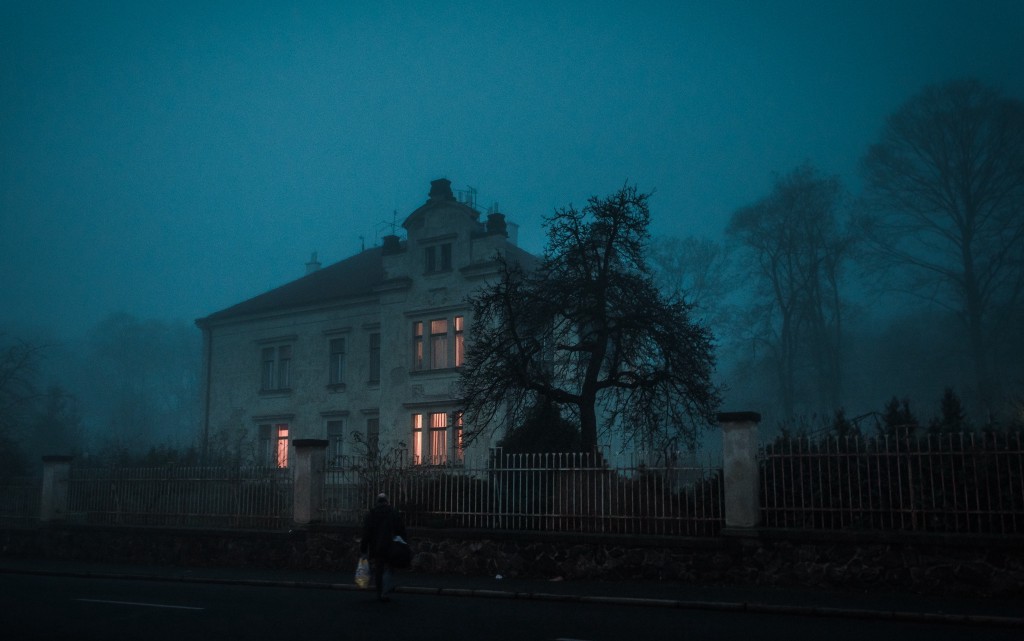
Haunted house stories bring that feeling of uncertainty or terror home. If you’re indoors when you’re reading a novel with a haunted house at its center, the room you’re in, its uncurtained windows and dark corners, will still be there when you put the book down, and so the thrill continues. And your own house doesn’t have to be a gothic mansion with turrets and secret staircases to be scary. Ordinary houses and apartments all have their own peculiarities that can unsettle. Are those noises water gurgling in the pipes or something else? Did the kitchen door creep open because it’s badly hung, or is something standing on the other side? The fun of reading novels with haunted houses is turning off your thinking brain and seeing how you react.

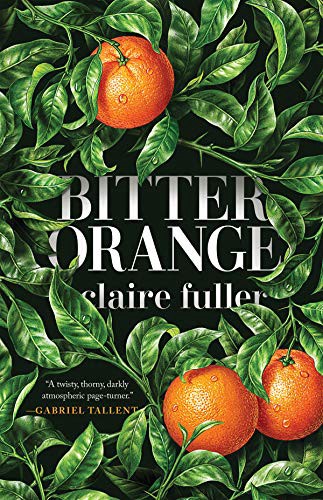
In Bitter Orange, my third novel, I play with the tropes of haunted houses: the grand dilapidated mansion, the bird found dead in a room, the white face at the window. It’s not only a haunted-house novel; Bitter Orange touches on the ghostly because the setting and the characters’ states of mind seemed to ask for it. Here are seven great haunted house novels that have me glancing over my shoulder:

You Should Have Left by Daniel Kehlmann, translated by Ross Benjamin

This book is for anyone who has sat in a lighted room at night with a large glass window in front of them and worried about what’s out there beyond their reflection. Except that Kehlmann cleverly plays with that dread by altering the reflection so the terror becomes what is or in fact isn’t in the room. The narrator in this brief novel is staying with his wife and daughter in the antithesis of the haunted gothic mansion: a modern glass box rented from Airbnb, in the Alps. Written as a journal, the book includes the screenplay the narrator is attempting (pretending) to write, interspersed with notes on the state of his marriage. But as he looks back over what he’s written he sees entries he doesn’t remember making. The book plays with time-travel as well as hauntings, and even throws in a bit of geometry.

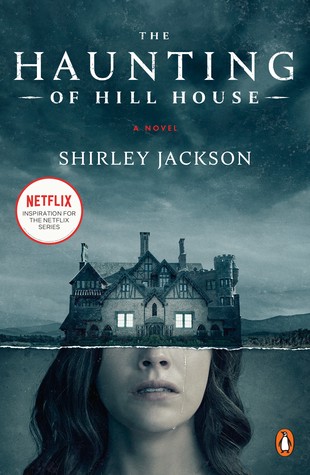
The Haunting of Hill House by Shirley Jackson

I couldn’t write a list of haunted-house novels without including this perfect example. Jackson sets the horror up from the first paragraph, saying of the house, “whatever walked there walked alone.” A paranormal researcher gathers three other people together, including lonely spinster Eleanor, to investigate Hill House in New England, a labyrinthine property of odd angles and dark corners. It’s clear by the end of the novel that the house has a malignant agency; it’s not haunted so much as it’s evil personified, which Eleanor becomes fixated on and changed by.

The Abandoned House

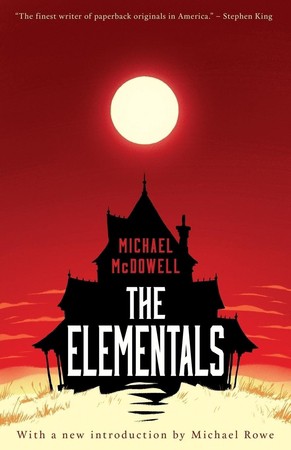
The Elementals by Michael McDowell

The McCray and Savage families decamp to their two Victorian summer houses at Beldame on a spit of land along the Alabama Gulf Coast, taking with them thirteen-year-old India who is visiting for the first time. But there is a third house in between the two, one that has been empty for years and is slowly being consumed by sand. No family member will step inside it except the spirited India. The location — all heat, light, and encroaching sand — is unlike the usual haunted-house trope of dank darkness, which makes it all the more vivid. The Elementals that inhabit the third house are slippery things, not quite ghosts, but some sort of malevolent shape-shifters that truly terrify.

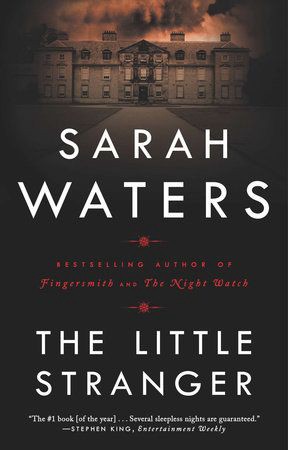
The Little Stranger by Sarah Waters

In 1947 Dr. Faraday is called out to Hundreds Hall, a dilapidated English country house that he first visited when he was ten and his mother was a maid for the family: “I remember its lovely ageing details: the worn red brick, the cockled window glass, the weathered sandstone edgings. They made it look blurred and slightly uncertain — like an ice, I thought, just beginning to melt in the sun.” From that clever description, Waters hints that this story will be ambiguous and subtle. Faraday becomes entwined with the Ayres family as odd events occur in the house. This is an historical novel with wonderful period detail, and by the end you could say that it’s not the house that is haunted, but the people in it.

White is for Witching by Helen Oyeyemi

There aren’t any witches in White is for Witching, but there is a house in Dover, England that could be said to be alive. The story — which is slight — is told by four voices, one of which is the house itself. The main narrator is Miranda Silver, who has pica, an eating disorder which compels her eat things which aren’t food, including chalk and plastic. Four generations of dead Silver women exist within the walls of the house and it seems the building has no intention of letting Miranda go either. The writing style is fairytale-esque, and structure is unusual, with the points of view often swapping unexpectedly. There is a feeling of unsettling and confusing dark magic, and it’s the kind of book you have to sink into and not struggle against to discover its full enjoyment.

Literary Witches

The Stopped Heart by Julie Myerson

Mary and Graham Coles move to a rural cottage in Suffolk, England, one that is “dark and unsteady, turned in on itself.” They have suffered a terrible tragedy and are trying to make a new life for themselves in the country, but Mary catches fleeting glimpses of children in the house and hears their voices outside, as well as seeing a red-headed man. As this narrative develops we are switched into one taking place a hundred years previously. Here, a red-headed stranger is caught under a falling tree and taken in by the family who live in the same cottage as the Coles do now. We hear from a character who is “haunted” by a ghost from the future: “Merricoles.” The two timelines are intricately woven, and the whole story carries a wonderful undercurrent of menace.

Burnt Offerings by Robert Marasco

This haunted house novel ticks a lot of boxes for familiar (and reassuring) tropes: rambling and isolated country house, weird current inhabitants, and a happy family that gets “stuck” there. Marian and Ben, together with their son David and aunt Elizabeth, rent a Long Island mansion from the Allardyce siblings one summer. But it’s so cheap, is it too good to be true? Marian becomes obsessed with the house and its contents, as well as an upstairs sitting-room beyond which lives old Mrs. Allardyce. Marian must provide meals for her three times a day, and yet never sees her. You do have to roll with the 1970’s dialogue and occasional sexism, but if you’re looking for a house that turns people mad, this is a classic.

Heartbreak Is the Same in Every Language

No Machine

When the sun is two trees up, the learners call Clyde to the room for work. Clyde leaves the people and enters the room with the machine. Clyde is one of the people who works. He is good. In the room with the machine, there is the machine, the glass, the door, and the window with shelf. Learners stand behind the glass with another machine. Door opens so learners can come inside the room for play. Window opens to let the people watch outside.

Clyde works with Peter. Peter is a learner. Clyde loves Peter. Peter has grey hair on his face and his laugh feels like sun-warmed dirt.

Today, Peter is not seen. Instead, it is Marta. Clyde does not like Marta. Marta does not listen. More and more Marta with Peter. Marta tends to Peter like he has hurt. Clyde has groomed Peter and there are no wounds, so Clyde does not understand. Peter asks CLYDE TALK TO MARTA but Clyde says NO. More and more Peter goes. Leaves Clyde with only Marta.

Marta is bad. Marta makes Clyde use machine sentences. Marta wants WHAT NAME OF THIS WHICH IS RED? And PLEASE GIVE CLYDE M&M. She says NO when Clyde tells her something true. Something like TICKLE SKY WATER GREEN BLUE RED BLUE BLACK HAPPY NANA NANA. Which is machine talk and too small. Clyde means: when it storms, Nana holds within her all the colors of the earth and makes the people forget their fear. Clyde tries teach Marta. Marta not listen.

Peter listens.

Clyde knows the learners’ words are too small. They need the Machine. They can’t see things the people do. Clyde feels sad for the learners. But this is why the people work. They teach. They help.

But Marta won’t learn. Today, Marta is behind the glass and Clyde wants Marta to listen more and more and the want fills his legs until he must kick. Feet to glass. Bam! Get it out.
Marta flinches. Clyde leans, shoulder against glass. He sees past Marta to find Peter hiding. But no Peter. Marta stands different. Marta’s arms hang sad. He cannot let her know he has seen so he turns to the machine instead of seeing closer to learn.

Clyde pulls the lever. Machine wakes up. Machine words light. Machine says “Hi Clyde,” with its voice.

Clyde gives the machine the bird. Peter taught Clyde the bird. Clyde gives the machine the bird whenever the machine says, “Hi Clyde.”

Before Clyde can use machine, Marta types, PETER NO MORE.

Clyde ignores this. It is nothing talk.

PLEASE MACHINE OPEN WINDOW, Clyde presses. Maybe Peter hides outside. Maybe Peter will scare Clyde in a fun way. Clyde’s hair tingles with possibility.

The shade on the window ups slowly. Clyde ups onto the shelf to see. He thwomps the window with his hands. Moves on one foot, then other. Finally, he sees outside. In that which is blue, birds weave grace without jumping from platforms or swinging from ropes. Plants on the ground, color of which is yellow, dance. Clyde likes the dancing grass. Its ends tickle his face and lips. Clyde talks about the grass with his voice. The other people respond. Nana loudest. They agree. Many are excited to be with the grass today.

But no Peter. Clyde sees to the glass. Marta is still there. She makes words with her hands but Clyde pretends not to see. If Clyde uses the machine, Marta uses the machine.

Clyde downs from the shelf, goes to the machine. He sees through the glass again. He sees through Marta. No Peter.

QUESTION WANT PETER, Clyde types.

NO PETER, Marta responds.

Clyde scans the symbols. Marta understands very few things. He must talk careful.

PLEASE OPEN DOOR PETER TICKLE CLYDE.

Marta shakes behind glass and Clyde sees. Marta plays hide. Bad hiding, like a baby. Hands over face.

Clyde thinks, talks. MARTA HIDE QUESTION. He sees. Marta does not answer or stop hiding. Marta’s game is not fun. Maybe Marta has hurt.

Clyde slides to the glass where he and Peter tickle with air. He presses his face against its coolness. One curved hand over his head to stop the false Clyde in the glass from appearing. He sees. Nothing. He bams the glass. Then waits. Waits for Marta move her hands. Clyde’s lips purse out. Question.

WHAT NAME MARTA EYES WHICH ARE RED.

Marta answers, SAD.

Clyde traces his finger over the symbol.

SAD QUESTION.

Marta shakes again. Clyde is sad for Marta now. Marta wants to say more and more but her words are too small. The machine talk touches few truths.

QUESTION MARTA WANT PETER.

YES, she says. CLYDE WANT PETER.

Clyde responds with his mouth. The people agree.

NO PETER, she says.

Clyde wants to talk about this with his mouth because she is right. Maybe she is learning good, but a feeling in his middle makes Clyde quiet. His arms turn heavy and slow. Clyde does not like that Marta wants Peter but Marta cannot have Peter.

QUESTION PETER QUIET GO HIDE SLEEP HIDE GO. He wants to know if Peter has gone beyond words and the ability to be seen except in the place of dreams. This is not a machine sentence, but Marta answers.

NO MORE PETER.

Clyde sees at feet. He wants Nana and the people and grooming. The hollow in his middle is bad. But the people’s voices are outside and Clyde is in the room.

QUESTION.

Clyde sees only at the machine. Not Marta.

QUESTION PLEASE MARTA OPEN DOOR HUG CLYDE.

Marta never enters the door. But it opens. Marta enters. She waits. Clyde takes Marta’s hand. It’s soft. He brings her into the room. Clyde wraps his arms around Marta. They rock. Marta’s eyes make more sad. The sad touches the hollow in Clyde’s middle. They stay in hug, and say nothing.

No machine between them to keep them from understanding one another.

About the Author

Dan Musgrave was raised by animals in rural Kansas. Currently, he is one of the Tulsa Artist Fellowship’s initial cohort of Literary Fellows. His work has appeared in The Missouri Review and The Sun. For nearly seven years, he did linguistic, cognitive, and behavioral research with captive bonobos while they trained him in the art of being a better person. Find him online at danmusgrave.com.

“No Machine,” is published here by permission of Dan Musgrave. Copyright © Dan Musgrave 2018. All rights reserved.

A Reading List of Short Story Collections by Black Women Writers

Black women novelists have won the Nobel Prize (Toni Morrison), garnered the Pulitzer Prize (Alice Walker), and conquered the New York Times bestseller list (Tayari Jones) but black women short story writers aren’t always as visible. When readers think of masters of the short form, they most likely draw from a canon of writers who are white and those who are male. 19th-century African-American writers were masters of nonfiction in the form of slave narratives and persuasive essays arguing for the liberation of their community but they were also capturing the dailiness of black life in short fiction.

Purchase the book

Through the Harlem Renaissance and the Black Arts Movement to the contemporary landscape, black writers have shaped their sentences to detail the impactful moments of their characters’ lives. I wanted the stories in my collection, Training School for Negro Girls to highlight the effects of racism, sexism, and classism on black girls and women and those stories now join a legacy of black women writers who wanted to see themselves on the pages of journals and on the covers of books.

You might know Roxane Gay’s short story collections or regularly return to the work of ZZ Packer, but below are seven other black and female short story writers you should be reading. The novel might be the more lauded form but in the hands of these women, the short story more than holds its own, brief but spectacular.

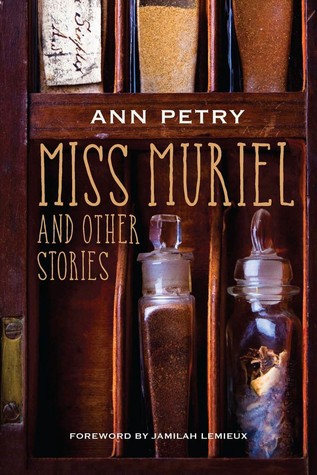
Miss Muriel and Other Stories by Ann Petry

Ann Petry is probably best known for her debut novel The Street, which expertly detailed the struggles of Harlemites Ludie Johnson and her son, Bub, and went on to sell more than a million and a half copies. Petry’s discerning eye for the weight of the quotidian on her characters is just as evident in her short stories. Originally published in 1971 from stories written from the 1940s to the 1960s, her collection, Miss Muriel and Other Stories, was reissued last year. Themes of the black community’s relationship with the police and the inescapable realities of structural inequality are prominent in Petry’s work, meaning her stories are as relevant now as they were then.

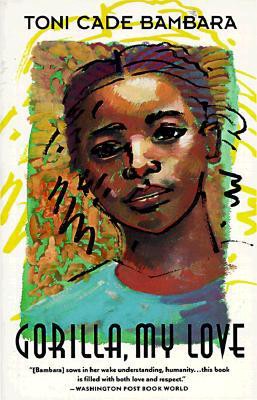
Gorilla, My Love by Toni Cade Bambara

When Toni Morrison and Alice Walker broke through to the mainstream literary scene in the early 1970s, Toni Cade Bambara was right there with them. Her essential anthology, The Black Woman, highlighted the work of black women writers across genre. She was also writing some of the best short stories to come out of the Black Arts Movement. Her 1972 collection, Gorilla, My Love, includes her much-anthologized story, “The Lesson”, about a group of black kids taught a painful lesson about class and race in one afternoon. Bambara was unabashedly radical and feminist and her work shows it. In the decades to come, Bambara would also become a master of the novel with The Salt Eaters and Those Bones Are Not My Child but if you want to witness her sharp, unflinching eye in its purest form, read her short stories.

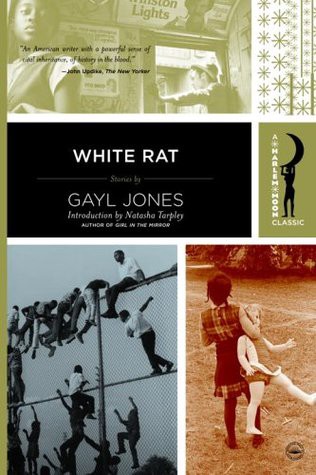
White Rat by Gayl Jones

The personal history of Gayl Jones is as complex as her fictional work, intertwined thematically by black male and female relationships, trauma, and historical legacy. Read about her personal life if you choose but don’t neglect to get familiar with the brilliance of her fiction. Her novels, Eva’s Man and Corregidora, were hailed by Maya Angelou and James Baldwin and her short fiction is as dynamic when it comes to form and voice. Jones painstakingly renders the rhythms of black speech and was ahead of her time in representing the spectrum of sexual identity and giving voice to those who are mentally ill. Try “The Women” or “Asylum” from her collection White Rat and see if Jones’s work doesn’t stay with you long after you’ve left the page.

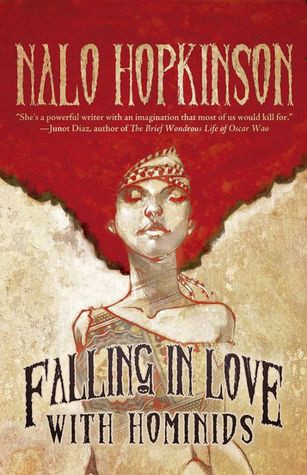
Falling in Love with Hominids by Nalo Hopkinson

Rest assured: black women writers aren’t only writing realist fiction. Octavia Butler and Nnedi Okorafor both have bodies of work that include short stories in addition to the speculative worlds of their novels. Likewise, Nalo Hopkinson builds worlds on the large scale of the novel and on the small scale in her short story collections Skin Folk, Report From Planet Midnight, and her 2015 collection Falling in Love With Hominids. Hopkinson remixes canonical texts, from fairy tales to Shakespeare, and infuses them with an Afro-Caribbean perspective. Adults become monstrous consumers of flesh and a free society of former slaves is infused with magical realism. Samuel Delany once noted that science fiction is particularly important “for those who are oppressed, because if they’re going to change the world we live in, they — and all of us — have to be able to think about a world that works differently.” Hopkinson is doing just that.

In the Not Quite Dark by Dana Johnson

Stories about the black experience are often focused on east coast urban centers or the South but Dana Johnson’s work explores the African-American experience on the west coast, specifically Southern California. In her first collection, Break Any Woman Down, and In the Not Quite Dark, her 2016 collection, Johnson sets her characters on seemingly innocuous paths until the import of the friend they’re with or the destination they’ve reached lands its full literary impact. Socio-economic class and the imprecise discomfort of being the only black person in a predominantly white space often recur in her work, all under the glare of the California sun.

The Loss of All Lost Things by Amina Gautier

The most prolific short story writer on the list, Gautier has written three collections so far, Now We Will Be Happy, At-risk, and The Loss of All Lost Things. For her mastery of the genre, Gautier has been honored with the PEN/Malamud and Flannery O’Connor awards and it’s easy to see why from her stories. Black and Puerto Rican, Gautier makes literary art of both tostones, Puerto Rican fried plantains that become an entry point for a character’s narration, and the oceans of loss many of her characters experience. Couples have children go missing, lovers break up, and characters are forced to re-imagine themselves in a new place under the watchful eye of Gautier’s prose.

Heads of the Colored People by Nafissa Thompson-Spires

Want to see where the short story genre is headed? Look no further than Heads of the Colored People by Nafissa Thompson-Spires. Recently long-listed for the National Book Award, Thompson-Spires suffuses her stories with humor and the surrealism of the digital age. The title reaches back to the 19th century but the plot turns and character descriptions teeter between now and next. Intersectional is an understatement in Thompson-Spires’s hands where class and race and disability all gather in the pages of the collection.

7 Books on the Complexities and Nuance of Mental Illness

The National Institute of Mental Health reports that nearly one in five adults in the United States lives with mental illness. The stigma surrounding mental illness is shifting, but that doesn’t mean it is any easier to write about. The challenge of writing about mental illness is to describe the indescribable, to make the concept of pain real for an audience not experiencing it, and to render pain simultaneously mental and physical, spiritual and cultural.

Buy the book

In my book Quite Mad: An American Pharma Memoir, I write about my experiences with severe anxiety, obsessive-compulsive disorder, and post-traumatic stress disorder, mental illnesses which often present as unreal to those who have not experienced them. To make these real for readers, I situate my story within the stories of others, weaving memoir with cultural criticism and positioning my complex history of treatment within the context of the United States’ treatment of the mentally ill — a cruel, coercive history fraught with issues of power, particularly for women, who are diagnosed at higher rates, yet less likely to have their pain believed.

Recent literature written about mental illness makes the seemingly unreal experiences of madness vivid and tangible. Here are seven new books that capture the complexities and nuance of mental illness:

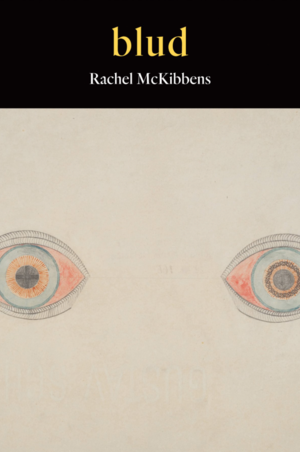
blud by Rachel McKibbens

McKibbens’ blud casts an insistent urgency over conversations surrounding trauma, survival, and violence to the female body with dark poems that take readers close to the heart of depression. McKibben’s speaker describes the inherited consequences of sexual abuse and physical violence, along with those of genetics. blud is unflinching in its examination of pain and legacy, a rhythmic collection that pulses with the desire to speak what is so frequently silenced. “We, the most feral singers,” McKibben fearlessly claims in the acknowledgements, “We who open our throats to swallow the sky’s shimmering and perfect darkness, we are so goddam holy.” While McKibbens’ poems detail the human hurts many would rather unsee, they are reckonings, stunning spells for those living with mental illness.

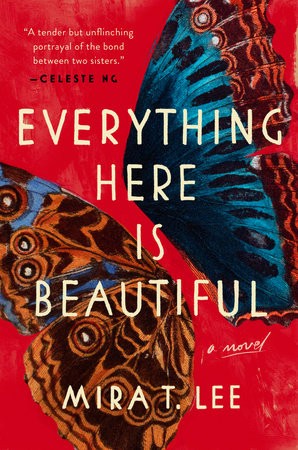
Everything Here is Beautiful by Mira T. Lee

Lee’s debut novel, shares the story of two Chinese American sisters and the impacts that immigration, motherhood, and mental health have on their relationships. Told in alternating points of view, the novel follows pragmatic older sister Miranda as she chooses a conventional path of responsibility, while younger sister Lucia embraces a life of impulsivity, her magnetism shifting to madness. Concealing her schizoaffective disorder, Lucia abruptly leaves her Russian-Israeli Jewish first husband to have a child with an Ecuadorian immigrant, moving in and out of homes, hospitals, and various countries. Conflict over her treatment drives much of the tension. “It was not my story to tell,” Miranda begins the novel and her lifelong sense of duty, one she believes requires her to force her sister to seek treatment. Lucia’s point of view is insightful and intelligent, she is keenly aware of her illness and how it affects others. “I didn’t tell anyone,” she admits, “First, it was a secret. Second, I was ashamed. Third, I couldn’t stand to hear the human population’s efforts to convince me it wasn’t true.” The story is one of blurred lines between individual and diagnosis, familial duty and growing resentment, and the difficult choices we must make to care for ourselves and others.

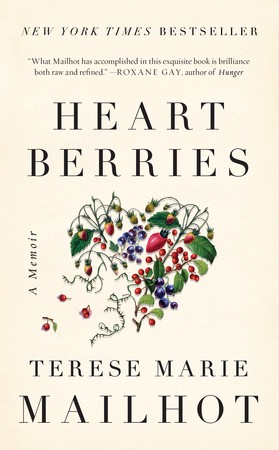
Heart Berries: A Memoir by Terese Marie Mailhot

Balancing brevity and boldness, sharp insight with stunning language, Mailhot’s debut memoir about intergenerational trauma places fragmented memories of her childhood of poverty, addiction, and abuse on Seabird Island Indian Reservation in Canada, with those of tumultuous relationships and her institutionalization in mosaic precision. Mailhot is careful not let this scaffolding show, instead, thrusting readers into the world of bipolar disorder and PTSD with little narrative explanation. “My story was maltreated. The words were too wrong and ugly to speak,” Mailhot writes in her frank introduction, her narrative refusing apology or sentiment while still lush with lyricism. The very act of reading Heart Berries is immersive, both breathtaking and brutal, indicative of what it is like to live with mental illness.

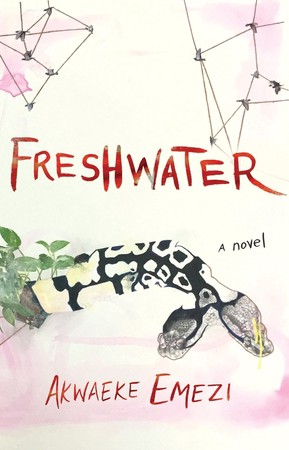
Freshwater by Akwaeke Emezi

Emezi’s debut novel tells the story of Ada, an Igbo and Tamil woman with multiple selves. Set within the context of Nigerian Igbo spirituality as opposed to western understandings of mental health, much of the novel is narrated by the ogbanje — trickster spirits that occupy human bodies — which exist inside Ada from a young age, increasing their presence when she experiences trauma on her college campus in the United States. Demanding sex, alcohol, disordered eating, self-harm, they wonder, “What she would have been without us, if she would have gone mad still. What if we had stayed asleep? What is she had remained locked in those years when she belonged to herself?” Freshwater’s nonlinear lyricism and raw narration challenges the knowability of mental health through science, asking us all to consider our otherness, mutability, and multiplicity.

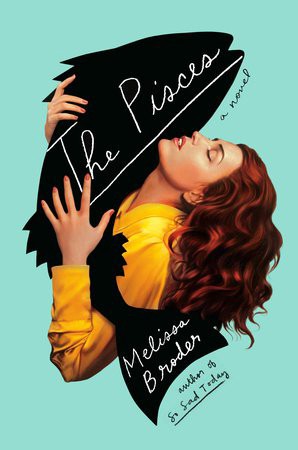
The Pisces by Melissa Broder

Broder’s debut novel is the surreal, obsessive, and darkly erotic story of a deeply depressed woman who escapes her dead-end relationship and doctoral dissertation to house sit for her wealthy sister in Venice Beach, LA. Lucy spends her time alternating between awkward group therapy sessions and Tinder dates, before meeting a handsome surfer late one night who, it turns out, is a sexual masterpiece. And also a merman. Delightfully bizarre, The Pisces holds nothing back in its critique of the capitalistic wellness industry, descriptions of the detached anxiety of online dating, and merfolk carnality. Border’s discussion of mental illness is equally explicit, Lucy asks, “Could anyone be totally ignorant of the void? Didn’t all of us have an awareness of it, a brush with it — perhaps only once or twice, like at a funeral for someone very close to you, when you walked out of the funeral home and it stopped making sense for just a blip that you existed?” The Pieces presents the duality of mental illness. Lucy is sexual and powerful, seeking pleasure and agency in her body, even as she is unsure of her mind and refuses to conform to the desire for marriage, children, or even recovery.

Little Panic: Dispatches from an Anxious Life by Amanda Stern

Stern’s Little Panic tells the story of her anxious childhood in New York City, one surrounded by mystery and misunderstanding until she is diagnosed at twenty-five. Plagued by fears that her mother will abandon her or that she will be kidnapped, Stern’s worries are exacerbated by the intelligence tests she is forced to undergo as a child. “If I try to explain to adults how I’m feeling, they say I’m being overdramatic,” she explains. “Adults always say that kids have it easy, that they wish they could go back to childhood. The kids around me are carefree and happy, but I’m not, and life doesn’t feel easy for me, ever, which means I’m being a kid in the wrong way.” Stories from Stern’s childhood are interspersed with a present-day narrative of failed relationships and the desire to become a mother. Throbbing with dread, yet tender in its rendering of life with a terrifying illness, Little Panic weaves the innocent voice of a child with the world-weariness of an adult who has spent a lifetime with panic disorder.

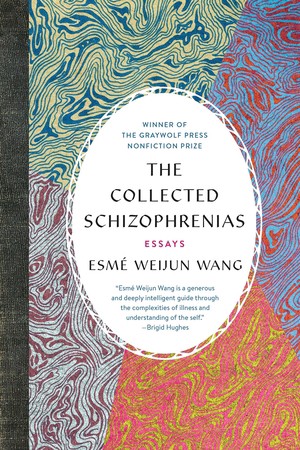
The Collected Schizophrenias by Esmé Weijun Wang

The Collected Schizophrenias is Wang’s highly anticipated forthcoming essay collection about her experiences with schizoaffective disorder, a diagnosis complicated by PTSD and Lyme disease, and the medical community’s own debates about mental illness and treatment. Wang’s insight is sharp, her experience as both a patient and former Stanford lab research lending itself to her blend of intimate personal revelations and careful research.

A Real-Life Bookseller Weighs In on 7 Fictional Ones

With almost 20 years of bookselling experience behind me and (hopefully) a good many more to come, compiling a list of fictional booksellers appeared at first to be an effortless task, but after a little research I was astonished to find out quite how many books have been set in bookshops.

Purchase the book

I suppose there’s a kind of romance associated with the place where old books await a new life in fresh hands, and a sense that a place that contains thousands of stories bound within the books on its shelves should be a natural home to the setting of a story.

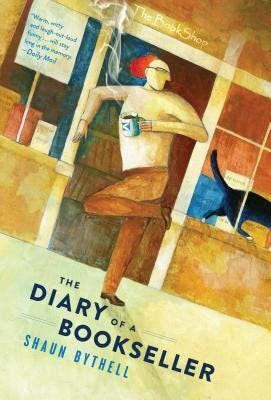
My book, The Diary of a Bookseller, recounts a year of buying and selling books in my shop in rural Scotland, but there is a world of other tales set in and around bookshops. Below are some of my favorites booksellers in fiction:

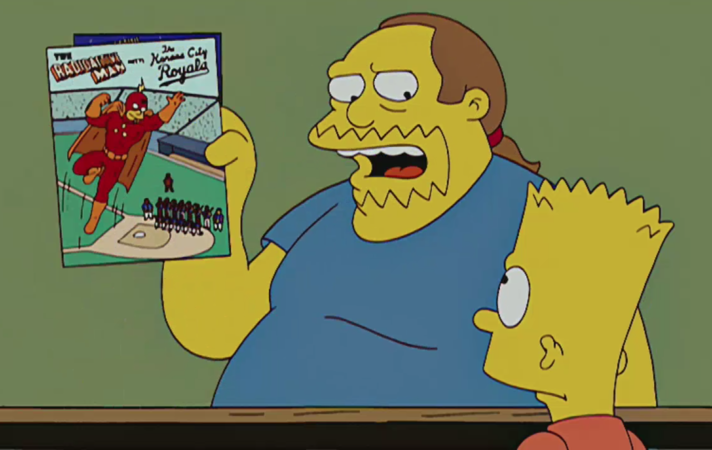
Comic Book Guy from The Simpsons

Stereotype one— the ‘know-it-all’ sneering bookseller who appears to care less about making sales than he does about making his customers feel stupid. The creators of The Simpsons creators have distilled the most obvious characteristics of the obsessive into a character who is both odious and pitiable in equal measure. Comic Book Guy’s passion for his subject it matched only by his contempt for his customers, and in many respects this reflects the reason why people who are passionate about their subject find it frustrating dealing with others who are less well informed than they are.

John Baxter from The Intimate Thoughts of John Baxter, Bookseller by Augustus Muir

Although Muir attempted to pass this off as a genuine diary, it quickly becomes obvious from reading it that this is a work of fiction, and Baxter — charming, knowledgeable, frustrated, and vaguely incompetent — is Muir’s parody of the booksellers he encountered in Edinburgh at the time in which he wrote it. Booksellers in fiction appear to conform to one of several stereotypes, and Muir’s protagonist certainly conforms to the most obvious; the autodidact who believes that his hard-learned knowledge entitles him to a better life than the lot he has been cast. Despite the inevitable bitterness that accompanies such a character, Baxter is someone to whom it is impossible not to warm as the book unfolds, and his final realization that he is content with his quiet life in a small Scottish bookshop comes as no surprise at the conclusion of the book.

Indie Bookstores Tell Us About Their Most Stolen Books

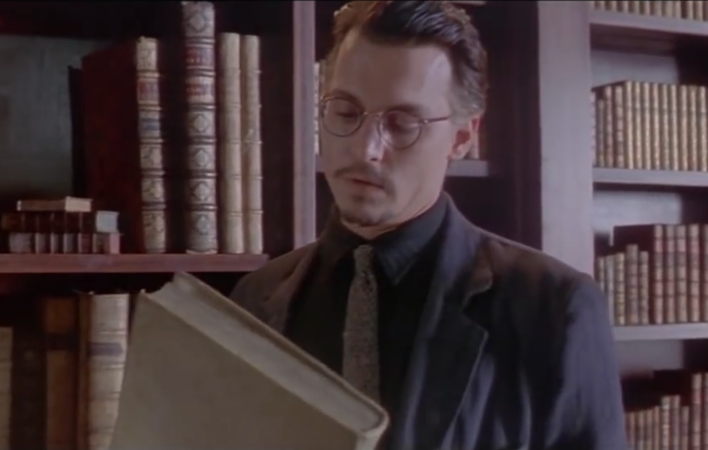
Dean Corso from The Ninth Gate based on The Club Dumas by Arturo Perez-Reverte, translated by Sonia Soto

Another stereotype manifests itself — this time it is of the unscrupulous book dealer Dean Corso (played by Johnny Depp). No depths of dishonesty and manipulation are too low for Corso to sink in his avarice, and the premise of the story is that Depp’s bookseller is charged with acquiring the three remaining copies of a 17th century book which — when put together — contain the requisite information to summon the devil. Corso’s character in the film throws into relief the moral dilemma faced by booksellers on a daily basis; what are you prepared to sell in order to make a living, even if it conflicts with your own beliefs. Corso, though, appears to be so devoid of a magnetic field in his moral compass that this doesn’t seem to cause him any problems.

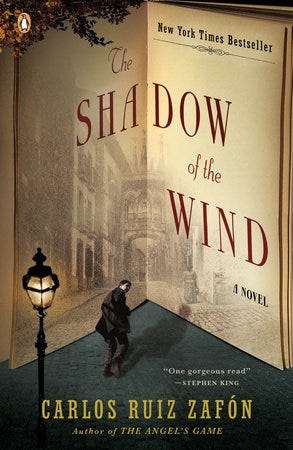
The Shadow of the Wind by Carlos Ruis Zafón, translated by Lucia Graves

This is less about a fictional bookseller, and more about a fictional book. And another one about the devil, but this time the protagonist is a young boy whose father (an antiquarian bookseller) takes him to a secret library in post-Civil War Barcelona to pick a book which he has to protect for the rest of his life. The story is utterly spellbinding, and the message about the power of books — although far from subtle — is something which both booksellers and readers have found hard to resist.

12 Fictional Bookstores We Wish Were Real

Florence from The Bookshop by Penelope Fitzgerald

This is a book which — I have to confess — I haven’t read. The film, though, I have watched, and as a bookseller found a little two-dimensional. Florence (the widow around whom the story is based) moves to rural Suffolk to open a bookshop in a building which the upstanding elders of the town have earmarked for use as a centre for the arts. She finds herself embroiled in a conflict with them, employing the daughter of a poor family (who she turns into a bibliophile) and being almost rescued from financial ruin by a reclusive aristocrat but ultimately losing her fight to keep her shop open.

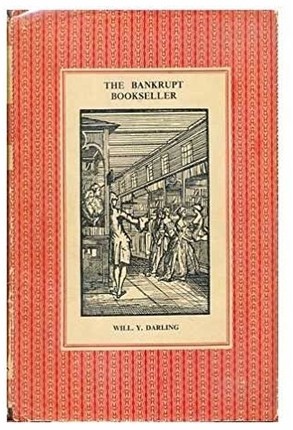
The Private Papers of a Bankrupt Bookseller by Will Y Darling

Darling’s bookseller is — like John Baxter — a fictional creation. The melancholy essays which make up the book were purportedly written by a man who — after suffering the trauma of the First World War — decided to open a bookshop. In the foreword, the author (under the guise of a character known only as X. Z. E) describes the bookseller as having been ‘hit on the head in the War’ as a possible explanation for why he decided to become a bookseller. The essays are at times poignant, at others unspeakably funny. Even Darling’s foreword (to the foreword — there are two) is brilliantly understated. In describing how the bankrupt bookseller committed suicide, Darling explains how, on being notified of his impending financial catastrophe, he ended his life by putting his head in a gas stove; ‘The gas was full on and not lighted. The stove was one of the new kind — more like an ordinary grate than the upright sort’, paying more attention to the detail of the stove than the tragedy with which it was associated.

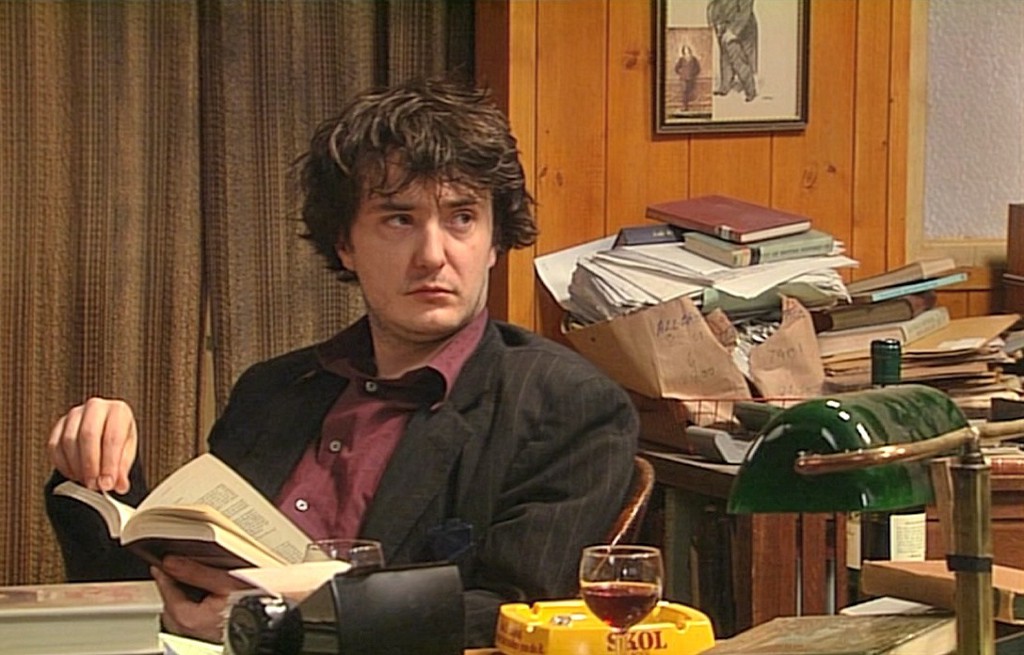
Bernard Black from Black Books

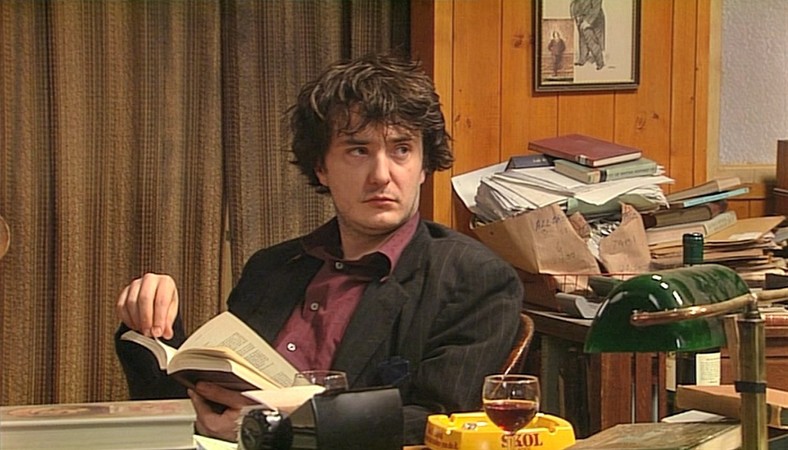
No list of fictional booksellers would be complete without the inclusion of Bernard Black, Dylan Moran’s superbly drawn character from the 18 episodes of this fine comedy series. Cranky, irascible, frequently drunk and with little or no patience for his customers, Bernard is the fictional bookseller with whom I most readily identify. The observations and detail made by the writers (Moran and Graham Lenahan) are precise and accurate, and the other members of the cast — Manny and Fran provide the eccentric characters who are the perfect foil to Bernard’s incessant fury at the world and his customers in particular.

About the Author

Shaun Bythell is the owner of The Bookshop in Wigtown, Scotland — Scotland’s largest second-hand bookshop — and is the author of The Diary of a Bookseller.

‘The Catcher in the Rye’ Is Fired

There are a lot of reasons to love J.D. Salinger’s first-person novel about a disaffected youngster, even nearly 70 years later. It’s a book with cussing in it that you’re often required to read in school. It’s the way many of us learned to pronounce the name “Phoebe.” It potentially pushes teens towards a career in cold-weather ornithology. And if you’re a white, relatively affluent, permanently grouchy young man with no real problems at all, it’s extraordinarily relatable. The problem comes when you’re not. Where’s the Catcher in the Rye for the majority of readers who are too non-young, non-white, and non-male to be able to stand listening to Holden Caulfield feel sorry for himself?

Fire the Canon is Electric Lit’s limited series on making the standard high school syllabus more inclusive. In this edition, our panel of writers and educators—high school English teacher Larissa Pahomov; National Book Award finalist Carmen Maria Machado; writer Jaya Saxena, who among other things wrote a series about classic children’s literature on The Toast; and writer and professor Kiese Laymon—suggest alternatives and supplements to The Catcher in the Rye.

Carmen Maria Machado suggests: We Have Always Lived in the Castle by Shirley Jackson

Folks who think The Catcher in the Rye is the height of edginess and adolescent angst are not going to be ready for Shirley Jackson’s singular bildungsroman about social ostracism, ne’er-do-well relatives, witchcraft, and murder. Just read this opening paragraph and tell me you don’t want to sit down with this novel immediately:

My name is Mary Katherine Blackwood. I am eighteen years old, and I live with my sister Constance. I have often thought that with any luck at all, I could have been born a werewolf, because the two middle fingers on both my hands are the same length, but I have had to be content with what I had. I dislike washing myself, and dogs, and noise. I like my sister Constance, and Richard Plantagenet, and Amanita phalloides, the death-cup mushroom. Everyone else in our family is dead.

Jaya Saxena suggests: Paper Girls by Brian K. Vaughan

The thing about Catcher is that it’s really great for validating teen angst and really bad at transforming that angst into anything like empathy, because the second you turn 18 Holden Caulfield becomes a whiny brat who only softbois and murderers connect with. It could easily be replaced with Paper Girls, written by Brian K. Vaughan and illustrated by Cliff Chiang. Not only do you get four flavors of teenage angst in there (inspired by poverty, sexual orientation, race, addiction and more), the entire sci-fi story is about how adults fail children, generation after generation, even when they have the ability to time travel. Their angst feels real in a way Holden’s never does, and is complex enough to resonate beyond teen years.

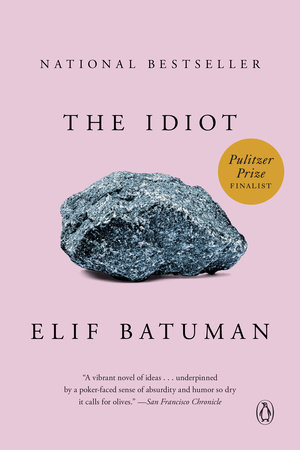
The Idiot by Elif Batuman

Larissa Pahomov suggests: The Idiot by Elif Batuman

The main character of Elif Batuman’s novel is the kind of student who, had she been assigned “Catcher in the Rye” in English class, would have had a hard time connecting with Holden Caulfield’s dramatic flame-out. Selin is many things that Holden is not: communicative with her mother, going to Harvard in the fall, plays the violin. When she experiences her first love with an ambivalent upperclassman, she doesn’t run away to New York to brood, but her experiences are just as confusing. Am I embarrassing myself in Russian class? What do all of his emails mean? What if I follow him to Europe for the summer? Selin is even-keeled, tentative, hopeful — and ultimately just as vulnerable and troubled as Holden in his hotel room.

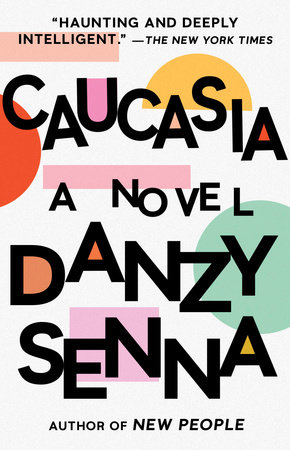
Caucasia by Danzy Senna

Kiese Laymon suggests: Caucasia by Danzy Senna

Caucasia was the first novel I assigned as a 26-year-old professor at Vassar and students more than loved it. They worked with it. The canary in the coal mine metaphor gets a bit clunky at the end, but the pacing and politics of the book are still astounding. While Holden makes his way through New York and a particular kind of white boyish existentialism, Birdie and Cole make their way through Boston, the American family, femininity, hybridity, antiblackness, sexual violence and the rugged unrelenting conundrum of how to love the folks who made you when the folks who made you are tired of loving themselves.

Image result for lucy jamaica kincaid

Electric Literature staff suggests: Lucy by Jamaica Kincaid

Like Holden Caulfield, Kincaid’s eponymous Lucy is a teenager who is reckoning for the first time with the fundamental artificiality of white middle-class American life. Unlike Holden, Lucy is an outside observer: an au pair from the West Indies observing the hollowness at the heart of her employer family. When she thinks something’s phony, it stings.

Your Favorite Children’s Book Heroes: Where Are They Now?

For the 30th birthday of the Roald Dahl novel Matilda, original illustrator Quentin Blake imagined some possible futures for its precocious heroine: astrophysicist, world traveler, librarian. That got us wondering where the rest of our childhood favorites ended up. Now, more than ever, we need to know that Ramona Quimby and the kid from The Snowy Day turned out okay.

To live in the modern world is to learn that if you check the news before you get out of bed in the morning, you may fail to understand what the point is in leaving your bed after all. The adults left in the room are the courageous ones, who are are being mocked, trivialized, and abandoned by the cowardly, powerful few. It’s times like these when we need to remember that the future is not our own, but that of our children. So we thought it might be time to remember the children who inspired us to grow up and seek change. (Note: we’ve taken the liberty of imaging these characters into our own time, even if they come from centuries ago.) Here are seven characters we’d like to imagine growing up to do a better job than we’re doing right now.

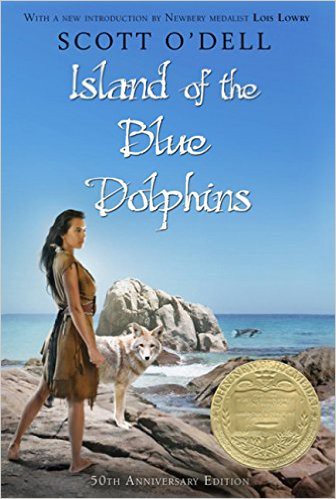
Won-a-pa-lei (Karana), from Island of Blue Dolphins by Scott O’Dell

After abandoning a Ph.D. in anthropology, Karana met her partner and the two women returned to the island where Karana was born. Karana and her wife run a “survival camp” for women who have experienced trauma — particularly domestic trauma and migrational trauma — by empowering them to see the power in their capacity to survive without the patriarchal systems who abuse them. Her partner, an acclaimed psychologist, offers counseling and support for these same women. The camp is booked through the next three years.

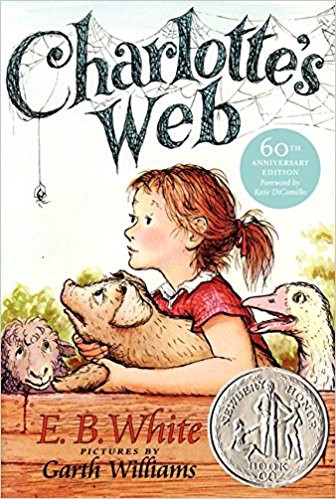
Fern from Charlotte’s Web by E.B. White

Fern now runs an international non-profit organization for women farmers. At a young age, she learned how quickly men in power are willing to sacrifice the life of the terrific young, and how often women are assigned the duty of taking care of the defenseless. After observing Charlotte’s remarkable marketing skills, Fern was inspired to change the world. Her organization is committed to fostering community for women farmers, providing micro-loans to challenge the international wealth-gap, and provide social platforms for women farmers to connect with each other to challenge the sexist stories and celebrate the women who aren’t afraid to get their hands dirty. She is a vegetarian and still hates her dad.

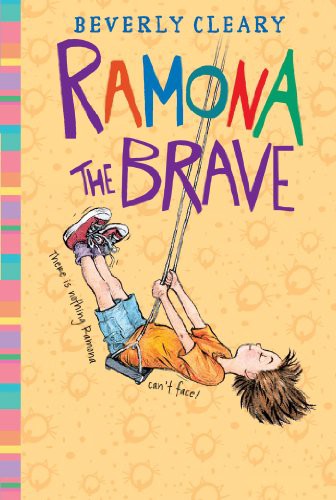
Ramona Quimby from the Ramona series by Beverly Cleary

Ramona Quimby is a media personality who isn’t afraid to live her best life. After dealing with the guilt and frustration of being a “messy girl” she now has her own late-night show wherein she celebrates literal and figurative messes. Her rise to stardom started after an essay she wrote “In Defense of the Stain On My Shirt” about the sexist demands for women to remain “clean” and “pure,” went viral. She’s inspired girls everywhere to throw out their stain sticks and embrace getting into trouble.

Stanley and Zero from Holes by Louis Sachar

Stanley and Zero have never really left each other’s side ever since the curse was lifted. Though the two lived seemingly happily-ever after, they continued to reflect on the prison-industrial complex — the structural inequalities and inherent racism represented in the breakdown of the US adult population in prison (where black adults represented 12% of the U.S. adult population but 33% of the sentenced prison population, and Hispanic adults represented 16% of the adult population and 23% of inmates, according to PEW) — and decided to do something about it. After studying hard in law school (and without using said hard work as an alibi for sexual assault accusations), the two are now defense attorneys, eager to reform the system from the inside. Zero’s book, The Hole Becomes a Grave: The Pitfalls of the Prison Industrial Complex by Hector Zeroni, J.D., will be out next fall.

Harriet Welsch from Harriet the Spy by Louise Fitzhugh

Harriet runs a cybersecurity firm for journalists. She opens client pitches by recounting her experience at a young age with a special marble composition book that got into the wrong hands. It was the beginning of her education in journalistic integrity. She believes that confidentiality is crucial for those interested in documenting the realities of the world and uncovering dangerous truths that the powerful few would prefer remain hidden.

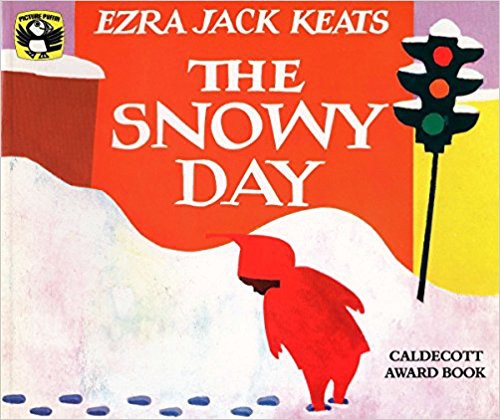
Peter from The Snowy Day by Ezra Jack Keats

Peter is a painter and professor living in Brooklyn. As the earth continues to warm, that first snowfall has haunted him. While Peter completed an MFA in poetry at the New School and remains a tenured professor specializing in Haiku, his career as a painter started only recently, after a day in February when the temperature hit 85 degrees. Words failed him, but the feeling of that fleeting snowflake on his nose, the blanket of snow on his street, grew brighter in his mind’s eye. He applied his mind to the canvas. Peter’s painting now focuses on examining the effects of climate change in parts of the world that go “unseen.” He is interested in creating visual representations of the long-term devastations of climate change.

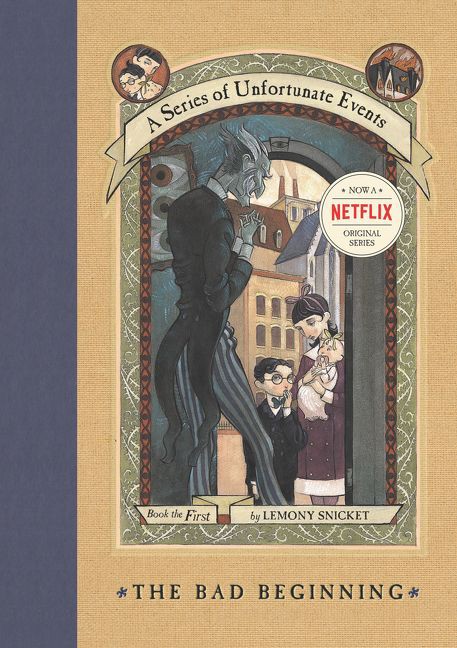
The Baudelaire Children from A Series of Unfortunate Events by Lemony Snicket

After finally obtaining their family’s fortune, the Baudelaire children decided to invest in a school for children misplaced and traumatized by the government. Violet, with her own independently successful career as an astrophysicist, spends some of her time partnering with education specialists to create programming for young girls in STEM. Klaus, now happily married to his partner Jerome, runs a program for the boys in the school, offering early sex education with special instruction on dealing with toxic masculinity. He runs the after-school book club and personally hand-picked every book in the library. Sunny learned at an early age what it meant to be understood, and now runs the language program and the self-defense program. All three Baudelaires are active in the adoption community and spend their weekends with children in the foster-care system. They are developing a campaign for reforming youth services.

Nicole Chung on the Complexities, and Joys, of Transracial Adoption

I’m always thrilled, slightly stunned and entirely heartened when I discover a magnificently talented writer who is also an adoptee. It’s a tricky narrative to weave without coming across as resentful or righteous or ungrateful, largely because there’s so little out there written about the adoption experience that goes beyond “adoption speak” — saying things the right way for fragile hearts and severed bonds, newly orchestrated connective tissue and hopes to just be a family.

Purchase the book

I first came across Nicole Chung’s work through her personal essays on the now defunct The Toast, and later other publications like BuzzFeed and Catapult, where she is now Editor-in-Chief. I connected with variations of shared experiences, but was blown away by her prose.

Now, with her first book, All You Can Ever Know, Nicole has done something really remarkable. She has written a beautiful memoir that is also an adoption story, and an adoption story that is also a beautiful memoir.


Rebecca Carroll: We’ve known each other some through social media and the adoption experience, but reading this book was just, I mean, especially since I just sold my own book that will deal with my own adoption — it was a lot.

Nicole Chung: Yes. Congratulations. That’s just so great!

RC: Thank you. It was really so interesting to see how you got into your story — just how different the lens is depending on who is telling the story. Early on in the book, maybe even on the second page, you wrote: “To my family’s credit, my adoption was never kept secret from me.” It stopped me in my tracks, really, because I wondered why you thought they deserved credit for that.

NC: That’s a good question. I didn’t mean it was saintly behavior, or something. I have encountered so many adoptees, especially from older generations, who were never told or were told so late in life. So I suppose in that sense, that’s what I meant. I was glad it was never a secret, always very much — open is probably putting it too strongly — but just the fact that I was adopted was never hidden from me. I guess, nor could it have been, but [my parents] certainly spoke about it without embarrassment, without shame. That was how I learned to think about it too. But, yeah, I can see why that would be jarring to read.

RC: Yes, but also because the default is that there would be something to keep secret. I have also met tons of adoptees who are white and were adopted by white parents to blend in, specifically.

NC: That’s absolutely true.

RC: There were parents who felt a kind of shame that they couldn’t have biological children, and so their adopted kids weren’t told in order to assume the semblance of a nuclear, biological family.

I still feel like we’re not talking about adoption in a way that makes adoption a viable family option — it’s still a thing that really has to be talked about in a thorough way.

NC: I think it’s always relevant and important to talk about adoption — I always just felt really deeply for adoptees I’ve met who were able to blend in with their adoptive families and who weren’t told. Often, they would find out from someone else. They wouldn’t even find out from their parents every time. Sometimes they would find out by accident, from a neighbor, or another relative, or a friend. Somehow this other person had this piece of information they didn’t have about their own history, which just seems so terrible. I can’t imagine what that would be like.

RC: Such a sacred, personal piece of information.

NC: Yeah, I think it’s a tough line to walk between adoption being something that’s extremely common, so we should have ways to talk about it. At the same time, you don’t want to minimize its importance, right, in the life of a family because it is a big thing. It doesn’t just end with placement, as you know so well. I think, like you said, we are still learning how to talk about it and how to adjust those nuances and those complications, which not everybody is going to be familiar with. Not everybody will know how to talk about.

RC: Right. And you wrote about how you have this scripted sense of your adoption. Your parents told you the story, and you knew what role you played in it, and your parents said that your birth parents had made the best decision. And I wonder at what point, if at any point, did you think: “Well, wait a minute.” Because I hear a lot of adoptees say that their adopted parents told them that too, but who is ever making a best decision when a child is given away by her birth mother?

NC: Yeah. That word “best” is so fraught, and also the word “better” — I think what I heard over and over too, and this wasn’t necessarily even from my parents, this was from people who were looking at my family from the outside and saying: “You must have this objectively better life because you were adopted by this family, this white family.” I have people come up and just say to me, “If you’d been raised in a Korean family, you know they don’t value girls so your life would have been so much harder.” It’s amazing to me the things that people felt comfortable saying. I’m sure you’ve got a really long list, as well.

RC: I do. And it grows in real time. Do you remember when you first started really thinking about adoption as something that involved people making choices around you with a particular set of consequences?

NC: I think it did take me until, gosh, probably my late teens, early 20s, to really start questioning and interrogating — what does that mean, best choice or better life? Better than what? That better than what question just kind of started haunting me when I was in my mid 20s really.

RC: Who gets to decide?

No one even told my parents they should think about acknowledging the fact that I was different from them.

NC: Right. I mean, I think that’s just the big question. I understand why my adoptive parents had to believe it was the best decision possible. They wanted a family so badly, they wanted a child so badly. My parents were very religious so they fall in this, not just happenstance, but divine planning. It was just extremely hard, I think, for them to see the adoption as anything but a blessing and the best possible thing that could have happened.

RC: Divine planning for your adoptive parents, but what about your birth parents? Also divine?

NC: I am, frankly, embarrassed that I didn’t really start really thinking about how my birth parents must have felt or what they must have gone through until my 20s. They had never really been presented to me as concrete people, individuals in their own right. I had just been brought up to not to really think about them and their perspective. It didn’t occur to me until much later that they might have been deeply sad, or that something might have happened that shouldn’t have happened, and that was why they placed me for adoption.

RC: When you started thinking about it though, did you feel any kind of resentment toward your parents that you hadn’t been raised to be more curious about them? Or, did you not struggle with that?

NC: I think I did struggle with that a little. It definitely wasn’t all at once. It wasn’t just one moment where a light switched on and suddenly I could see all of these nuances and shades of gray I couldn’t see before and was resentful that they hadn’t been brought to my attention. It wasn’t quite that stark. But, I write in the book — and I don’t wanna give tons away — but I write in the book about how my birth parents, my birth mother, actually tried to contact me when I was very young. That was hidden from me. It was obscured and I didn’t find out until many years later, too late to follow up on it, too late to do anything about it.

RC: And you thought what?

NC: I remember finding out about her attempt to contact me. I don’t know, it was the first time I had really tried to put myself in her shoes and think about the adoption, purely from her perspective. I don’t know. The fact that it was hidden from me was deeply painful. I don’t even know if resentment was the right term, but it was very painful to me to know that she had made this effort, this overture, and was turned away without even really an explanation.

RC: Because our adopted parents are sort of the keepers of everyone’s feelings, and the feelings they want to protect the most are ours.

NC: That was hard and I wondered, were there other attempts that I didn’t know about? There must have been something going on, something that made her think about me at that time and try to reach out. This is not to portray my birth mother as a saint, which she’s not, but it was definitely this notion of, not only had I not seen the full complicated narrative for what it clearly was, no one had ever really tried to help me see it that way. That is something that I wish we had talked more about as a family when I was growing up. Just making room for what my birth parents lives and experiences really must have been like. Of course, it would have been guess work. We didn’t know them. We couldn’t have really gotten firm answers, but it was always just portrayed to me as we’re your family, this is your family. Whatever happened before, it’s not that it doesn’t matter, but, really, we know everything we could know, let’s move forward. It was enough for them, but, ultimately, it wasn’t enough for me.

RC: Right. You also wrote that you’ve never met an adoptee who blamed their birth parents for their decision. You can go ahead and count me as your first.

NC: Oh, I’m sorry. I didn’t mean …

RC: No, no, not at all. I spent the better part of 15 years after our reunion trying to please my birth mother and trying to be what would have made her keep me, to the point where I willfully stunted my own growth while she watched me writhe in the pain of doing that. This is only to say that I agree with you that birth parents are not saints, and yet I wonder why, do you think, adoptees so often see them as being above contempt?

[My parents] knew when people looked at us, they knew I was adopted, they knew that our family was different than a lot of other families.

NC: I think I can say, for myself, I was the kind of kid who was more inclined to look inward — the problem must be me, it must have been something about me, right? I think that’s just my personality and a lot of adoptees I’ve spoken to also felt like it was somehow wrong for us to try to assign blame to our birth parents. I think, especially as I started thinking more about their perspective and why they might have given me up, I really empathized a great deal more with them. It made me even less willing to blame them for the decision. Even knowing who they are now, and knowing they’re complicated, imperfect people, I definitely can see the hard spot they were in. I don’t think it’s a choice I would have made in their position. It still did not feel like something I can blame them for.

RC: I don’t mean to say that I sit around all the time blaming my birth mother for everything. It wasn’t until I was in my late 20s that I really started to understand who she was, and what her own really difficult history and backstory was, that I realized her decision to give me up was deeply convoluted. I guess blame is a very loaded word.

NC: It’s a fraught word, for sure.

RC: You said earlier that your parents wanted you so much that you were a gift from God, that you belonged to them. I just wonder, as a kid, when you first started thinking about adoption, and your birth parents, and being Korean, and what that meant, did the idea of belonging to your adoptive parents feel weird to you, or restrictive? I remember when I first found out that I was going to meet my birth mother, several members of my extended family, aunts, uncles, and so forth, said, “Remember who you belong to. Remember you’re ours.” I was 11 so it wasn’t like I had any kind of super intellectual idea of what that meant, but it did feel weird. Like, “I’m not yours. I don’t belong to you.”

NC: My adoptive mother said something similar to me when I started searching. She told me, “Remember who your real family is.” I didn’t really wanna argue with her about it on the phone. There was a lot going on. I was really pregnant. There was a lot at stake. It took me such a long time to work up my courage to take this step, I didn’t actually want to have a big argument, not just with her, but with anybody about it. I was like, “My mind’s made up. I’m moving forward. This is something I have to do so I’m not gonna sit here and justify it.” I just shrugged off that remark at the time, but I did keep thinking about it later. I definitely understand why my adopted parents thought, still think, of me as theirs. I think it’s very difficult, as a parent, to not think about your children, I guess, as yours. That said, I’m a parent. I don’t feel my children belong to me right now and forever, and ever. And then …

RC: Right. Because you have a biological child, I have a biological child —

NC: I have two.

RC: You have two. My son is of me, right, but he doesn’t belong to me in the sense that it felt these family members were saying to me. “We got you, picked you, you have been gotten by us.”

NC: It felt defensive.

RC: Right.

NC: I don’t wanna speak for your relatives, but I think, first of all, part of it was coming from a place of love. I think they wanted me to always know that they did think of me as their child. I wasn’t their Korean child, or their adopted child, or a child with qualifications. I was their child, as if I’d been born to them.

RC: But you weren’t.

NC: Yeah, but I think they worried that I would feel less loved if they didn’t try to reassure me of that — that I was loved and I was wanted. Part of it, honestly, was—it’s not that they were on the defensive, in the way I sometimes had to be as an Asian American in a white family, in a pretty white town. I got questions. I got micro-aggressions. I had experiences they didn’t have. But I know they had seen enough, and heard enough, they’d gotten enough questions themselves, to maybe feel a little bit defensive about it. I don’t know. This is actually a guess on my part. They knew when people looked at us, they knew I was adopted. They knew I wasn’t born to them. They knew that, in some way, our family was different than a lot of other families. I would not surprised if there was a touch of defensiveness, or maybe even something less strong than that, maybe just wanting to ward off those questions, those external intrusiveness, and just assert to everybody, to the world, and to me, “We’re a family. This is who we are. It’s not a big deal.”

RC: But, do you feel like there was a point where they began to defer to you, and your choice, and how you wanted to go about this search, or not?

If you’re not prepared to talk about identity, race, and racism that you as a white person have not experienced, it’s possible transracial adoption isn’t for you.

NC: First of all, by the time I started to search, I was in my late 20s and I had been living away from home and making decisions independently for many years. To some degree, they would have had to just live with it regardless. Right? But also I think they accepted my reasons. I think they knew it was especially important to me because I was expecting my first child, and there was just all of these practical reasons, too. I really wanted to know more about my medical history and, maybe if I could, understand why my birth mother had gone into labor so early. Just things like that, that suddenly seems much more relevant. I think they did understand. I mean, that said, it wasn’t an overnight process for them either. I think it was only through conversations we had later about things I learned about my birth family. Even years after the fact, I think our conversations about all of this are still evolving. I realize I still talk about my parents in the plural but, of course, my father passed away in January.

RC: I’m so sorry.

NC: Thank you. But, until he died, I would say it was the same with both my parents. I think our conversations about this have been evolving for the past several years. Some days, too, I think they understand better than other days. I think it’s a process. I don’t think they automatically understand it all and then they’ll always accept and understand it. But, I think one thing that’s helped, is they’ve gotten to meet my biological sister, who I’ve gotten close to, and they have gotten to see how much that relationship means to me.

RC: And how has that been?

NC: I don’t think that they have a wish anymore to deny the importance of this connection, this biological connection that [my sister and I] have and this friendship. I think they’re really happy that I have her in my life and have seen how important it is to me to have her. I guess it’s a series of incremental steps, not just a sudden thing. But there are certainly parts of my experience they’ll never fully understand. I’ve had to accept that because we experience the world quite differently, and they are not adopted, there really is, I think, a limit to how much they’ll ever be able to fully grasp, this reality.

RC: How much of your adoption narrative will you share with your own children? My son is very aware of my adoption story, and all the moving parts, and sometimes I’m actually afraid that he knows, or internalizes too much. He understood from a very young age, the pain and the trauma that it caused me and even suggested, when he was probably four or five, that we adopt as a way for me to help figure it out. Of course, it was coming from a place of love, but I said, “We can’t use a person, certainly not a child, to work through our issues.” But, I just wonder, it’s so present in our lives, how much do you share or integrate that with your parenting of your biological children?

NC: That’s a great question. I think, too, the answer changes as my kids get older. Like you, I had a similar experience with my older daughter when she was four-ish. I think it’s the first time she heard me say the word adoption and wanted to know what it meant. I was trying to explain it to her, and it was the simplest definition, but she really grasped it. At the same time, I could tell it really disturbed her, which I hadn’t been expecting, but I think it was clear, up until I said that, she had not really thought about the possibility of being separated from your parents. I remember, she asked me, I’ll never forget this, she said, “Am I gonna be adopted, too?” She said something else later which was that, “Did you like your first momma best because I like you the best?” And I said, “No.” She was already thinking about whether this would this happen to her. Or, if it happened to me, why couldn’t it happen to somebody else? I was so glad to be able to talk with her about it, and have more words, and be really open, and, at the same time, it was a little bit heartbreaking to have that conversation.

RC: And also, of course, there’s the element of race, too. Obviously, your story, my story, they’re not just adoption stories, they are interracial, transracial adoption stories. You can probably tell from the title of my book, Surviving the White Gaze, that it’s really very much about coming out of this whiteness, this space of all whiteness everywhere. My parents had two biological kids before they adopted me. My birth mother is white. I didn’t meet my black birth father until I was in my twenties. All this to say, I ended up coming to this place as a grown adult where I feel so angry about whiteness and the validity and intent of white parents adopting non-white children. How do you feel about it?

NC: I don’t feel qualified to say if given people should adopt, that’s definitely not my role. But, I think people just need to really go into it with their eyes open. And if you cannot do that, and if you’re not prepared to talk to your child about identity, and race, and racism, and things they will experience, that you as a white person have not had to experience, I think if you can’t do that, it’s possible transracial [adoption] really isn’t for you. That is also okay.

RC: Do you feel like your parents talked with you about racism?

NC: Oh no. We were not really equipped to do that. It was also a different era.

RC: A different era, what does that mean?

NC: Honestly, some of it feels like lip service and some of it feels genuine, but there are opportunities for some transracial, transcultural adoptees growing up today, that I didn’t necessarily have growing up. No one even told my parents they should think about acknowledging the fact that I was different from them. I don’t know. The fact that in adoption today, you do hear more talk about the importance of acknowledging, and celebrating even, a child’s culture of origin and helping them to either create or keep those connections. It doesn’t mean that everything’s perfect, but I know that a lot of adoptees today can go to culture camps and there’s just more opportunities to explore their heritage. It might seem small, but it would have been pretty huge for me growing up. Those opportunities just weren’t there. I didn’t really get to know or meet with a lot of other adoptees, and I think that could have been huge, and in of itself, just having those relationships, those networks, and people who understood.

RC: But they did exist.

NC: I think we were really disconnected. I grew up in a small community in southern Oregon. I could see it existing, maybe in Portland, but my parents didn’t know. I think they tried. I think they tried to find groups and networks, and really weren’t able to find anything where we lived.

RC: What do you tell your children about their racial identity?

NC: It’s hard because I don’t want to dictate to them. I want them to be clear about who they are. I also want them to have a chance to think about their identities and work these questions out without me telling them. I really don’t feel like I can define who they are for them. A lot of it, honestly, is support and asking questions, making certain things available to them that I didn’t have — their history and their culture, and to the extent that I can provide it, an idea of what it means to be Korean American. And also what it means to be the children of an adoptee. That has had a profound effect on their lives and it will continue to. They’ll have a different relationship to that fact than I will, but it’s just as relevant in their lives and it is in mine. How could it not be?

RC: You write in the book about your first daughter being born and people saying that she looked like your husband and how that stung a little bit. When my son was really small, we had a picture of me when I was really little too, and in it I’m holding a frog. It had been on the wall since he was born, but when he got to about the age I was in the picture, he sort of noticed the picture for the first time, and said: “Mom, why I’m holding a frog?” And, just that moment was, I mean only an adoptee who has a biological child understands the weight of that moment.

NC: No. It’s true. I actually think both my kids look a great deal like me. I think when my oldest was first born, people would sometimes say she looked a lot like my husband. She looks like both of us, they both do, but it’s still amazing to me to look at them and see all the similarities. That will never get old to me. Even just a casual Instagram comment about how much they look like me — I love those moments and I hold them close. I will never take that for granted. Just like I can’t take for granted the fact that I look at my sister and see someone who is, again, not my twin, but looks so much more like me than anybody else in the world. It’s not looking into a mirror, but it’s the closest thing I’ve got. That will always be so meaningful and powerful for me. I love that [people] can tell that our kids are cousins. You can see that carried on to the next generation, that similarity. It’s just like what you said, I completely agree, as an adoptee you just can not take those moments for granted. They just have so much weight and so much meaning.

RC: And so much joy.

NC: Yeah, absolutely, that. I still can’t believe that I have this much family and these connections. I feel really lucky, honestly. I know lucky is a really fraught term where adoptees are concerned, so I don’t use it lightly, but I do, I feel really fortunate just to have had the chance to reconnect with my sister and to be raising kids of my own. Just the simple fact of knowing that we won’t be separated. To me, it feels like a miracle sometimes.

RC: I loved it when you wrote that in the book — that it is a miracle and that you didn’t have any kind of problem with it sounded like a cliché, because becoming a mother, having the blessing and bliss and beauty of our kids, really felt like a miracle to you. I couldn’t agree more.

NC: It did. It was this unprecedented thing in my life, nothing like that had ever happened to me before. I still think about that all the time.

12 Books That Prove Women Outlaws Are Even Cooler than Women Heroes

While researching and writing my first historical fiction series focused on women’s experiences in the American West, I came face to face with something I should have realized years ago: women — their experiences, their triumphs, and their failures — have been ignored by historians. White heterosexual men have written the story of America and as a result, white heterosexual men have played the starring role. I wish I could say this problem is a thing of the past, but it was recently announced that the Texas Education Agency has voted to write out Helen Keller and Hillary Clinton, the first woman in American history to win a presidential nomination, out of Texas’ social studies curriculum. Women are the majority in this country, but we are still being disbelieved, ignored and, yes, written out of history.

Thank God for fiction, and for the new trend of telling women’s stories in historical non-fiction.

Fiction has focused on women’s stories for decades, but recently there has been a shift in the portrayal of women. Sure, there are still plenty of books with damsels in distress and there will always be way too many female murder victims, but fiction is increasingly focused on showing women in all their complexities. They’re pirates, outlaws, vigilantes, mercenaries, assassins, the smartest person in the room, leaders of the free world, superheroes and (just as importantly) supervillains. More important than being the protagonists of stories, for women to truly have an equal footing in literature, we have to have the opportunity to be bloodthirsty, greedy, intelligent, cunning, and vengeful — just like men. In other words, we have to be not only heroes but outlaws.

Below are 12 books about outlaw women that show female characters being strong, powerful, intelligent, and determined. Some are fiction, some are non-fiction. All are worth a read.

Belle Starr and Her Times: The Literature, the Facts and the Legends by Glenn Shirley

The challenge with writing about women in the West is the lack of official record. Letters, journals, contemporaneous newspaper articles, and word of mouth are the main sources of information, the latter two of which can hardly be considered trustworthy. In Belle Starr and Her Times, Glenn Shirley sifts through the fantastic legends, myths and lies to unearth the facts surrounding the most well-known female bandit in the American West.

Pretty Deadly by Kelly Sue DeConnick, illustrated by Emma Rios, and Bitch Planet by Kelly Sue DeConnick, illustrated by Valentine De Landro and Robert Wilson IV

There’s good news and bad news with Pretty Deadly. The good news is it’s a rich, complicated take on the mythological Western with female characters in all the main roles. The bad news is it’s a creator-owned comic and, as such, doesn’t have a consistent release schedule (but there are two collected volumes for you to catch up with!). As of now, it seems to be on hiatus, with promises from DeConnick that the next volume is coming soon. In the meantime, you can pick up DeConnick’s other wildly popular comic, Bitch Planet, about the forced subjugation of women on a prison planet. Set in a sci-fi dystopian world where women are second class citizens and men are in charge (hmm…why does that sound familiar) women can be imprisoned for the smallest reasons. But get that many angry women together and you know they’re going to organize and fight back. Bitch Planet is also creator-owned, so new releases might be sporadic, but there are two collections of this one, too.

Gunslinger Girl by Lynsday Ely

A young adult novel billed as a futuristic, dystopian Western, Gunslinger Girl tells the story of Serendipity “Pity” Jones, who inherited two six shooters and perfect aim from her mother. On the promise of fame and fortune, she travels to Cessation, a glittering city with an underbelly of corruption, temptation, danger, and darkness. Action-packed, with an unforgettable heroine.

John Larison Fights the Toxic Cowboy Myth By Giving His Western a Female Hero

Becoming Bonnie by Jenni L. Walsh

Bonnie Parker, the female half of Bonnie and Clyde, is without a doubt the most well-known American female outlaw. In Becoming Bonnie, Jenni Walsh tells the story of a young Bonnie Parker, a churchgoing good girl who lives a double life as a moll at night to provide for her family. She starts to believe she can have it all: the American dream, the husband, the family. But little does she know that two things are about to change the direction of her life: the Great Depression and Clyde Barrow.

The Rebel Pirate by Donna Thorland

If you’re looking for women who live outside the norms of society, then romance is the genre for you. Romance is filled with women taking charge of their destiny, and their sex lives, and not settling for less. Thorland has written a series of Revolutionary War romances featuring strong women overcoming obstacles and persevering. Any of the Renegades of the Revolution series would be a good read, but The Rebel Pirate is my pick for the heroine’s focus on protecting her family, even if it means breaking the law.

Apocalypse Nyx by Kameron Hurley

A collection of five sci-fi short stories featuring Nyx, a pansexual mercenary who enjoys sex as much as she enjoys killing people. She’s a drunk and almost completely without scruples, but I somehow kept rooting for her and her band of mercs. Here’s hoping Nyx gets a full-length novel from Hurley.

Codename Villanelle by Luke Jennings

A remorseless assassin being chased across Europe by a dogged British spy sounds like your typical James Bond novel. Swap out the two male leads with two females and it becomes something else altogether: a fast-paced, sexy thriller with two complicated, multifaceted women at the center. It’s also the basis for the AMC series Killing Eve, which I highly recommend as well.

Liar, Temptress, Soldier, Spy by Karen Abbott

Abbott digs into the stories of four women from very different backgrounds who became spies during the Civil War. We have long been exposed to men rising to the occasion when our country is threatened, and now we are finally being exposed to women who rose to the occasion as well. Other non-fiction books that focus on women’s contribution to war efforts specifically include Amelia Earhart’s Daughters by Leslie Haynsworth, Code Girls by Liza Mundy, The Girls of Atomic City by Denise Kiernan, Hidden Figures by Margot Lee Shetterly, and The Woman Who Smashed Codes by Jason Fagone.

Vengeance Road by Erin Bowman

A YA Western with a heroine out to avenge her father’s death at the hand of a brutal gang. Part road trip story, part coming of age story, all grit and pathos. With vivid descriptions of the Wild West and tremendous character development, this story stayed with me long after I closed the book.

Revenge and the Wild by Michelle Modesto

YA billed as “True Grit meets True Blood.” Need I say more? Okay, maybe a little. Westie, a one-armed orphan who has to control her recklessness and anger, aims to get revenge on the gang of cannibals that murdered her family. There’s magic, gold dust, magical gold dust, a makeshift family, a mechanical arm, a brilliant inventor, zombies, vampires, and the aforementioned cannibals.

Bloody Rose by Nicholas Eames

I don’t read epic fantasies. I’m one of “those people” who found Lord of the Rings rather boring and it put me off the genre. But Nicholas Eames’ Kings of the Wyld sounded so cool I had to read it, and I fell in love with the world, the characters, the humor, the action, and the writing. Eames’s much anticipated follow-up, Bloody Rose, follows a new band of mercenaries, this one led by the indomitable Bloody Rose who is determined to step out of her legendary father’s shadow and shed the “damsel in distress” label she received after her former band was destroyed at the end of Kings of the Wyld. To cement her legacy, she pushes her band to takes chances and go to extremes — sometimes illegal, always dangerous — other bands wouldn’t dare. This book is full of heart, adventure, action, and danger. Oh, and all of the characters are inspired by different music genres and ’80s and ’90s pop culture references come at you fast and furious. Eames and I shared an editor and when I asked him after finishing and loving the testosterone driven Kings of the Wyld, “Where are all the women?” he said, “Trust me, they’re coming in Bloody Rose.” Boy was he right, and it was definitely worth the wait.

Children of Blood and Bone by Tomi Adeyemi

A YA fantasy inspired by West Africa and its culture, Children of Blood and Bone is the African diaspora’s answer to Harry Potter and Avatar: The Last Airbender. Much like the young adult heroes in those stories, the three heroes in CoBB have to work outside of society, outside of the law, to complete their quest of returning a balance to the two cultures of their land, the maji and k’osidán. Influenced by a number of real world issues such as Black Lives Matter, decolonization, privilege, and discrimination of the other, this novel is told through the eyes of children who have been forced to mature too soon under a government they cannot trust to protect them.