The True Story of the Real Lolita

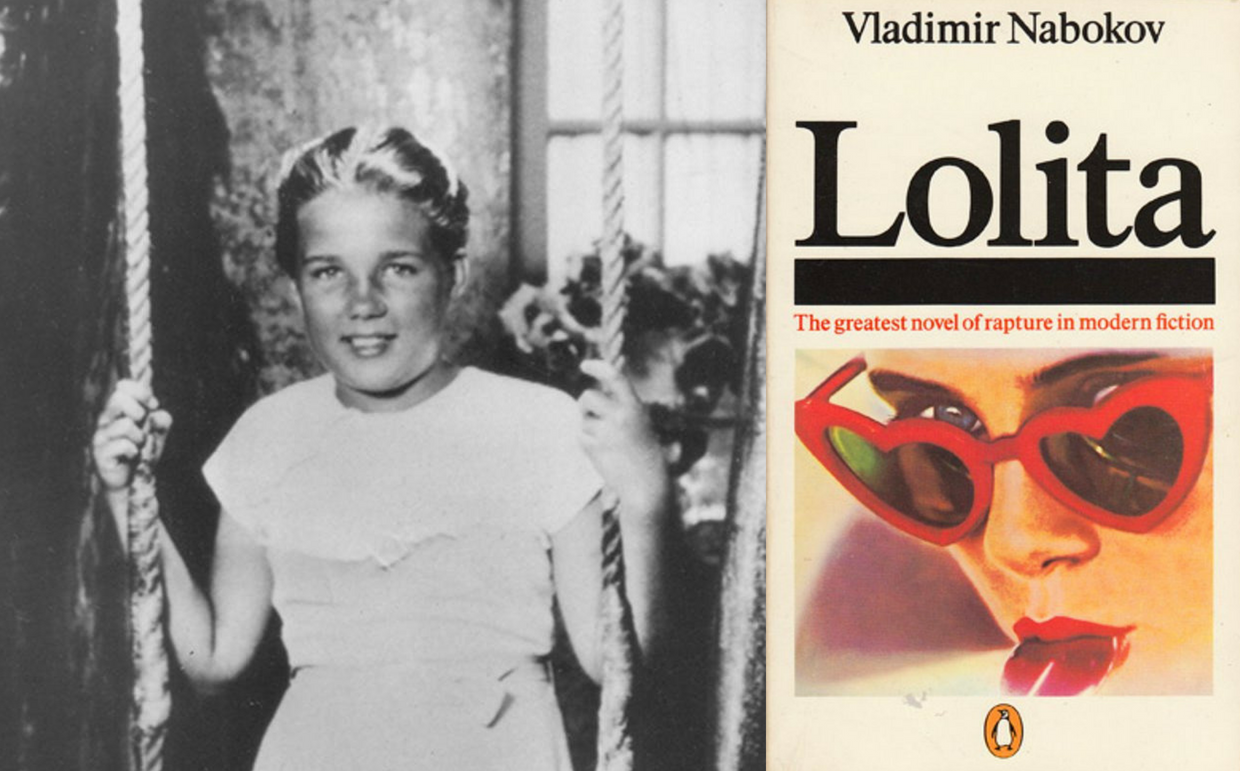
Sally Horner was 11 years old when she was caught stealing a notebook from a corner store in her hometown of Camden, New Jersey, by a man named Frank La Salle, who claimed to be an FBI agent. La Salle said that Sally could avoid being sent to a reform school (or worse) only by staying in his good graces, a threat which turned into a 21-month ordeal of kidnapping and rape as the two drove across the country posing as a father and daughter.

Sarah Weinman’s The Real Lolita considers the real-life kidnapping of Sally Horner as a direct influence on Nabokov’s famous novel of obsessive romance and sexual abuse. Although Sally is mentioned by name in Lolita, Nabokov never acknowledged her case as having any serious bearing on the book, and The Real Lolita makes a compelling argument that this demurral is both specious and, in many ways, tragic.

By coincidence, I published a novel in June 2018 called Invitation to a Bonfire, inspired by Nabokov’s marriage to his wife, Véra, and the complicated power dynamic that existed between them as he rose to become a literary star. As a Nabokov fan and a true-crime obsessive, I was primed to admire The Real Lolita which explores the Nabokov marriage from a related angle, honing in on Vladimir and Véra’s collaboration over the writer’s image. When Weinman’s book crossed my radar, it felt like fate — as if we were already in conversation, without ever having met.


Adrienne Celt: I was intrigued to learn you did graduate work in forensic science before becoming a full-time writer. For those of us who view that discipline through rosy, Dana-Scully-colored glasses, can you talk about what led you down that path, and whether you considered pursuing forensic science as a career? How does it influence your journalism today?

Sarah Weinman: It’s funny, I recently finished working on a feature talking to forensic science experts about the ongoing true crime boom and whether it’s a boon or a hindrance to their work, and it’s been a massive excuse to reconnect with my old graduate school professors, instructors, and classmates. I grew up splitting my time between science at school and music in extracurricular — my older brother was the “writer in the family”, not me — and when I was finishing up undergrad at McGill University, where I majored in biology, I stumbled onto the website for John Jay College’s forensic science program and had that light bulb moment of, “holy shit, there’s a program for this? I can combine my love of crime and science as a profession?” So I applied, got in, moved to New York, the city of my heart always, in August 2001, and with the exception of a two-year stint back in my hometown, have been here ever since.

‘The Real Lolita’ is my version of Sally Horner’s kidnapping, rescue, and tragic demise. But the only one who could really tell her story fully and properly is Sally herself.

I did consider pursuing forensic science as a career. But I realized (though it took me a while and several failed job interviews) that I was more of a macro thinker in a micro world. Forensic biology in particular, but really so many of the fields, are about the day-to-day of laboratory work. And I wasn’t good at it. I wanted to look at real crimes and cases (and, well, drink with crime writers at book events & conventions). I wanted to understand what makes ordinary people snap or why psychopaths kill people for sport. Crime is society, the world, life. And I wanted to understand it all, through reading and writing both fiction and eventually, journalism.

Though the vast majority of my feature stories don’t involve forensic science, what I learned in grad school was indispensable to doing this journalism. Being curious, a natural skeptic, looking for evidence. But it’s also counter to journalism, which prides itself on creating narrative. Science gives you facts even if they don’t fit into a tidy box, much as we desire that they do.

AC: I can see the difficulty of being a macro thinker in a micro world; it’s very clear in The Real Lolita how your work benefits from room to breathe. The story raises questions not just about incident, but ethics, ambition, art, and the murky origins of inspiration. Which leads me to my next question.

You point out a number of times in the book that Nabokov had a lifelong interest in writing about obsessive relationships with prepubescent girls — though you’re careful to categorize it as an aesthetic interest, not a deviant one. Still, that compulsion was clearly important to you as a writer, and I’d love to hear more about how this motivated your work.

SW: Just to be clear here: you mean that it was important to me that I trace the literary progression of Nabokov’s own compulsion?

AC: I do!

SW: Then yes, I felt like I had to spell it out in a way that showed there was a pattern, an unscratchable itch, the main “thing” that he so often wrestled with in fiction in different ways, with varying success or failure, until he finally arrived at Lolita. Part of it was to show the aesthetic aspect, or even the craft part: that authors have a root theme they come back to repeatedly, but not necessarily successfully. The paragraph in The Gift is a clear precursor to Lolita but it isn’t written as well or obviously developed with the same brilliance. Same as The Enchanter, where the bare bones of Lolita are present, but dressed in a way that doesn’t quite work — and Nabokov knew it, otherwise he would have published it during his lifetime (though I am glad it appeared posthumously).

But compulsion as a basis for fiction fascinates me in general, because I believe readers know when a writer is acting from some more primal instinct, no matter how brilliant they are at conveying the complexities of that compulsion. Whether or not Nabokov was acting from some sense of cloaked moral outrage or something more sinister, or something in between, is not knowable, at least based on his archives, his history, his experience. Though I do tend to think it’s the former (and Véra’s diary note about it lends further credence) but since he was all about art for art’s sake, he wasn’t about to admit it!

Also I wanted to ask you a question, Adrienne: did you have a sense, while writing Invitation to a Bonfire, that you were up against the Nabokovian ghosts? I sometimes felt like I was going to be haunted by Vladimir, and especially Véra, for publishing The Real Lolita, but of course it wasn’t about to stop me from writing the book. But VN, that dynamic duo with the same initials, is such a daunting specter — and yet I also feel like the most successful writers to grapple with that specter are women. Not only you, but also Roberta Smoodin with Inventing Ivanov(have you read that novel? It’s so wonderful.)

AC: I love that the compulsion itself is such a driver for you — in a sense, you’ve made Nabokov’s aesthetic obsession into a narrative engine for your story, which is a beautiful and very literary form of cannibalism. (I hope it’s clear I mean that as a compliment.)

In answer to your question: I wrote the first two drafts of Invitation to a Bonfire completely privately — didn’t tell anyone about them, didn’t talk about the story — and I think that helped me largely escape the agony of influence. The only person I was really in conversation with during the process was Nabokov himself (and, of course, Véra), but I think I was talking to my personal Nabokov, the one who is so intimate and familiar to me from reading, rather than the real man. Which allowed me to insert my own sense of authorial control into the process, in place of his — which would likely have been more forbidding. (Also, no, I haven’t yet read Inventing Ivanov, but I very much want to!)

It was fascinating for me to dive into The Real Lolita after working on Invitation, because despite taking inspiration from the power dynamics of the VN/VN marriage, I actually avoided doing research while I was writing, to give myself and my (imaginary) characters a bit more free reign. Your work is so richly researched and meticulous with the truth; I felt like there was an inspirational kinship between the books, if a differently refracted one. So I’m interested to hear what your intellectual process was with The Real Lolita: did you come to it with a solid hypothesis (“Sally Horner was definitely the inspiration for Lolita” for instance, and/or “Nabokov was hiding something”) or did you start with a question?

SW: First I have to single out this idea of “talking to my personal Nabokov” because I think it has to be that — dealing with specters, avatars, biographical representations, but the only person who could truly understand Nabokov was Nabokov — even Véra couldn’t have had access to every personal and intellectual part of it. (If she had, what of poor Irina Guadinini?) And I think it was wise you knew enough to have the seed of your novel, but not too much to let reality seep in.

As for my intellectual process: I started with the parenthetical in Lolita: “Had I done to Dolly what Frank Lasalle [sic], a fifty-year-old mechanic, did to eleven year-old Sally Horner in 1948”? That line blinks like the most garish neon sign, waiting for someone to notice. And while it turned out (as I discovered while I wrote the book) that someone else had noticed, as far back as 1963 — a young jazz writer named Pete Welding, later a record producer of note — it was Alexander Dolinin’s 2005 essay for TLS that made the connection between Sally’s kidnapping and Lolita more, well, explicit.

I figured Nabokov was far too smart to map Lolita exactly to Sally’s plight. He had this compulsion and it was bigger than any one girl, any one case. But I also figured that he knew of Sally Horner before reading of her car accident death in 1952, but didn’t want to make that too obvious, lest prying eyes like Pete Welding ask him about it. (Once Welding, and the NY Post reporter, Al Levin, who read Welding’s piece, got the brush-off by letter from Véra, no one asked for decades!) The clues are there, though the case for how much Nabokov knew about Sally is ultimately a circumstantial one. I would have loved to slam-dunk it beyond the notecard in Nabokov’s archives at the Library of Congress, but I think a part of me would have been disappointed in VN if I had? I peeked plenty behind the curtain, so to speak, but I appreciate there’s enough of a veil left over that keeps him at an opaque distance from my prying eyes.

AC: Let’s talk about Sally Horner. Were you ever tempted to write a more straightforward true crime book about her, and leave Nabokov as more of a footnote? The inspiration you mentioned above suggests not, but I’m curious how you balanced your desire to give Sally’s story a voice with the need to let that story stay entangled in Nabokov’s messy, private set of influences (and his ambition).

SW: I was never tempted, no. Because The Real Lolita grew out of the article I wrote for Hazlitt — also “The Real Lolita”, though while I was writing the book I had a different working title, Among The Wholesome Children, which I think of as the book’s shadow title still! — and the entire point of that piece was to write about “the real life case that inspired Lolita,” so I always thought of Sally’s plight in conversation with the novel. That said, it was crucial that Sally’s voice take prominence, because her voice was erased. I wanted to know what happened to her. I still feel such a sense of tragedy that her life was cut short too soon, that she did not have the chance to grow up. That, in some alternate universe, she would have read a book like Lolita and responded to it, because Sally, as friends and relatives told me, was quite bookish, the type of girl to read contemporary literature of the day (I still wonder if she read The Catcher in the Rye, and if so, what she thought of it!)

Balancing Sally’s story with the Nabokovian influence was not easy, though. I always knew Sally was the book’s spine, and the road trip helped tremendously with the structure. But getting the Nabokov sections to fit, like spokes, took a long time, and several rounds of edits. Once I realized that mirroring where Nabokov was at a particular point in his life to where Sally was in her cross-country nightmare was the best way to go, The Real Lolita did start to come together more fully.

AC: The symmetry really works. But that’s the challenge of non-fiction, isn’t it? To structure a compelling story while faithfully adhering to facts. Interestingly, we live in a time when many writers — Rachel Cusk and Karl Ove Knaussgard, for example — are having their cake and eating it too in this regard, publishing work that takes direct influence from their lives but calling it fiction, and therefore reserving the right to shape it however the story requires. Autofiction is so much at the vanguard of contemporary literature; do you think, in this environment, Nabokov may have been inclined to loosen up a bit, and more freely acknowledge his influences?

SW: What a great question. I suspect he would have, but under serious duress! Though there is a larger consideration of whether Lolita could be published in our current climate, considering all of the recent bad-faith efforts to intuit literal meaning in what are clearly obvious, if tasteless, jokes. And while I hope the answer is still yes, because even after all these years of working on the book I do believe Lolita holds up as brilliant art, some of the parallels between 60 years ago and today are pretty spooky! Mostly in terms of publishers who didn’t have the nerve to be the ones on the hook, legally, if they needed to defend Nabokov or Lolita in court. Do you think Lolita could be published today?

AC: I’m honestly not sure! I do think that our tendency towards moral panic today is different than the American attitudes towards sex (both sensationalist and Puritan) that made it difficult for Nabokov to publish Lolita in his time. Today we’re more focused on callout culture as it relates to one’s private life; so it’s possible that the book would actually face less scrutiny from publishers now, unless there was a plausible accusation to be made against Nabokov the man. (Which, who knows.) I mean, Alissa Nutting’s Tampa was published in the past few years; Amber Tamblyn’s new novel is about sexual violence. I don’t think there’s as much sense these days that a book about prurience will cause prurience, though I grant that both those examples are imperfect analogues, since they’re written by women (which I think makes them easier for a certain part of the culture to accept).

I do wonder if there would be a less voluptuous reception to the novel once it did come out. I mean, can you imagine a Lolita musical being produced today? (Or, for the sake of a clearer parallel: a Tampa musical?)

SW: I’m also thinking of John Colapinto’s most recent novel, Undone, which was consciously trying to update Lolita for the 21st century — and it was turned down by all manner of US publishers, only finding one after being published in Canada, and ultimately did not sell all that well. On the one hand, no one tried to intuit that Colapinto himself was his narrator; on the other, the appetite for reading such a book by a white man was, shall we say, muted? And would likely be even more so post-#MeToo?

Many misread the novel as a love story because the truth is so hard to digest.

Of course, Lolita was the first, and still the best (I love Tampa; I haven’t read Amber Tamblyn’s novel yet, though.) And because the novel is so genius, so singular, no wonder it’s had a hell of a time being adapted into other media, no matter the attempts. I’ve spent the past few weeks looking more deeply at the ill-fated Lolita musical, because I am amazed so many people who should have known better thought it could be a viable Broadway musical. I am amazed Edward Albee thought he could adapt Lolita into a Broadway play (it flopped, of course.) The two films tried, but Kubrick ran into censorship trouble and Adrian Lyne did too, after a fashion. My brother, also a writer, told me his theory of why Lolita is so hard to adapt: because when you strip away Nabokov’s dazzling prose and manipulative obfuscation, what you are left with is a character, in Humbert Humbert, who is a crashing bore. And seeing Dolores Haze on screen is a queasy experience.

No wonder so many who read the novel really misread it as a love story. The truth is so hard to digest, which is why putting Sally Horner at the forefront forces us to reckon with this most unpleasant of truths, the repeated rape of a child.

AC: Yes, Humbert Humbert’s power lies in his ability to charm readers directly; on screen, you can only see him charming other people, and it doesn’t work as well. He has to be able to seduce you, because otherwise you see right away that he’s seducing a child.

I wonder if you could speak to the effort writers are asked to put into cultivating a public persona. It feels gauche and sort of gross to admit to having any sort of personal “brand,” but in a year when you have a book out, you become very aware that the public is going to develop a story about you — and you can either participate in that story, or just let it happen to you. I find myself wondering if I tilt towards being too available; whether it allows people to cherry-pick elements of my personality (for example, being young, being female, being social) that validate a subconscious desire to consider my work less seriously. Nabokov clearly tilted hard towards controlling his personal narrative, and in many ways it worked — but arguable at the cost of Sally Horner’s legacy, among other things.

How do you think about this for yourself? Is there less call for it in journalism and non-fiction, where the text itself at least appears to give readers the authentic access they crave? Or you feel there’s a moral imperative to outline what “kind” of writer you are (sincere, gonzo, distant, emotive, etc.) when other people’s stories are at stake?

SW: Ah, see, I have come to realize, after all these years of doing journalism and criticism and feature writing and publishing reporting, that I am actually a pretty good marketer. I joked to my publisher that I was less concerned with reading reviews on Goodreads and Amazon than I was about making sure the metadata was on the level and that the search engine optimization was 100 percent sound (you may surmise I am a geek, and this is correct.) So by virtue of the niches I’ve occupied — editing anthologies of women crime writers of the mid-20th century, then true crime at the intersection of culture, also usually 20th century — that adds up to a pretty tangible brand. My newsletter’s called The Crime Lady for a reason: it’s the simplest, pithiest phrase to describe what I do all day, and what I plan to do all day for the rest of my working life.

So maybe that’s another way I admire the Nabokovian desire for utter authorial control. I’d also rather people respond to my work, and not to me personally. It’s only recently that I’ve felt confident enough to venture into personal essay territory. I never felt I was much good at it before and hid behind writing about other people. But when it’s done well, the personal essay is one of the most rewarding genres of writing. I just finished Anne Boyer’s new collection, A Handbook of Disappointed Fate, and that sparked my mind in ways I’m still contending with. So too do hybrid-y writers like Maggie Nelson or Nathalie Leger (everybody has to read Suite For Barbara Loden!) or, from earlier decades, Theresa Hak-Kyung Cha or Elizabeth Smart or Elizabeth MacNeill aka Ingeborg Day. I love writers who engage me on every possible level. But I also love a damn good yarn, too.

AC: Finally, I know you talked to Sally’s surviving relatives as part of your research, and I’m curious if you’ve reached out to them again — or plan to — now that it’s finished. Have they read the book?

SW: I’ve stayed in contact with Diana, Sally’s niece, yes. (I spoke with her father, Al Panaro, for the original Hazlitt article, but he passed away in 2016. There may be other relatives who emerge, but I didn’t find them!) She hasn’t read the book as of this writing, but I suspect she may have by the time The Real Lolita publishes. There’s no hard and fast rule about how long to stay in touch with sources after an article or a book publishes — I’ve talked to fellow journalists about this, some do, some do not — but it felt important for me to keep Diana apprised of some of the major publishing developments, since Sally Horner will belong to the world in a bigger, more archetypal way than ever before. But for Diana, Sally was family, the aunt she barely knew (because she died when Diana was only 4 years old), memories informed by photographs and film clips a whole lot more than the actual person. And if I lose track of that, and also a sense of care and duty, I’ll feel like I did a real disservice to everyone.

Obviously, The Real Lolita is my version of Sally Horner’s kidnapping, rescue, and tragic demise. Other people could have, and do, put together their own versions. But the only one who could really tell her story fully and properly is Sally herself. Since she cannot, and never got a chance to, I hope I did the best I could, and that Sally remains in our cultural consciousness from now on, and for good.

Meet Four Women of Color Who Are Revolutionizing Books for Young Readers

Studying the background of writers who write groundbreaking literature is always a fascinating undertaking. What makes underrepresented writers successful? What drives them to persist and ignore the inevitable early rejections, and allows them to tap into new territory and convince new readers to join them?

Full disclosure: when I began this article, I intended to include male writers. But none responded. Each woman, however, responded enthusiastically, despite busy schedules. So this collection of interviews evolved on its own into a concentration of female writers. In any case, I found this to be an empowering experience, as each writer has something different and inspirational to offer—but they also have a lot in common.

What makes underrepresented writers successful? What allows them to tap into new territory and convince new readers to join them?

For instance, each writer is a person of color (POC), either an immigrant or the daughter of an immigrant, and each writer grew up reading books featuring white heroes and heroines. They all read the same classics — A Little Princess, Little Women, The Secret Garden — and a large amount of science fiction and fantasy authors — C.S. Lewis, J.R.R. Tolkein, Madeleine L’engle. For each woman, books functioned as a safety net throughout the difficult years negotiating new cultures, peer groups, and social structures at school and in the neighborhood. They unanimously shared a feeling of displacement in that not one of them had a book to read that mirrored her own experience.

I asked these writers, who are among the first to portray POCs in high profile or bestselling books, about their novels, and about what drove them to keep submitting till they achieved acceptance. Their topics are timely, often developed before the news caught up to their imagination. And in this time of resistance to immigration, think of the loss if we did not have these writers’ books to educate us. Together, the novels comprise a strong list of worthy titles for both young readers and adults. If empathy is taught through reading, the hope is that more will read these necessary stories, gift them to children, donate them to libraries, assign them to students. These voices need to be heard, now more than ever.

Mitali Perkins

Mitali Perkins has an incredibly diverse background. Born in Calcutta, India, she later lived in Ghana, Cameroon, London, New York, and Mexico before settling in California. This award-winning author has written many novels for young readers that reflect her multicultural experiences and feature marginal characters. Her first novel, Rickshaw Girl (chosen by the New York Public Library as one of the top 100 books for children in the past 100 years), broke both gender and culture barriers.

Tara Lynn Masih: Congratulations on the National Book Award nomination (You Bring the Distant Near, 2017). While you’re considered one of our foremost YA authors, I want you to tell me about the journey to publish your first novel, Rickshaw Girl, which came out in 2007. Did you know it would have such a great reception? I see it’s being made into a film directed by Amitabh Chowdhury. That shows how much your character has withstood the test of time. I also love Bamboo People (2010), and how you bring attention to a violent war between two cultures on the border of Burma and Thailand and reveal the one connection all soldiers have. How would you say these two books, or all your books for that matter, tie together?

Mitali Perkins: Half of my books explore the immigrant, or “hyphenated” life, and the other half are fully set overseas with no American characters. Bamboo People and Rickshaw Girl fit in the latter category and tie together in their exploration of justice and poverty.

Rickshaw Girl was rejected by many publishers before it found a home. Some editors thought kids might not want to travel so far without a “bridge” American character. Others felt it wouldn’t find a market here in the States because it was for younger readers but dealt with “big issues” like microcredit for the empowerment of girls. I kept sending it out because I love my little Naima so much and I wanted readers to meet her, too. She is an amalgamation of my grandmothers who both grew up in Bengali villages and the modern-day girls I met while I lived in Bangladesh. Finally, Charlesbridge took a risk and published it.

We adults continually underestimate what kids care about and how they comprehend ‘big issues.’

The book didn’t sell well at first, but bit by bit, Naima found her way to her readers. It’s been translated into eight languages, adapted into a stage play, and will be released as a film in 2019. It’s become my bestselling book. I hear from second graders who are excited to raise money and donate to microcredit nonprofits like Kiva or World Vision.

The moral of the story for me is that we adults continually underestimate what kids care about and how they comprehend “big issues.”

Crystal Chan

Crystal Chan was born in Wisconsin to a Chinese father and a Polish mother. Outside of Chinese food, her father did little to educate Chan in the ways of his ancestors, choosing to assimilate as much as possible (they were the only mixed race couple in Oshkosh), something many immigrants do for safety (my own father did this, as well). It took her years to find herself and take pride in her mixed heritage, and now she is known for her work in educating readers, students, and workplaces on diversity issues. While Bird, her first novel, received much acclaim and was published in nine countries, for her second novel she had to persist through multiple drafts, multiple rejections, and find a new agent.

TLM: I was a huge fan of Bird, your middle-grade novel. It was one of the first novels for young readers I was aware of that had a mixed-race protagonist. Now you are launching your second novel. The main character, Ronney, is male this time, and mixed race once again, but this time you take on mental health issues and gun control. You’re a woman of vision and I know it took time to find a publisher. Now All That I Can Fix is receiving much praise and many starred reviews. As a mixed-race writer as well, I understand why you don’t declare Ronney’s ethnicity, and I applaud you. But tell us what’s behind your decision to keep it from the reader, and if this was an issue for editors or publishers.

Crystal Chan: Ronney’s decision to keep his racial ethnicity from the reader directly stems from his in-your-face personality. He doesn’t do anything he doesn’t want to do, and he’s tired of people’s prying questions into his racial background and the judgments stemming from that. I’ve had a number of readers comments on how odd it was not to have “a box” to assign him to, and at least a couple of people have said that because of the lack of specificity, in their imagination they started to think of him as racially white.

In the editorial process, I didn’t get any pushback from my editor — she is also a POC and actually liked that part of Ronney’s character — although my first agent (who is white) did express reservation about having him be so in-your-face about refusing to specify his race. So, gratefully, I haven’t gotten too much pushback — not yet, anyway! And honestly, if I do, I think it will be a good opportunity to open up a conversation about why measuring the “pieces of the racial pie” for mixed-race individuals is so important for monoracial people in the first place. While I think that identifying your racial background is important — for both the individual and the community — sometimes clinging to the “pieces” can do more harm than good.

Why? Because then you minimize your actual personhood. Don’t get me wrong, as a race activist, I will be the first to say: Race is important, and exceptionally important. But it’s not the only thing. And something that gets lost is the fact that POCs have to navigate all of the other hardships in life that white people do — hardships of loss, families breaking up, mental illness — on top of managing racism and what that does to our psyche, body, and spirit. This is no small task. And so, for All That I Can Fix, I wanted to highlight that yes, Ronney is mixed race, but he has problems just like you and me, just like the white family down the street.

POCs have to navigate all of the other hardships in life that white people do on top of managing racism.

I’m very passionate about highlighting this fact, that POCs struggle with racism on a daily basis — but then they also have to deal with everything else. Ronney does so with a sense of (dark) humor: That is his survival mechanism, how to get by from day to day. All humans have survival mechanisms, right?

Jennifer Zeynab Joukhada

Jennifer Zeynab Joukhada’s recently released novel, The Map of Salt and Stars, unlike the other books on this list, was not written explicitly for young readers. But the timely topic, the fact that this is one of the first novels released in the U.S. to feature Syrian refugees, and because the 12-year-old protagonist’s voice is accessible to teen readers, makes this novel a must on this list. Joukhada was born in Manhattan to a Muslim father from Syria, and a Christian mother. When the Syrian Civil War began in 2011, it had a huge impact on her, as she worried about her family overseas. She began writing this novel in 2015 in an attempt to understand the plight of refugees, and “how they can redefine home.”

TLM: In true Arab fashion, you deftly weave two stories together in The Map of Salt and Stars. One storyline follows al-Idrisi, a real mapmaker responsible for creating one of the world’s most accurate maps during the twelfth century. You said you explored this because this piece of history isn’t something that’s taught in this country. (Many contributions from people of color have gotten lost over time and to the predominant white culture in the U.S.) Your second and main storyline follows Nour, a young girl born in America, who ends up back in her parents’ ancestral country of Syria, fleeing for her life after war breaks out. In addition to the attention you place on the Syrian crisis, still ongoing, please put this story in context with the current climate in regard to refugees coming over the Mexican border and the administration’s recent treatment, specifically how their experience relates to your novel and to all refugees universally.

Jennifer Zeynab Joukhada: It would be impossible for me to talk about how my novel relates to the experiences of refugees in a universal way, because every person’s story is unique. But in writing a book about maps and mapmaking, I also wanted to talk about borders and how they are differentially enforced. Many nations attempt to restrict the movement of people from certain groups (especially Black, brown, poor, and/or Muslim folks), particularly if they are migrants or refugees, while others enjoy much greater freedom of movement. We are seeing examples of this globally, particularly in the U.S. with the Muslim Ban and with the detainment centers in which migrants crossing the U.S.–Mexico border are being held. With The Map of Salt and Stars, I tried to explore the emotional realities of the trauma of displacement, particularly on children and families, and how the violent enforcement of borders affects those families as they search for safety. I think it’s important to be aware of those realities as we try to imagine a different, less violent world in which refugees and migrants are treated with respect and dignity.

In writing about the violence that is happening in Syria and my community’s grief, I did what I felt was my responsibility not only as a Syrian American but also as a human being — I refused to look away from that pain. I had to carve out space in myself to hold the things I was writing about, no matter how difficult. With this novel, I wanted to make space for both the grief that many people in the Syrian diaspora are feeling right now as well as the potential for hope and healing, if only by keeping our heritage and our loved ones alive by telling our stories. I especially wanted to remind other people of Syrian descent, other Arab Americans, and other Muslim Americans that our voices matter, even when we are so often silenced. I think it’s important that we keep fighting to speak our truths.

Cindy Pon

Cindy Pon was born in Taipei, Taiwan, and immigrated to California when she was 6 years old. As she learned English, words and reading became her passion and she wrote poetry and short stories. When she married and stayed home to take care of her own children, she finally had the time and desire to tackle a novel. Her debut, Silver Phoenix: Beyond the Kingdom of Xia, was named one of the Top Ten Fantasy and Science Fiction Books for Youth in 2009 by ALA’s Booklist. That year, her novel was the only Asian-inspired YA fantasy released by a major publisher.

Pon describes ancient China as “more foreign and seen as less commercial than Mars or the moon.” She has worked hard to make her female heroines step out of the traditional servant role that literature traditionally placed them in, and her latest novel depicts a variety of ethnic characters. She is on the advisory board for We Need Diverse Books.

TLM: In 2008, you were told early on by an editor that “Asian fantasy doesn’t sell,” and you had to contact 121 agents before being accepted. Four weeks later your novel went to auction. Your most recent one, Want, your first sci-fi novel, is nominated for an Andre Norton Award. That’s a big honor. Its plot eerily parallels our current political times — your futuristic Taipei is suffering from the effects of global warming and pollution (the sky is no longer blue), and only the wealthy have access to the healthcare and protection necessary to survive. Your heroes are eco warriors. And an Asian male headshot graces the cover. Please tell me a bit about your journey as an author from your first novel to Want, and if you’ve seen any changes as a result of your groundbreaking books. And do let us know how this fits in with your work as cofounder of Diversity in YA.

Cindy Pon: Thank you, Tara! So while Want is my best-known title five books in, I had a really hard time selling my second duology (Serpentine + Sacrifice). I feel very fortunate the books found a home with Month9Books, but they are probably my least-known titles. So in the conventional sense of the word, I might not be seen as having a booming upward trajectory if you’re only going by sales numbers.

Even when I was told to stop writing what I loved, I kept doing it.

Even when I was told to stop writing what I loved, I kept doing it. I had a meeting with my agent in 2011 after my first duology tanked, and I thought it was a break-up meal. He told me to look at the market, look at what sells. I replied I knew exactly what sells in the current YA market (and it was NOT Asian fantasy), but I was going to keep writing what I wrote. And he was with me or he wasn’t. He is still with me, ten years later. I didn’t see a book with an Asian girl on the cover until my thirties, and that was Lisa Yee’s Millicent Min, Girl Genius (2003). I continue to write for teen Cindy, who read voraciously, but never got to see herself in a book.

I feel that there has been much more dialogue and awareness in publishing inclusive stories, especially speculative fiction (which is what I write). I’ve seen tremendous changes from when I first debuted nearly a decade ago. It wasn’t until recently that I’ve seen publishers put money behind YA Asian fantasies. I believe Traci Chee and Roshani Chokshi were the first Asian fantasy authors who got a strong lead title push with their debuts and hit the NYT list. That’s only within the last few years that we have seen this kind of investment in YA books with Asian protagonists. It was unheard of when Silver Phoenix debuted as the first Asian YA fantasy back in 2009.

It’s very exciting, but there is still work to be done. Malinda Lo and I started Diversity in YA back in 2011, but are on quasi-hiatus now due to our own very busy personal and writerly lives. Also, we feel that We Need Diverse Books has really launched the conversation to the forefront of publishing and is doing such tremendous and important work. It’s incredible to see!

About the Interviewer

Tara Lynn Masih grew up on Long Island. None of the books she read as a youth represented her experiences as someone of mixed descent. My Real Name Is Hanna, her debut novel from Mandel Vilar Press, seeks to draw attention to the roots of antisemitism and racism, to the fall-out of war, and to the tragedies that befall us when diverse communities don’t stand together. Hanna was recognized as a Goodreads’ Best Book of the Month for Sept. 2018 in YA, and received a Skipping Stones Honor Award in the category of multiculturalism.

The Amazing True Adventures of Macbeth and His Best Friend, the Cereal Guy

1.

The box of Raisin Nut Bran in front of me says, “GENERAL MILLS IS ON A JOURNEY” and so, of course, I wonder where he is going.

In smaller type, the box continues, “to always make our cereals better,” which does not seem very Homeric, though still admirable, as is. Likewise, the quest for environmentally sustainable packaging. The “General Mills” in question is a company: the company. Still, I like to imagine General Mills as an old soldier: balding like me, behind enemy lines, no troops to command and no horse to ride, but free. On a journey.

I have been teaching my ninth graders Macbeth, a play that begins with a general on a journey home.

If General Mills and Macbeth had journeyed together, they would have been less lonely.

If General Mills and Macbeth had journeyed together, they would have been less lonely.

2.

MACBETH
Tonight we hold a solemn supper, sir,
And I’ll request your presence.

GENERAL MILLS
Macbeth, you old son of a bitch. I’ll be there.

MACBETH
Let every man be master of his time
Till seven at night. To make society
The sweeter welcome, we will keep ourself
Till suppertime alone.

GENERAL MILLS
The hell you say.
Macbeth, it’s me!
I’m here, as they say, to see you.
Speak to me, who neither beg nor fear
Your favors or your hate.

Let’s walk.

MACBETH
Come into my office. [indicates the empty moors]

The two friends walk on the heath together. General Mills is childless like Macbeth, but because they have each other there is no tangled loneliness. Macbeth is not trapped with his wife’s poisonous thoughts, and General Mills pauses in his journey. Banquo and Fleance ride by on horseback.

GENERAL MILLS
I like him. A good man and brother-in-arms. His son can ride, too.

MACBETH
Fly, good Fleance, fly, fly, fly!

GENERAL MILLS
Ah, do you remember when you saved my ass in the smoke when multiplying villainies did swarm upon me? You were a monster out there. You carved a path to that slave Macdonwald and unseamed him from the nave to th’ chops. Do you remember when you fixed his head upon our battlements?

MACBETH
I did have a good day.

GENERAL MILLS
You know it. You surely did. And there are other things, which we will not speak of — horrors of war, the hurly burly, that could cause a man to break and perhaps kill some houseguests or his family — we call that PTSD, but we don’t need to talk. My former speeches have but hit your thoughts, which can interpret further. You just know that I’m here, brother; you can always find me. I don’t need or want anything from you now. The war is over. We’re just friends: side-by-side with Scotland at our feet.

MACBETH
It’s nice to just be appreciated, you know.

GENERAL MILLS
It is. It surely is.

MACBETH
Sometimes I feel everyone wants something from me. Like it’s impossible to make everyone happy. The king just gave my wife a huge diamond and she complained about it.

GENERAL MILLS
Where our desire is got without content, ’tis safer to be that which we destroy.
<shudders>
There is one thing that would make me happy, but it’s not in your power to grant it.

MACBETH
Really?

GENERAL MILLS
Yes. I’m on a journey. I’ll tell you at dinner.

3.

I told another teacher that if I were King of Scotland, I would ride my horse across the heath and gallop in the rain until I was alone , then stop at country houses where the windows were lit by warm firelight. My friend is British and said I sounded as mad as King George, whoever that is.

It’s not madness to want comfort from the rain.

My friend told her students that the nurse was the character to watch in Romeo and Juliet because the nurse is the only one who speaks to everyone else. The nurse gives advice to the parents and the kids. She trades dirty jokes with Mercutio. She weeps for Tybalt. In a sense, the nurse is Shakespeare.

I think it’s kind of crazy to think that Romeo and Juliet is about the nurse.

My friend thinks I’m crazy to teach Macbeth instead.

I once read that Macbeth is best performed around a theme of childlessness, but what Shakespeare isn’t? Romeo and Juliet is about childlessness. Juliet’s nurse — like Lady Macbeth, like Shakespeare himself — has lost a child. Romeo’s mother commits suicide when her son is banished. Friar Lawrence, who has no children of his own, gives advice that is as practical as an iron lung. The two families collapse when they lose their children. There’s nothing new in that.

I tell my friend: Macbeth is about childlessness, of course, but more than that, it’s a tragedy of friendlessness. Instead of the nurse, who talks to everybody, we have the night porter, who talks to himself.

Macbeth is about childlessness, of course, but more than that, it’s a tragedy of friendlessness.

4.

When we’d been married a little over a year, my wife and I decided to have a baby. Only we weren’t able to have a baby for some reason, and we gradually came to find the act of taking our clothes off together somewhat humiliating. We decided not to pursue fertility treatment and went to the Bahamas instead. This was the last time I ever saw my wife wear a bikini in public, and it was only because there was zero chance we would see anyone we knew. I admit it made me happy to see her sitting at a poolside bar so nearly naked. We went for a walk around a small island and I felt a bit like Adam in the garden. This was around the time we decided to adopt a child if we could. We felt good about that.

A walk down the cereal aisle at any grocery will show you that most breakfast cereals are made for children.

5.

General Mills gives Macbeth a number of choice cereals for the banquet and these are served in golden bowls with fresh milk from highland cattle. General Mills is disturbed by his host’s face and the clammy sweat that has filled Macbeth’s hair.

GENERAL MILLS
You look like you’ve seen a ghost.

MACBETH
Did you see him too?

GENERAL MILLS
Yes. Of course.

MACBETH
So am I not mad?
Much afeared I saw
A dagger of the mind, a false creation
Proceeding from my heat-oppressèd brain.

GENERAL MILLS
Hell, no. That son of a bitch is named Booberry.
He’s always stirring things up.
And his friend Count Chocula, too.
Ghosts and supernatural creatures?
Not to be trusted.
You listen to me.
You listen to me.

MACBETH
I will.
Tell me, what would make you happy, my friend?
Tell me.

6.

General Mills is not a great name for a company. It makes me think of a giant factory full of spinning looms or maybe grinding stones. What is a mill, after all? What does a miller do?

I remember the Miller’s Tale on the road to Canterbury: “Water! Water!” and a broken arm. A carpenter wakes from a dream and thinks the world is flooded. My friend Jon told me that the night he broke up with a woman I knew, she went home and cried herself to sleep. She accidentally left the bathroom faucet on because she was drunk. By morning, the floor was flooded. She called him because when she woke, she thought she had filled her house with her tears. “She was a lot like you,” Jon said.

7.

MALCOLM
Let us seek out some desolate shade and there
Weep our sad bosoms empty.

MACDUFF
Let us rather
Hold fast the mortal sword and, like good men,
Bestride our downfall’n birthdom. Each new morn
New widows howl, new orphans cry, new sorrows
Strike heaven on the face, that it resounds
As if it felt with Scotland, and yelled out
Like syllable of dolor.

—Macbeth 4.3.1–6

One time in Timbuktu, I traded my watch for a Tuareg sword, a long knife full of grooves. On the street the next day, a man I’d never met asked me how to set the watch, which apparently he’d bought that morning. I apologized because I knew the mechanism had sand inside and couldn’t be adjusted. The metaphor was laughable. “We can’t change time,” I said. I tapped the crystal, and he made a face as though he’d like to stab me.

My son was fourteen months old when he was put into my arms. His down fall’n birthdom. We said hello through tears, which I hope struck heaven’s face.

It’s wrong to think we own anything in this world or can change the course of time.

Someday we’ll all meet again and weep our sad bosoms empty.

8.

My friend Jon married an Asian-American woman named Cindy, and they had two boys who are half-Chinese and so they look a lot like me. I was the only half-Chinese person at my school when I was their age, but they are growing up in Shanghai, not Indiana, so their experience may be different. My son looks like a young Muhammad Ali. He’s so beautiful. I never saw him coming. I wasted so many mornings thinking I would never know this love. I could have filled my house with tears.

If you think you can see the future, you live like Macbeth.

You make mistakes.

9.

MACBETH
What would make you happy, my friend?
Let us speak
Our free hearts each to other.

GENERAL MILLS
I have a dream.

MACBETH
Ah, wicked dreams abuse
The curtained sleep.

GENERAL MILLS
I have a dream, you might even say it’s a quest.
Or a journey I’ve been on my whole life.

MACBETH
So tell me.

GENERAL MILLS
It involves sustainable packaging.
It’s all these cardboard boxes.
I need a renewable source of wood pulp.

MACBETH
It seems to me that Great Birnam Wood is just sitting there.
Let’s cut it down.
We can do that. I’m Thane of Cawdor.

GENERAL MILLS
You mean? I can I build my box factory there?

MACBETH
You’re not bringing all that wood here to Dunsinane.
Think of the carbon footprint!
Just do it on site.

GENERAL MILLS
My friend, you’ve saved me.

MACBETH
That’s what friends are for.

10.

The most read thing I’ve ever written was an essay that appeared in the “Modern Love” column of The New York Times. I wrote that my son, only five at the time, and I often made breakfast for ourselves before my wife woke up and we had a habit of opening new boxes of cereal. My wife likes to go through one box of cereal at a time to make sure it doesn’t go stale, but my son loves that moment of opening a new box. Five years later, he and I still get in trouble about this. His mother asleep in the next room, my son quietly shakes a fresh box of cereal at me. This is what we do, he whispers: Remember?

Sometimes I need someone to remind me how to be happy.

12.

Art thou afeard
To be the same in thine own act and valor
As thou art in desire?

—Macbeth 1.7.43–45

So much of life is like coming home from school with an undelivered valentine in your pocket and that is probably how it should be. We can’t act on everything we feel. Once I threatened a man in front of his little girl. She held onto his leg as I put the palm of my hand on his cheek. I twitched with the urge to put a fist through his eye. His forehead was damp with sweat. A stranger threatened to call the police. A friend pulled me away by the shoulder.

So, yes. I am often afeard to join my acts and desires.

That’s good.

13.

I packed the long knife away and gave it to a friend, which was probably a bad idea. Unless you’re the Lady of the Lake, it’s bad luck to give knives as gifts. Macbeth followed a knife into the dark and never came out again.

My friend has the same name as me. He is Chris, too. When we were teenagers playing Dungeons and Dragons, we used to hope that we would die on the same day, in battle side-by-side. That seemed like the best kind of life — every moment up to the end with a best friend to share it. We were Macbeth and Banquo at the start of the play. We had not met witches yet. We had not yet been tried by childlessness or a war with time itself. My friend used to carry that Tuareg sword around in his car. “Just in case,” he said. But no murderers ever attacked his torch in the dark.

He is the only one of my childhood friends who never had children. In middle age, I think sometimes he feels like Banquo’s ghost, everyone with a place at the banquet but him. Chris is tender with my son in a way that breaks my heart.

14.

Chris has been my friend for almost my entire life. Knowing him has been good for my marriage, but sometimes as an example of what I have feared most in myself. A terrible loneliness. On the other hand, one October my son and I carved pumpkins with Chris at a picnic table and my wife took a picture of us: three men, laughing. One of us was black and nine years old. I was balding, my huge head dense with worry, and Chris with the smile I’ve known since third grade, all of us suddenly wrinkled with happiness, shoulder on shoulder on shoulder and giving the camera four thumbs up. My son, in the center, used both hands, while Chris and I held him. And in all my doubt and fear, all my Macbeth, my ambitions — I know that I am not alone. I have someone to talk to and he will help me through any darkness that comes to claim me, whether it is an ownerless knife or half-forgotten dreams.

Macbeth should have been so lucky.

I have someone to talk to and he will help me through any darkness that comes to claim me, whether it is an ownerless knife or half-forgotten dreams.

15.

Certainly the tragic signifier for both plays, Romeo and Juliet and Macbeth, is not the deaths of the title characters. The climax is Act 3 in each play, when the main characters’ best friends — Mercutio, Banquo — are murdered. There is no recovering from that. Sometimes a husband or wife becomes a best friend. Why not?

What have I learned from Shakespeare?

Being married doesn’t mean we no longer need friends.

Just the opposite.

16.

If good, why do I yield to that suggestion,
Whose horrid image doth unfix my hair
And make my seated heart knock at my ribs
Against the use of nature?

—Macbeth l.3.134–136

I pray you, remember the porter.

—Macbeth 2.3.21

My wife worries more than me. When she does, I help her wash her hands. She is my best friend. My dearest chuck.

I want to tell the friend I teach with: if Romeo and Juliet is about the nurse, then Macbeth is about the porter. He’s a drunk, stumbling into furniture, a fool full of knock-knock jokes. He asks questions that no one is going to answer. Like the nurse, he is low comedy in a play full of high drama. He is working in the middle of the night. He might be in hell for all he knows, but he is still joking around. I want to tell my friend: if the nurse is Shakespeare, then the porter is me. My friend, can you hear the knocking? The idiot at the door is me.

Sometimes I hear voices that are not there. I stay up late at my desk, which is an empty tabletop like a windless heath.

My mind is made of prose like a cheese is made of milk. I lose my place continually. I am sure the air is made of poems. The knocking I hear is my seated heart. I must answer it.

If I did not have friends, I would open that door all night. My wife calls me to bed. It’s for my own good.

I ride my bike to school in the dark. I see my co-worker keyboarding and eating toast. Seven thirty in the morning and she is already working. When she notices me, she smiles. She tells me I’m mad as King George. She has no idea how mad I am. Or would be. But friendship holds me back.

If Romeo and Juliet is about the nurse, then Macbeth is about the porter. Like the nurse, he is low comedy in a play full of high drama.

17.

But cruel are the times when we are traitors
And do not know ourselves; when we hold rumor
From what we fear, yet know not what we fear,
But float upon a wild and violent sea

—Macbeth 4.2.21–25

Cruel are the times when we do not know ourselves, but then again, do we ever? Our blood is full of salt and makes a wild and violent sea. It fills us and we float in it. Our dreams are incarnadine.

18.

MACBETH
King Duncan himself hath said:
This castle hath a pleasant seat. The air
Nimbly and sweetly recommends itself
Unto our gentle senses.

GENERAL MILLS
I’m just saying. You shouldn’t get too comfortable.
That castle is fine for the birds,
I can see some in your roof there,
but your throne is next to a peat fire, for Christ’s sake!
You can do better than that.

MACBETH
We will proceed no further in this business.

GENERAL MILLS
I’m just saying: life is a journey.
Consider the sea.
My friend Crunch here
has captained many a vessel
and if vessels can indeed
be made of blood
then he has sailed the seas incarnadine.

A worthy soldier!

MACBETH
But yet I’ll make assurance double sure
And take a bond of fate.

Is this him?

GENERAL MILLS
Indeed it is.

Captain, how now, what news?

CRUNCH
I am drained as dry as hay.

GENERAL MILLS
What ails thee?

CRUNCH
Sleep shall neither night nor day
Hang upon my penthouse lid.
God, I can’t sleep!

MACBETH
What is sleep? Macbeth hath murdered sleep.

CRUNCH
What?

GENERAL MILLS
As I said: you have the world in common.

CRUNCH
Thane of Cawdor, the general
hath on your account poured his spirits in mine ear.
I would like to invite you
to join me on a voyage.

MACBETH
Where?

CRUNCH
To a land abloom in Crunchberries
where elephants eat peanut butter for breakfast
and the corn is sweet as candy.

MACBETH
Is it far?

CRUNCH
Weary sev’n nights, nine times nine,
Have I dwindled, peaked, and pined.

GENERAL MILLS
As far as your heart, my friend.
Life is a journey
and we must be warriors if we hope to make the trip.

9 Tell-All Memoirs by the Children of Celebrities

Everyone screws up their kids a little bit, but no one seems to do it better than the rich and famous. Like the rest of us, many children of the stars grow up just wanting their family to be “normal.” And also like the rest of us, they often find out that no such thing exists. Money can buy a lot of things, but it can’t buy you a do-over on childhood. So might as well make lemonade (juicy tell-all memoirs) out of lemons (traumatic and difficult childhood events), right?

If we’re being honest, we might say we’re attracted to this specific genre of celebrity memoirs because they promise an insider scoop on the people with the highest potential for schadenfreude satisfaction: the rich and famous. We read them less for their literary value. But we’ve collected an assortment to challenge that. Here are nine memoirs written by the descendants of the rich and famous. Some are sweet, some are bitter, but all have some juicy stories about dealing with the reality that even when the world might think your dad is the coolest person ever, you have every right to tell the world he sucks sometimes, too.

Small Fry by Lisa Brennan-Jobs

Did your father tell you you had “no marketable skills” when you were thinking about what you wanted to be when you grow up? Lisa Brennan-Jobs did. Maybe her father, Steve Jobs, forgot the time he thought her name was “marketable” enough for the eponymous Lisa Apple computer.

In Small Fry Lisa Brennan-Jobs details her life growing up in between a mother who drew stars on her birth certificate and a problematic father who cried to her on his deathbed, “If only we’d had a manual. If only I’d been wiser. But you were not to blame I want you to know, you were not to blame for any of it.” If you ever thought you might have been a more well-adjusted person with massive inherited wealth, this is a good reminder that sometimes it comes with massive inherited neurosis.

I’m Supposed to Protect You From All This by Nadja Spiegelman

Nadja Spiegelman comes from artsy stock. Her father, Art Spiegelman, is the Pulitzer-prize winning author of Maus (which is actually dedicated to Nadja) and her mother is Françoise Mouly, art editor of The New Yorker. Spiegelman’s memoir is about her relationship with her mother and her grandmother, and all three women’s relationship to her grandfather. And while there are plenty of horrors to go around — her mother, for instance, explained to Nadja that the reason she had a second child was to “break the bond” with Nadja — Spiegelman’s memoir is not some kind of cathartic hit piece. As Spiegelman explained in an interview on NPR: “My mother was such a ferociously powerful mother — and I don’t, at this point, having learned so much about her life and what she’s been through, I don’t feel the need for her to apologize or a need to forgive her either. I just feel this very profound understanding.”

Home Before Dark by Susan Cheever

John Cheever had somewhat specific hopes for his daughter: “She’ll have long blonde hair and drive a sports car and we’ll call her Susie.” Naturally, Susan Cheever grew up into a person who was none of those things, down to the color of her hair. Cheever reflects on her father’s rages, his bisexuality, his alcoholism, the adoration she wanted but never received and the love she had to work to give him. The book is a biographical memoir Cheever writes in an attempt to understand her father’s life and his role in hers. The New Criterion called it “a journalistic autopsy”and a “blatant exploitation of literature,” while the New York Times called it “intimate, deeply felt, and often harrowing.”

There is No F*cking Secret by Kelly Osbourne

From her longtime friendship with Joan Rivers to the personally damaging time her family spent on the MTV series The Osbournes to her own struggle with addiction, Osbourne writes an on-brand book about how hard work and the right attitude have gotten her where she is today (ancestral fame and MTV aside).

Out Came the Sun by Mariel Hemingway

Ernest Hemingway’s ghost won’t die. Despite being born just after Hemingway committed suicide in 1961, Mariel Hemingway’s life was haunted by her grandfather’s fame — and the consequences it had for her family. “The Hemingway Curse,” as they affectionately referred to it, meant alcoholism, depression, and suicide were everywhere in the Hemingway clan. The book details her life growing up in rural Idaho, her parents’ alcoholism, her sister’s depression and suicide, and Mariel’s experience filming Manhattan and dealing with Woody Allen.

Searching for Mercy Street: My Journey Back to My Mother by Linda Gray Sexton

Linda Gray Sexton is a novelist in her own right, and the executor of her mother’s estate. In Searching for Mercy Street, Linda Gray Sexton contextualizes the facts of Anne Sexton’s life with the consequences they had on Linda Gray’s life. She recalls tapes from Anne’s therapy sessions, where Anne Sexton relays to her therapist: “I want [my daughter] to go away, and she knows it.” But then there were also the times Anne Sexton would go into a rage if she sensed her daughter might favor a boyfriend, a friend, or a therapist over her mother. There were also the times Anne Sexton demanded they do a kind of “role play” where Linda Gray was the parent and Anne the child. Linda Gray explains that the only way she knew how to get closer to her mother was to get closer to words, and so she did.

Yossarian Slept Here by Erica Heller

One of the downsides of having a famous storyteller for a father might include his total disinterest in the story of your life. In Erica Heller’s memoir, she writes about her father Joseph Heller’s proclivity for cruelty. Rumor has it Erica picked up some of Joseph Heller’s manuscript pages once, and thought she saw her likeness there. When she asked her father about it, he said “What makes you think you’re interesting enough to write about?”

Wishful Drinking by Carrie Fisher

When part of the definition of your success includes becoming your own action figure by nineteen and you’re the daughter of Eddie Reynolds and Debbie Fisher, it’s your societal obligation to write a memoir. There’s a lot to cover for the “Hollywood inbred” daughter: from the time Elizabeth Taylor broke up her family, to her own marriage and divorce to Paul Simon, to her experience with electroshock therapy. Read this one to miss Carrie Fisher more than you already do.

Mommie Dearest by Christina Crawford

The cruelest, juiciest celebrity kid memoir is also the one that defined the genre. Before Christina Crawford published her memoir in 1978 — within a year of her mother’s death — the world knew the relationship between mother and daughter was not the greatest. (I mean, how would you feel if your 60-year-old mother stole your role on your soap opera while you were on a medical leave?) It’s hard to choose which horrors to highlight in summary. You might already know that Joan once apparently woke Christina Crawford in the middle of the night, dragged her around by her hair, and beat her for using wire hangers to hang her clothes. But the book also details more subtle psychological tortures: for instance, one Christmas, the children were photographed in front of piles of presents and then told they could pick only one. The rest were re-gifted, but the children still had to write thank you notes for every single gift. While the book is out of print, and Christina’s siblings contested her version of their childhood, the stories live on in the movie adapted from the memoir in the 1981 film.

Why Aren’t Women Allowed to be Angry?

The moment I became a true New Yorker was when I let my tears flow freely on the subway during rush hour. It was after 7 pm and I was commuting home to Brooklyn from my teaching job in the South Bronx over 14 hours after I left stepped foot out of my apartment that day. I was 23 years old and even though I was supposed to help kids and families involved in the foster care system process and overcome their trauma, I had few people to help me process my own trauma. I can’t remember what caused me to cry, but I remember taking off my glasses and pretending to rub sleep out of my eyes. I remember praying to the universe that I wouldn’t start crying and thinking about how much I hated to cry. And finally, I remember how the tears seemed like hot acid eating away at my face and how most people didn’t notice my tears or decided not to acknowledge me. One person handed me a pack of tissues.

From that moment forward, I was more open to the idea of crying in public and have done so more often than I can count. It wasn’t until I turned 30 and started writing poetry, that I started to think about these tears in a different way. Before, if you were to ask me why I was crying, I would probably tell you that I was sad or tired. It turns out, more often than not, I was tired and angry and specifically, tired of being angry. If I cry, people are more likely to respond to me with kindness, or at least, to respond at all. They are less likely to fire me, deny me a raise, ignore my police report, forget to write down my illness symptoms, or threaten me with physical violence. Even if I say “I am angry at you” in my calmest and softest voice, I am still likely to be met with fear, anger, and resentment. I am in the process of opening up to my own anger instead of going to extreme lengths to avoid or hold the anger of others. This work carries a lot of social and financial risks that have thankfully been outweighed by my ability to heal physical and emotional wounds.


Purchase the book

In Rage Becomes Her, Soraya Chemaly distills years of award-winning work in writing and activism into a single profound volume on women’s rage and the complex systems of social control that silence the rage of women and weaponize the rage of men. She is the Director of the Women’s Media Center Speech Project and organizer of the Safety and Free Speech Coalition, both of which aim to curb online abuse, increase media and tech diversity, and expand women’s freedom of expression. Chemaly is a prolific writer whose articles can be found in TIME, the Guardian, the Nation, Huffington Post and the Atlantic.

During a quick break from watching Aretha Franklin’s Homegoing service, Soraya and I chatted via phone about the erasure of our rage, building school communities that raise anger competent kids, and surviving online and offline systems that profit from our abuse.

Candace Williams: You’re very prolific now, and it seems like you might have had to go through a process to realize that you should be writing in this way. How did that process go and kind of how did you come to writing as your method of strategizing anger?

Soraya Chemaly: It wasn’t self-conscious at all. It was really in retrospect, that I realized I was sublimating. I think a lot of sublimation actually happens that way. For example, I made a Spotify playlist. I chose music that I was listening to and I was really conscious of picking music where women artists were focused on this idea of rage. It struck me that in the creation of music, which is one of the most expressive forms of women’s rage, the rage of women is unacknowledged. You can have a guy like Bono talk about how, kind of hilariously, there’s no place for young white boys’ rage in rock anymore. Nobody really thinks, “Oh my God, we haven’t really explored what it means for women to be expressing this feeling so powerfully and consistently in their music,” right? I’ll bet you a lot of those women didn’t set out to say, “I’m gonna do this.” They probably just started writing a song.

That’s more or less how I started writing. I had very strong feelings and thoughts, and was also working, and I had three children, and a family, and a husband, and I thought, “What can I do?” Mainly, my thought was, “Why aren’t people responding to these injustices?” We’re all busy. We’re all tired. We’re all, for the most part, regardless of what people may say or think, people trying to feed their families, or get to work, or do whatever it is we have to accomplish in a day with constrained circumstances. I thought, “Well, I can’t quit my job. So, what can I do? I can write. If I can write, then maybe that will help other people think about these problems in a different way.” That’s how I started. Pretty soon afterwards, I realized what was really resonating with people in my writing, was my unabashed anger. Many people said that to me. I wasn’t necessarily thinking my writing as really angry writing, it’s just that so much writing is still, I think, denuded of emotion, because you’re supposed to be objective, and you’re not supposed to have a perspective, which is bullshit of course, right?

CW: Totally. I’m thinking about your whole playlist idea and how that sparked your writing. The first time I saw a black woman in the arts get angry in public was when I saw Morgan Parker perform the poem “99 Problems” at a bookstore in my mid-20s. I didn’t start writing poetry and expressing anger that way until I turned 30. Her reading was the first time I had ever heard a black woman who also had to contend with suburban white culture growing up, really express a anger in her writing. I think that was a big turning point for me. I’d like to know, who are the artists on this Spotify playlist, and are there other artists, poets, fiction writers, and non-fiction writers that you turn to, when you want to hear more anger from this perspective.

SC: The music that I ended up compiling was mostly seeking for sense of joy. That’s what I was looking for because the acknowledgement of the anger that I felt, was incredibly validating and it allowed me to stop dissociating myself from myself and myself from problems in the world. The acknowledgment of my own anger and other women’s anger was a joyous thing.

You know, there’s this incredible freedom in saying certain things out loud, and then to say them out loud with the assertion that other people should listen and also do something about it, is remarkable for some of us. I mean, I don’t know about you, I grew up with none of this freedom, right? Like, none of it. It was mainly, “You’d be prettier if you smiled.” Right?

There’s this incredible freedom in saying certain things out loud, and then to say them out loud with the assertion that other people should listen and also do something about it, is remarkable.

CW: It’s interesting to think about. I think my mother is ahead of her time. She was born in Philly and she has always told me to speak my mind. When I was a child, she talked very openly with me about racism in the workplace. I do feel like how I expressed my anger was more muted than the men in my life because they are allowed to express their anger.

I really appreciated the idea that we should be looking to music, writing, and art to help us sort through issues of anger. I really appreciated the quotations that start each chapter of your book.

SC: Have you ever heard Martha Wainwright’s song to and about her father called “Bloody Motherfucking Asshole”?

CW: Wow. No. I’m adding it to a playlist now.

SC: The first time I heard it, I just sat here and laughed like that’s just not the kind of song they play in school.

CW: Yeah, I would get in trouble for playing that at school.

SC: Right? But, it’s interesting to think about because it’s not really considered a protest song, even though it’s squarely in the era of all of these male poet protest songs. From an analytical perspective, all those dudes were writing their protest poetry, and strumming their protest guitars, and here’s this woman, who said these things, and no one knows this song, or why she wrote it, or anything about it.

CW: Yeah, this reminds me of Janelle Monae, who you mentioned a few times in the book. I really feel like you were right when you said people are just starting to realize her brilliance, even though she’s been brilliant for about, you know, almost 10 years now.

SC: It took so long.

CW: She’s not a cis white man so people dismissed her message. People will listen to lesser songs and lesser artists, who are very misogynistic, and maybe confirm more of their ideas about the world.

SC: Right. Do you remember her first videos?

CW: Yes, I totally do.

SC: And, I totally do, right? And, I just remember loving ArchAndroid so much. At that point, my daughters were really young. I have three daughters who are 18, 18, and 21 now. I remember being so grateful, that they could see that.

CW: It’s interesting how, even if you express rage, as an artist, depending on your identity, and who is listening to you, it’s actually maybe seen and talked about in much different ways.

SC: You know, it’s interesting that you say that, because I cut 40,000 words out of this book. I wrote a lot about music and art and that all sort of came out of the final version. So, what was interesting to me about what you just said, was that at the same time, there was this whole genre of sad white girl music that became extremely popular like Lana Del Rey. I just can’t get past the fact that we’re not really talking about the anger, we’re talking about the sadness, which is often the way anger gets described and attributed to women, particularly white women.

It would be interesting to go back and look at that particular intersection of gender and race and why it is so important that these white women are called “sad,” and not “angry.” It plays into that vulnerability, and the need to be protected, and all of that dynamic gets fed into the, “Oh, she’s just sad.”

Literature Needs Angry Female Heroes

CW: Yeah. And, I’m thinking about Lemonade. You quote some of the poetry spoken in the video. It was interesting to hear how people processed Lemonade online. In real time we all watched it, and people were just shocked at the levels rage. Yes, there’s a baseball bat, but a lot of it is actually asking questions of power like “Do you see the same thing I’m seeing?” and “Why are you acting this way?” And, then, “How do I let you back into my life?”

That was just really amazing for me to see, and to realize that yes, even Beyoncé has rage. When I saw her rage, it made me think about the rest of her career a lot differently. It made me start to wonder about power, and how power operates in her life, even though she is the total queen right now, you know?

SC: Right, because it is operating in her life. Do you know of the artist Pipilotti Rist? Pipilotti Rist was one of the first video artists in the late 80s, early 90s. In the song, “Hold Up,” where Beyonce is swinging the bat, I think everybody is interpreting it as her personal anger. She’s breaking these cars. The “Hold Up” video is squarely in the legacy of a particular video that Pipilotti Rist did, in which she’s walking down the street with a beautiful, flowy dress, and she’s holding a giant flower. Then, she starts destroying the cars. It’s a really amazing video. When you see it in a museum, it’s two videos that wrap around a corner. So, it feels, literally, like she’s walking around the building and breaking cars. The interesting thing to me about Beyonce’s anger, and the way it’s interpreted in that video, is that it’s intensely personal and intimate feeling, because of all the speculation about her rage. Yet, Pipilotti Rist is seen differently. We have different assumptions about flowers, and then here are these cars, the prototypical masculine machine. She uses this feminine thing to destroy this industry.

SC: How old are your students?

CW: I teach 6th graders, so they are 11, turning 12 in middle school. Before, I taught Kindergarten — 5th grade at a school for kids in foster care. We had an approach that centered social-emotional learning and there was a lot of anger and trauma in that space. We talked a lot about race, trauma, and poverty. As I read your book and thought back to those days, I realized we also talked to the kids about gender quite a bit. The kids always asked me my gender, because I’m genderqueer and wore ties back then, and I was just like “ Well, what do you think my gender is and why do you think that?” and we would chat with the idea that the kids and adults had make space for everybody and their gender. All of this was going on but I never really addressed the gender dimensions of anger. Those dimensions were operating all the time.

I really liked the moments in your book where you talking about schooling. You talk about your daughter’s preschool. When you imagine a school or a classroom community that is actually doing the work of building anger competence, what do you imagine happening?

SC: This may sound backwards but I actually imagine a space where boys could be encouraged to be emotive. Before we engage girls in talking about a single negative emotion, or the shame that comes with it when they’re older, we absolutely have to focus on allowing boys more freedom and flexibility. Ideally, I think that would all come together, and I think that good teachers that are trying hard at that very young age if they’re aware of these things at the same time. Good teachers are allowing boys to talk about feeling sad, for example, or express their love in a way that respects other people’s boundaries.

I genuinely think that even the simple things with little children, like saying “use your words”, has a lot of power and I just think that it requires training to dismantle stereotypes and bias and to really understand it. We are a deeply religious country, and that kind of infuses our ideas about gender, but also it’s hard to look at someone who’s saying “Well, I just try to teach little kids how to be real ladies and gentleman“, because they don’t necessarily understand what’s wrong with that framework. How would they? No one’s taught or talked to them about that. They don’t understand how racialized that idea is and a lot of adults have no experience with inclusion or diversity in their personal lives. They walk into a classroom, look at a room full of kids, and say “Well, I don’t see race, I’m gonna be the same with everyone.” Which of course is bullshit.

When I talk to high schoolers, I’m like “listen, all these adults around are going to talk about mentoring and having to find someone but you have have to do the work of mentoring backwards. You are having experiences and you are having much more difficult conversation than a lot of your parents or the adults who coach you have.” Don’t you think so?

CW: Oh, I agree with that. I teach at a school that has Kindergarten — 12th grade. When I go the high school, and I see what the feminism and toxic masculinity clubs have done, or even in the middle school, what our Gender-Sexuality Alliance, our Black Student Union, and our Asian-Pacific Islander group have done, it’s groundbreaking. If these kids were to do the same assemblies and conversations at a college or a grad school it would still be groundbreaking, even though this is kid-directed stuff.

K-12 students are innovative and interesting. They are still young and willing to have feelings about things. They aren’t so much about their ego all the time. When I bring them poems that are written by people who are alive right now and even poems from the middle ages, we have the best conversations about poems. It’s so much better than talking to adults.

They’re integrating and processing all of this information and what parents might say to me, at all schools I taught, a parent might say “Oh, Candace you can’t talk about XYZ, they don’t even think about that yet, or they don’t even worry about that yet. ” And I say, “Well, if you pull out the last five things they watched on Netflix, or the video games that they play, those pieces of media are actually addressing these issues already, so they’re already thinking about it.”

SC: Yes. They’re sophisticated in their thinking. One of the only things that makes me hopeful, is seeing some of these kids who are willing to engage in very difficult conversations and to do it in such a conscious manner, not to let the conversation just happen to them.

There are so many schools that are unlike the one you just described. It’s just painful. I speak at schools. Generally speaking, a high school that asks me to speak is doing it because they’re already in a place where they’re like “Yeah, this person would resonate with our students.” I think it’s a lot harder to do that in a place where they’re worried about boards or parents that are just too deeply entrenched in conservative thinking. It’s very hard for these kids.

I’ve been working with two different school networks to create symposia. What we’ve done now is have one day or two day sessions where you invite neighboring schools to send an administrator, a coach, a counselor, and three students. And then you spend the whole day talking about issues like these. Many schools are interested in talking about race, or maybe gender, but they are not ready to put the two together yet but the students are. The students are like, “No, we have to do this. We have to talk about it this way.” And so that’s also pretty helpful. But what we were trying to do, we were trying to create a replicable model, so that schools like the one just described would kinda have a viral effect in the broader community, because you can say “We want to invite these ten schools within the 20 mile radius, we want to show them what we’re doing, and we want to be about to talk to them about what they might be able to do”. But after three years, what we’ve kinda concluded is that we need to do the exact same thing, and invite parents, because the parents are the ones who end up being the biggest obstacles.

The acknowledgement of the anger that I felt was incredibly validating and it allowed me to stop dissociating myself from myself and myself from problems in the world.

CW: That’s just really tough. You definitely have to have a community of people, which actually it makes me think about, I think I read all throughout, especially the last chapter or so, we have to trust other women, especially our mothers and our sisters and aunts. After reading this in your book, I’ve thinking about how I can trust more women in my life. I think the hardest thing for me is actually that I experience a lot of racism at the hands of white women white women in many areas of my life. Also, I have privilege in a lot of areas. So, there might be times where I engage in behavior that actually hurts women with less privilege than I have. With this complicated layering of intersectional identities and privileges, what are the steps that you recommend to building communities with other women? Have you seen cases where women with different levels of privilege have been able to heal and work together?

SC: So, they’re are a couple of things that really come to mind. I know some women who are in their 80’s and 90’s now, and they have been doing this work, like when I feel tired, I stop and I think about the women that are literally twice my age and how they continue. I watch a lot of the criticism of the racial justice and social justice in feminist movements of the 60‘s and 70’s, because it’s easy to criticize. There were many flaws and horrible white supremacist tendencies in feminism for sure. There are women in that cohort that have been life long friends and allies. They quietly get the work done and they are tied at the hip. They are best friends for life. I think about how we don’t ever hear about this.

I’m brown. My family is Arab and Bahamian. Sometimes I look South American because who’s gonna say I look like a “Haitian Bahamian American Lebanese gal”? Nobody. People with good intentions (I guess), ask me “Are you a woman of color?”, and I’m like well, “Do you need me to be a woman of color today? Can we talk about why that’s important to you today?” I am the shade I am, and that confuses people sometimes but let’s talk about why that’s confusing. Typically, it is because white people need me on their panels. That’s the conversation. I guess I’m not really answering your question. I think I have seen some fantastic examples of women who have managed to have incredibly difficult conversations and continue working together with real awareness of what that means. I will say, unfortunately, I still feel that that’s an exception rather than the rule.

CW: I’m thinking about Combahee River Collective, and people like Pat Parker and Audre Lorde. In examples I can think of, they tend to share some core identities. Pat Parker and Audre Lorde were both black queer socialists trying to survive cancer. They actually mention white women in their letters to each other. The women white women they mention are often queer and not talking about microaggressions or structural problems. For me, I think about my rage, and trying to figure out who I want to work with and who I wanna rebuild trust with, privilege is so tricky. I wish I could trust more people but then I think about the history and the present and it definitely becomes a very tricky question.

SC: I think it’s really tricky. I have hesitated to collaborate. I think it’s just in my own nature. I don’t like institutions. I just don’t. I’m probably too impatient. But I have in the last six years, understood that to accomplish a particular goal, I need to engage with institutions and I need to work with people in institutions. And in doing that, I’ve encountered exactly what you just said. It’s difficult to feel that you can trust people and if you take the risk there is a pretty good chance that you will get hurt taking that risk.

CW: Or fired. Or not promoted.

SC: Right. And so, I think that, maybe it’s menopause and I’m just really gleefully liberated by whatever happens, but I feel pretty strongly that one of the things that people who work with me appreciate is that I can be brutally honest without being hurtful. I think that being able to talk to people about really difficult subjects takes a lot of energy and time that we don’t necessarily have.

Before, you asked about women and artists I admire. I keep going back to Adrienne Rich. It gives me a particular joy to think of people who managed to transcend the ugliness and be creative and powerful with their words. And she to me is one of those people, as well as Claudia Rankine. She’s Jamaican and I am always looking for people with ties to the islands.

I think I probably spent a good 15 years just studying, socially paying attention to what was happening because it was very different from where I grew up. It was sharply different in terms of race. I come from a black majority country where independence had just happened. My classrooms were incredibly diverse places. When I came to the United States, I just couldn’t get over how segregated people were. If you live on an island it’s all just right here in your face. There’s a horrible racism, there’s terrible colonial hierarchy, but no one’s pretending that it’s not there. You have to deal with it in a different way. The number one thing people do, is to acknowledge it. And here, I got here and no one’s acknowledging any of it. No one talks about any of it.

So that’s totally thrown me for a loop. People are really segregated and it’s as though we’re just supposed to pretend that that’s not happening.

CW: I think the silence lends itself to more rage. There’s doublespeak. You can talk to girls about how they’re in these oppressive environments all the time, but if they say anything about it, they get in trouble and are subjected to violence. I think that’s why it’s infuriating to live here and have to deal with things. Most of the conversations are just about even acknowledging that we have race. Saying “I am black, and somebody else is white, and that that actually influences how people experience the world” is controversial and groundbreaking. We have far to go.

SC: There is far to go. I met someone recently who has just read the book and they were really so focused on what I think of as the “lean in model” which is saying “If I can just be better. If I can change, things will get better.” It’s neoliberal clap chat. She was really tied to this idea that it was all on her. It was almost as though acknowledging that the social construction of emotion was as important or more important than her behavior was overwhelming to her. So when I said to her, “Well, you and your brother, for example, might have the exact same response to a problem and if you display the exact same anger, the people in the room are highly unlikely to respond to you in the same way. If everyone’s more or less of the same ethnicity in your family, then maybe that reaction can be distilled to gender. The minute you go into school, or the minute you go into work, or the minute you go into a political environment, that becomes immensely complex. You just have to be able to acknowledge the double standard and the degree to which the double standard is a mechanism for public control. People cling to the idea of meritocracy and people have got to get over it.

CW: Yes, that’s a dangerous idea. I’m wondering how this applies to online spaces. I’d love to hear your perspective on this. Since tech companies are monetizing behaviors that are actually are dangerous for a lot of women, how do you think tech companies can move forward, and do you think they actually will change their models at all?

SC: I’m kind of disgusted. I had 18 months of being harassed and then talking to other women and writers and then really understanding what was going on. I openly confronted these companies in a series of campaigns over the course of four years. I have worked closely with Facebook, Google, Twitter, and various think tank groups about this issue. I think there are two things they need to do structurally. One, is they need to stop with the pipeline argument because it’s bullshit. They need to diversify at every stage and every point of the chain of decision making, product development, and support. They need to be overt about their decisions and they also need to dissect the industry. Right now, the model is that a bunch of guys build products with poor risk assessment, bad stuff happens, and then there’s all of the clean up and care work that has to happen in the security, privacy, legal, community management, customer support realms. The model itself is seriously gendered. You have all the hyper-masculine engineering and STEM spaces and then you have all the care, clean up, emotional labor spaces. That that super-structure is deeply damaging our ability to change the way products are built and used. This is the only institutional response that is going to make sense.

It’s really that the entire business model is fueled by the capitalization of this abuse. The extremist content. The hateful content. Twitter makes money either way. They’re content neutral. It doesn’t matter. I remember when Ghostbusters came out and Leslie Jones was being harassed. I remember thinking about how they’ve got high levels of engagement around this incredibly abusive hashtag. It would have been really easy for them to turn her harassment into a moment and for that moment might be called ‘Twitter responds to racist harassment” but all of a sudden the harassment becomes a product that can be sponsored.

CW: Definitely. It’s hard because you also talk about how women, especially young girls, need to use social media to find other feminists who they would have no way of seeing or even knowing they exist.

SC: Yeah. I think, what I keep telling young girls who ask me “Should I just not do this?” I say, “No. You’re doing this already offline.” It’s just become second nature if you are a girl aware of the world around you, that you learn to assess your environment, and you do that no matter what. If you understand the environment, then you can cultivate your own resilience. Resilience doesn’t just happen. People actually need to develop it through their upbringing or work on themselves. Like your mom, it sounds like your mom enabled you to develop resilience, right?

CW: Yes.

SC: My mom enabled me to develop resilience. That’s a gift, honestly. A lot of people don’t have it. But it is possible to develop it. So if I talk to girls, I talk to them about that because the most important thing you can do is understand how to use network effects in your favor. Network effects are potentially going to be used against women and you need to understand that. But you do have the ability to think about how they work in your favor.

The World Needs More Single Mom Poems

PUZZLE

We’re looking for the cloud
with a little bit of town on it,

Vera and I, with three hundred pieces
spread out on the table before us.

Last night we connected the edges,
then fell asleep like we used to —

when my youngest was a baby —
curled up, side by side, on the bed.

The slot beneath my neck and chin fit
perfect above the tab of her silky brown head,

as though we’d been contour cut,
then put back together by God.

It’s morning and our Cheerios
go soggy in the bowl we share,

Vera and I, in our task of attaching
fantastic fuchsia blooms above

a white unicorn that gallops through
the foreground. Soon, her dad

will pick her up and I’ll keep
sorting out the pieces

of this puzzle, not quite done.

SITCOM THERAPY

An entire season in the single episode
of my latest depression — I’m trying, once
again to escape my non-stop crying.
Trade in tears for a pint of frozen
custard. Well, two. But
I paced myself: each spoonful
deliberate, each bite of butter pecan
inserted like a jagged rock
then pulled out — sculpted down

to half its size, rounded smooth
by the roof of my mouth and the spoon’s
slick path, sliding across the hill
of my tongue. If I may eat ice cream
this slowly, surely I can halt my thoughts

of him, and where we went
wrong. The worst is recalling
how, even after the sex
went sour and my lips ached from missing
the kisses he dodged, his mouth
had not yet gone completely silent.

He still made me laugh. Sublime,
that laughter, like water
after one of our four-mile runs
with baby joggers, up and down
Tally Trail. I kept hoping we’d make it,

make life fit the big picture
we spoke of when we first got to town.
Even after his tenure and lectures
on art history consumed all desire
to speak at home, to me, he still mustered
punchlines that made my guts ache

from feeling how funny he was,
that guy I married, the father of my kids.
Now my stomach grips a chilly, churning
knot of milk, thick with sugar and things
on the label I have trouble
pronouncing, without
my middle-aged glasses.

In my teens, the calories made me
stick my finger down my throat so fast,
after a binge like this, my purge
tasted just like it did going down.
Now, thoughts of puking

make me wish I were a big, fat
mama bird in a nest, feeding
her young — like the ones I hear
beyond the window, above
the sitcom’s canned applause.
Credits fade to a glowing
bruise, close to dawn.

“Puzzle” and “Sitcom Therapy” are published here by permission of the author, Ramona McCallum. Copyright © Ramona McCallum 2018. All rights reserved.

‘Black Liberation Means the Freedom to Figure Things Out For Ourselves’

The title of Wayétu Moore’s debut She Would Be King (Graywolf Press) alone incites some expectations. Expectations Moore delivers in this fantastical, historical tale weaving in the realities, both then and now, and the power dynamics of how societies are salvaged and how they fall. What struck me about She Would Be King, from the cover to the premise and ultimately the execution, is that it’s a novel that provokes a necessary conversation while at the same time being relatable to me as a Black woman invested in our history as well as our failings.

Moore and I had a lively conversation on so many of the parallels lushly illustrated and carefully balanced in her debut novel—from the moment we are introduced to Gbessa’s ability after a perilous snakebite to the battles in Monrovia. Even within a historical context of this world, be it in Liberia or Virginia in the 1800s, everything affecting us today is as a result of and indicative of what has transpired as nations were colonized, communities were brutalized, and women, repeatedly, upheld roles as life givers and caregivers. The inclusion of these ties may not have been intentional in She Would Be King, yet there’s no way it could be overlooked.

Jennifer Baker: Because yours is a historical novel there are certain rules to it. So, how do you create characters in this world while balancing a fantastical premise and at the same balancing the rules?

Wayétu Moore: Liberian history is so closely linked to American history and it’s something I knew I wanted to explore. I think being a Black woman in America and having emigrated as a young girl there are some things that have happened to me over the course of my life and things that are said to me even now — things that are done that do sometimes feel surreal — and I feel like some other marginalized groups could possibly relate to that. But I know that for me my experience here, navigating the world in my body, there is a recognition that “Hey, this isn’t how things are supposed to be.” It almost feels as though I live in another reality. At times Black womanhood feels fantastic. [It] feels like you’re living this other world that isn’t based in reality because you are having to juggle so much. You are having to negotiate so much just to survive.

And so, I think that then when I choose to navigate and negotiate that reality on the page then sure it’s going to have fantastic elements. In addition to that I would say being from a West African background, specifically Vai, it was very rare that I heard a story that didn’t include someone flying or shapeshifting or disappearing. That was just a part of what I understood as the architecture of the story. So when I decided that I wanted to become a writer, magical realism or fantasy was something I naturally was drawn to because that was my introduction to storytelling.

Being from a West African background, it was very rare that I heard a story that didn’t include someone flying or shapeshifting or disappearing. That was just a part of what I understood as the architecture of the story.

JB: You bring a character like Gbessa onto the scene and she is one of several, but she really is that tether from beginning to end. And the book is called She Would Be King, so I was thinking “Gbessa’s gonna be running stuff by the end of this.” But that’s not necessarily what takes place.

WM: The title serves as commentary of that strange relationship to a woman’s power and how it functions in male dominated/male-centric context. She wrestles with her power throughout the book. And that’s not so different from a woman now. Even in the most progressive societies women who are considered all-powerful are still wrestling with their power in a patriarchal, male-dominated context. So yes, it would be wonderful where a woman is omnipotent and she is the one who is sort of dominating throughout the book, but the reality of the world we live and certainly the reality of the world that Gbessa lived in was she would have to navigate in the context she was born in and the circumstances that she was born in. So she wrestles with this throughout the book and she always has what it takes to save herself. But she’s in constant negotiation with her power because of the presence and the absence of the men around her.

JB: Mothers are so key in this book. That’s something I think about a lot of in my own work: the influence of Black women, of mothers. Women’s roles and strength and agency and the power dynamics are given prominence in She Would Be King. Let’s discuss how that’s utilized even through the relationships with men and a world dictated by men. Those bonds are so important.

WM: I wanted to be true to the theme of Black womanhood. So I knew I wanted each of the gifts to be intentionally in conversation with motherhood. I wanted the characters, specifically the male characters, to always be in conversation with Black womanhood as a source for their gift. With June Dey, for instance, his birth mother ends up playing the role as the Mother for the entire story. She’s really all of their mothers. Charlotte, her ubiquity pays homage to Black female identity: she’s both everywhere and nowhere at all. I wanted the story to be told through the voice of an ancestor and I knew that I wanted that ancestor to be a woman that I could relate to, and someone who Gbessa could relate to. And someone who could show that there is empathy in the coupled asymmetry and splendor that is being a Black woman in today’s world. I feel like the “She” [in the title] is not exclusively Gbessa it is more the women who forged the women who are telling the story that is very much a story about Black womanhood. So that’s why even for the male characters I wanted their source to be Black women, a mother, and I wanted those mothers to somehow live on throughout the story.

I wanted the characters, specifically the male characters, to always be in conversation with Black womanhood as a source for their gift.

JB: Which is also at the helm of the patriarchy.

WM: Yes, so the “She” is technically Gbessa, but one of the reasons I said, “Oh, you’re my reader” in talking about mothers and Black womanhood is that it’s exactly right. This is what this book is about.

JB: Yes, because I was thinking, “Wow, [the women] are doing all the work here.” This was the ongoing sacrifice that these characters make. And when they are absent it is felt quite heavily, but most especially by Norman and June Dey. This is not to say female relationships aren’t important to Gbessa as well because they are so key in her being acclimated in the new society.

WM: That’s exactly right.

JB: Do you think that this was naturally inherent in the work?

(Liberia highlighted on a map at the edge of Western Africa)

WM: Honestly I can’t say that those parallels were intentional. I knew I wanted to write about Liberian history and I think what it became as I wrote is a story that explored the breakthrough of Black womanhood. It was a story that was very much about the role women play in the salvation of their people. Norman Aragon and June Dey were vehicles for that. But I can’t say that I sat down had an internal dialogue “Oh I definitely want this person’s power to be this and that person’s power to be that.”

JB: I’ve been talking to a lot of people about masks. What we present versus who we are. Or what we present versus what we think we’re supposed to be doing. And each of them — Gbessa, Norman, June Dey — are trying to weave their way within their society. Norman’s trying to be accepted but he is very light-skinned, so he represents the oppressor. June Dey doesn’t even know the truth of his upbringing, he comes from an othered parenting. And then Gbessa, from the get-go she’s dubbed a “witch.” Each of them does not only have abilities, it’s the circumstances of their having to negotiate being in a society where they don’t really belong even when they technically do.

WM: I think that was more of a decision that speaks to my understanding the psychology of who I would consider “good superheroes.” It has to be married to some idea of isolation or early trauma in order for them to be incentivized to use their powers to help. Because I feel like if they didn’t have early traumas or issues with isolation then they very well could have used their powers for other means. And that’s more or less a choice I made based on my understanding of how human beings work and how the human spirit works sometimes. You generally find people who went through more when they were younger end up looking at the world from a more gracious, more compassionate lens. Some of the traumas that you read for each of the characters were intentional in building their characters for what they became later on in the book, and building their desires for their country. To want to build a country and protect people because they themselves had not really experienced this. So wanting to belong was something all of them shared.

JB: And maybe they would’ve lacked some empathy as well.

WM: Yeah.

Austin Channing Brown Wants to Save Black Women Some Emotional Labor

JB: Maybe. I don’t know. It makes me think, again, there are so many layers to this book, which is why I enjoyed reading it and I sped through it, which I think writers hate hearing.

WM: I read that as perhaps you enjoyed what you were reading and I do like the fact that the book is accessible in that way. There are obviously many characters and many storylines, but the goal was not to write something that was hard to read. I might’ve felt some kind of way if [people said] “Oh my gosh, this is kind of hard.” I say that to say I don’t take that personally at all.

JB: So, when submitting a book like this where people not of this background will read it, how has reception been? You know how some don’t want to talk about what goes on “in the house” with other people. They may feel like “I don’t want anyone to know that there’s intraracial strife, we don’t want people to know that there are intraracial dynamics like this.” And I think, well we need to talk about it.

WM: There’s this trope of marketing anything that’s Liberian that is focused on the question of how former slaves and free blacks from America could then become to the ones who were in Africa treating the blacks there poorly. I had some back and forth after initially writing the book, and I was like “No, this is not what the story is about.” It’s sort of like that’s where people want to go and, unfortunately, I think it alleviates some guilt. “Well okay they went back to the continent and they did the same thing then we’re not that bad.” But when they went back they obviously weren’t doing the same thing. In one of the historical texts that I read, for instance, say one person is Americo-Liberian and another is Indigenous. The Americo-Liberian was paid 50 cents a day and the indigenous was being paid 25. There was a system of social stratification that was established, but I think the dynamic between local groups and Americo-Liberian settlers is greatly exaggerated. To even to compare the two is an indignity and it’s really gross. I was very adamant about staying away from that storyline as a selling point. And in this case it wasn’t about keeping things “in the house.” It’s about making sure that a place with so little representation in literature isn’t misrepresented.

I think that when people of color, distinctly Black people, come together and there is an identifiable enemy that’s encroaching upon their freedom they will unify.

I think that when people of color, distinctly Black people, come together and there is an identifiable enemy that’s encroaching upon their freedom they will unify. And that was I think the larger story that I am trying to tell. Yes, we’re still trying to make sense of the dynamics of this new republic, but right now we know that our freedom to make sense of it is being encroached upon. We want to have the freedom to figure out our history for ourselves. That’s what Black liberation is: not Black perfection, but we want the freedom to figure stuff out for ourselves. And when that was threatened we see that the characters in the story from these different cultures do eventually come together. It is a pan-Africanist manifesto. I haven’t told the whole story. I think I’m just beginning to unpack the nuances of intraracial dynamics. And I’m excited about where this is going to go.

Why Every Writer Should Have a Dog

The writerly affinity for cats is well-documented. Hemingway was a famous collector of cats, as was Mark Twain. Raymond Chandler, Yeats, Dickens, Burroughs — the list of cat lovers goes on and on. I suppose this is because we writers see something of ourselves in cats. The cat is introverted, solitary, intelligent, carefully withholding, as any good writer should be. Dogs, on the other hand, are unwriterly. They are neither clever nor sly. They are rough and dirty. They withhold nothing. As Karl Ove Knausgaard wondered recently in The New Yorker, “Has a single good writer ever owned a dog?” He goes on to describe his own failed attempt at dog ownership, saying that his own mutt was “infinitely kind but infinitely stupid,” needy, solipsistic, and that he didn’t write a single line of literary prose in the time the dog was in his possession.

In other words, it seems to Knausgaard that dogs are simply too intrusive for writers who need solitude and quiet. Indeed, it’s hard to imagine, say, Virginia Woolf allowing a big whiny drooler to bark and scratch at the door of that room of her own. Knausgaard’s distaste for dogs is part and parcel of a literary assumption that has prevailed ever since Cicero posited in the first century BC that all one needed to write was a library and a garden: writers must avoid the distractions of public life to write good literature. And what are dogs, if not distraction?

Writers must avoid the distractions of public life to write good literature. And what are dogs, if not distraction?

But perhaps dogs are just the thing we writers need, at least those of us who complain that we struggle with plot. I live with an English bulldog and a pit bull, both of whom are walking, drooling plot machines. They shit on the floor, they bark at the mailman, they fight each other for food and toys, they run into the street — it’s a miracle they even survive, given their proclivity to put themselves in danger at the slightest provocation. But they don’t just survive, for they are intensely desirous. They are hungry for touch, for freedom, for squeaky balls, for meat. They want so much. And with all that wanting, it’s no surprise that these barking, slobbering, desperate creatures produce conflict at least as well as they produce shit.

So how can dogs help us produce conflict? How can we writers think like dogs? At the heart of this inquiry is the question I’ve been trying to answer for as long as I’ve been trying to be a writer, and it has to do with plot. How does one stop writing descriptions or journal entries and start writing narrative, a bonafide story, with real people doing real things? Put simply: How can I make shit happen on the page?

Right now, in the coffee shop where I am writing, there is a flyer for a lost dog:

I’M LOST !!! HAVE YOU SEEN ME? I’M TUCKER.

I didn’t want a bath, so I ran away without my collar near 26th and Grant. I’m all white, fluffy, and about 20 lbs. My daddy is very worried about me. Please call him. Steve at 541–216–0917

This flyer, which I chanced upon while walking to the bathroom, contains one of the most evocative sentences I’ve read all year. “I didn’t want a bath, so I ran away without my collar near 26th and Grant.” I’m transported to a backyard, because where else could this intended bath take place that would allow the rascal Tucker to escape? In my head, it’s one of those strangely charged moments, a Friday afternoon perhaps, getting ready for a dinner party, squeezing in a last minute chore while the wife hollers her impatience out the window. You’re due at 6:30 and it’s already nearly six. We’re going to be late, she says, and you still have to shave. These are new friends you’re seeing tonight, evidently, because she is worried enough about impressing them that you must present a clean face. You sense the ridiculousness in this, this need to make people like her. It’s one of the things you’ve always resented about your wife, but you’ve somehow never told her this. Through four and a half years of marriage, you’ve kept quiet, let her go about this business of acting out her insecurities in public, never once broaching the subject of this enormous flaw in her personality. You suppose you want to support her gregariousness, but the truth is that sometimes she belittles you in front of these new friends. You’re mulling all this over when you see Tucker going over the fence. You weren’t aware that Tucker could leap like this, over an eight-foot fence. In fact, his leaping seems supernatural. There’s no possible way that Tucker can make that jump. However, the first thought that goes through your head is not whether you are hallucinating, or that you should go after Tucker, but rather how you will explain this supernatural phenomenon to your wife, who will surely not believe you. She has, of course, intuited that you have no desire to go to this dinner party at 6:30, and she will only see Tucker’s disappearance as a product of your unwillingness to help her present her best self to her new friends. This prompts you to wonder: What exactly is her “best self”? And why do these other people get it instead of you?

Or perhaps that’s not what happens at all. Maybe you’re giving Tucker the bath inside, in the tub. Maybe you’re not Steve, the beleaguered husband with the superhero dog, but Stevie, a newly single woman, new to this town. Tucker jumps out of the bathwater and runs out of the house through the front door. You’ve left the front door open for some reason. But what reason could that be? Why the hell would anyone leave the front door open? You close and lock the door and make to call the one neighbor you’ve met since you’ve been living here, an old woman named Grace who lives next door, whose begonias were the subject of your only conversation earlier that week. You found her polite, if a little uninviting. No, that’s just how people talk, isn’t it? You were probably just being sensitive. You’re going for the phone, going to ask Grace to help you look for Tucker. And that’s when you hear a strange noise in the kitchen, followed by a familiar voice behind you, and the chilling effect this voice produces in you precedes your cognition that he has followed you here, has found you all the way out here in this little town. You regret locking that door.

Here I’ve tried to reproduce the way I think when my writing is working best. There’s an inciting moment (seeing a flyer for a lost dog), a question (how did Tucker escape?) and finally an image created to fill the hole in my knowledge. But that new image produces another question. This time the question has nothing to do with the missing dog; rather, it’s about something I myself have created (in this case, the marriage between the imagined Steve and his supposed wife). So then I answer that question. This answer poses another question, and the process repeats itself.

At each step, there’s a question with infinite possible answers, but I have to commit to only one of the myriad possibilities and follow it with the dogged certainty that the outcome will be a good one. As I answer each new question, I commit to a new reality. This commitment is essential. Without this commitment, nothing happens. Without a commitment, I will weigh potential courses of action, dabbling with each, never making a real choice. I mean a real choice. There is no going back from a real choice, there is only forward, and the way forward is instinctual.

Books Where the Dog Dies, Rewritten So the Dog Doesn’t Die

But don’t forget how this all started: I was in a coffee shop, trying to live seriously — with goals and plans and a sense of importance, trying to live my life in the image of what I consider good and cool and honest and aesthetically appealing — when a flyer caught my eye and my mind wandered far away from all that. The loose dog was a distraction that got the better of me.

If you’re like me, then you think you should resist loose dogs. You are a busy person. You have too much on your plate already. The truth is that I am afraid of loose dogs. I don’t trust myself to follow them because I’m afraid of straying from the path I’ve already decided to take. I’m already bad at accomplishing goals, so why should I follow any thought that takes me further away from what I think I should be doing?

The truth is that I am afraid of loose dogs. I don’t trust myself to follow them because I’m afraid of straying from the path I’ve already decided to take.

There’s a pattern to this fear. This pattern manifests in my thinking, in my daily life, in my dreams, the ones in which I am trying desperately to get somewhere and obstacles keep appearing — the driver of the car keeps making stops, the party is not at the address I was given, the sex keeps getting interrupted by someone knocking at the door. The pattern is one of being infinitely waylaid. And it is this pattern — the total derailment of a set course — that characterizes real life as I know it.

Even in this essay, it has happened. I started out talking about cats, and now here I am confessing my fears and discussing my dreams. On the way from there to here, I have made hundreds of choices, choosing one route from an infinite set of possibilities. I regret this as much as I celebrate it. It seems unfair that we only get to live one path, to write one narrative, out of all the millions that could have been. Even worse, it seems irresponsible to make so many choices in such a short amount of time without considering carefully the weight of each one.

This is the wonderful irony of the loose dog. When you follow the dog, when you don’t resist it, when you embrace it, the loose dog becomes the thing that makes you lose grip on everything else. It forces you to throw away everything you’ve set your mind on and welcome the ambiguous, the absurd, the inane, the unknown. This is exactly what a writer needs. We need to explore the unknown if we are to justify this act of scribbling. We need to have journeys on the page. We need to put ourselves in danger. We need to run into the street, risking death in pursuit of the loose dog, becoming a loose dog ourselves in the process. The loose dog is the thing that shakes you out of your somnolence and forces you to reckon with your true self. It makes you question everything that you take to be real in this world by sending you to another world entirely.

We need to put ourselves in danger. We need to run into the street, risking death in pursuit of the loose dog, becoming a loose dog ourselves in the process.

The loose dog doesn’t have to be an actual dog, of course. (In fact, it probably shouldn’t be. The annals of storytelling are already littered with great dogs.) Instead, Tucker who runs away from the bath can in fact be a llama, a painting, an island of sirens, a stolen car, an iPhone, a rake, an old friend — no, a brother — who shows up at your front door asking for money. The dog is only a metaphor, though you could also call it a white rabbit or a wild goose: annoyances that appear unwanted in your life without your choosing, forcing you to make decisions.

Loose dogs come in all shapes and feelings, but one thing that all loose dogs have in common is that you must follow them. You can’t banish them from the room like Knausgaard or my imagined Virginia Woolf—who, as it turns out, did have a dog, a cocker spaniel named Pinka. In fact, Woolf was an adamant defender of dogs and even wrote an entire biography of the life of Elizabeth Barrett Browning’s beloved dog, Flush. Anyway, it doesn’t matter. What matters is following the dog. That’s what I have to remind myself. When I find myself thinking that life is boring, that there is nothing worth producing on the page, that I cannot tell a story, I have to remember that there’s a loose dog somewhere nearby and an adventure awaiting me, if only I let myself follow it.

How Joseph Fink Uses Comedy to Make Serious Writing Hit Home

Writer and podcaster Joseph Fink’s universe is a bustling one. Like the characters and themes in the beloved Welcome to Night Vale podcast, Fink’s many creative endeavors swirl about him like so many planets with complementary orbits. Along with Jeffrey Cranor, Fink co-created the eerie, playful sci-fi narrative Night Vale as well as novels that expand on its mythos (Welcome to Night Vale, It Devours!); he produced a meditative nonfiction podcast with musician John Darnielle (I Only Listen to the Mountain Goats); and he wrote the gothic mystery Alice Isn’t Dead, a podcast whose associated novel will be released in October.

Regardless of his medium or underlying message, however, Fink always endows his work with an easy, tongue-in-cheek sense of humor. We asked Fink about the nature of comedy in his fiction in advance of his appearance at the new hybrid literature and improv series LitProv at Symphony Space.

Joseph Fink appears at the launch of LitProv alongside Melissa Broder and comedians Dave Hill and Dulcé Sloan at Symphony Space in Manhattan on September 13.

Matthew Love: In the broadest terms, when you’re reading a piece of fiction, what is the value of humor for you?

Joseph Fink: Humor is an integral part of human life, so a work that is entirely humorless often feels inhuman. Even in our darkest moments, there is humor, and to represent it otherwise makes the story ring false. There are always exceptions to every rule, of course.

ML: Humor is certainly a component of Night Vale, as well as your novels, but how essential do you find it?

JF: In my own work? I suppose it’s part of my voice, and I don’t spend a lot of time anymore thinking about my voice. There was a time in which I was actively trying to find it and build it, but now I just sit down and write, and trust that what comes out sounds like me. That usually includes some jokes.

Radio Dramas Aren’t Just for the 1930s Anymore

ML: How different should comedy feel in a script versus in prose, as when you’re working on the Alice Isn’t Dead podcast and then the book? How much do you think about the difference between the two when you write?

JF: I approach all writing based on what medium I am writing toward. A script for a podcast and a novel are written entirely differently. A podcast is written to be listened to, obviously, and so the sound of the words is much more important. It’s also being written for a performer, and so as a writer you think about giving the performer gifts, little moments they can work with and make their own. With a novel, you are thinking about a visual rhythm and have a much more direct connection with the reader, but this connection is also quiet and inward-looking. It’s more difficult to make someone laugh in print.

Even in our darkest moments, there is humor, and to represent it otherwise makes the story ring false.

ML: How possible is it to be simultaneously humorless and artful? Any favorite work that eschews laughter and still achieves greatness?

JF: Well, as I said above, it creates a feeling of artificiality when humans are entirely humorless. However, artificiality is not necessarily bad. There can be a solemnity to humorlessness, a feeling of a kind of religious ceremony. One work that I can think of that has little to no humor is It Follows, one of my favorite movies. It uses the quiet and the lack of humor to build a feeling of marching towards an ending that is horrible and unavoidable. The lack of human warmth is used to the advantage of the mood it is creating.

ML: There are recurring characters or conceits in comic storytelling, such as the hyper-articulate, precocious child or the personification of deities or animals. Are there any comic ideas that will always be funny to you?

JF: A cat attempting to jump somewhere and instead falling to the ground clumsily will always be funny.

In 100 Years, This Forest Will Be Turned Into Secret Books By Your Favorite Writers

Once upon a time in 2014, the Scottish artist Katie Paterson started the Future Library, a 100-year-long art installation that requires two things: a brand new forest and 100 writers. Paterson cleared a plot of forestland outside of Oslo and planted some trees which will grow over the next 100 years. Every year until then, the Future Library invites one author to write a wholly original manuscript to submit for the Future Library, which the library will hold in trust, unpublished, until 2114. In 2114 the trees will be cut down to print the pages of the collected manuscripts. By that time, Paterson imagines the trees will be infused with “all of the ideas of the writers growing through the roots over the years” (although not literally), and the rings of the trees will be like chapters of the books.

The site of the Future Library

Most recently, as reported by The Guardian, the Future Library has selected South Korean author and Man Booker winner Han Kang to submit her work to the project. The other writers chosen for the real-life fairytale adventure so far include Margaret Atwood (manuscript titled “Scribbler’s Moon”), David Mitchell (manuscript titled “From Me Flows What You Call Time”), Sjón (manuscript titled “As My Brow Brushes on the Tunic of Angels or The Drop Tower, The Roller Coaster, the Whirling Cups and other Instruments of Worship from the Post-Industrial Age”) and Elif Shafak (manuscript titled “The Last Taboo”). The writers are chosen by “a panel of experts” and can write fiction, poetry, nonfiction — really, whatever they want their audience to read in 100 years. Who will be chosen in the next ten years? Twenty-five years? Seventy-five years? Could the Future Library become a future Canon of Master Works of Literature?

Katie Paterson, Future Library

Only time will tell. Until 2114, the manuscripts will be held in the “Silent Room” — a room designed by polyglot Paterson herself in the new Oslo Library, which will open in 2019. The Silent Room will be open to the public (though the manuscripts obviously won’t be), and will only be big enough for two or three people at a time. It will also face the Future Library forest. In an extra flourish of eco-consciousness, Patterson and her team will be using the wood from the trees they cleared for planting the Future Library forest to construct the Silent Room. <cue “Circle of Life”>

The project relies on at least two generations of readers, writers, and artists. On Paterson’s website, there’s a very Kinfolk-friendly video detailing the project. One contributor says the project has a lot in common with forestry and city planning: “We are making decisions today that are extremely important for generations to come. Not for us only, but the next generations.” In the video, there are are beautiful pans to the fog-saturated evergreen landscape, shots of men and women with mud-caked shovels cradling tiny, skeletal trees that make their shaky descent into the ground. It’s an art installation that brims with hope for the earth that will survive us, and the publishing industry we can pass down, to carry on without us.

Katie Paterson, still from video on the Future Library

The writers are invited to come to the Future Library Forest to muse on the hallowed ground that will feed their unpublished work. Margaret Atwood mused, “How strange it is to think of my own voice — silent by then for a long time — suddenly being awakened, after a hundred years,” and David Mitchell called the project a “vote of confidence” that “the future will still be a brightish place willing and able to complete an artistic endeavor begun by long-dead people a century ago.”

It’s nice to imagine an anti-Fahrenheit 451 future: a future that actually exists, a future that includes people, trees, and dare I say, books. Han Kang, as the newest contributor, has issued a kind of blessing on the project: “I would like to pray for the fates of humans and books. May they survive and embrace each other, in and after 100 years, even though they couldn’t reach eternity.” Is ever-after close to eternity? I’m going to say yes, let’s shoot for ever-after, and imagine a world 100 years from now where we’ve collected a diverse cohort of authors that will inflect the next 100 years of art, literature, and ecological preservation with hope, wisdom, and wit.