A Butterfly, Still Alive, Safely Pinned to the Wall

I first read Vladimir Nabokov’s 1955 novel Lolita standing at the counter of the café where I worked, absently shortchanging customers while dog-earing the thin pages. At eighteen, I was still stumbling through the flushed humiliation of female sexuality, still a little startled by the sudden onslaught of attention gained somewhere between childhood and adulthood. Online, I read interpretations of the novel. Some said it was about old Europe’s sordid infatuation with the carefree youth of America’s rolling prairies. Others suggested that the book is a love letter to the English language, and the plot is secondary to the lyrical genius. I was flummoxed and slightly amused by these readings, which felt singularly male. To me, the genius of Lolita is far more universal than cultural and linguistic barriers: it is the story of one man’s love of control, of the patriarchal obsession with power.

Later, I learned of Nabokov’s personal history, and something in it stirred my attention. While Humbert’s characteristic pedophilia was unique to his psychology, Nabokov himself was not a stranger to the violent passion rampant in his own prose. Humbert’s mania was directed toward little girls; Nabokov’s obsession was butterflies.

Humbert’s mania was directed toward little girls; Nabokov’s obsession was butterflies.

In addition to being a brilliant writer and professor of literature, Nabokov was a lauded lepidopterist and author of 22 scientific papers. His dual passions for butterflies and literature were constantly vying for his time and attention. During a lecture on literary transformation at Cornell University, Nabokov suddenly became transfixed with the metamorphosis of a caterpillar, hijacking his own class to narrate the pupal emergence. He devoted years to the art of collecting and identifying specimens, consumed with the need to find a new species, a goal that he eventually accomplished. After years of collecting, Nabokov learned to use a microscope in a lab, where he spent hours poring over scaly samples of butterfly genitalia. Every summer he drove across the U.S. in search of his beloved samples. Lolita was written during one such road trip, on a series of index cards from the passenger seat of his Olds, during sleepless nights in sticky motel beds, a ceiling fan chopping at the listless air.
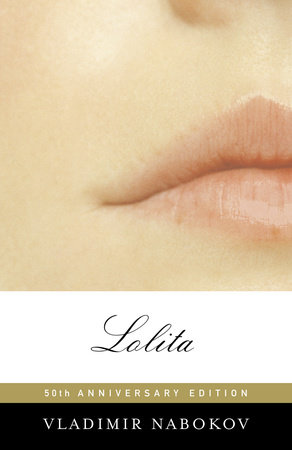
Lolita by Vladimir Nabokov

During his life, the author vehemently denied that his butterfly obsession had any influence on his literary work; and yet, the dynamic between Humbert and Lolita bears a striking resemblance to that of scientist and subject. In her 1960 article titled “Lolita Lepidoptera,” Diana Butler claims that “Nabokov has transposed his passion for butterflies onto his hero’s passion for nymphets.” Specifically, she draws parallels between Lolita and Nabokov’s scientific legacy, the species he discovered and named Lycaeides sublivens. Butler observes that while most narrators would praise the hair or breasts of their beloved, Humbert repeatedly focuses on Lolita’s golden-brown limbs, which are slender and covered in soft down. The same description could be applied to butterflies, and Lycaeides sublivens in particular, which display a brown and white pattern on their downy wings. Most notably, Humbert coins the term “nymphet” to categorize the type of girl-child that drives an old pervert mad with desire. A nymph is defined as “a larva of an insect with incomplete metamorphosis.” This definition captures the true tragedy of Lolita: she is trapped in the tortured eternity of pubescence. Humbert’s limited narration robs her of an early childhood and an adulthood, leaving her suspended forever in a liminal space, her transformation incomplete and crystalline in our collective memory.

In his memoir, Speak, Memory, Nabokov describes the childhood thrill of butterfly hunting. The descriptions of his subjects are strikingly poetic and sensual, a combination we don’t usually associate with insects: “As it probed the inclined flower from which it hung, its powdery body slightly bent, it kept restlessly jerking its great wings, and my desire for it was one of the most intense I have ever experienced.” Nabokov, only seven at the time, locks the object of his desire in his wardrobe overnight, only to witness the creature be released by the maid the following morning.

Speak, Memory by Vladimir Nabokov

Like many forms of love, entomology is not immune to violence. Nabokov refers to his fascination as his “demon,” a term used by Humbert as well. While undergoing an operation, Nabokov has an ether dream of a moth being pinned to a cork board. In rapturous yet clinical detail, he evokes “the subsiding spasms of its body; the satisfying crackle produced by the pin penetrating the hard crust of its thorax; the careful insertion of the point of the pin in the cork-bottomed groove of the spreading board.” This image is reminiscent of the moment Humbert picks Dolores up from camp. Though she doesn’t know it yet, her mother is dead, and Humbert takes this opportunity to capture her. Humbert scans the camp office and lists his observations, casually running his eyes over, amongst other objects, “some gaudy moth or butterfly, still alive, safely pinned to the wall (‘nature study’).” Moths make another brief appearance in the headlights of Humbert’s car as he drives to Quilty’s house, his gun hot in his hand. I might expect a butterfly motif to represent ethereal beauty and transformation, and in some ways it does. But more than that, the butterfly appears as a small insect at the mercy of a trap, a victim of predatory desire, a receptacle for the unquenchable nature of demon lust.

Butler reports in meticulous detail the similarities between the language of butterfly-hunting and that of Lolita-hunting, suggesting that Dolores is named after the small town in Colorado beside which Nabokov discovered his species (which is also near the hospital in which Lolita finally makes her escape.) However, Butler fails to question the significance of this comparison. Scientific inquiry, like rape, requires the destruction of the subject, no matter how beloved it may be. Don’t be fooled by Nabokov’s vivid portrayals of his innocent childhood pastime of capturing butterflies: the thrill he describes is the thrill of finding an insect, catching it, killing it, and preserving it — like a voiceless character in a novel — until it’s trapped in its own husk of beauty and deprived of the right to wither and decay. Nabokov’s quest to find a new species may be scientific, but at heart it’s the classic journey of any imperialist: the need to lay claim to new land, to defile a virgin, to name or rename a creature who would otherwise be invisible, the same way Humbert erases Dolores and births Lolita.

Nabokov’s quest to find a new species may be scientific, but at heart it’s the classic journey of any imperialist: the need to lay claim to new land, to defile a virgin.

The love of a fragile thing is not, of course, reserved solely for lepidopterists and child molesters. Like Humbert’s infatuation with Lolita, I first fell in love with butterflies for nothing more than their beauty, the way sunlight streamed through their amber wings like tiny jeweled panels of stained glass. In college at the University of California in Santa Barbara, I took weekly walks to the grove where kaleidoscopes of monarch butterflies had traveled hundreds of miles to winter. After entire days spent basking in leafy sun puddles, I came home smelling like eucalyptus and sea-salted fog. Later, when this small preserve wasn’t enough, I took the train to Pismo Beach to visit them in the thousands, their crepe paper bodies folded against the trees like origami bouquets. I read about their annual migration from Canada to Mexico, and the super generation born to survive that winter odyssey. Loving a butterfly is easy. The monarch is the prom queen of the insect world, her aristocratic orange flutter instantly identifiable. Everyone wants to see her wave from the throne of her parade float. We stand on our tip toes to glimpse her benevolent smile, happy just to be in the presence of such grace and splendor. There’s no shame in this need for beauty and elegance.

Like any time you fall in love, the more I learned about monarch butterflies, the more I found their signature on the world around me. While dining at a restaurant, I caught a glimmer of sienna on the forearm of a waitress. The man I was on a date with saw it too. He grabbed her wrist to examine her tattoo, laughing apologetically at the way her forearm went limp, like a little boy searing an ant with a magnifying glass. In fact, I began to recognize their poised shape tattooed on the bodies of many women around me. I’d like to say butterflies have come to symbolize femininity for some deeper, mythological reason. But frankly, the world loves butterflies and women the same way Humbert loved Lo: because we all enjoy holding something pretty and desired in our hands, especially when we know we can clamp our fists shut and destroy this beauty with very little effort. Who amongst us hasn’t loved like this?

We all enjoy holding something desired in our hands, especially when we know we can clamp our fists shut and destroy this beauty.

I might have loved monarchs only for their fragile beauty if it hadn’t been for Elliot Rodger, the man who killed six people and injured fourteen others in Isla Vista during the final weeks of my senior year at UCSB. In videos and a manifesto, Rodger laid out his plan to slaughter all the women in a sorority house as punishment for rejecting him and denying him happiness. I didn’t watch his videos or read the news about the shootings — I didn’t need to. I was already familiar with the language and thinking behind this violence, because I’d lived among it. I never personally met the man who felt his virginity was reason to murder, but I did hear countless men call my female peers whores and sluts. I saw them grab women and laugh when their victims yelled or pushed them; I endured taunts and shoves when I protected my friends from groping hands; and I must have sat beside dozens of rapists in crowded lecture halls, men who remained anonymous yet shared Rodger’s belief that women are responsible for men’s happiness.

Elliot Rodger and the men who think like him might claim they love women, and in some twisted way they probably do. The urge to see a pretty specimen writhe on a corkboard is still a kind of love. But these men have not shared boxed wine and cried over Pride and Prejudice with the women of Santa Barbara. They’ve never eaten spoonfuls of cookie dough straight from the tube, or rifled through bundles of kale at farmer’s markets, or filled their bedroom with balloons and silly sticky notes on their birthdays. Those sorority girls who men call catty and shallow cried together, vomited together, bled and died together. They loved each other with their fluids and grit and ugliness. During my time amongst them, it was this that I came to appreciate the most: that beyond the sparkle of lip gloss and butterfly tattoos, there was a loyalty and a strength that go unrecognized, a ferocity and a brazen vulnerability far more poignant than beauty. I saw in them the shiver of insect magic, these small, invisible beings who carry entire ecosystems in their glittering wingspan. To one who thinks a monarch is pretty, their ragged wings look ruined. But to one who knows about their 2,000-mile journey and eight-month battle of survival, those tears are a sign not of frailty, but of fury and resilience.

As Humbert is captured by the police, he experiences for the first time the feeling of being prey rather than predator. He’s lost everything that matters to him, his demonic love and his freedom, and only after this loss can he accomplish true empathy. Humbert thinks back to a moment on a mountain pass when he looks down on a town swelling with the music of children’s laughter and realizes “that the hopelessly poignant thing was not Lolita’s absence from my side, but the absence of her voice from that concord.” But his epiphany comes too late. Lolita, now Dolly, dies shortly after Humbert witnesses her brief incarnation of adulthood, one in which she’s faded and drained of any charm and sarcasm she emitted as a girl. Dolly dies giving birth, the ultimate female act. Her daughter is born dead, inheriting the feminine legacy of silence borne by her mother and grandmother. Even after she’s grown, girlhood destroys Lolita.

Last February, I flew to Michoacan, Mexico to visit the mecca of lepidoptera, the pine-needle forests where hundreds of thousands of monarch butterflies migrate annually. Each fall the insects flutter southward from as far north as Canada, clustering atop the foggy mountaintops to await spring, when they’ll mate, lay their eggs, and die. Wheezing from the chest-crushing altitude, I followed little blurry premonitions of orange along the mountain path until I reached the preserve. Upon a first glance, the trees seemed burdened with a rusty fruit, but I recognized the bowed pride of pine trees thick with butterflies. Heavy bulbs of scales and claws hung in the thin breeze. I stood on a downward-facing slope and leaned my head upward to watch the tangerine-flecked current pass over me, and I heard their honeyed rustling, like hundreds of yellowed pages turning all at once. Without being told to, everyone spoke in whispers, breathless, hushed by the sanctity of the storm.

At the edge of the small crowd, a cluster of trees was roped off with a thin orange boundary. Park employees monitored the tourists to make sure they respected the sash. Immediately, I was overcome with the urge to duck beneath the flimsy rope and dart into the thicket of butterfly-lined trees. I recognized this instinct — a sensation I call butterfly ache. I imagine it’s the same crushing lust that haunted Humbert and Nabokov. It’s the hopeless desire to shed the confines of humanity and enter a new world, the desire to tear off one’s skin and sew it into wings. I suspect I will always have this hunger, and I don’t aim to quell it. But that day beneath the orange gossamer of monarch-filtered light, I learned a new love. I knew that by crossing that barrier I would crush their trembling bodies with my clumsy boots, and thereby ruin the very thing I most desired. Unfettered by the ego of discovery or ownership, I felt something more soaring than the old desire to consume. To stand on the shores of their world and bear witness: that was enough.

Amber Tamblyn’s Book About a Female Rapist Is One of the Year’s Most Feminist Novels

When I heard that Amber Tamblyn was writing a novel about a female rapist, I expected a provocation. I was prepared to encounter a lurid revenge fantasy, a la Quentin Tarantino’s Kill Bill or Mitchell Lichtenstein’s Teeth. Instead, Tamblyn has written an earnest and convincing account of the harm of rape to its victims. The unexpected twist — that her victims are men, not women — only makes that harm more striking. And though the book has been billed as being “about” a female rapist, the novel is really about victims of sexual violence, who in this case happen to be men. Tamblyn doesn’t want to focus on the pathology of the rapist, but on the legacy of the violation for the victim.

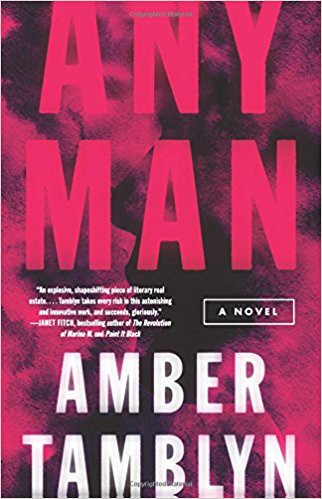
Any Man by Amber Tamblyn

Ironically, this book about male victims of sexual violence has more to say about what it feels like to be a woman in a sexist culture than many works more explicitly engaged with that question. Tamblyn has vividly conjured the experience of sexual assault, and depicted the commodification of sexual violence in minute detail. One chapter, made up entirely of tweets, shows how quickly our discursive and economic culture can obscure a victim’s experience — so much so, even, that the discussion constitutes a further act of violence against that person. Another depicts an assault victim’s self-harm in his attempts to outrun his trauma. One of the book’s most heart-rending sections offers readers the voice of a man who was raped as a child, who goes on to become a rapist himself. Each man depicted in Any Man is uniquely affected by his victimization; what they all have in common, however, is that they are affected. The book forces readers to viscerally experience the kinds of damage rape produces. Maybe because her victims are men it’s easier to appreciate their pain. Images of violated female bodies are unsurprising: we see them everywhere. Violated men, on the other hand, are striking. Their pain signifies.

Images of violated female bodies are unsurprising: we see them everywhere. Violated men, on the other hand, are striking.

One way to read this book is to say that it makes the points about rape that one would expect Amber Tamblyn — a vocal feminist activist — to make. That’s true, but it doesn’t do justice to Tamblyn’s literary accomplishment or the moral ambition of her project. Tamblyn wants readers of Any Man to see beyond themselves. Some readers will find themselves inhabiting male pain and vulnerability in a way that our culture rarely encourages them to do. Others will, for the first time, see rape from the inside, rather than the outside. They’ll imagine in ways they haven’t before what it might be like to worry that the person walking down the street behind them is going to violate them in ways that will change their life forever. Some will find themselves empathizing — perhaps even weeping for — a man who has admitted to a brutal and random sexual crime. Some will surely find themselves reassessing their own sexual histories, wondering if they took their desires too far, or allowed their needs to be overwhelmed by those of another. And this is all part of Tamblyn’s plan, which she has described as being an attempt to “resensitize” the reader to the trauma of rape.

I spoke to Tamblyn by phone while she was on her nationwide book tour promoting Any Man.


Erin Spampinato: For me, one of the most exciting things about your book was that it made something that I thought I understood, something that I spend all day researching, strange and unfamiliar again. Can you talk a little bit about how this book makes rape, a topic we’ve all unfortunately become inured to, new again, and also why you think that’s important? Why is it necessary to make rape unfamiliar to readers, even those who may have intimate knowledge of it in their own experiences or through the culture they’ve been subject to?

Amber Tamblyn: I’ve heard many people talk about how they really get lost in the gender of the story in a good way — meaning that the gender becomes invisible. I think that kind of instantly forces the reader to think objectively — to take a moment to think solely from an empathic point of view… We’ve become so accustomed to violence against physical bodies — and the female body in particular (both those that are assigned [female] at birth and those that aren’t). It’s become something we’ve become numb to…I think when you take [gendered violence] and you put it on a different physical body you’re changing the perspective and forcing people to look at not just sexual violence, but at the bodies involved.

ES: The only character in the novel who doesn’t get to speak firsthand to the reader about his experience is Michael Parker, a man who has recently transitioned when he is attacked. In the chapter that follows that attack, media commentators, public figures, and regular people alike take to Twitter to discuss the crime. In the process, Parker is repeatedly deadnamed and degraded. How does the erasure of Michael Parker’s voice function in the novel? If we’re hypersensitive to the pain of cis men and numb to that of cis women, what happens to trans people?

AT: Knowing who my readers are, who are probably predominantly feminists, and probably white, I wanted to really examine not just the violence of the bodies but also the violence of erasure in storytelling. I wanted to express how well-meaning people could be complicit in erasure. This is especially true on social media — where when we may think we are helping we may actually be hurting by co-opting someone else’s story. I wanted to indict that form of postured political activism, to say that standing as an ally on social media does not mean you’re being an ally (and I myself have been guilty of that). These kinds of conversations are where the growth lies.

I wanted to look at everything from Katy Perry to the Women’s March to the terrible extreme right-wing culture of our society and say, this is how we all participate. Obviously it was very purposeful that Michael Parker doesn’t have a voice, that was a metaphor for that experience of erasure.

I wanted to express how well-meaning people could be complicit in erasure.

ES: Speaking of the tweet chapter: how did you write it? I found it both amazing and horrifying.

AT: Thank you! I didn’t really even study tweets to write that chapter.

ES: Yeah, you didn’t have to, I bet.

AT: Yeah. The ones I studied a little bit were from the alt-right. I had to familiarize myself with some of the voices, like, Michael Cernovich…I knew his name but I didn’t know how he talked so I went and looked at that. But you know, Alex Jones and Gavin McInnes, those type of people were really easy, but also so were my own kind, people that I know and love. Also another conversation I’m having within the tweet chapter is about the amount of retweets, likes, and comments each tweet has. You’ll find layered throughout the chapter that there will be one of a girl saying like, “I was raped outside of my dorm and I have no one to talk to about it.” And there will be like one like, one comment, and zero retweets, right next to a Jim Gaffigan joke about [the book’s serial rapist] Maude, which will have hundreds of thousands of likes. Those tweets, that I layered in there, and that one in particular, are real tweets from Twitter. They are the only real ones that are in there. I don’t know if I’ve ever said that, but I actually went and found them by searching particular terms. I wanted to find women who had actually expressed that.

Those were moments that were [helping me ask]: what is real, what is hyperreal, what is life imitating art, what is art imitating life? It was important for me to say that there’s something real about all this, literally and metaphorically. When it is all on the page it’s a very damning piece of evidence about how we all work together — what our culture is doing right now, and how it is helpful and harmful all at once.

ES: Yes, I like the idea that the chapter is a sort of snapshot of a cultural moment. It also makes me think about the way that tweets can transform what might be testimony — in a court of law, or just necessary personal testimony — into a currency that influences our culture. As you show, Katy Perry can tweet about something and that sentiment has more currency than the testimony of someone who is actually experiencing the thing Perry is advocating for.

AT: Or even just the references to Amanda Palmer writing an album about Maude, and having a Kickstarter page to fund that project. Commodification is really the part that is worrisome. Again, I include myself in these conversations. I think about it constantly. I’ve been writing far longer than the beginning of #metoo, but I’ve been privileged to become a contributing writer for the New York Times and sell a book of essays since the movement started. I’ve been able to do those things because of #metoo. On those backs, on these stories, on these experiences. [I don’t neglect] the question of what active work I’m doing to be a real ally, to really examine what that looks like, to not just be an ally that benefits myself.

ES: Speaking of #metoo, let’s discuss the character of Donald Ellis. He is victim of Maude who then becomes a high-profile advocate for survivors of sexual violence. With his characterization you seem to question the line between testimony and exploitation. There are moments when his advocacy project seems to have gotten beyond itself, where he seems to capitalize on his fame as a victim in order to express his ambitions as an author, for instance. But then there are other moments where it is clear that his ability to advocate for others is crucially necessary to his recovery and survival. What do you think about that?

AT: I think there is some of that and that is sometimes how survivors survive. Taking their pain into their own hands and figuring out the meaning of it.

ES: The book isn’t didactic, but it balances personal responsibility with social responsibility. You seem to want your readers to make contact with their own complicity in the structures that uphold sexual violence, like the commodification of pain for entertainment. Has anyone accused you of turning the torture porn model on men?

AS: No, and in fact I’ve been keeping track of men who’ve been coming to tell me about their sexual assaults. I’ve been keeping a lot of notes on reader responses. Some women have asked, “how does this help us? How does this keep our voices in the conversation?” There’s nothing in me that believes in transferring pain. I think we need to think about expanding our understanding of pain, of who is inflicting and who is afflicted.

I think we need to think about expanding our understanding of pain, of who is inflicting and who is afflicted.

ES. You speak in your interviews in a very unapologetic and very confident way. Honestly, it reminds me of the way a lot of male writers talk about their books. And yet you claim your womanhood very forcefully. So…how do you do that?

AT: I spent most of my childhood pleasing men, pleasing the creative visions of men, having ideas and figuring out ways to make them feel like it was their idea, rewriting scripts that had been written by some of the most famous, phenomenal writers, giving them notes, helping them see. And every woman I know has spent time doing at least some of those things. I think something broke in me during the 2016 election. I was working on this book… I was pregnant, I was campaigning for Hillary Clinton. Something broke in me, I think it broke in a lot of people. It changed me on a genetic level. It made me toss everything to the wind and say I’m going to be who I am, I’m going to speak in my body and to my purpose, even though I know that will make a lot of men uncomfortable. And I don’t care if I lose jobs because of that. I don’t think that activism is a choice for women, I think it’s a form of life. It’s a way of living.

The Couple That Grieves Apart, Stays Together

“Every Damn Star That Shines”
by William Wall

When I cried out there in the water it was just a sudden rush, something broke, it wasn’t anything I was thinking about before. It was a surprise. A shock in fact. I walked out into the sea as far as my waist and then I just stood there as if I didn’t know what to do. In that instant I really didn’t know. Then I noticed that I was crying and making noise. I think it was the temperature of the water, strange as that may sound. It was cold. The sea here is drop-dead beautiful and I swim a lot but it gets deep maybe ten feet from the shore. You stand at the edge and you take a step forward and then it’s nearly ten feet down. The charts show that it is, as they say, profound, and because of the shape of the bay most of the fish and plankton of this closed sea wash in here at some time. It’s warm and rich in summer, but at this time of the year the depth makes it very cold. It shines in the morning and in the evening and sometimes when the moon rises it shines then too. The moon shines in our window. Bob likes to sit and look at it in the dark sometimes. But he reads on a Kindle so it doesn’t matter so much to him. I need light, light, light. God, I need the sun and the moon and every damn star that shines. Bob was standing there on the beach when I broke. I didn’t have to look around because I knew it. He was standing there in his rust-red Slam bathing costume watching me with those knowing eyes of his. He knew. He knew what was happening and he didn’t come out to get me. That’s part of his wisdom. He could have come out but he never does. You’re a swimmer, he always says, I just flop around on the edge of happening. He says I go too far. I swim out beyond the buoys that stop the yachts from coming in. Bob grew up in New York. I was the water to his rock. When I came in from Vancouver he was there. I met him in my first lecture. It was like he was always there waiting for me to come in, or I was always journeying towards that spot where he stood.

When I started to cry I wasn’t aware at first. That was a strange thing. I thought I was just looking at the sea. In fact I didn’t think at all, I was just looking. Then I became aware of the noise I was making and that people in the water — two old French men who swim every day, and a younger woman who swims at weekends — were looking at me strangely. In fact they were alarmed. The French woman swam a steady breaststroke in my direction. Her eyes watched me steadily. Her hair was wet. It looked like a smooth black helmet that reached to her shoulders and trailed in the water. She didn’t say a word. I heard the two men talking. They were swimming too. They always swam together. I suspect they were talking about me. They were straining their necks to keep their faces dry. Like dogs keeping their heads up. I could hear their breathing coming towards me. And then I heard my own voice. It was coming from low down somewhere that I didn’t know was there. What does it mean? These things are signs, always signs. What does it signify?

What I do is I launch myself head down in the water. Underwater I make no sound. I hold the sound inside though I feel it moving in me like a wave. I swim underwater for as long as possible. I keep my eyes open. I see the bright dead ocean floor of the Mediterranean drifting by, and then I’m out onto the glassy deep where nothing happens. If this was a different sea I would hear whale sounds and they would be the exact equivalent of the sound-wave in my body. The great whales calling to each other. I figure, that’s what I am. But who am I calling for?

Bob knows, of course.

When I surface he’s there. He knows I’m going to surface. He never fears for me. He’s watching me. He’s taken his sunglasses off. He waves that uncertain wave of his. He’s not uncertain at all but it’s the way he waves. He mouths the words, Everything ok? I nod my head. I’m ok. We’re not two Americans going to make spectacles of ourselves on a French beach in wintertime. I put my head down and stroke away, out deep. It’s only March and there are no boats to worry about. I swim right out into the rade. Out there I can see as far as the Upper Corniche Road. I can see the last snow on the high peaks. We saw snow fall on these narrows, falling on the beach and whitening above the waterline, falling in the olive groves and the roofs, whitening the red tiles. It was so beautiful it would break your heart. It fell for a night and a day and the people here said they had never seen such a snowfall in their lifetimes. They all came out to see it. They closed the school and the shops on the middle and high roads. People were excited. So were we. Bob and I have seen plenty of snow, but the place makes all the difference. That’s something I’ve worked out about snow. And maybe a lot of other things. Places make things happen.

But when I started to walk back I couldn’t do it. I felt naked. I know tears make everyone feel that way, but I was ashamed of the noise. Maybe if I understood it I might be able to bear it, but I didn’t. It just came out of me. First I was swimming. Then I stopped in about five feet something. It was up to my chest. I couldn’t go any further. I was afraid it would start again. Waves don’t move, things circulate inside the wave, but the wave never moves on. Think of a rope. When you flick it a wave travels along it, but the rope stays in the same place. The tension and the twist remain the same, it’s the same rope always. This is the substance of what I spent my life studying — waves and particles and what we laughingly call fluid dynamics. Not anymore.

Of course I came all the way out of the water in the end. It was too cold to stay there except as some kind of petrified figure from mythology. I don’t qualify. And Bob was waiting with the towel. We didn’t speak. I stepped out of the water and turned and stepped backwards into his arms and he enclosed me in the rough dry warmth of the towel. That’s the way it’s always been. My pirouette, his embrace. We get along.

We sat on the sand. It’s more fine gravel here, or at least a very coarse sand. It felt good. The sun felt good.

Bob, I said, I want to say it feels good to be alive but more than that.

I want to say it’s good to be alive with you.

He laughed but he knew.

Do you remember that Godard film we saw a few weeks ago? Le Petit Soldat?

Yes, I do.

You know there’s a moment when he’s being tortured, though they’re not torturing him at that exact time, but he’s in the bathroom chained to that damned thing on the wall, and he just looks straight at the camera. Do you remember that?

Yes, I do.

Well, his face looks completely different to any other shot in the film. I was thinking about that as we walked down here and I realised it may be the only time he looks at the camera in the entire film. He’s always looking down or at someone else. I believe that’s a very important shot. I can’t work out what it’s saying. I realise now I don’t understand that film at all. Out there on the water I saw his face.

It’s because he reminds you of Harry.

I looked at him. How did he know that? I was never going to tell him.

It’s because of what he went through, he said.

We gathered our things. The French men were sitting on the sand with their backs to the sea-wall. The woman was towelling herself. She looked fit and well. I wondered if she lived here all year round. Something told me she came from somewhere else.

Bob, do you remember when we went to see Susan that time? The last time, before we came over here?

He nodded. I thought she was holding it together well. The kids were great.

You were in the TV room watching the game and I offered to help with the cooking. Remember? Well, we got talking and I saw that she was getting angry and I didn’t want the kids to hear, so I closed the kitchen door. Harry’s old jacket was hanging on the back.

His hunting jacket?

We both laughed. Harry never hunted but every couple of years he invested in the latest Columbia Sportswear camouflage jacket. He liked walking. I used to say, What are you hiding from, Harry? You don’t want camouflage, you want to be seen, someone is going to shoot you someday by mistake.

So his jacket was there, he said. She forgot to throw it out. Or maybe she couldn’t bear to.

No, I said, she forgot it.

The sun was beginning to drop behind the town. It sets early here because of the height to the west, and then it gets cold. We walked up there once in the early days, an hour’s walk, and stood at the old fort on the hill watching the darkness moving on the sea from Capt Ferrat to Cap D’Antibes. That evening for the first time I said to Bob something I’ve often said since: Bob, do you realise where we are? And he replied, We’re doing the grand tour two hundred years too late. And we both laughed. I grew up on a logger’s float-house on the Strait of Georgia. My dad was a logger until I was nine and then he had his accident. Harry and I used to collect clams and keep them in a galvanized tub and feed them on oatmeal until they got fat. I never eat clams now.

She got so angry, I said. She was shouting at the hunting jacket. I said to her, Susan you have to let go, and she said, I never close that damn door. I just never saw it. Bob, you should have seen the look on her face.

Bob said nothing.

Well, she took that coat down fast. She went out back and put it straight into the garbage. That was the worst moment. I watched her open the can and get it right in there. There was something violent, you know? Something hard.

Suddenly Bob was angry. He stopped walking. He was trudging through the sand with his head down. Now he took his sunglasses off and turned full on to me.

What do you expect, Ali? For Christ’s sake he could have done something. We all have to face it. He could have saved himself, that’s the thing. That’s what gets Susan angry. He didn’t even try.

He looked at me for a while. I couldn’t think of anything to say. Then he put those damn shades on and we walked up the sand and onto the sidewalk. We didn’t say anything. I was trying to cope with what was inside. It felt like an animal had slipped in out of the dark.

Do you think we could move here, Bob?

He shook his head. Maybe before the crash. Not now.

His pension was down big-time. His college put it in some kind of fund that went with Bear Sterns or about that time. We stopped following it. Harry’s business went the same road. We all know about derivatives now.

What I keep thinking about is this: What went through his head at the last minute. I can see his face as clear as if he was here this minute. I can see his eyes.

Don’t think about it.

But Bob, he never owned a gun. He couldn’t even hunt with dad.

Jesus, Ali. Stop.

It comes back. All the time.

Bob shook his head. Who knows? It’s impossible to know.

Maybe we shouldn’t have come down here, Bob. We blew a lot of money on this.

As we turned to climb the steps that brought us up to Rue Du Poilu where our room was, I said, Bob I’m frightened.

He took my hand and held it tightly.

The street was dark already. The light was on in the butcher shop ahead. I was cold. I pressed close to him. In that moment, for no good reason, and though he was not a swimmer, I felt he would save me, should the need ever arise.

‘The Devoted’ Wrestles With Sexual Abuse in the Spiritual World

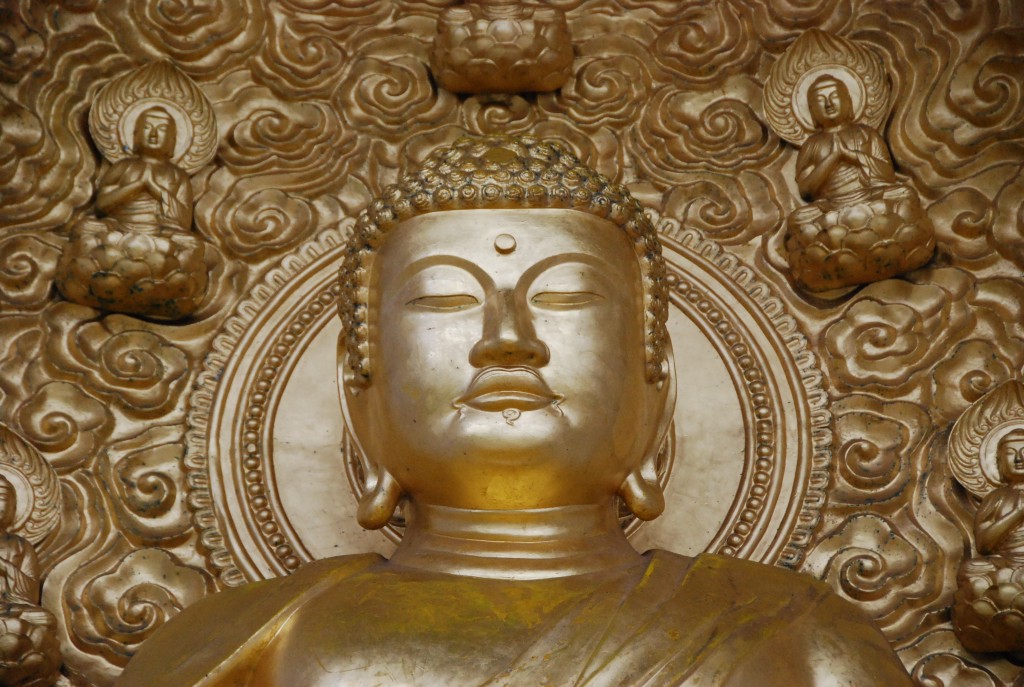
I read The Devoted over the course of one wet weekend in Woodstock, New York. I was staying in a low-ceilinged ranch house, the property of a friend of a friend, where the the medicine cabinet mirror was spotty with age, and the electric burners on the stove had two temperatures: hot and off. On the front lawn, while a stone Buddha sat serene in the center of a circle of lush ivy, rain dripping from his nose, I sat by the window and read, rapt, for hours.

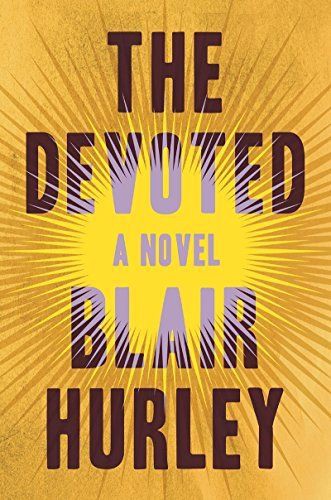
Purchase the novel

Woodstock — the motherland of a certain brand of unfocused, hippie-inflected, white American Zen — was a perfect environment in which to read Blair Hurley’s debut novel. It’s the story of 32-year-old Nicole, a good Boston Catholic turned Zen Buddhist, who, in the process of attempting to escape from a years-long, sometimes sexual relationship with her Zen Master, becomes a kind of master herself.

I spoke with Hurley about her relationship with religion, sexual abuse in the spiritual world, and the process of writing a woman’s transgressive spiritual quest story.

Rachel Lyon: Nicole’s journey from Boston to New York is interspersed with a series of flashbacks that track her past, from the very beginning, growing up in a well-to-do Catholic family outside of Boston, to her teen years, converting to Buddhism and running away from home, through her 20s, to the present. Before we get into the how of this book, I’m curious about the what. What brought you to this subject matter? Do you have a personal relationship to the Boston Catholic community? To Buddhism?

Blair Hurley: My interest in religion, and Catholicism and Buddhism in particular, began at a young age. My family had Boston Irish Catholic roots going back generations, but I was actually raised entirely secular; my parents had both had bad experiences with organized religion and they wanted to give me and my sister freedom to explore and choose our own spirituality. I was always curious, though, about the rituals and the doctrines that gave people around me such meaning and fulfillment in their lives. Somehow I knew all about the rules and traditions and prayers of Catholicism, even without being Catholic. It’s a religion that casts a long shadow over the generations.

As for my interest in Buddhism, a close family friend is a converted Zen Buddhist. We had long, freewheeling discussions about spirituality, the divine, and her own ecstatic experience of what she called the energy of the universe, dancing. She gave me books about Buddhism, but also about radical Catholic nuns, Muslim Sufi mystics — pretty much any faith that has a mystical tradition was something she was interested in, and she got me interested too. She had an expansive knowledge and curiosity about all religions and I was completely sucked in. I took a lot of classes in college, visited Zen and Tibetan Centers, and started researching Buddhism’s arrival in America, which is a fascinating story itself, with bright spots and dark corners.

Once I started writing about Buddhism, I realized I needed to know about my own religious roots, too. Conversion is a messy experience, and you always tend to bring along the stories and songs and superstitions of your original faith with you. I started doing more research into the Catholic communities of Boston. I was only one generation removed from a very tightly knit tribe; my father remembers Sunday school and fish on Fridays, and my grandfather was nearly disowned for marrying an Episcopalian. Those cultural currents run deep.

I wanted to write a girl’s spiritual quest story that was transgressive and wild and crazy and brave.

RL: Western characters experimenting with Eastern religious practices is not exactly a new theme in literature — and you have a little fun with that: Nicole reads Kerouac’s On the Road when she’s a teenager (as so many of us did) and finds it lacking: “She read about the girls in these books, simpering, foolish, half-naked. The girls were there for spice, Kerouac wrote. Where were the girl wanderers? Where were the girl lunatics?”

How has the American experiment with Zen Buddhism — and its representation in literature — grown and changed in the sixty years since On the Road? To what extent were you thinking of Nicole as your own “girl lunatic,” your answer to Kerouac’s (very male) heroes?

BH: I’m so glad you asked that! At its heart, I think The Devoted is a spiritual quest story, and just as you say, the fundamental driving impulse while I was writing was that I wanted to write a girl-spiritual-quest story. I wanted to write a girl’s story that was transgressive and wild and crazy and brave. I grew up reading and loving stories like On the Road and The Dharma Bums, in which men are allowed to cut ties with their families and go off into the wilderness and have spiritual revelations. But any woman who makes the same choice is still judged so harshly; she’s seen as betraying her family, and abandoning her responsibilities, if she tries to find herself. As a young reader searching for female heroes in the books I read, I often felt puzzled and angry by women’s invisibility in these kinds of stories. I wanted Nicole to have the chance to break free and to make mistakes the same way male characters seemed permitted to do.

As for Westerners looking to the East for answers, I definitely wanted to acknowledge the fraught nature of this, and the way Buddhism was (and still is) treated as an exotic, exciting alternative to Judeo-Christian beliefs in America. I’m prone to it as much as Nicole is, and wanted the novel to acknowledge that she’s an outsider, with no connection to the cultures and languages and histories of Buddhism. She’s young and dumb at first, and her understanding of Buddhism is pretty rudimentary. I hope that as she grows and studies, her claim to Buddhism becomes more meaningful. That religious identity is hard-fought and earned.

I grew up reading and loving stories where men are allowed to cut ties with their families and go off into the wilderness and have spiritual revelations. But a woman who makes the same choice is still judged so harshly; she’s seen as betraying her family, and abandoning her responsibilities, if she tries to find herself.

RL: Nicole is a fascinating, almost spooky character. She’s full of contradictions; you say at some point that she contains “two selves.” As a teenager she’s both “good girl” and “bad girl.” As an adult she cuts an unassuming figure, yet she can be a charismatic leader. Her brother says she both “wise” and “a screw-up,” and in a parable she recognizes herself as both “young girl” and “grown woman.” Can you talk a bit about the process of writing her? How did you find her?

BH: I’m definitely a character-oriented writer. I have to really inhabit a character, feel her feelings, and understand her contradictions before I’m ready to tell the story. Nicole has a lot of the confusion and longing that I experienced growing up, but she’s also a lot more wild and assertive than I am! She wants things very strongly, and she often blends the ecstasy of spiritual experience with the ecstasy of sensual pleasure. Nicole is actually named for one of my favorite characters in literature, Nicole Diver in F. Scott Fitzgerald’s Tender is the Night. In that book, Nicole Diver is a deeply troubled woman who loves deeply, but has also experienced terrible trauma. There’s a moment when as a young woman, she holds up a basket of flowers to the man she loves, and it’s like she’s offering herself, all her life, to him, so hopeful that his love and acceptance will heal her somehow. I felt my Nicole had the same intense mixture of longing and desire — she believes that if she offers herself fully to someone, usually a man, then she’ll be saved by him. Once I understood that about her, I understood why she would stay with her manipulative Zen Master long past the point of no return.

Just the pleasure of being alive can feel so good it hurts for her. There’s the promise of the divine in every moment, and she’s always lusting after it, looking in all the wrong places.

When Fighting Stops Being Fun

RL: You give us an impression of the Master’s size — an impression that actually changes radically, depending on context — and a word, here and there, about his expression or the warmth of his hands, but his physical appearance is left mysterious. He doesn’t even have a name. What was behind that artistic decision?

BH: Early on I wanted the Master to be a deeply chilling character, someone unsettling and well, creepy. I knew he couldn’t have a name, or exist beyond carefully orchestrated setups; in direct sunlight, I think he’d seem small and grasping and pathetic. But in Nicole’s mind, he looms very large, and dominates her inner life. The mystery around the Master had to be built up carefully, and I wanted to show that it’s something he orchestrates himself. All of his power over his students comes from the exploitation of this exotic, strange, enticing persona. Zen itself often relies on mystery and secrecy; the nature of true existence cannot be spoken in words, and we must achieve a state of no-mind and no-self. The texts of Zen, known as koans, are often like riddles with no clear answer. The Master is himself a kind of koan. Nicole thinks he can be cracked like a puzzle or a code. And once I realized he would pursue her, and continue trying to control her, the mystery needed to be wrapped up with menace as well.

I wanted Sean and the Master to stand in stark contrast to each other, almost as paths that Nicole might choose to take in her life. I originally imagined Sean as a Buddhist’s worst nightmare — someone who is deeply, almost pathologically attached to worldly possessions, unable to disentangle his memories with his stuff. In contrast, the Master is almost disembodied, more of a phantom than a physical, worldly person.

RL: Nicole’s Master may be fictional, but he is not unlikely. Andrea Winn, who grew up in a Shambhala community in Halifax, Nova Scotia, published a report in 2017 that detailed rampant sexual abuse and associated cover-ups. Last month amidst multiple accusations, head of Shambhala International Mipham Rinpoche went on leave, and the entire governing council of his organization resigned en masse. The New York Times covered several other cases of abuses by Buddhist spiritual leaders recently.

To what extent was the novel a response to incidents like these? How do you see your book now in the context of newer allegations? Have recent developments altered your relationship with your work?

BH: Incidents like these were definitely on my mind as the story started taking shape. When I first started getting interested in Buddhism, my Zen Buddhist friend warned me that Buddhism’s introduction to America had been complicated and fraught. She told me about the terrible offers that had been dangled before trusting, hopeful students seeking enlightenment: do this for me if you want enlightenment. Don’t tell anyone, or you’ll lose your one shot at inner healing and peace. I learned that sexual abuse had been perpetrated by Zen and Tibetan priests and teachers for decades.

Buddhism is not unique in having this problem, but the traditional teacher-student relationship is particularly vulnerable to abuse. In Zen and Tibetan Buddhism, students swear vows of loyalty to their teachers, and the teachers’ judgement is unquestionable and absolute. Once women began studying under men in large numbers, the dynamic was ripe for abuses of power.

It seems especially devastating to me to encounter sexual harassment or abuse in a spiritual context: a place that is supposed to be sacred has been violated by a deeply dehumanizing form of violence. I wanted to write about how this comingling of sexual and spiritual desire could happen — how a person badly wanting enlightenment could become subsumed by a manipulative teacher.

Now that the #MeToo movement has broken wide open in the workplace, I’m hopeful that more attention will be brought to spiritual spaces as well, and it really does seem like there’s more attention to this issue. It’s awful to have a boss dangle advancement over your head, or threaten the loss of a job, in exchange for sex. It’s another kind of hell to discover that your spiritual teacher, who holds your soul in his hands, does not really see you as a person after all, but only a body.

Another really heartening aspect of Buddhism’s transformation in the West has been the breaking down of traditional male and female hierarchies in the religion. Whereas women were subordinate to men in most Buddhist traditions, now many of the most powerful Zen and Tibetan Centers in the country are run by women. That transformation from subservient student to teacher was something I wanted for Nicole.

It’s another kind of hell to discover that your spiritual teacher, who holds your soul in his hands, does not really see you as a person after all, but only a body.

RL: Sexual abuse can be peculiarly intense, I imagine, for students of Buddhism, because their vows of allegiance bind them to their masters across lifetimes. But any abuse of spiritual power is devastating. You draw a parallel in the context of Nicole’s lifetime between the revelations of misconduct among Catholic priests in Boston in the 1990s, which resulted in many Boston cathedrals closing their doors, and the behavior of her Master. How do you see the relationship between these two crises, both on the page and in the world?

BH: I was in high school in Boston when the first sexual abuse scandals of the Catholic church first broke, and I remember the outrage, shock, and citywide heartbreak in the wake of these revelations. What was surprising, though, was that there was more outcry in the face of the Archdiocese of Boston’s choice to close many churches due to lack of funds and decreasing membership. People didn’t want to talk about the abuse of children; there was a powerful urge to look away and cover up those stories. There’s a cloud of silence and shame around abuse like this that can be truly devastating for survivors. I was struck by how for decades, survivors didn’t even have the language to describe what had happened to them. People abused in Buddhism have a similar problem today. We’re still struggling to classify and give a name to what has happened, and it’s important, because naming it and speaking it aloud is the beginning of ending it.

The more I worked on the novel, the more I saw parallels between these two situations. The Buddhist sexual scandals are quite different, in that no abuses of minors or children have come to light; it’s a far more gray area of consent and harm. But I couldn’t help seeing how the abuses of power and authority were similar. In both cases, a trusted spiritual advisor preyed upon vulnerable people, and used the dignity and holiness of his office to protect himself from the consequences. I’ve read interviews with victims in both the Catholic Church and Buddhist organizations, and in both situations, people have spoken of how impossible it is to say no to God when He asks something of you. Catholic priests and Buddhist teachers both acted as a doorway to the divine, and as a barrier to it.

I wanted to show how abuse could occur in both of these traditions — but also how deeply meaningful both traditions could be for different characters in my story. Ultimately, Nicole feels that Buddhism saves her life. That’s something she shares with her mother, who needs her Catholic beliefs in order to survive. The language with which we pray, or reach out for the divine, is deep-seated, and doesn’t leave us easily. Nicole has to make her peace with that, and find a way to reconcile her upbringing with her personal spiritual transformation.

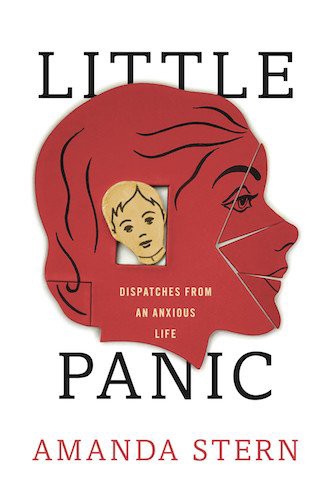
Amanda Stern on Living with Anxiety in an Increasingly Scary World

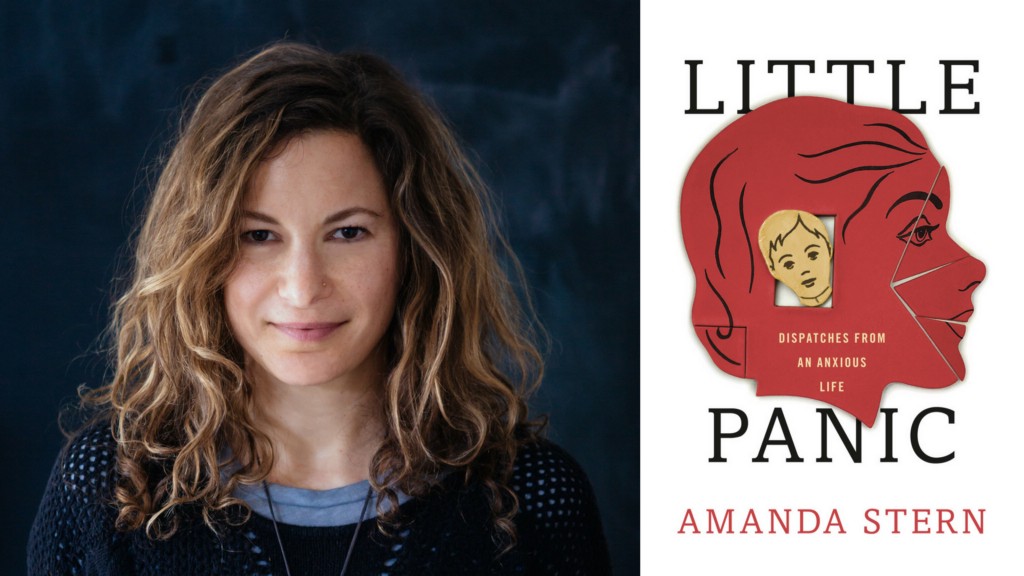
Amanda Stern, author of the novel The Long Haul and multiple pseudonymous children’s books, has been a fixture in the New York literary scene for years. In 2003 she created the Happy Ending reading series, which ran for thirteen years and required participants to take “one public risk.” (Jennifer Egan drew portraits of the performers; Zadie Smith took the number of shots that was rolled on dice — six.) Personally, though, Stern’s life was driven by fear. Little Panic is her vivid and heartbreaking memoir of living with an anxiety disorder that went undiagnosed for 20 years.

Purchase the book

As a kid, Stern couldn’t tell time because she didn’t trust numbers that change their meaning. How could anything be consistent, safe, if ten o’clock can be both morning and night? She felt most comfortable at home, and the 1970s Greenwich Village of her youth — raised in a row house near where Bob Dylan once lived — is written almost like Mayberry: the shared garden where she played with other kids, the familiar bums on the corner, the mafia guys who protected the neighborhood. But when her best friend passed away and her sister’s friend was kidnapped the same year six-year-old Etan Patz went missing down the block from her home, Amanda knew she was right to be scared, even if adults ignored her anxiety. The world is dangerous, and people disappear if you’re not careful.

Little Panic bucks the expectations that are placed on women and girls. Young Amanda was too sensitive, too loud, she cursed too much. She wasn’t “smart” in the way that a litany of cryptic intelligence tests seemed to show, so she was convinced that she wasn’t smart at all. As an adult with her anxiety managed, all she wanted was to start a family and she was forced to come to terms with being single in her forties and not having kids.

We talked via phone and email about living with fear in an increasingly scary world, how women’s pain is often ignored, and how a stalker encouraged her public risk-taking.

Katy Hershberger: The way you write about your childhood experience is so visceral and so detailed. Did you remember it this way, or did you have to go back and research those parts of your life?

Amanda Stern: My childhood panic is like a story that’s been printed inside me. I just have to read it in order to return. The problem is, for me, it reads like a Stephen King novel — it’s scary, and traumatizing to revisit. But, for the book to be any good, it had to accurately capture the relentless sensations I experienced as a child (and have worked so hard to distance myself from), and that required re-immersing myself in mental anguish. I spent a lot of time lying down on my couch where I’d drop myself onto my childhood bed, back into my body, and open myself to the panicked sensations: of wind rushing up my esophagus, the shallow and mentholated breaths, minty pulses, fevered vibrations, oscillating temperature, color patterns and anesthetizing pins and needles. Then I’d race to the computer and transcribe everything I’d just felt.

While I didn’t always remember factual details about routine things and had to ask my siblings (like how we were transported uptown to our father’s house every other weekend), I’ve never forgotten the feeling-patterns that emerged inside my body during the actual events, despite not always recalling the details.

KH: You write books for young people, and I’m curious about how that career informs your writing about your own childhood. Do you feel a responsibility to legitimize the feelings of kids? Was there anything about writing fictional kids that carried over into writing about yourself?

AS: I do feel an immense responsibility (and urgency) to legitimize the feelings of children. Unprocessed traumas from childhood don’t heal if they aren’t digested, and I think one way in which I try and metabolize my own wounds is by doing for other kids what wasn’t done for me, and that’s seeing, hearing, and taking them seriously. Writing for kids is my attempt to help articulate their feelings when they don’t yet have the vocabulary. The child I was still exists inside me, scared of the world but pretending to be undaunted. It’s from inside the experience of my own childhood self that I write about kids, for kids, and in the case of Little Panic, for adults.

As for which career is doing the informing…I’ve always considered myself a writer for adults. That’s what informs all my work. I fell into writing for children after having published a novel and a bunch of stories, and it’s writing about youth for adults that informed my children’s book characters.

A Trip to Disneyland in Search of the Root of Sadness

KH: I’m really interested in the ways that people are informed by their young lives, and divert from them. Do you feel like you’re the same person you were as a kid?

AS: I do, and I don’t. I’m the same in that I’m sensitive, emotional, and vulnerable and still mask it by being jokey. That’s something that’s been highly developed as a tool to cope with the ping-ponging panic inside me. In other fundamental ways I’m quite different: I can leave home now. I can travel. I can face my fears, I can feel my feelings and know who to call or what to do when I’m spiraling. My young life was terrifying, not because so many terrible things happened to me (although this is true, also) but because I felt incompatible with the fabric of the universe, unknown and entirely alone. Not wanting to live beholden to my fears was what catapulted me into growing into my adult self. I made a choice to face everything that scared me, and I have. I’ve faced it all, and what I’ve learned is that facing something once is not always enough.

KH: As an anxious person, particularly an anxious kid, so much of this book hit home for me. Have you heard from other people who’ve experienced similar feelings?

AS: The absolute best and most unexpected part of ushering this book into the world has been the letters I’ve received. Each one makes me a little weepy and fills me with an emotion so rare it took me days to identify — pride. My entire childhood, and all my young adult years, were spent waiting for someone to recognize the invisible dread inside me, to name the unnamable source that knew how to operate me according to its own rules, but not the rules of the world. So, to hear from others that I helped identify and name their fears, that they felt understood and validated, that something I wrote hit home for them, has exceeded anything I have wanted for this book — and I want a Pulitzer!

The more we admit to our fears and our human-ness, the safer we’ll feel in the world. If my being honest about what I’ve been through helps others talk about what they’ve been through, to admit their fears and vulnerabilities — even if it’s just to me via email, then I’ll feel like I’ve contributed something to the world.

The more we admit to our fears and our human-ness, the safer we’ll feel in the world.

KH: Why write this book, and why write it now?

AS: I had to write about it precisely because it was so painful. We spend so much of our lives hiding our true selves from each other, and often from ourselves. The older we get, and the more we confide in people and hear their confessions, the deeper our awareness and understanding becomes that we’re not the only ones hiding, and if other people share our fears than we are not alone. I wrote this book to be the person sharing her fears with others, to give hope to those who feel invalidated and shamed by a world that doesn’t understand them.

I’ve wasted too many years faking it, and I’ve lost so much time feeling ashamed for being human in this particular way. You get older, your friends get cancer and die suddenly from heart attacks, and you realize there’s no more time for this bullshit. I’ve hid myself for so long precisely because I often feel too real, and because authenticity isn’t necessarily prized in our culture. But this is the human being I am, this is the who I was born into, and I want to face the painful things and to be authentic because that’s the only way I feel truly alive.

KH: Did other people in your life not know about your panic disorder?

AS: Until I was 25 years old, no one knew what was wrong with me. I knew I felt defective, like I didn’t work the way I was supposed to, the way other people did. The disorder itself was invisible, but some of the symptoms manifested at school in concrete ways, on tests and classroom participation. Because I did so poorly on tests (because I was panicking!) and didn’t participate in class (because I was panicking!), I was sent for IQ testing. From the ages of eleven to nineteen, I was tested and tested and tested. The results were withheld from me, and all I was told was that I had some sort of learning disability, which to me was a coded way of saying “dumb.” It wasn’t hard for me to accept that I was dumb, but I also knew that inside me there lived this other thing, a constant fear, which I knew was not dumbness, but because no doctor could locate or name my feelings, and never asked me questions about my emotions, I assumed that this other thing I had was worse than dumb. And I hid this shameful thing until I was unable to hold it any longer.

I wrote this book to be the person sharing her fears with others, to give hope to those who feel invalidated and shamed by a world that doesn’t understand them.

KH: There’s been more talk recently about how often women’s pain is ignored, and it seems like ‘Little Panic’ takes that one step further to highlight how often young women and girls’ pain is discounted.

AS: Doctors learn about medicine and they learn about specialties, but they don’t learn about psychology or emotion. So when people come in who have symptoms that are psychological or emotional, they dismiss them. And it is probably true, I don’t know if this is actually fact, that women are more comfortable sharing those symptoms than men are. But because doctors aren’t taught how to deal with it they dismiss it for a couple of reasons. I think one is that they don’t want to be caught not knowing something, so they revert to what they know, and doing that that means that they have to dismiss problems. But I think it’s also that they have a bias, and it’s really a shame.

I also think that doctors don’t puzzle anything out anymore. They don’t figure out what the problem is because they’re so specialized and they have so little time and they book too many people. I think that the way doctors are taught is so limited and so limiting, and it’s a real disservice to the people they serve. And I think that when it comes to testing, like intelligence testing and standardized testing, the tests are biased. It’s similar in the sense that evaluators and administrators — maybe they do now but they didn’t used to take into account the conditions or the environment or what might have happened leading up to the test. Or concerns about what’s going on in your life. They don’t look at the issues, they just look at the test results, but the conditions inform the test results. A test is just a measure of how good you are at taking a test. So I think all these things are really faulty and that girls and women get pillaged and pummeled and lost in all of it.

KH: Just like in so many other things.

AS: Yes! Exactly. It’s funny, I’m not sure why women’s pain is so dismissed by doctors unless it’s that everything a woman says that they don’t understand is cycled back into an emotion. Like, the doctors just create a channel for the physical symptoms they don’t understand, they channel it back to some emotional root and then dismiss it. It’s a real problem.

To Be Young, Gifted, Black, Depressed, and Anxious

KH: I remember that the Happy Endings series always had performers take one public risk, and I’m wondering if that had anything to do with your own relationship with fear.

AS: It did. It’s funny, I think you’re maybe the second person to ever ask me that…within the span of my entire life. When my first book came out, I went tour across the country and I didn’t think about the reading aspect of it. I didn’t think in advance about how I would do onstage, I was more concerned with the logistics. So the first time I got up onstage I said something that made people laugh and I noticed that the second they laughed my anxiety lowered. So I thought ‘ok, well this is good, how do I make sure they laugh every time?’

I had a stalker on my tour. He followed me, he sent me things, he called me, and it was creepy. He sent me a box of things. And I thought, ‘oh, here’s what I’m gonna do.’ I’m going to auction off a different thing from this box the stalker sent me at every reading.

KH: Did you tell people it was from the stalker?

AS: Yes. So I sort of turned it into this kind of a gimmick but it helped me get over my anxiety. If I could make them laugh then I was comfortable. It was about creating comfort for me in front of an audience. So when I started the series, I thought ‘I want to do that for the authors.’ I want to create a space of comfort for them, and I didn’t really know how to do it. And then I realized that if I had them worry about something that wasn’t their reading, they wouldn’t worry about the reading. So that’s when I created the risk as a way to bypass the fear and refocus it, to sort of reframe the entire event so that it’s not about the thing that makes you the most nervous, but it’s about something else that’s not as important at all. If you get nervous about the thing that’s not important, that feels like something a person who has anxiety can actually deal with a little bit better. So that’s how it started. It was a method for me to be able to read to an audience without having a panic attack, and I wanted to find a way to do that for other authors.

KH: How do you manage your fear and mental health now, especially when the world seems to be increasingly anxiety-inducing?

AS: I’ve been in therapy and on medication for years (Celexa/Wellbutrin ←not ashamed). Because I am a reader, I devour books on mental illness, anxiety and childhood development, but I also read parenting books which people find strange because I have no children. But, it’s so helpful. Once I understand what should have been in place for me, what could have been done, other things click into place and I understand more about why I am the way I am. When I connect a present issue to its roots, the problem is loosened. When I exercise, I feel a lot better, but I struggle with getting myself to work out. When I meditate, I feel a great deal better, but I struggle with getting myself to meditate.

Admittedly, with T as “President of the United States” daily life is a lot more difficult than it used to be. Since 2016, I’ve felt like someone activated my settings and never turned them off (this is my covert way of not using the word triggered). My fears and anxieties have been heightened in the same ways they were after 9/11. The best defense against spiraling is to be as politically active as possible. Even if it’s just tweeting numbers to call or places to go. Being engaged helps, but increasingly there are more moments I feel I have to pull away and not read the paper, watch the news, or get online, and about that I’m very conflicted.

The Past Is a Planet You Can’t Return To

Novel Gazing is Electric Literature’s personal essay series about the way reading shapes our lives. This time, we asked: What’s a book you misunderstood?

In my twenties, I spent a handful of months living in Granada, Spain as a study abroad student. Granada was a lovely, history-rich city with sweeping Moorish architecture and winding, labyrinthine alleyways; it could cast a spell over any traveler, and while I was no exception, my enjoyment was threaded with loneliness. For the first time in my life, I was living thousands of miles from home, with no real connections or community, and above all, submerged in a language that was confoundingly opaque. In those first weeks, I’d attempt interaction and the words would wash over me like white noise. As someone who lives on language and had overestimated what seventh-grade Spanish lessons could accomplish, it was maddening. For that and other reasons, I felt alienated and deeply alone.

Wanting badly to acquire fluency and also needing to fill my downtime, I ended up joining a book club provided by the university. First on the docket: Antoine de Saint-Exupery’s The Little Prince, or rather, El Principito. The Little Prince is a children’s novel about a pilot (the narrator) whose plane crashes in the Sahara — in which, incidentally, I had recently spent some nights camping. While attempting to repair said plane and search for water, he encounters a little boy wandering the sand. The boy reveals that he’s a traveler from the stars and prince of his own small planet. Man and child become friends as the little prince shares fantastic tales of his journey, tales that awaken something long-asleep in our narrator.

Each session, we’d read a few chapters out loud before a group discussion. Having read this book many times as a child, I was able to pair the Spanish with the English buried in memory, which proved to be a great learning tool. There was one thing, however, that I hadn’t remembered. When we reached the book’s final chapter, I was astonished to notice — for the first time — that the hero of the story, our little prince, appears to die at the end. In fact, he ostensibly submits to that death at the prospect of being exiled from his home and separated from his beloved. At no point in my previous readings, over a decade earlier, had I intuited this.


Since my earliest days as a reader, my dad and I have kept a small tradition: he surprises me with books he thinks I’ll like and inscribes a brief dedication on the inside of every cover. In turn, I safeguard them and plan to do the same for my own children (though I’ve never told him so). My first copy of The Little Prince has this written in the upper right hand corner of the front leaf, in his stern, blocky print: Nov. ’95 / To Melanie / Love, Dad.

I adored the book. It was a paean to the splendor and endless possibility of childhood — an entire universe that could be traversed with a flock of birds and a little courage. At that age, I was devouring books by the truckload, but my favorites were fantasies, and especially the fantasies that lingered on lost or secret worlds. Books like A Wrinkle in Time, The Last Unicorn, and the lesser-known Spellkey Trilogy. Books about the power of time and the mystery of magic. The Little Prince was about believing in magic; it exalted childhood as an era of wonder, intrigue, and openness of spirit.

I was astonished to notice — for the first time — that the hero of the story, our little prince, appears to die at the end.

As a young reader, I took the ending at face value. After learning that he may well be trapped forever on Earth, the prince meets a serpent in the desert, who has promised that the magic venom in his bite will return the prince home at once. With no other options and an urgent desire to reunite with his love (a single red rose), the prince assents and appears to drop dead. His body goes missing the next day and, I assumed, rematerializes on his home planet. Only our narrator, an unimaginative adult, feels a measure of sorrow and uncertainty, along with hope. I didn’t have to hope because I had the confidence of knowing.

What I didn’t realize then was how this interpretation had mirrored my unconscious preconceptions. I was a sensitive, moony child, prone to daydreaming and bouts of existential angst. On some level, I was aware that this chapter of my life was charmed and all too fleeting, and I was already nursing a fear of losing things precious to me. The Little Prince’s conclusion, as I had received it, had the unintended effect of rendering the prince’s world — along with the enchantment and potential it represents — out of reach. It’s a happy ending, but it’s also a closed door. The prince gets a one-in-a-million chance to go home and he takes it, but now he can never come back. The narrator will never again access the whimsy and awe borne by his friend, precisely because it is confined to a concrete destination — one so remote it can only be arrived at by ephemeral magic. In the denouement, our narrator is left to remember, hope, and look up at the stars every now and again in the attempt to stay connected to a fantasy which he is now locked out of.


The summer I was twelve, we moved out of the only home I’d ever known, and I prepared to enroll in a new school that fall. I didn’t recognize then that this period would later come to represent a seismic shift in my life. It either coincided with, or caused, the conclusion of my childhood — I’m still not sure which. Our new house was much larger than the old one, which meant that we all spent more and more time in our own corners, only sensing each other’s presence through the walls. It was much further from the other surrounding houses, which meant that neighbors became figures I waved to occasionally, rather than playmates and sidekicks. I no longer explored woods with them, looking for evidence of legends or hidden kingdoms.

By and by, the magic dwindled — as I had feared it would. I grew up. Along the way, I experienced all the regular things that siphon away a person’s sense of wonder: the world’s cruelty and its indifference alike; failure; trauma and pain. By the time my twenties came around, I had begun to sink into a deep darkness. Five whole years slipped by while I remained trapped in the quicksand of a bottomless sadness, completely inert and unchanging, which is its own horrible magic.

I fell into the habit of perseverating on thoughts of my mistakes, turning them over and over in my mind, like worrying a sore tooth with your tongue for the sharp thrill of pain. I played endlessly looping mental reels about going back in time and doing everything over again, from the small stuff (not popping zits) to the bigger stuff (working harder in school, finding direction sooner). I wanted so badly to go backwards that I had cut off all momentum to move forward. I was mired in regret.

I wanted so badly to go backwards that I had cut off all momentum to move forward.

My childhood hadn’t been perfect, but the distance of time and the lenses of heartache and disappointment had cast it in a halcyon light. From my vantage point, it seemed like a period of infinite possibility, a swarm of galaxies flush with potential, around and within me. I belonged, I was loved, and I could be anything, which meant that I was everything.

During this time, I also began to suffer from a recurring dream. In the dream, I’d find myself returned to my childhood home. Sometimes it would be a true flashback, and other times it would be like time travel: my family and I, as our current selves, were whisked back there again to live out the remainder of our lives. Either way, the feeling of relief and safety that came over me was profound. The following morning’s realization that I had only been dreaming felt like fresh loss each time.

Some part of me was convinced that innocence, possibility, and awe were tied to a physical place — a place as far-flung as the most distant planet.


In re-encountering the ending of The Little Prince, I was taken aback by the ambiguity and melancholy I had failed to notice before. While it very much appears as if the prince has died — that, indeed, he has let himself be killed — there are just enough details given that leave room for alternative interpretation. This sudden reversal of understanding was, counterintuitively, freeing. If the prince is truly dead, and ultimately failed to make it back to his enchanted homeland, he is not unlike me: both of us are exiles in our own ways. If he did in fact successfully complete his voyage (while sacrificing his corporeal body), the triumph of belief against doubt and fear is inspiring. Things can look exceedingly bleak yet still turn out all right. Hope can be rewarded. But most freeing of all is the fact that the power to decide what’s what is left to each reader. Magic can be as close as believing, despite evidence to the contrary, in miracles. Our narrator chooses to believe. The story, already surreal, further transmutes into a deep dreamstate: one in which anything and everything is possible, all outcomes held in the heart concurrently.

Back in Spain, I hadn’t been ready to absorb and make meaning of my newfound understanding, but it touched me deeply all the same. I had to blink back tears in front of the other students. The story had hooked on some tender part and pulled it taut. At the time, I had recently woken from that long, cursed sleep and was dealing with the fallout of lost living. So many muscles (of every kind) were atrophied. Everything shook me harder and cut me deeper than it ought to, because disuse made everything feel like it was happening without precedent.

While it very much appears as if the prince has died , there are just enough details given that leave room for alternative interpretation.

At any rate, I pushed forward, often blindly. I managed to finish school, fall in love, kickstart my career, and begin writing again. For the first time in a long time, I was experiencing change, and glimpsing all manner of fresh possibility unfurling before me. New doors were coming into view. Little by little, shyly, hope and wonder returned — not the exactly as they were before, but what ever is?

An interesting thing happened to me recently. After a long absence, so long that I thought I’d never again have it, the dream popped up one night. I found myself back in that cozy kitchen, bathed in warm light, looking out at the backyard with its verdant grass and loved-in swingset. Everything just as it was before. And for the very first time, I didn’t feel happy. The house was empty, I was alone, and I wanted to go forward — back to the present.

Sometimes I think that life might be a series of longings for other planets, of moving through landscapes of vast loneliness and struggling to grab onto fellow travelers. Every present moment both an excoriation of the immaculate past and also raw material for a future nostalgia. And yet it’s hard to imagine living without longing or its forebears: loss and hope. I used to believe longing was a void, a starving hollowness that ached when it contracted, but now it seems like something else altogether. Something that builds worlds and carries me to them.


In the introduction to The Little Prince, our narrator recalls a sketch he had made in his youth; adults saw it as a boring old hat but a child could instantly recognize it as a boa constrictor digesting an elephant. The implication is that children see more than adults, whose perception has shrunk to a prosaic pinprick. But I think that as a child, I saw The Little Prince as a hat: simple, easy to explain, open and shut. Now, though, if I squint and believe and open (stay open), I can see the hat and the elephant and the boa, the little prince dead in the desert and triumphantly returned. I can see myself looking and the artist holding the pencil, all at once.

Roxane Gay on the Trauma and Triumph of the Haitian Diaspora

“When my college roommate learns I am Haitian, she is convinced I practice voodoo, thanks to the Internet in the hands of the feeble-minded.” So opens the short story “Voodoo Child” in Roxane Gay’s recently re-released short story collection, Ayiti (the title is the creole word for Haiti). The people in these stories are tired of the assumptions, tired of everyone getting their stories wrong. The news cycle doesn’t help.

Purchase the book

The stories create conversations that travel back and forth between Haiti and America to challenge the overpowering news narratives that undermine the beauty, desire, and resilience of the Haitian diaspora. The stories vary in length, and in each Roxane Gay illustrates how expansive the short story form can be. While some stories cinch an idea into two pages, another develops over 45 pages. The structures for her stories are novel and purposeful. “There is no E in Zombi, Which Means There Can Be No You or We,” for example, opens with a “[Primer]” told in verse: “[Things Americans do not know about zombis:]/They are not dead. They are near death./There’s a difference.” “Gracias, Nicaragua y Lo Sentimos” is a two-page short story written in Spanish and English in allegiance to the experience of being reduced to your country’s political and economic strife.

A glance at Roxane Gay’s work since Ayiti was originally published in 2011 illustrates the point we already knew — Roxane Gay is as prolific as she is purposeful. Since 2011, Gay has published a novel An Untamed State, the New York Times bestselling essay collection Bad Feminist, her second short story collection Difficult Women and her memoir, the New York Times bestselling Hunger. She also writes the World of Wakanda comic book series with poet Yona Harvey for Marvel, and is a contributing opinion writer for The New York Times. And she’s at work on television and film projects.

On the reissue of Ayiti this year, Roxane Gay and I corresponded over email about conveying the multiplicity of the Haitian diaspora experience.

Erin Bartnett: Ayiti was originally published in 2011 by Artistically Declined Press. A lot has happened since 2011. Do you relate to the book differently? What were you hoping to explore in giving this book a new life?

Roxane Gay: My relationship to this book is largely still the same. When I collected the stories in Ayiti, I was working thematically, pulling together all of my work that had to do with the Haitian diaspora. In re-releasing this book with Grove, I wanted to give this work a larger audience.

EB: Do you think the audience for this book has changed? How?

RG: The audience for this book has grown. The people who read the original version of Ayiti were my early adopters, if you will — people who knew my work in the small press community and came to my early events when I was driving all over the place, hustling, and trying to break through. Now the readers for this book include those original readers, but also people who have learned about my work from my other books like Bad Feminist or Hunger or An Untamed State or Difficult Women or some of my opinion writing in the Times.

Roxane Gay Is Feeling Ambitious

EB: What informs your decision to write through an idea in fiction versus nonfiction? You’re someone I think of as being extremely aware of what different structures — and particularly different genres — can hold. Does audience have anything to do with it? Or does the idea come before you’re even thinking about how to classify it for someone else?

RG: Generally, my nonfiction is solicited or something happens in our culture that I feel the need to respond to. With my fiction, I have all the time in the world, so I let ideas percolate. An idea enters my mind and I latch onto it and from there I start thinking through the story, the characters, the sense of place I want to evoke. The reality of my current writing life is that I don’t have a lot of time to think about what I want to write beyond what is due. It’s a good problem to have but it is a problem nonetheless.

EB: Do you find these classifications useful or distracting?

RG: Genre is incredibly useful but it should not be seen as something meant to limit creativity. Rules matter but they were also made to be broken.

I think of triumph as the defining feature of the Haitian diaspora and on the way to triumph, there has been trauma.

EB: I was really taken by the way you create a balance between two competing urgencies after trauma: the necessity for story, the urgency characters feel for telling and sharing stories, but also the perpetual shortcomings of story. There is a haunting absence, even in the telling. And this is particularly heightened by the trauma of the Haitian diaspora. How does the trauma of the Haitian diaspora inform the way these characters think about the relationship between storytelling and survival?

RG: I don’t think of trauma as a defining feature of the Haitian diaspora. I think of triumph as the defining feature and on the way to triumph, there has been trauma. These characters tell their stories because they want their stories known. They want their circumstances to be understood and seen.

EB: Beautifully put. As an extension of the last question, when it comes to the experience of forced migration, the separation of families — especially in the horrifying reality of our present moment — do you find the short story more accessible for making circumstances understood and seen?

RG: Short fiction is an ideal medium for bringing to bear the horrifying reality of our present moment. It allows the comfort of distance provided by fiction but also allows an unbearable intimacy of painful truths. It engenders empathy by getting readers to care about circumstances other than their own.

EB: You’ve made the critical distinction between the trauma and triumph of the Haitian diaspora. The word “trauma” means a lot of different things to different people. How would you begin to shape or define your relationship to the word?

RG: Trauma is something that has informed my life, by way of experience and my work, by way of where that traumatic experience took me and what I needed to say about it. As I get older, my relationship to trauma changes. With time there is distance and healing though as I write in Hunger, I am as healed as I’m ever going to be at this point.

Is Roxane Gay’s ‘Hunger’ a Memoir or a Polemic?

EB: I read an interview you did with the Guardian in which you say:I think writing always gives us control over the things that we can’t actually control in our lives.” Was there something in particular you were writing towards controlling or understanding in Ayiti?

RG: In Ayiti, I simply wanted to write about and convey the multiplicity of the Haitian diaspora experience. All too often in the American media, Haiti is only discussed in one narrow, limiting way. I wanted to offer something that is, I hope, different.

EB: In “Of Ghosts and Shadows” two Haitian women have a private romantic relationship: “For now, we are women who don’t exist. We are less than shadows, more than ghosts” because to be in love with another woman is an “American thing” which is stigmatized and even dangerous. How do you think desire becomes something dangerous, or a tool for other-ing? Do you think desire is (problematically, so) something some people have to be able to identify with in order to sanction?

RG: Desire becomes something dangerous when people outside of that desire don’t understand it. People are, generally, terrified of things they do not understand. Desire is not something people have to be able to identify with in order to sanction but unfortunately, many people in this world have not gotten that message.

In “Ayiti,” I wanted to write about and convey the multiplicity of the Haitian diaspora experience. All too often in the American media, Haiti is only discussed in one narrow, limiting way.

EB: Many of the stories in this collection carefully explore the experience of rape — the life that comes before and the life that happens after. I was often thinking about your introduction to Not That Bad: Dispatches from Rape Culture where you write about the evolution of that anthology as “a place for people to give voice to their experiences, a place for people to share how bad this all is, a place for people to identify the ways they have been marked by rape culture.” I wonder, with the re-release of Ayiti in the same year, do you envision Ayiti as being part of that conversation?

RG: Hmmm… Only one story in this collection, “Sweet on the Tongue,” explores the experience of rape so I honestly don’t know what you mean here. I suppose I’d ask you why you think many of these stories explore the experience of rape? That’s a strange takeaway for this book.

EB: That’s fair! There is only one story that deals with the direct experience and after-effects of rape, but I noticed the threat of sexual violence loomed over some of the other stories, too — for example, “In the Manner of Water or Light” and “The Harder They Come.” For me, that stood out as something that reflected the way the reality and possibility of sexual violence influences women’s lives. But these stories are also about celebrating sex and intimacy as triumph, so it’s certainly too reductive to say they’re “about rape” except to the degree that sexual violence informs women’s experience in general. Given the fact that Ayiti was re-released in the same year Not That Bad came out, I was just wondering if you saw the two books as being in conversation with one another at all.

RG: I did not write “In the Manner of Water or Light” or “The Harder They Come” with the idea that there was the threat of sexual violence in them but alas, I cannot control what readers perceive… In both stories, the sexual encounters are consensual. I don’t see Not That Bad and Ayiti in conversation beyond that they both largely center women’s experiences.

Short fiction is an ideal medium for bringing to bear the horrifying reality of our present moment. It allows the comfort of distance provided by fiction but also allows an unbearable intimacy of painful truths.

EB: In many of the stories, there’s a battle between a Haitian insistence that to have enough is enough, and the American urge towards excess that begins to drown out everything else. Many of the characters in the collection note: “We are defined by what we are not and what we do not have.” Can you talk more about this?

RG: As I got older and began to understand the economic disparities in Haiti and the resilience of Haitian people, I also came to understand the difference between how Haitians and how Americans consume, well, everything.

EB: The stories in this collection occur in between Haiti and America, and carry a similar refrain of “What You Need to Know” which often ends in correcting the patronizing caricature of life in Haiti produced by CNN and other news networks. In an opinion piece for The New York Times back in January of this year, you wrote that you were “tired of comfortable lies” that give us permission to ignore the truth that “no one is coming to save us from Trump’s racism.” Instead, you suggest, we need to learn to “sit with it, wrap ourselves in the sorrow, distress and humiliation of it.” I wonder, do you think story helps us sit with the sorrow, distress, and humiliation in ways that news can’t?

RG: I do think story helps us sit with difficult things. Oftentimes, the news is overwhelming and let’s be honest, it is an entertainment product that pretends it is not an entertainment product. It is this constant refrain, often repetitive, and it is easy to become inured to the news. With a story, it’s generally going to be something new and different and insightful. The story is a less chaotic space than the news. Stories should entertain but we know that up front. We enter into discourse with story in a more honest manner and, I think, we receive what a story says the same way.

Postmodern Literature Is the Best Expression of What It’s Like to Be Autistic

I’m in a college lit class and the professor is talking about postmodern literature. “It’s alphabet soup,” he says. “It’s made by white men for other white men to feel smarter.” He’s a white man, himself.

Everyone in the class nods. These are smart people, diverse. I don’t feel like I belong here with them. Sometimes I’m oblivious to the difference, other times I notice things. For one, they don’t twitch, their shoulders don’t bounce up toward the ceiling in short waves, their fingers don’t pound out 4/4 beats on their jeans. Most noticeably, they all look better than me, more put together. I can’t seem to dress myself properly. I wear the same shirt three days in a row, put on baseball caps so I don’t have to wash my hair every day. I stop wearing contacts because it irritates my eyes and I don’t care enough about the way I look to put them in.

I nod along with the class, take notes, write “alphabet soup” in my notebook. I don’t raise my hand to argue because they’re right; postmodernism is trash, it’s garbage literature. It’s too white, too male, too wannabe-intellectual, too self-important, too distant from its subject characters because it’s scared of sincerity.

But still, secretly despite all of those issues, I love it.

I love it because it’s me.

It’s too white, too male, too wannabe-intellectual, too self-important. But I love it because it’s me.

I don’t fully realize that I’m autistic until I’m an adult, though I’ve joked about it for a long time.

“It’s not my fault, I’m probably autistic or something,” I say to justify the way I act, the missed social cues, the mind fogs. We laugh. It’s funny.

Or, it’s supposed to be.

We’re not a family who acknowledges things, talks about them. My dad’s family is repressed, unable to communicate even the most basic feelings to each other. My mom’s family has mental illness, drug abuse both prescribed and not, more than one death because of it. What’s a few quirks, a few outbursts, a lot of frustration in the scheme of things? At least I’m still around.

I teach at a school for children with autism. This is where it sinks in, where I finally understand. I recognize myself in these kids, but it scares me. Is this how everyone sees me? Is this how strange I am? How transparent? How frustrating?

One of my students kicks low, aiming for the shins. He has a pencil in his hand that he swings at me. I manage to get it out of his hands before he can do any damage. It isn’t the first time, a pencil has gone through my shoe and into my foot. It’ll happen again.

It takes him an hour to calm down, his face white, colorless. You can see regret in his eyes, shame for the part of his brain that made him go off, took away his control.

“My cousin says I can’t join the military because I’m autistic,” he says. “He told me my mind doesn’t work right.”

He begins to cry. It’s a long time before he’s done.

I tell his mom about the incident when she picks him up at the end of the day, her newborn in her arms. “The thing with his cousin and the army? He’s still on about that? That happened, like… three months ago,” she says.

I think about my other students who ask me if I remember an episode of a TV show they like, as if I had been there when they watched it. I think about the kids who watch Youtube clips for hours straight without realizing how long it’s been, the same ones over and over and over.

They can’t always decipher place or time. It all moves together, blends at the edges.

“He didn’t hurt you, did he?” she asks, looking me up and down, trying to spot the damage her son might have done.

“No,” I say, smiling. “Not this time.”

In 5th grade, my teacher asks if anyone knows who Nixon is. I raise my hand and proceed to walk the class through what I perceive as an intelligent explanation of Watergate, only to realize near the end that she had actually asked about Reagan. My freshman year of college I trip over a classmate’s computer cord while walking into class late, causing her computer to fly off the desk. I tell everyone in my life that I can’t swim, and they think I’m joking until they realize I mean it, and then they laugh at me. All of these things are happening right now, all the time. It’s continuous.

Every time I’m embarrassed I can feel an entire life’s worth of embarrassing moments dangling behind me, out of reach, but not out of sight. They cycle through my head, like the end of a mystery movie where they flash back to all of the scenes that pointed at the culprit, the things that seem so obvious now, that you can’t believe you didn’t catch the first time through.

Every time I’m embarrassed I can feel an entire life’s worth of embarrassing moments dangling behind me, out of reach, but not out of sight.

Everything in my mind is connected. It’s never one thing, it all reminds me of other people, of songs, of places, of past moments. I live in my head, I drift off, I don’t hear people when they speak to me, I talk to myself under my breath as I remember a conversation, as my mind plays out conversations I might have.

The only thing that gets lost is the present.

When I’m thirteen, I read Slaughterhouse-Five. It’s probably the first time I read something that I’d consider postmodern, unless you want to count The Stinky Cheese Man, which you probably should. I read it in one sitting, the story clutching me, not letting me leave. I’ve read books I’ve loved, but they aren’t like this. The Perks of Being a Wallflower is my favorite, as close as I’ve come to seeing a character who’s like me, who has panic attacks that feel real, whose social anxieties aren’t fun or cute but crippling, infuriating. But that book is still wish fulfillment; Charlie, the main character, has friends, a social life, a mentor. A lot of bad things happen to him, but I can only focus on the good things, the ones I can’t imagine ever happening to me.

But Slaughterhouse-Five is different. I don’t exactly see myself Billy Pilgrim, the book’s protagonist. But the writing, the language, the world, the structure of the novel: it’s my brain. It’s like seeing the contents of my head projected in front of my eyes.

In the book, Billy Pilgrim becomes “unstuck in time,” the story bouncing around the events of his life, from his time fighting during World War II, to his marriage, to his capture by aliens. He can’t keep himself in one spot, even if he wants to. This is how I feel: made to time travel by force, to never focus on a single event without being buried by the ones that have happened, troubled by the ones that might happen in the future.

I see memes about people not being in the moment, spending too much time on their phones, not really living. I try to do this, to focus on important moments, to make my mind still, to really experience my life as it happens.

But I’m not allowed. I always slip away.

My wife, Hannah, gasps as we pull into her mom’s driveway, Eevee, her Persian cat, sitting in the window. She does this every time.

“Don’t do that,” I say, clutching my heart in mock it’s the big one fashion. “Scares the shit out of me.”

“Can’t help it,” she says, shrugging. “Eevee is just so beautiful.”

I wonder about the post-modernists, if they have the problem that I have, if access to certain feelings was difficult, like they were always reaching for it. I read Pynchon, Delillo, and everyone talks the same. Characters are there for purpose of the idea.

One day, Hannah and I are walking together through the mall. I do my best to do tell her how I wish I could do what she does, act excited, gasp, show things.

“You do,” she says.

“What do I do?”

“Your eyes get bigger. You say something monotone, like, ‘That’s pretty cool.’ It’s usually subtle, but I see it.” She squeezes my hand, pumps one, two, three. “It’s there.”

My copy of David Foster Wallace’s Infinite Jest is beaten up, the pages loose. I’m obsessed with keeping my book collection in perfect condition so the fact that this is one of the only novels in my collection that has highlighted passages means something.

I read articles about women who are tired of men forcing them to read it, of how it’s a cornerstone of white male pseudo-intellectualism. Oncea month I see different satirical article that uses interest in the book as shorthand for a guy being a pretentious douche-bag who likes to mansplain how stocks work or who orders meal for his dates without asking.

It’s one of my favorite books.

To me, reading Infinite Jest feels like watching gold medal gymnasts, the words flying around, dancing across the page. It leaves me frenzied, breathless. The plot is scattered, broken, forcing me to pay close attention to each detail, to put everything together on my own. Each character gets their own section of the novel to shine, to have their story told. Some are funny, almost silly. Some are heartbreaking. Most are both.

When I read D.T. Max’s biography of Wallace, Every Love Story is a Ghost Story, I see that Wallace is a lot of the things that people accuse his followers of being; that he was a deeply troublesome person, had inappropriate interactions with women, wasn’t a saint by any means.

But I realize at a young age that I want to write books like him, like other writers with a similar style.

I have unfinished novels, a dozen of them. I get enthusiastic and then I trail off, the chapters go on tangents, my cast grows and grows until the book can’t be contained. I have separate documents on my computer with timelines so that I can keep time jumps and character arcs straight. I cut out sections in an attempt to streamline, only to add more because I have to, because it’s where my mind goes. I want the books I write to be everything that I am, include all the parts that make up me. I see that this is what Infinite Jest is, or at least what it tries to do. It may have had pretentious intent, the idea that you can write a book and just put everything in it. But that’s how I feel sometimes, it’s all in there, and I have to get it out.

I have to put it somewhere.

I want the books I write to be everything that I am, include all the parts that make up me.

I worry about having children. I worry about not understanding their needs. I worry about failing them. I worry they won’t be happy. I worry about not having time to read, time to write. I worry about not having a way out.

Most of all I worry that they’ll be like me.

The first band I like is Fleetwood Mac. I hear “Go Your Own Way” on the radio, think it’s the best thing that’s ever happened to me. I listen to my parents’ copies of Rumours and The Dance over and over on a set of face-swallowing stereo headphones.

I don’t know what’s cool, what critics like. Later, I’ll find out that none of my friends like Fleetwood Mac, they like the Backstreet Boys or Britney Spears. They don’t like comic books either, think they’re silly compared to their Pokemon cards, to the Gameboys that they hover around during recess. I want to abandon my interests, trade them in to be more like my classmates.

I would if I could.

I don’t want to go back to not knowing what people think, to living in a bubble, to being deaf to other people’s voices. But I can’t change the things that have become a part of me either. As much as I would like to, I can’t take a different path, can’t make things different.

Sometimes, in my worst moments, I wish I could change me, the way I am. But it’s always there, like everything, dangling behind me.

Never out of sight.

“What’s it about?” Hannah asks. It’s Christmas Eve, her brother and his girlfriend in the backseat. I’m driving, my least favorite activity, trying to pretend that I’m not terrified of the blizzard that we’re driving through. The topic of long books has come up, and she’s asking about Infinite Jest, which she’s seen me reading before.

“Hard to describe,” I say. “There’s a video that kills people, a tennis academy, a ton of endnotes.”

“Should I read it?”

I shrug, stopping at a red light, managing to not slide into the intersection.

“It’s long as shit,” she says.

“It’s like me.” I say. “Frustrating and difficult at first, but it rewards you if you put the effort in.”

I look over at her, see the red light reflected in her eyes as she rolls them. This is how I am; I make the same jokes over and over, I make the same comments about songs on the radio. Hannah knows she’ll hear this one again, just like I know that this has happened before, will continue happening. The moments fold over each other, but never disappear.

I try to focus on Hannah’s face. I want to take a picture in my mind, keep this moment forever. I want to be here.

But then the light turns green. And I drive us home.

Samantha Hunt Transforms the Mermaid Myth into a Feminist Allegory

The Seas, Samantha Hunt’s first novel, is as disturbing as it is beautiful. It is a literary equivalent of the Rubin vase, the ambiguous image, multistable perception that shocks us back and forth between two possible realities of a story all dependent upon the gaze of the reader at particular moments. Our narrator is either a real mermaid or a schizo-affective depressive circling down the drain of a heavy mental breakdown. We think we have to choose between these sides of perception but we don’t. The richest understanding of The Seas comes as we see that these two interpretations are not mutually exclusive. We can witness the vase and the face.

Purchase the book

To see The Seas alone as a love story between mermaid and man would leave it without the depth of its tragedy and humanity. It is not only a mermaid story. It is the story of a young woman struggling for meaning in her lonely world, striving for love and connection at any cost; and if such meaning cannot be found in her material world then she will construct it herself. The story is a lenticular print — nothing flat and matter of fact — a photo shifting as the light hits it from different angles. There is the illumination of the story through fantasy, and there is its illumination from psychology; both scales, sides of history, enriching alone, but most valuable to our language as the interpretations come together.

Samantha Hunt comes from a scientific background, a geology student turned creative writer, she has a trust in the creative power of science. The potential of language within the realm of the scientific pushed her ever deeper into the crafting of words, a craft we can see clearly forming in The Seas. The Seas was reissued this year by Tin House with a provocative introduction from Maggie Nelson.

I spoke to her about psychology and mythmaking, structuralisms and relativisms, and the need to bridge the gap between the two.

Marlena Gates: There exists in the narrator of The Seas a longing for convergence of science and myth in the making of her identity. How do you see the stark division of the arts and sciences, storytelling and experimentation, in our current culture? Does it hinder us as humans more than help, especially in dealings of the language of psychology and mental illness?

Samantha Hunt: Something surely is broken, something that could anchor humanity in compassion rather than greed. Imagined binaries are part of that. However, we are also living in an era where science is seriously threatened by capitalism, climate change deniers and an opioid epidemic courtesy of the pharmaceutical industry in the name of medicine. But, as your question asks, in the making of identity, story and science are brain and skeleton, respectively. I like to imagine that anatomy model, the myth organ tucked in by the pancreas. There are a number of artists making wonderful scientific experiments. What freedom.

The world dismisses girls, stories and the imagination. I do not. I have three daughters, three sisters, three nieces, even three moms. I am surrounded by girls who tell me stories I believe. One daughter asks, “What does the sun smell like?” What an important question, an investigation that is narrative and science. This is what I can do to change the parts of the world that hurt me. We understand the natural world best through narrative, just as we understand justice, death, the ocean, illness, and love, through narrative.

The world dismisses girls, stories and the imagination. I do not.

MG: I believe a book as The Seas can help us to understand disassociation and identity disorders better than most psychology textbooks, as it shows us the personal and structural reasons why people need myth-making to survive. What can you say about this? If allowed, can magical realism perhaps inform our understanding of mental illness — particularly schizophrenia/schizoaffective disorders?

SH: I wonder if need is a strong enough word for our relationship to myth or story or imagination. Whatever we call it, it is creation. Try to think without language. It is impossible for someone who has learned to speak. I look out my window now and there is the story of blue, the story of green. Are our stories of green the same? Not exactly but close enough I hope that we can use words to understand one another in a word-less moment of greenness. Here’s the fascination with Kaspar Hauser and others who did not learn language until later in life. What was thought to Kaspar? Image alone. I don’t know much about schizophrenia but I do know that storytelling is human, helpful, eternal, compassionate and unlimiting whereas diagnosis sets a boundary that constricts. Boundaries are sometime helpful. It’s true. For example, the boundary of a period, imparts the sense to the end of my sentence. But boundaries are really only helpful when the body in question is the force setting that boundary.

MG: Could magical realism be understood as modern-day mythmaking?

SH: I don’t often use the word magic. Magic is easily gendered and dismissed. I do not separate stories from my material reality because when I ask, “What am I made of?” the answer is: William Faulkner, Toni Morrison, Madeline L’Engle, micro histories my parents told me of their lives. I’m made of the books I read as a girl, a lot of them fictions. (A more honest accounting would also include V.C. Andrews and Danielle Steele, plus every Choose-Your-Own-Adventure I could order from Scholastic.) I also don’t separate myth from history. I lived in Ireland when I was a teenager. Someone took me to Queen Medb’s tomb, a tremendous mountain-size limestone cairn. I said, “I don’t understand. Queen Medb isn’t a real person, right? She’s a story. Why does she have a grave?” They’d look at me with pity, thinking it so sad I still believed there was a division between history and myth. I still thought George Washington cut down his father’s cherry tree.

The danger in thinking this way without reality boundaries (that period) is that one could argue this is how we’ve arrived at fake news. This has been troubling me lately until a wise man recently reminded me that there is a big difference between truth and fact. Stories are true. Untrue facts are lies. Alex Jones is not a fiction writer. He’s a liar.

The other side of this answer is that when I read Octavia Butler or George Orwell here and now, I see how science fiction work from twenty, thirty, a hundred years ago was an amazing act of reading signs, following logic to see where we were heading. Writers of science fictions are Cassandras sending out early warnings.

MG: In a way, the narrator was quite accurate in believing she had an eye problem. Research shows that how the eyes move and focus correlates directly with schizophrenia and depression; patterns are clearly there yet doctors are at a loss to understand them; whereas, our narrator seemed to understand her case better than them in that way — she really did have an eye problem. Did you know about this clinical research or did you write the narrator’s obsession with her eyesight organically?

SH: Again, I don’t know much about schizophrenia but what fascinating research. I use my narrator’s eye problem to address the idea of forming identity in a small town. What do you see? What do you not see? How does what others see about me, shape my person? We put such firm trust in our vision when we already know that our eyes are actually spotty and poor perceivers, giving speckled information to our magnificent brains that do the work of filling in all of vision’s holes, in order to present a wholeness. Vision is already imagination yet we trust it implicitly. Why then are we so suspicious when it comes to imagination and metaphor?

The Seas is all about taking words that wound you, and changing the meaning of those words. Call a young girl crazy. Call her a slut. If she is creative, if she is free, she will learn to make something new from that old cloth.

MG: Disassociation and delusion or displacement and identity crisis; how much does the distinction between our narrator’s created mythos, and her diagnosed delusion (from mother and doctors), matter?

SH: So, you don’t believe she’s a mermaid? I sometimes think of The Seas as a measure of optimism. Whether or not she is factually a mermaid matters less to me than her truthful reasons for needing to be one. I won’t separate her from her imagination. A number of people in my life see ghosts. I don’t particularly believe in ghosts. But, I believe the people who say they believe in ghosts.

MG: Our narrator is convinced she is a mermaid even as everything warns her of the danger to the man she loves, Jude, if she really is. In my reading of The Seas, I could not help return to the feeling that this story has so many larger implications for the strife of modern-day relationships — with men and women so painfully alienated from one another. If the mermaid is a creature born from a mythic “war of the sexes,” how much is The Seas, in a sense, about the impossibility of love in a time of gender warfare?

SH: The myth of the mermaid is such an odd horror. We created females who are really sexy, have no genitals, are freezing cold and kill men. That’s nuts. And then we sell this image in every seaside gift shop as an attempt to modify the myth. We make it desirable. We make it about swimming. There’s a lot of unpacking to do around the mermaid. Sex and fear, desire and the ocean. I couldn’t resist trying to understand this complicated thing through a wounded adolescent girl, brimming with passion and lust. Jude is very messed up. It’s true. He’s got PTSD. He’s an alcoholic. He’s probably dead. But he does manage to take care of the narrator. How we care for other humans is of great interest to me. So, I give her the position of power, the murderess mermaid, and hope that compassion wins out.

MG: How much is love always about seeing the other through the Mercator projection?

SH: Isn’t there something wonderful about that though? Isn’t that proof that we tell stories not to avoid an idea of truth but because we are creative, adaptive, hopeful and generous creatures. I love Mercator’s Projection. I remember the example my teacher used was tiny Iceland. On the flat map, it gets to be a giant. That resonates with me. Iceland dreaming of hugeness. One of my daughters is very small in body and yet, anyone who knows her would absolutely call her a giant. Mercator’s Projection gets to the heart of how narrative twists a body, for good or bad and love, as mode of exploring the other, will of course have to grapple with questions of perception.

MG: Untranslatable words, arcane words, lost roots, all the characters seem lost to find the right words for their experience of loss and trauma. They have lost the “L” to their “ost oves” — yet, still, language hovers over them all. How much of The Seas is about the need to find a language for loss, for identity, for love in a time of impossible strife?

SH: The Seas is all about taking words that wound you, and changing the meaning of those words. Call a young girl crazy. Call her a slut. If she is creative, if she is free, she will learn to make something new from that old cloth. Call a father dead, and then see how perhaps he’s simply swimming in an ocean large as all time.

Also, I love old dictionaries. I love learning the stories behind etymologies, say how the woman Dangerose becomes dangerous. I love writing fake etymologies too. Naming is narrative. My grandma was a poet and was once asked to name a new road. She called it Lilac Lane. Simple, sturdy but saccharine. I thought about that for a long time, how the name would affect the people growing up on that road.

I sometimes think of The Seas as a measure of optimism. Whether or not she is factually a mermaid matters less than her truthful reasons for needing to be one.

MG: Our narrator craved meanings, even if not her own, even if made up. Was it an intentional irony that your narrator craved affectation in a sense — in her fascination with science and obscure words — yet these words were ever absent?

SH: I studied geology in college. One of my favorite texts books was Waves and Beaches by Willard Bascom. In that book, Bascom writes that there are hundreds of waves that have yet to be named. This idea has stayed with me for two reasons. The first reason is because it makes me wonder about human’s adorable ideas of ourselves. The ocean doesn’t care what we call it. But, reason two, is that language matters deeply to me. If I named one of those waves “bunny rabbit” that would surely change how we think and feel about it. Language, despite its shifting nature, is extremely real, extremely affecting. And science does not leave me cold. Science loves me back. It took me a long time as a young woman to know that I was half of every couple I made. I do think that identity troubles are often a problem of lost or missing language and if someone can provide the right word to you, what a gift, a new window.

MG: Was the narrator’s determination to create meaning out of what was available to her, through storytelling and magical interpretations, a way to distance herself from the stark truths of her dark and damp post-industrial waste of a town? And do the sad reasons she created her stories matter, or is it what is created that matters, or both?

SH: Telling stories is an act of hope. She doesn’t like the reality she’s been dealt and so she will fashion herself a new one through language. That doesn’t feel sad to me. Words make matter, material. She’s making a new world that doesn’t hurt so much.

You Know You Want to Open It

The Impractical Door

I woke up one morning and didn’t have amnesia. I could remember everything that had ever happened to me, and I knew my name. It was Carl. I also did not awaken in a white hospital room, tethered to strange machines. Furthermore, I had not been cloned. My trusty sheepdog was still by my side, and had not, and I promise you will not, be murdered. He has never herded sheep, though, and for that I am sorry.

What did happen was a door appeared where before there had not been a door. I am an observant person and I had lived in my home for twelve years and there had never been a door in the wall of my bedroom. It looked like the other door, the one that led to the hall, so a less observant person could have passed it by for a couple of days or maybe weeks, but not me. I observed it.

You know several things about me but one thing you probably do not know is that I’m not a snoop. I am a naturally curious person, but only of those things that I seek out. My curiosity is active, not passive. I am not interested in other people’s secrets, for example. For this and other reasons people are often confused by me. The feeling is mutual.

What happened is that I did nothing about the door for a very long time. Why? It seemed completely irrelevant to anything about me. I own a little hotdog shop, open from 11am to midnight, and I can only afford two other employees. I don’t have hours of free time to be opening strange doors.

What could possibly await behind that opened door? The most likely answer is nothing. It probably opens up into a wall, or alternately, it simply opens into the hall. Maybe you will finally believe me when I say I have not completely inspected the other side of the door, so I have no idea if it even plausibly opens into the hallway. There would probably be visible hinges, now that I think about it.

The most unbelievable possibility is that the door is a passageway into another world. Maybe it’s a passage into a different time. I ask, what good would that do me? The chances of ending up in a den of dinosaurs is far greater than any more desirable spot. I like my hotdog shop! I like hotdogs! The door doesn’t bother me!

Then my sheepdog started barking at it. This happened regularly, three times a day, like he was suddenly angry with the door. Like he wanted to tear it apart. Gnaw it to pieces. Maybe he thought there was something behind the door. I am a reliable person, but my sheepdog, it’s true, will sometimes bark for no apparent reason.

However, he does not bark three times a day like clockwork for no apparent reason. At least until now. I’m beginning to think that there might be something more to that door than meets the eye.

So what the hay, it’s now taking up so much of my time thinking of perfectly logical reasons not to open the door that it’s probably reached the point where I should just open it. Dealing with the consequences of opening the door can’t possibly outweigh the bother of explaining myself. With my dog at my side, barking his freaking head off, I open the door.

I am bathed in light. I’m telling you this as if it’s happening right now, but I’ve already done this. I opened the door probably six months ago. Anyhow, I am bathed in light. It is a gorgeous, golden light that feels like nothing I’ve ever experienced. It is the first true moment of peace I have felt in all of my life. This light would never ask me why I didn’t want to open the door. It wouldn’t even occur to it!

The light communicated to me that this was heaven. If I went through this door, I could skip the pain of death and get right on with eternal life. I can’t explain it to you any better than that without you having been there, so I have to reiterate here, I’m a reliable person.

Your choice, the light says, and that was the end of the sentence. I know it means the ball’s in my court and if I don’t go through now, I’ll not have this opportunity again until death visits, and at that time, I am not guaranteed that this door will appear. Seems there are several different doors and they don’t lead to the same place.

Anyway, if you’re an observant reader, you might have already guessed that I said no. I did not walk through the door. I chose not to skip death. I felt completely understood by the light, and this is why I said no. If I walked through that door, I would never again surprise anyone. Everything that I do, think, or say, would be met with a calm, peaceful, loving smile and warm acceptance.

Who can live like that?

So now, because the door is still there, but cannot be opened, I tell people that my sheepdog built it. He did it after he was in the hospital, tethered to strange machines that performed a procedure on him he can’t remember. He has amnesia, but in reality, behind that door is his clone, and every day, three times a day, they meet, one on one side of the door and the other beyond, so that they might sing their rage to their lost selves as loudly as they possibly can.

About the Author

Chris Haven’s short prose appears or is forthcoming in Denver Quarterly, North American Review, Jellyfish Review, and Kenyon Review. He teaches writing at Grand Valley State University and lives in Grand Rapids, Michigan, where all the doors seem practical.

“The Impractical Door” is published here by permission of the author, Chris Haven. Copyright © Chris Haven 2018. All rights reserved.