Samantha Hunt Transforms the Mermaid Myth into a Feminist Allegory

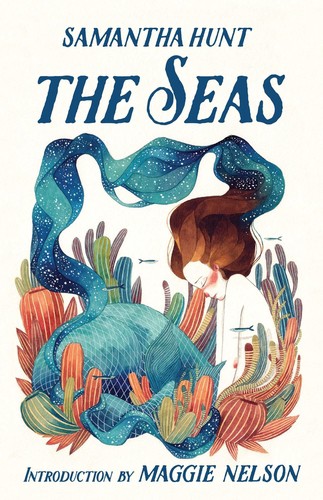
The Seas, Samantha Hunt’s first novel, is as disturbing as it is beautiful. It is a literary equivalent of the Rubin vase, the ambiguous image, multistable perception that shocks us back and forth between two possible realities of a story all dependent upon the gaze of the reader at particular moments. Our narrator is either a real mermaid or a schizo-affective depressive circling down the drain of a heavy mental breakdown. We think we have to choose between these sides of perception but we don’t. The richest understanding of The Seas comes as we see that these two interpretations are not mutually exclusive. We can witness the vase and the face.
Purchase the book

To see The Seas alone as a love story between mermaid and man would leave it without the depth of its tragedy and humanity. It is not only a mermaid story. It is the story of a young woman struggling for meaning in her lonely world, striving for love and connection at any cost; and if such meaning cannot be found in her material world then she will construct it herself. The story is a lenticular print — nothing flat and matter of fact — a photo shifting as the light hits it from different angles. There is the illumination of the story through fantasy, and there is its illumination from psychology; both scales, sides of history, enriching alone, but most valuable to our language as the interpretations come together.

Samantha Hunt comes from a scientific background, a geology student turned creative writer, she has a trust in the creative power of science. The potential of language within the realm of the scientific pushed her ever deeper into the crafting of words, a craft we can see clearly forming in The Seas. The Seas was reissued this year by Tin House with a provocative introduction from Maggie Nelson.

I spoke to her about psychology and mythmaking, structuralisms and relativisms, and the need to bridge the gap between the two.

Marlena Gates: There exists in the narrator of The Seas a longing for convergence of science and myth in the making of her identity. How do you see the stark division of the arts and sciences, storytelling and experimentation, in our current culture? Does it hinder us as humans more than help, especially in dealings of the language of psychology and mental illness?

Samantha Hunt: Something surely is broken, something that could anchor humanity in compassion rather than greed. Imagined binaries are part of that. However, we are also living in an era where science is seriously threatened by capitalism, climate change deniers and an opioid epidemic courtesy of the pharmaceutical industry in the name of medicine. But, as your question asks, in the making of identity, story and science are brain and skeleton, respectively. I like to imagine that anatomy model, the myth organ tucked in by the pancreas. There are a number of artists making wonderful scientific experiments. What freedom.

The world dismisses girls, stories and the imagination. I do not. I have three daughters, three sisters, three nieces, even three moms. I am surrounded by girls who tell me stories I believe. One daughter asks, “What does the sun smell like?” What an important question, an investigation that is narrative and science. This is what I can do to change the parts of the world that hurt me. We understand the natural world best through narrative, just as we understand justice, death, the ocean, illness, and love, through narrative.

The world dismisses girls, stories and the imagination. I do not.

MG: I believe a book as The Seas can help us to understand disassociation and identity disorders better than most psychology textbooks, as it shows us the personal and structural reasons why people need myth-making to survive. What can you say about this? If allowed, can magical realism perhaps inform our understanding of mental illness — particularly schizophrenia/schizoaffective disorders?

SH: I wonder if need is a strong enough word for our relationship to myth or story or imagination. Whatever we call it, it is creation. Try to think without language. It is impossible for someone who has learned to speak. I look out my window now and there is the story of blue, the story of green. Are our stories of green the same? Not exactly but close enough I hope that we can use words to understand one another in a word-less moment of greenness. Here’s the fascination with Kaspar Hauser and others who did not learn language until later in life. What was thought to Kaspar? Image alone. I don’t know much about schizophrenia but I do know that storytelling is human, helpful, eternal, compassionate and unlimiting whereas diagnosis sets a boundary that constricts. Boundaries are sometime helpful. It’s true. For example, the boundary of a period, imparts the sense to the end of my sentence. But boundaries are really only helpful when the body in question is the force setting that boundary.

MG: Could magical realism be understood as modern-day mythmaking?

SH: I don’t often use the word magic. Magic is easily gendered and dismissed. I do not separate stories from my material reality because when I ask, “What am I made of?” the answer is: William Faulkner, Toni Morrison, Madeline L’Engle, micro histories my parents told me of their lives. I’m made of the books I read as a girl, a lot of them fictions. (A more honest accounting would also include V.C. Andrews and Danielle Steele, plus every Choose-Your-Own-Adventure I could order from Scholastic.) I also don’t separate myth from history. I lived in Ireland when I was a teenager. Someone took me to Queen Medb’s tomb, a tremendous mountain-size limestone cairn. I said, “I don’t understand. Queen Medb isn’t a real person, right? She’s a story. Why does she have a grave?” They’d look at me with pity, thinking it so sad I still believed there was a division between history and myth. I still thought George Washington cut down his father’s cherry tree.

The danger in thinking this way without reality boundaries (that period) is that one could argue this is how we’ve arrived at fake news. This has been troubling me lately until a wise man recently reminded me that there is a big difference between truth and fact. Stories are true. Untrue facts are lies. Alex Jones is not a fiction writer. He’s a liar.

The other side of this answer is that when I read Octavia Butler or George Orwell here and now, I see how science fiction work from twenty, thirty, a hundred years ago was an amazing act of reading signs, following logic to see where we were heading. Writers of science fictions are Cassandras sending out early warnings.

MG: In a way, the narrator was quite accurate in believing she had an eye problem. Research shows that how the eyes move and focus correlates directly with schizophrenia and depression; patterns are clearly there yet doctors are at a loss to understand them; whereas, our narrator seemed to understand her case better than them in that way — she really did have an eye problem. Did you know about this clinical research or did you write the narrator’s obsession with her eyesight organically?

SH: Again, I don’t know much about schizophrenia but what fascinating research. I use my narrator’s eye problem to address the idea of forming identity in a small town. What do you see? What do you not see? How does what others see about me, shape my person? We put such firm trust in our vision when we already know that our eyes are actually spotty and poor perceivers, giving speckled information to our magnificent brains that do the work of filling in all of vision’s holes, in order to present a wholeness. Vision is already imagination yet we trust it implicitly. Why then are we so suspicious when it comes to imagination and metaphor?

The Seas is all about taking words that wound you, and changing the meaning of those words. Call a young girl crazy. Call her a slut. If she is creative, if she is free, she will learn to make something new from that old cloth.

MG: Disassociation and delusion or displacement and identity crisis; how much does the distinction between our narrator’s created mythos, and her diagnosed delusion (from mother and doctors), matter?

SH: So, you don’t believe she’s a mermaid? I sometimes think of The Seas as a measure of optimism. Whether or not she is factually a mermaid matters less to me than her truthful reasons for needing to be one. I won’t separate her from her imagination. A number of people in my life see ghosts. I don’t particularly believe in ghosts. But, I believe the people who say they believe in ghosts.

MG: Our narrator is convinced she is a mermaid even as everything warns her of the danger to the man she loves, Jude, if she really is. In my reading of The Seas, I could not help return to the feeling that this story has so many larger implications for the strife of modern-day relationships — with men and women so painfully alienated from one another. If the mermaid is a creature born from a mythic “war of the sexes,” how much is The Seas, in a sense, about the impossibility of love in a time of gender warfare?

SH: The myth of the mermaid is such an odd horror. We created females who are really sexy, have no genitals, are freezing cold and kill men. That’s nuts. And then we sell this image in every seaside gift shop as an attempt to modify the myth. We make it desirable. We make it about swimming. There’s a lot of unpacking to do around the mermaid. Sex and fear, desire and the ocean. I couldn’t resist trying to understand this complicated thing through a wounded adolescent girl, brimming with passion and lust. Jude is very messed up. It’s true. He’s got PTSD. He’s an alcoholic. He’s probably dead. But he does manage to take care of the narrator. How we care for other humans is of great interest to me. So, I give her the position of power, the murderess mermaid, and hope that compassion wins out.

MG: How much is love always about seeing the other through the Mercator projection?

SH: Isn’t there something wonderful about that though? Isn’t that proof that we tell stories not to avoid an idea of truth but because we are creative, adaptive, hopeful and generous creatures. I love Mercator’s Projection. I remember the example my teacher used was tiny Iceland. On the flat map, it gets to be a giant. That resonates with me. Iceland dreaming of hugeness. One of my daughters is very small in body and yet, anyone who knows her would absolutely call her a giant. Mercator’s Projection gets to the heart of how narrative twists a body, for good or bad and love, as mode of exploring the other, will of course have to grapple with questions of perception.

MG: Untranslatable words, arcane words, lost roots, all the characters seem lost to find the right words for their experience of loss and trauma. They have lost the “L” to their “ost oves” — yet, still, language hovers over them all. How much of The Seas is about the need to find a language for loss, for identity, for love in a time of impossible strife?

SH: The Seas is all about taking words that wound you, and changing the meaning of those words. Call a young girl crazy. Call her a slut. If she is creative, if she is free, she will learn to make something new from that old cloth. Call a father dead, and then see how perhaps he’s simply swimming in an ocean large as all time.

Also, I love old dictionaries. I love learning the stories behind etymologies, say how the woman Dangerose becomes dangerous. I love writing fake etymologies too. Naming is narrative. My grandma was a poet and was once asked to name a new road. She called it Lilac Lane. Simple, sturdy but saccharine. I thought about that for a long time, how the name would affect the people growing up on that road.

I sometimes think of The Seas as a measure of optimism. Whether or not she is factually a mermaid matters less than her truthful reasons for needing to be one.

MG: Our narrator craved meanings, even if not her own, even if made up. Was it an intentional irony that your narrator craved affectation in a sense — in her fascination with science and obscure words — yet these words were ever absent?

SH: I studied geology in college. One of my favorite texts books was Waves and Beaches by Willard Bascom. In that book, Bascom writes that there are hundreds of waves that have yet to be named. This idea has stayed with me for two reasons. The first reason is because it makes me wonder about human’s adorable ideas of ourselves. The ocean doesn’t care what we call it. But, reason two, is that language matters deeply to me. If I named one of those waves “bunny rabbit” that would surely change how we think and feel about it. Language, despite its shifting nature, is extremely real, extremely affecting. And science does not leave me cold. Science loves me back. It took me a long time as a young woman to know that I was half of every couple I made. I do think that identity troubles are often a problem of lost or missing language and if someone can provide the right word to you, what a gift, a new window.

MG: Was the narrator’s determination to create meaning out of what was available to her, through storytelling and magical interpretations, a way to distance herself from the stark truths of her dark and damp post-industrial waste of a town? And do the sad reasons she created her stories matter, or is it what is created that matters, or both?

SH: Telling stories is an act of hope. She doesn’t like the reality she’s been dealt and so she will fashion herself a new one through language. That doesn’t feel sad to me. Words make matter, material. She’s making a new world that doesn’t hurt so much.

You Know You Want to Open It

The Impractical Door

I woke up one morning and didn’t have amnesia. I could remember everything that had ever happened to me, and I knew my name. It was Carl. I also did not awaken in a white hospital room, tethered to strange machines. Furthermore, I had not been cloned. My trusty sheepdog was still by my side, and had not, and I promise you will not, be murdered. He has never herded sheep, though, and for that I am sorry.

What did happen was a door appeared where before there had not been a door. I am an observant person and I had lived in my home for twelve years and there had never been a door in the wall of my bedroom. It looked like the other door, the one that led to the hall, so a less observant person could have passed it by for a couple of days or maybe weeks, but not me. I observed it.

You know several things about me but one thing you probably do not know is that I’m not a snoop. I am a naturally curious person, but only of those things that I seek out. My curiosity is active, not passive. I am not interested in other people’s secrets, for example. For this and other reasons people are often confused by me. The feeling is mutual.

What happened is that I did nothing about the door for a very long time. Why? It seemed completely irrelevant to anything about me. I own a little hotdog shop, open from 11am to midnight, and I can only afford two other employees. I don’t have hours of free time to be opening strange doors.

What could possibly await behind that opened door? The most likely answer is nothing. It probably opens up into a wall, or alternately, it simply opens into the hall. Maybe you will finally believe me when I say I have not completely inspected the other side of the door, so I have no idea if it even plausibly opens into the hallway. There would probably be visible hinges, now that I think about it.

The most unbelievable possibility is that the door is a passageway into another world. Maybe it’s a passage into a different time. I ask, what good would that do me? The chances of ending up in a den of dinosaurs is far greater than any more desirable spot. I like my hotdog shop! I like hotdogs! The door doesn’t bother me!

Then my sheepdog started barking at it. This happened regularly, three times a day, like he was suddenly angry with the door. Like he wanted to tear it apart. Gnaw it to pieces. Maybe he thought there was something behind the door. I am a reliable person, but my sheepdog, it’s true, will sometimes bark for no apparent reason.

However, he does not bark three times a day like clockwork for no apparent reason. At least until now. I’m beginning to think that there might be something more to that door than meets the eye.

So what the hay, it’s now taking up so much of my time thinking of perfectly logical reasons not to open the door that it’s probably reached the point where I should just open it. Dealing with the consequences of opening the door can’t possibly outweigh the bother of explaining myself. With my dog at my side, barking his freaking head off, I open the door.

I am bathed in light. I’m telling you this as if it’s happening right now, but I’ve already done this. I opened the door probably six months ago. Anyhow, I am bathed in light. It is a gorgeous, golden light that feels like nothing I’ve ever experienced. It is the first true moment of peace I have felt in all of my life. This light would never ask me why I didn’t want to open the door. It wouldn’t even occur to it!

The light communicated to me that this was heaven. If I went through this door, I could skip the pain of death and get right on with eternal life. I can’t explain it to you any better than that without you having been there, so I have to reiterate here, I’m a reliable person.

Your choice, the light says, and that was the end of the sentence. I know it means the ball’s in my court and if I don’t go through now, I’ll not have this opportunity again until death visits, and at that time, I am not guaranteed that this door will appear. Seems there are several different doors and they don’t lead to the same place.

Anyway, if you’re an observant reader, you might have already guessed that I said no. I did not walk through the door. I chose not to skip death. I felt completely understood by the light, and this is why I said no. If I walked through that door, I would never again surprise anyone. Everything that I do, think, or say, would be met with a calm, peaceful, loving smile and warm acceptance.

Who can live like that?

So now, because the door is still there, but cannot be opened, I tell people that my sheepdog built it. He did it after he was in the hospital, tethered to strange machines that performed a procedure on him he can’t remember. He has amnesia, but in reality, behind that door is his clone, and every day, three times a day, they meet, one on one side of the door and the other beyond, so that they might sing their rage to their lost selves as loudly as they possibly can.

About the Author

Chris Haven’s short prose appears or is forthcoming in Denver Quarterly, North American Review, Jellyfish Review, and Kenyon Review. He teaches writing at Grand Valley State University and lives in Grand Rapids, Michigan, where all the doors seem practical.

“The Impractical Door” is published here by permission of the author, Chris Haven. Copyright © Chris Haven 2018. All rights reserved.

14 Diverse Romances that Deserve Their Own Movie Adaptations

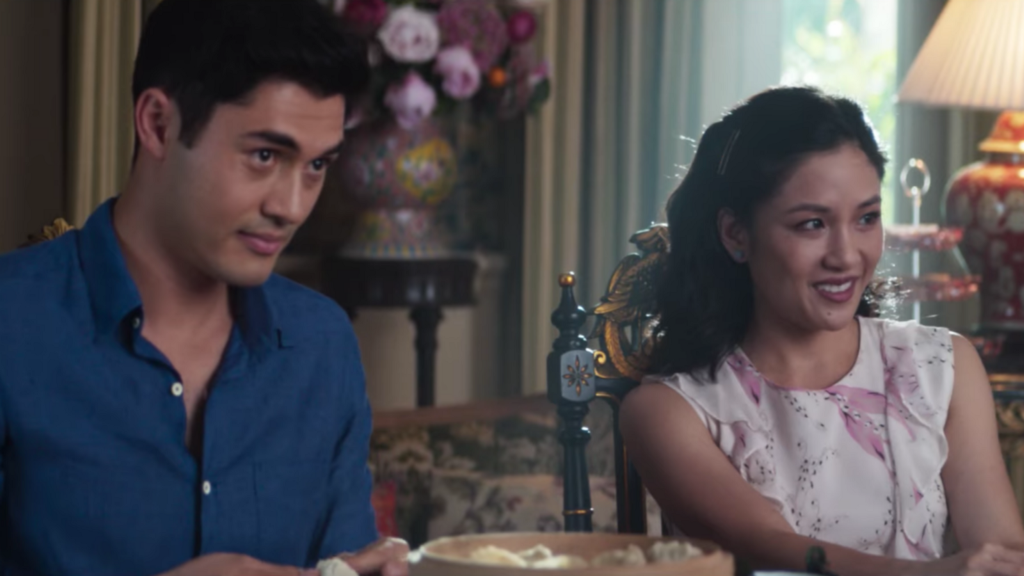
Let’s give a big round of applause to Crazy Rich Asians for topping the box office two weekends in a row! The general plot of the book (and the movie) is basic and universal: girl meets boy’s family, and family does not approve. Cue the shenanigans. The movie is fun, but what’s driving the hype is that Crazy Rich Asians is the first major Hollywood movie with a predominantly Asian American cast in 25 years. That’s right, it took Hollywood 25 years since The Joy Luck Club to produce a movie with an Asian cast.

Hollywood is infamously bad with diversity, but it’s movies like Crazy Rich Asians that get the ball rolling towards more nuanced representation. That being said, Crazy Rich Asians alone is not enough. One movie can only represent a few people, and in this case it’s the wealthy Singaporean Chinese elites. That’s a pretty narrow scope.

We need more great books up on screen as adaptations to tell more stories. Netflix is doing its part with the casting of Asian American actress Lana Condor in the lead role of the recent hit adaptation of Jenny Han’s To All The Boys I’ve Loved Before, and there are many more wonderful characters that have been sidelined or completely erased in movies. We need more diverse meet-cutes, star-crossed lovers, and rom-coms, because straight white people aren’t the only ones who fall in love.

Here is a list of romances that can follow in the trail-blazing path of Crazy Rich Asians and shine the spotlight for underrepresented groups.

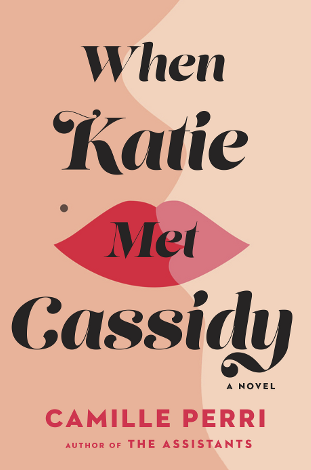
When Katie Met Cassidy by Camille Perri

Katie Daniels is drinking away her sorrows after being dumped by her art curator fiancé for her best friend when she bumps into Cassidy, a fellow lawyer and a confident woman wearing a man’s suit. Katie (who always thought of herself as straight) finds herself intrigued by Cassidy and a romance ensues. Vogue called When Katie Met Cassidy “a delightful, sexy, sweet novel about two women falling in love.”

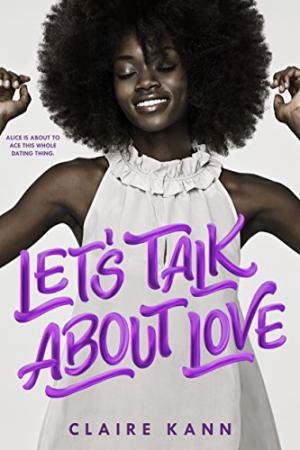
Let’s Talk About Love by Claire Kann

Biromantic asexual Alice gets dumped when her girlfriend catches on to her lack of sexual interest. Fed up with dating and ready to melt her summer, Alice throws herself into binging her favorite shows and occasionally heading off to her library job to pay off rent. It may not be the most fun, but at least it’s a break from the pre-law courses her parents pressured her into. Then she meets Takumi, the painfully attractive, fun, and flirty new face at the library. Now Alice has to decide whether to keep it platonic or if the outbreak of butterflies in her tummy are worth coming out of the ace closet and risk getting dumped again.

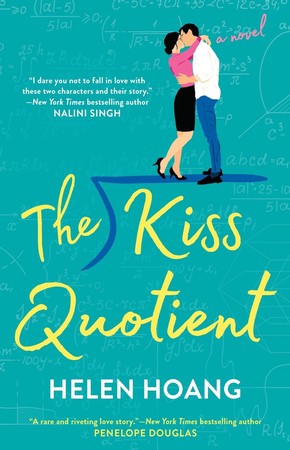
The Kiss Quotient by Helen Hoang

In a logical universe, there is nothing that cannot be calculated, predicted, or reasoned out, and that includes romance. Stella Lane doesn’t get romance, especially the practical side of it, so the only reasonable course of action would be to hire a professional to help her learn. Enter Michael Phan, a hired escort who is very good at his job. Stella soon finds her world view shaken to its core and doesn’t mind it as much as she’d thought.

When Dimple Met Rishi by Sandhya Menon

Dimple Shah’s somewhat traditional Indian-American family are eager to matchmake her with a perfect husband, but Dimple could care less as she is more interested in her future career as a web developer. Rishi Patel on the other hand has his head full of hearts and roses, so when he hears that the woman his family wants to set him up with will be taking part in the same summer computer course as he is, daydreams of courtship begin to sprout. Their mismatched intentions set the entire affair off on the wrong foot.

The New Voices of South Asian Young Adult Literature

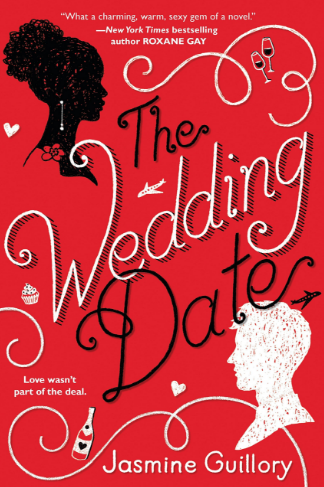
The Wedding Date by Jasmine Guillory

When an attractive man and an attractive woman are stuck in an elevator for a significant length of time, it is only natural they come out as a fake couple. Drew Nichols needs a date to his ex-girlfriend’s wedding. With some convincing and more than a few peeks at his well shaped backside, Alexa Monroe agrees to play the part. The plan goes perfectly, and when the weekend ends, the two go their separate ways, but out of sight doesn’t necessarily mean out of mind. Cue the start of a pining, long-distance relationship.

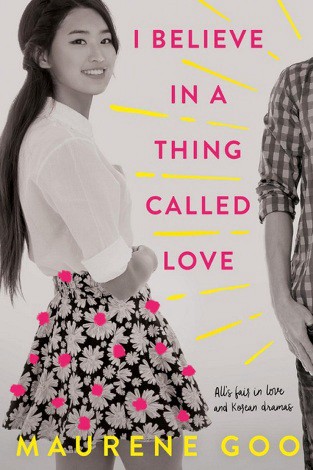
I Believe in a Thing Called Love by Maurene Goo

Desi Lee has a crush and no idea how to proceed from there, so she turns to the most authoritative source of romance she can find: Korean dramas. With a meticulous plan to get her guy by episode ten, she has every confidence in her strategy, but real life doesn’t work the same way as a K-drama no matter the extreme length she goes to ensure success. It is obvious Goo loves K-drama with all the hilarious ways she exploits its tropes. She has no shame about poking fun at the cliched romance plots of the genre in the most ridiculous ways.

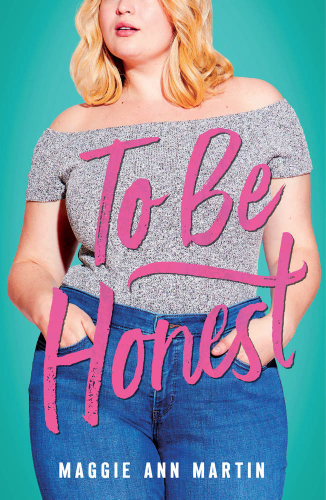
To Be Honest by Maggie Ann Martin

This uplifting story features an unashamedly plus-sized heroine who rejects the world’s insistence that she love her body any less. Stuck at home until she can graduate and move out, Savannah must deal with her diet obsessed mother whose unhealthy fads threaten to tear apart the household. As if that weren’t enough her own worsening anxiety disorder adds to the stress. Luckily with supportive friends and George, a cute guy with his own insecurities, Savannah has a shot at beating back the gloom.

Virgie Tovar’s Reading List for the Fat Babe Feminist Revolution

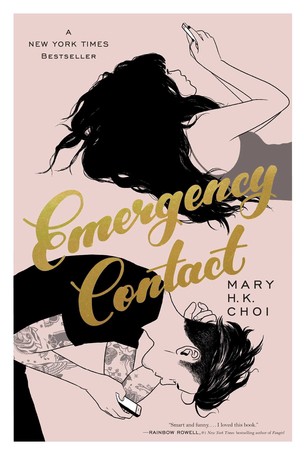
Emergency Contact by Mary H.K. Choi

Though funny at times, Emergency Contact changes up the tone with a quiet story about midnight texts and finding a person that makes you feel a little less lost in the world. Two strangers meet under less than ideal circumstances and through an exchange of numbers become closer than either thought possible. The distance of a screen allows each to open up; family baggage, homelessness, sexual assault, and unhealthy relationships all come to light as they type messages back and forth. In the end, an emergency contact is the number you can always count on to be picked up.

Intercepted by Alexa Martin

The first of two books in Martin’s Playbook series, Intercepted dives into the crazy world of football wives. Marlee Harper has had enough when she catches her NFL baller boyfriend cheating with multiple other women. She was too good for him anyway, and an old flame from her past has the sense to realize it and make his play while he can. Even after swearing off athletes, Marlee decides this one may be worth a chance. Too bad for them a relationship mid-season doesn’t just involve the two lovebirds but the whole team, which includes a crew of over protective wives.

The Book of Unknown Americans by Cristina Henríquez

Arturo and Alma Rivera bring their teenage daughter from Mexico to Delaware after Maribel suffers a traumatic brain injury. Life is not easy in their new country, Arturo is reduced to the back-breaking work of picking mushrooms for a living and Alma struggles to adapt. The Riveras find kinship in their Panamanian neighbors Rafael and Celia Toro and their son, Mayor and a romance blossoms between Mayor and Maribel. But trouble comes in the form of a racist local teenager.

My So-Called Bollywood Life by Nisha Sharma

Vaneeta “Winnie” Mehta believes that her boyfriend Raj and her are soulmates, after-all their match was divined in a star chart. So Winnie is heartbroken when she discovers on social media that Raj is cheating on her. In a fit of rage, she breaks into his house to bury all the momentos of their relationship only to get caught. Scripted like a boisterous Bollywood movie, this book embraces Indian culture as Winnie tries to find the happily-ever-after she is destined for.

The Victoria In My Head by Janelle Milanes

Victoria Cruz is a shy, sheltered scholarship student at a private high school, trying hard to meet the high expectations placed by her overprotective Cuban parents. Determined to break out of her mold, she auditions to be the lead singer of her school’s rock band. Victoria catches the attention of “sex god” guitarist Strand and nice-guy bassist Levi, leading to a complicated love triangle.

Ayesha At Last by Uzma Jalaluddin

Ayesha Shamsi dreams of becoming a slam poet, but settles for working as a substitute teacher in order to repay her debts to her rich uncle. She meets Khalid Mirza, a handsome and conservative project manager who immediately annoys her with his haughtiness and judgmentalness. But Ayesha can’t stop thinking of him and their attractions grows until an unexpected engagement between Khalid and her sister Hafsa is arranged. Ayesha At Last is a modern twist of Pride and Prejudice set in the Muslim community of Toronto with a Hijab-wearing Elizabeth Bennet.

It’s Not Like It’s a Secret by Misa Sugiura

16-year-old Sana Kiyohara has moved from a predominantly white town in Wisconsin to super-diverse California: “In Wisconsin, I was constantly trying to escape the fact that I was Asian, and hoping that people either didn’t notice or didn’t care. Now…I can be openly Asian. For the first time in my life, I feel like I belong.At her new school, Sana develops a crush on Mexican American classmate Jaime Rodriguez, but issues of race, identity, and sexuality hamper their budding relationship.

Misogynistic Dystopias, Ranked By How Likely They Are in Real Life

Between the corrupt president’s Supreme Court pick promising to topple Roe v. Wade, the expanded “global gag rule” that prevents international NGOs from disseminating information about abortion, and the constant attacks on Planned Parenthood, it can be easy to feel like we’re living in a misogynistic dystopia straight out of science fiction. We’re not, of course—we’re living in a misogynistic dystopia straight out of reality! But we’ve got plenty of fictional models for where it might go next, if things really get out of hand. What we don’t know, yet, is which one is most prophetic. Which grim woman-hating future is the one most likely to make the move from fiction to fact?

Before we begin, a brief explanation of the two terms. Misogyny, according to the OED, dates from the 17th century, and is the “Dislike of, contempt for, or ingrained prejudice against women.” Dystopia, according to the OED, is “An imagined state or society in which there is great suffering or injustice, typically one that is totalitarian or post-apocalyptic, and comes to us in the 18th century. Because of course we imagined a word for hating women before we imagined a word for a world gone wrong.

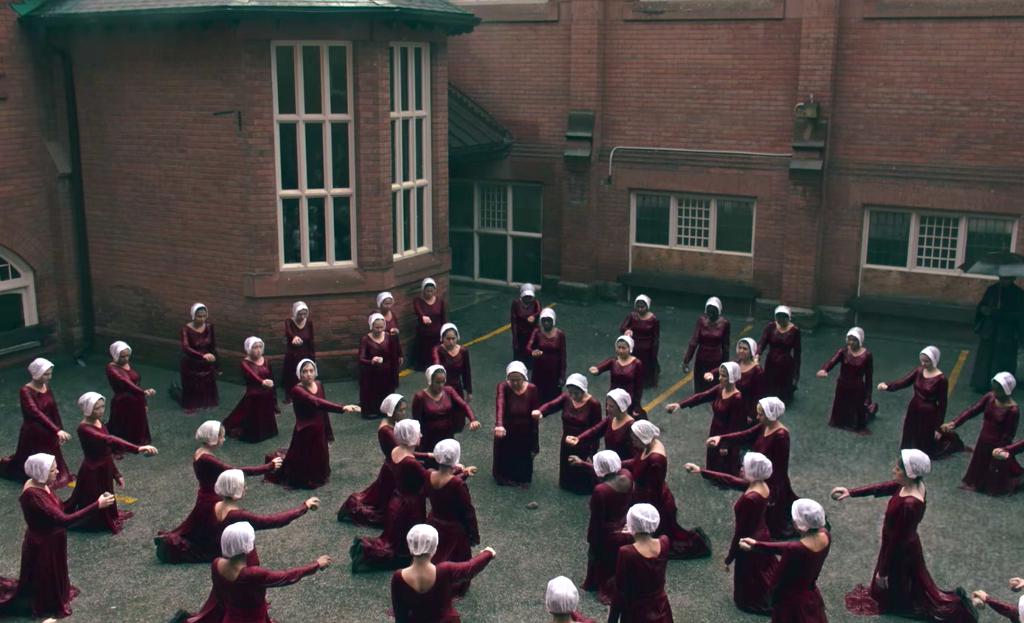
So what do you get when you combine the two? Misogynistic dystopia is an imagined state in which the defining injustice is inspired by hate for women. Stories like this have been popular lately—perhaps because it’s comforting to know it could be worse, perhaps because it’s galvanizing to know what might be next. Here are ten recent misogynistic dystopias, ranked according to how likely they are to come true. (We’ve left off The Handmaid’s Tale because it’s more than 30 years old and so much ink has been spilled about it already, but lest you forget: every aspect of Gilead in the book is based on something that has already happened, somewhere in the world.)

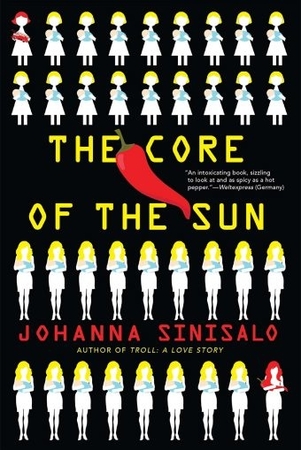
10. The Core of the Sun by Johanna Sinisalo

What happens in a future Finnish welfare state, where social stability is the most important thing? In the Eusistocratic Republic of Finland, women with brains are being genetically phased out, while the genetically modified sub-species of women called eloi are being phased in. These eloi women are submissive, intellectually non-existent vessels for sex and reproduction. Women with brains — dubbed morlocks— are tasked with menial forms of labor and “sanitized” to eradicate intellectual women from the country. A story about women’s rights, addiction, and patriarchal regimes that’s braided together from fictional folk songs, homework assignments, scripts, and advertisements (including a real Finnish magazine article from 1935), this one lives up to its description as “Finnish weird.” The morlock/eloi setup seems like something out of an incel wet dream, but those guys are probably not going to wind up in charge, and other aspects of the book (the big illegal stimulant is chili peppers?) push it further out of the realm of likelihood. Anyway, if it did happen, it would probably be in the U.S., not Finland.

9. The Orchid Nursery by Louise Katz

In The Orchid Nursery, boys are named after royalty and girls are named after dirt, rocks, and minerals. The girls are raised in dorm-like co-living spaces under the rule of a kind of den mother, who indoctrinates them with a misogynist scripture preaching purity, perfection, and submission. To be “Perfected” as a womanidol in the Orchid Nursery is the greatest achievement. The misogynistic dystopia in The Orchid Nursery examines how religious zealotry can be adopted in the service of domination, violence and the obliteration of diversity. That part sounds pretty realistic! But the book envisions a whole new religious system for female oppression, when the ones we’ve already got would probably do the trick just fine.

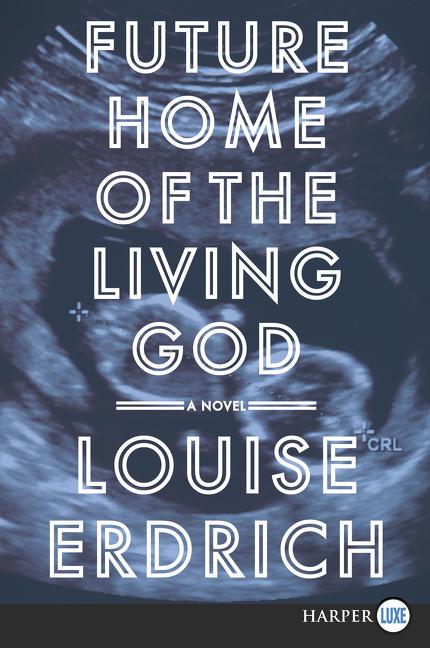
8. Future Home of the Living God by Louise Erdrich

A lot of misogynistic dystopias focus on restricting women’s reproductive rights. In a misogynistic dystopia, women are only important in so far as they can do something for men, which often means making babies. In Future Home of the Living God evolution is happening in reverse: birth rates have plummeted, and the women who carry to term are dying in childbirth or delivering babies with severe, atavistic birth defects. Naturally, it’s seen as women’s fault, and naturally, the government has a violent solution. The part with the government wanting to force women to get pregnant and give birth is barely fiction, but the “reverse evolution” thing is pretty far-fetched (widespread birth defects maybe, but probably not ones that across the board seem to be returning the species to an earlier form of hominid). They’ll have to find another excuse.

The Best New Books of June 2018 – Chicago Review of Books

7. The Completionist by Siobhan Adcock

In the future, infertility rates soar. The solution? Blame women, then zap their agency — take them out of the workforce, and regulate child-rearing with standards that are impossible to achieve without the assistance (read: monitoring) of a Nurse Completionist. Rising infertility is pretty plausible, blaming women and using it as an excuse to restrict their freedom (reproductive and otherwise) is extremely plausible. But the government investing in a whole subset of health care? Nah, we don’t see it happening.

Vox by Christina Dalcher

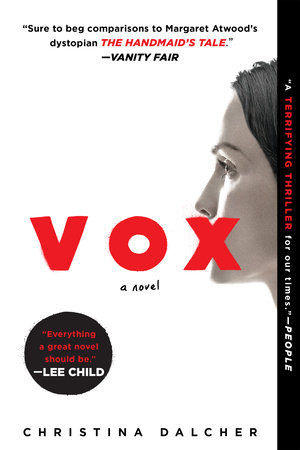
6. Vox by Christina Dalcher

In a United States where the character limits of Twitter take on real-life dimensions, women are no longer allowed to speak more than 100 words per day. Shortly after the decree takes hold, women are no longer allowed to hold jobs, and girls are not taught how to read or write. Vox hits hard on the idea that you should speak up while you have a chance, but how likely is this 100-words-a-day regime? Well, a lot of the men in charge do think women should be seen and not heard, but the challenges of outfitting an entire population with Fitbit-style bracelets that both count words (how?) and give them electric shocks when they run out just boggles the mind. A very plausible misogynistic fantasy, but not a likely future.

My Life in the New Republic of Gilead

The Little, Brown Annotated Book Sweepstakes | Little, Brown and ...

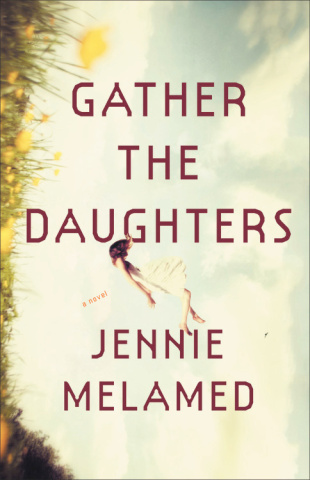
5. Gather the Daughters by Jennie Melamed

In the face of oncoming destruction, ten men escape to colonize a nearby island, building a society founded on ancestor worship and breeding where history is censored and knowledge regulated. The sons of the ten men — deemed the Wanderers — are allowed to go back to where they came from, in order to scavenge the wasteland for valuable resources. The daughters of the ten men are groomed for marriage. The “Season of Fruition” is the only time women matter — again, because they are vessels for the production of future men. When the “Season” ends, and they are no longer fertile, the women are killed off. This one moves up a few spaces because of the small size of its dystopian community; while we don’t see, say, the United States summarily murdering women who are too old to reproduce, it’s a lot more believable in a cult situation.

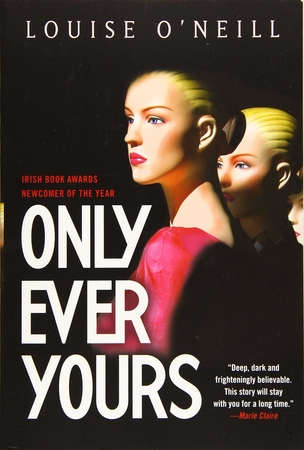
4. Only Ever Yours by Louise O’Neill

You have three choices for a school major and life plan: companion, concubine, or chastity. As a companion, you will be a submissive wife to a man your age. Become a concubine, and you will service men sexually for the rest of your life. Choose chastity, and you will teach the next generation of girls to make the same choices. But of course, these are not choices you get to make, these are choices made for you. To be a companion is rare and desired — only the top ten of every class are chosen—so you have to look the part. There are mirrors everywhere. Your body is everything. This is the setting for Louisse O’Neill’s novel, which she wrote after leaving a job at Elle magazine, where she witnessed the daily commodification of women’s bodies. In other words, this is only a lightly exaggerated version of the world we live in already.

3. Daughters of the North by Sarah Hall

As the debate over the 2020 Census citizenship question continues, this one makes it pretty high up on the list. Severe environmental degradation and economic collapse in near-future England coupled with the results of a census have given the powerful few permission to oppress the many in service of the “common good.” Citizens have been corralled into urban centers and reproduction is now fully regulated by the state. Women are chosen to give birth, according to a lottery, and those who aren’t are forcibly fitted with IUDs. Yes, it’s all a bit extreme compared to what anyone’s currently proposing, but the environmental and economic devastation are plausible verging on inevitable.

27 Best Spectacular Science Fiction images | Fiction, Novels ...

2. The Book of the Unnamed Midwife by Meg Elison

A plague has swept the country and the odds aren’t good — 10 men for every woman left alive. Pregnancy is fatal for all infants and most women, making women even more vulnerable to the consequences of the fever years after the first fever swept through the country. The protagonist — who goes by Karen, Dusty, or Jane — is a bisexual former nurse and midwife traveling under disguise as a man, from San Francisco across the western US to administer birth control to women. If you’re wondering how a post-apocalyptic novel made it so high up the list, read this Slate article on the correlation between Zika, reproductive rights in El Salvador, and this exact book.

In 'Red Clocks,' Leni Zumas Imagines What Happens When ...

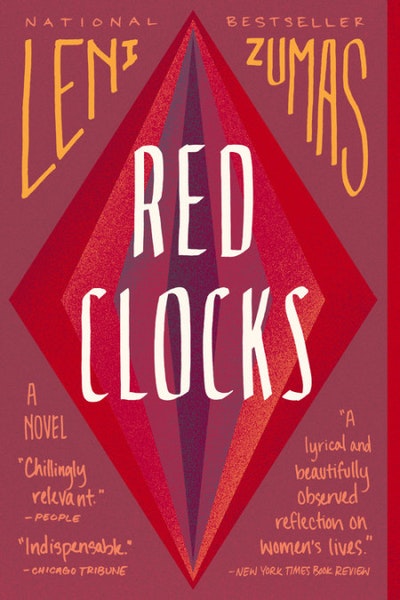
1. Red Clocks by Leni Zumas

In Red Clocks, a Personhood Amendment—a real piece of legislation really passed by some states, proposed in others, and routinely introduced in Congress—has become law at a national level. The fetus now has the right to life, liberty, and property. Abortion and in vitro fertilization are both illegal, and single parents are soon to be disallowed from adoption. In the small town in Oregon, five women deal with the consequences of being reduced to a uterus. (Spoiler: being reduced to a uterus sucks.) This book is horrifyingly plausible: no made-up oppressive theocracy, just the one we’ve already got, succeeding in goals it’s been nakedly pursuing for decades. It’s not just the most likely dystopia to happen—it practically already has.

Celebrate Women in Translation Month With These 13 Translated Books

Here is a fun fact: only 3% of books published in the U.S. are translations. Here is an even more fun fact, out of that measly percentage, fewer than 30% are books written by women. Math is hard, but you don’t need a calculator to realize that these figures mean less than 1% of books published in the U.S. are written by women who work primarily in non-English languages. French, Spanish, German, Chinese, Russian, Italian: There are countless books cut out of the literary landscape for monolingual English readers, and the few that do make it into translation rarely get the credit they deserve.

Back in 2014, a blogger had the epiphany that should have come much sooner: We need an official month for this. Meytal Radzinski dubbed August the month for Women in Translation. Her goal was two-fold: (1) “Increase the dialogue and discussion about women writers in translation,” and (2) “Read more books by women in translation.”

The more we read, the more we talk, and the more we talk, the more incentives we give publishers to translate more women. That’s the circle of publishing life. The best way to broaden your book horizon is to look outside of the mere 15% of the world that speaks and writes in English. That’s enough with the numbers, let’s get to the books and the women to whom we dedicate the month of Women in Translation.

The Unwomanly Face of War by Svetlana Alexievich trans. Richard Pevear and Larissa Volokhonsky

Winner of the Nobel Prize in 2015, Alexievich puts into writing the oral histories of Russian women at war. These are not glorified tales of patriotic bravery but the quiet voices that history books erase. Alexievich built The Unwomanly Face of War from interviews with gunners, pilots, tank drivers, and nurses alike, all of whom were women that shared in the hardening experience of World War II. The testimonies given here bring forth the lost memories of how women survive changed but unbroken.

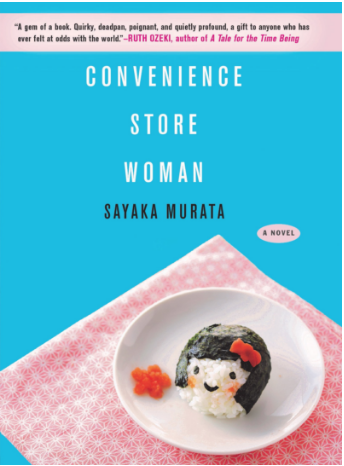
Convenience Store Woman by Sayaka Murata, trans. Ginny Tapley Takemori

The first of Murata’s novels to be translated into English, Convenience Store Woman is a masterpiece of defying expectations. Keiko Furukura finds comfort in conforming to a preset role, and life behind her convenience store counter is exactly that. Even after eighteen years she finds herself perfectly content, but Japanese societal pressures and familial concern threaten her state of bliss. Convenience Store Woman is a hilarious tale of rejecting conventions told by a narrator whose unique perspective is a charming as its is fun.

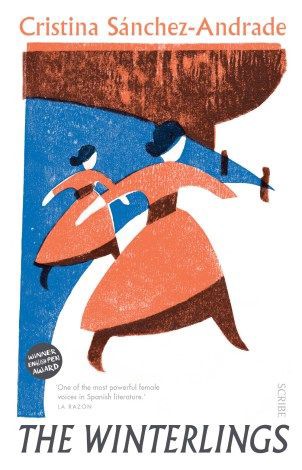
The Winterlings by Cristina Sánchez-Andrade, trans. Samuel Rutter

Two sisters return to live in Tierra de Chá, the Spanish village where their grandfather died a strange death. From the psychic to the dentist, everyone keeps secrets in this village, and so long as those secrets remain unspoken the tentative peace continues. However, gossip has a way of seeping through even the smallest cracks. Praised for her storytelling that takes from the best of Spanish oral tradition, Sánchez-Andrade is a treat to read with magical realism, intrigue, and the kind of insight that makes even the strangest of characters recognizable at their core.

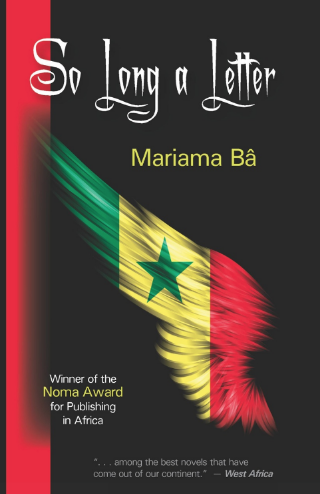
So Long a Letter by Mariama Ba, trans. Modupé Bodé-Thomas

As a school teacher, Ramatoulaye Fall is in a unique position to witness the trials of her fellow women, but her desire for progress is difficult to reconcile with a love for her country’s traditions—traditions which happen to be fading before her eyes. Polygamy and the suppression of women has inflicted only suffering, but what about the trades, the arts, and the culture that made her nation what it was? Ba, praised as one of the greatest African writers of the 20th century, tackles tradition versus modernity in this originally French semi-biographical novel on femininity.

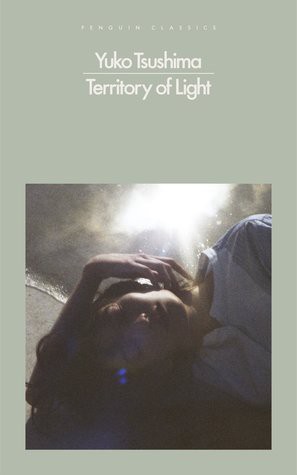
Territory of Light by Yuko Tsushima, trans. Geraldine Harcourt

A twelve-part story run in the Japanese literary magazine Gunzo, Territory of Light centers around an apartment building so overflowing with light that the single mother and daughter pair who inhabit it must squint when they come up the stairs. The apartment represents joy, safety, but also loneliness for the woman who finds herself alone battling for a divorce and for a future for her child. Each part of the story is an episode in their life from walks in the park to building repairs. Though mundane in subject matter, the book is written with a haiku’s lyricism that survives the translation from Japanese to English and explores the duality of isolation and peace.

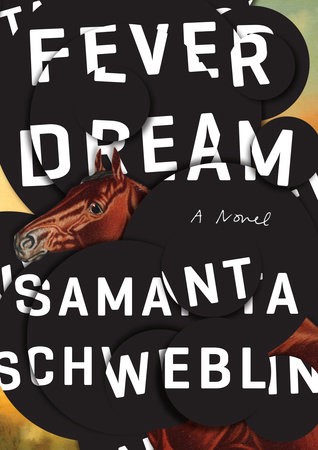
Fever Dream by Samanta Schweblin, trans. Megan McDowell

Worms. The word alone can make you wriggle in discomfort, but this book takes creepy conversations to a whole new level as a young boy whispers questions into a bedridden woman’s ear. Translated from Spanish, the novel reads almost like a play with its flowing dialogue between the two. The boy asks about his mother, and the woman in the bed answers as best she can. Mother-child relationships fracture, and all the while the worms that open the story lurk unaddressed beneath the surface.

Flights by Olga Tokarczuk, trans. Jennifer Croft

In a collection of thinly tied fragments Tokarczuk experiments the implications of travel. A doctor studies the anatomical purpose of the Achilles tendon for motion; a child stares out a window watching others depart; a dead man’s heart journeys from one city to another to attend a second funeral. The bits and pieces come together to make up a whole that philosophizes on the fluidity of space. Flights, from the Polish Bieguni, took home the Man Booker International Prize this year for its hodgepodge of comings, goings, and all the motions in between.

Umami by Laia Jufresa, trans. Sophie Hughes

Jufresa’s debut novel examines the end of grief as a rich experience with a flavor you can’t quite pin down. In a small housing complex just outside of Mexico City — each house named after a different taste — every resident has a story of grieve held close to the heart. It begins with a little girl planting a garden whose little sister is not longer by her side, but the novel does not dwell on individual pains. It moves, it heals, and it reveals the binding power of empathy.

The Crossing by Samar Yazbek, trans. Nashwa Gowanlock

Samar Yazbek was in exile from her native home of Syria, but regardless of the danger, regardless of the guns, fences, and soldiers, she did not let anyone stop her from going back. In 2012, Yazbek snuck her way into the country to collect testimonies of what their home had become. The stories recorded in The Crossing are written plainly from the perspective of a journalist, but they also hold the ache of one who knows the glare of a sniper’s scope and fears not for herself but for her fellow countrymen who are all struggling to survive.

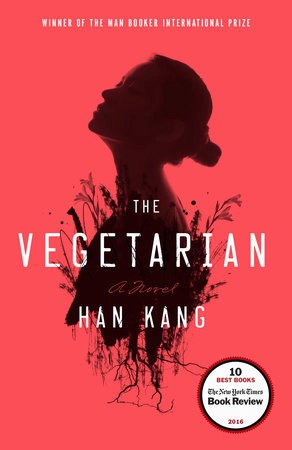
The Vegetarian by Han Kang, trans. Deborah Smith

The Vegetarian tells in three parts Yeong-hye’s decision to become a vegetarian. Yeong-hye morphs into a grotesque, rebellious creature, one to be coveted by her husband and disciplined by her family. Piece by piece her bodily autonomy is ripped away under their hands until all she has left to control is her appetite. Han Kang’s novel spares no punches in it’s portrayal of violation. Allegorical in nature, The Vegetarian reimagines personal suffering and the attempt to escape through passivity.

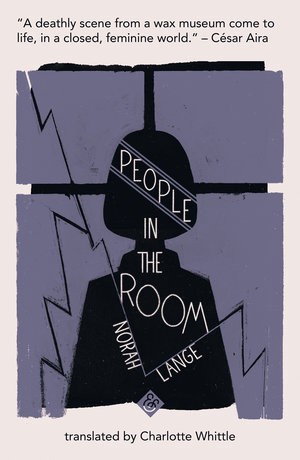
People in the Room by Norah Lange, trans. Charlotte Whittle

A girl in Buenos Aires gazes voyeuristically into her neighbors’ house and fantasizes about the life the three women lead. Each of them is enclosed, the girl and the women, and enclosure demands escape. The girl’s imaginings as she peers through her window are one form of escape, and in those imaginings she creates countless more: a life of criminality, murder, her neighbors’ death and her own. Observation and hallucination become one as the girl’s desperation increases to reach from her own enclosure to theirs.

The Complete Stories by Clarice Lispector, trans. Katrina Dodson

The Complete Stories features 89 stories taken from nine collections completed over the course of Lispector’s career. Lispector’s work has a reputation for being absolutely insane and more than a little brilliant. In this compilation, the narratives range from a housewife blundering through an existential crisis to a narrator contemplating an egg and that egg’s implications on the nature of the universe. The stories consistently find ways to confine amorphous thought into concrete words without losing any of the playful ambiguity of the original Portuguese.

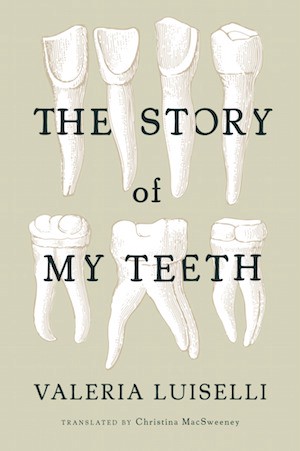
The Story of My Teeth by Valeria Luiselli, trans. Christina MacSweeney

No one can spin a story like a salesman. A loquacious auctioneer, Gustavo (Highway) Sánchez, puts a series of priceless artifacts up for sale: teeth straight from the mouths of the greatest thinkers in history. They belonged to Virginia Woolf, Borges, and maybe even Plato himself. As the prices skyrocket, Highway keeps to himself that the only mouth those teeth ever inhabited was his own. Dry and satirical, The Story of My Teeth is best known for its superb technical execution, with layers upon layers of philosophical thought that demand the novel be not just read but pondered.

Crystal Hana Kim Doesn’t Want to Write the ‘Perfect Korean’

Crystal Hana Kim is the debut author of If You Leave Me, a sweeping, poignant story of war, love, and the gifts and bindings of family. Set in Korea during the 1950s and ‘60s, If You Leave Me is told from five perspectives, but its heart is Haemi Lee. As a young woman, Haemi is pursued by two men: Kyunghwan, her dearest friend and fellow refugee at a camp in Busan, and his cousin Jisoo, a chivalrous, older man from Seoul, who can offer her family the security they need to survive the brittle poverty they’ve faced during the war.

After Haemi chooses between these two men, a story far larger than a love triangle unfolds. The novel follows Haemi through orphanhood, motherhood, and marriage. Kim is uncompromising in her portrayal of the imprint the war leaves on Haemi, and, ultimately, the lives of her daughters. Epic in its scope, yet sensitive to the textures of daily life, If You Leave Me is immersive, heartbreaking, and wholly memorable.

Kim and I know each other as recent debut novelists, graduates of the Columbia MFA program, and fiction writers committed to writing women, their inner lives, and troubled contexts. We talked about literature on bad mothers, the pressure of representing one’s place of origin, and how to tell a story that is true to the complexities of character and history.

Naima Coster: What was the seed that started If You Leave Me?

Crystal Hana Kim: I had always loved writing about women, particularly women pushing against social and cultural constraints. I loved writing about mothers and daughters, and one of my earliest short stories was actually from the perspective of Solee, who is a character in If You Leave Me that readers will encounter much later in the narrative. And of course, I grew up hearing my grandmother’s stories about the Korean War — her stories were part of me for a very long time, and so when I decided that the pieces of fiction I had written could become a novel, I started with the Korean War.

I did a ton of research because I wanted to make sure I was getting these details right. I read texts about the war and about Korean history, of course, but I also wanted to get the feel for everyday life, so I pored over photographs and watched movies and documentaries. I wanted to transport the unfamiliar reader and immerse them in sensory details so that they could imagine themselves right alongside my characters.

I grew up hearing my grandmother’s stories about the Korean War — her stories were part of me for a very long time, and so when I decided to write a novel, I started with the Korean War.

Coster: Was there anything in particular that you found in your research that was especially generative for you?

Kim: The City History Compilation Committee of Seoul published these huge books full of pictures of Seoul, broken up into ten-year periods. Those photos were helpful because they included images of schools, homes, marketplaces, and more. I checked out the whole collection, spanning about 60 years, and studying all of the photographs helped me to see how dramatically Korea had to rebuild itself after the war.

Coster: I was so invested in the lives of your characters, and their interiors. It’s an astonishing feat given how very many people we’re following. My first novel is also told from multiple points of view, but I juggled only two voices: a mother and a daughter. There are five points of view in If You Leave Me. Was there anything that surprised you about the way the voices ultimately share the novel?

Kim: I’ve always loved polyphonic novels. I think various perspectives can show us a richer picture of each person’s life because we see how everyone views each other, how everyone reacts to life events. I always knew I would alternate between Haemi, Kyunghwan, and Jisoo. For me, Haemi is the main character, but in order to understand how society viewed women and in order to fully develop Haemi’s love triangle with Kyunghwan and Jisoo, I knew I needed all three voices.

As I said before, I had written a short story from Solee’s perspective already as a standalone piece, so it was an easy decision to incorporate her voice into the narrative. I thought having Solee’s perspective could reveal how the next generation has been affected by this war, by Haemi and Jisoo and Kyunghwan’s choices throughout the years.

A Child’s Story About a Love Triangle

Coster: How did Hyunki, Haemi’s brother, make it into the novel? He was one of the characters whose point of view most surprised me, but his story is so moving and central to the story of the larger family.

Kim: Hyunki came last, actually. I realized that this brother-sister relationship is integral to the whole novel, and that Hyunki would be the perfect vehicle to show a different side of Haemi. I also thought he could show a different side of the political context in Seoul in the 1960s.

I love Hyunki — I mean, I love all my characters — and I feel a great tenderness toward him. He’s so young and hopeful and naive, and I think he in many ways shows what could have been possible for Haemi, in terms of receiving an education, if she had been born during a time with greater gender equality.

Coster: That different side of Haemi seems really crucial. I wondered whether Haemi might be considered “a bad mother.” I am fascinated by stories that are sensitive to the pressures of motherhood and the way we see mothers. How do you see your book fitting in — or not — to the literature about “bad mothers”?

Kim: I’m fascinated by stories about “bad mothers” too. There’s this expectation that a mother is only good if she gives everything of herself, if she has no desires or needs or goals of her own. I wanted to push against that, to complicate how we view mothers as much as possible so that we can break free of this dichotomy between “good” and “bad” motherhood. Haemi to me is a complex woman, which means that she is a complex mother, sister, lover, daughter — just as we all are.

I think Haemi is trying her best with the resources that she has. I think that some days, motherhood feels like a prison to her, and on other days, the love she has for her children is all that she needs in the world. I don’t think there is such a thing as a “bad” or “good” mother, really, so I hope that the literature on motherhood we have right now continues to expand to show mothers of all kinds, during their most difficult moments as well as the easy, exuberant moments.

There’s this expectation that a mother is only good if she gives everything of herself, if she has no desires or needs or goals of her own. I wanted to push against that.

Coster: I think in both of our novels, the mothers are fighting to be seen just as women and people with ambitions and interiors and lives outside of their roles in the family system. It’s that struggle that makes them dynamic and interesting.

Kim: Yes, I saw Mirella, the mother in your book, struggle in the same way that Haemi struggles! They are both pushing to be seen and heard beyond their roles as mothers, and both are constantly ignored.

Coster: I was struck by how both love interests, Jisoo and Kyunghwan, adore and also hurt Haemi. And yet, I found myself consistently rooting for Kyunghwan, her childhood friend, from the beginning to the end. What were you hoping for as you wrote the love triangle, and is that different than what you ultimately decided on for Haemi in the book?

Kim: I’m hopeful that readers will empathize with all three of these characters not only in terms of this love triangle, but as survivors of war. I’m hoping readers will feel both love and frustration for them all. The choices they make are so representative of their personalities, which in turn shows how they have been shaped by the violent circumstances of their teenage years.

I think Kyunghwan represents the most romantic choice, so I’m expecting readers to root for him the most. I’ve actually already heard from other readers who said they were rooting for him too! But I also do hope readers understand and care for Jisoo as well.

I personally don’t think Haemi needs either of these men in her life. But whether or not Haemi realizes this and whether or not readers see this is not up to me. Though I created Haemi, I had to follow her character and the choices I knew she would make, even if I, as a person, would disagree with those choices.

I personally don’t think Haemi needs either of these men in her life. But whether or not Haemi realizes this and whether or not readers see this is not up to me.

Coster: Speaking of readers, I wonder whether you felt any representational pressure as you wrote to recover themes or ideas that are important to you, your family story, your sense of Korean history?

Kim: Ah, yes, that representational pressure. One of my uncles told me to make sure I was making the Korean people proud, to make sure I wrote about us in a positive light. But as a writer, my goal is to delve into the mindset of my characters, not to use them as vehicles to represent some idealized version of the “perfect Korean.” I understand where my uncle was coming from — there are not many novels written about the Korean people, my parents and uncles and aunts have experienced racism here in America, so why not write about the Korean people in a positive way? I get that, completely. But as a writer, my goal is to create as rich and moving a story as possible, and in order to do so, I need to write characters that are complex, full of ambiguity and depth.

I did, at the same time, want to make sure I represented this particular time in Korean history, as experienced by these particular characters, as accurately as possible.

As a writer, my goal is to delve into the mindset of my characters, not to use them as vehicles to represent some idealized version of the “perfect Korean.”

Coster: Why do you think If You Leave Me is already resonating with people?

Kim: I think a lucky confluence of events have helped my book get some early recognition. Korea has been in the news lately; people are curious to learn more about the Korean War, and fiction is an enjoyable way to learn more about history. We are in a moment where fiction about and by marginalized voices are being taken seriously and are being actively sought out by readers. We are talking more openly about motherhood and what it means to move through a patriarchal world as a woman. And of course, all of these themes are explored through the lens of a love story. And who doesn’t love a good love story, right?

‘We The Animals’ Takes Queer Children Seriously

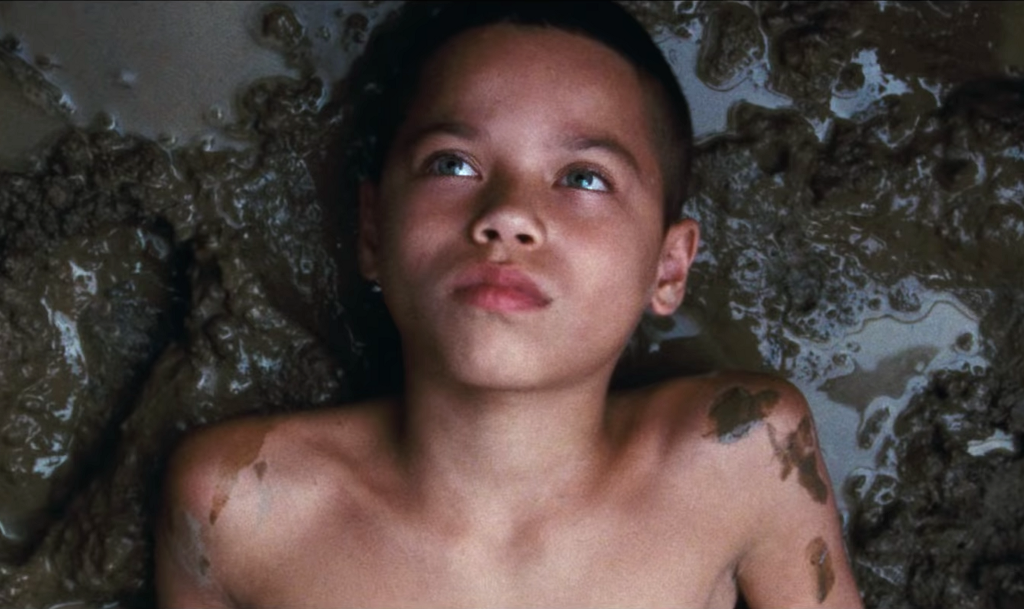
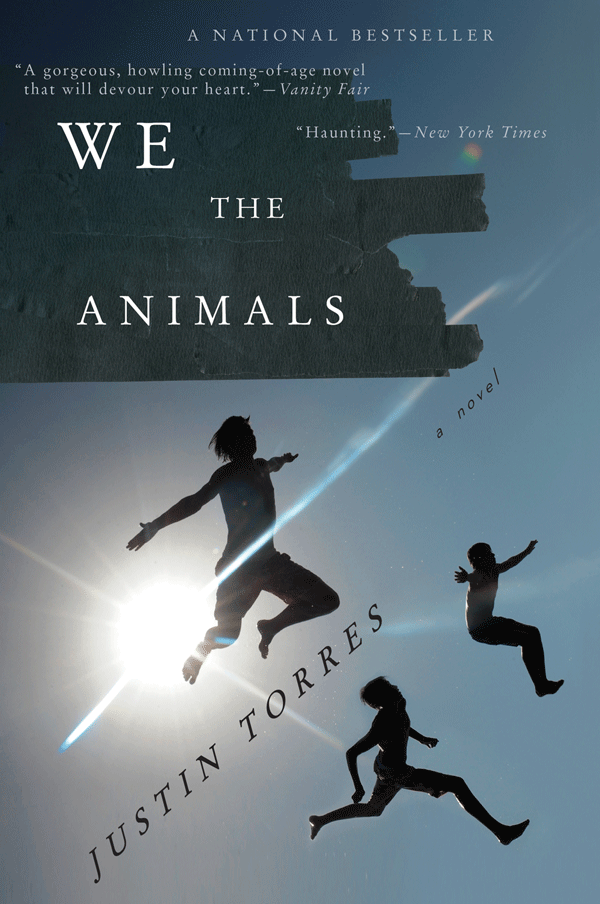
Homosexuality and childhood make for strange but necessary bedfellows. To talk about queer children is to enter into decidedly prickly territory. Far right fears of homosexuality are couched in pleas to save the children, while “It Gets Better” campaigns insist on drawing a straight line between hormonal teenagers experimenting with same-sex desire and well-adjusted gay men. Amidst all of this emerges the figure of the queer child, at once a retroactively created image (i.e. “I’ve always known since I was a kid”) and a seemingly conceptual impossibility (what does it mean, after all, to talk about sexual orientation before puberty?). Justin Torres’s novel We The Animals and its film adaptation refuse to dance around such a debate. Instead, the semi-autobiographical story offers a portrait of a young Latino boy exploring his sense of self and coming to terms with how different he is from his older brothers, his abusive father, and other boys he knows.

We the Animals

Torres’s young queer boy is the latest of a budding roster of kids in contemporary literature and cinema that focus on what queer identity looks like before sexual maturity. From Alison Bechdel’s lesbian childhood in the graphic novel turned Broadway musical phenomenon Fun Home to Jeffrey Eugenides’ intersex child protagonist in Middlesex, from Pedro Almodóvar’s queer noir about abused young boys La mala educación to Moonlight’s take on a bullied black boy in Miami, 21st century artists have finally let go of treating gender and sexual identities in children as a taboo. What makes We The Animals such a fascinating addition to this budding canon is that it doesn’t frame such childhood explorations of queerness in terms of adult identities. We never meet the grown man that this young boy becomes.

The novel, for example, opens with an epigraph about the wildness of young boys. “Now a boy is of all wild beasts the most difficult to manage,” Plato informs us. “For by how much the more he has the fountain of prudence not yet fitted up, he becomes crafty and keen, and the most insolent of beasts.” That’s why it is necessary to bind him with many chains. Like all good epigraphs, the Plato quote both frames and illuminates the story that’s to follow, where Torres will introduce us to three wild young boys who must grapple with the chains that shackle them. Our guide is a six year-old boy who, despite wanting to anchor himself in the first person plural of the novel’s title, finds himself slowly veering away from his two older siblings. He knows there’s something markedly different about him and that self-awareness makes him a crafty narrator of his own story, even when the events he describes rankle precisely because he’s so nonchalant about them — he’s inviting us into his world and violence is sudden but not uncommon.

We The Animals is that rare book that tells the story of childhood trauma not (just) from the vantage point of hindsight, but with the immediacy of childlike awe. Torres’s language captures the wide-eyed wonder of kids all the while hinting at the dangers they may not even recognize as such. Take the opening lines of the book: “We wanted more. We knocked the butt ends of our forks against the table, tapped our spoons against our empty bowls; we were hungry.” Invoking the rhythm of a nursery rhyme — this could very well be the first lines of a Dr. Seuss book — this percussive chant immediately keys us into the unruly world of the “animals” of the novel’s title. You can hear the loudness of it all (director Jeremiah Zagar makes this all too central in his filmed adaptation; the same lines open the film in voice-over). But beneath the raucousness of these boys is the tragedy that undergirds their everyday life: their hunger isn’t (just) a metaphor. These are growing boys who spend their afternoons raiding the fridge and later still neighboring yards in search of food, any food. Their parents, we soon learn, are too busy, too indifferent, too broken, too drunk to take care of them. It’s no coincidence that “Paps” (Raúl Castillo) bears a tattoo that reads “mala crianza” (“bad parenting”).
What makes We The Animals so fascinating is that it doesn’t frame childhood explorations of queerness in terms of adult identities.

This is where Zagar’s adaptation improves on Torres’s slim tome, especially when it comes to exploring the book’s protagonist and his precocious sexual awakening. By making Jonah (Evan Rosado) older than he is at the start of the novel (he’s about to turn seven — or “six plus one,” as Ma tells him), yet younger than he is at the end (where his teenage hormones lead him to cruise at a truck stop), We The Animals makes the boy’s sexual curiosity a key part of his childhood. On screen, his desires feel both lurid and chaste: he’s enamored with a loner teenager he meets who shows him and his brothers porn; he finds his father terrifying yet all too alluring; he knows his sensitivity has no place in the macho masculine world of his Puerto Rican father’s household. But he also has no language for it.

Torres’s narrator is an observer, an audience, the kind of boy who thinks he’ll blend in better if he disappears into the background. Only, as he soon discovers, his roving eyes require him to jot down what he sees. He spend his sleepless nights chronicling in a secret notebook all that takes place in the “dreamtime” world he and his brothers have conjured up in their living room and backyard. In Torres’s book, the prose we’re reading (“Paps stood to piss and we saw his stout, fleshy dick, the darkness of his skin down there and the strong jet of urine, long and loud and pungent”) has the confessional tone of a young boy’s diary-like entries, even as it remains unclear whether those entries are exactly what we’re reading.

In the film, Zagar captures that hyper-awareness of everything around Jonah — not to mention his artistic drive to re-create what he sees — in a series of animated sequences that spring out of doodles Jonah draws as companion pieces to his writing. We see him start to fill that notebook, tucked away under the mattress he shares with his two brothers, with drawings that further depict what’s going on his head. Furious red squiggles pour out of black and white stick figures, bloody encounters between Ma and Paps turned into near-abstract sketches; blue crayon scratches become the lake where he feared he was gonna drown earlier that summer; increasingly R-rated content (all very phallic, of course) begins to take shape as Jonah grapples with what his shameful desires say about him. Childlike play is intimately tied to his self-discovery.

Those drawings work to clue audiences into how Jonah’s introversion is a self-defense mechanism. “You’re fucked up,” he’s told in the book by his brother. “What the fuck is wrong with you?” he’s asked in the film. Seeing him avert his furtive eyes to avoid watching his father straddle his mother in the bathroom, or catching himself staring too long at the teenager’s lips as they share a beer together, his move inward is a way to wall himself in. Shot as a series of intimate home movies that risk showing too much of the family dynamics at work in this working class household, the film makes us wince every time the camera lingers too long on Jonah’s probing eyes, making both his and our gaze feel complicit in the secret he’s hiding.

Queer kids often telegraph the very thing they’re trying to hide; the thing they struggle to suppress, to ignore. “They smelled my difference, my sharp, sad, pansy scent,” Torres’s narrator tells us. Such language, mixing self-awareness (“sad”) with borrowed bullying language (“pansy”), captures precisely why We The Animals marks new territory when it comes to telling stories for and about queer kids. There’s a bleak whimsy in what’s ostensibly a fictionalized version of the author’s own fractured childhood. And in Zagar’s hands Torres’s story pulses with kinetic energy, reminding us that young queer boys are all but required to be painfully aware of the scent they give off and which they can never shake off, only learn to embrace. Refusing to imagine who an older Jonah will be, and in turn making that image immaterial when it comes to telling his story, We The Animals offers its most radical proposition: it crystallizes queer childhood as its own entity, not as prologue nor as flashback.

7 Novels About the Reverberations of Trauma

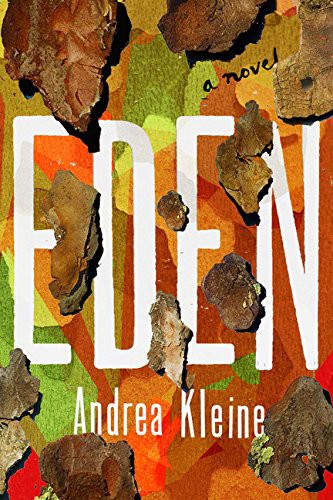
I n my novel, Eden, two sisters survive a childhood abduction, the aftermath of which sets their lives on very different courses. We find out what happened to them when they were kidnapped as teenagers, but more integral is what happened to them afterwards. How do you return to your everyday life after experiencing a violent, traumatic event? Is your life forever changed? Are you still the same person? Do you try to forget what happened, or do you try to integrate it?

Purchase the novel

There is a traditional narrative about trauma in books and films: after much torment or self-destructive behavior, a protagonist finds relief by telling their story in a moment of emotional catharsis, hopefully in a therapist’s office or in a safe space with a supportive, trusted friend. While this is tremendously healing and empowering, what we often don’t see is that healing is an ongoing practice. There is still an “after” after the therapy session, after the meeting, after the purge of tears. We still have to go home, wherever that is, if home truly exists in the “after,” if it ever existed to begin with. And often we have to rebuild it.

Each of these novels is a complex meditation on trauma, many of them addressing the subject through structure as well as story. These books explore how survivors process and communicate their pain and how oftentimes their stories go unheard by others, or are conveniently forgotten. But trauma is persistent; it is embedded in the circuits of our lives and in the power structures of our society. It exists everywhere and it does not degrade simply because we prefer not to see it. As in Toni Morrison’s Beloved, it lives on in the atmosphere, in the soil, in the cities, in the water. And whether we are the perpetrators or the victims, the beneficiaries or the sufferers, the willfully blind or the ones who see very real ghosts, the historical continuously infects the intimate. In order to bear witness, we must first open our eyes.

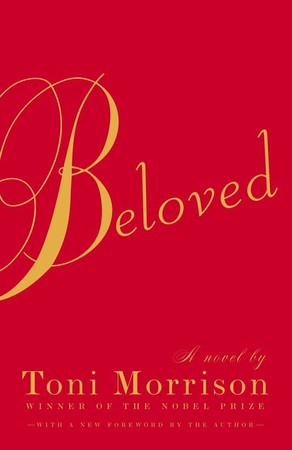
Beloved by Toni Morrison

Toni Morrison’s masterpiece on the ongoing brutalities of slavery mixes realism and the supernatural in a novel inspired by the true story of an escaped slave who kills her child rather than have her returned to the plantation. In this Pulitzer Prize-winning book, Sethe and her family are haunted by a ghost and later by a mysterious young woman who arrives on their doorstep calling herself, Beloved. Lyrical, difficult, seductive, cruel, Beloved is the eternal return of history, of what we thought we left behind for dead.

The Small Backs of Children by Lidia Yuknavitch

Fractured, scattershot, compulsive, agitated, The Small Backs of Children refuses to follow any one path and calls everything into question. A photographer takes a picture of a girl who escapes an explosion in a war-torn country. A writer is re-traumatized by this photo. A group of artists decides to find this girl. A girl is already found, already an artist. One person escapes brutality, another person is aroused by brutality, another person profits from brutality, another needs brutality to make art. Where do these motives comes from? How are they connected? Lidia Yuknavitch tightly intertwines sex and violence and gender and art and war, showing how these elements are written on the body. The book’s discursiveness demands your attention and shakes you out of your anesthesia.

An Untamed State by Roxane Gay

The first half of Roxane Gay’s debut novel is hard to stomach: an unrelenting depiction of a woman kidnapped, raped, and held for ransom. Mireille is held for 13 days while visiting family in Haiti because her wealthy father refuses to pay up. But in the second half of the novel, when Mireille returns to her life and walks through American suburbia as a stranger in a strange land, the story shimmers with intersecting layers of identity. There are no easy answers in Gay’s novel, there is no happily ever after because no one emerges unscathed. We don’t expect forgiveness and the characters don’t give it. Gay focuses her lens on more complex questions: Who are the people that commit these crimes and who are the people we become if we survive?

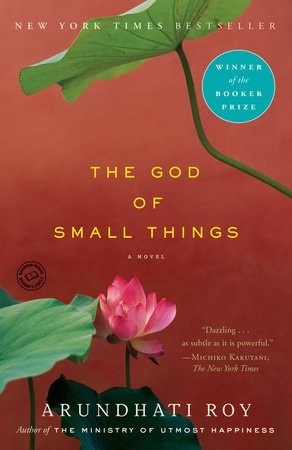
The God of Small Things by Arundhati Roy

“Anything can happen to Anyone,” thinks Estha as he stirs jam in his family’s factory. “It’s best to be prepared.” An amalgam of memories, relatives, politics, and storylines this Booker Award-winning novel follows fraternal twins Estha and Rahel through the incidents of their childhood that caused Estha to be “Returned” to his father. Fearing that the Orangedrink Lemondrink movie theater molester will come after him, Estha and Rahel build a boat to escape, leading to a horrible accident. Their divorced mother is locked in her room for having an affair with an untouchable-caste man, and the twins are separated for years until Estha is “Re-Returned.” Roy’s disorienting timeline is a kaleidoscope of wanderings and anguish, reflecting the magical realism that is childhood, with its strict social structures, its very real dark forces, and its promises of love.

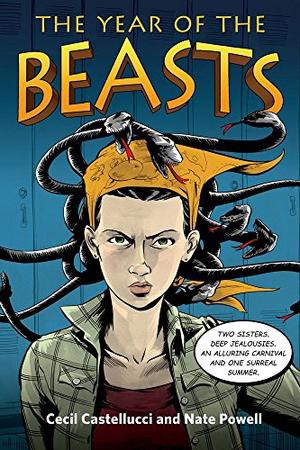
The Year of the Beasts by Cecil Castellucci, illustrated by Nate Powell

This hybrid YA novel/graphic novel is moody, strange, and tormented. Alternating chapters of prose and comics, this story is a watery, inky portrait at the nexus of truth and myth. Did something truly horrible happen to Tessa, or did she read it in a book? Are you a regular teenager or do you have magical powers? And what if you don’t want the power you have? The Year of the Beasts explores how the fantastical offers a place for Tessa to make sense of a summer tragedy. It will melt whatever has turned you to stone.

Mysterious Skin By Scott Heim

Two young boys are sexually abused by their little league coach: one can’t remember the episode, and the other can’t forget it. Brian finds himself in the crawl space of his house late at night and, unable to account for his previous whereabouts, believes he was abducted by a UFO. Neil falls for the affection and attention of the coach and confuses it with love. As the two boys move on from high school, Neil becomes a hustler and Brian continues to be obsessed with aliens, his dreams, and his missing memory. This novel, which was made into a film by Gregg Araki, delves into the complexities of desire and youth, complicity and guilt, how we cling to what happened or the fantasy that it didn’t.

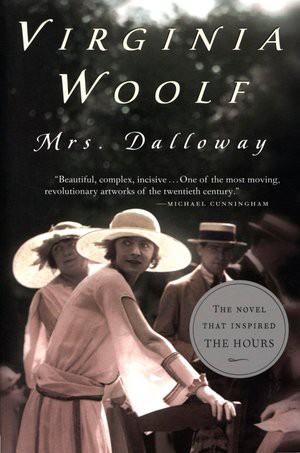
Mrs. Dalloway By Virginia Woolf

“Nothing has really happened until it has been described,” Woolf once told her biographer. Mrs. Dalloway unspools its story as the title character, Clarissa Dalloway, prepares to throw a party, and Septimus Smith, a WWI veteran suffering from post-traumatic stress disorder, struggles with the memory of losing his friend in battle. The stream-of-consciousness style flows between characters and back and forth in time: Clarissa revisiting her youth and lost chances for love, Septimus held captive by hallucinations. They exist in separate worlds until Septimus’ suicide is mentioned at Clarissa’s party. The way in which Woolf tells this story — sometimes confused, sometimes resting for a moment, sometimes delighted, often tormented — mirrors her characters in their plight to wake themselves up.

10 Questions About Teaching Writing with Lynn Steger Strong

I n our new monthly series “Can Writing Be Taught?” we’re partnering with Catapult to ask their course instructors all our burning questions about the process of teaching writing. (We have ten of these questions. One of them is about snacks.) This month we’re talking to Lynn Steger Strong, author of Hold Still, who’s teaching Catapult’s first-ever year-long novel generator course. Students will be guided through the process of creating and selling a novel, both the creative aspects—finding the story, drafting, refining—and the industry aspects like query letters and building an author platform. In addition to Catapult, Strong also teaches writing at Sackett Street Writers’ Workshop, the Pratt Institute, and Columbia University, so we were dying to hear her opinions on whether—and how—writing can be taught.

What’s the best thing you’ve ever gotten out of a writing class or workshop as a student?

I had an instructor in grad school who really pushed the idea of constraints. So much of what is paralyzing about writing fiction especially is that there are so many choices, so many different directions to take a piece of writing or a character, but this instructor introduced me to the idea that one can place simple limits on one’s work: write a novel over a period of a week, force yourself to stay inside a scene, see what happens when you place two characters in a small space. Some of the most expansive fiction arises when the writer does not look further but harder and more pointedly.

What’s the worst thing you’ve ever gotten out of a writing class or workshop as a student?

The paralysis that comes from wanting to please everyone, forgetting somewhere along the way to write the thing that I set out to write.

What is the lesson or piece of writing advice you return to most as an instructor?

How are the parts informing the whole? So many writers can write truly vivid and impressive moments or scenes or descriptions, but novels need those pieces to accrue and work together to create the experience of a book. I am constantly asking students to break their books down to their most essential parts and then to analyze how each of those parts are moving and evolving and how they might better serve the whole.

Does everyone “have a novel in them”?

There are so many factors involved in this question, not least of which is the question of does everyone have a good novel in them? (The answer to which is, of course, no.) The greatest hindrance to novel-writing, in my experience, is time: whether one has the privilege of having access to it, whether one has the endurance to show up for it every day. I think novels are harder than most people think they are when they start them. The people who finish are the ones who stick around after realizing what they signed up for is so much more daunting than they could have known when they began.

Some of the most expansive fiction arises when the writer does not look further but harder and more pointedly.

Would you ever encourage a student to give up writing? Under what circumstances?

Only if they weren’t interested in working harder than they ever have before.

What’s more valuable in a workshop, praise or criticism?

I think we should be always be talking about the two in tandem, as they inevitably overlap. One’s strengths as a writer often directly inform their weaknesses. They can also be applied to them. A person who is good at voice tends to use it as a crutch, sometimes to the detriment of plot or structure; a person who is good at plot sometimes ignores the development of character. No one is good at everything, but also no one has to be, so it’s worth considering how to employ one’s strengths to overcome one’s weaknesses. If you’re not interested in visual description, build a world in which the narrator’s voice gives the book its texture and its life; if plot doesn’t interest you, focus on the inevitable tensions and conflicts inherent in smaller moments over a shorter period of time.

Should students write with publication in mind? Why or why not?

Students should write with some idea of a reader, if only because language is a tool of communication, and I’m not sure you’re writing well if you’re not considering how to shape your language and your story with a reader in mind. With regard to publishing, the market seems to me to be such a constructed and elusive beast that it seems sort of pointless and maybe impossible to write with it in mind.

No one is good at everything, but also no one has to be, so it’s worth considering how to employ one’s strengths to overcome one’s weaknesses.

In one or two sentences, what’s your opinion of these writing maxims?

  • Kill your darlings: The parts are only as effective as they are serving the whole.
  • Show don’t tell: Absolutely. Until whatever it is you have to say is so urgent that you need to tell as well.
  • Write what you know: And then learn more so you have more to say.
  • Character is plot: The wants and fears of characters knocking up against one another, as well as those of others, are the plot.

What’s the best hobby for writers?

This is a wholly biased and perhaps not useful opinion, but I run every morning, and I can’t work if I haven’t sweat and cleared my head this way.

What’s the best workshop snack?

Gin.

A Lifelong Friendship that Began with a Slap

“The Sweet River,” excerpted from The Air You Breathe by Frances de Pontes Peebles

Time is short and the water is rising.

This is what one of Sofia Salvador’s directors—I can’t recall his name—used to shout before he’d start filming. Each time he said it, I imagined all of us in a fishbowl, our hands sliding frantically along the glass sides as water crept above our necks, our noses, our eyes.

I fall asleep listening to our old records and wake with my mouth dry, my tongue as rough as a cat’s. I pull the handle of my La‑Z‑Boy and, with a jolt, am sitting upright. A pile of photos rests in my lap.

I own the most famous photograph of Sofia Salvador—the Brazilian Bombshell, the Fruity Cutie Girl, the fast‑talking, eye‑popping nymph with her glittering costumes and pixie‑cut hair who, depending on your age and nationality, is either a joke, an icon of camp, a victim, a traitor, a great innovator, or even, as one researcher anointed her, “an object of serious study of Hollywood’s Latinas.” (Is that what they’re calling us now?) I bought the original photo and its negative at auction, paying much more than they were worth. Money isn’t an issue for me these days; I’m filthy rich and am not ashamed to say so. When I was young, musicians had to pretend that success and money didn’t matter. Ambition, in a sambista and especially in a woman, was seen as an unforgivable fault.

In the photo, taken in 1942, Sofia Salvador wears the pixie cut she made famous. Her eyes are wide. Her lips are parted. Her tongue flicks the roof of her mouth; it is unclear if she is singing or screaming. Earrings made to resemble life‑sized hummingbirds—their jeweled eyes glinting, their golden beaks sharp—dangle from her ears. She was vain about her lobes, worried they would sag under the weight of her array of earrings, each one more fantastical than the next. She was vain about everything, really; she had to be.

In the photograph she wears a gold choker, wrapped twice around her neck. Below it is strand upon strand of fake pearls, each one as large as an eyeball. Then there are the bracelets— bands of coral and gold—taking up most of her forearms. At the end of each day, when I’d take those necklaces and bracelets off her and she stopped being Sofia Salvador (for a moment, at least), Graça flapped her arms and said, “I feel so light. I could fly away!”

Graça drew Sofia’s dark eyebrows arched so high she always looked surprised. The mouth—that famous red mouth—was what took her the longest to produce. She lined beyond her lips so that, like everything else, it was an exaggeration of the real thing. Who was the real thing? By the end of her short life, even Graça had trouble answering this question.

The picture was taken for Life magazine. The photographer stood Graça against a white backdrop. “Pretend you’re singing,” he ordered. “Why pretend?” Graça replied.

“I thought that’s all you knew how to do,” the photographer shot back. He was famous and believed his fame gave him the right to be nasty.

Graça stared. She was very tired. We always were, even me, who signed Sofia Salvador’s name to hundreds of glossy photos while Graça and the Blue Moon boys endured eighteen‑hour days of filming, costume fittings, screen tests, dance rehearsals, and publicity shoots for whatever her latest movie musical was. It could have been worse; we could have been starving like in the old days. But at least in the old days we played real music, together.

“Then I will pretend to respect you,” Graça said to that fool photographer. Then she opened her mouth and sang. People remember the haircut, the enormous earrings, the sequined skirts, the accent, but they forget her voice. When she sang for that photographer, his camera nearly fell from his hands.

I listen to her records—only our early recordings, when she sang Vinicius’s and my songs—and it is as if she is still seventeen and sitting beside me. Graça, with all of her willfulness, her humor, her petty resistances, her pluck, her complete selfishness. This is how I want her, if only for the span of a three‑minute song.

When the song ends, I’m exhausted and whimpering. I imagine her here, nudging me, bringing me back to my senses.

Why the hell are you upset, Dor? Graça chides. At least you’re still around.

Her voice is so clear, I have to remind myself she isn’t real. I have known Graça longer in my imagination than in real life.

Who wants real life? Graça asks, laughing at me. (She is always laughing at someone.)

I shake my head. After all this time—ninety‑five years, to be exact— I still do not know the answer.

My current life is a dull jumble of walks along the beach chaperoned by a nurse; trips to the grocery store; afternoons in my office; evenings listening to records; tedious hours spent tolerating a steady stream of physical therapists and doctors with their proclamations and humorless devotion. I live in a vast house surrounded by paid help. Once, long ago, I wished for such ease.

Be careful what you wish forDor.

It’s too late to be careful now, amor.

Now, I wish for the early, chaotic part of my life—those first thirty or so years—to return to me, even with its cruelty, its sacrifice, its missteps, its misdeeds. My misdeeds. If I could hear my life—if I could put it on a turntable like a worn‑out LP—I’d hear samba. Not the boisterous kind they play during Carnaval. Not one of those silly marchinhas, as short‑lived and vapid as bubbles. And not the soft‑spoken, romantic sort, either. No. Mine would be the kind of samba you’d find in a roda: the kind we played in a circle after work and a few stiff drinks. It begins quite dire‑sounding, perhaps with the lonely moan of a cuíca. Then, ever so slowly, others join the roda—voices, guitars, a tamborim drum, the scratch of a reco‑reco—and the song begins to claw its way out of its lowly beginning and into something fuller, thicker, darker. It has all of the elements of a true samba (though not necessarily a great one). There is lament, humor, rebelliousness, lust, ambition, regret. And love. There is that, too. It is all improvisation, so if there are mistakes I must move past them and keep playing. Beneath it all, there is the ostinato— the main groove that never varies, never wavers. It keeps its stubborn pace; the beat that’s always there. And here I am: the only one left in the circle, conjuring voices I have not heard in decades, listening to a chorus of arguments I should never have made. I have tried not to hear this song in full. I have tried to blot it out with drink and time and indifference. But it remains in my head, and will not stop until I recall all of its words. Until I sing it out loud, from beginning to end.

The Sweet River

Share this bottle with me,
share this song.
The years have hardened my heart.
Drink will loosen my tongue.
Come, walk with me,
to the places I once loved.

Man made the fire
to burn the fields of cane.
God made music
to take away my pain.

I come from a land
where sugar is king and the river is sweet.
They say a woman drowned there,
her ghost haunts the deep.

Sit beside me now, at the riverbank
hear my voice, loud and strong.
Wade into these sweet waters with me,
let me open your heart with a song.

Now we’re both pulled under, friend,
singing the same refrain:
Dive back, again, to the place you once loved
and you’ll find it’s never the same.

Man made the fire
to burn the fields of cane.
God made music
to take away my pain.

It would be better to begin with Graça — with her arrival, with our first meeting. But life isn’t as orderly as a story or a song; it does not always begin and end at compelling points. Even before Graça’s arrival, even as a small child, I sensed that I’d been born into a role that didn’t fit my ambitions, like a stalk of sugarcane crammed into a thimble.

I survived my own birth, a true feat in 1920 if you were born to a dirt‑poor mother living on a sugar plantation. The midwife who delivered me told everyone how surprised she was that such a hearty girl could’ve come from my mother’s tired womb. I was her fifth and final child. Most women who worked on the plantation had ten or twelve or even eighteen children, so my mother’s womb was fresher and younger than most. But she was not married and never had been. All of my long‑lost brothers and myself — I was the only girl in our lot — had different fathers. This made my mother worse than a puta in many people’s minds, because at least a puta had the sense to charge for her services.

I didn’t dare ask about my mother, afraid of what I might hear and not willing to risk a beating; I was not allowed to ask any questions at all, you see. No one spoke of her, except to insult me. They said I was big‑boned, like her. They said I had a temper, like her. They said I was ugly as sin, like her, except I did not have scars covering my arms and face from the cane. She was, for a little while at least, a sugarcane cutter — one of a handful of women who could stomach the work. But the insult that came up the most was the one about her easy way with men. If I didn’t use enough salt to scrub blood from the plantation’s cutting boards, or if I stopped stirring the infernally hot jam on the stove for even a second, or if I was too slow bringing Cook Nena or her staff ingredients from the pantry or garden, I was smacked with a wooden spoon and called “puta’s girl.” So I came to know my mother through all of the things people despised about her, and about me. And I realized, though I could not articulate it clearly as a child, that people hated what they feared, and so I was proud of her.

The midwife took pity on me, being such a healthy baby, and instead of smothering me, or throwing me in the cane for the vultures pick at, or giving me to some plantation owner to raise like a pet or a slave (all common practices back then for girl children without families), she gave me to Nena, the head cook on the Riacho Doce plantation. There were hundreds of cane plantations along the coast of our state of Pernambuco, and Riacho Doce was one of the largest. In good times, when sugar prices were high, Cook Nena led a staff of ten kitchen maids and two houseboys. Nena was as full‑breasted as a prize rooster and had hands as large and as lethal as her cast‑iron frying pans. The Pimentel family owned Riacho Doce and were the masters of its Great House, but Nena ruled in the kitchen. This is why no one objected when, after the midwife brought me, naked and wailing, to Nena, the cook decided to raise me as her kitchen girl.

Everyone in the Great House — maids, laundresses, stable boys, houseboys — went to Nena’s kitchen to get a look at me. They freely remarked on my rosy skin, my long legs, my perfect feet. A day later, I stopped drinking the goat’s milk Nena gave me in a bottle. Nena visited a local wet nurse and I spat the woman’s teats from my mouth. I was too young to eat manioc porridge but Nena tried to feed it to me anyway. I spat that out, too, and soon turned shriveled and yellow‑skinned like an old crone. People said I’d been cursed by the evil eye. Olho mau, they called it, olho gordo. Both are different names for the same bad luck.

Nena went to Old Euclides for help. Euclides was wrinkled, gossipy, and the color of blackstrap scraped from the sugar mill’s vats. He’d worked at R iacho Doce longer than Nena had, first as a stable boy and then as its groundskeeper. He had a donkey who’d given birth and lost her foal but not her milk. Nena took me to the stables and held me straight to that jega’s teat, and I drank. I drank that jega’s milk until I was fat and strong again. My color changed; I was less like a rose and more like that donkey’s tan coat. My hair grew in thick. After that, I was called Jega.

In people’s superstitious and backward minds, the girl I became was inextricably linked to the mother’s milk I’d drunk.

“Jega’s as dumb as an ass,” the houseboys teased.

“Jega’s as stubborn as an ass,” the kitchen maids complained.

“Jega’s as ugly as an ass,” the stable boys said when they felt spiteful.

They all wanted me to believe it. They wanted me to become that Jega. I would never give them that satisfaction.

The Great House sat on a hill. You could stand on its pillared front porch and see nearly all of Riacho Doce’s workings: the main gate, the mill with its blackened smokestack, the horse and donkey stables, the administrator’s house, the carpenter’s shed, the old manioc mill, a small square of pasture and corn, the distillery and warehouses with their thick iron doors. And you could see the brown line of water that gave Riacho Doce its name, although it was much wider than a creek and its waters were not sweet.

Every plantation had a ghost story and ours was no different: a woman had drowned in the creek and lived there still. Some said she was killed by a lover, others said a master, others said she killed herself. They said you could hear her at night, under the waters, singing for her lost love or trying to lure people into the waters and drown them to keep her company; the story depended on whether you believed in the kind ghost or the vengeful one. Riacho Doce’s mothers told their children this before bed, and it kept them away from the river. I heard the ghost’s story from Nena.

Behind the Great House was an orchard, and behind that the low‑ roofed slaves’ senzalas that had been converted into servants’ quarters. Nena and I were the only staff allowed to sleep in the Great House itself, which set us apart from the rest of the servants. This special status didn’t affect Nena as much as it did me. I was Jega — the lowest soul in the strict hierarchy of the Great House — and the maids and houseboys were determined to remind me of this fact. They slapped me, pinched my neck, cursed and spat at me. They thwacked me with wooden spoons and greased the staff doorway with lard to make me slip and fall. They locked me in the foul‑smelling outhouse until I kicked my way out. Nena knew about these pranks but didn’t stop them.

“That’s the way a kitchen is,” Nena said. “You’re lucky the boys aren’t trying to get under your skirts. They will soon enough. Better learn to fight them now.”

Nena always issued such warnings to me:

Better keep your head down.

Better stay out of sight.

Better make yourself useful.

If I failed to heed her warnings she beat me with a wooden spoon, or an old bullwhip, or with her bare hands. And while I feared these beatings I didn’t think them odd or bad; I knew no other kind of affection, and neither did Nena. She used her fists to teach me things she couldn’t articulate, lessons that would keep me alive. Nena could keep me safe in her kitchen but nowhere else. I was a creature without family or money. I was another mouth to feed. And, even worse, I was a girl. At the owners’ whim, I could be thrown out of the Great House and left to fend for myself in that sea of sugarcane. And what did an ugly little girl have to offer the world but her body? So I had to learn to defend that body ruthlessly against any stable boys or millworkers or others who might try to use it roughly. And, at the same time, I had to learn how to make myself useful within the house, to obey my patrons at all costs or, better yet, stay out of their sights completely. As long as I was invisible, I was safe.

So while little girls like Graça were playing with dolls and dresses, I learned to play other kinds of games. Games where force was power, and where cleverness meant survival.

When I was nine years old, the world’s great financial crash hit Brazil and sugar became as valuable as dirt. Smaller plantations near R iacho Doce boarded up their Great Houses and put workers out of their gates. Riacho Doce’s mill closed. After getting into crippling debt, the Pimentel family moved away. There were rumors of a sale. Soon afterward, the cane cutters left to work on other plantations that had weathered the crisis. The fields were abandoned. The distillery was locked. One by one, the housemaids and kitchen girls and stable boys left. Soon, only Nena, Old Euclides, and I were left.

“They’ll be back,” Nena said of the Pimentels. “No one leaves their land. And when they do come back, they’ll remember who was loyal and who wasn’t.”

Nena was driven by loyalty and fear. She and Old Euclides were born on Riacho Doce before slavery had been banned in Brazil in 1888, and had stayed on even after they were freed. During the abandonment, Old Euclides took care of the grounds, making sure no one took animals from the stables or stole fruit from the orchard. Nena wouldn’t let her copper pots and iron pans fall into the hands of looters or bill collectors so she hid anything of value. Porcelain dining sets, silver platters and tureens, pure gold cutlery, a bowl made of mother‑of‑pearl were stashed under the Great House’s floorboards. We ate whatever food was left in the pantry and then, because none of us had been paid since the Pimentels left, began to trade at the local market. Eggs for flour, star fruit from the orchard for a bit of salted meat, bottles of molasses for beans. These were lean times but not unhappy ones. Not for me.

For many months the Great House was empty and I spent my days inside it. I skipped across its stone floors. I slipped my hands under dust covers and felt cool marble, the slopes and curves of table legs, the gilded bevels of mirrors. I pulled books from shelves and opened them wide to hear their bindings snap. I walked proudly up and down the wide wooden staircase, like I imagined the lady of the house would. For the first time in my nine years of life, I had the luxury of time and freedom — to explore, to pretend, to play without fear of being hit or scolded, to live without the constant worry that I would be cast out of Riacho Doce for some small infraction. I was allowed to be a child, and began to believe that I would always have such freedom. I should have known better.

One day, as I sat in the library and tried to decode the mysterious symbols inside the Pimentels’ books, I heard a terrible growling outside. It sounded as if there was a giant dog snarling at the Great House gate. I ran to Nena, who opened the front door.

A motorcar rumbled outside the front gate. Old Euclides scrambled, suddenly as spry as a puppy, down the drive and pushed open the gate. The car stopped and a man emerged from the driver’s side. He wore a hat and a long canvas coat to protect his suit. He opened the passenger and back doors. Two women emerged: a pale one also wearing a driving coat, and another in a maid’s striped uniform and lace cap. The maid attempted to tug something from the backseat. There was a hiss and a screech. For a moment, I believed there was an animal in the car — a cat or some kind of possum — until I saw the maid’s hands wrapped around two tiny feet in patent leather boots. The boots kicked free of the maid’s grip. The woman wedged herself deeper into the car’s doorway. Then there were screams, grunts, a swirl of white petticoats and, finally, a cry. The maid jumped from the automobile’s backseat, her eyes watering, her hand pressed to a fresh scratch on her face.
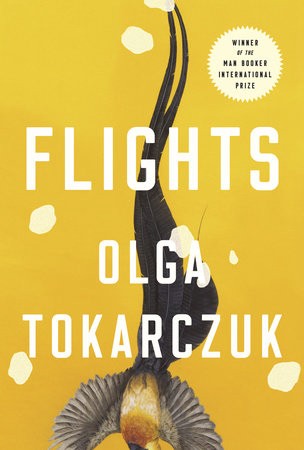
“Leave her inside!” the man snapped. “She’s old enough to climb out herself.”

The maid nodded, her hand still clamped to her face. The other woman sighed and unbuttoned her canvas driving coat, revealing a silk dress and a tangle of pearls at her neck.

A halo of red curls surrounded her face. Her skin was what we called “mill white” because that was the prized color of sugar. The sugar we used in the Great House kitchen was the mill’s seconds — raw and muddy‑colored, not white but not quite brown, just like me.

“It’s better she doesn’t come outside,” the man said, staring at the dirt road. “She’ll get herself filthy.” He had darker coloring, a square jaw, and a Roman nose that sloped like an arrow pointing at his full mouth.
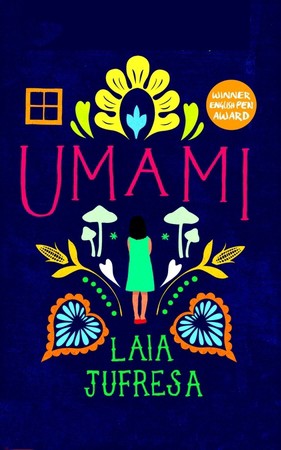
“We’ll all have to get used to a little dirt from now on,” the mill white woman replied, and her lips pursed as if she was holding back laughter, as if she’d told herself a naughty joke.
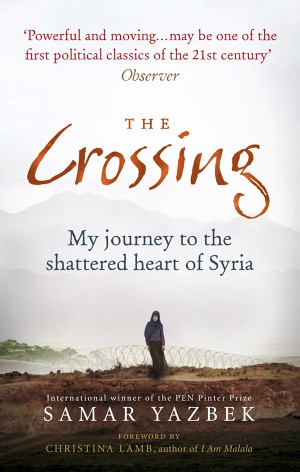
At the mention of dirt, a girl my own age wiggled from the backseat. She wore a dress the color of butter, and white gloves. A bow sat crookedly atop her head; the girl snatched it from her hair and flung it to the ground. She kicked at the dirt, scuffing her boots, and then glared at the adults around her, daring them to tell her to stop. Then she saw me, and stood still. To her, I was not invisible.

Her eyes were the color of cork. Her mouth looked as if it had been painted onto her face, like a doll’s. I don’t know how long we stared at each other; I only remember not wanting to break first, determined not to let her win.

Still staring at me, the girl pressed her gloved hand to the car’s body and dragged it across the entire side. Then she raised her hand. The glove’s palm was as red as the earth under my bare feet. The girl smirked, as if sharing a joke, but I knew she didn’t intend to amuse me. Gloves were for the rich. They were expensive and delicate. Some poor laundress would have the unenviable task of trying to clean that soiled glove, so small it would bunch in her hands and make her knuckles scrape against the washboard until they bled. But the girl didn’t care about the glove, or the laundress, or anything. She would ruin something perfectly good, for no reason at all. I felt both respect and revulsion.

“Graça!” the man shouted.

The man and woman bickered. Nena, Old Euclides, and I kept very still, waiting for them to acknowledge our presence. Only when they needed help did we become flesh‑and‑blood to them — the man ordered Euclides to get the bags from the car’s trunk; the pale woman dropped her driving coat into Nena’s arms. This is when I knew that those people were not visitors but owners, come to claim Riacho Doce and the Great House for themselves.

They were also Pimentels — cousins of the previous owners. As we walked through the Great House together, Senhora Pimentel moved languidly alongside her husband, looking tired as she pointed out leaks and cracks, peeling paint and rotted wood. Her husband, Senhor Pimentel, yanked dust covers from the furniture, like a magician revealing his trick.

“I remember my grandfather using this desk!” he cried. And, later, “I was the one who spilled ink on this chair!”

The giddy freedom I’d felt over several months leaked away in the single hour after those new Pimentels arrived. All of the books I’d slipped from the shelves, all of the ivory and glass knickknacks I’d polished and stroked, all of the tables I’d hidden under, pretending I was in a tent in some exotic land, all of the mirrors in which I’d studied myself, would never again be mine to play with. I would once again have to be useful and invisible, to obey or be cast away. When her parents weren’t looking, the cork‑eyed girl stuck out her tongue at me. It was as pink and slick as a jambo fruit. I had the urge to bite off its tip.

Finally, the new Pimentels pulled the covers from two armchairs and sat, exhausted, in the formal sitting room. They ordered Nena to make coffee. We raced to the kitchen, where Nena grabbed my arm and told me to get the last, precious beans she’d hidden under her cot. Back upstairs, I peeked through the slatted door of the sitting room as Nena served coffee to the new Pimentels. They waited to drink until she’d left the room; I did not follow her to the kitchen.

Senhor Pimentel took a sip from his cup and made a face. “Did she use an old sock to strain this?” he asked.

Senhora Pimentel shook her head. “We’ll have to train a new staff. How exhausting.”

“Nena’s a good cook — you’ll see. She’s been here since I was a kid,” Senhor Pimentel replied.

“You think she and the old man had that child together? Poor little ugly thing.”

Senhor Pimentel laughed. “Nena’s as old as the hills. And the girl’s too light‑skinned to be theirs. I bet she’s not so ugly under all that dirt; she just needs a good scrubbing.”

“She’ll stay in the kitchen,” Senhora Pimentel snapped. “If she grows up to be decent‑looking she can serve the table.”

Senhor Pimentel took his wife’s hand. She fixed him with the same weary expression she’d had when she’d inspected the Great House. They discussed their plans for the house. Furniture that was upstairs would go downstairs. Rugs would be thrown out. Curtains replaced. Water pipes and a flush toilet installed, which meant hacking into the house’s thick white walls.

There were footsteps behind me. Before I could hide, I felt a terrible stinging on the back of my arm. The cork‑eyed Pimentel girl pinched the skin above my elbow. I glared and shook her loose.

“Marta always cried when I pinched her,” the girl said.

“Who’s Marta?”

“The kitchen girl at my other house, in Recife. It’s a mansion. Better than this pigsty.”

“This is the best house of any plantation,” I said.

The girl shrugged. “You must die of boredom out here.”

“Do I look dead?”

“It’s a way of talking. Are you dumb?”

“Not half as dumb as you look.”

The girl’s eyes widened. “You can’t talk to me like that.”

She was right — I was risking my place in that Great House. I blame those many months of freedom for my boldness, and for what happened next.

“This is my house now,” the girl said.

My hand made a crisp, exhilarating slap against her cheek. The girl gasped. I ran.

The kitchen pantry was an empty, cool space. I sat inside, waiting. My fingers throbbed from the slap I’d dealt. I had sickening thoughts of Nena finding me and giving me the worst thrashing of my life. Or, worse, Senhor Pimentel stalking into the kitchen and casting me out of the only home I’d ever known. After what felt like an eternity, there were footsteps and chatter, then the automobile growled again and the new Pimentels left with a promise to return and begin renovations.

I was impressed that the Pimentel girl hadn’t snitched; it made her tolerable to me, but also dangerous. What would she want in return for her silence? What would I owe her? These were the questions I asked myself in the weeks before the new Pimentels returned, while carpenters and stonemasons and plumbers sawed and pounded and pressed copper pipes into the Great House’s walls.

Years later, I asked Graça about the day we met and she laughed. I remembered it all wrong, she said. She’d slapped me.