9 Books on the Complexities of Mother-Daughter Relationships

After I became pregnant, after I gave birth, after I nursed, I felt as if I’d stepped through a threshold, into another world of emotion, of ideas, of experience that I hadn’t known and was eager to explore in my writing. While I might have been able to pull off the voice of a parent before becoming one myself, motherhood has expanded my view, opened my heart and my fiction in ways I didn’t foresee.

Purchase the book

I’d never before shape-shifted like that, and had never been so aware of my animal body than in the violence of birth, in the struggle to breast-feed, and in the sleep interrupted again and again. But the experiences were more than visceral. The curiosity and wonder of my children — experiencing rain for the first time, playing with language to express themselves — made the world new for me again. Becoming a mother also made me reconsider my own childhood and my mother, and what she had to weigh in the choices she made.

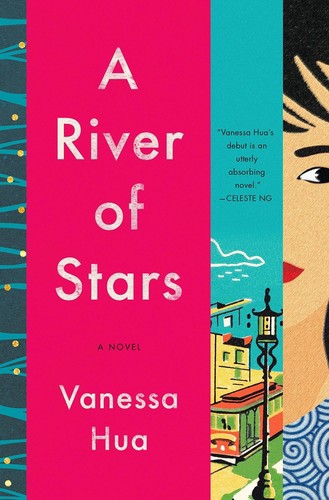
My debut novel, A River of Stars, examines motherhood, immigration, and identity through the lens of a pregnant Chinese woman who makes her way to California to stake a claim to the American dream. What follows here are works that also explore the complicated relationships between mothers and their children, in all the sacrifice, struggles, and joys.

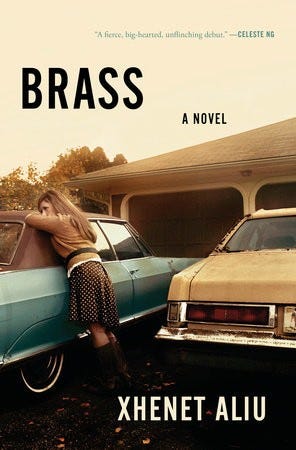
Brass by Xhenet Aliu

Fierce, funny, and unforgettable, mother Elsie and daughter Luljeta attempt to make their way in a world that circumscribes them again and again. Their double, working-class coming-of-age stories resonate with each other. Even when they make questionable decisions, you cannot help but root for them in every moment.

Fruit of the Drunken Tree by Ingrid Rojas Contreras

Chula, a sheltered young girl, and her maid, Petrona, each have secrets they are keeping from their mothers — secrets that in turn forge the bond they have with each other. But secrets will also tear their world apart, in this story told in a lush, distinctive voice.

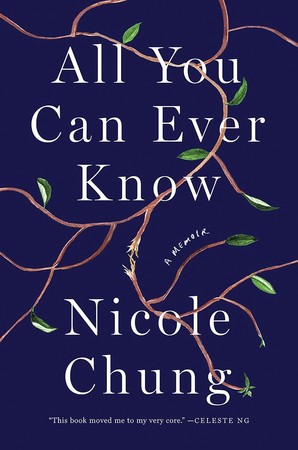
All You Can Ever Know by Nicole Chung

A deeply engrossing memoir about adoption and motherhood and the meaning of family. When Chung is expecting her first baby, she wonders what questions her daughter will have about her their family’s history and heritage — prompting her to search for her birth parents, a process painful, beautiful and ultimately hopeful.

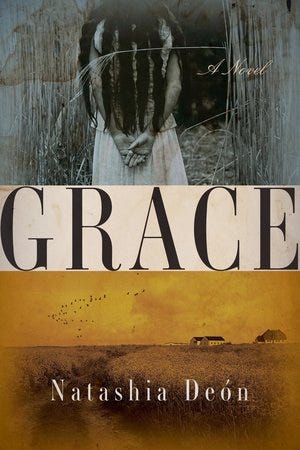
Grace by Natashia Deón

A mother’s love endures, even after death, when Naomi, an escaped slave, watches over her daughter Josey — and later on, Josey’s children. Much violence, but much tenderness too, about an era whose injustices resonate today.

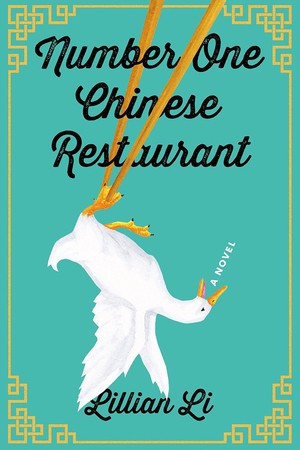
Number One Chinese Restaurant by Lillian Li

A big-hearted novel with a multigenerational cast that centers around a Chinese restaurant famed for its Peking duck. The relationship between the manager, Nan and her dishwasher son, Pat is by turns tender and tortured and hilarious, and so too the owner Jimmy Han with his mother. The characters are skillfully rendered, empathetic but revealing of their foibles too.

The Golden State by Lydia Kiesling

With her Turkish husband in limbo overseas, unable to return to their home in San Francisco, Daphne flees with her daughter, Honey, to a remote secessionist stretch of California. With wit and wonder, Kiesling writes about the intense love that Daphne has for her toddler, but never shies away from depicting the frustration and tedium of parenthood.

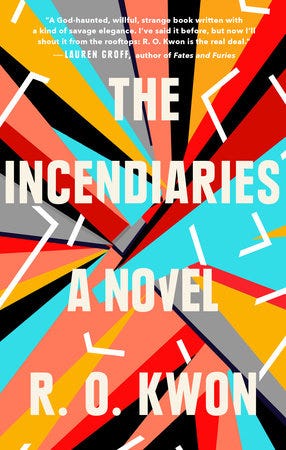
The Incendiaries by R.O. Kwon

Phoebe Lin is haunted by the death of her beloved mother. Her boyfriend, Will Kendall, who struggles to help on his own, becomes obsessed with Phoebe even as she falls ever deeper under the spell of a mysterious cult. It’s an aching and lyrical book about loss and love and faith, a page turner that will have you spell-bound, and that you’ll find yourself immediately re-reading.

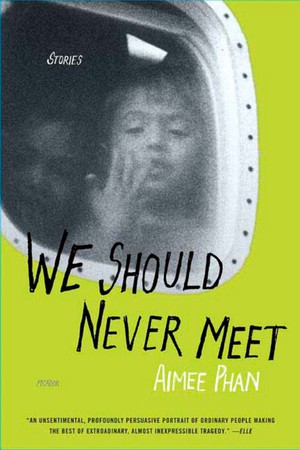
We Should Never Meet by Aimee Phan

Eight powerful interlinked stories about families torn apart by the evacuation of thousands of orphans from Vietnam to American at the close of the war. Unforgettable, poignant and clear-eyed, and timely as we consider the latest refugee crisis and the separation of families at the border.

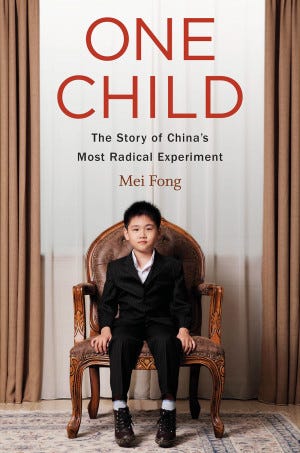
One Child: the Story of China’s Most Radical Experiment by Mei Fong

In this fascinating investigation, Fong, a journalist, uncovers the impact of massive social engineering and how the one child policy has shaped China, with heart-wrenching stories of women caught up in policies that restrict their reproductive freedoms.

The Evite Made it Sound Like a Normal Party

Hospitality

I was the one in charge of the needs of the guests. There were four of them now and one of them was missing a foot.

Where’d your foot go? I said.

The guest shrugged, then said: How am I supposed to know that? I’m just the guest.

I’m very hungry, another guest said. It was the guest with the large belly reading a baby-names book. I’m eating for two, she said. I need to eat, like, an hour ago.

Sorry, I said. I can probably whip up some sandwiches in a sec.

She huffed. We can’t all be geniuses, I suppose, she said. Then she said out loud to everybody: Nobody will mind if I play some Mozart? I’m going to play some Mozart. I’m going to play it for the baby because that is a good thing for the baby.

Music that sounded like little naked nymphs gliding through the grass played. For a moment I wished I were the baby before I began feeling sorry for the baby. It still had so much to do yet in life: practically everything… yes, a lot of work ahead for that baby. I felt tired just thinking of all the baby had to accomplish still, so I watched its Mozart-playing mother lumber around the room, semi-gracefully.

Aren’t I a great dancer still? she said.

Then she said: I don’t mean to be harsh, but you’re kind of the worst host.

The other guests agreed by nodding their heads. The one guest said, I lost my foot under your hospitality! Only he said ‘hospitality’ as if whatever I had offered him was the opposite of ‘hospitality.’

I felt overworked, drained, bad at everything. A failure, and painfully conscious of it like the spot where I bit my tongue earlier. I felt all these things. Here were these guests and they were not appreciating my efforts! I could not make them happy.

I was trying.

I was.

I was considering making brownies. Everyone loves brownies!

Then: almost at the precipice of it all, before falling over the edge into despair, two more guests showed up, separately, and upon seeing the other said they were sexually attracted to one another. It was love at first sight, they said.

Odd as it sounds: they emanated with it. It was as if they were their own brownies.

It was strange to hear the guests declare their love like that, and lovely too. A change occurred in the air of the room. I felt little elevators full of drunk and happy people run up and down my body. It made me feel good I could provide a space for these two people to find each other in. The Mozart played on. The pregnant guest began dancing with the footless guest. I was feeling like I had done a good job… a decent job. A job. Having guests means letting them fall in love from time to time. I was immensely happy. The pregnant guest, turning her head at me, kept saying I looked like an idiot, but I beamed from ear to ear and would not stop. I made some brownies happily and everyone seemed grateful for the company.

Later, I saw everyone to their rooms, where they cozied themselves and rested. I lingered and listened outside the room of the two in-love guests doing in-love things. I tried to imagine what it would be like to be in that room. In the morning I knew I would wake up feeling like I had been dreaming of love.

About the Author

Shane Kowalski was born outside of Philadelphia. He is currently a lecturer at Cornell University. Work of his appears or is forthcoming in Puerto del Sol, The Offing, Funhouse, Hobart, and elsewhere. He is also the author of the short prose chapbook, Dog Understander (Frontier Slumber Press).

“Hospitality” is published here by permission of the author, Shane Kowalski. Copyright © Shane Kowalski 2018. All rights reserved.

Reading a Book Takes Time—Deal With It

I f I had a nickel for every time I thought “I wish I could just spend the whole day reading,” I’d buy myself a new bookshelf for all the books I haven’t had time to read yet. But it seems not everyone wants reading to take up more of their time. Last week, Vox reviewed Serial Box, a subscription-based publishing platform which uses the structure and logistical scaffolding of TV production to publish “better than binge-watching” serial books. They promise to deliver “fiction that fits your life,” according to their website.

Here’s how it works: the books are released in serial seasons, like a TV show, and written by teams of writers, like a TV show. The serial season is released in “episodes” (i.e. chapters) which you can buy separately, or you can buy a subscription to the whole “season” (i.e. novel). Each book is written by several authors who each contribute 30,000 word chunks to the season. Once the season is finished, it’s bound and printed like a novel.

The founders argue that the inspiration for their company model came from the serialized forms of fiction in the 19th century a la Charles Dickens and Wilkie Collins, but they also make it clear that they are trying to make books more efficient. Serial Box turns the book into a quick, consumable, commute-sized commodity: each “episode” in the serial season is set up so it only takes about 40 minutes to read, in order to line up with the average back-and-forth commute time. As Molly Barton, one of the founders of Serial Box, told Vox: “I was aware that for many people, reading a book can feel rather slow and daunting compared to other media forms at this point. It’s harder to fit into your life.”

I say malarkey. You only have 40 minutes to read a book? Get a bookmark! Don’t worry — the book will still be there when you get back. Reading is supposed to be slow. And it’s okay if it’s daunting. Books take a long time to write, and the good ones deserve more than a morning commute time to fully digest and understand. Books also have the capacity to take you out of time and space and make you miss your subway stop, and that’s a good thing, too. The right story give us permission to get lost when we need to. Indeed, Constance Grady reported the Serial Box books she’s read did not enchant: “I couldn’t lie on the beach and lose myself in it because it actively did not want me to do so.” Is our obsession with hurrying up getting in the way of our having fun?

You only have 40 minutes to read a book? Get a bookmark!

Even worse, is it making us forget that reading was supposed to be fun in the first place? Choosing your reading material because it fits your commute turns reading into an efficient, productive use of commute time, another experience forced to bow down to the god of efficiency. In other words, reading becomes a task. Are we reading because we feel we “have to?” Or do we feel guilty about taking time for leisure and pleasure, so we need our leisure and pleasure to be measurable like the rest of our lives? Finishing a book does feel like an accomplishment, and I wonder if Serial Box and other companies like it are feeding on that feeling. Does getting through a 40-minute “episode” of a “season” of reading make us feel like we’ve achieved something, like we’ve gotten through a task, and therefore makes us feel validated in taking the time to read?

Serial Box is, at least, invested in creating something new, but there are other companies fully devoted to shaving down the time it takes to get through books already in circulation. The mission for these businesses belies the reality that people want reading to feel more like a knowledge download. For those who want to be “well-read” but simply don’t have the time for all that reading, there’s Instareads, which boasts 15-minute summaries of bestselling titles so you can “Instantly unlock the knowledge contained in the world’s best nonfiction books” and “Be Efficient.” And BookRags (among other relatives of Cliff Notes) promises to boost your intellectual brand with summaries of Ta-Nehisi Coates’ We Were Eight Years in Power and Isabel Allende’s City of Beasts available for only $9.99. There are independent publishers like Book Summary on Amazon with 30-minute book reviews available for $2.99 because “your time is precious.” They boast: “We have done all the hard work for you, all you have to do is benefit from it! To your success!” As Riane Konc writes, these zippy summaries may be a great solution for books with 15 minutes worth of ideas — the kinds of books that no one needs to read in the first place — but they are not going to bring anyone any closer to enlightenment.

Can You Speed-Read Your Way to Happiness?

Don’t get me wrong—I’m fully in favor of short fiction, and serial fiction, and other approaches to storytelling that break out of the mold of the doorstopper codex book. I’d love to see more adaptations of the serial form — I’m even down with the concept of episodic storytelling delivered by Serial Box and other companies like it. For example, Tap by Wattpad incorporates text messages, phone calls, and other interactive elements into the digital series of stories they create. And DailyLit delivers books to your inbox in installments, to help you make the time for the books you’ve never thought you had time for. I also think hybridized concepts for storytelling that use existing forms of media to make something new are really cool; a lot of podcasts playing with the boundaries of the form come to mind, like Serial, Welcome to Night Vale, and The Message, and Limetown. It’s exciting to think about how the ways we read will change over time. Let’s keep messing with the concept of reading and storytelling even more!

But please, quit trying to sell me books that are specifically geared towards making reading take up less time. Let’s be bold and admit to not reading a book when we haven’t had time to read it yet, rather than pretend we’ve read a book when we’ve scrolled through a 15-minute summary. Let’s be willing to admit that some books simply aren’t worth our time, too. Because the truth of the matter is — there are a lot of books out there, and we are all busy as hell. But not everything should be digested, processed, or experienced within the window of a morning commute. Go pick up a book , maybe even a heavy one — read a few pages now, get lost in it for the day, or read it over the course of the next six months. Go back and reread the stuff that didn’t make sense the first time around. It’s okay to take your time.

Here’s Your First Look at ‘The Wife’

I f you’ve ever navigated publishing-world sexism, family resentment, the exquisite self-inflicted pain of being a writer, or the terrible bargains we strike to support the people we love, congratulations: you’re finally being played by Glenn Close in the movie of your life. Oh, sorry, it’s the movie The Wife, but still: from the exclusive preview below, it looks like Close’s character will strike close to the bone.

The Wife, based on the novel of the same name, focuses on Close’s Joan Castleman, who’s been letting her literary ambitions come second to her husband Joe’s (Jonathan Pryce) for 40 years. Now Joe is about to win a Nobel Prize, and Joan is reflecting on a life spent seeing her talents and dreams subsumed by her marriage, her domestic responsibilities, and the sexism of the publishing industry.

“Meg’s novel tells a story that is so subversive about what it means to be a female writer,” says Jane Anderson, who adapted the screenplay. “I was thrilled that she was willing to entrust me with her wonderful book, but when I first wrote the screen adaptation fifteen years ago, no male star wanted to be in a film called THE WIFE instead of THE HUSBAND. The culture in Hollywood has changed since then.” The culture in publishing has changed too, but not so much that The Wife doesn’t feel relevant. “The film is coming out at an unusual and highly charged moment, one in which we are squarely facing some of the issues between men and women that have been around forever,” says Wolitzer. “Joan’s rage feels particularly pointed and relevant right now.”

The Wife is in theaters August 17.

Brooklyn’s DIY Literary Spaces

The Brooklyn Letters project is a series of oral histories of literary Brooklyn from 1999 to 2009, presented by Electric Literature with support from the New York City Department of Cultural Affairs.

This is the sixth installment of Brooklyn Letters. You can read earlier oral histories here.

Popularized by punks and artists decades ago, the “do-it-yourself” ethos runs in the veins of countless independent publishing houses and magazines, but we fail to realize how it most often shows its true self in the form of literary events and reading series. People yearn for a sense of belonging—or maybe they just want to press the palm of someone who can get their book published. Either way, readings and literary events both reflect and arise from the greater literary community. Literary Brooklyn in the late ‘90s to early 2000s was still sparse, but the aesthetic and energy was already there, waiting for the right voices.


In part two of our oral history focusing on the do-it-yourself ethos, we take a look some the literary climate in Brooklyn around the turn of the 21st century, with the launch of efforts like the Franklin Park Reading Series, curated by Penina Roth, a monthly literary reading event that has outlasted so many others to become one of the city’s most popular and recognizable series; Shortwave, the bookstore and event space run by Richard Nash and Soft Skull Press, home to countless impromptu readings and literary events; and the Fort Greene Park Lit Fest, an annual event presenting local writers reading from their work. Prevailing through the stories told and travails endured is that DIY spirit, the passion and enthusiasm that brought so many of us to literature in the first place.

Penina Roth [founder of Frankin Park Reading Series]: Because of family obligations, I couldn’t really leave the neighborhood, so I wanted to establish a literary scene/community close to home and bring famous writers to us. I really was frustrated because I wasn’t free to travel to all of the great readings I was reading about in Time Out that were in the East Village and the Lower East Side, because there was a lot going on. Everything was on the Lower East Side, East Village, all a lot of the clubs, maybe 75% have closed, because gentrification intensified there. But that’s where the scene was. That’s where you had the Happy Ending Music and Reading series, you had Mixer there; in the West Village you had Sunday Salon. There was stuff in Williamsburg, like Pete’s Candy Store; in Red Hook there was Sunny’s.

I was a community news reporter who had lived in Crown Heights for 14 years and I noticed the neighborhood was changing, and I’d seen in Time Out, late 2007, they were interviewing people about — so-called hipsters — basically they were interviewing hipsters about where they were finding cheap rent or something and somebody was talking about Crown Heights. I had an editor at one of the newspapers I wrote for and she was like, “I heard Crown Heights is going to be the next hot market.” All of a sudden, Spring 2008, these new businesses were opening along Franklin Avenue that were clearly catering to a different demographic and one of them — the very first in April 2008 — was Franklin Park.

I didn’t realize that you could have literary events at bars. I thought it was a great idea.

I was writing a story, or stories about the transition, the transitioning neighborhood, I interviewed these new merchants and one of them was the owner of Franklin Park. First, I published a real estate article in the New York Sun and we had a mutual friend who connected us and then I became friendly with the owners. I started hanging out in the courtyard and the beer garden for hours, interviewing people — new transplants — trying to get a sense of what was happening to the community. I noticed a lot of the new transplants were very well educated, “creatives.” These are recent college grads, a lot of them were grad students. I would always see people reading. And at the same time, I had become friendly with David Goodwillie; he was kind of a mentor of mine and I had been attending a lot of his readings. And one of them in, I remember exactly where it was — April 2007, KGB Bar, and before that I had never really been to a bar. I didn’t realize that you could have literary events at bars. I thought it was a great idea.

Richard Nash [former editor-in-chief of Soft Skull Press and founder of the Shortwave bookstore and event space]: The Brooklyn thing happened because of everything going down. When the store was first created in Tonic, before we got kicked out — they wanted that space where the bookstore was to become a green room for the musicians. Don Goede, who led that, knew this little architecture firm and they made one massive metal object which was the key to it all. I think it got called the “book cage.” It was basically a series of straps that curved up and away so that it was affixed to the wall and then bent out into a C-curve then bent back around again. The whole thing was a shelving unit. You took a vertical shelving unit and bent it twice. You bent it at the top so that it bent around and you could bold it into the wall, and then it curved around at the bottom and extended out so that you could actually run canvas maybe, or wood, so that you could actually sit in it. It became a bench. The top of it was basically storage where the books sat spines up, because at that point it was parallel to the ground. The long part was classic display shelving, and the bottom part was a bench so you could sit inside a cave formed by that C and read. The fabulous, fabulous unit, the second it shifted from being just a book store to a book store and a publisher, the publishing operations went into the cave, so the people didn’t sit there and read anymore.

Instead they got there and laid out books and emailed editors. When we moved to Brooklyn, we disassembled that unit, shipped it to Brooklyn, and reassembled it with the exact same setup: books in the front, publishing in the back. In order to spread the word, both of the bookstore and as a part of being an active publisher in the world, we started a reading series every Sunday. It wasn’t a monthly, it was a weekly reading series. In some ways, you’re right in your overall architecture of your oral history to make sure to include reading series in the rubric because they really were a big part of how clusters got created in Brooklyn, of how things shifted from being an atomized series of places where people lived into a place where people could meet.

I would say in some ways it’s hard for a publisher to create communities rapidly because of the life-cycle of a book. It’s a year after you’ve decided to publish it that it comes out. There’s a real lag time, but a reading series allows you to be immediately present.

[The name Shortwave is] evocative of ham radio, the ability to communicate directly, the idea that there is a disparate network of people who share an interest. But yeah, we went where everyone goes. We went to Brooklyn.

We went where everyone goes. We went to Brooklyn.

Roth: In Crown Heights, you’re kind of straddling three worlds, and in the beginning, there were only two — Hasidim and Caribbean-Americans. I was very excited because, as a journalist, I was learning about these changes that are happening and they’re very subtle. It’s like things always move east from Park Slope. If you imagine the hub of gentrification in central Brooklyn was Park Slope in the mid-’90s, then you get Prospect Heights. Then moving east, you get the Crown Heights, throughout the outer edge of Crown Heights, Franklin Avenue. That’s where there were new businesses starting up. Most of the new businesses, maybe 3 out of 5 were started by people who were from Caribbean immigrant families. Vanderbilt is the big Prospect Heights commercial strip; the guy that started all that was Toly Dubinsky; he opened the first bar on Vanderbilt, Soda Bar. His customers, he was finding customers who were living in Crown Heights. They were pioneers and they complained. They were like, We have to walk so far to get to your bar; can you open a bar in our neighborhood? So they started looking on Franklin Ave. They found this old mechanic’s garage which was a drug den. Like people sitting there shooting up. They basically chased the drug dealers away so they went around the corner to Franklin Ave. They renovated this garage and opened Franklin Park in April 2008 and, of course, it was an instant hit because there was nothing else around; there wasn’t any competition. It becomes very popular — popular with the Caribbean American residents, people from neighborhood families. It’s popular with other longtime residents, like young Hasidim, and it’s popular with the new transplants.

Through Goodwillie I started meeting writers. And talking to the Franklin Park owners, subsequently, about a piece I was writing for The New York Times, I learned they were opening a larger space in addition to their courtyard and small bar, and as the weather turned colder, they wouldn’t have as much business because their business was centered around the beer garden outdoors. They were in a position where they needed to draw people to the bar, and I had these friends who were writers. Exactly three published friends, and I thought, “well this would be a great opportunity to showcase my friends” and I’d been meeting all these people from the community. So, here I have these constituencies that I’m trying to unite or bring together, kind of helping to build community and kind of bring together for an event. I just thought it would be fun, and then when I got an article about the bar published in The New York Times, it got me in with the owners, and so I approached them and they agreed to try it.

It was only supposed to be a single reading because I didn’t know what I was doing. I had not been involved in the literary world. I had three friends who were writers.

The Franklin Park Reading Series was only supposed to be a single reading because I didn’t know what I was doing.

We did the event and started planning it December 2008 right after my New York Times article came out and David Goodwillie, my mentor, was in France for the first few months of 2009, so I couldn’t start it until March. He was very involved in the literary community. Very well connected, so at our first event, even his editor showed up, so we already have kind of a literary world getting involved. Jami Attenberg, another one of my idols, showed up. She was a friend of David’s. I was like, “Oh my god: there’s a celebrity at my event.” I’m pretty sure I had like 40 people there. My friend Matthue Roth, a performance poet that refers to himself as a punk author, taught me a lot about the basic production of the literary reading; he was a part of that “DIY scene” spoken word scene. He had also been part of Sister Spit, the only male member in a troupe.

He told me you need to have drink specials. The bar agreed to drink specials so we had cheap beer. We had decent attendance, enthusiastic response from the community. They sold a lot of beer. The Franklin Park owners did not know what a reading was, they thought it was a book club. I had to explain what it was, they didn’t know that there was money that could be made in literary events, and then kind of because of me, they started having literary events at other venues they own. One of the owners, Matthew Roff, gave me the idea to make flyers. So I made these flyers, I started dropping them off on Franklin Ave, talking to all the merchants and getting them to promote the event to customers. They were very helpful; they used to put the flyers in their windows. Matthew, who had become my mentor and encouraged me during my journalism career; he’s like one of the pioneers of the whole 5th Avenue scene. Southpaw, which he owned, was the first rock club in Brooklyn. They used to design flyers for their events. He told me, “Oh, you should go around and drop off all these flyers at all the coffee shops.” I also spread flyers around Prospect Heights and Park Slope; whatever was near Crown Heights. It definitely brought out a lot of people.

Elissa Schappell [co-founder of Tin House Magazine]: I think we were among the first people to arrive. It felt like there were reading series and stuff like that but it still felt to me very much like what was, at the time really happening, would have been happening somewhere else, like on the Lower East Side. But a lot of that would have been uptown. It was definitely in Manhattan. So when we came we were still doing, I mean still certainly thinking about the city and I do think that there were people who thought that by moving to Brooklyn in some way you weren’t going to be as ambitious. Or you didn’t want it as much. Or you didn’t want it to be — it wasn’t a serious project. That in some way it was kind of DIY, like we’re going to be making a zine because we’re in Brooklyn.

We could have continued to work in our publisher’s apartment. It would have cost us nothing. I think a lot of what we did, when we were having readings — we did do readings at places in Brooklyn, but a lot of that was still forming. But it was just absolutely — the vibe is different in the city. It was just — and maybe it was leaving The Paris Review — it just felt old and done to me. And if you’re going to work in a business that you’re passionate about, and you want to make change and you want to be part of something — you don’t want to do it someplace where the land is already been gone over, where everything’s been done. You’re not making a lot of money, that was a fact. But you get one life. You have to do the thing you want with this life. Why not lean in hard to taking some chances?

You have to do the thing you want with this life. Why not lean in hard to taking some chances?

Roth: I was maybe one of the only journalists reporting on Crown Heights because journalists hadn’t really moved there yet, but that didn’t last long due to the great access to transportation, Brooklyn Public Library, Botanical Gardens, Prospect Park, all that. Early on you were having grad students and publishing people and journalists moving in. But really what happened was, I became busy with the reading series, and I wasn’t really involved in journalism anymore. This famous blog, run by Nick Juravich, I love Franklin Ave, used to promote my events so much on the blog. Back then it was really widely read because people would come to Crown Heights and need to find things — art events and things to attend. He would talk about them. My mission from the beginning was to feature authors the represented the community. It was very important to me to have diversity, to have Caribbean-American authors.

Johnny Temple [editor-in-chief of Akashic Books]: Before the mid-2000s, Brooklyn residents had to cross the East River to see most of their favorite authors speak publicly. In 2018 it’s totally different — this borough is packed with literary offerings. And the publishing business has started following the authors to Brooklyn. I think the Brooklyn Book Festival and the emergence of vibrant new independent bookstores like Greenlight, Word, and more recently Books Are Magic are an important part of this cultural evolution. The good people at Melville House Books have credited the Brooklyn Book Festival with helping lure them from Hoboken to Brooklyn. I had moved from Washington, DC, to Fort Greene in November 1990, and over the years I saw at least two unsuccessful attempts to open a bookshop in the neighborhood. But Fort Greene just couldn’t quite support the stores enough to keep them open. Writer Jennifer Brissett opened Indigo Café & Books at 672 Fulton Street in 2000, but the business had shuttered by the end of 2003. When Greenlight opened on Fulton Street in 2009, the neighborhood was finally able to support a bookstore. And while the store’s success is undoubtedly linked to the ongoing gentrification in the area, Greenlight has become a role model for how bookstores can become deeply engaged with their surrounding communities.H

Nash: I would say that Soft Skull was not so much a hub, well it might have been a small hub, but it was certainly a node. It was a big node. It was less like there was that one transformative moment when somebody came to the store as it was those repeated encounters, a number a which though not necessarily all of which happened in the store. A large percentage of them happened within a five mile radius of the store. The first way I came to know Lynne Tillman was because she read at the store.

It’s that iterated sense of ubiquitousness; you think of people’s social lives operating where they go out on their Saturday nights and stay in the other nights, but my life is the exact opposite. People don’t do readings on Friday or Saturday nights because everybody is out. You do your readings and book parties on Sunday, Monday, Tuesday, Wednesday, Thursday. My entire social life was being out those days and recovering quietly indoors on Friday and Saturday.

Temple: We also staged some wonderful public events, including a memorable discussion about [Richard] Wright’s legacy in October 2002 at the South Oxford Space featuring Nelson George, Kevin Powell, and Hazel Rowley. Several years later, my wife Kara Gilmour and I joined Aaron Zimmerman and the kickass team at NY Writers Coalition to stage the Fort Greene Park Lit Fest, an annual event that presents young neighborhood writers reading from their work alongside heralded authors like Amiri Baraka, Sonia Sanchez, Jhumpa Lahiri, and many more. From the first festival in 2005, the community response was very positive.

All of these endeavors were precursors to my role as cofounder of the Brooklyn Book Festival, a much larger and more ambitious undertaking that launched in 2006. A year or so earlier I had met then–Brooklyn Borough President Marty Markowitz and his staffer Carolyn Greer at a celebration for Cakeman Raven — one of New York City’s best bakers of red velvet cake — across the street from my home in Fort Greene. I gave Marty and Carolyn a copy of Akashic’s recently published collection Brooklyn Noir edited by Tim McLoughlin, and proposed that we discuss the possibility of starting a big book festival in Brooklyn. With the enthusiasm of Carolyn and her Borough Hall colleague Liz Koch, and a green light from Marty, we soon began making plans.

Roth: A lot of devoted attendees of Franklin Park Reading Series live within four or five blocks of the bar. They go and have no idea who the authors are; they go for the drinks and to discover writing. To demonstrate how incredibly dedicated, sophisticated, and literary our audience is, in 2012, Sam Lipsyte read in an amazing lineup including Catherine Lacey and Gary Lutz. Towards the end of the night, around 9:30pm; Lipsyte gets up there and he reads a story from The New Yorker. A new story. You know how long New Yorker stories are, and he’s abridging it, and it’s a very packed house. We used to let people sit on the floor back then, like right in front of the mic, right in front of the reader, so you have people sitting on the floor, this crowded room. And he reads for 45 minutes! You could hear a pin drop. Literally. It was so silent; they were so respectful, and even though, yeah they get like rowdy, they’re very enthusiastic. A.M. Homes read once and she had just been on tour for May We Be Forgiven. She’s like “Where were all you people in San Francisco?” The poet Mike Young read once and did a call-and-response with the audience, having them call out a refrain from one of his poems when he indicated it, just like a band at a concert. It exemplifies how the series is often so fun and captures an uncanny energy. Famous established authors go on book tours and they end up reading for very small rooms, so they appreciate it and it’s just kind of gratifying to get that response and the cheering and the laughter and people come to test out new work. People are bold enough and they trust us.

Brooklyn Letters is supported by a grant from the New York City Department of Cultural Affairs.

‘Jaws’ is a Film Full of Queer Intimacy You Never Noticed

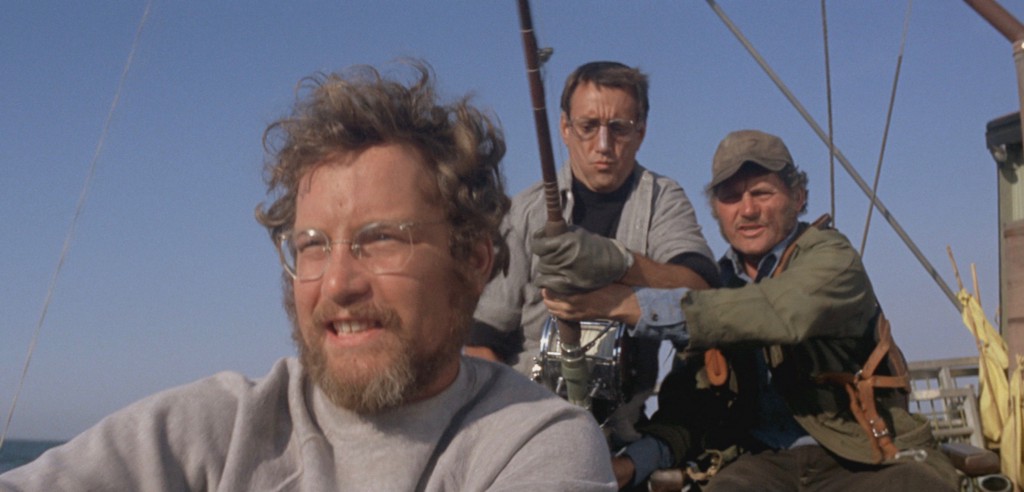
I ’ve known that I like women since my Sporty Spice obsession at age six, but the feeling was one that I’d mostly ignored until I watched Jaws. My dad gave me a Target gift card for my twelfth birthday, and while shopping for my own present, I was drawn to the blue, metallic sheen of the double-VHS 25th Anniversary Collector’s Edition. The cover image was iconic: a blonde woman swimming naked, an enormous circle of teeth reaching up from the depths, the name of the film in blaring red letters. It seemed scary, dangerous, and a little bit sexy. I watched it perched on the edge of my bed. I was enamored with the elusiveness of the shark, how you couldn’t always see it but you knew it was there. I laughed at the jokes and tensed up at the scary parts, shrieking when Ben Gardner’s head rolled out of the broken hull of his boat. The movie overwhelmed me with feelings I’d never had before, one of which was a breathless tingle in my abdomen, a trembling that excited me as I watched Brody, Hooper, and Quint cooperate, laugh, and argue on the boat.

In the mainstream, queerness is tolerated when masked with straight performance, or an appearance that could be coded as straight. Queer films like Fried Green Tomatoes are widely enjoyed in part because it’s possible to read them as straight. Likewise, Jaws is a straight film that can be read as queer, and this is the reading I choose.

People don’t read me as queer either. I have only come out to a couple members of my family. My brother knows, and when I told my father when I was a teenager, he said, “Okay,” and we never spoke of it again. Coming out to my grandmother is out of the question.

It was more than a decade ago that she made her pronouncement. I was driving her home from grocery shopping, the backseat brimming with food. The whoosh of the air conditioning flapped the plastic bags, fwip-fwip-fwip. The lettuce wilted in the heat, and the carton of ice cream sweat icy droplets.

“Being gay is fine,” she said. “A person can’t help that. But being bisexual is gross. Just pick one! You shouldn’t double-dip.” I imagined myself as a broccoli floret, dunked twice into a tub of French onion dip at a party.

“Why is that gross?” I asked. I pressed the accelerator, and my grandmother grabbed the door.

“Would you want to have sex with a man who has had sex with another man?”

I had begun to see queerness everywhere, in myself and in others, in real life, in books, in movies.

I didn’t answer. I couldn’t answer. At that age, I had begun to see queerness everywhere, in myself and in others, in real life, in books, in movies. I looked for it as if finding it would help me decode the puzzle of my own sexuality.

I haven’t had to come out to my grandmother because all my partners who stuck around long enough to be invited to Thanksgiving dinner have been men. I am able to hide my queerness, a privilege that is convenient and gives me safety that some other queer orientations don’t have. Yet there is a guilt nestled underneath that relief, a sense that I am not participating. By not coming out and declaring myself, I have the clinging feeling that I am not being queer enough.

Jaws is can be read as queer even though the men don’t “look” queer to an outside eye. My queer reading stems from two aspects of covert communication: the gaze and innocuous touch, both classic indicators of desire. Historically, queer interactions were dangerous — and often still are. The looks and touches between the men in the film signal an intimacy that is easy to overlook, particularly when the touches occur in jest; in the midst of arguing with Mayor Vaughn about the seriousness of the situation, Hooper places his hands on Brody’s stomach and pats him to punctuate his irritation. It’s easy to orchestrate these touches so that they seem natural, because the characters are often standing in close proximity to one another. Spielberg frames the water and the characters in the same way, very close. The technique makes their bodies and faces take up the screen. The distance between the men seems negligible, the possibilities endless.

This moment of vulnerability is the climax to the explorations of their bodies, because even homoerotic touch is less intimate than the baring of Quint’s trauma.

Touching hands is significant in queer intimacy. As with the examples mentioned above, it is a touch that is erotic yet can easily be perceived as casual. Upon meeting for the first time, Quint says to Hooper, “Let me see your hands.” He takes Hooper’s hands in his and pulls Hooper toward him. The contrast between Quint’s hands and Hooper’s is an analysis of class (Quint claims Hooper has “city hands” and it’s obvious from his hands he’s “had money all [his] life”), but it is also a touch that is personal. By examining Hooper’s hands, Quint is examining Hooper and his history.

Closeness between the men’s bodies becomes even more pronounced when they board The Orca, Quint’s fishing boat aptly (or ironically) named for she shark’s only natural predator. The small space of the boat and the great nothingness of the sea requires the men to remain physically close. The greatest moment of intimacy occurs at night when the work has stopped, and they are drinking inside the boat. Hooper and Quint compare scars. Quint shows a fake tooth and then leans across the table so Hooper can touch a lump on his head. Hooper reveals a jagged scar on his arm from a moray eel. Quint rolls up his sleeve to show Hooper he can’t extend his bicep all the way. Hooper scoots along the booth closer to Quint, rolls up his pant leg, and stretches his leg out to display a scar on his calf. He places his leg on Quint’s hand, and Quint turns to Brody off screen and grins. Quint rubs Hooper’s leg playfully and then moves closer, rolling up his own pant leg and placing it over Hooper’s to present a scar from a thresher’s tail. Brody, standing off to the side, asks, “Thresher?” and Hooper, annoyed, explains that a thresher is a shark, a move that subtly excludes Brody. Quint and Hooper look at each other and smile, an inviting look I cannot read as anything other than erotic. Quint asks Hooper if he wants to drink, and Hooper says they’ll drink to each other’s legs. As they cackle and down their alcohol, Brody lifts up his shirt to show his own scar. He pauses, as if he’s considering inserting himself into the intimate exchange, and ultimately decides against it.

The one-upping of scars is a safe form of touch. It’s a competition, but it’s also a test of boundaries, both physical and emotional, and the climax of this intimacy among the three men is Quint’s famous monologue where he describes the horrifying experience of surviving the greatest US naval disaster in history. The root of Quint’s obsessive sharking is revealed as he describes waiting three days in the water, dehydrated and starving, warding away the frenzied sharks that dragged the sailors away one by one. This moment of vulnerability is the climax to the explorations of their bodies, because even homoerotic touch is less intimate than the baring of Quint’s trauma.

As a child, I always wanted to touch my girl friends. Playful touch was a way I could explore my relationship to other girls and the feelings that came with it, but only if it did not cross a line — a line I didn’t always see. My grandmother came to pick me up from soccer practice when I was in first grade. She waited in her car next to the field. A girl named Jessie and I ran across the grass, spanking each other and laughing hysterically. When I reached my grandmother’s car I said goodbye to Jessie and climbed in. “What the hell were you doing?” my grandmother hissed. “Running around spanking each other like that. What will Jessie’s mother think of you?” I sat silently in the backseat and tried not to cry, letting the shame wash over me, shame I hadn’t even known I should have.

I’ve been told that I am like a piece of spaghetti: straight until wet, my orientation whittled down to a joke. Or that I wasn’t really bisexual, just horny. I am, in other words, straight until proven gay.

Viewers may be tempted to write off the queer intimacy between Brody, Hooper, and Quint because of their history of straight relationships. Brody is married to a woman and has two children and Hooper makes a passing joke about an ex-girlfriend; some might point to these details as evidence of their straightness, as if there’s only gay or straight, and no way to exist outside of that dichotomy.

Using sexual history as the sole indicator of orientation is detrimental and damaging, and it’s why I struggle with my pansexuality, often feeling guilty for calling myself queer while not being more queer. I’ve not been with many women, and for some, this means my queerness is not valid. People, mostly straight men, have made comments like, “You’re not bisexual, you’re just bi-curious,” or “You just kiss girls because it makes guys interested in you.” I’ve also been told that I am like a piece of spaghetti: straight until wet, my orientation whittled down to a joke. Or that I wasn’t really bisexual, just horny. I am, in other words, straight until proven gay. These are all small things when they are looked at in isolation, but when examined together, they become a series of moments that attempt to delegitimize my identity.

Homosexuality is constantly contrasted with heterosexuality as if they are mutually exclusive. As a result, same-sex pairings are sometimes regarded as reactionary responses to heterosexuality not working out: lesbians date women because they hate men or because they experienced trauma at the hands of men and can now only feel safe with women, or men sleep with other men when there aren’t women around (think prison stereotypes). Culture works to delegitimize queerness, to rationalize away the gay. In the context of Jaws, homoeroticism can flourish because women are taken out of the equation. But the implication isn’t that the men are sexually drawn to one other due to a lack of women, (Hooper and Brody have undeniable chemistry throughout the film, even at the dinner table with Brody’s wife), but rather, eroticism is given room to grow because the experience is not continually contrasted with straightness. The men are isolated from expectation, from the civilization that is Amity Island, and all that exists is themselves.

Our sensuality was a sort of performance art: although we were there, making love in front of our male friends, the sensations I felt with her were intimate and invisible.

Many of my sexual experiences with women as a young adult were within threesomes that included a man. While it disgusts me now to think about my queer desire as fuel for a straight man’s fantasy, the context of threesomes provided a “safe” way of exploring my love of women. There was a security in pretending that making love to a woman was really just me catering to what the man wanted, and I freed myself of any responsibility I had to be “good” at lesbian sex. One night in college, I went down on a female coworker at a party in my apartment. I pushed her up against the wall and licked and tore at her body while the men watched. Our sensuality was a sort of performance art: although we were there, making love in front of our male friends, the sensations I felt with her were intimate and invisible.

In queer intimacy, the presence of a person of the opposite sex does not negate the sexual experience between the queer lovers. Likewise, having a wife or girlfriend in the case of Brody or Hooper does not make the characters straight. While we might wish to place Brody, Hooper, and Quint into neat categories, the on-screen evidence of the gaze, of touching, of standing so close together, points to a queer intimacy that refuses to be contained within the binary. The fact that there are three men instead of two is a subtle dismantling of the binary view of sexual orientations. There is a sexual power in threes in general, such as with the predominance of love triangles in narratives, and Jaws is no different, even if the love triangle isn’t explicit.

There is much written about the physical dangers of the pussy, particularly the mythical fanged pussy. The vagina dentata, a popular image in folklore, now runs rampant in horror films: the extraterrestrial monster in Alien, Audrey II in Little Shop of Horrors, the whole premise of Teeth. Jaws is another example that some people feel embodies this monstrous feminine presence. Like a mouth, the vagina is an organ that devours. I remember flipping through The Joy of Sex as a kid and reading a paragraph that described the vagina as frightening because it accepts the strong, masculine penis and then regurgitates it once it is limp and inert.

…the mouth is a reminder of the ever present hum of desires, of wanting, of pursuing things that might potentially harm or undo us entirely.

The vagina and the mouth bear similarities. Both can experience hunger and want, both can experience sensation, pleasure. Consuming food, having sex, chewing gum, masturbating, picking teeth with a tooth pick, all of these are responses elicited by the desires of the body. When I watch Jaws and see the beast’s dorsal fin pierce the water, I see the drive of desire, not the monstrous feminine. When the shark breaches the surface and grins its terrible grin as Brody chums the water, I feel exhilarated by its hunger. It is a similar feeling to the one I have when Hooper offers his leg to Quint or when Quint brushes up against Hooper in the narrow quarters of the boat. The mouth is not a feminine symbol come to destroy male camaraderie. Instead, the mouth is a reminder of the ever present hum of desires, of wanting, of pursuing things that might potentially harm or undo us entirely.

What I like about the sexuality in Jaws is the ambiguity. There’s an in-betweenness there in which the men are not gay nor straight but are instead neither or both. My place on the spectrum of sexual orientation doesn’t seem to stay in one spot. Sometimes I’m more attracted to men, sometimes I’m more attracted to women. Sometimes I’m attracted to nobody. Sometimes I’m attracted to all genders equally. Often, I feel the shame of being not queer enough. But I feel comfort watching Jaws and seeing characters that defy labels. It helps me check the impulse to use labels on myself that I know are false or incomplete.

There’s a particular moment in the film that brings me to tears each time. After Brody’s son goes into shock after witnessing the shark tear apart a fellow boater, Brody sits up and looks out at the water. The camera pauses on that shot, the strings of the score soaring as the great expanse of the ocean opens up in front of the viewer. The ocean is not just one thing. It is both the livelihood of the island and the destruction of it. It is both beautiful and terrifying. It is knowable and unknown. As Brody gazes out into forever, I think about how the sea is not just one thing, and neither am I.

How to Build Your Own Small Press in Brooklyn

The Brooklyn Letters project is a series of oral histories of literary Brooklyn from 1999 to 2009, presented by Electric Literature with support from the New York City Department of Cultural Affairs.

This is the fifth installment of Brooklyn Letters. You can read earlier oral histories here.

You’ve got an idea for a small press, or maybe a literary magazine. Maybe a few people have your back, even if the enthusiasm is their primary contribution. Motivation’s what you’ve got. Money’s what you need (when is it not?). Still, why wait? Nobody else is doing this, so why not build your own? The same DIY ethos that paved the way for grassroots arts movements informed many of Brooklyn’s independent presses. From Akashic to Tin House, Soft Skull Press to Brooklyn Arts Press, so much of Brooklyn book and magazine publishing owes its existence to the urge to dive in and do it yourself.

Richard Nash helped revive Soft Skull Press from financial failure, moving it to Brooklyn and quickly building an impressive roster of writers. Elissa Schappell and Rob Spillman decided to give Wyn McCormack’s offer to start a literary magazine a shot, even though they were skeptical. Fast forward to the present day, Tin House has become a bastion for great writing and books. Johnny Temple treated Akashic Books like a hobby while tending to his own musical endeavors; however, all it took was the inclination and urge to invest in risk and give it a shot. Akashic Books is one of Brooklyn’s literary mainstays. Joe Pan, having received numerous roadblocks and rejections, decided to self-publish and began using the knowledge he gained to publish other poets’ work.

Together we spoke about the perils of being at the helm of a startup, the surprise of seeing a community forming around your efforts, the earnestness in taking big risks, and how the smell of pies makes the effort of publishing worthwhile.


Elissa Schappell [co-founder of Tin House Magazine]: From the beginning, which was a long time ago (circa 1997), Wyn McCormack — he started The Oregonian magazine and was one of the early founders of Mother Jones — he was working at The Nation and decided he wanted to start a literary magazine. I had been the senior editor of The Paris Review for a while and I was on maternity leave. He got in touch with me and said, “Would you be interested in this?” I asked Rob [Spillman] — he had just recently left The New Yorker — if he would be interested because I thought, “God, I don’t know if I want to do this again; I could just go back to The Paris Review, why would I not just do that?” I ended up saying, “No, I don’t think so.” McCormack came back to us and said, “No look, let’s just meet, let’s talk about it.” Over the course of a couple of months he persuaded us and we decided to give it a shot. The idea was he wanted us to move to Portland and do it there but we had just moved to Brooklyn and there was no way in the world once we arrived in Brooklyn that we were going to live in Portland.

Richard Nash [former editor-in-chief of Soft Skull Press]: Soft Skull Press started in 1993. The founder, Sander Hicks, had a novel that he wrote in a creative writing class at The New School. He printed it out and no one took it. He was working at a Kinko’s with his girlfriend Susan Mitchell, and she had learned Pagemaker. They worked the night shift, which meant there was no manager around. She basically did book layout using Pagemaker, printing on 4×1 and 8.5×11 paper. They used the tape binder at the Kinko’s, and over the course of a bunch of shifts, they printed over 400 copies of his novel. For many publishers, certainly many desktop publishing companies that began in the 90s and even early 2000s, it goes back deep, to the impulse to publish a book by the person involved, the person who becomes a publisher. A self-publisher, you could say, is just a publisher who ended up not becoming a publisher.

A self-publisher is just a publisher who ended up not becoming a publisher.

Johnny Temple [editor-in-chief of Akashic Books]: Akashic was a hobby while I was playing bass guitar for years in the band Girls Against Boys. (We still play on occasion.) The first two years, 1997 and 1998, we published three books. At some point I became more interested in publishing books than making music full-time. About four years into publishing, I started playing music less, and publishing more.

Joe Pan [founder and editor-in-chief of Brooklyn Arts Press]: Brooklyn Arts Press started with a manuscript I’d written while at Iowa. I came close with some big prizes but honestly didn’t want to keep spending 25 bucks a pop for contest fees, so I calculated how much it would cost to put the book out myself. I imagined what it would take to create the entire thing, from cover art to font stylings. I was making a lot of weird art at my day job, literally hiding it under my desk at this ad agency, so the idea of just making a book fell in with this idea of myself as someone who considered himself an all-around artist. Nothing was off-limits. The DIY aspect appealed to me. I did all the math, and it would turn out to be wildly wrong, much more complicated than I imagined when I tried to scale up, but at the beginning, that didn’t matter, I just had what I felt was an accomplished manuscript and a drive to get it out into the world. And it worked. Despite a few friends telling me it was terrible for my career, and what did I know about publishing? I asked this lovely woman I would soon marry what she thought and she said do it. She said, “I love that you make things happen.” It’s important to pull close those who inspire you to create and live openly. I published the book and sent it off to famous writers I loved. I have postcards from Don DeLillo and C.D. Wright on my bookshelf, saying nice things about my poems. I’d written and published a book I made, and I was delighted. I felt it tied me to a long history of poets who’d done the same, and a greater history of artists who took matters into their own hands.

Rob Spillman [co-founder of Tin House Magazine]: It was at a time when literary magazines were kind of really stodgy and considered almost like castor oil. They were supposed to be good for you like medicine. There was no design, there were no pull quotes, it was very flat. Non-designed. Like, when we had pull quotes people were like, “oh god, they’re lightweight, they can’t be serious.” But it was kind of in the air. McSweeney’s, the first issue came out six months before us. So we came out right at the same time — and Dave Eggers was living on 9th Street at the time. I was living on 5th Street out here and we would kind of compare notes and he did a couple of fundraisers out here. Eggers and I worked at slick magazines and [tried] to bring in a little more slick sensibility and having fun with that form.

Schappell: Brooklyn felt immediately like home to us. This was a time in Brooklyn when, I don’t know, there was a lot of interesting and smart people there looking to do some great things. I mean I guess there always has been, but at the time, it felt new, refreshing. We got to Brooklyn and we were just like, “this is the place to be, this is awesome.” And when it came up to do the magazine, we didn’t say “oh, we want to do it in Brooklyn,” but that was how we were feeling. For a short period of time, like a year and a half I think, we operated out of our publisher’s apartment on the Upper East Side which is what we had been doing at The Paris Review forever because The Paris Review used to be in George’s — George Plimpton’s apartment. So there was something kind of, a nice little symmetry there. But that’s not what we wanted. We really wanted to have our own office, to have our own space. We ended up getting a place over on 4th Ave. It was totally shitty. We had no money. I remember when our poetry editor, Brenda Shaughnessy, showed up for the first day of work; we had her putting together terrible IKEA furniture with those horrible little pegs. That was her first day of work. It was a terrible shitty little hole but you had the smell of baking pie coming up through the floorboards all the time, which was quite lovely. We were going to be something very very very very different. The Paris Review was all about history and all about gravitas and all the things that really were, and are, important to me… but Tin House had to be all about us. It had to be something very different and it was really important that it be in Brooklyn because Brooklyn was all about taking risks and getting out there and doing it yourself.

It was really important that it be in Brooklyn because Brooklyn was all about taking risks and getting out there and doing it yourself.

Nash: It wasn’t so much the idea of it being a press. It was the idea that we were inventing an internet start-up that happened to be a press. At the time was working at Oxford University Press, not because I had any aspirations vocationally in publishing. It was just a way of getting health insurance, given that theater wasn’t how you got health insurance. So I started learning stuff about publishing, not much, but I was learning some stuff around publishing. In particular, I was learning about digital publishing and electronic publishing because Oxford had some of the first things that were formerly part of print publishing like reference texts that were starting to go online. Encyclopedias and dictionaries, of which Oxford published a great deal, were some of the first stuff for people to figure out they could make a business out of the first dot-com boom in ’98, ’99 to 2000. I had a little bit of money at the time, so I actually became an investor. I invested $5,000, largely foolishly.

But yeah, Soft Skull was in deep, deep, deep financial shit. Although I didn’t have much of a formal role at Soft Skull other than being an investor and a volunteer in a whole bunch of different ways, I offered to help out. At that point Soft Skull had three somewhat-paid employees ranging in age from 20 to 23. I was 31. I was a fucking grown-up, so I basically started negotiating with the printers and the authors about all the unpaid bills. I had to persuade them to keep working with us, and in the case of the printers continue to extend us credit, even though we already owed them a bunch of money and hadn’t really be forthcoming with the circumstances around why. Over a period of time, I fell in love with the Sisyphean task of making it work.

Pan: I had no fancy ideas of what publishing meant or didn’t mean when I started. Brooklyn Arts Press was almost Manhattan Arts Press, as I was sort of between Williamsburg and my girlfriend’s place in the West Village, where I’d eventually go live for a few years. I knew a bunch of poets and some artists and thought putting their work out would be fun, enjoyable, a form of collaboration that ended with an object in the world and a party. About this time I’d gone in with two friends on a gallery up in Beacon called GO NORTH, so I was scouting artists in Brooklyn for shows and did a bunch of studio visits, which is how I found Jonathan Allen and Anne Beck. Anne was teaching at Pratt, Jon would introduce me to the Lower East Side gallery scene and Lu Magnus and he actually already had ties to the poetry world — he did a bunch of book covers for poets early on. And I ended up doing a book that’s basically one big interview with one of my GO NORTH co-curators, Greg Slick, about his work. And just about this time I also hooked up with Hrag Vartanian, who had just founded Hyperallergic, his and his husband’s art blog, and they were living down the street from me in Williamsburg and had started reviewing BAP books on the site. He’d offer me a job as their first poetry editor in 2012. I’m bringing all this up not just as a history but to show how sort of free-flowing entrenched you become in these scenes, and how for me publishing was just one aspect of who I was as an artist. I wrote poetry and fiction, primarily, but I also made art and published art and poetry books, and was in daily life an editor, which is at certain times the most valuable of artists, in my opinion, as a collaborator and shaper. I was being inspired by what people were doing around me, in ways that didn’t feel like direct competition, even if it was, but which felt more like “Hey, we’re alive and doing cool stuff and flying hard under the radar and nobody gets to dictate our art but us.”

Spillman: We were doing all this work to discover writers, so why not? We wanted to have a workshop where we could use people who don’t necessarily teach all the time. So we had Joy Williams and Kelly Link, people who aren’t primary teachers come in and teach. So it’s less academic it’s more toward craft intensive. That was the impetus. We were looking for new voices and almost every issue we would discover a new voice and it would get signed up by somebody and get a book contract. And we were like wait, we’re doing all this, why don’t we just publish them ourselves? That was the initial impulse.

Temple: In April 2003, I was selling Akashic offerings at a table at the National Black Writers Conference at Medgar Evers College in Crown Heights, when I had a chance encounter with best-selling Jamaican writer Colin Channer. After a lively conversation, we realized we lived right across the street from each other in Fort Greene. This led to many collaborations, with Akashic publishing several of Colin’s books, and him inviting Akashic authors to appear at the Calabash Literary Festival in Jamaica, which he cofounded with Kwame Dawes and Justine Henzell. Akashic authors have appeared at every Calabash since then, and I have been fortunate to always attend. This unplanned, life-changing exchange with Colin at the National Black Writers Conference was Brooklyn to the core.

Pan: I arrived in Brooklyn in 2003. I had no idea what the lit scene was like. I knew about only a handful of small presses. Ugly Duckling, Hanging Loose. Futurepoem. I just assumed they’d all started off as DIY projects and built themselves up. It didn’t seem impossible. I used to live across the street from North Carolina School of the Arts in Winston Salem, and a whole group of modern dancers I knew from there who moved to New York started their own dance company — VIA Dance. I had a filmmaker buddy start his own film business for his first feature length. Another friend from Florida who started his own sand-sculpting company, and he’s spent his life traveling the world doing what he loved. In my circle of friends, funding your own artistic projects and inventions for display was never a sign of failure or some maudlin display of ego, it was how you got shit done. I tried to remember this when I’d tell people what I was doing and with some have to withstand their “blank with internal eye-roll” expression. I tried not to let it get me down. There was more relief once I’d published six or so books, when I had a catalogue and my book was one of many. I’ve always really hated the term “vanity press.” What a myopic elitist term to throw at hard workers who didn’t luck out on the right editor. I mean, we’ve all seen shit books, and maybe you like me know editors who have turned shit books into bestsellers. And eventual movies…. Editors are the photoshop of publishing, in certain respects. Good stories and well-written books are often passed on because they’re judged to be unmarketable in the current climate, or due to some lack of personal resonance with an editor or more often now because the writer lacks a sufficient platform or loyalty base for audience engagement. It’s a crap shoot. There should be no shame attached to a diligent writer turning her accomplishment into a salable work via Createspace and building up an audience. None. Most visual artists I’ve known in Brooklyn are forced to self-promote on the open market without gallery support, and only the very worst snobs would attach any shame to their hustle. The rest recognize the situation and the initiative.

In my circle of friends, funding your own artistic projects and inventions for display was how you got shit done.

Spillman: I did physically distribute the first year, all of the issues, to the NY bookstores. In my Subaru Outback would drive to St Mark’s Books, drop ’em all just to make sure that they had them. I remember the second or third issue I drove into Manhattan and dropped off issues at St. Marks — like 30 issues — they were our biggest supporter right from the start, they were great. And dropped off 30 issues, got home; the manager called me up and said Molly Ringwald just came in and bought all 30 issues; “Can you come back with 30 more?” And I was like, “Are you kidding me? What’s up with that?” It turned out she had just started dating a writer I published — Panio Gianopoulos—and that’s how I found out they were dating. They now have three kids together. That was like a really weird early call to get.

Nash: There is one sense of it being very grassroots, and then there is another, of critical mass that more easily allows the larger world to create a new category in their brain called “edgy publishers.” It becomes a kind of a cycle. The vast majority of people in the world who identify with Soft Skull were not going to go to a huge amount of effort to participate in it. Their participation was largely reading and writing, and reading and writing are not lacking intensity, but they don’t require that you do a lot of the shit work actually required to run a publisher. If you were doing a tour to promote your book, we were one of the people the publishers called to say, hey, this person is in town in three months, or hey, that person is in town.

I remember one sweet thing: Paul Muldoon read in the middle of a fucking blizzard, and that was very cool. He had to schlep back to New Jersey. He could have canceled so easily, but instead he drove in from Princeton and he drove back to Princeton. By having a store, it implies a certain openness. You can’t walk right into Random House. It was a highly permeable membrane between us and the world. A lot of times publishing gets claimed as a matter of taste, a matter of personal taste of the editors. Editors’ tastes are divine and poised, and elite by the insiders. That may be true in some instances, but what independent publishing is much more about is that it is a tacit community where the people who run it are not deciding what the community wants but trying to infer what the community wants. We are a conduit through which the community expresses itself. My role and the role of the folks who worked with me was to listen as attentively as possible to the community. We searched for Soft Skull-ness. We found Soft Skull-ness out in the world.

We are a conduit through which the community expresses itself.

Temple: While sitting in Fort Greene Park in 1938, Richard Wright completed Native Son, which went on to become the first nationally best-selling book by a black author in this country’s history. That book was an important piece of my own social and literary education and in the shaping of my interests first as a reader, and later as a publisher.

In the early 2000s I teamed up with the Fort Greene Park Conservancy, African Voices magazine, and Griot Reading Programs to found the Richard Wright Project, with the goal of publicly celebrating his work. On October 18, 2001, a Richard Wright Commemorative Bench was unveiled in Fort Greene Park as a result of our efforts.

Schappell: I think this is something every generation has to do, to be the one to create — everyone needs that art, that magazine, that movement, and you don’t create a movement, or you don’t create a different form if you continue doing the same thing. I think that’s something so exciting about what everyone’s done in Brooklyn. All these people arriving and managing to do their own thing. You don’t feel like — or really I don’t feel like any of the things that come out to Brooklyn are just a pale imitation of something else. I mean look at A Public Space [a literary magazine founded by former Paris Review editor Brigid Hughes]. A Public Space is amazing! And it’s not The Paris Review. So I really do think that’s one of the things that’s cool about Brooklyn. I do feel like we have this outside influence. Brooklyn itself has impacted the art world. But certainly the people that move here are arriving with the same ideas and desires, to have things changed in the same way.

Brooklyn Letters is supported by a grant from the New York City Department of Cultural Affairs.

Laura van den Berg Sees Ghosts

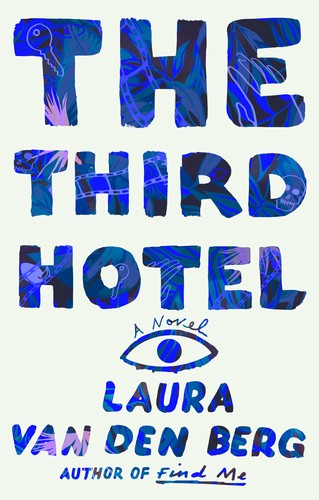
The instant I finished reading Laura van den Berg’s new novel, I turned back to page one. The Third Hotel is that kind of book — an addictive puzzle as labyrinthine as the streets of Havana. The protagonist, Clare, works for an elevator company in upstate New York. She loves to travel, but not for the usual reasons. Instead of sightseeing, “her favorite thing in all the world was to switch off every light and everything that made a sound — TV, phone, air-conditioner, faucets — and sit naked on the polyester comforter and count the breaths as they left her body.”

Purchase the novel

When Clare’s husband — a horror film scholar at a local university — is killed in a tragic accident, Clare travels to Cuba alone for a film festival they had planned to attend together. She wants to talk to the director of the “first horror movie ever produced in Cuba,” but during her second day in Havana, she spots her (dead) husband — a ghost? hallucination? lost twin? — standing outside a museum. And then things get even weirder.

The Third Hotel is one of the most immersive novels I’ve ever read, full stop. Rarely has a book so slim evoked a city’s sense of place with such richness. “She counted soaring gothic arches; neoclassical stone lions; retro beach hotels on the Malecón; bright art nouveau facades with ornamental moldings that made Clare think of Fabergé eggs; stark Soviet high-rises,” van den Berg writes, as Clare passes “codes over doorways that she did not understand.”

I recently spoke with van den Berg via email about the anonymity of travel, writing a travel horror story that subverts genre and expectations, and the haunted house where she wrote The Third Hotel.


Adam Morgan: The first thing that struck me about this novel was your sensuous descriptions of Havana. How do you approach description? Contemporaneous notes? Memory? Imagination?

Laura van den Berg: All of the above! I think a lot about the different functions that detail can serve. There are the orientating details when you’re writing scene (is the character inside or outside? Is it raining?) and then also what I call “granular detail” — i.e. those hyper-specific details that carry layers of time and meaning. For example, the novel’s first section is titled “The Fingernail,” in part because early on Clare is startled to discover a fingernail in a hotel room drawer, a detail that becomes emblematic of the strangeness of travel and transit spaces, the way a sudden shift in the atmosphere can toss you into a different reality, if only for a moment. If the orienting details work to ground our readers, then the granular details often work to destabilize. So I’m interested in how different levels of detail can work together, the friction they can generate.

As for Havana, I took several research trips, including one to attend their annual film festival, the basis for the festival Clare goes to in the novel, and took massive amounts of notes each time. Clare has a particular relationship to travel because her parents used to manage an inn in Florida and I started doing the same thing with small hotels and motels, whenever I’d pass them, in terms of taking down details. This led to a vast amount of descriptive material, which was daunting, but it firmed my sense of where the descriptive energy would be concentrated: the smaller ecosystems within Havana that Clare moves through — the world of the film festival, the world of hotels, what she observes while walking — and in her childhood memories, the inn is a kind of sun that everything else orbits around. I find that a character’s specific lens is important too: in Havana, Clare is somewhere between a tourist and an investigator, and the more I understood that lens the more focused the descriptive choices became.

AM: Clare is something of a nomad before Havana, and something of a flâneuse once she arrives. Are you a big traveler? An avid walker? How does experiencing the world that way impact your writing? Your sense of self?

LvdB: It’s strange — I lived in one place until I was 22 and then my life after has been super transient. My husband is also a writer and so for us, the artist’s life has meant a lot of moving around (though we are mercifully now settled in one place for the time being) and within the macro-transience there has been a lot of small-scale moving about. My second story collection and my first novel came out in close succession, so I was on the road quite a lot for a stretch and, like Clare, encountered many a bizarre detail while moving through transit spaces. I feel very compelled by the tension between anonymity and visceral intimacy that we see in hotels and airports, on planes and trains.

At a certain point, I got burned out by this rootlessness and developed, seemingly out of nowhere, a flying anxiety that is much better now but was crippling for several years. In addition to practical concerns — i.e. when I was an adjunct, I relied a lot on honorarium money — constant motion also became a means to avoid dealing with what I would rather not deal with. I wasn’t traveling to be present but was rather fleeing presence and this is Clare’s exact orientation towards travel when we first meet her, with her sales job that requires her to travel nonstop.

Of course, I still love to travel, especially if it’s for pleasure and especially if it somehow leads to space and time to write. This year has been a really excellent travel year, for which I am grateful. And I do love to walk — I have a terrible sense of direction and find physically moving through spaces to be very grounding. The first time I went to Havana, I walked something like 12–13 miles a day to get oriented.

In Florida, I lived with my parents and then with my grandmother and then more-or-less with a college boyfriend. I had never lived on my own; I did not study abroad and hadn’t spent a lot of time navigating the world beyond Central Florida. I was afraid to do pretty much anything on my own and in time solo travel helped me find a bit more confidence and self-reliance, of which I was in desperate need.

I feel very compelled by the tension between anonymity and visceral intimacy that we see in hotels and airports, on planes and trains.

AM: Of all the places you could have written about, what drew you to Cuba?

LvdB: So many things! I’ll try and narrow it down.

To start, I’m interested in the travel novel as a form, even as I understand it to be a form that comes with baggage. I love so many books that might considered travel or abroad novels in one way or another: Katie Kitamura’s A Separation, Damon Galgut’s In a Strange Room, Chris Kraus’s Torpor, Adolfo Bioy Casares’s The Invention of Morel, Cristina García’s Here in Berlin, to name a few. I’m particularly interested in travel novels that somehow remake the usual boundaries of the genre, that subvert expectations, and so that formal challenge had been on my mind for a while.

So for a time, I had a constellation of narrative elements — they felt like jellyfish swimming around in my imagination — that I thought might be conversant with contemporary Havana, even if the how and the why remained elusive.

Tourism and film were two other “jellyfish,” so to speak. The Havana sections are centered on a film festival in 2015, a year that saw a major influx in American tourists. I spent a lot of time with the vocabulary of tourism, and the particular kinds of desires that vocabulary seems designed to ignite, the promises made and how those promises change or vanish altogether depending on who you are. I think the language caught my eye in part because I’m from Orlando, a city that has been powerfully shaped by tourism; Havana and Orlando are of course radically different contexts, but this was an initial open door. At a certain point in my research, I realized that some theoretical writings on tourism often used language similar to that of cinematic scholarship, a discovery that allowed for increased synergy between subject and place.

In time, all the jellyfish collided and I finished a proper working draft at Bard College, in a house that I’m fairly sure was haunted, over the course of one winter. For a while, I had been bouncing around between various campuses and my husband and I were spending too much time apart and there had been serious illness in my family. Life felt very very fast. So the book sprung from a web of intense and confused feelings, processed in a possibly haunted house — with an attic ceiling that would unfold itself in the middle of the night. I would come out of my bedroom in the morning and the stairs would be out and waiting, an invitation.

AM: Is creating a sense of “atmosphere” something you think about while writing, or does it just happen naturally as a byproduct of other narrative strategies?

LvdB: A mix, I think. I love books — and films — that have a rich sense of atmosphere, so I do consider mood and atmosphere, the tone of both the interior and exterior worlds, when I’m working on a project. At the same time, atmosphere is also something that can take on a life of its own. Each book has its own weather and some of that weather I am generating consciously and some of it — ideally — is emerging from a place that exists beyond the realm of conscious understanding. No mystery, no art.

I’m particularly interested in travel novels that somehow remake the usual boundaries of the genre, that subvert expectations.

AM: Have you always been interested in horror movies, or was that a big research goal for this book? What are some of the most memorable films you watched?

LvdB: I am a fan and a kind of armchair theorist, which places me somewhere between Richard, Clare’s film scholar husband and a true expert, and Clare herself. Film is of course central to the novel’s plot and as I mentioned before I also became interested in the intersection between cinematic vocabularies and other vocabularies — that of travel, that of tourism, that of Clare’s own inner life. I’ve never studied film formally, so I read loads of theory while working on the novel, part of the reason why the research notes for The Third Hotel is the longest for any book I’ve written. Happily, part of this research involved revisiting certain movies and seeing others for the first time. I found the original Halloween to be surprisingly unsettling on re-watch and expert on the use of spaces, the increasing claustrophobia of winnowing spacial options. I revisited a lot of other classics, from Carrie to Night of the Living Dead. For more recent horror, I love a French zombie movie called Les Revenants, a bloodless horror movie and all the more unsettling for it, and also Juan de los Muertos — which was regarded by many as Cuba’s first non-animated horror film and also provided the inspiration for the horror film-within-the-novel. I’m also excited to follow the directors Ana Lily Amirpour (A Girl Walks Home Alone at Night), Jennifer Kent (The Babadook), and Karyn Kusama (Jennifer’s Body). More women directors in horror, please.

Aimee Bender Recommends A Short Story by Lisa Locascio

“Hundred Mile House”

by Lisa Locascio

Three months after Isobel’s husband stopped making love to her, she bought a bonnet.

It was grand and black and white. Lined in matte cream linen with a grain of taupe thread, covered in opalescent pure black. It stood on its own, without support. Isobel suspected there was a hard shell beneath the fabric, but when she felt for a form — delicately, her thumb and index finger curved like pincers — the bonnet bent in her hands.

In all light the bonnet shone darkly, like water at night.

Its shape reminded Isobel of a covered wagon: a little Conestoga rolled right into her living room. Her childhood love of pioneers come back to her. Nestled among unlabeled CDs, neon paperclips, and the smiley face mug of pens on her messy desk, the bonnet looked judgmental and uncomfortable. Isobel adored it.

The bonnet’s ties were not made of ribbon, as Isobel had originally thought, but from the same heavy fabric as the bonnet. At first she was disappointed: she had imagined two long, shining strands that she would leave loose, like tiny twin scarves. But when she felt the ties between her fingers, the rich fabric rebuked her.

The bonnet has history, Isobel thought. What do I have?

Every morning after her husband left she took the bonnet in her hands and stood with it in front of the bathroom mirror.

“The purpose of the bonnet is to be Plain,” she said to her reflection.

“It is not an item of beauty but necessity.

“It will keep my face from the sun and hide my hair.

“In the bonnet, when I am hurt by unkindness, I can turn from the one who hurt me and be shielded from his eyes.

“’The bonnet will remind me of the pitfalls of vanity, of earthly things.

“Of the limitations of this world and of the flesh.

“Of my flesh.

“Of my husband’s flesh.

“O God give me the power of this bonnet, let it come into me, let it guide my hand and my heart.”

By the time she stopped speaking her reflection had become strange to her. She felt outside of it, somewhere else, able to look without sentimentality at the pear-shaped woman in the mirror. Thin curls of muddy hair and strange gray eyes. She was a body only, not pretty or un-.

She had cribbed together her affirmation from things she found on the internet, where she had gone looking for information about the bonnet. She had wanted to know how old it was. Instead she found women who wore bonnets: women all over the United States and some overseas, who pulled bonnets over their hair every day and kept public diaries about bonnet life. Once she found these journals she read them, with a gnawing hunger behind her eyes. The bonneted women were different from the friends she followed online, whose news of babies and promotions hit Isobel in daggers of self-pity. They never complained, never posted needy, pouting photographs. Instead there were storybook pictures: simple, clean women in straw bonnets and gingham dresses, walking the borders of their property. They all owned property. Sometimes the women were pregnant beneath their old-fashioned dresses, and sometimes there were little girls in matching outfits. There were images of jarred fruit, needlework, intricate puzzles done on tables as weekend recreation. The women were intelligent, educated; Isobel didn’t understand half of what they wrote, even though she thought herself pretty smart. From them she learned the difference between plain and Plain. From them she received the gift of a seed of faith, glowing inside her like a promise.

Not faith in God — Isobel knew too much for that. God seemed as precious and unlikely as the angel she had prayed for when she was a little girl, a mauve-haired princess with rainbow wings who would appear in her bedroom and make her feel not safe but awed. That was what Isobel always wanted, not comfort but possibility. Magic. She had never had either. Now she was too far gone for God or angels. But Isobel believed in the bonnet, in the power it would give her.

Isobel and her husband had been married for eight years. They lived in a house in the country, six miles down the road from the unincorporated town of Cazenovia, which had an estimated population of seventy-three souls. There was a big city three hours away where they never went. Both of them had grown up in other cities, and they had no fond memories.

Her husband had found her at a community college in the exurbs of a decaying city in upstate New York. Successive financial crises had stripped the exurb of all but the barest infrastructure; the police department was shared with three other exurbs, the paramedics and firefighters were volunteers, and the dollar store was the only food source within a five-mile radius. Once, long ago, the city had been a bustling industrial hub; but then all of the companies left, taking most of the people with them. Those who stayed in the exurb looked as if they were slowly dying. The whites of their eyes were yellow, their hair and fingernails thin. Trails of green slime hung beneath their children’s noses. Once, at the dollar store, Isobel watched a woman cough a viscous purple egg yolk into her palm. The woman glared at it and shook it to the floor.

Lack of funding had closed all but one of the exurb’s public schools. Isobel passed the surviving school each morning on her two-mile walk to the bus stop. White trailers surrounded it; these, according to her husband, back when he was still her boyfriend, were “portable classrooms.” The school too had reminded her of pioneers, of wagons: it was the way the trailers were circled up, huddled protectively around the slumped brick building. A chilling, not comforting, resemblance. Children stood outside, waiting for the school to open. She never saw them play. They just stared at the road, little faces like closed windows.

When she recalled her life in the exurb, Isobel remembered walking to the dollar store in driving gray sleet, wearing a flimsy coat on which she insisted because she believed it looked “sophisticated.” She walked against traffic, squinting into the fading light, a blind panic of sadness rising in her chest with every step. By the time she rounded the final corner and the strip mall appeared, windows gleaming yellow and warm, she was half-mad with anxiety and despair. It felt triumphant to march into the blinding fluorescence of the dollar store, to buy with a handful of limp fives milk, cocoa mix, cookies, and every single herbal tea that claimed to have relaxing properties.

Survival tactics, Isobel thought as she dropped the items into her basket. Right now I am surviving.

She brewed the teas and sipped them constantly, as if her red mug contained tincture of laudanum. She watched funny movies and slideshows of beautiful landscapes on her computer. She organized everything meticulously, resorting pens and sweaters in an elaborate cubby system made of cheap plywood. She tried to learn knitting, sous vide cooking, and Jazzercise, failing roundly at all three. She started making up songs and whistling them and snapping her fingers as she walked, just to have something to listen to.. She knew she looked crazy. That was part of why she did it: who would attack a woman shuffling along the side of the rural route, gesturing and jerking like the victim of an obscure palsy?

The songs all had the same lyrics. Right now I am surviving. Survival tactics.

And then, she met her husband. She knew who he was from the very beginning. He was her husband. He throbbed at the center of her life. His pink vitality lit every room. He was tall and wide, with milky skin, iron arms, and a teddy bear’s face. Best of all, he knew she was his wife. The knowledge of his love swelled into a cushion of hot air beneath Isobel’s feet. Beside him in bed she felt his blood moving in his body. She wanted to harness that velocity, follow it to his heart. For a long time after they found each other, Isobel was always a little wonderfully light-headed.

They were married at City Hall a year to the day after they met. Isobel wore a yellow sundress, her husband khakis and a green plaid shirt.

For the next five years they both worked two jobs. They lived together in one medium-sized room with a closetlike bathroom and no closets. Isobel cooked all their meals on a hot plate on top of a miniature refrigerator. Often the only time they were home together was the middle of the night, so that was when she made dinner. Her husband’s favorite dish was spaghetti in meat sauce; hers was fried frozen potstickers with plum sauce. They kept a gallon jug of red wine on the floor next to the refrigerator and drank it with dinner at three, four, or five o’clock in the morning. After they went to bed and made love until dawn. Isobel was happy, even though she worked sixteen hours a day, even though she was often so tired that she had to set her phone’s alarm to make sure she didn’t sleep through her bus stop.

As soon as they were able, they packed everything into his truck and her sedan and moved west. They bought a house between two old trees on three acres off a rural highway. Inside, it had a stone hearth and lovely beamed ceilings in a state of dusty disrepair; outside, it was covered in hideous aluminum siding and a cheap mansard roof. Isobel and her husband planned renovations: the removal of the aluminum siding and restoration of the wood underneath, the addition of a third floor which would also take care of the mansard roof, bigger windows in all of the rooms. Isobel’s husband could do anything with his hands. And soon, they were sure, Isobel would find a job, too, and they could begin work on the house. At the beginning she even dreamed of a widow’s walk.

Isobel’s husband was employed by a garage that ran a lucrative roadside assistance service. His specialty was solving mysteries; back in the exurb his friends had joked about it, called him the Car Whisperer. Often, his cell phone rang in the middle of the night, its lit green screen illuminating a tiny square of their bedroom wall, and Isobel’s husband rose good-naturedly to go help a stranger. When they first moved into the house, Isobel had welcomed these interruptions.

She would pretend to be asleep as her husband stepped into his work clothes and zipped up his parka, waiting for the sound of him locking the front door. Once he was gone she sprang into action. She brushed her teeth and hair. She rubbed tinted balm into her chapped lips. She went to the kitchen and chopped gingerroot into paste. She poured whole milk from a glass bottle into a red enameled cast iron pot. They bought their milk, cheese, and eggs from the boutique dairy five miles away. The thickness of the milk, its cream top and total opacity, never failed to thrill Isobel. She had spent the first two decades of her life drinking thin, bluish milk that smelled chemical and unclean. The country milk was palpable evidence of the improvements she had made in her life through force of will alone.

She added the ginger paste to the milk, along with a lump of candy sugar, four tablespoons of spun unfiltered honey, and two heaping scoops of cardamom-scented black tea, fine as dust, which she bought from a mail-order catalog and kept in a clay jar in the cupboard. She brought the mixture to a simmer slowly, beating it with a ball whisk, with the gas on the lowest setting. When steam rose from the surface of the milk, she doubled the intensity of her whisking, creating a foam two shades lighter than the liquid beneath. Isobel beat until the foam was thick enough to coat her finger, and then she covered the pot with its lid and turned off the heat.

She went back to their dark bedroom and stepped out of her pajamas — sweatpants and a T-shirt from a retreat she had been forced to go on in her previous life in the exurb — and put on a negligee and a peignoir. She had three matching sets, one emerald, one sapphire, one diamond-white. They had been wedding gifts, items she had specifically requested when people asked her what she wanted. Her old friends in the exurb had made fun of her.

“What is this,” they asked, “the nineteen-twenties?”

Yes, she had thought but said nothing. Yes, that is when I want it to be. She hadn’t heard from any of them since the move.

In the mirror in the dark, she was just a pale oval surrounded by a corona of coarse hair. Satisfied, she went back to the kitchen and microwaved two tall glass mugs with elaborately engraved handles. These, too, had been wedding presents. She turned off the light in the kitchen and waited for the sound of her husband’s truck scattering the pebbles in their driveway. When the first scratching started, she ladled the hot glasses full of milk tea and brought them into the bedroom, putting one glass on each bedside table.

He came in smelling of night and smoke, of gasoline, of the open road. No matter how recently he had shaved, his face was prickly against hers. She loved the feel of his rough skin against the silk negligee. She rarely let him take off his work clothes before it began; she liked how the fabric held the outside chill. The sensation of his cold hands against her warm body was exquisite, almost painful. Their mouths bled together, tasting of tea. In the chilly room she could see their breath meet the tea steam and the cloudy heat from their bodies.

He was rough with her. He stripped off the peignoir and nosed away the straps of the negligee so that he could press his wet mouth into the dry hollows of her throat. He wrapped his arms around her torso and held tight, kissing and kissing. His erection pressed into her thigh and his hand shambled at her underwear. He hurt her. He fixed her.

In the morning she was never tired, no matter how late they stayed awake after, drinking the lukewarm tea and laughing in the dark. The caffeine in the tea had no power over her. All she needed for sleep was his warm chest against her back, his slack penis nestled between their bodies. No other man had ever slept completely naked with her. All five of her previous lovers said they were scared of what would happen to their vulnerable genitals unprotected by underwear. She might roll over on their testicles, pinch their foreskins between stiff sheets. But Isobel’s husband wrapped his arms around her and fell immediately asleep, his cardamom breath rustling her hair. She opened her mouth to breathe it in.

Their life was enough for Isobel, enough to distract her from her many failings, from their money problems, from the way she was sometimes nauseatingly, terrifyingly lonely. If she couldn’t be happy in the life they had worked so hard for, she reasoned, then happiness was impossible for her. She was simply not made for it. This was a thought she could not bear. So she clutched at her happiness, wore it close, and was careful never to complain.

It was like that for three years: middle-of-the-night tea, the joy of bodies in the dark, days spent in careful homemaking. Isobel had almost perfected the discipline of not thinking too much. She only called her mother once a month and was perfectly capable of not feeling guilty after. She took books out of the library, hard books, read them with athletic determination, and returned them on time. She went for daily walks. She experimented with new recipes. She rented the black-and-white comedies her husband liked and made herself like them, too.

Then, one baking two A.M. in September, her husband came back from a call and climbed immediately into bed, ignoring the tea and her peignoir. He lay on the clean sheets, his work clothes breathing heat into the stagnant room.

“Sweetie?” Isobel said. The diamond-white negligee, soaked with sweat, clung to her crotch.

Then, to Isobel’s horror, her husband coughed out three great sobs.

“I can’t,” he said. “I can’t.”

When she touched him he flinched and turned away.

Only after an hour had passed and her husband’s breathing had slowed did he tell Isobel some of what he had seen on the road.

Since that night he had not laid a hand on her. Now, when she went to kiss him, he presented his sealed lips to her with a resolve that reminded her of a child bracing himself for an injection.

Isobel bought the bonnet from a Mennonite woman at a swap meet at the county fairgrounds. The woman’s goods were neatly spread on a card table covered with green felt. She wasn’t selling handicrafts, as Isobel had hoped, but cheap souvenirs, each embossed with a tiny “Made In China” stamp: miniature snow globes mounted on the backs of leaping pink dolphins, light-up fairy wands with flashing stars and glowing hearts, hard plastic keychains printed Princess Comin’ Through! I’m A Freak, Touch Me! and World’s Greatest Dad…Until The Money Runs Out! There were a handful of plastic bas-relief puzzles, the kind that, as a child, Isobel had often received in birthday party “goodie bags”: thin cellophane bags stuffed full of cheap crap, distributed to a room of shrieking children by gray, exhausted mothers. That sort of thing was why they had left their cities in the first place.

Not that she ever questioned their decision. It filled her heart with gladness every day.

The bonnet stood on the far left corner of the Mennonite woman’s table. It had a long, stiff brim that extended out in a cone, like a megaphone — this was the part that reminded her of a covered wagon — and, in the back, a gathered bunch of the black fabric. This, Isobel figured, was where the wearer’s hair went.

She looked at the woman behind the table. A small white disk was pinned to the back of her head.

There were many Mennonites in their area. She saw them at the grocery store, at the movie theater (there was one in a mall, forty minutes’ drive from her house), and at the library. It was impossible not to notice the Mennonites: the women in their little white caps and long, colorful dresses, the men in overalls and straw hats. At first Isobel thought they were Amish, a word she knew from television. But then one day she left the grocery store at the same time as a family of these strange people: a woman in a deep purple dress and two little girls in gray, all three of them wearing the white disks on the back of their hair (how did they get them to stay there?), and watched them climb into a car, not even an old car, but a new sedan that looked to be in better shape than her station wagon.

At home, she had excitedly told her husband that she had seen Amish people being naughty.

“I wonder if maybe they’re trying to escape,” she said, hefting a pot of water onto the stove for his spaghetti. “Maybe they’ve gotten fed up with their cult and want out. Maybe they already escaped.”

“Those aren’t Amish, Isobel,” he told her. “There aren’t any Amish settlements around here. The people you saw were Mennonites. They can drive cars. Sometimes they are the people I go help at night.”

He told her everything he knew about them. Mennonites had certain things in common with the Amish but they were more liberal. They could have telephones, computers, televisions. They were Anabaptists like the Amish but less cloistered, less likely to speak English as a second language. Some of the men whose cars he had healed had been to places he and Isobel would only ever read about in books: Sri Lanka, Germany, Mexico.

“There’s a lot who work farms up in Canada, too. Sometimes they travel between there and here. They have simple lives, but everywhere they go, they go to help people,” he told her. He admired these Mennonites. She was embarrassed by her ignorance. She hoped he would think her cheeks were red from the spaghetti pot’s steam.

“That’s interesting,” she said, searching the cupboard for canned tomatoes.

“They call themselves plain,” Isobel’s husband said. His eyes took on a dreamy look as he stroked his short beard. “Amish and Mennonite both. Plain.”

She thought it sounded stupid, affected. She had known women who took great, snotty pride in being unattractive. The thought of an entire community of such people made her shiver.

Her husband came up behind her and kissed the top curve of her ear. His work clothes crunched against her back, releasing smells of motor oil and sweat.

“I swear you smell different at night than during the day,” she said in a low voice.

He laughed, a sound like the barking of a great friendly dog. Back then he had laughed all the time.

After dinner Isobel’s husband took down his big atlas. He had bought it for a course at the community college and, Isobel thought, never looked at it again. She felt a weird jealousy as she watched him confidently page through the giant book, the biggest they owned; when had he had time to become so familiar with it?

He opened to a map of western Canada.

“I met a Mennonite man who came down from here,” he told her, pointing at a place called Red Deer. “He’d been all over, up to Edmonton, down to Lethbridge and Cranbrook. To Kamloops. Even up here, to Hundred Mile House.”

On the map the name had a number in it — 100 Mile House — but in her mind it was three words. He went on talking, but she got stuck on that place. A house one hundred miles long, full of people and doors. They walked from side to side, they walked all their lives, opening doors and going in, turning on lights, turning off lights. Up there in the north, with nothing else around, where plain people lived in a house one hundred miles long…

The Mennonite woman at the swap meet wore an orange dress identical to the other Mennonite dresses Isobel had seen: full puffy sleeves that ended just below the elbow, a high square neckline, and a thick waistband above an A-line skirt. And there, on the top of her head, was the little white cap with its dangling thin ties. But while her outfit was the same, the rest of her was subtly different from the other Mennonite women Isobel had seen. Her skin was darker, and her hair was densely curly. If not for the outfit Isobel would have taken her for a Jew, or maybe Greek.

“Hello,” Isobel said just above the level of a whisper, half-hoping the woman wouldn’t hear.

“Hi.” The Mennonite woman looked up sharply, revealing the large cell phone in her lap. She was texting with her thumbs. She typed a very long sentence, then looked up and covered the phone with the palm of her left hand. “Yes?”

Isobel felt herself blush.

“Sorry, I, well — ”

Too sensitive, she thought, you’re too sensitive. Why couldn’t the woman be a little nicer? She thought she might cry. She tried to remember her husband’s face, his voice. “You’re the customer,” he would have reminded her. “She wants to sell, right?”

The woman’s green eyes moved over Isobel’s outfit — high brown leather boots, dark wash jeans, a purple T-shirt printed with silver lightning bolts under a gray jacket — and up to her face. Isobel had smudged shimmery beige eyeshadow above her eyelashes. Her hair was down, moving slightly in the breeze.

“How much for the bonnet?” she asked, staring at it instead of the woman.

The Mennonite woman put her cellphone on the table face down and leaned back in her seat.

“This bonnet?” she asked, lifting it in her small hands. The black fabric caught the light.

Isobel was annoyed. There was no other bonnet at the swap meet; she had checked.

“Yes.”

The Mennonite woman turned the bonnet to and fro, considering it. Finally she said, “A hundred.”

Isobel bit her lip, sure now that she would cry. She had less than two hundred dollars in her bank account. Her husband made a good living, but she hadn’t been able to find another job since the dollar store in the next town had closed. She had worked there for two years, had even been assistant manager at the end, but since then it was as if she didn’t exist. Not even the Wal-Mart an hour away would hire her. Every week she posted new flyers at the library and post office, offering her services as a house cleaner, babysitter, tutor, cook, or home aide. No one ever called. Her husband said that it was fine, that they would manage.

She hadn’t worked in over a year. They managed, just barely.

Isobel had earned an associate’s degree in drug and substance abuse counseling at the community college where she’d met her husband. Everyone at the community college had insisted it was a growth field. She was frequently told that she would never lack for a job. And while she lived in the exurb, she hadn’t. She had been employed as an intake counselor by both the government and a private life-coaching company. She spent her days asking unanswerable questions of twitchy, pale ghosts trying to dose themselves out of existence with opiates designed to mute the pain of dying. When did you begin abusing substances? What do you seek escape through an altered state? Tell me about your past; is there anything that it troubles you to remember? What are your hopes and dreams for the future?

Isobel had been told over and over again that addiction to prescription drugs was a national epidemic. She had once planned to return to school for a bachelor’s degree, had even dreamt distantly of graduate school. She didn’t believe that she was capable of helping people, not for one instant, but she liked the idea of always having a job, of being able to steadily advance for the rest of her life. In one of her favorite fantasies, she was fifty years old, sitting behind a desk beneath a framed poster of encouraging aphorisms, in a well-appointed office with two facing green recliners. This was the dream of success that made her giddy and embarrassed: a client list, her own office, her own schedule.

She did not know anyone for whom this dream had come true. Her mother, the only parent she had ever known, had worked a lifetime of service industry jobs, one after another, her uniforms of apron and hat replaced by a black polo shirt and matching baseball cap over and over again, back and forth, for Isobel’s entire memory. She was sixty now. Not one phone call passed without her reminding Isobel that she would never be able to retire.

But while her husband had immediately found the same kind of work he had done in the exurb, Isobel’s only option had been the dollar store — another dollar store, after all her years of shopping for hopeful potions at the one in the exurb. There was only one counseling center near their house, seventy-minutes’ drive away. Everyone on staff there had a master’s degree. They had accepted her résumé with a smile, but Isobel couldn’t shake the feeling the receptionist had shredded it as soon as she left.

In the time she had been unemployed, Isobel had never asked her husband to put money in her bank account. Although she thought of him as a generous man, she feared it would anger him. But she did not admit this to herself; to herself she said she was ashamed. She did ask for cash to buy groceries, but that was different. Her husband always had a bundle of fives, tens, and singles from the strangers he helped on the road. Being rescued made them generous and grateful. The cash was soft and limp as he counted it out into her palm. She always hoped he might give her a little extra, make a joke that she should buy herself something she liked — a hope that made her immediately guilty — but this never happened. The cash he gave her had been creased so many times that it no longer had edges. It wasn’t really money, Isobel told herself. Just tips.

If she only ever spent tips, if she agreed to let her husband handle all of the bills, the balance in her account stayed the same. She checked it rarely, feeling like someone in remission receiving the results of a test.

“Can you come down? How about twenty?” she said, surprising herself.

The Mennonite woman shook her head without even thinking about it.

“This belonged to my husband’s great-grandma,” she told Isobel. “It used to be in the Mennonite Heritage Society Museum. When they closed, they gave it back to us. We had the opportunity to sell it to a big collection in Washington D.C., but we decided having a piece of family history was more important.”

She put the bonnet down on the table, as if the matter was finished. Its ties fell over the edge. For a moment, Isobel feared it would fall. The thought was physically painful.

“If family history’s so important, why are you selling it now?” She couldn’t believe herself.

The Mennonite woman narrowed her eyes. But she looked impressed instead of offended. “Hard times,” she said. “You know.”

Isobel nodded. “Yes.” She thought about just taking the bonnet and running. But that was impossible; her car was parked far away, and she knew many of the people at the swap meet. Her neighbor the dairy farmer was at the next table, turning over an antique trivet in his hands.

“I can give you thirty, but that’s it,” Isobel said. “I only have two hundred dollars in the bank. Not even. One ninety-four. Do you want to see my checkbook?”

This was a tactic she hadn’t used in years, not since she was a teenager in the city. Once, on the bus, she had shown a beggar her empty wallet to make him stop bothering her. She was sixteen, on her way back from her afterschool daycare job. It did the job; he rolled his eyes at her and then moved on, glaring as if she had hurt his feelings.

After the man got off the bus, two older women on the train had lectured Isobel about how vulnerable she had made herself.

“That easily could have gone bad,” a woman in a business suit had told her.

“You should be more careful,” added another one, in a jogging suit. “You can’t go opening your pocketbook up to just anybody.”

But Isobel had been proud, not afraid.

“No, ma’am, I don’t want to see your checkbook,” the Mennonite woman said, looking at her evenly. The cell phone beeped and vibrated against the felt. She cut her eyes at it longingly.

“Give me seventy and we’ll call it a deal,” she said.

“Fifty?” Isobel said. There was her little-girl voice again, her almost-whisper.

The Mennonite woman lifted the bonnet, then looked around, as if to check if anyone was watching.

“Fine, but do it quick,” she said. “Write a check. And put your driver license number on it so I can find you if it don’t clear.”

Isobel was too elated to be offended. The Mennonite woman dropped the bonnet into a green grocery bag and handed it over the table. Isobel scribbled out the check, tore it off, and dropped it, snatching the grocery bag. She walked quickly to her car, trying not to run. As soon as she was inside, she took the bonnet out of the bag and propped it on the passenger seat, its brim pointed out towards the road. It stayed there, perfectly still, until she got home.

For the first week, Isobel just watched the bonnet on her desk. It looked serene, dignified. She liked to imagine it exuded a certain calm control over the entire house, that with its help she became more efficient, more patient. It had been hard for her to relax since her husband stopped wanting her. But with the bonnet in the house she was back to her old self. She began ironing their sheets again, something she hadn’t done since they moved into the house. In their old life in the one-room apartment in the exurb it had seemed a necessary civilizing gesture, a small way to make their life a little better. The sheets were smoother if they had been ironed and felt softer under her body. She had stopped when they moved, first because she was too exhausted after her shifts at the dollar store, then because there didn’t seem to be any point.

But now there was a point again. The bonnet infused Isobel with a thrumming nervous energy. One day she reorganized all of the cabinets and drawers. The next she culled the closet of unloved clothes and left the collected rejects on the front stoop of the Mennonite church in Cazenovia, confident they would be impressed by her anonymous generosity. She learned that the internet was full of useful cleaning tips and wiped down all of the baseboards with dryer sheets. She cleaned the tub with a paste made of baking soda, dish soap, and lavender oil. She cooked and froze three gallons of meat sauce for spaghetti, five pounds of cowboy beans, and six baggies of baked boneless skinless chicken breast for later use in casseroles and salads. Isobel couldn’t stand the texture of frozen-then-thawed cooked meat, but her husband didn’t notice the difference, and he needed the protein. He worked all day in the garage, and at night he went out on calls, as he always had.

The worst thing that could happen, Isobel thought, would be if her husband stayed this way forever. If one day he was simply kind, no longer in a mood, and nothing changed at all.

The first thing her husband told her about what had happened out on the road didn’t make any sense.

“He had green skin, Ibbie, green skin,” he said, voice breaking on the second “skin.”

She rubbed his back through his jacket until he caught his breath enough to continue.

He had been called out to fix an old truck that had broken down on a gravel road that ran between two farms.

“It wasn’t a highway or even a rural route,” he said. “Just a stretch of rocks with some meaningless name. And the weirdest thing is I can’t even remember. Where it is, what it’s called.”

It was unusual, but not unheard of, for Isobel’s husband to be summoned to work on elderly vehicles. The roadside assistance company was connected to several warranty plans, so he mainly saw cars that had been manufactured in the last five years, but on occasion the company would sell an individual policy to someone who had an old, broken-down car. It was expensive, but cheaper than buying a new car. When Isobel heard the beginning of the story, she thought it was about one of those people. But it wasn’t.

He had arrived to find a man and his son in the cab of a 1968 Ford F100. He didn’t have any affiliation with the company at all. He was just desperate.

“The engine was smoking, and there was nothing I could do, really. I realized that right away. I didn’t have the parts. I don’t know who would. I knew that before I even opened her up. But then, while I was trying to figure out how to tell the guy that he would have to pay for a tow, I saw the kid. In the passenger seat, all wrapped up in Indian blankets. Even from outside I could tell he was panting.”

It was a little boy, he told her, maybe nine years old. He was the one with green skin. Or it wasn’t green, exactly, more like a bleached-out gray. Not the right color for a little boy’s skin. He didn’t have much hair, and his facial features were “hazy,” her husband said.

“Like somebody took their thumb and blurred out his face.”

Isobel was surprised at this leap into intimate language; her husband made it his business not to get too involved, not to get personal.

“The dad was a farmer type,” her husband said. “Suspenders, hat, old clothes. He came out and asked me what we needed to do to get the truck going again. Then he saw me looking at the little boy. Up close it was even worse. He looked dead, honestly. The little boy, I mean. The dad just looked scared. ‘That’s my son,’ he told me. ‘He was in a fire when he was a little boy and now he has cancer.’”

As he said these words, Isobel’s husband rolled over and showed her his face. She could make out the hollows of his eyes, the deep creases around his mouth, his cleft chin under the beard. The dark made these familiar shapes terrifying. He settled onto his back and stared up at the ceiling. She, too, stared at the ceiling, trying to follow his words there. She wished that it was cold, that there were clouds of breath.

“The dad had some kind of accent. I don’t know, maybe German or something. He told me that there was a fire in their barn and the little guy ran in before anyone could stop him. A long time ago, not recently. He was four and wanted to save his cat. ‘The doctors didn’t think he would survive, but he did,’ the dad said. ‘Now they say the cancer is because of the burns.’”

“Jesus,” Isobel said. Her husband blinked away tears that glittered in the dark. “What did you do?”

“I called the garage and told that son of a bitch Jerry to come tow them. I said he had a choice: he could be a good person and do it free, or he could be asshole and charge me in hours. So he complained some, but then he came out there and got them. The last I saw, the dad was loading the little boy into the cab of Jerry’s tow. He picked him up like he weighed nothing at all.”

She waited for him to say more, to tell her what had happened next, but he was just quiet after that, with a finality that chilled her.

“I’m sorry, sweetie,” Isobel said, confused. She stroked the inside of her husband’s elbow through the sleeve of his jacket. “That sounds rough.”

But did it, really? Why was he so upset? Her husband did not respond. They lay in the dark for a long time. Isobel searched her mind for a silver lining.

“At least Jerry wasn’t an asshole, though, huh? For once.”

Her husband gave a hoarse laugh. “Oh, no, he was. He charged me in hours. I have to work it off.”

“But…isn’t a tow really expensive? Especially in the middle of the night, for an old car like that?’

Her husband stiffened.

“The age of the vehicle doesn’t matter, but yes, it is expensive. Like I said, I have to work it off.”

It was clear that he didn’t want to talk about how much. Would it eat his whole paycheck? More than one? Isobel tried and failed to remember an exact figure. She had never had her car towed. Her husband made sure it was always in the best working order.

They lay in silence for another long time. An irritation grew inside Isobel’s tender regard for her husband’s sadness. He never had any sympathy for her when she was upset about something silly — that was what he always told her, that it was silly to be upset about things that had nothing to do with her. That happened to strangers. She kept trying to bend her mind to feel empathy for the burnt little boy, for his father, for the broken-down truck, but all she could think about was the rabbit she had hit with her car a few weeks earlier. It had run out from the tall grass on one side of the rode just as she was accelerating into a wide turn. Isobel didn’t like driving fast, but all afternoon other drivers had been honking at her for driving the speed limit, aggressively passing her. It was stupid, but it hurt her feelings: the noise, the obvious irritation of strangers. So, just after sunset, she turned up the radio and went fast, faster. Just as she began to feel comfortable at the speed, the little gray bunny darted into the middle of the road. She didn’t even try to brake, knowing it might cause an accident. There was a delay, and then she heard the bump. She hadn’t even told her husband about it because she knew what he would tell her. Silly.

For a moment she thought she might talk about the bunny, might cry. This would annoy her husband. Then she had an idea.

“Do you think they were Mennonites?”

“What?”

“I mean, you said the father was wearing suspenders and a hat. That he had a German accent. So maybe — ”

“I know you’re obsessed with those people, but really, Isobel.” Isobel’s husband humped his body over so that his back was to her again. “Did you even hear what I told you?”

She pulled her knees into her chest, trying to control her breathing. If she started crying now he would be furious. There would be no sleep that night for her. She would be on her own in the living room with the hideous overhead light and the internet full of grinning assholes.

Those were the last words he spoke to her that day. Isobel’s husband slept in all his clothes, even though it had to be close to ninety degrees in their bedroom.

“Do you think it bothered you so much because you’re worried about us having a child?” she asked in October, after several days of hyping herself brave. “Because I totally understand that. I mean, I know we haven’t really talked about it, but it scares me too. Babies. Being a parent. That makes sense. Completely.”

Her husband looked at her like she had been lobotomized. “No.”

In November she tried again.

“Maybe it has something to do with your dad. I kind of think it’s about dads, you know?”

He was across the room when she said this. He did not turn, just dropped his shoulders in disappointment and stood like that for a long moment, sinking his hands into his pockets.

“Can we not talk about it?” he said finally, crossing to her. “Please. Not tonight.”

Now it was December, the last week of the year. After Thanksgiving he had asked what she wanted for Christmas, and she had given him a list: cheap earrings, an old movie, a funny sweatshirt. She wanted to write “sex” at the end of the list, had even gotten out a green pen to make it funny, thinking she would draw big bubble letters like a teenage girl, something fun and unserious, ha ha, how silly: SEX! But at the last minute she lost her nerve and drew a pine tree instead.

On her eighth day with the bonnet, Isobel tried it on. She pulled her hair back into a bun, secured it with an elastic, and lowered the bonnet over her face. It didn’t look right: her hair had pushed forward and puffed out around her face. She took it off and brushed her hair back as hard as she could, then put the bonnet back on. That was better — the hair stayed out of the way — but it still wasn’t right. She blinked at the mirror, feeling desperate.

She remembered a scene from a film she had been shown in grade school, a long time ago: a novitiate entering a convent. The other nuns cutting her hair with sharp silver scissors.

Isobel took her scissors — neither shining nor silver, simple black metal scissors with a red plastic handle — and took down her bun. She found a thick lock at the center of the back of her head and without hesitation snipped it off. But when she looked up into the mirror she was no better, not even with the (oddly lighter, hanging askew) bun reinstated and the bonnet pulled down.

It was her clothes: gray sweatshorts and a ratty yellow undershirt. Of course. She undressed and went to the closet, trying to find something that would look right. Not jeans. Not pants at all. That left her three skirts and four dresses. All of them were old work clothes, nylon-spandex blends in tan and washed-out black, sprung in the seat and too tight in the thighs. No, she would not wear the bonnet with a knee-length khaki dress that had too much material around her bust and not enough at her waist. No, she would not wear the taupe pencil skirt, or the black A-line with a ruffle down the front. Isobel pushed disconsolately through her closet until a stretch of cobalt fabric caught her eye. She pulled at it, puzzled, and out came an ankle-length dress with long sleeves and a high Peter Pan collar.

Where had it come from? She turned the dress over in her hands, trying to remember. But Isobel couldn’t place it, couldn’t remember ever seeing it before. It was made of cheap jersey and unadorned, save for the collar. There was no label inside.

She pulled it over her head and purposefully refrained from looking until she had secured the bonnet. Then Isobel turned around.

In the mirror another woman waited. It was the feeling she got when she said her affirmation, amplified tenfold: the total strangeness of her own image. Isobel’s face was pale and serious under the bonnet, her body unappealing under the dress. She chewed a piece of dead skin on her bottom lip until it bled.

Turning to see her profile, she noticed that the back of the bonnet was not appropriately inflated. It sagged around her small bun. She closed her eyes and remembered the Mennonite woman’s small headcovering. In the days since she’d bought the bonnet she had learned from the Internet that these were called kapps.

As if in a trance Isobel went to the linen closet and withdrew a small white handtowel. Her husband liked to give himself spongebaths with these; he had a tendency to leave them, soiled and soaking wet, on the edge of the sink. She liked washing them, making them white again. Now the pleasure she took from this task made sense, as she cut the handtowel into a small circle perhaps six inches in diameter. Now every part of her felt like cogs clicking together, sinking into place, as she pinned the circle into place over her hair with black bobby pins. When she pulled the bonnet over, the back inflated like a little balloon.

For hours she paced her house happily, going about her business. She cleaned everything. She took a brick of frozen beans out of the freezer and put it into the sink to thaw. When there was nothing else that could be done in the house she went back to her computer and looked at picture after picture of Plain women. Mennonites, Amish, Old Order River Brethren, Conservative Quakers, Hasidic Jews, Orthodox Jews, Muslims, Shakers, the Nation of Islam, Russian and Ukrainian Baptists, Mormons, and the online congregation of the faithful who knew not the name of their order or god but were moved still to cover their hair, to disdain bright colors and fancy frills, to arm themselves against disappointment and pain with the sturdy vestments of the past, of the soul. Of the desired soul.

Isobel was thrilled to return to her mirror, to repeat her affirmation over and over, until she was swept into an exhaustion so total that she had no choice but to go to the couch and sleep, bonnet and all.

This is what it feels like to be denied sex by the person you love. It is not like the rejections of dating, or of drunken promiscuity, or even the rejection of your own body, refusing you orgasm as culmination of the act of masturbation. Those experiences are predictable, staid. They are always the same. But a sexless marriage is different. It is an act of travel. You are taken to another world, where sex is not a possibility. The only other human on your planet does not know it exists. While he may take you lovingly in his arms, or hold your hand for the better part of a block you walk together, or kiss you mutely on nonerogenous zones of your body, that is all. You will expect more, but it will not come. You will drape your nude body everywhere for the person you love to find it, and they will step over it politely, or lift it gently to crawl under, or simply walk around.

If you ask — if you say, please touch me, I am here, I want you to touch all of me, to notice my nakedness and pay it respect, I want your body to respond to the sight of my body — or if you force — if you take that loved person by the scruff of their neck and lift them to your face, or clamp your thighs around their waist and refuse to let go, or kiss and kiss and kiss them, dreaming what will come next — or if you ask to talk — if you sit on the couch and quite reasonably say, I wonder why this is happening, are we okay, is everything all right, do you want to try something new, can we schedule, can we pay more attention, can we make time, a conversation that will be one-sided and quickly degenerate into abject begging, please give yourself to me, please, please, you have promised me, do not withhold, do not deny me — if you do these things you will earn the sight of the person you love shriveling, recoiling, laughing nervously and then with real pain, stiffening, shrinking under your touch, refusing, refusing, saying no, maybe later, tomorrow, I promise, and you will never forget the look of utter disinterest on their face, their tired recognition of your stubborn enduring desire.

If you do these things, the way they will get away from you is by opening your stomach with their hands, separating your body into parts, and passing through the new space.

Isobel dreamt that her husband came to her.

“Take off your clothes,” he said.

Off came the dress, her wool socks, her ratty pink panties and washday bra. She could see her own face. She was wearing dark lipstick, deepest aubergine, almost black. Soon she was naked save for the bonnet. He put her on her hands and knees and moved behind her. She felt his erection and smiled, cracking the lipstick. He reached for her face and gripped her mouth like the muzzle of a dog, then pulled his hand roughly back, smearing the lipstick across her cheek, into her eye. He ripped off the bonnet, tearing the ties. He rent it two and threw the halves to the floor. He took giant scissors and cut away her headcovering, cut off her bun, leaving her with a monastic crop. She braced herself for what she knew would come next: the blades of the scissors entering her, opening her.

When Isobel woke it was night. She squinted at the digital clock under the TV but could not read the numbers. She heard her husband in the kitchen, cooking. He was whistling, quite as he used to. For a moment she was sure this was how things would resolve. This would be the night when everything changed, when they began to heal.

Then she felt the bonnet’s absence. She looked around the room for it, but it was not on the table, or behind her on the couch, or on her desk, or on the bookshelf where they kept movies. She rose as quietly as possible, trying to muffle her footsteps, and went to look for it on the bedroom. In the kitchen, her husband’s whistling became more cheerful, louder.

Isobel searched and searched, but the bonnet did not appear. She wanted to cry but shook instead. From the kitchen came the smell of potstickers in plum sauce.