Working in a small community library involves a lot of smearing disinfectant on glitter-speckled toys in the children’s section, but you meet a bunch of people too. When not disinfecting, I used to help visitors track down texts, locate online resources, and sign up for mailing lists. There was always someone looking for a recommendation or another person eager to give one. Even kids got hyped up pointing out their favorite princesses or dragons on the pages of picture books. The best part of libraries are the people, and seeing how access to books and comfy seating can make them open up to one another made the toy wiping worth it.
Bookstores are great, especially the independent bookstores fighting the good fight against their online counterpart, but they aren’t always the most viable option for book lovers on a budget. What are you supposed to do when four books carry your total over $100? It’s hard to read when your electricity gets cut off for an overdue bill. That’s why I can’t recommend enough getting a card for your local library, and supporting library systems wherever you go.
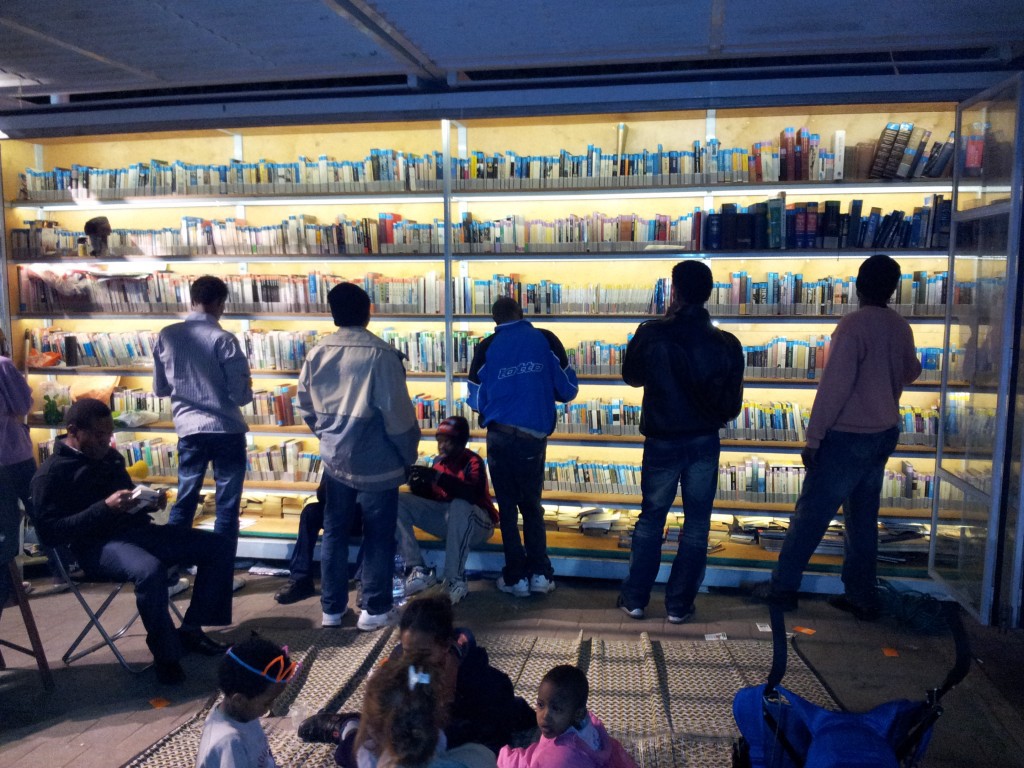
To promote easy access to literature, here are a handful of fantastically unconventional book borrowing systems from around the world. Some grow from their surrounding communities. Others rely on trade-ins, donations, or customers, but each one has found its own unconventional approach to free reading.
The War Tank, Buenos Aires, Argentina
A Weapon of Mass Instruction, the modified 1979 Ford Falcon translates violence into literacy by transporting over 2,500 books to low-resource schools. Raul Lemesoff began this project as a way to both protest weapons and promote peaceful coexistence with other cultures.
Vending Libraries, Beijing, China
These vending machines take up the space of about three cars, and they don’t offer candy or soda. For 100 yuan (about $16) anyone can purchase a library card that grants them access to 20,000 books from hundreds of vending libraries throughout the city.
Rapana, Varna, Belgium
In a ploy to get kids to put down their phones, a young team of architects constructed the elaborate pavilion to serve as a street library. Gently curved with shaded benches along the interior, the distinctive sea snail shape is a callout to Varna as the marine capital of Belgium. The wooden shelving inside allows for a maximum capacity of about 1,500 books, but seeing as people love free libraries, those books never sit there long.
The non-profit organization Ethiopia Reads dedicates itself to delivering books to even the most rural Ethiopian communities. With book carts pulled by horses and donkeys, storytellers follow pre-set circuits around various regions and gather crowds of book lovers wherever they stop.
Camel Library, Garissa, Kenya
The Kenya National Library Service takes a similar route to spreading literacy, but their vehicles of choice are the so-called “ships of the desert,” camels. Specially curated boxes travel to rural an nomadic schools bringing not only books but also tents and mats for on the spot classrooms.
Stony Island Arts Bank, Chicago, U.S.A.
The bank is a little of everything: archives, a gallery, a library, and a community center. Restored from a dilapidated condition back in 2015, the old bank hosts a number of workshops, talks, and tours for the public.
Admont Abbey, Admont, Austria
Holding the record of world’s largest monastery library, Admont Abbey is a massive European Baroque building from the late 18th century with beautiful frescoes that are well worth a walk through.
Little Free Library, everywhere
Micro libraries are appearing all over these days. The Little Free Library organization has now reached 85 countries with cute boxes that closer resemble bird houses that than libraries, and they are open for everyone.
Hammock Library, Muyinga, Malawi
Built as part of an inclusive school for deaf children, the Muyinga Library sits between two public squares and is designed with inspiration from Burundi architectural techniques. Though resources were short during its construction, the community was dedicated to creating an open space, both aesthetically and in terms of access. The massive hammock that lined the top floor only upped its appeal.
Fridge Library, Christchurch, New Zealand
Located on the corner of Kilmore and Barbadoes Streets, the Fridge Library stands in a miniature park, serving as a well loved book exchange for the area. Though the shelves can get messy, this fridge will always be filled with food for thought.
Beach Library, Albena, Bulgaria
Forgetting your beach read will never be a problem here. With over 6,000 books to browse in a variety of languages, the only thing guests lack is extra time to enjoy it all.
Phone Booth Libraries, Bramshaw, U.K.
Created by locals, the Bramshaw phone booth is a hot geocaching spot. Since no one really uses phone booths anymore, the booth was available for the Adopt a Kiosk program by British Telecom. Take out the phone equipment, add in some information pamphlets and literature, and there you have a book exchange.
Floating between Hordaland and Møre og Romsdal, the Epos is a ship built for the sole purpose of serving as a floating library. The boat itself can hold about 6,000 books, but it lends out over 7,000 during its tours to 150 communities along the west coast.
Il Bibliomotocarro, Basilicata, Italy
With tune that attracts men, women, and children alike, it would be easy to mistake this vehicle for an ice cream truck, but its cargo is far more precious than that. The book car operates a travel library service that links the main towns of the Basilicata region to the isolated communities surrounding them.
Set up for refugees and migrant workers, the library structures itself around the belief that books are a fundamental human right. In a neighborhood of asylum seekers, the Garden Library’s books offers an escape into literature and education.
Airport Cocoon Library, Baku, Azerbaijan
Flight delays would so much more tolerable if every airport had these wooden cocoon-like library found in Heydar Aliyev international airport. Take note, J.F.K.!
IKEA Reading Room, Wembley, U.K.
Fully furnished with purchasable IKEA retail, this reading room (only available from July 31 to August 5, 2018) was made to remind visitors how great it is to relax at home with a book. IKEA-goers could book an hour-long slot, choose between one of the 13 Man Booker Prize longlist finalists, and loiter around on couches they might even consider buying.
Bike Library, Dubuque, Iowa, U.S.A.
This full service traveling library is part of the Carnegie-Stout Public Library. With an easily traceable route and a schedule online, the bike pedals new releases, DVDs, and children’s books to various parks. No library card? No problem! The bike is equipped with all you need to apply for a card on the spot.
The Book Truck, Los Angeles, U.S.A.
Even books can get involved in #vanlife. The Book Truck in Los Angeles makes it way to various schools and youth resource fairs to give away books in underserved communities. This traveling library found its calling in making sure every kid that wants a book has a book.
Wardrobe Library, New Castle, Australia
Any conveniently sized box can be repurposed into a library, but there is something about wardrobes that titillates the literary imagination. Whether it’s C.S. Lewis pulling you into Narnia or Jane Austen flitting through the cloaks before an evening soiree, there are untold depths to wardrobes that make them perfect houses for books.
Street Library Bench, Sonthofen, Germany
Books will always have your back, and in this case you can take that literally.
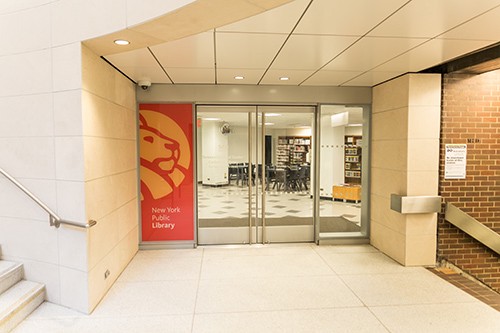
A perfect place to snag a book before a long commute, this tiny library located underground by the turnstiles at the 51 St. stop on the 6 line is easily missed by passersby. The librarians on duty are always ready to loan a lost traveller a map or recommend a fun page turner.
Converted Bus-Stop Library, Jerusalem, Israel
Another library for readers on the go, the Bus-Stop Libraries in Jerusalem help commuters fill those empty minutes between transfers. You might be early or the bus might be late, but with these libraries you can pick up a quick read at one stop and drop it off at the next.
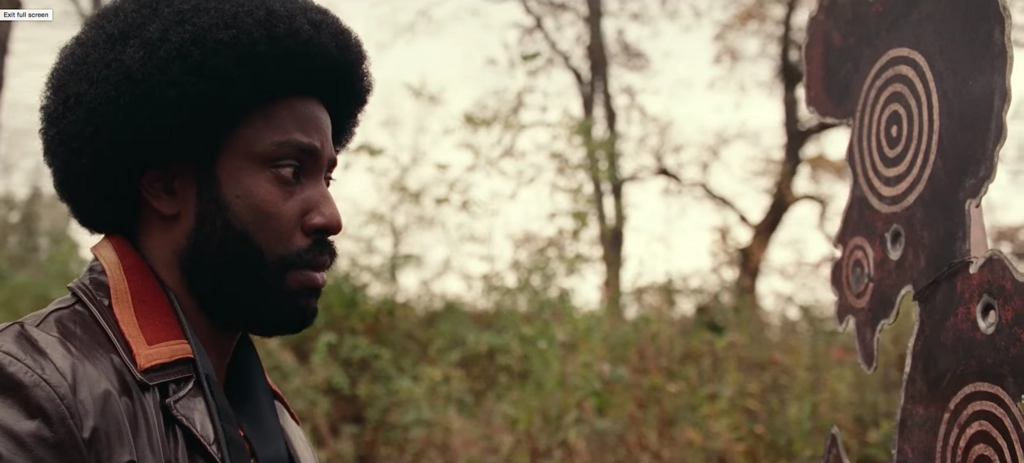
The opening scenes of Spike Lee’s new movie, BlacKkKlansman, are in black and white. The movie is a period piece based on the true story of a black man, Ron Stallworth (played in the film by John David Washington), who became the Colorado Springs Police Department’s first black officer in 1972 and then successfully infiltrated the city’s local Ku Klux Klan chapter in an elaborate sting operation. But this black and white imagery is an effect Lee is using to create the illusion of film from an even earlier era. A conspicuously squarely-dressed man named Dr. Kennebrew Beauregard (Alec Baldwin) appears in front of images of D.W.Griffith’s epically racist black and white film Birth of a Nation, practically foaming at the mouth with concern like the narrator in anti-marijuana propaganda film Reefer Madness — only this time the warnings are about Jewish and black Americans who he believes are turning America into a “mongrel” nation. “We had a great way of life,” Dr. Beauregard repeats at least three times, like a brainwasher trying to indoctrinate the viewer, while blending into the film in the backdrop. This opening sequence sets up something Lee intends to focus on throughout the telling of Stallworth’s remarkable story: the way language can and has been weaponized by white supremacists.
In his book Anti-Semite and Jew (1944) Jean-Paul Sartre describes how anti-Semites “act in bad faith” and “play with discourse” to disconcert their opponents. “They know that their remarks are frivolous, open to challenge,” Sartre explains, “But they are amusing themselves for it is their adversary who is obliged to use words responsibly, since he believes in words.” In BlacKkKlansman, David Duke (Topher Grace) is a slimy, overconfident salesman of the white nationalist brand. In his slickest salesperson voice Duke says that he agrees with people who say that “America is a racist country” — but unlike the black Colorado residents using the phrase to call out the racial profiling and police brutality they experience, Duke argues America is racist because it’s “anti-white.” This willful misuse of the word “racism” allows him to reframe oppressors as victims and vice versa.
The white nationalist group known as the Klan is no longer the Klan; it’s “the organization,” and David Duke doesn’t like to be called its “grand wizard,” but its “national director.”
A little over a week after Trump’s election in 2016, Oxford Dictionaries declared “post-truth,” an adjective defined as “relating to or denoting circumstances in which objective facts are less influential in shaping public opinion than appeals to emotion and personal belief,” the word of the year. The term speaks to, among other things, how white nationalists won over millions of Americans by activating white panic with misinformation about how minorities were outnumbering white Americans, just as in Dr. Beauregard’s frenzied, fact-free opening tirade. When white nationalist behavior began to spike in recent years, journalists were at a loss for terminology to use to describe the former fringe group members who had suddenly made it all the way to the White House. In her piece titled “It is time to stop using the term ‘alt right,’” journalist Shaya Tayefe Mohajer notes how respected news outlets like the Associated Press used the phrase—which is attributed to white nationalist Richard Spencer — as a vague catch-all for white nationalist and white supremacist groups. “Somehow,” she writes, “they were allowed to rework their public personas with a term that makes them sound a little edgy, like an alt-weekly or alt-rock.” In Lee’s film, members of the so-called “invisible empire” of white supremacists undergo the same radical image reconstruction using linguistic obfuscation that allows them to exist and operate in plain sight. In BlacKkKlansman, the white nationalist group known as the Klan is no longer the Klan; it’s “the organization,” and David Duke doesn’t like to be called its “grand wizard,” but its “national director.”
Unchallenged manipulation of language has allowed white supremacists like Duke to legitimize themselves on a national scale. Duke sees this strategic play at respectability — suits not hoods — as his ticket to the White House, the end game of the white nationalist agenda. Lee clearly establishes how analogous his linguistic and sartorial deception is to today’s political reality where America is dealing with a president who ran on a KKK-endorsed “America first” campaign and is known for rhetorical games that involve making up words, being antagonistic to members of the press corps, willfully ignoring facts, and lying outright to the American public — according to The Washington Post he racked up “4,229 false or misleading claims in 558 days.” In an interview with the African-American Film Critics Association the real Ron Stallworth explains, “I didn’t plan on making a big political statement about racial relations, Trump’s America or anything like that. Spike did a masterful job of connecting those dots.” In real life, the combined effect of the hate group’s rebranding efforts and the media’s resistance and/or inability to properly name them, was that they succeeded in making words irrelevant and hate palatable. And Spike Lee insists we shouldn’t let them.
Stallworth arrives at his Klan investigation pretty organically. He sees a Klan membership recruitment ad in a newspaper sitting on his desk and calls the number listed. Once on the phone, Stallworth has to convince the Klan member he’s speaking to, who happens to be the chapter leader, that he is worthy of membership (any in-person meetings are attended by Flip Zimmerman (Adam Driver), a white undercover cop). In the film, as in the book it’s based on, he does this by championing white purity. In the book Stallworth tells him his sister is dating a black man and “every time I think about him putting his filthy black hands on her pure white body I get disgusted and sick to my stomach.” He tells him he wants to join to “stop future abuse of the white race.” In the film version he says his sister is attacked by a black man, but the coded language is the same: he emphasizes her “purity.” In both cases, the story riles the chapter leader up because Stallworth’s racially coded buzzwords strike the exact right nerve. The synonymousness of whiteness and purity is a construction of racism. The link exists today in poorly thought out ad campaigns, as well as in the hearts and minds of many white Americans. According to BuzzFeed news last week South Carolina police arrested a 32-year-old woman, Lauren Cutshaw, for driving under the influence. In the police report Cutshaw defends herself by saying, “I’m a very clean, thoroughbred, white girl…I’m a white, clean girl.” When the police ask for clarification as to why her race matters in this situation Cutshaw explains, “You’re a cop, you should know what that means.”
During Stallworth’s initiation ceremony (attended by his white stand-in Flip), the Klan excitedly watches Birth of a Nation, whose imagery and ideology Lee deliberately loops throughout his movie. Among the snippets of the film Lee makes visible is a scene where a white woman is raped by a black man (though all black characters in the film are portrayed by white men in blackface). This imagery — deeply rooted in racist fears of miscegenation — is the source cause behind immeasurable violence in America. In 1955 Carolyn Bryant, a white woman, claimed black 14 year-old Emmett Till flirtatiously whistled at her and violently grabbed her. Her accusation incited two white men to brutally beat and murder Till. In a pivotal scene in BlacKkKlansman Connie, a Klan member’s wife, employs Bryant’s same tactic of giving false police testimony; she claims that Stallworth, a black man, violently attacked her, a white woman, as a means to cast doubt on his integrity — and it works. Upon hearing her accusation, two nearby cops pin Stallworth to the ground. Cutshaw, Donham, and Connie knowingly wield their white femininity and its attendant terms (purity, virtuousness) as a weapon, knowing full well that the mythic untouchable-ness of white women in America legitimizes any steps, however violent, taken to safeguard it. In TheAtlantic writer Adam Serwer explains, “white nationalists win by activating white panic.” Lee shows how language rooted in racist fear can become a verbal panic button that, once uttered, activates white supremacist violence.
Lee shows how language rooted in racist fear can become a verbal panic button that, once uttered, activates white supremacist violence.
Last October a leaked report from the FBI’s Domestic Terrorism Analysis Unit revealed the FBI has a dossier on what it labeled “Black identity extremists,” activists it claims are likely to target law enforcement agencies. In an interview with Foreign Policy, who first obtained the report, a former counterterrorism official from the Department of Homeland Security called the label “a new umbrella designation that has no basis.” The following month at an oversight hearing in front of the House Judiciary Committee, Democratic Rep. Karen Bass questioned Attorney General Jeff Sessions about whether a comparable study was done on white identity extremists. Sessions said he was “not aware” of any FBI reports on such groups. Perhaps that’s true, but if so, it’s a matter of semantics; phrases like “identity extremist” (and, for that matter, “terrorist”) are rarely if ever used for white people engaging in domestic terrorism. A report from the U.S. Government Accountability Office found that of the 225 fatalities that resulted from terrorist activity between roughly September 2001 and December 2016, 106 were committed by far right violent extremists like Neo-Nazis and white supremacists. The eagerness to identify and punish “black identity extremists” despite a lack of evidence, and the refusal to even name “white identity extremists” despite there being a plethora of evidence of their activities, is telling. In addition to encoding racial connotation into words, white nationalists also win when they get away with misusing language, shifting the definitions of words to suit their needs.
Though BlacKkKlansman is overwhelmingly triumphant in tone — Stallworth does pull one over on Duke and Co. and lives to tell the tale — it ends on the image of a burning cross. It then cuts to real footage of the August 2017 “Unite the Right” rally in Charlottesville, Virginia: white men descending upon Emancipation Park carrying carrying tiki torches and loudly chanting the Nazi slogan “blood and soil,” cars ramming into groups of peaceful protestors eventually causing three fatalities. Among the dead was counter-protestor Heather Heyer, whose last Facebook post read: “If you’re not outraged, you’re not paying attention.” Then, seamlessly, Lee introduces footage of President Trump remarking on the event’s violence with his infamous comment about how there was “blame on both sides.” The montage’s message is clear: Hate is still alive. It has taken on different names and different language to appear innocuous — just this month two preteen boys strung a black doll from a noose near a burial ground for black Philadelphians and called it a “prank” — but it is still as prevalent now as it was in the historical period the film recreates. Lee’s decision to end on this sobering note speaks volumes about the film’s agenda. At its premiere at Cannes this year BlacKkKlansman received a six-minute standing ovation. It is frustrating for critics to call a film “necessary” as if its merits are not artistic but moral. But in this post-truth era, this film — a film that insists we shouldn’t allow language to be slippery, whose thesis, like so many of Lee’s other projects, is that we need to “Wake Up!” to hate and the way it manipulates words and ideas — feels necessary.
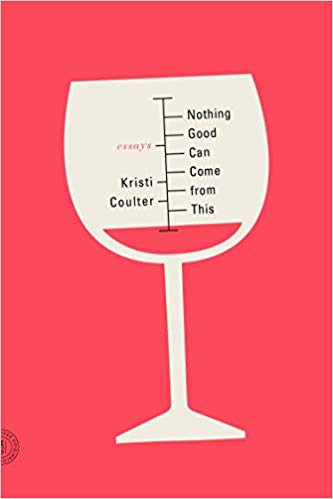
The wine mom. The can-crushing cool girl. The woman who knows her whiskey. After Kristi Coulter got sober, she noticed that images of female empowerment often had a drink in their hands. “To be a modern, urbane woman means to be a serious drinker,” she wrote in a Medium essay that rattled the internet. “The things women drink are signifiers for free time and self-care and conversation — you know, luxuries we can’t afford.” Her highly-anticipated debut essay collection, Nothing Good Can Come from This, is packed with similarly unsettling insights about addiction, sobriety, and navigating both as a woman—and you can win a copy, plus all five of the books below!
One person will win all five of Kristi’s selected books plus a copy of Nothing Good Can Come from This from our partner MCD Books, plus an enamel otter pin (it’s a reference to one of the essays, you’ll see) and a super cute zine about mocktails! Just make sure you’re following MCD on Twitter, and tweet a link to this article with the hashtag #ReadMoreWomen. Four people will win the book, pin, and zine, and one will win the whole set—book, pin, zine, tote, and all five of Kristi’s picks.
Read More Women is Electric Literature’s series featuring prominent authors, of any gender, recommending their favorite books by women and non-binary writers. Twice a month, you’ll hear about the five non-male authors who most delight, inspire, and influence your favorite writers. Books by men get plenty of attention in reviews, reporting, and academic syllabi, and have for hundreds of years. It’s time to read more women.
Coulter’s five recommended books range from memoir to young adult novel, but they have in common a precise realism that elevates mundane moments to something powerful.
Sarah Manguso’s memoirs are so distilled and austere that I sometimes imagine her hammering steel to make them, embedding story in the shallow bumps and, especially, the dips. The Guardians opens with the suicide of Manguso’s longtime friend Harris, who escapes from a psychiatric hospital and jumps in front of a train. From that matter-of-factly described death it moves outward and back again in radiating circles: to the early days of the friendship; to the year Manguso spends in Rome, disconnected from Harris (and much else); to the grief that both torments and illuminates her. But the real subject is absence — both the sudden absence of Harris from Manguso’s life, and the small, unfillable gaps that live between even the most intimate friends. There are no answers to the problems of grief and loss here, just a comforting acknowledgement that they, too, are livable spaces.
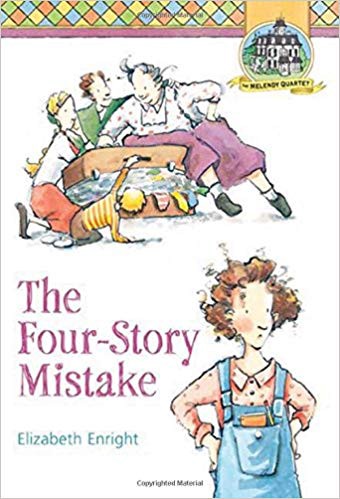
This is the second in Enright’s quartet of WWII-era novels about the Melendy family, four artistically inclined brothers and sisters who move from New York City to a rambling country house with their widowed father (yes, I’m tired of the Dead Mother trope too, but stay with me) and brusque housekeeper. The house has a cupola, and a secret room, and even buried treasure. The Melendys roam around it like bohemian Bobbsey twins: staging elaborate plays, swimming at dawn in the brook, collecting scrap for the war effort. The Four-Story Mistake has the same cozy, daffy vibe as Dodie Smith’s I Capture the Castle; what makes it remarkable is how Enright extends that generosity of spirit to children, who come across here as thoughtful, funny, fully-formed people. I read the entire quartet many times as a kid (and since), but it’s The Four-Story Mistake which set my expectation that life should mostly be about dressing up, making art, and snooping.
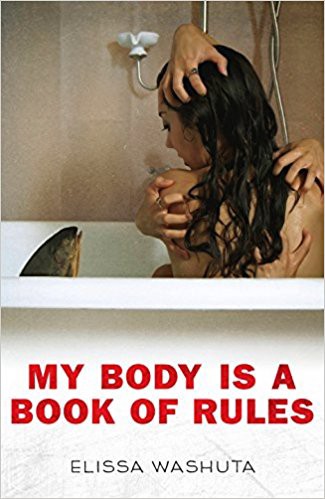
The term “quarter-life crisis” has become a glib way to describe what is actually a fairly harrowing time in the best of circumstances — and Elissa Washuta did not spend her post-college years in the best of circumstances. These raw, unsparing essays explore Washuta’s bipolar disorder and her struggles with her American Indian identity in formally inventive ways. I especially love the pieces that play off of well-established cultural tropes like Cosmopolitan’s rules for successful womanhood or television police procedurals, asking how a woman with a rapid-cycling brain and a complex history can be expected to fall into step with such rigid narrative shapes. Washuta not only can’t fall into formation, she won’t, which makes this book as exhilarating and new-feeling as it is brutal. And funny! I know it doesn’t sound funny, but it is.
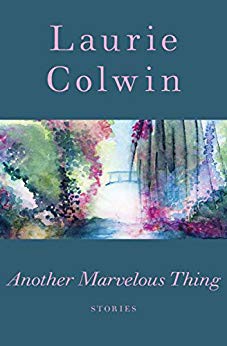
“My wife is precise, elegant, and well-dressed, but the sloppiness of my mistress knows few bounds.” In 1986, teenage me picked this book more or less at random from the public library shelf and it changed her life. Colwin, who was the age I am now when she died suddenly in 1992, wrote seven novels and story collections about brainy, privileged New Yorkers blundering in and out of various romantic configurations. Her books are all comedies of the most glorious form, by which I mean she found her characters ridiculous and lovable in equal measure. Her eye is both unsparing and kind. Her sentences are unimprovable. You could start with any of her novels; they are, to be perfectly honest, not that different from one another. But I’ve chosen this one, a book of linked stories, because it was my first, and because of how deeply it informed my young ideas about language, and humor, and city life, and especially romantic love. Thirty years later, can I say that every one of those ideas has served me well? Uh, the jury’s still out on that. But I don’t care. She’s worth it. Twenty-six years after her death, my goal is still to write books Laurie Colwin would have loved like I love hers. She’s not just my perfect writer; she’s my perfect reader, too.
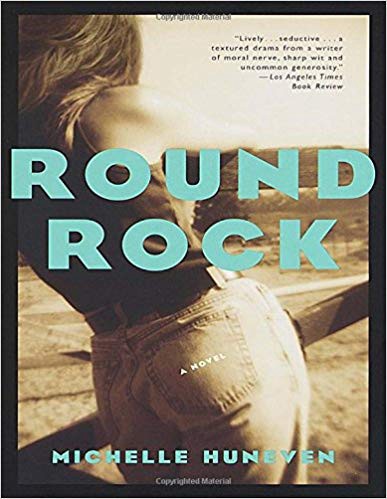
Huneven is probably best known for her 2009 National Book Award-nominated novel Blame. It’s fantastic, and page-turning. You should read it! But as a lazy, ruminative sort of person, I especially cherish her lazier, more ruminative books, Round Rock in particular. The story of a “drunk farm” housed in a ramshackle Victorian among California’s citrus farms, it is that rare novel that understands recovery from alcoholism is as individuated, stop-start, and sometimes goofy as the people who are doing it (or attempting to). Huneven’s three main characters — Round Rock’s lonely director, a grad student in denial about his drinking (and many, many other things), and the local violinist both men are drawn to — wander into and bump off each other in leisurely, consistently interesting ways. Throughout, Huneven views their mishaps, spiritual hungers, and questionable decisions with clarity, affection, and a lack of sentimentality. It’s simply a joy to spend a long stretch of West Coast time with these thoughtful, difficult people.
Read More Women is presented in collaboration with MCD Books.
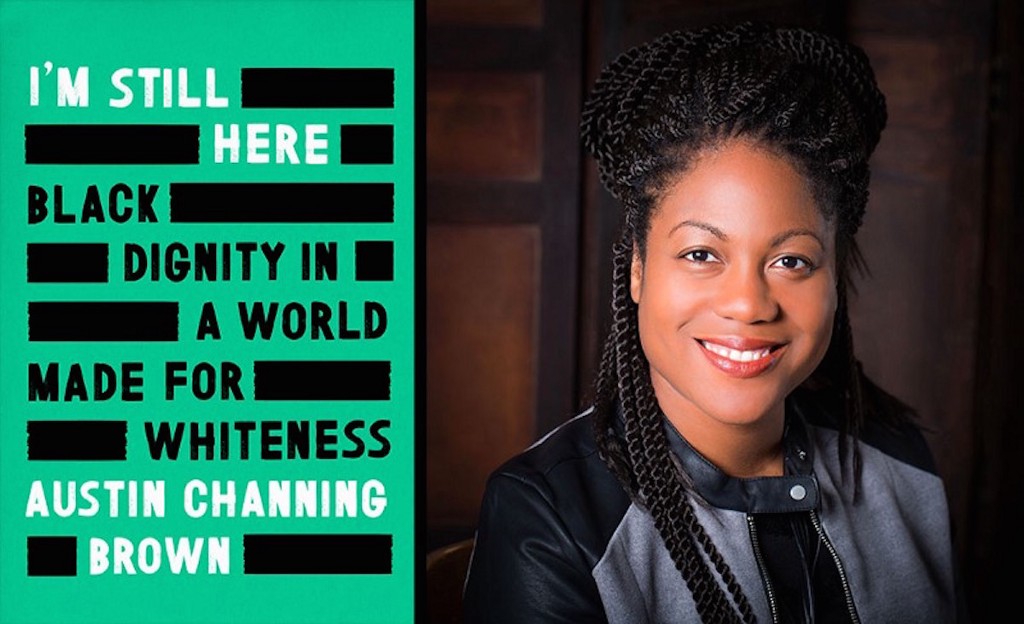
Speaking with Austin Channing Brown about her memoir I’m Still Here: Black Dignity in a World Made for Whiteness was like talking to a friend who I hadn’t seen in a while. Although we have never met in person, the camaraderie was not surprising after reading I’m Still Here, which felt like snippets of someone else recanting my own experiences back to me. Brown’s debut explores growing up Black, Christian, and female in middle-class white America. She captures a collective consciousness of Black womanhood navigating white spaces that’s not only relatable but thoughtful. Her writing is accessible in ways that many of her contemporaries who write about race — Ta-Nehisi Coates and Bryan Stevenson, for example — may not be for some readers.
I’m Still Here is a truthful collection of personal stories that refuses to center white feelings, but rather focuses on white behavior patterns that affect people of color on a daily basis. Brown is a writer, speaker, and practitioner who helps schools, nonprofits, and religious organizations practice genuine inclusion. Through her personal narratives, Brown is able to discuss issues such as mass incarceration, white supremacy, and workplace discrimination, just to name a few. Her writing has appeared in Christianity Today, Relevant, Sojourners, and The Christian Century.
I spoke with Austin over the phone about who she sees as her audience, the joy of being a Black woman, parenting, white supremacy, the Black Church, and of course, Donald Trump.
TLC: When you sat down to write I’m Still Here, who were you thinking of as your audience?
ACB: Black women immediately. Black women had first priority. Every single line I wrote, I wrote thinking “how is this going to sound to the ear of a Black woman?” And then people of color. And then white folks. I remember having this “aha” moment when I first started traveling and speaking about race where everywhere I went there would be a handful of black women feeling the same way. I’d finish speaking and there would be three black women in the line saying, “Thank you for coming. I needed that.” I realized that it feels like there is only two of us but there is actually a bunch of us, we’re just spread out. I wanted to write a book that said, “I see you, and I affirm what you are going through, and your reality is true.”
At the end of the book, I start writing about [Ta-Nehisi] Coates and how he was blowing everybody away. And I said we admire Coates because he told white people the truth. I thought, “Hmm…If a Black woman reads that sentence, would that ring true?” I don’t think so. I think it is true but I don’t think that’s why we like him. We like him because he gives weight to the full history of our bodies. So, sentences like that, every sentence, I thought, “Is this true for a Black woman?” That’s why the book starts with “White people are exhausting.” I tried real hard to be clear.
Every single line I wrote, I wrote thinking ‘how is this going to sound to the ear of a Black woman?’
TLC: It’s funny that we’re talking today because I had a situation occur earlier where the first thing in my mind was “this is just white nonsense.”
ACB: That is why I tried really hard. It doesn’t mean that it worked all the time because we aren’t monolithic, but I did try to keep our thoughts, our feelings, at the center of the book, to say, “White people you need to stop doing this if you really care about us,” but to affirm who we are first.
TLC: This felt very much like a book I would give to a white coworker, someone who I feel could use a perspective outside of their own. Are you finding that reaction to your book?
ACB: I do. It’s working both ways. A couple Black women have given it to their white coworkers, which I love because it means a Black woman isn’t sitting down on her lunch break doing this work. I love that we’re saving the emotional labor of Black women. And I have a couple of stories of white women saying, “I have that one Black coworker in my life, and I am guessing she feels like this on a regular basis. I would like to give her this book.”
I love that we’re saving the emotional labor of Black women.
TLC: You talk about why you love being a Black woman. I feel you on so many things with this book and one of those is the labor involved in having to live in our bodies day to day and take on the impact of racism. How does your enjoyment of being a Black woman manifest? Is it self care? Is it a physical thing?
ACB: I’ve been trying lots of things over the course of doing this work. It varies based on the season. There was definitely a season, especially as I was writing, where I was really focused on caring for my body. I would get out every morning and workout. I was conscious of taking walks and being outside and breathing air.
After I had my son, which was during the editing process of this book, I did not pay attention to the news, especially as it relates to the killing of unarmed Black folks. I didn’t have the emotional bandwidth. I felt so tender as I look at the face of my little boy.
So, self care has changed on how I care for my body, and how I practice reminding myself that I love being a Black woman. I have found there is not just one fit. I adjust based on all the other things happening in my life, and that requires acknowledging I am more than this work. I am a mom and a wife and a human and a creative and trying to give space to all the things that I am.
TLC: I love the letter that you have for your son in your book, especially “there will be dancing” and to remember to be joyful despite the world taking those things away from us.
ACB: And we really are intentional about that. My husband plays John Coltrane at night. My son has his bedtime routine and John Coltrane. He doesn’t understand a thing that’s happening. But to create this world of Blackness and joy around him is fun.
TLC: Let’s talk about your work in the Christian community. What do you think about evangelicals and Trump?
ACB: I’ve never considered myself as evangelical. Maybe because of the Black Church. I’ve never heard that language in the Black church. So, I don’t think I ever considered myself as one. In part, that has saved me. I know a lot of Black folks who did consider themselves as evangelical and have been really hurt by what’s happened. But for me, I feel like I saw clearly when Obama took office how this was headed for a not good place. There are a lot of folks who were like, “Whoa, how did we get to Trump?” And I’m like, “Oh, I know exactly how we got to Trump.”
I remember when the country was pretty certain Obama was going to win the presidency the first time and there was a slurry of books in Christian books stores about how the world was going to end. Every new release from a pastor was about the end of the world.
TLC: I recall him being compared to the Antichrist.
ACB: So, it’s not like we had these eight years where everybody celebrated Obama, and there were no racial issues, and then all of a sudden we got Trump. Racism was growling as soon as there was a hint that Obama was going to win the White House. I think maybe the number feels high to me, that 80% of white evangelicals, but other than how high that number is, I don’t know that I can honestly say that I am super surprised because I think we could see it coming.
Racism was growling as soon as there was a hint that Obama was going to win the White House.
TLC: You worked with a lot of groups of mostly white people who would come in to Black communities and are shocked at other people’s situations. I wondered while reading your book if this was a legitimate shock or if it was a willful disregard of what they knew to be true about the world outside of their communities. Do you think these people who are pulled into the Trump machine legitimately support him or are willfully ignorant?
ACB: White supremacy contains a lot more power than America is willing to talk about. When you think about what Coates is trying to get us to think about, when you think about the full weight of slavery, when you think about the full weight of lynching, when you think about the full weight of segregation and how hard white Americans fought for segregation, when you think about genocide and the Chinese Exclusion Act, when you think about what people of color have endured for the sake of white supremacy, that is extraordinarily powerful.
And though we like to think that we have moved so far from those roots, the truth is we still are recreating the same dehumanization — separating children at the border, the way Muslims are rightfully terrified to walk around for fear of being assaulted, the killing of unarmed Black folks — the replication of dehumanization is core to what white supremacy is. Trump is shouting from the rooftops that “it’s ok, ’cause that’s how you feel, and if that is the truth about how you feel then everybody should have to accept that.” For most of America’s history that’s been true. It’s only been in recent decades that not being a white supremacist is a bad thing. There is something very appealing about Trump for those who don’t want to do the hard work of naming and dismantling white supremacy because it feels so good. Trump is giving permission to what is still alive from centuries of America’s history and uncorking a bottle that we were trying to convince folks really ought to be corked.
TLC: You also write that the Black church gave you the greatest sense of belonging. I’m curious what you meant by that and what you learned about Blackness from the Black church.
ACB: I realize that the Black church has its own problems and issues, but the sense of belonging came from the fact that [church] was a Christian face and a Black face. And for me, until I walked into that church, those things were always separate. I could go and see the Black side of my family or spend summers in a black neighborhood, but none of those things were particularly Christian. And then, on the other hand, I would be at school, and that was highly Christian, but there was nothing Black about it. But to walk into a church that contained both of those things was where I felt that sense of belonging.
I had chapel services in my school every Friday, and it was often a White guy who would get up and have a tube of toothpaste. He would squeeze out the tube of toothpaste and say, “Who thinks he can get this toothpaste back in the tube?” And, like, three kids would raise their hands and try to put the toothpaste back in and couldn’t do it. And then the preacher would say, “That is just like our words. When you say words, whether they are mean or good, you can’t put them back. So, make sure you say words that are kind.”
But then I walked into a Black church and this pastor was like, “Sister, I know you ain’t got no transportation. God has not forgotten about you.” And I was like, “Whoa, God cares about more than my toothpaste? God is interested in more than whether I am a ‘good’ person? God cares about this woman’s transportation, and He cares about this person’s family, and He cares about our neighborhood.” There were a number of things that the Black church covered and was adamant that God cared about, adamant that God loved us, adamant that god could change situations, adamant that miracles were still possible. The breadth of what the Black church was talking about was incomparable to the small simple stories about being good. It made me read my Bible completely differently.
I was like, ‘Whoa, God is interested in more than whether I am a “good” person?’
TLC: I grew up in the church. I’ve been reading a lot of posts from friends on social media who also grew up in the church and aren’t as involved as they used to be expressing dissatisfaction with the Black church, some even going as far as saying they are atheist. How do you feel about the loss of trust this generation of black people have for the Black church?
ACB: I think the capitol “C” Church, Black or otherwise, has to start think about doing church differently. The way we did church worked for a while. We have to start taking the best of what the Black church did, like justice, like music, but rethinking it. How can we do this differently? How can we embody justice more honestly, even as we seek justice in the world? How can we continue to read the Bible differently? There is a certain level of tradition that the Black church is holding on to that is not liberating. There are some things we have to risk letting go of in order to continue to be the force that ended slavery, and the force that ended segregation, and the force that has been changing the world. Until we decide that we are going to be different, I don’t know that the church is going to be able to take the lead and keep up with organizations like Black Lives Matter. I think this could be one of the first eras where the Black church is not at the forefront of finding freedom for folks.
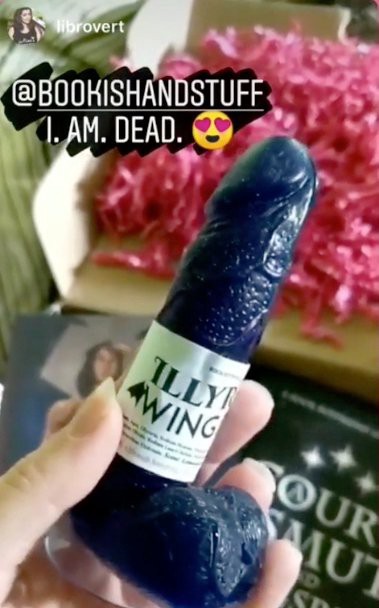
We all know there are a lot of dicks out there. And they usually show up unannounced, uninvited, and unwelcome. But today the section of Twitter concerned with young adult publishing has a lot to say about a very particular unsolicited dick — a purple one, made out of soap, with a suction cup — that made its way into a book box subscription featuring Sarah J. Maas’s A Court of Thorn and Roses series.
The subscription service delivering on the dicks is “Book Boyfriend Box,” and its goal is to bring subscribers “bookish boxes with items inspired by your favorite book boyfriends and girlfriends.” And the content is… well, look, fair warning, we’re about to post a picture of it.
On the plus side, the soap is vegan and cruelty-free! No actual dicks were harmed.
The service promises to curate a package (lol package) filled with items from “a selected group of small businesses and independent artist” [sic]. The boxes usually include things like tote bags, illustrated bookmarks, candles, and jewelry, and are priced around $35–$40. They have not, in the past, included any genitalia.
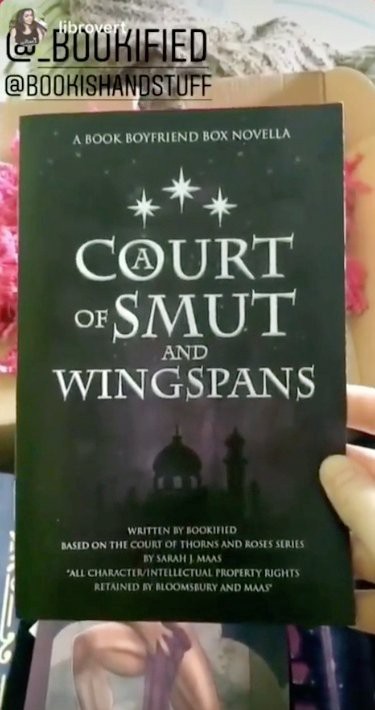
Many of the books featured in the Book Boyfriend Box are by Maas, who is often thought of as a YA author but might be more accurately called NA (New Adult). She could certainly be called NSFW. Book Boyfriend Box does warn on its Instagram post for the box: “WARNING this is a NOT SAFE FOR WORK box. With mature SEXUAL content. If smut and sex isn’t your thing stay away from our stories or if you are a minor.”
Because the dick was only the beginning. The box also included some lovingly detailed art:
Here’s the whole kit and caboodle, as witnessed on the company’s Instagram:
Oh great even more art
Bloomsbury, the publisher for the books, was not involved in the decision and is almost certainly absolutely plotzingright now. We’ve reached out to Book Boyfriend Box and Bloomsbury for comment, and we’ll update the story with any comment we receive. (Update: Yaira of Book Boyfriend Box responded! See below.) But now, let’s take a look at how much fun everyone’s having with the little purple member.
A lot of people are panicked, overwhelmed by the deluge of “dick soap” tweets on YA Twitter, and reflecting on how far YA Twitter has come.
My thoughts and prayers go out to the Bloomsbury employee who has to manage the YA dick soap crisis of 2018.
me joining YA twitter in 2012: wow I love reading books and need more recommendations! me on YA twitter in 2018: let me tell you why the soap dick is problematic
There are also some VERY IMPORTANT warnings about the dick soap’s mysterious suction cup:
it has a suction cup god save us I don't know if it's a functioning suction cup or some kind of weird soap suction cup but if it's functioning yes that IS a feature on many dildos, PLEASE DO NOT FUCK THE SOAP
it is really important to me that everyone who gets this box does NOT TRY TO FUCK THE SOAP especially if you have a vagina, and especially if this is perfumed soap (oh god what scent - NO I AM NOT THINKING ABOUT IT) please do not fuck the soap
Update: Yaira Lynn of Book Boyfriend Box sent us a response, quoted below. We… don’t understand all of it.
“We of course know the debate about what really is YA series and if ACOTAR should be YA or NA it’s an ongoing discussing, one we do not control. However that fact that the series contains multiple graphic sex scenes remains. Our box of course was advertised and sold to adults 18+, we offered multiple warnings about its not safe for work and mature sexual content. The infamous soap should be taken as the joke it is: a literal Illyrian Wingspan it even says so on the label. These are sold as bachelorette joke favors in the real world. We want to clarify that they are for external use only, as instructed on the label.
But with everything in life there will always be those that are scandalized. If the box scandalized you, it wasn’t for you. Most of the feedback has been positive so we are going to concentrate on that.”
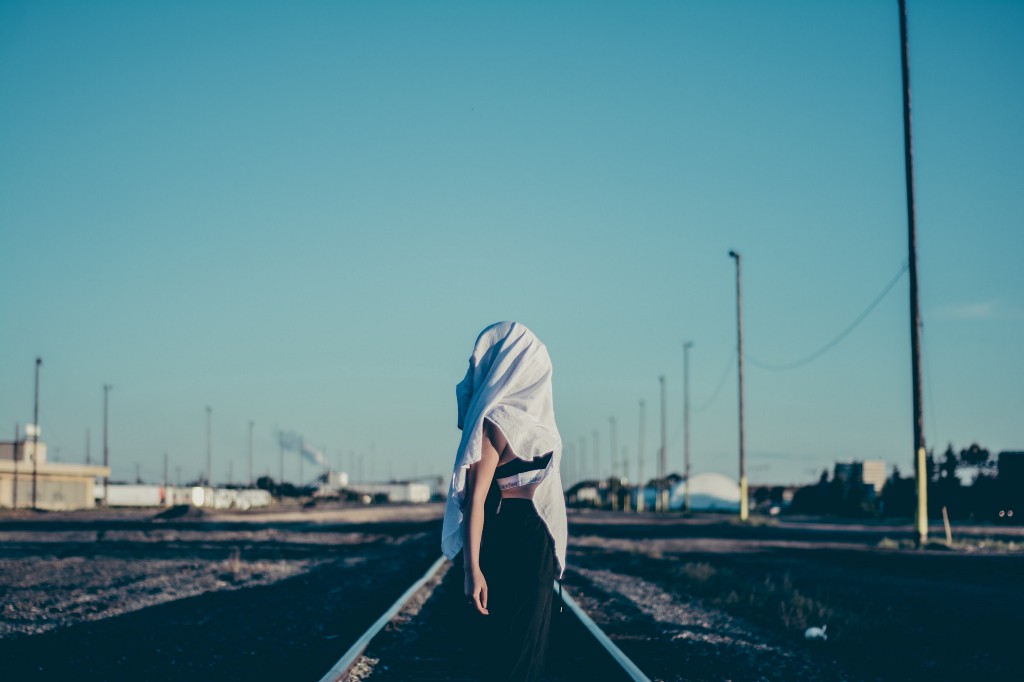
I want to tell you about the night I got hit by a train and died.
The thing is — it never happened.
This was many years ago.
I didn’t think about that night, my last night, for a long time and then one day I woke up and it was all I could think about.
Let me try and explain — I’ve spent years cultivating a noisy life. I live in a city riddled with unending construction projects, in an apartment above a bar. I see student after student during office hours; I let their words replace my thoughts. I volunteer at a women’s crisis center in my neighborhood. I listen to the women tell me what’s happened to their lives. Recently, though, silence has snuck in. For one thing, the bar closed the day after Thanksgiving without any warning at all, casting the whole block in quiet.
I blame that shuttered bar for the return of my last night.
I was seventeen and I had been in this place for ten months, receiving treatment for my various attempts to kill myself. My parents had mortgaged their house to keep me there and it was only in my last two months that I agreed to talk to them on the phone and even then it was mostly out of boredom. I was that angry they wanted me to live.
This place was in the rural west and they had kept me too long. I knew because by the time they got around to discharging me, I had forgotten how to shave my legs. I had forgotten about the existence of mouthwash (alcohol) and dental floss (a resourceful person could attempt to hang herself). I had forgotten about cable TV and the internet. I had forgotten the other world.
My fellow patients had started speaking to me the way I imagined they might to someone soon departing on a dangerous and unknowable mission. A skittish hand on the shoulder, followed by Stay safe or Good luck out there or I hope I never see you again.
On my last night, I could not sleep. I was terrified. This place had kept me alive for the last ten months and soon it would be up to me. The other two girls in my room couldn’t sleep either. The three of us, we had become something like friends.
“It’s your last night,” they agreed. “We should do something.”
At midnight, or at an hour I remember to be midnight, we found the orderly, a white guy who always wore a baseball cap indoors. Million dollar smile. We asked him to let us outside.
“It’s her last night,” the two roommates pleaded, trying their best to look harmless. This facility specialized in the mental troubles of women and we were among the youngest patients, which made us feel superior. We had our whole lives in front of us — maybe. If we chose to. What power!
“All we want is to take a walk,” I said. “Down the road and back.”
When I asked the question, I was banking on one of two outcomes: an unmovable no or a trade, because this orderly had always struck me as the type. In the lull before he answered, I calculated what I was willing to offer.
A hand job, for example, I could do in my sleep.
Because we wanted that warm midnight air.
Because I felt it would be my responsibility, given that this was my last night.
“Goodbye kid,” the orderly said. “Hurry back.”
“What?” I’d never heard him call anyone kid before.
“Those were Humphrey Bogart’s last words,” he told us. “All way the back in 1957. Don’t ever forget: Humphrey Bogart was a juvenile delinquent who went on to do great things.”
And then he let us go! I still can’t believe it. If one of my students wrote that detail in a story I would call instant bullshit. Why would he risk his job? Why was he the only orderly on overnight in the first place? I would interrogate this imaginary student, all the while thinking you don’t know what the fuck you’re talking about, and I would be so wrong — because it really did happen like that, he really did let us go, and this is the problem with translating experience into fiction, the way certain truths read like lies.
Maybe he thought I had too much to lose, since it was my last night.
Maybe he knew we were in the middle-of-nowhere and had no place to go.
Maybe he knew every morning I stared up at the white ceiling as I swallowed my meds and thought, You’ve won. Because that’s when they let you go — not when you were well, but when you gave up the fight.
I wonder if this orderly still works as an orderly.
I wonder if he’s still alive.
I can’t remember his name or see his face, just the brim of his baseball cap shadowing his eyes and that million dollar smile.
About the place itself I remember every detail. Even today, from the quiet bewilderment of middle age, I could draw it all from memory. They had gone for a “homey” look, which meant floral curtains with scalloped edges were pulled closed over every window, to cover the bars. The curtains were cheap, so during the sunlit day we could see the bars through the fabric, solid as trees.
The three of us slipped out a back door and started walking down a dirt road, in the direction of the train tracks, and here is the part about which I am most ashamed. We lived together for ten months, me and these two girls. We sat together at meals. We sat together on movie night. An island of girl. We brushed each other’s hair. We pinched each other’s waists. We touched each other’s lips. Bellies. Wet insides of mouths. We wept secrets. We eavesdropped nightmares. We conspired about how to ditch or switch our meds, back when we still had the will (I arrived addicted to prescription drugs, and coveted one roommate’s klonopin).
Yet —
I could not tell you their names. I have forgotten them. Their faces are twin black holes, deep space. I remember more about that stupid orderly, the way his baseball cap looked like it was molded onto his head. What kind of person could forget?
Around the holidays, the women’s crisis center brings in a counselor who has agreed to donate sessions to the volunteers; it is their gift to us. On Mondays and Friday afternoons, the counselor sits in the art room upstairs. None of the other volunteers go to see her, so I do and when the free counselor says that can she can tell I’m resilient, that I do what it takes, I try to not hear this as an accusation.
As it turned out, I was too ambitious to be a real drug addict. That life only went one way, as best I knew. I couldn’t help it. I had plans. Drinking seemed more compatible with plans, but that was what compelled me to climb the creaky stairs to the art room in the first place — one too many hangovers. I tell the free counselor that I want a sober way to exist outside time and she suggests I take up swimming. So five mornings a week, I wake before dawn and go to an indoor pool. I swim until I can’t lift my arms, until I’m so weak I could drown. When the free counselor asks me if swimming makes me feel good, I tell her it makes me feel obliterated. By the time I leave the pool, I can scarcely remember what day it is or if I already ate breakfast. Everything I own smells of chlorine.
“It’s working,” I insist in the art room.
Here is what passed for therapy out west, all those years ago: once a month a local hypnotist would come to help us uncover our buried and traumatic memories. She wore an excessive amount of jade. Most of my fellow patients did have traumatic memories that were very much unburied, the kinds of stories that would make people in the outside world cluck and whisper, Can you imagine? Still, this hypnotist persisted in her digging.
Not me, though. I had nothing to give her.
The hypnotist disagreed.
The first time we met, she took my hands, the silver bands of her rings cold on my skin, and told me she believed with all her heart that something unspeakably awful had happened to me and that my memory had concealed this awfulness, in an attempt to save my life, and that this unprocessed trauma was the source of all my troubles.
After she said this, I refused to go under hypnosis. My commitment to the truth simply did not run that deep. I thought she looked like a fraud too, weighed down by all that jade.
Her monthly visits were a worrisome time at the facility. The woman with the worst story out of all of us wouldn’t eat or speak for several days afterwards. I tried to tell the others about my refusal, to tell the other women that this place could make us do a great many things yet they could only exert so much control over our unconsciousness minds, but everyone else wanted to keep getting hypnotized and let her dig around and so what more could I do.
Most of us had been sent here by our families and hated them for it, but the woman with the worst story had sent herself here, had emptied her own savings, mortgaged her own house. She had the worst story and still she wanted that badly to live.
When I tell the free counselor about the hypnosis, she is appalled.
“Amateurs,” she says.
I add that the hypnotist might have been an amateur and a fraud, but nevertheless her words have haunted me ever since.
After these sessions in the art room, I walk neighborhoods I do not live in and snap photos like a tourist. On the way home, while waiting on the subway platform, I take care to stand a healthy distance from the tracks, with my back pressed against the tiled wall.
You notice details, you write them down. You cultivate your eye. This, I tell my students, is what a writer does.
About these two girls the only details I can salvage are a few facts from their stories.
One had been institutionalized twice before. All the treatments, all the attempts to save her life, had bankrupted her family — her parents, her fiancé, her fiancé’s family was even in danger. On her first night, she said, I keep trying to tell them that it would be the greatest kindness to just let me die.
The other one had been raped by her father. For years.
Her father was the only person who ever sent her mail. Short, handwritten letters that focused on the weather.
I hope these girls have forgotten me just as completely. I hope they remember only a single humiliating, dehumanizing detail. That would be equitable, at least. Assuming they are alive.
On our last night, the dust from the road made the air look fogged.
I am telling a story now.
The train tracks were elevated. We scrambled up a scrubby hill and balanced on the steel edges, dazed by our sudden freedom. We could not see the facility lights through the trees; that world, which had become the world, felt very far away. We did not talk about how tomorrow I would be gone, vanished before breakfast.
“What’s the first thing you’re going to do?” the facility director had asked me that afternoon, in our final session. He was middle-aged, fond of cowboy boots. Divorced but still wore his wedding ring. Though he’d grown on me over time, I was still highly resentful that I was expected to share my most intimate feelings with some man. On Sundays, he drove a van into town for a supervised lunch at the Olive Garden, where we, all adult or near-adult women, made obscene gestures with breadsticks and he, the facility director, was powerless to stop us.
The night air was still and heavy. It made me think of blood.
“A lot of people commit suicide by train,” said the roommate who had been institutionalized twice before. “Thousands of people in North America alone.”
Years later, I will read a novel where the protagonist’s sister commits suicide by train and cry for days. I will attempt to have a conversation with an acquaintance about the book and this person will fall under the impression that I, so overcome, must have lost a sibling to suicide and I will not be able to stop crying long enough to explain otherwise.
Even more years later, at the crisis center, I will take a workshop on speaking to people exhibiting suicidal ideation, for the volunteers who answer the helpline. The workshop leader will discuss the movement to change the language from committed suicide to died by suicide — since commit implies acting with intent and a person whose life ends in suicide is, we can only assume, too distressed to intend anything.
The problem with the helpline is that most people are calling about things no one can help them with.
Everyone else is calling about a parking pass.
They want to come in for a free meal or to use the computers and know the neighborhood is impossible to park in. Or they want to donate old clothes, books.
The workshop leader will suggest we focus on forward-thinking, open-ended questions. What’s one small thing you could do today to better your life? I will ask a woman who calls the helpline one afternoon, picking from a list the workshop leader provided. If I could answer that question do you really think I’d be calling this stupid number? the woman will say back.
Fair enough.
I wish the workshop leader could have met the roommate who knew so much about suicide by train. She’s coming back to me now, this girl — very tall, her dark hair long and straight as a curtain. I remember the way she spoke lovingly about all her attempts, like a career criminal reviewing past and future heists — her plans, what went wrong at the last moment, what she would do differently next time, one last big job and then she’s out.
I have never met a person so clear.
I remember being very impressed that she had acquired a fiancé. He sent one letter a week, called every Sunday.
None of us knew if the train tracks were still in use or abandoned. We assumed they were derelict, since we could not ever remember hearing a train whistle. I pointed out that it would be awfully risky, working train tracks down the road from a facility for mentally disturbed women.
The second roommate, the one with the perverted father, was a redhead with translucent eyelashes.
She said, “I hear a train coming.”
“Shut the fuck up,” the tall roommate said. “You don’t either.” She was always telling people to shut the fuck up. For her, it was a term of endearment.
“I do too,” said the redhead.
I imagined the ground shaking under my feet.
“People who commit suicide by train look like they’re praying,” said the tall one. “The way they kneel down and lay their heads on the tracks.”
“What would you do on your last night?” The redhead turned to me. Her round pale face shimmered like a moon. “Would you pray?”
As it happened, I had recently started to pray — a fleeting thought shoved out into the ether before bed, a raft on a turbulent sea. I wondered if god found people like me annoying, those who only turned to prayer when they were neck-deep, that terrible friend we’ve all had.
“All I want right now is a cigarette,” I said on the tracks. “After that, I don’t know.”
The next morning, at the airport, I will buy a pack and smoke the whole thing on the curb. I will get so sick, spend so much time puking and then dry heaving, my arms hugging the cool bowl, that I will nearly miss my flight. On the plane, I will sob like I just left the love of my life behind.
“What I wouldn’t give for a train.” The tall roommate stared dreamily down the dark tracks.
The redhead jabbed two fingers in her mouth and made a shrill whistle.
“Stop that.” I smacked at her hand. I didn’t like how she was acting.
The redhead stuck her fingers back in her mouth and did it again.
“Oh, oh. Don’t stop.” The tall roommate slid her hands between her legs. “You’re making me wet.” That was what she said whenever she liked something, whenever she thought something was good — you’re making me wet.
The more the redhead kept whistling, her two fingers buried in her mouth like a prong in a socket, the more I could see it. Hear it. Feel it. The leaves on the trees trembled. The tracks shuddered. The bottoms of my sneakers heated up.
A train was coming.
We were all still young enough that our deaths would be considered tragic, though the tall roommate was always telling us we owed it to ourselves to commit suicide before we had been ravaged by time. Think of Alice, she would implore, referring to the sixty-year-old who had been shipped to this place by her adult children after attempting to gas herself in her garage. Alice walked around with stains on her sweatpants and a sad bowl haircut and ingrown toenails. Alice had done electroshock in her thirties. Think of Alice if you want to talk about what’s tragic.
When the New Year arrives, and it is almost here, I will be closer in age to Alice than to the girl who stood on those tracks, on her last night, thinking about trains.
Not long after that girl rejoined the world, she came to the conclusion that the self who spent ten months staring at bars through floral curtains must be killed, so the person the girl needed to become could take her place. It was a good plan, except she has proven resilient, that old self. Never more so than now.
I want to tell you about the night I got hit by a train and died.
The thing is — it never happened.
Becuase there was no train. Of course. We talked for a while — about what I can’t remember — and tried to find stars we could name — we didn’t know the name for anything except the Milky Way. We knew so little, the three of us. We returned at the appointed time. We knocked once and the orderly let us back in, flashed that million dollar smile, so confident in our dumb obedience. We crept into our room and got into bed. Lights out. I slipped away on the edge of dawn. I have never traveled with so little. If they were awake they didn’t say anything. Apparently we had all decided, without any discussion, that we didn’t believe in goodbyes.
This was a long time ago.
Long enough that it has ceased to feel like the defining period of my life.
Except sometimes.
Like when I see a train.
The weird thing is: I love trains. I never get tired of riding them.
After the free counselor’s last day in the art room, I take the long way to the pool. It’s still winter, the downstairs bar is still stuck in its sudden silence, though right now it’s warm enough that I do not need to zip my coat. I wonder, as I have before, what would have happened if there really had been a train. If the tall roommate would have wanted to pray. If the redhead and I could have talked her down. What’s one small thing you could do today to better your life? If the redhead would have seen her father’s face in ours and sent us flying. If we all would have come to our senses and gotten the fuck out of there. Or if I would have abandoned them both to the tracks, those ghosts I killed to survive.
In 1916, Bernardo Vega boards a ship in San Juan, Puerto Rico to come to New York City — this journey, this life as a Puerto Rican in the pioneer phase of migration, where on average 2,000 Puerto Ricans were migrating to the continental U.S., is chronicled in theMemoirs of Bernardo Vega.
Purchase the book
In 1993, Esmeralda Santiago published When I Was Puerto Rican, an endearing memoir about a young girl’s life in Puerto Rico and her eventual migration to the U.S. Between Vega and Santiago, there are other canonical Puerto Rican texts published — what connects them all are ideas of migration, identity, belonging, and facing racism in the continental U.S.
As of 2013, approximately 5 million Puerto Ricans reside in the mainland U.S. and these 16 non-binary and women writers are adding new narratives to the history of Puerto Rican writing. Their fiction, essays, and poetry focuses on blackness and slavery, queerness, the sexual and romantic lives of women, racial passing, and African-based religions, and so much more. These are the writers to watch to see how they change the topography of Puerto Rican literature.
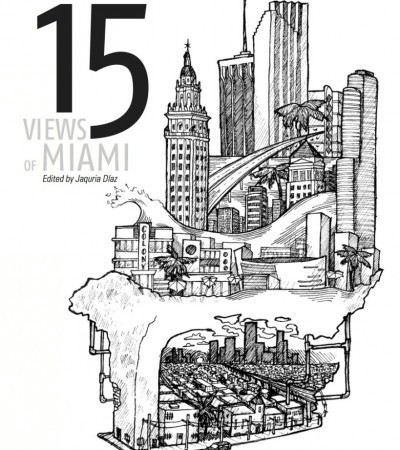
In the 1970s, Nicholasa Mohr captured Puerto Rican girlhood, and today the Southern Review has said “Jaquira Díaz illuminates the beauty and brutality of being a teenager.” She captures this in essays like “Girls, Monsters” about the awakening of sexual desire and the sexual threat all women experience and in “My Mother and Mercy” where Diaz recounts her estranged relationship with her mother and Mercy, her grandmother. She has also written about the Baby Lollipops murder case, belonging, and suicide. Diaz has been a fellow at the Wisconsin Institute for Creative Writing and the Kenyon Review. Her work appears in Rolling Stone, The Guardian, and The Los Angeles Reviewof Books, among other publications. Her memoir Ordinary Girls and a novel are forthcoming from Algonquin Books.
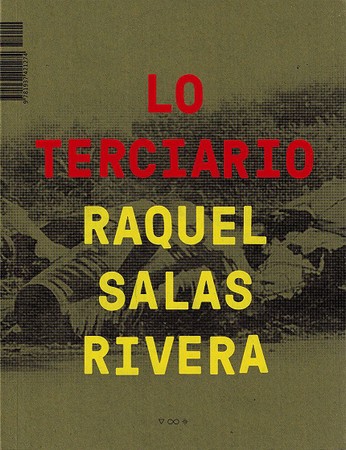
Raquel Salas Rivera, the 2018–19 Poet Laureate of Philadelphia, is the writer of Caneca de anhelos turbios, oropel/tinsel,and tierra intermitente, along with five chapbooks. Their latest book, lo terciario/the tertiary, utilizes a “decolonial queer critique and reconsideration of Marx” to respond to the PROMESA bill (Puerto Rico Oversight, Management, and Economic Stability Act) regarding the Puerto Rican debt crisis. Their poem “landscape of old san juan” illustrates another of Salas Rivera’s themes: colonialism. “In the center of your chest there is a treasure / if you move the flower pots you’ll find/ your enemy curled up like a snake / he is the gravedigger / that keeps throwing dirt / in the pan.”
Dr. Amina Lolita Gautier is the winner of the 2018 PEN/Malamud Award for Excellence in the Short Story. Dr. Gautier has published over 100 stories in literary journals and has three award-winning short story collections: At-Risk and The Loss of All Lost Things. The third book, Now We Will Be Happy, won the Prairie Schooner Book Prize in Fiction and highlights the lives of Afro-Puerto Ricans, those born on the mainland, and those who migrate to the US. The stories in the book cross “boundaries of comfort, culture, language, race, and tradition in unexpected ways, these characters struggle valiantly and doggedly to reconcile their fantasies of happiness with the realities of their existence.”
Sandra Rodriguez Barron is the award-winning author of The Heiress of Water, a Borders Original Voices selection. The novel is about Monica Winters Borrero, a physical therapist who was raised in El Salvador until the death of her mother. In order to aid a comatose patient, Monica returns to El Salvador in search of a therapeutic treatment her mother had been researching. There, Monica will confront the past and the difficult relationship she had with her mother. Her second novel, Stay with Me, is about the life-long relationship between five kids who were abandoned in Puerto Rico and who forged their own family.
Luivette Resto tackles issues of identity, womanhood, motherhood, and romance. “No sucios for me! / No sucios for me! / No sucios for me!” one of the girls in her poems implores. Resto is the author of two books of poetry, Unfinished Portrait, a finalist for the Paterson Poetry Prize, and Ascension. She is also a CantoMundo Fellow. While in her poetry she reaches back to connect with Puerto Rican poets like Julia de Burgos and Pedro Pietri and contends with similar themes, she approaches these timeless issues with a present-day eye so that “women find a sense of freedom to embrace all of the nuances and complexities of feminism and mujerismo.”
Denice Frohman’s work “focuses on identity, social change, disrupting notions of power, and celebrating the parts of ourselves deemed unworthy.” For example, in “A queer girl’s ode to the piraguero,” she writes, “Oh, Piraguero! My first lover. / The only man I ever wanted / anything from. I sprinted half blocks for you, got off / the bus two stops early, took the long way home / just to see: your rainbow umbrella.” Her poem “Dear Straight People” went viral with over 2 million views. She is one of the “Top 20 Emerging LGBT Leaders” according to the Philadelphia Gay Newspaper. She is also a CantoMundo Fellow, a Women of the World Poetry Slam Champion, and the recipient of many other accolades.
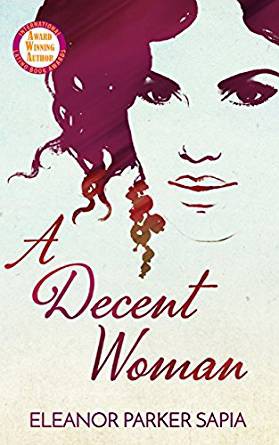
Eleanor Parker Sapia is the author of the award-winning, historical novel A Decent Woman, which is set in the late 1800s in Ponce, Puerto Rico and tells the story of the life-long friendship between midwife Ana and her friend Serafina. A class and racial division opens up between Ana and Serafina when Serafina marries into the upper echelons of Ponce society, and Ana remains in their impoverished neighborhood. Ana’s livelihood is jeopardized by the changing view that women should deliver in hospitals rather than at home with a midwife. This novel captures Ponce in a time of great advancement and exposes how all these shifts affect the lives of women.
Vanessa Mártir is an essayist who was most recently published in the New York Times bestseller Not That Bad: Dispatches from Rape Culture, edited by Roxane Gay, as well as in Bitch Magazine, Smokelong Quarterly, and the VONA/Voices Anthology Dismantle. Martír is the creator of the Writing Our Lives Workshop. She has written about growing up in Bushwick with two mothers in the 1980s, writers of color, motherhood, grief, and other topics. She is currently completing her memoir, A Dim Capacity for Wings.
Rosalie Morales Kearns, a writer of Puerto Rican and Pennsylvania Dutch descent, is the founder of the feminist publishing house Shade Mountain Press. Her novel Kingdom of Women is about Averil Parnell, a female Roman Catholic priest who has to decide what advice she is going to offer to a group of vigilante women who go after murderers, rapists, and child abusers. Virgins and Tricksters is Morales Kearns’ magic-realist short story collection. The Small Press Book Review raved:“It’s not that the stories are comfortable — these worlds of virgins, tricksters, wives, daughters — are fraught with complication and searching. Nor do they lack surprise: by blending precise realism with wild magic, Kearns subverts our expectations in subtle yet astounding ways.”
Jennifer Maritza McCauley is a 2018 National Endowment of the Arts Fellowship winner and an Academy of American Poets Award recipient. Her first book is Scar On/Scar Off, a cross-genre poetry and prose text. The theme of scarring runs through the book — the scarring from being a woman, from having dual ethnic identities, and from dealing with racism. She is the Contest Editor at The Missouri Review. Her work has been selected as a “Short Story of the Day” by The Seattle Review of Books and a “Poem of the Week” by Split this Rock. Her work has appeared in the Los Angeles Review, Puerto del Sol, The Feminist Wire, among other outlets. She has finished a historical novel set during the Reconstruction era.
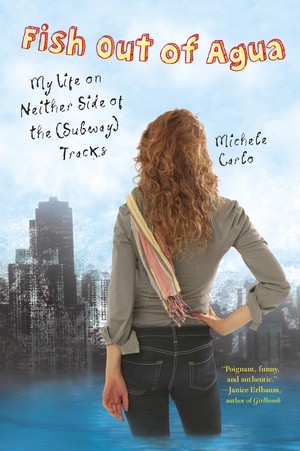
Michele Carlo’sFish Out Of Agua: My Life on Neither Side of the (Subway) Tracks is a memoir about growing up as a redheaded, freckle-faced Puerto Rican in the Bronx during the 1970s. Throughout her youth, Carlo had to contend with being seen as white and not Puerto Rican. The memoir also chronicle’s her mother’s mental illness, the secrets that her family keeps, and how she comes into her own and becomes the artist she had always wanted to be. Carlo is also a performer who has appeared across the US, including The Moth’s GrandSlam and MainStage storytelling shows in NYC. Her current project is a radio show on Radio Free Brooklyn, where she interviews artists, activists, and educators.
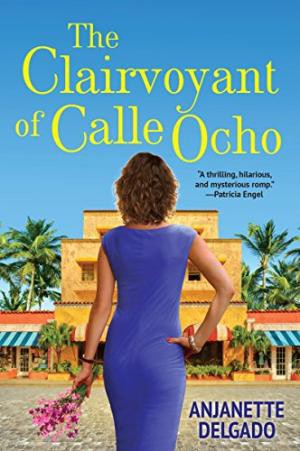
Anjanette Delgado is an award-winning novelist, speaker, and journalist who has written or produced for media outlets, such as NBC, CNN, NPR, Univision, HBO, Telemundo, and Vogue Magazine’s LatAm and Mexico divisions, among others. Her award-winning romance novel The Heartbreak Pill is about scientist Erika Luna who sets out to create a pill to undo heartbreak. Her latest novel, The Clairvoyant of Calle Ocho, is about Mariela Estevez whose clairvoyance kicks in when her lover is found murdered. Delgado is “fascinated with heartbreak, the different ways in which it occurs, and the consequences it brings.”
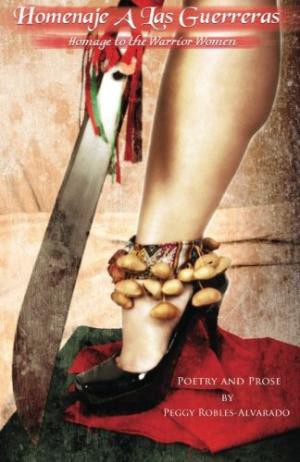
Peggy Robles-Alvarado is a writer and editor of several projects. She is the author of Conversations With My Skin, which is about the transformation of a pregnant and abused 15-year old who learns to define herself, and Homenaje a las guerreras/Homage to the Warrior Women, which pays tribute to women who “carry several lifetimes and dimensions within one frame and [who] learn how to properly balance them.” She is also the editor of The Abuela Stories Project, an anthology of writing and photography by women that is meant to challenge the notion of abuelas and their stories as inconsequential. Her latest book Mujeres, The Magic, The Movement and The Muse is an anthology “inspired by Taino, Lukumi and Palo traditions where women make connections to their muses through body and spirit.”
Dahlma Llanos-Figueroa’s debut novel is Daughters of the Stone. Author Cristina Garcia enthuses, “Rejoice! Here is a novel you’ve never read before: the story of a long line of extraordinary Afro-Puerto Rican women silenced by history…Dahlma Llanos-Figueroa rescues them from oblivion.” Llanos-Figueroa’s novel follows the lives of five generation of women starting from Africa, moving to Puerto Rico, and ending in New York City. The novel was shortlisted for the 2010 PEN/Robert W. Bingham Prize for Debut Fiction. Daughters of the Stone is the first novel in a series of five, and Llanos-Figueroa has completed her second novel, A Woman of Endurance, and is now working on her third novel.
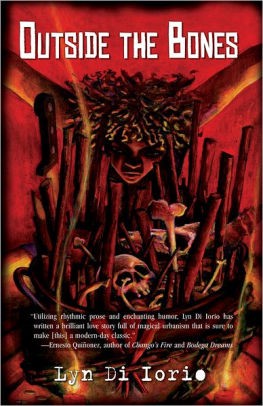
Dr. Lyn Di Lorio is a professor and was a consultant on Puerto Rican cultural matters for Sonia Sotomayor’s memoir, My Beloved World. In her book, Outside the Bones, protagonist Fina Mata unwittingly unleashes a powerful Palo spirit when she attempts to make her neighbor Chico fall in love with her. Outside the Bones is the first English language novel about Palo Monte, an Afro-Caribbean religion that stems from the Bantu-speaking people and their Caribbean descendants.
For decades, young readers of color did not find themselves in the literature they read. But now, representation of Latinxs in young adult literature is on the rise. A recent book to fill this niche is Lilliam Rivera’s The Education of Margot Sanchez, which tells the story of Margot who is caught between her Puerto Rican world and the world of her prep school. Rivera was named a “2017 Face to Watch” by the Los Angeles Times.
Her next book, Dealing in Dreams, is forthcoming in March 2019; it’s a futuristic story about girl gangs and the leader’s desire to get off the streets and move up in the world.
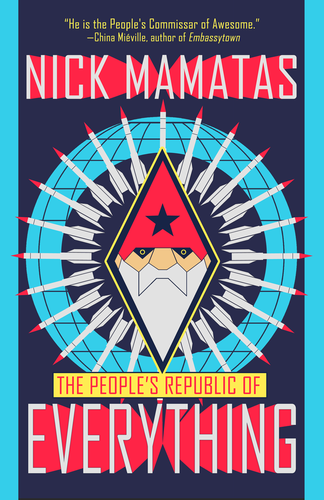
Nick Mamatas’ latest book is the just-released collection The People’s Republic of Everything. It includes the best of a decade of unique short fiction from an author lauded by China Miéville, Brian Evenson, and Matt Ruff. His best work reflects a kind of stubborn refusal to give in to the stupidities of the modern world, a critique of capitalism and an empathy for outsiders and those who don’t conform to the system.
Purchase the book
Mamatas has worn many hats — novelist, short fiction editor, and book editor (currently for Haikasoru, bringing Japanese work to readers in English translations.) His seven novels include I Am Providence, The Last Weekend, Love is the Law, The Damned Highway, Sensation, Bullettime, Under My Roof, and Move Under Ground. He has been nominated for the Bram Stoker award five times, the Hugo Award twice, the World Fantasy Award twice, and the Shirley Jackson, International Horror Guild, and Locus Awards.
He has written numerous short fiction that has been published in publications such as Asimov’s Science Fiction and Tor.com, lit journals including New Haven Review and subTERRAIN, and anthologies such as Hint Fiction and Best American Mystery Stories 2013. He lives in San Francisco.
I interviewed him about the state of short fiction and his work via email in early August.
Jeff VanderMeer: Short fiction was dead. Then it wasn’t. Let’s assume it’s alive. Why is it alive, if so?
Nick Mamatas: It’s alive for a couple of reasons. One is that just over a decade or so ago, bookstores finally understood that they could sell anthologies of short fiction by treating them as though they were non-fiction. People really do wander into bookstores and say things such as “I love The Walking Dead. Got any books about zombies?” or “I’ve been hearing a lot about steampunk — got anything that’ll explain it to me?” and a big anthology with reprints by prominent authors and new or at least obscure material by less well-known authors is basically a textbook designed to answer those questions. Phonebook-sized anthologies by you and Ann VanderMeer, or by John Joseph Adams, really grew a generation of readers.
Then there’s the smartphone and commuter culture: a short story is a commute-length read and a smartphone allows for instant access even when people don’t sit down and plan to read short fiction in advance. But short fiction is only ever a few clicks away, and unlike large collections of fiction, which require the reader to enter a narrative world, then exit it only to enter another, reading in an interstitial moment and then reading another story eight hours later doesn’t tax one’s attention span so much.
Finally, the short story is alive because it was dead. Freed from commercial considerations — there’s no reason to sit down and try to write to the men’s magazine market or for the Saturday Evening Post’s specific requirements — writers can do what they will. Good writers win. Thus a book such as Carmen Maria Machado’s Her Body and Other Parties can through sales for enthusiasm and sheer quality get a lot of buzz built around it, enter something like its seventh or eighth printing, and even get nominated for a National Book Award. If she had written those stories according to the commercial formulae of the 1950s or ‘60s, they wouldn’t have been as good and thus the book wouldn’t have done as well.
The short story is alive because it was dead.
JV: Do you feel the audience has changed since you started publishing fiction? And how has your fiction changed, in terms of what interests you to write about?
NM: I started publishing just as online fiction started becoming the norm; I’d say the audience has changed in that there is a drive toward the viral, which can lead to fiction that is a little too clever, or built in with a few too many winks toward contemporary Internet culture. On the plus side, as the Internet is a worldwide phenomenon, there is much more access to fiction from writers around the world, including work in translation or in other modes.
I’ve definitely become, over the years, much less interested in writing my version of this or that story type. Nobody cares what I think about spaceships or vampires or English professors or barflies, so I don’t need to weigh in on tropes. I just try to dig into myself and find what’s there.
Nobody cares what I think about spaceships or vampires or English professors or barflies, so I don’t need to weigh in on tropes.
JV: What do you love in the short stories you love? And what are some of your favorites?
NM: I don’t re-read novels as life is too short, but I will re-read short fiction, so stories that can withstand a second reading without losing too much of their power. A lot of short fiction is structured like a joke, with a windup and a punchline, so I dislike that sort of thing. If it’s all in the twist, it’s a waste of my time. I like stories that have humor in them, that veer off in an odd direction along the lines of the long middle scene in Godard’s film Breathless, and that use words cleverly.
“The Shadow, The Darkness” by Thomas Ligotti is perhaps my favorite short story. It’s hilarious. “Romantic Weekend” by Mary Gaitskill is a great one — one of the few pieces that can describe an outsider life as if described by an insider. “The Masonic Dream Engine” by Thom Metzger is excellent and I think wrongly categorized as an essay. “Reflections in a Tablespoon” by Gerald Kersh is the sort of nudge-nudge wink-wink story that people basically aren’t allowed to write anymore, and not only is it the best example of it, the framing narrative is actually more interesting and artful than the core of it. If I dare name a story I helped publish, I was honestly devastated when “Monologue of a Universal Transverse Mercator Projection” by Yumeaki Hirayama, which Masumi Washington and I included in our crime/sf anthology Hanzai Japan,didn’t receive any award notice.
JV: Is there a subject or idea you didn’t see expressed as much in short fiction that galvanizes you to write?
NM: I don’t see a ton of material about outsiders anymore. There are plenty of stories about middle-class types who nonetheless experience some neuroticism thanks to the precarity of their social position, but not many about true outsiders, who have different values and experiences than, well, the people who normally read short fiction.
JV: How does humor or satire play a role in your stories?
NM: I’ve always been interested in humor and satire. I started reading science fiction thanks to that interest; I was shocked to find out how many science fiction writers actually believe in the goofy bullshit they propound in their stories. When I was a kid, I figured they were joking!
I also think humor has a place in virtually every story — people under stress will crack jokes, and irony and absurdity abound in dark situations. A story without at least a character attempting to say something funny strikes me as merciless and unrealistic.
JV: Do you have a typical way you begin writing a story? And how much do you need to know before you write?
NM: I suppose I’m concept-driven, which is fairly traditional. “What if…?” Then I hunt around for a voice and point of view. It’s in voice and POV that my stories differ from the average — whether that’s for the better or the worse is up to the individual reader. Once I have a POV, I find that many other story decisions are made for me, and I roar through to the end that I had imaged, realize it to be inadequate, and rewrite it. Then I am done.
JV: Can fiction change the world? Or at least the suburbs?
NM: Yes, but only when disguised as the true facts of the history of a people. Nation-building is a work of art, after all, so be suspicious of any national story, in the same way you should be suspicious of the flavor of a grape in a still life painting.
Be suspicious of any national story, in the same way you should be suspicious of the flavor of a grape in a still life painting.
JV: Anything you have no patience for any more in short fiction?
NM: Oh, plenty of things. Lazy use of scene breaks due to a failure to master transitional sentences. Excerpts from newspapers and journals that read nothing like newspaper articles or journal entries. Depictions of contemporary children with the names and juvenile preoccupations of the writer’s own long-gone childhood. Single-sentence paragraphs, especially when the last sentence-paragraph of the story. When only villains or otherwise pathetic characters masturbate, evacuate, or say the wrong thing at the wrong time. First-person narrators who apologize for being long-winded or meandering. There’s no need to apologize; I’ll just take the author’s own hint and stop reading.
JV: If you had to sum up the new collection in a sentence or two, how would you describe it?
NM: Stories about the difficulty of changing the world on purpose, and the ease of doing so by accident.
M y last book, set in post-WWII Germany, was 353 pages when it was published.The chapters on my computer, however, total over a thousand pages: plotlines abandoned, roads taken and then backtracked, scenes written and then cut because I worried that they didn’t further the plot or deepen the characters and themes. In my research, I discovered fascinating pieces of history I might have liked to delve deeper into but didn’t (or did and then cut) because to do so seemed indulgent — to go down these rabbit holes, I felt, would scratch my own itch rather than that of my readers. And ultimately, wasn’t my mandate as a novelist to please them? Didn’t they want me to hew close to the bone, to justify every word and phrase? During the seven years I spent writing, I kept tight reins on my word count.
This isn’t a bad thing — I’m proud of the book I wrote. But lately I have been wondering what it would be like to turn off the reflexive editor in my mind, to allow myself digression and diversion, to write unfettered by my own cautionary voice. Not better—but different.
Lately I have been wondering what it would be like to turn off the reflexive editor in my mind, to allow myself digression and diversion.
This thought is not an abstraction. It comes from a recent heightened awareness of a phenomenon that I’ll call literary man-spreading — the tendency of male writers to take up more space (measured in pages and digressions) than women writers usually feel entitled to. Infinite Jest comes to mind, or Mason & Dixon, or Underworld; books with lengthy digressions into esoteric subjects, long excursions off topic, and vast, sometimes unwieldy scope.
These can be wonderful books — Jonathan Franzen’s Freedom and Philip Roth’s American Pastoral (which is only 423 pages, but stylistically fits the bill) are two of my personal favorites. There is a particular magic to an immersive and sprawling novel, and a thrill in following a confident writer on a scenic route through his imagination’s wilderness. Of course they can be terrible too — overlong and self-indulgent, stuffed with showy displays of information and smug postmodern tricks a reader is likely to skim over. But either way, many of these novels are met with both critical and sales success. Apparently readers are willing to follow a good writer down a long and winding road.
So why are so few of these novels written by women?
Only three of Vulture’s “26 Long Books worth the time they’ll take to read” are by women (and one of these is the quartet of Elena Ferrante novels counted as one book). Only ten of Goodreads’ “49 Best Very Long Novels” are by women, and 5 of these are by the fantasy author Jaqueline Carey.
It’s tempting to point fingers: to claim that editors and agents view an 800-page manuscript from a male author with excitement, whereas they view the same from a female author with skepticism. Or to insist that readers are willing to log the hours into Nathan Hill’s The Nix, but wouldn’t if it were written by Natalie Hill. As Meg Wolitzer postulated in her 2012 NY Times essay “The Second Shelf,” if a woman “writes a doorstop filled with free associations about life and love and childbirth and war, and jokes and recipes and maybe even a novel-within-a-novel, and anything else that will fit inside an endlessly elastic membrane, she risks being labeled undisciplined and self-indulgent.”
Historically (as in, six years ago) this was surely true. But recent examples of long novels by women have been applauded — Pachinko, A Little Life, The Goldfinch. And even before this, there are examples of such successes, from Doris Lessing’s Golden Notebook to Margaret Mitchell’s Gone with the Wind. These long works, though, aren’t marked by the same level or kind of digression that I think of as second to page number in defining the genre. For better or worse, literary manspreading is marked by an everything-but-the-kitchen-sink approach to content.
Women are driving what’s published and what sells; we’re the ones buying the books, and for that matter, editing and reviewing them. In 2016, Lee and Low Books released the results of their “Diversity Baseline Survey” which showed the the “Publishing Industry in General” was comprised of 78 percent women (59% on the executive level). Eighty seven percent of book reviewers were women. And while the gender breakdown of fiction buyers isn’t officially known, publishers believe women make up 75 to 80 percent of the market. These days, if weighty tomes by male authors get more attention or money or benefit of the doubt, women have a strong hand in determining that. So why is it still the men who are spreading out?
Obviously, the wider historical context has much to do with it. Men have been encouraged to voice their worldviews for as long as Western civilization has existed. Our historical models of long and all-encompassing works of fiction are predominantly male (Swift, Dickens, Dostoyevsky). Men tend to be less inhibited by lack of expertise or authority — if Philip Roth wanted to write a whole chapter about the inner workings of a glove factory, why not? If Jeffrey Eugenides wanted to delve into the origins of the Nation of Islam in Middlesex, who was going to question his authority?
Women, on the other hand, have long been told to watch what they say (or, more often — in church, in synagogue, in public in general — not to say anything at all). We have had to earn our credibility through quantifiable mastery, and even then, been frequently questioned or doubted. We have been encouraged to trim and edit our physical appearance, from whalebone corsets to bikini waxing. No wonder we are strict self-editors — in art as in life.
Women have had to earn our credibility through quantifiable mastery, and even then, been frequently questioned or doubted. No wonder we are strict self-editors.
But in this changing moment in time, these prohibitory forces are shifting. Ten years ago, I knew intelligent, liberal minded men who were unashamed to say they read only fiction by male authors. I asked one of them about this recently and he was embarrassed. “Did I really say that?” On his current reading list: Lorrie Moore, Rachel Cusk, and Joy Williams. I suspect he, and others like him, would be intrigued rather than repelled by a critically acclaimed tome by a female author.
What is considered feminist writing today often involves explicit examination of subjects traditionally considered “women’s issues”: sexuality, abuse, body image, discrimination. But isn’t it also feminist when a writer breaks free of the ghosts cautioning her to write what she knows, not bite off more than she can chew, and keep it short? Or when a woman author sets her tale in times and places traditionally considered male? It was inspiring to me, for example, to read Jennifer Egan’s Manhattan Beach, set in the world of New York gangsters and featuring in part a Moby-Dick-like survival at sea (the seafaring story is an almost uniquely male province in American literature). These subject choices made her book as “feminist” to me as anything I have read lately.
I’m writing a new book, set partly in post WWII America. It’s in a seed state; there’s much I don’t know about where it is headed. But for the moment, when I sit down to write I am trying to let my mind — and my words — spread out. I’m trying to turn down the polite and deferential voice in my head, urging me not to go overboard..
This is not to say the only thing standing between me and a thousand page work of art is some vestigial feminine inhibition. It takes a particular talent to write successful long, all-encompassing fiction, just as it takes a particular talent to write an engrossing, thoughtful 350 page book. Much of my experiment might well end up in the “Cut” files on my computer that accompany every work of fiction I write. But I’m giving myself leeway to explore. In my own small — certainly egotistical — act of feminism, I am listening to a new voice whispering go ahead, take up space.
The library is a refuge for everyone — and by everyone, I mean the whole of the animal kingdom. Sure, we all know (and try to forget) that plenty of microbial folks have wiggled their way into the stacks of the library, but what about the bigger critters and creatures? Last week, the Washington Postreported that a Georgetown library closed early after a knot — that’s the term used for a snake party — of four (four!) snakes was untangled and removed from the library premises. The library stayed closed for two more days just to make sure there were no more snakes on the premises.
We had a lot of questions. Would Samuel L. Jackson sign on for the dramatic adaptation, Snakes in the Library? Is the booksnake the sneakier and more intimidating relative of the bookworm? And most importantly: Are there other creatures who like to hang out in the library?
You’ll be pleased (or, in certain cases, concerned) to learn that there definitely are. Here are the ten species proven to be most bookish, based on their propensity for sneaking into the stacks.
Raccoons
Four baby raccoons were rescued from a New Jersey library after their mother, aiming to protect them from the same library personnel who captured her, hid them behind a wall near the first-floor elevator. After the mother was captured by staff they had to cut through drywall, brick, and steel (steel!) to rescue and remove the baby raccoons from the library.
Photo: Abby Brack/Library of Congress
Hawks
Hawks are majestic birds of prey and they aim higher than your local branch. Library hawks go all the way to the Library of Congress. This “juvenile female raptor” (which will be the title of my memoir, thank you) stayed in the Main Reading Room of the Jefferson Library for a week until she got hungry. The trick for getting her out? Bringing more birds into the library and setting them up in a trap. Two starlings named Frick and Frack were brought into the library and kept in a cage under a tarp. Frick and Frack — terrified by the predator and perhaps the heft of American history they found themselves suddenly enmeshed in — froze, which rendered them useless bait. Luckily, D.C. traffic prevailed, and a truck outside scared them into forgetting what they were actually afraid of. Frick and Frack jumped, and our juvenile female raptor (that’s her actual picture above, by the way) flew right into her trap. And she was still in the middle of the Neapolitan novels!
Owls
Owls are universal symbols of wisdom, and their facsimiles adorn many a library entrance. But one British owl had a very special relationship to the library at the University of Bath. His job was to keep other birds out of the way. Territorial seagulls were nesting on campus, and many feared for the safety of the humans on the ground. Professor Yoda the Owl, as he was named, swooped onto campus a couple times a week with his handler, and cleared out the seagulls. In exchange for his services, he was given his own library card. And his ID picture is better than mine will ever be.
Meet our newest recruit on campus, Prof Yoda the Owl, who is already making national headlines http://t.co/px0cjzWDFA
Look, some of us will do anything to avoid a library late fee. But would you smash through a window? This is one of our sadder notes — last year a wild turkey “plunged to its death through a library reference room window.” No one else was harmed, and all that remained for reference were a few of the bird’s feathers.
Bears
Outside of the rather disturbing (but also award-winning!) classic of Canadian literature, bears rarely make their way into the library—but it’s not for lack of trying. A black bear descendant of Winnie-the-Pooh (probably, why not) “bumbled its way” into a tree to hang out outside the Hilton Branch of the Maplewood library in New Jersey. He was safely relocated so as not to be “a bother” to anyone else in town. Oh, bother!
Cats and kittens
Three abandoned kittens were found in the Streator Public Library in Illinois this past July. Library staff took care of the kittens until the local community found homes for all three babies by 5:30pm the same day. But the Streator kitties are only the latest in a distinguished line of library cats. Another bookish feline, Dewey, is one of the most famous animal library patrons out there.
The Icon Himself
Dewey rose to library legend from a darker place. On “the coldest morning of the year” the head librarian in Spencer, Iowa found kitten Dewey nearly frozen to death in the overnight library drop box (many other small critters like lab mice and rats have allegedly been found in other library drop boxes). Dewey went on to become a personality for the local library, a celebrity star of a documentary in Japan, and the star of his own book. Dreams really do come true.
Bats
Though bats are pests in many contexts, the ones who live in a Coimbra, Portugal library are welcome and necessary staff. Part of the night shift, these bats swoop through the stacks to eat gnats, flies, and more bugs that would otherwise destroy the rare books housed in the library. The bats have made the library their home since at least the 19th century. Every night, librarians cover the stacks with a cloth made from animal hide to protect the books from bat guano (poop), then pull the cloth away in the morning and wipe up the guano left behind on the floor. (No news on how they clean the cloth.) A fair price to pay for the preservation of centuries of knowledge.
Moose
A young bull moose came down from the mountain to check out some books at the University of Utah’s Marriot Library before being tranquilized and relocated away from the premises. On Twitter, the library reported that the “furry visitor” came for some books but has gone back home. And so he got tranquilized and relocated? Did they at least give him any books?
Good morning! This furry visitor came early to check out some books and now has been helped back to their home! We'll moose you!
Don’t put Berisades and Ivy in a cage, or they’ll break out of the Duke Lemur Center, leap over an electric fence, and run into a library to hang out and munch on a tropical fruit salad. Humans share an ancient ancestor with these prosimians, so our love of libraries must have developed way far back in the evolutionary chain.
DON’T MISS OUT
Sign up for our newsletter to get submission announcements and stay on top of our best work.
YOUR INBOX IS LIT
Enjoy strange, diverting work from The Commuter on Mondays, absorbing fiction from Recommended Reading on Wednesdays, and a roundup of our best work of the week on Fridays. Personalize your subscription preferences here.