Laura van den Berg Sees Ghosts

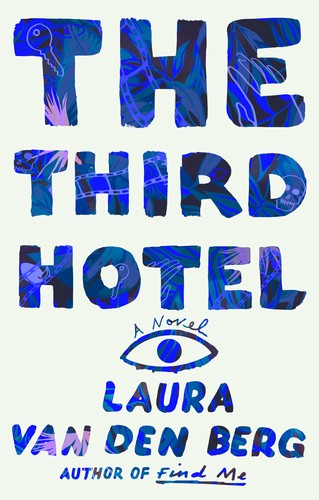
The instant I finished reading Laura van den Berg’s new novel, I turned back to page one. The Third Hotel is that kind of book — an addictive puzzle as labyrinthine as the streets of Havana. The protagonist, Clare, works for an elevator company in upstate New York. She loves to travel, but not for the usual reasons. Instead of sightseeing, “her favorite thing in all the world was to switch off every light and everything that made a sound — TV, phone, air-conditioner, faucets — and sit naked on the polyester comforter and count the breaths as they left her body.”

Purchase the novel

When Clare’s husband — a horror film scholar at a local university — is killed in a tragic accident, Clare travels to Cuba alone for a film festival they had planned to attend together. She wants to talk to the director of the “first horror movie ever produced in Cuba,” but during her second day in Havana, she spots her (dead) husband — a ghost? hallucination? lost twin? — standing outside a museum. And then things get even weirder.

The Third Hotel is one of the most immersive novels I’ve ever read, full stop. Rarely has a book so slim evoked a city’s sense of place with such richness. “She counted soaring gothic arches; neoclassical stone lions; retro beach hotels on the Malecón; bright art nouveau facades with ornamental moldings that made Clare think of Fabergé eggs; stark Soviet high-rises,” van den Berg writes, as Clare passes “codes over doorways that she did not understand.”

I recently spoke with van den Berg via email about the anonymity of travel, writing a travel horror story that subverts genre and expectations, and the haunted house where she wrote The Third Hotel.


Adam Morgan: The first thing that struck me about this novel was your sensuous descriptions of Havana. How do you approach description? Contemporaneous notes? Memory? Imagination?

Laura van den Berg: All of the above! I think a lot about the different functions that detail can serve. There are the orientating details when you’re writing scene (is the character inside or outside? Is it raining?) and then also what I call “granular detail” — i.e. those hyper-specific details that carry layers of time and meaning. For example, the novel’s first section is titled “The Fingernail,” in part because early on Clare is startled to discover a fingernail in a hotel room drawer, a detail that becomes emblematic of the strangeness of travel and transit spaces, the way a sudden shift in the atmosphere can toss you into a different reality, if only for a moment. If the orienting details work to ground our readers, then the granular details often work to destabilize. So I’m interested in how different levels of detail can work together, the friction they can generate.

As for Havana, I took several research trips, including one to attend their annual film festival, the basis for the festival Clare goes to in the novel, and took massive amounts of notes each time. Clare has a particular relationship to travel because her parents used to manage an inn in Florida and I started doing the same thing with small hotels and motels, whenever I’d pass them, in terms of taking down details. This led to a vast amount of descriptive material, which was daunting, but it firmed my sense of where the descriptive energy would be concentrated: the smaller ecosystems within Havana that Clare moves through — the world of the film festival, the world of hotels, what she observes while walking — and in her childhood memories, the inn is a kind of sun that everything else orbits around. I find that a character’s specific lens is important too: in Havana, Clare is somewhere between a tourist and an investigator, and the more I understood that lens the more focused the descriptive choices became.

AM: Clare is something of a nomad before Havana, and something of a flâneuse once she arrives. Are you a big traveler? An avid walker? How does experiencing the world that way impact your writing? Your sense of self?

LvdB: It’s strange — I lived in one place until I was 22 and then my life after has been super transient. My husband is also a writer and so for us, the artist’s life has meant a lot of moving around (though we are mercifully now settled in one place for the time being) and within the macro-transience there has been a lot of small-scale moving about. My second story collection and my first novel came out in close succession, so I was on the road quite a lot for a stretch and, like Clare, encountered many a bizarre detail while moving through transit spaces. I feel very compelled by the tension between anonymity and visceral intimacy that we see in hotels and airports, on planes and trains.

At a certain point, I got burned out by this rootlessness and developed, seemingly out of nowhere, a flying anxiety that is much better now but was crippling for several years. In addition to practical concerns — i.e. when I was an adjunct, I relied a lot on honorarium money — constant motion also became a means to avoid dealing with what I would rather not deal with. I wasn’t traveling to be present but was rather fleeing presence and this is Clare’s exact orientation towards travel when we first meet her, with her sales job that requires her to travel nonstop.

Of course, I still love to travel, especially if it’s for pleasure and especially if it somehow leads to space and time to write. This year has been a really excellent travel year, for which I am grateful. And I do love to walk — I have a terrible sense of direction and find physically moving through spaces to be very grounding. The first time I went to Havana, I walked something like 12–13 miles a day to get oriented.

In Florida, I lived with my parents and then with my grandmother and then more-or-less with a college boyfriend. I had never lived on my own; I did not study abroad and hadn’t spent a lot of time navigating the world beyond Central Florida. I was afraid to do pretty much anything on my own and in time solo travel helped me find a bit more confidence and self-reliance, of which I was in desperate need.

I feel very compelled by the tension between anonymity and visceral intimacy that we see in hotels and airports, on planes and trains.

AM: Of all the places you could have written about, what drew you to Cuba?

LvdB: So many things! I’ll try and narrow it down.

To start, I’m interested in the travel novel as a form, even as I understand it to be a form that comes with baggage. I love so many books that might considered travel or abroad novels in one way or another: Katie Kitamura’s A Separation, Damon Galgut’s In a Strange Room, Chris Kraus’s Torpor, Adolfo Bioy Casares’s The Invention of Morel, Cristina García’s Here in Berlin, to name a few. I’m particularly interested in travel novels that somehow remake the usual boundaries of the genre, that subvert expectations, and so that formal challenge had been on my mind for a while.

So for a time, I had a constellation of narrative elements — they felt like jellyfish swimming around in my imagination — that I thought might be conversant with contemporary Havana, even if the how and the why remained elusive.

Tourism and film were two other “jellyfish,” so to speak. The Havana sections are centered on a film festival in 2015, a year that saw a major influx in American tourists. I spent a lot of time with the vocabulary of tourism, and the particular kinds of desires that vocabulary seems designed to ignite, the promises made and how those promises change or vanish altogether depending on who you are. I think the language caught my eye in part because I’m from Orlando, a city that has been powerfully shaped by tourism; Havana and Orlando are of course radically different contexts, but this was an initial open door. At a certain point in my research, I realized that some theoretical writings on tourism often used language similar to that of cinematic scholarship, a discovery that allowed for increased synergy between subject and place.

In time, all the jellyfish collided and I finished a proper working draft at Bard College, in a house that I’m fairly sure was haunted, over the course of one winter. For a while, I had been bouncing around between various campuses and my husband and I were spending too much time apart and there had been serious illness in my family. Life felt very very fast. So the book sprung from a web of intense and confused feelings, processed in a possibly haunted house — with an attic ceiling that would unfold itself in the middle of the night. I would come out of my bedroom in the morning and the stairs would be out and waiting, an invitation.

AM: Is creating a sense of “atmosphere” something you think about while writing, or does it just happen naturally as a byproduct of other narrative strategies?

LvdB: A mix, I think. I love books — and films — that have a rich sense of atmosphere, so I do consider mood and atmosphere, the tone of both the interior and exterior worlds, when I’m working on a project. At the same time, atmosphere is also something that can take on a life of its own. Each book has its own weather and some of that weather I am generating consciously and some of it — ideally — is emerging from a place that exists beyond the realm of conscious understanding. No mystery, no art.

I’m particularly interested in travel novels that somehow remake the usual boundaries of the genre, that subvert expectations.

AM: Have you always been interested in horror movies, or was that a big research goal for this book? What are some of the most memorable films you watched?

LvdB: I am a fan and a kind of armchair theorist, which places me somewhere between Richard, Clare’s film scholar husband and a true expert, and Clare herself. Film is of course central to the novel’s plot and as I mentioned before I also became interested in the intersection between cinematic vocabularies and other vocabularies — that of travel, that of tourism, that of Clare’s own inner life. I’ve never studied film formally, so I read loads of theory while working on the novel, part of the reason why the research notes for The Third Hotel is the longest for any book I’ve written. Happily, part of this research involved revisiting certain movies and seeing others for the first time. I found the original Halloween to be surprisingly unsettling on re-watch and expert on the use of spaces, the increasing claustrophobia of winnowing spacial options. I revisited a lot of other classics, from Carrie to Night of the Living Dead. For more recent horror, I love a French zombie movie called Les Revenants, a bloodless horror movie and all the more unsettling for it, and also Juan de los Muertos — which was regarded by many as Cuba’s first non-animated horror film and also provided the inspiration for the horror film-within-the-novel. I’m also excited to follow the directors Ana Lily Amirpour (A Girl Walks Home Alone at Night), Jennifer Kent (The Babadook), and Karyn Kusama (Jennifer’s Body). More women directors in horror, please.

Aimee Bender Recommends A Short Story by Lisa Locascio

“Hundred Mile House”

by Lisa Locascio

Three months after Isobel’s husband stopped making love to her, she bought a bonnet.

It was grand and black and white. Lined in matte cream linen with a grain of taupe thread, covered in opalescent pure black. It stood on its own, without support. Isobel suspected there was a hard shell beneath the fabric, but when she felt for a form — delicately, her thumb and index finger curved like pincers — the bonnet bent in her hands.

In all light the bonnet shone darkly, like water at night.

Its shape reminded Isobel of a covered wagon: a little Conestoga rolled right into her living room. Her childhood love of pioneers come back to her. Nestled among unlabeled CDs, neon paperclips, and the smiley face mug of pens on her messy desk, the bonnet looked judgmental and uncomfortable. Isobel adored it.

The bonnet’s ties were not made of ribbon, as Isobel had originally thought, but from the same heavy fabric as the bonnet. At first she was disappointed: she had imagined two long, shining strands that she would leave loose, like tiny twin scarves. But when she felt the ties between her fingers, the rich fabric rebuked her.

The bonnet has history, Isobel thought. What do I have?

Every morning after her husband left she took the bonnet in her hands and stood with it in front of the bathroom mirror.

“The purpose of the bonnet is to be Plain,” she said to her reflection.

“It is not an item of beauty but necessity.

“It will keep my face from the sun and hide my hair.

“In the bonnet, when I am hurt by unkindness, I can turn from the one who hurt me and be shielded from his eyes.

“’The bonnet will remind me of the pitfalls of vanity, of earthly things.

“Of the limitations of this world and of the flesh.

“Of my flesh.

“Of my husband’s flesh.

“O God give me the power of this bonnet, let it come into me, let it guide my hand and my heart.”

By the time she stopped speaking her reflection had become strange to her. She felt outside of it, somewhere else, able to look without sentimentality at the pear-shaped woman in the mirror. Thin curls of muddy hair and strange gray eyes. She was a body only, not pretty or un-.

She had cribbed together her affirmation from things she found on the internet, where she had gone looking for information about the bonnet. She had wanted to know how old it was. Instead she found women who wore bonnets: women all over the United States and some overseas, who pulled bonnets over their hair every day and kept public diaries about bonnet life. Once she found these journals she read them, with a gnawing hunger behind her eyes. The bonneted women were different from the friends she followed online, whose news of babies and promotions hit Isobel in daggers of self-pity. They never complained, never posted needy, pouting photographs. Instead there were storybook pictures: simple, clean women in straw bonnets and gingham dresses, walking the borders of their property. They all owned property. Sometimes the women were pregnant beneath their old-fashioned dresses, and sometimes there were little girls in matching outfits. There were images of jarred fruit, needlework, intricate puzzles done on tables as weekend recreation. The women were intelligent, educated; Isobel didn’t understand half of what they wrote, even though she thought herself pretty smart. From them she learned the difference between plain and Plain. From them she received the gift of a seed of faith, glowing inside her like a promise.

Not faith in God — Isobel knew too much for that. God seemed as precious and unlikely as the angel she had prayed for when she was a little girl, a mauve-haired princess with rainbow wings who would appear in her bedroom and make her feel not safe but awed. That was what Isobel always wanted, not comfort but possibility. Magic. She had never had either. Now she was too far gone for God or angels. But Isobel believed in the bonnet, in the power it would give her.

Isobel and her husband had been married for eight years. They lived in a house in the country, six miles down the road from the unincorporated town of Cazenovia, which had an estimated population of seventy-three souls. There was a big city three hours away where they never went. Both of them had grown up in other cities, and they had no fond memories.

Her husband had found her at a community college in the exurbs of a decaying city in upstate New York. Successive financial crises had stripped the exurb of all but the barest infrastructure; the police department was shared with three other exurbs, the paramedics and firefighters were volunteers, and the dollar store was the only food source within a five-mile radius. Once, long ago, the city had been a bustling industrial hub; but then all of the companies left, taking most of the people with them. Those who stayed in the exurb looked as if they were slowly dying. The whites of their eyes were yellow, their hair and fingernails thin. Trails of green slime hung beneath their children’s noses. Once, at the dollar store, Isobel watched a woman cough a viscous purple egg yolk into her palm. The woman glared at it and shook it to the floor.

Lack of funding had closed all but one of the exurb’s public schools. Isobel passed the surviving school each morning on her two-mile walk to the bus stop. White trailers surrounded it; these, according to her husband, back when he was still her boyfriend, were “portable classrooms.” The school too had reminded her of pioneers, of wagons: it was the way the trailers were circled up, huddled protectively around the slumped brick building. A chilling, not comforting, resemblance. Children stood outside, waiting for the school to open. She never saw them play. They just stared at the road, little faces like closed windows.

When she recalled her life in the exurb, Isobel remembered walking to the dollar store in driving gray sleet, wearing a flimsy coat on which she insisted because she believed it looked “sophisticated.” She walked against traffic, squinting into the fading light, a blind panic of sadness rising in her chest with every step. By the time she rounded the final corner and the strip mall appeared, windows gleaming yellow and warm, she was half-mad with anxiety and despair. It felt triumphant to march into the blinding fluorescence of the dollar store, to buy with a handful of limp fives milk, cocoa mix, cookies, and every single herbal tea that claimed to have relaxing properties.

Survival tactics, Isobel thought as she dropped the items into her basket. Right now I am surviving.

She brewed the teas and sipped them constantly, as if her red mug contained tincture of laudanum. She watched funny movies and slideshows of beautiful landscapes on her computer. She organized everything meticulously, resorting pens and sweaters in an elaborate cubby system made of cheap plywood. She tried to learn knitting, sous vide cooking, and Jazzercise, failing roundly at all three. She started making up songs and whistling them and snapping her fingers as she walked, just to have something to listen to.. She knew she looked crazy. That was part of why she did it: who would attack a woman shuffling along the side of the rural route, gesturing and jerking like the victim of an obscure palsy?

The songs all had the same lyrics. Right now I am surviving. Survival tactics.

And then, she met her husband. She knew who he was from the very beginning. He was her husband. He throbbed at the center of her life. His pink vitality lit every room. He was tall and wide, with milky skin, iron arms, and a teddy bear’s face. Best of all, he knew she was his wife. The knowledge of his love swelled into a cushion of hot air beneath Isobel’s feet. Beside him in bed she felt his blood moving in his body. She wanted to harness that velocity, follow it to his heart. For a long time after they found each other, Isobel was always a little wonderfully light-headed.

They were married at City Hall a year to the day after they met. Isobel wore a yellow sundress, her husband khakis and a green plaid shirt.

For the next five years they both worked two jobs. They lived together in one medium-sized room with a closetlike bathroom and no closets. Isobel cooked all their meals on a hot plate on top of a miniature refrigerator. Often the only time they were home together was the middle of the night, so that was when she made dinner. Her husband’s favorite dish was spaghetti in meat sauce; hers was fried frozen potstickers with plum sauce. They kept a gallon jug of red wine on the floor next to the refrigerator and drank it with dinner at three, four, or five o’clock in the morning. After they went to bed and made love until dawn. Isobel was happy, even though she worked sixteen hours a day, even though she was often so tired that she had to set her phone’s alarm to make sure she didn’t sleep through her bus stop.

As soon as they were able, they packed everything into his truck and her sedan and moved west. They bought a house between two old trees on three acres off a rural highway. Inside, it had a stone hearth and lovely beamed ceilings in a state of dusty disrepair; outside, it was covered in hideous aluminum siding and a cheap mansard roof. Isobel and her husband planned renovations: the removal of the aluminum siding and restoration of the wood underneath, the addition of a third floor which would also take care of the mansard roof, bigger windows in all of the rooms. Isobel’s husband could do anything with his hands. And soon, they were sure, Isobel would find a job, too, and they could begin work on the house. At the beginning she even dreamed of a widow’s walk.

Isobel’s husband was employed by a garage that ran a lucrative roadside assistance service. His specialty was solving mysteries; back in the exurb his friends had joked about it, called him the Car Whisperer. Often, his cell phone rang in the middle of the night, its lit green screen illuminating a tiny square of their bedroom wall, and Isobel’s husband rose good-naturedly to go help a stranger. When they first moved into the house, Isobel had welcomed these interruptions.

She would pretend to be asleep as her husband stepped into his work clothes and zipped up his parka, waiting for the sound of him locking the front door. Once he was gone she sprang into action. She brushed her teeth and hair. She rubbed tinted balm into her chapped lips. She went to the kitchen and chopped gingerroot into paste. She poured whole milk from a glass bottle into a red enameled cast iron pot. They bought their milk, cheese, and eggs from the boutique dairy five miles away. The thickness of the milk, its cream top and total opacity, never failed to thrill Isobel. She had spent the first two decades of her life drinking thin, bluish milk that smelled chemical and unclean. The country milk was palpable evidence of the improvements she had made in her life through force of will alone.

She added the ginger paste to the milk, along with a lump of candy sugar, four tablespoons of spun unfiltered honey, and two heaping scoops of cardamom-scented black tea, fine as dust, which she bought from a mail-order catalog and kept in a clay jar in the cupboard. She brought the mixture to a simmer slowly, beating it with a ball whisk, with the gas on the lowest setting. When steam rose from the surface of the milk, she doubled the intensity of her whisking, creating a foam two shades lighter than the liquid beneath. Isobel beat until the foam was thick enough to coat her finger, and then she covered the pot with its lid and turned off the heat.

She went back to their dark bedroom and stepped out of her pajamas — sweatpants and a T-shirt from a retreat she had been forced to go on in her previous life in the exurb — and put on a negligee and a peignoir. She had three matching sets, one emerald, one sapphire, one diamond-white. They had been wedding gifts, items she had specifically requested when people asked her what she wanted. Her old friends in the exurb had made fun of her.

“What is this,” they asked, “the nineteen-twenties?”

Yes, she had thought but said nothing. Yes, that is when I want it to be. She hadn’t heard from any of them since the move.

In the mirror in the dark, she was just a pale oval surrounded by a corona of coarse hair. Satisfied, she went back to the kitchen and microwaved two tall glass mugs with elaborately engraved handles. These, too, had been wedding presents. She turned off the light in the kitchen and waited for the sound of her husband’s truck scattering the pebbles in their driveway. When the first scratching started, she ladled the hot glasses full of milk tea and brought them into the bedroom, putting one glass on each bedside table.

He came in smelling of night and smoke, of gasoline, of the open road. No matter how recently he had shaved, his face was prickly against hers. She loved the feel of his rough skin against the silk negligee. She rarely let him take off his work clothes before it began; she liked how the fabric held the outside chill. The sensation of his cold hands against her warm body was exquisite, almost painful. Their mouths bled together, tasting of tea. In the chilly room she could see their breath meet the tea steam and the cloudy heat from their bodies.

He was rough with her. He stripped off the peignoir and nosed away the straps of the negligee so that he could press his wet mouth into the dry hollows of her throat. He wrapped his arms around her torso and held tight, kissing and kissing. His erection pressed into her thigh and his hand shambled at her underwear. He hurt her. He fixed her.

In the morning she was never tired, no matter how late they stayed awake after, drinking the lukewarm tea and laughing in the dark. The caffeine in the tea had no power over her. All she needed for sleep was his warm chest against her back, his slack penis nestled between their bodies. No other man had ever slept completely naked with her. All five of her previous lovers said they were scared of what would happen to their vulnerable genitals unprotected by underwear. She might roll over on their testicles, pinch their foreskins between stiff sheets. But Isobel’s husband wrapped his arms around her and fell immediately asleep, his cardamom breath rustling her hair. She opened her mouth to breathe it in.

Their life was enough for Isobel, enough to distract her from her many failings, from their money problems, from the way she was sometimes nauseatingly, terrifyingly lonely. If she couldn’t be happy in the life they had worked so hard for, she reasoned, then happiness was impossible for her. She was simply not made for it. This was a thought she could not bear. So she clutched at her happiness, wore it close, and was careful never to complain.

It was like that for three years: middle-of-the-night tea, the joy of bodies in the dark, days spent in careful homemaking. Isobel had almost perfected the discipline of not thinking too much. She only called her mother once a month and was perfectly capable of not feeling guilty after. She took books out of the library, hard books, read them with athletic determination, and returned them on time. She went for daily walks. She experimented with new recipes. She rented the black-and-white comedies her husband liked and made herself like them, too.

Then, one baking two A.M. in September, her husband came back from a call and climbed immediately into bed, ignoring the tea and her peignoir. He lay on the clean sheets, his work clothes breathing heat into the stagnant room.

“Sweetie?” Isobel said. The diamond-white negligee, soaked with sweat, clung to her crotch.

Then, to Isobel’s horror, her husband coughed out three great sobs.

“I can’t,” he said. “I can’t.”

When she touched him he flinched and turned away.

Only after an hour had passed and her husband’s breathing had slowed did he tell Isobel some of what he had seen on the road.

Since that night he had not laid a hand on her. Now, when she went to kiss him, he presented his sealed lips to her with a resolve that reminded her of a child bracing himself for an injection.

Isobel bought the bonnet from a Mennonite woman at a swap meet at the county fairgrounds. The woman’s goods were neatly spread on a card table covered with green felt. She wasn’t selling handicrafts, as Isobel had hoped, but cheap souvenirs, each embossed with a tiny “Made In China” stamp: miniature snow globes mounted on the backs of leaping pink dolphins, light-up fairy wands with flashing stars and glowing hearts, hard plastic keychains printed Princess Comin’ Through! I’m A Freak, Touch Me! and World’s Greatest Dad…Until The Money Runs Out! There were a handful of plastic bas-relief puzzles, the kind that, as a child, Isobel had often received in birthday party “goodie bags”: thin cellophane bags stuffed full of cheap crap, distributed to a room of shrieking children by gray, exhausted mothers. That sort of thing was why they had left their cities in the first place.

Not that she ever questioned their decision. It filled her heart with gladness every day.

The bonnet stood on the far left corner of the Mennonite woman’s table. It had a long, stiff brim that extended out in a cone, like a megaphone — this was the part that reminded her of a covered wagon — and, in the back, a gathered bunch of the black fabric. This, Isobel figured, was where the wearer’s hair went.

She looked at the woman behind the table. A small white disk was pinned to the back of her head.

There were many Mennonites in their area. She saw them at the grocery store, at the movie theater (there was one in a mall, forty minutes’ drive from her house), and at the library. It was impossible not to notice the Mennonites: the women in their little white caps and long, colorful dresses, the men in overalls and straw hats. At first Isobel thought they were Amish, a word she knew from television. But then one day she left the grocery store at the same time as a family of these strange people: a woman in a deep purple dress and two little girls in gray, all three of them wearing the white disks on the back of their hair (how did they get them to stay there?), and watched them climb into a car, not even an old car, but a new sedan that looked to be in better shape than her station wagon.

At home, she had excitedly told her husband that she had seen Amish people being naughty.

“I wonder if maybe they’re trying to escape,” she said, hefting a pot of water onto the stove for his spaghetti. “Maybe they’ve gotten fed up with their cult and want out. Maybe they already escaped.”

“Those aren’t Amish, Isobel,” he told her. “There aren’t any Amish settlements around here. The people you saw were Mennonites. They can drive cars. Sometimes they are the people I go help at night.”

He told her everything he knew about them. Mennonites had certain things in common with the Amish but they were more liberal. They could have telephones, computers, televisions. They were Anabaptists like the Amish but less cloistered, less likely to speak English as a second language. Some of the men whose cars he had healed had been to places he and Isobel would only ever read about in books: Sri Lanka, Germany, Mexico.

“There’s a lot who work farms up in Canada, too. Sometimes they travel between there and here. They have simple lives, but everywhere they go, they go to help people,” he told her. He admired these Mennonites. She was embarrassed by her ignorance. She hoped he would think her cheeks were red from the spaghetti pot’s steam.

“That’s interesting,” she said, searching the cupboard for canned tomatoes.

“They call themselves plain,” Isobel’s husband said. His eyes took on a dreamy look as he stroked his short beard. “Amish and Mennonite both. Plain.”

She thought it sounded stupid, affected. She had known women who took great, snotty pride in being unattractive. The thought of an entire community of such people made her shiver.

Her husband came up behind her and kissed the top curve of her ear. His work clothes crunched against her back, releasing smells of motor oil and sweat.

“I swear you smell different at night than during the day,” she said in a low voice.

He laughed, a sound like the barking of a great friendly dog. Back then he had laughed all the time.

After dinner Isobel’s husband took down his big atlas. He had bought it for a course at the community college and, Isobel thought, never looked at it again. She felt a weird jealousy as she watched him confidently page through the giant book, the biggest they owned; when had he had time to become so familiar with it?

He opened to a map of western Canada.

“I met a Mennonite man who came down from here,” he told her, pointing at a place called Red Deer. “He’d been all over, up to Edmonton, down to Lethbridge and Cranbrook. To Kamloops. Even up here, to Hundred Mile House.”

On the map the name had a number in it — 100 Mile House — but in her mind it was three words. He went on talking, but she got stuck on that place. A house one hundred miles long, full of people and doors. They walked from side to side, they walked all their lives, opening doors and going in, turning on lights, turning off lights. Up there in the north, with nothing else around, where plain people lived in a house one hundred miles long…

The Mennonite woman at the swap meet wore an orange dress identical to the other Mennonite dresses Isobel had seen: full puffy sleeves that ended just below the elbow, a high square neckline, and a thick waistband above an A-line skirt. And there, on the top of her head, was the little white cap with its dangling thin ties. But while her outfit was the same, the rest of her was subtly different from the other Mennonite women Isobel had seen. Her skin was darker, and her hair was densely curly. If not for the outfit Isobel would have taken her for a Jew, or maybe Greek.

“Hello,” Isobel said just above the level of a whisper, half-hoping the woman wouldn’t hear.

“Hi.” The Mennonite woman looked up sharply, revealing the large cell phone in her lap. She was texting with her thumbs. She typed a very long sentence, then looked up and covered the phone with the palm of her left hand. “Yes?”

Isobel felt herself blush.

“Sorry, I, well — ”

Too sensitive, she thought, you’re too sensitive. Why couldn’t the woman be a little nicer? She thought she might cry. She tried to remember her husband’s face, his voice. “You’re the customer,” he would have reminded her. “She wants to sell, right?”

The woman’s green eyes moved over Isobel’s outfit — high brown leather boots, dark wash jeans, a purple T-shirt printed with silver lightning bolts under a gray jacket — and up to her face. Isobel had smudged shimmery beige eyeshadow above her eyelashes. Her hair was down, moving slightly in the breeze.

“How much for the bonnet?” she asked, staring at it instead of the woman.

The Mennonite woman put her cellphone on the table face down and leaned back in her seat.

“This bonnet?” she asked, lifting it in her small hands. The black fabric caught the light.

Isobel was annoyed. There was no other bonnet at the swap meet; she had checked.

“Yes.”

The Mennonite woman turned the bonnet to and fro, considering it. Finally she said, “A hundred.”

Isobel bit her lip, sure now that she would cry. She had less than two hundred dollars in her bank account. Her husband made a good living, but she hadn’t been able to find another job since the dollar store in the next town had closed. She had worked there for two years, had even been assistant manager at the end, but since then it was as if she didn’t exist. Not even the Wal-Mart an hour away would hire her. Every week she posted new flyers at the library and post office, offering her services as a house cleaner, babysitter, tutor, cook, or home aide. No one ever called. Her husband said that it was fine, that they would manage.

She hadn’t worked in over a year. They managed, just barely.

Isobel had earned an associate’s degree in drug and substance abuse counseling at the community college where she’d met her husband. Everyone at the community college had insisted it was a growth field. She was frequently told that she would never lack for a job. And while she lived in the exurb, she hadn’t. She had been employed as an intake counselor by both the government and a private life-coaching company. She spent her days asking unanswerable questions of twitchy, pale ghosts trying to dose themselves out of existence with opiates designed to mute the pain of dying. When did you begin abusing substances? What do you seek escape through an altered state? Tell me about your past; is there anything that it troubles you to remember? What are your hopes and dreams for the future?

Isobel had been told over and over again that addiction to prescription drugs was a national epidemic. She had once planned to return to school for a bachelor’s degree, had even dreamt distantly of graduate school. She didn’t believe that she was capable of helping people, not for one instant, but she liked the idea of always having a job, of being able to steadily advance for the rest of her life. In one of her favorite fantasies, she was fifty years old, sitting behind a desk beneath a framed poster of encouraging aphorisms, in a well-appointed office with two facing green recliners. This was the dream of success that made her giddy and embarrassed: a client list, her own office, her own schedule.

She did not know anyone for whom this dream had come true. Her mother, the only parent she had ever known, had worked a lifetime of service industry jobs, one after another, her uniforms of apron and hat replaced by a black polo shirt and matching baseball cap over and over again, back and forth, for Isobel’s entire memory. She was sixty now. Not one phone call passed without her reminding Isobel that she would never be able to retire.

But while her husband had immediately found the same kind of work he had done in the exurb, Isobel’s only option had been the dollar store — another dollar store, after all her years of shopping for hopeful potions at the one in the exurb. There was only one counseling center near their house, seventy-minutes’ drive away. Everyone on staff there had a master’s degree. They had accepted her résumé with a smile, but Isobel couldn’t shake the feeling the receptionist had shredded it as soon as she left.

In the time she had been unemployed, Isobel had never asked her husband to put money in her bank account. Although she thought of him as a generous man, she feared it would anger him. But she did not admit this to herself; to herself she said she was ashamed. She did ask for cash to buy groceries, but that was different. Her husband always had a bundle of fives, tens, and singles from the strangers he helped on the road. Being rescued made them generous and grateful. The cash was soft and limp as he counted it out into her palm. She always hoped he might give her a little extra, make a joke that she should buy herself something she liked — a hope that made her immediately guilty — but this never happened. The cash he gave her had been creased so many times that it no longer had edges. It wasn’t really money, Isobel told herself. Just tips.

If she only ever spent tips, if she agreed to let her husband handle all of the bills, the balance in her account stayed the same. She checked it rarely, feeling like someone in remission receiving the results of a test.

“Can you come down? How about twenty?” she said, surprising herself.

The Mennonite woman shook her head without even thinking about it.

“This belonged to my husband’s great-grandma,” she told Isobel. “It used to be in the Mennonite Heritage Society Museum. When they closed, they gave it back to us. We had the opportunity to sell it to a big collection in Washington D.C., but we decided having a piece of family history was more important.”

She put the bonnet down on the table, as if the matter was finished. Its ties fell over the edge. For a moment, Isobel feared it would fall. The thought was physically painful.

“If family history’s so important, why are you selling it now?” She couldn’t believe herself.

The Mennonite woman narrowed her eyes. But she looked impressed instead of offended. “Hard times,” she said. “You know.”

Isobel nodded. “Yes.” She thought about just taking the bonnet and running. But that was impossible; her car was parked far away, and she knew many of the people at the swap meet. Her neighbor the dairy farmer was at the next table, turning over an antique trivet in his hands.

“I can give you thirty, but that’s it,” Isobel said. “I only have two hundred dollars in the bank. Not even. One ninety-four. Do you want to see my checkbook?”

This was a tactic she hadn’t used in years, not since she was a teenager in the city. Once, on the bus, she had shown a beggar her empty wallet to make him stop bothering her. She was sixteen, on her way back from her afterschool daycare job. It did the job; he rolled his eyes at her and then moved on, glaring as if she had hurt his feelings.

After the man got off the bus, two older women on the train had lectured Isobel about how vulnerable she had made herself.

“That easily could have gone bad,” a woman in a business suit had told her.

“You should be more careful,” added another one, in a jogging suit. “You can’t go opening your pocketbook up to just anybody.”

But Isobel had been proud, not afraid.

“No, ma’am, I don’t want to see your checkbook,” the Mennonite woman said, looking at her evenly. The cell phone beeped and vibrated against the felt. She cut her eyes at it longingly.

“Give me seventy and we’ll call it a deal,” she said.

“Fifty?” Isobel said. There was her little-girl voice again, her almost-whisper.

The Mennonite woman lifted the bonnet, then looked around, as if to check if anyone was watching.

“Fine, but do it quick,” she said. “Write a check. And put your driver license number on it so I can find you if it don’t clear.”

Isobel was too elated to be offended. The Mennonite woman dropped the bonnet into a green grocery bag and handed it over the table. Isobel scribbled out the check, tore it off, and dropped it, snatching the grocery bag. She walked quickly to her car, trying not to run. As soon as she was inside, she took the bonnet out of the bag and propped it on the passenger seat, its brim pointed out towards the road. It stayed there, perfectly still, until she got home.

For the first week, Isobel just watched the bonnet on her desk. It looked serene, dignified. She liked to imagine it exuded a certain calm control over the entire house, that with its help she became more efficient, more patient. It had been hard for her to relax since her husband stopped wanting her. But with the bonnet in the house she was back to her old self. She began ironing their sheets again, something she hadn’t done since they moved into the house. In their old life in the one-room apartment in the exurb it had seemed a necessary civilizing gesture, a small way to make their life a little better. The sheets were smoother if they had been ironed and felt softer under her body. She had stopped when they moved, first because she was too exhausted after her shifts at the dollar store, then because there didn’t seem to be any point.

But now there was a point again. The bonnet infused Isobel with a thrumming nervous energy. One day she reorganized all of the cabinets and drawers. The next she culled the closet of unloved clothes and left the collected rejects on the front stoop of the Mennonite church in Cazenovia, confident they would be impressed by her anonymous generosity. She learned that the internet was full of useful cleaning tips and wiped down all of the baseboards with dryer sheets. She cleaned the tub with a paste made of baking soda, dish soap, and lavender oil. She cooked and froze three gallons of meat sauce for spaghetti, five pounds of cowboy beans, and six baggies of baked boneless skinless chicken breast for later use in casseroles and salads. Isobel couldn’t stand the texture of frozen-then-thawed cooked meat, but her husband didn’t notice the difference, and he needed the protein. He worked all day in the garage, and at night he went out on calls, as he always had.

The worst thing that could happen, Isobel thought, would be if her husband stayed this way forever. If one day he was simply kind, no longer in a mood, and nothing changed at all.

The first thing her husband told her about what had happened out on the road didn’t make any sense.

“He had green skin, Ibbie, green skin,” he said, voice breaking on the second “skin.”

She rubbed his back through his jacket until he caught his breath enough to continue.

He had been called out to fix an old truck that had broken down on a gravel road that ran between two farms.

“It wasn’t a highway or even a rural route,” he said. “Just a stretch of rocks with some meaningless name. And the weirdest thing is I can’t even remember. Where it is, what it’s called.”

It was unusual, but not unheard of, for Isobel’s husband to be summoned to work on elderly vehicles. The roadside assistance company was connected to several warranty plans, so he mainly saw cars that had been manufactured in the last five years, but on occasion the company would sell an individual policy to someone who had an old, broken-down car. It was expensive, but cheaper than buying a new car. When Isobel heard the beginning of the story, she thought it was about one of those people. But it wasn’t.

He had arrived to find a man and his son in the cab of a 1968 Ford F100. He didn’t have any affiliation with the company at all. He was just desperate.

“The engine was smoking, and there was nothing I could do, really. I realized that right away. I didn’t have the parts. I don’t know who would. I knew that before I even opened her up. But then, while I was trying to figure out how to tell the guy that he would have to pay for a tow, I saw the kid. In the passenger seat, all wrapped up in Indian blankets. Even from outside I could tell he was panting.”

It was a little boy, he told her, maybe nine years old. He was the one with green skin. Or it wasn’t green, exactly, more like a bleached-out gray. Not the right color for a little boy’s skin. He didn’t have much hair, and his facial features were “hazy,” her husband said.

“Like somebody took their thumb and blurred out his face.”

Isobel was surprised at this leap into intimate language; her husband made it his business not to get too involved, not to get personal.

“The dad was a farmer type,” her husband said. “Suspenders, hat, old clothes. He came out and asked me what we needed to do to get the truck going again. Then he saw me looking at the little boy. Up close it was even worse. He looked dead, honestly. The little boy, I mean. The dad just looked scared. ‘That’s my son,’ he told me. ‘He was in a fire when he was a little boy and now he has cancer.’”

As he said these words, Isobel’s husband rolled over and showed her his face. She could make out the hollows of his eyes, the deep creases around his mouth, his cleft chin under the beard. The dark made these familiar shapes terrifying. He settled onto his back and stared up at the ceiling. She, too, stared at the ceiling, trying to follow his words there. She wished that it was cold, that there were clouds of breath.

“The dad had some kind of accent. I don’t know, maybe German or something. He told me that there was a fire in their barn and the little guy ran in before anyone could stop him. A long time ago, not recently. He was four and wanted to save his cat. ‘The doctors didn’t think he would survive, but he did,’ the dad said. ‘Now they say the cancer is because of the burns.’”

“Jesus,” Isobel said. Her husband blinked away tears that glittered in the dark. “What did you do?”

“I called the garage and told that son of a bitch Jerry to come tow them. I said he had a choice: he could be a good person and do it free, or he could be asshole and charge me in hours. So he complained some, but then he came out there and got them. The last I saw, the dad was loading the little boy into the cab of Jerry’s tow. He picked him up like he weighed nothing at all.”

She waited for him to say more, to tell her what had happened next, but he was just quiet after that, with a finality that chilled her.

“I’m sorry, sweetie,” Isobel said, confused. She stroked the inside of her husband’s elbow through the sleeve of his jacket. “That sounds rough.”

But did it, really? Why was he so upset? Her husband did not respond. They lay in the dark for a long time. Isobel searched her mind for a silver lining.

“At least Jerry wasn’t an asshole, though, huh? For once.”

Her husband gave a hoarse laugh. “Oh, no, he was. He charged me in hours. I have to work it off.”

“But…isn’t a tow really expensive? Especially in the middle of the night, for an old car like that?’

Her husband stiffened.

“The age of the vehicle doesn’t matter, but yes, it is expensive. Like I said, I have to work it off.”

It was clear that he didn’t want to talk about how much. Would it eat his whole paycheck? More than one? Isobel tried and failed to remember an exact figure. She had never had her car towed. Her husband made sure it was always in the best working order.

They lay in silence for another long time. An irritation grew inside Isobel’s tender regard for her husband’s sadness. He never had any sympathy for her when she was upset about something silly — that was what he always told her, that it was silly to be upset about things that had nothing to do with her. That happened to strangers. She kept trying to bend her mind to feel empathy for the burnt little boy, for his father, for the broken-down truck, but all she could think about was the rabbit she had hit with her car a few weeks earlier. It had run out from the tall grass on one side of the rode just as she was accelerating into a wide turn. Isobel didn’t like driving fast, but all afternoon other drivers had been honking at her for driving the speed limit, aggressively passing her. It was stupid, but it hurt her feelings: the noise, the obvious irritation of strangers. So, just after sunset, she turned up the radio and went fast, faster. Just as she began to feel comfortable at the speed, the little gray bunny darted into the middle of the road. She didn’t even try to brake, knowing it might cause an accident. There was a delay, and then she heard the bump. She hadn’t even told her husband about it because she knew what he would tell her. Silly.

For a moment she thought she might talk about the bunny, might cry. This would annoy her husband. Then she had an idea.

“Do you think they were Mennonites?”

“What?”

“I mean, you said the father was wearing suspenders and a hat. That he had a German accent. So maybe — ”

“I know you’re obsessed with those people, but really, Isobel.” Isobel’s husband humped his body over so that his back was to her again. “Did you even hear what I told you?”

She pulled her knees into her chest, trying to control her breathing. If she started crying now he would be furious. There would be no sleep that night for her. She would be on her own in the living room with the hideous overhead light and the internet full of grinning assholes.

Those were the last words he spoke to her that day. Isobel’s husband slept in all his clothes, even though it had to be close to ninety degrees in their bedroom.

“Do you think it bothered you so much because you’re worried about us having a child?” she asked in October, after several days of hyping herself brave. “Because I totally understand that. I mean, I know we haven’t really talked about it, but it scares me too. Babies. Being a parent. That makes sense. Completely.”

Her husband looked at her like she had been lobotomized. “No.”

In November she tried again.

“Maybe it has something to do with your dad. I kind of think it’s about dads, you know?”

He was across the room when she said this. He did not turn, just dropped his shoulders in disappointment and stood like that for a long moment, sinking his hands into his pockets.

“Can we not talk about it?” he said finally, crossing to her. “Please. Not tonight.”

Now it was December, the last week of the year. After Thanksgiving he had asked what she wanted for Christmas, and she had given him a list: cheap earrings, an old movie, a funny sweatshirt. She wanted to write “sex” at the end of the list, had even gotten out a green pen to make it funny, thinking she would draw big bubble letters like a teenage girl, something fun and unserious, ha ha, how silly: SEX! But at the last minute she lost her nerve and drew a pine tree instead.

On her eighth day with the bonnet, Isobel tried it on. She pulled her hair back into a bun, secured it with an elastic, and lowered the bonnet over her face. It didn’t look right: her hair had pushed forward and puffed out around her face. She took it off and brushed her hair back as hard as she could, then put the bonnet back on. That was better — the hair stayed out of the way — but it still wasn’t right. She blinked at the mirror, feeling desperate.

She remembered a scene from a film she had been shown in grade school, a long time ago: a novitiate entering a convent. The other nuns cutting her hair with sharp silver scissors.

Isobel took her scissors — neither shining nor silver, simple black metal scissors with a red plastic handle — and took down her bun. She found a thick lock at the center of the back of her head and without hesitation snipped it off. But when she looked up into the mirror she was no better, not even with the (oddly lighter, hanging askew) bun reinstated and the bonnet pulled down.

It was her clothes: gray sweatshorts and a ratty yellow undershirt. Of course. She undressed and went to the closet, trying to find something that would look right. Not jeans. Not pants at all. That left her three skirts and four dresses. All of them were old work clothes, nylon-spandex blends in tan and washed-out black, sprung in the seat and too tight in the thighs. No, she would not wear the bonnet with a knee-length khaki dress that had too much material around her bust and not enough at her waist. No, she would not wear the taupe pencil skirt, or the black A-line with a ruffle down the front. Isobel pushed disconsolately through her closet until a stretch of cobalt fabric caught her eye. She pulled at it, puzzled, and out came an ankle-length dress with long sleeves and a high Peter Pan collar.

Where had it come from? She turned the dress over in her hands, trying to remember. But Isobel couldn’t place it, couldn’t remember ever seeing it before. It was made of cheap jersey and unadorned, save for the collar. There was no label inside.

She pulled it over her head and purposefully refrained from looking until she had secured the bonnet. Then Isobel turned around.

In the mirror another woman waited. It was the feeling she got when she said her affirmation, amplified tenfold: the total strangeness of her own image. Isobel’s face was pale and serious under the bonnet, her body unappealing under the dress. She chewed a piece of dead skin on her bottom lip until it bled.

Turning to see her profile, she noticed that the back of the bonnet was not appropriately inflated. It sagged around her small bun. She closed her eyes and remembered the Mennonite woman’s small headcovering. In the days since she’d bought the bonnet she had learned from the Internet that these were called kapps.

As if in a trance Isobel went to the linen closet and withdrew a small white handtowel. Her husband liked to give himself spongebaths with these; he had a tendency to leave them, soiled and soaking wet, on the edge of the sink. She liked washing them, making them white again. Now the pleasure she took from this task made sense, as she cut the handtowel into a small circle perhaps six inches in diameter. Now every part of her felt like cogs clicking together, sinking into place, as she pinned the circle into place over her hair with black bobby pins. When she pulled the bonnet over, the back inflated like a little balloon.

For hours she paced her house happily, going about her business. She cleaned everything. She took a brick of frozen beans out of the freezer and put it into the sink to thaw. When there was nothing else that could be done in the house she went back to her computer and looked at picture after picture of Plain women. Mennonites, Amish, Old Order River Brethren, Conservative Quakers, Hasidic Jews, Orthodox Jews, Muslims, Shakers, the Nation of Islam, Russian and Ukrainian Baptists, Mormons, and the online congregation of the faithful who knew not the name of their order or god but were moved still to cover their hair, to disdain bright colors and fancy frills, to arm themselves against disappointment and pain with the sturdy vestments of the past, of the soul. Of the desired soul.

Isobel was thrilled to return to her mirror, to repeat her affirmation over and over, until she was swept into an exhaustion so total that she had no choice but to go to the couch and sleep, bonnet and all.

This is what it feels like to be denied sex by the person you love. It is not like the rejections of dating, or of drunken promiscuity, or even the rejection of your own body, refusing you orgasm as culmination of the act of masturbation. Those experiences are predictable, staid. They are always the same. But a sexless marriage is different. It is an act of travel. You are taken to another world, where sex is not a possibility. The only other human on your planet does not know it exists. While he may take you lovingly in his arms, or hold your hand for the better part of a block you walk together, or kiss you mutely on nonerogenous zones of your body, that is all. You will expect more, but it will not come. You will drape your nude body everywhere for the person you love to find it, and they will step over it politely, or lift it gently to crawl under, or simply walk around.

If you ask — if you say, please touch me, I am here, I want you to touch all of me, to notice my nakedness and pay it respect, I want your body to respond to the sight of my body — or if you force — if you take that loved person by the scruff of their neck and lift them to your face, or clamp your thighs around their waist and refuse to let go, or kiss and kiss and kiss them, dreaming what will come next — or if you ask to talk — if you sit on the couch and quite reasonably say, I wonder why this is happening, are we okay, is everything all right, do you want to try something new, can we schedule, can we pay more attention, can we make time, a conversation that will be one-sided and quickly degenerate into abject begging, please give yourself to me, please, please, you have promised me, do not withhold, do not deny me — if you do these things you will earn the sight of the person you love shriveling, recoiling, laughing nervously and then with real pain, stiffening, shrinking under your touch, refusing, refusing, saying no, maybe later, tomorrow, I promise, and you will never forget the look of utter disinterest on their face, their tired recognition of your stubborn enduring desire.

If you do these things, the way they will get away from you is by opening your stomach with their hands, separating your body into parts, and passing through the new space.

Isobel dreamt that her husband came to her.

“Take off your clothes,” he said.

Off came the dress, her wool socks, her ratty pink panties and washday bra. She could see her own face. She was wearing dark lipstick, deepest aubergine, almost black. Soon she was naked save for the bonnet. He put her on her hands and knees and moved behind her. She felt his erection and smiled, cracking the lipstick. He reached for her face and gripped her mouth like the muzzle of a dog, then pulled his hand roughly back, smearing the lipstick across her cheek, into her eye. He ripped off the bonnet, tearing the ties. He rent it two and threw the halves to the floor. He took giant scissors and cut away her headcovering, cut off her bun, leaving her with a monastic crop. She braced herself for what she knew would come next: the blades of the scissors entering her, opening her.

When Isobel woke it was night. She squinted at the digital clock under the TV but could not read the numbers. She heard her husband in the kitchen, cooking. He was whistling, quite as he used to. For a moment she was sure this was how things would resolve. This would be the night when everything changed, when they began to heal.

Then she felt the bonnet’s absence. She looked around the room for it, but it was not on the table, or behind her on the couch, or on her desk, or on the bookshelf where they kept movies. She rose as quietly as possible, trying to muffle her footsteps, and went to look for it on the bedroom. In the kitchen, her husband’s whistling became more cheerful, louder.

Isobel searched and searched, but the bonnet did not appear. She wanted to cry but shook instead. From the kitchen came the smell of potstickers in plum sauce.

How Austrian Literature Taught Me to Stop Worrying and Hate America

Repeat a word enough in anger and it becomes a curse. In the Austrian writer Thomas Bernhard’s final novel Extinction (1988), he uses the term Weinflaschenstöpselfabrikant over and over. It means, literally, “wine bottle stopper manufacturer,” and refers to the narrator’s brother-in-law, whom he hates. Like the brother-in-law, the word is grating, dull, and pedantic. (German has a word for cork. It’s “Korken.”) The compound noun contains everything that disgusts the narrator about his new brother-in-law, and so much of what angers Bernhard about his home.

Bernhard spells things out for us, using ugly words for a depressing society. He hardly ever replaces Weinflaschenstöpselfabrikant with a pronoun, making us hack through the consonants every time it appears. Later on in Extinction, the narrator, who lives in Rome, must return to Austria because his parents and his brother have died in a car crash and he needs to attend their funeral. He describes the funeral with another long compound word: nationalsozialistisch-katholisch, observing, “Our Nazi-Catholic orchestra is playing. And the Nazi fireworks are being shot from the entrance to the graveyard, and the Catholic church bells are ringing. And if we’re lucky, I thought, our Nazi-Catholic sun will be shining, or it’ll rain, if we’re unlucky, our Nazi-Catholic raindrops.”

Bernhard, who died in 1989, was the dean of what might be called Austrian anti-patriotic literature. His words are straightforward but his sentences are polyrhythmic, virtuosic in their insistence on the hopeless state of the world. They can’t help but wear you down and convince you that his countrymen are stupid and cruel. Right before the funeral, the Weinflaschenstöpselfabrikant sits in the kitchen, eating sausages and reading newspaper reports about the gruesome car accident, which left the narrator’s mother beheaded. He is completely oblivious to the bereaved man sitting next to him. “I said hideous, but my brother-in-law didn’t look up, he didn’t let my saying the word hideous disturb him, prevent him, so to say, from greedily indulging.”

His sentences can’t help but wear you down and convince you that his countrymen are stupid and cruel.

Disgust with his fellow Austrians, not to mention the Germans and the Swiss, is a consistent element in Bernhard’s highly varied output, which includes novels, plays and poetry. In a piece from his collection of very short fiction The Voice Imitator (1987), a man from Augsburg is sent to an insane asylum because he passionately believes that Goethe’s last words were misheard. A doctor who hears of his obsession disagrees and has him committed. “This doctor, as I read in the Frankfurter Allgemeine Zeitung, was awarded the Goethe Medal of the city of Frankfurt,” Bernhard writes. The absurdity of the man’s fixation is outmatched only by the doctor’s cruel, yet symbolically narrow-minded act. “Frankfurt” is repeated twice within the short final sentence as a talisman of mediocrity.

Hatred of home is a strain in Austrian literature more generally. The Nobel Prize-winning writer Elfriede Jelinek similarly critiques her society with pointed observations of its pervasive sexism and selfishness. In her Princess Dramas. Death and the Maiden (2003), she retells classic fairytales as they might have played out between real Austrians. The prince whose kiss wakes up Sleeping Beauty is an entitled bore. “I really like what I see, it’s already worth it, that much I can tell you,” he says. “How nice that you’ve already acknowledged that you owe your entire existence to me.” In Jelinek’s retelling of “Snow White,” the hunter refuses to help the abandoned princess find her way to the seven dwarves. He doesn’t believe her story about the wicked stepmother and mansplains to the recently apple-poisoned and abandoned woman what clothing is appropriate for a forest. “Let my hat be an example to you. That’s the kind you should be wearing!”

Not even classical music, a part of Austrian culture people tend to admire, is safe. Jelinek’s novel The Pianist (1986) portrays musicians as strange, banal, selfish people. “Erika has a main goal in common with every other performer: be better than the others!” Similarly, Bernhard’s The Loser follows two friends of the pianist Glenn Gould during his time at the Mozarteum in Salzburg, and shows the destruction that follows in the wake of genius. (I attended the Mozarteum. When I told a woman I met at a party I was studying there, she said, “I’m so sorry!” She had just finished reading The Loser.) Classical music is often portrayed in literature as a path to transcendence, or at least an art form that lends meaning to suffering. Jelinek and Bernhard show it instead as intertwined with a heartless Austrian culture.

Classical music is often portrayed in literature as a path to transcendence. Jelinek and Bernhard show it instead as intertwined with a heartless Austrian culture.
Austrian artists working in other mediums distrust their country too. In Ulrich Seidl’s film “Paradies: Liebe” (2012), an Austrian single mother travels to Kenya, hesitantly curious about the possibility of love. At the climax of the movie, the mother and a group of other Austrian women from the resort where she’s staying hire a local stripper. “He’s all yours, from his head to his cock,” one says in the Austrian dialect of German. They drink champagne and don’t offer him a glass; they tie a bow on his penis, compare him to various jungle animals, and compete to see who can get him hard first. When it takes a while, they speculate about his sexuality. It’s a painful, visceral portrait of a people that, even after the Holocaust, still tends to treat people it considers foreign as less than human.
Pessimism about Austria can even be translated into sound. Georg Friedrich Haas’s “In Vain” (2000), for chamber music ensemble, was composed in the wake of the rise of far-right FPÖ party politician Jörg Haider. Haider, who was later killed in a car crash while driving drunk, was openly fascist, at one point causing Austria to be officially sanctioned by the other members of the European Union. The title “In Vain” refers to the hope that Austria could ever leave its Nazi past behind. It’s difficult for music to criticize concrete problems in society, but the intention of Haas’s work is unambiguous. We sit in a darkened concert hall, unable to see the person next to us, caught in groaning microtonal aggregates, descending slowly three times over the hour-long work as if to hell.

To an American reader, all the Austria-bashing in Austrian art is shocking at first. The first things you notice about Austria today are its good public health insurance, crystal-clear lakes and Mozart-inspired marzipans. Even if its Nazi past is well known, we are used to taking the good with the bad within a culture, to valuing nuance; and when artists reject an entire society, it can read as superficial adolescent rage. But Austrian artists are right. Their deep cynicism is only jolting if you haven’t yet looked beneath the surface.

I’ve been immersing myself in Austrian literature while watching America’s shift to the far right. The artists’ anger makes a different kind of sense to me now. In recent years, as America lurches from black sites and torture to drone strikes on civilians to the abuse of Central American children, I find the relentless negativity of Austrian literature consoling. At least it’s honest. The terrible truth is better than a balanced lie.

As America lurches from black sites to drone strikes, I find the relentless negativity of Austrian literature consoling.

The hatred Austrian artists have often provoked in their audiences shows that they must be revealing something raw. An acting minister of culture once implied that Bernhard should be the subject of medical experiments. A reporter in the Kurier called Jelinek “disgusted with herself,” and a 1995 campaign poster by the FPÖ read, “Do you love Scholten, Jelinek, Häupl, Peymann, Pasterk…or art and culture?” (Those quasi-fascists are back in the Austrian governing coalition, proving Haas’s pessimism to be prescient.) One common insult refers to Austrian artists as Nestbeschmutzer, or people who dirty their own nest. “Go live somewhere else if you don’t like it,” commenters say. But only people who are intimately familiar with a society can perceive its deepest evils; maybe only artists, who critically observe everyone, including themselves, can perform the thankless, valuable task of making complacent citizens a little less so. In one poem, Bernhard called his countrymen “these incomprehensible people / who lack a sea and a conscience.” He and the artists who followed him are Austria’s conscience. I hope American artists are prepared to make us feel equally guilty.

The Best Literary Sex Scenes

Sometimes I am asked why I write about sex, a question that reflects the prurience with which the subject is generally treated. Sexual intimacy, one of the great common experiences of human life, is still somehow verboten, set apart. I write about that which interests me — desire and danger, connections and failures to connect — and sex is a pulsing intersection of those interests. It is the parapet from which we can look down and witness the tiny machinations of interaction laid bare, the summit of a volcano, an explosion that offers perspective. Casual or committed, sex is infused with overwhelming vulnerability, which makes it easy to mock, even easier to stereotype or avoid, and very, very hard to write.

Purchase the novel

“Sex is a doorway to something so powerful and mystical,” David Lynch has said, “but movies usually depict it in a completely flat way.” On this count, literature can be just as bad as cinema. When it comes to turgid prose — all puns intended — the traditionally feminine and maligned genres of erotica and romance have rarely been the book world’s worst offenders. It is literary fiction that has given us our most groan-worthy depictions of coitus and its consequences. From John Updike’s disembodied experience of receiving oral sex, in Couples, from the “floral surfaces of [a woman’s] mouth” to Jonathan Franzen’s inexplicable “excited clitoris [that] grew to be eight inches long, a protruding pencil of tenderness,” those lauded as Great American Authors reliably function as low-cost birth control. (The Literary Review, which gives yearly Bad Sex awards, honored Updike for lifetime achievement in 2008.)

Despite the stomach-turning, wan, and dull missteps that pepper the literary landscape, when sex in books is good, it is very, very good. Here are eleven works that get this most singular of embodied adventures right — or exactly wrong, depending on your tastes.

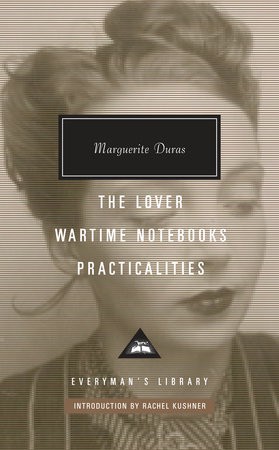
The Lover by Marguerite Duras, translated by Barbara Bray

Set in 1929 French Indochina — today, Vietnam — Duras’s slim 1986 novel is based on her own early life, an intricately constructed meditation on colonialism, familial violence, displacement, secrets and lies, and the transcendent honesty of the erotic. When the fifteen-year-old daughter of an impoverished French family meets the scion of a Chinese business empire, they begin a series of secret afternoon assignations in which their selves are laid bare in torrential mutual discovery. “And now once more they are caught together, locked together in terror, and now the terror abates again, and now they succumb to it again, amid tears, despair, and happiness.” The consequences of their affair and the impossibility of its consummation in marriage ripple across the rest of both lovers’ lives, far beyond the Mekong Delta ferry station where they first meet.

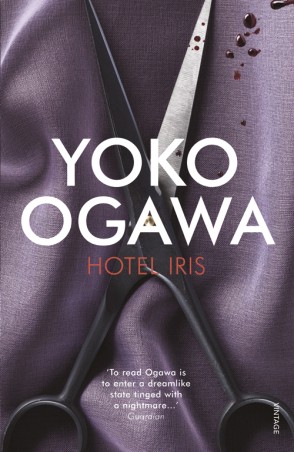
Hotel Iris by Yoko Ogawa, translated by Stephen Snyder

This compressed, affecting novella follows the seventeen-year-old protagonist Mari’s hypnotic attraction to a mysterious Russian translator whom she first encounters issuing orders to a frightened prostitute with whom he is staying at her family’s down-market seaside motel. The odd couple begin meeting for intense, consensual sessions of dominance and submission, during which Mari’s hair is cut, she is beaten, whipped, bound with rope, and her lover chokes her with a scarf — all to her mounting pleasure and increasing independence from her overbearing mother. For Mari, the pleasure of submission opens another world, a hunger “to stay wrapped in this shadow forever.”

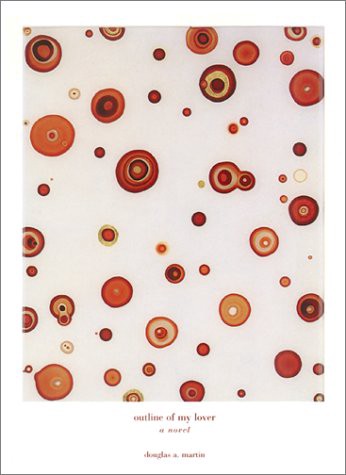
Outline Of My Lover by Douglas Martin

The first novel by a gifted magician of the hybrid form, Douglas’s debut is a dead sexy trawl through the queer universe of early 1990s Athens, Georgia. Alienated from his family and newly arrived at college, a young man finds his way into the muddy glamour of bars and music venues, seeking in a rock star an erotic savior who will redeem and make sense of the torpor and emptiness of his early life. His wish is granted, plunging him into an embodied chamber of deep feeling and the intense mirror of the beloved: “What I can get from him must be all I need.” A devastating and elemental consideration of fame, desire, and youth.

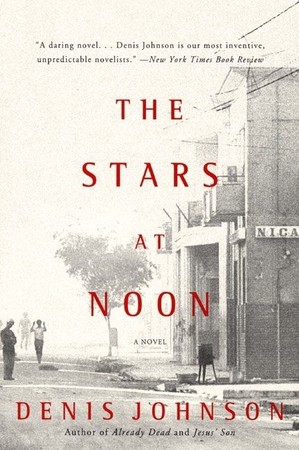
The Stars At Noon by Denis Johnson

“I was naked, but I suppose that was my armor.” Sometimes sex is currency, disaffected and transactional, but what is a laboring body to do if a sexual encounter punctures its protective carapace? This dilemma that afflicts the troubled protagonist of Johnson’s third novel, an American woman trapped in 1984 Nicaragua, who may be a journalist, spy, prostitute, or perhaps all three. The fraught landscape, in which good and evil are hopelessly intertwined, and only graft and brute self-interest seem to function, is mirrored by the cynical interiority of the novel’s unknowable heroine. When a Brit as inscrutable as she enters the picture, the narrator meets her match and is forced into sincere feeling. Johnson masterfully shows how moments of aperture become deadly liabilities in wars interior and exterior.

Suicide Blonde by Darcey Steinke

Suicide Blonde is the story of Jesse, a sexual explorer in San Francisco’s Tenderloin. In love with an emotionally distant bisexual man and employed as a caretaker for a Boschian figure named Madame Pig, Jesse seeks meaning and stimulation. Her foil is Madison, powerful and beautiful and poisonous, who makes her living granting and denying the fantasies of others. The novel features an unforgettable fisting scene that I’ve never quite been able to shake since reading it at age thirteen, and a page for page wealth of surprising, illuminating brutality and original thought about the life of the body.

One Hundred Strokes of the Brush Before Bed by Melissa Parente, translated by Lawrence Venuti

Written when the author was a teenager and published in English under the semi-anonymous name “Melissa P.” in 2003, this brief, immersive novel is styled as the diary of a fourteen-year-old Italian girl who glides in a kind of trance from her first sexual experience to increasingly debauched experiments with sadomasochism, group sex, and anonymous encounters with both men and women. Told with a lonely singularity, this is a story of hunger for experience: “I want to feel my heart melt, want to see my icy stalactites shatter and plunge into a river of passion and beauty.”

Lost Girls by Alan Moore and Melinda Gebbie

Printed in three handsomely-bound volumes, Lost Girls is a graphic novel loosely structured around a story about The Wizard of Oz’s Dorothy, Alice In Wonderland’s Alice, and Peter Pan’s Wendy encountering each other in an Austrian hotel on the eve of World War I. Sexual storytelling, discovery, and a veritable encyclopedia of hijinks ensue. Lost Girls is distinguished by its truly omnivorous approach to sexuality — no taboo is left unexplored — as well as by Gebbie’s luminous illustrations. Written over a period of sixteen years, Gebbie and Moore’s work is a true collaboration, with Gebbie’s artwork providing the narrative pushback necessary to rein in Moore’s famously verbose style. Lost Girls is a work that accomplishes Gebbie’s thoughtful initial inspiration: “When I was about 10, that was when I first started thinking about sex officially,” she says, “and I thought, ‘There must be a beautiful book somewhere, that will tell me everything I want to know, and it will be beautiful, and everything will be explained, and once I see it, I will know everything there is to know about sex.’ And of course, there was no book. There never has been a book. And I finally got a chance to do one.”

The Vanishing Princess by Jenny Diski

This powerful collection of Diski’s fearless work made her known to a much wider readership — sadly posthumously, as it was published after her untimely death from cancer in April 2016. These stories explore the interior lives of women who discover how little their wild and wondrous selves can be contained by the categories with which others define them. The realms of desire and the beloved take center stage in many of these narratives. The story “Housewife” epitomizes the magic trick Diski plays in many different registers and keys, inviting the reader into the lush and shockingly vivid sexual play between a housewife in her fifties and her clandestine lover — an arrangement salutary to the conventional husband who knows nothing of it. Styling each other “Witch” and “Witchfinder,” these lovers create a universe all their own: “ ‘Do you want more?’ you asked. And I begged for your saliva, a river of it. […] I like you mad, my demented Kentish batwitch. You are with me, in that place (in all the places) where you live in me.”

Excavation by Wendy C. Ortiz

Published by Future Tense Books in 2014, Excavation is the creative nonfiction bildungsroman of Ortiz’s girlhood, the story of her coming-of-age. Center stage is her relationship with the predatory middle school teacher who cultivates her youthful sexuality and desire for attention, and one layer of Excavation is a harrowing story of abuse, invisibility, and emotional turmoil. But the power of Ortiz’s dynamic prose refuses and refigures the tropes of the victim/perpetrator paradigm that so informs the popular understanding of stories like hers. With unflinching psychological acuity and penetrating intellect, Ortiz recreates the conflicted and vivid phenomenology of her younger self’s nascent desire — and in taking her power back remakes a genre.

What Belongs To You by Garth Greenwell

Obsessive, exact, and remarkably elegant, Greenwell’s debut novel is never less than painfully clarion in evoking the irrepressible melancholy and overwhelming ecstasy of a doomed and indelible relationship between two men, an American abroad and the young sex worker with whom he becomes preoccupied. This juxtaposition of desire and wisdom makes What Belongs To You winsomely heartbreaking: “There’s something theatrical in all our embraces, I think, as we weigh our responses against those we perceive or project; always we desire too much or not enough, and compensate accordingly.”

The Unknown University by Roberto Bolaño, translated by Laura Healy

Even the casual reader of Bolaño knows that the late Chilean was a master of sex; from the lights-out fumbling of the teenage protagonists in The Savage Detectives to the ready availability of bedroom tears and arguments of 2666, he wrote from the very heart of idiosyncratic encounter. The Unknown University, the omnibus of Bolaño’s poetry, offers straight hits of the pleasures diffused across his fiction, peeks into windows of tenderness, heat, and vivid feeling, as in “El Greco”:

Sometimes I imagine a dim-lit bedroom

A small electric stove A red curtain

smelling of old oranges

A huge mattress on the floor

A girl with long freckled legs

Face down with her eyes closed

A long-haired boy kissing her back

His erect cock lodged between her barely

lifted buttocks And dilations

A very strong smell

I also imagine the images

flowering in his head and in his nose

Wonder in the lover’s moon


Relearning How to Read in the Age of Trump

I n 2005, I was in a small, empty airport in Darjeeling, India, and wandered into a tiny bookshop that had very few books. One of the books, unbelievably, was Mein Kampf — the Mein Kampf, by the Adolf Hitler. What shocked me wasn’t that the book was one of the few books chosen to be on the shelves. I’d learned over the years how unfortunately compatible fascism is with modern Indian society. The bigger shock was that I was face to face with this book for the first time in my life.

I wondered what would happen if I pulled it off the shelf and opened it. I imagined myself in Germany in the late 1920s, reading this book and becoming indoctrinated into an ideology that would lead to my participation in genocide. Without historical hindsight, would I be able to understand and evaluate the argument Hitler was making and come out of that experience with my critical and moral faculties intact? If anyone had been looking, I probably would have left it alone, but there was no one else in the bookshop. I nervously took Mein Kampf off the shelf, opened it up to random pages, and started reading. During the few minutes that the book was in my hands, Hitler’s views on racial hierarchies were easy to find and clearly stated. I immediately wondered how Germans could have said they didn’t know what the Nazis were doing. The logic of it was right there in this book. I didn’t want to keep reading, but I think about this moment all the time: about the act of reading and what it means to a life.

Sometime before or after the 2016 election, I kept seeing articles resurface about how reading novels develops empathy. This shouldn’t surprise us. In fact, I believe it is because of this, not in spite of it, that a whole subsection of the population — the target audience of Fox News and rightwing talk radio — has been conditioned not to read, or at least not to read literature that challenges an ideology of exclusion and hate. The crisis of the Trump presidency is, in part, a crisis in the country’s reading culture: a crisis of literacy, intellectual engagement, and critical thinking. Unfortunately, it is not a crisis that only afflicts Trump’s base. It seemed that as a country, we had lost sight of how and why we read. I wondered if there was a unifying theory of reading, a way for at least a significant number of us to examine our reading habits and perhaps develop a best practice for reading in difficult times.

Trump’s election plunged me into my own reading crisis. An avid reader since adolescence, I suddenly couldn’t finish a single novel, and gave up even trying about halfway through the year. Instead I read articles that came to me through social media, articles that were meant to give us the information we needed to navigate this strange new world, but this, too, left me hollow. As we would learn later, with revelations about how much of a war zone the social media landscape became during the 2016 elections, the information we were getting through social media needed to be vetted, but vetted by whom? I teetered back and forth between unquestioning acceptance (click share!) and hypercriticism, finding in the end that I didn’t actually have the tools to evaluate the truth or authority of any given article, that I was depending too much on whether this article came from a “trusted” source like the New York Times, even knowing how fallible the New York Times has been. I was starting to feel that I had no power or free will as a reader, and I could not protect myself against the various mechanizations and manipulations that unscrupulous forces were trying to inflict through the written word.

The crisis of the Trump presidency is, in part, a crisis in the country’s reading culture: a crisis of literacy, intellectual engagement, and critical thinking.

I wondered if I had, in fact, forgotten how to read. Reading had taken on a new weight, not just for me but for others in my circle as well. What we read, how we read, what we recommended that others read, had new consequences that were amplified by social media and global politics. Suddenly reading was not just an act of personal enjoyment or edification. We learned, as a society, that reading, or not reading, has real life consequences.

When it comes to literacy and Trump’s presidency, attention has been mainly focused on his reading and writing habits. It’s generally accepted that he’s a tweeter, not a reader. Even before he was elected, he was quoted saying he made decisions based on “very little knowledge other than the knowledge I [already] had, plus the words ‘common sense,’ because I have a lot of common sense and I have a lot of business ability.” Beside him is a vice president and other members of the cabinet who seemingly read nothing but the King James Bible and are actively destroying the country’s (secular) public education system. In other words, it’s not enough for them to be functionally illiterate, to govern without the benefit of reading. They’re determined that the rest of us forget how — or never learn.

How did we get to a place where someone like Trump could be considered a legitimate candidate for president? It’s as if the entire country failed the ultimate high stakes test. I’m not one of these people who thinks reading alone can save the world, but whether we read, what we read, and most importantly, how we read does matter.

I’m not one of these people who thinks reading alone can save the world, but whether we read, what we read, and most importantly, how we read does matter.

Even before the election, this was a contentious issue. Questions of diversity, representation, and privilege were being (somewhat) debated in the literary community. After the election, the power of text to manipulate behavior, especially on social media, added a new dimension to the question of what to read, and gave us new reasons to narrow our reading choices and distrust unknown sources. When my desire to read broke down last year, it was mainly because I felt overburdened with emotional and intellectual clutter every time I tried to engage with a new book or article, for reasons that aren’t entirely clear to me. After a while, out of sheer frustration, I craved a return to some fundamental way of reading that could help me regain a nourishing relationship with literature. I began to think about myself as a student of reading again.

Until 2016, for almost 20 years I had been an elementary school teacher of mostly first and second graders. I spent most of the school day guiding children through literacy activities that were designed to be instructive and enriching. During this time, there was ongoing controversy surrounding the pedagogy of literacy learning. The process of gaining literacy, of making meaning from print, is incredibly intricate. As a classroom teacher, I observed the numerous factors that interfered with a student’s literacy development. A child could be a perfect decoder, appearing to read with fluency, but have little comprehension of what they read. Conversely, a child could comprehend high levels of text when it was read aloud, but could not remember phonetic rules with enough consistency to be able to read or comprehend a text independently. A good reading teacher learns how to identify issues that could be interfering with a child’s literacy development: lack of prior knowledge, attention, vocabulary, disruptions with receptive and expressive language, learning disabilities and other stressors in a child’s life such as hunger. Not to be overlooked is the educational trauma caused by high-stakes testing, which the National Council of Teachers of English called a “usurpation of the English Language Arts curriculum.” High-stakes standardized tests turned reading into a vulgar transaction between student and institution, and continue to rob millions of young people of any compelling reason to read.

How ‘The Remains of the Day’ Helped Me Understand Brexit and Trump

I started re-examining how, as a teacher, I used to help children construct meaning from text. This, fundamentally, is what reading is. Without meaning, without comprehension, reading has no purpose. Part of comprehension involves the context that lies outside of the text — perhaps in the author’s life, or the historical times in which the text was written, or in our own experiences or beliefs, but before that we must deal with the content of the particular thing we are reading. When I was teaching, I continually had to direct students back to the text because they were constantly veering away from it, toward their prior experiences or deeply ingrained beliefs. As adult readers, we are not much different.

I decided to revisit one of the touchstones of my reading curriculum, Questioning the Author: An Approach for Enhancing Student Engagement with Text. Although I’ve always found this title misleading, this book was an invaluable resource for teaching students how to read for meaning and fully engage with any genre of text at any level. The method is not actually about questioning the author in a critical or contextual sense but asking ourselves as readers: What is the author saying and why are they saying it in this way? It doesn’t negate a critique or personal affinity with the text, but ironically, despite the fact that the author’s role is made explicit, including the knowledge that authors are fallible, the relationship is with the text, not the author. There is much more to this as an instructional method, and for people who are curious about how it is applied in the classroom, there are informative and entertaining videos online.

But as I was re-learning this myself, I found that my approach to reading was changing quite rapidly. I realized how much, during my crisis period, I had been entering texts as a combatant or an ally, not as a reader. If my first aim was to inhabit the writer’s perspective, to assess what the writer was saying and how they were saying it, worlds opened up for me again. I had been trying to evaluate narratives and arguments I had not fully grasped, putting the cart before the horse. Once comprehension was my primary goal, or in other words, once I refused to burden myself with anything but comprehension of the text at hand, my critical skills also improved.

During my crisis period, I had been entering texts as a combatant or an ally, not as a reader.

It’s an interesting paradox to consider the author and negate the author within the same process. Until I actively tried to apply this method to my own reading, I hadn’t fully grasped that the author we question as readers is not an individual personality but an authorial entity, the creator of the content in front of us. As a writer myself, it was difficult for me to erase the persona of the writer, especially if I was reading work by writers I knew personally. I remembered how little my students cared about the lives and creative processes of our favorite authors. As much as I always thought this would interest them, it rarely did, and on the few occasions they got to meet an author, what thrilled them was a chance to discover new things about the stories and characters they loved. This purity of experience had become foreign to me. In the age of celebrity and the internet, and my own entry into the writing world, the author had become more important than the text.

The basic initiating query in Questioning the Author — “what is this author trying to say?” — became a kind of healing mantra for me. It covered a lot of ground, allowing me to stay in the moment and read with more engagement. If I found myself resisting reading something that was out of my comfort zone, it helped me to remember this mantra before I dove in. My responses to what I was reading were less murky, more grounded in what was actually on the page. My thoughts and responses were clearer, and if I judged a piece harshly in the end, I could better articulate why. I also became more adept at noticing what was missing, or what the author had intentionally or unintentionally left out.

This is an ongoing process of improving my reading practice, one I had to undertake because reading, more than anything else, has allowed me to expand my knowledge of the world beyond my immediate experiences. Reading a diverse range of material is a pathway to empathy and critical thinking, and as such, we should all strive to do it better. I wonder sometimes if there is a bullet-proof checklist for us to follow that allows us to read in the most thoughtful and intelligent way possible. I never found one as a teacher and I don’t think it exists, not in a linear way. As much as we might be able to set aside an author’s life experience as we read their work, we can’t set aside our own. How we absorb content is complicated by what we already know and believe. It takes effort, sometimes enormous effort, to overcome obstacles to understanding and embracing new material. It takes intention, and this is what Questioning the Author teaches effectively, how to read with the intention of understanding. With a world that is changing as rapidly as ours, with so much new information coming our way constantly, the intent to comprehend before we evaluate, before we click share, before we make our judgements about what is going on, could make a huge difference to how we function as a society.

How we absorb content is complicated by what we already know and believe. It takes effort, sometimes enormous effort, to overcome obstacles to understanding and embracing new material.

I don’t know what to do about all the people who refuse to read a novel or think they have nothing to learn from other people’s stories or perspectives. As a society, I don’t know how far we can move forward without solving that problem, but we can start by dealing with our own fears about reading. I know that I wasn’t alone when I wondered in 2017 if I was reading the right things for this moment. What if I was reading a lie, or being led down a wrong path? These are valid fears, but the solution is not to ask others to filter and limit our reading choices but to become adept at comprehending and evaluating content for ourselves. This can be an individual and a collective endeavor. My experience as a classroom teacher has shown me how powerful it is to construct meaning from a text through discussion with others, so my manifesto is this. Together or alone, in these times, let us read fearlessly.

8 Middle-Grade Books Every Adult Should Consider Reading in Secret

Few adults will proudly or openly admit to reading YA fiction or middle-grade books. Even being seen to be looking through the shelves of the MG section of a bookstore is slightly embarrassing if you don’t have a kid with you.

But you only have to count Harry Potter–themed weddings or Alice in Wonderland tattoos to realize that middle-grade fiction (usually aimed at 8- to 12-year-olds,) is just as engaging and enjoyable for adults as it is for its target audience.

In this post, we’re going to introduce you to eight more middle-grade books that you can secretly read this summer while loudly telling the cashier or checkout person “it’s for my niece!” (Even better: consider reading them openly and proudly and not caring what other people think.)

The Warriors series, Erin Hunter

Incredibly popular amongst children and teens, the Warriors series has been described as a Game of Thrones-style narrative, following the adventures of four clans of cats. As strange as that sounds, the series has been so successful to warrant multiple spin-off productions like audiobooks, manga editions, box sets, and “super” editions.

You’ll find all the aspects of stories you love — gripping action, well-drawn characters, intricate world-building — as well a critical acclaim and appearances on the New York Times bestsellers list!

Mercifully available on Kindle, so you can easily read all six books and no one in your local Starbucks will be any the wiser.

The Dead Fathers Club, Matt Haig

Clever and beautifully unsettling, this novel from British author Matt Haig is intended for readers of all ages. And just like another family classic, The Lion King, this book is a retelling of Shakespeare’s Hamlet, giving you an opportunity to use your English Lit degree for the first time in like, a decade.

The protagonist, Philip, is tasked with avenging his father’s murder at the suspected hands of his uncle. Sound familiar? Only this time, something’s rotten in the family pub instead of the state of Denmark.

Critically acclaimed and intellectually discussed to the point where you’ll soon forget its middle-grade roots, The Dead Fathers Club is an intelligent, thoughtful rendering of a well-known plot that is told through a child’s eyes, to the effect that you still don’t know where the story is going to turn. And on the upside, people who see you reading it in public might think it’s a pamphlet for an actual organization, and will leave you well alone.

Wonder, R. J. Palacio

Inspired by real life events, R.J. Palacio’s debut novel has given birth to both the “Choose Kind” anti-bullying movement and a film adaptation starring Julia Roberts and Owen Wilson.

Auggie Pullman is a kind-hearted 10-year-old boy with a facial abnormality. Having been homeschooled for most of his early life, his biggest challenge now lies before him: 5th grade.

Wonder is available hardcover if you feel the need to swap the dust jacket out for that of an age-appropriate Tom Clancy novel. But be warned: its moving story might leave your fellow commuters wondering why someone on the train is weeping over a copy of The Hunt for Red October.

The Clique series, Lisi Harrison

If you love Gossip Girl, then you might unknowingly be The Clique’s next big superfan. Four popular girls known as The Pretty Committee rule the roost at Octavian Country Day — until young Claire Lyons arrives from Florida to upset the status quo at their snooty prep school in Upstate New York.

Getting sucked into the complex inner workings of the Pretty Committee will be almost inevitable — the long summers between school terms bring up plenty of intricate relationships, twists, and turns. If anyone asks what you’re reading, just truthfully say, “some New York Times Bestseller” and quickly move the conversation on.

I Funny, James Patterson and Chris Grabenstein

This is the story of Jamie Grimm, a middle-schooler who wants to become the world’s greatest standup comedian despite the fact that he uses a wheelchair. Both humorous and touching, this series of books features familiar middle-grade tropes like an orphan hero who lives with an aunt, uncle, and evil cousin (hello, Harry Potter?)

The I Funny series also happens to be co-written by the best selling author of mainstream crime novels and thrillers. So, if anyone wants to know what you’re reading, you can seamlessly mention, “a James Patterson novel, it’s really good!”

After Eli, Rebecca Rupp

Young Danny creates a Book of the Dead, hoping it will make sense of his brother Eli’s death during the Iraq War. Taking down and researching details like how, when, and why people throughout history died, it prompts reflections on his own friendships and relationships.

Told through a series of flashbacks which add depth and emotion to the story, After Eli is a short, thoughtful, and poignant reflection on grief and growing up.

Be careful reading this book in public: not because of the front cover — which doesn’t look that much like kid lit — but because you will be reduced to a puddle of tears by the end. Maybe read this on the beach, from behind a massive pair of shades.

Glory Be, Augusta Scattergood

Set in 1964 Mississippi, the height of the action in Glory Be revolves around an incident at the segregated public pool. Gloriana (or Glory, as she’s known) is just about to turn twelve and recalls the story of a Southern summer she will never forget.

Based on “real-life events,” this is a story of adolescence and everything that comes with it. Glory Be is a vivid snapshot of the fight against segregation that is both personal and universal — and should be enjoyed by both children and adults. No need to hide this one!

A Long Walk to Water, Linda Sue Park

A book’s description on its Amazon page will often lead with its most impressive accolade, and the one for A Long Walk to Water certainly doesn’t hold back: ”A gripping tale of conflict and survival that has inspired millions of young readers and adults alike, with two million copies sold worldwide.”

Based on a true story, it follows two separate Sudanese children whose stories, despite taking place twenty-three years apart, end up linking together.

A fast-paced narrative that will rivet readers aged 9 to 99, this is a moving story that all can enjoy — though if you’re still self-conscious at this point, an excellent audiobook is also available!

These books are evidence that all quality books, regardless of their readers’ ages, have much in common: bold storytelling, vividly painted characters, and an ability to draw on our emotions. However you go about it — white lies, dust jack swapping, general discretion, or simply by reading them loud and proud — don’t let the target audience of these books keep you from enjoying them!

About the Author

Emmanuel Nataf is the CEO of Reedsy, a marketplace that connects authors and publishers with the world’s best editors, designers and marketers. Over 5,000 books have been produced via Reedsy since 2015.

Actually, Other People’s Dreams Are Cool

One of my earliest memories is of a nightmare. In it, I’m on a train traveling across a wide desert expanse under a big, cloudless sky. This train car is almost entirely empty, and I’m alone, staring out the window at the sunny cliffs in the distance, their golden-brown faces regal in the light. Amidst all the beauty, a giant, winged demon emerges. It swoops across the open plain and flies past my window, its gaping maw emitting a piercing scream before it disappears. In fright, I bend over and vomit up undigested peas and carrots; then I wake up.

What strikes me most about the nightmare in retrospect is not the demon but the desert landscape. I must’ve been five or six when I had this dream: young enough that I remember waking up in my childhood bed, screaming for my mother, and far too young as a resident of suburban Northern Virginia to know what the desert looks like or to have ever traveled by train. And so I’m left to wonder: where did my brain find these images? Had I, while waiting in a doctor’s office, seen a picture of the desert or a Georgia O’Keefe painting? Did I start watching Tales from the Crypt as a small child? I find this hard to believe, given that my television viewing at age five was limited pretty exclusively to Little Bear and The New Adventures of Winnie the Pooh. And yet somehow my brain managed to transport me to a landscape that, to this day, I have never actually visited.

My lifelong fascination with dreams began there, in the mystery of that desert, and has continued since then, spilling over into my waking and writing lives. This fascination is not truly analytical in nature, though I have turned on rare occasions to Freud and dream interpretation manuals. (Did you know that being bitten by an alligator in a dream symbolizes treachery on the part of a loved one, particularly a family member?) Mostly, it manifests itself in a small dream journal, in which I occasionally remember to record the more vivid dreams and nightmares my brain conjures. I rarely share my dreams, for fear that I will become That Person at the party, but I’m always interested in hearing about other people’s dreams. Recently, I picked up Insomniac Dreams: Experiments with Time by Vladimir Nabokov, edited by Gennady Barabtarlo, and was enthralled by the rich depth of imagery in his dreams, as well as in his wife’s. In one, she dreams of a granite hotel where the staff rings a bell every time a large white caterpillar crawls over the furniture. In another, he comes across a box of butterflies and only after trying to squeeze the last living butterfly to death realizes that there’s a man sitting next to him, preparing a slide for a microscope. This delayed awareness of the other’s presence is common in Nabokov’s dreams, as in his fiction. In Lolita, narrator Humbert Humbert describes a dream in which he’s riding horses with the title character and her mother, only to discover there is no horse underneath his bowed legs — “one of those little omissions due to the absentmindedness of the dream agent.”

I rarely share my dreams, for fear that I will become That Person at the party, but I’m always interested in hearing about other people’s dreams.

This “dream agent” is Humbert’s invention, the subconscious factor he imagines controls his sleeping visions. That’s one way to explain the features of dreams that are out of step with the real world, the appearances and disappearances and strange juxtapositions. Another is night-time logic.

“Night-time logic” is a term attributed to author Howard Waldrop, who distinguishes between the daytime logic that governs the waking or “real” world and the more fantastical—but no less internally consistent—night-time logic that governs his writing. Waldrop is a big figure in the world of speculative literature, and he won the Nebula Award and World Fantasy Award for his novelette “The Ugly Chickens,” first published in 1980 in Universe 10. In the story, Paul Linberl, a graduate student in ornithology at the University of Texas, meets a woman who claims that her family raised dodo birds in Northern Mississippi in the 1920s. Paul naturally finds this fascinating and impossible and embarks on a wild dodo chase in search of the extinct bird. While in pursuit of the dodo, he relates a vision he used to have before he struck out on this quest. In his vision, he’s in the Hague; the Dutch royal family is eating dinner; and, as Pachelbel’s Canon in D plays in the background, four dodos enter the dance floor, their awkward bodies suddenly graceful as they move and sway. Reading this, I cannot help but recall the dwarf from Twin Peaks: how he dances stutteringly in the red room of Dale Cooper’s dream (which, he later learns, he shared with Laura Palmer, who dreamed of the red room the night before she was murdered). Like the dodo birds dancing in the Hague, the dwarf is part of a premonitory vision — a moment in which both Paul Linberl and Dale Cooper are offered a window into the future, only to forget or misinterpret that vision upon their return to the waking world.

In order to reconstruct the insight he had in his dream, Cooper has to first understand the night-time logic that underpins it. That means unlocking a series of clues. When Laura says, in the dream, “Sometimes my arms bend back,” she’s referring to the way her arms are bound with twine. And when the dwarf says, “That gum you like is going to come back in style,” he’s referring to the gum that the aged waiter hands to Leland Palmer seconds before Cooper solves Laura’s murder. This is night-time logic at work: seeming non sequiturs existing in a world where they’re not only accepted but later proven essential to the functioning of the world itself.

This is night-time logic at work: seeming non sequiturs existing in a world where they’re not only accepted but later proven essential to the functioning of the world itself.

When I first watched the original series of Twin Peaks, I was in college and did not yet know the term night-time logic. That came later, while studying the works of Kelly Link. I was introduced to Link’s work in graduate school, in a science fiction workshop led by Kevin Brockmeier at the Iowa Writers’ Workshop. We read “Catskin” from Magic for Beginners, the first book of Link’s I read. Like Cooper’s visions in Twin Peaks, much of Kelly Link’s work operates on the level of night-time logic. In stories like “The Faery Handbag” and “The Hortlak,” she introduces readers to worlds where entire villages can be found Mary Poppins-style inside an old woman’s handbag and where zombies drift in and out of convenience stores, never bothering to attack the cashiers. It’s a testament to Link’s skill as a writer that readers never once question the central conceits of her stories. She does this through deft and deceptively simple world building. Take this passage from “The Hortlak” for example:

The zombies came in, and he was polite to them, and failed to understand what they wanted, and sometimes real people came in and bought candy or cigarettes or beer. The zombies were never around when the real people were around, and Charley never showed up when the zombies were there.

At first glance, the passage seems merely utilitarian: the narrator describes a typical night at All-Night Convenience, where the main character, Eric, works as a cashier. In reality, Link is using a moment of exposition to establish some of the fundamental rules of the story: 1) Not everyone in this world is a zombie, 2) the zombies are not particularly violent or interested in brains, 3) other than Eric, humans are never in the All-Night Convenience with the zombies, 4) Charley is never there when the zombies are there, ergo 5) Charley is not a zombie. By presenting these otherwise strange rules as part of the fabric of Eric’s everyday life, Link makes it possible for the reader to suspend disbelief and accept the story on its own terms, according to its own logic.

Stone Animals

When considering the works of Kelly Link and David Lynch in tandem, it becomes clear that the artists are employing night-time logic to two distinct but not entirely dissimilar ends. For Lynch, night-time logic is a tool that he uses to chip away at daytime logic — that is, at the surface image of perfection and normalcy that Twin Peaks the town likes to project. Through a combination of excellent detective work and unusual deductive techniques, Dale Cooper discovers the darkness, madness, and depravity lurking underneath that illusion of perfection, thus uncovering the truth. One could argue that this is the larger goal of Lynch’s oeuvre: to undercut that normalcy, to take the perfect little towns of Twin Peaks and Blue Velvet’s Lumberton and reveal their underbellies. Kelly Link, on the other hand, does not assume normalcy as a baseline, but rather uses night-time logic to establish a new normal: another fantastical world wherein the characters we meet and the events that take place reflect back on our reality, thus teaching us something about what it means to be human. Ultimately, both artists are interested in exploring the subterranean desires that live under the surface of our daily lives, but the mediums through which they do this and the manner in which they explore those desires prove different. For David Lynch fans looking for a way into Kelly Link’s work, I suggest “Pretty Monsters.” For Kelly Link fans interested in David Lynch, I suggest Mulholland Drive.

Studying night-time logic has not alleviated my night terrors (on the contrary, the 2017 revival of Twin Peaks inspired some of my most vivid and symbolic dreams to date), but it has changed the way I think about nightmares in my waking life. Instead of viewing them as visceral experiences of terror or revulsion, I instead think of them as opportunities: narrative filters, like Link’s stories and Lynch’s films, through which I am able to examine the world around me, as well as the inner workings of my own subconscious mind. Like Nabokov with his dream records, I write down my nightmares not to emphasize their power but to understand the linkages between the dream world and the real world and, from there, enhance my own creative practice. This act has opened me up to a wealth of narrative possibilities and coping mechanisms that simply were not available to me as a little girl dreaming of demons. Back then, I felt alone in my terror. Now, as an adult, I know that dreams are not just the bewildering byproducts of our subconscious minds. They are fuel for art.

Boy Meets Girl Without All the Bullshit

Existentialists Sing Sad Songs

Boy meets girl, boy loses girl, boy journeys into the underworld on a rescue mission and girl follows boy back to the world of life, but rules designed to exploit human proclivities for “connection” with idealized loved ones cause complications, so generally this is where a cranky local god would intervene or someone would turn into a tree but it doesn’t happen so girl follows boy, except not quite. Boy sings sad song.

Boy meets girl, except not quite. Boy meets boy and/or girl, and/or girl meets girl and/or boy, except not quite. Boys meet boys and girls, girls meet boys and girls, everybody loses everybody because death is a terrifying inevitability though luckily there’s a happy ending in many forms of highly glossy printed/recorded/filmed entertainment. In a fluffy, white, nominally Christian heaven no one ever sings sad songs, and character actors get their wings.

Boy meets/loses girl he never actually “had,” girl meets both girl and boy and loses both but second girl meets and wins heart of other boy, other boy meets/loses yet another girl and after several weeks of depression-related insomnia and emotional lability decides to “pull a Leonard Cohen,” as he tells friends, and disappear to a Buddhist monastery in the foothills of metro Los Angeles; depressed boy’s current whereabouts are still unknown but a cryptic postcard to a friend from boy reports he has “found love, but it’s not what I had thought” and no one knows what he means or cares much. People seeking closure sing sad songs.

Boy meets girl, boy wins girl, boy loses girl, boy expects to win girl back, boy fails to do so, girl eventually becomes an acclaimed, award-winning actress in elliptical indie films that boy swears never to watch but watches anyway and then expects himself to feel wounded by but is surprised to find he does not. Successful actor’s high school classmates stuck in unfulfilling jobs and prone to romanticizing the film industry sing sad songs.

Boy meets girl, boy and girl fall in love, both brace for complications but things are okay and everyone lives happily ever after, including neighbors and passersby. Acquaintances of boy and girl who aren’t really buying it sing sad songs and sometimes engage in trolling on social media.

Boy meets and loves girl but girl is in love with other girl so boy embarks on elaborate mission to drive wedge of doubt and distrust between girls, girls lose and then, after hijinks, win each other back while boy is involved in bus accident leading to brain injury rendering him unable to love in the romantic sense of the word but endowed with both supernal empathy and psychic ability he uses to game the stock market and fund humanitarian charities; almost everybody lives happily ever after for a while. People involved in bus accidents (ordinarily) sing sad songs and fend off ambulance-chasers, ambulance-chasers stifle any remaining embers of shame and blame socialism and safety standards for decline in business; hijinks ensue and ambulance-chasers sing sad songs that become unlikely but modest Soundcloud rap hits.

Boy meets girl who meets other boy who meets two girls, those girls meet three other boys plus the aforementioned boys and girls and a plastic replica of a Greek statue of Dionysus that can sometimes talk or seem to talk when certain parties are under the influence of certain pharmaceuticals, statue persuades entire coterie of hesitant and confused romantics to visit mysterious island off the coast of Greece where the statue says all will become “clear” but widespread protests over collapse of financial systems in Greece during coterie’s visit hinders quest because island proves inaccessible so everyone complains about “wasting” a vacation and things go downhill as coterie of itchily lovelorn tourists depart for the south of France, which is deemed lovely but not really magical enough to be worth it and consensus is reached that nobody ever really knows what they want or why they want it. Tourists with maxed-out credit cards, persons working subsistence-wage jobs in the tourism industry, and scapegoated public officials sing sad songs.

Boy meets and loses girl but wins back heart of girl, so to speak, and girl and boy begin to entertain nagging anxieties re: what winning someone’s heart means and at what cost and why it always seems to be effort on culturally-agentic boy’s part while girl is mere object so boy and girl conspire for girl to meet/lose second boy and win his heart, but after girl locates second boy, original couple’s well-intentioned but not-well-thought-out plan to ensure loss of boy involving another boy/girl duo hit snag when girl fails to “lose” boy well/completely enough for subsequent heart-winning to be meaningful, intervention is held in which this is explained to patient, generous-in-love boy whose heart was sociocultural test case but much to the consternation of everyone (esp. original boy losing/winning girl and boy half of hired girl/boy couple, whose heart was (accidentally) won by conspiring original girl and ends up losing hired girl) when experimental and plausibly genderfluid boy (no one asks) is informed of heart-winning experiment he doesn’t really mind because of agreement re: basic premise of test regarding gender agency, boy then gives flowery speech re: how a human heart can be available to more than one person and duality is also a social construct, hired/split boy and girl are hella pissed at original boy and girl, hijinks ensue that cause lingering stress beneath original boy and girl’s otherwise happy life together and girl eventually locates experimental boy after sudden death of original boy who “won” her heart, discovers him living in a country villa in the Mexican countryside, happily involved in complex polyamorous relationship he invites grief-stricken but conflicted girl to join; girl declines more out of wanting to save face than out of being weirded out, etc. People overly invested in the allure they hold for others, the power of individual vs. social agency, and how that power/allure can be manipulated sing sad songs, as do people who suffer aneurysms while feeding Mr. Fluff on a cold Tuesday morning before another long day of work.

Boy and girl meet, fall in love, lose/win each other, live happily ever after for a while despite thankless careers in which boy and girl are trapped in order to provide for their three children, two of whom are perfectly nice, but lead both boy and girl to begin to question not just who or what they are or were in love with but the nature and meaning of love itself relative to the formless void of existence; family relocates to remote village in Wales, mean child is maimed by rogue goat, everyone expects to (re)discover the (restorative) power of love in care for maimed child (who recovers but is still kind of a jerk) but fail to do so, boy and girl both disappear separately and without explanation, leaving two nice kids and a jerk alone in remote village to face ambiguous future of unguided, puberty-complicated maturation and eventually launch a successful online marketing consultancy firm selling harvested data on the side; as adults, they are wary of romance (and goats). Existentialists posing as fishing industry workers in a remote village sing sad songs consisting of sea shanty melodies overlain with text borrowed from the work of Victor Frankl, resulting in a New York Times trend piece on existential sea shanties.

Girl meets/loves suspension bridge, discovers she can marry bridge and, with consent of bridge, does so, everyone lives/exists in contentment for a pretty long time even after girl loses job as Elvira impersonator when Elvira-themed restaurant goes under. People (such as evangelical Christians or comedians looking for cheap jokes) easily rankled by the plausibility of the non-normative sing sad songs and/or make cheap jokes.

Girl meets boy, girl and boy fall in love, boy and girl give up because love is failure and failure is a magnificent but terrifying storm headed in our direction that will surely destroy all we know and hold dear but leave us alive to carry the burden of our lives’ erasures across dark oceans of lifespans, except not quite, because existence demands a certain amount of pragmatism from all but the most untouchably wealthy, who sing songs they believe to be sad but are mostly more redolent of a kind of theatricalized ennui. We should give up, according to the latest statistics, except we never do, not quite.

About the Author

After a weird, boring detour in the southwest and a weird, boring detour in the sciences, Simon Henry Stein has recently returned to writing and composing and currently lives in the midwest.

“Existentialists Sing Sad Songs” is published here by permission of the author, Simon Henry Stein. Copyright © Simon Henry Stein 2018. All rights reserved.

A Reading List About Small Towns Where Everyone Has Something To Hide

Before writing Reservoir 13 and The Reservoir Tapes, most of my fiction had been set in big cities, where the idea of community is somewhat amorphous and the edges of anyone’s territory are blurred and unclear. Starting work on a project set in a small rural town, I realised not only what pleasures this setting offers the writer — a defined network of characters, a knowable landscape, a community of shared knowledge — but also that much of my own best-loved reading has also shared this small-town setting.

Purchase the book

American fiction is pretty much obsessed with small towns and gravel roads, of course; but Irish and Scandinavian fiction also seems repeatedly drawn back to the small community. These are places of gossip, neighbourly surveillance, and known family histories, all of which makes for good storytelling.

Small communities are also comprehendable: the anthropologist Robin Dunbar has suggested 150 as the number of people any one human can maintain genuine social connection with (although he was writing before Twitter, so), and the cast of characters in these small town novels — whether named or implied — often seems to hover around that number. These are ‘knowable communities’, as Raymond Williams puts it: knowable for the reader, and knowable for the writer.

Plainsong by Kent Haruf

Is it still possible to describe Kent Haruf as under-read, or under-appreciated? He still doesn’t seem to be a household name, but he does at least seem to be credited, regularly, as a master craftsperson of this school of writing: not minimal, but plain, and beautiful. In the book, eight disparate characters in the small town of Holt, Colorado experience profound change over the course of one year.

Out Stealing Horses by Per Petterson

Apparently the story of a city man retreating to a small Norwegian village and trying to fit in, Petterson’s book manages to become as much about the shadow of the second world war and the rupturing of old certainties as it is about a man pretending to know how to chop wood.

The Brief History of a Small-Town Deli

The Iron Age by Arja Kajermo, illustrations by Susanna Kajermo Torner

I sometimes suspect I have some Scandinavian genes mixed in with my Scottish and English ones; I can’t get enough of stories about wooden cabins and deep forests and frozen lakes. Arja Kajermo’s novel is memoir-like in its description of a childhood, barely a generation away, where not knowing how to chop wood meant death rather than social shame.

Housekeeping by Marilynne Robinson

The title of this reading list is ‘small towns where everybody has something to hide’, and although I guess I feel like that applies to all towns and all people and especially all the interesting stories — since without having things to hide, how do we get through life? — Marilynne Robinson’s haunting debut novel about two sisters who are raised by a succession of female relatives in a small town in Idaho probably ticks the ‘hiding things’ box more than most.

Sing, Unburied, Sing by Jesmyn Ward

Set not so much in a small town as a small family, I’ve included Jesmyn Ward’s searing novel here for all the hidden things it brings to the surface: the brutal history of America, and the broken bodies on which all those charming small towns are built. The concurrence she creates between plantation and prison is devastatingly vivid, as is the way she makes clear that these hidden things have been there in plain sight all along.

How Jesmyn Ward Brings Writing to Life

That They May Face the Rising Sun by John McGahern

This was the novel that made me want to change the way I was writing, much earlier in my career, and the novel that I came back to when I started working on Reservoir 13 and The Reservoir Tapes. It’s a classic of small town Irish literature, and McGahern’s masterpiece: one small community, scattered around a lake, one year, a lifetime of stories told with ringing simplicity.

The End of Vandalism, Hunts in Dreams, Pacific by Tom Drury

This, the Grouse County trilogy of novels written by Tom Drury over a twenty year period, is the work I keep coming back to when I want to push myself to write better: to find more nuances for my characters, to trace more carefully their detailed connections, to remember that all lives are full of humour, somewhere. I am in awe of what Drury has achieved in these books, and have been nagging people to read them for years. I don’t know what you’re waiting for.

About the Author

Jon McGregor is the author of four novels and two story collections. He is the winner of the International Dublin Literary Award, the Costa Novel Award, the Betty Trask Prize, the Somerset Maugham Award, and the American Academy of Arts and Letters E. M. Forster Award, and has been long-listed three times for the Man Booker Prize, most recently in 2017 for Reservoir 13. He is professor of creative writing at the University of Nottingham, England, where he edits The Letters Page, a literary journal in letters.

Brooklyn Literary Spaces That Have Survived Gentrification

The Brooklyn Letters project is a series of oral histories of literary Brooklyn from 1999 to 2009, presented by Electric Literature with support from the New York City Department of Cultural Affairs.

This is the third installment of Brooklyn Letters. You can read earlier oral histories here.

In order for history to be recorded it also needs to be preserved: in photos, through oral traditions, in letters, or through a continued existence. Sweeping changes don’t totally eradicate the past, but without records we can easily lose those memories. Gentrification affects marginalized and low-income communities hard, but our communities are also pushing back by preserving the past, or at least its echoes — from archives to events to buildings, like the Midland Malls (erected in 1907) welcoming citizens into Jamaica Estates or the still-standing row houses in BedStuy. The spirit of spaces both commercial and residential are upheld by individuals, new organizations, and volunteers who hold fast to their connection to our lineage and our voices.

The continuation of this portion of Brooklyn Letters focuses on spaces surviving (with your help) in Brooklyn. These spaces include the remnants of the all-Black town of Weeksville, whose mission ties into literacy; the Lesbian History Archives preserving feminist and LGBTQ+ history; PoC-owned eateries with food that instills a real feeling of home for Asian/Pacific Islanders; and the public spaces that have encouraged writers to find their voice. These are the heartening stories and spaces that continue to exist, continue to thrive, and continue to need our support.


Bridgett M. Davis [author of Into the Go-Slow & The World According to Fannie Davis]: Weeksville Heritage Center is located in Crown Heights. Weeksville was the first free African American community in Brooklyn. And one of the first free Black museums in the country like Seneca Gulge. At its height they had 400 or 500 families that lived in this area that we now call Crown Heights, Buffalo Avenue. They were, as you would imagine, free Blacks and recently enslaved runaway Blacks who found freedom, who knew to come to this community and be a part of it. It was founded by a man named James Weeks, that’s how they got their community name Weeksville. And it had a church, it had its own school, and it had its own newspapers that were thriving. They could vote because they had land, that was the law in New York — to have a certain amount of land if you were to vote. So that was the thinking behind pulling together this community and bringing people in, and convincing them to purchase plots, etcetera. Believe it or not gentrification are what ultimately caused the community to dissolve and not be as strong. And eventually sort of became less concentrated with African Americans. So into the early 20th century it became less and less of an established community. Fast forward, 50 years ago, some Pratt [Institute] architectural students actually discovered the four original houses.

Hugh Ryan [author of When Brooklyn Was Queer]: The Lesbian Herstory Archives are super important and they’ve managed to stay open, welcoming, and maintain some of that older Brooklyn vibe even as the years pass. They started in Manhattan and moved to the Slope around… I wanna say the late ’90s but I might be wrong. They were super helpful with a number of things, but particularly they have the papers andephemera of a founding member named Mabel Hampton, along with 20-plus or so hours of interviews done with her by the founders of the LHA. She was a Black lesbian dancer and domestic worker, who got her start on the stage (and as a lesbian) at Coney Island in 1920. The interviews with her are incredible, and they offer really rare insight into the world of queer women, Black and white, in NYC between 1920–1980 or so. They also have a lot of random things that I used: a huge library of books, lots of what they call “subject files,” which are basically clippings on different topics, and they’re all volunteer. They have a live-in archivist, and they give you tea when you come over! It feels welcoming.

Naima Coster [author of Halsey Street]: For me, Brooklyn was the place of my coming of age and really starting to understand myself as a writer while I was a girl and then a young woman. So, I wasn’t plugged in during the time that I lived in Fort Greene to any kind of adult literary scene. The places that were really valuable for my formation were places like the Brooklyn Public Library on Washington Avenue in Clinton Hill. And then also Fort Greene Park, which is a park in the neighborhood I grew up in. Which has a rich literary history of writers that I was aware of as a child. So I knew Richard Wright in Fort Greene Park. I knew Walt Whitman — even though I didn’t know who he was — was a figure important in the founding of the park and who the public housing projects across the park were named after.

(Hunter Fly Houses, courtesy of Weeksville Heritage Center)

Davis: This is the 50th anniversary of the rediscovery of those [Weeksville] houses. Three of them are [still around]. One burned. Three of them are still there and one of the things they do is they offer tours of the regular houses. They sit right along the road that now faces this beautiful new structure. They’re right next to Kingsborough Housing Projects. The headquarters was in one of the houses for years. For many years. For the first executive director in attempting to get these houses preserved and to create a kind of real sort of community effort to help people understand their history, and to build programming around it etc. They are truly the neighborhood. They are truly in Central Brooklyn. So the mission — there are many things that are important for this center to do — but it’s really trying to create a contemporary thrust that’s based on the original principles the community was founded on.

Coster: I also knew that Fort Greene Park has a different visibility culturally in Brooklyn because of film, because of music — thinking about Spike Lee. And so for me, the park, although it was a place where I played as a girl, also felt like an important site of cultural history in Brooklyn and in stages of production. I felt very aware of that as a kid, that the park in Brooklyn was a place that was known and was seen in the culture. I think that kind of created an important sense that if someone is living in the neighborhood, that creative inheritance was mine and open to me.

I felt very aware as a kid that Fort Greene Park was a place that was known and was seen in the culture.

Lisa Ko [author of The Leavers]: Mountain Provence is a sanctuary. I really didn’t need to live in [Williamsburg] with four thousand bars when I didn’t even drink. So Mountain Provence opened maybe early on from when we came here, but my partner found out about it because a friend of his in the Filipino community was doing an event here, a reading or something. It felt really nice to see — since both our families were from the Philippines — to see a Filipino owned cafe. It is, it is really very motherly, and they also use family recipes in their food. I think that for that feeling for me living as Asian-Americans with family in the Philippines in a primarily White neighborhood, it felt really familiar. The owner’s dad would often be here too.

Coster: The Clinton Hill Branch of the Brooklyn Public Library on Washington Avenue, it’s a place I spent a lot of time just around books and borrowing books where I had unlimited access to books. It was just down the street from my elementary school, PS 11 on Waverly Avenue. And it was a big part of my formation as a reader just to have access to those books. And unlimited access because they were free. At that time there was such a strong connection between the school and the library.

Ryan: My go-tos are always the libraries. I use them everywhere as places to work and I do a lot of research in them. [The Brooklyn Public Library] is great. Especially on a hot day where you can’t find wifi, a place to plug in, or a bathroom anywhere. I also use the Brooklyn Historical Society, especially when I’m doing Brooklyn-based research.

Davis: And so Rob [Fields] as executive director is all about figuring out all kinds of ways, mostly through programming and events and also through partnerships and through liaisons and through opening the doors for the community can have resources, etcetera. There’s just a lot of things that are at play. It’s in a way, Brooklyn’s biggest secret because whenever someone enters they go “What? I had no idea.” That’s what everyone says when they arrive. But I like that larger vision of: What does it mean to bring a literary sensibility and presence to a place in a space that’s not traditionally used to it on a consistent basis?

Ko: I love the Greenwood Cemetery. I live near it now. It’s one of my favorite spaces in New York. I jokingly awarded myself a writing residency there one year when I got rejected from everywhere I applied to. I decided I would be the writer in residence at Greenwood Cemetery. They have a lot of benches, and there are these really beautiful mausoleum type things for the very, very wealthy. You can’t go into them, but they have these almost like porches, and some of these have these benches that are meant to sit on, so you can sit there. They have two or three lakes with benches around them. There’s a lot of open space. I feel like in the city open space is really at a premium. It’s really hard to find somewhere to just sit, read, write, and be quiet. It’s a nice spot, especially on the weekdays when you have an afternoon free or have a flexible schedule. I would go there and not see anybody, which is kind of creepy. You would be sitting there, and you’d look up and realize, “I’m surrounded by ten thousand dead people, and I’m the only person alive.”

I love Greenwood Cemetery. I jokingly awarded myself a writing residency there one year when I got rejected from everywhere I applied to.

Coster: Another site that was important me is called Outpost Cafe. It might be called Outpost Cafe & Bar on Fulton Street. I’m not quite sure when it opened, it was around after I finished college and came back to Brooklyn. And it’s a place I did a lot of writing while I was living in BedStuy. And it definitely had the kind of aesthetic of new Brooklyn. Exposed brick and really nice fair trade coffee and a garden in the back. In 2011, they hosted a cool event for me that I think was my first event really as a writer. I was in conversation with community residents who came with a visual artist. It was after I had published a piece on gentrification on Fort Greene in The New York Times called “When Brooklyn Was Mine” and Outpost reached out to me and said, “Hey can we host a conversation with you and with a visual artist and local community leaders?” And I said “yes, let’s do that.” And it was sort of my first event as a writer though I didn’t have a book at the time. I was only 24, 25. But it was great! That the place I had gone and kind of felt ambivalent about but enjoyed the coffee, and enjoyed being there hosted this really conversation that brought different bulks and when you do events you never know who’s gonna show up. But there was this really great range of folks in terms of age and in terms of race and ethnicity. It was great to be a part of that conversation. And I know that they also hosted music, but I’m not sure how many other literary events they did.

Ryan: I use the main BPL branch a lot because of the Brooklyn collection, but I also use my local, which is called the Saratoga Library Branch, I believe. It’s been very helpful in certain ways. They have an incredible library of Brooklyn books, things you can’t find elsewhere. And incredible photos too. But they’re very small and don’t have a lot of staffing. So it can be hard sometimes. But their main library space is a great location to work in. I also think, just being a writer and not having much money, I’m always looking for spaces that are free.

Davis: There were always different efforts over the years to do things around writing. But it was like let’s try to really create something more formal and consistent because Weeksville’s history traditionally given what they were, they were all about literacy. They had people who like I said were runaway slaves, so you can see they still have facsimiles of these things and they’ve blown them up and they’re in the lobby. There’s a page from their original newspaper. Some of it is just the alphabet, printed to help people learn to read. And meanwhile you have one of the most prominent African American journalists who actually lived in the community, we had all kind of people: tradesman, teachers, typical segregated Black people. And in their case self-segregated. So it felt like something we could do for ourselves and protect ourselves. I feel like what we’re doing is a direct sort of temporary model of where Weeksville began.

Brooklyn Letters is supported by a grant from the New York City Department of Cultural Affairs.