9 Books to Expand Your Idea of What Feminism Looks Like

I was hesitant to call myself a feminist for many years because of the archaic and conservative way my elders, and even my contemporaries, seemed to define the word. As with so many things in life, identifying oneself as feminist carries a lot of expectations: expectations on how to act, how to be, what solitary viewpoint should be held as the ideal for the pursuance of women’s rights. In my circles, feminism was a term thrown around as a diss or as an outmoded belief, connecting me with others in what sometimes felt like shallow ways. To some, it meant “ally”; to others it meant “scapegoat.”

In our continuing conversations about the problematic notions of the gender binary and the ongoing issues of the patriarchy, I believe more and more that we’re starting to comprehend that being for equality and equity means looking within as well as outside our lives. With this in mind, I considered more recently published books that speak to feminism in various ways—be it obliquely, directly, or symbolically — all necessary contexts when we consider the levels of expectation attached to the term. These titles by women explore the expectation of who we are to others. Yet they also interrogate expectation of the idea of “womanhood” in the realm of patriarchal structures, be they in our individual mindset and from society as a whole. How are women’s values upheld, if at all? And where do marginalized identities fit into these notions of feminism? Over time, I realized to be feminist is not a singular concept, and these titles expand on that.

What It Means When a Man Falls from the Sky by Lesley Nneka Arimah

What It Means When A Man Falls from the Sky by Lesley Nneka Arimah

Arimah’s story collection starts off with a literal bang in the first story “The Future Looks Good.” The 5 Under 35 notable’s debut weaves in elements of the fantastical and speculative with women of all ages at the helm. Women are witnesses to a world they do not understand, victims of a world that doesn’t understand or care about them, and they are consistent fighters through and through. As daughters try to understand and be loved by mothers; as parents’ aim to protect their youth; as communities weigh in, sometimes wrongly, on decisions without knowing the whole truth, each story centers issues women face head on when showing how the female body is undervalued and often taken. Arimah’s stories give readers a panoramic view of locales and people and at the same time reveals the issues of male dominance, which results in a disdain for the system, not necessarily the people.

Libro.fm | Bad Feminist Audiobook

Bad Feminist by Roxane Gay

Dr. Gay’s first essay collection became a bestseller fairly quickly. Bad Feminist encourages an introspective conversation on the multitude of definitions of femininity through anecdotes, personal analyses, and cultural commentary. When it comes to feminism some folks have a stringent definition, and Gay speaks to that openly and honestly, with humor and consideration that is her trademark. What does it mean to be a feminist? Why do some, like I did, shy away from the word and others embrace it though vilify those who do not fulfill their expectations? Bad Feminist never loses sight of a desire to know how the world works, how it works against certain groups, and what is expected of them.

The Right Novels to Read in Every Life Crisis - Electric Literature

An American Marriage by Tayari Jones

An American Marriage is the latest bestselling Oprah Book Club pick and, at its heart, Jones’s latest holds a mirror up to readers of all backgrounds to push back our own expectations as we celebrate a woman putting herself and her work first. This is not to anyone’s detriment, but at her own necessity. For one of the main characters, Celestial, the “rightness” of her pursuit by not waiting, in the capacity of wife but available in all other ways, on her wrongly incarcerated husband Roy is called into question. What is interesting, and something I had to consider myself, is why we as readers may expect this from Celestial. Once again, expectation becomes a core theme for female identity. When we talk of feminism, or the pushback against feminism, falling in line to support men at the suffering of the self becomes a requirement of female bodies. Broaching that topic directly is why An American Marriage becomes a key tome in this larger discussion, not just for women but for Black women.

Sister Outsider by Audre Lorde

Lorde’s Sister Outsider is a literal testament to the need for society and women, including white women, to bear witness and engage in a real exchange on the problems facing female communities. (This includes marginalized communities that are Black women/PoC and lesbian/queer identifying.) “Racist feminism” (aka white feminism) is a problem when the expectation is we are unified simply because we share the same organs that categorize us as female. As Lorde says, this assumption does not honor or even interrogate inherent oppression Black women face versus that of white women. As a Black queer woman, Lorde’s work is not simply a testament, but a truth one holds close and has become required reading to understand feminism at it’s core. It is not the sole tome on this topic, yet there’s a reason it’s so often referenced thanks to the blunt and compassionate way Lorde presents our humanity as a woman, as a mother, and as an artist.

9 Eerie Ghost Stories - Electric Literature

Her Body and Other Parties by Carmen Maria Machado

National Book Award finalist Machado remains outspoken on the issues of the patriarchy and how patriarchal power invades much of our everyday consciousness. The stories in her bestselling debut collection showcase this in speculative ways and real ones—most notably in her first story “The Husband Stitch” and “Difficult at Parties.” In “Parties,” the invasion of the female body doesn’t focus on brutality, but on the inability for the male consciousness to understand the trials and put upon nature of expectation for the female body. There’s a consistency of women being beckoned to, and thus giving in, for “the common good” because this is what’s expected. Machado’s stories illuminate a truth of what may not always be sadistic, but remains inhumane.

Every Day Is a Good Day: Reflections by Contemporary Indigenous Women edited by Wilma Mankiller

As author Louise Erdrich says in her introduction, Every Day Is a Good Day “is a touchstone book… a companion book filled with the struggles of Native women… an honest book resonating with humor and survival strategy.” Each chapter compiles stories from Native women under various themes that don’t only center womanhood, though womanhood is never lost in the stories. Their vignettes showcase individual experience and the longing for us all to be better people in recognizing our uniqueness as well as our similarities. It’s in this vein that an ongoing advocacy for women, and Native women’s rights, are at the forefront of creating empathy for this path. Even in the chapter “Womanhood” women’s rights advocates mentioned they consider their work “human rights” because it betters us all to recognize the inherent discrimination facing those of other cultures and genders.

Cannibal by Safiya Sinclair

Whiting Award winner Sinclair’s poetry collection has so many wonderful and critical variations on the perception of the female body, the fear of it and the livelihood. In poems like “How to be a more interesting woman: A polite guide to the poetess,” Sinclair’s mastery of set-up and take-down recognizes expectation and shows what a woman can really do. From the biblical Eve to the literal considerations of “good hair,” the symbolism of culture, body, and faith interrogate so much of expectation and self you come away thinking hard on how we look at our bodies and others.

Betty Before X by Ilyasah Shabazz with Renée Watson

Betty Before X is one of the few titles that give a glimpse into the life of Betty Shabazz. This collaboration between Betty’s daughter Ilyasah and award-winning author Watson focuses on her childhood and the evolution of a notable figure in Civil Rights. Readers not only see the world through young Betty’s eyes, but through the work of Black women, which was pivotal. Betty Before X reflects the power of Black consumers through the Housewives League of Detroit (founded by Fannie Peck in 1930) that also became a national movement. The book centers Black women throughout as complicated characters and consistently loving. At the same time, Betty notes the ways communities, including the well-known Bethel AME Church, were crucial areas of sanctuary and service to the Black community.

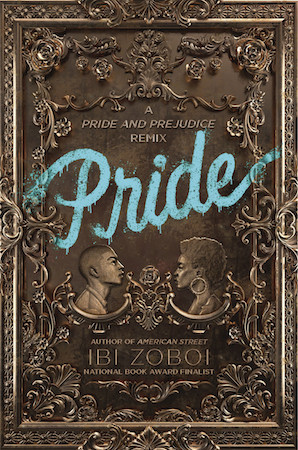
Pride by Ibi Zoboi

This contemporary take on Austen’s Pride & Prejudice centers a younger, multi-ethnic cast. National Book Award finalist Zoboi tackles gentrification, romance, familial expectations, and the ongoing pursuit of happiness. Feminism, as it were, does not mean having to forgo love in the interest of other desires be they academic or creative or political. In Pride, the title holds sway in so many character’s actions, particularly protagonist Zuri Benitez who never loses sight of who she is and how she sees the world around her change as gentrification, and money take hold in Brooklyn. Zuri is outspoken, a fighter, Afro-Latinx, and desirable for all those reasons. Her femininity is not forsaken due to these characteristics—it’s sought after.

A Trip to Disneyland in Search of the Root of Sadness

“The Last Good Time”

by A.M. Homes

“Are you going?” she asks as she spoons cereal into the baby’s mouth.

“In a moment,” he says, looking out the kitchen ­window—the​ sky is what he calls a winter mouse gray.

“How long will you be?”

He shrugs and adds a small folding umbrella to his bag.

“She’s not dying today, she?”

“I don’t think so,” he says as he goes into another room, returning with an old photo album.

“Again?” she asks.

“She likes it,” he says.

“You like it,” she says.

He nods. “I like it.”

She looks at him as if she’s waiting for something. He ignores her, focusing instead on the way the room has become punctuated by brightly colored pieces of ­plastic—the​ high chair, a cup, a ball, assorted pink toys.

“Why can’t you just say it?” she asks.

“I’m not sure,” he says as he’s putting on his coat.

“You’re so careful that you’re going to end up with nothing.”

“I live in my mind,” he says.

“But you have a heart, I know you have a heart,” she says. “You made the mistake of letting me know.”

“A fatal error,” he says.

“It’s like you’re already gone,” she says.

“I should go, I’m late,” he says, taking a piece of dry toast off her plate. “Bye­-bye,​ baby,” he says, bending to kiss the baby on her head. He inhales as he kisses her, and her ­downy-​soft hair brushes his lips. The child’s scent is clean and sweet.

“Say ‘Bye­-bye,​ Papa,’” the mother tells her, picking up the baby’s hand and waving ­goodbye​ with it. The mother accidentally bumps the enormous cup of black coffee in front of ­her—it​ rocks, coffee splashing back and forth suddenly like a stormy sea. “After a while, crocodile,” the mother says.

“In a minute, schmidgit,” he says, trying to be playful as he’s leaving.

He takes the long way around to the nursing home to visit his grandmother. Driving, he becomes obsessed by curbs. As the population ages, should the height of curbs be lowered? Would four inches be better than six inches? Would more cars jump the road and hit pedestrians? Would it be worse rather than better? Trained as an architect, he now works as an urban planner; his job is to make sense of things, to order the growing sprawl of what once was a small town. It’s up to him to figure out where things intersect, where the overpasses should go, and­ if a new road is to be built,­ in what direction it should go. He is supposed to be able to think about the future without forgetting the ­past—something​ he finds difficult.

He was born nearby, in a place that was often cold and wet. His earliest memories are his feet and fingers perpetually chilled. He grew up obsessed with socks, wet wool socks, the smell of wet wool, of damp animals and fur. Since he was a little boy, he has dreamed of cowboys and California. He imagines it as a place where you wake up and the sun is always shining. He imagines that it is the most American place in ­America—dreams​ are made there. In his imagination it is a place where the Old West meets Marilyn Monroe, where every street is decorated differently­—he​ is conflating Disneyland with Hollywood and doesn’t even know it.

He drives to the nursing home, checking various works in progress along the way. As he’s driving, he’s thinking of the photos in the album, remembering ones of himself as a boy, building the world of the future with plain wooden blocks and the expression of rage and disbelief on his face when his buildings fell down. He remembers that he liked wearing his fringed cowboy vest and gun belt day and ­night—over​ clothing or over pajamas, everywhere he went­—the​ suede made him feel safe. He remembers a photograph of himself on his first day of school, posing outside the building as a cowboy in full costume. And he remembers that on the first day his teacher told him she was pleased to have a cowboy in the class but that he had to leave his hat and his guns in his cubby, and then later that day she came up and whispered that for reasons beyond her control he could not bring his guns to school anymore. “Times have changed,” she explained. “Just being a cowboy isn’t so simple these days. Someone might take it the wrong way, so perhaps it’s best to go undercover.” He remembers not really being sure what that meant but in general thinking the teacher was nice. He remembers the photograph and wonders if that is all he really remembers. Perhaps he made the rest up, or is that really what the teacher said?

“Good morning,” he says as he enters his grandmother’s room. She smiles, and only half of her face moves­—the​ left side remains expressionless. He kisses the good side. Her breath is not sour, not like she’s rotting from the inside out, but sweet like lavender, like wild grasses, which remind him of a trip they once went on long ago. Her fingers trace the purple scar across her skull­—she​ has brain cancer. On the wall around her bed are posters made by the staff to remind her of her name, what year it is, and who the prime minister is. FOR FUN YOU LIKE TO SING, the poster says.

His grandmother is not so old—​her hair has always been white. He’s thought of her as old since he was a child, even though she’s now only in her ­mid-​seventies. As a child he would spend long weekends with his grandparents. He would sleep between them in their bed, their heavy scents and sounds deeply comforting. His grandparents took him trips; they liked going camping in the forest. When he was young, they bought him a Polaroid camera­—he​ took it on every holiday­—​he pictures now fading, like they’re evaporating. When he was fourteen, his grandfather died, and there was a large space­—like​ an unbridgeable gap­—in​ the bed, and he stopped spending weekends. It felt too awkward. Still, it was his grandparents who were the stability in his life, and he hates that he is losing her­—she​ is the only thing that has stayed the same.

“You look tired,” his grandmother says.

He shrugs. “I’ve had a lot on my mind.”

She nods. “What season is it now?”

“Almost Christmas,” he says.

“How is the baby?”

“She is plump and happy.”

“And the baby’s mother?”

“Not happy. She accuses me of living in my head. And she’s right,” he says.

“What is it like in your head?” the grandmother asks.

“Better,” he says. “It’s like in the movies. The sun is always out. When it rains, it pours. Life is large, dramatic. The men are heroic, and the women are beautiful. Things are clearer, life is not so confusing.”

“We all have our dreams,” she says.

“I find it very difficult to stay in the present,” he says. “It wears me out. I get too angry. When she says she loves me, I become afraid. I go cold, and I don’t talk.”

“You must bring something to it,” the grandmother says.

“I have nothing,” he says. And they are quiet. “How about you—how are you doing?”

“I don’t sleep so well,”she says. “Day is night and night is day.”

“This place is not a home,” he says.

“Some people live here for a long time,” the grandmother says.

“Would you like me to take you out? I could get a wheelchair and walk you around the garden.”

“What is it like outside?” she asks.

“Cold and wet,” he says.

“Let’s not and say we did,” the grandmother says. “How is the baby?” she asks again.

“She is plump and happy,” he repeats.

“And your mother?”

“She is with her husband and family,” he says.

“I was always very fond of your mother,” she says. “I liked her more than my son. How big is her new child?”

“There’s a boy and a girl. They are ten and thirteen,” he says, speaking of his half siblings.

“Has it been that long?”

“Apparently,” he says. “Do you want to look at pictures?” he asks, holding up the album. When his parents divorced, neither wanted the photo albums. They wanted no record of their time together, of life as a family. He became an outsider in his own life, an unwelcome reminder. His father was an only child; he is his grandmother’s only grandchild.

She likes looking through the pictures.

“Whatever there was, he took it all,” his grandmother says as she’s flipping through the pages. “It’s odd,” she says. “Your father won’t come to visit me if he knows you are coming.”

“He doesn’t like to bump into things,” he says. “He doesn’t like the unexpected.”

A nurse comes to get his grandmother, to take her for a bath. He tells her that he’ll wait and goes down the hall to have a coffee. “This is my daughter and her mother,” he says, showing a picture that is not in the album to a young nurse­ — he​ keeps it in his pocket.

“Your wife?” she asks.

“No. The baby’s mother,” he says. And then he laughs. “She recently asked me to leave, said I was just occupying space.”

The nurse smiles at him. “I’m sure she didn’t mean it.” “I think she did,” he says.

The nurse pours herself a coffee and goes back to work. He sits waiting.

He flips through the photos of his childhood ­again — the​ last good time.

“I am going on a journey,” he tells his grandmother when she is out of the bath. “I don’t know for how long.”

“So is this ­goodbye?” she asks.

“Would you like me to stay, to wait?”

“No,” she says.

“Where are you going?”

“In search of something,” he says.

“Where will you look?”

“In America,” he says. “I want to go to the desert to put my feet in the sand.”

There is a pause.

“What?” he asks. “You look sad.”

“I just wish you could have found it here,” she says.

He nods. “I have always been somewhere else.”

“I have something for you,” the grandmother says, sending him to her closet, to her bag, and there a sealed envelope with his name on it. “It’s been here all along,” she says. “It’s for you from your grandfather and me.”

“What is it?” he asks.

“It’s your ticket out,” she says.

He opens the envelope, and it is a ticket he made years ago­ — a​ pretend ticket to take a spaceship around the world. And money, a lot of real money. He can’t help but smile.

“I thought you might need it,” she says, laughing.

“This is too much,” he says of the money.

“Take it,” she says. “I have no use for money.”

“I’ll take the ticket and save the rest for the baby.”

“You do what you choose.”

“I love you,” he says, bending to kiss her, and then he has to turn away — it’s too much.

“You always have,” she says. “Let me know what happens.”

On the plane to Los Angeles, the movie starts to play, then stops, then repeats itself from the beginning. Each time it starts again, it gets a little further, and after the fourth time the passengers beg the crew not to try again. “It’s enough,” they say. “We can’t keep watching the same thing over and over” — ​ of course he can. For him each time it is different. Each time he looks at it, he sees something entirely other. He looks at the ticket he made years ­ago — the​ flight is like a giant ride, the turbulence like the up and down of a roller coaster, the whole thing is an adventure.

Upon arrival he puts on his ­unglasses — Ray​-Bans;​ he never wears them at home, but here the glare too much, the shadows bold, directed like slashes of light and dark, dividing the world into patterns, grids playing off the concrete, the parking lots, the chrome of the cars. He gets into his rental car and heads downtown. He is fascinated by what he sees, the cracks in the roadway, curbs that dip down at the corner for handicapped people, confusing inter­ sections with flashing Walk and Don’t Walk signs. He drives for hours and hours, up, down, around, stopping only to look, to think. He drives just to drive, for the pleasure of driving. He drives despite its being decadent and wasteful. He drives because it is something you don’t normally do­ — just​ drive with nowhere to go, driving for the satisfaction of watching the road unfold. The wide boulevards­ — ​Santa­ Monica, Wilshire­ — are​ appealing for the straightforward rise and fall of it all. He drives to the tar pits, to the place they call the Grove, and then toward Hollywood — sex shops, tourist depots, and from there up the hills toward Mulholland Drive and what he thinks of as the top of Los Angeles, looking out over it all, the industry of Los Angeles. On the way back down, he stops for a hot dog, and the guy behind the counter laughs when he calls it a sausage. Still hungry, he gets a burger from a place that you have to have a kind of code word ­for — a​ friend told him it’s not enough to just get a cheeseburger, that he should order it “animal style,” meaning with sauce and pickles and onions. It’s like he waited to arrive in order to eat. He drives, he eats, he consumes everything and feels optimistic for the first time in a long time. He checks in to his hotel, takes the car out again, and drives to a bar downtown. Sunglasses on­ — the​ sky is still blue, the day bright, the street entirely empty. He is a foreigner who feels less foreign when he’s away from home.

“Just coming in from the cold?” an old guy in the bar asks him, noticing his winter clothes. He wears ­ginger-colored​ corduroy pants, his shirt is dark green­ — ​ asically he looks like a tree lost in a forest. The old man is lingering over a scotch. His face is heavily ­weather-​beaten, he’s thin, his hands are gnarled. “I know what you’re thinkin’,” the old guy says, aware that he’s being looked at.

He shrugs.

“You’re wondering if I’ve got a cigarette.”

He shakes his head no. “I don’t smoke.”

“I used to carry them on me all the ­time — I​ used to get ’em for free, cartons and cartons of ’em­ — ‘Just give ’em away,’ they’d tell me. ‘Give ’em to anyone you run into and tell them your story.’”

He listens a bit more carefully.

“I still have the story,” the old guy says. There’s a pause. “You wanna buy me a drink?”

“Sure,” he says.

“I grew up in Texas,” he says. “My daddy worked horses; I did, too. Only went through sixth grade, and then I just couldn’t be bothered.” The old guy is playing with the short straw in his drink, knotting it with his gnarled fingers. “I learned a trick or two, rode in the rodeo for a ­bit — roping​ horses, was a rodeo clown. You know what that is?”

“The fool in the pickle barrel who lets the bull come toward him,” he says.

“That was me,” he says. “Till I got kicked too hard, and then I thought there had to be a better way. I came out west and got into the industry, mostly building sets, doing a little of this or that. Tough when you don’t have much of an education. Anyway, it ended up that sometimes they needed a cowboy, someone good with animals, someone who could stand in and do a trick or two.” The old guy looks at him as if to ask, Are you following what I’m telling you?

He nods.

“I’m it,” he says, tossing back his drink. “I’m the last cowboy.”

“Is that it? Is that the whole story?”

“No,” the old man says. “But you gotta put another quarter in the jukebox.”

He signals the bartender to pour another round of drinks.

“Back in 1955 this fellow Leo ­Burnett — that​ name ring a bell?”

“No,” he says.

“Leo Burnett came up with this great idea for an advertising ­campaign — to​ sell cigarettes. He thought of a cowboy, rugged, masculine, and so it was ­born — the​ Marlboro Man.”

“Are you saying that you were the Marlboro Man?”

“Not exactly,” he says. “I was the stand‑in for the Marlboro Man. I was the one that came early and left late and stood around for hours under the hot ­lights — I​ was the one who ran. I got paid a few bucks and a fuck of a lot of free cigarettes, that’s what I’m trying to tell you.” He shifts his weight on his chair. “I’m in pain,” he says. “My hips are crap. I fell off horses so many times it’s amazing I can walk a single step. But despite it all, I’m the last man standing. Hey, so what about you, Mr. Man, what planet are you from?”

“I just got into town,” he says. “Just passing through.”

“Do you need a place to stay? I’ve got a sweet corner spot in a shelter downtown. It’s pretty crowded, I could put in a good word for you.”

“No,” he says, “I’m okay. I’m heading south tomorrow.”

“It’s comin’ on Christmas, you know.”

He nods.

“You got plans?”

“Not really, just kind of playing it as I go.”

“Well, I’m not one to preach, if you want to go to church, we’ve got some good Christmas Eve services, and there’s a bunch of places to get a hot meal. Some of us, we don’t have much, but what we’ve got we share.”

“I’ll keep that in mind, thank you,” he says, getting up to go. He digs in his pocket and finds a twenty and tries to give it to the guy.

“I can’t accept,” the man says. “It was good enough of you to buy me a drink­ — I​ need nothing more.” And then he stops to think. “I’m lying,” he says, taking the money. “I’ve got ­nothing — twenty​ bucks and I can live another day.”

“Merry Christmas,” he says, still feeling the old man’s fingers on his hand as he exits the bar. The old man follows him out. They step onto the ­sidewalk — it’s​ still bright and warm and so different from anyplace else.

A car cruises by and stops at the light, blaring loud music. The old guy leans toward the driver’s window and shouts, “Make it louder!”

He laughs at himself for still being in love with the idea of cowboys­ — wondering​ what it is he thinks is so magical about men learning to be tough, to hold on to their feelings­ — to​ say less rather than more. He thinks of cowboys as loners, rebels, lovers with wounded hearts, rule breakers, fierce, brave, like John Wayne, Roy Rogers, and Clint Eastwood.

“God love ya,” the old man says, slapping him the back before he ducks into the bar.

He goes to his hotel, orders a pizza, and looks through his photo album, turning to the pages he thinks of as the Last Good Time: the family trip to Disneyland the Christmas before it all went wrong. His plan is to drive to Disney in the morning­ — in​ search of what he has left behind.

Exhausted, he tries to sleep but has lost track of time and finds himself dressed, ready to go at 4:00 a.m. He forces himself to lie back down, remembering that his mother used to say, “Rest­ — even​ if you can’t ­sleep — just​ rest.”

Checking out of the hotel at 5:30 a.m., he arrives at Disney before the gates open. He drives in meditative circles around Anaheim for ninety minutes before parking in the enormous structure and finding his way to the train that will deliver him to the Magic Kingdom. At the train depot, he feels himself begin to recede. What had seemed so clear, so obvious, a return to the place where things were good, becomes opaque. He feels small, in need of direction, lost in a sea of families. He lets the first train leave the station and then the second, and finally after a while the train conductor, noticing that he’s been standing on the platform, asks, “Are you waiting for someone? Do you need assistance?”

“I don’t know where to begin,” he says.

The conductor ushers him into the first car on the train. “It may sound corny, but­ . . .” The conductor begins to sing, “‘Let’s start at the very beginning, a very good place to start.’”

“Thank you,” he says, thinking the tune sounds familiar.

He passes through the ticket booth and enters the Magic Kingdom. Surrounded by people in a frenzy, rushing to get to this world or that, he stands still for a moment, feeling both excitement and trepidation, knowing that there’s a good chance his first re­ action is not going to be one of ­elief — ​ othing the way it used to be.

Last night he made a map for ­himself — a​ kind of agenda based on the photos in the album. His plan to visit each of the attractions he went to with his parents. He hopes to conjure his memories of that day and of his childhood in general.

He breathes deeply; it means too much to him. He looks at the faces of the children and their parents around him taking in the whole thing for the first time, the look of surprise and enchantment, joyous and over the top. His parents came to America because he wanted to, he begged for it. Walking through the park, he tries to think of himself as shorter, smaller, his experience less broad, his understanding only half formed. He tries reimagining himself as naive. It occurs to him that the different lands within the park are like sets for a film, that each tableau is an unfolding scene and the guests are in fact the actors. It is all a fairy tale, all make­-believe,​ and he wants to go in deep, to be the boy he once was, the boy who thought it was real. And at the same time, the brute force of reality, the intrusion of truth, is inescapable, and with it comes sadness. People with FastPasses hurry by, conspiring to find their way around the long lines for each ride. He doesn’t remember there being long lines, doesn’t remember there being such a competitive edge to everything.

At the Mad Tea Party, he gets into his own spinning teacup. He tries to spin fast. He went this one with both parents; he remembers that he sat in the middle, his face stretched in a smile of exaltation. As he turns the center wheel, round and round, faster and faster, the cup begins to spin and his memories unspool; in his mind’s eye, he sees his mother and father, youthful, athletic, playful, taking turns with the camera, taking turns posing with him, and then sometimes asking a stranger to take a photo of the three of them together. Looking back, he’s always wondered if he missed the clues, if he should have seen it coming or if the whole thing happened offscreen.

His father never told him he’d left. One day while he was at school, his father came and packed up his belongings. He also took the train he’d given his son for his ­birthday — the​ boy was not sure why.

He didn’t realize what his father had taken until after he told his mother that his train was missing. “Why?” he wanted to know.

“Ask your father,” she said.

“Where is he?” the boy asked.

“I have no idea,” she said.

“When is he coming home?”

“He’s not,” she said.

“But he was here,” the boy said.

“While we were out,” she said bitterly.

“When is Daddy coming home?” he asked again, and again sure he was just misunderstanding something.

His mother got angry.

“Did he take anything of yours?” he asked.

“He took everything,” she said. The boy followed his mother into his parents’ bedroom, and she opened the father’s side of the closet­ — empty​ except for the Christmas sweater his mother had recently bought him.

“Even his toothbrush?”

“No,” she said. “I suspect he has another.”

“Why?” the boy asked.

“Because there was nothing left,” she said, and shrugged, resigned.

“Me?”

“That’s not a reason to stay together.” She took a moment to collect the shoes he’d left behind and put them in a bag. She set the bag out by the trash along with the Christmas sweater. The man who lived downstairs, who was in charge of taking the trash to the curb, took the bag. More than once the boy saw the man wearing his father’s Christmas sweater and felt his heart accidentally jump, thinking his father had returned.

Dumbo, the flying elephant, is crowded. He waits patiently, and when the family in line ahead of him asks if he minds sharing an elephant with the grandmother, he says he’d be happy to and smiles. Her ­thick-​soled shoes and coiffed white hair remind him of his grandmother. They board their elephant, buckle in, and take off. At first he drives, dipping the elephant up and down with the joystick, pretending they’re catching up on the grandkids in the elephant just ahead. And then he asks if she’d like to drive, and she’s thrilled. When it’s over, she beams. “Thank you,” she says, “you’re a very nice boy.” He wishes it were true. In the canal boats of Storybook Land, he remembers that his father would take him out on Sundays. He wouldn’t come into the house­ — they’d​ have to meet somewhere. Often they’d just go to a park, and before bringing him home his father would buy him an ice cream. On rainy days they’d sit in a museum or sometimes, still in the park, under the shelter of a tree.

“Where do you live?” he asked his father.

“I’m staying with a friend,” his father said.

There was great formality, a distance between them. Who are his friends? he wondered but couldn’t bring himself to ask.

He found out his father was staying with a woman who was a math teacher at his school­ — ​ ne of his friends told him. At first he thought it was a joke and pretended it wasn’t true, but when he saw the math teacher in the halls, he noticed she went out of her way to avoid him. She would see him and pretend she didn’t.

“Does she have any children?” he asked his father after some time had passed.

“No,” he said. “She never wanted children.”

“Why does she work with children if she doesn’t like them?” he asked his father awhile later.

“No doubt she would have done better in a university, but there are very few jobs and she’s a bit older.”

He remembered being with his parents at Disneyland, laughing, his father being silly, the world seeming magical, unreal. “It’s unbelievable, there’s no dirt here,” his father said.

And then he remembered his parents at home after the trip to California, his father becoming more serious, losing his sense of humor, and as he did, his mother became more playful, almost as if mocking him, and it made his father angry. “Grow up!” he remembers his father shouting. He glances at the photographs. What he remembers is true, there was no dirt, everything was spotless, perfect, everything was in its right place. There was a parade down Main Street. There were wonderful old cars, tooting horns, and a float carried Snow White and the Seven Dwarfs, assorted fairies and others. His father lifted him high, sat him down on his shoulders­ — a​ change of perspective. And then there’s a photo of his mother and father, each holding him by an arm and swinging him through the ­air — he​ recalls the sensation of flying like an airplane. He sees it now and realizes how sentimentalized it ­ — the​ railroad station, city hall, the opera house. It’s s­mallt​own America comes to the big city, a utopian vision of a world that might have been but never really was, the budding landscape of power. He is in it, and the conflict remains; is that consciousness or bitterness? he wonders. Is it his adult self mourning a lost childhood? Is it his own anger at himself for being stuck in this place­ — needing​ to make sense of it, needing to make it right?

He doesn’t know what happened, who left ­whom — no​ one would say.

Within a year his mother married a man who was younger and who didn’t like him at all. The feeling was mutual. Suddenly he’d become an intruder in his own life, and he didn’t like competing with a stranger for his mother’s affection, so he spent less and less time at home. His stepfather didn’t go to any of his school events, didn’t do anything for or with him; at best they tolerated each other. Time passed, and his mother had a new baby.

“He’s a good father,” his mother would say.

“To his own children.” He remembers watching his mother breastfeeding the baby.

“Not in front of him,” his stepfather declared, pointing a finger at him.

He went outside and spent the night among the trees. Later he got a job working in the movie theater, sweeping stale popcorn. The owner trusted him so much he went away for the summer and left the place to him. For all intents and purposes, he lived at the theater, watching the films over and over again.

He goes on each of the rides multiple times. He tries to stay focused. The disorientation of going up and down, high and low, and round and round allows him to reprocess his experiences. He is whirling, dizzy, nauseated, thinking about everything. There are moments he believes he may be hallucinating, or maybe it’s just dehydration.

“Are you running from something or toward?” a young woman asks.

“Pardon?”

“I’m Candace. I’m one of the cast members here at Disneyland. I just wanted to make sure everything is going all right.”

“I think so,” he says. “I mean, as expected.”

“Are you with a group?”

“No,” he says. “I’m on my own.”

“Most men don’t come to the park alone,” she says.

“I came with my parents.” He pauses. “Long ago, when I was a boy. This time I came in search of something.”

“What?”

“I’m not sure, I felt I’d left something behind.” He glances up at the tree over his head. “But perhaps I’m just in search of a palm tree.”

“Did you know the palm trees aren’t really from California? They came from Latin America a hundred years ago,” she says.

“I didn’t know,” he says.

“And worse yet, they’re dying of a fungus.”

“After I came to Disneyland, I went home and told my friends I met Mickey Mouse and Abraham Lincoln. They laughed. Now I’ve returned to revisit the dream, Tomorrowland and the ­future — ​ ­to find out if it’s still alive.”

“And is it?” she asks.

“It’s hard to tell,” he says. “Nothing from here anymore. It’s all from China­ — it’s​ like China owns the United States. If I pick up a Disneyland snow globe and turn it over, on the bottom of the world it would say ‘Made in China.’”

“You’re funny,” she says, laughing.

“A regular clown,” he says.

“I’ve finished work for the day,” she says. “You were my last assignment.”

“I was an assignment?”

She doesn’t answer. “Do you want to grab a bite?”

“I haven’t eaten all day,” he says. “Is there someplace you like here at Disney?”

“No,” she says. “We’re not allowed to eat with guests, but we can go off campus. I live nearby.”

“Sure,” he says.

As they’re walking toward the exit, she tells him that the 1955 dedication plaque reads “‘Here you leave today and enter the world of yesterday, tomorrow and fantasy.’ I love that,” she says. “Every day as I come and go, I repeat that phrase, as a mantra.”

And then she explains that “cast members,” the Disney words for employees, check out at a different place and have their own parking area. She tells him that she’ll meet him at the parking structure. She circles and finds him walking up and down the rows in the parking structure, unable to locate his car.

“I have no idea where I left it.”

“What color was it?”

He can’t quite remember. “Gray? A silvery, grayish green?”

“It happens all the time,” she says. “I’ll let the security people know. Worst case they don’t find it until late tonight, after the park closes.”

“I’ve never lost something so large,” he says, getting into her car, which is small, white, and rusting from the bottom up.

“It’s worse when people misplace their ­kids — that​ happens multiple times a day. We have a whole system set up to reunite lost children with their families,” she says as they exit the parking lot.

Along the way they talk about the weather.

“Is this normal for here?” he asks.

“Normal how?”

“Is it always this hot?” he says.

“The heat comes and ­goes — there​ is no normal anymore,” she says. “Is it warm where you live?”

“Not really,” he says. “It rains a lot.”

“Here,” she says, “it’s usually a little bit better than this­ — a​ little more perfect. That’s what everyone likes about it. Have you been to America many times?” she asks.

“A few,” he says. “Have you ever been to Europe?”

She shakes her head. “I wanna go to London sooo bad, but I haven’t even been on a plane yet.”

She drives to a small, low apartment complex about ten minutes from Disney. The complex, called The Heights, has a big sign by the entrance that says electric and a/c included. The buildings deposited here one night. The buildings are ­numbered — that’s​ the only way to tell them apart. Her apartment the middle level of a three-story building.

Before opening the door, she warns him, “We have cats. We’re not supposed to, but we do. And roommates. I have three roommates, but they’re at work right now. We’re all cast members, which is nice because it gives us something to talk about.”

He nods.

She leads him into the dark apartment. She opens the metal vertical blinds, and a small cloud of dust snaps off, rising into the air, catching the light, glittering like fairy dust.

“Would you like a drink?” she asks.

“Sure,” he says.

“We have beer and Tang.”

“Beer would be nice.”

She takes out two and marks a paper inventory sheet held onto the front of the fridge with heavy magnets. “Are you married?” she asks, handing him the beer and a package of saltines.

“Not really,” he says, following her lead and eating the crackers first before taking a sip.

“What does that mean?”

He swallows, washing down the stale crackers with the beer. “A crisis of confidence?” he suggests. “I live with someone, we have a baby. But I’m not as into it as she would like me to be.”

“Does she know you’re here?” she asks.

“She knows I’m gone, but I didn’t give much in the way of details.”

“What do you tell her?”

“Not a lot. I mostly talk only in my head.” He laughs at himself.

“Where did you meet?” she asks.

“At a party. She’s a photographer, a lot of weddings, family ­photos — no​ one calls you to photograph a funeral. After the baby came, she wanted more, I wanted less. It got harder.”

“Are you hungry?” she asks.

“I am,” he says.

“I don’t know if I should charge you for it or give it to you for free.”

Startled, he chokes and beer comes out of his nose.

“We call that snorfing,” she says. “When you laugh while you’re drinking.”

“Is it funny?” he asks.

“Yes, because you weren’t sure what I meant, were you?”

He blushes.

She opens the freezer and shows him it’s full of frozen meals. “One of my friends works in a hotel, and he sells whatever he finds in the rooms on the black market. I pay like fifty cents a meal for food that’s good as new­ — still​ frozen. I’ve got lots of macaroni and cheese and frozen pizza. Things like this one.” She pulls out something called a Hungry Man dinner. “This one is a ­delicacy — very few and far between. I think I paid a dollar for it. The ­gluten-free​ stuff belongs to my roommate­ — it’s​ very ex­pensive.”

He moves to take out his wallet.

“No,” she says. “Be my guest.” She pops the meal into the microwave and sets the timer.

She’s looking at him, wanting something. She moves a little closer, raises her beer, and they tap their bottles together. He knew that something might happen when he accepted the offer to go to her house. She kisses him. “I don’t do this,” she says. “I don’t pick up men at work and bring them home.” The microwave beeps. She opens the door, peels back the wrapper, and sets it for another minute, then kisses him again.

“Then why are you doing it?” he asks, knowing he should be asking himself the same thing.

“I’ve never slept with someone from another country. I’m wondering if it’s different,” she says.

“And I’ve never done it with an American,” he says.

He puts his beer down. Again they kiss. “What do you think?” he asks.

“You taste foreign,” she says, leading him down the hall toward her room, stopping first in her roommate’s bedroom to look for condoms.

Her bed is low to the floor and surrounded by stuffed animals. “It’s like the enchanted forest,” he says nervously, and then asks,

“How old are you?”

“Don’t worry, I’m old enough,” she says. “I just really still like toys. A lot of these I won. I’ve got good aim when it comes to games of chance.”

He follows her lead. There’s something rather mechanical about her approach to lovemaking. “I haven’t done it so much,” she says, shy but clearly proud of what she might think of as her technique. He finds the youthful roundness of her figure sexy. Her skin is fresh and at the same time filled to the edges, like a balloon blown all the way ­up — she​ is taut, almost bouncy.

“My roommates are wilder than me,” she says. “Like, have you ever done it from the back?”

“I have,” he says.

“Should we try it?” she asks, as if it would be some kind of experiment. And as he’s behind her, just breaking a sweat, there is a turn in her mood.

“Something really bad could happen here,” she says.

“Like what?”

“Like if others came in and things slipped out of control?”

“Who would come in?”

“People,” she says.

“And what would happen?”

“They might make us do stuff we don’t want to?”

He pauses. “Do you want me to stop?” She says nothing. “Am I doing something you don’t want me to?”

She seems frightened, undone by what she is doing.

“No,” she says. “I’m just saying.” And she starts to sniffle as though she’s going to cry. “I just really have a hard time letting go. Let’s start again.”

“It’s okay,” he says. “Nothing bad is happening here. I thought you were having a good time.”

“I was.”

They begin again. This time he lies back and she straddles him­ — she​ calls this “grown‑up sex,” and says she saw it once in a porno movie. “It’s kind of like being on a ride,” she says. “Up and down. I’ve only had like two boyfriends, and both of them were a lot like me.”

And when they are done, she puts her top back on and, ­half naked, she carries the used condom into the kitchen, wraps it in a wad of paper towels, and buries it in the garbage.

“Getting rid of the evidence,” she calls down the hallway.

She comes back into the bedroom and gets down on her hands and knees and starts rooting through her closet. It’s a rather odd view of her from the back, naked from the waist down. “What size shoe are you?” she asks.

“I take a forty­-three,”​ he says.

“No, like in regular numbers. You know, eight, nine, ­ten . . .”

“Oh,” he says. “I think it’s a nine and a half.”

“Perfect,” she says, still digging. Finally she pulls out a pair of shoes. “These were my grandfather’s,” she says, handing him an elegant pair of dark loafers with tassels. “Genuine alligator. Put them on.”

He slips his feet in, trying to hide the holes in his brown socks. “What do you think?”

“I like the contrast, your socks, the shoes. You should have them,” she says. “He wanted his shoes to go to a good soul­ — I’ve​ just been waiting to find the right person. Most American men have bigger feet.”

“Did you grow up here?” he asks, walking around the apartment in the shoes, test­-driving​ them, not wanting to take them unless they are a good fit.

“No,” she says, “my family is from Utah. I’m kind of different from them, so I left.” She pauses. “It’s more like I ran away, but I really had to­ — it​ was the only way out. My friend’s brother did the same ­thing — we​ went together to Los Angeles, and then we got into this Scientology church thing there that wasn’t so great, and I had to run away again. And I came down here. This is the first place where I felt really good. I’m someone who needs to be part of ­something — Disney​ is kind of like a religious experience for me, only better. I really like the values and the characters, and it’s a happy place.” She pauses again. “Are you hungry?”

“Starving,” he says.

She reheats the Hungry Man Salisbury Steak and makes herself a Lean Cuisine. They sit on her bed and eat, surrounded by the multicolored plush-animal kingdom.

“Do you find it disturbing that some of the animals aren’t their natural color?”

“Like what?” she asks.

“Like the purple bear,” he says. “Or the ­fluorescent-range dog?”

“No,” she says, shaking her head. “I like it. I’m not afraid of color. How’s your meal?”

“It’s nice,” he says.

“Isn’t it so fun to have sex and then eat?”

He nods.

“I think this is what people are talking about when they say they have the munchies. It’s like I could eat a horse,” she says, sneaking a forkful of his potatoes. “So what are you doing this afternoon? Back to the Magic Kingdom for another round?”

“Actually, I was going to drive out to the ­desert — to​ Joshua Tree­ — but​ with my car missing, I’m not sure.”

“I could drive ­you — if​ you wouldn’t mind paying for gas.” “That would be nice,” he says. “Thank you.”

He finds the concrete highway ­soothing — flat,​ affectless, rolling out for miles ahead.

“What’s nice about concrete,” he tells her, “is that it doesn’t get potholes, so it’s a smoother surface, and you don’t get ruts that collect water, so it’s better in the rain.”

“That’s really interesting,” she says.

He can’t tell if she’s kidding or not and stops.

“Seriously,” she says, “how do you know so much about roads?”

“It’s my job,” he continues. “The average life of a concrete road before repair is about twenty­-seven​ years, where asphalt lasts about fifteen.” He goes on, telling her pretty much everything he knows about roads. The sharing of information relaxing; it helps him to feel closer to her.

“How do you see when there so much light?” he asks.

“We all wear sunglasses,” she says. “Polarized ones work best.”

She hands him a spare pair of glasses that are tucked into her visor.

“Ah,” he says, “these are wonderful. The whole world looks perfect.”

“They’re from the Disney store,” she says. “At Disney they specialize in making things look good.”

“Yes, but then how do you know what’s real?” he asks.

“You bite into it,” she says, laughing.

“It’s true,” he says. “You have hot­ dog stands that are shaped like hot dogs, and yesterday I ate a doughnut at a place that looked like a doughnut. You have ninety­-nine​-cent​ pizzas, Happy Meals, supersized drinks, and roads that go on forever. But why, then, is no one outside?”

“It’s complicated,” she says. “I don’t think anyone is sure why no one goes outside. But my sense is we’re all nervous to be seen just wandering around, like we’re out of our element. We feel more comfortable in our cars­ — they’re​ like our shells.”

“Okay,” he says. “So what do you love about America?” he asks her.

“Well, I love being in the entertainment industry,” she says. “And who knows, maybe one day I’ll go back to school or I’ll keep doing what I’m doing and become a customer­-service​ manager or something. I feel that there’s lots of opportunity for someone like me­ — as​ you can see, I’m really a great people person.”

He nods. “You are good with people.”

“What about you?” she asks.

“I might start painting again,” he says, remembering that as a boy he used to enjoy making paintings of the landscape, paintings of the places he went with his family. “Maybe I’ll paint my view of the world, the details of what in my heart, the fractures.”

“What really brought you here?” she asks. “So far from home?”

“I’ve had a hard time,” he says. “It’s as though I can’t find my feelings, or like I left them behind. That’s why I’m on this journey. I’m looking for what I lost.”

“And have you found it?” she asks optimistically.

He shrugs.

“They say Christmas is a difficult time of year for people.”

He nods. “It may depend on what your expectations are. Do you have big plans?”

“I go out with my friends. We take a taxi so we can get really drunk. We karaoke, and then we do like a Secret Santa thing where everyone gets a present. It’s a lot more fun than when I was a kid. What about you?”

“Often I have dinner with my grandmother.”

His mind wanders, and he replays memories: blowing out birthday candles, learning to ski between his father’s legs, making a snowman. He sees images in his mind’s eye and can’t tell what is a photograph and what is an actual memory, all of it is frozen, frame by frame, into single images­ — moments​. He remembers that when he was about fifteen, his mother’s husband went away for two weeks, and for those two weeks everything was good. He took care of his mother, of the two younger children. They laughed, she was the mother he remembered, and then the husband returned and the closeness vanished.

They stop for doughnuts and coffee. “I just love that sugared‑up feeling when I’m driving,” she says. “I get the best rush, driving really fast, drinking hot coffee. I don’t know how it where you’re from, but here lots of people practically live in their cars.”

The landscape starts to change. There are fewer car dealerships, more blank spaces, and lighter traffic. The traffic thins and thins until they reach Joshua Tree, which is an odd combination of both more and less developed than he’d thought it would be. Exiting onto a smaller road, they pass a bunch of ­lousy-​looking motels, all of which have the word “Desert” in the name. And there are ­rundown­ bars with battered old trucks parked outside. In general there’s the sense of this place as other­ — a​ kind of last stop, a place people come when all else has failed, or when they just need an out. It’s scruffy, sparse, and it looks rough. He pays the fee to enter the park, and they drive ­onward — he’s​ simultaneously elated and depressed and asks if they might turn off the radio and roll down the windows.

The air is cold, bracing. There’s something about it all that makes him feel he’s able to empty himself into the desert. He wants to get out, to run, but he has no idea what direction he might go in.

“Maybe we could park and take a walk?” he suggests.

“I’m not much of a hiker,” she says. “In ­fact — ” She holds up her foot, and she’s wearing sandals with heels.

“I need to get out,” he says, opening the door. “If you don’t want to wait, I understand. I can find a ride home.”

“Oh, I don’t mind waiting,” she says. “I can even just drive out of view and wait.”

He shakes his head. “Honestly, I think you should leave me here. I need a moment alone.”

“You’re not going to do something weird, are you?”

“Like what?”

She doesn’t answer. “It doesn’t feel right,” she says. “I’m not leaving you here. I just can’t do it.”

They’re in a standoff.

“Fine,” he says. “Just give me a couple of minutes.”

He gets out of the car, walks up a ways, stands with his arms open to the world­ — spins​ them in circles, like he’s trying to pick up some speed, and then begins to turn to whirl to twirl around and around again on the same spot, churning up dust and dirt, making a small cloud around himself. And as he’s spinning, a single dark cloud moves over the desert, and it begins to snow. Fat white snowflakes like doilies spin down from the sky.

He stops, opens his arms wide, tilts his head back, sticks his tongue out, and tries catching them.

Seeing him like that reminds her of something. She gets out and calls, “You know, the real name for a Joshua tree is a yucca. The name Joshua tree came from some Mormon settlers crossing the ­desert — the​ shape of the trees reminded them of the bit in the Bible where Joshua reaches his hands to the sky and prays.” She stands the same way he’s standing, letting the snow land on her open arms, on her upturned face. “I only know that because my family is Mormon, and that’s why I had to run away.”

They return to Los Angeles in silence. She invites him to her apartment for “another round,” he declines. “I should be getting on with it,” he says. “I met a guy in Los Angeles, the Last Cowboy, and he wanted to take me to Christmas Mass. I think he’s expecting me to be there tonight.” She drops him off at the Disneyland garage­ — the​ security guys have located his car. He gets out carrying his plastic bag of Disneyland loot along with a few little extra things she gives him as remembrances.

He sits in the car. From the top of the parking structure, he’s got a good view of the evening ­fireworks — Believe​ in ­Magic — ​ ­Sleeping Beauty’s castle becomes a winter wonderland, the air is charged with awe and wonder, and in the end, as Christmas music plays, fake snow floats down. As he’s listening, he’s remembering a trip to the Alps when he was a boy, his father buying him lederhosen and telling him they were just like ones he had as a boy, and he realizing that it was the first and only time his father had ever said anything about having been a child. He thinks of the dedication plaque the girl told him about this afternoon, her mantra: “Here you leave today and enter the world of yesterday, tomorrow and fantasy.”

He digs out his phone and calls home; she answers even though it is late.

“How are you?” he asks.

“We’re fine,” she says. “I took the baby to see your grandmother today — she smiled.”

“That’s nice,” he says. There is silence. “I am standing here, there are fireworks going off, and a magical kingdom is in front of me.”

“That’s nice,” she says.

Again there is silence. “It’s almost Christmas,” he says.

“Yes,” she says.

“I’ll be home soon,” he says. “I think I’ve got what I need.” He pats his jacket pocket, where the crayon­-​colored homemade ticket his grandmother gave him rests. “And I’ve got my ticket right here,” he tells her. “It says it’s good for one free trip around the world.”

10 Unpleasantly Plausible Books About Dystopian America

The president of the United States has yet to prove that he understands the difference between fiction and reality—but in our current moment, who can blame him? Well, okay, we can all blame him, because it’s his fault. But it’s hard for all of us to deal with news that sounds sometimes like a horror story, sometimes like a biting satire on hypocrisy.

This July 4th, we wanted to take a closer look at some American dystopias that are starting to feel uncomfortably close to real life. Dystopian stories — those stories that hinge on new societal structures upheld by militaristic, destructive mechanisms — are written by authors who are inherently horrified by the world they have to live in. But to recreate that horror writ large in a speculative future, they have to think deeply about and truly understand our present—and maybe that’s where our fight against total annihilation lives. Can we learn something about living in—and even making our way out of—an unbelievable dystopia from the writers who’ve envisioned the worst?

Parable of the Sower by Octavia Butler

It’s 2025 and Lauren Olamina lives with her family in a safer neighborhood on the outskirts of a Los Angeles descending into violent anarchy. The Olamina family is trying to preserve and protect a culture being ravaged by drugs, disease, and water shortages. Her father is a preacher who tries to rally the community around faith, and Lauren is an empath who can literally feel the suffering engulfing her neighborhood. A devastating fire thrusts Lauren into the heat of the disaster, and she forms community with other refugees and becomes a prophet for a different future waiting for them all up North. Parable of the Sower is uncomfortably close in many ways to our present, and reading it can shed light on how empathy can save and doom us today.

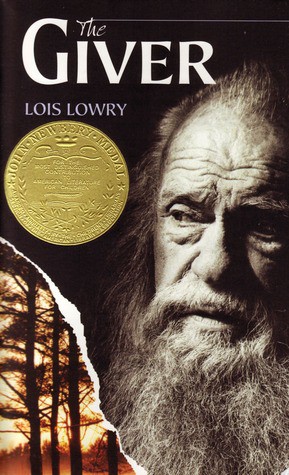
The Giver by Lois Lowry

The supposedly utopian society of The Giver has made pain and unhappiness disappear by choosing “Sameness” over depth and difference. But everything changes for twelve-year-old Jonas when he is chosen to become the next Receiver of Memories. He alone will bear the memories of the time before Sameness, because even this utopia realizes that maybe “those who cannot remember the past are doomed to repeat it.” It’s a lot for a twelve-year-old boy to handle, and spoiler alert: he has a lot of complicated emotions about the ambiguities of good and evil, right versus wrong, and his role negotiating the past and future.
Red Clocks by Leni Zumas

Now that Supreme Court Justice Kennedy is set to retire at the end of July (a swing vote for women’s rights, among many other vital issues) this dystopia is another one that feels close to home. Abortion is illegal, fetuses have rights, and in-vitro fertilization has been banned. Five woman navigate the new reality — women who want to have babies alone but can’t, women who don’t want to have babies and might, and women who help women honor their bodies above and against the law.

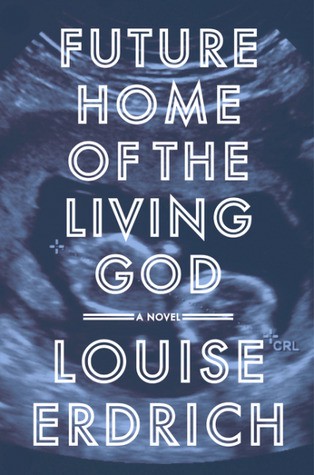
Future Home of the Living God by Luise Erdrich

A lot of dystopian fiction centered on women has something to do with reproduction. Future Home of the Living God envisions a future where women begin to give birth to ever more primitive versions of the human species. The human race seems to be devolving and (surprise) it’s all women’s fault. Our protagonist Cedar Hawk Songmaker, is a woman who is four months pregnant and desperate to protect her unborn, so she returns to her birth mother, an Ojibwe woman living on the reservation, to understand her and her baby’s origins in an effort to avoid the threat of disappearing in the state being overrun by martial law.

The Road by Cormac McCarthy

More post-apocalyptic than dystopian, we had to include this one for a very specific reason. Cormac McCarthy became a father later in life. In a hotel room in El Paso, Texas he thought about what the landscape would look like in 50 and 100 years, and then worried about his inability to protect his son in the future. We are living in a country that is working hard to ensure that the unbelievable nightmare will be a reality for refugee parents and their children, so it feels like an apt time to descend into a post-apocalyptic novel where a father and son struggle to survive in a scorched and barren landscape post-catastrophe.

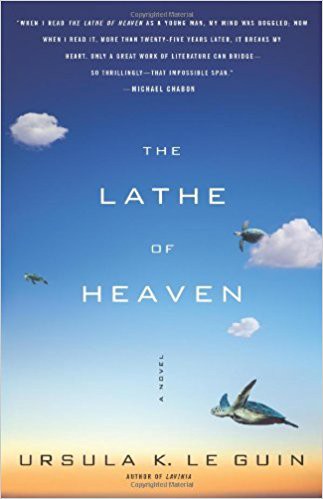
The Lathe of Heaven by Ursula K. Le Guin

Written in 1972, the novel takes place in 2002. Portland is overcrowded by millions of people, it’s always raining, and the poorest are suffering from protein deprivation. George Orr wakes up one day to discover his dreams have altered the reality he and the rest of his fellow Oregonians are living in. (Thank goodness that part isn’t so plausible, since we’ve all been having some doozies about North Korea.) When he consults a psychotherapist to defuse his powers, he slowly realizes the psychotherapist has his own motives for getting involved.

When She Woke by Hilary Jordan

The veil of separation between church and state has been cast off, and the criminal system has given way to literal color code of discrimination. Felons are no longer “rehabilitated” but instead are genetically “chromed” so that the color of their skin reflects the severity of the crime they’ve been charged with. There’s also a sexually transmitted infection which has left most women sterile (again, the dystopia=women+fertility theme?) and in the new Christian state, Roe v. Wade has been overturned in an effort to “save” the country. (Ha ha! Science fiction!) But when Hannah becomes pregnant after an affair with the reverend Aidan Dale, she has an illegal abortion to protect him from the shame of her pregnancy and wakes up in jail, chromed the color red for murder. It’s a critical retelling of the Scarlet Letter on the eve of Trump’s potential appointments to the Supreme Court.
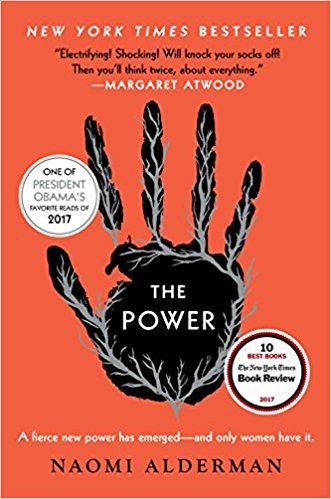
The Power by Naomi Alderman

Alderman imagines a dystopian future where pussy grabs back with a freaking vengeance. In the near-future world, young women everywhere are suddenly gifted with the physical power to violently overtake and even kill those who go against them. Sounds pretty utopian, but Alderman challenges an invisible pattern of behavior that bell hooks also calls out in her book The Will to Change: “When culture is based on a dominator model, not only will it be violent, but it will frame all relationships as power struggles.” It’s a cultural problem. How can women leverage the toxic violence of the patriarchy without revitalizing patriarchy’s forcefulness?

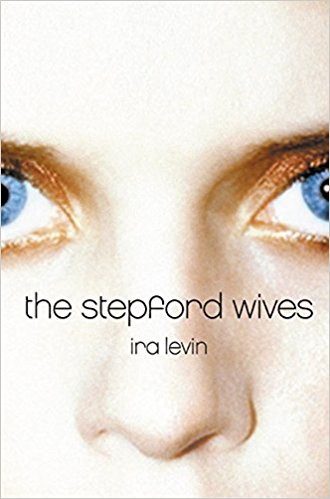
The Stepford Wives by Ira Levin

This one is so hauntingly believable, Jordan Peele used it to inspire his all-too believable dystopian horror in Get Out. The Stepford Wives was written in 1972 as a kind of satirical horror story about the fictional town of Stepford, Connecticut, where the talented photographer Joanna Eberhart moves with her husband. Joanna isn’t prepared for the plastic suburbia she falls into. The women she meets are doll-like — perfect bodies, demure sensibilities, and mindless. She does some digging and discovers that all the women in the town were once political agitators, revered intellectuals. Is suburban culture insidiously brainwashing them? Or is the toxin actually environmental — something in the water? How will she avoid becoming one of them?

Gold Fame Citrus by Claire Vaye Watkins

Because, unbelievably, we still can’t get everyone to believe that climate change is real , here’s some fiction that speaks the truth. All the allure of the California Dream (gold, fame, citrus) has literally dried up. The Amargosa Dune Sea is a shifting sand mass eating up most of the Southwest. The state tried to propagandize water infrastructure efforts years ago, but it didn’t work. Now, Luz Dunn is 25 and living in a mostly evacuated Los Angeles where rain never comes. When she and her boyfriend Ray find/kidnap a toddler named Ig, the struggle for survival takes on a name and small little shape with more urgency than Luz and Ray were ready for.

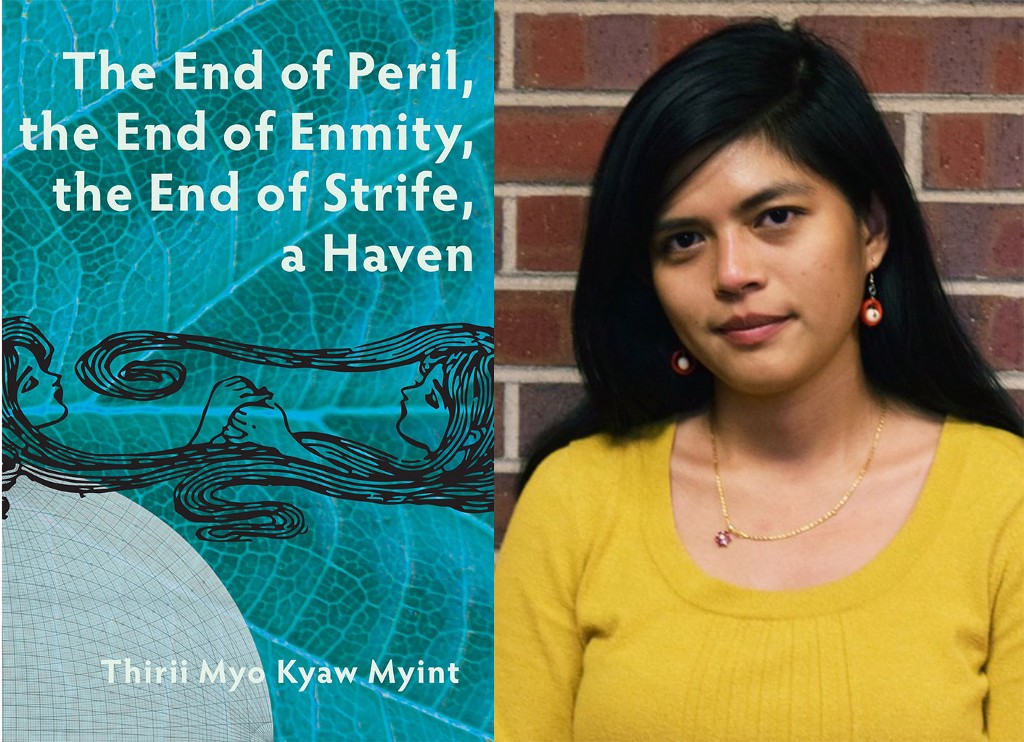
Thirii Myo Kyaw Myint’s Surreal, Haunting Post-Apocalypse

Thirii Myo Kyaw Myint’s debut novel is a powerful work of art. Inspired by Myint’s exploration of embodying hybridity in America and Myanmar, The End of Peril, the End of Enmity, the End of Strife, a Haven tells the story of a young woman returning from emigration to confront “her inheritance of historical violence” while caring for her ailing baby. Through subtle and lyrical prose, the narrator attempts to understand her sense of belonging in a world that at first glance seems futuristic, but, in reality, is a world that devastatingly resembles our own. As the narrator discovers the nuances of her identity, the novel confronts a litany of contemporary themes, including suburbia, the legacy of colonialism, and having a gendered body. Luminous, fresh, and profoundly ambitious, The End of Peril establishes Myint as one of America’s most intriguing young writers.

From her springtime residency at the Millay Colony, Myint found time to generously reflect on her debut novel, the narrative possibilities of hyphenated writers, and how most of the world is living in a post-apocalyptic present.

Tillman Miller: The novel takes place in a post-apocalyptic future, however the details of the story feel fully-realized, lived through, and real. What inspired the story?

Thirii Myo Kyaw Myint: In my mind, The End of Peril takes place in a fictionalized, post-apocalyptic present, not a future. It is important for me to make this distinction because most of the world’s population (the “global south”) already live — presently — in the post-apocalypse. For a person like me, who was born in a postcolonial country, a so-called “developing” country, the apocalypse began centuries ago with European invasion and imperialism. That was the end of the world.

I began this novel because I wanted to write a post-apocalyptic narrative which acknowledged this reality. I wanted the apocalyptic event in my book to be directly linked to the apocalypse of colonialism. I wanted to show how those two events — the speculative apocalypse and the historical one — were actually one and the same, and taking place simultaneously in the present. In the Location of Culture, Homi Bhabha says the “post” in post-colonially doesn’t mean after but beyond. I wanted to show that this was also true of the “post” in post-apocalyptic. The world ended long ago, but it is still ending now.

TM: America is certainly one of the foremost purveyors of apocalypse. And yet, most Americans will justify purveying apocalypse because they believe America is an innocent savior with superior values. Have you found that unhyphenated American readers — when confronted with the fact that colonialism and imperialism have been apocalyptic to the “global south” — are unwilling to acknowledge this reality? Is that part of why you redirected your hope that the book would help break down stereotypes?

TMKM: When people find out that I was born in Burma/Myanmar, I find that they often want to talk to me about the military dictatorship, or the civil wars, or more recently, the ethnic cleansing of the Rohingya — and always in a completely de-historicized, de-contextualized way. I am sure they are “just trying to connect,” but sometimes it almost makes me feel as if they are trying to remind me of how dysfunctional and oppressive “my” country (Myanmar) is, and how lucky I am to be in America. As an immigrant, I am often made to feel as if I should be grateful for having been “allowed” to “become” American. Only a few people have put it in so many words, but that is the general attitude I’ve encountered.

I redirected my hope for The End of Peril because I realized that it’s not my responsibility to change this attitude, so I shouldn’t make it my goal to do so. I admire and respect people who work to educate others, but I don’t want that to be my job. I just want to make art.

As an immigrant, I am often made to feel as if I should be grateful for having been “allowed” to “become” American.

TM: One of the beautiful elements of the book is the deft prose. It’s often haunting and ghostly, which echoes one of the pivotal ideas in the story, that people — mothers, in particular — are haunted by their family history and legacy. Can you talk about the importance of motherhood and familial legacy in the novel?

TMKM: As a child, I remember looking at my mother’s body and my father’s body and not believing that one day I would grow up to look like my mother. Even though I have a woman’s body now, whenever I see pregnant women, I still feel the same way I did as a child. I cannot believe that one day, I might look like them. Motherhood, for me, and for the narrator of The End of Peril, is the limit of the self, both physically and emotionally. It is the point when the self becomes the other, or becomes other to itself. Because the narrator is trying to understand her identity and where she belongs, the mother, becomes this fraught symbol she keeps butting up against. On the one hand, she is still trying to extract herself from her mother, to be separate from her mother, but on the other hand, she has already become a mother herself, already given birth to her own ghosts. She goes directly from being a child to being a mother, without the relief of being herself. Having a family, either in the past or future, I think, is the condition of always being only partially oneself.

TM: Do you consider The End of Peril to be speculative fiction, magical realism, or something else entirely?

TMKM: I think that markers of genre, like all other markers of belonging, are markers of difference, of deviation from a normative center. In the same way that “man” is unmarked and “woman” is marked, “fiction” is unmarked, while “speculative fiction” is marked, and “realism” is unmarked while “magical realism” is marked. I consider The End of Peril to be fiction and realism. It is my interpretation of reality. If the book is strange, it is because I am strange, the way every single person is strange. The “normative center” is, after all, a social-construct. I truly believe no one is normative, no novel is normative, and that reality is nothing like realism.

If the book is strange, it is because I am strange, the way every single person is strange.

TM: There’s a moment near the end of the book where, for the first time, the narrator appears to understand her identity and her desires. The narrator expresses love for another girl and it seems possible that the world can finally accommodate this desire. Does this moment offer the narrator access to something that she’s been denied her whole life — access to hope and freedom?

TMKM: I love your interpretation of the relationship between the narrator and the girl. I think at the end of the book, the narrator does come to realize that she wants to be with the girl — not with her mother and father, nor with the baby — and this realization is empowering and freeing for her. I don’t think, however, that the narrator understands her desire as an identity. I don’t think the love between the narrator and the girl can be labeled as romantic or sexual or platonic. It is simply love — intense, pure, and complicated.

TM: When the narrator says, “My mother does not let me forget I am descended also from the enemy. The raiders from the north who drove the king’s men to the end of peril,” what is that a reference to?

TMKM: In the novel, the narrator is descended from two ancient/mythological peoples, “the king’s people” who are native to the harbor city, which they named the end of peril, and the enemy who are invaders from the north. The two groups are fictional and function as almost mythological tropes: the agrarian civilization, and the nomadic raiders. There are stories of conflict between such groups in many cultures. In the narrative present, the people who live in the end of peril are descended from both of these groups which are “one people now.” The narrator’s mother, however, holds onto the mythology, and reminds the narrator that “[she] is descended also from the enemy,” that some of her ancestors were invaders. It is important to me that the narrator’s understanding of her identity is complicated in this way because I did not want her to be able to view her return to the harbor city as a true homecoming. I wanted her to be wary of the idea of a pure ethnic group, or a pure homeland.

Finding Black Boy Joy In A World That Doesn’t Want You To

TM: There are elements of feminist dystopia in the book. Women are blamed for the sky flying away and the narrator considers disguising herself as a man to defend her country and become a hero. As a result, it seems as though parts of The End of Peril can be read as a condemnation of misogyny and the chauvinistic power structures that currently exist in Burmese society. Was that deliberate? Were you intending to look at the experience of Burmese women and examine a cultural source of oppression?

TMKM: The story about women being blamed for the sky flying away was something I read while taking a standardized test on reading comprehension. I don’t even remember what culture the story originated from. In a way, it doesn’t matter, because the story is universal: women are universally blamed. As a Burmese-American woman, I was well aware that the feminism in The End of Peril might be read by un-hyphenated American readers as a condemnation of Burmese society in particular, but in fact, I meant it to be a condemnation of all misogynistic societies in general. The last thing I wanted to do in this book was try to represent or speak on behalf of anyone, especially people I had little interaction with and knowledge of, such as “Burmese women” (an unwieldy category even for a dedicated expert since the country is so incredibly diverse). I cannot speak about or for Burmese society or Burmese women because I did not conduct any research on those topics for this book. I have however, lived in America since I was seven, and have been a woman since I was eighteen, so I did deliberately try to condemn “misogyny and chauvinistic power structures” that I observed and/or experienced in current American society. The “domed city,” in my mind, is an American city, and it is where the narrator grows up, and comes to understand what it means to be a woman. The main “cultural source of oppression” that I examined in the novel, then, is actually American culture.

The feminism in “The End of Peril” might be read by un-hyphenated American readers as a condemnation of Burmese society in particular, but in fact, I meant it to be a condemnation of all misogynistic societies in general.

TM: There’s no denying that scores of American readers need to broaden their canon. Can you share what books have opened up narrative possibilities for you in the way that you hope The End of Peril will open up narrative possibilities for readers? And who are the young writers you’re most excited about?

TMKM: The books that influenced The End of Peril the most were Tayeb Salih’s Season of Migration to the North (translated by Denys Johnson-Davies), Ama Ata Aidoo’s Our Sister Killjoy, Marguerite Duras’ The Lover (translated by Barbara Bray) and Fleur Jaeggy’s Sweet Days of Discipline (translated by Tim Parks). Even though I am a native English speaker who writes in English, being raised bilingual estranged me to English from the beginning, and I have always been drawn to literature in translation and works by multilingual writers in which I am able to (re)encounter that feeling of estrangement — that feeling that there is a distance or dissonance between language and experience, a gap. I like books that peer into that gap, instead of pretending that it isn’t there. Writers who are gap-seekers, who I am excited to read and follow are Valeria Luiselli, May-Lan Tan, and Sara Veghlan, whose novel The Ladies won the Noemi Press Book Award for Fiction.

My Life in the New Republic of Gilead

You draw my name out of my mouth and it comes out a tiny wisp.

The morning after the thing with you happens I drive 45 minutes to a Barnes and Noble because I live in rural Ohio and, honestly, there are few independent bookstores in existence anymore. I need a copy of Margaret Atwood’s The Handmaid’s Tale. I have a copy but I can’t find it. It’s the same copy I read when I was fourteen, nearly 20 years ago. Before it was mine it was my mother’s, my sister’s; their hands wore it out until the paperback spine broke and it was lazily covered in scotch tape.

Have you read it?

It follows Offred, a Handmaiden in the Republic of Gilead, a fictional toxic dystopia. Gilead is a highly structured patriarchal white supremacist society in which high-ranking men (Commanders) are issued women to fill certain roles taking care of the home (Marthas), becoming wives to the Commanders (Wives), and in Offred’s case (Handmaidens) taking part in a monthly procreation ritual where her Commander pumps away at her lower half while his wife grips her hands, legs twisted around her torso.

Gilead has stripped women of everything: agency, literacy, names.

Gilead has stripped women of everything: agency, literacy, names. The Republic commandeers the bodies of fertile women and sends them to Rachel and Leah Centers — old universities repurposed to house Handmaidens — and wrings their former lives out of them. Handmaidens are sites of potential fertility only. They are fitted with red cloaks and dresses, on their heads heavy white blinders which stop them from seeing and being seen. Wings, Offred calls them. The Rachel and Leah Centers are overseen by Aunts, sadistic women who are true believers in Gilead.

The Republic of Gilead, Aunt Lydia says, knows no bounds. Gilead is inside of you.

When it comes to you I have to be vague. There are many moving pieces. There is us inside of a system, inside of an institution, inside of a world that has particular things to say about girls like me and men like you.

The geographic location of Gilead is in Massachusetts, but before I reread the book, my lazy memory insists it is in the Midwest. It just makes sense to me. The Midwest: all flat and farm, cows and conservatives. Driving out to Barnes and Noble I pass a handmade sign that insists “Blue Lives Matter” and another that declares “America for Americans!!! No Immagrants!!!!” Stars and bars wave gently in early March air. This is Trump Country and Trump Country is the New Republic of Gilead: a place where men call their wives “Mother” and grab other women by the pussy. Take away their names, take away their autonomy. I watch the flat landscape pop up with beige strip malls, hot red neon signs hawking chickens boiled alive, artery-clogging burgers that bleed red.

This is Trump Country and Trump Country is the New Republic of Gilead.

After the thing with you happens I feel like a dissected frog, open and pinned back. Everyone can see my guts and poke at them with sharp bladed silver scalpels — not that dissimilar from an Exact-o knife.

I wonder if I will ever hear you say my name again.

The thing, the thing. I can’t stop thinking about the thing — the thing with my home, with my cat, with my busted boots, or maybe I was just wearing my stupid pot leaf socks when it happened. The thing with you. The thing that I have to be vague about because we both know what happens if I speak your name.

Did you do it because I am so mean, because I made fun of your car and your shoes, because some men like to be talked down to? I sometimes wonder if men like to be talked down to because it’s as close as they can get to understanding what it’s like to live as a woman.

I want to tell you about this time a boy begged me to go out with him. He got down on his knees and everything. His khakis wore thin and the spring grass rubbed against him. I was spring myself; not yet 21. You could see my hip bones and I put cigarettes out on them. Marlboro Reds, cowboy killers. Even then I was caught up in the Commander’s web. The boy wanted me, but more than anything he wanted me to be cruel to him. I said no and no again and then kicked him, swiftly, while he was down. One kick, to the right side of his ribs. Thin skin outstretched over bone. God, he said, will you do that again?

Am I cruel?

Do you like it?

The day after the thing with you happens I notice how I suddenly feel different about my body. Not that it’s so great — it’s lumpy and pale and pockmarked, scarred and cellulited and dimpled. My tits are two distinctly different sizes and sometimes I catch my profile and think my face is shaped like a thick Idaho potato. But suddenly my body and face look golden to me.

Am I allowed to ask if I’m pretty?

I desperately and immediately need to lose myself in The Handmaid’s Tale. I have been thinking about the book since Trump/Pence and their merry band of old white Commanders moved into the White House. However, after the thing with you happens I need a wall-to-wall undoing of my own mental monologue. I need to feel the blankness of Offred’s days, how she tries to feel nothing at all, because that’s what I’m doing. How she avoids thinking about her life before — her husband, daughter, mother, friend — and her situation now. She doesn’t call what the Commander does to her rape. She says she had a choice, that she could have been shoveling toxic sludge in the colonies.

I need to feel the blankness of Offred’s days, how she tries to feel nothing at all, because that’s what I’m doing.

I need to lose myself in the first half of the book, the minutiae of her closed off world, the effort she puts into not remembering the past: here is what she stares at while she lies on her back waiting to be summoned. Here is her room, here is the weight of her protective white blinders — to say her gives Offred pause because it suggests ownership.

Her life is small walks and being fucked by the Commander while Serena Joy, his wife (who I always imagined looks like Tammy Faye Baker) “grips my hands as if it she, not I, who’s being fucked, as if she finds it either pleasurable or painful.” As a teenager this scene invoked a little illicit thrill in me and I read it over and over again, even though it’s not sexy.

It’s not about sex. It’s about power.

I am in this Barnes and Noble to buy a copy of a book I already own because I can’t not read it right now. I have to pee. I walk towards the bathroom. There’s a man sitting on a chair directly across from another chair, talking on the phone. His eyes are on the other chair, his invisible business partner. Then he sees me.

Men maybe don’t think that women see or feel the way they witness us — how some of them fuck us in their minds, or rate us, or hate us. But I can feel it, nearly every time, and he witnesses me and rates me and my rating is just fine. He’d hit this. He continues to follow me with his eyes while yammering on about his partners and files and all that shit.

After I piss I look in the mirror and see something. My face is worn and dragging, underneath my tear ducts little black boogers have congealed, last nights make-up worn into today. I’m not attractive, but sexy. You can displace sexuality upon my body, you can look at it and imagine some truly denigrating shit. Does my body invite this? Do I? There’s something worn, tough, hard and lived about my sexiness. I feel like an ugly teenage girl, who knows that she is still a girl and that there is some kind of power there. When I leave the bathroom I unzip my hoodie so when I walk by the man again he will see that I’m not wearing a bra.

I feel my power.

Offred’s power lies in the swell of her hips. Up against the Guardians, the Eyes, the Commanders she is reduced only to her reproductive status: fertile (she hopes), still of use. In the New Republic of Gilead, the one we really live in, Oklahoma State Representative Justin Humphrey proposes a bill which would require a woman to seek the written permission of her male sexual partner before obtaining an abortion. He says, “I understand that they feel like that is their body, [but women are] a ‘host.’ And you know when you enter into a relationship you’re going to be that host …if you pre-know that then take all precautions and don’t get pregnant…I’m like, hey, your body is your body and be responsible with it. But after you’re irresponsible then don’t claim, well, I can just go and do this with another body, when you’re the host and you invited that in.

It is understood that you feel like your body is your own but your body is your body until it’s determined that it’s not your body. It’s not your body when it becomes a fertile place. It’s not your body when you invite someone in.

I did invite you in.

Offred: He’s so close that the tip of his boot is touching my foot. Is this on purpose? Whether it is or not we are touching two shapes of leather. I feel my shoe soften, blood flows into it, it grows warm, it becomes a skin. I move my foot slightly, away.

Before the thing happens I kick your foot under the table, twice. The first time is a mistake but I feel that you like it. The second time was to see how much I could get away with. I am drunk and reckless and stupid. The hard sole of your shoe melts around the blunt edge of my boot.

What does my desire invite you to do?

This whole thing with you makes me feel ugly and sexy and lost and, to be honest, I don’t dislike it. I keep digging. I can’t help it. I blame society, I blame ambition, I blame neoliberalism, I blame capitalism, I blame other girls and their make-up game, I blame my ego, I blame the culture, I blame the dinosaurs, I blame men telling me they don’t like it when I do Y with my voice or X with my writing. I don’t like it when you use the word neoliberalism. It breaks the tone. I don’t like it when you sound so academic. I don’t like it when you get political. Try not to slip into melodrama.

I blame myself.

Why don’t I blame you?

I blame society, I blame ambition, I blame neoliberalism, I blame capitalism, I blame the culture, I blame the dinosaurs.

I start throwing up again. I can’t help it. My body is just reacting to trauma. When I saw you after and wanted to name you, I instead turned around and walked away and the next time I was alone I unfolded a paper clip. I unfolded it and heated up one end until it was a red hot ember. I stabbed it into my skin over and over again. I held it in the thickest fattest part of my thigh and I cried. It’s healing weird — infected of course, white pus creating two eyes and a smile. Pareidolia.

I started cutting myself when I was sixteen. Then, I would cut because my brain would heat up and boil and hurting myself released steam. Now when I cut myself I crave witness. The marks I’ve made in your aftermath are bright and red against my pale winter skin. They demand my witness.

In my journal I write that I want to feel hollow. I want to hollow out my body. I want to go hungry. I think of the pale War Boys in Mad Max: Fury Road — poisoned by everything around them, so hollow you can see their ribs. Cracked red lips against white skin.

I feel such shame. Hollow it out, dig into me.

In what ways are you ruined like me?

I read the book aloud. I need to hear Offred’s voice.

My voice wavers, it quivers. I am in pain and I am weak. I am weak because when I woke up after the thing happened, after only three hours, not even enough time to let the alcohol metabolize, I threw up until yellow bile burned my nose and when it did I grabbed a small Exact-o knife — the kind for years I wouldn’t keep in the house, the kind I purposefully avoided using — and I ran it across my leg three times then stabbed it into my arm. Enough to draw blood, enough to excuse away…a scratch from my cat, if you’d asked.

When some men touch me it makes me want to hurt myself.

You couldn’t have known that unless you did.

As I read my voice breaks like a prepubescent boy’s. I’ve read the book before. I know that the women were taken from their lives, their assets frozen, their names suspended and put in the Rachel and Leah Centers to be broken like horses and fitted with blinders.

I know what’s going to happen and still I cry openly as I read the second page: In the semidarkness we could stretch out our arms, when the Aunts weren’t looking, and touch each others hands across space. We learned to lip read, our hands flat on the beds, turned sideways, watching each others mouths. In this way we exchanged names…

I hunger for the hands of women.

I hunger for my name.

Offred: Then I find I’m not ashamed after all. I enjoy the power; power of a dog bone, passive but there. I hope they get hard at the sight of us and have to rub themselves against the painted barriers, surreptitiously.

I want you to taste the heat of my breath. I want my name to ring through your head. I want to stand so close to you that you’ll feel my body vibrate and loosen and you will match it, and you won’t consider that what I’m doing is taking all your power.

I have all the power.

Is this how I show my power?

Is this the beginning and end of my agency?

Somehow it’s more complicated. Somehow I don’t want anyone’s feelings to be hurt, even yours. I want you to say my name. I want you to bear me witness.

I think, again, of the War Boys in Mad Max: Fury Road all chrome and shiny and “Witness me! Witness me!” They, too, live in a toxic patriarchal wasteland and scream for witness, though I want my pain witnessed and they want the witness of their leader, Immortan Joe. Toxic masculinity runs deep.

What I don’t tell you is that masculinity hurts us both. And while I bear my scars on the outside of my body, you have to bury yours under being a total dick.

Still, I think that if you told me that it happened, that it wasn’t my fault, that you crossed a line and maybe I was there for that but I shouldn’t feel this bad, then maybe it’d be different.

In the new Republic of Gilead, my autonomy is measured in millimeters and all the time I watch violent and dangerous men measure their autonomy in miles.

But even if you witnessed me, even if you told me I was pretty, even if you told me my power lies in and outside of my body, even if you told me that you were compelled to do this to me because you hurt too, it wouldn’t change the fact that, in the new Republic of Gilead, my autonomy is measured in millimeters and all the time I watch violent and dangerous men measure their autonomy in miles. Are you violent and dangerous? Probably not. But it doesn’t matter. The Republic of Gilead is inside of me and it supports you. You get to keep everything and I was tricked into believing Gilead’s power to be boundless. I believed myself host to the parasite of namelessness. I believed my body was not my own.

When you took my name from me you left me starving in your aftermath. And that hunger made me fierce. I heard the names of women, no longer whispered, no longer hidden, and I filled myself up on them.

What you need to know is that I’m coming for you and I’m going to take back my name.

Here’s What People Don’t Get About Writing as a Job

Louie Mantia has an incredibly cool job: among other things, he designs icons, like emoji and iMessage stickers and the little square images for apps on your phone. But it’s also a job most people haven’t really thought about, and that they must therefore have all kinds of cockamamie ideas about. Which is probably what inspired him to ask on Twitter, “What‘s something that seems obvious within your profession, but the general public seems to misunderstand?”

The tweet has had hundreds of replies, as people in jobs from architect to zoologist rush to set the record straight. There were a few repeated refrains—teachers DO NOT get the summer off, y’all! News reporting is different from opinion columns!—and some inside info that was genuinely new to us. (Did you know anyone can become a real estate agent, but “realtor” is copyrighted and only refers to a member of the National Association of Realtors? We didn’t! Did you know all distilled spirits are gluten-free?) And there was also plenty of wisdom, conventional and otherwise, about writing (books, poetry, and online articles) as a job.

Here are some of our favorite industry secrets resulting from Mantia’s tweet. If you’ve got more, you can share them with @ElectricLit on Twitter—which, per another incredibly common contribution, is run by a seasoned professional and not an intern.

Electric Literature Is Seeking a Marketing and Membership Manager

Electric Literature seeks a part-time Marketing and Membership Manager to join our team. The Marketing and Membership Manager will be responsible for growing Electric Literature’s membership base and marketing its merchandise, publications, and programs to targeted audiences. Additional responsibilities include recruiting advertisers, and coordinating EL’s annual fundraising gala, the Masquerade of the Red Death, as well as other community-building and donor cultivation events. Though this is a part-time position, there will be opportunities to advance and expand the role.

Electric Literature’s mission is to make literature more relevant, exciting, and inclusive. Here’s how you’ll contribute to those goals:

  • Raise awareness and enthusiasm for Electric Literature’s activities and mission
  • Strengthen and grow Electric Literature’s community
  • Think creatively about how Electric Literature can communicate its ideals most effectively, and how the organization should adapt to a changing media landscape

RESPONSIBILITIES

Marketing

  • Manage Electric Literature’s online store and merchandise, including customer service, order fulfillment, promotions, and marketing
  • Contribute ideas for new merchandise
  • Work with the Executive Director to establish and meet sales targets
  • Recruit new advertisers and build those relationships
  • Manage relationships with existing advertisers
  • Manage ad reporting and fulfillment
  • Help establish Electric Literature’s visual brand identity across projects and platforms
  • Pursue promotional and press opportunities for Electric Literature
  • Build a press list and regularly communicate EL’s accomplishments and new initiatives

Membership

  • Manage Electric Literature’s membership program, including communications and recruitment
  • Develop regular promotions to attract new members
  • Strengthen the membership community through in-person events and online initiatives
  • Regularly communicate with members, field member inquiries, etc.
  • Work with the Executive Director to establish and meet new membership targets

Events

  • Plan EL’s fundraising gala The Masquerade of the Red Death, held annually in October
  • Plan small community events such as readings and mingles
  • Plan cultivation events for prospective members and donors

QUALIFICATIONS

The ideal candidate:

  • Is outgoing and friendly; the kind of person who will introduce him or herself to everyone in a room
  • Thinks creatively about how to connect with people
  • Is passionate about literature’s power to bring people together
  • Is patient and organized
  • Has at least two years of professional marketing experience (assistant level and freelance work qualifies), including sales
  • Is able to set and work toward quantitative goals
  • Has professional event planning experience
  • Is organized, calm under pressure, and a quick thinker
  • Is familiar with the New York literary and cultural scenes

SKILLS

  • Mailchimp, mail merge
  • Strong communications skills
  • Familiarity with non-profit membership structures
  • Familiarity with online ad sales
  • Experience writing press releases and promotional material

This is a part time 15 to 20 hour/week position with a monthly stipend based on $20/hour. All candidates must be available to come into EL’s downtown Brooklyn office approximately 10 hours/week.

To apply, please send a resume and cover letter to editors@electricliterature.com with the subject: Marketing and Membership Manager Application: [Your Name]. Applications are due by 11:59 PM on Sunday, July 29.

Chibundu Onuzo Recommends a Reading List of African Authors

I left Lagos when I was fourteen. This year will make it thirteen years since I’ve been away. I’ve spent my whole adult life abroad and yet I’m still drawn to Nigeria. I watch Nigerian shows on YouTube, I listen to Nigerian music on my phone and I read books written by Nigerian authors. I don’t just stop at the borders of Nigeria when it comes to my tastes. I range across the whole continent of Africa and everywhere I look, exciting content is being produced both on and offline. It’s an exciting time to be a Nigerian writer. Although, I suppose, it has always been an exciting time to be a Nigerian writer.

Purchase the novel

My novel, Welcome to Lagos, is about a group of runaways, who escape to Lagos and band together to survive the city once they get there. Since my novel’s publication, I’ve often been asked how it feels to be part of a ‘new wave’ of African literature. There is no new wave. The waves have always been crashing steadily and regularly against the shore. Over the centuries, new and exciting writing has been created by Nigerians and in Africa. Just ask the abolitionist Olaudah Equiano or the pan-African thinker Edward Blyden. That you just arrived at the party doesn’t mean the party just started. If you look closely, just before you throw yourself into the dance, you’ll see how everyone else on the dance floor is sweating heavily. So here are some of my personal favourites on the African literature playlist.

When the Rain Clouds Gather by Bessie Head

I discovered Bessie Head late but as the proverb says, ‘Morning is when you wake up.’ A political refugee from apartheid South Africa shows up in a small village in Botswana. He comes to learn a new way of life in the agrarian community but he also shakes things up. This one of my favourite “a stranger comes to town” stories.

Everything Good Will Come by Sefi Atta

Before Eleanor Ferrante’s Neapolitan Series was Sefi Atta’s Everything Good Will Come, a stand alone novel that I believe achieves in a few hundred pages what Ferrante took a thousand pages to do. Atta follows from childhood, to adolescence, to adulthood, the lives of two female friends, Sheri and Enitan. They are best friends, they’re rivals, and they are sisters. Their friendship plays out against the backdrop of political turmoil in Nigeria.

“Blackass” (Excerpt) by A. Igoni Barrett

Changes: A Love Story by Ama Ata Aidoo

Esi Sekyi, a modern African woman with a successful career, divorces her husband and becomes a second wife to another man. The debate between who is a ‘modern’ African and who is a ‘traditional’ African continues till tomorrow. In this novel, Aidoo gives an excellent answer to the perennial question about African identity: it’s complicated, like every other identity.

So Long a Letter by Mariam Ba

I think of So Long a Letter and Changes as two novels that are in conversation with each other. In this novel, the tables are turned when the protagonist, Ramatoulaye, another ‘modern’ African woman discovers that her husband has taken a second wife. The novel is written as a series of letters to Ramatoulaye’s friend and the result is a slim novel that stays with you for a long time.

6 West African Books with Unconventional Approaches to Gender and Power

Creole by Jose Agualusa

Like many Anglophone readers, I’m behind on fiction translated into English but I do my best because I know how much I’m missing out on. Creole, first written in Portuguese, is one of those novels that is strange and new and exciting. In 1868, a Portuguese aristocrat sails from Lisbon to Angola and meets a decadent, slave-owning society. It’s an adventure story. It’s a love story and it’s just a very good novel.

A Stranger’s Pose by Emmanuel Iduma

This book isn’t out yet (the title is being published in the US in November), but judging from writer and curator, Emmanuel Iduma’s thoughtful essays about African art and culture, this is definitely one to watch. Iduma has travelled through several African countries and these essays are an exploration of his journeys.

Sweet Medicine by Panashe Chigumadzi

How to be a young woman in twenty first century Zimbabwe? What to do with your principles, when you’ve stuck to the rules of getting good grades and getting a degree, only to graduate and find you can’t get a decent job? Sweet Medicine a novel that speaks to our cultural moment now, no matter what part of the world you live in.

Remembering Ken Saro-Wiwa and Other Essays by Adewale Maja-Pearce

It is very brave to look at the murdered activist Ken Saro Wiwa through a lens that is critical. Yet this is what Maja-Pearce does in the title essay in this collection. Yes Saro Wiwa did much that was heroic in his life but he was also human. A writer’s allegiance is to their vision not to historical consensus.

Secrets of a Happy Marriage

The Big Sleep

He was meticulously rude. Sometimes profoundly nice. When we weren’t arguing, we’d snuggle under our effective sweat-box comforter, frayed from so many happy and sad years of sex and sweat and dog hair. Outside, the whole world seemed to be tanning and wrinkling.

The police popped in one night to see if our fights were murderous. We’d been arguing loudly in the kitchen about the texture of a birthday cake I’d baked for the twentieth anniversary of our sweet dog’s death. It was hard as a rock, and nothing had ever been different. Arguing was part of the cake-eating experience.

When I heard the doorbell ring, I tippy-toed from the kitchen into the bedroom.

“Hello sir, mind if we enter?” a cop-voice said.

“Do you own any weapons, sir?” he asked my husband. It sounded like there were fifteen people, like horses and villagers or showgirls. Lots of feet. A dog toy squeaked. “Whoops!” one of them said.

“With a chef like my bride? Weaponry with this woman here?” then a scratchy minute of silence, my ear to the door. “Where did she go?”

One of the cops let out a giggle. The talkative one sniffed the air, said, “Um. Interesting scent.” He was referring to the sweet smell of marijuana.

It was time for me to enter, so I idled into the living room wearing my “Munch Me” shortie night shirt, and my long-nosed barracuda slippers. Not much else. My legs were still shapely, and tan from bronzing gel.

“Hey! I recognize you! I think I knew your mom!” I said to the younger cop.

He was adorable, with dirty blond hair and an ape-like neck.

Clicking over to him with my vixen slippers, I looked him over the way Bacall checked out Bogie in The Big Sleep.

“You know how to whistle, don’t you?” I said, with my full, husky voice. And then I laughed.

He smiled sheepishly. “We didn’t mean to disturb your evening, ma’am, just doing our jobs.”

“Ha,” my husband said. “Who in their right mind would kill her? Would you kill her?”

After they left, my husband was in fine spirits. He put on Sinatra’s “Fly Me To The Moon.”

“You have such wonderful moves,” he said. Asked me to dance.

“The Big Sleep” is published here by permission of the author, Meg Pokrass. Copyright © Meg Pokrass 2018. All rights reserved.

The Rise of the Aspirational Divorcée

Imagine a woman in her mid-to-late forties. She lets her hair grow in grey. She is wearing a casual flowing dress, which represents her go-with-the-flow attitude. As she sips her chardonnay on the patio of an Italian villa, you get the sense that she has gone through a personal journey. No longer tethered to a marriage of circumstance, she is exploring what it means to be a woman of a certain age. She’s exploring what it means to be a divorcée.

This image, however familiar, is a new one. Many a Nancy Meyers film has cemented this cool, breezy, aesthetic of divorced women in our collective imagination. But it’s not that long ago that the predominant narrative of the divorcée was based in tragedy and social disaster. Historically, we’ve moved from women enduring beheading when divorce was not sanctioned by the Pope, to women legally being able to serve divorce papers through Facebook messenger. And the fictional image of the divorcée has changed in kind: from the tragic figure to the aspirational narrative. But which came first, the cougar or the egg? And what’s next for divorced women in books and film?

Many a Nancy Meyers film has cemented this cool, breezy divorced woman in our collective imagination. But it’s not that long ago that the predominant narrative of the divorcée was based in tragedy and social disaster.

The legacy of the tragic divorcée archetype is epitomized in the tale of Anna Karenina. Tolstoy’s epic Russian narrative explores the ups and downs of Karenina’s marriage and affairs. It also explores the opportunities and limits of divorce laws at the time. Having an affair and living with her lover, Anna finds her place in society turned upside down. Much of the story revolves around whether she and her husband Karenin should and could divorce. The legal decision-making lies primarily in the hands of her husband, who goes back and forth and at one point refuses the request on the advice from a French clairvoyant. The turmoil of Anna’s feelings, treatment in society, and legal limbo culminate in her suicide. Anna Karenina is a cautionary tale of morality: Tolstoy’s perspective offers us a male view that if a woman is unfaithful in her marriage and wants out, the end result is turmoil. It’s hard to reimagine a gender-bent version of this tale taking place in the same time period: men wrote the books about divorcées, and they also wrote the laws. As society evolved, divorce laws evolved too, and more women started telling their own stories of love and loss.

While the 19th century was full of suffragist and legal debate whether divorce should happen at all, the 20th century introduced the important milestone of legalizing no-fault divorce. Prior to no-fault divorce, a marriage could only be dissolved if “abandonment, cruelty, incurable mental illness, or adultery” took place. In theory, this would prevent “needless” divorces which were considered against public interest. In reality, it led to legal loopholes such as travelling out of country, or framing a partner for adultery. No-fault divorce also granted women economic and personal freedom. However, the media of the time reflects the very real anxieties on all sides of the divorce equations — what this meant for families, family law, and divorced women and men’s standard of living. While it was — and always is — easy to demonize those you don’t agree with, bringing in nuance to a complex issue are the stories that often remain classics. Kramer vs Kramer is a touchstone of divorce narratives, earning Meryl Streep an Oscar for her portrayal of Joanna. Initially, the film could have easily come off as cartoonish, the author’s initial intent was to combat what he viewed as “toxic rhetoric” from second wave feminists, and show divorced men as good guys victim to the whims of selfish women. It was Streep, while considering the role, who voiced a level of experience and compassion that led to a much more nuanced film; instead of painting her character Joanna as a villain, she advocated for her to be a portrait of the real struggle women were facing with marriage and motherhood. She would only commit to the role after extensive rewrites. Having women in the room and informing decisions gave us stories that were more reflective of our experiences—and our desires. Women authors of the time explored the intricacies of divorce in no uncertain terms. Without glamorizing the situation, writers like Nora Ephron and Joan Didion were able to share the messy, ugly, and sometimes liberating reality women — and men — were facing. And while this sense of freedom was explored, it also marked that there was a long way to go, as Didion’s protagonist contemplated in Play it As it Lays; “It occurred to Maria that whatever arrangements were made, they worked less well for women.”

Having women in the room and informing decisions gave us stories that were more reflective of our experiences—and our desires.

As women continued to gain cultural power and representation, the image of the divorcée continued to become more positive. The divorcée archetype of today is almost celebrated, and viewed as aspirational. Our narratives focus less on what happens to women during a divorce, and more on the newfound freedom they can find afterwards. Eat, Pray, Love — Elizabeth Gilbert’s memoir, and the subsequent Julia Roberts film — started a movement that trickled into real life. Divorce is the opening of the book and the movie, not the end; while sad, it acts as a catalyst for a middle-aged woman to “find herself.” We can look again to the queen of fictional divorcées, Meryl Streep, in Nancy Meyers’ It’s Complicated. We admire her character’s newfound energy, admire her large kitchen, see ourselves chasing our dreams despite our age, and maybe we buy a fashionable white linen pantsuit. Today’s divorcées are far from tragic; indeed, being a divorcée can be a lifestyle, albeit one exclusively accessible to affluent, white, heterosexual women. Not only does this demographic have the ability to embody this lifestyle, but they are also a demographic admired by marketers for their disposable income to spend on entertainment that reflects them. In these stories, divorce is just a footnote into finding yourself.

While it is fascinating to track the evolution of the divorcée stereotype from utter tragedy to lifestyle brand, there’s room to bring nuance and diversity into our growing narratives. In the age of Netflix specials, saving TV shows with Twitter, and Kickstarter self-publishing, there are more (and more varied) storytellers and fewer gatekeepers than ever before. Let’s smash the stereotype of what a divorcée looks like. Give us the stories of women who experience divorce differently, whether it be women of different socio-economic status, women of color, queer women, women for whom divorce does not equate with freedom, women for whom divorce was a milestone that does not define them, women in unconventional relationships, or women whose stories aren’t centered around their relationship to men. Divorce for women has been presented as a tragedy, a debate, and now a marketed lifestyle. It’s time for it to become just one of the many stories women tell.