Dan Chaon Recommends a Story About a Town Infected by Progress

“Alien Virus Love Disaster”

by Abbey Mei Otis

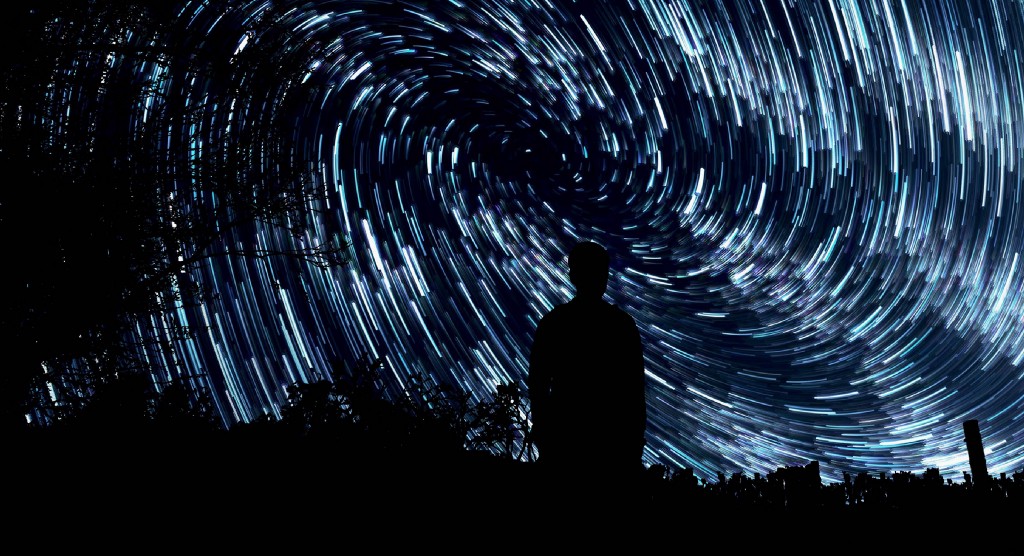
What happens first is people in hospital masks come banging on our doors before it’s even light out. They herd us out of our houses and down the block to what used to be the football field of Paige Clifton Senior High School. They make us strip and pile our clothes on the bleachers. It’s August but the mist hasn’t burned off the morning yet and we shiver. Especially Mrs. Todd shivers, who’s eighty-two. There’s like two hundred of us, everybody who lives on James Row plus 12th Street plus whoever they could prod out of the Amorcito apartments. Megaphones all over blaring state of emergency, please proceed in an orderly manner, this is a matter of public safety.

They push us naked into the field.

Near me are the Naylors who never come out of their corner house, the Sherman sisters I’ve known all my life, Trini with her baby who always cries but is dead quiet now. People hunch like peeled shrimp with giant scared eyes. “Man, what is this bullshit?” asks Dean, my little brother, he’s twelve and I should smack him for that kind of language but that’s when they turn the fire hoses on us.

Everyone lifted off their feet, everyone hurled into everyone else. Legs hair ribs nails. Mrs. Todd folds in half. Dean goes facedown so hard his nose snaps on the mud. I want to scream but I think if I opened my mouth I’d be filled with water, windsock-in-a-hurricane style. Somebody’s wet foot tangles with my shin and I smack down into the wet earth. Mouthful of torn-up grass and grit and slime. I roll over. Lying on my back I can see past the wreck of water and bodies. Way above us the sun’s coming up. The rising spume fills the sky with rainbows. On a normal day I’d be awake by now. I’d be about to take a shower.

People stumble down next to me, over me. The hoses blast away everything, dirt, skin, memory. I’m starting to disintegrate just like the earth. My brain is going to mingle with the soup. Bye Trini, bye baby, bye Dean, you were so right, what is this bullshit? I for sure don’t know.

The hoses go off.

Your clothing will be incinerated, the megaphone says. You can fill out a form for compensation from the Office of Toxin Containment. You’ll get an information packet detailing Follow-Up Action in seven to ten business days.

We’re all shaky trying to get out of the muck. People pull on each other to stand and slip and drag someone else down with them. Everybody’s got a painted camo warrior face and some of us have red streaks where our noses bled or our skin flayed away. Someone is like, “Well, guess we better get cleaned up,” and someone else has the balls to laugh.

Where Dean and I live is the downstairs left side of a fourplex with linoleum floors even in the bedroom. They call it a fourplex but really it’s five because they put some plywood around the water heater in the basement and rented the extra space out to an immigrant family. The only window they have down there is the hole in our kitchen floor where sometimes I peek through and see them all clustered around a hot plate. What’s in front is weeds and the spot where Mrs. Todd couldn’t get any squash to grow and a Jobs With Justice sign some little guy came by and stuck in the yard five years ago. What’s in back is kind of a deck but the boards are sagging in the middle so it’s shaped like a U. You might think there’s more weeds under the deck but wrong: Just concrete. And beyond the concrete there’s some chain link and beyond the chain link there’s this enormous dirt field and way out in the middle of the dirt is the low-down grey building everybody calls the Magic Factory.

Why it’s called that is because that place puts on better shows than Fourth of July, I’m serious. Fourth of July only might be better because you always know when it’s coming: right after the third, duh. Magic Factory shows are always a surprise but once it gets going somebody will yell and then everybody comes out to watch. The Sherman sisters have a whole set up with folding chairs but mostly people just stand in their backyards or press faces to the chain link or climb it if they’ve got tiny feet. (You can’t climb all the way over because of the razor wire.) Back when Mom lived with us and Benning was sniffing after her, he’d lift me or Dean up on his shoulders so we could see better. The best thing was when someone was doing a cook-out the same night as a Magic Factory show. Like you’re chomping down, boiling hotdog juice squirting into your mouth, and then you look over and there’s glitter pouring out of the smokestacks on top of the building. I say glitter but every time is different. Sometimes big spreads of color that hover over the roof pulsing like heartbeats. Or sometimes just rivers of stars gushing up and up and spreading across the night and then falling. You clamp your hotdog in your mouth and stretch out your arms but just when the stars are about to land on your wrists they disappear, they always disappear.

Or sometimes you’ll be picking corn out of your teeth and suddenly the air is full of sound. Like music but no tune and no words so maybe not like music. Always it’s way too loud to talk over and it kind of hurts your ears, but also it kind of hurts your heart in a way I think everybody secretly enjoys. Like the most beautiful animal in the world is trapped in a cage somewhere inside there. And we are the ones who have to listen to it, and we are the ones who get to listen to it.

The day after they hose us down there’s a bunch of caution tape wrapped around the Magic Factory. And down on Marion Street there’s a big padlock on the gate that leads into the dirt field. The sign that said Property of the Federal Government, No Trespassing is gone and now there’s just one that says Decommissioned. I’m going to be honest there’s definitely no geniuses living on this block, but you don’t need to be a genius to figure out everyone who got hosed lives in a house that backs up against the Factory. I think probably you could even be a little, I know I’m not supposed to use this word but, retarded, and still make something of that.

What happens next is an email comes with a list of drug prescriptions and a pharmacy voucher for fifty bucks. Consumers in the listed neighborhoods may have come into contact with dispersed agents (see notification 103C). The following regimen is recommended but not endorsed by the FDA.

At the drug store the pills come to sixty-four forty so I start counting out change.

“You got a day off for these?” The drug store lady taps a bottle.

“What’s that?”

“This one’s gonna keep you at home for a day. How come everybody’s asking for these? Tell you what I don’t envy none of you one bit.”

“Like what do you mean?”

“You got a question you call the number. Number’s on the receipt.”

“What — ”

“Sweetheart there’s a long line behind you.” She points and it’s true. Old man and lady and a woman with a baby on each hip and everybody’s clutching their printed-out voucher.

So I’m walking out past them and I get this idea to be like, “Oh I think I remember you from somewhere? You were the one all muddy and screaming? Maybe you remember me, I was all muddy and screaming too?” But nobody laughs.

Little brother is on the sofa when I get back to the apartment. “Oh Dean I know you did not get sent home the first day of school.”

He rolls his eyes because obviously. “Mrs. Shipley lied. Mrs. Shipley said I was in the hall after bell but she saw me coming and she shut the door early. She slammed it in my face. Why does she hate me so bad?”

“You need to quit the excuses and start the explainings. Like now.”

“What she said was I was banging on the door threatening her. Like yeah Mrs. Shipley you think I care about your dumbass study hall? Like shit. She hates me.”

“I’m serious if you swear one more time — She doesn’t hate you. You’re making trouble for yourself.”

Instead of listening he gathers his limbs together in a gangly bouquet. He digs at the sole of his barefoot, peels off a big nugget of callus and flicks it onto the rug.

“Omigod Dean gross pick it up pick it up!” I smack his head with the bag of pills and he skitters into the bathroom.

Now I’m alone. The room is still. The basement family isn’t rustling around. Late afternoon sun turns everything gold, even the dead skin crumbs on the floor. I line up the pill bottles on the table. They all have long names full of Xs and Zs, and I know that’s how you trust something’s authorized scientific but it still makes me kind of nervous. The labels say something about don’t take on an empty stomach so I put two patties in the microwave. “Dean? Come out here. You got to take some of these.” He doesn’t answer so I count out pills for myself, line them up in my hand. Little blue moons, pink circles, orange-and-white ovals. One deep breath then they all go down together. I wash them down with red juice out of the bottle, so sweet I kind of stop being able to breathe for a moment.

“Dean? Seriously come here.”

The bathroom door stays closed.

There’s too much to do in the mornings. There’s do we still have enough minutes on the prepaid, is there enough money left in checking, where’s the credit card, the other credit card, does Dean have his bus pass, back-pack, shoes, homework. There’s has anyone messaged for a nail appointment, because don’t laugh but I’m still hoping this small business thing will take off. I can do all these things at once, I’m a multitasker like that, but it’s a dance, if I get messed up I can’t start again.

What happens this morning is, right in the middle of counting out a dollar for Dean: pain. No joke pain. Like someone tangled their hand deep in my guts and yanked. I shriek in Dean’s face and his hand that was held out for a nickel instead gets a big gob of my spit.

“The hell, big sister?” But I can’t do anything except double over and make noises like someone’s pulling saws out of my throat. There’s a fat python clenched around my insides. There’s a cat hanging by its claws from between my legs. I shriek and shudder again and see Dean staring at me, mouth open, still cupping my spit in his palm.

“Noma — are you — ?”

He looks younger when he’s afraid. There’s a seeping warmth in my underwear and I’m pretty sure I don’t want his help on this one.

“It’s okay. Get out of the way.”

Somehow I get into the bathroom and pull my jeans down and wow is my underwear a mess. Rust and pink and bright red jelly down my legs. All I can do is collapse on the toilet and hunch over my knees. The pain rolls through in spurts and I bite the heel of my hand so Dean won’t hear me yell. Spit slicks down my wrist.

I wrench my brain away from panic and try to get my breath to slow down. Blue light filters down from the high up window. There’s the plink plink of the sink leaking and the sigh of the toilet tank and no other sounds. It smells like how I imagine a cave smells. I lay my forehead against the cool of the toilet seat and peer between my legs. The cramps turn everything blurry like Vaseline smeared on a camera lens. Every task I was trying to finish falls away. Nothing to do except inhale, exhale, and watch the blood fall out of me in ropes.

When Dean inches open the bathroom door and peeks around I’m in a numb ball on the tile, pants still around my ankles. He puts his hand in my armpits and lifts me like a child.

“Dean? You missed school?”

He doesn’t say anything. He gets a washcloth and runs the water until it warms. He gathers up my ruined clothes and carries them away.

I sit in the tub until I stop shaking. Then I tell Dean to go get the bottles on the table. He still doesn’t speak.

“Just pour them in the toilet.”

He doesn’t ask why. The toilet bowl is scattered with pastel constellations. I think about how such tiny things can have such long names. I think about the constellations that rose out of the Magic Factory. I think about the spray from the fire hoses that made bruises on our bodies and rainbows on the sky. I push the lever and the toilet glugs and everything disappears.

“Like hell I took them.”

Trini and Trini’s cousin and Georgia Sherman and I sit on Georgia’s front porch, and I’m working on Trini’s cousin’s nail beds. Trini’s joggling her baby on her knee and explaining why she didn’t take her pills. “He’s still nursing, you know? Like I’m all about natural weaning. And I don’t ingest nothing unless my doctor says. And you know my doctor hasn’t called me back in a year, so.” She clicks her tongue and shrugs.

I’m thinking come on Trini, you were feeding that baby chicken poppers before he had teeth. But I like that she’s with me on the pill thing so I just keep pushing her cousin’s cuticles.

“Well I took them.” Georgia says it in her I’m-old-and-I-don’t-have-time-for-this voice. “Just to be on the safe side. They still won’t even say what happened to us. I think I’m having a reaction, though. I got this spot.” She pulls up her shirt. Above her hip there’s a red bump wide as a quarter. Trini is going “Uh, yeah, what’d I tell you?” but then she looks and goes “Oh. But I — I got one like that.”

Hers is on the small of her back, to the right of her spine. “That is so weird, you know?”

I stop in the middle of applying a base coat and ask can I touch them. The bumps feel hard and round like everybody’s got ping-pong balls buried inside them. Trini giggles. “Dang Noma your fingers are ticklish.”

Then I lift up my shirt and show them the three bumps on my stomach and Trini stops giggling. “Oh what. Oh what the. Oh wow.”

Trini’s cousin is from the coast and she’s looking at us like she doesn’t even want to know what’s going on in this neighborhood. I reach out to finish putting on her enamel and she hesitates before giving me her hand.

The sun is going down and painting the sky so pretty someone should put it in a museum. I make each of that cousin’s nails disappear under three strokes of Copper Wildfire. Nobody gets up to go into the backyard. Nobody looks for magic shows anymore. We never said anything about it to each other but we all just know.

So like you expect a lot of things to be hard in life. Like there will always be bills and always landlords and your mom’s always gonna have creepy boyfriends and fake friends are always gonna be stabbing you in the back. Like even when you get fired from the nail salon where you’ve worked for two years and you weren’t even ever late except that one time, even that isn’t too surprising. But having weird bumps sprouting up all over your body, and now there’s way more and they’re growing bigger — that’s the kind of thing you just don’t really plan for.

At this point I have nine and Dean has fourteen. I don’t know how many other people have because it would be weird to go around counting but I’m sure it’s a bunch. Hardly anybody sits outside on James Row anymore. Dean’s quit making up excuses for skipping school. I’m supposed to be mad about that but it’s like the mad part of me has shriveled up and blown away. Instead this afternoon I’m like let’s treat ourselves, why not. We walk down to the carry-out by the highway and get shrimp fried rice and wings and crazy fries and we don’t even wait to get back to the house to start eating. We shovel orange rice into our mouths with our hands.

Dean wipes his fingers on his shirt and rubs the lump swelling on his neck. Then he drops his hands to his sides and stares out at the eighteen-wheelers charging down the highway. “Nothing like this has ever happened before.”

His voice is so empty that I swallow a whole shrimp without chewing at all. I keep coughing for longer than I need to because I’m trying to figure out what to say back.

“Hey. You don’t know that. Maybe there’s some fancy doctor somewhere and all he does is study this. Maybe we find him and he fixes us.”

Dean doesn’t look away from the highway. “Seriously, big sister? You think I got lumps on my brain?”

“You shut up. I was just trying to think positive or something. I don’t know.”

We finish the fried rice without speaking. We start on the crazy fries. So many cars fly by. I wonder what would they think if they slowed down to look at us. What if they saw what was under our clothes.

“Naw,” Dean goes, “This is something new. We got to start thinking totally different about this.”

“Different like putting a fry in your nose?”

“What?” But he’s too distracted and I get one in each of his nostrils before he can duck, and then it’s just like when he was six and I was twelve and he’s yelling “Fry monster, fry monster!” and chasing me all the way home.

I lose him going up the hill, he’s still faster even with fourteen lumps, and so I’m walking and huffing toward home when I see a car parked on the corner of James Row and Marion Street. Little hatchback, shiny red like a toy, no exhaust pipe — nobody around here owns one of those cars. I stare at it for a moment but then Dean is yelling for me to come unlock the door, so I go on.

For a while Trini had this guy friend but now he says he’s not going to come around anymore. Just to be safe, he says.

“What a useless coward, you know?” Trini holds both her eyes open with her fingers. “No way am I going to cry over him.”

I pull her hands away from her eyes. I get out my little soak tub and set her fingers in hot water. “Honestly I think you’re kind of lucky. Like if I was betting on which of you was going to be giving out diseases, I would not put my money on you. Just saying.”

“What is that, supposed to make me feel better?”

“Yeah.”

“You know what Noma? You are pretty cold sometimes.” She’s tipped way forward on the couch because by now the lumps are all over her back like little mountains. “That coward said it was his ‘survival instinct,’” she goes on. “Said I couldn’t blame him for just following his survival instinct.”

The baby sits on the floor in front of her. He’s got just this one lump between his shoulder blades. It makes it look like maybe he’s about to sprout wings. I lift Trini’s hands from the soak and start to massage her wrists. I work my way over the tendons in the back of her hand, feel them shift over her bones. I’m standing up because the lumps make it hard for me to bend in the middle. Our skin is stretched shiny in the places where the domes grow. Sometimes I think I can feel them rasping against each other inside me.

“They’re kinda like elegant, you know?” Trini says. “Like better than some tattoo or something. And, I’m serious, way better than being pregnant. No offense baby.” She tickles the baby who breathes funny now that his lump is basically as wide as his whole back. I rub moisturizer into Trini’s knuckles, knead each of her fingers, our hands are fragrant with cucumber-melon. Then without really thinking I reach up and stroke the lump below her shoulder. Her skin slides just a little bit over the hardness. I imagine them all hidden in the darkness of her, baseball-sized diamonds buried in black earth. White hot lumps of star stuff buried in black space.

Now that I’ve seen it once I see it every day, that little red car parked on Marion Street. This time it’s right by the taped up magic factory gate, and through the back windshield I notice a silhouette in the driver’s seat, upright and still.

I walk up along the sidewalk and tap on the passenger window. “What you still doing here?”

Inside there’s a man looking like a lawn gone to seed. Wrinkled dress shirt done up wrong and stubble patching his jaw. His head jerks when I knock. “Huh?”

“Yeah, huh. What are you still doing here?”

His eyes are big and dark as holes and his mouth works soundlessly.

“What, you can’t hear me? How about you open the window?”

Long hesitation and then, without taking his eyes off me, he raises his hand and toggles the window down.

“That’s better. Look I was just curious, I guess. What are you doing here?”

“I’m sorry.” He brings a thumb to his mouth and gnaws on the nail. He still hasn’t blinked. “I don’t know what you’re talking about.”

“You worked in there.” I jerk a thumb at the Magic Factory. “I used to see your car go in. Plus my girl Trini was first shift security guard, that little booth right there. But you know, it’s closed now. So why are you still here?

He so slowly raises his hands, turns them palm up like he’s about to receive a present from the steering wheel. Then he methodically, mechanically lowers his face into those palms.

I hold on to the door rim and use one big toenail to scratch an itch on my other ankle. I wait.

He slides his hands down an inch. “I don’t know. I ask myself. I can’t — I can’t seem to let it go.”

“What’s it?

“I was a researcher. I was helping to — ” Then his eyes change like he’s remembering other things about me, “ — But you know already. You must have seen.”

“We saw the magic shows, yeah.” I put my elbows down on the door rim and lean through the window into his car. “Tell me.”

He starts to laugh. “It’s all gone! Poof! I never worked here. Your memory must be tricking you. Check the records, there was never even a lab.”

He’s not really getting it. “Research-man I don’t have a lot of time.” I lean farther into his car and smell the unwashed smell. “You didn’t call it magic show, I bet.”

“We had longer words. We thought that meant we understood it better.”

“But you didn’t.”

“No.”

“You didn’t know shit.”

He reaches for my face, stops his hand halfway across the distance between us. “Look at you. It glows inside you. Even I can see that.”

His dark hole eyes widen like he wants to take in every inch of me. I try to imagine him in lab coat, ironed, clean-shaven. Probably at one point he was the kind of person I’d be scared to talk to, which almost makes me laugh. Like imagine you spend your whole life afraid to look on the face of God, and then you finally do and it turns out he’s just one more eyes-nose-mouth combo, just another blur to be learned in a minute, remembered or forgotten without much work.

Instead I hiss. “If I dragged you out the car right now and stomped your head into the curb, would you fight me?”

He shakes his head and I can hear small dry things rattling in his hollow body. “No.”

“Would it change anything?”

His eyes meet mine and between us we hold the answer unspoken.

“Why don’t you leave us alone, then? You didn’t before. You could now.”

He flinches. “I — I wanted you to know. I had to tell someone. For whatever it’s worth. I’m sorry. It was a mistake. I’m so sorry.”

I don’t really sleep anymore. Kind of I just lie in bed and sweat and imagine shapes in the dark. Once in the deepest part of the night I hear a weird noise coming from the front of the house. A shivery kind of croon. I coax the orbs of my body into a standing position and feel my way to the living room. Dean sits up on the sofabed, shaking. I turn the lamp on and see his face shiny with tears.

“Little brother? You okay?”

He can barely get out words between sobs. “It was — just a dream.”

I haven’t seen him cry so hard since he was three. “Aw, shh. That’s right. Just a nightmare. It’s gone now.”

He’s still crying but he manages to shake his head. “It — it wasn’t — wasn’t a nightmare.”

“Oh yeah? What was it?”

“It was — so beautiful.”

“Oh. Well, like, that’s not so bad then, huh? What was beautiful?”

He snorks a big load of snot back into his head. Wipes his face on the edge of my t-shirt. “The things — the things that are growing in us. That are getting ready to come out.”

And it’s like all my insides have vanished which is good because otherwise I might throw up. “But I didn’t — but I never said — ”

His sobs have stopped and now he’s just laughing really quiet. “Noma I wish you’d quit acting like I’m in diapers. It won’t do you any good. Everybody can feel it. We’re the Magic Factories now.”

Next morning Dean is gone. He spends most of his time now by the dumpster outside the Amorcito Apartments, passing roaches around with high rise delinquents. I always thought those kids were kind of dead in the eyes but whatever, I guess so are we. I walk down there and find him laying into this pale kid with more lumps than anyone I’ve seen.

“What are you, sad? You think this is some kind of therapy session?” Dean kicks the dumpster to punctuate his sentences. “There isn’t a thing to be sad about. There’s never been anything like us. We’re the next stage. The whole world is going to pay attention.”

The wispy kid has a hard time stringing together a response. “I know. It’s just. It’s scary. Sometimes. When you think about it.”

“Scary?” Dean’s voice goes all smooth. “I know. But you can’t be scared either. You have to welcome it. Think how pretty a butterfly is.” I get shivers listening to him talking like an adult while his voice still seesaws between high and low. His voice that used to beg me to go to the splash park or call me over to look at some weird bug he’d found. He’s almost six feet tall now though he doesn’t look it. Just a jumble of elbows and shins and Adam’s apple and hair that hasn’t been washed in too long. It makes his lumps stand out even more. Now he reaches out and strokes the kid’s bumpy head. “When you see the butterfly, you understand why the cocoon rejoices as it breaks.”

Rejoices as it breaks, rejoices as it breaks, I start walking and the words churn around my brain, faster and faster as my steps speed up. I see the little red car parked by the lab gate and I head straight for it, blood rough in my ears. The passenger side door is unlocked, of course it’s unlocked, and I get in and slam it behind me. I stare straight ahead. Outside the sun is going down and the sky is a smooth creamsicle field.

After a moment he says, “Is something happening? Do you feel different?”

Yeah I knew he’d ask this, and I wanted him to, except now it only pisses me off. Out the corner of my eye his hands are folded in his lap; he scrapes the cuticle of one thumb with the nail of the other.

“Can you describe the sensations in your torso right now?”

Now I look at him. “You’re serious?”

“If you can tell me what you’re experiencing, I might be able to get some sense of the progression of — ”

“Jesus, mister scientist man, I don’t fuckin know.” I kick my sandals off and arrange my feet on his dash-board. “How about you drive already?”

He is still and silent for a moment, then he pushes the ignition. The car hums to life quieter than an electric razor. In the side mirror the Magic Factory slides away behind us. I don’t say anything until we’re coming down the ramp onto the highway. “You want to know how I’m feeling? I’m feeling like I want to see someplace pretty. You know anywhere like that? Take me someplace really fuckin pretty.”

We stand on the edge of a river. The water is cloudy and clogged with floating islands of sticks and muck and lost flip-flops. On the far bank the sunset licks the trees with copper. I exhale and feel something more than air flow out of me.

The scientist grazes my wrist with his bitten up fingernails. “They found it near here, you know. In a field. Not far away. Not out in space. It fell right here. And we thought we were so lucky — we got to name it. We got to do something wonderful for humanity. We weren’t bad people.” He twists toward me. “If you had the chance to touch something utterly unknown, something not of this world — wouldn’t you take it?”

I keep my eyes on those far bright trees. “I didn’t have a choice.”

Like he was struck, “Right.”

We stand next to each other for a long time. He keeps opening and closing his mouth. Finally he goes, “I wish you could have seen how beautiful it was.”

There’s something in his voice I recognize. His hunger chimes with mine. Like maybe if we devoured each other, deep inside the other’s gut, we’d both find peace.

He puts a hand on my waist, doesn’t flinch when he feels the lumps. He lays two fingers on my face. “You’re so beautiful.”

I start to shake. “You should get me home.” I’m feeling full of fire, I’m feeling untouchable, I’m thinking no, no, he couldn’t kiss me anymore than he could kiss the hot edge of a knife.

Our lips meet.

One of his hands slides between my legs. We both gasp. He kisses my neck.

“You don’t deserve pain,” he says to my skin, “you don’t deserve any of this. Let me — please?”

There’s some sad little part of me that thinks he’s offering to undo it all. The rest of me knows this is a stupid weak hope, not God nor Jesus and certainly no scientist has power like that. But still. The huge sweet-ness of this thought, I lean into it.

He peels off my clothes there by the river. I pull or he pushes us back against a tree. The bark scrapes my back and I shiver like way back on that cold morning in August. My heart is exploding blood through me. Every beat hurls the globes against my skin. He stares at me for a minute and I think he’s forgotten how to breathe. Then he pulls me to him, wet kisses down the center of my chest and each rib and my belly. His knees press into the mud.

“So beautiful, so beautiful.” His breath tickles my stomach. “I’m so sorry, so sorry.”

He kisses the lumps, lips brushing the crest of each dome. His kisses make them churn. “Whoever deserved to see beauty like this?” He lays his cheek against them, nuzzles them with his nose. “I don’t deserve it. I don’t deserve this.”

I stare across the river at the trees though the sun is almost down now, their fire smoldering out. The river under its sluggish skin runs fast and cold. They brought me here when I was little, once, they taught us about the water cycle. The scientist enters me like a plea, like somewhere at my core lies the promise of his own absolution. He seeks it again and again.

What happens the next week is pale blue slips show up tacked to our doors. Properties in the indicated area have been designated unfit for habitation. Domain is hereby transferred to a redevelopment firm. Current residents have two weeks from notification date to complete relocation.

I know there was a time when I would have gotten mad about this. When I would have looked around at the apartment — the view through our window and the spot where Dean rollerbladed into the door and the Eiffel Tower picture I taped to the wall — and gone wild at the thought of leaving. But now it’s like someone’s yelling at me from very far away, almost too far for me to hear, and I just can’t see how it could be that important.

“They’re tearing down our houses?” Trini says from the couch. Trini doesn’t get off the couch anymore. Then she just starts laughing and laughing except her laugh sounds basically like a grunt.

Dean and I start to pack our stuff. At least I think we’re packing but I can’t tell if we’re really getting any-thing done. I keep putting things in boxes and taking them out and refolding them. Dean finds mom’s clothes crammed onto a high shelf and pulls them all down, fluttering avalanche of rayon and polyester over his head. He presses his face into her dresses, gasps in like he wants to pull the fabric into his lungs.

Out in the street we show each other the blue notices, we ask where are people headed, we shake our heads. One thing that’s changed is we touch each other more. Even people I barely know, instead of saying hi we just brush our palms over the hills in each other’s skin. We move like people who are sleepwalking, we move like people who are about to wake up.

The only person who doesn’t act like they’re dreaming is Dean. He stands on the bleachers in Paige Clifton field wearing one of mom’s old nightgowns. The dead-eye kids crowd the grass in front of him, reach up to touch his hem.

He howls, “We are the mothers of new creation! Do you feel the power growing inside you? Why do you think they want to drive us out?”

His face is unspeakable. More people pause at the edge of the field, listening.

They fear us. They fear our children.” His voice climbs up to a shriek. “They may cast us out of here, but we will spread across the country! We will spread across the planet! When it comes it will come to all of us, and it will not be denied, and every place on earth will know our glory!”

Everyone listening starts to whoop and sway. A breeze picks up and Mom’s nightgown billows around him and fills with light and his bony lumpy body is silhouetted through the white fabric. Really I have no idea anymore, who can even say, he could be my little brother or he could be a goddess born in the center of the sun, come to walk with us through the fire of these last days.

On our final night in the fourplex I go out into the back yard. It really wasn’t that long ago that we stood here and whooped for the Magic Factory to get going already. There’s no glitter or glow anymore. Only the plain sky, filthy with regular stars. For every one I count, there’s one more. For every world that lets you down there’s another, and another, promising redemption. It’s strange looking up at them. They flicker and pulse and from inside me come answering pulses and I know without knowing that what’s inside me is the same as what’s up there. I’m flayed down to nothing but a thin boundary of skin between two fields of stars.

You know when I think about my life there’s not really a lot I got to choose. Mostly what I did was because we’d be evicted otherwise or because there was a coupon for it and I never spent too much time freaking out about that. But now I have this new feeling like something has loosened I didn’t even know was tight. Like the gentlest stream ever is carrying me away. Like I don’t have to worry anymore about anything, no regrets or what-ifs, because before I go, I’m going to make something beautiful.

Maybe I’ll be the sound, the music that was never music. People all over will hear me and freeze and just start crying where they stand. Or I’ll be the stars that gush up into the sky and rain down over the highway. All the cars will come screeching to a halt and everybody will reach out their windows for the lights falling around them and laugh and know that there is love everywhere in the world even where you don’t imagine it could survive. Or I’ll pour into a spring of clear shining liquid, I’ll flood the streets and wash away the sticks and trash and broken glass and you can come out and dip your Dixie cup in and gather me up. One drop on your tongue and your scrapes will heal, your teeth will straighten, your feet will soothe. One sip and your daddy will come home. A cupful and, come close now, no one will ever lie to you again. The world will be set on fire with justice. All the things you hunger for will fly close like tame hummingbirds. Just reach out — oh God — just take it.

Magic Mike XXL Is Basically “The Odyssey,” But With Butts

This article was adapted from a talk presented at Drunk Education: A Tribute to Magic Mike XXL. Video is available here.

Tolstoy once said there are only three stories in the world: A man goes on a journey, a stranger comes to town, and Big Dick Richie’s dick is too big.

Ok, so one of those is actually a secondary plotline of the greatest work of art of the 21st century, Magic Mike XXL. Also, technically, Tolstoy may not have said any of this, even the first part; it’s one of those quotes so widely attributed to so many different authors by people trying to make generalizations about literature that it might as well be attributed to Marilyn Monroe. But there is a beloved idea that most stories can be distilled down to a few underlying plots, and that maybe all great, important narratives are ultimately each just a retelling of a single myth. As Magic Mike XXL is the greatest journey story of our time, it would then be fair to assume that it must, too, be a retelling of this same myth.

In 1949, Joseph Campbell published The Hero with a Thousand Faces, a book that popularized the idea of the monomyth, which says that all great stories — the large narratives by which cultures understand their origins and their heroes, from our small everyday lives to way civilizations are founded — map onto the same basic, repetitive plot. All hero myths, claimed Campbell, are really the same hero myth, across time and cultures. The Hero With A Thousand Faces remains as popular with high school English classes as it is with men in Reddit forums who think the fall of Rome is somehow illustrative of why women won’t sleep with them.

The Hero’s Journey to this day underlies a lot of our most famous popular culture: the big, heroic, and usually extremely male stories such as Star Wars (George Lucas talked in numerous interviews about having actively based his trilogy of films on Campbell’s work) and Harry Potter and Moby-Dick and The Odyssey, the grand stories of grand men on grand journeys. Big Dick Richie’s journey to find someone for whom his dick is not too big, and Mike’s quest to accept his calling as a male entertainer, are — at least in my mind — no less noble than Odysseus’ striving to get home or Frodo’s task to bring the ring to Mount Doom and destroy it. These are the stories of great men doing great things, and Magic Mike XXL is also the story of great men doing great things. So, if we hold with Campbell’s idea of the heroic monomyth, MMXXL, like all great epics and legends, must map onto the Hero’s Journey. Magic Mike’s road trip to a Myrtle Beach stripper convention is a story for our time to rival The Iliad, The Odyssey, The Lord of The Rings, and Star Wars. In fact, it could probably replace any or all of these things and the culture would benefit.

Magic Mike’s road trip to a Myrtle Beach stripper convention is a story for our time to rival The Iliad.

The reason the Hero’s Journey remains a prominent and popular way of understanding stories is not because it’s accurate to something fundamental about storytelling — far more stories exist outside this template than conform to it — but because these stories center men, and therefore appeal to a certain type of man who wants confirmation of his own importance. Campbell’s hero appeals both to capitalism and to the misogyny built into our capitalist society and others like it. Magic Mike, on the other hand, is a story about men doing great things that manages to avoid all the traps of the great man narratives, and the specific ways in which it deviates from these narratives demonstrates exactly what is so useful and maybe even revolutionary about it.

Campbell divides the Hero’s Journey into three parts, each with five or six subsections; supposedly most hero myths, from ancient religious stories on down to Star Wars and Harry Potter, follow these same steps. In the first stage, the hero hears the call to adventure and sets off on his quest. Magical Michael is but a simple furniture maker, trying to run a business, attempting to gain enough financial stability to provide healthcare to his one employee. But then — he hears the call.

Luke Skywalker cannot deny that the Force means he must have a greater purpose. In much the same way, Magic Mike dances to ‘Pony.’

The call comes in the form of a fake invitation to a funeral, and in the (more compelling) form of a butt-naked Joe Manganiello pushing Mike into a motel pool. But in the next step of the Hero’s Journey, the Refusal of the Call, Mike does not want to give up his simple, hard-earned life of artisanal furniture making. He heads home, not taking the invitation for one last ride. Once home, however, he hears the call again, this time in the unignorable strains of Ginuwine’s “Pony” in his woodworking studio. Mike is called — to dance. He cannot help but dance, his nigh-magical skill at sexdancing taking over against his conscious wishes. This might be seen as one of the next steps on the Hero’s Journey, the crossing of the threshold, in which the hero accepts that he must undertake the mission, and leaves his regular, familiar life behind to venture into the unknown. Often, this takes the form of an acknowledgement of his own powers — Luke Skywalker cannot deny that his ability to use the Force means he must have a greater purpose; Harry Potter learns from a shaggy stranger that he is not a normal boy, he’s a wizard. In much the same way, Magic Mike dances to “Pony,” and Big Dick Richie finally declares that he is not a fireman, he’s a male entertainer.

This is where we see our first hiccup: Mike’s story lacks the stage Campbell calls The Meeting of the Mentor. There are no mentors in Magic Mike XXL, one quality that distinguishes it both from the early film to which it is a sequel and from the traditional Hero’s Journey. We’ll come back to this, as it’s crucial to explaining how Mike ultimately doesn’t just enact the Hero’s Journey, but transcends it.

But from here, this modern Florida man Odyssey seems, again, to follow the required patterns to be a Campbellian hero narrative. The final stage of the first part of the narrative is what Campbell refers to as The Belly of the Whale. The hero is now fully embroiled in his quest, and it proves harder than he expected, and begins to transform him. It is clear at this point that the only way out is through. This might be the drag show that the crew attends in Jacksonville, where Mike and Ken work out their differences through a cathartic ball-punching and the gang share their hopes and fears — Tito wants to open an artisanal frozen yogurt truck — around a campfire on the beach. The next morning they set off on their quest again, struggling with how to plan their acts for the show and whether they are all truly committed to this endeavor.

The second section of the Hero’s Journey begins with a stage called The Road of Trials, which applies perfectly to Mike and his buddies’ journey, since they literally set out on a road and encounter difficulties driving on that road. (It’s hard to drive a truck while rolling on molly.) The Road of Trials is where the hero proves himself by fighting through any numbers of tests or difficulties on the way to his ultimate goal. The gang undergoes the trial of the gas station, in which Big Dick Richie learns what it truly means to be a male entertainer (and not a fireman) by making a bored, unimpressed employee smile with his dancing. They undergo the trial of the car crash caused by taking molly and doing a prayer circle while driving, and the trial of the hospital and the trial of the comedown.

The next stage in the Hero’s Journey is the Meeting with the Goddess, which obviously tracks, as the next place the gang goes is Rome’s, Jada Pinkett Smith’s magical subscription membership brothel in Savannah. Jada Pinkett Smith is, both in the movie and in real life, obviously an actual goddess, and Mike receives advice and help from her when he’s at a low point, in much the traditional manner of this juncture in the Hero’s Journey. (Think Circe, Galadriel, or Athena.) But the stages that follow are where Magic Mike undeniably parts ways with Campbell’s template.

The next section of part two of the Hero’s Journey includes such stages as Woman as Temptress, Atonement with the Father, and Apotheosis. Here the hero resists temptation, often in the form of a woman or some other kind of sinful female-figured hedonism, and then confronts, struggles against, and ultimately makes peace with, his father (sometimes his literal father and sometimes the larger idea of his origins or inheritance), in order to triumph at the quest he set out to do. These stages reveal some of the reasons of the Hero’s Journey is so popular with a certain type of man, and why it’s stuck so deeply into certain sections of culture: its engine is deep-rooted ideas of traditional masculinity, coupled with misogyny. This particular type of sin-and forgiveness, dads-and-bros narrative is deeply ingrained in our culture and has a lot to do with much of the sickness in it. And it’s completely absent in Magic Mike.

The sin-and forgiveness, dads-and-bros narrative is deeply ingrained in our culture. And it’s completely absent in Magic Mike.

There are no dads in Magic Mike. Oh, there are daddies; Mike, at a moment in the movie that is deeply important to me personally, himself calls Big Dick Richie Daddy, and every man in the film could be said to be a daddy in one way or another. It is a story full of daddies, but it is utterly free of dads. We spend time with a room full of older women, most of whom are moms, but their husbands are absent and, as is revealed, pretty much useless. The Hero’s Journey, on the other hand, is the daddest of all possible narratives, by and for and about dads, full of dads, littered from end to end with dads dadding. Dads are our link to the past, to things as they are and as they have been; dad stories are stories about doing things the correct way because this is the way things have always been done, about accepting traditions as correct, about achievement that gains validation and praise because it fits into the systems that already exist. Most heroes are dads because most heroes uphold the status quo. The heroes of Campbellian narratives seem to be rebels, but they are usually only the central figure in a story meant to teach us why the king is the king.

Magic Mike has no interest in dads, or kings, or achievement. The primary point of the Hero’s Journey is that the quest leads up to a decisive victory that can be won; the day can be saved, good can triumph over evil. But Magic Mike, although it seems like a quest, is a story totally uninterested in victory or in achievement. Do Mike and his crew win the stripper contest? It’s never discussed. Is the convention they travel to actually a contest? Mike’s crew’s envy of the success of the other group of strippers who perform the Twilight routine might imply that it is, but besides that very dim implication, nothing else would lead us to believe that their goal is to win rather than simply to enjoy performing, to be the best male entertainers they can be. Magic Mike is a decidedly anti-capitalist story. It doesn’t want to gain anything but joy, and has no interest in the upward progression of a narrative any more than it is interested in the approval of dads.

Magic Mike XXL is a story full of daddies, but it is utterly free of dads.

Similarly, the way Magic Mike treats the women in the movie is quietly astonishing. The hero in the Hero’s Journey is very specifically male, and many of the stages of the journey Campbell documents are specifically about female figures, all of whom are there either to tempt the hero away from his purpose, or assist him in achieving it. Women are, canonically, not individuals in these stories, able only to exist as they influence a man or signify his trials and redemption. But because Magic Mike is free from the relentlessly goal-achieving shape of the kinds of stories that people who get angry on the internet about Star Wars love, the women in it don’t have to represent either a victory or an obstacle to victory. Nobody gets a girl in Magic Mike XXL, or even tries to, because women aren’t achievements—which means instead they can be people, with the kind of backstories and varied human desire only given to men in traditional stories about male heroes.

The third and final part of the Hero’s Journey is the Return, in which the hero must go back to his community, the home from which he set out, and bring the lessons he learned and abilities he gained on his quest back into the regular life he lived before. The hero in the end returns from the magical to the un-magical, and must learn to square one with the other. Odysseus’ slaughter of the suitors, winning back of his wife, and pilgrimage carrying his oar is one version of this; the roughly 52 interminable endings of Lord of the Rings are another. This cyclical nature of the journey is meant to teach us that life goes on, that doing great and noble things does not undo or overthrow the established pattern of our days. We might be called to greatness, but we will still have to go home. We may rise to great heights, but we cannot fundamentally change who we are, and part of the hero’s responsibility is to be loyal to his place in the world.

Magic Mike doesn’t subscribe to any of this. The magic doesn’t have to give way to regularity and the status quo; nobody has to go home. There’s no return, no reconciliation, no journey back, no anxious reassurance that despite this one-time foray into the realms of legend, Mike is but a humble furniture-maker who knows his place in the world. We’re never reassured that quietly dancing to “Pony” alone in his studio is enough for him. Instead, the movie ends with a preposterously long four-way dance-sex routine, a male entertainment performance that in no way advances the narrative. Rather, the movie just grinds (literally) to a halt, giving up on narrative in favor of some extremely adult, and incredibly joyful dancing — because Magic Mike XXL cares about joy instead of victory.

Imagine, for a moment, that all the big traditional Hero’s Journey stories replaced their turgid third acts with an extremely adult and incredibly joyful extended sexdance sequence. Imagine if instead of everyone growing up to be some kind of resigned 35-year-old cop, the Harry Potter books just ended abruptly a few chapters into Book Six and everything else was replaced with pointless sexy dancing. Imagine if two-thirds of Moby-Dick was replaced with a massively extended version of the sperm-squeezing scene, in which the men on the ship, harvesting the sperm from a whale they’ve caught, find themselves ecstatically joining together in a (arguably extremely homoerotic) celebration of shared humanity through the task, squeezing both the sperm and one another’s hands joyously. If all but maybe a hundred pages of the book were just that scene, you’d have Magic Mike XXL. Imagine if, instead of the interminable, lugubrious 14 hours of endings at the end of the Lord of the Rings movies, there was just a hot dance-freaking scene of comparable length. Imagine, instead of the entirety of Return of the Jedi, a movie-length semi-erotic choreography routine.

Imagine if the Harry Potter books just ended abruptly a few chapters into Book Six and everything else was replaced with pointless sexy dancing.

Ultimately, Magic Mike isn’t a hero’s journey, because it doesn’t believe in heroes. It believes in sexy dancing, and joy. Nothing is achieved because the story is not trying to teach us anything. Women are people rather than objects to be won or evils to be defeated; oppressive morality is completely absent, as are authority figures. Instead of heroes, sexy dancing. Instead of dads, sexy dancing. Instead of telling the story of why the king is the king, sexy dancing. While most people would acknowledge that Campbell’s idea of the hero is outdated and ossified, it hangs around persistently in our culture because it is a story men can tell themselves about why things should stay the same, and why the people in power should remain in power. Magic Mike offers the opposite: an unfamiliar story that hints at a better world.

What’s Up With All These Stories About Women Having Sex with Fish?

Like vampire romance before it, sea creature sex is having a moment. It’s been most notable in the buzz around Melissa Broder’s debut novel, The Pisces, which published this spring to plenty of press and favorable reviews. Much was made of the novel’s eroticism; specifically, the fact that this eroticism focused on a merman. But Broder’s debut is just a drop in what’s become a bucket. From Oscar-winning movies to recent reissues, 2018 is shaping up to be the year of women doing it with fish. It’s a strange departure from our usual romance tropes, and one that, in its strangeness, may reflect the eerie place women find themselves at this juncture in society and politics.

To be fair, human–sea creature romance isn’t an entirely new trend. The Pisces borrows from a long tradition of mermaid–human (dangerous) liaisons, with the protagonist, Lucy — a Sappho scholar — particularly attuned to the mythic heritage she finds herself embroiled in. Most human–seaperson myths and folktales reverse the genders — a besotted man and a tempting siren, a husband and his selkie wife — and the sex is generally less graphic than what Broder offers. But the romance between Lucy and her fishman follows our understanding of, and expectations for, a merperson–human love affair, right down to the potentially fatal consequences.

Then there’s this year’s Best Picture winner, The Shape of Water, which takes a more amphibious approach. The historical basis for frogman–human relationships isn’t as robust as mermaid–human ones, though a couple notable exceptions come to mind: Mrs. Caliban, the 1982 novella reissued late last year by New Directions, is a prime example. In fact, it has a strikingly similar plot to Shape: In both stories, a male sea creature is captured and tortured in the name of science. He causes some carnage in retaliation. He escapes and hides out with his human lady-love, who is inexplicably attracted to the gigantic frogman. Love blossoms. Escape plans are hatched. Things go awry.

Plot’s not all these stories have in common: there’s also the sex. In each of these examples, it’s passionate and often graphic. Which inevitably leads to a technical question: how, exactly? The Pisces gets around the confusion by starting the merman’s tail a bit lower than we’re used to. Dorothy of Mrs. Caliban never describes exactly how, or where the necessary equipment is, though in her initial description of Larry — the frogman — we get the gist: “as for the rest of the body, he was exactly like a man — a well-built large man — except that he was a dark spotted green-brown in colour and had no hair anywhere.” And one of Shape of Water’s best comedic moments involves Elisa, who is mute, pantomiming to her coworker how she and the creature were able to — you know.

Still, there’s more to these fish relationships than what happens between the sheets (or in the bathtub). The women form a deep emotional bond with their sea-lover, one that’s missing in their human relationships. In fact, we can read a second-wave feminist angle into the stories: if a woman without a man is like a fish without a bicycle, what about a woman with a fish? Constrained by society’s expectations, disappointed by the men in their lives, lonely, and depressed, the women find sexual expression and freedom by shucking conventionality and doing it with sea creatures.

The women find sexual expression and freedom by shucking conventionality and doing it with sea creatures.

And this can be fairly overt. Two of the stories — Mrs. Caliban and The Shape of Water — are set in the middle of the last century. Their protagonists are isolated by circumstances including death, disability, and infidelity, but also by midcentury American values and limitations on the roles of women. Pisces is a more contemporary story, but Lucy is nine years into her Ph.D. and only becoming more assured of its absurdity. She learns during the novel that her boyfriend of eight years has impregnated a new girlfriend just months after their breakup, and that she has lost her scholarly funding. She is notably not young. None of the women are; and they are all lonely, childless, more or less career-less, and facing ever-increasing invisibility as they age.

It’s hard to see these similarities and not interpret them as the beginning of a new trope in supernatural stories. In monster tales of old — King Kong, Dracula, The Creature From the Black Lagoon, etc. — women are victims of the creatures: kidnapped and terrified, left awaiting rescue. Any implied sexual tension has a notably rapey vibe, the better for a (human) man to swoop in, rescue the (still virginal) lady, and kill the beast. In more recent examples, the attraction between monster and woman has been mutual, though its expression notably old-fashioned. Twilight and its cohorts trade in a chivalrous notion of men struggling to control their lust — blood or otherwise — around the ladies in their midst. Traditional gendered qualities are amplified: the woman isn’t just physically smaller and weaker than the man; she is mortal, and he is not. The overly protective male so commonly found in romance novels therefore has better-than-usual justification for his extreme possessiveness. That chivalrous component remains even in more adult interpretations of the story: A show like True Blood is much more overtly sexualized — it was on HBO, after all — but still traffics in very genteel notions of romance.

But our tastes have grown up — evolved, even. Our new monster stories don’t stop shy at sex or at first blush of romance. And it’s noteworthy that the sea creatures aren’t glamorized the way vampires are; they are amphibians and fish, warts, scales, and all. Still the women love them, and care for them. And that’s another departure: these relationships have a strikingly maternal note to them. It’s a reversal of the usual protective man found in romance; now the women are the rescuers, keeping their lovers — who are, quite literally, fish out of water — safe from the dangers of a narrow-minded world. They care for their wounds, feed them, clean up after them, transport them to and fro. They find romance in these relationships, but also a sense of purpose, a feeling of being necessary that their lives had hitherto lacked. These aren’t damsels waiting for rescue — they’re women looking for ways to make their squandered agency mean something.

Now the women are the rescuers, keeping their lovers — who are, quite literally, fish out of water — safe from the dangers of a narrow-minded world.

These stories are rejections of our most common narratives, and it’s notable that the medium of that rejection is so dramatic; something has to be deeply wrong with the status quo when women choose for their companions not men, not even dapper vampires or burly werewolves, but frogs and fish, thoroughgoing rejections of masculinity. And maybe that’s why these stories resonate so well right now. Could we read — in our desire to save rather than be saved — a reflection of the current political environment, in which the fairytale that our system is impervious to demagogic influence has crumbled? (In reclaiming the girl-kisses-frog narrative, perhaps we’re picking up a new fairy tale that suits our purpose.) As long-standing norms of political conduct fall, we’re increasingly aware that no one is coming to save us. It’s this awareness that informed the Women’s Marches and the Families Belong Together marches — both attended primarily by women — turned toward fiction, a genre that has historically been the domain of women. The shadowy sadism of the governments in Shape and Mrs Caliban, seen in their treatment of foreign creatures, seems especially pertinent in light of the current administration’s fear-mongering of “animal” immigrants that — they insist — must be housed in cages. That our current administration is treating families seeking asylum in a manner reminiscent of a fictionalized government attempting to control gigantic frogmen adds another layer of horror to the already grotesque. How could Eliza, or Dorothy, or Lucy, stand idly by? How can we?

The political fight is far from over, and neither, it seems, is the trend of sexy fish: in fact, Tin House re-released Samantha Hunt’s ambiguous mermaid–human love story The Seas this week. It should make for a great beach read.

Get Bombed on ‘Handmaid’s Tale’ Wine to Forget that There’s ‘Handmaid’s Tale’ Wine

Update: After social media outcry, the wines have been cancelled. You know what this means: clown on Brett Kavanaugh on Twitter as hard as you can without stopping for any reason!

I f contemplating the increasing plausibility of The Handmaid’s Tale makes you want to drink, we have some (sort of) good news. Hulu, which airs the extra-violent TV adaptation of Margaret Atwood’s classic, is putting out a line of three wines that People.com describes as celebrating the series’ “strongest female characters,” a phrase that has absolutely lost all meaning. These characters are two Handmaids, women used as sexual and gestational surrogates by the upper echelons of a fundamentalist regime that views them as walking wombs, and the wife of a Commander, one of the privileged men afforded the use of a Handmaid due to his complicity in the repressive society. We’ll drink to that! But only because we really feel like we have to right now!

This is not by any means the first incidence of disturbing Handmaid’s Tale merchandise. In Vulture, Laura Bogart detailed some of the more tin-eared examples of packaging Gilead as a female-empowerment opportunity. The Wing, the relentlessly millennial-pink network of private women’s coworking spaces, launched a line of products in cooperation with Hulu that reimagine the novel’s desperate battle cries as go-girl encouragement.

Or, you could swaddle yourself in a red cape and hood, literally the symbol of brutal oppression under a religious regime that values women’s fertility but not their humanity!

Last year, to coincide with the show’s debut, Hulu commissioned the gritty chic label Vaquera to design a Handmaid-inspired line: This line includes a red hoodie with the novel’s signature catchphrase, Nolite te bastardes carborundorum (or “Don’t let the bastards grind you down”) printed, in a Sex Pistols–esque torn-magazine font, on the front, an extra-long spin on the white bonnet, and a red jacket with the word Maidez stitched across the shoulders. According to the designer, this capsule collection addresses “poignant social issues” and seeks “to reverse cultural norms, celebrate individuality, and empower oppressed individuals.”

The splayed-leg pose really makes it:

But at least the clothing line pegged to a rabidly misogynist dystopia that reduces women to sex and pregnancy slaves isn’t lingerie, right? Lol psych it’s lingerie too.

There’s something almost more sinister about the Handmaid’s Tale wine, though; it’s attaching the Gilead brand to a tool of numbness and forgetting. A gendered tool, no less—think about the “wine mom” archetype and all those jokes-not-jokes about getting bombed on wine with your girls (or alone) to forget about the pressures of dating, motherhood, career, or living under capitalistic fascism. It basically begs for the tagline, “Tired of living in a society that’s hurtling towards dystopia? Forget all about it for one evening with Handmaid’s Tale wine!”

If there’s anything we’ve learned, or should have learned, from The Handmaid’s Tale, it’s that complacency lays the groundwork for tyranny. But wine lays the groundwork for complacency. (Also, not for nothing: the wines named after Handmaids are called Ofglen and Offred, even though these are possessive monikers enforced by their status as non-person possessions. Why not Emily and June?)

Hulu, if you’re looking for a more appropriate marketing opportunity, we have some suggestions: Handmaid’s Tale the pepper spray. Handmaid’s Tale the foamcore protest sign. Handmaid’s Tale the IUD. Handmaid’s Tale the enormous donation to the National Network of Abortion Funds. But while we can’t say “Handmaid’s Tale the despairing attempt to anesthetize yourself against the terror of living every day in the face of encroaching despotism” is off-brand, exactly, it may not be the message you most want to send.

7 Books That Imagine Life Without Landmark Supreme Court Cases

Despite a number of back-asswards decisions that were eventually redressed in slightly more enlightened times (Dred Scott, Plessy v. Ferguson, Korematsu), the Supreme Court has on many occasions been an engine for civil rights and freedoms. But recently, for no reason at all, we found ourselves wondering: what might happen if some of those decisions were reversed? What if we had to learn to live without the rights and freedoms the Supreme Court has, however grudgingly, handed out over the years: the right to desegregated education, to birth control access, to legal abortion? Well, as with all good “what if” questions, we can find some possible (though not always plausible) answers in the world of speculative fiction. Here are seven books that imagine the rollback or non-existence of certain key rights granted by the court. Sometimes there are also zombies.

Lemon v. Kurtzman: When She Woke, Hillary Jordan

The Supreme Court has determined that laws can’t be intended to promote (or inhibit) religion, but Jordan’s dystopia has thrown that ruling away. In this faith-directed America, protagonist Hannah has her skin “chromed” red as a marker that she’s been convicted of having an abortion. It’s an updated Scarlet Letter that relies on some fanciful science (if we had the technology to change people’s skin color I can think of some very serious pranks I’d like to pull), but is otherwise not as far-fetched as we might want to think.

Brown v. Board of Education: Dread Nation, Justina Ireland

Ireland’s alt-history actually takes place before the case in which the Supreme Court ruled against segregated education, in a Civil War–era America in which the course of the war was altered by the sudden appearance of zombies. Protagonist Jane has constrained access to education: black and Native young people can study only how to fight and how to serve. Oh, and how to put the dead back in their graves.

Griswold v. Connecticut: Bumped, Megan McCafferty

In McCafferty’s young adult novel, contraception is illegal, and teenage girls can be coerced or bribed into providing children for wealthy couples. What an inventive science fiction novel that is definitely not based on things that are extremely plausible or already happening! (What makes it speculative is that in this case a virus has made everyone over 18 infertile. The contraception part is barely speculative at all.)

Tinker v. Des Moines: Battle Royale, Koushun Takami

This case ruled that children in school still have rights to free speech, which they don’t give up once they enter the classroom. But that was 1969 in Iowa; this is a near-future fascist Japan, and the students of Shiroiwa Junior High have no rights to free speech, the pursuit of happiness, liberty, or life. They’ve been transported to a remote island, where their positions and conversations are monitored as they’re forced to murder each other for sport. It’s a harrowing read that is also, to be fair, not a likely outcome in any country, regardless of the makeup of the highest court in the land.

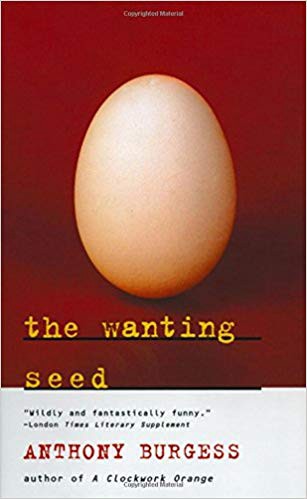
Lawrence v. Texas: The Wanting Seed, Anthony Burgess

If you’re a straight person struggling with envisioning what it might be like if the Supreme Court rolls back cases protecting LGBTQ populations from discrimination, try this switcheroo: a world in which heterosexual sex is discouraged by the government and discriminated against by society. Sound dystopian? YEAH, IT IS.

Plessy v. Ferguson: The Sellout, Paul Beatty

Plessy v. Ferguson, which ruled that segregation is constitutional, has already been overturned. But Beatty’s satirical novel asks: what if it were re-un-overturned, again? This Man Booker Prize winner actually involves a (fictional) Supreme Court case: the narrator, whose sociologist father subjected him to all sorts of probably-not-IRB-approved race-related psychological experiments when he was a child, sets his sights on the high court with the goal of reinstating segregation and slavery. (The character is black; the layers of satire are deep.)

Roe v. Wade: Red Clocks, Leni Zumas

By far the least speculative speculative novel on this list, Red Clocks is a chillingly realistic account of what would happen if abortion were outlawed (right down to the fact that abortions, of course, still happen — they’re just more likely to be deadly). The novel follows the intertwining histories of a pregnant teenager, an herbalist hermit providing natural remedies, a depressed mother, and a childless woman trying desperately to get IVF before that’s outlawed too. Red Clocks is speculative fiction now, but it could easily be the literary fiction of 2019.

Here’s a Pill to Sleep the Year Away

You know people don’t eat any more, right? They cure. They juice. They fast. They are pescaterians. Pollotarians. They are flexitarians, but only if they have looked the meat in question in its eyeballs, first.

Deciding what to eat and sourcing it takes a certain class of Americans hours every day. And then they need to spend additional hours working the food off. Enter areo-yoga, paddleboard yoga, yoga for your dog. Skin tautness and follicle integrity are also very important. There’s facial yoga, cold sculpting, dermaplaning, microneedling, prejuvention, injectable nose jobs. We are told by glossy bloggers to wash our hair reverently, and we are told by the same bloggers not to wash our hair at all.

My Year of Rest and Relaxation by Ottessa Moshfegh

Once you’re looking good and eating right, you have to invest substantial effort into the maintenance of your social life, as well. It is not enough to quietly enjoy the company of your companions any longer, you must broadcast the proof of friendship to the digital rooftops — I am re-taking this selfie with this person because I like them very much!

What a time to be alive, even our procrastination necessitates panache! It takes hard work to think of the tweet that will telegraph our boredom while also making it evident that we are very BUSY. It takes artistry to snap just the right photo to communicate your “mood.”

I am exhausted writing this diatribe, and I’m exhausted living alongside it — the unrelenting march to the place (or follower count) where we’ll be livin’ our best lives. And yet, the world feels so hopeless, the sense of right and wrong so conjoined, that perhaps the only thing that feels controllable is our social media posts and our digestive tracts. Is this how the valid message that self-care is not just permissible, but necessary, mushroomed into an excuse to put self first, self second, and hell, also on third?

Enter into this age of self, a nervy mike-drop of a novel from beloved author Ottessa Moshfegh that throws scatological-level shade at our culture’s quest for betterment. The unnamed heroine of Moshfegh’s latest, My Year of Rest and Relaxation has but one goal: to sleep the year away. To achieve this, she will enrage her best friend Reva by letting her bikini body soften, consume VHS cassettes instead of solids, and enlist a magnificently incompetent psychiatrist, Dr. Tuttle, to play pill pusher to her sleeping beauty for twelve inactive months.

In these times of #silenceiscomplicity when concerned citizens are donating, marching, cold-calling, and campaigning, all the while visibly incorporating these efforts into their larger “brand”, Moshfegh’s profile of a privileged, beautiful white urbanite’s decision to hibernate feels especially provocative, catapulting My Year Of into a new and darker category of guilty pleasure reads.

A committed Moshfegh admirer, I will follow her cutting intelligence and sardonic humor wherever she puts it to work, so I was especially pleased to have the opportunity to speak with her by phone about her delectable fourth book.


Courtney Maum: Kirkus called your latest novel “The finest existential novel not written by a French author.” What do you think, Ottessa? Is My Year Of existential?

Ottessa Moshfegh: That’s pretty apt, I definitely felt like it was existential. I wonder if other people will see it that way? It is a grappling with an existential question of consciousness and being and the trap of being. From the outside, the book is about a pretty woman who has everything but is miserable, who decides to sleep her troubles away. Which I guess in a mundane sense is exactly what she’s doing, but as a writer I think it’s a little more profound than that. What exactly is uncomfortable about this, what are the reasons for human misery? Loss, purposelessness, difficulty with human relationships, alienation from human society, loneliness. The usual. These questions are essential questions that interest me, inherent in everything I write.

CM: I read in The White Review that Newton — your hometown, right? — has the highest number of psychiatrists. Is that true, and if it is true, do you have an idea why that is so?

What are the reasons for human misery? Loss, purposelessness, alienation, loneliness. This essential question is inherent in everything I write.

OM: I don’t know if it’s still true now, but it makes perfect sense. Newtown is a very wealthy suburb of Boston, a hub of education in the northeast. The values in that culture have a lot to do with achievement and a higher echelon of human interest: academia, science, philosophy, art… It isn’t a place that really embraces human nature in its more spiritual component. There’s a lot of pressure. Kids do SAT prep when they are twelve, they’re working on their resumés, their extracurricular shit. Most families in Newtown have two high achieving parents, so how much time do you actually get to spend with your kid when he’s not with the tutor, at a cello lesson…I think the lack of human connection is exactly why people develop mental illness. Psychiatry works perfectly in a culture like Newton’s because it’s a substitute for love and care. It makes me think: what is an education actually getting us? It’s not giving us tools to actually deal with our humanity. It gives us tools to use our brain in ways that allow us to be more productive and make us more alienated with each other.

CM: Your writing is revered by many people, including me, because it’s blunt and dirty and smart and it doesn’t seem to give a fuck, which isn’t to say that it comes off as careless, but that your writing seems to fly in the face of what it means to be a good citizen, a clean person, a useful person, and perhaps even a “good” woman in our culture. What is it like to be in promotion mode for My Year of Rest and Relaxation? You kind of have to be in “good girl” mode to promote books, but you’re sometimes seen as writing “bad girl” literature.

OM: I don’t see it as good girl/bad girl. I’ve given a lot to my work and I want it to have a life outside of my apartment, so I have to share more of myself more than is comfortable with the public and journalists. It can seem degrading when I’m misunderstood or reduced or put in a box, or when my work is used to speak to some kind of political idea that I don’t stand for or feel divorced from, or disinterested in. Sometimes, it’s a negotiation — promotion — but mostly it feels like a job. I try to be honest, and in the course of trying to be honest I might feel like I reveal too much, and I feel invaded, and I need to do what I need to do to regain my sense of privacy. But you know, I’m not like…Jennifer Lawrence. I’m a writer that many people will not read. They’re not going to read whatever I say on the Internet, so the stakes aren’t really that high.

CM: I wasn’t going to get into this, but I feel compelled to. You’re completely off of social media. What’s that like?

OM: I don’t have the energy for self-promotion, I have an amazing publicist for that. Liz Calamari. I completely trust her. Social media for me as a living person is toxic, and it’s exactly the opposite of how I want to live as a writer. The internet in general feels like a very toxic place to me for the past couple of years. I don’t want people to see pictures of me with my nieces or my partners. You have to protect yourself psychically from other people. There are probably a lot of people who don’t like me, and I don’t want to have that juju. You give them an inch and they make a hundred million assumptions. I’m not interested in connecting with people over the Internet. I write books to connect with people. For me, social media is a mind fuck, time suck. If you don’t look at it, you won’t have to think about it.

CM: You said in another interview that you think sports would have been good for you. Why is that? Weirdly, I often think that myself — I feel like I’d be a less selfish person if I’d grown up playing more team sports. But I convinced my high school to consider “the piano” as a sport…

OM: I was a pianist, too. I devoted many hours of each day to practicing — I had two two-hour lessons a week; I was very serious. My mom is a violist, and she felt sports were dangerous because I could hurt my hands. Moving your body is such an essential part of being alive. When I was nine, I got in put in a back brace called the “The Boston Brace.” It was supposed to inhibit the development of my scoliosis. It was very difficult and very, very painful and restricted my movement in a lot of ways. Having to wear that brace for two or three years, I developed chronic back pain. I wish that I grew up with a better relationship to strength and to agility, a better relationship to my body and to flexibility.

CM: You’ve also said that writing “My Year of” made you insane. How so?

It seems really sad that we have to make up ourselves to look like inhuman beings who don’t shit and piss and fart and wake up looking like anime porn stars.

OM: I think there’s a necessary level of insanity when you are writing a novel. I don’t know anyone who can write a novel casually. You know, have a cup of tea and sit and look out the window and type. It was a very difficult book for me. Every project you take on is in a karmic sense exactly what you need. The lessons I learned from this book were very difficult and hard won. I wrote it without a home, I was leaving one place, going from this residency to that residency. It was a difficult time. After finishing it, I knew I needed a year off from writing a novel because I felt like that was really fucking intense. But now I’ve forgotten the treachery and the suffering! I’m excited about a new novel. Like it’s an adventure I’m going to go on and discover all these things.

CM: Let’s talk about the very specific year that this book is sent in. The year 2000 — about what, 9 months before Sept. 11th? Did you try the book out in any other time period first?

OM: If I had written the book in 2018, it wouldn’t have made sense. Some of my stories happen in contemporary culture, but writing about past, it just feels like there is so much more room. The book I’m hoping to write takes place in Victorian San Francisco. I like that distance, the hindsight, the separation between my consciousness and the consciousness of my characters.

When I started the first ten pages, I didn’t know what time it was, but once the story actually began, it was obvious to me. The book had to be set in the age before digital news because it infiltrates everything. You can’t ever be away from it. My narrator needed to be isolated, but also, I was thinking how misinformed we are. I was thinking about 9/11 and in the course of writing the book I was learning things that were really upsetting. We spend all this time tweeting distractions from what is actually the truth, and the truth is extremely horrifying.

CM: Whoopi Goldberg has a pretty big inspirational role to play in this book. Can you talk about her role?

OM: The admiration of Whoopi Goldberg in the book is my admiration for her. She has always stood out as the real person in the fake scene. She is always Whoopi Goldberg. I think she’s a fucking genius. Her karmic role is to break through the fog of delusion and she very rightly chose the medium of on-screen entertainment, which is a machine of delusion, a delusion-making machine. I think she’s been important culturally, and an important figure for me. She’s black, she’s a woman, she’s not a sex symbol. She’s opinionated and totally, totally singular and I grew up watching her movies on VHS in the 80s. She resonates with me. I love her.

CM: All of your characters, perhaps without exception, have pretty sketchy hygiene. What’s your feeling on hygiene, specifically American hygiene?

OM: I take a shower once a day, I wash my hair every day, wash my face 5 times a day, brush my teeth 4–5 times daily, I’m insanely hygienic. I can never feel clean enough. It gives me pleasure to feel clean — the world is so dirty.

I spent a lot of time in my protagonist’s Upper West Side apartment, having her break down her old habits. In the exposition, I get into it: she’s done colonics, highlights, facials and all that shit. All of the money that women are paying through the nose so they look attractive for a man who probably doesn’t brush his teeth in the morning. The discrepancy is so insane. Especially now, women are turning into an ideal of femininity for the patriarchy that looks like an avatar of a woman. The Kardashian thing with the make-up, what’s it called?

CM: Contouring.

OM: Right, contouring. Don’t we have fucking contours in our face? All of that, it’s such a fucking waste of time, and it seems really sad. People are wasting so much time on their vanity which makes them less of a person, what’s the pay-off? What do you actually want? It seems really sad that we have to make up ourselves to look like inhuman beings who don’t shit and piss and fart and wake up looking like anime porn stars. I think it’s really poisoning us. We live in such a pornographic culture, that look has become so mainstream. There’s nothing wrong with wanting to feel beautiful and loved, but the level of artifice seems really ridiculous.

CM: Your main character is considered “beautiful” in that she’s tall, thin, stylish, blond. Was it important to you that she be beautiful in this way?

OM: Making her beautiful was partly a “fuck you” to all the people who came up and asked how I could write a female character as disgusting as Eileen. So I thought, if she was blond and tall and wore fashionable clothing, would you still call her that?

CM: We’ve spoken a little off the record about my own struggles with insomnia. While I was reading your book, I was actually in a bad situation because I was out of sleeping pills and my regular Doc was being sued and couldn’t prescribe any more for me. He was someone who was frankly pretty terrible, someone I found on the Internet, the contemporary equivalent of the Yellow Pages, where your narrator finds her psychiatrist. My doctor was so incredibly incompetent that I actually felt bad for him, so I just kept going, I felt like someone had to. Accordingly, I feel worlds of affection for Dr. Tuttle who is operating in her own passionate world of glorious medical blundering. Can you tell me a little bit about her origin?

OM: How did she come into being? I can’t say too much about it exactly. She seems to embody psychiatry — psychiatry is an evil industry. It saves a lot of people but I think at the heart of it, it is an evil industry. It pathologizes people’s struggles and creates these labels that they can make money off of by selling people drugs. And it’s so fucking dark, the book. There had to be levity. It couldn’t all be dark. Dr. Tuttle was so fun to write. Whenever I would be like, it’s time for me to see Dr. Tuttle! It was like she was waiting for me with some ridiculous new thing. She was the joy.

CM: Your cover is spectacular. Were you the genius behind it — did you have any involvement?

OM: I have to say I will take credit for the image and the hot pink font. Working with Penguin Press is always great, it really feels collaborative. The pink type face is important!

CM: Is there anything that you think no one else might ask you about that you would like to add?

OM: I would want to say that by having given an interview about what I think and what I did, that I also hope people that people enjoy the book if they want to, and get what they can out of it. I don’t matter.

8 Books Featuring Dangerous, Charismatic Characters

I ’m obsessed with people who are so magnetic, you don’t even notice they’re awful. And in America, I’m hardly alone. It’s not just the current “Summer of the Scam”, wherein the likes of Anna Delvey and the Portofino Pirate are grabbing headlines and everyone’s money. We Americans have always adored the charismatic trickster. Our history is brimming with people who gained fame (or infamy) with little to offer but the ability to make others love and trust them. Maybe it’s because we like knowing that there are at least a few among us who are dodging taxes and responsibility in favor of yachts and first-class travel. Charisma feels more egalitarian than intelligence or beauty or humor: you can’t work for it or be born into it. You simply have it or you don’t.

Purchase the novel

In my novel The Parking Lot Attendant, I wanted to explore how encountering this quality when you’re young makes it that much more potent, and thus, dangerous. Many readers have told me how much they hate Ayale, how monstrous he is. I see what they mean. But I must admit that much like my narrator, I am at times dazzled by his charm; I too have almost been taken in. And here’s the thing: Ayale uses the skills exhibited by America’s most beloved con men (and women) to make money, get land, and pull a fast one on everyone around him. What could be more blessedly American than that?

Here are 8 books whose protagonists embody this deeply discomfiting relationship between the hypnotic and the horrifying as they lead those around them. (I tried to choose books whose problematic potentates had the potential to fool not only the other characters but we, the readers, as well.)

Swing Time by Zadie Smith

Aimee, the one-name pop star sensation, begins as a mystery. On the one hand, she’s a startling voice of truth for the narrator, a force capable of shocking her out of her lifelong passivity. On the other, she’s condescending, blissfully unaware of her privilege, racist, and oblivious as to how her whiteness and wealth are predatory, destructive and completely at odds with the ideals she claims to uphold. Her manner of dealing with what she perceives to be the narrator’s betrayal reveals what was hidden at the start: Aimee is just as petty and immature as her assistant.

Time Swings Widely

The Great Gatsby by F. Scott Fitzgerald

No one has broken my heart like Jay Gatsby. Much like the narrator, Nick Carraway, we’re tempted to see him as a gleaming example of the American Dream gone great, before we understand that he’s terribly lost and desperate enough to use anyone and everyone to get what he wants. His money is dirty but what takes Jay Gatsby down is his erroneous belief that the amount of money you earn can equal the amount of love you receive.

Dangerous Liaisons by Pierre Choderlos de Laclos

The Marquise de Merteuil is one of my favorite characters of all time. Objectively, she’s a horrible person but my God, has anyone else been this vile with such wit and humor? She despises the weak, the stupid, the religious and the lowbred and, what is perhaps most unforgivable in 1782, she’s a woman who knows what she wants when it comes to sex and can’t think of a single reason why she should be deprived. You can’t help but cheer her on, no matter how duplicitous her tactics, if only because it’s such a joy to see her banter and battle with the best of them.

An 18th-Century Erotic Novel Taught Me All the Wrong Lessons About Desire

A Brief History of Seven Killings by Marlon James

The character of Bob Marley is a host of contradictions: a symbol of freedom; a proponent of lasting change; a contender against the growing western presence in Jamaica; a greedy capitalist; a predator who uses women. Each character has a different impression of and vision for the Singer, whose actions (right or wrong) and thrilling words transform their lives as well as the legacy of their country.

Great Expectations by Charles Dickens

Miss Havisham is not the most pleasant of jilted brides: she raises her ward Estella to be incapable of love and encourages Pip in his passion for Estella and his dreams of wealth, all while knowing that his hopes are for naught. Despite driving much of the plot with her conniving and vengeful schemes, the truth of her tragic love story and the sources of her deep sadness, while not enough to redeem her, make us feel a certain pity for the molting wreck of a woman she has become.

Mao II by Don DeLillo

The writer Bill Gray seems like the kind of author we can get behind (at least in fiction): reclusive, eccentric, well-spoken, resolute in his isolation. However, as events take Bill out of self-imposed solitude to a leading role in international diplomacy, reality gets hazy: is Bill a flawed man who happens to be a great artist? Is he a good writer or simply lucky when it comes to optics? Is he just as astute an opportunist as the Master of the Unification Church or the head of the terrorist cell, whose latest hostage Bill is (kind of) trying to save?

The Secret History by Donna Tartt

When Richard Papen ends up at Hampden College, he falls in with a small group of classicists, led by the inscrutable Henry Winter. Initially, as the shocking events of the story unfold, it seems like Henry is the only selfless and clear thinker of the bunch. Gradually however, as the facts contradict each other and the questions pile up, we’re forced to wonder, is Henry the key to their salvation or the engine of their destruction?

Image result for the neapolitan novels

The Neapolitan Novels by Elena Ferrante

Elena Greco and Lina Cerrulo’s friendship is stupendous, cruel, heartbreaking and ultimately, inexplicable. On many occasions, it reads more like a fight to the death than an alliance, and we’re never entirely sure who is manipulating whom, especially since it’s difficult to confirm the accuracy of Elena’s narration. We soon realize that for both, the other woman is the only really worthy opponent they’ve ever met. That wrenching sense of stifled action and dazzling violence, which fuels so much of the books, emerges from observing these two extraordinary people simultaneously attempt to pull each other up and shove each other into the ground.

Course Catalog from the Jonathan Franzen Night School

In honor of Jonathan Franzen’s retirement, here’s a humor piece I wrote about him three years ago that nobody would publish because, I assume, it was too mean. Luckily the world has gotten much meaner since then and also my man has at least like 5 million dollars and can handle some ribbing. (Donate $500K to RAICES and I’ll take it down!) If it’s too mean for you, just substitute the name of any other highly-rated writer who once proposed to ameliorate his sense of distance from young people’s cynicism by adopting an Iraqi orphan.


One of the things that had put me in mind of [adopting an Iraqi orphan] was a sense of alienation from the younger generation. They seemed politically not the way they should be as young people. I thought people were supposed to be idealistic and angry. And they seemed kind of cynical and not very angry. At least not in any way that was accessible to me.”  

Jonathan Franzen

Here at Jonathan Franzen Night School, we respect that your intellectual approach is distinctive, maybe even avant garde. Others might learn about youth culture and activism by talking to young people, but not you — you’re too perspicacious, too heteroclite. Not for you the dry academic consideration of the thing itself. You learn about young people by getting yourself an orphan.

Our fall curriculum is designed to nurture that lateral thinking approach, while also providing flexible class times that fit into your schedule of reinventing the novel and caring for whatever young life-lessons you have at home.

Introduction to Ornithology: This is a required course at Jonathan Franzen Night School. There is no field component, and neither binoculars nor outdoor gear will be required. Instead, we will focus on understanding birds by contemplating the benthic abyss of social media. We will understand the habits and life cycles of birds in the negative space of Facebook’s slick insincerity or the shriek of the Twitter harridan. Once we arrive at the conclusion that birds are real, the internet is fake, and truth manifests only in pain and risk, we will meticulously apply ticks to our legs in order to achieve genuine emotion.

Accelerated German: We will approach the German language not through the deceitful portals of grammar and vocabulary, but through bodily immersion in the Teutonic animus, via eating schnitzel while listening to a recording of my translation of Karl Kraus. Conversational fluency will be achieved through intimate analysis of the psyche of a German woman who once declined to sleep with me.

Home Economics: Students will learn what it’s like to care for a bag of flour by carrying around a human baby for one week.

Students will learn what it’s like to care for a bag of flour by carrying around a human baby for one week.

International Relations: For the lab section of this course, we will hire people from immigrant backgrounds for assistance with childcare, home cleaning, landscaping, personal grooming, and/or vehicle maintenance. For the lecture section, we will explain to our families and colleagues how well we pay these employees and how much we respect their culture.

Women’s Studies 101: For a thorough, intersectional understanding of the challenges women have faced under patriarchy and the complex social and political factors that perpetuate this oppression, we will spend some time deeply contemplating me, Jonathan Franzen. We will stare into my eyes, palms, and navel as I lounge semi-nude on a Le Corbusier chaise longue. Once we have achieved a state of personal oneness with me, Jonathan Franzen, my assistant will ring a single clear bell, and we will experience the profound relief of floating within privilege, both buoyed by it and powerless to combat it. To celebrate our shared unity we will find some women who are engaging critically with my public persona and yell at them.

Special Topics in Creative Writing: In this class, we will explore ways to amplify the honesty, purity, and freedom of our expression of the human condition by slagging off other writers, and/or adopting them.

Please hand-write your application on expensive stationery and deliver it via 8-year-old chimney sweep. DO NOT EMAIL.

The Greatest Failure of All Time

Success Story

We were driving through Turners Falls when I saw the flash of success on the side of the road and I told my wife to stop the car. “Why?” she said. “I just saw some success on the side of the road!” I hollered. My wife made a face. “Pull over!” I shouted.

She stopped the car and I got out and ran — limped — as fast as I could back to the spot where I’d seen the success. Sure enough, there it was: a shiny success half-buried in the leaves. I picked it up and brushed it off. I’ll admit that it was a bit outdated — made mostly of earning a lot of money, buying a big gaudy house, that sort of thing — but still, I thought it might be worth something.

“Oh Kevin,” my wife said, stepping up behind me. “It’s ancient!”

“Even so,” I said.

“Look,” she said, “it’s covered with bugs.” And just as she said that, I noticed the tiny somethings crawling out from a hole in the wet successful wood. “Ack,” I said, and flung the thing to the ground. Then I limped back to the car and we drove away. I never saw that success again — or any success for that matter. I continued to fail — to fail better, and better still. Soon I was one of the best failers in western Massachusetts. Then I began failing strongly at the state level, and eventually in national competitions. By the fall of 2013 I was ranked number one. I even appeared on the Jimmy Kimmel show! “Let me give you a test,” said Kimmel. “OK,” I said. “What is the capital of California?” I peed myself. “Wow,” said Kimmel, and he stood up and clapped.

The following spring, though, I started hearing rumors about a woman in Vancouver named Laura DeNox who was failing in new ways that no one had ever seen before. I saw videos of her on YouTube — one of her failing to eat, another of her not even able to get up in the morning — and her name was all over Twitter: “She might seriously be the best failure in the history of trying,” tweeted @socoool. Someone named @buley responded “No way! Kevin Nace is the best failure since Rhonda O’Dial.” “Nace’s a has-been,” @socoool responded.

I’ll be honest — I was scared of DeNox. Try as I might to avoid a fail-off with her, though, I could not. I trained with world-renowned failer Corduroy Oll for six months before the event. Corduroy had me failing around the clock: failing to tie my shoes, even, and to brush my teeth. Maybe you tuned into ESPN for the competition and saw how I looked when I arrived in Houston: fat, unshaven, wearing two different shoes. That was all Corduroy’s influence.

Like all fail-offs, the challenges were broken down into categories. For the Workplace challenge, they drove us to an office building filled with cameras and broadcast the results live. DeNox found a faux supply closet on set and managed to mistakenly lock herself inside it: a pretty good fuckup, all told. I countered, though, by sending an incredibly personal and embarrassing email to the whole office instead of to the one person I’d written it for, which resulted in immediate termination and the loss of a good friend.

Then we had to fail at Street Smarts. They drove us out to a dangerous street and a man approached me and asked me for money. I didn’t have any, so I offered him my wedding ring.

“All I need is a dollar, hombre,” he said.

“Take it, take it,” I said, dropping the ring into his open palm. “It belonged to my father.”

The crowd, assembled behind a railing across the street, oohed and clapped.

But DeNox one-upped me. When the same actor asked her for money, she kissed him on the mouth and gave him her social security card, which he immediately sold to some hackers who stole her identity. The crowd went wild.

The third and final leg of the fail-off was Marital. Our spouses took the stage in front of an audience and we stood opposite them. DeNox squared her shoulders towards her husband, shrugged, and said, “I’m sorry honey. But I just don’t find you very interesting anymore.”

In retrospect, this was DeNox’s critical error. See, you can’t just not try — that’s not a fail. The secret to failing is trying your ass off. I’d been trying and failing to tell my wife how I felt for years — I could do it again no problem. I walked up to her where she stood and said, “Honey? I am the spoon and you are the fork.”

My wife’s face contorted. “What does that even mean?”

The crowd began to chant: “Fail! Fail!”

“I,” I said. “I am a tree and you are a cloud.”

“What are you saying?” said my wife. “That I’m fat?”

“Fail! Fail! Fail!”

“You are a virus and I am the same virus!” I shouted.

“Gross, Kevin!” my wife said. “What is the matter with you?” Then she stormed off the stage; that was the last time I saw her. The crowd cheered for me and the host ushered DeNox into the wings. Then he placed a glass trophy in my hands and I tried to lift it over my head. It was too heavy, though; I fumbled it and it fell to the floor and shattered. When I bent down to gather the shards, I sliced my finger on a piece of glass. I held up my bloody hand, and the crowd erupted and sprang to their feet.

About the Author

Christopher Boucher is the author of the novels How to Keep Your Volkswagen Alive (2011) and Golden Delicious (2016), both out from Melville House. “Success Story” appears in Big Giant Floating Head, a collection forthcoming from Melville House. Christopher teaches writing and literature at Boston College.

“Success Story” is published here by permission of the author, Christopher Boucher. Copyright © Christopher Boucher 2018. All rights reserved.

What 5 Classic Novels Would Be Called If They Were Published Today

Modern book titles tend to be quite literal. The Hunger Games by Suzanne Collins is about a set of games called the Hunger Games where the contestants go hungry. And no prizes for guessing who’s at the center of The Missing Girl by Jenny Quintana.

But back in the early– to mid–20th century, authors often alluded to other existing works when it came to naming their manuscripts. Whether an intricate metaphor or an intentional sidestep, many book titles from this period only make sense once you’ve read the whole thing. Engaging us in a kind of cyclical journey, they encouraged readers to reassess their outlook on the story before, during, and after they have read it. Or, to put it in another way, these books had some pretty cryptic titles.

In this post, we will look at some literary classics whose titles would never make the cut today. What might they be titled if they were published in today’s ultra-literal book market?

Holden Caulfield’s Day Off, J. D. Salinger

Original title: The Catcher in the Rye

A coming of age bildungsroman about a teenager trying to be true to himself. What it isn’t: literally a story about someone running around in a field of wheat. There are myriad scholarly interpretations of the title — including influence from a Robert Burns poem and metaphors for the fall from innocence into adulthood — but it’s certainly not immediately representative of the book’s content. Still, this title undoubtedly intrigues readers from the off, and keeps them thinking after they’ve put it down. Its power lies in its capacity to grasp, hold, and play with the reader’s imagination and way of thinking. The 2018 version would be less artistic but also lead to fewer generations of confused schoolchildren.

The Man in the Madhouse, Ken Kesey

Original title: One Flew Over the Cuckoo’s Nest

Sometimes titles are so familiar that it’s easy to forget their strangeness, like with One Flew Over the Cuckoo’s Nest — a book absent of any birds, in flight or otherwise. Here, a seemingly innocuous title is what makes the end of the novel so affecting and moving. It is only in the last few chapters that the meaning of the title becomes clearer to us, almost like a resolved grace note, when the nursery rhyme that the title is taken from appears. Thus, the cryptic title pays off, allowing the reader to apply or alter their interpretation of the novel accordingly. Rich in ambiguity, it also lends itself towards a reading of ‘cuckoo’ as slang for mad or crazy. And, of course, “flying over the nest” — in other words, escaping from the asylum — is something that (spoiler!) McMurphy doesn’t end up doing. The title provides readers with an instant misdirect, making the story’s end that much more heart-wrenching. But you’d never know that it was about patients in an asylum, so it could never get published today.

The Girl in the Ham Costume, Harper Lee

Original title: To Kill a Mockingbird

A curious title will stick in your mind to make you read it and remember it. There are multiple literary interpretations of the idea of the mockingbird: since they do “nothing but sing their hearts out for us,” they could symbolize many of the selfless and morally steadfast characters like Tom Robinson and Atticus, or even Scout. Another option would be Boo Radley, the elusive figure who Scout compares to a mockingbird at the end of the novel.

The title draws attention to the novel’s central motif right from the start, and we then spend the novel wondering why, what, and when this will be explained. The “ah-ha” comes at the end of the novel, when Scout underscores the story’s theme by explaining just why it’s a sin to kill a mockingbird. That’s too long to wait for a payoff in 2018, so our updated version makes use of the “girl” trend in book titles.

Lenny Kills Rabbits, John Steinbeck

Original title: Of Mice and Men

This title may be intriguing or misleading to readers, depending on their knowledge of Scots poetry (or popular idioms). Indeed, this is the second title on this list to borrows a line from Robert Burns: “The best-laid schemes of mice and men often go awry.”

While it might draw some modern readers in with its opacity and intrigue, one has to wonder if Steinbeck’s contemporary readers would know what the title alludes to. But if they did, the title certainly adds an air of inevitable tragedy to the story — as they wait for Lenny and George’s plans to own a farm and “live off the fat of the land” to go, well, awry. Still, we’re busy people: why not get to the tragedy first?

The Secret Diary of an Evangelist Teenage Lesbian, Jeanette Winterson

Original title: Oranges Are Not the Only Fruit

Far from a culinary or domestic handbook, Oranges are Not the Only Fruit is a moving, intricately written account of the nuances and challenges of a religious childhood. The novel is semi-autobiographical fiction, adding perhaps another air of confusion around the abstruse title. The threads of the title’s implications run through the book — restrictions, alternatives, exploration, and adolescence — so that the more you read, the clearer the title becomes. Esoteric and ambiguous, it proves the power a book title has to intrigue a reader and shape our understanding of a text, just as much as it reflects and describes the words behind it. But people are more likely to pick up a book about teen lesbians than oranges, so if you have teen lesbians in your book in 2018 you’d better say so right up front!

Obscure and allusive book titles can do a good deal. They intrigue us to read their contents (and to write about them!). They demonstrate the wit and humor of an author — once the book is finished and the significance of the title is made clear, we are often left with the feeling that the title was a sort of wink from the author, urging us to read on and discover something new. We think it’s very fortunate that these books were published at a time when titles could be more alluring and less obvious. Maybe that time will come around again.

About the Author

Emmanuel Nataf is the CEO of Reedsy, a marketplace that connects authors and publishers with the world’s best editors, designers and marketers. Over 5,000 books have been produced via Reedsy since 2015.