Just Admit It, You Wrote a Memoir

In March, I attended a conversation between Sheila Heti and Chris Kraus at the Murmrr Ballroom in Brooklyn. During the Q&A, a woman writer from the audience asked the two how they think about the lines between memoir, fiction, and “autofiction,” or fictionalized autobiography — a question that the asker said she struggled with herself. Heti and Kraus were unanimous on a few points: that autofiction is a needless term, as all fiction draws on the writer’s experience, and that memoir is “repugnant.”

Listening to their responses, I was struck by the strength of their objections to “memoir.” I related — my own forthcoming book, drawn from my life, is subtitled “A Novel from Poems” rather than “A Memoir,” because I balked at the term, which felt heavy and in some ways inaccurate. But Heti and Kraus seemed to hate the term with a fervor that surprised me. I returned to a question I’ve asked myself many times before: Why are we so uncomfortable with memoir? Why does the word itself sound both sentimental and unserious? And why do women writers in particular feel so compelled to reject that label even when their narrators share their names and friends and professions?

Why are we so uncomfortable with memoir? Why does the word itself sound both sentimental and unserious?

Of course, it would be an exaggeration to say that memoir is generally hated. Really, the opposite is true. In The Limits of Autobiography, Leigh Gilmore argues that, at the turn of the millennium, memoir became “the genre”: she notes that, between the 1940s and the 1990s, the number of new autobiographies and memoirs released per year tripled; in addition, scholars joined novelists and memoirists in the writing about personal experience. Now, autobiographies from celebrities and politicians regularly top nonfiction best-seller lists, and much of the growth in book sales is attributed to nonfiction.

But that boom in memoir is accompanied by a discomfort with it — and judgment of it. Even the slipperiness between the respectable term “autobiography” and the more treacly-sounding “memoir” tells us as much.

The word “memoir” has straightforward origins — it comes from the French mémoire, memory. But Heti and Kraus’ visceral reaction to the term indicates that it has taken on a much more specific meaning. The two writers explained their distaste for the genre in similar ways: Heti said that a memoir is not symbolic (a point she reiterated in a recent interview). Kraus said that a memoir attempts to tell the story of one life, and that she is more interested in dialogue and relationships.

At other points in their conversation, they touched on a related topic: Heti said that readers often mistake her novel How Should a Person Be for self-help, and then tell her she wasn’t helpful — that she isn’t qualified to give them advice. This is another assumption about memoir: that its writers suggest they have lived exemplary lives, ones others may want to strive and imitate. (Some readers may even assume that young people cannot and should not write memoirs.) Our celebration of the lives of the rich and famous must contribute to this conception, and the current boom in self-help books, how-to guides, and inspirational literature compounds it further. This may seem to be a bit of a contradiction: memoir has negative associations with sentimentality, yet also demands of its authors the demonstration of expertise. And perhaps this very contradiction is part of what makes the term seem weighty, if not repugnant.

Objections to memoir thus paint it as a limited genre, one that tries to make sense of an individual life in a neat, straightforward way so that it can serve as an example. Listening to Heti and Kraus, it feels that memoir is pitted against writing that is “literary” (symbolic, shaped, crafted), formally experimental, and innovative. By following the path of a singular life so closely, they argue, it closes itself off to the stranger details and contradictions that make lives and literature interesting in the first place.

Objections to memoir paint it as a limited genre, one that tries to make sense of an individual life in a neat, straightforward way.

Indeed, recent works of nonfiction or fiction drawn from life go by many other names: we call Maggie Nelson’s The Argonauts “auto-analysis,” Heidi Julavits’ The Folded Clock a “diary,” Heti’s How Should a Person Be “a novel from life.” I read lots of essay collections, and have noticed that their fragmented forms save them from the label “memoir,” too.

And of course, there is that other term “autofiction,” writing about the self that refuses the label of nonfiction altogether. Kraus said that all fiction comes from a writer’s experience; why do we need a special term for it? There’s a logic to this argument — no one would call James Joyce’s The Portrait of an Artist as a Young Man autofiction, after all. While the term has been attached to many celebrated (male) writers — Sebald, Amis — it can also serve to imply that a novelist has taken the easy way out, simply changing around some details from their life instead of coming up with something truly creative and new. In the introduction to a special issue of Women and Performance (1999), Leslie Satin writes that autobiography “has been feminized.” Satin goes on: “This feminized state has perpetuated the criticism so often leveled at female writers of fiction, that their writings are, however veiled, (merely) autobiographical.” For women writers who have faced this charge, it makes sense to reject any label that implies their work is merely self-oriented — to insist that their books are not autofiction, but fiction.


The literary and the autobiographical have had a vexed history since well before the late 20th-century memoir boom. At the height of Modernism, T. S. Eliot’s “Traditional the Individual Talent” and Gertrude Stein’s The Autobiography of Alice B. Toklas both demonstrated their culture’s distaste for autobiography, memoir, and “confessional” literature, albeit in different ways. Eliot argues that writing from one’s personal experience prevents one from contributing to and reshaping literary tradition. Stein’s fictional autobiography of her partner, by contrast, is a send-up of autobiography as a genre. Throughout, the fictional narrator, Toklas, shares Stein’s thoughts on autobiography:

For some time now many people, and publishers, have been asking Gertrude Stein to write her autobiography and she had always replied, not possibly. She began to tease me and say that I should write my autobiography. Just think, she would say, what a lot of money you would make. She then began to invent titles for my autobiography. My Life with the Great, Wives of Geniuses I have Sat With, My Twenty-five Years With Gertrude Stein.

Stein knows an autobiography could bring her fame and wealth, but as a literary innovator, a “genius,” it’s distasteful. However, she encourages her partner to write one: Toklas, the “wife” in their relationship, could write about her feminized perspective — her time with other wives, her time observing Stein’s genius. And so, in a send-up of the genre, Stein simply writes from Toklas’ perspective. The book was immensely popular, because of its satire against autobiography, as well as because of its real disclosures of modernist friendships and conflicts: the book includes conversations with Picasso, and criticisms of Hemingway.

By the time that Eliot and Stein rejected the personal, memoir had begun to be coded as female. Memoir flourished as a genre in the 19th century, and by the early 20th century, was mainstream. Romanticists wrote from personal experience, and John Stuart Mill and others wrote spiritual autobiographies. When Oscar Wilde was questioned about his plays while on trial for indecent behavior, the line between autobiography and fiction became a legal question, and his autobiographical De Profundis, written from prison, inflamed public interest in his relationship with Lord Alfred Douglas, and associated the genre with homsexuality (then “sexual inversion”) in the public imagination. Women writers of the period also included autobiographical elements in their novels and periodical publications. Regardless of the gender of the writers, the genre itself became negatively associated with the feminine as it became popular.

Regardless of the gender of the writers, the genre itself became negatively associated with the feminine as it became popular.

As Andreas Huyssen and others have argued, modernism constructed itself in opposition to a mass culture that it strongly coded as female. It is well-chronicled that Eliot and his contemporaries rejected the 19th century to make literature new; in After the Great Divide, Huyssen argues that modernism associated “inferior literature” with one set of terms — it is “subjective, emotional, passive,” and female” — and “genuine, authentic literature” with another — it is “objective, ironic, “in control of…aesthetic means,” and male. (It does not escape me that the history of modernism I outline here is a particular history, and a white history. I focus on it here not to exclude other modernisms, but to trace the history of a dominant cultural narrative that I think influences our definitions and associations today.)

In the early 20th century, memoir’s very popularity made it sentimental, naïve, and “easy” (to read and to write). Modernism opposed itself to those terms, and when modernist writers did write from their life experience, their work blurred the line between truth and fiction, memory and invention, enough to evade the labels “memoir” and “autobiography.”

Moving into the mid–20th century, audiences continued to crave memoir; it seemed to intersect with the literary once again with the rise of the Confessional School. It’s worth remembering, though, that even Sylvia Plath said her famous poem “Daddy” was “spoken by a girl with an Electra complex” — as in, another girl, but not herself. For years, women writers like Stein and Plath have performed confession while also denying it.

For years, women writers like Stein and Plath have performed confession while also denying it.


Now, a century after the initial ascent of literary modernism and on the other side of deconstruction and postmodernism, one might assume that “memoir” has taken on new valences — that the literary/innovative is no longer so opposed to the subjective or to the “popular.” That “women’s writing” has no less value than that other, adjective-free “writing.” A recent resurgence of essay collections, as well as the reception of the innovative nonfiction titles I’ve mentioned, suggests we’ve made some progress. We prize “difficulty” much less than we used to, and are more open to the idea that all selves are constructed, whether in literature or in life. But the continuing negative connotations of the term “memoir” suggests to me that we have a way to go towards dismantling the idea that self-referential work has less value because of its appeal to readers who identify as women.

First, I wonder if it might be time to reconsider memoir’s association with self-help. When an author presents her life as potentially instructive, does it have to be didactic? Heti’s new novel Motherhood seems to hold open the promise of non-didactic self-help. I don’t mean to suggest that the book is not a novel or that it should be labeled memoir. However, it’s obvious that many readers and reviewers have struggled to separate the narrator from Heti herself, and have read it as a treatise of whether or not to have a child. Indeed, I know many friends and acquaintances reading it hoping to get advice. On Instagram, Miranda July says it is:

A book for all of you who are considering having a baby, who had a baby, who didn’t have a baby, who didn’t want a baby, who don’t know what they want but the clock is ticking anyway. This topic is finally tackled as if it were the most important decision in your life. Because, um. How lucky are we that one of our foremost thinkers took this upon herself, for years, in real time, wrestling every day and living to tell.

Heti, July implies, thinks through this from her own perspective to help the reader in their own thinking — as undecided and undecidable as the question of motherhood may remain, even for Heti herself. And why shouldn’t writers acknowledge that readers want this?

Beyond literary fiction, I think about literary self-help columns including Cheryl Strayed and Steve Almond’s Dear Sugar, Dorothea Lasky and Alexander Dimitrov’s Ask the Astro Poets, and Heather Havrilesky’s Ask Polly. These writers carefully read the letters and follow-up with advice that draws on their own experience as readers and writers (and, in the case of Lasky and Dimitrov, astrologers). There’s a hunger for well-wrought advice from writers, I think — and it doesn’t have to answer a question definitively. While self-help may demand a standard of perfection from the individual who doles it out, these writers’ columns (and podcasts) suggest that our standard is changing: we want advice from writers who can admit their flaws and mistakes. Often, seeing a writer think through the problem through the lens of their own experience is what’s most valuable. So why shouldn’t works of memoir and literary fiction acknowledge that readers often seek advice and help? Advice can stem from writer’s experience, as well as the gaps, contradictions, and uncertainties in that experience. I’d like to see more work of this kind — experimental self-help literature.

Why shouldn’t works of memoir and literary fiction acknowledge that readers often seek advice and help?

Second, I wonder what would happen if women and nonbinary writers with literary sensibilities embraced that “women’s genre,” memoir. After all, our lives are all shaped by the symbolic significance we inscribe to certain experiences, relationships, and objects. Our personal histories contain much more than fact: they’re also constructed of out the lies we tell ourselves, knowingly and unknowingly; by the things we distort; by our dreams and fantasies and delusions. We know that our memories contain so much more than truth; what if we let our memoirs do so, too?

Are Conservative Titles Using Shady Tricks to Get Onto the Bestseller List?

The pen is mightier than the sword. But what about the dagger? Conservative titles are showing up on the New York Times bestseller list marked with dagger symbols (this one: †), which indicate that a book cracked the top sellers thanks to bulk orders. In other words, people are buying several dozen or more books at a time. Does this mean something a little weird is going on? Well, it might.

The method by which the New York Times compiles its list of best sellers is shrouded in as much mystery as the recipe for Coca Cola or the number of licks to the center of a Tootsie Pop. According to the New York Times’s own “About the Best Sellers” info page, the Times gets the data for its list from specific book vendors who remain, for the most part, confidential. Though the numbers aren’t verified, it’s believed you have to sell between 5,000 and 10,000 books in a week to vendors in the paper’s established “book universe,” which includes “well-established vendors as well as emerging ones. The sales venues for print books include national, regional and local chains representing tens of thousands of storefronts; many hundreds of independent book retailers; scores of online and multimedia entertainment retailers; supermarkets, university, gift and big-box department stores; and newsstands.” When we reached out for clarification, the Times gave us a simile: “If we were to equate The New York Times best seller lists with covering baseball, we would include the major leagues, minor leagues and all the way down to the little leagues while doing what we can to exclude any attempts made by people to manipulate the lists.”

Because people do try to manipulate the list. A lot. The list is easy to scam if you’re okay with some public scorn. Mitt Romney bulked up his numbers by requiring his book tour hosts to sell between $25,000 and $50,000 worth of his 2010 book No Apology: The Case for American Greatness. The most recent public scamming strategy was carried out by the author of Handbook for Mortals, Lani Sarem. The book made it to the top of the Fiction Bestseller List, beating out The Hate U Give, without even being available for sale. (As some consolation, the book was eventually removed from the bestseller list.) How did Lani Sarem get on the list? By calling up independent bookstores to confirm they were reporting their sales to The New York Times, and then ordering specific quantities of books through those stores — orders large enough to make an impact but small enough to fall under the bulk order radar.

Here’s where the dagger comes in. The New York Times knows its system for gathering weekly data is open to abuse, which is why it’s come up with the dagger system. If the New York Times believes a book has made its way onto the list in a way that seems “suspicious,” it places a small dagger symbol next to the title: “Institutional, special interest, group or bulk purchases, if and when they are included, are at the discretion of The New York Times Best-Seller List Desk editors based on standards for inclusion that encompass proprietary vetting and audit protocols, corroborative reporting and other statistical determinations. When included, such bulk purchases appear with a dagger (†).”

These daggers are important to watch, because they indicate that someone is paying a lot of money to make sure books such as The Empire State by the political commentator Jerome R. Corsi (a book on the secret conspiracy to undermine the Trump presidency) get on the list, regardless of how many people actually read them.

Emily Pullen, a former manager at WORD bookstore in Brooklyn and current receiving administrator for the New York Public Library Shop, brought our attention to some of the titles ending up on the Bestseller Nonfiction List for April 22nd. There are a lot of conservative titles on the list. But conservative titles have a tendency to sell a lot of copies, so that’s not a cause for concern. However, look right next to four of the titles, and there’s that little dagger.

Striking but not totally out of the ordinary. After all, the symbol was incorporated in part because there is a precedent for this kind of spurious behavior. But when a bestseller from that week— Our 50 State Border Crisis by Howard Buffet — showed up at the New York Public Library with a donation slip from Howard G. Buffet’s own non-profit foundation, Pullen wondered whether Buffet was bulk-ordering his way onto the list using his organization’s funds. Pullen posted this Instagram (below) of a letter she found in a book donated to the library. She wrote: “The author’s nonprofit foundation bought the book through B&N and had it shipped to a branch library’s donation center.” She speculates that: “They purchase in a way that gets reported to NYT, can write it off most likely, and maybe it will get into circulation at a library.”

We reached out to Emily Pullen and Barnes & Noble for comment, but neither responded to us before the publication of this piece.

Why does it matter? Well, whether we like it or not, the list has a lot of power when it comes to book sales and author preeminence. While there are many best seller lists out there, with their own (often more transparent) methodologies, it means a lot to be able to call oneself a “New York Times Best Selling Author.” According to a report cited by Vox, to appear on the Times list can change a writer’s career: “Appearing on the New York Times’s best-seller list increased debut authors’ sales by 57 percent. On average, it increased sales by 13 or 14 percent.” The list also has a lot of cultural power for readers: if a book shows up on the New York Times list, there’s an imperative (in certain circles) that you know about it. In my own experience working at a bookstore this was true. Every week we’d receive the New York Times Book Review, and turn to the best seller list. We had to make sure we had copies of every book on the list in the store. And sure enough, that same weekend people would come in looking for those books more than any other.

When we reached out to the New York Times Best Seller Desk to learn more about how they use discretion when including those titles on the bestseller list, we got what appears to be a standard reply from the desk:

“Our best-seller lists and the editorial decisions of The Times’s book editors and critics are entirely independent…This means our lists are not a judgment of literary merit made by the editors of the best-seller lists, who remain impartial to the results. These are best-seller lists, not best-reviewed lists.”

And on the breakdown of political titles:

“In the last year, politicians and commentators who identify as conservative have performed as well as, if not better than, liberal ones on our lists…The author who has had the most rankings at №1 and greatest number of rankings on our hardcover nonfiction list is Mr. [Bill] O’Reilly, the noted conservative commentator. Since the spring of 2008, he has spent 57 weeks at №1 on our hardcover nonfiction list and ranked over 1,272 times across all of our lists.”

Whether we like it or understand it or believe it’s fair, the New York Times best seller list is something we should pay attention to if we care about how books get around to the people who need them and read them. The pen is mighty. But so are these daggers. And in a political climate mired in media controversy, it’s more important than ever that we look out for where the daggers get drawn.

The Literary Roots of the Incel Movement

One month ago yesterday, Alek Minassian drove through a Toronto shopping district in a rented van, killing ten people and injuring sixteen more. Analysis of Minassian’s online activity — where he participated in forums for the involuntarily celibate, or incels — quickly revealed the attack’s motivation: he was avenging himself on the women (apparently all of us) who had rejected him. He declared that with his act of terrorism, the “incel rebellion” had begun — although he was not the first self-described incel to use his sexlessness as an excuse for acts of mass violence.

Though the subsequent rash of media analysis might lead you to think otherwise, none of this is new — not even the term “incel,” which was first coined in 1993 by a queer Canadian woman when she created a website for people who identified as involuntary celibates to share their thoughts and feelings. The incel community that exists today on reddit, 4chan, and incel.me is an inchoate and ever-evolving group, which seems to change shape with every attempt to characterize it. The genealogy of today’s incel grows more complex the more you dig (he is descended from both the aggressively misogynist Pick Up Artist community and the slightly more sympathetic “love-shy” community). What members of all these groups share, of course, is their sense of their own alienation from women and their (almost always deeply misogynistic) conviction that this alienation has negatively affected their lives in myriad profound ways.

The sentiments offered by participants in such forums range from standard misogynist cliche, to violent hatred for women, to deep ambivalence and confusion about all aspects of human sexuality. At best, these communities are desperately sad and at worst — and lately we’ve been seeing them at their worst — incel and related forums rationalize and even celebrate the rape and murder of women, and advocate state mandated “sexual redistribution of women” (the rationale behind which, amazingly, has been echoed by several prominent right-wing thinkers lately).

I am writing this on May 23rd, the fourth anniversary of Elliot Rodger’s Isla Vista spree killing, a set of murders explicitly motivated by the perpetrator’s extreme hatred of women and the men he perceived as more sexually successful than he. As of the time of writing, 10:09 am, there are multiple posts on the front page of incel.me celebrating Rodger as a hero (many more will surely show up throughout the day). Posters are discussing what kind of vanilla latte Rodger would have liked (hot or cold), congratulating each other on the anniversary (which they’re calling “The Supreme Gentleman’s Day” and “The Day of Retribution”), and making playlists of his favorite songs (they call these ’80s pop songs “Elliotcore”). Where did these young men get the idea that male pathos (stereotypically defined by them as sexual frustration) is so pathetic, so worthy of tribute? One possible answer to the question, one we don’t discuss very much, is our culture’s literary history. The incel isn’t just a monstrous birth of our casually cruel and anonymous internet culture. He is also a product of Anglo-American literary culture, which (particularly in the twentieth century) treats the topic of male sexual frustration as if it is of prime importance to us all.

The incel is a product of a literary culture that treats the topic of male sexual frustration as if it is of prime importance to us all.

Think of the literature you read in high school. One source of Hamlet’s insanity, those around him find it natural to assume, is his sexual frustration with Ophelia. Multiple characters in the play scheme to bring the two together, hoping that if she puts out he’ll calm the fuck down and not kill everyone. The plots of a number of other “classic” novels, from Great Expectations and A Tale of Two Cities to The Great Gatsby, are driven by a (white) male character’s frustrated desire with a remote woman. Holden Caulfield’s ramble through New York is punctuated by his obsessive recollections of Jane Gallagher, the girl he respected too much to try to fuck. Tim O’Brien’s collection The Things They Carried lingers on the story of Jimmy Cross and his obsession with a woman named Martha, whom he knew before he was drafted. Cross is depicted as a genuine figure of pathos: a normal, relatable man caught in a terrible position who uses fantasy as a way to manage the horrors of his war experience. He remembers touching Martha’s knee one night, and how she had recoiled. As he recalls this scene, he fantasizes about having “done something brave.” “He should’ve,” he thinks, “carried her up the stairs to her room and tied her to the bed and touched that left knee all night long.” That his fascination with her takes the form of a rape fantasy is later revealed to be doubly significant. It is not just evidence of his resentment towards her for rejecting him, but also, we later learn, proof that he has somehow intuited the history of sexual trauma that lives behind her veneer of disassociation, her eyes which are always “wide open, not afraid, not a virgin’s eyes, just flat and uninvolved.”

I choose The Things They Carried to pick on here because it’s a favorite of mine. I think it’s brilliant, but it offers a prime example of the way our literary culture has long treated rage and aggression as if they are normal features of (white) male sexuality. (The racial component is of course significant here, since the exact opposite has long been true for depictions of black male sexuality, which have been represented as essentially and problematically aggressive.) The literature we choose to teach our children evidences how untroubled we are by this disturbing cliché that rage and a fascination with violation are characteristic features of (again, white) male sexuality. This is of course one of the main points of O’Brien’s beautiful book, but it doesn’t change the fact that as a teenager I had read many fictional accounts of men’s rape fantasies long before I had ever read a literary account from the woman’s perspective of rape, or even of consensual sex. I was trained to accept that male sexual frustration was a serious issue because I read hundreds of pages about it before the age of 20, far more than I read about issues of undoubtedly greater social import, like the legacy of slavery, the alienation of women and people of color from public life, or the violence of the settler colonialism on which the United States was founded. Perhaps these novels even coached me into taking male sexual frustration seriously through a kind of frightful education: look what happens, they seemed to say, when men don’t get what they want.

The plots of a number of “classic” novels are driven by a (white) male character’s frustrated desire with a remote woman.

And these are just the books I read in high school. Don’t even get me started on D.H. Lawrence, Somerset Maugham, Ernest Hemingway, Harold Pinter, Henry Miller, Saul Bellow, Vladimir Nabokov, John Updike, Norman Mailer, Bret Easton Ellis, or the patron saint of elevating male bullshit: David Foster Wallace. (Don’t @ me; I don’t care.) Though many of these authors are justly celebrated, they have all repeatedly treated male sexual frustration as if it deserves pride of place among the great issues of Life. Lolita even succeeds in conjuring sympathy for the desires of a pedophile. (Gregor von Rezzori famously called it “the only convincing love story of our century” in Vanity Fair, a quotation which has long been emblazoned on the cover of the Vintage edition of the novel.) By contrast, novels of women’s frustration with society — not sex — like those of Edith Wharton and Kate Chopin, are classed as special interest pieces: feminist fiction, or women’s fiction, not Great American Novels.

This all becomes even more ironic when we consider the history — not literary, but real — of identifying women’s sexual frustration as the psychological problem of hysteria. For hundreds of years, women were literally committed because of a “disease” that male doctors attributed to a handful of sexual causes: women with hysteria were either not getting fucked enough, had been fucked by the wrong people, had wanted to fuck the wrong people, or had just plain wanted to fuck too much. It’s hardly an insight to say that men have been telling women about how they should behave sexually forever, and that usually their instructions are geared to benefit their own pleasure or politics. That today’s most visible forms of misogyny, however, reverse the traditional rationale about female sexuality — it’s not that we need to get fucked more for our own good, but for the good of a nation plagued by mass shootings perpetrated by lonely men — just goes to show that this kind of misogyny cuts across political and ideological categories. I think our most celebrated and most taught literature also shows that. After revisiting the books that I was first introduced to as “great novels,” I see that many of them rehearse and even promote the idea that male sexual suffering (often represented by deprivation) is a public concern, while female sexual suffering (often represented by trauma) is a private, psychological issue. In literature, time and again, men — both writers and characters — elevate their pathos by revealing it. By contrast, female pathos marks a text as niche, as “confessional,” as minor.

The ‘great novels’ rehearse and even promote the idea that male sexual suffering is a public concern, while female sexual suffering is a private, psychological issue.

This is more extreme version of a broader phenomenon described by Rebecca Solnit (among others): “A book without women is often said to be about humanity but a book with women in the foreground is a woman’s book.” This is the same logic that allows us to unreflectively give teenagers The Catcher in the Rye instead of The Bell Jar, because Salinger’s book seems to have universal appeal, while Plath’s is an account of pathology (when in reality, of course, both books tackle the protagonist’s mental illness). It is the same logic that meant I wasn’t exposed to the novels of Alice Walker, Margaret Atwood, Marilynne Robinson, or Toni Morrison until college. It is the same logic that recently allowed Gay Talese to argue publicly that he had not been influenced by any female writers (as if that’s possible). In short, literary culture has long been complicit in upholding the structures by which we imagine men to be more worthy of attention and thus more human.

In both life and literature, we lock up women who are dangerously sexually frustrated for the (supposed) good of themselves and the good of the community, but we ask the community to adapt to and accommodate male sexual suffering. We regularly ask teenage girls to read books in which characters degrade women, expecting them to understand that the book’s other merits outweigh its misogyny. To set such an expectation and not consider its effect on young woman is foolish and hypocritical; we rarely expect young men to do the same, and hardy ever expect young white men to read extensively in traditions where their identities aren’t represented or are degraded. We need to reflect on the way the literature we celebrate supports the idea that women who are sexually frustrated create problems for themselves, while men in the same situation create problems for the world. Though the links are subtle, our celebration of a canon of sad white boy literature affects the way we think, and how much tolerance we offer to men like Alek Minassian and Elliot Rodger.

Our celebration of a canon of sad white boy literature affects the way we think, and how much tolerance we offer to men like Alek Minassian.

We have been told recently that there is a crisis in masculinity in America, and that we should be worried about it. We have been subjected to ideologues using this “crisis” as impetus to consider radically regressive ideas about sexuality. We can counteract this fearmongering by remembering the misogyny of the canon, which reveals to us that we have always worried about male sexual frustration more than we need to (or at least, more than we worry about more widely devastating social issues). We have always treated the alienation of men as if it deserved thousands of pages of analysis, perhaps because we feared it had the power to endanger us all. (Because, as Margaret Atwood famously put it, “men worry that women will laugh at them, and women worry that men will kill them.”) Reassessing the canon allows us to see that one of the reasons why “he was a lonely virgin” sounds like reasonable justification to us for a spree killing is that we have long valorized male isolation. Our literary canon treats such desire as if it is a (if not the) central topic in the lives of white men. It treats the frustration of male desire as if it merits exploration time and again. Maybe people like Jordan Peterson and Ross Douthat (two mainstream writers who have recently entertained the possibility that society would benefit from “sex redistribution”) wouldn’t think male isolation was a privileged social problem (rather than an individual psychological problem) if our literary culture didn’t also support that idea. Maybe Donald Trump wouldn’t have won the presidency in a country that didn’t worry so much about what white men think all the time.

I’m not saying that we need to divest entirely from the mid-century authors like Pinter, Bellow, Updike, and Roth who have so shaped American literary culture (though I’d personally be cool with letting Hemingway, Ellis, and Wallace drift into obscurity). But I do think it’s time to be done with this particular story, which treats white male rage as a ceaseless source of interest. Perhaps we already are done with this story, and instead of representing a generation-wide crisis in masculinity, the incels are just the dudes who haven’t gotten over the fact that we’ve gotten over them. In that case, we might view their terrorism (or even the affront to civil rights represented by Trump’s win) not as the beginning of an uprising but as the last gasps of a defeated army.

It’s time to be done with this particular story, which treats white male rage as a ceaseless source of interest.

I’m not naive enough to think that we will ever read or write misogyny out of existence, but I hope that more of us (especially men) will start reading more widely, start balancing books like American Psycho with books like Chris Krauss’s equally nimble satire of American life, I Love Dick. If I am right that there are subtle but real connections between mainstream literary structural misogyny and violent subcultures like that of the incel, then perhaps our lives actually depend on it.

7 Literary Attractions Across America

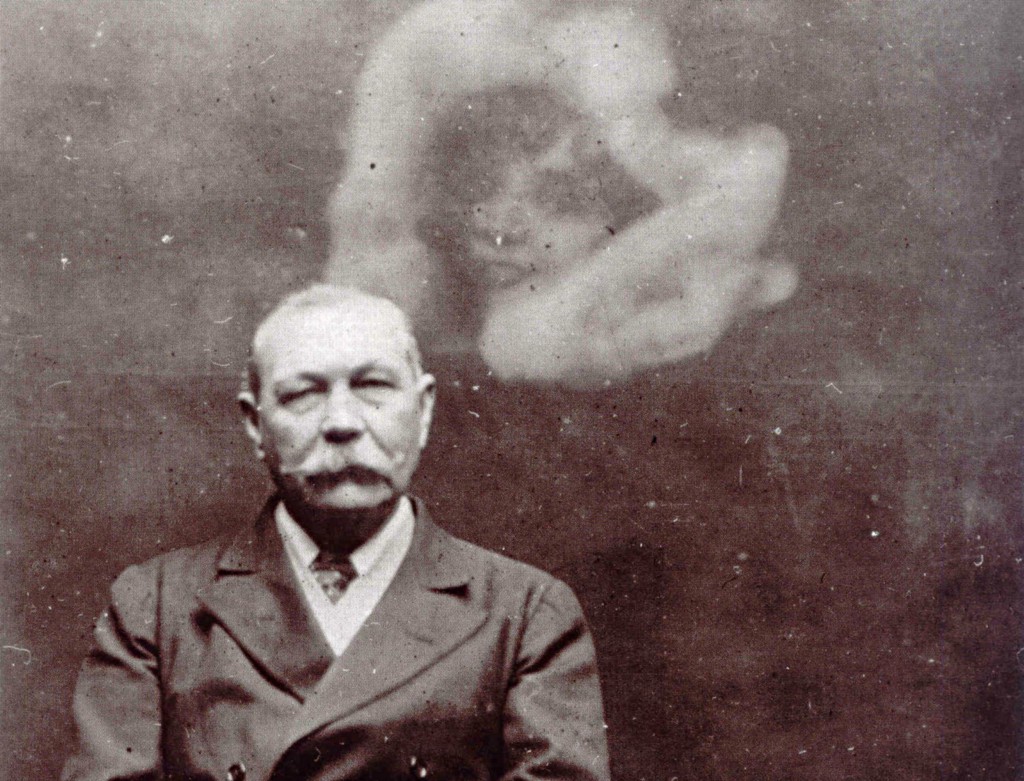
There is nothing quite like the feeling of retracing the steps of your favorite authors. This might be Baker Street, home to Arthur Conan Doyle’s famous detective, or the Upper West Side of The Catcher in the Rye. Even though the writers you love may be gone, their sources of inspiration live on through museums and the towns and cities they lived in. We polled Electric Lit’s Twitter and Facebook followers about their favorite literary attractions across the U.S to put together this list. Whether it’s the home of a well-known writer or just a place to kick back and indulge in an abundance of written word, these attractions are must-sees for any book lover.

Folger Shakespeare Library, Washington, DC

In 1889, Emily and Henry Folger — both huge fans of Shakespeare — began amassing what would later become the largest collection of Shakespearean books, manuscripts, and art in the world. It was their belief that Shakespeare as a poet was instrumental to the development of American spirit and thought, so in 1932 they donated the entirety of their massive library to the American people. Located in the nation’s capital, the Folger Shakespeare Library is open to the public, receiving over one million visitors a year. More than just a library, the Folger devotes itself to preservation, accessibility, and appreciation for early modern and Renaissance works through numerous events they hold year round. With theater performances, screenings, book launches, workshops, and talks, there is no better place in America to explore 17th-century literature.

Washington Irving’s Sleepy Hollow, NY

Already a must-see destination for fans of spooky stories, the hometown of Irving’s infamous Headless Horseman eagerly welcomes visitors. Landmarks and plaques appear all over Tarrytown and Sleepy Hollow itself. From the “marshy and thickly-wooded glen” to the Old Dutch Church where Schoolmaster Ichabod Crane flees the pursuing Horseman, myth trackers and history buffs alike can experience the grains of truth sprinkled within the much-loved legend. Of course there is something for writers too. In a joint project between the town and the Hudson Valley Writers’ Center, winners of a poetry competition had the chance to embedding their poems in concrete, turning the sidewalks into works of poetry.

Photo by Albretch Conz

The Poe Museum, Richmond, VA

Calling all Edgar Allan Poe groupies, if you haven’t been to the Poe Museum yet, are you really true fans? Established in 1906, this museum houses the most comprehensive collection of Poe artifacts and memorabilia in the world from the author’s old clothes to a lock of his hair. With numerous programs for researchers, scholars, and students, a visit to this museum’s Enchanted Garden and Poe Shrine is a must for anyone who wants a deeper insight into the life of one of America’s most influential writer.

Photo by Wikipedia

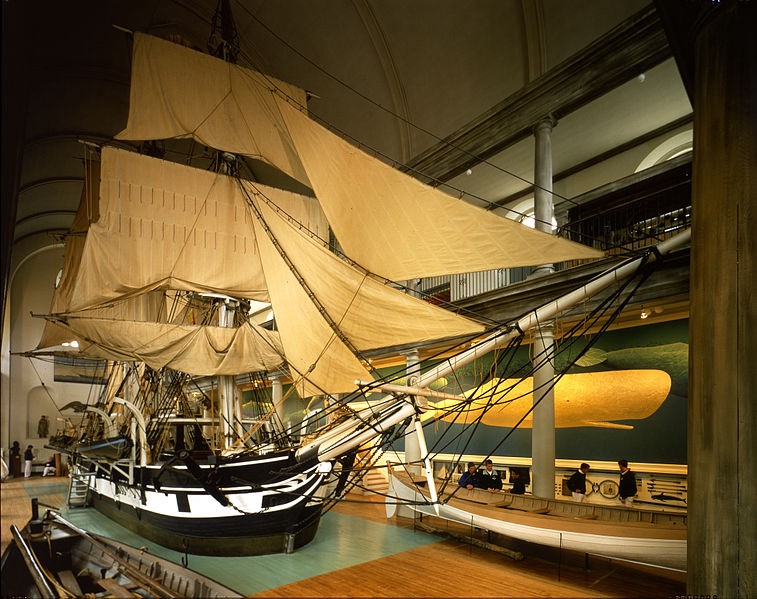
New Bedford Whaling Museum, New Bedford, MA

As the name implies, the New Bedford Whaling Museum is a tribute to whaling and maritime culture, which may not seem all that interesting from a literary perspective except for a certain 19th century writer and his interest in great white whales: Herman Melville. In conjunction with the Melville Society, the new Bedford Whaling Museum works with the Melville Society Cultural Project (MSCP), a group of scholars whose mission is to collect artistic and scholarly text to add to the Society’s Melville archives.

Photo by the Ernest Hemingway Foundation of Oak Park

Hemingway’s Boyhood Home, Oak Park, IL

Located in Oak Park, Illinois, is the home where Ernest Hemingway was born and grew up. First constructed in the 1890s and restored back in 1992, this Victorian house transports its visitors into the childhood of the writer. Managed by the Ernest Hemingway Foundation of Oak Park, this museum is part of their effort to preserve knowledge of Hemingway’s origin and impact on literature. With performances, cocktail evenings, and galas hosted regularly and open to visitors, Hemingway’s boyhood home is still very much a hotspot for the arts.

Photo by Bart Everson

Emily Dickinson Museum, Amherst, MA

Nestled in the college town of Amherst, Massachusetts, the Emily Dickinson museum is comprised of two 19th- and early 20th-century residences: The Homestead, birthplace and home of Emily Dickinson, and The Evergreens where her brother and his family resided. Now owned by Amherst College, the museum conducts guided tours and outreach programs for the public. Aside from museums, visitors can visit Emily Dickinson’s grave, look at the Dickinson Collection in the Jones Library, and browse through Dickinson’s manuscripts in the archives of Amherst College.

Photo by Diliff

The Rose Reading Room, New York City, NY

Though not the birthplace of any famous writers, the Rose Reading Room in the New York Public Library deserves a spot on this list for its iconic Beaux-Arts architecture. Closed back in 2014 when a portion of the upper wall decoration came crashing down (at night, so nobody was hurt!), the Rose Reading Room had been closed for two and a half years before a grand re-opening in 2016. With a fresh coat of paint and new display cases, this 12 million dollar renovation is worth every cent. The reading room has the same hours as the main library for those seeking a quiet place to read and offers daily tours for visitors more interested in the architecture and history of the library.

What If Someone Else Writes a Book Exactly Like Mine Before I Get a Chance?

The Blunt Instrument is an advice column for writers. If you need tough advice for a writing problem, send your question to blunt@electricliterature.com.

Dear Blunt Instrument,

I’m a creative writing graduate student nearing the end of my program, and have been working on my manuscript for about 5 years. I’ve gotten pretty good feedback on it from my advisor and classmates, have published some small selections in literary journals, and even received a few emails from agents. Though pushing through the last bit of revision has been incredibly difficult, I was so happy to be nearing the end, finally beginning to feel satisfied with the work and what it was saying, and excited to begin querying for real.

Then, I clicked a link about upcoming titles and found a book so similar to mine that it felt like the floor dropped out from under me. I’m not talking about basic similarities here, as in “Oh no, this person also wrote and published a story collection about a women’s rugby team.” It’s more along the lines of “Oh no, this person also wrote and published a story collection about a women’s college rugby team that includes murder and time travel and the occasional ghost.” The more I read about this other book, the worse it got. Knowing this, I think it would be exceedingly difficult to pitch my book to an agent, or to place it in a small press book contest, especially since this other book is available now and undoubtedly it’ll seem like I’ve copied the concept, form, material — everything. How many story cycles about women’s college rugby teams coming of age, committing murder, and traveling through time does the world really need?

My writer friends have remained firmly on the encouraging side, insisting that it’s my voice that matters and there’s still hope for my book. I love my friends and feel like they’re mostly trying to motivate me through the end of my degree, especially since I had to take time off for personal reasons. But I think my book is dead. Of course I know that even if this other book didn’t exist, there’s no guarantee mine would ever be published. But my belief in the project and that possibility were important. It’s also been suggested that I could revise the book again, though the changes required would be radical, and I’d be making them solely in response to the fact that there’s suddenly no market for this book I’ve poured everything into (made worse by the knowledge that there obviously was a market for it that I missed out on).

So, I guess what I’m asking is: how do I proceed with final revisions on a book that has no realistic hope of ever being a book? And, more importantly, once this book is immediately and forever back in the drawer, how do I keep going?

Thank you,

SD

Dear SD,

I understand how discouraged you must feel — it’s like your book got “scooped.” (I once read that scientists often have to publish their results before they understand them, to make sure they publish them first.) But the more I think about it, the more I’m sure the situation isn’t as devastating as it seems.

Here’s how I see it. Either this other book — we’ll call it Clone Book — is a hit or it isn’t. If it doesn’t become a runaway bestseller, then it’s really no problem. You can operate as though Clone Book doesn’t exist. It’s entirely possible that the agents or publishers you’re querying won’t have heard of the book or won’t be familiar enough with it to immediately see all the similarities that you see. This seems like the most likely outcome, because most books aren’t huge hits. If an agent you reach out to does say something like “This sounds a lot like Clone Book” — you can be honest and say that it’s a coincidence. Given the timing, there’s no way you could have copied the book, because you’re in the editing stages and Clone Book just came out.

If Clone Book does become a big seller, I honestly think this can only help you. You can use it as a comp title in your pitch letter to illustrate that there’s a clear market for books like this. You ask “How many story cycles about women’s college rugby teams coming of age, committing murder, and traveling through time does the world really need?” But generally when readers love a book, they don’t just read that same book over and over; they want to read more books like it! Agents and publishers know this, and they will be actively looking for similar books to sell. Remember when The Hunger Games first came out, and suddenly everyone was writing dystopian YA novels? There have been multiple nonfiction books about wolves in the last year. There’s a book on the bestseller list now called The Woman in the Window about a drunk who (maybe?) witnesses a murder; seems like a clear nod to The Girl on the Train. It takes a little while for a trend to die, and two books isn’t even a trend yet.

You’ll want to be able to say something like, ‘Fans of Clone Book will run out to buy my book, and be delighted to find that it’s campier and laugh-out-loud funny.’

You may be thinking that it’s better not to know, or you may be afraid to learn the extent of the similarities, but if Clone Book is making a big splash, you should probably read it. That way you’ll be able to confidently speak to both the similarities and the differences. And I have no doubt there are differences. Beyond genre and the thematic/plot overlap, think about elements like tone, style, and audience. You’ll want to be able to say something like, “While the subject matter covers similar territory as Clone Book, my book is aimed at a more literary audience,” or “Fans of Clone Book will run out to buy my book, and be delighted to find that it’s campier and laugh-out-loud funny.” It would also be good to have one or two other books in mind with a strong family resemblance to yours, so you can describe your book as “a cross between Clone Book and Other Bestseller,” or “a rugby story in the mold of Clone Book but with the formal inventiveness of Other Bestseller.” That will take some of the burden of comparison off Clone Book.

The details of your particular situation may be unusual, but I think your anxiety speaks to a larger question that all writers face: Can we truly be original? I often have the experience of reading something that uncannily echoes something I’ve just written, and of course my first thought is, Is everyone going to think I plagiarized this? It’s actually very hard to have a completely original idea. Plus, if you are writing about a topic that nobody else is writing about, you have to wonder if that’s because nobody is interested in reading about that topic.

There are a lot of books out there and just not that many fundamentally new ways to approach putting words on a page.

Most of the time when people say in a blurb or a review, “So-and-so is sui generis! There’s no other book like this!” they’re either lying or just wrong. It may be trivially true (no other book contains the exact same words in the exact same order) but not compellingly true. There are a lot of books out there and just not that many fundamentally new ways to approach putting words on a page. Fragmentary books, for example, are always blurbed as though the author just invented the fragment, but in reality books are almost always working in a clear tradition — even if the author is unaware of that tradition.

Being too original will be seen as a liability by most agents and publishers, since they won’t know how to market you. (Even if a publicist decides to hype up a book as “totally new and original,” who they find to call it original will speak volumes about how they really want you to perceive the book.) On the other hand, you really can’t avoid some degree of originality. This is why I know there must be appreciable and important differences between Clone Book and your book.

My husband keeps a little letter-pressed card on the wall over his writing desk, with a quote by Martha Graham. It’s taken from Graham’s biography, written by Agnes de Mille, another choreographer. De Mille once met Graham for sodas in a Scrafft’s (an old chain restaurant in Manhattan), seeking consolation — she felt her best work had been ignored, while recent work she wasn’t very proud of (the choreography for Oklahoma!) had met wild success. Graham gave de Mille the greatest advice of her life:

There is a vitality, a life force, an energy, a quickening that is translated through you into action, and because there is only one of you in all of time, this expression is unique. And if you block it, it will never exist through any other medium and it will be lost. The world will not have it. It is not your business to determine how good it is nor how valuable nor how it compares with other expressions. It is your business to keep it yours clearly and directly, to keep the channel open. You do not even have to believe in yourself or your work. You have to keep yourself open and aware to the urges that motivate you. Keep the channel open.

You wrote your book; no one else could or would do it the same way. I think it’s much too early for you to give up on it. I hope you’ll reach out to those agents who showed early interest, and give them the chance to evaluate the market for your book.

The Circle of Life Gets Sinister

“Rabbit in a Hat”

by Alison Wisdom

We go to the jungle, to the river, because my body is empty, and we want to fill it. I want to fill it with a child, and my husband with peace, with whatever I need to be happy, anything to settle the restlessness of my body’s yearning. They say a man doesn’t become a father until he holds his baby, sees its fingers and toes and the way they move just as his do. Until then, the baby is an invisible bit of magic conjured by his wife’s body, the promise of a rabbit in her hat. She’s ready for his applause — because that’s what you do — but wary, still, of a letdown at the trick’s end. A disappointment. A bait and switch.

Rest, the doctor said. And time. A vacation. Then we will try something else. If we even need to, he adds. It can take a long time.

“Be patient,” Marc says. “Besides, I’ve always wanted to see the Amazon. Go down the river like Huck Finn.”

“Wrong river,” I tell him.

“I know that,” he says. “A bigger, better river.”

But now we are here, and the river itself might as well be the same river: murky, thick, snaky, though who can tell on the ship how the water trail twists and coils? To us, we go straight, point north, travel in one neat line. I only know it winds because that’s what rivers do, because that’s what the framed picture in our cabin shows — an aerial view, the river like a vein running down a giant’s arm.

Sun and water and green plants. Rest, rhythm, and timing. It’s all we need.

But I have a theory I will never tell Marc: we won’t get a baby because the world is too full. Too many other babies being born, too many long lives still being lived. I read an article once that said the earth knows she can’t hold us all anymore, that she is beginning to revolt against us with all she has — earthquakes, giant waves, droughts and sandstorms and hurricanes and floods. And maybe my body knows this. The earth and my flesh and muscles and bones in communication, tides and moons, dogs who sense the trembling under the crust before the ground splits open.

There aren’t many of us on board; it’s a small ship. We are led by a wiry man named Estuardo, our cruise director, who tells us to call him Stu. There are, thankfully, very few children. There’s nothing here for families, no looping waterslides or costumed people dressed like cartoons, no screenings of kids’ movies in the early evening while the adults eat alone like real adults. I have friends with kids. I know how it works, what they want when they go on a trip with their children. It isn’t this.

But there is one family, and they are perfect. A mother and father, a boy and a girl. I can see them from where we sit at dinner. Tomorrow I will sit with my back to them, let Marc spend the hour watching her cut up the chicken nuggets the ship’s chef made especially for them, let him watch the little boy tugging at his father’s beard and laughing, like it’s a mask that won’t come off. It won’t bother Marc to watch that. He’s lucky that way. He’ll say they’re cute, or he’ll say nothing about them at all.

Marc reaches across the table and takes my hand. “Hey,” he says. “Look. Let’s have fun this week, okay?”

“What else would we have?” I ask. “Don’t we always have fun?”

He is careful here. “Of course,” he says. “I’m just worried you’re going to worry.” He smiles. “Now you’ve got me worrying,” he says.

“I’m fine,” I say. “I’m happy to be here.” The ship is compact and beautiful, more glass than steel. The river holds pink dolphins, Stu has told us, and the deep green shore teems with creatures, with birds and snakes and men and women and haunted things — Stu told us that too — and the ship keeps us safe from the river, the rain, the pull of the jungle.

“When it’s the right time,” he says, “we’ll have a baby. If it’s now, it’s now.” He shrugs. “If it’s in five years, well, then that’s fine too.”

I am silent. My body, or something deep inside of it, stirs. Yesterday, it tells me. You needed to have a baby yesterday or last week or last year. Hurry, it says. “I know you’re right,” I say. I watch the bearded father push his chair back from the table, taking the napkin off his lap as he stands up. The mother says something to her son as he climbs out of his chair. He nods and I see him shake the waiter’s hand. A tiny little gentleman. The waiter smiles at him. As they leave, they walk right past our table. “Baths,” the mother is saying. “Then a movie on the iPad if neither of you cry when I wash your hair.” Then they are gone.

“This,” Marc is saying, raising his hands and looking around the dining room — posh but tastefully exotic, all clean lines, low lighting. “We’re on an adventure. This is what we should be focusing on.”

But when we go back to our room, I undress so that he notices me, pull back the sheets of the bed, grab his hand, and he lets me pull him to the bed. I watch my body perform what’s necessary, I will it to open, to be ready. We are warm and flushed with wine and river, and I leave the curtains open, the window the size of a cinema screen, so that when it is over, we can lay in bed and watch the shore, black and jagged in the darkness, float by. It’s possible we have done it, the magical thing we’re waiting for.

“We should have closed the curtain,” Marc says.

Let them look, I think. If anyone can see, let them look. But the wall is only a window, and then water and then beyond that, there is wildness or there is civilization, villages we cannot see from here, and I know then, as sure as I am of anything, that we are alone. No life being formed. It is only us, only two, and the night outside our window. When Marc falls asleep, I tell myself not to cry, and I don’t.

There is a particular man aboard the ship who I believe is alone. He is older, though I’m not sure how old. His hair is the light color of ash, once blonde, and he has cheeks that are full and sag, like the jowls of a bulldog. Marc and I watch him during one of the excursions. “He reminds me of someone,” I say. “It’s the cheeks. But who is it?”

We are out on small boats in the river, fishing for piranhas. Up close, the river seems viscous, alive, and there’s so little separating us from it — planks of wood, thumbs and lines of caulk, not much else. Before we left, Stu told us we couldn’t keep the fish. “We get to have them for a while, look at them, admire them, and then they have to go back where they belong.” It still seems wrong to cast lines into the river, hoping for a knife-toothed fish snared, wildness baited and tricked — and yet I want to pull up my line and force the jaws open, that underbite, see the rows of tiny serrated teeth inside. Watching me, Marc seemed impressed but also alarmed “You’re unexpectedly intense about this,” he said.

Now he looks at the man, studies him. “Don’t stare,” I say.

“Winston Churchill,” he says. “That’s who he looks like.”

We laugh because it’s true, that’s exactly who it is. The guide turns around to look at us, and we smile, then laugh again when he turns back again. We cruisers, now fishers, are on three different boats, canoe-like, in a line one after another.

In another boat, the little boy is standing up, walking back and forth between his mom and dad, and the mom is snapping her fingers at him. Sit down, she says. The guide on their boat is grim faced.

In Winston Churchill’s boat, a black-haired woman taps his shoulder, extends a camera, and he grapples with the rod and the camera while the woman positions herself, leaning into her black-haired husband. She takes off her sunglasses and then puts them on again. She turns her head to one side, tilts it the other way. Winston holds the camera up for a moment and then hands it back to her. She looks at the screen and frowns at what she sees, then waves — it’s okay, it’s fine — and goes back to fishing.

“Excellent military leader,” Marc says. “Apparently terrible photographer.”

“He looks like a sad person,” I say. “Just a sad person piranha fishing.”

“Nothing sadder than that,” Marc agrees.

There is squealing in the other boat, not Churchill’s, and we look over. It’s the family’s boat, and the mom is hoisting her line out of the water, the little girl beside her is clapping, and there is a small fish on the end of the line, wiggling and twisting.

“Is that it?” I ask. “It’s so little.”

“You sound disappointed,” Marc says, and I am.

At dinner I sit with my back to the family, so now I face the black-haired couple. She has her hair pulled up off her shoulders, turquoise earrings she fingers as she talks to her husband. At another table nearby is Winston Churchill, and he eats slowly and chats with the waiter, dabbing at his mouth with a napkin. More couples, a group of women who all wear chunky necklaces, caftans, lip gloss.

I let myself turn to look at the family. Just once. The kids have macaroni and cheese. The dad spears a clump of noodles from the girl’s plate and eats them. The girl shakes her head at her father — no, Daddy — and her ponytail swings. Her brother grabs it because how could he not? When I turn back to Marc, I watch him deciding what to say.

“I feel like a drink,” he says. “And fresh air.” A good answer to something I didn’t say. I nod.

When we walk away from the table, I look once over my shoulder at the family. The little boy wipes his face with his napkin. The mother tips her head back, wineglass to lips.

Back in our room, we have sex again. Marc closes the curtains but not all the way, and there is a sliver of window exposed, a stripe of moonlight. Earlier, we watched the moon on the upper deck of the ship, perfect and cool in the sky, its twin rippled in the river. “Relax,” Marc says now. “You’ll never get pregnant if you worry.” His hands are everywhere, and I try to pay attention to where they go: my face, hair, breasts, my hips. His fingertips are light on my skin.

Stu told us earlier that the moon is a protector, that she watches over the people she sees, the women especially, who are more vulnerable to the dangers of the night. “I’m not worrying,” I say, I tell myself over and over, but my thoughts are winding and twisting, and they are coiling out of the room, up to the moon, like smoke — just one, they say to the moon. Tell someone his time is up, close your eyes for a minute, rest on the job, and let someone go. Let someone new come in.

The next day it rains. But the rain is fine, nearly a mist, and the air is steamy, the breathing of the giant whose veins are the river. We stand in brightly hooded, rain-jacketed clusters and pairs as we wait to leave the ship. Today we are going into the jungle. “Macaws and sloths and anacondas,” Stu promises. “Jaguar, Jesus lizard.”

“A what?” a woman asks.

“A lizard who dies for your sins?” Marc whispers to me. “A lizard who comes back to life.”

“Walks on water,” says Stu. He points his index and middle fingers of his right hand downward and walks them across an invisible surface. “It skitters.”

“I liked my explanation better,” says Marc. “It could be a movie. Jesus Lizard: Messiah Complex.

Jesus Lizard: He Returns,” I say.

“Just when you think he’s dead,” Marc says, “here he comes again.”

Soon we’re walking off the ship and onto the beach, a strip of tan before the green begins. Now that we are closer, I can see there are different shades and depths of green in the jungle: houseplant green, the skin of a snake, the darkest corner of an emerald, the color of lily pads, of lettuce, of lichen. There is also a small building with the door open, a man standing in the doorway, waving. There’s a white sign propped up in the corner of the window that says “Amazing Amazon Animal Tours.” Marc turns to face me, the red hood of his raincoat bright against the gray sky, and gives me a thumbs up. “Jaguars,” he says. “Let’s go.” They split us into small groups, each led by a guide, and we are off. In another group, I see Winston Churchill in a blue jacket, no hood, a wide-brimmed hat over his head. When he turns sideways, his jowls are so prominent they obscure his mouth.

“Those of you with me, this way,” calls our guide. Our group is us and the caftan women, who are now wearing muted hiking clothes, like they changed overnight from birds of paradise to swallows. In another group is Winston Churchill, the parents and children. The little girl holds a disposable camera and points it at a tree, back at the ship, at her brother, who jumps off the corpse of a downed tree, weak and porous. The rain is steady; it clings to our guide’s jacket. The ground beneath our feet is soggy, sticky, and it feels like it could suck me in, pull me below its surface. In the distance, a bird calls.

Our small group forms a line — the trail into the jungle is narrow — and we set off. Behind us, the other groups wait for their turn to walk down the same path, a few minutes separating us, and before we turn a corner I glance back at them, standing on the shore making mental lists of all the things they hope to see.

We see wild red birds with beaks hooked and sharp, small frogs so bright they look painted. We see wet paw prints, their muddy borders caving in, only two and then no more, as though the owner of those paws disappeared mid-stride. A lizard, but one that cannot walk on water, a lizard that lives only once. Two monkeys, white birds so thick in a tree that it looks as if the branches grow cotton. At the shore, we thank our guide and scurry back to our cabins, shaking ourselves off like dogs when we get under cover.

Our cabin room looks out onto the banks where we just stood, and once we have changed out of our jungle clothes, we sit in the chairs by our window and watch the second group traipse out of the trees and onto the shore and clamor up the walkway to the ship. We hear their voices as they walk to their rooms. We read. The rain is a fine spray on the windows. We see the third group gather together on the little beach. In a huddle, they are indistinguishable from one another, rain-jacket hoods covering faces, heads. The only one I can recognize is Stu, their guide, who is hoodless and hatless, and we watch him peering at the group, one finger extended and bouncing over each person, making the shape of m m m in the air as he counts. We see him count again. He walks back in the direction from which they all came — the expanse of shore narrowing into the trail — and then jogs around a corner, disappearing.

“Someone forgot something,” Marc says. But then, only minutes later, Stu emerges from the green again and waves over the other two guides. The men talk. A few people begin to walk back to the boat. Marc gets up from the chair, flops onto the bed. “Want to watch a movie before dinner?” he asks. “Since it’s gross outside anyway, and the boat isn’t leaving yet.” He turns the TV on and begins scrolling through the channels.

“Sure,” I say. Outside Stu has left the huddle of men and is waving the remaining passengers toward the boat, and when every last raincoat has wandered aboard, he shuffles back to the two men. Marc pats the bed. I join him, lying on my stomach. I look out the window, and the men are gone, and I wait to feel the boat begin to move, to push through the mist of rain, to slice the river water and go.

It is dark, and we have not left. The windows of the little building hum with yellow light, the tour company sign a black rectangle cut out of the glow. At dinner, we hear people asking each other why we haven’t left, the itinerary demands it, could it be the weather, the rain is so light, a mist really, is there something wrong with the boat?

“It’s odd,” Marc says. “But we’ll get where we need to go, no matter what. We won’t be stranded out here forever. If we’re even stranded.”

At dinner I look around for Stu, who I am sure has been cornered by other passengers or is hiding somewhere to avoid being cornered at all. It’s then I see Winston Churchill isn’t at his table. There it is, a few feet away from our own, the candle in the middle lit, though the chairs, both of them, are empty. “I don’t think someone forgot something,” I say. “In the jungle, when we saw Stu go back on the trail. I think we’re still waiting for someone.” Marc stares at me. “Winston Churchill is missing,” I say.

Marc frowns, a slight pursing of his lips and eyebrows gathering. “I bet he’s sleeping,” he says.

“What if he got lost?”

“It seems unlikely,” Marc says.

“It would make sense, though,” I say. “Why we haven’t left yet and why there hasn’t been any explanation. I bet people are looking for him.”

“Where would he be?” Marc asks.

We both know. The jungle, the river. Where else?

“What a terrible place to be lost,” he says. “There’s no way you’d survive.”

“I don’t feel like eating anymore,” I say, pushing my plate away. With one finger, I slide the wineglass away too. “I want to go back to the room.”

“Okay,” Marc says gently. “But hey, I’m sure it isn’t what you think.”

In the room, I begin to undress again, just as I have the past two nights, more quickly maybe. Urgently. The lamps on the bedside table are on, the curtains are open, and, in only my underwear, I walk over and close them, though before I do, I see the sky has cleared, the moon is up. I turn to see Marc standing in the doorway to the bathroom. “What are you doing?” he says. He watches me, like I have a gun, cocked and aimed, or a suitcase with a bomb inside.

“I feel worried,” I say. “I need something to distract me.”

Marc keeps looking at me in that same way, eyes narrowed, movements cautious, easy. “Want to have a drink?” he asks. “Or do you want one of my Ambien?”

“No,” I say. “I think we should have sex. Please. It will make us feel better.”

“You’re putting too much pressure on us,” he says. “That’s probably why we can’t get pregnant.”

“That’s not it,” I tell him. If they find Winston Churchill, padding down the jungle trail, still wearing the wide-brimmed hat, or if they find him, dazed and clothes torn and muddy, weeping and hungry, it will all be the same as before; we will sail down the river, we will arrive at our port, we’ll fly home, and it will be only Marc, only me, no tiny child growing inside my body.

“Look,” Marc says. “I just don’t want to. Not tonight. You could still be pregnant — who knows — and if you’re not, we can try again next month.” He shrugs. “Another month won’t hurt.”

I say nothing.

“I love you,” Marc says. “We can try again tomorrow night.”

“You don’t even want a baby,” I say. “You don’t care at all.”

“Stop,” he says. “I don’t even know what to say to that.”

I grab a robe from where it hangs in the little closet of our cabin. I wrap it around me, pull the belt tight. Marc opens the curtains. The night is still and murky from the old rain. The ship hasn’t moved at all; the building on the shore still has all its lights on, and I think about Winston Churchill, out there in the night, maybe seeing the yellow light through the trees, worrying that the hulking mass in the distance isn’t the boat he’s meant to be on but some sinister mirage, a delusion. The stars are nearly invisible through the clouds, but there is the moon, round as a blank face, like it’s been listening to the conversation and it, too, has nothing else to say.

In the morning, Marc makes it up to me, tries to prove he does want a baby, not the baby of next month, baby of someday, but the baby who begins here. “See,” he says. He pulls me close to him, and we fall asleep afterward. When we wake again, we stroll out to the ship’s roof, and I lie down in a hammock while Marc looks for coffee. The ship hasn’t moved, but we hear it will soon. There will be a change of itinerary. A cluster of people come up the stairs. “The mosquitoes are terrible out here,” one of them says. I sit up. It’s Winston Churchill. He sees me watching and waves, and I wave back, a pain echoing in my belly. Disappointment swells there, or fear, and my insides coil and tighten and expand, forming words I can never say, how I hoped for disaster, an end for a person I didn’t know but who surely loved, was loved, would be missed. But here he was all alone, I would have traded him in an instant, and it doesn’t matter now.

When Marc comes back, he has two coffee cups. He hands me one, and I say, “Look who’s okay. You were right after all.”

“Only partly,” he says. His voice is thick, like he has drunk the water of the river and now it has swelled up in his throat. He looks down, at his fingers clenching the coffee cup, and looks at me. “The little boy,” he says. “I asked one of the waiters what was happening. He said the boy got lost somehow. In the jungle.”

In the sky, the morning sun is loose and sloppy, burning hazy at the edges, no face to speak of, nothing like the neat contours, the watchful face of the moon. The small hand held out to the waiter, fingers grabbing his sister’s hair. A sister. A mother, a father. Back in the room, Marc rubs my back while I cry, and I must fall asleep for hours because when I wake up again, the ship is sailing, doing exactly what a ship is meant to do.

To make up for lost time, we don’t stop again. After lunch the next day, we come back to our cabin to a note slid under the door, typed and printed on flimsy stationery with the cruise line’s letterhead. An accident, it says, involving a guest. Over Marc’s shoulder, I skim the rest: Emergency attention required, partial reimbursement to guests, many apologies, best wishes. “Well,” Marc says. “Sounds like they must have found him, and he was hurt or something. Poor kid.”

“Maybe,” I say.

“Are you okay?” Marc asks.

“Queasy,” I say. “And tired.”

“Pregnant,” he says triumphantly, and I roll my eyes.

He folds the letter from the cruise line in two and tosses it, like a Frisbee, into a wastebasket near the door. “I wonder what happened,” he says. “I guess we’ll never know.”

But three weeks later, back home in our own bed, I wake up nauseous, and I barely make it to the toilet before I throw up. And it’s in that way, I think, we know what happened to the boy. Marc was wrong. The boy wasn’t hurt; he was gone. We’ve seen his family on the news, still waiting, searching among all that green, but now I know they won’t find him. The jungle swallowed him whole, the river drank him up. I cry and cry. “I’m happy too,” Marc says. “A baby. Unbelievable.” He puts his hand on my stomach, and I imagine a baby as small as a seed, the head of a pin, swimming in my body, as miraculous as a dolphin in the river.

The months are long, and my body hurts. It’s painful in a strange, surreal way. I am me, and my body is mine, but I’m not and it isn’t, and though I feel every ligament stretch, each rib forced apart as the baby flips and turns and kicks, it seems as though I am feeling the body of another person. The stomach, growing and swelling, is my own, but it feels alien, and I stay up late and watch the baby push against me, looking for a foot there below my skin or a hand, the angle of elbow, the curve of his head. I feel more thankful every day. I regret less.

Marc is giddy about the changes, the ones already happening, the ones still coming. He puts his hand on my belly, he leans over and puts his ear to it. “I can hear his heartbeat,” he says.

“You can’t,” I tell him. “That’s not how it works.”

“Aren’t you happy now?” he asks. He sits up to look at me. “You’re getting what you always wanted. And everything worked out.”

“Not yet,” I say. “It still might not work out.”

My voice catches, and Marc softens. “It will be okay,” he says. “And if nothing else, look at the numbers. You’re out of the woods for a miscarriage. We’re going to have this baby.”

I say nothing. I nod. A different kind of magic. A disappointment. A trick where the rabbit goes in the hat but never comes out.

I am over halfway to my due date when, one night, we watch an episode of Dateline. It’s the kind of thing that we don’t mean to watch, but my body is already unwieldy and tired, and so we stay on the couch, and neither of us touches the remote control. The subject is a man who disappeared hiking alone in the mountains of Nepal, was injured in an accident that left him an amnesiac, rescued by high-dwelling villagers, and was treated by kind Swedish doctors living in Kathmandu as his memory came back. Then, when it finally returned, so did he, back to his family in Kansas, a wife who tearfully said she never stopped looking for him. He was gone for seven years. “Wowza,” says Marc when the show is over. “No offense, but I would probably stop looking for you.”

“What are the odds?” I ask.

“One in a million,” says Marc.

That night, in bed, when the baby inside my belly is still and Marc is asleep, I search the Internet on my phone: “boy missing in Amazon,” “cruise passenger dead in jungle,” “child comes back to life.” But he is nowhere, only in old pictures, old news stories. I check every night after that, with one hand on my stomach, pressing against it, waiting for the pressure of the baby to pulse in response. A deal’s a deal. But so far I am lucky. I erase the history after each search. I know how it would look if Marc found it — melodramatic, fatalistic. I feel ashamed at my worry, and then more worried: what if by looking for the boy, I set my fear in motion, and the boy in the jungle is already making his way out of it, heading for the shore, for the light of a ship in the distance?

And if everything does work out there will be so many more days to worry about. So many weeks, years. So many things that can happen to a child. What would this baby’s life prove if not that?

“Do you remember that family?” I ask Marc. “From the ship?”

“Of course,” he says. “Why?”

“Do you think the little boy is dead?”

“Yes,” Marc says.

“What if he comes back?” I say.

“Then it would be a miracle.”

A miracle. An old life for a new one. An emptiness and then a fullness, a ripeness, and then the threat of emptiness again. Outside the house, there is the moon, and beyond the borders here, a jungle, a river and monsters who swim in it, a ship of glass and steel, something hiding in the dark, something waiting.

As Marc sleeps, I turn my phone on and hold it under the covers of our bed so the light doesn’t wake him. A ritual. I expect to find the boy in the jungle, miraculous news of his return, but I don’t. I make myself stay awake until I feel the baby move. Then I wait for him to move again, again, again.

7 Short Story Collections To Read This Year

I f you’re literary but attention-challenged, these new and imminent short story collections — some brimming with flash fiction jewels — will make you binge-read again. The stories within them skip around the U.S. from the interiors of Los Angeles mansions to classrooms in Marion Barry-era Washington D.C., and from the Florida wilds and golf courses to the expanses of the Western states under the grip of a separatist rebellion. They’ll also transport you to a scrappier Singapore, a stormy night in Salvador, Brazil, and to the gods and mortals roaming Ancient Greece. We can’t guarantee you’ll give up Netflix or other pursuits but these shorts could prove to be seductive enough to swallow huge chunks of your evenings and weekends.

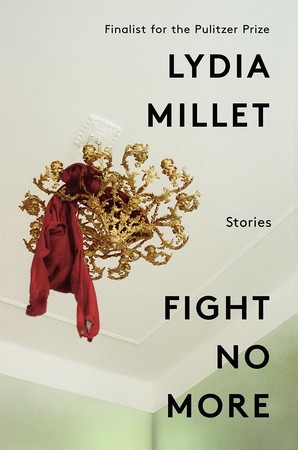
Fight No More by Lydia Millet

In “Libertines,” the opening story of Lydia Millet’s collection Fight No More, Nina, a Los Angeles real estate broker contemplates the porn stashes of the houses she shows. At the viewing we meet her at, she’s abstained from wearing her four-inch pumps in favor of wedges just in case her foreign clients disapprove of “looseness.” She notes, “That was the thing about American men; in a way it was comforting. When push came to shove, no woman could be too loose for them.” Millet’s wry humor continues as the stories of Nina and her clients and their relatives interlock happily and then painfully, and back again. The seamless stories will satisfy but will also keep you up reading well into the night.

Girl and Giraffe

Malay Sketches by Alfian Sa’at

Alfian Sa’at’s Malay Sketches takes its title from the colonialist Frank Swettenham’s 1895 travelogue about Malay “little lives.” In a feast of almost 50 vignettes, Sa’at, a literary bad boy in agreeable Singapore, presents his mini canon of minority Malay-Muslim life in the city state. His Singaporeans are the unemployed, recently-incarcerated, and those caught up in near-distance diasporic longing (Malaysia is across the causeway but a million miles psychically). At a job orientation, a newly-promoted hangman is advised to put scented soaps in noose bags so that prisoners may relax. Nostalgic for the rustic village life of her father’s generation, a woman goes camping and meets fellow campers, who turn out to be homeless when authorities come checking for camping permits. This is Singapore from absolutely the opposite side of the tracks of Kevin Kwan’s Crazy Rich Asians.

Come West and See by Maxim Loskutoff

Come West and See begins in Montana Territory in 1893 with a terribly lonely woodsman who lusts after a bear. From there, Loskutoff zooms to the present/future, where Redoubt, a libertarian separatist movement is taking the West from the Federal government. On the conflict’s edges and at its fiery center, Loskutoff’s humans are caught in brutal personal crossfires: a fraying couple trying to save their injured pet coyote, a woman plotting to murder a tree, a militiaman’s wife who blames his death on her sin of self-pleasure, amongst others. The animals — often in the line of human butchery — are never far too from the scene and in Loskutoff’s blade-sharp prose. A lighter case in point, this juicy lunar simile: “The moon was no more than a shank.”

Good Trouble by Joseph O’Neill

The white upper bourgeois characters of Good Trouble float through their worlds shouldering relatively benign problems. A poet, afflicted by writer’s block, is enraged about the idea of a “poetition” addressed to President Barack Obama for the pardoning of Edward Snowden. A woman called Breda Morrissey, easily the collection’s most compelling character, keeps her opinions about her son’s cheese interests and her grandson’s circumcision to herself but still fall fouls. Joseph O’Neill slides larger world conflicts (racism and international wars) into their issues, which include uneasy budget discussions during a 40th birthday golfing trip and a planned vigilante recovery of a son’s stolen iPhone. O’Neill pokes ample fun at his characters. In “The Mustache in 2010,” the narrator who has just finished rehashing “an upper middle class adventure” of years past, ends with: “I’m brushing tears from my eyes, it should be documented.”

Florida by Lauren Groff

Lauren Groff will snare your soul into her tempestuous Florida. The Sunshine State’s snakes — a houseful in one story — and swamps are present but so is a possible panther, a graduate student slouching towards homelessness, and a woman waiting out a hurricane as her hens fly away and old ghosts come to chat. Malaise, like the sticky, terrifying weather, soaks the characters even when they are well out of state in France and Brazil. It fills especially the recurring mom of two young boys character, for whom even Paris has “become somehow Floridian, all humidity and pink stucco and cellulite rippling under the hems of shorts.” She can’t even find respite in a small French coastal town with minimal WiFi. Her young boys are realistic lovely rascals but most movingly wrought are the abandoned young sisters in “Dogs Go Wolf.” Their bones make an appearance: “It was late in the morning, but the girls’ bones didn’t want to get up. Lie still, the bones said.” Even if you’ve read these stories in the New Yorker and elsewhere, marinating in them consecutively will have you shook for days.

The Doppelgängers

Metamorphica by Zachary Mason

Purists aside, classics geeks will likely rejoice in Zachary Mason’s lush and very smart romp through Ovid’s epic Metamorphoses, one of the foundational texts of Western literature. Not to worry if you snoozed through it at school as Mason prefaces each vignette with a line or two of who’s who amongst the ancients. Mason’s reimagining begins with Ovid asking Aphrodite for the power to craft literature. She scolds him: “Not literature for you, but the literary life, because you’re lazy, and love company, what you’d most like is to be famous without writing a word.” Then the stories, mapped by the Gods’ constellations in the night sky, begin and throb with tragedy, transformation, and wars. At the end, Mason’s notes offer where he’s taken liberties. For example, instead of turning his wife into gold, Midas fades into midlife boredom having invented money. The distraction that sidetracks the racing Atalanta from her anti-marriage steadfastness is not the golden apple of the old but “Aphrodite’s mons veneris — what else could the golden apple be?”

Training School for Negro Girls by Camille Acker

The title of Camille Acker’s collection takes its inspiration from Nannie Helen Burroughs’ vocational training school for black women founded in 1908 in Washington D.C. The collection, however, wanders across decades up to the Obama era and through the capital’s neighborhoods. Its women and girls grapple with their training — both vocational and societal — and what it teaches them (or doesn’t) about being in the world. In “Mambo Sauce,” which feels very, very life-like, Acker pokes at all sides of gentrification with an interracial couple and black D.C.’s famed tangy sauce. Up for crisp skewering in the collection’s title story are the politics (class, neighborhood, and complexion) of trying to get into a posh civic kids’ club, “Toby & Tiffany.” The robust “All the Things You’ll Never Do” with its pure voice will have you by its end feeling tenderly about Bess, a proud if pernickety, TSA agent who’s never been on an airplane. None of these stories have appeared anywhere, which seems staggering because they are compulsively excellent.

Sir Arthur Conan Doyle Helped Invent the Curse of the Mummy

The first time (and also the tenth time) I read the Hound of Baskervilles, it was in Bengali. The library at my father’s workplace in Calcutta had a wonderful little nook full of translated crime fiction and Arthur Conan Doyle—who would have celebrated his 159th birthday this week, on May 22nd—was the mainstay of that little nook. The copy of the Collected Works of Arthur Conan Doyle was so weathered, so broken-spined, that it had to be read like a medieval scroll, sometimes holding each page separately and always making sure there was always a nice, fat roll of Sellotape in case the already-yellowed Sellotape bindings and plasters needed an emergency top-up. But I was always curled up with it and continued to read and re-read The Hound of Baskervilles with vicious, unwavering concentration throughout my teens. I think in many ways it inspired me to read the world like a crime scene of language and thought — a way of seeing that eventually led me to my career as a student of literature.

Looking back, it seems peculiar that my immersion into crime fiction happened through Doyle’s work — and that it happened in Calcutta in the early 2000s, a city still recovering from its two-century-long history of colonial oppression, assimilation and resistance. Doyle himself was a staunch colonialist and believed that the sun should never set on the British empire; what would he have thought of a young brown woman enjoying his works in a post-colonial India, and not even in English? I suspect he would have been disapproving or at least confused, though perhaps he would be ecstatic thinking that the locals were finally being “educated.” Who knows what this grumpy old Victorian would have thought?

But no matter what Doyle’s colonialism would have made him think about his Indian readers, it hasn’t affected the way they think of him. Far more people in India love his work than know about his views on colonialism and empire. After all, the Sherlock Holmes series is primarily apolitical and nakedly rationalistic. Passion, and specifically passionate politics, of any kind is curiously absent. Power is these stories is always lurking behind solvable problems: princes get blackmailed, statues of Napoleon hide gems.

Doyle’s own passionate politics, and his passionate pursuits into the irrational, remain impossible to detect in the Sherlock Holmes stories and novellas. Perhaps that is why these works are so much popular than his later, more Gothic fiction, which is full of conviction and rhetoric. On the contrary, as scholar Martin Kayman perceptively points out, Sherlock Holmes was so popular with Victorian middle-class men precisely because those stories, unlike the later ones, “celebrate the capacity of rationalism to organise the material of existence meaningfully, and the power of the rational individual to protect us from semiotic and moral chaos.”

Doyle’s own passionate politics, and his passionate pursuits into the irrational, remain impossible to detect in the Sherlock Holmes stories and novellas.

And yet, in spite of this dramatic staging of rationalist cerebrality that would go on to define Arthur Conan Doyle’s career, he was a far more superstitiously-minded thinker in later years than Sherlock Holmes’ barely-hidden atheism would suggest. Perhaps more surprisingly, he was also an inveterate imperialist with a hateful obsession with Egypt, a country he visited only once in 1846 and never went back to. This lack of direct experience of Egypt or its culture never prevented Doyle from having forceful (and as it would turn out, influential) opinions on relics of ancient Egypt, which were being discovered at a higher frequency in the late 1800s thanks to the efficiency and effort of the English archaeologists. While Doyle wrote in 1896 that he found Egyptian civilization itself “contemptible” and “emasculated,” he continued to be enthralled by the mummies, pyramids, and scrolls that were being unearthed and continued to include them as props in his fiction.

12 New Book Covers Created for Sherlock Holmes’ 125th Anniversary

In the short story “Lot No. 249,” first published in 1894, we read the tale of Bellingham, an Oxonion who is fluent in Arabic and the ancient Oriental languages, and whose college room is “a museum rather than a study.” The most arresting thing about Bellingham is what stands right in the middle of this museum-like study of his: “a horrid, black, withered thing, like a charred head on a gnarled bush, [that] was lying half out of the case, with its clawlike hand and bony forearm resting upon the table.” This is a classically Gothic description of a mummy, whose appearance in Doyle’s story is more reminiscent of Frankenstein’s Creature than any ancient relic. The story goes on to narrate “a lurid spark of vitality, some faint sign of consciousness in the little eyes which lurked in the depths of the [mummy’s] hollow sockets.”

This was not the only appearance of malign Egyptian artifacts in Doyle’s work. He would go on to write “The Ring of Thoth” in 1890 and publish it on The Cornhill Magazine. This was another story about an Egyptian relic — a ring that was an antidote to a poison. The story was set the Louvre in Paris. One important thing to observe here is that while Doyle continued to base his stories on ancient Egyptian relics, Egypt itself, ancient or modern, never really had an important part in these stories. Instead, it was a plucked object — a stolen, colonized, desecrated relic like a mummy or ring — that became the cause of catastrophe, which would then be resolved by English wit and effort. More importantly, in Doyle’s expert hands, Egypt was perpetually a source of maleficence, trouble, and averted crisis to a European environment like Oxford or Paris.

In Doyle’s expert hands, Egypt was perpetually a source of maleficence, trouble, and averted crisis to a European environment.

Doyle’s only work of fiction (that I know of) in which Egypt plays a part as a living environment and space is The Tragedy of the Korosko, written in 1898. In the story, a group of European and American tourists visiting the sacred places by the Nile are kidnapped by ruthless Sudanese rebels in the desert. As critic Roger Lackhurst points out in his book The Mummy’s Curse, the publication of this short story coincided with period when British Army general Herbert Kitchener “was finally given leave to advance into the Sudan, destroying the last stand of the Mahdist forces at the Battle of Omdurman with overwhelming force, massacring twenty thousand men and executing the wounded in the wake of the battle” (Lackhurst, 158). And yet, Doyle’s preoccupation in this story is solely Sudanese extremism, cruelty, and misogyny, while not a word is said of the equally terrorizing force of the British Egyptian army.

The context of this particular story goes on to show more than anything else that Doyle’s contributions to the Victorian Gothic revival (1850–1900) coincided with what historian Eric Hobsbawm has called “the era of a new type of empire.” Specifically, he began the trend of depictions of Egypt in the genre that has come to be known as Imperial Gothic in England. This was a trend whose main characteristic was the portrayal of England’s empire as a place of extra-rational evil and supernaturality which could only be vanquished by the agency of anglophone, white, English ingenuity. The historical trajectory of these years makes Doyle’s stance stand out even more. In 1882, Egypt lost its position as khedive allied to the Ottoman empire and found itself occupied by British forces. It would remain under this occupation until the Suez crisis in the mid-twentieth century. (This is also the shape of the history of India, which the British governed even more forcefully after the failed Revolt of 1857. It would continue as a British colony under 1947.) In 1885, not just England, but most of Europe convened to cut up the territories of the African continently into manageable handouts during the Berlin Conference. More than ever, the idea of empire was a practice, a victory, and a way of life.

This was a trend whose main characteristic was the portrayal of England’s empire as a place of extra-rational evil and supernaturality which could only be vanquished by the agency of anglophone, white, English ingenuity.

Even so, there were times when Doyle’s sense of entitlement over Egypt faltered. The most famous moment was after the mysterious death of the fifth Earl of Carnarvon, who funded and supervised the excavation of King Tutenkhamun’s tomb in the winter of 1922–23. A few days after the end of the excavation, Lord Carnarvon was bitten by a mosquito in the Hotel Savoy where he was staying in Cairo. The wound got infected while shaving and he ended up contracting a fatal blood infection and dying before he could be carried to England for treatment. He died on the fifth of April, 1923.

The next day, Sir Doyle reached American shores where he was lecturing on spirituality. By this point a practicing occultist, he was asked by journalists of The Express what he made of the mysterious death, and he answered that “An evil elemental may have caused Lord Carnarvon’s fatal illness.” Meanwhile The Morning Post reported that Doyle believed “it was dangerous for Lord Carnarvon to enter Tutankhamun’s tomb, owing to occult and other spiritual influences.” Along with prominent spiritualist Madam Blavatsky, he was one of Victorian occultist voices that gave rise to the curse of the mummy — today a well-known Orientalizing trope in film and fiction.

He was one of Victorian occultist voices that gave rise to the curse of the mummy — today a well-known Orientalizing trope in film and fiction.

Somehow, though, Doyle’s afterlife as a writer and thinker has evaded his connection to Egypt and Egyptian gothic. Today we know him mainly as the creator of Sherlock Holmes and John Watson — the great detectives of Baker Street in London (and also New York, if you are a fan of the adaptation Elementary, as I am). But Arthur Conan Doyle was many things — a trained surgeon, a writer of crime fiction, a prolific writer of the Gothic, an imperialist, and one of the fathers of the mummy’s curse.

On his birthday, I would like us to remember this strange man — his rationalism and his spiritualism, his colonialism and his Orientalist fixations, and all his many contradictions — and remind ourselves that Sir Arthur Conan Doyle is plenty more than just Sherlock Holmes. Though the man himself never quite overcame his imperialist convictions, his creation — as his many Indian fans can attest — transcended its author.

The Yanny/Laurel Illusion Can Teach Us How to Love Ambiguity

When I first heard about Yanny and Laurel it was in a context of outrage. One person on my Twitter timeline heard the obviously correct Laurel and couldn’t believe the monsters who claimed they heard Yanny. Another couldn’t believe we were all talking about another annoying perception phenomenon, the audio version of that dress whose colors nobody could agree on. Why, they complained, was everyone so exercised about something so dumb?

Usually when everyone’s mad about something trivial, there’s something important going on too — a case of something disguised as nothing. In the case of the Yanny/Laurel illusion, as in the case of The Dress, what’s really happening is that we’re being forced to confront ambiguity — a phenomenon that is not objectively one thing or another, that lives in a hazy middle. The hazy middle is not a place we’re comfortable living, and yet it is almost exclusively where we live. These instances have demonstrated that when we can, rather than exist in ambiguity, we will call in experts to do spectrographic analyses and tell us with science which perception is “really true.”

But there is a case to be made for learning to deal with ambiguity, for making peace with the fact that your experience of the world may differ from mine, and neither of us is wrong. If anyone can help with that, it’s Can Xue.

Of all the short stories I teach, “The Fog” by Can Xue makes my students the maddest. “The Fog” is short enough that we can read around the table and finish it in ten minutes, and after we do I look at the class excitedly and ask, “What do you think of that?” One or two people, the ones most comfortable with ambiguity, totally love it. One generous soul who doesn’t want to disappoint me says, “I think I need more time with it.” Everyone else is furious.

There is a case to be made for learning to deal with ambiguity, for making peace with the fact that your experience of the world may differ from mine, and neither of us is wrong.

In “The Fog,” there’s not a lot the reader can trust to be “real,” or a better way of putting it may be that contradictory things are real. At its core, it’s a story about a family trying to survive the pressures and limitations of rural poverty: the father speaks of unrealistic plans to travel and unrealized business ideas; the brothers live with untreated physical ailments; the family is isolated, exposed, vulnerable to the weather, and starving. These ideas are recognizable, but the logistics are not. Line by line, things change shape, change color, stop existing and simultaneously continue to exist. Space and time collapse. The mother leaves but is still there, dies but is still alive. Sometimes she’s so fat she’s soft and sweating oil, sometimes she’s so thin that the narrator suspects she is only emptiness beneath her coat. In one section, the narrator rushes to her mother when she sees she has fallen down while searching for hens she raised twenty years before:

“The fog has damaged my eyes. I can’t see you.”

“There are some human figures in the woods over there. Can you feel that?”

“How can I? It’s impossible. My eyes are completely destroyed.” Frustrated I withdraw my arm from her armpit which is as warm as under a hen’s wing. Instantly one of her ribs cracks and breaks.

“It’s only a rib.” Her blue face wrinkles, then she disappears on the other side of the tree.

My students politely ask: what the fuck? Is this supposed to make sense? What is it supposed to mean? They’re mad at Can Xue for writing it, me for having them read it, themselves for not getting it. They’re afraid they don’t know the answer, but that there is one answer to know is the misunderstanding.

In class we call what Can Xue is doing “dream logic.” The senses don’t match — the mother asks if the narrator can feel the human figures and she responds, how could she when her eyes are damaged? The viewpoints are limited, or unlimited, in ways we don’t expect: her mother “disappears on the other side of the tree,” but how does the narrator know that happened? And we also understand. We don’t but we do. This kind of ambiguity is within us, but it’s something, at least in this country, we try to contain in the category of dreams. When we describe our dreams to the patient souls who are willing to listen, we say things like, “It was you but it wasn’t you,” or, “And then we were suddenly in the house I grew up in but it wasn’t the house.” There is more than one interpretation — it is the house, it is not the house — but more importantly, both are true.

This kind of ambiguity is within us, but it’s something, at least in this country, we try to contain in the category of dreams.

We’d like for this ambiguity to constrain itself to dreams, but of course it doesn’t. One of the times someone left me, it wasn’t the usual situation where we had grown apart or they were moving or I was moving. It was a total shut-out. We had a fight and then they were gone, didn’t want to know me anymore. That kind of loss feels like a death, and my body treated it like one. I couldn’t eat or sleep, focus or function, find pleasure in things. I felt physically sick. I dreamed about them, that they were back, we’d reconciled or never fought, the way I dream the dead are alive again. A death is a loss out of our control, but a shut-out is a loss decided on and imposed by a person still there. It felt as though I’d come home and all the locks were changed, and when I banged on the window, my someone looked out at me as though they’d never seen me before. I was afraid, consumed by a nightmarish fear, that we’d never felt the same way about each other, we had not been having the same experience, that our realities were always different. A possible future shut-out always existed in the spectrum of ways they felt about me, and that was not true for me. I had misunderstood everything.

These thought pathways fan out the same way in almost any interaction I have with a person I care about: parents, partners, friends, people I’m making small talk with, my son. Do you feel about me the way I feel about you? Are we having the same experience? Is yours the real one or is mine? What I’m learning, and I have to learn something many times before I know it, is the answers are always: No. No. Both. Those answers are the same no matter who is asking, no matter what the situation. And it’s uncomfortable.

Do you feel about me the way I feel about you? Are we having the same experience? Is yours the real one or is mine? The answers are always: No. No. Both.

In the last week, linguists and audio engineers have weighed in on why some people hear Yanny and others Laurel. There have been 23 scientific papers written about why some people see a blue and black dress and others white and gold. I wonder, if we had the resources, would we employ scientists to study and explain every falling-out, every difference of opinion, every misunderstanding? Part of me likes that instinct of ours, to wonder and investigate and explain, to be interested and care. But that process also seems to imply that ambiguity is a problem to be solved, when ambiguity simply exists. It is inseparable from us.

In his essay, “The North American,” Richard Rodriguez discusses the difference between assimilation and multiculturalism. He describes multiculturalism as the Canadian idea that everyone can live harmoniously side-by-side, siloed in their own cultures, and not affect each other. Assimilation, he argues, is the reality, that whether we like each other or not, we affect each other. He gives the example of Merced, California, where the two largest immigrant groups are Laotian Hmong and Mexicans. He says the two groups don’t like each other. He asked the Laotian kids what they don’t like about the Mexican kids and they explained their list of grievances, and he realized that, while the Laotian kids described why the Mexican kids didn’t belong in their community, they were speaking English with a Spanish accent. “I was on a BBC interview show,” he said, “and a woman introduced me as being ‘in favor’ of assimilation. I am not in favor of assimilation any more than I am in favor of the Pacific Ocean. If I had a bumper sticker, it would read something like ASSIMILATION HAPPENS.”

So it is with ambiguity. It’s what happens when more than one consciousness exists. It’s hard to structure our lives around it, trust people who are by definition having a different experience than we are, marry someone, incarcerate someone. Our society depends on absolutism when that’s not our reality.

Our society depends on absolutism when that’s not our reality.

Authors like Can Xue are so affecting because they invite us to approach waking life with the same acceptance as we do our dreams, where the logic accommodates multiple realities. Ambiguous illusions do the same, if we let them, though we often resist. The idea that there are as many realities as there are of us is overwhelming, and it’s also lonely. If we’re alone in our reality, it’s impossible to truly share an experience. But while we can’t experience something exactly the same way as each other, we can learn about each other, think about each other, imagine each other, populate our lives with companion realities. Instead of sameness, we can have multitudes.

Everything I Needed To Know About My Aging Mother I Learned from Grace Paley

Last year, my husband, Michael, and I went on a weeklong trip to Haiti with the high school where he teaches. Most nights, we pitched our bug huts — a kind of netted tent that provides protection against malaria-borne mosquitos — on the gritty ground of a second-floor, cinderblock classroom of St. Matthias, a school located in the heart of Thomonde. The voices of children rose and fell. Stray dogs barked. Roosters crowed. Someone played “Amazing Grace” on a slide trombone.

I tossed and turned, wishing for daylight. In an effort to find sleep, I reached for my iPhone and played music. When this didn’t work, I discovered the one podcast I had saved on my phone: A New Yorker fiction podcast with Allan Gurganus reading Grace Paley’s short story “My Father Addresses Me on the Facts of Old Age.”

During the episode, Gurganus talks about how Grace Paley was his first writing teacher at Sarah Lawrence in 1969. He was just off the USS Yorktown after serving a mandatory tour in the Navy during the Vietnam War. “Of course, Grace had devoted most of her adult life trying to end that war,” Gurganus says, “so, it was a weird combination of acceptance and forgiveness. She saw what I was trying to write… . I think her greatest inspiration was her fervent social-political belief that everybody is eloquent when telling their own story.”

The narrative structure of “My Father Addresses Me on the Facts of Old Age” revolves around four conversations between a father and a grown daughter in which he attempts to offer her advice about how to grow old. What emerges amid these sad, intimate conversations is a kind of familial dance of love, regret, and acceptance. I managed to fall asleep before Gurganus finished reading the masterful story. The following morning, the words I remembered were Paley’s opening lines: “My father decides to teach me the facts on how to grow old…. Please sit down, he said. Be patient. The main thing is this — when you get up in the morning, you must take your heart in your two hands. You must do this every morning.”

My mother has never been very good at giving advice. When I was 20 years old, she gave me an illustrated book about sex and masturbation, and said, I hope you have better luck with this than I did. It was the end of the summer, and I was getting ready for my final year of college. I didn’t know it at the time, but my mom and stepfather were on the verge of divorce, her combustible rage splitting apart the seams of their marriage. I flipped through the book, slipped it into a desk drawer, and never looked at it again.

When I was 20 years old, my mother gave me an illustrated book about sex and masturbation, and said, I hope you have better luck with this than I did.

My mother married again during her early sixties. Her third husband, John, was a former Olympic rower who watched Fox News and collected coupons. He passed away at age 89 during March of this year.

By age 65, my mother said that she wanted two things in life: a full-length mink coat and a face-lift. She managed to get both. I still wonder how this happened as John was the type of man who stole tea bags during the coffee hour after the church service and announced upon his return home, “I brought a present for you, dear.” Later, my mother said more than once during our conversations: They say it’s the golden years. Don’t believe them. It sucks.

When I was in my mid-thirties, I underwent two years of fertility treatments and chose not to tell my mother at the risk of being barraged with unsolicited advice. After Michael and I discontinued treatments with no medical diagnosis, I told my mother what we went through and our decision to stop trying. About six months later, my mom sent me an email. Have you tried this?!!! Don’t give up yet!!

The author as a child in front of the fireplace with her mother. Image: S. Kirk Walsh

There was a link to an article, explaining that if I kept my lower torso and legs elevated for a prolonged period of time after sex that it would improve my chances of getting pregnant. The email made me cry — more for my mother’s sadness and disappointment than my own, that she was still wishing that we could have children even though I was moving beyond my childbearing years. I called my mom and asked her not to send me any more emails about how to get pregnant. I’m never going to be a mother, I said to her. We tried. There is nothing to be done. For a moment, I almost enumerated all that Michael and I went through: the IUIs, the IVFs, the expenses, the disappointments, the lack of diagnosis. But I didn’t. It was still hard for me to understand all that happened. My mother said she was sorry, she wouldn’t bring it up again — and then, we both found an excuse to get off the phone.

“That’s a metaphor, right?” asks the daughter of the father in Paley’s story about his instructions of massaging the heart daily. “Metaphor! No, no, you can do this.”

In October of 2012, my mother suffered a nervous breakdown that landed her in one psychiatric ward after another. During the past six years, she has been a resident and a patient at multiple facilities, and undergone about thirty electroshock treatments. At one point, during all of this, I traveled to Michigan for ten days to help out. To pass the time, my mother and I played cards. It was early March, and the snow was falling. We sat in the living room of her home in a quiet suburb of Detroit. At the time John had been admitted to the hospital again and we were uncertain of when he might be discharged, and I was responsible with staying with my mom until he and his caregivers returned.

The author walking with her mother in the nursing home in Detroit, 2018. Image: S. Kirk Walsh

My mom sat down on the houndstooth loveseat in the television room. One of her feet constantly shook, and her thoughts circled wildly. I can’t do this. I have nowhere to go. Who is going to take care of me? Will you clean me if I soil myself? A blizzard howled into southern Michigan, the snow falling hour upon hour. In the backyard, a bright red cardinal hopped from branch to branch. The evergreen bushes were blanketed. As the steely daylight diminished, I shuffled the cards one more time and dealt another round. We played Gin Rummy for six hours straight on the living-room couch, my mom’s foot shaking, her sad eyes fixed on the fan of cards as she considered her next move. The Postman Always Rings Twice, with Lana Turner and John Garfield, played on the television in the corner, the sound muted. Don’t leave me, my mom said every fifteen minutes. Don’t go.

One of her feet constantly shook, and her thoughts circled wildly. I can’t do this. I have nowhere to go. Who is going to take care of me? Will you clean me if I soil myself?

Since my trip to Haiti, I’ve listened to the Gurganus/Paley podcast many times. The repetition of the story often produces a feeling of solace: the rolling Southern cadence and kindness of Gurganus’s voice, the awkward advice given by the father, how the character can never find the right words, the generous spirit of Paley and her rich storytelling voice. During his discussion with fiction editor Deborah Treisman, Gurganus refers to the story as a kind of “spirit dialogue” between father and daughter. “All of us have lost parents and close friends,” he says. “We have this ideal conversation that we run in our heads, wishing that it could finally transacted exactly the way that we wanted it to. And a part of the gorgeousness of the writing is that we finally get to set down the truth for other people to see and hear.”

My mother now resides in the nursing home in Detroit. Since being admitted, she has not left the facility once, not even for John’s funeral. Her days are mostly spent in bed. Occasionally, she stands up and walks into the hallway, watches television, maybe an old musical, like Singing the Rain, for a few fleeting moments before asking that she be escorted back to her room. A caregiver always assists her when she uses the bathroom. Our phone conversations last anywhere from fifteen seconds to two minutes; my mom is always anxious to get off. I need to go now, she says. Dinner is here — even if it’s not dinnertime.

During my sixteen years of living in New York City, I only saw Grace Paley once in person. Unfortunately, she wasn’t reading at the event. She was a member of the audience for a tribute honoring the poet Stanley Kunitz at Town Hall near Times Square. We were all there for the love of poetry, the love of words, and what words can illuminate during the darkest and the best of times. Poets, such as Marie Howe, Galway Kinnell, Sharon Olds, and Robert Pinsky, talked about the profound effect that Kunitz had on their lives and other poets. Poems were read and recited. Kinnell read “Halley’s Comet,” one of my favorites. The last stanza goes: I’m the boy in the flannel gown / sprawled on this coarse gravel bed / searching the starry sky / waiting for the world to end.

As Paley walked up the aisle, many admirers followed her. It was as if she were a rabbi, a beloved spiritual leader, or a member of the royal family.

After the event, a friend and I spotted Paley in the audience with her head of wiry white hair and playful grin. She wore a long black flowing coat. As she walked up the aisle, many admirers followed her. It was as if she were a rabbi, a beloved spiritual leader, or a member of the royal family. Paley’s five-foot, hunched-over being emanated a halo of goodwill and kindness. Gurganus comments in the podcast, “She was a mother of two and the adopted mother of forty thousand.”

Like most people, I have always sought wisdom and insight. The sources were many: literature, writing teachers, students, children. And now, Grace Paley. The words of that story have stayed with me. Hold your heart with two hands. You must never forget about your heart. It’s a great thing. Be patient. Find joy wherever you can. Love better.

My mother’s conversations exist in a continuous loop. Every time I call her at the nursing home, it’s variations on the same theme: I’m not doing well. I’m so lonely. I’m not going to make it. On some days, I long for the conversations that we used to have when she would ask me if I was safe from the latest tragedy in Texas (the fires in Bastrop, Hurricane Harvey, the church shooting in Sutherland Springs) or why I hadn’t finished my novel yet and when was she going to get to read it. Despite everything, I still long for her phone calls, her voice when it wasn’t saturated by chronic depression and anxiety. I miss the questions, criticisms, and gossip about my three older siblings. I miss the softening in her voice when she asked about my husband, his teaching and students. I miss the colorful holiday cards she used to send me with her signature smiley-face and “I love you” scribbled at the bottom. I miss her being the first person to call me on the morning of my birthday.

“My Father Addresses Me on the Facts of Old Age” was published in The New Yorker when Paley was 80 years old, five years before her death from breast cancer. The last time that Gurganus saw his beloved teacher was during a visit to Duke University. “I got to be with her for three days,” he remembers. “When we said goodbye, we said not goodbye. We just looked at each other for about two and half minutes while smiling. And that was it, that was all we needed to say.”

It was the early afternoon, and my flight from Detroit to Austin was scheduled to depart in a few hours. It was the end of my ten-day visit in March, and I couldn’t wait to leave the confines of my mom’s house. An invisible mold of sickness covered every inch of it. My mom sat on the blue couch in the small windowed sitting room on the second story. I bent down on my knees and trimmed her hardened yellowing toenails. Her skin was dry and calloused. She looked down at me. You and Michael, she said, you have a good marriage, don’t you? A love marriage? For a moment, her voice sounded like a clear bell, a different version of her old self. You’re lucky. Not everyone gets that. She’s right. I know I’m lucky. Twenty years of marriage, and I still feel lucky. Later, I will realize that this is my mother’s version of “Take your heart in your two hands…. You must never forget your heart.” I haven’t forgotten my heart — and somewhere deep inside herself, I don’t think my mother has forgotten hers either.