Libraries have always been mysterious, almost mystical places to me. There’s something about the sheer vastness of them, the seemingly infinite number of books they protect and keep, that inspires a sense of wonder, making each visit feel like a quest for ancient secrets. Whenever I step into one, I always wander the stacks, choosing books by some invisible pull rather than by the author’s name or the catalog. It’s not efficient, but I can’t help it. It feels more magical this way.
Purchase the novel
This fascination even crept into my debut novel, The Book of M, in which humanity has been struck down by a phenomenon that is causing people’s shadows to disappear. Amid the devastation, one of the places the survivors gather in the hope of restoring the world is a library.
Looking back, where else would those characters have gone? No other place could have been more enduring, more full of secret power, than a library. Here are seven of my favorite books set in mysterious libraries:
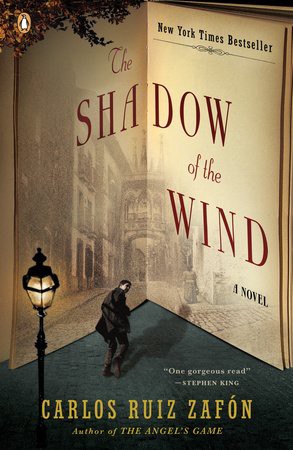
This novel has everything a book lover could want: a hidden library called the “Cemetery of Lost Books” that admits only the most special readers, but they can take just one book, and must become its keeper forever; a young boy in love; a father who runs a charming, crumbling bookshop; a shady antique book appraiser; a lauded author who’s disappeared, and whose work is being methodically erased from the world; and a rescued novel that becomes a dangerous quest for truth. Set against the backdrop of Barcelona during the Spanish Civil War, The Shadow of the Wind is at turns innocent, romantic, and breathlessly gripping.
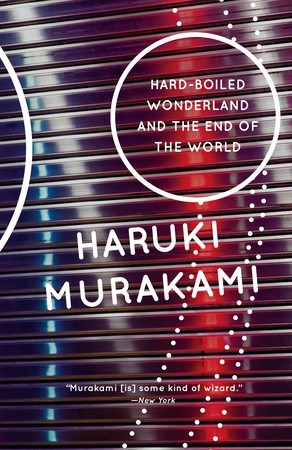
In this library, the objects kept on the shelves to be read aren’t books — they’re unicorn skulls. The novel is a split between an almost recognizable modern world and a timeless fantastical one, in which one man unlocks hidden portions of his brain to transport classified information during a data war while another wakes up memory-less in a strange, idyllic town where unicorns roam the grass outside the gates and the people living inside diligently perform their assigned civil duties without knowing why. This library is the duty that falls to the second character — he must care for the skulls and also learn to read them, for each skull contains a dream. As both men struggle to understand the forces at work, their fates slowly weave together. Dreamy and beyond explanation, it’s a little like Johnny Mnemonic meets Kafka, but with a beautiful nightmarishness that only Murakami can pull off.
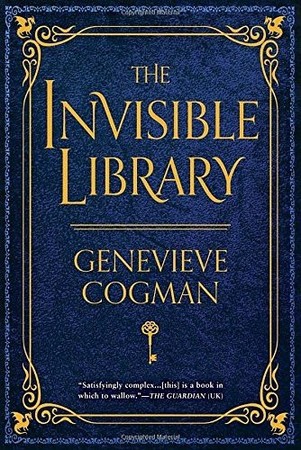
In this series, a massive library that exists outside of time employs a secret sect of librarians (spies, really) to enter all the parallel universes and collect their rare and important books. Sometimes the missions are straightforward, but sometimes the books are dangerous, or magical, or have become the only copy left of their kind — which makes the collecting much more difficult. Librarian Irene finds herself in over her head when she’s tasked with collecting a particularly powerful book in a universe where magic is commonplace and exists alongside industrial technology. In addition to surviving the chaos of the city in which her book is hidden, she must learn to work with her new assistant, a gifted young man named Kai with secrets of his own, navigate the spidery web of intra-library politics, and most of all, avoid the sinister Alberich, the only librarian to have turned against the library and survived — and who is after the very same book.
After his estranged father passes away, Jon inherits his Copenhagen bookshop and although he knows nothing about books, he decides to continue the old man’s legacy. He soon discovers that the shop actually hides a secret society of people who have the ability to work psychic magic through books. These “lectors” can trace their power back to the ultimate library of them all, the Library of Alexandria, and are divided into two categories: transmitters, who are able to transmit intense emotions to a person listening to them read, and receivers, who are able to sense word for word what any person is reading, even if they’re not speaking out loud. For centuries, these lectors have used their magic for good, but some of the more ambitious members have broken off into a faction called the Shadow Organization, to use their power for personal gain — by manipulating the minds of public figures. When more murders occur, Jon realizes his father’s death was not as innocent as it first had seemed, and that there must be a reason the Shadow Organization is now after him.
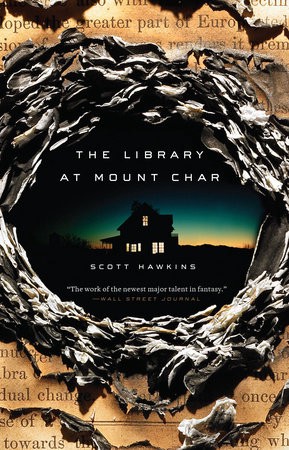
This might be the most mysterious of all the libraries on the list, because the novel’s library is also the universe. Or perhaps even more than that. The Library is ruled by a godlike figure called simply “Father,” who has divided all knowledge into twelve catalogs, which are intensely studied by one librarian each. But these librarians aren’t usual librarians — they were kidnapped as children by Father and bound to the Library — and these catalogs aren’t the usual subjects. Yes, there is one for math and engineering, but there’s also one for all possible futures, for mind control, for animal ambassadorship, and for death. One librarian can speak every language in the world, another can time travel, and yet another can create ghosts. It’s thrilling. The Library and its strange catalogs alone would have been enough to keep me reading, but when Father suddenly disappears, leaving the librarians and the world vulnerable to a plethora of divine enemies — that’s when things get really weird. Trust me when I say that this one cannot be missed.
The title of this one would make you think it’s about a bookstore rather than a library (and it is) but there’s also a wonderful vault of secret books hidden in a medieval basement, the spines literally chained to their shelves so they can’t be stolen. Clay finds himself working at a bookstore that has two faces — by day, it’s unremarkable and almost never sells anything, but by night, it’s visited by a very specific set of patrons who ask only for books from the back room. Clay soon discovers by snooping around that those books are written in code, and that there’s a secret race to unlock their contents. When he cracks the first key faster than anyone else, he suddenly finds himself sneaking into that medieval basement library and getting caught in the middle of a secret society’s obsessive quest to decipher the ultimate text.
This is the most sci-fi library of the bunch, but it’s just as intriguing as its more fantastical shelf-mates. The story takes place in the near future, a decade after a terrorist bombing has destroyed Pittsburgh. As a memorial to those lost, the Archive is created: an immersive, 3-D virtual simulation of the entire city before the blast, cobbled together from CCTV cameras, people’s memories, and every scrap of recovered data. Mourners and tourists alike can wander the streets, enter buildings, and see ghostly reproductions of the victims. It’s a horrifying, addictive idea that I couldn’t get enough of. Neither can the main character, Dominic a detective, who lost his wife in the attack and spends most of his time grieving and visiting fragmented scenes of her inside of the Archive. But when he discovers an anomaly in the data, that every appearance of another woman who was murdered before the bombing is being systematically deleted from the simulation, he finds himself drawn even deeper into the Archive — and into danger — than he ever could have imagined.
If you’re anything like me, the idea of spending hours upon hours in small metal box on wheels with either too much or too little AC does not sound like a good time. Personally, I feel carsick after fifteen minutes on the subway to work. Don’t even ask about a week long tour of scenic cornfields in the American Northwest. “But you have to road trip at least once in your life,” say my college buddies who don’t have licenses and want me to be the second driver on a speed run to Disney World. And to that I say: I have been on road trips, plenty of them. In my opinion, a vicarious road trip from the comfort of my couch is the the best road trip. Here are eight road trip novels worth a weekend at home.
Written in 1957, the daddy of all road trip novels traces a trip that took Kerouac and his friends across the U.S. This roman à clef features lightly fictionalized versions of some of the best known figures of the Beat generation — Allen Ginsberg, Neal Cassady, William S. Burroughs, and especially Jack Kerouac himself as the narrator Sal Paradise. Paradise makes his way through major cities across the country and comes into contact with the emerging rhythms of late twentieth century America: jazz culture, questions of gender and sexual identity, poverty crises, and the duality of loneliness with freedom on an open road.
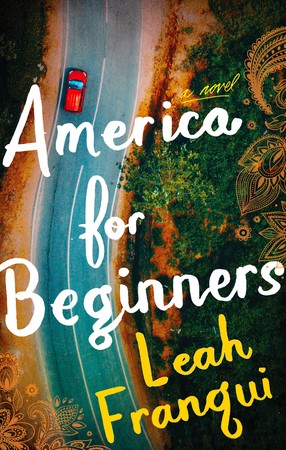
Pival Sengupta books a trip with the First Class India USA Destination Vacation Tour Company, but the only sight she wants to see is the face of her long lost son. For a year, Pival believed him to be dead — as she was told by her traditionalist husband, who could not bare the shame of a gay son. With her husband gone now too, Pival lands in New York and embarks a surprisingly challenging trek from East Coast to West, learning about the radically different country that became her son’s home and hoping that along with forging new bonds she can mend the one she lost a year ago.
Rich businessman Charles Wang goes from having more money than he knows what to do with to losing his home, all but one of his cars, and his apparently tenuous grasp on the American Dream. With no money and no better options, Wang packs up his two children and their stepmother on a road trip from Bel-Air to his eldest child’s home in upstate New York. Rather than breaking the family apart, this financial catastrophe brings them closer together in a tale about defying stereotypes, navigating displacement, and discovering the meaning of “home.” In an interview with Electric Lit, Jade Chang considered her debut novel “an immigrant novel that gave the big middle finger to the traditional immigrant novel that we see in America.”
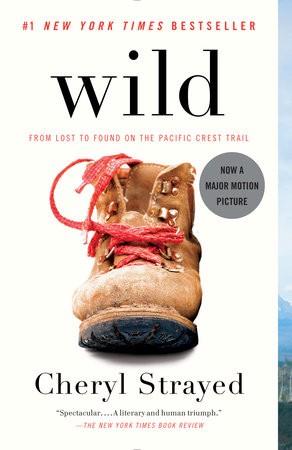
Call it reckless, call it insane, but at 22 years old Cheryl Strayed had a backpack and nothing tying her to home. With her mother recently deceased and her marriage wrecked, Cheryl jumped on the wildest impulse she had: a solo hike along the Pacific Crest Trail. (It’s still a road trip! Nobody said you had to be driving.) This trip would drag her through extreme weather and past deadly creatures, from the Mojave Desert in California, to Oregon, and all the way up to Washington state. It may have been dangerous, but this trip gave Cheryl the fears, pleasures, and ultimately the experiences that would heal her of past pains and teach her to survive.
A classic from the 1930s, As I lay Dying follows the Bundren family in a wild stream of consciousness ride to deliver their dead mother’s corpse to her hometown of Jefferson, Mississippi. As the July heat rots Addie Bundren in her coffin, the members of an already dysfunctional family spiral further into their own distinct brands of madness, exposing the baseness, or even at times nobility, that lies beneath the flesh. This twisted novel delves into the struggles of grief, the conflicts of familial identity, and the strange parallels between birth and death that will leave you disturbed the next time you lie down to sleep.
This self-described “Illustrated All-Girl Road Novel Thing” is the first in Lopez’s Mad Dog Rodriguez trilogy. Jolene “Tomato” Rodriguez hops on her motorcycle for a cross country trip from New Jersey to San Francisco in search of who knows what: love, the meaning of life, a post office? This hilariously written novel is a quick read filled great art, attitude, and quotable moments about female sexuality and wacky shenanigans. What’s not to love about punk rock women with roaring bikes?
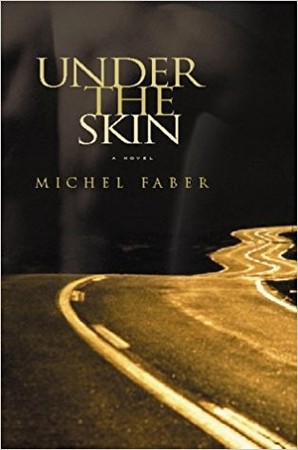
Hitchhiking hasn’t been a good idea since the ’70s, but that doesn’t stop Isserley, a female driver on the Scottish Highlands, from picking up men in need of a ride. On the road, she lends a sympathetic ear to their woes and gently questions them about loved ones before knocking the innocent hitchhikers out with drugs and shipping her soon-to-be-processed food stock off to her home world. As a professional alien abductor, Isserley takes her job very seriously, which as you can guess becomes complicated when she begins to view humans less like sheep and more like her own people. Alien or not, we all deal with class divide, process beauty, and love our families in the same way. Under the Skin depicts some of the least alien aliens you’ll ever see.
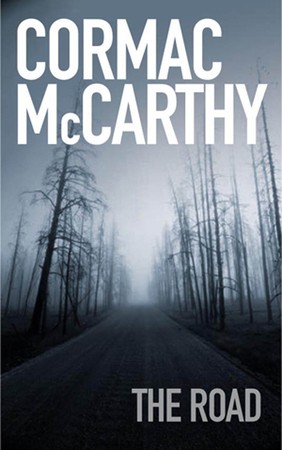
Written by the author who we all thought died but didn’t, The Road takes place after an apocalyptic event leaves humanity near extinct, and an unnamed father and son traverse a now barren America in an attempt to survive the coming winter. As is with most apocalyptic tales these days, the greatest threat to the pair’s survival is not wild animals or the lack of wifi, but the few other humans also roaming the roads. Between cannibals, thieves, and families just as desperate as the father and son themselves, only the unfounded hope of “something better” at the end of the journey keeps them going down their path. There is nothing like a treacherous trip through a post-apocalyptic dystopian America to wreck your faith in humanity.
We have been on the bus for years. The bus is modern, a double-decker coach with a narrow stairway, and can accommodate exactly one hundred passengers, not including the drivers. Each of us has a seat. Above each seat is a switch for a light and a vent for air, heating or cooling depending on the climate. Beneath each seat is an outlet for chargers and a space for a bag, about the size of an average backpack. The cushions on the seats have vibrant patterns, vaguely reminiscent of the carpeting in movie theaters. The bus is neither comfortable nor uncomfortable. The bus is neither spacious nor cramped. The bus is approximately half full. At the front of the bus is a trash receptacle, where crumpled wrappers and peels and rinds can be thrown away after meals have been eaten. At the back of the bus is a bathroom, which has a mirror where makeup can be applied in the morning and removed in the evening. We sleep in the seats, using bunched towels for pillows, sometimes wadded jackets or sweatpants. People in cars occasionally stare at us before passing us on the highway.
None of us were born on the bus. Each of us chose to board, climbing onto the bus at a desolate stop on a foggy turnpike, or a dusty road, or a sunny lane, or a rainy intersection, hurrying down the aisle with a furtive glance at the other passengers. We have been on the bus ever since. Some months ago an elderly passenger with silver stubble and tortoiseshell eyeglasses who was known to have a fondness for salted caramel candies suffered a massive coronary and perished on the stairway, spilling a handful of caramels onto the steps, and was removed from the bus later that night by a pair of paramedics, but other than that none of us have ever died on the bus. Each of us possesses a ticket, with the glorious destination printed in metallic lettering beneath the name of the company. Some of the tickets have fraying edges, worn apart by superstitious rubbing, while other tickets are in mint condition, kept in wallets for protection. In the years that we have been on the bus we have seen all manner of sights out the windows. Skyscrapers gleaming in cities with magnificent boulevards, picturesque towns, quaint villages, craggy snowcapped mountains tinted indigo by the dusk, grassy rolling hills smoldering pink in the dawn, dew glittering on plains, mist drifting across marshes, sunbathers in bikinis lying on sandy beaches, surfers in wetsuits sitting on rocky outcroppings, dark clouds flickering with heat lightning, hail falling onto streets of bobbing umbrellas, snow flurrying through crowds of hooded parkas, uniformed bands marching in spectacular parades, thrill seekers cheering on carnival rides, anglers fishing from docks crusted with barnacles, horseback riders galloping wildly across windswept ranches, gamblers streaming into shimmering casinos, sunlight sparkling across the chrome hulls in sprawling trailer parks, stars twinkling above glassy lakes teeming with rickety cottages, homey farmhouses with children climbing on rusted tractors, weathered bungalows with children swaying in hammocks between the trees, suburban mansions with children bouncing on trampolines in the yards, people standing near grain silos, people walking around water towers, curving skate ramps spattered with vivid graffiti, ancient railroad bridges overgrown with flowering weeds, fireworks, rainbows, and towering billboards. All noise from outside the bus is muffled. The inside of the bus is profoundly quiet. Conversations are held in hushed murmurs. We wear headphones when we want to listen to music. Music never plays over the speakers of the bus. The drivers rarely make announcements, only when the bus is making a pit stop at a gas station or a rest area, and even then only to announce the time that the bus will depart again. With a sense of reverence, even a feeling of anxiety, each of us makes careful note of the time announced.
We hurry off of the bus the second that the doors accordion apart. Each pit stop is exactly one hour. We have that time, and that time only, to shower, to get haircuts, to wash clothing, to buy food and toiletries and medications. Because these are the only occasions on which we are able to interact with the world beyond the windows of the bus, the pit stops are a powerful experience for us, almost transcendental. After years of nearly constant motion, the sense of motionlessness is disorienting, standing there stock-still in a gas station or a rest area, staring at a colorful display of candy bars, or salted nuts, or ice creams, or greasy frankfurters rotating behind glistening glass. The mystical churning of a slushy machine. The cryptic hum of a soda dispenser. Ordinary people chat and laugh with each other in the aisles. As we shop for supplies, we smile at the ordinary people sometimes, longing frantically for some connection. To feel kinship. To feel companionship. Though we try to look friendly, we can feel that the smiles are frightening, radiating pain and desperation.
None of us have to ride the bus. We have no obligation. We could leave the bus whenever we wanted, could join any of those happy communities of stationary people. But if we left the bus, that would mean we would never arrive where the bus is going. The possibility of reaching that destination consumes us. Casting one last glance at the gas station or the rest area, we climb back onto the bus, and we settle into the seats, hearts full of despair and ambition. The engine comes to life with a roar. The bus glides back onto the highway, and we gaze out the windows at the dazzling blur of neon and fluorescence, the headlights and taillights and glowing signs. The bus may never arrive. We know that. But the bus may arrive. We are exhilarated, are utterly enraptured, by the promise of the tickets that we possess. Even managing to find the bus once was a miracle. Some days ago as the bus pulled out of the parking lot of a truck stop at the designated time, a murmur passed through the bus, scattered gasps and exclamations, and all of us turned toward the windows in shock to see a passenger bolting from the doors of the truck stop a minute too late, her hair still damp from a shower, wearing only shorts and a bra and a single flip-flop, running after the bus with her arms outstretched, waving and pleading for the bus to come back, then stumbling over a curb and collapsing onto the pavement, shaking her head and clutching her chest and weeping as she watched the bus vanish into the distance and we watched her become part of the background. That horrible look on her face, realizing she had been left behind, is the thing that we fear most in the world.
About the Author
Matthew Baker is the author of Hybrid Creatures, a collection of stories written in hybrid languages, and the children’s novel If You Find This, which was a Booklist Top Ten Debut of 2015 and an Edgar Award Nominee for 2016. His fiction has appeared in publications such as American Short Fiction, New England Review, One Story, Electric Literature, and Best of the Net. Born in Michigan, he currently lives in New York City, where he teaches at New York University. Visit him online at: www.mwektaehtabr.com
You may have heard that Alaska is large. This is true. If you cut up a map of the United States, you’d find that the next three largest states (Texas, California, and Montana) would fit within the acreage of the 49th. You may also have heard that Alaska is a frozen wasteland populated by loners who spend their time hunting caribou to feed their families and sled dogs through the ten-month winter while waiting for gold-panning season to arrive. This is not true. Alaska accounts for half of the country’s coastline and that’s where most of its population lives, in small cities and towns.
Purchase the novel
A few years ago, I decided to retrace the Harriman Expedition of 1899, in which a luxury steamship loaded with two dozen of America’s leading naturalists spent a summer following the coast of the Last Frontier. The 1899 expedition was bankrolled by railroad tycoon Edward Harriman, and traveled with a collection of 500 books on Alaska. (Unlike me, they had stevedores to carry their trunks and a comfortable smoking lounge to read in.) I connected the dots of their journey by traveling thousands of miles on the Alaska Marine Ferries (the state’s version of Greyhound buses).
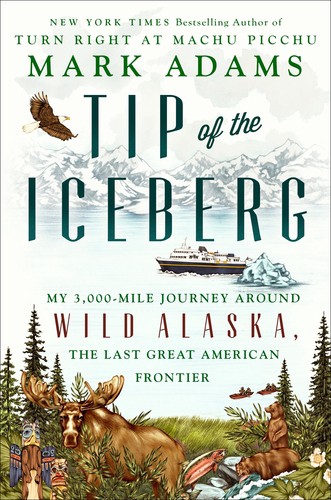
By the time I was done, I’d slept in more than twenty towns and wrote a book about it: Tip of the Iceberg: My 3,000-Mile Journey Around Wild Alaska, the Last Great American Frontier. Along the way I amassed a small collection of books that collectively give a pretty good sense of what draws people to Alaska and what keeps them there. Here are eight books about Alaska, the last great American frontier:
This is the book that almost every Alaskan recommends when asked for suggestions, and for a good reason: no piece of writing by an Outsider (as Alaskans call those unfortunate enough to live elsewhere) better captures the forty-ninth state’s uniqueness and ethos of rugged individualism. Plus it’s funny.
Outside of Anchorage and Juneau, Alaskans tend to rest up in the winter and pack as much action into the short summer months as possible. This impressionistic portrait of the rhythms of the quintessential Alaska summer activity, salmon fishing, beautifully captures the feeling of long, hard days outdoors and the satisfaction earned from what Alaskans call subsistence — feeding yourself through your own labor.
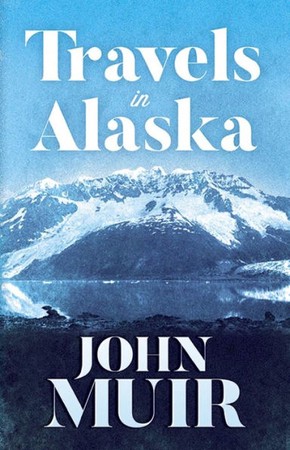
A million people will visit the Inside Passage on cruise ships this summer, and every one of them is going to see the spectacular mountains and glaciers that Muir introduced to the world. The vivid descriptions of nature and sense of wonder hold up well after a century. Sadly, Muir’s namesake glacier has retreated thirty miles since the Harriman Expedition saw it in 1899.
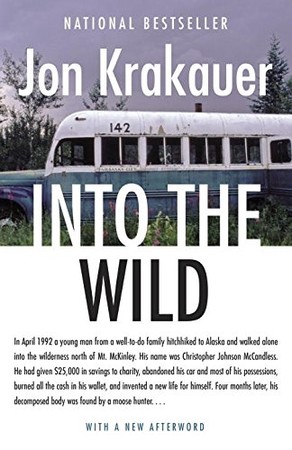
The book that launched a thousand hitchhikers. The seekers who head north searching for solitude and solace from civilization are sometimes known as “End of the Roaders.” Krakauer brilliantly captures the allure of Alaska’s remoteness, and the skepticism the state’s residents feel toward those who arrive unprepared to survive when nature gets angry.
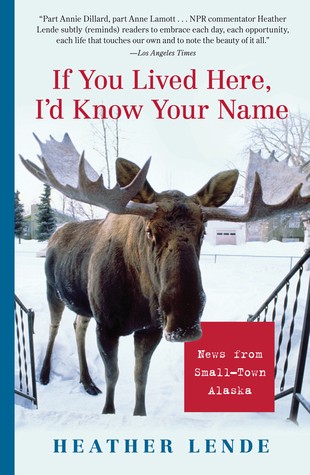
Lende is a newspaper reporter (among other occupations; Alaskans are champion multi-taskers) in Haines, and her book’s title is strictly factual. Alaskan towns are filled with quirky characters of every sociopolitical stripe, and they tend to get along out of necessity.
This account by environmentalist Ott of the crisis and aftermath of the 1989 Exxon Valdez disaster tells how the town of Cordova — reachable only by air or water — was nearly destroyed by corporate malfeasance.
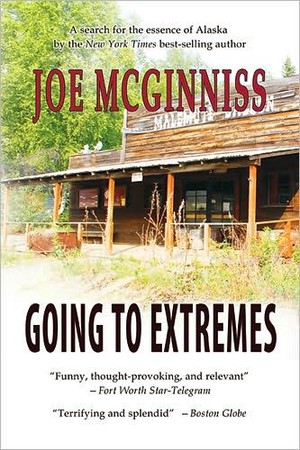
McGinniss spent a year living and traveling in Alaska around the time oil began to flow through the Trans-Alaska Pipeline in the late 70s. But the portraits he paints of dreamers and dropouts and the plans they made for One Big Score could have been written yesterday.
Not everyone who comes north to live off the grid is a lovable goofball. This chilling account tells the story of Papa Pilgrim, a fundamentalist Christian with fifteen children, a very dark past, and little patience for government interference in his affairs.
In March, I attended a conversation between Sheila Heti and Chris Kraus at the Murmrr Ballroom in Brooklyn. During the Q&A, a woman writer from the audience asked the two how they think about the lines between memoir, fiction, and “autofiction,” or fictionalized autobiography — a question that the asker said she struggled with herself. Heti and Kraus were unanimous on a few points: that autofiction is a needless term, as all fiction draws on the writer’s experience, and that memoir is “repugnant.”
Listening to their responses, I was struck by the strength of their objections to “memoir.” I related — my own forthcoming book, drawn from my life, is subtitled “A Novel from Poems” rather than “A Memoir,” because I balked at the term, which felt heavy and in some ways inaccurate. But Heti and Kraus seemed to hate the term with a fervor that surprised me. I returned to a question I’ve asked myself many times before: Why are we so uncomfortable with memoir? Why does the word itself sound both sentimental and unserious? And why do women writers in particular feel so compelled to reject that label even when their narrators share their names and friends and professions?
Why are we so uncomfortable with memoir? Why does the word itself sound both sentimental and unserious?
Of course, it would be an exaggeration to say that memoir is generally hated. Really, the opposite is true. In The Limits of Autobiography, Leigh Gilmore argues that, at the turn of the millennium, memoir became “the genre”: she notes that, between the 1940s and the 1990s, the number of new autobiographies and memoirs released per year tripled; in addition, scholars joined novelists and memoirists in the writing about personal experience. Now, autobiographies from celebrities and politicians regularly top nonfiction best-seller lists, and much of the growth in book sales is attributed to nonfiction.
But that boom in memoir is accompanied by a discomfort with it — and judgment of it. Even the slipperiness between the respectable term “autobiography” and the more treacly-sounding “memoir” tells us as much.
The word “memoir” has straightforward origins — it comes from the French mémoire, memory. But Heti and Kraus’ visceral reaction to the term indicates that it has taken on a much more specific meaning. The two writers explained their distaste for the genre in similar ways: Heti said that a memoir is not symbolic (a point she reiterated in a recent interview). Kraus said that a memoir attempts to tell the story of one life, and that she is more interested in dialogue and relationships.
At other points in their conversation, they touched on a related topic: Heti said that readers often mistake her novel How Should a Person Be for self-help, and then tell her she wasn’t helpful — that she isn’t qualified to give them advice. This is another assumption about memoir: that its writers suggest they have lived exemplary lives, ones others may want to strive and imitate. (Some readers may even assume that young people cannot and should not write memoirs.) Our celebration of the lives of the rich and famous must contribute to this conception, and the current boom in self-help books, how-to guides, and inspirational literature compounds it further. This may seem to be a bit of a contradiction: memoir has negative associations with sentimentality, yet also demands of its authors the demonstration of expertise. And perhaps this very contradiction is part of what makes the term seem weighty, if not repugnant.
Objections to memoir thus paint it as a limited genre, one that tries to make sense of an individual life in a neat, straightforward way so that it can serve as an example. Listening to Heti and Kraus, it feels that memoir is pitted against writing that is “literary” (symbolic, shaped, crafted), formally experimental, and innovative. By following the path of a singular life so closely, they argue, it closes itself off to the stranger details and contradictions that make lives and literature interesting in the first place.
Objections to memoir paint it as a limited genre, one that tries to make sense of an individual life in a neat, straightforward way.
Indeed, recent works of nonfiction or fiction drawn from life go by many other names: we call Maggie Nelson’s The Argonauts “auto-analysis,” Heidi Julavits’ The Folded Clock a “diary,” Heti’s How Should a Person Be “a novel from life.” I read lots of essay collections, and have noticed that their fragmented forms save them from the label “memoir,” too.
And of course, there is that other term “autofiction,” writing about the self that refuses the label of nonfiction altogether. Kraus said that all fiction comes from a writer’s experience; why do we need a special term for it? There’s a logic to this argument — no one would call James Joyce’s The Portrait of an Artist as a Young Man autofiction, after all. While the term has been attached to many celebrated (male) writers — Sebald, Amis — it can also serve to imply that a novelist has taken the easy way out, simply changing around some details from their life instead of coming up with something truly creative and new. In the introduction to a special issue of Women and Performance (1999), Leslie Satin writes that autobiography “has been feminized.” Satin goes on: “This feminized state has perpetuated the criticism so often leveled at female writers of fiction, that their writings are, however veiled, (merely) autobiographical.” For women writers who have faced this charge, it makes sense to reject any label that implies their work is merely self-oriented — to insist that their books are not autofiction, but fiction.
The literary and the autobiographical have had a vexed history since well before the late 20th-century memoir boom. At the height of Modernism, T. S. Eliot’s “Traditional the Individual Talent” and Gertrude Stein’s The Autobiography of Alice B. Toklas both demonstrated their culture’s distaste for autobiography, memoir, and “confessional” literature, albeit in different ways. Eliot argues that writing from one’s personal experience prevents one from contributing to and reshaping literary tradition. Stein’s fictional autobiography of her partner, by contrast, is a send-up of autobiography as a genre. Throughout, the fictional narrator, Toklas, shares Stein’s thoughts on autobiography:
For some time now many people, and publishers, have been asking Gertrude Stein to write her autobiography and she had always replied, not possibly. She began to tease me and say that I should write my autobiography. Just think, she would say, what a lot of money you would make. She then began to invent titles for my autobiography. My Life with the Great, Wives of Geniuses I have Sat With, My Twenty-five Years With Gertrude Stein.
Stein knows an autobiography could bring her fame and wealth, but as a literary innovator, a “genius,” it’s distasteful. However, she encourages her partner to write one: Toklas, the “wife” in their relationship, could write about her feminized perspective — her time with other wives, her time observing Stein’s genius. And so, in a send-up of the genre, Stein simply writes from Toklas’ perspective. The book was immensely popular, because of its satire against autobiography, as well as because of its real disclosures of modernist friendships and conflicts: the book includes conversations with Picasso, and criticisms of Hemingway.
By the time that Eliot and Stein rejected the personal, memoir had begun to be coded as female. Memoir flourished as a genre in the 19th century, and by the early 20th century, was mainstream. Romanticists wrote from personal experience, and John Stuart Mill and others wrote spiritual autobiographies. When Oscar Wilde was questioned about his plays while on trial for indecent behavior, the line between autobiography and fiction became a legal question, and his autobiographical De Profundis, written from prison, inflamed public interest in his relationship with Lord Alfred Douglas, and associated the genre with homsexuality (then “sexual inversion”) in the public imagination. Women writers of the period also included autobiographical elements in their novels and periodical publications. Regardless of the gender of the writers, the genre itself became negatively associated with the feminine as it became popular.
Regardless of the gender of the writers, the genre itself became negatively associated with the feminine as it became popular.
As Andreas Huyssen and others have argued, modernism constructed itself in opposition to a mass culture that it strongly coded as female. It is well-chronicled that Eliot and his contemporaries rejected the 19th century to make literature new; in After the Great Divide, Huyssen argues that modernism associated “inferior literature” with one set of terms — it is “subjective, emotional, passive,” and female” — and “genuine, authentic literature” with another — it is “objective, ironic, “in control of…aesthetic means,” and male. (It does not escape me that the history of modernism I outline here is a particular history, and a white history. I focus on it here not to exclude other modernisms, but to trace the history of a dominant cultural narrative that I think influences our definitions and associations today.)
In the early 20th century, memoir’s very popularity made it sentimental, naïve, and “easy” (to read and to write). Modernism opposed itself to those terms, and when modernist writers did write from their life experience, their work blurred the line between truth and fiction, memory and invention, enough to evade the labels “memoir” and “autobiography.”
Moving into the mid–20th century, audiences continued to crave memoir; it seemed to intersect with the literary once again with the rise of the Confessional School. It’s worth remembering, though, that even Sylvia Plath said her famous poem “Daddy” was “spoken by a girl with an Electra complex” — as in, another girl, but not herself. For years, women writers like Stein and Plath have performed confession while also denying it.
For years, women writers like Stein and Plath have performed confession while also denying it.
Now, a century after the initial ascent of literary modernism and on the other side of deconstruction and postmodernism, one might assume that “memoir” has taken on new valences — that the literary/innovative is no longer so opposed to the subjective or to the “popular.” That “women’s writing” has no less value than that other, adjective-free “writing.” A recent resurgence of essay collections, as well as the reception of the innovative nonfiction titles I’ve mentioned, suggests we’ve made some progress. We prize “difficulty” much less than we used to, and are more open to the idea that all selves are constructed, whether in literature or in life. But the continuing negative connotations of the term “memoir” suggests to me that we have a way to go towards dismantling the idea that self-referential work has less value because of its appeal to readers who identify as women.
First, I wonder if it might be time to reconsider memoir’s association with self-help. When an author presents her life as potentially instructive, does it have to be didactic? Heti’s new novel Motherhood seems to hold open the promise of non-didactic self-help. I don’t mean to suggest that the book is not a novel or that it should be labeled memoir. However, it’s obvious that many readers and reviewers have struggled to separate the narrator from Heti herself, and have read it as a treatise of whether or not to have a child. Indeed, I know many friends and acquaintances reading it hoping to get advice. On Instagram, Miranda July says it is:
A book for all of you who are considering having a baby, who had a baby, who didn’t have a baby, who didn’t want a baby, who don’t know what they want but the clock is ticking anyway. This topic is finally tackled as if it were the most important decision in your life. Because, um. How lucky are we that one of our foremost thinkers took this upon herself, for years, in real time, wrestling every day and living to tell.
Heti, July implies, thinks through this from her own perspective to help the reader in their own thinking — as undecided and undecidable as the question of motherhood may remain, even for Heti herself. And why shouldn’t writers acknowledge that readers want this?
Beyond literary fiction, I think about literary self-help columns including Cheryl Strayed and Steve Almond’s Dear Sugar, Dorothea Lasky and Alexander Dimitrov’s Ask the Astro Poets, and Heather Havrilesky’s Ask Polly. These writers carefully read the letters and follow-up with advice that draws on their own experience as readers and writers (and, in the case of Lasky and Dimitrov, astrologers). There’s a hunger for well-wrought advice from writers, I think — and it doesn’t have to answer a question definitively. While self-help may demand a standard of perfection from the individual who doles it out, these writers’ columns (and podcasts) suggest that our standard is changing: we want advice from writers who can admit their flaws and mistakes. Often, seeing a writer think through the problem through the lens of their own experience is what’s most valuable. So why shouldn’t works of memoir and literary fiction acknowledge that readers often seek advice and help? Advice can stem from writer’s experience, as well as the gaps, contradictions, and uncertainties in that experience. I’d like to see more work of this kind — experimental self-help literature.
Why shouldn’t works of memoir and literary fiction acknowledge that readers often seek advice and help?
Second, I wonder what would happen if women and nonbinary writers with literary sensibilities embraced that “women’s genre,” memoir. After all, our lives are all shaped by the symbolic significance we inscribe to certain experiences, relationships, and objects. Our personal histories contain much more than fact: they’re also constructed of out the lies we tell ourselves, knowingly and unknowingly; by the things we distort; by our dreams and fantasies and delusions. We know that our memories contain so much more than truth; what if we let our memoirs do so, too?
The pen is mightier than the sword. But what about the dagger? Conservative titles are showing up on the New York Times bestseller list marked with dagger symbols (this one: †), which indicate that a book cracked the top sellers thanks to bulk orders. In other words, people are buying several dozen or more books at a time. Does this mean something a little weird is going on? Well, it might.
The method by which the New York Times compiles its list of best sellers is shrouded in as much mystery as the recipe for Coca Cola or the number of licks to the center of a Tootsie Pop. According to the New York Times’s own “About the Best Sellers” info page, the Times gets the data for its list from specific book vendors who remain, for the most part, confidential. Though the numbers aren’t verified, it’s believed you have to sell between 5,000 and 10,000 books in a week to vendors in the paper’s established “book universe,” which includes “well-established vendors as well as emerging ones. The sales venues for print books include national, regional and local chains representing tens of thousands of storefronts; many hundreds of independent book retailers; scores of online and multimedia entertainment retailers; supermarkets, university, gift and big-box department stores; and newsstands.” When we reached out for clarification, the Times gave us a simile: “If we were to equate The New York Times best seller lists with covering baseball, we would include the major leagues, minor leagues and all the way down to the little leagues while doing what we can to exclude any attempts made by people to manipulate the lists.”
Because people do try to manipulate the list. A lot. The list is easy to scam if you’re okay with some public scorn. Mitt Romney bulked up his numbers by requiring his book tour hosts to sell between $25,000 and $50,000 worth of his 2010 book No Apology: The Case for American Greatness. The most recent public scamming strategy was carried out by the author of Handbook for Mortals, Lani Sarem. The book made it to the top of the Fiction Bestseller List, beating out The Hate U Give, without even being available for sale. (As some consolation, the book was eventually removed from the bestseller list.) How did Lani Sarem get on the list? By calling up independent bookstores to confirm they were reporting their sales to TheNew York Times, and then ordering specific quantities of books through those stores — orders large enough to make an impact but small enough to fall under the bulk order radar.
Here’s where the dagger comes in. The New York Times knows its system for gathering weekly data is open to abuse, which is why it’s come up with the dagger system. If the New York Times believes a book has made its way onto the list in a way that seems “suspicious,” it places a small dagger symbol next to the title: “Institutional, special interest, group or bulk purchases, if and when they are included, are at the discretion of The New York Times Best-Seller List Desk editors based on standards for inclusion that encompass proprietary vetting and audit protocols, corroborative reporting and other statistical determinations. When included, such bulk purchases appear with a dagger (†).”
These daggers are important to watch, because they indicate that someone is paying a lot of money to make sure books such as The Empire State by the political commentator Jerome R. Corsi (a book on the secret conspiracy to undermine the Trump presidency) get on the list, regardless of how many people actually read them.
Emily Pullen, a former manager at WORD bookstore in Brooklyn and current receiving administrator for the New York Public Library Shop, brought our attention to some of the titles ending up on the Bestseller Nonfiction List for April 22nd. There are a lot of conservative titles on the list. But conservative titles have a tendency to sell a lot of copies, so that’s not a cause for concern. However, look right next to four of the titles, and there’s that little dagger.
Striking but not totally out of the ordinary. After all, the symbol was incorporated in part because there is a precedent for this kind of spurious behavior. But when a bestseller from that week— Our 50 State Border Crisis by Howard Buffet — showed up at the New York Public Library with a donation slip from Howard G. Buffet’s own non-profit foundation, Pullen wondered whether Buffet was bulk-ordering his way onto the list using his organization’s funds. Pullen posted this Instagram (below) of a letter she found in a book donated to the library. She wrote: “The author’s nonprofit foundation bought the book through B&N and had it shipped to a branch library’s donation center.” She speculates that: “They purchase in a way that gets reported to NYT, can write it off most likely, and maybe it will get into circulation at a library.”
We reached out to Emily Pullen and Barnes & Noble for comment, but neither responded to us before the publication of this piece.
Why does it matter? Well, whether we like it or not, the list has a lot of power when it comes to book sales and author preeminence. While there are many best seller lists out there, with their own (often more transparent) methodologies, it means a lot to be able to call oneself a “New York Times Best Selling Author.” According to a report cited by Vox, to appear on the Times list can change a writer’s career: “Appearing on the New York Times’s best-seller list increased debut authors’ sales by 57 percent. On average, it increased sales by 13 or 14 percent.” The list also has a lot of cultural power for readers: if a book shows up on the New York Times list, there’s an imperative (in certain circles) that you know about it. In my own experience working at a bookstore this was true. Every week we’d receive the New York Times Book Review, and turn to the best seller list. We had to make sure we had copies of every book on the list in the store. And sure enough, that same weekend people would come in looking for those books more than any other.
When we reached out to the New York Times Best Seller Desk to learn more about how they use discretion when including those titles on the bestseller list, we got what appears to be a standard reply from the desk:
“Our best-seller lists and the editorial decisions of The Times’s book editors and critics are entirely independent…This means our lists are not a judgment of literary merit made by the editors of the best-seller lists, who remain impartial to the results. These are best-seller lists, not best-reviewed lists.”
And on the breakdown of political titles:
“In the last year, politicians and commentators who identify as conservative have performed as well as, if not better than, liberal ones on our lists…The author who has had the most rankings at №1 and greatest number of rankings on our hardcover nonfiction list is Mr. [Bill] O’Reilly, the noted conservative commentator. Since the spring of 2008, he has spent 57 weeks at №1 on our hardcover nonfiction list and ranked over 1,272 times across all of our lists.”
Whether we like it or understand it or believe it’s fair, the New York Times best seller list is something we should pay attention to if we care about how books get around to the people who need them and read them. The pen is mighty. But so are these daggers. And in a political climate mired in media controversy, it’s more important than ever that we look out for where the daggers get drawn.
One month ago yesterday, Alek Minassian drove through a Toronto shopping district in a rented van, killing ten people and injuring sixteen more. Analysis of Minassian’s online activity — where he participated in forums for the involuntarily celibate, or incels — quickly revealed the attack’s motivation: he was avenging himself on the women (apparently all of us) who had rejected him. He declared that with his act of terrorism, the “incel rebellion” had begun — although he was not the first self-described incel to use his sexlessness as an excuse for acts of mass violence.
Though the subsequent rash of media analysis might lead you to think otherwise, none of this is new — not even the term “incel,” which was first coined in 1993 by a queer Canadian woman when she created a website for people who identified as involuntary celibates to share their thoughts and feelings. The incel community that exists today on reddit, 4chan, and incel.me is an inchoate and ever-evolving group, which seems to change shape with every attempt to characterize it. The genealogy of today’s incel grows more complex the more you dig (he is descended from both the aggressively misogynist Pick Up Artist community and the slightly more sympathetic “love-shy” community). What members of all these groups share, of course, is their sense of their own alienation from women and their (almost always deeply misogynistic) conviction that this alienation has negatively affected their lives in myriad profound ways.
I am writing this on May 23rd, the fourth anniversary of Elliot Rodger’s Isla Vista spree killing, a set of murders explicitly motivated by the perpetrator’s extreme hatred of women and the men he perceived as more sexually successful than he. As of the time of writing, 10:09 am, there are multiple posts on the front page of incel.me celebrating Rodger as a hero (many more will surely show up throughout the day). Posters are discussing what kind of vanilla latte Rodger would have liked (hot or cold), congratulating each other on the anniversary (which they’re calling “The Supreme Gentleman’s Day” and “The Day of Retribution”), and making playlists of his favorite songs (they call these ’80s pop songs “Elliotcore”). Where did these young men get the idea that male pathos (stereotypically defined by them as sexual frustration) is so pathetic, so worthy of tribute? One possible answer to the question, one we don’t discuss very much, is our culture’s literary history. The incel isn’t just a monstrous birth of our casually cruel and anonymous internet culture. He is also a product of Anglo-American literary culture, which (particularly in the twentieth century) treats the topic of male sexual frustration as if it is of prime importance to us all.
The incel is a product of a literary culture that treats the topic of male sexual frustration as if it is of prime importance to us all.
Think of the literature you read in high school. One source of Hamlet’s insanity, those around him find it natural to assume, is his sexual frustration with Ophelia. Multiple characters in the play scheme to bring the two together, hoping that if she puts out he’ll calm the fuck down and not kill everyone. The plots of a number of other “classic” novels, from Great Expectations and A Tale of Two Cities to The Great Gatsby, are driven by a (white) male character’s frustrated desire with a remote woman. Holden Caulfield’s ramble through New York is punctuated by his obsessive recollections of Jane Gallagher, the girl he respected too much to try to fuck. Tim O’Brien’s collection The Things They Carried lingers on the story of Jimmy Cross and his obsession with a woman named Martha, whom he knew before he was drafted. Cross is depicted as a genuine figure of pathos: a normal, relatable man caught in a terrible position who uses fantasy as a way to manage the horrors of his war experience. He remembers touching Martha’s knee one night, and how she had recoiled. As he recalls this scene, he fantasizes about having “done something brave.” “He should’ve,” he thinks, “carried her up the stairs to her room and tied her to the bed and touched that left knee all night long.” That his fascination with her takes the form of a rape fantasy is later revealed to be doubly significant. It is not just evidence of his resentment towards her for rejecting him, but also, we later learn, proof that he has somehow intuited the history of sexual trauma that lives behind her veneer of disassociation, her eyes which are always “wide open, not afraid, not a virgin’s eyes, just flat and uninvolved.”
I choose The Things They Carried to pick on here because it’s a favorite of mine. I think it’s brilliant, but it offers a prime example of the way our literary culture has long treated rage and aggression as if they are normal features of (white) male sexuality. (The racial component is of course significant here, since the exact opposite has long been true for depictions of black male sexuality, which have been represented as essentially and problematically aggressive.) The literature we choose to teach our children evidences how untroubled we are by this disturbing cliché that rage and a fascination with violation are characteristic features of (again, white) male sexuality. This is of course one of the main points of O’Brien’s beautiful book, but it doesn’t change the fact that as a teenager I had read many fictional accounts of men’s rape fantasies long before I had ever read a literary account from the woman’s perspective of rape, or even of consensual sex. I was trained to accept that male sexual frustration was a serious issue because I read hundreds of pages about it before the age of 20, far more than I read about issues of undoubtedly greater social import, like the legacy of slavery, the alienation of women and people of color from public life, or the violence of the settler colonialism on which the United States was founded. Perhaps these novels even coached me into taking male sexual frustration seriously through a kind of frightful education: look what happens, they seemed to say, when men don’t get what they want.
The plots of a number of “classic” novelsare driven by a (white) male character’s frustrated desire with a remote woman.
And these are just the books I read in high school. Don’t even get me started on D.H. Lawrence, Somerset Maugham, Ernest Hemingway, Harold Pinter, Henry Miller, Saul Bellow, Vladimir Nabokov, John Updike, Norman Mailer, Bret Easton Ellis, or the patron saint of elevating male bullshit: David Foster Wallace. (Don’t @ me; I don’t care.) Though many of these authors are justly celebrated, they have all repeatedly treated male sexual frustration as if it deserves pride of place among the great issues of Life. Lolita even succeeds in conjuring sympathy for the desires of a pedophile. (Gregor von Rezzori famously called it “the only convincing love story of our century” in Vanity Fair, a quotation which has long been emblazoned on the cover of the Vintage edition of the novel.) By contrast, novels of women’s frustration with society — not sex — like those of Edith Wharton and Kate Chopin, are classed as special interest pieces: feminist fiction, or women’s fiction, not Great American Novels.
This all becomes even more ironic when we consider the history — not literary, but real — of identifying women’s sexual frustration as the psychological problem of hysteria. For hundreds of years, women were literally committed because of a “disease” that male doctors attributed to a handful of sexual causes: women with hysteria were either not getting fucked enough, had been fucked by the wrong people, had wanted to fuck the wrong people, or had just plain wanted to fuck too much. It’s hardly an insight to say that men have been telling women about how they should behave sexually forever, and that usually their instructions are geared to benefit their own pleasure or politics. That today’s most visible forms of misogyny, however, reverse the traditional rationale about female sexuality — it’s not that we need to get fucked more for our own good, but for the good of a nation plagued by mass shootings perpetrated by lonely men — just goes to show that this kind of misogyny cuts across political and ideological categories. I think our most celebrated and most taught literature also shows that. After revisiting the books that I was first introduced to as “great novels,” I see that many of them rehearse and even promote the idea that male sexual suffering (often represented by deprivation) is a public concern, while female sexual suffering (often represented by trauma) is a private, psychological issue. In literature, time and again, men — both writers and characters — elevate their pathos by revealing it. By contrast, female pathos marks a text as niche, as “confessional,” as minor.
The ‘great novels’ rehearse and even promote the idea that male sexual suffering is a public concern, while female sexual suffering is a private, psychological issue.
This is more extreme version of a broader phenomenon described by Rebecca Solnit (among others): “A book without women is often said to be about humanity but a book with women in the foreground is a woman’s book.” This is the same logic that allows us to unreflectively give teenagers The Catcher in the Rye instead of The Bell Jar, because Salinger’s book seems to have universal appeal, while Plath’s is an account of pathology (when in reality, of course, both books tackle the protagonist’s mental illness). It is the same logic that meant I wasn’t exposed to the novels of Alice Walker, Margaret Atwood, Marilynne Robinson, or Toni Morrison until college. It is the same logic that recently allowed Gay Talese to argue publicly that he had not been influenced by any female writers (as if that’s possible). In short, literary culture has long been complicit in upholding the structures by which we imagine men to be more worthy of attention and thus more human.
In both life and literature, we lock up women who are dangerously sexually frustrated for the (supposed) good of themselves and the good of the community, but we ask the community to adapt to and accommodate male sexual suffering. We regularly ask teenage girls to read books in which characters degrade women, expecting them to understand that the book’s other merits outweigh its misogyny. To set such an expectation and not consider its effect on young woman is foolish and hypocritical; we rarely expect young men to do the same, and hardy ever expect young white men to read extensively in traditions where their identities aren’t represented or are degraded. We need to reflect on the way the literature we celebrate supports the idea that women who are sexually frustrated create problems for themselves, while men in the same situation create problems for the world. Though the links are subtle, our celebration of a canon of sad white boy literature affects the way we think, and how much tolerance we offer to men like Alek Minassian and Elliot Rodger.
Our celebration of a canon of sad white boy literature affects the way we think, and how much tolerance we offer to men like Alek Minassian.
We have been told recently that there is a crisis in masculinity in America, and that we should be worried about it. We have been subjected to ideologues using this “crisis” as impetus to consider radically regressive ideas about sexuality. We can counteract this fearmongering by remembering the misogyny of the canon, which reveals to us that we have always worried about male sexual frustration more than we need to (or at least, more than we worry about more widely devastating social issues). We have always treated the alienation of men as if it deserved thousands of pages of analysis, perhaps because we feared it had the power to endanger us all. (Because, as Margaret Atwood famously put it, “men worry that women will laugh at them, and women worry that men will kill them.”) Reassessing the canon allows us to see that one of the reasons why “he was a lonely virgin” sounds like reasonable justification to us for a spree killing is that we have long valorized male isolation. Our literary canon treats such desire as if it is a (if not the) central topic in the lives of white men. It treats the frustration of male desire as if it merits exploration time and again. Maybe people like Jordan Peterson and Ross Douthat (two mainstream writers who have recently entertained the possibility that society would benefit from “sex redistribution”) wouldn’t think male isolation was a privileged social problem (rather than an individual psychological problem) if our literary culture didn’t also support that idea. Maybe Donald Trump wouldn’t have won the presidency in a country that didn’t worry so much about what white men think all the time.
I’m not saying that we need to divest entirely from the mid-century authors like Pinter, Bellow, Updike, and Roth who have so shaped American literary culture (though I’d personally be cool with letting Hemingway, Ellis, and Wallace drift into obscurity). But I do think it’s time to be done with this particular story, which treats white male rage as a ceaseless source of interest. Perhaps we already are done with this story, and instead of representing a generation-wide crisis in masculinity, the incels are just the dudes who haven’t gotten over the fact that we’ve gotten over them. In that case, we might view their terrorism (or even the affront to civil rights represented by Trump’s win) not as the beginning of an uprising but as the last gasps of a defeated army.
It’s time to be done with this particular story, which treats white male rage as a ceaseless source of interest.
I’m not naive enough to think that we will ever read or write misogyny out of existence, but I hope that more of us (especially men) will start reading more widely, start balancing books like American Psycho with books like Chris Krauss’s equally nimble satire of American life, I Love Dick. If I am right that there are subtle but real connections between mainstream literary structural misogyny and violent subcultures like that of the incel, then perhaps our lives actually depend on it.
There is nothing quite like the feeling of retracing the steps of your favorite authors. This might be Baker Street, home to Arthur Conan Doyle’s famous detective, or the Upper West Side of TheCatcher in the Rye. Even though the writers you love may be gone, their sources of inspiration live on through museums and the towns and cities they lived in. We polled Electric Lit’s Twitter and Facebook followers about their favorite literary attractions across the U.S to put together this list. Whether it’s the home of a well-known writer or just a place to kick back and indulge in an abundance of written word, these attractions are must-sees for any book lover.
Folger Shakespeare Library, Washington, DC
In 1889, Emily and Henry Folger — both huge fans of Shakespeare — began amassing what would later become the largest collection of Shakespearean books, manuscripts, and art in the world. It was their belief that Shakespeare as a poet was instrumental to the development of American spirit and thought, so in 1932 they donated the entirety of their massive library to the American people. Located in the nation’s capital, the Folger Shakespeare Library is open to the public, receiving over one million visitors a year. More than just a library, the Folger devotes itself to preservation, accessibility, and appreciation for early modern and Renaissance works through numerous events they hold year round. With theater performances, screenings, book launches, workshops, and talks, there is no better place in America to explore 17th-century literature.
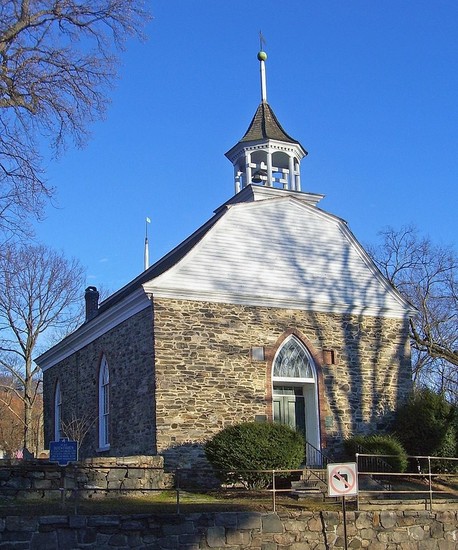
Washington Irving’s Sleepy Hollow, NY
Already a must-see destination for fans of spooky stories, the hometown of Irving’s infamous Headless Horseman eagerly welcomes visitors. Landmarks and plaques appear all over Tarrytown and Sleepy Hollow itself. From the “marshy and thickly-wooded glen” to the Old Dutch Church where Schoolmaster Ichabod Crane flees the pursuing Horseman, myth trackers and history buffs alike can experience the grains of truth sprinkled within the much-loved legend. Of course there is something for writers too. In a joint project between the town and the Hudson Valley Writers’ Center, winners of a poetry competition had the chance to embedding their poems in concrete, turning the sidewalks into works of poetry.
Photo by Albretch Conz
The Poe Museum, Richmond, VA
Calling all Edgar Allan Poe groupies, if you haven’t been to the Poe Museum yet, are you really true fans? Established in 1906, this museum houses the most comprehensive collection of Poe artifacts and memorabilia in the world from the author’s old clothes to a lock of his hair. With numerous programs for researchers, scholars, and students, a visit to this museum’s Enchanted Garden and Poe Shrine is a must for anyone who wants a deeper insight into the life of one of America’s most influential writer.
Photo by Wikipedia
New Bedford Whaling Museum, New Bedford, MA
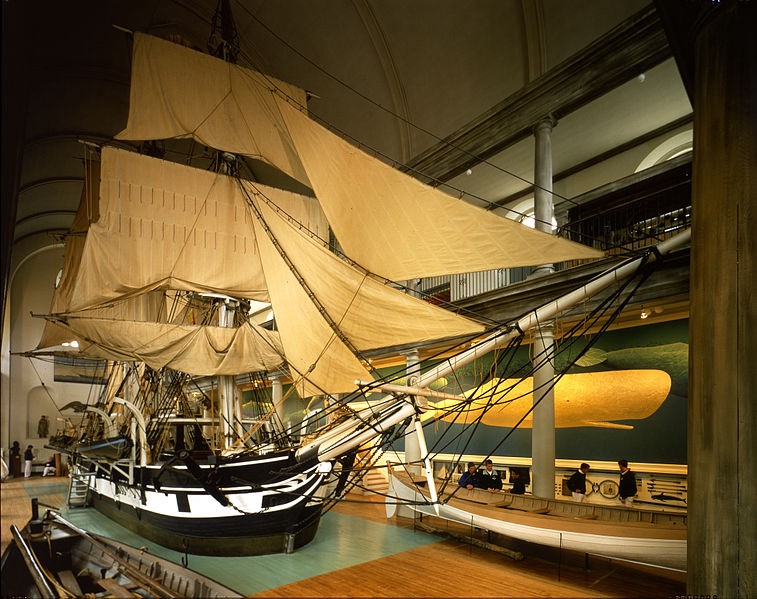
As the name implies, the New Bedford Whaling Museum is a tribute to whaling and maritime culture, which may not seem all that interesting from a literary perspective except for a certain 19th century writer and his interest in great white whales: Herman Melville. In conjunction with the Melville Society, the new Bedford Whaling Museum works with the Melville Society Cultural Project (MSCP), a group of scholars whose mission is to collect artistic and scholarly text to add to the Society’s Melville archives.
Photo by the Ernest Hemingway Foundation of Oak Park
Hemingway’s Boyhood Home, Oak Park, IL
Located in Oak Park, Illinois, is the home where Ernest Hemingway was born and grew up. First constructed in the 1890s and restored back in 1992, this Victorian house transports its visitors into the childhood of the writer. Managed by the Ernest Hemingway Foundation of Oak Park, this museum is part of their effort to preserve knowledge of Hemingway’s origin and impact on literature. With performances, cocktail evenings, and galas hosted regularly and open to visitors, Hemingway’s boyhood home is still very much a hotspot for the arts.
Nestled in the college town of Amherst, Massachusetts, the Emily Dickinson museum is comprised of two 19th- and early 20th-century residences: The Homestead, birthplace and home of Emily Dickinson, and The Evergreens where her brother and his family resided. Now owned by Amherst College, the museum conducts guided tours and outreach programs for the public. Aside from museums, visitors can visit Emily Dickinson’s grave, look at the Dickinson Collection in the Jones Library, and browse through Dickinson’s manuscripts in the archives of Amherst College.
Photo by Diliff
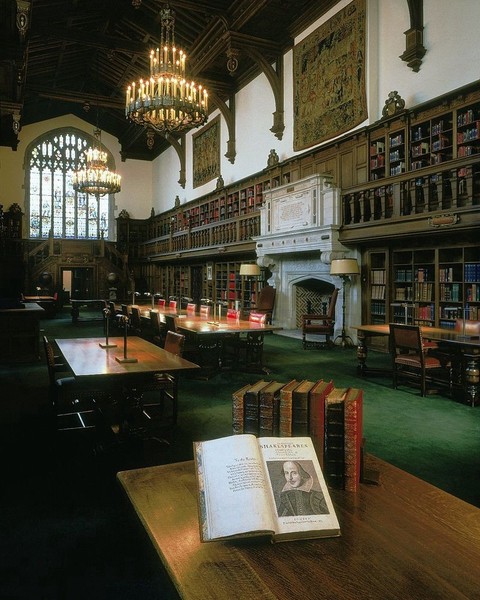
The Rose Reading Room, New York City, NY
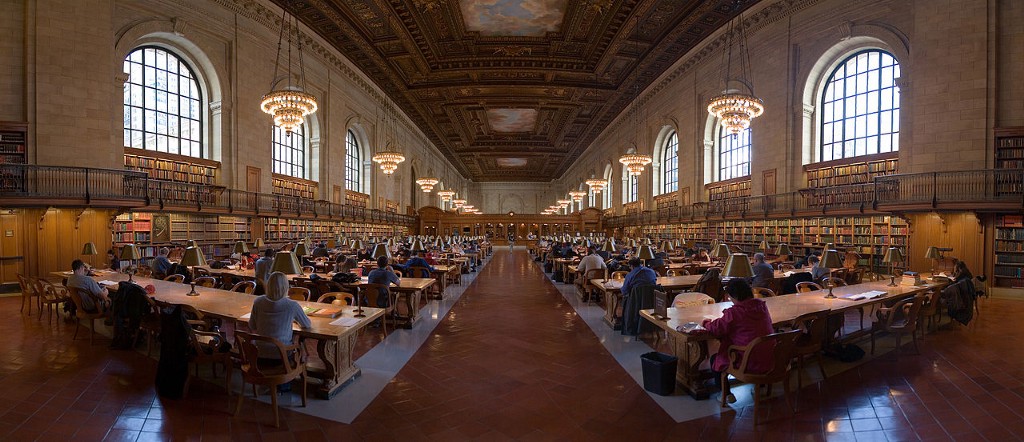
Though not the birthplace of any famous writers, the Rose Reading Room in the New York Public Library deserves a spot on this list for its iconic Beaux-Arts architecture. Closed back in 2014 when a portion of the upper wall decoration came crashing down (at night, so nobody was hurt!), the Rose Reading Room had been closed for two and a half years before a grand re-opening in 2016. With a fresh coat of paint and new display cases, this 12 million dollar renovation is worth every cent. The reading room has the same hours as the main library for those seeking a quiet place to read and offers daily tours for visitors more interested in the architecture and history of the library.
I’m a creative writing graduate student nearing the end of my program, and have been working on my manuscript for about 5 years. I’ve gotten pretty good feedback on it from my advisor and classmates, have published some small selections in literary journals, and even received a few emails from agents. Though pushing through the last bit of revision has been incredibly difficult, I was so happy to be nearing the end, finally beginning to feel satisfied with the work and what it was saying, and excited to begin querying for real.
Then, I clicked a link about upcoming titles and found a book so similar to mine that it felt like the floor dropped out from under me. I’m not talking about basic similarities here, as in “Oh no, this person also wrote and published a story collection about a women’s rugby team.” It’s more along the lines of “Oh no, this person also wrote and published a story collection about a women’s college rugby team that includes murder and time travel and the occasional ghost.” The more I read about this other book, the worse it got. Knowing this, I think it would be exceedingly difficult to pitch my book to an agent, or to place it in a small press book contest, especially since this other book is available now and undoubtedly it’ll seem like I’ve copied the concept, form, material — everything. How many story cycles about women’s college rugby teams coming of age, committing murder, and traveling through time does the world really need?
My writer friends have remained firmly on the encouraging side, insisting that it’s my voice that matters and there’s still hope for my book. I love my friends and feel like they’re mostly trying to motivate me through the end of my degree, especially since I had to take time off for personal reasons. But I think my book is dead. Of course I know that even if this other book didn’t exist, there’s no guarantee mine would ever be published. But my belief in the project and that possibility were important. It’s also been suggested that I could revise the book again, though the changes required would be radical, and I’d be making them solely in response to the fact that there’s suddenly no market for this book I’ve poured everything into (made worse by the knowledge that there obviously was a market for it that I missed out on).
So, I guess what I’m asking is: how do I proceed with final revisions on a book that has no realistic hope of ever being a book? And, more importantly, once this book is immediately and forever back in the drawer, how do I keep going?
Thank you,
SD
Dear SD,
I understand how discouraged you must feel — it’s like your book got “scooped.” (I once read that scientists often have to publish their results before they understand them, to make sure they publish them first.) But the more I think about it, the more I’m sure the situation isn’t as devastating as it seems.
Here’s how I see it. Either this other book — we’ll call it Clone Book — is a hit or it isn’t. If it doesn’t become a runaway bestseller, then it’s really no problem. You can operate as though Clone Book doesn’t exist. It’s entirely possible that the agents or publishers you’re querying won’t have heard of the book or won’t be familiar enough with it to immediately see all the similarities that you see. This seems like the most likely outcome, because most books aren’t huge hits. If an agent you reach out to does say something like “This sounds a lot like Clone Book” — you can be honest and say that it’s a coincidence. Given the timing, there’s no way you could have copied the book, because you’re in the editing stages and Clone Book just came out.
If Clone Book does become a big seller, I honestly think this can only help you. You can use it as a comp title in your pitch letter to illustrate that there’s a clear market for books like this. You ask “How many story cycles about women’s college rugby teams coming of age, committing murder, and traveling through time does the world really need?” But generally when readers love a book, they don’t just read that same book over and over; they want to read more books like it! Agents and publishers know this, and they will be actively looking for similar books to sell. Remember when The Hunger Games first came out, and suddenly everyone was writing dystopian YA novels? There have been multiple nonfiction books about wolves in the last year. There’s a book on the bestseller list now called The Woman in the Window about a drunk who (maybe?) witnesses a murder; seems like a clear nod to The Girl on the Train. It takes a little while for a trend to die, and two books isn’t even a trend yet.
You’ll want to be able to say something like, ‘Fans of Clone Book will run out to buy my book, and be delighted to find that it’s campier and laugh-out-loud funny.’
You may be thinking that it’s better not to know, or you may be afraid to learn the extent of the similarities, but if Clone Book is making a big splash, you should probably read it. That way you’ll be able to confidently speak to both the similarities and the differences. And I have no doubt there are differences. Beyond genre and the thematic/plot overlap, think about elements like tone, style, and audience. You’ll want to be able to say something like, “While the subject matter covers similar territory as Clone Book, my book is aimed at a more literary audience,” or “Fans of Clone Book will run out to buy my book, and be delighted to find that it’s campier and laugh-out-loud funny.” It would also be good to have one or two other books in mind with a strong family resemblance to yours, so you can describe your book as “a cross between Clone Book and Other Bestseller,” or “a rugby story in the mold of Clone Book but with the formal inventiveness of Other Bestseller.” That will take some of the burden of comparison off Clone Book.
The details of your particular situation may be unusual, but I think your anxiety speaks to a larger question that all writers face: Can we truly be original? I often have the experience of reading something that uncannily echoes something I’ve just written, and of course my first thought is, Is everyone going to think I plagiarized this? It’s actually very hard to have a completely original idea. Plus, if you are writing about a topic that nobody else is writing about, you have to wonder if that’s because nobody is interested in reading about that topic.
There are a lot of books out there and just not that many fundamentally new ways to approach putting words on a page.
Most of the time when people say in a blurb or a review, “So-and-so is sui generis! There’s no other book like this!” they’re either lying or just wrong. It may be trivially true (no other book contains the exact same words in the exact same order) but not compellingly true. There are a lot of books out there and just not that many fundamentally new ways to approach putting words on a page. Fragmentary books, for example, are always blurbed as though the author just invented the fragment, but in reality books are almost always working in a clear tradition — even if the author is unaware of that tradition.
Being too original will be seen as a liability by most agents and publishers, since they won’t know how to market you. (Even if a publicist decides to hype up a book as “totally new and original,” who they find to call it original will speak volumes about how they really want you to perceive the book.) On the other hand, you really can’t avoid some degree of originality. This is why I know there must be appreciable and important differences between Clone Book and your book.
My husband keeps a little letter-pressed card on the wall over his writing desk, with a quote by Martha Graham. It’s taken from Graham’s biography, written by Agnes de Mille, another choreographer. De Mille once met Graham for sodas in a Scrafft’s (an old chain restaurant in Manhattan), seeking consolation — she felt her best work had been ignored, while recent work she wasn’t very proud of (the choreography for Oklahoma!) had met wild success. Graham gave de Mille the greatest advice of her life:
There is a vitality, a life force, an energy, a quickening that is translated through you into action, and because there is only one of you in all of time, this expression is unique. And if you block it, it will never exist through any other medium and it will be lost. The world will not have it. It is not your business to determine how good it is nor how valuable nor how it compares with other expressions. It is your business to keep it yours clearly and directly, to keep the channel open. You do not even have to believe in yourself or your work. You have to keep yourself open and aware to the urges that motivate you. Keep the channel open.
You wrote your book; no one else could or would do it the same way. I think it’s much too early for you to give up on it. I hope you’ll reach out to those agents who showed early interest, and give them the chance to evaluate the market for your book.
We go to the jungle, to the river, because my body is empty, and we want to fill it. I want to fill it with a child, and my husband with peace, with whatever I need to be happy, anything to settle the restlessness of my body’s yearning. They say a man doesn’t become a father until he holds his baby, sees its fingers and toes and the way they move just as his do. Until then, the baby is an invisible bit of magic conjured by his wife’s body, the promise of a rabbit in her hat. She’s ready for his applause — because that’s what you do — but wary, still, of a letdown at the trick’s end. A disappointment. A bait and switch.
Rest, the doctor said. And time. A vacation. Then we will try something else. If we even need to, he adds. It can take a long time.
“Be patient,” Marc says. “Besides, I’ve always wanted to see the Amazon. Go down the river like Huck Finn.”
“Wrong river,” I tell him.
“I know that,” he says. “A bigger, better river.”
But now we are here, and the river itself might as well be the same river: murky, thick, snaky, though who can tell on the ship how the water trail twists and coils? To us, we go straight, point north, travel in one neat line. I only know it winds because that’s what rivers do, because that’s what the framed picture in our cabin shows — an aerial view, the river like a vein running down a giant’s arm.
Sun and water and green plants. Rest, rhythm, and timing. It’s all we need.
But I have a theory I will never tell Marc: we won’t get a baby because the world is too full. Too many other babies being born, too many long lives still being lived. I read an article once that said the earth knows she can’t hold us all anymore, that she is beginning to revolt against us with all she has — earthquakes, giant waves, droughts and sandstorms and hurricanes and floods. And maybe my body knows this. The earth and my flesh and muscles and bones in communication, tides and moons, dogs who sense the trembling under the crust before the ground splits open.
There aren’t many of us on board; it’s a small ship. We are led by a wiry man named Estuardo, our cruise director, who tells us to call him Stu. There are, thankfully, very few children. There’s nothing here for families, no looping waterslides or costumed people dressed like cartoons, no screenings of kids’ movies in the early evening while the adults eat alone like real adults. I have friends with kids. I know how it works, what they want when they go on a trip with their children. It isn’t this.
But there is one family, and they are perfect. A mother and father, a boy and a girl. I can see them from where we sit at dinner. Tomorrow I will sit with my back to them, let Marc spend the hour watching her cut up the chicken nuggets the ship’s chef made especially for them, let him watch the little boy tugging at his father’s beard and laughing, like it’s a mask that won’t come off. It won’t bother Marc to watch that. He’s lucky that way. He’ll say they’re cute, or he’ll say nothing about them at all.
Marc reaches across the table and takes my hand. “Hey,” he says. “Look. Let’s have fun this week, okay?”
“What else would we have?” I ask. “Don’t we always have fun?”
He is careful here. “Of course,” he says. “I’m just worried you’re going to worry.” He smiles. “Now you’ve got me worrying,” he says.
“I’m fine,” I say. “I’m happy to be here.” The ship is compact and beautiful, more glass than steel. The river holds pink dolphins, Stu has told us, and the deep green shore teems with creatures, with birds and snakes and men and women and haunted things — Stu told us that too — and the ship keeps us safe from the river, the rain, the pull of the jungle.
“When it’s the right time,” he says, “we’ll have a baby. If it’s now, it’s now.” He shrugs. “If it’s in five years, well, then that’s fine too.”
I am silent. My body, or something deep inside of it, stirs. Yesterday, it tells me. You needed to have a baby yesterday or last week or last year. Hurry, it says. “I know you’re right,” I say. I watch the bearded father push his chair back from the table, taking the napkin off his lap as he stands up. The mother says something to her son as he climbs out of his chair. He nods and I see him shake the waiter’s hand. A tiny little gentleman. The waiter smiles at him. As they leave, they walk right past our table. “Baths,” the mother is saying. “Then a movie on the iPad if neither of you cry when I wash your hair.” Then they are gone.
“This,” Marc is saying, raising his hands and looking around the dining room — posh but tastefully exotic, all clean lines, low lighting. “We’re on an adventure. This is what we should be focusing on.”
But when we go back to our room, I undress so that he notices me, pull back the sheets of the bed, grab his hand, and he lets me pull him to the bed. I watch my body perform what’s necessary, I will it to open, to be ready. We are warm and flushed with wine and river, and I leave the curtains open, the window the size of a cinema screen, so that when it is over, we can lay in bed and watch the shore, black and jagged in the darkness, float by. It’s possible we have done it, the magical thing we’re waiting for.
“We should have closed the curtain,” Marc says.
Let them look, I think. If anyone can see, let them look. But the wall is only a window, and then water and then beyond that, there is wildness or there is civilization, villages we cannot see from here, and I know then, as sure as I am of anything, that we are alone. No life being formed. It is only us, only two, and the night outside our window. When Marc falls asleep, I tell myself not to cry, and I don’t.
There is a particular man aboard the ship who I believe is alone. He is older, though I’m not sure how old. His hair is the light color of ash, once blonde, and he has cheeks that are full and sag, like the jowls of a bulldog. Marc and I watch him during one of the excursions. “He reminds me of someone,” I say. “It’s the cheeks. But who is it?”
We are out on small boats in the river, fishing for piranhas. Up close, the river seems viscous, alive, and there’s so little separating us from it — planks of wood, thumbs and lines of caulk, not much else. Before we left, Stu told us we couldn’t keep the fish. “We get to have them for a while, look at them, admire them, and then they have to go back where they belong.” It still seems wrong to cast lines into the river, hoping for a knife-toothed fish snared, wildness baited and tricked — and yet I want to pull up my line and force the jaws open, that underbite, see the rows of tiny serrated teeth inside. Watching me, Marc seemed impressed but also alarmed “You’re unexpectedly intense about this,” he said.
Now he looks at the man, studies him. “Don’t stare,” I say.
“Winston Churchill,” he says. “That’s who he looks like.”
We laugh because it’s true, that’s exactly who it is. The guide turns around to look at us, and we smile, then laugh again when he turns back again. We cruisers, now fishers, are on three different boats, canoe-like, in a line one after another.
In another boat, the little boy is standing up, walking back and forth between his mom and dad, and the mom is snapping her fingers at him. Sit down, she says. The guide on their boat is grim faced.
In Winston Churchill’s boat, a black-haired woman taps his shoulder, extends a camera, and he grapples with the rod and the camera while the woman positions herself, leaning into her black-haired husband. She takes off her sunglasses and then puts them on again. She turns her head to one side, tilts it the other way. Winston holds the camera up for a moment and then hands it back to her. She looks at the screen and frowns at what she sees, then waves — it’s okay, it’s fine — and goes back to fishing.
“Excellent military leader,” Marc says. “Apparently terrible photographer.”
“He looks like a sad person,” I say. “Just a sad person piranha fishing.”
“Nothing sadder than that,” Marc agrees.
There is squealing in the other boat, not Churchill’s, and we look over. It’s the family’s boat, and the mom is hoisting her line out of the water, the little girl beside her is clapping, and there is a small fish on the end of the line, wiggling and twisting.
“Is that it?” I ask. “It’s so little.”
“You sound disappointed,” Marc says, and I am.
At dinner I sit with my back to the family, so now I face the black-haired couple. She has her hair pulled up off her shoulders, turquoise earrings she fingers as she talks to her husband. At another table nearby is Winston Churchill, and he eats slowly and chats with the waiter, dabbing at his mouth with a napkin. More couples, a group of women who all wear chunky necklaces, caftans, lip gloss.
I let myself turn to look at the family. Just once. The kids have macaroni and cheese. The dad spears a clump of noodles from the girl’s plate and eats them. The girl shakes her head at her father — no, Daddy — and her ponytail swings. Her brother grabs it because how could he not? When I turn back to Marc, I watch him deciding what to say.
“I feel like a drink,” he says. “And fresh air.” A good answer to something I didn’t say. I nod.
When we walk away from the table, I look once over my shoulder at the family. The little boy wipes his face with his napkin. The mother tips her head back, wineglass to lips.
Back in our room, we have sex again. Marc closes the curtains but not all the way, and there is a sliver of window exposed, a stripe of moonlight. Earlier, we watched the moon on the upper deck of the ship, perfect and cool in the sky, its twin rippled in the river. “Relax,” Marc says now. “You’ll never get pregnant if you worry.” His hands are everywhere, and I try to pay attention to where they go: my face, hair, breasts, my hips. His fingertips are light on my skin.
Stu told us earlier that the moon is a protector, that she watches over the people she sees, the women especially, who are more vulnerable to the dangers of the night. “I’m not worrying,” I say, I tell myself over and over, but my thoughts are winding and twisting, and they are coiling out of the room, up to the moon, like smoke — just one, they say to the moon. Tell someone his time is up, close your eyes for a minute, rest on the job, and let someone go. Let someone new come in.
The next day it rains. But the rain is fine, nearly a mist, and the air is steamy, the breathing of the giant whose veins are the river. We stand in brightly hooded, rain-jacketed clusters and pairs as we wait to leave the ship. Today we are going into the jungle. “Macaws and sloths and anacondas,” Stu promises. “Jaguar, Jesus lizard.”
“A what?” a woman asks.
“A lizard who dies for your sins?” Marc whispers to me. “A lizard who comes back to life.”
“Walks on water,” says Stu. He points his index and middle fingers of his right hand downward and walks them across an invisible surface. “It skitters.”
“I liked my explanation better,” says Marc. “It could be a movie. Jesus Lizard: Messiah Complex.”
“Jesus Lizard: He Returns,” I say.
“Just when you think he’s dead,” Marc says, “here he comes again.”
Soon we’re walking off the ship and onto the beach, a strip of tan before the green begins. Now that we are closer, I can see there are different shades and depths of green in the jungle: houseplant green, the skin of a snake, the darkest corner of an emerald, the color of lily pads, of lettuce, of lichen. There is also a small building with the door open, a man standing in the doorway, waving. There’s a white sign propped up in the corner of the window that says “Amazing Amazon Animal Tours.” Marc turns to face me, the red hood of his raincoat bright against the gray sky, and gives me a thumbs up. “Jaguars,” he says. “Let’s go.” They split us into small groups, each led by a guide, and we are off. In another group, I see Winston Churchill in a blue jacket, no hood, a wide-brimmed hat over his head. When he turns sideways, his jowls are so prominent they obscure his mouth.
“Those of you with me, this way,” calls our guide. Our group is us and the caftan women, who are now wearing muted hiking clothes, like they changed overnight from birds of paradise to swallows. In another group is Winston Churchill, the parents and children. The little girl holds a disposable camera and points it at a tree, back at the ship, at her brother, who jumps off the corpse of a downed tree, weak and porous. The rain is steady; it clings to our guide’s jacket. The ground beneath our feet is soggy, sticky, and it feels like it could suck me in, pull me below its surface. In the distance, a bird calls.
Our small group forms a line — the trail into the jungle is narrow — and we set off. Behind us, the other groups wait for their turn to walk down the same path, a few minutes separating us, and before we turn a corner I glance back at them, standing on the shore making mental lists of all the things they hope to see.
We see wild red birds with beaks hooked and sharp, small frogs so bright they look painted. We see wet paw prints, their muddy borders caving in, only two and then no more, as though the owner of those paws disappeared mid-stride. A lizard, but one that cannot walk on water, a lizard that lives only once. Two monkeys, white birds so thick in a tree that it looks as if the branches grow cotton. At the shore, we thank our guide and scurry back to our cabins, shaking ourselves off like dogs when we get under cover.
Our cabin room looks out onto the banks where we just stood, and once we have changed out of our jungle clothes, we sit in the chairs by our window and watch the second group traipse out of the trees and onto the shore and clamor up the walkway to the ship. We hear their voices as they walk to their rooms. We read. The rain is a fine spray on the windows. We see the third group gather together on the little beach. In a huddle, they are indistinguishable from one another, rain-jacket hoods covering faces, heads. The only one I can recognize is Stu, their guide, who is hoodless and hatless, and we watch him peering at the group, one finger extended and bouncing over each person, making the shape of m m m in the air as he counts. We see him count again. He walks back in the direction from which they all came — the expanse of shore narrowing into the trail — and then jogs around a corner, disappearing.
“Someone forgot something,” Marc says. But then, only minutes later, Stu emerges from the green again and waves over the other two guides. The men talk. A few people begin to walk back to the boat. Marc gets up from the chair, flops onto the bed. “Want to watch a movie before dinner?” he asks. “Since it’s gross outside anyway, and the boat isn’t leaving yet.” He turns the TV on and begins scrolling through the channels.
“Sure,” I say. Outside Stu has left the huddle of men and is waving the remaining passengers toward the boat, and when every last raincoat has wandered aboard, he shuffles back to the two men. Marc pats the bed. I join him, lying on my stomach. I look out the window, and the men are gone, and I wait to feel the boat begin to move, to push through the mist of rain, to slice the river water and go.
It is dark, and we have not left. The windows of the little building hum with yellow light, the tour company sign a black rectangle cut out of the glow. At dinner, we hear people asking each other why we haven’t left, the itinerary demands it, could it be the weather, the rain is so light, a mist really, is there something wrong with the boat?
“It’s odd,” Marc says. “But we’ll get where we need to go, no matter what. We won’t be stranded out here forever. If we’re even stranded.”
At dinner I look around for Stu, who I am sure has been cornered by other passengers or is hiding somewhere to avoid being cornered at all. It’s then I see Winston Churchill isn’t at his table. There it is, a few feet away from our own, the candle in the middle lit, though the chairs, both of them, are empty. “I don’t think someone forgot something,” I say. “In the jungle, when we saw Stu go back on the trail. I think we’re still waiting for someone.” Marc stares at me. “Winston Churchill is missing,” I say.
Marc frowns, a slight pursing of his lips and eyebrows gathering. “I bet he’s sleeping,” he says.
“What if he got lost?”
“It seems unlikely,” Marc says.
“It would make sense, though,” I say. “Why we haven’t left yet and why there hasn’t been any explanation. I bet people are looking for him.”
“Where would he be?” Marc asks.
We both know. The jungle, the river. Where else?
“What a terrible place to be lost,” he says. “There’s no way you’d survive.”
“I don’t feel like eating anymore,” I say, pushing my plate away. With one finger, I slide the wineglass away too. “I want to go back to the room.”
“Okay,” Marc says gently. “But hey, I’m sure it isn’t what you think.”
In the room, I begin to undress again, just as I have the past two nights, more quickly maybe. Urgently. The lamps on the bedside table are on, the curtains are open, and, in only my underwear, I walk over and close them, though before I do, I see the sky has cleared, the moon is up. I turn to see Marc standing in the doorway to the bathroom. “What are you doing?” he says. He watches me, like I have a gun, cocked and aimed, or a suitcase with a bomb inside.
“I feel worried,” I say. “I need something to distract me.”
Marc keeps looking at me in that same way, eyes narrowed, movements cautious, easy. “Want to have a drink?” he asks. “Or do you want one of my Ambien?”
“No,” I say. “I think we should have sex. Please. It will make us feel better.”
“You’re putting too much pressure on us,” he says. “That’s probably why we can’t get pregnant.”
“That’s not it,” I tell him. If they find Winston Churchill, padding down the jungle trail, still wearing the wide-brimmed hat, or if they find him, dazed and clothes torn and muddy, weeping and hungry, it will all be the same as before; we will sail down the river, we will arrive at our port, we’ll fly home, and it will be only Marc, only me, no tiny child growing inside my body.
“Look,” Marc says. “I just don’t want to. Not tonight. You could still be pregnant — who knows — and if you’re not, we can try again next month.” He shrugs. “Another month won’t hurt.”
I say nothing.
“I love you,” Marc says. “We can try again tomorrow night.”
“You don’t even want a baby,” I say. “You don’t care at all.”
“Stop,” he says. “I don’t even know what to say to that.”
I grab a robe from where it hangs in the little closet of our cabin. I wrap it around me, pull the belt tight. Marc opens the curtains. The night is still and murky from the old rain. The ship hasn’t moved at all; the building on the shore still has all its lights on, and I think about Winston Churchill, out there in the night, maybe seeing the yellow light through the trees, worrying that the hulking mass in the distance isn’t the boat he’s meant to be on but some sinister mirage, a delusion. The stars are nearly invisible through the clouds, but there is the moon, round as a blank face, like it’s been listening to the conversation and it, too, has nothing else to say.
In the morning, Marc makes it up to me, tries to prove he does want a baby, not the baby of next month, baby of someday, but the baby who begins here. “See,” he says. He pulls me close to him, and we fall asleep afterward. When we wake again, we stroll out to the ship’s roof, and I lie down in a hammock while Marc looks for coffee. The ship hasn’t moved, but we hear it will soon. There will be a change of itinerary. A cluster of people come up the stairs. “The mosquitoes are terrible out here,” one of them says. I sit up. It’s Winston Churchill. He sees me watching and waves, and I wave back, a pain echoing in my belly. Disappointment swells there, or fear, and my insides coil and tighten and expand, forming words I can never say, how I hoped for disaster, an end for a person I didn’t know but who surely loved, was loved, would be missed. But here he was all alone, I would have traded him in an instant, and it doesn’t matter now.
When Marc comes back, he has two coffee cups. He hands me one, and I say, “Look who’s okay. You were right after all.”
“Only partly,” he says. His voice is thick, like he has drunk the water of the river and now it has swelled up in his throat. He looks down, at his fingers clenching the coffee cup, and looks at me. “The little boy,” he says. “I asked one of the waiters what was happening. He said the boy got lost somehow. In the jungle.”
In the sky, the morning sun is loose and sloppy, burning hazy at the edges, no face to speak of, nothing like the neat contours, the watchful face of the moon. The small hand held out to the waiter, fingers grabbing his sister’s hair. A sister. A mother, a father. Back in the room, Marc rubs my back while I cry, and I must fall asleep for hours because when I wake up again, the ship is sailing, doing exactly what a ship is meant to do.
To make up for lost time, we don’t stop again. After lunch the next day, we come back to our cabin to a note slid under the door, typed and printed on flimsy stationery with the cruise line’s letterhead. An accident, it says, involving a guest. Over Marc’s shoulder, I skim the rest: Emergency attention required, partial reimbursement to guests, many apologies, best wishes. “Well,” Marc says. “Sounds like they must have found him, and he was hurt or something. Poor kid.”
“Maybe,” I say.
“Are you okay?” Marc asks.
“Queasy,” I say. “And tired.”
“Pregnant,” he says triumphantly, and I roll my eyes.
He folds the letter from the cruise line in two and tosses it, like a Frisbee, into a wastebasket near the door. “I wonder what happened,” he says. “I guess we’ll never know.”
But three weeks later, back home in our own bed, I wake up nauseous, and I barely make it to the toilet before I throw up. And it’s in that way, I think, we know what happened to the boy. Marc was wrong. The boy wasn’t hurt; he was gone. We’ve seen his family on the news, still waiting, searching among all that green, but now I know they won’t find him. The jungle swallowed him whole, the river drank him up. I cry and cry. “I’m happy too,” Marc says. “A baby. Unbelievable.” He puts his hand on my stomach, and I imagine a baby as small as a seed, the head of a pin, swimming in my body, as miraculous as a dolphin in the river.
The months are long, and my body hurts. It’s painful in a strange, surreal way. I am me, and my body is mine, but I’m not and it isn’t, and though I feel every ligament stretch, each rib forced apart as the baby flips and turns and kicks, it seems as though I am feeling the body of another person. The stomach, growing and swelling, is my own, but it feels alien, and I stay up late and watch the baby push against me, looking for a foot there below my skin or a hand, the angle of elbow, the curve of his head. I feel more thankful every day. I regret less.
Marc is giddy about the changes, the ones already happening, the ones still coming. He puts his hand on my belly, he leans over and puts his ear to it. “I can hear his heartbeat,” he says.
“You can’t,” I tell him. “That’s not how it works.”
“Aren’t you happy now?” he asks. He sits up to look at me. “You’re getting what you always wanted. And everything worked out.”
“Not yet,” I say. “It still might not work out.”
My voice catches, and Marc softens. “It will be okay,” he says. “And if nothing else, look at the numbers. You’re out of the woods for a miscarriage. We’re going to have this baby.”
I say nothing. I nod. A different kind of magic. A disappointment. A trick where the rabbit goes in the hat but never comes out.
I am over halfway to my due date when, one night, we watch an episode of Dateline. It’s the kind of thing that we don’t mean to watch, but my body is already unwieldy and tired, and so we stay on the couch, and neither of us touches the remote control. The subject is a man who disappeared hiking alone in the mountains of Nepal, was injured in an accident that left him an amnesiac, rescued by high-dwelling villagers, and was treated by kind Swedish doctors living in Kathmandu as his memory came back. Then, when it finally returned, so did he, back to his family in Kansas, a wife who tearfully said she never stopped looking for him. He was gone for seven years. “Wowza,” says Marc when the show is over. “No offense, but I would probably stop looking for you.”
“What are the odds?” I ask.
“One in a million,” says Marc.
That night, in bed, when the baby inside my belly is still and Marc is asleep, I search the Internet on my phone: “boy missing in Amazon,” “cruise passenger dead in jungle,” “child comes back to life.” But he is nowhere, only in old pictures, old news stories. I check every night after that, with one hand on my stomach, pressing against it, waiting for the pressure of the baby to pulse in response. A deal’s a deal. But so far I am lucky. I erase the history after each search. I know how it would look if Marc found it — melodramatic, fatalistic. I feel ashamed at my worry, and then more worried: what if by looking for the boy, I set my fear in motion, and the boy in the jungle is already making his way out of it, heading for the shore, for the light of a ship in the distance?
And if everything does work out there will be so many more days to worry about. So many weeks, years. So many things that can happen to a child. What would this baby’s life prove if not that?
“Do you remember that family?” I ask Marc. “From the ship?”
“Of course,” he says. “Why?”
“Do you think the little boy is dead?”
“Yes,” Marc says.
“What if he comes back?” I say.
“Then it would be a miracle.”
A miracle. An old life for a new one. An emptiness and then a fullness, a ripeness, and then the threat of emptiness again. Outside the house, there is the moon, and beyond the borders here, a jungle, a river and monsters who swim in it, a ship of glass and steel, something hiding in the dark, something waiting.
As Marc sleeps, I turn my phone on and hold it under the covers of our bed so the light doesn’t wake him. A ritual. I expect to find the boy in the jungle, miraculous news of his return, but I don’t. I make myself stay awake until I feel the baby move. Then I wait for him to move again, again, again.
DON’T MISS OUT
Sign up for our newsletter to get submission announcements and stay on top of our best work.
YOUR INBOX IS LIT
Enjoy strange, diverting work from The Commuter on Mondays, absorbing fiction from Recommended Reading on Wednesdays, and a roundup of our best work of the week on Fridays. Personalize your subscription preferences here.