The Lake Where My Uncle Drowned

Mourning, An Excerpt

by Eduardo Halfon

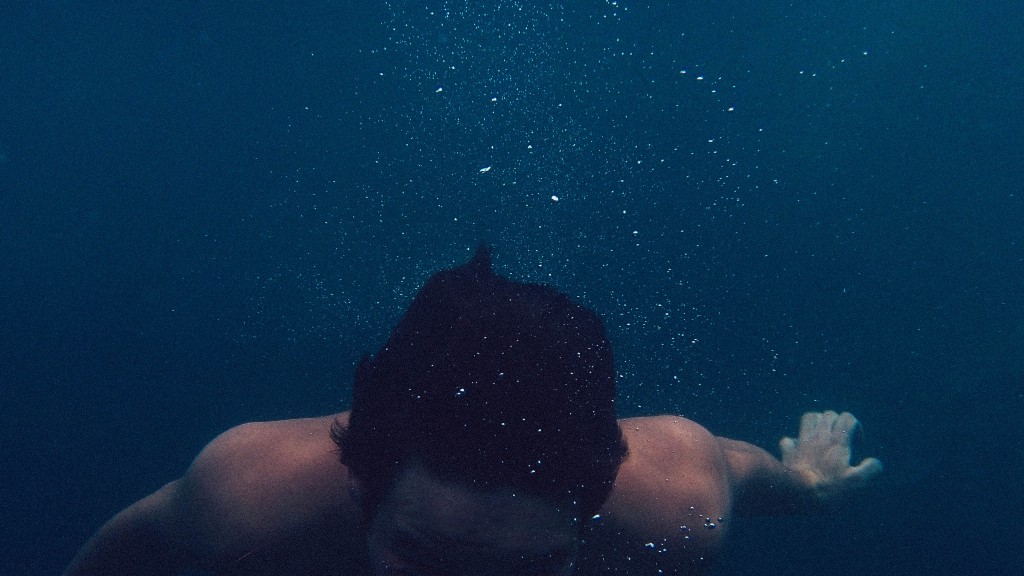
His name was Salomón. He died when he was five years old, drowned in Lake Amatitlán. That’s what they told me when I was a boy, in Guatemala. That my father’s older brother, my grandparents’ firstborn, who would have been my uncle Salomón, had drowned in Lake Amatitlán in an accident, when he was the same age as me, and that they’d never found his body. We used to spend every weekend at my grandparents’ house on the lakeshore, and I couldn’t look at that water without imagining the lifeless body of Salomón suddenly appearing. I always imagined him pale and naked, and always floating facedown by the old wooden dock. My brother and I had even invented a secret prayer, which we’d whisper on the dock — and which I can still recall — before diving into the lake. As if it were a kind of magic spell. As if to banish the ghost of the boy Salomón, in case the ghost of the boy Salomón was still swimming around. I didn’t know the details of the accident, nor did I dare to ask. No one in the family talked about Salomón. No one even spoke his name.

It wasn’t hard to find the lake house that had once belonged to my grandparents. First I drove past the same unchanged entrance to the hot springs, then the old gas pump, then the same vast coffee and cardamom plantation. I went by a series of lake houses that looked very familiar, though all or almost all of them were now abandoned. I recognized the rock — dark, huge, embedded in the side of the mountain — that as kids we thought was shaped like a flying saucer. To us, it was a flying saucer, taking off into space from the mountain near Amatitlán. I drove a bit farther along the narrow winding road that skirts the lake. I came to the curve that, according to my father, always ended up making me nauseous, making me vomit. I slowed down at another curve, a more dangerous, more pronounced one, which I recalled was the last curve. And before I could hesitate, before I could become nervous, before apprehension could make me turn around and hurry back to the city, there it was before me: the same flagstone wall, the same solid black metal gate.

I parked the sapphire-colored Saab on the side of the road, in front of the stone wall, and remained seated in the old car that had been loaned to me by a friend. It was midafternoon. The sky looked like a heavy mass, russet and dense. I rolled down the window and was hit immediately by the smell of humidity, of sulfur, of something dead or dying. I thought that what was dead or dying was the lake itself, so contaminated and putrid, so mistreated for decades, and then I thought it best to stop thinking and reached for the pack of Camels in the glove compartment. I took out a cigarette and lit it and the sweetish smoke began restoring my faith, at least a little, at least until I looked up and discovered that there before me, standing motionless in the distance on the asphalt road, was a horse. An emaciated horse. A cadaverous horse. A horse that shouldn’t be there, in the middle of the road. I don’t know if it had been there the whole time and I hadn’t seen it, or if it had just arrived, had just manifested itself, an off-white apparition amid all the green. It was far away, but close enough that I could make out each bone of its ribs and its hips as well as a repeated spasm along its back. A rope hung from its neck. I presumed that it belonged to someone, to some peasant from that side of the lake, and that perhaps it had escaped or gotten lost. I opened the door and climbed out of the car to get a better look, and the horse immediately raised one of its front legs and began to paw the asphalt. I could hear the sound of its hoof barely scraping the asphalt. I saw it lower its head with difficulty, with too much effort, perhaps with an urge to sniff or lick the road. Then I saw it take two or three slow painful steps toward the mountain and disappear entirely into the underbrush. I tossed my cigarette at nothing in particular, with rage as much as indolence, and headed toward the black front gate.

My Lebanese grandfather was wandering in the backyard of his house on Avenida Reforma, beyond a swimming pool that was now disused, now empty and cracked, as he smoked a cigarette in secret. He’d recently had the first of his heart attacks and the doctors had forced him to quit smoking. We all knew he smoked in secret, out there, around the pool, but no one said anything. Perhaps no one dared. I was watching him through the window of a room right beside the pool, a room that had once served as dressing room and lounge, but which now was nothing more than a place to store boxes and coats and old furniture. My grandfather paced from one side of the small yard to the other, one hand behind his back, concealing the cigarette. He was dressed in a white button-down shirt, gray gabardine trousers and black leather slippers, and I, as ever, imagined him flying through the air in those black leather slippers. I knew that my grandfather had flown out of Beirut in 1919, when he was sixteen years old, with his mother and siblings. I knew that he’d flown first to Corsica, where his mother had died and was buried; then to France, where at Le Havre all of the siblings had boarded a steamship called the Espagne, headed for America; to New York, where a lazy or perhaps capricious immigration official had decided to chop our name in half, and where my grandfather also worked for several years, in Brooklyn, in a bicycle factory; to Haiti, where one of his cousins lived; to Peru, where another of his cousins lived; to Mexico, where yet another of his cousins was Pancho Villa’s arms dealer. I knew that on reaching Guatemala he’d flown over the Portal del Comercio — back when a horse-drawn or mule-drawn tram still passed by the Portal del Comercio — and there opened an imported-fabric outlet called El Paje. I knew that in the sixties, after being kidnapped by guerrillas for thirty-five days, my grandfather had then flown home. And I knew that one afternoon, at the end of Avenida Petapa, my grandfather had been hit by a train, which had launched him into the air, or possibly launched him into the air, or at least for me, forever, launched him into the air.

My brother and I were lying on the floor among boxes and suitcases and old lamps and dusty sofas. We were whispering, so that my grandfather wouldn’t discover us hiding there, rummaging through his things. We had been living at my grandparents’ house on Avenida Reforma for several days. Soon we’d leave the country and go to the United States. My parents, after selling our house, had left us at my grandparents’ and traveled to the United States to find a new house, to buy furniture, to enroll us in school, to get everything there ready for the move. A temporary move, my parents insisted, just until the whole political situation here improved. What political situation? I didn’t fully understand what they meant by the whole political situation of the country, despite having become used to falling asleep to the sound of bombs and gunfire; and despite the rubble I’d seen with a friend on the land behind my grandparents’ house, rubble that had been the Spanish embassy, my friend explained, after it was burned down with white phosphorus by government forces, killing thirty-seven employees and peasants who were inside; and despite the fighting between the army and some guerillas right in front of my school, in Colonia Vista Hermosa, which kept us students locked in the gym the entire day. Nor did I fully understand how it could be a temporary move if my parents had already sold and emptied our house. It was the summer of ’81. I was about to turn ten years old.

As my brother struggled to open an enormous hard leather case, I timed him on the digital watch I’d been given by my grandfather a few months earlier. It was my first watch: a bulky Casio, with a large face and a black plastic band, which jiggled on my left wrist (my wrists have always been too thin). And ever since my grandfather had given it to me, I couldn’t stop timing everything, and then recording and comparing these times in a small spiral notebook. How many minutes each of my father’s naps lasted. How long it took my brother to brush his teeth in the morning versus before bed. How many minutes it took my mother to smoke a cigarette while talking on the phone in the living room versus while having coffee in the kitchenette. How many seconds between flashes of lightning during an approaching storm. How many seconds I could hold my breath underwater in the bathtub. How many seconds one of my goldfish could survive outside the fishbowl. Which was the faster way to get dressed before school (first underwear, then socks, then shirt, then pants, then shoes versus first socks, then underwear, then pants, then shoes, then shirt), because that way, if I figured it out, if I found the most efficient way to get dressed in the morning, I could sleep a few extra minutes. My whole world had changed with that black plastic watch. I could now measure anything, could now imagine time, capture it, even visualize it on a small digital screen. Time, I began to believe, was something real and indestructible. Everything in time took place in the form of a straight line, with a start point and an end point, and I could now locate those two points and measure the line that separated them and write the measurement down in my spiral notebook.

My brother was still attempting to open the leather case, and I, as I timed him, held in my hands a black-and-white photo of a boy in the snow. I’d found it in a box full of photos, some small, others larger, all old and the worse for wear. I showed it to my brother, who was still kicking the lock on the case, and he asked me who the boy in the photo was. I told him, examining the picture up close, that I had no idea. The boy looked too little. He didn’t look happy in the snow. My brother said there was writing on the back of the photo and gave the case one final kick, and suddenly it opened. Inside was an enormous accordion, dazzling in reds and whites and blacks (so dazzling that I actually forgot to stop timing). My brother pushed the keys and the accordion made a terrible racket at precisely the moment I read what was written on the back of the photo: Salomón, New York, 1940.

From the pool, my grandfather shouted something to us in Arabic or perhaps in Hebrew, and I threw the photo on the floor and ran out of the room, wiping my hand on my shirt, and dodging my grandfather, who was still smoking in the backyard, and wondering if maybe the Salomón who had drowned in the lake was the same Salomón in the snow, in New York, in 1940.

There was no doorbell, no knocker, and so I simply rapped on the black gate with my knuckles. I waited a few minutes: nothing. I tried again, knocking harder: still nothing. There were no sounds, either. No voices. No radio. No murmurs of anyone playing or swimming in the lake. It struck me that the house that had belonged to my grandparents in the sixties might be abandoned and dilapidated as well, like so many of the lake houses, all vestiges and ruins from another time. I felt the first drops of rain on my forehead and was about to knock again, when I heard rubber sandals approaching slowly, on the other side of the gate.

Can I help you? in a soft, shy female voice. Good afternoon, I said loudly. I’m looking for Isidoro Chavajay, and I was interrupted by thunder in the distance. She didn’t say anything, or perhaps she did say something and I couldn’t hear it because of the thunder. Do you know where I might find him? She was silent again as two fat drops fell on my head. I waited for a pickup truck that was roaring past on the road, full of passengers, to get farther away, behind me. Do you know Don Isidoro Chavajay? I asked, hearing a dog come running up on the other side of the gate. Sure, she said. He works here.

I wasn’t expecting that reply. I wasn’t expecting Don Isidoro to still work here, forty years later. I’d thought that maybe the new caretaker or gardener could help me find him, locate him in town; and if not locate him, Don Isidoro himself, because he’d died or perhaps moved to another village, then at least his wife or his children. And standing at the black gate that had once been my grandparents’, getting a little wet, it occurred to me that this house had had several owners, who knows how many owners since my grandparents had sold it in the late seventies, but always with Don Isidoro there for everyone, in the service of everyone. As though Don Isidoro, more than a man or an employee, was one more piece of furniture, included in the price.

And is Don Isidoro here? I asked, drying my forehead and seeing the dog’s snout appear under the gate. Who is it that’s looking for him? she asked. The dog was frantically sniffing my feet, or possibly frantically sniffing the scent of the white horse in the underbrush. Tell him that Señor Halfon is looking for him, I said, that I’m the grandson of Señor Halfon. She didn’t say anything for a few seconds, perhaps confused, or perhaps waiting for me to provide a bit more information, or perhaps she hadn’t heard me very well. Who do you say is looking for him? she asked again through the front gate. The grandson of Señor Halfon, I repeated, enunciating slowly. Pardon? she asked, her voice muffled, somewhat timid. The dog seemed more frenzied now. It was barking and scratching the gate with its front paws. Tell Don Isidoro, I said desperately, almost shouting or barking myself, that I am Señor Hoffman.

There was a brief silence. Even the dog went quiet.

I’ll go see if he’s here, she said, and I stood motionless, anxious, simply listening to the sound of her sandals and of the rain on the mountain and of the dog now growling at me again from under the front gate. Sometimes I feel I can hear everything, save the sound of my own name.

I don’t know at what point English replaced Spanish. I don’t know if it truly replaced it, or if instead I started to wear English like some sort of gear that allowed me to enter and move freely in my new world. I was just ten years old, but I may have already understood that a language is also a diving helmet.

Days or weeks after having moved to the United States — to a suburb in South Florida called Plantation — and almost without realizing it, my siblings and I began speaking only in English. We now replied to our parents only in English, though they continued speaking to us in Spanish. We knew a bit of English before leaving Guatemala, of course, but it was a rudimentary English, an English of games and songs and children’s cartoons. My new schoolteacher, Miss Pennybaker, a very young and very tall woman who ran marathons, was the first to realize how essential it was for me to appropriate my new language quickly.

On the first day of class, already in my blue-and-white private school uniform, Miss Pennybaker stood me up before the group of boys and girls and, after guiding me through the pledge of allegiance, introduced me as the new student. Then she announced to everyone that, each Monday, I was going to give a short speech on a topic that she would assign the previous Friday, and that I would prepare and practice and memorize over the weekend. I remember that, during those first months, Miss Pennybaker assigned me to give speeches on my favorite sorbet (tangerine), on my favorite singer (John Lennon), on my best friend in Guatemala (Óscar), on what I wanted to be when I grew up (cowboy, until I fell off a horse; doctor, until I fainted when I saw blood on a TV show), on one of my heroes (Thurman Munson) and one of my antiheros (Arthur Slugworth) and one of my pets (we had an enormous alligator as a pet; or rather, an enormous alligator lived in our backyard; or rather, an enormous alligator lived in the canal that ran behind our house, and some afternoons we saw it from the window, splayed out on the lawn, motionless as a statue, taking the sun; my brother, for reasons known only to him, named him Fernando).

One Friday, Miss Pennybaker asked me to prepare a speech on my grandparents and great-grandparents. That Saturday morning, then, while my brother and I were having breakfast and my father was having coffee and reading the paper at the head of the table, I asked him a few questions about his ancestors, and my father told me that both of his grandfathers had been named Salomón. Just like your brother, I blurted out, almost defending myself against that name, as though a name could be a dagger, and the distant voice of my father said yes, Salomón, just like my brother. He explained to me from the other side of the paper that his paternal grandfather, from Beirut, had been named Salomón, and that his maternal grandfather, from Aleppo, had also been named Salomón, and that that’s why his older brother had been named Salomón, in honor of his two grandfathers. I fell silent for a few seconds, somewhat afraid, trying to imagine my father’s face on the other side of the paper, perhaps on the other side of the universe, without knowing what to say or what to do with that name, so dangerous, so forbidden. My brother, also silent beside me, had a milk mustache. And both of us were still silent when my father’s words struck like a thunderbolt or a command from the other side of the paper. The king of the Israelites, he proclaimed, and I understood that the king of the Israelites had been his brother Salomón.

That Monday, standing before my classmates, I told them in my best English that both of my father’s grandparents had been named Salomón, and that my father’s older brother had also been named Salomón, in honor of them, and that that boy Salomón, in addition to being my father’s brother, had been king of the Israelites, but that he’d drowned in a lake in Guatemala, and that his body and his crown were still there, lost forever at the bottom of a lake in Guatemala, and all of my classmates applauded.

The golden ratio. That was the first thing I thought on seeing Don Isidoro’s face after so many years: the golden ratio. That perfect number and spiral found in the vein structure of a tree leaf, in the shell of a snail, in the geometric structure of crystals. Don Isidoro was standing on the old wooden dock, barefoot, smiling, his teeth gray and rotten, his hair totally white, his eyes cloudy with cataracts, his face wrinkled and dark after a life in the sun, and all I could think of was that the total length of two lines (a + b) is to the longer segment (a) as the longer segment is to the shorter (b).

Briarcliff.

That was the name of the camp where we spent our summer vacation in ’82, after our first year of school in the United States. Each morning a girl named Robyn, with brown hair and a freckled face, would come pick us up — in her egg-yolk yellow Volkswagen van — and then bring us back at night, after a whole day of playing sports and swimming at the Miami park where Briarcliff was located. Like the other camp employees, I imagine, Robyn helped transport all the kids. My sister generally fell asleep on the way there, and my brother kept quiet, slightly embarrassed each time Robyn looked at him in the rearview mirror and told him he had the perfect smile. I, on the other hand, awoke each morning already anxious to see her, to speak to her for the fifteen or twenty minutes it took to drive to the park, and Robyn, for those fifteen or twenty minutes, with the grace and patience of a teacher, would correct my English. Eddie, she’d call me, or sometimes Little Eddie. I remember we talked almost entirely about sports, especially baseball. She told me that her favorite team was the Pirates (mine, the Yankees), and her favorite player Willie Stargell (mine, Thurman Munson). She told me that she played first base, like Stargell (and me, catcher, like Munson, until Munson died in a plane crash), on an all-women’s team. She told me that soon, close by, in Fort Lauderdale, they would start filming a movie about baseball, and that she was the main actress. I wasn’t sure if I’d understood properly or if maybe she was kidding me, and so I simply smiled warily. A couple of years later, however, I was surprised to see her on the movie screen at the theater, the main actress in a film, with Mimi Rogers and Harry Hamlin and a young Andy García, about a girl whose dream was to play professional baseball in the big leagues. Robyn, I read on the screen, was actually named Robyn Barto, and the movie — the only one she ever starred in — was Blue Skies Again.

One morning, while we Briarcliff kids were swimming in the pool and sliding down the park’s huge slide, a man drowned.

I remember the adults shouting, telling us all to get out of the water, then the younger kids crying, then the sirens of the ambulance, then the lifeless body of the man laid out beside the small maintenance pool where he’d drowned, two or three paramedics around him, trying to resuscitate him. I was somewhat far from the scene, still wet and in my bathing suit, but for a few instants, through the paramedics’ legs, I could make out the blue-tinged face of the man on the ground. A pale blue, washed-out, between indigo and azure. A blue I’d never seen before. A blue that shouldn’t exist in the pantone of blues. And seeing the man on the ground, I immediately pictured Salomón floating in the lake, Salomón faceup in the lake, his face now forever tinged the same shade of blue.

That night, on the way home in the Volkswagen van, I waited until my brother and sister were asleep to ask Robyn what had happened to the man. She kept quiet for a good while, just driving in the dark of the night, and I thought that she hadn’t heard me or that perhaps she didn’t want to talk about it. But eventually she told me in a hushed tone that the man had gotten trapped underwater in the small maintenance pool. That the man’s right arm had gotten caught, she told me, while he was cleaning the filter for the slide. That the man had died, she told me, without anyone seeing.

When we were kids, we believed Don Isidoro when he told us that what he was drinking from a small metal canteen — which smelled like pure alcohol — was his medicine. And we believed him when he told us that the rumblings of hunger our tummies made were the hisses of an enormous black snake slithering around in there, and that it went in and out through our belly buttons while we slept. And we believed him when he told us that the ever more frequent gunfire and bomb blasts in the mountains were only eruptions of the Pacaya volcano. And we believed him when he told us that the two bodies that turned up one morning floating by the dock were not two murdered guerillas tossed into the lake, but two normal boys, two boys scuba diving. And we believed him when he told us that, if we didn’t behave, at night a sorceress would come for us, a sorceress who lived in a cave at the bottom of the lake (my brother — I don’t know if by mistake or as a joke — called her the Shore-ceress of the Lake), a dark cave where she waited for all the spoiled little white boys and girls she stole from the lake houses.

When we were kids, we used to help Don Isidoro plant trees around the property. Don Isidoro would open up a hole with a pickax and then move to one side and allow us to put in the sapling and then fill the hole back up with black earth. I remember that we planted a eucalyptus by the gate, a row of cypresses along the line bordering our neighbor’s land, a small matilisguate by the lakeshore. I remember Don Isidoro telling us that, before we filled each hole with earth, we had to bring our heads in close and whisper a word of encouragement into the hole, a pretty word, a word that would help the tree take root and grow properly (my brother, invariably, whispered good-bye). The word, Don Isidoro told us, would remain there forever, buried in the black earth.

Carly Rae Jepsen’s Queer Renaissance

The first thing to know about Carly Rae Jepsen is that she isn’t really there. Her glossy pop hooks seem crafted for ubiquity, step one in the inevitable march toward her knighthood as a central pop figure alongside the likes of Ariana Grande. But even the song of the decade, “Call Me Maybe,” a cultural sensation that Carrie Battan wrote in The New Yorker was “so sticky and ubiquitous that it transcended the term ‘hit,’” could not color in her invisibility. No one remembers Jepsen, the 2007 Canadian Idol third-place finalist whose debut album Tug of War released quietly in 2008 — they remember the synth beats, the lyric-inspired parodies, the sheer ecstasy of shouting, “Hey, I just met you” with a group of friends as the chorus kicks in.

It’s that feeling, that ecstasy, that Jepsen has made the protagonist of her music — a fact most apparent in the title of her 2015 album, E•MO•TION. As E•MO•TION’s narrative unfolds, Jepsen’s desires tug the listener forward. She, the person, the artist, recedes beneath the depth of her feelings.

Survey your Carly Rae Jepsen-obsessed friends, and you might find something surprising: a disproportionate share of them are queer. While her recent albums have sold so poorly that most audiences know her post-“Call Me Maybe” releases by little more than the saxophone riff in “Run Away With Me” that briefly dominated Vine, in queer circles, Jepsen is a cult hero. Numerous queer club nights are thrown in her honor, and sentiments like “only gays can hear carly rae jepsen songs” and “carly rae jepsen created gay people when she released Run Away With Me (2015)” abound on the internet.

The roots of this fandom likely date back to the “Call Me Maybe” video in which Jepsen’s crush is revealed to be interested in a man. But her career is riddled with nods to queerness, including in her video for E•MO•TION’s “Boy Problems” (2015) — a slumber party that centers on women choosing each other over the men in their lives, complete with a glittery final dance sequence. Writer and Carly Rae Jepsen prophet Jia Tolentino has argued that “Boy Problems” can be read as a song about coming to terms with love for a woman, writing, “Carly Rae’s boy problems aren’t between her and boy, they’re between her and girl.”

A f/f twist probably wasn’t Jepsen’s intention. But her anonymity within her own music allows all kinds of desire to permeate into it. In a music world in which spaces for queer people, especially queer women, are so limited, there is a revolution in that.

Jepsen’s concern is with celebrating desire in all of its forms, especially desire that lacks an endpoint — she captures the excitement, the fear, the stomach twisting that comes with impossible love. In “Run Away With Me,” for instance, she revels in the privacy of her feelings: “Baby, take me to the feeling / I’ll be your sinner in secret / When the lights go out.” When Jepsen sings, she’s letting you in on a secret, a feeling so big she can’t contain it. “I need to tell you something,” she whispers on “I Really Really Like You,” her 2015 attempt to re-capture the audience of “Call Me Maybe,” which also features a slick video starring Tom Hanks. After a beat, the breathless chorus: “I really really really really really really like you. / And I want you, / do you want me, / do you want me too?”

Jepsen’s concern is with celebrating desire in all of its forms, especially desire that lacks an endpoint — she captures the excitement, the fear, the stomach twisting that comes with impossible love.

The intensity of her feelings belies their internality. You get the sense that while her mind hums with visions of a sprawling romance with the person across the room, she is in reality static: huddled in the corner several feet away, terrified to walk over and talk to them. “I’m so in my head,” she repeats, again and again, on “I Really Like You.” It’s the essential undercurrent of her music. She feels and feels and thinks and overthinks, but rarely do her desires manifest in the real world.

The axis around which Jepsen spins, then, is longing. “I want what I want, do you think that I want too much?” she asks on “Gimmie Love.” She wrestles with the secrecy of her feelings, that push-and-pull of wanting to tell the whole world about her new crush and wanting to bury it. Do they like me? Is it even worth asking if they like me?

Queer audiences might recognize another wrinkle — the struggle to express a desire that isn’t supposed to exist. When so many spaces remain hostile to queer longings, wanting itself is a negotiation: you mention a pronoun, or a celebrity crush, and wait to see if it’s safe to share more.

Queer audiences might recognize another wrinkle — the struggle to express a desire that isn’t supposed to exist.

Jepsen choreographs that silent signaling in “I Didn’t Just Come Here To Dance.” She can’t say outright what she’s feeling, but she waits for a potential lover to pick up her cues: “I didn’t just come here to dance / If you know what I mean / Do you know what I mean?”

It evokes the ways in which queer people search each other out in public. How we read your hair, your clothes, the music that makes you yank your friends to the dance floor, all in service of finding one of our own in a crowded room.

When I first listened seriously to Carly Rae Jepsen, in 2013, I was a high school sophomore mapping out other boys’ bodies but telling myself it was purely platonic. I stared at them, I thought, because I wanted to look like them.

My Butch Lesbian Mom, Bruce Springsteen

Late at night, I played Kiss, Jepsen’s 2012 album, as I scrolled through an assortment of Tumblr blogs, all titled some offshoot of “Cute Boysss.” While Jepsen struggled to resist her attraction in the dance-pop “This Kiss” (“You make me so detrimental / And I wish it didn’t feel like this”), I enlarged pictures of shirtless boys and stared until that disgust, that you can’t, lurched upward and I slammed out of the browser.

I chose Jepsen because she understood that duality, the way desire can burst and bloom but still remain impossible. Her odes to emotion — not to romance, not to relationships, but simply to the primacy of feeling — offered something I couldn’t find elsewhere. Long before I was in a place to share my sexuality, much less have a relationship with another boy, “This Kiss” and then “Gimmie Love” and “Let’s Get Lost” on E•MO•TION reveled in the beauty of an attraction I knew only to hate. I wanted to scrub away those feelings; Jepsen wanted me to embrace them.

Her odes to emotion — not to romance, not to relationships, but simply to the primacy of feeling — offered something I couldn’t find elsewhere.

In Jepsen’s world, you don’t have to act on a crush for it to matter. Even something that never leaves your imagination deserves its own bouncy pop chorus. Hers is a universe in which skipping heartbeats are not clichés and angels soundtrack falling in love, in which newfound attraction matters more than where — or who — it gets you. Desire, in the Jepsen formulation, extends beyond a simple relationship: in many of her songs, she may as easily be discussing a fumbled hook-up or a platonic longing for intimacy.

Our pop culture revolves around romantic endpoints. In movies, feelings invariably turn into relationships, and there is little room for longings that will never be fulfilled. But lots of queer people cannot come out, much less find someone to partner with, and that doesn’t mean they’re unhappy, or lacking, or in need of agency. Wanting without having is not tragic, and Jepsen is one of the few celebrities telling a queer community plagued with a complicated relationship to “outness” that we are whole no matter how much of ourselves we choose to share.

Wanting without having is not tragic, and Jepsen is one of the few celebrities telling the queer community that we are whole no matter how much of ourselves we choose to share.

Since I was a kid, I buried a lingering desiring of mine to wear colorful makeup because I understood enough about masculinity to know it was forbidden. Then, in my freshman year in college, a friend opened up her selection of golden eye-shadows to me. I remember fast walking to my dorm room on the night in October when I wore purple lipstick in public for the first time, so giddy I bounced along to the beats of my Jepsen of choice: “I Didn’t Just Come Here To Dance.” And I thought about that, how this thing I knew to be out of reach suddenly wasn’t.

There is nothing wrong with impossible.

In an essay for Pitchfork, Chris Stedman highlighted the phenomenon of queer fans clinging to albums from once-popular artist deemed to have “flopped,” citing the likes of Ciara, Britney Spears, and Jepsen. “Perhaps we see our own challenges reflected in our favorite flops, feel defensive of them as people who have also been maligned,” he mused. But the correlation goes deeper: part of flopping is being measured against your former self, blurring the space between pervasive and invisible.

Jepsen, as the secondary character in her music, is the most extreme example of this phenomenon. Her name recognition rivals that of today’s most successful artists, but to most people, she is a blank slate. There is something queer about that duality. She is at once seen and unseen, lost in the orbits of her own desires. In a culture in which one-sided longing is tethered to tragedy, she finds identity and fulfillment in wanting, in feeling simply because feeling is great.

Her name recognition rivals that of today’s most successful artists, but to most people, she is a blank slate. She is at once seen and unseen, lost in the orbits of her own desires.

Many critics have dismissed Jepsen’s earnestness as childish, but it’s precisely what makes her so radical. At 32, she still hasn’t burnt out on joy. Her voice radiates an unwavering idealism in which queer communities, and for that matter any marginalized community long beset with tragedy, can find a home, and her glittery lyrics are unabashed in their ambition to make the listener — whoever you are, whatever you desire — get up and dance.

On her most recent single, “Cut To The Feeling” (2017), Jepsen’s feelings catapult her into the stars. “I wanna cut through the clouds, break the ceiling / I wanna dance on the roof, you and me alone,” she says, her voice rising. It’s classic Jepsen. Every line in the chorus opens with her signature phrase, “I wanna”: “I wanna play where you play with the angels,” “I wanna wake up with you all in tangles,” “I wanna cut to the feeling.”

Listening to the song, you don’t wonder whether those feelings come true. There is a fullness to them already. Carly Rae Jepsen is in love, and that’s what matters.

Give Your Money to Libraries, Jeff Bezos

I n an interview published in Business Insider on April 28, 2018, Amazon founder and world’s richest man Jeff Bezos revealed a relatable problem: He has so much money he can’t think of what to do with it. “The only way that I can see to deploy this much financial resource is by converting my Amazon winnings into space travel,” he told fellow CEO Mathias Döpfner. “Because you’re right, you’re not going to spend it on a second dinner out.”

I am not standing on top of Money Mountain, I am not even really in what you would call the Financially Stable Foothills, but I can see and list many more ways Jeff Bezos could deploy said financial resource.

Jeff Bezos could house the homeless of more than one city.

Jeff Bezos could buy out and forgive student debt, and/or medical debt.

Jeff Bezos could pay his own workers a livable wage that accounts for inflation, and make their working conditions not only fair but comfortable.

Jeff Bezos could do something about the homes and businesses in Puerto Rico that are still without power after six months.

Jeff Bezos could pay to get clean water into Flint, Michigan.

Jeff Bezos could wipe out the bond fees of people all across America and send them home to their families.

Jeff Bezos could drop a seriously weighty feather on the scale of Anubis, one that would make any heart seem light.

I think Jeff Bezos should do every one of these things but also I think Jeff Bezos should fund the hell out of libraries, in perpetuity. What libraries? All libraries. Public libraries. School libraries. Any library that’s ever had to wonder if it will still be there tomorrow if the funding isn’t renewed.

I think Jeff Bezos should do every one of these things but also I think Jeff Bezos should fund the hell out of libraries, in perpetuity. What libraries? All libraries.

Every so often, when working the reference desk or the circulation desk, I find myself confronted by a very specific sort of person. I’m gonna call him an Obviously Well-Off White Guy. Obviously Well-Off White Guy will take a sweeping look around the children’s stacks, the public internet terminals (always in use), the New Books!, the DVDs, and say something like, “I don’t know, do people even use libraries anymore? I mean, we have the internet now.” This person turns up in every library I’ve ever been in, even though they think people don’t use libraries anymore. Public libraries are especially under threat, but this guy shows up in university libraries as well. Probably this guy turned up in enough school board meetings and that’s why there are hardly any school libraries anymore, or why the ones that do exist are often unstaffed. This guy can buy all the books and movies and video games he wants. This guy has no idea what it’s like to not have the internet at his fingertips at all times. He doesn’t know what it is to need a public computer at the library in order to fill out an eligibility form for public housing or apply for a job or to get his kids into a high school that he desperately hopes will give them a chance at a good college.

What Are the Rules for Lending Your Books to Friends?

That’s some bare bones shit as to why we should have libraries, but libraries are also non-commercial nodes of human connection. Libraries are full of writing groups and anime clubs and knitting circles. Libraries have comic books and video games and poetry for everyone. Libraries are for young parents and kids and teenagers and old people. You can walk into a public library and get things you need, and things you want, and you can matter to other people. The simple truth is we don’t have enough places like that, and we should protect the ones we have. We should ensure their future. We should build more of them.

(Especially, Jeff Bezos, if we happen to have achieved our fantastic wealth specifically by selling books to those who can afford them.)

To the Obviously Well-Off White Guys of the world, to the billionaires having trouble spending their money, I’ll just say, give it to libraries. Give it to the arts. Give it to the schools. Give it to make sure people have roofs over their heads, and that they know those roofs are secure. Come talk to me, or honestly, any librarian. We’ll form a committee to help you see more than one way to do this. Give more than you do. Give on a stupendous scale. Give shockingly. Endow the hell out of some shit. Fund some things into a future so distant we might all be digitally conscious by then. Do a pilot program to save the universe and then save the universe.

Endow the hell out of some shit. Do a pilot program to save the universe and then save the universe.

This part is just for you, Jeff Bezos.

I understand, Jeff Bezos, that you are always thinking about the future. I am always thinking about the future myself. When I am not working at one or more libraries, I write stories about the future. In my stories about the future, we all get there together. I think it’s great, honestly, that you are thinking so much about how humanity will survive into the distant future. (Have you read Seveneves, by Neal Stephenson? That is a bang-up book about civilization surviving in space.) I just wish you would also think about the very immediate future, and the very immediate survival of the humans who are here, hoping to see tomorrow.

In the interview with Business Insider, you said, “You can explain things to someone, but you can’t understand things to them.” I wish I could understand to you the things I see every day in a public library that could absolutely, easily, be made better with not even a lot of your space money. And I also wish I could understand to you that while you deliberate and ask yourself what the very best way is to spend your massive wealth, the lives of ordinary people are passing, crushed under worry and scarcity, and you could make their lives infinitely better.

While you deliberate and ask yourself what the very best way is to spend your massive wealth, the lives of ordinary people are passing, crushed under worry and scarcity.

(I am totally on board to try any immortality tech y’all come up with, because I think you will need an immortal space librarian in this future, the one we all get to together.)

If you are a billionaire who is not Jeff Bezos and you are reading this, please just substitute your name in for his, I’m not picky. Elon Musk, I have been trying to remotely beam these ideas into your brain for years. Call me.

An Urgent Message from Electric Literature

Dear Electric Literature Members,

I am writing you today with a urgent request.

The short version of this email is: Medium is cancelling publication memberships with almost zero notice, and we need you to move your Electric Literature membership to its new home on Kickstarter’s crowdfunding platform, Drip, as soon as possible.

Please help us keep the support we depend on by moving your Electric Literature membership to Drip today: https://d.rip/electriclit

Here is the long version:

Yesterday, Medium let us know that it will be retiring publication memberships on its platform, and has given us one week to notify our members and make other arrangements. Since Electric Literature was recruited to move to Medium in 2016, the company has made several such abrupt changes, causing considerable disruption and financial hardship to all of its partners (including us).

While other publishers jumped ship, Electric Literature has stuck it out, as moving the site has not yet been an efficient use of our limited resources. In light of this latest development, we will be stepping up our efforts to find a new home for EL. In the meantime, we need your help to overcome this significant financial hurdle.

Our 450 Medium members contribute $2,100 a month, or $25,200 a year, to Electric Literature. For a small nonprofit like ours, this is an incredibly meaningful sum. We can’t get by without it.

We’ve set up an alternative membership platform on Drip, Kickstarter’s crowdfunding platform. Please continue to support Electric Literature by moving your membership to Drip today: https://d.rip/electriclit

For just $4 a month, you will receive the same benefits as you did with your Medium membership, including:

  1. Access to year-round submissions for fiction and non-fiction with a guaranteed three month response time.
  2. A monthly eBooks sampling of Recommended Reading’s rich archives, on topics such as magical cities, family conflict, gender and power, and more. (Medium’s abrupt cancellation of membership means that the full Recommended Reading archives will be temporarily unlocked, but we may lock them again in the future.)
  3. Early access to The Blunt Instrument, Elisa Gabbert’s advice column to writers, and a special members-only bonus column every other month.

And for $6 a month, you’ll get all of the above, plus a Read More Women tote bag!

Your Electric Literature membership through Medium will be automatically canceled this month, so after you have signed up for Drip, there is no need to take further action. However, if you’d like to cancel your Medium membership manually, instructions to do so are here.

As always, please feel free to email editors@electricliterature.com with any questions. We appreciate your support — it is, quite honestly, what allows us to keep going. If you’d like to make an additional donation to help ease this transition you can do so here.

Thank you for sticking with us through this upheaval!

Yours,

Halimah Marcus
Executive Director, Electric Literature

Rape, Lost in Translation

Leucothoe is only one of the many raped women of Ovid’s Metamorphoses, though she is not as famous as Daphne, Io, Persephone, or Philomela. She is collateral damage in Venus’s revenge against the Sun, who exposed the goddess’s affair with the war-god Mars. To torment the Sun, Venus enflames him with desire for Leucothoe, a mere mortal, and each day he prolongs his light by watching her — until watching her is not enough. We’re told versions of this tale time and again in the epic: a beautiful girl, caught in the gaze of a powerful male, violated, and forever transformed. Translations of Ovid often pass lightly over these violations, describing women as being “ravished” or “enjoyed.” But in Leucothoe’s case in particular, translators have so obscured and mitigated Ovid’s language that it seems almost no rape at all but a consensual sexual liaison, a woman won over by the brilliant beauty of a god.

Since translation is an art centered upon small details, I must consider what may seem minutiae in order to glean exactly what happens to her. But, as any rape victim whose every action has been parsed knows, defining rape has far too often been a matter of minutiae. Translation all too often replicates contemporary social attitudes regarding what constitutes seduction, rape, and consent — and the often problematically hazy lines we have drawn between them.


The Sun comes to Leucothoe disguised as her mother. Dismissing her slave girls, he discloses his identity:

She was frightened,
Let fall the spindle and distaff, but even her fright
Was most becoming. He delayed no longer,
Turned to his true appearance, the bright splendor,
And she, still fearful of the sudden vision,
Won over by that shining, took his passion
With no complaint.

This is Rolfe Humphries’ now classic mid-century translation. It is hard to understand here precisely what happens in Leucothoe’s bedchamber. It’s clear that the Sun will take her whether or not she is willing — but she seems almost to consent. She is “won over.” Is this, in the memorably horrific words of an erstwhile U.S. congressman, “legitimate rape?”

There is less ambiguity in the Latin. Here are Ovid’s words followed by my own translation in iambic pentameter, the meter preferred by many translators of the epic:

pavet illa, metuque
et colus et fusus digitis cecidere remissis.
ipse timor decuit. nec longius ille moratus
in veram rediit speciem solitumque nitorem;
at virgo quamvis inopino territa visu
victa nitore dei posita vim passa querella est.

She quakes, and in her fright
distaff and spindle fell from fingers slackened.
Dread made her lovely. He delayed no more,
returned to his true form and normal brightness.
But though the virgin feared the sudden vision,
defeated by the brightness of the god,
she quit her protest and endured his force.

Vim passa est (“endured his force”) is as clear a description of rape as one can find in Latin. Passa est, from the Latin word pati, has one connotation of being the recipient of sexual penetration. Seneca the Younger, for instance, describes someone penetrated by a man as “enduring (pateretur) the man.” This aspect of Ovid’s Latin is untranslatable without destroying its terse subtlety. But passa est more explicitly suggests suffering something deeply unpleasant, which makes Humphries’ “took” feel off the mark. This is, after all, the word that gives us “passion,” not only the erotic passion of lovers but the bodily passion, the suffering, of Christ or his martyrs.

The word that gives us ‘passion,’ not only the erotic passion of lovers but the bodily suffering of Christ or his martyrs.

Where “passion” appears in Humphries’ rendering, it’s not a translation of passa est, from which it’s derived, but of vim, “force,” a word that communicates aggression, not ardor. In sexual contexts this is frequently the Latin equivalent for the English “rape.” Later in the epic, Ovid tells how Vertumnus nearly rapes Pomona but wins her instead through mutual desire. In my translation:

He readies force but needs no force — the nymph,
seized by the god’s good looks, felt equal wounds.

There are parallels here to the rape of Leucothoe. Pomona is “seized” and Leucothoe “defeated.” Ovid even likens Vertumnus to the bright sun just before these lines. But whereas Ovid explicitly states that “force” is unnecessary for Vertumnus (though he was quite willing to use it), “force” is exactly what Leucothoe endures. The similarities between the two stories make the differences starker.

The same nexus of language is seen in Valerius Maximus’s description of prince Sextus Tarquinius’ rape of Lucretia, perhaps the most notorious incident of sexual violence from Rome. Here the famously chaste Roman matron is “forced to suffer (pati) sexual intercourse through violence (vim).” This rape, according to the legend, so enraged the Romans that they overthrew the kings and instituted the republican system of government.

Where is such anger on Leucothoe’s behalf? Why would Humphries downplay her brutal rape?

Two aspects of the text overly influence translators. The first is the god’s nitor, which has not only the primary meaning of “brightness” but also the secondary meaning of “beauty.” This suggests, just maybe, that Leucothoe is actually seduced by the god’s handsomeness. This detail combines with Leucothoe’s failure to complain. In this view, she consents — he is just too dreamy to resist.

There is a better explanation. Leucothoe does not protest because sexual violence silences her, as it does many rape victims both in Ovid’s epic and today. The Sun’s awesome beauty and blinding illumination combine to be undeniable proof that her assailant is a god, against whom she is simply powerless. What good would protest do? Failure to complain is hardly equivalent to verbal consent, no matter how handsome the rapist. And can she even see his gleaming nitor? Can any mere mortal look directly upon the sun? In just the previous book of the epic, another mortal, Semele, beholds the true form of a god, her lover Jupiter — and is incinerated.

Leucothoe does not protest because sexual violence silences her, as it does many rape victims both in Ovid’s epic and today.

When Leucothoe’s father discovers her loss of virginity, he flies into a rage — not at the Sun, but at her. Pointing to the Sun, she insists he raped her in what is her only direct speech: “He inflicted force on me, unwilling.” Her words vim ferre echo other rape accounts. Seneca the Elder uses precisely these words when speaking of a young woman who killed the man raping her (vim inferentem). Humphries’ “He made me do it!” fails to fully render Leucothoe’s unambiguous statement. Leucothoe’s father does not believe her and buries her alive, killing her. The Sun, in a bizarre act of pity applied too late, transforms her into frankincense.

Why do we too not take her at her word? Why do we refuse to believe Leucothoe when she insists she was raped?


I choose Humphries’ translation as my prime example because it’s widely taught and read, not because it is the most egregious in stretching Ovid’s Latin. In fact, it’s quite typical. Some translators veer from Ovid’s original language in only a few details — but details are crucial. Vim becomes “advances” (Stanley Lombardo) or even “ardent wooing” (Frank Justus Miller). It is distressing how breezily violent rape becomes insistent courting.

Some elide the key word “force,” vim, entirely. For instance, Charles Martin:

This unexpected apparition frightens
the virgin, but its radiance overwhelms her,
and she gives in to him without complaint.

Or Allen Mandelbaum:

That sudden vision finds her still afraid,
but godly radiance is just too great.
And she — unable to protest — submits.

There is no “rape” in these rapes. Others euphemize Leucothoe’s direct statement accusing the Sun of rape. A.D. Melville gives, “He ravished me against my will!” Martin, “He plundered me! I did not pleasure him!” Mandelbaum maintains the rape accusation but changes it to indirect speech: “even as she claims…that she was raped against her will.”

The Girls Who Turned into Trees

Some versions play up Leucothoe’s consent far beyond what the Latin could ever justify. David Raeburn, for instance:

Shocked as she was by this sudden appearance, the girl was utterly
dazzled. Protest was vain and the Sun was allowed to possess her.

Or Horace Gregory:

The god, revealed,
Showed her his sudden heat, his manliness,
At which she trembled, yet could not resist it;
She welcomed the invasion of the Sun.

Gregory later has Leucothoe accuse the Sun not of raping but of “dazzling” her, with no suggestion of her unwillingness.

David Slavitt, who admits to taking “all kinds of liberties” in his translation, gets far too carried away imagining the details of Leucothoe’s desire:

The distaff falls from her numb fingers and onto the floor,
making the only noise in a long and dreamy silence.
She stares in disbelief as his features blur and change
from those of her mother to new and grander proportions — it is
indeed Apollo who stands there, splendid and awesome! The girl,
meek, is in shock as he comes to enfold her in his strong arms.

These additions seem almost meant to make us feel a frisson of erotic titillation. Have we been made complicit in a rape that has been glossed over and concealed from us?

The thing is, even with these distortions, omissions, and mistranslations, the Sun still rapes Leucothoe. No other word suffices for when a man (a god!) comes to a woman (a mortal!) when she’s alone, terrifies her, asserts his power over her, then sexually penetrates her. It is indeed doubtful that clear consent can even be offered in such a situation. And what if Leucothoe had offered a vocal sign of compliance? As Monica Lewinsky points out in a recent article for Vanity Fair, such highly disparate power dynamics create “a circumstance [where] the idea of consent might well be rendered moot.”


Is such nitpicking, in the end, really valid? Isn’t this a small moment in a grand, sweeping epic? Aren’t translators meant to take liberties to make something new that stands independent of the original text? To a degree, yes. Yet the translator does a disservice by eliding or diminishing the disturbing aspects of the original, particularly when these involve sexual violence or abuse of power.

It is irresponsible, especially in our present moment, to overlook rather than interrogate the epic’s sexual violence.

To quote a comment by Emily Wilson on the Odyssey that equally pertains to Ovid’s Leucothoe, “Rape culture is deeply intertwined with how this scene is read, and how it’s taught to impressionable teenagers.” It was indeed the Metamorphoses that gave rise to the trigger warning debate on college campuses when a Columbia student complained about a professor’s failure to acknowledge the ubiquitous presence of rape in the poem, instead “focus[ing] on the beauty of the language and the splendor of the imagery.” Educators and translators alike have a responsibility to do better. Rape in Ovid’s poem has indeed received renewed scrutiny in the wake of the #MeToo movement, as has rape in Greco-Roman myth and Classical antiquity more generally. It is irresponsible, especially in our present moment, to overlook rather than interrogate the epic’s sexual violence.

We must think carefully about why translators have mitigated, even erased Leucothoe’s rape. Their hedging in many ways reflects our own contemporary lack of adequate vocabulary for capturing sexual violence and our tendency to gloss over rape with language that mitigates and obscures it. We still lack clarity about what exactly constitutes consent — is it communicated with words or with the body alone? Rape remains a topic around which more questions swirl than clear, definitive answers. Even now, some think it is rape only if a woman screams. These translations echo our failure to trust women who say they have been raped, and they reenact how we downplay female victimization while exonerating male perpetrators, biases recently outlined by Kate Manne.

These mishandlings of Ovid’s tale illustrates how gender biases are reproduced in the art of translation.

These mishandlings of Ovid’s Leucothoe tale illustrate well how gender biases in society at large are reproduced in the art of translation, a phenomenon Emily Wilson has eloquently illuminated. As she has pointed out, such “biases can lead to some seriously problematic and questionable choices (such as…translating rape as if it were the same as consensual sex).” It matters that the person shedding light on such biases is the first woman to publish a translation of Homer’s Odyssey into English.

It is fitting to conclude by observing that only one woman, Mary M. Innes, has published a complete translation of the Metamorphoses into English, more than 60 years ago — Jane Alison’s 2014 Change Me comprises decontextualized selections, not including the story of Leucothoe. Here is Innes’ prose version of Leucothoe’s rape: “Leucothoe, though frightened by the unexpected sight, was overcome by his magnificence, and accepted the god’s embraces without a murmur.”

Perhaps it’s the right time for another woman to be given a try.

Rahul Mehta Is an Outsider Among Outsiders

O n my podcast Rahul Mehta—whose second book, No Other World, is recently out in paperback—spoke with me at length about the hardships of writing his next book, the reality of writer’s block (it’s really real), and how pain can be harvested from our lives and the writing process, then planted on the page. Ours was one of those conversations where our fears and struggles were laid bare in a way that didn’t seek a solution, but allowed us to recognize the inherent issues facing all creators. I was reinvigorated after speaking with Rahul about his debut novel, his pathway to writing as well as coming to terms with what it means, to him, to be a Southern writer of color from West Virginia. The full episode can be heard on the Minorities in Publishing podcast.

Jennifer Baker: It sounds like we both had some expectations thrust upon us from adults about what we should do as adults. My mother didn’t want me to become a writer either, she wanted me to go into business initially.

Rahul Mehta: Oh, yeah, absolutely, and my brother did become a doctor.

JB: Get out!

RM: I think it was very much expected. I mean, I think that’s pretty common of, sort of my parents’ generation. I think most of the Indians of my generation a lot of them ended up becoming doctors or engineers or scientists or bankers. I think that I’m still a bit of an anomaly, especially among my generation. The younger generation’s a little bit different. But my generation is really the first generation of Indians to grow up in America. I don’t know if you know about the history of immigration, but basically Indians were not allowed to immigrate to the United States until, I don’t know if it was 1957. I’m not sure, I forget the date now, but there a specific law. There had been an exclusion act — no, was it 1965? I don’t know, I’m getting the dates wrong. I’ll have to look this up. But basically there was a very strict quota system before that. The United States had very strict quotas about immigration. They basically wanted to keep the racial makeup of America the same. So the quotas were all based on who was already here.

So very, very, very few Indians were allowed to immigrate before that time. And then when it finally did open up to Indians, and again I think I’m now forgetting the year, but I think it might have been 1965 or something like that, the people who were allowed to immigrate, when they finally opened it up for immigration, the only people who are allowed to immigrate were people who were trained in math and science for the most part. They were the only ones who could get visas. And that’s sort of part of what we think of as the “brain drain,” right? The United States wanted to bring in people who were trained in these areas, and so they were the only people who were allowed to emigrate. So my parents’ generation is really the first generation of Indian immigrants. There were some before that, but they’re really the first big wave, and they were almost all doctors and scientists because those were the only people who could get visas.

JB: Wow. That’s a mindfuck, too, right? Of: this is what’s acceptable.

RM: Yeah, so, I was an anomaly as an artist among the people I knew my age who are Indian-American. And I remember this, I remember — when I grew up in West Virginia there were very few South Asians, or there was no South Asian community really. So I didn’t really have an opportunity to get to know very many South Asians, but when I went to college and went to the University of North Carolina at Chapel Hill, there’s a very big South Asian population there. But whenever I go to any of the South Asian events, I just felt like there wasn’t room for me there. I felt like that first of all as an artist, but also someone who was gay. I just, I really didn’t feel like there was any room for me there. I felt, I don’t know, I just didn’t feel at all comfortable in those kinds of spaces. It wasn’t really until I moved to New York that I discovered any South Asians who were queer or artists.

It wasn’t really until I moved to New York that I discovered any other South Asians who were queer or artists.

JB: So you were an outlier amongst outliers, so to speak.

RM: That’s how I felt. I shouldn’t say that was the case across the board, because now when I think I did know a couple people in college. For the most part I felt very sort of marginalized by what I would think of as my own community the South Asians.

JB: Do you know if there’s more of an artist community, especially like South Asian or POC community in West Virginia now that’s been building over time?

RM: Yeah. Now in my parents’ town in West Virginia there’s a nice little South Asian community. I mean, I think there are probably like [inaudible] or so, so it’s a nice little, you know, it’s a nice little group. But yeah, West Virginia, at least the part that part I’m from, is still very, very White. That’s a real challenge. I mean, I should say that I also have tremendous love for West Virginia and I think I started off by think I think of myself as a West Virginia writer. I think of West Virginia as a place that made me as a writer.

JB: It also provides the material, right? I mean, this relationship with place and identity?

RM: I studied with some really great people in grad school. I was lucky. Mary Karr was one of my teachers, and George Saunders was my thesis advisor. I was at Syracuse for my MFA. It was a great program. Anyway, Mary Karr would ask us — or, she asked us this question in this memoir class I took, and it is — I think it’s actually an adaptation of a line from a famous W. H. Auden poem, the poem that he has about Yeats. She asks this question that comes from that poem. The question is: What hurt you into writing? It’s one of those questions where I remember what I felt in my body when she asked that question in class. And she didn’t make us answer the question out loud or anything, but she just posed it. What hurt you into writing? And I felt that question on a cellular level in my body. And it’s really interesting because I had not thought of my trajectory as a writer in that way until she said that. And when she asked that question, I was like, yeah. Yeah.

She didn’t make us answer the question out loud or anything, but she just posed it. What hurt you into writing? And I felt that question on a cellular level in my body.

JB: That’s a really deep question.

RM: And I don’t think that that’s to suggest that we all write from a place of pain because I don’t think that that’s fair. But I think, for me what that question means is that, are you sort of in touch with that pain? Because we all feel pain, right? I mean, we all have that kind of pain. And, sort of like, are you in touch with that as a writer? Which is not necessarily the same as, like, that’s where you write from. But are you in touch with that as a writer? Is that something you can access as a writer? Is that something that you have allowed to shape who you become as a writer? And emotions that you plumb as a writer. I mean, that’s how I viewed it.

JB: Speaking of, in your sophomore book No Other World there are these themes of shame and choices. Everyone in this family has a choice. (And I want to also emphasize this is a multiple perspective book, as well.) It’s not just a linear tale for one person, like the son Kiran seems to be the most paramount in terms of where the story is flowing from beginning to end. But we follow members of his family. I’m wondering if those themes are something you constantly seek to explore in your work and in terms of the fluctuation of viewpoints?

RM: I think it’s not just the case in that relationship. I think it’s actually the case in many relationships from this book where people find themselves in situations where they have to hide who they are, or be diminished versions of themselves. Ways in which they’re just not fully seen by others or fully allowed to be who they are.

And I think that often leads them to behave in ways that hurt other people. So, yeah, I guess that is something that I wanted to explore. I really work from instinct as a writer. I don’t think that I’m not super analytical about what I am doing when I’m doing it, even often afterwards.

JB: I think about Kiran and Shanti’s decisions the most, because they’re kind of zeroed in on so much.

RM: I think it really was this idea of what the immigrant experience is like for people who grew up who live in rural America. I think that it’s something that actually hasn’t been written about quite as much, and I especially say that about the Indian-American experience. We have some really great writers who’ve written about — Jhumpa Lahiri, who’s amazing. I love her work. But, it’s also set in Boston or New England, and I think the experience of, the rural experience of being sort of brown, an immigrant in a rural area is really different. And that was something that was really important for me to represent. Initially, I think the first version of this book, or at least when I was initially thinking about it is, it was in West Virginia. I mean, that’s where I grew up, in West Virginia. Eventually I changed the setting to western New York State, but it was very much influenced by some of the things I felt and my family felt, you know, being brown in West Virginia at that time. And so I really wanted to sort of explore that feeling and I wanted to explore it for various members of the family, what it was like for them, so what it’s like for Nishit, who’s coming and working as a doctor in this town. But then Shanti, who’s coming over as part of an arranged marriage, she hasn’t necessarily chosen to live here, to live this life. And yet it’s sort of the life she’s ended up with. And then for the kids growing up there. I think the siblings end up taking very different routes in their lives in terms of how they deal with that early experience of being outsiders. I think Preeti does everything that she can to try to become an insider and sort of assimilate into White culture in ways that are sometimes kind of disturbing. With Kiran I think that he wanted to try to assimilate and he couldn’t. So their lives take these really different routes.

The New Voices of South Asian Young Adult Literature

JB: I’d be interested to hear what more people think as they read No Other World. The Indian-American, the rural America, I wouldn’t be surprised if someone’s like, [Rahul] do you have a sister named Preeti? Is she Christian? When I read it I was thinking: The author is a person who knows this experience and is close to it in a way that they wouldn’t be able to falsify in terms of the emotional toll it takes on a person. Whatever events occur are fictionally based, but that emotional understanding was something I felt: This is not something this author is making up.

RM: Thanks for saying that. I do have to say that I think, just on a process level, whenever I’m feeling something — whether it’s anxiety or pain or joy or whatever, whatever it is that I’m feeling — I’m very conscious about trying to channel that into whatever work I’m doing. And I think that often is especially true of whatever negative things I might be expressing. So, you know, for instance as I said, I went through some pretty dark times writing of this book. There were times when I was feeling, for instance, quite a bit of pain about something, and I would just say, okay, well let me give that pain to one of these characters and explore that. And the circumstances may have been very different. It may have been the thing that led them to their pain might have been very different than what led me to mine. But, the pain itself was, “okay, let me give it to them.” Let me explore it. Let me explore my own pain, but let me do it through this other their character and it may be this very different situation.

JB: Is that therapeutic at all? Does that work? Because I might do it right after this interview.

RM: I’d really hesitate to call this kind of writing therapy. I mean, there is writing that is therapy and I think that’s a specific thing, a specific subset. Yet, I don’t know, I do think that it’s — I definitely work through some stuff when I’m writing for sure. I mean, if nothing else, it gives me a place to put that energy. Whatever I’m sort of feeling it gives me a place to express that and put it, and I do find that really useful.

I’d really hesitate to call this kind of writing therapy. But I definitely work through some stuff when I’m writing for sure.

JB: Cool. This is becoming a very therapeutic conversation for me in all honesty.

RM: And especially if it’s the kind of emotion that is just, you know, it’s like especially with something like anxiety, for instance, which is something I feel a lot. You can either let the anxiety stop you or ruin your day or whatever. Or you’re going to have it anyway, why not use it? Find a way to use it. Just use it.

The Most Toxic Patriarchs in Literature

Whether we care to admit it or not, literature is full of embittered, aggressive, reclusive patriarchs. It’s easy to accuse writers of having daddy issues, but it’s far less easy to admit that because of toxic masculinity, emotionally available fatherhood is a rare practice. My own kind and self-reflective father, a few partners, and many good friends and colleagues are proven exceptions to the bandied-about rule that cishet men are a sad and dangerous bunch.

Purchase the novel

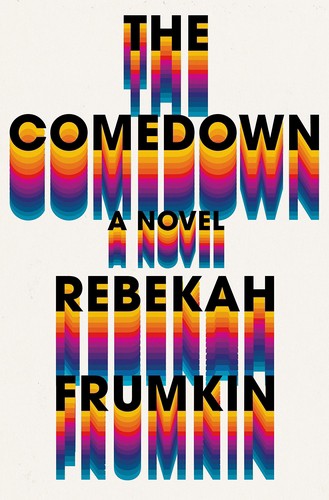
My novel, The Comedown, lampoons toxic masculinity by showing it in extreme forms. Leland Bloom-Mittwoch Sr. inhales cocaine, berates his wife, and suffers delusions of grandeur. Aaron Marshall worships his drug-dealing father and gets rich working for a development company that could have rendered his family homeless. Lee disdains every woman he sleeps with except Maria Timpano, whom he places on a desperate pedestal, and for whom he drives into a ravine. Being a man in the world of The Comedown is like being on a particularly critical episode of Queer Eye for the Straight Guy, except it’s your patriarchy-warped character being examined instead of your schlubby clothes.

A good dad treats his family like fellow human beings deserving of compassion and respect. A bad dad can act out in as many ways as there are vices and structures of oppression. All well-adjusted dads are alike, but these six patriarchs prove that each dysfunctional dad is dysfunctional in his own way.

José Arcadio Buendía, One Hundred Years of Solitude by Gabriel García Márquez

Founder of Macondo and head of a family of similarly-named Buendías, José Arcadio is easily one of the worst patriarchs in literary history. Holed away in his study while his wife and children break their backs in the garden and around the house, José Arcadio is disinterested in all that doesn’t revolve around him and his scientific curiosity, a bad father by way of neglect. (When your child becomes the fascist mayor of the town you founded and you don’t intervene, you know you’ve probably failed as a father.) He spends his old age confused and tied to a tree, a fate befitting a would-be master of the universe inquisitive beyond his abilities.

Simon Dedalus, A Portrait of the Artist as a Young Man by James Joyce

Simon Dedalus starts out as the bumbling, loveable-and-down-on-his-luck father from an after school special. But as young Stephen Dedalus matures, Simon becomes increasingly drunk and monstrous until he’s shouting about Stephen being a “lazy bitch.” (“He has a curious idea of genders if he thinks a bitch is masculine,” Stephen quips afterward.) Propelled by Simon’s ineptitude, Stephen goes on to seek fatherhood elsewhere: in the mythical Daedalus and later in the arms of Leopold Bloom.

Cholly Breedlove, The Bluest Eye by Toni Morrison

Toni Morrison’s The Bluest Eye is a heart-rending read precisely because of Cholly Breedlove’s actions. Saying that Cholly “behaves badly” is like saying that “being a woman under patriarchy is hard.” Both are gross understatements. Cholly sets his own house on fire and rapes his daughter. His drunken rages transport him to planes of grandiose incoherence. He has been failed by a racist social system and his manic awfulness serves to both reveal and conceal his wounds. If only Pecola could have escaped him sooner.

King Lear, King Lear by William Shakespeare

If anything, Lear’s story is a lesson in not picking favorites, or at least not picking the wrong favorites. Ideally, children wouldn’t have to make formal appeals for their father’s love, but this is not how things worked in pre-Roman Britain. Lear spends more quality time with the Fool in an apocalyptic storm than he does with any of his daughters. Regan and Goneril are regarded as evil without question and Cordelia is practically ignored until the end of the play, when a piteously mad Lear finally gives her the time of day. Good parenting this is not.

Hazel’s father, Made for Love by Alissa Nutting

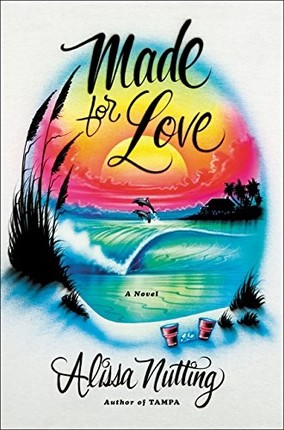
Hazel escapes her sterile marriage to the tech tyrant Byron Gogol by moving in with her father. He’s living in a trailer with a sex doll named Diane and putzing around on a Rascal scooter, his every action seemingly designed to maximize Hazel’s discomfort. When he’s not berating Hazel about her past, he’s canoodling with Diane in a way that is truly a bummer. He’s distinct among the rest of these patriarchs in his willingness to meet the lowest possible threshold of decency: he doesn’t actively inflict any harm on his child. Way to go, Hazel’s dad.

Dr. James Orin Incandenza, Infinite Jest by David Foster Wallace

Like José Arcadio, Dr. James Orin Incandenza (a.k.a Himself a.k.a The Mad/Sad Stork), completely neglects his children for his filmmaking career. While older brothers Hal and Orin are resigned to being ignored, Mario lusts after his father’s attention, acting as key grip and best boy in Dr. James’ benighted productions. Eventually, Dr. James ends his life by putting his head in a microwave, leaving his children to wonder what they meant to him, if anything.

The Artist Formerly Known As

In 1986 my cousin had a Commodore 64, a TV with a split antenna that pulled Saturday Night Live from the electromagnetic field over the Vermont mountain (Eddie Murphy as Buckwheat, a cone-headed Bill Murray), and a turntable propped on a stack of records. When I’d arrive at his house in the woods, he’d put on Purple Rain while I peeled off my wool coat, its tobacco smell like the backseat of our old Toyota, my stomach upside down from the coiling drive. If you loved Prince, you can see it: flower-edged record sleeve banged up at the corners and slashed with neon purple letters, his iconic white ruffled shirt, his dark eyes staring out from the seat of a smoke-engulfed motorcycle.

The image is indelible, flawlessly constructed. Prince was acutely conscious of his visual identity and relished the provocative complexity of it — anything to make us blush or breathe a little harder. He was also a master of the disappearing act, the epitome of reinvention, receding and returning from rock god to mystic to sex kitten in the blink of a gold-shadowed eye. At some point, I saw Prince and I saw my cousin, not a physical likeness so much as a shared absence — a part in each of them that had existed and been taken away.

Prince was a master of the disappearing act, the epitome of reinvention.

My cousin was my favorite person in our family of writers and painters, all of whom were, on any given day, either in a bloody civil war or as close as the McGarrigle sisters in ecstatic ensemble. He was ten years older than me, good looking, restless. He played piano at night with his eyes closed like a shadow. I felt abundantly attended to, in his presence. Adored. He imbued in me concepts that would stay for good: sugar molecules eat your teeth in the dark; one cell carries our entire human genome; our ears still listen when we’re asleep. But there was a hard sadness in him, too, that I’d sometimes glimpse as if through a prismed periscope when he stacked the wood, heaving pieces across the yard like a javelin throw, or when he shoveled the billions of shattered ice crystals of our endless snow.

I didn’t understand the potent sexuality of the lyrics on Purple Rain yet but I loved the music and everything it made me feel. The minute the needle hit the record and the worn vibrato of the organ began like a church sermon I’d feel the imminent excitement — the “Let’s Go Crazy” moment of conception, the pulse that you couldn’t hear and not jump up and dance.

Some kids at school weren’t allowed to listen to Prince because of his suggestive lyrics, but we were artists. Grandma wrote indecent poems about oblong vegetables; I learned about self-love from Anne Sexton and Woody Allen. No one censored our music or our books, least of all my distracted mother who was raising three of us alone, whose piles of short stories and envelopes of correspondence filled our apartment’s only available counter space. She’d type and package up her 300-page novels and lug them down to the mailbox while we bickered in frayed superhero costumes and ate bowls of government-funded Kix.

From the bottom bunk of my cousin’s bed where I stayed sometimes on sleepovers across town, warm from the sit-down dinner that was always served around his family’s stove — my aunt’s basmati rice cooked over sliced potatoes and eaten with a raw egg as she’d learned in her years living in Iran — I would answer his usual questions: What was I doing in school? Who were my friends? Did I have a boyfriend? When I dreamed about Prince one night he laughed and said it was my repressed desire for the singer that made the dream.

My cousin didn’t seem to care that I was younger than him. He found my endless stream of readings and social sufferings interesting, and revealed to me a world of popular culture that was evidently everywhere except my house. We had no TV, no “Cosby Show,” no Atari projecting bright, pixelated mazes we could spend hours traveling through. Entertainment was our upright Hamlin sloping with the floor, a cassette player, books under and over everything. My old violin. What leaked in came by way of WX104, our state’s hit radio station that launched nightly through my alarm clock radio. At 8 pm the DJ would start taking calls from the sad and the love-struck, playing corny songs for their wounds. Sometimes he’d let a caller go on for a very long time and a whole story would emerge. I’d sit balanced in the kitchen on our church pew — one of the many pieces of furniture my mother found rummaging antique barns — waiting for the end: the woman walking out the door forever, the father succumbing to his disease. I’ve got just the song for you, Sheila, and for all of you out there…

“Out there” was a town over, a state away, it was stories of people and their hopes and injuries, it was the sky and the planets that my grandmother read about in her astronomy journals, and then it was inside, too, a dimension I couldn’t escape walking each day into 8th grade biology dizzy with images of blood and circulatory systems, glands, muscles, tissue. I nearly fainted when our teacher showed up with fifteen tiny scissors and a bucket of frogs. One night, studying cells on the floor of my cousin’s kitchen, he explained the lowest level of biological organization as a house with many hollow and orderly rooms. Put your hands on the walls, he said. Nothing can get through.

What does it take to close yourself up, to disappear? To really disappear, there are online guides with pictures like “How to Cultivate New Habits” (start wearing a hat indoors) and essential rules (you must go alone). WikiHow can have you gone in 10 steps. SkilledSurvival.com says your entire life will become a lie.

The experience of childhood is not unlike the experience of art, as the Russian writer Viktor Shklovsky describes it: “the sensation of things as they are perceived and not as they are known.” Which is to say, the story of my cousin was forming in me a long time, reconciling with things I could only feel as a kid and not quite grasp. I loved him. I would have chosen him over anyone. But one summer he learned a family secret that had been kept from him for years, and that was that. When he turned to me it was as though he’d never seen me before.

Prince had only recently renounced his name, deciding to become a symbol instead, simply The Artist Formerly Known as Prince, without a record label, without designation. I dreamed my cousin went to the top of a building and bent his body over the roof’s edge, a gesture toward his ending, or all of ours. When I woke up, he was gone.

I dreamed my cousin went to the top of a building and bent his body over the roof’s edge, a gesture toward his ending, or all of ours.

No song quite unspooled me like “Purple Rain.” Walking home from school I’d leap from one sidewalk crack to the next, conjuring up provocations, if a red car drives by now it means — , wanting something to happen to me though I didn’t know what. I’d turn my Walkman up until my eardrums hurt. Our town was gutless, uniform, filled with families in clean Subarus who had orderly domestic systems like chore charts and Macaroni Mondays, people my mother would call ordinary under her breath at the co-op where they were always glaring. I wanted to break into the next kingdom. I wanted to hear Prince relish the inharmonious, the oblique. His shimmery guitar with its tiny striking pangs comes at the close of “Purple Rain” like a late-night whisper that makes you fall in love. His chaos was chemical, the unstoppable force of something urgent coming. When the camera turns out to the audience in a live video of the song from a club in Minneapolis in 1993 — the whole thing bathed in a purple, sweaty glow — my heart beats with an almost agonizing envy of everyone standing in front of that moment, that minute when Prince was so sensual and alive. His face strains with the high, startling “heeee-heee hoo hoo” — a wail that is utterly animal, that ascends to the edge of the atmosphere. Even in the blur of old footage it makes my entire nervous system ignite and dissolve like a star.

Which is what makes the symbol he became when his name disappeared so figuratively right. A curious shape, part ancient Egypt, part biology, something like Ida’s Wunderhorn stabbed through by an iron-tipped spear. He was too large for language, or he was outside of it. Subverting the convention of naming itself made sense, especially when one could not pronounce it or type it into anything.

And what was left in its place? An incredible loneliness pervades many of his songs, an almost unfillable desolation. Which might be at the heart of why we make art at all. How do any of us stand quiet in the middle of a life that’s moving steadily toward its end, that has, up ahead, a total and inexorable vanishing?

He was too large for language, or he was outside of it. Subverting the convention of naming itself made sense.

When I listen to Prince now I’m back in my cousin’s bedroom, on the bottom bunk, looking up at the wood slats that hold the outline of his body suspended above me. Wool blankets piled on our feet, the damp of the forest everywhere, the dirt road running like a ribbon over the mountain. The click-click of his TV antennae trying to catch a signal in the night.

Prince died as Prince, the unsayable symbol relinquished, or he died as Prince Rogers Nelson, the name his parents gave him in 1958. I don’t know what my cousin’s name is now. He never spoke to his mother again, or his aunts, or me. I heard he had moved out of the country, then back again, that he was using a middle name instead of his first. But then the story of him ends.

And I grow more fascinated by erasure, the destruction and the freedom of it. I think about secrets and then exile of the sort we enact on ourselves. It’s a new world now where I walk, decades later, far from that town, far from the sweet anonymity of the ’80s; it’s all technology and surveillance, the whole planet on an intricate grid that can largely be viewed from any given point. I hate the dot on my cell phone map that shows me “me” while I’m running the circumference of my city park or walking to the grocery. I resent the app that lets my daughter or my husband know where I am at any moment so they can ping out their requests for ice cream, milk, postage stamps. Sometimes I want to get very lost. It soothes me to imagine flight, to conjure an escape from my life, even when it’s impractical, impossible. Is there any crack in the framework to slip through anymore?

I have never tried to find my cousin. Surely he is in plain sight of someone, somewhere. But who is he to them? A body defamiliarized, renamed? Who are any of us but an amalgam of cells, our faces like shifting genetic composites, our structures unduplicatable, a whole system of chemicals and thermodynamic reactions that rely on a painstakingly precise balance? A billion cells inside us and each one perpetually gearing up to create, to divide. “It’s the cell’s main drive,” he’d said. Now I think of the mystery of what happens — how a nucleus disassembles and re-forms. It breaks down and is reborn, over and over and over.

Distance yourself from others — WikiHow’s rule #3. Do everything slowly. Erase all documents with your name (#6), lay false leads, wear unusual clothes to a distant border where no one expects you to be. You might once again have a chance at brand-newness, then. Tabula rasa. The mind, as Aristotle said, that is nothing until it has thought.

Erase all documents with your name, wear unusual clothes to a distant border. You might once again have a chance at brand-newness, then.

One night — Dream if you can a courtyard / an ocean of violets in bloom — my cousin fell asleep first. Curious if he could hear me in his sleep as he claimed, I whispered up to the top bunk, Your orange tree is blooming! He didn’t respond, nothing twitched, no firing neuron announced itself, and eventually I fell asleep, too. But in the morning he sat up and said, “I had the most amazing dream. It was summer and my orange tree was covered in mandarins!”

I was amazed. I had broken through the gates of his sleep and spoken to him on the other side! There, where he floated like a raft on the waves of a slowing consciousness, the stony paralysis of his unfastening body going from this world to that. I had found a way in. And what he’d told me had been right: even far away, in that deep, unresponsive place where he had gone, he could hear me.

Dispose of your old personality, bit by bit. If going rogue, find a wild area where no one lives. And if the chance arises, leave behind a token for someone you loved. You won’t be seeing her again.

Brendan Kiely Uses His Privilege to Interrogate Privilege

I was introduced to Brendan Kiely when he collaborated with Jason Reynolds on what would become the New York Times bestselling and award-winning book All American Boys. I was shocked, utterly shocked, to meet a cishet White man determined to speak out about the issues of White supremacy directly, and not guise it under a fairytale premise. At a time when many may want to write away from the issues, this was someone writing towards it, who presented an honest take on responsibility not often seen or read. (Kiely and outspoken advocates in marginalized communities served as examples on how I should reckon more with my own privilege.)

Kiely’s adamance to consistently reflect and speak out on the roles of those with power is also evident in his recent essay in The Good Men Project and several of his books. From owning White privilege to recognizing toxic masculinity, Kiely targets awareness and acceptance of accountability for progress to those of privilege about their privilege. And this isn’t relegated solely to his writing. It’s also evident from his work as a public speaker and advocate working with literary activist groups such as PEN America. With his latest book, Tradition, Kiely zooms in on rape culture and toxic masculinity within an elite boarding school.

I spoke to Kiely about his role as a White man in an obviously broken system, and how acknowledging and pushing against power can give voice to, not so much the voiceless, but the silenced. In the end, we both wanted to know: Within a society of toxic masculinity, when can we expect men at any age to take responsibility?

Jennifer Baker: Much of your new book seems to be about awareness by those with privilege. Or at least the path to awareness. How do you as author pursue writing a book like this at all?

Brendan Kiely: Action without more time spent building awareness can be dangerous, so I do try to spend a lot of time on awareness, and I think that’s part of how I approach writing a book like this. I spent a lot of time listening to women. And I spent a lot of time reflecting on my own experiences growing up, the ways in which boys encouraged in each other pretty toxic behavior. Also the moments when some boys had the courage to stand up and let the rest of us know we were being idiots. In the same way I wanted to talk about racism in America when writing All American Boys, I had to look at Whiteness and ask how White people can do a better job engaging in self-examination and critique. In Tradition I want to look at misogyny and rape culture and ask men to engage in deeper conversations of self-critique. That seems like the only honest way in for me.

I had to look at Whiteness and ask how White people can do a better job engaging in self-examination and critique.

Jenn: Makes sense. With the rise of #MeToo we hear more from victims, and in your essay (in The Good Men Project) as well as your book, you speak to the need to not only listen to women, but believe them.

Brendan: Absolutely.

Jenn: Where do you think that lack of belief comes from in the male psyche? Understandably, you can’t speak for all men. But there’s a lack of assessment in terms of boys recognizing their behavior, though they’re being supported or protected.

Brendan: On an individual level, I think there are many people (men in this case) who say to themselves, “Well, I’m not that” (then point to an extreme example) “I’m not Harvey Weinstein.” And by distancing themselves in that way they don’t take accountability for all the ways they enable people like him. In Tradition, it isn’t only that some of the boys think they personally aren’t doing anything wrong; the school wants to protect them because the boys are assets. They are sports stars, they bring prestige to the school. They are the sons of Board members, trustees who pay a lot of money to have buildings built at the school. What this all says to other people, anyone without as much institutional power, is that the institution doesn’t care about them as much. For instance, [the character] Jules feels unheard. In fact, it’s even worse — boys, teachers, school officials, even some of the other girls, hear her and want to silence her. That’s why I begin the book with the quote from Arundhati Roy: There is no such thing as the voiceless, only the silenced or the preferably unheard.

The issue with boys too is that they don’t recognize their own power. They’re taught to think, “Hey, look what you’ve accomplished,” instead of, “Hey, look what other people have accomplished for you.” That kind of false sense of self-worth, as a student, a man, whatever, I think is dangerous. And that is the kind of stuff I want to unpack and reveal in real time.

The issue with boys too is that they don’t recognize their own power. They’re taught to think, “Hey, look what you’ve accomplished,” instead of, “Hey, look what other people have accomplished for you.”

Jenn: Oh, and that’s a sour spot too? That moment of recognition of how one gets “saved” when you have privilege. How much money and Whiteness and maleness can “save” you from having to face yourself. And, sadly, we see this in our government today.

Brendan: Exactly. It’s terrifying! White men have the most fragility, it turns out.

Jenn: And this isn’t just reserved for spaces like the Fullbrook school, where your book takes place.

Brendan: Not at all. Fullbrook is representative of our whole society. The other epigraph is from Paradise Lost because I wanted to talk about how these problems of abuse of power, and the construction of a “paradise” are suspect. A paradise for whom and at what cost to anyone else? The very notion of a “paradise” feels built on a kind of false innocence.

Should White Men Stop Writing? The Blunt Instrument on Publishing and Privilege

Jenn: Do you think false innocence is tantamount to protecting what’s perceived as “the upper class”?

Brendan: In Tradition, I think it is about protecting men — something Jules calls out while they are studying Paradise Lost. There’s a narrative that goes back way too far that seeks to protect men — back to what you were saying earlier. And likewise, when we build places and say “this is an ideal school, a very good school” and hold it in such high esteem, and yet, under the surface, it’s riddled with dangerous misogyny and classism, it isn’t a paradise at all. In fact it makes the notion of any paradise where everyone doesn’t have full agency very suspect in my mind. That’s why I wanted this book to lead towards rebellion.

Jenn: It also sounds like, from a personal perspective, this investigation (of privilege and power) started at a young age for you.

Brendan: Yes. It did. And I was fortunate that women and people of color in my life asked me to interrogate my male and white privileges and power. When I was growing up, most men and white people weren’t asking me to do that interrogation. I also heard it in a lot of the art and music I was checking out. I just downloaded a bunch of music I used to listen to in the early 90s, because I wanted to remember the stuff that inspired me to think more about who I was and how much privilege I’d been afforded through no effort of my own.

It’s important to remind myself that there is no end to this learning and interrogation. While I started thinking about it when I was young, I have to remain committed to thinking about it for the rest of my life. My ignorance will always be greater than my understanding, so I always have to remain committed to understanding more.

My ignorance will always be greater than my understanding, so I always have to remain committed to understanding more.

Jenn: Not to say this is a “platform,” but how often do you think these kinds of things — particularly the patriarchy and male role in rape culture from an acknowledgment of being part of the problem — happens in general, let alone in art?

Brendan: I don’t think all work necessarily needs to be about identity, though at this point in our lives, I’m not sure how it can really escape the work we make either. And therefore, particularly as someone who has been bestowed a vast amount of social power through my whiteness, maleness, and heterosexuality, I think the space for me to work in are stories that reflect on those privileges, why they are so insidious and destructive. I think there is a lot of room for more of this kind of work.

But it is important to say that there have been so many people without those privileges and power who have been talking about all of this forever. So it’s essential that as I do my work, I look back, listen, and learn from the masters who have been unpacking this work for so long. I love going back and reading (James) Baldwin and (Toni) Morrison and hooks. I loved re-reading The Handmaid’s Tale and Speak and What Girls Are Made Of. These are authors and books I keep close by me as I work because whatever I’m doing, I’m doing it because I learned from them. I was on a podcast the other day and I was talking about how much I love Renée Watson’s Piecing Me Together. Some people call that a “quiet” book. But to me, if you sit and listen, it’s a book about myriad aspects of identity up against and thriving in the face of all those forms of oppression, like the patriarchy. If you listen, every turn of the page is a heartbeat.

Jenn: Do you think people are ready for these conversations in general? I’ve heard a lot of the time it seems adults aren’t ready for this type of dissection, but that younger readers tend to be more open to it?

Brendan: Actually, I think people of all ages are ready for it because I do believe people have been talking about it all for a long time. The problem is that maybe people (and some people in particular — looking at you, Brendans like me of the world) haven’t taken the time to internalize what that means.

But also, I absolutely agree that as I travel the country and speak with young folks, they are eager to have these conversations. They are eager to see it, feel it, and experience it through art. I’ve learned so much from young people as they’ve told me about the books they like and why, as they’ve told me about why they’d hope more adults would see the emperor’s nudity (or his privilege and power) in the same way they do and stop pretending he’s wearing clothes.

Jenn: There is one more thing I wanted to talk about: the scene where Jules puts a tampon on her desk.

Brendan: Sure.

Jenn: It made me think about how, as women, our bodies make men uncomfortable because certain aspects not under their control, nor is this something of interest. So it makes men uncomfortable.

Brendan: Yes. I think that is very true, and I wanted to bring that to life in the scene where Jules puts her tampon on her desk. It bothers me that I didn’t know anything about that when I was a teen boy. That’s on me, for sure, but it’s also the way we men in general often dismiss women and their bodies. Oh, she’s on the rag, or other offensive phrases like that.

Jenn: What do you mean when you say it bothers you?

Brendan: It bothers me because I think it is essential for us all to know about bodily health, and that doesn’t mean I should just ignore women’s health because I’m a man. It bothers me because it feels like I can draw a direct line from my teen boy’s ignorance to the kind of systematic denial of appropriate healthcare for women in our country, and women of color in particular. That just feels so patriarchal and racist and disgusting.

This is exactly what I’m hoping to do in Tradition. Draw a line from the corrosive behavior in the school, and especially among the boys, to the kind of systems we have in place in the workplace, in government, in our community. The patriarchy doesn’t come from nowhere — it comes from young men nurturing an inherent misogyny in each other, letting it fester, and it impacting the decisions they make every day, as boys and later as adults. That’s why the book leads toward rebellion.

The patriarchy doesn’t come from nowhere — it comes from young men nurturing an inherent misogyny in each other, letting it fester.

Jenn: Tradition leads to stagnant thinking, as you mention, and this protection. You say it’s the old boys club, but it’s also the status quo of keeping things in line as one sees fit. But change is a pretty big shift and it has to come from acceptance of privilege, though that word is scary to many.

Brendan: Absolutely. I agree. Change comes from an acceptance of privilege and a shift in the way those of us who have it act. I can’t walk into a room and say, hey, it’s only me! My Whiteness, my maleness, precedes me into the room. So given that reality — I have to change the way I was taught to act.

8 Novelists Who Should be Getting Paid to Write Reality TV

I n this cultural moment where prestige dramas are dominating the airwaves and generating endless thought pieces, the idea of the bingeable teledrama as the new novel is already a cliché. More and more great prose writers are realizing that they can make a lot of money writing shows without sacrificing their literary cred. But television’s ascent into high culture hasn’t included reality TV, and I think that’s a huge untapped opportunity for book writers.

Purchase the novel

After all, if people uniformly claim now that unscripted reality shows are, in fact, quite scripted, why can’t we give our best writers the job of writing these scripts? I’m not expecting this idea to take off instantly, though I do think I deserve a reasonable finder’s fee if it does and I eagerly await the appreciative emails from these writers. Here are eight pairings of some of our greatest prose stylists with the reality TV shows they were always meant to write:

“Keeping Up With The Kardashians” by Hanya Yanagihara

KUWTK is the benchmark of the modern reality genre: immensely, almost confusingly watchable; seemingly unending; crammed with every possible emotion, as we trace what may end up being the entire lives of its characters. In this way, it’s closer to the shape of the classic Russian novels than most modern novelists dare to get. But not Yanagihara. With A Little Life, she proved willing and able to plumb the kind of ongoing depths provided in the Tolstoy/Kardashian experience. Also, Yanagihara has the remarkable ability to make an audience sustain care for the grossly and unapologetically wealthy, which is the job requirement of KUWTK.

“Naked and Afraid” by Chris Kraus

It’s a tragedy that Amazon canceled the TV adaptation of Kraus’s incredible I Love Dick, but fuck it — who needs Jeff Bezos? Let’s move on. I would welcome a Chris Kraus treatment of every reality show ever made, but I’ll start here, with Naked and Afraid. There’s a line in I Love Dick, when Kraus’s autobiographical protagonist describes being a lover of a certain kind of bad art, which offers a transparency into the hopes and desires of the person who made it. Who better to provide the lines that telegraph the murky motivations of these strangers who sign up to be dropped into the woods together, ass naked, demanding to be seen?

“Sister Wives” by Alice Munro

First of all, polygamy seems like the perfect match for any short story writer who can give quick, quiet, and devastating insights into the perspective of each wife and child. But a polygamist family famous for its veneer of suburban normalcy? If there was ever a reason for Munro to leave retirement, it is this.

“The Challenge” by Junot Diaz

What novelist better expresses the toxic absurdity of modern masculinity than Diaz? And what figures have more clearly embodied it for the past decade than the stalwarts of The Challenge — men like CT and Johnny Bananas? They keep getting older and thicker; they return to the same situations with the same women, fuck up again. Swaggering, angry, horny, and ultimately sad, these men were born for Junot Diaz to shed light on their souls.

“Diners, Drive-Ins and Dives” by Han Kang

If I know anything about Han Kang, it’s that she can write a haunting dream involving meat. If I assume anything about Guy Fieri, it’s that he has many haunting dreams involving meat.

“The Bachelor” by Mary Gaitskill

Mary Gaitskill’s characters often lead double lives: a dark, vulnerable, and often brutal side hiding behind their public facades. Contestants on The Bachelor start off with perfect blow-outs and earnest proclamations of “being here for right reasons”, but they eventually crumble into a teary-eyed mess at just the right made-for-tv moments. Just close your eyes and think about the biting portraits Gaitskill, an astute observer of human behavior, would come up with.

“Vanderpump Rules” by Bret Easton Ellis

Not surprisingly, Bret Easton Ellis is the rare contrarian novelist who is out in the open with his reality TV love, once proclaiming that the Real Housewives shows were more interesting than most modern novels. If he loves all the nastiness of human nature that the Real Housewives explore, I say let him loose on the world of Vanderpump Rules, a Real Housewives spinoff that is, in my humble opinion, the ideal docu-soap. Like Ellis’s best work, the characters of Vanderpump exist in the dark spaces between seductive excess and simmering rage. Plus, like any great Ellis novel, drugs of the snorting variety are a huge catalyst in Vanderpump (legal disclaimer: that’s speculation, but come on).

“Million Dollar Listing: New York” by Jay McInerney

I mean, isn’t every New York novel just a story about assholes and expensive real estate?

Lucas Mann was born in New York City and received his MFA from the University of Iowa. He is the author of Lord Fear: A Memoir and Class A: Baseball in the Middle of Everywhere. His latest book, Captive Audience: On Love and Reality TV, will be published in the US by Vintage on May 1st, 2018. He teaches creative writing at the University of Massachusetts Dartmouth and lives in Providence, Rhode Island with his wife.