What is the Distance Between Two People?

I f TRAIN A leaves the station going 60 miles per hour and TRAIN B leaves one hour later going 85 miles per hour, how long will it take TRAIN B to catch up with TRAIN A?

This example is just one of several word problems you will encounter in your life. Most word problems do not immediately identify themselves as such — rather you stumble into them on accident, perhaps over drinks with your significant other or in the backseat of a taxicab.

Let’s begin. Distance equals the rate times the time. In knowing that our distances are the same, we must first learn to set them equal to one another.

D = RT
D = 60T for TRAIN A
D = 85(T — 1) for TRAIN B

But you say wait no, not quite, our distances were never exactly the same. You were always slightly further away at all times, regardless of the reference point. During parties or dinner or sex, you made a series of small calculations to appear far off, not here, somewhere else. Whether or not you were actually deep in thought, you consistently had the look of someone attempting to hold a lot of numbers together, like doing long division in your head. This absence must be factored, you say. This nothing must be accounted for.

Yeah, okay, but that’s hypothetical distance, an imaginary number that while being complex and valid in its own way, is completely useless here, I say. For instance, let’s say we are walking through what some might call a shitty part of town. The kind of place where rock bottom rises to the surface, and nervous commuters quickly pass by the lowest point of someone else’s life. Isn’t it awful, you say. Let’s cross the street. I say no. That’s worse. It would be rude not to walk right through them. How is that helping? you say. By marching past a dying body, you don’t suddenly get to lay claim to their experience.

Because I believe other people’s tragedy is a thing you must learn to intake, like those trace elements in the air no one mentions — you know it’s there, you breathe it in, but it’s still just air. There’s no lingering feeling. You’re never thinking, this argon tastes strange.

That’s stupid, unproductive, doesn’t change anything. In putting yourself through a bad experience, you’re creating just enough tension to feel as though you’ve sacrificed something without actually doing anything. Their pain is your table stakes.

I swallow my tongue and check the time. I’ve never been good with words so I’ve learned to hide behind numbers. Oh look, we’re late.

60T = 85(T-1)
60T = 85T — 85
60T — 85T = -85

Some word problems present themselves clearly. For instance, in an argument over a weekend camping trip, someone might say something like, it’s not about the tent, it’s about what the tent represents. This is tricky, because at first it appears as though you are solving for tent, but you are in fact solving for x — tent. That is, everything else besides the collapsed tent in your hands — limp, formless, and looking nothing like a home. You decide to do what idiots do: ignore the instructions and work towards what you know to be true. Namely, tent. As you slip the silver poles through their tiny folds, maneuver the deflated casing around, and attempt to stake your claim, your partner continues to pursue the real heart of the problem: infinite universes that contain neither tents nor you.

It doesn’t stop there. Real word problems are more dynamic than textbook ones. Often, they mutate and compound even as they are being written. From tent and tent representation, we can easily phase to semantics and value deconstruction. It’s not what you said, but how, why, and when you said it.

Now, of all times.
Here, of all places.
You, of all people.

And even after it becomes clear we are no longer solving for tent, there is still the dull fact of needing to sleep somewhere. One way or another, a solution is found. You knew all along, they say. You only wanted to watch me struggle. You wanted to be proven right. How can you say that, you say. Where’s your proof?

-25T = -85
T = -85 / -25
T = 3.4

Three-point-four hours (204 min.) after TRAIN A leaves, TRAIN B will catch up to it. We know this because:

60*3.4 = 85(3.4–1)
204 = 85*2.4
204 = 204

Meanwhile, the real world contains hardly any proof whatsoever. It only takes a small amount of pressure on any known fact before it unspools into a mess of numbers. Just yesterday, you tried to receive a refund for a train ticket when, after waiting for 22 minutes, it had still not arrived. Exiting the turnstile, you got in line, waited your turn, and when signaled, spoke into a circular grid of holes drilled into a panel of plastic.

Hello I would like my money back, you say. I can’t do that, they explain. Why? Buying a train ticket has nothing to do with riding on a train, they say. We make no guarantees for trains, arrivals, departures, coming or going of any kind. So what am I buying? you say. You’re buying time — and the ability to stand over there versus over here. Solving for time, you exit the station understanding that whatever the operator gained was just lost by you.

No one ever explains what happens after TRAIN B catches up to TRAIN A, what that would look like, or why they are pursuing each other in the first place. This is what’s sometimes called a given — which is basically when someone doesn’t give you anything and hopes that’s okay. If these trains are on the same track, this is a word problem about other people’s tragedy. If they’re parallel, it could be about what the trains represent. If the trains are not even aware they are racing, it’s a case of over there versus over here.

Setting your distance, you call your partner from the platform. Both inbound and outbound trains arrive at the same time, making it difficult to hear one another. If you get home first, do you mind cleaning up? they ask. Make sure you wipe the residual spit off the toothbrushes, I have people coming over. If you get home first, can you start dinner? you say. I haven’t eaten all day and my mouth tastes like stomach acid.

Math is elastic, which is why even though there are an infinite number of word problems, there is really only one. It’s the reason — In order to make dinner the kitchen must be cleaned, but making dinner dirties the kitchen.
— can also be expressed as: I can’t relax until the house is clean, but I just want to relax before cleaning the house.

— or even: I don’t hate you, I just hate who I am when I’m with you.

Two-hundred-and-four minutes later, you take turns approaching zero to see who can get closest without actually touching. It’s entirely possible you’ve won but you have no proof.

8 Funny Books About Grieving

Grief isn’t funny. Or is it? Big, difficult life events like the death of someone we love make us realize how much we can’t control. But finding the darkly funny moments in the midst of tragedy seems to help us weather tough times.

Purchase the novel

In my experience, the state of heightened sensitivity that comes with loss can actually make us more aware of what’s funny and absurd about life. And that’s a good thing: by not losing our ability to laugh, we’re retaining a defining element of our humanity.

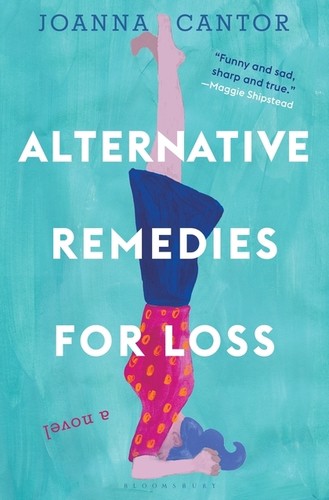
I thought a lot about the interplay between grief and humor while writing my debut novel, Alternative Remedies for Loss. Alternative Remedies is the story of a family coping (and sometimes not coping) after the matriarch dies. In literature, as in life, many of us crave the catharsis of laughter when the going gets heavy, and it felt true to me that the story of a mourning family could contain many comic moments. If you agree that grieving and humor go together like salty and sweet, check out these eight gems.

All Grown Up by Jami Attenberg

It might be more accurate to say that Jami Attenberg’s most recent novel, constructed as a series of vignettes, is about avoiding grief. While Andrea Bern’s young niece is dying of a heart condition in New Hampshire, Andrea stays in New York City, postponing visits to her family. I bit my nails wondering if Andrea was going to pull it together for her family before it was too late, but her painfully honest observations about life as a single woman approaching 40 had me laughing from the opening pages.

Fun Home: A Family Tragicomic by Alison Bechdel

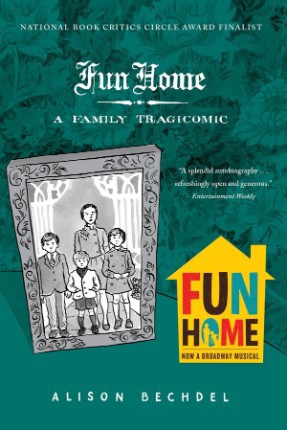
This graphic memoir, which was adapted into a Tony Award-winning musical, explores light dinner-table topics like death, sexual identity, and family secrets. But Bechdel and her siblings have a matter-of-fact relationship with death because they grew up helping out at the family-owned mortuary, and the freshness of the form beautifully complements the emotional complexity of the story.

A Man Called Ove by Fredrik Backman

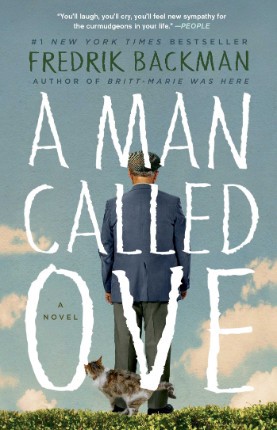
Secret lovers of curmudgeons (like me!) will fall for the grumpy Ove, who has given up on life after his wife dies. When an unexpected friendship forms between him and his new neighbors, this darkly comedic Swedish novel, a runaway international bestseller, takes a turn for the heartwarming. The Swedish film adaptation is being remade in English, starring Tom Hanks, so if you want to say you read the book first, now’s your chance.

The Antiques by Kris D’Agostino

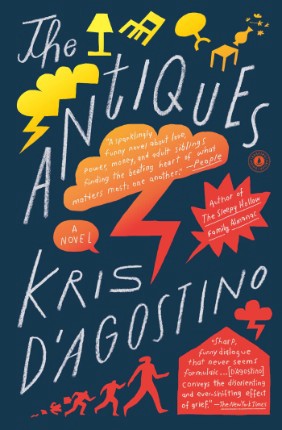
As a massive hurricane hits their family hometown of Hudson, New York, the Westfalls gather to plan their father’s memorial service. I love nothing more than a good, tangled family drama, and D’Agostino’s unsparing take on estranged siblings Charlie, Josef, and Armie makes this one both sharp and very funny.

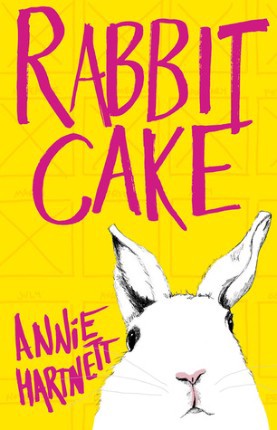
Rabbit Cake by Annie Hartnett

I tend to be wary of child narrators, but ten-year-old Elvis Babbitt was the perfect blend of fresh and astute in Hartnett’s charming debut. After her mother drowns while sleepwalking, Elvis must contend with not only with her own grief and the mystery surrounding her mother’s death but also the dangerous sleepwalking habits of her older sister Lizzie, and her father, who is wearing her mother’s bathrobe and lipstick around the house to console himself.

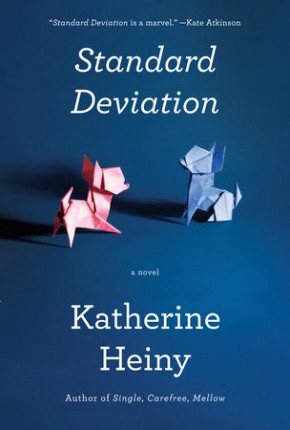
Standard Deviation by Katherine Heiny

Okay, so it’s more a book about marriage than about grieving, but Heiny’s first novel is laugh-out-loud funny, and does contain an unexpected death, which Graham and his wife Audra, must process. This is a tale of two marriages, of the challenges of parenthood, and of knowing when to let go.

Goodbye, Vitamin by Rachel Khong

This slim delight of a novel is told in diary form over the course of a year when 30-year-old Ruth moves home after a breakup to help care for her father, who has been diagnosed with Alzheimer’s. Ruth’s observations are astute and quietly hilarious, and Khong treads over heartbreak, betrayal, and loss with the lightest touch.

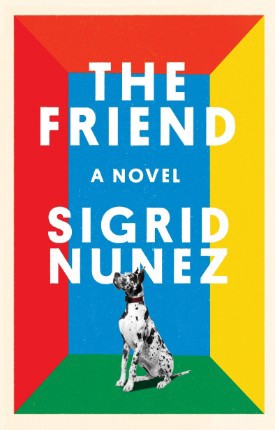
The Friend by Sigrid Nunez

A writer grieving the suicide of her close friend and literary mentor inherits his 180-pound Great Dane, who is also in mourning. I found this brief, rich tale incredibly moving, but it’s also sprinkled with darkly comic observations about writing workshops and pet ownership.

What Does It Mean to Be a Disabled Writer?

Disability is a complex and multifaceted experience, so it should be no surprise that it exerts profound influence on the way we write. It provides a well to draw inspiration, experience, and community from, but also comes with its own considerations: handling accessibility barriers and physical limitations in the writing process, balancing advocacy with writing, or being pigeonholed or stereotyped.

To discuss these experiences, I spoke with three disabled writers across genres: Keah Brown, known for her personal essays on disability and its intersections with being a Black woman in America; Esmé Weijun Wang, recent winner of a Whiting Award and author of the novel The Border of Paradise, now working on a collection of essays about schizophrenia for Graywolf Press; and Jillian Weise, a poet who has authored collections such as The Amputee’s Guide to Sex, and performance artist known for her satirical ableist character Tipsy Tullivan.

Alex Lu: How does the able-bodied gaze influence how you write? Even if you’re not targeting an able-bodied audience or writing directly about disability, it seems like most editors are able-bodied, and readers might still be evaluating your work in the context of your identity. Does this affect the way you write, or the topics you write about?

Keah Brown: For me, so much of writing and talking about disability, especially in larger publications, is about teaching able-bodied people about the vocabulary and experiences of my specific disabilities. I’m always thinking about the ways in which I can explain something without losing my style and personality in the process.

I make it a point to write about whatever I want, and to not focus on whether it’s being perceived in the context of my disability. As I grow in my writing, I am getting better at making my disability the lens through which I see the world, and not the subject. So, it informs how I approach my work, but not what I write about.

As I grow in my writing, I am getting better at making my disability the lens through which I see the world, and not the subject.

Esmé Weijun Wang: It’s pretty easy to learn from my social media and writing that I live with psychiatric and physical disability. But I don’t mention that I’m disabled in every piece that I write, and if someone is meeting me in-person and I don’t happen to have my cane at that moment, I don’t immediately come across as disabled, which causes a certain amount of decision-making about whether I should bring it up.

One reason I like to mention it myself is because it gives me a marginally greater amount of space to frame my own circumstances. I’ve been stereotyped a number of times when I’ve been profiled in publications, as an object of pity or as an inspirational figure who has “transcended” disability. I try to push back against that by being clear that yes, I am disabled, and no, I do not consider myself to have transcended disability because I still live and deal with it; it is a part of me.

Jillian Weise: I do not believe in an able-bodied audience. If the audience is larger than five people, then the audience certainly includes disabled and nondisabled people; whether Deaf or Hearing; neurodivergent or neurotypical; in chronic pain or, for the present, pain-free. Likewise, I doubt that most editors are nondisabled. They may be disabled but not willing to claim the identity; their own internalized ableism may prevent them from claiming; or they may have concerns about safety and/or stigma.

I do not believe in an able-bodied audience. If the audience is larger than five people, then the audience certainly includes disabled and nondisabled people.

Often someone will whisper to me, “I have ____. Does that count as a disability? Don’t tell anyone.” This shows me two things: some people don’t even realize they have a disability, and disability shares space with the secret.

Over a decade ago, when I published The Amputee’s Guide to Sex, I certainly bought into the idea of a nondisabled audience. I was writing for them. My attention to them elicited amputee devotees, fetishists, and stalkers. So I had to reconsider poetry. I went to fiction for protection. At least in fiction, nothing is presumed factual. No truth-debt is owed to the reader.

AL: What does your creative process looks like, whether you’re tackling material in relation to disability or not? I’m curious what helps you get through writing, and how you structure your day around creating, especially if you’re writing pieces that speak openly about your lives and experiences.

EWW: My creative process looks different depending on what I’m focusing on at the moment. Because my energy and strength are so limited by illness, I make a conscious effort to use the amount I have on priority projects. For example, in addition to my literary career, I also run a business called The Unexpected Shape, and sometimes that’s in the foreground. Right now, I’m working on the the final stages of wrapping up my next book, so that’s a priority over generating new written material.

My illness is such that I tend to be cognitively and physically stronger in the mornings, which creates a real incentive to write as much as possible in those early hours. I wake up at around 3 or 4, most of the time. And I go to bed very early.

JW: I like this notion of “getting through” writing. Mostly I think about “getting away” with it. I am terribly bored whenever someone asks me to write something that has, indeed, existed before, such as a Disability 101 thinkpiece that explains x, y, or z to the presumed nondisabled readers. I prefer to make something “that did not exist before.” I’m in the third year of performing the fictional character Tipsy Tullivan across social media. She lives in Asswallascallacauga, Alabama; she is White and nondisabled; she has vlogged from a conference room at The New York Times, from a drive-thru at McDonalds in Iowa City, and from inside an elevator.

KB: Scheduling is my best friend. When I was writing for Cliche Magazine, I would do the interviews of celebrities and TV shows in the morning, and then write essays about my life and disability in the afternoon and night. Now that I’ve left, I write in order of deadline. So I’ll prioritize writing the essays that are due first. As I write my forthcoming book, The Pretty One, I’m changing up my whole style, and writing out of order, to keep myself fully immersed in it and to avoid burn-out. I hate the idea that you must write every day because I really can’t do that. Sometimes the aching bones in my body will not allow it.

I hate the idea that you must write every day because I really can’t do that. Sometimes the aching bones in my body will not allow it.

EWW: I did just spend approximately three weeks at a residency in Wyoming, and while I was there, I focused on creating new stuff. I put an autoresponder on my email and drafted a new essay and the beginning of my third book, which is going to be a novel; I tried very hard to structure my time there so that I was creating as much as possible and dealing less with, say, administrative tasks. And, now that I’m back, I’m really feeling the pressure of all of the admin I didn’t do at the time.

AL: As vocal writers who speak out (and/or use your work) to discuss issues pertinent to you, do you find you’re able to split your time as artist and as advocate, or do those aspects of your self merge more often than not?

EWW: They merge. I don’t see how they can’t merge, for me. Even the fact that I’m known for writing fiction and nonfiction about mental illness — that’s related to advocacy in a couple of ways, whether I’m talking about a specific law regarding involuntary hospitalization in an essay or trying to create a visceral experience of psychosis in my fiction. I am a complex and multifaceted human being, so I write about other things, too, but I’m always me, always in this body and mind, while writing them.

I am a complex and multifaceted human being, so I write about other things, too, but I’m always me, always in this body and mind, while writing them.

KB: Writing and advocacy can often influence each other. I can tweet through injustices, and turn those tweets into a fully realized and thought-out essay for a publication days later. It helps for me to write across genre, so that I can write about disability in one piece, and TV in the next. Having that diversity allows me not to become jaded by the advocacy work and labor.

JW: I’ll tell a story to answer this. Last summer, I was living in Colorado and making Tipsy videos with Bill Peace, aka The Bad Cripple, and Karrie Higgins, the intermedia artist. So we made “EZ Breezy Assisted Suicide” and “Calling Mr. Man.” In the middle of the summer, several ADAPT protesters were arrested for occupying Senator Gardner’s office in Denver. They wanted to talk to the sSenator. He refused to meet with them. So I packed up my camera and gear and went to the jail on Colfax Avenue where our people were being held. In that moment, art wouldn’t work for me. I couldn’t play the fictional ableist character and interview the protestors. So I broke the fourth wall and made a video as myself. I realized that there’s an enormous need for disabled journalists, for those writing or making in the earnest mode, and also there’s a need for disabled art that warps the earnest mode and offers no immediate utility.

AL: How accessible is publishing to you? I’m wondering how norms in publishing interact with disability. Are there any barriers in publicizing your writing?

EWW: I wrote a blog post about touring with my first book while dealing with chronic illness. But that’s just one tiny consideration out of millions. For example, writers are encouraged to go to AWP, athe big yearly writers’ conference, but I’ve had to argue with them over the past few years regarding hindrances I’ve experienced, such as the difficulties of trying to get a hotel room at the conference hotel, which is crucial when mobility is an issue, or a lack of elevators at certain places. There are many disabled writers who don’t go to AWP at all.

JW: I’m learning from the anonymous collective on Twitter, @DisDeafUprising, that The New Yorker does not provide transcripts for its poetry podcasts, so the podcast is effectively for hearing poets only. Many books and magazines are not available in accessible formats. This year the nation’s largest creative writing conference invited 0 disabled and/or Deaf writers to feature alongside the 42 nondisabled keynotes. Readings are often held in inaccessible spaces: no parking, just go up the two flights of stairs, navigate your way around the bar, one step up to the stage where the podium is too tall and adjusts not at all.

Readings are often held in inaccessible spaces: no parking, just go up the two flights of stairs, navigate your way around the bar, one step up to the stage where the podium is too tall and adjusts not at all.

KB: I have to travel more lately, and I will as my book comes to fruition. It’s exciting right now and easier because of accessibility accommodations at airports. There are still moments when it is hard because something goes wrong, but traveling isn’t as much of an issue for me right now.

EWW: I recently had a positive experience with the Whiting Foundation when I traveled to New York. They had thought ahead about some of the issues I’d be dealing with and reached out to me with suggestions, which practically made me cry with relief. It truly makes a difference when organizations take that extra step and work to make publishing, whether we’re talking about image descriptions on a publisher’s Twitter feed, or whether or not a reading location is wheelchair-accessible, a more inclusive space.

Disability interacts with other factors, too, such as class, because disability sometimes means living off of SSI, high medical bills, and/or not being able to hold down a steady job. Who can afford to submit to as many places as they can? Who can afford to travel to AWP and pay the registration fee?

Are Writing Communities “A Game for the Healthy”?

KB: I do wish that it was more financially possible for me to attend writing workshops and retreats. I want to be in spaces where a lot of writers come together. I don’t have that experience yet, but I hope to.

JW: I’m in a privileged position. My fourth book is finished and under contract with BOA Editions. I have job security and health insurance. So I feel free to make art without much regard for the gatekeepers and the academy. I reject the notion that writers must build online platforms. Given that disabled women are three times more at risk for assault than non-disabled women, and given my experience with generally white, married men who mistake me for a fetish object, I refuse to be myself online.

KB: The biggest barrier in publishing that I’ve faced is people assuming that all I know how to write about is disability. But that’s slightly changing for me now, so I’m optimistic.

Why Every Celebrity You Know Has Been Seen Reading Samantha Irby’s ‘Meaty’

Samantha Irby’s new book Meaty is a re-release of an essay collection published in 2013—not usually publicity gold, even for an author whose second collection We Are Never Meeting in Real Life was a New York Times bestseller. Sam Irby herself, though, is a publicist’s dream: wildly funny, wholly unabashed, relentlessly charming (even when being extremely gross; there are whole essays in Meaty about bathroom stuff), and, it turns out, a book marketing innovator. To promote the new release of Meaty and her multi-state book tour, Irby has masterminded a series of Photoshopped images showing her book in the hands of such luminaries as Hillary Clinton, Bob Ross, and Michael Jordan. If you follow her on social media, you’ve seen that hedgehog on her cover more than you’ve seen Grumpy Cat or the bad pun husky lately, which is a hell of a coup.

I talked to Irby over email (set up through her publicist, who, yes, has stars in her eyes about all of this) about self-promotion, the awkwardness of having to tell your friends that Oprah isn’t really a fan, and hoping to hear those 11 little words from Idris Elba (“hey dummy stop using my likeness to sell your ridiculous book”).


Jess Zimmerman: What’s the thought process behind your campaign to photoshop Meaty into the hands of every important celebrity/fictional character in American culture? (It strikes me as a kind of “fake it till you make it” approach but I suppose it could just as easily be “I have a graphics program and a beer.”)

Samantha Irby: When Meaty first came out a few years ago my friend Walt sent me a picture of Drake that he’d Photoshopped reading it, so when the new version was about to drop I hit him up like “Hey…wanna do that again?” So he did and I posted it and got this amazing response and I then I started thinking we could make a regular series out of it. My friends Geno and Christopher are both graphic artists and wanted to join in the fun, so I just scoured the internet for pictures of celebrities holding papers or books and sent them to my dudes. I couldn’t make a realistic-looking fake photo if I tried. So basically I’m the art director and they do all the grunt work. I do the googles and come up with the caption, they make it look like Michelle Obama is actually reading my stupid book.

JZ: How many people sent you excited DMs when they saw the Oprah one? In general, how long did it take into this project before people stopped getting excited about each one and realized what was going on here?

SI: The first Oprah one was wild because so many people who are my actual friends texted me like WOW DUDE OPRAH!!!1!11!!! filled with excitement that she had chosen a book about defecating in the street for her fancy book club and it was pretty jarring and upsetting for me to realize how many people I know are actually dumb? It was so embarrassing! After I posted the next couple after Oprah people started to wise up and figured out what I was doing, but nothing will ever erase the death pit in my stomach as I had to text back people with advanced degrees who run business and practice medicine “wow sorry dude that’s fake.” The worst.

Nothing will ever erase the death pit in my stomach as I had to text back people with advanced degrees ‘wow sorry dude that’s fake.’

JZ: On the flip side, has anyone started doubting your real photos? You posted a picture of Meaty on a bestseller list, for instance — anyone assume that was fake?

SI: Hahahaha no! I guess if Madonna was holding the bestseller list people might get at me but so far everyone has believed all of my ~realistic~ photos!

JZ: Have you gotten any pushback, either from the people in the photos or from the general public? Are there any celebs you’ve included specifically in the hopes that you would get pushback, perhaps in the form of a perfumed and personalized DMCA notice?

SI: No pushback! I mean I would kind of love it if Idris Elba’s intern’s intern reached out on some “hey dummy stop using his likeness in an attempt to sell your ridiculous book” but so far: NADA. And I know people love to get mad about things but if someone’s pissed about this I haven’t heard about it. Besides, who could be angry with pure joy? If you’re salty about these then the problem is definitely you. And I’m only a lawyer on television but even I know that if someone sent me a cease and desist or whatever I would just write FAIR USE PARODY BLAH BLAH BLAH on the subpoena and send it right on back.

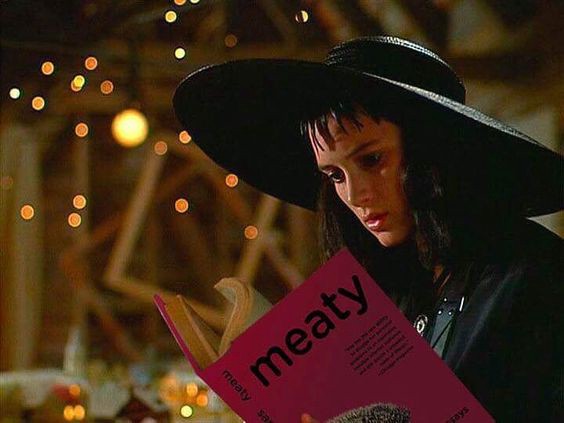
JZ: Of the people who have so far been shown reading virtual copies of Meaty, who do you think would like it the most IRL, and why? I think it’s either Oprah, Daria, or Jon Hamm.

SI: Lydia Deetz from Beetlejuice. I feel like she and I ride the same wave.

JZ: Do you think coming from a blog background makes you more inclined to take book publicity into your own hands, rather than waiting for publicists to do it for you? Did you do anything similar for We Are Never Meeting in Real Life, or do you have any future self-marketing plans?

SI: Selling myself is embarrassing to me, it always has been. I’m not a natural self-promoter. The Photoshop thing is easy because it’s hilarious and literally requires Google image-searching people I admire or movie/TV stills that a book could fit into, then reposting them on Instagram and Twitter, then letting the internet work its magic from there. I knew that because the book was a reissue it just wasn’t going to get the same type of buzz or make the same kind of splash, so the photos seemed like a funny, lowkey way to both lure new people into the fold and convince people who already read that shit five years ago to buy a new copy. My sincere hope is that I will never have to do this again, because contrary to what you might believe there aren’t dozens and dozens of paparazzi shots of famous people reading books. And sometimes you gotta let a sleeping dog lie, you know? Maybe for the next one I’ll do a series of still lifes next to exotic garbage cans or something. We’ll see.

Who could be angry with pure joy? If you’re salty about these then the problem is definitely you.

JZ: Should publicists be launching this kind of campaign on behalf of their authors, or does it lose its charm if it’s coming from a marketing professional? More importantly do you think professional publicists will be copying your work, and if so do you plan to sue?

SI: I am sure other people have already started copying me, because we live inside a giant computer where things can be replicated in an instant and no idea is original or new. And who cares? It’s fine! Also, imagine me flop sweating to death in front of a judge trying to explain that a person owes me money because I photoshopped my book cover into a movie that I don’t own. I would die of shame. And I’m gonna sound like a real asshole here but I would hope that if you went to marketing school and wasted upwards of $100,000 of your mom’s retirement money to get a publicity degree that you would have better strategic ideas than those of a person who got a C- in a high school communications class.

Rachel Kushner Thinks Prisons Should Only Exist in Fiction

Rachel Kushner’s latest novel, The Mars Room, begins as Romy Hall enters the Stanville Women’s Correctional Facility for two consecutive life sentences after killing her stalker. As the novel unfolds, Kushner lays out Romy’s life in Stanville, and the lives of her peers—with no veneer over the brutalities, both banal and crushing, that women prisoners face in the California prison system. Kushner does not paint Romy as a paragon of innocence; rather she subtly asks the reader to reconsider where our definitions of innocence and guilt are born.

Kushner is more than a writer and an academic: she is an advocate, who before, during, and after the writing of the novel works on the ground with prisoners and former prisoners to create networks for women who have little access to resources.

The Mars Room
Buy the book

As I read The Mars Room, I thought about how much of what seems to be true of our society is a façade achieved by the privilege of being born into a safety net. I thought about how much we take for granted — the ability to plan for the future, a belief in justice, the idea that our choices determine our destiny. Kushner’s novel makes the reader ponder: who is forgiven for their mistakes, and who does society deem worthy of redemption? The answers that appear as The Mars Room unfolds are not uplifting or joyful, but they are necessary to understanding the large scale injustices of mass incarceration in the United States today. In The Mars Room, life in America is not one uniform story, but rather a series of connected universes that show how much of one’s life depends on the circumstances under which one is born and the care that one receives.

Kushner and I spoke on the phone about prison abolition, the relationships she’s developed with prisoners, and the ties between capitalism and the carceral system.


Rebecca Schuh: You have a line in the book, “People say your time hits you in waves. Mine was hitting me. I could see no way to accept this as life, to live it to the end.” What did you learn about developing strategies for living within that altered sense of time throughout your research with people in prisons?

Rachel Kushner: I don’t think that there’s an answer for people who are serving life sentences. People go through phases where sometimes they’re very focused on the day to day, and other times they feel desperate and boxed in. Some people decide to become heroin addicts because heroin is really easy to get in prison, I mean pretty easy to get — you have to make it a full time job if you want to be a drug addict. But it’s an option as a way to cope. I know that’s not a very uplifting answer.

When people talk about the thing that they were ultimately convicted of that resulted in their life sentence, it’s never that shocking. It’s logical.

Other people decide to pour everything into basically becoming jailhouse lawyers, representing their own case, doing petitions. Other people turn to religion, different kinds of religion, which actually can be quite helpful. And other people are angry and raw and hurt and they hurt themselves.

There aren’t happy answers to this. There is one woman I know in prison who’s an incredible gardener, and that’s been a really amazing thing to learn about. I met her on a prison yard in 2014, four, almost five years ago. They’re not supposed to grow anything. No plants are allowed, they chop everything down that’s over six inches high because they think people are going to hide drugs. But the guard on the yard let her garden after she had found a seedling and she germinated it and planted this tree. She has life without possibility of parole and she made this garden and it just seems so amazing to me, her name is Michele Scott and she later wrote an essay about it that I edited and included in this anthology Best American Nonrequired Reading. She’s a beautiful writer.

But I don’t know if there really are that many possibilities. Most of the ones I enumerated to you aren’t real escapes. If you become a drug addict in prison, eventually you will go to the secure housing unit or Ad Seg, you get in trouble all the time, then you get into fights, then your disciplinary record is all fucked up, then you get clean, then you feel guilty about everything, it’s these cycles of remorse and denial. I’m not sure if any of them really produce relief.

RS: There’s a passage where Romy is seemingly speaking directly to the reader and says, “Everything for you would have been different, but if you were me you would have done what I did.” I feel like most people assume that they would never end up in prison. I found myself, when I was reading about what led up to her sentence, I really understood exactly why she took the actions she did. How did you go about making the reader identify with the timeline that led up to Romy’s two life sentences?

RK: Are you sort of saying that she didn’t seem necessarily that “guilty” to you?

RS: You developed a really strong sense of empathy for her within the reader, to the point that whether or not she was guilty seemed like more of a function of the system she was in rather than the actions that she took.

RK: Yes. Yes. Thank you for saying that, I agree with you completely. When you watch a movie about mafia dons in Little Italy from the 1970s or something, the viewer starts to really strongly identify with the principal characters, whether or not what they’re doing is legal or harmful to other people. You’re rooting for them.

Prison seems to be broadly about sacrifice, rather than about rehabilitation.

So there are certain paradigms where criminality is something that, not only does it excite a viewer, but the so-called criminal is somehow immune from our moral judgment. Because the way that they proceed seems logical.

That has been my experience getting to know people who are serving life sentences. I’ve developed pretty in-depth relationships and dialogues with people inside prison who are separate from my book, and those relationships continue, and when people talk about the thing that they were ultimately convicted of that resulted in their life sentence, it’s never that shocking. It’s logical. Like one person was in a gang and she transacted a hit on a rival gang member. If you’re watching a movie about mafia dons and one person has to kill someone who’s been disloyal or whatever, you understand that that’s what’s happening next. And so in talking to people, I felt like their lives were as logical as anyone else’s lives, except that they all seemed to come from—I say this somewhat facetiously, it is not a coincidence—from a layer of the population that has no resources.

The person I know who transacted a gang hit was serially sexually abused by her father and stepfather, and was gay. So the trauma that leads to a sense of broken identity — one thing follows another for people. With the character Romy, I didn’t want to make the murder that she commits seem like self defense.

RS: Throughout your years of research, did you come to a personal philosophy of prison reform or prison abolition, and can you describe what your personal philosophy towards that is?

RK: To be honest, I had a personal philosophy prior to these last several years when I embarked on a personal project of involving myself in as a witness to the criminal justice system. I don’t really call what I was doing research, because it was where I wanted to be in my life at that moment. That life continues for me even though the book has been finished for 18 months. I’m on an advisory board of a group called Justice Now that advocates against human rights violations in women’s prisons, and I talk to people all the time in prison. I’m a believer in a really old-fashioned sort of activism that’s what I call a buddy system. There are people who can call me when they need to, and I try to help people in a one-on-one direct manner, and that’s why I can’t call it research. Those relationships continue.

It’s overwhelmingly very poor people who commit acts of bodily violence against society, and it’s not because those people are inherently prone to violence.

But my personal philosophy going into this was, I already was a prison abolitionist. And I continue to be that, although I think that the term warrants far more explanation than us abolitioners, as I call them, have been able to produce, and I hope to be one of the people who can work on that concept and movement with other abolitionists in the future. I’m going to be writing something very in-depth about it this fall.

Prison seems to be broadly about sacrifice, rather than about rehabilitation, and I haven’t really seen a paradigm for reform that convinces me. This is a little separate from my book it’s more political, but a lot of the conversation around mass incarceration has centered on people who are so-called non-violent low-level drug offenders, and only a small percentage of people in prison in California fit under that subcategory. Ninety percent have been convicted of what the state considers to be serious, violent felonies. So if we really want to reduce the prison population, we have to stand up for people who committed tough crimes, and I see abolition as the only real horizon for doing that, because it’s a way of asking for a world where we have state resources to focus on communities and help those communities to thrive so that people are aided long before they commit an act of harm.

RS: There’s a passage when Romy is working at The Mars Room about how strippers are expendable while the men who spend the money aren’t, and of course that got me thinking about capitalism. How much of the legal system do you think is rooted the fact that we are a capitalist society?

RK: Well, it is rooted in that. I just was interviewing the prison abolitionist Ruth Wilson Gilmore, and after five days of conversation I asked her, “Can we abolish prisons without abolishing private property?” And she was quiet for a long time, and then she said “no.”

But I don’t think I have all the answers and I think that people who do claim that are charlatans. Capitalism is so complicated at this point. I’ve yet to see someone even convincingly define it. Clearly we have this incredible work that Foucault did to show us that the system of putting people into cages happens at a certain point, historically, it happens when people start roaming the countryside, because, after primitive accumulation then they’re alienated from their own labor because they have to use it to get money to buy stuff. All I know is that there are really almost no middle class people in prison. It’s overwhelmingly very poor people who commit acts of bodily violence against society, and it’s not because people are inherently prone to violence. It’s simply because the system has this way of shunting the problematic layer into these cages. And that system works for most people, and remains invisible to them.

RS: When the “legal,” “moral” ways of gaining capital are not available to you of course you resort to other methods.

RK: Right, but it is more complicated than that. People aren’t just stealing food because they’re hungry. The question really seems to be about harm and why people commit acts of harm. But if you grow up in an environment where you are exposed to a lot of trauma, then I don’t think you can adopt an image of yourself as being of delicate value. And if a person doesn’t consider themselves to be worth very much, then other people aren’t worth very much either. People are worth such different amounts in our society. Even our bodies, when you think about a middle-class body, and how nurtured it is.

RS: In the chapter focused on Kurt Kennedy, Romy’s stalker, you have this phrase: “He needed certain things to feel okay.” That got me thinking about what men take from women, and on a larger scale, what any people take from each other, in the service of making themselves feel better, and how that ends up being exploitation. How do you think people can train themselves out of the habit of justifying exploiting others in the service of making themselves feel personal comfort?

Most people actually did the shit they got convicted of, and I still think that they need to have the chance to be rehabilitated and live in society.

RK: I think that love is actually quite selfish. I don’t know if asking people to temper their infatuation with empathy is a realistic call to action. I’m a child of the 20th century, I’ve read a lot of Freud, and Lacan, and then Melanie Klein, and I don’t really think love is about empathy. And when Kurt says that, I felt like I was actually exhibiting my own empathy for him. Which is that he is not… I wish I could avoid the silence, but he’s not stalking Romy in order to terrorize or harm her. He’s doing it because he thinks that that’s what he needs to do in order to get what he needs.

When I was thinking about the character before I wrote his chapter, just really when I decided to put him in the book, it was because I saw from the stalker’s point of view for the first time. I can speak to that experience from the other side of it and it is not fun at all. But when I saw from his side of it, I wanted to have his story told from his perspective.

RS: I find in the leftist circles that I run in that there’s often this focus on large scale data while neglecting the specifics in terms of marginalized lives. How were you able to circumvent that, to really focus on the specifics, instead of the large theories and data throughout the course of the novel?

RK: That is a great question. I think I know what you mean, where it’s just that the emphasis is on structural issues. And it’s sensitive territory in a way, because focusing on the individual story is such a part of the liberal fantasy of our “broken system.” Which is not really that broken, it’s functioning how it’s supposed to. And the danger in focusing on the individual story is because the number of people in prison suggests that we’re not going to get people out by appealing to the population on a case by case basis. That’s partly why I didn’t want my character to be innocent for the reader. Everybody wants to do that. The Innocence Project, looking to find people who were falsely accused, that’s serious, and there are good people who were falsely accused, of course, but most people actually did the shit they got convicted of, and I still think that they need to have the chance to be rehabilitated and come back and contribute to and live in society.

I think that one thing, in the way that I live my life, as I said, I’m a one-man experiment of a certain type of activism which is really like a buddy system. Where I have middle-class resources and I have friends who have none of that who are out of prison and they can call me and I’ll help them with stuff, or give them money, or just be part of a safety net to try to help them stay out of prison.

What if more people did that? And it’s not a solution, but it is an individual case-by-case orientation that I can defend the logic of. Sometimes people have said to me, “Wouldn’t it be better to use your standing and ability to speak to a much larger public, to write theoretical or opinion pieces, rather than spending your time bringing groceries to people on Skid Row?” But I try to do both. And in terms of the book, you know, novels really are organized around the trajectories of a few characters. I’m a student of Dostoyevsky and a believer in the idea that one character can become a conduit through which a history can flow.

Enter Electric Literature’s #DressLikeABook Instagram Contest

Show off your best literary-inspired outfit and you could win one of our Read More Women tote bags

Spring is here! The flowers are blooming, the iced chai lattes are flowing, and the people are finally hauling out warm-weather clothes from bins under their beds. To celebrate this glorious season, we’re challenging you to put your spring wardrobes to work. Dress up to match the cover of a book, and you could win a Read More Women tote bag and a deck of Literary Aces playing cards!

To enter, post a photo of you dressed to match a book cover on Instagram, and use #DressLikeABook. Remember to follow Electric Literature and tag us. The best photos will be featured in a post on Electric Literature. For some inspiration, here is the EL team serving you their best literary inspired looks because we’re extra like that.

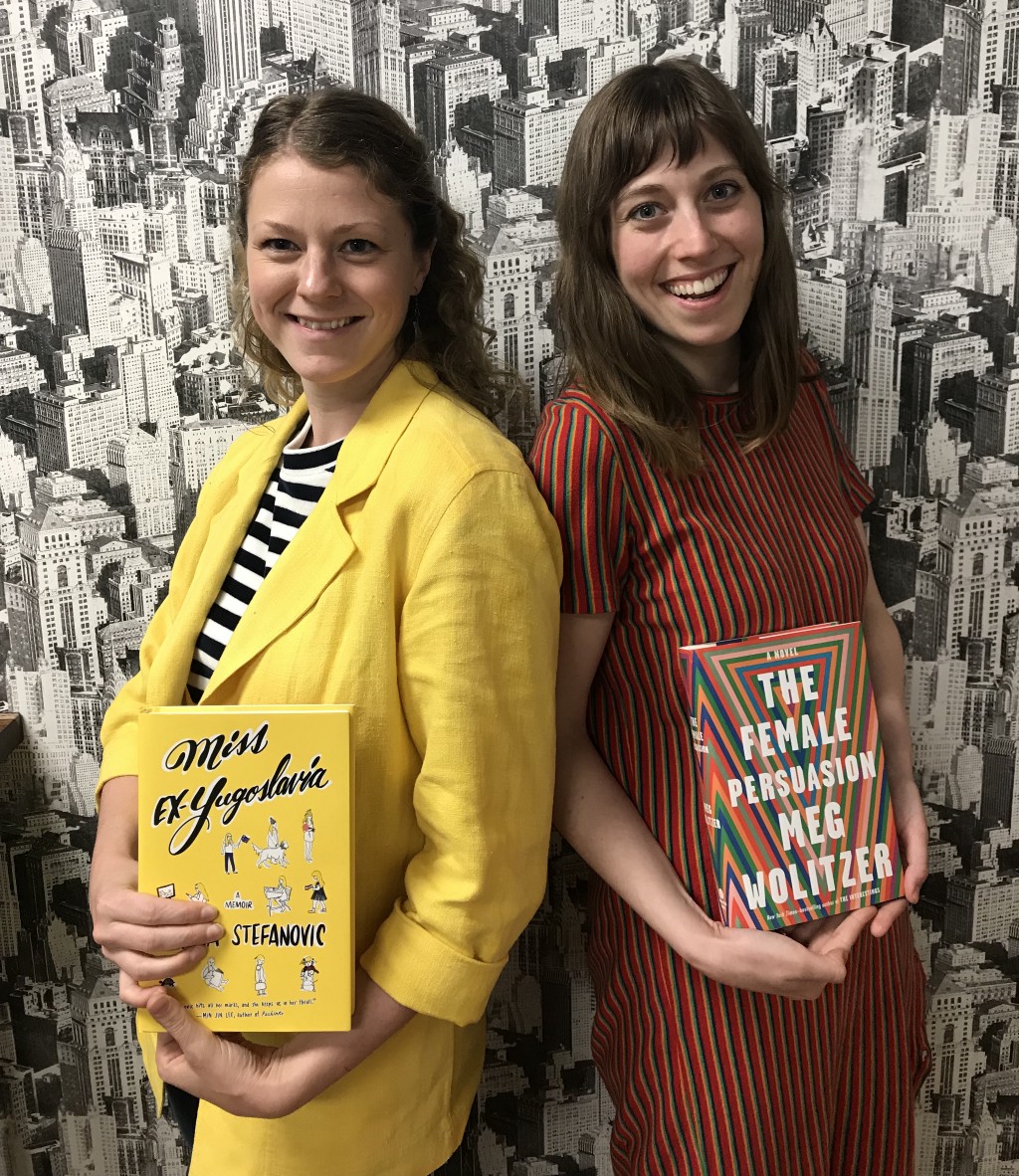
Executive director Halimah Marcus and editorial intern Erin Bartnett always coordinate their outfits to match the books they’re reading. #LiteraryFashion

Assistant editor Jo Lou perfecting her hypnotizing act so she can run away from her office job and join the circus (shh, no one tell Halimah).

Editor-in-Chief Jess Zimmerman serving you sunshine, sunflowers, and happiness, but if you’re mean to her, she’ll put a hex on you.

Senior Editor Lucie Shelly and her rescue pet rock, The Batu, that she saved from a construction site in Mexico City and hauled up three flights of stairs to its forever home.

Viet Thanh Nguyen makes blue and yellow look good; contributing editor Jennifer Baker makes it look better.

Recommended Reading Commuter editor Kelly Luce considers her socks (on the porch of the actual historic 19th-century grist mill she lives in).

Kelly got really into this challenge and we couldn’t pick a favorite.

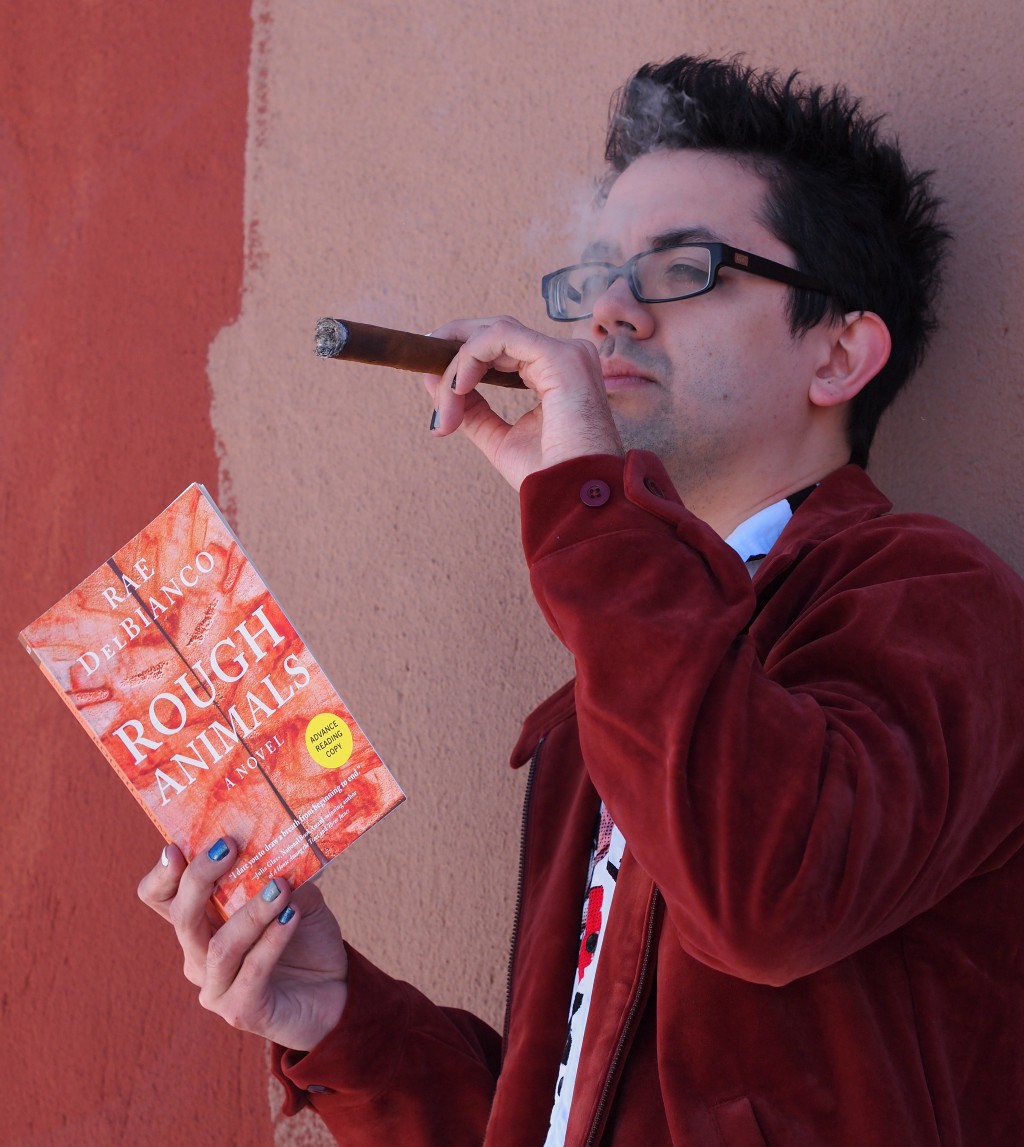
Social media editor and cigar model Michael J Seidlinger contemplating his next quippy tweet. m/ m/

Dog-in-Residence Billy with his favorite chew toy, a hardcover book.

Forget the Sexbots, ‘Westworld’ Is Really About the Power of Reading

There may be no more overused simile, at least about reading, than “a book is like a door.” “Books and doors are the same thing,” Jeanette Winterson states in a widely-circulated quote I’ve yet to accurately source. “You open them, and you go through into another world.” This is the promise of all good novels. Whether they transport you to a Wonderland or to Middle Earth, back to Southern plantations or forward into dystopian theocratic regimes, they hold within them the promise of a journey. You may be cramped against fellow weary commuters on the subway, but your Kindle holds the key to take you somewhere else.

This sustained imagery of books as sites of exploration necessarily invokes the other key prospect we find in books: in these journeys you’ll learn not just about the novel’s subjects, but about yourself. The conceit of HBO’s Westworld, where wealthy patrons can enter the eponymous world and entertain their wild wild west fantasies surrounded by “hosts” that look and act just like humans, holds a similar promise. Westworld may call to mind video games or amusement parks, but the storytelling devices it depends on (both as a park and as a television show) are decidedly literary.

Westworld may call to mind video games or amusement parks, but the storytelling devices it depends on are decidedly literary.

When young William (Jimmi Simpson), the audience surrogate for much of the first season, is welcomed into Westworld, he’s escorted by his soon-to-be-brother-in-law Logan (Ben Barnes). A seasoned parkgoer, Logan encourages William to let himself go and use his time there as a way to explore who he is. The storylines the park makes available to them — and this is the language its characters use to describe these immersive experiences, “storylines” — range from the family-friendly to the R-rated. They’re designed to cater to those base desires you wouldn’t indulge anywhere else. You can practice your shooting skills in scenarios that team you up with the Sweetwater’s sheriff, head up into the mountains to help facilitate an armed robbery instead, or even visit Pariah, the aptly-named town where you’re encouraged to join a never-ending orgy.

The park, we soon learn, is the brainchild of two visionary engineers: Dr. Robert Ford (Anthony Hopkins) and the mysterious Arnold, who died in an accident that nearly derailed Westworld’s opening decades before we enter the story. Not only did they envision an immersive environment that would allow guests to roam the Old West, but they were committed to creating life-like robots that could believably inhabit the roles of saloon madame, heroic cowboy, rancher’s daughter and so on. The “hosts” — the robots — are programmed to function as characters, trapped in narrative loops that the guests can dip into and out of at will. Logan finds plenty of the storylines rather boring; he almost refuses to accompany William when the latter decides to take on a bounty hunt mission, claiming the better narratives are found the further you stray from the park’s entrance, the sleepy town of Sweetwater.

The show gives us William as an entry point into the way guests experience Westworld, but it also moves away from his viewpoint to introduce us to the inner workings of the park. We follow Ford and his associates as they service malfunctioning hosts, deal with the bureaucratic nightmares that plague such an expansive corporation, and dream up new narratives designed to wow guests and shareholders alike. Where the unseen Board (and some sulking employees) would like Westworld to be simpler, Ford often speaks about his work in ways that echo Logan’s words to William: the purpose of the park is to help guests discover who they are. It is in the details of the storytelling that the beauty and possibility of the park come through: “The guests don’t return for the obvious things we do,” he says, “the garish things” — presumably the violence and sex that so dominated discussions of the show’s first season, which served up enough gore and nudity to leave viewers wondering about the kind of humanity its creators (both Westworld’s and Westworld’s) were trying to represent. “They come back because of the subtleties, the details. They come back because they discover something they imagine no one has ever noticed before, something they fall in love with. They’re not looking for a story that tells them who they are — they already know who they are. They’re here because they want a glimpse of who they could be.”

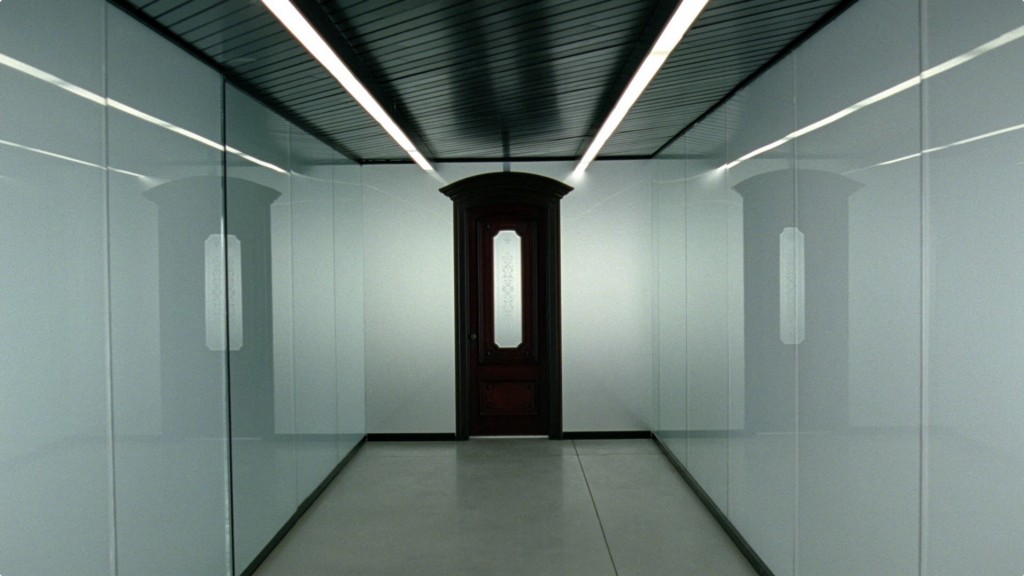
Westworld isn’t just an IRL choose-your-own-adventure; it’s also an attempt at making those books-are-doors metaphor as literal as can be. When William, finally dressed in full cowboy attire, steps through the door at the end of the dressing room provided to him by a Westworld employee, he’s thrust into a moving train taking him to Sweetwater. He’s immediately transported to another time, another place where his story is about to unfold. Choices about whether he’ll be a dashing hero to the sweet rancher’s girl Dolores (Evan Rachel Wood) or a roguish client of the saloon run by Maeve (Thandie Newton) become crucial decisions about how he envisions himself.

Westworld isn’t just an IRL choose-your-own-adventure; it’s also an attempt at making those books-are-doors metaphor as literal as can be.

But what’s merely a game of role-playing for the guests becomes the ontological question that plagues the hosts. The more time we spend with them, the clearer it becomes that their own lives are bound by storytelling tropes. Literary metaphors, in fact, are embedded into the very technology that makes them slaves to Ford’s stories and orders. Created not merely as people who would populate Westworld but as characters who would bring to life its many narratives, the hosts were designed with backstories (often tragic; those worked best, Arnold found) that would anchor their motivations and guide their semi-scripted lives in accordance with the role they’re made to play. “The self is a kind of fiction, for hosts and humans alike,” Ford explains. “It’s a story we tell ourselves. And every story needs a beginning.” Trauma colors many of the inhabitants of Westworld. It makes Maeve, for example, a vocal spokesperson for the freedom Westworld provides its hosts. “This is the new world,” she tells unsuspecting guests she’s trying to lure into taking one of her girls upstairs, “and in this world, you can be whoever the fuck you want.” It’s a lesson she learned when she decided to leave her life across the pond and brave it in the New World. That’s the backstory that dictates much of her actions throughout the story. Like literal characters in a novel, Ford’s hosts all have key moments in their life that explain who they are.

And like characters in a novel, they are there to serve a purpose; their programming reduces them to characters in someone else’s (presumably the guests’) story. When Ford wants hosts to do something, he uses what he deems his “narrative voice,” enacting the authorial control that his code embodies. Maeve, who slowly begins to question the nature of her reality, becomes aware that she’s merely a cog in a giant storytelling machine, and tinkers with her code to be able to similarly persuade other hosts to do as she pleases, uses those same kind of commands: “The sheriff judged the riders to be upstanding, God-fearing citizens,” she narrates in the town square, and the authorities turn away from their quarry (including her lover, a wanted man in the process of stealing a safe). “The marshals decided to practice their quickdraws with each other,” she adds, creating even more chaos and allowing for his escape. Maeve, like Ford, becomes God in the most literal of senses: she’s an author making the characters around her do her bidding. Her motivation, then, once she awakes from her programmed slumber (it’s no surprise we see plenty of shots of her and Dolores waking, ready to re-live the same day over and over again with only minor variations), is to rid herself of the story that’s been laid out for her.

Maeve, like Ford, becomes God in the most literal of senses: she’s an author making the characters around her do her bidding.

Decades later, when William has exhausted all the stories Ford has concocted for guests and hosts alike, he’ll become obsessed with the inner narrative layers he knows exist within the park. “This whole world is a story,” he growls. “I’ve read every page except the last one. I need to find out how it ends. I want to know what this all means.” But time and time again he’s told that the story of the mysterious maze he’s become fixated on is not meant for him. The maze, which we (and William) encounter all over the park (on a tarot card, plowed into a field, carved onto a tabletop, imprinted on the inside scalp of a host), is also a hidden narrative of Westworld. The goal, William correctly ascertains, is to make it to the middle—though he doesn’t quite know what he’ll find if he makes it there. As it turns out, the maze (“The Maze” is, incidentally, the title of Westworld’s season one) was created not for a guest at all but for one host in particular: Dolores, the rancher’s daughter.

More than merely giving viewers a chance to ponder on the idea of identity as a narrative we need to tell ourselves, Westworld also portrays the very process by which reading contributes to self-discovery and self-fashioning. Dolores doesn’t just wake up one day wishing to embark on a journey away from her predetermined life in Sweetwater. She’s coached to do so with a steady diet of classics. Viewers of the show may easily identify her blond hair and powder-blue dress as winking nods to her status as Westworld’s very own Alice, but they don’t need to: the connection is made rather bluntly early on. The very first episode opens with a technician asking Dolores is she knows where she is: “I’m in a dream,” she obediently answers. Those hours she spends naked being upgraded or patched up by nameless engineers and tech guys are explained away as “dreams” she’ll soon forget — like Alice’s adventures in Wonderland, a place she cannot quite comprehend but which acts as a warped mirror of her real life back in England. Dolores is even encouraged to read Lewis Carroll’s novel by Bernard, the leader of Westworld’s Programming Division.

“Dear dear, how queer everything is today and yesterday things went on just as usual. I wonder if I’ve been changed in the night,” she reads out loud to him at his behest. We gather that she’s been slowly making her way through several books already when she remarks that these texts they’ve been dealing with on their one-on-one sessions are always about change. This prompts Bernard to note that “people read about the things they want the most and experience the least.” The suggestion is that Dolores cannot experience change; she’s trapped in narrative loops, in someone else’s behavioral codes. But Westworld is a place that offers people the chance to experience precisely the kinds of the things they usually would only be able to read about. Bernard’s epigrammatic quip suggests that, in Westworld’s wholly immersive storylines, the line between reading and experiencing the things we most want has been blurred altogether. It explains why the glitch that eventually makes hosts self-aware about their own enslavement is triggered by hearing a Romeo and Juliet line (“these violent delights have violent ends”) — as if Westworld were acknowledging not merely the “books are doors” metaphor, but that thing we all know is true of great (and sometimes not-so-great) literature: that it can will you into being a person you didn’t know you could be.

Dolores’s journey through Arnold’s maze leads her inward to where the sweet young woman will find herself. But it’s also a journey outward, where she’ll soon see her own consciousness bloom from within the rigid parameters set out by her own programming and in turn put the wheels in motion to explode her gilded cage. By the time she’s fully in control of her consciousness, no longer beholden to Ford’s narratives, she becomes the most dangerous host in all of Westworld. “You said people come here to change the story of their lives,” she explains. “I imagined a story where I didn’t have to be the damsel.” HBO’s show may bill itself as a dystopian take on AI technology, but it’s also become perhaps the most probing exploration of the power of literature available on television today.

Why Korean American Writers Love Alexander Chee

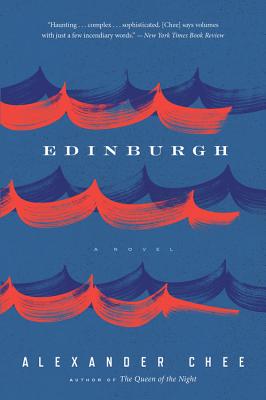
Like many writers, I grew up not just loving books, but also living in books, through books. This meant that, for years, I never encountered people on the page who looked anything like me. It wasn’t until right after college that I started coming across Korean American writers, and Alexander Chee was one of the very first I read. At the time, there weren’t many who’d published books, especially novels, but I chased down what I could find: Chee’s extraordinary Edinburgh, as well as fiction by Susan Choi and Chang-rae Lee. The experience was nothing short of a revelation. People like me could be found in anglophone books; therefore, I might be found not just in life — which often paled in comparison to the more satisfying realm of words — but also in the books I loved.

In the years since college, as increasing numbers of Korean American writers have published their words, I’ve read a lot more of us. In no particular order, except one of hallelujah, here’s a necessarily partial list of some other living Korean American writers whose work or person, or both, I’ve had the great good luck of encountering:

Marie Myung-Ok Lee, Tracy O’Neill, Min Jin Lee, Christine Hyung-Oak Lee, Catherine Chung, Krys Lee, Crystal Hana Kim, Nami Mun, Patty Park, Paul Yoon, Jenny Han, Katherine Min, Erinrose Mager, Don Lee, Gene Kwak, Victoria Namkung, Alex Sujong Laughlin, Mary-Kim Arnold, Steph Cha, Jimin Han, Sonya Chung, Patty Yumi Cottrell, Alex Jung, Janice Lee, Mike Croley, Suki Kim, Darley Stewart, Jane Yong Kim, Jay Caspian Kang, Janice Y.K. Lee, Jung Yun, Christine No, Timothy Moore, Robert Yune, Emily Jungmin Yoon, Victoria Cho, Lee Herrick, Marci Calabretta Cancio-Bello, Wancy Young Cho, Cerrissa Kim, Chiwan Choi, Don Mee Choi, Suji Kwock Kim, Che Yeun, Wesley Yang, Franny Choi, Nancy Jooyoun Kim, Young Jean Lee, Sung J. Woo, Ed Bok Lee, Jennifer Hope Choi, Minsoo Kang, Jennifer Kwon Dobbs, Su Hwang, Hairee Lee, Joseph Han, Cathy Park Hong, Leonard Chang, Alison Roh Park, Mark L. Keats, Mary H.K. Choi, Eugenia Kim, Yuliana Kim-Grant, E.J. Koh, Julayne Lee, Leah Silvieus, Michelle Lee, Margaret Rhee, Paula Young Lee, Sueyeun Juliette Lee, James Han Mattson, Nicky Sa-eun Schildkraut, Grace Sobrenome, Angie Kim, Yoojin Grace Wuertz, Monica Youn, Sun Yung Shin, and…!

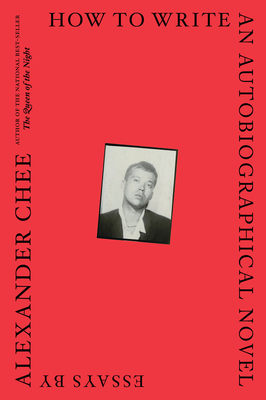
But back to Chee, whose new essay collection, How to Write an Autobiographical Novel, is unique and powerful, insistently itself. I think back to that girl who, because I had no idea how to wish upon what I’d never experienced, didn’t even know to miss the lack of Korean American writing. I wish I could tell her what riches were coming her way.

I convened a few Korean American writers I admire — Nicole Chung, Alice Sola Kim, and Matthew Salesses — to talk about How to Write an Autobiographical Novel, and what he and his writing have meant to us.

(R.O. Kwon, Alice Sola Kim, Nicole Chung, Matthew Salesses)

R. O. Kwon: I think we’ve all known Alex awhile, and I wonder how you first came across his work.

Nicole Chung: I believe I read Edinburgh and found Alex’s essays close to the same time. When I read Edinburgh, I was really struck by the uniqueness of that novel and the fact that he was a Korean American writer, and that was when I started looking for every essay of his I could find. I had the chance to interview Alex for The Toast not long after he wrote a “Future Queer” cover story and hosted a related conversation for The New Republic, and we talked about how he writes and the balance of fiction to nonfiction.

Image result for Alexander Chee

He said something I won’t forget — that while some publishers thought he should publish The Queen of the Night before Edinburgh, he felt he had to publish Edinburgh first. Later, in another conversation, he would tell me, “I felt I had to publish Edinburgh in order to prove I could exist — that I could make a space for myself in this life.” Obviously, the character isn’t him, but it’s still one of the only novelistic treatments of the life of a Korean American gay man. Alex said he “wanted to plant that flag in the culture,” and until he said that I don’t know if I’d thought about it as a reason to write. The need to exist in the canon, in the literary world. I found that very powerful, and very brave.

Alice Sola Kim: For a long time he was only someone I knew of, as a literary personage and New York man-about-town. I remember really liking his blog, and of course being intrigued by his being a Korean American writer, because I was so thirsty for more of those. At some point I read Edinburgh — and if you’re reading this roundtable I probably don’t need to go on about what a beautiful book it is but, it is! — and then I moved to New York and finally met him. I really appreciated how authoritative yet not at all complacent he was. It felt like he was open and glad to meet new people (chuckleheads like me, in this instance), and to give them a chance, to lift them up. I admired how he was (and is) so open to the new, ideas and books and people, while also being hella opinionated and firm in his convictions.

Matthew Salesses: I can barely remember! I think I must have found him through his blog, Koreanish. It was the first time I’d seen a blog that came even close to my life. It’s possible I found the blog through my friend Laura van den Berg, indirectly, because of her husband, Paul Yoon, whose work Alex recommended. (Alex was how I came to Nami Mun’s writing and Catherine Chung’s writing, too, and many others.) I read Edinburgh either before or after that, and I wanted to interview him. Edinburgh was the first book I’d read like that and maybe the only one still. We met when I interviewed Alex for Redivider in 2009. He was working on The Queen of the Night.

Kwon: Did you grow up reading many Asian people? I mean, I seek out Asian writers’ work, and even so, while reading Alex’s book, it occurred to me that I don’t know the last time I’ve seen a jesa ceremony depicted in English words, on a page. It’s possible I haven’t encountered a jesa ceremony outside of my parents’ house. There was so much I found powerful in Alex’s collection, but that was an utterly unexpected moment for me.

Chung: As a kid, I didn’t really. I remember reading Amy Tan, but in terms of, say, children’s books, I didn’t grow up reading a lot of Asian American writers. I remember very clearly the first YA novel I read by an Asian American author about an Asian American family — they lived in Seattle, and the title was April and the Dragon Lady. That was one of the very few. I didn’t read a lot of Asian American writers until, as an adult, I actively sought them out.

I remember reading Amy Tan, but I didn’t grow up reading a lot of Asian American writers.

Kim: Yeah, I also read Amy Tan! I was probably way too young for The Joy Luck Club. But my mom brought home this paperback copy, and I remember flipping through it and being like, Oh my god, there’s all this sex in it! So of course I had to read the whole thing. I’m sure I was hugely impressed that it was written by an Asian American author, and that it seemed for real popular — it didn’t have that “eat your vegetables” vibe that I was already sensitive about, surrounding so much literature by POC (whether it warranted that or not). When I was older, I really liked Marie Myung-Ok Lee, who was writing contemporary YA about Korean Americans. Such a special, rare find. Otherwise, I didn’t read many Asian American authors growing up.

Salesses: I read Amy Tan in high school and some other immigrant narratives. There were a lot of boats. None of them really connected with me. They seemed just like everything else I read in high school, like they had nothing to do with my life in its immediate surroundings.

Kwon: To dig into Alex’s book a little: are there parts of How to Write an Autobiographical Novel that particularly resonated with you? Last night, I was up late because I couldn’t stop reading it. This part toward the end of “The Guardians,” for one, had me in tears: “You imagine that the worst thing is that someone would know. The attention you need to heal you have been taught will end you. And it will — it will end the pain you have mistaken for yourself. The worst thing is not that someone would know. The worst thing is that you might lay waste to your whole life by hiding.”

Chung: I don’t know how I’d pick a favorite essay, or even one that resonates the most. What I love about Alex’s writing is the craft — every piece is so beautifully written and structured. I’ve taught his essays because they’re stunning examples of the form. One of my favorite pieces of his is “Girl,” kind of a master class in description and scene-building. He makes it seem effortless, but it’s very difficult to construct scenes from years ago. To make yourself vulnerable, to serve your memory, and to still get across what you want to get across. He builds gorgeous scenes and gives you these moments when things change, or go in a different direction, or surprise you.

I feel like a lot of his essays are honest, true impressions of who he was and who he is: compassionate, and generous to the people he writes about, and so sharp when necessary. I think, too, that Alexander is a very generous writer — that comes through when you talk to him, or meet with him. He really cares about writers, and about building community among writers. He’s been honest and open with me, and, I assume, with you and all the other writers he interacts with. He takes the time to answer writers’ questions and offer his advice, and not every writer is that open or generous. It means so much to me, and I’m sure it means a lot to other writers.

Alex’s essays have been there for us at many different stages of our lives.

Kim: I loved the way he writes of his younger self, things his past selves did — even when they were dumb things, or mistakes, or just things he’d do differently now — without malice. I don’t quite know how to describe it. It felt like you could trust what he was saying about his younger self. You could see into his past selves and experiences in a much more fascinating and illuminating way because there wasn’t all this regret or condescension fogging everything up.

Salesses: I like “Girl” too. “The Writing Life” meant a lot to me at one point in my life. Same with “The Querent.” Alex’s essays have been there for us at many different stages of our lives.

Kwon: Both with his writing and with the way he is in the world, there’s incredible generosity, but he’s also often been, for me, an inspiring example of someone who takes no shit.

Chung: Yes, and he really uses his social media platform for good. I’ve told him this before — it’s not like you want to give up, ever, but fatigue is a very real thing since the election, and more than once Alex has posted something that pulled me back into the fight, shown me something I needed to do. I’ve really appreciated that.

When you’re starting out, early on, you don’t know what you’re worth or deserve, especially as a writer of color.

Kim: I’ve also appreciated his saying one-on-one and online, “Writers, get that money.” When you’re starting out, early on, you don’t know what you’re worth or deserve, especially as a writer of color. I’m grateful that he’s kept telling writers something they really do need to hear over and over again — that we deserve to get paid for our writing and our precious time unless there’s something we really want to for love, but don’t do it too often for love, but also don’t forget to do it for love. Once in a while.

Salesses: He’s a moral compass for writers who understand that people live in the real world with real world problems.

Chung: He’s very honest about what a hard process it can be, how long a writing project can take. And also the fact that just because you’re an artist, working on something that matters deeply to you, that doesn’t mean you’re not a human being with real material needs. You need health insurance and you need dental coverage and you need people to support and see you as human. It helps to hear great, successful writers talk so frankly about the struggle.

Kwon: You’re also all magnificently generous writers, and humans, and I wonder how you think about this question of what and how we give back. Alex is truly one of my models for the kind of writer-human I want to be, and I’m curious how you approach the idea of literary responsibility outside of the day-to-day writing of sentences.

Chung: I’ve been on the receiving end of so much generosity as a writer and as an editor. It means a lot to me that writers trust me with their stories. It’s a great privilege. There are people — and though Alex is one of them, he’s not the only one, obviously — who have been extremely generous and open; who cared. They’ve given me advice when I didn’t know what to do.

I think there’s no way to pay back that generosity. The only thing you can do is pay it forward. In that sense, Alexander has been one of my role models, but there have been so many others, too. I’ve felt really lucky in that sense. So it’s my responsibility to be open and helpful, too. Sometimes it’s easier than at other times — you need to take care of yourself, too — but yeah, I am glad when people reach out for advice, or for help. As much as I can, I try to keep an open door for writers, whether they want to write for me or whether they just want to ask questions.

Presumably we’re writers because we love writing by other people too. So for me it’s important to support and lift up the writers we love.

Kim: Alex did not pull up the ladder after himself, it’s so true! I don’t have any editorial responsibilities, so I find it very easy to imagine that no one is looking up to me or needs anything from me. But actually that’s a lie — as writers, or, I guess, just people, we often forget our own accomplishments, we downgrade ourselves mentally and forget that we’ve written stuff that people like, and that we possess power and connections and things that lots of other people don’t. It’s extremely possible to inadvertently be a dick to people just because you’re too busy hating yourself! So I’m working on that — recognizing my own power, and with even a low-medium level of power comes some amount of responsibility, and thinking about what those responsibilities are to myself and others. And same as Nicole, I’ve received so much generosity over the years that I want to pay it forward as well.

Also, it’s not a cute look to act like you’re the only writer who exists in the whole world. It makes me think of that amazing quote from Garth Marenghi’s Darkplace, where Garth Marenghi says, “I’m one of the few people who’s written more books than they’ve read.” Presumably we’re writers because we love writing by other people too. So for me it’s important to read a shit-ton, to support and lift up the writers we love. To keep being a fan.

Kwon: Alice, oh, I know so many people who love your writing, who greatly admire it and look up to you and your work.

Salesses: I think one thing is just trying to recalibrate who I’m writing for and trying to find a space to make something happen. Okay, maybe two things. One of the things I love about Alex is that he doesn’t separate the writing from the life.

Kwon: I find the way Alex writes about his ambition, too, to be wonderful. I know more than a few Asian American writers, including me, who have a B.A. in economics for no good reason, but also for the very good reason that we wanted stability, health insurance, little things like that. When I was in college, it was harder for me to let myself reach for that dream of being a writer — it was less present, I think, less visible, than other life options. In How To Write an Autobiographical Novel, there’s a certainty in Alex’s voice, and in the way he saw himself, that I loved.

Good girls go to heaven and Alex goes everywhere.

Kim: When you read someone’s work over the years, and you speak to them at parties and events, and you read their interviews — even all that, you get a haphazard, cobbled-together picture of them. Reading How To Write an Autobiographical Novel gave me such a fuller impression of Alex’s life and background, and I was like, Damn, you do a lot of cool stuff. Good girls go to heaven and Alex goes everywhere. It was so wonderful to read, not just for the breadth of experience and perspective, but also to show the lie of the dictum that you can’t live while being committed to art.

Kwon: Is there anything else you want to say about this book and Alex’s writing?

Chung: I appreciate how fiercely protective he is of artists. He wants more people to have access to an artistic life. I feel like that comes through, how honest he is — how he writes frankly about money, or about diversity in publishing. I think it comes from this well of good intentions, because there’s a lot that still needs to get better for artists and for writers, and for writers of color in particular. I believe when you look at Alexander’s career, you see someone who wants others to also have access to a fulfilling artistic life.

Kim: I love the ways in which he’s a nerd, like a science fiction and fantasy nerd, on top of everything else. In these essays he is so wonderfully unbothered about his passions and obsessions, about whether they match or not, about whether they’re “acceptable” or not.

Salesses: I just want to join the conversation Alex has made and is making. We have to remember what conversations we’re already in.

How BMG’s Music Club Made Me a Better Reader and Broke My Mother’s Heart

The BMG music logo was the thing that first drew me to the four-by-five card embedded into the spine of a Rolling Stone magazine. Album titles and the occasional colored pop-out images of recording artists like Sting and Chris Isaac littered the two-page spread. And there at the bottom, surrounded by blank space and perched above the music club return address, a dog was looking curiously down the horn of a phonograph with its head cocked. The image resonated with me.

I fell for music the summer after my freshman year of high school. Up until then, I spent my free time devouring stories. A year-round latchkey kid, I read a regular rotation of Louis Sachar, Beverly Cleary, and Judy Blume. The pages of Tiger Eyes and Island of the Blue Dolphins had been fingered so many times, their corners were sheer as onion skins. My first year of high school English had left me enamored of American literature: A Separate Peace, The Catcher in the Rye, To Kill a Mocking Bird, The Grapes of Wrath. Borrowing copies from the library, I read them again that July along with my grandmother’s Danielle Steele novels and a Stephen King/Richard Bachman catalogue I inherited from my aunt. Before I’d finished working my way through a long bookshelf of self-help books in my mother’s bedroom though, television revealed for me a new kind of story obsession. Previously, songs were something I heard by accident on the car radio or as a soft background soundtrack at Kmart. But that summer, MTV and VH1 shocked me into a fascination with music videos. Packed with the same kind of storytelling I lived for, they unfolded in a fraction of the time. Songs, even those I’d been listening passively to for years, were also for the devouring.

Following my parents’ catastrophic undoing, I spent a tremendous amount of time by myself while my mother worked full time and cleaned houses on the side for extra money. My school friends seemed to live in another dimension filled with summer camps, vacations, and long days at their neighborhood swim clubs. I mostly spent my time worried about my mother. For a long time, I tried hard to figure out how I fit into everything: my family, high school, myself. I was petrified of peers discovering my strange universe: how even at fifteen, I still built television sitcoms sets out of Legos and spent most all my time swirling inside my imagination. I could see myself in stories, but I could also see the self I wanted to be. Stories gave me company, but they also gave me access to a different reality.

Dwarfed by our giant hand-me-down Panasonic console television, I observed how music videos broke the rules of sitcoms, soap operas, and novels, but were still driven by what I loved most: busted-up scraps of language. I could take the narrative the video offered or I could construct my own. I could love the entire composition or just a single line that pinched my insides. Music videos showed me the narrative potential of songs.

I could take the narrative the video offered or I could construct my own. I could love the entire composition or just a single line that pinched my insides. Music videos showed me the narrative potential of songs.

The problem was that I couldn’t return to videos over and over like I did books. I was at the mercy of someone else’s choosing, an orchestrated mix-tape I had no autonomy inside of. Maybe it would be the boys and mall escalators, Tom Petty’s free falling skateboarders dropping into swimming pools like a pair of cherries pitching themselves from a tree, or Sinead O’Connor’s shorn head and sad eyes, a cantaloupe tear rolling down her cheek in “Nothing Compares 2 U.” But it might also be a block of hair bands, Garbage, or Supergrass. The list of the songs I coveted grew by the day, and that BMG dog seemed to peer down the phonograph’s hole at a deep fulfillment. Owning the songs I saw on TV meant I could revisit the same stories over and over the way I read my books on loop. Albums would give me access to new video-less songs by the same artists.

The offer seemed simple enough: pay for one compact disc and enjoy three more at no additional cost. I fingered the ecru cardstock and considered my lack of a regular allowance, how quickly I spent birthday money on books. I knew my mother wouldn’t approve — she’d repeatedly lectured my sister and me on the dangers of credit card debt and mail scams, and I knew intimately the scrupulousness with which she had to manage finances. The year before, I had given up youth basketball after sitting for an afternoon rolling change from her closet jar into bank coin rolls to pay the league fees on my second season. Those spare quarters and dimes usually meant extras like donuts on Sundays, movie rentals at Blockbuster, licorice whips before matinees. When the jar came up empty before we’d even considered the cost of uniforms or team pictures, it became clear I wouldn’t be playing basketball after all.

Owning the songs I saw on the screen meant I could revisit the same stories over and over the way I read my books on loop.

A music club was a luxury, but still, I tried reasoning with myself: surely I could dredge up the $14.95 from somewhere. I was good at solving problems. I carefully tore the perforated edges of the card away from the page, checked the “pop/soft rock” preference box, and made my first initial selections from the small catalogue of albums:

1) Prince’s The Hits 1: Singing from a plastic tube in the “7’s” video, Prince and his belly dancer circled one another with swords, blindfolds, doves. The video’s story of revenge was alluring and mysterious, but in the foreground, the electric currents shooting through his body seduced me. There was nothing I wanted more than unbound cosmic love.

The Artist Formerly Known As

2) Talking Heads’ Speaking In Tongues: The visages on houses and suspended on road surface markings in “Burning Down the House” reminded me of Twin Peaks, a show my mother loved. Might I get what I was after? All I was doing those days was holding tight. The album promised to incinerate the past.

3) Oasis’ (What’s the Story) Morning Glory?: The light patterns in the “Champagne Supernova” video were a Spirograph; the lava lamps and colors smeared together like wet paint. The spinning camera angles hypnotized me. Liam Gallagher lay on a bed begging the same question I was asking myself: where was I? He promised I could find him.

4) Jimi Hendrix’s The Ultimate Experience: An indulgence. I had never seen a Jimi Hendrix video before, though I recognized his face from the record covers in my former childhood bedroom. He was a sad burned-out light. I was drawn to that sorrow.

Liam Gallagher lay on a bed begging the same question I was asking myself: where was I? He promised I could find him.

Those days my father appeared a few times a month, mostly for meals of greasy chicken chow mein or triangles of pepperoni pizza. My sister and I would sit opposite him in the restaurant booth while he read the Penny Saver. In his house — in the room that had been mine ten years before my mother left with us — my mice village wallpaper had been painted over and covered by floor-to-ceiling record shelving, the edges of albums aligned in the same way my treasured books were: strips of color, thin rectangles of worn-down spines. In place of my four-poster bed were bongos and guitars, and a drum kit sat on the nut-brown carpet where I had once played Barbies. An American flag and three purple hearts from my father’s tour in Vietnam hung in a shadow box frame where a mouse baker had sold sleeves of baguettes from a wheelbarrow to other mouse chefs. I didn’t go into the room much in the years that followed, but I knew that music was everywhere where I had once been.

In the cab of his Chevy step-side, he turned the knob of the radio dial as far as it would go. ZZ Top and the Rolling Stones were favorites, but anything that clanged or smashed together did the job. In the ten years since the divorce, my father’s was the story I couldn’t figure out despite my hours studying the narratives of sitcoms, daytime television, and novels. What was going on in there? Where was he when the volume was up so loud? The BMG music club offered stories, but it also provided an opportunity: my father liked music. Maybe I could find him somewhere inside of it.

The BMG music club offered stories, but it also provided an opportunity: my father liked music. Maybe I could find him somewhere inside of it.

In my memory the CDs took months to come, though it couldn’t have been more than a few weeks. My mother and sister worked during the days, so I got our mail and kept my purchase concealed from my mother. I planned while I waited: after the delivery, I would round up the cash, pay for the single album as advertised, and receive the second batch with her none the wiser.

The package was right angles and brown cardboard. I pulled the tape creases back and the box unfolded completely, revealing four plastic jewel cases enclosed in sleeves of transparent cellophane. I peeled them open one by one, slipping the liner notes from each cover. I studied the album covers. Prince in sepia, a flash of light slicing across his right eyelid and the pout of his bottom lip. I snapped the disc from its compartment and loaded it into my hand-me-down boombox . Talking Heads was a curled ring of blue like a beaded periwinkle shell; Oasis a block of letters and curious punctuation, and finally, Jimi — his hands at his waist, confidently eyeing me, the other hand resting over his heart. “When Doves Cry” started up, its streaking knife-edge before the thudding drum arrangement. I didn’t know how to answer all the questions Prince asked, but I knew I had the potential to. The answers were resting on my tongue.

I don’t remember paying those first dues though I must have — four more albums came soon after but so did others — Siamese Dream, What’s the 411?, Automatic for the People, August and Everything After, Pablo Honey, Ready to Die, CrazySexyCool. I tucked the narrow white envelopes that accompanied each arrival into a corner of my dresser drawer and put the additional fees for bonuses, shipping, and monthly selections out of my mind: I was busy falling in love.

I tucked the narrow white envelopes that accompanied each arrival into a corner of my dresser drawer and put the additional fees for bonuses, shipping, and monthly selections out of my mind: I was busy falling in love.

The lyrics hit. Music brought up feelings that words couldn’t articulate. I felt less lonely. I tramped across our apartment’s mustard-colored carpeting while Oasis, Prince, and Talking Heads validated every experience I’d ever had and still wanted. Music gave me a new lexicon for feeling and I was drunk on it, dancing wildly alone for the remainder of the summer with the volume turned all the way up. I still read my books. If anything, music made me a better reader. I began to see books as mixtapes — suddenly Holden Caulfield was R.E.M’s “Everyone Hurts,” Biggie’s “Juicy,” Tina Turners’ “I Can’t Stand the Rain.” Each song cracked me open and tested my edges. I was learning myself.

I memorized all the songs on The Ultimate Experience, but kept a certain distance from them as well. They didn’t spark inside me like the others, but I admired them nonetheless. I turned each one up as my father did, the bass vibrating my bedroom’s single-paned windows. I got to know them through feeling. Once, my grandmother took my sister and me to my father’s house for an evening visit. The music in his living room was turned up so loudly he couldn’t hear her fists against the front door. My sister looked on with her arms crossed, but I smiled, recognizing the familiar lyrics to “Purple Haze”: Lately things they don’t seem the same/Don’t know if I’m comin’ up or down/Am I happy or in misery?/Help me/Help me.

The lyrics described my reality. I was learning that music was not a thing you listened to, but a thing you communicated with. It came alive inside you, reshaping memories and feelings and experiences. It showed you all you were and also what might be ahead. My father’s silence, his intense quiet, the loud drumbeat, was finally beginning to make some sense to me. He too had feelings he couldn’t put into words.

I was learning that music was not a thing you listened to, but a thing you communicated with. It came alive inside you, reshaping memories and feelings and experiences. It showed you all you were and also what might be ahead.

But the envelopes in my dresser had become a deck and the messages stamped on them had changed. Due dates passed and charges for monthly selections accrued as more of my lovers arrived — Chris Isaac, Jodeci, Credence Clearwater Revival. I told myself I deserved them. I counted off everything I didn’t have: a basketball team, summer camp, vacations in Hawaii, clarinet lessons. I had become possessive of music and how it made me feel. I drowned out the worry of disappointing my mother by turning up the volume, distracting myself with Mary J. Blige’s meditations on real love, Adam Duritz’s beautiful black-haired flamenco dancer. It’s me, I thought. Me. I could help him believe in anything, and he could believe in me.

One day an envelope arrived with the word “COLLECTIONS” stamped across the front. I knew that word — it was one my mother cautioned about when she lectured us about credit cards. A first, a second, and then final version of an official-looking letter came, formed in a boilerplate template quite different than the others and lacking the excess of exclamation marks, check-box options and catalogue selections. No Sting. No Chris Isaac. I was in trouble.

I dreaded telling her, but my mother’s reaction was far more punishing than anything I ever could have imagined: she didn’t yell or admonish me. I wasn’t grounded or denied privileges. These were not things she was used to doing anyway; I followed directions, I was responsible and trustworthy. Instead she listened quietly as I explained what I had done, leaving out the parts about how the music had changed me, how it made me less lonesome. How I actually didn’t regret it. I did apologize to her, and I meant it. I knew I was breaking her heart. When I was done showing her the paperwork, the final balance in a slew of additional charges and fees, she quietly went to her closet. She fished out the change jar, the bank sleeves.

She listened quietly as I explained what I had done, leaving out the parts about how the music had changed me, how it made me less lonesome. How I actually didn’t regret it.

I don’t remember how it was finally settled — or even at what cost. I just remember the feeling of sitting on her bedroom floor next to her, slipping a deck of dimes into those paper coin rolls. No song could have put words to my disappointment and shame.

Soon, I would get to college on a tuition scholarship through my father’s veteran benefits. I would swim one night in the sea bordering Santa Barbara drunk on shots of spiced rum, my body tossing dangerously into the frothy central coast waves. I would turn on my back, stars stippled like needlework in the sky and hum R.E.M’s “Nightswimming.” The sea rocked me, but the contours were different than how I had always imagined it in the song. I held it close anyway. It was a story I had been telling myself for years.

I keep listening, I still devour music as I do books. I see myself in the words — the you I was, the you I haven’t quite been yet. Now, when my father comes to visit, we talk about music. Over our shared standard order of fried eggs and crispy hash browns we discuss Kamasi Washington and Kind of Blue.

As for the logo that drew me in — I realized after it was over, when the albums stopped coming, when I sat on the floor in front of MTV, my ear at the Panasonic speaker, that the dog with the phonograph wasn’t just listening to the music. It was looking at it, peering down into the darkness, into the stories it didn’t quite understand.

The Lake Where My Uncle Drowned

Mourning, An Excerpt

by Eduardo Halfon

His name was Salomón. He died when he was five years old, drowned in Lake Amatitlán. That’s what they told me when I was a boy, in Guatemala. That my father’s older brother, my grandparents’ firstborn, who would have been my uncle Salomón, had drowned in Lake Amatitlán in an accident, when he was the same age as me, and that they’d never found his body. We used to spend every weekend at my grandparents’ house on the lakeshore, and I couldn’t look at that water without imagining the lifeless body of Salomón suddenly appearing. I always imagined him pale and naked, and always floating facedown by the old wooden dock. My brother and I had even invented a secret prayer, which we’d whisper on the dock — and which I can still recall — before diving into the lake. As if it were a kind of magic spell. As if to banish the ghost of the boy Salomón, in case the ghost of the boy Salomón was still swimming around. I didn’t know the details of the accident, nor did I dare to ask. No one in the family talked about Salomón. No one even spoke his name.

It wasn’t hard to find the lake house that had once belonged to my grandparents. First I drove past the same unchanged entrance to the hot springs, then the old gas pump, then the same vast coffee and cardamom plantation. I went by a series of lake houses that looked very familiar, though all or almost all of them were now abandoned. I recognized the rock — dark, huge, embedded in the side of the mountain — that as kids we thought was shaped like a flying saucer. To us, it was a flying saucer, taking off into space from the mountain near Amatitlán. I drove a bit farther along the narrow winding road that skirts the lake. I came to the curve that, according to my father, always ended up making me nauseous, making me vomit. I slowed down at another curve, a more dangerous, more pronounced one, which I recalled was the last curve. And before I could hesitate, before I could become nervous, before apprehension could make me turn around and hurry back to the city, there it was before me: the same flagstone wall, the same solid black metal gate.

I parked the sapphire-colored Saab on the side of the road, in front of the stone wall, and remained seated in the old car that had been loaned to me by a friend. It was midafternoon. The sky looked like a heavy mass, russet and dense. I rolled down the window and was hit immediately by the smell of humidity, of sulfur, of something dead or dying. I thought that what was dead or dying was the lake itself, so contaminated and putrid, so mistreated for decades, and then I thought it best to stop thinking and reached for the pack of Camels in the glove compartment. I took out a cigarette and lit it and the sweetish smoke began restoring my faith, at least a little, at least until I looked up and discovered that there before me, standing motionless in the distance on the asphalt road, was a horse. An emaciated horse. A cadaverous horse. A horse that shouldn’t be there, in the middle of the road. I don’t know if it had been there the whole time and I hadn’t seen it, or if it had just arrived, had just manifested itself, an off-white apparition amid all the green. It was far away, but close enough that I could make out each bone of its ribs and its hips as well as a repeated spasm along its back. A rope hung from its neck. I presumed that it belonged to someone, to some peasant from that side of the lake, and that perhaps it had escaped or gotten lost. I opened the door and climbed out of the car to get a better look, and the horse immediately raised one of its front legs and began to paw the asphalt. I could hear the sound of its hoof barely scraping the asphalt. I saw it lower its head with difficulty, with too much effort, perhaps with an urge to sniff or lick the road. Then I saw it take two or three slow painful steps toward the mountain and disappear entirely into the underbrush. I tossed my cigarette at nothing in particular, with rage as much as indolence, and headed toward the black front gate.

My Lebanese grandfather was wandering in the backyard of his house on Avenida Reforma, beyond a swimming pool that was now disused, now empty and cracked, as he smoked a cigarette in secret. He’d recently had the first of his heart attacks and the doctors had forced him to quit smoking. We all knew he smoked in secret, out there, around the pool, but no one said anything. Perhaps no one dared. I was watching him through the window of a room right beside the pool, a room that had once served as dressing room and lounge, but which now was nothing more than a place to store boxes and coats and old furniture. My grandfather paced from one side of the small yard to the other, one hand behind his back, concealing the cigarette. He was dressed in a white button-down shirt, gray gabardine trousers and black leather slippers, and I, as ever, imagined him flying through the air in those black leather slippers. I knew that my grandfather had flown out of Beirut in 1919, when he was sixteen years old, with his mother and siblings. I knew that he’d flown first to Corsica, where his mother had died and was buried; then to France, where at Le Havre all of the siblings had boarded a steamship called the Espagne, headed for America; to New York, where a lazy or perhaps capricious immigration official had decided to chop our name in half, and where my grandfather also worked for several years, in Brooklyn, in a bicycle factory; to Haiti, where one of his cousins lived; to Peru, where another of his cousins lived; to Mexico, where yet another of his cousins was Pancho Villa’s arms dealer. I knew that on reaching Guatemala he’d flown over the Portal del Comercio — back when a horse-drawn or mule-drawn tram still passed by the Portal del Comercio — and there opened an imported-fabric outlet called El Paje. I knew that in the sixties, after being kidnapped by guerrillas for thirty-five days, my grandfather had then flown home. And I knew that one afternoon, at the end of Avenida Petapa, my grandfather had been hit by a train, which had launched him into the air, or possibly launched him into the air, or at least for me, forever, launched him into the air.

My brother and I were lying on the floor among boxes and suitcases and old lamps and dusty sofas. We were whispering, so that my grandfather wouldn’t discover us hiding there, rummaging through his things. We had been living at my grandparents’ house on Avenida Reforma for several days. Soon we’d leave the country and go to the United States. My parents, after selling our house, had left us at my grandparents’ and traveled to the United States to find a new house, to buy furniture, to enroll us in school, to get everything there ready for the move. A temporary move, my parents insisted, just until the whole political situation here improved. What political situation? I didn’t fully understand what they meant by the whole political situation of the country, despite having become used to falling asleep to the sound of bombs and gunfire; and despite the rubble I’d seen with a friend on the land behind my grandparents’ house, rubble that had been the Spanish embassy, my friend explained, after it was burned down with white phosphorus by government forces, killing thirty-seven employees and peasants who were inside; and despite the fighting between the army and some guerillas right in front of my school, in Colonia Vista Hermosa, which kept us students locked in the gym the entire day. Nor did I fully understand how it could be a temporary move if my parents had already sold and emptied our house. It was the summer of ’81. I was about to turn ten years old.

As my brother struggled to open an enormous hard leather case, I timed him on the digital watch I’d been given by my grandfather a few months earlier. It was my first watch: a bulky Casio, with a large face and a black plastic band, which jiggled on my left wrist (my wrists have always been too thin). And ever since my grandfather had given it to me, I couldn’t stop timing everything, and then recording and comparing these times in a small spiral notebook. How many minutes each of my father’s naps lasted. How long it took my brother to brush his teeth in the morning versus before bed. How many minutes it took my mother to smoke a cigarette while talking on the phone in the living room versus while having coffee in the kitchenette. How many seconds between flashes of lightning during an approaching storm. How many seconds I could hold my breath underwater in the bathtub. How many seconds one of my goldfish could survive outside the fishbowl. Which was the faster way to get dressed before school (first underwear, then socks, then shirt, then pants, then shoes versus first socks, then underwear, then pants, then shoes, then shirt), because that way, if I figured it out, if I found the most efficient way to get dressed in the morning, I could sleep a few extra minutes. My whole world had changed with that black plastic watch. I could now measure anything, could now imagine time, capture it, even visualize it on a small digital screen. Time, I began to believe, was something real and indestructible. Everything in time took place in the form of a straight line, with a start point and an end point, and I could now locate those two points and measure the line that separated them and write the measurement down in my spiral notebook.

My brother was still attempting to open the leather case, and I, as I timed him, held in my hands a black-and-white photo of a boy in the snow. I’d found it in a box full of photos, some small, others larger, all old and the worse for wear. I showed it to my brother, who was still kicking the lock on the case, and he asked me who the boy in the photo was. I told him, examining the picture up close, that I had no idea. The boy looked too little. He didn’t look happy in the snow. My brother said there was writing on the back of the photo and gave the case one final kick, and suddenly it opened. Inside was an enormous accordion, dazzling in reds and whites and blacks (so dazzling that I actually forgot to stop timing). My brother pushed the keys and the accordion made a terrible racket at precisely the moment I read what was written on the back of the photo: Salomón, New York, 1940.

From the pool, my grandfather shouted something to us in Arabic or perhaps in Hebrew, and I threw the photo on the floor and ran out of the room, wiping my hand on my shirt, and dodging my grandfather, who was still smoking in the backyard, and wondering if maybe the Salomón who had drowned in the lake was the same Salomón in the snow, in New York, in 1940.

There was no doorbell, no knocker, and so I simply rapped on the black gate with my knuckles. I waited a few minutes: nothing. I tried again, knocking harder: still nothing. There were no sounds, either. No voices. No radio. No murmurs of anyone playing or swimming in the lake. It struck me that the house that had belonged to my grandparents in the sixties might be abandoned and dilapidated as well, like so many of the lake houses, all vestiges and ruins from another time. I felt the first drops of rain on my forehead and was about to knock again, when I heard rubber sandals approaching slowly, on the other side of the gate.

Can I help you? in a soft, shy female voice. Good afternoon, I said loudly. I’m looking for Isidoro Chavajay, and I was interrupted by thunder in the distance. She didn’t say anything, or perhaps she did say something and I couldn’t hear it because of the thunder. Do you know where I might find him? She was silent again as two fat drops fell on my head. I waited for a pickup truck that was roaring past on the road, full of passengers, to get farther away, behind me. Do you know Don Isidoro Chavajay? I asked, hearing a dog come running up on the other side of the gate. Sure, she said. He works here.

I wasn’t expecting that reply. I wasn’t expecting Don Isidoro to still work here, forty years later. I’d thought that maybe the new caretaker or gardener could help me find him, locate him in town; and if not locate him, Don Isidoro himself, because he’d died or perhaps moved to another village, then at least his wife or his children. And standing at the black gate that had once been my grandparents’, getting a little wet, it occurred to me that this house had had several owners, who knows how many owners since my grandparents had sold it in the late seventies, but always with Don Isidoro there for everyone, in the service of everyone. As though Don Isidoro, more than a man or an employee, was one more piece of furniture, included in the price.

And is Don Isidoro here? I asked, drying my forehead and seeing the dog’s snout appear under the gate. Who is it that’s looking for him? she asked. The dog was frantically sniffing my feet, or possibly frantically sniffing the scent of the white horse in the underbrush. Tell him that Señor Halfon is looking for him, I said, that I’m the grandson of Señor Halfon. She didn’t say anything for a few seconds, perhaps confused, or perhaps waiting for me to provide a bit more information, or perhaps she hadn’t heard me very well. Who do you say is looking for him? she asked again through the front gate. The grandson of Señor Halfon, I repeated, enunciating slowly. Pardon? she asked, her voice muffled, somewhat timid. The dog seemed more frenzied now. It was barking and scratching the gate with its front paws. Tell Don Isidoro, I said desperately, almost shouting or barking myself, that I am Señor Hoffman.

There was a brief silence. Even the dog went quiet.

I’ll go see if he’s here, she said, and I stood motionless, anxious, simply listening to the sound of her sandals and of the rain on the mountain and of the dog now growling at me again from under the front gate. Sometimes I feel I can hear everything, save the sound of my own name.

I don’t know at what point English replaced Spanish. I don’t know if it truly replaced it, or if instead I started to wear English like some sort of gear that allowed me to enter and move freely in my new world. I was just ten years old, but I may have already understood that a language is also a diving helmet.

Days or weeks after having moved to the United States — to a suburb in South Florida called Plantation — and almost without realizing it, my siblings and I began speaking only in English. We now replied to our parents only in English, though they continued speaking to us in Spanish. We knew a bit of English before leaving Guatemala, of course, but it was a rudimentary English, an English of games and songs and children’s cartoons. My new schoolteacher, Miss Pennybaker, a very young and very tall woman who ran marathons, was the first to realize how essential it was for me to appropriate my new language quickly.

On the first day of class, already in my blue-and-white private school uniform, Miss Pennybaker stood me up before the group of boys and girls and, after guiding me through the pledge of allegiance, introduced me as the new student. Then she announced to everyone that, each Monday, I was going to give a short speech on a topic that she would assign the previous Friday, and that I would prepare and practice and memorize over the weekend. I remember that, during those first months, Miss Pennybaker assigned me to give speeches on my favorite sorbet (tangerine), on my favorite singer (John Lennon), on my best friend in Guatemala (Óscar), on what I wanted to be when I grew up (cowboy, until I fell off a horse; doctor, until I fainted when I saw blood on a TV show), on one of my heroes (Thurman Munson) and one of my antiheros (Arthur Slugworth) and one of my pets (we had an enormous alligator as a pet; or rather, an enormous alligator lived in our backyard; or rather, an enormous alligator lived in the canal that ran behind our house, and some afternoons we saw it from the window, splayed out on the lawn, motionless as a statue, taking the sun; my brother, for reasons known only to him, named him Fernando).

One Friday, Miss Pennybaker asked me to prepare a speech on my grandparents and great-grandparents. That Saturday morning, then, while my brother and I were having breakfast and my father was having coffee and reading the paper at the head of the table, I asked him a few questions about his ancestors, and my father told me that both of his grandfathers had been named Salomón. Just like your brother, I blurted out, almost defending myself against that name, as though a name could be a dagger, and the distant voice of my father said yes, Salomón, just like my brother. He explained to me from the other side of the paper that his paternal grandfather, from Beirut, had been named Salomón, and that his maternal grandfather, from Aleppo, had also been named Salomón, and that that’s why his older brother had been named Salomón, in honor of his two grandfathers. I fell silent for a few seconds, somewhat afraid, trying to imagine my father’s face on the other side of the paper, perhaps on the other side of the universe, without knowing what to say or what to do with that name, so dangerous, so forbidden. My brother, also silent beside me, had a milk mustache. And both of us were still silent when my father’s words struck like a thunderbolt or a command from the other side of the paper. The king of the Israelites, he proclaimed, and I understood that the king of the Israelites had been his brother Salomón.

That Monday, standing before my classmates, I told them in my best English that both of my father’s grandparents had been named Salomón, and that my father’s older brother had also been named Salomón, in honor of them, and that that boy Salomón, in addition to being my father’s brother, had been king of the Israelites, but that he’d drowned in a lake in Guatemala, and that his body and his crown were still there, lost forever at the bottom of a lake in Guatemala, and all of my classmates applauded.

The golden ratio. That was the first thing I thought on seeing Don Isidoro’s face after so many years: the golden ratio. That perfect number and spiral found in the vein structure of a tree leaf, in the shell of a snail, in the geometric structure of crystals. Don Isidoro was standing on the old wooden dock, barefoot, smiling, his teeth gray and rotten, his hair totally white, his eyes cloudy with cataracts, his face wrinkled and dark after a life in the sun, and all I could think of was that the total length of two lines (a + b) is to the longer segment (a) as the longer segment is to the shorter (b).

Briarcliff.

That was the name of the camp where we spent our summer vacation in ’82, after our first year of school in the United States. Each morning a girl named Robyn, with brown hair and a freckled face, would come pick us up — in her egg-yolk yellow Volkswagen van — and then bring us back at night, after a whole day of playing sports and swimming at the Miami park where Briarcliff was located. Like the other camp employees, I imagine, Robyn helped transport all the kids. My sister generally fell asleep on the way there, and my brother kept quiet, slightly embarrassed each time Robyn looked at him in the rearview mirror and told him he had the perfect smile. I, on the other hand, awoke each morning already anxious to see her, to speak to her for the fifteen or twenty minutes it took to drive to the park, and Robyn, for those fifteen or twenty minutes, with the grace and patience of a teacher, would correct my English. Eddie, she’d call me, or sometimes Little Eddie. I remember we talked almost entirely about sports, especially baseball. She told me that her favorite team was the Pirates (mine, the Yankees), and her favorite player Willie Stargell (mine, Thurman Munson). She told me that she played first base, like Stargell (and me, catcher, like Munson, until Munson died in a plane crash), on an all-women’s team. She told me that soon, close by, in Fort Lauderdale, they would start filming a movie about baseball, and that she was the main actress. I wasn’t sure if I’d understood properly or if maybe she was kidding me, and so I simply smiled warily. A couple of years later, however, I was surprised to see her on the movie screen at the theater, the main actress in a film, with Mimi Rogers and Harry Hamlin and a young Andy García, about a girl whose dream was to play professional baseball in the big leagues. Robyn, I read on the screen, was actually named Robyn Barto, and the movie — the only one she ever starred in — was Blue Skies Again.

One morning, while we Briarcliff kids were swimming in the pool and sliding down the park’s huge slide, a man drowned.

I remember the adults shouting, telling us all to get out of the water, then the younger kids crying, then the sirens of the ambulance, then the lifeless body of the man laid out beside the small maintenance pool where he’d drowned, two or three paramedics around him, trying to resuscitate him. I was somewhat far from the scene, still wet and in my bathing suit, but for a few instants, through the paramedics’ legs, I could make out the blue-tinged face of the man on the ground. A pale blue, washed-out, between indigo and azure. A blue I’d never seen before. A blue that shouldn’t exist in the pantone of blues. And seeing the man on the ground, I immediately pictured Salomón floating in the lake, Salomón faceup in the lake, his face now forever tinged the same shade of blue.

That night, on the way home in the Volkswagen van, I waited until my brother and sister were asleep to ask Robyn what had happened to the man. She kept quiet for a good while, just driving in the dark of the night, and I thought that she hadn’t heard me or that perhaps she didn’t want to talk about it. But eventually she told me in a hushed tone that the man had gotten trapped underwater in the small maintenance pool. That the man’s right arm had gotten caught, she told me, while he was cleaning the filter for the slide. That the man had died, she told me, without anyone seeing.

When we were kids, we believed Don Isidoro when he told us that what he was drinking from a small metal canteen — which smelled like pure alcohol — was his medicine. And we believed him when he told us that the rumblings of hunger our tummies made were the hisses of an enormous black snake slithering around in there, and that it went in and out through our belly buttons while we slept. And we believed him when he told us that the ever more frequent gunfire and bomb blasts in the mountains were only eruptions of the Pacaya volcano. And we believed him when he told us that the two bodies that turned up one morning floating by the dock were not two murdered guerillas tossed into the lake, but two normal boys, two boys scuba diving. And we believed him when he told us that, if we didn’t behave, at night a sorceress would come for us, a sorceress who lived in a cave at the bottom of the lake (my brother — I don’t know if by mistake or as a joke — called her the Shore-ceress of the Lake), a dark cave where she waited for all the spoiled little white boys and girls she stole from the lake houses.

When we were kids, we used to help Don Isidoro plant trees around the property. Don Isidoro would open up a hole with a pickax and then move to one side and allow us to put in the sapling and then fill the hole back up with black earth. I remember that we planted a eucalyptus by the gate, a row of cypresses along the line bordering our neighbor’s land, a small matilisguate by the lakeshore. I remember Don Isidoro telling us that, before we filled each hole with earth, we had to bring our heads in close and whisper a word of encouragement into the hole, a pretty word, a word that would help the tree take root and grow properly (my brother, invariably, whispered good-bye). The word, Don Isidoro told us, would remain there forever, buried in the black earth.