Whether we care to admit it or not, literature is full of embittered, aggressive, reclusive patriarchs. It’s easy to accuse writers of having daddy issues, but it’s far less easy to admit that because of toxic masculinity, emotionally available fatherhood is a rare practice. My own kind and self-reflective father, a few partners, and many good friends and colleagues are proven exceptions to the bandied-about rule that cishet men are a sad and dangerous bunch.
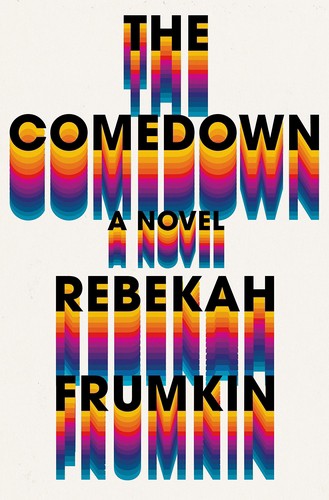
My novel, The Comedown, lampoons toxic masculinity by showing it in extreme forms. Leland Bloom-Mittwoch Sr. inhales cocaine, berates his wife, and suffers delusions of grandeur. Aaron Marshall worships his drug-dealing father and gets rich working for a development company that could have rendered his family homeless. Lee disdains every woman he sleeps with except Maria Timpano, whom he places on a desperate pedestal, and for whom he drives into a ravine. Being a man in the world of The Comedown is like being on a particularly critical episode of Queer Eye for the Straight Guy, except it’s your patriarchy-warped character being examined instead of your schlubby clothes.
A good dad treats his family like fellow human beings deserving of compassion and respect. A bad dad can act out in as many ways as there are vices and structures of oppression. All well-adjusted dads are alike, but these six patriarchs prove that each dysfunctional dad is dysfunctional in his own way.
Founder of Macondo and head of a family of similarly-named Buendías, José Arcadio is easily one of the worst patriarchs in literary history. Holed away in his study while his wife and children break their backs in the garden and around the house, José Arcadio is disinterested in all that doesn’t revolve around him and his scientific curiosity, a bad father by way of neglect. (When your child becomes the fascist mayor of the town you founded and you don’t intervene, you know you’ve probably failed as a father.) He spends his old age confused and tied to a tree, a fate befitting a would-be master of the universe inquisitive beyond his abilities.
Simon Dedalus starts out as the bumbling, loveable-and-down-on-his-luck father from an after school special. But as young Stephen Dedalus matures, Simon becomes increasingly drunk and monstrous until he’s shouting about Stephen being a “lazy bitch.” (“He has a curious idea of genders if he thinks a bitch is masculine,” Stephen quips afterward.) Propelled by Simon’s ineptitude, Stephen goes on to seek fatherhood elsewhere: in the mythical Daedalus and later in the arms of Leopold Bloom.
Toni Morrison’s The Bluest Eye is a heart-rending read precisely because of Cholly Breedlove’s actions. Saying that Cholly “behaves badly” is like saying that “being a woman under patriarchy is hard.” Both are gross understatements. Cholly sets his own house on fire and rapes his daughter. His drunken rages transport him to planes of grandiose incoherence. He has been failed by a racist social system and his manic awfulness serves to both reveal and conceal his wounds. If only Pecola could have escaped him sooner.
If anything, Lear’s story is a lesson in not picking favorites, or at least not picking the wrong favorites. Ideally, children wouldn’t have to make formal appeals for their father’s love, but this is not how things worked in pre-Roman Britain. Lear spends more quality time with the Fool in an apocalyptic storm than he does with any of his daughters. Regan and Goneril are regarded as evil without question and Cordelia is practically ignored until the end of the play, when a piteously mad Lear finally gives her the time of day. Good parenting this is not.
Hazel escapes her sterile marriage to the tech tyrant Byron Gogol by moving in with her father. He’s living in a trailer with a sex doll named Diane and putzing around on a Rascal scooter, his every action seemingly designed to maximize Hazel’s discomfort. When he’s not berating Hazel about her past, he’s canoodling with Diane in a way that is truly a bummer. He’s distinct among the rest of these patriarchs in his willingness to meet the lowest possible threshold of decency: he doesn’t actively inflict any harm on his child. Way to go, Hazel’s dad.
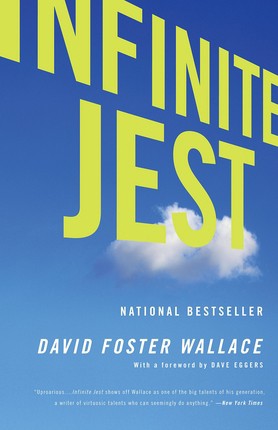
Dr. James Orin Incandenza, Infinite Jest by David Foster Wallace
Like José Arcadio, Dr. James Orin Incandenza (a.k.a Himself a.k.a The Mad/Sad Stork), completely neglects his children for his filmmaking career. While older brothers Hal and Orin are resigned to being ignored, Mario lusts after his father’s attention, acting as key grip and best boy in Dr. James’ benighted productions. Eventually, Dr. James ends his life by putting his head in a microwave, leaving his children to wonder what they meant to him, if anything.
In 1986 my cousin had a Commodore 64, a TV with a split antenna that pulled Saturday Night Live from the electromagnetic field over the Vermont mountain (Eddie Murphy as Buckwheat, a cone-headed Bill Murray), and a turntable propped on a stack of records. When I’d arrive at his house in the woods, he’d put on Purple Rain while I peeled off my wool coat, its tobacco smell like the backseat of our old Toyota, my stomach upside down from the coiling drive. If you loved Prince, you can see it: flower-edged record sleeve banged up at the corners and slashed with neon purple letters, his iconic white ruffled shirt, his dark eyes staring out from the seat of a smoke-engulfed motorcycle.
The image is indelible, flawlessly constructed. Prince was acutely conscious of his visual identity and relished the provocative complexity of it — anything to make us blush or breathe a little harder. He was also a master of the disappearing act, the epitome of reinvention, receding and returning from rock god to mystic to sex kitten in the blink of a gold-shadowed eye. At some point, I saw Prince and I saw my cousin, not a physical likeness so much as a shared absence — a part in each of them that had existed and been taken away.
Prince was a master of the disappearing act, the epitome of reinvention.
My cousin was my favorite person in our family of writers and painters, all of whom were, on any given day, either in a bloody civil war or as close as the McGarrigle sisters in ecstatic ensemble. He was ten years older than me, good looking, restless. He played piano at night with his eyes closed like a shadow. I felt abundantly attended to, in his presence. Adored. He imbued in me concepts that would stay for good: sugar molecules eat your teeth in the dark; one cell carries our entire human genome; our ears still listen when we’re asleep. But there was a hard sadness in him, too, that I’d sometimes glimpse as if through a prismed periscope when he stacked the wood, heaving pieces across the yard like a javelin throw, or when he shoveled the billions of shattered ice crystals of our endless snow.
I didn’t understand the potent sexuality of the lyrics on Purple Rain yet but I loved the music and everything it made me feel. The minute the needle hit the record and the worn vibrato of the organ began like a church sermon I’d feel the imminent excitement — the “Let’s Go Crazy” moment of conception, the pulse that you couldn’t hear and not jump up and dance.
Some kids at school weren’t allowed to listen to Prince because of his suggestive lyrics, but we were artists. Grandma wrote indecent poems about oblong vegetables; I learned about self-love from Anne Sexton and Woody Allen. No one censored our music or our books, least of all my distracted mother who was raising three of us alone, whose piles of short stories and envelopes of correspondence filled our apartment’s only available counter space. She’d type and package up her 300-page novels and lug them down to the mailbox while we bickered in frayed superhero costumes and ate bowls of government-funded Kix.
From the bottom bunk of my cousin’s bed where I stayed sometimes on sleepovers across town, warm from the sit-down dinner that was always served around his family’s stove — my aunt’s basmati rice cooked over sliced potatoes and eaten with a raw egg as she’d learned in her years living in Iran — I would answer his usual questions: What was I doing in school? Who were my friends? Did I have a boyfriend? When I dreamed about Prince one night he laughed and said it was my repressed desire for the singer that made the dream.
My cousin didn’t seem to care that I was younger than him. He found my endless stream of readings and social sufferings interesting, and revealed to me a world of popular culture that was evidently everywhere except my house. We had no TV, no “Cosby Show,” no Atari projecting bright, pixelated mazes we could spend hours traveling through. Entertainment was our upright Hamlin sloping with the floor, a cassette player, books under and over everything. My old violin. What leaked in came by way of WX104, our state’s hit radio station that launched nightly through my alarm clock radio. At 8 pm the DJ would start taking calls from the sad and the love-struck, playing corny songs for their wounds. Sometimes he’d let a caller go on for a very long time and a whole story would emerge. I’d sit balanced in the kitchen on our church pew — one of the many pieces of furniture my mother found rummaging antique barns — waiting for the end: the woman walking out the door forever, the father succumbing to his disease. I’ve got just the song for you, Sheila, and for all of you out there…
“Out there” was a town over, a state away, it was stories of people and their hopes and injuries, it was the sky and the planets that my grandmother read about in her astronomy journals, and then it was inside, too, a dimension I couldn’t escape walking each day into 8th grade biology dizzy with images of blood and circulatory systems, glands, muscles, tissue. I nearly fainted when our teacher showed up with fifteen tiny scissors and a bucket of frogs. One night, studying cells on the floor of my cousin’s kitchen, he explained the lowest level of biological organization as a house with many hollow and orderly rooms. Put your hands on the walls, he said. Nothing can get through.
What does it take to close yourself up, to disappear? To really disappear, there are online guides with pictures like “How to Cultivate New Habits” (start wearing a hat indoors) and essential rules (you must go alone). WikiHow can have you gone in 10 steps. SkilledSurvival.com says your entire life will become a lie.
The experience of childhood is not unlike the experience of art, as the Russian writer Viktor Shklovsky describes it: “the sensation of things as they are perceived and not as they are known.” Which is to say, the story of my cousin was forming in me a long time, reconciling with things I could only feel as a kid and not quite grasp. I loved him. I would have chosen him over anyone. But one summer he learned a family secret that had been kept from him for years, and that was that. When he turned to me it was as though he’d never seen me before.
Prince had only recently renounced his name, deciding to become a symbol instead, simply The Artist Formerly Known as Prince, without a record label, without designation. I dreamed my cousin went to the top of a building and bent his body over the roof’s edge, a gesture toward his ending, or all of ours. When I woke up, he was gone.
I dreamed my cousin went to the top of a building and bent his body over the roof’s edge, a gesture toward his ending, or all of ours.
No song quite unspooled me like “Purple Rain.” Walking home from school I’d leap from one sidewalk crack to the next, conjuring up provocations, if a red car drives by now it means — , wanting something to happen to me though I didn’t know what. I’d turn my Walkman up until my eardrums hurt. Our town was gutless, uniform, filled with families in clean Subarus who had orderly domestic systems like chore charts and Macaroni Mondays, people my mother would call ordinary under her breath at the co-op where they were always glaring. I wanted to break into the next kingdom. I wanted to hear Prince relish the inharmonious, the oblique. His shimmery guitar with its tiny striking pangs comes at the close of “Purple Rain” like a late-night whisper that makes you fall in love. His chaos was chemical, the unstoppable force of something urgent coming. When the camera turns out to the audience in a live video of the song from a club in Minneapolis in 1993 — the whole thing bathed in a purple, sweaty glow — my heart beats with an almost agonizing envy of everyone standing in front of that moment, that minute when Prince was so sensual and alive. His face strains with the high, startling “heeee-heee hoo hoo” — a wail that is utterly animal, that ascends to the edge of the atmosphere. Even in the blur of old footage it makes my entire nervous system ignite and dissolve like a star.
Which is what makes the symbol he became when his name disappeared so figuratively right. A curious shape, part ancient Egypt, part biology, something like Ida’s Wunderhorn stabbed through by an iron-tipped spear. He was too large for language, or he was outside of it. Subverting the convention of naming itself made sense, especially when one could not pronounce it or type it into anything.
And what was left in its place? An incredible loneliness pervades many of his songs, an almost unfillable desolation. Which might be at the heart of why we make art at all. How do any of us stand quiet in the middle of a life that’s moving steadily toward its end, that has, up ahead, a total and inexorable vanishing?
He was too large for language, or he was outside of it. Subverting the convention of naming itself made sense.
When I listen to Prince now I’m back in my cousin’s bedroom, on the bottom bunk, looking up at the wood slats that hold the outline of his body suspended above me. Wool blankets piled on our feet, the damp of the forest everywhere, the dirt road running like a ribbon over the mountain. The click-click of his TV antennae trying to catch a signal in the night.
Prince died as Prince, the unsayable symbol relinquished, or he died as Prince Rogers Nelson, the name his parents gave him in 1958. I don’t know what my cousin’s name is now. He never spoke to his mother again, or his aunts, or me. I heard he had moved out of the country, then back again, that he was using a middle name instead of his first. But then the story of him ends.
And I grow more fascinated by erasure, the destruction and the freedom of it. I think about secrets and then exile of the sort we enact on ourselves. It’s a new world now where I walk, decades later, far from that town, far from the sweet anonymity of the ’80s; it’s all technology and surveillance, the whole planet on an intricate grid that can largely be viewed from any given point. I hate the dot on my cell phone map that shows me “me” while I’m running the circumference of my city park or walking to the grocery. I resent the app that lets my daughter or my husband know where I am at any moment so they can ping out their requests for ice cream, milk, postage stamps. Sometimes I want to get very lost. It soothes me to imagine flight, to conjure an escape from my life, even when it’s impractical, impossible. Is there any crack in the framework to slip through anymore?
I have never tried to find my cousin. Surely he is in plain sight of someone, somewhere. But who is he to them? A body defamiliarized, renamed? Who are any of us but an amalgam of cells, our faces like shifting genetic composites, our structures unduplicatable, a whole system of chemicals and thermodynamic reactions that rely on a painstakingly precise balance? A billion cells inside us and each one perpetually gearing up to create, to divide. “It’s the cell’s main drive,” he’d said. Now I think of the mystery of what happens — how a nucleus disassembles and re-forms. It breaks down and is reborn, over and over and over.
Distance yourself from others — WikiHow’s rule #3. Do everything slowly. Erase all documents with your name (#6), lay false leads, wear unusual clothes to a distant border where no one expects you to be. You might once again have a chance at brand-newness, then. Tabula rasa. The mind, as Aristotle said, that is nothing until it has thought.
Erase all documents with your name, wear unusual clothes to a distant border. You might once again have a chance at brand-newness, then.
One night — Dream if you can a courtyard / an ocean of violets in bloom — my cousin fell asleep first. Curious if he could hear me in his sleep as he claimed, I whispered up to the top bunk, Your orange tree is blooming! He didn’t respond, nothing twitched, no firing neuron announced itself, and eventually I fell asleep, too. But in the morning he sat up and said, “I had the most amazing dream. It was summer and my orange tree was covered in mandarins!”
I was amazed. I had broken through the gates of his sleep and spoken to him on the other side! There, where he floated like a raft on the waves of a slowing consciousness, the stony paralysis of his unfastening body going from this world to that. I had found a way in. And what he’d told me had been right: even far away, in that deep, unresponsive place where he had gone, he could hear me.
Dispose of your old personality, bit by bit. If going rogue, find a wild area where no one lives. And if the chance arises, leave behind a token for someone you loved. You won’t be seeing her again.
I was introduced to Brendan Kiely when he collaborated with Jason Reynolds on what would become the New York Times bestselling and award-winning book All American Boys. I was shocked, utterly shocked, to meet a cishet White man determined to speak out about the issues of White supremacy directly, and not guise it under a fairytale premise. At a time when many may want to write away from the issues, this was someone writing towards it, who presented an honest take on responsibility not often seen or read. (Kiely and outspoken advocates in marginalized communities served as examples on how I should reckon more with my own privilege.)
Kiely’s adamance to consistently reflect and speak out on the roles of those with power is also evident in his recent essay in The Good Men Project and several of his books. From owning White privilege to recognizing toxic masculinity, Kiely targets awareness and acceptance of accountability for progress to those of privilege about their privilege. And this isn’t relegated solely to his writing. It’s also evident from his work as a public speaker and advocate working with literary activist groups such as PEN America. With his latest book, Tradition, Kiely zooms in on rape culture and toxic masculinity within an elite boarding school.
I spoke to Kiely about his role as a White man in an obviously broken system, and how acknowledging and pushing against power can give voice to, not so much the voiceless, but the silenced. In the end, we both wanted to know: Within a society of toxic masculinity, when can we expect men at any age to take responsibility?
Jennifer Baker: Much of your new bookseems to be about awareness by those with privilege. Or at least the path to awareness. How do you as author pursue writing a book like this at all?
Brendan Kiely: Action without more time spent building awareness can be dangerous, so I do try to spend a lot of time on awareness, and I think that’s part of how I approach writing a book like this. I spent a lot of time listening to women. And I spent a lot of time reflecting on my own experiences growing up, the ways in which boys encouraged in each other pretty toxic behavior. Also the moments when some boys had the courage to stand up and let the rest of us know we were being idiots. In the same way I wanted to talk about racism in America when writing All American Boys, I had to look at Whiteness and ask how White people can do a better job engaging in self-examination and critique. In Tradition I want to look at misogyny and rape culture and ask men to engage in deeper conversations of self-critique. That seems like the only honest way in for me.
I had to look at Whiteness and ask how White people can do a better job engaging in self-examination and critique.
Jenn: Makes sense. With the rise of #MeToo we hear more from victims, and in your essay (in The Good Men Project) as well as your book, you speak to the need to not only listen to women, but believe them.
Brendan: Absolutely.
Jenn: Where do you think that lack of belief comes from in the male psyche? Understandably, you can’t speak for all men. But there’s a lack of assessment in terms of boys recognizing their behavior, though they’re being supported or protected.
Brendan: On an individual level, I think there are many people (men in this case) who say to themselves, “Well, I’m not that” (then point to an extreme example) “I’m not Harvey Weinstein.” And by distancing themselves in that way they don’t take accountability for all the ways they enable people like him. In Tradition, it isn’t only that some of the boys think they personally aren’t doing anything wrong; the school wants to protect them because the boys are assets. They are sports stars, they bring prestige to the school. They are the sons of Board members, trustees who pay a lot of money to have buildings built at the school. What this all says to other people, anyone without as much institutional power, is that the institution doesn’t care about them as much. For instance, [the character] Jules feels unheard. In fact, it’s even worse — boys, teachers, school officials, even some of the other girls, hear her and want to silence her. That’s why I begin the book with the quote from Arundhati Roy: There is no such thing as the voiceless, only the silenced or the preferably unheard.
The issue with boys too is that they don’t recognize their own power. They’re taught to think, “Hey, look what you’ve accomplished,” instead of, “Hey, look what other people have accomplished for you.” That kind of false sense of self-worth, as a student, a man, whatever, I think is dangerous. And that is the kind of stuff I want to unpack and reveal in real time.
The issue with boys too is that they don’t recognize their own power. They’re taught to think, “Hey, look what you’ve accomplished,” instead of, “Hey, look what other people have accomplished for you.”
Jenn: Oh, and that’s a sour spot too? That moment of recognition of how one gets “saved” when you have privilege. How much money and Whiteness and maleness can “save” you from having to face yourself. And, sadly, we see this in our government today.
Brendan: Exactly. It’s terrifying! White men have the most fragility, it turns out.
Jenn: And this isn’t just reserved for spaces like the Fullbrook school, where your book takes place.
Brendan: Not at all. Fullbrook is representative of our whole society. The other epigraph is from Paradise Lost because I wanted to talk about how these problems of abuse of power, and the construction of a “paradise” are suspect. A paradise for whom and at what cost to anyone else? The very notion of a “paradise” feels built on a kind of false innocence.
Jenn: Do you think false innocence is tantamount to protecting what’s perceived as “the upper class”?
Brendan: In Tradition, I think it is about protecting men — something Jules calls out while they are studying Paradise Lost. There’s a narrative that goes back way too far that seeks to protect men — back to what you were saying earlier. And likewise, when we build places and say “this is an ideal school, a very good school” and hold it in such high esteem, and yet, under the surface, it’s riddled with dangerous misogyny and classism, it isn’t a paradise at all. In fact it makes the notion of any paradise where everyone doesn’t have full agency very suspect in my mind. That’s why I wanted this book to lead towards rebellion.
Jenn: It also sounds like, from a personal perspective, this investigation (of privilege and power) started at a young age for you.
Brendan: Yes. It did. And I was fortunate that women and people of color in my life asked me to interrogate my male and white privileges and power. When I was growing up, most men and white people weren’t asking me to do that interrogation. I also heard it in a lot of the art and music I was checking out. I just downloaded a bunch of music I used to listen to in the early 90s, because I wanted to remember the stuff that inspired me to think more about who I was and how much privilege I’d been afforded through no effort of my own.
It’s important to remind myself that there is no end to this learning and interrogation. While I started thinking about it when I was young, I have to remain committed to thinking about it for the rest of my life. My ignorance will always be greater than my understanding, so I always have to remain committed to understanding more.
My ignorance will always be greater than my understanding, so I always have to remain committed to understanding more.
Jenn: Not to say this is a “platform,” but how often do you think these kinds of things — particularly the patriarchy and male role in rape culture from an acknowledgment of being part of the problem — happens in general, let alone in art?
Brendan: I don’t think all work necessarily needs to be about identity, though at this point in our lives, I’m not sure how it can really escape the work we make either. And therefore, particularly as someone who has been bestowed a vast amount of social power through my whiteness, maleness, and heterosexuality, I think the space for me to work in are stories that reflect on those privileges, why they are so insidious and destructive. I think there is a lot of room for more of this kind of work.
But it is important to say that there have been so many people without those privileges and power who have been talking about all of this forever. So it’s essential that as I do my work, I look back, listen, and learn from the masters who have been unpacking this work for so long. I love going back and reading (James) Baldwin and (Toni) Morrison and hooks. I loved re-reading The Handmaid’s Tale and Speak and What Girls Are Made Of. These are authors and books I keep close by me as I work because whatever I’m doing, I’m doing it because I learned from them. I was on a podcast the other day and I was talking about how much I love Renée Watson’s Piecing Me Together. Some people call that a “quiet” book. But to me, if you sit and listen, it’s a book about myriad aspects of identity up against and thriving in the face of all those forms of oppression, like the patriarchy. If you listen, every turn of the page is a heartbeat.
Jenn: Do you think people are ready for these conversations in general? I’ve heard a lot of the time it seems adults aren’t ready for this type of dissection, but that younger readers tend to be more open to it?
Brendan: Actually, I think people of all ages are ready for it because I do believe people have been talking about it all for a long time. The problem is that maybe people (and some people in particular — looking at you, Brendans like me of the world) haven’t taken the time to internalize what that means.
But also, I absolutely agree that as I travel the country and speak with young folks, they are eager to have these conversations. They are eager to see it, feel it, and experience it through art. I’ve learned so much from young people as they’ve told me about the books they like and why, as they’ve told me about why they’d hope more adults would see the emperor’s nudity (or his privilege and power) in the same way they do and stop pretending he’s wearing clothes.
Jenn: There is one more thing I wanted to talk about: the scene where Jules puts a tampon on her desk.
Brendan: Sure.
Jenn: It made me think about how, as women, our bodies make men uncomfortable because certain aspects not under their control, nor is this something of interest. So it makes men uncomfortable.
Brendan: Yes. I think that is very true, and I wanted to bring that to life in the scene where Jules puts her tampon on her desk.It bothers me that I didn’t know anything about that when I was a teen boy.That’s on me, for sure, but it’s also the way we men in general often dismiss women and their bodies. Oh, she’s on the rag, or other offensive phrases like that.
Jenn: What do you mean when you say it bothers you?
Brendan: It bothers me because I think it is essential for us all to know about bodily health, and that doesn’t mean I should just ignore women’s health because I’m a man. It bothers me because it feels like I can draw a direct line from my teen boy’s ignorance to the kind of systematic denial of appropriate healthcare for women in our country, and women of color in particular. That just feels so patriarchal and racist and disgusting.
This is exactly what I’m hoping to do in Tradition. Draw a line from the corrosive behavior in the school, and especially among the boys, to the kind of systems we have in place in the workplace, in government, in our community. The patriarchy doesn’t come from nowhere — it comes from young men nurturing an inherent misogyny in each other, letting it fester, and it impacting the decisions they make every day, as boys and later as adults. That’s why the book leads toward rebellion.
The patriarchy doesn’t come from nowhere — it comes from young men nurturing an inherent misogyny in each other, letting it fester.
Jenn: Tradition leads to stagnant thinking, as you mention, and this protection. You say it’s the old boys club, but it’s also the status quo of keeping things in line as one sees fit. But change is a pretty big shift and it has to come from acceptance of privilege, though that word is scary to many.
Brendan: Absolutely. I agree. Change comes from an acceptance of privilege and a shift in the way those of us who have it act. I can’t walk into a room and say, hey, it’s only me! My Whiteness, my maleness, precedes me into the room. So given that reality — I have to change the way I was taught to act.
I n this cultural moment where prestige dramas are dominating the airwaves and generating endless thought pieces, the idea of the bingeable teledrama as the new novel is already a cliché. More and more great prose writers are realizing that they can make a lot of money writing shows without sacrificing their literary cred. But television’s ascent into high culture hasn’t included reality TV, and I think that’s a huge untapped opportunity for book writers.
Purchase the novel
After all, if people uniformly claim now that unscripted reality shows are, in fact, quite scripted, why can’t we give our best writers the job of writing these scripts? I’m not expecting this idea to take off instantly, though I do think I deserve a reasonable finder’s fee if it does and I eagerly await the appreciative emails from these writers. Here are eight pairings of some of our greatest prose stylists with the reality TV shows they were always meant to write:
“Keeping Up With The Kardashians” by Hanya Yanagihara
KUWTK is the benchmark of the modern reality genre: immensely, almost confusingly watchable; seemingly unending; crammed with every possible emotion, as we trace what may end up being the entire lives of its characters. In this way, it’s closer to the shape of the classic Russian novels than most modern novelists dare to get. But not Yanagihara. With A Little Life, she proved willing and able to plumb the kind of ongoing depths provided in the Tolstoy/Kardashian experience. Also, Yanagihara has the remarkable ability to make an audience sustain care for the grossly and unapologetically wealthy, which is the job requirement of KUWTK.
“Naked and Afraid” by Chris Kraus
It’s a tragedy that Amazon canceled the TV adaptation of Kraus’s incredible I Love Dick, but fuck it — who needs Jeff Bezos? Let’s move on. I would welcome a Chris Kraus treatment of every reality show ever made, but I’ll start here, with Naked and Afraid. There’s a line in I Love Dick, when Kraus’s autobiographical protagonist describes being a lover of a certain kind of bad art, which offers a transparency into the hopes and desires of the person who made it. Who better to provide the lines that telegraph the murky motivations of these strangers who sign up to be dropped into the woods together, ass naked, demanding to be seen?
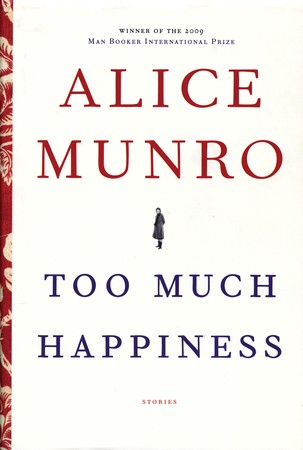
“Sister Wives” by Alice Munro
First of all, polygamy seems like the perfect match for any short story writer who can give quick, quiet, and devastating insights into the perspective of each wife and child. But a polygamist family famous for its veneer of suburban normalcy? If there was ever a reason for Munro to leave retirement, it is this.
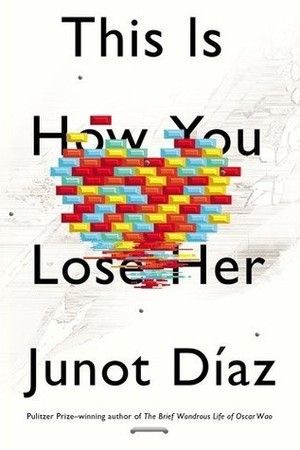
“The Challenge” by Junot Diaz
What novelist better expresses the toxic absurdity of modern masculinity than Diaz? And what figures have more clearly embodied it for the past decade than the stalwarts of The Challenge — men like CT and Johnny Bananas? They keep getting older and thicker; they return to the same situations with the same women, fuck up again. Swaggering, angry, horny, and ultimately sad, these men were born for Junot Diaz to shed light on their souls.
“Diners, Drive-Ins and Dives” by Han Kang
If I know anything about Han Kang, it’s that she can write a haunting dream involving meat. If I assume anything about Guy Fieri, it’s that he has many haunting dreams involving meat.
“The Bachelor” by Mary Gaitskill
Mary Gaitskill’s characters often lead double lives: a dark, vulnerable, and often brutal side hiding behind their public facades. Contestants on The Bachelor start off with perfect blow-outs and earnest proclamations of “being here for right reasons”, but they eventually crumble into a teary-eyed mess at just the right made-for-tv moments. Just close your eyes and think about the biting portraits Gaitskill, an astute observer of human behavior, would come up with.
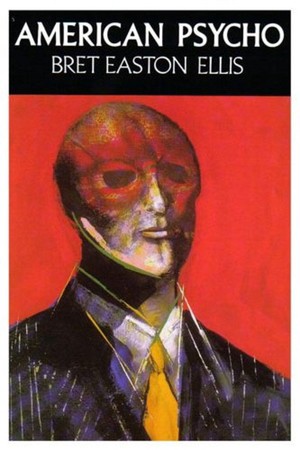
“Vanderpump Rules” by Bret Easton Ellis
Not surprisingly, Bret Easton Ellis is the rare contrarian novelist who is out in the open with his reality TV love, once proclaiming that the Real Housewives shows were more interesting than most modern novels. If he loves all the nastiness of human nature that the RealHousewives explore, I say let him loose on the world of Vanderpump Rules, a Real Housewives spinoff that is, in my humble opinion, the ideal docu-soap. Like Ellis’s best work, the characters of Vanderpump exist in the dark spaces between seductive excess and simmering rage. Plus, like any great Ellis novel, drugs of the snorting variety are a huge catalyst in Vanderpump (legal disclaimer: that’s speculation, but come on).
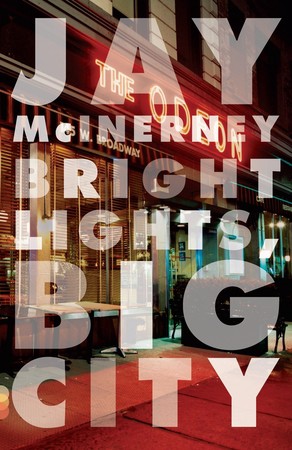
“Million Dollar Listing: New York” by Jay McInerney
I mean, isn’t every New York novel just a story about assholes and expensive real estate?
Lucas Mann was born in New York City and received his MFA from the University of Iowa. He is the author of Lord Fear: A Memoir and Class A: Baseball in the Middle of Everywhere. His latest book, Captive Audience: On Love and Reality TV, will be published in the US by Vintage on May 1st, 2018. He teaches creative writing at the University of Massachusetts Dartmouth and lives in Providence, Rhode Island with his wife.
For the longest time, literary recognition of Latin American writers in the U.S. seemed to be limited to a handful of men: Borges, Márquez, Bolaño. But now that the literary world is gradually becoming more inclusive, we have seen a slow but much-needed burst of young Latinx voices in the landscape. Writers like Lilliam Rivera, Erika Sánchez, and Yesika Salgado have created works that tell the stories of Latinx experiences in the United States. Established writers from Latin America are also seeing a resurgence of interest, as independent publishing houses like New Directions and Coffee House Press publish new translations of well-loved authors like Clarice Lispector and Julio Cortázar.
A wonderful thing about contemporary South American authors is that their writing becomes a window into the idiosyncrasies of their countries while remaining honest about what the influence of globalism has meant for each region. As a Colombian and multicultural writer living in the U.S., I love finding writing that illustrates the many nuances of the South American experience of writing. I profoundly enjoy how these Colombian and Dominican authors recognize that their most authentic language is now forever laced with American expressions and references, and I admire the Cuban and Peruvian writers who portray the nuances of being from a country they love but that also makes them uncomfortable. These writers bring fresh language, queer perspectives, and inquisitive writing to people in and outside of South America who were looking for an accurate representation of their experiences without necessarily coming through the lens of living in the United States.
Even as more diverse voices get their due, there is still space to bring recognition to some South American women authors who not only write new perspectives into a rather ossified cannon, but do so with humor and a spectacular grasp of language. Below are some South American female authors, all available in English translation, that the U.S. readers have been sleeping on.
In her first book, set to come out in English in the United States next year, we are treated to the charming, kind, and funny voice of this Colombian author that very often feels like that one friend who will sit with you in times of trouble and crack jokes in between the gentlest of slaps in the hand for once again emotionally auto sabotaging yourself. It came out in Colombia in 2015 and became a runaway success with multiple translations and several reprintings in a country where it is notoriously hard to get people to buy and read books. Arango combines illustrations, activities, pop culture and micro essays to deal with very complex issues like love and how the earth seems to rupture beneath your feet when heartbreak happens—and what to do with these feelings.
Like many gonzo journalists before her, Wiener has taken a profound interest in writing about sexuality and the people who thrive in the corners and side alleys of it. Unlike many gonzo journalists, she keeps her wits and honesty about her at all times, making her an imperturbable observer and a hilarious witness of human interaction. Wiener is a Peruvian journalist whose unflinching honesty and generosity in writing have made her one of the most loved and respected writers of her generation. Her nonfiction writing about her polyamorous relationship of many years is still one of the few accounts of polyamory that feels honest to me.
This Cuban poet, author, and playwright´s writing is some of the most refreshing and insightful that I have encountered in a long time. Her book is composed of collected poems, as is usual for her. Each poem links with the next one in unexpected ways that envelop the reader in their rhythm like garland of deliciously crafted language. An extremely valuable aspect of her writing is the sensibility she has towards the experience of being a person who writes and lives in different cultures. That confusing melancholy of being foreign finds its shape in the poetry and prose of this writer who finds the connection in all things commonplace.
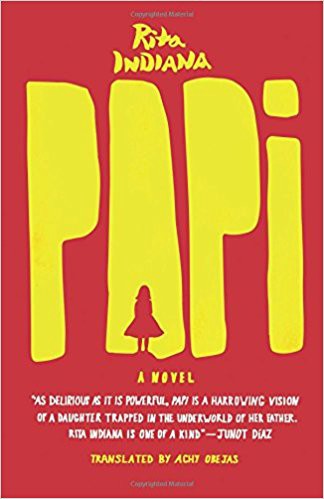
Like Junot Díaz’s work, Indiana’s writing broke open my world by showing me a place where all the pop culture and all the English and all the Spanish and Caribbean expressions that would get me side-eye from family and friends not only existed but flourished. In Papi, translated by the extremely talented Achy Obejas, we see a young girl´s life in the Dominican Republic as she navigates all the discoveries of growing up. Rita Indiana’s writing is fun, but more than that is textured and almost tasty in a way that only Caribbean writing could be.
In this diary novel, also translated by Obejas, narrator Nieve remembers crucial year of Cuba’s political turmoil through the life of a family whose coming and goings are as uncertain as those of the country they live in. Guerra was initially a poet, a fact that seeps into her writing, making it vivid and lyrical. Wendy Guerra is a multidisciplinary Cuban author, actor and director. The sources of inspiration for her writing are varied: from her experiences as a child actor in Cuba to a profound investigation on the life of Anais Nin.
This, of course, is far from an exhaustive list of female authors from South America, but it can serve as a starting point. These writers excel at talking about the contemporary Latin American experience while embedding their language with such force, personality, and care that it is impossible to not feel attached to the their countries and regions just by virtue of having read them. This sort of perspective is the perfect companion to Latinx writing that comes from within the United States. No one author will ever set on the page a universal Latin and Hispanic experience, but reading from the many different angles that compose it will help create the more accurate picture.
My first encounter with the how to essay was in the fifth grade. It was one of a series of essays we had to demonstrate we could write. January was the persuasive essay, February was the descriptive essay, March was the reported essay, and April was the how to. We were taught that a how to was a list of instructions. It was chronological. It was directed at a singular reader, the magical “you.”
At a young age I wanted to poke at that thin membrane between the you of the self and the you of the reader. I wrote to an audience that didn’t exist yet, that was part of the fantasy of being my young self. In writing a how to, I had authority. I had the reader’s attention. I was in charge of the chronology and thus in charge of the outcome.
In writing a how to, I had authority. I had the reader’s attention. I was in charge of the chronology and thus in charge of the outcome.
For our how to essay, we each had to demonstrate our instructions to the class. This way, the how to was written in our wide pencil handwriting on sheets of looseleaf, erasers slashing dirty holes through the paper if we made a mistake. Then, we had to be the expert at the front of the room. Because it was 1994, and video cameras were in fashion, my mother borrowed my uncle’s camcorder and set it up in the small kitchen of our row home to record my how to. I stood behind the counter with my stringy hair and oversized glasses, wearing a sweatshirt with a puffy painted mountain on it with snow and skiers. I had never been videotaped before. I beamed into the camera, my ingredients set up in front of me, and said, “Hi. Today I’m going to show you how to make chocolate covered peanut butter balls.”
You can imagine how that clunky embarrassment went over with my peers.
A tool of the self-improvement genre — how to meditate, how to knit, how to use Excel, how to play guitar — the how to holds power as an invitation. It’s a reading experience that promises a result or, if not a result, an intimacy. You want to know how to do this thing? I am going to tell you how. That very promise has captivated the hopes and curiosity of so many readers and writers alike.
It’s a reading experience that promises a result or, if not a result, an intimacy. You want to know how to do this thing? I am going to tell you how.
And then there’s the literary how to: the piece of fiction or nonfiction that will use the how to to subvert a story, share experience, flaunt expertise, advertise failure. When my creative writing professor put a photocopy of Lorrie Moore’s “How To Be a Writer” on my desk my heart leapt. “How To Be A Writer” was going to answer all of my questions. It was going to be my shortcut to everything I wanted to know. Of course, the essay did not provide the easy map I thought it could. But it did employ the intimacy of the how to to create dark humor and self-deprecation. Still, for someone who had only read a how to in the form of an instruction manual, it was a revelation. A how to is a promise. A how to is an offer. Let me show you. The literary how to slips in this house of chronology and expertise and then shows the reader that it is not a house, it is not a manual. It’s a story. It’s a tightrope walk.
My life is made of learning how to do things. How to do things I didn’t know how to do yesterday, how to do things I didn’t think I’d ever want to know (how to get sober, how to listen without interrupting, how to ask for more money when you don’t believe you deserve it, how to shave your mother’s head two weeks into chemo). And then there’s sharing what I know with others — you want to get sober, you want to listen, you want to ask for more money, you want to honor your mother — let me show you. Open palm. Open story. Here’s how. How is a transitional word, a bridge between wanting and having. It’s a connection. If writing is being of service, I couldn’t adore a service more than the service of learning how.
As I was taught in the fifth grade, a how to is made possible by the second person. We eschew the boundaries of the third person (a safe distance) or the first person (a presumptuous intimacy) for the delicate second. Second person can quickly sour (think valentines, bad poetry, religious tracts). It’s a thin blade on which the writer walks. In a how to, the you has the potency to be the reader, to be the narrator, to be the subject. Pair this with the gasoline of the present tense and you’ve got a potential disaster. There’s so much at risk in the literary how to, this cocktail of intimacy and expertise, second person, present tense. You’re leading the reader along, but you’re also carving your own narrative. You’re performing a magic trick and praying the rabbit will come out of its hat.
There’s so much at risk in the literary how to, this cocktail of intimacy and expertise, second person, present tense. You’re performing a magic trick and praying the rabbit will come out of its hat.
I’m one of those writers who has definitely abused the second person, especially when I was in college, especially when I thought it was a sexy vehicle for writing about ex-girlfriends (sorry). I spent years pulling the second person apart, looking under its hood, and I always came back to the literary how to because it was such a perfect setting for the second person. The second person isn’t just hanging out there, begging for attention. It’s serving a purpose. It’s providing instructions.
For many years I tried to write the story of a girl we’re going to call Angela Giaccini, who was important because she was the only other queer girl at my high school. Angela Giaccini had a shaved head, a leather jacket, a quiet intensity, and a sense of self that I longed for. We would kiss for the first time on her parent’s driveway, in the cold of March, just a few months before I broke her heart. Over the years I tried to write our story over and over again. I tried it as a short story, I tried it as a letter (terrible!), I tried it as a young adult novel, I tried it as an earnest essay about crushes. Nothing worked. It wasn’t until I wrote a how to for my younger queer self, “How To Like Girls,” that I found the right place for Angela Giaccini. In a how to I could walk through every one of my insecurities, my high-octane love, the story of what was said an when it was said and how it was said, all under the guise of writing an instructional pamphlet for other women who found themselves crushing on women and unsure of where to go from there. There’s the punctuation of the certainty of instructing someone on how to do something. Warm your hands in your pockets. Look at the asphalt. Hold your breath. Catch her eye. Kiss Her Now. A literary how to has the potential to cast a spell.
In 2016, BuzzFeed published a version of the title essay of Alexander Chee’s collection, How To Write An Autobiographical Novel. There’s a playful layering within the title. Even the promise of what’s in this how to — the reveal, the secret, the auto in the autobiographical — is evoked. What could get bogged down in a reality-based set of instructions is actually a series of ephemeral observations. The first line — “You are like someone left in the woods with only an axe and a clear memory of houses deciding to build a house” — sets the scene. The writer and the idea of what they want to write are at odds: “A novel, or is it, you aren’t sure yet. But it is as suddenly real as an unexpected visitor. Someone you both know and do not know. You watch each other, carefully, perhaps for years.” This phrase — suddenly real — is the same effect that a how to has the potential to create: instant, tangible. The motif throughout the essay is an axe, a weapon and a tool, a symbol of hard work and violence, something you use outside, alone, with no one else around you. In my spiritual practice there’s a woman who often says, “Chop wood, carry water,” as a mantra, as a simple description of what we do every day, as what the path to what we want looks like. What I love so much about Chee’s how to is the balanced authority it has.
This isn’t the only how to on writing an autobiographical novel. You could argue that every autobiographical novel is its own how-to, for any reader who has ever read a novel and flipped from the chapters to the biography, from the epilogue to the author photo, from the acknowledgements to the side characters, hunting for clues. I read for intimacy and I read for instructions. I read with a hunger that someone show me how to write, that I constantly reinvent what I know about writing, that I search for what I don’t know so that I can add it to my repertoire.
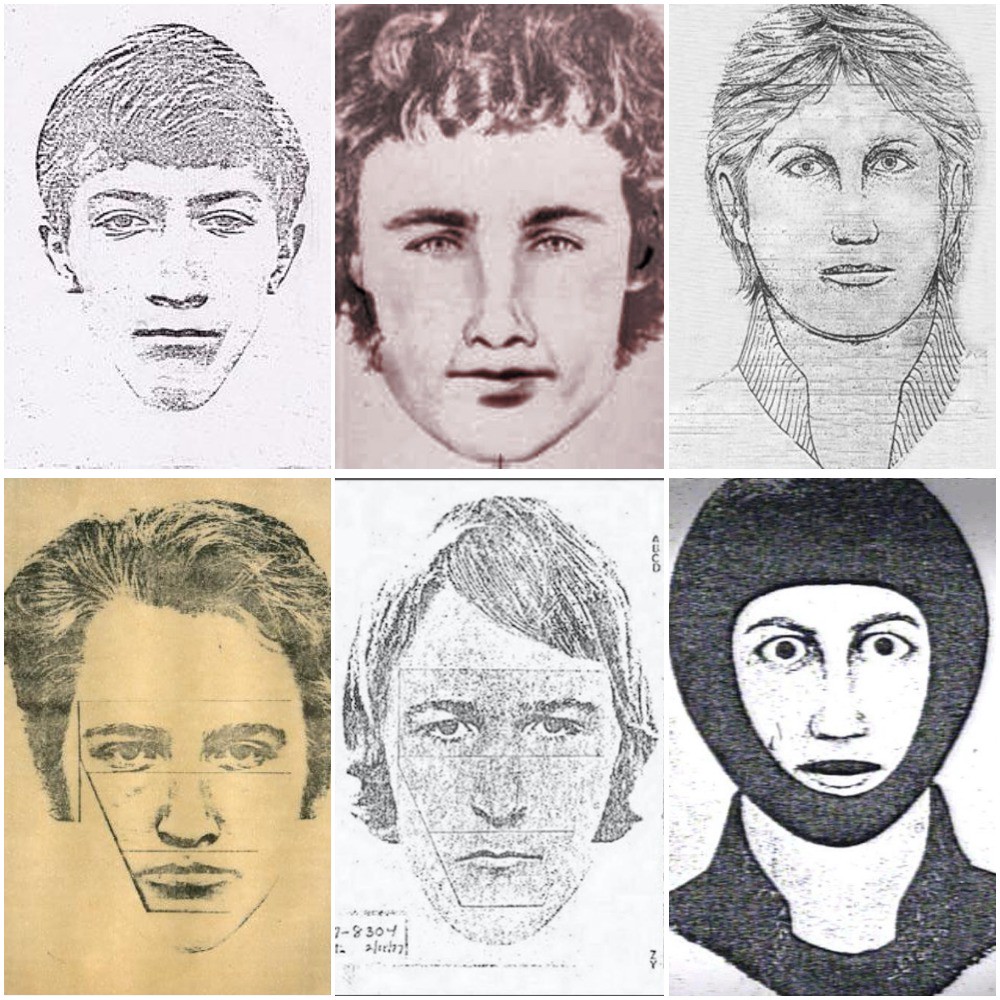
Yesterday, police in California announced that they finally have a suspect for the Golden State Killer, responsible for at least 12 deaths and 45 rapes in California in the ‘70s and ’80s. (He was also known as the East Area Rapist and the Original Night Stalker, among other vaguely literary sobriquets.) Former police officer Joseph James DeAngelo, 72, who has been living in the Sacramento area, is now in custody. This is obviously a (belated) success for law enforcement and a relief for the families of the Golden State Killer’s victims, but it’s also an exciting vindication for lovers of mystery novels and true crime. Because in this case, justice was served, in part, by a book.
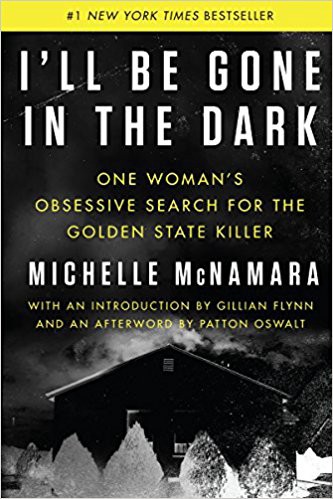
Michelle McNamara’s I’ll Be Gone in the Dark, published in February of this year, is an accumulation of the author’s exhaustive research and work with investigators on the case. McNamara, who became obsessed with the case and spent years gathering research and other investigative materials, died suddenly at the age of 46 before the book was finished. Her husband, the comedian Patton Oswalt, worked with the investigative journalist Paul Haynes to take the 3,500 files left on McNamara’s computer and deliver them for publication. As reported in The New York Times, Oswalt was determined to make sure the book was published: “Knowing how horrible this guy was, there was this feeling of, you’re not going to silence another victim. Michelle died, but her testimony is going to get out there.”
I’ll Be Gone in the Dark didn’t catch the Golden State Killer; DeAngelo wasn’t even on the radar of McNamara or the myriad other armchair sleuths fascinated with the decades-old crimes. McNamara’s lead researcher Paul Haynes told Slate that he frankly had no idea what evidence law enforcement used to crack the case, although he said it was “the No. 1 thing I want to know.” But publicity surrounding the book may have rekindled both public and police interest in the unsolved crimes, and helped light a fire under a string of murders that had long gone cold.
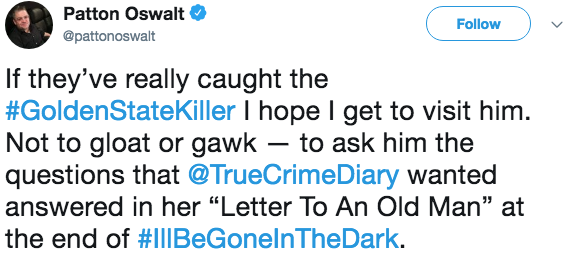
Oswalt tweeted on Wednesday morning that he hoped to visit the suspect, if only to ask the unanswered questions McNamara left behind at the time of her death. McNamara posed some of those questions herself in her direct address to the serial killer, which appears at the end of the book. While there were many things McNamara didn’t know, she was firm on the fact that the Golden State Killer would be found, and the police would show up at his door. “This is how it ends for you,” she wrote.
MichelleMcNamara's haunting words for the #GoldenStateKiller my God she's amazing #IllBeGoneInTheDark
I discovered Sam Pink in the dark corners of the 2012 Internet. Apparently, this was common means of discovery: many fans caught word of Pink via Tumblr’s then-vibrant literary scene, the whirlwind days of DIY publishing. I immediately read his 2011 novel, Person, an indie cult favorite. I related to Person’s aimless narrator: “I pass an apartment with a dog in the front yard area, walking around unchained. I stop and stare at the dog. The dog stares back. We are in love yeah.”
Purchase the novellas.
Pink’s two new novellas, The Garbage Times and White Ibis — published together in a tête-bêche binding — follow their respective narrators through Chicago and Florida. In The Garbage Times, a bar employee hangs out around rats and excrement. In White Ibis, an artist hangs out with birds and birthday girls.
Over email, Pink and I had a discussion that roamed much like his narrators, covering everything from creative processes, to various animals, to the ferocity of Floridian Girl Scouts.
Deirdre Coyle: How did these two novellas, The Garbage Times and White Ibis, wind up together?
Sam Pink: I had just finished The Garbage Times and Andy Hunter from Catapult/Softskull asked me if I had anything. They wanted it. In the time between it being accepted and before it was published, I wrote White Ibis and showed it to them and they wanted it too. Around the same time, I started thinking about publishing them together, and they suggested the same idea. It seemed to make more and more sense. At this point I can’t imagine them as separate.
DC: The Garbage Times and White Ibis have such starkly different, but complementary, landscapes in Chicago versus Florida. What’s your preferred IRL landscape? Are there some places that inspire you more than others?
SP: I didn’t like Florida at first, but I was being a brat. By the time I left, I loved it. It’s a beautiful place. I think I’m inspired by wherever I’m at, because it’s always stuff presenting itself’ in some way. I think that stuff’ and how I react to it differs depending on where I’m at. The Garbage Times and other writing from Chicago has the feel of “Chicago stuff” I feel (i.e., bleak weather, feeling cramped, anger, dark humor), and the writing I’ve done about Florida at a glance appears to be a little more laid back, expansive and calm — it’s “Florida stuff.”
DC: The narrator in The Garbage Times describes “the garbage times” as “where best to just shut the fuck up and do what you had to do. Where best never to complain. And always be ready.” Would you say we’re living in the garbage times now?
SP: Always. Never ever forget it. ARFA (always ready for action). You are always the garbage-person to your own life. Let it pile up all you want, and it might get gross, or confront it and clean up. But you have to will yourself to do it. And the first step of that is saying yes to it. Especially currently, where there is more said of most issues than done about them. You’re either a garbage person, or the ones complaining about the smell. Either way, you are creating garbage, and can do or not do many things with your trash (raises eyebrows and licks ice cream cone).
You are always the garbage-person to your own life. Let it pile up all you want, and it might get gross, or confront it and clean up.
DC: I originally found your work around 2012 through some part of the Internet that I’ve long since forgotten. Did online communities help foster your earlier work?
SP: Yeah for sure. The Internet was really fun and cool for a while. It was what seemed like, a rare moment of freedom opening up, and people capitalizing on it positively to put cool shit into the world and create a way to spend time, without mass marketed/corporate/brand type bullshit fucking it up. It was a real cool thing that helped me meet a lot of cool people and learn more about myself and encouraged me to make/share more. I can honestly say that before encountering the Internet, I genuinely thought, not in a cynical/rhetorical way, that I couldn’t write a book or paint a painting. But then you try and learn about yourself. I appreciate everyone from around that beginning time period, and look forward to newer people resurrecting and cherishing that mode of creating/being.
DC: You’re also a visual artist, as is the narrator in White Ibis (who is coerced into illustrating a group of Girl Scouts). How do you balance your creative projects? Do they ever feed off each other?
SP: Shout-out Girl Scouts of Florida and the world. “Leave it better than you found it,” etc. You are the gentle yet fierce cops we need, but perhaps, don’t deserve? Also nobody parties like a Girl Scout. When was the last time you were at a party (having shown up on time along with all the others), stayed completely sober, talked earnestly with all your friends, had dinner together, made some pictures together, presented your findings on a certain topic in oratorical presentation form, then watched a movie together and “camped out” in a house, all the while knowing you’d wake up excited to have breakfast with your friends, and that you were a troop together, united by the search for more patches?
Deciding which thing to work on is easy if you just listen. My mind would be saying “I don’t want to do this” after painting for a couple months, then I’d write something. And vice-versa. You just have to be honest with yourself. Sometimes, it’s not time. And yes, the different kinds of work feed off each other, although, I feel like writing has fed more off of painting than the other way around. Learning/teaching myself how to paint has helped me apply many new ideas to writing. I would encourage writers to try out other modes of expression to help their writing.
DC: Yeah, I’m often baffled by the way some people have hard and fast rules about their creative processes. I agree that sometimes, it’s not time. What do you work on when you’re not feeling creative at all?
SP: Yeah, the “I have to do at least [x words/x amount of x] per day” is something I don’t understand. I usually don’t feel creative, but I’ll just sit down, and it’ll happen. With that said, when I sit down and nothing happens or I don’t feel like doing it, I go for walks, or play with my cats, or go to the gym.
Nobody parties like a Girl Scout.
DC: I’ve noticed a lot of casually mentioned dinosaurs in your work: in Hurt Others, “I talked about dinosaurs”; in Person, “Man Found Starved. Believed Relative of a Baby Dinosaur”; in White Ibis, “Arrangements for casket attire? Dinosaur costume ALL THE WAY for me.” Can you talk more about your relationship to dinosaurs?
SP: Damn, nice catch. I didn’t even realize that. (I’m imagining you asking the “relationship to dinosaurs” question by putting a mic in my face as I exit a courtroom.) I must have dinos on the brain!!! I think my relationship to them is one of utter confusion. That they existed before us, like they had an earlier chance at earth, still ended up dying out completely. I feel a sense of camaraderie with dinosaurs. Dinosaurs are really exciting. Furthermore, our current existence is almost solely fueled by their bones. WHATTAHHAHAHAH?!>!>!>??!?!?
DC: Do you think birds are dinosaurs?
SP: I have come to deeply love birds after living in Florida. If you’ve never watched a pelican doing what a pelican does, you’re a dinosaur head. If birds are dinosaurs, then fuck yeah, because not only did it take a meteor to kill them off, but then they became something else that continues to live, and has almost no interest in human interaction. They evolved into something that has the ability to just completely leave the general area of any human. In conclusion, if you don’t think about dinosaurs, you are the dinosaur of tomorrow.
DC: There are a lot of really cool animals in both novellas. Aside from the titular bird, do you have a favorite?
SP: I enjoy armadillos a lot. I enjoy willets as well. I also saw a turtle one time at a state park in Gainesville. It was on a piece of wood, floating down a river, but facing backwards, neck extended, mouth open, getting blasted by the sun. I knew in that moment, that I had connected with that turtle in a way that would follow me to the grave.
In conclusion, if you don’t think about dinosaurs, you are the dinosaur of tomorrow.
DC: That reminds me of this passage from Martin Buber’s I and Thou, where he’s talking about making eye contact with a cat: “The beginning of this cat’s glance, lighting up under the touch of my glance, indisputably questioned me: ‘Is it possible that you think of me? Do you really not just want me to have fun? Do I concern you? Do I exist in your sight? Do I really exist? What is it that comes from you? What is it that surrounds me? What is it that comes to me? Whatisit?’” So, did the turtle make eye contact with you???
SP: I like I and Thou and Levinas’ work, too (pretty sure he was a student of Buber). The turtle and I did not make eye contact. Which is awesome. That turtle didn’t give two fucks. That’s one of the things I like about animals, they’re not as needy as people.
DC: What do you think that White Ibis is doing right now?
SP: I can tell you that it’s probably standing on a concrete embankment overlooking a drainage pond, being powerful.
When Somali-British poet Warsan Shire’s work was featured in Beyoncé’s album “Lemonade,” sales of her chapbook Teaching My Mother How to Give Birthspiked800 percent. Shire was already kind of a big deal, both in and outside poetry circles; she was named Young Poet Laureate of London in 2014, and her poems are frequently circulated on Twitter and Tumblr, popular for the way they express tricky issues of identity, intimacy, and justice. But “Lemonade” raised her profile further, opening up a whole new audience not only for Shire’s work, but for poetry in general.
Nobody knows when Beyoncé might drop another surprise visual album—they just have to descend fully-formed from the sky—but we’d love to see her spread the love around. Here are eleven sharp, brilliant, and socially conscious poets who deserve to be 800 percent more well-known.
Morgan Parker
In her spoken word and her collections Other People’s Comfort Keeps Me Up At Night and There Are More Beautiful Things than Beyoncé, Morgan Parker engages identity, depression, and mental illness through a pop culture lens.BuzzFeed called her poetry “a sledgehammer covered in silk, exposing black women’s vulnerability and power and underscoring what it means to be magical and in pain.”
Danez Smith
A finalist for the 2017 National Book Award for poetry, Danez Smith writes from a place of eminence. Their poetry has been featured widely in BuzzFeed, Poetry Magazine, and The New York Times, and their notable performance on The Late Show with Stephen Colbert helped their work reach a wide audience. Their poetry collection, Don’t Call Us Dead, opens with an imagined afterlife for the black victims of police brutality, a place free of suspicion and violence, where black boys bask in the safety and love denied to them in their mortal life.
Samiya Bashir
Samiya Bashir has put out five collections, including Field Theories, and is a founder of Fire & Ink, a festival for LGBT writers of African descent. She’s known for her intensely memorable live poetry performances, which blur media, spoken word, and poetry into something entirely her own.
Denice Frohman
Denice Frohman’s performances are so powerful and captivating that they’ve been featured and commissioned by ESPN, GALAEI, BuzzFeed, and YouTube, among others. Exploring the intersection of race, gender, and identity, Frohman’s work is that rare mixture of unabashed and utterly honest, capturing the beauty of what poetry does best.
Angel Nafis
Author of the collection BlackGirl Mansion, Angel Nafis has been lauded by countless organizations, including Cave Canem, Millay Colony, and the LouderArts poetry project. Founder of the highly-regarded Greenlight Bookstore Poetry Salon, she also runs The Other Black Girl Collective alongside Morgan Parker.
Douglas Kearney
Prolific writer Kearney has published six books, including the California Book Award–winning Patter. Kearney, an influencer in both poetry and prose circles, exhibits a deft eye for poetics and performance, where each line of a poem is unleashed as both escape and revelation.
Eve L. Ewing
Sociologist and poet Dr. Eve L. Ewing uses her work to examine the impact of social inequality and urban policy. From poetry that reinvents using different forms and mediums to research focusing on the infrastructure crumbling around us, Ewing’s subtle yet provocative work leaves you breathless.
Hieu Minh Nguyen
Nguyen’s work has been widely published in POETRY,BuzzFeed, PBS Newshour, and more. Nguyen, whose most recent book is Not Here, writes poetry that can shatter your heart and repair it in three lines or less. The emotional vulnerability demonstrated is uncanny, and he is able to explore identity with amazing care.
Dawn Lundy Martin
Martin’s performances leave audiences stunned and utterly captivated. Her poetry, which explores the concept of otherness, is ripe with energy and identity; it’s no wonder she won the Nightboat Books Prize in 2011 for her collection Discipline.
Ashaki Jackson
Jackson’s work as both a social psychologist and poem explores loss, otherness, and identity. There’s a tenderness to her poetry that expertly captures the inner and outer strife that emanates from social perceptions of Blackness. Author of two chapbooks, Surveillance and Language Lesson, Jackson is also the co-founder of Women Who Submit, an organization that helps women writers submit their work for publication.
Elizabeth Acevedo
Elizabeth Acevedo, author of The Poet X, is known for her slam poetry, which has earned her numerous accolades, including a National Slam Champion and 2016 Women of the World representative. Watching Acevedo perform her poetry live is one of those life-altering and life-affirming moments, a wondrously transformative experience.
In Gila River, a marriage of stifling heat, roaring winds, cheap windows, loose barrack planks and the formidable pollens of desert flowers kept the population of newborn babies thoroughly miserable.
In the years after 1945, epidemiologist, Shoko Hisaishi, recorded several cases of a condition he called “infant paracusia” or “infant paranoia” or “crybaby ears.” In his records, Hisaishi noted that Gila River internees had been so beleaguered by the sounds of wailing infants, that after camp life, even in solitude, their minds would produce an imaginary baby and its torments: whining, sniveling, blubbering. For some, the auditory hallucinations were subtle, the whimpers emerging faintly as if from behind a thin wall. For others, those counterfeit mewls were clear and emphatic, its sufferers given to throwing up their arms in exasperation or kicking chairs across the room. Furthermore, crybaby ears practically went arm and arm with other undesirable symptoms: weight loss, weight gain, insomnia, perturbation, compulsive thoughts of self-ear mutilation.
During the war, the siblings of Gila newborns could steal a few hours’ sleep at school or in church. But mothers of newborns were in a less fortunate position. The unrelenting shrieking and bawling transformed them into phantoms. It was said a Gila mother’s hair became uneven and tangled. Their eyes blackened. Their skin paled and looked warty. Their arms grew thin and sinewy. Their teeth grew pointed like a jackal’s teeth. All meals were eaten with ferocity. Gila mothers hunched over their food, heads swiveling from side to side, as though their cutlet or drumstick might spring back to life or be spirited away.
There was little remedy for a crabby baby in the desert. Parents who had their hands on whiskey or port or sherry claimed that a capful for the little one before bedtime or naptime was perfect medicine. But liquor was a rare and expensive commodity in camp. The more affordable and renewable solution was the music of Yoshikane Araki. It was said that the lullabies written by Kane, though he was a young, relatively inexperienced musician of seventeen, had the power to anesthetize the most difficult of babes. When Kane performed the lullaby himself, he could topple a rotund baby with a single verse. It was told that even if Kane’s performance did not strike the Gila baby unconscious on the spot, the music bewildered the babe into silence. Fathers became misty-eyed feeling their wailing infants turn to slumbering sacks of yams in their arms. Mothers who watched the portly heads of their toddlers dip beneath the currents of sleep sometimes threw their arms around Kane or kissed him.
“I am sorry Kane!” they would exclaim embarrassedly. “It is just that my son has clawed my face the past three weeks with every attempt to place him down!”
Parents who recreated Kane’s verses in their own mouths found the lullabies held their power over three or four weeks. These lullabies produced naps of up to two hours, which were so potent a parent could smack a mosquito from a baby’s forehead without waking them. And Kane’s lullabies cost only a dime. Arrangements were made through Kane’s mother, Kashi Araki, and Kane would arrive at a barrack door holding a guitar case and a little scroll of lyrics. Twenty or thirty minutes were spent instructing parents in the particularities of their melody, at which time of day it was appropriate to sing, which words to take a breath after, which words to say firmly, loudly, which gently, which to swish in the mouth prior to uttering.
“This word as a command,” Kane would say, “as though you are ordering an animal to leave the room.”
“Now this word at the end of exhalation,” Kane would say, “as though the bones of its syllables can hardly muster the strength to extinguish a candle.”
“Emphasize this word only in the morning,” Kane would say. “Saying this word will produce flavor like a ripened bulb of fruit in their mouth.”
Afterward, Kane packed his guitar away into its shell, collected payment and delicately pulled the barrack door behind him.
If parents could afford Kane’s daily service, it cost them a nickel per performance. After his studies, Kane walked from barrack to barrack, singing to red-faced infants and sedating them. Over time, Gila mothers themselves grew appetites for his music. It wasn’t uncommon for Kane’s lullaby to leave mother and child napping together in the midday heat, to leave mother with her head tipped back and her jaw plopped open for the snoring to thunder forth. The pleasure of a little beauty sleep erased any embarrassments. These mothers said their snores were sweet as honey and lavender upon their tongues.
However Kane’s music benefited the recoveries and moods of the women and children in Gila, it pricked at the anxieties of new fathers. In California, Kane had been a short, meaty adolescent with a feminine haircut. Around his neighborhood, his nickname was “Sister,” because upon hearing the treble in his voice, people would ask, “And just where is your brother Kane?” Peers pinched his cheeks, flicked his earlobes and set barking dogs on him. Even the nice ones tripped him a little and stole his cardboard inserts from his shoes. His music teachers thumped him on the back of the head if they supposed he had not been practicing.
But in Gila River, Kane was surfacing from his teenage years peering six inches over the brows of contemporaries and teachers, with shoulder and jugular muscles like a horse, fearsome hands rumored to be able to hold red-black coals without suffering burns, and a voice dropping as thick and sonorous as a December cloud.
The men of Butte and Canal were highly suspicious of this seventeen-year-old boy who appeared at the barrack door holding a guitar or ukulele. Whose presence set off the man’s entire family, rising and bowing and tearing-up with gratitude. Whose name aroused lip-smacking and moans of delight among young girls. Whose lyrics echoed in the mouths of recent brides. Whose music echoed in the roof beams and dark dreams above all their heads.
Of Kane, a few spiteful rumors began to circulate throughout camp. One strand of hearsay suggested Kane was a devious seducer of women.
Amongst the din of the mess hall, it was familiar to hear a husband cry out, “Do not let him into your barrack! He uses his music to anesthetize your baby while he has his way with your wife!”
Another thread of rumors suggested Kane hid a jar of ether in his guitar case and used it to drug newborn babies.
“Can you believe we pay him a nickel a day to dope our babies and turn them to drooling morons?” was a common husband-cry.
“Kane is becoming rich from our desperation. I mean, just how expensive is a little ether and a rag?”
These were the rumors of men, wildly emotional and unsubstantiated, and which therefore gathered fire and velocity as they traveled from mouth to outraged mouth. Anguished letters were sometimes posted to the Araki barrack door. These were always anonymous and cowardly, threatening that Kane would be publicly belted or caned if he was discovered making a cuckold of camp men. Occasionally, a drunken husband would wander into the Araki barrack to harass or intimidate Kane in person, the husband poking his finger into Kane’s chest or vomiting at the foot of his cot. But these encounters were typically followed by weeping apologies and compensations, a man’s entire family appearing before the Araki barrack to acknowledge the failures of the husband, and entreating Kane to return to his services.
In a recreation barrack, in the southeast corner of Butte Camp, a men’s movement aimed at countering Kane Araki’s lullabies was shepherded by the Reverend Jun Miyoshi. Reverend Miyoshi was a short, proud man with a teenaged wife and a daughter who was becoming a camp toddler. Miyoshi was a gifted speaker, scholar and a writer. He and his wife, Viola, were both trained pianists. He purchased space within the Gila News-Courier and self-published several of his sermons in order to improve upon the virtues of the internees in surrounding barracks. Miyoshi held strong opinions about parenting and believed children required self-control and discipline above all other qualities.
“Your babies simply want their father’s attention,” Miyoshi said to a gathering of Butte men in their recreation barracks. “Wailing is their only leverage. It is their sole method for communicating that desire. So when you hear them cry, you must turn your backs to them until they stop. Do not look them in the eyes. Turn on your radio or hum to yourself. Or leave the room. In this way they will learn sour behaviors bring them nothing. Give them your attention only when you want.”
In regard to anxieties circulating around Kane Araki, Miyoshi advised that new fathers in Gila form a collective where they could write, rehearse and trade from their own archive of lullabies. A string of articles penned by Reverend Miyoshi began to appear in the Courier on the theory of lullabies. A selection from his first treatise read:
Lullabies should be succinct, repetitive and plain in their message. There should be animals in lullabies. Those animals should have jobs. The animals should be diligent workers, either producing milk or plowing a field of potatoes or disposing of tin cans and table scraps. They should be creatures of faith. They should respect their animal-fathers, mothers, gods and forests. Their forest should be kept tidy. Lullabies should reaffirm the power of God and the security of the family. Lullabies should motivate the child to be clean, kind, polite, well-spoken and respectful of their elders.
Miyoshi held a series of lullaby-writing workshops in recreation barracks throughout Canal and Butte Camp. At first he said he would not charge, but in later sessions he passed the church’s collection plate. At first these workshops were spirited and well-attended. To fathers, Miyoshi promised the weight of more dimes and nickels in their pockets and the satisfaction of greater authority in their homes. He promised the lips of their wives and children would soon forget the name of Kane Araki.
But within a month, new fathers lost their enthusiasm. Miyoshi not only ran his workshops like a grade-school classroom, but he had the tendency to evangelize with his instruction. He openly criticized fathers he had not seen in attendance of his Sunday service. He condescended to those who did not pick up on his biblical references. When he wasn’t attempting to convert Buddhist fathers, he was separating them from Methodist fathers and tasking them with cleaning the barrack where they gathered.
Few fathers had experience with songwriting or performance. Rather than encourage fathers to devise original melodies, Miyoshi suggested taking popular hymns and inserting personal lyrics. Rather than consider their own lullaby narratives, Miyoshi encouraged fathers use lambs and angels as characters and to think of plots where children received severe punishments for stealing or fibbing.
“Perhaps there is a child who likes stealing blackberries from his neighbor’s yard,” Miyoshi would say, “and then he trips and falls into the brambles and gets his eyes gouged.”
“Perhaps you sing of a child who lies to an angel about saying his nightly prayers,” Miyoshi would say, “and the angel responds by stealing the child’s tongue. Or perhaps the angel poaches their remaining baby teeth!”
Most deflating of all, the collective archive of amateur lullabies did little to soothe the infants and toddlers of Gila River. Kane’s back catalogue sustained some families for a period, but when his visits lessened, spells of hot weather sucked the calm like moisture from all the mouths of babes. Grief blubbered out into the Gila nights. Grief echoed through alleyways between barracks. Mothers again began to lose their hair and their nerve. Whatever hair disappeared from their heads sprouted from peculiar crevices in their bodies. The tiny trumpets of their ears. The creases of their palms. Whatever object was nearest, chewing tobacco, a candy bar, candles, Dixie Peach pomade, mouthwash, was hurled toward a husband’s head along with the edict to visit the barrack of Kashi Araki and arrange for Kane’s visits to resume. In due course, Kane was called upon to replace the reverend at the lullaby-writing workshops, and he accepted, despite the notion that any teaching success would run counter to his business. Kane charged a nickel to be paid at the completion of a husband’s first lullaby. Even Miyoshi attended as a participant.
“I have only one rule for what I show you,” Kane said. “Before giving your lullaby to your child, you first should offer it to your wife. Or deliver a single verse to your eldest child and watch how they fare under its sway. Lullabies can be powerful medicine.”
“The secret to my lullabies,” Kane said, “is I extend to my audience a melody so simple, so repeatable, they can carry it with them into their dreams. This way, even after you have set your children down in their cribs, or beside you in your beds, the lullaby sustains itself in their ear, in the ear of their dream even, and it soothes them.”
And then he sang, “Baby go down in the desert, o baby go down in the desert. Baby go down in the desert. Baby follow desert to their dream to their ocean.”
“Do you know the origin of the first lullaby?” Kane asked. “It was contained in the mind of a stone dreaming of the river moving overhead.”
And then Kane sang, “Poor as you are my heart, o poor as you are my heart. Poor as you are my heart don’t grieve here on earth. Don’t grieve here on earth. Too much love. Too much joy. Don’t grieve here on earth.”
For the husbands who claimed they possessed minds wholly uncreative, wholly unmusical, wholly incapable of constructing original melodies, Kane instructed them to walk in circles around the Butte Camp baseball diamond and hum to themselves until boredom struck them.
“Boredom is your ally,” Kane said. “Hum a song you enjoy. Hum a song you know in your bones. Hum until the boredom changes the flavor of the melody in your mouth. Hum while it contorts itself, teaches itself new tricks to excite you. Keep humming. After an evening or two you will be humming a thing that is entirely new. When it happens, hold your child in your mind. As the new melody develops, imagine your child sleeping heavily. Imagine your mouth is a loom and you are wrapping them like a cocoon in your yarn. Imagine their child-mouth is a mirror to your mouth. A baby imitates every song that passes from your lips. Place your melody on the lips of the baby in your imagination.”
“The lyrical content is of little consequence,” Kane said. “You can sing about a donkey or a grandmother who lost her shoe. But if you have placed yourself and your daughter or son in the lullaby at the moment of its inception, if the lullaby grew flesh and sense and feeling in response to your imaginings, the real work is complete.”
The troubles began almost immediately after Gila husbands completed and performed their first lullabies. In his eagerness to measure his first composition, Eddie Honda sang for an hour while rocking his daughter and tranquilized the baby for a period of three days. After the first evening, Jean Honda flew at him in a panic and nearly beat him senseless with a hairbrush.
“The baby snores but she will not eat!” she exclaimed. “She will not open her eyes. What have you done?!”
In any attempt to refine the potency of his first lullaby, Kingo Furukawa sang to himself for two hours and lulled himself unconscious in the center of the Butte baseball diamond. Because he had been walking at midday, Furukawa sustained severe sunburns and had to be rubbed down in the medical barracks with lidocaine and antibiotic ointments.
Harry Masatani, Henri Shimomi and Jerry Kashiwagi all attempted to conceive of lullabies that would produce mild amnesia in their new Gila babies so they might forget how to cry. But what occurred instead was the three new fathers appeared to lose a cerebral constellation of words and concepts. What were their babies’ names again? What was the purpose of a nipple? Why were fathers also endowed with smaller, ineffective nipples? What was the folding pattern for a diaper? Was a diaper for a baby? Or did it serve some other purpose? Was it a sort of hat?
Uproar was arising from every faction. Mothers complained of strange maladies subduing their babies. Masako Kunishige claimed that at the sound of her husband’s lullaby, her son’s posture sometimes froze, spread-eagled, as though he was snagged by an invisible spider’s web. Joyce Ota claimed her husband’s lullaby had caused her daughter’s cries to drop so far in pitch her babbling voice resembled that of her grandfather’s.
Terue Yoshihara, the block manager who oversaw the Araki clan, paid multiple visits to Kashi Araki to complain that Gila fathers were running amok with lullaby magic passed on through her son. Yoshihara threatened the Arakis with expulsion from their barrack in central Canal Camp to a barrack on the southeastern fringe.
“And the ticks, scorpions and rattlesnakes are abundant there,” Yoshihara said. “Let us see how Kane manages to soothe them with his lullabies.”
Reverend Jun Miyoshi continued to be Kane’s fiercest critic. He paced the center of the Methodist Church, slapping the wooden pews and working his parishioners into a frenzy.
“This was Kane’s plan all along!” Miyoshi exclaimed. “I should have known he was teaching us a dark magic. And now it has infiltrated our homes! It has infected our children! He has your children possessed!”
In response to the hysteria, Kane announced he wanted to hold one final workshop. He stated that all the parents who had witnessed extreme phenomena as the result of a lullaby should attend since he would be presenting them with every lullaby remedy he knew. He would stay as long as there were questions or concerns. Kashi promised a full spread of nuts, dried fruit and beverages. The workshop was also free of charge. Word spread quickly and Kashi even took out a column inch in the Courier to publicize its time and whereabouts.
On the day of Kane’s final workshop, over a hundred fathers from Canal and Butte were in attendance. Jun Miyoshi was there along with Terue Yoshihara, Eddie Honda, the blistered Kingo Furukawa. The Masatani, Shimomi and Kashiwagi families. The Otas and the Kunishiges. Husbands piled into the recreation barracks from the back and took seats near a makeshift stage where Kane sat with his guitar.
“I will give the boy five minutes,” Kingo Furukawa said. “After that his hide will be made an example for all camp troublemakers.”
“All the Arakis should be made to pay,” Eddie Honda said. “They let a devil walk among us!”
“Come closer,” Kane said to the crowd that had gathered. “Can everyone hear me? If you cannot hear me, you will need to move closer.”
Men packed in so tightly that a listener could feel the heat and smell the breath of his neighbor beside him.
And then Kane said, “The first remedy is the song for fathers.”
And then Kane sang, “A goodnight to fathers. A thousand fathers beneath the wild water. A thousand hands grip the January milkweed. A thousand fleas devour the oxblood. Our beans grow fat upon the storm. A goodnight to fathers. A thousand fathers. A star grows its beard of fire.”
Kane’s pronunciation of the word “storm” struck many as peculiar. The word seemed to shake in his teeth and reverberate. Many fathers looked up into the rafters of the recreation barrack or ran their knuckles down their cheeks. Though they understood the impossibility, it’d felt to many like drops of icy water had struck the sides of their faces. At the end of the word “storm,” the fathers of Gila River closed their eyes in unison. It was as if clouds overhead were filling their heads with water, and growing unmanageably heavy, those heads had to be rested upon the dusty barrack floorboards. And by the time the “fire” passed through Kane’s throat, all the grown men in attendance had slumped against one another or upon the ground and fallen into a dreamless asleep.
During those hours the men slept, Kane and the Gila mothers and grandmothers gathered every guitar and ukulele from every barrack in camp, including Kane’s and smashed them upon the rock-hard earth. The shattered wood was gathered into a mountain at the center of Butte Camp, splashed with gasoline, and set ablaze.
And then in the light of the fire, Kane said to the Gila mothers and grandmothers,
“Your husbands will awaken soon. When they do, they will be unable speak. They will remember their lives clearly. They will dress and eat and work and love their families unperturbed. But the part of them that builds words is stunned. You can sing to your husbands, and they will be able to repeat what you sing. If you speak to them, they may repeat what you say. But moments later, all their words will elude them. Their words will seem to them like memories just out of reach.”
And then Kane said, “When the war is finished and we can leave camp, this spell will fade. But while we live here in Gila, these men will wield no more power through their voices or songs. It was wrong of me to try and teach them.”
“But what of my husband?” Viola Miyoshi asked of Reverend Jun. “Without his voice, he won’t be able to write or sermonize any longer. What will become of our Methodist Church?”
“It is time for a mother or a grandmother to be our reverend,” Kane said. “When God sees fit, your husband’s language will be restored. In the meantime, read to Reverend Jun from his journals and articles. Read him his work so that he will be comforted. Sing to him from his hymnal so that he will be fulfilled.”
It was said that even in the decade after the war, Reverend Miyoshi did not regain fluent use of his tongue. It was not until his sixties that he was able to return to his ministry. But in the years between 1942 and 1945, the language of Jun’s daughter, Rina Miyoshi, swelled like an unmapped ocean. There were dozens of utterances that Rina used to ask for bread or cereal. Dozens more for cheese or milk or salt or rice porridge. For apple or for melon or a finger dipped in molasses. For a globe of fried mochi glazed in butter, shoyu and sugar. Rina found a thousand words that meant she was cold or hungry or upset or delighted. In the Miyoshi family barrack, Reverend Jun could be observed for hours sitting upon the floor with his daughter, echoing, reclaiming language. And then moments later, only the ghost-heat of any word remained in his mouth. Only the most recent posture of his tongue.
It was through Rina that Jun realized the ocean of human language began as something vast and rapidly evolving. And later it would be supplanted by a second ocean, an ocean that was narrow and static by comparison. Every utterance he repeated back to her. If he could have communicated to his wife to record them somehow, he would have. If Rina’s primordial language could’ve been rendered to paper, as music or as text, he would have tried.
He repeated the dozens of baby words that meant love, but were all a slightly different version of love. They were versions of love that were made a little bit new. Some of these versions he sang to her. Just moments after he sang them, he could not recall their pronunciations. For years, this was the condition of Jun’s voice. It was as if he could see a phrase drawn into a shoreline, and then moments later, a surge of white water dragged its impression away.
He tried to keep the feeling of the words in his cheeks, his throat, his lungs, his blood, his marrow, for he knew of no other place he might later recover them. All the excited versions of love, daughter and father spoke together those years in their small, hot barrack. He planted them in his skin and in his hair. He attempted to bend one behind his ear. This one tucked into his arm. This one clutched in the wax paper of his sandwich. This one beneath the paperweight on his desk.
“Where can I keep this one?” he thought to himself. “Is there a place in this barrack to save this one? Where will this one survive?”
By 1945, Jun understood that daily, Rina was shedding her language. And there would be a morning his daughter would say the English or Japanese word and then everything, a forgotten ocean of language, would be lost. He tried without success to keep the dozens her words that stood for different iterations of joy, wonder, spirit, love. All the pronunciations that his daughter would leave behind along her way.
DON’T MISS OUT
Sign up for our newsletter to get submission announcements and stay on top of our best work.
YOUR INBOX IS LIT
Enjoy strange, diverting work from The Commuter on Mondays, absorbing fiction from Recommended Reading on Wednesdays, and a roundup of our best work of the week on Fridays. Personalize your subscription preferences here.