What Kurt Vonnegut Can Teach Us About Coping with the Internet

Tralfalmadorians do it in four dimensions. The aliens of the Kurt Vonnegut universe, most notably appearing in Slaughterhouse-Five, find it quaint that humans can only see what’s happening to them right now. Tralfalmadorians, instead, “can see where each star has been and where it is going, so that the heavens are filled with rarefied, luminous spaghetti.” Humans are doomed to merely imagine the future, and to remember the past with increasing dimness and imprecision. For Tralfalmadorians, everything and everyone is doing everything they always will all at once.

But knowledge is useless without the ability to act. When Billy Pilgrim asks why they don’t prevent the end of the world, caused by a test pilot pressing a button, they say they simply cannot. “He has always pressed it, and he always will. We always let him and we always will let him. The moment is structured that way.”

On Earth, I am always quoting an article about health care in America.

I am always calling someone “retarded” as a term of endearment.

I am always telling people that I am safe and nowhere near Mumbai.

I am always defending the concept of “Steak and Blowjob” day.

I am always hugging a friend I see every day and never see anymore, bragging about stealing rum from a frat house, performatively announcing that I will be using Twitter to amplify other voices, telling someone I’ve cut out of my life that I love them.

Social media has not gotten us to the point where we can experience something like the future. But our pasts are always happening in real time, turning us into half-Tralfalmadorians. Anyone scrolling through my Facebook feed, which has existed since 2004, or who Googles enough to unearth my awful old blog, can see everything I’ve posted — every misguided opinion, every drunk photo and inside joke — with the clarity and presence of the moment I posted it. I am 17 and 24 and 31, forever.

Social media has not gotten us to the point where we can experience something like the future. But our pasts are always happening in real time.

For Tralfalmadorians, the solution was to approach this information with a shrug: “So it goes.” If everyone is always doing everything they always have, then there is no point in frustration. No one can change, because there is no such thing as change. And if everyone’s pasts are always there to see, then it’s not like anyone can lie. For humans it’s not so simple. We are expected to grow and change, but we also remain bound to our online pasts. (We can edit our public records, sometimes — I can’t delete my old blog no matter how many times I email Blogger — but other people can keep receipts.) Growth is hard when anyone we meet can see all the horrible things we’ve ever said. It’s especially hard when those horrible things might ambush us at any moment, attached to the message “We care about the memories you share.”

Our perceptions of each other are already warped by memory. Our parents cannot stop seeing us as children who need their help, even if we’ve grown. My ex-boyfriend will never stop being the guy who called me a slut for having had sex once before I met him, even if (I hope) he treats his wife better than that. I’m sure a friend has a postcard I sent her somewhere where I make jokes I’d never make now.

Still, it was easier to move from one moment to the next when time appeared linear, and the past could become past. The sting of most actions fade with time, especially when coupled with different, newer ones. But the internet amplifies our memories, and makes them something more than memories — something closer to the Tralfamadorian experience of all the past existing all the time. Instead of a distant recollection, we have proof — our radiant young faces smiling back at us, reminding us exactly where we are, where we were, what we did. Anyone can visit any version of ourselves whenever they want, a permanent slideshow of how we haven’t always been the person we’ve tried to become.

Kurt Vonnegut Walks Into a Bar

Editing only makes it worse. Prospective employers get creeped out if there’s nothing about you online, and for a prospective date, this might make you seem like a serial killer. What’s more, learning about someone’s online past can be a form of affection. “Failure to look someone up online seemed almost rude, a sign of disinterest,” wrote Maureen O’Connor for The Cut, after a date said he wasn’t going to Google her until he got to know her in person. If there are things about each other for us to know, why wouldn’t we want to know them?

It would be easier to reckon with our pasts if everyone else did too. But all our posts and pictures don’t come with addendums, letting anyone looking know what our current selves regret. While Tralfalmadorians see the actions and movements between each version of ourselves, we get only a scatter graph. I am not the spaghetti of choices I’ve made between 2009 and 2018. I am only both then and now, no matter how conflicting they are. It doesn’t matter if I would never again say what I said. I said it. I’m always saying it.

It doesn’t matter if I would never again say what I said. I said it. I’m always saying it.

The problem is we’re too Tralfalmadorian and not Tralfalmadorian enough. We do not have a grasp of the future enough to throw up our green hand with an eye in its palm and say “So it goes,” nor can we be blissfully unaware of anything happening outside our own present. And even when looking into the past, we see our shifts and changes in ungraceful chunks instead of the luminous spaghetti of the stars.

When Billy Pilgrim asks how Tralfalmadorians handle seeing every bad thing anyone has ever done, every war, every selfish decision, all the time, they say they just try to focus on the good things: cherry pick what they want to see and ignore what they don’t, since it’s all happening anyway. It feels irresponsible to do that as a human — akin to the “but he’s always been nice to me” method of excusing an abuser. We’re not fantastical aliens out of books. We need to find a way to reckon with everything about who we are.

But if we’re going to learn something about memory and time and history from these fantastical aliens out of books, maybe we can learn it from the way Tralfamadorians read. “There isn’t any particular relationship between all the messages” in a book, one of them tells Billy, “except that the author has chosen them carefully, so that, when seen all at once, they produce an image of life that is beautiful and surprising and deep. There is no beginning, no middle, no end, no suspense, no moral, no causes, no effects. What we love in our books are the depths of many marvelous moments seen all at one time.” When Tralfamadorians read, they don’t see the plot or even the characters. What they see is the curation, the human touch. It’s the very humanity of this craft, the way a story reflects its author and her choices, that makes a book beautiful.

If Tralfalmadorians can ignore the long noodle of time to focus on a collection of marvelous moments, then maybe we can do the opposite. We can remember that between one post a decade ago and now, there were endless versions of ourselves and others, changing and choosing. And that we will continue to do so in ways we can’t see until we look back. We can look at the Facebook scatter graph and calculate our full trajectory, so that those different points become one experience. I am always who I’ve always been, different and the same every second. Luminous spaghetti streaking across your timeline.

Morgan Jerkins Is Putting In the Work

You may already know Morgan Jerkins’ name, especially now that her debut, This Will Be My Undoing: Living at the Intersections of Black, Female, and Feminist in (White) America, has made the New York Times bestseller list in its first week. Morgan writes about issues affecting her personally, but also issues that affect Black woman as a demographic, and it’s encouraging to see her tenacity lauded when our voices have been, and still are, traditionally beckoned to be quiet. Morgan isn’t one to be quiet or deterred. From interviewing literary icons such as Claudia Rankine and starmakers like Issa Rae to researching lost legends of the Harlem Renaissance to exploring her own bouts with privilege and her experiences as a Black woman, Morgan’s portfolio has grown to show her versatility as well as her interests. These are often are tied to explorations of identity, history, and breaking down assumptions, while also showing vulnerability when reflecting on herself. I was happy to speak with Morgan prior to the publication of This Will Be My Undoing. The rest of this interview can be heard on the Minorities in Publishing podcast, where transcription of the full episode is also available.

Jennifer Baker: You’ve talked a lot about the barriers of entry into publishing — also touched upon in your book — especially being someone who went to an Ivy League.

Morgan Jerkins: I started commuting to New York multiple times throughout my senior year to interview for positions, entry-level positions. Mind you, when I would go on websites, it would say, “Ideally someone with a literature background, a four year college degree, list your favorite books.” Very standard. I thought to myself, I must have it in the bag, because I have an Ivy League college degree, I’ve had three unpaid literary internships — a couple of them. I spoke five foreign languages in addition to English, and I had a comparative literature background. I went to these meetings expecting something, and I got nothing. I went to New York for these day-long trips for 15-minute interviews and I wouldn’t even get a call back. It devastated me emotionally. I remember even getting rejected from a job on the day of my baccalaureate because the editor told me that my literary interests didn’t match hers, and this was after I was supposed to critique a manuscript, and they gave it me a day late.

JB: I’ve been there. I remember those.

MJ: I was working on it in the midst of graduation practices, and I still got rejected, and so I went back home to my mother’s house in New Jersey. And on top of that, I thought I was falling in love with this guy. I talk about it in my book. That went to crap as well, in a horrendous way. The only thing that was keeping me sane in a sense, that made me realize that I still had some talent, was that I was accepted into an MFA program at Bennington, and that’s what helped me.

I saw so much content being exchanged, and I thought, “Oh, people can write online, or people can get paid online. I think I want to do this!” Now mind you, about a couple of weeks before I graduated, I did write a piece for Ebony about privilege at Princeton and all that. It was a response to a white student there that talked about privilege and whatnot. So, I thought, maybe I should just do this more. I should flex this muscle. So I just jumped into the deep end, so to speak. I didn’t have any mentors at the time who said, “Here are your contacts and here’s how to write a pitch.” I learned through rejection.

I had a mantra in my head. I said, I may not be the best writer out there, but I’m going to work harder than the best writer. I’m going to be the writer who editors know can produce a 1000-word essay in under 45 minutes. I’m going to be the one who’s reliable, who can turn in quick copy, and be that person that they can rely on. That’s what I did. I wanted my name to be any and everywhere. So that’s what happened. In the beginning it was like, okay, if I can publish one piece a month, I’ll be great. Then it started becoming two pieces a month, or maybe two pieces one month, one piece the next one, then three pieces the month after that. Then editors started to contact me.

I had a mantra in my head. I said, I may not be the best writer out there, but I’m going to work harder than the best writer.

JB: And then there’s the whole “you’re overqualified,” right? So the assumption for some jobs is, well, you have so much experience, you’ll get bored, so therefore you won’t want this job. They’re making this decision for you, rather than accepting that you’re there for a reason.

MJ: At that time I never thought I was overqualified. I thought I had to be the best. I had to be over and above because I was Black. I never shook hands with another editorial assistant who was not a white woman. So I knew that I had to have an Ivy League degree. I had to be multilingual, because what Black people, I think, will consider “over,” I thought that was just the minimum for the white publishing world. My sense of measurement was completely skewed. Or completely right on the ball, depending on who you ask.

JB: That’s true. Because it’s not shocking, but it’s mind-boggling in the sense that even when you excel, you cannot get that job.

MJ: I think it’s a lesson that every person of color and Black woman learns sooner or later in her life. That you could be above and beyond, and you could know you could do the job well, but sometimes you’re just not what they’re looking for, for certain reasons that are not necessarily tied to your experience. It might be tied to your race or aesthetic or whatever have you. And so, that was just a lesson I learned early on. Granted — I guess I can say this now with an optimistic viewpoint because I am where I am — I know that in retrospect those jobs weren’t for me. Maybe I would not have flourished.

Nafissa Thompson-Spires Is Taking Black Literature in a Whole New Direction

JB: Getting to your book. I feel like it’s a very specific rendition of a Black woman’s life, and an analysis of that life, especially being very, very aware of being in a Black body, and being in a Black woman’s body. It’s necessary to recognize that you don’t necessarily want to pull these things apart when you’re talking about labiaplasty, when you’re talking about relationships, and sex, and going to Russia, going overseas, being in an Ivy League, what Michelle Obama means to us as a representative, as a human being, wanting to be white and reconciling with that too.

MJ: I wanted to make it specifically clear in the book — I cannot speak for every Black woman’s experience, so I had to make that clear. I’m speaking from one experience. It’s one. I hope that it will illuminate certain things, but it cannot illuminate all things. I don’t know everybody’s experience. Yeah. I think it was just a matter of, what are the key moments of my life when I knew I was a Black girl, or Black woman? Just talk about it and try to not make it so much in a bubble, because we don’t live in a bubble, and to try to tie it back to something bigger.

I wanted to make it specifically clear in the book — I cannot speak for every Black woman’s experience, so I had to make that clear.

JB: There’s also an intuitiveness to these essays, I think. You made yourself the focus, but people can make themselves the focus of the wrong things.

MJ: Absolutely. So, I think it’s just…when I was writing about dating… I never really really worried “what if” because I didn’t want to guess myself. When I was writing these experiences, it was so vivid in my mind. Almost like I was reliving it all over again. That’s how I realized how much it affected me.

JB: And how is that to write, when you’re reliving it?

MJ: It was hard. I remember when I finished the last draft, final draft, I cried. Not because I regretting anything, but I remember when I was talking to my friend about it, she told me, she said, “It’s because you’re mourning your former selves. You’re mourning your former selves.” When she said that, I said to myself, “You’re right.” I’m mourning those women, those multiple girls and women that I used to be.

JB: I was talking to Vashti Harrison about her book Little Leaders. And how it’s a book about women, Bold Women in Black History, that’s the subtitle. People are like, “This is a great book for girls! This is a great book for girls!” Because it is, it’s for the girls, to encourage the girls, but also, these are good books for men. It is good for men to read feminist work.

MJ: Absolutely.

JB: Maybe it’s not for them, in the vein of “Lemonade” is not for white people…

MJ: Because something is not for you doesn’t mean that you can’t watch it. I feel like people of color have watched things that were not intended for them since the beginning of time. So that’s why when I think about…this book is written by a Black woman, it’s for Black women, I don’t know if it’s for me. No, you still need to read it. Because, guaranteed that people of your same identity have done something to affect the way that we as Black women perceive ourselves in the world. So, yes, you do need to read it, just like I read Joan Didion. There’s so many others.

JB: I do encourage men to read this because maybe it’ll gain some empathy. Maybe it’ll just piss you off because you’re all in your feelings. I don’t know.

MJ: Whenever you’re in your feelings about something that is not directed to you specifically, that is a great place to investigate why. That is a place to investigate. Because why? Because I’m talking about misogyny? Or misogynoir? Or sexism? That you’re not on the short end of? Why does that bother you? I was going to say that a hit dog will holler, but no, I won’t go there, because I don’t know y’all like that. I don’t know y’all, but I will just say that if you feel hurt by a man by reading what I say, that’s a good way to investigate that, that’s a good way to discuss that, rather than, “Oh, she’s bitter.” Something dismissive. Because I’m not dismissing you all.

Whenever you’re in your feelings about something that is not directed to you specifically, that is a great place to investigate why.

JB: I wanted to ask, do you think bitter is also on par with the word “sensitive”? When people say, “You’re being too sensitive.”

MJ: No. I don’t. I think “bitter,” from my experience — let me make sure I just say that — “bitter” is so tied to bitter Black women, strong Black women, bitter Black women. When it’s, “You’re so sensitive,” I feel like, for me, the way I interpret it, and I could be wrong, it’s rather tied to women, period. Not Black women. But being bitter is so loaded towards Black women. It is loaded. It’s just like, strong. It’s so loaded when you’re talking about Black women. “Sensitive,” it’s more for…it feels like it just collapses under women in general. But that’s just the way I interpret it.

JB: I hear you. Because I look at those words and how much we experience them, and sometimes it feels as though anger is always valid, and then I wonder, well, we have a right to be upset or angry, and maybe that is bitter, or maybe it’s not bitter. Maybe that’s just anger and frustration.

MJ: And why not?

JB: It’s synonymous, and that’s totally valid. That’s a totally valid feeling, and I wonder why that word is the one that is always used, just like the word “sensitive,” because they’re both used to brush us off in a way.

MJ: Because I think it’s a discursive tactic in order to alleviate the responsibilities of other people, because if you start asking, “Why is this woman feeling this way? Where did she learn that? Who did this?” Then it takes less of the burden off her and puts more of the responsibly on other people to do better. But we don’t ask other people to do better. It’s always the Black woman’s burden to look after herself and other Black women. But who looks out for us if we don’t look out for us?

The 12 Worst Workplaces in Contemporary Literature

From office drones occupying bland white cubicles of repressed misery in Corporate America to unwanted but necessary guest workers toiling in the hot sands of Abu Dhabi, these 12 contemporary books skewer corporate culture and reveal the inevitable result of a capitalistic society that views workers as anonymous, replaceable cogs in a never-ending pursuit of profit.

This Could Hurt by Jillian Medoff

This Could Hurt opens with a series of employee terminations (if the cover or title isn’t telling enough) in the wake of the economic recession. HR executive Rosa Guerrero is tasked with the paradoxical job of guiding her employees while firing more and more people to maintain profitability. Her department has shrank from twenty-two to sixteen to thirteen and now, eleven with “despair (setting) in.” Each chapter features the viewpoint of different characters, retelling the same meetings and conversations from their perspective. The motley crew of middle managers are self-absorbed, manipulative, and dysfunctional but their all-too-human flaws are redeemed by their fierce loyalty to Rosa and the lengths they go to to protect her when she experiences a stroke that leads to her memory and behavior deteriorating.

Temporary People by Deepak Unnikrishan

Temporary People is a work of fiction set in the UAE, where I was raised and where foreign nationals constitute over 80 percent of the population. It is a nation built by people who are eventually required to leave,” prefaces the author. In these 28 interlinked stories and poems, Unnikrishnan combines Malayalam, Arabic, and English to encapsulate the dissonance of these displaced guest workers straddled between two countries and breaking their backs for a country that they can never call home. The displacement and dehumanization of these perpetual foreigners manifests as metamorphoses: a migrant moonlights as a mid-sized hotel, a runaway shape-shifts into a suitcase and a sultan grow “ideal” workers with a twelve-year shelf life from pods. One chapters contains only a list of occupations “Tailor. Hooker. Horse Looker. Maid.” and ends with “Cog. Cog? Cog.” With anti-migrant sentiment at an all time high, Temporary People is a timely and necessary exploration of how “temporary status affects psyches, families, memories, fables, and language(s).”

The Beautiful Bureaucrat by Helen Phillips

Young married couple Josephine and Joseph are fresh arrivals to the city bouncing from one grimy sublet to the next, hoping to finding work and better their lives. Josephine’s life take a turn for the bizarre after she is hired by a faceless, androgynous person. She spends her work days in a tiny windowless office enclosed by revoltingly pink walls, entering a never-ending series of incomprehensible numbers into “The Database.” Her only encounters in the company are with her nameless boss, “The Person with Bad Breath,” and a Barbie doll-like bureaucrat named Trishiffany (“My parents couldn’t pick between Trisha and Tiffany”). The files starts piling up, but no one will explain to Josephine what the company does or what the numbers mean. Josephine’s misgivings turn into dread when her husband disappears more and more frequently with no explanation of his whereabouts and “delivery failed” notices affixed with her name start appearing on her apartment door even though no one has her new address. Author Elliot Holt wrote: “The Beautiful Bureaucrat demands that you keep turning its pages to find out what happens.”

Radio Iris by Anne-Marie Kinney

Iris Finch is an unassuming receptionist working at a nondescript company. She isn’t sure what the company does or why her colleagues suddenly disappear, leaving abandoned offices filled with junk in their wake. Her boss, already a rare presence, starts vanishing for long stretches of time only to turn up at the office briefly to hide envelopes under floorboards. The company phone eventually stops ringing, leaving her with nothing to do but she finds comfort in the routine of work. Her life has some illusion of purpose “as long as she had a place to go every morning.” In the suite next door, a mysterious man starts living in the office space and showering in the men’s bathroom. With little going on in her personal life, Iris arrives for work earlier and earlier each day to spy on the strange tenant using a hole she has drilled into the adjacent wall. She writes to him with a plaintive vulnerability: “Please don’t go yet. My name is Iris. I want to talk to you.” Radio Iris is a story of a lonely young woman, emotionally numb in a meaningless job, yearning for connection.

Kevin Kramer Starts on Monday by Debbie Graber

Cate Dicharry writes that Kevin Kramer Starts on Monday is a “ruthless, hilarious critique of corporate decision-making, and nonsensical professional language and culture — all punctuated with desktop defecation, a defunct band named the “Butt Gerbils,” and trenchant, playful humor.” The short story collection features a con-artist who ruins his own company (simply because he can), an abandoned car found in the employee parking lot with a detached ponytail on the hood and a company-wide newsletter affirming the sci-fi like mass disappearance of staffers. Graber artfully mines the mundanity of corporate culture into bizarre and hilarious tales of the 9 to 5 purgatory we call work.

The Circle by Dave Eggers

“SECRETS ARE LIES. CARING IS SHARING. PRIVACY IS THEFT.” These are the mantras of The Circle, the world’s most powerful internet conglomerate that aggregates the digital footprints (social media, banking, emails etc) of its users into a unified online identity. The novel follows Mae, an idealistic and enthusiastic new employee as she rises in the cult-like company and goes “transparent,” broadcasting her life live to her “watchers” 24/7 with tragic consequences. “A fascinating Orwellian riff on Silicon Valley,” as Manuel Betancourt wrote in his review, The Circle imagines a sinister world where social media has killed privacy and users are coerced into constant surveillance for the sake of “transparency.”

Eileen by Ottessa Moshfegh

Eileen is a bitter, self-loathing young woman working as a secretary for minimum wage at a grim correctional facility for delinquent boys in a cold, bleak New England town. She spends her nights supplying booze to her alcoholic, dementia-ridden father while her work days consist of filing away reports of horrific crimes committed by the adolescent convicts, secretly nursing sympathy for them. Her grim existence is made bearable with lustful fantasies of Randy, the prison guard, and daydreams of escaping to a new life in New York City. When the Rebecca Saint John, the new counselor, shows up at the juvenile center, Eileen falls into a friendship that takes a dark, lurid turn and changes her life forever.

Lightning Rods by Helen DeWitt

Joe is a failed door-to-door salesman of encyclopedias and vacuum cleaners. who spends his days fantasizing about disembodied sex. One day, he has a Eureka moment: “Women were being molested in the workplace solely because their colleagues did not have a legitimate outlet for urges they could not control.” Joe commodifies his perverse fantasies into a successful corporate service: “lightning rods” — female office workers whose lower halves provide anonymous bathroom sex — that alleviate male desires, eliminate sexual harassment in the workplace and cut the expense of lawsuits. After all, a happy office is a productive office and productivity means more money (real words I once heard at a presentation hawking employee monitoring toolkits). Dewitt satires the robotic corporate culture that treats their employees as replaceable, anonymous drones in the obsessive pursuit for efficiency.

The Pale King by David Foster Wallace

David Foster Wallace’s fictionalized memoir literalizes the deadly monotony of pushing paper and crunching numbers from 9–5 in an I.R.S office in the Midwest. A whole chapter is devoted to accountants silently flipping page after page of tax returns. Filled with esoteric financial jargon and tax codes, the most excitement to be found is the clash between the older generation of I.R.S employees, motivated by sanctimonious civic duty versus their more modern colleagues who see their bottom line as maximizing profits. The workers slog away at their mindless and unfulfilling work to “cover the monthly nut,” “thrashing in the nets” of societal expectations while the ever-present threat of being replaced by computers becomes increasingly real. Published posthumously, this metafictional novel questions the meaning of life in a corporate America populated by countless identical workers rigidly adhering to pointless bureaucracy.

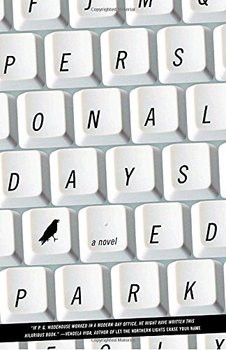
Personal Days by Ed Park

“Most of us spend our days at a desk in one of the two archipelagoes of cubicle clusters. The desks have not been at capacity for over a year now,” begins Park’s novel about a company in the process of downsizing. With little to do, the unnamed narrator and his colleagues spend their days theorizing over who will be the next victim of “the Firings”—after the termination of employees with J names, the Ls in the office agonize over their impending doom. Broken up into three Microsoft Word-themed chapters titled “Can’t Undo,” “Replace All” and “Revert to Saved,” Personal Days features characters immediately recognizable by anyone who has spent time in a cubicle: Pru, a fresh-out-of-grad-school spreadsheet drone, Laars, a wall-punching neurotic teetering on the verge on a breakdown and Jack II, administrator of unwelcomed backrubs known in the office as jackrubs. Rife with office lingo and corporate speak, Personal Days serves as a darkly comic guidebook for navigating the cloud of uncertainty that accompanies the looming demise of a company.

Then We Came to the End by Joshua Ferris

“The fact that we spend most of our lives at work, that interests me,” says Hank Neary, a copywriter in a white-collar ad agency. Ferris’s satire of the American workplace takes place at the end of the 1990s dotcom boom when work is scarce, redundancies are imminent, and tensions are rising. In the middle of this downturn, the struggling agency accepts a mysterious client’s request to create an ad that will “make cancer patients laugh”—an assignment made doubly cruel as rumors spread that Lynn Mason, the supervisor, has breast cancer. This darkly comic portrayal of office culture is populated by eccentric characters (there’s a single, pregnant, and devoutly Catholic woman and a stubborn copywriter who keeps showing up for work despite being fired) and chronicles their increasingly desperate attempts to survive the axe.

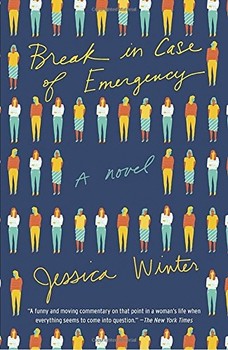
Break in Case of Emergency by Jessica Winter

Jen is a thirty-something former painter struggling with unemployment during the economic downturn. She finds a job at the Leora Infinitis Foundation, a charitable foundation/vanity project founded by a Gwyneth Paltrow-esque celebrity philanthropist who purrs meaningless platitudes (“You are beautiful inside and out. That is the message of LIFt”) and answers her own self-affirming contradictions ( “How do I put my children first and put the children of the developing world first, too. My answer is yes.”). The foundation purports to empower women yet its employees passive-aggressively sabotage one another, waste time devising acronyms for unrealized programs, and ingratiate themselves to their egoistical boss. Trapped in a meaningless job writing memos no one ever reads and struggling to conceive a “hypothetical tiny ­future boarder,” Jen is crippled by self doubt and constantly compares herself to her two closest friends — Meg, an affluent attorney with a beautiful family, and Pam, a committed artist. When her personal life and professional career converge violently at an art exhibition, Jen is left reckoning with some hard truths that eventually gives her life meaning.

This Twitter Thread About a Fashion Show is the Best Dystopian Novel We’ve Read in Ages

I n my secretest heartest of hearts,” artist Jared Pechacek wrote on Twitter, “I have thought that some couture collections look like something you’d put together to amuse the clan when, while foraging, you come across a collapsed mall from the Times Before.” Don’t believe him? He turned the A.F. Vandevorst’s spring 2018 collection into a tale of survival, suspicion, frantic attempts to build community and tradition, and fabulous clothes in a postapocalyptic wasteland.

Jared let us reprint his thread, which outlines the basic plot of his couture dystopia, but we can’t wait for the whole novel (and dare we think he’s hinting at a sequel?)

7 of the Most Evil Older Sisters in Fiction

A s someone who once told their mint-chip-loving little sister that the packet of green wasabi sauce with her sushi was a buttery paste of her favorite flavor (and guess what she did next), I have a lot of time for evil older sisters.

Particularly when she’s not the protagonist, literature usually tries to fit the older sister into one of two pigeon holes. She’s either the impossibly pure, beautiful, and sage elder (see: Jane Bennett, Constance Blackwood, et al.), or a woman of implacable cunning, skilled at devising the best way to execute real trouble on her target sibling (see: everyone below). What follows is a list of all the evil older sisters whose deeds have been immortalized in fiction, and who will make siblingless children feel thankful for their solitude.

King Lear by William Shakespeare: Goneril

The phonic similarities between Goneril and an STD seem apt (if not intentional, the Elizabethan era had a lot of funky stuff floating around). Goneril, the eldest of King Lear’s daughters, earned her spot on this list simply by being the eldest, but truly all of the sisters are at fault here.

Beloved by Toni Morrison: Beloved

Beloved was killed by her mother, Sethe, who intended to save her from a life of slavery. She returns twice to haunt the home of her mother and sister, first as a ghost and, after being banished, in physical form. As Beloved gradually takes over the house, Denver recognizes that the family’s survival rests upon her shoulders.

Rabbit Cake by Annie Hartnett: Lizzie

Evil or sixteen? Always a valid question. Just as you can lie by omission, Lizzie’s evil act is one of desertion, and in a moment when she’s needed most. After her mother drowns by sleepwalking into the river, her sister Elvis (yeah) is in need of emotional support from an older figure. Lizzie, fearing her own tendency to sleepwalk and similarities to her late mother, scarpers. Her evil is not an act of malice, but one of total selfishness.

Junior Miss by Sally Benson: Lois

Lois is Judy’s older sister and she loves to make sure Judy knows who has the power (classic evil sister move). She considers herself the beauty, the most sophisticated and mature, ahead of the game, vastly superior to her rather awkward younger sis, (an awkwardness she never fails to remind Judy of). Whether shopping for clothes (always dangerous territory), or talking about boys, poor Judy rarely gets a break.

The Blind Assassin by Margaret Atwood: Iris

A heads up that the particular evil-doing of one Iris Chase is a spoiler — but also it’s not because her move was pretty unoriginal: an affair with her sister’s husband. The novel is one that gradually reveals itself and, another spoiler here, the novels within. Ostensibly written by Laura, the younger, betrayed sister, and inspired by her loving marriage, we learn that the story we’re reading was actually written by Iris and inspired by the affair. On top of that…actually, nevermind. Too many spoilers.

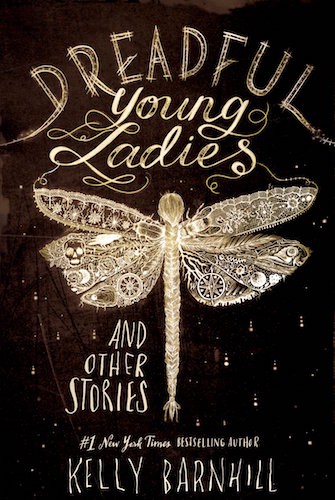
Dreadful Young Ladies by Kelly Barnhill: Fran

From the collection’s title story, Fran is kind of a wet blanket as well as being outright evil. When she was fourteen, we learn that her younger sister was kidnapped. She was kidnapped because Fran, assigned babysitting duty, has no interest in watching her. She was happily having a first kiss, a truth she doesn’t care to admit, so she tells the police that her sister “just flew away.” When Fran gets older, she becomes a step mother, and, once again tasked with care, doesn’t perform much better…

Ashputtle, or The Mother’s Ghost by Angela Carter: the Stepsisters

Before she wrote what is considered her masterpiece, The Bloody Chamber, Carter was translating Charles Perrault’s original fairytales, one of which was Cinderella. In her writing, Carter is known for incorporating and reimagining classic fairytales, so it’s not surprising that she took a crack at a new version of the Cinder struggle. The stepsisters are back, evil as ever, but this being a Carter retelling, there’s lots of fun, new twisted details.

Falling in Love with Francesca Lia Block

Novel Gazing is Electric Literature’s personal essay series about the way reading shapes our lives. This time, we asked: What’s a book that made you fall in love?

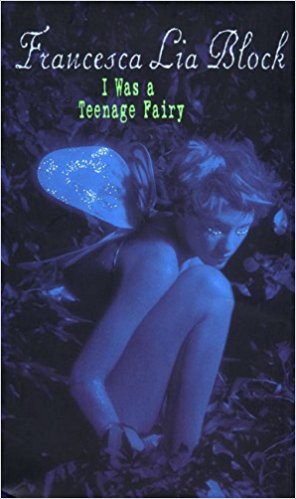
Like all the best love stories — at least all the love stories I spun for myself during the long waiting years — it began with a dose of kismet. A chance encounter in a bookstore, when I wasn’t looking for anything special; I just wanted something light to accompany my assigned summer reading on a family vacation. I’d never heard of Francesca Lia Block. I thought the title was funny: I Was A Teenage Fairy, a winking nod to cliche filled in with an implication of magic. The front cover showed a surly blue girl with wings, and the back cover called it “a potent brew of magic and transformation.” I didn’t think I was craving transformation, but I must have been a little ready for it — because when I, an unusually fastidious child when it came to monitoring the appropriateness of my own reading material, came across the word sex on the second page, I didn’t close the book flushed with shame. Instead, I read on.

Knowing the kind of reader I was, it’s strange to me that I thought two books would be enough for a week on the road. But I couldn’t have picked better: to say I was enraptured would be to understate how fully, how eagerly I fell into the spell. I Was A Teenage Fairy is the story of Barbie Marks, a young California model, and Mab, a tiny, green-skinned fairy (although she hates that word), who may or may not exist (although she would sniff most haughtily at you for doubting her). Like most of Block’s books, the story tilts on the axis of a central trauma; revisiting it as an adult, my stomach lurched immediately the first time Barbie’s mother leaves her eleven-year-old daughter alone with a famous photographer, who beguiles and manipulates her before committing a violation that sends her running from his studio. Like all of Block’s books, it’s set in a version of Los Angeles that teems with a magic far beyond the flapping of fairy wings.

Indeed, Mab was for me the least exotic of the book’s offerings. I was more fascinated by Hollywood parties in abandoned hotels with fountains of wine, matinee idols and aging punks, bass-thumping clubs and vegan restaurants, liquor and drugs, glitter and vinyl and neon and lace, beautiful boys with unwise tattoos on beautiful bodies they used in ways I had only ever abstractly considered I might someday use mine. While the first part of the book centers Barbie as a child in the months leading up to her assault, the second part focuses largely on Barbie at sixteen, trying to regain some sense of sexual agency with a gregarious actor named Todd. I was fascinated by Block’s description of the two of them “flying horizontally in front of the fireplace, their mouths tearing carnivorously, practically cannibalistically, at each other,” so hard Barbie thinks her lips might bruise; I was wildly intrigued by the idea of someone’s body inside mine as “startling and tender at once, completely different and an exact extension of who she was.” Reading and rereading the novel in an RV in the perpetual daylight of an Alaskan summer alongside 1984 — my summer reading, a book which at this juncture in my life also impressed me primarily for its discussion of sex — I dreamed one night of a dark-eyed boy on a beach, our limbs painted golden under the setting sun, bodies moving together in an unspecified, pulsing way. When I awoke I thought: I’m different now. I carried it with the thrill of a secret, like a promise: that before I had lived one life, and now I was stepping into the very beginning of something new.

That would come later, or enough of it that I didn’t feel cheated: the boys and the bodies and the booze, and some of the softer drugs, cocktails in restaurants that didn’t card, hair dye and an eyebrow ring and, just once, a mosh pit, which I spent mostly wishing I’d worn my contacts. Later I would know what it was to feel desire like a need, and to walk with someone through a city that felt like a set for the story of your blooming love. But before, when I still wore an ugly school uniform and knew no boys I could imagine ever wanting to touch, I had Francesca Lia Block. I went home and devoured every one of her books.


Do you believe that every time you fall in love is in some way an echo of your first? I felt this fervently, with a kind of self-indulgent despondence, in the shadow of my first heartbreak, certain I would spend a lifetime failing to recapture the intensity of feeling in which I had spent eighteen months submerged and gasping for air. I felt it with a kind of relief, falling in love as an adult, seeing that overwhelming force as stemming from the shakiness of adolescent personhood as much as from the strength of my heart. Now, seven years into partnership with the same person, I hardly think of this idea at all, and if there’s any truth in it it’s only this: that love, like anything truly powerful, changes us, and so the self that loves now is not the self who would have loved had not that first love passed through her like a fever, like a wave.

When I think now of what Block meant to me then, what comes to mind first is not in fact the scores of salacious details which once so enthralled me. Instead I think of the opening of I Was A Teenage Fairy, which begins:

If Los Angeles is a woman reclining billboard model with collagen-puffed lips and silicone-inflated breasts, a woman in a magenta convertible with heart-shaped sunglasses and cotton candy hair; if Los Angeles is this woman, then the San Fernando Valley is her teenybopper sister.

I had never read anything like this — the extreme personification, the clutter of hyphenates and adjectives, the daisy-chained clauses that don’t resolve the way you expect them to, the warped syntax of a woman reclining billboard model. I remember puzzling over that phrase, wondering if I’d read it wrong, if there was a missing word; then coming to love its strangeness, picking the book off my shelf just to reread this passage. Block devotees, current or reformed, always point to this, and it was above all what drew me into obsession: the incandescent beauty of her prose, its color and texture and fairy-tale rhythms, sparkling with phrases like “glamorized by light” and “quiversome twinkle.” Her writing struck me, to borrow a line describing Mab’s wings, as “gorgeous, ephemeral, shiveringly exquisite.” I even loved the words that always appeared on her back covers to describe it: lyrical, calling up associations to myth and music; lush, crowded with life. As an adult I can see what my mother, ever the literary snob, meant when she wrinkled her nose after I read her a passage: “It’s a little precious, isn’t it?” But at the time, I could only think: yes, shouldn’t it be? Precious like rubies or gold, shining and ornate; precious like a secret, illuminating my life, like a love.

And like any love, it changed me. I wrote poems and vignettes overflowing with ineptly executed traumas and imagery about mermaid’s songs and crystalline tears and the dripping flesh of fruit; I typed up exercises in free association, trying to make my words as strange as possible, trying to achieve the degree of radical originality I perceived in Block. I reread pages not to revisit what had happened but to burn the cadence of favorite paragraphs into my throat. As a kid I had loved stories, loved characters; now I loved language. Words were no longer merely a tool for communication but a source of pleasure, the source of pleasure, in and of themselves; language took on an aesthetic dimension, became almost a sensual experience, the right sentence leaving me awed with a nearly physical ache.

As an adult I can see what my mother meant when she said ‘It’s a little precious, isn’t it?’ But at the time, I could only think: yes, shouldn’t it be?

Of course I moved on, to other writers, other loves. But just as my high school sweetheart left me with a lingering soft spot for shaggy hair and a worn leather jacket, I see Block’s legacy in the traces of other writing I have loved: the hallucinatory ecstasy of Clarice Lispector, the dazzling precision of Zadie Smith, the bloody pulse of Megan Abbott, even the unwieldy gorgeousness of F. Scott Fitzgerald’s Tender is the Night. When I pick up a book, what I still hope for more than anything is to be knocked breathless the way I once was by Block’s woman reclining billboard model; and when I write, I ask myself, is this honest, yes, but always is this beautiful, too.


Technically the affair began June of my thirteenth year, but when I reach into the untrustworthy sea of memory the book floats tangled with private occurrences from summers before and after, a whole stretch of life collapsed into a single impossible July: sun peeling our shoulders and water cool along our shins, the air in the mornings cold at the summer camp by the lake, holing up in our bedrooms and each other’s bedrooms, seeking refuge from the heat and the lonesomeness of domestic life. Admiring my tan lines in the shower, not for their aesthetics but as visible proof of the passage of time, temporary souvenirs of my excursions. Summer was the only time I listened to the radio, and so there’s a selection of songs that seems to me to have come into being somewhere between our bunk and the mess hall: “A Thousand Miles,” “Say My Name,” that “Heaven” remix, “Drops of Jupiter,” which I liked because I thought the lyrics — she acts like summer and walks like rain — sounded like something out of a Francesca Lia Block novel, which strikes me now as simultaneously a good joke about Train and a mean joke about Block.

In fact that’s inaccurate: I didn’t enjoy listening to it — I hated the vocal, a creaking thing I, raised on musical theater and Enya, had no framework to appreciate — but I liked the lyrics so much, and treasured so deeply the association I’d formed between them and my current literary obsession, that I forced myself to find a way to like the song until in fact I did. I bought the album and would listen to it thinking of a line from Block’s The Hanged Man, where she describes a man with a voice that “cracks like ice when you pour the liquor over.” I love to laugh about this now: the early signposts on our road to something like desire. Here’s another one: listening to a line from that Sting song, “Fields of Gold,” feel her body rise / when you kiss her mouth, and thinking, I want someone to do that, deliberately, like I was practicing for the real wanting, even as the line mostly filled me with wonder — why would a kiss act on a body like that? How much would you have to feel for your body to act on its own accord?


I think of this time with a tenderness darkened only by the awareness of how lucky I was to have it: the long unfurling edge of childhood, a body coming to know itself new and slowly readying for what was to come. And it wasn’t only the body, or it was but only in that the heart is part of the body, as is the mind. I remember also reading A Tree Grows in Brooklyn, the first book to ever make me cry, and loving the way it gutted me: the sudden access of a new depth of feeling, my heart split painfully and beautifully open. I thought Train was sexy, or what I imagined that word to mean, but I also came to cherish them as the first unpretty music I ever liked, a door that led later to nights lying in bed, listening to Dylan. I read some Louise Glück poems for class and purchased her complete extant works, poring over them like holy texts, in awe of how much could be communicated in a few short lines. Which is to say that puberty was a bodily awakening, but it was an intellectual one, too; and threaded through all of this, entwined with Baz Luhrmann movies and Tori Amos records, was the dark beauty of Block’s sentences, the match on kerosene that showed me a path to what I loved, and left me eager for more.

It’s funny: these were such unhappy years. My family was fracturing across a series of crises that left me intimate with fear and loss and guilt; in response, I was winding myself ever more tightly into patterns of thought that would eventually metastasize along with all the things I buried into a long and deep illness. It startles me to realize that this story was happening alongside the other one, that during a time of bitter dissolution I could still find richer ways to love beauty, could still begin to understand what it was I craved.

But maybe that isn’t so strange. Writing on the myth of Persephone, the poet Eavan Boland describes the fateful pomegranate as “the proof / that even in the place of death, / at the heart of legend … / … a child can be hungry.” What was I if not, in Boland’s phrase, a daughter lost in hell? Dante had Virgil; I had Block and her glittering, menacing Los Angeles, a city as mythic in her telling as the underworld itself. And if her landscape’s wild beauties made it enticing — thrift store prom dresses and vines of jacaranda, Tarot cards and crumbling mansions with famous pedigrees — the darkness was what made it real. I would love to be able to tell you I never fell for Block’s famous Weetzie Bat books because of their egregious racism (she names her daughter Cherokee!), but I was clueless on that score; really their fundamental sunniness never connected with me like the pain at the heart of her other works. I was sheltered and lucky but I knew this much: that your world is not a sturdy thing, that there’s little that can be counted on. I knew that parents don’t always love their children, and even the ones that do can’t always protect them. Any fairy tale I could believe in needed to understand at least this much.

I knew that parents don’t always love their children, and even the ones that do can’t always protect them. Any fairy tale I could believe in needed to understand at least this much.

Barbie wishes Mab into her life one night after a dinner table fight between her abusive mother and absent father. Living in a house she hates, clinging to the fairy pictures she knows inside herself are real, she speaks into the night, “Please let me see you. I think I really need to see you.” A hungry child, reaching out for what will feed her soul. Block came to me in a similar way: at a time when I wanted to escape, she offered not the impossible promise of a better place but a clear-eyed faith that even in the ugly, vicious world we share, there’s somehow space for magic, still.


Sometimes I resent the way sex has monopolized our vocabulary for desire. I used to fight about this with a friend: yes, fine, this poem/song/image is about sex, but can’t it also be about everything else? Has even sex ever once been solely about sex? Haven’t you ever read a poem, or listened to a song, or walked home through air like amber in a late summer twilight and felt your skin freshly sensitive, your breath staggering or coming faster, felt the delicious ache of a desire that was its own fulfillment? I worry that by telling the story this way, with books predating boys, I’ve made it seem like the former was a tame and childish prequel for the latter, like these novels only mattered as a rehearsal for a more grown-up strain of love. In reality these were two awakenings, asynchronous but parallel. Even to divide them as belonging to mind and body rings false; these were stories of the heart, and the heart belongs to both domains.

Some desires are easier to nurture than others. At thirteen I wrote, I played piano, I spent hours at a time drawing in my sketchbook; by the end of adolescence I did none of those things. My creative longings embarrassed me; I could not imagine anything more humiliating than to be caught out at working hard on something that might not be good. I tilted my head and crooned oh, you’re sweet whenever anyone acted impressed, laughing girlishly if they pressed the issue. It took years to admit to myself what I had once taken for granted: that I find pleasure in the puzzle of creation, that I believe I have things to say. That I want to make beautiful things, and sometimes to put them into the world. No wonder my first romance was so fraught: it was by that point the only thing I allowed myself to want.



Block understood this; sex is many things in her books, but it’s never the sole source of passion. Her heroines are painters and dancers and screenwriters; art is something that sustains them or something they lose and come back to or something that heals. At the end of I Was A Teenage Fairy, teen model Barbie Marks transforms herself into photographer Selena Moon, finding power and a new life in becoming the one holding the camera, deciding what to show. I wish I had paid more attention to this; I wish I’d learned earlier to believe my desires worth following. “For magic is belief,” Block writes in Echo; I wish I’d seen that her books called not just for believing in magic, but for the magic of belief.


Last year on some nostalgic impulse I did something I hadn’t done in ages: I read a Francesca Lia Block book I’d never read before. It was June of my 29th year and I was almost unrealistically busy, writing papers on the train from work to grad school and doing the assigned reading in bed until I passed out. I wasn’t looking for anything special; I just wanted something light to distract me for a few minutes at a time from the unrelenting press of my life, something that would make it feel like summer even though I was only ever outside to walk to the next place I needed to go. I picked up Pink Smog, a middle-grade prequel to the Weetzie Bat books, and found what I expected: lists of colors and foods and the details of homemade outfits, a series of set pieces scattered around L.A., a boy who may be an angel or a hallucination or something in between.

But I found more, too. I found Weetzie at thirteen, with parents who can’t care for her the way a child needs to be cared for: the daughter lost in hell, the raw loneliness of a child left to find her own way to what she needs. I found a story about a kid who learns to believe in beauty, not to escape the world but to be able to live through it. And I found, at the very end, a line which let me articulate to myself why I clung so desperately to these books all those years ago: “The worse things get, the more you have to make yourself see the magic in order to survive.”

It sounds so simple; it feels so hard. Maybe this was Block’s greatest gift to me: that at a time when I was starved for beauty, she made it seem easy. Like magic. Like falling in love.

A Crash Course in Diversifying Your Bookshelf

I n the past year, I’ve made a conscious and intentional effort to read in an inclusive and representative way. For me this means reading perspectives that differ from mine, about experiences that are new to me, and learning from people who have lived in ways that offer precious teachings. It also means reading nonfiction and fiction in equal measure. Consuming the news and nonfiction about important but heavy topics can be emotionally draining; whereas poetry and comics can uplift us when we feel weltshmerz or despair.

This is why I’ve put together a list of books by writers, poets, and artists from a range of backgrounds. When read in the order presented, it creates a narrative arc of its own. The list builds from a slow crescendo of more accessible books to heavy-hitters that draw on academic and historical research, finishing with a few books that unearth the kinds of futures we want to create.

These titles will humble you and fill you with wonder. But most important, they will hopefully also inspire you to create your own stories in ways that are most representative of your experiences.

So You Want to Talk about Race by Ijeoma Oluo

If you are a white person, this is essential reading before engaging any racialized or marginalized person in a conversation about race and racism. If you are a person of color, you may find new ways of understanding other racialized people, while also feeling a sense of validation in realizing that your experiences of racism are shared by many others.

I started following Oluo on Twitter last year when I realized that my social media feed was not very representative of my values or the types of thinkers I wanted to learn from. I am always learning so much from her articles and pithy tweets. This book is the epitome of her compassionate yet disciplined teachings on how we can all learn to think, talk, and act in anti-racist ways.

She of the Mountains by Vivek Shraya

In this beautifully illustrated novel, Vivek Shraya gracefully braids two stories together to ponder issues of sexual, gender, and racial identity and to re-imagine the Hindu myth of the elephant god Ganesha.

I immediately felt connected to this book because of the evocative way Shraya portrays how to love oneself as we grow up and into our bodies and minds.

Shraya is also a multi-talented creator who is also a visual artist, poet, musician, and associate professor of creative writing at the University of Calgary. I had a hard time selecting which of her writing to include—her collection of poetry “even this page is white” was also one of my favorite poetry collections on identities and self.

Why I’m No Longer Talking to White People About Race by Reni Eddo-Lodge

Eddo-Lodge’s book has such a brilliant title based on a viral blog post of the same name. I think most people of color can relate to the feeling of not wanting to talk to white people about race at some point in their lives. So steep a cup of tea and sink into Eddo-Lodge’s book to immerse yourself in the historical and current issues of anti-blackness and racism in the motherland of colonialism.

Both Canada and the U.S. can thank Britain and other European countries for the origins of our institutional racism, so it only makes sense for those of us living in these countries to learn about one of the birthplaces of white supremacy.

How Does a Single Blade of Grass Thank the Sun? by Doretta Lau

I grew up mostly in Alberta (the so-called “Texas of Canada”) and then lived in Montreal, Quebec for university before moving to Vancouver, British Columbia in my early 20s.

Once I arrived in B.C., I realized I had never before seen, befriended, or interacted with so many other Asians in Canada. I felt a sense of belonging I had never experienced in Alberta or Montreal. Unfortunately, this was also the time that anti-Asian sentiment started rising in Vancouver.

This slim volume contains short stories that portray the struggles and pleasures of the North American Asian experience in a fresh and dynamic way.

The Solidarity Struggle edited by Mia McKenzie

As I read more books that represented different identities and bore witness to the many ways people are racialized and marginalized, I realized that I did not have a working definition of what meaningful solidarity looked like. How could I, with all of my privileges, even begin to act in solidarity?

The Solidarity Struggle helped me start the conversation with myself. It contains essays and comics by a variety of Canadian and U.S. writers/artists that will get you thinking about what meaningful solidarity looks like for you.

A Place Called No Homeland by Kai Cheng Thom

Kai Cheng Thom and I attended the same university in Montreal and I loved reading her weekly column in the McGill Daily, where I worked as an illustrations editor and contributor.

Thom writes about her identity as a Chinese trans woman in a transphobic world in a way that cuts straight to the heart. This collection of poems by this young Chinese-Canadian literary genius is refreshing, intimate, and unapologetically proud.

The Right to Be Cold: One Woman’s Story of Protecting Her Culture, the Arctic, and the Whole Planet by Sheila Watt-Cloutier

I lived and worked in Iqaluit, Nunavut during my masters degree in public health. During my brief time in the Canadian Arctic, I learned as a qablunaaq from “down south,” about the many Inuit environmental activists protecting their land and animals from the devastating impacts of human-made climate change.

We hear a lot about Greenpeace and other non-Inuit organizations in Canada and the U.S., but those narratives often erases the decades of activism and the current efforts of Inuit people, especially the women, in protecting their native land from exploitation and degradation.

Watt-Cloutier’s memoir recounts her life story as a proud Inuk woman to provide a compelling argument for the importance of protecting the Arctic, not just for the animals, but the strong people that call the ice and tundra home.

American Born Chinese by Gene Luen Yang

This classic graphic novel provides a nice break from all the text-heavy volumes in the first half of this list. Part of representation and inclusivity is to recognize that everyone learns differently and that some of us may find images more compelling.

Gene depicts the complexities of growing up Asian in predominantly white spaces by integrating the famous Chinese myth of Sun WuKung, the Monkey King. There is also a very poignant telling of the “gross lunch” story that most Asian kids can relate to. I have many sad memories of tossing away a delicious Chinese lunch lovingly prepared by my mother in an attempt to belong in the White Albertan cafeterias; I didn’t realize at the time that I was also tossing away a tiny bit of my sense of self in the process.

Mixed Race Amnesia by Minelle Mahtani

How do mixed race, biracial, or multiracial people feel about these identities and what (if anything) does it mean for them?

Dr. Mahtani interviewed mixed race women in Toronto to center their experiences and to critically discuss how their narratives fit into Canadian and international assumptions around the so-called “post-racial future.”

Salt by Nayyirah Waheed

Life is tough, and some days we need a poem to help pick us up again.

Waheed’s first collection does just that. Simple, short, and poignant, her poetry is an arrow that strikes straight and true. I often go back to this book in between dense chapters in the other nonfiction books on this list. Reading about race and racism can make us sad, make us angry, and often trigger traumatic memories.

Poetry is healing, so take a swig of this bittersweet medicine.

Policing Black Lives: State Violence in Canada from Slavery to Present by Robyn Maynard

If by this point you decide that you’re ready for the full truth and nothing but the truth, dive into Maynard’s detailed historical account of how anti-Blackness is pervasive in most parts of Canada’s institutions.

Canada often sells itself as a beacon of multiculturalism and diversity, and although in ways it is more tolerant than the United States, we can’t ignore the incredible exclusionary and violently racist policies that mark our history and our politics today.

By obscuring our racism behind a neo-liberal veil of tolerance, we are not confronting our own discriminatory policies in a settler-colonial nation that has said historically said “fuck you” more often than “thank you.”

Indian Horse by Richard Wagamese

Even though I moved to Canada as a young child, I did not learn about the horrifically shameful history of the Indian residential schools until I was an adult. Even then a lot of the stories are sugar-coated in white icing, erasing the intergenerational traumas that continue today as a result of the atrocities carried out by Christian institutions and their leaders.

Wagamese’s novel depicts the tragedies of residential schools (although they were more like child labor camps than schools) in the 1960s to ‘70s through the life of Saul Indian Horse, a young First Nations boy who escapes the horrors of the school through his passion for hockey.

This chillingly beautiful book has also been adapted into a movie of the same name.

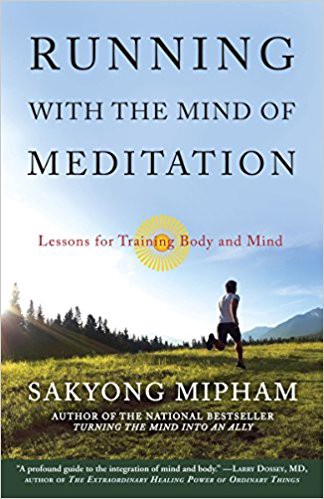
Running with the Mind of Meditation: Lessons for Training Body and Mind by Sakyong Mipham

And now for something completely different.

Although many of the writers included talk about race, racism, immigration, and other political issues, I bet at least some of them would also like to write about all the other parts of their identities. I like to run and bike, but I rarely see or hear about famous recreational runners or cyclists of color.

Mipham’s musings on running meditation are a reminder that we have to take care of our bodies and minds to recharge, not just so we can be a better advocate and activist for the causes we care about, but because our bodies give us so much on a daily basis and are intrinsically worth caring for.

The Three Body Problem trilogy by Liu Cixin

I wanted to end this playlist with books that look at how to shape humanity’s future.

We know that our past and present are full of racism, violence, and powerful resistance, but what will our world look like in 10 years, 100 years, 1000 years?

Cixin’s delightful and expansive trilogy centers people of color such as Latinx, Chinese, and Australian Aboriginal characters rarely seen in mainstream science fiction. It also respectfully challenges our ideas of masculinity and gender expression in ways that I have never seen in American science fiction while portraying Asian women as prominent scientists and thinkers.

Afrofuturism: the World of Black Sci-Fi and Fantasy Culture by Ytasha Womack

When it comes to Black and Indigenous people, the very act of surviving is an act of resistance. Imagine a future where Black and Brown people are not only surviving, but thriving and telling our own stories.

Afrofuturism is an artistic movement spanning various areas of the creative spectrum, such as film, music, and the literary and visual arts to imagine Black people in our futures. Womack takes us through the history of the movement from legends such as Sun Ra, Parliament, and Erykah Badu to contemporary innovators like Andre 3000, Missy Elliot, and Janelle Monae.

Afrofuturism reads as the ultimate list of who to watch and listen to as we join together to imagine a future that is inclusive and representative.

Terese Mailhot on How to Talk to Men, Children, and White People

I read Terese Marie Mailhot’s memoir Heart Berries once, then read it twice again. In her book, Mailhot explores the traumas of her life: her impoverished upbringing on the Seabird Island Reservation, the loss of her eldest son in a custody battle, her fractured relationship with her future husband. When the author is hospitalized with a dual diagnosis of PTSD and bipolar II, she requests a notebook as a condition of treatment, and begins writing herself back to health. Mailhot and I spoke last week about the kinds of colonization she’s experienced in her writing career and life in general: what men take from women, what white society expects from other cultures, and why writers devour the insights of others.


Deirdre Sugiuchi: You describe Salish stories, stories told by speakers of the Salish tribes, as being sparse and interested in blank space. Can you describe how this is reflected in your art?

Terese Mailhot: Language is extremely important to us. Every word counts and cannot be convoluted. There’s a lot of power in trying to illustrate the truth of something. I had to render it in a really simple way.

DS: I’m obsessed with process, especially in regards to clarity. Do you have any specific methods to achieve clear prose?

Image result for heart berries by terese marie mailhot

TM: People think I’m experimental. I don’t really like that word. It’s really high-brow compared to what I do, which is strip all of the things that seem like unnecessary contrivance or bravado.

DS: You write from the perspective of a Native writer, but you also address the dominant culture. Can you discuss writing with this double consciousness?

TM: With the essay Indian Sick, I’m writing first to (my husband) Casey. It starts with desperation. Casey is a white man and was raised with some sense of normalcy. That whole essay is trying to navigate and impart the truth of my story to this man who can’t ever fully know the disparities between my circumstances — those of an Indian woman — and his. That letter became about something larger than Casey by the end. By the end it became about my father. I think in the beginning it was really important to bring Casey in and the only way I could do that was by explaining what he couldn’t understand.

I could not look at being Indian; I had to look through it.

It’s the one occasion I felt conflicted about using the second person and speaking to Casey, and a lot of that is the culture of me and everything that signifies why I feel so deeply about my world and the history of genocide that we are dealing with. I think that conflict is present there on the line level, but when I was writing the book, I had to place myself at the center of the story. I could not look at being Indian; I had to look through it.

The audience should always be with me and should never feel like I’m withholding my heart from them, but sometimes I’m not giving them the thing that maybe they expect. A lot of that was the resistance to an MFA aesthetic, a white MFA aesthetic of show don’t tell. There’s a lot of telling in the book.

DS: I never could do an MFA for that reason.

TM: Most are operating within a system of competition, of things that feel so anti-art, so degrading sometimes. They kind of shape you artistically into something that most of the time you are not, especially for people writing outside of old-establishment aesthetics.

DS: Several years ago I read this paper by Sandra Bloom called Bridging the Black Hole of Trauma: The Evolutionary Significance of the Arts which, among other things, addresses the ceremony of creating art in Native American culture. You are clear that your practice of ceremony differs from the tradition with which you were raised, but can you discuss how you use your writing practice as a healing ceremony?

I was less sick when I started purging the truth of what happened to me on the page.

TM: I think the book itself is like an incantation. There are aspects, especially in the latter part of the book, that feel like a spell that conjures my mother. When I read it out loud, especially the passages about my mother, it feels sacred and it feels powerful, and something happened when I started writing that made me feel like a human being and made me feel better about her.

I was able to write the explicit truths of what happened to me. I can’t even speak it, but I can write it. When I start reading the passages about how I was able to say one word “father,” then I was able to say two words, that was literal. I was learning the language of how my father hurt me. There was something about the physical act of writing that made it less visceral. I was less sick when I started purging the truth of what happened to me on the page. I became physically less anemic and I was more able to function in the world.

I think everyone should have that thing that illustrates the nature of themselves in a physical way.

DS: One of the themes in the book was you taking from men, conditioning them, and them taking from you. That list at the end, where you detail how you took back when you were hurt by men, was incredible.

TM: I didn’t know that was going to come. I knew I wanted to write about these things that had happened but I didn’t want to give those men characterization and their own pages. I didn’t want to illustrate all the bad interactions I’ve had with men, just to assert that men had maltreated me and my body and my spirit and my intellect. I listed them, and the way they hurt me, and how I reacted, and doing that without shame was important for me. Making it matter-of-fact was necessary.

DS: You begin by talking about taking from men, but at the end you realize that you have given away too much. Can you discuss how this is reflected in the culture at large, be it on the tribal or social level?

TM: I think straight women sometimes have to negotiate with themselves, asking, is this the best of all possible worlds with men? We’re mistreated so often and victimized so often that sometimes we put up with things we shouldn’t.

It was important to say I was put in a place of exploitation, where I was subjugated and objectified for my body, and then I just fought against that as much as I could, working within that system. I feel like that’s important for a lot of native women to hear: if you want something, to get it from the world however you want it, and I hope and pray that they find true independence from men, not that they are the worst people. There is something so profound in being able to buy yourself dinner and not having to rely on someone.

DS: Your grandmother was a crucial early figure in your life. She attended a reservation school where “parasites and nuns and priests contaminated generations of our people.” Can you discuss the impact of your grandmother going to the reservation school on your family and your culture?

I feel like resilience ascribes this value to certain types of survival that don’t interest me.

TM: Residential school has stripped many indigenous communities of their languages and communal practices and it’s difficult to talk about it because residential schools were mostly led by Christian missionaries and priests, so that has also infected the way we view ourselves as human beings. One thing Christianity gave people was shame. It’s not as if we didn’t have shame before colonization, it’s that shame operated differently. You didn’t need to be contrite. You had to be knowledgeable about the self and there is a distinction. My grandmother had to learn to survive in an environment that wanted to assimilate her into white life, white ways of knowledge and thinking and interacting with the world. After she attended residential school, she moved back to be with her people and she taught nursery and she helped kids. It felt tender to sit next to her and pray, but what wasn’t tender was that she cleaned maniacally. Everything had to be immaculate. The cleaner the environment, the closer you were to God. I would see her cleaning as if somebody was watching her and I remember distinctly thinking this is how she cleaned when the nuns were around.

She spent a long period in a tense environment like that where she was being monitored and shamed when she didn’t do the right thing, and I wonder what kind of grandmother she would have been outside of those parameters and experiences. There’s this thing of being beyond resilience. She was exceptional. I don’t know how I could have lived through what she lived through and have been so kind.

DS: In addition to exploring your childhood in your book, you also explore your relationship with your own children. You describe bonding with your son and nurturing your son even though you did not always have a nurturing relationship with your own mother. You say, “Children can be teachers too.” I know that having my own son impacted me and my connection to my work. How do you think your sons have influenced your art?

TM: They’re just better people than we are. Children are just better. Their job is to push you around and test you, and if you raise your voice, you’ve lost and they know that you’ve lost. When I had Isaiah I was dealing with postpartum depression, and I had subpar healthcare, and I was on my own, and I had just lost my first son. I found myself uncontrollably sad, and I needed help. There wasn’t any. So, I prayed for patience to hold my son, and look at him in the eyes, and not see the son who wasn’t there — or how they looked so much alike. I had to pray for the strength to do it alone. Once I started throwing myself into putting Isaiah first, everything fell into place, and I was able to love without fear. I stopped being scared I wasn’t good enough to be a mother.

I had to learn to love somebody when I felt like I was nothing. I was broke, and loving him wholly without considering losing him, it taught me something about love. He opened my heart in a way that nobody else could have. Nobody else could have made me so tender and human. Him needing me made me a better person. I feel like children do that to us if we answer the call. I feel like when you answer that call, you see how good the world can be.

DS: You discuss resilience in your book, particularly white attitudes about resilience. You say “It’s an Indian condition to be proud of survival but reluctant to call it resilience.”

TM: I don’t like the term. I don’t want to be known for my ability to survive because it’s like they are asking you to get over it as they are calling you resilient. It’s like I’m here smiling but if you were there crying would they still call you resilient? No. But are you still a survivor? Yes.

I feel like resilience ascribes this value to certain types of survival that don’t interest me.

DS: Because it devalues the people who don’t make it?

TM: I’m suspicious of most words people use to define Native people. I feel like it’s really interesting to examine the words they are using.

I always hear the term raw used to describe work by people of color, or by a woman who’s been abused. I’m suspicious of how they are using the word, although I don’t mind the word because I think I try to cultivate art that appears vulnerable. Plus, the idea of resilience is the idea of recovering quickly from something. I feel like, my god, we’re still in the midst of it. We’re not even out of the storm that is colonization.

DS: I read your essay where you discuss decolonizing your narrative as a Native writer. It made me wonder what it would be like if non-colonized people were examined the mindset of colonization thoroughly and regularly, even in today’s world, which is considered “post-colonial.”

TM: I think it’s so weird because a lot of times during workshop, even when I do fellowships, and when I go to this really nice place where there’s a lot of young writers and there’s a lot of older writers who are trying to finish their books, sometimes I’ll have a cohort, a friend who writes about their experiences and they come from a different culture, like Korea or India, and immediately the whole room, even the POC writers, will sometimes be like, “Wow you gave me some insight into the world of x.” That’s not a writer’s job. Our job is to make art. Was it good on its own merit? That’s what’s important to talk about. That to me feels like decolonization because people want to colonize work. They want the insight. They want the experience of it. They want to devour it and own it. Later, when they talk they want to be able to say, “Oh let me tell you this fun fact about x culture. I just read this essay.” I feel like that is a very western thing, to want to colonize the insight gained from experience, and know it and own it and possess it and then impart it to other people as an authority. I think it’s important for people to understand that my work is supposed to connect you to me as a human being and I want to be treated so afterwards, you know? Not as a cultural artifact.

My Butch Lesbian Mom, Bruce Springsteen

When we say Bruce Springsteen is Dad Rock, what kind of father are we talking about? An average man made affable in retrospect? A bullseye for blame? A boss, a cop, a drill sergeant? Or better yet, a Daddy, suggestive of the erotic hidden behind the familial?

Though I know plenty of moms whose devotion to Bruce runs fiercer than any dad could know, there’s a reason why we think of Springsteen as Dad Rock and not Mom Rock. The reason is that historically, over Springsteen’s nearly 50-year career, the dads have laid claim. In Springsteen, straight white dads of a certain age have seen their ultimate dad fantasy: in the words of Helena Fitzgerald, writing about Springsteen’s ultimate dadliness in Catapult, “All a dad has to do to be a hero is show up.” But my broke, queer generation has little compassion for the Boomer nonsense of better days, especially when their nostalgia renders them fonder of their own childhoods than their actual children’s futures.

That interpretation of Springsteen’s significance is reductive, hampered by both generational and gender barriers. Behind the assumption that his music speaks for the disaffected male, hard up and laid off, hides the assumption that class problems are either genderless or primarily a cis male concern — but queer Springsteen fans see through that lie. Maggie Nelson has written about the “many-gendered mothers of the heart,” a form of queer kinship that is both an intimacy and an identification. Springsteen has been our cis male Boomer dad for way too long. It’s time to consider the possibility that he might be our butch lesbian mom.

Springsteen has been our cis male Boomer dad for way too long. It’s time to consider the possibility that he might be our butch lesbian mom.

I am not the first to note Springsteen’s queer or even specifically lesbian appeal. If you are queer and the stereotypical Springsteen fan has always seemed to be the wrong side of Daddy to you, consider that tramps like us are especially born to run. He is not only for us, but also stands with us, and in a fashion, could even be one of us. The best male rock stars are barely, or many, gendered, and seldom straight: Prince, Bowie, Jagger. Consider Todd Haynes’ biopic of Bob Dylan, I’m Not There, where the most convincing and curious portrayal of the star belonged to Cate Blanchett. And yet, Bruce (a butcher name there never was) is harder to claim as ours. Even if he shared a hot kiss with saxophonist Clarence Clemons at every concert, even if he wrote a song for Donna Summer to protest the racism and homophobia of the anti-disco movement, even if he sang a song called “My Lover Man,” even if he admits in his memoir that his Born in the USA look of bandanas and muscles was “Christopher Street leather bar” gay, the ardent identification of the dads seems to disallow any other kind of desire for him. But in the same way you can know that you are gay before you know what it means, from a young age, I recognized Bruce Springsteen as the butch mother of my hungry heart.

When I look at Springsteen, I might think Daddy, but I think Mommi, too. In the same way his protest song “Born in the USA” has been misread as patriotic, his approach to masculinity has been misread as cis male, when it is in fact too performative to be anything but genderqueer. (I’m not saying that Bruce himself is genderqueer, to be clear, but his showmanship is.) Perhaps this is why I have never felt left out of his music because I identify as a queer woman — though I do feel left out of the fandom sometimes, in spite of my Central Jersey birthright, because I feel that the army of dads (and straight, white dads specifically) have claimed him so decisively. Much like Chris Christie on the beach, their fandom takes up all the space on what should be an abundant shoreline of possibility.

In the same way you can know that you are gay before you know what it means, from a young age, I recognized Bruce Springsteen as the butch mother of my hungry heart.

Crowning a cis, straight white male as a butch icon is admittedly giving them more than their share — must everything be about them? As Hilton Als rightly asks in his review of Springsteen on Broadway, is it even “possible for straight white men to empathize with anything other than themselves?” But there is a disarming, queer playfulness in the art of labeling straight men as lesbians in disguise. It’s a statement of protest that masculinity doesn’t belong to cis men. The Toast was once a great agora of declaring famous cis straight men as either lesbian icons, singers of lesbian anthems, or themselves just regular old lesbians. Mallory Ortberg, in particular, has kept this art alive. Over at BuzzFeed, Shannon Keating has recently identified Jack from Titanic as a role model for baby soft butches, and Grace Perry has examined the lesbian attraction to Harry Styles. But the fun isn’t limited to snatching straight men from the strictures of heterosexuality. After the death of George Michael, Deb Schwartz paid her respects to our butch queen in pearls, may he rest in freedom.

It takes a certain amount of queer clairvoyance to sense a lesbian vibe from an obvious non-lesbian. The heart of butchness, however, is sometimes more literally worn on its sleeve. Als notes that Springsteen’s “butch persona” allows him to reveal the smoke and mirrors behind the construct of masculinity. It also allows him a sense of empathy. As Walt Whitman wrote, “Agonies are one of my changes of garments / I do not ask the wounded person how he feels, I myself become the wounded person.” And as with that other American poet, masculinity in Springsteen is as much a costume as it is a work uniform. Butchness is a way of wearing masculinity that plays on revealing and concealing emotion, an emotional identification as much as a sartorial choice.

The butchness Springsteen wears covers up hurt and vulnerability like a soft t-shirt under a leather jacket.

The butchness Springsteen wears covers up hurt and vulnerability like a soft t-shirt under a leather jacket. Look at the cover of Darkness on the Edge of Town, the album that taught me not only how to dress, but how to stare. In his tight jeans, v-neck tee, and leather jacket, Bruce poses in front of a floral wallpaper, not a hot rod or a bike. Add to that messy wavy hair, biker boots, and a flannel unbuttoned a little too far, and I had my look down. Fortunately for me, each of those items I inherited from my mother, who loved menswear and told me there were no rules for how to dress. I was free to believe that what looked hot on him would look hot on me, too, free to shrug off the old confusion of wanting him versus wanting to be him. Depending on my mood, I was prepared to be a soft butch by day and a hard femme by night. All I needed was my girl. You better get it straight, darling.

When I listened to Springsteen in my adolescence, I didn’t switch the pronouns, and in turn learned something about the mutability of gender, the ease with which you could identify with the man singing or the woman to whom he sang, or even that there were more options than those two roles. There was possibility for me in these songs, a possibility of something that looked like equality for all expressions of gender, and permission that if I needed to feel like a gender different than the one I was told to take, I could. There is the possibility for those of us who do not identify as men to hear these songs about, allegedly, straight male desire and still see something of ours in them. I’ve been listening to “Thunder Road” my whole life, for example, but it never occured to me to identify with Mary. I was the aggressive one waiting with the car, making my butch plea to coax out my closeted femme crush to run away with me. The song is beloved because the stakes are dire yet the win feels assured. Growing up without the omnipotent cultural promise of a happy romantic ending afforded to straights, it was always hard to imagine what it would feel like to be promised a win. But perhaps in “Thunder Road,” their happy ending is only promised so long as queerness remains subtext.

Sometimes queer love only promises disappointment, late nights wondering whether it is better to speak when you know it will turn out badly. Consider “I’m on Fire,” a song which performs its gender roles to a T: “Hey little girl, is your Daddy home?” It’s a song of butch torment and “bad desire,” of messing around with a straight girl with a boyfriend and knowing your love is futile, even if it runs hotter than his. This bad desire lashes out until you let it out: “At night I wake up with the sheets soaking wet / and a freight train running through the middle of my head / Only you can cool my desire.” Here’s Sappho, in counterpoint: “You came and I was crazy for you / and you cooled my mind that burned with longing.” It is hard to imagine straight desire feeling this bad, but if anyone can convince me, it’s Bruce.

The butch/femme pair is a classic rock n’ roll dyad, with its shades of soft and stone. Unlike an imposed gender binary, the butch/femme pair inherits no violence and is based on adoration and complementarity rather than hierarchy. (The femme is just as much a take on femininity as butchness is to masculinity — it’s not a catchall term for women.) The pair has roots in the post-war, working-class lesbian bars that probably bore some bizzaro resemblance to the sort Bruce had to drag his dad out of, as he narrates in his memoir. In the novel Stone Butch Blues, Leslie Feinberg describes these bars as places of solace and rowdiness, safety and danger, considering the violent police raids to which such bars were always subject. When I first read Stone Butch Blues, it felt like a companion text to (or better, a dyke reboot of) Darkness on the Edge of Town or The River, insofar as it not only establishes queerness as a working class concern but it also traces the history of the queer struggle as concomitant with class struggle. Springsteen’s own fraught relation to masculinity is inseparable from the class-related concerns of labor and exhaustion that all genders share, but experience differently. The will to fight against the desperation to leave, the urgency of repressed pain breaking through, the drive for survival that runs hotter than hope — all the familiar themes are there.

In Stone Butch Blues, as in Springsteen’s music, intergenerational poverty and exploitation are the impediments to making it out alive, and in a body that feels like yours. The difference is, in the novel, the laid-off factory workers and union rabble rousers are not only cis, white, straight men. The protagonist, Jess, forges solidarity with the indigenous people of this country, with black civil rights crusaders, with sex workers, and perhaps with the greatest difficulty, with her own burgeoning queer community as she tries on new words to describe her relation to gender and desire. Springsteen gives voice to these communities, too, but the voice of the dads who sing along loudest tend to drown out the others. The butchness that Springsteen wears only becomes legible through the queer love and class struggle that a writer like Feinberg describes. It’s a toughness that gets forged by police beatings, pink slips, poverty, winter. A toughness that can protect love.

What Do Bruce Springsteen and Chance the Rapper Have in Common?

The stakes in a Springsteen song are nothing short of survival: “it ain’t no sin to be glad you’re alive.” But survival isn’t promised equally. Hanif Willis-Abdurraqib writes of going to The River tour after making a trip to Ferguson, Missouri, and observes that the future Springsteen calls for, celebratory and forgiving, is so often stolen from black youths. It is for this reason that I feel compelled to wrest Springsteen’s music from the tractor beam identification of the dads. They might be on their last chance power drive, but no one gets more chances than white men. The rest of us, and some more than others, are desperate for a future we can believe in, a future that looks like possibility, an open road leading to the horizon.

My actual mother is the one who taught me how to love Springsteen. Her stories of listening to his music when she was my age were different than my father’s, less rosy: stories of staying home and crying and listening to “Sandy” while her deadbeat boyfriend went to Point Pleasant for the Fourth of July without her. “Fuckin’ Bob,” she still shakes her head. We recently took each other to see Springsteen on Broadway as a Christmas present. Unsure of the dress code, I wore my biker boots, a leather skirt, and my Darkness on the Edge of Town t-shirt with the sleeves cut off. At one moment in his monologue, he listed local venues he had played with his first band, the Castilles, and mentioned Marlboro Psychiatric Hospital. In a stage whisper, my mother said to me, “Your grandmother was there.” My grandmother, who died too young when I was eight, likely never saw Springsteen, in the hospital or otherwise. But I could imagine her, an in-patient of grief and alcoholism and bad luck, unimpressed with the young man and his guitar and his will to live. For a moment, I smiled at the thought of three generations of us at Springsteen concerts, but it passed, for the many-gendered mothers of my heart are not much interested in nostalgia. Better to keep your eyes on the road, on the future, roll down the window and let the wind blow back your hair. Like Orpheus and Eurydice, let the men look back — let’s get lost instead. His music, taken to be anthemic of white male culture, expresses wisdom I’ve never learned from men. And because I did not so much interpret through a queer lens as I never knew any other way to think, his masculine burdens translated themselves into my butch virtues.

Springsteen’s music, taken to be anthemic of white male culture, expresses wisdom I’ve never learned from men. His masculine burdens translated themselves into my butch virtues.

Towards the end of Stone Butch Blues, Jess finds a kindred spirit in her trans woman neighbor, Ruth. It’s unclear whether or not their relationship will be sexual, but there is love between them, and desire, too, the kind Springsteen promises will greet you when you’ve honed your roughness into readiness. They discuss Ruth’s painting of the sky: “It’s not going to be day or night, Jess, It’s always going to be that moment of infinite possibility that connects them.” To me, this is the darkness on the edge of town, where the line between desperation and hope are obscured. Maybe it’s always been easy for me to queer Springsteen songs because, as with queer culture, his yearning to make it seems so impossible, and yet just on the horizon. Queer theorist José Muñoz writes that “we may never touch queerness, but we can feel it as the warm illumination of a horizon imbued with possibility.” The “we” he proposes is a community of those for whom the here and now isn’t enough, who believe in a promised land but know that that belief is hard won and hard kept, for the bad desire is just on the edge of the possible and survival isn’t promised. My personal Springsteen anthem is “The Promised Land,” queer for me every time I sing along: “Mister, I ain’t a boy, no, I’m a man, and I believe in the promised land.” (Not to mention the drama, my god: “Take a knife and cut this pain from my heart!”)

You can argue that these themes are universal. Everybody’s got a hungry heart, after all, even those who are never taught that their desires are bad. But saying that art speaks to everybody can easily erase particulars and lose its bite in the urge to universalize. Springsteen might be the one true daddy, but Daddy doesn’t mean the same thing to everybody. And anyway, the toughness he preaches reminds me more of my mother and grandmother—tougher than the rest, sure, but a toughness that is only the leather exterior of vulnerability.

The Patron Saint of Healers, Whores & Righteous Thieves

“Elegy to Gabrielle”

by Kelly Barnhill

Curator’s note: The following pages were found in a cave on an islet eleven miles southwest of Barbados. The narrative is, of course, incomplete, disjointed, and unreliable, as is the information contained within its pages. There is no record of Brother Marcel Renau living in the Monastery of the Holy Veil during the years in question. There is a record of the order for the execution of a Gabrielle Belain in St. Pierre in 1698; however, no documentation of the actual execution exists. Some of this narrative is indecipherable. Some is lost forever. Most, if not all, is blatantly untrue, the ravings of a lost sailor gone mad without water. As to the conditions in which these writings were found: this too remains a puzzle. The cave was dry and protected and utterly empty except for three things: a human skeleton, curled in the corner as though sleeping; a two-foot length of human hair, braided tightly with a length of ribbon and a length of rope, laid across the hands of the dead man; and an oiled and locked box made of teak, in which these documents were found. Across the lid of the box the following words had been roughly scratched into the wood, as though with a crude knife or a sharp rock: “Bonsoir, Papa.”

Two days before Gabrielle Belain (the pirate, the witch, the revolutionary) was to be executed, a red bird flew low over the fish market, startling four mules, ten chickens, countless matrons, and the Lord High Constable. It flew in a wide spiral higher and higher until it reached the window of the tower where my beloved Gabrielle awaited her fate. People say that she came to the window, that the shadows from the bars cut across her lovely face. People say that she reached out a delicate, slightly freckled hand to the bird’s mouth. People say that she began to sing.

I stood in the hallway with the two guards, negotiating the transfer of food, water, and absolution across the threshold of the wood and iron door that blocked Gabrielle from the world. I did not see the bird. I did not hear song. But I believe them both to be real. This is the nature of existence: We believe, and it is. Perhaps God will turn His back on me for writing such heresy, but I swear it’s the truth. Gabrielle, like her mother before her, was a Saint Among Men, a living manifestation of the power of God. People believed it, therefore it was true, and no demonstration of the cynical power of bureaucrats and governments and states could unbelieve their believing.

Gabrielle Belain, at the age of ten, walked from the cottage where she lived with her mother past the Pleasure House to the shore. The moon, a thin slash on a glittering sky, cast a pale light on the foamy sand. She peered out onto the water. The ship, hidden in darkness, was still there, its black sails furled and lashed to the tethered boom, its tarred hull creaking in the waves. She could feel it. Actually, there was never a time when she could not feel it. Even when it was as far away as Portugal or Easter Island or the far tip of the continent, she knew where the ship was. And she knew she belonged to it.

Four porpoises bobbed in the waves, waiting for the child to wade in. They made no sound, but watched, their black eyes flashing over the bubbling surf. A mongrel dog, nearly as tall as the girl, whined piteously and rubbed its nose to her shoulder.

“You can’t come,” she said.

The dog growled in response.

Gabrielle shrugged. “Fine,” she said. “Please yourself. I won’t wait for you.” She waded in, caught hold of a porpoise fin, and swam out into the darkness, the dog paddling and sputtering behind her.

The sailors on the quiet ship watched the sky, listened to the wind. They waited. They had been waiting for ten years.

By the time Gabrielle was thirteen, she was the ship’s navigator. By the time she was fifteen, she was captain, and a scourge to princes and merchants and slave traders. By the time she was eighteen, she was in prison — chained, starved, and measured and weighed for hanging.

At night, I see their hands. I do not see their faces. I pray, with my rattling breath, with the slow ooze of my blistered skin, with my vanishing, worthless life, that I may see their faces again before I die. For now, I must content myself with hands. The hands of Gabrielle, who thwarted governors, generals, and even the king himself, and the hands of her mother, who healed, who prayed, and God help me, who loved me. Once. But oh! Once!

Gabrielle’s mother, Marguerite Belain, came from France to Martinique in the cover and care of my order as we sailed across the ocean to establish a new fortress of prayer and learning in the lush, fragrant islands of the New World. It was not our intention to harbor a fugitive, let alone a female fugitive. We learned of Marguerite’s detention through our contacts with the Sisters of the Seventh Sorrow, several of whom waited upon the new and most beloved lover of the young and guileless king. Although the mistress had managed to bear children in her previous marriage, with the king she was weak-wombed, and her babes flowed, purple and shrunken, into her monthly rags with much weeping and sorrow in the royal chambers. Marguerite was summoned to the bed of the mistress, her womb now quickening once again.

“Please,” the mistress begged, tears flowing down those alabaster cheeks. “Please,” she said, her marble mouth, carved always in an expression of supercilious disdain, now trembling, cracking, breaking to bits.

Marguerite laid her hands on the belly of the king’s beloved. She saw the child, its limbs curled tightly in its liquid world. The womb, she knew, would not hold. She saw, however, that it could, that the path to wholeness was clear, and that the child could be born, saved, if certain steps were taken immediately.

But that was not all she saw.

She also saw the child, its grasping hands, its cold, cold eye. She saw the child as it grew in the seat of authority and money and military might. She saw the youth who would set his teeth upon the quivering world and tear upon its beating heart. She saw a man who would bring men to their knees, who would stand upon the throats of women, whose hunger for power would never cease.

“I cannot save this child,” Marguerite said, her leaf green eyes averted to the ground.

“You can,” the mistress said, her granite lips remaking themselves. “And you will.”

But Marguerite would not, and she was duly imprisoned for the duration of the pregnancy, until upon the birth she would be guillotined as a murderess if the child did not live and as a charlatan if it did.

It did not. But it did not matter: Marguerite had been spirited away, disguised in our habit and smuggled onto our ship of seafaring brethren before the palace ever did turn black with mourning.

I helped her escape, my Brothers and I. I placed our rough robes over those blessed shoulders, and helped her to wind her hair into the darkness of the cowl. I pulled it low over her face, hiding her from the world, and took her hand as we hurried through the city’s underground corridors, never stopping until we made it to the harbor, and hid her in an empty wine barrel on our ship. I told myself that the thudding of my heart was due to the urgency of our action. I told myself that the hand that I held in my hand was beloved because we are all beloved by God. To be human is to lie, after all. Our minds tell lies to our hearts and our hearts tell lies to our souls.

It was on the eighteenth day of our voyage that Marguerite gave me leave into her chamber. It was unasked for and yet longed for all the same, and came to me the way any miracle occurs — in a moment of astonishment and deep joy. On that same day — indeed, that same moment — a storm swirled from nowhere, sending the wind and sea to hurl themselves against the groaning hull, and striking the starboard deck with lightning.

Was it the feeble lover, I wondered, or the lightning that produced such a child when she bore a babe with glittering eyes?

Gabrielle. My child. I am supposed to say the issue of my sin, but I cannot. How can sin produce a child such as this?

On the morning of the forty-first day, a ship with black sails appeared in the distance. By noon we could see the glint of curved swords, the ragged snarl of ravenous teeth. By midafternoon, the ship had lashed itself to ours and the men climbed aboard. In anticipation of their arrival, we set food and drink on the deck and opened several — although not all — of our moneyboxes, allowing our gold to shine in the sun. We huddled together before the mainmast, our fingers following prayer after prayer on our well-worn rosaries. I reached for Marguerite, but she was gone.

A man limped from their ship to ours. A man whose face curled in upon itself, whose lashless eyes peered coldly from a sagging brow, whose mouth set itself in a grim, ragged gash in a pitiless jaw. A mouth like an unhealed wound.

Marguerite approached and stood before him. “You are he,” she said.

He stared at her, his cold eyes widening softly with curiosity. “I am,” he said. He was proud, of course. Who else would he be? Or, more importantly, who else would he desire to be? He reached for the cowl that hid the top of her head and shadowed her face and pulled it off. Her hair, the color of wheat, spilled out, poured over the rough cloth that hid her body from the world, pooled over her hands, and around her feet. “And you, apparently, are she.”

She did not answer, but laid her hands upon his cheeks instead. She looked intently into his face, and he returned her gaze, his hard eyes light with tears. “You’re sick,” she said. “You have been for . . . ever so long. And sad as well. I cannot heal the sadness, but I can heal the sickness. He too suffers.” She pointed to the pockmarked man holding a knife to the throat of our beloved Abbot. “And he, and he.” She pointed to other men on the ship. Walking over to the youngest man, who leaned greenly against the starboard gunnels, she laid her hand on his shoulder. “You, my love, I cannot save. I am so sorry.” Tears slipped down her cream and nutmeg skin. The man — barely a man, a boy, in truth — bowed his head sadly. “But I can make it so it will not hurt.” She took his hand, and squeezed it in her own. She brought her pale lips to his smooth brown cheek and kissed him. He nodded and smiled.

Marguerite ordered a bucket to be lowered and filled with seawater. She laid the bucket at the feet of the captain. Dipping her hands in the water, she anointed his head, then his hands and his feet. She laid her ear upon his neck, then his heart, then his belly. Then, scooping seawater into her left hand, she asked the pirate captain to spit into its center. He did, and immediately the water became light, and the light became feathers, and the feathers became a red bird with a green beak who howled its name to the sky. It flew straight up, circled the mainmast, and spiraled down, settling on the captain’s right shoulder.

“Don’t lose him,” she said to the captain.

In this way she healed those who were sick, and soothed the one who was dying, giving each his own familiar: a one-eared cat, an air-breathing fish, a blue albatross, and a silver snake.

When she finished, she turned to the captain. “Now you will return to your ship and we will continue our journey.”

The captain nodded and smiled. “Of course, madam. But the child in your womb will return to us. She was conceived on the sea and will return to the sea. When she is old enough we will not come for her. We will not need to. She will find us.”

Marguerite blinked, bit her lip so hard she drew blood, and returned to the hold without a word. She did not emerge until we made land.

Our brethren that had preceded us met us on the quay and led us to the temporary shelters that crouched, like lichen, on the rock. That the new church with its accompanying cloister and school were unfinished, we knew. But the extent of the disorder was an unconcealed shock to all of us, especially our poor Brother Abbot, whose face was stricken at the sight of the mossy stones upon the ground.

Brother Builder hung his head for the shame of it. “This is a place of entropy and decay,” he muttered to me when the Abbot had gone. “Split wood will not dry, but erupts with mushrooms, though it has heated and cured for days. Cleared land, burned to the ground, will sprout within the hour with plants that we cannot identify or name — but all our seeds have rotted. Keystones crack from the weight of ivy and sweet, heavy blossoms that were not there the night before. The land, it seems, does not wish us to build.”

The Abbot contacted the Governor, who conscripted paid laborers at our insistence — freemen and indentured, Taino and grim-faced Huguenots — to assist with the building, and soon we had not only church and cloister, but library, bindery, stables, root cellars, barrel houses, and distilleries.

Desperately, I hoped that Marguerite would be allowed to stay. I hoped that the Abbot would build her a cottage by the sea where she could keep a garden and sew for the abbey. Of course, she could not. The Abbot gave her a temporary shelter to herself, forcing many of the brethren to squeeze together on narrow cots, but no one grumbled. At the end of our first month on the island, she left without saying good-bye. I saw her on the road as the sun was rising, her satchel slung across her back. Her hair was uncovered and fell in a loose plait down her back, curling at the tops of her boots. I saw her and called her name. She turned and waved but said nothing. She did not need to. The sunlight bearing down on her small frame illuminated at last that to which I had been blind. Her belly had begun to swell.

Gabrielle was born in the vegetable garden that separated the Pleasure House from the small cottage where Marguerite lived and worked. Though the prostitutes gave her shelter in exchange for her skills as a cook, a gardener, and a healer, it soon became clear that her gifts were greater and more numerous than originally thought. As Marguerite’s pregnancy progressed, the gardens surrounding the Pleasure House thrived beyond all imaginings.

Guavas grew to the size of infants, berries spilled across the lawns, staining the stone walkways and steps a rich, dark red, like blood coursing into a beating heart. Vines, thick and strong as saplings, snaked upward along the whitewashed plaster, erupting in multi-colored petals that fluttered from the roof like flags.

Marguerite, when the time came, knelt among the casaba melons and lifted her small hands to the bright sky. Immediately, a cloud of butterflies alighted on her fingers, her heaving shoulders, her rivers of gold hair, as the babe kicked, pressed, and slipped into the bundle of leaves that cradled her to the welcoming earth.

The girls of the Pleasure House saw this. They told the story to everyone. Everyone believed it.

After Gabrielle was born, Marguerite scooped up the afterbirth and buried it at the foot of the guava tree. The girls of the Pleasure House gathered about her to wash the baby, to wheedle the new mother to bed, but Marguerite would not have it. She brought the baby to the spot where the placenta was buried.

“You see this?” she said to the baby. “You are rooted. Here. And here you will stay. The captain can believe what he will, but you are not a thing of water. You are a child of earth. And of me. And I am here.” And with that she went inside and nursed her baby.

Though I assume it was well known that the babe with glittering eyes was the product of the one time (but oh! Once!) that Marguerite Belain consented to love me, we had chosen to believe that the child was a miracle, conceived of lightning, of sea, of the healing goodness of her mother. And in that believing, it became true. Gabrielle was not mine.

For months, the Abbot sent a convoy of monks to the little cottage behind the Pleasure House to argue in favor of a baptism for the child. Marguerite would not consent. No water, save from the spring that bubbled a mile inland, would touch Gabrielle. She would not bathe in the sea. She would not taste or touch water that came from any but her mother’s hand.

“She will be rooted,” she said. “And she will never float away.” After a time, the girls of the Pleasure House emerged to shoo us off. They had all of them grown in health and beauty since Marguerite’s arrival. Their faces freshened, their hair grew bright and strong, and any whiff of the pox or madness or both had dissipated and disappeared. Moreover, their guests, arriving in the throes of hunger and lust, went away sated, soothed, and alive. They became better men. They were gentler with their wives, loving with their children. They fixed the roof of the church, rebuilt the washed-out roads, took in their neighbors after disasters. They lived long, healthy, happy lives and died rich.

Gabrielle Belain was never baptized, though in my dreams, I held that glittering child in my arms and waded into the sea to my waist. In my dream, I scooped up the sea in my right hand and let it run over the red curls of the child that was mine and not mine. Mostly not mine. In my dream, a red bird circled down from the sky, hovered for a moment before us, and kissed her rose-bud mouth.

When Gabrielle was six years old, she wandered out of the garden and down the road to the town square. Her red curls shone with ribbon and oil, and her frock was blue and pretty and new. The girls of the Pleasure House, none of whom bore children of their own, doted on the child, spoiling her with dresses and hats and dolls and sweets. To be fair, though, the girl did not spoil, but only grew in sweetness and spark.

On the road, Gabrielle saw a mongrel dog that had been lamed in a fight. It was enormous, almost the size of a pony, with grizzled fur hanging about its wide, snarling mouth. It panted under the star apple tree, whining and showing its teeth. Gabrielle approached the animal, looked up at the branches heavy with fruit, and held out her hand. A star apple, dark and smooth, fell neatly into her little hand, its skin already bursting with sweet juice. She knelt before the dog.

“Eat,” she said. The dog ate. Immediately, it stood, healed, nuzzled its new mistress, shaking its tail earnestly, and allowed her to climb upon its back. In the market square, people stopped and stared at the pretty little girl riding the mongrel dog. They offered her sweets and fruits and bits of fabric that might please a little child. She came to the fishmonger’s stall. The fishmonger, an old, sour man, was in the middle of negotiating a price with an older, sourer man, and did not notice Gabrielle. A large marlin, quite dead, leaned over the side of the cart, its angled mouth slightly open as though attempting to breathe. Gabrielle, a tender child, put her hand to her mouth and blew the fish a kiss. The fishmonger, satisfied that he had successfully bilked his customer out of more gold than he had made all the week before, looked down and was amazed to see his fish flapping and twisting in the rough-hewn cart. The marlin leapt into the air and gave the customer a sure smack against his wrinkled cheek, before hurling itself onto the cobbled path and wriggling its way to the dock. Similarly, the other fish began to wiggle and jump, tumbling and churning against each other in a jumbled mass toward freedom. People gawked and pointed and gathered as the fishmonger vainly tried to gather the fish in his arms, but he had no idea what to do without the aid of his nets, and his nets were being mended by his foulmouthed wife in their little hovel by the sea.

Gabrielle and her dog, realizing that there was nothing more to see, moved closer to the fine house and tower that served as the Governor’s residence and court and prison. To the side of the deeply polished doors, carved with curving branches and flowers and images of France, was the raised dais where men and women and children in chains stood silently, waiting to be priced, purchased, and hauled away. The man in the powdered wig who called out the fine qualities of the man in chains on his left did not notice the little girl riding the dog. But the man in chains did. She looked up at him, her freckled nose wrinkled in concentration, her green eyes squinting in the sun. She smiled at the man in chains and waved at him. He did not smile back — how could he? — but his eye caught the child’s gaze and held it. Gabrielle watched his hands open and close, open and close, as though grasping and regrasping something invisible, endurable, and true. Something that could not be taken away.

The child began to sing — softly at first. And at first no one noticed. I stood in the receiving room of the Governor’s mansion, waiting to receive dictation for letters going to the governors of other Caribbean territories, to the Mayor and High Inquisitor of New Orleans, and to the advisors to the king himself. This was our tribute to the Governor: rum, wine, transcribed books, and my hands. And for these gifts he left us mostly alone to live and work as pleased God.

Through the window I saw the child who came to me nightly in dreams. I heard the song. I sang too.

The people in the square, distracted by the escaping fish, did not notice the growing cloud of birds that blew in from the sea on one side and the forest on the other. They did not notice how the birds circled over the place where the people stood, waiting to be sold. They did not notice the bright cacophony of feathers, beaks, and talons descending on the dais.

Two big albatrosses upset the traders’ moneyboxes, sending gold spilling onto the dirt. A thousand finches flew in the faces of the guards and officers keeping watch over the square. A dozen parrots landed on the ground next to Gabrielle and sang along with her, though badly and off-key. And hundreds of other birds — and not just birds of the island, birds from everywhere, birds of every type, species, description, and name — spiraled around every man, woman, and child, obscuring vision and confounding hand, foot, and reckoning, before alighting suddenly skyward and vanishing in the low clouds. Gabrielle, her song ended, rode slowly away, as though nothing out of the ordinary had happened. It was several moments before anyone realized that the dais was now empty, and each soul waiting for sale had vanished, utterly. All that was left was an assortment of empty chains lying on the ground.

For weeks after, the Governor, who had invested heavily in the slave-bearing ship and had lost a considerable sum in the disappearing cargo, sent interrogators, spies, and thieves into every home in the town, and while no one knew what had happened or why, everyone commented on the strange, beautiful little girl riding a mongrel dog.

From his balcony atop the mansion, the Governor could see the road that led away from the town, through the groves of fruit trees, through forest, to the Pleasure House and the little cottage surrounded by outrageously fertile gardens. He could see the golden-haired woman with her redheaded child. His breath was a cold wind, his face a merciless wave. A storm gathered in the town, preparing to crush my little Gabrielle.

I went with the Abbot to the cottage behind the Pleasure House, prepared to plead our case. It was not the first time. As the grumblings from the mansion grew louder and more insistent, we wrote letters in secret, sending them to the other islands and to France. Marguerite, dressed in a plain white linen shift, her golden hair braided and looped around her waist like a belt, laid out plates laden with fruit and bread and fish. Gabrielle sat in the corner on a little sleeping pallet. She was nine now and able to read. She came to the abbey often to look at Bibles and maps and poetry. What she read, she memorized. Once she was heard reciting the entire book of Psalms while perched high in a tree gathering nuts.

“Eat,” Marguerite said to us, sitting opposite on the wooden bench and taking out her sewing.

“Later,” the Abbot said, waving the plate away impatiently with his left hand. “Your child is not safe here anymore. You know this, my daughter. The Governor has his spies and assassins everywhere. We could hide her in the abbey, but for how long? It is only at my intercession that he has not come this far down the road, but neither of you is safe within a mile of the town.”

“We need nothing from town,” Marguerite said, filling our glasses with wine. “Drink,” she commanded.

I brought my fist to the table. Gabrielle sat up with a start. “No,” I said. “She cannot stay. I will accompany her back to France, and the Sisters of the Seventh Sorrow will protect her and educate her. No one will know whose child she is. No one will know of the Governor’s hatred. She will be safe.”

Marguerite took my fist and eased it open, laying her palm upon my palm. She looked at the Abbot and then at me.

“She is rooted here. I rooted her myself. She will not go to the sea. There is nothing more to say. Now. Eat.”

We ate. And drank. The wine tasted of flowers, of love, of mother’s milk, of sweat and flesh and dreaming. The food tasted like thought, like memory, like the pale whisperings of God. I dreamed of Gabrielle, growing, walking upon the water, standing with a sword against the sun. I dreamed of the taste of Marguerite’s mouth.

The Abbot and I woke under a tree next to the abbey’s stable.

There was no need to say anything, so we went in for matins.

The next day, a ship with black sails appeared a mile out to sea. The girls of the Pleasure House reported that Marguerite went to the shore, screaming at the ship to depart. It did not. She called to the wind, to the ocean, to the birds, but no one assisted. The ship stayed where it was.

Soldiers came for Gabrielle. Marguerite saw them come. She stood on the roof of her house and raised her hands to the growing clouds. The soldiers looked up and saw that the sky rained flower petals. The petals came down in thick torrents, blinding all who were outdoors. With the petals came seeds and saplings, rooting themselves firmly in the overripe earth. The soldiers scattered, wandering blindly into the forest. Most never returned.

The next day, a thicket of trees grew up around the Pleasure House and the little cottage behind, along with a labyrinthine network of footpaths and trails. Few knew the way in or out. Whether the girls of the Pleasure House grumbled about this, no one knew. They appeared to have no trouble negotiating their way through the thicket, and trained a young boy, the son of the oyster diver, to stand at the entrance and guide men. If an agent of the Governor approached, the boy darted into the trees and disappeared. He was never followed.

The morning of Gabrielle’s tenth birthday, a storm raged from the west, then from the north, then from the east. Everyone on the island prepared for the worst. Anything that could be lashed was lashed. We boarded ourselves in, or ran for high ground. Outside, the wind howled and thrashed against our houses and buildings. The sea churned and swelled before rearing up and crashing down upon the island. Most of the buildings remained more or less intact. At the abbey, the chapel flooded, as did the library, though most of the collection was saved. Several animals died when the smaller stable collapsed.

Once the rains subsided, I journeyed through the thick and cloying mud to check on Marguerite. I found her kneeling in the vegetable patch, weeping as though her heart would break. I knelt down next to her, though I don’t think she noticed me at first. Her pale hands covered her face, and tears ran down her long fingers like pearls. She turned, looked at me full in the face with an expression of such sadness that I found myself weeping though I did not know why.

“The guava tree,” she said. “The sea took it away.”

It was true. Instead of the broad smooth trunk and the reaching branches, a hole gaped before us like a wound. Even the roots were gone.

“There is nothing to hold her here,” she said. And for the first time since the night in the ship’s hold during the storm all those years ago, I reached my arm across her back and coaxed her head to my shoulder. Her hair smelled of cloves and loam and salt. Gabrielle stood on the rocks at the shore, gathering seaweed into a basket to be used for soup. Her dog stayed close to her heels, as though Gabrielle might, at any moment, go skipping away. From time to time, the child peered out at the water, her eyes fixed on the rim of the ocean, or perhaps on something hovering just past the horizon — something that Marguerite and I could not see.

Two weeks later, Gabrielle Belain was gone. She slipped out to sea on the back of a porpoise, and she did not return to the island, except at last in chains in the belly of a prison ship.

From the window in the library, I saw the ship with black sails unfurl itself, draw its anchors, and sail away. From the forest surrounding the Pleasure House, a sound erupted, echoing across the shore, down the road, and deep into the wild lands of the island’s interior. A deep, mournful, sorrowing cry. A dark cloud emerged over the forest and grew quickly across the island, heavy with rain and lightning. It rained for eighteen days. The road washed away, as did the foundations of houses, as well as gardens and huts that had not been securely fastened to the ground.

The Abbot went alone to the place where Marguerite wept. He brought no one with him, but when he returned, the sun reappeared, and Marguerite returned to her work healing sickness and coaxing abundance from the ground.

Every day, she made boats out of leaf and flower and moss, and every day she set them in the waves and watched them disappear across the sea.

Some years later, shortly after Gabrielle reached her fifteenth year, the captain called Gabrielle to his quarters when the pain in his chest grew intolerable.

“The weight of the world, my girl, rests upon my chest, and even your mother wouldn’t be able to fix it this time. That’s saying something, isn’t it?” He laughed, which became a cough, which became a cry of pain.

Gabrielle said nothing, but took his hand between her own and held it as though praying. There was no use arguing. She could see the life paths in other people, and was able to find detours and shortcuts when available to avoid illness or pain or even death. There was no alternate route for her beloved captain. His path would end here.

The red bird whined in its cage, flapping its wings piteously. “I thought that bird would die with me, but he looks like he’s in the prime of his life. Don’t lose him, girl.” He did not explain, and she did not ask.

The captain died, naming Gabrielle his successor, which the crew accepted as both wise and inevitable. As captain, Gabrielle Belain emptied many of the ships heading toward the holdings of the Governor, as well as redirected ships with human cargo, placing maps, compasses, swords, and ship wheels in the palms of hands that once bore chains, and setting the would-be slavers adrift with only a day’s worth of food and water and a book of prayers to help them to repent. The freed ships followed flocks of birds toward home, and Gabrielle prayed that they made it safely. The Governor lost thousands, and thousands more, until he was at the brink of ruination, though he attempted to hide it. This caused the pirates no end of delight.

The red bird remained in his cage for two years next to the portal in the captain’s quarters, though it hurt Gabrielle to see it so imprisoned and alone. Finally, after tiring of his constant complaining, she brought the cage on deck to give the poor thing a chance to see the sun. The mongrel dog growled, then whined for days, but Gabrielle did not notice. There the bird remained on days when it was fine, for another year, until finally, Gabrielle whispered to the bird that if he promised to return, she would let him out for an hour at sundown. The bird promised, and obeyed every day for ten days. But on the eleventh day, the red bird did not return to its cage.

The next morning, a mercenary’s ship approached from the north, and fired a shot into the starboard hull. It was their first hit since the crew’s meeting with Marguerite Belain eighteen years and nine months earlier. The ship listed, fought back, and barely escaped intact. Gabrielle stood on the mast step and peered through her spyglass to Martinique. A storm cloud churned and spread, widening over the thrashing sea.

Down in the ship’s hold, Gabrielle rummaged and searched until she found the empty rum barrel where she had placed the boats made of leaf and flower and moss, which she had fished out of the water when no one was looking. She took one, then thought better of it and took ten and threw them into the water. In the waning light she watched them move swiftly on the calm sea, sailing as one toward Martinique.

Gabrielle Belain (the witch, the revolutionary, the pirate) became the obsession of the Governor, who enlisted the assistance of every military officer loyal to him, every mercenary he could afford, and every captain in possession of a supply of cannons and a crew unconcerned about raising a sword to the child of a Saint Among Men. The third, of course, was most difficult to come by. A soldier will do as he is told, but a seaman is beholden to his conscience and his soul.

For many years, it did not matter. Ships sent out to overtake the ship with black sails, navigated and subsequently commanded by the girl with red hair, flanked as always by a mongrel dog, found themselves floundering and lost. Their compasses suddenly became inoperable, their maps wiped themselves clean, birds landed in massive clouds and ripped their sails to shreds.

In the beauty and comfort of the Governor’s mansion, I took the dictation of a man sick with rage and frustration. His hair thinned and grew gray and yellow by degrees. His flesh sagged about the neck and jowls, while swelling at the middle. As he recited his dictation, he moved about the room like a dying tiger in a very small cage, his movements quick, erratic, and painful.

When Gabrielle was a child and still living on the island, she was to the poor Governor an unfortunately located tick, a maddening bite impossible to scratch. When she boarded the pirate ship and gained the ear of a captain who was both a matchless sailor and ravenous for French gold, she became for the Governor an object of madness. He outlawed the propagation of redheaded children. He made the act of bringing fish back to life a crime punishable by death. He forbade the use of Gabrielle as a given name, and ordered any resident with the name of Gabrielle to change it instantly. He sent spies to infiltrate the wood surrounding the Pleasure House, but the spies were useless. They could have told him, of course, that Marguerite Belain went to the surf every morning to set upon the waves a small boat that sailed straight and true to the far horizon, though it had no sail. They could have told the Governor that every night a blue albatross came to Marguerite’s garden and whispered in her ear.

They told him no such thing. Marguerite instead led the spies into her home, where she fed them and gave them drink. Then, she led them to the Pleasure House. They would appear a few days later, sleeping on the road, or wandering through the market, examining fish.

The Governor, gesticulating wildly, dictated a letter to the king, asking for more ships with which to capture or kill the pirate Gabrielle Belain. He detailed the crimes of the pirate — twenty-five ships relieved of their tax gold, eighteen slave ships either freed or vanished altogether, rum houses raided, sugar fields burned — all these things I wrote to his satisfaction, confident that the king would, as usual, do nothing. In the midst of our audience, however, a young man threw open the doors without announcing himself and without apologizing. The Governor, sputtering with rage, threw his fist upon the desk. The young man did not stop.

“The black ship,” he said, “has been lamed.”

The Governor stood without breathing. “Lamed,” he said, “when?”

“Last night. They hailed the Medallion, who brought the message presently. They have taken refuge on the lee of St. Vincent. The injury to the black ship is grave and will take several days, I am told, to remedy.”

“And the ship who lamed it. Is it sound?”

“They lost a mast to cannon fire, but the ship, crew, and instruments are sound. Nothing lost, nothing.” The young man paused. “Strange.

The Governor walked across the room, threw the doors open with such force that he cracked one down the middle. Whether he noticed or not, he did not acknowledge, nor did he take leave of me. The young man also left without a word. I laid my pages on the table and went to the window, the prayers for the intercession of the Blessed Mother tumbling from my lips. I stood at the window and watched as rumors of lightning whispered at the sky.

On the first of May, 1698, the ship with black sails was surrounded and beaten, its deck boarded and its crew put in irons. Messages were sent to the islands of France, England, and Spain that Gabrielle Belain (the pirate, the witch, the revolutionary) had been captured at last, and her execution had been duly scheduled. The citizens of Saint-Pierre brought flowers and breads and wine to the edge of the wood surrounding the Pleasure House. They lifted their children onto their shoulders that they might catch a glimpse of the woman who was once the girl who brought the fish to life, and who rode on the back of a porpoise, and who inherited the saintly, healing hands of her mother.

The day before Gabrielle Belain was to be executed, a large red bird visited the window, hovered on the sill, and kissed her mouth through the bars. This the people saw. This the people believed. In that moment, Gabrielle began to sing. She did not stop.

The Governor, as he welcomed representatives from neighboring protectorates and principalities, attempted the pomp and protocol befitting such a meeting. He heard the song of the girl pirate in the tower. His foreign guests did not, even as it grew louder and louder. The Governor rattled his sword, ran a shaking hand through his thinning, yellowed hair. He attempted to smile, as the song grew even louder.

The people in the market square heard the song as well. They heard a song of flowers that grew into boats that brought bread to hungry children. They heard a song of a tree that bore fruit for anyone who was hungry, of a cup that brought water to any who thirsted. She sang of a kiss that set the flesh to burning, and the burning to seed, and the seed to sprout and flower and heavily fruit. The people heard the song and sorrowed for the redheaded child, barely a woman now, who would die in the morning.

The song kept the Governor awake all night. He paced and cursed. He made singing illegal. He made music a crime worthy of death. Were it not for the celebrations planned around the scheduled execution of the pirate, he would have slit her throat then and there, but dignitaries had arrived for a death march, and a death march they would see.

In the moments before the dawn crept over the edge of the sky, the Governor consented that I would be allowed into Gabrielle’s cell to administer baptism, absolution, and last rites. Gabrielle stood at the window where she had stood all night and the previous day, the song still spilling from her lovely mouth, though quietly now, barely a breath upon her tongue. I offered her three sacraments, and three sacraments she refused, though she consented to hold my hand. I thought she did this to comfort herself, a moment of tenderness for a girl about to die. When the soldiers came to take her to the gallows, she turned to embrace me for the first time. She placed her mouth to my ear and whispered, “Don’t follow.”

So I did not. I let the soldiers take her away. I did not fight and I did not follow. I sat on the floor of the tower and wept.

Gabrielle, still singing, walked without struggle in the company of soldiers, all of whom begged her for forgiveness. All of whom told her stories of how her mother had saved a member of their family or blessed their gardens with abundance. Whether she listened, I do not know. I remained in the tower. All I know are the stories people later told.

They say that she walked with her eyes on the ground, her mouth still moving in song. They say she stepped up onto the platform as the constable read the charges against her. He had several pages of them, and the people began to shift and fuss in their viewing area. As the constable read, Gabrielle’s song grew louder. No one noticed a boat approaching in the harbor. A boat made of flowers and moss and leaves. A boat with no sail, though it moved swift and sure with a woman standing tall at its center.

Gabrielle’s song grew louder, until with a sudden cry, she threw her chained hands into the air and tossed her red hair back. A mass of birds — gulls, martins, doves, owls, bullfinches — appeared as a great cloud overhead and descended over and around the girl, blocking her from view. The Governor ordered his men to shoot. They did, but the flock numbered in the thousands of thousands, so while the square was littered in dead birds, the cloud rose nonetheless, the girl suspended in its center, and moved to the small craft floating in the harbor.

The Governor, his rage clamping hard around his throat and heart, ordered his ships boarded, ordered his cannons loaded, ordered his archers to shoot at will, but the craft bearing the two women skimmed across the water and vanished from sight.

This I learned from the people in the square, and this I believe, though the Governor issued a proclamation that the execution was a success, that the pirate Gabrielle Belain was dead, and that anyone who claimed otherwise risked imprisonment. Everyone, of course, claimed otherwise. No one was imprisoned.

That night, I stole gold from the coffers of the Abbey and walked down the road to the harbor. My beloved Abbot knew, I’m certain. The stores where such treasures are kept are always locked, but the Abbot left them unlocked and did not send for me after my crime. I purchased a small skiff and set sail by midday.

I am, alas, no sailor. My map, one that I copied myself, paled, faded, and vanished to a pure white page on the third day of my voyage. I dropped my compass into the sea, where it was promptly devoured by a passing fish. I have searched for a boat made of leaf, but I have found only salt. I have searched for two faces that I have loved. Gabrielle. Marguerite. The things I have loved. The scratch of quill to paper. The Abbot. France. Martinique. Perhaps it is all one. One curve of a wanton hip of a guileless god. Or perhaps my believing it is one has made it one. Perhaps this is the nature of things.

I do not know — nor, indeed, does it matter that I know — whether these words shall ever be read. It is not, as our beloved Abbot told me again and again, the reading that saves, but the writing: it is in the writing that the Word is Flesh. In our Order, we have copied, transcribed, and preserved words — both God’s and Man’s — for the last thousand years. Now, as I expire here in this waste of water and wind and endless sky, I write of my own disappearing, and this, my last lettering, will likely fade, drift, and vanish into the open mouth of the ravenous sea.

I have dreamed of their hands. I dream of their hands. I dream of a garden overripe and wild. Of a woman gathering the sea into her hands and letting it fall in many colored petals to a green, green earth. I dream of words on a page transforming to birds, and birds transforming to children, and children transforming to stars.