10 of Literature’s Best (Or Worst) Liars

Fiction abounds with memorable liars. Tom Ripley, Jay Gatsby, and, moving further back in time, Odysseus, all come to mind as prime examples of memorable figures who understand truth and deceit as flexible concepts. Lies in fiction can fulfill a number of roles: they can spur conflict, illustrate a character’s own reliability or lack thereof, or alter the very fabric of a narrative, thoroughly messing with the reader’s head.

Somewhere there's a Venn diagram that maps the overlap between fictional liars—the spies, forgers, official spokespeople, and anyone else whose livelihood depends on abundant alterations of the truth—and unreliable narrators. Here’s a look at ten novels in which the best liars dwell, the ones who pose a danger to their surrounding characters, but who are fantastic for readers seeking arresting characters, labyrinthine plots, and questions about reality.

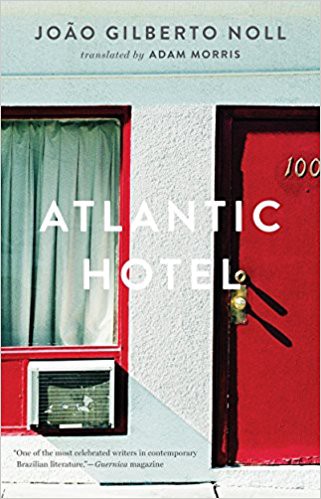
Atlantic Hotel by João Gilberto Noll

In both their creation and their discovery, lies can reconfigure entire narratives. The protagonist of João Gilberto Noll’s meticulously arranged novel Atlantic Hotel tells nearly everyone that he meets a different story of his life. They can’t all be accurate…right? But as the novel becomes more and more labyrinthine in its construction, it’s increasingly unclear as to whether this mysterious figure is lying to the people around him or, on some deeper level, himself.

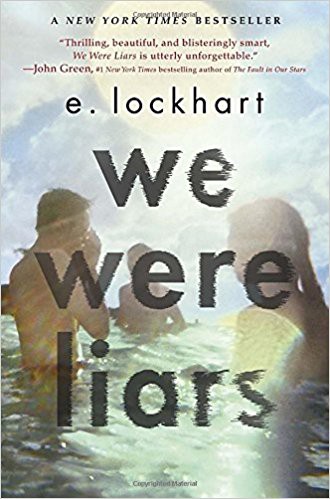
We Were Liars by E. Lockhart

E. Lockhart’s We Were Liars builds questions of reliability and veracity into its very structure. Lies are at the center of its protagonist’s closest friendships, for one thing, which creates a complex baseline off the bat. The fact that the narrator is missing some of her memory heightens this divide even further. Throw in a plot abounding with secrets and you have a twisty narrative that explores multiple layers of lies and truths.

American Gods by Neil Gaiman

I mean, if you write a novel in which numerous gods are among the characters populating the pages, odds are good you’re going to find a couple of tricksters in there, right? That’s certainly the case with Neil Gaiman’s American Gods, in which trickery and hidden agendas abound, mysteries await revelation, and fabrications and half-truths act as a kind of currency.

Severina by Rodrigo Rey Rosa

The title character in Rodrigo Rey Rosa’s short novel Severina is a woman with a penchant for stealing books from her local bookstore. Soon enough, the shop’s owner becomes obsessed with tracking her down, and learns that nearly everyone who’s met her has a different take on her identity. The way in which lies can suffuse people’s perceptions is at the core of this novel–and, like much of its author’s work, it’s a master class in how ambiguity can make a narrative more thrilling.

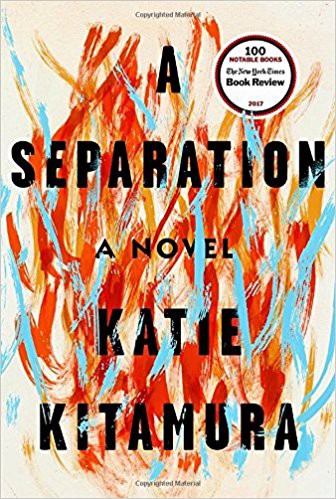
A Separation by Katie Kitamura

Sometimes, what’s unsaid can be just as much of a break from the truth as what is said. This novel’s narrator and her husband have kept their separation a secret. When he goes missing on a Greek island, she finds herself in an entirely different role than she’d expected. Kitamura’s novel explores a different facet of lying than most: it’s about the lies that one can be forced into telling, and the consequences that can spiral from there.

Our Man in Havana by Graham Greene

Some of Graham Greene’s tales of espionage are genuinely chilling; others venture towards the absurd. Our Man in Havana encompasses both. It’s the story of a spy working for the British government in Havana, whose bogus reports begin to reflect reality–an ominous and unexpected turn for all involved. Greene’s novel also served as inspiration for another memorable literary tale of lying: John Le Carré’s The Tailor of Panama, later adapted for film.

What’s Bred in the Bone by Robertson Davies

What happens when art itself is a lie? The hero of Robertson Davies’s What’s Bred in the Bone spends years of his life learning archaic techniques for making art–which can then be utilized for the cause of forgery. The yarn that Davies spins in this novel goes far in narrative and moral complexity, making for a thoughtful and irreverent work.

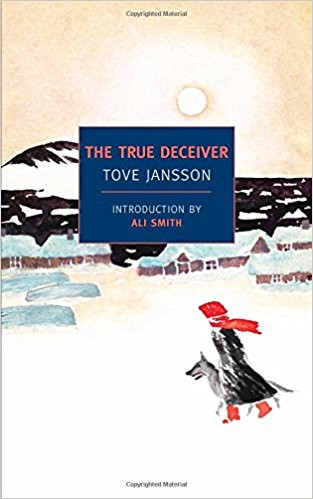
The True Deceiver by Tove Jansson

Tove Jansson’s fiction explored interpersonal connections in all of their forms, particularly in the ways in which they can go wrong. In her novel The True Deceiver, she examines the shifting power dynamic between two women–one older and successful, and one living on the fringes of society. Here, too, lies and other untruths play a crucial part in the story, creating a sense of atmosphere that’s second to none.

The Basic Eight by Daniel Handler

Daniel Handler’s novel The Basic Eight abounds with lies of multiple varieties. Its structure–a high school diary revisited by its author years later–allows for a number of lies and omissions, both past and present, to be on display. Throw in a high school production of Othello, a play where deceit and manipulation fuel the tragedy, and you have a narrative beset by untruths.

The Correspondence Artist by Barbara Browning

In some cases, lies can be seen as a version of the truth, albeit with certain details altered or heightened. In Barbara Browning’s novel The Correspondence Artist, the central character describes a love affair with one person through a unique narrative structure: by taking aspects of that one figure and turning them into four different characters. Within the novel, lines between fact and fiction blur–a theme that Browning has used repeatedly to powerful effect.

Twitter Fiction Turns a Fashion Show into Dante’s Inferno for the Modern Age

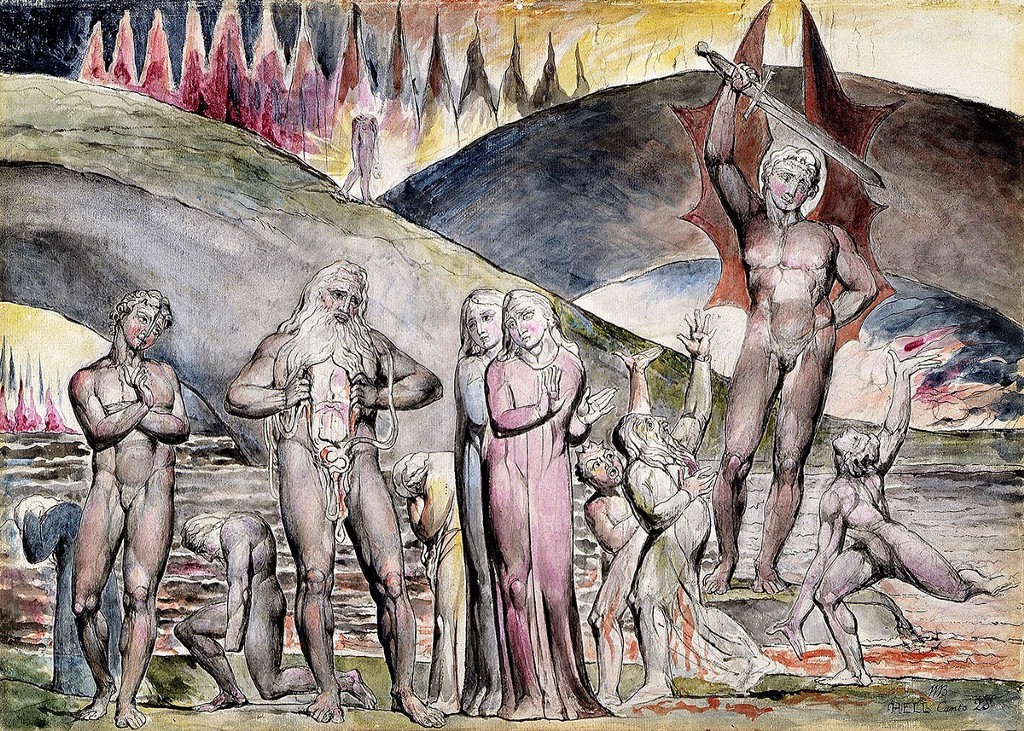
You may remember artist and Twitter fabulist Jared Pechacek from his dystopian fashion show story. This week, he turned another couture collection (this one’s Gucci) into a deathless piece of literature—this time, a series of linked vignettes about poetic justice in the afterlife for a parade of modern sins.

Perhaps you are familiar with Dante’s Inferno, in which the 14th-century poet describes his trip through Hell, being introduced to the eternal and oh-so-apropos sufferings of various types of miscreant. Well, if you read about the Hypocrites in the Inferno and thought “hmm, what about gilded leaden robes, but make it fashion,” this is the allegory for you.

This Twitter Thread About a Fashion Show is the Best Dystopian Novel We’ve Read in Ages

‘I Think Latinas Are Often Told We’re Not Allowed to Take Care of Ourselves’

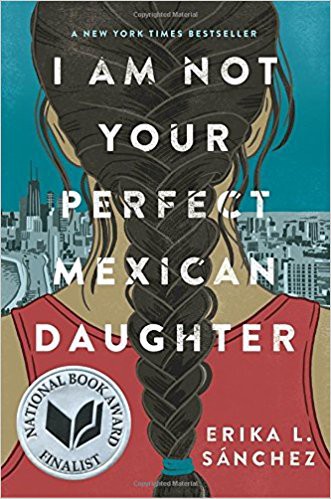
Erika L. Sánchez is a 10-year overnight success story. The book she worked on for a decade, I Am Not Your Perfect Mexican Daughter, published in October of 2017, became an instant New York Times bestseller and National Book Award Finalist. The cherry on top? It was recently optioned for a major motion film. At this year’s first Latinx in Publishing event I watched as the audience grew eager, or hesitant, to speak with Erika, suddenly shy in her presence. Erika laughed at audience reactions, unable to grasp how a girl who was once a goth is suddenly so cool. Her humor is quick, witty and filled with a tone that says, “duh,” as if she is trying to figure out why the rest of the world can’t keep up.

Underneath, though, is a woman who observes the space around her and utilizes her passions in an effort to change it. Her culture propels her forward and serves as the foundation for her identity. Her award nominated novel isn’t Erika’s first foray into writing. She’s a Princeton Arts Fellow and the Ruth Lilly and Dorothy Sargent Rosenberg Poetry Fellow. Sánchez is multilayered and complex, just like the poetry she wrote in her first book, Lessons on Expulsion. When I sat down with her, she discussed depression, today’s political climate and how, sometimes, stereotypes are true.

Bianca Salvant: Why do you think the world needs to hear stories from and about Latinas?

Erika Sánchez: I think, especially now, there is a picture painted of us that is really inaccurate. Our president is a sociopath. He talks about our community as if we’re all villains. He’s called us criminals and rapists. For me, it is important there are stories like [I Am Not Your Perfect Mexican Daughter] to counteract those narratives. What he is saying is not accurate. The way White-America perceives us is not accurate, which is usually the problem. [Writing by Latinx writers] opens people’s perspectives and they get to see another experience that is not like their own. Hopefully they grow some empathy. Because that is what we need in this world: people to have compassion.

BS: Your latest book, though, felt like satire. Was your intention to poke fun at the stereotypes of Mexicans?

ES: Some things are just true. Stereotypical or not, they just are. I did want to poke fun at some things because I am the type of person who deals with trauma through humor. I took a lot of experiences that I heard from other people and smashed them together into this mother–daughter story. When I talked to Latinas, they’d say, “Yup, that sounds like my mom!” (laughs) Whether it is a stereotype or not, it rings true for us.

Some things are just true. Stereotypical or not, they just are.

BS: Did anyone close to you migrate from Mexico?

ES: My parents migrated in the late seventies. I was born in the eighties.

BS: Have they ever shared that experience?

ES: My parents had a hard time crossing the border. Crossing the border for anyone is usually pretty traumatic. The story in [I Am Not Your Perfect Mexican Daughter] is fictional, but I’ve heard these stories before. My parents, for example, got into the trunk of a Cadillac to pass border patrol. Unfortunately, it is a very common American story. Images of crossing the border was very prevalent in my childhood.

BS: How do you answer the irritating “What are you?” question?

ES: Well, I hate that question. I’m not a puppy! I say that I am Mexican. Some people have a problem with that because I wasn’t born in Mexico, but I feel very Mexican. It is how I grew up. Sometimes I say Mexican-American, which is true. I never say Latina because it feels too broad. People are always confused by me because I don’t look stereotypically what they imagine a Mexican to look like. I think I do, but other people ask me if I’m Italian, or Arab or this and that. Everything but Mexican. And then it seems like they’re disappointed when I say I am Mexican because it is so commonplace. It’s really weird.

BS: You talk about depression, suicide and teen sex in your latest novel. Why did you want to tackle those themes?

ES: I never read text that addressed [depression] in my community. There was never a character that I could point to and say that was someone who is experiencing this condition. I wanted it to be healing for girls of color because it is normal to experience depression. And [I want them to know] that there is help. Latina teens have really high suicide rates and no one ever talks about it. I wanted to bring attention to that issue.

For me, depression in my life has been a lifelong struggle. I am barely learning how to take care of myself now as an adult. I think Latinas are often told we’re not allowed to take care of ourselves. That we have to take care of everyone else but us. If you do take care of yourself, you’re called selfish. I think that’s bullshit. I reject that.

I think Latinas are often told we’re not allowed to take care of ourselves. That we have to take care of everyone else but us.

BS: How do you practice self-care to keep yourself from spiraling when feeling depressed?

ES: Now, the way that I cope with my depression is therapy, medication, exercise and a good diet. I am Buddhist, so I chant. That is very helpful for me. Being creative also helps me.

BS: Being a Mexican-American Buddhist, does that conflict with your culture?

ES: I’m never around the people who talk shit. People probably talk about me, but I don’t care. My parents are happy for me because it brings me a lot of peace. My siblings are open-minded. So the people who judge me, I don’t know about them because I don’t put myself in those situations. I am not a kid being dragged to parties.

BS: What type of characters are you attracted to?

ES: Damaged. Those are my favorite characters. Huckleberry Finn, very problematic, but I love him. That’s what I am interested in: People who are flawed. I do not want to create someone who is neat and perfect. Those people who do not exist in real life. I want characters who are messy, flawed and don’t always get what they want.

I just want to create characters that are real. I don’t think we are all likeable at all times. I think when we’re young, we’re especially difficult. I wanted that to be present in [I Am Not Your Perfect Mexican Daughter]. We’re all fucked up, we’re all flawed. A lot of people criticize a book because a character is unlikeable, but what does that matter? People should be more concerned about whether the character is real.

A lot of people criticize a book because a character is unlikeable, but what does that matter? People should be more concerned about whether the character is real.

BS: It’s almost like people want a fairytale person.

ES: Exactly. And that’s not interesting.

BS: Do you feel there are more stories about people of color now because of social media?

ES: Yes, and that’s exciting. I do like that and the internet is to credit for it. There is a lot of democracy now in terms of the stories. Unfortunately, not all those stories make it to the mainstream. So that is frustrating.

BS: You’re also writing a collection of essays. What’s the title?

ES: Crying in the Bathroom.

BS: I look forward to learning what that means.

ES: It’s mostly about what it’s like to be a woman of color in this country and navigating both sides. Sex, relationships, spirituality, beauty and a bunch of different issues. There is a lot of pop culture and history. Virginia Woolf keeps popping up in my essays, so she is in there a lot. A bunch of different women who have been rebellious, like Rebecca Solnit. Hopefully, it is funny.

BS: What stories will you keep writing?

ES: I love YA, but I am open to everything. I am very restless and have a short attention span.

Leesa Cross-Smith is Taking Back Kentucky

BS: And you’re very passionate about encouraging adults to read more YA. Why?

ES: Everyone should read YA. I’m often offended when I’m asked if I have to dumb it down for young people. For the record, I don’t because young people are smart. I would expect older people could also enjoy the same themes because they’re all relevant. We’ve all been young at one point. I get a lot of messages from older women who are grateful for [I Am Not Your Perfect Mexican Daughter]. They say it is very healing for them, that they haven’t read anything like it before. I think it’s relevant for everyone and there is this dismissal of YA that I don’t appreciate. [It’s assumed not to be] sophisticated writing, when in fact, it is some of the bravest writing I have ever read.

BS: Do you have a writing hero? And books on your nightstand that you keep returning to?

ES: Toni Morrison is my hero. If I saw her, I’d drop dead. She was at Princeton one night, giving a speech and I wanted to be there so bad. I had already agreed to a reading at NYU on the same night, so I couldn’t go. I was devastated. Gabriel Garcia Marquez is also someone who has influenced my work a lot.

I always return to Toni Morrison, for sure. I also have a book by Samantha Irby called We Are Never Meeting in Real Life that I love. It is hilarious and I love the honesty she has when talking about her life. I’ve keep going back to it for inspiration.

How Young Adult Literature Taught Me to Love Like a White Girl

Novel Gazing is Electric Literature’s personal essay series about the way reading shapes our lives. This time, we asked: What’s a book that made you fall in love?

The Prologue

My childhood best friend and I have a habit of approaching moments in our lives like scenes from books or movies (for me, it’s books, for her, movies). We envision soundtracks and meet-cutes and monologues in the rain. Now that I live in New York, every night out in the city holds the potential of a guy and an Infinite Playlist. In case you were wondering, so far I’ve been sorely disappointed.

The Root

We’ll start here. In The Clique by Lisi Harrison, a group of young, affluent white girls rule Westchester, NY with super glossy lips, fresh blowouts, and designer clothes. Led by their ruthless leader, Massie Block, they run the suburbs with unreasonably sassy attitudes and a brand of insults that could only belong to people too rich to care about how ridiculous they sound. They talk high end designers and boys they aim to conquer and it didn’t take long for me to become obsessed. In elementary school, I devoured the first book of the series in one night, curled up on the couch in front of the Christmas tree in my family’s tiny, westside Indianapolis home.

I was far from Westchester then, both physically and otherwise. I had no way of fully conceptualizing the wealth and privilege that made a story like The Clique possible, didn’t have the tools yet to unpack what whiteness and affluence meant for the way those young girls were able to navigate the world. What I knew was that I admired them, envied them even. There was something almost effortless about the way they fell in love. There was an ease with which they were able to move through their entire lives, in fact, that I just couldn’t tap into.

Massie could get a blowout and a new outfit and her world would suddenly right itself. She and her friends could plan a spa day and instantly get over whatever boy they’d made their object of desire the week prior. Summer camp wasn’t just summer camp, it was an opportunity for first loves and secret rendezvous and no camp counselor would ever be the wiser.

I bought into the fantasy. Like millions of other preteen girls all over the world, I began — whether consciously or unconsciously — to shape my understandings of romance and freedom around these images. It was a narrow picture of love and the people worthy of it. I didn’t know then what heteronormativity was, but aside from a handful of David Levithan novels (which often dealt with their own issues of centering cisgender, white narratives), I rarely saw much outside of run-of-the-mill, middle-American, white-bread, straight-to-the-point-of-cringing love stories. Boy meets girl. Girl chases boy. No one ever told me what happens when girl wants girl or girl falls in love with someone who’s neither.

I began — whether consciously or unconsciously — to shape my understandings of romance and freedom around these images.

Heterosexual, upwardly mobile white girls were the yardstick by which I measured myself — which meant I was always going to fall short. Their stories, their widespread representation were some of the most salient of my adolescence. My introduction to the emotional realities of sex was my friends and I — mostly other young women of color — in the back of the 7th grade chorus classroom, passing around a copy of Forever by Judy Blume. We giggled as we pored over the passages, both scandalized and enraptured by the story of the protagonist Katherine’s sexual awakening. None of us had yet been awakened, sexually or in any other capacity to be honest, so we found it groundbreaking in its explicitness. The book was our manifesto, our guide to what it would be like to finally Lose It. We didn’t understand yet, wouldn’t understand for years maybe, that those milestones would be different for us, because everything was different for us.

That story, as ubiquitous as it has become in the decades since it was published, portrayed a very specific experience for a very specific type of girl. A girl I would never be. But she was presented as the “coming of age” benchmark for us all.

And I modelled myself after the girls within those pages for years. They would rotate out often, when I read a new book that commanded my attention for the day or the week, but they all had at least one thing in common. They rarely, if ever, looked like me.

Though I did my best to adopt their characteristics, I never really mastered the art of how to be cute and quirky yet aloof and carefree all at once. And all of the girls, the characters that I grew up revering were the perfect cocktail of all of the above. I was intimately familiar with timidity and shame. I could manage being withdrawn and anxious. But the stuff that made up a storybook romance always eluded me.

I remember asking myself, What’s so different, so wrong about me? What was it about living inside of this body that made it so hard to move through the world as effortlessly as them? That made love and lightness so inaccessible?

We didn’t understand that those milestones would be different for us, because everything was different for us.

The Motto

A friend of mine loves the movie He’s Just Not That Into You. We both did, once upon a time. We could quote it almost verbatim. There’s a monologue in the movie where Justin Long’s character, Alex, finally falls for Ginnifer Goodwin’s unlucky-in-love, Gigi. See, the whole movie he’s been her guide through the minefield of trash situationships. He tells her that girls always want to believe that they’re going to be The One who changes the guy, who makes him follow the straight and narrow path to monogamy, but they’re simply not. These girls are what he calls “the rule” and not “the exception.” After all of that though, she gets the guy and they live headassily ever after, following a scene in which Alex passionately professes (in a whisper, mind you) between kisses, You are my exception.

I was old enough by then to understand that most things in fiction would never come to fruition in my own life. I could recognize that a storybook romance may never manifest itself for me, but I was still bright-eyed enough to hope.

I attributed this, in large part, to the fact that I was — and still am, in many ways — a late bloomer. I was a nerd. And not one of those cool, cynical and abnormally precocious teenage nerds that listens to The Smiths either (here’s looking at you, Sam from The Perks of Being a Wallflower). I was just a regular, awkward, midwestern black geek. Example one: I was the last of my friends to find myself in any semblance of a relationship (which ended with a very dramatic breakup over a basket of rolls at O’Charley’s). Example two: I had what can only be described as a panic attack the first time I ever made out with anyone. When we finally (blessedly) broke apart, I think he mistook my heavy breathing for passion instead of anxiety.

My love life back then was best characterized as a series of false starts. I got really good at ending things, especially things that never quite got off the ground to begin with. I specialized in the lines I picked up from books along the way. The goodbyes. The sign-offs. The I just can’t be what you need me to be for you’s. The thing I never wholly managed to figure out was how to nail down the ending. That ride into the sunset that ends with the guy declaring The Motto —“you are my exception,” or some variation of the same sentiment. Maybe we don’t all get an ending like that, I thought. Maybe girls like me don’t get one.

So perhaps instead of a Gigi, I was simply cut from the same cloth as someone like Remy Starr, the protagonist from This Lullaby by Sarah Dessen. Remy had a history of loving and leaving guys. At the beginning of the novel, her schtick is that she holds men at a distance after watching a lifetime of failed romances. She even sets a limit to how long each of her relationships needed to be. Remy was everything I wanted to grow into: smart, driven, confident. She was everything but black, I figured. The thing I already was. The thing I always would be.

She was everything but black, I figured. The thing I already was. The thing I always would be.

I had been sold a dream that didn’t make room for me or girls like me. And no matter how many times I tried to imagine otherwise, the genre that I loved so much didn’t seem to love me back.

The Reckoning

I once had a close friend who was beautiful. Is beautiful, present tense, though the friendship is past tense now. She was tall and had these perfect white teeth and dark skin and great clothes. But she carried herself, in her body, with the uncertainty of someone who didn’t know these things were true — who was waiting to be told. I watched her wait, as many of us did, for the validation of boys to remind her that she was worthy of attention, of affection. Wait for some variation of the compliment that so often spilled from the mouths of guys she liked and who, maybe, in their own way liked her back: You’re pretty for a black girl.

We didn’t talk about it much, but tried to make sense of it, silently, together. It was the reality that always lingered. In this world, the one we occupied and not the one we so often imagined, our beauty would come with a caveat. We would have to wade through a countless potential partners before we would come to one — if we were lucky — who wanted us not in spite of our blackness, but because of the entire breadth of who we were.

No story had ever warned us about this. None of the girls we had fashioned ourselves after ever heard that particular line. The books that filled the school libraries in our suburban midwestern town hadn’t given me the heads up about what it looks like for young black women in the current landscape, about what my body would represent to my eventual partners and to the world.

The books that filled the school libraries hadn’t given me the heads up about what my body would represent to my eventual partners and to the world.

But still, I wished. I waited. I was well on my way to adulthood by then, but I couldn’t help but hold onto some faith that things were shifting. And they did, they have, bit by bit. Eventually the one or two books about black kids on those shelves became 10, 15. Eventually, those love stories became just a little bit easier to find. Not readily accessible by any means, but easier nonetheless. The authors that my nieces get to grow up admiring write about brands they recognize and listen to the same music as they do. They’re so much closer to the thing that I’d been looking for but rarely found. The things I’m still reckoning with, even now.

I was talking to a close friend recently about this essay. She was excited to hear about it because she has this almost religious belief in the universality of love stories. She believes that’s why we cling to them so hard. She says, They don’t look like us, but they are us. I don’t know how much I believe that, though. I don’t know how to read a story where there’s a kiss in the rain without thinking about what happens to my hair when it gets wet. I don’t know how to visualize a meet-cute at a Brooklyn coffee shop without thinking about gentrification and displaced people of color. I want to still buy into the dream. But I can’t. So I stop just short of reminding her, Just because we love it, doesn’t make it ours.

Cuban Noir with a Dash of Fever Dream

Robert Arellano is a man of many realms. He has been a pioneer of digital media and its relation to literature, creating the internet’s first hypertext novel, Sunshine ’69 in 1996. More recently, he founded the Center for Emerging Media and Digital Arts at Southern Oregon University. He has played guitar with a number of musicians and bands including Bonnie “Prince” Billy aka Will Oldham, and collaborated on a graphic novel with acclaimed artist William Schaff.

Despite this diverse resume and achievements, where Arellano has found most acclaim is with his traditional novels, particularly the Cuban noir, Havana Lunar, which was nominated for an Edgar Award in 2010. Havana Lunar, is a stellar addition to the tradition of classic noir literature, following the likes of James M. Cain, Dashiell Hammett, and David Goodis. But Arellano mixes that with the fever dream transgressional prose of Chuck Palahniuk and Denis Johnson’s Jesus’ Son.

Purchase the novel.

After a digression to New Mexico with Curse the Names, Arellano has returned to Cuba and his Havana Lunar protagonist, Manolo, with the standalone sequel, Havana Libre. The historical context and modern political landscape provide a heavier backdrop this time around. A series of bombings that took place in Havana in 1997 are at the center of Libre. The struggle with terroristic violence, all too real in the twenty-first century, is paired with the cultural struggle for Cuban-Americans and their relationship with political discord between the two countries. All this to say, there is a fresh vitality to Arellano’s sequel.

Ryan Bradley: You have said that when you first wrote Havana Lunar you weren’t setting out to write a mystery novel, rather you were working from pieces of stories you had sort of collected over the years. When you came back to Lunar’s setting and your protagonist, Manolo, did you have a clearer idea of your intentions for Havana Libre?

Robert Arellano: That’s right about the mystery coming late with Havana Lunar, but when I set out to write another novel around the same character, it felt natural that Manolo would need to face another criminal predicament. About 100 pages into Havana Libre, I still didn’t have that predicament, particularly because the exact year wasn’t yet clear to me. Although, I knew it had to be at least two but no more than seven years since the events of the last book. The clincher came when I settled on the summer of 1997, and I said to myself, “Of course! The terrorist bombings.”

RB: The idea that all art is inherently political isn’t discussed as frequently in what is considered genre writing, but Havana Libre follows a long tradition of mysteries and thrillers against political backdrops. How much influence did the politics of Cuban-American relations, past and present, influence the story you wanted to tell?

RA: I might say I’d prefer to tell a U.S./Cuba story without a heavy political backdrop, but this would be a very Cuban hypocrisy. In Havana, you can’t escape the way politics (both socialist-domestic and embargo-international) influences everyone’s lives, every day. And in Miami’s Little Havana, there’s a handwritten sign on the wall of my favorite 50-cent coffee counter shops that reads “No political conversations here” — when of course politics is all anyone talks about.

I might say I’d prefer to tell a U.S./Cuba story without a heavy political backdrop, but this would be a very Cuban hypocrisy.

RB: Today, in 2018, there is a lot of talk about art and politics, how they intersect and how inherent it is. Whether we try to be political or not, we are changed by the world and events around us. There have been few times when that has more apparent than the current political climate. What can we learn about the world of today by creating art focused on the past?

RA: Good point! Cuba especially has an eerie track record of anticipating domestically what the rest of us experience globally. For instance, with the end of Soviet oil subsidies in the late 1980s, they hit peak oil [the hypothetical point in time when the production of oil reaches its maximum rate, after which production will gradually decline] about ten years earlier than other developing countries, and their agricultural sector adapted with organic farming in smaller operations. The “Special Period” they went through economically in the 1990s reminds me a lot of the current worldwide crisis in financial markets. In order to make it through this next decade, we’re all going to have to be as cunning as Cubans, and in the past 25 years of stories of their daily struggles, we can find lots of hints at how to make do with less.

8 Books about Passion and Scandal in Cuba

RB: The historical context behind the novel is fascinating, but writing around true events that impacted a country and a people in a very real way can be a large responsibility. Did you feel any pressure in writing your story while being faithful to the history behind it?

RA: It is a heavy burden, but I was there in the summer of 1997, and ten times across the quintessentially noir years between 1992 and 2001, what Fidel Castro called the Special Period. A very close Cuban friend of mine who didn’t leave until the early 2000s reads my work-in-progress and offers fact-checking and feedback. She tells me, “You might be the only Cuban-American who was there through so much of this trying to capture it in English.”

Noir is a darkness in the heart of the city where it’s possible to find a spark of human kindness.

RB: Noir seems to be an artistic passion for you. You have taught classes on noir literature and written variations on the genre, what is it about the aesthetic of noir that appeals to you as a storyteller?

RA: Noir is a darkness in the heart of the city where it’s possible to find a spark of human kindness in some unlikely places. There are times this can make for an irresistible story.

RB: You mention finding humanity in unlikely places, which ties into political history as well. Do you see that sort of hope in political relations with Cuba in 2018 and what does it mean for Cuban-American art and storytelling in the future?

RA: Regrettably, I don’t see much progress happening for restored relations, at least not in the next three years. A recent consequence of the current chilling in diplomacy: Last month, Alaska Air cancelled the once-daily (and only) West Coast flight to Havana, after just a year of operation. That same week, two Cuban artists, Nestor Siré and Yonlay Cabrera, were denied permission to enter the U.S. for a presentation at the New Museum in NYC. For now, it seems the best hope for Cubans and Americans to experience each others’ stories is in virtual reality.

Why Adding Monsters and Fairies to a Memoir Can Make It Even More Real

Sofia Samatar: Since I am starting this adventure, let me tell you why I chose to bring this particular group together. Carmen has written some of my favorite short stories, and one time when we were sharing a hotel room at a conference, I told her I’d been thinking about the intersection of memoir and speculative fiction, and she said she was actually working on a speculative memoir at the moment. Matt’s a fiction writer, too, and I invited him because, also at a conference, at some reception in a dark room, we were standing around with our paper plates, and he told me he was writing a dissertation on the blurry space between fiction and nonfiction, looking at Virginia Woolf and J.M. Coetzee and Samuel R. Delany. Rosalind is a brilliant writer, whose story “Insect Dreams” I have read many times. Her work plays with history and the fantastic, and recently she told me her new book is about the idea of the female Adam, and described it as a “hybrid” and a “faux autobiography.”

I started thinking about the idea of “speculative memoir” because I was a fantasy and science fiction writer whose work was becoming more and more autobiographical. Of course, all writing draws from experience, but there’s a particularly weird energy to writing memoir, in a deliberate way, in a fantastic or uncanny mode. It seems to announce a certain relationship to memory, and to experience. I wonder if each of you could start by talking a bit about this in relation to your own work. What do you find compelling about the concept of speculative memoir?

Carmen Maria Machado: Right now, I’m working on a memoir called House in Indiana that uses genre tropes to engage with and unpack a narrative of abuse. That means that interspersed with chapters that detail actual events, I have fictional sections that use these tropes as extended metaphors. As I was writing the first draft of this book, I kept thinking, “Am I allowed to do this?” And then Sofia and I had a conversation about speculative memoir at AWP, and then she turned me onto Brian Blanchfield’s Proxies which took off the top of my head. I’m just so fascinated by the elasticity of the essay form.

Matthew Cheney: When Sofia mentioned the term “speculative memoir” to me, I was immediately intrigued, because it provided a term that made me think of a bunch of otherwise pretty different material: Samuel Delany’s “The Tale of Plagues and Carnivals” (from Flight from Nevèrÿon), elements of work by Virginia Woolf and J.M. Coetzee, Richard Bowes’s Dust Devil on a Quiet Street, Jeffrey Ford’s story “Bright Morning,” texts by Carole Maso and C.D. Wright, and more.

I have written one unabashed speculative memoir, a story called “Killing Fairies” that was in A Capella Zoo in 2015 and reprinted in Best Gay Stories 2016. I wrote the story with my 40th birthday staring me down. I had begun to realize I’m losing a lot of memories from my early life, and before I forgot everything, I thought I ought to write about my first year of college. What I did was create one completely fictional character and then use him to shape all the other material, most of which was strictly true to my memory (which is not to say true to reality). The fantasy element is subdued and ambiguous, but it’s there, and I like the way it destabilizes the whole, because here we have this memoir-like thing that most readers will know by the end can’t really be a memoir because such stuff is impossible. But I hope that the impossible conveys an emotional reality, one that couldn’t be crystallized by memoir alone.

I hope that the impossible conveys an emotional reality, one that couldn’t be crystallized by memoir alone.

Rosalind Palermo Stevenson: I am working on a book called Adame, which as the title might suggest is an exploration of the female Adam, but explored through the creation of a faux autobiography. Like most of my work, its narrative style is a fusion of prose and poetry. Adame is also a fusion of the real and the imagined. It builds from an autobiographical base but brings in imagined characters, situations, as well as distortions, and reinventions. When I began the piece I found that I had included myself by name, alternating that with the name Adame. And yet what I was associating with the actual “me” of me was a rush of imagined material. As I followed this path onward the shape continued to define itself more and more that way and I began to get excited about the concept of a faux autobiography.

What excites me is the ability to give play to the imagination and through that to arrive at a place of emotional truth. Working with the speculative, the highly imagined, having the license to incorporate anything as long as that “anything” coheres and has integrity in relation to the piece itself is for me a way to go deeper into my interior world and in that sense to achieve the greatest degree of authenticity. I love the concept of the imagined becoming or being a vehicle of emotional reality.

What excites me is the ability to give play to the imagination and through that to arrive at a place of emotional truth.

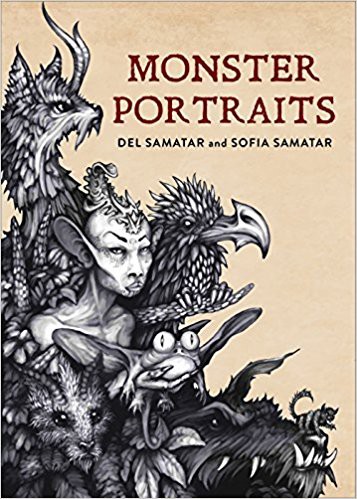
SS: This is all so rich: genre, memory, time, the impossible, the faux. And this reaching toward the intensely imagined in order to tell the truth. Everyone seems to be saying this, in some way — that it’s precisely the tropes of fantasy and science fiction that are capable of expressing trauma, it’s the impossible that conveys emotional reality, it’s the rush of imagined material that’s “the actual ‘me’ of me.” When I was writing my own uncanny autobiography, Monster Portraits, I felt something very much like what you’re saying, Rosalind — this incredible breadth, the license to incorporate anything. I was myself, my own memories were there, yet I also inhabited a series of monsters. And each monster revealed another facet of my thinking or experience.

There can be a lightness, too, to the speculative memoir. You’re not tied to a narrative, a life story. It’s life writing that doesn’t encourage people to put you in a box. In a way, it might even block the kind of voyeuristic gaze that just wants to peer into your life. It’s too weird for that. And yet, as we’ve been saying, it’s the most piercing truth.

CMM: I’m really interested in the parts of the real, lived experience that exist beyond empirical evidence and tangible events. Fantasies. Daydreams. Memory decayed by time. Hallucinations. How experiences knock up against one’s sense of narrative. Even when people witness the same incident — say, an accident — their accounts of it rarely match up. What happens in between two cars smashing together — something gloriously, horrifyingly physical — and the way people experience that event, and then recount that experience back? I’m obviously not the first person to explore this — I feel like memoir as a genre is constantly asking these questions about how to best encapsulate memory — but it’s just really captured my attention lately.

RPS: I’m particularly drawn to the idea, as Sofia phrased it, of “reaching toward the intensely imagined to tell the truth.” But still I ask myself: why does this “emotional truth” seem to find its authentic expression in the imagined? (And what exactly is meant by emotional truth?) For me it has a lot to do with getting out of the way of myself. I think of emotional reality as something which comes out of a connection to deeper consciousness and an expression of the writer’s interior world. It becomes an “allowing” rather than a “controlling.” I love Sofia’s idea of “blocking the voyeuristic gaze.” For me the imagined can block that gaze. The voyeur often being myself!

I’m really interested in the parts of the real, lived experience that exist beyond empirical evidence and tangible events. Fantasies. Daydreams. Memory decayed by time. Hallucinations.

SS: I think Carmen’s right, of course, that memoir is always asking questions about memory. What’s interesting to me is what happens when memoir — which is already strange and tricky and fraught in its relationship to memory — meets the deliberately imagined, the blatantly non-factual, the impossible. As if you’re taking a memory that’s already decayed and then tearing it up, or sewing a bunch of feathers onto it. It becomes a bit monstrous. And this — all of us seem to agree — is when it’s finally recognizable as yours.

I must also admit that I love facts! I treasure the facts as I remember them, and I love to write to them. Almost as a constraint. How, in a city of winged scribes, does my parents’ living-room couch appear with its orange fuzz? And their dusty, gauzy curtains.

A Dark Fairytale About Post-Earth Education

MC: Yes, for me the etymological trace of memory in memoir feels like something necessarily active. Now that I’m older and have this whole bank of memories from adulthood, I’m very much aware that there were experiences for which I have no memory. What I know is the gap only. Or I have friends and family who remember things vividly one way, and I’ve also got a memory of it, but it doesn’t align with theirs. Similar to what Carmen says about the notorious unreliability of even confident witnesses, there are things for which I have vivid, strong memories, memories I have confidence in, but that I’m quite sure, from the outside evidence, must be wrong. It’s unsettling, but for me also has become one of the primary engines for writing, because memory is so tied to both self-conception and to history. Who I think I am is who I remember myself to be. And memory is key to so much of the social and political world: memory gets cultivated and weaponized for purposes of nationalism, militarism, imperialism…

The label of memoir sets up readers’ expectations for a certain level of reality, and so to use those expectations to undo reality rather than confirm it is an appealing challenge for me as a writer. Not (purely) out of a sadistic relationship with the reader, but for the purpose of investigating how memory shapes our idea of self, history, world, identity, possibility.

The label of memoir sets up readers’ expectations for a certain level of reality, and so to use those expectations to undo reality rather than confirm it is an appealing challenge for me as a writer.

Rosalind, I’m curious what you see is the role of fact, or actual events here. Why not call the work fiction? What does the actual allow that the fictional might not for you?

RPS: I see it largely a matter of positioning. The idea of speculative memoir or faux autobiography suggests to me the idea of setting out with a basis in personal fact/actual experience, saying I and meaning me, placing the weight of the piece on that personal life base, but skewing it, reimagining it, introducing fantastic and impossible elements. My intention in writing Adame is to position it from an autobiographical base, but to add to and alter that base with reinvention, enhancement, and the reimagined. Why? In some ways introducing the imagined is perhaps a way of daring to approach the material. But it is primarily a way of conveying something that can bring it closer to essential reality than actual reality. Perhaps it is even to say something about the way reality as a construct of thought might encompass all that it can imagine.

CMM: Like Sofia was talking about above, I’m very actively interested in memoir-adjacent work that contains impossible elements. I’ve always thought of genre, in the broadest sense, as a management of expectations — if a dragon appears, or a ghost, or futuristic technology, does that development jive or clash with the reader’s expectations for the world? The pleasure of using these devices is that we can take a thing that, by definition, must be real, and include things that, by definition, cannot be, and the resulting text is sweet and sour. Some people would argue that once you include the unreal element, the genre automatically switches away from nonfiction, but I definitely think there needs to be room for the work that occupies that gap.

What I Don’t Tell My Students About ‘The Husband Stitch’

SS: To wrap up, I wonder if each of you would be willing to mention a work or two, written by others, that you think of as speculative memoir? For me, it’s somewhat hard to name. I feel hesitant; I don’t want to call a piece of writing “memoir” unless invited. The work has to call out, to announce itself. And that’s fairly rare in the genres generally grouped under “speculative fiction”: fantasy, science fiction, and horror. But Matt told me about “Buffalo” by John Kessel, which seems to fit beautifully. And I think of the works of Bhanu Kapil — all of them, but maybe especially Incubation: A Space for Monsters and Ban en Banlieue. And the ghostliness of Kate Zambreno’s Book of Mutter, the way it opens in an uncertain space between memory and dream.

MC: Works that announce themselves to us as memoiristic speculations and speculative memoirs are, indeed, relatively few — “Buffalo” is a wonderful example, a work I absolutely adore; Rick Bowes’s “My Life in Speculative Fiction” would be another — and as much as I enjoy and respect those, I find myself drawn more toward the outcasts and outliers, the freaks that make friction in any taxonomy. I think of Woolf’s Orlando, which when published was not read as what we can now see it as: a fake biography infused with love for Vita Sackville-West. Now, having access to biographies and introductions and annotations, we read it more as we would a speculative memoir, or speculative biography, or whatever, than we would have were we a random common reader off the streets in 1928, someone who didn’t know anything about Woolf or her friends but who picked the book up and was intrigued and so read it. What might that experience be? Are we, the later readers, better poised for Orlando’s pleasures, or are we hindered by the accumulation of information through the years?

I feel like the speculative should always end with question marks, and so here are a few: How informed must the reader be, how certain of genre and stance? I know nothing about Pamela Zoline’s life, but were I editing an anthology of speculative memoirs, I’d seriously consider “The Heat Death of the Universe”, but is that a violation (and if so, a violation of what)? What do we make of Philip K. Dick’s VALIS? Is Barry Malzberg’s Galaxies a work of metafiction or a speculative memoir or a whatzit? How about Joanna Russ’s The Female Man, or Leonora Carrington’s Down Below, or Clarice Lispector’s “Brasilia” — or, indeed, any of Lispector’s Cronicas? Must we know for sure?

RPS: For my list I first offer Fernando Pessoa’s The Book of Disquiet, the first three hundred pages of which bear the heading “A Factless Autobiography.” Writing through his many selves — his heteronyms — each one named, given a birth date, a personality, a physique, etc., Pessoa’s book, never finished, exists in the fragmented pieces of the experience, thoughts, memories, opinions, feelings, dreams, irritations, things imagined, personal things and personal truth of his life. I also include Carole Maso’s The Art Lover, which in some ways flips the expectation of the way that speculative memoir might work by writing an alternative form of fiction filled with inventions, memories (false or real?), and stylistic innovations, and then in the middle of what is being read as fiction she breaks the form with her true, painful, memoiristic account of the death of her friend from AIDS.

CMM: I think of Geoff Ryman’s 253 as a work of speculative memoir. He reveals in the book that the date of the fictional train accident is the same date he learned one of his best friends was dying of AIDS, and the plot mimics the slow-motion crash of grief so perfectly. Max Porter’s Grief Is the Thing with Feathers. (From an interview in The Guardian: “But when we arrive at the question of where the story itself came from, he draws a deep breath, and slows almost to standstill. ‘It’s…erm…The experience of the boys in the flat is…based on my dad dying. When I was…six.’”) And the entire oeuvre of Lucia Berlin, which was functionally autofiction. The stories overlap in such imperfect ways, and seem to be cut directly from the fabric of her life.

About the Authors

Matthew Cheney is the author of Blood: Stories (Black Lawrence Press). His fiction and essays have been published by One Story, Conjunctions, Weird Tales, Electric Literature, Los Angeles Review of Books, Strange Horizons, and others. He is currently completing a Ph.D. at the University of New Hampshire.

Carmen Maria Machado’s debut short story collection, Her Body and Other Parties, is a finalist for the National Book Award and the Kirkus Prize, and the winner of the Bard Fiction Prize. She is a fiction writer, critic, and essayist whose work has appeared in the New Yorker, Granta, Tin House, Guernica, Best American Science Fiction & Fantasy, and elsewhere. Her memoir House in Indiana is forthcoming in 2019 from Graywolf Press. She is the Artist in Residence at the University of Pennsylvania, and lives in Philadelphia with her wife.

Rosalind Palermo Stevenson is the author of the novel The Absent, the novella Insect Dreams, and the chapbook Kafka At Rudolf Steiner’s. Insect Dreams has also been published in the anthologies Poe’s Children (edited by Peter Straub) and Trampoline (edited by Kelly Link). Her story “The Guest” was selected to be included in Wild Dreams: The Best of Italian Americana, and her short fiction and prose poems have appeared in numerous literary journals. She lives in New York City.

Sofia Samatar’s latest book, Monster Portraits, a collaboration with her brother, the artist Del Samatar, is forthcoming in February 2018 from Rose Metal Press. The author of the novels A Stranger in Olondria and The Winged Histories, and the short story collection, Tender, she has received the William L. Crawford Award, the John W. Campbell Award, the British Fantasy Award, and the World Fantasy Award. She lives in Virginia, where she teaches at James Madison University.

The Last of the 14-Year-Old Virgins

“Music”

by Ellen Gilchrist

Rhoda was fourteen years old the summer her father dragged her off to Clay County, Kentucky, to make her stop smoking and acting like a movie star. She was fourteen years old, a holy and terrible age, and her desire for beauty and romance drove her all day long and pursued her if she slept.

“Te amo,” she whispered to herself in Latin class. “Te amo, Bob Rosen,” sending the heat of her passions across the classroom and out through the window and across two states to a hospital room in Saint Louis, where a college boy lay recovering from a series of operations Rhoda had decided would be fatal.

“And you as well must die, beloved dust,” she quoted to herself. “Oh, sleep forever in your Latmian cave, Mortal Endymion, darling of the moon,” she whispered, and sometimes it was Bob Rosen’s lanky body stretched out in the cave beside his saxophone that she envisioned and sometimes it was her own lush, apricot-colored skin growing cold against the rocks in the moonlight.

Rhoda was fourteen years old that spring and her true love had been cruelly taken from her and she had started smoking because there was nothing left to do now but be a writer.

She was fourteen years old and she would sit on the porch at night looking down the hill that led through the small town of Franklin, Kentucky, and think about the stars, wondering where heaven could be in all that vastness, feeling betrayed by her mother’s pale Episcopalianism and the fate that had brought her to this small town right in the middle of her sophomore year in high school. She would sit on the porch stuffing chocolate chip cookies into her mouth, drinking endless homemade chocolate milkshakes, smoking endless Lucky Strike cigarettes, watching her mother’s transplanted roses move steadily across the trellis, taking Bob Rosen’s thin letters in and out of their envelopes, holding them against her face, then going up to the new bedroom, to the soft, blue sheets, stuffed with cookies and ice cream and cigarettes and rage.

“Is that you, Rhoda?” her father would call out as she passed his bedroom. “Is that you, sweetie? Come tell us good night.” And she would go into their bedroom and lean over and kiss him.

“You just ought to smell yourself,” he would say, sitting up, pushing her away. “You just ought to smell those nasty cigarettes.” And as soon as she went into her room he would go downstairs and empty all the ashtrays to make sure the house wouldn’t burn down while he was sleeping.

“I’ve got to make her stop that goddamn smoking,” he would say, climbing back into the bed. “I’m goddamned if I’m going to put up with that.”

“I’d like to know how you’re going to stop it,” Rhoda’s mother said. “I’d like to see anyone make Rhoda do anything she doesn’t want to do. Not to mention that you’re hardly ever here.”

“Goddammit, Ariane, don’t start that this time of night.” And he rolled over on his side of the bed and began to plot his campaign against Rhoda’s cigarettes.

Dudley Manning wasn’t afraid of Rhoda, even if she was as stubborn as a goat. Dudley Manning wasn’t afraid of anything. He had gotten up at dawn every day for years and believed in himself and followed his luck wherever it led him, dragging his sweet southern wife and his children behind him, and now, in his fortieth year, he was about to become a millionaire.

He was about to become a millionaire and he was in love with a beautiful woman who was not his wife and it was the strangest spring he had ever known. When he added up the figures in his account books he was filled with awe at his own achievements, amazed at what he had made of himself, and to make up for it he talked a lot about luck and pretended to be humble but deep down inside he believed there was nothing he couldn’t do, even love two women at once, even make Rhoda stop smoking.

Both Dudley and Rhoda were early risers. If he was in town he would be waiting in the kitchen when she came down to breakfast, dressed in his khakis, his pens in his pocket, his glasses on his nose, sitting at the table going over his papers, his head full of the clean new ideas of morning.

“How many more days of school do you have?” he said to her one morning, watching her light the first of her cigarettes without saying anything about it.

“Just this week,” she said. “Just until Friday. I’m making A’s, Daddy. This is the easiest school I’ve ever been to.”

“Well, don’t be smart-alecky about it, Rhoda,” he said. “If you’ve got a good mind it’s only because God gave it to you.”

“God didn’t give me anything,” she said. “Because there isn’t any God.”

“Well, let’s don’t get into an argument about that this morning,” Dudley said. “As soon as you finish school I want you to drive up to the mines with me for a few days.”

“For how long?” she said.

“We won’t be gone long,” he said. “I just want to take you to the mines to look things over.”

Rhoda French-inhaled, blowing the smoke out into the sunlight coming through the kitchen windows, imagining herself on a tour of her father’s mines, the workers with their caps in their hands smiling at her as she walked politely among them. Rhoda liked that idea. She dropped two saccharin tablets into her coffee and sat down at the table, enjoying her fantasy.

“Is that what you’re having for breakfast?” he said.

“I’m on a diet,” Rhoda said. “I’m on a black coffee diet.” He looked down at his poached eggs, cutting into the yellow with his knife. I can wait, he said to himself. As God is my witness I can wait until Sunday.

Rhoda poured herself another cup of coffee and went upstairs to write Bob Rosen before she left for school.

Dear Bob [the letter began],

School is almost over. I made straight A’s, of course, as per your instructions. This school is so easy it’s crazy.

They read one of my newspaper columns on the radio in Nashville. Everyone in Franklin goes around saying my mother writes my columns. Can you believe that? Allison Hotchkiss, that’s my editor, says she’s going to write an editorial about it saying I really write them.

I turned my bedroom into an office and took out the tacky dressing table mother made me and got a desk and put my typewriter on it and made striped drapes, green and black and white. I think you would approve.

Sunday Daddy is taking me to Manchester, Kentucky, to look over the coal mines. He’s going to let me drive. He lets me drive all the time. I live for your letters.

Te amo,

Rhoda

She put the letter in a pale blue envelope, sealed it, dripped some Toujours Moi lavishly onto it in several places and threw herself down on her bed.

She pressed her face deep down into her comforter pretending it was Bob Rosen’s smooth cool skin. “Oh, Bob, Bob,” she whispered to the comforter. “Oh, honey, don’t die, don’t die, please don’t die.” She could feel the tears coming. She reached out and caressed the seam of the comforter, pretending it was the scar on Bob Rosen’s neck.

The last night she had been with him he had just come home from an operation for a mysterious tumor that he didn’t want to talk about. It would be better soon, was all he would say about it. Before long he would be as good as new.

They had driven out of town and parked the old Pontiac underneath a tree beside a pasture. It was September and Rhoda had lain in his arms smelling the clean smell of his new sweater, touching the fresh red scars on his neck, looking out the window to memorize every detail of the scene, the black tree, the September pasture, the white horse leaning against the fence, the palms of his hands, the taste of their cigarettes, the night breeze, the exact temperature of the air, saying to herself over and over, I must remember everything. This will have to last me forever and ever and ever.

“I want you to do it to me,” she said. “Whatever it is they do.”

“I can’t,” he said. “I couldn’t do that now. It’s too much trouble to make love to a virgin.” He was laughing. “Besides, it’s hard to do it in a car.”

“But I’m leaving,” she said. “I might not ever see you again.”

“Not tonight,” he said. “I still don’t feel very good, Rhoda.”

“What if I come back and visit,” she said. “Will you do it then? When you feel better.”

“If you still want me to I will,” he said. “If you come back to visit and we both want to, I will.”

“Do you promise?” she said, hugging him fiercely.

“I promise,” he said. “On my honor I promise to do it when you come to visit.”

But Rhoda was not allowed to go to Saint Louis to visit. Either her mother guessed her intentions or else she seized the opportunity to do what she had been wanting to do all along and stop her daughter from seeing a boy with a Jewish last name.

There were weeks of pleadings and threats. It all ended one Sunday night when Mrs. Manning lost her temper and made the statement that Jews were little peddlers who went through the Delta selling needles and pins.

“You don’t know what you’re talking about,” Rhoda screamed. “He’s not a peddler, and I love him and I’m going to love him until I die.” Rhoda pulled her arms away from her mother’s hands.

“I’m going up there this weekend to see him,” she screamed. “Daddy promised me I could and you’re not going to stop me and if you try to stop me I’ll kill you and I’ll run away and I’ll never come back.”

“You are not going to Saint Louis and that’s the end of this conversation and if you don’t calm down I’ll call a doctor and have you locked up. I think you’re crazy, Rhoda. I really do.”

“I’m not crazy,” Rhoda screamed. “You’re the one that’s crazy.”

“You and your father think you’re so smart,” her mother said. She was shaking but she held her ground, moving around behind a Queen Anne chair. “Well, I don’t care how smart you are, you’re not going to get on a train and go off to Saint Louis, Missouri, to see a man when you’re only fourteen years old, and that, Miss Rhoda K. Manning, is that.”

“I’m going to kill you,” Rhoda said. “I really am. I’m going to kill you,” and she thought for a moment that she would kill her, but then she noticed her grandmother’s Limoges hot chocolate pot sitting on top of the piano holding a spray of yellow jasmine, and she walked over to the piano and picked it up and threw it all the way across the room and smashed it into a wall beside a framed print of “The Blue Boy.”

“I hate you,” Rhoda said. “I wish you were dead.” And while her mother stared in disbelief at the wreck of the sainted hot chocolate pot, Rhoda walked out of the house and got in the car and drove off down the steep driveway. I hate her guts, she said to herself. I hope she cries herself to death.

She shifted into second gear and drove off toward her father’s office, quoting to herself from Edna Millay. “Now by this moon, before this moon shall wane, I shall be dead or I shall be with you.”

But in the end Rhoda didn’t die. Neither did she kill her mother. Neither did she go to Saint Louis to give her virginity to her reluctant lover.

The Sunday of the trip Rhoda woke at dawn feeling very excited and changed clothes four or five times trying to decide how she wanted to look for her inspection of the mines.

Rhoda had never even seen a picture of a strip mine. In her imagination she and her father would be riding an elevator down into the heart of a mountain where obsequious masked miners were lined up to shake her hand. Later that evening the captain of the football team would be coming over to the hotel to meet her and take her somewhere for a drive.

She pulled on a pair of pink pedal pushers and a long navy blue sweatshirt, threw every single thing she could possibly imagine wearing into a large suitcase, and started down the stairs to where her father was calling for her to hurry up.

Her mother followed her out of the house holding a buttered biscuit on a linen napkin. “Please eat something before you leave,” she said. “There isn’t a decent restaurant after you leave Bowling Green.”

“I told you I don’t want anything to eat,” Rhoda said. “I’m on a diet.” She stared at the biscuit as though it were a coral snake.

“One biscuit isn’t going to hurt you,” her mother said. “I made you a lunch, chicken and carrot sticks and apples.”

“I don’t want it,” Rhoda said “Don’t put any food in this car, Mother.”

“Just because you never eat doesn’t mean your father won’t get hungry. You don’t have to eat any of it unless you want to.” Their eyes met. Then they sighed and looked away.

Her father appeared at the door and climbed in behind the wheel of the secondhand Cadillac.

“Let’s go, Sweet Sister,” he said, cruising down the driveway, turning onto the road leading to Bowling Green and due east into the hill country. Usually this was his favorite moment of the week, starting the long drive into the rich Kentucky hills where his energy and intelligence had created the long black rows of figures in the account books, figures that meant Rhoda would never know what it was to be really afraid or uncertain or powerless.

“How long will it take?” Rhoda asked.

“Don’t worry about that,” he said. “Just look out the window and enjoy the ride. This is beautiful country we’re driving through.”

“I can’t right now,” Rhoda said. “I want to read the new book Allison gave me. It’s a book of poems.”

She settled down into the seat and opened the book.

Oh, gallant was the first love, and glittering and fine; The second love was water, in a clear blue cup; The third love was his, and the fourth was mine. And after that, I always get them all mixed up.

Oh, God, this is good, she thought. She sat up straighter, wanting to kiss the book. Oh, God, this is really good. She turned the book over to look at the picture of the author. It was a photograph of a small bright face in full profile staring off into the mysterious brightly lit world of a poet’s life.

Dorothy Parker, she read. What a wonderful name. Maybe I’ll change my name to Dorothy, Dorothy Louise Manning. Dot Manning. Dottie, Dottie Leigh, Dot.

Rhoda pulled a pack of Lucky Strikes out of her purse, tamped it on the dashboard, opened it, extracted a cigarette and lit it with a gold Ronson lighter. She inhaled deeply and went back to the book.

Her father gripped the wheel, trying to concentrate on the beauty of the morning, the green fields, the small, neat farmhouses, the red barns, the cattle and horses. He moved his eyes from all that order to his fourteen-year-old daughter slumped beside him with her nose buried in a book, her plump fingers languishing in the air, holding a cigarette. He slowed down, pulled the car onto the side of the road and killed the motor.

“What’s wrong?” Rhoda said. “Why are you stopping?”

“Because you are going to put out that goddamn cigarette this very minute and you’re going to give me the package and you’re not going to smoke another cigarette around me as long as you live,” he said.

“I will not do any such thing,” Rhoda said. “It’s a free country.”

“Give me the cigarette, Rhoda,” he said. “Hand it here.”

“Give me one good reason why I should,” she said. But her voice let her down. She knew there wasn’t any use in arguing. This was not her soft little mother she was dealing with. This was Dudley Manning, who had been a famous baseball player until he quit when she was born. Who before that had gone to the Olympics on a relay team. There were scrapbooks full of his clippings in Rhoda’s house. No matter where the Mannings went those scrapbooks sat on a table in the den. Manning Hits One Over The Fence, the headlines read. Manning Saves The Day. Manning Does It Again. And he was not the only one. His cousin, Philip Manning, down in Jackson, Mississippi, was famous too. Who was the father of the famous Crystal Manning, Rhoda’s cousin who had a fur coat when she was ten. And Leland Manning, who was her cousin Lele’s daddy. Leland had been the captain of the Tulane football team before he drank himself to death in the Delta.

Rhoda sighed, thinking of all that, and gave in for the moment. “Give me one good reason and I might,” she repeated.

“I don’t have to give you a reason for a goddamn thing,” he said. “Give the cigarette here, Rhoda. Right this minute.” He reached out and took it and she didn’t resist. “Goddamn, these things smell awful,” he said, crushing it in the ashtray. He reached in her pocketbook and got the package and threw it out the window.

“Only white trash throw things out on the road,” Rhoda said. “You’d kill me if I did that.”

“Well, let’s just be quiet and get to where we’re going.” He started the motor and drove back out onto the highway. Rhoda crunched down lower in the seat, pretending to read her book. Who cares, she thought. I’ll get some as soon as we stop for gas.

Getting cigarettes at filling stations was not as easy as Rhoda thought it was going to be. This was God’s country they were driving into now, the hills rising up higher and higher, strange, silent little houses back off the road. Rhoda could feel the eyes looking out at her from behind the silent windows. Poor white trash, Rhoda’s mother would have called them. The salt of the earth, her father would have said.

This was God’s country and these people took things like children smoking cigarettes seriously. At both places where they stopped there was a sign by the cash register, No Cigarettes Sold To Minors.

Rhoda had moved to the back seat of the Cadillac and was stretched out on the seat reading her book. She had found another poem she liked and she was memorizing it.

Four be the things I’d be better without, Love, curiosity, freckles and doubt, Three be the things I shall never attain, Envy, content and sufficient champagne.

Oh, God, I love this book, she thought. This Dorothy Parker is just like me. Rhoda was remembering a night when she got drunk in Clarkesville, Mississippi, with her cousin Baby Gwen Barksdale. They got drunk on tequila LaGrande Conroy brought back from Mexico, and Rhoda had slept all night in the bathtub so she would be near the toilet when she vomited.

She put her head down on her arm and giggled, thinking about waking up in the bathtub. Then a plan occurred to her.

“Stop and let me go to the bathroom,” she said to her father. “I think I’m going to throw up.”

“Oh, Lord,” he said. “I knew you shouldn’t have gotten in the back seat. Well, hold on. I’ll stop the first place I see.” He pushed his hat back off his forehead and began looking for a place to stop, glancing back over his shoulder every now and then to see if she was all right. Rhoda had a long history of throwing up on car trips so he was taking this seriously. Finally he saw a combination store and filling station at a bend in the road and pulled up beside the front door.

“I’ll be all right.” Rhoda said, jumping out of the car. “You stay here. I’ll be right back.”

She walked dramatically up the wooden steps and pushed open the screen door. It was so quiet and dark inside she thought for a moment the store was closed. She looked around. She was in a rough, high-ceilinged room with saddles and pieces of farm equipment hanging from the rafters and a sparse array of canned goods on wooden shelves behind a counter. On the counter were five or six large glass jars filled with different kinds of Nabisco cookies. Rhoda stared at the cookie jars, wanting to stick her hand down inside and take out great fistfuls of Lorna Doones and Oreos. She fought off her hunger and raised her eyes to the display of chewing tobacco and cigarettes.

The smells of the store rose up to meet her, fecund and rich, moist and cool, as if the store was an extension of the earth outside. Rhoda looked down at the board floors. She felt she could have dropped a sunflower seed on the floor and it would instantly sprout and take bloom, growing quick, moving down into the earth and upwards toward the rafters.

“Is anybody here?” she said softly, then louder. “Is anybody here?”

A woman in a cotton dress appeared in a door, staring at Rhoda out of very intense, very blue eyes.

“Can I buy a pack of cigarettes from you?” Rhoda said. “My dad’s in the car. He sent me to get them.”

“What kind of cigarettes you looking for?” the woman said, moving to the space between the cash register and the cookie jars. “

Some Luckies if you have them,” Rhoda said. “He said to just get anything you had if you didn’t have that.”

“They’re a quarter,” the woman said, reaching behind herself to take the package down and lay it on the counter, not smiling, but not being unkind either.

“Thank you,” Rhoda said, laying the quarter down on the counter. “Do you have any matches?”

“Sure,” the woman said, holding out a box of kitchen matches. Rhoda took a few, letting her eyes leave the woman’s face and come to rest on the jars of Oreos. They looked wonderful and light, as though they had been there a long time and grown soft around the edges.

The woman was smiling now. “You want one of those cookies?” she said. “You want one, you go on and have one, It’s free.”

“Oh, no thank you,” Rhoda said. “I’m on a diet. Look, do you have a ladies’ room I can use?”

“It’s out back,” the woman said. “You can have one of them cookies if you want it. Like I said, it won’t cost you nothing.”

“I guess I’d better get going,” Rhoda said. “My dad’s in a hurry. But thank you anyway. And thanks for the matches.” Rhoda hurried down the aisle, slipped out the back door and leaned up against the back of the store, tearing the paper off the cigarettes. She pulled one out, lit it, and inhaled deeply, blowing the smoke out in front of her, watching it rise up into the air, casting a veil over the hills that rose up behind and to the left of her. She had never been in such a strange country. It looked as though no one ever did anything to their yards or roads or fences. It looked as though there might not be a clock for miles.

She inhaled again, feeling dizzy and full. She had just taken the cigarette out of her mouth when her father came bursting out of the door and grabbed both of her wrists in his hands.

“Let go of me,” she said. “Let go of me this minute.” She struggled to free herself, ready to kick or claw or bite, ready for a real fight, but he held her off.

“Drop the cigarette, Rhoda,” he said. “Drop it on the ground.”

“I’ll kill you,” she said. “As soon as I get away I’m running away to Florida. Let go of me, Daddy. Do you hear me?”

“I hear you,” he said. The veins were standing out on his forehead. His face was so close Rhoda could see his freckles and the line where his false front tooth was joined to what was left of the real one. He had lost the tooth in a baseball game the day Rhoda was born. That was how he told the story. “I lost that tooth the day Rhoda was born,” he would say. “I was playing left field against Memphis in the old Crump Stadium. I slid into second and the second baseman got me with his shoe.”

“You can smoke all you want to when you get down to Florida,” he was saying now. “But you’re not smoking on this trip. So you might as well calm down before I drive off and leave you here.”

“I don’t care,” she said. “Go on and leave. I’ll just call up Mother and she’ll come and get me.” She was struggling to free her wrists but she could not move them inside his hands. “Let go of me, you big bully,” she added.

“Will you calm down and give me the cigarettes?”

“All right,” she said, but the minute he let go of her hands she turned and began to hit him on the shoulders, pounding her fists up and down on his back, not daring to put any real force behind the blows. He pretended to cower under the assault. She caught his eye and saw that he was laughing at her and she had to fight the desire to laugh with him.

“I’m getting in the car,” she said. “I’m sick of this place.” She walked grandly around to the front of the store, got into the car, tore open the lunch and began to devour it, tearing the chicken off the bones with her teeth, swallowing great hunks without even bothering to chew them. “I’m never speaking to you again as long as I live,” she said, her mouth full of chicken breast. “You are not my father.”

“Suits me, Miss Smart-alecky Movie Star,” he said, putting his hat back on his head. “Soon as we get home you can head on out for Florida. You just let me know when you’re leaving so I can give you some money for the bus.”

“I hate you,” Rhoda mumbled to herself, starting in on the homemade raisin cookies. I hate your guts. I hope you go to hell forever, she thought, breaking a cookie into pieces so she could pick out the raisins.

It was late afternoon when the Cadillac picked its way up a rocky red clay driveway to a housetrailer nestled in the curve of a hill beside a stand of pine trees.

“Where are we going?” Rhoda said. “Would you just tell me that?”

“We’re going to see Maud and Joe Samples,” he said. “Joe’s an old hand around here. He’s my right-hand man in Clay County. Now you just be polite and try to learn something, Sister. These are real folks you’re about to meet.”

“Why are we going here first?” Rhoda said. “Aren’t we going to a hotel?”

“There isn’t any hotel,” her father said. “Does this look like someplace they’d have hotels? Maud and Joe are going to put you up for me while I’m off working.”

“I’m going to stay here?” Rhoda asked. “In this trailer?”

“Just wait until you see the inside,” her father said. “It’s like the inside of a boat, everything all planned out and just the right amount of space for things. I wish your mother’d let me live in a trailer.”

They were almost to the door now. A plump smiling woman came out onto the wooden platform and waited for them with her hands on her hips, smiling wider and wider as they got nearer.

“There’s Maud,” Dudley said. “She’s the sweetest woman in the world and the best cook in Kentucky. Hey there, Miss Maud,” he called out.

“Mr. D,” she said, opening the car door for them. “Joe Samples’ been waiting on you all day and here you show up bringing this beautiful girl just like you promised. I’ve made you some blackberry pies. Come on inside this trailer.” Maud smiled deep into Rhoda’s face. Her eyes were as blue as the ones on the woman in the store. Rhoda’s mother had blue eyes, but not this brilliant and not this blue. These eyes were from another world, another century.

“Come on in and see Joe,” Maud said. “He’s been having a fit for you to get here.”

They went inside and Dudley showed Rhoda all around the trailer, praising the design of trailers. Maud turned on the tiny oven and they had blackberry pie and bread and butter sandwiches and Rhoda abandoned her diet and ate two pieces of the pie, covering it with thick whipped cream.

The men went off to talk business and Maud took Rhoda to a small room at the back of the trailer decorated to match a handmade quilt of the sunrise.

There were yellow ruffled curtains at the windows and a tiny dressing table with a yellow ruffled skirt around the edges. Rhoda was enchanted by the smallness of everything and the way the windows looked out onto layers of green trees and bushes.

Lying on the dresser was a white leather Bible and a display of small white pamphlets, Alcohol And You, When Jesus Reaches For A Drink, You Are Not Alone, Sorry Isn’t Enough, Taking No For An Answer.

It embarrassed Rhoda even to read the titles of anything as tacky as the pamphlets, but she didn’t let on she thought it was tacky, not with Maud sitting on the bed telling her how pretty she was every other second and asking her questions about herself and saying how wonderful her father was.

“We love Mr. D to death,” she said. “It’s like he was one of our own.”

He appeared in the door. “Rhoda, if you’re settled in I’ll be leaving now,” he said. “I’ve got to drive to Knoxville to do some business but I’ll be back here Tuesday morning to take you to the mines.” He handed her three twenty-dollar bills. “Here,” he said. “In case you need anything.”

He left then and hurried out to the car, trying to figure out how long it would take him to get to Knoxville, to where Valerie sat alone in a hotel room waiting for this night they had planned for so long. He felt the sweet hot guilt rise up in his face and the sweet hot longing in his legs and hands.

I’m sorry, Jesus, he thought, pulling out onto the highway. I know it’s wrong and I know we’re doing wrong. So go on and punish me if you have to but just let me make it there and back before you start in on me.

He set the cruising speed at exactly fifty-five miles an hour and began to sing to himself as he drove.

“Oh, sure as the vine grows around the stump You’re my darling sugar lump,” he sang, and;

Froggy went a-courting and he did ride, Huhhrummp, huhhrummp, Froggy went a-courting and he did ride, Huhhrummp,

What you gonna have for the wedding supper? Black-eyed peas and bread and butter, Huhhrummp, huhhrummp . . .”

Rhoda was up and dressed when her father came to get her on Tuesday morning. It was still dark outside but a rooster had begun to crow in the distance. Maud bustled all about the little kitchen making much of them, filling their plates with biscuits and fried eggs and ham and gravy.

Then they got into the Cadillac and began to drive toward the mine. Dudley was driving slowly, pointing out everything to her as they rode along.

“Up on that knoll,” he said, “that’s where the Traylors live. Rooster Traylor’s a man about my age. Last year his mother shot one of the Galtney women for breaking up Rooster’s marriage and now the Galtneys have got to shoot someone in the Traylor family.”

“That’s terrible,” Rhoda said.

“No it isn’t, Sister,” he said, warming into the argument. “These people take care of their own problems.”

“They actually shoot each other?” she said. “And you think that’s okay? You think that’s funny?”

“I think it’s just as good as waiting around for some judge and jury to do it for you.”

“Then you’re just crazy,” Rhoda said. “You’re as crazy as you can be.”

“Well, let’s don’t argue about it this morning. Come on. I’ve got something to show you.” He pulled the car off the road and they walked into the woods, following a set of bulldozer tracks that made a crude path into the trees. It was quiet in the woods and smelled of pine and sassafras. Rhoda watched her father’s strong body moving in front of her, striding along, inspecting everything, noticing everything, commenting on everything.

“Look at this,” he said. “Look at all this beauty, honey. Look at how beautiful all this is. This is the real world. Not those goddamn movies and beauty parlors and magazines. This is the world that God made. This is where people are really happy.”

“There isn’t any God,” she said. “Nobody that knows anything believes in God, Daddy. That’s just a lot of old stuff . . .”

“I’m telling you, Rhoda,” he said. “It breaks my heart to see the way you’re growing up.” He stopped underneath a tree, took a seat on a log and turned his face to hers. Tears were forming in his eyes. He was famous in the family for being able to cry on cue. “You’ve just got to learn to listen to someone. You’ve got to get some common sense in your head. I swear to God, I worry about you all the time.” The tears were falling now. “I just can’t stand to see the way you’re growing up. I don’t know where you get all those crazy ideas you come up with.”

Rhoda looked down, caught off guard by the tears. No matter how many times he pulled that with the tears she fell for it for a moment. The summer forest was all around them, soft deep earth beneath their feet, morning light falling through the leaves, and the things that passed between them were too hard to understand. Their brown eyes met and locked and after that they were bound to start an argument for no one can bear to be that happy or that close to another human being.

“Well, I’ll tell you one thing,” Rhoda said. “It’s a free country and I can smoke if I want to and you can’t keep me from doing it by locking me up in a trailer with some poor white trash.”

“What did you say?” he said, getting a look on his face that would have scared a grown man to death. “What did you just say, Rhoda?”

“I said I’m sick and tired of being locked up in that damned old trailer with those corny people and nothing to read but religious magazines. I want to get some cigarettes and I want you to take me home so I can see my friends and get my column written for next week.”

“Oh, God, Sister,” he said. “Haven’t I taught you anything? Maud Samples is the salt of the earth. That woman raised seven children. She knows things you and I will never know as long as we live.”

“Well, no she doesn’t,” Rhoda said. “She’s just an old white trash country woman and if Momma knew where I was she’d have a fit.”

“Your momma is a very stupid person,” he said. “And I’m sorry I ever let her raise you.” He turned his back to her then and stalked on out of the woods to a road that ran like a red scar up the side of the mountain. “Come on,” he said. “I’m going to take you up there and show you where coal comes from. Maybe you can learn one thing this week.”

“I learn things all the time,” she said. “I already know more than half the people I know…I know…”

“Please don’t talk anymore this morning,” he said. “I’m burned out talking to you.”

He put her into a jeep and began driving up the steep unpaved road. In a minute he was feeling better, cheered up by the sight of the big Caterpillar tractors moving dirt. If there was one thing that always cheered him up it was the sight of a big shovel moving dirt. “This is Blue Gem coal,” he said. “The hardest in the area. See the layers. Topsoil, then gravel and dirt or clay, then slate, then thirteen feet of pure coal. Some people think it was made by dinosaurs. Other people think God put it there.”

“This is it?” she said. “This is the mine?” It looked like one of his road construction projects. Same yellow tractors, same disorderly activity. The only difference seemed to be the huge piles of coal and a conveyor belt going down the mountain to a train.

“This is it,” he said. “This is where they stored the old dinosaurs.”

“Well, it is made out of dinosaurs,” she said. “There were a lot of leaves and trees and dinosaurs and then they died and the coal and oil is made out of them.”

“All right,” he said. “Let’s say I’ll go along with the coal. But tell me this, who made the slate then? Who put the slate right on top of the coal everywhere it’s found in the world? Who laid the slate down on top of the dinosaurs?”

“I don’t know who put the slate there,” she said. “We haven’t got that far yet.”

“You haven’t got that far?” he said. “You mean the scientists haven’t got as far as the slate yet? Well, Sister, that’s the problem with you folks that evolved out of monkeys. You’re still half-baked. You aren’t finished like us old dumb ones that God made.”

“I didn’t say the scientists hadn’t got that far,” she said. “I just said I hadn’t got that far.”

“It’s a funny thing to me how all those dinosaurs came up here to die in the mountains and none of them died in the farmland,” he said. “It sure would have made it a lot easier on us miners if they’d died down there on the flat.”

While she was groping around for an answer he went right on. “Tell me this, Sister,” he said. “Are any of your monkey ancestors in there with the dinosaurs, or is it just plain dinosaurs? I’d like to know who all I’m digging up…I’d like to give credit . . .”

The jeep had come to a stop and Joe was coming toward them, hurrying out of the small tin-roofed office with a worried look on his face. “Mr. D, you better call up to Jellico. Beb’s been looking everywhere for you. They had a run-in with a teamster organizer. You got to call him right away.”

“What’s wrong?” Rhoda said. “What happened?”

“Nothing you need to worry about, Sister,” her father said. He turned to Joe. “Go find Preacher and tell him to drive Rhoda back to your house. You go on now, honey. I’ve got work to do.” He gave her a kiss on the cheek and disappeared into the office. A small shriveled-looking man came limping out of a building and climbed into the driver’s seat. “I’m Preacher,” he said. “Mr. Joe tole me to drive you up to his place.”

“All right,” Rhoda said. “I guess that’s okay with me.” Preacher put the jeep in gear and drove it slowly down the winding rutted road. By the time they got to the bottom Rhoda had thought of a better plan. “I’ll drive now,” she said. “I’ll drive myself to Maud’s. It’s all right with my father. He lets me drive all the time. You can walk back, can’t you?” Preacher didn’t know what to say to that. He was an old drunk that Dudley and Joe kept around to run errands. He was so used to taking orders that finally he climbed down out of the jeep and did as he was told. “Show me the way to town,” Rhoda said. “Draw me a map. I have to go by town on my way to Maud’s.” Preacher scratched his head, then bent over and drew her a little map in the dust on the hood. Rhoda studied the map, put the jeep into the first forward gear she could find and drove off down the road to the little town of Manchester, Kentucky, studying the diagram on the gearshift as she drove.

She parked beside a boardwalk that led through the main street of town and started off looking for a store that sold cigarettes. One of the stores had dresses in the window. In the center was a red strapless sundress with a white jacket. $6.95, the price tag said. I hate the way I look, she decided. I hate these tacky pants. I’ve got sixty dollars. I don’t have to look like this if I don’t want to. I can buy anything I want.

She went inside, asked the clerk to take the dress out of the window and in a few minutes she emerged from the store wearing the dress and a pair of leather sandals with two-inch heels. The jacket was thrown carelessly over her shoulder like Gene Tierney in Leave Her to Heaven. I look great in red, she was thinking, catching a glimpse of herself in a store window. It isn’t true that redheaded people can’t wear red. She walked on down the boardwalk, admiring herself in every window.

She walked for two blocks looking for a place to try her luck getting cigarettes. She was almost to the end of the boardwalk when she came to a pool hall. She stood in the door looking in, smelling the dark smell of tobacco and beer. The room was deserted except for a man leaning on a cue stick beside a table and a boy with black hair seated behind a cash register reading a book. The boy’s name was Johnny Hazard and he was sixteen years old. The book he was reading was U.S.A. by John Dos Passos. A woman who came to Manchester to teach poetry writing had given him the book. She had made a dust jacket for it out of brown paper so he could read it in public. On the spine of the jacket she had written American History.

“I’d like a package of Lucky Strikes,” Rhoda said, holding out a twenty-dollar bill in his direction.

“We don’t sell cigarettes to minors,” he said. “It’s against the law.”

“I’m not a minor,” Rhoda said. “I’m eighteen. I’m Rhoda Manning. My daddy owns the mine.”

“Which mine?” he said. He was watching her breasts as she talked, getting caught up in the apricot skin against the soft red dress.

“The mine,” she said. “The Manning mine. I just got here the other day. I haven’t been downtown before.”

“So, how do you like our town?”

“Please sell me some cigarettes,” she said. “I’m about to have a fit for a Lucky.”

“I can’t sell you cigarettes,” he said. “You’re not any more eighteen years old than my dog.”

“Yes, I am,” she said. “I drove here in a jeep, doesn’t that prove anything?” She was looking at his wide shoulders and the tough flat chest beneath his plaid shirt.

“Are you a football player?” she said.

“When I have time,” he said. “When I don’t have to work on the nights they have games.”

“I’m a cheerleader where I live,” Rhoda said. “I just got elected again for next year.”

“What kind of a jeep?” he said.

“An old one,” she said. “It’s filthy dirty. They use it at the mine.” She had just noticed the package of Camels in his breast pocket.

“If you won’t sell me a whole package, how about selling me one,” she said. “I’ll give you a dollar for a cigarette.” She raised the twenty-dollar bill and laid it down on the glass counter.

He ignored the twenty-dollar bill, opened the cash register, removed a quarter and walked over to the jukebox. He walked with a precise, balanced sort of cockiness, as if he knew he could walk any way he wanted but had carefully chosen this particular walk as his own. He walked across the room through the rectangle of light coming in the door, walking as though he were the first boy ever to be in the world, the first boy ever to walk across a room and put a quarter into a jukebox. He pushed a button and music filled the room.

“Kaw-Liga was a wooden Indian a-standing by the door, He fell in love with an Indian maid Over in the antique store.”

“My uncle wrote that song,” he said, coming back to her. “But it got ripped off by some promoters in Nashville. I’ll make you a deal,” he said. “I’ll give you a cigarette if you’ll give me a ride somewhere I have to go.”

“All right,” Rhoda said. “Where do you want to go?”

“Out to my cousin’s,” he said. “It isn’t far.”

“Fine,” Rhoda said. Johnny told the lone pool player to keep an eye on things and the two of them walked out into the sunlight, walking together very formally down the street to where the jeep was parked.

“Why don’t you let me drive,” he said. “It might be easier.” She agreed and he drove on up the mountain to a house that looked deserted. He went in and returned carrying a guitar in a case, a blanket, and a quart bottle with a piece of wax paper tied around the top with a rubber band.

“What’s in the bottle?” Rhoda said.

“Lemonade, with a little sweetening in it.”

“Like whiskey?”

“Yeah. Like whiskey. Do you ever drink it?”

“Sure,” she said. “I drink a lot. In Saint Louis we had this club called The Four Roses that met every Monday at Donna Duston’s house to get drunk. I thought it up, the club I mean.”

“Well, here’s your cigarette,” he said. He took the package from his pocket and offered her one, holding it near his chest so she had to get in close to take it.

“Oh, God,” she said. “Oh, thank you so much. I’m about to die for a ciggie. I haven’t had one in days. Because my father dragged me up here to make me stop smoking. He’s always trying to make me do something I don’t want to do. But it never works. I’m very hardheaded, like him.” She took the light Johnny offered her and blew out the smoke in a small controlled stream. “God, I love to smoke,” she said.

“I’m glad I could help you out,” he said. “Anytime you want one when you’re here you just come on over. Look,” he said. “I’m going somewhere you might want to see, if you’re not in a hurry to get back. You got time to go and see something with me?”

“What is it?” she asked.

“Something worth seeing,” he said. “The best thing in Clay County there is to see.”

“Sure,” she said. “I’ll go. I never turn down an adventure. Why not, that’s what my cousins in the Delta always say. Whyyyyyyy not.” They drove up the mountain and parked and began to walk into the woods along a path. The woods were deeper here than where Rhoda had been that morning, dense and green and cool. She felt silly walking in the woods in the little high-heeled sandals, but she held on to Johnny’s hand and followed him deeper and deeper into the trees, feeling grown up and brave and romantic. I’ll bet he thinks I’m the bravest girl he ever met, she thought. I’ll bet he thinks at last he’s met a girl who’s not afraid of anything. Rhoda was walking along imagining tearing off a piece of her dress for a tourniquet in case Johnny was bit by a poisonous snake. She was pulling the tourniquet tighter and tighter when the trees opened onto a small brilliant blue pond. The water was so blue Rhoda thought for a moment it must be some sort of trick. He stood there watching her while she took it in.

“What do you think?” he said at last.

“My God,” she said.

“What is it?”

“It’s Blue Pond,” he said. “People come from all over the world to see it.”

“Who made it?” Rhoda said. “Where did it come from?”

“Springs. Rock springs. No one knows how deep down it goes, but more than a hundred feet because divers have been that far.”

“I wish I could swim in it,” Rhoda said. “I’d like to jump in there and swim all day.”

“Come over here, cheerleader,” he said. “Come sit over here by me and we’ll watch the light on it. I brought this teacher from New York here last year. She said it was the best thing she’d ever seen in her life. She’s a writer. Anyway, the thing she likes about Blue Pond is watching the light change on the water. She taught me a lot when she was here. About things like that.”

Rhoda moved nearer to him, trying to hold in her stomach.

“My father really likes this part of the country,” she said. “He says people up here are the salt of the earth. He says all the people up here are direct descendants from England and Scotland and Wales. I think he wants us to move up here and stay, but my mother won’t let us. It’s all because the unions keep messing with his mine that he has to be up here all the time. If it wasn’t for the unions everything would be going fine. You aren’t for the unions, are you?”

“I’m for myself,” Johnny said. “And for my kinfolks.” He was tired of her talking then and reached for her and pulled her into his arms, paying no attention to her small resistances, until finally she was stretched out under him on the earth and he moved the dress from her breasts and held them in his hands. He could smell the wild smell of her craziness and after a while he took the dress off and the soft white cotton underpants and touched her over and over again. Then he entered her with the way he had of doing things, gently and with a good sense of the natural rhythms of the earth.

I’m doing it, Rhoda thought. I’m doing it. This is doing it. This is what it feels like to be doing it.

“This doesn’t hurt a bit,” she said out loud. “I think I love you, Johnny. I love, love, love you. I’ve been waiting all my life for you.”

“Don’t talk so much,” he said. “It’s better if you stop talking.”

And Rhoda was quiet and he made love to her as the sun was leaving the earth and the afternoon breeze moved in the trees. Here was every possible tree, hickory and white oak and redwood and sumac and maple, all in thick foliage now, and he made love to her with great tenderness, forgetting he had set out to fuck the boss’s daughter, and he kept on making love to her until she began to tighten around him, not knowing what she was doing, or where she was going, or even that there was any place to be going to.

Dudley was waiting outside the trailer when she drove up. There was a sky full of cold stars behind him, and he was pacing up and down and talking to himself like a crazy man. Maud was inside the trailer crying her heart out and only Joe had kept his head and was going back and forth from one to the other telling them everything would be all right.

Dudley was pacing up and down talking to Jesus. I know I had it coming, he was saying. I know goddamn well I had it coming. But not her. Where in the hell is she? You get her back in one piece and I’ll call Valerie and break it off. I won’t see Valerie ever again as long as I live. But you’ve got to get me back my little girl. Goddammit, you get me back my girl.

Then he was crying, his head thrown back and raised up to the stars as the jeep came banging up the hill in third gear. Rhoda parked it and got out and started walking toward him, all bravado and disdain.

Dudley smelled it on her before he even touched her. Smelled it all over her and began to shake her, screaming at her to tell him who it had been. Then Joe came running out from the trailer and threw his hundred and fifty pounds between them, and Maud was right behind him. She led Rhoda into the trailer and put her into bed and sat beside her, bathing her head with a damp towel until she fell asleep.

“I’ll find out who it was,” Dudley said, shaking his fist. “I’ll find out who it was.”

“You don’t know it was anybody,” Joe said. “You don’t even know what happened, Mr. D. Now you got to calm down and in the morning we’ll find out what happened. More than likely she’s just been holed up somewhere trying to scare you.”

“I know what happened,” Dudley said. “I already know what happened.”

“Well, you can find out who it was and you can kill him if you have to,” Joe said. “If it’s true and you still want to in the morning, you can kill him.”

But there would be no killing. By the time the moon was high, Johnny Hazard was halfway between Lexington, Kentucky, and Cincinnati, Ohio, with a bus ticket he bought with the fifty dollars he’d taken from Rhoda’s pocket. He had called the poetry teacher and told her he was coming. Johnny had decided it was time to see the world. After all, that very afternoon a rich cheerleader had cried in his arms and given him her cherry. There was no telling what might happen next.

Much later that night Rhoda woke up in the small room, hearing the wind come up in the trees. The window was open and the moon, now low in the sky and covered with mist, poured a diffused light upon the bed. Rhoda sat up in the bed and shivered. Why did I do that with him? she thought. Why in the world did I do that? But I couldn’t help it, she decided. He’s so sophisticated and he’s so good-looking and he’s a wonderful driver and he plays a guitar. She moved her hands along her thighs, trying to remember exactly what it was they had done, trying to remember the details, wondering where she could find him in the morning.

But Dudley had other plans for Rhoda in the morning. By noon she was on her way home in a chartered plane. Rhoda had never been on an airplane of any kind before, but she didn’t let on.

“I’m thinking of starting a diary,” she was saying to the pilot, arranging her skirt so her knees would show. “A lot of unusual things have been happening to me lately. The boy I love is dying of cancer in Saint Louis. It’s very sad, but I have to put up with it. He wants me to write a lot of books and dedicate them to his memory.”

The pilot didn’t seem to be paying much attention, so Rhoda gave up on him and went back into her own head.

In her head Bob Rosen was alive after all. He was walking along a street in Greenwich Village and passed a bookstore with a window full of her books, many copies stacked in a pyramid with her picture on every cover. He recognized the photograph, ran into the bookstore, grabbed a book, opened it and saw the dedication. To Bob Rosen, Te Amo Forever, Rhoda.

Then Bob Rosen, or maybe it was Johnny Hazard, or maybe this unfriendly pilot, stood there on that city street, looking up at the sky, holding the book against his chest, crying and broken-hearted because Rhoda was lost to him forever, this famous author, who could have been his, lost to him forever.

Thirty years later Rhoda woke up in a hotel room in New York City. There was a letter lying on the floor where she had thrown it when she went to bed. She picked it up and read it again. Take my name off that book, the letter said. Imagine a girl with your advantages writing a book like that. Your mother is so ashamed of you.

Goddamn you, Rhoda thought. Goddamn you to hell. She climbed back into the bed and pulled the pillows over her head. She lay there for a while feeling sorry for herself. Then she got up and walked across the room and pulled a legal pad out of a briefcase and started writing.

Dear Father,

You take my name off those checks you send those television preachers and those goddamn right-wing politicians. That name has come to me from a hundred generations of men and women . . . also, in the future let my mother speak for herself about my work.

Love, Rhoda

P.S. The slate was put there by the second law of thermodynamics. Some folks call it gravity. Other folks call it God.

I guess it was the second law, she thought. It was the second law or the third law or something like that. She leaned back in the chair, looking at the ceiling. Maybe I’d better find out before I mail it.

Casting White Actors in ‘Annihilation’ Is Missing the Point of the Story

The whitewashing controversy surrounding the film Annihilation, based on the eponymous novel by Jeff VanderMeer, has been a particularly thorny one to parse out. The two organizations that fired the first shots, Media Action Network for Asian Americans and American Indians in Film and Television, accused English director Alex Garland of erasing the Asian and Native American identities of two of the main characters by filling the roles with two white actresses, Natalie Portman and Jennifer Jason Leigh. Both Portman and Leigh denied having prior knowledge that the roles were whitewashed. Garland, too, has pled ignorance, saying he based his script solely off the first book of VanderMeer’s Southern Reach trilogy, in which the characters’ races remain unspecified.

In the novel Annihilation, the author makes a stylistic choice to keep all of the characters’ identities deliberately vague. By omitting information such as names, physical appearances, and backstories hinting at any cultural or ethnic backgrounds of the characters, the narrator — known to the reader simply as the “biologist” — attempts to shed extraneous prejudices that may encumber the mission of what we’re told is the twelfth expedition into a mysterious landscape. She explains: “We were meant to be focused on our purpose, and ‘anything personal should be left behind.’ Names belonged to where we had come from, not to who we were while embedded in Area X.” Stripped of these footholds, the reader becomes a worldmaker of sorts, instinctively filling in the gaps, not unlike the ever-proliferating organisms discovered in the seemingly alien ecosystem that the expedition has been tasked with exploring.

It’s not until the sequel Authority that VanderMeer offers concrete identifiers, including race, with regard to the characters. He describes the biologist as possessing “high cheekbones that spoke to the strong Asian heritage on one side of her family.” Later, he colors in the personal history of the character previously referred to as the psychologist with the mention of “her Native American mother, her white father.” These are the characters being played by Portman and Leigh, respectively. Garland wrote the script before Authority was published, so it’s likely that his claim — that the whitewashing was unintentional because he had no idea of the characters’ races — is accurate.

But why, when faced with two racially ambiguous characters, did Garland imagine them as white? The director clearly appreciates the symbolic value of including women of color in his film, as demonstrated by his casting of black actress Tessa Thompson and Puerto Rican American actress Gina Rodriguez to play the other members of the expedition team. But an overwhelmingly white supremacist culture means that whiteness is often the presumed default, and at the end of the day he elected to have the protagonist’s role, which is responsible for carrying the emotional weight of the story, go to a white woman. The casting serves to reinforce a racial hierarchy when leading parts are awarded to white actors and supporting roles to black and brown actors. And I’d argue that it also ignores and negates some of the most interesting aspects of Annihilation — that, in short, the narrative is impoverished if the reader, or in this case the director, lets the white default get in the way.

The narrative is impoverished if the reader, or in this case the director, lets the white default get in the way.

To VanderMeer’s credit, his work appears to be conscious of the need to de-center the largely white, male gaze that preoccupies science fiction storytelling. He underscores this point, challenging normalized perspectives, when he writes from the point of view of the biologist in Annihilation: “I knew from experience how hopeless this pursuit, this attempt to weed out bias, was. Nothing that lived and breathed was truly objective — even in a vacuum, even if all that possessed the brain was a self-immolating desire for the truth.” We learn that only men participated in a previously unsuccessful expedition, so the novel’s investment in following an exclusively female team is no accident. The racial background of its characters may not be a coincidence, either. Once races are explicitly established, it becomes clear that no primary character in the Southern Reach trilogy is identified solely as white.

There’s a strong argument to be made that VanderMeer’s story of exploring an otherworldly landscape within our mundane world is best understood as the experience, not only of women, but of women of color. Bringing personal context to my reading of Annihilation helped enrich my connection to the biologist, who sees herself as “an outsider.” Sure, there are other surface-level explanations for her outsider status that do not hinge on her racial identity, namely those related to her introversion, as well as her scientific responsibility as an observer. But a line about her rocky relationship with her husband who resented her guardedness, in which she says he “wanted me to be assimilated,” reverberates with additional meaning when one considers the connotations to a person of color.

Kazuo Ishiguro’s ‘Never Let Me Go’ Is a Masterpiece of Racial Metaphor

The expedition’s unwelcome presence in a psychologically damaging, potentially toxic, and ultimately violent environment easily stands in as a metaphor for perpetual otherness. In another passage, the biologist becomes an observer of herself in Area X: “I would stand out to whoever or whatever watched from that vantage as something unnatural in that landscape, something that was foreign. Perhaps even a threat.” Whether or not VanderMeer intended it to, the language he uses alludes to the racist metaphor of Yellow Peril and America’s history of xenophobia toward Asian immigrants. Thus, those words feel especially poignant when the reader imagines them being written by someone of Asian descent. Her racial identity would have certainly added another layer to the already complex and nuanced character, and it would have been meaningful to see that portrayed on screen.

The film also erases the Native American background of the psychologist, who wields a position of power as the group’s leader, and whose lifelong relationship with the geographic space is a significant motivating factor. Throughout the series, VanderMeer employs the language of colonization to discuss Area X, which pertains to the fixation on the ever-expanding border as well. This framing of the boundary between civilization and wilderness harkens back to the country’s past genocide of Native Americans and stealing of tribal lands under the doctrine of Manifest Destiny. And it’s precisely this historical lens that allows the reader to fully comprehend the greater implications of the ecological crisis occurring in the Southern Reach.

VanderMeer employs the language of colonization to discuss Area X. This framing of the boundary between civilization and wilderness harkens back to the country’s past genocide of Native Americans.

While Annihilation may have left room for interpretation, Authority undisputedly cements the racialized identities of the characters as canon — and as io9 points out, Garland had plenty of time to incorporate this new information into his screenplay: “Authority was released three months after the first novel, meaning that the book was more than available for Garland to read, if only to better understand the story he was taking on.” Furthermore, the story’s setting in a plausible near-future supports the rationale for the entire expedition to be comprised entirely of people of color since minorities are expected to be the majority by 2044. Some of the best contemporary fiction to depict dystopian futures recognizes America’s changing demographics and reflect this diversity on the page, such as On Such A Full Sea by Chang-rae Lee and Super Sad True Love Story by Gary Shteyngart. VanderMeer’s trilogy recognizes this reality, too. It is Garland’s vision that’s limited.

While the director may garner praise for his cinematic capabilities showcased in Annihilation, his inability to represent non-white-centered stories on screen is nothing short of a failure of imagination. Ultimately, the loss of Asian American and Indigenous characters negatively impacts not only those communities yearning for representational justice but also the story itself.

Leesa Cross-Smith is Taking Back Kentucky

Leesa Cross-Smith started her writing career composing obituaries for the local newspaper. She has since changed her focus, from the departed to the fictional, but her ability to encapsulate a life in a couple of sentences still serves her well.

Cross-Smith’s debut was the story collection Every Kiss a War (Mojave River Press, 2014). Her upcoming novel Whiskey and Ribbons chronicles the relationship between Evangeline (Evi) Royce, a ballerina, Eamon Royce, her police officer husband, and Dalton Berkeley-Royce, Eamon’s adopted brother. When Eamon is killed in the line of duty, Evi and Dalton are left to cope with their grief. Whiskey and Ribbons recounts a timeless story of love, grief, resilience, and family set against the backdrop of modern Louisville.

Cross-Smith’s work has received Editor’s Choice in Carve Magazine’‘s Raymond Carver Short Story Contest and been a finalist for both the Flannery O’Connor Short Story Award and the Iowa Short Fiction Award. Her work has appeared in Oxford American and The Best Small Fictions 2015, among many others. She is also the founder/editor of the literary journal WhiskeyPaper.

Cross-Smith and I took some time to talk Southerner to Southerner about misconceptions of Southern African-American life, delayed gratification, and hip-hop in Louisville.

Latria Graham: There’s a 20-year arc between when this story was started in school, and it’s publication with Hub City Press. Can you talk a bit more about Whiskey and Ribbon’s origins and how it developed?

Leesa Cross-Smith: I started it when I was in college. Originally it was a simple story about a woman who was torn between two brothers/adopted brothers/best friends.

A local police officer in my town was killed right after my daughter was born. I started thinking about his widow and how her life looked now, and felt now, and I was so touched by it just because those things always affect me but because I just had a baby and I was so dependent of my husband. I just couldn’t stop thinking about that and tying that to the story I started in college. You’re always encouraged in writing to dig into those really dark places. I was compelled to continue working on it, so it just kept coming back to me. I made it a short story, and then I couldn’t stop thinking about it, so I just kept writing it and made it a novel.

LG: I was listening to the Spotify playlist that accompanies the book. There’s classical, there’s country, there’s the Grateful Dead in this lineup. Even the way the novel opens is musical. What does music do for you as a creative?

LCS: I always make playlist to everything I’m working on, so it’s always been something that I do, whether I’m assigning a song to a specific character, or creating a mood. So I’ll always have something in mind to create a mood, or I will say to myself, “I want to write a story, like how this song makes me feel.”

LG: What role did you intend for music to have in the novel?

LCS: Originally I had no idea how to structure this novel. It drove me crazy. I would go on long walks, I would walk three miles. I would just think about it, and I couldn’t, I absolutely could not figure out how to structure it.

While reading, I came across the idea of a fugue, which is defined as a piece of music that intertwines several different voices, some of them repetitious, and then a voice drops out. That’s exactly what I needed to do when I was putting this book together. I have their voices come together as if they’re all singing a song, and then we have Eamon’s voice drop out.

While reading, I came across the idea of a fugue, a piece of music that intertwines several different voices, some of them repetitious, and then a voice drops out. That’s exactly what I needed to do when I was putting this book together.

LG: Everybody thinks of Kentucky, musically, as a country music kind of place. I don’t know whether or not you agree with this, I see the state as a middle ground for music — where rock, bluegrass, country, hip-hop and blues intersect.

LCS: We have so many dope hip hop artists here in Louisville. There’s rock, and there is a lot of bluegrass, and then there’s a lot of punk bands in the 90’s, and a lot of alternative music and stuff like that. My Morning Jacket is from here, and they’re super alternative. Kentuckians know how much diversity there is, but then people in other places, yeah they will ask if we ride a horses.

Louisville is a big city. A lot of people don’t really know that, but in Whiskey & Ribbons, what I’m trying to show is that there’s Black people who live in Louisville and it’s wild, but yeah, they get married too. They go out to dinner, they go to work, they own businesses. There’s black people here, you know, dancing and listening to music. And they get in fights, and they have sex, and they get hungry. Eamon is a Black dude and he listens to Grateful Dead.

LG: What do you wish people understood about the Kentucky?

LCS: There are people here existing in that middle space. It’s just a matter of listening, which I think a lot of people don’t do, especially in this climate. So there’s a lot to say there but I think it requires a lot observation, which people aren’t that good at. It’s easier to make snap judgements, or rely on what you see on television if you’ve never been to a place — the way people think California is all about surfing.

Stop Dismissing Midwestern Literature

LG: I understand that this may be more of a craft question, but when reading the book I realized that a lot of the power in this novel was gained by the restraint — not saying too much, letting glances and touches linger instead of spelling them out. How did you know which moments to prune and which you should allow to bloom?

LCS: I cut everything about the kid who killed Eamon, because that wasn’t important to me. It really is just an isolated, random act of violence. There’s so many people in families that have to deal with that. They don’t have the answers. There’s no court case. The kid is also deceased now. There’s just nothing else to say. It’s just a tragedy. So that’s something I stripped down a lot and took outside completely.

In terms of allowing sections to bloom, when I talked to my editor, I really thought really hard and wanted to make sure what we had in there were a lot of the really comfortable, intimate moments between Evi and Dalton when they’re snowed in together. I wanted it to be so confessional, and they know each other so well, but then there’s intimacy there that has not been breached out of respect. Creating that intimacy was important to me. And one other part, in terms of blooming was allowing the reader felt Evi’s jealousy and anxiety she has about Dalton potentially being in love with another woman.

LG: I know you draw inspiration from your surroundings but what helps you keep going when you’re in a real rut?

LCS: I’m stubborn. I am, for lack of a better word, a finisher. I feel blessed because I’m really easily inspired, if that’s a term. I’m really easily inspired. I can see a man’s cuffs on TV, or the way someone steps out of their house, or something like that, and I’ll get a story I could write from that. So it’s really not the inspiration, it’s just keeping in the flow of it that’s hard. The publishing business is designed to break you down, designed to make you want to give up. I have this desire to dig in and be like, “No, I said I was going to finish this, I’m going to finish it.” I’m okay with letting things go if I know they’re not working or something but Whiskey & Ribbons would not let me go.

The publishing business is designed to break you down, designed to make you want to give up.

LG: I know the internet literary community helped you with some of those moments — you’ve been very candid on Twitter about what goes into your writing and what it took to make this debut novel happen. What did the internet literary space do for you at the start of your writing career?

LCS: The internet is how I learned. I was not a part of an MFA program. I did not have my MFA because I couldn’t afford it. And so I really just would see that people in MFA programs are reading like a craft book, and then reading a book of short stories, and I’d go and see where they got published, and I would go to those literary magazines and see if I liked their stuff there. And if they did, I would send them my stuff. And that’s kind of where I started. So I started reading a lot of what people were writing and then when I loved it, I would write them immediately and be like, “I loved this.” My husband and I started our own literary magazine. And so that really helped a lot. I made a lot of connections, and ended up connecting with the man who published my short story collection, through Whiskey & Ribbons. And so I made a lot of connections that way because then I got to spotlight people, which I feel far more comfortable doing than the spotlight being on me. I wanted to add something positive. I really do think that kind of community is what you make it.
8 Medieval Texts that Prove Things Haven’t Improved that Much

For legitimate reasons, many of us consider the Medieval period a backwards time. Women were second-class citizens, homosexuality was illegal while misogyny was lawful, and religion controlled everything.

But the Medieval period was also a rich and complex time. History is written by the oppressor, so we don’t hear as much about the women from this era who were running businesses, leading their communities, having healthy sex lives, and — yes — writing. Entering college, an English major with her eye set on teaching, I had no love for Medieval literature. I thought it was boring, outdated, so far removed from my own life, experience, and the conversations I had around those topics. And then, as they magically do, a really fantastic professor changed that. In Medieval lit, we read Chaucer — all of Chaucer — in the original Middle English. Three years later, I was starting grad school with a concentration on gender in Medieval literature.

I return to Medieval literature again and again. Each time I pick up one of these texts, I find them full of relevant questions about gender, class, sexuality; they help me examine encounters that I have now, in 2018. The following texts prove that the conversations we are having currently about women’s writing, gendered experiences, and female authority are similar to those that writers like Marie de France, Julian of Norwich, and others were having as early as the 12th century. Which tells me that either the Medieval period was much more progressive than it’s given credit for, or the 21st century intelligentsia isn’t as advanced as it thinks.

Piers Plowman by William Langland

Although written by one of the many, many white men that fill the Medieval lit canon, Piers Plowman is a standout work. It’s a strange, distorted story of a man who splits his time almost equally between sleeping and waking. In both dreams and waking moments, he finds himself on a journey of theological, political and social discovery. In Piers Plowman, women are given agency, which isn’t as uncommon in literature of this period as people might expect. But Langland’s women are also central to major philosophical discussions — this text touts values that, hundreds of years later, would become tenets of socialism and liberation theology, making concise arguments for giving all of your money to the poor and questioning class hierarchies.

Revelations of Divine Love by Julian of Norwich

In 1373, Julian of Norwich was given her last rites on her deathbed. She then experienced a series of visions, depicting Christ’s crucifixion in gory detail, which miraculously restored her to health. She spent the rest of her life in a small room, as an anchoress, giving spiritual guidance to her local community. Revelations of Divine Love is her theological thesis on Christ, suffering, and of course love. Texts like this, written by mystics, were daring at the time because women were not meant to write, much less write about theology or the Church. Julian’s text, some 600 years later, reads as a complex essay by a woman ruminating on the trauma of a near-death experience.

The Fire of Love by Richard Rolle

Richard Rolle is one of the few male Medieval mystics, mostly because the term “mystic” is a gendered term. The label suggests emotion and otherworldliness; minus the etymological connection, it’s associated with women in a similar way to “hysteria.” But Richard Rolle’s Fire of Love is full of sensual, mystical energy that disregards the limitations of the gender binary. His work was extremely controversial in his time, for a number of reasons. He held a strong fascination with women’s clothing, chose a life of hermitude, and his writings on God and Christ read, today, as overtly sexual — all making him a popular subject of Medieval queer theory.

Lais of Marie de France by Marie de France

Marie de France was a French poet who lived in England in the 12th century. She’s most famous for her lais, which are short poems that tell stories of chivalry and romance. The Arthurian lais “Lanval” is what she’s known for, but it’s “Bisclavret” that earns her a spot on this list. “Bisclavret” is considered one of the first werewolf stories and, while it’s not explicit, it’s easy to read as a queer narrative. It tells the story of a young man who is the King’s favorite knight. His wife starts to worry because he’s disappearing into the woods every night, and returning “happy and gay.” She fears he’s living a double life with another lover, but soon finds out he’s a werewolf. She leaves him for another man, and he goes to live in the castle with the King, happily ever after — just your classic gay werewolf tale.

The Canterbury Tales by Geoffrey Chaucer

It’s difficult to write a list of texts from the Middle Ages without including Chaucer. Chaucer is certainly the most prolific Medieval writer, and his works are rich, determined, and funny. He plays around with genre and language in ways that shock and delight even now. I chose The Canterbury Tales over his other work because it’s full of bawdy women and biting class critiques. There is not enough space here to go down the list, so I’ll just throw out my favorite: to spurn his unrelenting advances, a young woman farts in a man’s face.

The Book of Margery Kempe by Margery Kempe

The Book of Margery Kempe is a lot — the first autobiography written in English and penned by a woman who lived a textured life. Margery Kempe defies every preconceived notion most people have about women in the Medieval period. Breaking the stained glass ceilings of her time and writing this book is even more impressive given that she wasn’t a member of the upper class. She lived independently running a brewery. She saw visions of Christ and cried openly in the streets, overcome with emotion. What sets Margery’s book apart is that it’s a theological doctrine written by a devout mystic, yes, but it’s also a memoir written by a woman about her own body, her own emotions, her own experiences.

The Book of the City of Ladies by Christine de Pizan

Whenever I see Molly Roy’s imagining of a NYC subway map with stops all named for women (an illustration in Rebecca Solnit and Joshua Jelly-Shapiro’s Nonstop Metropolis), I think of Christine de Pizan. Christine de Pizan wrote a text around an idea that Virginia Woolf (and Molly Roy) would pick up hundreds of years later: What would the world look like if women were afforded the same opportunities as men? In A Room of One’s Own, Virginia Woolf invented Shakespeare’s fake sister, who wrote successful plays because she was given the funding, education, and space her brother was. Christine de Pizan rewrites whole chunks of history to situate women from famous myths and histories in one city and names monuments after them to show what a city who values women would look like.

The Trotula (author unknown)

The Trotula texts are actually three medical texts from the 12th century. They explored different areas of “women’s medicine,” touching on everything from menstruation to makeup. The practices within, inaccurate and dangerous, were used to backup pretty much every misogynistic idea Medieval men had about Medieval women. It’s difficult to read in 2018, and it would have been horrible for everyone with a uterus to read when it was published, due to it’s grotesque renderings of anatomy, bizarre medical practices, and the language it uses to describe women. It was thought to have been written by a woman — Trota of Salerno, a medical practitioner — but that’s been hotly, and mostly successfully, contested. There’s no doubt it had a huge impact on how men approached women’s medicine for centuries. I’m including this text on the list not because it should be followed, but because it raises questions relevant to today: who are we going to let shape the conversation about women’s health? How far have we gone to take away women’s authorities on their own bodies? This text and history have shown us what happens when the wrong people and messages dictate power over women. Trotula, as I said, was published 9 centuries ago. Don’t we think it’s time to break old patterns?