The Harlem Renaissance is not the only period when we’ve heard from prolific Black writers (there was also the Black Arts Movement of the mid-sixties to seventies, as well as the ongoing contributions to the Diaspora internationally), but it’s certainly one of the most pivotal. From the 1920s to the mid-1930s (give or take), Black artists centered in Harlem, New York produced an enduring library of Black experiences and critiques of society. And it seems that this year, the publishing world aims to remind readers about the work and the energy of this prolific period, through republication as well as rejuvenation of spaces.
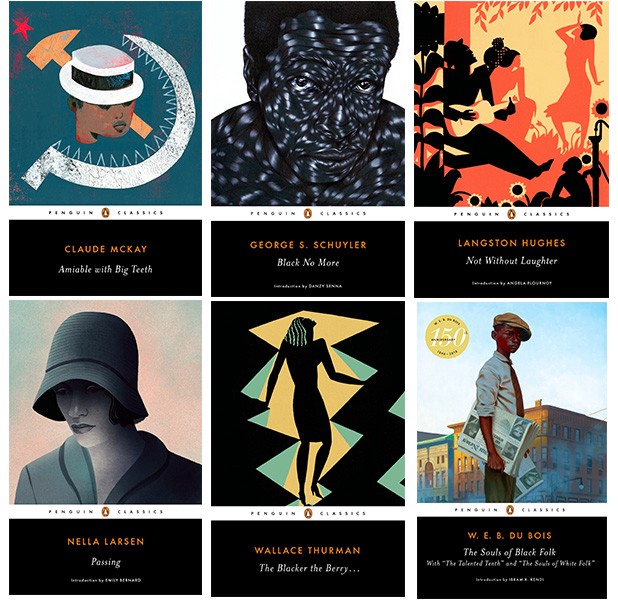
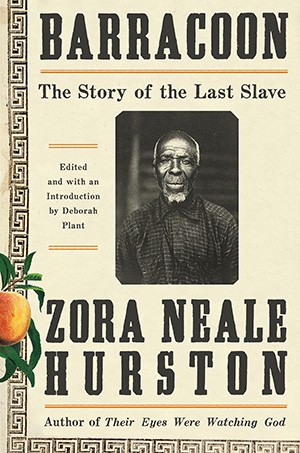
In honor of Black History Month, Penguin Classics has reissued several Harlem Renaissance titles with new covers and introductions, including The Souls of Black Folk by W.E.B. Du Bois on the 150th anniversary of his birth (Restless Books Classics series also published Du Bois’ seminary tome with illustrations last year); Langston Hughes’ debut novel Not Without Laughter; Nella Larsen’s Passing; Wallace Thurman’s The Blacker the Berry…; and George S. Schuyler’s Black No More. This year we’ll also be treated to the unveiling of books that hadn’t gotten their chance in Claude McKay’s Amiable with Big Teeth (also from Penguin Classics) and Zora Neale Hurston’s Barracoon: The Story of the Last “Black Cargo” from Amistad.
The new introductions to these titles mention the circumstances under which these works were created, and highlight the authors’ audacity in capturing a truth not yet seen in the literary world. Novels by Hughes, Larsen, Schuyler, McKay, and Thurman were open about issues of intraracial strife, communism, colorism, socioeconomic status, and the stakes of upward mobility. (Many of these writers were already known for exploring these topics in their commentary and poetry.) The pervasive issues of skin color, or really the reaction and perceptions of our hues, is never lost in these pages. Black No More is noted as one of the first Black speculative novels, its own Metamorphosis, in the main character of Max Disher jumping at the chance to shed his Black skin for white. Passing remains one of the most referenced novels depicting the lengths someone would go to gain wealth and perceived comfort by passing in the white world. Thurman’s The Blacker the Berry… also dissects issues of colorism, but reflects on them from inside the Black community, where dark skin can be seen as a liability. Each author’s mode of storytelling speaks to the problematic constructs of dominant powers and the psychology as well as politics this inflicts on everyone, those at war with the methodology as well as with themselves. These stories have never lost relevance or potency. Even today, when these stories are almost 100 years old, we need them; they allow us to reflect on how these societal pressures influenced those who now influence us.
The reissued nonfiction speaks to the personal losses felt by the subjects and authors of not only lost lives but lost dignities. Even though Souls of Black Folk was published in 1903, Du Bois remains a key figure of the Harlem Renaissance (he was also a co-founder of the NAACP). Souls of Black Folk, with a new introduction by National Book Award winner Dr. Ibram X. Kendi, declares the double consciousness of Black folks — wanting to be seen but also wanting to be accepted. Du Bois interrogates the projected bestiality of Black folks via the white consciousness at a time when slavery was not exactly a far off memory.
“The African slave trade is the most dramatic chapter in the story of human existence,” writes Zora Neale Hurston. In Barracoon readers will be introduced to the oral history of Cudjoe Lewis (neé Kossula), who at the time Hurston met with him in 1927 was the last living African to remember being part of the African slave trade. At the time publishers didn’t want to take this book on unless Hurston removed the dialect in Cudjoe’s natural voice. She refused. Barracoon would not see the light of day for almost 90 years until Amistad Books’ editorial director Tracy Sherrod — HarperCollins has been a long-time publisher of Hurston’s — with Dr. Deborah G. Plant felt a responsibility to bring Hurston’s long shelved work into the world as she intended.
In the “Affica soil,” Cudjoe speaks of pretty girls in the marketplace with gold bracelets from wrist to elbow. He talks about growing with the rainy season, the sayings of his kin, and an established justice system in his community. The life he lead was not so different from any we could imagine to this day, yet the violent nature of being wrenched from it hits him, and us, hard. A raid in the middle of the night, orchestrated by his captors and other Africans in Dahomey who made money off of the slave trade partnership with white men, would take Cudjoe and others from the only place they ever knew. To bring this story to light is a necessity to further document our history, America’s history.
Claude McKay’s novel Amiable with Big Teeth isn’t so much an opus as an open commentary. Deemed “melodramatic” by his publisher and vehemently rejected, McKay’s manuscript would be put to a literary death only to be found in 2009 in the Samuel Roth archives by the researchers who would write the introduction. Big Teeth paints Black intelligentsia as radical saviors during the barely referenced Italo-Ethiopian war. In a book that is political and speaks out against dictatorship, McKay creates a cast of characters based on true figures, as well as a method of seeing an end to a dominant force that affected Black people at the time. The toppling of a dictatorship can mirror much of what we see today. In this case the heroes don’t wield swords but intelligence, words, and strategy to destroy dangerous forces.
I’m a big believer in needing to know where we’ve been to see where we’re going. To be an artist at all means familiarity with the classics and the contributions of those who came before us. In the introduction to Not Without Laughter, National Book Award finalist Angela Flournoy spoke about how we still need the work of Hughes and other Harlem Renaissance writers to showcase a range of Black communities, rather than shoehorning them into a one-size-fits-all designation. “I don’t think that the only time we should write about poor Black people is when we’re kind of moralizing them in some kind way or we’re trying to make a case for them to someone else of a different class or different race rather than exploring their lives with all the complexity they possess,” she says. Hughes, especially in Not Without Laughter, is clearly working under these same beliefs of exploration. Yet Langston Hughes’ and others’ work never ignored the issues Black people faced and continue to face, particularly racism during segregation, Flournoy notes: “[It] doesn’t mean that racism doesn’t rear its head or that he doesn’t have an ax to grind. But it means that the clear task of all that is to make [his characters] fully human than to make a case for them to somebody else.”
The work of Hurston, Hughes, McKay, and other Harlem Renaissance luminaries like Dorothy West, Countee Cullen, Alice Dunbar Nelson, Alain Locke, and Angelina Weld Grimké encapsulate a time when Black thought ran rampant not only in books but in plays, poetry, visual/performance arts, speeches, and much reporting through Black-run periodicals like the Amsterdam News, The Chicago Defender, and The Crisis. They represent not so much the elite but the proactive, those who sought to bust through closed doors and open the floodgates of how Blackness isn’t solitary, nor is it about comforting or kowtowing to whiteness.
The timing of publishing McKay and Hurston’s previously unseen books may not have been planned to align with our current political turmoil; these works had been discovered years prior. Yet it’s evident a need was seen to provide a home to work that hadn’t been allowed to exist for the masses along with the insistence to recirculate material that showcases Black identity in all its iterations. Perhaps the reissue of these books can be considered a new mini-Renaissance, in the sense of a rebirth — not only of the well-known titles like Passing or The Souls of Black Folk, but also of stories like Barracoon that never saw the light of day, or the work of those we lost too soon like Wallace Thurman who died at the age of 32 of tuberculosis. For many of us these titles may already be staples on our personal syllabi. But the reinvestment of these pages to bring these stories to a contemporary audience (two introductions mention parallels of these books with Kendrick Lamar and Beyoncé) shows an understanding that our classics, our American classics, hold relevance in all times not just in our history but in our exploration of the future.
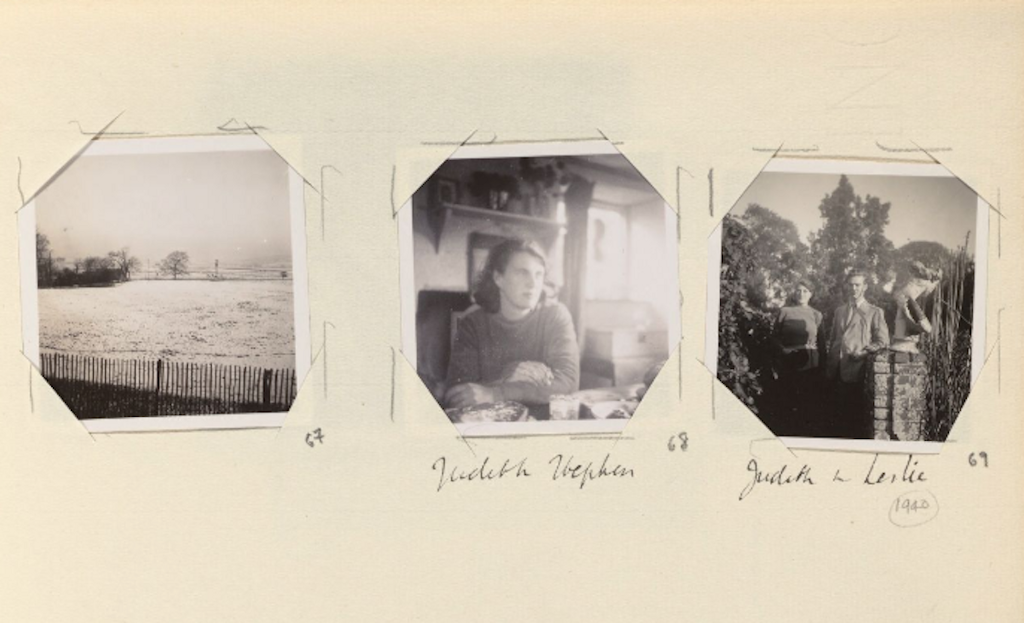
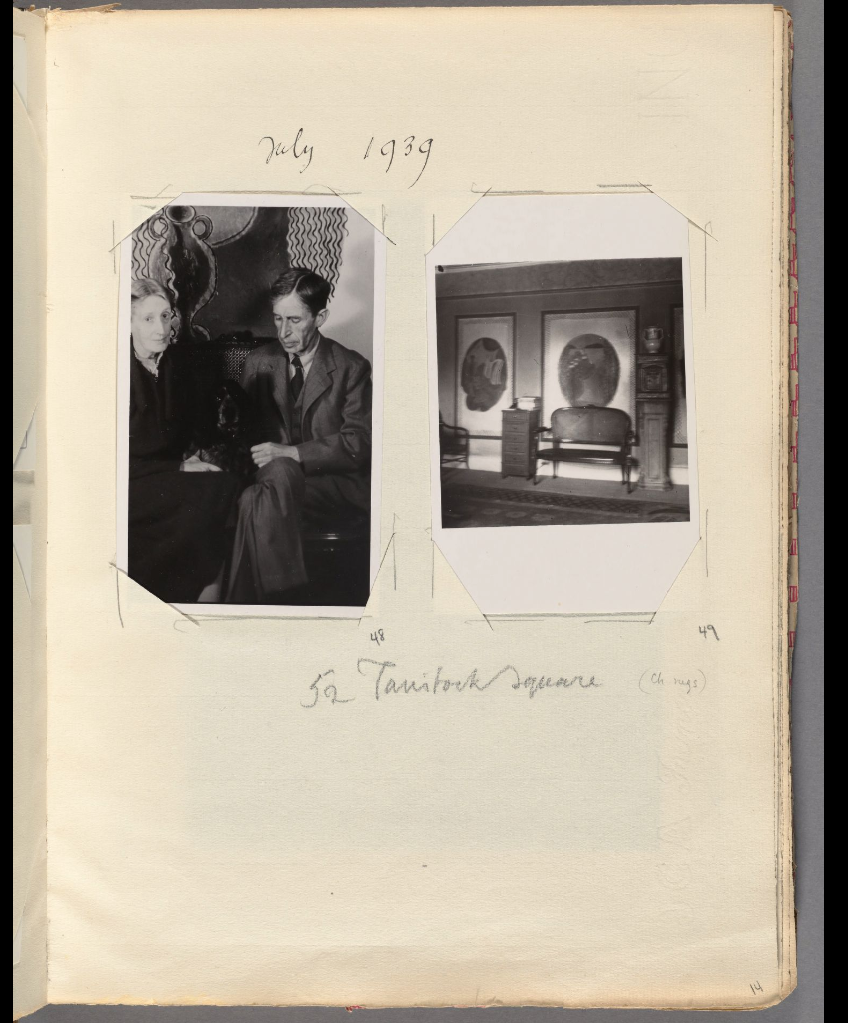
Virginia Woolf was a scrapbooker. At the age of fifteen, Woolf developed a penchant for photography and started arranging her work in photo albums. The albums are housed at the Harvard Library and now, as reported by Artnet, the library has graciously scanned one photo album from 1939 and made it available for our free consumption on their website.
The photo album is the fourth in the “Monk’s House” series. The six albums in the series give us glimpses into Virginia Woolf’s life with Leonard Woolf at their home in East Sussex, England, where Woolf lived intermittently from 1919 until her death in 1941. The album series ends in 1947, suggesting that Leonard Woolf continued to collect and arrange the photos after Virginia Woolf’s death.
Photo courtesy of Harvard Library
In To the Lighthouse, Virginia Woolfwrote that the meaning of life might not come in one “great revelation” but instead, “there were little daily miracles, illuminations, matches struck unexpectedly in the dark; here was one.” Here, we could say, is another one. The album is a collection of little things like pets and treetops and newspaper clippings that spark and illuminate a little more of Virginia Woolf’s life for us.
Looking at my favorite page in the 1939 album feels a little like reading a Woolf novel. At the top of the page, there’s a dog curled up in a well-worn chair, then a picture of two men grinning — one on solid ground and the other looking up from the bowels of a hole that looks a lot like a grave, and then finally a picture of a bleak, snow-covered landscape. No captions. There’s a novel waiting to be born in those three images, alone. The rest of the album appears to be loosely chronological, filled with shots of famous friends like W.B. Yeats, E.M. Forster, and more Bloomsbury group celebs, pictures from visits to friends’ homes and snaps from the Woolfs’ vacation to France.
Photo courtesy of Harvard Library
You can do your own literary celebrity gawking through some of the photos we’ve collected here, and head to the Harvard Library website for more gems.
Not long after they die, even the best novelists start to stink.
Maybe that explains why we have so few great stories about what happens after we die. The novelistic tradition is rich with deathbed scenes and moving explorations of grief, but serious fiction about mortality inevitably stops at death’s door. Remarking this pattern in 1927, E. M. Forster blamed novelists’ hesitation to write about the dead on the dead themselves. “[D]eath is coming,” he admits in his influential treatise Aspects of the Novel, but we cannot write about it in any convincing way because — as the saying goes — dead men tell no tales. “Our final experience, like our first, is conjectural,” he concludes. “We move between two darknesses.”
Forster’s reasoning seems sound enough. If we want to move from a pathologically death-phobic culture to a more well-adjusted one, however, we need to rethink our cultural tradition of giving death the silent treatment. That is the sentiment underlying the death-positive movement, a loose collective of artists, writers, academics, and funeral industry professionals agitating for more open conversations about dying. As the mortician and author Caitlin Doughty explains in her bestselling memoir Smoke Gets in Your Eyes, “A culture that denies death is a barrier to achieving a good death.”
At the very minimum, our culture of death denial creates a population unprepared for the inevitability of death, one in which every dying individual burdens family and friends with painful healthcare decisions, legal battles, and property disputes that could have been avoided with a little forethought. At its worst, death denial promotes a youth- and health-obsessed society whose inability to address death fuels overwhelming feelings of anxiety, depression, and powerlessness in the face of illness and age.
As Doughty — perhaps the most prominent figure of the death-positive movement — admits at the end of her memoir, “Overcoming our fears and wild misconceptions about death will be no small task.” She looks to the medieval spiritual guidebooks known as Ars Moriendi (Latin for “The Art of Dying”) for inspiration. We need to re-teach ourselves how to die, she argues — a process that begins with an open admission of our thoughts, fears, and beliefs about death. Treating death as a hushed affair will only make matters worse. “Let us instead reclaim our mortality,” she concludes, “writing our own Ars Moriendi for the modern world with bold, fearless strokes.”
We need to re-teach ourselves how to die—a process that begins with an open admission of our thoughts, fears, and beliefs about death.
The spate of books on death and dying published in the past two years suggests that many writers have taken Doughty’s words to heart. These works run the gamut from a grisly history of Victorian surgery to a study of American hauntings, and they include the lavishly illustrated essay collection Death: A Graveside Companion and Doughty’s own From Here to Eternity, a comparative analysis of death practices from around the world. For a group interested in the art of dying, however, the death-positive movement is strikingly uninterested in art of the literary variety: in its concentration on turning a spotlight on the facts of death, the death-positive movement has not yet explored the relationship between death and fiction.
If we want to reclaim the good death as part of the good life, we need to consider how we incorporate death in the stories we tell about ourselves. When we tacitly treat death as The End of every individual’s story, we only increase a collective sense of death’s unspeakability. What lies beyond the grave seems unthinkable in part because it remains unimaginable. Yet if Forster is right, it seems we are at an impasse: given the silence of the tomb, how can storytellers represent death as something other than a final stop?
If we want to reclaim the good death as part of the good life, we need to consider how we incorporate death in the stories we tell about ourselves.
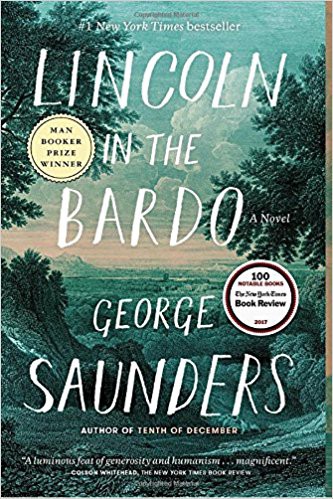
Two award-winning attempts at writing the afterlife — one from 1999 and one from 2017 — offer two different approaches to answering the question. Taken together, Being Dead and Lincoln in the Bardo show that it is possible to tell smart, powerful stories that represent death as something other than a stunningly final silence. They also show that the precise forms such stories take have profound implications for the ways we value life, and the ways we understand the place of death within it.
The very title of Jim Crace’s Being Dead promises tantalizing access to that posthumous experience that Forster believed to be off limits. Yet there is a bit of a bait-and-switch here: Crace’s novel leaves little room for speculative adventures into otherworldly existence. Being Dead is a postmortem story in an almost clinical sense. It tells the love story of Joseph and Celice, two young scientists who get married, raise a daughter, and settle into late life together. But if this is love, it is love under the knife: Crace’s scalpel-sharp realism cuts to the heart of desire with a kind of ruthless detachment unmatched since Flaubert.
The result is less the touching portrait of a couple than an autopsy of their relationship — and that is only appropriate, because the novel opens with their murder. Joseph and Celice die of a kind of misplaced nostalgia. They have unnecessarily returned, in late middle age, to the sand dunes where they first conducted research together and gave in to youthful passion. The explicit purpose of their trip is to visit the dunes one last time before the place is destroyed by encroaching development. But the couple’s desire, here and elsewhere, is divided: Celice wants to make peace with the death of a friend that occurred exactly as she and Joseph first fell for each other, while Joseph only wants to reenact their tryst on the dunes.
Joseph’s “plan” is utterly transparent to Celice, who indulges him out of pity rather than affection. Their actual encounter ends in embarrassment; Joseph finishes before it starts. They resolve to try again after lunch but never get that chance. A furious stranger stumbles across the defenseless, naked pair as they sit together, and he bashes their skulls in with a rock.
Because the couple has already died as the story begins, the novel proceeds by alternating backward glances with real-time narration, interspersing Joseph and Cecile’s love story with the lurid details of their bodily decomposition. The result is touching and gruesome by turns, but not necessarily in the ways you would expect: the descriptions of decay offer welcome relief from the cringeworthy details of the awkward, lopsided desires that brought the couple together. The novel seems, in fact, to struggle with its own inevitable slide toward the romanticization of decay. “Do not be fooled,” Crace admonishes his reader early on:
There was no beauty for them in the dunes, no painterly tranquility in death framed by the sky, the ocean and the land, that pious trinity in which their two bodies, supine, prone, were posed as lifeless waxworks of themselves, sweetly unperturbed and ruffled only by the wind. This was an ugly scene. They had been shamed. They were undignified.
Yet Crace lingers almost lovingly over Joseph and Celice’s bodily transformations as they lie exposed among the seagrass. While their love life is painfully prosaic, the passages that describe their undiscovered bodies flirt with a far more idealistic vision of human attachment:
But the rain, the wind, the shooting stars, the maggots and the shame had not succeeded yet in blowing them away or bringing to an end their days of grace. There’d been no thunderclap so far. His hand was touching her. The flesh on flesh. The fingertip across the tendon strings. He still held on. She still was held.
Being Dead manages to recast our bodily afterlives as something not only speakable, but significant. It does so, however, by valorizing the unconscious peace of our material remains, casting that as preferable to the despicable fumblings of actual life. The intimacy of Joseph and Celice is only unproblematic when they have become unfeeling matter, generously supplying the landscape with the nutrients sloughing off their unprotected flesh. If Being Dead achieves an unusually death-positive outlook, it achieves it by becoming decidedly life-negative.
George Saunders’s more recent exploration of experience after death takes a radically different approach. Whereas Being Dead aligns itself with a kind of scientific detachment, Saunders’s Lincoln in the Bardo proves exuberantly grotesque from the outset. The story opens with the middle-aged Hans Vollman describing his gradual, tender seduction of his young wife. Alas, on the very day she promises to give herself to him, a loose beam falls and crushes his skull. Unable to accept the fact of his permanently unconsummated marriage, Vollman haunts the cemetery where he is buried, joining a number of other lingering spirits who convince themselves they are merely sick and will soon recover.
Saunders does not deal with decomposition in the straightforward way favored by Crace. His dead characters experience a progressive material instability instead, as they undergo bodily embarrassments that range from the familiar to the fantastic. Hans’s earthly fixations, for example, make him appear to other spirits with an oversized and irrepressible erection. He repeatedly bumbles into discussion of his physical shortcomings, from the baldness and lameness that plagued him in life to the mortifying fact that he pooped his pants after death. His fellow revenants suffer similar corporeal distortions: Roger Bevins III, a Whitmanian poet who killed himself in a fit of passion, fights to suppress the shapeshifting, hungry bundles of hands and eyes that sprout from his body in futile attempts to grasp after the experiences he denied himself by taking his own life.
If death positivity means staring unpleasant facts in the face, Being Dead would seem to be a more death-positive novel than Lincoln in the Bardo. Crace treats both the issue of decomposition and the unconsciousness of the dead in frank terms, whereas Saunders passes over putrefaction to depict a world where the dead might yet live — at least temporarily. But reading the texts together suggests that death positivity cannot emerge from objective attention to facts alone. In fact, Lincoln in the Bardo reveals that the fascination with prurient facts that underpins Being Dead emerges from a kind of puritanical fear of our fleshly existence, a fear inseparable from the novel’s reliance on an omniscient narrator.
We have become comfortable with the idea that a story can be told by the all-seeing eye of a disembodied voice. Strictly speaking, however, this supposedly objective “view from nowhere” is an absurd fiction — at least as impractical and unrealistic as any postmortem point of view. The impracticality of objective narration is especially apparent in Being Dead because the novel is so preoccupied with death, the very moment supposed to divide subjective from objective existence.
By viewing the bodily histories of Joseph and Celice from the outside, the narrator of Being Dead does them — and us — a disservice. The novel only pretends to a fearlessly honest account of human bodies, when its perspective is essentially fearful. Rather than acknowledging the embodied experience the author shares with his subject matter, it retreats into the sham detachment of an etherealized narrator, an imaginary voice pretending to possess unearthly objectivity.
The result is an impossibly disembodied account of what bodies are, one that ends up portraying all embodied consciousness as disappointing, limited, and pitiful. Rather than treating death as an inevitable part of a continuous material experience we all share, Being Dead idealizes it in the way it idealizes all objectivity: in Being Dead, death offers a welcome break from the painful awkwardness of embodied consciousness. Saunders, by contrast, dives with rollicking good humor into the oddness of bodies, acknowledging such awkwardness — and embracing bodies all the more for it.
Lincoln in the Bardo has no imaginary narrator watching earthly existence from the outside. The story is told through a series of (mostly dead) characters whose interwoven monologues clumsily strive to explain their current state while avoiding any admission of their own deaths. The result is a world — the Bardo — that seems, at first, sui generis, a marvelous oddity sprung from the mind of one of our foremost storytellers. Soon, however, it acquires an uncanny familiarity.
For all its unworldliness, the community Saunders depicts is very like our own. His novel is a gently satirical portrait of a society founded on an elaborate charade of death denial; the plot turns on the shades’ need to realize the absurdity of the fiction that they can avoid their own deaths. It begins with the introduction of a newcomer — a freshly dead soul who is promptly welcomed with Vollman’s raunchy monologue. But Vollman is suddenly (and hilariously) taken aback to discover that he has just told his tale of penises and poop to a young, innocent, sad-faced boy who turns out to be the president’s son, Willie Lincoln, who has died of typhoid fever in the early days of the Civil War.
The timing of this weirdest of historical fictions cannot be coincidental. As Doughty and others have observed, the American Civil War marks the starting point of the modern death industry. Embalming, once considered a ghastly and unnatural process, became mainstream in the United States when families faced with the logistical problem of transporting bodies intact over long distances — the bodies of soldiers who were dying in unprecedented numbers far from their birthplaces. Embalming solved the problem, but it required a new kind of expertise. Suddenly the preparation of bodies — once an intimate affair, largely the work of women who cleaned and dressed their dead at home — became an invasive professional process. The Civil War thus launched the profession of the funeral director into the mainstream, driving a wedge between Americans and their dead.
Saunders’s novel offers us a glimpse of a more intimate antebellum relation with the dead to remind us of what we lost. It offers a profoundly moving account of an entire community of people awakening to an awareness of their own mortality. The story is simple enough: the denizens of the cemetery welcome young Willie, then watch in confusion as Abraham Lincoln repeatedly returns to his son’s tomb after dark to open it and embrace the body. As they look on, the roving spirits begin to recognize the loathing of their own bodies that lies at the heart of their death denial. The spirits speak in a series of rapid epiphanies about their own self-hatred, triggered by the loving touch Lincoln bestows on his son:
To be touched so lovingly, so fondly, as if one were still —
—roger bevins iii
Healthy.
—hans vollman
As if one were still worthy of affection and respect?
It was cheering. It gave us hope.
—the reverend everly thomas
We were perhaps not so unlovable as we had come to believe.
—roger bevins iii
The intimate attachment of the dead with the living fills them — and us — with something other than horror. It provokes surprise that gives way to admiration and awe as the dead realize that their shared fate does not deserve the hatred they have wasted on it.
It is an impressive portrait of a world to come. Of course Lincoln in the Bardo is, finally, a fiction — and a deeply unrealistic one at that. Nevertheless, the novel’s fantastical qualities do not make it less useful to the death-positive movement. If anything, its very lack of realism clarifies the important role fiction must play in our collective struggle to reimagine our relationship with death.
Lincoln in the Bardo shows accepting death to be inextricable from accepting the oddness of bodies. In Lincoln’s repeated visits to the cemetery, the spirits discover an individual not only unafraid of bodies but positively in love with one. Lincoln’s conflictedness shows him loving his son as a physical being — even in his diminished, postmortem form — and indulging that love precisely because he knows the body cannot last, that he must finally let it go.
What Vollman, Bevins, and the others come to understand through Lincoln’s example is how to reattach their senses of identity to their bodies. They learn to be generous to themselves as messy material beings, to include both their bodily joys and their bodily fallibility into their essential understanding of what it means to be. When they accept this epiphany they vanish, receding into something beyond our reach. But that disappearance no longer feels like an abrupt rupture of subjective experience, or something at odds with life. Death becomes, instead, a kind of higher accomplishment — a letting-go that most of us are not yet ready to aspire to.
That kind of awed acceptance is finally unavailable to Being Dead. Crace’s novel revels in a species of passionless scientific accuracy whose view is finally less able to understand death, and less able to represent it, precisely because death is such a deeply subjective experience. Death, in other words, only happens to subjects, to embodied beings immersed in material experience. That is precisely the experience that Being Dead, like works of strict nonfiction, refuses to include.
Lincoln in the Bardo reminds us that it makes no sense to aspire to unflinching objective accuracy when we are all flinching, subjective, and messy bodily beings. The attempt to adopt a dispassionate perspective on death is itself an example of our absurd aspiration to inhabit an undying, unearthly worldview. It is at once unhealthy and impossible. Clinical detachment from our shared embodiedness is the most pernicious of fictions.
The attempt to adopt a dispassionate perspective on death is itself an example of our absurd aspiration to inhabit an undying, unearthly worldview. It is at once unhealthy and impossible.
The death-positive movement has already made enormous strides toward making death a subject of public discussion. What we need now, however, is an examination of death as more than just a matter of fact. We need new fictions that understand death as an imaginative challenge — a challenge that cannot be overcome by stricter adherence to objective detachment, the interminable piling of fact on fact. We need innovative modes of storytelling that can disabuse us of this unhelpful obsession with objectivity, stories that help us see physical matter not as an assuredly lifeless, senseless object we all eventually become, but as the very thing that defines and enables our existence — the thing from which life and mind continuously, mysteriously emerges. Only then will we be able to forge a way forward that leaves us unafraid of our shared inhabitation of our fragile, corruptible, beautiful bodies.
I was a bookseller when I first encountered Kristin Newman’s travel memoir nestled among the morning delivery. Squinting for a moment, I recognized the red blob beneath the title — What I Was Doing While You Were Breeding — as a lipstick kiss on an airplane window. The jacket copy not only summed up the countries she visited, but also the men she met: “Israeli bartenders, Finnish poker players, sexy Bedouins, and Argentinean priests.” My throat constricted, heartbeat erratic, as I slipped a copy in my bag. I chalked up this difficulty swallowing and sweaty palms to disagreeing with Newman’s central argument: that by traveling alone instead of settling down, she found herself, and only then could she walk off into the sunset she’d been destined for. I couldn’t read past the first chapter, instead wanting to take to the streets like an Evangelical grasping a paint paddle and duct tape sign: this book is a lie; that’s not how the story goes; repent! What I meant was: this is not how my story goes.
Five years ago, I studied abroad in Florence, Italy, as do thousands of students every year. While there, I had a relationship with a man, M., who worked in my building. When the semester ended, he disappeared and I flew back to America. A year later, I returned alone to find him.
It’s not uncommon for narratives of women traveling solo, like mine and Newman’s, to run parallel to love stories. Just as often, those stories end with the woman gaining new insight into her truest self. Perhaps because I lived the former but was denied the latter, I resent women who claim to have both. The only salve: proving these neat, circular narratives false.
Essentially, the point of entry into the country she is visiting — providing that illuminating white space between life in the States and life abroad — is the man, the love story. I don’t mind love, nor do I mind casual sex. I do mind the implied assertion that foreignness of man and place are conditions necessary for a woman’s sexual liberation that is then equated to self-actualization. These contingencies weaken any feminist slant narratives like Newman’s might have, since self-discovery is seemingly accomplished only by fetishizing foreign men, an act both dependent upon the presence of a man and reducing him to his home country. Newman never acknowledged those Israeli bartenders, Finnish poker players, sexy Bedouins, and Argentinean priests for what they were: keys to cultural doors normally closed to Americans, doors that were pivotal in leading her to that inner self. How real are insights only won through men?
I’ve encountered iterations of this problematic trope in the obvious places: Elizabeth Gilbert’s Eat, Pray, Love, Frances Mayes’ Under the Tuscan Sun, and Gayle Forman’s fictional young adult duology Just One Day, in which a shy college-aged girl falls in love with a European man who disappears. I’ve even picked up and put down Jessie Chaffee’s Florence in Ecstasy countless times. Once, I was able to work past my sympathetic nervous system’s immediate reaction to just the title, and saw there was a character who shared M.’s name. It’s a common Italian name, and Chaffee’s novel grapples primarily with other themes I’m interested in, but my stomach still rolled with nausea and I dropped the book like a heavy stone.
How real are insights only won through men?
Though I never admitted it, I hoped to find myself in these stories as much as I wanted rip the pages from their bindings. My whole life, I’ve believed the old adage that books have the power to reflect humanity back to their readers — making them feel less alone, seen — with ferocity. But when I needed those books most, just the weight of one in my hands seemed to take away something I felt to be mine.
Jessa Crispin’s The Dead Ladies Project was the only woman-traveling-solo memoir I refrained from hurling across the room. She exists by herself through most of her time abroad, rather than just boarding the plane alone and finding someone the day she lands. Even so, she still asks herself: “Have I always done this, treated men like doors rather than partners? Seeing them for what kind of world they can take me out into, rather than their own particular qualities?”
I wrote this on a piece of paper and hung it above my bed.
If my story was jacket copy, it would go like this:
A series of fated accidents leads small-town Washington girl to study abroad in Italy’s most romantic city, where she dances on tables, kisses strange men — Brazilian bartenders, Swiss architects, Italian doctors! — and falls in love. When her foreign lover jilts her without explanation, she wanders lonely and lost, before ultimately flying back to Italy to find her love — and perhaps, even herself.
In reality, I did dance on tables and kiss Brazilian bartenders, Swiss architects, and Italian doctors during my semester abroad. This carefree flirt was a version of myself that didn’t exist in America, where I was known as bookish and quiet.
Then there was M.
The few things I knew about him starkly contrasted what I knew about myself: he wore black on black; I always wore pink. He was in his late twenties; I was twenty-one. He was Italian; I was American. He hated the students I lived with; he did not hate me. In fact, as days passed, he seemed to take an interest in me. My friends were trying to sleep with guys in the program, while I turned those same guys down, said I’d see them next year in America. I was different; I’d been selected.
I don’t remember telling anyone that I hoped M. would ask me to stay, unlike when I would come home from other dates gushing hyperbolic accounts of midnight cityscapes and Vespa rides. Our relationship unfolded without witnesses, early in the morning while my fellow students slept into the afternoon. I’d emerge from my bedroom with mussed hair and bare face, he made coffee, and we simply talked. Even when I woke up later than usual, he stopped cleaning the dining room to set out breakfast just for me, vinyl tablecloth sticky from the wet rag in his hand; he compiled lists of museums, restaurants, and bars he wanted me to visit and I carried them for days in my back pocket as harbingers of morning conversations to come.
Though my memory is blurred by what happens next, my few recollections of the time right before his disappearance reflect an emotion nothing short of awe-struck. M. saw a version of me that was at once true to but still larger than the original, quietly bookish girl. I was sure that if he didn’t ask me to stay, he would at least write. Our relationship was genuine; it would exist anywhere in the world. It couldn’t end, as the others inevitably would, with the program.
I was sure that if he didn’t ask me to stay, he would at least write. Our relationship was genuine; it would exist anywhere in the world.
But when the semester ended, he didn’t ask me to stay, nor did he write. He didn’t even say goodbye. I sent him frantic emails before my plane took off, and again when it landed. He didn’t answer. As months passed and added up into a year, M. — and the person I believed he saw me as — calcified into myth. I disappeared with him.
When I bought a plane ticket back, my motivation was not to reclaim our relationship, but to reclaim myself. Cue sunset.
M. learned of my return through a mutual friend before I could show up unannounced, as the heroine of my novel quite obviously would have done. Still, he gave me drama, left me waiting for hours at Ponte Alla Carraia — one bridge away from the famous Ponte Vecchio, the perfect place for a cinematic reunion. Even as he stood me up, I believed the multiple messages he sent pleading forgiveness. I gave in to the emotions vying for precedence over my anger and went to his apartment. I didn’t leave for seven days.
Eventually, I needed to pick up groceries for the room I was technically renting across the Arno. M. recommended the store with the best prices. I said that’s where I always went. I remember him saying something along the lines of: Right, sometimes I forget you’ve lived here, too. He kissed me goodbye, and disappeared again.
There’s an email address listed in the bottom right-hand corner of Jessa Crispin’s homepage, but the domain name belongs to a website she ran that closed in 2016. I write her only because I expect my message to sit in an inactive inbox.
She responds.
Despite my nerves, I try to make myself clear. Does she also see unaddressed problems in narratives of women discovering themselves while travelling alone — false autonomy, dehumanization of one’s partners, equating sex to self? I don’t know how to interrogate these stories without being misunderstood for attacking the part I agree with — a woman’s sexual freedom.
Crispin tells me, “Male travel writers have done this sex traveling thing for years . . . I don’t think women doing the same things men have been doing is any sort of progress.”
What would constitute progress? I don’t know. I’d reclaimed neither the relationship nor myself. M.’s second disappearance only planted more questions, this time not of the motivation behind his repetitive abandonment, but rather the shelf life of memory: when he will forget me, when I will forget him, who will accomplish this Sisyphean task first. My bet is on him.
I buy What I Was Doing While You Were Breeding again.
When I finally finish, I email Newman, this time because I actually want a response. I want to burrow my pain into her pithy insights; I want to denounce her narrative with my own. But more than anything, I want my arguments against her to be flawless.
And Newman answers.
“It wasn’t the sex that made the difference for me; it was getting to be brought into the local culture by a local,” she tells me. I bristle, hoping she’ll address what I feel to be the subtext of this statement: trading sex for cultural acceptance. I ask Newman if she thinks women traveling alone can access this local culture without sleeping with a local. She mentions signing up for day trips, volunteering, asking people you don’t want to sleep with to have a drink — but ends by saying, “People are much less motivated to make a foreign friend than they are to have sex with a foreigner.”
Despite myself, I tell her that I agree.
Eventually I ask about her trip to Israel, the only chapter that ends with the men as “just an endnote.” She says, “I was going out of my way to meet [people] because I was doing research. But only as I’m saying it to you right now am I thinking to myself, ‘That’s how I should be going on every single trip’ . . . I wasn’t avoiding sex, but I was going for a different reason.”
My heart begins its familiarly erratic dance as I realize that I’m not angry at Kristin Newman; I’m angry at myself. I didn’t find a mirror in Gilbert, Mayes, Forman, or even Crispin. I found a mirror in Newman, and immediately looked away when I saw what was reflected.
I saw myself as worldly because men from other countries wanted to sleep with me, not because I actually spoke a different language or understood a culture.
Newman refers to her abroad self as “Kristin-Adjacent”; my adjacent self was also won through sexual liberation. I saw male attention as proof that I wasn’t a small-town Washington girl, freshly twenty-one and always dressed in pink. Instead, I was the woman who danced on tables and kissed strangers. Reducing the partners I had in addition to M. served this developing self-conception. I saw myself as worldly because men from other countries wanted to sleep with me, not because I actually spoke a different language or understood a culture.
Then there’s the question of M.: was my belief that our relationship would exist anywhere in the world accurate? Both times that we ended occurred simultaneously with my departure from Florence, and so the two losses not only compounded, but also became synonymous in my mind. After his first disappearance, I confused wanting answers from him with missing the identity I formed while abroad. He was woven into its foundations, its stability contingent upon his presence. The immediate relief provided by my return — to the city, to him, and therefore to myself — only tightened the braid further. So then, how does this story end?
I could have stayed alone in Florence; I could have taught English while becoming fluent in Italian by myself. Those choices might have resulted in self-discovery, free from the qualifier of men providing entry.
Instead, I left.
Now it’s four years later and I live in New York; my life — professional and personal — is about proving books to be both mirrors and doors; I’ve loved the same aspiring lawyer for two years. I mentally list off these facts while standing in a bookstore where I don’t work, the weight of Florence in Ecstasy in my hands. I’m a version of myself that’s at once true to but still larger than who I was before, and it’s a version that doesn’t belong to any memoirist, novelist, or even M. It belongs only to me.
My copy of What I Was Doing While You Were Breeding is tucked next to The Dead Ladies Project in my bookshelf. I open the latter, dog-eared beyond recognition, and run across a line I marked before, “I must take this city back from him.”
There are plenty of articles that purport to tell people under 35 what they should read: “33 Books Millennials Need to Read Before They Are 30,” or “16 Books Every Millennial Should Read,” or “7 Best Money Books for Millennials.” But how come millennials have to do all the work? If older generations want to use the millennial generation as a scapegoat, they should first understand the complexities millennials are surrounded by: changing technology, economic recessions, personal overexposure, terrorism, debt. Here are nine titles that can help baby boomers understand the anxieties millennials live with, so maybe we can get some slack cut out for us—or some proper legislation in order. (Though some of these were written by millennials, we deliberately chose a bunch by people over 40, in the name of bridging the generation gap.)
Lately, with the significant rise in school shootings in the United States, the question on many students’ and teachers’ minds is will my school next? “The Fourth State of Matter” was published in the New Yorker in 1996 and it reports on the shooting that occurred in a Physics Department at the University of Iowa, leaving five people dead. At the time, Beard was dealing with an ailing dog and a messy divorce, but none of these events could prepare her for the powerlessness of tragedy. The shooting happened in 1991, and in 2018 there have been more shootings than weeks and the victim population is growing. Doesn’t that make you anxious?
Consider how many children sat at their television screens, watching and re-watching September 11th. How many children lost a parent, friend, or relative on that fateful day. These were all millennial children who had to grope with death and grief and fear at a very young age. The attack affected the entire U.S. national psyche, especially for young people, shaking the confidence in safety that most (though not nearly all) American children used to have. In Extremely Loud and Incredibly Close, nine-year-old Oskar’s fear of certain objects and tall buildings stem from his inability to move past that day. Having to move on, rebuild, and sort through loss are notions that those who were children on September 11th hold close.
Ben Lerner had this to say about the main character in Leaving the Atocha Station: “The protagonist doesn’t unequivocally undergo a dramatic transformation, for instance, but rather the question of ‘transformation’ is left open, and people seem to have strong and distinct senses about whether the narrator has grown or remained the same, whether this is a sort of coming of age story or whether it charts a year in the life of a sociopath.” Nothing happens in the novel, really. We are in Adam Gordon’s head, filled with anxieties and loneliness that he doesn’t know how to overcome. He takes on a fellowship in Madrid and starts spending his days overthinking everything, smoking weed, and emotionally abusing women. Millennials not-so-fondly refer to this kind of man as a “fuckboy,” and understanding millennial anxieties starts with understanding what we are dealing with when we deal with the Adam Gordons of the world.
“What are you?” is and always will be my least favorite question. On the West Coast I am always seen as Mexican. But here in New York, people always ask “what are you,” which in turn makes me wonder, “Who am I?” (“Mexican” doesn’t seem to satisfy people here, so I have to tell them I’m also Colombian, even though I would never identify as Colombian anywhere else.) This question—who am I?—has plagued young people not only in the millennial generation but in every generation, but as identities have become rallying points and bones of contention, we’ve been forced to ask “what am I” more than ever before.
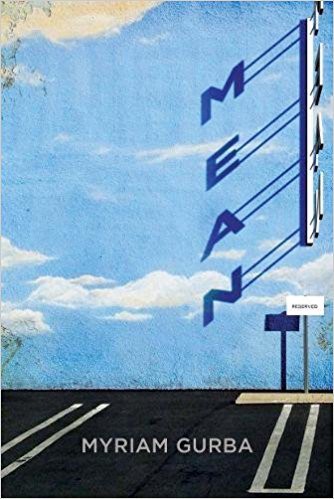
Mean, Gurba’s memoir, takes on the “what are you” question and applies it to every aspect of life. Queer? Chicana? Chicanx? What are you? And how are you going to be accepted by every one else? Do you even need acceptance?
Much of millennial anxiety can be attributed to the anxieties that were rubbed off from our parents—including their messy marriages. With half of America’s children witnessing their parents divorce, it’s difficult to overlook the consequences bearing witness will have on their daily lives. Issues with trust and the inability to understand healthy relationships are some factors that contribute to the anxieties of millennial life. “The Kid’s Guide to Divorce” is a short story in Self-Help that delicately shows the way children are the center of the separation of parents and how children have to deal with emotional labor when it should be between the adults.
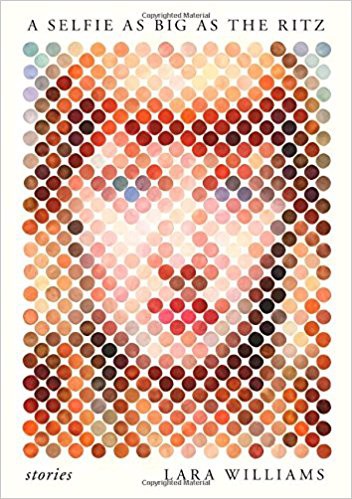
Lara Williams’ new collection highlights the romantic, emotional, and financial tenuousness of millennial culture. The main character in one story argues that marriage should be a temporary trial period which you evaluate before you fall too deep (I feel like that’s called dating, but heck what do I know). On page two, we are already hearing about the unpaid positions the narrator is forced to take, after she lists all of her qualifications. A Selfie As Big As the Ritz examines the temporality of life and all of its uncertainties, something millennials know all too well.
This book is about race and racism, identity, immigration, cultural criticism. It turns the world on itself and asks questions about its intentionality. It makes you question what you do and why you do it. People my age often hope we engage with baby boomers that are well versed in books like Americanah, in the hopes that we won’t have to deal with back handed or heavy handed racism. Millennials know that we do not live and have never lived in a post-racial world; get on our level.
We are in an age of high visibility. Internet privacy is questionable and the online community frequently jokes about the FBI agent on the other side of your webcam.The Circle takes us into a dystopian kind of universe, echoing much of Orwell, and shows how being constantly completely connected can cause major dysfunctions. We have seen the importance of communities like Twitter, for example, that help grassroots organizations come together and keeps news fresh. But The Circle keeps us wondering how far we can go down the rabbit hole of technology—even though we no longer have the ability to opt out.
Oscar is a young Dominican man struggling with his identity as well as his sex life. The issue with his identity is he has too many different hats. And the issue with his sex life is that it’s nonexistent—and for a Dominican man, that’s not supposed to be happening. But that’s the anxiety-provoking dilemma of the status quo, particularly for hyphenated peoples (Dominican-American, Mexican-American, etc.). Which side do we live by? And why does any of this matter? Cue: nihilistic millennial.
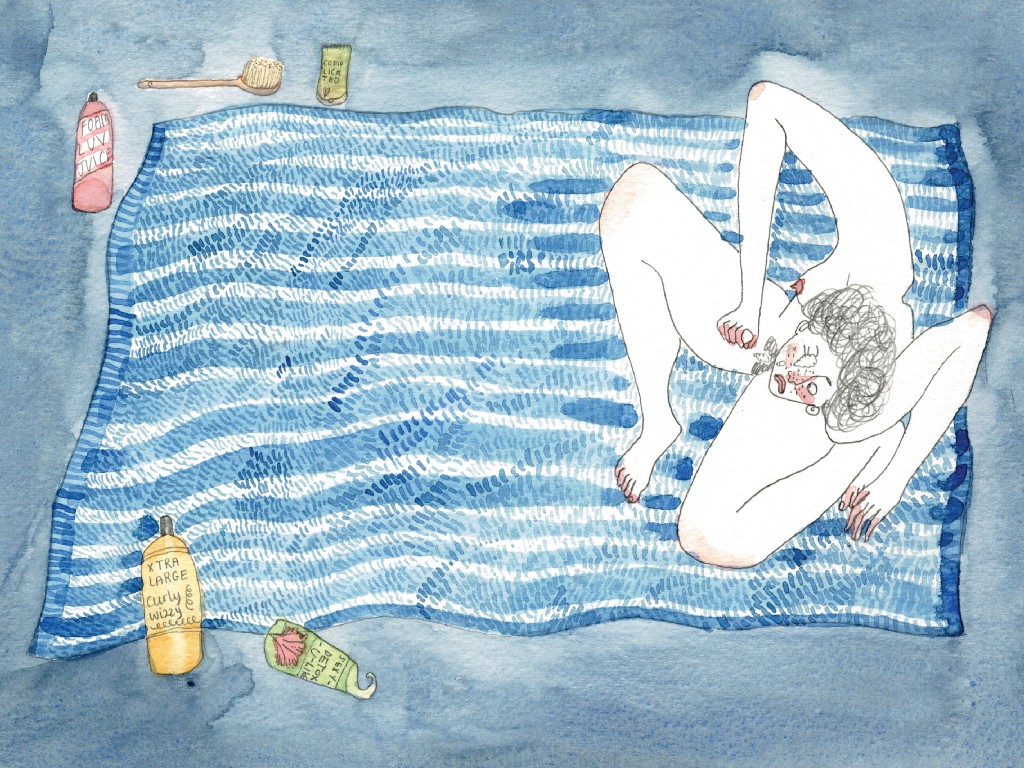
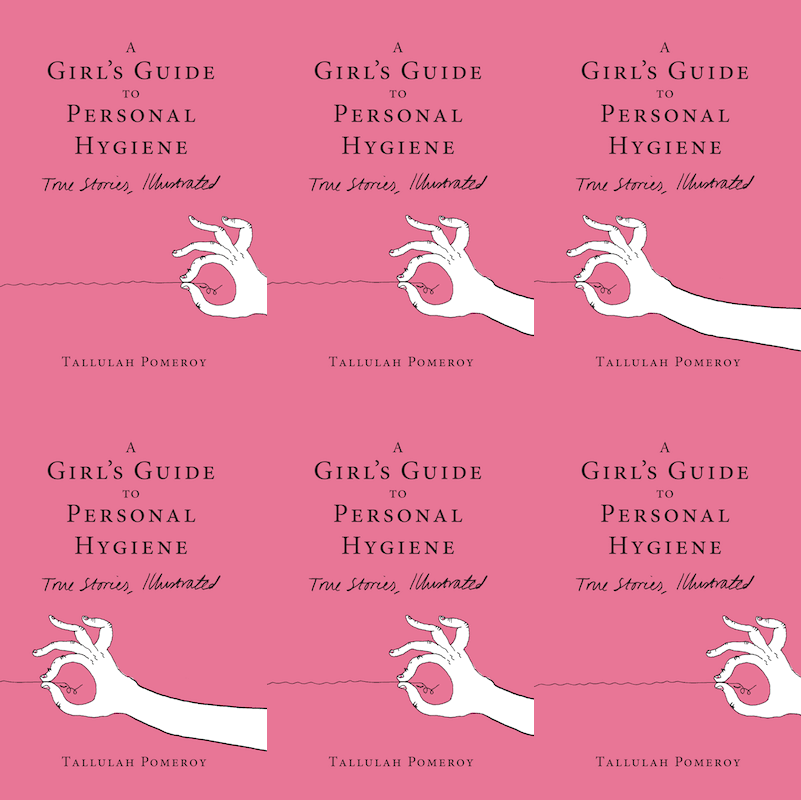
Something I really love about my shower routine is getting really nice and dry, laying my towel on the floor, sitting on it with my legs bent, crouching over to have a good search for any ingrown hairs around my lady bits, and fishing them out with a needle. It also means I can find any spots that need squeezing, which are more rare but more exciting. I found an enormous spot once on my inner thigh right near the crease where leg turns into vagina. It was so perfect: big, hard, massive white head. I squeezed it and heard an actual pop, and some of it went on my face because I was leaned in so close. It was frustrating not being able to share such a moment with anyone who really understood.
I maintain my flexibility with the specific intention of being able to keep on biting my own toenails into old age.
When I was a teenager and sitting at the family computer in the kitchen, I had a thought: “What would happen if I just shit my pants right here? Like, how would it feel?” And as I sat, probably on instant messenger, I just let it all out. Turns out it feels exactly how one would imagine.
About the Illustrator
Purchase the collection.
Tallulah Pomeroy is an English illustrator and writer. She graduated from Falmouth School of Art in 2014. Hallelujah I’m a Bum, a book of Callie Garnett’s poems and Tallulah’s illustrations, was published by Ugly Duckling Presse in 2015. Her poetry has been published in Daniel Owens’s magazine Poems by Sunday, and Coldfront magazine. She now lives in Somerset and is the in-house illustrator at Catapult magazine.
Last June, I sold my memoir. Somehow the story that I never thought anyone wanted to hear found a home. For a while, I was ecstatic; I’d been waiting for this moment my whole life, and now everything felt a bit brighter and more bearable. But the jubilant high of my accomplishment dissolved as the seasons changed. By the time winter rolled around, my seasonal depression and anxiety was in full swing. As the days grew shorter and sunlight became scarce, my confidence and motivation to write, or do anything really, crumbled. When I did write, it was just a paragraph or two, quickly scrutinized and altered again and again by the inner critic I could never seem to quiet. Most of the time I did everything but write. I binge-watched hours of Star Trek, hunted for vintage paperbacks at my favorite bookstore in Bushwick or on Etsy, and compulsively searched for quotes by my favorite authors late at night in hopes that I could use their words as a way to correct whatever personal flaw was keeping me from reaching my fullest potential.
Weeks turned into months and friends started to ask about my book. They wanted to know how it was going. Their eyes glistened with excitement when they told me that they couldn’t wait to read it. Every time, I smiled back before telling them that things were going great and that I’d written a few chapters. Each time this happened, I pushed the image of the barely five-page long Google Doc I had preemptively titled “Chapter 1” out of my mind. I ignored the weight of guilt that sat heavy like a stone on my chest. I tried to forget how little I’d written since the day my dream came true and the reasons why.
Maybe it was because of the “political climate” and the monstrosity of a man who occupies the White House. Maybe it was because of how many hours I spent between my three jobs and freelance assignments or how much money wasn’t in my bank account and how little I slept each night. Or perhaps it was all just a side effect of my words being overlooked or dismissed for so many years at the glaringly white schools my parents felt would give me a brighter future than what their schools had given them. There was also the possibility, at least in my own mind, that my depression and anxiety were a sign of weakness or laziness. Perhaps I wasn’t sad or anxious at all, but merely not working hard enough. I felt paralyzed and lonely. “I am a writer. I am going to write,” Hansberry wrote in To Be Young, Gifted and Black, the autobiography collected from her unpublished work. If I, too, was a writer, I wondered, then why couldn’t I write?
“I am a writer. I am going to write,” Hansberry wrote in her autobiography. If I, too, was a writer, I wondered, then why couldn’t I write?
In January, things got worse. In addition to not writing, I stopped replying to emails, stopped doing laundry, and had to set calendar reminders for things like “use SAD lamp,” “take out the trash,” and “buy cat food.” Outwardly, I seemed normal, but within the four walls of my bedroom, I was a mess. I needed an escape, so on a bright cold day I decided to ignore my inbox, to abandon the dirty dishes in the kitchen sink and all the words I hadn’t written but needed to write. Instead, I slipped on my boots, grabbed my coat, and headed to Harlem to spend the day with Lorraine Hansberry.
Earlier that week, I’d apprehensively RSVP’d to American Master’s screening of Sighted Eyes/Feeling Heart and the Schomburg Center’s Open Archive of Lorraine Hansberry’s papers. Even then, I was behind on everything, tired, and as always, anxious. That morning, I had decided not to attend, to be pragmatic and spend the day toiling away at my laptop. But as soon as I resigned myself to staying home, something in my heart whispered, “You should go.” So I listened, and as I walked out the door, I considered my decision not an act of defiance, but one of self-preservation. I couldn’t quite articulate why, but I needed something that sitting at my desk couldn’t give me and I was determined to put the world on hold until I felt sane again.
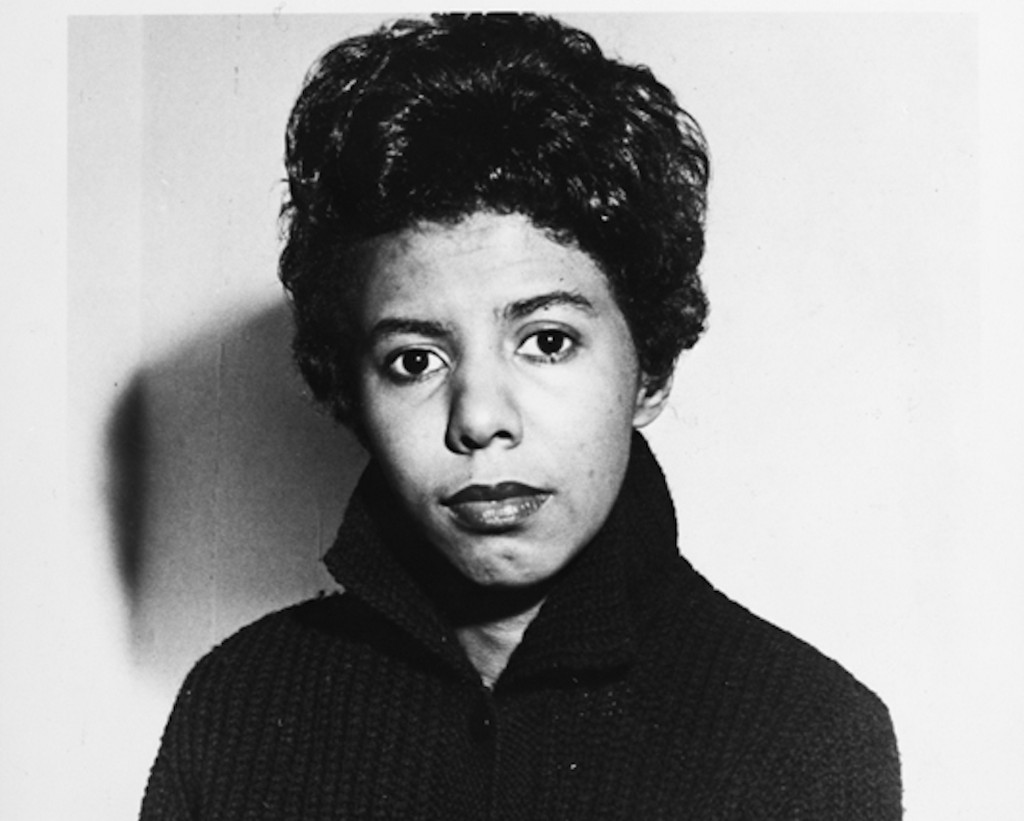
Even when I was a child, I knew Lorraine Hansberry’s name and the shape of her face. In my mind, she was sepia-toned, like the photo of her that my mom had shown me on the back of a weathered copy of ARaisin in the Sun. She was beautiful, but static, with a glint of mystery in her eyes. She seemed bigger than life itself. I remember the way I’d always sit with my face too close to the TV screen each time the trailer for A Raisin the Sun played on TCM. I knew exactly how the film adaptation of her play unfolded, but every time, I still felt breathless, amazed by seeing an all-Black cast. It didn’t matter that it was from the ’60s or that her play debuted before my parents were even born and years before segregation was illegal. It was still spectacular to see Black life humanized with such heart and depth. The Younger family’s love for one another was stronger than the racist world that surrounded them. Even at the peak of their struggles, there was warmth at the center of their lives.
Over the years, I’ve returned to ARaisin in the Sun habitually. Whether I surveyed its pages in order to complete a school assignment or to fill the hours of a free afternoon, I always found comfort there. Yet as the plot became more and more familiar, the wonder I once felt became muted. I grew up, and like Hansberry, I wanted to be a writer. Like her, I eventually moved to New York City to pursue my dream and when I left, I brought my dog eared copy of her legendary play along with me. In a way, the familiarity of its pages reminded me of home.
In the introduction of To Be Young, Gifted and Black, James Baldwin writes, “[This] is the portrait of an individual, the workbook of an artist, and the chronicle of a rebel who celebrated the human spirit.” Baldwin, who was close friends with Hansberry, calls her curated autobiography “prophetic,” crystallizing what drew me to its pages with pristine clarity: “because of her intrinsic sense of vulnerability as a woman in a violent universe; perhaps because of her multifold experience as a Black woman; perhaps because of her intuitive view of human frailty…”
Through the eyes of Baldwin, I realized that my fascination with Hansberry was rooted in my hunger to witness the intersection of an artist’s greatness and their realness. Although A Raisin in the Sun introduced me to her as a literary icon, it was To Be Young, Gifted and Black that made me see her as a fully-formed person.
Since I learned about women like Hansberry, Zora Neale Hurston, Alice Walker, Toni Morrison, and even Bessie Head, their lives have seemed colossal to me. Their legacies are all encompassing. Without their words the literary canon would still be so painfully narrow, male, and white. Their books line my shelves and have to an extent propelled me towards a path I might not have otherwise taken in life, but sometimes I wonder: do I have what it takes to sit on the shelf beside them? My fascination with the truths they told and the way that they told them made me switch my major from Psychology to English during undergrad. Their words inspired me to pursue my Masters in English and my MFA in Fiction, two decisions that helped me find the courage to consider myself capable of telling stories of my own but also two decisions that left me with massive amounts of student loan debt and subsequent anxiety. I wanted to be like my literary foremothers, but every time I sat down to write, I was paralyzed by the fear of what would happen if the stories within me couldn’t keep a roof over my head. With each blink of the cursor, I worried what would happen if no one was willing to hear or pay for what I have to say. Faced with the emotional and monetary cost of following in the footsteps of my heroes, I felt small and overwhelmed. They’d paved the way for me, but I was too terrified to follow.
Faced with the emotional and monetary cost of following in the footsteps of my heroes, I felt small and overwhelmed. They’d paved the way for me, but I was too terrified to follow.
When I decided to press pause on all of my responsibilities and go to Harlem, it felt like a pilgrimage. I was desperately in search of salvation. Rather than being faced with my own fears and shortcomings as a writer and the reality of what it means to exist in the world as a woman who is also Black, I sat at the Schomburg watching as archivists gently placed Hansberry’s handwritten letters, photographs, and books on a table towards the front of the room. I was starstruck at the tactile proximity of her life to mine. Glancing down at the curvature of her cursive and the telegrams sent the night that her historic play debuted, I felt like the little girl I once was, so desperate to get closer to find pieces of myself reflected by her words. I went to Harlem with a hungry heart and in that moment, I was fulfilled.
Crowded alongside others who cherished Lorraine just as much as me, I stared down in awe at the almost-final manuscript for A Raisin in the Sun before spotting my favorite passage from To Be Young, Gifted and Black. In 1962, on the night before Easter, Hansberry confessed, “Yesterday I was alone. And so I did some work. I don’t really remember what. And then in a fit of self-sufficiency went shopping in the supermarket… I rather knew the kind of weekend that was coming. But was not depressed…” She goes on, examining why she felt alone, the benefits of being alone, and why loneliness so often goes hand in hand with shame. Though I’d read these words so many times before, seeing them on a page that I imagined she once held in one hand while taking a deep drag from a cigarette or drinking coffee from a ceramic cup, made me feel as if her words could be my own, that the same loneliness and frustrations she felt were also what fueled her greatness, and that to be weary of the world can also help you heal what ails it. Later in the passage, her melancholy turns into determined triumph. “I shall be beautiful this time next year… And I shall still be lonely…. At the typewriter.” If Lorraine Hansberry was able to find sanity and solace through writing, perhaps I could do the same.
Later that night, I watched Sighted Eyes/Feeling Heart with a marrow-deep sense of hope. My deadlines, already late, were still looming on the horizon, and my self-doubt, although muted by the thrill of the day, seethed beneath the surface of my bliss. The world was still white and racist and the threat of the blank page still filled me with apprehension, but as minutes slipped away and the documentary progressed, I found an unwavering peace. There in the dark of the Langston Hughes Auditorium, Hansberry helped me remember that no matter what, “I am a writer. I am going to write” — and that yes, that’s radical. Centering my day around her legacy and the impassioned urgency of the words she left behind, forced me to embrace my own future with eagerness. Despite my fears, my heart was open and filled with joy.
Fiction abounds with memorable liars. Tom Ripley, Jay Gatsby, and, moving further back in time, Odysseus, all come to mind as prime examples of memorable figures who understand truth and deceit as flexible concepts. Lies in fiction can fulfill a number of roles: they can spur conflict, illustrate a character’s own reliability or lack thereof, or alter the very fabric of a narrative, thoroughly messing with the reader’s head.
Somewhere there's a Venn diagram that maps the overlap between fictional liars—the spies, forgers, official spokespeople, and anyone else whose livelihood depends on abundant alterations of the truth—and unreliable narrators. Here’s a look at ten novels in which the best liars dwell, the ones who pose a danger to their surrounding characters, but who are fantastic for readers seeking arresting characters, labyrinthine plots, and questions about reality.
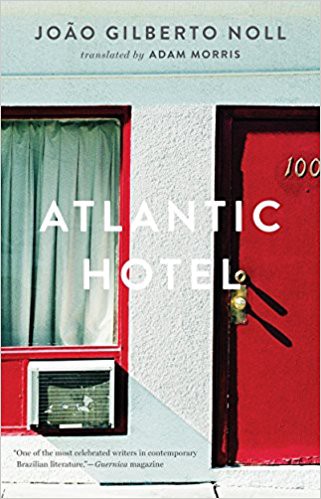
In both their creation and their discovery, lies can reconfigure entire narratives. The protagonist of João Gilberto Noll’s meticulously arranged novel Atlantic Hotel tells nearly everyone that he meets a different story of his life. They can’t all be accurate…right? But as the novel becomes more and more labyrinthine in its construction, it’s increasingly unclear as to whether this mysterious figure is lying to the people around him or, on some deeper level, himself.
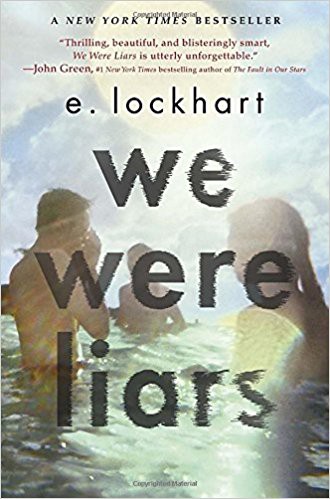
E. Lockhart’s We Were Liars builds questions of reliability and veracity into its very structure. Lies are at the center of its protagonist’s closest friendships, for one thing, which creates a complex baseline off the bat. The fact that the narrator is missing some of her memory heightens this divide even further. Throw in a plot abounding with secrets and you have a twisty narrative that explores multiple layers of lies and truths.
I mean, if you write a novel in which numerous gods are among the characters populating the pages, odds are good you’re going to find a couple of tricksters in there, right? That’s certainly the case with Neil Gaiman’s American Gods, in which trickery and hidden agendas abound, mysteries await revelation, and fabrications and half-truths act as a kind of currency.
The title character in Rodrigo Rey Rosa’s short novel Severina is a woman with a penchant for stealing books from her local bookstore. Soon enough, the shop’s owner becomes obsessed with tracking her down, and learns that nearly everyone who’s met her has a different take on her identity. The way in which lies can suffuse people’s perceptions is at the core of this novel–and, like much of its author’s work, it’s a master class in how ambiguity can make a narrative more thrilling.
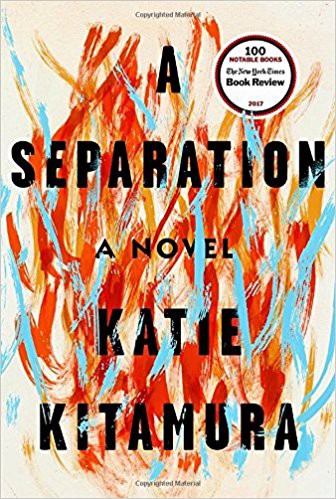
Sometimes, what’s unsaid can be just as much of a break from the truth as what is said. This novel’s narrator and her husband have kept their separation a secret. When he goes missing on a Greek island, she finds herself in an entirely different role than she’d expected. Kitamura’s novel explores a different facet of lying than most: it’s about the lies that one can be forced into telling, and the consequences that can spiral from there.
Some of Graham Greene’s tales of espionage are genuinely chilling; others venture towards the absurd. Our Man in Havana encompasses both. It’s the story of a spy working for the British government in Havana, whose bogus reports begin to reflect reality–an ominous and unexpected turn for all involved. Greene’s novel also served as inspiration for another memorable literary tale of lying: John Le Carré’s The Tailor of Panama, later adapted for film.
What happens when art itself is a lie? The hero of Robertson Davies’s What’s Bred in the Bone spends years of his life learning archaic techniques for making art–which can then be utilized for the cause of forgery. The yarn that Davies spins in this novel goes far in narrative and moral complexity, making for a thoughtful and irreverent work.
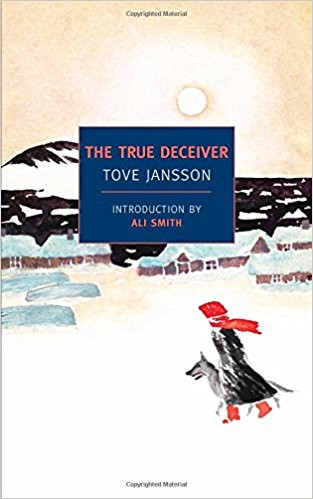
Tove Jansson’s fiction explored interpersonal connections in all of their forms, particularly in the ways in which they can go wrong. In her novel The True Deceiver, she examines the shifting power dynamic between two women–one older and successful, and one living on the fringes of society. Here, too, lies and other untruths play a crucial part in the story, creating a sense of atmosphere that’s second to none.
Daniel Handler’s novel The Basic Eight abounds with lies of multiple varieties. Its structure–a high school diary revisited by its author years later–allows for a number of lies and omissions, both past and present, to be on display. Throw in a high school production of Othello, a play where deceit and manipulation fuel the tragedy, and you have a narrative beset by untruths.
In some cases, lies can be seen as a version of the truth, albeit with certain details altered or heightened. In Barbara Browning’s novel The Correspondence Artist, the central character describes a love affair with one person through a unique narrative structure: by taking aspects of that one figure and turning them into four different characters. Within the novel, lines between fact and fiction blur–a theme that Browning has used repeatedly to powerful effect.
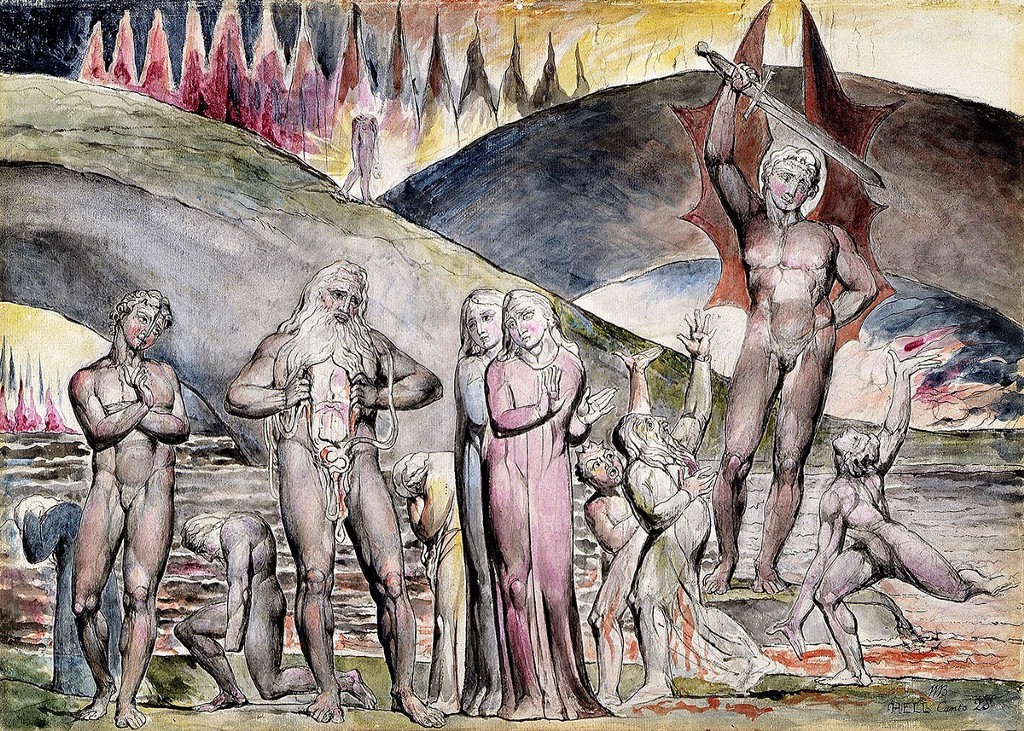
You may remember artist and Twitter fabulist Jared Pechacek from his dystopian fashion show story. This week, he turned another couture collection (this one’s Gucci) into a deathless piece of literature—this time, a series of linked vignettes about poetic justice in the afterlife for a parade of modern sins.
Perhaps you are familiar with Dante’s Inferno, in which the 14th-century poet describes his trip through Hell, being introduced to the eternal and oh-so-apropos sufferings of various types of miscreant. Well, if you read about the Hypocrites in the Inferno and thought “hmm, what about gilded leaden robes, but make it fashion,” this is the allegory for you.
Their Majesties of the Pit hereby welcome you to the Parade of Strange Mercies. Please withhold your applause until the end, and no photography, thank you. https://t.co/JgOupQkNQw
Marla, our first model, comes to us bearing the evidence of her earthly vanity. Because she fancied her reflection so greatly, she can now admire it without a mirror. When she smiles, so shall it smile. And when she cries out, there shall be two agonies to delight our ears.
Connie here was parsimonious in life, & so in death she remains a closed purse. Observe the twinkle of her wealth upon her coat. Century by century it shall grow and encroach, so at the end of eternity she shall trail a cloud of gold, until she weeps to give it away.
And now Taylor comes to us, freighted with the glitter, the watchful eyes, and the silent mouth of the developed world. The biting mouth upon that purse ensures the same generosity in death as in life; Taylor's eternally open mouth shall promise and never make good.
Marc supported his city's razing of an impoverished neighborhood to build a stadium, reasoning that it was a slum & an eyesore anyway, and a stadium would revitalize the local economy. For him we've selected a hat belonging to a rival team & a coat showing allegiance to nothing.
I hesitate to speak Rachel's particular deserving qualities, for fear of shocking the more delicate among you, but she can never put the snake down, and her clothes are heavy and itchy.
Carol believes all humans bleed red, which is factually true, yet never the point. Now, with the miracle of ectoplasm, you can see how red they really are inside.
For each tear she made someone cry in high school, Erica is assigned a diamond at a rate of per year of her time with us. We kept her backstage until she'd become suitably decorative, & are pleased to see her debut at last, & even more pleased to see the galaxy she'll become.
Jason's bold and daring memo declaring women unfit for the tech world gave our designers an exciting challenge. As you can see, we've decided to wrap him in a shit-stained scroll-symbolizing his words-upon which he shall trip for eternity.
Charlie bullied a popular fantasy author for the conclusion of a favorite series. We do love finding new and beautiful sins, and dragons, we feel, are due for a revival. Look for them to be all the rage in Dis this fall!
I feel like one of them on the inside," said Leigh frequently, always in reference to marginalized groups with distinct decorative motifs. "Their culture is just so beautiful." We've whipped up a mishmash of an ensemble, vacuous yet heavy as despair. You look great, Leigh!
Madonna once screamed at a waiter for spilling a drop of wine on her Hermès scarf. Since she appreciates them so much, we've put together a full-size version and replaced her skin with it. Good luck finding a dry cleaner in the Abyss!
If you liked Marla, you'll love Ben! The only difference is that Ben laughed at any woman who cared about her appearance while spending lots of money on carefully formulated man-oils. So we let him keep some of his fingers, just to liven things up.
Margot loved to shop at "vintage stores" and made lighthearted fun of anyone who had to wear hand-me-downs. We've carefully tailored a suit of exciting and different prints to make her stay in the fields of wormwood a bit more lively.
Louise went to a poor country and did such a lot of good, including but not limited to giving cola to orphans and reflecting deeply upon their sorry plight, then going to buy some amazing textiles in the market at an absolute STEAL. We're happy to add her shrieks to the chorus!
Justin quoted Napoleon Dynamite for years past its fleeting moment of cultural relevance and wrote "Pedro" on his 2016 ballot. Really, where else would there be a place for him? Now, back to the Tater-Tot Dome, Justin!
We are so honored to have the soul of the Republican Party here, freshly dyed and smelling of iron, powdered with a residue of thoughts and prayers. We do hope once their task is done, they'll resume permanent residence here with us. Until then, keep doing what you're doing!
Jamison, internet commenter, fluent in sarcasm, constant demander that all arguments belong to formats he learned in community college logic class, has truly earned an eternity with his hands in his pockets.
Carl could normally be found demanding intimate information from or about abuse victims and then complaining when blocked. We're still not sure he gets it, so we're encasing him in a cube of sandstone immediately after the parade. Blocking him, if you will. Ah, Hadean puns.
And to finish things off, the avatar of the acquisitive spirituality made popular in the West by places like Goop, where if you just pay $3500 to believe hard enough in a misunderstanding of chakras, you can cure cancer.
We do thank Your Infernal Majesties for your attention, and if you would mind opening your many mouths wide enough, we can all return to the dark, warm embrace where we belong.
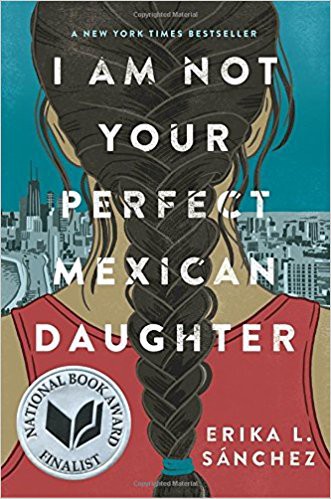
Erika L. Sánchez is a 10-year overnight success story. The book she worked on for a decade, I Am Not Your Perfect Mexican Daughter, published in October of 2017, became an instant New York Times bestseller and National Book Award Finalist. The cherry on top? It was recently optioned for a major motion film. At this year’s first Latinx in Publishing event I watched as the audience grew eager, or hesitant, to speak with Erika, suddenly shy in her presence. Erika laughed at audience reactions, unable to grasp how a girl who was once a goth is suddenly so cool. Her humor is quick, witty and filled with a tone that says, “duh,” as if she is trying to figure out why the rest of the world can’t keep up.
Underneath, though, is a woman who observes the space around her and utilizes her passions in an effort to change it. Her culture propels her forward and serves as the foundation for her identity. Her award nominated novel isn’t Erika’s first foray into writing. She’s a Princeton Arts Fellow and the Ruth Lilly and Dorothy Sargent Rosenberg Poetry Fellow. Sánchez is multilayered and complex, just like the poetry she wrote in her first book, Lessons on Expulsion. When I sat down with her, she discussed depression, today’s political climate and how, sometimes, stereotypes are true.
Bianca Salvant: Why do you think the world needs to hear stories from and about Latinas?
Erika Sánchez: I think, especially now, there is a picture painted of us that is really inaccurate. Our president is a sociopath. He talks about our community as if we’re all villains. He’s called us criminals and rapists. For me, it is important there are stories like [I Am Not Your Perfect Mexican Daughter] to counteract those narratives. What he is saying is not accurate. The way White-America perceives us is not accurate, which is usually the problem. [Writing by Latinx writers] opens people’s perspectives and they get to see another experience that is not like their own. Hopefully they grow some empathy. Because that is what we need in this world: people to have compassion.
BS: Your latest book, though, felt like satire. Was your intention to poke fun at the stereotypes of Mexicans?
ES: Some things are just true. Stereotypical or not, they just are. I did want to poke fun at some things because I am the type of person who deals with trauma through humor. I took a lot of experiences that I heard from other people and smashed them together into this mother–daughter story. When I talked to Latinas, they’d say, “Yup, that sounds like my mom!” (laughs) Whether it is a stereotype or not, it rings true for us.
Some things are just true. Stereotypical or not, they just are.
BS: Did anyone close to you migrate from Mexico?
ES: My parents migrated in the late seventies. I was born in the eighties.
BS: Have they ever shared that experience?
ES: My parents had a hard time crossing the border. Crossing the border for anyone is usually pretty traumatic. The story in [I Am Not Your Perfect Mexican Daughter] is fictional, but I’ve heard these stories before. My parents, for example, got into the trunk of a Cadillac to pass border patrol. Unfortunately, it is a very common American story. Images of crossing the border was very prevalent in my childhood.
BS: How do you answer the irritating “What are you?” question?
ES: Well, I hate that question. I’m not a puppy! I say that I am Mexican. Some people have a problem with that because I wasn’t born in Mexico, but I feel very Mexican. It is how I grew up. Sometimes I say Mexican-American, which is true. I never say Latina because it feels too broad. People are always confused by me because I don’t look stereotypically what they imagine a Mexican to look like. I think I do, but other people ask me if I’m Italian, or Arab or this and that. Everything but Mexican. And then it seems like they’re disappointed when I say I am Mexican because it is so commonplace. It’s really weird.
BS: You talk about depression, suicide and teen sex in your latest novel. Why did you want to tackle those themes?
ES: I never read text that addressed [depression] in my community. There was never a character that I could point to and say that was someone who is experiencing this condition. I wanted it to be healing for girls of color because it is normal to experience depression. And [I want them to know] that there is help. Latina teens have really high suicide rates and no one ever talks about it. I wanted to bring attention to that issue.
For me, depression in my life has been a lifelong struggle. I am barely learning how to take care of myself now as an adult. I think Latinas are often told we’re not allowed to take care of ourselves. That we have to take care of everyone else but us. If you do take care of yourself, you’re called selfish. I think that’s bullshit. I reject that.
I think Latinas are often told we’re not allowed to take care of ourselves. That we have to take care of everyone else but us.
BS: How do you practice self-care to keep yourself from spiraling when feeling depressed?
ES: Now, the way that I cope with my depression is therapy, medication, exercise and a good diet. I am Buddhist, so I chant. That is very helpful for me. Being creative also helps me.
BS: Being a Mexican-American Buddhist, does that conflict with your culture?
ES: I’m never around the people who talk shit. People probably talk about me, but I don’t care. My parents are happy for me because it brings me a lot of peace. My siblings are open-minded. So the people who judge me, I don’t know about them because I don’t put myself in those situations. I am not a kid being dragged to parties.
BS: What type of characters are you attracted to?
ES: Damaged. Those are my favorite characters. Huckleberry Finn, very problematic, but I love him. That’s what I am interested in: People who are flawed. I do not want to create someone who is neat and perfect. Those people who do not exist in real life. I want characters who are messy, flawed and don’t always get what they want.
I just want to create characters that are real. I don’t think we are all likeable at all times. I think when we’re young, we’re especially difficult. I wanted that to be present in [I Am Not Your Perfect Mexican Daughter]. We’re all fucked up, we’re all flawed. A lot of people criticize a book because a character is unlikeable, but what does that matter? People should be more concerned about whether the character is real.
A lot of people criticize a book because a character is unlikeable, but what does that matter? People should be more concerned about whether the character is real.
BS: It’s almost like people want a fairytale person.
ES: Exactly. And that’s not interesting.
BS: Do you feel there are more stories about people of color now because of social media?
ES: Yes, and that’s exciting. I do like that and the internet is to credit for it. There is a lot of democracy now in terms of the stories. Unfortunately, not all those stories make it to the mainstream. So that is frustrating.
BS: You’re also writing a collection of essays. What’s the title?
ES: Crying in the Bathroom.
BS: I look forward to learning what that means.
ES: It’s mostly about what it’s like to be a woman of color in this country and navigating both sides. Sex, relationships, spirituality, beauty and a bunch of different issues. There is a lot of pop culture and history. Virginia Woolf keeps popping up in my essays, so she is in there a lot. A bunch of different women who have been rebellious, like Rebecca Solnit. Hopefully, it is funny.
BS: What stories will you keep writing?
ES: I love YA, but I am open to everything. I am very restless and have a short attention span.
BS: And you’re very passionate about encouraging adults to read more YA. Why?
ES: Everyone should read YA. I’m often offended when I’m asked if I have to dumb it down for young people. For the record, I don’t because young people are smart. I would expect older people could also enjoy the same themes because they’re all relevant. We’ve all been young at one point. I get a lot of messages from older women who are grateful for [I Am Not Your Perfect Mexican Daughter]. They say it is very healing for them, that they haven’t read anything like it before. I think it’s relevant for everyone and there is this dismissal of YA that I don’t appreciate. [It’s assumed not to be] sophisticated writing, when in fact, it is some of the bravest writing I have ever read.
BS: Do you have a writing hero? And books on your nightstand that you keep returning to?
ES: Toni Morrison is my hero. If I saw her, I’d drop dead. She was at Princeton one night, giving a speech and I wanted to be there so bad. I had already agreed to a reading at NYU on the same night, so I couldn’t go. I was devastated. Gabriel Garcia Marquez is also someone who has influenced my work a lot.
I always return to Toni Morrison, for sure. I also have a book by Samantha Irby called We Are Never Meeting in Real Lifethat I love. It is hilarious and I love the honesty she has when talking about her life. I’ve keep going back to it for inspiration.
DON’T MISS OUT
Sign up for our newsletter to get submission announcements and stay on top of our best work.
YOUR INBOX IS LIT
Enjoy strange, diverting work from The Commuter on Mondays, absorbing fiction from Recommended Reading on Wednesdays, and a roundup of our best work of the week on Fridays. Personalize your subscription preferences here.