“Describe Yourself Like a Male Author Would” Is the Most Savage Twitter Thread in Ages

On an unnamed part of the internet, young adult author Gwen C. Katz found a delightfully deluded male author claiming that his facility with writing natural women characters constituted an unassailable rebuke to the idea that we need diverse authors to write diverse viewpoints. If a male author can write a woman this convincing, surely there’s no need for the #OwnVoices movement!

Some of his other perfect descriptions—which, remember, he himself was claiming were evidence of his skill—included “I could only imagine the thoughts that were running through his head. Naughty thoughts,” and “I could imagine what he saw in me. Pale skin, red lips like I had just devoured a cherry popsicle covered in gloss, two violet eyes like Elizabeth Taylor’s.” A cherry popsicle covered in gloss, y’all. Why would you even eat that? And TWO eyes, just to be clear.

The whole thread is worth a read, but it got even better once writer/podcaster/cat tweeter Whitney Reynolds proposed a Twitter game: Describe yourself the way a male author would.

“I never expected it to blow up, it was a joke made to a friend while I was ripped on Franzia. But it clearly resonated!” Reynolds told Electric Literature. “The thing that stuck out to me most is how many women responded with something along the lines of, I’m old or fat or a woman of color, so I wouldn’t be described by a male author at all. I might as well be invisible.” Those responses, taken together with the women who waxed rhapsodic over their booby boob-shaped boobs, constitute a pretty damning indictment of the state of writing about women and people of color.

If you’re a male writer, this is actually good news! It means you have a chance to listen really carefully and do a lot better in creating your women characters. Consider, for instance, writing one who’s cutting as hell and 100% has your number.

Below are some of our favorite responses to Reynolds’ challenge—but it’s not too late to pour yourself some Franzia and jump in.

‘Love, Simon‘ Makes Being a Gay Teen Seem Normal—And That’s Where It Fails

Dear Simon,

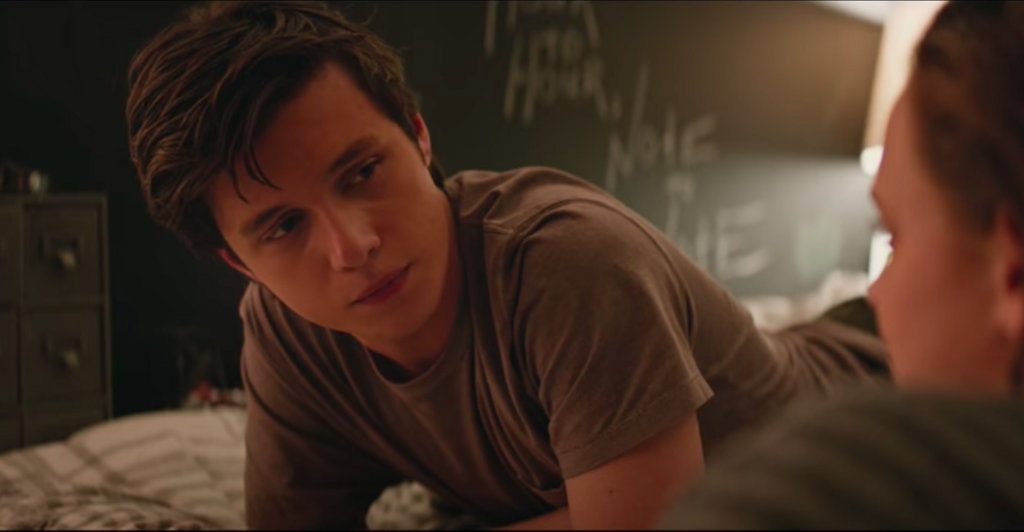
I hesitated over sitting down to write to you. It’s now been a couple of weeks since I caught your story on the big screen. Every day since, I’ve seen friends near and far share teary-eyed confessions about what it’s meant to them to see your coming-out narrative in such a widely-marketed mainstream movie. How they loved the earnest message at the heart of your film; how they wish they’d had this sort of story growing up; how watching it with their friends, their families, their husbands made the experience all the more touching.

You’ve probably been getting all sorts of messages like these, reminding you how important it is for all of us in the LGBTQ community to see such narratives being embraced and celebrated in glossy Hollywood flicks. But Simon, at the heart of your charming tale of how a lovestruck pen-pal friendship leads to a comedy-of-errors-turned-rom-com(ing-out flick) is a celebration of normality that kept nagging at me.“My name is Simon,” you tell us in the trailer, “For the most part, my life is totally normal.” You go further: “I’m just like you.” Except for the fact that you have a giant secret: you’re gay. Putting aside who the “you” in your voiceover narration is really encompassing (fellow suburban teens? Why is it assumed that “you” are straight?), your insistence that your gayness is merely incidental baffles me.

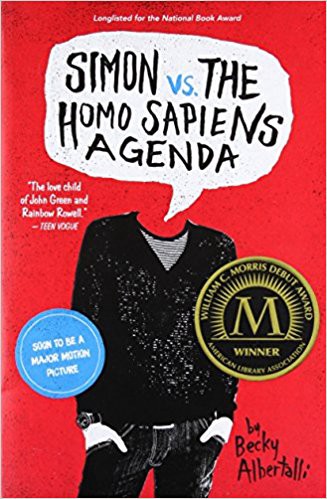
I mean, I get it. There’s a level of progress that well-to-do kids in 2018 from liberal-leaning families in urban enclaves can point to to say that sexuality really isn’t that big of a deal. At its core, the fact that you can announce that you’re just like us is proof that our discourse surrounding homosexuality has shifted in the right direction. Twenty years ago, your reticence about coming out might have been motivated by fear. Instead, as you put it in Simon vs. the Homo Sapiens Agenda, the novel on which the film Love, Simon is based, “the whole coming out thing doesn’t really scare me. …It probably wouldn’t be the end of the world. Not for me.” You’re just worried about how your coming out might affect your pen pal “Blue,” who came out in an anonymous post on an infamous school online board. A straight guy in your class is threatening to make your secret emails with “Blue” public, and you don’t want him to be spooked if your shared secret gets out. But that admission — that coming out is more awkward than scary, more of a chore than a gamble — also signals the very privilege that you carry and which marks your story at every turn.

You live a picture-perfect life. You own a car, have a room straight out of a PB Teen catalog, and go to the kind of school that would put on a production of Cabaret (albeit starring an insufferable straight guy as the Emcee, so you know, not without its faults). Your movie mom is Jennifer Garner, for god’s sake! The narrative engine that makes your coming out feel both ordinary and extraordinary at the same time comes not from the consequences you’ll have to face, but from the poor choices you make in deciding to sidestep the awkwardness of it all (like, say, letting yourself be blackmailed rather than come out on your own terms). This is the kind of plot and character I’m supposed to find emboldening: look how far we’ve come, being gay is so normal that it’s just one of many things teenagers can screw up! But is this wish fulfillment or willful myopia? Perhaps it’s both, though the way your film imagines gayness when divorced from your own self-described “normal” life suggests more of the latter. You almost had me quoting Michael Warner’s The Trouble With Normal at friends recently, a book I wish didn’t feel so contemporary even when it’s almost twenty years old! I mean, I can’t believe we’re still litigating whether convincing the majority of Americans that queers are “normal” (“just like you!”) is still the most effective way of demanding tolerance. How much gets sacrificed in the service of catering to this so-called normal society?
How much gets sacrificed in the service of catering to this so-called normal society?
Take Ethan, your fellow gay classmate. He’s black, femme, and fabulous. He’s not quite as much of a punchline as I’d feared, but he remains a foil to your own brand of inoffensive gayness. To your schoolmates (and to many audience members catching this film) he’s the kind of gay teen we’ve come to expect. Not really a walking stereotype, but close enough that he could never quite pass. Indeed, as we see in the film, his coming out prompts suppressed snickers; his friends are supportive but his sexuality was never going to be a surprise. In a story that hinges on how invisible gayness can be — you don’t know who Blue is; he could be any of the gorgeous young men you pass down the hallway every day! — Ethan’s gayness represents a level of visibility and risk that your own story wishes to steer clear of. If this film were called Love, Ethan, we know his first words wouldn’t (couldn’t!) be “I’m just like you.” And, indeed, your own attempts at sussing out who your beloved pen-pal is operate from the very normcore framework you’ve sketched out for yourself. It explains why you flinch whenever anyone who might not fit these limited parameters (like, if they’re fat) emerges as a possible Blue contender.

Immediately I realize how much of a cynic I’m being. But I worry about what gets left behind when our public models of gayness are so innocuous. Simon, when you imagine being out and proud in college, your fantasy plays like a ’90s GAP commercial, with kids in bright colored tees dancing around their dorms Fame-style. It’s a slight nod to the stereotype that gays love musicals, but it’s so artless that it only showcases your lack of imagination of what theater fags would actually look like in the real world. Theater fags are so much weirder, Simon. And then, when your coming out prompts a makeover montage you basically go from wearing shapeless t-shirts to… wearing slightly better-fitted shirts.

I worry about what gets left behind when our public models of gayness are so innocuous.

I understand this impetus. Teen comedies have long trotted out gay guys (particularly of the “straight girl’s BFF” variety) that fit into neatly understood clichés. I think back to Clueless’ Christian and Mean Girls’ Damian, Miss Stevens’ Sam, or even the fabulous boys of GBF, and I can see why it’s seen as refreshing that we finally get a teen gay guy who’s, you know, not that gay. It can be read both as a sign of how far we’ve come (we’re not all sissy fags, you know?) and as an embrace of the kind of heteronormativity we should be challenging instead. Yes, Simon, you’re not a gay stereotype — but you’re kind of a straight stereotype. Is that really better?

“Why is straight the default?” you ask in the book — a motto that’s become central to the film’s marketing. “Everyone should have to declare one way or another,” you suggest, “and it should be this big awkward thing whether you’re straight or bi, or whatever.” There’s that word again: “Awkward” is as extreme a scenario as you can conjure. In the film you have a similar moment, when you turn to Ethan and admit that he’d made coming out look so easy. It’s a misconception he is quick to rectify (all too politely, I might add), giving us insight into how life at home is actually still a struggle no matter how out and proud he may act at school. I was happy to see your privilege being called out so explicitly, a reminder that just as straight is a default in many stories, suburban kids who face only “awkwardness” when they come out are still the default in stories about the LGBTQ community. While I can’t expect your story to carry the burden of this representation, I can wonder why your story would be the first to get such support from a Hollywood studio — a question that’s perhaps much too rhetorical to be even worth asking.

‘Call Me By Your Name’ Made Me Realize What the Closet Stole From Me

If I’m being honest, though, Simon, I was sad to see that the one way in which you were decidedly like everyone else around you—a horny teen—was downplayed even more than in the book. I missed the way your conversations with Blue on the page often skirted the line of propriety. (“You have me curious. A banana? A hot dog? Cucumber? :)” you ask him, when he says that he’s eating. “Mind out of the gutter,” he coyly retorts.) You even discuss fantasizing about sex, which leads to a clipped scene where we’re to understand some sort of self-pleasure takes place. The book engages not only with teen gay identity but with teen gay sexuality (if ever so fleetingly), which may not be palatable enough for the movie, but is crucial to the real-life experience of teen crushes, sexual awakening, and coming out.

I’m not saying I needed you to fuck a peach in broad daylight or get a hand job at the beach bathed in moonlight. But I kept waiting for these on-screen teens to act like the hormonal messes I know them to be. This is a celebration of same-sex love, but it sanitizes same-sex desire.

I kept waiting for these on-screen teens to act like the hormonal messes I know them to be. This is a celebration of same-sex love, but it sanitizes same-sex desire.

I’m so happy you’re in our lives and that your story will be seen by TBS viewers for years to come. But I’m also hoping we can find a way to support films about gay teens whose stories may not be quite as easily digestible. You, and the viewers who relate to you, could benefit from catching films like Saturday Church (about a gay teen finding himself in New York City’s ballroom scene) or Freak Show (about a boy running for homecoming queen in his conservative school). Will it be too much to expect for your fans to seek out Sundance winner The Miseducation of Cameron Post when it’s eventually released? It’s funnier than it has any right to be and has just as uplifting and liberating ending as the one you espouse, if one more grounded than your suburban ferris-wheel-fantasy. But it took months for Miseducation to be picked up, no doubt because its depiction of lesbian sexuality is frank and its handling of gay conversion therapy necessarily upsetting. Real gay teens need these messy stories more than they need your unattainably “normal,” neutered, sanitized one. But it’s exactly the neatness, focus on romance over sex, and emphasis on “normality” that makes your story comfortable enough for 20th Century Fox. So seek these other films, Simon! Watch them with your friends and share them with your fans! And if you need any more suggestions, you know where to find me.

Love, Manuel

It’s Okay to Give Up on Mediocre Books Because We’re All Going to Die

The fall I was 17, I lived in Paris and read just over 90 books. I was working as an au pair for a newborn, which gave me plenty of hours when I had to be quiet, stay inside, and pass the afternoons alone. It was 2005, so I wasn’t yet spending endless time on the internet; I didn’t have a laptop or a smartphone. I had very few friends in town. I read books that I loved and others that I didn’t very much enjoy. But even if I hated the book, I forced myself to finish it. I was a compulsive finisher. No matter how much I disliked a book in the beginning, I felt like I owed it to the book, and its author, to give it a chance to redeem itself — and by a chance, I mean until the very last page.

I loved telling people that I always finished books. I loved the righteousness of being able to say that I could count on one hand the books I’d given up on. This obviously made me really fun at parties, but it was also part of a larger pattern of perfectionism that made me anxious and self-critical.

I had on my shelves then (as I still have) dozens of unread books. And still, I kept buying new ones. These unread books weighed on me; every time I saw them I was reminded of all the other tasks I felt behind on: the unreturned calls and texts, the emails I wasn’t able to keep up with in my personal inbox because I spent all my time and energy on my professional inbox, the room in my apartment that needed painting and plant that needed repotting.

These unread books weighed on me; every time I saw them I was reminded of all the other tasks I felt behind on.

In early 2016, I gave myself a challenge: no buying any new books. I was going to read the books I already owned, one by one, until my queue was clear. That project didn’t last very long — but it did change my life in another way. Realizing the gargantuan task that was in front of me if I was to read all the unread books on my shelves, I began questioning my resistance to quitting books once started. In a note to myself from that time, I wrote: “Why do I keep investing time in it even if I’m not super jazzed on it?” It was about a feeling of accomplishment that I was looking for, but my continual need for that feeling was out of control.

Just over ten years after that fall in Paris, I finally stopped being a compulsive book finisher. I’d learned two things in particular that helped me quit. One, I realized literally NO ONE cares if I give up on a book except me. (And maybe the author, if I told them, which I wouldn’t do because…no.) Two, I realized that I’m going to die.

Not tomorrow, knock on wood, or next year, God willing. I don’t know when, but I know better than I knew at 17 that I’m mortal, and that the hours left to read are limited.

It’s not that I had no awareness of time’s preciousness before. In fact, my appreciation for the time a book takes to make probably contributed to the compulsion to finish each one. As a writer myself, I was painfully aware that the author had, over the course of many months or years, tried their best to create something that mattered. I hated the idea that their effort would be in vain. But at a certain point, what mattered more than protecting their feelings was realizing that my time was a finite resource, and that no one was safe-guarding it for me.

One, I realized literally NO ONE cares if I give up on a book except me. Two, I realized that I’m going to die.

Perhaps ironically, it was a book that helped me take seriously the idea that I don’t have to finish every book. It’s called A Year To Live: How to Live This Year As If It Were Your Last, by Stephen Levine, a Buddhist teacher and writer — and yes, I finished it. Levine invites the reader to reflect on how they’d want to live if they knew they really had a terminal illness, with a year left on the table. Regardless of your age or health, he asks the reader to make amends, prepare your will, get your affairs in order, and cherish time with loved ones. And while there were plenty of distinct actions I felt moved to do after reading his book (apologize to a handful of people, plan a weekend trip for my closest girlfriends, empty out my childhood room), there were also some more general behavioral shifts I knew I’d make if given a deadline for my life, shifts I might as well make starting now. One of those was that I’d stop forcing myself to read books I wasn’t enjoying or learning from.

I’ve given up on a handful of books in the last year, but the one that stands out the most to me was in fall of last year. I was on a road trip, solo, through the Pacific Northwest and into Canada. At the beginning of the trip I’d found a copy of a new novel by an author whose short story collection I loved. The novel had hit the New York Times bestseller list; plenty of people were raving about its interesting structure and point of view. I started reading it on my trip while in a semi-rural part of Canada; I had plenty of time for it. And yet, I just didn’t care. I tried; I gave it 25 pages or so while sitting on the front porch of the cabin where I was staying. And then I gave up. Maybe I didn’t give up forever; maybe when the time is right, I’ll be able to find the book again and have a chance to love it because I didn’t force myself to tolerate my way through it now. But maybe I’ll die before that happens, and if so, I’ll be glad I read something I liked instead.

Maybe when the time is right, I’ll find the book again. But maybe I’ll die before that happens, and if so, I’ll be glad I read something I liked instead.

These days, I typically give books until around page 25–60, depending on the length of the book; I like to read close to 15% before giving up. If I’m merely confused, sometimes I’ll push further; if I’m bored, I let them go. I try to choose my reading list with an eye on diversity of the author or protagonist’s gender, ethnicity, nationality, and so on. I also aim to read more books by women than men (2:1, if you’re curious) to make up for the many years of missing out on women’s voices, when I didn’t pay attention and was reading almost exclusively men. I was initially worried about a correlation between the books I give up on and the author’s similarities or differences in identity to mine, but I haven’t found any meaning to the books I don’t want to finish. I still want my ideas to be challenged when I’m reading; I still want to learn and to think in new ways. But, as Austin Kleon says, paraphrasing Jorge Luis Borges, sometimes a book just isn’t for me.

Around the same time as I gave up on reading what didn’t grab my interest, I also gave myself permission to start reading more of what I love. Which, it turns out, is a lot more YA than I was previously reading (next up is Eleanor and Park), and a lot more rereading books that I once loved but haven’t revisited in years (like the His Dark Materials Trilogy, Etty Hillesum’s journals, and Zami by Audre Lorde). Interestingly-structured memoir and autobiographical fiction keep calling to me, as do self-help and spiritual books. Do you think that’s not literary enough? I don’t really care. Life’s too short.

I was worried giving myself permission to quit books early would impact how many I’d ultimately read. But last year, while working full-time and completing a book manuscript (as well as some shorter pieces), I read more than 75 books. I also gave up on maybe nine, but because I didn’t force myself to plod through books that bored me, I was able to move quickly and happily through the ones I did stick with. And that’s part of the point of reading for me: enjoyment, which in a literal sense means receiving joy

I still haven’t written that will, and I have a few lingering apologies left to make. And while I miss the sense of abundant, even excessive time, that I felt in Paris, I wouldn’t give up the clarity I have now: that time in this body is limited and precious, and that I am well served by reading whatever the hell I want.

The Best Thing About Celebrity Novels Is Scathingly Bad Reviews

Sean Penn’s novel Bob Honey Who Just Do Stuff [sic] is the latest clarion call for book reviewers everywhere to sharpen their literary tongues and deliver the best in cruel, cold, criticism. Claire Fallon writing for The Huffington Post, declared Penn’s novel “an exercise in ass-showing, a 160-page self-own,” and Sian Cann for The Guardian calls it “repellant and stupid on so many levels.” So why on earth do celebrities keep writing (read: hiring ghost writers to write) these conduits for critical trash-talk? There have got to be better ways to get publicity. But thank goodness they do, because we get a HUGE kick out of reading serious literary folk rage at the drivel these celebrity books often turn out to be. Maybe it’s literary purism, but more likely it’s just the human drive to see successful people taken down a peg. (In fact, we can admit to a small frisson of disappointment in the rare event that a celebrity book is good.)

In honor of Sean Penn’s “riddle wrapped in an enigma and cloaked in crazy” (Jeff Giles, The New York Times) we’ve collected six other celebrity authors flirting with the career change, and the book reviewers who shut them down.

Uncommon Type by Tom Hanks

“With one exception, Tom Hanks’s debut collection of short stories could be the work of Forrest Gump himself … Hanks’s stories — Alan Bean Plus Four aside — are forgettable, middle-of-the-road and touched by the special banality of mere competence.” — The Guardian

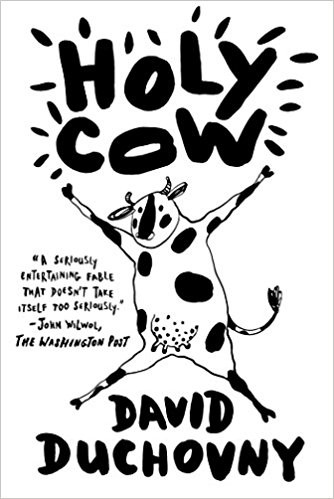
Holy Cow by David Duchovny

“David Duchovny is, by all accounts, an intelligent man. He has a master’s degree from Yale, where he studied under Harold Bloom. He is a talented actor, and he clearly feels deeply, as he should, about animal welfare. But Holy Cow is one of the most half-baked, phoned-in books I’ve ever read, and it’s hard to look at it as anything but a vanity project. Of course, his fans want to believe. When it comes to this novel, they shouldn’t.” — Michael Schaub, NPR

Modelland by Tyra Banks

“You could say it’s a book about friends, fashion, and growing up. But it would be more accurate to say this book is about seeing how crazy a thing can be put into print before the ink just refuses to adhere to paper.” — Peter Derek, Lit Reactor

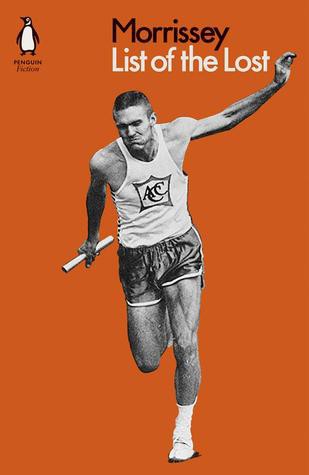
List of the Lost by Morrissey

“List of the Lost is the kind of piece that, even in draft form, had to make early readers squirm — those unfortunate friends, acquaintances, editors who had to read this turd knowing that Morrissey’s looming follow-up question was in their future: ‘So, what’d you think?’ My guess is, their opinions — honest or not — didn’t make much of a difference: List of the Lost reads like a book untouched by a caring editor’s hand. And that’s how the book’s presented, too: the flimsy, thin paperback feels un-fussed over and galley-esque, as if the publisher was as eager to move on as future readers. Because thanks to our novelist — ‘intimate and indiscreet’ with ‘pompous, prophetic airs’ — we’re left with a piece that will do anything but delight readers.” —Tyler R. Kane, Paste Magazine

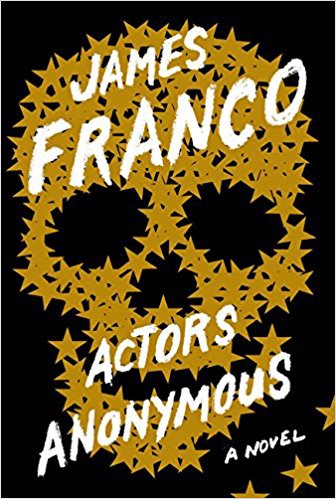
Actors Anonymous by James Franco

“‘Excremental’, in fact, is an appropriate word for this work of fiction. I think Franco may have anticipated the adjective, such is his delight in having shitty things, literally, happen to his characters. (In searching the ebook for one quotation I found that the word ‘shit’ appears on 66 of its 304 pages). One character, or a character’s character — the levels of metafictionality become too wearisome to plot — is nicknamed ‘Diarrhea’ due to an explosive bowel movement. The Actor, as our protagonist is now titled, nonetheless has sex with her, as well as with her ‘smaller and less attractive friend’ whom he nicknames ‘Cunty’.” — Hermione Hoby, The Guardian

Elixir by Hilary Duff

While we intended to stick with published reviews, this Amazon review that posits Hilary Duff’s novel leading to public failure and eventual suicide was too wild not to include.

“You see this book while at the grocery shop. You pick it up not because it looks interesting, but because it has a recognizable name on it. You think whether this Duff character has any talent. So you read the back of the synopsis. But as you’re doing that your ice cream in your arm starts to melt. You sweep it up into your cart and get to the check out. The cashier sees your novel and gives you a nod. You think that’s a good sign. So you take it home, and when you have some freedom, you check it out. It’s bad. So bad that you throw up. Your puke goes all over your bed and you don’t wonder why. You leave the room to get paper towers, and your dog goes in and licks it up before you return. You curse the heavens, then go to bed. You don’t like it. You put your Elixir book up for sale on eBay, but it only sells for a penny and the cost of shipping. You regret your decision. You light up and cigarette and accidentally burn your house down when you go to sleep. You regret buying that Duff novel. You try to sue her, but your case is thrown out, and you’re seen as crazy. Now living with your mother in law, without nothing on the horizon, you end it all.” — Harry, Amazon

8 Fiction Books that Shed Light on the Opioid Crisis

I n the last few years, the number of overdose deaths has escalated—there were 64,000 in 2016 alone—and much of this increase comes from drugs classed as “opioids.” This broad category describes a number of prescription medications that began to proliferate as doctors faced patients with hard-to-treat chronic pain, as well as street drugs such as heroin. In particular, heroin cut with an illicit form of fentanyl (a synthetic opioid) has caused a substantial number of accidental overdoses.

Drug crises are difficult because they involve any number of complex issues: health care limitations or failures, economic insecurity, personal identity, individual addiction, and so on. Many people start selling drugs because it’s the best job available. Others use drugs because of chronic pain. Some people can experiment with drugs without developing a habit; others can’t.

If you’re interested in the opioid crisis in particular or the larger ramifications of drug crises generally, there are many important nonfiction books on these issues. But fiction can also illuminate the underpinnings of the crisis. At its best, fiction brings together the personal and the political, the economic and the cultural. The books on this list illustrate the way structural shifts — from deindustrialization to various drug policy changes — are felt in everyday life. These works of fiction focus on different types of people from multiple eras facing various struggles, and ultimately provide us with a humane approach to the crisis we face today.

Junky by William S. Burroughs

William S. Burroughs’ often-overlooked first novel doesn’t feature the aesthetic experiments of his later work (such as Naked Lunch) but serves as an introduction to the world of heroin addiction in the 1950s. Though written in the first person, much of the book uses a distant, impersonal tone, detailing the terminology and practices of “junkies” from something like the vantage point of an anthropologist. However, Burroughs’ anxiety breaks through in affecting moments, when he worries that his personality and willpower have been erased by his addiction. In addition, he sees the rising tide of new drug legislation on the horizon, and fears laws that would punish him not just for using drugs but for being an addict, something not quantifiable or provable. It’s a trap many addicts face: distress because of their addiction, and panic at those that would imprison them for that very addiction.

Dopefiend by Donald Goines

Donald Goines was a remarkably popular and prolific mass-market fiction writer in the 1970s, selling millions of copies of the 16 books he published before he was murdered at the age of 37. Goines wrote slice-of-life novels set in urban areas and, unlike some of the other famous black writers of his time, had a largely black audience. In Dopefiend, Goines follows a formerly middle-class couple as they begin their descent into heroin addiction. The novel is full of brutal and difficult imagery, never shying away from the sordid details that come with prolonged heroin use. The novel provides a realistic account of the rationalizations and justifications people make as they gradually feel their lives slip out of their control.

A Scanner Darkly by Philip K. Dick

Set in the near future, Dick’s prescient novel focuses on a society segregated based on drug use, where the “straights” live in guarded apartment complexes, and the “dopers” are subject to the constant surveillance of a police state. The drug of choice for many of the dopers is “Substance D,” which is often mixed with heroin and inevitably leads to death (eerily similar to today’s crisis with fentanyl). Written in 1977 before the explosion of mass incarceration and income inequality, the novel nevertheless envisions a world where the punitive response to drug crises lead to these outcomes (though, on issues like race, it has its own blind spots).

Those Teenage Years When Everything Is New and Death Is Just Around the Corner

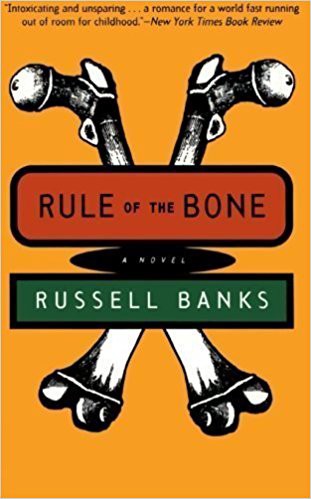
Rule of the Bone by Russell Banks

Set in the deindustrialized upstate New York of the 1990s, the novel features main characters who are economically precarious with few opportunities. Service sector work exists for the people lucky enough to get hired by the shopping mall or video rental store, but those jobs are scarce and don’t pay much. The 14-year-old protagonist begins selling drugs because he doesn’t see much opportunity in his future, but, even as he worries that he is becoming a criminal, he often reveals his innocence. A complex coming-of-age story, Rule of the Bone is Huckleberry Finn for the heroin era.

Jesus’ Son by Denis Johnson

In Johnson’s story collection, drugs are always in the background. In some stories, such as “Car Crash While Hitchhiking,” the narrative reads like a drug experience, with lapses in time, a dubious sense of reality, and moments of bizarre profundity. In the beautiful “Beverly Home,” the absence of drugs shapes the emotional arc of the main character, as he struggles to discover what “normal” life is without daily drug use.

Taipei by Tao Lin

While on book tour, the protagonist of Taipei takes a precise amount of drugs in order to stave off social anxiety. Opioids — such as oxycodone — are part of his regimen. However, he soon discovers that this drug regimen threatens to overtake his life. A lot of media coverage has focused on rural or working-class opioid use, but Taipei shows how common prescription drug abuse is among creative professionals in large American cities. Interestingly, the novel’s style is intentionally soporific, textually recreating the euphoric sedation that accompanies opiate use. Tao Lin stacks clause on top of clause in his sentences. After five or so lines, you often forget where the sentence started, and you feel briefly delirious. The novel’s style indicates fiction’s ability to induce feelings the reader might otherwise not understand.

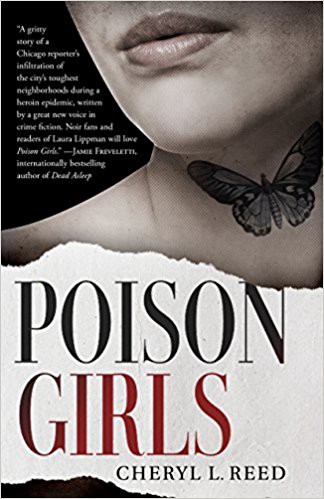
Poison Girls by Cheryl L. Reed

Set in Chicago in 2008 (complete with oblique references to the charismatic “Hyde Park senator” running for president), Cheryl Reed’s noirish thriller is very much a product of our contemporary opioid crisis. The novel follows Natalie Delaney, a reporter for The Chicago Times, in her attempt to report a story about teenage girls who have consumed “poison” heroin. The poison is heroin cut with fentanyl, what we know now to be an often-lethal combination responsible for a large percentage of accidental overdoses. The novel’s plot twists make for an engaging page-turner that highlights the various institutions (such as the media and the police) affected by drug crises.

Marlena by Julie Buntin

The protagonist of Marlena moves from the suburbs of Detroit to a rural area in upper Michigan after her parents’ divorce. In this beautiful, desolate environment, she becomes friends with Marlena, who lives across the street. She begins to rebel for the first time in her life: she cuts class, starts a lifelong struggle with alcohol, and experiments with drugs. It’s a tragic coming-of-age story that examines friendship, rural despondency, and addiction with subtlety. In one of the most affecting moments, the main character watches as Marlena — who is “normally pathologically cool” — drops her oxycodone on the floor of their high school and scrambles to pick them up. Reflecting on this moment, the narrator’s words encapsulate the larger issues at play in the opioid crisis:

“Now it strikes me as a profoundly American thing — an epidemic that started as an abuse of the cure, a disease we made ourselves. But what did I know about America? Back then I’d been affected with a chronic political apathy, a symptom, maybe, of being part of a family that was always barely scraping by, conditioned to be wary of the system.”

10 Books About Tricks, Pranks, Cons, and Scams

Who doesn’t like a good bit of trickery? At least, playful misdirection of a reader’s perspective. Literature both contemporary and classic abounds with tales of pranks played by one character on another, with cons and scams, and of perfidy aplenty. Admittedly, these are often less-than-pleasant for the victim involved, but for the characters pulling them off and the readers witnessing the drama, they’re often exhilarating. With April Fool’s Day on the horizon, here’s a look at 10 notable executors of misdirection, false identities, and unexpected tricks — some pull it all off with comic aplomb, while others create lasting damage.

The Story of My Teeth by Valeria Luiselli

Much of Valeria Luiselli’s novel The Story of My Teeth is narrated by an auctioneer named Gustavo Sánchez Sánchez, and much of the charm of the novel includes attempting to discern the veracity of the stories he recounts. One of the novel’s recurring motifs is the blurring of lines — between stories and reality, between art and truth, between the lives we live and the lives we’d like to lead.

Foucault’s Pendulum by Umberto Eco

Conspiracies and secret societies are everywhere in Umberto Eco’s sprawling Foucault’s Pendulum. It’s something of a meta take on conspiracies, centering first on the creation of a fictional secret society that turns out to be more real than its creators imagined. Foucault pushes the narrative to unexpected places — there are nods to both the Oulipo and cosmic horror — which makes for a dizzying take on the idea of forgeries and deception.

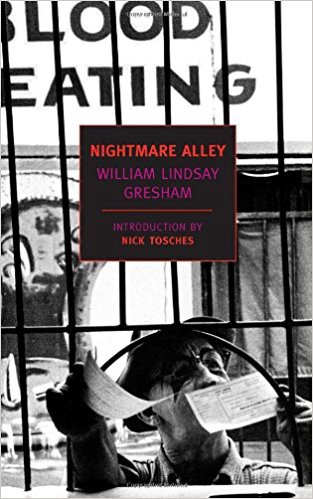
Nightmare Alley by William Lindsay Gresham

William Lindsay Gresham’s novel Nightmare Alley traces the rise and fall of its protagonist, who opens the book working for a carnival and gradually becomes enmeshed in con artistry via the world of spiritualism. Deception and double-crossing abound in this narrative, which concludes on a note as bleak as the titular alley.

Twelfth Night by William Shakespeare

The works of William Shakespeare are packed with mistaken identity, doppelgängers, and bold acts of misdirection. In the comedy Twelfth Night, centered around twins Viola and Sebastian — and Viola’s decision to disguise herself as a man — these ingredients lend the story a flexibility and narrative malleability that has contributed to its enduring cultural presence.

Fantasian by Larissa Pham

Larissa Pham’s novella Fantasian takes the notion of overlapping lives and pushes it to thought-provoking and sometimes disquieting places. The protagonist encounters a woman who is, effectively, her doppelgänger; the two of them, in turn, become connected to a pair of identical twin brothers. The result is a disquieting meditation on identity and trust.

The Ark Sakura by Kōbō Abe

Kōbō Abe’s surreal novel The Ark Sakura is home to true believers and con artists alike; as with many of Abe’s books, it acts as a surreal reflection of the real world. Its central character is obsessed with creating a living space that will occupy the end of the world; among those he encounters is a man selling a peculiar variety of insect that seems to require no sustenance.

Gone Girl by Gillian Flynn

Deception is the foundation of Gillian Flynn’s Gone Girl — from both the characters within the book and the way in which the narrative itself unfolds. One one hand, it’s the story of an ideal marriage that suddenly goes awry; on the other hand, it’s a surreal tale of betrayal, one-upmanship, and revenge — which turns a familiar-seeming “whodunit” tale into something much more sinister.

Runaway by Alice Munro

Alice Munro’s fiction, with its meticulous descriptions of characters’ states of mind and her penchant for temporal jumps, would seem to be an odd candidate for this list. And yet, this story contains the story “Tricks,” which both riffs on Shakespearean mistaken-identity narratives (a production of As You Like It plays a part in the story) and presents a very different spin on the same, to powerful effect.

Ways to Disappear by Idra Novey

At the center of Idra Novey’s Ways to Disappear is an absence: in the novel’s opening scene, a beloved Brazilian novelist climbs a tree and then disappears, setting in motion a selection of unlikely meetings and effusive discussions on the nature of language and translation. Secrets and hidden connections crop up as the novel reaches its conclusion, with plenty of mysteries contributing to the atmosphere along the way.

My Life as a Fake by Peter Carey

Peter Carey’s novel My Life as a Fake was inspired by a real hoax — and it’s one of several books by Carey that explores questions of deception, truth, and trust. (See also: Illywhacker, Theft: A Love Story, and Amnesia.) It’s about the creation of a fictional poet — who turns out to be far less imaginary than his creator envisioned — and the unexpected consequences of this action.

‘The Perfect Nanny’ Shows How Trying to ‘Have It All’ is a Capitalist Nightmare

Five years after Lean In, we don’t hear about women “having it all” the way we used to. Thanks largely to the backlash provoked by Sheryl Sandberg’s women-at-work manifesto, we seem to have understood that for women the pressures of perfection can be as damning as those of oppression. Today, women like Ivanka Trump and Gwyneth Paltrow, who strive to perform their ability to multitask, manage empires and make social calls while also appearing everlastingly young, bouncy-haired, and politically engaged, are easy targets for satire. But these women have something to tell us about the way feminism has been co-opted by capitalism since Sandberg’s book.

Both Ivanka and Gwyneth have invoked the term “feminist” to describe themselves, and though neither of them will be winning any awards for incisive gender politics anytime soon, it’s also not ridiculous for them to describe themselves this way. In today’s United States, “feminism” doesn’t need to imply much more than “girl power” (whatever that means). Though on different ends of the political spectrum, both Ivanka and Gwyneth have branded themselves as domestic goddesses with smarts, and both are absolutely committed to selling things. (“Free Shipping Over $49!” screams the banner on Ivanka’s clothing website) Yes we make fun of them, a lot, and perhaps we don’t intellectually buy the version of womanhood they’re selling. But the thing is, we do literally buy it. A watered-down, Taylor Swiftified feminism has become the product we expect to be sold.

So what does all this have to do with Leila Slimani’s The Perfect Nanny? A surprising amount. The novel debuted in the U.S. in early 2018 and was heralded as “the French Gone Girl.” Having “conquered France,” as The New Yorker put it, the novel was expected to be a smash stateside. Its U.S. publishers worked hard to make that happen, rebranding it with a new title (the original is Lullaby) and stocking it in places like Walmart and Target that don’t usually see a lot of literary fiction on their shelves. Though the novel has been a critical success here, its publisher’s dreams of dominating the U.S. market have not panned out. Which doesn’t surprise me, because saying a book is the “French Gone Girl” seems almost an oxymoron; Gone Girl is quintessentially American in its approach to nuance (there is none), while The Perfect Nanny is a Sartrean pit of complications. Put another way, Lean In didn’t sell well in France.

One reason Slimani’s publishers missed the mark is that they misunderstood the beating heart of contemporary American feminism: money. We live in an era where we mistake the American dream (that with enough grit, anyone can make it here) with the dream of women’s empowerment (that all women will have equal opportunities to each other and men). The American dream has always been about money; now American feminism is too. In Lean In, Sandberg made much of women’s hesitation to negotiate their salary offers. If women could lean in and ask for what they deserved, she argued, the world would be a juster place. Sure, but that’s not all women have to do to achieve workplace empowerment (or even equity). It’s certainly not the strategy that is likely to help the most vulnerable among us, who don’t have the leverage to lean in and ask for more.

The American dream has always been about money; now American feminism is too.

For an individual woman, the act of asking for more may be empowering, but wholescale women’s empowerment doesn’t come from individual women getting what they want and deserve. It comes from a society accepting the justice of women’s civil rights. That means all women, from the Paltrows, Trumps, and Sandbergs to the indigenous women living on reservations (consistently among the most marginalized people in the country), the women who are subject to harassment in the entertainment industry, the young trans women who are disproportionately subject to sexual violence, and the mothers of young people of color who’ve died at the hands of the police. A feminism that only benefits some women is not feminism, and a feminism in which some succeed on the backs of others is even more pernicious. Each woman’s suffering is real, but our culture tends to home in on only the suffering, like the struggle to “have it all,” that affects women who are racially and economically privileged. Feminism has to recognize that, and mainstream American feminism has struggled to do so.

Forget ‘Handmaid’s Tale’ — ‘Red Clocks’ is the Reproductive Dystopia We Need to Read Right Now

Enter Leila Slimani’s slender novel, a stew of mistakes and complicities revolving around a bourgeois family and its impoverished nanny. The racial politics are different than you might expect: the upper-class mom trying to have it all is a Moroccan-born Parisian lawyer, while the nanny Louise is a white ethnic French woman. Myriam, the mom, is easily recognizable if you’ve ever lived in the swankier sections of Brooklyn: she is urbane, educated, and striving to give her children everything, but nevertheless clings to her own desire to have a career. Louise, a woman who has been abandoned by everyone in her life and who is barely avoiding homelessness, seems to solve this impossible problem for her. Until she doesn’t. You may already know what happens; suffice it to say that these two women are hurtling towards a collision, and that the children are going to be the collateral damage.

What’s most perplexing to me about this book is the perspective it offers, through contrast, on American feminism and its relation to capitalism. Myriam is a Parisian Sandberg in miniature: a smart, hard worker who likes approval and misses her career success when she’s home with her kids. At home, there is no opportunity to display herself. (One thing the novel makes very clear is how boring it is to be dominated by children.) All of this makes her, at least to me, extremely relatable. I recognized myself in her ambivalence, her subtle class-bound pretensions, and her desire for praise. After all, the upper-middle-class fantasy of “having it all” is really a fantasy of being impervious to the compromises our choices force upon us, and with enough access to privilege and capital many women can pull it off. By putting her into the same home with a woman who is indelibly marked in every respect by her lack of privilege or capital, however, we see how dangerous inequality can really be.

The upper-middle-class fantasy of “having it all” is really a fantasy of being impervious to the compromises our choices force upon us.

What we get is a fable, a cautionary tale, though not the kind that reviewers have said. Maureen Corrigan in particular, but others as well, have argued that the novel seeks to discipline working mothers through fear, essentially wagging its finger at the reader and reminding her, “don’t try to have it all because if you do your children will die.” I didn’t read it that way. For me this was a cautionary tale about class, about the danger of accepting — even as a joke — the branded version of feminism by which I often feel so surrounded. Hell, I like to wear my feminist bona fides on my sleeve as much as the next lady, and if you went through my drawers you would find a number of t-shirts representing various feminist causes. And sure, the money I paid for most of those shirts went to support women, but some of it didn’t. I bought a sweatshirt that said “the future is female” because I liked it. Now, I’m not saying there’s anything wrong with wearing a shirt like that, but rather that we should remember that it doesn’t do anything for many of the most marginalized women for me to turn myself into a billboard. Symbolic action is just that. Retweets don’t do political work. It doesn’t do anything for Louise that Myriam’s out in the workforce achieving her dreams, because that can only happen through Louise’s labor.

Just as Myriam’s children don’t survive their encounter with their disturbed, exploited nanny, women can’t build a future for themselves in a world like this, that pits the dreams of some of us against the labor of the rest. This kind of change — in which more women achieve more but so many remain underrepresented and oppressed — is not progress. Even if the kids didn’t die at the end, The Perfect Nanny would still be a scary book.

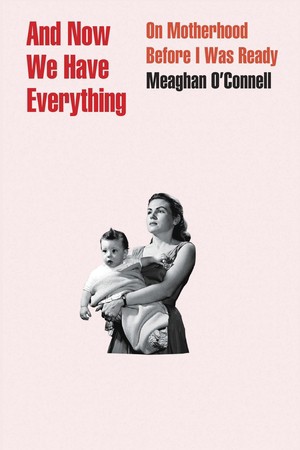
Meaghan O’Connell Thinks Motherhood Is What Keeps Women Oppressed

A few years ago, I tweeted something along the lines of: “I wonder if my memories of my twenties will just be images of wondering if I’m pregnant in different locations.” I convince myself that I’m pregnant at least every other month. This state of anxiety and wonder — one that is familiar to many women — is where we meet Meaghan O’Connell at the beginning of her memoir And Now We Have Everything. She’s in her late twenties with an overdue period, sore breasts, and a feeling that something is different.

Image result for now we have everything book
Buy the book

And in O’Connell’s case, it was: the missed period was not a false alarm. She was pregnant, and decided with her fiancé to keep the baby. The subtitle of the book is “On Motherhood Before I was Ready,” and this is the journey O’Connell retraces for us, one of uncertainty and second guessing. But she tells her story with candor, humor, and introspection. Some narratives of pregnancy and motherhood create an “us versus them” dynamic between parents and the childless, which means readers without children can feel shut out. But O’Connell’s work does the opposite: she invites you to experience with her the life of a woman unexpectedly carrying a child.

Ahead of the book’s April release, O’Connell and I spoke about the lineage of the motherhood narrative, the literary moment it’s having right now, and striking the balance between singularity and universality in these stories.


Rebecca Schuh: I’ve found that many books about motherhood establish a distance between parents and non-parents, but And Now We Have Everything avoided that. I don’t have any children, but I felt very included in the narrative. Was that intentional on your part?

Meaghan O’Connell: Yes, totally. There’s a chapter about how after I gave birth, I was with my friends and I wanted to tell them everything and didn’t know how to articulate it, or it didn’t make sense to me yet — that was my motivation when I first started writing the book. I didn’t really feel like a mom yet when I started writing and I was trying to talk to friends that didn’t have kids, so it was very much written in the spirit of “Can you guys believe this shit?” I always hated when people were like “You can’t understand until you do it.” I thought, if I want to call myself a writer I should be able to write about this in a way that is not alienating.

RS: You talk about once you realized you were pregnant, reading mommy blogs and finding solace in women who were forthcoming about their desires for children, versus pretending to not care about it. It seemed like you were in this gray area between, I’m 100% sure and I don’t care at all. Can you speak to the process of figuring out how much you did care, and realizing for yourself where you fell on the spectrum?

MO: Have you read Sheila Heti’s book yet?

RS: It’s literally on my nightstand! I’m looking at it right now.

MO: It’s so good, and completely about this. I’ve been talking to her, and it’s interesting because when I got pregnant I was 29, so having a baby was still this far-off thing. It was almost safe enough to fantasize about in an unrealistic way. “I just want a baby because I would look cute in a maternity dress and buy cute baby clothes.” If I hadn’t actually ended up having a baby, maybe I would be 33 and not sure whether I wanted to have a kid at all. I didn’t get the chance to have the real reckoning, I just did it. It was still this thing that older people did, slash a fantasy.

RS: When you were in say, your early twenties or even teens, was it always that “maybe someday” type of feeling?

MO: I remember telling my mom I didn’t want to have kids and she was like, “You would never do that to me and your father!” It was when I met Dustin, my husband, and started to have domestic fantasies with him that I just had this urge to get pregnant. I think it was more of a biological thing than a rational thing.

RS: It’s funny you bring up the Sheila Heti book, because there are a bunch of other books this year that are delving into the topic of motherhood in really interesting ways. Have you read any others that are coming out now?

MO: When I started writing this book, it was 2014 and The Argonauts wasn’t out yet, Dept of Speculation was just coming out, and After Birth…I’m wondering if this is the wave from people who read those books.

RS: Oh that’s so interesting! I remember that year, I loved all those books, and The Folded Clock. It’s a very rich lineage. I hadn’t thought about that before. There is a clear through-line.

MO: Have you heard of this book The Motherhood Affidavits that’s coming out? It’s by Laura Jean Baker, but it’s fascinating and so different from my book because she’s like addicted to having babies. I guess she struggled with depression her whole adult life and the hormones from breastfeeding made her feel so happy and content for the first time ever, so she had five kids.

I had sort of the opposite chemical reaction! Let’s see, there’s Now My Heart is Full by Laura June, which is captivating because her relationship with her mother, and how their relationship comes back when she has her daughter, is a big part of the book. It’s also fascinating to me because I guess she was more of an adult when she had Zelda, she deals with some of the things that I could not cope with, in such a matter of fact way. “I was exhausted and going crazy so I sleep trained the baby and everything was okay!” It’s a different personality.

What is the meaning behind all this? How is this going to turn out to be worth the mind-fuck?

RS: That’s a big part of why these stories are so compelling. Artists and creative personalities are already so different and unique and strong but then seeing how that mindset is applied to the very fundamental process of creating a person.

In terms of the structure, your book has different sections, and they have several different kinds of narrative formats. From a craft standpoint, how did those come about?

MO: It’s so nice to get a question about this! Structurally the challenge of the book was that I wanted them all to be essays in and of themselves, but to still have a narrative momentum throughout. So they weren’t quite chronological but roughly they are. I wanted to tell a story but also have it be a book of distinct ideas.

I think if men gave birth there would be a grand literature of birth stories.

I struggled a lot with how to end the book. I think the first draft I sent to my editor ended with an essay about daycare. And I liked the idea of it, at least, the happy ending of the book that my child goes to daycare. But I don’t know, it wasn’t quite satisfying enough. And I was living the story as I was writing the book, so I didn’t know what the conclusion was going to be. I had wanted a grand conclusion, but what I ended up trying to get at was that in the end, time just passes. The through-line of the book is trying to figure out, what is the meaning behind all this? How is this all going to turn out to be worth the mind-fuck? And in the end, there’s no big revelation, it’s more like, things were hard. And now they’re not so hard. And that’s how it is. But that’s not really the story we tell about having a baby or being a parent.

RS: There’s that passage where you were talking about how it’s kind of like a career where you’re paying your dues in the beginning…

MO: I don’t know if it’s like that for everyone, but I think probably a lot of people. But then you forget, and you miss your child as a baby so you just remember the good parts. I don’t think everyone is colluding to lie, to make people have babies and ruin their lives too. But I really thought, from what I read, or heard from people, that it was going to be magical and this crazy existential profundity. And I guess there was some of that, but it just seems really weird to me that that’s what the takeaway is! Maybe that was my own self-delusion.

RS: There were strains of commentary throughout the book on the fucked up capitalism of motherhood. There’s a line: “I should have known to be suspicious of the supposed inherent reward of unpaid labor that can be carried out exclusively by the female body.” Can you talk a little more about that?

MO: It was so stark to me, honestly. I was a gender studies major, I was a feminist in high school, I wasn’t one of those people who was thirty-five and hadn’t considered myself a feminist. But I really found myself breastfeeding all the time and thinking, this is why women are oppressed. I figured it out, in this visceral way that was undeniable to me, and an inconvenient reality. You can’t be stuck on a couch feeding your baby around the clock and not thinking about this. I mean, I guess people do. I just remembered this, I was running around the track, my boobs were full of milk, and and I knew I had to be home soon, and I was like, this is it, this is the core of all of it. If women didn’t give birth, we would probably be equal.

I found myself breastfeeding all the time and thinking, this is why women are oppressed.

I remember writing Emily Gould an email about this, and she was like, “You need to read Shulamith Firestone,” who argues that babies should be gestated in vats, and that will be the liberation of women. I don’t think that, I’m getting into dangerous territory here, but it was a definite realization, and I knew it intellectually. Until Dustin and I had the baby we were like, someone has to be watching this child at all times, and we are responsible for him and we have to pay a lot of money to be away from him. This comes down to math — how much daycare in Brooklyn costs and how much I can earn while he’s away from me. That system was built for one parent, aka the woman, to stay home. This is what capitalism is built around.

RS: When you write about the labor experience, I was amazed that you were able to write it so minute by minute, and very viscerally. I was very impressed that you remembered it so specifically, that you were re-inhabiting that mental state.

MO: I wrote it very soon postpartum. I remember it was Labor Day weekend, and I had the baby in June, so it was three months post-partum. I was still in that manic, crazy state of sleep deprivation. That’s the one chapter or essay that hasn’t really changed much since I wrote it the first time. Obviously it’s been edited but there’s no way I could have written that now, or a year ago. It’s visceral because I wrote it when it still was.

RS: You have a passage: “I would save the world except I wasn’t. I was doing the most banal thing in the world. I was giving fucking birth.” I thought that spoke so well to this grand contradiction of how each individual birth is so singular, and society does hold it up to this crazy ideal, but it’s also, you know, something most animals eventually do.

MO: People are dismissive of writing about motherhood or birth stories, it becomes this blogger thing and not literature. But I always tell myself, dying is very universal, too. It’s common, but we don’t say, “Get over it, we all die, shut up, we don’t need to read about this.” I think if men gave birth there would be a grand literature of birth stories.

It’s a contradiction, it’s the craziest day in my life, or the worst day of my life, but there’s fifty other women on the same floor giving birth that day.

RS: I’m reading Leslie Jamison’s new book on alcoholism and recovery, and she talks a lot about how the commonality between stories is more important than the uniqueness of any story. And how that was hard for her as a writer, because you’re like “I want to be the unique one.”

MO: She writes so well about that, about the cliché and embracing it in a way, and undercutting it.

RS: There’s a similarity between her book and the motherhood narrative. She says several times in the book, “I would tell people that I was writing a book about addiction and they were like, ‘oh just another addiction memoir.’” It’s strange that’s even become a stereotype — in the right hands either of these stories are so individually fascinating.

MO: Reading her book, that self-doubt, that sort of meta, underlying question of, “is this story worthwhile?” or, “how do I do this in a way that justifies its existence?” In a way it’s just a mental trap. Internalized misogyny, at least with motherhood stuff.

RS: Internalized art misogyny, wherein women start questioning themselves on what topics are worthy of the canon.

Once you’re back home with the baby, you have this line: “I was not just trapped in an apartment with my tits out, I was trapped in love with him. I could never go back to before.” Is there still that strict line between the eras of your life?

MO: It was so stark then. It was suffocating. There was no way out, “I am trapped, this is irrevocable.” It doesn’t feel like that anymore! Now my life is like, I take my kid to daycare at 8:30 and he comes home at 5 with his dad. I have those hours in the day to do my work and be a person, which is logistically completely different. But it’s weird to think about before, when I was a person that was 28 and lived in Brooklyn and had freedom. It’s not like you can be continuously aware that you are free and can do whatever you want. I mean you can try! But I think I wrote something about how we spent the night in a hotel one night and I was like “wow I had a baby just to feel this free away from him?” I can appreciate it now in a way I wasn’t able to then.

It is strange because I’ll show my son pictures of me and Dustin before he was born, and he’ll say “Where was I?” And I think, god that is weird, that you didn’t exist yet.

The 11 Coolest Writer’s Residencies

Sometimes, the only way to get writing done is to get out of your own head—and out of your apartment, and out of the country, and into a 15th-century castle in the middle of Italy. Yes, that’s a real writer’s residency you can apply for—and it’s only one of the cool working vacations available to writers and artists around the world. Residencies give you space and time to work without interruptions or other responsibilities, but in the case of these off-the-beaten-path options, they also give you the opportunity to contemplate nature, live like royalty, learn a new skill, or even own a home. Here are the eleven coolest places we’ve found to commit yourself to your craft.

On a Sailboat

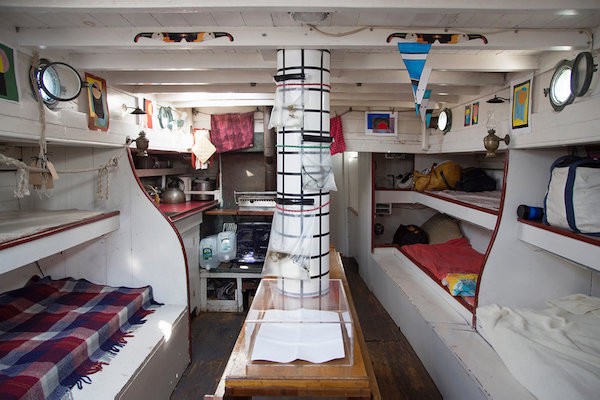
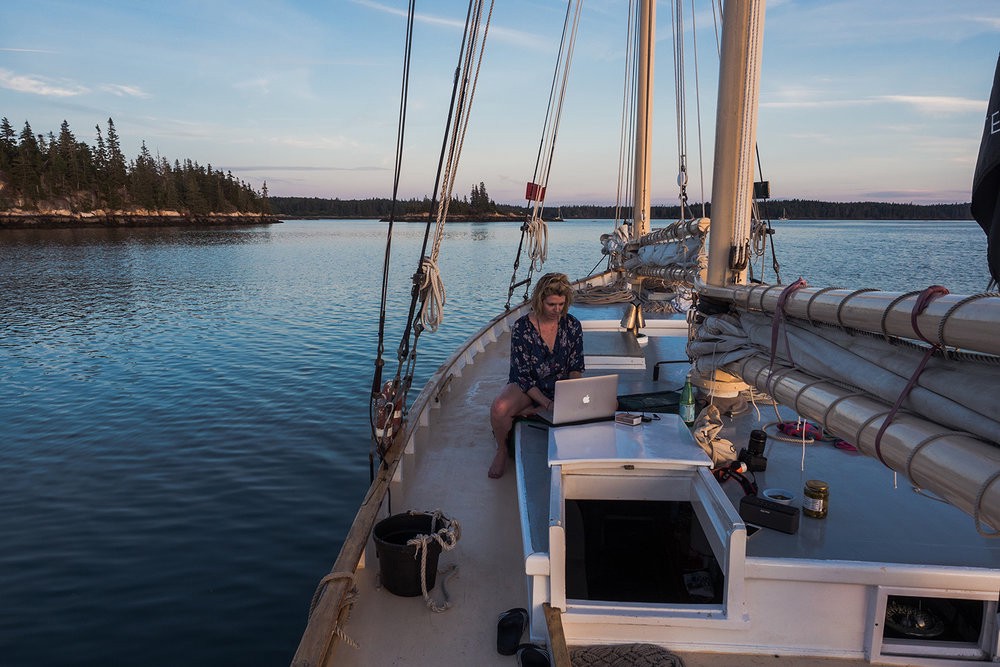
Unlike most residencies, the Offshore Residency does not provide artists with a studio—because space is at a premium on a boat. Instead, you’ll take part in a weeklong sailing journey to a historic region. And by “take part in a sailing journey,” we mean that you’ll be working the boat (although the captains do most of the sailing). The idea behind the Offshore Residency is that creative work and boatmanship have a lot in common—you have to constantly focus, observe, and adjust—and that artists can benefit from these parallels.

Photo by Beau Carey via The Arctic Circle

In the Arctic Circle

Writers of cli-fi may be particularly interested in the Arctic Circle residency, which leads artists on an expedition through the waters near the North Pole aboard a traditionally-rigged tall ship. (Tall ships are bigger than sailboats, and have room for shared workspace as well as private berths.) It ain’t cheap, but it’s bound to be productive for anyone inspired by natural beauty and anyone who can’t work when they’re too warm.

Photo via Civitella Ranieri Foundation

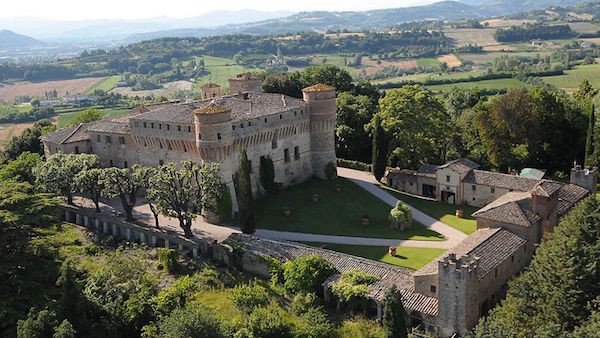
In a 15th-Century Castle

The Civitella Ranieri Foundation brings artists, writers, and composers together in an idyllic medieval castle in central Italy. Artists spend six weeks living and working in a private room and studio space within the castle, wandering the gardens, and eating professionally-prepared food made with fresh local ingredients. All the benefits of being an Italian Renaissance poet, PLUS indoor plumbing!

Photo by Maksim

In Jack Kerouac’s Cabin

What if all you need to write like Jack Kerouac is to spend some time in his house? If you don’t apply for the Kerouac Project residency, you might never know. Writers spend about three months staying in the Orlando bungalow where Kerouac lived with his mother while he was writing Dharma Bums. You are not required to bring your mother along.

Photo via Fondation Jan Michalski

In a Modernist Treehouse

The “treehouses” of the Fondation Jan Michalski are modernist boxes hung from a perforated metal roof that evokes a canopy of trees. The foundation is located near Lausanne, Switzerland, and most of the treehouses have views of the Alps. Writers can stay there contemplating Mont Blanc for up to six months depending on the scope of their project.

Photo via TransArtists.org

In a Fish Factory

The Creative Centre in Stöðvarfjörður, a tiny village (population: 180) in the east fjords of Iceland, is located in a former fish factory, now owned by a nonprofit arts organization. Residents at the Creative Centre include writers, visual artists, sculptors, dancers, musicians, photographers, two friendly dogs, and yes: a small fish processing facility.

In a Lighthouse

Dream of moving to a lighthouse? Apply for the residency at Sumburgh Head Lighthouse in the Shetland Islands, where you can stay in the apartment once used by assistant lighthouse keepers, and try out your work on the local residents and gentle ponies of the Shetlands. The residency is open to all artists, but of particular interest to writers, because the designer of Sumburgh Head Lighthouse was Robert Louis Stevenson’s grandfather.

Photo by U.S. Fish and Wildlife Service

In a National Park—As a Park Ranger

In Alaska’s vast and remote national parks, artists-in-residence are partnered with a wilderness ranger and actively assist with duties like giving an educational talk onboard a tour boat, engaging in seal counts, helping with climate change research, or picking up trash. You’ll also get plenty of time to draw inspiration from the lakes, trees, and wildlife—but if you end up deciding to give up writing and become a park ranger for good, you’ll at least have some basic experience under your belt.

Photo via Writing Between The Vines

In a Vineyard

Do you find your creativity flows best with a glass of wine or two? Does inhaling the sweet perfume of fermented grapes inspire you to spout poetry? Then waste no time in applying for Writing Between the Vines, a week-long writing residency in the gorgeous vineyards of California and Canada. The best part is, you don’t have to pay a housing fee or retreat cost, excluding the application fee (and your food and travel). You’ll save so much money that you can spend on wine!

Photo via Write a House

In Your House That You Own Now

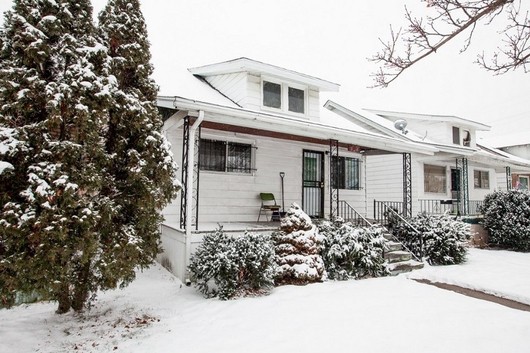
Imagine a residency that never ends. Enter Write a House, “a writer’s in residence program where the writer gets to keep the residence, forever.” Write a House aspires to revitalize the city of Detroit by providing vocational training to local youth who renovate blighted, long vacant houses and then giving the homes to low-income writers for free. Finally, an opportunity for struggling writers to hone their craft in a nice home of their own instead of typing by candlelight in an illegal sublet trying not to wake five ro

When Fighting Stops Being Fun

“Chicken”

by Rachel Lyon

My husband of twenty years wanted me to go on this retreat. Some place up in the mountains where New Age types went to drop in, turn off, tune out. As we’ve gotten older he’s gotten way into all kinds of self-helpy crap. He says it happened slowly. I say it happened fast.

First he became a vegetarian. This guy who used to alphabetize his barbeque sauce collection. We were in the Kroger and I was picking through the frozen chickens. He sort of looked up at the ceiling and said, Eating animals, you ingest a lot of negative vibes. I said, Negative what? He said, When they get slaughtered they release fear hormones. Then later when you eat them, fear is what you eat. I said, Stop fucking around and help me find a bird. He said, You’re on your own.

Then he started meditating. I’d come out to the porch and there he’d be. Fat legs crossed Indian style, eyes closed, a blissful bitty smile on his face. I’d give him a kick, but he’d just breathe.

I wouldn’t give a shit about any of it, except that he stopped fighting with me. Used to be we’d stomp and scream until the neighbors called. I’d call him a spineless, sexless fart. He’d say I was a curse on him, tell me to go back to whatever Hell portal I crawled out of. I’d call him all the fucked-up names that I could think of — a baboon, a slug, a scab — until his face got red and tears formed in his eyes and he collapsed, weak-kneed, in unhinged laughter. Once he grabbed my hair and jerked my head back, pressed me against the wall and said, You fat bitch, if you ever, ever —

I don’t think I’ve ever had as good a time as that.

But he announced he’d had enough. We were driving home in the old teal Chevy from I don’t remember where. It was dark but I could see his hand on the wheel was trembling.

Can’t do it anymore, he said. Can’t take it.

We’d never talked about the fighting. We’d just fought, that’s all, since always.

I said, I thought we were having fun.

He said, Not me. I wasn’t.

Why would he have stuck with me so long if he didn’t like it? How dare he? At the edges of the road the black trees whizzed by.

This whole time? I said.

He said, This whole time.

The retreat was at a ranch up the mountains, a couple hours east. He drove me on a Saturday morning. I sat shotgun, chasing stations. Twenty minutes of talk radio, fifteen minutes of country, six or seven minutes of 80s, 90s, and Today. Each fizzled out, leaving a hush of static. With forty miles to go I turned it off. We drove in silence, rolled up the dirt road in silence. There weren’t any horses or any animals at all that I could see. Just flat brown fields and a big farmhouse, a couple dour ladies in ponchos smoking on the porch. He carried my duffle for me up the steps and went with me to registration, where a girl with a nametag that said Clover got me all checked in. She had pale green hair and a lip ring and a lisp. Christ, I said to my husband when all the paperwork was done. Is she a woman or a plant?

He didn’t laugh. Instead he kissed me on the cheek. In our twenty years of marriage he’s done that maybe never. He said, Be good, all right? and got back in the truck and drove away.

The program was some hippy-dippy bullshit, let me tell you. Meditation in the mornings, group therapy, a vegan lunch. Then art therapy, walking meditation, yoga, nonalcoholic cocktails, vegan dinner. They’d look at you sideways if you so much as used the F word. I’d have given my right eye for a cigarette. My left eye for a steak. Tell you the truth I wasn’t sure what I was there for. Tell you the truth I missed him.

In therapy we were supposed to talk about what irked us. Then we’d do some kind of game together that was supposed to work it out. There was a couple there about my age, a slouchy guy and his bleached-hair, pinched-face wife. A couple — and me I was there all alone, like a sucker. They were in because he’d left her for another woman, a twenty-something someone who worked at his place of business. The affair lasted all of a month but in that time he’d managed to move out, move in with the girl, get thrown out of the girl’s place, and move back in. Why his pinched-face wife took him back I couldn’t tell. Didn’t much seem like she wanted to.

After she told her story the therapist Omario asked her what she would say to the girl her husband fucked, if the girl were there. Omario said, Pretend she’s in the room with us, Michelle. What would you say to her?

Most of the others found it hard to resist his soothing Jamaican accent, but Michelle just pinched up her pinched face harder and shook her head from side to side. Mm-mm, she said.

You aren’t ready to speak to her?

Mm-mm.

You want somebody to speak to her for you?

She looked at him.

Who do you want to speak to her for you?

She pointed at me.

All right, said Omario. He turned to me. You ready? You get to be Michelle. Stand up now.

I stood up.

Imagine that you are Michelle. Your husband left you for this girl. What do you have to say to her?

Michelle looked up at me the way you’d look up at a movie theater screen before the film comes on. I stood with my arms folded and took a gander at our sorry group: this sad couple, a suicidal truck driver, an anxious dentist, a teenaged kleptomaniac, and an obsessive-compulsive postal clerk.

The postal clerk was maybe twenty-five and skinny as a meth addict, with limp brown hair and thin pale lips and a face as meek and guilty as a reprimanded dog. Her name was Peggy. She’d sit with her hands in her lap and tap her bony fingers together in a secret rhythm, apologizing for it if anybody noticed. Tap-tap-tap, Sorry, sorry. She annoyed me, frankly, I think she annoyed everyone, but that isn’t why I chose her. She happened to be around the age of Michelle’s other woman, that’s all.

I revved up with a good old-fashioned Go fuck yourself.

I glanced at Michelle. Her face had relaxed a smidge. Her slouchy husband beside her had his elbows on his knees, his face hidden in his hands.

Slut, I said to Peggy the postal clerk.

The room was silent except for the ticking of a round brown institutional clock. Peggy looked at my shoes and tap-tapped her fingers together in her lap. I was afraid she might apologize but she stayed quiet, thank God. Michelle leaned forward just slightly in suspense. I rubbed my hands together.

You’re a sad little slut, I said, and ugly, too. Your face looks like it was thrown against a wall and scraped off with a spatula.

All right, said Omario.

A face like yours was growing in the weeds behind my house, I said. Wait a minute, did you find that face out back in the compost pile? I think I recognize it. I think my dog squeezed it out his ass this morning.

Insults are not so productive, warned Omario. Peggy kept her head down. Her pale neck was turning red.

You think you can fuck my husband? I went on. You think you know how the world works? I’ll show you how the world works. You fuck my husband; I fuck you. I’ll fuck you with a cactus. I’ll fuck you with a jackhammer. I’ll fuck you with a drilling rig, until black oil spouts right out your —

She lifted her face. It was wide-eyed and crumpling. She tapped her fingers together like her life depended on it. Omario stood up. Enough! he said, and put both his hands on both my shoulders. As he guided me out of the room I tried to catch Michelle’s eye, but I couldn’t, not before he pushed me out and shut the door behind us.

We stood together in the hallway. There was a framed watercolor of a beachy sunset on the wall. I wondered if it looked anything like where he grew up. I wondered what it was like for him to live out here in our cold white landlocked state. On the other side of the door we could hear Peggy crying, breathy little hyperventilating sniffles, and the murmuring of other people soothing her.

That was inappropriate, Omario said sternly.

I flashed him a little smile. But it was fun, though, right?

We’re going to have to work on your anger issues.

I’m not angry, I said. Do I seem angry? I was speaking for Michelle.

The next day Michelle found me behind the barn. We were supposed to be doing a walking meditation but I’d found half a pack of cigarettes in the pocket of an old sweatshirt and smoking gave me about twelve times more serenity. From my spot next to the woodpile we could see the others pacing slowly around and around the brick path that wound through the dead brown field.

Close up Michelle seemed a little less pinched. Her breath was a cloud of condensation in the late March chill. Got a cigarette? she said.

We smoked together quietly. They all had such different posture, all the walking meditators. The anxious dentist shuffled quickly. The suicidal truck driver trudged, chin on his chest.

Peggy left, Michelle said.

The postal clerk? I said. I knew who she meant.

She left because you yelled at her. Michelle inhaled, exhaled. A little reproachfully she added, She’s only twenty-two.

She shouldn’t have been here in the first place, I said. She should’ve been out in the world, thickening up her skin. Someone like her, it isn’t going to do her any good hiding herself away at a place like this. These kindhearted dipshits are just going to tell her she’s okay the way she is when she isn’t. None of us are.

I dropped my cigarette into the cracked cold dirt.

Michelle smoked slowly. I’m getting a lot out of this experience, she said, looking out at the brown field and white sky. I’m finding it pretty transformative. She sounded a little like someone had asked her to appear in some retreat center promotional materials. I don’t know that Roy is getting as much out of it as I am —

Roy’s a tool, I said.

— but he’s doing it for me, and that’s enough. When we go home, she said, I will have more power over him than I’ve ever had. Little pockets full of power that he’s kept on him for years will be turned inside-out and emptied out like spare change on the bedspread. And then I’ll pick that power up and keep it for myself.

You’re not going to kick him out? I said.

Why would I? She dropped her cigarette too and dug it into the ground with the heel of her shoe. He’s afraid of me now.

My husband’s always been afraid of me, I said.

Ha-ha, she said, I bet.

He never told me until twenty years in.

You’re lucky.

Not lucky, I said. Jealous.

She snorted. Of me?

Of him. I want to be afraid of him.

Turned out Peggy wasn’t 100% gone. She came back a couple nights later to say what she needed to say to me. Lying in the single bed in my bare, cramped bedroom, I heard a car on the gravel outside my window and opened my eyes to see the wall go bright, illuminated by headlights, and then go dark again. I heard her shrill voice calling up for me, calling my name.

I pulled back the cheap curtain and opened the window to see her down there in the driveway. She was wearing snow boots, though it hadn’t snowed in weeks, and pajamas and a long red flannel. She looked like she’d just come from a slumber party with some lumberjacks. Hey, bitch, she called up to me. She brought her hands together at belly height and tapped her fingers together, one two three.

Hey, shit-face, I called down.

She said, I just came back to tell you you’re pathetic.

I’m pathetic!

I laughed. She tap-tap-tapped.

You’re a bullshit person with a bullshit attitude! She wrenched her hands apart and balled them up into two white fists. You think you’re fucking funny but you’re not! You think you’re some kind of strong-ass woman, but you’re pathetic. You’re disgusting. I can’t believe anybody would marry you. Your husband must be either brain-dead or a masochist.

She looked up at me and waited for me to yell back. Her newfound strength was a miracle. It made me hungry. Go on, I said.

You’re fat, too! She waved her little fists around with rage. You’re fat and your face is bloated as a drowning victim’s. You smell like cigarettes and sandwich meat and dirty hair. Your husband must be blind and deaf and have no sense of smell. Fucking you must be like getting sucked into putrid quicksand.

She wasn’t yelling anymore so much as free-associating. In the bedrooms next door people were waking, windows were opening. My heart had quickened. Go on, go on, I said.

Come down here and make me! she yelled back. What are you, chickenshit?

I turned away from the window to find my shoes.

What do you think you’re going to do to me? You’re nothing, less than nothing! You’re what nothing has when it’s got nothing left.

I gave up looking and ran downstairs barefoot, almost tripping at the bottom, almost falling out the front door. The ground was bitter cold and the rocks pierced the soles of my feet but I made my way to her. She was standing outside her car, and when I got close enough I could see her eyes were liquid as melted ice, and steaming. I was all charged up, electric. I took her in my arms and squeezed her hard. She was taller than me but she put her wet cold face in the spot between my head and shoulder and she squeezed me back. My feet were numb and I was pulsing everywhere. Thank you, I said.

I wanted her to come inside but she’d said what she had to say. We let each other go and her thin lips twisted up in a victorious smile.

You’re nothing, she whispered, and tapped her fingers, one two three. Then she got back in her car and drove away.

I turned back toward the broad clapboard wall of the big house and saw a face at every window. They’d all been watching me: Michelle, her husband, everyone. I pulled at the fabric of my sweatpants and gave them a grotesque curtsey in the cold, mugging like a hammy kid for a Camcorder, yelling up: Anybody else want to join the show?

They didn’t smile, but they didn’t look away.

Pussies! I shouted.

One by one each curtain fell back. My heart beat harder with the disappearance of each face.

Peggy’s the only one of you with any balls!

Then the only face in any window was the reflected moon. I raised both my middle fingers at the clapboard, at no one. My feet were numb and the sweat on my neck was prickling. I went back in.

It was raining the day my husband came to pick me up. I was waiting outside on the covered porch with all my things, the last to go. I got to say goodbye to the teenaged kleptomaniac, whose mother arrived in a black Mercedes. To the anxious dentist, who wouldn’t make eye contact when he shook my hand, and to the suicidal truck driver, who took a deep uneven breath before stepping off the porch, as if he were stepping off a cliff.

Michelle came outside with her slouch husband. Pull it around, she ordered him, and then she stood with me and waited while he did.

It’s been good knowing you, I said.

She said, It’s been something.

He pulled up in the car and came out with an umbrella to escort her back to the passenger’s side. Standing there at the foot of the porch steps getting soaked, holding up a hand to help her down, he looked like the happiest man alive. How this bullshit place could have worked so well for them, I can’t begin to know.

Omario came out too to see everybody off. When Michelle and the slouch had gone he looked at me and sort of tilted his head back and shook it, smiling. Well, he said. He seemed sincere. Good luck. I know you’ll need it. He laughed that low musical laugh of his, and went back inside to chat with Clover.

I stood there watching the rain. Close by you could see every drop, round and hard until it splatted. It dripped off the porch roof and puddled in the dirt, but far off by the trees it was just a veil of gray, and up in the clouds it was nothing at all.

The old teal Chevy rolled up and my husband reached over to open the passenger door. I dragged my bags and body down the wet steps and through the mud. When I’d got in and thrown my shit in the back he sat there a moment, looking at me as if I might be someone new.

Well? he said.

I wanted to say The fuck does that mean? I wanted to say Well what, you fuckin fool? I wanted to say Are you happy now, you granola-crunching pea-brained twit? What did you do while I was gone? Did you join the goddamn hare krishnas? Go to yoga and learn how to suck your own cock? God knows I’m not about to suck it for you, you fat old turd. I wanted him to yell back at me, call me a harpy, a blight, a waste. I wanted him to throw me out on the wet grass and push my face and body in the frigid mud. But he wouldn’t, I knew he wouldn’t. Those days were done. I didn’t want him to turn away from me, so I said nothing at all.

He squeezed my shoulder and restarted the car and we drove in silence over the gravel. Down to the gate and through to the road, past a couple of flooded strip malls and blinking yellow stoplights, and then we were on the highway that would take us home. The sky got dark and he flicked on the headlights and I watched the piercing rain ahead go from invisible to illuminated to invisible again. How could I tell him that what I wanted was for him to tell me I was nothing? How could I ask him to erase me, to let me float away, beyond the windshield wipers, into the dead black sky?