Hunger Continues After Death

“Appetite”

by Danielle Lazarin

In Val’s bedroom before Arthur Binder’s party, I have one of my black boots on my left foot, and one of my dead mother’s shoes — oxblood leather, two- inch heel — on my right. “Which one?” I ask Val.

“The right,” she says, “but with the first pair of jeans.”

“Yeah?” This is not the first time I’ve taken the shoes out of my parents’ room, but I’ve never worn them before.

“Yeah, definitely. Those new?”

“New-ish,” I say.

At the party, girls say they like my shoes and I say thank you; I pretend they are mine.

When Val follows her ex-boyfriend from the living room into a back bedroom, she leaves me on the arm of the chair she was just in, alone with a boy I don’t know. He’s looking straight at me as he exhales the last of a cigarette through the window screen before extinguishing it in his glass, one of the good ones from the locked part of the liquor cabinet. Because he is beyond handsome, and because he is likely out of my league, I say, “Can I help you?” trying my hardest not to smile.

“I know you,” he says, and pats his pockets for another cigarette.

“Oh yeah?” I am still trying to be cute, though he hasn’t said this in a flirtatious way.

“You and your friends ran out on the check at my uncles’ diner last weekend. You have a cigarette?”

It’s true. We were short ten dollars, and somehow it seemed smarter to not leave anything at all. I want to throw up. I also want to kiss him, this boy who clearly doesn’t want to kiss me back.

“I don’t. My mother died of lung cancer.”

“And before she died, she didn’t teach you not to steal?”

“Obviously not.”

Come, my mother used to say when she was particularly frustrated with me, I want to hurt you, just a little bit, as she pinched me.

“Had you been boys, we would’ve come after you. Rich girls,” he says, shaking his head.

“I’m not the one in private school.”

“Have we met before?”

“Nope.” I don’t know him, but I recognize his friends; they go to an all-boys private school in the Bronx.

He tells me his name, George, and asks for mine, and then uses it when he offers to refill my empty cup, a plastic one. “Tell me what you want, Claudia,” he says, and I feel sweat under the band of my bra at my name in his mouth. While he’s in the kitchen, I peel off a twenty from sixty dollars I’m keeping for Val, who loses things too easily, who has yet to emerge from that back bedroom. I hold it out to him when he hands me my drink. “This is all I have, but give it to your uncles.”

Our fingers graze as he takes it. He thanks me. The diner, he explains, is the last of its kind in New York. “People like to eat shit out of trucks now,” he says.

At half past twelve George asks if I am staying much longer. I look at the door where Val is with her now-not ex. The last thing I want is to be stuck on a late-night subway platform with the two of them, as they paw at each other or rehash their last breakup. I find Val’s jacket in a pile in the bedroom and zip her two remaining twenties into a pocket.

Once outside, George asks, “Which way?”

“The A.”

“Me too,” he says, but already I don’t believe him.

George rides with me to my stop, the last one. He walks the five blocks to my building as if he knows where he is going. When I ask him where he lives, he points downtown and east. “Oh, that way,” I tease him. “Yes, precisely,” he replies.

He takes the step below mine outside my building, asks, “Is your mother really dead?”

“I’m wearing her shoes,” I say, and we both look down at my feet.

“Doesn’t prove anything.”

“I may be a thief, but I’m not a liar.”

“We’ll see.”

“Will we?” I ask, when I want to ask why he hasn’t kissed me, when he does, with one hand on my waist, which he uses to push me gently toward the building when he’s done. On the train he put his number in my phone but won’t take mine. “You’ll call,” he assures me, shooing me up the steps. He doesn’t move from his step until I am through both sets of locked doors and safely in the lobby.

Our building used to be grand, sixty years ago. Now the floor dips right before the elevator, worn down by years of impatient waiting. The mosaic around the mailboxes needs cleaning and repair; the crests of its ocean waves, though we live nowhere near the ocean, swell no more. Tiles fall off every month; the super slips them into his pocket with a headshake. When I was a child, I’d work them like loose teeth. “Stop that,” my father would say while flipping through the mail, and I would put my hands at my sides, my fingers itching to finish the work. Back then, Josef was our super; he’d cup my chin every time I brought him a tile, as though I were bringing him gold coins. When Josef moved upstate to live near his grandkids, we got a new super. He’s good at fixing plumbing, but he doesn’t talk much; he doesn’t smile at the kids, though I guess I am not a kid anymore. A few upscale restaurants have moved in; more strollers, nicer ones, take up the sidewalks, the steps to the subway station, but our building seems to be falling down despite this, despite all the people who show up in our neighborhood with their money and their dreams and their ripe uteruses. Somewhere in the building’s basement, there is a collection of tiles big enough to construct a new ocean.

The elevator smells of my neighbors’ sins: takeout, trash, too much perfume. In my fifteen years, I’ve ridden with them all: the pot dealer in 8C; Mr. Rivera, his crumpled receipts falling from his jacket pockets; dirty boots and hangovers; and my parents, who gathered themselves in a steely silence after a fight, before they entered the world pretending to be happier than they were. Tonight, I am grateful to ride alone, to not have anyone know I am coming home this late.

Off the elevator, I slide out of the shoes, rest for a moment barefoot on the cool floors of the hallway. It’s not the heel that bothers me, but the toes; they pinch. I only remember my mother wearing the shoes twice: to a cousin’s bar mitzvah, and to a dinner with my grandparents. Both times she ended the evening in stockinged feet. The shoes are at least twenty years old but it’s as though no one has worn them, and I count on this when I return them to my parents’ closet in the morning, while my father is buying the paper. I’m not sure Dad even knows they’re there anymore, that he can remember what we’ve kept of hers and what we’ve thrown out. The only evidence is the slight ache I have in my arches the next day, a secret he’s not interested in discovering.

I was twelve when my mother died. It took three years. Before she left, we let her have as much anger and fear as she wanted, even as it suffocated the rest of us.

My older sister, Michelle, asked once to go to boarding school.

“You only have a little more than a year to go,” Dad reminded her.

“I just want out of here,” she whimpered across the kitchen table, and my mother gave a little moan from the other room as if to say she was on her side. Then Mich leaned over her baked ziti and cried. I remember thinking how selfish she was; I thought she was crying because Dad had said no. He returned to his dinner, wiping his mustache between bites.

Seven months after my mother’s death, Mich left for college. Last spring break, her sophomore year, while everyone else her age was getting tan and wasted on beaches in the southern United States, Mich came home. It felt foolish to even utter the word spring in New York; moisture still dripped, cold, from the heating pipe in the bathroom, from our noses. It had been a miserable winter. The snow fell regularly but wouldn’t stick. The sidewalks were slicked with a sheet of ice so thin we walked with our feet clenched for months.

I’d imagined Mich coming home with interesting friends and stories, with music I’d never heard of, but most of our conversations were her clucking at me, her tone dripping with the kind of pity I’d been trying to shake now that I was finally in high school, now that fewer people knew the big horrible thing that had happened to us. But instead, college had made her more serious than she already was. She either dismissed her classmates for their ignorance about “real-world problems” or droned on endlessly about her course work, always circling back to impending world collapse, alternately due to population explosion, political implosion, or the general stupidity of humanity.

During that break, she insisted we sit down for dinner every night, as though we had ever done this. One night she made us roasted chicken and potatoes, with two kinds of greens she’d taken the train all the way to the market at Union Square to get. As soon as we sat, she started talking, and I was eating because in truth, it had been a while since we’d had food that good. Dad was too consumed by his chicken to even nod along to Mich’s chatter like he usually did. They both had bottles of beer at the top of their plates, and I could tell he was relaxed, happy to have her home.

The whole time she talked she was shaking salt onto her potatoes and it was as though she was unaware she was doing it, a zombie’s hand at work. I waited for her to take her first bite and be shocked by the snowcap of salt she was amassing on the world’s smallest pile of mashed potatoes, but she forgot to do that, too.

“I think I’m just going to stay home,” she said. “I don’t think college is for me. Not now.”

My father put his fork down and reached out to touch her shoulder. And for the twentieth time in my recent memory, Mich cried in her food at our table.

I took more mashed potatoes, because it was clear no one else had the stomach for them. There was a time, my father says, when I didn’t eat, when I refused to sit at a table for more than a few minutes, the world far more interesting than food. I don’t remember that. I’m not one of those girls. I have an appetite.

The morning after I meet George, I hear my father on the phone, early, before he’s started the coffee. When I come out to the kitchen, he’s leaning against the counter, phone in his hand, hair askew. “Come downstairs with me?” he asks. “Your sister’s here.”

Back in New York, Mich found a boyfriend, someone she had gone to high school with who she’d always had a thing for. She moved in with him in Queens over the summer, and my father and I got our quiet back. When she comes uptown to see us now, she’s a touch lighter than she was when she was at school. As we wait on the same steps I was on with George hours earlier, I ask my father if that’s over now, too, if John broke up with Mich.

“She didn’t say, exactly. I don’t really know.”

“Okay,” I say, not asking him what he didn’t ask her.

“And weren’t you staying at Val’s last night?” my father asks.

“Changed my mind.”

“Just let me know next time, will ya?”

“It was late. I didn’t want to wake you.”

“Just send a text,” he says, but doesn’t ask how I got home, who took me home.

A few minutes later, John’s car is idling at the curb. My sister slams her door and starts unloading blankets from the backseat into my father’s arms. Dad’s glaring at John, who stares out the front windshield as though none of us are there. Dad wants to drop the blankets and be that father, the one who gets in the face of his daughter’s shitty boyfriend, but he’s too busy being the father holding the pile of blankets.

“Some help here, Claudia,” Mich says. Her voice is hoarse, her cheeks flushed.

“What, your arms don’t work?” I say to John through the small opening of the passenger’s side window. When I close the trunk, he drives away.

The three of us wait for the elevator, our arms full. No one wants to be the one to say it, but after a few minutes it’s clear the elevator is broken. Dad starts up the stairs with his load and Mich and I follow. We haul each box, each garbage bag stuffed with clothes, up the five flights silently, until we are done.

There’s a spare bedroom, but it’s the one Mom died in, the one that was mine before the cancer came, the one we all pretend isn’t there. Mich drops a bag on the bed opposite mine, into the mess of my schoolwork and discarded outfits.

“I’ll move it later,” she tells me.

“It’s okay,” I say. “We’ll figure it out.”

The first place George takes me is the diner. We’re walking around Midtown one afternoon the following week, and he asks me if I’m hungry and I say yes. It’s so different in the daylight, I don’t realize where we are till his uncles are around us, kissing him on both cheeks. They call him Georgie and wink at him while looking me over. They do not seem to share his memory of the night I was last here.

“It’s okay,” he says as he takes my coat and hangs it on a hook between the bathrooms. He directs me to a stool at the end of the counter; he fills a cup with water for me. Through the window that leads to the kitchen, George says something to the cooks in broken Spanish. They wave him in, and he tells me to sit tight. I watch him push up the sleeves of his shirt and cook, the gentle way he moves the eggs around the griddle, his long eyelashes, the curves of his muscles under his T-shirt. Plate in hand, he motions toward an empty booth. George sits next to me while I eat, chewing ice cubes from his soda cup, taking bites of my omelet without asking. As his extended family rushes around us, looking sideways at the kitchen while they take orders, at us, George lifts my free hand and kisses the back of it. “Good?” he asks about the eggs.

“So good,” I say. “Thank you.”

Before we leave, he buses the table, not letting me help. This is how the next eight months will go: George won’t ask me what I want but he will give me what I need. Here I am, being a kind of girl I swore I’d never be, but it’s just for a little while, and I like letting him handle it, every time he tells me something is okay even when it’s not.

The dog in the apartment next door howls. We can’t ever figure out why — it’s not sirens, or doorbells, or fighting neighbors. One evening, I find Mich in the kitchen, listening.

“So sad,” she says, and gestures to the wall with a half-peeled carrot.

“You’ve never noticed that?”

She shakes her head.

“He’s been doing that for years.”

She returns to her pile of vegetables. This is how my sister is all the time now, her hands on some long-ignored kitchen tool, or flipping through one of my parents’ old cookbooks, its pages so unused I can hear the spine cracking as she presses her weight into the book. She wears an apron more than she wears shoes, only leaving for her job at the library or grocery shopping. She turns her phone off for days. The battery drains, and when she recharges it, there are messages from her friends, whom she waits weeks to call back. She’s never been better, I hear her tell them, another lie in our house.

The last time we went to the store together, she popped an old CD of my mother’s, Nina Simone, into the car stereo. “I love this song,” she said when “Ne Me Quitte Pas” came on, raising the volume. “Listen,” she said to me, and I let her translate each lyric for me, even though I take French. She got through the part where Simone sings about being her lover’s shadow: of the shadow itself, of his hand, of the goddamn dog. Her voice cracked on this last one. “Ugh, it’s so fucking beautiful I can’t stand it,” she said. “Right?” She smiled, but in that sad way of hers.

There was a time when I would have argued with her, or at least laughed at her intensity, but I like coming home to find her in the kitchen; I like eating her food, sitting with her while she makes it.

“Whoa,” I said, and she took this as agreement.

Today, I take my usual spot on the other side of the island where she’s working.

“Shit. It’s five thirty already?” Mich asks, pushing a strand of still-wet hair out of her face. She gets clean for cooking the way other people would for dates or jobs, so at least there’s that.

“Five thirty-two,” I tell her, reading the time from my phone, where there are no messages from George. He’d rather see me, he says. I think of watching him come around the corner toward me earlier this afternoon, how his steps quickened when he spotted me.

“Where were you all this time?”

“The park.”

“Inwood?”

“Central.”

“With George,” she says, a conclusion.

“Yes.”

Mich purses her lips before igniting a burner. “He’s taking up a lot of your time.”

“He’s not taking it. I am giving it to him.”

She pours oil in a pot. Her hand still on the bottle, she asks, “Have you?”

“Not yet,” I say.

“Well, be careful,” she says.

“Yes, I know, condoms and all that.”

“Well, yeah, but that’s not what I meant.” She shakes her head. “Can you grab me a clean dish towel?”

I find one in the drawer next to the sink. My mother’s mind, efficient till nearly the end, is still at work in our kitchen, even if she rarely used it to cook, not like this. Mich pours me a glass of wine from the bottle she’s cooking with. When she hands it to me, I can smell herbs on her fingertips. She says, “But that’s it,” though I haven’t even asked for any.

She bangs a wooden spoon against the top of the pot, shaking off bits of onion. “You should invite him for dinner.”

“Why?”

“I want to meet him.”

“Yes, but does Dad?”

“Dad just wants us to be happy, that’s all.”

I picture George at our table, the way he spreads his elbows when he eats. He’d sit in the chair my mother used to sit in, next to my father, because that’s the only one left. Would doing so cause Mich to cry into her food again? Just last night I caught her looking at pictures of John online, with new girlfriends, perhaps. He is leaning into the laps of so many different girls in these photos, it’s hard to tell if he’s committed to any one of them in particular.

“I don’t care,” she said. “I just want to know.” She had a glass of wine in one hand, the rest of the bottle on the windowsill next to her bed. Dad buys these for her, too.

“It would be okay if you did care,” I said.

“But I don’t. I just want to see again that he’s a douchebag.”

“He is.”

She nodded her assent but kept clicking.

“It isn’t worse, right?” I ask in the kitchen, after a few sips of wine have made us both comfortable. “A love heartbreak, over what we went through with Mom?”

She rolls her eyes. “That’s stupid. You don’t even know how stupid that is,” she says.

“How could that feel worse? I don’t understand.”

“Not worse, but, well, you don’t understand. It’s just . . .”

“Fuck.”

“Yes, fuck,” she says, and stirs her soup.

One Friday morning Val and I are on the same bus to school. She stands above me, her hip against the pole. Her earbuds dangle from her hands, as though she is thinking of putting them back in.

“You going tonight, to that party on the East Side?” I ask her.

“I don’t know yet,” she says, the start of a string of maybes till, by spring, she’ll barely be talking to me at all. She scrunches up her pale face before she says, “You think it’s a good idea to bring George?”

The week before, George, a little drunk, forcefully removed the arm of one of our friends from my shoulder. The friend said he was bruised, but he’s a known exaggerator.

“He goes to an all-boys school; he doesn’t get it,” I say. And then, “George is the nicest guy I’ve ever met.”

“To you, maybe.”

When we get off the bus I start up the stairs without her; I’m late for French. I overslept this morning; Mich must have turned off my alarm, and though I’m planning to be furious with her for it, midway through class I reach into my bag for my workbook to find she packed me a lunch. Today it’s a stack of handmade summer rolls, pomegranate seeds, and a hunk of cheddar she made me promise not to tell Dad the price per pound of, each in its own container, and a five-dollar bill, her backup plan, folded in thirds at the bottom of the brown paper bag. I eat in a corner of the library, hiding the bag behind a physics textbook, alone and happy about it.

That night, I go with George to the party. On the train uptown afterward, I lay my legs across his lap. We make jokes about the couple standing by the doors fighting, a pair of earbuds stringing them together. We think we won’t ever be them; we can’t possibly. Mostly, though, we ride in silence — a good silence, not like the one Val gave me at the party, not like the one that settles over the dinner table at home after we’ve run out of things to say about the food Mich has made.

I drank too much at the party. We get off a stop early so I can get some air. We walk along Seaman Avenue, Inwood Hill Park dark and empty next to us. Tipsy, I think the puddles of smashed car windows on the sidewalk are works of art. So many little pieces to reflect the streetlights, and I want to get closer, and I do, and then George’s arm is across my ribs, holding me up.

“Hey,” he says. “You’ll hurt yourself.” He waltzes me away from the glass to a bench. He sits next to me.

When he pulls out a cigarette, he apologizes. He always does.

“I don’t care,” I say. “Really. It’s not like I’m going to marry you and you’ll die on me like my mom did.”

“Whoa.”

“I’m joking.”

“Which part?”

“Um, all of it.”

“You are going to marry me, then?”

When I turn to look at him, George is staring back at me as though he wouldn’t be afraid if I said yes, even if I meant it. No man has ever looked at me so fearlessly, not even my own father.

“Smoking had nothing to do with it,” I tell him. Then, I still believed my mother had stopped smoking before either of us was born. I didn’t know that she’d walk to the park after Mich and I had gone to bed, sit on a bench like the one we are sitting on now. Then, this belief mattered.

“I didn’t mean that, to upset you.” He puts his hand on my knee.

I take his half-smoked cigarette from his fingers, stealing a drag before I stub it out under my boot. I climb onto his lap and draw my legs around him, kissing the bones around his eyes, his jaw. Underneath his coat, I find his belt buckle.

“Not here,” he says, and takes my hands out.

When we are pressed against each other somewhere — at parties; lately, midday at my apartment — the only thing George will say about it is “No rush.” He says it into my ear, with that sweet smile of his, and even though I will say to him that I’m fine, that I want to keep going, he is the one who stops us. Maybe he is afraid of me after all.

On the bench, I whisper to him, “No one is here. No one is watching.”

He laughs, says, “Someone is always watching,” before giving my longest finger one hard suck, before he convinces me it’s time to go home.

One Tuesday I cut pre-calc to meet George. Mich is at work; I check her shifts, which she puts on a calendar she’s bought in the kitchen. Her life is the only one on it. The elevator is broken again, but I make it up the stairs without seeing any neighbors. I drop my backpack and jacket by the front door, which I leave unlocked for George, as he knows it will be, as he knows to lock it behind him. I’m early, and I have to pee. I walk past my father’s bedroom, the door to which is open, which is odd; he shuts it every morning, though Mich tells him it’s better to air the apartment out, and she’ll crack the windows till we have a nice draft going that no one wants either. She must have opened the door before she left. When I go to shut it, I see them: two sets of soles, a mass arching the blanket that’s always folded at the end of the bed. Just feet, but it’s enough. They don’t hear me. He won’t know, but I’ll know, always.

I grab my things and shut the door, push the elevator button, forgetting. I get down the stairs as fast as I can in socks. I run into George on the third floor.

I have to sit down; I can’t even make it to the next landing. I put my head on my knees and breathe. A school social worker taught me this in sixth grade, when I thought I was having a panic attack. My mother wasn’t even dead yet, but I practiced it, because I knew I would need it one day.

George rubs my spine. “Hey,” he says. “What’s going on?”

“My dad is fucking some woman in our apartment,” I say from between my knees.

“Come,” he says, taking my shoes from me and undoing the knots. “Let’s go.” He slides them on my feet, ties the laces again. We go out the front door of my building together, quickly, but George holds my hand, makes it seem like we’re in no rush at all.

On Sunday Dad and I are in the car, the trunk full of groceries. He is whistling, though the radio is tuned to a talk station. It is one of those moist winter days when you could be tricked into believing spring will be here soon, except for the gritty piles of snow that sit at the edges of the sidewalks, for the fact that the calendar is just over the hump of March. At the supermarket, we followed the pattern we’ve fallen into when shopping for Mich: my father steering the cart, calling out the contents of the list to me. He doesn’t like reading the boxes, and he is easily confused by the various green leaves of herbs, so I bring the items to the cart, which he still fills with what we’ve always eaten: the same shape of pasta, rotisserie chicken, pre-sliced cheese, things Mich rolls her eyes at when she puts them away. Every week, as my father watches her items move across the scanner, he mumbles, “Cheaper than therapy,” and half-grimaces.

I spent the past few days recalling to George the odd hair clips or new kinds of pens that have surfaced on the coffee table, the multiple confirmations of my spending the night out every now and then, and these kinds of moods — whistling and an unfamiliar lightness — that overtake my father so rarely I don’t want to ruin them by asking where they come from.

“What if he marries her?” I said to George.

He shook his head. “He won’t,” he said, but I thought of my father reciting the mourner’s kaddish at my mother’s funeral when I’d never heard him utter a prayer, of all the things I don’t know about him.

Dad takes the Dyckman exit off the highway, and as we take the hard left onto Henshaw, the CD, the Nina Simone, starts playing. The car does this sometimes; no one cares to get it fixed, but usually one of us switches back to the radio or shuts the CD off. Neither of us does that today. It’s in the middle of that song, the one that Mich played for me.

“What language did you take in high school?” I ask him.

“Latin.”

“Useful,” I say, trying to be sarcastic, but when I’m nervous everything I say is monotone and even, and he misses my joke.

“Not really,” he says.

“I’m worried about Mich,” I say, in the same tone.

“What about?” he asks, his eyes on the road.

“She seems…” I search for the right word, but the best I can do is “bad.”

“You mean about John? That’s just a little heartache. She’ll be fine.” He goes back to whistling; the track has switched to something that’s more in line with his birdsong, and he picks it up.

Of course he believes this, because what is love in my family if not inked in suffering? Mich crying in her bed in the mornings before she thinks I’m awake, the line of women who leave my father by various means — cancer, growing up — the girlfriends who will never last more than half a year at best, or who he’ll push away (I’ll never know; I’ll never be kind enough to ask). Even my mother’s favorite stories were about the outrageous fights of our downstairs neighbors, all the words and shattering objects we were privy to. “It was like a war,” she’d say, gleefully. Ne me quitte pas, everyone in my family sings, happy to hear about suffering, willing to be the shadow of someone’s dog. But I am not yet sixteen, and I am still afraid of pain — for myself, for all of us.

I shut off the music. “I know about your girlfriend,” I say.

“She’s not my girlfriend. Not that that is your business.”

“Whatever. I saw her on Tuesday, at the apartment.”

“And why weren’t you in school?”

I don’t answer. I didn’t plan to mention the woman; I didn’t plan to have to explain myself.

“Claudia. Why were you home?” he asks again.

“I was meeting George.”

We turn onto our block. All the questions that follow cross his face. He pulls a U-turn up to the hydrant by the side entrance of the building. He pops the trunk of the car but doesn’t unlatch his seatbelt.

“Get the groceries.”

“God, don’t you see it? Don’t you see anything anymore?” I ask.

I sit in the front seat, waiting for an answer, or a punishment, as he gets out of the car and starts lifting the bags out. Then he opens my door for me. He’s gone before I can get the bags in my hands.

Upstairs, Mich is working on her latest obsession, some historic pasta sauce she found in a book. Yesterday, she went to three different shops on Arthur Avenue for the ingredients. I drop the bags at her feet. “What’s wrong with you?” she asks. Her face falls into a reflection of mine, sour. I wonder if we still look alike, the way we did during that brief period of time when we only wanted to be with each other, and suctioned ourselves to one another’s bodies on the street, on the subway. Mich went to middle school and that stopped, along with people commenting on our resemblance. “You look sick.”

“Yeah. I’m not feeling well,” I say, and go into the bathroom.

“Dad parking?” she calls out after me.

I don’t answer.

“Claude?”

I strip out of my clothes and get into a hot shower, where I can cry in peace. Mich comes and knocks on the door but that, too, I pretend I don’t hear.

Dad comes home with two bottles of wine, whistling again, but he isn’t talking to me. It’s muggy in the apartment, and the long cooking of sausages and tomatoes only makes it more so. I pour myself a glass of wine. Both Dad and Mich notice it, but neither says anything. They talk about the markets on Arthur Avenue, how much they’ve stayed the same since Dad was a kid, how his father, an otherwise observant Jew, once brought home a pork sausage and his mother lost it on him. My father eats with gusto, even though tomato sauce gives him heartburn, even though there are beads of sweat on his brow. Halfway through dinner he stands to take off his shirt, tossing it onto an empty chair. He finishes the meal in his undershirt, a white V-neck that barely conceals his hairy chest. “It’s good,” he says to her, and she says she’s glad he likes it.

Dad offers to do the dishes, and I go straight to my room. “You feeling better?” Mich asks when she comes in a little later. She takes her socks off, puts them in the hamper.

“Not really.”

“You need anything?”

“No,” I mumble into my pillow.

I listen to her undressing, zippers and the pull of a brush through her hair. She says, “Look, they’re never gonna be who you think they are. It’s better to start lowering your expectations now. It’s the only way to be happy.”

I want to tell her it’s not George, that it’s Dad, that it’s a woman who will always be a stranger to us, that I am scared I’ll never remember our mother correctly, but I’m so afraid of breaking Mich’s heart any further that I don’t, not that night, not ever. I pull my blanket up over my chin and say good night.

I invite George to dinner in the same breath I tell him about the fight with my father. We’re walking out of a movie. Outside, the late winter wind has returned like those muggy days never happened. It hits me in the chest, but George puts his arm around my shoulders.

“Ah, I don’t know if that’s the best idea,” he says.

“He’ll like you,” I say.

“No,” he says, “he will not.”

He’s right. No matter how polite George is, my father will sniff out his cigarettes, how easily I take his lead.

“So what?” I say. “Fuck him.”

“That’s your dad, Claudia. Respect him.”

“Are you kidding me?”

“You’ve only got one parent left. Don’t fuck it up, and don’t use me to do it.” His arm is still firmly around my shoulders. George was always kind to me, even when he wasn’t being gentle.

At the corner I stick my hand up for a cab as though I have the money. It’s a long ride, all the way west, uptown. Someone will be up; someone will pay for it. They will be upset, but they will do it.

“What are you doing?” George asks me.

“Going home. Alone.”

“Okay,” he says, and kisses my cheek as a cab pulls up.

By the time we hit the West Side Highway, the Hudson black out my window, all I can see is George as he held the cab door open for me, him letting me go. The cab takes the curves of the outline of Manhattan, and I concentrate on the sound of wheels going over the highway like the gallops of a large horse. Uptown, nothing glitters at you. Mostly what you see is New Jersey, not a rising skyline, not the possibilities of all the lives waiting to cross your path. You try not to look back when you head in this direction.

Mich is waiting outside the building, welcoming my heart break home with a credit card she hands me through the cab’s window. When I get out of the car she puts her arm around me, asks if I am okay.

“I just want to go to bed,” I say.

“I know,” she answers.

“I’ll come,” George says. We’re lying on my bed on our stomachs, watching the rain hit the windows.

“Invitation rescinded,” I say.

It’s predictable, how my saying no to him ignites a hunger for me, the way it makes him behave more like a teenage boy than ever before, as if he is remembering in one fell swoop all the yeses I’ve given to him before this no, the foolishness of his insistence that we be so sure, leave no room for doubt. He leans on his elbow, starts to rub my back. All of our clothes are off within minutes. I get what I want, and when it’s over he recovers everything he has tossed to the floor as he undressed me: each sock and T-shirt layer; he turns my jeans the right way around before he hands them to me.

In New York, everyone wants to lay claim to a piece of something. They write on the walls of the subway tunnels, where it’s dark and wet and full of rats. They stay long enough to write poems. I lay claim to George for a little while, and then I let him go because I think it’s good practice for the rest of my life, because I think the longer you love someone the more it hurts, the more you have to imagine them in places they’ll never be again. I thought at some point in my life I’d stop having those dreams about my mother, dreams so stupid and small they could be memories, but they’re not: her sitting in the passenger’s seat of the car, or locking the front door, then checking her coat pocket for her wallet. I thought I understood a way around loss. I wait a month before I tell George we shouldn’t be together anymore, before his breath on any part of my body stops making me crazy with desire, before I say that it hurts me more than it hurts him, because I need to believe that’s true. For years, I’ll picture him where he no longer is: the maroon sweater he folds, the school insignia face-up, and leaves on Mich’s bed, the gentle way he closes a door; I’ll fill the apartment with more ghosts.

On the evening after I have sex with George, I come home to Mich and Dad standing over three trash bags in the living room. Mom’s clothes are draped over the couch; the plastic hangers she so hated litter the rug in a messy stack. We’ve tried to clean out Mom’s room before, but it hasn’t ever been enough. I touch a dress over the easy chair. I want to remember her wearing it, but I can’t. There is a small pile on the end of the couch where I usually sit. Things for someone — it’s not clear who — to keep. The clothes don’t even smell like anything except our house, and that is a smell I won’t recognize till I’ve moved out, years later, when Dad mails me a jacket I left in the apartment by mistake.

“What can I do?” I ask, though I do not want to do anything.

Mich hands me a box of jewelry. “Pick out anything that looks nice.” She examines the bottom of a pair of shoes to see how worn they are. I look at her, but she isn’t looking back. “Or that you want,” she adds.

After a few minutes, I put the jewelry in my hands back into the box. Play stuff, my mother would say. It doesn’t remind me of her, but still.

“I’m going to order a pizza,” I say. I am starving.

“I was going to make us cod,” Mich says.

“Pizza’s great,” Dad says. “Then you can both help. We can get it done, once and for all.”

I can’t, but Mich does. She saves me a few things — a pair of earrings my mother wore as a girl, a couple of dresses I am still not the right size for, whose shoulders bear the bumps of crappy hangers, untouched for too long. The shoes are nowhere. Maybe I should have asked for them, but I didn’t.

It’s summer and I’m at the park, walking a dog Mich says we are just fostering but that she’ll try and convince my father, unsuccessfully, to keep, till she moves out again, deciding that a life with a dog is a fine substitution for the company of a man, for us. The dog’s name is Taco. He’s small and scrappy and always sticking his snout along the baseboards, making me paranoid we have mice. Still, I like having a reason to get out, to separate the chunks of time between my babysitting jobs, walking kids home from camp and cutting up apples for them, and shopping runs for Mich.

I take Taco out to the edge of the peninsula, where even on a muggy day like today you can still find a breeze. Under the trees, the ground is dirt dry, littered with bottle caps and ribbons from balloons from birthday parties, two of which are in full swing around me. I’m pouring water into my palm for Taco, feeling a bit crazy for doing so, when I hear the whoops of the boys up on C-Rock. All summer long they jump from the cliff edge, scaling who knows what just for a chance to plunge into a dirty river with a current that could kill any one of them. Today, must be five boys up on those rocks. Bare chested, T-shirts tucked into the back pockets of their shorts. I know George has done it, not with the boys he goes to school with, but the ones he’s known since he was young, before private school. When he first told me, I refused to believe him. When I understood he was serious I asked, “Isn’t it cold? And dangerous? You could die.”

“Nah, it feels good. It’s beautiful.”

We were on the roof of a building down the block from me, where one of his cousins was a super. When the metal door closed behind us I felt like we were going to be locked out up there, in a place we weren’t supposed to be. And then I turned around to see the view. The last bend of the Harlem River. The other rooftops, empty. And George, freshly showered, grinning ear-to-ear, as though he’d built every one of the things before us, laid each brick, cut the pathway for the canal, made the leaves of spring begin to bud. He was wearing a clean white T-shirt, a nice pair of jeans; the breeze was warm. He’d brought a blanket, a bottle of wine.

I turned to look at C-Rock, the river below, how little shore there was beneath. I didn’t know which part of it he thought the beauty was in — the proximity to death, the feel of the freezing water rising to meet you on a hot summer day — but I didn’t want to picture him doing it. I covered my eyes. “Let’s not talk about it anymore, okay?”

“Okay,” he said, and took my hands off my eyes, placed them around his waist. Over his shoulder, I watched a lone yellow cab try to find its way out of a tangle of one-way streets, like a fish separated from its school, desperate and hungry and alone.

On the peninsula, Taco crawls under the bench, where there’s shade. And then I see George, next in line. I don’t know if it’s him, actually. It looks like him to me, how he holds his body, or in this case, doesn’t — no hands over his knees, not fetal and scared like the kid who went before, who yelped like a kicked puppy. This boy’s arms are out to the world. No screaming, just falling.

What is the Connection Between Storytelling and Addiction Recovery?

I know a lot of good writers. Most of them are not particularly good storytellers in the “raconteur” sense. This shouldn’t be all that surprising. Most writers lead relatively tame lives. They observe the lives of more interesting people, collecting and augmenting the bits they like in order to create compelling work. Much of the fiction I’ve written has been inspired by actual events, but many of those events happened to other people. My writings are my own; the stories in them, mostly not.

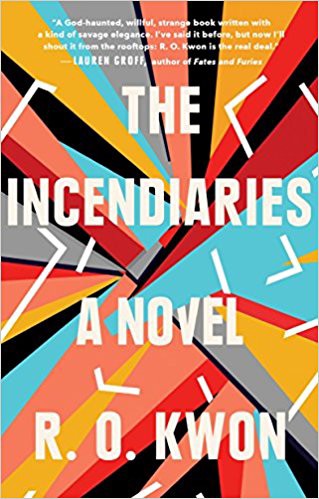
Purchase the novel.

Tom Macher is an exception: a great writer who is also a great storyteller. The happenings he describes are imbued with the illogic of true events. The characters are so unlikely that they can only be real. When Tom tells stories, my writer’s mind inevitably shifts to pilfering mode, squirrelling away images and circumstances for use in my own work. Then I remember that Tom is himself a writer, and that professional courtesy prohibits me from stealing from him the way I do from regular people. His stories, like his writing, belong only to him.

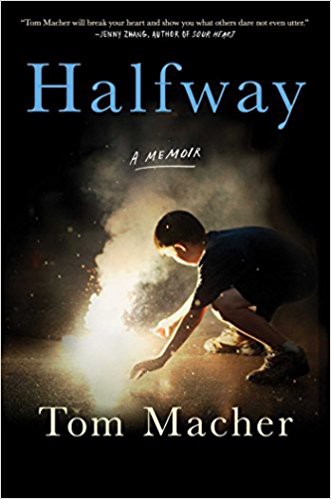
I met Tom at the Fine Arts Work Center in Provincetown last winter, where he had come to finish a memoir about his time in a Louisiana halfway house years before. He was attempting something that I found both treacherous and enviable: telling stories — true stories — about himself, without even the cover of fiction to protect him. That book, Halfway, will be published next week (Scribner), and it’s a remarkable rumination on wrongdoing, fear, and self-creation. I spoke with Tom via email about the tricky nature of truth, and the role of storytelling in his recovery from addiction and the discovery of his voice.

Michael Deagler: Late in the book, the woman who runs the halfway house, Miss A, puts you on Scribes. Scribes is a form of punishment where you have to write in a journal until you reach an epiphany about your behavior. In this case, it was about how sex was an extension of your alcoholism. You sat there writing about it for nine days. You conclude the story noting, “A decade later, Miss A died, but two decades later, I am still writing about this extension.” Do you see your life as a writer as an outgrowth of that sort of exercise?

Tom Macher: I was attracted to stories from an early age and had some encouragement from teachers. I was that kid in the back not paying attention, fucking off, never did any homework, but then there’d be some essay assignment and I’d really grind the fucker out and my teachers would be like, “Where the fuck did this come from?” In high school, I started writing on my own, like a lot of young men, because a girl ran a poetry reading and I wanted to get her attention. I probably looked like a pretty dumb guy at that point. But I composed this poem. I don’t know — maybe my friends helped — and I brought the damn thing down to the poetry reading on whatever day, and again, like with these teachers, when I show up — and mind you, I came with ten or twelve other dudes, all of them very jocular, all of us complete boneheads with our chewing tobacco and backwards hats — everyone is like, “What the fuck is this?” But the poem rhymed! You know, and it had birds and trees in it, wind, earnestness; all the poetic elements you could want.

But on Scribes, you’re sitting in the corner, you’re on No Contact, no one can talk to you, the Group is going on without you — they’re going to Circle K, shooting hoops, talking shit by the weight bench — it sucks, and everything you’re writing is written to get off Scribes. It’s a lot of “act as if,” a lot of “fake it ’til you make it.”

Of course, I’d give a lot for nine days in a corner on No Contact now.

Gogarty by Michael Deagler

MD: You’re a graduate of the Iowa Writers’ Workshop. Did that feel in any way like an extension or a cousin of AA? I don’t have any experience with 12-step programs, and so maybe this is a facile connection, but there seems to be a connection there. They’re both supposed to be confessional, “safe” spaces where you try to figure out how to tell your own story.

TM: Fuck no. Not AA.

Now, in the halfway house, most of the time, we’re just there for the three hots and a cot. Maybe you figure out you want to live, maybe you don’t. And, hopefully, you’re getting an MFA at a studio program like the Iowa Writers’ Workshop because it affords you time to write. Same thing at the halfway house — it’s all about time, and maybe you figure out the writing life isn’t for you, and cool, whatever. And I see that similarity between writers and junkies: junkies will do anything to score, writers will do anything to write. But I don’t see workshops as being safe; I can’t imagine workshopping some of the stuff in this book — all anyone would talk about is what kind of dick I am. Even if it were straight fiction, the talk would be about what kind of asshole the writer is. That’s not safe. It’s safe, but not safe, right? And that sucks. There’s a weird thing about practicing art in a corporate world, like a university.

I see that similarity between writers and junkies: junkies will do anything to score, writers will do anything to write.

And along those lines, I can’t recommend going into any old meeting and wiping your ugliest boogers like some kind of psychopath.

MD: Relatedly, there are the after-meeting porch sessions at the House, which you talk about a lot in the book, where you and the other guys would just sit around, smoking, shooting the shit, trying to one-up each other with stories from your previous lives. What’s the link between those moments and writing?

TM: Back in middle and elementary school, I ran around with a pack of kids, five or ten of us, all boys. We’d rampage around, doing shit. Setting shit on fire was popular. Fist fights. We broke into houses. Vandalized things. We were savages. And you’d think, well, some of this stuff ought to be kept under wraps, you know, “loose lips sink ships” and all that, but the secondary joy of these behaviors was bragging about our adventures in the cafeteria the next day, or whatnot. Now, much later, like in my twenties, when I was adrift, uneducated, working in bars and restaurants and construction, I thought a lot about what I really loved doing, and I realized it was this secondary joy: I loved telling stories, and how could I go about doing this?

MD: How did you navigate sharing the stories of these other guys from the House, going into their backstories? I would imagine it can be tricky writing about things that happened in an environment like that, since there’s a sort of presumed confidentiality to what gets said.

TM: Ugh. I don’t know. There’s a lot of chicanery involved so that no one gets outed as “that guy.” But look, if you tell me you got assaulted walking down such-and-such road, it’s going to color the way I view that road. I may never walk down it again. I may walk down it more. And that’s how most this stuff is working.

But I haven’t always felt good about telling these things. In fact, I’ve felt pretty shitty about it. There’s a bitter arc to a lot of my characters. You’re looking at guys who are dead, homeless, in prison, most of the time. Most of us aren’t in touch, unless something happens, like someone dies. And relaying that kind of information sucks. And then, I’m thinking about this friend of mine who died, and I want to write about him, but I don’t want to step on his grave — I don’t want to leave out the bad stuff of him, but I don’t want to dwell on that bad side of him either.

So, it has troubled me. But then, late in the publication process, like the day before I turned in my final-final pages, when I knew there’d be no more changes, someone texted me a link to a newspaper. One of the dudes from the House, a guy I lived with, had been booked for allegedly committing a life-crime. I got a few other texts that day. One guy texted me a photo of us standing in the trailer park where we after being released, all of us looking decidedly uncool. This photo, you got to understand: no one had an iPhone in those days, we weren’t carrying cameras. Any photograph was treated like hard currency — all our existing photos were stolen repeatedly. And I’m wondering, who the fuck did you steal this photo from? Where has it been all these years? And this guy, this photo-hoarder, tells me he’s stolen a bunch of these photos, and, all day at work, he’s been distracted, looking at the photos. And maybe it’s grandiose, but I take solace in knowing that I’m not the only one still affected by that time in our lives.

Double Take: Scott McClanahan’s ‘The Sarah Book’ is Beautifully Told and Breathtaking

MD: You write, late in the book, “A difference had come to exist for me in the way I viewed this whole thing: what happened wasn’t as important as the truth of a thing.” How does that play itself out in a memoir, specifically? It reminds me a bit of Tim O’Brien’s thoughts on how a war story operates in The Things They Carried. But that’s a work of fiction, where the reader isn’t expecting the truth.

TM: Well, it’s a mindfuck. Like who wrote the “nonfiction” thing matters. Who edited it. Ditto the documentary, right. Who finances the fucker matters, a lot. I don’t expect any more “truth” from a memoir than I do fiction. Not to knock memoir as a form, but it’s one person’s account of a time in their own life, which, even if they’re miraculously objective and have gone through oodles of soul-searching, filters it in a certain way. And what about the tinkering they’ve done with the details? What about the sorting? I mean, I wasn’t carrying a notebook or voice-recorder in these homes. I wasn’t running back to my bunk to write this stuff down.

I don’t see workshops as being safe; I can’t imagine workshopping some of the stuff in this book — all anyone would talk about is what kind of dick I am.

Going back to the above question about sharing stories of other guys in the house. God knows what my father would say if you asked his version of our interactions. And the brothers at the halfway house — I’m hoping they’ll just laugh at me. But I can see them being pissed off, especially for what the confinement of 275 pages has forced me to leave out. How could I not talk about so-and-so, or such-and-such? And I’m sorry about that, but some good stuff just felt too weighty for this story. The heaviness of those things, the shit I left out, would change the story. By the end of writing Halfway, I’d cut most my meta-BS — there’s no more time for my dumb smoke and innuendo and tricks, I’m not trying to be cute — I just want to tell the story. And in that moment in my life we’re talking about, where I’m a kid, I’ve never lost a house or marriage or fucked up my career or even had a car repo’d. In other words, before I had anything to lose, I got to apply this thinking to myself all the same, listening to this dude tell me a story about how he killed some dude in cold blood, and decide if the specifics within a truth matter or not. Like, that’s his creation story. It doesn’t matter the meat of the story. Shit happened enough to spur him to action.

MD: This book primarily focuses on you from the ages of roughly 17 to 21. During the writing process, I’d imagine you’d to get back into that headspace in order figure out your motivations and emotional state at various times. Was that difficult? You had to remember not just how an 18-year-old thinks, but how an 18-year-old addict thinks.

TM: Right. It was hard to reconcile the desires I had then with my actions at the time. It’s hard not to poke fun at my young self. Not for what I wanted, but for my attempts to achieve these goals. That’s pretty typical shit, though, regardless of age: actions are going to tell us more than anything. And I get so breezy sometimes, writing. Like, fuck no, I wasn’t thinking about anything but taking that person’s money, and most readers, I think, want a little more to hold onto than “fuck-kill-kill-fuck.” Drafting the book, I was often too oblique, or I got in the way of the story. Even after boiling it down to essential actions, I’d come back and clog it up with the over-explained or opaque, end up with the same old drafty shit, full of nonsense, all of it hindsight, too many flash forwards, and this more-aged-me prescribing wisdom from on high some twenty years later. Fortunately, my editor at the time, Shannon Welch, was like, “You got to cut all this psychobabble shit out.”

Things change, but they don’t. We move from one world into another, but we don’t fit in.

MD: There’s a long chapter toward the end of the book where you tell some stories from adventures post-House with some of the other alumni. The frame of the chapter is that you have told these stories before at a dinner party, and your bourgeois audience was sort of horrified by them. The publication of this book for a literary audience is a similar scenario on a larger scale. Has your strategy for telling these stories changed at all? Are you still concerned with people’s reactions?

TM: Specific to your garden variety dinner party, I can tell you this: I’m more about the hot-buttered rolls these days, that’s for sure. Like, oh, is there more to eat? Is there a slice of cheese? Is there something I can shove in my mouth that will prevent me from saying something stupid?

The chapter is problematic. The story framing that chapter is problematic. What can I do about that, though? If I’m going to cut that kind of thing from the book, what am I doing? What story am I trying to tell? Right, cause it’s near the end. So there’s this mad arc, a dash toward redemption, and then this. And what do we make of this? How can we understand this arc with this penultimate moment? The reader, at that point, wants to like me, wants to like “Hair-pie, Nob, Wood,” etc., but then there’s this problematic thing. But it’s my story. And I guess what it comes down to is, what am I supposed to say? Things change, but they don’t. We move from one world into another, but we don’t fit in.

MD: There’s an idea about writers who are recovering addicts that goes, “Writing saved my life.” That it’s a sort of positive addiction that fills the hole. Do you subscribe to that? What is writing, to you?

TM: Lots of things fill the hole — playing basketball, eating, any kind of work — but, yeah, writing is the one positive thing I’ve found that turns me on as much as self-destruction. I wouldn’t say it saved my life back in the day. Showing up saved my life, asking for help, giving up, changing my behavior, stuff like that, but, in the years that followed, I certainly have a different outlook on life when invested in a project and writing regularly than when I’m just picking the lint out of my navel. Writing gets me up in the morning. It helps me sleep at night. It’s something that genuinely excites me.

That Thing: A True Story Based on The Exorcist

MD: Were there any specific books or authors you were thinking about when putting this book together? I know Jesus’ Son by Denis Johnson and Rock Springs by Richard Ford have been important to you, and I see some of that heritage in the writing. Who else?

TM: Well, there are writers from then and writers from now. And I usually forget about the ones from then. Here’s how dumb I am: once, I ran into Tobias Wolff in a restroom. We’re both washing our hands and we make eye contact in the mirror. I say, “You were so fucking important to me when I was sixteen.” What a dork, huh? It’s not like I was eighteen saying this. I was thirty-three! I can imagine him being like, “Who the fuck are you — sixteen years old!” But he really was! And Kerouac. Fuck me. I loved Keruoac and I fuck with it a bit in the book. There’s a shout-out in there, maybe two. But I learned from the whole Wolff incident, and I didn’t go all willy-nilly with my Keruoac shout-outs. I worked those things into the book. Many, many drafts went into those moments.

I read a shit-ton of Joan Didion, especially when I first started working on this book. Joan Didion all the time. All her shit blows my mind. Roberto Bolaño. Michael Herr. I had a very hard time writing the procedural shit for the House. I really wanted to cram a bunch of information into the reader’s mind there, a shit-ton of characters. In Dispatches, Herr relentlessly hammers away at details, soldiers come in and out of focus, we never quite grasp one of them for very long, but it doesn’t matter: they all exist under the same umbrella, offer different versions of each other, echoes. I re-read Tony Swofford’s Jarhead — it’s a fucking great memoir, obviously, and he’s so good at explaining what’s commonplace to him to someone for whom these things might not be normal.

Now, what’s on my nightstand: John McPhee, Jenny Zhang, Marlon James.

MD: It can be hard to be a writer without a book. People don’t take you as seriously. You’ve been a writer without a book for a long time. Would you have done everything differently, if you could start over? Just in terms of your writing career. Do you think you could have gotten to this point quicker? Do you wish you had?

TM: As much as I would’ve liked a check somewhere along the way, the act of writing has always been the thing that drives me. And I’m thinking back now, and I’m looking at it like this: when I’m twenty-five years old, I’m sleeping on couches, in my car. My car is parked on the side of a state highway in Louisiana or Texas or in a gas station parking lot in New Mexico or on a tree-lined street in Los Angeles. I don’t have a computer, no typewriter, no education. But I know I want to tell stories. That’s it. I don’t care about seeing my books on bookshelves or a review of my book in any newspaper. I just want to tell stories. Some story. One I’d want to read.

The stuff I write is on bar napkins, in emails, on takeout menus, and it’s not even stories, just words. Like some reminder. It took me four years to even write a proper short story. Four years. And I’m trying that whole time. I’m not sitting on my hands. I’m fucking grinding. But I like grinding. And my life, post-Iowa, post-post-graduate fellowships, when you’d think maybe I’d publish something, in these years, when I’m still unpublished, I’m working in restaurants and bars, playing basketball when I can, and stacking pages. Which is a pretty decent life. I mean, when your big complaint is that no one over six foot three comes out to ball on the court at Keswick & 33rd until after five 5 p.m., that’s “the good life.” I get it: you might not make for the best mating partner, but you’re living fat. Your parents might not take you seriously, but life is good. But these people, you know, with their sidelong glances — whatever. Writing without worrying about what anyone else thinks about your work is a tremendous gift. I’m fortunate that I’ve gotten to do that for a long time.

Everything I Know About Writing a Novel I Learned from Watching British People Bake

This winter, I found myself alone on a small island in Washington, my only company a blue-eyed ragdoll cat named Emerson whom it was my job to keep alive. My goal during these two weeks of cat-sitting solitude was to revise my novel manuscript according to the long list of suggestions given to me by my agent. The novel is something I’ve been working on for the past five years; I haven’t kept track, but I imagine the total hours I’ve put into it are approaching 1,000 by now.

On the island, I quickly fell into a routine. Each morning, after feeding and brushing Emerson, I would station myself at the kitchen table, next the little propane stove, and write for four or five hours. Then I would go for a walk (or not, if it was raining too hard) and come home, eat lunch, and do it again.

After only a few days of this routine, I felt so close to the work I could hardly see it anymore: the characters were flat, the plot was confusing. My face was flush against the page. I also couldn’t shake the feeling that I was making the novel worse rather than better. “You have to break it open,” a friend told me when I shared how I was feeling. “Sometimes things have to get messy before they can get better.” But I don’t want to make a mess, I thought. What I wanted was to make something beautiful, and for it to be easy.

But I don’t want to make a mess, I thought. What I wanted was to make something beautiful, and for it to be easy.

Anyone who has ever worked on a book knows there is only so much work you can do in a day before the yellow wallpaper starts to move. At some point, you have to step away and remember there are other things in the world. You have to eat, take a shower, read a book. Watch television. This is, of course, where The Great British Baking Show comes in.

Before making its way to American TV, the show aired in Britain as The Great British Bake Off. Because I was using the homeowner’s Netflix account, I started my baking journey on season two (or series four of the Bake Off), ostensibly where the homeowners had left off before taking their vacation. I’d heard of the show before, and like many of those who came before me, I was immediately obsessed. Never before did I realize how much I wanted to watch British people bake. It seemed there had been a hole in my life, and this crew of novice, doe-eyed bakers had come to fill it with chocolate cream and macarons.

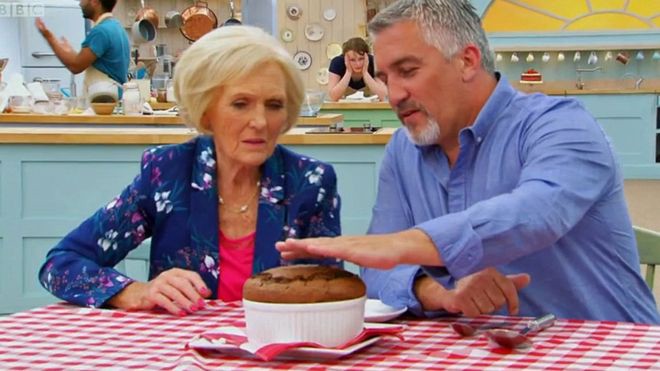
Mary Berry and the male judge evaluate a souffle

For those who don’t know, the show’s premise is simple: a group of amateur bakers competes to see who is the “best home baker in Britain.” The format is even simpler: each episode, the contestants gather under a white outdoor tent equipped with miniature kitchens where they complete three challenges: a signature bake in which they prepare their personal specialty, a technical bake in which everyone follows the same intentionally and maddeningly cryptic recipe, and a showstopper, in which the contestants attempt to wow the judges by whatever means necessary. There are no frills, no love triangles, no tricks. The two female comedian hosts lighten the mood with puns. Yes, puns. Perhaps most charming of all, the contestants will sometimes take a break from their work to drink a spot of tea.

I’m not completely unversed in reality television. In high school, I watched American Idol and America’s Next Top Model, and what I liked about these shows — the contestants’ passion and dedication to craft, the joy of observing the creation of art in real-time — is replicated in The Great British Baking Show, but with one fundamental and crucial difference: it’s about motherfucking baking. The Great British Baking Show isn’t preoccupied with personality, or beauty, or status. There are no liars, no egomaniacs, no sexpots, no cheaters or saboteurs (unless you count the controversial baked Alaska incident in series 5). At least in season two, the only season I watched during my short house-sitting tenure, nobody is drunk, or trying to be famous, or the son/daughter/cousin/dog-masseuse of someone who already is. What background information we receive of the bakers comes from the tiny, three-second biographical clips delivered early in the show. When she’s not baking, Becca likes to jog (insert grainy iPhone footage of Becca jogging)…today she will be making chocolate and rum-soaked prune brioches.

Refreshingly, everyone seems to get along: the contestants, the hosts, the judges. A loving camaraderie develops between the bakers as they bolster one another from one stressful challenge to the next. If one baker is running low on time, a fellow baker will come to her aid. At the end of each episode, when a baker is selected to go home, the whole crew comes in for a hug. Many Brits seem to appreciate the show’s tenderness, too. Noel Murray writes in the New York Times that “fans have clung to the show as a model of what the United Kingdom can be — with country grandmas and big city immigrants sharing hugs and recipes in a makeshift kitchen in a white tent in a field.” The show is (pardon the pun) undeniably sweet in this way, like if you populated Hell’s Kitchen with the cast of Little House on the Prairie. (Confession: I have never actually seen Hell’s Kitchen, but have gathered through cultural osmosis that it’s aggressive. I imagine each episode is just Dwayne the Rock Johnson hurling a chair at a plate of spaghetti.) I honestly can’t imagine America producing anything like it. If we tried, there’d be a nipple-slip by season two.

As I watched the show each night after working my brain raw on my novel, I couldn’t help but feel an overwhelming sense of empathy for the bakers. They were stressed to the point of tears, having practiced and practiced and practiced just to be right where they were, in a room with others who had practiced just as much as they had. They were all hardworking. They were all deserving. They were all good bakers — that they had made it onto the show at all was a testament to this. And yet, at the end of the show, one of them would be told they weren’t good enough.

At some point it dawned on me why I felt so connected to the show: it is, emotionally and often structurally, exactly like a writing workshop or, more loosely, like the art of writing as a whole. A cookie in place of a poem, a cake in place of a story. All day, the bakers stand at their little islands, feverishly attempting to create something that is both beautiful and tempting, that others might enjoy. At the end of each challenge, they’re covered in flour and chocolate, their cooking areas a mess of dirtied spoons and orange peels. Then, one by one, they are forced to approach the judges bearing the fruits of their labors, vulnerable to ridicule and eager for praise. They then wait patiently as their superiors literally tear their creation into pieces before determining their worth as an artist. Whatever the contestants have baked, it’s the best they can do, and yet they understand that sometimes the best is still not enough.

Whatever the contestants have baked, it’s the best they can do, and yet they understand that sometimes the best is still not enough.

The baking itself is as frustrating and delicate as writing, although in writing at least you can revise. In this way, baking is even more unforgiving, a fact the show makes clear. Each episode, somebody ends up tears. Their cake has collapsed, their bread is still doughy. In the heat of a baking crisis, one of the show’s hosts will inevitably wrap her arm around a weeping contestant and tell her, “It’s all right, it’s just a cake.” And while this is true — it’s just a cake, just a television show — any of those bakers would tell you that a cake is never just a cake. It is a reflection of heart and mind, a product of hours of labor and craft and learning. It is what they love to do and, if only someone would tell them they’re doing it well, they might have the courage to keep on doing it.

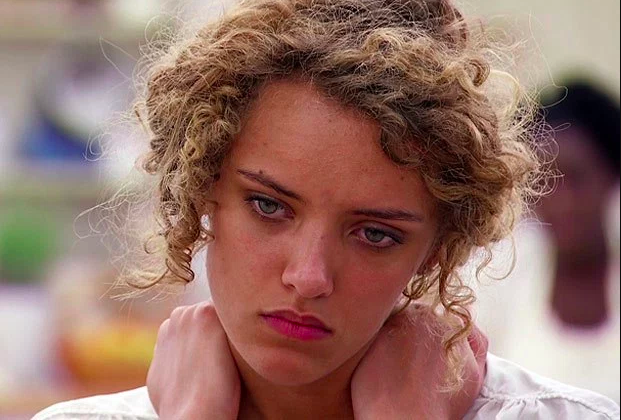
The metaphors between writing and baking are endless. There exists, in both disciplines, the argument for style over substance. Take Frances, an aesthetically neurotic baker who often focused too much attention on decoration and theme and not enough on flavor. There is a Frances in every workshop, the writer whose stories drip with florid imagery and poetry but whose characters are flat, their plots nonexistent. In each class there is also a Ruby, a young, naturally talented baker who, for most of her life, has kept her work close to her chest, rarely sharing her creations with anyone outside of friends and family. That she could make a career of her work has always seemed outside the realm of possibility, and yet here she is, in a competitive arena with other bakers, with permission, at last, to try.

Classic Ruby

I want to look more closely at Ruby, because she is part of the metaphor in more ways than one. At first, Ruby made me roll my eyes. She was beautiful, and young, and self-deprecating. Each time she approached the judges she did so bug-eyed, biting her lip. “I did so poorly,” she would say before the judges had even tasted her work. “You’re going to be so disappointed.” Her self-doubt seemed artificial, as if she were constantly trying to lowball the judges so that, when they eventually praised her, they could all revel in the surprise of her success. There was also the problem of her looks, which seemed, to some, to distract from her work. There is no denying that the male judge, Paul Hollywood, looked at Ruby with more attention than he looked at the other contestants, but whether this attention affected his judgment of her baking, nobody but he can say. All of this, I would later find out, stirred a controversy in which viewers accused Paul Hollywood of favoriting female contestants, particularly Ruby, who denies all claims of favoritism.

While Ruby did not seem as skilled or cool-headed as my favorite contestant, Kimberly, here’s the thing that makes The Great British Baking Show so interesting: we can’t, as an audience, know for sure what the judges were tasting, and therefore have no choice but to trust in their assessment of each confection. When it seemed the judges (particularly Paul) were favoring pretty Ruby over her clearly more composed and experienced peers, it’s possible her tarts simply tasted better than the other contestants’ tarts. Her work was sometimes visually sloppy, but perhaps it had more substance. We will never know, because somehow, in this age of iPhones and drones and unicorn Frappuccinos, Wonkavision has not yet been invented.

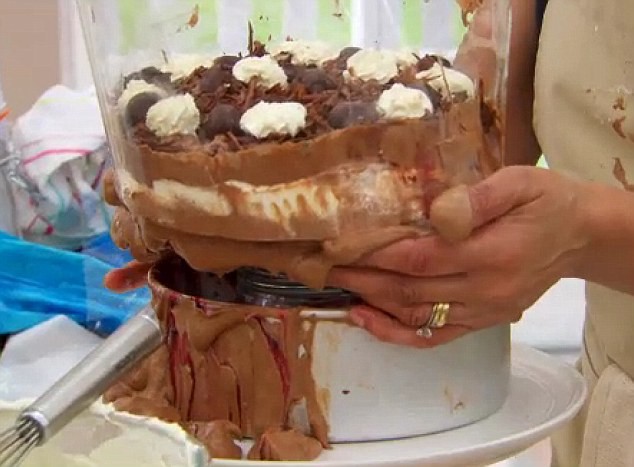
One of the more poignant Baking Show disasters, which probably still tasted good

By the end of the season, I had grown to rather like Ruby. I learned that she was only 21, that she was in school to study philosophy and art history, that one week she didn’t practice her bakes because her roommate got a new cat named Rupert. Most of all, she was diligent and creative and hard-working, and continued to turn out quality bakes. By the last episodes, I wondered if her self-doubt wasn’t as artificial as I’d assumed. When I thought about it, wasn’t there something familiar about her brand of reflexive, exhausting, unstoppable self-deprecation? Wasn’t it exactly what I had done, and still continue to do, in response to my own writing? Especially when I was 21, there was never a time I turned in a workshop story without thinking: this is the worst thing anyone has ever made and everyone is going to hate me when they read it. Once, when I was the same age as Ruby and sitting in a workshop, listening as my classmates ripped apart one of my stories, I wrote in my notebook, over and over again: One day you will be dead and none of this will matter, until the critique had ended and I was released to go home and cry.

Yes, some of your bakes will suck, and some may even be inedible, but in the end, there’s nothing to do but keep baking.

As I worked painstakingly through each chapter of my book, cutting and adding and generally doubting my worth as a writer, I allowed myself one episode of The Great British Baking Show each night, as a treat for doing my work. Over and over again, I watched the contestants succeed and fail and keep on going. They wanted it so badly, they cared so deeply about their little trifles and buns. A bad bake would bring tears to their eyes. A word of praise from the judges would make them literally jump with joy. It felt so good, to see people exhibit unabashed emotion about their work, people who were willing to put their hearts on the line — and on popular television — for a chance to share their passion with others. When I returned to my novel each morning, I found myself buoyed by the contestants and their dedication. Yes, it’s hard, the show seemed to be saying, and yes some of your bakes will suck, and some may even be inedible, but in the end, there’s nothing to do but keep baking. There’s nothing to do but try. Because the only thing more frustrating than baking is not baking.

What I like most is imagining the contestants once the show is over, after the winner has been crowned and the big white tent dismantled for the winter. I picture them at home, in their pajamas, sneaking into their kitchen in the early morning hours, before the sun has had a chance to rise, their only company a blue-eyed cat named Emerson (or maybe Rupert). They go into their cupboard and remove a bag of flour, some sugar, some yeast. For now, it’s just them and their oven, their mixing bowls and spoons. When the bake is over and done with, nobody will taste it but them.

Literary Fiction Titles That Should Be Sci-Fi and Fantasy Books

Pretty much everyone who reads sometimes uses books as a way to escape. A book is a door to another world, a way to get away from reality for a few minutes or hours and focus on characters and circumstances wholly and blessedly unrelated to one’s own life. Sometimes, the more unrelated to one’s own life, the better.

I love literary fiction; it’s the genre I read most frequently. But literary fiction also tends to be about things that are distinctly related to my life—heartbreak, money, family troubles. So when I have a particularly bad day, I tend to turn more and more to science fiction and fantasy. Reading a book about a wizard or a spaceship is my version of taking a stress nap. While literature about serious, familiar, recognizable problems is both necessary and important, sometimes life is hard and I want a space opera where the gods are real and teenagers can conjure up demons.

Like I said, though, literary fiction is the genre I read most frequently. Which is why sometimes, when I start to wish literature offered more of an escape from reality, I find myself scanning my shelves full of novels about family and death and imagining that they’re about wizards and dragons instead. Yes, The God of Small Things is great, but right now I want to read about Minimantia, deity of everything under one centimeter in diameter! Could someone please write that for me? And while you’re at it, write these:

Fates and Furies

In reality this is one of my favorite novels, but I would also probably love it if it were an epic battle between the actual Fates and the actual Furies, playing out partly in the realm of the Gods and partly in the lives of a few humans who gradually begin to wonder if they are being used as pawns. Part one in a trilogy.

The Sound and the Fury

This is the second book in the series that starts with Fates and Furies, in which the one Fury who survived the war with the Fates must live as a normal human while reconstructing her powers and plotting revenge. She starts a punk band called “The Sound.”

Infinite Jest

A small town in Maine is bewitched so that all the inhabitants live forever as long as they never stop laughing.

Wolf Hall

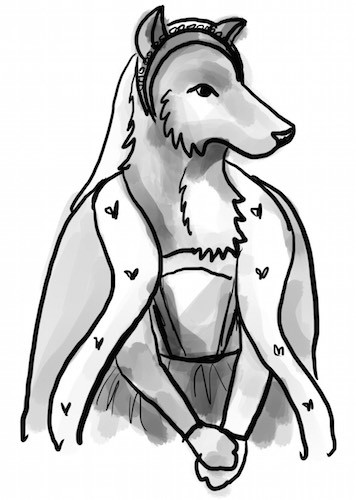
The exact same book, but with wolves.

The Corrections / FreedomPurity

A Hunger Games-style trilogy about a spunky kid escaping a repressive dystopia in which “blood purity” is valued above all things and children are “corrected” in order to gain higher status and please the authorities. Our hero, Jonathan, sees his world’s cruelty for what it is and must infiltrate its highest echelons of power and take them down from within.

City on Fire

In a world ruled by a mysterious cult of fire worshippers, the perpetually burning city is a holy city, and can only be visited for the initiation trials that each youth must undergo before they enter adult society. Nothing is known about the trials before one enters the city, and far from everyone who goes into the burning city ever returns. Will our three heroes survive their upcoming trials in the city on fire?

The Things They Carried

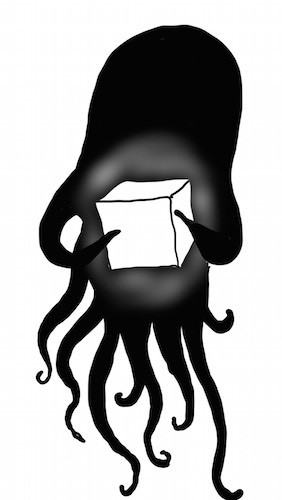
Everyone in the city knows about Them, but no more name than that is ever given to them, and it is best not to speak about Them, and certainly never to approach them. These shadowy beings hover on the outskirts of a city, preventing anyone in the city from either coming in or leaving. They each hold a strange, glowing box. When a plague decimates the city’s populations, a few intrepid residents who are still healthy must confront these unknown beings and the things in the boxes that They carry, to try to win their escape from the city and gain help for the people within.

Slouching toward Bethlehem

A space opera about a single ship that has survived a debilitating space war and must use “slouching” — a dangerous, experimental time travel technology that allows them to travel undetected — to reach Bethlehem, a mythic oasis planet in a neutral zone which none of the characters have visited and which is perhaps not entirely what it seems.

The Sun Also Rises

A planet with two suns, and two warring religions, each of which worships a different one of the two suns. An epic told from the perspective of many different individuals on both sides of the conflict.

The Girl with The Dragon Tattoo

A heartwarming series of books about the adventures of a girl and her dragon, Tattoo.

Little Women

An accident with a shrink ray.

A Clockwork Orange

A steampunk novel in which our hero must construct The Orange, a secret weapon disguised as a piece of fruit. He wears goggles to do it. The goggles are crucial for some reason.

Far from The Madding Crowd

The zombies are coming. But we’re still far away from them. For now.

Heart of Darkness

The Heart of Darkness was once the noblest ship in this galaxy’s fleet, but after its captain suffered a tragic loss, turned rogue and is now a space-pirate ship full of corruption and debauchery, hunting down other members of the fleet who were once its trusted friends. The book is written from multiple perspectives, including that of the ship itself.

The Glass Menagerie

A young girl discovers a secret portal in gift shop at the zoo, which transports her to an evil fairy queen’s private collection of living glass animals, whom she befriends and tries to free from their captivity.

Go Set a Watchman

A steampunk horror novel about the construction of surveillance robots. Despite terrifying obstacles and the opposition of the Society of the Changing Mirror — a cult of wizards who control society from afar and abhor all technological advances — the Watch-Man must be set.

Is Homer’s Calypso a Feminist Icon or a Rapist?

Thanks to the celebrated new translation by Emily Wilson, Homer’s Odyssey is enjoying something of a feminist moment. It is surprising that it has taken this long for a woman to publish a translation of this epic into English, especially given its multitude of female characters. Despite its first line beginning with the key word andra, “man” (that is, Odysseus), it so teems with dynamic women that Samuel Butler in 1897 published a book entitled The Authoress of the Odyssey arguing — untenably — that it was written by a woman.

Women in this epic are undeniably powerful — without the aid of Athena, Nausicaa, Arete, or Ino, Odysseus would never have made it back to the shores of Ithaca. But women are dangerous as well, threatening the hero’s journey home. Odysseus must face and overcome Sirens, Scylla, Charybdis, Circe, and others.

Women in this epic are undeniably powerful — without the aid of Athena, Nausicaa, Arete, or Ino, Odysseus would never have made it back to the shores of Ithaca.

To me the most fascinating of Homer’s characters has always been Calypso, the goddess who saves Odysseus’s life and then imprisons him on her island for years. Calypso is terrifyingly dangerous — not unlike the other monstrous and elemental female opponents male heroes of Greek myth must meet and defeat in order to acquire their masculine bona fides, such as the Amazons, Harpies, Furies, and Medusa.

“Calypso receiving Telemachus and Mentor in the Grotto,” painting by William Hamilton

Feminists have rightly begun to see these vanquished women as figures ripe to be reclaimed. Electric Literature’s editor-in-chief Jess Zimmerman has penned a series of powerful essays for Catapult recovering myth’s marginalized female monsters. The figure of Medusa and her complex legacy in western thought loom large in Mary Beard’s newly published Women and Power, a history traced also by Elizabeth Johnston for The Atlantic. The mythical Amazons, defeated and “tamed” by heroes such as Hercules and Theseus, form the background myth for Wonder Woman, whose long-awaited film arrival this past summer was hailed by some (though by no means all) as a feminist victory. Emily Wilson herself has commented on the feminist potential of the Odyssey’s monsters to Bustle, “They’re presented in ways that are powerful…and very attractive and seductive.”

The human women of the Odyssey have likewise received feminist press recently. I myself have suggested that Penelope’s trick of weaving and unweaving a shroud to keep her suitors at bay foreshadows current feminist modes of resistance via craft — by this trick she is able to transform tools of oppression into tools of empowerment. But Penelope remains a woman in need of a patriarch, never allowed to attain to masculine power in her own right. And she in turn oppresses those women below her, the female slaves who, as we shall see, suffer violence with her sanction — a facet of Penelope that Wilson has rightly and repeatedly emphasized.

Penelope’s trick of weaving and unweaving a shroud to keep her suitors at bay foreshadows current feminist modes of resistance via craft — by this trick she is able to transform tools of oppression into tools of empowerment.

Wilson suggests, moreover, that if we are to see glimpses of real female power in the poem, we will find them not in its human but in its divine women:

There is a vision of empowered femininity in the Odyssey, but it is conveyed not in the mortal world but in that of the gods….The divine Calypso, Aphrodite, and Circe provide passionate models of female power — idealized fantasies of how much agency mortal women might have, if only social circumstances were completely different.

Such recognition of female power in the poem prompts one to ask whether Calypso is ready for a feminist recovery. My first inclination is to shout “yes!” to the skies — but to do so overlooks too much of what Homer tells us about her and the way she treats Odysseus.

Those artists and writers who do find in Calypso a sympathetic figure see her as a female lover abandoned and left alone, a frequent mythological predicament familiar to, say, Dido or Ariadne. In Ignorance, published in 2000, Milan Kundera writes:

Calypso, ah, Calypso! I often think about her. She loved Odysseus. They lived together for seven years. We do not know how long Odysseus shared Penelope’s bed, but certainly not so long as that. And yet we extol Penelope’s pain and sneer at Calypso’s tears.

A similar sentiment is found in Suzanne Vega’s 1987 song “Calypso,” narrated from the goddess’s point of view on the eve of Odysseus’s departure. She sings:

A long time ago

I watched him struggle with the sea

I knew that he was drowning

And I brought him in to me.

Now today

Come morning light

He sails away.

After one last night, I let him go…

I will stand upon the shore

With a clean heart…

It’s a lonely time ahead.

I do not ask him to return.

I let him go.

The elisions in these retellings, however, cannot be ignored. The Calypso episode is not a positive portrait of female power. Instead it shows us that asymmetrical and hierarchical power, no matter the biological sex of its wielder, masculinizes its possessor while subjugating and feminizing its victims. Calypso, like Penelope, exhibits oppressive behavior that severely compromises her feminist potential.

The matriarchal and patriarchal modes of power that are in competition with each other in the Calypso episode at first glance look quite different from one another. Hermes marvels as he arrives on Calypso’s island to deliver Zeus’s command that she let Odysseus go (a command omitted from the Kundera and Vega retellings). The lush landscape is a feast for the senses:

The scent of citrus and of brittle pine

suffused the island. Inside, she was singing

and weaving with a shuttle made of gold.

Her voice was beautiful. Around the cave

a luscious forest flourished: alder, poplar,

and scented cypress….

A ripe and luscious vine, hung thick with grapes,

was stretched to coil around her cave. Four springs

spurted with sparkling water as they laced

with crisscross currents intertwined together.

The meadow softly bloomed with celery

and violets. He gazed around in wonder

and joy, at sights to please even a god. (Wilson)

Greek thought constantly linked women to nature and men to cities and civilization. The fecundity of nature around Calypso’s cave signifies her unchecked feminine power. In an epic in which women’s voices emit dangerous siren songs, Calypso’s beautiful singing suggests everything here is under her sway. Her weaving is the activity par excellence of women in ancient myth, indicative of a fearsome feminine craftiness. The island is woman’s domain, Calypso’s natural cave utterly at odds with the kingly Olympian palace Hermes has just left, where the voice of authority belongs to Zeus. At first glance this island paradise is intensely seductive, the most tempting vision of feminist power the poem has to offer.

And yet, everyone Calypso keeps in her company is a slave — including Odysseus. It is clear that Calypso has imprisoned him: “Calypso, a great goddess, / had trapped him in her cave; she wanted him / to be her husband.” To be here means to be at the mercy of Calypso’s power.

What Calypso wants is not something new or different from masculine authority but her own feminine one to match it.

What Calypso wants is not something new or different from masculine authority but her own feminine one to match it. Chafing against Zeus’s command, she complains that goddesses are prohibited from enjoying the same dalliances with mortals that the male gods do: “You cruel, jealous gods! You bear a grudge / whenever any goddess takes a man / to sleep with as a lover in her bed….So now, you male gods are upset with me / for living with a man. A man I saved!” It is tempting to root for Calypso’s protest at this double standard. To quote Wilson in Bustle, “I love that the poem is able to at least have that moment where a female character is totally powerful and totally able to say, ‘There’s a problem with how we’re doing this.’” Or, similarly, John Peradotto, who states that Circe’s speech here “can be seen as representing revolt against a system whose order is made to depend on the suppression of female sexual desire in a way that is not expected of males.”

But of course the affairs male gods have with mortal women are often best described as rape, a term that likewise fits Calypso’s sexual domination of Odysseus as she replicates the very system with which she finds fault. Every day Odysseus weeps on the shore, powerless to leave:

His eyes were always

tearful; he wept sweet life away, in longing

to go back home, since she no longer pleased him.

He had no choice. He spent his nights with her

inside her hollow cave, not wanting her

though she still wanted him.

Some have sensed a poignant sorrow in these lines. Gregory Hays, in his New York Times review of Wilson’s translation, says that “we feel sadness on both sides” here. But I have difficulty mustering the same sympathy for Calypso as for Odysseus, who must sleep with the goddess without desire and without choice. My students, ready to condemn Odysseus for his faithless philandering, are always caught off guard by this passage. Put simply, Odysseus — like all victims of rape — does not have the power to say no. His daily weeping recalls that of his wife Penelope, who spends tearful days within the women’s quarters of her palace. If gender is defined not as biologically determined but as a culturally constructed phenomenon informed by power, then it is not Calypso but Odysseus who plays the woman’s part in this episode.

Put simply, Odysseus — like all victims of rape — does not have the power to say no.

As Mary Beard has ably demonstrated, “We have no template for what a powerful woman looks like, except that she looks rather like a man.” This is exceedingly true of Calypso in the Odyssey, who uses her divine authority in ways that replicate the nastiest aspects of patriarchal power, such as sexual domination and enslavement. As long as Calypso’s island mirrors Zeus’s own hierarchical structure, as long as she occupies the masculinized position of power, there are no feminist lessons to be learned here, only new iterations of the same ancient forms of male domination.

What of Odysseus, who learns how it feels to be a feminized victim of masculine power, who pines daily for his home and endures nightly sexual trauma? Does he learn to see things differently, to become a more just man upon his return? What does he want?

Calypso famously gives him a choice: leave and suffer new waves of human suffering or stay amid the luxuriant comforts of her island as a god — return to Penelope or stay Calypso’s forever. His choice is quick and clear: “I want to go back home, / and every day I hope that day will come.” Wilson in her introduction is highly attuned to the desire for power that informs this choice:

If Odysseus had stayed with Calypso, he would have been alive forever, and never grow old; but he would have been forever subservient to a being more powerful than himself. He would have lost forever the possibility of being king of Ithaca, owner of the richest and most dominant household on his island.

In other words, Odysseus’s choice is fueled not by a conviction that such unbalanced power is fundamentally wrong. He just wants it tipped in his favor. His experiences as a feminized slave have kindled his masculine desire to dominate.

Odysseus’s choice is fueled not by a conviction that such unbalanced power is fundamentally wrong. He just wants it tipped in his favor.

At first it seems as if the text offers a more hopeful possibility. After he leaves Calypso’s island, Odysseus encounters a terrible storm, washing up at last on the island of Phaeacia, where he encounters the teenage princess Nausicaa, who is ripe for marriage. He offers her a vision of marital concord at odds with the asymmetrical arrangement he’s just experienced with Calypso, one that bodes well for his reunion and future days with Penelope:

So may the gods grant all your heart’s desires,

a home and husband, somebody like-minded.

For nothing could be better than when two

live in one house, their minds in harmony,

husband and wife.

Perhaps Odysseus’ subjugation has taught him the severe shortcomings of unchecked authority, have rendered him able to imagine a way in which man and woman can live on egalitarian terms. Or perhaps, to quote Wilson again, he simply “has a strong ulterior motive for buttering [Nausicaa] up, since his life depends on her help.”

The text does not give us a clear answer, yet it continues to tempt us with the possibility that Odysseus has become sympathetic to the perspective of the subdued female. In one of the most famous similes of the epic, Odysseus, moved by the song of the Phaeacian bard Demodocus, cries like a woman whose husband has been killed in battle:

Odysseus was melting into tears;

his cheeks were wet with weeping, as a woman

weeps, as she falls to wrap her arms around

her husband, fallen fighting for his home

and children. She is watching as he gasps

and dies. She shrieks, a clear high wail, collapsing

upon his corpse. The men are right behind.

They hit her shoulders with their spears and lead her

to slavery, hard labor, and a life

of pain.

We might hope that Odysseus’s harrowing experience with Calypso has taught him something about what it means to be without agency. But of course it does not. In a scene that both Wilson and others have written about in the wake of the new translation, Odysseus brutally punishes the slave girls (not “maids” or “servants” or “sluts,” as the Greek is often rendered) who slept with the suitors overrunning his house in Ithaca. As classicist Yung In Chae observes, Wilson’s translation brings out (unlike many by men before her) the slave girls’ lack of agency: “The slightest alterations in translation can turn a girl into maid with few choices, a slave with none at all, or a slut who only has herself to blame. And it took a woman to see, or perhaps just care about, those differences.” But whereas Wilson’s female eyes can see the difference, Odysseus’s eyes, though feminized by his own experiences, cannot. He strings the slave girls up and hangs them for their disobedience to his absolute patriarchal authority over his house.

The Odyssey is, of course, a wonder to read, its women and men fantastical instantiations of intensely human fears and desires. In the end, though, there are few models of power in the Odyssey that anyone, feminists included, should be keen to embrace for our world today. Perhaps Odysseus’s intelligence and craftiness, like those of his wife Penelope, offer strategies to survive the experience of disempowerment, but they contain no long-term solution to fundamentally unjust hierarchies.

In the end, there are few models of power in the Odyssey that anyone, feminists included, should be keen to embrace for our world today.

Like its hero, Homer’s epic cannot imagine its way into a new paradigm even as it recognizes the precarious positions that women and the oppressed too often find themselves in. Though it fails to offer better solutions, it does have lessons to teach about the damaging ways authority gets wielded and about those who unjustly get to wield it — and perhaps that is why we should all read it, for its negative rather than positive representations of power so that we can be on guard against them.

I do not want a feminist hero who merely refashions masculine tools of oppression as her own. To quote Audre Lorde’s landmark feminist essay:

For the master’s tools will never dismantle the master’s house. They may allow us temporarily to beat him at his own game, but they will never enable us to bring about genuine change. And this fact is only threatening to those women who still define the master’s house as their only source of support.

Or, to quote Mary Beard, “You cannot easily fit women into a structure that is already coded as male; you have to change the structure. That means thinking about power differently.” Calypso offers not a hopeful possibility for women but a warning to any woman who climbs the tiers of power without questioning or transforming the asymmetrical system that keeps women as a whole in check. If the structure is not changed, in can waltz Hermes, armed with Zeus’s authoritative command, to overpower you in turn. As long as it is built upon the oppression of others, the same hierarchy that at one moment works for you can now work against you. Unlike Odysseus, we can choose to really see ourselves in the disempowered and by doing so change who we are for the better. That is the challenge for anyone reading the Odyssey today.

While I wholeheartedly embrace the refashioning of myth’s female monsters as our own, I do not want to find feminist empowerment where it should not be, a new female face superimposed upon the same old tale. As much as I love these old Greek stories and always will, we all desperately deserve a new one.

Women Don’t Get to Be Asshole Geniuses

A friend of mine has a theory that there’s an age group for each Salinger book. Naturally, The Catcher in the Rye should be read by teenagers. I read it when I was thirteen, was very moved, and haven’t picked it up since for fear that my 26-year-old self will despise it. Franny and Zooey belongs to the twenty-somethings. For the post-30 crowd, there’s Nine Stories, and somewhere beyond that, I suppose, Raise High the Roofbeam, Carpenters and Seymour: An Introduction.

I didn’t know about this theory when I was thirteen, so I read them all in the span of a few years. When fifteen-year-old me read Franny and Zooey, I had no means of knowing that I would someday go on many dates with many versions of Lane Coutell. Re-reading Franny’s section now, I could control-F the word “Flaubert,” replace with “Kerouac,” and I would end up with an exact replica of a conversation I had with one of my boyfriends in college.

As a teenager reading Salinger, I saw opportunities. Salinger presented a world where people reference their lunch and Turgenev in the same breath — I wanted desperately to speak their language. I regularly skipped class to go to the art museum downtown, I lived in thrift stores and bought any dress with a 1960s silhouette, and all of my books came from the second-hand store run by a curmudgeonly old man. As far as I was concerned, if I didn’t carve out a place for myself as the next literary genius by the age of eighteen, then I would certainly be doomed to an unremarkable life. Salinger, with his admonishments of dull normal people in favor of geniuses who don’t have to try, looked like a shortcut to selfhood.

It feels unfair that a white man from the 1960s could have such an impact on my present personality, but here we are. It’s embarrassing. In a review of Franny and Zooey, Joan Didion recounts a party where a Sarah Lawrence type tried to sing to her the praises of Salinger: “Salinger was, she declared, the single person in the world capable of understanding her.” Didion was unimpressed. She described Franny and Zooey as “spurious, and what makes it spurious is Salinger’s tendency to flatter the essential triviality within each of his readers, his predilection for giving instructions for living.” There’s an undeniable comfort in the prescriptive writing of Salinger and, like most teens, I was willing to take whatever dosages Salinger could dole out. I was the drunk Sarah Lawrence type who felt understood — but minus the alcohol, the degree from Sarah Lawrence, and any invitations to a party where Joan Didion would be in attendance.

It wasn’t as if I didn’t grow up reading beautiful, compelling books by women — I tore through all the classics, Austen, the Brontes, Woolf, eventually made my way to Plath. There was a decent roster of feminist icons and characters to pick from there. However, I was bookish, sporadically depressed, and incurably meek. I wasn’t ever going to be an Elizabeth Bennet. Instead, I became a Franny.

I was bookish, sporadically depressed, and incurably meek. I wasn’t ever going to be an Elizabeth Bennet. Instead, I became a Franny.

Or, I made myself into a Franny. I’m not so sure. Either way, I’m certain I’ve written or said some variation of this from Franny’s letter to her beau, Lane: “I hate you when you’re being hopelessly super-male and retiscent (sp?).” It’s the “(sp?)” that crushes me. That constant need women have to point out our potential flaws before any man can come bearing down on our credibility for them. Or, perhaps Franny’s defense of Sappho: “I’ve been reading her like mad, and no vulgar remarks, please.” Please, please, don’t shit all over this thing that I love. Oh, I asked that in so many words, so many times before.

Franny’s section brings to mind flashbacks of every time I’ve sparred with these distant, intellectual men like Lane Coutell and crumbled on the spot. And I would like to say that I left those matches back in college, but we all know that’s not true. If a man asks me with the right inflection, “Just tell me first what a real poet is, if you don’t mind,” I have few doubts I’d wind up mumbling and sweating and then, like Franny, running to have a cry in the bathroom.

At the heart of Franny’s issues is the Jesus Prayer. After wrapping up an unprompted oral defense on Flaubert, Lane goads Franny into to telling him about the book in her bag. After which point, entire monologues spill out of Franny’s mouth about The Way of the Pilgrim and this One Weird Trick That Will Bring You Closer to God — namely, a prayer that, if repeated to the point of subconscious impulse, will invoke enlightenment of some kind. Franny explains: “…you only have to just do it with your lips at first — then eventually what happens, the prayer becomes self-active. Something happens after a while.”

Franny has to be provoked into telling him about her book — when you just know if Lane had been reading that book he wouldn’t shut the hell up about it. It would be his opening line, “Darling, you just must hear about this prayer book! I’m going mad over it!” She wouldn’t get a word in edgewise.

We all know Franny is more intelligent, more nuanced, more compelling than Lane, right? Right?


If I’m being honest, I wanted to be a Zooey. Zooey who gets to sit in his bathtub and yell at his mother, call her stupid and fat, tell his ailing sister she “looks like hell.” Zooey with his savage but undeniably snappy quips — “Phooey, I say, on all white-shoe college boys who edit their campus literary magazines.” He’s intoxicating and he also makes me want to vomit.

The thing about being a Zooey (or a Holden or a Seymour or a Buddy — take your pick) is that when you’re a Zooey, every flaw you have becomes yet another thing to be desired. Zooey’s cruelty is not only tolerated, but invited by his mother and sister. His brother Buddy, “who was a writer, and consequently, as Kafka, no less, has told us, not a nice man,” is the primary advice-giver of the Glass family. Men gain credibility for bearing their flaws. Often, their flaws become the very source of their authority.

Men gain credibility for bearing their flaws. Often, their flaws become the very source of their authority.

I wanted to be Zooey and tell everyone that they were doing everything incorrectly in only the most malicious of terms. But mostly women — insert something about internalized misogyny here. Like when he tells Franny she’s having “a tenth-rate nervous breakdown.” Poor Franny isn’t even allowed to have a depressive episode the right way.

At the peak of my teenage Salinger years, I wanted to be an art monster. Other heroes of mine included Hamlet and — god help me! — Stephen Dedalus. A bunch of intellectual men whose depression and anxiety manifested in acerbic backtalk. Because it’s so much more fun to be cruel than to be wounded.

There’s something irresistible about the cadence of Salinger’s geniuses — dress your flaws up in witticisms and if other people are hurt it’s because they’re stupid phonies. It’s also a very effective tool to alienate yourself from your friends and loved ones — at least, if you’re a woman, it is.

It turns out sad women don’t get to be asshole geniuses.

I’m not a nice depressive — my world loses meaning for weeks at a time and I grow fangs. Characters like Zooey gave me a vocabulary to be malicious to every person around me and pass it off as artistic integrity. But I was the only person in on the secret joke, aware of my own genius. Unlike Zooey, I wasn’t rewarded with people fawning over me. It turns out sad women don’t get to be asshole geniuses.


The sad women I encountered in classic literature usually met one of two fates: marriage or exile. Growing up, I never felt the brooding sadness of a Bronte heroine or the violent despair of Plath’s Esther (is that the first-rate way to have a nervous breakdown?). Franny is a rare exception; neither married nor exiled, she exists on the periphery of genius.

Franny gets the scraps of what the gifted men around her have and is made to believe that that’s enough — countless times, I’ve lived through the moment when Lane asks Franny to read over his paper, as if that’s an honor and not just a request for a free editing service. I see myself in Franny because through her I learned to apologize for being too sad, for being too mean, for being too egotistical, for wanting to be a genius.

I know that I’m Franny because I once dated a guy who tried to ask me out by saying we could be “the smartest couple on campus” and somehow that shit worked. I know that I’m Franny because one time when my apartment was being re-painted, a painter knocked one of my plants off a shelf and my first reaction was to apologize, but I don’t know what the hell for. I know that I’m Franny because goddamn if I don’t appreciate having a cry in a bathroom stall, hiding my depressive episodes in a place where men can’t tell me I’m doing it wrong.

I’m the one asking “(sp?)” and when a man questions me, “You think you’re a genius?” I feel mocked, attacked — of course I don’t think that, I can’t even spell “reticent” correctly.

I see myself in Franny because through her I learned to apologize for being too sad, for being too mean, for being too egotistical, for wanting to be a genius.

I believe Didion when she says, “What gives [Franny and Zooey] its extremely potent appeal is precisely that it is self-help copy.” Throughout the book, Franny is being coached, taught, corrected, whether it’s from Lane, Zooey, or her brother beyond the grave. It feels good to be given instruction — a notion heavily reinforced if you’re a woman. To this day, I allow myself to hear some version of Zooey’s voice in my head with the idea that I’m doing it to protect myself. I’d like to believe that men can’t be cruel to me if I’m cruel to myself first.

I read Salinger’s books over and over again throughout high school, sometimes out loud in a 1960’s New York accent. Seeing myself in his characters, I tried to inhabit them — and when that wasn’t possible, I just dated different versions of them and sat quietly while they berated and diminished me. I really believed I was lucky just to be there. Being a true genius’s free editing service is somehow better than being a normal phony. I put on the lives of Salinger’s characters hoping that, through consistent repetition, something might happen.

What’s irresistible about Zooey and his ilk is that none of them would ever need a Jesus prayer. Their intelligence, wit, and overall superiority is inherent. Zooey’s section opens with a four page letter from his brother debating whether he’s destined to become an actor or get his PhD in Greek. There’s little question of whether Zooey can fail at either — in regards to being actor, “You’re a born one, certainly.” Discussions of Franny’s future? “You can at least try to, if you want to.”

When people ask me what I plan to do with my writing, I have my own Jesus prayer, a set of answers that I repeat over and over again, ad infinitum. It’s not Zooey’s intelligence or his talent that I crave; it’s his freedom from having to prove it.

It’s not Zooey’s intelligence or his talent that I crave; it’s his freedom from having to prove it.

At one point towards the end of the story, Zooey lectures Franny: “An artist’s only concern is to shoot for some kind of perfection, and on his own terms, not anyone else’s.” Any artist who doesn’t fit the art monster archetype (white, cis-male, hetero) knows how troublesome these terms are: how frequently we are questioned about them, the exhaustion of having to explain it countless times. I don’t expect to have the luxury of my own terms anytime soon. Men are not going to stop asking me what my art is about, or where I get off thinking that I can make it in the first place.

But when I consider Salinger’s terms for being an artist or a genius — authenticity, effortlessness, some form of innate brilliance — it feels ridiculous that I ever strove towards them. The entire point is that people like Franny and I cannot achieve them. No matter what I do, my efforts are visible. I‘m not allowed to be a genius by that definition—and who cares? I’m a Franny, and that’s enough.

Finding the Violence in Male Friendship

Michael Nye’s debut novel is, in his own words, the completion of a massive apprenticeship that took twenty years to complete. All the Castles Burned is woven with many semi-autobiographical threads, but Nye never thought those stories would become his first full-length book. The author worked through other ideas for novels, published a short story collection, Strategies Against Extinction, in 2012, and spent years as an editor for the Missouri Review and Boulevard, before finding the story he wanted to tell.

Purchase the novel.

That story belongs to the character of Owen Webb, a charming outsider in a prestigious private school who forms a connection with the enigmatic Carson Bly. Narratives of adolescent male friendship are having something of moment in current literature, but unlike a lot of recent books, Nye’s story — like many a bored teenager — looks for the thrilling in the ordinary, the adventures in the everyday. Set in the mid-1990s, Owen and Carson bond over basketball, and begin a friendship that will last nearly two decades.

I spoke with the author about how All the Castles Burned evolved over the years of writing, and why he chose to write about a friendship between two young men.

Adam Vitcavage: This is your debut novel, but your short story collection, Strategies Against Extinction, published in 2012. Was this always the first novel you intended to write?

Michael Nye: It wasn’t. This is actually attempt number four for me. The previous version, novel number three, was finished back in 2010. I went through the whole process of looking for an agent, then I got an agent, he never sold the novel, he quit the business, and he dumped me as a client. I had this novel that nobody wanted or had interest in. I had a reckoning at that moment. I sat down to read it to see what I thought. As I was reading it I started x-ing out pages and deleting chapters. Eventually my 80,000 word novel became a 20,000 word novella.

I figured I had to start from scratch and started on the next book. I’ve always been a believer that once you finish a book — whether it gets published or not — that you move onto the next one. It took four attempts but I finally got one of these novel things to work for me.

A Story About Two Men Unraveling in Isolation

AV: Were those first attempts Owen’s story?

MN: They were vastly different. The novel that I didn’t sell was about a man with a brain condition who falls in love with a girl who is Asian-American. It was set in during one summer. There was a lot of writing about heat and nature. The one before that was about baseball. The one before that was chronologically backwards. I had been influenced by Charles Baxter’s First Light. I didn’t really understand how to write a mosaic novel and I just wrote it backward. That was about a son and his relationship with his father. It didn’t have anything to do with my real life or male friendship. There were similar thematic elements, but they definitely were not the same book.

AV: All the Castles Burned is semi-autobiographical. Was that always intended?

MN: It really wasn’t. Initially this was a book about the friendship between the two boys. Owen Webb, the protagonist, and Carson Bly who is his friend. It always had a similar structure where it started in the mid-1990s and leapt ahead fifteen years. Early drafts wanted to be like Nabokov but I’m really not a Nabokovian. It really didn’t work. The second half failed miserably.

When I was trying to figure out what was missing from this protagonist, I started thinking about Owen’s father. In the final version of this book, Owen’s father, Joseph Webb, is a stand-in for my own father. In 1990, my father, who had been working as a chemical technician, was arrested and eventually tried and convicted for crimes very similar to what happens to Joseph in this book. That strain of the novel definitely came from a place where all of these events are true to the best of my memory.

AV: And what about the mother? Was she similarly created as the father?

MN: She’s a fictional character. My mother and I dealt with my father in different ways. When I was a teenager, we really dealt with it as individuals rather than as mother and son. In this book, I knew that when Owen needed help near the end of the book, he would need to reach out to somebody. Through multiple drafts of the book, it became clear that it needed to be the mother.

AV: As I was reading the book, I was really drawn to that father-son relationship. When you were writing that part, did you find it hard to bring out those autobiographical elements?

MN: Not so much. The things about my father and my past have been churning out in my mind for almost thirty years now. There are so many elements of my relationship with my father that I have been trying to puzzle out and think through. Of course, the more you think about the past the more you begin shaping it to who you are now. You often stop trusting those memories. I relied on the facts about who my father was and who I wanted Joseph Webb to be in the book. From there, I let Joseph become his own character. It was really just a point of reference for me. Then to have both boys have fathers who are absent in very different ways was one of those nice things that gives an undercurrent to the story and why these two boys are drawn together.

9 Fictional Friendships that Explore Male Intimacy

AV: These boys have a unique bond that was refreshing to read about. Male, teen friendship isn’t often as raw as this. Young women get stories about friendship, discovery, and so forth, but boys always have to go through something extraordinary. For instance, The Loser Club battles an extraterrestrial shapeshifter that presents as a clown, another Stephen King plot finds the boys in The Body bonding, but again it’s driven by finding a dead body. Your novel is highlights the mundanity of adolescence. Why did you want to tell Owen and Carson’s story?

MN: What struck me about these two characters and boys in general is that we don’t often see that subtler type of friendship. It’s rarely discussed unless there are these, like you said, extraordinary events. It’s funny that you bring up Stephen King because I was just re-reading my friend Aaron Burch’s book, which is about reading The Body and what friendship has meant to him as an adult. It felt like a thing I am always curious about. I’m in my late 30s now and I’ve moved around a bit. I’ve noticed how men rarely make friends outside of school or work and we rarely discuss friendship. I’m surprised it isn’t discussed more. There’s nothing taboo about it and I think writers take it for granted. I wanted to explore it on a more personal level.

I’ve noticed how men rarely make friends outside of school or work and we rarely discuss friendship. I wanted to explore it on a more personal level.

AV: As you were exploring their friendship, it stems from basketball. How did sports fall into the novel?

MN: I needed something that put them together. I love basketball; I’m a huge pick-up junkie. I was not a good basketball player in high school and none of the boys’ feats are based on anything factual. The great thing about basketball is that there are great team elements where you can have action in the book involving all of the characters, but then there are slower moments involving practice or shooting free throws. Stuff you can do alone so you can also get the individual.

I think for many boys, not just Owen and Carson, sports is the first foray into making friends with other boys. There are a lot of things that become unspoken in your relationship because everything is done through play, games, who wins, and who loses.

How you communicate and express grief, loneliness, sadness, anger are things that get developed over time. That’s what you see happening between Owen and Carson as the book goes on.

AV: Did you know where you wanted these boys to go from the moment they connected shooting hoops?

MN: I generally thought about what was happening between these boys as something that will last for a long period of time. One of the things I love about first person novels is where that person is speaking from the here and now, what it is he or she remembers or doesn’t remember, and how the protagonist shades memory. I knew I always wanted the story to pass a long period of time.

The challenge was those boys weren’t always going to be together during those fifteen or twenty years. How was I going to attack that? I had a basic idea of what I wanted to happen because I knew I wanted it to be about friendship and how that escalates into violence.

Why Are Friendships Between Teen Girls So Radioactive?

AV: The book is broken into three parts. Was that always in the background when you were plotting this?

MN: That was edited in over various drafts. I think the original version of this book featured equal halves of 1994 and 2008. What I found when I was talking to friends who were reading early drafts was that the second half just didn’t work. One of my friends asked me what the book was about and I answered that it was about the friendship between Owen and Carson. She gave me the advice to spend more time in 1994. Ultimately, the bulk of the book became about their youth and only a short portion at the end of the book is set in what I consider Owen’s present.

Serengeti

They sat at a rectory table, fire in the stone hearth burning. A pilgrim’s feast. Neighbors. Autumn — leaves driven against the house. He put food in his mouth with the food in his mouth he hadn’t chewed enough to swallow.

“I could go out tomorrow.”

He leaned into her.

“I could find somebody next week. A companion, people seek company — to eat with, read the newspaper with, whatever we do, this is natural. Someone to talk to. Poor Beryl can’t do it. Past a certain age, you can’t argue this, women — of course it’s sad. Well, I find it sad.”

He poured wine for the girl and the firelight, thrown, hissed and shattered in it. The glass was dipped in gold — a golden circle — buoyant, living.

At last he swallowed; this seemed to hurt him. A tremor kept moving through him and through everything he touched. One shoulder sloped low. Years on the mound. The joy of it.

“Maybe not everywhere but certainly here,” he went on. “She has me, naturally, but when I go?”

Shaking, all of him. And the windows shook and wind in the trees and the first bright scraps of snow.

Halloween. Talk of costumes — the children’s, the grandchildren’s. Someone was going as mulch, somebody else as a stop sign.

“I’m going as who I used to be,” one of them said.

The girl turned back to him.

“That face,” Phillip said, “is not attractive.”

She had been tearing skin from the fat of her cheek, tatters of it, to swallow. She was sorry. Why was she sorry? Now she was sorry she had said she was sorry.

“Please,” Phillip said, impatient.

His wife was three chairs away, laughing. She was absolutely silent when she laughed. Good breeding, she called it, indignant. Her father had brayed like a mule. He had struck her once with a pitchfork — her husband had. For something. A lost key? A broken cup? Unforgiveable. But she forgave him.

“Poor Beryl. It doesn’t matter that she used to be beautiful or that she’s smart and easy to talk to. Beryl is stuck with me and when I die, Beryl will be stuck alone. That’s the way it is. Who wants her? You reach a certain age and nobody — nobody wants anybody, really.”

After dinner they gathered at the larger hearth and listened to the wind in the chimney. A deer approached and watched them, standing in the dark field. The first the girl had seen. The deer were dying — a mite of some kind. They fell sick and walked madly in circles.

Leaves struck the glass of the windows and lay, one upon the other, in a fringe around the house. A glassblower’s house. He was talking. She was in love with him but he was married. He had hair like a cherub’s, like a painting of hair. Firelight was on it. His hands — she couldn’t explain it — he caught her watching them as he moved. He had had them insured, he laughed, for thousands. Tens of thousands, even. They meant that much to him.

They drank brandy and he kissed her in his kitchen, a surprise. Not a word. He turned her to him.

Now she slipped into the hall where the heat didn’t reach and made her way to his children’s room. His girl was named for a month in summer, his boy for a tree that grew nobly on a continent far away.

Beryl, the girl thought. A mineral. A pilot flying in darkness over the far Serengeti.

She lay down with the boy above the covers. You could love children and nobody stopped you. You were allowed. And they were let to love you, too.

People were already putting on coats by the time she came back into the room. She had fallen asleep in the boy’s bed. The deer had come closer and watched her, the girl dreamed, its breath fogging the glass, fever glazing its eyes. A springtime deer, it couldn’t help itself. The spots on its hide still showed.

She would name her children simple names. Meriwether. Linnaeus. Hidalgo — no. Sam. Jack. Jane. Just names. Not the names of stars or places. Not trees.

So many trees in these hills. She would never leave.

He studied in Venice. He liked Venetian glass.

Florence: no.

Simple. Bob. The glassblower’s name was Bob. He kept tabs of acid in a candy tin in a drawer beside his bed. In Scotland once he had fallen asleep, tripping, in a field of passing flowers. A flock of sheep closed in around him. Bob, they said. They said, Bob Bob Bob.

Dell.

Rain — no. Maybe Wen.

Beryl will live to be a hundred and marry again, and the glassblower will go off with somebody else, a girl, not this girl, not a farm girl, a plump and sullen Venetian girl, and Phillip will be dead in days. An old man, nimble, in swimming trunks. A Halloween swim, his custom. A last act. A passable dive. The fallen leaves still burning.

About the Author

Noy Holland’s latest work is I Was Trying to Describe What It Feels Like: New and Selected Stories, out now from Counterpoint Press. Noy’s debut novel, Bird, came out in 2015 to much critical acclaim. Other collections of short fiction and novellas include Swim for the Little One First (FC2),What Begins with Bird (FC2), and The Spectacle of the Body (Knopf). She has published work in The Kenyon Review, Antioch, Conjunctions, The Quarterly, Glimmer Train, Western Humanities Review, The Believer, NOON, and New York Tyrant, among others. She was a recipient of a Massachusetts Cultural Council award for artistic merit and a National Endowment for the Arts Fellowship. She has taught for many years in the MFA Program for Poets and Writers at the University of Massachusetts, as well as at Phillips Andover and the University of Florida. She serves on the board of directors at Fiction Collective Two.

From I Was Trying to Describe What It Feels Like. Used with permission of Counterpoint Press. Copyright © 2017 by Noy Holland.

How Writing Filled the Void Left by Losing God

Purchase the novel.

I have long admired R.O. Kwon’s fiction and so it was a thrill to hold her debut novel, The Incendiaries, in my hands for the first time. I won’t attempt to summarize the plot because, as is the case with most books I love, the summary won’t come close to doing the novel justice — but The Incendiaries is lyric and devastating and it takes a hard and beautiful look into the religious void.This novel officially joins the world of books on the last day of July. Dear reader, mark your calendars. In our conversation, R.O. and I discussed having faith — in the religious sense, in the joy-terror of novel writing, and in a writer’s convictions.


Laura van den Berg: Can you describe the initial seeds for The Incendiaries? How did the book first begin to take shape in your imagination?

R.O. Kwon: I’ve joked that everything I write is, in some way, about the God I lost. I’m not sure it’s a joke, though. I grew up so freakishly Christian that my life plan was to become a missionary. I use the word “freak” as a direct quotation, since that’s what I called myself, with pride: a Jesus freak.

Then, in high school, I lost the faith. I can’t really overstate how painful it was — I used to think it would have been less hard to lose my parents than to lose the God I loved, since God, in my idea of Him, promised He’d give us back all that we lost. I was so heartbroken that, for the following year, I couldn’t see much of a reason to keep living. Meanwhile, my family and friends, most of whom still believed, dismissed my apostasy as a youthful, short-lived rebellion. So, I felt very lonely, too. I hoped to write for that girl who felt alone, to tell her I’m here. In addition, I started realizing that a lot of people exist on just one side of the belief spectrum: they know what it is to believe in a god, or they have no idea at all. I wanted to cross that rift, to show each side what the other’s worldview can look like.

I’ve joked that everything I write is, in some way, about the God I lost. I’m not sure it’s a joke, though.

I also have distant family members I’ve never met who live — or lived — in North Korea, and who I’ll probably never meet. To try to fill that hole in knowledge, that deep longing, I kept reading accounts of North Korea. The little information that makes it out, though, feels so incomplete. Eventually, I became interested in exploring this gap, in dwelling, imaginatively, in that place of unknowing, and my novel’s cult leader, John Leal, took on a North Korean past.

LVDB: Thank you for sharing this history. I can very much see, and feel, this grief on the page and also those places of “unknowing” — we do know more about John Leal and his past as the novel progresses, yet we never come to learn the “full story,” if such a thing even exists. In my view, while character histories can powerfully contextualize the present they should resist offering up definitive explanations — a line The Incendiaries manages beautifully. Much space is devoted to the interplay between past and present, with the past contextualizing, yes, but also deepening complexity and mystery. Were these sorts of craft questions on your mind as you worked on the book?

ROK: Thank you for saying that. I think a lot about balance, and complexity, and how vast we all are. Other humans can be so fascinating! The people I know best continue to surprise me with the multiverses they contain. I want to rip them apart, but in a loving way — I crave all their secrets, and I’ll never get them. In fiction, as much as I can, I hope to do justice to that complexity. (I’m reminded of Anne Carson, who said, “On the day He was to create justice God got involved in making a dragonfly and lost track of time.”)

Where We Must Be

LVDB: I was lucky to be an early reader for The Incendiaries and, if I’m recalling correctly, the draft I read was grounded entirely, or almost entirely, in Will’s point-of-view. When I read the novel in galley form, I really loved the choice you made to open up the POV, to fold in other voices, including John Leal’s. What informed that shift?

ROK: There’s so little fiction about losing faith — and then there’s so little, too, about finding it. In The Incendiaries, Will says that he can’t forget the God he lost, and “the joy [he’d] known, loving Him.” That was my experience, too, and I wanted to bring it to life — to give witness, in a way, to a profound and irretrievable joy.

I badly hoped, in other words, to give life to varieties of belief, and, in time, I thought I could best do this by actively portraying some of these varieties. Will has lost God, while the woman he loves, Phoebe Lin, is starting to find Him. I wished to show what it can be to love an invisible, silent being so much that one might be driven to, say, blow up some buildings.

LVDB: I think one of the greatest terrors and joys (joy-terrors?) of working in the long form is knowing that there will be so many false destinations along the way — scaffolding we cling to for years; moments that feel like discovery but will prove themselves to be a wrong turn — and that the work will lead me to places that I could not possibility anticipate and I have no idea what I might find there. Quite possibly somewhere fucking terrifying! This is true, I think, in the short form as well, but the scope of the novel can, in my experience at least, have a way of intensifying the process.

I know you worked on The Incendiaries for a long while and I’m wondering — what did the process look like for you? Did you have false starts and discoveries? Did the work lead you to places you could not have anticipated from the outset?

ROK: Joy-terrors — good lord, yes! I’m still aghast at how long this book took. Ten years. I so badly want the next novel to take less time. I’m hoping for, I don’t know, five years. Four? Three?

But about false starts: for two years, The Incendiaries mostly consisted of a melancholic woman’s private meditations on the nature of an absent God. For those two years, I worked and reworked the first 20 pages of a novel. The thing is, I got hung up on a metaphor: I thought my novel, like a building, needed a solid foundation, i.e., the first 20 pages. But — and this is still more proof of how powerful language is, and how dangerous metaphors can be — there’s no point in laying a foundation if you have no idea what the building will look like! Is it a skyscraper? An opera house? So, by the end of those two years, I had 20 pages of intricately reworked sentences that I — threw away.

The novel really came to life when I started externalizing the book’s obsession with faith, and centering it upon extremist, creed-driven ideologies. What I noticed is that, every time there’s a new terrorist attack, a shooting, an explosion, people say they can’t understand what the perpetrators were thinking. The terrorists are “monsters,” their actions “unimaginable.” This language of incomprehension is also, of course, sturdily a part of U.S. politics.

Rigorously agnostic though I now am, actively progressive as I strive to be, I can’t forget the God-crazed girl I once was.

I know a lot of people are justifiably sick of being asked to empathize with the ideologues and bigots who want us dead, our rights taken, our bodies claimed as theirs. But some pro-life dogmatists truly do believe they’re doing good — some terrorists, even. Rigorously agnostic though I now am, actively progressive as I strive to be, I can’t forget the God-crazed girl I once was, the fanatic who believed that life starts at conception. Who, believing this, could have prioritized the rights of unborn fetuses over those of living women. Given this history, and with and despite my personal convictions, I wanted to portray both these worldviews without dismissing one side as being utterly beyond comprehension.

46 Books By Women of Color to Read in 2018

LVDB: What books were especially important to you while you worked on The Incendiaries?

ROK: Oh, god, so many. There’s one book by Virginia Woolf that was so totemic I can’t say its name — I’m afraid that, if I name it, it might lose its magic. For the last few years I was working on The Incendiaries, I read parts of this unnamable Woolf book every day.

I even — should I confess this? One tries to avoid sounding too odd. But, in desperate moments, I prayed to Woolf, as though to a patron saint. Not because I believe she’s out there somewhere; I don’t; as I’ve said, I’m very agnostic. But I asked for Woolf’s help just because I love her so much. (There’s artistic precedent for this: George Balanchine prayed to composers while making his ballets! And Malcolm Lowry told a friend he’d once been driven to pray to Kafka. He answered my prayer, Lowry said.)

Other books I read multiple times, over the years, were written by Clarice Lispector, Marilynne Robinson, Julio Cortázar, Kazuo Ishiguro, Theresa Hak Kyung Cha, and Elizabeth Bishop. I love We the Animals by Justin Torres and Open City by Teju Cole. Anne Carson’s Eros is, in a fashion, where my novel began. W.G. Sebald is the shit. There are ways in which the novel is, I think and hope, deeply feminist, and Audre Lorde helped see me through.

More than anything, though, what helped was the day-to-day act of writing itself.

LVDB: I find that practice beautiful — and now you have me wondering about what writer I would pray to. I shall have to think on this.

We’ve been talking a lot about faith and I can’t help but think about how the act of writing a novel is, in many ways, an extraordinary act of faith — if an agnostic one. When I’ve worked with students who are writing novels, their most pressing questions are very often ones of faith — How do you keep going? How do you push through the periods where the project seems utterly hopeless? How do you sit in the uncertainty of unfinishedness? So, I was wondering: could you pinpoint a specific moment of extreme difficulty with the project, a time when your faith in it was really challenged, and how you managed to keep going? Could you also pinpoint a moment of deep joy?

ROK: Oh, god, there were so many difficult moments. Close to the five-year mark, in a fit of despair, I started a new novel. I think I eked out a single sentence, and then I thought, No, I still believe in this first book, fuck, I have to see it through.

But then, the book required five more years after that! Part of what kept me going was the help and encouragement of very generous friends, you included. The sense I mentioned of writing for the lonely girl I was — that also helped. Aspects of what I was writing about — terrorists, extremists, North Korea — kept being front-page news, which let me imagine I had something to say that people might be interested in hearing, and that helped.

More than anything, though, what helped was the day-to-day act of writing itself. Of getting to engage seriously, often desperately, with the English language. Words, words, words! I love the shape of words, I love the comet-tail histories of words. I love the roll and crunch of syllables in my mouth. Most of the time, writing’s so fucking hard. But in the rare, astonishing moments when the writing’s really going well, when I’m so deep in it that I forget I have an I, there’s nothing like it. (As Goethe said: “The songs made me, not I them.”) It’s the purest joy I know.

Get Your Grubby Hands Off My Favorite Boat, James Cameron

If I were to write a love story featuring the Titanic, I would be the heroine, and the middle child of the White Star Line’s Olympic class of ships would be the object of my obsessive, Platonic affections. It would be the touching tale of an undiagnosed autistic girl and her best nautical disaster, transitioning through major life events such as starting kindergarten, or getting bullied, or being discovered by Dr. Robert Ballard using underwater robots.

Unfortunately, a filmmaker who grew up only twenty minutes down the road, in Chippawa, Ontario, had a somewhat different vision — and $200 million to realize it with.

I first became aware of the RMS Titanic when I expropriated my grandfather’s copy of a December 1986 National Geographic out of our mail. From what I’d come to expect from the magazine, the cover was a little boring. It mostly consisted of words I couldn’t read yet — I was an inquisitive four-year-old, not an advanced one — over a plain blue background. There wasn’t a single green-eyed girl or skeleton with snake jewelry in sight. But there was something about the central rectangular photo that intrigued me, so I took the issue to my room, flipping through to figure out what the cute underwater robot could see through that crusty old window.

I spent the next hours looking at otherworldly photos of broken benches, algae-covered crystal lamps, and the largest boat I’d ever seen. Later, my parents, able to read the accompanying article and having general knowledge of the subject, told me everything they could about the ship, its 1912 sinking, Ballard’s 1985 discovery of it, as well as his return expedition the following year, which had given the world the pictures we were now looking at. I asked more questions, and they promised they would do their best to help me find the answers. This continued on for the next eight years.

Where others might see preciousness, over-ambition, or the capricious whims of a spoiled, only child — or the abnormal behavior of an undersocialized only child — my parents saw a golden opportunity to encourage a love of learning. They gave me books and videos, and took me to the library to source whatever materials we couldn’t afford. We went to museum exhibits, screenings, and historical society presentations across southern Ontario. In October 1987, they made my young life by taking me to a talk given by Ballard himself.

After autographing my copy of The Discovery of the Titanic, he asked if I wanted to be an underwater explorer when I grew up. I’d already been leaning towards writing, but didn’t want to disappoint him, so I said yes. Oddly, he encouraged me to do well in math. I had to tell him that we didn’t have mathematics in kindergarten.

My parents’ instincts paid off beyond what they could have imagined at the time. My obsession with the Titanic didn’t just teach me about the ship itself — it was also a launching pad into other areas of study. Ballard’s work made me curious about math and science. The stories of the ship’s survivors and victims taught me about the human condition. The fact of Captain E.J. Smith going down with his ship, and the string ensemble that played as long as possible to comfort the passengers as it sunk, were my introduction to honor, duty, tradition. The choices of Isidor and Ida Straus expanded my notions of love and sacrifice, the struggles of third class passengers my class consciousness, and The Unsinkable Molly Brown became my first strong female role model.

I grew deeper into my Titanic obsession just as a lot of people in my life thought I should be growing out of it. When adults stopped finding it cute, and my classmates concluded that I was far from cool, it provided a necessary escape from a life I didn’t always understand. Rewatching a video, rereading a book, or repeating a fact in my head gave me a temporary break from not fitting in, or worrying about how poorly I was surviving the psychological warfare that awaited me at school. In one particularly low moment I told a photo of the Titanic, between sobs, that it was my only friend. And I genuinely believed that.

In one particularly low moment I told a photo of the Titanic, between sobs, that it was my only friend.

The intensity of my obsession only faded when I was twelve. I switched schools and made a couple of good friends. My intense focus moved on to Canadian indie rock and the spoils of my local Blockbuster’s foreign film section. I didn’t need the Titanic the way I once had, though I remained fond of the ship. It had taught me so much, and helped me through even more. I would always love it, and feel a little possessive of it, for that.

When in late 1996 I started hearing about a big-budget film focused on my old friend, I received the news with dread. The film snob in me loathed the idea of Hollywood getting its action-romance cooties all over it. I’d also gotten weary of watching people act cool for discovering things months or years after they’d made fun of me for them. And the sad little weirdo in me just wished that she could keep this one precious thing to herself.

K, my oldest and best friend, and perhaps the only non-blood relation who never told me to shut up about the Titanic, consoled me by promising that we would go and make fun of it together. As adolescents of the ’90s ironic viewing was the most withering insult imaginable. But that plan fell through when she started hanging out with my bullies. I handled it as you might expect a girl with undiagnosed social issues and years of being bullied would. By the time Titanic finally came out that December, my former friend and I couldn’t even sit in the same theater together, let alone side by side.

Eleven years after I’d first laid my hands on the issue of National Geographic, I was back where I had started: staring at an image of the Titanic alongside my supportive parents. I possessed just enough self-awareness to know I should probably approach the film with an open mind. But as genuinely cool as it was to see the Titanic launching, sailing, and sinking, thanks to the prohibitively expensive special effects, everything that happened on it and after it filled me with bitter rage.

As cool as it was to see the Titanic launching, sailing, and sinking, everything that happened on it and after it filled me with bitter rage.

I wasn’t particularly fond of Titanic the film. The love story was insipid. As far as dreamy blonde passengers went, Jack was no match for A Night To Remember’s Harold Sydney Bride. It wasn’t even the best film about a sinking vehicle to come out that year. But as a Titanic nerd, I was incensed. No amount of digital wonder could make up for the way James Cameron had used the disaster’s real-life victims and heroes. I knew full well that the ship hosted more interesting stories than that of a poor rich girl, living like common people, doing what common people did, sleeping with common people, then running around on a sinking ship for another hour of runtime. All of them deserved better than to be treated like bit players in Rose and Jack’s hollow journey.

I was not in the majority when it came to people’s feelings about Titanic. The film was an inarguable success, breaking box office records, winning eleven Oscars and remaining in theaters for a year. I tried to stay positive, because it seemed to make other people extremely happy, and I wanted to be happy for their sake. But I was miserable. My beloved coping mechanism had been co-opted seemingly by the entire world. I’d endured years of being told that I was weird and unlikable for loving a boat too much — and suddenly those very people were obsessed with the same damned boat. And yet, I was the weirdo again, because now I didn’t love it enough.

I’d endured years of being told that I was weird and unlikable for loving a boat too much — and suddenly those very people were obsessed with the same damned boat.

It took more time sulking alone in my room, ingesting morbid music and Ingmar Bergman films, than I would care to admit, but I finally got over it. I discovered new, weird interests like cult ’60s spy shows, new shipwrecks (the Lusitania, and the likely apocryphal but too-bizarre-to-resist Ourang Medan), and new friends who had passions like mine. I actually forgot about Titanic’s approaching 20th anniversary, until the first wave of thinkpieces fell upon us. But I figured I would be able to read them with an open mind.

I wasn’t. I’m not, as it turns out, anywhere near mature or objective enough to navigate the current wave of Titanic nostalgia. But I have the empathy to realize that the film meant something very different to a box office-bursting number of people than it did to me, and possess enough life experience to appreciate their stories in a way I was neither equipped nor inclined to at the time. The people who flocked to it had their own issues, their own dreams, and clearly the story gave them a touch of whatever it was they needed. I’m happy it made romantic young women feel less guilty about their passions, and that Rose’s plucky heroism may have acted as a kind of gateway drug to feminism. I just wish these epiphanies could have been inspired by a film about anything else in the world.

Here’s where my new outlook crumbles like brittle fracturing steel against an iceberg: I understand that Titanic changed many young lives for the better, but what I remember is how it reinforced the social pecking order, and made those of us not cool enough to be part of a major cultural moment feel even more isolated. Every time I try to stop being a petulant teenager about the film, I start to feel like a sad little girl instead, still on the outside, still incapable of loving the right things at the right time, or responding in the right way.

The ship doesn’t belong to me any more than it belongs to James Cameron. We can each have our own personal meanings, our own stories.

My childhood hero, Dr. Ballard, always argued that the Titanic shouldn’t belong to any one person. He was speaking about the actual artifacts at the bottom of the Atlantic, but I believe this works metaphorically, too. The ship doesn’t belong to me any more than it belongs to James Cameron. We can each have our own personal meanings, our own stories. For all I know, K might be out there right now, pasting my scowling face onto Billy Zane’s body and talking about how the movie helped her celebrate her emancipation from her dorkiest and most pedantic friend.

My story is that I lost my best boat and my best friend in the ass-end of 1997 and, in 2017, am still telling it. The irony is that perhaps after all I did take something away from that non-tragedy of a plucky young woman who escapes her barely stifling life against the backdrop of a major maritime disaster. Just like Rose, the hero in that tale, I have also never let go. And I am beginning to suspect I never will.