Is There Such a Thing as a Good Book Review?

The Blunt Instrument is an advice column for writers. If you need tough advice for a writing problem, send your question to blunt@electricliterature.com.

Dear Blunt Instrument,

I recently read a review that has me shaken and, if I am being honest, angry. The book of poetry it reviewed has received critical acclaim — deservingly so, I think — but the review in question appears to be a “take-down” of the poet and their aesthetic costumed as a review. As I read it, I felt as though I wasn’t learning anything new about the book, just the reviewer’s biases, their love of allusion, their thirst for a book-encapsulating soundbite. In short, it was easy to identify the review as a bad review.

This made me think about how easy it is to figure out when reviews are bad, often when the reviewer gets in the way of the review, foisting upon the text and reader often poorly articulated senses of what constitutes “good work.” But that made me wonder — what makes a good review?

I actually like it when someone intelligently brings their own ideas of aesthetics to a text, but that seems very subjective, doesn’t it? Is it possible I am getting in the way of my reading of reviews? Is there a way a reader should approach reading a review? And, if I were to write a review, how does that differ in how I approach the work? How do you write a good review? How does the whole idea of “reviewing” a work not become mired in aesthetic subjectivity?

Sincerely,

Viewer Reviewing Reviews
Dear Viewer/Reviewer,

I’ve been a poet in the poetry world for a pretty long time, and the question of whether or not there should be “negative reviews” of poetry books has amazing staying power. When a “take-down” like the one you’re referencing appears, poets inevitably suggest that negative reviews are a disservice to poetry, since so few people read poetry as it is — the implication being that a negative review could hurt the book’s already meager sales, and therefore silence is more kind. I find this argument pretty unconvincing; surely even fewer people read poetry reviews than read poetry. An absence of reviews isn’t going to help a book’s sales either, and in any case it’s not the critic’s job to make sure a book sells.

W.H. Auden said that “attacking bad books” is “a waste of time.” But I don’t really agree, as long as the “attack” provides interesting, instructive perspective, because some books are bad in ways that deserve attention. What matters are the critic’s intentions — the point of a piece of negative criticism should not be to make sure that people don’t buy or read the book in question. Further the point of positive criticism is not to make sure that people do buy and read the book. Good criticism shouldn’t even fit neatly into the “good review”/“bad review” dichotomy — it should be more like an essay, with the book as the occasion, than a recommendation engine. Good criticism is worth reading even if you’ve already read the book or never plan to.

Good criticism is worth reading even if you’ve already read the book or never plan to.

So what is criticism for, if not to tell you what to read? A piece of criticism should illustrate an engaged and considered approach to a book and, by extension, other books like it; it should demonstrate what good reading and good thinking about reading look like.

The problem, then, with bad criticism is rarely subjectivity; subjectivity is inescapable. The problem arises when the critic’s subjectivity masquerades as objectivity, or when the critic’s subjectivity isn’t informed or isn’t interesting.

Good criticism is as difficult to write as any other kind of writing — but I realize it’s a bit abstract to say you can write better reviews by being smarter and more interesting (although it’s true!). So here are a few practical strategies in terms of how to approach a book that you want to write about, and some guidelines for what good criticism of any genre should and shouldn’t do.

  • When reading a book you might want to write about — but actually, if you’re serious about reading, and if you’re serious about criticism you need to be serious about reading, whenever you’re reading any book — keep a pencil or those little sticky tabs and a notebook nearby. Get comfortable with ruining your books; go ahead and dogear and write in them. Underline and marginalize (in the original 19th century sense: make marginalia). If you JUST CAN’T DO IT or you’re reading a library book, use sticky tabs instead, and write your thoughts and annotations in a notebook; just note the page number you’re responding to. Make this notebook your reading journal. These notes will be incredibly helpful to you later, but further, I think it tricks you into being a better, closer reader, and making more connections. Great writers notice a lot of things, and meta-notice what they notice. Cultivate your habits of observation.
  • A good review provides context: What tradition is this writer working in? Who else writes like this or about these things? What other books is it in conversation with? Does it represent a natural or surprising evolution in the author’s career? To provide this context you’ll need to do a little reading around the book you’re focusing on — an informed reader is usually a better critic. If that doesn’t appeal to you, consider that you might not be the best person to write about this book.
  • If you love a book, resist the urge to heap praise on it right away. It’s boring and looks blurby. I like criticism that shows me what a book is like before telling me how to feel about it.

I like criticism that shows me what a book is like before telling me how to feel about it.

  • Explain the book’s aim, form, and project, in a value-neutral way to start. Just tell us what the author and the book are trying to do. Be as generous as possible in your assessment of the book’s aims; don’t get mad at the book for not doing something that it’s not trying to do. What is the book about (in terms of its subject matter) and about (in terms of its larger themes)? What does the prose or verse actually look like on the page? (Focus on the writer’s choices, though, not the book designer’s or printer’s.) Describe their style, their tone and diction. All of this is basically a way of showing what it feels like to read this book: What are its effects on the reader’s mind, and how does it achieve them?
  • Back up your description with examples. This is where your notes come in. (As you read and start to make assessments of the book, you should be looking for quotes that are particularly illustrative of the book’s approach or style.)

Am I Still a Real Writer If I Don’t Feel Compelled to Write?

  • All of this attentive description and illustration will get a lot of the work done. With or without you adding in overt value judgments, readers will start to get their own sense of how well the book accomplishes what it’s trying to do.
  • Great critics have a compelling sensibility; their way of looking at and commenting on the world is what we go to them for, more than book recommendations per se. Their reviews are always cross-referencing each other through this common sensibility. So put yourself into your criticism; just remember that thinking is more interesting than feelings. If a book makes you mad, fine, you can say that, but then reflect on why that is.
  • Question yourself — your assessments and reactions and biases — as much as you question the book. Your questioning doesn’t necessarily need to appear in the finished review, but do the background work.

Question yourself — your assessments and reactions and biases — as much as you question the book.

  • If you can’t think of anything interesting to say about a book, don’t write about it! It’s very hard to write a good review of a mediocre, neither-here-nor-there book. So, write about books that make you think.
  • If you don’t like a book, don’t attack its fans, or the people you presume to be its fans, or their presumed reasons for liking it. It’s rude, for one thing, but you’re also probably wrong. And it’s not necessary for everyone to agree that a book is good or bad.
  • If you have some kind of preexisting, personal problem with the author (not their work), you are probably not the best person to write about the book. In general, don’t bring the author’s appearance or personal life into your criticism unless you’re really, really, really sure it’s relevant to how we read the work. It’s more permissible if the author’s dead.
  • Don’t make unfair comparisons. I recently read a piece of criticism that compared a book of personal essays by a debut author to a collection of reprinted essays, mostly criticism, by a much more mature author; this just didn’t seem like a useful comparison. One would come to these books with very different expectations.

Finally, as a corrective to the prescriptiveness of all these guidelines: Don’t feel hemmed in by a formula for a “good review.” For example, you needn’t begin — or end — by talking about the book directly. You can get away with almost anything if you’re smart and interesting enough. When in doubt, read more — both more books and more criticism.
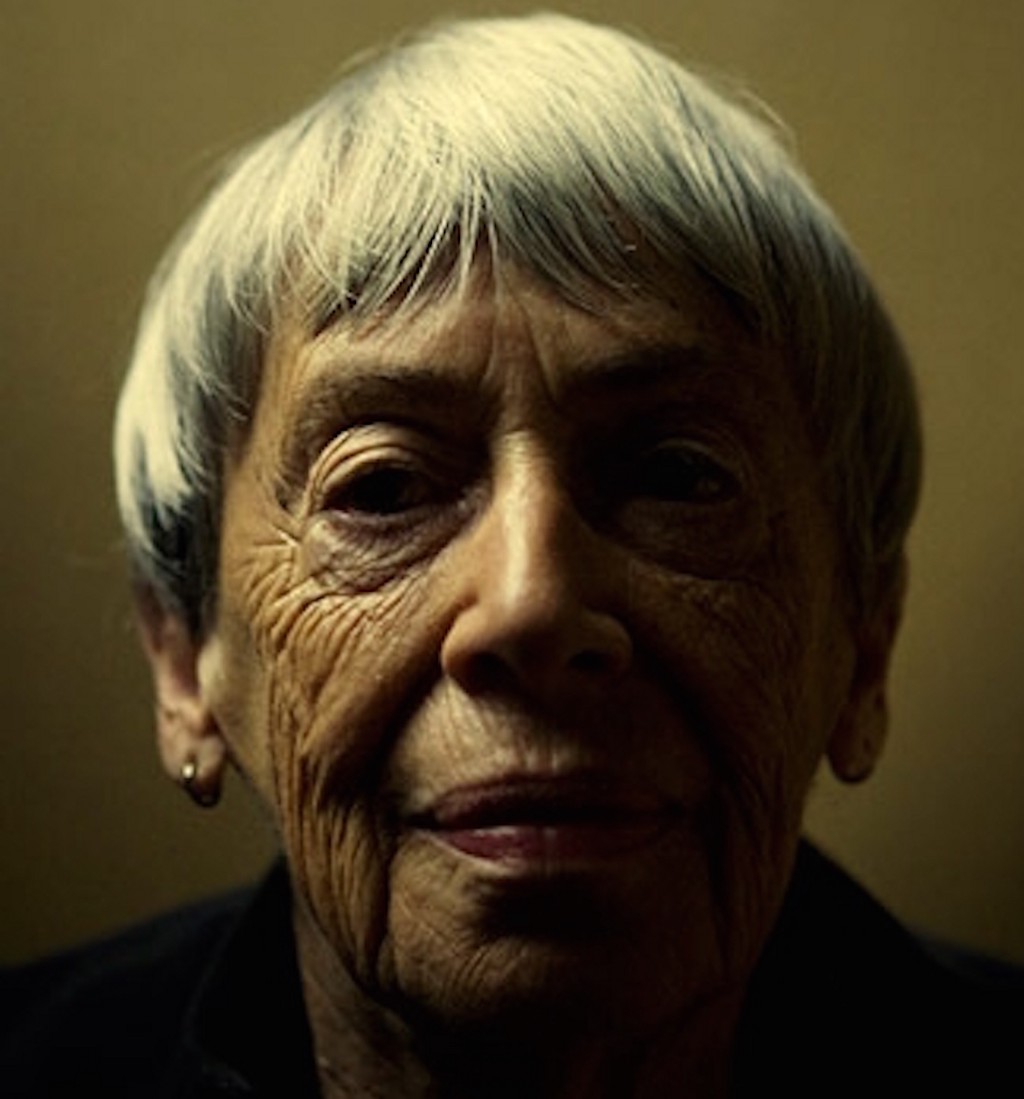
What a Little-Known Ursula K. Le Guin Essay Taught Me About Being a Woman

I discovered Ursula K. Le Guin quite by accident — on the library shelf, but not in the science fiction section. I was browsing the literary journals, which were stood up like little jewels in the entranceway of the library at Willamette University in Salem, Oregon.

I had been sent to that section of the library by my speech coach — sent to find a suitably thought-provoking and emotionally stimulating passage, with less than 50 percent dialogue, that I could read aloud without rushing in less than 8 minutes.

My task was to find a piece suitable for entering in competition in the Prose category, which demands of its high school competitors that they be “a master storyteller, drawing the audience in with a well-cut and interesting piece, energy and variety in vocal inflection, and the ability to engross the listener in what is being read.”

I was not sure at all that I was any such thing, and I had no idea what I wanted to say or do. But I had propelled my 16-year-old self into this moment nonetheless, and was now spending a week of my summer vacation among the stacks of a college library, looking for a piece that I could “connect with in some way on a personal level” and that “flattered” me and my abilities, as the guidelines for Prose suggested.

It was a volume of the short-lived literary book series Left Bank that I ultimately picked up — Vol. 2, circa 1992, featuring Le Guin’s essay “Introducing Myself.” “I am a man,” she begins, and goes on to spin a sardonic fable rich with wordplay, arguing, with dripping sarcasm, that “man” is what she must be — since to be a person, one must, it seems, be a man.

That first sentence shocked me with its daring. I read the whole thing through, my heart beating faster with each new paragraph, and when I got done I walked it straight over to the copy machine and ran off two copies and rushed back to my speech coach as fast as I could go.

“We have been told that there is only one kind of people and they are men,” Le Guin writes. “And I think it is very important that we all believe that. It certainly is important to the men.”

‘We have been told that there is only one kind of people and they are men,’ Le Guin writes.

Le Guin skewers all things stereotypically masculine with dismissive wit (“I can’t write my name with pee in the snow”) while also hinting at the toxicity of masculinity (“I can’t shoot my wife and children and some neighbors and then myself”) in her litany of why she is not a “first-rate man,” but rather “a very poor imitation or substitute man.”

She touches on issues of body image when she laments that she looks “like a hen in a pillowcase” when trying to wear “those trendy army surplus clothes with ammunition pockets from the Banana Republic Company catalogues,” and manages to capture self-deprecation and mockery in the same breath.

Her writing is at once abundant, rich with metaphors, jokes, plays on words and knowing cross-references, while also being singularly focused, every word pushing her narrative forward with stunningly well-crafted focus.

All of this struck my 16-year-old self on two equally resonant wavelengths: First, there was an intake of breath at the thought that this was what writing could be: this sort of knowing, joking wit that was also deeply confessional and intimate. And second, a deeper realization that this is what being a woman could be: someone at once wise and self-questioning, seeking understanding and answers, unfeminine but not masculine, unflinchingly intellectual.

In her 2004 anthology of non-fiction writing “The Wave in the Mind,” Le Guin introduces “Introducing Myself” simply as “a performance piece, performed a couple of times.” I can only imagine what it would have been like to see her perform it. I know that when I stood up in front of the judges in my high school speech competitions, opened my little black book, and read those opening words, “I am a man,” I felt wise, powerful and a little bit wicked.

My speech coach loved the piece, and I loved it, deeply. Together we paired it with passages from “Fascinating Womanhood,” a 1960s self-help book for women that seemed to capture everything retrograde about midcentury attitudes toward women, sex, marriage and domestic life. In performances, I switched between my two “characters” — hunched over, smirking, one eyebrow raised as I growled out the opening lines; then upright, prim, bright-eyed as I doled out saccharine advice on being a happy housewife.

I didn’t become a champion of the Oregon high school forensics circuit with my piece, but I did win one of the only trophies of my entire life with it. The judges praised me for originality, for a piece that was provocative and had a point of view. I was just happy to be spending so much time with Le Guin, to have the chance to embody something of that wise, powerful and slightly wicked spirit.

Le Guin’s words have echoed in my mind throughout the decades since I first read this deeply felt and even more deeply thought gem of an essay. On first reading, what struck me was Le Guin’s sense of resignation, of confession, of having worked for too long in service of an impossible goal — to live in a man’s world.

On first reading, what struck me was Le Guin’s sense of having worked for too long in service of an impossible goal — to live in a man’s world.

“I look back on all my strenuous effort because I really did try, I tried hard to be man, to be a good man, and I see how I failed at that,” she writes.

I am not sure how I knew, even at 16, that I would become a woman who, like Le Guin, owns three bras and feels that she is shaped wrong and is not as tough as she ought to be. A woman who sheepishly tweaks out the nine or 10 hairs that grow on her chin. A woman who can’t seem to find the right foothold among the available options of masculine and feminine — who feels, as Le Guin wrote, that “if I had any real self-respect, wouldn’t I at least have had a facelift or some liposuction?”

As I have aged, my relationship to the feminine has remained complex. I think of Le Guin often when I look in the mirror at my messy brows or contemplate my unshaven legs. I feel vaguely urged to do something about these less-than-feminine aspects of myself. But, like Le Guin, I do not. It does not seem to be part of who I am now, any more than it was when I was 16, and shocked the freshman in my art class, who would run up, giggling, in packs, and ask, “Can we see your hairy legs?”

I fear that I may have taken too seriously Le Guin’s cynical suggestion of equating femininity with non-personhood and have, like her, ended up on a sort of third road of being some sort of “poor imitation or substitute man.”

But as my 40th birthday approaches, I have found myself coming back, not to Le Guin’s electric opening line, but to her wry ending salvo, in which she threatens, at age 60, to “give the whole thing up” and “start pretending to be an old woman.”

“I am not sure that anybody has invented old women yet,” she writes, “but it might be worth trying.”

I think of Le Guin often when I look in the mirror at my messy brows or contemplate my unshaven legs.

Several years ago my mother, who is older now than Le Guin was at the time she wrote “Introducing Myself,” confided in me about aging.

“The great thing,” she said, “is that I just don’t have to give a fuck anymore.”

Like my mother, and Le Guin, I am learning how to be what I am — still learning from Le Guin these many years later. Learning how to not give a fuck anymore. Learning to give the whole thing up and invent something new. May we all face our own futures with a fraction of Ursula K. Le Guin’s wit, insight and acuity. She has left us so many gifts to help us find our way.

The Cult Writer You Haven’t Heard Of — Yet

M y first exposure to the works of Ann Quin, if memory serves, came via a list of recommendations by Blake Butler of notable books published by Dalkey Archive Press. This led me to Quin’s 1972 Tripticks, a formally bold and deeply unsettling work–the sort of experimental fiction that reconfigures how you process text, feels ahead of its time. Tripticks was the fourth and final novel that Quin published in her lifetime; she died the following year. In the ensuing years, Quin’s work has gained a cult following for its innovation, its tactile sense of place, and its unique ability to capture a feeling of desperate unease.

Purchase the collection.

The new collection The Unmapped Country brings together Quin’s shorter works, from stories and some autobiographical pieces to writings that were unfinished at the time of her death. Jennifer Hodgson edited the book and contributed its introduction. Over email, we discussed the process of assembling The Unmapped Country, how the collection speaks to her legacy, and the works and movements that helped shape Quin’s own work.

Tobias Carroll: We’ll start with the basics: where did you first encounter Ann Quin’s writings? Did you find yourself drawn to them from the first read, or did they grow on you more slowly?

Jennifer Hodgson: I first encountered Quin in that way books have of opening into one another. As a student, I was very much taken with those weird, wonky writers of the mid-twentieth century who don’t quite fit anywhere. Elizabeth Bowen led to Muriel Spark who led to Johnson and then I alighted on Quin. I was in a mildew-y, Patrick Hamilton-y sort of phase at the time, so I guess I was ripe for a claggy book like Berg. For as long as I’d been interested in books and in writing, I’d also frequently felt that this culture, this thing called “The Novel” wasn’t really for me, that I was a kind of interloper in a tradition where I didn’t really belong. Discovering Quin and her contemporaries, like Johnson, Brigid Brophy, Christine Brooke Rose, and the rest, was like opening up a door. It felt galvanizing to me as a reader (and as a human) in that sense of, oh, I didn’t realize you were allowed to do that.

The Suffocation of a Bad Affair

TC: Contemporary writers who have championed Quin’s work include Juliet Jacques, Lee Rourke, Blake Butler, Tom McCarthy, and Deborah Levy—a wide-ranging group, though I’d argue all of them fall under the “experimental” heading. Have you noticed any common elements among the writers who have enjoyed her writings?

JH: Perhaps given that I’ve been immersed in Quin’s writing of late, it’s not surprising that I hear her echoes everywhere, but I do — amongst the writers you mention and also in the work of people like Claire-Louise Bennett, Eimear McBride, and others. With Quin it’s easy to see a kinship, but quite difficult to pinpoint a legacy. There are writers who I’m convinced must have read Quin, but you find they’re not aware of her and then they’ll read her voraciously with this incredible sense of recognition, like an influence that’s always been there without them realizing.

I’m going to leave aside debates about the appropriateness of the term “experimental”—they often feel a bit like a Sealed Knot re-enactment. Nevertheless, what the writers you mention here share with Quin, and what they have in common, is a curiosity — perhaps even a conviction — about the possibilities of fictional narrative (whatever that is, they generally insist on asking), coupled with a sense of dissatisfaction about the narrower interests of mainstream literary culture. They also share a declared interest in fiction not for its capacity to reflect and to make sense of experience, but to render the expressive distortion of reality. By that I mean how the world gets filtered through subjectivity and is then somehow presented, all at once, as a completely imaginary yet substantive universe.

TC: Is there one particular work that you’ve found to be the best starting point for someone looking to read Quin’s bibliography? Would you say that The Unmapped Country could fill this role?

JH: It’s a tricky one, this, given that her now five-book body of work covers such a lot of ground. Take your pick: Berg tends to be the “gateway” Quin, the one people chance across first; then there’s her nouveau roman-esque mid-period, with Three; Passages is a dark take on all those sixties myths about “finding yourself”; and finally there’s Tripticks, her bizarre Burroughsian road novel. For my money, I think Quin really suits the closer, headier confines of the short story. If you want to read her at her filthiest, at her strangest, then start here — but then I would say that.

What these writers share with Quin is a curiosity — perhaps even a conviction — about the possibilities of fictional narrative coupled with a sense of dissatisfaction about the narrower interests of mainstream literary culture.

TC: Why do you think Quin’s work isn’t as widely read as some of the writers to whom her work has been compared?

JH: Up to now, Quin’s always been a not-quite-cult writer. And she’s not alone in that. Her loosely-agglomerated peer group of innovative writers from the sixties — people like Brooke Rose, Johnson, Brophy, and Burns — have also remained out on a limb for many years, although, Johnson enjoyed a rehabilitation of his own some years back. And I think the reasons for that probably exceed the space we have for this interview, but I’ll give it a go. I think all these writers, to a greater or lesser extent, have fallen down the back of the sofa of literary history. During their time they tended to be dismissed as superannuated modernists, or as the victims of some sort of ghastly French flu. And then subsequently, their achievements have often been overshadowed by an idea we have of that period in British literature as mired in old-fashioned realism. If pressed, I’d say that Quin’s moment has come now (at long last!) thanks to the recognition of readers’ appetites for new and interesting forms of writing — an appetite which has been consistently underestimated by a jittery and overly-cautious book industry.

TC: What was the process of assembling The Unmapped Country like?

JH: Quin isn’t (yet?) judged important enough to have an archive of her own, so since her death in 1973, her papers have remained scattered across various archives, private collections, cupboards, drawers, and boxes in the loft. I spent the last seven years or so collecting them back together again. And it’s a pretty strange and uncomfortable thing to do, to go riffling around in the dusty papers of someone else’s past. All the paper trails, all the needling emails to octogenarian ex-boyfriends asking if they maybe, just maybe, have a story or two that’s been sitting in a box in their back bedrooms these past fifty years. But in the end it was the kind of wild goose chase I couldn’t resist.

All the paper trails, all the needling emails to octogenarian ex-boyfriends asking if they maybe, just maybe, have a story or two that’s been sitting in a box.

TC: In “Leaving School — XI,” Quin makes a passing allusion to joining “the Young Conservatives’ Association.” I don’t find a lot of overtly political aspects to her writing — do you know if this reference points to something greater in her work, or was evidence of an ideological period that she left behind?

JH: Are you asking whether Quin was a Tory [a member or supporter of the British Conservative party]? I’d say that what this reference really points to is the paucity of social life for teenagers in England in the fifties! You’re right, I think, to identify that Quin isn’t as explicitly politically engaged as some of her contemporaries and peers like, say, Doris Lessing or Alan Burns or Johnson — and she wasn’t an activist in the sense that someone like Brigid Brophy was. In one of the few lengthy interviews she gave during her lifetime (with Nell Dunn, for her 1965 book Talking to Women), she claimed not to be “political,” that class “never bothered [her]” and that it was “overdone,” that she was “sick to death” of it being the focus of the social realist novels of the fifties. But I think she’s being a little disingenuous, or perhaps provocative, here. The political aspect of Quin’s writing appears in more implicit, diffuse ways, very often as an almost hidden but very insistent undertow to the close, hothouse world of her characters.

To a greater or lesser extent, all her writing centers on a dissatisfaction with quotidian life, coupled with the compulsion to dig around underneath and find out what’s really going on underneath the furniture and the flummery. She’s also concerned with questions of human freedom, possibility, and alternative means of human connectedness. I guess in that sense she’s absolutely a writer of the sixties. But what’s always interested me about Quin is that, for her, liberation is never a benign thing. We have these characters going on wild quests, or attempting to impose their will on the world, or get out of their own minds through self-exile, or sex, or drugs, but they only ever arrive at disillusion or disappointment or frustration — or worse, out-and-out brutality.

Her writing centres on a dissatisfaction with quotidian life, and the compulsion to dig around underneath, find out what’s going on underneath the furniture.

TC: Several of the stories found in The Unmapped Country were first published in the journal Ambit, which also published early work from J.G. Ballard. Did you get the sense that Ambit had any influence on Quin’s development as a writer?

JH: Certainly, in the latter part of her writing life she began experimenting in earnest with the visual-textual style that had found a home at Ambit, particularly seen in Eduardo Paolozzi’s work for the magazine. One reviewer not-too-kindly called it “Ambit-dextrous sub-Burrovian cut-uppery.” But beyond this particular magazine, other British writers were making forays into the similar styles — I’m thinking in particular of those especially out-there, middle-period Brooke Rose novels (Out, Such, Between and Thru), Brophy’s In Transit, Burn’s Babel and Dreamerika!, as well as, of course, The Atrocity Exhibition. And something that hasn’t been much talked in relation to Quin’s work is the influence of British Pop art. She’d been a secretary at the Royal College of Art during the early sixties, where she had come into contact with the scene incubating there amongst artists like David Hockney, Peter Blake, Pauline Boty, Patrick Caulfield, and others. Some of her earliest writings are texts ghost-written on behalf of a student at the RCA, the New Zealand artist, Billy Apple. I think Quin, her peers, British pop art, and Ambit were part of the same moment of cross pollination, all drawing upon a lurid fascination with “Amerika” and the ideas about language that were emanating from French critical theory to create this new, texty, pulp-y, modernist-inflected mode.

The Medieval Roots of Bro Culture

England, 1472: Edmond Paston writes a letter to his older brother John. Edmond, a twenty-something younger son of a prominent gentry family living unhappily at home, complains that their widowed mother has unfairly fired his favorite servant Gregory. He relates the shocking story behind Gregory’s firing:

It happened by chance that he had a knave’s lust, in plain terms to fuck a whore, and he did so in the rabbit-warren-yard. By chance he was spied by two plowmen of my mother’s, who were as delighted as he was by the situation, and they asked him if they could have a share in it, and as company required, he did not say no, so that the plowmen had her all night in their stable and Gregory was completely rid of her and, as he swears, did not have sex with her inside my mother’s house. Notwithstanding my mother thinks that he is the originator of the incident; as a result, there is no option but for him to leave.

Edmond spares no detail in narrating his employee’s actions to his brother. His point in telling this sordid tale is to emphasize the unfairness of Gregory’s firing: Gregory swears he did not have sex with anyone under Margaret Paston’s roof — he had sex with her outdoors in the rabbit-warren-yard, not indoors like the plowmen — but Margaret, ever unreasonable and overbearing, blames him anyway for instigating the whole thing. Edmond begs his brother to hire Gregory, whom he insists is “as true as any man alive.”

It seems a bit odd that Edmond would tell this story as justification for why John should hire Gregory: He’s the best servant ever! Yeah, sometimes he gets carried away with lust and fucks whores and maybe facilitated something that sounds like it might have been a gang rape, but he only commits his sexual indiscretions outdoors! But despite the 546-year difference, there’s nothing about Edmond’s letter—excusing sexual misconduct, treating women as tradable commodities without agency, valuing a man’s reputation more than the harm he’s caused—that should feel unfamiliar to us in the present day.

This tale shared between brothers sheds light on the long history of our current views of consent, the social power of the term “whore,” and the role of exchanging obscene material — photos, videos, stories — in shaping bonds among men. By casting Gregory’s crime as merely “fuck[ing] a whore” (he would have written the Middle English “quene”), Edmond implies that the woman has consented to everything. It is not clear whether she is a professional sex worker or if Edmond simply uses the term to remove blame from his servant, as “quene” could designate a prostitute, a lower-status woman, a woman with a bad reputation, or any woman you wanted to insult. Edmond’s choice to call the woman a “quene” removes both the possibility for her to say no, and the necessity of her saying yes. By calling her a “quene,” Edmond ensures that the exchange between Gregory and the plowmen can always potentially be read as three men haggling over the price of a hire for the night. His word choice erases the possibility of sexual violence, shifts responsibility away from Gregory, and allows the woman to be blamed for what happens to her.

It wasn’t me, bro, he seems to say.

Edmond’s depiction of consent here illustrates how the label of “whore” operates. He claims that the plowmen, aroused by the sight of their colleague having sex, ask Gregory if they can go next. They do not ask the woman. Her consent is bypassed altogether, as the label of “quene” nullifies her right to say no. We do not know if she consented or objected, and Edmond makes it clear that it would not have mattered either way. Furthermore, Edmond claims that Gregory is unable to refuse his co-workers’ request by framing it as a “require[ment]” of “company,” part of the code of relations among a close-knit community of men. His depiction of Gregory granting sexual access to his partner because his bond with his co-workers “require[s]” him to do so both minimizes Gregory’s actions and excuses his choice to hand the woman over to the plowmen for the rest of the night. It wasn’t me, bro, he seems to say.

This story has chilling contemporary parallels, illustrating how little has changed when it comes to consent, slut-shaming, and obscene sexual storytelling among groups of men. Since March 2016, nine federal Title IX lawsuits have been filed against Baylor University, alleging that the university mishandled scores of rapes committed by members of its football team. One of these lawsuits, filed in May 2017 by a former member of Baylor’s volleyball team, contains disturbing links to Edmond Paston’s tale of the three servants and the “quene.” In the suit, the woman alleges that that the school’s football players regularly participated in gang rapes of freshman women, including her, as a “team bonding” activity. She recounts how she was drugged and raped by as few as four and as many as eight Baylor football players at an off-campus party in February of her freshman year. She “remembers lying on her back, unable to move and staring at glow-in-the-dark stars on the ceiling as the football players took turns raping her.” She claims that the men later bragged of “running train” on her; they minimized her rape by referring to it as “a little bit of playtime” and “fooling around”; and they blamed her for the assault, dismissing her as “easy.”

The plaintiff in the Baylor case alleges that the football players circulated photos and videos of themselves assaulting semi-conscious women after drugging them. While their use of technology to re-perpetrate sexual assault is new, their sharing of women’s exploitation for the purposes of male bonding is decidedly medieval. In this alleged trafficking of women’s trauma so that all the team’s members can participate collectively in their violation and relive the assault together, the Baylor players echo Edmond Paston’s choice to write down his employees’ sexual deeds in lurid detail to convince his brother John to hire Gregory, using the tale to illustrate the unfairness of Gregory’s firing by their overbearing buzzkill of a mother. The circulation of the story from servant to master, and then from younger brother to elder brother, illustrates how sexual storytelling can serve as a means of bonding and entertainment among men, whether it be in a 15th-century wax-sealed letter or a 21st-century group text.

Sexual storytelling can serve as a means of bonding and entertainment among men, whether in the 15th century or the 21st.

By painting the women they exploit as “easy,” as “whores,” both medieval and modern men are able to recast rape as consensual and to avoid all blame by using the woman’s alleged previous sexual activity as an excuse for her violation. And by minimizing their actions — as “playtime,” as an attack of “lust” — they refuse to acknowledge any harm they cause.

The dynamics among the Paston employees as well as the Baylor football teammates demonstrate the workings of sexual pressure and violence among men: Gregory is unable to “say no” to his co-workers due to the requirements of shared “company,” just as the Baylor football team’s freshman players were allegedly hazed by their older teammates, who required them to bring female guests with them to off-campus team parties so that the older teammates could drug and rape them. In each case, men are “required” by the code of their all-male community — whether a group of employees or teammates — to become complicit in the assault and exploitation of their female partners and friends. Women’s consent is viewed as a non-issue, as belonging instead to the man who turns her over to the wolves and claims he has no choice.

My research focuses on sexual violence in the Middle Ages and today. I read a lot of awful things. And I am always struck by how similar those awful things are in spite of the differences in time, in space, in technology. Sometimes the details stick in my head like splinters: the glow-in-the-dark ceiling stars in the Baylor lawsuit, Gregory’s insistence that he was “completely rid of” the woman after he handed her off to his co-workers.

I cannot stop thinking about the Baylor freshman staring up at an artificial starry sky, a false heaven; the “quene” trapped in a stable all night by two plowmen with nowhere to go, surrounded by livestock and animal shit. And I think about how much the two women might share in spite of the five and a half centuries separating them: that feeling when your heart goes numb with fear, the sickening realization that your consent does not matter and never did, the glint in their eyes and the smirk on their faces once they’ve decided among themselves what they are going to do to you. As we grapple with issues of consent and power in our own culture, medieval texts like the Paston letters can help us see the hideous taproot of the problem, reaching down deep and straight and sure through the centuries. You cannot eradicate a plant unless you destroy at least part of its taproot. I imagine pulling it up whole and marveling at how at how very long it is; how ugly, how gnarled, how covered in sticky earth.

Margaret Atwood’s Books Taught Me to Listen to Women—Now She Needs to Learn the Same Thing

Writers are often great observers, but we aren’t always good listeners. Our stories share knowledge and create empathy in the reader, but the dark side of our work is the ego it sometimes takes to sustain it. Writing, especially something as long and thankless as an entire book, requires a belief in the importance of one’s own voice, even in the face of skeptics and critics. We rely on our words to crawl into hearts and change minds. In fact, though, the most radical thing those with powerful voices can do in times of conflict is listen.

One author who taught me to listen to women’s stories in particular was Margaret Atwood, perhaps the best-known writer in Canadian literature. Her books taught me that women’s stories were just as important as men’s. Her protagonists survived bullying in Cat’s Eye, monstrous political oppression in the Handmaid’s Tale, and a kind of armageddon in the Maddaddam trilogy. Yet in the past few years, Atwood has shown that her ability to tell compelling stories about fictional women far outstrips her ability to listen to real ones.

Atwood has shown that her ability to tell compelling stories about fictional women far outstrips her ability to listen to real ones.

My split with Atwood began with her support of Steven Galloway, the former head of the creative writing department at the University of British Columbia where I earned my MFA. In 2015, Galloway had been suspended after a number of students filed formal complaints that included sexual harassment and inappropriate sexual behavior. In newspapers and online, a number of famous writers spoke out on Galloway’s behalf without ever bothering to ask whether the complaints might be true. Their outcry culminated in #UBCAccountable, an open letter calling for due process for Galloway despite that he had a union and labor laws to protect him and no criminal charges have ever been filed. Atwood signed that letter and wrote about why in the Walrus, a national magazine. Then she used her considerable Twitter presence to bite back at anyone who disagreed with her.

In a recent op-ed in the Globe and Mail, Atwood once again called out the women who criticized her, positioning herself as a rational being standing up for justice against a backlash of orthodox feminist zealots. She went on to take Galloway’s innocence as a given and argue that his firing was an injustice on the same level as that against Steven Truscott, a man who was arrested at 14 years old and spent ten years in prison for a murder he didn’t commit. Her version of the Galloway narrative has been widely debunked, but that didn’t temper her certainty or the strength of her voice. She ended by calling for unity, which is admirable, but asked that readers unify under her version of the narrative in support of her reputation as a feminist rather than each other. What she didn’t seem to realize was that the criticism was never about her right to express her opinion. It was about the moral responsibility we all have to choose when to speak and when to listen.

Criticism of Atwood was never about her right to express her opinion. It was about the moral responsibility we all have to choose when to speak and when to listen.

It’s hard to explain how disappointing all this has been. Before it started, I often defended Atwood against criticism about her prickly public persona. Being a woman writer in Canadian literature, I argued, meant developing a hard shell. I remember coming across her poem “You Fit Into Me” in a CanLit textbook in undergrad and laughing so hard I cried. “You fit into me/like a hook into an eye,” she wrote, “a fish hook/an open eye.” I loved how unsentimental the image was, how in a few lines it demolished love poetry as a kind of violence.

Though she came from a background of far more privilege than I did, Atwood’s uncompromising refusal to soften to the expectations of a woman writer was inspiring. From her and those who came slightly before — Alice Munro, Margaret Laurence — I learned that women of my mother’s and grandmother’s generations lived under a never-ending campaign aimed at breaking down their self-trust. They often worked in isolation and in competition with each other, forced to advocate for themselves against a system that would rather they disappear. Having Atwood’s texts gave me a foundation of strength. Foolishly, I thought she would appreciate seeing the same uncompromising commitment to change in the generations that followed her. I thought she would be willing to listen to reason.

Atwood is not the only Canadian author to ignore the importance of listening. Over the past few years, some of our most venerated authors have produced a great number of words about Galloway’s firing, writing as if those who had filed official complaints against him were characters in a novel. They used their considerable rhetorical skills and personal fame in support of a man accused of hurting his students without considering the damage he might have done to those students. They rode roughshod over one woman in particular, the main complainant in the case, who doesn’t even get the dignity of a name or an opportunity to defend herself publicly because of labor law that protects the accused.

Some signers of the letter have revised their statements, said they’re interested in justice for all, yet the fact remains that not one of those authors thought to contact the complainants and ask what they might need for support before signing. As they wrote press releases and personal statements demanding transparency and justice, never once did they think to contact the main complainant, through her lawyer or through other complainants who’ve named themselves in newspaper articles. The signers said they felt bullied, but it never occurred to them that they might be bullies, too, ones with the ability to control the narrative on a much grander scale than their detractors. Even the recent CanLit Accountable open letter from former Concordia University graduate Mike Spry, which highlights his complicity in a culture of toxic masculinity and abuse in their creative writing program, was written and posted without input from the victims. Without consultation, even well-meaning advocacy feels a lot like aggression.

Without consultation, even well-meaning advocacy feels a lot like aggression.

It’s not that I’m angry with Atwood and those other authors I once admired. More than anything, I’m sad for them. I see them as people who, out of fear or carelessness, have hardened themselves against the voices of those who have less power. They have robbed themselves of a great deal of wonder by drawing a line between who is worth listening to and who isn’t. In her book Pilgrim at Tinker Creek, Annie Dillard writes about what happens when we put aside our assumptions about what we deem normal and construct an “artificial obvious” that allows us to see new and extraordinary things. Dillard watches the air, the grass, the trees with patience and openness, and the world rewards her with incredible beauty. I believe this principle can be applied to listening, too.

Really listening requires full body presence. It requires you to soften and let go of the fear, the urge to argue, and the instinct to control the narrative. It takes a comfort with silence and a willingness to accept that your turn to talk may never come, that what’s happening might not be about you at all. This doesn’t mean internalizing every call-out on social media, but rather acknowledging how your voice carries and reaching out to those who have less power with compassion, respect, and openness. It requires you see them first as individual human beings with names, lives, and experiences you might not have imagined. We’ve assumed for too long that the onus for reaching out is on the less powerful. We must work to upend that imbalance and make space for women of color, Indigenous women, trans women, and others who have been left out of feminism in the past.

Over the past few years, I’ve been working on tempering my voice to make more space for listening. I’ve seen the beauty this openness reveals first-hand in the students I’ve worked with who come from different linguistic backgrounds and struggle with academic English. A few have told me about teachers who have dismissed them out of hand, assumed they weren’t worth listening to, or spoken over them. I’ve never met a student who didn’t have something worth saying inside them. Some just take more time than others.

Indeed, we live in a time when there are endless opportunities to learn about the stories of others in their own words. Just this weekend at the first anniversary of the Women’s March, I stood with a thousand other women and allies on a windy shelf overlooking Vancouver’s spectacular North Shore Mountains and heard Musqueam activist Rhiannon Bennett speak about the way the issues addressed by the #metoo movement disproportionately affect Indigenous women. I heard Hailey Heartless argue with wit and clarity for the life-and-death necessity of including sex workers like herself in feminist discussions. I wiped away tears as Noor Fadel read her poem “I Forgive You,” addressed to the man who attacked her on a crowded SkyTrain for wearing a hijab. As woman after woman told stories of violence, familiar and unfamiliar, I felt awed and grateful, even when the things they said called attention to the many privileges I hold as a white cis woman who was born in Canada. Some have condemned this multiplicity of voices as a descent into disorder and chaos. I see it as an opportunity to move toward an equitable society.

The greatest block to really listening is not the noise of the world, but that voice inside that protects us, centers us, rattles with outrage or disbelief. I still respect the ways Atwood made space for women’s narratives in literature against tremendous pressure, but I can’t help but feel like all those years of protecting herself are what’s holding her back from hearing the voices of the women around her now, making it difficult for her to see the beauty in the moment. If we’re going to find a way forward, we’re all going to have to learn to listen.

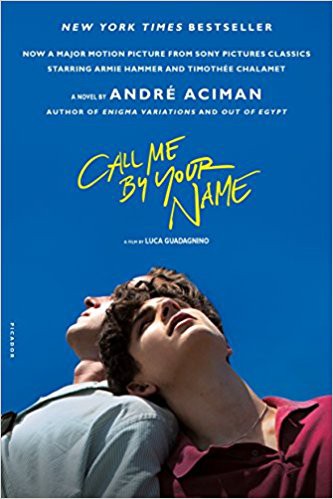
‘Call Me By Your Name‘ Finally Shows the Kind of Bisexual Narrative I Want to See

I ’ve gotten used to the fact that I can’t talk about women with my straight female friends the way I can talk about men. When I talk about men, my friends hum with encouragement, bubble with excitement over the possibility of what could happen. They give their seal of approval (“he works for Goldman? Nice”) or disapproval (“his mattress is on the floor!? Honey…”), eager to share their own dating triumphs or horrors. In turn, I’m genuinely eager to hear them, but they can’t relate. It’s a one-sided conversation, almost like a diary entry.

Years ago I began to retreat to literature and film to find similar narratives to mine. It was easy to find such on the fringe, in indie films that premiere at small festivals and novels deep within my college’s library. When it came to movies I can see in my hometown movie theater, the ones that are buzzed about for months by everyone from critics to subway commuters, I often came up short. The characters were predominantly straight, rarely gay, never bisexual. I never saw a mainstream film that reflected my experience until Call Me By Your Name.

The characters were predominantly straight, rarely gay, never bisexual. I never saw a mainstream film that reflected my experience until ‘Call Me By Your Name.’

Every year, one LGBTQ movie seems to generate enough buzz to make its way into the mainstream. The pinnacle of this was Moonlight, which not only made back its budget over ten-fold, but it took home the Oscar for Best Picture. Last year that singular movie was Call Me By Your Name, based on the 2007 novel by André Aciman. Watching the trailer and reading early reviews about the film from the Sundance Film Festival compelled me to get my hands on the source material before seeing the film.

Elio, an Italian teenager, is the narrator of the story. During one summer in the 1980s, a Columbia professor named Oliver stays with him and his family. Part 1 of the novel is an incredible build-up. Elio and Oliver meet each other, and Elio is instantly enamored (as is Oliver with him, though the reader only sees Elio’s side). At times, Elio is so peeved he has this unobtainable crush that he talks about killing Oliver, then himself. There’s a line in the beginning of Part 2, though, that struck me more than anything:

Did I want to be like him? Did I want to be him? Or did I just want to have him?

I froze. I reread the line 10 times. This was the first time I’ve had my thoughts read back to me. Elio had just been waxing poetic about Oliver’s muscular shoulders while being incensed that he was apparently sleeping with a multitude of women around town.

For the first time, I found my experience validated by the dance I was seeing on screen. The way I’m attracted to women is inherently different than my attraction to men; it’s difficult to process alone, in my head, without anyone to talk to. The line between attraction and admiration to women is one I walk almost daily. It’s sharing a glance with a fellow commuter on the 6 train. It’s an Instagram photo suggested to me on the explore page, a woman draped in natural light in her bedroom. Do I want to be with this woman, or do I want to just be her? This ambivalence is something I experience often, but I don’t share it with anyone — and here it was repeated directly to me in this book.

This ambivalence is something I experience often, but I don’t share it with anyone — and here it was repeated directly to me in this book.

Elio and Oliver do sleep together. All the while, Elio also sleeps with a woman named Marzia. At one point, he balances sexual relationships with both of them:

Barely half an hour ago I was asking Oliver to fuck me and now here I was about to make love to Marzia, and yet neither had anything to do with the other except through Elio, who happened to be one and the same person.

This occurs several times in the novel, where Elio compares Oliver and Marzia. Elio kisses Oliver the way he kisses Marzia; the way Oliver smells like the sea reminds him of the way Marzia smelled.

Elio and Marzia’s relationship eventually fizzles away, but not before numerous sexual encounters and dates. They never have a proper goodbye. Rather, Elio rushes to Rome to be with Oliver.

It’s clear that Elio was in love with Oliver and not with Marzia. This isn’t because Marzia wasn’t a man, though. It’s because she wasn’t Oliver.

It’s clear that Elio was in love with Oliver and not with Marzia. This isn’t because Marzia wasn’t a man, though. It’s because she wasn’t Oliver.

Stories that are made into mainstream LGBTQ films tend to have similar narratives. The protagonist has experienced only hetero relationships, along with a void that’s always been there. They feel disdain: with themselves for feeling this way or with their partner for not filling that void.

Such is the case with Brokeback Mountain (the mainstream queer movie of 2005) and with The Price of Salt, on which the film Carol (the mainstream queer movie of 2015) is based. In Brokeback, Ennis and Jack are drawn together despite impossible circumstances, as are Carol and Therese in Carol.

The spouses in those stories are antagonists. Who can forget when Michelle William’s Alma spits out, “Jack nasty!” in Brokeback or when Kyle Chandler’s Harge demands custody for his and Carol’s child.

‘Call Me By Your Name’ Made Me Realize What the Closet Stole From Me

But Marzia isn’t an antagonist in Call Me By Your Name. If anything, she is a distraction Elio willingly takes when he thinks he and Oliver won’t ever go beyond acquaintanceship. Even after the two men consummate their relationship, Elio keeps up his fling with Marzia. While Elio is never in love with Marzia, he is genuinely attracted to her physically and sexually. If anything, I’d argue this shows how layered Elio’s sexuality is. Is he homo-romantic and bisexual, or bi-romantic as well? Regardless of the answer, his orientation remains more complex than other LGBTQ characters in mainstream lit and film.

In other narratives, the character then meets their “person,” someone of the same gender. The void is filled, but not for long. Due to societal pressures or deep-seated self-hatred, the two don’t end up together. One (or both) may die, and they’re ultimately miserable if they live.

Brokeback Mountain is a clear example of this. Jack’s line, “I wish I knew how to quit you” prompts Ennis to insist he’s “like this” because of him. Their sexualities are afflictions, mars to their characters that they want to be without. Jack eventually dies, and Ennis cries into his blood-soaked shirt.

Brokeback is the first “gay movie” I remember seeing. I was maybe 11 or 12, and the concept of sex scenes, let alone gay sex scenes, was still taboo. I was alone and told no one that I watched it; I don’t know if I meant it to be a secret, but it remained one regardless.

In my rewatchings of Brokeback (and readings of the short story on which it’s based), I feel the same disconnect I did at that age. I was watching people that were far away from me, both in location and mindset. They were gay and ashamed. They were trapped in their marriages yet repulsed by the only person who gave them joy, another man. I couldn’t relate.

In my rewatchings of Brokeback Mountain, I feel the same disconnect I did the first time. I was watching people that were far away from me, both in location and mindset. They were gay and ashamed. I couldn’t relate.

My first experience watching Carol was much different than that of Brokeback. I saw it where it premiered to critical and audience acclaim, the 2015 Cannes Film Festival. I was almost 21, secure in my queer identity and excited that I would not only see a celebrated film with queer characters, but queer women at that.

Upon viewing, though, I felt that same disconnect. There was a lingering sense of shame, of detestment towards Carol’s family — and Carol’s husband, too, was as vitriolic as the wives in Brokeback.

In The Price of Salt, Carol is stripped of everything because of her sexuality. Not only can she and Therese not be together, but she allows her abusive husband to get what he wants out of fear of being found out. She lives, but what kind of life is she left with? The novel ends on a hopeful note, but it’s ambivalent at best and tragic at worst.

Brokeback Mountain and The Price of Salt are in the gay literature canon, and they should be. I’m not arguing that they aren’t stories that should be told. It’s also very true that queer people throughout history (and in the present day) have experienced the intense pain that these characters have, and this pain should be projected on screens in thousands of theaters across the country.

But there are so many more stories to be told. Stories that I relate to should be projected on those screens, too. I don’t have the comfort of hearing them in my real life, of exchanging stories with friends over wine or Facebook messenger — and I know I’m not alone.

It’s true that queer people throughout history have experienced intense pain, and this pain should be projected on screens. But there are so many more stories to be told.

If anything, what I see about queerness online is concentrated on how people (men) are trying to push a new identity into the lexicon: “mostly straight.” It’s so pervasive, in fact, that there’s a new book all about the term — and more men identify as “mostly straight” than either gay or bisexual.

The concept is one that frustrates me, but doesn’t shock me: men who are not straight but also not gay would rather identify as predominantly straight than queer, or bi, or anything else. It encourages a binary in sexuality: there is either straight or gay. The fact that I live in this gray area is somehow an additional other. Reading headlines like “More Men Than You Think Identify As ‘Mostly Straight’” makes me question myself again, reinforces the loneliness I feel.

I picked up Call Me By Your Name to feel less alone.

This book does retain some of that classic narrative. Elio and Oliver don’t end up together. The unfortunate part of the novel is that they only share that summer — as Ennis and Jack only share Brokeback Mountain — but it didn’t destroy Elio’s life.

When they are together 20 years after their whirlwind relationship, Elio’s flooded with memories. He wants Oliver to call him by his name again. It’s bittersweet, it’s melancholic and the reader can’t help but think “what might have been”…but Elio isn’t crying into Oliver’s shirt.

One fundamental difference is that Elio’s goes went on without Oliver. There’s also no sense of him wanting to “quit” Oliver, of seeing his sexuality as a burden.

Years after the summer they spent together, Elio reflected on his life post-Oliver and “the people whose bed [he’s] shared”:

Fancy this, I might say: at the time I knew Oliver, I still hadn’t met so-and-so. Yet life without so-and-so was simply unthinkable.

People. The people Elio’s shared his bed with. “So-and-so” is genderless. Elio’s coming-of-age that summer was a distinctively queer one, not a gay one.

Of course I don’t know if this was Aciman’s intention. I don’t know if he set out to buck the trends of Brokeback Mountain, Carol, and other mainstream queer stories, which are so often gay stories. Perhaps I’m projecting my own desire to read a character like me onto this novel.

I want a lot of things out of queer media that will take years to obtain, maybe beyond my lifetime. I want more than one LGBTQ film a year to be celebrated by the mainstream media. I want more protagonists like Elio. I want more female protagonists like Elio.

I want more protagonists like Elio. I want more female protagonists like Elio.

Upon seeing Call Me By Your Name, I was delighted that it remained mostly true to the novel. What was left out was the last section, which takes place 20 years after Elio and Oliver’s summer together. The film left out the fact that Elio fell in love with people other than Oliver, but nonetheless kept his encounters with both Oliver and Marzia. And thankfully, Marzia still wasn’t an antagonist.

The film is now part of the group adapted from LGBTQ literature that have reached awards recognition. That group is unfortunately small, but CMBYN nonetheless separates itself in its portrayal of sexuality. But I still want more characters whose sexual fluidity is apparent and explicit like Elio’s. I want them to acknowledge that gender doesn’t determine attraction and that sometimes there’s a gray area between lust and reverence, and that’s okay. I want stories where queer isn’t synonymous with gay. I want “mostly straight” characters to acknowledge they are queer and accept, maybe even love, that about themselves.

The Suffocation of a Bad Affair

“A Double Room”

by Ann Quin

They had arranged to meet at 11 a.m. She arrived at 10:30. I know I must be there early or I won’t go at all. Why am I going. Am I in love. No. One doesn’t question. In love with the situation. Hope of love. Out of boredom. A few days by the sea. A hotel. Room overlooking sand. Gulls. Beach. Breakfast in bed. Meals served by gracious smiling waiters. But the land there is flat. Dreary. Endless. Though the sea. The sea. The whole Front to myself. But what if it rains all the time. It drizzled now as she looked out of the station. Cabs swished by. People rushed through barriers. Escape. Escape with my lover. But he isn’t even that. In her small room. On her single bed they had gone so far. Fully clothed. No we’ll wait it wouldn’t be fair I have to leave you soon. Now the weekend he would prove to be

She clutched her bag. Glanced at the clock. And there he was. His hat cuckoo-perched on an unfinished nest. Dressed in a new suit. Mac just cleaned over his arm. Hullo love. If people stopped to look they would think we were father and daughter on our way to an aunt’s funeral. They don’t look. But think dirty old man. As he takes my arm. My bag.

The train. Carriages with long seats. Without divisions. Seats that make one aware of sagging shoulders. She straightened up. Straightened her skirt. Haven’t seen that dress before love — new? He removed his hat. It nestled beside him. He had washed his hair. Had a bad shave. Without adding the bits of cotton wool. The train shuttled forward. Stopped. Now I could say I’ve changed my mind I can’t go on with it I feel ill. Well how are things sweet? OK had a row with the wife oh some trivial domestic thing anyway makes it easier. Looks as if it might clear up. Brighter in the west — forecast said it would. How long does it take? About two hours love should be there in time for a beer and brunch in a nice pub somewhere. The rest of the carriage empty. Maybe someone will get in at the next stop. Pray that someone gets in. Ininininininin the train chugged on over the bridge. Children threw stones into the river. He had on the green shirt. She remarked once how nice he looked in green. Matches your eyes. Eyes now stared directly at her. Was he thinking of the night. Nights ahead. Nights he had saved up for. Relishing in cosy domestic mornings. Reading the papers together. Quietly sipping tea. Quietly satisfied. Three. Four mornings ahead of them. Already I’m thinking in the third person. Seeing us as another passenger might. But no one got in at the next station. He leaned over and took her hand. She looked out of the window. Looked back at him. Cigarette? Her hand released. She dived into her bag. They lit up. He sank back. She took out a paperback. Looked at the words lumped together. Spaces between paragraphs.

The train stopped. A woman with a child got in. The child held a blue teddy bear nearly bigger than herself. They sat opposite. The woman looked across once. The child more than once. Giggling she approached. Adjusted the bear’s arms. What’s his name then? Tethy. He’s nice isn’t he? She passed the bear over. He took it and balanced it on his knees. The child started crying gimmee back gimmee gimmee Tethy gimmee. Judy come here don’t disturb the gentleman there’s a good girl. He smiled and handed the bear over. It growled. The child giggled and passed it over to me. Do you want to hold Tethy it’s his burfday. She sucked her thumb and watched. Watching. He watched.

The houses crammed together. Back yards where men leaned on spades. Women in doorways dried their hands on aprons. Fields where boys played football. In small parks girls paused over prams. The sky strips of blue. Houses spread out. Fields. Cows. Sheep. Away from civilisation. Away from the little rituals they had been going through. Manipulated. Meetings in pubs. Fish and chips afterwards. Parties where she danced. Flirted. While he looked on. Hurried fumblings. Kisses. In a cab. Long talks by the gas fire. Holding hands in the cinema. Being shown off to his friends at dinner parties. I’m so glad he’s found you he does need someone bless him and you seem so suited his wife as you probably know is

The child bounced the bear on the seat. I looked at the paperback. This autobiographical novel is a brazen confession of rebellion, trespass and blatant sexual exploitation in a world of intellectual despair and moral chaos. She closed the book. He looked up from the newspaper. His shoes highly polished. Crease in trousers nicely creased. Oh so nicely creased. Creases under his eyes. Around his mouth. Anticipation anticipation anti anti antiantiantiantiantianti. The train rattled on. The child talked to the bear. Tethy Tethy my Tethy is a naughty Tethy. The woman put away her knitting. They got out. He leaned over. It’s going to be great just great love I know it will. Pressure on my knee. Only another half hour to go love. A dozen hours to come. No. Perhaps he will want to in the afternoon. An after lunch doze. I closed my eyes. Opened. More fields. More boys kicking in an orgy of mud. Men tinkered with cars. Station after station. Signals. Tunnels. Hedges. Then the sea. Flat grey. Flat washed green land on the left. Well this is it love — here I’ll take your case. The hat flew on.

The wind waited round every corner. Narrow streets. Pinched faces already with the Sunday roast and glazed T.V. look. Girls. Hair in rollers. Queued in the butchers. Wondering if Jim. Fred. Or Harry will be at the dance tonight. Which pub love — what about this one looks OK doesn’t it? Thin widow polished the glasses. Glass topped tables. Round. Dartboard pockmarked. Old men leaned on the bar. Looked up. Dismissed. Side-long glances. Two whiskies please. Thank you. Hungry? Mmmmmm. We’ll have lunch at the hotel. Which hotel? Oh I don’t know we’ll find one — look around take our time I know there are at least three good ones on the Front. Looks like it’s going to clear up Sir. Yes forecast said it would. Thank you Sir good day Miss.

Sky darker grey. Smell of sea. Fish. Tar. Well which hotel love — what about this one it’s a three star one should be OK hope the food’s good. Woman behind the register looked up. Yes we would like a double room preferably facing the sea. How long will you be staying Sir? Oh couple of days. Twin beds or double? Double please. He leaned over. Signed the book. Will you be taking lunch Sir? Yes. Lunch is served from one to two thank you Sir. Small man picked up the luggage. Struggled up three. Four flights of stairs. Doors pale yellow. Dark yellow carpet with pink flowered pattern. A door opened. His hand jingled money in his pocket. Thrust out at the appropriate time. Thank you Sir. Thank you. Door closed. Yellow wallpaper. Yellow bedspread. Pink carpet. Shiny insect-yellow dressing table. Chintz curtains. But it doesn’t even overlook the sea. Ah well love it doesn’t matter does it I mean

Wardrobe door creaked. Hangers. Thin wire hangers clanged. Covered by my two dresses. He’s lying on the bed. Already already. I’m terribly hungry. Sighing he lurched off. Patted the eiderdown into place. My hair into place. Makeup renewed. Eyes averted. His. In the corridor past numerous yellow doors. One opened. An old man lay on the single bed. Looked up at the lamp shade. Sorry I thought it was the bathroom. Deaf. Must be deaf. Or maybe dead. A narrow bathroom. Huge Victorian bath. Pipes gurgled. The sea. A narrow dimension of winter sea from the window if pushed wide enough. Some men dragged in nets. Silently. Children screamed around them. Plug pulled. And it all came tumbling down. Down down down

Into the restaurant. Empty tables. He had chosen one near the window. Terrace. Limp bunting the wind ignored. He passed over the menu. Thin-lipped waitress stood by. Five minutes to two. Dying for her cup of tea. Feet up. Snooze. Is the dover sole nice? Yes Sir. Well we’ll have that I think — sounds good doesn’t it love? The waitress jabbed her notepad. Suppressed a yawn. The sea yawned out. In. Enclosed by glass. A bowl of artificial flowers. His hands spread out on his knees. What names did you sign? Mine of course love for both of us they never ask anyway. Other hotels. Other girls. Other weekends. The waitress tighter-lipped. The fish flat. Dry yellow. Little dishes with lumps of potatoes like ice cream dropped on a pavement. Vegetables as though chewed already. Looks good love doesn’t it? And it is good. It will be good. I can’t survive it all unless it’s going to be good. It’s up to me the whole thing. The next four days. Nights. I can love him. It will be all right once we’ve made it. Everything will be all right then. It’s just this interminable waiting. Gosh you were hungry what about afters love — peach melba? No just coffee. At the corner of his mouth a piece of dover sole. I want to giggle. He folds his napkin. Well what about a little nap? I think I’ll have another coffee you go on up I’ll join you in a minute. The waitress peered round the door again. And again. He yawned. Smiled. Walked across and out.

Will that be all Madam? Yes thank you. Perhaps Madam wouldn’t mind having her coffee in the lounge? And Madam went into the empty lounge. Heavy chintz chairs politely arranged. Politely waited. God why am I here. Well make the best of it. On the stairs the elderly bellboy stood back. Did he wink. Perhaps just a nervous tic. Which door. What number. Oh God. Smile arranged. Held. Hullo love. He pushed the newspaper aside. Red silk dressing gown. Hair on chest. She slid out of her dress. Hung it up. He had already drawn the curtains. Yellow light seeped through, She climbed over him. I love you. Her feet cold she put them between his legs. Adjusted her head. His mouth in her hair. His lips nuzzled. Came further down. She closed her eyes. Turned towards him. Take this off — here. No I’ll do it. She unsnapped her brassiere. Lovely breasts you know that lovely. He held them. Held on to them. Her hand wandered over him. Clutched his hair. Legs. A little lump. Perhaps his finger. No can’t be. His hands. One hand pressed her breasts. The other on her belly. Moved down. His weight moved over her. I feel the weight of my own body. Not like this oh not now not now not like this. She felt for him. How small. He slid down. Adjusted his body’s length to hers. Measuring. A game of poker. Pause. Grunt. Intake of breath. Wait a minute love. Here. She took hold of him. Started rubbing. The lump became a knot. Sorry love. What is it? I don’t know maybe it’s because I love you so much you know frightened I won’t satisfy you enough oh I don’t know. Cigarette? They lay stiff. Side by side. Stared at the smoke. Ceiling. Cracked yellow. Someone padded along the corridor. Sound of rain. We need time plenty of time and we have plenty of time love — sleepy? Yes. Try and get some sleep then. She curled up under the sheet. He got up. Think I’ll do a little exploring of the town get a bottle of whisky or something.

She sat up. Stared at the lamp shade. Sank down. Pulled the sheet over her head. Pushed it away. Got up. Sat in front of the mirror. Opened the drawers. Hotel headed notepaper. A few hairpins. She went out into the bathroom. Spray spattered on to the empty Front. Over the blue railings freshly painted. Half of them yet to be painted. In three months all would be a nice bright blue. The bandstand full of dapper little uniformed men who would pluck. Bang away with their brass instruments. Whether it was raining or not. Holidaymakers in paper hats. Plastic macs. Would eat ice cream. Their faces attempting to expand in a fortnight’s ‘away from it all’. She went back into their room. Their room that had been hundreds of other couples’ scene of illicit love. After all married couples have twin beds. Well usually. At least the chambermaid wouldn’t giggle with the others when changing the sheets this time. Or maybe she will. After all

After all. She took a dress down. No best to put the same one on. They’ll know. They. The staff had nothing better to do than conclude. Make insinuations. As if they cared. Really. She put on the other dress and went down into the lounge. Was the rest of the hotel empty then. But no. Two women she hadn’t noticed resumed talking. Huddled amongst the flowered covered chairs. A fire had been lit. She drew up a chair. Picked at a magazine. The erotic facts recorded. The most intimate characteristics of woman’s sexuality. PARTIAL CONTENTS. Legend of the female organs, of the vulva, the clitoris, destruction of the hymen, circumcision of girls, the female breast, breast of Europeans, African, Asiatic women etc. Fingers dug into her bag. A young man stood in the doorway. Have you a light please? Thank you thank you very much. He took a chair. Sat behind her. He has a nice mouth. Thick hair. Rather nice smiling eyes. Is he alone. Hullo love what a lovely fire — found a good pub — well interesting — full of fishermen they’ve had a good day apparently good catch. Did you get the whisky? Yes it’s up in our room. The young man rose. A girl in the doorway. Smiled up. He smiled down. Gosh it’s damned cold out though got quite wet walking the streets — it’s a nice town hasn’t changed much since I came here last — like some tea love?

She poured the tea. He spread out his hands towards the fire. Shall we have it in our room we can put a little whisky in it then? He balanced the tray. It rattled as he climbed the stairs. Behind her. The elderly bellboy stood aside. Obviously hasn’t a nervous tick. Wish we had a nice room facing the sea — still at least one can see it from the bathroom window. I can ask to change love. Oh no don’t bother it doesn’t matter really — what time’s dinner? Hungry already? No just wondered. Seven I think. What shall we do? Could go to the films though I don’t think there’s much on. Could go to that fishermen’s pub perhaps. Of course you haven’t really seen the town yet — and there’s a ruin too — tenth century castle I believe — it’s worth seeing has dungeons and things. Is it free? No you have to pay.

They sipped tea laced with whisky. He lay on the bed. She sat on the edge. He edged her down. They kissed. A long kiss. A searching of tongues. God you do excite me love. Maybe we ought to try it with clothes on it seems that

A knock on the door. Yes? Sorry Sir just wanted to turn down the bed. Oh don’t bother thank you. Just as you wish Sir — Madam. Damn maybe we should have rented a cottage after all. Stop worrying. I’m not worrying — well not really. He lit two cigarettes and handed her one. No thanks. Let him see. See see seeeeeeeeeee-see. The sea whooshed down. Below. Far away. Away from the walls closing in. His face close. Closer. What’s the matter love? Nothing — nothing’s the matter — what time is it? She reached for his wrist. Hair crawled down and then stopped as if surprised by the sudden lumps. She leaned over. Away. Back again. And undid his shirt. She licked him. His face came up from the pillow. Oh love love love let’s wait until tonight shall we — be better that way be all right then we’ll have plenty of time.

They sat at the same table overlooking the terrace. Waves of whiteness curled. Uncurled. Lights along the Front hovered over circles of wetness. The middle table surrounded by young men. Laughing. Joking rugger type youths talking about rugger. The tight-lipped waitress tightly smiled. What about trying the steak this time love? Overdone medium or rare Sir? Medium I think with peas and roast. Thank you Sir. Two of the youths glanced across. Father and daughter act. But he caught hold of her hand as she helped him to some gravy. The youths glanced away. Loud laughter. I think it’s stopped raining perhaps we can take a breath of fresh air afterwards love would you like that?

Along the Front. Deserted. Long sloping pavements. Carefully avoiding the puddles. She took her shoes off and ran. Laughing. On to the beach. Down to the water’s edge. She heard him panting. Crunching over the pebbles. Her hair over her eyes. She did not sweep away. Lights of the town distant. The sky uplifted from the heaving mass of darkness. That was the sea. Sound of sea. Sounds of other seas. Other days. Spent in other places. Under foreign skies. But I can’t afford to indulge. It’s not fair fair fair fairee fairee fairee. Gulls swooped out of the folds of darkness. Tips of white unfolded into expanse of whiteness. Above her. She laughed into the wind. With the wind. Her face tilted towards his. Make love to me make love make love to meeeeee. Ah love what here it’s so damned cold. He embraced her. She shook against him. Shook with uncontrollable laughter. He gently lifted her face up. We will tonight love or if not then tomorrow eh we have a few days yet. I’m cold let’s go back — or go and have a drink.

They went into the public bar. Men looked up. Paused in laughter. Shall we try the saloon love? No let’s go back to the hotel. They passed a large hotel that looked closed. But waiters gazed out of long windows. Maybe we should have gone there better food perhaps. Oh I don’t know looks pretty grim to me. But at least the rooms all face the sea love.

They went into the hotel bar. The youths roared. Raring to get high. Or already high. Slapped each other on the back. We have got that whisky in our room shall we go up love? They sat on the edge of the bed. Drank from the tooth glasses. Until the bottle was nearly empty. Well I’m turning in love. But it’s only nine o’ clock. Oh well we can get up early — might be a nice day.

She shook out her nightdress. Went into the bathroom. Sat on the toilet and waited for the bath to fill. Water lukewarm. Someone rattled the handle. She stopped singing. Love can I come in? Shivering she reached for the latch. Thought you might like your back scratched. Mmmmmmmm. He pulled his shirt sleeves up and knelt. Applied soap over his hands. Wrists. Have you locked the door? Yes love. He applied his hands over her. Breasts. Belly. What about my back? Just a sec. Oh it’s cold. Here. He held the towel out. Giggling she wrapped it round herself. Here I’ll dry you. He rubbed her body. Knelt and kissed her toes. She wriggled. Love love love oh dear love. You better go first or else someone will see us. Oh what the hell. Well you better. She locked the door. Sat on the toilet. Opened the towel and looked at herself. I’m not in love and that’s all there is to it. She pulled the plug. Notinlovenotinlovenotin. The pipes. Behind walls. Water rushed out. Into the sea.

He lay on the bed. Smoking. Green striped pyjamas. Still smelling of detergent. His wife had ironed. She slid down beside him. He switched the light off. I’d rather have it on sweet. He switched the light on. His hand. Hands. She flung off her nightdress. Bent over him. His breathing quickened. She caught her breath and took him in her mouth. Like a little boy’s. But gradually

She spread her legs out and felt for him again with her hands. Kiss me kiss me there. He obeyed. She held his head. Held on to his head. Hair. Closed her eyes. Held her breath. And froze. She watched herself. Her body. Her lumps of flesh solidified. Love love what is it — what’s happened are you all right? She opened her mouth. The scream couldn’t. Wouldn’t. Be forced out. It lay. Struggled. Thumped within the blood cells. Ribs. That closed in on the scream. That became separated. Someone else’s scream. The child. The girl. The virgin. The woman. Until they joined forces. Screamed at the person outside who refused to collaborate. She felt him lift her from him. Gently put the sheet. Blankets over her shoulders. Let’s try and sleep shall we — we’re both tired and had too much to drink and in the morning it’ll be all right. She felt his back against her back. She waited. Stared into the dark. Was he staring into that too? But no. He was already asleep. Snoring. Little grunts at first. God I hope he’s not the whistling kind. The snores grew louder. She sat up. Reached for a cigarette. What is it love — can’t you sleep? No. Maybe if you… I can’t sleep if you snore can I. Was I — sorry you should give me a nudge. She jabbed out the cigarette. Turned over. And waited. The snores came as before. Yet not as before had been. Heavier. Insistent. Demanding. She nudged him. He grunted and rolled over on to his back. She closed her eyes. Put the pillow half over her head. The snoring continued. Grew louder. The whole room vibrated. She hurled herself up. Was I snoring again? Yes. Oh God — look I’ll sleep over there in the chair. He took the eiderdown off. The pillow. And huddled into the chair. You can’t sleep there can you sweet? Well what else can we do? I don’t know — wish you’d brought your ear plugs — wish I even had some sleeping pills. She watched the dot of his cigarette move upwards. Down. It’s really quite comfortable love it’s better this way. She moved over to the warmth where his body had been. And waited. The snores came. Every minute. I could time them like a woman in labour. Less than a minute. She got up and went out.

She leaned her head out of the bathroom window. The rain made her face wetter. The scream moved up into the lump. A fist thrust in her throat. Spread out. The scream emerged in a coughing bout. I’ll leave tomorrow. Catch the first train back. Go and pack now. Wait at the station. Maybe there’s a late train. She sat on the toilet. Shivered. What a situation to find myself in. No one to blame except myself. The handle rattled. Are you all right love? Yes yes. I could try and sleep in here but then someone will want to use the damned place. She opened the window wider. Lines of white broke up the shore. Waves of blackness swallowed up the houses. I’m so cold so cold. She opened the door but closed it as someone came along the corridor. She waited for silence. She tried again and ran into the room. He smoked. Hunched in the chair. We should have got separate rooms. Perhaps tomorrow we can go to another hotel. No I’m going back. Oh my dear…

She buried herself in the bed. Against the wall. I’ll wait until you’re asleep first love. She heard the lighter click. Shut. Pause. Sound of doors. Opened. Closed. The lighter clicked. She waited. Waited for the next click. And the first faint light to edge in through the curtains. Soon the light came. A thin light that brought the relief of shadows. She could see him. Heard him turn. Confined to eiderdown. Chair. She closed her eyes. When she opened them the room was speckled with light. He was shaving. Did you get any sleep love? A bit what about you? Not really. His face paper yellow. Pink eyes. He grinned. At least it’s not raining — in fact it’s a gorgeous day and we’ll go and have a look at that castle unless of course you are going back? I don’t know just don’t know we can’t obviously go on like this can we? Oh my dear love love love — come on let’s have a good breakfast and then go out shall we?

She decided she really didn’t want any breakfast. Just a cup of tea. So he went down alone. She dressed slowly. Glanced in the mirror. What a sight. But what did it matter. She had decided. The scene had already been set long before they ever came here.

They met in the foyer and walked out along the Front. On to the pier. In silence. Watched the men fling their fishing lines in. A few fish struggled. Thumped around on the iron grilles. Gave a final twitch then slid down with the others in the basket.

The castle surrounded by a moat of dryness. The guide asked if they wanted to be shown around. They walked round together. The guide went back to sleep. Round walls with scaffolding. Crumbling walls. Walls that were no longer walls. Large rooms with wooden floors. Jewellery and fossils under glass. Please Do Not Touch notices everywhere. Smell of must. Please Do Not Smoke round every corner. Endless passage that was not so endless. The castle was round. A dungeon she quietly went into while he looked up at a sword. She heard him go past. She shrank into the darker corner of the cell. His footsteps grew fainter. Above her. She looked through the narrow bars. At the triangle patch of grass. Please Do Not Throw Litter Here. Please Keep Off The Grass. She saw him standing on the fortress. He leaned against a cannon. His hand thrust upwards. Shielded his eyes. He must be looking out to sea. She heard his footsteps approach. She stifled a giggle. And walked out. Oh there you are were you hiding? No I wondered where you were. Well we’ve seen just about everything I think. What about the other dungeons? OK. They walked again the narrow passage. Where no sun had entered. God what a place I could imagine a murder here — in fact you could well… She sprang back. Her mouth open. Closed into a closed smile as his hands came out. Oh don’t frighten me like that. Stupid — God your imagination love. All the same it is frightening. And she sprang from the wall. Ran past him. Laughing. Screaming out. You won’t catch me never ever never. She heard her voice bounce back. And his laughter. His gasps. Until he had caught her up. They held hands. Crossed the drawbridge. Thanked the guide who gave them a pamphlet history of the castle. Who went back to sleep behind his desk.

They went into a seafront cafe and ordered coffee. Lovely day Sir — Miss. A group of girls entered and went over to the juke box. Hypnotised by the choice. Oh there’s nothing here not even the Rolling Stones. They sat down. Nudged each other. Giggled. I have to go back. Oh love. Well. They stared into their cups. He looked up. Across. She looked down. His shoes were covered in seaweed. Sand. She nodded. Give it a day just another day love I mean we’ve hardly been here and

They walked through streets. Past houses that never varied with their lace curtains. Back gardens. Shrubberies. Back yards with washing. Parts of bicycles. Spare parts of cars. Boys in fields played football. Curtained windows. People still in bed. Or yawned over newspapers. Or watched the television.

In the restaurant their table was occupied by the young couple. The middle table surrounded by women. Middle aged with hats. Hats with feathers. Without feathers. Bits of veil. One woman stood up to give a speech, They all clapped. The young couple leaned towards each other. Their plates full of unfinished food.

The afternoon came. Went. And the night. Repetitive of the night before. Yet not quite. They got drunk. But didn’t attempt to make love. Attempted to sleep. And the morning faced their faces now white. They walked by the sea. She finally said they would go could go back together. They went for a final drink in the large hotel. Sat encased by glass and aspidistras. Without talking. If accidentally they touched they apologised. Looked at each other when the other wasn’t looking. The sky expanded in blueness. Their mouths sucked in as the plants sucked in the water the waiter sprayed from a plastic watering can.

They packed their things. She waited outside. Watched him pay the bill. Smile at the woman behind the desk. The elderly bellboy brought out the luggage. Winked with both eyes. Had a good time Miss — glad the weather cleared up for you — come back again won’t you — taxi Sir? No thanks we’ll walk. They walked up the street. Away from the sea. Past the pub with the glass topped tables. Shall we have a drink? Have one at the station I think love if there’s time. The bar closed. They sat in the buffet and had a cup of tea. Lukewarm. The train roared in. The carriages separated by glass doors. A corridor. They went into an empty carriage. Hope no one gets in. So do I. He brought out half a bottle of whisky and opened it. Passed over. She took a tiny sip then a longer one and handed it back. The train moved out. Wheels clanked along. Past the sun-splashed sea. Pale green slice of land that spread out into deeper green. The deeper blue. I’m sorry love really I am. So am I. But I can see you — I mean we will still see each other after we get back? I think not I mean it is impossible isn’t it you can see that. At each station they looked out. No one got in. Or if they did they looked once into the carriage then passed on along the corridor. She leaned over. Held his hand. Pressed. He sighed. I hate it to end like this but

The fields. Hedges vanished. Suburbs crawled in and out. The football fields now dry. Now empty. The river red flecked with white. The power station powered out its smoke. They walked through the barrier. Paused in the half empty station. Well. Well? Well I’ll ’phone you. No it won’t be any use will it? Well then it’s goodbye — goodbye love. And he rushed into the underground. She caught a bus back. Asked the conductor for change. Climbed the stairs to her room. And lay on the bed. The telephone rang. She opened the door quietly. Heard someone talk.

She took out a cigarette. Put it back. And collapsed on the bed. Got up and searched for the change. Went down on to the second floor and put the money in the box. His voice. As though he had a cold. She heard her own. That was not her own. Voice. Look let’s meet up some time this week and talk about it. When? Thursday? What about tomorrow? Tonight? OK I’ll come round? Yes — see you later then. She put the receiver carefully down. Went up to her room and unpacked. Washed her face and applied makeup. The face she saw was smiling little smiles that broke into a wide grin.

The Awl Showed Us What Writing Looks Like When It’s Not Treated as a Commodity

When the death knell sounded last week for both The Awl and The Hairpin, the websites that set the tone of the late-2000s internet, it felt to me like the end of everything. Like all of The Awl’s and The Hairpin’s children, readers and writers alike, were suddenly cast out of our cozy room and thrust back into the harsh, sobering daylight of the internet of today — which Alex Balk, co-founder of The Awl, describes as a “cyst deep inside the asshole of some demon’s buttocks that you would be forced to spend each day draining.” (If you didn’t know what The Awl voice was like, well, you do now.)

I spent hours trawling Twitter, trying to make sense of it, trying to understand why it felt so awful. It wasn’t only because I knew that I would never be able to write for The Awl again. It was more that the few pieces I did write there felt like the best of me; they were the pieces that made me fall back in love with writing. The kind of writing motivated not by the worshipping of false idols but by a sincere, unwavering enthusiasm for the subject at hand. And other writers felt that way too — my entire feed was littered with eulogies, which ran the gamut from sentimental to irreverent. The overarching theme was this: Because The Awl and The Hairpin let writers write the weird and wonderful pieces they always wanted to write but could not find a home for, both sites were unclassifiable, boundary-defying, and, as a result, groundbreaking. In short, there was something about these sites — not only their voice, but their sensibility — that broadened our idea of what writing on the internet could be.

There was something about these sites — not only their voice, but their sensibility — that broadened our idea of what writing on the internet could be.

“By the time I joined in 2011 to manage features,” beloved former Awl editor Carrie Frye told me over email, “there was already a well-established sense that the site had room for all kinds of styles and approaches. You could go big and whole-hog ambitious, or you could go chatty, short and companionable, or nerdy, or frothy creme pie, or totally weirdo wonderful; you could send in reporting, or criticism, or dives into archives and favorite rabbit-holes, or personal essays, and so on.” And this freewheeling, rollicking, genre-spanning panoply is what made these sites such anomalies. In many ways, they were the last vestiges of that good, old internet Balk describes in “Letters Sent” — the one that “was a thing you were excited to be part of.” The one that “led you to things you weren’t even aware you were interested in” — like the agave plant’s asparagus death fetish or how to make a doll into a wine glass in 23 easy steps or pouring juice in your boyfriend’s dickhole. Everything covered on The Awl and The Hairpin is exhilaratingly unfashionable and un-newsworthy and beside the point. Indeed, it renders the point irrelevant. Which raises the question: What even is a “point”?

Paradoxically, The Awl and The Hairpin, in their seeming pointlessness, championed a different, more deviant kind of point, which was this: unbridled passion should always prevail. If what’s driving you is pay or cachet or social relevancy, you’re going to sink into a deep, dark pit of self-deceit. And you’re going to hate yourself. “There are people who care way too much, about something, anything, everything — love, art, politics, ideas, music, other people,” writes former Awl contributor Heather Havrilesky in The Cut. “And then there are people who narrow all of that noise and commotion down to one single point of light: career success.The people who care about nothing but career success will tell you that unpopular things are unimportant, and things that don’t pay well enough are uniformly pointless. Anyone who doesn’t reward you handsomely for your work is automatically disrespecting you. Anyone who ignores you over and over isn’t just busy, but is bad and worthless and should be punished for it. Every relationship is transactional and those who don’t see it that way are naïve. But the best things I’ve ever done in my life fly in the face of those assumptions.”

This was the underlying creed of both The Awl and The Hairpin: one must take those “career success above all” assumptions to court and destroy them. The sites’ very existence was a clarion call to both writers and readers to embrace absurdity and shrug off the status quo. They were two pariahs fighting against the commerce of the internet, which was increasing in homogeneity, as well as its milled “content,” which was so often created for traffic purposes. They were crusaders against commodification, revolutionaries before the revolution was co-opted by Pepsi. Their kind of anarchic creed stood in stark contrast to everything that larger commercial enterprises championed, which was (and is) hot takes and scoops. “Media consumption is controlled these days by centralized tech platforms — Facebook, Twitter,” writes Jia Tolentino in her recent tribute to the sites, “whose algorithms favor what is viral, newsy, reactionary, easily decontextualized, and of general appeal.” The Awl and The Hairpin were none of these things.

Their kind of anarchic creed stood in stark contrast to everything that larger commercial enterprises championed, which was (and is) hot takes and scoops.

The Awl’s sensibility feels like a Russian nesting doll of digressions — digressions without any clear main thesis that they were digressing from. How far, how deep, how fucked up, how weird, how nonsensical can we get? In fact, it’s not entirely dissimilar to watching Tim and Eric Awesome Show, Great Job!, whose origin date is more or less contemporaneous with The Awl’s and The Hairpin’s. Both the sites and the show embody a form of blithe meaninglessness that is very much of an era — and that we should be very sorry to lose. “The only way to deal with an unfree world,” writes Albert Camus, “ is to become so absolutely free that your very existence is an act of rebellion.” That was the modus operandi for both The Awl and The Hairpin, and we need more of it. Especially now.

Like Adult Swim, the adult-oriented nighttime programming block of Cartoon Network that housed Tim and Eric, The Awl and The Hairpin say more in their ostensible meaninglessness than most dense academic prose every could. They both also straddle that beautiful line between not insulting your intelligence or sense of humor and not asking you to make sense of it.

Though so many Awl and Hairpin pieces leave me with more questions than I had before reading them, I am resigned to, even elated at the distinct possibility that most, if not all, of those questions are unanswerable. And I derive great joy from the fact that most Awl and Hairpin pieces are simply uncategorizable. It’s like they’ve gone off the grid or extricated themselves from the matrix of convention. They’ve done what we’ve all dreamt of doing: sticking it to the man, fucking off, and finding that ever elusive freedom. From what? The quotidian, the rat race, and everything that is boring. And perhaps most importantly, everything that is driven purely by profit.

Take Sarah Miller’s “Brad and Angie Go To Meet The African Pee Generator Girls.” Maybe, like me, when you first read it you thought: What the shit is this? In it, Angelina Jolie drags her whole family (Brad, Maddox, Zahara, Shiloh, Pax) over to Africa to find the “strong young African women who had just invented this amazing generator that made electricity out of human urine,” only to discover that these girls can’t just make something run using pee. They have to USE ELECTRICITY TO GET THE ELECTRICITY.

If you remember the “pee generator girls” story, though — it was a real story, with fake hype — it becomes clear that there’s a subversive logic underlying the piece’s apparent whimsicality. It’s an inside joke, lampooning the way that so many other sites were using a story about young African women inventing a urine-powered generator to get clicks. While those sites were acting in accordance with the internet attention economy, The Awl (through Miller) was acting in accordance with itself. The piece was a massive fuck you to the media’s fixation with clickbait concerning two sources of profitable traffic: “science news” and celebrity gossip. Other stories about the pee generator girls said “we don’t care if this is true, as long as you read it.” Miller’s piece said “I don’t really care if you read this, as long as I’m having fun.”

Actually Nothing Even Matters and You’re Wasting Your Life

I can’t help but think of the Dadaist and Surrealist movements of the early 20th century. They were both (especially Dadaism) defiantly anti-art, committed to dismantling the traditional bourgeois notions of what art is. Stemming from this ideology, aren’t The Awl and The Hairpin exemplars of anti-writing, in a way? They house a great deal of content that goes against the grain of conventional writing practices and journalistic customs such as ledes and nut grafs. Some pieces are so rife with grammatical and syntactical transgressions (i.e.: odd, sometimes excessive, use of punctuation and cap locks galore) that I imagine it would send many old school editors into an absolute tizzy of indignation as though some rogue took a shit on their good china. Those who adhere to the tenets of tried-and-true writing methods, I imagine, not only find the content distasteful, but an affront to their very professional, and even personal, existence. Sometimes rules are meant to be learned and subsequently broken no matter the consequence. That’s freedom. That’s art.

The sensibility that both The Awl and The Hairpin employ is one of subversion. Thematically, formally, and stylistically, the sites diverged from the customary practice which, for most digital publications, was dependent upon Takes and what former Gawker editor A.J. Daulerio called “traffic-whoring duty” and “gutter journalism.” The Awl and The Hairpin didn’t give a shit about traffic. And everything about the content they’ve peddled is testament to that, as well as their anarchic inclinations and propensity toward anti-commodification. The reason that The Awl voice reads as a kind of insurrection is because it was not a virtual product; it was a manifestation of a passionate pursuit. But now, in 2018, we’re seeing the kind of mercenary spirit, which invariably arises from massive commercial enterprises, with increasing frequency.

The reason that The Awl voice reads as a kind of insurrection is because it was not a virtual product; it was a manifestation of a passionate pursuit.

When writers are assigned tasks that are solely dedicated to driving traffic to so-and-so site at all costs, they are bound to produce varying degrees of shit. Not always, but inevitably some. And it’ll either obliterate morale or inflate it with a false, perhaps arbitrarily earned, sense of accomplishment. This is literally the antithesis of what The Awl and The Hairpin stand for. They were a respite from that kind of model, which is why their imminent end is all the more devastating. So, what does this signal for the forthcoming crop of writers, for the future of media, for online writing? Are we well and truly fucked?

There is a reason that the overall reaction to The Awl and The Hairpin’s fast approaching end was one of deep incredulity and woe. I don’t know about you, but my first thought was: Shit, our idols really are dead and our enemies really are in power. Both sites embody everything that stands in stark contrast to the most baleful byproducts of capitalism, chief among them, he who shall not be named and his confederacy of dunces. But as I continued to trawl Twitter and as I continued to read the tributes pouring forth, I felt hopeful. Like none of us were going to give up that good fight. And I could remember the last time I felt this way: It was at the Women’s March in D.C. one year ago. In the midst of great turmoil, we were able to muster a staggering amount of strength. In our united opposition to evil, we were able to give shape to our already set, though dormant, democratic impulses.

Just like I enjoyed seeing a sea of incendiary banners and listening to those righteous chants, I enjoyed hearing what everyone else’s favorite Awl and Hairpin pieces were, because it says a lot about their character: what gets them off, what makes them tick, what makes them gush and swell with pleasure. It also proves to me that though The Awl and The Hairpin will soon belong to the annals of the past, the Awlish sensibility will live on. And so will the camaraderie amongst weirdos it spawned.

I don’t know about you, but my first thought was: Shit, our idols really are dead and our enemies really are in power.

I thought The Awl — unlike the rest of the internet, so riddled with clickbait and so innately ephemeral in its up-to-dateness — had no expiration date. That the Weather Reviews would just go on ad infinitum as though they always existed. That every time a bizarre idea for a piece was percolating in my mind, I would have The Awl to, if not accept it, at least listen to and appreciate it.

But maybe I’m missing the point, which is this: The Awl and The Hairpin, despite all odds, existed. And they gave us a glimpse of a less traffic-driven world.

Goodnight Awl. Goodnight Hairpin. Or, to quote Awl co-founder Choire Sicha : LOL BYE.

The Lost Nabokov Novel That Was Almost Burned—And Maybe Should Have Been

Each month “Unfinished Business” will examine an unfinished work left behind by one of our greatest authors. What might have been genius, and what might have been better left locked in the drawer? How and why do we read these final words from our favorite writers — and what would they have to say about it? We’ll piece together the rumors and fragments and notes to find the real story.

The year 2009 brought us Colum McCann’s Let the Great World Spin, Hilary Mantel’s Wolf Hall, and Dan Brown’s third Robert Langdon novel. Whatever the biggest literary splash of the year was, it is safe to say that it was not the publication of The Original of Laura, a 32-year-old incomplete novel by Vladimir Nabokov.

It was supposed to be. The year before, when Nabokov’s son Dmitri announced at long last he had decided to publish the abandoned manuscript rather than following his father’s final order to burn it, the BBC announced that its release was “likely to be the literary event of 2009.” Instead, the book went almost unnoticed, and the critics who did notice it were unimpressed.

By 2008, when he made his final call on whether to go against his father’s wishes, Dmitri had agonized over the decision for much of his life. The request to destroy the unfinished novel was delivered by Vladimir on his deathbed to his wife (and Dmitri’s mother) Vera. She promised him she would burn the manuscript, but instead kept it locked in a Swiss bank vault away from reading eyes. But when she passed away in 1991, the partially-written book became Dmitri’s responsibility. He was torn — should he respect his father’s last request, or his mother’s hesitations?

Dmitri was torn — should he respect his father’s last request, or his mother’s hesitations?

It would take Dmitri almost 18 years to make up his mind. On the one hand, a promise was a promise. Nabokov may have felt that the manuscript was embarrassingly incomplete. On the other, hadn’t his own father lectured his students about how “fortunate” it was that Max Brod had not obeyed Kafka’s wish to burn his papers, and lamented Gogol’s decision to burn the sequels to Lost Souls? Was it not a tragedy that Lord Byron’s publisher had burned his scandalous memoir — against the poet’s wishes? And where would literature be if the Emperor Augustus had listened to Virgil’s deathbed request? Minus one Aeneid, at least.

“Dmitri’s dilemma” as it became known, divided critics and authors, even before a single page of the book had been released. An article in The Times of London asked how he should weigh “the demands of the literary world versus the posthumous rights of an author over his art.” Slate critic Ron Rosenbaum wrote pleadingly to Dmitri to save the work, while Tom Stoppard argued sternly against publication in The Times Literary Supplement. “It’s perfectly straightforward. Nabokov wanted it burnt, so burn it.” But others, like Edmund White, took the view that Nabokov was likely not really serious when he made the request. “If a writer really wants something destroyed, he burns it.” John Banville called the decision a “difficult and painful one” but eventually argued that “a great writer is always worth reading, even at his worst.”

Meanwhile, the literary world began to speculate on what the novel could be — there were rumors that it was highly erotic, which would have been unusual. Others speculated that it might have light to shed on accusations that Nabokov had plagiarized parts of Lolita or that it would address suspicions about his childhood abuse. In the imaginations of Nabokov’s devotees, The Original of Laura became the missing piece to any and every puzzle.

In the imaginations of Nabokov’s devotees, ‘The Original of Laura’ became the missing piece to any and every puzzle.

Tantalizing tidbits of the text kept popping up over that 18 years. Dmitri at one point read a few portions of Laura out loud to a centennial gathering of adoring scholars at Cornell. Some later claimed to have privately been permitted to read the entire, brilliant manuscript. The literary journal The Nabokovian held a contest of its members to see who could write the best replication of Nabokov’s style, and then published the winners alongside what they claimed to be two real fragments from Laura. Which were real? Which were the imitations?

In 1998 an essay on The Original of Laura by a Swiss scholar named Michel Desommelier was published on the Nabokov fan website Zembla, containing what were purported to be several excerpts from the novel. These were then verified as authentic by other scholars and even Dmitri himself. But they weren’t authentic. The whole thing turned out to be a loving and elaborate prank concocted by the site’s editor Jeff Edmunds.

If it all sounds a little like something out of a Nabokov novel, that may be no accident. Unfinished books, unanswerable questions, meta-games of uncertainty and imagination were just the kind of thing Nabokov most liked to engage in on the page. And as long as Laura remained unpublished, Nabokov fans had an everlasting puzzle. They could be like V. in The Real Life of Sebastian Knight, brooding over the literary works of a deceased icon, trying to figure out which parts were real. Or biographer Charles Kinbote in Pale Fire, and his wild speculative annotations of the not-quite-finished poem of John Shade — the origin of “Zembla,” a fictional kingdom that Kinbote invents in his footnotes.

Someone Just Ran Over Terry Pratchett’s Unpublished Work with a Steamroller

Before his death, Nabokov himself had teased readers about his book-in-progress, saying that while the manuscript was “not quite finished,” it had already been “completed in his mind.” He spoke of it mysteriously, majestically. “I must have gone through it some 50 times, and in my diurnal delirium kept reading it aloud to a small dream audience in a walled garden,” he told The New York Times in 1976. “My audience consisted of peacocks, pigeons, my long dead parents, two cypresses, several young nurses crouching around, and a family doctor so old as to be almost invisible. Perhaps because of my stumblings and fits of coughing, the story of my poor Laura had less success with my listeners than it will have, I hope, with intelligent reviewers when properly published.”

But when, 32 years later, Dmitri finally released the novel to audiences, it would not find much succeess at all with those intelligent reviewers in Vladimir’s imagination.

In an interview with BBC2’s Newsnight about the ultimate decision to publish, Dmitri reasoned that his father “would have reacted in a sober and less dramatic way if he didn’t see death staring him in the face. He certainly would not have wanted it destroyed. He would have finished it.” Dmitri went on to explain that his father had once told him that Laura was among his most important books. “One doesn’t name a book one intends to destroy.”

Most critics, however, might have preferred he had.

Dmitri said his father had once told him that Laura was among his most important books. “One doesn’t name a book one intends to destroy.” Most critics, however, might have preferred he had.

The Wall Street Journal compared reading the book to watching Lou Gehrig try to play baseball after his illness in 1939. A German reviewer called it a “labyrinthine, overgrown garden without a gazebo in its center.” And Martin Amis, in The Guardian, felt that it was a cataclysmic disaster. “When a writer starts to come off the rails,” he wrote, “you expect skidmarks and broken glass; with Nabokov, naturally, the eruption is on the scale of a nuclear accident.”

Originally titled Dying is Fun, the novel was briefly to be called The Opposite of Laura before it was finally named The Original of Laura. The plot revolves around a scholar named Philip Wild who marries a woman named Flora because she reminds him of a previous lover named Aurora — the novel is meant to be the real story behind a novel that the narrator has written called My Laura, which has become a bestseller. Part of the story revolves around Flora, Aurora, and Laura. The rest centers on Philip’s preoccupation with his own death — of his long-standing fantasies of being able to erase himself like a figure on a chalk board, a wish for “self-deletion.”

This is about all that can be said of what turned out to be not even a manuscript but 138 handwritten notecards. Nabokov often used these for his first drafts before setting them into a final order for Vera to type up. The Laura cards had not yet been set in any kind of order, with only the first 60 or so forming any kind of linear narrative. Altogether the text totaled only around 30 typed pages. To those who had waited and wondered about Laura since the late 1970s, it must have been a little underwhelming.

To stretch 30 pages into something resembling a finished novel, the book was published by Knopf on heavy stock, with a color reproduction on each page of the original card, complete with scribbles and cross-outs, with the cleaned-up text typed below. Each image is cleverly perforated so that it might be punched out, like something on the back of a cereal box, and reshuffled in whatever order the reader pleased.

This construction is a reminder that the book should never have been judged as if it were complete. Indeed, there is no way to read it without being perpetually reminded of its incompleteness. As you flip the simple, smudgy cards, the book all but vanishes in your hands. And it is glorious — to be able to see the work as work, not a masterpiece but a process. Cut short by death, but in a fun way.

To drive the point home, the first and final pages are a reproduction of a single graph-lined paper, on which Nabokov was working out, perhaps, the right word to use somewhere. “Efface” is circled at the top, followed by, “expunge, erase, delete, rub out, (something scribbled out completely), wipe out, obliterate.”

The book should never have been judged as if it were complete. Indeed, there is no way to read it without being perpetually reminded of its incompleteness.

It is likely that, despite what Dmitri claimed about the novel’s importance, he knew it was no tour de force. According to The Guardian, his cousin Ivan, a publisher in France, had urged him to go ahead and destroy it. He and Dmitri had each read Laura, and Ivan recalled, “we were all of the same opinion. It was just a torso, and not a glorious torso.”

Dmitri’s real motivating factor, according to Ivan, was that Dmitri himself was not well. In his 70s and facing both steep medical bills and a poor prognosis, publishing the manuscript was more a financial decision than anything else. Indeed, he would pass away only a few years later.

In his forward to The Original of Laura, Dmitri owned up to some of this, admitting that he first read the note cards during a stay in the hospital. He wrote that once he had, the dilemma changed. The story became real in his mind. While he knew it was an “embryonic masterpiece” at best, he could no longer conceive of destroying it, even if he was not sure he ought to let anyone else see.

The Book James Baldwin Couldn’t Bring Himself to Write

“Should I be damned or thanked?” he asks, in the forward. “‘But why, Mr. Nabokov, why did you really decide to publish Laura?’ Well, I am a nice guy, and, having noticed that people the world over find themselves on a first-name basis with me as they empathize with ‘Dmitri’s dilemma,’ I felt it would be kind to alleviate their sufferings.”

It is a bequest, then, to us — we the readers, we the puzzle-solvers. We Nabokovians and Zemblans. We who know that surely the notecards should not have been burned, just as, surely, they should not have been expected to be something they are not.

What they are is a frustrating, fabulous pile of fragments that can never be fully assembled. A dream ended by death, what remains is rough, resistant, and full of human flaw. They are, mostly, what is not there — the gaps and empty pages of one last story that never left the master’s mind. In this, I suspect Nabokov would have been quite pleased.

8 Books that Wouldn’t Exist Without Mary Shelley’s ‘Frankenstein’

In the summer of 1816, a pregnant, unwed teenager had a nightmare.

Mary Wollstonecraft Godwin — not yet Mary Shelley — was at Lake Geneva, Switzerland, with her lover, the poet Percy Bysshe Shelley. The rainy summer often forced them indoors. Once, at the villa that Lord Byron was renting on the lakeshore, the party entertained one another by reading from a recent anthology of German ghost stories, Fantasmagoriana. Byron challenged them to each write a horrific fiction. “Have you thought of a story?” Shelley recalled that she was asked each morning — “and each morning I was forced to reply with a mortifying negative.”

Then she suffered what would become one of the most famous nightmares in history: “I saw the pale student of unhallowed arts kneeling beside the thing he had put together. I saw the hideous phantasm of a man stretched out, and then, on the working of some powerful engine, show signs of life, and stir with an uneasy, half-vital motion.” The narrative grew in her imagination, and she followed it. Frankenstein; or, the Modern Prometheus was published — anonymously, like so many novels of the time — in 1818. Not until the second edition four years later did Shelley put her name on the title page.

New ways of thinking about nature (and human nature) require new ways of writing, and the writer we now consider the founder of science fiction saw the need for fresh metaphors while still a teenager. She confidently declared her position, midway between science and fancy, in her introduction to the first edition: “It was recommended by the novelty of the situations which it develops; and, however impossible as a physical fact, affords a point of view to the imagination for the delineating of human passions more comprehensive and commanding than any which the ordinary relations of existing events can yield.”

Young Mary’s first novel has lasted, in part, because the central figure quickly strode off the page and into popular culture.

Shelley’s sentence could serve as a manifesto for her novel’s successors and for fantastic tales in general. Frankenstein explored the ancient themes of literature: anguished dread of mortality, the consequences of obsession— inevitably hubris and its consequent ate—and the divine retribution that in mythology always follows overweening pride.

The Penguin Classics bicentennial edition is out this month.

Young Mary’s first novel has lasted, in part, because the central figure quickly strode off the page and into popular culture. Nowadays the cobbled-together, nameless “monster” — long mistakenly known by his creator’s name — is familiar to millions who have never read the novel. He is a stock figure in horror movies, a favorite of editorial cartoonists, a cautionary fable about science.

Tales of creation gone awry range from Pinocchio to the Gingerbread Man, from the Clay Boy of Czech folktales to the endless recreations of the protean monster conjured by Victor Frankenstein. The critic Michael Dirda listed some of Mary Shelley’s themes apparent to an attentive reader: “the persistent interconnection of sex, birth, and death; the mirroring of monster and creator; the conflict between instinctive goodness and the societal creation of the criminal; the power of nature to soften and civilize; the human yearning for sympathy and love.”

In the 200 years since the novel’s publication, we’ve had bad imitations and truly inspired Frankenstinian progeny. Spanning the late 1800s to the Brexit era, here are 8 books that owe their life to the original creator.

Mary Shelley’s Revision: 1831

The first book inspired by young Mary’s 1818 book was her own 1831 revision of it. By this time, she had published other novels, established herself, somewhat transcended her scandalous youth, and become the keeper of the Romantics’ flame. The 1818 edition presents a stronger, unadulterated view of Shelley’s dark vision. In her introduction to the 1831 update, Shelley explicitly stated, “I have changed no portion of the story,” and claimed that her revisions were limited to matters of style. Actually she greatly altered the spirit and implications of the story. She also saluted the memory of her brief but life-changing romance with Percy Shelley, who had died in a boating accident on the north-western coast of Italy in 1822. And she removed the epigraph that haunted the opening in 1818, from Milton’s Paradise Lost:

Did I request thee, Maker, from my clay

To mould me man? Did I solicit thee

From darkness to promote me? —

The Strange Case of Dr. Jekyll & Mr. Hyde by Robert Louis Stevenson

Robert Louis Stevenson’s now legendary 1886 novella The Strange Case of Dr Jekyll and Mr Hyde could not have been written without Shelley’s pioneer novel. Stevenson wove many contemporary issues into his story, beginning with well-known case studies of dual personality, but they gained resonance when he mixed in evolutionary fears and the recent notion of the violent criminal as an atavistic reversion to our species’ brute past. Like Shelley, Stevenson explored the horror of unleashing the primitive id. Two years later, when Jack the Ripper began to terrorize Whitechapel, the newspapers immediately referred to Mr. Hyde, to the lurking midnight viciousness of humanity.

The Golem” by Avram Davidson

In the original Hebrew Bible and the later Christian Psalms, the word golem meant a kind of unformed material, a potent clay. Over time it became the name of the classic Hebrew Frankenstein, an anthropoid creature formed of mundane earth and animated by supernatural rather than by science-fictional methods. Victim and villain, as potent in its ambiguity as Frankenstein’s monster, the golem stalks through folklore and into recent literature. It is difficult to imagine a more dryly amusing monster story than “The Golem” (1955) by the richly talented Avram Davidson, known mostly for his science fiction. It’s available in numerous collections.

Frankenstein Unbound by Roger Corman

The British science fiction writer and historian of science fiction, Brian Aldiss, sent a time-traveling twenty-first-century character back to Shelley’s time in his bloody but thoughtful 1990 novel Frankenstein Unbound. The title and big-picture themes echo the work of both Mary Shelley and her husband Percy’s poetic drama Prometheus Unbound. Roger Corman, director of everything from a series of Poe adaptations starring Vincent Price to the pioneer biker movie The Wild Angels, adapted Aldiss’s novel in 1990.

The Casebook of Victor Frankenstein by Peter Ackroyd

Frankenstein lumbered easily into the twentieth century. 2009 saw publication of The Casebook of Victor Frankenstein, by Mary Shelley’s versatile and prolific countryman, Peter Ackroyd. Author of books about everyone from the poet Thomas Chatterton to London Underground, as well as of a biography of Dickens as manically creative and long-winded as its subject, Ackroyd knows how to conjure the past. This novel is sometimes pastel in hue and pedestrian in pacing, but it reaches heights of thoughtful homage to Shelley’s original.

Hideous Love by Stephanie Hemphill

As recently as 2013, Stephanie Hemphill tackled a lyrical free-verse account of creator and monster in Hideous Love. As in her verse novel Your Own, Sylvia, about Sylvia Plath, Hemphill was inspired again by the genesis of a troubled young female writer. She focuses on Shelley rather than upon Frankenstein and his monster, but young Mary’s Gothic imagination grew out of this period.

Man Made Boy by Jon Skovron

In 2015 Jon Skovron published a book that I have not yet read but which is on my bedside table. The beautifully refractive title Man Made Boy hints at the complexity and wit of this acclaimed YA novel built around the story of Boy, the ill-fated offspring of Frankenstein’s monster and his equally scary bride. Boy has never walked freely in the world above the catacombs beneath Times Square, from which he and his family and other legendary monsters appear in public as a theater troupe. As much a child of the new millennium as of mythic monsters, Boy is a computer wizard who conjures a virus that, naturally, gets as out of control as the genesis of his own parents.

Spare and Found Parts by Sarah Maria Griffin

In the era of Trump and Brexit, it should be no surprise that the mythic tale of a raging monster inspired by blind hubris continues to flourish. The bleak year of 2016 saw publication of Spare and Found Parts, an elegant and thoughtful debut YA novel by Sarah Maria Griffin. Set in an apocalyptic near-future following a technological breakdown, the story follows Nell Starling-Crane, whose loudly ticking clockwork heart sets her apart even from the many other characters whose prosthetic augmentations enable them to survive in this anti-technology era. Secretly outwitting the ban against technology, young Nell builds an android whose creation and adventures raise as many thoughtful questions as its inspiration — Mary Shelley’s nightmare precisely two centuries earlier.