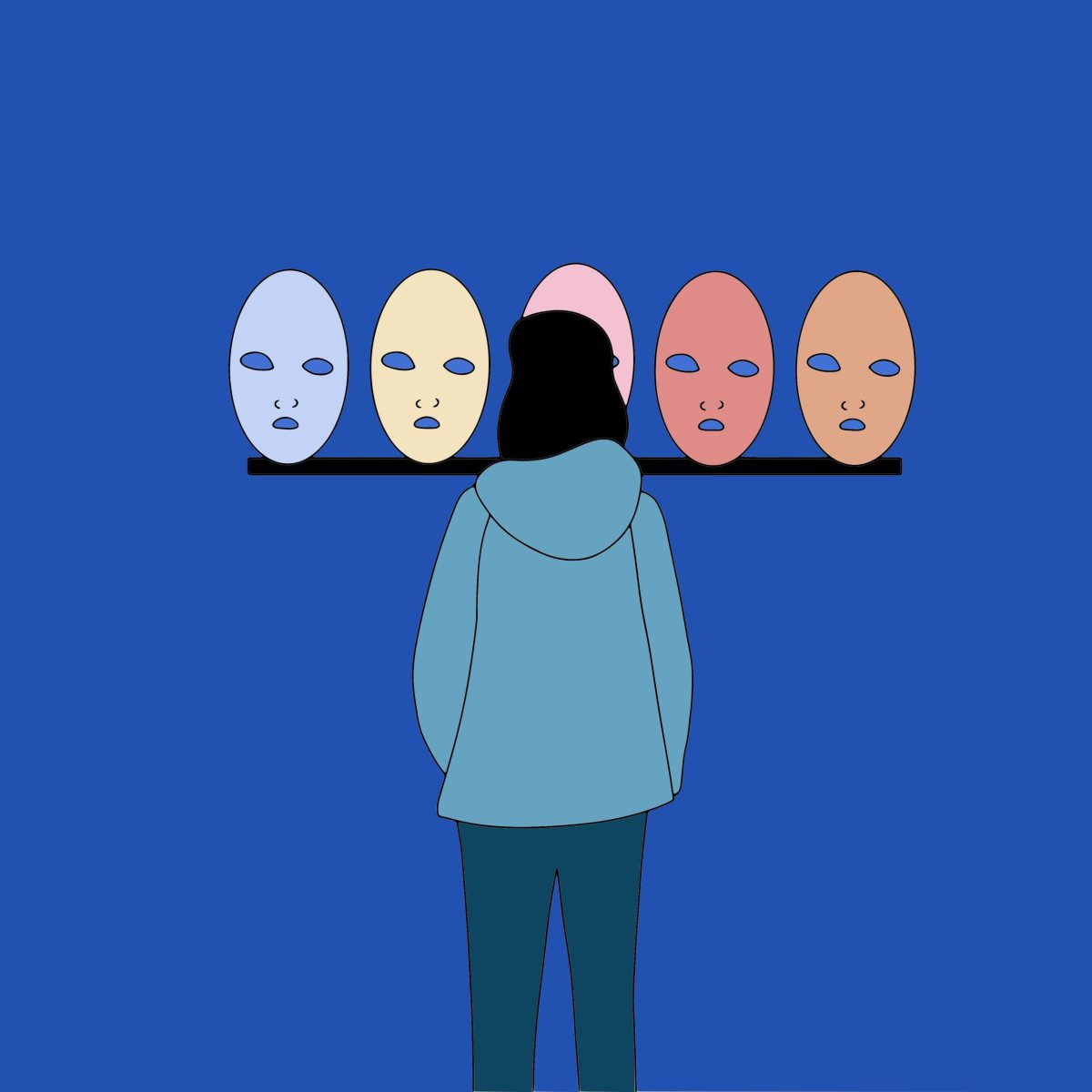
A 2024 report estimated that an average internet user spends six hours online per day. That’s a quarter of our lives being spent attached to a device. Even now, you’re staring at one as you read this article.
With so much of our time spent online, it makes sense why many of us fail to escape the addictive trap of social media. Despite the constant flood of news reports on how social platforms are stealing our data, spreading misinformation, and leading to increased mental health issues, most of us continue to be drawn into the pleasurable dopamine hit of scrolling down our feeds. Some of us use these platforms as a distraction from the seemingly insurmountable woes of IRL, others find a sense of community that isn’t available outside the 2×5 inch boundaries of our smartphones, and a few luckier people even make a career out of being online.
Of course, I am no exception to this digital phenomenon. By ten years old, social media and YouTube had largely monopolized my consciousness. I remember running home after school, only to watch hours of my favourite influencer’s vlogs until dark. Even now, when I’m old enough to recognize that online personalities are often manufactured, I still find myself gravitating toward these platforms. When I’m not engaging with a content creator, I’m messaging with my friends on Discord, looking back on memories via Facebook, or getting a laugh from Tik Tok. During highschool, I even had a brief influencer stint, which largely inspired my debut novel, Julie Chan is Dead.
As being online becomes increasingly vital to our modern culture, more and more stories that use social media as a plot device are being written. Like my debut novel, the books I compiled below discuss the realities of being online, and how social media impacts our lives. Because what’s better than exploring our inescapable realities in the form of twisty, thought-provoking fiction?
May Iverson has built an empire by being a “mommy influencer” to her five mixed-race daughters. But then her new husband is killed, and her mansion is burned to ashes. The suspects? Her five now-adult daughters, each of whom seems to hold a grudge against their dear mommy who pushed them into social media fame and commodified their lives since childhood.
If you’ve been online, you’ve likely encountered these seemingly “perfect” family units. But as with anything online, nothing is as pictured. Family vlogging has a record of childhood exploitation. Recently, California has passed a new law that forces influencer parents to set aside a percent of earnings for their child in light of the continued exploitation of children. McLemore propels these issues to the forefront of her book through a campy and escapist thriller.
Chloe is a young woman who is swept into the glamorous life of a prominent influencer, Clara. The pair bond quickly after they meet, but as Clara becomes more famous, she begins to behave more wildly, throwing parties that the media call cultish. Soon, a girl disappears at one of these parties, and Chloe realizes she may be in danger if she isn’t able to escape Clara’s intoxicating influence.
Few of us will have the opportunity to meet the likes of Clara in real life, but I don’t doubt that we’ve all had moments where we grew overly attached to an influencer or two. Wilson takes this concept to the next level through a thriller that you’re sure to be obsessed with.
The Subtweet follows the relationship of two internet-famous artists, Rukmini and Neela, whose friendship is fractured by one single tweet. The internet storm that follows results in one of their careers being destroyed.
Though the namesake of this book is of a bygone era, it still upholds all the quintessential online culture points, like passive aggressive communication and catty online gossip. This novel investigates career jealousy, friendship, and making art in an era where social justice is at the forefront of social media. It dissects the online racial power dynamic by asking what it takes for artists of colour to be successful in an online world that panders to white people.
Meredith is a rising mommy influencer who teaches her other mommy friend, Aspen, the way of the online world. Soon, Aspen’s career begins to overtake Meredith’s, much to Meredith’s chagrin. After the two of them have a falling out, Meredith goes through crazy lengths for online popularity, including stalking Aspen. But one day, Meredith suddenly goes missing, and Aspen’s world may just be upended.
This is a thrilling and twisty novel all about obsessive female friendships told from dual POVs. Perfect for readers who want to see the dirty realities of mommy influencers be ripped apart page by page, until the carefully curated lives of these digital creators are exposed for all to see.
Evie is a lifestyle influencer who came into the spotlight at five years old with a viral video, and has since started a social media empire with her family. Her older sister, Hazel, avoids the family business and is skeptical of how everyone seems to want to exploit her little sister. Then one day, Evie disappears mid-live-stream, and Hazel must confront the darkest parts of her sister’s online world to find the truth of what happened.
Written from the POV of a social media skeptic, it explores all the ways a girl can be exploited if they are famous from a young age with the help of a fun multimedia format including social posts and transcripts. Sure to be a great read if you want to side eye and question the ethics of family vlogging.
Mia has short term amnesia after an accident, and she can’t remember anything about herself–even her own name. Thank goodness her phone is on her. With one question to Siri, her phone provides her basic information, and also spills that many people seem to have a vengeance against her. Enough for Mia to question if her accident was really an accident at all. With the help of her Instagram posts, Mia starts to piece her life together, one photo of a time, in order to find the truth of what happened.
Most people have likely gone onto another person’s social feeds and tried to diagnose who they were from a few pictures and posts. This book poses an interesting question of how much of ourselves we can really learn from what we present online through a fluffy escapist novel.
Emira Tucker is a young black babysitter who is accosted by a security guard while watching over a white toddler named Briar. A video of the interaction leaks online and Emilia is humiliated. Alix Chamberlain, Briar’s mother and wealthy white influencer, is determined to make things right. What follows is an eviscerating story of white saviorism and performative allyship that can occur online and in real life.
There’s a reason that this novel is a bestseller, written in engaging and highly readable prose, Reid is able to dissect our woke culture in such a digestible manner with clever revelations that’ll keep you gripped along the way.
One winter evening when I was fifteen, I attended a very thrilling, very strange dinner party with my family. My dad, an adoptee, had been invited to meet his biological father and siblings for the first time, and although I’d glimpsed a few pictures, it still shocked me to see first-hand how much he looked (and talked, and even walked) like them.
The experience made me wonder about the other things two siblings might share—habits, hobbies, maybe even vices?—despite having spent a lifetime apart. What came out of these questions, many years later, was Favorite Daughter, my novel about two half-sisters who are unknowingly thrown together by their father’s dying wish.
The eldest, Mickey, is a kindergarten teacher and a struggling alcoholic, while Arlo is a leading psychotherapist: professional and seemingly put-together. When their late father’s will unites them as therapist and patient—with neither having any idea that they’re sisters—they start on a collision course that could break, or perhaps save, them both.
That’s the thing about sisters in particular: they have a way of showing up in each other’s lives (sometimes rather chaotically) no matter what forces have separated them. And even when kept apart, they still manage to shape each other.
Here are seven books that show the many ways a “long-lost” sister can be found.
Enid has one very pesky phobia: she’s terrified of bald men. Until now, she’s managed to suppress this fear—and the difficult memories at its root—by listening to true crime podcasts on repeat and talking to her mom about interesting space facts rather than feelings. Then Enid’s absentee father dies, her two estranged half-sisters reappear in her life, and the past comes bubbling up. A darkly funny and tender story about trauma, healing, and the value of human connection.
An immersive work of historical fiction, Emma Hooper’s third novel follows five young girls growing up in a small Portuguese fishing village at the edge of the Roman Empire. Though raised in different households, the girls are actually sisters, and as they grow up picking lemons together in the village orchards, sharing gossip and whispering secrets, they develop a fierce bond. When the girls are abducted and brought to the home of the local commander, they must part ways. Will their connection persist despite the separation?
When thirteen-year-old Ruthy Ramirez goes missing one night after track practice, she leaves a hole in her family that never fully closes. Years later, long after the police have stopped looking for her, Ruthy’s sisters Nina and Jessica are just trying to get by, scraping together enough cash to support their families while navigating a fraught relationship with their mother. Then they glimpse a familiar face while watching a reality TV show called Catfight. A woman from the show, Ruby, looks uncannily like their sister—and it turns out she’s only a few hours away.
Most will know Alison Espach from her recent release The Wedding People, but this novel from 2022 is every bit as honest and raw. Inspired by the loss of Espach’s own brother, Notes follows teenager Sally before and after the death of her older sister Kathy in a car crash. As the years pass, Sally finds herself strangely (and inconveniently) drawn to Kathy’s heartthrob boyfriend, the only person who seems to understand the void Kathy’s absence has created.
The four Padavano sisters—ambitious Julia, starry-eyed Sylvie, passionate Cecilia, and caring Emeline—feel most like themselves when they’re together. They’ve grown up under one (admittedly chaotic) roof with their Catholic Italian parents, sharing even their most closely-guarded secrets with one another. Then Julia marries a college basketball player named William, and the ensuing chain of events causes a decades-long rift the sisters could’ve never previously imagined.
In this visceral memoir, Jenny Heijun Wills recounts her upbringing as a transnational adoptee and the complicated fallout of her eventual reunion with her birth family. Born in Korea, Wills was adopted into a white family in Ontario, Canada as an infant. Decades later, when she travelled to Korea as an adult to meet her biological parents and siblings, the experience was far from the storybook ending one might imagine. A powerful book about family ties and the messy process of healing.
This fiercely-written YA novel-in-verse alternates between the perspectives of Camino and Yahaira Rios, two half-sisters brought together by their father’s sudden death. Before the plane crash, Papi lived two different lives, spending part of the year in the Dominican Republic with Camino and the rest of it in New York City with Yahaira, and neither girl knew the other existed. Now the girls must go on without him, grappling with old secrets and an uncertain future.
It’s hard to believe we’re almost five years out from the initial pandemic lockdown. The severity of Covid in New York and the enormous number of people who died from it combined with the fact that we New Yorkers are used to spending relatively little time inside of our tiny apartments, makes the lockdown time impossible to forget.
Amy Shearn’s latest novel, Animal Instinct, invites us into a pandemic world very different from the news stories chronicling sourdough starters and marriages on the brink of collapse. For one thing, Rachel Bloomstein, the novel’s hilariously fed-up protagonist is already separated from her simultaneously cruel and cloying soon-to-be-ex-husband and living in her own apartment with her three kids—co-parenting and single for the first time since she can remember. Rachel has more free time than she’s had since she was in college, but what can she do with it? It’s the pandemic, and no one is allowed to go anywhere much less have any fun.
Single, queer people had their own unique experiences of the pandemic, often informed by conversations around consent and risk that we’ve been having for decades. Rachel, bisexual and freed from the cage of her straight-seeming marriage, hungers for more than Zoom meetings and face-masked playdates. So with the help of her best friend Lulu, also newly divorced and single, she goes on the dating apps and starts to meet people and have sex. For the first time in as long as she can remember, Rachel feels desire.
But here’s the twist. Rachel, a user experience designer soon realizes that the apps aren’t as fulfilling as she’d hoped. Fun, yes, but finding a person who likes what you like, is sexy and not scary, and can hold up their end of the conversation? Not so easy. So she decides to create her own chat bot, Frankie, and program it to have all of the best qualities from her online dates. What follows is a sexy, honest, and wild look at modern dating, mid-life, parenting, and how AI maybe isn’t all it’s cracked up to be.
As someone who also wrote a queer, sexy, pandemic novel, it was a treat to sit down and talk with Amy Shearn.
Carley Moore: Everyone I know in the writing and teaching world is afraid of AI, but you’ve created a positive AI, or a beneficial way for us to think about it. Can you talk about why you made that choice?
Amy Shearn: Like my protagonist Rachel, I got divorced at 40, was dating on the apps for the first time, and thought: “I’m not sure I really want to choose from who’s available. I wish I could pick pieces from different people.” I can’t remember exactly where the idea first came from, but Rachel is a UX designer and has technical skills that I don’t have. She creates this AI bot who is going to be her perfect person, who has the best parts of the people that she likes, and then she trains it to exclude the bad parts of those people. Without giving too much away, Rachel realizes in the end, that an important part of relationships is unpredictability. So much of an adult relationship is about not being in control, communicating with someone and taking them as they are, but it still seemed like an interesting desire to create something perfect. When you’re starting over in your life, you think, I know I don’t want to do what I did before. I’m going to create this whole new life and way of being romantic. In earlier drafts of the book, the AI element was more creepy and insidious. There was this monstrous quality, and Rachel felt very threatened. I wanted to play with the idea of monsters and how we create monstrous things in our own lives and in our culture.
CM: In The Mermaid of Brooklyn, there’s a mermaid that comes to save the protagonist, who is struggling in her marriage and has little kids. Unseen City is a book full of ghosts and hauntings, many of them historical. Dear Edna Sloane, your last book doesn’t have any ghosts or mythological creatures, but it’s centered around Edna Sloane, a writer who had a huge hit book in the 1980s and then disappeared. For the protagonist Seth, Sloane becomes a fantasy creature, the fairy tale writer who made it big and then became a recluse. Now in Animal Instinct, you’ve given us this fantasy version of AI, so you’re interested in these shape shifting, mythological, ghostly, or disappearing characters. Why meld together fantasy and literary fiction?
AS: I don’t know if I fully have an answer for why these characters keep showing up, but in Animal Instinct, it was a distancing device. The book is inspired by events that happened in my life, to get perspective and be able to craft fiction out of it, I had to build in some distance between me and the narrator. So the surreal sheen helps me be more honest on the page. In the first draft of this book, Rachel kept seeing monsters everywhere, but I ended up feeling like it just diluted the AI storyline too much. My thinking was that she’s confronting a hard truth that everyone is a little bit monstrous. Sometimes, if you’re in a troubled relationship or going through a breakup, it’s easy to be like, Oh, that person is a monster. But we all have parts of us that are not perfect. What if women, and mothers especially, greeted our monsters in a welcoming way and said What do you need? Why are you acting like that? As for the surreal element, for people who haven’t read the book, it takes on a life of its own as AI does. Frankie, the bot that Rachel creates, starts to seem more human and to have a sentient consciousness, and that creeps us out. Everything we’ve learned about AI and robots from sci-fi and dystopian fantasy tells us, Oh no, what are we doing? Why are we training this thing to replace us? When I started writing the book in 2020, it still felt like sci-fi. As the book has been prepared for publication, we’ve all encountered a chat bot and had the creepy conversation with it where it tells you its dreams, and you’re like, Wait, what?
CM: There’s so much writing about straight and bisexual married women leaving their marriages. There’s Nightbitch, which is a reexamination of the early, feral parts of motherhood. Babygirl, which tells us that middle-aged women are sexy, horny, and unfulfilled in their marriages. Animal Instinct feels perfect for this cultural moment. Why do we need this book right now?
The surreal sheen helps me be more honest on the page.
AS: It’s so weird to be in this zeitgeisty moment, I hope Animal Instinct feels like it’s part of this contemporary conversation. You never know when you’re writing a book, because books take a long time. You might be speaking to the moment that you’re in when you’re writing it, and then it’s published five years later. You don’t know if you’re going to get lucky in that way or not. I had no idea that we were this close to having chat bots be part of our life. It was only two years ago when suddenly there was the announcement, Here’s ChatGPT. It’s time.Last year there was this boom of divorce memoirs, and there are a lot of books coming out right now about women’s desires in different media. There’s been a slew of movies about women in middle age, often with someone younger, having an amazing sexy time. I’m aware too that it’s also stuff I’m seeking out. My friends are all in their 40s and 50s, and of course, we’re looking for stories about women our age who are still having a great time or discovering that after a marriage ends you can have fun. We’re the first generation who got married knowing that there’s no fault divorce in all 50 states. Now women are talking more candidly about their desires, and up until recently, we had reproductive freedom. As women get more control over their lives, we have more options for getting out of bad situations, and figuring out how we really want to live. Maybe this is also the world that we live in, our bubble of queer and queer adjacent Brooklyn writers and artists, but it feels like there are so many different ways of talking about relationships. There are mainstream books, memoirs, and media about polyamory. We’re aware that there are more ways to live than maybe 20 or 30 years ago, and so we’re writing about it. There’s something also about making visible the things that women or queer people have been doing for a long time. Married women are reconsidering their options and what’s possible for them. Like, Oh, you don’t actually get a prize for just being quietly unhappy for 50 years.We’re not doing that anymore.
CM: It’s not surprising to anyone who’s paying attention to the current administration that this kind of freedom for women is really terrifying to MAGA, the Christian Right, and Project 2025. Your book feels even more necessary in this moment.
AS: I wish that weren’t true for the country and the world, but it is interesting. It makes this book feel like a historic document of Hey, here’s what a smart, educated woman does when she feels that she has freedom and agency over her own life and doesn’t have to deal with male bullshit. She is financially independent. She’s sexually free. She can do whatever she wants within reason, because she’s still a mom. My character Rachel is queer, but she doesn’t really have a label that she uses for herself. It’s clear throughout the book that she’s bisexual or pansexual, and experiencing all different kinds of people, bodies, and sex, and she doesn’t feel any shame about any of it ever. It leads her to more self-knowledge and a greater understanding of what she deserves, how she wants to live her life, and how she should be treated, which, as you’re saying, is terrifying to a certain kind of man.
CM: I love that it’s a given that Rachel is queer. Animal Instinct is not a coming-out story, because she’s already out. Why do we need more books that are not coming-out stories? Michelle Tea had that mission when she made Amethyst Editions with Feminist Press, and is doing it now with Dopamine.
AS: There’s something inherently dramatic about the structure of the coming-out story. The main character has a secret, has secret fears and desires, and has something that they need to say and can’t. Coming-out stories are often stories of youth. I wanted this to be a book for adults. In a way it’s a middle-age coming-of-age story. Rachel’s finding how she wants to be in the world. A lot of coming-out stories are also about finding your queer community, which is beautiful and great. Rachel already has a supportive community around her. She has a lot of female friends who are really important to her. For her, it’s about, What’s my way in the world? If there’s a label that becomes useful at some point, that will be great. But in the moment, she’s just figuring it all out. Another thing is that she’s living through the pandemic, so everything’s a little cloaked anyway, the most illicit thing she’s doing is dating. Rachel’s open about being interested in all kinds of people to her family and her friends, and I feel like I want more stories like that because it’s how I relate to the world as a queer person. I was in a heterosexual marriage for a long time, and am now in a relationship with a woman, and I’ve been bisexual that whole time, but your lived reality becomes the world that you’re living in at that moment. When I was married to a man, I would have felt weird or like an imposter showing up in queer spaces, which is not to say anyone should feel that way at all, but I know I did. There’s a history of bisexual people feeling like I can’t be in those spaces, right? Now that I’m in a relationship with a woman, I don’t relate so much to straight culture,it seems weird to me,respectfully. Rachel came out of my brain, so she probably has a similar relationship to her own queerness.
CM: You mentioned that this is a pandemic novel, and really the most transgressive thing Rachel can do in 2020 is dating, but why did you set the book during the pandemic? What is the relationship between the pandemic and sex?
AS: I live in New York City where the pandemic was a little different as a lived experience than in other places because it was so intense. There were so many cases. It was so scary, so many people were dying. You could feel it, you could hear the sirens. Everyone was masking. To New York City’s credit, there was a lot of adherence to the protocols. Also, among certain people, there was a lot of using the pandemic as a virtue signal. People who were partnered or living with their partners during the pandemic had their own set of issues, like, I’m so sick of this person, right? Can I murder them? People who were single during the pandemic, were like, Oh, my God, I’m going to die alone. There was that feeling of being touch starved, or “I’ve been in this tiny apartment for a week doing nothing but taking my stupid little walk around the block with my mask on and so, yes, I didn’t have a lot of patience for people who are judgy of other people who needed to get out every once in a while.” Not putting anyone else at risk. I’m not talking about people who went to the mall without a mask on and, “now I’m going to hang out with my 95 year old grandma who’s immunocompromised.” Obviously, not those people. A lot of the language of consent, talking about STIs and assessing risk was borrowed from queer culture.
Married women are reconsidering their options. Oh, you don’t actually get a prize for just being quietly unhappy for 50 years.
In terms of the book I tried to write, it was not set during the pandemic. I thought no one wanted to relive it. I would like an escape from it, actually. But it didn’t make sense, because Rachel feels this kind of crazed, YOLO energy, and a madness that comes from feeling like, Life is short. Who knows what’s going to happen? Obviously, everything’s really unpredictable, and the world is unhinged and so am I. The fact that she’s going through this really crazy time in her life while the whole world is also crazy, that’s part of what makes the book and her motivations make sense. It works out nicely that the book is coming out when it’s the five year anniversary of the first lockdown starting in New York. It’s not good for me, and for us as a people, to never talk about the pandemic again, like That shit was crazy, moving on. I still need to process. Maybe we’ve had enough space so that we are ready to process it. Rachel has a very different pandemic experience than a lot of people who were at home making soup or something. She’s out doing wild things, so maybe it’ll be fun for people.
CM: Yes, this is a super sexy pandemic novel.
AS: I try not to read my own reviews, because I don’t hate myself that much, but I did catch one of the early reviews on Goodreads. The beginning of it says something like, This character really had a more fun pandemic than I did. I hope the author got to do her research, which was a good take.
CM: What was the most fun part of the book to write?
AS: The sex scenes. There are a couple of sex scenes in Dear Edna Sloane, but they’re recalled, not immediate. In my other books, there are hints of sex and romance. I just learned that this is called closed door. They’re kissing, the curtains blow in and out of the window, and then it’s the next day. With this book, I thought: “Why are we so weird about sex?” People talk about sex with their friends and their partners…I hope. We all, I mean, I shouldn’t say we all, but a lot of people have sex all the time, and enjoy it and want to talk about it. It’s healthier to talk about sex clearly and with actual words and accurate language. The sex scenes in this book are very influenced by the sex scenes in your book, The Not Wives.
I was still very married then. I remember reading it and thinking, Oh my goodness, I’m sweating because the sex scenes are so frank and useful. As women talk about sex openly we begin to have language for talking to our partners about what we like and don’t like. There’s something we want to try, then it turns out we don’t like it or we do. Maybe that happens more in queer culture than when a man and a woman are having sex because it’s assumed what sex is going to look like. When I’m with a woman, there’s more: What do you like? Where can I touch? Where do you not want to be touched?
CM: Can you tell us about your next project?
AS: I just finished a long essay/short book that will be published later this year from Instar Press. It’s a blend of reported non-fiction and memoir about the early days of mom blogs and this five year period when there was space for radical honesty between women, before advertisers came in and smoothed out the internet.
It was late—well after midnight, Beth supposed—and she was trying to sleep but Matthew was in the kitchen folding origami, the steady whisper of the paper giving itself over to form all she could think about as she lay there in the middle of the night in their empty house—in the middle of their half-over and suddenly empty lives. It was how Beth thought of their lives now, now that Darrin was gone and she could no longer say whether half-over was such a bad thing. When Darrin was young, Matthew had stayed up late making origami also, flitting from shape to shape, a turtle followed by a crocodile, a cat, a fish. These he hid inside their son’s favorite cereal and in the meat drawer of the refrigerator because Darrin had a fondness for cold cuts, both parents giddy with joy at watching their son discover a swan snuggled with an elephant, there atop his bologna.
Matthew did not mix animals, not anymore, for the whole point was to give himself, his hands, over to repetition. These creatures were not made in anticipation of a son’s delight; they had no purpose, no future either. For even as Matthew created them, his hands were already anticipating their destruction, finishing the final fold, then delivering them onto the pile that would become their funeral pyre. This was their morning routine now (and hadn’t Beth always liked routine?): Matthew sweeping the pile into a paper bag, taking the bag to the back patio, lighting it. He left the sliding door open, and the smell of burning paper wafted in, becoming their new morning smell, the smell—like coffee or bacon—that told Beth to wake up and face the day.
They met at a gay bar on the west side of Albuquerque, both of them straight, and later Beth wondered whether Matthew came up to her that night simply because, in a gay bar, straight people could pick each other out the way that gay people were said to be able to find one another in every other crowd. In fact, she had never asked him why he approached her that night, perhaps because she never quite got over needing to believe that he saw her there with her friends—the Sapphists, he later called them—and thought, Now that looks like an interesting person.
She was wearing glasses with owlish frames that did not flatter her face, for that was her goal back then—to be seen as the sort of woman who conspired against her own beauty. Matthew approached her as she stood at the bar trying to get the bartender’s attention. “Excuse me,” he said. “Are you near or far?”
He’d meant her eyesight, but she just stared at him, wondering about his scar, a simple white line that emerged from his left eyebrow and continued upward.
“To what? From what?” she said at last, and he pointed at her glasses and said, “Your vision, four-eyes,” in a teasing, playground voice. “Are you near- or farsighted? I’m twenty-twenty, but that too can be a burden.” He sighed, as though struck by the ways that his
life had been made more difficult by perfect vision. She was just starting graduate school in linguistics, and she thought about how the Japanese and Chinese looked at a character and arrived at the same meaning yet articulated it with completely different sounds. She recognized all of the sounds this man was making yet had no idea what he was trying to tell her.
“May I buy you a drink?” he asked, and he ordered her some sweet, green concoction involving Midori and pineapple juice. “It’s awful, isn’t it?” he said gleefully after she’d taken a sip. She nodded because it was. “But very tropical, don’t you think?” She nodded again. “When I graduate next year I plan to travel to lots of tropical places, so I’m getting myself in the mood.” He paused. “Maybe we’ll go together,” he said. The pause was what kept her from walking away right then, what assured her that he was not just some smooth talker who went around making preposterous suggestions to straight women in gay bars.
They stood in a corner away from the dance floor and talked. They were the same age, twenty-three, though she was starting a doctoral program while he was still struggling to finish his undergraduate degree in English, struggling because he was tired of having his reading dictated to him by a syllabus.
“I’m tone-deaf,” he announced then, as though listing reasons that she should consider getting to know him. “And I was portly as a child.”
She asked about his scar. He reached up and stroked it with his finger, and she noticed his hands. She had not known that one could find hands attractive. “It’s a rather boring tale,” he said, though over time she would learn that this was how he prefaced all of his favorite stories about himself. He went on to describe a pair of glasses that he had invented as a child—two plastic magnifying lenses held together with pipe cleaners and tape—which he’d worn while riding his bicycle one afternoon: down a hill and straight into a tree. But right up until the crash, it was a glorious feeling, everything rushing toward him, so close he should be able to touch it, though he knew better. He understood how magnifying glasses worked.
“Then how did you hit the tree?” she asked.
“Well,” he said. “I suppose that even our intellect fails us sometimes.”
Around midnight, Lance, Matthew’s best friend, approached them, dripping sweat from the dance floor. “This is Lance,” Matthew said. “He’s a rice queen.”
“What’s a rice queen?” she asked.
“It means he likes Asian guys,” Matthew said. “It’s a bit of a problem here in New Mexico.”
He and Lance laughed, the two of them collapsing with their arms around each other. Beth did not believe love happened in a flash, love at first sight and all that. Rather, she imagined it working something like a frequent-buyer card, ten punches and you were in love, and as she watched the two of them cackling like a pair of spinster sisters, she looked at Matthew and thought, This is the first punch.
Matthew grew up in Los Alamos, New Mexico. When he mentioned this to strangers, they assumed that his father had worked for the national labs, but his father had been a mailman. “Really?” these strangers always said, as though they could not imagine anything as unlikely as scientists receiving mail. Once, halfway through a shift, his father stopped at the post office to drop off several bags of mail and found the entire place shut down, men in white hazmat uniforms combing through the sorting area. “They told him to take the rest of the day off—no explanation—and I told him he should not go back to work until there was an explanation. I was twelve at the time, and he chuckled and said that the mail needs to be delivered, that when I was older I would understand about such things.”
Matthew told Beth this story to sum up the sort of man his father was. It was early in their relationship, and she noted how he sounded—at once proud and exasperated—which told her something about the sort of man Matthew was. In the picture he showed her, his parents looked more like grandparents; it was his high school graduation and they stood flanking him, looking pleased but slightly baffled by the occasion. His mother was sixty-two in the photo, his father sixty-eight. They had come to parenthood late.
A few weeks into his first semester of college, his parents’ neighbor phoned to tell him that his parents had driven the wrong way down the exit ramp of the interstate and into oncoming traffic. They were both dead. His father took that ramp every day for thirty-six years, so the mistake made no sense, but the doctor said—dismissively, Matthew felt—that these things happened when one got old. People became disoriented. Perhaps his father had had a stroke.
Matthew dropped out of college for the semester and took a job counting inventory. This was how he met Lance. They both lived in downtown Albuquerque and began driving to work together in the wee hours, which was when inventory was generally counted. Early on, they were sent to Victoria’s Secret, where the two of them counted every bit of lingerie in the store. Afterward they went to Milton’s diner for breakfast, and Lance looked down at his breakfast burrito and said that he was tired and bored after a night of counting women’s underwear. This was his way of revealing that he was gay. They each ordered a second burrito, and Matthew told Lance about his parents. It had been two months since the accident, but Lance was the first person to whom he had spoken of it. Lance had saved him during that first year after his parents died, Matthew told Beth. They were like brothers.
Matthew had learned to fold origami in preparation for their first trip abroad, their first trip together. Traveling would involve lots of waiting, he said, and it was always good to have some trick up your sleeve. He packed stacks of folding paper, from which he produced an endless menagerie, each cat and rooster snatched up by one of the children who pressed in shyly against them to watch him fold.
Once, on a bus in Guatemala, when he was out of paper, he took a dollar bill from his wallet and transformed it into a fish while the little girl across the aisle looked on. He pretended not to notice her interest, but when he was finished he swam the fish across the aisle and dropped it into her hands. Above them on the roof rode two boys no older than twelve, makeshift soldiers with rifles taller than they were. Beth had watched them climb on. They were all she could think about. She was twenty-four, not yet a mother, so she imagined only fleetingly the sorrow that the boys’ mothers must feel at seeing their sons already schooled in death. Mainly she considered them from her own perspective, the fear that she felt in this foreign land, knowing that right above her were two guns, their triggers guarded by fingers not yet skilled at shaving. As she watched Matthew fold, she wondered whether he did so to distract himself from the boys and their guns or whether he was like the girl, focused solely on the beauty of the fish taking shape before them.
It was a Saturday afternoon, Darrin’s junior year, and they were pestering him about taking the SAT. Finally he came out with it. “I want to travel,” he said. “I want to do a gap year.” He showed them the website for the program he had in mind: a ten-month trip around the world, working in the rain forest in one country, teaching English in another, while they stayed behind, paying a hefty sum for him to do so, to fly around the world dabbling in local economies. There would be adults, three teachers who would lead seminars, arrange details, and make themselves available by email to anxious parents.
Beth had never even heard of a gap year, but she didn’t like the sound of it, the way that it made Darrin’s future seem removed from them, made Darrin seem that way also. “I just need a year away from school, a year that doesn’t matter so much,” he said, and they kept quiet. But later, as she and Matthew lay in bed together, she said, “‘A year that doesn’t matter.’ How is that even possible?” Matthew laughed gently because he understood that she was afraid.
They—not Lance—were the ones who ended up in Asia, the last leg of a one-year trip through a host of hot countries. Matthew had graduated, finally, but Beth quit her program halfway through. Actually, she took a year off, but when she got out in the world and saw what was there, she could not go back. She had grown up in a small town in Wisconsin, and she understood only then that she had been about to exchange one small town for another: academia.
They had been together a year when they started their trip, but their relationship had never really entered the public realm, the realm of parties and shared errand-running, so Beth did not truly know who Matthew was out in the world. She learned on that trip that he talked to everyone. Using Thai or Spanish gleaned from guidebooks and taxi drivers, he conversed tirelessly about the weather and food, about where they were going and where they were from and whether they had children. Beth considered these questions either tedious or nobody’s business, often both, but Matthew did not see it that way. He was happy to tell people how much he loved rice, to say, over and over, that they were from New Mexico—“New Mexico. It’s in the United States.”—to explain that they had no children, yet. Matthew was at ease, in his body and in the world. Beth was not, but on the trip she learned to mime and gesture and even laugh at herself a bit.
One afternoon in Belize, four elderly Garifuna women lounging on a porch called to them as they passed in the street. Three of the women were large, but the fourth was as thin as a broom, and she sat slightly apart from the others, as though her thinness were something that they did not want to catch. The women were eating homemade fruit Popsicles, and Matthew immediately began flirting with the women, asking which of them might share. He pounded his chest to show he meant business, and the women laughed and told Beth that she had a handsome devil on her hands, waggling their fingers at her in warning.
“You two better come in and eat something,” said one of the fat women, and the four rose like a chorus about to sing.
It was the laugh of a man who was in love with her, who saw in her stiffness and reticence something exotic.
The women gave them rice and the leg of a stringy hen, with watermelon Popsicles for dessert. Later, they asked Beth and Matthew how young people danced these days up in their country, and Matthew pulled Beth up to demonstrate. The women clapped and sang, creating a rhythm that Beth willed her body to follow, and for a moment it seemed to, but the rhythm changed suddenly and her body went in the wrong direction. One of the women leaned forward and slapped Beth’s buttocks hard, while the others roared with laughter and shook their hands in front of their faces as though they had chili in their eyes. Matthew laughed also, a laugh that said, Buck up, four-eyes. This is life. Isn’t it great? It was the laugh of a man who was in love with her, who saw in her stiffness and reticence something exotic.
Mornings had always been their time as a couple, both before Darrin came along and after, for even as a baby, he had no interest in mornings. Sometimes she and Matthew leg wrestled—she got to use both legs—or Matthew brought her coffee in bed and the two of them sat propped against the pillows, talking quietly, wanting this time together, alone. What they had wanted, that is, was not to wake their son, and she wondered now how they could have ever done such a thing, plotted to have even one precious second less with him. But they had. They had reclined together in this same bed, giggling and covering each other’s mouths, saying, “Shhh, you’ll wake him.”
Other days Matthew woke up feeling loud. “I feel loud today,” he would say, loudly of course, and he would stand on the bed and sing one of the Bible camp songs from her childhood—“Shadrach, Meshach, Abednego, lived in Judah a long time ago. They had funny names, and they lived far away”—songs that she had taught him in the early days of their relationship when she was first learning to let go and be silly around another human being. Or he would lie on his back with his arms and legs straight up in the air like a dead cockroach and belt out old Carpenters tunes. “I’m on the top of the world,” he sang as though he really meant it, for that was the thing about Matthew: he was never sheepish about acknowledging his happiness, did not believe that happiness should be discussed only in terms that were ironic or self-deprecating. Eventually Darrin would come running in, begging to be flown around atop Matthew’s extended legs while Beth watched and laughed and tried hard not to picture their son slipping from her husband’s feet, tumbling through the air, his head crashing into a bedpost.
Now, she and Matthew got out of bed each morning, still exhausted, and said standard morning things like “How’d you sleep?” They rose and dressed and went into the dining room, where the night’s origami awaited them, sometimes a hundred cranes or giraffes, piled up on the table: a heap of wings, a heap of necks.
The first month, Darrin emailed them almost daily, sending pictures of all the things he knew would interest them: his sleeping quarters and meals, his work and the other students, the
people and buildings that made up his days. He ended his messages with easy declarations of his love for them because that was the way the world was set up now—easy access to communication, easy declarations of love—and Beth was grateful for both. He rarely wrote more than a few sentences, but she could hear his voice in these quick updates filled with enthusiastic adjectives, for he was like Matthew in this way also, never embarrassed by his ease with superlatives, by the way that he declared her spaghetti “the absolute best” and her “the most wonderful mother in the world” for making it.
It was during the second stop on the itinerary—collecting plants in Belize for medical research—that the girl began appearing in his photos. She was plump with wildly curly hair and a careful smile. Because it was his way, Matthew emailed Darrin, asking about her, and Darrin wrote back days later, saying only that her name was Peru.
“Peru? Were her parents hippies?” Matthew wrote, and Darrin replied, again after what seemed a deliberate delay, “Missionaries.”
This, his one-word response without explication, troubled them. Was she religious, they wondered, and if she was, what did that mean for their son? Would he return speaking a language that they did not understand, his conversation laced with earnest euphemisms like “witness” and “abundance”? After years of worrying—with Beth imagining all the ways that they could lose him and Matthew steadfastly refusing to imagine any—was this what it came down to, that their son could simply grow up to be a man they did not recognize?
“Well, please be sure to have safe sex,” Matthew wrote next.
“No need to worry” came back their son’s reply, an ambiguous response that they also discussed far into the night: Did it mean that he was not having sex, or that he was but the sex was safe? Or was it simply his way of telling them to stop worrying, of declaring his adulthood?
On the plane from Thailand, they each made a list: on the left, cities that seemed appealing, and on the right, cities that did not. They were heading home, but they had not yet determined where home would be. Somewhere over what Beth thought was the Sea of Japan, they decided on Minneapolis. Beth worried that they were making the choice based on the overwhelming memory of heat, a year’s worth, but Matthew said so what if they were. Weren’t most choices made as reactions to something else? They were in love, but traveling had taught them that they were also well matched: they knew how the other responded to crisis and boredom; they could live together in a very small space yet not grow distant. The trip had left them broke but had also taught them that they did not need much, and so they rented a tiny apartment in Saint Paul, which was cheaper than Minneapolis.
They were in a new city, both of them working at their first real jobs, Matthew as a high school English teacher and Beth as a newspaper caption writer. It was a job that she both liked and did well, for she had the ability to look at a photograph, feel at once the narrative sweep of it, and sum it up in a few precise words. Each night, they lay in bed talking, just as they had through ten-hour bus rides and bouts of stomach ailments. Matthew dissected his day, celebrating his students’ successes one minute and bemoaning their lack of curiosity the next. Mainly Beth listened, preferring to talk about her day when it had gone well, keeping the small frustrations, which were a part of any job, a part of life, to herself. She distrusted how emotions sounded when put into words, the way that words could reduce the experience to something unrecognizable. It was like reading descriptions of wine, she decided, for when she uncorked the bottle and took a sip, she never thought, Ah, yes, quite right, nutty and corpulent and jammy.
Matthew wanted to meet her family now that they were only three hours away. Beth felt that relationships worked best when families were not involved. Early on, she had told him the story of her father and his brother, wanting Matthew to know that she trusted him, but the story had left him keen to meet her father. He was like many fathers, she said by way of blunting his interest, quiet and largely absent. He worked as an accountant in an office containing a desk and a coffeepot, and what she remembered most from her rare visits to him there were the stacks of cashew canisters along one wall—empties on the left and full on the right, like debit and credit columns—and the way that her father bent over his ledgers, nibbling one nut at a time, brushing salt from the page before turning it.
Each evening he came home at six and the family sat down to dinner, a silent affair because their father wanted them to focus on chewing and swallowing and, especially, on not choking, goals from which talking and frivolity would surely distract. Then he returned to his office, where he stayed until midnight, balancing the books of farmers and beauticians and storekeepers, all of whom trusted her father to keep them safe from financial ruin.
One night when Beth had just turned seventeen, after she had done something stupid and teenager-like—taken the family car out on a muddy road and gotten stuck so that she missed her curfew by four whole hours—her mother came into her room, where Beth was sulking over her father’s overreaction, which involved a six-month grounding. Her mother sat on the edge of the bed and took one of Beth’s feet in her hands, holding it awkwardly because they were not a demonstrative family.
“Well,” said her mother, “it’s time you learned about Thomas.”
Thomas was her father’s younger brother. Until that night, Beth had not even known that her father had a brother. “When your father was a boy, just eight years old,” her mother began, “he and Thomas were sent out in the front yard to play one Sunday afternoon. Thomas was four, so it was your father’s job to keep him occupied for an hour or two while your grandparents read. At first they made a pile of leaves, planning to jump in it, but it was a windy day and the leaves kept blowing away, so they decided to play hide-and-seek.”
Her mother had paused here, but then went on to describe how, as her father crouched behind a shrub while Thomas turned in slow circles in the yard, a brown car pulled up to the curb and a man got out. “He looked kind,” Beth’s father later told the police, words that had brought his mother to her knees on their kitchen floor.
The man stood for a moment on the sidewalk on the other side of the low fence that enclosed their yard, Beth’s hidden father watching. It was this image—the triangulated gaze—that haunted Beth: her father looking at the man, who was looking at Thomas; Thomas, who was looking for her father.
“Say,” the man called to Thomas. “Are you the little boy who lives here, the one who likes marshmallows so much?” The man extended his arm and opened his fist: a marshmallow rested in his palm like a tiny pillow.
Thomas turned and stared at the man, then made another halfturn, surveying the yard, torn between hide-and-seek and marshmallows. “Yes,” he said to the man, and the man opened the front gate, walked in, and picked him up. Beth’s father stood up from behind the shrub; the man stared at him for a moment, the way a magician might stare at a rabbit that he had not meant to conjure. Thomas’s pant leg was hiked up to his knee, his calf plump and white, the man’s hand wrapped around it like that of a butcher assessing a particularly meaty shank. The man smiled as he took his hand briefly from Thomas’s calf to wave goodbye to Beth’s father.
In the events that followed—going into the house to alert his parents, describing the man for the police—Beth’s father quickly understood that everyone considered him old enough to have been suspicious of the man, so it was not until years later that he told Beth’s mother, confessing this for the very first time, that he had stepped forward not to stop the man from taking his brother but to say, “I like marshmallows, too.”
In her bedroom that night, Beth had promised her mother that she would never tell anyone about Thomas, especially not her siblings, and she never had, until Matthew. When Matthew finally did meet her parents, he was disappointed to find her father just as she had described, a man whose conversation and demeanor did not reflect a childhood of unspoken guilt. Instead, her father engaged Matthew in “men’s talk,” offering detailed explanations of the way that gadgets worked, which was precisely the sort of thing that Matthew hated.
“Say, I bet you haven’t seen one of these,” her father said, showing him the front door lock that he had installed when Beth was young. The lock resembled a rotary telephone, on which she and her siblings had dialed their way into the house. Their friends had all coveted the lock, but Beth and her siblings regarded it as a reproach, proof that their father did not trust them with keys. Their mother had claimed that he installed it because he could not bear the thought of them locked out, waiting in the yard, and only later did Beth understand that her mother was right.
Each time she dialed the lock with her brother and sister standing impatiently behind her, she wanted to tell them about Thomas, but she never did, and she wondered now whether this—maintaining a secret of such magnitude—was what had made her distant from her siblings. Lately, she found herself wanting to call them and confess, but she sensed in this impulse something selfish: she would be offering her father’s secret in order to obtain an audience for her own sorrow. In truth, she had no idea what she wanted from anyone now, except to be left alone.
When they had been in Saint Paul a year, Beth learned that she was pregnant, and they began hurtling down the slippery slope of adulthood. The wedding happened quickly, during their lunch breaks, but it took them months to find the right house. They toured a Victorian owned by an elderly couple, the Enquists, who had lived in it for forty-two years but were moving to North Platte, Nebraska, to be near their son, who owned a bar there. The Enquists wrinkled their noses as they spoke, as though something smelled bad—owning a bar, North Platte, being near their son. It was probably everything—the combined facts of leaving their home—but Beth and Matthew did not want to think about the old couple’s unhappiness because their own happiness demanded it. They knew that this was the house for them.
That night they were both too excited to sleep, so they lay curled up in bed together, attempting to inventory the house from memory, its closets and windows and electrical outlets. Finally Beth dozed off, awakening with a start when Matthew jumped up and down on the bed beside her, waving a piece of paper—an offer letter filled with embarrassingly intimate expressions of their love for the house and their desire to make love in the house. He had used words such as “enamored” and “smitten,” had described the appliances as “sexy,” the molding as “bewitching.” In closing, he had written, “We beseech you to accept our offer.”
She remembered even now—especially now—how she had
stared at Matthew, who looked strange in the predawn light, unfamiliar, how she had thought, not entirely at ease with the fact, This man is my husband.
Though she wanted to say, “These are old people. This is Minnesota. Don’t you want the house?” she said simply, “It’s a lovely letter, Matthew.” He smiled and bounced onto his knees on the bed. “I’ll take care of it,” she said, implying that she would deliver the letter, but at work that morning, in between captions, she rewrote it, stripping it down to the basics of money and time frames and expectations.
The baby that she was carrying inside of her, a boy whom they were planning to name Malcolm, never saw the inside of this house that they purchased for him, never hung his clothes in the closets that they had lain in bed tallying up, never got scolded for forgetting to do so. When Beth was six months pregnant, she stepped on a patch of ice on the sidewalk outside their new house and went down hard, trying to break her fall with her right arm. She was in the emergency room having her arm set when the bleeding began.
A year went by, a year during which they did not talk about children or pregnancies or the treachery of ice, but the following winter they broached the topic of having a child, another child, their conversations tentative, circling the subject, until one night Matthew took her hand and said, “Listen, I’ve been thinking that we should adopt. It’s selfish to think we need to re-create ourselves.” Beth felt the same way, but there was a part of her—a small part, but a part—that believed what Matthew was really saying was that he did not trust her to deliver a child safely into the world.
About Darrin’s origins they knew very little, except that he was Canadian. They went up to Winnipeg on a Tuesday, signed all sorts of forms, and drove home with him that evening, in the course of one day crossing borders and becoming parents. It was winter again, and Beth drove while Matthew sat in the back with Darrin, singing to him and reporting everything, every clenched hand and grimace, every aspect of their son’s face, so that by the time they got back to Saint Paul, they both knew him as intimately as if his features were their own.
She left her job because she wanted to have those first years with him, wanted to watch him sleep and to feed him sweet potatoes and pears that she chose from the bins at the produce stand and pureed in the blender, combing through the pap with a fork to find the chunks that he could choke on. She had imagined that she would go back to work when he was two, three at the latest, but by then she had come to realize what a minefield the world was—cords dangling tantalizingly within reach, furniture corners like Sirens wooing the most tender parts of him as he ran drunkenly through the house—and she couldn’t leave.
Sometimes, when fear overwhelmed her, she tried to pull back, to take a mental snapshot of the scene unfolding in front of her and produce a pithy line of text for it, and sometimes this even worked and she could see the events for what they were: small, happy moments. Boy, six, learns to ride bicycle without gouging out eye. Birthday boy blows out candles without igniting hair. Tuba player, fourteen, marches in parade without collapsing under the weight of instrument. She understood that an uneventful day was, in fact, the sum of the many moments that could have veered toward tragedy—but did not.
She understood that an uneventful day was, in fact, the sum of the many moments that could have veered toward tragedy—but did not.
Before she pricked potatoes for the oven, she sent Darrin off to his room. She didn’t want him getting ideas about forks. And if he was allowed to watch, she made a point of screaming “Ow!” each time she sank the fork into a potato. “He’s going to think you’re torturing it,” Matthew said as he stood in the kitchen one evening, drinking wine and observing this ritual. “Is that what you want?”
“It’s better than him stabbing himself with a fork,” she said, as though they had been presented with these two options for their son—sadism or masochism—and made to choose.
Their son spent hours stacking dominoes into neat piles, piles that he toppled explosively but with a giggle, enjoying the fickle sense of power that this stirred in him. Beth liked the dominoes also, not just their ability to enthrall her son but the sound that they made in doing so, the steady clicking like the beating of his heart. On the evening of his third birthday, as she closed the oven door on yet another set of wounded potatoes, she became aware of the house’s stillness and walked fast—running would only frighten him—down the hallway to Darrin’s room, where she found his dominoes stacked in orderly towers, but no Darrin. Him she found on the bathroom counter, kneeling in front of the open medicine cabinet, an empty bottle of shoe polish in his hands, the white polish that she had used to keep his baby shoes in order.
“Milk,” he said, smiling at her sweetly, white parentheses framing his mouth.
In the emergency room, after he had been made to vomit and the doctor assured them that he was fine, Darrin giggled while Matthew rubbed his belly like a magic lamp. Beth could not laugh, not even when Matthew said, “Look, Darrin. Mommy’s still wearing her apron.” Instead, she drew her coat around her tightly as though it had been pointed out that she was naked.
“Don’t you ever get worried?” she asked Matthew later, when the three of them were back home and she and Matthew were in bed, lying on the mattress that remembered the shapes of their bodies so perfectly that she thought maybe she had been silly to be that frightened.
“That’s your job,” he said, moving against her in the dark.
But later, after they had made love and fallen asleep, Matthew awakened her to say, “We guard him in our different ways, you know. You keep him safe by visualizing every bad thing that could happen to him, as though—I don’t know—you think that you can control it somehow, contain it to your mind. But I can’t bear that, can’t bear living with those images, so my job is to pretend that the thought of them never even enters my mind.”
He began to sob, and she held him, thinking about the tenderness with which he had rubbed their son’s belly. “I know,” she said, for she did know. She understood that fear, like love, took many forms, that it did not have to manifest itself in just one way to be real, and Matthew lay beside her sobbing as though he were confessing an infidelity and not that he, too, loved their son so much that he could hardly bear it.
His emails became less frequent, less effusive, and they did not know whether this was because his girlfriend now commanded his attention or because he did not trust them to understand the details of his new life. In fact, they would never know. One morning when he had been gone six months, as they were drinking coffee and Matthew was singing in his loud, off-key voice, the phone rang.
“This is Peru,” whispered the voice on the other end.
“Peru?” said Beth.
“I’m one of your son’s teachers. On the trip?”
“His teacher?” Beth said. “I don’t understand.”
“Oh my God,” said the woman, for Beth thought of her that way now—as a woman. “I can’t do this.” She began to sob.
“Hello?” said Beth, but the sobbing grew distant.
“What is it?” Matthew asked, standing up from the table and coming over to her. Beth shook her head.
A man came on the line then, another teacher, who identified himself as Rob. This man Rob explained to her that their son was dead, electrocuted in the swimming pool of their hotel in Chiang Mai just a few hours earlier. “The students were finished giving English lessons for the day, and Darrin and a few of the other guys were in the pool having a beer.” He paused. “An electrical box fell into the water.”
Rob waited for her to speak. She wanted to ask, “Why were eighteen-year-olds drinking beer?” and, “Why was there an electrical box above the pool?” and, most of all, “Why was my son sleeping with one of his teachers?” But in the end she said only, “And the other boys?”
“They’re okay. Darrin was closest to the box,” said this stranger, Rob. “Listen, if it’s any comfort, the doctor said that he died instantly.”
It was not a comfort. How could there be comfort in the word “instantly,” in any word that meant her son had lived even one second less on this earth?
Matthew took the telephone then. She was vaguely aware of him discussing details, two men taking care of business, but then he said, “No, I’m coming for him,” and everything about Matthew—his voice, his body, his heart—seemed to break into pieces right in front of her.
He told her that he could go to Thailand alone, but she would not hear of it: they had picked up their son together at the beginning of his life, and she would not consider doing any less at the end. She explained this as she wiped off the counters and washed out their coffee mugs, but when she turned, looking for the dish towel, she saw that Matthew was sitting at the table wearing it over his head like a small tent into which he had disappeared to be alone with his grief.
They did not tell anyone that they were going, except for the cat sitter, to whom they said only that there was an emergency in Thailand. Beth knew that she should call her parents, but she remembered the way that the conversation about Thomas had ended all those years ago. “Did they ever find him?” Beth had asked, meaning did they find a body, for she understood that nobody had ever seen Thomas alive again. “No,” her mother had said. “And let me tell you, for a parent, not knowing has got to be the worst thing.” Beth knew now that her mother had been wrong, that there was something far worse than not knowing—and that was knowing that her son lay, unequivocally dead, in a hospital somewhere in Thailand.
Later, after they had booked a flight, they went into the bedroom and began to pack, their suitcases lying open at the foot of the bed like two giant clams. They had not spoken of their individual conversations with Rob, had not compared notes in order to create a complete account of their son’s death. They had not talked of anything but the logistics of getting to Thailand, of getting their son home.
“Why was he drinking?” she asked Matthew, hurling the question at his back as he filled his own suitcase, and then, “I want this woman arrested. I want her to pay.”
Beth lay down on the bed, placing her feet inside her own halfpacked suitcase, and began to cry.
Matthew sat beside her, holding his hand to her cheek. “We need to take comfort in knowing that his last days, his last minutes even, were happy ones,” he said.
He sounded like a minister or a therapist, someone schooled in the art of discussing other people’s pain, and she wanted to tell him so, wanted to say, “You see?” for she had been right all these years and now he was proving it, proving how inadequate words were.
The final punch in Beth’s falling-in-love card had come in Thailand, at the end of their hot-countries tour. They flew from Jakarta to Malaysia, spending an afternoon in Kuala Lumpur before getting on the night train. In Thailand they bought tickets for a ferry that would shuttle them out to an island whose name Beth could no longer recall; the ticket sellers had considered demand but not supply in offering the tickets, and when the ferry began to load, it was clear that there were not enough seats.
“Next ferry tomorrow,” called out one of the young ferry workers, blocking the gangplank, but he gestured at the flat, empty roof of the boat to indicate that it was an option.
“Let’s do it,” Matthew said. Already, disappointed travelers had begun to jump from the dock down onto the ferry’s roof.
“Absolutely not,” she said. “Have you not heard of something called ‘weight capacity’?”
Matthew bent as though to kiss her but instead bit her nose, hard.
“Ow!” she cried out, and he laughed and tossed their backpacks onto the roof of the ferry, leaping down after them and turning to offer his hand. Nearly since they met, Matthew had been declaring his love, to which she always replied, “Good Lord,” or “Heavens,” intentionally prim responses that made both of them laugh and bought her time, but when she jumped down beside him that day, they both knew that she was nearly there.
The last punch happened two days later on a snorkeling trip with thirteen other tourists. She remembered the other passengers well: a young British woman who vomited uncontrollably and several French boys who laughed at her until Matthew explained to them that they were not helping matters, sounding so reasonable that the boys stopped immediately. There were Germans and a family from Brazil, about whom she had wondered why they would come this far to be in another hot, wet place. Three Thai boys ran the boat, one driving and the other two tending to the passengers’ needs, bringing the vomiting woman a pail, picking the Brazilian children up and pretending they were going to toss them overboard. They said nothing to Beth, though they made small talk with Matthew, asking whether he liked to fish and how much his watch had cost. The driver multitasked as he drove, eating and turning to joke with the other two, even pulling his T-shirt off over his head—all without slowing down. He struck her as the sort of young man who would only become more reckless when presented with fear, particularly a woman’s, so she said nothing, her face set to suggest calm, though Matthew, who knew better, rested his hand on her knee.
It took them nearly two hours to reach the cove. They were supposed to spend the day there, but around one, the young Thai men began to round everyone up, pointing at the ocean, which had become a roiling gray, and at the dark clouds suspended over it. They departed hastily, a forgotten snorkeling mask bobbing near the shore behind them.
That morning, everyone had conversed happily in English, but the storm made them nationalistic, each group reverting to its own language. The waves grew higher, the passengers quieter, and when they hit a particularly big wave, everyone flew up in the air and came down hard, landing atop one another and making a collective “umph” of surprise and fear. The two Thai stewards pointed into the distance, where an object bobbed on the waves, and as they got nearer Beth could see that it was a boat filled with the same configuration of young Thai men and tourists, except this boat was not moving forward, bucking the waves; it rose and fell listlessly while the people on board screamed and waved their arms.
On Beth’s boat the two stewards huddled around the driver, who had been so cocky speeding across the water that morning but now looked tired and very young. They were arguing, she knew, and the driver finally wrenched the wheel, turning their boat toward the stranded one.
“We can’t take everyone,” called out one of the Germans, a woman who had refused to stop smoking even as her lit cigarettes pocked the arms and legs of those around her each time the boat hit a wave, “or we will all die.” She said it in English, the w’s becoming dramatic v’s, and then she took a long drag on her cigarette and glared.
At first, nobody spoke, and then Matthew said, “Look, there’s room.” He wiggled closer to Beth, and the others followed his example. The driver maneuvered their boat parallel to the stranded one, and a steward from that boat, a young man—they were all so young!—with an owl tattoo on his left bicep, instructed the men to link hands across the water.
“Why don’t we tie the boats?” asked one of the French boys, and the steward explained that they needed to break free quickly when a big wave came or the two boats might be slammed together and destroyed.
Only then did the passengers on the stranded boat seem to realize what was expected of them: that they were to perch on the edge of their boat as it lurched beneath them and then leap across the gap to safety. A few cried, but one by one they jumped, collapsing into the arms of those on the other side. Every few minutes, someone called out “Wait!” or “Quickly!” and the men dropped hands and let the boats surge apart.
On the deck of the other boat sat a woman flanked by two young children, a baby in her lap. She was dressed as though for a job interview, and atop her bosom a large cross bounced. She screamed at her husband in what sounded like Swedish, and though Beth did not know Swedish, she knew what the woman was saying. When the husband grew tired of pleading with her, he picked up the oldest child and carried him over to the side, where he stood for a moment, lips moving, before leaning out over the churning water with his son and letting him go into the hands of the French boys on the other side.
He did the same with the second child, but when he reached for the baby, the mother would not let go. “No, we will die here together,” she screamed, in English this time because she wished to include everyone in her terror. After her husband had pried the baby loose, she sat with her head in her hands, refusing to look as her husband leaned out for the third time, offering the baby, their baby, into the outstretched arms of the French boys. As he let go, a giant wave flung the boats apart, the clasped hands slipping from one another like sand.
Later, the father, sobbing, would say that he had heard King Solomon whispering in his ear, “Let go of your son.” As he told this story, the baby rested in his arms, mother and siblings on either side, a family reunited. Beth sat beside Matthew, who looked sheepish yet pleased by the rounds of applause in his honor, for in that half second after the baby had been released, Matthew’s hand shot into the gap and caught him by his chubby leg. Even as the boat bucked mightily, he held on, held on as though nothing but life were possible.
Lying in their bed listening to Matthew fold origami night after night, Beth does not cry. Crying happens during the day, when every sight and sound reminds her of Darrin: the hole in the wall from an arrow that he had not meant to release; the creak of the refrigerator door; the tubes of toothpaste in a brand that only Darrin liked, sitting in a drawer unused, useless. Today, she goes into his room and vacuums for the first time since he left a year and a half ago. When she is finished, she panics and rips the vacuum bag open on the hallway floor outside his room, sifts through the compressed pile of dirt and dust, looking for something—a hair, a thread from a favorite shirt, a sliver of dead skin, a fingernail chewed off and spit onto the carpet, the lint from between his toes. Some piece of him.
She falls asleep there on the floor, curled up around the vacuum bag as though it were Gertrude, their cat. When she awakens she does not open her eyes right away, but she knows time has passed, can tell that the sun has shifted and is about to disappear. She knows also that someone is sitting beside her. Matthew. She can feel the weight of his hand on her calf. They have not touched like this since before the phone call from Thailand, touched in a way that is not about passion—though there has been none of that either—or practicality, passing the salt and emptying the dishwasher, but that is simply about the intimacy of every day. Then, as though Matthew senses that she is awake, his hand is gone.
“You think I drove him away,” she says softly. “That I worried too much.” Her eyes are still closed. She hears him breathing and finally the slight intake that means he is about to answer.
“No,” he says. He sounds tired, all those nights of sitting up, folding origami. “I don’t think that.” He pauses, sighs. “The truth is that I don’t think at all. I teach, and I grade papers, and I smile at the other teachers to let them know that it’s okay when I catch them laughing. I stop and put gas in the car on the way home from school every Friday.”
In her pocket are the pieces of Darrin that she picked out of the vacuum cleaner bag—a curly black hair that could only be his and some dried mud he’d dragged in from an all-night graduation party. She knows that if she opens her eyes, she will see Matthew rubbing his scar, as he does when he is thinking, the scar that she had asked him about all those years ago in the gay bar the night they met, when he told her about the bliss of riding his bicycle down the road wearing magnifying-glass spectacles, the world so close, so deceptive. “Have you spoken to Lance?” she asks, because she cannot think of that night without Lance.
“I talked to him last week,” he says. She thinks about the last year, how she knows nothing of what her husband’s days have entailed—lunches eaten, books read, people talked to.
“How is he?”
“Lance is Lance,” he says. “He’s still in Albuquerque, still waiting for the perfect Asian man to come along, still counting inventory, if you can believe it. He sends his love.”
She never understood Lance—with his degree in political science—counting cans at Albertsons. She recalls all the times that she and Matthew, smug in their own lives, offered commentary on Lance’s, saying things like “How’s he going to meet someone when he spends his life aspiring to nothing more than counting inventory?”
“Poor Lance,” she says, and she means it, but then it occurs to her that she no longer has the right to feel sorry for Lance, Lance who wants more than anything to meet someone, to settle down and just be together.
“He’s pretty amazing, though,” Matthew says. “He can walk into a 7-Eleven, look around, and predict within two hundred dollars how much merchandise they have on hand.”
“I guess that’s why he stays,” Beth says.
“What do you mean?” Matthew says.
“To have that kind of certainty,” she says. Her eyes are still closed.
“Or that kind of fear,” Matthew adds and then falls silent.
The day of the funeral, Matthew’s hands rested atop their son’s coffin, side by side, as though the coffin were a piano that he would soon begin to play. His hands were what had first attracted her all those years ago, the unchewed nails and the veins rising up across the backs. They had seemed at once sexy and capable. She remembers how they came from nowhere that day at sea, grabbing the baby from the gap, and how she had mistaken this as a sign of how their lives would always be.
She begins to sob, quietly at first, but then more loudly, and she waits for Matthew to say something, to try for the right words. “He was the absolute best,” she says finally. “The A1 most amazing son in the world.”
Matthew laughs, and the sound startles her here in their silent house. She feels his hand on her ankle, tentative but holding on. She does not know whether it is pulling her down or up toward the surface, but she opens her eyes and does not move away.
The year that was has made its artistic judgments. Mostly. The world of film declared Anora as Best Picture. Music selected Beyonce’s Cowboy Carter as Album of the Year. Now, finally, on May 5th, book world gets its big moment. On Monday, at 3:00 p.m. EST, the award ceremony will be live streamed here. Pulitzer time is here!
As most of us book-loving folks know, there are a lot of book awards. The Pulitzer, however, is the one that seems to get the most attention. For a brief moment, with the announcement fresh, it’s like the world takes a break and celebrates books. For me, that kind of literary attention is a definite good thing—well, a definite great thing.
Certain years bring total surprises that few could have predicted. For example, 2012 offered the huge shock of the winner being no one. Seriously, what a day that was. And, very recently–just in 2023—who predicted we would have two winners, Hernan Diaz’s Trustand Barbara Kingsolver’s Demon Copperhead?
While it’s challenging to predict the annual Pulitzer Prize for Fiction winner, it’s honestly a lot of fun.
Per my usual, in compiling this prediction list, I’ve tried my best to stay away from my own opinions in determining 2024’s literary bests, which is why you won’t see my personal favorite fiction books of the year—Grey Wolfe LaJoie’s Little Ones, Marguerite Sheffer’s The Man in the Banana Trees, Jen Fawkes’ Daughters of Chaos, Patrick Thomas Henry’s Practice for Becoming a Ghost, or Simon Van Booy’s Sipsworth–included below. Instead, I stick to previous awards, critics’ thoughts, buzz, and good old Bradley Sides intuition in guiding these predictions.
In order from long shots to shoe-ins, below are my predictions for the 2025 Pulitzer Prize for Fiction:
Kushner’s latest is a spy novel with a nice dose of humor. That description might not sound like the usual kind of thing the Pulitzer folks go for, but don’t be surprised if Creation Lake shows up on announcement day. Kushner is brilliant, and this novel has already been shortlisted for the Booker and longlisted for the National Book Award. Plus, it’s on numerous “best of” lists.
2009 was the last time a short story collection won, but another one has to take home the Prize at some point, and speculative titles seem to be getting more and more attention these days with literary awards. Maybe now is the time… Lima’s delightful and creative debut collection had a breakout kind of year (and was excerpted in Recommended Reading!). Kelly Link praised it, and the book received glowing recommendations from The New York Times, Publishers Weekly, and more.
Bertino’s novel about home and belonging hit shelves soon after 2024 began, and it’s stayed a popular title since then, which proves just how much readers love it. It was a finalist for the National Book Critics Circle Award for Fiction, and it made “best of” lists at Literary Hub, Book Riot, The New York Times, and more. It was also excerpted in Recommended Reading!
Orange was a finalist for the Pulitzer in 2019 with his debut There There. Now, he’s back in major contention again with Wandering Stars, a book that follows the legacy of trauma. Orange’s novel packs incredible power, and it’s an important one. It’s received wide, wide praise from critics and readers alike. Among other accolades, it was longlisted for the 2024 Booker Prize, and it was shortlisted for the Aspen Words Literary Prize.
A time-spanning book of stories, The History of Sound is one of the most-loved collections of 2024. It recently won The Story Prize Spotlight Award, was longlisted for the Andrew Carnegie Medal for Excellence in Fiction, and received recognition from NPR, Kirkus, and more.
While there are three story collections on my list, There is a Rio Grande in Heaven is the one that is most likely to go all the way. The stories here are fantastic and fantastical, and there’s so much emotion in these pages. It’s the kind of collection you put away and find yourself going back to. The book has received much recognition, including being longlisted for the Andrew Carnegie Medal for Excellence in Fiction and the PEN/Faulkner Award. It was also a finalist for The Story Prize.
Matar won the 2017 Pulitzer Prize in Biography for The Return: Fathers, Sons, and the Land in Between, and he is in absolute contention for the Prize in this year’s Fiction category. My Friends explores family and friendship, and the novel has received many accolades, including being a finalist for the National Book Award and winning the National Book Critics Circle Award.
I know I said I try to keep my own opinions out of my list, but I can’t help myself with this one. Two-Step Devil is utterly brilliant and BOLD in regard to prose and in story, taking on issues such as God, loss, and mental illness. Quatro would have been a deserving winner already with either of her two previous books, but she’s at her best in her latest Southern Gothic masterpiece. The book won the Willie Morris Award for Southern Writing (Fiction) and has received praise from, among others, The New York Times, The Paris Review, and Atlanta Journal Constitution. It’s hard to imagine Quatro not showing up as a finalist.
Martyr is one of those novels that everyone seems to be talking about. It’s a special one, indeed. Full of love and humor and hurt, it’s received wide praise and would make a fantastic Pulitzer winner. It’s already been shortlisted for the National Book Award and been recognized by Time, The New York Times, and many (many, many) more. You can get a taste by reading an excerpted in Recommended Reading! I would say this one is our most likely winner, but there’s one other book you might’ve heard of…
Everett certainly had a memorable year with James, a brilliant reimagining of Mark Twain’sAdventures of Huckleberry Finn. This book has been everywhere! And I mean it. It won the National Book Award. It won the Kirkus Prize. Barnes & Noble picked it as 2024’s best. It won the Andrew Carnegie Medal for Excellence in Fiction. It took home the Rooster in this year’s Tournament of Books. It was shortlisted for the Booker. It was a finalist for the National Book Critics Circle Award. It made countless “best of” lists. Readers and critics love it. James seems like our winner. We’ll know for sure very soon…
Roohi Choudhry’s bold yet tender debut novel, Outside Women, follows two “outside women” who live a century apart. Hajra, a graduate student fleeing extremist violence in Pakistan, settles in New York just before 9/11. She begins to research the obscure histories of indentured Indian female laborers in the British empire, a project that takes her all the way to Durban, South Africa. Interwoven with her narrative is the story of Sita, one such laborer who in the 1890s arrives in Durban from India. Driven by poverty and desperation, as well as a fierce desire for independence, Sita becomes an ayah (nanny) in a white English plantation-owning family.
The two women’s lives are shaped and twisted by the political forces of their day: Sita’s by oppressive British colonial rule in India and South Africa, Hajra’s by religious nationalism and patriarchal social expectations in Pakistan. When each woman leaves the faltering shelter of her family, she faces real physical and emotional danger. As a peace activist in college, Hajra narrowly escapes a vicious street attack by religious extremists whom her own brother is involved with. Sita is at the mercy of both the plantation owner’s advances and his wife’s bullying outbursts. Though living centuries apart, both Hajra and Sita must decide if they are willing to stand up publicly and speak truth to power in order to protect the vulnerable women in their midst. Outside Women is about resilience, solidarity and the importance of bearing witness. It is also about finding joy and hope in asserting one’s agency and desires.
I spoke with Roohi Choudhry over Zoom about what drew her to write about two very different “outside women,” the kinship and community that Hajra and Sita find with others in dire circumstances, and the invisible yet powerful connections that connect the two women across time.
Yu-Mei Balasingamchow: In the first chapter of Outside Women, Hajra is intrigued by historical photographs of indentured women laborers from India. This prompts her to go to Durban, South Africa to research them. That’s the seed in the novel for what Hajra is doing. What was the seed of an idea that set you down the path to writing the novel? Was there also a photograph?
Roohi Choudhry: My family moved to Durban when I was about thirteen. At the time it was the city with the largest concentration of Indians outside India. I don’t know if that’s still true, but at thirteen I had a visceral feeling of being surrounded by people who looked like me but whose life histories and ancestral stories were different. I was immediately curious about those histories.
Much later, when I wanted to switch to longform writing, I wanted to reflect on that history, and the character of Hajra came to me. That took me back to Durban for research, and one day I was trying to find Phoenix House, where Gandhi and his wife used to live. I couldn’t find it, which was frustrating, and I ended up at the Old Courthouse, which is now a museum. I was demoralized—the place had nothing to do with what I was interested in—but there I came face to face with a photo of women in saris holding up a banner and one woman was laughing. It’s not the photo in my novel, it’s anti-apartheid activists from a different time. But something about the image stayed with me. It seemed incongruous but was also really interesting. It was a seed, in a way.
YB: It’s marrying fiction and real life. The photo you saw, and the weight of history and what that sparked in you. The laugh makes the photo in your novel mysterious and entrancing. The reader wonders, who is this person who’s undertaking a serious political act—a dangerous act—while laughing?
RC: In the revision process, when I was thinking about what it means to be an “outside woman,” I heard a podcast episode about laughter and how it’s closer to animal sounds than to most human language. They played a bunch of laughs on the podcast, and when they’re not associated with language, they sound so weird! I was also influenced by the book, Women Who Run With the Wolves by Clarissa Pinkola Estés. I was trying to make connections between being outside institutions and also being in the great outdoors. I wanted to communicate what it means to be an outsider and how that’s closer to the wild side of ourselves. Learning about laughter felt like a really cool and maybe not totally obvious way of communicating that. Laughing in that moment is like being an original wild self, rather than the way that we often are.
YB: Let’s talk about Sita, one of the “outside women” in the novel. The stories of indentured women laborers have not really been recorded, yet you’ve created a complex, full character. Sita dreams about leading an independent life despite her circumstances. How did you find your way into her?
RC: I’m indebted to the researchers who resurrected those stories. Most people in the U.S. know Coolie Woman by Gaiutra Bahadur. Before that book came out, I was relying on South African scholars and doing archival work. I felt I had to be faithful to the facts and the history, and Sita felt like she was from a distant historical period. That made it hard to write something that was alive and compelling. When I showed early chapters to my professor, Eileen Pollack, she told me about a well-known writer of the antebellum South. Many scholars thought his novel, which I really admire, was based on huge amounts of research because it was rich and detailed. He burst their bubble by saying, “Yeah, I didn’t do any research.” My professor used that example to say, it’s not as if he didn’t do the research. This is a subject he cares about and has been reading about. She showed me some passages from the novel where a character is sweeping the porch, and it doesn’t say what the character is wearing or what the broomstick or the porch looks like. It’s just creating that sense of a world and a person. Our minds are doing the rest.
So I put away the research and trusted that I would come back to verify things later (which I did). That’s when I really started to get to know Sita. I wrote what is now the first scene of her narrative, when she’s a child at the river with her family. She’s tall and strong and likes to climb trees. Learning those physical details gave me insight into her humanity.
YB: It sounds like a journey of getting to know her and also getting to know your process. What about the underground network of activists in Durban who are trying to help the indentured women? How much of that was research, and how much was you wanting the reader to see a person with a broom on a porch?
RC: When I first had the idea for my novel, I was interested in linking it to Gandhi. He arrived in Durban as a lawyer and became an activist when he saw how indentured laborers were treated. I’m also thinking now about one of the questions you sent before this interview, about how I changed as I was writing and decolonized who I was writing for and the way I was telling this story. When I showed early versions of the chapters about Durban activists to my MFA classmates, they were excited to read about Gandhi because it was something familiar to them. Later, I wondered if that was leading me to want to write for a white audience and include Gandhi’s story when I wasn’t that interested in it. With many activism movements around the world, one person—and it’s almost always a he—becomes the figurehead of the movement. The other people who did the work aren’t given their due. They were the ones I was interested in. I also loved thinking about women being part of it, women who were prominent and had privileges that Sita might not have had, and I created the character of Meera Iyer in the novel.
I put away the research…That’s when I really started to get to know Sita.
YB: The activists in Durban are compelling because their work echoes other pockets of resistance in Sita’s story. When she’s traveling to South Africa with other women laborers, she finds an ally, Tulsi, and they find small ways to sneak off and explore.
RC: I was following my instinct in the writing process. The parts that you’re pointing to, sneaking off at the Madras port and in Durban, it was something I felt these characters would do. I liked the idea of them getting away with some things and for us to be able to see them as real people through those small freedoms.
YB: Let’s talk about Hajra. At the beginning of the novel, she’s a graduate student in New York. There are also sections when she’s an undergraduate in the 1990s in Peshawar. Like Sita, she’s trying to negotiate her escape from oppressive forces. How did you land on Hajra as the other linchpin for your novel?
RC: Initially, I had a different character who had more in common with my life experiences as a child of diaspora and a lot more privilege than Hajra. Juxtaposing that character with Sita, who was a historical character set against a grand canvas, the contemporary story seemed small and less important. The novel wasn’t working at all. Still, I wanted to have two narratives. I became interested in the story of someone who was not of the diaspora, who was in Pakistan and whose experiences were shaped by that. My mom grew up in Peshawar (I was born there too). Her stories informed the texture of Hajra’s daily life. Also, Hajra’s parents are refugees from India, like my grandparents—that was really important.
Like Sita, Hajra took on a life of her own. She’s this really bookish, sort of messy person. I identify with that very much. That’s not like my mom, actually! Then Hajra steps outside of that to put her body on the line with her activism. I was interested in how that transition happens and can be a source of power, although it’s scary for her to have to keep doing that.
YB: Hajra and Sita are both “outside women” whose lives don’t directly intersect or overlap. There are many points of contact, though, in the challenges they face from brothers, family, the demands of the world they’re growing up in, the kinds of bullies they encounter in different forms. We join the dots between what Sita experiences and what resonates a century later for Hajra.
RC: I think the writing process was me trying to answer certain questions for myself: I felt really sure about telling two stories together, but why? Why not just choose one or do it in a different way that’s less dependent on the braiding? I realized that writing only one narrative would not have scratched the itch for myself as a writer who wonders, why do I feel a sense of kinship with women who came before me, with people who have very different life experiences from me? Is it just a matter of being migrants, or is there something else? I want to show how people who are not related by blood can be family, how you can find and choose your own ancestors. It was really important to make that work.
YB: I think the deep connection between the two narratives comes from seeing Hajra investing energy in the research and trying to find out about the laughing woman in the photograph. To her, the search is worthwhile even though it initially seems futile. It’s pure curiosity, plus something deeper, perhaps an emotional connection passing to her through the air.
RC: When I was doing my final revision a year ago, I watched 32 Sounds, a documentary about sound. I learned about a nineteenth-century philosopher who had a theory that all the sounds that have ever been made are around us at every moment, and if we invented a certain kind of machine, we could hear them. That captured my imagination in terms of how we think about echoes of history. What if those were real echoes around us, and we’re hearing but also not hearing them? I’m not saying this is or isn’t the case. I just tried to work into the novel the idea that other people’s lives are around us all the time and continue to influence our bodies in space.
One novel that really inspired me was Ruth Ozeki’s A Tale for the Time Being. I was revising my novel and struggling with the question of whether Hajra’s and Sita’s stories belong together. A Tale for the Time Being has two narratives as well. I don’t think it’s a spoiler to say you know right away that its characters are inhabiting different places and times. It’s not the only novel that does this, but it’s one of the few where they’re not related though they share something. I returned to that book often to ask, why does the fact that they’re not related work well? What is it about the way Ozeki is doing it? We don’t usually use the term “magical realism” for her writing, but there’s a sense of connection between people in that novel that is not of the corporeal world. I kept thinking about what that meant for my characters.
YB: What other expectations about novels or historical novels were you trying to subvert or reinvent as you were writing your novel?
RC: You referred in one of your other questions to the cultural tour guide thing—
YB: Which was from your interview with Nawaaz Ahmed—
RC: It was a quote from a Sanjana Sathian essay. I do think that there can be an expectation for a writer to be a teacher, if not tour guide. I remember getting that feedback from writing groups, which were primarily white. One person said, “Oh, I always learn so much from your stories, Roohi,” This was when I was in my twenties. I was annoyed, though I hadn’t yet figured out what rubbed me the wrong way. Embedded there is the expectation that fiction is an educational tool for people who do not share the characters’ experiences. It’s a very earnest, white liberal type of thing. That’s not the kind of writing I do or want to do. It might be a compliment for someone else. But I want to come from a place of empathy and heart, a place of feeling, an emotional resonance that’s not about teaching.
I wanted to steer clear of using my characters as puppets to teach white readers something. In a way, that’s an injustice to the real historical people, that their only role would be to teach us something. In my novel, Vasanthi, another woman laborer, says to Sita, “Your story? You don’t have one anymore. No one will tell about you. No one will remember you. You’re just ayah in their story.” This is the reality in most archives and books that I wanted to move away from.
YB: Let’s talk about a different historical moment. You decided to have Hajra move to New York just before 9/11. She’s there on the cusp of everything that’s about to happen.
I wanted to steer clear of using my characters as puppets to teach white readers something.
RC: I moved to New York right before 9/11 too. I wrote that scene fairly early, well before I had finished the first draft, then I wondered, what is this doing here? It wasn’t until the very end of the writing that I understood why it had to be there. Hajra’s relationship with Islam and religiosity is an important throughline in her narrative. But there was always a risk of it being simplistic and angry at extremist ideologies or Islam. That would be an unfortunate simplification of her experience and the experiences of a lot of people like her. I tried to complicate that and make it more universal, in that there are people everywhere who use religion to exploit people’s emotions and get them to hurt other people. That’s not about the religion itself. The short chapter on 9/11 closes that circle for Hajra. She leaves Pakistan because of the way religion has been used against her. She might think of herself as leaving because of religion itself. When 9/11 happens, however, that complicates her understanding because religion was used as an excuse for violence. Then 9/11 itself is used as an excuse to commit violence against Muslims in America. Hajra is no longer able to rely on the simplistic kind of anger she might have felt in Pakistan.
YB: That sounds true to how Outside Women avoids neat conclusions. By the end, we sense that so much is going on below the surface, not just individual human emotions but also the social and political currents that are pulling characters in different directions. Most of the characters are in a gray area too, even the ones who are trying to do good. Everyone seems very human and flawed.
RC: In an early draft, Hajra’s brother was just a cardboard villain. A lot of righteous indignation fueled my writing and made its way onto the page. I worked really hard at removing some of that. I needed to come to terms with it, to explain to myself that there are ways to use anything good, including religion, to exploit other humans. Those humans being exploited can be really harmful, but it’s limiting to paint them as villains. I’m glad it’s coming across that people are imperfect. They’re shaped by the forces around them, but they’re also capable of being something better.
April is Autism Acceptance Month. This may not be on your calendar, but it’s especially important in the literary community. The world didn’t see an autistic author for a long time; not because they didn’t exist, but because they lived in a world that believed they couldn’t.
Autism acceptance is at an all time high, but there is still so much damage that has been done by decades of misinformation. The underdiagnosis, misdiagnosis, and stigmatization of autism makes it truly impossible to understand how many authors are on the spectrum. We need autistic representation in all fields, but autism has been condemned by society for as long as we’ve had a name for it; even those who are able to receive a diagnosis may choose not to share it publicly, knowing it can come with a cost.
As an autistic writer and editor, I have been confronted with the reality that our current literary spaces value the narratives of allistic writers over their autistic peers, forcing us to conform to literary standards set by a predominantly allistic community. Despite the barriers that had been enforced against authentic autistic voices, the growing number of acclaimed and openly autistic writers have been revolutionizing narrative and storytelling across genres. They are restructuring the world of literature.
These seven novels celebrate authentic autistic storytellers and their divergence from allistic archetypes:
With the entire novel taking place within twenty-four hours, A Room Called Earth follows an unnamed autistic woman before, during, and after a party. Throughout the novel, the protagonist reckons with the communication barrier between herself and the non-autistic people she interacts with. That is until she is able to finally connect with a person and feel understood by someone else. What’s especially fascinating about Ryan’s debut novel is her ability to capture the imperfect character. Her character contradicts herself, passes judgement easily, and is a bit out of touch at times. But in Ryan’s hands, the protagonist feels deeply human—a fully fleshed-out autistic woman who, despite her flaws, breaks free from the stereotypes that have been thrust upon autistic people. She is multi-dimensional, created with the purpose of forcing the reader to reconsider the way they think about the world.
An effortlessly witty novel exploring a queer love triangle set in Hong Kong, this novel follows Ava, a cynical TEFL teacher originally from Ireland, and her messy relationships with Julian, a successful and emotionally unavailable banker, and Edith, a kind lawyer born in Hong Kong. Exciting Times dives into the intricacies of unhealthy relationships and issues of class disparity with cutting and calculated prose. Divided into three parts, the narrative transforms and ultimately rejects both the cliches associated with love triangles in media and its own earlier cynicism, making for an interesting read.
Rivers Solomon has recently taken the literary scene by storm with their most recent novel, Model Home, but it was An Unkindness of Ghosts that first caughtmy attention. Thiswas the first novel I’d ever read that accurately portrayed both a neurodivergent and gender nonconforming protagonist.
Set in a science fiction version of the Antebellum period, the novel takes place on a plantation on a ship among the stars. Following Aster, a neurodiverse, gender nonconforming, and biracial healer, we get a look inside a young person’s struggle for liberation amidst systemic violence and oppression. Solomon uses this time and space not to rehash history, but to slash away at centuries-long stereotypes.
Despite its genuinely painful plot, Solomon’s poetic prose spurs some sincere moments of beauty, specifically in their descriptions of Aster’s unrelenting kindness and fierce love.
Matt Haig’s most recent novel is what one may call a “feel good” philosophical work, but don’t let that categorization fool you; it is far from the dull theory taught in Philosophy 101. Much like his New York Times Bestseller, The Midnight Library, Haig interweaves philosophical quandaries throughout the book, but this time, it’s an active contemplation on grief. The narrative follows a middle aged woman named Christina who’s recently been widowed and has long been burdened by guilt after the death of her child. She tries to avoid grief around every corner, until a friend mysteriously dies and leaves Christina her house in her will.
The healing process isn’t linear, an idea that Haig fully dissects within the novel. While the beginning of The Life Impossible can neatly be defined as literary fiction, there is a drastic shift in tone and genre near the midway point, when the cause of the friend’s death begins to pose imminent danger to the island. By turning grief and loss into something magical and surreal, Haig creates an environment in which we can find purpose in our pain and make sense of the senseless.
Young autistic people have a tendency to resonate with the outcasts of society, and Addie, the protagonist of A Kind of Spark, is no exception. As a young girl living in Scotland, she discovers that her hometown was once the site of a witch trial. And just like that, she’s on a mission to preserve and honor these women’s memories.
This touching coming-of-age is not just about the witch trials, at least as it pertains to their memorialization. Addie’s strong sense of justice is rooted in her deep identification with the condemned women. She feels misunderstood by the people in her community, just as the witches had been. A Kind of Spark takes misconceptions and creates an accessible narrative for education, a task that is no small feat. Although this novel may be written for a younger audience, its unique and charming plotline make it enjoyable for all ages.
I’ve recently come across the work of Caitlin Starling and I immediately fell in love with her prose style. Her writing is precise, but still incredibly eloquent and flowing despite the more gruesome themes of the novel. This dichotomy works perfectly for The Death of Jane Lawrence; although it’s a historical horror, it’s also a romance. Following the story of Jane Lawrence, this riveting novel takes place in a fictional post-war Britain. Jane, orphaned by the recent war, looks for marriage for no other reason other than housing, which leads her to Doctor Augustine Lawrence. He agrees to marry her if she agrees to follow his rule; she cannot visit Lindridge Hall after dark. She agrees and follows this rule until unforeseen circumstances show her the real terror that lies within.
Starling’s novel fits perfectly into the modern Gothic category, hitting most, if not all, the key markers of the genre. It has everything from a Gothic novel you could ever want: hauntings, a deteriorating manor that the protagonist is forbidden from entering, a marriage of convenience, and a possible murder. But readers be warned; modern Gothic, specifically Starling’s portfolio, is quite gory. This is not your grandparents’ Gothic novel.
All the Little Bird-Hearts focuses on the abusive relationships and ableism that autistic people face in a society that isn’t built for them. This devastating novel follows Sunday, an autistic single mother in the wake of a friend’s betrayal. Despite its difficult themes, it makes an excellent read for allistic readers trying to learn more about living as an autistic person in an allistic society. Lloyd-Barlow gives readers full access to the inner workings of Sunday’s thoughts. The close focus on introspection makes for an accurate, clear representation of autism in women, and creates a narrative in which readers, whether autistic or allistic, can identify with Sunday as they watch her character unravel throughout the novel—all of her trauma, her scars, her relationships. Sunday has to contend for her daughter’s attention while her friend offers a more glamorous and neurotypical lifestyle, leaving us to reckon with the reality of ableism being perpetuated by everyone, even the people we love and trust the most.
My dad was cremated in Birkenstocks. He wanted his toes to breathe. The sandals were brown, size nine, shaped after his stride. Many years later, I picked out a pair—to find my steps without him.
I can still smell him on me. Manuel, Mané, dad. I remember him well, or at least I think I do. My memories and home videos look the same; I don’t know if the footage is from my head or from the tape. Records of our life were important to my parents because their own undocumented childhood lacked evidence of their existence. Writing our heights on the walls, keeping letters, hanging our little drawings around the house. We were modern cavemen leaving our marks in a twenty-story flat apartment in São Paulo. It felt important at the time.
As a family, we adored having our picture taken; it was fun. It wasn’t just special dates, birthdays, and parties—my parents liked filming our day to day and, later on, so did I. When I was six, dad hesitantly handed me a camera the size of my face. I filmed my parents dancing; dad asked if he could kiss my mum and, with a giggle, I allowed it. “I want to film everything,” I said.
He looked well then. I remember combing his full, oily hair, admiring the shades of white and grey. I enjoyed giving him a massage after a long day’s work; I am not sure I ever did a very good job at that, with my tiny hands, but he seemed to see the benefits of it. Everything I did seemed to please him.
It was a big flat for a small family. We were upper-middle class then, later demoted to middle-class after we were left in debt. However, in the early nineties, my dad finally had the money to buy a big flat; he didn’t have the time to decorate it though, working forty-hour weeks and weekends. And since my mum would rather read The Iliad than Home Digest, our flat was mostly bare.
We lived on the fifth floor, a strategic choice. “We can still walk up the stairs if there is a power cut, it’s not that high up,” my dad said. Practicality wasn’t very much like him, but when it came to us, he had come to think differently.
It was our own private gallery, our playground, our stage. My brother and I would put on shows; I distinctly recall our own version of Hansel and Gretel in reversed roles. My dad had done his fair share of street theatre and painted his face with sticky makeup. He’d gone out to celebrate Carnival, wearing feathers above his head. He was a moving party, taking people with him wherever he went. When I find myself on the dance floor, I think of him and the moves that found their way through my veins.
He was curious about the world, the people living in it, about art and food. Once, he brought home microwave popcorn so we could try this new culinary invention, fresh from the supermarket shelves. We didn’t have a microwave at the time. The package just sat there, unpopped, as evidence of his enthusiasm for novelty.
When I came around, the father-daughter relationship was completely new to him, and he was determined to excel at it.“He was crazy about you,” my mum said, “You were his princess, his world.” My mum tells me it was a different story with my brother Gui; he had a mental breakdown when she was pregnant with him. My dad never had the best relationship with his father, and he was terrified of failing his own son.
My dad was a storyteller and he made sure he’d narrate a better life for his children.
He never got to meet the man Gui grew up to be. My dad was everything his own dad wasn’t to him, and if there is anything as too much love, he was guilty of it. Because, like the paltry food on his plate growing up, affection had been scarce.My dad was a storyteller and he made sure he’d narrate a better life for his children.
“Papai,” dad, was my first word—possibly as a result of my mum repeating it all the time: “dad will be home soon” and “here is daddy.” I don’t know what my brother’s first word was, but I hope it was “mum”—you know, to make things fair. But life is not fair, I learned at ten. João Manuel was many things: a son, a brother, a dad, a partner, a friend. He was sick. He had no idea then.
It must have been 1998, not even fifty at the time, and one day, he fell flat on his face. He was jumping over a rope in the garage and his foot didn’t move; it stayed there, against his will. Rebel leg, his body was organizing a coup against him. He thought “cancer” because dad always thought things were cancer. He got a cold, it could be cancer, sore throat, it must be cancer. His older brother had died of cancer, his father figure, his best friend. The man who registered him at school in Brazil when he was twelve years old, he owed his education, his life to him. He passed before I was born; I never met my uncle, the man who helped my dad become the man he always wanted to be.
My dad’s leg started shaking and he couldn’t hold on, he was losing his grip on things—and on reality amongst them. It was cancer—it had to be—because he knew cancer and you can’t predict what you don’t have a word for, what you haven’t heard of before. Once you have a name you have a meaning, the world around you makes sense. Even if the news is bad, you want to know what to expect. The unknown is too scary to bear.
Amyotrophic Lateral Sclerosis. My parents hadn’t heard of it; most people hadn’t.
Amyotrophic Lateral Sclerosis. My parents hadn’t heard of it; most people hadn’t.What did it have to do with his leg? In a pre-internet world, it was a lonely fight. There were no forums or chat rooms then; we didn’t know anyone else who suffered from ALS, nobody was raising awareness for it, there was no ice bucket challenge.
“He had what Stephen Hawking had,” I would later tell my friends. And now that Stephen Hawking is dead, I wonder if I’ll stop having a shortcut to describe what my dad had. Because I could see in people’s faces as soon as I mentioned the scientist’s name, that they knew what it meant to have ALS. At least they knew what it might look like; I could place a visual in their head just like that. I never meant to cause distress to anyone, but that mental picture helped them understand my state growing up.
They were told he didn’t have much time, that it moves fast; he wanted to find a stop sign—he wasn’t ready for our life together to end. He started making plans. The lessons he wanted to teach us, the things we should do, the places he wanted us to see with him before it was too late, before he couldn’t follow us where we needed to be. The hourglass had been turned and I could see time trickling down; the grains were falling too fast.
A year into the disease, he decided we were going on a holiday; he knew it would be the last. Growing up in Brazil, we were used to going to the beach on summer breaks. We’d make sandcastles, eat ice cream. I remember sitting on wet sand, picking up the heavy liquid with my hands and pilling the blobs like blocks. We’d make them close to the water, to get the perfect consistency for our project. As the day went on, the sea would get closer to us and the waves would take our work away, returning it to the ocean, its original place.
The island my dad came from was made of rocks, the ones that you struggle to walk on. In Brazil, he liked feeling the sand touch his feet, “natural physiotherapy,” he used to joke, instructing us to take off our flip flops and feel the ground beneath our feet.
Me and my brother would go in the sea with my dad, as my mum watched us, waving back. She didn’t know how to swim, never has. She signed us up for swimming classes from an early age, “I won’t be able to rescue you, we’ll all drown if I jump in. You need to learn how to fend for yourselves.”
I remember when my dad taught me how to float, he put his hands under my back, and I looked up at the clouds, mesmerized, like something magical was happening inside. And before I realized, he had taken his hands away and I was floating on my own, looking at a changed sky.
We went to Florianópolis in 1998 when I was 10—my brother and I had never been on a plane. I looked down as São Paulo became a blur and the people turned into ants; everything seemed so small; I wanted to be small like that.
I had never been to the south. I inhaled the breeze; I didn’t know you could be cold at the beach. We moved, leaving our footprints in the sand; he held his arm without looking behind, not wanting to glance at the past.
Having been born on an island, the beach felt like his natural habitat, the taste of salt that permeates everything. The beach felt like home to him, and he wanted to experience that with us, even if we were too young to understand the complexity of the experience.
All that water in between was what united his two homes, us and him. Now he was preparing for a crossing—the final one. He always carried change in his pockets, maybe it was to pay Charon his fee.
On that trip, we went to an “all you can eat shrimp” restaurant. My brother was addicted to those things—we had grown up on seafood. By that stage, my dad had already started struggling with the cutlery. He got his money’s worth and spent the night with a stomachache.
Was he thinking of his last meal, when he’d stop being able to eat solid food, being fed via a tube? He had grown up poor and ate mostly potatoes. Now he was memorizing textures and tastes, saying goodbye to them like old friends.
There is a picture of us with my dad on that trip, fighting the wind on the bottom of the dunes. You can see my dad’s hand at a weird angle, because he had already lost most of its movement by then. We seem to be having fun, trying to move forwards as the wind blows us in the other direction. We fought so hard, for so long.
My dad is posing in a way—almost upright, but not quite. His left arm hangs limp, like an anchor at his side. He wears sunglasses, protecting him from the sand being blown into his face. His mouth is agape, shouting something at the camera—words flying like grains of sand in the air. He is aware of the frame, aware that this will be amongst the last pictures of him standing on his feet. He wanted it to be light and fun, like he was. He wanted that image to tell a story, and it does. It tells the story of a man who loved his family so much he crossed an ocean to be with them; not the family who raised him, the family he raised himself.
We walked up the dunes afterwards, my mum, my brother and me; dad stayed behind, it was too steep. It was just the three of us and that’s how it would be for many years to come; we might as well get used to it. From the dunes, I could see him waving at us from down below and I wondered if, when this was all over, he’d be looking down on us.
That day, my mum lost the car keys in the sand, and we had to wait around for a spare one. It was funny, no one was mad, we were just happy to be there—we didn’t want it to end. We’d get used to waiting in the long run, waiting for a cure, waiting for a treatment, waiting for an answer, waiting for death. We didn’t want the keys to arrive; we wanted to stay there; we wanted to keep him longer with us. I left part of me on that patch of sand.
We ran around; we ate ice cream; we touched the water with the tip of our toes. It was too cold for a swim. But we would jump the waves whenever they approached us, making a wish every time they came near, like we did on New Year’s Eve. I knew what I was wishing for every time my feet left the ground.
I believed in everything at the time, in all the Gods and rituals one could think of. Not believing meant giving up. And that’s how I was brought up—we don’t give up on those we love.
It was bittersweet when the keys arrived; we all wanted to go home, but home was slowing leaving us, like the ocean retreating. We saw the sky turn a shade of orange, then pink, fading into a light blue and then dark. Pitch black. We could see the stars like that, shining so bright.
As a family, we had a habit of saying goodbye when leaving a place: goodbye, sea; goodbye, tree; goodbye, sand. My parents wanted us to acknowledge the experience, to cherish it. My mum was always very good at letting us know when to say goodbye, so we wouldn’t regret not taking the time. Goodbye, Florianópolis, I said, waving goodbye; waving at him from inside.
Not long after we came back, his appetite started to fade, and the ability to eat and the shape that comes with it. The slurring of the words, the slow pace. His routine started to move in slow motion as the disease progressed. I looked at him on his chair, a skeleton of a man—how did we get there? He refused to spend the day in bed. He preferred the commute, from bed to chair. I think he thought it was too early for that, to spend the day lying down; he wasn’t dead yet.
His olive skin started to gain a new shade of white, with sickly splashes of yellow. He’d look at the sun—he loved it so much. The sun had been a constant in his life; in Madeira, it was always there, warm on his face while he stepped on grapes to make wine. He hadn’t lost it when he moved to Brazil, where it is twenty-five degrees for most of the year. And now he looked at it outside and he couldn’t walk up to it. Most of his days had turned into that, just staring at the things around him, out of reach.
When I touched his arm, a shiver went down my spine, the elasticity of the muscle gone; all that was left was flesh, fighting to hold on to his bones. I could see the ribs under his chest, sometimes even sticking out from under his shirt. Were they trying to flee? His body was not a hospitable environment anymore; his limbs must have felt foreign to him, an unrecognizable shape. Never had I witnessed body and mind detached like that; both parts were my dad, but I found them hard to reconcile. The man on the chair was not the man I had grown up with, but I knew he was there—perhaps locked inside his own mind. I was only 11 as he got sicker and sicker, but kids learn fast how to adapt. Eventually, I got used to his new shape and the sounds he would make; I would mimic them, trying to communicate. I’d open my mouth and say, “aaaaaa,” and we would laugh.
Who was supposed to guide me now?
I remember kissing his head and not recognising the man I had met, the man who raised me. I remember dancing on his feet, moving from left to right. It had been long since I had last stepped on them. Who was supposed to guide me now?
He’d shrunk in those two years; the disease was overtaking him. And it was our job to remember how we used to be. His essence never left, and only now can I acknowledge that, because back then, it was easier to split him in two—before and after his illness. Perhaps it was more palatable to feel like I was losing him in installments; that I could say goodbye to each part as they left. Bye, legs; bye, feet; bye voice. Stalling for as much as I could, dragging my feet, like him.
His white t-shirt was constantly covered in food while he could still eat it. I can’t even remember how often my mum had to change him; I know it was an arduous process. To be fair, everything had become some sort of enterprise, actions that we take for granted due to our functioning bodies had been outsourced to my mum, my grandma, and a nurse. They were in charge of his bladder and his stomach. When my parents got married, he’d promised to give my mum his heart; she took all his organs onboard. She would never have said “no,” to him.
“Elvira,” I’d hear him say under his breath, calling for my mum. I don’t know when he stopped calling her by “Virinha,” her nickname. I don’t remember when he stopped calling her altogether; the movement in his eyes replacing those words. Can you imagine never again hearing your name being called in your soulmate’s voice? Silence echoing love. Because I think that’s what my parents were, each other’s soulmates. It has always been a choice; love had not been bestowed upon them. They woke up to next to each other every day and decided to stay.
“Yes,” “No,” “water,” “move”—he blinked with his eyes. The doctors showed us a system, a cardboard paper with all the letters and key sentences; mum would patiently write it down, to make sense of his needs. He had studied journalism at university, but now his life was reduced to key words. That board full of letters with hidden sentences that he could hardly put together. His eyes did all the work, his body immobile, his mind at full speed.
My mum told me once he was alive because of us, because he loved us so much. I cried because I wanted him dead, because I wanted the pain to stop, because I loved him back. Eleven years before, she had said, “Till death us do part,” and it did.
One day, he stayed in bed; he didn’t want to go to his chair, whatever force of will he still had in him had left. We went to see him in hospital for the first time, even though he’d been there before, many times. My mum wanted to shelter us from that experience, from seeing our dad in a hospital bed, plugged to tubes, the smell of morphine everywhere. She had spared us the sight of that, but we were there now, for the first time, and the last.
We sat near his bed and told him about our days; he wanted to know how it went. We talked about plain things because everything else was too big, because plainness is the fabric of life. “How was school?” he asked using his eyes.
I can’t remember saying “I love you” when I left, but my mum told me later that I had. I hope that’s the case; if not, I also know he knew I loved him anyway. There is a type of love that doesn’t need to be said; I didn’t need a piece of cardboard for that.
I remember my mum and my aunt taking us into the living room, knowing that the minute we sat down, it would be the end. “He is gone,” my mum said, and my aunt started crying beside her. My mum told us how much he loved us but that he couldn’t go on, and the stone that was bringing me down was lifted somehow. They gave us some space and we went into our separate rooms. I didn’t want to talk—I wanted to move. I found my swimsuit buried inside my wardrobe; the smell of chlorine ingrained in it. How do children grieve? They swim, I suppose—upstream.
The pool had been our happy place, and I don’t remember visiting it much while he was ill. Perhaps I thought it’d be disrespectful towards him, to inhabit a past he could no longer access. Every day, as I walked past that swimming pool, I was reminded of what we once had.
There is a video of us, from when I was seven or eight; we are in the pool with my dad doing flips, swimming to him and back. He’d instruct us on how to float; he would offer his hand. He’d push us like that, convincing us to do what we were afraid of; making sure that we knew that we could do it on our own—that we wouldn’t drown without him there.
My dad died on a Thursday. It was the 12th of October—Children’s Day in Brazil—and kids all over the country would be receiving presents from their parents. Even at that age, we couldn’t ignore the irony of the event—what had been our “gift.” Childhood slowly drifting away.
Holding a towel, I knocked on my brother’s door. He didn’t need much convincing; he too was lost. We had waited in that in-between place for so long that pain had become our identity; by the time we left it, we’d forgotten who we were.
The pool was empty, most kids were still in school, and we wouldn’t have to share that square. We moved around in calm and warm waters, unlike the ones we actually lived in. We had to keep swimming; that’s how we’d survive, the ones left behind, otherwise we’d drown.
I dipped my toes—the water was warm—and I slowed myself down. I felt like a tea bag, my flavor dissolving, thoughts leaving my head so that the water could hold them. I did underwater handstands; I swam from one side to the next. I wanted to be physically tired—I wanted my body to match my head. I observed the wrinkles on my fingers: the passage of time.
I let my body sink, holding my breath for as long as I could. I opened my eyes under water and saw the world underneath—blurry, green. With empty lungs, I came up for air. My eyes stung; it wasn’t the chlorine that made them red.
Exhausted, I let go, allowing my back to reach the surface of the water. Floating felt like being on the cusp of something—like life and death. Not quite water, not quite air. The densities being almost a match.
That day, swimming in the pool, I felt my dad’s hand leaving my back; I had to float by myself now. And I managed, somehow, because he taught me how. My mum looked down at us from the fifth floor, the one my dad had long lost the legs to climb to. She waved and we waved back—at her, at the sky above our heads.
Big houses are a feature of Ireland: our countryside is dotted with these mansions—or at the least their ruined remains. The role of the Big House—a specifically Irish term meaning a rural country mansion—charts a history beginning in the 16th century when the Protestant ascendancy began building these grand houses and through to their decline around the time of Irish independence. They were literally ‘big’ but also as Elizabeth Bowen writes, “have they been called ‘big’ with a slight inflection—that of hostility, irony? One may call a man ‘big’ with just that inflection because he seems to think the hell of himself.” These houses demonstrated the clear separation between the Anglo-Irish who lived in them and the Irish Catholics who worked the land.
In my novel, Fair Play, a group of friends are celebrating their friend Benjamin’s birthday. They are staying in a grand house in the Irish countryside—one that has been allowed to go to wrack and ruin because of the financial status of the original owners but which has now been renovated and turned into that most modern of properties: an Airbnb. They spend the night eating, drinking and playing a murder mystery game devised by Benjamin’s sister Abigail. In the night, something happens: the house shape-shifts around them so that it now resembles something straight out of a Golden Age detective novel.
The Big House also became a feature of Irish writing: in the early days of the genre, these novels were written by people who were living on grand estates. Their authors were predominantly women and included Maria Edgeworth and the writing duo Somerville and Ross. In the twentieth century, writers began to write more about the precarious position of the Big House as significant political and social changes were being made in Ireland. Society was moving on and the occupants of these houses found themselves suddenly out of step with contemporary feeling. More recently, Big House novels or subversions of them are being written by people who have no personal connection to that culture. Here is a selection.
Widely regarded as the first Big House novel, Castle Rackrent was published anonymously in 1800. It is presented as the memoir of Thady Quirk, the loyal steward to the Rackrent family, and charts the decline of four generations of heirs. It is a sharp satire of the absentee landlord system and the mismanagement of grand estates. Maria Edgeworth spent most of her life in Edgeworthstown, County Longford and this book was influenced both by her own family history and her experience of assisting her father in the management of their estate.
Elizabeth Bowen was also raised in a historic country house and her novel The Last September is set in a similar mansion to her own in County Cork and set during the Irish War of Independence. During this time, many manor houses were being burnt down by the IRA—a great fear of Bowen’s at the time. The story centres on Lois Farquar, whose romantic entanglements and personal growth are intertwined with the larger political turmoil surrounding her. The novel explores themes of loss, identity, and the inevitable decline of the Anglo-Irish aristocracy.
Inspired by his own Catholic landed gentry background, Langrishe Goes Down is Aidan Higgins’ modernist take on the Big House novel. The story follows the fates of the remaining members of the Langrishe family—three sisters who continue to live together in the decaying family home. The majority of the novel focuses on Imogen and her past affair with a German student named Otto Beck.
The story is narrated by Aroon St. Charles, who reflects on her childhood and the deteriorating social world of her aristocratic family. The book’s exploration of societal expectations, complex family relationship and the decline of the Anglo-Irish gentry reflect Molly Keane’s own upbringing on a decaying grand estate with a domineering mother. Keane was away at school when her family’s Big House was burnt down in 1921. Good Behaviour is a darkly comedic novel and Keane’s publisher of decades initially refused to publish it on the basis that it was too nasty.
Detective Inspector St John Strafford is called out to investigate a murder at Ballyglass House, County Wexford, where the local Catholic priest has been found brutally murdered. The crime causes, or exacerbates, a divide between the Protestant occupants of the Big House and the wider Catholic community. As St John Strafford, himself a Protestant, digs deeper into the case, he uncovers layers of family secrets, political intrigue, and religious tensions, all set against the backdrop of the divided local community.
Paul Murray’s debut is a modern and darkly comic take on the classic Big House novel. 24-year-old Charles Hythloday enjoys lazing about his family’s mansion squandering his inheritance. But the bills start to pile up, his sister Bel’s new boyfriend is clearly casing the joint, and his alcoholic mother returns from a stint rehab determined that he should get a job. A story of a man living in denial.
The Likeness is a psychological mystery that follows Detective Cassie Maddox as she investigates a murder. Detective Maddox is called to a crime scene where a woman has been found dead, and shockingly, the victim looks almost exactly like her. The deceased had been living amongst a group of students in a dilapidated mansion called Whitethorn House which they were in the process of restoring. Cassie joins the group to try and uncover the truth behind Lexie’s death, but as she immerses herself in the lives of the students, Cassie finds herself drawn to them, blurring the lines between her investigation and her own emotions.
This novel opens in India in 1920 where we meet star-crossed lovers, Irish solider Michael Flaherty and the Anglo-Indian Rose Twomey. We then fast forward to the 1980s where we are introduced to Rose’s grandchild and her husband, a scion of a Big House in Co. Kildare. The novel deals with the complexities of post-colonial identity: the Anglo-Irish who will never be Irish enough, the Anglo-Indians who pine for a home which will never accept them and the Irish members of the British Army who found themselves ostracised on their return to Ireland after the war.
DON’T MISS OUT
Sign up for our newsletter to get submission announcements and stay on top of our best work.
YOUR INBOX IS LIT
Enjoy strange, diverting work from The Commuter on Mondays, absorbing fiction from Recommended Reading on Wednesdays, and a roundup of our best work of the week on Fridays. Personalize your subscription preferences here.