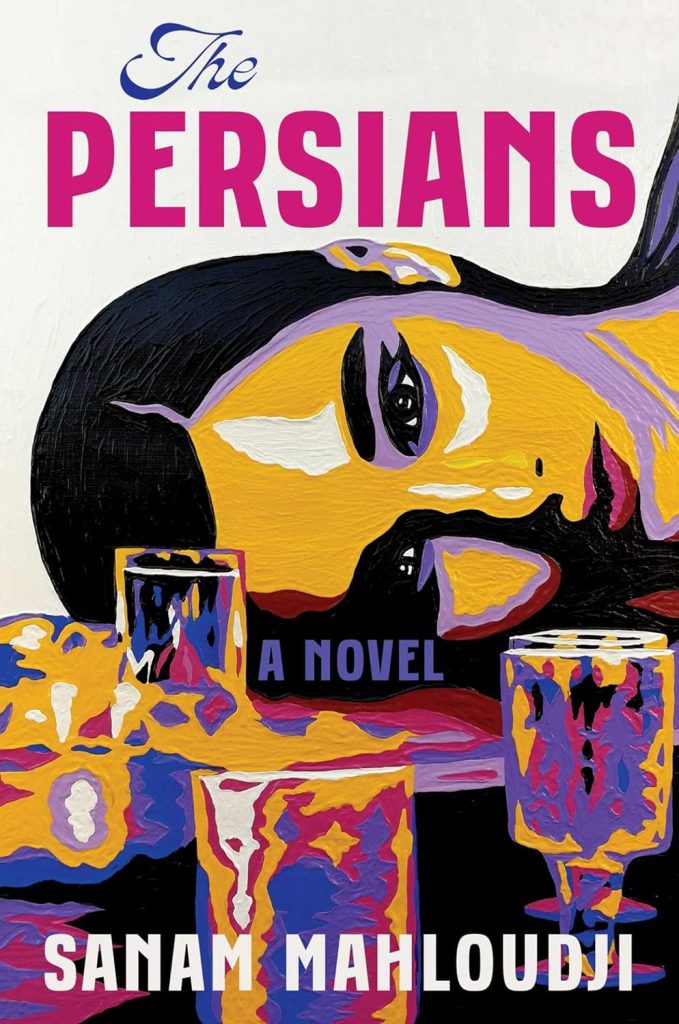
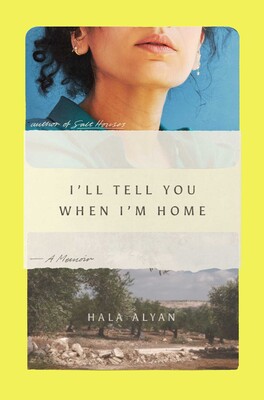
Born in another country and a citizen of this one, I’ve always thought that there’s a distinction to be made regarding how and when and why one immigrates—or doesn’t. To leave, to stay: who do we become? What part of ourselves might we lose? Are we running from or running toward? The Persians, Sanam Mahloudji’s crackling and confident debut novel, explores such nuances through the inner lives of the Valiat family, descendants of an influential patriarch, who are dispersed in Tehran, Houston, New York, and of course, Los Angeles, with a few side visits to Aspen.
The multigenerational women of the book—though there are male characters, the women of the historied Valiat family are the true power—drive this complex family drama, and with each chapter from the point of view of one of the characters, there’s a compelling interiority and intimacy. Mothering—and Othering—is woven throughout The Persians, glinted by secrets and silence, ultimately revealed. Such estrangements echo the larger separation from country of origin to adopted country, between mother and child, and even in an individual life: what we expected ourselves to be, and what we actually are.
Mahloudji’s talent for combining affecting individual narratives with a playful language and energy drives the momentum of the story and she imbues the book with larger cultural and historical backdrops. It is both a singular story about the Persians—or perhaps, these Persians—even as it confronts our universal desires to belong, to self-actualize, to be remembered, to connect.
I engaged in a wide-ranging epistolary interview with Sanam Mahloudji about the Valiat women, our cultural expectations, and the craft of writing.
Mandana Chaffa: Your short story “Auntie Shirin” was published in a McSweeney’s anthology in 2018—was she the start of The Persians? Or had you been working toward this novel prior to that?
Sanam Mahloudji: “Auntie Shirin,” published by McSweeney’s Quarterly—a publication I had admired for so many years—was the initial nugget for what later became The Persians, but I had not been working toward a novel at all. I was really focused on the short story form: that was my first love as a writer.
In 2018, when the story was published, I was only just beginning to think about writing with the goal of publishing. I didn’t really have an agenda with my writing, and that was critical for me. When I started writing (at least as an adult—I did enjoy it also as a child and teenager), I was a union-side labor lawyer, and I had spent my entire life before that in really regimented, directed paths. It was school, work, school, work…and I really hadn’t let myself just play. The idea of writing a novel seemed more like a career choice in a way, whereas short stories seemed like play because most people don’t read them, and that suited me just fine.
If a story is like writing a song, a novel is the whole symphony.
Looking back, I’m grateful I had no plans of writing a novel because my focus for years was really tinkering with words, forming interesting sentences and character and dialogue…considering the rhythm of words and engaging the senses. One needs to do all these things in writing a novel, but I think some people forget about the details when trying to hammer out hundreds of pages.
“Auntie Shirin” was the first story I wrote where I thought I had something more to say than I could accomplish in around 15 pages. Before then, the way I wrote stories was centered on a single moment, or interaction or line of dialogue that would start me thinking—and I would follow that one line of inquiry until its end. Perhaps I did that to protect myself—maybe something unconscious in me knew I’d eventually want to write a whole book but at the time it was important to write in a more low-stakes way, get some stories under my belt…to just play.
What I soon learned is that writing a novel is an incredible joy and something I found even more satisfying artistically than short story writing—it requires not only all the focus on language and sentences, but also inventing and retaining a lot in your head at once. Having to hold a whole world in my mind and call myself to express parts of that world when needed for a scene even as that world is also changing and shifting because of what is showing up on the page—I think that is maybe the biggest difference between the two experiences. If a story is like writing a song, a novel is the whole symphony.
MC: Shirin’s comment that “We didn’t come here for a better life. We left a better life” encapsulates the experience of many who left Iran after 1979, but the book also explores a range of post-Revolution experiences. Those who were able to leave. Those who couldn’t. More personally, your own emigration from Iran occurred in the same time period—would you talk about your own experiences in diaspora and how that has informed the novel in complement or contrast?
SM: I think about those lines a lot. Their meaning has changed for me during these years of writing The Persians. At first, I thought Shirin was a bit in denial saying these words because what she actually left didn’t exist anymore—the pre-revolutionary Iran. And so what she left was actually Islamic Republic Iran, and of course that couldn’t have been a better life. Could it? But with time, I have questioned that interpretation. I thinkthere is a deep loss when you leave your country, your history and culture, behind in the way Shirin and much of her family did…and even if on the surface maybe she has a freer life in Houston than she would have in Tehran, I do wonder what Shirin would have been like if she had stayed. I think she might be a happier person, and probably less focused on outer success and riches. Maybe she really would have had a better life if she had just stayed and dealt with life within the Islamic Republic—at least she still would have been home.
These are questions I ask myself—and are part of what inspired me to write these characters. Some who stayed, some who left. Who would I be if my parents never left? There is a part of me that grieves that person that could have been. Who would she be? My primary language would be different—I speak Persian, but my fluency is mainly to speak in the home with family. What would I be like if I thought in Persian? If my references to culture and music, to land, trees, animals are the ones you’d find in Iran, not the United States or London where I now live? Of course, everyone can listen to or watch anything these days with the right VPN, but even back in the 80s and 90s, the Western pop culture would have been filtered through layers of an Iran and Iranian-ness I couldn’t fully know. It’s kind of like the concept of terroir for wine—I can’t inject myself with that no matter how much I engage with Iranian culture. Although I am Iranian, in many ways I have been formed by the United States.
The staying versus going is also why I think some of the characters mirror each other, or why I needed to have so many different points of view. I feel like the Iranian experience is so fractured—we are never in one place, or time. Because I grew up with my family scattered across different countries, and because of this real palpable sense of before and after the Revolution, I had to imagine the stories of people who might have been my relatives into existence in order to construct a fuller image of who I am.
There is a deep loss when you leave your country, your history and culture, behind.
In a sense, that is Bita’s role in the book. She is a person who needs to construct a whole history of her family in order to figure out who she is.
MC: Did you always intend to do character-driven chapters when planning this book? It’s especially effective as these are individuals—perhaps even an entire culture—where people don’t easily share their deepest feelings, so this structure invites the reader to become a confidant.
SM: Yes, although I wouldn’t say that I was really planning the book in the early stages. I had written “Auntie Shirin” and there were these characters I couldn’t get out of my head. Shirin, Bita, Elizabeth, Seema. Niaz is the only one who doesn’t appear in the short story. I just wanted to know everything about these characters. Why they acted the way they did, what their problems were—I had some initial ideas, but from the very beginning I felt like I had a lot to explore and find out.
Perhaps because I had been writing short stories, the idea to write a chapter from a different character’s perspective felt natural to me—almost like separate short stories. But I also knew I didn’t want to write linked short stories. That can be a great form, but I really felt like there was an overall arc to this story that wanted to be told.
You are right—I do think that Iranians tend to be quite secretive as a people. They don’t usually share their real feelings. And I think even with younger generations, the force of history and habit is strong. I actively fight against that tendency in myself. There is such a fear I think of not appearing a certain way—as some kind of ideal version of oneself.
I wanted these characters to be able to tell the truth. And I knew it might not naturally happen in their interactions with one another, but if it could, it would be a really big deal.
MC: “Women have the fire in my family. But they are useless without power.” Yet, I’d suggest that in the Valiat family, in its many hues and flavors, it is the women who have the power. Of imagination, of resolution, of reinvention. Even with their wealth and significant freedoms, the men seem to have challenges rebounding into new circumstances, other than Ali, who was able to shift his station in life at a time and in a way that was decidedly revolutionary.
SM: Shirin says this during a conversation with her niece—I think she’s standing with Bita in her New York City kitchenette burning hair off her arms. Shirin thinks she is doing this big favor for Bita, making her look more presentable. And while she works, Shirin is running through, probably for the millionth time, the family history…this story that she feels she needs to keep repeating like some kind of prayer or mantra, as if to keep it alive although it’s long gone—but in a way they keep it alive by this telling and retelling.
You are correct that in the book, the women are more resourceful. Shirin has reinvented herself as an event planner in Houston. Niaz in her young thirty-odd years has had so many different pursuits—from the boldness of exploring her sexuality as a teenager in the early days of the Islamic Republic, to getting involved with her Blue Room parties, to starting her salons. Bita with her questioning of where she is going with her life and her slow budding attraction to her friend Patty. I do think all these women are evolving and challenging norms, while most of the men don’t seem so nimble.
This was, of course, intentional. Iran was and is a patriarchal society, and yet my whole life I have seen women who respond to whatever is thrown at them in ways that are wholly startling and, you’re right, powerful. Many of the men I have seen started out in positions of power vis-a-vis women but have seemed to flounder, or else are just going through the motions of the life that is expected of them. They work “in business.” They have “mistresses” because that is a way for them to feel powerful. But really, [maybe] they wanted to be an artist, something they’d never dare. They don’t have the guts. Or maybe they don’t really want to be an artist. I feel sad for these men, actually. They probably feel enormous pressure.
All these women are evolving and challenging norms, while most of the men don’t seem so nimble.
I think Shirin is also expressing her deep frustrations at this lack of equality in society. She does think that her mother and sister have been useless and powerless to some extent. And she thinks Niaz is wasting her life, and Bita too, to a degree. Maybe it’s that she really expects a lot from them. She would have wanted more for herself—there is a part of her who certainly doesn’t respect what she does for a living, even as she boasts about it. She knows she is capable of more.
From what I have seen, the Revolution did more damage to the psyche of the men in my family because they went from power to no power. The women already had no power, so they could only go up.
MC: Seema’s perspective arrives unexpectedly; a reminder that others’ voices are always missing in the narrative we’ve created for ourselves. Were you always planning to include her in the book directly, not just in the memories of others?
SM: Yes, I knew that she was going to have her own thread in the book, and that although we learn in the first chapter that she died a year before the action of the novel begins, I knew I had to find a way to bring her back.
She is Shirin’s sister, and yet she is so different from Shirin. It was really important to me to have the reader get to know characters who grew up in the same household but who ended up really different—that was part of the fun of writing the book. To see how differently people can respond to the same circumstances—the way siblings can be so unique is fascinating to me, especially when they are of the same gender. But also, each member of a family plays a role, or fits into a certain role in order to make a larger whole. Like in a band. Seema to me is like the conscience of the family. The one underneath it all. She’s the heartbeat. I have a lot of sympathy for her.
In earlier drafts of the book, she had died ten years earlier; in the editing process, it became clear that her death needed to be much more recent and present. That the family needed to be in an earlier part of their journey of grieving her, that her death was still new.
MC: Another compelling theme is how lives and personalities are formed in the absence of others, not just their presence—Niaz without Shirin, but with Elizabeth; Bita and Shirin without Seema, and more generally, Iranians without Iran. How much does absence, whether it’s people or place, play a role in your creative pursuits?
SM: I started writing fiction around the same time that my father died very unexpectedly. So, for a long time, the absence of my father ran alongside this new presence in my life of writing, of creative work. He was a very serious reader of literature, and in a way maybe I was trying to make up for that absence by pursuing a life in writing.
I don’t think I could have written this book if I had told my family about it—so I wrote it in secret. I only told my mother I’d written a book called The Persians after it sold to publishers. I wouldn’t have felt the freedom to form it in the way I imagined if she knew I was working on it. I probably would have been discouraged, or wouldn’t have even really started.
I also wonder if living in London opens up another absence for me—the absence of the United States—that has been helpful for my creative life.
MC: One of Elizabeth’s coping mechanisms is that one must “Accept and Move On. A.M.O…Forget the past. Focus only on the future.” It’s not an altogether bad approach, to be honest, though I’m even more taken with Niaz’s conclusions: “Persians left but keep looking for Tehran. Isn’t it better to just let go?” She—and Bita, to a large extent—the younger generation as a whole, understand more deeply total forgetfulness is both fruitless and can exact a cost on one’s soul, and forward momentum.
SM: The younger generation, Bita and Niaz, are certainly more in touch with their emotions, and think about feelings in a more modern way. And you are correct that A.M.O. is a coping mechanism. Elizabeth is probably lying to herself—she hasn’t forgotten anything! And by the end of that scene she does away with A.M.O., or at least she says she does. But you are right—I don’t think total forgetfulness is best for one’s soul and future. Acceptance is important—but again, I don’t know if Elizabeth was really accepting anything. Her coping mechanism feels a bit surface level. A label, but not a real truth. A way to trick herself.
Elizabeth doesn’t have the “tools” of modern psychology (she says something to this effect) but has figured out a way to live with herself. But I do think that her final act—which we don’t see, which happens after the book ends– will see her really coming into her own in a new way—or at least I like to imagine that for her. And even before that, in her last few scenes I do think that she has some real insights and develops some true acceptance.
Letting go does sound nice though, doesn’t it? I wish I were better at that. That is one of the goals of certain teachings, like Buddhism…but it’s so hard to do.
MC: You began the book with Bita’s impressions—Bita who is the direct connection to Seema—and gave the last words to Elizabeth. Would you talk about that decision? Did you always mean to bookend the novel in such a way?
SM: I had always meant to start with Bita as she feels the closest to me. She was my entry to this family. But for a long time Niaz had the last word. And I actually killed Elizabeth off! Not in a full scene, but in a short flash forward…but while editing the book, I came to see that Elizabeth was not finished.
Then it really made sense to me to end with Elizabeth. She is the source for all these other characters—she is the oldest living Valiat. The Persians wouldn’t have been who they were without her. She deserved the last word.
MC: The book is titled The Persians, which hints at another kind of veiling, doesn’t it? Immediately after the Revolution, at least in my own limited circle, people were more likely to say they were Persian, rather than Iranian, because of the attendant reactions. Is this another echo of how the family shaded the truth about the real background of their inscrutable “Great Warrior” patriarch, from whose callous actions there arose great wealth and status, and perhaps a little bit of a curse?
SM: I didn’t think of it that way, but I like that interpretation, and I think it makes a lot of sense in the context of the book—the Great Warrior’s story and the family’s various shadings of truth. I wanted the title to be audacious and bold—so much so that maybe I’m also making some kind of joke or commentary. I am thinking of big books written by Westerners with titles like “The XX” or “The XX People” where they are supposedly explaining a whole people to the West. I wanted to do that myself. And since I am now sort of a Westerner it felt appropriate. It felt like a very Western title from a Western Iranian.
I really wanted that title precisely because it felt a little ridiculous for me to claim it. I was only a baby when I left Iran, but in a sense, I wanted to show the reader (and myself) that this culture, this identity, is not something one can just shed by spending a few measly years in the United States. I have inside me a whole history and culture, even if I have to invent or create parts of it. It still exists in my head and in my soul. This relates to what I mentioned earlier—though in large part I was formed in the U.S., maybe there’s such a thing as an Iranian soul.
And I couldn’t have called them The Iranians. While I usually call myself Iranian, or Iranian-American, I think that calling themselves The Persians just gives that air of grandiosity. This status, imagined or real. Reza Shah officially changed the name of the country from Persia to Iran in 1935 in part to distance itself from its colonial legacy (it was never a colony exactly but Britain and Russia toyed with Iran for many, many years, had their “spheres of influence;” and later the U.S. too), and 1935 is not that long ago! I thought The Persians better points to the quasi-colonial history that I’m interested in. And even the begrudging longing for Western acceptance I’ve seen.
MC: Out of all these vivid characters, I have a particular affection for Niaz, who stayed with her grandmother in Iran, rather than leave with her parents—a casualty of one of the family secrets that drives, and drives apart, the family. Yet, she’s no victim; her story, her agency, is no less than those who left for a safer life. She has often untenable situations as a result of being a woman in Iran, but in many ways, she’s one of the most resourceful members of the family, and creates beauty and community, regardless of her circumstances, or perhaps, because of them.
SM: I love Niaz, too. When I imagine who I would have been if my family didn’t leave Iran, she’s kind of person I would want myself to have been. She is spunky, she is a real rebel—she sees through the bullshit. She gets swept up in her desires, and fantasies, but she takes real risks, and I think in many ways she has had the most interesting life.
By the end of the fourth month of pregnancy, the baby is roughly the size of an orange or avocado. Her skin is still mostly translucent, so you might be able to see her blood vessels.
Autumn comes suddenly, abrupt and welcome after the endless heat. The trees costume themselves in fiery red and orange, and the days shorten. I’m hungry for the dark. I walk the early dusks through Williamsburg, under the bridge, toward the water, toward the park. There is often the smell of something ashy, like a faint burning. It smells of adventure, newness, something about to happen. There is a particular smell of fire—rubber and garbage—that reminds me of youth, of trouble, the fire of protests, the fire that arrives as a warning, the first sign of danger. Once upon a time, this was the season of destruction. Once upon a time, this was the season of blackouts, one-night stands, remorse.
When I first met Johnny, he asked if alcohol made me uncomfortable. “Not at all,” I said. “I don’t mind.” It was the truth. I’d been intentional about remaining close to alcohol. The first three months after I quit, I lied to everyone about why I wasn’t drinking. “I’m on these dumb antibiotics,” I kept reciting. This meant I kept going to nightclubs, bars, house parties. I became inured to its presence, the ah of a popped beer bottle, the clank of ice against glass. It wouldn’t rule my life, I swore. I would heal myself. I wouldn’t be someone who made my sobriety its own kind of addiction. I was twenty-four.
Our first year dating was a whirlwind: travel, bar after bar after bar, in Spain, in Manhattan, in Boston and Providence and Oakland. I was finishing up my doctoral degree in clinical psychology and he was learning how to code. We stayed up like teenagers, slept past noon, woke bleary-eyed and disoriented.
In twelve-step meetings, there’s the same saying of alcoholics and co-dependents: They don’t have relationships, they take hostages. What is addiction but wanting gone awry?What is the story of addiction but the story of a longing you have to disavow? Leaving when you want to stay. Stopping when you want more. The addiction to the substance can become the addiction to another person. The continued thump of another heart. To burn yourself at the altar of the other, and to call the burning love. In Arabic, my favorite expression is: What is coming is better than what is gone. All addiction is the same in this way: the delusion of a better tomorrow, the delicious waiting for that turn. You wait because there is the promise of what will come, that kryptonic hope. Whether it’s the next hit, the next drink, the next lover—the addict is the quintessential archetype of the hopeful.
I’d always sought out drinkers, even after I stopped. But Johnny was different. I drank to destroy. He drank medicinally—like a chemist, not a gambler. His drinking was a constant and so it was like background noise. I poured whiskey into cut glasses. I lingered at the mezcals in the store. By the time I met him, I never drank. I never touched it. It didn’t have to be my lips touching alcohol, just so long as there were lips on it. There was a proxy delight in his drinking, the adventure without the consequence, my nervous system relaxing with his, the long exhale I felt at his eased body, the rush of serotonin. I loved his hangovers, the way I entered them like a room. Like this I found a way to keep drinking without drinking, a way to cheat the years.
Waiting can be an inherently hopeful act. You wait because you believe—even on the faintest level—that something is arriving. There is something to wait for. Against all odds, Penelope genuinely believed Ulysses would return.
For years, I rarely thought of drinking myself. If I did, I envisioned it like visiting a faraway land that I used to live in. I wanted to see if things had been rearranged. I wanted to check in on the gardens.
There was and how much there was. Kan yama kan. How many narrators. How many endings. When there is deep trauma. When that trauma has taken root. A technique in narrative therapy: asking the client to tell the story in third person.
In Beirut, she never knew mornings. Instead, she’d sleep past noon, stay up until sickly sunrises. She sucked her stomach in. She threw up in the bathroom. She lied. The city felt like a playground. Then a prison. The city grew around her like a tree. She drank. She sloshed around like liquid in a dirty glass, she spilled into booths and taxi cabs, she rolled around in beds with strangers, she woke up in unfamiliar places, her neck hurting and her mouth dry. She visited emergency rooms: the time she cracked her head, the time she woke her friends hyperventilating from too many drugs, the numerous alcohol poisonings. Afternoons spent flirting with the cute doctors as they unsnaked IVs for fluids and antiemetics. The dreaded hours of solitude: the hangover, heart palpitations, nothing to armor against the truth. Every day she seemed to get farther and farther from herself. A self built from bluster and duct tape: You try too hard. She tried too hard. She drank too much. She ate too much. She wanted and wanted and wanted and the bottom would never bottom out.
The first time she drank, she was sixteen and visiting her cousin in Amman. Studies show that an indicator of later alcoholism is whether someone’s first experience involves inebriation. She blacked out for five hours. She cried on the hood of a stranger’s car and told stories about love and nonexistent breakups. That was the thing with her and alcohol. Other people got drunk and told the truth; she drank and lied. She lied and blacked out and forgot the lies. The second time she drank, it was at her friend’s house in Lebanon. They drank Bailey’s straight from the bottle, and she remembers how the air in her room seemed to vibrate, the carpet, the electric tingles in her fingertips, all that unbridled potential. It was a feeling she’d chase for the next eight years: the promise of something happening. She could imagine small revolts, her crush appearing at the house, taking a flight to Paris. Never mind it was two in the morning. Never mind they were high-schoolers. When you were drunk anything could happen.
“A blackout doesn’t sting, or stab, or leave a scar when it robs you. Close your eyes and open them again. That’s what a blackout feels like,” Sarah Hepola writes. I’d found the best way to disappear. A blackout is the most spectacular magic trick of all. You erase yourself without anyone knowing it. You are absent only to yourself; to everyone else, you are still laughing, still moving, your mouth opening and closing, words fall out like stones. You still order another beer, tug a body against yours. You are a marionette, a hijacked engine, possessed. I never knew who took over when I blacked out. Maybe it was a stranger. Or maybe it was me, the actual me, the truest one.
What is addiction but wanting gone awry?
The year I graduate high school, my family moves to Qatar, a neat bit of luck that means I’m the rarest of creatures in Beirut: a single young woman, still a teenager, living in her own apartment, with her own roommate, without curfews. Beirut is fourteen years out of its civil war, an era that partitioned the city, brimmed the country with sectarian ties and violence. People rarely speak of it, and when they do, it’s like something of a bygone era. I start drinking right away: at the orientation event at university, with friends after classes. It begins like something fun, a little naughty, an adventure that never ends in a city that seems boundless. In this way, what I knew of Beirut I knew of drinking—I became fluent in the city at night, its alleyways and tiny bars and the sea glittering under the moon. The drink and Beirut became similar things, magical and terrible at turns. I became the confidante of taxi drivers. I befriended middle-aged bartenders who’d tell me to go home. I danced on boats, beaches, tabletops. One night, my friend nearly got taken by Hezbollah men—we’d drunkenly wandered into their tents in Beirut’s downtown square—and I, plastered, flirtatiously begged the man in Arabic to leave my friend alone. Take your Americans and go, the man had finally said, hesitating before adding, not unkindly, and sober up, sister.
Whatever I do tonight, I write in a bad poem during this time, will be outdone by tomorrow.
The truth is I lived in Lebanon for nearly a decade with only a hazy grasp of its history. I was a tween, then a teenager, then a college student. I parroted what I heard adults say during dinner parties, and drank my way through a political science degree. I chose the major because I couldn’t think of a better one, but my brain was always unable to hold all the dates and politicians. By the time I moved to New York for graduate school, I could barely explain anything. It was like trying to explain grammatical rules of Arabic, my first language, the first I knew of this world, but didn’t learn to read or write until age twelve. It meant I understood the sinews of it, the syntax, intuitively, but had no way to explain why. In America, Lebanon was seen as safer ground: the refugee camps, the Sabra and Shatila massacres, the oligarchical politicians, the corruption were overlooked. The West loved to tut over Lebanon. Creased brows. A country of French speakers. A country of bikini-clad women with dark eyebrows on postcards. The Paris of the Middle East, did I know they used to call her that?
I don’t send a voice recording to the avocado-slash-orange baby that week. Or the next. Or the next. Instead, I wait until I’m alone in the house, and rant to my grandmother’s photograph. She’s looking more solemn these days, more tired, a little older. I can almost make out her mmms. My soliloquies are becoming more deranged. She was right. I should’ve never stayed in America. I’d married America. Did she know that? I’d married it and I’d missed her death and I’d never forgive myself. And anyway, what was the point of leaving a place, when that place became a euphemism for every other place, when it became the reference point, when it superimposed itself on everything?
One morning in Beirut, I’d woken hungover.
“Get up,” my friend Karam said when he called me. “Let’s go somewhere.”
“I think I might be dead.”
“It’s Valentine’s Day. You can die after.”
We decide to go to Saida with another friend. It’s the third largest city in Lebanon, on the Mediterranean coast in the southern part of the country. In the days of the Phoenicians it was a major trading port. That day, we take a bus and I’m the only girl, flanked by my two friends. We walk through the cobblestone streets, the ruins and their distorted reflections in the sea, the streets filled with people and hawkers. The day is unseasonably warm, the air smelling of salt. We buy ice cream, then argue about which restaurant to go to. There are small stores everywhere, with men inside them: electronics, fruit, nightgowns.
There is a way that air rearranges itself in disaster. The ruins remain still. The water keeps lapping at the coastline. The people get in and out of their cars, the traffic worsens. But the voices start to seem louder. One man calls to another from across the street. A woman hurries by with a child. A man plants both his hands on the hood of a car, bracing himself, his head bent.
“Did you see?” one shopkeeper yells. Nobody responds. “Are you seeing?” We peer into his store, where the television is blaring. This is the scene I will return to in fiction, in poetry: Arab men hunched over television screens, learning about their cities, their dictators, their young men, the catastrophes that have befallen them. The dream my brother and I would share for decades before speaking it aloud: the light across a face, the story of a crisis.
We keep walking. “Something’s wrong,” Karam says, but we don’t respond. A woman is crying on the phone. We walk faster. I suddenly feel young, and my first thought is to call my father, my second is that he will want to know why I’m not on campus, why I’m wandering a strange town with two boys.
A crowd begins to gather on the street, mostly men, their voices laid atop one another’s, gesturing toward the sky, toward the sea. They are arguing, they are explaining. Something is wrong. Karam gestures toward the nearest shop, and we step inside. The man is my grandfather’s age, shaking his head at the screen. There is smoke, a fire, people gathering. The shot is aerial, then close up. The newscaster is speaking in formal Arabic, and neither of us can keep up.
“Uncle?” Karam begins. “What’s happened?”
He turns to face us, his eyes heavy and red-rimmed. I am startled. I am always surprised to see men cry, especially older men, especially older men who then speak gruffly. “What do you think happened? They killed him. They burned him alive.” He turns back to the television screen, the man’s face on it: Hariri. The prime minister. He has been assassinated. His car blown up near the sea in Beirut, a site that will be honored for years with a counting clock marking the time since the explosion.
Men gather on the street in Saida that afternoon. It is sunny. I am afraid, but excited too, my friends and I exchanging raised eyebrows, mouthing What the fuck as the voices gather, a fire starts, cars honk. They are burning tires, they are shouting. A man catches my eye as he jogs past and slows down. He grabs Karam’s sleeve. You should go, he tells him simply, before it gets bad. We are in the prime minister’s hometown, these men are his kin, they are furious. It takes us several tries to hail a cab. The smell of gasoline, already everywhere.
We take the cab north to Beirut, the sea blurring outside the window, the cab driver listening and cursing at the radio the whole time. The cab driver drops us off downtown, because Karam wants to see where the explosion had happened. We can’t get close and so we wander through the empty streets, a ghost town, the stores closed, the eerie sense of children without supervision, a city without adults.
Seventeen years later, it is October in Brooklyn. Seventeen years later, our block is transformed for Halloween. Windows alight with orange blinking fairy lights, child-drawn witches and ghosts, or for the more ambitious, a full murder scene, a towering Frankenstein, a cloaked woman that cackles when you walk by. I watch the mothers pushing their children past the decorations in strollers.
“A cat,” they tell them. “Is that a cat? Do you see the cat? What color is the cat?”
One summer in Beirut, your father takes you to the balcony one afternoon and tells you the drinking is a problem.
I watch them point, their children’s rapt, solemn gazes. I try to imagine doing the same, try to record myself describing the neighborhood to the baby. There’s a couple that lives two doors down, the woman’s pregnant. They have this dog, he’s kind of the worst? He’s always jumping up on you, then running around himself in circles. And he almost knocked the pregnant woman down the other day, and she automatically put her hand on her stomach and laughed. I sort of hated both of them for a moment? I don’t know. There’s a witch hanging from their stoop.
When the port exploded in Beirut in 2020, many first thought it was an Israeli attack. Some thought it was a foreign entity. The betrayal, the true betrayal, was learning it was your own. Your own politicians. Your own government. It was a self, cannibalized. It was a match, lit, and then tossed back into the room you were standing in.
All month, my friend texts me from Beirut. The port explosion caused billions of dollars in damages. Hospitals were destroyed. In the year since, the economy has fallen. The revolution has faltered. People are starving, Hala, my friend writes. There is a circulated video of a woman with a shawl half-wrapped around her face, storming a bank in Beirut at gunpoint. She is robbing the bank for her own money. I just want my money! she is heard shrieking. The manager looks wan. The banks have been limiting withdrawals. It’s mine! she cries when the man tries to calm her. Give me what is mine!
Later, it is revealed the gun was fake. A plastic toy. The woman got her money. It was for her mother’s treatment. I rewatch the video dozens of times. I am disturbed by her. I want to be like her. Taking what is mine. The shawl falling. My face visible throughout. Not bothering to hide.
When I remember my drinking, I see it refracted through places. Beirut is a city without curfews or oversight, a place where things can be bought off, where things can be erased if you have wasta, know the right people, accent the correct vowels. It is a city where neighbors slaughtered each other for fifteen years, where entire areas are Shi‘ite or Sunni or Maronite, where people rarely speak of the war. For years, it was the backdrop of my drinking, my mistakes, my unease, my attempts to recover, a place of music and trash and bougainvillea, traffic that ate up entire afternoons, stunning views from house party balconies. A few weeks before I graduated college, Hezbollah took brief control over several neighborhoods in west Beirut, including my own. More than gunshots or my mother’s frantic voice checking in daily during that week, I remember ice clinking in glasses, my friend’s rooftop, how every night we topped off each other’s drinks and listened to the upcoming summer hits.
There are dreams I have that are more like muscle memory: it is always night, the streets are always empty, I am walking through Centreville with its glowing mosque, I am in the backseat of a car driving up the mountains, to my grandmother, to Meimei where I weep on a couch while she strokes my hair.
I don’t think you understand, I told her in Arabic, how bad I can be.
What I’ve done.
She shushed me. There’s nothing you’ve done that the morning can’t fix. But it was already morning. Dawn had broken and I’d woken her, and I kept telling her things, whisper-crying things as she hushed me, things I’d forget by the time I woke up, things I could never bring myself to ask her to remind me.
If there is any night in my life I wish I could take back, it’s this one.
Another technique in narrative therapy: you ask the client to tell the story in second person.
One summer in Beirut, your father takes you to the balcony one afternoon and tells you the drinking is a problem. Only he doesn’t say drinking. He says what you’re doing. He is unable to even name the damage. Unable to speak it into the air. He says your siblings and cousins look up to you, this can’t continue. You say nothing. It will continue. It will continue for a long time. You’d come home the night before at four in the morning. You are twenty or nineteen, and your knees are still bleeding through the Band-Aids from where you skinned them jumping a fence the night before. You don’t remember the fence. You don’t remember the blood. You don’t remember shouting into the empty street: God, I’m so bored right after, then starting to cry. Your father ashes his cigarettes and waits. You don’t say drinking either. You just tell him okay.
During my doctoral program, I moved into a shitty apartment with roommates across from Penn Station. It was chaos. Take-out containers and dirty laundry. The muggy endless summer. House parties on Saturdays, spilling onto the outdoor patio, the arguments, the crying.
Someone was always crying. I took to making recordings while drunk, little anthropological notes, heartbreaking moments caught on tape. I’d plead with myself on the recordings. Talk about how bad it was. How I needed to remember. There was a bar downstairs and it was ruining my life and when I said that to my mother, she said I was ruining my own life, but my mother was thousands of miles away, in Doha where it was sunny all year round, and the houses were in compounds with swimming pools and gyms and palm trees. Not here. Not on this piss-smelling corner in front of that terrible bar, smoking a cigarette, watching the Madison Square Garden clock. Every time I came outside to smoke, the clock had sped forward. It wasn’t fair. It was a Tuesday. I had work the next day. I was supposed to be at school at nine a.m. and it was already two in the morning. I’d record my quavering voice, watching the lights of Penn Station. It was bleak magic.
The next morning I’d hear the slurred, heart-punching messages: Hala, please, please stop. Hala, please, please, please.
My friend who lives in Beirut texts: The hospital has four more days of fuel.
There was a brothel in Beirut. There was a man who ran that brothel. I would go there just to drink sometimes. One night, the man asked me to leave. A girl like you shouldn’t be here. I turned mean. What did he know about a girl like me, what was he saying about the other girls, I slurred, waving my arms at the working women, but they barely turned at my voice. He insisted, his voice turning low: Please, this isn’t right. We argued until he capitulated, exhausted, pouring me another drink, my victory feeling heavy in my chest. I wanted to keep arguing. I wanted to tell him I was no Midwestern apartment complex, no hardworking mother, no table manners, no prayers, nothing. I wanted him to understand just how bad I was, how much worse I could be. I wanted to tell him that about the latent thing in me. I wanted to tell him that, my God, it had woken up and I couldn’t put it back to sleep. But I could hear him mutter to himself as he turned away, But what’s happened to her that’s she’s here?
There is no story of the drinking without the story of the Bad Boyfriend. There is no story of the Bad Boyfriend without the story of the lies.
I can’t tell you that story yet, I tell the avocado-sized baby during a walk.
I put up a pumpkin-orange wreath in Brooklyn. The lines in front of gas stations in Lebanon are hours long. Someone gets shot over petrol. Then another. Then another. There aren’t antibiotics in the pharmacies. The country defaults on its loans to the World Bank, and the economy collapses. Whenever I think of my grandfather, his grave next to Meimei’s, the grief is so sharp it must be dodged. So I call upon my old trick: I pretend he is alive. Sometimes I can pull this off, the blessing of ghorbeh, the distance, that tentpole of diaspora. Death can be ignored, so long as the Atlantic stays where it is, the miles in the thousands. Like this my grandfather continues to live in a building overlooking the sea. Like this he breakfasts every morning on pita and za’atar, Sundays on ka’ak and knafeh. Like this he drowns it in syrup, like this he spends his afternoons reading articles on his computer, like this he tells the neighbors bint binti is a writer in another country, that I’ll be coming home soon, maybe even this winter. The same logic works for the entire country: like this Lebanon can live in its former iterations. The gas shortage, the exploded hospitals, the gunfights in traffic jams, I don’t need to grieve them because they aren’t happening. This is my shameful luck, my lucky shame.
In Brooklyn, I google Halloween costumes. In Brooklyn, I read about what a womb does in one month, two, five. I wake one morning to a Johnny that won’t speak. He moves from room to room, red-eyed. He is silent in the living room. He is silent in the kitchen.
Please, I say. Just tell me what it is. You’re scaring me.
He turns to fill his glass with water. Something about the moment feels familiar: turning away, the clink of the ice machine, slow motion until I realize that his back is crumpling. His shoulders shake. The glass nearly drops, but my body has moved to his body without realizing it, two bodies that have known each other for years now. Two bodies now clutching each other. I walk him to the couch and for the first time in months—for the first time since the sesame seed turned into an orange, an avocado—he pulls me to him and sobs. He sobs into my hair, my neck, my shoulder. Outside the window, the trees are orange and red, blurring fiery in the wind. For a quick, disjointed second, I miss my mother, her smell of leather and flowers, the silver box of jewelry she had in Oklahoma, the inside blue velvet, soft as a cat’s tongue. I used to want to sleep inside that box as a child, two inches tall, resting my head against the amber of her necklace.
“What kind of father,” he begins. He talks. He tells a story I’ve heard before, but it’s the first time I hear it on this couch, in this month, where somewhere, a baby with his eyebrows and my ears is turning in amniotic fluid. Even with all those letters, long as an afternoon, the story unfurls in front of me as though for the first time.
What happens to a story when you hear it? The touching it makes it yours, changes its shape. But some stories aren’t yours, no matter how long you live inside them, analyze them, remember them. I could write a thousand poems about this story, and it still wouldn’t be mine.
One night I go to Dave & Busters with my brother and cousin Omar and their girlfriends. We are bored and nobody can come up with a better idea. Children ping around the space like comets, the persistent lights and bells of the machines soothing. While everyone is getting drinks, my brother’s then-girlfriend, Yara, and I try the claw machine. She wants to know about the surrogate and I tell her everything.
“She has daughters,” I say. “She always texts me during the doctor’s appointments.”
For our birthdays that year, Yara and I had gotten tattoos: a small matchstick on the inside of my right forearm, a technicolor red heart on her shoulder. I’d had a whole thesis about the matchstick: it could mean destruction or warmth, a reminder that the same thing can do both things, depending on how you held it, how you used it. When I asked her about the heart, she shrugged. “I think it’ll look pretty.” It did. “I’ve only told Johnny so far,” I say impulsively. “But I did find out the gender.”
She squeals. “Tell me, tell me, tell me!”
I tell her and she cries and laughs and jumps up and down. I snap a picture. The photograph is blurred, the absurd candy lights streaking her face, her expression animated with joy. It is the first real joy I feel in a long time, a response to hers: this moment, someone unabashed with their excitement. Unwilling to apologize for it.
In this story, there is a boy who lives in Massachusetts. He has a father and mother and brother. He goes to a private school, lives in a three-story house, summers in Maine and ski trips in Aspen. There are no bombs in this story. There are no prime ministers being assassinated, no evacuation ships, no passports being hidden in the bottom of a suitcase. There are no food stamps, no immigration officers mispronouncing a name. There is a father who disappears into himself for days at a time. There is a mother who adores that father. There is a boy, the youngest, who is bright and talented and loved and punished for those things in equal measure. There is a boy who is given one medication, then another, then another. There is a boy who drinks for the first time at thirteen, and never stops. For years, he dreams of leaving that house, the snow, the people who love and punish him in equal measure. Then one day, he does. He gets on an airplane and goes to country after country, with a dusty backpack and worn-out sandals, places with names he beats his tongue against until he gets it right, until he says them perfectly, until he can ask for water and bathrooms and then explain his thoughts, the texture of his dreams, in another language. He goes from city to city, living on the beach, eating fruit from tree branches, spending hours under the sun. He decides not to die.
My final year in Beirut, I meet a man named Daniel. He is Irish and Egyptian, and speaks in lilting, musical tones. He drinks as much as I do. His mother is dying in Dublin, and we spend nights closing down bars, then kissing in the street. I once forget a necklace at his house, and he carries it around for weeks before we see each other again.
The boy travels for years. He goes to Seville and Costa Rica and Mexico and Chile. He gets a job doing it. He takes other boys and girls on trips, even though he is barely twenty, twenty-one, he takes teenagers to cities across a different continent, scolds them to listen to the local guides, laughs at their jokes, does head counts before excursions. One trip, in a new group of kids, the boy meets another boy, a few years younger. His name is Taylor. They play guitar together. The years between them feel like a chasm, but really they are both children. They both need protecting from what’s to come.
Every time Daniel offers me affection, I flinch. I cancel dates. I pretend I don’t care when he dates a Lebanese bartender. One night, we spin on a dance floor and then he asks me to look at him, just for one second, love, without looking away. I can’t do it. My eyes dart like fish. I leave Beirut. His mother dies. The worst nights in Manhattan, the ones that are the coldest, when the drink seeps into me like possession, when I can’t stand for more than a minute, when I can’t speak a full sentence, he’s the name I whisper against dive bar bathroom sinks, as though I could invoke him.
The boy takes the group of teenagers to a small town in Mexico, where there are trees and hills and a group of Mexican children. This is part of the trip, rich American teenagers playing with Mexican children, hide-and-seek and tag. Taylor is the first one to start a game, the children giggling around him. He tells them to chase him. He disappears between the trees.
There are two ways to tell the story that is not my story. There is the story of the children, who chase after Taylor, this boy with parents and an older brother, this boy who lives a thousand miles from here, who plays guitar and piano, who will graduate in a year. It is a hot day in July. The children chase after him, they watch him run on his long legs, watch him turn back, give a broad smile, then jump behind a large tree.
I was two years into Manhattan. We kept missing each other: when I was in Beirut, Daniel would’ve left the week earlier. Daniel was in London, but I’d just flown back to New York. It was early August when we messaged each other. He was coming to New York later that month. He had a birthday party. He turned twenty-five in Dublin. It was a warm night. He was smoking. He sat on a windowsill. He leaned or he tipped. It was the first birthday he’d have without his mother. There is no other way to tell this story. He never came to New York. He fell. He fell and fell and fell.
The other way to tell the story that is not my story: the boy. The boy who grew up with snow and money. The boy who left and decided not to die. The boy who is a few years older than Taylor, who has played guitar with him, talked about his future, the colleges he will go to, the music he loves. The boy hears screaming and then the children are running back, not being chased, they are running alone, crying out, Se cayó! Se cayó! and the boy is confused, shouting in English, then Spanish: Who fell? Who fell? But he already knows the answer, is already running to the tree, to the well that was hidden behind the tree, the impossible drop, the dark that will take days to mine, days to find the bottom, but before that there is the earth beneath the boy, his knees hitting it, his voice cracking as he begins to scream a name.
Tell me what you fear and I will tell you what has happened to you, Winnicott wrote.
It is October in Brooklyn. The avocado-sized daughter is four hundred miles away. The boy who fell to his knees in Pozos, Mexico, is panting against my neck.
“What kind of father,” he says. The first thing he did after the falling was call Taylor’s parents. He was twenty-two. He told a mother and father that their son had fallen. That they didn’t know how far. They didn’t know if he was still alive. For days, he spoke to police officers and journalists and medics. For days, he sat with a mother and father who waited for news, and when the news came, he was there. There was a father and he turned to the boy and asked, Will we ever recover from this. Here is the crux, where two stories meet like rivers: two bodies in October, crying, two bodies that each fell in love with a person, with their history, the mirror they became. It took me years to realize we’d both loved boys who fell, then years to understand we’d learned different things from the fallings. About love, about grief, about the inevitability of one into the other. Here is the crux of our story: I wanted a child. He didn’t. His reasons are as plentiful and vivid as mine. We came to each other with a wounding that wasn’t ours, a wounding we gave each other nonetheless.
For the first time, pressed against his familiar salt and forest smell, I think: She’s going to be half me, and half him.
When people ask why I stopped drinking, I always say, Because I knew I’d die otherwise. I list the ways: I would fall out of a window while leaning to wave at someone. I would hitchhike with the wrong group of guys. I’d wake up not only to a strange man, but to him holding a knife to my throat. I talk about all the ways I had tried to die. This is the truth, but there is another one, one that I never talk about, which has just as much to do with love.
My brother quit drinking in his twenties, too. Once, overhearing us talk about it, my father grumbled, I don’t know where you all get this from. Nobody drank in his family, a lineage sprawling back to Gaza, to the villages that were dispossessed in 1948, generations upon generations living off the land, the sea, each other. All Muslim. Nobody drank, but there were stories of great-uncles, a wayward aunt, someone’s grandfather who gambled everything away, a man who became so angry that he’d stopped another’s heart. People who didn’t know when to stop. People who wanted and paid for that wanting.
What story can be built from a blacked-out memory? For years, I had fragments. Everything else would be a lie, conjecture, an attempt at guessing a life. Instead, I lived in montages: two days at the house of a stranger, who’d wake me just to give me more vodka, then watch me sleep. My finger tapping drunkenly against my own thigh. A gate I tried to scale. The meeting with the dean where I almost lost my scholarship. The mornings, always late, always guilty, always trying to remember: what had I said, to whom, where had I gone, why was my thigh bruised, to whom did I owe an apology. The night I showed up drunk at my friend Michael’s house. What happened to you? he asked. I apparently replied, Me. I happened to me.
What story can be built from a blacked-out memory? For years, I had fragments.
I once went to a fortune-teller in Jordan. She was famous among the locals. I met with her for an hour and she told me I’d one day choose between two men. That’s mostly what I remember. She said other things: that there would be planes and oceans I’d have to cross, lovers I’d have to choose between. She recorded the whole thing and gave me the tape; your guess is as good as mine as to where it is now. There was one other thing: she said I’d been a witch in a past life. She told me I’d died from either thirst or fire. That I’d burned myself up. She told me I was here now to make different choices. I was sixteen.
The night of my twenty-second birthday, the last I’d celebrate in Beirut, I got so drunk I fell face-first on the pavement. My final months in Beirut had a manic quality to them. I did not know how to leave, and so the leaving had to become necessary. I destroyed everything I could. I slept with the wrong people. I said terrible things. I fought. I saw the Bad Boyfriend again. I ripped clothing, I vomited inside cabs. I was making Beirut unreturnable for myself. For years, since the Bad Boyfriend, I spent most of my time with American boys. They were safe, disposable, always leaving, always drinking. The shifting tide of expats: the constant arrivals, how well it lent itself to longing, the constant going-away parties, the group shifting to make room. We drank ourselves incoherent on rooftops, balconies that overlooked bullet-riddled buildings. They didn’t care about the messes they made, in bars, in taxis, on the street: it wasn’t their city. I could hide under their cloak. In this way I was both inside and out, a local remade into an outsider.
That night, I turned twenty-two. My hair was dyed pink. I fell so hard against a friend’s sink she heard it two rooms away. I ended the night cutting my friends’ hair, and they cut mine. We did it like children at a sleepover, fondly, carefully. More, I kept telling them, more.
Obsession is an illness of repetition. This was the task of drinking— an endless arithmetic. The hand outreached for a drink, once, twice, a thousand times, a loop.
The next morning, I dragged myself to a friend’s house for a miserable brunch. Halfway through I went to a bedroom alone. My face was scraped raw from where I’d fallen. My hair looked terrible. After ten minutes or so, the door opened. It was one of the expats, a few years older and from Massachusetts. His face was impossibly gentle.
“Can I sit?”
We sat at the edge of the bed in silence for a while. I knew it was over. My time in Beirut. The summer. My college years.
“You’re lucky you have a pretty face,” he said, and the tension broke. We both laughed, until mine caught in my throat. He put his hand on my shoulder, awkwardly, palm-first, and I knew he was trying to think of what to say. There were bad men, but there were other ones too. The other ones were always trying to think of what to say to me. They tried to cut me off, wrestled me into cabs, poured me water. He and our friend Michael had taken me to the ER once. They convinced the doctors not to call my parents. He’d forced me to go home the night before my GRE. I can see our reflection in the mirror, mostly out of view: my scraped face, the tufts of pink, his hand against my shoulder, his somber face. I’ll remember this, I suddenly thought. That, among the violence, there was so much tenderness.
A place teaches you how to love. How to grieve. How to destroy. I never got to live in Palestine. I got the Midwest, a year in Maine, the desert, a near-decade in Beirut. When I left Beirut, I didn’t just leave a city. I left what it had done to me. What its men had taught me, what they’d taken. What I’d given.
I left Beirut for New York a skittish, cigarette-prone girl with no radar for danger and nobody I knew around for miles. I found an apartment two blocks from the Columbia campus, lived with two other graduate students. The first month, I spend the darkening days going from bar to bar, drinking the way I’d done in Beirut, dye my hair a purplish red, wear the same men’s gray hoodie everywhere. I am here to study psychology, but instead I skip classes, sleep until the afternoon, dream of Beirut every night. I miss the traffic, the unlocked doors, the chaos. I’d left the city like I was fleeing it, but I couldn’t sleep without its noise.
A few weeks into Manhattan, I go out alone to a Columbia bar. I meet a woman, a sculptor or something. There are two men, tourists. There is a couple. I keep flitting outside to devour cigarettes. I haven’t washed my hair in days. I might be depressed, I text my friend Dalea, who lives in Florida and keeps telling me to move. When I finally visit, I can’t believe we’re in the same country: her enormous apartment, the unrelenting sun, the flip-flops and tank tops she wears to class. In Manhattan, the weeks blur into endless flights of stairs in subway stations, slushy crosswalks, missed 1 trains, psychology professors who speak about happiness unironically. I argue with one of the men in the bar about Palestine. The woman tells me I have interesting eyes, as though it’s a fashion choice, but that I need to learn to put on eyeliner properly. I have one white wine, then another, then a third. I start feeling dizzy.
“I think I need to sit down,” I tell the woman. Behind her, the couple are kissing. The bar is hot and the way the light is hitting the bar top is making me anxious. “Can I sit?”
That’s the last thing I remember. It is a tampered tape, an erasure poem. I watch strangers kiss and then—shapes, blinking lights, my eyelids making sense of sun. There is a white ceiling. There is a scratchy blanket under my chin. I am alone in a bed. It takes me minutes to be able to sit up; I feel like I am upside down, moving through water. There are strange marks on my arms and thighs: rainbow-colored, dots in different colors, pen or paint. It will take weeks for them to fully disappear. There is someone else in the apartment, a bathroom out of sight, the sound of water running. My instinct is to grab my phone, my hoodie, my shoes, dash down the long hallway, into a grimy stairwell. I walk down two, three flights of stairs, then a glass door, then pavement, then sunlight. I run down one block, then another, then cannot take another step. Something glitches in my brain, something shimmering and strangely colorful, and I realize that the line on the pavement is moving, or sparking. Two sanitation workers watch me. “Late night?” one of them asks.
“Do you see this?” I mumble. It is the first thing I’ve said since waking and my tongue feels funny.
“What’s that, sweetie?” “She okay?”
“Just fucked up.” He snaps his finger near me. “You need water or something?”
I shake my head. It takes a minute, but they eventually keep working. I call the first person I think of, my friend Andre. It is mid-morning, a weekday. He is in his apartment in D.C., his voice booming and familiar in my ear. I talk frantically about sidewalks and holes and shimmering lights.
“Hala,” he says firmly. “I need you to look up. Look for the nearest street. What street are you on?”
I’m in the Bronx. I’ve never been in this neighborhood before. I realize my hands are shaking. I’m suddenly afraid I didn’t run far enough, that someone is going to find me. But who? I remember the woman, the tourists, the couple. I hear him clicking on his laptop. He is finding directions. He’s going to get me home. He promises.
“But the sidewalk. I don’t think I can step on it.”
“So maybe there’s something wrong with the ground,” he says amiably. “Or maybe there isn’t. What we’re going to do is assume that it’s going to be like every other time you’ve taken a step, okay? The ground has been there. We’re just going to remember that.” He sounds conversational, casual. “So let’s take a single step, okay? Can you do that for me?” I take one step. The ground holds. I take another. He tells me what train to take and to call him when I get out. It is the 1 train. It is crowded, people headed to work, teenagers to school. There is a woman wearing a baby in a sling. She looks away when she sees me watching. The numbers blur by. I get out at 116th Street and call Andre back. He tells me where to turn, until I’m at the university health center.
There is a kind doctor, a litany of questions, and then she asks, “Is there anyone I can call?”
I open my mouth. I tell her about Andre in D.C. and Dalea in Florida.
She takes a breath. “Not your friends, honey. Is there a parent I can call? A family member?”
There is nobody nearby, I tell her. My parents are in the desert. My siblings too. My cousins, my aunt, my grandparents—Beirut. Everyone is thousands of miles away. It is the first time I really understand this and I start crying so hard she has to call in a nurse to help calm me down.
“Poor kid,” I hear one of them say, and cry harder. I’m not a kid, I want to say, but I’m too busy wiping snot with my hoodie sleeve. There is a hushed conversation between them, another doctor who comes in and asks me a couple of questions, about sex, about if I’m feeling any pelvic pain, questions that make me cry harder. The three of them face me. “We think someone put something in your drink,” the first doctor says gently. “And we need you to go to the emergency room.”
What is a story in hindsight? Conjecture, a guess. I don’t remember how I got to the emergency room, just that there was a girl my age with me, a volunteer for a crisis center. I don’t remember what tests they ran, just that the doctor said I could make a police report, but I’d have to get a rape test first. I don’t remember the volunteer’s name or the color of the doctor’s hair or the color of the hospital gown, but I remember saying no to the rape test, even though they asked more than once. I said no each time. I feel fine, I said, and now, fifteen years later, I can’t remember what the truth was. Only that, whatever the answer was, I didn’t want to know.
In the hospital lobby, the volunteer held my hand. We’d been together for hours. I never wanted to see her again.
“None of this is your fault,” she says. “The thing is . . . it’s not fair but . . . we have to watch out for ourselves. Girls, I mean. You can totally drink.” She says this in a rush, so it sounds like one word. Youcantotallydrink. “But it just might mean that, like? Bad things are more likely to happen.”
I smile at her. She is my age, maybe a year younger, but I feel decades older. She has shiny hair, a pretty coat. She wants to help. She is spending her free time doing this, meeting crying girls in hospitals, holding their hands, telling them it isn’t their fault.
“Totally,” I tell the volunteer. “Yeah. I’ll stop maybe.” She hugs me outside the hospital.
I don’t stop. The following year, I move to the shitty Penn Station apartment above a bar. It is named after a Shakespearean play. The bartender has long, sandy hair and reminds me of Dave Grohl, which reminds me of the Bad Boyfriend, but this one has kind eyes. I flirt with him and he wants nothing to do with me, except for one night when I black out and couldn’t tell you what happened. This happens more and more, the blacking out.
One night, a homeless man blocks my building door. He tells me to look at him. Something is going to happen to you, he says when I finally do. He means bad. He means something bad. But something already has. For years, I waited for things to happen, and then they did, and now I couldn’t stop the happening.
Every night. Every single night I tried not to drink. Every single night I failed.
What kind of mother?
And now? It is October in Brooklyn. Johnny’s face buried in my neck. His own question: What kind of father. The grief between us cracks open and in that overture something in me revs to life. Here is the thrum I move easiest to: the excitement of misery, the somber hit of a crisis. I become obsessed with help. For two weeks I research therapists.
I calculate costs in a spreadsheet. I call ketamine clinics, rehab centers, addiction psychiatrists. I feel Johnny’s unhappiness in my bones, as my own. I call between patients, on my way to errands, with the same rush of a first sip. I will fix it. I will fix everything. I imagine us in the waiting room of a swanky rehab, drinking orange juice in a beautiful courtyard in Arizona or Wyoming. We would talk about our lives. Our miscalculations. We would talk about our drinking. We’d spread our mistakes out between us like a picnic. We’d finally understand. The receptionists are confused when I call. There are long holds. Who is the patient? Who am I calling for again?
One of the psychiatrists listens as I breathlessly speak for an hour. I’ve gone ahead and scheduled an appointment. I’m in his stuffy office, only I’m telling Johnny’s story. I talk about his childhood. His father. The boy who died. I talk about the pills, the drinking, dropping thirty-eight years at the doctor’s feet. Help him, I say at the end. Please.
The doctor grimaces. I can see something on his face. My stomach drops. It’s worse than I thought.
“And you?” he asks.
“I’m . . .” I look around, confused. Had I misunderstood something. “I’m sorry?”
“Okay.” He scoots his chair forward. “Has your husband said he wants to get help?”
I feel my shoulders tense. “Not yet, but I think—”
“Mm,” he talks over me. “And do you think—I mean really think— that it’s something he’s ready to do right now?”
His question is a blade. I think of Johnny saying, “You’re still trying to change me,” think of everything he’s told me. I feel myself shrink into the couch. My voice comes out small. “No.”
He sighs. He says he’s going to tell me something. I hate when people announce their announcements. I wait.
There is a kindness in how he looks at me. Solemnly. “If you’re not careful, then this,” he says slowly, waving vaguely at the room, the city, the man somewhere in that city, my own frenetic body, “is going to cost you your sobriety.”
The last night I was alone with Daniel, we went drinking at a bar in Gemmayzeh. Its sign was neon and red. A drunk British woman kept saying we looked in love. We laughed her off. My stomach flipped. She was outing me in a way that sex hadn’t. But Daniel was drunk and so was I, and we kept drinking, and we looked at each other and for a second everything slowed down. We didn’t say a word. His mouth softened and I knew he was about to speak, about to say everything. I looked away, ordered another drink. The moment broke. After he died, I thought of that night. How nobody on the planet would know about it. That lady. That rush of mezcal. How it was just me and my memory of it. Nobody could fact-check me. Just me and my memory, growing larger and unrulier and more different every passing year.
The night after the psychiatrist I go to bed spent. I have lists and nobody to give them to. I think about the doctor and the fortune-teller. I think about the meetings. The slogans. An avocado. The attempt to control is just an attempt to protect. But we hurt anyway. Trying to control the hurt only makes it hurt worse.
In the morning, I wake with a fever.
There are doctors. An urgent-care visit. My urine is clean. The ultrasound is clear. My lower back aches. The fever rages. My breath catches. The second doctor refers me to a third doctor and the third doctor tells me sternly to go to the ER. The IV bag reminds me of Beirut, alcohol poisoning, unimpressed doctors. I have this sickness, I once wrote in a journal. Everything reminds me of something else.
A fever is its own kind of intoxication. I am fuzzy with heat. I cry from pain when I pee. I fall asleep nauseated, then wake craving my grandmother’s lentil soup. I’m convinced she is in the other room. Johnny orders some for me, but it isn’t what I want, and I weep as I eat it. The Styrofoam container, the plastic spoon clicking against my teeth. I watch a television show about a woman with a daughter, then half-dream that I’m talking to my own. The fever maddens me, wrecks me, ices my bones then sears them. I have spent myself like a bad check and there is nothing left but this tired fire.
I have a cyst on my ovary. It has happened before. After the last miscarriage, I had grown one. I liked this language. My ovary grew the cyst like a rose, like I’d planted it there on purpose. It ached when I coughed or moved too quickly. My third trip to the emergency room, the new doctor takes inventory of my symptoms: back pain, breathlessness, urinary symptoms. Blood work clean. The fever is the outlier, she says. But she has a question.
“We’ll check, of course. But. Are you sure you’re not pregnant?”
I don’t mean to laugh. I laugh so hard a nurse pokes her head in. I laugh so hard I start to cry a little. The orange. The avocado. The crying hardens. I think of the hours I’ve spent making the wrong lists. Not cribs or names, but doctors and rehabs. Wanting to fix someone that hadn’t asked for it. Someone that had asked only for an afternoon, to be held while he cried. The pregnancy test they run is negative, of course. But later, I google the symptoms and she’s right. I have all the symptoms of someone in their fourth month of pregnancy.
They never find out the cause of the fever. Fever of unknown origins, the medical records read. HCG negative. The MRIs come back clean, the tests, the blood work. They can’t find anything. The carved pumpkins rot slowly on the neighborhood stoops. I keep rewatching the same episodes of television. On the show, the daughter saves the mother. The mother saves the daughter.
What got me sober wasn’t the concept of my own death, but Daniel’s. In his death, in the ensuing grief, I could see my own. The falling that happened for years. Because I knew I’d die otherwise. He was drunk. He leaned or he jumped and twelve hours later my friends Sarah and Dana called me and asked me to sit down. I was in Manhattan then, that shitty apartment near Penn Station.
My professors, the clients at the substance use clinic I interned at, my second year of the doctoral program. Nobody knew. Nobody knew, as I talked about breathalyzers and harm reduction and explained stages of change, that I was in the trenches with them. “It must be hard,” I’d say, but mean It is hard. I know it feels like you might not be able to change. Am I going to be able to change? The sessions were marvelous, disorienting places to be: I spoke to two people at once. I listened attentively to the patients’ insights: what worked for them, what didn’t, what they wrote on Post-its to look at each morning, their reminders for the people they wanted to be.
The fever breaks as suddenly as it came. A good fire purifies, licks things down to their bone. The fever cleans me out. On Halloween, I stand under the moon with a glass of water. I leave it outside, because that’s what the spell books say, because I don’t know what I believe anymore, because I’m thirsty right then and there, because I want what I’m already holding in my two good hands.
In the movement to decolonize mental health, the goal is true cultural humility—in giving power away, in collaborating, in naming hierarchies to try to dismantle them. In meeting people where we are, too. But before I learned this language, I felt it in my body: how my suffering was no different than their suffering. How my graduate classes and DSM codes were useful, but how people needed to find their own language, their own system of meaning. I had patients that relapsed and never returned. I had patients that were forced to come in through ultimatums: a furious partner, an adult child. They didn’t often last long. People needed to want the change, or at least needed to be curious about it. People needed to have hope, even if it was the slightest ember of it, for a different version of themselves. Future Them needed to flicker in form, the slightest glow. We built our future selves from our present selves, I started to understand. Every day I didn’t drink was another day I learned I was capable of not drinking. Every day I didn’t drink was another grace for my future self. I never told anyone I was getting sober that year. I administered drug tests. I read breathalyzers. I asked people how much they’d drunk the week before. I asked them what it would be like to have a different life. I asked them if they were willing to have a terrible hour, a terrible day, a terrible week, in service of that different life. I took notes for their files. I took notes for my life.
It was my mother I called after my last blackout. In that same shitty Penn Station apartment. I’d gone a month without drinking after Daniel. I cried like a lunatic in Washington Square Park, on the 1 train, in the back of classrooms. I went to open mics and read bad poetry. I went to churches, a Buddhist temple. When I prayed, I prayed that his falling had felt, briefly, like flying. Then I went to a party and had one drink, then another. Then another. I went on a three-day bender. At the end of those ugly, telescoped days was me: waking naked and shivering in my own bed at noon. I was alone. I couldn’t tell if someone else had been there. I didn’t want to know. I shivered my way through the hangover, my one, simple task hovering above me like a moon: make it until the evening.
Evening came. I was in my bed, the Christmas lights I’d hung the only light. I dialed my mother’s number from instinct; she was visiting my brother in San Francisco from Qatar. We spoke about her trip, about the weather, and I burned in shame at the last few days, the memory-fragments that flung at me like spears.
“Your voice sounds strange,” my mother said. She sounded suspicious at first. We’d always had a difficult time of it, she and I. Long, terrible years. Arguments that would erupt from nowhere. Too much alike or too much different, never sure which.
“Does it?” I’d never noticed before, but some of the lights were flickering a little; it made them look like flames. I thought of all the things I’d tried: the phone reminders to stop after three drinks, the pacts with friends, my broken, recorded voice begging me to stop, stop now. I suddenly knew what to do. There was a moment of enormous, shattering defeat that fell over me, which felt suspiciously like relief.
“Actually,” I said. “I think I need to stop drinking.” I was twenty-four.
She didn’t ask why. She didn’t lecture me. Speaking the words aloud invoked them, like naming a jinn. My mother didn’t gloat. She got quiet. My mother. My body had belonged to her before it had belonged to me. My pain had always been an unbearable thing, even when I wanted her to bear it. She spoke as though she was in the next room, as though she was in this room, as though her hand was in my hair, my hair in her lap as it had been in my grandmother’s that night. My mother said yes, yes, I should try, I could always change my mind, but who knew, it might make everything better.
A decade later, I walk across the East River after the last pregnancy scan, the one where the doctor tells me there is no longer a heartbeat. It is February, months before I meet the surrogate, before the poppy seed that turns into an almond that turns into an orange. It is February, and cold, and the water dances under the sun. I call my mother first. My mother, from whom I had learned the lists, the frantic urge to fix.
“I have to tell you something,” I say.
My mother. From whom I learned to fix men, to leave cities, to have a temper, to have faith. I hear her take a deep breath, like an engine revving, with advice, with instructions to pray better, to keep hoping, with offerings of prayers and advice, then the breath hisses out. Not this time. “I’m sorry,” she says instead, her voice breaking. “Hala, Hala. I’m so sorry.”
It is everything I need. She lets my pain land in her hand like a bird.
She catches it. She holds it. It stays as long as it needs.
Can you imagine telling a story so compelling and urgent, so wondrous and propulsive, that a person who originally planned to kill you instead lets you live another day, and then the next, and the next, all because the yarns are woven so well? In the broadest strokes, this is how Scheherazade, daughter of a high-ranking political advisor, avoided losing her head: oral storytelling. By beguiling the insecure and murderous ruler, Shahryār, with humorous and witty tales punctuated by well-placed cliffhangers which necessitated keeping her alive, this wily young woman presented one of the earliest examples of how a good story can take you on a journey that you never want to end—and could even save your life.
I grew up with oral storytelling, my imagination constantly enlivened by the manner in which my parents, aunts, and grandparents shared tales. I also come from a country where one of the main languages (Shona) is truly made for expressive verbal exchanges. Shona is ostentatious, slippery and singular. Solemn but also always in on the joke. Its range is wide and direct, with the pronouns that are most used largely describing “I” and “them”: the individual and the community.
When writing my novel, The Ones We Loved, I wanted the story to be one you not only read, but also listened to. I felt as though I heard my characters speaking to me, and I wanted that same sentiment for my readers. Oral storytelling is how my people passed on traditions, language, culture and beliefs. It still is. My whole world has been built around the voices I listened to and what they chose to reveal. Most pressingly, I’ve often learned about the experiences of those closest to me, both fantastic and heartbreaking, through oral stories framed as “something I once heard,” or “a friend once told me.”
As a reader, I don’t think I have consciously sought out authors whose way of writing carries the rhythmic form of orality that I am drawn to, however certain books have given me the feeling of sitting cross-legged before an orator, enthralled by their voice and the people being presented as characters. Every great story starts with good words, but it also begins with the right voice. Below, I have gathered eight books that embody the dynamism of oral storytelling in a number of ways.
The sequel to Black Leopard, Red Wolf, this book is, in my opinion, the most immersive of the duo. While both are astoundingly detailed in their world-building, Moon Witch, Spider King acts as a looking glass, tracing how everything came to pass, and why the characters from the first novel move as they do. Readers began the narrative with the character of Tracker, a hunter known for his remarkable ability to find anything or anyone no matter the distance. In the sequel, the character of Sogolon takes over, a skillful witch with a relentless survival instinct. This shift in narrative voice, centering an older woman and working back to her youth, is a choice that heightened the orality of the novel, framing each revelation as an audible experience that completely took over my body. Much like a really great song.
This collection contains the poem “Backwards,” which is one of the most evocative pieces of writing I’ve ever read. In it, the poet attempts to turn back time, and side-step grief. “The poem can start with him walking backwards into a room. He takes off his jacket and sits down for the rest of his life, that’s how we bring Dad back.” Shire is deliberate with her words and use of punctuation, making every line its own story, and letting each pause shift the tone of this world that she’s made into something you can read in your head, or whisper to yourself on public transit.
Torto Arado (Crooked Plow) by Itamar Vieira Junior
“When I took the knife out of the suitcase, wrapped in an old and dirty piece of material, with dark stains and a knot in the middle, I was barely seven years old.” From the first sentence of Torto Arado, we are privy to the happenings of the main character, listening in while looking back. It’s the voice of a young woman recounting the moment when her life and that of her sister changed dramatically because of curiosity. Their childhoods are split in two—before opening the suitcase and after opening the suitcase. Like any good story, this book takes its time to unravel using short chapters as though cognizant of the fact that a narrator will need time to stop, drink some water, and take a breath before continuing. As it reaches its end, a singular voice emerges to tell the story as both a participant and an outsider, adding clarity where needed. It’s a mesmerizing turn.
Morrison’s writing in Jazz is like a bayou—dense, humid, breathless and mysterious. You want to know what’s in the swampy water and might even be brave enough to dip your hand in. A novel about two people who moved to Harlem in love, they slowly discover how the pace of a city can interrupt the steadiness of a union. Their love is also haunted by the ghost of a murdered mistress and this betrayal unfolds like a secret, which I’m not certain I was told completely. It’s a stunning book, and the question that stayed with me after reading wasn’t “Where did we go?” but “Why did we make it here?”
Told as a series of vignettes, this novel outlines the genesis and impact of one incredible event involving alien life touching ground in the frenetic city of Lagos, Nigeria. With corrupt military men, a brilliant scientist and her precocious children, reluctant sex-workers, and one particularly moving portrait of a lost child, I found myself turning down my ambient music so I could better hear the story. It moves at a fast pace that only quickens as the characters grow more desperate, so by the end you are holding your breath and wondering if this event truly could have happened in just a few hours.
An inventive book that is outstanding in its reaching. Reaching past language for something more complete and a little terrifying. When I first started reading, it was a little challenging to find a pace or something to hold onto, but I kept going because Naga made it necessary to trust her voice. And I’m glad I did. This is a love story between a boy and girl that demonstrates all the ways love can make us tender, obtuse, cruel, envious, courageous and imaginative. The main characters are foreign to each other in obvious and subtle ways, and both try to lessen the chasm between them that’s defined by social class and gender norms. The character of the grandmother will always stay with me because she has one of the most beautiful lines in the book, that is delivered with so much love. I won’t spoil it here, just take my word for it.
It’s rare to find intimate work that focuses on the life of a young African woman leaving her country for the first time and learning how to remember herself and her home. Most often this narrative of departure and memory has been portrayed via the adventures of African men who left their homes in the 60s and 70s to build new roots in the countries that had previously colonized their own. Bugul knew her voice would be one of the few prodigal women, and so she chose to tell the story as if sharing it with a neighbor over a meal. The book is about a girl’s journey into womanhood, and like most work written by Black women, while writing about the self, Bugul inadvertently ended up writing about the communities she loved, left behind, and later returned to.
I began to miss this book while I was still reading it. It was such a strange feeling, but one I recognized as being that thing that lives between anticipation and uncertainty. I didn’t yet know how the book would end, but as all stories do, it would finish, and I wondered where I would once again find these characters who’d brought me into their fold. The lead character, Darling, spends her time wandering through town with her friends looking for amusement and food. Together they do as friends do—share dreams, tease each other and ask questions about life’s large themes like death and love. As they grow older, readers see how their maturity changes their connections to each other and the place they call home. This novel is patient with our ignorance and yet also undistracted by it. The story continues, the characters transform and the reader’s sole responsibility is to witness and listen.
The following story was chosen by Ottessa Moshfegh as the winner of the 2025 Stella Kupferberg Memorial Short Story Prize. The prize is awarded annually by Selected Shorts and a guest author judge. This story will be performed by an actor this spring. To hear more great short stories performed by great actors subscribe to Selected Shorts wherever you get your podcasts.
Kestrel
You had to call it “The Community Orchard” or Abuela couldn’t hear you, professing deafness to words like co-op, and amnesia to childhood farm. Even if both titles were true. Maybe it’s just the way imagination gets stirred into memory. But I swear there was a time you could watch each tree tilting on its axis. Warming to the glow of her.
Most days after school, I’d drive to Abuela’s. She’d pass me a steaming mug of manzanilla and bundle a cardigan over her knees, though she always kept the house too warm. At any point in our conversations, she could find the exit ramp leading back to her own memories as a girl of my age. Then seventeen-year-old Abuela and I would poke at our manzanilla sachets and laugh about high school and the foolishness young couples get up to.
Now, a low sun squints through rows of crabapple. My hair goes suthering in the wind. Perched on my gardening glove, a small falcon bobs its tail, trills. Impossible sounds from its bird alphabet. Abuela named the kestrel Clementine after rescuing her from a fugitive kite string in a tree. She’d always bring Clementine to the orchard with a little leash and a bird harness. Clementine won’t wear the harness for me, so she clutches my hand.
The first time it happened, I found Abuela slumped over the lip of the bathtub. The CT scan revealed a stroke. Abuela was put on blood thinners and, until she could no longer contain herself, bedrest.
Now, Clementine pecks at my forearm. The smell of the new drainage ditch coats the back of my throat. Here, the soil remembers. A few rows down-slope, Abuela once held a cherry sunward, showing me the translucent flesh kindled red. She told me this was the spot where, long ago, a family witch had lifted a curse cast by a rival farmer. I remember where she used to mound the leaves each year, right where bandits were rumored to have hidden their loot. She’d cover me with the leaves, one by one, until the world went dark and warm. Then crying out that she’d struck gold, Abuela would dig me out again and fold me into her arms.
She discovered Clementine the week after her stroke. Looped up in kite string. The kestrel had no fight left to give her. Abuela simply twisted the string from the under-branches then plucked Clementine, “like a fruit,” she’d told me. The string had bitten into the flesh of Clementine’s wing, and there was ligament damage. The vet prescribed a sling, antibiotics, rest.
After school, I’d help Abuela feed Clementine and clean her roost. We’d talk and Clementine would add her klee-klee to the conversation. If she was hungry, she’d give a low, plaintive warble, a sound reserved just for Abuela, who would admonish her, saying that warbling was only for kestrel chicks calling to their parents. Over time, Abuela took over more and more of her care. Nurturing Clementine didn’t seem to drain her energy so much as rejuvenate it. By the end of the month, Abuela returned to the orchard. I took her return as evidence that the health scare was over. I told Mom about the improvement, and she asked “Who, Abuela? Or the bird?” and I thought, yes and yes.
The setting sun casts the trees in bronze. They give off an almost shadowless glow. As if the light is emanating from every surface. My ankles chafe with the scruff of ryegrass. Last week, community orchard hands found Abuela between the rows of pears. Arm cushioning her head. Like she might wake soon.
I watch now as the cherries burn. Bulbs of incandescent red. Clementine goes suddenly tense. She makes a sound I’ve never heard her make. A gentle, questioning coo. Her head and tail bobbing. Then with a lunge, she detaches from my arm as if from a branch. Her klee-klee sails over the crabapples and pears and the leaves and leaves and leaves while the sun goes to seed, and the wind floats her higher, forever out of my reach. Higher.
I was in high school when I first read Patty Hearst’s memoir, Every Secret Thing, in which she recounts the nightmare of being kidnapped by a group of urban guerrillas and coerced to join their cell. For a year and a half, Hearst committed a series of crimes with the Symbionese Liberation Army before being arrested and convicted for bank robbery. Reading this as a suburban teenager, my reaction was: God, if only something that exciting would happen to me.
With age, I understood this experience was actually a horrific trauma for Hearst, but I remained fascinated by the prosecution’s portrayal of her as a “rebel in search of a cause.” That fictional girl served as the inspiration for Séverine Guimard, the seventeen-year-old protagonist of my novel The Bombshell.
Séverine is the daughter of a French politician who’s been assigned to the Mediterranean island of Corsica. Lonely and bored, Séverine dreams of running away to Hollywood and making it big as an actress. Then one night, a trio of radical Corsican separatists throw her in the trunk of their rental car and abscond to a safe house in the island’s remote interior. When ransom negotiations fall through, they find themselves stuck with their headstrong hostage. They start Séverine on a diet of revolutionary thinkers, and it’s not long before she begins to sympathize with the group’s cause and see a shortcut to stardom. She decides to join the cell, and what follows is a summer of romantic entanglement, a media frenzy, and a near-revolution.
Séverine may fancy herself a budding intellectual, but she’s more impulsive than cautious, which creates conflict with her comrades. “You act like it’s so hard to change anything,” she reproaches the men, and indeed, inciting change seems easy for her, at least initially. Like Séverine, the women in these seven novels don’t resign themselves to injustice, desperation, inattention, or boredom—they change their circumstances. So what if their methods are technically illegal?
For a novel about spousal abuse, the Indian caste system, misogyny, and mariticide, The Bandit Queens is surprisingly delightful. Geeta’s abusive, alcoholic husband left her five years ago, but rumor has it she killed him. She’s never bothered to set the record straight, which becomes an issue when the women in her microloan group start approaching her to kill their own no-good husbands.
If the men in this novel are mostly straightforward villains (you won’t feel guilty rooting for their demise), the women’s friendships are refreshingly nuanced. “Women splayed the far corners, their cruelty and kindness equally capacious.” They’re not above sisterly bickering, manipulation, or even blackmail, but when men threaten the safety of the most vulnerable members of the village, they’re thereto support—and kill for—each other.
Millennials will remember Gawker’s relentless coverage of the “Hipster Grifter” Kari Ferrell, a scammer who predated Anna Delvey and The Tinder Swindler. Fifteen years after serving time for cashing bad checks, Ferrell has published an endearingly crass and self-aware memoir that oozes charisma; when she receives her prison-issued ID and first sees her mugshot, she muses: “It was a good hair day and the locks framing my face were giving off angelic cool-girl vibes. Was this… was this the best photo of me ever taken? I wondered if I’d be able to buy a higher-res print (I could and did!), because even in arresting times my vanity couldn’t be silenced.”
It’s not only a very funny, juicy account of her criminal escapades, but a deeply humane portrayal of her fellow incarcerated women and Ferrell’s journey coming to terms with her transracial adoption.
Twenty-one-year-old Morvern wakes one morning to find her boyfriend has committed suicide in their apartment. So what does she do? Tells everyone he’s left town, disposes of the body, and uses his bank card to book a Spanish holiday for her and her bestie. But the real crime is that she prints out her boyfriend’s unpublished novel—his only legacy, which he entrusts to her in his suicide note—and submits it to publishers having changed the name on the cover to her own.
Yet there’s an ingenuousness to Morvern that endears you to her, even as she’s chopping up her boyfriend’s decomposing corpse. The novel isn’t particularly interested in explaining why Morvern does what she does, only showing you how she copes with her hardscrabble life—by insisting on pleasure by any means necessary.
The plot seems simple enough: Two friends, Penny and Cale. Penny goes missing, Cale looks for her. But this novel is a labyrinth, and as you wend your way through the out of order chapters, bumping into hangman’s puzzles and images of tarot cards and serpents, the book itself begins to feel like an occult object. The crimes committed are far from the most unsettling thing about this story; a sense of disquiet pervades even the most anodyne interactions, and you realize there is nothing simple about these girls’ friendship, their desert town, and the reasons someone might disappear from there.
As quiet, bookish Cale searches for Penny, she encounters the dark sides of the people in town, including Penny herself. However, coming into contact with that darkness doesn’t merely destabilize Cale—in a twisted complication of the coming-of-age narrative, it empowers her.
Plenty of Agatha Christie’s novels involve a murderess, but in this Poirot mystery, not one but three women are suspected in the poisoning of painter Amayas Crale. His wife took the fall sixteen years ago, but before her death, she sent her daughter a letter avowing her innocence. The daughter appeals to Poirot to solve the cold case, and he narrows it down to five suspects, including Crale’s teenage sister-in-law, his young muse, and the governess. I won’t spoil this 80-year-old novel, but its inclusion on this list might give you a hint…
While writing The Bombshell, I often returned to this meditation on youth from Poirot as he contemplates Crale’s final painting, of his twenty-year-old lover: “What do most people mean when they say that? ‘So young.’ Something innocent; something appealing, something helpless. But youth is not that! Youth is crude, youth is strong, youth is powerful—yes, and cruel! And one thing more—youth is vulnerable.”
A woman using the alias Aimée Joubert travels throughout France offering her services to men who want other men dead. Not quite a hitwoman, not quite a conwoman, she kills for love of the game and of money. However, when she arrives in a new town that’s rife with corruption, she begins to develop a conscience—although it may be too little, too late.
As with Morvern Callar, the reader can only guess what Aimée’s thinking or feeling through her spare dialogue and actions, which are sociopathic in both their dispassion and unpredictability. Many “killer women” narratives justify their heroines’ murderous tendencies, but Fatale is glaringly lacking in morality. “SENSUAL WOMEN, PHILOSOPHICALLY MINDED WOMEN, IT IS TO YOU THAT I ADDRESS MYSELF.” So concludes this stylish, cinematic polar, a sentence that acts as a Rorschach test. Is it a warning to women who find themselves seduced by Aimée’s story? Or a call to action?
Vida Asch spent the late 1960s bombing corporate and government buildings with the Little Red Wagon collective, a Weather Underground-esque group that was supposed to bring about an age of peace and equality—but ten years later, she’s living an oft-monotonous, oft-stressful life underground, at the mercy of her dwindling network’s generosity.
She’s paranoid about being recognized—even a tampon run to the pharmacy must be strategized—although her new, much younger boyfriend believes she’s “living in a spy movie that’s over.” Is Vida’s cautiousness outdated, symptomatic of an outsized ego? Or is she correct to think the feds are still after her?
Vida is a realistic portrayal of a woman who dedicated her life to changing the world, yet as she ages, she finds the world moving on without her, in the wrong direction. It’s not a hopeless narrative, however; there’s still the occasional bubble bath, lover, glass of good wine, and glimmer of faith that her sacrifice was not made in vain.
Who doesn’t love dark academia? The malevolent architecture and forced proximity cut with the youth and ambition that sets it all aflame? Ever since chancing upon a marked-up paperback of The Secret History in the late ’90s, I’ve been obsessed with dark academia and all the micro-genres contained within it: gothic mysteries, boarding school thrillers, Neo-Victorian suspense, and my new favorite—what I’m calling art school academia.
There is no better place to find a particular kind of monster than an art school. Imagine hundreds of talented young people sequestered inside a prestigious institution, believing they’re there to master something sacred, only to realize that to be successful, they need to do more than just create. They need to be chosen—lauded by critics, signed by prestigious galleries, hung in museums. To achieve this, to be chosen, they must face public criticism, intense competition, and the ever-increasing pressure of gamesmanship.
My debut thriller, Tell Them You Lied, is partially set in such an art school. When I began writing, I wanted to understand who could succeed in such a pressure cooker—and how? And what happens when all that ambition and talent goes awry? Below is a list of eight of delicious books set in art schools, each with different, and compelling, answers to those questions.
A lush, literary novel about art, ambition, love, and greed set in the elite world of The Wrynn College of Art, where success is very often a zero-sum game. Louisa is both fascinated by and envious of her new roommate, the brilliant and beautiful campus star, Karina. As their friendship evolves into a love affair, they must contend with the fraught politics and grandiose personalities at Wrynn (and beyond) to find their place in the art world.
“What counts as art?” Painter asks in her memoir. “Who is an artist? Who decides? Over the course of several years, I learned the answers. The hard way. In art school.”
There are so many things to love about this true story about navigating Rutgers University’s Mason Gross School of Art at age 63, after giving up a successful career in academics, and only some of it has to do with art criticism. Painter takes on heavy topics—racism, classism, ageism, pretty privilege, and what any of that has to do with ‘making it’ in the art world. With simple clarity, she describes the divide between talent and effort, goes deep into art theory, style, fatness, taboo, as well as run-ins with a bitter male professor (which, incidentally, helped me see my own college years in a new light).
As in all her books, Davis centers The Masterpiece on a Manhattan landmark—this time it’s Grand Central Terminal—and alternates between two timelines. In the first, it’s 1928, and Clara has rebelled against expectations, landing a teaching job at the prestigious Grand Central School of Art. Overlooked and dismissed as a mere “woman artist,” Clara must fight for every opportunity she has. Still, no amount of tenacity can protect her and her bohemian friends from the consequences of the Great Depression.
Fifty years later, newly divorced and financially devastated Virginia finds the remnants of Clara’s abandoned studio classroom in the now dilapidated Grand Central Terminal, along with an unsigned masterpiece. Virginia embarks on a quest to find the truth about the painting, and to save the masterpiece of a building along the way.
Consent is not a novel, but reads like one. In the 1970s when the author was a 17-year-old art student, she began an affair with her married, 47-year-old painting teacher whom she later married. After her husband died in 2016, the same year the #MeToo movement took off, Ciment began to understand the genesis of their relationship in a new and critical way. Her memoir is as much about painting and process as it is about power and abuse of that power.
“Anything could be a self-portrait,” according to Joey, an art student in San Francisco. She doesn’t fit in with her classmates—her family is too working-class, too rough and selfish—and she expends an amazing amount of effort to keep them secret. She tells no one when her sister ditches her baby and takes off, leaving their mother desperate for help. Joey grapples with her familial responsibilities and an assignment that might end her art career before it begins: How to create a self-portrait before you even know who you are?
Scott’s graphic novel takes us to the University of Hell, which is the best name for an art school I’ve ever heard in my life. Wendy is caught in that in-between time of your twenties—half-experienced, half naïve, and trying to navigate through the big stuff. She takes on art and relationships and addiction and ambition in a way that is both distressing and laugh-out-loud funny. Scott’s drawings are amazing, too.
After Zoe’s best friend at art school is murdered, she moves to Berlin to escape. There she befriends another American exchange student, Hailey, and they find themselves subletting the posh apartment of a famous thriller writer—who may or may not be watching them. The situation oddly suits them, though; these girls want to be seen. They decide to make their lives worthy of intrigue. What follows is a slow burn thriller, set in the captivating, art-filled world of late-00s Berlin.
Merle is an art student in at the Corcoran School of Art in 1978, more interested in cave-art and graffiti than getting her work shown in galleries. When she is kicked out of school and suddenly homeless, she wanders the streets of D.C., spray-painting graffiti as proof of her existence. In a secondary timeline, Arthur Rimbaud, a teenager in France a hundred years earlier, is also struggling to find his way—a runaway, jailed for vagrancy, also in need of shelter—until the two young artists meet in a flash of magic that will change both their lives.
Reeling from a bitter divorce and grieving the loss of her mother by suicide, Angelina Lee leaves the U.S. and her children for a summer to travel to Korea, her cultural homeland. Longing to rekindle a connection to a place that shaped her own history and to better understand her mother, Angelina instead finds herself feeling fractured and full of questions. Who had her mother been before moving to the U.S. from Korea? What grief had her mother carried for so many years of her life? Why was the history of their family shrouded in secrecy and a strict code of silence?
During her time in Korea, Angelina connects with an estranged relative who shares a secret so jarring that Angelina is forced to reevaluate everything she knows about her mother, her family, and even herself. Her mother’s sister, Sunyuh, had been kidnapped, kept captive, and subjected to sexual violence by the Japanese Imperial Army.
Told through the alternating perspectives of Angelina, her mother, Gongju, and Gongju’s sister, Sunyuh, Helena Rho’s Stone Angelsis a revelatory and important novel about a legacy of familial silence across generations and the way that one woman’s search for truth means bearing witness to a host of systemic silences and violences, many of which had previously been denied by governing bodies and excised from formal histories.
I had the opportunity to speak with Rho, who previously published the memoir American Seoul, about the power of testimony, the complicated love that exists between mothers and daughters, and the way that distances––whether geographic, emotional, or cultural––can strain relationships and also forge new understandings.
Jacqueline Alnes: A significant thread in this novel is that of Sunyuh, Angelina’s aunt who was subjected to sex trafficking by the Japanese Imperial Army during the Second World War. What drew you to this part of history?
Helena Rho: By the summer of 2006, I had already abandoned the practice of pediatrics and was in Seoul relearning the language of my ancestors at Konkuk University, just like my character, Angelina Lee. This was my first return to Seoul since leaving as a six year old. My father was a surgeon and had been recruited by Idi Amin, of all people, the notorious dictator in Uganda.
While studying at Konkuk University, I was trying to reconnect with my mother’s family. It was a really emotional time for me and that’s when I first learned about the victims of sexual slavery by Japan––that’s the formal terminology––during the Asia-Pacific War from 1931-1945. I was completely shocked that systematic, institutionalized sex trafficking by a government had occurred and that history had ignored these victims.
I was doing an MFA in nonfiction at the time, so I thought eventually I would write a longform piece about them. Instead, after my summer, I returned to Pittsburgh, where I was living at the time, and found myself crying every single day. I woke up every single day crying for a month. It might have had something to do with jetlag, but it was also emotional overwhelm. I did not research the history further until I was given a very special book, Can You Hear Us?It’s a collection of oral histories by the Korean victims that was published and translated into English. These twelve harrowing narratives took me a year to read. I became so overcome, at times, that I had to put the book away.
JA: The language used to describe Korean women subjected to sexual violence by the Japanese Imperial Army during the war varies, as you write in the novel. For instance, terms like “comfort women” versus “sexual slavery” versus “enslavement” reflect which perspective we are receiving information from.
The violent reality of these women’s lives was masked or softened by terminology, which allows characters, like the Japanese soldiers in the novel, to believe that the women had chosen to be there. How did you consider this language while writing?
HR: I’m a writer. Language is important to me. How language is used is important. Language can be used as propaganda, but language can also be used in story. I get emotional when I talk about this. There are so many narratives on YouTube, testimonies by these women, and at one point I thought about abandoning the Sunyuh storyline because it was too dark.
I wanted language in its most honest form to depict how the victims talked to each other about what was happening to them. I used quite graphic language to talk about the sexual violence that had been perpetrated upon them. But, I also wanted to show, and I’m so glad you picked up on this, that language was used to soften this horrific trauma, to hide it, and to blame the victims. They were not pure, they allowed themselves to do this for money, which is so untrue. They were assigned debts—as I tried to put in the novel—for their living expenses, clothes, toiletries. Most of them never made money.
I wanted language in its most honest form to depict how the victims talked to each other about what was happening to them.
They were called “The Girl Army” because they literally were dragged into battlefields. Anywhere that the Japanese soldiers had a garrison or a tent on a battlefield, they were dragged there. They were called “The Girl Army” before they were called “comfort women.” And, thinking back to language again, the “comfort women” started because that’s what the Japanese called them. In some ways, at least the Korean comfort women have reclaimed that name in a way. They want to be called Halmoni, which means grandmother, because that is what they would have been, if they had lived normal lives and had married and had children and grandchildren. They don’t want to be called “sexual slaves” because their generation carries so much shame. It’s too blunt and direct, so they prefer to be called Halmoni.
Of course, there isn’t a single story for all the victims. I tried to show that in the novel as well.
JA: Your novel made me think, on a wider scale, about the systemic way that Japan sought to erase the existence of these women, both bodily, through murder, and in testimony, by destroying any records related to the women. What was it like to try to break open that silence?
HR: I was afraid of writing this story because there are so many history deniers in Japan and, surprisingly, in Korea—there were a lot of collaborators who worked with the Japanese colonial government that stayed in power after the U.S. took over the occupation. These history deniers are very vitriolic. At times, I wanted to abandon this story, but I saw the scholars and historians still toiling away in this field, trying to make the truth known to the world.
In 1996, there was a report by the Special Rapporteur to the U.N. on the U.N. Commission on Human Rights. She mentioned, very specifically, that we don’t know everything because the Japanese government is still hiding records. I was convinced that there was a record of these girls, their names, where they came from, how old they were. After all, the Nazis kept records of their victims. And then, in 2023, when I was doing the last bit of research, I was like, please tell me that we are eventually going to get these records. One of the historians told me the records did not exist, but still, I persisted. I thought it was just one historian’s view. Then, a Korean scholar, Dr. Han HyeIn, I’m so grateful to her, explained that they weren’t human to the Japanese, these girls were things, and the records had been destroyed.
There is a treasure trove of documents that the U.S. government took back with them to the National Archives. Some Korean historians went to try to look at these, and they said there was a giant room with documents filled up to the ceiling, not arranged or organized in any fashion. They said it would take years to go through these documents. They were documents without names, documents in which the Japanese Ministry talked about how these girls were so important for the morale of their troops, documents that show this is what they did. Still, the Japanese government has stuck with the lie that it was private citizens who recruited these girls. And recruited sounds so benevolent. How about coerced or lured.
JA: Again, the importance of language. Hearing this emphasizes to me, which comes through in the novel as well, the way that the silence around this is another form of violence.
HR: Yes. These victims have been so brutalized by the Japanese, by their own government, by their own country, by their families, by the U.N. Even though the U.N. did a report in 1996, these victims still do not have an apology, and what they want is so simple. They just want a governmental apology from Japan, acknowledging their war crimes and an offer of reparations. That’s what you should do when a government has done something this terrible. People might say that several Japanese government officials have apologized, but all of the Japanese Prime Ministers were specific that these were personal apologies, not government apologies or an acknowledgement of the war crimes committed.
Germany has, however imperfectly, acknowledged its role in the war crimes that the Nazis committed. It is educating its citizens. On my last visit to the House of Sharing, a museum and nursing home for some victims, I met a Japanese student there who happened to be studying in Korea, and had never heard of the victims of sexual slavery. These were victims in the hundreds of thousands, all across the Pacific. We first learned about this history because of a woman named Kim Hak-sun, in 1991, who came forward with her story. It was televised and people were shocked, but not really, I think, because there had been rumors of what was happening. People just wanted to deny that. When Kim Hak-sun came forward, the Japanese government said she was making it up and that she was a liar.
JA: A line that stood out to me in the book, in relation to this silence, is when Angelina’s cousin Una says, “You are not Korean. You do not understand. For our grandmother, having a daughter who was a sexual slave for the Imperial Japanese Army is worse than a daughter who died.” I wondered if you could talk about the way that shame influenced the silence around this history.
HR: Again, there is no single story, but I think it was very prevalent in that generation that women were supposed to be pure. If they brought dishonor on themselves, it meant that they tainted their families. I really leaned into my mother’s personal experience. She is one of five siblings and she is the only one who came to the United States. She divorced my father. She could not even tell her family she was divorced, because of the stigma. And this was divorce. She couldn’t tell her family. She basically cut herself off from her family and would not contact them, because she would not bring that shame on herself or on them. Her own mother, her own sister, her brothers, she couldn’t do it. I was basically an Americanized Korean living in this country and I didn’t understand. How do you do this? This is your family. They will support you. But she wouldn’t do it.
JA: There are several significant threads about mothers in the book––mothers who experience unfathomable losses, mothers who do not pursue their dreams because of their role within the family, mothers who are shunned because of their inability to bear male children. I appreciate that you allow motherhood a complexity in this novel—one character describes her role as a “suffocating burden.” And then there’s Angelina, who leaves her children for a month to study in Korea. What did you learn about motherhood through writing these different characters?
HR: Thank you for picking up on the fact that I was writing about motherhood! It’s such a rich and complex statehood. I don’t want to sound like a broken record, but there is no single story about motherhood. As a younger woman, I bought into this idea that motherhood should be idyllic, easy, and lovely, and that I should be grateful for every second with my toddler, even when I am bored out of my mind. I just thought, I’m really tired of just one story of motherhood being out there. I wanted complexity. I wanted Gongju to have this suffocating sense of motherhood with the obligations and duties that it brought her, without any reward, and how that impacted her daughters. Angelina, I wanted her to have more agency. I did go to Korea in 2006 and left my children for 8 weeks, so I wanted her to do the same.
I think that when women sacrifice and don’t think of themselves, they are not just hurting themselves, they are actually hurting their family. It’s okay to be selfish, it’s actually a good thing to think of yourself. I think I’ve only started to lean into that as an older woman.
JA: The way you weave together timelines—one set in 2006 from Angelina’s perspective, one set in 1960 from Gongju’s perspective and one set in 1945 from Sunyuh’s—means that we witness a sister, mother, and daughter move through the world in very different ways. Despite their best attempts to remain connected, we start to see distances forming between characters, whether due to geography, time, upbringings, or culture. What about those distances intrigues you?
When women sacrifice and don’t think of themselves, they are not just hurting themselves, they are actually hurting their family.
HR: I saw firsthand the effect that distance had on my mother. We left Korea in 1972 and my mother did not return for a visit until decades later. My father got into legal trouble, they divorced, and then she never went back to the country of her birth. I found that to be such a tragedy. I wanted to show how physical distance can impact psychic distance and emotional distance. It was very important to me that Angelina come back to the country of her birth. Why had her mother died by suicide? What was the family story?
JA: There is a lot of grief in this novel—mother-loss, child-loss, loss of a home, loss of someone without closure, and loss of marriage, among other losses. What did writing about these griefs teach you about grief itself?
HR: You know, because I wrote a memoir, people used to ask me: What makes a good memoir? To me, a good memoir is about the processing of grief. In 2015, when I was given the book Can You Hear Us, I was also going through a very ugly divorce. I was thinking a lot about the questions: How do you survive the unspeakable? How do you go on? I was being melodramatic in regard to my own situation—mine was only a divorce—but these girls had lived through hell and survived unspeakable horrors. At the core of it was a desire to understand how to process grief and how to come out the other side in some kind of functional shape. I think so many people get lost in that grief.
JA: It seems like these characters are trying to move toward healing, whether personal, familial, or cultural. Reading this book made me wonder: Do you think true healing is ever really possible? Or is bearing witness the best we can hope to do?
HR: Should I even answer that question? I don’t know if healing is ever really possible.
Phyllis Kim, the director of Comfort Women Action for Redress & Education (CARE), has had very close contact with many victims. Yong-soo Lee Halmoni, or Grandma Lee, as she is known in the West, is now 96 and is the only documented Korean victim who still has all of her faculties. She still continues to advocate for justice. She has petitioned the International Court of Justice, the ICJ, to hear this issue of comfort women and make the government of Japan apologize and acknowledge their war crimes. She is so driven by justice, yet there is a cost. There is always a cost.
I wish that this was a movie where, at the end, people are happy. But a happily ever after does not exist. The journey toward healing is a journey. There are many stops, a few steps forward, a couple steps back. I think it’s a lifelong journey, honestly.
All we can do about these horrific crimes against humanity is to bear witness. I don’t presume to think that my little novel will bring justice for the Halmoni. I don’t. But I think it is one more voice for justice.
His Tinder profile said his name was Oshik, he was thirty‑eight, married with no kids, looking for a serious relationship. Dorit, who wasn’t new to online dating, had never come across such an unusual line, and he sounded so square and had such high cheekbones and enormous blue eyes that she was curious enough to give it a try.
The only other Oshik she’d ever known was her dad’s uncle, an insurance broker from Netanya, and he was eaten by a shark. It was a big story back in the day, and there was an intimidating TV reporter at the shiva, who pounced on Dorit and her older sister, Rotem, demanding to interview them. Rotem told her that Oshik was an angel now, and that they would remember him forever. When the reporter asked Dorit what she would recall about Uncle Oshik in twenty years, Dorit stammered that the thing she would always remember was that a shark had eaten him.
Oshik suggested they meet at five p.m. at a branch of Roladin. Dorit was used to men on Tinder asking to meet at her apartment—they’d have had their first date in her bedroom if they could—but this guy not only wanted an afternoon meeting at a café frequented by everyone’s grandma, he also said he’d have to leave after an hour because he and his wife were going to a wedding out of town.
They sat facing each other, sipping coffee. Dorit wondered how long it would take to get to the punch line, but Oshik was in no hurry. She sensed that he was attracted to her and that he was a little embarrassed by it. His questions were stodgy: What was her childhood like? What were her greatest fears? What music did she listen to on Friday afternoons when everything was slowing down for Shabbat? The vibe was more like an arranged‑marriage date than a Tinder hookup. It was weird, and in some way she couldn’t explain, she liked the weirdness. She found it much more appealing to tell Oshik about how her sister had taught her to do a cartwheel when they were kids than to share her feelings on anal sex with a tattooed hipster she’d swiped right on five minutes ago. And this Oshik guy was really interested in her. More than interested: he fell in love. Dorit, who was thirty‑two and had finally broken up with an egotistical tech bro who saw the world and her as algorithms to be optimized, felt that this was the perfect time for a guy called Oshik who was gentle and romantic. Gentle, romantic, and married.
The screen saver on his phone was a picture of him and his wife in a gondola. When Dorit asked, Oshik mumbled that it was an old picture from a trip to Venice, and quickly changed the subject. Dorit took a picture of the screen saver when Oshik went to the bathroom, and later, at home, she examined it closely. Oshik’s wife was pretty. Prettier than her. She had golden‑brown curls, a long neck, and a smooth, radiant complexion that seemed unblemished no matter how much Dorit enlarged the photo. The wife’s smile showed off her glistening white teeth, and she wore an expensive‑looking wedding ring. Oshik looked contemplative, and there was no ring on his finger. He hadn’t worn one on their date, either. In the gondola picture, his left arm rested on his wife’s shoulder, but there was nothing sexy or charged about the touch. It looked more like a hug you’d give your army buddy than a romantic embrace.
Their second date was also at Roladin. Dorit wanted to pay this time, but Oshik wouldn’t hear of it. He ordered a cinnamon roll and told her that when he was a soldier, every time he got in trouble and was confined to barracks, he would go to the canteen and console himself with a cinnamon roll. Dorit asked if that happened a lot, and he nodded and said almost proudly that he was probably the worst soldier in the history of the IDF.
They had a really good talk, and afterward, Oshik suggested they go to her place. He tried to make it sound like the most casual thing in the world, but Dorit picked up on his anxiety. She said he was cute and she’d be happy to have him over, but before anything started up she had to understand the situation with his wife. There were lots of married guys on Tinder, but Oshik was the first one she’d seen who said he was looking for something serious. “What exactly does that mean?” she asked, grinning. “How serious can it be if you’re married?”
But I also know that I’ll probably never leave her, and it’s important for me to put that on the table.
Oshik nodded. “When you put it that way, it does sound dumb,” he said. She asked if his wife knew he was seeing her, and he stammered and said she didn’t, but they weren’t sleeping together anyway; they were more like friends. “I really am looking for a serious relationship!” he said, and stroked Dorit’s hand hesitantly. “But I also know that I’ll probably never leave her, and it’s important for me to put that on the table. Love me, love my dog, as the saying goes.” Dorit smiled and said she was actually quite fond of dogs, and that she didn’t know anyone other than her grandfather who still used that expression.
Sex with Oshik reminded her of sex in high school. In a good way. Everything was almost childishly exciting. He caressed, kissed, and licked every part of her body, and looked happy and grateful the whole time. Dorit closed her eyes and thought about a million things, including the Gondola, which was what she’d started privately calling his wife. She felt no guilt. Oshik’s body showed her how hungry he was for touch, and if he wasn’t getting it at home, she saw no reason why he shouldn’t get it with her. Especially if, while they were at it, he was going to keep making her feel like the hottest woman in the world.
At the beginning, Dorit thought of it as a fling. A sort of eccentric episode in her rather conventional life. An amusing anecdote she’d be able to tell one day, about how she dated a married guy who got excited every time they kissed and showed up to their dates with cinnamon rolls, Cornettos, and pudding cups. Oshik may not have been the most articulate person Dorit had ever met, but he was kind and funny and curious, and he loved her so much that some of the love rubbed off on her. Also, they talked about everything. Everything except his wife. When she tried asking about her, Oshik said that when he and Dorit slept together, he didn’t feel like he was cheating, but when they talked about his wife, he did. That’s why he wouldn’t even say her name. “I don’t tell her anything about you, either,” he quipped, but Dorit didn’t crack a smile. She told Oshik that the mistress thing had worked for her at first: living in the moment, no expectations. But now that a year had passed, it wasn’t enough. She wanted more: to live together, to have a child—not now, but one day—and to go to her parents for holiday dinners. If his relationship with the Gondola was really so friendly, surely she’d understand and let him go?
Oshik gazed at Dorit with his giant blue eyes, on the verge of tears. “Are you saying you want to break up because I don’t spend the Passover seder with your folks?” he asked. “Matza ball soup and Uncle Morris’s lame jokes, that’s what we’re lacking?”
“Yes,” Dorit said. “What can I say: of all the girls in the world, you landed on the one weirdo who likes her men unmarried.”
“It’s not fair,” he whispered. “I told you from the beginning—”
“Yes,” Dorit interrupted, “you told me I had to love your dog. And back then, it sounded fine. But now we’ve reached the point where you have to choose: it’s me or the dog.”
If it had been up to Dorit, that’s where it would have ended. But Oshik pleaded. He said she was right, it was all true, but things were complicated and he needed time. He didn’t tell her what he needed time for—to prepare the Gondola for a separation or to decide whom he was choosing. Either way, Dorit told Oshik he would have to make up his mind by the last day of Hanukkah.
After that talk, something between them soured. They didn’t fight or hurl insults, but they grew distant, unnecessarily cautious, thinking twice before they shared a thought or a feeling. They saw each other less, and when they did, Dorit’s ultimatum hovered over them like a curse. Deep in her heart, she knew Oshik wouldn’t leave the Gondola. And even deeper in that same heart, she knew it would be very hard for her to give him up.
Once, when they’d gone to the beach, Oshik had shown her the tall, ugly, marble‑coated apartment building where he lived, and on the morning of the first day of Hanukkah, Dorit found herself sitting on a bench across the street from the building. She didn’t have much of a plan. On the way there, she’d told herself that she just wanted to see Oshik and his wife walking down the street together so that she could understand where she stood. But after waiting on the bench for almost an hour, she was also able to picture the Gondola coming home with her shopping, and herself walking over to talk to her—not to snitch or harass her, just to make a connection, and then the two of them would arrange to meet without Oshik’s even knowing. After another twenty minutes on the bench, Dorit could imagine herself confronting Oshik and the Gondola right there in the middle of the street, making a scene and embarrassing him. Embarrassing herself. This thought frightened her, and she got up and took the bus home.
The next time she saw Oshik, after they had sex she asked him to tell her the Gondola’s name. “Yardena,” Oshik said, and pressed his face into the pillow. “Yardena, Ruth, Greta Garbo. What difference does it make?”
The following morning, Dorit went back to the ugly marble building. She bought herself a jelly doughnut and sat down to eat it on the bench. She ate the doughnut as slowly as humanly possible, taking tiny little bites, licking the jelly. It took almost half an hour, but there was still no sign of Oshik or the Gondola. Eventually, a young woman with a feather tattooed on her neck came out of the building holding a cigarette and sat down next to Dorit to smoke. Dorit asked her for a cigarette. She didn’t really smoke, but she felt that it would buy her a few more minutes to wait there without feeling pathetic. While they smoked together, the Feather started talking. She said her name was Lianne and she was studying occupational therapy and worked as a doorwoman at the building across the street. The people who lived there, she told Dorit, were filthy rich, but nice. At least some of them were. This week a whole bunch of them had given her envelopes with Hanukkah cards and cash, like a holiday bonus, and the old lady from the penthouse had handed her a hundred‑dollar bill. She hadn’t made that kind of money even at her bat mitzvah. She asked Dorit if she worked in the area, and Dorit, who did not usually lie, said she was a dental hygienist at a clinic nearby. After a few seconds, she added that she was pretty sure two of her clients lived in that building. Their names were Oshik and . . . the wife’s name had slipped her mind, but their last name was Arbel and they were really nice.
He’s not married. He’s one of those loner types
“Oshik Arbel?” the Feather said. “I know him. He’s kind of weird but he is a sweetheart.”
“Yeah. I clean his teeth, and his wife’s.”
“Are you sure? I know Arbel, he’s not married. He’s one of those loner types.”
When Dorit pulled out her phone and held up the picture of Oshik with the Gondola, the Feather smiled and said, “Oh, that’s Yardena. She’s his sister. She lives in Berlin, but she and her husband visit all the time.”
On the seventh day of Hanukkah, Oshik called and jokingly suggested they go out to celebrate the evening before her ultimatum expired. But when Dorit said she wasn’t in the mood, he backed off and said he’d come over and they could order in. They both knew this was probably going to be their last night together, and it was better to have a sad breakup at home, without an audience. Oshik arrived with a box of candy he’d been given by a client from Nazareth. They kissed and caressed as if everything were normal, and Dorit tried to be detached. She’d thought it was going to be hard, that she’d feel angry and distant, but even now that she knew he’d lied to her for a whole year, it felt like the most natural thing when he kissed her. If it had been the other way around—if she’d discovered that the man she was seeing was secretly married—she wouldn’t have been able to forgive him. But there was something about Oshik’s lie that, although annoying, didn’t really make her angry. He must have genuinely loved her, and only her, but at the same time he was afraid that without an imaginary gondola sailing across the horizon, they would be in each other’s lives 24‑7, each taking ownership of the other’s soul.
The Thai food was slightly cold. “Here,” Oshik said, switching their dishes, “mine’s actually okay. Not piping hot, but warm. It’s good, right?” Dorit ate in silence, and Oshik also said nothing as he chewed Dorit’s cold noodles. When they’d finished, he murmured, “I love you. I love you more than anything. More than her, more than me, more than those cinnamon rolls in the army. Do you believe me?” Dorit wanted to lash out at him, to tell him she knew everything, he could stop the act. But she only nodded. “If this is our last time together,” Oshik added, “then I’d rather we not sleep together. I know breakup sex is a thing, but I can’t take it.” Dorit still said nothing. “Okay,” Oshik said. “I guess I’d better go.” But instead of getting up, he stayed slumped on Dorit’s old armchair, and after a few minutes he started crying.
His tears were real. The pain, everything was real, everything except the stupid story about his wife. She went over to him, sat on his lap, and kissed him.
“If this is our last time,” he said again, “I’d rather not . . .”
“It’s not,” she said. “It’s not.”
After the sex, she told him she was willing to keep their arrangement, but she wanted a child. “You and the Gondola are never going to have a baby. Don’t you want to be a father?”
Oshik shrugged and said he never really had—he didn’t like himself enough. But now that he pictured a child who was half‑Dorit, it suddenly sounded like a pretty good idea.
For Nur’s third birthday, the three of them went to Italy. Oshik’s wife was in Boston for work, and he suggested they sneak in their own overseas trip. In Verona, they saw the famous Romeo and Juliet balcony. Near Milan, they visited a lovely amusement park full of unicorns and fairies. And in Venice, of course, they took a gondola ride. Nur was overjoyed. She kept laughing and trying to jump into the water. Oshik and Dorit had to physically restrain her. “You little fishy,” Oshik said, mussing Nur’s hair as she wriggled on his lap. He pulled out his phone. “Before you go disappearing into the canal,” he said, “let’s get a picture of you and Mom and me in the gondola, okay?” Nur pouted and shook her head. Oshik smiled. “It’s fine,” he said, putting the phone back in his pocket. “We don’t have to.”
The monstrous, the grotesque, the uncanny—horror’s tropes have long provided figures through which queerness finds articulation, with both liberatory and suppressive consequences. Here, bodies defy definition and desire warps. But the horror landscape is also shifting. No longer confined to the subtextual periphery, contemporary queer horror is carving out its own terrain, reveling in its excesses and capacity to transform traditional genres.
My own work as an author of queer horror texts, such as my forthcoming books Return to the Planet of the Vampires and Beyond the Planet of the Vampires, draws from the generosity of this proliferant, experimental landscape. Queer texts search out the raw nerve of horror: a fuzzy limit where the body and the unknown meet, where terror and desire collapse inside abjection and ecstasy. If you’re looking for horror that refuses convention and speaks polyphonically from the fringes of identity and accepted reality, these seven books will sear themselves into your thoughts. These books dismantle form and consume language, reassembling what remains into new possibilities that transgress the binary of the living and the dead. Long live the new flesh!
Rivers Solomon’s fiction thrives in the liminal, suturing emotional and political urgency together with speculative terror. Model Home employs familiar conventions of the haunted house narrative only to raze them. This novel outlines the architecture of trauma, exploring the ways history lingers spectrally alongside the impossibility of finding sanctuary in a world that nominates you as monstrous. Centered on a nonbinary Black protagonist who returns with their siblings to the gated Texas community where they were raised, the story navigates both personal and ancestral hauntings. Solomon’s work often tackles issues of survival and in their latest novel, where the protagonist’s dreams of home are foreclosed on in every sense, survival reveals itself to be a continuous haunting.
Few writers capture the ominous and uncanny ambience of horror fiction like Mariana Enríquez. In Our Share of Night, a father and son traverse Argentina, pursued by an occult order that seeks to possess them. Enríquez uses horror as atmosphere and allegory for dictatorship, grief, and the brutally intimate failures of the notion of family. She crafts a novel where terror is both supernatural and socio-historical. The novel seethes with menace, but at its core, it is a story of inheritance, documenting what we acquire from our predecessors—as well as what is violently taken from us in the exchange.
Mónica Ojeda’s Nefando is a work of conceptual horror fiction. This book operates like a glitching, hypervirulent internet conspiracy theory: something only half-perceived but totally disturbing. The novel follows six young people living in a Barcelona apartment, linked by a mysterious video game—one that dredges up trauma, violence, and a language beyond language. The horror of the text exceeds the material realm, festering in the structure of communication itself. The novel’s fractured, nonlinear storytelling mirrors the contagious, addictive quality of the digital space, itself impossible to unsee.
Sinaki’s Medusa of the Roses is a hypnotic fever dream of a novel that stokes the horrors of longing, loss, and aesthetic decay. Sinaki’s prose, charting an affair between two men in Tehran, unfolds like a fractured tableaux steeped in obsession. Beauty is transmuted, revealing its spectral and menacing foundations. This book queers mythology and the aesthetic atmospherics of horror into relentless existential dread. Sinaki’s prose is lush, drawing the reader in with quiet, inescapable persistence. This decadent horror novel examines the terror of being seen, desired, and ultimately undone.
Reed’s collection of nonfiction and poetry, With Bloom Upon Them and Also with Blood, idiosyncratically combines horror criticism, camp, poetry, and theory. In his essays, Reed deploys horror cinema as a lens for various alienations under an exploitative and racialized capitalism. This book doesn’t simply watch and critique horror—it burrows inside it, breaks it open, and revels grotesquely in the viscera.
Set in a gothic, post-apocalyptic New Hampshire, The Psychic Surgeon Assists opens upon a scene of pornographic surgical intervention. This unclassifiable work of experimental fiction is a hypnagogic descent into body horror, trans erotics, and medical spectacle. House transposes the voyeuristic sensuality of the medical theater into the work by operating on the medium of language via ablated, agrammatical prose. It’s a book where flesh and text become a continuous surface, and the reader becomes something akin to its nurse, always almost assembling a narrative from the text’s disjecta membra. The language itself mutates as a multiform body in transition: an experience that is simultaneously grotesque and ecstatic.
Described on the author’s website as “a queer assemblage diary,” McCartha’s The Cryptodrone Sequence promises to be a glitching cybernetic séance that drives genre boundaries into obsolescence. Drawing from computer security handbooks, radical Black poetics, and a constellation of queer and postcolonial thinkers, McCartha’s work pulses with generative queer polyvalence. The text continually performs cuts and stitches, reassembling its dizzying array of citations into visceral experimental poetry. The Cryptodrone Sequence is anticipated to be an experiment in linguistic disruption, weaving together horror, theory, and speculative digital poetics.
While writing my memoir-in-essays, Returning to My Father’s Kitchen, I sometimes found myself pondering over how fathers are depicted in Filipino books and movies. A harsh, distant, unforgiving father came to mind when I thought of the archetypal Filipino padre de pamilya. This didn’t quite align with my own father’s approach to fatherhood: my father was warm, nurturing, and unguarded, a far cry from the authoritarian figures I’d come to know from Filipino movies and TV shows.
When writing the essays that are now part of Returning to My Father’s Kitchen, I sought to challenge the stereotypes of Filipino fatherhood and manhood reinforced by the media and popularized in public discourse. Not only did my father challenge stereotypes with his style of fatherhood, but he also set an example for me as I pursued the life of an artist. He was a poet who nurtured my literary gifts, and his faith in the life path I chose enabled me to withstand the various challenges that writers face in a society that places little value in the arts. Literary fiction and nonfiction enabled me to explore the complexities and contradictions of the Filipino fathers I knew, which is why I gravitated towards the written word when seeking examples of Filipino fathers that my own work could respond to and be in conversation with.
It was when I began to think back on the books I had read featuring Filipino fathers that I saw how varied and complex their depictions are in literature. While conforming to Philippine society’s expectations of manhood and fatherhood, they also question and even subvert these expectations with their individual actions. Below are nine books that shed light on Filipino fatherhood, presenting us with complex and layered characters whose struggles invite us to perform a closer examination of Filipino masculinity.
There are two fathers in Miguel Syjuco’s sweeping 2010 novel Ilustrado: the protagonist’s biological father, a corrupt career politician who expects his son to follow in his footsteps, and Crispin Salvador, a Filipino novelist based in New York who serves as the protagonist’s second father, setting a more positive example for the protagonist as he strives to extricate himself from his powerful family’s tainted history. These two father figures serve as models for what the country’s leaders could be: men who look to the past as they reinforce the ingrained corruption of Philippine politics, and men who hope to break this cycle by exposing the sins of the past.
In his National Book Award-longlisted collection, The Diaspora Sonnets, de la Paz turns a sympathetic eye on his immigrant father, who attempts to make a clean break with his past while navigating a strange new land with his family. The silence with which his father chooses to enshroud his past becomes a burden in itself, weighing down on his family as they follow his lead into an unchartered future: “Where/there are memories, he lets the splinters/of those shards bury themselves deep into//skin. Where there’s a past, he lets it drive nails/into a tongue he holds back. Father, speak.” Despite these silences, de la Paz refuses to underestimate his father’s inner life, pondering over his father’s reasons for holding back as they provide possibilities for reconnection.
In Cherry Lou Sy’s coming-of-age novel, Love Can’t Feed You, the protagonist’s father, an elderly Chinese-Filipino man, finds himself adrift when the family lands in Queens and his much younger wife, who immigrated a few years before, immediately puts him to work as a janitor to pay off their debts. Papa reacts violently to his wife’s newfound power and to his diminished role as a new immigrant. His behavior toward his children is oftentimes immature and cruel: in one chapter, he steals money from his own daughter to buy a gift for his wife. His character is an interesting study of fragile masculinity, and the struggles Filipino men face when adjusting to immigrant life.
In her memoir The Body Papers, Grace Talusan reflects on the difficult decisions her father faced to give his family a better life. From choosing to remain in the United States after his medical residency ends, to making the heartbreaking decision to cut off his own father to protect his children, Talusan’s father is complicated but resolute, firm in his attachments to an old way of life, but also brave in defying his culture’s expectations when the occasion warrants it.
Jakob Guanzon’s novel Abundance is a tale of two fathers: the protagonist’s father, a Filipino academic who comes to America for graduate school, only to drop out of his doctoral program and slide into blue collar work to support his family, and Henry, his son, whose feelings of alienation gradually lead him down a life of crime, and who only begins to understand his father’s struggles when he becomes a father himself. Both Henry and his father struggle with fatherhood: Henry’s father responds with violence to his son’s failings in school and in life, while Henry finds himself raising a hand with his child during a particularly low point in his life. Their stories run parallel to each other as they grapple with a sense of inadequacy, borne out of their struggles as immigrants, that taints their relationships with their children.
The fathers in Mia Alvar’s story collection, In the Country, run the gamut of character types, from being distant and abusive, to having a little selfishness mixed in with their selflessness. My favorite fathers in the collection are Andoy in “A Contract Overseas” and Jim in the titular story, “In the Country.” Working-class Andoy gets his girlfriend pregnant by accident before deciding to find work in Saudi Arabia, joining an exodus of Filipino men who eagerly take on blue collar jobs in the Middle East to support their families back home. Young and naïve, he continues to pine for romance and adventure amidst the drudgery of his work, even when his pursuit of romance turns dangerous. Jim, like Andoy, is an idealist, criticizing the Marcos dictatorship in articles that land him in prison and force him to spend years away from his growing son. Believing that his activism can pave the way for a democratic revolution in his country, and a better future for his children, he ignores the practicalities of raising a family in an authoritarian society, and brushes aside warnings that his writing can put his family in danger.
Nathan Go’s debut novel, Forgiving Imelda Marcos, opens with Corazon Aquino’s chauffeur, Lito, as he drives her from Manila to the mountain city of Baguio to secretly meet Imelda Marcos. At the heart of this novel, however, is Lito’s difficult relationship with his son, who grew up without a father while Lito worked overseas to support his family. Mostly told from the point of view of Lito’s son, Forgiving Imelda Marcos sheds light on the difficult choices that working-class Filipino fathers face: either stick with a low-paying job that does not pay enough to feed, clothe, and educate one’s children, or go overseas for better-paying work, sending money back home while parenting one’s children from afar.
Castillo begins her essay collection How to Read Now with a tribute to her father, a security guard who maintains a lifelong love for the classics of European and British Literature and passes this on to his daughter. While reading the introductory essay to the book, I was reminded of my own father who also had to take on blue-collar work when we spent time in the United States, while actively maintaining his love for literature and art to preserve his dignity and self-worth. Castillo’s father is a warm and nurturing presence in her life, proving that a life of the mind gives us the strength and vulnerability to be fully present for our children.
Snail Fever: Poems of Two Decades by Francis C. Macansantos
In my father’s fourth and final collection of poetry, he contemplates his complicated relationship with his father, a task that becomes less difficult for him after he himself becomes a father. In “Fisherman’s Sonnet,” he looks back on his father’s attempts to connect with him that he refused to reciprocate because of his father’s physical and verbal abuse, while in “Via Air,” he meditates on the wordless love they shared that finds articulation after his father’s death. In “For My Daughter’s Birthday,” he asks his young daughter to guide him down the mysterious and mystical path of fatherhood. There’s a sense of wonder in my father’s poems about fatherhood as he reckons with his own limitations while extending grace to his father, and to himself.
DON’T MISS OUT
Sign up for our newsletter to get submission announcements and stay on top of our best work.
YOUR INBOX IS LIT
Enjoy strange, diverting work from The Commuter on Mondays, absorbing fiction from Recommended Reading on Wednesdays, and a roundup of our best work of the week on Fridays. Personalize your subscription preferences here.