A New Anthology of Asian American Writing Asks What Home Even Means

It’s 2018, and, just a few weeks ago, Olympian Mirai Nagasu landed her history-making triple axel. During the joyful outpouring that followed, New York Times writer and editor Bari Weiss sent out a would-be supportive tweet: “Immigrants: They get the job done.” The thing is, though, Nagasu isn’t an immigrant; she was born in Montebello, in California. Told of her mistake, Weiss tweeted that she’d believed she was taking poetic license. It was “another sign of civilization’s end,” she said, that people reacted so strongly, and negatively, to her mistake.
Purchase the anthology.

But it’s not any kind of mistake: that tweet reflected a much larger issue. To live in an Asian-looking body in a Western country so often involves being perceived as foreign, alien, from and of elsewhere. Go home, racist people tell us, while this is our home; go back to your country, while this is where we belong. Go Home! is also the title of a new anthology of Asian diasporic writing, edited by Rowan Hisayo Buchanan, and issued by the Asian American Writers’ Workshop and the Feminist Press. The book includes prose and poetry from writers as varied — and as wonderful — as Viet Thanh Nguyen, Alexander Chee, Kimiko Hahn, Alice Sola Kim, Mohja Kahf, Wendy Xu, Sharlene Teo, Wo Chan, Muna Gurung, Muhammad Amirul bin Muhamad, Jennifer Tseng, Rajiv Mohabir, Gina Apostol, Fariha Róisín, Esmé Weijun Wang, Chaya Babu, Mia Alvar, Amitava Kumar, Karissa Chen, Gaiutra Bahadur, Jason Koo, T. Kira Madden, Marilyn Chin, and Chang-rae Lee.

I talked to Buchanan about totemic writers, how the anthology opens up the complexities of Home, and the gross simplicity of racism.

R.O. Kwon: What inspired the idea of assembling this anthology? Was there any one catalyzing event, or was it more an ongoing sense of need?

Rowan Hisayo Buchanan: The coming together of the Feminist Press and the Asian American Writers’ Workshop was the practical catalyst. But my need for a book about home long predates that.

I have a Japanese-Chinese-American mother and a British father and I’ve spent a lot of time thinking about home and where it might be. I’ve had a lifetime of people asking “What are you?” And sometimes I felt like I didn’t have the answer. I’d end up in conversations about the virtues of “Oriental women” that made me want to scream for myself, for my mother, and my grandmother. But I’d smile just like they imagine good Oriental women do, and try to escape.

My grandmother was born in Shanghai but has spent 67 years in America. She learned to program early computers. She learned to drive a car for a job in Texas. I’ve caught her having telephone chats with telemarketers about the Green Bay Packers. But she also leaves food on the ancestral altar. She’ll tell me I can live with her as long as I like because that’s the Chinese way. But none of that complexity fits into their idea of an Oriental Woman. Racism simplifies.

I suppose I wanted to find a better way to answer when asked, “Where are you from?”

So perhaps it’s no coincidence that complicated and fraught homes figure heavily in my own work. In my novel, Harmless Like You, a Japanese artist abandons her family and runs away to Berlin. I was curious and excited to find out what other Asian diasporic writers made of Home as a topic. I suppose I wanted to find a better way to answer when asked, “Where are you from?”

Kwon: Wait, conversations about the virtues of “Oriental women” — conversations, plural, what the hell?

Buchanan: Usually the conversations are with older men who I am trapped next to for one reason or another. For example, an older man, who was a donor to an institution I cared about a lot. He has now passed on and his legacy does good work, so I will allow him to remain nameless. But for an hour or so over drinks he congratulated me on the fact that, for an Oriental woman, I made good eye contact.

Another time, I ended up talking to a European man who had once been married to a Japanese woman who was “very cold.” But he planned to go to rural China to find a new girlfriend, where they were “still grateful.”

I don’t know if it’s because I’m mixed race that they feel able to tell me these things? Or is my face too sympathetic? They usually come up with so many clichés that I feel almost ashamed to be reporting them. It seems like racism should be more complex, but sometimes it’s not.

How Writing Filled the Void Left by Losing God

Kwon: I’m really sorry that happened. As for racism not being complex — I agree, evil can be so simple. How did you think about what kinds of writing, and from whom, you wanted to include in the book?

Buchanan: While I am aware that no single book can capture the complexity of Home, I wanted to try to allow the book to speak to many different experiences of what home might be. Some of the pieces have been published elsewhere and some are brand new. I envisioned this book as a conversation. It is a mix of fiction, non-fiction and poetry. Truth and beauty come in many costumes. It was exciting to put a story about demon-summoning Korean adoptees in the same book as a personal essay about border control and a poem about a makeup counter.

We tried to reach out to a range of writers from different ages and backgrounds. One of the joys of an anthology is the ability to share space. Home can be about language, about citizenship, about religion, about food, about family. Different writers found struggles and joys in different places.

I wanted the book to speak to many different experiences of what home might be.

Kwon: We’ve talked, in the past, about some of the joys and challenges of bringing an anthology into the world. While compiling Go Home!, did you experience any especially high points? What about any low points?

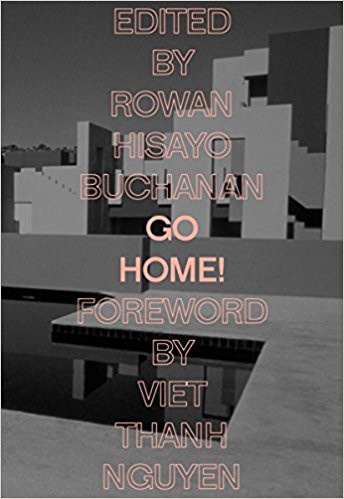
Buchanan: High points included working on the cover, I felt like everyone was on board with the mission. We were all familiar with the tired tropes of embroidery, cheongsam, and the objectified Asian woman as cover art. Although we went through several cover designs, the process always felt collaborative. We ended up with a shadowy black landscape and neon pink lettering. It’s like nothing I’ve seen before and I’m delighted with it.

Also, engaging with the writing. I love the work in this anthology. Several of the works were my first experiences with those writers. Others, I had been aware of for a long time, some of whom like Chang Rae Lee are well known. But the writer whom I have been personally following the longest is Esmé Weijun Wang. Her novel, The Border of Paradise, only came out in 2016. But as a teenager who was struggling for various reasons, I used to find great solace in her blog. I think I wrote her fan mail once! Obviously, I jumped at the chance to read her novel, which is beautiful. As we corresponded about her essay for the anthology, I was aware of the long journey that had led to that conversation.

And finding out that I was going to be able to do a tour and meet so many of my contributors!

A low point was not being able to include a story I really loved by an emerging writer. When we considered the balance of the anthology as a whole, it wasn’t a good fit. Editors talk about fit a lot and it can sound like fluff. But it was true. I wanted to be able to include everybody.

Kwon: Who were some formative Asian diasporic writers for you?

Buchanan: Can I be lame and say I loved Ishiguro before the Nobel? He can slip such strong emotion into a text without it ever feeling overwrought. For me as a part-East Asian kid, growing up in a very white and very English environment, his work was totemic for me. He could write about Japan and England. He wrote about the past and the future. He made me feel unlimited.

Ruth Ozeki is a personal hero of mine. She’s a novelist, a filmmaker, and a Buddhist monk. In all her writing, she embraces ideas of multiplicity. Every part of her work seems to shout that you can be as many things as you want. But she doesn’t shy away from big political issues like agribusiness, war, meat marketing.

Jhumpa Lahiri continues to inspire me. As you probably know, she’s living in Italy and writing in Italian these days, for reasons she describes in an article for the New Yorker. She is just so good at what she does. Her stories are beautifully balanced. But she never got complacent. Instead, she’s pushing herself in new ways.

The Asian American Women Writers Who Are Going to Change the World

Kwon: Ishiguro’s writing is totemic for me, too. Strong emotion being slipped in — yes. Did you grow up reading many Asian diasporic writers? I’ve been thinking a lot, these days, about the fact that it wasn’t until late in college that I really began reading Asian writers, and what effect that’s had on my writing.

Buchanan: I was lucky that I encountered a few as a teenager. This partially had to do with having a mother who loved books and partially had to do with the fact that I lived near an excellent bookshop. I have written a little about it here. But I remember that I thought of them as rare treasures. For a long time, I had the ambition to own all the published work by Asian writers. I don’t think it was until I was standing in AAWW’s library that I realized how impossible that ambition was. It was a strange feeling of giving up on a dream and of being given a huge gift.

It’s wonderfully freeing to be able to celebrate the work of others.

Kwon: I love that you had such an ambition. I know putting this book together must have been a lot of work, and I’m so glad and thankful it’s going to be in the world. I’m greedy, though. I find I want more! You’re a writer too, of course, and a splendid one — how do you think of balancing the two, writing and editing? Do you see more anthology-compiling in your near future?

Buchanan: I’d love to do more anthology-compiling. Seeing the pieces come together and start to spark off each other was thrilling. It was a lot of work, but I’m also aware of how much harder it would have been without the support of AAWW and the Feminist Press. Jyothi and Jisu both worked so hard. I’m not sure how I’d feel going it alone!

As a writer these days, you are often asked to do a lot of banner-waving for your own work. And I’ve been grateful that I’ve been given the opportunity to do that. When you work on something for years, it makes sense to give it the best push into the world that you can. But it can also start to feel a bit egocentric. It’s wonderfully freeing to be able to celebrate the work of others.

Kwon: Can you talk about Asian diasporic writers you love who aren’t in the anthology?

Buchanan: I’m glad you asked. One of my great hopes for this anthology is that it opens doors. I hope people read it and become excited about the possibilities of Asian diasporic writing.

An incomplete list of contemporary writers from the Asian diaspora whose work I have fallen for — Sangeeta Bandyopadhyay, Sarah Shun-lien Bynum, Cathy Linh Che, Nicole Chung, Patti Yumi Cottrell, Guy Gunaratne, Mohsin Hamid, Will Harris, Peter Ho Davies, Vanessa Hua, Christine Hyung-Oak Lee, Violet Kupersmith, Jennifer Sookfong Lee, Celeste Ng, Bich Minh Nguyen, Yumi Sakugawa, Kamila Shamsie, Nikesh Shukla, Cheryl Tan, Roma Tearne, Madeleine Thien, Ocean Vuong, Jenny Zhang.

Can I say you? I’m just beginning to dig into the The Incendiaries.

This list is incomplete for two reasons. First, I have so much yet to read. Second, because as soon as this is published, I’ll remember someone’s brilliant sentences and kick myself for not including them. For anyone reading this — if you see someone’s work I’ve left off that you love, please celebrate them!
I Saw Myself in Meg Murry Even Before She Looked Like Me

Almost two decades before Ava DuVernay’s adaptation of A Wrinkle in Time, I wrote my own story based on the characters in Madeleine L’Engle’s novel. The driving impulse was not “to be an author” or, that classic seed of fanfiction,“to insert a thinly-veiled version of myself as someone’s love interest” (I was eight). It wasn’t even “to pick up where the book left off.” The only reason I took any interest in the family computer, picking out words from a senseless arrangement of letters, was to gain admittance into L’Engle’s world through a direct portal: the medium in which she worked. Kind of like tessering. But walking around inside the story wasn’t just an opportunity to luxuriate in the details of a world that I loved, or to speculate on the ones I didn’t understand — it was also a chance to correct the things that didn’t agree with me. Despite my childhood love for A Wrinkle in Time, alongside that love I felt a competing conviction: that L’Engle was utterly wrong about certain details of the world she’d created.

This feeling had nothing to do with experimental physics or tesseracts or time-space travel — my gripes were with the quotidian, things like the the shape of the Murrys’ dog’s head. My problem wasn’t exactly that these details didn’t ring true; it was more a frustration at their failure to conform to my mental image of them. With the family dog, Fortinbras (a name that, lacking the Shakespearean referent at the time, I subjected to the same levels of mangling I later brought to pronunciations of “Hermione”), I disliked the way L’Engle dwelled on the “slender darkness” of his head. Surely, my logic went, faced with a name as unwieldy as Fortinbras, no one in their right mind would envision such a creature as anything other than massive and shaggy. My imagined version swelled against the shell of the textual description until the latter cracked and lost purchase, with my story becoming a gallery for these revised details. This was how completely I inhabited L’Engle’s world — I felt I had the authority to claim when she had gotten it wrong.

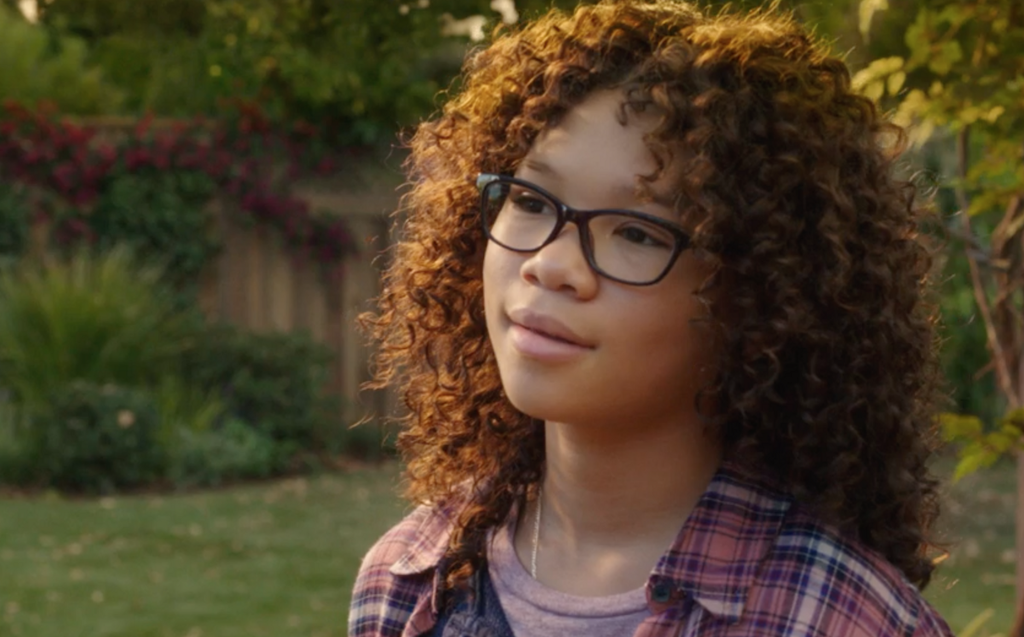
Which means that when I learned of DuVernay’s film adaptation and the miracle of a black Meg, I wondered for the first time: why wasn’t that one of the book’s realities I refused to accept? If I didn’t think twice about swapping out dog breeds or house layouts for my preferred versions (even when such decisions ran counter to the cover art, which I usually took to be authoritative), why didn’t it occur to me to mentally rewrite Meg Murry — the character in the book with whom I most ardently identified — as biracial, like me? Why, in other words, were Meg and her world places in which I seamlessly saw myself, despite the fact that, for instance, Meg can easily “[run] her fingers through her mouse-brown hair,” but if I (or Storm Reid, who plays Meg) tried that at home, I’d pull clumps out at the root?

Why didn’t it occur to me to mentally rewrite Meg Murry — the character in the book with whom I most ardently identified — as biracial, like me?

Part of the reason, I imagine, is that non-white children intuit early in their reading lives that looking like their favorite character is a luxury not on offer. Unless we struggle mightily against the specifics of a text that at best, like J.K. Rowling’s claims about not-not-black-Hermione, don’t explicitly rule out the possibility of a racialized character altogether, we learn to find alternative grounds for identification. In A Wrinkle in Time, I would have been faced with the herculean task of imaginatively fighting my way past a squad of several blondes (Meg’s three younger brothers), an intimidatingly beautiful redhead with “creamy skin” (her mother), and Meg’s own mousy brown mop. Honestly, it’s easier just to change the dog.

But there’s also something in L’Engle’s work that, for me, made it about different questions than simply “Where am I in this book?” A Wrinkle in Time invited identification across difference, capturing a quality of childhood that hinges more on the emotional than the visual. This is a novel that begins at midnight in a drafty attic, but immediately ushers you downstairs into a warm kitchen with cocoa and sandwiches. It hyperbolizes empathy in the form of a child, Meg’s little brother Charles Wallace, who uses his telepathic abilities to anticipate the emotional needs of his mother and sister. It takes an almost comedic glee in childhood precocity, attributing to a fourteen-year-old dialogue like, “I must remember I’m preconditioned in my concept of your mentality.” It’s theatrical almost to the point of parody, and yet it’s such a thrill for a nerdy kid to encounter a line like this; its implicit promise that there are others like you who take the same joy in language and that, even if you’re a self-described “oddball” like Meg, somewhere beyond these pages you might eventually find your people.

‘A Wrinkle in Time’ invited identification across difference, capturing a quality of childhood that hinges more on the emotional than the visual.

All of which is to suggest that it is a book that throws down the welcome mat, grabs you by the hand, and pulls you in. It champions as the center of attention a girl who both acts out and questions her own deservingness of any attention at all. Weirdos are especially welcome here. L’Engle’s participatory, inclusive aesthetic is much of why I was so willing to both project myself into the book and impose upon it my own tiny acts of creation. If something felt wrong about the layout of its world, I knew she wouldn’t begrudge me a few minor renovations.

Nor would she begrudge DuVernay her directorial vision. DuVernay too has knocked on the door, been welcomed in, and moved a thing or two around. Rather than an entirely white family, the Murrys of 2018 are a mixed couple — a black mother (played by Gugu Mbatha-Raw) and white father (Chris Pine) — with a biracial daughter (played by the fierce, and fiercely loving, Storm Reid) and an adopted Filipino-American son (nine-year-old Deric McCabe, whose exuberance shifts with impressive ease from adorable to terrifying when the story calls for it). All of a sudden, I was offered more than just a hero with whom I shared intellectual precocity and emotional intensity — I had one who shared my hair.

All of a sudden, I was offered more than just a hero with whom I shared intellectual precocity and emotional intensity — I had one who shared my hair.

DuVernay’s innovations go deeper than merely diversifying the cast. Imagine if black Hermione had also gone to Black Hogwarts. The characters in A Wrinkle in Time attend the fictional James Baldwin Middle School, where posters of Maya Angelou hang high on hallway cork boards. Mrs. Which, the head of a trio of astral-plane warriors and the film’s closest thing to a deity, is played by Oprah Winfrey. The novel’s fixation with Meg’s frizzy hair assumes an edge onscreen: when Calvin O’Keefe, Meg’s nascent love interest, first tells her, “You know, you have great hair,” her brush-off is a given for the black female viewer. Of course she wants him to shut up — no doubt she’s had white boys trying to touch her hair for the past thirteen years. The viewer’s recognition of this shared history makes Meg’s eventual acceptance of the compliment, and corresponding acceptance of herself as deserving it, even more moving.

It was a doubled satisfaction that I got to experience in the theater: the comfort of re-entering a remembered world, and the pleasant shock of recognition at having the familiar speak to me in a more intimate way. DuVernay’s casting was an unexpected gift, one that I wish I’d known how to ask for as a child reader and filmgoer. The lesson of her casting is a crucial one: To adapt a story and replace the majority of its white characters with characters of color is a weight that any worthwhile source material can handily bear, whether in a big-budget Disney film or the cinema of your own private reading experience. At the same time, I’m grateful that I didn’t let my need to see myself obstruct my enjoyment of texts like this one. If I’d felt shut out of the original story because of a white Meg, I might only have loved the book after I’d seen the film — but without a preexisting love for the book, I might never have seen the film at all. Or at least, I might not have been moved by it; at times it’s cartoonishly mystical and the first half was a real Fortinbras. Still, I cried upward of half a dozen times.

How Young Adult Literature Taught Me to Love Like a White Girl

For white viewers, who have historically had less work to do in order to use stories as reflective surfaces, the film will be something different. It shares the inclusiveness of its source material, offering precisely what I discovered when I read A Wrinkle in Time as a child: the invitation to identify across, and in spite of, difference. It’s the same skill I spent years learning with the legions of little white girls I met in books and film and classes. When I was younger, my reading practices were absorptive and uncritical enough that I could barge into any story and lose myself in anyone’s skin. The impulse was never “Is this what I’m like?” but “Is this what I could be like?” or, even better, “Is this what other people are like?” — concerns that I don’t regard as consolation prizes for lack of representation, but ones that I found just as thrilling and generative. I didn’t, and still don’t, only approach stories looking for versions of myself. But I am certainly more particular about the people with whom I am willing to claim literary kinship.

It’s so important that younger readers — and a broader range of young readers — now have the chance to develop that critical muscle at an earlier age, experiencing realities like the West African-inspired world of Tomi Adeyemi’s Children of Blood and Bone or Black Lives Matter in Angie Thomas’s The Hate U Give. But it’s also crucial not to lose sight of the power in encountering difference on the page, which gives rise to the need for representation, but also the limits of grounding identification in visuality: writing off a text because you don’t see yourself in it can be a dangerous foreclosure of dialogue and empathy. I find it less useful to demand “Why didn’t you include x identity category” of dead write writers and prefer to dedicate more time and attention to finding, engaging with, and championing the work of those living authors — those who embody precisely the kind of identity that has been written out of the “mainstream” version — that do.

Writing off a text because you don’t see yourself in it can be a dangerous foreclosure of dialogue and empathy.

My edition of A Wrinkle in Time has an author’s introduction where L’Engle comments on the “beautiful new covers for the Time Quartet,” which she interprets as an “indication that stories have a life of their own, and that they say different things to different people at different times.” It’s interesting that so many of the mixed-to-negative reviews of the film have questioned this book’s adaptability. To me, this has always been a welcoming text, one that is willing to extend a hand and invite you in, along with your wild ideas. I certainly intuited that impulse. I think DuVernay did, too.

Inventing Myself in an AOL Chatroom

I connected with “Njdude” on AOL when I was eighteen, in college, failing calculus, lonely, cold, and miserable. This was central Minnesota during winter’s peak, sitting in a musty green-carpeted dorm room which overlooked a sagging volleyball net and a parking lot flanked by jagged heaps of snow. I’d only been away from home for a few months, and instead of the intense freedom I’d expected to feel, I’d succumbed to near-crippling depression — the cold, for some reason, had been more tolerable when I’d known other people were suffering from it, too.

“WHAT ARE YOU DOING HERE?” This was my first instant message to “Njdude.” We were in a local room — Minnesota m4m — and I was slightly irritated that someone from New Jersey was occupying a coveted space. (The maximum occupancy was 23 chatters.)

“Just checking things out,” he messaged.

“There isn’t much to check out, so why come here?”

Back then, you had to mine information from actually chatting.

Back then, double-clicking a screen name opened a private message window, not a profile containing height, weight, ethnicity, aspirations, hobbies, preferred sexual positions, fetishes, disease statuses, marital statuses, relationship statuses, race preferences, body preferences, etc. etc. etc. Low(er) tech required people to mine this information from actually chatting, and though many people were upfront about their intentions — “HEY MAN I’M LOOKING FOR A BJ, YOU?” — many, even with the anonymity of the internet, preferred not to start off conversations in so blunt a manner. Back then, the internet was still relatively new, and people behaved with a certain amount of decorum, adhering to the outrageous idea that it was better to know someone before having sex.

“I’ve always wanted to visit,” Njdude typed.

“It’s just a lot of snow,” I replied.

His real name was Tim, and he was 47. He’d been married, had had two children, and on a gray Friday afternoon had been caught by his wife with a man in their bed. He’d divorced, moved to New York, made a circle of gay male friends, and promptly lost every one of them to AIDS. Feeling alone, desperate, destitute, he moved back to New Jersey to be close to his kids, worked as a production manager at a printing company, and tried as best he could to make sense of what had happened. In the evenings, he chatted online with men from all over the country, mostly men his age, but every once in a while with some young squirt like myself — an isolated, curious, frightened young man who hadn’t yet come out to anyone, who was scared to death of the world’s reception, who found solace in typing his feelings to strangers behind computer screens.

Over the months, our conversations grew personal and intense, and I began to rely on him for emotional and mental well-being. If he wasn’t online, I’d panic, and quickly send him an email saying, “You there? Where are you?” I’d sit and wait for my computer to announce, YOU HAVE MAIL, and when it didn’t happen, after I’d sat in heart-stretching silence for hours, I’d email him again. He found my agitation amusing, and when he finally replied, he’d remind me that he was an adult with an adult life, that unless we made specific plans to meet online, there was a good chance we wouldn’t be on at the same time. I told him that we should make specific plans, that we should meet in the New Jersey room every Tuesday, but he balked at that idea, telling me that his life would not revolve around his chat room sessions. It couldn’t, he said. There were other things.

I didn’t accept this right away, kept sending him email after email after email, but eventually an actual social life crystallized outside my computer, and this made him recede to a comfortable but important place in my head. As my frenzy diminished, I began seeing him as a friend, someone who put up with my naïve rants about the world, tolerated my propensity for melodrama, and knew things about me that my college friends never would. I continued chatting with him until the end of my freshman year. Then I stopped.

Years passed. Technology advanced. By the time I left college, wi-fi had become more than a conversation. The tech boom in Silicon Valley made delivery of nearly anything possible. People discussed discarding their landlines. Pictures cleared. Webpages accelerated. Everyone had Netscape; then Hotmail; then Yahoo. People texted. Friendster happened; then Myspace; then Facebook. “Friend” became a verb and “like” a noun. A language of truncation developed: LOLs followed by OMGs followed by srslys followed by ROFLs. Pornography became normal and available — not just pictures on glossy pages anymore, but actual video streams, people doing it in their bedrooms, living rooms, bathrooms. The movement from language to image imprinted itself onto the next generation, and soon dating became simply a matter of swiping pictures left or right, and I was left both amazed and appalled, impressed and utterly alarmed.

In elementary school, I remember wanting badly to “graduate” to pictureless books, to be a real adult who could comprehend words without accompanying images, and when I finally did — graduate, that is — I felt this keen sense of reward: fictional worlds developed more richly, emotional resonance lasted much longer. Technology’s swift change from words to images, then, to me, as an adult, seemed like an alarming regression, a flattening of imagination, a dimming of curiosity. Additionally, text that survived seemed trapped in a set of insipidly prescribed boxes, quantifying compatibility, relegating longings and ambitions and desires and loves to a series of character-limited profile squares. I hated it, so I often tuned out, used the internet only as an informational means, not as a device for personal connectivity.

Technology’s swift change from words to images seemed like an alarming regression, a flattening of imagination, a dimming of curiosity.

I quickly discovered, however, that without social media connections I wasn’t fully participating the current world, and the current world had become an intensely interesting place. The 2016 election had happened, and people were hurt, elated, scared, joyful, and while some blamed social media for the results, claiming it balkanized thought and normalized division, others used it to act, amassing support from all parts of the country, organizing some of the biggest marches this country has ever seen. Amidst horror and disbelief, I became excited; the internet had given me hope for a future of heightened awareness and socially conscious citizenship; it had once again become a place of solace, a way to feel connection, this time on a larger scale.

And yet.

Much of me still hated it. I hated that it so blatantly revealed longings and insecurities. I hated that it encouraged megalomania, and, as a result, encouraged individual despair. So I checked out. Then checked in. Then checked out. Then checked in. Then decided, after all that flipping and flopping, that it — the internet — was, like most things, okay. Harmful sometimes. Wonderful sometimes. But mostly okay. And what was so bad about okay? What was there to hate about okay? Thing was: it was voluntary. I could use it or not. I could have it at my disposal and ignore. So what was the harm? The problem? Why couldn’t I just keep myself in check, use it to establish meaningful connections, appreciate its potential, understand its limitations?

The other night, feeling weepy and sentimental and slightly drunk, I googled “Tim njdude.” Nothing relevant appeared, so I googled, “Tim njdude production manager.” Again: nothing. “Tim production manager New York” resulted in millions, and so did, “Tim production manager New York gay sad” and “Tim unfaithful two kids.” I checked Facebook. “Tim New Jersey.” Thousands. “Njdude.” “Tim Njdude.” “Njdude Tim gay.” Empty empty empty. Twitter? Nope. Instagram? Nope. Grindr? Err. I sat in front of my computer, closed my eyes, tried my hardest to remember something — anything — about him, something that’d fit nicely into a search engine, but the more I tried, the more I realized that I knew nothing, not what he looked like, not the city he lived in, not even his last name. This made me, for a moment, horribly sad. I had Facebook friends I hadn’t seen in thirty years and Twitter followers I’d never seen pictures of, yet this person whom I considered to be formatively sculpting could not be contacted online. Distressing, I thought. How utterly distressing.

And yet.

The more I thought about it, the more I found it for the best. I’d locked an image of Tim in my head — an older, wise-but-downtrodden man, using the internet to help me, a younger, impressionable man — and if I found him now, that image would waver, vacillate, and ultimately transform. Perhaps he would disappoint. Perhaps I would disappoint. Perhaps his responses to things wouldn’t be strong enough, or articulate enough, or clever enough, and perhaps I would slowly lose respect for him, downgrading him to an online friend who sometimes said inane, or thoughtless, or fumbling things. Perhaps I would block him. Perhaps I would unfriend. Perhaps. In any case, whatever happened, negative or positive, the electronic reunion would effectively replace and alter that beautiful, vital purpose he’d served, and so it was best that I kept my original image of him. It was best I simply remember him as “Njdude,” a hopeful and encouraging and commiserating voice calling out to me a thousand miles away.

Daniel Mallory Ortberg’s Short Short Story About Who Owns Beauty

From ‘The Merry Spinster’

In an old time, in an old country, there lived a man whose daughters were all beautiful and unlucky. To be beautiful in this place was to be noticed; it was for this reason his daughters were so remarkably unlucky. Here people prayed to be forgotten, and they prayed with their faces to the floor.

It was the man’s youngest daughter who was the unluckiest of all. He was so beautiful that the sun herself noticed and had in fact fallen quite in love with him, and never let her rays stray from his face for even a moment while she hung above the rim of the world. So the youngest daughter slept with his face jammed into a pillow, and with coverlets piled over his head, but the sun would not let him sleep unnoticed. Every day she found him, and every day she woke him while everyone else was still asleep. Beauty is never private.

“Beauty does not belong exclusively to you,” the man told his daughters. “Beauty is a public good, and you are responsible for it.”

“What does that mean, exactly?” the youngest daughter asked. The sun burned hot on his forehead.

“It means — in a sense — that according to a certain understanding you belong to everyone,” the man said.

“By that reasoning,” his daughter said, “I belong at least partly to myself. Certainly at least as much as I belong to anybody else.”

“Don’t be clever,” his father said. “Go and play outside, where people can see you.”

The land near the man’s house was very old and thickly wooded. In this forest, beneath a linden tree, there was a well full of standing water. In the heat of the day, when the sun’s attentions became unbearable, the man’s youngest daughter would run across the highway and into the woods, where the trees stood so close together that almost no light reached the ground.

He would take with him a golden ball, as round and as yellow as the sun. He would throw it straight up in the air, then catch it when it came down; he never threw it in any other direction. It was his favorite pastime, and he never tired of it.

On this day, it happened that he threw the golden ball so high into the branches overhead that it disappeared into the spreading darkness, only to drop suddenly far to the left of him and vanish with a smothering sound into the well. He leaned over the edge and looked down, but the water was so dark, and the well so deep, that he could not see the slightest sign that anything had ever been there but scum and mosquitoes. If anyone had tried to console him in that moment, he would have sunk down onto the stone and refused them, but no one did, so he continued to lean over the well, looking down.

Also, he was not stupid, and knew better than to dive into water he didn’t know how deep, when there was only one way in or out. Eventually, however, someone came along and noticed his crying (as someone generally did), and called out to him. He looked around to find the voice and saw that a frog had thrust its flat, wet head out of the well. The frog looked like a calf’s heart with a mouth slit across it.

“I was crying because I lost something that I love.”

“I can help you, but what will you give me if I bring you back your plaything?”

“But I did not ask you to help me,” he said, “so why should I promise you anything?”

“You are sitting on my well,” said the frog. “You are beautiful, and you are crying, and I saw you before anyone else did; that is almost the same thing as asking, or being asked, anyhow.” The frog brushed its hand over his, and the man’s youngest daughter had no answer for that.

“I don’t know what I should promise you,” he said. “You can have anything else that I own. I could bring you something, if there was something that you wanted, and that you could not get for yourself, I suppose. My chain of office that my father gave me.”

The frog said, “Keep your boyish treasures — I don’t want them, nor is there anything you can fetch for me I could not get myself. I do not need an errand boy. But if you will accept me as a companion, and let me sit next to you at your father’s table, and eat from the plate you eat from, and drink from your cup, and sleep in your bed; if you would promise this to me, then I’ll dive back into the well and bring your golden ball back to you.”

“Yi­i­i­i­ikes,” the boy said slowly. He thought of his father’s words: You are responsible for your beauty. “Well,” he said. “I could promise all this to you, if you brought it back to me.” He hoped that maybe the frog was joking, although he had no reason to believe it was; people rarely joked with him. He thought, as he often did before making a promise, that perhaps he would not have to keep it, or that maybe the promise would not be so bad in the keeping as it had been in the making.

At any rate, as soon as the frog heard him say yes, it stopped listening to him and dove back into the water, a dark clot darting swiftly under the surface, until it disappeared from sight entirely.

A few minutes later the frog paddled up to the edge of the well with the golden ball bulging between its thin lips and spat it out onto the grass. Its tongue was a livid purple and bulged out of its mouth. But the youngest daughter was too happy to pay much attention to how the frog looked. He was so relieved, in fact, that he picked up the ball immediately and ran for home.

“Wait,” said the frog, wheezing and dripping. “Take me along. I cannot run as fast as you can; that is not my fault but yours.” But he could no longer hear the frog, and quickly forgot about it and what it had done for him in the forest.

The next day the youngest daughter was sitting at the table with his father and all his sisters, when something with a lipless mouth and thumbless hands hauled itself up the front steps of the house. It knocked on the door and called out, “Daughter, youngest, open the door for me!” So he ran to see who it was, and opened the door wide to see the frog sitting there, panting from the strain of crawling up the stairs. He slammed the door shut and sat back down at the table. His father saw his face and asked, “Why are you so distressed, and who was at the door?”

“It was a frog,” he said. Then: “We are going to have to wash the front steps.”

“Did someone knock on our front door and leave a frog there,” his father asked, “or did the frog knock and expect to be let in?”

“Well,” his youngest daughter said. “I think it wanted to be let in.”

“I did not ask what the frog wanted,” his father said. “I asked if the frog expected to be let in.” All the other daughters had stopped pretending to eat at this point and stared in open excitement at the prospect of watching one of their number get into trouble.

“Well,” his daughter said. “Only — yesterday, when I was sitting near the well in the forest, my golden ball fell into the water.”

“Sitting near the well, or on it?”

“On it, Father. Sitting on it, and my golden ball fell into the water, and I was crying over it, and I was crying so much that the frog brought it back to me, and because it insisted on repayment, I promised him that he could be my companion, but I did not think it would be possible for the frog to leave the well, because — don’t frogs have to live in the water? And now it is sitting outside the door and wants to come in.”

“If you were sitting on the well and not just near it,” his father said, “then you must keep your promise.” Just then there came another knock at the door.

“But I did not really promise it,” the youngest daughter said. “It made the promise for me, and to itself, and I did not really ask it to get the ball. It volunteered.” He scrunched down low in his seat, too late to escape notice. He really was a very unlucky daughter.

His father said only: “You should not have sat on a well that was not yours. Go and open the door, and let the frog in.”

He went back to the door and opened it, and the frog hopped inside, then followed him back to his chair. It sat at his feet a moment and then said, “Lift me up next to you.” He did not move until his father insisted. Then he did it.

The frog sat next to his hand on the table, and said, “Now push your plate closer to me, so we can eat together.” Its breath smelled like old coins, and the youngest daughter shuddered but brought the plate closer.

Finally the frog said: “I have eaten everything I wanted to eat. Now I am tired. Carry me to your room and put me in your bed, so that we can go to sleep.”

The man’s youngest daughter began to cry. “Maybe you would prefer a little bed of your own,” he said.

“Put me in between your knees,” the frog said. “I will be warm there, and the only thing that will get dirty is you, and you can wash.”

At this the youngest daughter shook his head and shrank back in his seat. His father grew angry and said, “You took help when it was offered, and you inch now at repayment; do not make use of someone else’s property, and do not offer someone your beauty, if you do not intend to repay them in kind.”

The youngest daughter carried the frog upstairs and set it in a corner of his room, where it sat and stared at him. Next he got into bed without looking at it, but as he was lying under the blankets, it came creeping up to the foot of the bed. The frog said, “I am tired, and I want to sleep, too. Pick me up, and put me in bed with you, or I’ll tell your father.”

This was one request too many, and the youngest daughter became violently angry and shook all over. He threw back the blankets, picked up the frog, and flung it against the wall as hard as he could. “Here is your payment, and here is your thanks — now keep your peace!” The frog slid down to the oor and began to croak. It croaked louder and louder until his father filled the doorway, and picked the frog up himself, and placed it in bed with his daughter. Then he left, closing the door behind him without saying a word.

The frog was all the softer for having been thrown against the wall. It crawled underneath his legs, cold and close, and pressed a lipless kiss against the back of his knees. The daughter wished that all his skin was dead and gone. By and by the frog fell asleep, and the boy lay awake and staring all night, and for many nights afterward. He was very unlucky.

About the Author

Mallory Ortberg is Slate’s “Dear Prudence.” She has written for The New Yorker, New York magazine, O, The Oprah Magazine, and The Atlantic. She is the cocreator of The Toast, a general-interest website geared toward women. Mallory is the author of Texts from Jane Eyre and The Merry Spinster.

Excerpted from THE MERRY SPINSTER: Tales of Everyday Horror by Mallory Ortberg, published by HENRY HOLT AND COMPANY. Copyright © 2018 by Mallory Ortberg. All rights reserved.

What I’ve Learned from Turning People’s Hopes and Fears into Private Immersive Performances

When I tell people about what I do, they usually don’t believe that something like it exists in the world. I’ll say something along the lines of, “I’m the Assistant Director of a company called Odyssey Works that studies the life of one individual at a time in order to create bespoke, immersive experiences for that participant that last days, weeks, sometimes even months.” It’s an elevator pitch, an attempt to distill my complex and unusual job into a digestible soundbite for quick comprehension, but instead it usually just opens up more curiosity and confusion. The next series of questions are a quick staccato and I always wish that I had an hour to elaborate. Who does this? Where do Odysseys occur? How do you pick the person you study? Is it like the Michael Douglas movie The Game? How much does it cost? People always want to know how much it costs.

I try not to be too rote when I respond. I’ve been at this for six years with my collaborator, Abraham Burickson, who co-founded Odyssey Works with Matthew Purdon in 2001, and it’s important to me to engage sincerely with questions like these — no matter how many times I hear them. But the short version of my reply usually contains the same few elements: We are a collaborative team of dozens of artists in just as many disciplines who work together for at least three months to study our participant. The way we select our participant depends largely on how we are funded, through grants or private commissions. Grants allow us to open a call for applications in a certain city and give the experience to someone as a gift. Commissions are a lot more flexible; we’ll go just about anywhere and study just about anyone. It is, in fact, like that Michael Douglas movie, only not quite so much adrenaline.

It is, in fact, like that Michael Douglas movie ‘The Game,’ only not quite so much adrenaline.

The longer answer, or at least the more interesting answer, is that Odyssey Works is an exercise in empathy — in the magic of paying sustained, intimate attention to another person. And what I’ve learned from six years of paying this kind of attention is that empathy is transformative — not only for the kind of bespoke performances we make, but for all writing, and indeed, all human work.

When we study our participant before planning an Odyssey, we take many approaches. The first is a questionnaire that takes hours to complete; the finished document is usually about 10–15 pages long. It covers everything from biographical information to aesthetic tastes and ideological perspectives on the world. Next, we conduct phone interviews with the friends, family, children, parents, coworkers, lovers of the participant, after which we go on retreat to spend a week as a team thinking deeply about our subject. We drink their favorite beverages, watch their most beloved films, listen to the albums they get nostalgic over, and even try to dream about them. The goal in this process is to fall in love with them. Yes, they are a stranger to us, but when someone is that vulnerable with us and we have the energy to give them our undivided attention, it is surprisingly easy to become enamored.

In good writing, we often talk about detail. Sensory detail. Vivid detail. Specific detail. It might sound obvious, and yet details are why we fall in love with a person. Details are the things that make them singular humans rather than shells that act merely as tropes, or even worse, clichés. As we hold this person at the center of attention, we begin to see the world through their eyes, with their subjectivity. This, of course, is empathy, true empathy, which fosters intimacy. Intimacy makes us human, brings us closer to those who have led such different lives than our own experiences have provided. During our retreat, we ask ourselves, What do we wish for this person?

Maybe the answer is for them to inhabit their body more. Or to unleash themselves from the perspective that they are a victim. Once we have answered this question, we begin to approach a structure that will be in service of this focus. Abraham and I are both trained writers, and we map out a narrative using the very real parts of the participant’s life to tell the story. One man, Carl, was fascinated with maps, so for him we used this love of visual layers of information as a way to propel him through his Odyssey, gathering information and making his own maps out of them. Another participant, Rick, was in the middle of a great transition in his life, and so we cast the net of narrative laced with threads about home and relied on Homer’s epic, our namesake, blended in with traces of Moby Dick. We all have a life story, a frame or lens that we use to link what might otherwise be an arbitrary string of events together. Overlaying narrative into the work is what gives each hour, each minute, meaning, significance, weight.

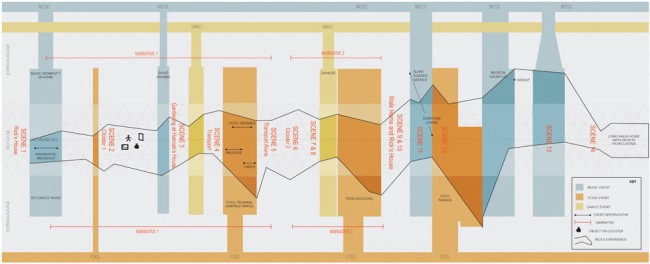
A diagram by Danielle Baskin and Abraham Burickson mapping the arc of experience for Rick’s odyssey “When I Left the House t Was Still Dark”

The performances transform lives, both those of our team members and our participants. Almost across the board, our participants change jobs, move to new cities, break up with their partner, or get married after experiencing an Odyssey. Their way of seeing the world is altered. Funny thing, when you realize you are in a weekend-long performance that revolves around you, everything is ripe with potential. Our participant’s’ attention and presence shift during and after Odyssey. The woman next to you on the subway could be a plant; does the fact that she’s knitting mean something? Hitting a red light suddenly feels significant, rather than merely annoying. Could the fact that your roommate left this book open on the counter be foreshadowing what is to come? Does the fact that the restaurant is serving your mother’s favorite dish as the special tonight say something about motherhood itself? There’s a difference between seeing potential in the world around you and feeling watched. It’s pronoia, or the belief that the world is conspiring to do good things for you, as opposed to paranoia.

There’s a certain inefficiency to devoting so much time and labor towards one person, and in the last two years we’ve been making it our goal to invite others into this practice of attentiveness, intimacy, and vulnerability. In 2016, Abraham and I published a book with the hopes that others might take some of our methods into their own hands, and we started leading workshops that introduce people to our process and applications to their own work. Our classes mirror Odyssey Works’ research phase. In the first half of our workshops, people conduct one-on-one interviews that are designed to open them up to incredibly intimate conversation with a partner very quickly, just the same way our questionnaire does. In the second half, they design an experience tailored to their partner. Not all of our students are interested in creating immersive experiences as an end goal; they’re writers, designers, advertisers, educators. But each and every one of us has had to plan a date, a birthday party, a baby shower at some point, and these are the origins of experience design. And all of them walk away seeing new ways they can employ empathy in their lives. Like preparing an Odyssey, the workshop requires them to pay deep, sustained, intimate attention to someone, and that experience is the goal.

Whether you work in the corporate sector, are an abstract painter, are someone who designs apps, or works a marine biologist, empathy is the key to creating truly meaningful relationships, lives, artwork, school work, and work-work. Empathy isn’t just what will make your novel feel real, rather than flat. Empathy will guide you to design an app that isn’t so addictive. Empathy is what will make a doctor better understand how one symptom in one limb might be connected to the larger narrative of what’s going on in someone’s life. Empathy will make you see the world and your fellow humans differently.

Almost across the board, our participants change jobs, move to new cities, break up with their partner, or get married after experiencing an Odyssey.

I’m teaching poetry to undergraduate students at UCSD right now and have been thinking a lot about what it means to teach something that is as hard to pin down. Poetry’s ineffability shares quite a bit with the complexity of Odyssey Works’ practice. On the first day of class I asked my students what they think poetry is, and challenged them to think of something they had seen in the world that was poetic. They gave mind-blowing answers — that poetry is “protest and praise,” that it is “transcendence” — and described moments of synchronicity in their life that constituted lived poetics. When I thought about their answers, I realized that spending class periods teaching them about rhyme schemes, or what a tercet is, would not help them write good poetry. They can after all, use Google to learn about the technical aspects of writing and many of them are STEM students. What would guide them to write moving poems was having time to slow down, to observe the world closely, to attune to the world and their senses, to be curious. Since then, each class period I have been guiding then to practice their skills of presence and attention, to tap into the obsessions that make them human. I taught them the word “numinous,” and we discussed the ways in which poetry approaches the spiritual realm. We have looked at confessional and epistolary poems as a lens to think about urgency and prayer. As Mary Ruefle reminds us, “attention, taken to its highest degree, is the same thing as prayer.”

A beautiful moment that Carl encountered on a walk through Central Park. (Photo: Ayden LeRoux)

Poetry, it turns out, is about getting to the quick of what it means to be human. There is a reason that it’s part of the “Humanities.”

A few weeks ago, as I led our Empathy and Experience Design workshop, I was struck that if you ask what kind of toilet paper someone uses, inquire how they fell in love with their partner, or dig into what made them cry most recently, whatever the answer is, people come alive. That curiosity invites blossoming. Every question is an acknowledgement that we are full of depth and complexity that is deeper than what we do and where we are from. I couldn’t help but think that fundamentally the aim of my poetry class was the same as what we do in Odyssey Workshops. Both offer time to learn how to connect with a complete stranger on the page or in person, to look closer at the world and feel seen. Everything comes back to inviting more vulnerability, intimacy, empathy, attentiveness, and curiosity. To be as human as we possibly can.

I Only Listen to Audiobooks on Vinyl

Hachette Audio and Wax Audio recently announced a series of vinyl-plus-digital audiobooks that it will be releasing in 2018, beginning with David Foster Wallace’s This Is Water. As I believe that all audiobooks were meant to be listened to on vinyl (the sound is just … warmer, you know?), this is amazing news.

All titles released “will also include digital download codes for the full version of the audiobook (for titles too long to fit on one or two LPs),” but that’s not for me. When Chaucer was writing The Canterbury Tales, he didn’t intend for you to listen to it in your car; he expected you to drive out to that one Barnes & Noble that’s still open and buy the vinyl recording narrated by Wil Wheaton.

Stop telling me that if I only listen to one vinyl’s worth of a book I’m going to grossly misunderstand what that book is about! You’re distracting me from setting up my record player on the coffee shop’s community table! Anyway, here are what I must assume are the complete plots of the one-vinyl books I’ve listened to so far.

Stop telling me that if I only listen to one vinyl’s worth of a book I’m going to grossly misunderstand what that book is about! You’re distracting me from setting up my record player on the coffee shop’s community table!

Moby Dick: A clinically depressed man gives Nantucket a terrible review on TripAdvisor.

Catcher in the Rye: A moody teen gives Life a terrible review on TripAdvisor.

The Odyssey: A disgruntled writer takes to his LiveJournal to complain about his deadbeat dad.

Les Miserables: The life story of M. Charles Myriel, the Bishop of Digne.

Infinite Jest: A young man absolutely nails his entrance interview to the University of Arizona.

The Hobbit: A bunch of dwarves wreck some guy’s house.

Can You Speed-Read Your Way to Happiness?

The Sound and the Fury: A how-to guide on how to properly behave when people are golfing.

Fahrenheit 451: A comically bad fireman struggles to understand his job.

Harry Potter and the Sorcerer’s Stone: A mild-mannered man named Mr. Dursley slowly starts hallucinating.

Twilight: A weather-obsessed teen makes a dream trip to Forks, Washington, a city with a lot of weather.

A Tale of Two Cities: The narrator discovers the “antonym” function on Thesaurus.com and starts showing off.

A Tale of Two Cities: The narrator discovers the “antonym” function on Thesaurus.com and starts showing off.

1984: A man who is very bad at telling time and counting finds solace in the care of his big brother.

The Grapes of Wrath: An intrepid turtles struggles, but ultimately succeeds, to cross the road.

The remainder of Steinbeck’s books: World’s worst tourism campaign for the Salinas Valley.

The Bible: An offbeat rom-com about a guy, a girl, and a snake, described by fans as “Naked and Afraid” meets “Three’s Company” meets “your obnoxious friend whose new trendy diet doesn’t let them eat fruit, for some reason.”

Where the Red Fern Grows: A man gets a new dog! What a delight! Don’t worry about why!

Love You Forever: A mother rocks her baby son to sleep, which is appropriate and not creepy because he is a baby and that’s where it stops.

Jesse Ball Left His Main Character Out of His Book

“It occurred to me last month that I would like to write a book about my brother. I felt, and feel, that people with Down syndrome are not really understood. What is in my heart when I consider him and his life is something so tremendous, so full of light, that I thought I must write a book that helps people to see what it is like to know and love a Down syndrome boy or girl. It is not like what you would expect.” — Jesse Ball, prologue to Census

The new novel from Jesse Ball, Census, is a book full of unexpected pairings. A tender moment between a father and son exists on the same page as an interrogation by a Kafkaesque bureaucracy. A surgeon who has mastered the science of life must learn the art of preparing for death — his own — and its aftermath, which includes arrangements for the son with Down syndrome who will survive him.

Purchase the novel.

It is the son who emerges as the most important character in the novel. His father, our narrator, doesn’t describe him to the reader; rather, he describes a series of interactions the young man has with friends and strangers. By having the father observe and tell us how his son relates to others, Ball illuminates the core of both characters. We discover their world — and consider ours — through a double lens of experience.

As a fellow poet and teacher, I talked to Jesse about how we define poems and books, and pursuing an abstract form of writing for Census.

Candace Williams: I know you started writing poetry when you were 12. What was the first poem that you read as a child that made you say, “Wow, I want to write these.”

Jesse Ball: Well, it’s hard to remember the first one because my parents were always reading poetry to me as a child. We would read a lot of poetry aloud. I loved poetry that had a lot of sound in it. Dylan Thomas, for instance. I still love Dylan Thomas but he frustrates me a little. I want there to be a little more meaning in the poems. I loved all of the sounds of these Old English poems. I’ve always loved Sir Gawain and the Green Knight. We read the Song of Roland and these sort of epic, epic things like the “Charge of the Light Brigade.”

How to Set a Fire and Why We Watch It Burn

CW: Kids love the sound of poetry. I run a poetry guild for my sixth graders and we’re reading a lot of Persian poetry from the Middle Ages. They love Rumi, Hafiz, and Rabia Balkhi. They love ghazals. I have better conversations about poems with them than I do with adults.

JB: Kids are more qualified to understand Hafiz than adults. All the baggage that you take on to become a supposedly “mature” person really prevents you from feeling these epiphanies. Hafiz is in the middle of a marketplace just crying out. Rumi and Hafiz have discarded things that we are as adults implicitly support. But children, not yet. We would do better to be more like children.

CW: I believe that. Every day I talk to them about issues in the world. I think they have a better grasp on what’s real and what’s artifice.

Even though you started to write poems when you were 12, you didn’t show your poems to anyone for a long time. How did showing your work to an audience change you? I’m wondering how the process of publishing and marketing your writing changed you as a writer.

JB: I am interested in things not many people are interested in, like absurdity and the hatred of the United States. I don’t write very often, so most of the time I’m just kind of wandering around in a cloud, reading, and trying to be a basic human being.

There are certainly unpleasant demands that come with being a published writer, and I think if they’re not handled in the right way it can be an impediment to making things. But I think it’s more the phantom of these things that ends up being problematic. Like, the thought of meeting people who read your work. That kind of phantom just means that you have to create for yourself some kind of vision of who you are for other people.

It becomes an impediment if you want something specific out of your public side or if it matters that a lot that people think well of you. If you go through the 20th century there are many different figures whose public face is not self-aggrandizing but working in service to something larger than themselves. They have a hope of something for both themselves and others. Like James Baldwin. His public persona was not something extruded in order to make him seem smart. The public side is this deep side of service. I think that’s a way to make these responsibilities not a negative responsibility but a kind of compass. Am I really doing the things that I need to do? Am I keeping in tune with the help that’s being asked of me by others?

Asking questions is almost always superior to coming up with answers.

CW: In a way, we’re talking about necessary performance. Not just the the performance of writing or speaking but also the performance of listening and reading. It reminds me of Fanon’s concept of double consciousness. I have my immediate consciousness but I also have to contend with white consciousness at every turn. I automatically position myself for myself and also for others.

One part of Census that really spoke to me was the way the main character had to go from house to house and ask questions. I love how he thinks about those questions and starts to really dive into the power dynamic of being the questioner.

JB: I think this is the core of teaching. What you should give in a teaching practice is all the secrets that you truly feel are most valuable about being that you’ve discovered in your life. One of those secrets is that asking questions is almost always superior to coming up with answers.

This is even true in science and mathematics. Many of the supposedly greatest thinkers were known for coming up with with these really interesting questions. They don’t even manage to answer all the questions they come up with. That’s left for lesser scientists. There are so many different ways to answer questions. Sometimes the question itself is posed and then an answer isn’t necessarily even required. You know, that’s something that I’d like to have in the classroom. It’s okay to ask the question, and then for no one to say an answer, for everyone to just think about all the possible answers. That’s sufficient.

“A Lick of Night” by Max Porter

CW: I know that your brother Abram lived with Down syndrome and I know that you wanted to find a way to talk about that in a work of fiction. Something I really respect about this book is that you’re writing about the problems and the joys in the lives of the father and son. Yesterday, I was talking to my sixth graders about the complexities and risks of stories by writers without physical or intellectual disabilities that depict characters living with disabilities. Writers often end up using ableist tropes.

What were your biggest fears about writing the character of the son and how did you overcome those fears?

JB: English caricatures people with disabilities implicitly. So I had to avoid almost any depiction in the book. It had to be only depiction in a negative space — the effect of the person and such. I was very taken with this idea and I felt that that I could do it. But in hindsight, I’m not exactly sure why I thought that I could do it. It seems like there are any number of ways that it could have failed — the son could have been too shallow or might not exist. So I’m kind of humbled by the fact that it did turn out well.

I think that this book waited a long time to appear. It’s my 15th book. It was something that hadn’t occurred to me to write before, or potentially it was something that I waited to wait to write until I felt I had a certain level of technical ability such that I could write it successfully. Part of that was the ambitiousness of having the main character of a book essentially not be present in the book. It was a self-dare to think that the book could hold up and hold together if I left the most important person in the book out of it.

If I want to feel that an actual labor is underway, I want to physically see it, I want it to be a real physical thing.

CW: When you get to that abstract level where we can’t necessarily measure or see something, you measure and see what’s around it. It seems like you’re applying this logic to thinking about people and writing about people.

I saw a photograph of you standing in front of your manuscript in your Bucktown studio. The manuscript is stuck to the wall with blue painter’s tape. I also paste up my poems with blue painter’s tape. It makes me think of poems as something we can design, that people will touch as they leaf through the pages of a book, get into the world that you’re creating. Can you talk about how you relate to books and poems as physical and visual objects?

JB: When I started writing books of poems in the ’90s, I really felt that the publisher does not get to say “this is a book,” “that’s a book.” That’s something I get to say. I’m the one who gets to say whether something is a book. At that time, when I wrote books, I would just print copies and bind them myself in a somewhat slipshod but still smart-looking fashion. I got to thinking that it is 99.999999999% of a book being a book. In history there have been many different poets and writers who have had only one copy of their book for decades and then other people find it. You know, I think I gave mine out to six or seven people. Today, copies are printed in the thousands to gain adulation or notoriety. I think writers are pressured to measure up to their specific time and if they do, then their work is embraced. But if you happen to be out of step with your time, if potentially there’s only one copy of the book, the copy that you made that doesn’t make it any less a book. It’s just a question of whether you matched up with the time that you’re in. I had a strong feeling about taking that possession and saying, “I’m the one who declares the book,” and giving it some people that I knew. Some of those people still have old copies of my books at home. I’m just saying this is a sufficient thing for someone who wants such a thing. It’s not insufficient until it gets the blessing of the powers that be.

I push in that direction — you have the ideas, and then you’re writing them down, and then you have them in an electronic form that’s just too ephemeral. If I want to feel that an actual labor is underway, I want to physically see it, I want it to be a real physical thing. So I always print the pages and put them up in different ways. Also, life is constantly being pushed on by the world’s consensus on what should matter, and what a life should look like, and what the things that you should be making should look like. It takes so much energy to repel that. One of the ways that I repel it is by making my living space into a kind of laboratory where I don’t need to push back against the world because my poems are already doing that for me. I see them like a like a shield.

7 Fictional Books About Political Corruption To Help You Cope With the News

When truth is stranger than fiction, sometimes we turn to fiction to help us understand it. In January 2017, the month Donald Trump was inaugurated, we were clamoring for novels to help with the new facts: George Orwell’s 1984 had a 9,500 percent increase in sales, and Margaret Atwood’s The Handmaid’s Tale became shorthand for the very real political injustices acted out on women. A year later, we’re wishing the news were fiction instead. Nepotism, double-crosses, investigations, money laundering, white-collar crime, made-for-TV meltdowns: it’d make one helluva read.

Whether you’re looking for an escape from reality, or a little more context on a reality that already feels apocryphal, here are seven books that put political corruption back where it belongs: between the covers of a book.

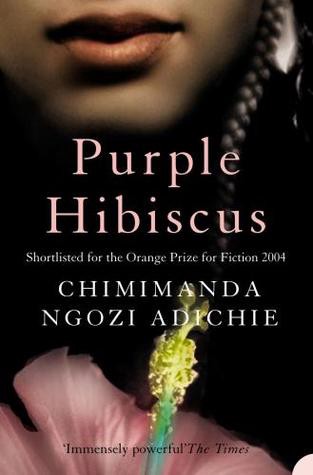
Purple Hibiscus by Chimimanda Ngozi Adichie

Growing up is a political act. We learn to distinguish between the beliefs of our parents, and the beliefs we want to nurture for ourselves. Set in postcolonial Nigeria, Purple Hibiscus explores the religious and political corruption festering at the feet of fifteen-year-old Kambili Achike, the daughter of a devout Catholic and “benevolent” business man, Eugene. Kambili’s family is a microcosm of the political landscape: her grandfather identifies with non-Christian traditional Nigerian culture, her father is a saintly public persona who putrefies into toxic psychological and physical torture at home, and her aunt is a progressive, pro-Democracy professor at the University who speaks out against the Nigerian government and encourages Kambili to speak her mind, too. When Kambili’s father’s abuse becomes too much to bear, Kambili learns what’s at stake in standing up for yourself and defending the ones you love.

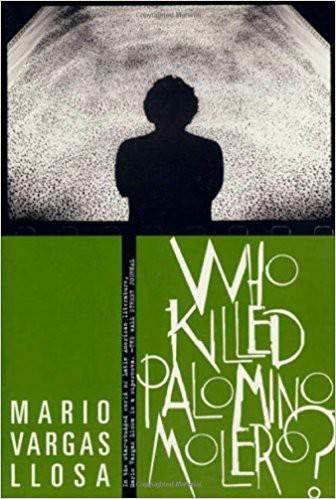
Who Killed Palomino Molero? by Mario Vargas Llosa

Love, political corruption, and murder mysteries are closer friends than Trump and late-night McDonald’s. In Who Killed Palomino Molero?, a murder mystery is the backdrop for an exploration into the corruption and class prejudice of 1950s Peru. Palomino Molero is a poor young man who isn’t drafted into the Air Force but signs up anyway. When his mangled body is found in a field outside of a small town in Peru, Lieutenant Silva and his young assistant, Lituma are sent to find out whodunnit. Winding, intimately-detailed interviews with people in town bring both the town and Palomino Molero to life. Palomino Molero was in love with a woman far above his station, who happened to be the daughter of the flagrantly racist and corrupt Colonel Mindreau, Alicia Mindreau. Though the detectives’ efforts to solve the crime are perpetually frustrated by the colonel, the suspects are narrowed down and the crime is solved. Or is it? Mario Vargas Llosa makes corruption come to life so vividly, and leaves so many questions unanswered, that everything feels only more unsettled than before, and the case doesn’t really feel closed at all.

V for Vendetta by Alan Moore

World war, police government, a fascist state. Dystopian graphic novel or your New York Times morning briefing? Set in a post-apocalyptic 1990s London, V for Vendetta takes place after a nuclear war in the 1980s has devastated most of the rest of the world. The nordic supremacist and neo-fascist Norsefire political party has put all of its enemies in concentration camps and rules the contemporary police state. Meanwhile, the Guy Fawkes–masked anarchist knowns as V stages dramatic revolutionary attacks to encourage people to abandon the current version of “democracy” in favor of anarchy. In the process, V saves a young woman named Evey from the secret police and the two become allies in the fight against oppression and corruption.

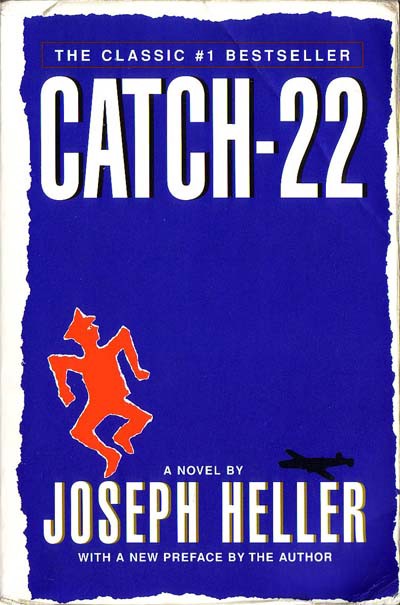
Catch-22 by Joseph Heller

Horace Walpole wrote “Life is a comedy to those who think and a tragedy for those who feel.” Whether or not you agree with the statement, we thought it might be time for a laugh amidst all the tragedy on this list. Published in 1961, the novel’s title is a reference to the paradoxical air force policy that has protagonist Captain John Yossarian trapped: if a man continues to accept dangerous air missions he is considered insane and unfit for duty, but if a man willingly requests to resign from said dangerous missions, he is considered sane and fit for duty. The book takes place during World War II and mostly follows the life of Captain John Yossarian as he tries to navigate the hilariously insane bureaucracy of the war effort.

9 Political Books To Read After ‘Fire and Fury‘

Macbeth by William Shakespeare

Three witches tell general Macbeth that one day he’ll be King of Scotland. With Lady Macbeth’s help, Macbeth devises a plan to kill the king and take the throne. But his own guilty conscious might be the biggest enemy to battle. Shakespeare had a lot to say about political power and corruption, and just picking one play for this list was a challenge. Whether you go with Julius Caesar (and if so, take a minute to look back at the noise generated by the Shakespeare in the Park production with the orange-haired Caesar in a business suit), Richard III, Henry VIII, or Hamlet, you’ll be sure to find men and women wrestling with the intoxicating forces of influence and power. But we picked Macbeth because there are three witches and badass Lady Macbeth.

Krik? Krak! by Edwidge Danticat

The nine stories and epilogue in this story collection travel from Haiti to New York City, and explore the trauma of forced migration, what it means to identify as a refugee, and how much some have to sacrifice for momentary, even if fragmentary, freedom. In “Nineteen Thirty Seven” the narrator Josephine visits her mother, who is in prison for witchcraft, after traveling across a blood-filled river from the Dominican Republic, where Haitians (including Josephine’s grandmother) were murdered. In “A Wall of Fire Rising,” a young boy gets to play the part of a revolutionary in his school play, while his father dreams of escaping in a hot air balloon from his custodial work cleaning bathrooms at the plantation. Krik? Krak! collects piles of impasses: between life and death, mothers and daughters, families and lovers, personal and political, in Haiti, the Dominican Republic, and the U.S., and makes us look at what comes to life there.

Fahrenheit 451 by Ray Bradbury

Written in 1953, Fahrenheit 451 (so named for the temperature at which books burn) is Bradbury’s speculative dystopian novel about a future when mass media has gotten the better of us and books are banned and burned. Distraction reigns: bright, rapid series of images, and mini radio buds with 24–7 content consume daily life. As Bradbury writes: “Whirl man’s mind around about so fast under the pumping hands of publishers, exploiters, broadcasters that the centrifuge flings off all unnecessary, time-wasting thought!” But Montag, one of the firefighters in charge of burning books starts to question the campaign and gets closer to a revolutionary group memorizing the great works so they can live on in the mind. Can’t get enough of the too-close-to-home horror? Look out for HBO’s film adaptation, starring Black Panther’s Michael B. Jordan as Montag, which should be out this year.

Sylvia Plath, Nella Larsen, and Charlotte Brontë Finally Get New York Times Obits

The New York Times is taking a pretty literal look at how much it’s talked about dead white men. It may come as no surprise that most of the obituaries published by the Times have celebrated the lives of white men. Today, on International Women’s Day, The New York Times is asking for a do-over: “Overlooked” is an ongoing series that kicks off today with a collection of fifteen obituaries for women “who left indelible marks but were nonetheless overlooked” since 1851, the year the Times started publishing obituaries. The list includes some writers who are so well-known it’s difficult to understand how they weren’t memorialized in the paper of record—and some who never got their due.

The idea for the series came to Amisha Padnani, an editor for the obituary section, who partnered up with Jessica Bennett, the gender editor at the Times, after discovering only 20 percent of obituaries covered by the Times were for women. In an article on why most of their obituaries have been about white men, William McDonald, the Times obituaries editor, writes that lots of people die every day (news flash!) so deciding whose death is important enough to cover boils down to whose death is considered “newsworthy” at the time of their death.

It’s wild to see who wasn’t considered newsworthy at the time of their death. There are some surprising misses: the deaths of writers like Sylvia Plath, Nella Larsen, and Charlotte Brontë weren’t considered newsworthy, and neither were those of the journalist and activist Ida B. Wells or the photographer Diane Arbus. Reading through the first fifteen obituaries, we learn that Charlotte Brontë was an “impatient, dreamy, long-suffering, unpublished” schoolteacher when she plotted out the beginnings of her literary career, and died from complications during pregnancy. When Nella Larsen, a literary celebrity of the Harlem Renaissance, died alone in her apartment, her half-sister claimed to not even know she existed. And Sylvia Plath, whose career soared after her death, had her original obituary in The Boston Globe buried under the letter “H” for her married name, Hughes.

What’s even more striking are the obits for women writers I had never learned about, like the poet and revolutionary Qiu Jin who loved “wine, swords, and bomb making,” and was beheaded in 1907 when she was 31 years old for conspiring to overthrow the Qing government.

The Second Death of Clarice Lispector

At a time when we are abundantly aware of the unequal representation of (living) women writers in media, it’s also cool to note that of the fifteen obituaries published today, twelve were written by women.

Recovering the work of women writers who died in obscurity has given us back writers like Zora Neale Hurston, Clarice Lispector, and Lucia Berlin, to name a few. It’s important that we keep doing it, and it will be interesting to see if Overlooked helps the cause.

Overlooked will become a regular feature of the Obituaries section every week, eventually expanding its coverage beyond women. If you have a suggestion for an overlooked obituary, you can submit that here.

Forget “Handmaid’s Tale” — ”Red Clocks” is the Reproductive Dystopia We Need to Read Right Now

In the unsettlingly near future, Roe v. Wade has been overturned and a federal Personhood Amendment ratified, giving “the constitutional right to life, liberty, and property to a fertilized egg at the moment of conception.” At first, things go like they always do in countries where abortion is criminalized: pregnant people with money travel to have the procedure performed where it’s legal. But here, young women attempting to travel outside the country are scrutinized for any hint of an unwanted early pregnancy, and middle-aged women for signs of a desperation to conceive. The Canadian border patrol sends suspected abortion- and IVF-seekers back home, a practice known as “The Pink Wall.” (In vitro fertilization is criminalized under this law because, fully vested with the rights and privileges pertaining to human persons, “the embryos can’t consent to be moved.”) As the reality of fetal personhood sinks in, legal rulings in a similar vein follow, such as the “Every Child Needs Two” act that prohibits single people from adopting.

This is the world of Leni Zumas’ Red Clocks, the most recent book in the genre I think of as “reproductive dystopia” — and the one we most need to heed. In older reproductive dystopias — Margaret Atwood’s The Handmaid’s Tale from 1985, P.D. James’ Children of Men from 1992, and even Hillary Jordan’s When She Woke from 2011 — apocalyptically low birth rate is the anxiety driving the narrative; shit first hits the fan because the number of new babies being born has dropped substantially. In Louise Erdrich’s 2017 reproductive dystopia, Future Home of the Living God, it’s because the number of new fully human babies plummets, as life on planet earth has begun a process of de-evolution. In any case, there is a high-stakes, cataclysmic reason to explain why authoritarian, theocratic governments take charge of human reproduction, and why by and large, the people let them. But in Red Clocks, the reason is simply that the antichoice movement has finally achieved what it set out to do, what it is working to accomplish as I write this and will be working to accomplish when you read it. Everyone with a uterus loses the right to decide alone what happens inside it, not because the world is dying, but because Americans put a few more Mike Pence types in charge than we already have.

Zumas’s four primary characters are living in an Oregon only two years out from the ratification of the Personhood Amendment. “The Biographer” is a single woman over forty who fervently wants a baby. “The Daughter” is a pregnant teenager who desperately wants an abortion, but is already surrounded by cautionary tales: a peer who threw herself down a flight of stairs; a lost best friend, Yasmine, “the self-scraper”; another classmate’s “sister’s friend, who got an abortion from the witch last year.” Said witch, “The Mender,” provides midwifery, herbal abortifacients, and routine gynecological check-ups to women too poor, frightened, ashamed, or frustrated to see western doctors. And finally, “The Wife” left law school to become a mother and now daydreams of driving her minivan off a cliff.

Everyone with a uterus loses the right to decide alone what happens inside it, not because the world is dying, but because Americans put a few more Mike Pence types in charge.

It being a small town, these four women occasionally interact in a round robin of envy and longing. The Biographer is gutted when The Wife makes it clear she thinks parenthood is a necessary condition of true adulthood. The Wife fears the seemingly carefree Biographer is having an affair with her husband. The Mender pines for a baby she gave up as a teenager, while The Daughter is frantic to rid herself of the dividing cells that threaten to become a baby.

Alongside their stories, we hear from the (fictional) polar explorer Eivør Minervudottir, subject of The Biographer’s biography, married against her will at 19, widowed 18 months later, and cast out by her mother for failing to produce a child in that time.

Zumas covers the terror, the honor, the pain, the possibility, and the oppression that come with having a uterus more thoroughly than most of these books attempt to — which is not to say she’s scratched the surface of all the reasons why a person would want to have a child or not at any given time. All of her main characters are white, all are cisgender, and all except The Mender are solidly middle-class at least. There are nods at the way that reproductive injustice disproportionately affects people of color; secondary characters, like Yasmine the self-scraper, are treated in ways that highlight racial disparities. But the fact is, it’s a flaw in an otherwise thoughtfully constructed narrative. It’s one thing to follow a single white character so closely that the racialized impact of such laws can only be observed second-hand — as Hillary Jordan does more successfully in When She Woke — but it’s quite another to follow multiple characters with the implicit goal of representing how personal experience complicates attitudes toward motherhood, and make every voice a white one.

Having said that, Zumas’s multi-narrator approach still evinces a broader, more inclusive vision of reproductive justice than the other titles in this narrow genre. Rather than focusing tightly on a woman who wants the right to have a baby (Children of Men, Future Home of the Living God), an abortion (When She Woke), or the choice whether to become pregnant and by whom (The Handmaid’s Tale), Red Clocks keeps driving home a single point from multiple angles: if control of a uterus’s activity belongs to anyone other than the person who contains that uterus, that person is denied true liberty. A pregnant teenager, a reluctant mother, a fortysomething who wants to try in vitro, a single woman who wants to raise a baby, a polar explorer who has no interest in children — all are in precisely the same position, if a theocratic government and/or repressive society declare that women can’t be trusted to govern their own bodies. And that position, to paraphrase Stokely Carmichael, is prone.

If control of a uterus’s activity belongs to anyone other than the person who contains that uterus, that person is denied true liberty.

Those of us who are inclined to read reproductive dystopias like to imagine we know what we would do in a Handmaid’s Tale-type scenario. In a future of sexual slavery and ritualized rape under a fundamentalist Christian government, we would fight back. We would go underground and organize. We would be the resistance. But when does the resistance start? What form does it take when most of us still believe that we’re essentially free, even if we know intellectually that a shady government is chipping away at our rights every day? What if we’re already living in a reproductive dystopia, but still — as the women in Red Clocks do, as Atwood’s Offred does before she is captured — reading the newspaper, tending our gardens, going to marches, raising our families?

Spoiler: We are.

Reproductive justice nonprofit Rewire’s Legislative Tracker is a handy tool for grasping the scope of the issue. A simple glance at the “topics” tab, and the number of current laws related to each, underscores the dizzying number of fronts on which a highly organized anti-choice movement is chipping away at women’s freedom. 20-week bans: 136. Conscience and refusal clauses: 245. Fetal homicide: 99. Forced ultrasound: 108. Funding restrictions for family planning: 182. Heartbeat bans: 52. Human embryo and fetal research restrictions: 138. Abstinence-only sex ed: 54. Targeted Regulation of Abortion Providers (TRAP laws): 263. Waiting periods and forced counseling: 84.

Personhood: 151.

Granted, some of the 151 proposed personhood laws, such as the federal Sanctity of Human Life Act (H.R. 586 in 2017), are introduced every year to expected failure. But just as Donald Trump couldn’t possibly have become president until he did, these bills will only fail until they don’t. This year, Alabama voters will decide whether to amend their state’s constitution “to declare and otherwise affirm that it is the public policy of this state to recognize and support the sanctity of unborn life and the rights of unborn children.” Last week, the Department of Health and Human Services announced that future federal family planning grants will prioritize groups that push abstinence. The Associated Press notes that “The new HHS document makes repeated favorable mention of ‘natural family planning,’” i.e., the rhythm method.

When does the resistance start? What form does it take when most of us still believe that we’re essentially free, even if we know intellectually that a shady government is chipping away at our rights every day?

“This was always where Republicans were going to go: away from BIRTH CONTROL,” author Rebecca Traister wrote on Twitter in response to that news. “Not abortion. It’s not about ‘life.’ It’s about returning women to socially & economically subjugated positions, stripping them of the repro autonomy that permits full participation in public spheres.”

“This has always been the goal, the point,” she added a moment later. “The whole fucking point.”

“She was just quietly teaching history when it happened,” Zumas writes of The Biographer. “Woke up one morning to a president-elect she hadn’t voted for. This man thought women who miscarried should pay for funerals for the fetal tissue and thought a lab technician who accidentally dropped an embryo during in vitro transfer was guilty of manslaughter.”

In interviews, Zumas says she began writing Red Clocks in 2010, as President Obama was just coming into his own, but the “personhood movement” was already well underway. If you were paying attention, it wasn’t hard to imagine waking up to something like a President Pence.

That’s exactly what made it — what still makes it — so tempting not to pay attention.

The Biographer in Red Clocks says she did what she could — marching and signing petitions — to stop the Personhood Amendment, to no avail. But The Wife, busy as she’s been with her children and husband’s everyday needs, realizes her apathy is one more manifestation of a self lost to an external ideal of family life. “[T]he person she planned to be would care about this mess, would bother to be furious,” Zumas tells us. The person The Wife has become, however, is “too tired to be furious.”

Aren’t we all, at this point? And yet, in the days after the 2016 presidential election, not so very long ago, my social media feeds lit up with links to an article by Masha Gessen in the New York Review of Books, “Autocracy: Rules for Survival.”

Rule #4: Be outraged. If you follow Rule #1 and believe what the autocrat-elect is saying, you will not be surprised. But in the face of the impulse to normalize, it is essential to maintain one’s capacity for shock. This will lead people to call you unreasonable and hysterical, and to accuse you of overreacting. It is no fun to be the only hysterical person in the room. Prepare yourself.

As I write this, the big news of the day is that, while praising Chinese President Xi Jinping, Donald Trump said, “He’s now president for life. President for life. And he’s great. I think it’s great. Maybe we’ll give that a shot someday.”

Maybe we’ll give that a shot someday.

Survival rule #1: “Believe the autocrat.” You want to believe he can’t really mean that, because how could he? And then, time and again, he shows you that he means exactly what he says. And by that point, it’s too late to stop him.

The challenge of Red Clocks is to anticipate the coming horrors, instead of fantasizing about how to fight back once they’ve happened.

The challenge of Red Clocks — as opposed to The Handmaid’s Tale or Future Home of the Living God or really most dystopian novels — is to anticipate the coming horrors, instead of fantasizing about how to fight back once they’ve happened. It’s one thing to imagine yourself as a hero of the resistance, bundling pregnant women into unmarked vans under cover of night, lying to border guards, using code names, steeling yourself to kill or be killed if necessary. It’s quite another to imagine what you would do if things got just a little bit worse than they are now, with the promise of more to come. Red Clocks asks not “What would you do?” but “What are you doing?

We’ll all have different answers to that question, according to our abilities and priorities, but the very least we can do is be furious. Be outraged. Stay that way.