The Awl Showed Us What Writing Looks Like When It’s Not Treated as a Commodity

When the death knell sounded last week for both The Awl and The Hairpin, the websites that set the tone of the late-2000s internet, it felt to me like the end of everything. Like all of The Awl’s and The Hairpin’s children, readers and writers alike, were suddenly cast out of our cozy room and thrust back into the harsh, sobering daylight of the internet of today — which Alex Balk, co-founder of The Awl, describes as a “cyst deep inside the asshole of some demon’s buttocks that you would be forced to spend each day draining.” (If you didn’t know what The Awl voice was like, well, you do now.)

I spent hours trawling Twitter, trying to make sense of it, trying to understand why it felt so awful. It wasn’t only because I knew that I would never be able to write for The Awl again. It was more that the few pieces I did write there felt like the best of me; they were the pieces that made me fall back in love with writing. The kind of writing motivated not by the worshipping of false idols but by a sincere, unwavering enthusiasm for the subject at hand. And other writers felt that way too — my entire feed was littered with eulogies, which ran the gamut from sentimental to irreverent. The overarching theme was this: Because The Awl and The Hairpin let writers write the weird and wonderful pieces they always wanted to write but could not find a home for, both sites were unclassifiable, boundary-defying, and, as a result, groundbreaking. In short, there was something about these sites — not only their voice, but their sensibility — that broadened our idea of what writing on the internet could be.

There was something about these sites — not only their voice, but their sensibility — that broadened our idea of what writing on the internet could be.

“By the time I joined in 2011 to manage features,” beloved former Awl editor Carrie Frye told me over email, “there was already a well-established sense that the site had room for all kinds of styles and approaches. You could go big and whole-hog ambitious, or you could go chatty, short and companionable, or nerdy, or frothy creme pie, or totally weirdo wonderful; you could send in reporting, or criticism, or dives into archives and favorite rabbit-holes, or personal essays, and so on.” And this freewheeling, rollicking, genre-spanning panoply is what made these sites such anomalies. In many ways, they were the last vestiges of that good, old internet Balk describes in “Letters Sent” — the one that “was a thing you were excited to be part of.” The one that “led you to things you weren’t even aware you were interested in” — like the agave plant’s asparagus death fetish or how to make a doll into a wine glass in 23 easy steps or pouring juice in your boyfriend’s dickhole. Everything covered on The Awl and The Hairpin is exhilaratingly unfashionable and un-newsworthy and beside the point. Indeed, it renders the point irrelevant. Which raises the question: What even is a “point”?

Paradoxically, The Awl and The Hairpin, in their seeming pointlessness, championed a different, more deviant kind of point, which was this: unbridled passion should always prevail. If what’s driving you is pay or cachet or social relevancy, you’re going to sink into a deep, dark pit of self-deceit. And you’re going to hate yourself. “There are people who care way too much, about something, anything, everything — love, art, politics, ideas, music, other people,” writes former Awl contributor Heather Havrilesky in The Cut. “And then there are people who narrow all of that noise and commotion down to one single point of light: career success.The people who care about nothing but career success will tell you that unpopular things are unimportant, and things that don’t pay well enough are uniformly pointless. Anyone who doesn’t reward you handsomely for your work is automatically disrespecting you. Anyone who ignores you over and over isn’t just busy, but is bad and worthless and should be punished for it. Every relationship is transactional and those who don’t see it that way are naïve. But the best things I’ve ever done in my life fly in the face of those assumptions.”

This was the underlying creed of both The Awl and The Hairpin: one must take those “career success above all” assumptions to court and destroy them. The sites’ very existence was a clarion call to both writers and readers to embrace absurdity and shrug off the status quo. They were two pariahs fighting against the commerce of the internet, which was increasing in homogeneity, as well as its milled “content,” which was so often created for traffic purposes. They were crusaders against commodification, revolutionaries before the revolution was co-opted by Pepsi. Their kind of anarchic creed stood in stark contrast to everything that larger commercial enterprises championed, which was (and is) hot takes and scoops. “Media consumption is controlled these days by centralized tech platforms — Facebook, Twitter,” writes Jia Tolentino in her recent tribute to the sites, “whose algorithms favor what is viral, newsy, reactionary, easily decontextualized, and of general appeal.” The Awl and The Hairpin were none of these things.

Their kind of anarchic creed stood in stark contrast to everything that larger commercial enterprises championed, which was (and is) hot takes and scoops.

The Awl’s sensibility feels like a Russian nesting doll of digressions — digressions without any clear main thesis that they were digressing from. How far, how deep, how fucked up, how weird, how nonsensical can we get? In fact, it’s not entirely dissimilar to watching Tim and Eric Awesome Show, Great Job!, whose origin date is more or less contemporaneous with The Awl’s and The Hairpin’s. Both the sites and the show embody a form of blithe meaninglessness that is very much of an era — and that we should be very sorry to lose. “The only way to deal with an unfree world,” writes Albert Camus, “ is to become so absolutely free that your very existence is an act of rebellion.” That was the modus operandi for both The Awl and The Hairpin, and we need more of it. Especially now.

Like Adult Swim, the adult-oriented nighttime programming block of Cartoon Network that housed Tim and Eric, The Awl and The Hairpin say more in their ostensible meaninglessness than most dense academic prose every could. They both also straddle that beautiful line between not insulting your intelligence or sense of humor and not asking you to make sense of it.

Though so many Awl and Hairpin pieces leave me with more questions than I had before reading them, I am resigned to, even elated at the distinct possibility that most, if not all, of those questions are unanswerable. And I derive great joy from the fact that most Awl and Hairpin pieces are simply uncategorizable. It’s like they’ve gone off the grid or extricated themselves from the matrix of convention. They’ve done what we’ve all dreamt of doing: sticking it to the man, fucking off, and finding that ever elusive freedom. From what? The quotidian, the rat race, and everything that is boring. And perhaps most importantly, everything that is driven purely by profit.

Take Sarah Miller’s “Brad and Angie Go To Meet The African Pee Generator Girls.” Maybe, like me, when you first read it you thought: What the shit is this? In it, Angelina Jolie drags her whole family (Brad, Maddox, Zahara, Shiloh, Pax) over to Africa to find the “strong young African women who had just invented this amazing generator that made electricity out of human urine,” only to discover that these girls can’t just make something run using pee. They have to USE ELECTRICITY TO GET THE ELECTRICITY.

If you remember the “pee generator girls” story, though — it was a real story, with fake hype — it becomes clear that there’s a subversive logic underlying the piece’s apparent whimsicality. It’s an inside joke, lampooning the way that so many other sites were using a story about young African women inventing a urine-powered generator to get clicks. While those sites were acting in accordance with the internet attention economy, The Awl (through Miller) was acting in accordance with itself. The piece was a massive fuck you to the media’s fixation with clickbait concerning two sources of profitable traffic: “science news” and celebrity gossip. Other stories about the pee generator girls said “we don’t care if this is true, as long as you read it.” Miller’s piece said “I don’t really care if you read this, as long as I’m having fun.”

Actually Nothing Even Matters and You’re Wasting Your Life

I can’t help but think of the Dadaist and Surrealist movements of the early 20th century. They were both (especially Dadaism) defiantly anti-art, committed to dismantling the traditional bourgeois notions of what art is. Stemming from this ideology, aren’t The Awl and The Hairpin exemplars of anti-writing, in a way? They house a great deal of content that goes against the grain of conventional writing practices and journalistic customs such as ledes and nut grafs. Some pieces are so rife with grammatical and syntactical transgressions (i.e.: odd, sometimes excessive, use of punctuation and cap locks galore) that I imagine it would send many old school editors into an absolute tizzy of indignation as though some rogue took a shit on their good china. Those who adhere to the tenets of tried-and-true writing methods, I imagine, not only find the content distasteful, but an affront to their very professional, and even personal, existence. Sometimes rules are meant to be learned and subsequently broken no matter the consequence. That’s freedom. That’s art.

The sensibility that both The Awl and The Hairpin employ is one of subversion. Thematically, formally, and stylistically, the sites diverged from the customary practice which, for most digital publications, was dependent upon Takes and what former Gawker editor A.J. Daulerio called “traffic-whoring duty” and “gutter journalism.” The Awl and The Hairpin didn’t give a shit about traffic. And everything about the content they’ve peddled is testament to that, as well as their anarchic inclinations and propensity toward anti-commodification. The reason that The Awl voice reads as a kind of insurrection is because it was not a virtual product; it was a manifestation of a passionate pursuit. But now, in 2018, we’re seeing the kind of mercenary spirit, which invariably arises from massive commercial enterprises, with increasing frequency.

The reason that The Awl voice reads as a kind of insurrection is because it was not a virtual product; it was a manifestation of a passionate pursuit.

When writers are assigned tasks that are solely dedicated to driving traffic to so-and-so site at all costs, they are bound to produce varying degrees of shit. Not always, but inevitably some. And it’ll either obliterate morale or inflate it with a false, perhaps arbitrarily earned, sense of accomplishment. This is literally the antithesis of what The Awl and The Hairpin stand for. They were a respite from that kind of model, which is why their imminent end is all the more devastating. So, what does this signal for the forthcoming crop of writers, for the future of media, for online writing? Are we well and truly fucked?

There is a reason that the overall reaction to The Awl and The Hairpin’s fast approaching end was one of deep incredulity and woe. I don’t know about you, but my first thought was: Shit, our idols really are dead and our enemies really are in power. Both sites embody everything that stands in stark contrast to the most baleful byproducts of capitalism, chief among them, he who shall not be named and his confederacy of dunces. But as I continued to trawl Twitter and as I continued to read the tributes pouring forth, I felt hopeful. Like none of us were going to give up that good fight. And I could remember the last time I felt this way: It was at the Women’s March in D.C. one year ago. In the midst of great turmoil, we were able to muster a staggering amount of strength. In our united opposition to evil, we were able to give shape to our already set, though dormant, democratic impulses.

Just like I enjoyed seeing a sea of incendiary banners and listening to those righteous chants, I enjoyed hearing what everyone else’s favorite Awl and Hairpin pieces were, because it says a lot about their character: what gets them off, what makes them tick, what makes them gush and swell with pleasure. It also proves to me that though The Awl and The Hairpin will soon belong to the annals of the past, the Awlish sensibility will live on. And so will the camaraderie amongst weirdos it spawned.

I don’t know about you, but my first thought was: Shit, our idols really are dead and our enemies really are in power.

I thought The Awl — unlike the rest of the internet, so riddled with clickbait and so innately ephemeral in its up-to-dateness — had no expiration date. That the Weather Reviews would just go on ad infinitum as though they always existed. That every time a bizarre idea for a piece was percolating in my mind, I would have The Awl to, if not accept it, at least listen to and appreciate it.

But maybe I’m missing the point, which is this: The Awl and The Hairpin, despite all odds, existed. And they gave us a glimpse of a less traffic-driven world.

Goodnight Awl. Goodnight Hairpin. Or, to quote Awl co-founder Choire Sicha : LOL BYE.

The Lost Nabokov Novel That Was Almost Burned—And Maybe Should Have Been

Each month “Unfinished Business” will examine an unfinished work left behind by one of our greatest authors. What might have been genius, and what might have been better left locked in the drawer? How and why do we read these final words from our favorite writers — and what would they have to say about it? We’ll piece together the rumors and fragments and notes to find the real story.
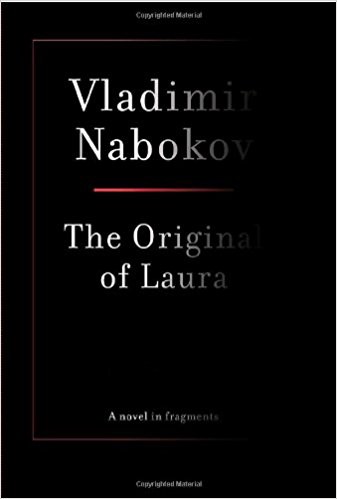
The year 2009 brought us Colum McCann’s Let the Great World Spin, Hilary Mantel’s Wolf Hall, and Dan Brown’s third Robert Langdon novel. Whatever the biggest literary splash of the year was, it is safe to say that it was not the publication of The Original of Laura, a 32-year-old incomplete novel by Vladimir Nabokov.

It was supposed to be. The year before, when Nabokov’s son Dmitri announced at long last he had decided to publish the abandoned manuscript rather than following his father’s final order to burn it, the BBC announced that its release was “likely to be the literary event of 2009.” Instead, the book went almost unnoticed, and the critics who did notice it were unimpressed.

By 2008, when he made his final call on whether to go against his father’s wishes, Dmitri had agonized over the decision for much of his life. The request to destroy the unfinished novel was delivered by Vladimir on his deathbed to his wife (and Dmitri’s mother) Vera. She promised him she would burn the manuscript, but instead kept it locked in a Swiss bank vault away from reading eyes. But when she passed away in 1991, the partially-written book became Dmitri’s responsibility. He was torn — should he respect his father’s last request, or his mother’s hesitations?

Dmitri was torn — should he respect his father’s last request, or his mother’s hesitations?

It would take Dmitri almost 18 years to make up his mind. On the one hand, a promise was a promise. Nabokov may have felt that the manuscript was embarrassingly incomplete. On the other, hadn’t his own father lectured his students about how “fortunate” it was that Max Brod had not obeyed Kafka’s wish to burn his papers, and lamented Gogol’s decision to burn the sequels to Lost Souls? Was it not a tragedy that Lord Byron’s publisher had burned his scandalous memoir — against the poet’s wishes? And where would literature be if the Emperor Augustus had listened to Virgil’s deathbed request? Minus one Aeneid, at least.

“Dmitri’s dilemma” as it became known, divided critics and authors, even before a single page of the book had been released. An article in The Times of London asked how he should weigh “the demands of the literary world versus the posthumous rights of an author over his art.” Slate critic Ron Rosenbaum wrote pleadingly to Dmitri to save the work, while Tom Stoppard argued sternly against publication in The Times Literary Supplement. “It’s perfectly straightforward. Nabokov wanted it burnt, so burn it.” But others, like Edmund White, took the view that Nabokov was likely not really serious when he made the request. “If a writer really wants something destroyed, he burns it.” John Banville called the decision a “difficult and painful one” but eventually argued that “a great writer is always worth reading, even at his worst.”

Meanwhile, the literary world began to speculate on what the novel could be — there were rumors that it was highly erotic, which would have been unusual. Others speculated that it might have light to shed on accusations that Nabokov had plagiarized parts of Lolita or that it would address suspicions about his childhood abuse. In the imaginations of Nabokov’s devotees, The Original of Laura became the missing piece to any and every puzzle.

In the imaginations of Nabokov’s devotees, ‘The Original of Laura’ became the missing piece to any and every puzzle.

Tantalizing tidbits of the text kept popping up over that 18 years. Dmitri at one point read a few portions of Laura out loud to a centennial gathering of adoring scholars at Cornell. Some later claimed to have privately been permitted to read the entire, brilliant manuscript. The literary journal The Nabokovian held a contest of its members to see who could write the best replication of Nabokov’s style, and then published the winners alongside what they claimed to be two real fragments from Laura. Which were real? Which were the imitations?

In 1998 an essay on The Original of Laura by a Swiss scholar named Michel Desommelier was published on the Nabokov fan website Zembla, containing what were purported to be several excerpts from the novel. These were then verified as authentic by other scholars and even Dmitri himself. But they weren’t authentic. The whole thing turned out to be a loving and elaborate prank concocted by the site’s editor Jeff Edmunds.

If it all sounds a little like something out of a Nabokov novel, that may be no accident. Unfinished books, unanswerable questions, meta-games of uncertainty and imagination were just the kind of thing Nabokov most liked to engage in on the page. And as long as Laura remained unpublished, Nabokov fans had an everlasting puzzle. They could be like V. in The Real Life of Sebastian Knight, brooding over the literary works of a deceased icon, trying to figure out which parts were real. Or biographer Charles Kinbote in Pale Fire, and his wild speculative annotations of the not-quite-finished poem of John Shade — the origin of “Zembla,” a fictional kingdom that Kinbote invents in his footnotes.

Someone Just Ran Over Terry Pratchett’s Unpublished Work with a Steamroller

Before his death, Nabokov himself had teased readers about his book-in-progress, saying that while the manuscript was “not quite finished,” it had already been “completed in his mind.” He spoke of it mysteriously, majestically. “I must have gone through it some 50 times, and in my diurnal delirium kept reading it aloud to a small dream audience in a walled garden,” he told The New York Times in 1976. “My audience consisted of peacocks, pigeons, my long dead parents, two cypresses, several young nurses crouching around, and a family doctor so old as to be almost invisible. Perhaps because of my stumblings and fits of coughing, the story of my poor Laura had less success with my listeners than it will have, I hope, with intelligent reviewers when properly published.”

But when, 32 years later, Dmitri finally released the novel to audiences, it would not find much succeess at all with those intelligent reviewers in Vladimir’s imagination.

In an interview with BBC2’s Newsnight about the ultimate decision to publish, Dmitri reasoned that his father “would have reacted in a sober and less dramatic way if he didn’t see death staring him in the face. He certainly would not have wanted it destroyed. He would have finished it.” Dmitri went on to explain that his father had once told him that Laura was among his most important books. “One doesn’t name a book one intends to destroy.”

Most critics, however, might have preferred he had.

Dmitri said his father had once told him that Laura was among his most important books. “One doesn’t name a book one intends to destroy.” Most critics, however, might have preferred he had.

The Wall Street Journal compared reading the book to watching Lou Gehrig try to play baseball after his illness in 1939. A German reviewer called it a “labyrinthine, overgrown garden without a gazebo in its center.” And Martin Amis, in The Guardian, felt that it was a cataclysmic disaster. “When a writer starts to come off the rails,” he wrote, “you expect skidmarks and broken glass; with Nabokov, naturally, the eruption is on the scale of a nuclear accident.”

Originally titled Dying is Fun, the novel was briefly to be called The Opposite of Laura before it was finally named The Original of Laura. The plot revolves around a scholar named Philip Wild who marries a woman named Flora because she reminds him of a previous lover named Aurora — the novel is meant to be the real story behind a novel that the narrator has written called My Laura, which has become a bestseller. Part of the story revolves around Flora, Aurora, and Laura. The rest centers on Philip’s preoccupation with his own death — of his long-standing fantasies of being able to erase himself like a figure on a chalk board, a wish for “self-deletion.”

This is about all that can be said of what turned out to be not even a manuscript but 138 handwritten notecards. Nabokov often used these for his first drafts before setting them into a final order for Vera to type up. The Laura cards had not yet been set in any kind of order, with only the first 60 or so forming any kind of linear narrative. Altogether the text totaled only around 30 typed pages. To those who had waited and wondered about Laura since the late 1970s, it must have been a little underwhelming.

To stretch 30 pages into something resembling a finished novel, the book was published by Knopf on heavy stock, with a color reproduction on each page of the original card, complete with scribbles and cross-outs, with the cleaned-up text typed below. Each image is cleverly perforated so that it might be punched out, like something on the back of a cereal box, and reshuffled in whatever order the reader pleased.

This construction is a reminder that the book should never have been judged as if it were complete. Indeed, there is no way to read it without being perpetually reminded of its incompleteness. As you flip the simple, smudgy cards, the book all but vanishes in your hands. And it is glorious — to be able to see the work as work, not a masterpiece but a process. Cut short by death, but in a fun way.

To drive the point home, the first and final pages are a reproduction of a single graph-lined paper, on which Nabokov was working out, perhaps, the right word to use somewhere. “Efface” is circled at the top, followed by, “expunge, erase, delete, rub out, (something scribbled out completely), wipe out, obliterate.”

The book should never have been judged as if it were complete. Indeed, there is no way to read it without being perpetually reminded of its incompleteness.

It is likely that, despite what Dmitri claimed about the novel’s importance, he knew it was no tour de force. According to The Guardian, his cousin Ivan, a publisher in France, had urged him to go ahead and destroy it. He and Dmitri had each read Laura, and Ivan recalled, “we were all of the same opinion. It was just a torso, and not a glorious torso.”

Dmitri’s real motivating factor, according to Ivan, was that Dmitri himself was not well. In his 70s and facing both steep medical bills and a poor prognosis, publishing the manuscript was more a financial decision than anything else. Indeed, he would pass away only a few years later.

In his forward to The Original of Laura, Dmitri owned up to some of this, admitting that he first read the note cards during a stay in the hospital. He wrote that once he had, the dilemma changed. The story became real in his mind. While he knew it was an “embryonic masterpiece” at best, he could no longer conceive of destroying it, even if he was not sure he ought to let anyone else see.

The Book James Baldwin Couldn’t Bring Himself to Write

“Should I be damned or thanked?” he asks, in the forward. “‘But why, Mr. Nabokov, why did you really decide to publish Laura?’ Well, I am a nice guy, and, having noticed that people the world over find themselves on a first-name basis with me as they empathize with ‘Dmitri’s dilemma,’ I felt it would be kind to alleviate their sufferings.”

It is a bequest, then, to us — we the readers, we the puzzle-solvers. We Nabokovians and Zemblans. We who know that surely the notecards should not have been burned, just as, surely, they should not have been expected to be something they are not.

What they are is a frustrating, fabulous pile of fragments that can never be fully assembled. A dream ended by death, what remains is rough, resistant, and full of human flaw. They are, mostly, what is not there — the gaps and empty pages of one last story that never left the master’s mind. In this, I suspect Nabokov would have been quite pleased.

8 Books that Wouldn’t Exist Without Mary Shelley’s ‘Frankenstein’

In the summer of 1816, a pregnant, unwed teenager had a nightmare.

Mary Wollstonecraft Godwin — not yet Mary Shelley — was at Lake Geneva, Switzerland, with her lover, the poet Percy Bysshe Shelley. The rainy summer often forced them indoors. Once, at the villa that Lord Byron was renting on the lakeshore, the party entertained one another by reading from a recent anthology of German ghost stories, Fantasmagoriana. Byron challenged them to each write a horrific fiction. “Have you thought of a story?” Shelley recalled that she was asked each morning — “and each morning I was forced to reply with a mortifying negative.”

Then she suffered what would become one of the most famous nightmares in history: “I saw the pale student of unhallowed arts kneeling beside the thing he had put together. I saw the hideous phantasm of a man stretched out, and then, on the working of some powerful engine, show signs of life, and stir with an uneasy, half-vital motion.” The narrative grew in her imagination, and she followed it. Frankenstein; or, the Modern Prometheus was published — anonymously, like so many novels of the time — in 1818. Not until the second edition four years later did Shelley put her name on the title page.

New ways of thinking about nature (and human nature) require new ways of writing, and the writer we now consider the founder of science fiction saw the need for fresh metaphors while still a teenager. She confidently declared her position, midway between science and fancy, in her introduction to the first edition: “It was recommended by the novelty of the situations which it develops; and, however impossible as a physical fact, affords a point of view to the imagination for the delineating of human passions more comprehensive and commanding than any which the ordinary relations of existing events can yield.”

Young Mary’s first novel has lasted, in part, because the central figure quickly strode off the page and into popular culture.

Shelley’s sentence could serve as a manifesto for her novel’s successors and for fantastic tales in general. Frankenstein explored the ancient themes of literature: anguished dread of mortality, the consequences of obsession— inevitably hubris and its consequent ate—and the divine retribution that in mythology always follows overweening pride.

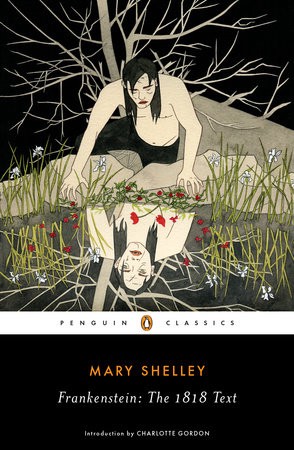
The Penguin Classics bicentennial edition is out this month.

Young Mary’s first novel has lasted, in part, because the central figure quickly strode off the page and into popular culture. Nowadays the cobbled-together, nameless “monster” — long mistakenly known by his creator’s name — is familiar to millions who have never read the novel. He is a stock figure in horror movies, a favorite of editorial cartoonists, a cautionary fable about science.

Tales of creation gone awry range from Pinocchio to the Gingerbread Man, from the Clay Boy of Czech folktales to the endless recreations of the protean monster conjured by Victor Frankenstein. The critic Michael Dirda listed some of Mary Shelley’s themes apparent to an attentive reader: “the persistent interconnection of sex, birth, and death; the mirroring of monster and creator; the conflict between instinctive goodness and the societal creation of the criminal; the power of nature to soften and civilize; the human yearning for sympathy and love.”

In the 200 years since the novel’s publication, we’ve had bad imitations and truly inspired Frankenstinian progeny. Spanning the late 1800s to the Brexit era, here are 8 books that owe their life to the original creator.

Mary Shelley’s Revision: 1831

The first book inspired by young Mary’s 1818 book was her own 1831 revision of it. By this time, she had published other novels, established herself, somewhat transcended her scandalous youth, and become the keeper of the Romantics’ flame. The 1818 edition presents a stronger, unadulterated view of Shelley’s dark vision. In her introduction to the 1831 update, Shelley explicitly stated, “I have changed no portion of the story,” and claimed that her revisions were limited to matters of style. Actually she greatly altered the spirit and implications of the story. She also saluted the memory of her brief but life-changing romance with Percy Shelley, who had died in a boating accident on the north-western coast of Italy in 1822. And she removed the epigraph that haunted the opening in 1818, from Milton’s Paradise Lost:

Did I request thee, Maker, from my clay

To mould me man? Did I solicit thee

From darkness to promote me? —

The Strange Case of Dr. Jekyll & Mr. Hyde by Robert Louis Stevenson

Robert Louis Stevenson’s now legendary 1886 novella The Strange Case of Dr Jekyll and Mr Hyde could not have been written without Shelley’s pioneer novel. Stevenson wove many contemporary issues into his story, beginning with well-known case studies of dual personality, but they gained resonance when he mixed in evolutionary fears and the recent notion of the violent criminal as an atavistic reversion to our species’ brute past. Like Shelley, Stevenson explored the horror of unleashing the primitive id. Two years later, when Jack the Ripper began to terrorize Whitechapel, the newspapers immediately referred to Mr. Hyde, to the lurking midnight viciousness of humanity.

The Golem” by Avram Davidson

In the original Hebrew Bible and the later Christian Psalms, the word golem meant a kind of unformed material, a potent clay. Over time it became the name of the classic Hebrew Frankenstein, an anthropoid creature formed of mundane earth and animated by supernatural rather than by science-fictional methods. Victim and villain, as potent in its ambiguity as Frankenstein’s monster, the golem stalks through folklore and into recent literature. It is difficult to imagine a more dryly amusing monster story than “The Golem” (1955) by the richly talented Avram Davidson, known mostly for his science fiction. It’s available in numerous collections.

Frankenstein Unbound by Roger Corman

The British science fiction writer and historian of science fiction, Brian Aldiss, sent a time-traveling twenty-first-century character back to Shelley’s time in his bloody but thoughtful 1990 novel Frankenstein Unbound. The title and big-picture themes echo the work of both Mary Shelley and her husband Percy’s poetic drama Prometheus Unbound. Roger Corman, director of everything from a series of Poe adaptations starring Vincent Price to the pioneer biker movie The Wild Angels, adapted Aldiss’s novel in 1990.

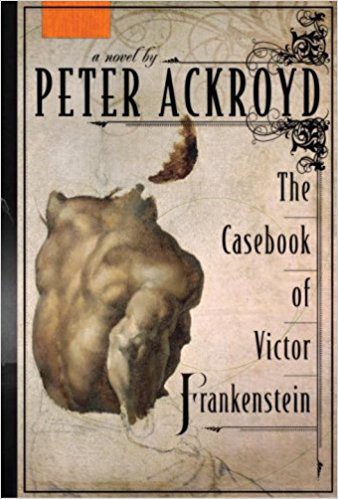
The Casebook of Victor Frankenstein by Peter Ackroyd

Frankenstein lumbered easily into the twentieth century. 2009 saw publication of The Casebook of Victor Frankenstein, by Mary Shelley’s versatile and prolific countryman, Peter Ackroyd. Author of books about everyone from the poet Thomas Chatterton to London Underground, as well as of a biography of Dickens as manically creative and long-winded as its subject, Ackroyd knows how to conjure the past. This novel is sometimes pastel in hue and pedestrian in pacing, but it reaches heights of thoughtful homage to Shelley’s original.

Hideous Love by Stephanie Hemphill

As recently as 2013, Stephanie Hemphill tackled a lyrical free-verse account of creator and monster in Hideous Love. As in her verse novel Your Own, Sylvia, about Sylvia Plath, Hemphill was inspired again by the genesis of a troubled young female writer. She focuses on Shelley rather than upon Frankenstein and his monster, but young Mary’s Gothic imagination grew out of this period.

Man Made Boy by Jon Skovron

In 2015 Jon Skovron published a book that I have not yet read but which is on my bedside table. The beautifully refractive title Man Made Boy hints at the complexity and wit of this acclaimed YA novel built around the story of Boy, the ill-fated offspring of Frankenstein’s monster and his equally scary bride. Boy has never walked freely in the world above the catacombs beneath Times Square, from which he and his family and other legendary monsters appear in public as a theater troupe. As much a child of the new millennium as of mythic monsters, Boy is a computer wizard who conjures a virus that, naturally, gets as out of control as the genesis of his own parents.

Spare and Found Parts by Sarah Maria Griffin

In the era of Trump and Brexit, it should be no surprise that the mythic tale of a raging monster inspired by blind hubris continues to flourish. The bleak year of 2016 saw publication of Spare and Found Parts, an elegant and thoughtful debut YA novel by Sarah Maria Griffin. Set in an apocalyptic near-future following a technological breakdown, the story follows Nell Starling-Crane, whose loudly ticking clockwork heart sets her apart even from the many other characters whose prosthetic augmentations enable them to survive in this anti-technology era. Secretly outwitting the ban against technology, young Nell builds an android whose creation and adventures raise as many thoughtful questions as its inspiration — Mary Shelley’s nightmare precisely two centuries earlier.

Judith Beheading Her Would-Be Rapist

The first time I fought back against a man, it was a boy. I was twelve. It was snowing.

The boy in question had been trying to force my friend’s face into a snowbank while she wept. I don’t remember his name, or what he looked like, or much about what happened save the rage I felt. One minute we were standing on icy North Carolina streets in oversized ski coats, the next we were in the snowbank and my fist was full of his hair and I was pulling him off her and shoving him face first into the snow. I remember holding his head down as he squirmed and my friend cried and her sister jumped up and down clapping and singing “he’s going to get frostbite, make him get frostbite.”

Lucas Cranach the Elder, Judith and the Head of Holofernes, 1530

This is that frightening wilderness of girlhood. That brazen and ferocious place of the untamed. We are still allowed to be bold.

I let him up when concerned parents came running over at the sound of our fight.

“You could have smothered him, you could have given him frostbite, you could have seriously hurt him.”

Twelve-year-old girls do not respond, “I know. That was the point.”

Nobody asked: but why did you do it? What drove you to it? All they saw was a girl going mad.

Here’s a story:

Holofernes is busy invading the land of the Israelites with the Assyrian army. During this time Judith, a widow, and her maid Salome, infiltrate the Assyrian army with promises to sell out their people.

On the fourth day of the siege Holofernes gives a banquet. He goes to Bagoas, his aide, and says “Go and persuade that Hebrew woman Judith to come and join me. I should be disgraced if I let a woman like her go without seducing her. If I do not seduce her, everyone will laugh at me!”

Bagoas tells Judith Holofernes’ orders and she goes to his tent accordingly. Holofernes, overwhelmed by her beauty, is seized with a violent desire to sleep with her. Indeed, since the first day he saw her, he had been waiting for an opportunity to seduce her.

Cristofano Allori, Judith with the Head of Holofernes, 1613

“Drink then!” Holofernes says. “Enjoy yourself!”

Judith replies, “I am delighted to do so, my lord, for since my birth I have never felt my life more worthwhile than today.”

Holofernes is so enchanted with her that he drinks far more wine than he had on any other day in his life. Eventually, it grows late and his staff and officers hurry away to their beds and Judith and Salome are left alone in the tent with Holofernes who has collapsed, wine-sodden, on his bed.

After stationing Salome outside to keep watch and pretend that everything is fine, Judith goes to the bedpost by Holofernes’ head and takes down his scimitar. Coming closer to the bed she grabs his head by his hair and says, “Make me strong today, Lord God of Israel!”

She strikes twice at his neck with all her might and cuts off his head.

Note: It is in the twelfth year of Nebuchadnezzar’s reign over the Assyrians that the Book of Judith begins.

Later, my mom says that while she is proud I stood up for my friend, I should “make sure to use words next time. Don’t learn to think with fists.”

Never mind that we had shouted at the boy till we were hoarse but he didn’t stop. We flung tears at him, we screamed. He kept going and going. My friend’s sister had pulled at his arm but she was younger and smaller. I was his size, or thereabouts, and so it fell to me to do the defending.

Only later did I wonder where all those protective parents were when we had been wailing. When our words were met with silence, what other weapons did we have?

My mom says that while she is proud I stood up for my friend, I should ‘make sure to use words next time.’

Why is Judith, who disrupted the natural order by taking on the man’s role of defender and soldier, positioned as a hero within the early modern Christian narrative? Indeed, she is so honored she was envisioned, from early 4th-century Church fathers onwards, as a prototype Virgin Mary, a particularly sacred position to occupy in that time.

Here’s the tension: we have Judith as hero and admirable woman who killed her would-be rapist, but women today, stepping forward to name their assaulters are liars, rumor-mongers, sluts. Why this contrast, despite the married themes of resistance?

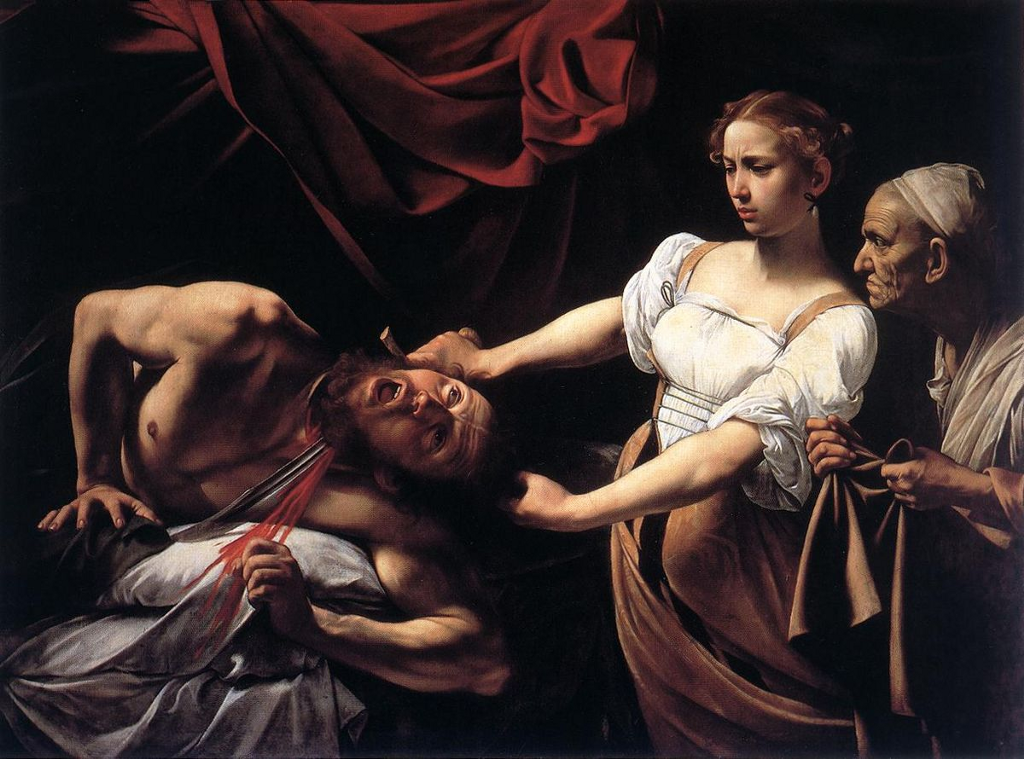
Caravaggio, Judith Beheading Holofernes, c. 1598–1599

Much of this comes from the structuring of Judith’s story and her character. Within the Book of Judith, accepted into the Christian canon by the aptly named Pope Innocent I, there is delineation of Good and Evil. The Good represented by the Israelites and the Evil by the Assyrians. In the invasion scenario, in which this story operates, there is little to no space for conflicting morality or questioning who is in the right for their actions, no matter how gruesome. The stakes are too high. It is these extremes that allow for Judith’s story to function as a tale of heroics rather than one of “poor choices.”

This complicates Judith’s actions and the reception of her as hero. Judith is a devout woman with phenomenal faith in the Lord, saving the Israelites from a cruel and ruthless invader by ingratiating herself with the Assyrians and eventually beheading their general. In this situation Judith’s story cements the fact that resistance is only acceptable when acted out by certain people, performing in a certain manner, and in a limited set of situations.

Despite these complications, Judith has long been positioned as a hero by Christians. While she always had her admirers, her heyday was predominantly in the early modern period (roughly mid-1400 to late 1700), when some of the most famous imagery of her was produced. The peak was from 1500 to late 1600, most especially in Italy. Much of this has to do with the alignment of Florence with the “underdog” identity. In contrast with the big players on the peninsular stage — the Habsburgs, Rome, Milan — Florence saw itself as David against Goliath, Judith against Holofernes. All of this is to say that during this period there was an escalation in the adoration of Judith and the homage paid to her in prayer and in paintings.

The acceptance of Judith as a hero worthy of commemoration relies on two married aspects of her story and character: religiosity and purity.

The acceptance of Judith as a hero relies on two married aspects of her story and character: religiosity and purity.

Judith exemplifies the ideal religious woman and therefore is permitted to act in traditionally immoral ways. She dines with a man who is not her husband, wears revealing clothing, spends time in a war camp without a male chaperone, and eventually commits murder. While these acts were done in extreme circumstances, and for the sake of saving her people, another woman doing them of less visible devotion to the Lord would have been tainted.

In the end, her actions are permitted not only because she is a religious woman, but also because she remains pure and virtuous. Judith is not raped. There is no taint on her physically or spiritually. Oh, Holofernes wants to, intends to, but he is dead before he can try. Had he succeeded, the Book of Judith would most likely be a very different story.

In the current #MeToo outpourings we see the expectations that Judith lived up to mapped onto the experiences of survivors coming forward.

When a story is told by a survivor it is dissected. Torn apart to see if the woman’s character stands up to the saintly expectations. If the woman was drinking, at a party, has done something wrong in the past, her entire story becomes risible. She is not virtuous enough to believe; not pure enough to mourn the “loss” of.

During trials this becomes especially prescient, although it plays out every day, in one way or another, on social media. In rape and assault trials it is the woman’s character on the stand, not her assailant’s. The moment there is nuance: she was raped but continued on in the relationship; she was coerced; she was drunk; she said “yes, yes, but not that” but he did it anyway, it becomes a requirement to see how worthy the woman is of “forgiveness” for her “mistakes” that clearly lead to this moment.

It is that appalling paradox where the more the woman said no, the more she resisted, the more she is believed. But, the more silenced she was during the assault, the more silenced she is coming forward. The more un-Godly her life, the less important her words. As if the inches of skin shown or drinks had work backwards against the number of words you are allowed to have to make your experience believed.

Many of the stories coming out now, especially those involving powerful men, are further complicated by the positioning of men’s “love” as “God-like” and “desirable,” and so women are supposed to react by feeling “honored” for the supposed “blessing” of this male attention. Men say “I want,” and women say “thank you.”

Judith herself responded to Holofernes with, “I am delighted to do so, my lord, for since my birth I have never felt my life more worthwhile than today.”

Men say ‘I want,’ and women say ‘thank you.’

Judith’s story, if Holofernes had succeeded, would not bear up well under the scrutiny of trial or social media. He was a powerful man deigning to pay attention to this widow. There would be accusations that she lead him on, that she knowingly went to his house, that she drank with him. And, in the end, her words would be thrown back at her: why did you say you felt worthwhile when he asked you to drink? Why didn’t you just say no?

Women’s words are weaponized against them to silence and delegitimize.

Note: If you are virtuous and God-fearing you will not be assaulted. If you are assaulted you are then, necessarily, not virtuous or God-fearing.

It becomes complicated, being taught that you must worship a being that will love you whether you want it or not. A being that will send His spirit to move through you whether you want it or not. A being whose non-consensual love is supposed to keep you safe.

If God’s love is unconditional, without end, and non-consensual, where lies my spiritual virtue? Or is that, like my physical virtue, a conquest to be taken?

When Judith prays to the Lord He answers her. She credits all her strength and success in defeating Holofernes to the Lord and her faith in Him.

The first time I prayed in earnest was after seeing an X-Files episode where the Devil comes out of the closet to impregnate a woman. I was seven and staying at my dad’s house in a bedroom that the previous occupant died in. His clothes were in my closet.

The next time I prayed in earnest was after watching Francis Ford Coppola’s Dracula. Convinced Dracula was lurking in my closet, I hid beneath sheets and whispered prayers until I fell asleep. I prayed away much of my youth to closets.

At the time, I subscribed my spiritual safety and preservation of holy virtue from blood suckers and demons to this obsessive praying.

However, I lost what minimal faith I had when I learned in Sunday school that my grandpa and cousin were going to hell since they weren’t Christians. I objected that they were the best people I knew. The most moral, kind, brutally truthful and honest people. The youth pastor said, “It doesn’t matter if they haven’t accepted Christ as their savior.”

It becomes complicated, being taught that you must worship a being that will love you whether you want it or not.

At fifteen I began taking a train and bus to school as we lived a town over. On the bus route an older man began talking to me. He must have been in his mid to late 20s. I remember the dirty blond hair, pockmarks, and his penchant for wearing all black and Metallica t-shirts. I was going to a Catholic high school and wore my uniform grey pleated skirt to the knees, polo shirt, cardigan, knee socks, black shoes, hair in a ponytail.

I was doing everything right. I was covered, I didn’t instigate conversation, I had my old Nokia cell phone in hand.

But I was also taught to be polite and that when someone asks you a question you’re supposed to respond. He asked me about Monty Python and the Napoleon biography I carried around. Before long he was buying me gifts and liked to lean across the aisle and touch my shoulder. He invited me to a beach party at the end of the school year. It’d be fun, a bunch of his friends on the beach, a bonfire, some barbecue.

I considered it. I spoke with my friends about it. Constructed lies to tell my mom should she ask. I looked for him in the days following to tell him that I would go even though I felt, rather than knew, something was wrong. I had even figured out the bus route there.

But shortly after that invite, he stopped showing up on the bus. The driver, a gentle, older man, said, “he switched routes.”

I didn’t pray through the entirety of it, even as I became increasingly uncomfortable and aware that something was off. I am no Judith. I find prayer lacks purpose, my words to Him frail, without strength.

I’ve little patience for the supposed protection devotion to the Lord is meant to supply. I long stopped praying to God for safety from closet devils and vampires.

I credit my escape to sheer dumb luck in bus drivers.

Judith’s story can be read as that “ideal” assault we’re taught to expect. A pure, virtuous woman fights off her assaulter and is not “used.” Her resistance is before and during the attack.

This is how we have always been told it’s supposed to be: woman in dark alleyway is attacked by a man, screams, shouts, beats him off, runs. Saves her virtue. She’ll still be shamed for having been in the dark alleyway, for having worn something inviting, but at least she did the right thing of fighting off the assailant. At least she preserved her honor.

Being assaulted only to fight back after is not how the story is supposed to go. Then it’s not self-defense. Then it’s just a ruined woman taking revenge.

“If you were truly scared, truly didn’t want it, why didn’t you scream? Why didn’t you run? Why didn’t you fight back?”

Being assaulted only to fight back after is not how the story is supposed to go.

Any positioning of “how assault is supposed to go” ignores the many valid reasons of why people don’t fight back: the power dynamic of the relationship, fear, inability to resist and so on and so forth. These reasons are often also tied to why many don’t report. Such questions also undermine the fact that most assault and abuse situations do not fit one specific narrative, making it more difficult for many survivors not only to articulate their experiences, but also to be believed.

The absence of narrative, of words, is important. A fatigue of language occurs when you do not have adequate means to express your experiences. The way we cross-examine survivors whose assault doesn’t fit the expected narrative — “Why didn’t your assault look like Judith’s? Like that one show? Like we heard about in sex-ed?” — facilitates the fatigue. It seeks to remove words (“assault,” “abuse,” “rape”) from the already-limited vocabulary survivors can use to tell their stories.

On top of that, women fighting back are understood as angry, disruptive and dangerous to the social structures that benefit (predominantly white, straight, cis) men. If we are to fight, we’re only to do it in the strictest of circumstances which have been pre-approved for us: stranger in a dark street. Stranger in a car. Stranger in your home. Stranger.

No one gives you the language for when you know the person and everyone you know knows the person. No one gives you the language for when it’s a small, and already marginalized, community. No one gives you the language for when it’s your friend or partner or parent or teacher.

Judith, to the benefit of her posthumous image, had that “perfect” story. Holofernes was a stranger, the general of an invading army. Judith was a devout woman who performed her religious duties to perfection thus solidifying her credibility within her community. This is not to take away from Judith’s experience, but to position the acceptance of her resistance compared to other women who have resisted now, and throughout time, only to face smear campaigns and violence.

It is impossible for us to live up to the expectations of womanly saintliness thrust upon us when, by our very words, we admit we are no Judith, let alone a Virgin Mary.

By not reaching the sword in time we are become Magdalenes.

Here’s another story:

I was drunk at a party with a guy I’d been on a few dates with who was a friend of a co-worker. We went up to my room. I said “yes, yes, but not that.” He ignored the “not that,” which, in this case, was sex without a condom. I only realized what happened when it was over. He was asleep (curled up, hair on my pillow. I find his briefs under my bed a week later). I washed off and go downstairs crying. He was kicked out by a friend, but somehow came back inside and went up to my room and wanted to touch me, kiss me, his face was pressed between the door and the frame ‘Here’s Johnny’ style and he was saying “but I love you, I love you, I love you” and I was shaking and didn’t want to make a big deal of everything and once he was gone I was fine. Everything was fine. I just had to get the morning after pill and deal with an STI six months later because I was pissing blood and he was violating me all over again.

Afterwards, I don’t know whether my co-workers talked about me behind my back. But I know how they talked about another woman who was assaulted after I left that workplace because a year later a colleague messaged me, “do you want to know the latest drama?”

I said I did. I then heard how they thought she made it up, or exaggerated, or blew the entire situation out of proportion. I know how they said she was “ruining the atmosphere” and how all sides of the story should be heard and if she doesn’t like it here, she should just leave. I know the vicious way they gossiped about her online and how they, like so many, reduced her experience to “drama” and “sex scandal.”

I was drunk and wearing revealing clothing. I had gone on dates with the guy. He was a nice dude with a young son. He was a musician and talented. I don’t know how they talked about me, but I can guess.

I didn’t do anything to stop him because I didn’t have a chance. There wasn’t even a moment for prayer.

Note: A believable woman is pure, devout, sacred, untouched and, above all, rational.

A believable woman is pure, devout, sacred, untouched and, above all, rational.

Note: No woman who is pure, devout, sacred, untouched, and rational should find herself in a situation to be assaulted. If she does, it had better be for a good reason. Like stopping an invading army.

“Drink then!” Holofernes says. “Enjoy yourself!”

Getting a person drunk, the oldest trick in the book. Alcohol is, after all, the original date rape drug.

When I was 19 my first boyfriend, then 24, liked to make date rape jokes. If I called them that he’d become patronizing and say that it’s “just humor. Another glass of madeira, m’dear?” He liked to tell me that I was an old soul; if I was as mature as he thought I was, he said, I’d be interested in the kinds of sex he was proposing. He’d compare me to his ex-girlfriend, saying, “well she liked it when we did this or that, so you should too. Should we have another cider?”

I was roofied at a bar when I was 20. I had gone out with a friend to an event that was supposed to be safe and ended up wandering the streets. I have only two memories from that night: curling up on the ground outside a store front thinking I’ll just sleep there for the night, and two very helpful young men getting me a cab, paying for it and a bottle of water and sending me home. I was extraordinarily lucky, all things considered.

The next morning the friend asked, “but are you sure you were roofied? Are you sure you’re not overreacting? Are you sure? It was a queer event, we were in a safe space. That couldn’t have happened.”

Then there was the girl I dated for a time who liked to make sure we didn’t eat and that I drank a lot so I was too drunk to put up much of a fight when it came to sex. She’d undo my bra strap in public while talking about the need for consent. She had all the right lingo for it, all those good words about boundaries and the importance of enthusiasm.

I am unlearning my inability to say no. My inability to use words to negotiate for myself. When I learned “don’t learn to think with your fists” I also learned that I am to be nice and accommodating and I shouldn’t be a burden. That there was nothing worse than taking up space and being difficult.

At least when Judith went to the Assyrians she knew she was in enemy territory. Especially while the wine flowed. At least Judith knew she would have to go to all lengths to keep herself safe. At least Judith knew how to use a sword on top of how to pray.

Women are taught prayers, words of gentleness, but not how to fight.

When Judith is portrayed in early modern art she is most often shown at the height of her triumph. Her hand in Holofernes’ hair, his own sword through his neck, there is blood, her grim determination contrasted with his pain.

Artemisia Gentileschi, Judith Slaying Holofernes, 1614–18

While in the Biblical story Salome, the maid, is not present during the beheading, I think it important that in the art she is. In Gentileschi’s magnificent Judith Slaying Holofernes, Salome is even holding the man down as Judith cuts. There is as much rage on her face as on Judith’s. It is important to note that these captivating portraits of Judith by Gentileschi are most likely born out of her own experience of rape.

Gentileschi’s story, like many, is not the ideal. She continued the affair with the man who raped her, hoping he would marry her and bestow upon her that respectability necessary for women of her time. Without it, she would be without “honor” and “virtue.” It is no surprise that we can easily trace her face onto Judith’s in all three of the paintings she completed based on this story.

In our current beheading process it is necessary for there to be those who hold down and those who hack the head off. Sometimes, we take turns. Survivors are supporting each other as we each come out of the darkness and behead the monster — in this case, patriarchy, rape culture, toxic masculinity.

The use of intimate space in most paintings of Judith inverts our usual portrayal of assault. It is Holofernes’ bed that is defiled, not Judith’s. It is his tent made uncanny as a result of the repercussions of his violence.

When survivor’s pain is used as a muse it is our blood on the sheets. In these paintings it is Holofernes’ soaking the white linen. It is his bed that becomes un-familiarized by the act of violence rather than the woman’s. It is his tent, his home in foreign land, which becomes horror.

Artemisia Gentileschi, Judith and Her Maidservant with the Head of Holofernes, c.1625

The intimate lighting, sumptuous curtains, the details of side tables, used sheets, cushions, pillows all add to the homely nature which is disturbed by the brutal act we are witnessing. But, as much as it is brutal, it is also cleansing.

Holofernes is cast into the dark. With his twisted, grotesque head bundled away in a sack, he is rendered irrelevant. In Gentleschi’s Judith and Her Maidservant with the Head of Holofernes, it is difficult to even see Holofernes’ head so obscured is it in shadow. It is Judith and Salome in the light.

This is not the painting of modern times. Even now, those coming forward with stories of abuse, assault and rape are met with silence, with accusations against their name, their integrity. Often, it is the survivor who is interpreted as monstrous for wanting justice. It is them pushed into shadows. Even more so when their abuser is popular, powerful, famous, artistic. These people go too far! They’re ruining careers of talented men! (Never mind the careers of talented women who have been silenced and suppressed by these powerful men.) Then, the litany of questions: Why didn’t you say something sooner? What are you getting out of this? What if you’re lying? Where’s the proof?

In our current beheading process it is necessary for there to be those who hold down and those who hack the head off.

While the stories gain a wider audience than anything in Judith’s time (or Gentileschi’s) and, as a result, are able to generate greater conversations about rape culture, feminism, and assault there remains strong backlashes. Women have been hounded off social media after receiving hundreds of rape and death threats. Some women have found themselves black-balled in their chosen occupation either by their assaulters or by their assaulters’ friends.

In some cases, those coming forward risk doxxing, or worse. They risk their homes becoming unsafe, unfamiliar, yet again. Home becoming horror because they resisted. Because they did not act as a proper victim should and play the correct role within that limited script we are given.

It should be the perpetrators of assault experiencing a fatigue of language. It should be their homes becoming uncanny, not their victims and survivors.

Fede Galizia, Judith with the Head of Holofernes, 1596

Sometimes, I go back through the texts sent to me by Mr. STI. He texted me for more than four months afterwards, cataloguing all the places around town he saw me. “Hey I just saw you at X grocery store” or “I think I saw you at the gym” or “Was that you at the taco place.” I think he thought it romantic. Or flattering. Or he saw Love Actually one too many times.

The first night I met him someone described him as “a hotter, young Johnny Depp” which, as a compliment, has aged badly. Thinking on him now, I think he looked a bit like Holofernes. Longish hair, trimmed beard, tall. The last message he sent me was, “hey, I saw you yesterday in the grocery store at Plaza Bella.” It was sent at 6:38pm.

What draws me to Judith is the part of her that was twelve-year old me. She had that wildness that fought back. Somewhere along the way I lost my ability to grab a man by his hair to stop him from hurting others.

This is, perhaps, why men are so scared of the #MeToo deluge, the lists we make, the whisper networks we create. Because it’s the one space our words do matter and have power — even if they didn’t protect us when we needed them, at least they can protect others.

We are trying to reach up to the scimitar on the bedpost. When we do, the world should be frightened.

Note: When Judith returned with the head of Holofernes she held it up for all her people to see and said, “Look, the head of Holofernes cut off by the hand of a woman.”

‘The Power’ Is the Perfect Book for the #MeToo Movement

The perfect novel for the Me Too movement was released in the U.S. October 2017 — the month the Weinstein revelations broke. You couldn’t ask for more brilliant cosmic timing — except that few Americans seem to be reading or talking about Naomi Alderman’s The Power. During the holidays I searched display after display of new releases at our massive suburban Barnes and Noble and couldn’t find it. It was missing from Washington, DC’s left-leaning Busboys and Poets. The Power has been critically lauded — it won the Baileys Women’s Prize for Fiction in the UK and made plenty of “Best Books” lists for 2017 here in the U.S. By now it should be launching a thousand thinkpieces, but instead…silence. How can this be?

The premise of the novel is straightforward and mesmerizing: teenage girls suddenly acquire the ability to cause pain and death by twisting an electric “skein” inside their collarbones and sending out a charge through their hands. Their rage is “pure and white and electric” as they rain vengeance down on their rapists and abusers. Talk about “time’s up.” Reading this novel against the background of each new sexual harassment revelation this past fall was exhilarating — and terrifying. I was surprised at how viscerally I recognized the anger in The Power; I could almost feel it sizzling in my own collarbone, traveling down my limbs. Yes, I thought, here is a white-hot blade to divide truth from lies, just from unjust. Yes, women’s anger will be one of the things that saves us.

Not so fast, Alderman warns.

As sweet as it is to see justice meted out, The Power will not let us rest here. Alderman rejects the sentimental assumption that if women had life-and-death power they would always use it benignly. A foster kid reinvents herself as Mother Eve, founds an appealing new religion based on nurture and healing, but asserts her authority through deception. A girl named Roxy takes over her powerful crime family and expands its reach by selling a new drug that is also a weapon. Most brutally, the women who emerge from the sex trafficking capital of the world themselves become sexual torturers, rapists and mass-murderers. Alderman seems to suggest that power itself is the problem. Anyone who has it, male or female, will abuse it — in one of the book’s refrains — just because they can.

Alderman seems to suggest that power itself is the problem. Anyone who has it, male or female, will abuse it just because they can.

This isn’t how the “Me Too” movement has unfolded — women have come forward to change the balance of power without abusing power themselves; they’ve called for a new ethos of dignity and respect that benefits men and women alike. But the “Me Too” movement must grapple with the same questions The Power does: how did we allow this culture of abuse to stand for so long? And how do we undertake the hard work of imagining the world differently?

Reading The Power during the sexual harassment allegations gave me an uncomfortable answer to that first question: The culture of abuse has persisted because too many of us, myself included, have been complicit. I discovered that I’m much more alarmed and disgusted by sexual abuse when it’s perpetuated against men. For example, the book describes male genital mutilation or “curbing,” which not only limits male pleasure but makes it “impossible for a man to achieve an erection without skein stimulation by a woman” and leaves many of its victims unable to orgasm without pain. Obscene, almost unthinkable that a man’s body would be made to betray itself in this way; that such suffering would be wreaked at the very center of who he is. And yet. Of course. Whole cultures have justified — still justify — doing this to women.

As I watched where my sympathies landed in Alderman’s alternative reality, I realized that the sexual abuse of women is so familiar — such constant background music, such a 21st-century narrative cliché — that it no longer registers with the visceral force it should. When the Weinstein revelations first came out, I confess that I shrugged. I thought: in an industry where beauty and charisma are for sale, of course this is how it works. I wasn’t so much surprised by the men’s behavior as by everyone around them who sort of knew, who behaved as though this was sort of okay. Alderman’s upside-down world shocked me into understanding that I’m one of those people. I’ve let my expectations be set by cultural norms that are hostile to women.

I realized that the sexual abuse of women is so familiar that it no longer registers with the visceral force it should.

So how do we imagine different norms, a different world? It can’t be a coincidence that the “Me Too” movement began in Hollywood, where our cultural myths are writ large. The Power asks us to think about who gets to make those myths. In one delicious aside we learn that once the women take over, men’s movie clubs mushroom underground. The men watch “particular kinds of movie over and over again: the ones with explosions and helicopter crashes and guns and muscles and punching.” And I think of the energy I’ve wasted pretending this narrow genre of movies is interesting. I’ve nodded along to the idea that they are universally appealing, “blockbusters,” while movies that have actual relevance to my life as a woman are small, minor, lucky to break even — or worse, “chick lit.”

In another scene, the novel’s only male protagonist, a journalist from Lagos, files his reports about the dark side of women’s new power and is told: “Sorry, not something we can sell right now.” No violence is necessary to kill a story those in power don’t wish to hear; all they have to do is shrug in the direction of the marketplace. It’s not enough for new stories to be told — as we’ve seen with the “Me Too” movement, they also need to be seen, believed, and shared.

No violence is necessary to kill a story those in power don’t wish to hear; all they have to do is shrug in the direction of the marketplace.

This returns us to the question of why The Power itself hasn’t made a bigger splash, despite the brilliance of its timing. Instead we spent the end of 2017 talking about the retread of Blade Runner and the latest Star Wars movie. Yes, the last Jedi turns out to be a young woman, and the movie gives us female leaders played indelibly by Carrie Fisher and Laura Dern, but the patriarchal backbone of the story remains unmistakable. The question at its emotional core is still: Who’s your father? Our culture has grown more comfortable with female protagonists, but the silence around The Power suggests it still can’t make much space for female anger. Instead it seeks comfort by returning to the old stories.

Nothing will change until we start reading and telling new stories.

The new stories may not be so comforting. I flinched at the apocalyptic violence of Alderman’s vision and wanted to reject her apparent pessimism about how women would use their power, but it stimulated far deeper and more lasting reflection than — say — Wonder Woman’s idealized vision of female benevolence. I could disagree with Alderman’s premise that men’s power has come from their ability to physically harm women, but only if I asked myself where I thought it came from. How is it that women throughout history have allowed this to happen, and how have they been resisting all along? If women would wield power differently, then how? And how would we resist the temptations of corruption? If we are brave and honest enough to say “Me too,” then we are brave and honest enough to ask ourselves these questions.

If women would wield power differently, then how? And how would we resist the temptations of corruption?

Alderman’s speculative fiction spurred my own: what if we applied “extreme vetting” to the problem of mass shootings and made a law that only women can use firearms? What if we remade all the guns so the triggers would only respond to people with a double-x chromosome? What if we changed the Constitution so that only women lawmakers were permitted to make laws affecting birth control and abortion? What if all the pro-choice and pro-life women got together and closed the door and fought and cried and told their truths, and emerged with a vision of human rights that accounts for the fact that we all enter this earth through a woman’s body? What if we treated sexual violence as the gender terrorism it is and made it a point of patriotism and pride and our existential survival as a nation to mobilize all our resources to fight it?

The Power not only revitalizes the revolutionary power of speculative fiction; it does what the best literature does, helping us see that the world could be different. This is exactly the complex, difficult, unsparingly truthful imagining we need to do now.

Watching Dolores O’Riordan Dance on Yeats’ Grave

My first encounter with the poetry of William Butler Yeats came not in high school or college, or even in my endless days spent in my town’s public library. It came from the Cranberries.

It was 1994 and I, like everyone else I knew, walked around with their song “Zombie” in my head pretty much every day, crushing out on Dolores O’Riordan’s mysterious ability to growl and lilt at the same time, wishing I had the nerve to chop off all my hair and dye it platinum to copy her pixie cut. I didn’t know it at the time, but when I finally bought the album No Need to Argue (on cassette!), I was about to get a crash course in what would become one of my literary obsessions: how women haunt (and are haunted by) the male poets that came before them.


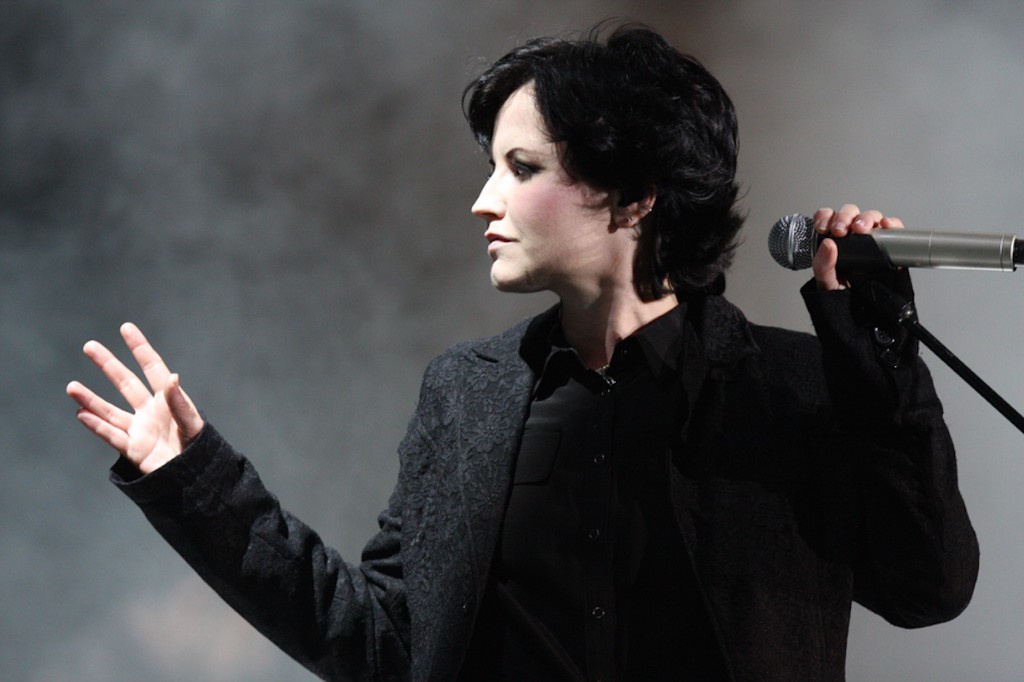
Most of the laments and tributes published since Dolores O’Riordan’s sudden death focus on her voice, not her lyrics. This is understandable: without that iconic vocal sound (New York Times: “plaintive” but “flinty;” Vulture: “cracking” and “yawping”), there would be no such thing as the Cranberries. But what mattered most to me about the Cranberries wasn’t their sound: it was the moldering body of William Butler Yeats, and the way Dolores O’Riordan seemed to be dancing on it.

It wasn’t a hit or even a single, but the song that obsessed me most from those early Cranberries albums was “Yeats’ Grave,” from No Need to Argue. (Later, I’d encounter W.H. Auden’s version of Yeats’ corpse — “The words of a dead man / Are modified in the guts of the living.” Is this a poetic rite of passage, this Yeatsian grave-watching?) What I loved about “Yeats’ Grave” as a teenage girl just starting to write her own poetry was the drama of it — the swooping, rather taunting tone of it, the suggestion of romance and humanness behind the legendary writer’s name. The song was about Yeats but also not about him: it seemed to be about O’Riordan, too, and maybe about any young woman who is reckoning with the Dead White Men in all the bookshelves.

Now, I can see more clearly the structure behind that drama I sensed; after all, I’ve spent my adult life learning how lyric poetry works. So here’s a bit of analysis, my adult self explaining to teenage me why the song matters.

The song’s speaker identifies with Yeats, both in his life (imagining sitting with him at the Lake Isle of Innisfree) and in death (speaking “here / in the grave” with him). To complicate matters further, O’Riordan then quotes Yeats in the song, speaking lines from “No Second Troy.”

Why should I blame her that she filled my days
With misery, or that she would of late
Have taught to ignorant men most violent ways,
Or hurled the little streets upon the great,
Had they but courage equal to desire?

This poem, about Maud Gonne, the Irish feminist and revolutionary with whom Yeats was deeply obsessed, compares Gonne to a new Helen but with no “Troy for her to burn.”

It’s unsettling, hearing O’Riordan recite the lines above; it makes Yeats seem both romantic and a bit ridiculous, especially since the song goes on to tell us that Gonne had someone else. (“Sad that Maud Gonne couldn’t stay,” O’Riordan sings, “but she had MacBride anyway.” That’s John MacBride, whom she married.) Here’s Yeats, imagining his sexual interests as being of world-historical importance, and here’s this young woman, stealing his words for her own purpose.

The song was about Yeats but also not about him: it seemed to be about any young woman who is reckoning with the Dead White Men in all the bookshelves.

It’s almost like Maud Gonne herself is speaking back to Yeats, confronting him with his own inability to have “courage equal to desire.” Ghosts talking back to ghosts! I didn’t know you were allowed to do that in poetry — but, it turned out, that is often what it means to be a woman poet.


I’ve found this kind of grave-digging in many of the women poets who have influenced me as a writer. As the Irish feminist poet Eavan Boland writes in her essay “The Rooms of Other Women Poets,” “All women poets have one thing in common. They are all daughters of fathers. Not simply daughters of a natural father, but also daughters within — and therefore sometimes entrapped by — the literature they seek to add to.” Muriel Rukeyser rewrote the myths of ancient Greece to bring women from the margins to the center. Sylvia Plath dug up her father and drove a stake through his heart. Adrienne Rich went excavating in her bookshelves and found women buried inside. Boland traced the maps of Ireland to find the famine roads.

This is not the only way to be a woman writer — but it is important work, this reckoning with the dead. As the poet Marilyn Hacker said in an interview: “Traditional narrative and lyric forms have been used by women for centuries-even if our professors of Western literature never mentioned Marie de France or Christine de Pisan. The language that we use was as much created and invented by women as by men. But generation after generation, women’s contributions get edged out, written out.”

After listening to the Cranberries, I started reading some Yeats — and I loved his work, but I also felt like I had something of an edge on him. I know about you, old man. I was ready to look not just at the lines of his poetry but at the white spaces between them, at who was being written out, or rewritten to his liking. And in fact, in one of his final poems, Yeats brutally accuses himself of cherishing his mythologies more than real people: “Players and painted stage took all my love / And not those things that they were emblems of.” “Sad that Maud Gonne couldn’t stay,” indeed.


I didn’t know any of this literary history back in 1994, when I was yowling “WHAT’S IN YOUR HEEEEEEEE-EAD” along to my dual-cassette player. I just knew that I had never heard a woman sing like Dolores O’Riordan sang, and I had never heard a woman claim her space alongside the greats like that. I suspect that Yeats would be disappointed in me as a scholar for discussing his poetry in conversation with pop music — but the difference between what counts as Very Serious Poetry and what counts as frivolous song has always been political, and it has often been gendered. It is, in fact, part of how “women’s contributions get edged out” of poetic history.

The difference between what counts as Very Serious Poetry and what counts as frivolous song has always been political, and it has often been gendered.

There are worse ways to be introduced to canonical literature than by a hot, stompy-booted Irish woman from MTV; in fact, I’d say most ways are worse. So let this be another tribute to Dolores O’Riordan, for giving me the grandeur of Yeats’s words, spoken in a woman’s voice.

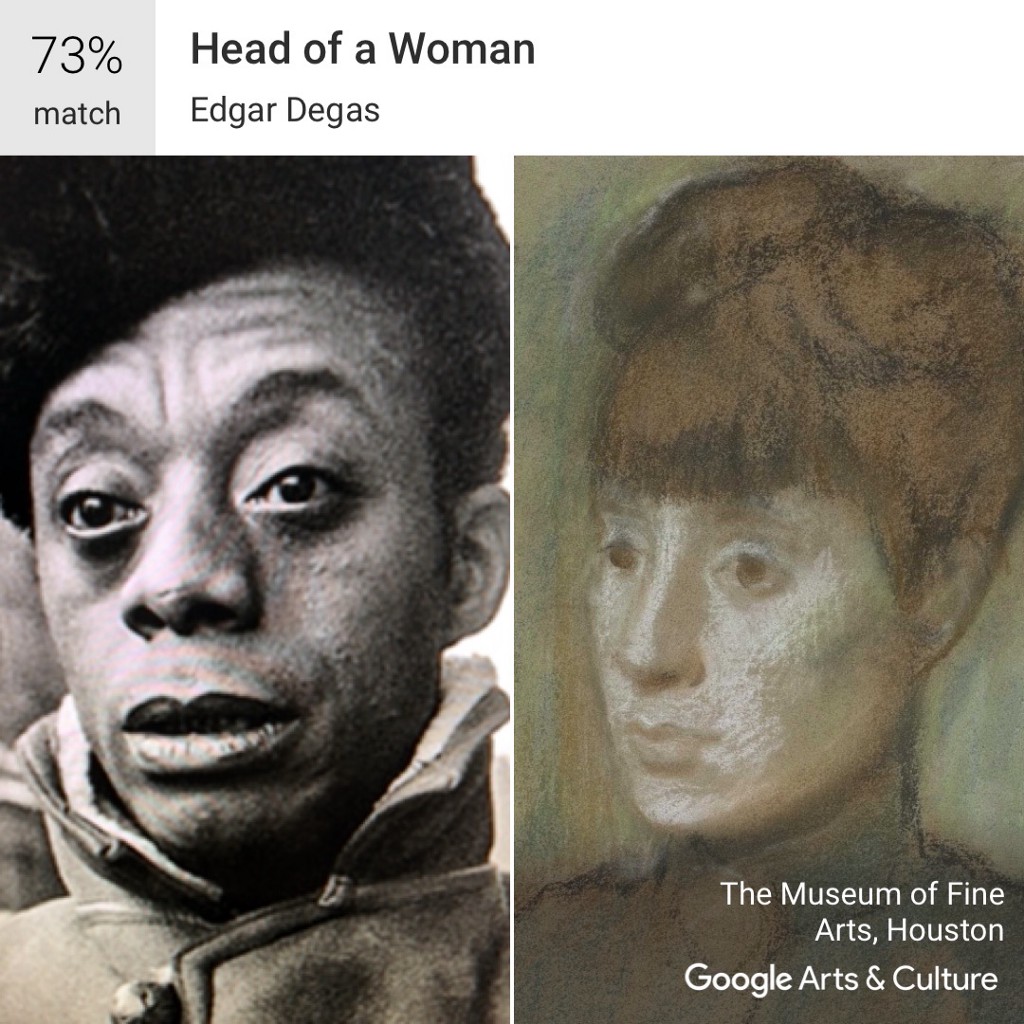
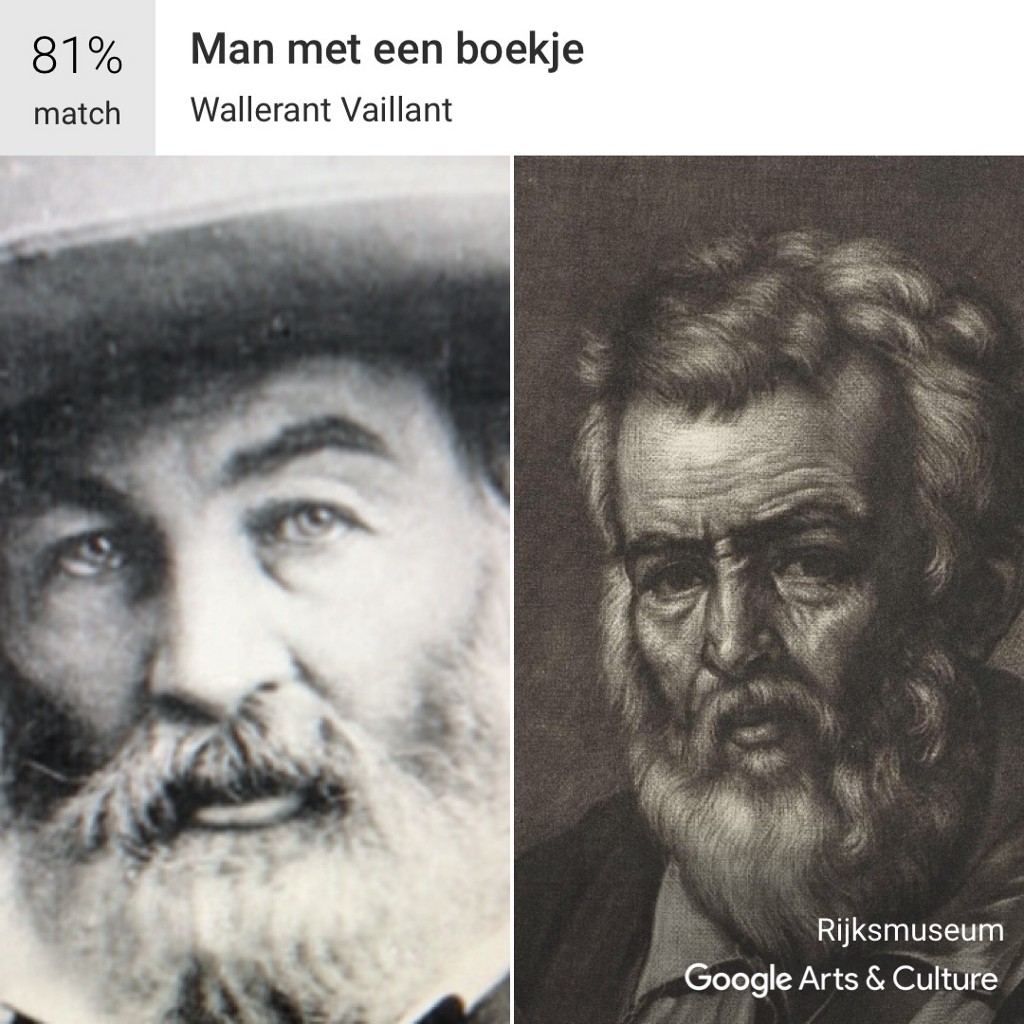
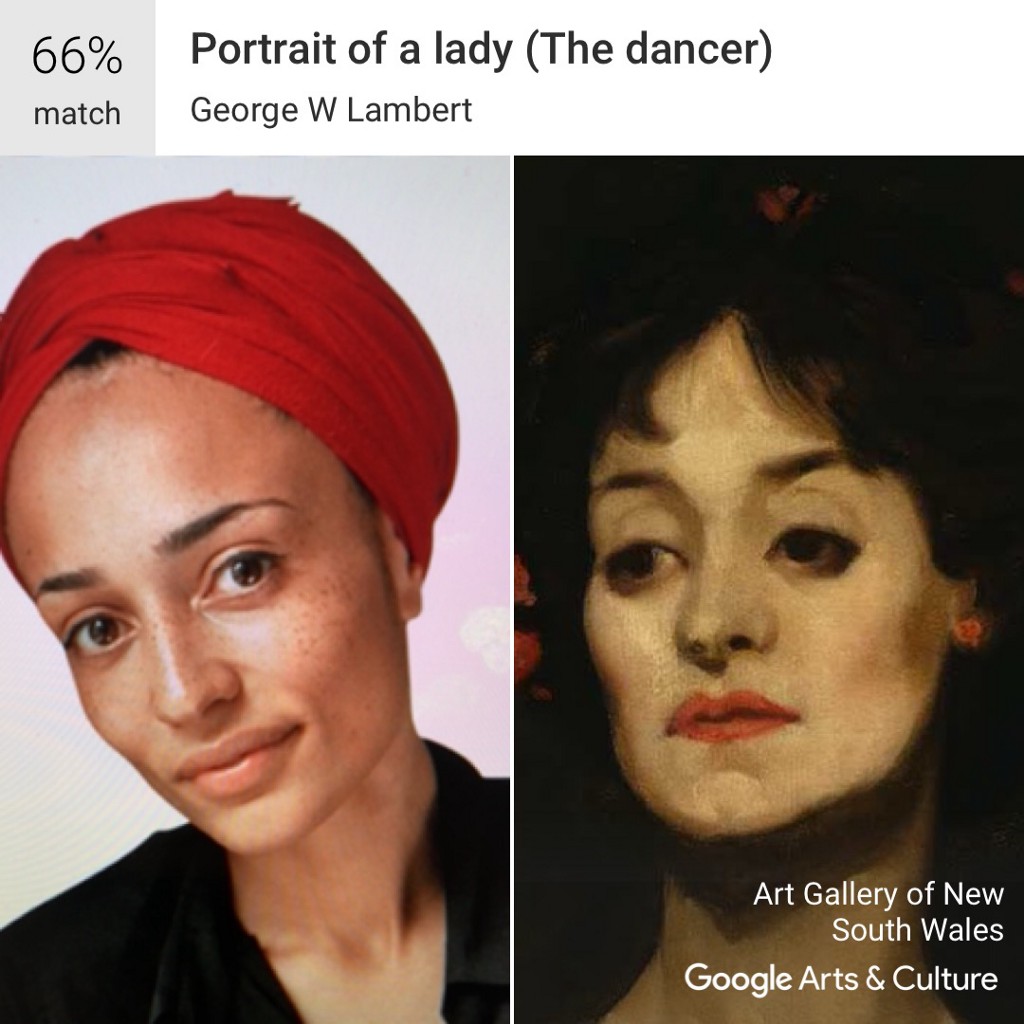
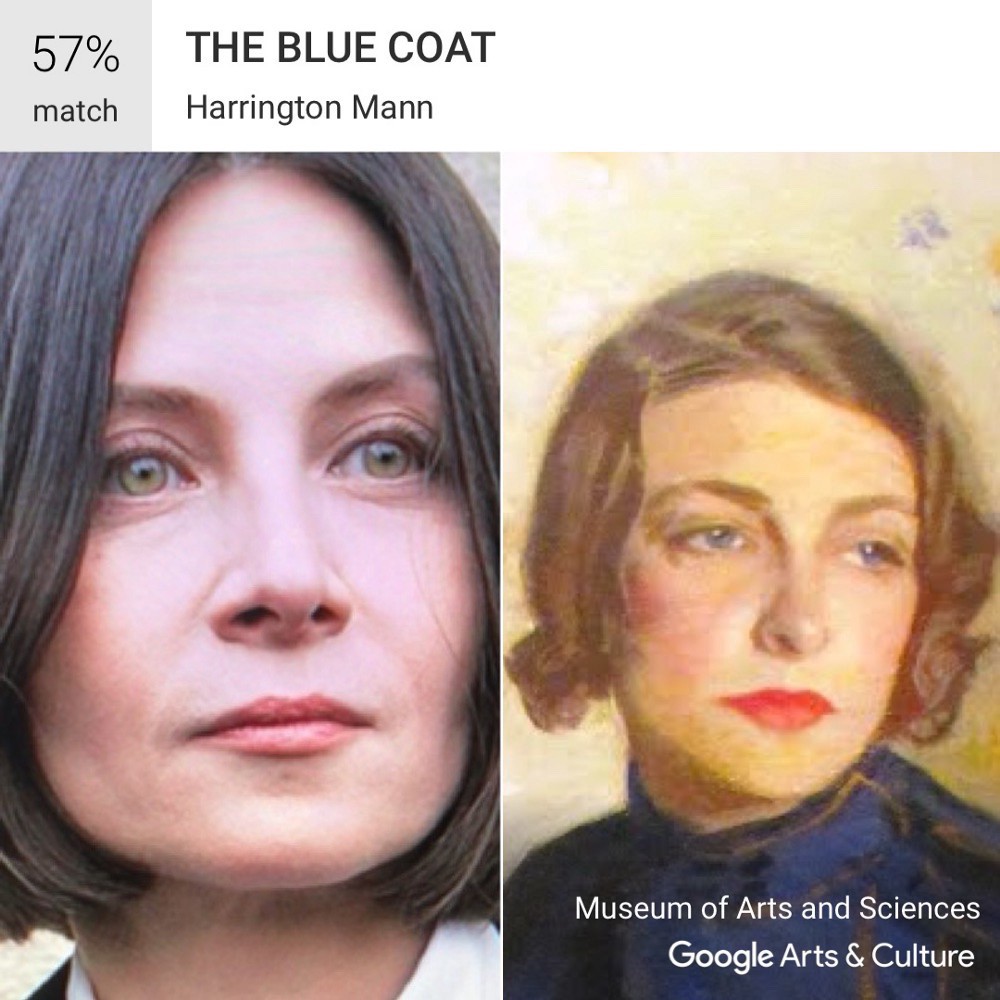
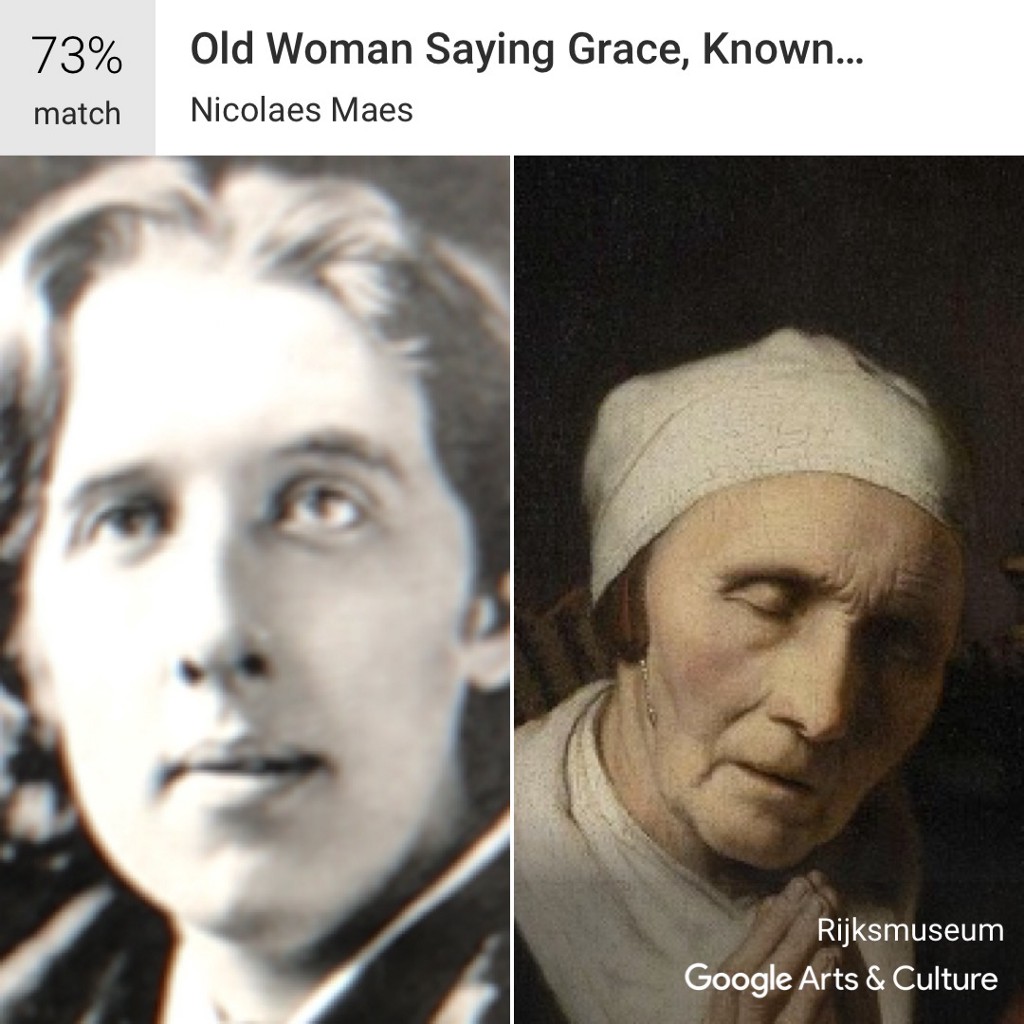
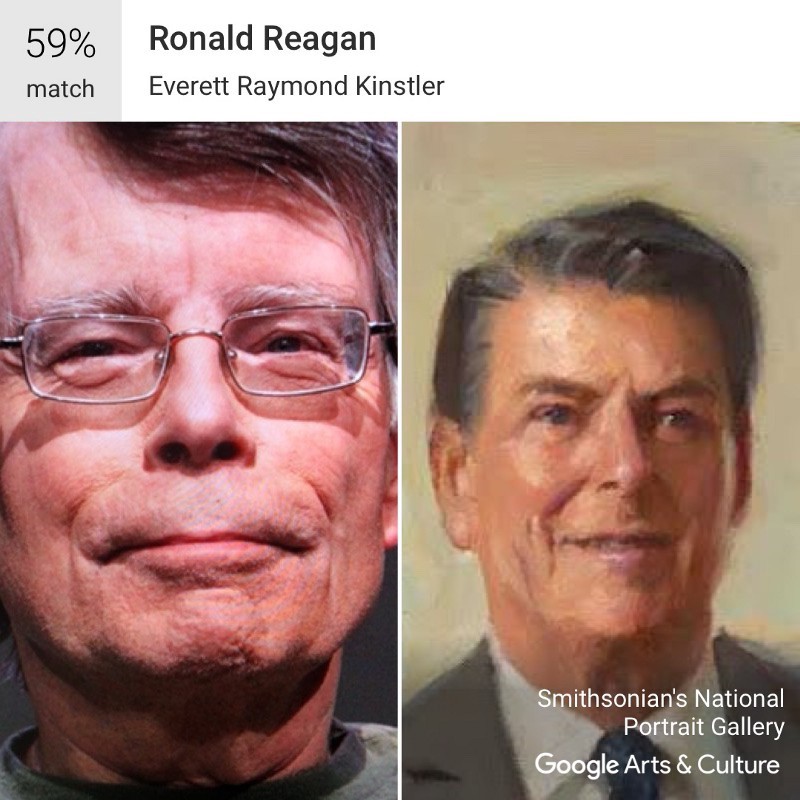
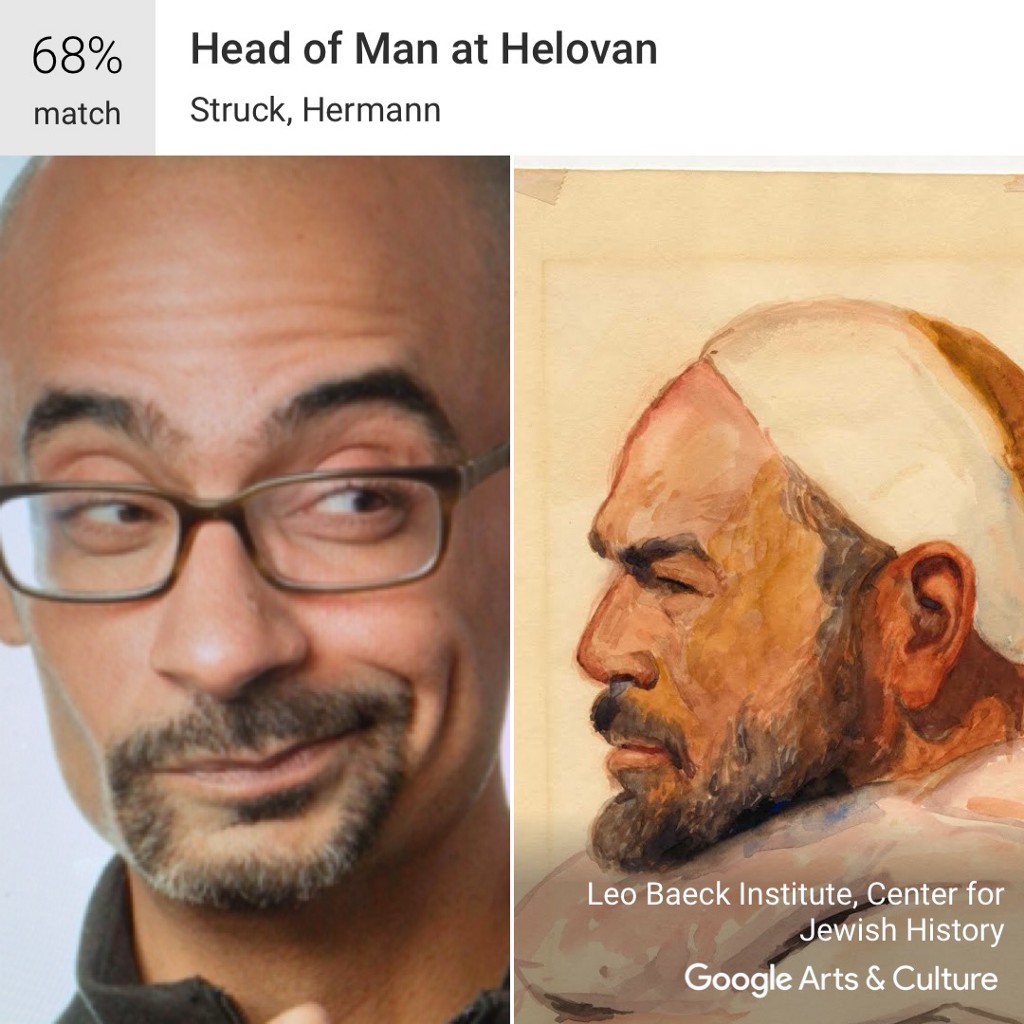
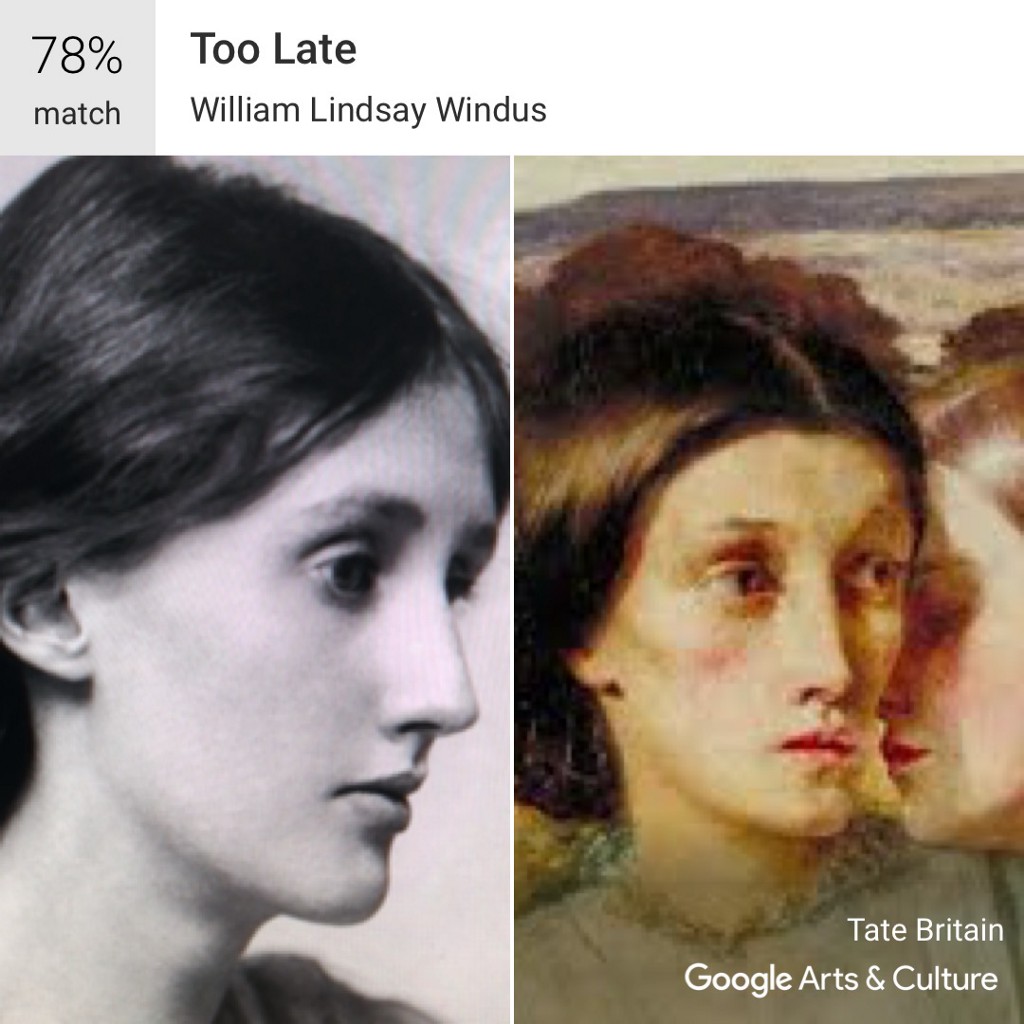
We Ran Literature’s Most Recognizable Faces Through the Google Arts Selfie App

Which painting does David Foster Wallace look like? We found out so you don’t have to

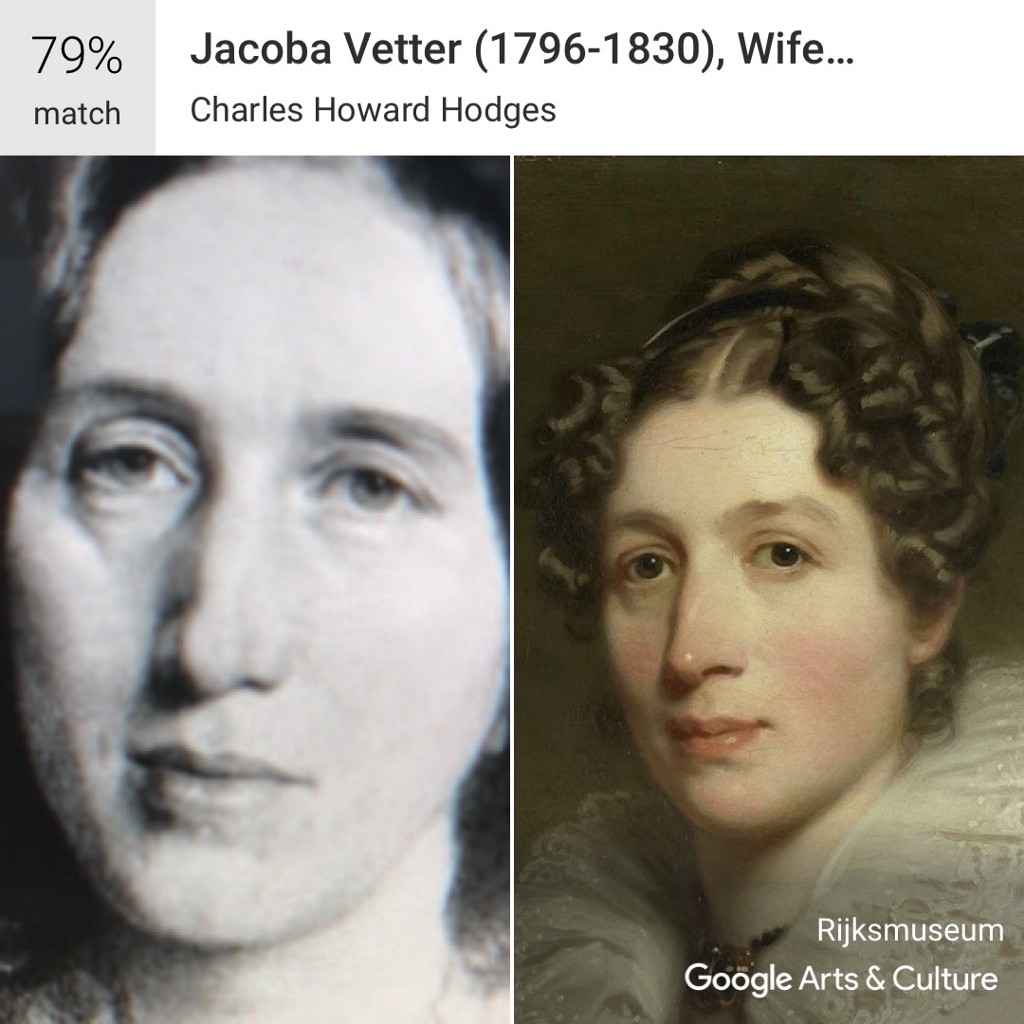
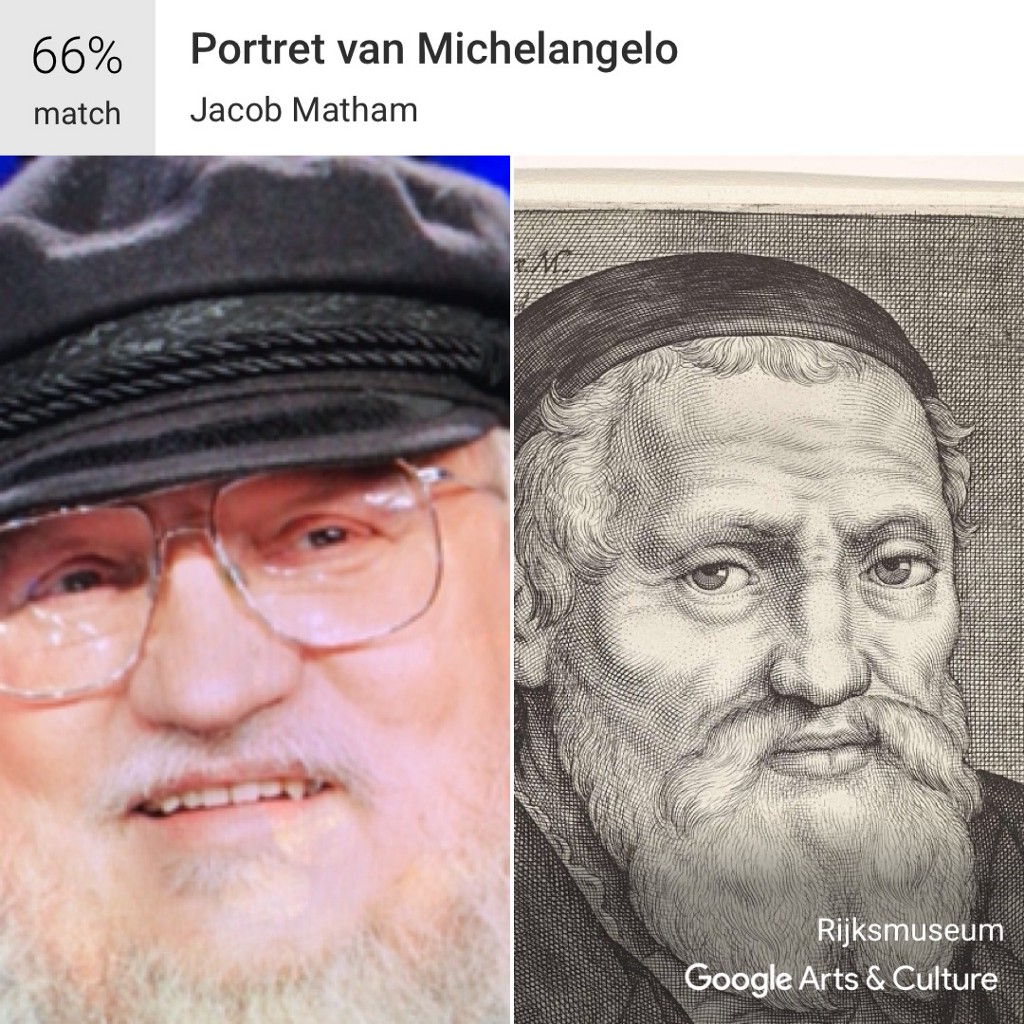
This week, everyone on the internet (who isn’t in Illinois or Texas or outside the U.S.) has been taking selfies with the Google Arts and Culture app, hoping to be matched with their perfect fine art doppelganger. But what if you ran literary leading lights like Virginia Woolf, Claudia Rankine, and Kurt Vonnegut through the same process? We let Google do its art-world magic on 17 of the most recognizable faces in writing, and came up with some stunning matches—and a few head-scratchers. (All results are 100% real, and all screenshots are unedited except for Stephen King and Donna Tartt, whose best results could only be achieved with a lower-quality photo but were too good to pass up.)

George Eliot

James Baldwin

Walt Whitman

Gertrude Stein

Margaret Atwood

Zadie Smith

David Foster Wallace

Donna Tartt

Claudia Rankine

Oscar Wilde

Michael Chabon

Stephen King

Junot Diaz

Jamaica Kincaid

Kurt Vonnegut

George R.R. Martin

Virginia Woolf

10 Galvanizing Books About Political Protest

This weekend is the 2018 Women’s March, the one-year anniversary of what may have been the largest single-day protest in U.S. history. This year, once again, there are scores of marches, gatherings, and rallies planned worldwide. As America looks forward to the 2018 elections, and evaluates forecasts (and solemn promises) about 2020, many of us are looking for in-depth reading that goes beyond hashtags about #resistance.

In celebration of the possibility of positive social change, as well as the solidarity provided by reading about the intimately personal experience of trying to decide whether to rebel, here’s a list of thoughtful and imaginative reflections on political protest.

While putting together this list (which is obviously not comprehensive), I kept thinking of Brazilian activist, protestor, and educator Paulo Freire’s slogan: “Make the road by walking.” Each of these books creates a new road. Each raises questions about political protest and each has given readers and writers alike a path upon which to march.

American Woman by Susan Choi

Choi’s Pulitzer-nominated novel is an examination — or perhaps an exhumation — of a player in the Patty Hearst kidnapping, Wendy Yoshimura, upon whom Choi bases her focal character, Jenn Shimada. The novel casts a critical and trenchant perspective on the radical ideologies at work. In doing so, Choi places intimate relationships, particularly the friendship between Jenny and Pauline, at the center of an exploration of how political protest is lived and experienced on a moment-by-moment level.

Your Heart is a Muscle the Size of a Fist by Sunil Yapa

Yapa’s acclaimed, multi-cultural take on the 1999 World Trade Organization protests in Seattle is required reading for an idealistic, panoramic view of civil disobedience with the goal of greater inclusion and economic participation. The novel offers a tribute to those brave enough to step forward and take the physical risk of protesting.

A Small Revolution by Jimin Han

The talented, propulsive writer Jimin Han’s debut tells of a hostage situation set in the political turmoil of 1980s South Korea (including the Gwangju Uprising, an armed resistance response of the populace to government troops’ unprecedented attack and killing of peacefully protesting Chonnam University students). “There are many paths to revolution,” observes the elegant, though increasingly fraught, voice of Han’s narrator, Yoona.

Dr. Zhivago by Boris Pasternak

As anyone who has seen David Lean’s stunning 1965 adaptation knows, this novel boasts a ridiculously intricate, multi-generational plot. The book details, with emotional precision and care, the social context of the Russian Revolution, including the decadence and oppressive practices of the upper classes. The book follows families set adrift by the political protest of the October Revolution as well as the fates of the deeply-flawed individuals “making” the revolution (like the decadent, drug-addled Bolshevik who kidnaps the title character).

The Lowland by Jhumpa Lahiri

In her gorgeous and melancholy second novel, Jhumpa Lahiri achieves strikingly original characterizations of political protestors long after the protest — in particular, the radical-turned-academic philosopher Gauri, and the absent Udayan who only in death is revealed to be other than a strictly “peaceful protestor.” Never turning away from the bitterness and traumatic aspects of such political engagement, Lahiri follows the tragic arcs of her characters all the way out, like the wild New England coastline that forms the backdrop for the new lives they try to lead.

A Grain of Wheat by Ngugi wa Thiong’o

Written by Kenyan novelist Ngugi wa Thiong’o while he was still a university student, this novel juxtaposes the pain and disappointment of personal betrayals (brothers, spouses) with the larger community-wide dynamics involved in identifying “heroes” and “villains” of a revolution after the fact. The book draws on the history of the Mau Mau rebellion, a violent uprising that unsuccessfully attempted to throw off British colonial rule — but in the process exposed deep divisions within the Kikuyu community and exposed participants to harsh punishments by the British. The novel’s magisterial, intricate prose is still as fresh now as it was when it launched Ngugi’s international career; he’s since been shortlisted for the Booker and repeatedly considered for the Nobel.

Kiss of the Spider Woman by Manuel Puig

Argentinian writer Manuel Puig’s award-winning novel has been adapted into a play, musical, and 1985 film (for which William Hurt won an Academy Award). The book focuses on the relationship between two cellmates in an Argentine prison: Molina, a transgender woman, and political prisoner and torture survivor Valentin. It’s an unflinching look at how the most intimate and spontaneous-seeming interactions are rendered corrupt when made part of the machinery by which a repressive state (in this case, the 1964–1985 military dictatorship in Brazil) attempts to crush any form of resistance.

July’s People by Nadine Gordimer

Nadine Gordimer’s (at the time) futuristic depiction of the fate of South African whites after the projected fall of apartheid is an honest examination of the profound discomfort that lurks beneath “camaraderie” between liberal whites and people of color protesting for long-delayed justice. The novel was banned in post-apartheid South Africa because of its ostensible failure to sufficiently and clearly condemn the racism that made social upheaval justified.

Beloved by Toni Morrison

Morrison’s Sethe kills her own child rather than let her be returned to slavery, an act that reverberates throughout the novel. If slavery is understood as a political system, an infanticide like the one committed by Sethe (or Margaret Garner, Sethe’s real-world counterpart) can be considered a dbitter form of political protest. Morrison’s novel explores both the experiences leading up to making such a terrible choice, as well as the attempts to shape a meaningful life in the aftermath.

1984 by George Orwell

Perhaps more than any other novel on this list, George Orwell’s classic illustrates the idea of there being value even in protest that seems to change nothing. This slim novel (which sold out on Amazon immediately after the 2016 presidential election) was prescient on the subject of government surveillance, thought control by means of regulating “allowed” language, and the horrifying implications of using torture to secure obedience and allegiance. The book can still inspire us to moral courage and perseverance — even in a time of repression, fear, blustering, threatening and lying in the executive branch. Especially in such a time.

10 Books with Wonderfully Nuanced Black Female Protagonists

When the reboot of Spike Lee’s 1986 debut “She’s Gotta Have It” came out, I knew I’d watch all ten episodes. I came of age during the 90s, when Lee released a new feature almost every year. His style left an impression on me: the dreamlike frenzy created by dolly shots, the way he tuned dialogue and characters to real ideological rifts in the black community, the stirring musical scores. Those techniques scaffold my work now, frame how I process real events, visualize fictions, and distill them into a story.

Nola Darling, the protagonist of the film and series, was played with buoyance by DeWanda Wise in the new version, but how the show handled her sexuality drew mixed reactions from audiences. A self-proclaimed “sex-positive, polyamorous, pan-sexual” who isn’t into labels, the character sometimes felt more tethered to grand statements than to truth. The show’s writers were obviously working to atone for misogynistic errors of the source material. Revisiting something iconic brings the burden of the original subject’s weight.

And Nola Darling is iconic. She is feminist and sexual, proudly black, political and brainy, sometimes brittle and confused. She is spiritual mother to the zany black heroines we now have the privilege of quibbling about. Along with Lee’s films, the ‘90s brought us Family Matters, Hanging With Mr. Cooper, Fresh Prince, Living Single and more. Perhaps for the first time since then, today there are enough varied stories out in the world about black people that we can have preferences and make choices about what to watch when we want to see a depiction of ourselves. There is “Insecure” and “Atlanta” and “Queen Sugar”; “Dear White People,” “The Incredible Jessica James,” “Master of None”; “Moonlight,” “Get Out,” and “Girls Trip” — uniquely different films and shows that come from a distinctly black perspective and don’t apologize for that, explain it, or water it down for white viewers.

These shows and films depict a distinctly black perspective and don’t apologize for that, explain it, or water it down for white viewers.

Still, viewers remain hungry for unique black women characters with interiority on film and TV, and black writers in those mediums remain rare. Color of Change reports just 4.8 of staff writer jobs in broadcast, cable, and streaming scripted series from the 2016–17 season were held by black writers. For characters that feel feminist and challenging, that trouble stereotypes and expand my imagination with depth and complexity, I often turn to novels. Here are some of my favorites, accumulated over a lifetime of searching.

Nervous Conditions by Tsitsi Dangarembga

Tambu is the main character of this bildungsroman set in Zimbabwe and written by author and filmmaker Dangaremba. She lives in colonial Rhodesia, under the charge of her stern uncle, and attends mission school. She and her cousin Nyasha struggle to build selves under the twin assaults of colonialism and male domination.

Quietly, unobtrusively and extremely fitfully, something in my mind began to assert itself, to question things and refuse to be brainwashed, bringing me to this time when I can set down this story. It was a long and painful process for me, that process of expansion.

Whatever Happened to Interracial Love by Kathleen Collins

In this treat of a short story collection by the late playwright and filmmaker Kathleen Collins, released last year after being discovered in a trunk by her daughter, Nina, the black women characters are portrayed from multiple points of view. My favorite thing about the characters is that none of them fit neat categories. Also, Collins doesn’t shy away from their sexuality, nor their intelligence, nor their loneliness. And yet they aren’t women to be pitied; there is a boldness in these sketches that make you trust the characters and want to go with them, on their journeys.

Sula by Toni Morrison

The relationships between women in the new “She’s Gotta Have It” were compelling to watch. Morrison’s second novel, published in 1973, tells a story of Sula and Nel, two black women who come of age in a post-war community and take diverging paths into adulthood. It is an unsparing account of a friendship of two distinct, bold individuals, a sisterhood that is vital but doesn’t quite make it.

Their evidence against Sula was contrived, but their conclusions about her were not. Sula was distinctly different. Eva’s arrogance and Hannah’s self-indulgence merged in her and, with a twist that was all her own imagination, she lived her days out exploring her own thoughts and emotions, giving them full reign, feeling no obligation to please anybody unless their pleasure pleased her. As willing to feel pain as to give pain, to feel pleasure as to give pleasure, hers was an experimental life — ever since her mother’s remarks sent her flying up those stairs, ever since her one major feeling of responsibility had been exorcised on the bank of a river with a closed place in the middle. The first experience taught her there was no other that you could count on; the second that there was no self to count on either.

She had been looking all along for a friend, and it took her a while to discover that a lover was not a comrade and could never be — for a woman.

Swing Time by Zadie Smith

Another novel about an epic friendship follows two biracial dancers who meet as children and come of age in the 80s with a shared love of Hollywood musicals and pop music. They are outcasts in their working class neighborhood in London mostly because they are biracial. The unnamed narrator has been called “unsympathetic.” She goes to work for an MTV-esque network for a Madonna-inspired pop star and in doing so, flees the neighborhood, while her friend, the more talented of the two, stays home. It is a meditation on how one woman can define herself using the contours of another, and the limitations that presents.

Salvage the Bones by Jesmyn Ward

In Jesmyn Ward’s second novel, the National Book Award winning Salvage the Bones, the main character, Esch, is bookish and friendless but tethered to her family as they prepare for Hurricane Katrina. Her passions are sundry and are the lifeblood of the novel.

What We Lose by Zinzi Clemons

What We Lose deserved every bit critical attention it got when it debuted. It’s an intimate tale about the grief that almost undoes its protagonist, Thandi, a young, black South African woman whose family is middle class and live in Pennsylvania. It captures the nourishing relationship Thandi has with her mother while considering the brutal, urgent demands of motherhood. In Thandi, we find a woman reckoning with how to meet and realize her desires even as she is rootless in the world.

Purple Hibiscus and Americanah by Chimimanda Ngozi Adiche

The debut novel of Adiche, Purple Hibiscus is a coming-of-age story of 15-year-old Kamibili. Adiche introduces her feminist consciousness as Kambili must choose between the family she is born into and the one that feels more appropriate for her.

The wide-ranging novel Americanah spans three continents. We follow the protagonist Ifemelu, a woman who finding her way in a world stitched together by unstable racial categories. She goes through several love affairs and makes many mistakes before finally stumbling home.

Mama by Terry McMillan

I thnink Terry McMillan gets short shrift in the canon, mostly because of the blockbuster level popularity of her third novel Waiting to Exhale and the quotidian sensibility of the terrain she covers. Mama is her masterpiece. It’s a tale of a matriarchal family living in Michigan and the nature of progress through generations. Freda, the oldest daughter of Mildred Peacock, grows into a life that run parallel to her striving mother’s.

The Street by Ann Petry

The Street, Ann Petry’s 1946 novel set in Harlem about protagonist Lutie Johnson, a single black mother trying to make her way, sold a million copies when it came out. Lutie struggles to make a life for her son Pip, but what is generative is how the character makes choices out of a lot of impossible options.

A Raisin in the Sun by Lorraine Hansberry

Of course “A Raisin in the Sun” is a play and not a novel, but I think Beneatha Younger may be one of the most memorable black woman characters ever created. She is all hope and passion and angst and muddled, messy ideology. She’s transformed by the play’s end, though, into a person who knows that her political sensibility is nothing without compassion.

I’m Sorry If You Misinterpreted My Erection as Anything Except Support For You as a Writer

In the past few days, my eyes have been opened. Several former poetry students of mine have given interviews to the press, interviews in which they’ve indicated they felt harassed, uncomfortable, or even attacked in my presence. They felt as if I had an interest in them that went beyond the simple, beautiful relationship of a professor and his pupils, many of whom happened to be supple-hipped women in their twenties.

My lawyer has advised me to remain silent, but I’ve devoted my life to encouraging students to find a voice. Therefore, I must address some of the specific allegations against me.

I’m an affectionate person. Ask any poet; our hearts just seem to be located a little closer to the surface of our skin. I like to hug my students when I sense a moment of connection between two souls. It’s nothing more than that. I certainly do not recall rubbing my erect penis against any woman, much less four of them, but if I did, it was only because I was in awe of their talent.

I take conference times with my students incredibly seriously. It’s true that I did occasionally go without pants during office hours, but that’s because I don’t believe there should be any barriers between a student and their mentor. And yes, I do have a special key that locks my office door from the inside, but I never intended it to be regarded as a threat. It’s only there to keep the muse from escaping.

I certainly do not recall rubbing my erect penis against any woman, much less four of them, but if I did, it was only because I was in awe of their talent.

I grew up in a different era. When I was in grad school back in the late seventies, we began every workshop by gathering in a circle and describing our genitals using iambic pentameter. It really loosened up those creative muscles. If I’m alone with a much younger woman whom I know admires me and I say something like “Bend over my desk so I can see your ass in that dress,” I am by no means trying to coerce her into a spanking. I am merely providing an example of a slant rhyme. It’s a harmless craft exercise, nothing more.

I’m a writer. Fealty to life’s emotional truths is one of my most sacred obligations. I deeply regret that my emotional truth differs so significantly from the narratives that have been presented in the media. But before I conclude this statement, I must address one more thing: I pat every student on the ass after they successfully defend their thesis. It’s not a sexual gesture. I don’t recall grabbing a specific student’s breasts and making a honking noise, but I must assume her memory is correct. I hope that in the future, she will remember it as nothing more than a spontaneous appreciation of her accomplishments as an artist.